EP3021328B1 - Keramikpastenzusammensetzung mit kohlenstoffnanoröhren oder einem kohlenstoffnanoröhren-metallkomplex sowie leitfähiger film damit - Google Patents
Keramikpastenzusammensetzung mit kohlenstoffnanoröhren oder einem kohlenstoffnanoröhren-metallkomplex sowie leitfähiger film damit Download PDFInfo
- Publication number
- EP3021328B1 EP3021328B1 EP14822163.3A EP14822163A EP3021328B1 EP 3021328 B1 EP3021328 B1 EP 3021328B1 EP 14822163 A EP14822163 A EP 14822163A EP 3021328 B1 EP3021328 B1 EP 3021328B1
- Authority
- EP
- European Patent Office
- Prior art keywords
- carbon nanotube
- paste composition
- ceramic paste
- disperbyk
- group
- Prior art date
- Legal status (The legal status is an assumption and is not a legal conclusion. Google has not performed a legal analysis and makes no representation as to the accuracy of the status listed.)
- Active
Links
Images
Classifications
-
- H—ELECTRICITY
- H01—ELECTRIC ELEMENTS
- H01B—CABLES; CONDUCTORS; INSULATORS; SELECTION OF MATERIALS FOR THEIR CONDUCTIVE, INSULATING OR DIELECTRIC PROPERTIES
- H01B1/00—Conductors or conductive bodies characterised by the conductive materials; Selection of materials as conductors
-
- H—ELECTRICITY
- H01—ELECTRIC ELEMENTS
- H01B—CABLES; CONDUCTORS; INSULATORS; SELECTION OF MATERIALS FOR THEIR CONDUCTIVE, INSULATING OR DIELECTRIC PROPERTIES
- H01B1/00—Conductors or conductive bodies characterised by the conductive materials; Selection of materials as conductors
- H01B1/20—Conductive material dispersed in non-conductive organic material
- H01B1/24—Conductive material dispersed in non-conductive organic material the conductive material comprising carbon-silicon compounds, carbon or silicon
-
- C—CHEMISTRY; METALLURGY
- C04—CEMENTS; CONCRETE; ARTIFICIAL STONE; CERAMICS; REFRACTORIES
- C04B—LIME, MAGNESIA; SLAG; CEMENTS; COMPOSITIONS THEREOF, e.g. MORTARS, CONCRETE OR LIKE BUILDING MATERIALS; ARTIFICIAL STONE; CERAMICS; REFRACTORIES; TREATMENT OF NATURAL STONE
- C04B35/00—Shaped ceramic products characterised by their composition; Ceramics compositions; Processing powders of inorganic compounds preparatory to the manufacturing of ceramic products
- C04B35/515—Shaped ceramic products characterised by their composition; Ceramics compositions; Processing powders of inorganic compounds preparatory to the manufacturing of ceramic products based on non-oxide ceramics
- C04B35/52—Shaped ceramic products characterised by their composition; Ceramics compositions; Processing powders of inorganic compounds preparatory to the manufacturing of ceramic products based on non-oxide ceramics based on carbon, e.g. graphite
-
- C—CHEMISTRY; METALLURGY
- C04—CEMENTS; CONCRETE; ARTIFICIAL STONE; CERAMICS; REFRACTORIES
- C04B—LIME, MAGNESIA; SLAG; CEMENTS; COMPOSITIONS THEREOF, e.g. MORTARS, CONCRETE OR LIKE BUILDING MATERIALS; ARTIFICIAL STONE; CERAMICS; REFRACTORIES; TREATMENT OF NATURAL STONE
- C04B35/00—Shaped ceramic products characterised by their composition; Ceramics compositions; Processing powders of inorganic compounds preparatory to the manufacturing of ceramic products
- C04B35/71—Ceramic products containing macroscopic reinforcing agents
- C04B35/74—Ceramic products containing macroscopic reinforcing agents containing shaped metallic materials
-
- C—CHEMISTRY; METALLURGY
- C04—CEMENTS; CONCRETE; ARTIFICIAL STONE; CERAMICS; REFRACTORIES
- C04B—LIME, MAGNESIA; SLAG; CEMENTS; COMPOSITIONS THEREOF, e.g. MORTARS, CONCRETE OR LIKE BUILDING MATERIALS; ARTIFICIAL STONE; CERAMICS; REFRACTORIES; TREATMENT OF NATURAL STONE
- C04B35/00—Shaped ceramic products characterised by their composition; Ceramics compositions; Processing powders of inorganic compounds preparatory to the manufacturing of ceramic products
- C04B35/71—Ceramic products containing macroscopic reinforcing agents
- C04B35/78—Ceramic products containing macroscopic reinforcing agents containing non-metallic materials
- C04B35/80—Fibres, filaments, whiskers, platelets, or the like
-
- C—CHEMISTRY; METALLURGY
- C04—CEMENTS; CONCRETE; ARTIFICIAL STONE; CERAMICS; REFRACTORIES
- C04B—LIME, MAGNESIA; SLAG; CEMENTS; COMPOSITIONS THEREOF, e.g. MORTARS, CONCRETE OR LIKE BUILDING MATERIALS; ARTIFICIAL STONE; CERAMICS; REFRACTORIES; TREATMENT OF NATURAL STONE
- C04B41/00—After-treatment of mortars, concrete, artificial stone or ceramics; Treatment of natural stone
- C04B41/45—Coating or impregnating, e.g. injection in masonry, partial coating of green or fired ceramics, organic coating compositions for adhering together two concrete elements
-
- H—ELECTRICITY
- H01—ELECTRIC ELEMENTS
- H01B—CABLES; CONDUCTORS; INSULATORS; SELECTION OF MATERIALS FOR THEIR CONDUCTIVE, INSULATING OR DIELECTRIC PROPERTIES
- H01B1/00—Conductors or conductive bodies characterised by the conductive materials; Selection of materials as conductors
- H01B1/04—Conductors or conductive bodies characterised by the conductive materials; Selection of materials as conductors mainly consisting of carbon-silicon compounds, carbon or silicon
-
- H—ELECTRICITY
- H01—ELECTRIC ELEMENTS
- H01B—CABLES; CONDUCTORS; INSULATORS; SELECTION OF MATERIALS FOR THEIR CONDUCTIVE, INSULATING OR DIELECTRIC PROPERTIES
- H01B1/00—Conductors or conductive bodies characterised by the conductive materials; Selection of materials as conductors
- H01B1/14—Conductive material dispersed in non-conductive inorganic material
- H01B1/18—Conductive material dispersed in non-conductive inorganic material the conductive material comprising carbon-silicon compounds, carbon or silicon
-
- H—ELECTRICITY
- H05—ELECTRIC TECHNIQUES NOT OTHERWISE PROVIDED FOR
- H05B—ELECTRIC HEATING; ELECTRIC LIGHT SOURCES NOT OTHERWISE PROVIDED FOR; CIRCUIT ARRANGEMENTS FOR ELECTRIC LIGHT SOURCES, IN GENERAL
- H05B3/00—Ohmic-resistance heating
- H05B3/10—Heating elements characterised by the composition or nature of the materials or by the arrangement of the conductor
- H05B3/12—Heating elements characterised by the composition or nature of the materials or by the arrangement of the conductor characterised by the composition or nature of the conductive material
- H05B3/14—Heating elements characterised by the composition or nature of the materials or by the arrangement of the conductor characterised by the composition or nature of the conductive material the material being non-metallic
-
- H—ELECTRICITY
- H05—ELECTRIC TECHNIQUES NOT OTHERWISE PROVIDED FOR
- H05B—ELECTRIC HEATING; ELECTRIC LIGHT SOURCES NOT OTHERWISE PROVIDED FOR; CIRCUIT ARRANGEMENTS FOR ELECTRIC LIGHT SOURCES, IN GENERAL
- H05B2214/00—Aspects relating to resistive heating, induction heating and heating using microwaves, covered by groups H05B3/00, H05B6/00
- H05B2214/04—Heating means manufactured by using nanotechnology
Definitions
- the present invention relates to a ceramic paste composition formed of carbon nanotubes or carbon nanotube-metal composite, and a conductive film including the same, and more particularly, to a silicone binder-based ceramic paste composition in which the paste does not undergo release of an electrode coated in the form of a film or degeneration of a film even at a high temperature of 300 °C or more, and a conductive film including the same.
- This heat generator is prepared in the form of paste including mainly silver (Ag)-based, palladium (Pd)-based or ruthenium (Ru)-based oxides, and among these, silver itself is difficult to be used as heat generating resistor, since it is a conductive material having low resistance, and has a positive temperature coefficient of resistance. Therefore, in order to compensate for this, palladium and ruthenium are added to the ceramic paste.
- ruthenium has specific resistance higher than silver, an added amount thereof is eventually larger in order to have a lower resistance value. Further, as the added amount of ruthenium is increased, the resistance of paste itself is increased, and thus, temperature is raised with increasing resistance, and eventually power consumption is increased.
- a heating seat manufactured using a fiber heat generator of carbon materials such as in Korean Patent Laid-Open Publication No. 10-2012-0000878 , a technique to prepare a liquid-phase exothermic composition and coat it to a sheet such as in Korean Patent Registration No. 10-1029147 , a heating material further including a heating layer consisting of carbon materials in a base materials such as cotton, non-woven fabric such as in Korean Patent Laid-Open Publication No. 10-2010-0053434 , or the like.
- the fiber heat generator has difficulty in being processed in a fibrous form due to low elongation, and has high modulus of elasticity so that it is easily ruptured. Further, in the case that the exothermic composition is prepared and coated on a sheet, or a heating layer is further provided on a base layer, the heat generating layer or coating film is released under a high temperature environment of 300 °C or more, or the coating film is easily broken.
- An object of the present invention is to provide a ceramic paste composition using carbon nanotubes or a carbon nanotube-metal composite, without changing physical properties even at high temperature of 300 °C or more, and without undergoing release of a film when manufacturing a conductive film in a form of a coating film, and a conductive film including the same.
- the present invention relates to a ceramic paste composition using carbon nanotubes or a carbon nanotube-metal composite, and a conductive film including the same.
- a ceramic paste composition includes carbon nanotubes or a carbon nanotube-metal composite, and a silicone adhesive, wherein the silicone adhesive contains 0.1 to 10 wt% of a silanol group based on total 100 wt% of the silicone adhesive, and has a mole ratio of a phenyl group to a methyl group of 0.3 to 2.5.
- a metal contained in the carbon nanotube-metal composite may be any one or two or more selected from the group consisting of silver, platinum, gold, copper, nickel, iron, cobalt and aluminum, and a content of the metal may be 1 to 80 parts by weight based on 100 parts by weight of the carbon nanotube-metal composite.
- the ceramic paste composition may include 20 to 80 wt% of the carbon nanotubes or carbon nanotube-metal composite, and 20 to 80 wt% of the silicone adhesive.
- the ceramic paste composition may further include an organic binder, a dispersant, and an organic solvent.
- the organic binder may be any one selected from the group consisting of ethyl cellulose, nitrocellulose and a mixture thereof;
- the dispersant may be any one or two or more selected from the group consisting of a phosphorus ester salt of amino-containing oligomer or polymer, monoester or diester of phosphoric acid, acidic dicarboxylic monoester, a polyurethane-polyamine adduct, and polyalkoxylated monoamine or diamine;
- the organic solvent may be any one or two or more selected from the group consisting of acetone, methylethyl ketone, methyl alcohol, ethyl alcohol, isopropyl alcohol, butyl alcohol, ethylene glycol, polyethylene glycol, tetrahydrofuran, dimethyl formamide, dimethyl acetamide, N-methyl-2-pyrrolidone, hexane
- the ceramic paste composition may include 1 to 50 wt% of the carbon nanotube or carbon nanotube-metal composite, 1 to 20 wt% of the organic binder, 1 to 30 wt% of the silicone adhesive, 1 to 20 wt% of the dispersant, and 1 to 90 wt% of the organic solvent.
- a conductive film in another general aspect, includes the ceramic paste composition.
- the conductive film may have a heat generating temperature of 40 to 400 °C with applied voltage of 1.5 to 220 V, when having a thickness of 10 to 600 ⁇ m.
- the ceramic paste composition according to the present invention is characterized by having low sheet resistance, through which an excellent heat generating property, and shielding, absorbing and conducting properties may be implemented. Further, though the ceramic paste composition has a very high heating temperature of 400 °C, as compared with general paste based on carbon nanotubes, the physical properties thereof may be maintained stably, thereby implementing the inherent properties of ceramic paste.
- the ceramic paste may be easily prepared as a planar conductive film by a simple process, and widely used in various fields including heat generating products such as those for keeping warmth or heating, and products for electromagnetic wave shielding and absorption, electrodes, electronic circuits, antennas, and the like.
- the ceramic paste composition according to the present invention and a method of preparing the same will be described in detail, through exemplary embodiments or Examples.
- the following exemplary embodiments or Examples are only a reference for describing the present invention in detail, and the present invention is not limited thereto, and may be implemented in various forms.
- 'paste composition' used herein refers to embrace a state of medium hardness between solid and liquid, and for example, may be mixture dough having stickiness or adhesion.
- the ceramic paste composition according to an exemplary embodiment of the present invention may include carbon nanotubes (CNTs) or a carbon nanotube-metal composite (CNT-metal nano composite), an organic binder, a silicone adhesive, a dispersant and an organic solvent.
- CNTs carbon nanotubes
- CNT-metal nano composite carbon nanotube-metal composite
- organic binder organic binder
- silicone adhesive silicone adhesive
- dispersant an organic solvent
- the carbon nanotube in the present invention refers to a composite structure in a cylindrical form in which a layer of graphite is wrapped, and sp2 bonds are formed like graphite, and used as a heat generating and high conductive material in the ceramic paste composition.
- the carbon nanotubes or carbon nanotube-metal composite may effectively lower the contact resistance of the ceramic paste composition even with a relatively small amount as compared with a conventional heat generating composition, thereby being effective as a heat generating and high conductive material, and have/has excellent electromagnetic wave shielding and absorption capacity.
- the carbon nanotube which may be used in the present invention is not limited by a preparation method, a diameter thereof or the like.
- the carbon nanotube may be selected from the group consisting of, for example, a single wall CNT, a double wall CNT, a multi wall CNT, or a mixture thereof.
- the carbon nanotube-metal composite in the present invention refers to nano composite powder prepared by uniformly mixing the carbon nanotubes and metal ions in a molecular level process, and the carbon nanotube-metal composite which may be used in the present invention is not limited by a preparation method or a shape such as a diameter thereof.
- the carbon nanotube-metal composite may effectively lower the contact resistance of the ceramic paste composition even with a relatively small amount, and thus, is effective as a heat generating and high conductive material, and has excellent electromagnetic wave shielding and absorption capacity, through which a larger area may be implemented.
- Korean Patent Registration No. 10-1095840 and others may be referred.
- the metal may be any one selected from the group consisting of gold (Au), platinum (Pt), silver (Ag), copper (Cu), nickel (Ni), iron (Fe), cobalt (Co) and aluminum (Al) or a mixture thereof, and a compound including those metals except metal ions may be also used.
- Au gold
- platinum Pt
- silver Ag
- Cu copper
- Ni nickel
- Fe iron
- Co cobalt
- Al aluminum
- the metal it is preferred to use silver or platinum.
- the content of the metal is 1 to 80 parts by weight, based on 100 parts by weight of the carbon nanotube-metal composite, and 20 to 60 parts by weight is preferable for excellent conductivity, and may prevent the conductivity from being excessively increased or decreased.
- the silicone adhesive serves as a dispersant for facilitating dispersion of the carbon nanotubes or carbon nanotube-metal composite, and may further serve as a viscosifier for stabilizing a ceramic paste mixed solution to be prepared.
- the adhesive including N, O, S or other functional groups having lone pair electrons so that a good coordination bond is provided for stabilization of the carbon nanotube or carbon nanotube-metal composite during processing (coating or thin film forming of) the prepared paste composition has been used.
- a polymer binder having high oxygen content such as a hydroxyl group and a carboxyl group
- the adhesive includes for example, an epoxy resin, a phenol resin, a urethane resin, a polyester resin, a polyvinylchloride resin, a urea resin, a polyethylene resin, an acryl resin, and the like.
- These polymers have strong affinity to the surface of the carbon nanotube or carbon nanotube-metal composite, and may increase dispersibility and stability.
- these resins may not satisfy thermal resistance required in the present invention, it is preferred to use a silicone-based adhesive.
- the silicone adhesive according to the present invention is a polymer having a polysiloxane main chain alternating a silicon (Si) atom and an oxygen (O) atom.
- silicone has a structure in which each silicon atom is bonded to two organic atomic groups of alkyl such as methyl, ethyl or propyl, or phenyl (-C 6 H 5 ), and the silicone adhesive according to the present invention may have hydrogen, a hydroxyl group, a methyl group or a phenyl group bonded to a polysiloxane main chain.
- the content of the polysiloxane main chain, that is, SiO 2 is 45 to 65 wt%, preferably 47 to 63 wt%, based on 100 wt% of the total silicone adhesive.
- the silicone adhesive has a certain range of a content of silanol having a hydroxyl group as a functional group for improved dryness and also excellent flexibility, and the silanol content is preferably 0.1 to 10 wt%, more preferably 1 to 6 wt%, based on 100 wt% of the total silicone adhesive.
- the silanol content is less than 0.1 wt%, the dryness and strength may be lowered, and when more than 10 wt%, the flexibility and processability may be deteriorated.
- the silicone adhesive according to the present invention has a constant ratio of a methyl group and a phenyl group for more improved thermal stability of the prepared ceramic paste composition.
- the ratio between the methyl group and the phenyl group it is preferred that a ratio of 0.3 to 2.5 mol of the phenyl group to 1 mol of the methyl group, preferably a ratio of 0.4 to 2.0 mol of the phenyl group to 1 mol of the methyl group.
- the phenyl group has a mole ratio less than 0.3, mechanical strength and thermal resistance are lowered, and when the phenyl group has a mole ratio more than 2.5, water repellency is deteriorated, and elasticity is increased, thereby lowering processability.
- the silicone adhesive according to the present invention may be cured by bonds between functional groups, and as a preferred curing form, the silicone adhesive having a degree of crosslinking of 55 to 80%, and a weight average molecular weight of 1,000 to 400,000 is preferred in terms of processability and mechanical physical properties.
- any one or a mixture thereof selected from the group consisting of a liquid resin such as RSN-0409 HS, RSN-0431 HS, RSN-0804, RSN-0805, RSN-0806, RSN-0808 and RSN-0840, or a solid resin such as RSN-0217, RSN-0220, RSN-0233 and RSN-0249 which are silicone resins from Dow Corning (XIAMETER®) may be freely selected according to a final applied temperature and hardness of a coating film, and used.
- the ceramic paste composition according to the present invention includes 20 to 80 wt% of the carbon nanotube or carbon nanotube-metal composite, and 20 to 80 wt% of the silicone adhesive, since it may allow effective dispersion of the carbon nanotube or carbon nanotube-metal composite, thereby expressing sufficient heat generating, electromagnetic wave shielding, and conducting properties which are desired in the present invention.
- the paste composition according to the present invention may further include an organic binder, a dispersant, and an organic solvent, if necessary. It is possible to add only any one of the organic binder, dispersant, and organic solvent, however, it is also possible to add two or more thereof, if necessary, and most preferably, all of the organic binder, dispersant, and organic solvent may be added.
- the compositional ratios of the paste composition are 1 to 50 wt% of the carbon nanotube or carbon nanotube-metal composite, 1 to 20 wt% of the organic binder, 1 to 30 wt% of the silicone adhesive, 1 to 20 wt% of the dispersant, and 1 to 90 wt% of the organic solvent.
- the organic binder may serve to improve the processability, the coatability when coating or thin film processing, or the adhesion to a substrate, of the ceramic paste composition prepared according to the present invention.
- the kind of organic binder is not particularly limited, and it is preferred to use a cellulose derivative.
- a cellulose derivative some or all of three hydroxyl groups present in ⁇ -glucose which is a cellulose repeating unit are substituted, and any one or a mixture thereof selected from for example, ethyl cellulose, nitrocellulose and the like may be used.
- the organic binder has a certain range of viscosity, though it is not limited by a preparation method thereof. It is preferred that the organic binder has viscosity of 10 to 50,000 centipoise (cps), preferably 1,000 to 35,000 cps at 25 °C. When the viscosity is out of the range, a tissue may not be densely formed when processing the composition, cracks may occur, or storage stability may be deteriorated.
- cps centipoise
- the organic binder is included at 1 to 20 wt%, preferably 3 to 15 parts by weight, based on 100 wt% of the ceramic paste composition, for maintaining processability of the composition, and mechanical physical properties of a thin film and coating without deterioration.
- the dispersant is a composition, when preparing ceramic paste, maintaining fine particles through three-dimensional stabilization of the carbon nanotubes or carbon nanotube-metal composite, and improving dispersibility, thereby allowing the same sheet resistance value when coating a surface.
- the dispersant does not serve as a binder, if it is added too much, it will interrupt curing. Further, if it has a too high molecular weight, it is difficult to obtain compatibility with a binder, and thus, a compound having a number average molecular weight of 2,000 to 20,000 is preferred.
- the dispersant according to the present invention may be obtained by salifying an amine functional compound using an acid, and as the amine functional compound, the compounds described in Korean Patent Laid-Open Publication No. 10-2011-0099679 are preferred.
- the dispersants obtained by salifying the amine functional compound may be any one or two or more selected from the group consisting of for example, (a) a phosphorus ester salt of an amino-containing oligomer or polymer such as a phosphorus ester salt of polyamine optionally modified into aliphatic acid or alkoxylated (more specifically ethoxylated), a phosphorus ester salt of an epoxide-polyamine adduct, a phosphorus ester salt of an amino-containing acrylate or methacrylate copolymer, and a phosphorus ester salt of an acrylate-polyamine adduct, b) monoester or diester of phosphoric acid such as monoester or diester of phosphoric acid containing alkyl, aryl, aralkyl or alkylaryl alkoxylate (for example, nonylphenol ethoxylate, isotridecyl alcohol ethoxylate or alkylene oxide polyether prepared from butan
- the dispersant of such kind may be, for example, the products of trade names, BYK-220 S, BYK-9076, BYK-9077, BYK-P 104, BYK-P 104 S, BYK-P 105, BYK-W 9010, BYK-W 920, BYK-W 935, BYK-W 940, BYK-W 960, BYK-W965, BYK-W 966, BYK-W 975, BYK-W 980, BYK-W 990, BYK-W 995, BYK-W 996, BYKUMEN, LACTIMON, ANTI-TERRA-202, ANTI-TERRA-203, ANTI-TERRA-204, ANTI-TERRA-205, ANTI-TERRA-206, ANTI-TERRA-207, ANTI-TERRA-U 100, ANTI-TERRA-U 80, ANTI-TERRA-U,
- the dispersant may be preferably included at 1 to 20 wt%, based on 100 wt% of the ceramic paste composition, and 2 to 10 wt% is more preferred for an excellent dispersion effect even with addition of a small amount, and uninterrupted curing.
- the organic solvent is not particularly limited, if it is commonly used in the art, and may be for example, any one or a mixture thereof selected from the group consisting of acetone, methylethylketone, methyl alcohol, ethyl alcohol, isopropyl alcohol, butyl alcohol, ethyleneglycol, polyethyleneglycol, tetrahydrofuran, dimethylformamide, dimethylacetamide, N-methyl-2-pyrrolidone, hexane, cyclohexanone, toluene, chloroform, dichlorobenzene, dimethylbenzene, trimethylbenzene, pyridine, methylnaphthalene, nitromethane, acrylonitrile, octadecylamine, aniline, dimethylsulfoxide, diethyleneglycolethylether, terpineol and the like, and preferably, when a solvent having a high volatilization temperature such as terpineol is used,
- the content of the organic solvent is 1 to 90 wt%, preferably 40 to 80 wt%, based on 100 wt% of the total silicone paste composition, for preventing electrical properties from being deteriorated when film forming or preparing of a coating film, and simultaneously a coating film or thin film to be formed from being released.
- the ceramic paste composition according to the present invention may be prepared by producing a mixed solution including 1 to 50 wt% of the carbon nanotube or carbon nanotube-metal composite, 1 to 20 wt% of the organic binder, 1 to 30 wt% of the silicone adhesive, 1 to 20 wt% of the dispersant, and 1 to 90 wt% of the organic solvent, and dispersing the mixed solution.
- the ceramic paste composition according to the present invention may be prepared by including:
- the step of dispersing the mixed solution may be carried out by applying various methods generally used in the art.
- the method may be, for example, any one selected from the group consisting of those using ultra-sonication, a homo-mixer, a roll-mill, a ball-mill, an attrition mill, a vertical-mill or a horizontal-mill.
- the step of dispersing the mixed solution in the present invention may include performing a 3-roll mill method five times.
- the ceramic paste composition according to the present invention is not limited by an application method and a form thereof.
- a planar conductive film may be manufactured by a method of coating on a base layer, through which heat generating, shielding, absorption and conducting properties may be expressed.
- the coating process may be carried out by a method commonly known in the art, for example, a method such as screen-printing, doctor blade, bar-coating, spin-coating, dip-coating, spray-coating, eletrophoretic deposition, offset-printing, vacuum filtration or normal casting may be applied, but not limited thereto.
- a substrate for a display or printed circuit commonly used in the art and the like may be used, and for example, polycarbonate, polyethylene terephthalate, polyamide, cellulose ester, regenerated cellulose, polypropylene, polyacrylonitrile, polysulfone, polyester sulfone, polyvinylidene fluoride, glass or the like may be used.
- the base layer may be freely selected according to a product use and an application use, and the present invention is not limited to the examples listed above.
- a conductive film manufactured by the ceramic paste composition according to the present invention may be varied depending on a manufacture condition, or a size, shape or thickness of the film, however, have sheet resistance in a range of 0.1 to 1,000 ohm/sq, preferably 1 to 300 ohm/sq, more preferably 1 to 150 ohm/sq.
- the conductive film according to the present invention has low sheet resistance, through which it has excellent heat generating, shielding and absorption properties and the like. However, if the sheet resistance is too low, a heat generating property may be significantly declined, and thus, the film having the sheet resistance in the above range may implement a high heat generating property with relatively low electric power consumption.
- applied voltage may be in a range of 1.5 to 220 V, preferably 10 to 220 V, more preferably 10 to 100 V, when the conductive film has a thickness of 10 to 600 ⁇ m. Within the above range, sufficient heat generation drive may be derived, and simultaneously burn, fire and product damage due to heat generation may be prevented.
- the ceramic paste composition according to the present invention may have a heat generating temperature of 40 to 400 °C, when applying the voltage in the above range to that having a thickness in the above range.
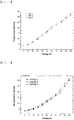
- the heat generating temperature may be varied with the applied voltage, and by way of example, when the applied voltage to the paste composition according to the present invention is in a range of 90 to 100 V, the heat generating temperature may be in a range of 297 to 328 °C.
- the ceramic paste composition according to the present invention may have problems in that when the heat generating temperature is above 400 °C, oxidation of carbon nanotubes occurs, a release phenomenon that a polymer base layer is burned so that a coating film is peeled off occurs, or inherent properties of the paste composition are not implemented due to decomposition of the binder.
- a conductive film manufactured by the ceramic paste composition according to the present invention may be included in a heat generating product, an electromagnetic wave shielding and absorption product, and a conductive product.
- the heat generating product may be used in keeping warmth, heating or the like, and commercialized in various forms, and by way of example, may be used as a heat generating sheet, a heat generating pipe, a heat generating thermos, a heat generating radiator, or the like.
- the electromagnetic wave shielding and absorption product may be used in, for example, all electronic products emitting electromagnetic waves such as a cellular phone, a television and a vehicle, and various products requiring high conductivity such as a binder for an electrode, an electronic circuit and an antenna.
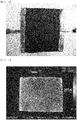
- both ends of the coating film prepared in the following Examples and Comparative Examples were coated with silver paste, and overlaid with copper foil, thereby forming electrodes. Thereafter, voltage was applied at an interval of 10 V from 0 V to 100 V, and a heat generating temperature therefor was measured.
- the sheet resistance of the coating films prepared in the following Examples and Comparative Examples was measured using a surface resistance measurement system (Loresta-GP. MCP-T610, Mitsubishi Chemical Analytech).
- the coating film was divided into 4 parts when measuring the sheet resistance of the coating film with the surface resistance measurement system, and the average value thereof was taken.
- Scotch magic tape from 3M was attached to and then detached from the surface of the coating film prepared in the following Examples and Comparative Examples, and the release was determined by checking whether the tape is smeared with the coating film. It was indicated as ⁇ when the film was not released, ⁇ when the film was not released, but deformed, and ⁇ when the film was released.
- a coating film was manufactured in the same manner as in Example 1, except that 5 g of a carbon nanotube-silver nano composite (Hanwha Nanotech Corporation) was added instead of the carbon nanotubes.
- the temperature change, electrical conductivity, electromagnetic wave shielding, and release of the thus-manufactured coating film were measured, and are shown in Table 1.
- a coating film was manufactured in the same manner as in Example 1, except that the same amount of methyl methacrylate (Daekwang Highpolymer Co., Ltd.) was added instead of the silicone adhesive.
- the temperature change, electrical conductivity, electromagnetic wave shielding, and release of the thus-manufactured coating film were measured, and are shown in Table 1.
- Example Comparative Example 1 2 1 Temperature change 0 V 25.0 25.0 25.0 10 V 45.5 44.7 39.3 20 V 68.6 55.0 51.2 30 V 98.0 79.0 71.7 40 V 132.5 102.6 96.5 50 V 164.8 130.5 - 60 V 207.5 158.4 - 70 V 235.4 180.3 - 80 V 260.4 227.0 - 90 V 297.4 275.5 - 100 V 328.4 317.1 - Release ⁇ ⁇ ⁇
- the heat generating coating film manufactured according to the present invention has a heat generating temperature raised in proportion to applied voltage, and in Comparative Example 1 using another adhesive or a silicone adhesive having different physical properties, temperature exceeds the thermal resistant temperature at a certain voltage or more, and thus, it was impossible to measure the temperature change. Further, it was confirmed that though repetitive experiments were carried out under the same condition in order to confirm thermal durability, heat generation was all similar. In addition, it was confirmed that though high temperature according to heat generation was continuously maintained, the heat generating coating film manufactured in the Examples was stably maintained without being released.
Landscapes
- Chemical & Material Sciences (AREA)
- Engineering & Computer Science (AREA)
- Ceramic Engineering (AREA)
- Dispersion Chemistry (AREA)
- Organic Chemistry (AREA)
- Structural Engineering (AREA)
- Materials Engineering (AREA)
- Manufacturing & Machinery (AREA)
- Physics & Mathematics (AREA)
- Spectroscopy & Molecular Physics (AREA)
- Inorganic Chemistry (AREA)
- Chemical Kinetics & Catalysis (AREA)
- Conductive Materials (AREA)
- Adhesives Or Adhesive Processes (AREA)
- Non-Insulated Conductors (AREA)
Claims (9)
- Keramikpastenzusammensetzung, welche Kohlenstoff-Nanoröhren oder ein Kohlenstoff-Nanoröhren-Metall-Komposit sowie einen Silikonklebstoff umfasst,
wobei der Silikonklebstoff beruhend auf 100 Gew.-% des gesamten Silikonklebstoffs 0,1 bis 10 Gew.-% einer Silanolgruppe umfasst und ein Molverhältnis einer Phenylgruppe zu einer Methylgruppe von 0,3 bis 2,5 aufweist. - Keramikpastenzusammensetzung nach Anspruch 1, wobei ein in dem Kohlenstoff-Nanoröhren-Metall-Komposit enthaltenes Metall ein oder mehrere gewählt aus der Gruppe bestehend aus Silber, Platin, Gold, Kupfer, Nickel, Eisen, Kobalt und Aluminium ist.
- Keramikpastenzusammensetzung nach Anspruch 2, wobei ein Anteil des Metalls bei 1 bis 80 Gewichtsteilen beruhend auf 100 Gewichtsteilen des Kohlenstoff-Nanoröhren-Metall-Komposits liegt.
- Keramikpastenzusammensetzung nach Anspruch 1, wobei ein Anteil der Kohlenstoff-Nanoröhren oder des Kohlenstoff-Nanoröhren-Metall-Komposits 20 bis 80 Gew.-% beträgt und ein Anteil des Silikonklebstoffs 20 bis 80 Gew.-% beträgt.
- Keramikpastenzusammensetzung nach Anspruch 1, welche weiterhin ein organisches Bindemittel, ein Dispergiermittel und ein organisches Lösungsmittel umfasst.
- Keramikpastenzusammensetzung nach Anspruch 5, wobei
das organische Bindemittel eines gewählt aus der Gruppe bestehend aus Ethylcellulose, Nitrocellulose und einer Mischung derselben ist;
das Dispergiermittel eines oder mehrere gewählt aus der Gruppe bestehend aus einem Phosphorestersalz von aminohaltigem Oligomer oder Polymer, Monoester oder Diester von Phosphorsäure, saurem Dicarboxylmonoester, einem Polyurethan-Polyamin-Addukt und polyalkoxyliertem Monoamin oder Diamin ist; und
das organische Lösungsmittel ein oder mehrere gewählt aus der Gruppe bestehend aus Aceton, Methylethylketon, Methylalkohol, Ethylalkohol, Isopropylalkohol, Butylalkohol, Ethylenglykol, Polyethylenglykol, Tetrahydrofuran, Dimethylformamid, Dimethylacetamid, N-Methyl-2-pyrrolidon, Hexan, Cyclohexanon, Toluen, Chloroform, Dichlorbenzen, Dimethylbenzen, Trimethylbenzen, Pyridin, Methylnaphthalen, Nitromethan, Acrylnitril, Octadecylamin, Anilin, Dimethylsulfoxid, Diethylenglykolethylether und Terpineol ist. - Keramikpastenzusammensetzung nach Anspruch 5, wobei ein Anteil der Kohlenstoff-Nanoröhre oder des Kohlenstoff-Nanoröhren-Metall-Komposits 1 bis 50 Gew.-% beträgt, ein Anteil des organischen Bindemittels 1 bis 20 Gew.-% beträgt, ein Anteil des Silikonklebstoffs 1 bis 30 Gew.-% beträgt, ein Anteil des Dispergiermittels 1 bis 20 Gew.-% beträgt und ein Anteil des organischen Lösungsmittels 1 bis 90 Gew.-% beträgt.
- Leitfähige Folie, welche die Keramikpastenzusammensetzung nach einem der Ansprüche 1 bis 7 umfasst.
- Leitfähige Folie nach Anspruch 8, wobei sie bei Aufweisen einer Dicke von 10 bis 600 µm eine Wärmeerzeugungstemperatur von 40 bis 400°C bei angelegter Spannung von 1,5 bis 220 V aufweist.
Applications Claiming Priority (2)
| Application Number | Priority Date | Filing Date | Title |
|---|---|---|---|
| KR1020130082105A KR101447478B1 (ko) | 2013-07-12 | 2013-07-12 | 탄소나노튜브 또는 탄소나노튜브-금속 복합체를 이용한 세라믹 페이스트 조성물 및 이를 포함하는 도전성 필름 |
| PCT/KR2014/006141 WO2015005665A1 (ko) | 2013-07-12 | 2014-07-09 | 탄소나노튜브 또는 탄소나노류브 -금속 복합체를 이용한 세라믹 페이스트 조성물 및 이를 포함하는 도전성 필름 |
Publications (3)
| Publication Number | Publication Date |
|---|---|
| EP3021328A1 EP3021328A1 (de) | 2016-05-18 |
| EP3021328A4 EP3021328A4 (de) | 2017-01-18 |
| EP3021328B1 true EP3021328B1 (de) | 2018-04-04 |
Family
ID=51996610
Family Applications (1)
| Application Number | Title | Priority Date | Filing Date |
|---|---|---|---|
| EP14822163.3A Active EP3021328B1 (de) | 2013-07-12 | 2014-07-09 | Keramikpastenzusammensetzung mit kohlenstoffnanoröhren oder einem kohlenstoffnanoröhren-metallkomplex sowie leitfähiger film damit |
Country Status (6)
| Country | Link |
|---|---|
| US (1) | US10249404B2 (de) |
| EP (1) | EP3021328B1 (de) |
| JP (1) | JP6173581B2 (de) |
| KR (1) | KR101447478B1 (de) |
| CN (1) | CN105493198B (de) |
| WO (1) | WO2015005665A1 (de) |
Families Citing this family (20)
| Publication number | Priority date | Publication date | Assignee | Title |
|---|---|---|---|---|
| EP3174705B1 (de) | 2014-07-30 | 2019-11-27 | General Nano LLC | Kohlenstoffnanoröhrenmattenstruktur und verfahren zu deren herstellung |
| WO2017136806A1 (en) | 2016-02-04 | 2017-08-10 | General Nano Llc | Carbon nanotube sheet structure and method for its making |
| KR20160136107A (ko) * | 2015-05-19 | 2016-11-29 | 주식회사 대화알로이테크 | 온열매트 |
| KR101647802B1 (ko) * | 2015-08-12 | 2016-08-11 | 김유석 | Cnt 합성 고강도 콘크리트 말뚝 및 그 시공방법 |
| CN108136502B (zh) * | 2016-01-29 | 2020-11-17 | 惠普发展公司有限责任合伙企业 | 三维(3d)打印方法和系统 |
| KR101939220B1 (ko) * | 2016-06-20 | 2019-01-17 | 전자부품연구원 | 온풍기용 면상 발열 히터, 온풍기용 발열 조립체 및 온풍기 |
| US10779362B2 (en) | 2016-12-08 | 2020-09-15 | Samsung Electronics Co., Ltd. | Heating element, manufacturing method thereof, composition for forming heating element, and heating apparatus |
| KR102496482B1 (ko) | 2017-10-11 | 2023-02-06 | 삼성전자주식회사 | 발열체 형성용 조성물, 이의 건조 소성물을 포함하는 발열체 및 발열체 형성용 조성물 제조방법 |
| KR102377623B1 (ko) * | 2018-01-29 | 2022-03-24 | 주식회사 엘지화학 | 탄소나노튜브 분산액의 제조방법 |
| KR102062600B1 (ko) * | 2018-06-01 | 2020-01-07 | (주)바이오니아 | 전기구이판 |
| WO2020132054A2 (en) * | 2018-12-18 | 2020-06-25 | General Nano Llc | Redundant heating systems |
| KR102200510B1 (ko) | 2018-12-28 | 2021-01-11 | (주)바이오니아 | 히터 일체형 가스 크로마토그래피 컬럼 장치 |
| KR102156728B1 (ko) * | 2019-01-09 | 2020-09-16 | (주)바이오니아 | 내열성 면상발열체가 접착된 시료농축튜브와 이를 포함하는 분석 장치 및 이를 이용한 분석 방법 |
| CN109721369A (zh) * | 2019-01-25 | 2019-05-07 | 华研(佛山)纳米材料有限公司 | 一种含碳纳米管的复合陶瓷材料及其制备方法 |
| CN110232983B (zh) * | 2019-04-08 | 2020-10-30 | 绍兴文理学院元培学院 | 一种陶瓷压阻式压力传感器用厚膜电阻浆料及制备方法 |
| KR102266093B1 (ko) | 2019-09-06 | 2021-06-18 | (주)바이오니아 | 코어-쉘 구조의 은 코팅 구리 나노와이어를 포함하는 전도성 페이스트 조성물 및 이를 포함하는 전도성 필름 |
| KR102254514B1 (ko) * | 2019-11-18 | 2021-05-21 | (주)바이오니아 | 발열도료를 이용한 전기그릴 |
| KR20220117714A (ko) | 2021-02-17 | 2022-08-24 | 한국과학기술원 | 자기발열 폴리머 복합체 및 그 제조 방법 |
| KR102739525B1 (ko) * | 2022-03-21 | 2024-12-06 | (주)에스에이치코리아 | 듀얼 전자파 차폐 발열필름 |
| TWI902101B (zh) * | 2023-12-27 | 2025-10-21 | 南亞塑膠工業股份有限公司 | 耐高溫防蝕塗料及其製造方法 |
Family Cites Families (25)
| Publication number | Priority date | Publication date | Assignee | Title |
|---|---|---|---|---|
| GB0009731D0 (en) * | 2000-04-18 | 2000-06-07 | Dytech Corp Ltd | Mouldable E G extrudable ceramic compositions |
| JP2002138204A (ja) | 2000-11-02 | 2002-05-14 | Kanegafuchi Chem Ind Co Ltd | 難燃性樹脂組成物 |
| CN1453799A (zh) * | 2003-06-03 | 2003-11-05 | 段曦东 | 复合导电陶瓷及其制备方法 |
| KR20050011867A (ko) * | 2003-07-24 | 2005-01-31 | 삼성전자주식회사 | 탄소나노튜브 및 금속나노입자를 이용한 도전성 필름형성방법 |
| KR100550770B1 (ko) * | 2003-12-23 | 2006-02-08 | 재단법인 포항산업과학연구원 | 일액형 상온 경화형 실리콘 페이스트 조성물 |
| US20060025515A1 (en) * | 2004-07-27 | 2006-02-02 | Mainstream Engineering Corp. | Nanotube composites and methods for producing |
| JP4979963B2 (ja) * | 2006-03-10 | 2012-07-18 | 株式会社Adeka | 光学材料用硬化性組成物及び光導波路 |
| KR100869163B1 (ko) | 2007-05-18 | 2008-11-19 | 한국전기연구원 | 탄소나노튜브와 바인더를 함유하는 투명전도성 필름의제조방법 및 이에 의해 제조된 투명전도성 필름 |
| KR101095840B1 (ko) | 2007-07-20 | 2011-12-21 | 한국과학기술원 | 탄소나노구조체 및 금속으로 이루어진 나노복합체의제조방법 |
| MY150038A (en) * | 2007-09-19 | 2013-11-29 | Toray Industries | Adhesive composition for electronic components, and adhesive sheet for electronic components using the same |
| CN101855598B (zh) * | 2007-11-13 | 2012-08-08 | 株式会社Adeka | 正型感光性组合物、正型永久抗蚀膜及正型永久抗蚀膜的制造方法 |
| JP5201063B2 (ja) * | 2008-04-15 | 2013-06-05 | 信越化学工業株式会社 | 付加硬化型シリコーン組成物及びその硬化物 |
| KR101202405B1 (ko) * | 2008-05-28 | 2012-11-23 | (주)바이오니아 | 탄소나노튜브 및 금속으로 이루어진 나노복합체 및 이의제조방법 |
| JP5251732B2 (ja) * | 2008-06-04 | 2013-07-31 | 信越化学工業株式会社 | シリコーン粘着剤組成物 |
| DE102008045296A1 (de) | 2008-09-02 | 2010-03-04 | Byk-Chemie Gmbh | Monocarbonsäureester enthaltendes Dispergiermedium für Feststoffpräparationen |
| US8304694B2 (en) | 2008-11-11 | 2012-11-06 | Boquan Wang | Electric heating material and laminate floor containing same and method for producing the laminate floor |
| CN101735561A (zh) * | 2008-11-25 | 2010-06-16 | 西安宏星电子浆料科技有限责任公司 | 发热器用电致热有机功率电阻浆料 |
| WO2011021794A2 (ko) * | 2009-08-20 | 2011-02-24 | ㈜엘지하우시스 | 탄소나노튜브-금속입자 복합 조성물 및 이를 이용한 발열 조향핸들 |
| KR101006456B1 (ko) * | 2009-04-15 | 2011-01-06 | 한국과학기술연구원 | 금속 스퍼터링을 이용한 전도성필름 제조방법 및 전도성필름 |
| JP2011038203A (ja) | 2009-08-10 | 2011-02-24 | Denso Corp | カーボンナノチューブ繊維複合体、およびカーボンナノチューブ繊維複合体の製造方法 |
| KR20120000878A (ko) | 2010-06-28 | 2012-01-04 | 주식회사 유니웜 | 카본섬유 발열체 및 이를 이용한 발열 시트 제조방법 |
| KR101029147B1 (ko) | 2010-11-05 | 2011-04-13 | 김현철 | 액상발열조성물, 이를 이용한 발열시트 및 발열파이프 |
| JP2013030469A (ja) * | 2011-06-20 | 2013-02-07 | Toray Ind Inc | 電子放出源用ペースト、これを用いた電子放出源および電子放出素子。 |
| KR20130043444A (ko) * | 2011-10-20 | 2013-04-30 | 삼성전자주식회사 | 탄소나노튜브 페이스트 조성물, 상기 탄소나노튜브 페이스트 조성물을 사용하여 제조된 전자 방출원 및 상기 전자 방출원을 구비하는 전자 방출 소자 |
| CN102796488B (zh) * | 2012-07-26 | 2014-08-20 | 深圳大学 | 耐高温绝缘胶粘剂 |
-
2013
- 2013-07-12 KR KR1020130082105A patent/KR101447478B1/ko active Active
-
2014
- 2014-07-09 JP JP2016525278A patent/JP6173581B2/ja active Active
- 2014-07-09 EP EP14822163.3A patent/EP3021328B1/de active Active
- 2014-07-09 CN CN201480039822.9A patent/CN105493198B/zh active Active
- 2014-07-09 WO PCT/KR2014/006141 patent/WO2015005665A1/ko not_active Ceased
- 2014-07-09 US US14/904,358 patent/US10249404B2/en active Active
Non-Patent Citations (1)
| Title |
|---|
| None * |
Also Published As
| Publication number | Publication date |
|---|---|
| US20160254072A1 (en) | 2016-09-01 |
| CN105493198B (zh) | 2018-01-12 |
| CN105493198A (zh) | 2016-04-13 |
| JP6173581B2 (ja) | 2017-08-02 |
| US10249404B2 (en) | 2019-04-02 |
| JP2016533001A (ja) | 2016-10-20 |
| EP3021328A1 (de) | 2016-05-18 |
| WO2015005665A1 (ko) | 2015-01-15 |
| KR101447478B1 (ko) | 2014-10-06 |
| EP3021328A4 (de) | 2017-01-18 |
Similar Documents
| Publication | Publication Date | Title |
|---|---|---|
| EP3021328B1 (de) | Keramikpastenzusammensetzung mit kohlenstoffnanoröhren oder einem kohlenstoffnanoröhren-metallkomplex sowie leitfähiger film damit | |
| JP4832615B1 (ja) | 低温焼結性導電性ペーストおよびそれを用いた導電膜と導電膜の形成方法 | |
| JP2012214898A (ja) | 銀コート銅粉及びその製造法、該銀コート銅粉を含有する導電性ペースト、導電性接着剤、導電性膜、及び電気回路 | |
| KR101759180B1 (ko) | 그라핀 시트 및 흑연을 함유하는 중합체 조성물 | |
| KR101294596B1 (ko) | 탄소나노튜브를 포함하는 면상 발열체 페이스트 조성물 및 그 제조방법 | |
| JP5985548B2 (ja) | 官能化グラフェンシートを含有するコーティングおよびそれらのコーティングで被覆した物品 | |
| US8067702B2 (en) | Electromagnetic wave shielding material and production process of the same | |
| US9117568B2 (en) | Polymer compositions containing carbonaceous fillers | |
| CN103183978B (zh) | 油墨组合物及其应用和表面选择性金属化的制品及其制备方法 | |
| TW201016796A (en) | Printable compositions containing silver nanoparticles, processes for producing electrically conductive coatings using the same, and coatings prepared thereby | |
| KR101613503B1 (ko) | 발열용 페이스트 조성물 및 그 제조방법 | |
| US10166811B1 (en) | Security devices | |
| KR20140113910A (ko) | 은 미립자 및 그의 제조법, 및 상기 은 미립자를 함유하는 도전성 페이스트, 도전성 막 및 전자 디바이스 | |
| CN103184440B (zh) | 一种表面选择性金属化的制品及其制备方法 | |
| JP2009176608A (ja) | 透明導電性フィルムの製造方法、透明導電性フィルム及びタッチパネル | |
| WO2014002885A1 (ja) | カーボンナノチューブ含有組成物の分散液および導電性成形体 | |
| US20090053400A1 (en) | Ink jet printable compositions for preparing electronic devices and patterns | |
| EP4020499B1 (de) | Leitfähige pastenzusammensetzung mit silberummanteltem kupfernanodraht mit kern-hülle-struktur und leitfähiger film damit | |
| TW201315685A (zh) | 銀微粒子及含有該銀微粒子之導電膏,導電膜及電子裝置 | |
| JP5773147B2 (ja) | 銀微粒子並びに該銀微粒子を含有する導電性ペースト、導電性膜及び電子デバイス | |
| JP5466769B2 (ja) | 低温焼結性導電性ペーストおよびそれを用いた導電膜と導電膜の形成方法 | |
| JP2016115561A (ja) | 導電性ペースト | |
| Li et al. | Printed copper-nanoplate conductor for electro-magnetic interference | |
| JP7197685B2 (ja) | 自己組織化銅球の調製方法 | |
| JP5720498B2 (ja) | 酸化銀組成物、酸化銀含有導電性組成物、導電性被膜を具備する積層体およびその製造方法 |
Legal Events
| Date | Code | Title | Description |
|---|---|---|---|
| PUAI | Public reference made under article 153(3) epc to a published international application that has entered the european phase |
Free format text: ORIGINAL CODE: 0009012 |
|
| 17P | Request for examination filed |
Effective date: 20160113 |
|
| AK | Designated contracting states |
Kind code of ref document: A1 Designated state(s): AL AT BE BG CH CY CZ DE DK EE ES FI FR GB GR HR HU IE IS IT LI LT LU LV MC MK MT NL NO PL PT RO RS SE SI SK SM TR |
|
| AX | Request for extension of the european patent |
Extension state: BA ME |
|
| RIN1 | Information on inventor provided before grant (corrected) |
Inventor name: KIM, JUN PYO Inventor name: KIM, JAE HA Inventor name: PARK, HAN OH |
|
| DAX | Request for extension of the european patent (deleted) | ||
| A4 | Supplementary search report drawn up and despatched |
Effective date: 20161221 |
|
| RIC1 | Information provided on ipc code assigned before grant |
Ipc: C04B 35/74 20060101ALI20161215BHEP Ipc: H01B 1/00 20060101AFI20161215BHEP Ipc: C04B 41/45 20060101ALI20161215BHEP Ipc: C04B 35/80 20060101ALI20161215BHEP |
|
| GRAP | Despatch of communication of intention to grant a patent |
Free format text: ORIGINAL CODE: EPIDOSNIGR1 |
|
| INTG | Intention to grant announced |
Effective date: 20171027 |
|
| RIN1 | Information on inventor provided before grant (corrected) |
Inventor name: PARK, HAN OH Inventor name: KIM, JAE HA Inventor name: KIM, JUN PYO |
|
| GRAS | Grant fee paid |
Free format text: ORIGINAL CODE: EPIDOSNIGR3 |
|
| GRAA | (expected) grant |
Free format text: ORIGINAL CODE: 0009210 |
|
| AK | Designated contracting states |
Kind code of ref document: B1 Designated state(s): AL AT BE BG CH CY CZ DE DK EE ES FI FR GB GR HR HU IE IS IT LI LT LU LV MC MK MT NL NO PL PT RO RS SE SI SK SM TR |
|
| REG | Reference to a national code |
Ref country code: GB Ref legal event code: FG4D |
|
| REG | Reference to a national code |
Ref country code: CH Ref legal event code: EP |
|
| REG | Reference to a national code |
Ref country code: AT Ref legal event code: REF Ref document number: 986423 Country of ref document: AT Kind code of ref document: T Effective date: 20180415 |
|
| REG | Reference to a national code |
Ref country code: CH Ref legal event code: NV Representative=s name: KELLER AND PARTNER PATENTANWAELTE AG, CH |
|
| REG | Reference to a national code |
Ref country code: IE Ref legal event code: FG4D |
|
| REG | Reference to a national code |
Ref country code: DE Ref legal event code: R096 Ref document number: 602014023476 Country of ref document: DE |
|
| REG | Reference to a national code |
Ref country code: FR Ref legal event code: PLFP Year of fee payment: 5 |
|
| REG | Reference to a national code |
Ref country code: NL Ref legal event code: MP Effective date: 20180404 |
|
| REG | Reference to a national code |
Ref country code: LT Ref legal event code: MG4D |
|
| PG25 | Lapsed in a contracting state [announced via postgrant information from national office to epo] |
Ref country code: NL Free format text: LAPSE BECAUSE OF FAILURE TO SUBMIT A TRANSLATION OF THE DESCRIPTION OR TO PAY THE FEE WITHIN THE PRESCRIBED TIME-LIMIT Effective date: 20180404 |
|
| PG25 | Lapsed in a contracting state [announced via postgrant information from national office to epo] |
Ref country code: NO Free format text: LAPSE BECAUSE OF FAILURE TO SUBMIT A TRANSLATION OF THE DESCRIPTION OR TO PAY THE FEE WITHIN THE PRESCRIBED TIME-LIMIT Effective date: 20180704 Ref country code: FI Free format text: LAPSE BECAUSE OF FAILURE TO SUBMIT A TRANSLATION OF THE DESCRIPTION OR TO PAY THE FEE WITHIN THE PRESCRIBED TIME-LIMIT Effective date: 20180404 Ref country code: PL Free format text: LAPSE BECAUSE OF FAILURE TO SUBMIT A TRANSLATION OF THE DESCRIPTION OR TO PAY THE FEE WITHIN THE PRESCRIBED TIME-LIMIT Effective date: 20180404 Ref country code: BG Free format text: LAPSE BECAUSE OF FAILURE TO SUBMIT A TRANSLATION OF THE DESCRIPTION OR TO PAY THE FEE WITHIN THE PRESCRIBED TIME-LIMIT Effective date: 20180704 Ref country code: LT Free format text: LAPSE BECAUSE OF FAILURE TO SUBMIT A TRANSLATION OF THE DESCRIPTION OR TO PAY THE FEE WITHIN THE PRESCRIBED TIME-LIMIT Effective date: 20180404 Ref country code: ES Free format text: LAPSE BECAUSE OF FAILURE TO SUBMIT A TRANSLATION OF THE DESCRIPTION OR TO PAY THE FEE WITHIN THE PRESCRIBED TIME-LIMIT Effective date: 20180404 Ref country code: AL Free format text: LAPSE BECAUSE OF FAILURE TO SUBMIT A TRANSLATION OF THE DESCRIPTION OR TO PAY THE FEE WITHIN THE PRESCRIBED TIME-LIMIT Effective date: 20180404 Ref country code: SE Free format text: LAPSE BECAUSE OF FAILURE TO SUBMIT A TRANSLATION OF THE DESCRIPTION OR TO PAY THE FEE WITHIN THE PRESCRIBED TIME-LIMIT Effective date: 20180404 |
|
| PG25 | Lapsed in a contracting state [announced via postgrant information from national office to epo] |
Ref country code: LV Free format text: LAPSE BECAUSE OF FAILURE TO SUBMIT A TRANSLATION OF THE DESCRIPTION OR TO PAY THE FEE WITHIN THE PRESCRIBED TIME-LIMIT Effective date: 20180404 Ref country code: HR Free format text: LAPSE BECAUSE OF FAILURE TO SUBMIT A TRANSLATION OF THE DESCRIPTION OR TO PAY THE FEE WITHIN THE PRESCRIBED TIME-LIMIT Effective date: 20180404 Ref country code: RS Free format text: LAPSE BECAUSE OF FAILURE TO SUBMIT A TRANSLATION OF THE DESCRIPTION OR TO PAY THE FEE WITHIN THE PRESCRIBED TIME-LIMIT Effective date: 20180404 Ref country code: GR Free format text: LAPSE BECAUSE OF FAILURE TO SUBMIT A TRANSLATION OF THE DESCRIPTION OR TO PAY THE FEE WITHIN THE PRESCRIBED TIME-LIMIT Effective date: 20180705 |
|
| REG | Reference to a national code |
Ref country code: AT Ref legal event code: MK05 Ref document number: 986423 Country of ref document: AT Kind code of ref document: T Effective date: 20180404 |
|
| PG25 | Lapsed in a contracting state [announced via postgrant information from national office to epo] |
Ref country code: PT Free format text: LAPSE BECAUSE OF FAILURE TO SUBMIT A TRANSLATION OF THE DESCRIPTION OR TO PAY THE FEE WITHIN THE PRESCRIBED TIME-LIMIT Effective date: 20180806 |
|
| REG | Reference to a national code |
Ref country code: DE Ref legal event code: R097 Ref document number: 602014023476 Country of ref document: DE |
|
| PG25 | Lapsed in a contracting state [announced via postgrant information from national office to epo] |
Ref country code: DK Free format text: LAPSE BECAUSE OF FAILURE TO SUBMIT A TRANSLATION OF THE DESCRIPTION OR TO PAY THE FEE WITHIN THE PRESCRIBED TIME-LIMIT Effective date: 20180404 Ref country code: SK Free format text: LAPSE BECAUSE OF FAILURE TO SUBMIT A TRANSLATION OF THE DESCRIPTION OR TO PAY THE FEE WITHIN THE PRESCRIBED TIME-LIMIT Effective date: 20180404 Ref country code: RO Free format text: LAPSE BECAUSE OF FAILURE TO SUBMIT A TRANSLATION OF THE DESCRIPTION OR TO PAY THE FEE WITHIN THE PRESCRIBED TIME-LIMIT Effective date: 20180404 Ref country code: CZ Free format text: LAPSE BECAUSE OF FAILURE TO SUBMIT A TRANSLATION OF THE DESCRIPTION OR TO PAY THE FEE WITHIN THE PRESCRIBED TIME-LIMIT Effective date: 20180404 Ref country code: EE Free format text: LAPSE BECAUSE OF FAILURE TO SUBMIT A TRANSLATION OF THE DESCRIPTION OR TO PAY THE FEE WITHIN THE PRESCRIBED TIME-LIMIT Effective date: 20180404 Ref country code: AT Free format text: LAPSE BECAUSE OF FAILURE TO SUBMIT A TRANSLATION OF THE DESCRIPTION OR TO PAY THE FEE WITHIN THE PRESCRIBED TIME-LIMIT Effective date: 20180404 |
|
| PLBE | No opposition filed within time limit |
Free format text: ORIGINAL CODE: 0009261 |
|
| STAA | Information on the status of an ep patent application or granted ep patent |
Free format text: STATUS: NO OPPOSITION FILED WITHIN TIME LIMIT |
|
| PG25 | Lapsed in a contracting state [announced via postgrant information from national office to epo] |
Ref country code: SM Free format text: LAPSE BECAUSE OF FAILURE TO SUBMIT A TRANSLATION OF THE DESCRIPTION OR TO PAY THE FEE WITHIN THE PRESCRIBED TIME-LIMIT Effective date: 20180404 |
|
| 26N | No opposition filed |
Effective date: 20190107 |
|
| PG25 | Lapsed in a contracting state [announced via postgrant information from national office to epo] |
Ref country code: MC Free format text: LAPSE BECAUSE OF FAILURE TO SUBMIT A TRANSLATION OF THE DESCRIPTION OR TO PAY THE FEE WITHIN THE PRESCRIBED TIME-LIMIT Effective date: 20180404 Ref country code: LU Free format text: LAPSE BECAUSE OF NON-PAYMENT OF DUE FEES Effective date: 20180709 |
|
| REG | Reference to a national code |
Ref country code: BE Ref legal event code: MM Effective date: 20180731 |
|
| REG | Reference to a national code |
Ref country code: IE Ref legal event code: MM4A |
|
| PG25 | Lapsed in a contracting state [announced via postgrant information from national office to epo] |
Ref country code: IE Free format text: LAPSE BECAUSE OF NON-PAYMENT OF DUE FEES Effective date: 20180709 |
|
| PG25 | Lapsed in a contracting state [announced via postgrant information from national office to epo] |
Ref country code: BE Free format text: LAPSE BECAUSE OF NON-PAYMENT OF DUE FEES Effective date: 20180731 Ref country code: SI Free format text: LAPSE BECAUSE OF FAILURE TO SUBMIT A TRANSLATION OF THE DESCRIPTION OR TO PAY THE FEE WITHIN THE PRESCRIBED TIME-LIMIT Effective date: 20180404 |
|
| PG25 | Lapsed in a contracting state [announced via postgrant information from national office to epo] |
Ref country code: MT Free format text: LAPSE BECAUSE OF NON-PAYMENT OF DUE FEES Effective date: 20180709 |
|
| PG25 | Lapsed in a contracting state [announced via postgrant information from national office to epo] |
Ref country code: TR Free format text: LAPSE BECAUSE OF FAILURE TO SUBMIT A TRANSLATION OF THE DESCRIPTION OR TO PAY THE FEE WITHIN THE PRESCRIBED TIME-LIMIT Effective date: 20180404 |
|
| PG25 | Lapsed in a contracting state [announced via postgrant information from national office to epo] |
Ref country code: MK Free format text: LAPSE BECAUSE OF NON-PAYMENT OF DUE FEES Effective date: 20180404 Ref country code: CY Free format text: LAPSE BECAUSE OF FAILURE TO SUBMIT A TRANSLATION OF THE DESCRIPTION OR TO PAY THE FEE WITHIN THE PRESCRIBED TIME-LIMIT Effective date: 20180404 Ref country code: HU Free format text: LAPSE BECAUSE OF FAILURE TO SUBMIT A TRANSLATION OF THE DESCRIPTION OR TO PAY THE FEE WITHIN THE PRESCRIBED TIME-LIMIT; INVALID AB INITIO Effective date: 20140709 |
|
| PG25 | Lapsed in a contracting state [announced via postgrant information from national office to epo] |
Ref country code: IS Free format text: LAPSE BECAUSE OF FAILURE TO SUBMIT A TRANSLATION OF THE DESCRIPTION OR TO PAY THE FEE WITHIN THE PRESCRIBED TIME-LIMIT Effective date: 20180804 |
|
| REG | Reference to a national code |
Ref country code: CH Ref legal event code: PFA Owner name: BIONEER CORPORATION, KR Free format text: FORMER OWNER: BIONEER CORPORATION, KR |
|
| PGFP | Annual fee paid to national office [announced via postgrant information from national office to epo] |
Ref country code: GB Payment date: 20250529 Year of fee payment: 12 |
|
| PGFP | Annual fee paid to national office [announced via postgrant information from national office to epo] |
Ref country code: FR Payment date: 20250610 Year of fee payment: 12 |
|
| PGFP | Annual fee paid to national office [announced via postgrant information from national office to epo] |
Ref country code: DE Payment date: 20250604 Year of fee payment: 12 |
|
| PGFP | Annual fee paid to national office [announced via postgrant information from national office to epo] |
Ref country code: IT Payment date: 20250623 Year of fee payment: 12 |
|
| PGFP | Annual fee paid to national office [announced via postgrant information from national office to epo] |
Ref country code: CH Payment date: 20250801 Year of fee payment: 12 |