EP2995604B1 - Phenolderivat und herstellungsverfahren und verwendung in medizin davon - Google Patents
Phenolderivat und herstellungsverfahren und verwendung in medizin davon Download PDFInfo
- Publication number
- EP2995604B1 EP2995604B1 EP14795509.0A EP14795509A EP2995604B1 EP 2995604 B1 EP2995604 B1 EP 2995604B1 EP 14795509 A EP14795509 A EP 14795509A EP 2995604 B1 EP2995604 B1 EP 2995604B1
- Authority
- EP
- European Patent Office
- Prior art keywords
- alkyl
- membered
- carbocyclic group
- hydroxyl
- alkoxy
- Prior art date
- Legal status (The legal status is an assumption and is not a legal conclusion. Google has not performed a legal analysis and makes no representation as to the accuracy of the status listed.)
- Active
Links
- 0 CC1(CC1)C1C*CC1 Chemical compound CC1(CC1)C1C*CC1 0.000 description 30
- WDUFRPFWUQIKSY-RRKGBCIJSA-N CCC(C)c(cccc1[C@H](C)C2CC2)c1O Chemical compound CCC(C)c(cccc1[C@H](C)C2CC2)c1O WDUFRPFWUQIKSY-RRKGBCIJSA-N 0.000 description 3
- HUXRLFOZBGLKRM-PKOBYXMFSA-N CC(C)C[C@@H](C([O]1[C@H](C2CC2)c(cccc2C(C)C)c2OC1)=O)N Chemical compound CC(C)C[C@@H](C([O]1[C@H](C2CC2)c(cccc2C(C)C)c2OC1)=O)N HUXRLFOZBGLKRM-PKOBYXMFSA-N 0.000 description 2
- VNHUJMXULIEAMO-RBBKRZOGSA-N CC(C)C[C@@H](C([O]1[C@H](C2CC2)c(cccc2C(C)C)c2OC1)=O)NC(OC(C)(C)C)=O Chemical compound CC(C)C[C@@H](C([O]1[C@H](C2CC2)c(cccc2C(C)C)c2OC1)=O)NC(OC(C)(C)C)=O VNHUJMXULIEAMO-RBBKRZOGSA-N 0.000 description 2
- XCKPFADCCGNPGY-HXUWFJFHSA-N CC(C)c(cccc1[C@H]2C3CC3)c1OC[O]2C(CCNC(OC(C)(C)C)=O)=O Chemical compound CC(C)c(cccc1[C@H]2C3CC3)c1OC[O]2C(CCNC(OC(C)(C)C)=O)=O XCKPFADCCGNPGY-HXUWFJFHSA-N 0.000 description 2
- RUIVNOWSQATDKP-UHFFFAOYSA-N CC(C1CC1)(c(cccc1C2(C)CC2)c1O)O Chemical compound CC(C1CC1)(c(cccc1C2(C)CC2)c1O)O RUIVNOWSQATDKP-UHFFFAOYSA-N 0.000 description 2
- AAOSVIVEIMSABL-UHFFFAOYSA-N CC(C1CC1)c(cccc1C2CC2)c1O Chemical compound CC(C1CC1)c(cccc1C2CC2)c1O AAOSVIVEIMSABL-UHFFFAOYSA-N 0.000 description 2
- JYBHAJISUFSSNB-UHFFFAOYSA-N CC(C1CC1)c(cccc1OC)c1O Chemical compound CC(C1CC1)c(cccc1OC)c1O JYBHAJISUFSSNB-UHFFFAOYSA-N 0.000 description 2
- FZEZGQFWCLZCKT-VGAJERRHSA-N CC(C)c(cccc1[C@H]2C3CC3)c1OC[O]2C(C(CCC1)N1C(OC(C)(C)C)=O)=O Chemical compound CC(C)c(cccc1[C@H]2C3CC3)c1OC[O]2C(C(CCC1)N1C(OC(C)(C)C)=O)=O FZEZGQFWCLZCKT-VGAJERRHSA-N 0.000 description 1
- MESZYFNYVARLFD-RBBKRZOGSA-N CC(C)c(cccc1[C@H]2C3CC3)c1OC[O]2C([C@H](Cc1ccccc1)N)=O Chemical compound CC(C)c(cccc1[C@H]2C3CC3)c1OC[O]2C([C@H](Cc1ccccc1)N)=O MESZYFNYVARLFD-RBBKRZOGSA-N 0.000 description 1
- SOOLBDJFRQXNMO-LJQANCHMSA-N CC(C)c(cccc1[C@H]2C3CC3)c1OC[O]2C(c1cccnc1)=O Chemical compound CC(C)c(cccc1[C@H]2C3CC3)c1OC[O]2C(c1cccnc1)=O SOOLBDJFRQXNMO-LJQANCHMSA-N 0.000 description 1
- CHIKZRMTWFJSJU-CYBMUJFWSA-N CC(C)c1c2OC[ClH][C@H](C3CC3)c2ccc1 Chemical compound CC(C)c1c2OC[ClH][C@H](C3CC3)c2ccc1 CHIKZRMTWFJSJU-CYBMUJFWSA-N 0.000 description 1
- BMEARIQHWSVDBS-UHFFFAOYSA-N CC(C)c1cccc(C(C)C2CC2)c1O Chemical compound CC(C)c1cccc(C(C)C2CC2)c1O BMEARIQHWSVDBS-UHFFFAOYSA-N 0.000 description 1
- PHBNNRRXZRANNF-UHFFFAOYSA-N CC(C)c1cccc(C(C)C2CC2)c1OCOP(OC1)(Oc2c1cccc2)=O Chemical compound CC(C)c1cccc(C(C)C2CC2)c1OCOP(OC1)(Oc2c1cccc2)=O PHBNNRRXZRANNF-UHFFFAOYSA-N 0.000 description 1
- VXFNFAZYLPOJDD-NSHDSACASA-N CC(C)c1cccc([C@@H](C)C2CC2)c1/[O]=C/Cl Chemical compound CC(C)c1cccc([C@@H](C)C2CC2)c1/[O]=C/Cl VXFNFAZYLPOJDD-NSHDSACASA-N 0.000 description 1
- BMEARIQHWSVDBS-JTQLQIEISA-N CC(C)c1cccc([C@@H](C)C2CC2)c1O Chemical compound CC(C)c1cccc([C@@H](C)C2CC2)c1O BMEARIQHWSVDBS-JTQLQIEISA-N 0.000 description 1
- LKSLOPIZGCKOKN-PYUWXLGESA-N CC(C)c1cccc([C@H](C)C2CC2)c1OCCCOC(C1CNCC1)=O Chemical compound CC(C)c1cccc([C@H](C)C2CC2)c1OCCCOC(C1CNCC1)=O LKSLOPIZGCKOKN-PYUWXLGESA-N 0.000 description 1
- LDUMBEAJAHUBAW-OAHLLOKOSA-N CC(C)c1cccc([C@H](C)C2CC2)c1OCOC(c1cccnc1)=O Chemical compound CC(C)c1cccc([C@H](C)C2CC2)c1OCOC(c1cccnc1)=O LDUMBEAJAHUBAW-OAHLLOKOSA-N 0.000 description 1
- QCSXWFBMEJYIRA-LLVKDONJSA-N CC(C)c1cccc([C@H](C)C2CC2)c1OCOP(O)(O)=O Chemical compound CC(C)c1cccc([C@H](C)C2CC2)c1OCOP(O)(O)=O QCSXWFBMEJYIRA-LLVKDONJSA-N 0.000 description 1
- QAWUABGDRXVDHN-HSZRJFAPSA-N CC(C)c1cccc([C@H](C)C2CC2)c1OCOP(OCc1ccccc1)(OCc1ccccc1)=O Chemical compound CC(C)c1cccc([C@H](C)C2CC2)c1OCOP(OCc1ccccc1)(OCc1ccccc1)=O QAWUABGDRXVDHN-HSZRJFAPSA-N 0.000 description 1
- PWTQDTKZGLDSKT-YMFOWYPZSA-N CC(C)c1cccc([C@H](C)C2CC2)c1OCO[C@@](C1OCOC(OC(C)C)=O)(C1=O)OCOC(OC(C)C)=O Chemical compound CC(C)c1cccc([C@H](C)C2CC2)c1OCO[C@@](C1OCOC(OC(C)C)=O)(C1=O)OCOC(OC(C)C)=O PWTQDTKZGLDSKT-YMFOWYPZSA-N 0.000 description 1
- HPZFHQZHLWYNRO-OAHLLOKOSA-N CC(C)c1cccc([C@H](C)C2CC2)c1[O](COC(OC(C)C)=O)=C Chemical compound CC(C)c1cccc([C@H](C)C2CC2)c1[O](COC(OC(C)C)=O)=C HPZFHQZHLWYNRO-OAHLLOKOSA-N 0.000 description 1
- NWKLCLQIYJKNIK-UHFFFAOYSA-N CC(C1CC1)(c(cccc1OC)c1O)O Chemical compound CC(C1CC1)(c(cccc1OC)c1O)O NWKLCLQIYJKNIK-UHFFFAOYSA-N 0.000 description 1
- XBZMFTHTKJEWOH-UHFFFAOYSA-N CC(C1CC1)(c1cccc(Br)c1O)O Chemical compound CC(C1CC1)(c1cccc(Br)c1O)O XBZMFTHTKJEWOH-UHFFFAOYSA-N 0.000 description 1
- HQTFYRYMLZCWML-UHFFFAOYSA-N CC(C1CC1)(c1ccccc1O)O Chemical compound CC(C1CC1)(c1ccccc1O)O HQTFYRYMLZCWML-UHFFFAOYSA-N 0.000 description 1
- GQQFIJMAUHGVOF-UHFFFAOYSA-M CC(C1CC1)c(cccc1Br)c1[O-] Chemical compound CC(C1CC1)c(cccc1Br)c1[O-] GQQFIJMAUHGVOF-UHFFFAOYSA-M 0.000 description 1
- JECYUBVRTQDVAT-UHFFFAOYSA-N CC(c(cccc1)c1O)=O Chemical compound CC(c(cccc1)c1O)=O JECYUBVRTQDVAT-UHFFFAOYSA-N 0.000 description 1
- RIWUZEPOSRCPQQ-INHVJJQHSA-N CCC(C)(c1cccc([C@H](C)C2CC2)c1O)O Chemical compound CCC(C)(c1cccc([C@H](C)C2CC2)c1O)O RIWUZEPOSRCPQQ-INHVJJQHSA-N 0.000 description 1
- BXBXAXIJGUJMIZ-ABLSDCBGSA-N CCOC(COP(OCC(O)=O)(OCOc1c([C@H](C)C2CC2)cccc1C(C)C)=O)=O Chemical compound CCOC(COP(OCC(O)=O)(OCOc1c([C@H](C)C2CC2)cccc1C(C)C)=O)=O BXBXAXIJGUJMIZ-ABLSDCBGSA-N 0.000 description 1
- IOKGQUXBMSVRTQ-QGZVFWFLSA-N CCOC(COP(OCC(OCC)=O)(OCOc1c([C@H](C)C2CC2)cccc1C(C)C)=O)=O Chemical compound CCOC(COP(OCC(OCC)=O)(OCOc1c([C@H](C)C2CC2)cccc1C(C)C)=O)=O IOKGQUXBMSVRTQ-QGZVFWFLSA-N 0.000 description 1
- SFLUNTNWICSLFE-UHFFFAOYSA-N CCOP(OCC)(OCOc1c(C(C)C2CC2)cccc1C(C)C)=O Chemical compound CCOP(OCC)(OCOc1c(C(C)C2CC2)cccc1C(C)C)=O SFLUNTNWICSLFE-UHFFFAOYSA-N 0.000 description 1
- QLIRTSPLQQKBRM-UHFFFAOYSA-N CCOP1(Oc2c(C(C)C)cccc2C(C2CC2)O1)=[U] Chemical compound CCOP1(Oc2c(C(C)C)cccc2C(C2CC2)O1)=[U] QLIRTSPLQQKBRM-UHFFFAOYSA-N 0.000 description 1
- AWWRPMYXEJUDCD-UHFFFAOYSA-N CCOP1([O](CC)C(C2=CC2)c(cccc2C(C)C)c2O1)=O Chemical compound CCOP1([O](CC)C(C2=CC2)c(cccc2C(C)C)c2O1)=O AWWRPMYXEJUDCD-UHFFFAOYSA-N 0.000 description 1
- LHGVFZTZFXWLCP-UHFFFAOYSA-N COc(cccc1)c1O Chemical compound COc(cccc1)c1O LHGVFZTZFXWLCP-UHFFFAOYSA-N 0.000 description 1
- RIZYJFCYJNMBRD-UHFFFAOYSA-N COc1cccc(C(C2CC2)=O)c1O Chemical compound COc1cccc(C(C2CC2)=O)c1O RIZYJFCYJNMBRD-UHFFFAOYSA-N 0.000 description 1
- LLVGOVMXJTZABO-UHFFFAOYSA-N COc1cccc(C(C2CC2)=O)c1OC1OCCCC1 Chemical compound COc1cccc(C(C2CC2)=O)c1OC1OCCCC1 LLVGOVMXJTZABO-UHFFFAOYSA-N 0.000 description 1
- TYUHJRNZBXTHAW-UHFFFAOYSA-N COc1ccccc1OC1OCCCC1 Chemical compound COc1ccccc1OC1OCCCC1 TYUHJRNZBXTHAW-UHFFFAOYSA-N 0.000 description 1
- GQQFIJMAUHGVOF-SSDOTTSWSA-N C[C@H](C1CC1)c1cccc(Br)c1O Chemical compound C[C@H](C1CC1)c1cccc(Br)c1O GQQFIJMAUHGVOF-SSDOTTSWSA-N 0.000 description 1
Images


Classifications
-
- A—HUMAN NECESSITIES
- A61—MEDICAL OR VETERINARY SCIENCE; HYGIENE
- A61P—SPECIFIC THERAPEUTIC ACTIVITY OF CHEMICAL COMPOUNDS OR MEDICINAL PREPARATIONS
- A61P1/00—Drugs for disorders of the alimentary tract or the digestive system
- A61P1/08—Drugs for disorders of the alimentary tract or the digestive system for nausea, cinetosis or vertigo; Antiemetics
-
- A—HUMAN NECESSITIES
- A61—MEDICAL OR VETERINARY SCIENCE; HYGIENE
- A61P—SPECIFIC THERAPEUTIC ACTIVITY OF CHEMICAL COMPOUNDS OR MEDICINAL PREPARATIONS
- A61P21/00—Drugs for disorders of the muscular or neuromuscular system
-
- A—HUMAN NECESSITIES
- A61—MEDICAL OR VETERINARY SCIENCE; HYGIENE
- A61P—SPECIFIC THERAPEUTIC ACTIVITY OF CHEMICAL COMPOUNDS OR MEDICINAL PREPARATIONS
- A61P23/00—Anaesthetics
-
- A—HUMAN NECESSITIES
- A61—MEDICAL OR VETERINARY SCIENCE; HYGIENE
- A61P—SPECIFIC THERAPEUTIC ACTIVITY OF CHEMICAL COMPOUNDS OR MEDICINAL PREPARATIONS
- A61P25/00—Drugs for disorders of the nervous system
-
- A—HUMAN NECESSITIES
- A61—MEDICAL OR VETERINARY SCIENCE; HYGIENE
- A61P—SPECIFIC THERAPEUTIC ACTIVITY OF CHEMICAL COMPOUNDS OR MEDICINAL PREPARATIONS
- A61P25/00—Drugs for disorders of the nervous system
- A61P25/06—Antimigraine agents
-
- A—HUMAN NECESSITIES
- A61—MEDICAL OR VETERINARY SCIENCE; HYGIENE
- A61P—SPECIFIC THERAPEUTIC ACTIVITY OF CHEMICAL COMPOUNDS OR MEDICINAL PREPARATIONS
- A61P25/00—Drugs for disorders of the nervous system
- A61P25/08—Antiepileptics; Anticonvulsants
-
- A—HUMAN NECESSITIES
- A61—MEDICAL OR VETERINARY SCIENCE; HYGIENE
- A61P—SPECIFIC THERAPEUTIC ACTIVITY OF CHEMICAL COMPOUNDS OR MEDICINAL PREPARATIONS
- A61P25/00—Drugs for disorders of the nervous system
- A61P25/18—Antipsychotics, i.e. neuroleptics; Drugs for mania or schizophrenia
-
- A—HUMAN NECESSITIES
- A61—MEDICAL OR VETERINARY SCIENCE; HYGIENE
- A61P—SPECIFIC THERAPEUTIC ACTIVITY OF CHEMICAL COMPOUNDS OR MEDICINAL PREPARATIONS
- A61P25/00—Drugs for disorders of the nervous system
- A61P25/20—Hypnotics; Sedatives
-
- A—HUMAN NECESSITIES
- A61—MEDICAL OR VETERINARY SCIENCE; HYGIENE
- A61P—SPECIFIC THERAPEUTIC ACTIVITY OF CHEMICAL COMPOUNDS OR MEDICINAL PREPARATIONS
- A61P25/00—Drugs for disorders of the nervous system
- A61P25/22—Anxiolytics
-
- A—HUMAN NECESSITIES
- A61—MEDICAL OR VETERINARY SCIENCE; HYGIENE
- A61P—SPECIFIC THERAPEUTIC ACTIVITY OF CHEMICAL COMPOUNDS OR MEDICINAL PREPARATIONS
- A61P25/00—Drugs for disorders of the nervous system
- A61P25/24—Antidepressants
-
- A—HUMAN NECESSITIES
- A61—MEDICAL OR VETERINARY SCIENCE; HYGIENE
- A61P—SPECIFIC THERAPEUTIC ACTIVITY OF CHEMICAL COMPOUNDS OR MEDICINAL PREPARATIONS
- A61P9/00—Drugs for disorders of the cardiovascular system
-
- C—CHEMISTRY; METALLURGY
- C07—ORGANIC CHEMISTRY
- C07C—ACYCLIC OR CARBOCYCLIC COMPOUNDS
- C07C227/00—Preparation of compounds containing amino and carboxyl groups bound to the same carbon skeleton
- C07C227/04—Formation of amino groups in compounds containing carboxyl groups
-
- C—CHEMISTRY; METALLURGY
- C07—ORGANIC CHEMISTRY
- C07C—ACYCLIC OR CARBOCYCLIC COMPOUNDS
- C07C229/00—Compounds containing amino and carboxyl groups bound to the same carbon skeleton
- C07C229/02—Compounds containing amino and carboxyl groups bound to the same carbon skeleton having amino and carboxyl groups bound to acyclic carbon atoms of the same carbon skeleton
- C07C229/04—Compounds containing amino and carboxyl groups bound to the same carbon skeleton having amino and carboxyl groups bound to acyclic carbon atoms of the same carbon skeleton the carbon skeleton being acyclic and saturated
- C07C229/06—Compounds containing amino and carboxyl groups bound to the same carbon skeleton having amino and carboxyl groups bound to acyclic carbon atoms of the same carbon skeleton the carbon skeleton being acyclic and saturated having only one amino and one carboxyl group bound to the carbon skeleton
- C07C229/08—Compounds containing amino and carboxyl groups bound to the same carbon skeleton having amino and carboxyl groups bound to acyclic carbon atoms of the same carbon skeleton the carbon skeleton being acyclic and saturated having only one amino and one carboxyl group bound to the carbon skeleton the nitrogen atom of the amino group being further bound to hydrogen atoms
-
- C—CHEMISTRY; METALLURGY
- C07—ORGANIC CHEMISTRY
- C07C—ACYCLIC OR CARBOCYCLIC COMPOUNDS
- C07C229/00—Compounds containing amino and carboxyl groups bound to the same carbon skeleton
- C07C229/02—Compounds containing amino and carboxyl groups bound to the same carbon skeleton having amino and carboxyl groups bound to acyclic carbon atoms of the same carbon skeleton
- C07C229/34—Compounds containing amino and carboxyl groups bound to the same carbon skeleton having amino and carboxyl groups bound to acyclic carbon atoms of the same carbon skeleton the carbon skeleton containing six-membered aromatic rings
- C07C229/36—Compounds containing amino and carboxyl groups bound to the same carbon skeleton having amino and carboxyl groups bound to acyclic carbon atoms of the same carbon skeleton the carbon skeleton containing six-membered aromatic rings with at least one amino group and one carboxyl group bound to the same carbon atom of the carbon skeleton
-
- C—CHEMISTRY; METALLURGY
- C07—ORGANIC CHEMISTRY
- C07C—ACYCLIC OR CARBOCYCLIC COMPOUNDS
- C07C269/00—Preparation of derivatives of carbamic acid, i.e. compounds containing any of the groups, the nitrogen atom not being part of nitro or nitroso groups
-
- C—CHEMISTRY; METALLURGY
- C07—ORGANIC CHEMISTRY
- C07C—ACYCLIC OR CARBOCYCLIC COMPOUNDS
- C07C271/00—Derivatives of carbamic acids, i.e. compounds containing any of the groups, the nitrogen atom not being part of nitro or nitroso groups
- C07C271/06—Esters of carbamic acids
- C07C271/08—Esters of carbamic acids having oxygen atoms of carbamate groups bound to acyclic carbon atoms
- C07C271/10—Esters of carbamic acids having oxygen atoms of carbamate groups bound to acyclic carbon atoms with the nitrogen atoms of the carbamate groups bound to hydrogen atoms or to acyclic carbon atoms
- C07C271/22—Esters of carbamic acids having oxygen atoms of carbamate groups bound to acyclic carbon atoms with the nitrogen atoms of the carbamate groups bound to hydrogen atoms or to acyclic carbon atoms to carbon atoms of hydrocarbon radicals substituted by carboxyl groups
-
- C—CHEMISTRY; METALLURGY
- C07—ORGANIC CHEMISTRY
- C07C—ACYCLIC OR CARBOCYCLIC COMPOUNDS
- C07C271/00—Derivatives of carbamic acids, i.e. compounds containing any of the groups, the nitrogen atom not being part of nitro or nitroso groups
- C07C271/06—Esters of carbamic acids
- C07C271/40—Esters of carbamic acids having oxygen atoms of carbamate groups bound to carbon atoms of six-membered aromatic rings
- C07C271/42—Esters of carbamic acids having oxygen atoms of carbamate groups bound to carbon atoms of six-membered aromatic rings with the nitrogen atoms of the carbamate groups bound to hydrogen atoms or to acyclic carbon atoms
- C07C271/44—Esters of carbamic acids having oxygen atoms of carbamate groups bound to carbon atoms of six-membered aromatic rings with the nitrogen atoms of the carbamate groups bound to hydrogen atoms or to acyclic carbon atoms to hydrogen atoms or to carbon atoms of unsubstituted hydrocarbon radicals
-
- C—CHEMISTRY; METALLURGY
- C07—ORGANIC CHEMISTRY
- C07C—ACYCLIC OR CARBOCYCLIC COMPOUNDS
- C07C37/00—Preparation of compounds having hydroxy or O-metal groups bound to a carbon atom of a six-membered aromatic ring
-
- C—CHEMISTRY; METALLURGY
- C07—ORGANIC CHEMISTRY
- C07C—ACYCLIC OR CARBOCYCLIC COMPOUNDS
- C07C37/00—Preparation of compounds having hydroxy or O-metal groups bound to a carbon atom of a six-membered aromatic ring
- C07C37/001—Preparation of compounds having hydroxy or O-metal groups bound to a carbon atom of a six-membered aromatic ring by modification in a side chain
-
- C—CHEMISTRY; METALLURGY
- C07—ORGANIC CHEMISTRY
- C07C—ACYCLIC OR CARBOCYCLIC COMPOUNDS
- C07C37/00—Preparation of compounds having hydroxy or O-metal groups bound to a carbon atom of a six-membered aromatic ring
- C07C37/62—Preparation of compounds having hydroxy or O-metal groups bound to a carbon atom of a six-membered aromatic ring by introduction of halogen; by substitution of halogen atoms by other halogen atoms
-
- C—CHEMISTRY; METALLURGY
- C07—ORGANIC CHEMISTRY
- C07C—ACYCLIC OR CARBOCYCLIC COMPOUNDS
- C07C39/00—Compounds having at least one hydroxy or O-metal group bound to a carbon atom of a six-membered aromatic ring
- C07C39/12—Compounds having at least one hydroxy or O-metal group bound to a carbon atom of a six-membered aromatic ring polycyclic with no unsaturation outside the aromatic rings
- C07C39/17—Compounds having at least one hydroxy or O-metal group bound to a carbon atom of a six-membered aromatic ring polycyclic with no unsaturation outside the aromatic rings containing other rings in addition to the six-membered aromatic rings, e.g. cyclohexylphenol
-
- C—CHEMISTRY; METALLURGY
- C07—ORGANIC CHEMISTRY
- C07C—ACYCLIC OR CARBOCYCLIC COMPOUNDS
- C07C39/00—Compounds having at least one hydroxy or O-metal group bound to a carbon atom of a six-membered aromatic ring
- C07C39/24—Halogenated derivatives
- C07C39/42—Halogenated derivatives containing six-membered aromatic rings and other rings
-
- C—CHEMISTRY; METALLURGY
- C07—ORGANIC CHEMISTRY
- C07C—ACYCLIC OR CARBOCYCLIC COMPOUNDS
- C07C41/00—Preparation of ethers; Preparation of compounds having groups, groups or groups
- C07C41/01—Preparation of ethers
- C07C41/18—Preparation of ethers by reactions not forming ether-oxygen bonds
-
- C—CHEMISTRY; METALLURGY
- C07—ORGANIC CHEMISTRY
- C07C—ACYCLIC OR CARBOCYCLIC COMPOUNDS
- C07C43/00—Ethers; Compounds having groups, groups or groups
- C07C43/02—Ethers
- C07C43/20—Ethers having an ether-oxygen atom bound to a carbon atom of a six-membered aromatic ring
- C07C43/21—Ethers having an ether-oxygen atom bound to a carbon atom of a six-membered aromatic ring containing rings other than six-membered aromatic rings
-
- C—CHEMISTRY; METALLURGY
- C07—ORGANIC CHEMISTRY
- C07C—ACYCLIC OR CARBOCYCLIC COMPOUNDS
- C07C43/00—Ethers; Compounds having groups, groups or groups
- C07C43/02—Ethers
- C07C43/20—Ethers having an ether-oxygen atom bound to a carbon atom of a six-membered aromatic ring
- C07C43/23—Ethers having an ether-oxygen atom bound to a carbon atom of a six-membered aromatic ring containing hydroxy or O-metal groups
-
- C—CHEMISTRY; METALLURGY
- C07—ORGANIC CHEMISTRY
- C07C—ACYCLIC OR CARBOCYCLIC COMPOUNDS
- C07C67/00—Preparation of carboxylic acid esters
- C07C67/10—Preparation of carboxylic acid esters by reacting carboxylic acids or symmetrical anhydrides with ester groups or with a carbon-halogen bond
-
- C—CHEMISTRY; METALLURGY
- C07—ORGANIC CHEMISTRY
- C07C—ACYCLIC OR CARBOCYCLIC COMPOUNDS
- C07C68/00—Preparation of esters of carbonic or haloformic acids
-
- C—CHEMISTRY; METALLURGY
- C07—ORGANIC CHEMISTRY
- C07C—ACYCLIC OR CARBOCYCLIC COMPOUNDS
- C07C69/00—Esters of carboxylic acids; Esters of carbonic or haloformic acids
- C07C69/02—Esters of acyclic saturated monocarboxylic acids having the carboxyl group bound to an acyclic carbon atom or to hydrogen
- C07C69/04—Formic acid esters
- C07C69/06—Formic acid esters of monohydroxylic compounds
- C07C69/07—Formic acid esters of monohydroxylic compounds of unsaturated alcohols
-
- C—CHEMISTRY; METALLURGY
- C07—ORGANIC CHEMISTRY
- C07C—ACYCLIC OR CARBOCYCLIC COMPOUNDS
- C07C69/00—Esters of carboxylic acids; Esters of carbonic or haloformic acids
- C07C69/02—Esters of acyclic saturated monocarboxylic acids having the carboxyl group bound to an acyclic carbon atom or to hydrogen
- C07C69/12—Acetic acid esters
- C07C69/14—Acetic acid esters of monohydroxylic compounds
- C07C69/145—Acetic acid esters of monohydroxylic compounds of unsaturated alcohols
- C07C69/157—Acetic acid esters of monohydroxylic compounds of unsaturated alcohols containing six-membered aromatic rings
-
- C—CHEMISTRY; METALLURGY
- C07—ORGANIC CHEMISTRY
- C07C—ACYCLIC OR CARBOCYCLIC COMPOUNDS
- C07C69/00—Esters of carboxylic acids; Esters of carbonic or haloformic acids
- C07C69/02—Esters of acyclic saturated monocarboxylic acids having the carboxyl group bound to an acyclic carbon atom or to hydrogen
- C07C69/22—Esters of acyclic saturated monocarboxylic acids having the carboxyl group bound to an acyclic carbon atom or to hydrogen having three or more carbon atoms in the acid moiety
- C07C69/24—Esters of acyclic saturated monocarboxylic acids having the carboxyl group bound to an acyclic carbon atom or to hydrogen having three or more carbon atoms in the acid moiety esterified with monohydroxylic compounds
-
- C—CHEMISTRY; METALLURGY
- C07—ORGANIC CHEMISTRY
- C07C—ACYCLIC OR CARBOCYCLIC COMPOUNDS
- C07C69/00—Esters of carboxylic acids; Esters of carbonic or haloformic acids
- C07C69/76—Esters of carboxylic acids having a carboxyl group bound to a carbon atom of a six-membered aromatic ring
- C07C69/78—Benzoic acid esters
-
- C—CHEMISTRY; METALLURGY
- C07—ORGANIC CHEMISTRY
- C07C—ACYCLIC OR CARBOCYCLIC COMPOUNDS
- C07C69/00—Esters of carboxylic acids; Esters of carbonic or haloformic acids
- C07C69/76—Esters of carboxylic acids having a carboxyl group bound to a carbon atom of a six-membered aromatic ring
- C07C69/80—Phthalic acid esters
- C07C69/82—Terephthalic acid esters
-
- C—CHEMISTRY; METALLURGY
- C07—ORGANIC CHEMISTRY
- C07C—ACYCLIC OR CARBOCYCLIC COMPOUNDS
- C07C69/00—Esters of carboxylic acids; Esters of carbonic or haloformic acids
- C07C69/96—Esters of carbonic or haloformic acids
-
- C—CHEMISTRY; METALLURGY
- C07—ORGANIC CHEMISTRY
- C07D—HETEROCYCLIC COMPOUNDS
- C07D207/00—Heterocyclic compounds containing five-membered rings not condensed with other rings, with one nitrogen atom as the only ring hetero atom
- C07D207/02—Heterocyclic compounds containing five-membered rings not condensed with other rings, with one nitrogen atom as the only ring hetero atom with only hydrogen or carbon atoms directly attached to the ring nitrogen atom
- C07D207/04—Heterocyclic compounds containing five-membered rings not condensed with other rings, with one nitrogen atom as the only ring hetero atom with only hydrogen or carbon atoms directly attached to the ring nitrogen atom having no double bonds between ring members or between ring members and non-ring members
- C07D207/10—Heterocyclic compounds containing five-membered rings not condensed with other rings, with one nitrogen atom as the only ring hetero atom with only hydrogen or carbon atoms directly attached to the ring nitrogen atom having no double bonds between ring members or between ring members and non-ring members with hetero atoms or with carbon atoms having three bonds to hetero atoms with at the most one bond to halogen, e.g. ester or nitrile radicals, directly attached to ring carbon atoms
- C07D207/16—Carbon atoms having three bonds to hetero atoms with at the most one bond to halogen, e.g. ester or nitrile radicals
-
- C—CHEMISTRY; METALLURGY
- C07—ORGANIC CHEMISTRY
- C07D—HETEROCYCLIC COMPOUNDS
- C07D213/00—Heterocyclic compounds containing six-membered rings, not condensed with other rings, with one nitrogen atom as the only ring hetero atom and three or more double bonds between ring members or between ring members and non-ring members
- C07D213/02—Heterocyclic compounds containing six-membered rings, not condensed with other rings, with one nitrogen atom as the only ring hetero atom and three or more double bonds between ring members or between ring members and non-ring members having three double bonds between ring members or between ring members and non-ring members
- C07D213/04—Heterocyclic compounds containing six-membered rings, not condensed with other rings, with one nitrogen atom as the only ring hetero atom and three or more double bonds between ring members or between ring members and non-ring members having three double bonds between ring members or between ring members and non-ring members having no bond between the ring nitrogen atom and a non-ring member or having only hydrogen or carbon atoms directly attached to the ring nitrogen atom
- C07D213/60—Heterocyclic compounds containing six-membered rings, not condensed with other rings, with one nitrogen atom as the only ring hetero atom and three or more double bonds between ring members or between ring members and non-ring members having three double bonds between ring members or between ring members and non-ring members having no bond between the ring nitrogen atom and a non-ring member or having only hydrogen or carbon atoms directly attached to the ring nitrogen atom with hetero atoms or with carbon atoms having three bonds to hetero atoms with at the most one bond to halogen, e.g. ester or nitrile radicals, directly attached to ring carbon atoms
- C07D213/78—Carbon atoms having three bonds to hetero atoms, with at the most one bond to halogen, e.g. ester or nitrile radicals
- C07D213/79—Acids; Esters
- C07D213/80—Acids; Esters in position 3
-
- C—CHEMISTRY; METALLURGY
- C07—ORGANIC CHEMISTRY
- C07D—HETEROCYCLIC COMPOUNDS
- C07D213/00—Heterocyclic compounds containing six-membered rings, not condensed with other rings, with one nitrogen atom as the only ring hetero atom and three or more double bonds between ring members or between ring members and non-ring members
- C07D213/02—Heterocyclic compounds containing six-membered rings, not condensed with other rings, with one nitrogen atom as the only ring hetero atom and three or more double bonds between ring members or between ring members and non-ring members having three double bonds between ring members or between ring members and non-ring members
- C07D213/04—Heterocyclic compounds containing six-membered rings, not condensed with other rings, with one nitrogen atom as the only ring hetero atom and three or more double bonds between ring members or between ring members and non-ring members having three double bonds between ring members or between ring members and non-ring members having no bond between the ring nitrogen atom and a non-ring member or having only hydrogen or carbon atoms directly attached to the ring nitrogen atom
- C07D213/60—Heterocyclic compounds containing six-membered rings, not condensed with other rings, with one nitrogen atom as the only ring hetero atom and three or more double bonds between ring members or between ring members and non-ring members having three double bonds between ring members or between ring members and non-ring members having no bond between the ring nitrogen atom and a non-ring member or having only hydrogen or carbon atoms directly attached to the ring nitrogen atom with hetero atoms or with carbon atoms having three bonds to hetero atoms with at the most one bond to halogen, e.g. ester or nitrile radicals, directly attached to ring carbon atoms
- C07D213/78—Carbon atoms having three bonds to hetero atoms, with at the most one bond to halogen, e.g. ester or nitrile radicals
- C07D213/79—Acids; Esters
- C07D213/803—Processes of preparation
-
- C—CHEMISTRY; METALLURGY
- C07—ORGANIC CHEMISTRY
- C07F—ACYCLIC, CARBOCYCLIC OR HETEROCYCLIC COMPOUNDS CONTAINING ELEMENTS OTHER THAN CARBON, HYDROGEN, HALOGEN, OXYGEN, NITROGEN, SULFUR, SELENIUM OR TELLURIUM
- C07F9/00—Compounds containing elements of Groups 5 or 15 of the Periodic Table
- C07F9/02—Phosphorus compounds
- C07F9/06—Phosphorus compounds without P—C bonds
-
- C—CHEMISTRY; METALLURGY
- C07—ORGANIC CHEMISTRY
- C07F—ACYCLIC, CARBOCYCLIC OR HETEROCYCLIC COMPOUNDS CONTAINING ELEMENTS OTHER THAN CARBON, HYDROGEN, HALOGEN, OXYGEN, NITROGEN, SULFUR, SELENIUM OR TELLURIUM
- C07F9/00—Compounds containing elements of Groups 5 or 15 of the Periodic Table
- C07F9/02—Phosphorus compounds
- C07F9/06—Phosphorus compounds without P—C bonds
- C07F9/08—Esters of oxyacids of phosphorus
- C07F9/09—Esters of phosphoric acids
- C07F9/091—Esters of phosphoric acids with hydroxyalkyl compounds with further substituents on alkyl
-
- C—CHEMISTRY; METALLURGY
- C07—ORGANIC CHEMISTRY
- C07F—ACYCLIC, CARBOCYCLIC OR HETEROCYCLIC COMPOUNDS CONTAINING ELEMENTS OTHER THAN CARBON, HYDROGEN, HALOGEN, OXYGEN, NITROGEN, SULFUR, SELENIUM OR TELLURIUM
- C07F9/00—Compounds containing elements of Groups 5 or 15 of the Periodic Table
- C07F9/02—Phosphorus compounds
- C07F9/06—Phosphorus compounds without P—C bonds
- C07F9/08—Esters of oxyacids of phosphorus
- C07F9/09—Esters of phosphoric acids
- C07F9/094—Esters of phosphoric acids with arylalkanols
-
- C—CHEMISTRY; METALLURGY
- C07—ORGANIC CHEMISTRY
- C07F—ACYCLIC, CARBOCYCLIC OR HETEROCYCLIC COMPOUNDS CONTAINING ELEMENTS OTHER THAN CARBON, HYDROGEN, HALOGEN, OXYGEN, NITROGEN, SULFUR, SELENIUM OR TELLURIUM
- C07F9/00—Compounds containing elements of Groups 5 or 15 of the Periodic Table
- C07F9/02—Phosphorus compounds
- C07F9/06—Phosphorus compounds without P—C bonds
- C07F9/08—Esters of oxyacids of phosphorus
- C07F9/09—Esters of phosphoric acids
- C07F9/12—Esters of phosphoric acids with hydroxyaryl compounds
-
- C—CHEMISTRY; METALLURGY
- C07—ORGANIC CHEMISTRY
- C07F—ACYCLIC, CARBOCYCLIC OR HETEROCYCLIC COMPOUNDS CONTAINING ELEMENTS OTHER THAN CARBON, HYDROGEN, HALOGEN, OXYGEN, NITROGEN, SULFUR, SELENIUM OR TELLURIUM
- C07F9/00—Compounds containing elements of Groups 5 or 15 of the Periodic Table
- C07F9/02—Phosphorus compounds
- C07F9/06—Phosphorus compounds without P—C bonds
- C07F9/22—Amides of acids of phosphorus
- C07F9/24—Esteramides
- C07F9/2404—Esteramides the ester moiety containing a substituent or a structure which is considered as characteristic
- C07F9/242—Esteramides the ester moiety containing a substituent or a structure which is considered as characteristic of hydroxyaryl compounds
-
- C—CHEMISTRY; METALLURGY
- C07—ORGANIC CHEMISTRY
- C07F—ACYCLIC, CARBOCYCLIC OR HETEROCYCLIC COMPOUNDS CONTAINING ELEMENTS OTHER THAN CARBON, HYDROGEN, HALOGEN, OXYGEN, NITROGEN, SULFUR, SELENIUM OR TELLURIUM
- C07F9/00—Compounds containing elements of Groups 5 or 15 of the Periodic Table
- C07F9/02—Phosphorus compounds
- C07F9/06—Phosphorus compounds without P—C bonds
- C07F9/22—Amides of acids of phosphorus
- C07F9/24—Esteramides
- C07F9/2454—Esteramides the amide moiety containing a substituent or a structure which is considered as characteristic
- C07F9/2458—Esteramides the amide moiety containing a substituent or a structure which is considered as characteristic of aliphatic amines
-
- C—CHEMISTRY; METALLURGY
- C07—ORGANIC CHEMISTRY
- C07F—ACYCLIC, CARBOCYCLIC OR HETEROCYCLIC COMPOUNDS CONTAINING ELEMENTS OTHER THAN CARBON, HYDROGEN, HALOGEN, OXYGEN, NITROGEN, SULFUR, SELENIUM OR TELLURIUM
- C07F9/00—Compounds containing elements of Groups 5 or 15 of the Periodic Table
- C07F9/02—Phosphorus compounds
- C07F9/547—Heterocyclic compounds, e.g. containing phosphorus as a ring hetero atom
- C07F9/6564—Heterocyclic compounds, e.g. containing phosphorus as a ring hetero atom having phosphorus atoms, with or without nitrogen, oxygen, sulfur, selenium or tellurium atoms, as ring hetero atoms
- C07F9/6571—Heterocyclic compounds, e.g. containing phosphorus as a ring hetero atom having phosphorus atoms, with or without nitrogen, oxygen, sulfur, selenium or tellurium atoms, as ring hetero atoms having phosphorus and oxygen atoms as the only ring hetero atoms
- C07F9/6574—Esters of oxyacids of phosphorus
- C07F9/65744—Esters of oxyacids of phosphorus condensed with carbocyclic or heterocyclic rings or ring systems
-
- C—CHEMISTRY; METALLURGY
- C07—ORGANIC CHEMISTRY
- C07C—ACYCLIC OR CARBOCYCLIC COMPOUNDS
- C07C2601/00—Systems containing only non-condensed rings
- C07C2601/02—Systems containing only non-condensed rings with a three-membered ring
-
- C—CHEMISTRY; METALLURGY
- C07—ORGANIC CHEMISTRY
- C07C—ACYCLIC OR CARBOCYCLIC COMPOUNDS
- C07C2601/00—Systems containing only non-condensed rings
- C07C2601/04—Systems containing only non-condensed rings with a four-membered ring
Definitions
- the present invention relates to a phenol derivative represented by general formula (A) or a stereoisomer, a solvate, a metabolite, a prodrug, a pharmaceutically acceptable salt or a cocrystal thereof, also to a preparation method thereof, a pharmaceutical composition thereof, and use of the compound of the present invention in the field of central nervous system.
- A phenol derivative represented by general formula (A) or a stereoisomer, a solvate, a metabolite, a prodrug, a pharmaceutically acceptable salt or a cocrystal thereof
- the GABA A receptor is a receptor of the chief inhibitory neurotransmitter in the central nervous system.
- the GABA A receptor is composed of a pentamer of transmembrane polypeptide subunits, and 19 different subunits assemble into various GABA A receptor subtypes.
- the GABA A receptor is involved in pathogenesis, diagnosis and treatment of various conditions such as anesthesia, depression, anxiety, epilepsy, memory disorders, and drug dependence, and has accordingly become a pharmacologically and clinically important target for drugs.
- Propofol and its derivatives represent a marked class of GABA A -targeting compounds.
- Propofol can activate many GABA A receptor subtypes, and is a clinically sophisticated venous anesthetic widely used for induction and maintenance of general anesthesia.
- Clinical dosage-related propofol can directly activate the GABA A receptor-chloride channel complex in mammalian neurons, thereby enhancing transportation of Cl - , reducing excitability of the neural network, and in turn inducing general anesthesia ( Manami Hara, et al., (1993) Anesthesiology, 79, 781-788 ).
- Propofol shows remarkable pharmacokinetic and pharmacodynamic characteristics in that it rapidly takes effect, acts for a short period, and is quickly reversible.
- propofol in the blood rapidly enters hyperperfusion sites such as heart, lung and liver, and its high liposolubility allows propofol to easily travel across the blood-brain barrier into the brain to affect general anesthesia.
- propofol has obvious limitations and disadvantages. It has been reported that approximately 70% of patients on propofol injections feel certain pain or discomfort ( Pascale Picard (2000) Anesthesia& Analgesia, 90, 963-969 ), which is reportedly believed to be injection-induced pain caused by propofol in the aqueous phase of a lipid emulsion ( Klement W, et al., 1991, Br J Anaesth 67, 281 ).
- propofol can lower the systolic pressure, the diastolic pressure, and the mean arterial pressure, and thus may clinically cause hypotension. Furthermore, respiratory depression is also an unneglectable risk upon use of propofol. These adverse effects have considerably impeded application of propofol in certain clinical cases, such as cardiovascular diseases, brain injury, and chronic hypotension.
- Fospropofol is a water-soluble prodrug of propofol, and can be rapidly hydrolyzed by alkaline phosphatase to release propofol, phosphate, and formaldehyde.
- fospropofol relieves pain at sites of intravenous propofol injection, it still poses risks of respiratory depression and adverse haemodynamic effects ( Cohen LB (2008) Aliment Pharmacol Ther, 27, 597 ) because it takes effect in the form of the active compound propofol.
- fospropofol may also cause abnormal sensation and itching.
- An objective of the present invention is to introduce a new group of propofol derivatives that take effect faster, act for a similar period, and have a greater therapeutic index as compared to propofol, and also reduce the likelihood of pain on injection thanks to their increased liposolubility ( AW Doenicke, et al., (1996) Anesth Analg, 82, 472-474 ).
- WO2009140275 describes a propofol analog or a pharmaceutically acceptable salt thereof, useful as an anesthetic, wherein X may be a hydrogen or fluorine atom.
- the general formulae of the compounds of this invention are shown below: which are structurally very different from the compounds of the present invention.
- the compounds disclosed by WO2009140275 have several advantages, such as higher therapeutic and safety index, a higher activity and better hemodynamic properties.
- EP1206934 describes a phenol derivative or a pharmaceutically acceptable salt or prodrug thereof, useful for local anesthesia, anti-arrhythmia and anti-convulsion, wherein, R 1 , R 3 , R 4 , R 5 and R 6 each are a hydrogen atom, a halogen atom, or C 1-7 alkyl; R 2 is C 1-7 alkyl or hydroxyl; alternatively, R 1 and R 2 may optionally form a 5- or 6-membered ring.
- the general formula of the compound of this invention is shown below: which is structurally very different from the compound of the present invention.
- the general formula of the compound of this invention is shown below: which is structurally very different from the compounds of the present invention. The specific descriptions in WO03026632 are not considered as part of the present invention.
- WO2008008492 describes a substituted hydrofluoroalkyl phenol compound and a pharmaceutically acceptable salt or prodrug thereof, useful as an anesthetic, wherein R 1 is a substituted or unsubstituted branched C 3-6 alkyl; R 2 is a hydrogen atom, or a substituted or unsubstituted C 1-3 alkyl; R 3 is a C 1-3 fluoroalkyl.
- alkyl refers to a saturated aliphatic group, including linear, branched and cyclic alkyl groups
- a substituted alkyl refers to an alkyl in which one or more hydrogen atoms on a carbon atom have been substituted with substituents, and the substituents include fluorine, chlorine, bromine, iodine, hydroxyl, alkoxy, cyano, amino, mercapto, alkylthio, nitro, and azido.
- substituents include fluorine, chlorine, bromine, iodine, hydroxyl, alkoxy, cyano, amino, mercapto, alkylthio, nitro, and azido.
- WO2006106906 describes preparation of a cyclopropyl phenol derivative represented by the general formula below, wherein R 1 , R 2 , R 3 , and R 4 may each independently be hydrogen, F, Cl, Br, I, optionally substituted C 1-6 alkyl, etc.; Z is hydrogen, optionally substituted C 1-6 alkyl, etc.; Y 1 , Y 2 and Y 3 are hydrogen atoms.
- R 1 , R 2 , R 3 , and R 4 may each independently be hydrogen, F, Cl, Br, I, optionally substituted C 1-6 alkyl, etc.
- Z is hydrogen, optionally substituted C 1-6 alkyl, etc.
- Y 1 , Y 2 and Y 3 are hydrogen atoms.
- the objective of the present invention is to provide a structurally novel GABA A receptor agonist that has improved drug efficacy and safety and can cause less pain on injection, or any of a stereoisomer, a solvate, a metabolite, a pharmaceutically acceptable salt, a cocrystal or a prodrug thereof, as well as a preparation method thereof, a pharmaceutical composition thereof, and use of the compound of the present invention in the field of the central nervous system, whereby providing more and better choices for medicaments for inducing and maintaining anesthesia in an animal or a human, facilitating sedation and hypnosis, or treating and preventing anxiety, nausea, vomiting, migraine, convulsion, epilepsy, nervous degenerative diseases and central nervous system-associated diseases.
- the present invention relates to a compound of general formula (A), or any of a stereoisomer, a solvate, a pharmaceutically acceptable salt, or a cocrystal thereof; wherein
- a preferred embodiment of the present invention comprises a compound of general formula (A), or any of a stereoisomer, a solvate, a pharmaceutically acceptable salt, or a cocrystal thereof; wherein R is selected from F, Cl, Br, I, -OR 7 or preferably F, Br, or more preferably F or and even more preferably R 1 , R 2 and R 3 are each independently selected from H, F, Cl, Br, I, hydroxyl, C 1-7 alkyl, C 1-7 alkoxy, a 3- to 6-membered carbocyclic group, or a 3- to 6-membered heterocyclic group, wherein the alkyl, alkoxy, carbocyclic group or heterocyclic group is optionally further substituted with 0 to 5 substituents selected from F, Cl, Br, I, hydroxyl, C 1-7 alkyl, C 1-7 alkoxy, a 3- to 6-membered carbocyclic group or a 3- to 6-membered heterocyclic group, the heterocyclic group has 1 to 2
- Another preferred embodiment of the present invention comprises a compound of general formula (A), or any of a stereoisomer, a solvate, a pharmaceutically acceptable salt, or a cocrystal thereof; wherein R is selected from F, Cl, Br, I, -OR 7 or preferably F, Br, or more preferably F or and even more preferably R 1 , R 2 and R 3 are each independently selected from H, F, Cl, Br, I, hydroxyl, C 1-6 alkyl, C 1-6 alkoxy, a 3- to 5-membered carbocyclic group, or a 3- to 5-membered heterocyclic group, wherein the alkyl, alkoxy, carbocyclic group or heterocyclic group is optionally further substituted with 0 to 5 substituents selected from F, Cl, Br, I, hydroxyl, C 1-6 alkyl, C 1-6 alkoxy, a 3- to 5-membered carbocyclic group or a 3- to 5-membered heterocyclic group, the heterocyclic group has 1 to 2
- Another preferred embodiment of the present invention comprises a compound of general formula (A), or any of a stereoisomer, a solvate, a pharmaceutically acceptable salt, or a cocrystal thereof; wherein R is selected from F, Cl, Br, I, -OR 7 or preferably F, Br, or more preferably F or and even more preferably R 1 , R 2 and R 3 are each independently selected from H, F, Cl, Br, I, hydroxyl, C 1-6 alkyl, C 1-6 alkoxy, a 3- to 5-membered carbocyclic group, or a 3- to 5-membered heterocyclic group, wherein the alkyl, alkoxy, carbocyclic group or heterocyclic group is optionally further substituted with 0 to 5 substituents selected from F, Cl, Br, I, hydroxyl, C 1-6 alkyl, C 1-6 alkoxy, a 3- to 5-membered carbocyclic group or a 3- to 5-membered heterocyclic group, the heterocyclic group has 1 to 2
- R is selected from F, Cl, Br, I, -OR 7 or preferably F, Br, or more preferably F or and even more preferably R 1 , R 2 and R 3 are each independently selected from H, F, Cl, Br, I, hydroxyl, C 1-6 alkyl, C 1-6 alkoxy, a 3- to 5-membered carbocyclic group, or a 3- to 5-membered heterocyclic group, wherein the alkyl, alkoxy, carbocyclic group or heterocyclic group is optionally further substituted with 0 to 5 substituents selected from F, Cl, Br, I, hydroxyl, C 1-6 alkyl, C 1-6 alkoxy, a 3- to 5-membered carbocyclic group or a 3- to 5-membered heterocyclic group, the heterocyclic group has 1 to 2 heteroatoms
- Another preferred embodiment of the present invention comprises a compound of general formula (A), or any of a stereoisomer, a solvate, a pharmaceutically acceptable salt, or a cocrystal thereof; wherein R is selected from F, Cl, Br, I, -OR 7 or preferably F, Br, or more preferably F or and even more preferably R 1 , R 2 and R 3 are each independently selected from H, F, Cl, Br, I, hydroxyl, C 1-7 alkyl, C 1-7 alkoxy, a 3- to 6-membered carbocyclic group, or a 3- to 6-membered heterocyclic group, wherein the alkyl, alkoxy, carbocyclic group or heterocyclic group is optionally further substituted with 0 to 5 substituents selected from F, Cl, Br, I, hydroxyl, C 1-7 alkyl, C 1-7 alkoxy, a 3- to 6-membered carbocyclic group or a 3- to 6-membered heterocyclic group, the heterocyclic group has 1 to 2
- Another preferred embodiment of the present invention comprises a compound of general formula (A), or any of a stereoisomer, a solvate, a pharmaceutically acceptable salt, or a cocrystal thereof; wherein R is selected from F, Cl, Br, I, -OR 7 or preferably F, Br, or more preferably F or and even more preferably R 1 , R 2 and R 3 are each independently selected from H, F, Cl, Br, I, hydroxyl, C 1-6 alkyl, C 1-6 alkoxy, a 3- to 5-membered carbocyclic group, or a 3- to 5-membered heterocyclic group, wherein the alkyl, alkoxy, carbocyclic group or heterocyclic group is optionally further substituted with 0 to 5 substituents selected from F, Cl, Br, I, hydroxyl, C 1-6 alkyl, C 1-6 alkoxy, a 3- to 5-membered carbocyclic group or a 3- to 5-membered heterocyclic group, the heterocyclic group has 1 to 2
- Another preferred embodiment of the present invention comprises a compound of general formula (A), or any of a stereoisomer, a solvate, a pharmaceutically acceptable salt, or a cocrystal thereof; wherein R is selected from F, Cl, Br, I, -OR 7 or preferably F, Br, or more preferably F or and even more preferably R 1 , R 2 and R 3 are each independently selected from H, F, Cl, Br, I, hydroxyl, C 1-6 alkyl, C 1-6 alkoxy, a 3- to 5-membered carbocyclic group, or a 3- to 5-membered heterocyclic group, wherein the alkyl, alkoxy, carbocyclic group or heterocyclic group is optionally further substituted with 0 to 5 substituents selected from F, Cl, Br, I, hydroxyl, C 1-6 alkyl, C 1-6 alkoxy, a 3- to 5-membered carbocyclic group or a 3- to 5-membered heterocyclic group, the heterocyclic group has 1 to 2
- R is selected from F, Cl, Br, I, -OR 7 or preferably F, Br, -OR 7 or more preferably F, Br or more preferably F or and even more preferably R 1 , R 2 and R 3 are each independently selected from H, F, Cl, Br, I, hydroxyl, C 1-6 alkyl, C 1-6 alkoxy, a 3- to 5-membered carbocyclic group or a 3- to 5-membered heterocyclic group, preferably H, F, hydroxyl, C 1-5 alkyl, C 1-5 alkoxy or a 3- to 5-membered carbocyclic group, more preferably H, F, hydroxyl, C 1-4 alkyl, C 1-4 alkoxy or a 3- to 5-membered carbocyclic group, and even more preterably H, C 1-3
- R is selected from F, Cl, Br, I, -OR 7 or preferably F, Br, -OR 7 or more preferably F, Br or more preferably F or and even more preferably R 1 , R 2 and R 3 are each independently selected from H, F, Cl, Br, hydroxyl, C 1-6 alkyl, C 1-6 alkoxy, a 3- to 5-membered carbocyclic group or a 3- to 5-membered heterocyclic group, preferably H, F, hydroxyl, C 1-4 alkyl, C 1-4 alkoxy or a 3- to 5-membered carbocyclic group, more preferably H, F, hydroxyl, C 1-3 alkyl, C 1-3 alkoxy or a 3- to 5-membered carbocyclic group, and even more preferably H, C 1-3 alkyl or
- R is selected from F, Cl, Br, -OR 7 or preferably F, Br or more preferably F or and even more preferably R 1 , R 2 and R 3 are each independently selected from H, F, Cl, Br, hydroxyl, C 1-6 alkyl, C 1-6 alkoxy, a 3- to 5-membered carbocyclic group or a 3- to 5-membered heterocyclic group, preferably H, F, hydroxyl, C 1-4 alkyl, C 1-4 alkoxy or a 3- to 5-membered carbocyclic group, more preferably H, F, hydroxyl, C 1-3 alkyl, C 1-3 alkoxy or a 3- to 5-membered carbocyclic group, and even more preferably H, C 1-3 alkyl or a 3- to 4-membered carbocyclic group;
- R is selected from F, Br, -OR 7 or preferably F, Br or more preferably F or and even more preferably R 1 , R 2 and R 3 are each independently selected from H, F, Cl, Br, hydroxyl, C 1-5 alkyl, C 1-5 alkoxy, or a 3- to 5-membered carbocyclic group, preferably H, F, hydroxyl, C 1-4 alkyl, C 1-4 alkoxy or a 3- to 5-membered carbocyclic group, more preferably H, F, hydroxyl, C 1-3 alkyl, C 1-3 alkoxy or a 3- to 5-membered carbocyclic group, and even more preferably H, C 1-3 alkyl or a 3- to 4-membered carbocyclic group; wherein the alkyl, alkoxy or carbocyclic group;
- R is selected from F, Br, -OR 7 or preferably F, Br or more preferably F or and even more preferably R 1 , R 2 and R 3 are each independently selected from H, F, Cl, Br, hydroxyl, C 1-5 alkyl, C 1-5 alkoxy or a 3- to 5-membered carbocyclic group, preferably H, F, hydroxyl, C 1-4 alkyl, C 1-4 alkoxy or a 3- to 5-membered carbocyclic group, more preferably H, F, hydroxyl, C 1-3 alkyl, C 1-3 alkoxy or a 3- to 5-membered carbocyclic group, and even more preferably H, C 1-3 alkyl or a 3- to 4-membered carbocyclic group; wherein the alkyl, alkoxy or carbocyclic group;
- R is selected from F, Br or preferably F or and more preferably R 1 , R 2 and R 3 are each independently selected from H, F, Cl, Br, hydroxyl, C 1-4 alkyl, C 1-4 alkoxy or a 3- to 5-membered carbocyclic group, preferably H, F, hydroxyl, C 1-4 alkyl, C 1-4 alkoxy or a 3- to 5-membered carbocyclic group, more preferably H, F, hydroxyl, C 1-3 alkyl, C 1-3 alkoxy or a 3- to 5-membered carbocyclic group, and even more preferably H, C 1-3 alkyl or a 3- to 4-membered carbocyclic group; wherein the alkyl, alkoxy or carbocyclic group is optionally further substituted with 0 to 3 substituenta compound of general formula (I) or any of a stereoisomer, a solvate, a pharmaceutically acceptable salt, or a cocrystal thereof; wherein, R is selected from F, Br
- R is selected from Br or R 1 , R 2 and R 3 are each independently selected from H, F, Cl, Br, hydroxyl, C 1-4 alkyl, C 1-4 alkoxy or a 3- to 5-membered carbocyclic group, preferably H, F, hydroxyl, C 1-4 alkyl, C 1-4 alkoxy or a 3- to 5-membered carbocyclic group, more preferably H, F, hydroxyl, C 1-3 alkyl, C 1-3 alkoxy or a 3- to 5-membered carbocyclic group, and even more preferably H, C 1-3 alkyl or a 3- to 4-membered carbocyclic group; wherein the alkyl, alkoxy or carbocyclic group is optionally further substituted with 0 to 3 substituents selected from F, Cl, Br,
- Another preferred embodiment of the present invention comprises a compound of general formula (I) or any of a stereoisomer, a solvate, a pharmaceutically acceptable salt, or a cocrystal thereof; wherein, the compound is selected from a compound of general formula (II): wherein,
- Another preferred embodiment of the present invention comprises a compound of general formula (II) or any of a stereoisomer, a solvate, a pharmaceutically acceptable salt, or a cocrystal thereof; wherein, R 1 , R 2 and R 3 are each independently selected from H, F, Cl, Br, hydroxyl, C 1-4 alkyl, C 1-4 alkoxy or a 3- to 5-membered carbocyclic group, preferably H, F, hydroxyl, C 1-4 alkyl, C 1-4 alkoxy or a 3- to 5-membered carbocyclic group, more preferably H, F, hydroxyl, C 1-3 alkyl, C 1-3 alkoxy or a 3- to 5-membered carbocyclic group, and even more preferably H, C 1-3 alkyl or a 3- to 4-membered carbocyclic group; wherein the alkyl, alkoxy or carbocyclic group is optionally further substituted with 0 to 3 substituents selected from F, hydroxyl, C 1-4 al
- Another preferred embodiment of the present invention comprises a compound of general formula (II) or any of a stereoisomer, a solvate, a pharmaceutically acceptable salt, or a cocrystal thereof; wherein, R 1 , R 2 and R 3 are each independently selected from H, F, Cl, Br, hydroxyl, C 1-4 alkyl, C 1-4 alkoxy or a 3- to 5-membered carbocyclic group, preferably H, F, hydroxyl, C 1-3 alkyl, C 1-3 alkoxy or a 3- to 5-membered carbocyclic group, and more preferably H, C 1-4 alkyl, or a 3- to 4-membered carbocyclic group; wherein the alkyl, alkoxy or carbocyclic group is optionally further substituted with 0 to 3 substituents selected from F or hydroxyl, and R 1 , R 2 and R 3 are not all H; alternatively, any pair of R 1 and R 2 , R 2 and R 3 , or R 1 and R 3 may form
- Another preferred embodiment of the present invention comprises a compound of general formula (II) or any of a stereoisomer, a solvate, a pharmaceutically acceptable salt, or a cocrystal thereof; wherein, R 1 , R 2 and R 3 are each independently selected from H, F, Cl, Br, hydroxyl, C 1-4 alkyl, C 1-4 alkoxy or a 3- to 5-membered carbocyclic group, preferably H, F, hydroxyl, C 1-3 alkyl, C 1-3 alkoxy or a 3- to 5-membered carbocyclic group, and more preferably H, C 1-3 alkyl, or a 3- to 4-membered carbocyclic group; wherein the alkyl, alkoxy or carbocyclic group is optionally further substituted with 0 to 3 substituents selected from F or hydroxyl, and R 1 , R 2 and R 3 are not all H; alternatively, any pair of R 1 and R 2 , R 2 and R 3 , or R 1 and R 3 may form
- Another preferred embodiment of the present invention comprises a compound of general formula (II), or any of a stereoisomer, a solvate, a pharmaceutically acceptable salt, or a cocrystal thereof; wherein, R 1 , R 2 and R 3 are each independently selected from: H, F, Cl, Br, CH 2 F, CHF 2 , CF 3 , CH 2 CH 2 F, CHFCH 3 , CHFCH 2 F, hydroxyl, methyl, ethyl, n-propyl, isopropyl, n-butyl, sec-butyl, t-butyl, hydroxymethyl, hydroxyethyl, methoxy, ethoxy, n-propoxy, isopropoxy, n-butoxy, sec-butoxy, t-butoxy, cyclopropyl or cyclobutyl, where R 1 , R 2 and R 3 are not all H; preferably H, F, Br, CH 2 F, hydroxyl, methyl, ethy
- Another preferred embodiment of the present invention comprises a compound of general formula (II), or any of a stereoisomer, a solvate, a pharmaceutically acceptable salt, or a cocrystal thereof; wherein, R 1 , R 2 and R 3 are each independently selected from H, F, Br, CH 2 F, CHFCH 2 F, hydroxyl, methyl, ethyl, methoxy, ethoxy, n-propyl, isopropyl, sec-butyl, cyclopropyl or cyclobutyl, preferably H, F, CH 2 F, hydroxyl, methyl, ethyl or cyclopropyl, and R 1 , R 2 and R 3 are not all H; alternatively, any pair of R 1 and R 2 , R 2 and R 3 , or R 1 and R 3 may form cyclopropyl; R 4 and R 5 are each independently selected from H, F, hydroxyl, methyl, ethyl, methoxy or ethoxy,
- R is selected from F, Cl, Br, I, -OR 7 or R 1 , R 2 and R 3 are each independently selected from H, F, Cl, Br, I, hydroxyl, C 1-6 alkyl, C 1-6 alkoxy, a 3- to 5-membered carbocyclic group or a 3- to 5-membered heterocyclic group; wherein the alkyl, alkoxy, carbocyclic group or heterocyclic group is optionally further substituted with 0 to 5 substituents selected from F, Cl, Br, I, hydroxyl, C 1-6 alkyl, C 1-6 alkoxy, a 3- to 5-membered carbocyclic group or a 3- to 5-membered heterocyclic group, the heterocyclic group has 1 to 2 heteroatoms selected from N, O or S, and R 1 , R 2 and R
- R is selected from F, Br, -OR 7 or R 1 , R 2 and R 3 are each independently selected from H, F, Cl, Br, hydroxyl, C 1-5 alkyl, C 1-5 alkoxy, or a 3- to 5-membered carbocyclic group; wherein the alkyl, alkoxy, or carbocyclic group is optionally further substituted with 0 to 3 substituents selected from F, Cl, Br, hydroxyl, C 1-4 alkyl, C 1-4 alkoxy, or a 3- to 5-membered carbocyclic group, and R 1 , R 2 and R 3 are not all H; alternatively, any pair of R 1 and R 2 , R 2 and R 3 , or R 1 and R 3 may form a 3- to 5-membered carbocycle, and the carbocycle may optionally be further
- R is selected from Br or R 1 , R 2 and R 3 are each independently selected from H, F, Cl, Br, hydroxyl, C 1-4 alkyl, C 1-4 alkoxy, or a 3- to 5-membered carbocyclic group; wherein the alkyl, alkoxy, or carbocyclic group is optionally further substituted with 0 to 3 substituents selected from F, Cl, Br, hydroxyl, C 1-4 alkyl, C 1-4 alkoxy, or a 3- to 5-membered carbocyclic group, and R 1 , R 2 and R 3 are not all H; alternatively, any pair of R 1 and R 2 , R 2 and R 3 , or R 1 and R 3 may form a 3- to 5-membered carbocyclic group, and the carbocyclic group may optionally be further substituted with
- Another preferred embodiment of the present invention is a compound of general formula (I) or any of a stereoisomer, a solvate, a pharmaceutically acceptable salt, or a cocrystal thereof; wherein, the compound is selected from a compound of general formula (II): wherein,
- R 1 , R 2 and R 3 are each independently selected from H, F, Cl, Br, hydroxyl, C 1-4 alkyl, C 1-4 alkoxy or a 3- to 5-membered carbocyclic group; wherein the alkyl, alkoxy or carbocyclic group is optionally further substituted with 0 to 3 substituents selected from F or hydroxyl, and R 1 , R 2 and R 3 are not all H; alternatively, any pair of R 1 and R 2 , R 2 and R 3 , or R 1 and R 3 may form a 3-membered carbocyclic group, and the carbocyclic group may optionally be further substituted with 0 to 4 substituents selected from F or hydroxyl; R 4 and R 5 are each independently selected from H, F, Cl, Br, hydroxyl, cyano, C
- Another preferred embodiment of the present invention is a compound of general formula (II), or a stereoisomer, a solvate, a pharmaceutically acceptable salt, or a cocrystal thereof; wherein, R 1 , R 2 and R 3 are each independently selected from H, hydroxyl, C 1-4 alkyl or a 3- to 5-membered carbocyclic group; wherein the alkyl or carbocyclic group is optionally further substituted with 0 to 3 substituents selected from F or hydroxyl, and R 1 , R 2 and R 3 are not all H; alternatively, any pair of R 1 and R 2 , R 2 and R 3 , or R 1 and R 3 may form a 3-membered carbocyclic group, and the carbocyclic group may optionally be further substituted with 0 to 4 substituents selected from F or hydroxyl; R 4 and R 5 are each independently selected from H, hydroxyl, cyano, C 1-4 alkyl or a 3-to 5-membered carbocyclic group; wherein
- Another preferred embodiment of the present invention is a compound of general formula (I) or any of a stereoisomer, a solvate, a pharmaceutically acceptable salt, or a cocrystal thereof; wherein, the compound is selected from a compound of general formula (II), wherein, R 1 , R 2 and R 3 are each independently selected from H, hydroxyl, methyl, ethyl or cyclopropyl, and R 1 , R 2 and R 3 are not all H; alternatively, any pair of R 1 and R 2 , R 2 and R 3 , or R 1 and R 3 may form cyclopropyl; R 4 and R 5 are each independently selected from H, hydroxyl, cyano, methyl, ethyl or cyclopropyl, and R 4 and R 5 are not both H; R 6 is selected from H or hydroxyl; and n is selected from 1 or 2.
- Another preferred embodiment of the present invention is a compound of general formula (A), or a stereoisomer, a solvate, a pharmaceutically acceptable salt, or a cocrystal thereof; wherein W 1 , W 2 and W 3 are each independently selected from NR y8 , O or S, preferably NR y8 or O; W 4 is selected from CR y9 R y10 , NR y8 , O, S, or is absent; preferably CR y9 R y10 , NR y8 , O or absent; R y8 s are each independently selected from H or C 1-6 alkyl, preferably H or C 1-4 alkyl, and more preferably H, methyl or ethyl; R y9 and R y10 are each independently selected from H, C 1-6 alkyl, a C 3-8 carbocyclic group or a 4- to 8-membered heterocyclic group; preferably H, C 1-6 alkyl, a C 3-6 carbocyclic group
- R y1 is each independently selected from H, C 1-6 alkyl, a C 3 carbocyclic group, a C 4 carbocyclic group, a C 5 carbocyclic group, a C 6 carbocyclic group, a 4-membered heterocyclic group, a 5-membered heterocyclic group, or a 6-membered heterocyclic group; preferably H, C 1-6 alkyl, a C 5 carbocyclic group, a C 6 carbocyclic group, a 5-membered heterocyclic group, or a 6-membered heterocyclic group; further preferably H or C 1-6 alkyl; more preferable H or C 1-4 alkyl; and even more preferably H, methyl, ethyl or isopropyl; wherein the alkyl, carbocyclic group or hetero
- R y6 and R y7 are each independently selected from H, hydroxyl, amino, cyano, carboxyl, C 1-6 alkyl or C 1-6 alkoxy; preferably H, C 1-4 alkyl or C 1-4 alkoxy; and further preferably H or C 1-4 alkyl; alternatively, R y6 and R y7 , together with the atoms to which they are attached, may form a 5- to 8-membered ring, preferably a 5- to 6-membered ring, more preferably phenyl; the ring may have 1 to 4 heteroatoms selected from N, O or S; and the ring may optionally be further substituted with 0 to 4 substituents selected from H, F, Cl, Br, I, C 1-6 alkyl or C 1-6 alkoxy, preferably substituted with
- R y9 and R y10 are each independently selected from H, C 1-6 alkyl, a C 3 carbocyclic group, a C 4 carbocyclic group, a C 5 carbocyclic group, a C 6 carbocyclic group, a 4-membered heterocyclic group, a 5-membered heterocyclic group, or a 6-membered heterocyclic group; preferably H, C 1-6 alkyl, a 4-membered heterocyclic group, a 5-membered heterocyclic group, or a 6-membered heterocyclic group; further preferably H or C 1-4 alkyl; and more preferably H, methyl, isopropyl, sec-butyl, 2-methylpropyl or benzyl; wherein the alkyl, carbocyclic group and heterocyclic group are each optional
- Another preferred embodiment of the present invention is a compound of general formula (A), or a stereoisomer, a solvate, a pharmaceutically acceptable salt, or a cocrystal thereof; wherein R ya , R yb , R ye and R yd are each independently selected from H or C 1-6 alkyl, preferable H or C 1-4 alkyl, more preferably H, methyl, ethyl, propyl or isopropyl.
- Another preferred embodiment of the present invention is a compound of general formula (A), or a stereoisomer, a solvate, a pharmaceutically acceptable salt, or a cocrystal thereof; wherein R is selected from F, Cl, Br, I, -OR 7 or R 1 , R 2 and R 3 are each independently selected from H, F, Cl, Br, I, hydroxyl, C 1-6 alkyl, C 1-6 alkoxy, a 3- to 5-membered carbocyclic group, or a 3- to 5-membered heterocyclic group, wherein the alkyl, alkoxy, carbocyclic group or heterocyclic group is optionally further substituted with 0 to 5 substituents selected from F, Cl, Br, I, hydroxyl, C 1-6 alkyl, C 1-6 alkoxy, a 3- to 5-membered carbocyclic group or a 3- to 5-membered heterocyclic group, the heterocyclic group has 1 to 2 heteroatoms selected from N, O or S, and R 1 , R 2 and
- Another preferred embodiment of the present invention is a compound of general formula (A), or a stereoisomer, a solvate, a pharmaceutically acceptable salt, or a cocrystal thereof; wherein R 9 , R 10 , R 11 and R 12 are H; R is selected from Br, -OR 7 or R 1 , R 2 and R 3 are each independently selected from H, F, Cl, Br, hydroxyl, C 1-5 alkyl, C 1-5 alkoxy, or a 3- to 5-membered carbocyclic group, wherein the alkyl, alkoxy, or carbocyclic group is optionally further substituted with 0 to 3 substituents selected from F, Cl, Br, hydroxyl, C 1-4 alkyl, C 1-4 alkoxy, or a 3- to 5-membered carbocyclic group, and R 1 , R 2 and R 3 are not all H; alternatively, any pair of R 1 and R 2 , R 2 and R 3 , or R 1 and R 3 may form a 3- to 5-membered
- Another preferred embodiment of the present invention is a compound of general formula (A), or a stereoisomer, a solvate, a pharmaceutically acceptable salt, or a cocrystal thereof; wherein R 9 , R 10 , R 11 and R 12 are H; R is selected from Br, -OR 7 or R 1 , R 2 and R 3 are each independently selected from H, F, Cl, Br, hydroxyl, C 1-4 alkyl, C 1-4 alkoxy, or a 3- to 5-membered carbocyclic group, wherein the alkyl, alkoxy, or carbocyclic group is optionally further substituted with 0 to 3 substituents selected from F, Cl, Br, hydroxyl, C 1-4 alkyl, C 1-4 alkoxy, or a 3- to 5-membered carbocyclic group, and R 1 , R 2 and R 3 are not all H; alternatively, any pair of R 1 and R 1 , R 1 and R 3 , or R 1 and R 3 may form a 3- to 5-membered
- Another preferred embodiment of the present invention is a compound of general formula (A), or a stereoisomer, a solvate, a pharmaceutically acceptable salt, or a cocrystal thereof; wherein R 9 , R 10 , R 11 and R 12 are H; R is selected from Br, -OR 7 or R 1 , R 2 and R 3 are each independently selected from H, hydroxyl, methyl, ethyl or cyclopropyl, and R 1 , R 2 and R 3 are not all H; alternatively, any pair of R 1 and R 2 , R 2 and R 3 , or R 1 and R 3 may form cyclopropyl; R 4 and R 5 are each independently selected from H, hydroxyl, cyano, methyl, ethyl or cyclopropyl, and R 4 and R 5 are not both H; X is H; R 7 is selected from H, methyl or ethyl; Y is selected from C 1-4 alkyl, -(CR ya R yb
- Another preferred embodiment of the present invention is a compound of general formula (A), or a stereoisomer, a solvate, a pharmaceutically acceptable salt, or a cocrystal thereof; wherein R 9 , R 10 , R 11 and R 12 are H; R is selected from Br, -OR 7 or R 1 , R 2 and R 3 are each independently selected from H, hydroxyl, methyl, ethyl or cyclopropyl, and R 1 , R 2 and R 3 are not all H; alternatively, any pair of R 1 and R 2 , R 2 and R 3 , or R 1 and R 3 may form cyclopropyl; R 4 and R 5 are each independently selected from H, hydroxyl, cyano, methyl, ethyl or cyclopropyl, and R 4 and R 5 are not both H; X is H; R 7 is selected from H, methyl or ethyl; Y is selected from C 1-4 alkyl, -(CR ya R yb
- Another preferred embodiment of the present invention is a compound of general formula (A), or a stereoisomer, a solvate, a pharmaceutically acceptable salt, or a cocrystal thereof; wherein R 9 , R 10 , R 11 and R 12 are H; R is selected from Br, -OR 7 or R 1 , R 2 and R 3 are each independently selected from H, hydroxyl, methyl, ethyl or cyclopropyl, and R 1 , R 2 and R 3 are not all H; alternatively, any pair of R 1 and R 2 , R 2 and R 3 , or R 1 and R 3 may form cyclopropyl; R 4 and R 5 are each independently selected from H, hydroxyl, cyano, methyl, ethyl or cyclopropyl, and R 4 and R 5 are not both H; X is H; R 7 is selected from H, methyl or ethyl; Y is selected from C 1-4 alkyl, -(CR ya R yb
- Another preferred embodiment of the present invention is a compound of general formula (A), or a stereoisomer, a solvate, a pharmaceutically acceptable salt, or a cocrystal thereof; wherein:
- the prodrug compounds according to the present invention is selected from:
- the present invention also relates to pharmaceutically acceptable salts of the compound of general formula (A) or (I), wherein the salts include, an alkali metal salt, an alkali earth metal salt, an ammonium salt, a tetraalkylammonium salt, an ethanolamine salt, a diethanolamine salt, a triethanolamine salt, trimethylamine salt, N-methylglucosamine salt, hydrochloride, sulfate, phosphate, acetate, trifluoroacetate, fumarate, hemifumarate, maleate, malate, citrate, succinate, benzenesulfonate, or p-toluenesulfonate; preferable an ammonium salt, a potassium salt, a sodium salt, a calcium salt, a magnesium salt, hydrochloride, acetate, trifluoroacetate, fumarate, benzenesulfonate, or p-toluenesulfonate.
- the salts include
- the present invention relates to a method for preparing the compound of general formula (I) according to the present invention, comprising: conducting a Grignard reaction between a compound of general formula (I-a) and a compound of general formula (I-b) to afford a compound of general formula (I); wherein preferably conducting the Grignard reaction between a compound of general formula (I-a) and a compound of general formula (I-b) at -4°C to 35°C, and allowing the reaction to proceed for 2 to 20 h under stirring, to afford a compound of general formula (I); or conducting a Grignard reaction between a compound of general formula (I-a) and a compound of general formula (I-b), and further removing R' from the product of the reaction to afford a compound of general formula (I); wherein preferably conducting the Grignard reaction between a compound of general formula (I-a) and a compound of general formula (I-b) at -4°C to 35°C, allowing the reaction to proceed for 2 to 20 h under
- the present invention relates to a method for preparing a prodrug compound of general formula (A) according to the present invention, comprising: wherein allowing a compound of general formula (I) and a compound of general formula (I-A) to undergo nucleophilic substitution under the action of an alkali to directly afford a compound of general formula (I-B); or allowing a compound of general formula (I) and a compound of general formula (I-A) to undergo nucleophilic substitution under the action of an alkali to afford an intermediate for a compound of general formula (I-B), and subjecting the intermediate to hydrolysis and then to an exchange reaction with a metal salt to afford a compound of general formula (I-B); or allowing a compound of general formula (I) and a compound of general formula (I-A) to undergo nucleophilic substitution under the action of an alkali to afford an intermediate for a compound of general formula (I-B), and allowing the intermediate to further react with a nucleophilic reagent under the action of an alkal
- the present invention relates to a pharmaceutical composition, comprising: a compound of general formula (I) or (A), or any of a stereoisomer, a solvate, a pharmaceutically acceptable salt, or a cocrystal thereof; and one or more pharmaceutically acceptable vehicles and/or excipients.
- the present invention relates to a usage of a compound of general formula (I) or (A), or any of a stereoisomer, a solvate, a pharmaceutically acceptable salt, or a cocrystal thereof, for the manufacture of a medicament for (i) inducing and maintaining anesthesia in an animal or a human, (ii) facilitating sedation and hypnosis of an animal or a human, or (iii) treating and/or preventing anxiety, depression, insomnia, nausea, vomiting, migraine, schizophrenia, convulsion, and epilepsy; preferably for inducing and maintaining anesthesia in an animal or a human.
- All of the carbon, hydrogen, oxygen, sulfur, nitrogen or F, Cl, Br, I involved in the groups and compounds according to the present invention include their isotopes. All of the carbon, hydrogen, oxygen, sulfur, or nitrogen involved in the groups and compounds according to the present invention are optionally further replaced by one or more of their corresponding isotopes, wherein the carbon isotopes include 12 C, 13 C and 14 C, the hydrogen isotopes include protium (H), deuterium (D, also known as heavy hydrogen) and tritium (T, also known as superheavy hydrogen), the oxygen isotopes include 16 O, 17 O and 18 O, the sulfur isotopes include 32 S, 33 S, 34 S and 36 S, the nitrogen isotopes include 14 N and 15 N, the fluorine isotopes include 17 F and 19 F, the chlorine isotopes include 35 Cl and 37 Cl, and the bromine isotopes include 79 Br and 81 Br.
- the carbon isotopes include 12 C,
- ED 50 median effective dose: dose required to cause 50% of mice to lose their righting reflex in a test.
- ED 95 (95% effective dose): dose required to cause 95% of mice to lose their righting reflex in a test.
- LD 50 median lethal dose
- LD 5 (5% lethal dose): dose required to cause 5% of mice to die in a test.
- Anesthesia induction time and anesthesia maintenance time time recording was started from drug administration, and general symptoms and changes in administration sites and respiration of animals were closely observed. If a normal animal was able to immediately turn its body to normal upright position after being pushed over or made lying on its back, such a reflex was determined as the righting reflex. Otherwise, loss of the righting reflex and the time of loss were recorded, and a reflex recovery time was recorded when the animal restored the righting reflex. The period from finishing of drug administration until loss of the righting reflex was recorded as the anesthesia induction time, and the period from loss of the righting reflex until recovery of the righting reflex was recorded as the anesthesia maintenance time.
- TI therapeutic index, i.e. LD 50 /ED 50
- SI safety index, i.e. LD 5 /ED 95 .
- MTD maximum tolerated dose
- the present invention relates to a method for preparing a prodrug compound of general formula (A) according to the present invention, comprising: wherein, R 18 or R 19 is each independently selected from F, Cl, Br, I, C 1-10 alkyl or C 1-10 alkoxy; V is selected from F, Cl, Br, I; and n, R, R 4 , R 5 and R 6 have the same definitions as those in general formula (I); allowing a compound of general formula (I) and a compound of general formula (I-A) to undergo nucleophilic substitution under the action of an alkali to directly afford a compound of general formula (I-B); or allowing a compound of general formula (I) and a compound of general formula (I-A) to undergo nucleophilic substitution under the action of an alkali to afford an intermediate for a compound of general formula (I-B), and subjecting the intermediate to hydrolysis and then to an exchange reaction with a metal salt to afford a compound of general formula (I-B); or allowing a compound of
- NMR nuclear magnetic resonance
- MS mass spectrometry
- silica gel plate for thin-layer chromatography TLC
- HSGF254 Yamamoto Sea
- GF254 Qingdao silica gel plate
- the silica gel plate for TLC had the specification of 0.15 mm to 0.20 mm, while TLC separation and purification used a specification of 0.4 mm to 0.5 mm.
- Known starting materials in connection with the present invention can be synthesized following or using methods known in the art, or can be purchased from companies such as Titansci, Energy Chemical, Demochem (Shanghai), Kelong Chemical (Chengdu), Accela ChemBio, and J&K Scientific.
- a N 2 atmosphere means that the reaction vessel is connected to a N 2 balloon of about 1 L in volume.
- a H 2 atmosphere means that the reaction vessel is connected to a H 2 balloon of about 1 L in volume.
- Hydrogenation reactions generally involve a vacuuming and H 2 -charging operation repeating 3 times.
- solutions refer to aqueous solutions.
- reaction temperatures are room temperature, most suitable room temperature as a reaction temperature is 20°C to 30°C.
- Me methyl; Et: ethyl; Bn: benzyl; Bz, benzoyl; DMSO: dimethyl sulfoxide; Saline: physiological saline; Soluto HS15: polyethylene glycol stearic acid 15; RT: retention time of a peak.
- Step 2 cyclopropyl-(3-isopropyl-2-tetrahydropyran-2-yloxy-phenyl)methanone (3C)
- Step 5 2-(1-cyclopropylethyl)-6-isopropylphenol (Compound 3)
- dichloromethane (10 mL) was added into reaction flask, diethylzinc (1.21 g, 9.80 mmol) and trifluoroacetic acid (1.12 g, 9.80 mmol) were slowly added dropwise under ice bath, the mixture was stirred for 30 minutes.
- Methylene iodide (2.63g, 9.80mmol) was added with ice bath and stirred for 30 min.
- 2-(but-3-en-2-yl)-6-sec-butylphenol (4C) (1.00 g, 4.90 mmol), stirred for 4h at room temperature.
- Step 2 2-cyclopropyl-6-(1-cyclopropylethyl)phenol (Compound 5)
- Step 2 2-(1-cyclopropylethyl)-6-(1-methylcyclopropyl)phenol (Compound 6)
- reaction mixture was washed with water (2 L ⁇ 3), a solution of sodium hydroxide (2L ⁇ 4), water (2 L ⁇ 2), brine (2 L ⁇ 2), dried over anhydrous sodium sulfate, filtered and concentrated in vacuo to obtain 2-(2-isopropylphenoxy)tetrahydropyran (7B) (crude product), which was used in the next step without further purification.
- Step 2 cyclobutyl(3-isopropyl-2-((tetrahydro-2H-pyran-2-yl)oxy)phenyl)methanone (7C)
- cyclobutyl(3-isopropyl-2-((tetrahydro-2H-pyran-2-yl)oxy)phenyl) methanone (7C) (50.00 g, crude product) was dissolved in a solution of hydrochloric acid in methanol (1M, 120 mL) and stirred for 30 minutes.
- the residue was extracted with ethyl acetate (120 mL ⁇ 2), washed with saturated brine (100 mL ⁇ 2), dried over anhydrous sodium sulfate, filtered and concentrated in vacuo.
- cyclobutyl(2-hydroxy-3-isopropylphenyl)methanone (7D) (12.00 g, 54.97 mmol) and tetrahydrofuran (36 mL) were added into reaction flask, added methylmagnesium bromide (46 mL, 3M) with ice bath, stirred at room temperature for 4h and quenched with a saturated aqueous of ammonium chloride solution (50 mL).
- the reaction mixture was extracted with ethyl acetate (120 mL ⁇ 2), washed with saturated brine (100 mL ⁇ 2), dried over anhydrous sodium sulfate, filtered and concentrated under vacuum.
- reaction mixture was quenched with a saturated ammonium chloride solution (1000 mL), the organic phase was collected, washed with water (1000 mL ⁇ 2), brine (1000 mL ⁇ 2), dried over anhydrous sodium sulfate and concentrated under vacuum to obtain cyclopropyl-(3-methoxy-2-tetrahydropyran-2-yloxy-phenyl)methanone (8C) as a red liquid (280 g, crude product), which was submitted to the next step without further purification.
- Cyclopropyl-(3-methoxy-2-tetrahydropyran-2-yloxy-phenyl)methanone (8C) (280 g, 1.01 mol) was added into reaction flask, a solution of hydrochloric acid in methanol (1M, 560 mL) was added under ice bath, stirred for 30 minutes. Sodium carbonate was added to adjust pH to about 7. Water was added (200 mL), the aqueous layer was extracted with ethyl acetate (100 mL ⁇ 3), washed with saturated aqueous solution of sodium chloride (200 mL ⁇ 2).
- cyclopropyl-(2-hydroxy-3-methoxy-phenyl)methanone (8D) (190 g, 988.5 mmol) and tetrahydrofuran (1L) were added under nitrogen atmosphere, cooled to -10°C with dry ice-ethanol bath, added methylmagnesium bromide (823 mL, 2.47 mol) slowly, stirred for 4h at room temperature.
- the reaction mixture was quenched with a saturated solution of ammonium chloride (300 mL), the organic layer was washed with water (300 mL ⁇ 2), and brine (300 mL ⁇ 2), dried over anhydrous sodium sulfate, concentrated under reduced pressure.
- N,O-dimethylhydroxylamine hydrochloride (615.86 g, 6.31 mol) and dichloromethane (6L) were added into reaction flask, followed by the addition of triethylamine (1.34 Kg, 13.20 mol) dropwise at 10°C under dry ice bath. Upon completion of the addition, the mixture was stirred for 30 minutes.. After the addition of cyclopropanecarboxylic acid chloride (9A) (600 g, 5.74 mol) at 0°C, the reaction was stirred for 2h at room temperature.
- Step 2 cyclopropyl-(3-isopropyl-2-tetrahydropyran-2-yloxy-phenyl)methanone (9C)
- Step 5 2-(1-cyclopropylpropyl)-6-isopropyl-phenol (Compound 9)
- reaction mixture was stirred overnight at room temperature, added with saturated ammonium chloride solution (30 mL) and concentrated under reduced pressure to remove tetrahydrofuran, extracted with ethyl acetate (100 mL ⁇ 3), washed with saturated brine (100 mL ⁇ 1), dried over anhydrous sodium sulfate, filtered and concentrated under reduced pressure.
- Prepration Condition Instrument: Agilent 1260/CH-Y-J0404; Columns: CHIRALPAK OJ-H (4.6mm ⁇ 250 mm , 5 ⁇ M) Number: OJ-H-27; mobile phase A: isopropanol, B: hexane, flow: 1.0 mL/min, back pressure: 100bar, column temperature 35°C, wave length 210 nm.
- Step 1 2-[(1R)-1-cyclopropylethyl]-6-(1-hydroxy-1-methyl-propyl)phenol (24B)
- the aqueous phase was extracted with ethyl acetate (40 mL ⁇ 2).
- the combined organic phases were washed with saturated brine (50 mL ⁇ 1), dried over anhydrous sodium sulfate for 10 minutes, concentrated under reduced pressure.
- Tetrabutylammonium fluoride trihydrate (4g, 0.013 mol) was added to the combined organic extracts, and stirred at room temperature for 30 minutes, then water (20 mL) was added, stirred for 3 minutes, stood and separated. The aqueous layer was extracted with dichloromethane (20 mL ⁇ 3), The combined organic extracts were washed with saturated brine (30 mL ⁇ 1), dried over anhydrous sodium sulfate for 10 min, concentrated under reduced pressure.
- the aqueous phase was extracted with ethyl acetate (100 mL ⁇ 2).
- the combined layers were washed with saturated brine (50 mL ⁇ 1), dried over anhydrous sodium sulfate for 10 minutes, concentrated under reduced pressure.
- Peak 1 (retention time: 3.61 min, 190 mg, light yellow liquid, ee, 99%), peak 2 (retention time: 4.21 min, 200 mg, light yellow liquid, ee, 99%).
- Peak 1 1 H NMR (400 MHz, CDCl 3 ) ⁇ 7.09-7.12(m, 1H), 7.00-7.02(m, 1H), 6.89(t, 1H), 4.88(s, 1H), 2.87-2.93 (m, 1H), 2.46-2.56(m, 1H), 1.55-1.69(m, 2H), 1.29(d, 3H), 1.24(d, 3H), 1.02-1.08(m, 1H), 0.89(t, 3H), 0.53-0.58(m, 1H), 0.43-0.49(m, 1H), 0.16-0.23(m, 2H).
- Dibenzyl phosphate (33A) (5.0 g, 0.018 mol) was dissolved into a mixture of dichloromethane (50 mL) and water (50 mL), then, tetrabutylammonium sulphate (1.22 g, 0.0036 mol) and sodium bicarbonate (6.0 g, 0.072 mol) was added under ice-water bath, followed by adding chloromethanesulfonyl chloride (2.97 g, 1.9 mL), and the mixture was stirred overnight at room temperature, stood and separated, and extracted with dichloromethane (50 mL).
- Step 2 [[2-[(1R)-1-cyclopropylethyl]-6-isopropyl-phenoxy]methoxy -(2,2-dimethylpropanoyloxymethoxy)phosphoryl]oxymethyl 2,2-dimethylpropanoate (Compund 35)
- Step 1 [[2-[(1R)-1-cyclopropylethyl]-6-isopropyl-phenoxy]methoxy-(isopropoxycarbo nyloxymethoxy)phosphoryl]oxymethyl isopropyl carbonate (Compound 36)
- Step 1 O1-tert-butyl O2-[[2-[(1R)-1-cyclopropylethyl]-6-isopropyl-phenoxy]methyl] pyrrolidine-1,3-dicarboxylate (Compound 39)
- Phosphorous oxychloride 13.59 g, 88.61 mmol
- tetrahydrofuran 100 mL
- triethylamine 17.12 g, 169.17 mmol
- reaction mixture was stirred for 1h at -50°C for 1h and slowly warmed to room temperature over 4h, filtered and concentrated to obtain 2-chloro-4H-benzo[d][1,3,2]dioxaphosphinine 2-oxide (40B) as a dark brown liquid (18.00 g, crude product), which was submitted to the next step without further purification.
- Step 1 O1-tert-butylO2-[[2-[(1R)-1-cyclopropylethyl]-6-isopropyl-phenoxy]methyl]py rrolidine-1,2-dicarboxylate (Compound 42)
- Step 1 ethyl2-[[[2-(1-cyclopropylethyl)-6-isopropyl-phenoxy]-[(2-ethoxy-2-oxo-ethyl) amino]phosphoryl]amino]acetate (Compound 43)
- reaction mixture was warmed up to room temperature and stirred for 4h, then glycine ethyl ester hydrochloride (3.01g, 21.54 mmol) was added and the mixture was stirred for 15h. The resulting mixture was filtered and concentrated.
- Step 1 [[2-[(1R)-1-cyclopropylethyl]-6-isopropyl-phenoxy]methoxy-potassiooxyphosp horyl]oxypotassium (Compound 45)
- Step 1 [2-(1-cyclopropylethyl)-6-isopropyl-phenyl] dihydrogen phosphate(47B)
- the resulting mixture was concentrated in vacuo, and then the residue was dissolved in water (200 mL), the mixture was adjusted to pH 1 with 10% hydrochloric acid solution, extracted with tert-butylmethylether (200 mL ⁇ 3), washed with saturated brine (100 mL ⁇ 1).
- the resulting mixture was concentrated in vacuo, the residue was dissolved in water (20 mL), and then the mixture was adjusted to pH 1 with 10% hydrochloric acid solution, and was extracted with methyl tert-butyl ether (20 mL ⁇ 3), washed with saturated brine (10 mL ⁇ 3), the organic layer was combined and concentrated.
- the mixture was concentrated in vacuo, and the residue was dissolved in water (100 mL), the mixture was was adjusted to pH 1 with 10% hydrochloric acid solution, and was extracted with methyl tert-butyl ether (100 mL ⁇ 3).
- Step 1 [2-[(1R)-1-cyclopropylethyl]-6-isopropyl-phenyl] N-isopropylcarbamate (Compound 69)
- the mixture was concentrated in vacuo, the residue was dissolved in water (20 mL), and was adjusted pH to 1 with 10% hydrochloric acid solution, extracted with methyl tert-butyl ether (20 mL ⁇ 3), washed with saturated brine (20 mL ⁇ 2).
- Step2 sodium (2,6-bis((R)-1-cyclopropylethyl)phenoxy)methyl phosphate (Compound 75)
- the mixture was concentrated in vacuo, the residue was dissolved in water (20 mL), pH of the mixture was adjusted to 1 with a solution of hydrochloric acid (10%), the mixture was extracted with methyl tert-butyl ether (20 mL ⁇ 3), washed with brine (20 mL ⁇ 2).
- the combined inorganic layer was concentrated, the residue was added into isopropanol (30 mL), filtered, and concentrated.
- Step1 2-(chloromethoxy)-1-((R)-1-cyclopropylethyl)-3-((S)-1-cyclopropylethyl)benze ne(76B)
- Step2 sodium(2-((R)-1-cyclopropylethyl)-6-((S)-1-cyclopropylethyl)phenoxy)methyl phosphate (Compound 76)
- the mixture was concentrated in vacuo, the residue was dissolved in water (20 mL), adjusted pH to 1 with 10% hydrochloric acid solution, the mixture was extracted with methyl tert-butyl ether (30 mL ⁇ 3), washed with saturated brine (30 mL ⁇ 2).
- the mixture was concentrated in vacuo, the residue was dissolved in water (20 mL), adjusted pH to 1 with 10% hydrochloric acid solution, the mixture was extracted with methyl tert-butyl ether (20 mL ⁇ 3), washed with brine (20 mL ⁇ 2).
- the mixture was concentrated in vacuo, the residue was dissolved in water (20 mL), and then was adjusted pH to 1 with 10% hydrochloric acid solution, the mixture was extracted with methyl tert-butyl ether (20 mL ⁇ 3).
- the mixture was concentrated in vacuo, the residue was dissolved in water (20 mL), and then was adjusted pH to 1 with 10% hydrochloric acid solution, the mixture was extracted with methyl tert-butyl ether (20 mL ⁇ 3).
- mice SPF-grade ICR mice (SCXY(Sichuan)-2008-24, Chengdu Dashuo Bioscience&Tech Co. Ltd.), each weighing 18 to 22 g, half male and half female, were used.
- a well-established mouse anesthesia model was used to study the general anesthetic effect of the test compounds ( Ratnakumari Lingamaneni, et al., (2001) Anesthesiology, 2001, 94, 1050-7 ).
- Indicators such as median effective dose (ED 50 ), median lethal dose (LD 50 ), therapeutic index (TI, i.e. LD 50 /ED 50 ), safety index (SI, i.e.
- LD 5 /ED 95 anesthesia induction time, anesthesia maintenance time, and maximum tolerated dose (MTD) were used to evaluate the effect and safety of anesthesia.
- a desired concentration of the compound to be tested was formulated with a solvent of 10% DMSO, 15% solutol HS15 and 75% saline, for further use. After adapting to the laboratory environment, laboratory animals were fasted for 12 hours. On the next day, administration was carried out at 10 mg/kg body weight. Upon intravenous injection, the time of loss of the righting reflex was recorded. The period from finishing of drug administration until loss of the righting reflex was recorded as the anesthesia induction time, and the period from loss of the righting reflex until recovery of the righting reflex was recorded as the anesthesia maintenance time. The anesthesia induction time and the anesthesia maintenance time were used to indicate how strong an anesthetic effect was. Meanwhile, the dose required to cause a 7-min anesthesia (HD 7 ) was measured and used to evaluate relative efficacy.
- HD 7 7-min anesthesia
- Table 1 Data from righting reflex experiment on mice Compound No. ED 50 (mg/kg) LD 50 (mg/kg) TI SI Anesthesia induction time (s) Anesthesia maintenance time (s) MTD (mg/kg) Propofol 11.7 31.3 2.7 1.5 ⁇ 15.0s 652.5 20.0 3 3.7 22.7 6.1 1.7 ⁇ 15.0s 660.4 10.0 4 4.5 38.1 8.4 2.6 ⁇ 15.0s 901.7 25.0 5 14.5 80.0 5.5 4.0 ⁇ 15.0s 1669.5 60.0 6 10.5 40.0 3.8 2.7 ⁇ 15.0s 554.9 30.0 7 7.1 40.0 5.7 2.7 ⁇ 15.0s 958.0 30.0 8 7.3 67.0 9.1 7.0 ⁇ 15.0s 394.8 40.0 11 30.1 100.0 3.3 2.5 ⁇ 15.0s 1494.7 80.0 13 3.6 20.0 5.5 3.0 ⁇ 15.0s 554.4 10.0 14 6.6 38.2 5.8 3.7 ⁇ 15.0s 2235.6 35.0
- the compounds of the present invention showed higher therapeutic index and safety index, and a broader therapeutic window. Most of the compounds of the present invention have an ED 50 value less than that of propofol, indicating that these testing compounds have a lower minimum effective dose and higher activity than propofol. The compounds of the present invention showed a low free concentration in the aqueous phase of corresponding formulations, and are expected to have an effect of avoiding pain on injection. Table 2. Comparison of HD 7 between the testing compounds and propofol. Compound No. HD 7 (mg/kg) Propofol 14.0 3 6.0 4 4.0 13 7.0 16 3.5 18 2.5 25 4.0 26 2.5 28 8.0
- 3 male SD rats each weighing 180 to 240 g, were fasted overnight with water access.
- a 1 mL/kg solution of the compound was formulated with 10% DMA, 20% solutol HS-15 (30%, w/v) and 70% physiological saline.
- Blood was sampled before administration and 2 min, 4 min, 8 min, 12 min, 15 min, 30 min, 1 h, 1.5 h and 2 h after administration. Blood samples were centrifuged at 5500 rpm for 10 min, and plasma was collected and stored at -40°C. 10 ⁇ l rat plasma from each time point was added to a 200 ⁇ l acetonitrile solution containing an internal standard and mixed, followed by 1-min vortexing and 18-min centrifugation at 3700 rpm.
- the compounds of the present invention can be metabolized in vivo into the active form of the drug, and showed good pharmacokinetic properties.
- SPF-grade ICR mice SCXY(Sichuan)-2008-24, Chengdu Dashuo Bioscience&Tech Co. Ltd.
- SPF-grade ICR mice each weighing 18 to 22 g, half male and half female, were used.
- a well-established mouse anesthesia model was used to study the general anesthetic effect of the test compounds ( Ratnakumari Lingamaneni, et al., (2001) Anesthesiology, 2001, 94, 1050-7 ).
- a desired concentration of the compound to be tested was formulated with physiological saline, for further use. After adapting to the laboratory environment, the SPF-grade ICR mice were fasted for 12 hours. On the next day, administration was carried out at 10 mg/kg body weight.
- the time of loss of the righting reflex was recorded.
- the period from finishing of drug administration until loss of the righting reflex was recorded as the anesthesia induction time, and the period from loss of the righting reflex until recovery of the righting reflex was recorded as the anesthesia maintenance time.
- the anesthesia induction time and the anesthesia maintenance time were used to indicate how strong an anesthetic effect was.
- Indicators such as median effective dose (ED 50 ), median lethal dose (LD 50 ), therapeutic index (TI, i.e. LD 50 /ED 50 ), safety index (SI, i.e. LD 5 /ED 95 ), anesthesia induction time, anesthesia maintenance time, and maximum tolerated dose (MTD) were used to evaluate the effect and safety of anesthesia.
- This experiment selected SD rats, each weighing 180 to 200 g.
- the rats were randomized, with 10 animals per group, half male and half female. After having been fasted for 16 h, the rats were dosed via their tail veins at 5 ml/kg body weight, with administration duration of 10 s. The time of administration, time of loss of the righting reflex, time of recovery of the righting reflex, and time of walking were recorded. Adverse effects shown by the rats after administration were also recorded.
- ED 50 and LD 50 values were calculated from a non-linear fitting of number of anesthetic or dead animals resulting from various doses. The results are shown in Table 6. Table 6. Results of efficacy evaluation for rats Compound No. ED 50 (mg/kg) LD 50 (mg/kg) TI SI Anesthesia induction time (s) Anesthesia maintenance time (s) MTD (mg/kg) Propofol 5.7 19.1 3.4 1.5 0.0 652.0 12.5 52 12.5-15. 0 61.4 4.1-4. 9 - 92.8 1946.3 30.0 61 6.5 60.8 9.4 6.3 0.0 1474.9 40.0
- the Control group is the peak current amplitude induced by muscimol
- the Test Compound group is the peak current amplitude co-induced by the test compounds and muscimol.
- the enhancement (%) was calculated for each concentration, and EC 50 was calculated by normalization.
- Soybean oil, a medium chain triglyceride, and egg yolk lecithin were weighed out, placed in a 61°C water bath, and heated under stirring.
- the beaker containing the oil phase was sealed with a sealing film, and about 1 h later, the oil phase turned clear, the egg yolk lecithin was completely dispersed in the oil phase.
- Propofol or Compound 16 was added to the oil phase, which was further stirred for about 1 min.
- Glycerol was weighed out, and deionized water was added, followed by heating in a 65°C water bath under stirring. The pH was adjusted, followed by further heating in a 65°C water bath under stirring, and the temperature was maintained.
- the oil phase was added dropwise to the aqueous phase, followed by further shearing and emulsifying for 5 min, to afford an initial emulsion.
- the initial emulsion was homogenized 5 times at homogenizing pressure of 800 bar, then dispensed, and sterilized at 115°C for 32 min.
- Compound 16 had an aqueous phase concentration 4 to 5 times lower than that of propofol in the same formulation, and is expected to avoid pain on injection.
Landscapes
- Chemical & Material Sciences (AREA)
- Organic Chemistry (AREA)
- Health & Medical Sciences (AREA)
- General Health & Medical Sciences (AREA)
- Life Sciences & Earth Sciences (AREA)
- Molecular Biology (AREA)
- Biochemistry (AREA)
- Chemical Kinetics & Catalysis (AREA)
- Veterinary Medicine (AREA)
- Bioinformatics & Cheminformatics (AREA)
- Medicinal Chemistry (AREA)
- Pharmacology & Pharmacy (AREA)
- General Chemical & Material Sciences (AREA)
- Animal Behavior & Ethology (AREA)
- Engineering & Computer Science (AREA)
- Public Health (AREA)
- Nuclear Medicine, Radiotherapy & Molecular Imaging (AREA)
- Neurology (AREA)
- Biomedical Technology (AREA)
- Neurosurgery (AREA)
- Pain & Pain Management (AREA)
- Psychiatry (AREA)
- Anesthesiology (AREA)
- Hospice & Palliative Care (AREA)
- Physical Education & Sports Medicine (AREA)
- Orthopedic Medicine & Surgery (AREA)
- Otolaryngology (AREA)
- Cardiology (AREA)
- Heart & Thoracic Surgery (AREA)
- Pharmaceuticals Containing Other Organic And Inorganic Compounds (AREA)
- Organic Low-Molecular-Weight Compounds And Preparation Thereof (AREA)
- Acyclic And Carbocyclic Compounds In Medicinal Compositions (AREA)
- Pyridine Compounds (AREA)
- Pyrrole Compounds (AREA)
Claims (23)
- Verbindung der allgemeinen Formel (A):
 R ausgewählt ist aus F, Cl, Br, I, -OR7 oder
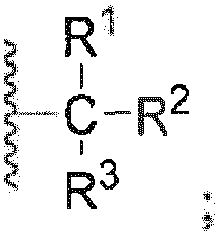 R1, R2 und R3 jeweils unabhängig voneinander ausgewählt sind aus H, F, Cl, Br, I, Hydroxyl, C1-6-Alkyl, C1-6-Alkoxy, einer 3- bis 5-gliedrigen carbocyclischen Gruppe oder einer 3- bis 5-gliedrigen heterocyclischen Gruppe, wobei das Alkyl, Alkoxy, die carbocyclische Gruppe oder heterocyclische Gruppe gegebenenfalls weiter mit 0 bis 5 Substituenten substituiert ist, ausgewählt aus F, Cl, Br, I, Hydroxyl, C1-6-Alkyl, C1-6-Alkoxy, einer 3- bis 5-gliedrigen carbocyclischen Gruppe oder einer 3- bis 5-gliedrigen heterocyclischen Gruppe, wobei die heterocyclische Gruppe 1 bis 2 Heteroatome, ausgewählt aus N, O oder S, aufweist und R1, R2 und R3 nicht alle H sind;alternativ jedes Paar von R1 und R2, R2 und R3, oder R1 und R3 einen 3- bis 5-gliedrigen Ring bildet, wobei der 3- bis 5-gliedrige Ring 0 bis 2 Heteroatome, ausgewählt aus N, O oder S, aufweist und der gebildete 3- bis 5-gliedrige Ring gegebenenfalls weiter mit 0 bis 4 R8s substituiert ist;R4 und R5 jeweils unabhängig voneinander ausgewählt sind aus H, F, Cl, Br, I, Hydroxyl, Cyano, C1-6-Alkyl, C1-6-Alkoxy, einer 3- bis 5-gliedrigen carbocyclischen Gruppe oder einer 3- bis 5-gliedrigen heterocyclischen Gruppe, wobei das Alkyl, Alkoxy, die carbocyclische Gruppe oder heterocyclische Gruppe gegebenenfalls weiter mit 0 bis 5 Substituenten substituiert ist, ausgewählt aus Hydroxyl, C1-6-Alkyl, C1-6-Alkoxy, einer 3- bis 5-gliedrigen carbocyclischen Gruppe oder einer 3- bis 5-gliedrigen heterocyclischen Gruppe, wobei die heterocyclische Gruppe 1 bis 2 Heteroatome, ausgewählt aus N, O oder S, aufweist und R4 und R5 nicht beide H sind;alternativ R4 und R5 einen 3- bis 5-gliedrigen Ring bilden können, wobei der 3- bis 5-gliedrige Ring 0 bis 2 Heteroatome, ausgewählt aus N, O oder S, aufweisen kann und der gebildete 3- bis 5-gliedrige Ring gegebenenfalls weiter mit 0 bis 4 R8s substituiert sein kann;R6 ausgewählt ist aus H oder Hydroxyl;R7 ausgewählt ist aus H, C1-4-Alkyl oder einer 3- bis 5-gliedrigen carbocyclischen Gruppe, wobei das Alkyl oder die carbocyclische Gruppe gegebenenfalls weiter mit 0 bis 5 Substituenten substituiert ist, ausgewählt aus F, Cl, Br, I, Hydroxyl, C1-4-Alkyl, C1-4-Alkoxy oder einer 3- bis 5-gliedrigen carbocyclischen Gruppe;R8 ausgewählt ist aus F, Cl, Br, Hydroxyl, C1-4-Alkyl, C1-4-Alkoxy, einer 3- bis 5-gliedrigen carbocyclischen Gruppe oder einer 3- bis 5-gliedrigen heterocyclischen Gruppe, und die heterocyclische Gruppe 1 bis 2 Heteroatome, ausgewählt aus N, O oder S, aufweist;R9, R10, R11 und R12 jeweils unabhängig voneinander ausgewählt sind aus H, F, Cl, Br, I, Hydroxyl, C1-6-Alkyl oder C1-6-Alkoxy;X ausgewählt ist aus H, F oder Carboxyl;Y ausgewählt ist aus H, COR13, PEG, COOR13, CONR13R14, COSR13,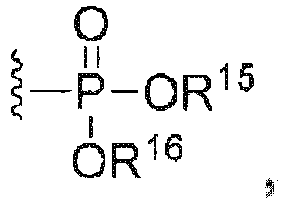

 R13 und R14 jeweils unabhängig voneinander ausgewählt sind aus H, C1-6-Alkyl, einer 3- bis 8-gliedrigen carbocyclischen oder heterocyclischen Gruppe, wobei das Alkyl, die carbocyclische Gruppe oder heterocyclische Gruppe gegebenenfalls weiter mit 0 bis 5 Substituenten substituiert sein kann, ausgewählt aus F, Cl, Br, I, Hydroxyl, C1-6-Alkyl, C1-6-Alkoxy, einer 3- bis 8-gliedrigen carbocyclischen Gruppe oder einer 3- bis 8-gliedrigen heterocyclischen Gruppe, und die heterocyclische Gruppe 1 bis 2 Heteroatome, ausgewählt aus N, O oder S, aufweist;R15 und R16 jeweils unabhängig voneinander ausgewählt sind aus H, einem Alkalimetallion, einem Erdalkalimetallion, einem protonierten Amin oder einer protonierten Aminosäure, wobei das Alkalimetallion ausgewählt ist aus Na+, K+ oder Li+, das Erdalkalimetallion ausgewählt ist aus Be2+, Mg2+ oder Ca2+, das Amin ausgewählt ist aus Trometamol, Triethanolamin, Ethanolamin, Triethylamin oder N-Methylglukosamin und die Aminosäure ausgewählt ist aus Arginin oder Lysin;alternativ R15 und R16 einen 3- bis 8-gliedrigen Ring bilden können, wobei der 3- bis 8-gliedrige Ring 0 bis 2 Heteroatome, ausgewählt aus N, O oder S, aufweisen kann und der gebildete 3- bis 8-gliedrige Ring gegebenenfalls weiter mit 0 bis 4 R8s substituiert sein kann;R17 die Seitenkettengruppe einer Aminosäure ist, wobei die Aminosäure ausgewählt ist aus Lysin, Arginin, Histidin, Prolin, 2,3-Diaminopropionsäure, 2,4-Diaminopropionsäure, Alanin, Valin, Leucin, Isoleucin, Phenylalanin, Tryptophan, Methionin, Glycin, Serin, Threonin, Cystein, Tyrosin, Asparagin, Glutamin, Asparaginsäure, Aspartat oder Glutaminsäure;W1, W2 und W3 jeweils unabhängig voneinander ausgewählt sind aus NRy8, O oder S;W4 ausgewählt ist aus CRy9Ry10, NRy8, O, S oder fehlt;Ry1 jeweils unabhängig voneinander ausgewählt ist aus H, C1-6-Alkyl, einer carbocyclischen C3-8-Gruppe oder einer 4- bis 8-gliedrigen heterocyclischen Gruppe, wobei das Alkyl, die carbocyclische Gruppe oder heterocyclische Gruppe gegebenenfalls weiter mit 0 bis 5 Substituenten substituiert sein kann, ausgewählt aus H, F, Cl, Br, I, Hydroxyl, Amino, Cyano, Carboxyl, C1-6-Alkyl, C1-6-Alkoxy, einer carbocyclischen C3-8-Gruppe oder einer 4- bis 8-gliedrigen heterocyclischen Gruppe, und die heterocyclische Gruppe 1 bis 2 Heteroatome, ausgewählt aus N, O oder S, aufweist;Ry3 ausgewählt ist aus H, Amino, C1-6-Alkyl, einer carbocyclischen C3-8-Gruppe oder einer 4- bis 8-gliedrigen heterocyclischen Gruppe, -(CRyaRyb)m1-NRycRyd oder -(CRyaRyb)m1-NRycC(=O)ORyd, wobei die Aminogruppe, Alkyl, die carbocyclische Gruppe oder die heterocyclische Gruppe gegebenenfalls weiter mit 0 bis 5 Substituenten substituiert sein kann, ausgewählt aus H, F, Cl, Br, I, Hydroxyl, Amino, Cyano, Carboxyl, C1-6-Alkyl, C1-6-Alkoxy, -(CH2)m1-OC(=O)-C1-6-Alkyl, -(CH2)m1-C(=O)O-C1-6-Alkyl, -(CH2)m1-C(=O)O(CH2)m1-(carbocyclische C3-6-Gruppe), -(CH2)m1-C(=O)-C1-6-Alkyl, -(CH2)m1-(carbocyclische C3-8-Gruppe) oder -(CH2)m1-(4- bis 8-gliedrige heterocyclische Gruppe), und die heterocyclische Gruppe 1 bis 2 Heteroatome, ausgewählt aus N, O oder S, aufweist;Ry4 und Ry5 jeweils unabhängig voneinander ausgewählt sind aus H, einem Alkalimetallion, einem Erdalkalimetallion, einem protonierten Amin oder einer protonierten Aminosäure, C1-6-Alkyl, -CCRyaRyb)m1-(3- bis 8-gliedriger Ring), -(CRyaRyb)m1-OC(=O)C1-6-Alkyl, -(CRyaRyb)m1-OC(=O)-(3- bis 8-gliedriger Ring), -(CRyaRyb)m1-C(=O)OC1-6-Alkyl oder -(CRyaRyb)m1-OC(=O)OC1-6-Alkyl;Ry6 und Ry7 jeweils unabhängig voneinander ausgewählt sind aus H, F, Cl, Br, I, Hydroxyl, Amino, Cyano, Carboxyl, C1-6-Alkyl oder C1-6-Alkoxy;alternativ Ry6 und Ry7 zusammen mit den Atomen, an die sie gebunden sind, einen 5- bis 8-gliedrigen Ring bilden können, wobei der 5- bis 8-gliedrige Ring 0 bis 4 Heteroatome, ausgewählt aus N, O oder S, aufweisen kann und der 5- bis 8-gliedrige Ring gegebenenfalls weiter mit 0 bis 4 Substituenten substituiert sein kann, ausgewählt aus H, F, Cl, Br, I, C1-6-Alkyl oder C1-6-Alkoxy;Ry8s jeweils unabhängig voneinander ausgewählt sind aus H oder C1-6-Alkyl;Ry9 und Ry10 jeweils unabhängig voneinander ausgewählt sind aus H, C1-6-Alkyl, einer carbocyclischen C3-8-Gruppe oder einer 4- bis 8-gliedrigen heterocyclischen Gruppe, wobei das Alkyl, die carbocyclische Gruppe oder heterocyclische Gruppe gegebenenfalls jeweils weiter mit 0 bis 4 Substituenten substituiert sein kann, ausgewählt aus H, Hydroxyl, Amino, Mercapto, Carboxyl, Guanidino, Carbamoyl, C1-6-Alkyl, C1-6-Alkoxy, einem 3- bis 8-gliedrigen Carbocyclus oder einem 3- bis 8-gliedrigen Heterocyclus;Rya, Ryb, Ryc und Ryd jeweils unabhängig voneinander ausgewählt sind aus H oder C1-6-Alkyl;n ausgewählt ist aus 1, 2 oder 3;m ausgewählt ist aus 1 oder 2;q ausgewählt ist aus 1 bis 200;m1 ausgewählt ist aus 0, 1, 2 oder 3;p ausgewählt ist 0, 1 oder 2;wobei die Verbindung der allgemeinen Formel (A) nicht

- Verbindung der allgemeinen Formel (A) zur Verwendung als ein Medikament:
 R ausgewählt ist aus F, Cl, Br, I, -OR7 oder
 R1, R2 und R3 jeweils unabhängig voneinander ausgewählt sind aus H, F, Cl, Br, I, Hydroxyl, C1-6-Alkyl, C1-6-Alkoxy, einer 3- bis 5-gliedrigen carbocyclischen Gruppe oder einer 3- bis 5-gliedrigen heterocyclischen Gruppe, wobei das Alkyl, Alkoxy, die carbocyclische Gruppe oder heterocyclische Gruppe gegebenenfalls weiter mit 0 bis 5 Substituenten substituiert ist, ausgewählt aus F, Cl, Br, I, Hydroxyl, C1-6-Alkyl, C1-6-Alkoxy, einer 3- bis 5-gliedrigen carbocyclischen Gruppe oder einer 3- bis 5-gliedrigen heterocyclischen Gruppe, wobei die heterocyclische Gruppe 1 bis 2 Heteroatome, ausgewählt aus N, O oder S, aufweist und R1, R2 und R3 nicht alle H sind;alternativ jedes Paar von R1 und R2, R2 und R3, oder R1 und R3 einen 3- bis 5-gliedrigen Ring bildet, wobei der 3- bis 5-gliedrige Ring 0 bis 2 Heteroatome, ausgewählt aus N, O oder S, aufweist und der gebildete 3- bis 5-gliedrige Ring gegebenenfalls weiter mit 0 bis 4 R8s substituiert ist;R4 und R5 jeweils unabhängig voneinander ausgewählt sind aus H, F, Cl, Br, I, Hydroxyl, Cyano, C1-6-Alkyl, C1-6-Alkoxy, einer 3- bis 5-gliedrigen carbocyclischen Gruppe oder einer 3- bis 5-gliedrigen heterocyclischen Gruppe, wobei das Alkyl, Alkoxy, die carbocyclische Gruppe oder heterocyclische Gruppe gegebenenfalls weiter mit 0 bis 5 Substituenten substituiert ist, ausgewählt aus Hydroxyl, C1-6-Alkyl, C1-6-Alkoxy, einer 3- bis 5-gliedrigen carbocyclischen Gruppe oder einer 3- bis 5-gliedrigen heterocyclischen Gruppe, wobei die heterocyclische Gruppe 1 bis 2 Heteroatome, ausgewählt aus N, O oder S, aufweist und R4 und R5 nicht beide H sind;alternativ R4 und R5 einen 3- bis 5-gliedrigen Ring bilden können, wobei der 3- bis 5-gliedrige Ring 0 bis 2 Heteroatome, ausgewählt aus N, O oder S, aufweisen kann und der gebildete 3- bis 5-gliedrige Ring gegebenenfalls weiter mit 0 bis 4 R8s substituiert sein kann;R6 ausgewählt ist aus H oder Hydroxyl;R7 ausgewählt ist aus H, C1-4-Alkyl oder einer 3- bis 5-gliedrigen carbocyclischen Gruppe, wobei das Alkyl oder die carbocyclische Gruppe gegebenenfalls weiter mit 0 bis 5 Substituenten substituiert ist, ausgewählt aus F, Cl, Br, I, Hydroxyl, C1-4-Alkyl, C1-4-Alkoxy oder einer 3- bis 5-gliedrigen carbocyclischen Gruppe;R8 ausgewählt ist aus F, Cl, Br, Hydroxyl, C1-4-Alkyl, C1-4-Alkoxy, einer 3- bis 5-gliedrigen carbocyclischen Gruppe oder einer 3- bis 5-gliedrigen heterocyclischen Gruppe, und die heterocyclische Gruppe 1 bis 2 Heteroatome, ausgewählt aus N, O oder S, aufweist;R9, R10, R11 und R12 jeweils unabhängig voneinander ausgewählt sind aus H, F, Cl, Br, I, Hydroxyl, C1-6-Alkyl oder C1-6-Alkoxy;X ausgewählt ist aus H, F oder Carboxyl;Y ausgewählt ist aus H, COR13, PEG, COOR13, CONR13R14, COSR13,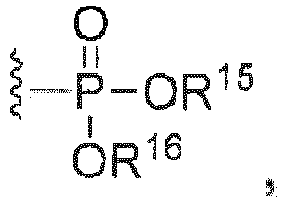
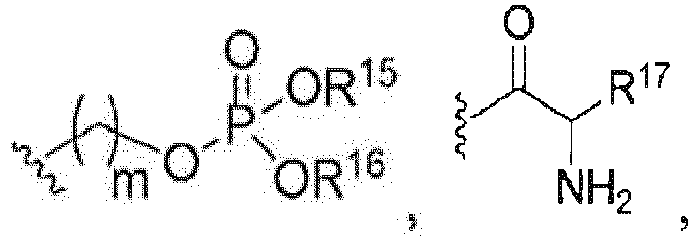
 wobei das Alkyl gegebenenfalls weiter mit 0 bis 4 Substituenten substituiert ist, ausgewählt aus H, F, Cl, Br, I, Hydroxyl, Amino, Cyano, Carboxyl, C1-6-Alkyl, C1-6-Alkoxy, einer carbocyclischen C3-8-Gruppe oder einer 4- bis 8-gliedrigen heterocyclischen Gruppe, und die heterocyclische Gruppe 1 bis 2 Heteroatome, ausgewählt aus N, O oder S, aufweist;R13 und R14 jeweils unabhängig voneinander ausgewählt sind aus H, C1-6-Alkyl, einer 3- bis 8-gliedrigen carbocyclischen oder heterocyclischen Gruppe, wobei das Alkyl, die carbocyclische Gruppe oder heterocyclische Gruppe gegebenenfalls weiter mit 0 bis 5 Substituenten substituiert sein kann, ausgewählt aus F, Cl, Br, I, Hydroxyl, C1-6-Alkyl, C1-6-Alkoxy, einer 3- bis 8-gliedrigen carbocyclischen Gruppe oder einer 3- bis 8-gliedrigen heterocyclischen Gruppe, und die heterocyclische Gruppe 1 bis 2 Heteroatome, ausgewählt aus N, O oder S, aufweist;R15 und R16 jeweils unabhängig voneinander ausgewählt sind aus H, einem Alkalimetallion, einem Erdalkalimetallion, einem protonierten Amin oder einer protonierten Aminosäure, wobei das Alkalimetallion ausgewählt ist aus Na+, K+ oder Li+, das Erdalkalimetallion ausgewählt ist aus Be2+, Mg2+ oder Ca2+, das Amin ausgewählt ist aus Trometamol, Triethanolamin, Ethanolamin, Triethylamin oder N-Methylglukosamin und die Aminosäure ausgewählt ist aus Arginin oder Lysin;alternativ R15 und R16 einen 3- bis 8-gliedrigen Ring bilden können, wobei der 3- bis 8-gliedrige Ring 0 bis 2 Heteroatome, ausgewählt aus N, O oder S, aufweisen kann und der gebildete 3- bis 8-gliedrige Ring gegebenenfalls weiter mit 0 bis 4 R8s substituiert sein kann;R17 die Seitenkettengruppe einer Aminosäure ist, wobei die Aminosäure ausgewählt ist aus Lysin, Arginin, Histidin, Prolin, 2,3-Diaminopropionsäure, 2,4-Diaminopropionsäure, Alanin, Valin, Leucin, Isoleucin, Phenylalanin, Tryptophan, Methionin, Glycin, Serin, Threonin, Cystein, Tyrosin, Asparagin, Glutamin, Asparaginsäure, Aspartat oder Glutaminsäure;W1, W2 und W3 jeweils unabhängig voneinander ausgewählt sind aus NRy8, O oder S;W4 ausgewählt ist aus CRy9Ry10, NRy8, O, S oder fehlt;Ry1 jeweils unabhängig voneinander ausgewählt ist aus H, C1-6-Alkyl, einer carbocyclischen C3-8-Gruppe oder einer 4- bis 8-gliedrigen heterocyclischen Gruppe, wobei das Alkyl, die carbocyclische Gruppe oder heterocyclische Gruppe gegebenenfalls weiter mit 0 bis 5 Substituenten substituiert sein kann, ausgewählt aus H, F, Cl, Br, I, Hydroxyl, Amino, Cyano, Carboxyl, C1-6-Alkyl, C1-6-Alkoxy, einer carbocyclischen C3-8-Gruppe oder einer 4- bis 8-gliedrigen heterocyclischen Gruppe, und die heterocyclische Gruppe 1 bis 2 Heteroatome, ausgewählt aus N, O oder S, aufweist;Ry3 ausgewählt ist aus H, Amino, C1-6-Alkyl, einer carbocyclischen C3-8-Gruppe oder einer 4- bis 8-gliedrigen heterocyclischen Gruppe, -(CRyaRyb)m1-NRycRyd oder -(CRyaRyb)m1-NRycC(=O)ORyd, wobei die Aminogruppe, das Alkyl, die carbocyclische Gruppe oder die heterocyclische Gruppe gegebenenfalls weiter mit 0 bis 5 Substituenten substituiert sein kann, ausgewählt aus H, F, Cl, Br, I, Hydroxyl, Amino, Cyano, Carboxyl, C1-6-Alkyl, C1-6-Alkoxy, -(CH2)m1-OC(=O)-C1-6-Alkyl, -(CH2)m1-C(=O)O-C1-6-Alkyl, -(CH2)m1-C(=O)O(CH2)m1-(carbocyclische C3-6-Gruppe), -CCH2)m1-CC=O)-C1-6-Alkyl, -(CH2)m1-(carbocyclische C3-8-Gruppe) oder -(CH2)m1-(4- bis 8-gliedrige heterocyclische Gruppe), und die heterocyclische Gruppe 1 bis 2 Heteroatome, ausgewählt aus N, O oder S, aufweist;Ry4 und Ry5 jeweils unabhängig voneinander ausgewählt sind aus H, einem Alkalimetallion, einem Erdalkalimetallion, einem protonierten Amin oder einer protonierten Aminosäure, C1-6-Alkyl, -(CRyaRyb)m1-(3- bis 8-gliedriger Ring),-(CRyaRyb)m1-OC(=o)C1-6-Alkyl, -(CRyaRyb)m1-OC(=O)-(3-bis 8-gliedriger Ring),-(CRyaRyb)m1-C(=O)OC1-6-Alkyl oder -(CRyaRyb)m1-OC(=O)OC1-6-Alkyl;Ry6 und Ry7 jeweils unabhängig voneinander ausgewählt sind aus H, F, Cl, Br, I, Hydroxyl, Amino, Cyano, Carboxyl, C1-6-Alkyl oder C1-6-Alkoxy;alternativ Ry6 und Ry7 zusammen mit den Atomen, an die sie gebunden sind, einen 5- bis 8-gliedrigen Ring bilden können, wobei der 5- bis 8-gliedrige Ring 0 bis 4 Heteroatome, ausgewählt aus N, O oder S, aufweisen kann und der 5- bis 8-gliedrige Ring gegebenenfalls weiter mit 0 bis 4 Substituenten substituiert sein kann, ausgewählt aus H, F, Cl, Br, I, C1-6-Alkyl oder C1-6-Alkoxy;Ry8s jeweils unabhängig voneinander ausgewählt sind aus H oder C1-6-Alkyl;Ry9 und Ry10 jeweils unabhängig voneinander ausgewählt sind aus H, C1-6-Alkyl, einer carbocyclischen C3-8-Gruppe oder einer 4- bis 8-gliedrigen heterocyclischen Gruppe, wobei das Alkyl, die carbocyclische Gruppe oder heterocyclische Gruppe gegebenenfalls jeweils weiter mit 0 bis 4 Substituenten substituiert sein kann, ausgewählt aus H, Hydroxyl, Amino, Mercapto, Carboxyl, Guanidino, Carbamoyl, C1-6-Alkyl, C1-6-Alkoxy, einem 3- bis 8-gliedrigen Carbocyclus oder einem 3- bis 8-gliedrigen Heterocyclus;Rya, Ryb, Ryc und Ryd jeweils unabhängig voneinander ausgewählt sind aus H oder C1-6-Alkyl;n ausgewählt ist aus 1, 2 oder 3;m ausgewählt ist aus 1 oder 2;q ausgewählt ist aus 1 bis 200;m1 ausgewählt ist aus 0, 1, 2 oder 3;p ausgewählt ist aus 0, 1 oder 2;oder ein Stereoisomer, ein Solvat, ein pharmazeutisch unbedenkliches Salz oder ein Cokristall davon.
 - Verbindung nach Anspruch 1, ausgewählt aus Verbindungen der allgemeinen Formel (I):
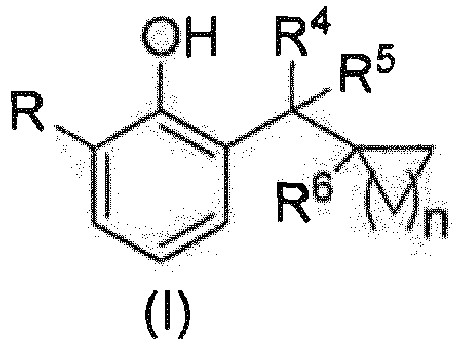
- Verbindung nach Anspruch 3, wobei
R ausgewählt ist aus F, Br, OR7 oder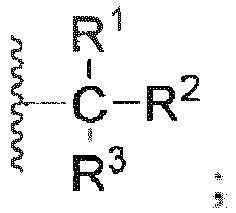
alternativ jedes Paar von R1 und R2, R2 und R3 oder R1 und R3 eine 3- bis 5-gliedrige carbocyclische Gruppe bilden kann, und die carbocyclische Gruppe gegebenenfalls weiter mit 0 bis 4 R8s substituiert sein kann;
R4 und R5 jeweils unabhängig voneinander ausgewählt sind aus H, F, Cl, Br, Hydroxyl, Cyano, C1-4-Alkyl oder C1-4-Alkoxy oder einer 3- bis 5-gliedrigen carbocyclischen Gruppe, wobei das Alkyl, Alkoxy oder die carbocyclische Gruppe gegebenenfalls weiter mit 0 bis 3 Substituenten substituiert ist, ausgewählt aus Hydroxyl, C1-4-Alkyl oder C1-4-Alkoxy, und R4 und R5 nicht beide H sind;
alternativ R4 und R5 eine 3- bis 5-gliedrige carbocyclische Gruppe bilden können, und die carbocyclische Gruppe gegebenenfalls weiter mit 0 bis 4 R8s substituiert sein kann;
R6 ausgewählt ist aus H oder Hydroxyl;
R7 ausgewählt ist aus H, C1-4-Alkyl oder einer 3- bis 4-gliedrigen carbocyclischen Gruppe, wobei das Alkyl oder die carbocyclische Gruppe gegebenenfalls weiter mit 0 bis 3 Substituenten substituiert sein kann, ausgewählt aus F, Hydroxyl oder C1-3-Alkyl;
R8 ist ausgewählt aus F, Cl, Br, Hydroxyl, C1-4-Alkyl oder C1-4-Alkoxy;
n ausgewählt ist aus 1 oder 2;
oder ein Stereoisomer, ein Solvat, ein pharmazeutisch unbedenkliches Salz oder ein Cokristall davon. - Verbindung nach Anspruch 4, wobei
R ausgewählt ist aus Br oder
alternativ jedes Paar von R1 und R2, R2 und R3 oder R1 und R3 eine 3- bis 5-gliedrige carbocyclische Gruppe bilden kann, und die carbocyclische Gruppe gegebenenfalls weiter mit 0 bis 4 R8s substituiert sein kann;
wobei die Verbindung vorzugsweise aus Verbindungen der allgemeinen Formel (II) ausgewählt ist:
- Verbindung nach Anspruch 5, wobei:R1, R2 und R3 jeweils unabhängig voneinander ausgewählt sind aus H, F, Cl, Br, Hydroxyl, C1-4-Alkyl, C1-4-Alkoxy oder einer 3- bis 5-gliedrigen carbocyclischen Gruppe, wobei das Alkyl, Alkoxy oder die carbocyclische Gruppe gegebenenfalls weiter mit 0 bis 3 Substituenten, ausgewählt aus F oder Hydroxyl, substituiert ist und R1, R2 und R3 nicht alle H sind;alternativ jedes Paar von R1 und R2, R2 und R3 oder R1 und R3 eine 3-gliedrige carbocyclische Gruppe bilden kann, und die carbocyclische Gruppe gegebenenfalls weiter mit 0 bis 4 Substituenten, ausgewählt aus F oder Hydroxyl, substituiert sein kann;R4 und R5 jeweils unabhängig voneinander ausgewählt sind aus H, F, Cl, Br, Hydroxyl, Cyano, C1-4-Alkyl, C1-4-Alkoxy oder einer 3- bis 5-gliedrigen carbocyclischen Gruppe, wobei das Alkyl, Alkoxy oder die carbocyclische Gruppe gegebenenfalls weiter mit 0 bis 3 Hydroxyl-Gruppen substituiert ist und R4 und R5 nicht beide H sind;oder ein Stereoisomer, ein Solvat, ein pharmazeutisch unbedenkliches Salz oder ein Cokristall davon.
- Verbindung nach Anspruch 6, wobei:R1, R2 und R3 jeweils unabhängig voneinander ausgewählt sind aus H, Hydroxyl, C1-4-Alkyl oder einer 3- bis 5-gliedrigen carbocyclischen Gruppe, wobei das Alkyl oder die carbocyclische Gruppe gegebenenfalls weiter mit 0 bis 3 Substituenten, ausgewählt aus F oder Hydroxyl, substituiert ist und R1, R2 und R3 nicht alle H sind;alternativ jedes Paar von R1 und R2, R2 und R3 oder R1 und R3 eine 3-gliedrige carbocyclische Gruppe bilden kann, und die carbocyclische Gruppe gegebenenfalls weiter mit 0 bis 4 Substituenten, ausgewählt aus F oder Hydroxyl, substituiert sein kann;R4 und R5 jeweils unabhängig voneinander ausgewählt sind aus H, Hydroxyl, Cyano, C1-4-Alkyl oder einer 3- bis 5-gliedrigen carbocyclischen Gruppe, wobei das Alkyl oder die carbocyclische Gruppe gegebenenfalls weiter mit 0 bis 3 Hydroxylgruppen substituiert ist und R4 und R5 nicht beide H sind;oder ein Stereoisomer, ein Solvat, ein pharmazeutisch unbedenkliches Salz oder ein Cokristall davon.
- Verbindung nach Anspruch 7, wobei:R1, R2 und R3 jeweils unabhängig voneinander ausgewählt sind aus H, Hydroxyl, Methyl, Ethyl oder Cyclopropyl, und R1, R2 und R3 nicht alle H sind;alternativ jedes Paar von R1 und R2, R2 und R3 oder R1 und R3 Cyclopropyl bilden kann;R4 und R5 jeweils unabhängig voneinander ausgewählt sind aus H, Hydroxyl, Cyano, Methyl, Ethyl oder Cyclopropyl, und R4 und R5 nicht beide H sind;oder ein Stereoisomer, ein Solvat, ein pharmazeutisch unbedenkliches Salz oder ein Cokristall davon.
- Verbindung nach Anspruch 1, ausgewählt aus







- Verbindung nach Anspruch 1, wobei:R9, R10, R11 und R12 H sind;ausgewählt ist aus H, PEG,
 oder -(CRyaRyb)m1-(W1)p-P(=O)(W2Ry4)(W3Ry5) oder
 R13 und R14 jeweils unabhängig voneinander ausgewählt sind aus H oder C1-6-Alkyl;R15 und R16 jeweils unabhängig voneinander ausgewählt sind aus H oder einem Alkalimetallion, und das Alkalimetallion ausgewählt ist aus Na+, K+ oder Li+;oder ein Stereoisomer, ein Solvat, ein pharmazeutisch unbedenkliches Salz oder ein Cokristall davon.
 - Verbindung nach Anspruch 10, wobei:R ausgewählt ist aus Br, OR7 oder
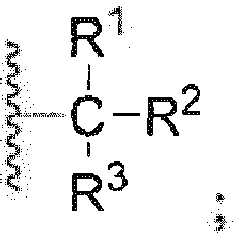 R1, R2 und R3 jeweils unabhängig voneinander ausgewählt sind aus H, F, Cl, Br, Hydroxyl, C1-4-Alkyl, C1-4-Alkoxy, oder einer 3- bis 5-gliedrigen carbocyclischen Gruppe, wobei das Alkyl, Alkoxy oder die carbocyclische Gruppe gegebenenfalls weiter mit 0 bis 3 Substituenten substituiert ist, ausgewählt aus F, Cl, Br, Hydroxyl, C1-4-Alkyl, C1-4-Alkoxy oder einer 3- bis 5-gliedrigen carbocyclischen Gruppe, und R1, R2 und R3 nicht alle H sind;alternativ jedes Paar von R1 und R2, R2 und R3 oder R1 und R3 eine 3- bis 5-gliedrige carbocyclische Gruppe bilden kann, und die carbocyclische Gruppe gegebenenfalls weiter mit 0 bis 4 R8s substituiert sein kann;R4 und R5 jeweils unabhängig voneinander ausgewählt sind aus H, F, Cl, Br, Hydroxyl, Cyano, C1-4-Alkyl oder C1-4-Alkoxy oder einer 3- bis 5-gliedrigen carbocyclischen Gruppe, wobei das Alkyl, Alkoxy oder die carbocyclische Gruppe gegebenenfalls weiter mit 0 bis 3 Substituenten substituiert ist, ausgewählt aus Hydroxyl, C1-4-Alkyl oder C1-4-Alkoxy, und R4 und R5 nicht beide H sind;alternativ R4 und R5 eine 3- bis 5-gliedrige carbocyclische Gruppe bilden können, und die carbocyclische Gruppe gegebenenfalls weiter mit 0 bis 4 R8s substituiert sein kann;R6 ausgewählt ist aus H oder Hydroxyl;R7 ausgewählt ist aus H oder C1-4-Alkyl;R8 ausgewählt ist aus F, Cl, Br, Hydroxyl, C1-4-Alkyl oder C1-4-Alkoxy;X H ist;Ry1 jeweils unabhängig voneinander ausgewählt ist aus H, C1-6-Alkyl, einer carbocyclischen C3-6-Gruppe oder einer 4- bis 6-gliedrigen heterocyclischen Gruppe, wobei das Alkyl, die carbocyclische Gruppe oder heterocyclische Gruppe gegebenenfalls weiter mit 0 bis 5 Substituenten substituiert sein kann, ausgewählt aus H, F, Cl, Br, I, Hydroxyl, Amino, Cyano, Carboxyl, C1-6-Alkyl, C1-6-Alkoxy, einer carbocyclischen C3-8-Gruppe oder einer 4- bis 8-gliedrigen heterocyclischen Gruppe, und die heterocyclische Gruppe 1 bis 2 Heteroatome, ausgewählt aus N, O oder S, aufweist;Ry3 ausgewählt ist aus H, Amino, C1-6-Alkyl, einer carbocyclischen C3-6-Gruppe oder einer 4- bis 6-gliedrigen heterocyclischen Gruppe, -(CRyaRyb)m1-NRycRyd oder-(CRyaRyb)m1-NRycC(=O)ORyd, wobei die Aminogruppe, Alkyl, die carbocyclische Gruppe oder die heterocyclische Gruppe gegebenenfalls weiter mit 0 bis 5 Substituenten substituiert sein kann, ausgewählt aus H, F, Cl, Br, I, Hydroxyl, Amino, Cyano, Carboxyl, C1-6-Alkyl, C1-6-Alkoxy, -(CH2)m1-OC(=O)-C1-6-Alkyl,-(CH2)m1-C(=O)O-C1-6-Alkyl, -(CH2)m1-C(=O)O(CH2)m1-(carbocyclische C3-6-Gruppe),-CCH2)m1-CC(=O)-C1-6-Alkyl, -(CH2)m1-(carbocyclische C3-6-Gruppe) oder -(CH2)m1-(4-bis 6-gliedrige heterocyclische Gruppe), und die heterocyclische Gruppe 1 bis 2 Heteroatome, ausgewählt aus N, O oder S, aufweist;Ry4 und Ry5 jeweils unabhängig voneinander ausgewählt sind aus H, einem Alkalimetallion, einem Erdalkalimetallion, einem protonierten Amin oder einer protonierten Aminosäure, C1-6-Alkyl, -(CRyaRyb)m1-(3-bis 6-gliedriger Ring),-(CRyaRyb)m1-OC(=O)C1-6-Alkyl, -(CRyaRyb)m1-OC(=O)-(3-bis 6-gliedriger Ring),-(CRyaRyb)m1-C(=O)OC1-6-Alkyl oder -(CRyaRyb)m1-OC(=O)OC1-6-Alkyl;Ry9 und Ry10 jeweils unabhängig voneinander ausgewählt sind aus H, C1-6-Alkyl, einer carbocyclischen C3-6-Gruppe oder einer 4- bis 6-gliedrigen heterocyclischen Gruppe, wobei das Alkyl, die carbocyclische Gruppe oder heterocyclische Gruppe gegebenenfalls jeweils weiter mit 0 bis 4 Substituenten substituiert sein kann, ausgewählt aus H, Hydroxyl, Amino, Mercapto, Carboxyl, Guanidino, Carbamoyl, C1-6-Alkyl, C1-6-Alkoxy, einem 3- bis 8-gliedrigen Carbocyclus oder einem 3- bis 8-gliedrigen Heterocyclus;oder ein Stereoisomer, ein Solvat, ein pharmazeutisch unbedenkliches Salz oder ein Cokristall davon.
 - Verbindung nach Anspruch 11, wobei:Y ausgewählt ist aus C1-10-Alkyl, -(CH2CH2O)q-H, -(CRyaRyb)m1-(W1)p-C(=O)(W4Ry3) oder -CCRyaRyb)m1-(W1)p-P(=O)CW2Ry4)(W3Ry5) oder
 wobei das Alkyl gegebenenfalls weiter mit 0 bis 4 Substituenten substituiert ist,ausgewählt aus H, F, Cl, Br, I, Hydroxyl, Amino, Cyano, Carboxyl, C1-6-Alkyl, C1-6-Alkoxy oder einer carbocyclischen C3-6-Gruppe;oder ein Stereoisomer, ein Solvat, ein pharmazeutisch unbedenkliches Salz oder ein Cokristall davon.
 - Verbindung nach Anspruch 12, wobei:R1, R2 und R3 jeweils unabhängig voneinander ausgewählt sind aus H, Hydroxyl, Methyl, Ethyl oder Cyclopropyl, und R1, R2 und R3 nicht alle H sind;alternativ jedes Paar von R1 und R2, R2 und R3 oder R1 und R3 Cyclopropyl bilden kann;R4 und R5 jeweils unabhängig voneinander ausgewählt sind aus H, Hydroxyl, Cyano, Methyl, Ethyl oder Cyclopropyl, und R4 und R5 nicht beide H sind;R7 ausgewählt ist aus H, Methyl oder Ethyl;Y ausgewählt ist aus C1-4-Alkyl, -(CRyaRyb)m1(W1)p-C(=O)(W4Ry3) oder -(CRyaRyb)m1-(W1)p-P(=O)(W2Ry4)(W3Ry5) oder
 wobei das Alkyl gegebenenfalls weiter mit 0 bis 4 Substituenten substituiert ist, ausgewählt aus H, F, Cl, Br, I, Hydroxyl, Amino, Cyano, Carboxyl, C1-4-Alkyl oder einer carbocyclischen C3-6-Gruppe;Ry3 ausgewählt aus ist H, Amino, C1-6-Alkyl, einer carbocyclischen C3-6-Gruppe oder einer 4- bis 6-gliedrigen heterocyclischen Gruppe, -(CRyaRyb)m1-NRycRyd oder-(CRyaRyb)m1-NRyc(=O)ORyd, wobei die Aminogruppe, das Alkyl, die carbocyclische Gruppe oder die heterocyclische Gruppe gegebenenfalls weiter mit 0 bis 5 Substituenten substituiert sein kann, ausgewählt aus -CCH2)m1-OC(=O)-C1-4-Alkyl,-(CH2)m1-C(=O)O-C1-4-Alkyl, -(CH2)m1C(=O)O(CH2)m1-(carbocyclische C3-6-Gruppe),-(CH2)m1-C(=O)-C1-4-Alkyl, -(CH2)m1-(carbocyclische C3-6-Gruppe) oder -(CH2)m1-(4-bis 6-gliedrige heterocyclische Gruppe) und die heterocyclische Gruppe 1 bis 2 Heteroatome, ausgewählt aus N, O oder S, aufweist;Ry4 und Ry5 jeweils unabhängig voneinander ausgewählt sind aus H, einem Alkalimetallion, C1-4-Alkyl, -(CRyaRyb)m1-(3- bis 6-gliedriger Ring), -(CRyaRyb)m1-OC(=O)-C1-4-Alkyl, -(CRyaRyb)m1-OC(=O)-(3-bis 6-gliedriger Ring), -(CRyaRyb)m1-CC=O)O-C1-4-Alkyl oder -(CRyaRyb)m1-OC(=O)O-C1-4-Alkyl;Ry6 und Ry7 jeweils unabhängig voneinander ausgewählt sind aus H, C1-4-Alkyl oder C1-4-Alkoxy;alternativ Ry6 und Ry7 zusammen mit den Atomen, an die sie gebunden sind, einen 5- bis 6-gliedrigen Ring bilden können, wobei der 5- bis 6-gliedrige Ring 0 bis 4 Heteroatome, ausgewählt aus N, O oder S, aufweisen kann;Ry8s jeweils unabhängig voneinander ausgewählt sind aus H oder C1-4-Alkyl;Ry9 und Ry10 jeweils unabhängig voneinander ausgewählt sind aus H, C1-6-Alkyl oder einer 4- bis 6-gliedrigen heterocyclischen Gruppe, wobei das Alkyl oder die heterocyclische Gruppe gegebenenfalls jeweils weiter mit 0 bis 4 Substituenten substituiert sein kann, ausgewählt aus H, Hydroxyl, Amino, Mercapto, Carboxyl, Guanidino, Carbamoyl, C1-6-Alkyl, C1-6-Alkoxy, einem 3- bis 6-gliedrigen Carbocyclus oder einem 4- bis 6-gliedrigen Heterocyclus;Rya, Ryb, Ryc und Ryd jeweils unabhängig voneinander ausgewählt sind aus H oderC1-4-Alkyl;q ausgewählt ist aus 1 bis 10;oder ein Stereoisomer, ein Solvat, ein pharmazeutisch unbedenkliches Salz oder ein Cokristall davon.
 - Verbindung nach Anspruch 13, wobei:Y ausgewählt ist aus C1-4-Alkyl, -(CRyaRyb)m1-(W1)p-C(=O)(W4Ry3) oder -(CRyaRyb)m1-(W1)p-P(=O)(W2Ry4)(W3Ry5) oder
 wobei das Alkyl gegebenenfalls weiter mit 0 bis 4 Substituenten substituiert ist, ausgewählt aus H, Hydroxyl, Amino, C1-4-Alkyl oder einer carbocyclischen C5-6-Gruppe;Ry3 ausgewählt ist aus Amino, C1-4-Alkyl, -(CRyaRyb)m1NRycRyd,-(CRyaRyb)m1NRyc(=O)ORyd, einer carbocyclischen C3-6-Gruppe oder einer 3- bis 6-gliedrigen heterocyclischen Gruppe, wobei die Aminogruppe, das Alkyl, die carbocyclische Gruppe oder die heterocyclische Gruppe gegebenenfalls weiter mit 0 bis 4 Substituenten substituiert ist, ausgewählt aus -OC(=O)-C1-4-Alkyl), -C(=O)O-C1-4-Alkyl oder -C(=O)OCH2-(carbocyclische C5-6-Gruppe), und die heterocyclische Gruppe mindestens 1 bis 2 Heteroatome, ausgewählt aus N, O oder S, aufweist;Ry4 und Ry5 jeweils unabhängig ausgewählt sind aus H, einem Alkalimetallion, C1-4-Alkyl, -(CRyaRyb)m1-(5- bis 6-gliedriger Ring), -(CRyaRyb)m1-OC(=O)C1-4-Alkyl, -(CRyaRyb)m1-C(=O)OC1-4-Alkyl oder -(CRyaRyb)m1-OC(=O)OC1-4-Alkyl;Ry6 und Ry7 jeweils unabhängig voneinander H oder C1-4-Alkyl sind;alternativ Ry6 und Ry7 zusammen mit den Atomen, an die sie gebunden sind, einen 5- bis 6-gliedrigen Ring bilden können, wobei der 5- bis 6-gliedrige Ring 0 bis 4 Heteroatome, ausgewählt aus N, O oder S, aufweisen kann;Ry8 ausgewählt ist aus H oder C1-4-Alkyl;Ry9 ausgewählt ist aus H oder C1-4-Alkyl;Ry10 ausgewählt ist aus H oder C1-4-Alkyl, wobei das Alkyl gegebenenfalls weiter mit 0 bis 4 Substituenten substituiert ist, ausgewählt aus H, Hydroxyl, Amino, Mercapto, Carboxyl, Guanidino, Carbamoyl, C1-4-Alkyl oder einem 5- bis 6-gliedrigen Carbocyclus;oder ein Stereoisomer, ein Solvat, ein pharmazeutisch unbedenkliches Salz oder ein Cokristall davon.
 - Verbindung nach Anspruch 14, wobei:W1, W2, W3 jeweils unabhängig voneinander ausgewählt sind aus NH oder O;W4 jeweils unabhängig voneinander ausgewählt sind aus CHRy10 oder O oder fehlt;Ry3 ausgewählt ist aus Amino, C1-4-Alkyl, -(CH2)m1NRycRyd, -(CH2)m1NRycC(=O)ORyd, einer carbocyclischen C5-6-Gruppe oder einer 5- bis 6-gliedrigen heterocyclischen Gruppe, wobei die Aminogruppe, das Alkyl, die carbocyclische Gruppe oder die heterocyclische Gruppe gegebenenfalls weiter mit 0 bis 4 Substituenten substituiert ist, ausgewählt aus -OC(=O)-C1-4-Alkyl, -C(=O)O-C1-4-Alkyl oder -C(=O)OCH2- (carbocyclische C5-6-Gruppe), und die heterocyclische Gruppe mindestens 1 bis 2 Heteroatome, ausgewählt aus N, O oder S, aufweist;Ry4 und Ry5 jeweils unabhängig ausgewählt sind aus H, einem Alkalimetallion, C1-4-Alkyl, -(CH2)m1-(5- bis 6-gliedrigen Ring), -(CH2)m1-OC(=O)C1-4-Alkyl, -(CH2)m1-C(=O)OC1-4-Alkyl oder -(CH2)m1-OC(=O)OC1-4-Alkyl;Ry10 ausgewählt ist aus H oder C1-4-Alkyl, wobei das Alkyl gegebenenfalls weiter mit 0 bis 4 Substituenten substituiert ist, ausgewählt aus H, C1-4-Alkyl oder einem 5- bis 6-gliedrigen Carbocyclus;Rya, Ryb, Ryc und Ryd jeweils unabhängig voneinander ausgewählt sind aus H oder C1-4-Alkyl;oder ein Stereoisomer, ein Solvat, ein pharmazeutisch unbedenkliches Salz oder ein Cokristall davon.
- Verbindung nach Anspruch 15, wobei:das







 Y ist ausgewählt aus Methyl,Hydroxyethyl, -CH2OC(=O)(Ry3), -C(=O)(Ry3), -CH2OC(=O)(W4Ry3), -C(=O)(W4Ry3), -CH(CH3)OC(=O)(W4Ry3), -CH2OP(=O)(W2Ry4)(W3Ry5), -P(=O)(W2Ry4)(W3Ry5) oder
 W2 und W3 jeweils unabhängig voneinander ausgewählt sind aus NH oder O;W4 ausgewählt ist aus CHRy10 oder O;Ry3 ausgewählt ist aus Amino, Aminomethylen, Isopropyl, tert-Butyl, (tert-Butoxycarbonyl)amino, (tert-Butoxycarbonyl)aminomethylen, Pyrrolylalkyl, Phenyl oder Pyridinyl, wobei die Aminogruppe, Pyrrolylalkyl, Phenyl und Pyridinyl gegebenenfalls weiter mit 0 bis 4 Substituenten substituiert sind, ausgewählt aus tert-Butoxycarbonyl, Acetoxy oder Benzyloxycarbonyl;Ry4 und Ry5 jeweils unabhängig voneinander ausgewählt sind aus H, Na+, K+, Ethyl, Benzyl, -CH2OC(=O)C(CH3)3, -CH(CH3)OC(=O)CH(CH3)2, -CH2OC(=O)CH2CH3, -CH2 C(=O)OCH2CH3 oder -CHOC(=O)OCH(CH3)2;Ry6 und Ry7 zusammen mit den Atomen, an die sie gebunden sind, Phenyl bilden; Ry10 ausgewählt ist aus H, Methyl, Isopropyl, sec-Butyl, 2-Methylpropyl oder Benzyl; oder ein Stereoisomer, ein Solvat, ein pharmazeutisch unbedenkliches Salz oder ein Cokristall davon.
 - Verbindung nach Anspruch 16, wobei: das





- Verbindung nach Anspruch 1, ausgewählt aus den unten folgenden Strukturen:


- Verbindung nach Anspruch 1 oder ein Stereoisomer, ein Solvat, ein pharmazeutisch unbedenkliches Salz oder ein Cokristall davon,
wobei das Salz ein Ammoniumsalz, ein Kaliumsalz, ein Natriumsalz, ein Calciumsalz, ein Magnesiumsalz, ein Tetramethylammoniumsalz, ein Tetraethylammoniumsalz, ein Tetrapropylammoniumsalz, ein Tetrabutylammoniumsalz, ein Tetra(isopentyl)ammoniumsalz, ein Ethanolaminsalz, ein Diethanolaminsalz, ein Triethanolaminsalz, ein Trimethylaminsalz, ein N-Methylglukosaminsalz, Hydrochloridsulfat, Phosphat, Acetat, Trifluoracetat, Fumarat, Hemifumarat, Maleat, Malat, Citrat, Succinat, Benzolsulfonat oder p-Toluolsulfonat einschließt. - Verfahren zur Herstellung einer Verbindung nach Anspruch 1, umfassend:

oder
Durchführen einer Grignard-Reaktion zwischen einer Verbindung der allgemeinen Formel (I-a) und einer Verbindung der allgemeinen Formel (I-b), und weiter Entfernen von R' von dem Produkt der Grignard-Reaktion, um eine Verbindung der allgemeinen Formel (I) zu ergeben;
oder
Durchführen einer Grignard-Reaktion zwischen einer Verbindung der allgemeinen Formel (I-a) und einer Verbindung der allgemeinen Formel (I-b), und weiter Entfernen von Hydroxyl von dem Produkt der Grignard-Reaktion mittels eines Reduktionsmittels, um eine Verbindung der allgemeinen Formel (I) zu ergeben; oder
Durchführen einer Grignard-Reaktion zwischen einer Verbindung der allgemeinen Formel (I-a) und einer Verbindung der allgemeinen Formel (I-b), weiter Entfernen von R' von dem Produkt der Grignard-Reaktion und weiter Entfernen von Hydroxyl davon mittels eines Reduktionsmittels, um eine Verbindung der allgemeinen Formel (I) zu ergeben;
wobei R' ausgewählt ist aus H, Methyl, Ethyl, Benzyl, p-Methoxybenzyl, Triphenylmethyl, Trimethylsilyl oder tert-Butyl(dimethyl)silyl; R, R4, R5 und n die gleichen Definitionen aufweisen wie die für die Verbindung der allgemeinen Formel (I); X ausgewählt ist aus F, Cl, Br oder I;
oder,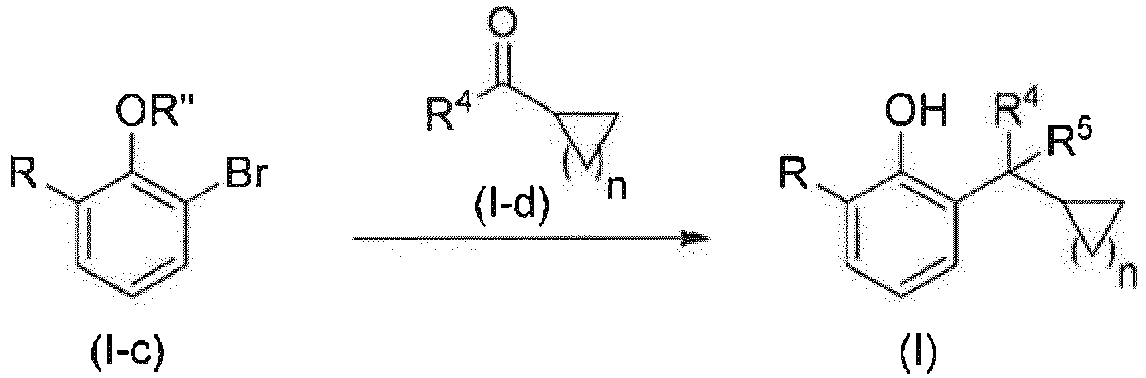
Ermöglichen, dass eine Verbindung der allgemeinen Formel (I-c) entweder einer Grignard-Reaktion unterzogen wird oder mit einer Verbindung der allgemeinen Formel (I-d) unter der Wirkung eines Organolithium-Reagenzes reagiert, dann Entfernen von R" und weiter Entfernen von Hydroxyl davon mittels eines Reduktionsmittels, um eine Verbindung der allgemeinen Formel (I) zu ergeben; oder
Ermöglichen, dass eine Verbindung der allgemeinen Formel (I-c) entweder einer Grignard-Reaktion unterzogen wird oder mit einer Verbindung der allgemeinen Formel (I-d) unter der Wirkung eines Organolithium-Reagenzes reagiert, weiter Alkylieren des Produkts davon und dann Entfernen von R", um eine Verbindung der allgemeinen Formel (I) zu ergeben;
wobei R" ausgewählt ist aus Methyl, Ethyl, Benzyl, p-Methoxybenzyl, Triphenylmethyl, Trimethylsilyl oder tert-Butyl(dimethyl)silyl; R, R4, R5 und n die gleichen Definitionen aufweisen wie die für die Verbindung der allgemeinen Formel (I). - Verfahren zur Herstellung einer Verbindung nach Anspruch 10, umfassend:

Ermöglichen, dass eine Verbindung der allgemeinen Formel (I) und eine Verbindung der allgemeinen Formel (I-A) unter der Wirkung eines Alkali eine nukleophile Substitution durchlaufen, um direkt eine Verbindung der allgemeinen Formel (I-B) zu ergeben; oder
Ermöglichen, dass eine Verbindung der allgemeinen Formel (I) und eine Verbindung der allgemeinen Formel (I-A) unter der Wirkung eines Alkali eine nukleophile Substitution durchlaufen, um ein Zwischenprodukt für eine Verbindung der allgemeinen Formel (I-B) zu erhalten, und Unterziehen des Zwischenprodukts einer Hydrolyse und dann einer Austauschreaktion mit einem Metallsalz, um eine Verbindung der allgemeinen Formel (I-B) zu ergeben; oder
Ermöglichen, dass eine Verbindung der allgemeinen Formel (I) und eine Verbindung der allgemeinen Formel (I-A) unter der Wirkung eines Alkali eine nukleophile Substitution durchlaufen, um ein Zwischenprodukt für eine Verbindung der allgemeinen Formel (I-B) zu erhalten, und Ermöglichen, dass das Zwischenprodukt weiter unter der Wirkung eines Alkali mit einem nukleophilen Reagenz reagiert, um eine Verbindung der allgemeinen Formel (I-B) zu ergeben;
oder,
Ermöglichen, dass eine Verbindung der allgemeinen Formel (I-D) und eine Verbindung der allgemeinen Formel (I-E) unter der Wirkung eines Alkali eine nukleophile Substitution durchlaufen, um ein Zwischenprodukt für eine Verbindung der allgemeinen Formel (I-F) zu erhalten, und Unterziehen des Zwischenprodukts einer Hydrolyse und dann einer Austauschreaktion mit einem Metallsalz, um eine Verbindung der allgemeinen Formel (I-F) zu ergeben; oder
Ermöglichen, dass eine Verbindung der allgemeinen Formel (I-D) und eine Verbindung der allgemeinen Formel (I-E) unter der Wirkung eines Alkali eine nukleophile Substitution durchlaufen, um ein Zwischenprodukt für eine Verbindung der allgemeinen Formel (I-F) zu erhalten, und Ermöglichen, dass das Zwischenprodukt weiter unter der Wirkung eines Alkali mit einem elektrophilen Reagenz reagiert, um eine Verbindung der allgemeinen Formel (I-F) zu ergeben;
wobei R18 oder R19 jeweils unabhängig voneinander ausgewählt sind aus F, Cl, Br, I, C1-10-Alkyl oder C1-10-Alkoxy;
R20, R21 und R22 jeweils unabhängig voneinander ausgewählt sind aus H, F, Cl, Br, I oder C1-10-Alkyl;
V ausgewählt ist aus F, Cl, Br, I;
n, R, R4, R5 und R6 die gleichen Definitionen aufweisen wie die in der allgemeinen Formel (I). - Pharmazeutische Zusammensetzung, umfassend:eine Verbindung nach Anspruch 1 oder ein Stereoisomer, ein Solvat, ein pharmazeutisch unbedenkliches Salz oder ein Cokristall davon, undeinen oder mehrere pharmazeutisch unbedenkliche Träger und/oder Hilfsstoffe.
- Verwendung der Verbindung nach Anspruch 1 oder eines Stereoisomers, eines Solvats, eines pharmazeutisch unbedenklichen Salzes oder eines Cokristalls davon zur Herstellung eines Medikaments zum
Einleiten und Aufrechterhalten einer Anästhesie bei einem Tier oder Menschen, Erleichtern einer Sedierung und Hypnose eines Tieres oder eines Menschen, oder Behandeln und/oder Vorbeugen von Angstzuständen, Depression, Schlaflosigkeit, Übelkeit, Erbrechen, Migräne, Schizophrenie, Krämpfen und Epilepsie.
Applications Claiming Priority (2)
| Application Number | Priority Date | Filing Date | Title |
|---|---|---|---|
| CN201310169462 | 2013-05-09 | ||
| PCT/CN2014/076907 WO2014180305A1 (zh) | 2013-05-09 | 2014-05-06 | 苯酚衍生物及其制备方法和在医药上的应用 |
Publications (3)
| Publication Number | Publication Date |
|---|---|
| EP2995604A1 EP2995604A1 (de) | 2016-03-16 |
| EP2995604A4 EP2995604A4 (de) | 2017-01-18 |
| EP2995604B1 true EP2995604B1 (de) | 2019-07-10 |
Family
ID=51866726
Family Applications (1)
| Application Number | Title | Priority Date | Filing Date |
|---|---|---|---|
| EP14795509.0A Active EP2995604B1 (de) | 2013-05-09 | 2014-05-06 | Phenolderivat und herstellungsverfahren und verwendung in medizin davon |
Country Status (14)
| Country | Link |
|---|---|
| US (1) | US9517988B2 (de) |
| EP (1) | EP2995604B1 (de) |
| JP (2) | JP6254681B2 (de) |
| KR (1) | KR101871732B1 (de) |
| CN (1) | CN104507899B (de) |
| AU (1) | AU2014264103C1 (de) |
| BR (1) | BR112015028212B1 (de) |
| CA (1) | CA2911845C (de) |
| EA (1) | EA029073B1 (de) |
| ES (1) | ES2746987T3 (de) |
| MX (1) | MX364376B (de) |
| PT (1) | PT2995604T (de) |
| WO (1) | WO2014180305A1 (de) |
| ZA (1) | ZA201508948B (de) |
Families Citing this family (25)
| Publication number | Priority date | Publication date | Assignee | Title |
|---|---|---|---|---|
| US9630896B2 (en) | 2013-11-22 | 2017-04-25 | Tansna Therapeutics, Inc. | 2,5-dialkyl-4-H/halo/ether-phenol compounds |
| CN105384604B (zh) * | 2014-08-22 | 2019-07-05 | 四川海思科制药有限公司 | 一种异丙基苯酚衍生物及其制备方法 |
| CN105384619B (zh) * | 2014-08-22 | 2020-05-29 | 四川海思科制药有限公司 | 一种异丙基苯酚衍生物及其制备方法 |
| KR102056649B1 (ko) * | 2014-09-04 | 2019-12-17 | 스촨 하이스코 파마수티컬 씨오., 엘티디 | 진정제 및 마취제의 제조에서의 gabaa 수용체 강화제의 용도 |
| WO2016119758A1 (zh) * | 2015-01-30 | 2016-08-04 | 四川海思科制药有限公司 | 一种手性的2-[1-环丙基乙基]-6-异丙基-苯酚的制备方法 |
| WO2016119757A1 (zh) * | 2015-01-30 | 2016-08-04 | 四川海思科制药有限公司 | 一种2-[1-环烷基乙基]苯酚的制备方法及其中间体 |
| HK1245251B (en) * | 2015-05-20 | 2020-04-24 | 综合研究实验室瑞典股份公司 | Novel azetidine derivatives useful as modulators of cortical cathecolaminergic neurotransmission |
| CN107108416B (zh) * | 2015-05-28 | 2019-12-20 | 四川海思科制药有限公司 | 一种1,2-二环丙基乙基苯酚及其光学异构体的制备方法 |
| CN106187702A (zh) * | 2015-05-28 | 2016-12-07 | 四川海思科制药有限公司 | 一种2‑[1‑环烷基乙烯基]苯酚的制备方法及其中间体 |
| TWI628160B (zh) * | 2016-02-02 | 2018-07-01 | 四川海思科製藥有限公司 | Preparation method of 2-[1-cycloalkylethyl]phenol and intermediate thereof |
| CN109071392B (zh) * | 2016-06-08 | 2020-10-02 | 四川海思科制药有限公司 | 苯环衍生物及其制备方法和在医药上的应用 |
| CN108017559B (zh) * | 2016-11-04 | 2020-08-04 | 四川海思科制药有限公司 | 苯环衍生物及其在医药上的应用 |
| CN108069833B (zh) * | 2016-11-15 | 2020-11-06 | 四川海思科制药有限公司 | 苯并四环衍生物及其制备方法和在医药上的应用 |
| CN108164419B (zh) * | 2017-12-25 | 2021-03-16 | 武汉大学 | 单分散聚乙二醇单甲醚修饰的丙泊酚前药的制备与应用 |
| CN110063947A (zh) * | 2018-01-24 | 2019-07-30 | 四川海思科制药有限公司 | 苯酚衍生物用于制备麻醉药物中的用途 |
| US20210253513A1 (en) * | 2018-06-15 | 2021-08-19 | Pharmathen S.A. | A novel process for the preparation of tapentadol |
| MX2021003724A (es) * | 2018-09-29 | 2021-05-14 | Jiangsu Yahong Meditech Co Ltd | Profarmaco de nitroxolina y su uso. |
| CN113105313A (zh) * | 2020-01-11 | 2021-07-13 | 四川海思科制药有限公司 | 苯酚衍生物及其医药用途 |
| CN111646936A (zh) * | 2020-06-22 | 2020-09-11 | 江苏亚虹医药科技有限公司 | 芳香醚类化合物的制备方法 |
| CN115175887B (zh) | 2021-01-28 | 2023-08-01 | 天地恒一制药股份有限公司 | 苯酚衍生物及其在医药上的应用 |
| USD1018268S1 (en) * | 2021-08-16 | 2024-03-19 | The Braun Corporation | Wheelchair coupling mechanism |
| CN113912592B (zh) * | 2021-11-03 | 2023-03-10 | 西北农林科技大学 | 一种和厚朴酚并二氢呋喃酯类衍生物、制备方法及其应用 |
| KR102862724B1 (ko) * | 2021-12-17 | 2025-09-23 | 가천대학교 산학협력단 | 카복실기를 포함하는 폴리페놀 트로메타민염 및 이의 용도 |
| WO2025223296A1 (zh) * | 2024-04-22 | 2025-10-30 | 西藏海思科制药有限公司 | 环泊酚注射液在儿科患者中用于手术全麻诱导和维持的用途 |
| WO2025232757A1 (en) * | 2024-05-08 | 2025-11-13 | Xizang Haisco Pharmaceutical Co., Ltd. | A method for anesthetizing and/or sedating a subject with reduced risk of tdp |
Family Cites Families (7)
| Publication number | Priority date | Publication date | Assignee | Title |
|---|---|---|---|---|
| US6254853B1 (en) * | 1998-05-08 | 2001-07-03 | Vyrex Corporation | Water soluble pro-drugs of propofol |
| EP1206934A1 (de) | 2000-11-15 | 2002-05-22 | B. Braun Melsungen Ag | Blockade von Natriumkanälen mit Phenolderivaten |
| WO2003026632A2 (en) | 2001-09-26 | 2003-04-03 | Theravance, Inc. | Substituted phenol compounds useful for anesthesia and sedation |
| KR101016969B1 (ko) * | 2001-12-21 | 2011-02-25 | 에이자이 아이엔씨. | 알콜 및 페놀의 수용성 포스포노옥시메틸 유도체를제조하는 방법 |
| CA2602106A1 (en) * | 2005-03-31 | 2006-10-12 | Sankyo Agro Company, Limited | Production process of cyclopropylphenol derivatives |
| WO2008008492A2 (en) | 2006-07-13 | 2008-01-17 | University Of Iowa Research Fdtn. | Hydrofluoroalkyl phenols having anesthetic properties |
| US20120283335A1 (en) * | 2008-05-12 | 2012-11-08 | Jenkins Thomas E | Analogs of Propofol, Preparation Thereof and Use as Anesthetics |
-
2014
- 2014-05-06 JP JP2016512211A patent/JP6254681B2/ja active Active
- 2014-05-06 KR KR1020157034856A patent/KR101871732B1/ko active Active
- 2014-05-06 AU AU2014264103A patent/AU2014264103C1/en active Active
- 2014-05-06 EP EP14795509.0A patent/EP2995604B1/de active Active
- 2014-05-06 BR BR112015028212-1A patent/BR112015028212B1/pt active IP Right Grant
- 2014-05-06 ES ES14795509T patent/ES2746987T3/es active Active
- 2014-05-06 EA EA201592144A patent/EA029073B1/ru unknown
- 2014-05-06 WO PCT/CN2014/076907 patent/WO2014180305A1/zh not_active Ceased
- 2014-05-06 CA CA2911845A patent/CA2911845C/en active Active
- 2014-05-06 MX MX2015015534A patent/MX364376B/es active IP Right Grant
- 2014-05-06 CN CN201480000451.3A patent/CN104507899B/zh active Active
- 2014-05-06 PT PT147955090T patent/PT2995604T/pt unknown
-
2015
- 2015-11-09 US US14/936,310 patent/US9517988B2/en active Active
- 2015-12-08 ZA ZA2015/08948A patent/ZA201508948B/en unknown
-
2017
- 2017-10-11 JP JP2017197613A patent/JP6431155B2/ja active Active
Non-Patent Citations (1)
| Title |
|---|
| None * |
Also Published As
| Publication number | Publication date |
|---|---|
| KR20160005361A (ko) | 2016-01-14 |
| PT2995604T (pt) | 2019-10-11 |
| EA029073B1 (ru) | 2018-02-28 |
| ZA201508948B (en) | 2017-03-29 |
| US20160060197A1 (en) | 2016-03-03 |
| EP2995604A1 (de) | 2016-03-16 |
| BR112015028212B1 (pt) | 2022-04-12 |
| AU2014264103A1 (en) | 2016-01-07 |
| KR101871732B1 (ko) | 2018-06-27 |
| EA201592144A1 (ru) | 2016-07-29 |
| HK1206712A1 (en) | 2016-01-15 |
| AU2014264103B2 (en) | 2018-03-22 |
| CA2911845C (en) | 2019-08-13 |
| JP2018012727A (ja) | 2018-01-25 |
| CN104507899A (zh) | 2015-04-08 |
| ES2746987T3 (es) | 2020-03-09 |
| MX2015015534A (es) | 2016-06-17 |
| CA2911845A1 (en) | 2014-11-13 |
| US9517988B2 (en) | 2016-12-13 |
| BR112015028212A2 (pt) | 2017-07-25 |
| MX364376B (es) | 2019-04-23 |
| EP2995604A4 (de) | 2017-01-18 |
| CN104507899B (zh) | 2016-11-30 |
| WO2014180305A1 (zh) | 2014-11-13 |
| JP2016520054A (ja) | 2016-07-11 |
| JP6431155B2 (ja) | 2018-11-28 |
| JP6254681B2 (ja) | 2017-12-27 |
| AU2014264103C1 (en) | 2018-08-02 |
Similar Documents
| Publication | Publication Date | Title |
|---|---|---|
| EP2995604A1 (de) | Phenolderivat und herstellungsverfahren und verwendung in medizin davon | |
| CN114805139B (zh) | 氯胺酮的前药、其组合物和用途 | |
| JP6752235B2 (ja) | 核内輸送調節因子およびその使用 | |
| EP3452485B1 (de) | Arginase-inhibitoren und deren therapeutische anwendungen | |
| EP3831387B1 (de) | Neuroaktive steroide, zusammensetzungen und verwendungen davon | |
| AU2018241172A1 (en) | Preparation, uses and solid forms of obeticholic acid | |
| KR20170048543A (ko) | 진정제 및 마취제의 제조에서의 gabaa 수용체 강화제의 용도 | |
| EP4406953A1 (de) | 2,6-piperidindionverbindung und anwendung davon | |
| JP5875863B2 (ja) | マレイン酸オルブピタントの無水結晶形 | |
| EP4286359A1 (de) | Phenolderivat und anwendung davon in arzneimitteln | |
| EP3233077B1 (de) | Dopamin-d2-rezeptor-liganden | |
| CN104507898A (zh) | 苯酚衍生物及其制备方法和在医药上的应用 | |
| TW202132289A (zh) | 作為肝臟x受體促效劑之1,2,4-㗁二唑衍生物 | |
| EP4428128A1 (de) | 2-(aryl-2-yl)morpholin und deuteriertes derivat davon, herstellungsverfahren dafür und anwendung davon | |
| US9926269B2 (en) | Beta-lactam cholesterol absorption inhibitors | |
| HK1206712B (en) | Phenol derivative and preparation method and use in medicine thereof | |
| HK1206329B (en) | Phenol derivative, method of preparing same, and pharmaceutical application of same |
Legal Events
| Date | Code | Title | Description |
|---|---|---|---|
| PUAI | Public reference made under article 153(3) epc to a published international application that has entered the european phase |
Free format text: ORIGINAL CODE: 0009012 |
|
| 17P | Request for examination filed |
Effective date: 20151127 |
|
| AK | Designated contracting states |
Kind code of ref document: A1 Designated state(s): AL AT BE BG CH CY CZ DE DK EE ES FI FR GB GR HR HU IE IS IT LI LT LU LV MC MK MT NL NO PL PT RO RS SE SI SK SM TR |
|
| AX | Request for extension of the european patent |
Extension state: BA ME |
|
| RIN1 | Information on inventor provided before grant (corrected) |
Inventor name: LIU, GUOLIANG Inventor name: YI, SHIXU Inventor name: LI, FANGQIONG Inventor name: WEI, YONGGANG Inventor name: REN, LEI Inventor name: QIN, LINLIN Inventor name: WAN, SONGLIN Inventor name: LIU, JIANYU Inventor name: TANG, PENG CHO Inventor name: LUO, HUADONG Inventor name: LUO, XINFENG |
|
| DAX | Request for extension of the european patent (deleted) | ||
| A4 | Supplementary search report drawn up and despatched |
Effective date: 20161215 |
|
| RIC1 | Information provided on ipc code assigned before grant |
Ipc: A61P 25/00 20060101ALI20161209BHEP Ipc: C07C 43/02 20060101AFI20161209BHEP Ipc: A61K 31/05 20060101ALI20161209BHEP Ipc: A61P 9/00 20060101ALI20161209BHEP |
|
| STAA | Information on the status of an ep patent application or granted ep patent |
Free format text: STATUS: EXAMINATION IS IN PROGRESS |
|
| 17Q | First examination report despatched |
Effective date: 20180320 |
|
| GRAP | Despatch of communication of intention to grant a patent |
Free format text: ORIGINAL CODE: EPIDOSNIGR1 |
|
| STAA | Information on the status of an ep patent application or granted ep patent |
Free format text: STATUS: GRANT OF PATENT IS INTENDED |
|
| INTG | Intention to grant announced |
Effective date: 20181218 |
|
| GRAS | Grant fee paid |
Free format text: ORIGINAL CODE: EPIDOSNIGR3 |
|
| GRAJ | Information related to disapproval of communication of intention to grant by the applicant or resumption of examination proceedings by the epo deleted |
Free format text: ORIGINAL CODE: EPIDOSDIGR1 |
|
| GRAL | Information related to payment of fee for publishing/printing deleted |
Free format text: ORIGINAL CODE: EPIDOSDIGR3 |
|
| STAA | Information on the status of an ep patent application or granted ep patent |
Free format text: STATUS: EXAMINATION IS IN PROGRESS |
|
| GRAR | Information related to intention to grant a patent recorded |
Free format text: ORIGINAL CODE: EPIDOSNIGR71 |
|
| STAA | Information on the status of an ep patent application or granted ep patent |
Free format text: STATUS: GRANT OF PATENT IS INTENDED |
|
| INTC | Intention to grant announced (deleted) | ||
| GRAA | (expected) grant |
Free format text: ORIGINAL CODE: 0009210 |
|
| STAA | Information on the status of an ep patent application or granted ep patent |
Free format text: STATUS: THE PATENT HAS BEEN GRANTED |
|
| INTG | Intention to grant announced |
Effective date: 20190514 |
|
| AK | Designated contracting states |
Kind code of ref document: B1 Designated state(s): AL AT BE BG CH CY CZ DE DK EE ES FI FR GB GR HR HU IE IS IT LI LT LU LV MC MK MT NL NO PL PT RO RS SE SI SK SM TR |
|
| REG | Reference to a national code |
Ref country code: GB Ref legal event code: FG4D |
|
| REG | Reference to a national code |
Ref country code: CH Ref legal event code: EP Ref country code: AT Ref legal event code: REF Ref document number: 1153422 Country of ref document: AT Kind code of ref document: T Effective date: 20190715 |
|
| REG | Reference to a national code |
Ref country code: DE Ref legal event code: R096 Ref document number: 602014049890 Country of ref document: DE |
|
| REG | Reference to a national code |
Ref country code: IE Ref legal event code: FG4D |
|
| REG | Reference to a national code |
Ref country code: NL Ref legal event code: FP |
|
| REG | Reference to a national code |
Ref country code: SE Ref legal event code: TRGR |
|
| REG | Reference to a national code |
Ref country code: PT Ref legal event code: SC4A Ref document number: 2995604 Country of ref document: PT Date of ref document: 20191011 Kind code of ref document: T Free format text: AVAILABILITY OF NATIONAL TRANSLATION Effective date: 20190923 |
|
| REG | Reference to a national code |
Ref country code: LT Ref legal event code: MG4D |
|
| REG | Reference to a national code |
Ref country code: AT Ref legal event code: MK05 Ref document number: 1153422 Country of ref document: AT Kind code of ref document: T Effective date: 20190710 |
|
| PG25 | Lapsed in a contracting state [announced via postgrant information from national office to epo] |
Ref country code: AT Free format text: LAPSE BECAUSE OF FAILURE TO SUBMIT A TRANSLATION OF THE DESCRIPTION OR TO PAY THE FEE WITHIN THE PRESCRIBED TIME-LIMIT Effective date: 20190710 Ref country code: HR Free format text: LAPSE BECAUSE OF FAILURE TO SUBMIT A TRANSLATION OF THE DESCRIPTION OR TO PAY THE FEE WITHIN THE PRESCRIBED TIME-LIMIT Effective date: 20190710 Ref country code: NO Free format text: LAPSE BECAUSE OF FAILURE TO SUBMIT A TRANSLATION OF THE DESCRIPTION OR TO PAY THE FEE WITHIN THE PRESCRIBED TIME-LIMIT Effective date: 20191010 Ref country code: LT Free format text: LAPSE BECAUSE OF FAILURE TO SUBMIT A TRANSLATION OF THE DESCRIPTION OR TO PAY THE FEE WITHIN THE PRESCRIBED TIME-LIMIT Effective date: 20190710 Ref country code: FI Free format text: LAPSE BECAUSE OF FAILURE TO SUBMIT A TRANSLATION OF THE DESCRIPTION OR TO PAY THE FEE WITHIN THE PRESCRIBED TIME-LIMIT Effective date: 20190710 Ref country code: BG Free format text: LAPSE BECAUSE OF FAILURE TO SUBMIT A TRANSLATION OF THE DESCRIPTION OR TO PAY THE FEE WITHIN THE PRESCRIBED TIME-LIMIT Effective date: 20191010 |
|
| PG25 | Lapsed in a contracting state [announced via postgrant information from national office to epo] |
Ref country code: LV Free format text: LAPSE BECAUSE OF FAILURE TO SUBMIT A TRANSLATION OF THE DESCRIPTION OR TO PAY THE FEE WITHIN THE PRESCRIBED TIME-LIMIT Effective date: 20190710 Ref country code: RS Free format text: LAPSE BECAUSE OF FAILURE TO SUBMIT A TRANSLATION OF THE DESCRIPTION OR TO PAY THE FEE WITHIN THE PRESCRIBED TIME-LIMIT Effective date: 20190710 Ref country code: GR Free format text: LAPSE BECAUSE OF FAILURE TO SUBMIT A TRANSLATION OF THE DESCRIPTION OR TO PAY THE FEE WITHIN THE PRESCRIBED TIME-LIMIT Effective date: 20191011 Ref country code: AL Free format text: LAPSE BECAUSE OF FAILURE TO SUBMIT A TRANSLATION OF THE DESCRIPTION OR TO PAY THE FEE WITHIN THE PRESCRIBED TIME-LIMIT Effective date: 20190710 Ref country code: IS Free format text: LAPSE BECAUSE OF FAILURE TO SUBMIT A TRANSLATION OF THE DESCRIPTION OR TO PAY THE FEE WITHIN THE PRESCRIBED TIME-LIMIT Effective date: 20191110 |
|
| REG | Reference to a national code |
Ref country code: ES Ref legal event code: FG2A Ref document number: 2746987 Country of ref document: ES Kind code of ref document: T3 Effective date: 20200309 |
|
| PG25 | Lapsed in a contracting state [announced via postgrant information from national office to epo] |
Ref country code: TR Free format text: LAPSE BECAUSE OF FAILURE TO SUBMIT A TRANSLATION OF THE DESCRIPTION OR TO PAY THE FEE WITHIN THE PRESCRIBED TIME-LIMIT Effective date: 20190710 |
|
| PG25 | Lapsed in a contracting state [announced via postgrant information from national office to epo] |
Ref country code: PL Free format text: LAPSE BECAUSE OF FAILURE TO SUBMIT A TRANSLATION OF THE DESCRIPTION OR TO PAY THE FEE WITHIN THE PRESCRIBED TIME-LIMIT Effective date: 20190710 Ref country code: RO Free format text: LAPSE BECAUSE OF FAILURE TO SUBMIT A TRANSLATION OF THE DESCRIPTION OR TO PAY THE FEE WITHIN THE PRESCRIBED TIME-LIMIT Effective date: 20190710 Ref country code: EE Free format text: LAPSE BECAUSE OF FAILURE TO SUBMIT A TRANSLATION OF THE DESCRIPTION OR TO PAY THE FEE WITHIN THE PRESCRIBED TIME-LIMIT Effective date: 20190710 Ref country code: DK Free format text: LAPSE BECAUSE OF FAILURE TO SUBMIT A TRANSLATION OF THE DESCRIPTION OR TO PAY THE FEE WITHIN THE PRESCRIBED TIME-LIMIT Effective date: 20190710 |
|
| PG25 | Lapsed in a contracting state [announced via postgrant information from national office to epo] |
Ref country code: IS Free format text: LAPSE BECAUSE OF FAILURE TO SUBMIT A TRANSLATION OF THE DESCRIPTION OR TO PAY THE FEE WITHIN THE PRESCRIBED TIME-LIMIT Effective date: 20200224 Ref country code: SM Free format text: LAPSE BECAUSE OF FAILURE TO SUBMIT A TRANSLATION OF THE DESCRIPTION OR TO PAY THE FEE WITHIN THE PRESCRIBED TIME-LIMIT Effective date: 20190710 Ref country code: SK Free format text: LAPSE BECAUSE OF FAILURE TO SUBMIT A TRANSLATION OF THE DESCRIPTION OR TO PAY THE FEE WITHIN THE PRESCRIBED TIME-LIMIT Effective date: 20190710 Ref country code: CZ Free format text: LAPSE BECAUSE OF FAILURE TO SUBMIT A TRANSLATION OF THE DESCRIPTION OR TO PAY THE FEE WITHIN THE PRESCRIBED TIME-LIMIT Effective date: 20190710 |
|
| REG | Reference to a national code |
Ref country code: DE Ref legal event code: R097 Ref document number: 602014049890 Country of ref document: DE |
|
| PLBE | No opposition filed within time limit |
Free format text: ORIGINAL CODE: 0009261 |
|
| STAA | Information on the status of an ep patent application or granted ep patent |
Free format text: STATUS: NO OPPOSITION FILED WITHIN TIME LIMIT |
|
| PG2D | Information on lapse in contracting state deleted |
Ref country code: IS |
|
| 26N | No opposition filed |
Effective date: 20200603 |
|
| PG25 | Lapsed in a contracting state [announced via postgrant information from national office to epo] |
Ref country code: SI Free format text: LAPSE BECAUSE OF FAILURE TO SUBMIT A TRANSLATION OF THE DESCRIPTION OR TO PAY THE FEE WITHIN THE PRESCRIBED TIME-LIMIT Effective date: 20190710 |
|
| PG25 | Lapsed in a contracting state [announced via postgrant information from national office to epo] |
Ref country code: CH Free format text: LAPSE BECAUSE OF NON-PAYMENT OF DUE FEES Effective date: 20200531 Ref country code: MC Free format text: LAPSE BECAUSE OF FAILURE TO SUBMIT A TRANSLATION OF THE DESCRIPTION OR TO PAY THE FEE WITHIN THE PRESCRIBED TIME-LIMIT Effective date: 20190710 Ref country code: LI Free format text: LAPSE BECAUSE OF NON-PAYMENT OF DUE FEES Effective date: 20200531 |
|
| REG | Reference to a national code |
Ref country code: DE Ref legal event code: R082 Ref document number: 602014049890 Country of ref document: DE Representative=s name: WUESTHOFF & WUESTHOFF, PATENTANWAELTE PARTG MB, DE Ref country code: DE Ref legal event code: R081 Ref document number: 602014049890 Country of ref document: DE Owner name: HAISCO INNOVATIVE PHARMACEUTICAL PTE.LTD., SG Free format text: FORMER OWNER: SICHUAN HAISCO PHARMACEUTICAL CO., LTD., CHENGDU, SICHUAN PROVINCE, CN |
|
| REG | Reference to a national code |
Ref country code: NL Ref legal event code: PD Owner name: HAISCO INNOVATIVE PHARMACEUTICAL PTE. LTD.; SG Free format text: DETAILS ASSIGNMENT: CHANGE OF OWNER(S), ASSIGNMENT; FORMER OWNER NAME: SICHUAN HAISCO PHARMACEUTICAL CO., LTD. Effective date: 20210216 |
|
| REG | Reference to a national code |
Ref country code: GB Ref legal event code: 732E Free format text: REGISTERED BETWEEN 20210218 AND 20210224 |
|
| REG | Reference to a national code |
Ref country code: BE Ref legal event code: MM Effective date: 20200531 |
|
| REG | Reference to a national code |
Ref country code: ES Ref legal event code: PC2A Owner name: HAISCO INNOVATIVE PHARMACEUTICAL PTE. LTD. Effective date: 20210315 |
|
| PG25 | Lapsed in a contracting state [announced via postgrant information from national office to epo] |
Ref country code: LU Free format text: LAPSE BECAUSE OF NON-PAYMENT OF DUE FEES Effective date: 20200506 |
|
| PG25 | Lapsed in a contracting state [announced via postgrant information from national office to epo] |
Ref country code: IE Free format text: LAPSE BECAUSE OF NON-PAYMENT OF DUE FEES Effective date: 20200506 |
|
| PG25 | Lapsed in a contracting state [announced via postgrant information from national office to epo] |
Ref country code: BE Free format text: LAPSE BECAUSE OF NON-PAYMENT OF DUE FEES Effective date: 20200531 |
|
| PG25 | Lapsed in a contracting state [announced via postgrant information from national office to epo] |
Ref country code: MT Free format text: LAPSE BECAUSE OF FAILURE TO SUBMIT A TRANSLATION OF THE DESCRIPTION OR TO PAY THE FEE WITHIN THE PRESCRIBED TIME-LIMIT Effective date: 20190710 Ref country code: CY Free format text: LAPSE BECAUSE OF FAILURE TO SUBMIT A TRANSLATION OF THE DESCRIPTION OR TO PAY THE FEE WITHIN THE PRESCRIBED TIME-LIMIT Effective date: 20190710 |
|
| PG25 | Lapsed in a contracting state [announced via postgrant information from national office to epo] |
Ref country code: MK Free format text: LAPSE BECAUSE OF FAILURE TO SUBMIT A TRANSLATION OF THE DESCRIPTION OR TO PAY THE FEE WITHIN THE PRESCRIBED TIME-LIMIT Effective date: 20190710 |
|
| P01 | Opt-out of the competence of the unified patent court (upc) registered |
Effective date: 20230515 |
|
| PGFP | Annual fee paid to national office [announced via postgrant information from national office to epo] |
Ref country code: NL Payment date: 20260429 Year of fee payment: 13 |
|
| PGFP | Annual fee paid to national office [announced via postgrant information from national office to epo] |
Ref country code: ES Payment date: 20260608 Year of fee payment: 13 |
|
| PGFP | Annual fee paid to national office [announced via postgrant information from national office to epo] |
Ref country code: GB Payment date: 20260521 Year of fee payment: 13 |
|
| PGFP | Annual fee paid to national office [announced via postgrant information from national office to epo] |
Ref country code: IT Payment date: 20260511 Year of fee payment: 13 |
|
| PGFP | Annual fee paid to national office [announced via postgrant information from national office to epo] |
Ref country code: DE Payment date: 20260513 Year of fee payment: 13 |
|
| PGFP | Annual fee paid to national office [announced via postgrant information from national office to epo] |
Ref country code: SE Payment date: 20260519 Year of fee payment: 13 |
|
| PGFP | Annual fee paid to national office [announced via postgrant information from national office to epo] |
Ref country code: PT Payment date: 20260420 Year of fee payment: 13 |
|
| PGFP | Annual fee paid to national office [announced via postgrant information from national office to epo] |
Ref country code: FR Payment date: 20260528 Year of fee payment: 13 |