EP2968291B1 - Hspc-sparing treatments for rb-positive abnormal cellular proliferation - Google Patents
Hspc-sparing treatments for rb-positive abnormal cellular proliferation Download PDFInfo
- Publication number
- EP2968291B1 EP2968291B1 EP14765105.3A EP14765105A EP2968291B1 EP 2968291 B1 EP2968291 B1 EP 2968291B1 EP 14765105 A EP14765105 A EP 14765105A EP 2968291 B1 EP2968291 B1 EP 2968291B1
- Authority
- EP
- European Patent Office
- Prior art keywords
- compound
- positive
- cancer
- salt
- cells
- Prior art date
- Legal status (The legal status is an assumption and is not a legal conclusion. Google has not performed a legal analysis and makes no representation as to the accuracy of the status listed.)
- Active
Links
Images
















Classifications
-
- A—HUMAN NECESSITIES
- A61—MEDICAL OR VETERINARY SCIENCE; HYGIENE
- A61K—PREPARATIONS FOR MEDICAL, DENTAL OR TOILETRY PURPOSES
- A61K31/00—Medicinal preparations containing organic active ingredients
- A61K31/33—Heterocyclic compounds
- A61K31/395—Heterocyclic compounds having nitrogen as a ring hetero atom, e.g. guanethidine or rifamycins
- A61K31/495—Heterocyclic compounds having nitrogen as a ring hetero atom, e.g. guanethidine or rifamycins having six-membered rings with two or more nitrogen atoms as the only ring heteroatoms, e.g. piperazine or tetrazines
- A61K31/505—Pyrimidines; Hydrogenated pyrimidines, e.g. trimethoprim
- A61K31/527—Pyrimidines; Hydrogenated pyrimidines, e.g. trimethoprim spiro-condensed
-
- A—HUMAN NECESSITIES
- A61—MEDICAL OR VETERINARY SCIENCE; HYGIENE
- A61K—PREPARATIONS FOR MEDICAL, DENTAL OR TOILETRY PURPOSES
- A61K31/00—Medicinal preparations containing organic active ingredients
- A61K31/33—Heterocyclic compounds
- A61K31/395—Heterocyclic compounds having nitrogen as a ring hetero atom, e.g. guanethidine or rifamycins
- A61K31/495—Heterocyclic compounds having nitrogen as a ring hetero atom, e.g. guanethidine or rifamycins having six-membered rings with two or more nitrogen atoms as the only ring heteroatoms, e.g. piperazine or tetrazines
- A61K31/505—Pyrimidines; Hydrogenated pyrimidines, e.g. trimethoprim
- A61K31/519—Pyrimidines; Hydrogenated pyrimidines, e.g. trimethoprim ortho- or peri-condensed with heterocyclic rings
-
- A—HUMAN NECESSITIES
- A61—MEDICAL OR VETERINARY SCIENCE; HYGIENE
- A61K—PREPARATIONS FOR MEDICAL, DENTAL OR TOILETRY PURPOSES
- A61K31/00—Medicinal preparations containing organic active ingredients
- A61K31/33—Heterocyclic compounds
- A61K31/395—Heterocyclic compounds having nitrogen as a ring hetero atom, e.g. guanethidine or rifamycins
- A61K31/535—Heterocyclic compounds having nitrogen as a ring hetero atom, e.g. guanethidine or rifamycins having six-membered rings with at least one nitrogen and one oxygen as the ring hetero atoms, e.g. 1,2-oxazines
- A61K31/5375—1,4-Oxazines, e.g. morpholine
- A61K31/5377—1,4-Oxazines, e.g. morpholine not condensed and containing further heterocyclic rings, e.g. timolol
-
- A—HUMAN NECESSITIES
- A61—MEDICAL OR VETERINARY SCIENCE; HYGIENE
- A61K—PREPARATIONS FOR MEDICAL, DENTAL OR TOILETRY PURPOSES
- A61K31/00—Medicinal preparations containing organic active ingredients
- A61K31/33—Heterocyclic compounds
- A61K31/555—Heterocyclic compounds containing heavy metals, e.g. hemin, hematin, melarsoprol
-
- A—HUMAN NECESSITIES
- A61—MEDICAL OR VETERINARY SCIENCE; HYGIENE
- A61K—PREPARATIONS FOR MEDICAL, DENTAL OR TOILETRY PURPOSES
- A61K31/00—Medicinal preparations containing organic active ingredients
- A61K31/70—Carbohydrates; Sugars; Derivatives thereof
- A61K31/7042—Compounds having saccharide radicals and heterocyclic rings
- A61K31/7048—Compounds having saccharide radicals and heterocyclic rings having oxygen as a ring hetero atom, e.g. leucoglucosan, hesperidin, erythromycin, nystatin, digitoxin or digoxin
-
- A—HUMAN NECESSITIES
- A61—MEDICAL OR VETERINARY SCIENCE; HYGIENE
- A61K—PREPARATIONS FOR MEDICAL, DENTAL OR TOILETRY PURPOSES
- A61K45/00—Medicinal preparations containing active ingredients not provided for in groups A61K31/00 - A61K41/00
- A61K45/06—Mixtures of active ingredients without chemical characterisation, e.g. antiphlogistics and cardiaca
-
- A—HUMAN NECESSITIES
- A61—MEDICAL OR VETERINARY SCIENCE; HYGIENE
- A61K—PREPARATIONS FOR MEDICAL, DENTAL OR TOILETRY PURPOSES
- A61K9/00—Medicinal preparations characterised by special physical form
- A61K9/0012—Galenical forms characterised by the site of application
- A61K9/0019—Injectable compositions; Intramuscular, intravenous, arterial, subcutaneous administration; Compositions to be administered through the skin in an invasive manner
-
- A—HUMAN NECESSITIES
- A61—MEDICAL OR VETERINARY SCIENCE; HYGIENE
- A61K—PREPARATIONS FOR MEDICAL, DENTAL OR TOILETRY PURPOSES
- A61K9/00—Medicinal preparations characterised by special physical form
- A61K9/0012—Galenical forms characterised by the site of application
- A61K9/0053—Mouth and digestive tract, i.e. intraoral and peroral administration
-
- A—HUMAN NECESSITIES
- A61—MEDICAL OR VETERINARY SCIENCE; HYGIENE
- A61P—SPECIFIC THERAPEUTIC ACTIVITY OF CHEMICAL COMPOUNDS OR MEDICINAL PREPARATIONS
- A61P35/00—Antineoplastic agents
-
- A—HUMAN NECESSITIES
- A61—MEDICAL OR VETERINARY SCIENCE; HYGIENE
- A61P—SPECIFIC THERAPEUTIC ACTIVITY OF CHEMICAL COMPOUNDS OR MEDICINAL PREPARATIONS
- A61P35/00—Antineoplastic agents
- A61P35/04—Antineoplastic agents specific for metastasis
-
- C—CHEMISTRY; METALLURGY
- C07—ORGANIC CHEMISTRY
- C07D—HETEROCYCLIC COMPOUNDS
- C07D487/00—Heterocyclic compounds containing nitrogen atoms as the only ring hetero atoms in the condensed system, not provided for by groups C07D451/00 - C07D477/00
- C07D487/12—Heterocyclic compounds containing nitrogen atoms as the only ring hetero atoms in the condensed system, not provided for by groups C07D451/00 - C07D477/00 in which the condensed system contains three hetero rings
- C07D487/14—Ortho-condensed systems
-
- A—HUMAN NECESSITIES
- A61—MEDICAL OR VETERINARY SCIENCE; HYGIENE
- A61K—PREPARATIONS FOR MEDICAL, DENTAL OR TOILETRY PURPOSES
- A61K2300/00—Mixtures or combinations of active ingredients, wherein at least one active ingredient is fully defined in groups A61K31/00 - A61K41/00
Definitions
- This invention is an improved compound for use in methods of treating selected RB-positive cancers while minimizing the deleterious effects on healthy cells, for example healthy Hematopoietic Stem Cells and Progenitor Cells (HSPCs), associated with current treatment modalities. Improved treatment of select RB-positive cancers is disclosed using the specific compound disclosed herein.
- the compound described herein acts as a highly selective and, in certain embodiments, short, transiently-acting cyclin-dependent kinase 4/6 (CDK 4/6) inhibitors when administered to subjects.
- CDK activity is controlled by association with their corresponding regulatory subunits (cyclins) and CDK inhibitor proteins (Cip & Kip proteins, INK4s), by their phosphorylation state, and by ubiquitin-mediated proteolytic degradation (see D.G. Johnson, C.L. Walker, Annu. Rev. Pharmacol. Toxicol 39 (1999) 295-312 ; D.O. Morgan, Annu. Rev. Cell Dev. Biol. 13 (1997) 261-291 ; C.J. Sherr, Science 274 (1996) 1672-1677 ; T. Shimamura et al., Bioorg. Med. Chem. Lett. 16 (2006) 3751-3754 ).
- cyclins regulatory subunits
- INK4s CDK inhibitor proteins
- CDK1 which predominantly regulates the transition from G2 to M phase
- CDK4-cyclin D and CDK6-cyclin D induces phosphorylation of the retinoblastoma protein (pRb).
- CKIA iodine-containing pyrido[2,3-d]pyrimidine-7-one
- CKIA iodine-containing pyrido[2,3-d]pyrimidine-7-one
- WO 99/15500 filed by Glaxo Group Ltd discloses protein kinase and serine/threonine kinase inhibitors.
- WO 2010/020675 filed by Novartis AG describes pyrrolopyrimidine compounds as CDK inhibitors.
- WO 2011/101409 also filed by Novartis describes pyrrolopyrimidines with CDK 4/6 inhibitory activity.
- WO 2005/052147 filed by Novartis and WO 2006/074985 filed by Janssen Pharma disclose additional CDK4 inhibitors.
- WO 2012/061156 filed by Tavares and assigned to G1 Therapeutics describes CDK inhibitors.
- WO 2013/148748 filed by Francis Tavares and assigned to G1 Therapeutics describes Lactam Kinase Inhibitors.
- US 2011/224227 A1 relates to the use of selective cyclin-dependent kinase (CDK) 4/6 inhibitors to induce transient quiescence in CDK 4/6 dependent cells, such as hematopoietic stem cells and/or hematopoietic progenitor cells.
- US 2011/152244 A1 refers to compounds relating to treatments and therapies for protein kinase-associated disorders.
- CDK4/6 inhibitors are generally designed to target CDK4/6-replication dependent cancers, the very fact that they inhibit CDK4/6 activity may also result in deleterious effects to CDK4/6-dependent healthy cells, for example their growth inhibition.
- CDK4/6 activity is necessary for the production of healthy blood cells by the bone marrow, as healthy hematopoietic stem and progenitor cells (HSPCs) require the activity of CDK4/6 for proliferation (see Roberts et al. Multiple Roles of Cyclin-Dependent Kinase 4/6 Inhibitors in Cancer Therapy. JNCI 2012;104(6):476-487 ).
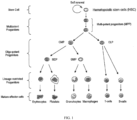
- Healthy hematopoietic stem cells give rise to progenitor cells which in turn give rise to all the differentiated components of blood as shown in Figure 1 (e.g., lymphocytes, erythrocytes, platelets, granulocytes, monocytes). Healthy hematopoietic cells display a gradient dependency on CDK4/6 activity for proliferation during myeloid/erythroid differentiation (see Johnson et al. Mitigation of hematological radiation toxicity in mice through pharmacological quiescence induced by CDK4/6 inhibition. J Clin. Invest. 2010; 120(7): 2528-2536 ).
- the least differentiated cells e.g., healthy hematopoietic stem cells (HSCs), multi-potent progenitors (MPPs), and common myeloid progenitors (CMP)
- HSCs healthy hematopoietic stem cells
- MPPs multi-potent progenitors
- CMP common myeloid progenitors
- the use of the compound in a method for the treatment of selected Rb-positive cancer as described above aims to minimize the treatment's deleterious effects on healthy cells, such as healthy HSPCs and other CDK4/6-replication dependent healthy cells.
- the Rb-positive cancer can be Rb-positive breast cancer.
- the Rb-positive cancer is Rb-positive estrogen-receptor positive, HER2-negative advanced breast cancer.
- the Rb-positive cancer can be Rb-positive estrogen receptor-negative breast cancer.
- the Rb-positive cancer can be Rb-positive estrogen receptor positive breast cancer.
- the Rb-positive cancer can be Rb-positive late-line metastatic breast cancer.
- the Rb-positive cancer can be Rb-positive luminal A breast cancer.
- the Rb-positive cancer can be Rb-positive luminal B breast cancer.
- the Rb-positive cancer can be Rb-positive Her2-negative breast cancer or Rb-positive HER2-positive breast cancer.
- the Rb-positive cancer is Rb-positive male breast cancer.
- the Rb-positive cancer is Rb-positive progesterone receptor-negative breast cancer.
- the Rb-positive cancer can be Rb-positive progesterone receptor-positive breast cancer.
- the Rb-positive cancer can be Rb-positive recurrent breast cancer.
- the Rb-positive cancer is Rb-positive stage IV breast cancers.
- the Rb-positive cancer is Rb-positive advanced HER2-positive breast cancer.
- the Rb-positive cancer can be Rb-positive germ cell cancer.
- the Rb-positive cancer can be Rb-positive recurrent gonadal germ cell tumor.
- the Rb-positive cancer can be Rb-positive recurrent ovarian germ cell tumors.
- the Rb-positive cancer can be Rb-positive stage III ovarian germ cell tumors.
- the Rb-positive cancer can be Rb-positive stage IV ovarian germ cell tumors.
- the Rb-positive cancer is Rb-positive cisplatin-refractory, unresectable germ cell cancer.
- the Rb-positive cancer can be Rb-positive ovarian cancer.
- the Rb-positive cancer is Rb-positive ovarian epithelial carcinoma.
- the Rb-positive cancer can be Rb-positive prostate cancer.
- the invention includes administering to a patient having a selected Rb-positive cancer an effective amount of the compound described herein, wherein the compound has a pharmacokinetic and enzymatic half-life that provides for a transient, reversible G1 arrest of CDK4/6-replication dependent cells.
- the compound described herein may be useful in an improved method for treating a selected Rb-positive cancer, wherein such methods have reduced or minimized effects on CDK4/6-replication dependent healthy cells due in part because they (i) utilize a compound that exhibits a pharmacokinetic and enzymatic half-life which provides for a relatively short, transient and reversible G1-arresting effect on CDK4/6-replication dependent healthy cells and (ii) allow for a rapid re-entry into the cell cycle for the healthy cells following the cessation of administration or dissipation of therapeutically effective levels in the subject.
- Using the compound described herein allows for, for example, a reduction in the replication delay of the HSPCs due to CDK4/6 inhibition and/or accelerated hematopoietic cell lineage recovery following cessation of CDK4/6 inhibitory activity and/or reduced hematological deficiency because the utilized compound is short-acting, and reduces the length of off-cycle periods or drug holidays associated with current CDK4/6 inhibitor treatment modalities which reduces or minimizes the facilitation of tumor drug resistance.
- the use of the compound described herein allows for the continuous treatment of the subject over a longer time period without the need for an off-cycle or drug holiday.
- the long-acting G1 arrest provided by PD0332991 requires an extended off-cycle period in order to reconstitute the erythroid, platelet, and myeloid cells (monocyte and granulocyte) adversely effected by acute HSPC G1-arrest in order to limit myelosuppressive and allow a hematologic replication period.
- the use of the compound described herein as an antineoplastic agent for the treatment of select Rb-positive cancers may eliminate, reduce, or minimize the required length of off-cycle periods or drug holidays, allowing for a longer effective CDK4/6 inhibitory time period on the cancer over the course of an anti-neoplastic regime.
- the compound described herein can be administered in a concerted regimen with another agent such as a non-DNA-damaging, targeted anti-neoplastic agent or a hematopoietic growth factor agent for beneficial, additive, or synergistic effect against the abnormal cellular proliferation.
- another agent such as a non-DNA-damaging, targeted anti-neoplastic agent or a hematopoietic growth factor agent for beneficial, additive, or synergistic effect against the abnormal cellular proliferation.
- hematopoietic growth factors can have serious side effects.
- the use of the EPO family of growth factors has been associated with arterial hypertension, cerebral convulsions, hypertensive encephalopathy, thromboembolism, iron deficiency, influenza like syndromes and venous thrombosis.
- the use of the compound described herein in an anti-neoplastic therapeutic regime may allow the subject to receive a reduced amount of growth factor because the targeted hematopoietic cells will have reentered the cell cycle quicker than when other CDK4/6 inhibitors, for example PD0332991.
- allowing rapid cell-cycle reentry following G1 arrest by using the compound described herein provides for the ability to time the administration of hematopoietic growth factors to assist in the reconstitution of hematopoietic cell lines to maximize the growth factor effect.
- the use of the compound described herein is combined in a therapeutic regime with at least one other chemotherapeutic agent, and can be one that does not rely on proliferation or advancement through the cell-cycle for anti-proliferative activity.
- chemotherapeutic agent may include, but is not limited to, tamoxifen, midazolam, letrozole, bortezomib, anastrozole, goserelin, an mTOR inhibitor, a PI3 kinase inhibitors, dual mTOR-PI3K inhibitors, MEK inhibitors, RAS inhibitors, ALK inhibitors, HSP inhibitors (for example, HSP70 and HSP 90 inhibitors, or a combination thereof).
- the compound described herein is administered to the subject less than about 24 hours, 20 hours, 16 hours, 12 hours, 8 hours, or 4 hours or less prior to treatment with the hematopoietic growth factor. In one embodiment, the compound is administered up to 4 hours prior to treatment with the hematopoietic growth factor or other chemotherapeutic agent.
- the use of the compound described herein results in the G1-arresting effect dissipates such that the subject's CDK4/6-replication dependent healthy cells return to their pre-administration baseline cell-cycle activity within less than about 12 hours, 14 hours, 16 hours, 18 hours, 20 hours, 24 hours, 30 hours, 36 hours, or 40 hours.
- the G1-arresting effect dissipates such that the subject's CDK4/6-replication dependent healthy cells return to their pre-administration baseline cell-cycle activity within less than about 24 hours, 30 hours, 36 hours, or 40 hours, or within about 48 hours of the cessation of administration.
- the CDK4/6-replication dependent healthy cells are HSPCs.
- the use of the compound of the present invention results in the G1-arresting effect dissipating so that the subject's CDK4/6-replication dependent healthy cells return to or approach their pre-administration baseline cell-cycle activity within less than about 24 hours, 30 hours, 36 hours, 40 hours, or within less than about 48 hours from the point in which the compound's concentration level in the subject's blood drops below a therapeutic effective concentration.
- CDK4/6-replication dependent healthy cells can quickly begin to replicate during an off-cycle period or during administration periods.
- the use of the compound as described herein in a therapeutic regime targeting CDK4/6-replication dependent cancers can result in reduced anemia, reduced lymphopenia, reduced thrombocytopenia, or reduced neutropenia compared to that typically expected after, common after, or associated with treatment with currently available antineoplastic chemotherapeutic agents.
- the use of the compound as described herein may result in a faster recovery from bone marrow suppression associated with long-term use of CDK4/6 inhibitors, such as myelosuppression, anemia, lymphopenia, thrombocytopenia, or neutropenia, following the cessation of use of the CDK4/6 inhibitor.
- the use of the compound as described herein results in reduced bone marrow suppression associated with long-term use of CDK4/6 inhibitors, such as myelosuppression, anemia, lymphopenia, leukopenia, thrombocytopenia, or granulocytopenias such as neutropenia.
- CDK4/6 inhibitors such as myelosuppression, anemia, lymphopenia, leukopenia, thrombocytopenia, or granulocytopenias such as neutropenia.
- the compound as described above, or a pharmaceutically acceptable composition, salt, isotopic analog, and prodrug thereof, may be used as a chemotherapeutic in a method for the treatment of selected Rb-positive cancers, which can be useful in minimizing the deleterious effects on CDK4/6-replication dependent healthy cells, for example HSPCs or renal cells;
- the compound as described above, or a pharmaceutically acceptable composition, salt, isotopic analog, or prodrug thereof, may be used as a chemotherapeutic in a method for the treatment of a selected Rb-positive cancer that, when exposed to a CDK4/6 inhibitor, is growth arrested or growth inhibited;
- the compound described above is useful in a method of treatment which minimizes or reduces the deleterious effects on CDK4/6 replication dependent healthy cells, such as hematopoietic stem cells and/or progenitor cells (HSPCs), due to CDK4/6 growth arrest, in subjects, typically humans.
- CDK4/6 replication dependent healthy cells such as hematopoietic stem cells and/or progenitor cells (HSPCs)
- HSPCs progenitor cells
- alkyl either alone or within other terms such as “haloalkyl” and “alkylamino,” embraces linear or branched radicals having one to about twelve carbon atoms. "Lower alkyl” radicals have one to about six carbon atoms. Examples of such radicals include methyl, ethyl, n-propyl, isopropyl, n-butyl, isobutyl, sec-butyl, tert-butyl, pentyl, isoamyl, hexyl and the like.
- alkylene embraces bridging divalent linear and branched alkyl radicals. Examples include methylene, ethylene, propylene, isopropylene and the like.
- alkynyl denotes linear or branched radicals having at least one carbon-carbon triple bond and having two to about twelve carbon atoms.
- Alkyl, alkenyl, and alkynyl radicals may be optionally substituted with one or more functional groups such as halo, hydroxy, nitro, amino, cyano, haloalkyl, aryl, heteroaryl, heterocyclo and the like.
- haloalkyl embraces radicals wherein any one or more of the alkyl carbon atoms is substituted with one or more halo as defined above. Examples include monohaloalkyl, dihaloalkyl and polyhaloalkyl radicals including perhaloalkyl.
- a monohaloalkyl radical for one example, may have an iodo, bromo, chloro or fluoro atom within the radical.
- Dihalo and polyhaloalkyl radicals may have two or more of the same halo atoms or a combination of different halo radicals.
- “Lower haloalkyl” embraces radicals having 1-6 carbon atoms.
- haloalkyl radicals include fluoromethyl, difluoromethyl, trifluoromethyl, chloromethyl, dichloromethyl, trichloromethyl, pentafluoroethyl, heptafluoropropyl, difluorochloromethyl, dichlorofluoromethyl, difluoroethyl, difluoropropyl, dichloroethyl and dichloropropyl.
- Perfluoroalkyl means an alkyl radical having all hydrogen atoms replaced with fluoro atoms. Examples include trifluoromethyl and pentafluoroethyl.
- Said "heterocyclyl” group may have 1 to 3 substituents such as hydroxyl, Boc, halo, haloalkyl, cyano, lower alkyl, lower aralkyl, oxo, lower alkoxy, amino, lower alkylamino, and the like.
- saturated heterocyclo groups include saturated 3- to 6-membered heteromonocyclic groups containing 1 to 4 nitrogen atoms [e.g. pyrrolidinyl, imidazolidinyl, piperidinyl, pyrrolinyl, piperazinyl]; saturated 3 to 6-membered heteromonocyclic group containing 1 to 2 oxygen atoms and 1 to 3 nitrogen atoms [e.g. morpholinyl]; saturated 3 to 6-membered heteromonocyclic group containing 1 to 2 sulfur atoms and 1 to 3 nitrogen atoms [e.g., thiazolidinyl].
- partially saturated heterocyclyl radicals include dihydrothienyl, dihydropyranyl, dihydrofuryl, dihydrothiazolyl, and the like.
- Particular examples of partially saturated and saturated heterocyclo groups include pyrrolidinyl, imidazolidinyl, piperidinyl, pyrrolinyl, pyrazolidinyl, piperazinyl, morpholinyl, tetrahydropyranyl, thiazolidinyl, dihydrothienyl, 2,3-dihydro-benzo[l,4]dioxanyl, indolinyl, isoindolinyl, dihydrobenzothienyl, dihydrobenzofuryl, isochromanyl, chromanyl, 1,2-dihydroquinolyl, 1,2,3,4- tetrahydro-isoquinolyl, 1 ,2,3,4-tetrahydro-quinolyl, 2,3,4,4a,9,9a-hexahydro-1H-3-aza-fluorenyl, 5,6,7- trihydro-1,2,4-triazolo[3,4-a]isoquinolyl
- Heterocyclo groups also includes radicals where heterocyclic radicals are fused/condensed with aryl radicals: unsaturated condensed heterocyclic group containing 1 to 5 nitrogen atoms, for example, indolyl, isoindolyl, indolizinyl, benzimidazolyl, quinolyl, isoquinolyl, indazolyl, benzotriazolyl, tetrazolopyridazinyl [e.g., tetrazolo [l,5-b]pyridazinyl]; unsaturated condensed heterocyclic group containing 1 to 2 oxygen atoms and 1 to 3 nitrogen atoms [e.g.
- benzoxazolyl, benzoxadiazolyl unsaturated condensed heterocyclic group containing 1 to 2 sulfur atoms and 1 to 3 nitrogen atoms
- benzothiazolyl, benzothiadiazolyl unsaturated condensed heterocyclic group containing 1 to 2 sulfur atoms and 1 to 3 nitrogen atoms
- saturated, partially unsaturated and unsaturated condensed heterocyclic group containing 1 to 2 oxygen or sulfur atoms e.g. benzofuryl, benzothienyl, 2,3-dihydro-benzo[l,4]dioxinyl and dihydrobenzofuryl].
- heteroarylalkyl denotes alkyl radicals substituted with a heteroaryl group. Examples include pyridylmethyl and thienylethyl.
- sulfonyl whether used alone or linked to other terms such as alkylsulfonyl, denotes respectively divalent radicals -SO 2 -.
- carboxy or “carboxyl”, whether used alone or with other terms, such as “carboxyalkyl”, denotes -C(O)-OH.
- aminocarbonyl denotes an amide group of the Formula -C(O)-NH 2 .
- heterocycloalkyl embrace heterocyclic-substituted alkyl radicals. Examples include piperidylmethyl and morpholinylethyl.
- arylalkyl embraces aryl-substituted alkyl radicals. Examples include benzyl, diphenylmethyl and phenylethyl. The aryl in said aralkyl may be additionally substituted with halo, alkyl, alkoxy, halkoalkyl and haloalkoxy.
- cycloalkyl includes saturated carbocyclic groups of 3 to 10 carbons.
- Lower cycloalkyl groups include C 3 -C 6 rings. Examples include cyclopentyl, cyclopropyl, and cyclohexyl.
- Cycloalkyl groups may be optionally substituted with one or more functional groups such as halo, hydroxy, nitro, amino, cyano, haloalkyl, aryl, heteroaryl, heterocyclo and the like.
- cycloalkylalkyl embraces cycloalkyl-substituted alkyl radicals.
- “Lower cycloalkylalkyl” radicals are cycloalkyl radicals attached to alkyl radicals having one to six carbon atoms. Examples of include cyclohexylmethyl.
- the cycloalkyl in said radicals may be additionally substituted with halo, alkyl, alkoxy and hydroxy.
- cycloalkenyl includes carbocyclic groups having one or more carbon-carbon double bonds including “cycloalkyldienyl” compounds. Examples include cyclopentenyl, cyclopentadienyl, cyclohexenyl and cycloheptadienyl.
- cyano as used herein contemplates -CN.
- the current invention is directed to an HSPC-sparing strategy during the treatment of Rb-positive proliferation disorders.
- HSPCs is meant to describe healthy hematopoietic stem and/or hematopoietic progenitor cells, as opposed to diseased HSPCs or cells of related hematological origin.
- HSPCs include hematopoietic stem cells, such as long term hematopoietic stem cells (LT-HSCs) and short term hematopoietic stem cells (ST-HSCs), and hematopoietic progenitor cells, including multipotent progenitors (MPPs), common myeloid progenitors (CMPs), common lymphoid progenitors (CLPs), granulocyte-monocyte progenitors (GMPs) and megakaryocyte-erythroid progenitors (MEPs).
- MPPs multipotent progenitors
- CMPs common myeloid progenitors
- CLPs common lymphoid progenitors
- GFPs granulocyte-monocyte progenitors
- MEPs megakaryocyte-erythroid progenitors
- a CDK4/6-replication dependent healthy cell is a hematopoietic stem progenitor cell.
- the CDK4/6-replication dependent healthy cell may be a cell in a non-hematopoietic tissue, such as, but not limited to, the liver, kidney, pancreas, brain, lung, adrenals, intestine, gut, stomach, skin, auditory system, bone, bladder, ovaries, uterus, testicles, gallbladder, thyroid, heart, pancreatic islets, blood vessels, and the like.
- selective CDK4/6 inhibitor used in the context of the compounds described herein includes compounds that inhibit CDK4 activity, CDK6 activity, or both CDK4 and CDK6 activity at an IC 50 molar concentration at least about 500, or 1000, or 1500, or 1800, or 2000 times less than the IC 50 molar concentration necessary to inhibit to the same degree of CDK2 activity in a standard phosphorylation assay.
- chemotherapy refers to treatment with a cytostatic or cytotoxic agent (i.e., a compound) to reduce or eliminate the growth or proliferation of undesirable cells, for example cancer cells.
- chemotherapy or “chemotherapeutic agent” refers to a cytotoxic or cytostatic agent used to treat a proliferative disorder, for example cancer.
- inhibitor compound induces a quiescent state in a substantial portion of a cell population at the G1 phase of the cell cycle.
- synchronous reentry into the cell cycle is meant that CDK4/6-replication dependent healthy cells, for example HSPCs, in G1-arrest due to the effect of a CDK4/6 inhibitor compound reenter the cell-cycle within relatively the same collective timeframe or at relatively the same rate upon dissipation of the compound's effect.
- asynchronous reentry into the cell cycle is meant that the healthy cells, for example HSPCs, in G1 arrest due to the effect of a CDK4/6 inhibitor compound within relatively different collective timeframes or at relatively different rates upon dissipation of the compound's effect such as PD0332991.
- off-cycle or “drug holiday” is meant a time period during which the subject is not administered or exposed to a chemotherapeutic.
- the 7 day period of non-administration is considered the “off-cycle” or “drug holiday.”
- Off-target and drug holiday may also refer to an interruption in a treatment regime wherein the subject is not administered the chemotherapeutic for a time due to a deleterious side effect, for example, myelosuppression.
- the subject treated is typically a human subject, although it is to be understood the methods described herein are effective with respect to other animals, such as mammals and vertebrate species. More particularly, the term subject can include animals used in assays such as those used in preclinical testing including but not limited to mice, rats, monkeys, dogs, pigs and rabbits; as well as domesticated swine (pigs and hogs), ruminants, equine, poultry, felines, bovines, murines, canines, and the like.
- the invention is directed to a compound of the formula: or a pharmaceutically acceptable salt thereof,
- Each R x1 may be only optionally substituted by unsubstituted alkyl, halogen or hydroxy.
- At least one R x1 may be -(alkylene) m -heterocyclyl wherein m is 0 or 1.
- R 2 may be
- R 2 may be
- R 2 may be wherein:
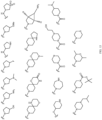
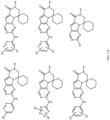
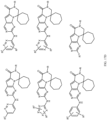
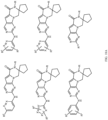
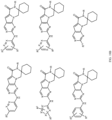
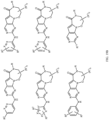
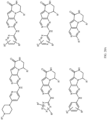
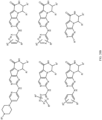
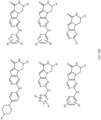
- R 2 may be selected from the structures depicted in FIGS. 13-15 .
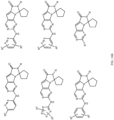
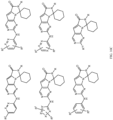
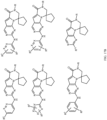
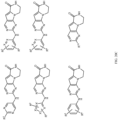
- a compound may have general Formula I and more specifically one of the general structures in FIGS. 16-20 wherein the variables are as previously defined.
- a compound may have Formula Ia and R is H.
- a compound may have Formula Ia and R 2 is wherein P* is a 4- to 8-membered mono- or bicyclic saturated heterocyclyl group and R 2 *, R x1 and t are as previously defined.
- a compound may have Formula Ia and R 2 is wherein P* is a 4- to 8-membered mono- or bicyclic saturated heterocyclyl group, R x1 is hydrogen or unsubstituted C 1 -C 4 alkyl and R 2* is as previously defined.
- a compound may have Formula Ib: wherein R 2 and R are as previously defined.
- a compound may have Formula Ib and R is H.
- a compound may have Formula Ib and R 2 is wherein P* is a 4- to 8-membered mono- or bicyclic saturated heterocyclyl group, R x1 is hydrogen or C 1 -C 4 alkyl and R 2* is as previously defined.
- a compound may have Formula Ic: wherein R 2 and R are as previously defined.
- a compound may have Formula Ic and R is H.
- a compound may have Formula Ic and R 2 is wherein P* is a 4- to 8-membered mono- or bicyclic saturated heterocyclyl group and R 2 *, R x1 and t are as previously defined.
- a compound may have Formula Id: wherein R 2 and R are as previously defined.
- a compound may have Formula Id and R is alkyl.
- a compound may have Formula Id and R is H.
- a compound may have Formula Id and R 2 is wherein P* is a 4- to 8-membered mono- or bicyclic saturated heterocyclyl group, R x1 is hydrogen or C 1 -C 4 alkyl and R 2* is as previously defined.
- a compound may have Formula Ie:
- a compound may have Formula Ie and R is alkyl.
- a compound may have Formula Ie and R is H.
- a compound may have Formula Ie and R 2 is wherein P* is a 4- to 8-membered mono- or bicyclic saturated heterocyclyl group and R 2 *, R x1 and t are as previously defined.
- a compound may have Formula Ie and R 2 is wherein P* is a 4- to 8-membered mono- or bicyclic saturated heterocyclyl group, R x1 is hydrogen or C 1 -C 4 alkyl and R 2* is as previously defined.
- a compound may have Formula If:
- a compound may have Formula If and R is alkyl.
- a compound may have Formula If and R is H.
- a compound may have Formula If and R 2 is wherein P* is a 4- to 8-membered mono- or bicyclic saturated heterocyclyl group and R 2 *, R x1 and t are as previously defined.
- a compound may have Formula Ig:
- a compound may have Formula Ig and R is alkyl.
- a compound may have Formula Ig and R 2 is wherein P* is a 4- to 8-membered mono- or bicyclic saturated heterocyclyl group, R x1 is hydrogen or C 1 -C 4 alkyl and R 2* is as previously defined.
- a compound may have Formula Ih:
- a compound may have Formula Ih and R is H.
- a compound may have Formula Ih and R 2 is wherein P* is a 4- to 8-membered mono- or bicyclic saturated heterocyclyl group and R 2 *, R x1 and t are as previously defined.
- a compound may have Formula Ih and R 2 is wherein P* is a 4- to 8-membered mono- or bicyclic saturated heterocyclyl group, R x1 is hydrogen or C 1 -C 4 alkyl and R 2* is as previously defined.
- a compound may have Formula Ii:
- a compound may have Formula Ii and R is alkyl.
- a compound may have Formula Ii and R is H.
- a compound may have Formula Ii and R 2 is wherein P* is a 4- to 8-membered mono- or bicyclic saturated heterocyclyl group and R 2 *, R x1 and t are as previously defined.
- a compound may have Formula Ii and R 2 is wherein P* is a 4- to 8-membered mono- or bicyclic saturated heterocyclyl group, R x1 is hydrogen or C 1 -C 4 alkyl and R 2* is as previously defined.
- a compound may have Formula Ij:
- a compound may have Formula Ij and R is alkyl.
- a compound may have Formula Ij and R is H.
- a compound may have Formula Ij and R 2 is wherein P* is a 4- to 8-membered mono- or bicyclic saturated heterocyclyl group.
- a compound may have Formula Ij and R 2 is wherein P* is a 4- to 8-membered mono- or bicyclic saturated heterocyclyl group, R x1 is hydrogen or C 1 -C 4 alkyl.
- a compound may have Formula Ij and R is H, and both X are N.
- a compound may have the structure:
- a compound may have Formula Ik and R 2 is wherein P* is a 4- to 8-membered mono- or bicyclic saturated heterocyclyl group.
- a compound may have Formula Ik and R 2 is wherein P* is a 4- to 8-membered mono- or bicyclic saturated heterocyclyl group, R x1 is hydrogen or C 1 -C 4 alkyl.
- a compound may have Formula Il:
- a compound may have Formula Il and R 2 is wherein P* is a 4- to 8-membered mono- or bicyclic saturated heterocyclyl group.
- a compound may have Formula Il and R 2 is wherein P* is a 4- to 8-membered mono- or bicyclic saturated heterocyclyl group, R x1 is hydrogen or C 1 -C 4 alkyl.
- a compound may have Formula Im:
- a compound may have Formula Im and R 2 is wherein P* is a 4- to 8-membered mono- or bicyclic saturated heterocyclyl group.
- a compound may have Formula Im and R 2 is wherein P* is a 4- to 8-membered mono- or bicyclic saturated heterocyclyl group, R x1 is hydrogen or C 1 -C 4 alkyl.
- a compound may have Formula IIa:
- a compound may have Formula IIa and R 2 is wherein P* is a 4- to 8-membered mono- or bicyclic saturated heterocyclyl group, R x1 is hydrogen or C 1 -C 4 alkyl.
- a compound may have Formula IIb:
- a compound may have Formula Im and R 2 is wherein P* is a 4- to 8-membered mono- or bicyclic saturated heterocyclyl group.
- a compound may have Formula Im and R 2 is wherein P* is a 4- to 8-membered mono- or bicyclic saturated heterocyclyl group, R x1 is hydrogen or C 1 -C 4 alkyl.
- the active compound is:
- Table 1 Structures of Anti-Neoplastic and Anti-Proliferative Agents Structure Reference Structure A B C D E F G H I J K L M N O P Q R S T U V W X Y Z AA BB CC DD EE FF HH II JJ KK LL MM NN OO PP QQ RR SS TT UU VV WW XX YY ZZ AAA BBB CCC DDD EEE FFF GGG HHH III JJJ KKK LLL MMM NNN OOO PPP QQQ RRR SSS TTT UUU VVV WWW XXXX
- the present invention includes the use of the compound as described above with desired isotopic substitutions of atoms, at amounts above the natural abundance of the isotope, i.e., enriched.
- Isotopes are atoms having the same atomic number but different mass numbers, i.e., the same number of protons but a different number of neutrons.
- isotopes of hydrogen for example, deuterium ( 2 H) and tritium ( 3 H) may be used anywhere in described structures.
- isotopes of carbon e.g., 13 C and 14 C, may be used.
- a preferred isotopic substitution is deuterium for hydrogen at one or more locations on the molecule to improve the performance of the drug.
- the deuterium can be bound in a location of bond breakage during metabolism (an ⁇ -deuterium kinetic isotope effect) or next to or near the site of bond breakage (a ⁇ -deuterium kinetic isotope effect).
- substitution with isotopes such as deuterium can afford certain therapeutic advantages resulting from greater metabolic stability, such as, for example, increased in vivo half-life or reduced dosage requirements.
- Substitution of deuterium for hydrogen at a site of metabolic break down can reduce the rate of or eliminate the metabolism at that bond.
- the hydrogen atom can be any isotope of hydrogen, including protium ( 1 H), deuterium ( 2 H) and tritium ( 3 H).
- isotopically-labeled refers to an analog that is a "deuterated analog", a " 13 C-labeled analog,” or a “deuterated/ 13 C-labeled analog.”
- deuterated analog means the compound described herein, whereby a H-isotope, i.e., hydrogen/protium ( 1 H), is substituted by a H-isotope, i.e., deuterium ( 2 H).
- Deuterium substitution can be partial or complete. Partial deuterium substitution means that at least one hydrogen is substituted by at least one deuterium.
- the isotope is 90, 95 or 99% or more enriched in an isotope at any location of interest. In some embodiments it is deuterium that is 90, 95 or 99% enriched at a desired location.
- the active compound described herein is used to treat a subject suffering from an Rb-positive cancer, wherein the Rb positive cancer is selected from the group consisting of Rb-positive breast cancer, Rb-positive colon cancer, Rb-positive ovarian cancer, Rb-positive non-small cell lung cancer, Rb-positive prostate cancer, and Rb-positive glioblastoma.
- the cancer is a CDK4/6-replication dependent cancer, which refers to a cancer that requires the activity of CDK4/6 for replication or proliferation, or which may be growth inhibited through the activity of a selective CDK4/6 inhibitor. Cancers of such type can be characterized by (e.g., that has cells that exhibit) the presence of a functional Retinoblastoma protein. Such cancers are classified as being Rb-positive.
- Targeted cancers suitable for administration of the compound described herein may include Rb-positive: estrogen-receptor positive, HER2-negative advanced breast cancer, late-line metastatic breast cancer, non-small cell lung cancer, ovarian cancer, glioblastoma, retinoblastoma positive breast cancer as well as retinoblastoma positive ovarian cancers, adenocarcinoma of the colon, estrogen receptor-negative breast cancer, estrogen receptor-positive breast cancer, HER2-negative breast cancer, HER2-positive breast cancer, male breast cancer, ovarian immature teratomas, ovarian mature teratoma, ovarian monodermal and highly specialized teratomas, progesterone receptor-negative breast cancer, progesterone receptor-positive breast cancer, recurrent breast cancer, recurrent colon cancer, recurrent ovarian germ cell tumors, stage III ovarian germ cell tumors, stage IV breast cancers, stage IV colon cancers, stage IV ovarian germ cell tumors,.
- the targeted cancers included estrogen-receptor positive, HER2-negative advanced breast cancer, late-line metastatic breast cancer, non-small cell lung cancer, ovarian cancer, glioblastoma, retinoblastoma positive breast cancer as well as retinoblastoma positive ovarian cancers.
- the Rb-positive cancer is selected from an Rb-positive carcinoma including, ovarian cancer, colon cancer, breast cancer, prostate cancer, or a combination of one or more of the foregoing cancers.
- the Rb-positive cancer is selected from the group consisting of Rb-positive: squamous cell carcinoma; epidermoid carcinoma, adenocarcinoma, glioblastoma multiforme, bronchial carcinoid, malignant carcinoid, cystosarcoma phyllodes,
- Tissue-specific stem cells and subsets of other resident proliferating cells are capable of self-renewal, meaning that they are capable of replacing themselves throughout the adult mammalian lifespan through regulated replication.
- stem cells divide asymmetrically to produce "progeny" or "progenitor” cells that in turn produce various components of a given organ.
- progenitor cells For example, in the hematopoietic system, the hematopoietic stem cells give rise to progenitor cells which in turn give rise to all the differentiated components of blood (e.g., white blood cells, red blood cells, and platelets) (see FIG. 1 ).
- the use of the compound described herein as a chemotherapeutic allows for an accelerated hematological recovery and reduced hematological deficiency risk due to HSPC replication delay compared to the use of other CDK4/6 inhibitors, for example, PD0332991.
- the use of the compound described herein as a chemotherapeutic allows for a reduced or minimized off-cycle or drug holiday during the course of treatment compared to current treatment modalities using other CDK4/6 inhibitors, for example PD0332991.
- the use of the compound described herein as a chemotherapeutic allows for the elimination of an off-cycle or drug holiday.
- the use of the compound described herein as a chemotherapeutic allows for an extended period of administration with fewer off-cycle days or drug holidays compared to the use of current treatment modalities using other CDK4/6 inhibitors, for example PD0332991. In one embodiment, the use of the compound described herein as a chemotherapeutic allows for a faster blood count recovery during an off-cycle or drug holiday than the use of current modalities using other CDK4/6 inhibitors, for example PD0332991.
- the compound as described herein or a pharmaceutically acceptable composition, salt or isotopic analogue thereof is provided for use as a chemotherapeutic which limits the deleterious effect of CDK4/6 inhibition on CDK4/6-replication dependent healthy cells in a subject undergoing treatment for a selected Rb-positive cancer, the method comprising administering an effective amount of the compound described herein, wherein a substantial portion of the CDK4/6-replication dependent healthy cells synchronously reenter the cell-cycle within less than about 24, 30, 36 or 40 hours following the dissipation of the compound's inhibitory effect.
- the CDK4/6-replication dependent cells are hematopoietic stem cells and/or progenitor cells (HSPCs).
- a substantial portion of the CDK4/6-replication dependent healthy cells reenter the cell-cycle synchronously within less than about 24, 30, 36, or 40 hours from the point in which the compound's concentration level in the subject's blood drops below a therapeutic effective concentration.
- the CDK4/6-replication dependent cells are hematopoietic stem cells and/or progenitor cells (HSPCs).
- the CDK4/6-replication dependent healthy cells are renal epithelial cells.
- the effect of the compound is short term and transient in nature, allowing a significant portion of the CDK4/6-replication dependent healthy cells to synchronously renter the cell-cycle quickly, for example within less than about 24, 30, 36, or 40 hours of the last administration of the compound.
- the compound for use in the described method is a highly selective, potent CDK4/6 inhibitor, with minimal CDK2 inhibitory activity.
- Disclosed herein are compounds for use in the methods described herein having a CDK4/CycD1 IC 50 inhibitory concentration value that is >1500 times, >1800 times, >2000 times, >2200 times, >2500 times, >2700 times, >3000 times, >3200 times or greater lower than its respective IC 50 concentration value for CDK2/CycE inhibition.
- the compound for use in the methods described herein may have an IC 50 concentration value for CDK4/CycD1 inhibition that is about ⁇ 1.50 nM, ⁇ 1.25 nM, ⁇ 1.0 nM, ⁇ 0.90 nM, ⁇ 0.85 nM, ⁇ 0.80 nM, ⁇ 0.75 nM, ⁇ 0.70 nM, ⁇ 0.65 nM, ⁇ 0.60 nM, ⁇ 0.55 nM, or less.
- the CDK4/6 inhibitor for use in the methods described herein may have an IC 50 concentration value for CDK2/CycE inhibition that is about >1.0 ⁇ M, >1.25 ⁇ M, >1.50 ⁇ M, >1.75 ⁇ M, >2.0 ⁇ M, >2.25 ⁇ M, >2.50 ⁇ M, >2.75 ⁇ M, >3.0 ⁇ M, >3.25 ⁇ M, >3.5 ⁇ M or greater.
- the compound for use in the methods described herein may have an IC 50 concentration value for CDK2/CycA IC 50 that is >0.80 ⁇ M, >0.85 ⁇ M, >0.90 ⁇ M, >0.95 ⁇ M, >.1.0 ⁇ M, >1.25 ⁇ M, >1.50 ⁇ M, >1.75 ⁇ M, >2.0 ⁇ M, >2.25 ⁇ M, >2.50 ⁇ M, >2.75 uM, >3.0 ⁇ M or greater.
- the compound useful in the described methods may provide for a transient and quickly reversible G1-arrest of CDK4/6-replication dependent healthy cells while providing for growth inhibition of CDK4/6-replication dependent cancers.
- the use of the compound as a chemotherapeutic allows for the faster reentry of the CDK4/6-replication dependent healthy cells into the cell cycle following cessation of the treatment compared to, for example, longer acting CDK4/6 inhibitors such as PD0332991.
- chemotherapeutic regimens with the compound described herein can be achieved by a number of different dosing
- the compound described herein is used in CDK4/6-replication dependent healthy cell cycling strategies wherein a subject is exposed to regular, repeated chemotherapeutic treatments for one of the selected Rb-positive cancers.
- Such cycling allows CDK4/6-replication dependent cells to regenerate damaged blood cell lineages between regular, repeated treatments, and reduces the risk associated with long term CDK4/6 inhibition.
- the use of the compound described herein provides for a rapid, reentry into the cell cycle by CDK4/6-replicaton dependent cells so that the cells return to pre-treatment baseline cell cycle activity within less than about 40 hours, 36 hours, 30 hours, 28 hours, 24 hours, 18 hours, 16 hours, 14 hours, 12 hours or less from the last administration of the compound described herein.
- the use of the compound described herein provides for a rapid, reentry into the cell cycle by CDK4/6-replication dependent healthy cells so that the cells approach pre-treatment baseline cell cycle activity within less than about 40 hours, 36 hours, 30 hours, 28 hours, 24 hours, 18 hours, 16 hours, 14 hours, 12 hours or less from the last administration of the compound.
- the use of the compound described herein provides for a rapid, reentry into the cell cycle by CDK4/6-replication dependent healthy cells so that the cells approach pre-treatment baseline cell cycle activity within less than about 40 hours, 36 hours, 30 hours, 28 hours, 24 hours, 18 hours, 16 hours, 14 hours, 12 hours or less from the point in which the compound's concentration level in the subject's blood drops below a therapeutic effective concentration.
- the CDK4/6-replication dependent healthy cells are HSPCs.
- the CDK4/6-replication dependent healthy cells are renal epithelial cells.
- the rapid reentry into the cell-cycle is synchronous.
- the use of the compound described herein provides for a rapid, reentry into the cell cycle by CDK4/6-replication dependent healthy cells, for example HSPCs, so that a portion of the cells exhibit a level of cell cycle activity or are capable of entering the cell cycle and proliferate during a continuous treatment regime, for example, a treatment regime wherein the compound is administered for an extended period, for example, 5 continuous days, 7 continuous days, 10 continuous days, 14 continuous days, 18 continuous days, 21 continuous days, 24 continuous days, 28 continuous days, 35 continuous days or more.
- the compound useful in the described method is administered for a continuous period, for example, 21, 28, 35 days or more, without the requirement for an off-cycle period or drug holiday.
- the use of the compound described herein eliminates the need for an off-cycle period, drug holiday, or reduction in co-administered anti-neoplastic compound concentration during treatment.
- the compound described herein can be administered as a chemotherapeutic to a subject having an Rb-positive cancer on any treatment schedule and in any dose consistent with the prescribed course of treatment.
- the compound can be administered once a day, twice a day or three times a day.
- the compound can be administered on alternating days, or every third day, or every fourth day, or every fifth day, or every sixth day or once a week.
- the compound can be administered every other week or monthly.
- the compound disclosed herein can be beneficially administered in combination with another therapeutic regimen for beneficial, additive or synergistic effect.
- the compound for use in the method of treatment of Rb-positive cancer of the present invention is used in combination with another therapy to treat the Rb-positive cancer.
- the second therapy can be an immunotherapy.
- the compound can be conjugated to an antibody, radioactive agent, or other targeting agent that directs the compound to the diseased or abnormally proliferating cell.
- the compound is used in combination with another pharmaceutical or a biologic agent (for example an antibody) to increase the efficacy of treatment with a combined or a synergistic approach.
- the compound can be used with T-cell vaccination, which typically involves immunization with inactivated autoreactive T cells to eliminate an Rb-positive cancer cell population as described herein.
- the compound in another embodiment, is used in combination with a bispecific T-cell Engager (BiTE), which is an antibody designed to simultaneously bind to specific antigens on endogenous T cells and Rb-positive cancer cells as described herein, linking the two types of cells.
- BiTE bispecific T-cell Engager
- cetuximab and panitumumab target the epidermal growth factor receptor (EGFR), and trastuzumab targets the human epidermal growth factor receptor 2 (HER-2).
- MAbs that bind to cell surface growth factor receptors prevent the targeted receptors from sending their normal growth-promoting signals. They may also trigger apoptosis and activate the immune system to destroy tumor cells.
- Immunotherapies with T cells engineered to recognize cancer cells via bispecific antibodies (bsAbs) or chimeric antigen receptors (CARs) are approaches with potential to ablate both dividing and non/slow-dividing subpopulations of cancer cells.
- the compound can be administered to the subject in combination with other chemotherapeutic agents. If convenient, the compound described herein can be administered at the same time as another chemotherapeutic agent, in order to simplify the treatment regimen. In some embodiments, the compound and the other chemotherapeutic can be provided in a single formulation. In one embodiment, the use of the compound described herein is combined in a therapeutic regime with other agents.
- Such agents may include, but are not limited to, tamoxifen, midazolam, letrozole, bortezomib, anastrozole, goserelin, an mTOR inhibitor, a PI3 kinase inhibitors, dual mTOR-PI3K inhibitors, MEK inhibitors, RAS inhibitors, ALK inhibitors, HSP inhibitors (for example, HSP70 and HSP 90 inhibitors, or a combination thereof), BCL-2 inhibitors, apopototic inducing compounds, AKT inhibitors, including but not limited to, MK-2206, GSK690693, Perifosine, (KRX-0401), GDC-0068, Triciribine, AZD5363, Honokiol, PF-04691502, and Miltefosine, PD-1 inhibitors including but not limited to, Nivolumab, CT-011, MK-3475, BMS936558, and AMP-514 or FLT-3 inhibitors, including but not limited to
- mTOR inhibitors include but are not limited to rapamycin and its analogs, everolimus (Afinitor), temsirolimus, ridaforolimus, sirolimus, and deforolimus.
- P13 kinase inhibitors include but are not limited to Wortmannin, demethoxyviridin, perifosine, idelalisib, PX-866, IPI-145, BAY 80-6946, BEZ235, RP6503, TGR 1202 (RP5264), MLN1117 (INK1117), Pictilisib, Buparlisib, SAR245408 (XL147), SAR245409 (XL765), Palomid 529, ZSTK474, PWT33597, RP6530, CUDC-907, and AEZS-136.
- Examples of MEK inhibitors include but are not limited to Tametinib, Selumetinib, MEK162, GDC-0973 (XL518), and PD0325901.
- Examples of RAS inhibitors include but are not limited to Reolysin and siG12D LODER.
- Examples of ALK inhibitors include but are not limited to Crizotinib, AP26113, and LDK378.
- HSP inhibitors include but are not limited to Geldanamycin or 17-N-Allylamino-17-demethoxygeldanamycin (17AAG), and Radicicol.
- the compound described herein is administered in combination with letrozole and/or tamoxifen.
- Other chemotherapeutic agents that can be used in combination with the compound described herein include, but are not limited to, chemotherapeutic agents that do not require cell cycle activity for their anti-neoplastic effect.
- a CDK4/6 inhibitor described herein can be combined with a chemotherapeutic selected from, but are not limited to, Imatinib mesylate (Gleevac ® ), Dasatinib (Sprycel ® ), Nilotinib (Tasigna ® ), Bosutinib (Bosulif ® ), Trastuzumab (Herceptin ® ), Pertuzumab (PerjetaTM), Lapatinib (Tykerb ® ), Gefitinib (Iressa ® ), Erlotinib (Tarceva ® ), Cetuximab (Erbitux ® ), Panitumumab (Vectibix ® ), Vandetanib (Caprelsa ® ), Vemurafenib (Zelboraf ® ), Vorinostat (Zolinza ® ), Romidepsin (Istodax ® ), Be
- Suitable chemotherapeutic agents include, but are not limited to, radioactive molecules, toxins, also referred to as cytotoxins or cytotoxic agents, which includes any agent that is detrimental to the viability of cells, agents, and liposomes or other vesicles containing chemotherapeutic compounds.
- Sirolimus (RAPAMUNE ® ), Everolimus (Certican ® ), temsirolimus, zotarolimus, biolimus-7, biolimus-9, a rapalog, e.g.ridaforolimus, azathioprine, campath 1H, a S1P receptor modulator, e.g. fingolimod or an analogue thereof, an anti IL-8 antibody, mycophenolic acid or a salt thereof, e.g. sodium salt, or a prodrug thereof, e.g.
- Mycophenolate Mofetil (CELLCEPT ® ), OKT3 (ORTHOCLONE OKT3 ® ), Prednisone, ATGAM ® , THYMOGLOBULIN ® , Brequinar Sodium, OKT4, T10B9.A-3A, 33B3.1, 15-deoxyspergualin, tresperimus, Leflunomide ARAVA ® , CTLAI-Ig, anti-CD25, anti-IL2R, Basiliximab (SIMULECT ® ), Daclizumab (ZENAPAX ® ), mizorbine, methotrexate, dexamethasone, ISAtx-247, SDZ ASM 981 (pimecrolimus, Elidel ® ), CTLA4lg (Abatacept), belatacept, LFA3lg,, etanercept (sold as Enbrel ® by Immunex), adalimumab (Humira ® ), in
- the health care practitioner By combining the administration of the short-lived selective compound described herein with the timely administration of hematopoietic growth factors, for example, at the time point wherein the affected cells are no longer under growth arrest, it is possible for the health care practitioner to decrease the amount of the growth factor to minimize the unwanted adverse effects while achieving the desired therapeutic benefit.
- the growth factor is administered upon cessation of the effect of the compound on the CDK4/6 replication dependent healthy cells, for example HSPCs.
- G-CSF granulocyte colony stimulating factor
- Neupogen filamentgrastin
- Neulasta peg-filgrastin
- lenograstin granulocyte-macrophage colony stimulating factor
- GM-CSF granulocyte-macrophage colony stimulating factor
- M-CSF macrophage colony stimulating factor
- thrombopoietin megakaryocyte growth development factor (MGDF), for example sold as Romiplostim and Eltrombopag
- SCF stem cell factor, steel factor, kit-ligand, or KL
- erythropoietin EPO
- multiple doses of the compound described herein can be administered to the subject.
- the subject can be given a single dose of the compound described herein.
- the compound can be administered so that CDK4/6-replication dependent healthy cells are G1 arrested wherein, due to the rapid dissipation of the G1-arresting effect of the compound, a significant number of healthy cells reenter the cell-cycle and are capable of replicating shortly after exposure, for example, within about 24-48 hours or less, and continue to replicate until a following administration of the compound.
- the compound is administered to allow for the cycling of the CDK4/6-replication dependent healthy cells between G1-arrest and reentry into the cell-cycle to accommodate a repeated-dosing treatment regimen, for example a long term repeated-dosing treatment regime.
- the CDK4/6-replication dependent healthy cells can be arrested for longer periods, for example, over a period of hours, days, weeks and/or months, through multiple, limited-time separated administrations of the compound described herein. Because of the rapid reentry into the cell cycle by CDK4/6-replication dependent healthy cells, for example HSPCs, upon dissipation of the compound's inhibitory intra-cellular effects, the cells are capable of reconstituting the cell lineages faster than CDK4/6 inhibitors with longer G1 arresting profiles, for example PD0332991.
- the reduction in side effects, in particular myelosuppression, afforded by the compound described herein can allow for dose intensification (e.g., more therapy can be given in a fixed period of time), which will translate to better efficacy. Therefore, the presently disclosed methods can result in regimens that are less toxic and more effective.
- the small molecules can be formulated for oral, topical, intranasal, inhalation, intravenous or any other desired form of administration.
- Cytometric techniques include exposing the cell to a labeling agent or stain, such as DNA-binding dyes, e.g., PI, and analyzing cellular DNA content by flow cytometry.
- Immunofluorescence techniques include detection of specific cell cycle indicators such as, for example, thymidine analogs (e.g., 5-bromo-2-deoxyuridine (BrdU) or an iododeoxyuridine), with fluorescent antibodies.
- the use of the compound described herein results in reduced or substantially free of off-target effects, particularly related to inhibition of kinases other than CDK4 and or CDK6 such as CDK2, as the compound described herein is a poor inhibitor (e.g., >1 uM IC 50 ) of CDK2. Furthermore, because of the high selectivity for CDK4/6, the use of the compound described herein should not induce cell cycle arrest in CDK4/6-independent cells.
- the compound as described herein can be administered in combination with an antibody fragment selected from the group consisting of an ScFv, domain antibody, diabody, triabody, tetrabody, Bis-scFv, minibody, Fab2, or Fab3 antibody fragment.
- the antibody fragment is a ScFv.
- ScFv single chain variable fragments
- the antibody fragment administered in combination with the selected compound described herein is a bivalent diabody. If the linker length is less than three residues, scFv molecules associate into triabodies or tetrabodies. In one embodiment, the antibody fragment is a triabody. In one embodiment, the antibody fragment is a tetrabody.
- Multivalent scFvs possess greater functional binding affinity to their target antigens than their monovalent counterparts by having binding to two more target antigens, which reduces the off-rate of the antibody fragment.
- the antibody fragment is a minibody. Minibodies are scFv-CH3 fusion proteins that assemble into bivalent dimers.
- the antibody fragment is a Bis-scFv fragment. Bis-scFv fragments are bispecific. Miniaturized ScFv fragments can be generated that have two different variable domains, allowing these Bis-scFv molecules to concurrently bind to two different epitopes.
- the compound described herein is administered in conjugation or combination with a bispecific dimer (Fab2) or trispecific dimer (Fab3). Genetic methods are also used to create bispecific Fab dimers (Fab2) and trispecific Fab trimers (Fab3). These antibody fragments are able to bind 2 (Fab2) or 3 (Fab3) different antigens at once.
- Fab2 bispecific dimer
- Fab3 trispecific dimer
- the compound described herein is administered in conjugation or combination with an rIgG antibody fragment.
- rIgG antibody fragments refers to reduced IgG (75,000 daltons) or half-IgG. It is the product of selectively reducing just the hinge-region disulfide bonds. Although several disulfide bonds occur in IgG, those in the hinge-region are most accessible and easiest to reduce, especially with mild reducing agents like 2-mercaptoethylamine (2-MEA).
- Half-IgG are frequently prepared for the purpose of targeting the exposing hinge-region sulfhydryl groups that can be targeted for conjugation, either antibody immobilization or enzyme labeling.
- the active compound described herein can be linked to a radioisotope to increase efficacy, using methods well known in the art.
- a radioisotope that is useful against Rb-positive cancer cells can be incorporated into the conjugate, for example, but not limited to, 131 I, 123 I, 192 Ir, 32 P, 90 Sr, 198 Au, 226 Ra, 90 Y, 241 Am, 252 Cf, 60 Co, or 137 Cs.
- the linker chemistry can be important to efficacy and tolerability of the drug conjugates.
- the thio-ether linked T-DM1 increases the serum stability relative to a disulfide linker version and appears to undergo endosomal degradation, resulting in intra-cellular release of the cytotoxic agent, thereby improving efficacy and tolerability, See, Barginear, M.F. and Budman, D.R., Trastuzumab-DM1: A review of the novel immune-conjugate for HER2-overexpressing breast cancer, The Open Breast Cancer Journal, 1:25-30, 2009 .
- compositions can be prepared for any desired route of administration including, but not limited to, oral, intravenous, or aerosol administration, as discussed in greater detail below.
- the therapeutically effective dosage of any active compound described herein will be determined by the health care practitioner depending on the condition, size and age of the patient as well as the route of delivery.
- a dosage from about 0.1 to about 200 mg/kg has therapeutic efficacy, with all weights being calculated based upon the weight of the active compound, including the cases where a salt is employed.
- the dosage can be the amount of compound needed to provide a serum concentration of the active compound of up to between about 1 and 5, 10, 20, 30, or 40 ⁇ M.
- a dosage from about 10 mg/kg to about 50 mg/kg can be employed for oral administration.
- a dosage from about 0.5 mg/kg to 5 mg/kg can be employed for intramuscular injection.
- pharmaceutically active compounds as described herein can be administered orally as a solid or as a liquid, or can be administered intramuscularly, intravenously, or by inhalation as a solution, suspension, or emulsion.
- the compounds or salts also can be administered by inhalation, intravenously, or intramuscularly as a liposomal suspension.
- the active compound or salt can be in the form of a plurality of solid particles or droplets having any desired particle size, and for example, from about 0.01, 0.1 or 0.5 to about 5, 10, 20 or more microns, and optionally from about 1 to about 2 microns.
- Compounds as disclosed in the present invention have demonstrated good pharmacokinetic and pharmacodynamics properties, for instance when administered by the oral or intravenous routes.
- the pharmaceutical formulations can contain other additives, such as pH-adjusting additives.
- useful pH-adjusting agents include acids, such as hydrochloric acid, bases or buffers, such as sodium lactate, sodium acetate, sodium phosphate, sodium citrate, sodium borate, or sodium gluconate.
- the formulations can contain antimicrobial preservatives.
- Useful antimicrobial preservatives include methylparaben, propylparaben, and benzyl alcohol. An antimicrobial preservative is typically employed when the formulations is placed in a vial designed for multi-dose use.
- the pharmaceutical formulations described herein can be lyophilized using techniques well known in the art.
- a pharmaceutical composition can take the form of solutions, suspensions, tablets, pills, capsules, powders, and the like.
- Tablets containing various excipients such as sodium citrate, calcium carbonate and calcium phosphate may be employed along with various disintegrants such as starch (e.g., potato or tapioca starch) and certain complex silicates, together with binding agents such as polyvinylpyrrolidone, sucrose, gelatin and acacia.
- binding agents such as polyvinylpyrrolidone, sucrose, gelatin and acacia.
- lubricating agents such as magnesium stearate, sodium lauryl sulfate, and talc are often very useful for tableting purposes.
- Solid compositions of a similar type may be employed as fillers in soft and hard-filled gelatin capsules.
- compositions in this connection also include lactose or milk sugar as well as high molecular weight polyethylene glycols.
- lactose or milk sugar as well as high molecular weight polyethylene glycols.
- the compounds of the presently disclosed host matter can be combined with various sweetening agents, flavoring agents, coloring agents, emulsifying agents and/or suspending agents, as well as such diluents as water, ethanol, propylene glycol, glycerin and various like combinations thereof.
- injectable, stable, sterile formulations comprising an active compound as described herein, or a salt thereof, in a unit dosage form in a sealed container.
- the compound or salt is provided in the form of a lyophilizate, which is capable of being reconstituted with a suitable pharmaceutically acceptable carrier to form liquid formulation suitable for injection thereof into a host.
- a sufficient amount of emulsifying agent which is physiologically acceptable, can be employed in sufficient quantity to emulsify the compound or salt in an aqueous carrier.
- Particularly useful emulsifying agents include phosphatidyl cholines and lecithin.
- compositions which are suitable for administration as an aerosol by inhalation. These formulations comprise a solution or suspension of a desired compound described herein or a salt thereof, or a plurality of solid particles of the compound or salt.
- the desired formulations can be placed in a small chamber and nebulized. Nebulization can be accomplished by compressed air or by ultrasonic energy to form a plurality of liquid droplets or solid particles comprising the compounds or salts.
- the liquid droplets or solid particles may for example have a particle size in the range of about 0.5 to about 10 microns, and optionally from about 0.5 to about 5 microns.
- the solid particles provide for controlled release through the use of a degradable polymer.
- salts refers to the relatively non-toxic, inorganic and organic acid addition salts of the presently disclosed compounds. These salts can be prepared during the final isolation and purification of the compounds or by separately reacting the purified compound in its free base form with a suitable organic or inorganic acid and isolating the salt thus formed.
- Basic compounds are capable of forming a wide variety of different salts with various inorganic and organic acids. Acid addition salts of the basic compounds are prepared by contacting the free base form with a sufficient amount of the desired acid to produce the salt in the conventional manner. The free base form can be regenerated by contacting the salt form with a base and isolating the free base in the conventional manner.
- the free base forms may differ from their respective salt forms in certain physical properties such as solubility in polar solvents.
- Pharmaceutically acceptable base addition salts may be formed with metals or amines, such as alkali and alkaline earth metal hydroxides, or of organic amines. Examples of metals used as cations, include, but are not limited to, sodium, potassium, magnesium, calcium, and the like. Examples of suitable amines include, but are not limited to, N,N'-dibenzylethylenediamine, chloroprocaine, choline, diethanolamine, ethylenediamine, N-methylglucamine, and procaine.
- the base addition salts of acidic compounds are prepared by contacting the free acid form with a sufficient amount of the desired base to produce the salt in the conventional manner.
- the free acid form can be regenerated by contacting the salt form with an acid and isolating the free acid in a conventional manner.
- the free acid forms may differ from their respective salt forms somewhat in certain physical properties such as solubility in polar solvents.
- Salts can be prepared from inorganic acids sulfate, pyrosulfate, bisulfate, sulfite, bisulfite, nitrate, phosphate, monohydrogenphosphate, dihydrogenphosphate, metaphosphate, pyrophosphate, chloride, bromide, iodide such as hydrochloric, nitric, phosphoric, sulfuric, hydrobromic, hydriodic, phosphorus, and the like.
- Representative salts include the hydrobromide, hydrochloride, sulfate, bisulfate, nitrate, acetate, oxalate, valerate, oleate, palmitate, stearate, laurate, borate, benzoate, lactate, phosphate, tosylate, citrate, maleate, fumarate, succinate, tartrate, naphthylate mesylate, glucoheptonate, lactobionate, laurylsulphonate and isethionate salts, and the like.
- Salts can also be prepared from organic acids, such as aliphatic mono- and dicarboxylic acids, phenyl-substituted alkanoic acids, hydroxy alkanoic acids, alkanedioic acids, aromatic acids, aliphatic and aromatic sulfonic acids, etc. and the like.
- organic acids such as aliphatic mono- and dicarboxylic acids, phenyl-substituted alkanoic acids, hydroxy alkanoic acids, alkanedioic acids, aromatic acids, aliphatic and aromatic sulfonic acids, etc. and the like.
- Representative salts include acetate, propionate, caprylate, isobutyrate, oxalate, malonate, succinate, suberate, sebacate, fumarate, maleate, mandelate, benzoate, chlorobenzoate, methylbenzoate, dinitrobenzoate, phthalate, benzenesulfonate, toluenesulfonate, phenylacetate, citrate, lactate, maleate, tartrate, methanesulfonate, and the like.
- Pharmaceutically acceptable salts can include cations based on the alkali and alkaline earth metals, such as sodium, lithium, potassium, calcium, magnesium and the like, as well as non-toxic ammonium, quaternary ammonium, and amine cations including, but not limited to, ammonium, tetramethylammonium, tetraethylammonium, methylamine, dimethylamine, trimethylamine, triethylamine, ethylamine, and the like. Also contemplated are the salts of amino acids such as arginate, gluconate, galacturonate, and the like. See, for example, Berge et al., J. Pharm. Sci., 1977, 66, 1-19 .
- Ref-1 is WO 2010/020675 A1
- Ref-4 is WO 2005/040166 A1
- Ref-5 is Schoenauer, K and Zbiral, E. Tetrahedron Letters 1983, 24, 573 .
- Ref - 1 is WO 2010/020675 A1 .
- Ref-1 is WO 2010/020675 A1 ;
- Ref-2 is WO 2005/040166 A1 ;
- Ref-3 is Schoenauer, K and Zbiral, E. Tetrahedron Letters 1983, 24, 573 .
- the lactam can be generated by reacting the carboxylic acid with a protected amine in the presence of a strong acid and a dehydrating agent, which can be together in one moiety as a strong acid anhydride.
- strong acid anhydrides include, but are not limited to, trifluoroacetic acid anhydride, tribromoacetic acid anhydride, trichloroacetic acid anhydride, or mixed anhydrides.
- the dehydrating agent can be a carbodiimide based compound such as but not limited to DCC (N,N-dicyclohexylcarbodiimide), EDC (1-ethyl-3-(3-dimethylaminopropyl)carbodiimide or DIC (N,N-diisopropylcarbodiimide).
- DCC N,N-dicyclohexylcarbodiimide
- EDC 1-ethyl-3-(3-dimethylaminopropyl)carbodiimide
- DIC N,N-diisopropylcarbodiimide
- the halogen moiety bonded to the pyrimidine ring can be substituted with any leaving group that can be displaced by a primary amine, for example to create an intermediate for a final product such as Br, I, F, SMe, SO 2 Me, SOalkyl, SO 2 alkyl. See, for Exmaple PCT /US2013/037878 to Tavares .
- amine intermediates and final amine compounds can be synthesized by those skilled in the art. It will be appreciated that the chemistry can employ reagents that comprise reactive functionalities that can be protected and de-protected and will be known to those skilled in the art at the time of the invention. See for example, Greene, T.W. and Wuts, P.G.M., Greene's Protective Groups in Organic Synthesis, 4th edition, John Wiley and Sons .
- the compound of the present invention and CDK4/6 Inhibitors useful for understanding the present invention can be synthesized according to the generalized Scheme 9. Specific synthesis and characterization of the Substituted 2-aminopyrmidines can be found in, for instance, WO2012/061156 .
- This compound was prepared as described in WO 2010/020675 A1 .
- 5-(4-morpholino-1-piperidyl)pyridin-2-amine was prepared in a manner similar to that used in the synthesis of 5-(4-methylpiperazin-1-yl)pyridin-2-amine.
- LCMS ESI 263 (M + H).
- 5-(1-piperidyl) pyridin-2-amine was prepared in a manner similar to that used in the synthesis of 5-(4-methylpiperazin-1-yl)pyridin-2-amine.
- LCMS 178 (M + H).
- 5-thiomorpholinopyridin-2-amine was prepared in a manner similar to that used in the synthesis of 5-(4-methylpiperazin-1-yl) pyridin-2-amine.
- tert -butyl (4R)-5-(6-amino-3-pyridyl)-2,5-diazabicyclo[2.2.1]heptane-2-carboxylate was prepared in a manner similar to that used in the synthesis of 5-(4-methylpiperazin-1-yl)pyridin-2-amine.
- N,N-dimethyl-1-(6-nitro-3-pyridyl)piperidin-4-amine was synthesized in a manner similar to that used in the synthesis of 2-nitro-5-[4-(1-piperidyl)-1-piperidyl]pyridine.
- 4-(6-nitro-3-pyridyl) morpholine was synthesized in a manner similar to that used in the synthesis of 2-nitro-5-[4-(1-piperidyl)-1-piperidyl] pyridine.
- 1-isopropyl-4-(6-nitro-3-pyridyl)piperazine was synthesized in a manner similar to that used in the synthesis of 2-nitro-5-[4-(1-piperidyl)-1-piperidyl]pyridine which was then converted to 5-(4-isopropylpiperazin-1-yl)pyridin-2-amine in a manner similar to that used in the synthesis of 5-(4-methylpiperazin-1-yl)pyridin-2-amine.
- (2S,6R)-2,6-dimethyl-4-(6-nitro-3-pyridyl)morpholine was synthesized in a manner similar to that used in the synthesis of 2-nitro-5-[4-(1-piperidyl)-1-piperidyl]pyridine which was then converted to 5-[(2R,6S)-2,6-dimethylmorpholin-4-yl]pyridin-2-amine in a manner similar to that used in the synthesis of 5-(4-methylpiperazin-1-yl)pyridin-2-amine.
- (3S,5R)-3,5-dimethyl-1-(6-nitro-3-pyridyl)piperazine was synthesized in a manner similar to that used in the synthesis of 2-nitro-5-[4-(1-piperidyl)-1-piperidyl]pyridine which was then converted to 5-[(3R,5S)-3,5-dimethylpiperazin-1-yl]pyridin-2-amine in a manner similar to that used in the synthesis of 5-(4-methylpiperazin-1-yl)pyridin-2-amine.
- Compound 20 was hydrogenated using 10% Pd/C under hydrogen at 50 psi in a pressure vessel to afford tert -butyl N-[(2S)-2-amino-3-methyl-pentyl]carbamate which was reacted with 5-bromo-2,4-dichloro-pyrimidine using analogous reaction conditions as described for tert -butyl N-[2-[(5-bromo-2-chloro-pyrimidin-4-yl)amino]-3-methyl-butyl]carbamate to afford tert -butyl N-[(2S)-2-[(5-bromo-2-chloro-pyrimidin-4-yl)amino]-3-methyl-pentyl]carbamate.
- tert-butyl N-[(2S)-2-[[2-chloro-5-(3,3-diethoxyprop-l-ynyl)pyrimidin-4-yl]amino]-3-methyl-pentyl]carbamate was synthesized using similar experimental conditions to that used in the synthesis of (2S)-N2-[2-chloro-5-(3,3-diethoxyprop-1-ynyl)pyrimidin-4-yl]-4-methylpentane-1,2-diamine.
- tert -butyl N-[2-[(5-bromo-2-chloro-pyrimidin-4-yl)amino]-2-methyl-propyl]carbamate was synthesized using 5-bromo-2,4-dichloro-pyrimidine and tert -butyl N-(2-amino-2-methylpropyl)carbamate using analogous reaction conditions as described for tert -butyl N-[2-[(5-bromo-2-chloro-pyrimidin-4-yl)amino]-3-methyl-butyl]carbamate.
- tert -butyl N-[[1-[(5-bromo-2-chloro-pyrimidin-4-yl)amino]cyclohexyl]methyl] carbamate was synthesized using 5-bromo-2,4-dichloro-pyrimidine and Intermediate K using the analogous reaction conditions as described for tert -butyl N-[2-[(5-bromo-2-chloro-pyrimidin-4-yl)amino]-3-methyl-butyl] carbamate.
- tert -butyl N-[2-[(5-bromo-2-chloro-pyrimidin-4-yl)amino]-4-methyl-pentyl]carbamate was synthesized using 5-bromo-2,4-dichloro-pyrimidine and Intermediate B using analogous reaction conditions as described for tert -butyl N-[2-[(5-bromo-2-chloro-pyrimidin-4-yl)amino]-3-methyl-butyl]carbamate.
- the analytical data is consistent with that described for the L-enantiomer.
- tert -butyl N-[(1S,2S)-2-[(5-bromo-2-chloro-pyrimidin-4-yl)amino]cyclopentyl]carbamate was synthesized by treating tert -butyl N-[(1S,2S)-2-aminocyclopentyl]carbamate with 5-bromo-2,4-dichloro-pyrimidine using analogous reaction conditions as described for tert -butyl N-[2-[(5-bromo-2-chloro-pyrimidin-4-yl)amino]-3-methyl-butyl]carbamate.
- Compound 108 was synthesized in a manner similar to that described for compounds 64 and 65 and was recovered as an HCl salt. The analytical data was consistent with that described for the antipode compound 75 .
- Compound 109 was synthesized in a manner similar to that described for compounds 64 and 65 and was recovered as an HCl salt. The analytical data was consistent with that described for the antipode compound 75.
Landscapes
- Health & Medical Sciences (AREA)
- Chemical & Material Sciences (AREA)
- Life Sciences & Earth Sciences (AREA)
- Medicinal Chemistry (AREA)
- Pharmacology & Pharmacy (AREA)
- Animal Behavior & Ethology (AREA)
- General Health & Medical Sciences (AREA)
- Public Health (AREA)
- Veterinary Medicine (AREA)
- Epidemiology (AREA)
- Organic Chemistry (AREA)
- Nuclear Medicine, Radiotherapy & Molecular Imaging (AREA)
- General Chemical & Material Sciences (AREA)
- Chemical Kinetics & Catalysis (AREA)
- Molecular Biology (AREA)
- Oncology (AREA)
- Nutrition Science (AREA)
- Physiology (AREA)
- Dermatology (AREA)
- Pharmaceuticals Containing Other Organic And Inorganic Compounds (AREA)
- Medicines That Contain Protein Lipid Enzymes And Other Medicines (AREA)
- Medicinal Preparation (AREA)
- Medicines Containing Antibodies Or Antigens For Use As Internal Diagnostic Agents (AREA)
- Acyclic And Carbocyclic Compounds In Medicinal Compositions (AREA)
- Nitrogen Condensed Heterocyclic Rings (AREA)
- Medicines Containing Material From Animals Or Micro-Organisms (AREA)
- Optics & Photonics (AREA)
- Physics & Mathematics (AREA)
- Proteomics, Peptides & Aminoacids (AREA)
Priority Applications (1)
| Application Number | Priority Date | Filing Date | Title |
|---|---|---|---|
| EP25170501.8A EP4596051A3 (en) | 2013-03-15 | 2014-03-14 | Hspc-sparing treatments for rb-positive abnormal cellular proliferation |
Applications Claiming Priority (5)
| Application Number | Priority Date | Filing Date | Title |
|---|---|---|---|
| US201361798772P | 2013-03-15 | 2013-03-15 | |
| US201361861374P | 2013-08-01 | 2013-08-01 | |
| US201361911354P | 2013-12-03 | 2013-12-03 | |
| US201461949786P | 2014-03-07 | 2014-03-07 | |
| PCT/US2014/029429 WO2014144847A2 (en) | 2013-03-15 | 2014-03-14 | Hspc-sparing treatments for rb-positive abnormal cellular proliferation |
Related Child Applications (1)
| Application Number | Title | Priority Date | Filing Date |
|---|---|---|---|
| EP25170501.8A Division EP4596051A3 (en) | 2013-03-15 | 2014-03-14 | Hspc-sparing treatments for rb-positive abnormal cellular proliferation |
Publications (4)
| Publication Number | Publication Date |
|---|---|
| EP2968291A2 EP2968291A2 (en) | 2016-01-20 |
| EP2968291A4 EP2968291A4 (en) | 2016-09-28 |
| EP2968291C0 EP2968291C0 (en) | 2025-04-16 |
| EP2968291B1 true EP2968291B1 (en) | 2025-04-16 |
Family
ID=51527871
Family Applications (4)
| Application Number | Title | Priority Date | Filing Date |
|---|---|---|---|
| EP14765105.3A Active EP2968291B1 (en) | 2013-03-15 | 2014-03-14 | Hspc-sparing treatments for rb-positive abnormal cellular proliferation |
| EP14762438.1A Active EP2968290B1 (en) | 2013-03-15 | 2014-03-14 | Transient protection of normal cells during chemotherapy |
| EP19198057.2A Pending EP3653209A1 (en) | 2013-03-15 | 2014-03-14 | Transient protection of normal cells during chemotherapy |
| EP25170501.8A Pending EP4596051A3 (en) | 2013-03-15 | 2014-03-14 | Hspc-sparing treatments for rb-positive abnormal cellular proliferation |
Family Applications After (3)
| Application Number | Title | Priority Date | Filing Date |
|---|---|---|---|
| EP14762438.1A Active EP2968290B1 (en) | 2013-03-15 | 2014-03-14 | Transient protection of normal cells during chemotherapy |
| EP19198057.2A Pending EP3653209A1 (en) | 2013-03-15 | 2014-03-14 | Transient protection of normal cells during chemotherapy |
| EP25170501.8A Pending EP4596051A3 (en) | 2013-03-15 | 2014-03-14 | Hspc-sparing treatments for rb-positive abnormal cellular proliferation |
Country Status (18)
| Country | Link |
|---|---|
| US (15) | US9527857B2 (OSRAM) |
| EP (4) | EP2968291B1 (OSRAM) |
| JP (9) | JP6337083B2 (OSRAM) |
| CN (4) | CN108283644B (OSRAM) |
| CA (2) | CA2906166C (OSRAM) |
| CY (1) | CY1122434T1 (OSRAM) |
| DK (1) | DK2968290T3 (OSRAM) |
| ES (2) | ES3032492T3 (OSRAM) |
| HR (1) | HRP20192168T1 (OSRAM) |
| HU (1) | HUE046653T2 (OSRAM) |
| LT (1) | LT2968290T (OSRAM) |
| ME (1) | ME03557B (OSRAM) |
| PL (1) | PL2968290T3 (OSRAM) |
| PT (1) | PT2968290T (OSRAM) |
| RS (1) | RS59790B1 (OSRAM) |
| SI (1) | SI2968290T1 (OSRAM) |
| SM (1) | SMT201900681T1 (OSRAM) |
| WO (2) | WO2014144847A2 (OSRAM) |
Families Citing this family (47)
| Publication number | Priority date | Publication date | Assignee | Title |
|---|---|---|---|---|
| US9259399B2 (en) | 2007-11-07 | 2016-02-16 | Cornell University | Targeting CDK4 and CDK6 in cancer therapy |
| US8691830B2 (en) * | 2010-10-25 | 2014-04-08 | G1 Therapeutics, Inc. | CDK inhibitors |
| AU2013239816B2 (en) | 2012-03-29 | 2017-08-24 | G1 Therapeutics, Inc. | Lactam kinase inhibitors |
| WO2013163239A1 (en) | 2012-04-26 | 2013-10-31 | Francis Xavier Tavares | Synthesis of lactams |
| JP6435315B2 (ja) | 2013-03-15 | 2018-12-05 | ジー1、セラピューティクス、インコーポレイテッドG1 Therapeutics, Inc. | 高活性抗新生物薬及び抗増殖剤 |
| CA2906166C (en) | 2013-03-15 | 2023-03-14 | G1 Therapeutics, Inc. | Hspc-sparing treatments for rb-positive abnormal cellular proliferation |
| US20150297608A1 (en) | 2014-04-17 | 2015-10-22 | G1 Therapeutics, Inc. | Tricyclic Lactams for Use as Anti-Neoplastic and Anti-Proliferative Agents |
| WO2016040858A1 (en) | 2014-09-12 | 2016-03-17 | G1 Therapeutics, Inc. | Combinations and dosing regimes to treat rb-positive tumors |
| WO2016040848A1 (en) | 2014-09-12 | 2016-03-17 | G1 Therapeutics, Inc. | Treatment of rb-negative tumors using topoisomerase inhibitors in combination with cyclin dependent kinase 4/6 inhibitors |
| WO2016126889A1 (en) * | 2015-02-03 | 2016-08-11 | G1 Therapeutics, Inc. | Cdk4/6 inhibitor dosage formulations for the protection of hematopoietic stem and progenitor cells during chemotherapy |
| ES2832893T3 (es) | 2015-06-17 | 2021-06-11 | Pfizer | Compuestos tricíclicos y su uso como inhibidores de la fosfodiesterasa |
| US10328066B2 (en) * | 2015-08-28 | 2019-06-25 | Novartis Ag | Pharmaceutical combination comprising the PI3K inhibitor alpelisib and the CDK4/6 inhibitor ribociclib, and the use thereof in the treatment/prevention of cancer |
| JP6635374B2 (ja) * | 2015-12-18 | 2020-01-22 | 京都府公立大学法人 | 癌におけるリン酸化rbタンパク質を指標としたイリノテカン感受性予測法 |
| US11077110B2 (en) * | 2016-03-18 | 2021-08-03 | Tufts Medical Center | Compositions and methods for treating and preventing metabolic disorders |
| EA202092442A3 (ru) | 2016-06-07 | 2021-08-31 | Джакобио Фармасьютикалс Ко., Лтд. | Новые гетероциклические производные, применимые в качестве ингибиторов shp2 |
| WO2018005863A1 (en) * | 2016-07-01 | 2018-01-04 | G1 Therapeutics, Inc. | Pyrimidine-based compounds for the treatment of cancer |
| BR112018077136A2 (pt) * | 2016-07-01 | 2019-04-30 | G1 Therapeutics, Inc. | composto, e, métodos para tratar um distúrbio associado com proliferação celular anormal e para reduzir o efeito de quimioterapia em células saudáveis. |
| KR102445288B1 (ko) * | 2016-07-01 | 2022-09-19 | 쥐원 쎄라퓨틱스, 인크. | N-(헤테로아릴)-피롤로[3,2-d]피리미딘-2-아민의 합성 |
| WO2018005533A1 (en) | 2016-07-01 | 2018-01-04 | G1 Therapeutics, Inc. | Antiproliferative pyrimidine-based compounds |
| US20190175598A1 (en) | 2016-08-23 | 2019-06-13 | Eisai R&D Management Co., Ltd. | Combination therapies for the treatment of hepatocellular carcinoma |
| EP3538148A1 (en) | 2016-11-08 | 2019-09-18 | Dana-Farber Cancer Institute | Compositions and methods of modulating anti-tumor immunity |
| AU2017372856B9 (en) | 2016-12-05 | 2024-01-04 | Pharmacosmos Holding A/S | Preservation of immune response during chemotherapy regimens |
| AR110728A1 (es) * | 2017-01-06 | 2019-04-24 | G1 Therapeutics Inc | Terapia combinada para el tratamiento del cáncer |
| US11395821B2 (en) | 2017-01-30 | 2022-07-26 | G1 Therapeutics, Inc. | Treatment of EGFR-driven cancer with fewer side effects |
| CN110325191A (zh) | 2017-02-22 | 2019-10-11 | G1治疗公司 | 以较少的副作用治疗egfr-驱动的癌症 |
| BR112019019261A2 (pt) | 2017-03-16 | 2020-06-16 | Eisai R & D Management Co., Ltd. | Terapias de combinação para o tratamento de câncer de mama |
| WO2018172984A1 (en) | 2017-03-23 | 2018-09-27 | Jacobio Pharmaceuticals Co., Ltd. | Novel heterocyclic derivatives useful as shp2 inhibitors |
| CA3067873A1 (en) | 2017-06-29 | 2019-01-03 | G1 Therapeutics, Inc. | Morphic forms of g1t38 and methods of manufacture thereof |
| JP7233743B2 (ja) * | 2017-08-11 | 2023-03-07 | 晟科薬業(江蘇)有限公司 | プロテインキナーゼ阻害剤としての1h-ピラゾロ[4,3-h]キナゾリン系化合物 |
| SG11202005937QA (en) | 2018-01-08 | 2020-07-29 | G1 Therapeutics Inc | G1t38 superior dosage regimes |
| KR20200131246A (ko) | 2018-02-15 | 2020-11-23 | 누베이션 바이오 인크. | 키나제 억제제로서의 헤테로시클릭 화합물 |
| AU2019253706A1 (en) * | 2018-04-09 | 2020-11-26 | G1 Therapeutics, Inc. | Treatment of cancers having driving oncogenic mutations |
| CN112703186A (zh) | 2018-07-27 | 2021-04-23 | 加利福尼亚技术学院 | Cdk抑制剂及其用途 |
| RS67557B1 (sr) | 2018-08-24 | 2026-01-30 | Pharmacosmos Holding As | Unapređena sinteza 1,4-diazaspiro[5.5]undekan-3-ona |
| CN112839935A (zh) | 2018-09-26 | 2021-05-25 | 北京加科思新药研发有限公司 | 可用作shp2抑制剂的新型杂环衍生物 |
| JP2022506829A (ja) * | 2018-11-09 | 2022-01-17 | ジー1、セラピューティクス、インコーポレイテッド | エリブリンと選択的cdk4/6阻害剤との組合せを使用する癌の処置のための治療レジメン |
| WO2020206035A1 (en) * | 2019-04-01 | 2020-10-08 | G1 Therapeutics, Inc. | Treatment of cdk4/6 inhibitor resistant neoplastic disorders |
| KR20220024540A (ko) * | 2019-06-18 | 2022-03-03 | 쥐원 쎄라퓨틱스, 인크. | 암 환자에서의 항종양 면역의 증진을 위한 환자 선택 |
| TW202128173A (zh) * | 2019-10-09 | 2021-08-01 | 美商G1治療公司 | 失調之纖維母細胞生長因子受體訊息傳遞的癌症之標靶性治療 |
| CA3173678A1 (en) | 2020-05-19 | 2021-11-25 | Jay Copeland Strum | Cyclin-dependent kinase inhibiting compounds for the treatment of medical disorders |
| MX2022015567A (es) * | 2020-06-11 | 2023-01-19 | Lunella Biotech Inc | Productos terapeuticos contra el cancer de inhibidores selectivos de cdk4/6. |
| US10988479B1 (en) | 2020-06-15 | 2021-04-27 | G1 Therapeutics, Inc. | Morphic forms of trilaciclib and methods of manufacture thereof |
| EP4164653A4 (en) * | 2020-06-15 | 2024-06-19 | G1 Therapeutics, Inc. | MORPHIC FORMS OF TRILACICLIB AND METHODS OF PREPARING THE SAME |
| CN113788837B (zh) * | 2021-08-02 | 2022-08-26 | 深圳湾实验室坪山生物医药研发转化中心 | Trilaciclib的合成方法 |
| JP2023148228A (ja) * | 2022-03-30 | 2023-10-13 | 東芝ライテック株式会社 | 照明制御装置及び照明制御システム |
| WO2024073507A1 (en) | 2022-09-28 | 2024-04-04 | Theseus Pharmaceuticals, Inc. | Macrocyclic compounds and uses thereof |
| EP4626866A1 (en) * | 2022-11-28 | 2025-10-08 | Assia Chemical Industries Ltd. | Novel trilaciclib intermediates, method of preparation and use thereof |
Family Cites Families (98)
| Publication number | Priority date | Publication date | Assignee | Title |
|---|---|---|---|---|
| US5591855A (en) | 1994-10-14 | 1997-01-07 | Cephalon, Inc. | Fused pyrrolocarbazoles |
| US5628984A (en) | 1995-07-31 | 1997-05-13 | University Of North Carolina At Chapel Hill | Method of detecting lung disease |
| KR20000070751A (ko) | 1997-02-05 | 2000-11-25 | 로즈 암스트롱, 크리스틴 에이. 트러트웨인 | 세포 증식 억제제로서의 피리도[2,3-d]피리미딘 및 4-아미노피리미딘 |
| GB9718913D0 (en) | 1997-09-05 | 1997-11-12 | Glaxo Group Ltd | Substituted oxindole derivatives |
| US20040006074A1 (en) | 1998-04-28 | 2004-01-08 | The Government Of The United States Of America | Cyclin dependent kinase (CDK)4 inhibitors and their use for treating cancer |
| AU778735B2 (en) | 1998-06-16 | 2004-12-16 | Centre National De La Recherche Scientifique | Fused azepinone cyclin dependent kinase inhibitors |
| ATE380548T1 (de) | 1999-01-29 | 2007-12-15 | Univ Illinois | Verwendung von p53 inhibitoren zur behandlung von nebenerscheinungen bei der krebstherapie |
| AU6314900A (en) | 1999-07-26 | 2001-02-13 | Banyu Pharmaceutical Co., Ltd. | Biarylurea derivatives |
| US6387900B1 (en) | 1999-08-12 | 2002-05-14 | Pharmacia & Upjohn S.P.A. | 3(5)-ureido-pyrazole derivatives process for their preparation and their use as antitumor agents |
| US6291504B1 (en) | 1999-10-20 | 2001-09-18 | Dupont Pharmaceuticals Company | Acylsemicarbazides and their uses |
| US6867198B2 (en) | 1999-12-16 | 2005-03-15 | Eli Lilly And Company | Agents and methods for the treatment of proliferative diseases |
| US7053070B2 (en) | 2000-01-25 | 2006-05-30 | Warner-Lambert Company | Pyrido[2,3-d]pyrimidine-2,7-diamine kinase inhibitors |
| EA006153B1 (ru) | 2000-06-26 | 2005-10-27 | Пфайзер Продактс Инк. | СОЕДИНЕНИЯ ПИРРОЛО[2,3-d]ПИРИМИДИНА В КАЧЕСТВЕ ИММУНОДЕПРЕССАНТОВ |
| DK1325011T3 (da) | 2000-09-29 | 2004-08-16 | Lilly Co Eli | Fremgangsmåder og forbindelser til behandling af proliferative sygdomme |
| US6706718B2 (en) | 2000-12-01 | 2004-03-16 | Bristol-Myers Squibb Company | 3-(2,4-dimethylthiazol-5-yl)indeno[1,2-c]pyrazol-4-one derivatives and their uses |
| JP4302986B2 (ja) | 2001-02-28 | 2009-07-29 | テンプル・ユニバーシティ−オブ・ザ・コモンウェルス・システム・オブ・ハイアー・エデュケイション | 細胞及び組織をα,β不飽和アリールスルホンにより電離放射線から防護する方法 |
| WO2002092127A1 (en) | 2001-05-11 | 2002-11-21 | Board Of Regents, The University Of Texas System | Anti-cd26 monoclonal antibodies as therapy for diseases associated with cells expressing cd26 |
| ATE314370T1 (de) | 2002-01-22 | 2006-01-15 | Warner Lambert Co | 2-(pyridin-2-ylamino)-pyrido(2,3-d)pyrimidin-7- one |
| WO2003093469A2 (en) | 2002-05-01 | 2003-11-13 | Chromos Molecular Systems, Inc. | Methods for delivering nucleic acid molecules into cells and assessment thereof |
| MXPA05007503A (es) | 2003-01-17 | 2005-09-21 | Warner Lambert Co | Heterociclicos 2-aminopiridina sustituidos como inhibidores de proliferacion celular. |
| EA010904B1 (ru) | 2003-05-22 | 2008-12-30 | НЕРВИАНО МЕДИКАЛ САЙЕНСИЗ С.р.л. | Производные пиразолохиназолина: способ получения и применение в качестве ингибиторов киназ |
| CN1835951B (zh) | 2003-07-11 | 2010-06-02 | 沃尼尔·朗伯有限责任公司 | 选择性cdk4抑制剂的羟乙基磺酸盐 |
| ES2297502T3 (es) | 2003-10-23 | 2008-05-01 | F. Hoffmann-La Roche Ag | Derivados de triaza-espiropiperidinas para uso como inhibidores de glyt-1 en el tratamiento de trastornos neurologicos y neuropsiquiatricos. |
| GB0327380D0 (en) | 2003-11-25 | 2003-12-31 | Cyclacel Ltd | Method |
| WO2005094830A1 (en) | 2004-03-30 | 2005-10-13 | Pfizer Products Inc. | Combinations of signal transduction inhibitors |
| WO2005100999A2 (en) | 2004-04-08 | 2005-10-27 | Cornell Research Foundation, Inc. | Functional immunohistochemical cell cycle analysis as a prognostic indicator for cancer |
| ITMI20040874A1 (it) | 2004-04-30 | 2004-07-30 | Ist Naz Stud Cura Dei Tumori | Derivati indolici ed azaindolici con azione antitumorale |
| WO2005117908A2 (en) | 2004-05-28 | 2005-12-15 | Gemin X Biotechnologies, Inc. | Triheterocyclic compounds compositions, and methods for treating cancer or viral diseases |
| EP1846408B1 (en) | 2005-01-14 | 2013-03-20 | Janssen Pharmaceutica NV | 5-membered annelated heterocyclic pyrimidines as kinase inhibitors |
| US20080161355A1 (en) | 2005-01-21 | 2008-07-03 | Astex Therapeutics Limited | Combinations of Pyrazole Kinase Inhibitors and Further Antitumor Agents |
| KR20080016659A (ko) | 2005-05-20 | 2008-02-21 | 버텍스 파마슈티칼스 인코포레이티드 | 단백질 키나제의 억제제로서 유용한 피롤로피리딘 |
| US20070049591A1 (en) | 2005-08-25 | 2007-03-01 | Kalypsys, Inc. | Inhibitors of MAPK/Erk Kinase |
| EP1779848A1 (en) | 2005-10-28 | 2007-05-02 | Nikem Research S.R.L. | V-ATPase inhibitors for the treatment of inflammatory and autoimmune diseases |
| WO2007065820A1 (en) | 2005-12-09 | 2007-06-14 | F. Hoffmann-La Roche Ag | Tricyclic amide derivatives useful for treating obesity |
| EP1963273A2 (en) | 2005-12-22 | 2008-09-03 | Wyeth a Corporation of the State of Delaware | Substituted isoquinoline-1,3(2h,4h)-diones, 1-thioxo-1,4-dihydro-2h-isoquinoline-3-ones and 1,4-dihydro-3(2h)-isoquinolones and use thereof as kinase inhibitors |
| JP2009532503A (ja) | 2006-04-05 | 2009-09-10 | ノバルティス アクチエンゲゼルシャフト | 癌を処置するための治療剤の組合せ |
| US20070270362A1 (en) | 2006-05-18 | 2007-11-22 | The University Of Washington | Methods and compositions for prevention or treatment of inflammatory-related diseases and disorders |
| EP2043651A2 (en) | 2006-07-05 | 2009-04-08 | Exelixis, Inc. | Methods of using igf1r and abl kinase modulators |
| EP2061469B8 (en) | 2006-09-11 | 2014-02-26 | Curis, Inc. | Quinazoline based egfr inhibitors |
| AU2007333791A1 (en) | 2006-12-14 | 2008-06-26 | Panacea Pharmaceuticals, Inc. | Methods of neuroprotection by cyclin-dependent kinase inhibition |
| WO2008079933A2 (en) | 2006-12-22 | 2008-07-03 | Novartis Ag | Heteroaryl-heteroaryl compounds as cdk inhibitors for the treatment of cancer, inflammation and viral infections |
| AU2008268442A1 (en) | 2007-06-25 | 2008-12-31 | Neurogen Corporation | Piperazinyl oxoalkyl tetrahydro-beta-carbolines and related analogues |
| US9259399B2 (en) | 2007-11-07 | 2016-02-16 | Cornell University | Targeting CDK4 and CDK6 in cancer therapy |
| MX2010006457A (es) | 2007-12-19 | 2010-07-05 | Amgen Inc | Compuestos fusionados de piridina, pirimidina y triazina como inhibidores de ciclo celular. |
| US8518930B2 (en) | 2008-07-29 | 2013-08-27 | Nerviano Medical Sciences S.R.L. | Therapeutic combination comprising a CDKS inhibitor and an antineoplastic agent |
| EA019094B1 (ru) * | 2008-08-22 | 2014-01-30 | Новартис Аг | Пирролопиримидины и их применение |
| CA2738909A1 (en) | 2008-10-01 | 2010-05-06 | The University Of North Carolina At Chapel Hill | Hematopoietic protection against ionizing radiation using selective cyclin-dependent kinase 4/6 inhibitors |
| CN102231984A (zh) * | 2008-10-01 | 2011-11-02 | 北卡罗来纳大学查珀尔希尔分校 | 使用选择性细胞周期蛋白依赖性激酶4/6抑制剂对抗化疗化合物的造血防护 |
| PA8852901A1 (es) | 2008-12-22 | 2010-07-27 | Lilly Co Eli | Inhibidores de proteina cinasa |
| EP2429566B1 (en) | 2009-05-13 | 2016-01-06 | The University of North Carolina At Chapel Hill | Cyclin dependent kinase inhibitors and methods of use |
| US9040519B2 (en) | 2010-02-18 | 2015-05-26 | Medivation Technologies, Inc. | Fused tetracyclic pyrido [4,3-B] indole and pyrido [3,4-B] indole derivatives and methods of use |
| UY33227A (es) | 2010-02-19 | 2011-09-30 | Novartis Ag | Compuestos de pirrolopirimidina como inhibidores de la cdk4/6 |
| UY33226A (es) | 2010-02-19 | 2011-09-30 | Novartis Ag | Compuestos de pirrolopirimidina deuterada como inhibidores de la cdk4/6 |
| FR2957748B1 (fr) * | 2010-03-16 | 2012-09-07 | St Microelectronics Grenoble 2 | Composant electronique a montage en surface |
| CN102299073A (zh) | 2010-06-25 | 2011-12-28 | 无锡华润上华半导体有限公司 | Vdmos器件及其制作方法 |
| US8691830B2 (en) | 2010-10-25 | 2014-04-08 | G1 Therapeutics, Inc. | CDK inhibitors |
| CN103429243B (zh) * | 2010-10-25 | 2016-06-08 | G1治疗公司 | Cdk抑制剂 |
| PT2635583E (pt) | 2010-11-02 | 2015-09-11 | Promega Corp | Derivados da coelenterazina e métodos de utilização da mesma |
| JP2013545758A (ja) | 2010-11-17 | 2013-12-26 | ザ ユニバーシティ オブ ノース カロライナ アット チャペル ヒル | 増殖性キナーゼcdk4及びcdk6の阻害による虚血からの腎組織の保護 |
| US8815853B2 (en) | 2010-12-23 | 2014-08-26 | Sanofi | Pyrimidinone derivatives, preparation thereof and pharmaceutical use thereof |
| DK2937349T3 (en) | 2011-03-23 | 2017-02-20 | Amgen Inc | CONDENSED TRICYCLIC DUAL INHIBITORS OF CDK 4/6 AND FLT3 |
| TW201733984A (zh) | 2011-04-13 | 2017-10-01 | 雅酶股份有限公司 | 經取代之苯化合物 |
| PE20141381A1 (es) | 2011-07-01 | 2014-10-21 | Novartis Ag | Terapia de combinacion que comprende un inhibidor de cdk4/6 y un inhibidor de pi3k para el uso en el tratamiento de cancer |
| MY161925A (en) | 2011-07-27 | 2017-05-15 | Astrazeneca Ab | 2 - (2, 4, 5 - substituted -anilino) pyrimidine derivatives as egfr modulators useful for treating cancer |
| AU2013239816B2 (en) | 2012-03-29 | 2017-08-24 | G1 Therapeutics, Inc. | Lactam kinase inhibitors |
| WO2013163239A1 (en) | 2012-04-26 | 2013-10-31 | Francis Xavier Tavares | Synthesis of lactams |
| CA2880764C (en) | 2012-08-03 | 2022-08-30 | Foundation Medicine, Inc. | Human papilloma virus as predictor of cancer prognosis |
| US9241941B2 (en) | 2012-09-20 | 2016-01-26 | Memorial Sloan-Kettering Cancer Center | Methods for treatment of lymphomas with mutations in cell cycle genes |
| BR112015012197A8 (pt) | 2012-11-28 | 2019-10-01 | Novartis Ag | usos de inibidores de cdk mtor, e combinação farmacêutica compreendendo os mesmos |
| US20140274896A1 (en) | 2013-03-15 | 2014-09-18 | G1 Therapeutics, Inc. | Transient Protection of Hematopoietic Stem and Progenitor Cells Against Ionizing Radiation |
| JP6435315B2 (ja) * | 2013-03-15 | 2018-12-05 | ジー1、セラピューティクス、インコーポレイテッドG1 Therapeutics, Inc. | 高活性抗新生物薬及び抗増殖剤 |
| CA2906166C (en) | 2013-03-15 | 2023-03-14 | G1 Therapeutics, Inc. | Hspc-sparing treatments for rb-positive abnormal cellular proliferation |
| AU2014251028A1 (en) | 2013-04-08 | 2015-11-05 | Janssen Pharmaceutica Nv | Ibrutinib combination therapy |
| ES2834638T3 (es) | 2013-05-30 | 2021-06-18 | Infinity Pharmaceuticals Inc | Tratamiento de cánceres usando moduladores de isoforma de PI3 cinasa |
| US20160257688A1 (en) | 2013-10-24 | 2016-09-08 | Francis Xavier Tavares | Process for Synthesis of Lactams |
| WO2015084892A1 (en) | 2013-12-02 | 2015-06-11 | Cornell University | Methods for treating b cell proliferative disorders |
| CA2935103C (en) | 2013-12-31 | 2018-08-28 | Xuanzhu Pharma Co., Ltd. | Kinase inhibitor and use thereof |
| CA2935423C (en) | 2014-01-24 | 2023-11-07 | Dana-Farber Cancer Institute, Inc. | Antibody molecules to pd-1 and uses thereof |
| US20150297608A1 (en) | 2014-04-17 | 2015-10-22 | G1 Therapeutics, Inc. | Tricyclic Lactams for Use as Anti-Neoplastic and Anti-Proliferative Agents |
| WO2016040858A1 (en) * | 2014-09-12 | 2016-03-17 | G1 Therapeutics, Inc. | Combinations and dosing regimes to treat rb-positive tumors |
| WO2016040848A1 (en) * | 2014-09-12 | 2016-03-17 | G1 Therapeutics, Inc. | Treatment of rb-negative tumors using topoisomerase inhibitors in combination with cyclin dependent kinase 4/6 inhibitors |
| US9374037B2 (en) | 2014-10-30 | 2016-06-21 | M/A-Com Technology Solutions Holdings, Inc. | Voltage-controlled oscillator with mask-selectable performance |
| WO2016126889A1 (en) | 2015-02-03 | 2016-08-11 | G1 Therapeutics, Inc. | Cdk4/6 inhibitor dosage formulations for the protection of hematopoietic stem and progenitor cells during chemotherapy |
| WO2018005863A1 (en) | 2016-07-01 | 2018-01-04 | G1 Therapeutics, Inc. | Pyrimidine-based compounds for the treatment of cancer |
| KR102445288B1 (ko) * | 2016-07-01 | 2022-09-19 | 쥐원 쎄라퓨틱스, 인크. | N-(헤테로아릴)-피롤로[3,2-d]피리미딘-2-아민의 합성 |
| AU2017372856B9 (en) * | 2016-12-05 | 2024-01-04 | Pharmacosmos Holding A/S | Preservation of immune response during chemotherapy regimens |
| AU2017370694A1 (en) * | 2016-12-08 | 2019-07-25 | Icahn School Of Medicine At Mount Sinai | Compositions and methods for treating CDK4/6-mediated cancer |
| AR110728A1 (es) * | 2017-01-06 | 2019-04-24 | G1 Therapeutics Inc | Terapia combinada para el tratamiento del cáncer |
| US11395821B2 (en) * | 2017-01-30 | 2022-07-26 | G1 Therapeutics, Inc. | Treatment of EGFR-driven cancer with fewer side effects |
| TW201835064A (zh) * | 2017-02-10 | 2018-10-01 | 美商G1治療公司 | 苯并噻吩雌激素受體調節劑 |
| CN110325191A (zh) * | 2017-02-22 | 2019-10-11 | G1治疗公司 | 以较少的副作用治疗egfr-驱动的癌症 |
| CA3067873A1 (en) * | 2017-06-29 | 2019-01-03 | G1 Therapeutics, Inc. | Morphic forms of g1t38 and methods of manufacture thereof |
| EP3735247A1 (en) | 2018-01-04 | 2020-11-11 | G1 Therapeutics, Inc. | Heterocyclic compounds for the treatment of abnormal cellular proliferation |
| SG11202005937QA (en) * | 2018-01-08 | 2020-07-29 | G1 Therapeutics Inc | G1t38 superior dosage regimes |
| AU2019253706A1 (en) * | 2018-04-09 | 2020-11-26 | G1 Therapeutics, Inc. | Treatment of cancers having driving oncogenic mutations |
| WO2020023502A1 (en) * | 2018-07-23 | 2020-01-30 | Aileron Therapeutics, Inc. | Peptidomimetic macrocycles and uses thereof |
| KR20220024540A (ko) * | 2019-06-18 | 2022-03-03 | 쥐원 쎄라퓨틱스, 인크. | 암 환자에서의 항종양 면역의 증진을 위한 환자 선택 |
| TW202128173A (zh) * | 2019-10-09 | 2021-08-01 | 美商G1治療公司 | 失調之纖維母細胞生長因子受體訊息傳遞的癌症之標靶性治療 |
-
2014
- 2014-03-14 CA CA2906166A patent/CA2906166C/en active Active
- 2014-03-14 JP JP2016503092A patent/JP6337083B2/ja active Active
- 2014-03-14 SM SM20190681T patent/SMT201900681T1/it unknown
- 2014-03-14 EP EP14765105.3A patent/EP2968291B1/en active Active
- 2014-03-14 US US14/214,048 patent/US9527857B2/en active Active
- 2014-03-14 ES ES14765105T patent/ES3032492T3/es active Active
- 2014-03-14 CN CN201810253672.1A patent/CN108283644B/zh active Active
- 2014-03-14 CA CA2906156A patent/CA2906156C/en active Active
- 2014-03-14 HR HRP20192168TT patent/HRP20192168T1/hr unknown
- 2014-03-14 HU HUE14762438A patent/HUE046653T2/hu unknown
- 2014-03-14 LT LT14762438T patent/LT2968290T/lt unknown
- 2014-03-14 US US14/212,911 patent/US9464092B2/en active Active
- 2014-03-14 CN CN201810443050.5A patent/CN108434149B/zh active Active
- 2014-03-14 CN CN201480027269.7A patent/CN105407889B/zh active Active
- 2014-03-14 WO PCT/US2014/029429 patent/WO2014144847A2/en not_active Ceased
- 2014-03-14 JP JP2016502870A patent/JP6430483B2/ja active Active
- 2014-03-14 ME MEP-2019-338A patent/ME03557B/me unknown
- 2014-03-14 PL PL14762438T patent/PL2968290T3/pl unknown
- 2014-03-14 ES ES14762438T patent/ES2761406T3/es active Active
- 2014-03-14 SI SI201431380T patent/SI2968290T1/sl unknown
- 2014-03-14 DK DK14762438T patent/DK2968290T3/da active
- 2014-03-14 CN CN201480027281.8A patent/CN105473140B/zh active Active
- 2014-03-14 US US14/212,430 patent/US9487530B2/en active Active
- 2014-03-14 EP EP14762438.1A patent/EP2968290B1/en active Active
- 2014-03-14 RS RS20191537A patent/RS59790B1/sr unknown
- 2014-03-14 EP EP19198057.2A patent/EP3653209A1/en active Pending
- 2014-03-14 WO PCT/US2014/028685 patent/WO2014144326A1/en not_active Ceased
- 2014-03-14 EP EP25170501.8A patent/EP4596051A3/en active Pending
- 2014-03-14 PT PT147624381T patent/PT2968290T/pt unknown
-
2016
- 2016-10-07 US US15/288,878 patent/US9931345B2/en active Active
- 2016-11-03 US US15/342,990 patent/US10085992B2/en active Active
- 2016-12-21 US US15/387,083 patent/US10076523B2/en active Active
-
2018
- 2018-04-02 US US15/943,278 patent/US10660896B2/en active Active
- 2018-05-07 JP JP2018089382A patent/JP6517401B2/ja active Active
- 2018-08-24 US US16/112,360 patent/US10966984B2/en active Active
- 2018-08-24 US US16/112,362 patent/US10434104B2/en active Active
- 2018-10-30 JP JP2018204234A patent/JP6767456B2/ja active Active
- 2018-11-01 US US16/178,419 patent/US10925878B2/en active Active
-
2019
- 2019-04-16 JP JP2019077828A patent/JP6738933B6/ja active Active
- 2019-12-11 CY CY20191101306T patent/CY1122434T1/el unknown
-
2020
- 2020-05-28 US US16/886,309 patent/US11040042B2/en active Active
- 2020-07-17 JP JP2020123189A patent/JP7250737B2/ja active Active
- 2020-09-16 JP JP2020155691A patent/JP7213854B2/ja active Active
-
2021
- 2021-02-22 US US17/181,638 patent/US11654148B2/en active Active
- 2021-04-05 US US17/222,873 patent/US11717523B2/en active Active
-
2023
- 2023-01-17 JP JP2023005413A patent/JP2023052449A/ja not_active Ceased
- 2023-03-06 US US18/117,983 patent/US20230364098A1/en active Pending
- 2023-03-20 JP JP2023044746A patent/JP2023078341A/ja not_active Withdrawn
- 2023-08-07 US US18/231,091 patent/US20230381189A1/en active Pending
Non-Patent Citations (1)
| Title |
|---|
| JOHN E. BISI ET AL: "Preclinical development of G1T38: A novel, potent and selective inhibitor of cyclin dependent kinases 4/6 for use as an oral antineoplastic in patients with CDK4/6 sensitive tumors", ONCOTARGET, vol. 8, no. 26, 27 June 2017 (2017-06-27), pages 42343 - 42358, XP055743204, DOI: 10.18632/oncotarget.16216 * |
Also Published As
Similar Documents
| Publication | Publication Date | Title |
|---|---|---|
| US11654148B2 (en) | HSPC-sparing treatments for RB-positive abnormal cellular proliferation | |
| US20230241059A1 (en) | Anti-neoplastic combinations and dosing regimens using cdk4/6 inhibitor compounds to treat rb-positive tumors | |
| EP2967050A2 (en) | Highly active anti-neoplastic and anti-proliferative agents | |
| HK1260112B (en) | Hspc-sparing treatments for rb-positive abnormal cellular proliferation | |
| HK1260112A1 (en) | Hspc-sparing treatments for rb-positive abnormal cellular proliferation | |
| HK1222792B (en) | Hspc-sparing treatments for rb-positive abnormal cellular proliferation |
Legal Events
| Date | Code | Title | Description |
|---|---|---|---|
| PUAI | Public reference made under article 153(3) epc to a published international application that has entered the european phase |
Free format text: ORIGINAL CODE: 0009012 |
|
| 17P | Request for examination filed |
Effective date: 20151006 |
|
| AK | Designated contracting states |
Kind code of ref document: A2 Designated state(s): AL AT BE BG CH CY CZ DE DK EE ES FI FR GB GR HR HU IE IS IT LI LT LU LV MC MK MT NL NO PL PT RO RS SE SI SK SM TR |
|
| AX | Request for extension of the european patent |
Extension state: BA ME |
|
| A4 | Supplementary search report drawn up and despatched |
Effective date: 20160831 |
|
| RIC1 | Information provided on ipc code assigned before grant |
Ipc: A61K 31/44 20060101AFI20160825BHEP Ipc: C07D 491/14 20060101ALI20160825BHEP Ipc: A61P 35/00 20060101ALI20160825BHEP Ipc: A61K 31/527 20060101ALI20160825BHEP |
|
| STAA | Information on the status of an ep patent application or granted ep patent |
Free format text: STATUS: EXAMINATION IS IN PROGRESS |
|
| 17Q | First examination report despatched |
Effective date: 20180829 |
|
| RAP1 | Party data changed (applicant data changed or rights of an application transferred) |
Owner name: G1 THERAPEUTICS, INC. |
|
| P01 | Opt-out of the competence of the unified patent court (upc) registered |
Effective date: 20230524 |
|
| GRAP | Despatch of communication of intention to grant a patent |
Free format text: ORIGINAL CODE: EPIDOSNIGR1 |
|
| STAA | Information on the status of an ep patent application or granted ep patent |
Free format text: STATUS: GRANT OF PATENT IS INTENDED |
|
| INTG | Intention to grant announced |
Effective date: 20240503 |
|
| GRAJ | Information related to disapproval of communication of intention to grant by the applicant or resumption of examination proceedings by the epo deleted |
Free format text: ORIGINAL CODE: EPIDOSDIGR1 |
|
| STAA | Information on the status of an ep patent application or granted ep patent |
Free format text: STATUS: EXAMINATION IS IN PROGRESS |
|
| GRAP | Despatch of communication of intention to grant a patent |
Free format text: ORIGINAL CODE: EPIDOSNIGR1 |
|
| STAA | Information on the status of an ep patent application or granted ep patent |
Free format text: STATUS: GRANT OF PATENT IS INTENDED |
|
| INTC | Intention to grant announced (deleted) | ||
| INTG | Intention to grant announced |
Effective date: 20241206 |
|
| GRAS | Grant fee paid |
Free format text: ORIGINAL CODE: EPIDOSNIGR3 |
|
| GRAA | (expected) grant |
Free format text: ORIGINAL CODE: 0009210 |
|
| STAA | Information on the status of an ep patent application or granted ep patent |
Free format text: STATUS: THE PATENT HAS BEEN GRANTED |
|
| RAP1 | Party data changed (applicant data changed or rights of an application transferred) |
Owner name: PHARMACOSMOS HOLDING A/S |
|
| AK | Designated contracting states |
Kind code of ref document: B1 Designated state(s): AL AT BE BG CH CY CZ DE DK EE ES FI FR GB GR HR HU IE IS IT LI LT LU LV MC MK MT NL NO PL PT RO RS SE SI SK SM TR |
|
| REG | Reference to a national code |
Ref country code: GB Ref legal event code: FG4D |
|
| REG | Reference to a national code |
Ref country code: CH Ref legal event code: EP Ref country code: DE Ref legal event code: R096 Ref document number: 602014091806 Country of ref document: DE |
|
| REG | Reference to a national code |
Ref country code: IE Ref legal event code: FG4D |
|
| P04 | Withdrawal of opt-out of the competence of the unified patent court (upc) registered |
Free format text: CASE NUMBER: APP_22720/2025 Effective date: 20250514 |
|
| U01 | Request for unitary effect filed |
Effective date: 20250512 |
|
| U07 | Unitary effect registered |
Designated state(s): AT BE BG DE DK EE FI FR IT LT LU LV MT NL PT RO SE SI Effective date: 20250516 |
|
| REG | Reference to a national code |
Ref country code: ES Ref legal event code: FG2A Ref document number: 3032492 Country of ref document: ES Kind code of ref document: T3 Effective date: 20250721 |
|
| PG25 | Lapsed in a contracting state [announced via postgrant information from national office to epo] |
Ref country code: GR Free format text: LAPSE BECAUSE OF FAILURE TO SUBMIT A TRANSLATION OF THE DESCRIPTION OR TO PAY THE FEE WITHIN THE PRESCRIBED TIME-LIMIT Effective date: 20250717 |
|
| PG25 | Lapsed in a contracting state [announced via postgrant information from national office to epo] |
Ref country code: PL Free format text: LAPSE BECAUSE OF FAILURE TO SUBMIT A TRANSLATION OF THE DESCRIPTION OR TO PAY THE FEE WITHIN THE PRESCRIBED TIME-LIMIT Effective date: 20250416 |
|
| PG25 | Lapsed in a contracting state [announced via postgrant information from national office to epo] |
Ref country code: HR Free format text: LAPSE BECAUSE OF FAILURE TO SUBMIT A TRANSLATION OF THE DESCRIPTION OR TO PAY THE FEE WITHIN THE PRESCRIBED TIME-LIMIT Effective date: 20250416 |
|
| PG25 | Lapsed in a contracting state [announced via postgrant information from national office to epo] |
Ref country code: RS Free format text: LAPSE BECAUSE OF FAILURE TO SUBMIT A TRANSLATION OF THE DESCRIPTION OR TO PAY THE FEE WITHIN THE PRESCRIBED TIME-LIMIT Effective date: 20250716 |
|
| PG25 | Lapsed in a contracting state [announced via postgrant information from national office to epo] |
Ref country code: IS Free format text: LAPSE BECAUSE OF FAILURE TO SUBMIT A TRANSLATION OF THE DESCRIPTION OR TO PAY THE FEE WITHIN THE PRESCRIBED TIME-LIMIT Effective date: 20250816 |
|
| PG25 | Lapsed in a contracting state [announced via postgrant information from national office to epo] |
Ref country code: SM Free format text: LAPSE BECAUSE OF FAILURE TO SUBMIT A TRANSLATION OF THE DESCRIPTION OR TO PAY THE FEE WITHIN THE PRESCRIBED TIME-LIMIT Effective date: 20250416 |
|
| PG25 | Lapsed in a contracting state [announced via postgrant information from national office to epo] |
Ref country code: CZ Free format text: LAPSE BECAUSE OF FAILURE TO SUBMIT A TRANSLATION OF THE DESCRIPTION OR TO PAY THE FEE WITHIN THE PRESCRIBED TIME-LIMIT Effective date: 20250416 |
|
| PG25 | Lapsed in a contracting state [announced via postgrant information from national office to epo] |
Ref country code: SK Free format text: LAPSE BECAUSE OF FAILURE TO SUBMIT A TRANSLATION OF THE DESCRIPTION OR TO PAY THE FEE WITHIN THE PRESCRIBED TIME-LIMIT Effective date: 20250416 |
|
| PLBE | No opposition filed within time limit |
Free format text: ORIGINAL CODE: 0009261 |
|
| STAA | Information on the status of an ep patent application or granted ep patent |
Free format text: STATUS: NO OPPOSITION FILED WITHIN TIME LIMIT |
|
| REG | Reference to a national code |
Ref country code: CH Ref legal event code: L10 Free format text: ST27 STATUS EVENT CODE: U-0-0-L10-L00 (AS PROVIDED BY THE NATIONAL OFFICE) Effective date: 20260225 |
|
| 26N | No opposition filed |
Effective date: 20260119 |
|
| REG | Reference to a national code |
Ref country code: CH Ref legal event code: U11 Free format text: ST27 STATUS EVENT CODE: U-0-0-U10-U11 (AS PROVIDED BY THE NATIONAL OFFICE) Effective date: 20260401 |
|
| PGFP | Annual fee paid to national office [announced via postgrant information from national office to epo] |
Ref country code: GB Payment date: 20260106 Year of fee payment: 13 |
|
| PGFP | Annual fee paid to national office [announced via postgrant information from national office to epo] |
Ref country code: NO Payment date: 20260310 Year of fee payment: 13 Ref country code: IE Payment date: 20260102 Year of fee payment: 13 |
|
| PGFP | Annual fee paid to national office [announced via postgrant information from national office to epo] |
Ref country code: TR Payment date: 20260312 Year of fee payment: 13 |
|
| U20 | Renewal fee for the european patent with unitary effect paid |
Year of fee payment: 13 Effective date: 20260330 |