EP2914250B1 - Combination of an anti-cancer agent such as a tyrosinekinase inhibitor and a stat5 antagonist, preferably a thiazolidinedione, for eliminating hematologic cancer stem cells in vivo and for preventing hematologic cancer relapse - Google Patents
Combination of an anti-cancer agent such as a tyrosinekinase inhibitor and a stat5 antagonist, preferably a thiazolidinedione, for eliminating hematologic cancer stem cells in vivo and for preventing hematologic cancer relapse Download PDFInfo
- Publication number
- EP2914250B1 EP2914250B1 EP13821931.6A EP13821931A EP2914250B1 EP 2914250 B1 EP2914250 B1 EP 2914250B1 EP 13821931 A EP13821931 A EP 13821931A EP 2914250 B1 EP2914250 B1 EP 2914250B1
- Authority
- EP
- European Patent Office
- Prior art keywords
- pparγ agonist
- cancer agent
- patient
- cells
- cancer
- Prior art date
- Legal status (The legal status is an assumption and is not a legal conclusion. Google has not performed a legal analysis and makes no representation as to the accuracy of the status listed.)
- Active
Links
Images









Classifications
-
- A—HUMAN NECESSITIES
- A61—MEDICAL OR VETERINARY SCIENCE; HYGIENE
- A61K—PREPARATIONS FOR MEDICAL, DENTAL OR TOILETRY PURPOSES
- A61K31/00—Medicinal preparations containing organic active ingredients
- A61K31/33—Heterocyclic compounds
- A61K31/395—Heterocyclic compounds having nitrogen as a ring hetero atom, e.g. guanethidine or rifamycins
- A61K31/435—Heterocyclic compounds having nitrogen as a ring hetero atom, e.g. guanethidine or rifamycins having six-membered rings with one nitrogen as the only ring hetero atom
- A61K31/44—Non condensed pyridines; Hydrogenated derivatives thereof
- A61K31/4427—Non condensed pyridines; Hydrogenated derivatives thereof containing further heterocyclic ring systems
- A61K31/4439—Non condensed pyridines; Hydrogenated derivatives thereof containing further heterocyclic ring systems containing a five-membered ring with nitrogen as a ring hetero atom, e.g. omeprazole
-
- A—HUMAN NECESSITIES
- A61—MEDICAL OR VETERINARY SCIENCE; HYGIENE
- A61K—PREPARATIONS FOR MEDICAL, DENTAL OR TOILETRY PURPOSES
- A61K31/00—Medicinal preparations containing organic active ingredients
- A61K31/33—Heterocyclic compounds
- A61K31/395—Heterocyclic compounds having nitrogen as a ring hetero atom, e.g. guanethidine or rifamycins
- A61K31/40—Heterocyclic compounds having nitrogen as a ring hetero atom, e.g. guanethidine or rifamycins having five-membered rings with one nitrogen as the only ring hetero atom, e.g. sulpiride, succinimide, tolmetin, buflomedil
- A61K31/403—Heterocyclic compounds having nitrogen as a ring hetero atom, e.g. guanethidine or rifamycins having five-membered rings with one nitrogen as the only ring hetero atom, e.g. sulpiride, succinimide, tolmetin, buflomedil condensed with carbocyclic rings, e.g. carbazole
- A61K31/404—Indoles, e.g. pindolol
-
- A—HUMAN NECESSITIES
- A61—MEDICAL OR VETERINARY SCIENCE; HYGIENE
- A61K—PREPARATIONS FOR MEDICAL, DENTAL OR TOILETRY PURPOSES
- A61K31/00—Medicinal preparations containing organic active ingredients
- A61K31/33—Heterocyclic compounds
- A61K31/395—Heterocyclic compounds having nitrogen as a ring hetero atom, e.g. guanethidine or rifamycins
- A61K31/41—Heterocyclic compounds having nitrogen as a ring hetero atom, e.g. guanethidine or rifamycins having five-membered rings with two or more ring hetero atoms, at least one of which being nitrogen, e.g. tetrazole
- A61K31/425—Thiazoles
- A61K31/426—1,3-Thiazoles
-
- A—HUMAN NECESSITIES
- A61—MEDICAL OR VETERINARY SCIENCE; HYGIENE
- A61K—PREPARATIONS FOR MEDICAL, DENTAL OR TOILETRY PURPOSES
- A61K31/00—Medicinal preparations containing organic active ingredients
- A61K31/33—Heterocyclic compounds
- A61K31/395—Heterocyclic compounds having nitrogen as a ring hetero atom, e.g. guanethidine or rifamycins
- A61K31/41—Heterocyclic compounds having nitrogen as a ring hetero atom, e.g. guanethidine or rifamycins having five-membered rings with two or more ring hetero atoms, at least one of which being nitrogen, e.g. tetrazole
- A61K31/425—Thiazoles
- A61K31/427—Thiazoles not condensed and containing further heterocyclic rings
-
- A—HUMAN NECESSITIES
- A61—MEDICAL OR VETERINARY SCIENCE; HYGIENE
- A61K—PREPARATIONS FOR MEDICAL, DENTAL OR TOILETRY PURPOSES
- A61K31/00—Medicinal preparations containing organic active ingredients
- A61K31/33—Heterocyclic compounds
- A61K31/395—Heterocyclic compounds having nitrogen as a ring hetero atom, e.g. guanethidine or rifamycins
- A61K31/495—Heterocyclic compounds having nitrogen as a ring hetero atom, e.g. guanethidine or rifamycins having six-membered rings with two or more nitrogen atoms as the only ring heteroatoms, e.g. piperazine or tetrazines
- A61K31/496—Non-condensed piperazines containing further heterocyclic rings, e.g. rifampin, thiothixene or sparfloxacin
-
- A—HUMAN NECESSITIES
- A61—MEDICAL OR VETERINARY SCIENCE; HYGIENE
- A61K—PREPARATIONS FOR MEDICAL, DENTAL OR TOILETRY PURPOSES
- A61K31/00—Medicinal preparations containing organic active ingredients
- A61K31/33—Heterocyclic compounds
- A61K31/395—Heterocyclic compounds having nitrogen as a ring hetero atom, e.g. guanethidine or rifamycins
- A61K31/495—Heterocyclic compounds having nitrogen as a ring hetero atom, e.g. guanethidine or rifamycins having six-membered rings with two or more nitrogen atoms as the only ring heteroatoms, e.g. piperazine or tetrazines
- A61K31/50—Pyridazines; Hydrogenated pyridazines
- A61K31/5025—Pyridazines; Hydrogenated pyridazines ortho- or peri-condensed with heterocyclic ring systems
-
- A—HUMAN NECESSITIES
- A61—MEDICAL OR VETERINARY SCIENCE; HYGIENE
- A61K—PREPARATIONS FOR MEDICAL, DENTAL OR TOILETRY PURPOSES
- A61K31/00—Medicinal preparations containing organic active ingredients
- A61K31/33—Heterocyclic compounds
- A61K31/395—Heterocyclic compounds having nitrogen as a ring hetero atom, e.g. guanethidine or rifamycins
- A61K31/495—Heterocyclic compounds having nitrogen as a ring hetero atom, e.g. guanethidine or rifamycins having six-membered rings with two or more nitrogen atoms as the only ring heteroatoms, e.g. piperazine or tetrazines
- A61K31/505—Pyrimidines; Hydrogenated pyrimidines, e.g. trimethoprim
- A61K31/506—Pyrimidines; Hydrogenated pyrimidines, e.g. trimethoprim not condensed and containing further heterocyclic rings
-
- A—HUMAN NECESSITIES
- A61—MEDICAL OR VETERINARY SCIENCE; HYGIENE
- A61K—PREPARATIONS FOR MEDICAL, DENTAL OR TOILETRY PURPOSES
- A61K31/00—Medicinal preparations containing organic active ingredients
- A61K31/33—Heterocyclic compounds
- A61K31/395—Heterocyclic compounds having nitrogen as a ring hetero atom, e.g. guanethidine or rifamycins
- A61K31/495—Heterocyclic compounds having nitrogen as a ring hetero atom, e.g. guanethidine or rifamycins having six-membered rings with two or more nitrogen atoms as the only ring heteroatoms, e.g. piperazine or tetrazines
- A61K31/505—Pyrimidines; Hydrogenated pyrimidines, e.g. trimethoprim
- A61K31/517—Pyrimidines; Hydrogenated pyrimidines, e.g. trimethoprim ortho- or peri-condensed with carbocyclic ring systems, e.g. quinazoline, perimidine
-
- A—HUMAN NECESSITIES
- A61—MEDICAL OR VETERINARY SCIENCE; HYGIENE
- A61K—PREPARATIONS FOR MEDICAL, DENTAL OR TOILETRY PURPOSES
- A61K31/00—Medicinal preparations containing organic active ingredients
- A61K31/33—Heterocyclic compounds
- A61K31/395—Heterocyclic compounds having nitrogen as a ring hetero atom, e.g. guanethidine or rifamycins
- A61K31/495—Heterocyclic compounds having nitrogen as a ring hetero atom, e.g. guanethidine or rifamycins having six-membered rings with two or more nitrogen atoms as the only ring heteroatoms, e.g. piperazine or tetrazines
- A61K31/505—Pyrimidines; Hydrogenated pyrimidines, e.g. trimethoprim
- A61K31/519—Pyrimidines; Hydrogenated pyrimidines, e.g. trimethoprim ortho- or peri-condensed with heterocyclic rings
-
- A—HUMAN NECESSITIES
- A61—MEDICAL OR VETERINARY SCIENCE; HYGIENE
- A61K—PREPARATIONS FOR MEDICAL, DENTAL OR TOILETRY PURPOSES
- A61K31/00—Medicinal preparations containing organic active ingredients
- A61K31/33—Heterocyclic compounds
- A61K31/395—Heterocyclic compounds having nitrogen as a ring hetero atom, e.g. guanethidine or rifamycins
- A61K31/535—Heterocyclic compounds having nitrogen as a ring hetero atom, e.g. guanethidine or rifamycins having six-membered rings with at least one nitrogen and one oxygen as the ring hetero atoms, e.g. 1,2-oxazines
- A61K31/5375—1,4-Oxazines, e.g. morpholine
- A61K31/5377—1,4-Oxazines, e.g. morpholine not condensed and containing further heterocyclic rings, e.g. timolol
-
- A—HUMAN NECESSITIES
- A61—MEDICAL OR VETERINARY SCIENCE; HYGIENE
- A61K—PREPARATIONS FOR MEDICAL, DENTAL OR TOILETRY PURPOSES
- A61K45/00—Medicinal preparations containing active ingredients not provided for in groups A61K31/00 - A61K41/00
- A61K45/06—Mixtures of active ingredients without chemical characterisation, e.g. antiphlogistics and cardiaca
-
- A—HUMAN NECESSITIES
- A61—MEDICAL OR VETERINARY SCIENCE; HYGIENE
- A61P—SPECIFIC THERAPEUTIC ACTIVITY OF CHEMICAL COMPOUNDS OR MEDICINAL PREPARATIONS
- A61P35/00—Antineoplastic agents
- A61P35/02—Antineoplastic agents specific for leukemia
Definitions
- Bone marrow-hematopoietic stem cells are functionally defined by their unique capacity to self-renew and to differentiate to produce all mature blood cell types.
- the process of development from pluripotent progenitors to mature cells with specific functions involves the progressive loss of developmental potential to other lineages. This process has been considered linear in the sense that once a cell has made a developmental choice it cannot revert.
- the earliest known lymphoid-restricted cell in adult mouse bone marrow is the common lymphocyte progenitor (CLP) and the earliest known myeloid-restricted cell in adult mouse bone marrow is the common myeloid progenitor (CMP).
- CLP common lymphocyte progenitor
- CMP common myeloid progenitor
- CD34 + cells harbor virtually all in vitro clonogenic potential; however, the CD34 + population is heterogeneous. Only a small fraction (1-10 %) of CD34 + cells that do not express mature lineage markers (CD3, CD4, CD8, CD19, CD20, CD56, CDllb, CD14 and CD15; Lin-) have multi lineage (lymphoid and myeloid) developmental potential. The majority of CD34 + cells (90-99 %) co-express the CD38 antigen, and this subset contains most of the lineage-restricted progenitors. Deregulation of self-renewal pathways, which are normally tightly regulated in HSCs, has recently been recognized as an important step in leukemic progression.
- Myeloid (myelogenous or non-lymphocytic) hemopathies include acute myeloid leukemia (AML) and chronic hemopathies named as myeloproliferative myelodysplasic diseases (MPDs or CMPs).
- Acute leukemia is characterized by the rapid increase of immature blood cells and can occur in children (ALL) and young adults (AML).
- Myeloproliferative diseases (MPDs) are a heterogenous group of chronic clonal disorders characterized by cellular proliferation of one or more hematologic cell lines in the peripheral blood, distinct from acute leukemia.
- Myeloproliferative diseases include: Chronic myelogenous leukemia (CML), Polycythemia vera (PV), Essential thrombocythemia (ET), Chronic idiopathic myelofibrosis (Agnogenic myeloid metaplasia (AIM)), Chronic neutrophilic leukemia (CNL), Chronic eosinophilic leukemia/hypereosinophilic syndrome (CEL/HES) and systemic mastocytosis (SM).
- CML Chronic myelogenous leukemia
- PV Polycythemia vera
- ET Essential thrombocythemia
- AIM Agnogenic myeloid metaplasia
- CCL Chronic neutrophilic leukemia
- CEL/HES Chronic eosinophilic leukemia/hypereosinophilic syndrome
- SM systemic mastocytosis
- CML chronic myeloid leukemia
- CMPDs chronic myeloproliferative disorders
- CMPD cases have a normal or aneuploid karyotype.
- CML, and some CMPDs are associated with activation of membrane or cytoplasmic Protein Tyrosine Kinases (PTK) by point mutation or chromosomic translocation of respectively the KIT, FLT3 and JAK2 genes or the ABL, PDGFR, 15 FGFRI and FGFR3 genes.
- PTK cytoplasmic Protein Tyrosine Kinases
- Chronic myelogenous leukemia is characterized by t(9;22)(q34;q11) reciprocal translocation (der22 or Ph+ chromosome) and BCR-ABL fusion protein expression.
- the dysregulated cytoplasmic tyrosine kinase activity of BCR-ABL is responsible for the leukemic phenotype.
- the BCR-ABL protein is referred to as p185 bcr-abl or p210 bcr-abl , depending upon the inclusion of the second exon of BCR.
- p185 bcr-abl causes acute leukemia, typically lymphoblastic;
- p210 bcr-abl usually causes CML which may progress to myeloid or lymphoid blast crisis.
- Imatinib a 2-phenylaminopyrimidine molecule, occupies the ATP binding site and inhibits tyrosine phosphorylation of ABL, c-KIT and PDGFR ⁇ .
- Imatinib mesylate (STI571, Gleevec or Glivec) was the first tyrosine kinase inhibitor (TKI) targeted against BCR-ABL to be successfully tested in vivo and is now the gold standard for the treatment of de novo CML in chronic phase ( O'Brien et al., N. Engl. J. Med., 2003, 348, 994-1004 ; Druker et al, N. Engl. J. Med., 2006, 355, 2408-2417 ).
- TKI tyrosine kinase inhibitor
- Imatinib inhibits the tyrosine kinase activity of BCR-ABL and eradicates the proliferating pool of CML cells without being active on CML quiescent cells.
- LSCs rare primitive, quiescent stem cells
- Such insensitivity is distinct from acquired resistance, following chronically exposition to the drug whereby resistance to imatinib is frequently mediated by the selection of subclones containing BCR-ABL with point mutations in the ABL-kinase domain.
- Other mechanisms which have been implicated in clinical resistance (acquired resistance or secondary resistance) to imatinib include over expression of BCR-ABL, amplification of the BCR-ABL oncogene and enhanced drug efflux.
- the present invention provides methods for reducing or eliminating hematologic cancer stem cells in vivo, and thus preventing relapse, by co-administering an anti-cancer agent (e.g., a TKI), followed by a Signal Transducer and Activator of Transcription 5 (STAT5) antagonist, which is a PPAR ⁇ agonist, which, in turn, downregulates HIF 2a.
- an anti-cancer agent e.g., a TKI
- STAT5 Signal Transducer and Activator of Transcription 5
- the invention provides a method of eliminating hematologic cancer stem cells in vivo comprising: (A) administering to a patient with hematologic cancer, an effective amount of an anti-cancer agent; and (B) administering to the patient an effective amount of a Signal Transducer and Activator of Transcription 5 (STAT5) antagonist as defined in the claims.
- STAT5 Signal Transducer and Activator of Transcription 5
- the invention provides a method of preventing hematologic cancer relapse in a patient comprising: (A) administering to the patient an effective amount of an anti-cancer agent; and (B) administering to the patient an effective amount of a STAT5 antagonist as defined in the claims.
- STAT5 Signal Transducer and Activator of Transcription 5
- the anti-cancer agent e.g., TKI
- the STAT5 antagonist e.g., thiazolidinedione compound
- the response is selected from the group consisting of complete hematological remission (CHR), major cytological remission (MCR), complete cytological remission (CCR), major molecular remission (MMR) and complete molecular remission (CMR).
- CHR complete hematological remission
- MCR major cytological remission
- CCR complete cytological remission
- MMR major molecular remission
- CMR complete molecular remission
- the anti-cancer agent is administered for at least 3, 6, 9, 12, 15, 18, 21, 24, 27, 30 or 33 months or more prior to administration of the STAT5 antagonist.
- the STAT5 antagonist is administered (after the above intitial course of treatment with the anti-cancer agent) for at least 2, 4, 6, 8, 10 or 12 months, or any range therebetween (e.g., 2-12 or 2-6 months or more), concurrently with the anti-cancer agent.
- Administration of the anti-cancer agent can be continued after administration of the STAT5 antagonist is terminated (whether temporarily or permanently terminated).
- administration of the anti-cancer agent is continued for 2-12 more months or longer (even for life), as needed to sustain full remission (e.g., CMR).
- the anti-cancer agent is discontinued permanently once a clinically complete remission is achieved in the patient.
- the STAT5 antagonist is a peroxisome proliferator-activated receptor gamma (PPAR ⁇ ) agonist.
- the STAT5 antagonist is a thiazolidinedione compound, such as a glitazone compound (e.g., pioglitazone, rosiglitazone, troglitazone, englitazone, ciglitazone or netoglitazone).
- the thiazolidinedione compound is pioglitazone.
- STAT5 antagonists employed in the invention serve to suppress expression of the transcription factor, HIF 2a, allowing quiescent stem cells (LSCs) to proliferate, and potentiating the effect of anti-cancer therapeutics, such as TKIs.
- LSCs quiescent stem cells
- the patient has leukemia.
- the patient has chronic myeloid leukemia (CML) or acute myeloid leukemia.
- CML chronic myeloid leukemia
- the anti-cancer agent is a tyrosine kinase inhibitor (TKI).
- TKI is selected from the group consisting of imatinib, gefitinib, erlotinib, dasatinib, nilotinib, bosutinib, ponatinib, ruxolitinib, quizartinib and sunitinib.
- the TKI is imatinib.
- the STAT5 antagonist is administered at a dose of about 15-60 mg/day (e.g., about 30-50 mg/day or within other range of tolerated toxicity).
- the STAT5 antagonist can be administered at a dose of about 30 mg/day for 2 months and about 45 mg/day.
- the anti-cancer agent is administered at a dose of about 300-800 mg/day (e.g., about 300-400 mg/day).
- the hematological cancer is a myeloid cancer (e.g., CML)
- the thiazolidinedione compound is pioglitazone
- the TKI is imatinib.
- the TKI is preferably administered until a stable cumulative incidence of response is achieved in the patient, followed by administration of the pioglitazone until a complete molecular response (CMR) is achieved.
- CMR complete molecular response
- the TKI e.g., imatinib
- the thiazolidinedione e.g., pioglitazone
- the thiazolidinedione is administered at about 30-50 mg/day.
- the present invention is based, in part, on the unexpected discovery that quiescent cancer stem cells (e.g ., myeloid leukemia stem cells) are highly dependent on ("addicted” to) STAT5, and thus can be selectively targeted and eradicated by down regulating STAT5, particularly during or following conventional chemotherapy.
- quiescent cancer stem cells e.g ., myeloid leukemia stem cells
- the invention provides an effective, targeted method for preventing cancer relapse.
- administration to leukemia patients of STAT5 inhibitors e.g., PPAR ⁇ agonists, such as glitazones
- standard chemotherapy e.g., administration of anti-cancer agents
- the significant dependency of quiescent stem cells on STAT5 allows for administration of the STAT5 inhibitor at levels which are tolerated by patients.
- patient refers to a human cancer patient.
- treatment refers to treatment producing a beneficial effect, e.g., amelioration of at least one symptom of a disease or disorder.
- a beneficial effect can take the form of an improvement over baseline, i.e., an improvement over a measurement or observation made prior to initiation of therapy according to the method.
- a beneficial effect can also take the form of arresting, preventing, eradicating, reducing, slowing, retarding, or stabilizing of a deleterious progression of a marker of cancer.
- treatment may refer to reducing the clonogenic activity of hematologic cancer stem cells. Treatment may also refer to inhibiting growth of BCR-ABL positive cells.
- Treatment may further refer to inducing a clonogenic and/or proliferative defect in hematologic cancer stem cells. Treatment may also refer to down regulating STAT5 activity in hematologic cancer stem cells. Treatment may further refer to achieving a major molecular response (MMR), complete molecular response (CMR) or a complete cytological response (CCR) in a patient having hematologic cancer.
- MMR major molecular response
- CMR complete molecular response
- CCR complete cytological response
- hematologic cancer refers to cancer that affects blood, bone marrow, and lymph nodes.
- the cancer may derive from either of the two major blood cell lineages: myeloid and lymphoid cell lines.
- the hematologic cancer includes myeloid cancer.
- the myeloid cancer can include chronic myeloid cancer (CML) and acute myeloid cancer (ACL).
- stem cells refer to Cancer stem cells (CSCs) or cancer cells found within hematological cancers that possess characteristics associated with normal stem cells For example, the ability to give rise to all cell types found in a particular cancer sample.
- CSCs are tumorigenic (tumor-forming) cells.
- CSCs can generate tumors through the stem cell processes of self-renewal and differentiation into multiple cell types.
- such cells can persist in tumors as a distinct population and cause relapse and metastasis by giving rise to new tumors.
- an effective amount refers to an amount of one or more agents that results in a stable cumulative incidence of response in a patient.
- a stable cumulative incidence of response can be achieved, for example, in the form of a stable complete hematological remission (CHR), major cytological remission (MCR) or (MCyR), complete cytological remission (CCR) or (CCyR), major molecular remission (MMR) or complete molecular remission (CMR) in a patient having hematologic cancer.
- CHR complete hematological remission
- MCR major cytological remission
- MCR complete cytological remission
- CMR major molecular remission
- CMR complete molecular remission
- a stable cumulative incidence of response with respect to MCR or CCR is achieved when values of the Philadelphia chromosome (Ph-positive) metaphases measured in multiple consecutive bone marrow examinations over a period of 6 months do not vary more than 20%.
- a stable cumulative incidence of response with respect to MMR or CMR is achieved when the BCR-ABL transcript levels measured, for example using quantitative real-time PCR, in multiple consecutive examinations over a period of 6 months do not vary more than 20%.
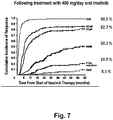
- Figure 7 depicts the cumulative incidence of response (CIR) following treatment with 400 mg/day of oral imatinib.
- a stable cumulative incidence of response is achieved for example when each curve representing CHR, MCR, CCR, MMR and CMR respectively, reaches a plateau, i.e., when the difference in the cumulative incidence of response over a period of 6 months is ⁇ 0.2.
- CHR complete hematological remission
- major cytological remission or (MCyR) refers to achieving a stage when a combined number of cytological responses corresponds to ⁇ 35% Philadelphia chromosome (Ph-positive) metaphases.
- CCR complete cytological remission
- CyR complete cytological remission
- Ph-positive Philadelphia chromosome
- CCR refers to the absence of cancer cells of the myeloid lineages (blasts) in the blood and blood marrow of a subject previously having a myeloid hemopathy associated with STAT5 activation that was treated with an anti-cancer agent.
- the cytological response is assayed by methods known in the art including: Light microscopy morphologic detection, clonogenic assays, immunophenotype analysis, karyotype analysis, Fluorescence and In Situ Hybridization.
- MMR major molecular remission
- CMR complete molecular remission
- CMR also refers to the absence of cells of the myeloid lineage that express a molecular marker of the myeloid hemopathy in the blood and blood marrow of a patient previously having a myeloid hemopathy associated with STAT5 activation that was treated with an anti-cancer agent.
- the molecular marker can be the mutated tyrosine kinase responsible for the myeloid hemopathy, which is detected by methods known in the art, for example by RT-QPCR.
- a marker specific for the cancer cells and a marker specific for the normal cells of the same type are detected simultaneously to determine the efficiency of. treatment.
- clinically complete remission refers to achieving an undetectable level of BCR-ABL transcript for an extended period of time. In some embodiments, clinically complete remission refers to a one year cumulative incidence of CMR4.5. CMR4.5 is defined by a BCR-ABL/ABL IS ratio ⁇ 0.0032%. In certain embodiments, clinically complete remission refers to achieving a sustained CMR up to 4.5 years after withdrawal of the STAT5 antagonist as well as the anti-cancer agent.
- agent refers to a chemical, compound, a mixture of chemical compounds, a biological macromolecule, or an extract made from biological materials such as bacteria, plants, fungi, or animal (particularly mammalian) cells or tissues.
- anti-cancer agent refers to any agent that has the functional property of inhibiting the proliferation of hematopoietic cells of the myeloid lineage and of inhibiting the development or progression of a myeloid hernopathy, except STAT5 antagonists and PPAR ⁇ agonists.
- Anti-cancer agent includes with no limitation; mitotic inhibitors, such as vinblastine; alkylating agents, such as cisplatin, carboplatin and cyclophosphamide; antimetabolites, such as 5-fluorouracil, cytosine arabinoside, hydroxyurea; nucleic acid intercalating agents, such as adriamycin and bleomycin; enzymes, such as asparaginase; topoisomerase inhibitors, such as etoposide; biological response modifiers, such as interferon; apoptotic agents, such as actinomycin D; antihormones, for example antioestrogens such as tamoxifen or, for example antiandrogens; agents which increase immune response to tumors and signal transduction inhibitors.
- mitotic inhibitors such as vinblastine
- alkylating agents such as cisplatin, carboplatin and cyclophosphamide
- antimetabolites such as 5-fluorouracil, cyto
- anti-cancer agents include: heat shock protein inhibitors (17-AAG), farnesyltransferase inhibitors (zarnestra), histone deacetylase inhibitors (SAHA, depsipeptide, MS-275..), CDK inhibitors (flavopiridol), proteasome inhibitors (bortezomib), demethylating agents (decitabine, vizada), Bcl-2 inhibitors (ABT-737), anthracyclines, daunorubicin, doxorubicin, idarubicin, cytarabine, etoposide, dexamethasone, methotrexate, thioguanine, 6-mercaptopurine, ATRA, gemcitabine, vincristine, prednisone, mitoxantrone, and rituxan.
- heat shock protein inhibitors (17-AAG), farnesyltransferase inhibitors (zarnestra), histone deacetylase inhibitors (SAHA,
- TKI refers to a tyrosine kinase inhibitor, i.e., an agent that can inhibit the function of the enzyme tyrosine kinase.
- the anti-cancer agent is a tyrosine kinase inhibitor.
- tyrosine kinase inhibitors include: Imatinib, AMN107, Dasitinib (BMS-354825), nilotinibb (Tasigna®, NOVARTIS), CHIR-258, CEP-701, PKC412, SU11248, SU5416, SU5402, PD173074 and MLN518.
- the tyrosine kinase inhibitor inhibits BCR-ABL phosphorylation.
- the tyrosine kinase inhibitor is selected from the group consisting of: Imatinib, AMN107, Dasitinib (BMS-354825) and nilotinib (Tasigna®, NOVARTIS).
- the TKI is imatinib. In certain embodiments, the TKI is dasatinib. In various embodiments, the TKI is nilotinib. In some embodiments, the TKI is bosutinib. In certain embodiments, the TKI is ponatinib. In various embodiments, the TKI is ruxolitinib. In some embodiments, the TKI is quizartinib.
- STAT5 antagonist refers to any agent which inhibits expression and/or activity of STAT5 which, in turn, regulates HIF 2a expression.
- agents include, for example, siRNA, shRNA and known small molecule compounds.
- the STAT5 antagonist is a PPAR ⁇ agonist.
- PPAR ⁇ refers to members of the peroxisome proliferator-activated receptors family which are expressed, inter alia, in adipocytic and hematopoietic cells ( Braissant, O. et al. Endocrinology 137(1): 354-66 ), and which function as key regulators of differentiation. Contemplated within this definition are variants thereof, as for example, PPAR ⁇ 1 and PPAR ⁇ 2 which are two isoforms having a different N terminals generated by alternate splicing of a primary RNA transcript ( Tontonoz, P, et al., Genes & Dev., 1994, 8:1224-34 ; Zhu et al., J, Biol. Chem., 1993, 268: 26817-20 ).
- PPAR ⁇ agonist refers to an agent which mimics a natural ligand to the PPAR ⁇ receptor and inhibits STAT5 transcription in a hematopoietic cell. It includes any naturally-occurring or non-naturally occurring agents that selectively and specifically bind to a PPAR ⁇ protein and upon binding, activate transcription of genes which contain a PPAR ⁇ responsive element. Examples of such ligands include, but are not limited to thiazolidinedione and derivatives thereof, or prostaglandin (PG) metabolites, e.g., prostaglandin 15-deoxy- A2' 14, PGJ2, and derivatives thereof.
- PG prostaglandin
- the STAT5 antagonist i.e., PPAR ⁇ agonist is a thiazolidinedione compound.
- the thiazolidinedione compound that is used in the combined preparation of the invention can be selected from:
- thiazolidinediones that are used in the methods of the invention are the compounds conventionally known for the treatment of diabetes. See e.g., U.S. Pat. Nos.4,812,570 ; 4,775,687 ; 4,725,610 ; 4,582,839 ; and 4,572,912 for exemplary sources of such compounds.
- thiazolidinedione compounds include: troglitazone, pioglitazone, rosiglitazone and netoglitazone.
- the myeloid hemopathies are selected from the group consisting of acute myeloid leukemia (AML) and myeloproliferative/ myelodysplasic disorders, including Chronic myelogenous leukemia (CML), Polycythemia Vera (PV), Essential thrombocythemia (ET), Chronic idiopathic myelofibrosis (Agnogenic myeloid metaplasia (AMM)), Chronic neutrophilic leukemia (CNL), Chronic eosinophilic leukemia/hypereosinophilie syndrome (CEL/I-JES) and systemic mastocytosis (SM).
- AML Chronic myelogenous leukemia
- PV Polycythemia Vera
- ET Essential thrombocythemia
- AMM Agnogenic myeloid metaplasia
- CTL Chronic neutrophilic leukemia
- CEL/I-JES Chronic eosinophilic leukemia/hypereosinophilie syndrome
- the STAT5 antagonist e.g., PPAR ⁇ agonist and the anti-cancer agent are prepared in the form of pharmaceutical compositions suitable for oral administration.
- the STAT5 antagonist, e.g., PPAR ⁇ agonist and the anti-cancer agent are in a single dosage form or as separate dosage forms suitable for oral administration (capsule(s), sachet(s), tablet(s)).
- the combined preparation comprises an effective amount of the STAT5 antagonist, i.e., PPAR ⁇ agonist and of the anti-cancer agent.
- the combination is administered in an effective amount to achieve CMR.
- the exact amount of STAT5 antagonist, i.e., PPAR ⁇ agonist and of the anti-cancer agent to be used in the combined preparation to be administered will vary according to factors such as the specific hyperplastic/cancer cell involved, and the specific disease; the degree of or involvement or the severity of the disease; the size, age, and general health of the patient; the response of the individual patient; the particular compound administered; the bioavailability characteristics of the preparation administered; the dose regimen selected; the kind of concurrent treatment; pharmacodynamic characteristics of the compounds and their mode and route of administration; and other relevant characteristics that the physician or as one skilled in the art, will readily determine by the use of known techniques and by observing results obtained under analogous circumstances.
- the present invention involves the administration of 300-400 mg of Imatinib and 30-50 mg of pioglitazone in a single dosage form or as separate dosage forms suitable for oral administration.
- the imatinib is first administered until a stable cumulative incidence of response is achieved, followed by a daily dose of a STAT5 antagonist i.e., PPAR ⁇ agonist) until the patient achieves complete molecular remission (CMR).
- a STAT5 antagonist i.e., PPAR ⁇ agonist
- the STAT5 antagonist e.g., PPAR ⁇ agonist
- the anti-cancer agent may be administered concurrently or sequentially.
- the STAT5 antagonist, i.e., PPAR ⁇ agonist and the anti-cancer agent are concurrently administered to a patient having a myeloid hemopathy, the administration being performed to the time when a complete molecular response (CMR) is observed in the patient.
- CMR complete molecular response
- the STAT5 antagonist e.g., PPAR ⁇ agonist is used to potentialize the effect of the anti-cancer agent (e.g., by pulling the cancer stem cells of the myeloid lineage(s) out of quiescence, such that they are eliminated by the anti-cancer agent).
- sequential administration generally comprises a first-line therapy with the anti-cancer agent until a suitable cumulative incidence of response is achieved.
- the STAT5 antagonist e.g., PPAR ⁇ agonist
- CMR complete molecular response
- sequential administration is generally preferred when the patient is a good responder (rapid and prolonged cytological response to the anti-cancer agent).
- the invention or disclosure provides a kit for carrying out the administration of the combined preparation as defined above, comprising a STAT5 antagonist or PPAR ⁇ agonist, as defined above and at least one anti-cancer agent, as defined above, as a single dosage form or as separate dosage forms.
- the invention further comprises other features which will be evident from the description which follows, and examples illustrating the use of the STAT5 antagonist, i.e., PPAR ⁇ agonist to maintain remission of hematologic cancers following standard cancer therapy.
- STAT5 antagonist i.e., PPAR ⁇ agonist
- PPAR ⁇ agonists were provided by Cayman Chemical (PPAR ⁇ -PAK; Bertin-pharma).
- Imatinib mesylate was provided by Novartis and was used at 1 ⁇ M in culture, a well established inhibitory concentration in vitro that also approaches the achievable drug level in patients' plasma.
- K562 cells (2 ⁇ 10 5 ) were cultured in 96-well plates, in complete Dulbecco's Modified Eagle medium supplemented with 10% fetal calf serum (Gibco®, Life technologies) alone or with variable concentrations of pioglitazone or troglitazone. Cells were cultured for 7 days in the presence of 1 ⁇ Ci/well [ 3 H]thymidine, collected by centrifugation and counted on a plate reader (Wallac 1450 Microbeta Plus). Eight replicates were used for each set of conditions and results were obtained after three independents experiments.
- CD34 + cells from patients in CP-CML at diagnosis or umbilical cord blood were immunoselected (CD34 microBead Kit, Miltenyi Biotec) according to the manufacturer's instructions. Enrichment for CD34+ cells was ascertained by flow cytometry using an anti-CD34 monoclonal antibody (clone 581; BD Pharmingen). Ph1 + -CD34 + cells were cultured in serum free medium (SFM) StemSpan (StemCell Technologies) without growth factors.
- SFM serum free medium
- StemSpan StemSpan
- CFC Colony Forming Cell
- LTC-IC Long Term Culture - Initiating Cell
- LTC-IC with limiting dilution assays were performed in StemSpan SFEM medium (Stemcell technologies) on irradiated MS5 monolayers at several dilutions of CD34 + cells (300, 150, 75, or 37 cells per well for Ph1 + CD34 + cells and 200, 100, 50, or 25 cells per well for CD34 + from healthy donors) in 96-well plates with 16 replicate wells per concentration. After five weeks with weekly change of one half medium volume, all cells were transferred in alpha-MEM based methylcellulose medium (GF H4434, Stemcell technologies) to determine the total clonogenic cell content of each LTC. LTC-IC frequencies were determined using the L-Calc software (Stemcell technologies).
- Annexin V conjugated to FITC and propidium iodide (PI) were used to quantify apoptotic cells according to the manufacturer.
- Intracellular STAT5 phosphorylation assays 3.10 5 /ml K562 cells cultured in complete Dulbecco's Modified Eagle medium supplemented with 10% fetal calf serum (PAA) alone and with or without pioglitazone (10 ⁇ M) or Imatinib (1 ⁇ M) at 37°C in 5% CO 2 were harvested at variable time as indicated. Cells were fixed and permeabilized using Cytofix/Cytoperm kit (BD Pharmingen) and stained with Alexa Fluor® 488-anti-phospho-START5 mAb (BD Phosflow) or Alexa Fluor® 488-isotype-matched control to obtain fluorescence minus comparative in each experiment.
- PPA fetal calf serum
- the delta mean fluorescence intensity of p-STAT5 after drug treatment was determined as follow: (untreated cells p-STAT5 MFI-non treated cells isotype-control MFI)-(drug treated cells p-STAT5 MFI-drug treated cells isotype-control MFI).
- CSFE assays Fresh CD34 + -enriched cells were stained with 2 ⁇ M of 5- (and 6-) carboxyfluorescein diacetate succinimidyl diester (CFSE, Invitrogen). Cells were then cultured (seeded 5.10 5 /mL) in SFM StemSpan (StemCell Technologies) without growth factors and with or without pioglitazone (10 ⁇ M) or Imatinib (1 ⁇ M). Cells cultured in the presence of Colcemid® (100ng/ml, Invitrogen Life Technologies) were used to establish the range of fluorescence exhibited by cells that had not divided during post-labeling incubation.
- CFSE carboxyfluorescein diacetate succinimidyl diester
- Cells were harvested at variable time points as indicated, collected in BD TrucountTM tubes for absolute count (BD Biosciences) and labeled with anti-CD45 and anti-CD34. Then, cells were diluted in 1 mL of phosphate-buffered saline (PBS, Invitrogen Life Technologies) containing 2% fetal calf serum (PAA) and stained for viability. All analyses were carried out on a BD FACS Canto2 Flow Cytometer.
- PBS phosphate-buffered saline
- PAA fetal calf serum
- RNA extraction and RT-qPCR analysis RNA was extracted from 2 ⁇ 10 5 cells using RNAqueous-4PCR (Ambion). Reverse transcription was carried out for 1 hour at 42°C using SuperScript® ViloTM cDNA Synthesis kit (Invitrogen Life Technologies) according to the manufacturer's instructions. Real-time PCR was performed in an iCycler thermocycler (CFX, Bio-Rad). The primer pairs used with Taqman® Gene Expression Master mix (Applied Biosystems) and iQ Supermix SYBR GRN (Bio-Rad) are listed in Table 2a and Table 2b, respectively. The comparative CT method ( ⁇ CT) was used to compare gene expression levels between the different culture conditions (relative to GAPDH ).
- STAT5B Lentiviral vector production and transduction.
- STAT5B lentiviral vector The cDNA encoding STAT5B was cloned, sequenced (Genbank acquisition number DQ267926), and inserted into the SIN-cPPT-PGK-WHV lentiviral transfer vector as previously described.
- a SIN-cPPT-PGK-eGFP-WHV lentiviral vector was used for control.
- shRNA lentiviral vector anti- PPAR ⁇ The PPAR ⁇ mRNA pairing sequence 5'-TGTTCCGTGACAATCTGTC-3' (Genbank accession number HUMPPAR ⁇ B) was designed and synthesized as follows within an shRNA structure comprising unique restriction sites at each end: sense 5'-GATCTCC TGTTCCGTGACAATCTGTC TTCAAGAGA ACAGATTGTCACGGAACA TTTTTGGAAGAATTCC-3' ; antisense 5'-CTGAG GAATTCTTCCAAAAA TGTTCCGTGACAATCT GTAAGTTCTCT ACAGATTGTCA CGGAACA GGA-3'.
- Oligonucleotides were annealed and ligated into BglII and XhoI sites of linearized pSuper plasmid. PolIII H1 promoteur-shRNA PPAR ⁇ was then subcloned in the pTRIP lentiviral vector. Vectors were produced as previously described.
- BCR-ABL lentiviral vector Total RNA from K562 cells was extracted using TRIZOL (Invitrogen Life Technologies). Reverse transcription was carried out for 1 hour at 50°C using SuperScript® III (Invitrogen Life Technologies). Two independent PCR were performed using BCR-ABL F 1,5'-ATGGTGGACCCGGTGGGCTT-3' with BCR-ABL R 2831, 5'-CTGCTACCTCTGCACTATGTCACTG-3' and BCR - ABL F 2685, 5'-TCCGCTGACCATCAATAAGGA-3' with BCR-ABL R 6097, 5'-CTGCTACCTCTGCACTATGTCACTG-3' respectively.
- Annealing product was submitted to a third PCR with LA Taq TM DNA polymerase (Takara) using the following primer pair: BCR-ABL F 1 asc1: 5'-AGGCGCGCCATGGTGGACCCGGTGGGCTT-3' and BCR-ABL R 6097 sbf1: 5'-CCTGCAGGCTGCTACCTCTGCACTATGTCACTG-3'.
- Amplification product was subcloned into a pCR®-XL-TOPO® plasmid (Invitrogen Life Technologies) before being inserted into the SIV GAE-SSFV lentiviral transfer vector, followed by DNA sequencing.
- An SIV GAE-SSFV-eGFP vector was used as a control.
- the SIV vectors were produced as previously described.
- CD34 + cell transduction Cells were suspended (1 x 10 6 /ml) in StemSpan (StemCell Technologies, France) supplemented with protamine sulfate (4 ⁇ g/ml), SCF (100 ng/ml), Flt-3-L (100 ng/ml), IL-3 (20 ng/ml), and IL-6 (20 ng/ml), in a 96-well plate coated with RetroNectin® (Takara Shuzo Co., Japan). Cell suspensions were incubated for 16 hours. Lentiviral vectors were then added and cell suspensions incubated for 12 hours. Cells were washed twice before being seeded.
- siRNA assays siRNA targeting the human PPAR ⁇ sequence 5'-TGTTCCGTGACAATCTGTC-3' were synthesized (Sigma-Aldrich Proligo). CD34 + BM cells were transfected with PPAR ⁇ -specific siRNA (25 nM) or control siRNA in the presence of Lipofectamine 2000 (Invitrogen) and maintained for 48 hours before CFC assay. Control siRNA was purchased from Invitrogen Life Technologies (BLOCK-iT). Transfection efficiency was assessed using a fluorescein-labeled, double-strand RNA duplex (BLOCK-iT FluorescentOligo; Invitrogen).
- Figure 5 depicts specificity of STAT5 antagonist action in BCR-ABL expressing cells through PPAR ⁇ .
- a Dose-response curves of two STAT5 antagonists onto K562 cell proliferation evaluated by [ 3 H]thymidine incorporation for 7 days (3 experiments, 8 replicates for each).
- b Differential K562 cell proliferation, with or without exposure to pioglitazone (25 ⁇ M), and with or without lentivector-mediated expression of an sh-RNA against PPAR ⁇ mRNA (sh-PPARy) (3 experiments).
- c Verification of the specificity of the sh- PPAR ⁇ lentivector used in Figure 5b .
- CD34 + cells were transfected with irrelevant or PPAR ⁇ targeting si-RNA (25nM each) or transduced with the sh- PPAR ⁇ or an eGFP lentivector.
- PPAR ⁇ transcripts were normalized to GAPDH transcripts and expressed relative to the levels measured in untransfected/untransduced cells.
- Figure 1 depicts differential and synergistic effects of pioglitazone and imatinib on CML cells.
- a CFC assays after lentivector-mediated expression of BCR-ABL or eGFP (negative control) in human cord blood CD34 + cells. Means of 3 individuals in triplicate with standard deviation (SD).
- b CFC assays with CD34 + CP-CML cells from patients at diagnosis. Means of 29 patients with SD.
- c CD34 + CP-CML cells in liquid culture (7 days) in serum-free medium without cytokines. Seven patients, each scored as percentage of its own untreated control (see Table 1).
- d Kinetics (Patient 4 of Fig. 1c ). In all CFC assays, imatinib and/or pioglitazone were added for 48h prior.
- CML LSCs are generally phenotypically undistinguishable from normal human HSCs and are not readily transplantable in immunodeficient mice.
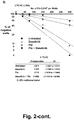
- Long Term Culture-Initiating Cell (LTC-IC) assays can be a suitable approach for CML LSC quantification. Table 1.
- Pioglitazone had an effect opposite to imatinib onto cell cycle status by triggering exit from quiescence and a greater rate of cell proliferation ( Fig. 2c-e ).
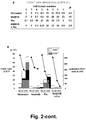
- Figure 2 depicts quiescent CML LSC purging by pioglitazone.
- a and b Limiting dilution analysis (LDA) with LTC-IC assays and LTC-IC frequencies calculated. Numbers of CD34 + seeded are indicated.
- a for 4 of the 7 patients (16 replicates for each), in the presence of imatinib. b , for 1 patient (16 replicates), in the presence of dasatinib. c , CFSE analysis (Patient 4) after liquid culture in serum-free medium without cytokines.
- P colchemid arrested "parent-cells".
- d Distribution (%) of CD34 + cells in each division peak shown in Fig. 2c . e , Identical culture conditions but for Patient 2 and absolute cell count.
- Left scale total cells showing CD34 + vs. CD34- cells (histograms).
- Right scale undivided CD34 + cells (dots and lines).
- CFSE assays were performed with CP-CML CD34 + cells in liquid culture lacking cytokines ( Fig. 2c ). Data were analyzed both as percentages ( Fig. 2d ) and absolute counts ( Fig. 2e ) of cells that never divided ("P") or underwent a given number of divisions. Untreated control CP-CML CD34 + cells proliferated and differentiated actively. Imatinib exposure resulted in the elimination of actively dividing cells but also in the accumulation of viable CD34 + cells that never divided or had divided only once (34% vs. 5% for the untreated control) ( Fig. 2d ).
- Absolute cell count analysis was conducted and indicated that this phenomenon can be caused by both (1) a resistance of quiescent CML cells to the cytoxicity of imatinib and (2) an anti-proliferative effect of imatinib that decreases the rate at which CP-CML CD34 + cells exit quiescence and proceed with further cell divisions ( Fig. 2e ).
- STAT5 Signal Transducer and Activator of Transcription 5
- PPAR ⁇ can be a negative transcriptional regulator of STAT5 (A and B), and can cause a clonogenic defect in HIV and SIV infected hosts.
- STAT5 (A and B) can be critical for maintenance and fitness of normal HSCs in mice in an allele dose-dependent manner.
- STAT5 activation is dependent on the activity of the BCR-ABL kinase, while knock-down of STAT5 expression or inhibition of its phosphorylation suppress CML cell resistance to apoptosis and cytokine independence in vitro.
- Abrogation of STAT5 can prevent initiation and maintenance of a CML state otherwise triggered by retroviral transfer of BCR-ABL.
- STAT5 expression levels correlate with the degrees of disease progression in mouse models and initial TKI sensitivity in humans.
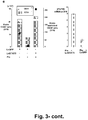
- Figure 3 depicts PPAR ⁇ -STAT5 pathway as target of pioglitazone in CML LSCs.
- a Cultures as in Fig. 2e at Day 10.
- b CFC assays with STAT5B or eGFP lentivectors in CD34 + CP-CML cells.
- c K562 cells. Same RT-qPCR as in Fig. 3a .
- si-PPAR ⁇ siRNA against PPAR ⁇ mRNA.
- d Flow cytometry of permeabilized K562 cells with IgG against phosphorylated (Tyr694) STAT5. Untreated (black ouline) and drug treated (grey shaded or grey outlined). Control panel, No drug treatment but irrelevant IgG isotype control (gray peak). Top right, Western blot analysis with pan-STAT5 and anti-actin antibodies, showing a decrease of STAT5 by 3.2-fold (normalized) in Lane 4.
- e CFSE assays with STAT5B or eGFP lentivectors in CD34 + CP-CML cells and absolute cell count as in Fig. 2e . Black dots, Undivided CD34 + cells.
- STAT5B lentivector control. f LTC-IC (LDA) showing increased toxicity of pioglitazone for CP-CML vs. normal CD34 + cells.
- pioglitazone both to pull CP-CML cells out of quiescence and to be cytotoxic, as assessed by absolute cell counts in CFSE assays, was completely abrogated when STAT5B was overexpressed by lentiviral transfer ( Fig. 3e ). Importantly, pioglitazone was found to be more inhibitory/cytotoxic for CML LTC-IC than for normal LTC-ICs ( Fig. 3f ).
- FIG. 4 depicts pioglitazone-induced CMR in CML patients and maintenance after drug withdrawal.
- Three patients showed sustained presence of BCR-ABL mRNA + blood cells for 3 to 6 years despite continuous imatinib therapy (grey blocks) received pioglitazone at t 0 for various durations (horizontal arrows).
- Pioglitazone treatment was stopped 18 to 54 months ago, although Patient 1 resumed treatment briefly for diabetes.
- Patient 2 withdrew after 1 year CMR.
- Patient 3 also stopped imatinib treatment without molecular relapse for 6 months. All patients reached CMR(4.5log) for > 12 to 56 months.
- Patient 1 was diagnosed with a low Sokal score CML at age 62 in 2002, when imatinib was initiated (300-400 mg/day - plasma levels 924 ng/ml). A major molecular response was achieved after 17 months of therapy, but she never reached CMR ( BCR-ABL / ABL mRNA IS ratios between 0.01% and 0.04%). Pioglitazone 30 mg/day was initiated by her endocrinologist in June 2007 after 5 years of imatinib therapy. Pioglitazone was temporarily stopped in April 2008, and briefly resumed from August 2010 to April 2011 for her diabetes. Unexpectedly, CMR(5log) was achieved in June 2008, and she remains in CMR(5log) since 56 months ago ( Fig. 4 ).
- Patient 2 was diagnosed with a high Sokal score CML at age 61 in 2002, when imatinib was initiated (300-400 mg/day - plasma levels 310 ng/ml). The best molecular level of response was 0.02%.
- pioglitazone 30 mg/day was initiated.
- CMR(5log) was obtained in August 2010 and maintained for 12 months at which time she withdrew ( Fig. 4 ).
- pioglitazone was prescribed to a third CML patient.
- Patient 3 was diagnosed with a low Sokal score CML at age 58 in 2005, when imatinib was initiated (400 mg/day - plasma levels 790 ng/ml).
- BCR-ABL mRNA expressing cells have been detected at high frequencies by CFC assays performed with bone marrow CD34 + cells harvested from the rare CML patients in CMR for many years (> 11 years) after imatinib and/or interferon treatment.
- BCR-ABL mRNA expression was detectable but not quantifiable by RT-qPCR in CFC pools from Patient 3 having reached CMR(5log) 1 year after initiation of pioglitazone.
- Subsequent trials can be performed to confirm whether patients remain in CMR after discontinuing both imatinib and pioglitazone, given that greater than 50% patients in CMR for 2 years relapse one year after stopping TKIs.
- CML LSCs have a "non-oncogene addiction" to STAT5, as previously proposed in mouse models. This is likely distinct from the canonical BCR-ABL-mediated activation of STAT5 in the bulk of more differentiated CML cells. CML LSCs may be especially sensitive to STAT5 levels for their entry into cell cycle or dependent upon a yet unidentified function of STAT5, reminiscent of the accessory mitochondrial role played by STAT3 in oncogenesis.
- Figure 6 depicts expression of target genes in CP-CML cells in response to pioglitazone and imatinib combination.
- CP-CML CD34 + cells were cultured in serum-free medium without cytokines for 7 days with either imatinib alone (1 ⁇ M) or imatinib and pioglitazone (1 ⁇ M and 10 ⁇ M respectively).
- Cells were then processed for RT-qPCR assays with primers and probes specific for human OCT1, MDR1 , SIRT1, STAT3, ALOX5 and PML1 CD36, known to be up regulated by PPAR ⁇ agonists, was used as a positive control.
- Results are normalized to GAPDH mRNA levels and represented relative to mRNA expression for the "Imatinib alone" condition (means of 11 patients with SD for each gene assessed).
- b Cell surface expression of GLUT1 was quantified by flow cytometry (mean of 5 patients).
- PPAR ⁇ / STAT5 pathway induced a clonogenic defect in CD34+ cells from CML patients. Moreover, the activation of the PPAR ⁇ / STAT5 pathway also induced a clonogenic and a proliferative defect in CML LTC-IC. It was then confirmed that imatinib induced a selection of insensitive quiescent CML cells and showed that this effect was abrogated by the activation of the PPAR ⁇ / STAT5 pathway. Table 2.
- CML Chronic Myelogenous Leukemia
- CML patients were eligible in the ACTIM trial (EudraCT 2009-011675-79) if they were treated by imatinib for at least 2 years, with a stable daily dose for at least 3 months, and in major molecular response without having achieved CMR4.5 (defined by a BCR-ABL/ABL IS ratio ⁇ 0.0032%).
- patients received imatinib (no dose modification) and started pioglitazone (Actos®) 30 mg/d during 2 months and 45 mg/d thereafter for 12 months.
- BCR-ABL transcript level was monitored every 3 months during the study period. Primary objective was the proportion of patients achieving a confirmed undetectable level of BCR-ABL transcript. Secondary objectives included cumulative incidence of CMR4.5 and safety.
- a companion biologic study evaluated imatinib through levels, STAT5 expression in bone marrow at baseline, months 6 and 12 and clonogenic activity of bone marrow mononuclear cells at baseline, months 6 and 12.
Landscapes
- Health & Medical Sciences (AREA)
- Chemical & Material Sciences (AREA)
- Medicinal Chemistry (AREA)
- Pharmacology & Pharmacy (AREA)
- Life Sciences & Earth Sciences (AREA)
- Animal Behavior & Ethology (AREA)
- General Health & Medical Sciences (AREA)
- Public Health (AREA)
- Veterinary Medicine (AREA)
- Epidemiology (AREA)
- Hematology (AREA)
- Oncology (AREA)
- Chemical Kinetics & Catalysis (AREA)
- General Chemical & Material Sciences (AREA)
- Nuclear Medicine, Radiotherapy & Molecular Imaging (AREA)
- Organic Chemistry (AREA)
- Pharmaceuticals Containing Other Organic And Inorganic Compounds (AREA)
- Medicines That Contain Protein Lipid Enzymes And Other Medicines (AREA)
- Medicines Containing Antibodies Or Antigens For Use As Internal Diagnostic Agents (AREA)
- Medicines Containing Material From Animals Or Micro-Organisms (AREA)
Applications Claiming Priority (3)
| Application Number | Priority Date | Filing Date | Title |
|---|---|---|---|
| US201261722633P | 2012-11-05 | 2012-11-05 | |
| US201361794367P | 2013-03-15 | 2013-03-15 | |
| PCT/IB2013/002583 WO2014068397A1 (en) | 2012-11-05 | 2013-11-05 | Combination of an anti-cancer agent such as a tyrosinekinase inhibitor and a stat5 antagonist, preferably a thiazolidinedione, for eliminating hematologic cancer stem cells in vivo and for preventing hematologic cancer relapse |
Publications (2)
| Publication Number | Publication Date |
|---|---|
| EP2914250A1 EP2914250A1 (en) | 2015-09-09 |
| EP2914250B1 true EP2914250B1 (en) | 2018-04-04 |
Family
ID=49998588
Family Applications (1)
| Application Number | Title | Priority Date | Filing Date |
|---|---|---|---|
| EP13821931.6A Active EP2914250B1 (en) | 2012-11-05 | 2013-11-05 | Combination of an anti-cancer agent such as a tyrosinekinase inhibitor and a stat5 antagonist, preferably a thiazolidinedione, for eliminating hematologic cancer stem cells in vivo and for preventing hematologic cancer relapse |
Country Status (9)
| Country | Link |
|---|---|
| US (1) | US9623015B2 (https=) |
| EP (1) | EP2914250B1 (https=) |
| JP (1) | JP6453224B2 (https=) |
| AU (1) | AU2013340478B2 (https=) |
| CA (1) | CA2890086C (https=) |
| DK (1) | DK2914250T3 (https=) |
| ES (1) | ES2668310T3 (https=) |
| HK (1) | HK1214760A1 (https=) |
| WO (1) | WO2014068397A1 (https=) |
Cited By (1)
| Publication number | Priority date | Publication date | Assignee | Title |
|---|---|---|---|---|
| CN107674914A (zh) * | 2016-08-02 | 2018-02-09 | 熊术道 | 一步单管法定量rt‑pcr检测慢性髓系白血病bcr‑abl1基因的表达量 |
Families Citing this family (4)
| Publication number | Priority date | Publication date | Assignee | Title |
|---|---|---|---|---|
| CN104398520B (zh) * | 2014-11-04 | 2017-01-18 | 复旦大学附属上海市第五人民医院 | Ruxolitinib在制备治疗M2型急性髓系白血病药物中的应用 |
| JP6775226B2 (ja) * | 2016-06-30 | 2020-10-28 | 国立大学法人広島大学 | 抗癌剤作用増強物質およびそれを備えた抗癌剤キット |
| EP4054579A1 (en) * | 2019-11-08 | 2022-09-14 | Institut National de la Santé et de la Recherche Médicale (INSERM) | Methods for the treatment of cancers that have acquired resistance to kinase inhibitors |
| GB202210503D0 (en) * | 2022-07-18 | 2022-08-31 | Univ Court Univ Of Glasgow | Materials and methods for treatment of chronic myeloid leukemia (CML) |
Family Cites Families (48)
| Publication number | Priority date | Publication date | Assignee | Title |
|---|---|---|---|---|
| JPS5522636A (en) | 1978-08-04 | 1980-02-18 | Takeda Chem Ind Ltd | Thiazoliding derivative |
| JPS58118577A (ja) | 1982-01-07 | 1983-07-14 | Takeda Chem Ind Ltd | チアゾリジン誘導体 |
| JPS6051189A (ja) | 1983-08-30 | 1985-03-22 | Sankyo Co Ltd | チアゾリジン誘導体およびその製造法 |
| US4582839A (en) | 1984-03-21 | 1986-04-15 | Takeda Chemical Industries, Ltd. | 2,4-thiazolidinediones |
| CN1003445B (zh) | 1984-10-03 | 1989-03-01 | 武田药品工业株式会社 | 噻唑烷二酮衍生物,其制备方法和用途 |
| AR240698A1 (es) | 1985-01-19 | 1990-09-28 | Takeda Chemical Industries Ltd | Procedimiento para preparar compuestos de 5-(4-(2-(5-etil-2-piridil)-etoxi)benzil)-2,4-tiazolidindiona y sus sales |
| DK173350B1 (da) | 1985-02-26 | 2000-08-07 | Sankyo Co | Thiazolidinderivater, deres fremstilling og farmaceutisk paæparat indeholdende dem |
| US4683195A (en) | 1986-01-30 | 1987-07-28 | Cetus Corporation | Process for amplifying, detecting, and/or-cloning nucleic acid sequences |
| WO1986007056A1 (en) | 1985-05-21 | 1986-12-04 | Pfizer Inc. | Hypoglycemic thiazolidinediones |
| JPH06779B2 (ja) | 1985-06-10 | 1994-01-05 | 武田薬品工業株式会社 | チアゾリジオン誘導体およびそれを含んでなる医薬組成物 |
| US4812570A (en) | 1986-07-24 | 1989-03-14 | Takeda Chemical Industries, Ltd. | Method for producing thiazolidinedione derivatives |
| US4873255A (en) | 1987-02-04 | 1989-10-10 | Sankyo Company Limited | Thiazolidinone derivatives, their preparation and their use |
| FI91869C (fi) | 1987-03-18 | 1994-08-25 | Tanabe Seiyaku Co | Menetelmä antidiabeettisena aineena käytettävien bensoksatsolijohdannaisten valmistamiseksi |
| EP0295828A1 (en) | 1987-06-13 | 1988-12-21 | Beecham Group Plc | Novel compounds |
| SG59988A1 (en) | 1987-09-04 | 1999-02-22 | Beecham Group Plc | Substituted thiazolidinedione derivatives |
| US5521201A (en) | 1987-09-04 | 1996-05-28 | Beecham Group P.L.C. | Method for treatment of atherosclerosis |
| US5232925A (en) | 1987-09-04 | 1993-08-03 | Beecham Group P.L.C. | Compounds |
| US5260445A (en) | 1987-09-04 | 1993-11-09 | Beecham Group P.L.C. | 2,4-thiazolidinediones |
| US5194443A (en) | 1987-09-04 | 1993-03-16 | Beecham Group P.L.C. | Compounds |
| US5120754A (en) | 1988-03-08 | 1992-06-09 | Pfizer Inc. | Thiazolidinedione hypoglycemic agents |
| US5223522A (en) | 1988-03-08 | 1993-06-29 | Pfizer Inc. | Thiazolidinedione hypoglycemic agents |
| WO1989008650A1 (en) | 1988-03-08 | 1989-09-21 | Pfizer Inc. | Thiazolidinedione hypoglycemic agents |
| MX15171A (es) | 1988-03-08 | 1993-05-01 | Pfizer | Derivados de tiazolidinodiona hipoglicemicos |
| US5306822A (en) | 1988-05-25 | 1994-04-26 | Warner-Lambert Company | Arylmethylenyl derivatives of oxazolidinone |
| US4897405A (en) | 1989-04-21 | 1990-01-30 | American Home Products Corporation | Novel naphthalenylalkyl-3H-1,2,3,5-oxathiadiazole 2-oxides useful as antihyperglycemic agents |
| GB8919434D0 (en) | 1989-08-25 | 1989-10-11 | Beecham Group Plc | Novel compounds |
| WO1991007107A1 (en) | 1989-11-13 | 1991-05-30 | Pfizer Inc. | Oxazolidinedione hypoglycemic agents |
| US5143928A (en) | 1990-03-27 | 1992-09-01 | Warner-Lambert Company | 3,5-di-tertiarybutyl-4-hydroxyphenylmethylene derivatives of 2-substituted thiazolidinones, oxazolidinones, and imidazolidinones as antiinflammatory agents |
| JPH0469383A (ja) | 1990-07-06 | 1992-03-04 | Yamanouchi Pharmaceut Co Ltd | 置換チアゾリジン誘導体 |
| GB9017218D0 (en) | 1990-08-06 | 1990-09-19 | Beecham Group Plc | Novel compounds |
| US5498621A (en) | 1992-05-01 | 1996-03-12 | Pfizer Inc. | Oxazolidinedione hypoglycemic agents |
| WO1994001433A1 (fr) | 1992-07-13 | 1994-01-20 | Japan Tobacco Inc. | Nouveau compose de thiazolidinedione et son utilisation |
| EP0915090A1 (en) | 1992-09-10 | 1999-05-12 | Eli Lilly And Company | Compounds useful as hypoglycemic agents and for treating Alzheimer's disease |
| US5521202A (en) | 1993-04-07 | 1996-05-28 | Taiho Pharmaceutical Co., Ltd. | Thiazolidine derivatives and pharmaceutical compositions containing the same |
| DE69405902T2 (de) | 1993-04-16 | 1998-01-29 | Central Glass Co Ltd | Glasscheibe mit reflexvermindernder Beschichtung und Kombinationselement eines Einspiegelungssichtgerätesystems |
| US5457109A (en) | 1993-09-15 | 1995-10-10 | Warner-Lambert Company | Use of thiazolidinedione derivatives and related antihyperglycemic agents in the treatment of disease states at risk for progressing to noninsulin-dependent diabetes mellitus |
| WO1995018533A1 (en) | 1994-01-04 | 1995-07-13 | The Trustees Of The University Of Pennsylvania | Methods and compounds affecting adipocyte differentiation and obesity |
| US5480896A (en) | 1994-01-27 | 1996-01-02 | American Home Products Corporation | Aralkyl-1,2,4-oxadiazolidine-3,5-diones as antihyperglycemic agents |
| US5468762A (en) | 1994-05-18 | 1995-11-21 | American Home Products Corporation | Azolidinediones as antihyperglycemic agents |
| US5594015A (en) | 1994-06-22 | 1997-01-14 | Regents Of The University Of California | Thiazolidine derivatives for the treatment of psoriasis |
| EP1410799B1 (en) | 1996-12-11 | 2010-03-31 | Dana-Farber Cancer Institute, Inc. | Methods and pharmaceutical compositions for inhibiting tumour cell growth |
| AU5811298A (en) | 1996-12-31 | 1998-07-31 | Salk Institute For Biological Studies, The | Treatment of disease states which result from neoplastic cell proliferation using ppar-gamma activators and compositions useful therefor |
| US5814647A (en) | 1997-03-04 | 1998-09-29 | Board Of Regents, The University Of Texas System | Use of troglitazone and related compounds for the treatment of the climacteric symptoms |
| US6008237A (en) | 1997-12-19 | 1999-12-28 | Merck & Co., Inc. | Arylthiazolidinedione derivatives |
| NZ517993A (en) | 1999-08-31 | 2004-03-26 | Incyte San Diego Inc | Benzylidene-thiazolidinediones and analogues and their use in the treatment of diabetes |
| US7045523B2 (en) | 2001-10-18 | 2006-05-16 | Novartis Ag | Combination comprising N-{5-[4-(4-methyl-piperazino-methyl)-benzoylamido]-2-methylphenyl}-4-(3-pyridyl)-2-pyrimidine-amine and telomerase inhibitor |
| WO2006111365A1 (de) | 2005-04-19 | 2006-10-26 | Cedes Ag | Vorrichtung zur steuerung eines angetriebenen bewegungselements, zum beispiel einer tür |
| WO2008029827A1 (fr) | 2006-09-07 | 2008-03-13 | Tama-Tlo Ltd. | PROCÉDÉ DE PRODUCTION DE CRISTAL D'AlN |
-
2013
- 2013-11-05 ES ES13821931.6T patent/ES2668310T3/es active Active
- 2013-11-05 AU AU2013340478A patent/AU2013340478B2/en active Active
- 2013-11-05 WO PCT/IB2013/002583 patent/WO2014068397A1/en not_active Ceased
- 2013-11-05 HK HK16102710.7A patent/HK1214760A1/zh unknown
- 2013-11-05 CA CA2890086A patent/CA2890086C/en active Active
- 2013-11-05 JP JP2015540228A patent/JP6453224B2/ja active Active
- 2013-11-05 EP EP13821931.6A patent/EP2914250B1/en active Active
- 2013-11-05 DK DK13821931.6T patent/DK2914250T3/en active
- 2013-11-05 US US14/440,001 patent/US9623015B2/en active Active
Non-Patent Citations (1)
| Title |
|---|
| STÉPHANE PROST ET AL: "Erosion of the chronic myeloid leukaemia stem cell pool by PPAR[gamma] agonists", NATURE, vol. 525, no. 7569, 2 September 2015 (2015-09-02), United Kingdom, pages 380 - 383, XP055357250, ISSN: 0028-0836, DOI: 10.1038/nature15248 * |
Cited By (1)
| Publication number | Priority date | Publication date | Assignee | Title |
|---|---|---|---|---|
| CN107674914A (zh) * | 2016-08-02 | 2018-02-09 | 熊术道 | 一步单管法定量rt‑pcr检测慢性髓系白血病bcr‑abl1基因的表达量 |
Also Published As
| Publication number | Publication date |
|---|---|
| JP6453224B2 (ja) | 2019-01-16 |
| AU2013340478B2 (en) | 2018-08-23 |
| US9623015B2 (en) | 2017-04-18 |
| EP2914250A1 (en) | 2015-09-09 |
| DK2914250T3 (en) | 2018-06-18 |
| CA2890086A1 (en) | 2014-05-08 |
| JP2015536941A (ja) | 2015-12-24 |
| WO2014068397A1 (en) | 2014-05-08 |
| CA2890086C (en) | 2022-05-31 |
| US20150265588A1 (en) | 2015-09-24 |
| HK1214760A1 (zh) | 2016-08-05 |
| AU2013340478A1 (en) | 2015-06-04 |
| ES2668310T3 (es) | 2018-05-17 |
Similar Documents
| Publication | Publication Date | Title |
|---|---|---|
| EP2010181B1 (en) | Methods of treating cell proliferative disorders by using pyrimidinediamine compounds | |
| EP2914250B1 (en) | Combination of an anti-cancer agent such as a tyrosinekinase inhibitor and a stat5 antagonist, preferably a thiazolidinedione, for eliminating hematologic cancer stem cells in vivo and for preventing hematologic cancer relapse | |
| Mayerhofer et al. | Identification of mTOR as a novel bifunctional target in chronic myeloid leukemia: dissection of growth‐inhibitory and VEGF‐suppressive effects of rapamycin in leukemic cells | |
| US20150056195A1 (en) | Compositions and methods for inihibiting tumorigenicity of senescent cancer cells induced by chemotherapy | |
| AU2008289255B2 (en) | Methods and compositions for treating cancers | |
| WO2009117769A1 (en) | Inhibition of c-kit cancers | |
| Tucci et al. | β3 integrin subunit mediates the bone-resorbing function exerted by cultured myeloma plasma cells | |
| Wang et al. | Tyro3 receptor tyrosine kinase contributes to pathogenic phenotypes of fibroblast-like synoviocytes in rheumatoid arthritis and disturbs immune cell balance in experimental arthritis | |
| US20100080855A1 (en) | Hedgehog signaling and cancer stem cells in hematopoietic cell malignancies | |
| US10179914B2 (en) | CDC25A inhibitor for the treatment of drug resistant cancer or for the prevention of tumor relapse | |
| EP2773749B1 (fr) | Lignees de mastocytes humains, preparation et utilisations | |
| US8633161B2 (en) | Therapeutic agents for the treatment of leukemia | |
| JP2017526702A (ja) | PPAR−γアゴニストを投与する段階を含む、癌を治療する方法 | |
| US20240335449A1 (en) | Combination therapy for vav3 cancer | |
| Li et al. | Targeting Cbl-b by a small molecular inhibitor potentiates T cell receptor signaling and suggests rational combination strategies | |
| Valent | Novel Markers of Leukemic Stem Cells (LSC) in Chronic Myeloid Leukemia (CML) | |
| Deininger | Recent advances in understanding chronic myeloid leukemia biology | |
| Guadagnuolo | SMO inhibitor specifically targets the Hedgehog Pathway and reverts the drug-resistance of Leukemic Stem Cells | |
| Peng | Novel Therapeutic Targets for Ph+ Chromosome Leukemia and Its Leukemia Stem Cells: A Dissertation | |
| Roberts | Regulation of the tumour suppressor PP2A by oncogenic tyrosine kinases | |
| Stein | The role of NF-κB in BCR-ABL-driven oncogenic transformation and in hematopoiesis | |
| Tiper | Mechanisms of tumor evasion from NKT cell-mediated immunosurveillance |
Legal Events
| Date | Code | Title | Description |
|---|---|---|---|
| PUAI | Public reference made under article 153(3) epc to a published international application that has entered the european phase |
Free format text: ORIGINAL CODE: 0009012 |
|
| 17P | Request for examination filed |
Effective date: 20150602 |
|
| AK | Designated contracting states |
Kind code of ref document: A1 Designated state(s): AL AT BE BG CH CY CZ DE DK EE ES FI FR GB GR HR HU IE IS IT LI LT LU LV MC MK MT NL NO PL PT RO RS SE SI SK SM TR |
|
| AX | Request for extension of the european patent |
Extension state: BA ME |
|
| REG | Reference to a national code |
Ref country code: HK Ref legal event code: DE Ref document number: 1214760 Country of ref document: HK |
|
| GRAP | Despatch of communication of intention to grant a patent |
Free format text: ORIGINAL CODE: EPIDOSNIGR1 |
|
| STAA | Information on the status of an ep patent application or granted ep patent |
Free format text: STATUS: GRANT OF PATENT IS INTENDED |
|
| INTG | Intention to grant announced |
Effective date: 20170518 |
|
| GRAJ | Information related to disapproval of communication of intention to grant by the applicant or resumption of examination proceedings by the epo deleted |
Free format text: ORIGINAL CODE: EPIDOSDIGR1 |
|
| STAA | Information on the status of an ep patent application or granted ep patent |
Free format text: STATUS: REQUEST FOR EXAMINATION WAS MADE |
|
| INTC | Intention to grant announced (deleted) | ||
| GRAP | Despatch of communication of intention to grant a patent |
Free format text: ORIGINAL CODE: EPIDOSNIGR1 |
|
| STAA | Information on the status of an ep patent application or granted ep patent |
Free format text: STATUS: GRANT OF PATENT IS INTENDED |
|
| INTG | Intention to grant announced |
Effective date: 20171023 |
|
| GRAS | Grant fee paid |
Free format text: ORIGINAL CODE: EPIDOSNIGR3 |
|
| GRAA | (expected) grant |
Free format text: ORIGINAL CODE: 0009210 |
|
| STAA | Information on the status of an ep patent application or granted ep patent |
Free format text: STATUS: THE PATENT HAS BEEN GRANTED |
|
| RIN1 | Information on inventor provided before grant (corrected) |
Inventor name: KIRSZENBAUM, MAREK Inventor name: ROUSSELOT, PHILIPPE Inventor name: LE DANTEC, MIKAEL Inventor name: PROST, STEPHANE Inventor name: LEBOULCH, PHILIPE |
|
| AK | Designated contracting states |
Kind code of ref document: B1 Designated state(s): AL AT BE BG CH CY CZ DE DK EE ES FI FR GB GR HR HU IE IS IT LI LT LU LV MC MK MT NL NO PL PT RO RS SE SI SK SM TR |
|
| AX | Request for extension of the european patent |
Extension state: BA ME |
|
| REG | Reference to a national code |
Ref country code: GB Ref legal event code: FG4D |
|
| REG | Reference to a national code |
Ref country code: CH Ref legal event code: EP |
|
| REG | Reference to a national code |
Ref country code: AT Ref legal event code: REF Ref document number: 984824 Country of ref document: AT Kind code of ref document: T Effective date: 20180415 |
|
| REG | Reference to a national code |
Ref country code: DE Ref legal event code: R096 Ref document number: 602013035500 Country of ref document: DE |
|
| REG | Reference to a national code |
Ref country code: IE Ref legal event code: FG4D |
|
| REG | Reference to a national code |
Ref country code: ES Ref legal event code: FG2A Ref document number: 2668310 Country of ref document: ES Kind code of ref document: T3 Effective date: 20180517 |
|
| REG | Reference to a national code |
Ref country code: CH Ref legal event code: NV Representative=s name: NOVAGRAAF INTERNATIONAL SA, CH |
|
| REG | Reference to a national code |
Ref country code: NL Ref legal event code: FP |
|
| REG | Reference to a national code |
Ref country code: DK Ref legal event code: T3 Effective date: 20180613 |
|
| REG | Reference to a national code |
Ref country code: SE Ref legal event code: TRGR |
|
| REG | Reference to a national code |
Ref country code: FR Ref legal event code: PLFP Year of fee payment: 6 |
|
| REG | Reference to a national code |
Ref country code: LT Ref legal event code: MG4D |
|
| PG25 | Lapsed in a contracting state [announced via postgrant information from national office to epo] |
Ref country code: LT Free format text: LAPSE BECAUSE OF FAILURE TO SUBMIT A TRANSLATION OF THE DESCRIPTION OR TO PAY THE FEE WITHIN THE PRESCRIBED TIME-LIMIT Effective date: 20180404 Ref country code: FI Free format text: LAPSE BECAUSE OF FAILURE TO SUBMIT A TRANSLATION OF THE DESCRIPTION OR TO PAY THE FEE WITHIN THE PRESCRIBED TIME-LIMIT Effective date: 20180404 Ref country code: BG Free format text: LAPSE BECAUSE OF FAILURE TO SUBMIT A TRANSLATION OF THE DESCRIPTION OR TO PAY THE FEE WITHIN THE PRESCRIBED TIME-LIMIT Effective date: 20180704 Ref country code: NO Free format text: LAPSE BECAUSE OF FAILURE TO SUBMIT A TRANSLATION OF THE DESCRIPTION OR TO PAY THE FEE WITHIN THE PRESCRIBED TIME-LIMIT Effective date: 20180704 Ref country code: AL Free format text: LAPSE BECAUSE OF FAILURE TO SUBMIT A TRANSLATION OF THE DESCRIPTION OR TO PAY THE FEE WITHIN THE PRESCRIBED TIME-LIMIT Effective date: 20180404 Ref country code: PL Free format text: LAPSE BECAUSE OF FAILURE TO SUBMIT A TRANSLATION OF THE DESCRIPTION OR TO PAY THE FEE WITHIN THE PRESCRIBED TIME-LIMIT Effective date: 20180404 |
|
| PG25 | Lapsed in a contracting state [announced via postgrant information from national office to epo] |
Ref country code: GR Free format text: LAPSE BECAUSE OF FAILURE TO SUBMIT A TRANSLATION OF THE DESCRIPTION OR TO PAY THE FEE WITHIN THE PRESCRIBED TIME-LIMIT Effective date: 20180705 Ref country code: LV Free format text: LAPSE BECAUSE OF FAILURE TO SUBMIT A TRANSLATION OF THE DESCRIPTION OR TO PAY THE FEE WITHIN THE PRESCRIBED TIME-LIMIT Effective date: 20180404 Ref country code: HR Free format text: LAPSE BECAUSE OF FAILURE TO SUBMIT A TRANSLATION OF THE DESCRIPTION OR TO PAY THE FEE WITHIN THE PRESCRIBED TIME-LIMIT Effective date: 20180404 Ref country code: RS Free format text: LAPSE BECAUSE OF FAILURE TO SUBMIT A TRANSLATION OF THE DESCRIPTION OR TO PAY THE FEE WITHIN THE PRESCRIBED TIME-LIMIT Effective date: 20180404 |
|
| REG | Reference to a national code |
Ref country code: AT Ref legal event code: MK05 Ref document number: 984824 Country of ref document: AT Kind code of ref document: T Effective date: 20180404 |
|
| PG25 | Lapsed in a contracting state [announced via postgrant information from national office to epo] |
Ref country code: PT Free format text: LAPSE BECAUSE OF FAILURE TO SUBMIT A TRANSLATION OF THE DESCRIPTION OR TO PAY THE FEE WITHIN THE PRESCRIBED TIME-LIMIT Effective date: 20180806 |
|
| REG | Reference to a national code |
Ref country code: DE Ref legal event code: R097 Ref document number: 602013035500 Country of ref document: DE |
|
| PG25 | Lapsed in a contracting state [announced via postgrant information from national office to epo] |
Ref country code: SK Free format text: LAPSE BECAUSE OF FAILURE TO SUBMIT A TRANSLATION OF THE DESCRIPTION OR TO PAY THE FEE WITHIN THE PRESCRIBED TIME-LIMIT Effective date: 20180404 Ref country code: RO Free format text: LAPSE BECAUSE OF FAILURE TO SUBMIT A TRANSLATION OF THE DESCRIPTION OR TO PAY THE FEE WITHIN THE PRESCRIBED TIME-LIMIT Effective date: 20180404 Ref country code: EE Free format text: LAPSE BECAUSE OF FAILURE TO SUBMIT A TRANSLATION OF THE DESCRIPTION OR TO PAY THE FEE WITHIN THE PRESCRIBED TIME-LIMIT Effective date: 20180404 Ref country code: AT Free format text: LAPSE BECAUSE OF FAILURE TO SUBMIT A TRANSLATION OF THE DESCRIPTION OR TO PAY THE FEE WITHIN THE PRESCRIBED TIME-LIMIT Effective date: 20180404 Ref country code: CZ Free format text: LAPSE BECAUSE OF FAILURE TO SUBMIT A TRANSLATION OF THE DESCRIPTION OR TO PAY THE FEE WITHIN THE PRESCRIBED TIME-LIMIT Effective date: 20180404 |
|
| PLBE | No opposition filed within time limit |
Free format text: ORIGINAL CODE: 0009261 |
|
| STAA | Information on the status of an ep patent application or granted ep patent |
Free format text: STATUS: NO OPPOSITION FILED WITHIN TIME LIMIT |
|
| PG25 | Lapsed in a contracting state [announced via postgrant information from national office to epo] |
Ref country code: SM Free format text: LAPSE BECAUSE OF FAILURE TO SUBMIT A TRANSLATION OF THE DESCRIPTION OR TO PAY THE FEE WITHIN THE PRESCRIBED TIME-LIMIT Effective date: 20180404 |
|
| 26N | No opposition filed |
Effective date: 20190107 |
|
| PG25 | Lapsed in a contracting state [announced via postgrant information from national office to epo] |
Ref country code: SI Free format text: LAPSE BECAUSE OF FAILURE TO SUBMIT A TRANSLATION OF THE DESCRIPTION OR TO PAY THE FEE WITHIN THE PRESCRIBED TIME-LIMIT Effective date: 20180404 |
|
| PG25 | Lapsed in a contracting state [announced via postgrant information from national office to epo] |
Ref country code: MC Free format text: LAPSE BECAUSE OF FAILURE TO SUBMIT A TRANSLATION OF THE DESCRIPTION OR TO PAY THE FEE WITHIN THE PRESCRIBED TIME-LIMIT Effective date: 20180404 Ref country code: LU Free format text: LAPSE BECAUSE OF NON-PAYMENT OF DUE FEES Effective date: 20181105 |
|
| PG25 | Lapsed in a contracting state [announced via postgrant information from national office to epo] |
Ref country code: MT Free format text: LAPSE BECAUSE OF NON-PAYMENT OF DUE FEES Effective date: 20181105 |
|
| PG25 | Lapsed in a contracting state [announced via postgrant information from national office to epo] |
Ref country code: TR Free format text: LAPSE BECAUSE OF FAILURE TO SUBMIT A TRANSLATION OF THE DESCRIPTION OR TO PAY THE FEE WITHIN THE PRESCRIBED TIME-LIMIT Effective date: 20180404 |
|
| PG25 | Lapsed in a contracting state [announced via postgrant information from national office to epo] |
Ref country code: HU Free format text: LAPSE BECAUSE OF FAILURE TO SUBMIT A TRANSLATION OF THE DESCRIPTION OR TO PAY THE FEE WITHIN THE PRESCRIBED TIME-LIMIT; INVALID AB INITIO Effective date: 20131105 Ref country code: MK Free format text: LAPSE BECAUSE OF NON-PAYMENT OF DUE FEES Effective date: 20180404 Ref country code: CY Free format text: LAPSE BECAUSE OF FAILURE TO SUBMIT A TRANSLATION OF THE DESCRIPTION OR TO PAY THE FEE WITHIN THE PRESCRIBED TIME-LIMIT Effective date: 20180404 |
|
| PG25 | Lapsed in a contracting state [announced via postgrant information from national office to epo] |
Ref country code: IS Free format text: LAPSE BECAUSE OF FAILURE TO SUBMIT A TRANSLATION OF THE DESCRIPTION OR TO PAY THE FEE WITHIN THE PRESCRIBED TIME-LIMIT Effective date: 20180804 |
|
| PGFP | Annual fee paid to national office [announced via postgrant information from national office to epo] |
Ref country code: DK Payment date: 20201125 Year of fee payment: 8 |
|
| REG | Reference to a national code |
Ref country code: HK Ref legal event code: WD Ref document number: 1214760 Country of ref document: HK |
|
| REG | Reference to a national code |
Ref country code: DK Ref legal event code: EBP Effective date: 20211130 |
|
| PG25 | Lapsed in a contracting state [announced via postgrant information from national office to epo] |
Ref country code: SE Free format text: LAPSE BECAUSE OF NON-PAYMENT OF DUE FEES Effective date: 20211106 |
|
| PG25 | Lapsed in a contracting state [announced via postgrant information from national office to epo] |
Ref country code: DK Free format text: LAPSE BECAUSE OF NON-PAYMENT OF DUE FEES Effective date: 20211130 |
|
| PGFP | Annual fee paid to national office [announced via postgrant information from national office to epo] |
Ref country code: SE Payment date: 20221122 Year of fee payment: 10 |
|
| P01 | Opt-out of the competence of the unified patent court (upc) registered |
Effective date: 20230517 |
|
| REG | Reference to a national code |
Ref country code: CH Ref legal event code: U11 Free format text: ST27 STATUS EVENT CODE: U-0-0-U10-U11 (AS PROVIDED BY THE NATIONAL OFFICE) Effective date: 20251201 |
|
| PGFP | Annual fee paid to national office [announced via postgrant information from national office to epo] |
Ref country code: NL Payment date: 20251119 Year of fee payment: 13 |
|
| PGFP | Annual fee paid to national office [announced via postgrant information from national office to epo] |
Ref country code: DE Payment date: 20251118 Year of fee payment: 13 |
|
| PGFP | Annual fee paid to national office [announced via postgrant information from national office to epo] |
Ref country code: GB Payment date: 20251125 Year of fee payment: 13 |
|
| PGFP | Annual fee paid to national office [announced via postgrant information from national office to epo] |
Ref country code: IT Payment date: 20251128 Year of fee payment: 13 |
|
| PGFP | Annual fee paid to national office [announced via postgrant information from national office to epo] |
Ref country code: FR Payment date: 20251125 Year of fee payment: 13 |
|
| PGFP | Annual fee paid to national office [announced via postgrant information from national office to epo] |
Ref country code: BE Payment date: 20251119 Year of fee payment: 13 |
|
| PGFP | Annual fee paid to national office [announced via postgrant information from national office to epo] |
Ref country code: CH Payment date: 20251201 Year of fee payment: 13 |
|
| PGFP | Annual fee paid to national office [announced via postgrant information from national office to epo] |
Ref country code: IE Payment date: 20251120 Year of fee payment: 13 |
|
| PGFP | Annual fee paid to national office [announced via postgrant information from national office to epo] |
Ref country code: ES Payment date: 20251216 Year of fee payment: 13 |