EP2909146B1 - Verfahren zur herstellung eines titan- und niobmischoxids durch wärmelösungsbehandlung sowie elektrode und lithiumbatterie mit diesem mischoxid - Google Patents
Verfahren zur herstellung eines titan- und niobmischoxids durch wärmelösungsbehandlung sowie elektrode und lithiumbatterie mit diesem mischoxid Download PDFInfo
- Publication number
- EP2909146B1 EP2909146B1 EP13776840.4A EP13776840A EP2909146B1 EP 2909146 B1 EP2909146 B1 EP 2909146B1 EP 13776840 A EP13776840 A EP 13776840A EP 2909146 B1 EP2909146 B1 EP 2909146B1
- Authority
- EP
- European Patent Office
- Prior art keywords
- titanium
- mixed oxide
- niobium
- preparing
- electrode
- Prior art date
- Legal status (The legal status is an assumption and is not a legal conclusion. Google has not performed a legal analysis and makes no representation as to the accuracy of the status listed.)
- Active
Links
Images

Classifications
-
- H—ELECTRICITY
- H01—ELECTRIC ELEMENTS
- H01M—PROCESSES OR MEANS, e.g. BATTERIES, FOR THE DIRECT CONVERSION OF CHEMICAL ENERGY INTO ELECTRICAL ENERGY
- H01M4/00—Electrodes
- H01M4/02—Electrodes composed of, or comprising, active material
- H01M4/36—Selection of substances as active materials, active masses, active liquids
- H01M4/48—Selection of substances as active materials, active masses, active liquids of inorganic oxides or hydroxides
- H01M4/485—Selection of substances as active materials, active masses, active liquids of inorganic oxides or hydroxides of mixed oxides or hydroxides for inserting or intercalating light metals, e.g. LiTi2O4 or LiTi2OxFy
-
- B—PERFORMING OPERATIONS; TRANSPORTING
- B82—NANOTECHNOLOGY
- B82Y—SPECIFIC USES OR APPLICATIONS OF NANOSTRUCTURES; MEASUREMENT OR ANALYSIS OF NANOSTRUCTURES; MANUFACTURE OR TREATMENT OF NANOSTRUCTURES
- B82Y30/00—Nanotechnology for materials or surface science, e.g. nanocomposites
-
- C—CHEMISTRY; METALLURGY
- C01—INORGANIC CHEMISTRY
- C01G—COMPOUNDS CONTAINING METALS NOT COVERED BY SUBCLASSES C01D OR C01F
- C01G33/00—Compounds of niobium
-
- C—CHEMISTRY; METALLURGY
- C01—INORGANIC CHEMISTRY
- C01G—COMPOUNDS CONTAINING METALS NOT COVERED BY SUBCLASSES C01D OR C01F
- C01G33/00—Compounds of niobium
- C01G33/006—Compounds containing niobium, with or without oxygen or hydrogen, and containing two or more other elements
-
- H—ELECTRICITY
- H01—ELECTRIC ELEMENTS
- H01M—PROCESSES OR MEANS, e.g. BATTERIES, FOR THE DIRECT CONVERSION OF CHEMICAL ENERGY INTO ELECTRICAL ENERGY
- H01M10/00—Secondary cells; Manufacture thereof
- H01M10/05—Accumulators with non-aqueous electrolyte
- H01M10/052—Li-accumulators
-
- H—ELECTRICITY
- H01—ELECTRIC ELEMENTS
- H01M—PROCESSES OR MEANS, e.g. BATTERIES, FOR THE DIRECT CONVERSION OF CHEMICAL ENERGY INTO ELECTRICAL ENERGY
- H01M4/00—Electrodes
- H01M4/02—Electrodes composed of, or comprising, active material
- H01M4/04—Processes of manufacture in general
- H01M4/0471—Processes of manufacture in general involving thermal treatment, e.g. firing, sintering, backing particulate active material, thermal decomposition, pyrolysis
-
- C—CHEMISTRY; METALLURGY
- C01—INORGANIC CHEMISTRY
- C01P—INDEXING SCHEME RELATING TO STRUCTURAL AND PHYSICAL ASPECTS OF SOLID INORGANIC COMPOUNDS
- C01P2004/00—Particle morphology
- C01P2004/01—Particle morphology depicted by an image
- C01P2004/03—Particle morphology depicted by an image obtained by SEM
-
- C—CHEMISTRY; METALLURGY
- C01—INORGANIC CHEMISTRY
- C01P—INDEXING SCHEME RELATING TO STRUCTURAL AND PHYSICAL ASPECTS OF SOLID INORGANIC COMPOUNDS
- C01P2004/00—Particle morphology
- C01P2004/51—Particles with a specific particle size distribution
-
- C—CHEMISTRY; METALLURGY
- C01—INORGANIC CHEMISTRY
- C01P—INDEXING SCHEME RELATING TO STRUCTURAL AND PHYSICAL ASPECTS OF SOLID INORGANIC COMPOUNDS
- C01P2004/00—Particle morphology
- C01P2004/51—Particles with a specific particle size distribution
- C01P2004/53—Particles with a specific particle size distribution bimodal size distribution
-
- C—CHEMISTRY; METALLURGY
- C01—INORGANIC CHEMISTRY
- C01P—INDEXING SCHEME RELATING TO STRUCTURAL AND PHYSICAL ASPECTS OF SOLID INORGANIC COMPOUNDS
- C01P2004/00—Particle morphology
- C01P2004/60—Particles characterised by their size
- C01P2004/62—Submicrometer sized, i.e. from 0.1-1 micrometer
-
- C—CHEMISTRY; METALLURGY
- C01—INORGANIC CHEMISTRY
- C01P—INDEXING SCHEME RELATING TO STRUCTURAL AND PHYSICAL ASPECTS OF SOLID INORGANIC COMPOUNDS
- C01P2004/00—Particle morphology
- C01P2004/60—Particles characterised by their size
- C01P2004/64—Nanometer sized, i.e. from 1-100 nanometer
-
- C—CHEMISTRY; METALLURGY
- C01—INORGANIC CHEMISTRY
- C01P—INDEXING SCHEME RELATING TO STRUCTURAL AND PHYSICAL ASPECTS OF SOLID INORGANIC COMPOUNDS
- C01P2006/00—Physical properties of inorganic compounds
- C01P2006/12—Surface area
-
- C—CHEMISTRY; METALLURGY
- C01—INORGANIC CHEMISTRY
- C01P—INDEXING SCHEME RELATING TO STRUCTURAL AND PHYSICAL ASPECTS OF SOLID INORGANIC COMPOUNDS
- C01P2006/00—Physical properties of inorganic compounds
- C01P2006/40—Electric properties
-
- H—ELECTRICITY
- H01—ELECTRIC ELEMENTS
- H01M—PROCESSES OR MEANS, e.g. BATTERIES, FOR THE DIRECT CONVERSION OF CHEMICAL ENERGY INTO ELECTRICAL ENERGY
- H01M2220/00—Batteries for particular applications
- H01M2220/20—Batteries in motive systems, e.g. vehicle, ship, plane
-
- H—ELECTRICITY
- H01—ELECTRIC ELEMENTS
- H01M—PROCESSES OR MEANS, e.g. BATTERIES, FOR THE DIRECT CONVERSION OF CHEMICAL ENERGY INTO ELECTRICAL ENERGY
- H01M2220/00—Batteries for particular applications
- H01M2220/30—Batteries in portable systems, e.g. mobile phone, laptop
-
- Y—GENERAL TAGGING OF NEW TECHNOLOGICAL DEVELOPMENTS; GENERAL TAGGING OF CROSS-SECTIONAL TECHNOLOGIES SPANNING OVER SEVERAL SECTIONS OF THE IPC; TECHNICAL SUBJECTS COVERED BY FORMER USPC CROSS-REFERENCE ART COLLECTIONS [XRACs] AND DIGESTS
- Y02—TECHNOLOGIES OR APPLICATIONS FOR MITIGATION OR ADAPTATION AGAINST CLIMATE CHANGE
- Y02E—REDUCTION OF GREENHOUSE GAS [GHG] EMISSIONS, RELATED TO ENERGY GENERATION, TRANSMISSION OR DISTRIBUTION
- Y02E60/00—Enabling technologies; Technologies with a potential or indirect contribution to GHG emissions mitigation
- Y02E60/10—Energy storage using batteries
-
- Y—GENERAL TAGGING OF NEW TECHNOLOGICAL DEVELOPMENTS; GENERAL TAGGING OF CROSS-SECTIONAL TECHNOLOGIES SPANNING OVER SEVERAL SECTIONS OF THE IPC; TECHNICAL SUBJECTS COVERED BY FORMER USPC CROSS-REFERENCE ART COLLECTIONS [XRACs] AND DIGESTS
- Y10—TECHNICAL SUBJECTS COVERED BY FORMER USPC
- Y10T—TECHNICAL SUBJECTS COVERED BY FORMER US CLASSIFICATION
- Y10T428/00—Stock material or miscellaneous articles
- Y10T428/29—Coated or structually defined flake, particle, cell, strand, strand portion, rod, filament, macroscopic fiber or mass thereof
- Y10T428/2982—Particulate matter [e.g., sphere, flake, etc.]
Definitions
- the invention relates to a process for preparing a mixed oxide of lithium and niobium. It also relates to an electrode based on this mixed oxide as well as a lithium accumulator comprising said electrode.
- the field of use of the invention relates particularly to the storage of electrical energy, whether in particular for portable electronic devices, for hybrid or all-electric automobiles, but also for the storage of energy from cells. photovoltaic.
- Ni-Cd nickel-cadmium
- Ni-MH nickel-metal hydride
- lithium type the storage capacity of electrical energy by accumulators, whether of the nickel-cadmium (Ni-Cd) and nickel-metal hydride (Ni-MH) or lithium type, ensures significant energy autonomy for the user of electronic equipment.
- lithium accumulators are increasingly used, particularly in the field of portable equipment, given that their mass and volume energy densities are generally significantly higher than those of Ni-Cd and Ni-MH accumulators.
- Li-ion accumulators with an energy density of around 200 Wh/kg have been developed.
- Ni-Cd and Ni-MH accumulators do not exceed 50 and 100 Wh/kg respectively.
- the active material of a positive electrode of a commercial lithium accumulator may be a lamellar compound such as LiCoO 2 , LiNiO 2 and the mixed compounds Li(Ni, Co, Mn, Al )O 2 or a compound with a spinel structure with a composition close to LiMn 2 O 4 .
- the active material of the negative electrode is generally carbon (graphite, coke, etc.), spinel Li 4 Ti 5 O 12 , or a metal forming an alloy with lithium (Sn, Si, etc.). ).
- the theoretical and practical specific capacities of graphite and titanium oxide negative electrode compounds are about 370 mAh/g and 170 mAh/g, respectively.
- the Li 4 Ti 5 O 12 compound has certain advantages, particularly with regard to (i) its high work potential, around 1.6V, which makes it very safe, and ( ii) very good cyclability at high revs.
- Niobium indeed has a working potential close to that of titanium. It also allows 2 electrons to be exchanged per metal (Nb 5+ + 2 e - ⁇ Nb 3+ ).
- the document JP2010-287496 describes such a process for preparing a mixed oxide of titanium and niobium by the solid route.
- the document WO2012016185 describes a process for synthesizing a mixed oxide of titanium and niobium using a gel formation step.
- the document EP 2327663 describes a method for preparing a mixed titanium and niobium oxide powder.
- the Applicant has developed a route for the synthesis of mixed oxides of titanium and niobium, not requiring experimental conditions such as vacuum or an inert atmosphere.
- the invention thus makes it possible to quickly prepare a mixed titanium and niobium oxide material having improved high-speed performance compared to the oxides of the prior art.
- the Applicant has developed a process making it possible to prepare a mixed oxide of titanium and niobium, while requiring little energy compared to the processes of the prior art. In addition, this process makes it possible to optimize the properties of the mixed oxide thus obtained, but also the electrochemical performance of the accumulators containing said mixed oxide.
- This process includes in particular a solvothermal synthesis using precursors based on titanium and niobium.
- This solvothermal treatment maintains a low calcination temperature favoring ionic conductivity.
- the process of the invention does not require any particular atmosphere.
- the mixed oxide of titanium and niobium thus obtained preferably corresponds to the formula Ti x Nb 2y O (2x+5y) (or x TiO 2 + y Nb 2 O 5 ), x being between 1 and 2 and being included between 1 and 12, x and y not necessarily being integers, although preferably they are integers.
- the dissolution of the precursors is advantageously carried out in an alcohol, such as ethanol.
- alcohols such as isopropanol, butanol, or even glycols.
- the precursors are advantageously solubilized in the same solution, in order to form a homogeneous mixture.
- the precipitation of the mixture thus obtained can in particular be carried out by adjusting the pH, advantageously to around 10.
- This step can advantageously be carried out by adding ammonia.
- Precipitation of the precursor mixture may result in a paste.
- the solvothermal treatment to which the mixture of precipitated precursors is subjected can be carried out at a temperature of between 200 and 250°C, advantageously of the order of 220°C.
- the increase in temperature can correspond to a gradient of between 1 and 5°C/min, advantageously 2°C/min.
- the cooling ramp can advantageously be between 1 and 10°C/min, advantageously 5°C/min.
- the duration of this solvothermal treatment can be between 2 and 10 hours, advantageously around 5 hours.
- processing time does not include the time required to heat and cool the mixture.
- conditions may depend on the quantity of material to be processed.
- the solvothermal treatment is carried out in a hydrothermal bomb (reactor, autoclave) in order to carry out heat treatment under pressure.
- the “dead” volume in the container generally polytetrafluoroethylene (Teflon ® )
- Teflon ® polytetrafluoroethylene
- the process - object of the invention can also comprise at least one washing step before the calcination step.
- the resulting mixture (mixed oxide in amorphous form), advantageously in the form of a paste, can optionally be washed in order to separate the mixed oxide from the unwanted by-products.
- This washing step is preferably carried out with distilled water. Washing can be carried out by successive centrifugation steps until the pH of the supernatant solution is between 6 and 7. This washing makes it possible in particular to eliminate any residual sulfates, chlorides and hydroxides that may be present.
- the mixture is dried, advantageously in the air, in particular in an oven, the temperature of which is advantageously at least 60°C, and less than 150°C.
- the process which is the subject of the invention comprises a step of mechanical grinding of the amorphous mixed oxide obtained by solvothermal treatment of titanium and niobium precursors.
- the grinding is advantageously carried out after possible washing. However, the grinding is carried out before the calcination step.
- Grinding is generally carried out in a mill at a speed of between 300 and 500 revolutions per minute, advantageously of the order of 500 revolutions per minute.
- the mill used can be, for example, a Retsch S 100 type centrifugal ball mill.
- the duration of the grinding step is advantageously between 15 and 120 minutes, even more advantageously of the order of 30 minutes.
- the Applicant has observed that the grinding step before calcination ensures good electrochemical stability of the mixed oxide of titanium and niobium, in cycling of the mixed oxide relative to an oxide synthesized by a solvothermal route without intermediate grinding.
- the calcination of the mixed oxide of titanium and amorphous niobium is advantageously carried out at a temperature between 700 and 1200°C, and preferably between 700 and 1000°C.
- the duration of this step is advantageously between 30 minutes and 2 hours, more advantageously of the order of one hour.
- the heating rate can be between 1 and 5°C/min, advantageously of the order of 3°C/min.
- the cooling rate can be between 5 and 20°C/min, advantageously of the order of 10°C/min.
- This step promotes the crystallization of the structure of the mixed oxide of titanium and niobium. It can be carried out in air, just like all the steps of the process which is the subject of the invention.
- the optimal calcination temperature of the compounds depends on the stoichiometry of the mixed oxide to be synthesized. It cannot be generalized.
- the titanium precursor can advantageously be chosen from the group comprising titanium oxysulfate (TiOSO 4 ); titanium isopropoxide (Ti(OCH(CH 3 ) 2 ) 4 ); titanium chloride (TiCl 4 ); and titanium butoxide (Ti(OC 4 H 9 ) 4 ).
- niobium it is advantageously a niobium V compound, and in particular niobium chloride (NbCl 5 ) or niobium ethoxide, Nb(OC 2 H 5 ) 5 .
- the present invention also relates to the mixed oxide of crystallized titanium and niobium obtained according to the process described above. It may in particular be a mixed oxide of formula Ti x Nb 2y O (2x+5y) (or x TiO 2 + y Nb 2 O 5 ), x being between 1 and 2 and y being between 1 and 12, x and y not necessarily being integers, although preferably they are integers.
- the process of the invention makes it possible to increase the specific surface area of the mixed oxide compared to the processes of the prior art. This can thus lead to a modification of the specific capacity of the material.
- the specific surface area of the mixed oxide of the present invention is advantageously between 1 m 2 /g and 50 m 2 /g, even more advantageously between 5 and 45 m 2 /g.
- It can be in the form of particles, the size of which is advantageously less than one micrometer. However, these particles can form aggregates of around ten micrometers.
- grinding before calcination makes it possible to reveal a particular particle size of the mixed oxide of the invention, with a double population: on the one hand a first population consisting of so-called primary particles with an average diameter of between 0.2 and 1 micrometer, centered on 0.4 micrometers and on the other hand, of a second population consisting of aggregates of primary particles, said aggregates having an average diameter of between 4 and 14 micrometers, centered on 10 micrometers.
- This mixed oxide can be used in the manufacture of electrodes, in particular electrodes intended for lithium accumulators.
- the mixed oxide of titanium and niobium of the invention can be used in applications requiring more energy.
- the compounds TiNb 2 O 7 and Ti 2 Nb 10 O 29 have theoretical capacities of 388 mAh/g and 396 mAh/g respectively while the compound Li 4 Ti 5 O 12 commonly used in lithium accumulators of the prior art has a theoretical capacity of 175 mAh/g.
- the working potential of the compounds TiNb 2 O 7 and Ti 2 Nb 10 O 29 is close to that of Li 4 Ti 5 O 12 , which allows them to retain the safety advantages of the latter.
- Electrode - Lithium accumulator
- an electrode comprising the mixed oxide of titanium and niobium of the invention, and the lithium accumulator containing at least one electrode of this type.
- the mixed oxide of titanium and niobium of the invention can thus be used in this type of structure as a material for inserting Li + ions.
- a lithium battery comprises at least one positive electrode and at least one negative electrode. Electrodes of opposite signs are separated by an electrode separator which is soaked in electrolyte (ionic conductor).
- the electrodes whose active material is not metallic lithium can be prepared according to the techniques of the prior art forming part of the general knowledge of those skilled in the art, and in particular from an ink comprising at least one material electrode active, and possibly an electronic conductor, and a binder.
- the electrodes can thus be deposited on metal sheets (aluminum for example) serving as current collectors.
- the binder provides good ionic conduction and satisfactory mechanical strength. It may in particular be at least one compound chosen from the group comprising polyethers; polyesters; carboxymethylcellulose; polymers based on at least one monomer, such as methyl methacrylate, acrylonitrile, or vinylidene fluoride.
- the electronic conductor facilitates the transfer of current from the electrode to the current collector. It may be nanometric-sized carbon such as Super P® or VGCF (Vapor grown carbon fiber), for example.
- the lithium battery includes an electrode separator soaked in electrolyte (ionic conductor).
- the electrolyte is a conductor of Li + ions, it allows Li + cations to migrate from one electrode to another. It advantageously contains a salt whose cation is at least partly lithium and an aprotic polar solvent.
- LiClO 4 LiAsF 6 , LiPF 6 , LiBF 4 , LiRFSO 3 , LiCH 3 SO 3 , LiN(RFSO 2 ) 2 , LiC(RFSO 2 ) 3 , LiTFSI (lithium trifluoromethane sulphonylimide), LiBOB (bis(oxalato)borate), LiBETI (lithium bis (perfluoroethylsulfonyl)imide).
- LiClO 4 LiAsF 6 , LiPF 6 , LiBF 4 , LiRFSO 3 , LiCH 3 SO 3 , LiN(RFSO 2 ) 2 , LiC(RFSO 2 ) 3 , LiTFSI (lithium trifluoromethane sulphonylimide), LiBOB (bis(oxalato)borate), LiBETI (lithium bis (perfluoroethylsulfonyl)imide).
- the RF group is advantageously a fluorine atom or a perfluoroalkyl group which may contain between one and eight carbon atoms.
- the lithium salt is preferably dissolved in an aprotic polar solvent (for example ethylene carbonate, propylene carbonate, dimethyl carbonate, diethyl carbonate, or ethylmethyl carbonate, etc.) and supported by the separator placed between two electrodes of opposite signs of the lithium accumulator.
- an aprotic polar solvent for example ethylene carbonate, propylene carbonate, dimethyl carbonate, diethyl carbonate, or ethylmethyl carbonate, etc.
- the electrolyte can also be based on a polymer.
- the lithium salt is not dissolved in an organic solvent, but in a solid polymer composite such as in particular POE (polyethylene oxide), PAN (polyacrylonitrile), PMMA (polymethyl methacrylate), PVdF (polyvinylidene fluoride) or one of their derivatives.
- POE polyethylene oxide
- PAN polyacrylonitrile
- PMMA polymethyl methacrylate
- PVdF polyvinylidene fluoride
- the lithium accumulator of the invention can be a lithium metal accumulator or a Li-ion accumulator.
- the negative electrode is a Li-ion accumulator whose active material of the negative electrode is the mixed oxide of titanium and niobium described above.
- the negative electrode may consist mainly of mixed titanium niobium oxide.
- the positive electrode can consist of any type of known material that can be a source of lithium for the negative electrode.
- This electrode material can thus initially supply the Li + ions, and subsequently reinsert them.
- lithium is never found in metallic form but in the form of Li + cations which move back and forth between the two lithium insertion materials of the negative and positive electrodes, at each charge and discharge of the accumulator.
- the negative electrode is made of metallic lithium while the active material of the positive electrode may comprise the metal oxide of titanium and niobium of the invention.
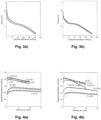
- Example 1 Synthesis of TiNb 2 O 7 according to the process of the invention ( Figures 1a and 1b)
- NbCl 5 (3.13 g) is dissolved in 10 mL of anhydrous ethanol under an argon atmosphere and with magnetic stirring. The solution is transferred under air.
- Titanium oxysulfate (TiOSO 4 ) (6.17 g) at 15% by mass in sulfuric acid are added to this solution.
- the pH of the solution is adjusted to 10 by slow addition of ammonia at 28% by weight to the water.
- the paste thus obtained is transferred into a Teflon ® container with a capacity of 90 mL, placed in the corresponding autoclave which is then heated to 220°C for 5 hours with a heating and cooling ramp of 2 and 5°C/ min respectively.
- the paste is then washed with distilled water by centrifugation until a pH between 6 and 7 is obtained.
- the compound is dried at 60°C for 12 hours then mechanically ground for 30 min at 500 rpm in hexane.
- the powder After evaporation of the solvent, the powder is calcined at 750°C for 1 hour with a heating/cooling temperature of 3°C/min in order to crystallize TiNb 2 O 7 .
- NbCl 5 (3.63 g) is dissolved in 10 mL of anhydrous ethanol under an argon atmosphere and with magnetic stirring.
- the solution is transferred under air.
- TiOSO 4 titanium oxysulfate
- the pH of the solution is adjusted to 10 by slow addition of ammonia at 28% by weight to the water.
- the paste is transferred into a 90 mL Teflon container placed in the corresponding autoclave which is then heated to 220°C for 5 hours with a heating and cooling ramp of 2 and 5°C/min respectively.
- the paste is then washed with distilled water by centrifugation until a pH between 6 and 7 is obtained.
- the compound is dried at 60°C for 12 hours then mechanically ground for 30 min at 500 rpm in hexane.
- the powder After evaporation of the solvent, the powder is calcined at 950°C for 1 hour with a heating/cooling temperature of 3°C/min in order to crystallize Ti 2 Nb 10 O 29 .
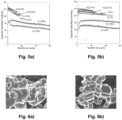
- Example 3 Metallic lithium battery comprising the materials of Examples 1 and 2 ( Figures 3 to 5)
- the oxides TiNb 2 O 7 (CE1) and Ti 2 Nb 10 O 29 (CE2) were prepared solidly according to the prior art by mechanical grinding of the respective oxides of titanium and niobium, then calcination at 1150°C for 24 hours .
- Table 3 Specific surface area of the TiNb ⁇ sub>2 ⁇ /sub>O ⁇ sub>7 ⁇ /sub> and Ti ⁇ sub>2 ⁇ /sub>Nb ⁇ sub>10 ⁇ /sub>O ⁇ sub>29 ⁇ compounds /sub> of the prior art.
- Sample CE1 TiNb 2 O 7
- CE2 Ti 2 Nb 10 O 29
- fig. 6b Calcination (°C) 1150
- Specific surface area m 2 /g
Landscapes
- Chemical & Material Sciences (AREA)
- Engineering & Computer Science (AREA)
- Organic Chemistry (AREA)
- General Chemical & Material Sciences (AREA)
- Electrochemistry (AREA)
- Chemical Kinetics & Catalysis (AREA)
- Inorganic Chemistry (AREA)
- Nanotechnology (AREA)
- Manufacturing & Machinery (AREA)
- Physics & Mathematics (AREA)
- Crystallography & Structural Chemistry (AREA)
- Materials Engineering (AREA)
- General Physics & Mathematics (AREA)
- Condensed Matter Physics & Semiconductors (AREA)
- Composite Materials (AREA)
- Battery Electrode And Active Subsutance (AREA)
- Inorganic Compounds Of Heavy Metals (AREA)
Claims (11)
- Verfahren zur Herstellung eines Mischoxids aus Titan und Niob, das folgende Schritte umfasst:- Herstellung eines Mischoxids aus Titan und Niob in amorpher Form durch solvothermische Behandlung von mindestens einem Titanvorläufer und mindestens einem Niobvorläufer;- Mechanische Zerkleinerung des nach der solvothermischen Behandlung erhaltenen Mischoxids aus Titan und Niob;- Kalzination des gemahlenen Mischoxids.
- Verfahren zur Herstellung eines Titan-Niob-Mischoxids nach Anspruch 1, dadurch gekennzeichnet, dass die solvothermale Behandlung der Titan- und Niobvorläufer bei einer Temperatur zwischen 200 und 250°C durchgeführt wird.
- Verfahren zur Herstellung eines Mischoxids von Titan und Niob nach Anspruch 1 oder 2, dadurch gekennzeichnet, dass das Mischoxid in amorpher Form vor dem Kalzinierungsschritt gewaschen wird.
- Verfahren zur Herstellung eines Titan-Niob-Mischoxids nach einem der Ansprüche 1 bis 3, dadurch gekennzeichnet, dass der Kalzinierungsschritt bei einer Temperatur zwischen 700 und 1200°C durchgeführt wird.
- Verfahren zur Herstellung eines Titan-Niob-Mischoxids nach einem der Ansprüche 1 bis 4, dadurch gekennzeichnet, dass der Titanvorläufer ausgewählt ist aus der Gruppe bestehend aus Titanoxysulfat (TiOSO4); Titanisopropoxid (Ti(OCH(CH3)2)4); Titanchlorid (TiCl4); Titanbutoxid (Ti(OC4H9)4).
- Verfahren zur Herstellung eines Titan-Niob-Mischoxids nach einem der Ansprüche 1 bis 5, dadurch gekennzeichnet, dass der Niobvorläufer ausgewählt ist aus der Gruppe bestehend aus Niobchlorid (NbCl5); Niobethoxid, Nb(OC2H5)5.
- Titan-Niob-Mischoxid, das nach dem Verfahren nach einem der Ansprüche 1 bis 6 erhalten wird, dadurch gekennzeichnet, dass es eine spezifische Oberfläche zwischen 5 m2/g und 45 m2/g aufweist.
- Titan-Niob-Mischoxid nach Anspruch 7, dadurch gekennzeichnet, dass es die Formel TixNb2yO(2x+5y) hat, wobei x zwischen 1 und 2 und y zwischen 1 und 12 liegt.
- Elektrode, deren aktives Material mindestens ein Mischoxid aus Titan und Niob nach Anspruch 7 umfasst.
- Negative Elektrode, deren aktives Material mindestens ein Mischoxid aus Titan und Niob nach Anspruch 7 umfasst.
- Lithium-Akkumulator, der mindestens eine Elektrode enthält, deren aktives Material mindestens ein Mischoxid aus Titan und Niob nach Anspruch 7 umfasst.
Applications Claiming Priority (2)
| Application Number | Priority Date | Filing Date | Title |
|---|---|---|---|
| FR1259881A FR2996838B1 (fr) | 2012-10-17 | 2012-10-17 | Procede de preparation d'un oxyde mixte de titane et de niobium par traitement solvothermal ; electrode et accumulateur au lithium comprenant ledit oxyde mixte |
| PCT/FR2013/052099 WO2014060662A1 (fr) | 2012-10-17 | 2013-09-12 | Procede de preparation d'un oxyde mixte de titane et de niobium par traitement solvothermal; electrode et accumulateur au lithium comprenant ledit oxyde mixte |
Publications (2)
| Publication Number | Publication Date |
|---|---|
| EP2909146A1 EP2909146A1 (de) | 2015-08-26 |
| EP2909146B1 true EP2909146B1 (de) | 2024-08-07 |
Family
ID=47428714
Family Applications (1)
| Application Number | Title | Priority Date | Filing Date |
|---|---|---|---|
| EP13776840.4A Active EP2909146B1 (de) | 2012-10-17 | 2013-09-12 | Verfahren zur herstellung eines titan- und niobmischoxids durch wärmelösungsbehandlung sowie elektrode und lithiumbatterie mit diesem mischoxid |
Country Status (6)
| Country | Link |
|---|---|
| US (1) | US9559357B2 (de) |
| EP (1) | EP2909146B1 (de) |
| JP (2) | JP6538560B2 (de) |
| ES (1) | ES2983632T3 (de) |
| FR (1) | FR2996838B1 (de) |
| WO (1) | WO2014060662A1 (de) |
Families Citing this family (9)
| Publication number | Priority date | Publication date | Assignee | Title |
|---|---|---|---|---|
| JP6076928B2 (ja) * | 2013-03-26 | 2017-02-08 | 株式会社東芝 | 電池用活物質材料、非水電解質電池、電池パック及び自動車 |
| JP6266481B2 (ja) * | 2014-09-16 | 2018-01-24 | 株式会社東芝 | リチウムイオン二次電池用活物質、リチウムイオン二次電池、電池パック及び車 |
| CN105470508A (zh) * | 2015-12-09 | 2016-04-06 | 南阳师范学院 | 一种纳米铌酸钛的制备方法 |
| JP6243932B2 (ja) * | 2016-01-19 | 2017-12-06 | 太平洋セメント株式会社 | チタンニオブ酸化物の製造方法、及びこれから得られるチタンニオブ酸化物を用いたチタンニオブ酸化物負極活物質の製造方法 |
| CN106129402A (zh) * | 2016-06-23 | 2016-11-16 | 南阳师范学院 | 一种Ti2Nb10O29介孔微球及其制备方法 |
| CN111924879B (zh) * | 2020-08-31 | 2022-12-09 | 福州大学 | 一种以钛酸盐为前驱体制备铌酸钛的方法 |
| CN113206240B (zh) * | 2021-04-01 | 2022-09-16 | 华中科技大学 | 一种(010)晶面优先生长的TiNb2O7材料及其制备方法和应用 |
| JP2023151076A (ja) * | 2022-03-31 | 2023-10-16 | Ube株式会社 | チタン含有酸化物粉末、それを用いた電極、及び蓄電デバイス |
| CN119841348B (zh) * | 2023-10-17 | 2026-01-06 | 中国科学院过程工程研究所 | 一种钛铌氧化物低温电极材料的制备方法 |
Family Cites Families (9)
| Publication number | Priority date | Publication date | Assignee | Title |
|---|---|---|---|---|
| JPH022876A (ja) * | 1987-11-06 | 1990-01-08 | Tosoh Corp | 複合酸化物触媒及びそれを用いたアルキレンアミン類の製造方法 |
| JP2004196641A (ja) * | 2002-12-16 | 2004-07-15 | Masanori Hirano | アナターゼ型結晶組成物およびその製造法 |
| JP2010123401A (ja) * | 2008-11-19 | 2010-06-03 | Mitsubishi Chemicals Corp | 非水電解質二次電池用電極材、非水電解質二次電池用電極及びそれを用いた非水電解質二次電池 |
| JP5343604B2 (ja) * | 2009-02-16 | 2013-11-13 | 信越化学工業株式会社 | 酸化チタン系光触媒薄膜の製造方法 |
| JP2010287496A (ja) * | 2009-06-12 | 2010-12-24 | Mitsubishi Chemicals Corp | 非水電解質二次電池用負極材、非水電解質二次電池用負極及びそれを用いた非水電解質二次電池 |
| EP2327663A1 (de) * | 2009-11-17 | 2011-06-01 | Shin-Etsu Chemical Co., Ltd. | Titandioxid-pulver, Dispserion daraus und Verfahren zu seiner Herstellung |
| JP5450159B2 (ja) * | 2010-02-25 | 2014-03-26 | チタン工業株式会社 | 電極用酸化チタン系化合物及びそれを用いたリチウム二次電池 |
| CA2810191C (en) * | 2010-07-30 | 2018-06-12 | Board Of Regents, The University Of Texas System | Niobium oxide compositions and methods for using same |
| FR2970376B1 (fr) * | 2011-01-07 | 2013-01-25 | Commissariat Energie Atomique | Materiau d'electrode positive biphase pour accumulateur au lithium et son procede de synthese |
-
2012
- 2012-10-17 FR FR1259881A patent/FR2996838B1/fr active Active
-
2013
- 2013-09-12 EP EP13776840.4A patent/EP2909146B1/de active Active
- 2013-09-12 JP JP2015537320A patent/JP6538560B2/ja active Active
- 2013-09-12 WO PCT/FR2013/052099 patent/WO2014060662A1/fr not_active Ceased
- 2013-09-12 ES ES13776840T patent/ES2983632T3/es active Active
-
2015
- 2015-03-24 US US14/666,620 patent/US9559357B2/en active Active
-
2018
- 2018-08-02 JP JP2018145863A patent/JP2018168065A/ja not_active Withdrawn
Also Published As
| Publication number | Publication date |
|---|---|
| ES2983632T3 (es) | 2024-10-24 |
| US20150221939A1 (en) | 2015-08-06 |
| FR2996838A1 (fr) | 2014-04-18 |
| JP2018168065A (ja) | 2018-11-01 |
| WO2014060662A1 (fr) | 2014-04-24 |
| JP2016500635A (ja) | 2016-01-14 |
| JP6538560B2 (ja) | 2019-07-03 |
| US9559357B2 (en) | 2017-01-31 |
| EP2909146A1 (de) | 2015-08-26 |
| FR2996838B1 (fr) | 2014-11-21 |
Similar Documents
| Publication | Publication Date | Title |
|---|---|---|
| EP2909146B1 (de) | Verfahren zur herstellung eines titan- und niobmischoxids durch wärmelösungsbehandlung sowie elektrode und lithiumbatterie mit diesem mischoxid | |
| EP2953901B1 (de) | Mischoxid aus titan und niob mit einem dreiwertigen element | |
| CN102024950B (zh) | 正极活性物质及其制备方法、正极和非水电解质电池 | |
| EP1722429B1 (de) | Nanoverbundstoff-Material als Anode einer Lithium-Sekundärbatterie | |
| CA2464740C (fr) | Oxyde de lithium et de vanadium, un procede pour sa preparation, son utilisation comme matiere active d'electrode | |
| EP2661779B1 (de) | Silicium-/kohlenstoffverbundmaterial, verfahren zu seiner synthese und verwendung eines derartigen materials | |
| EP2318315B1 (de) | Material für positive elektrode aus einem oxid vom lamellaren typ für eine lithiumbatterie | |
| EP1784358B1 (de) | Dichte mischoxidpulververbindung aus titan und lithium, herstellungsverfahren dafür und elektrode damit | |
| FR2890241A1 (fr) | Materiau d'electrode positive haute tension de structure spinelle a base de nickel et de manganese pour accumulateurs au lithium | |
| CN1947283A (zh) | 电化学特性改善的负极活性材料和包括该材料的电化学装置 | |
| US20130101901A1 (en) | LITHIUM-TRANSITION METAL COMPLEX COMPOUNDS HAVING Nth ORDER HIERARCHICAL STRUCTURE, METHOD OF PREPARING THE SAME AND LITHIUM BATTERY COMPRISING AN ELECTRODE COMPRISING THE SAME | |
| FR3061992A1 (fr) | Materiau d'electrode positive a base d'un oxyde lamellaire lithie recouvert, en tout ou partie, par un autre oxyde a base de manganese et procede de preparation de ce materiau | |
| EP2731910A2 (de) | Lithiumhaltiges manganphosphat und verbundmaterial damit | |
| EP1794828B1 (de) | Zusammengesetztes negativ-elektrodenmaterial, herstellungsverfahren dafür, negativ-elektrode und lithiumionenbatterie | |
| CN103779552B (zh) | 正极活性物质 | |
| EP3218306B1 (de) | Elektrodenmaterial der formel limnxco(1-x)bo3 und herstellungsverfahren dafür | |
| FR2725709A1 (fr) | Oxyde de lithium et son utilisation comme matiere active d'une electrode | |
| CA2293842A1 (fr) | Accumulateur au lithium fonctionnant jusqu'a une borne superieure de tension de 3,5 volts | |
| CN121153123A (zh) | 钒氧化物复合体以及使用该钒氧化物复合体的电池 | |
| WO2024047396A1 (fr) | Matériau actif en oxyde mixte niobium titane substitué par du tungstène | |
| FR3033213A1 (fr) | Materiau actif d'electrode comprenant du cuivre |
Legal Events
| Date | Code | Title | Description |
|---|---|---|---|
| PUAI | Public reference made under article 153(3) epc to a published international application that has entered the european phase |
Free format text: ORIGINAL CODE: 0009012 |
|
| 17P | Request for examination filed |
Effective date: 20150327 |
|
| AK | Designated contracting states |
Kind code of ref document: A1 Designated state(s): AL AT BE BG CH CY CZ DE DK EE ES FI FR GB GR HR HU IE IS IT LI LT LU LV MC MK MT NL NO PL PT RO RS SE SI SK SM TR |
|
| AX | Request for extension of the european patent |
Extension state: BA ME |
|
| DAX | Request for extension of the european patent (deleted) | ||
| STAA | Information on the status of an ep patent application or granted ep patent |
Free format text: STATUS: EXAMINATION IS IN PROGRESS |
|
| 17Q | First examination report despatched |
Effective date: 20210430 |
|
| GRAP | Despatch of communication of intention to grant a patent |
Free format text: ORIGINAL CODE: EPIDOSNIGR1 |
|
| STAA | Information on the status of an ep patent application or granted ep patent |
Free format text: STATUS: GRANT OF PATENT IS INTENDED |
|
| RIC1 | Information provided on ipc code assigned before grant |
Ipc: B82Y 30/00 20110101ALI20240514BHEP Ipc: H01M 10/052 20100101ALI20240514BHEP Ipc: H01M 4/485 20100101ALI20240514BHEP Ipc: C01G 33/00 20060101AFI20240514BHEP |
|
| INTG | Intention to grant announced |
Effective date: 20240531 |
|
| GRAS | Grant fee paid |
Free format text: ORIGINAL CODE: EPIDOSNIGR3 |
|
| GRAA | (expected) grant |
Free format text: ORIGINAL CODE: 0009210 |
|
| STAA | Information on the status of an ep patent application or granted ep patent |
Free format text: STATUS: THE PATENT HAS BEEN GRANTED |
|
| AK | Designated contracting states |
Kind code of ref document: B1 Designated state(s): AL AT BE BG CH CY CZ DE DK EE ES FI FR GB GR HR HU IE IS IT LI LT LU LV MC MK MT NL NO PL PT RO RS SE SI SK SM TR |
|
| REG | Reference to a national code |
Ref country code: GB Ref legal event code: FG4D Free format text: NOT ENGLISH |
|
| REG | Reference to a national code |
Ref country code: CH Ref legal event code: EP |
|
| REG | Reference to a national code |
Ref country code: DE Ref legal event code: R096 Ref document number: 602013085972 Country of ref document: DE |
|
| REG | Reference to a national code |
Ref country code: IE Ref legal event code: FG4D Free format text: LANGUAGE OF EP DOCUMENT: FRENCH |
|
| REG | Reference to a national code |
Ref country code: ES Ref legal event code: FG2A Ref document number: 2983632 Country of ref document: ES Kind code of ref document: T3 Effective date: 20241024 |
|
| RAP4 | Party data changed (patent owner data changed or rights of a patent transferred) |
Owner name: COMMISSARIAT A L'ENERGIE ATOMIQUE ET AUX ENERGIESALTERNATIVES |
|
| REG | Reference to a national code |
Ref country code: LT Ref legal event code: MG9D |
|
| PG25 | Lapsed in a contracting state [announced via postgrant information from national office to epo] |
Ref country code: NO Free format text: LAPSE BECAUSE OF FAILURE TO SUBMIT A TRANSLATION OF THE DESCRIPTION OR TO PAY THE FEE WITHIN THE PRESCRIBED TIME-LIMIT Effective date: 20241107 |
|
| REG | Reference to a national code |
Ref country code: AT Ref legal event code: MK05 Ref document number: 1710762 Country of ref document: AT Kind code of ref document: T Effective date: 20240807 |
|
| PG25 | Lapsed in a contracting state [announced via postgrant information from national office to epo] |
Ref country code: FI Free format text: LAPSE BECAUSE OF FAILURE TO SUBMIT A TRANSLATION OF THE DESCRIPTION OR TO PAY THE FEE WITHIN THE PRESCRIBED TIME-LIMIT Effective date: 20240807 Ref country code: NL Free format text: LAPSE BECAUSE OF FAILURE TO SUBMIT A TRANSLATION OF THE DESCRIPTION OR TO PAY THE FEE WITHIN THE PRESCRIBED TIME-LIMIT Effective date: 20240807 Ref country code: GR Free format text: LAPSE BECAUSE OF FAILURE TO SUBMIT A TRANSLATION OF THE DESCRIPTION OR TO PAY THE FEE WITHIN THE PRESCRIBED TIME-LIMIT Effective date: 20241108 Ref country code: PT Free format text: LAPSE BECAUSE OF FAILURE TO SUBMIT A TRANSLATION OF THE DESCRIPTION OR TO PAY THE FEE WITHIN THE PRESCRIBED TIME-LIMIT Effective date: 20241209 Ref country code: PL Free format text: LAPSE BECAUSE OF FAILURE TO SUBMIT A TRANSLATION OF THE DESCRIPTION OR TO PAY THE FEE WITHIN THE PRESCRIBED TIME-LIMIT Effective date: 20240807 |
|
| PG25 | Lapsed in a contracting state [announced via postgrant information from national office to epo] |
Ref country code: BG Free format text: LAPSE BECAUSE OF FAILURE TO SUBMIT A TRANSLATION OF THE DESCRIPTION OR TO PAY THE FEE WITHIN THE PRESCRIBED TIME-LIMIT Effective date: 20240807 |
|
| PG25 | Lapsed in a contracting state [announced via postgrant information from national office to epo] |
Ref country code: LV Free format text: LAPSE BECAUSE OF FAILURE TO SUBMIT A TRANSLATION OF THE DESCRIPTION OR TO PAY THE FEE WITHIN THE PRESCRIBED TIME-LIMIT Effective date: 20240807 |
|
| PG25 | Lapsed in a contracting state [announced via postgrant information from national office to epo] |
Ref country code: IS Free format text: LAPSE BECAUSE OF FAILURE TO SUBMIT A TRANSLATION OF THE DESCRIPTION OR TO PAY THE FEE WITHIN THE PRESCRIBED TIME-LIMIT Effective date: 20241207 Ref country code: AT Free format text: LAPSE BECAUSE OF FAILURE TO SUBMIT A TRANSLATION OF THE DESCRIPTION OR TO PAY THE FEE WITHIN THE PRESCRIBED TIME-LIMIT Effective date: 20240807 |
|
| PG25 | Lapsed in a contracting state [announced via postgrant information from national office to epo] |
Ref country code: HR Free format text: LAPSE BECAUSE OF FAILURE TO SUBMIT A TRANSLATION OF THE DESCRIPTION OR TO PAY THE FEE WITHIN THE PRESCRIBED TIME-LIMIT Effective date: 20240807 |
|
| PG25 | Lapsed in a contracting state [announced via postgrant information from national office to epo] |
Ref country code: RS Free format text: LAPSE BECAUSE OF FAILURE TO SUBMIT A TRANSLATION OF THE DESCRIPTION OR TO PAY THE FEE WITHIN THE PRESCRIBED TIME-LIMIT Effective date: 20241107 |
|
| PGFP | Annual fee paid to national office [announced via postgrant information from national office to epo] |
Ref country code: ES Payment date: 20241031 Year of fee payment: 12 |
|
| PG25 | Lapsed in a contracting state [announced via postgrant information from national office to epo] |
Ref country code: RS Free format text: LAPSE BECAUSE OF FAILURE TO SUBMIT A TRANSLATION OF THE DESCRIPTION OR TO PAY THE FEE WITHIN THE PRESCRIBED TIME-LIMIT Effective date: 20241107 Ref country code: PT Free format text: LAPSE BECAUSE OF FAILURE TO SUBMIT A TRANSLATION OF THE DESCRIPTION OR TO PAY THE FEE WITHIN THE PRESCRIBED TIME-LIMIT Effective date: 20241209 Ref country code: PL Free format text: LAPSE BECAUSE OF FAILURE TO SUBMIT A TRANSLATION OF THE DESCRIPTION OR TO PAY THE FEE WITHIN THE PRESCRIBED TIME-LIMIT Effective date: 20240807 Ref country code: NO Free format text: LAPSE BECAUSE OF FAILURE TO SUBMIT A TRANSLATION OF THE DESCRIPTION OR TO PAY THE FEE WITHIN THE PRESCRIBED TIME-LIMIT Effective date: 20241107 Ref country code: NL Free format text: LAPSE BECAUSE OF FAILURE TO SUBMIT A TRANSLATION OF THE DESCRIPTION OR TO PAY THE FEE WITHIN THE PRESCRIBED TIME-LIMIT Effective date: 20240807 Ref country code: LV Free format text: LAPSE BECAUSE OF FAILURE TO SUBMIT A TRANSLATION OF THE DESCRIPTION OR TO PAY THE FEE WITHIN THE PRESCRIBED TIME-LIMIT Effective date: 20240807 Ref country code: IS Free format text: LAPSE BECAUSE OF FAILURE TO SUBMIT A TRANSLATION OF THE DESCRIPTION OR TO PAY THE FEE WITHIN THE PRESCRIBED TIME-LIMIT Effective date: 20241207 Ref country code: HR Free format text: LAPSE BECAUSE OF FAILURE TO SUBMIT A TRANSLATION OF THE DESCRIPTION OR TO PAY THE FEE WITHIN THE PRESCRIBED TIME-LIMIT Effective date: 20240807 Ref country code: GR Free format text: LAPSE BECAUSE OF FAILURE TO SUBMIT A TRANSLATION OF THE DESCRIPTION OR TO PAY THE FEE WITHIN THE PRESCRIBED TIME-LIMIT Effective date: 20241108 Ref country code: FI Free format text: LAPSE BECAUSE OF FAILURE TO SUBMIT A TRANSLATION OF THE DESCRIPTION OR TO PAY THE FEE WITHIN THE PRESCRIBED TIME-LIMIT Effective date: 20240807 Ref country code: BG Free format text: LAPSE BECAUSE OF FAILURE TO SUBMIT A TRANSLATION OF THE DESCRIPTION OR TO PAY THE FEE WITHIN THE PRESCRIBED TIME-LIMIT Effective date: 20240807 Ref country code: AT Free format text: LAPSE BECAUSE OF FAILURE TO SUBMIT A TRANSLATION OF THE DESCRIPTION OR TO PAY THE FEE WITHIN THE PRESCRIBED TIME-LIMIT Effective date: 20240807 |
|
| PG25 | Lapsed in a contracting state [announced via postgrant information from national office to epo] |
Ref country code: RO Free format text: LAPSE BECAUSE OF FAILURE TO SUBMIT A TRANSLATION OF THE DESCRIPTION OR TO PAY THE FEE WITHIN THE PRESCRIBED TIME-LIMIT Effective date: 20240807 Ref country code: DK Free format text: LAPSE BECAUSE OF FAILURE TO SUBMIT A TRANSLATION OF THE DESCRIPTION OR TO PAY THE FEE WITHIN THE PRESCRIBED TIME-LIMIT Effective date: 20240807 Ref country code: SM Free format text: LAPSE BECAUSE OF FAILURE TO SUBMIT A TRANSLATION OF THE DESCRIPTION OR TO PAY THE FEE WITHIN THE PRESCRIBED TIME-LIMIT Effective date: 20240807 |
|
| PG25 | Lapsed in a contracting state [announced via postgrant information from national office to epo] |
Ref country code: EE Free format text: LAPSE BECAUSE OF FAILURE TO SUBMIT A TRANSLATION OF THE DESCRIPTION OR TO PAY THE FEE WITHIN THE PRESCRIBED TIME-LIMIT Effective date: 20240807 |
|
| PG25 | Lapsed in a contracting state [announced via postgrant information from national office to epo] |
Ref country code: CZ Free format text: LAPSE BECAUSE OF FAILURE TO SUBMIT A TRANSLATION OF THE DESCRIPTION OR TO PAY THE FEE WITHIN THE PRESCRIBED TIME-LIMIT Effective date: 20240807 |
|
| PG25 | Lapsed in a contracting state [announced via postgrant information from national office to epo] |
Ref country code: SK Free format text: LAPSE BECAUSE OF FAILURE TO SUBMIT A TRANSLATION OF THE DESCRIPTION OR TO PAY THE FEE WITHIN THE PRESCRIBED TIME-LIMIT Effective date: 20240807 |
|
| REG | Reference to a national code |
Ref country code: CH Ref legal event code: PL |
|
| REG | Reference to a national code |
Ref country code: DE Ref legal event code: R097 Ref document number: 602013085972 Country of ref document: DE |
|
| PG25 | Lapsed in a contracting state [announced via postgrant information from national office to epo] |
Ref country code: LU Free format text: LAPSE BECAUSE OF NON-PAYMENT OF DUE FEES Effective date: 20240912 |
|
| PLBE | No opposition filed within time limit |
Free format text: ORIGINAL CODE: 0009261 |
|
| STAA | Information on the status of an ep patent application or granted ep patent |
Free format text: STATUS: NO OPPOSITION FILED WITHIN TIME LIMIT |
|
| PG25 | Lapsed in a contracting state [announced via postgrant information from national office to epo] |
Ref country code: MC Free format text: LAPSE BECAUSE OF FAILURE TO SUBMIT A TRANSLATION OF THE DESCRIPTION OR TO PAY THE FEE WITHIN THE PRESCRIBED TIME-LIMIT Effective date: 20240807 |
|
| REG | Reference to a national code |
Ref country code: BE Ref legal event code: MM Effective date: 20240930 |
|
| PG25 | Lapsed in a contracting state [announced via postgrant information from national office to epo] |
Ref country code: BE Free format text: LAPSE BECAUSE OF NON-PAYMENT OF DUE FEES Effective date: 20240930 |
|
| 26N | No opposition filed |
Effective date: 20250508 |
|
| PG25 | Lapsed in a contracting state [announced via postgrant information from national office to epo] |
Ref country code: CH Free format text: LAPSE BECAUSE OF NON-PAYMENT OF DUE FEES Effective date: 20240930 |
|
| PG25 | Lapsed in a contracting state [announced via postgrant information from national office to epo] |
Ref country code: IE Free format text: LAPSE BECAUSE OF NON-PAYMENT OF DUE FEES Effective date: 20240912 |
|
| PG25 | Lapsed in a contracting state [announced via postgrant information from national office to epo] |
Ref country code: SE Free format text: LAPSE BECAUSE OF FAILURE TO SUBMIT A TRANSLATION OF THE DESCRIPTION OR TO PAY THE FEE WITHIN THE PRESCRIBED TIME-LIMIT Effective date: 20240807 |
|
| PGFP | Annual fee paid to national office [announced via postgrant information from national office to epo] |
Ref country code: DE Payment date: 20250919 Year of fee payment: 13 |
|
| PGFP | Annual fee paid to national office [announced via postgrant information from national office to epo] |
Ref country code: GB Payment date: 20250923 Year of fee payment: 13 |
|
| PGFP | Annual fee paid to national office [announced via postgrant information from national office to epo] |
Ref country code: FR Payment date: 20250917 Year of fee payment: 13 |
|
| PG25 | Lapsed in a contracting state [announced via postgrant information from national office to epo] |
Ref country code: CY Free format text: LAPSE BECAUSE OF FAILURE TO SUBMIT A TRANSLATION OF THE DESCRIPTION OR TO PAY THE FEE WITHIN THE PRESCRIBED TIME-LIMIT; INVALID AB INITIO Effective date: 20130912 Ref country code: IT Free format text: LAPSE BECAUSE OF FAILURE TO SUBMIT A TRANSLATION OF THE DESCRIPTION OR TO PAY THE FEE WITHIN THE PRESCRIBED TIME-LIMIT Effective date: 20240807 |
|
| PG25 | Lapsed in a contracting state [announced via postgrant information from national office to epo] |
Ref country code: HU Free format text: LAPSE BECAUSE OF FAILURE TO SUBMIT A TRANSLATION OF THE DESCRIPTION OR TO PAY THE FEE WITHIN THE PRESCRIBED TIME-LIMIT; INVALID AB INITIO Effective date: 20130912 |
|
| REG | Reference to a national code |
Ref country code: DE Ref legal event code: R082 Ref document number: 602013085972 Country of ref document: DE Representative=s name: VUILLERMOZ, BRUNO, FR |