EP2896972B1 - Laserradarvorrichtung und verfahren für den nachweis der geschwindigkeit eines gemessenen objekts - Google Patents
Laserradarvorrichtung und verfahren für den nachweis der geschwindigkeit eines gemessenen objekts Download PDFInfo
- Publication number
- EP2896972B1 EP2896972B1 EP13837680.1A EP13837680A EP2896972B1 EP 2896972 B1 EP2896972 B1 EP 2896972B1 EP 13837680 A EP13837680 A EP 13837680A EP 2896972 B1 EP2896972 B1 EP 2896972B1
- Authority
- EP
- European Patent Office
- Prior art keywords
- speed
- peak value
- signal
- spectrum
- calculation
- Prior art date
- Legal status (The legal status is an assumption and is not a legal conclusion. Google has not performed a legal analysis and makes no representation as to the accuracy of the status listed.)
- Active
Links
Images






Classifications
-
- G—PHYSICS
- G01—MEASURING; TESTING
- G01P—MEASURING LINEAR OR ANGULAR SPEED, ACCELERATION, DECELERATION, OR SHOCK; INDICATING PRESENCE, ABSENCE, OR DIRECTION, OF MOVEMENT
- G01P5/00—Measuring speed of fluids, e.g. of air stream; Measuring speed of bodies relative to fluids, e.g. of ship, of aircraft
- G01P5/26—Measuring speed of fluids, e.g. of air stream; Measuring speed of bodies relative to fluids, e.g. of ship, of aircraft by measuring the direct influence of the streaming fluid on the properties of a detecting optical wave
-
- G—PHYSICS
- G01—MEASURING; TESTING
- G01S—RADIO DIRECTION-FINDING; RADIO NAVIGATION; DETERMINING DISTANCE OR VELOCITY BY USE OF RADIO WAVES; LOCATING OR PRESENCE-DETECTING BY USE OF THE REFLECTION OR RERADIATION OF RADIO WAVES; ANALOGOUS ARRANGEMENTS USING OTHER WAVES
- G01S17/00—Systems using the reflection or reradiation of electromagnetic waves other than radio waves, e.g. lidar systems
- G01S17/02—Systems using the reflection of electromagnetic waves other than radio waves
- G01S17/50—Systems of measurement based on relative movement of target
- G01S17/58—Velocity or trajectory determination systems; Sense-of-movement determination systems
-
- G—PHYSICS
- G01—MEASURING; TESTING
- G01S—RADIO DIRECTION-FINDING; RADIO NAVIGATION; DETERMINING DISTANCE OR VELOCITY BY USE OF RADIO WAVES; LOCATING OR PRESENCE-DETECTING BY USE OF THE REFLECTION OR RERADIATION OF RADIO WAVES; ANALOGOUS ARRANGEMENTS USING OTHER WAVES
- G01S17/00—Systems using the reflection or reradiation of electromagnetic waves other than radio waves, e.g. lidar systems
- G01S17/88—Lidar systems specially adapted for specific applications
- G01S17/95—Lidar systems specially adapted for specific applications for meteorological use
-
- Y—GENERAL TAGGING OF NEW TECHNOLOGICAL DEVELOPMENTS; GENERAL TAGGING OF CROSS-SECTIONAL TECHNOLOGIES SPANNING OVER SEVERAL SECTIONS OF THE IPC; TECHNICAL SUBJECTS COVERED BY FORMER USPC CROSS-REFERENCE ART COLLECTIONS [XRACs] AND DIGESTS
- Y02—TECHNOLOGIES OR APPLICATIONS FOR MITIGATION OR ADAPTATION AGAINST CLIMATE CHANGE
- Y02A—TECHNOLOGIES FOR ADAPTATION TO CLIMATE CHANGE
- Y02A90/00—Technologies having an indirect contribution to adaptation to climate change
- Y02A90/10—Information and communication technologies [ICT] supporting adaptation to climate change, e.g. for weather forecasting or climate simulation
Definitions
- the present invention relates to a laser radar device that measures, for example, a wind speed, and a method of calculating the speed of an object to be measured.
- a radar device is known as a device that measures the position of an object existing at a remote point.
- a radar device emits a wave, such as an electromagnetic wave or an acoustic wave, toward space, for example, and receives a wave which is reflected by an object which is a measurement object and returns thereto, and analyzes a received signal of the wave to measure the distance and the angle from the radar device to the object.
- a wave such as an electromagnetic wave or an acoustic wave
- a weather radar device that sets fine liquid droplets or solid particles (referred to as an "aerosol” from here on) floating in atmospheric air as measurement objects, and that calculates the speed (wind speed) at which the aerosol is moving from the amount of phase rotation of a wave which is reflected by the aerosol and returns thereto is known especially among radar devices.
- a laser radar device that uses laser light as an electromagnetic wave, especially among weather radar devices, can observe an object with a high angular resolution and is therefore used as a wind direction and wind speed radar device because the divergence of the beam emitted thereby is very small (refer to nonpatent reference 1).
- a conventional laser radar device emits laser light into atmospheric air, and, after that, receives laser light which is reflected by an aerosol existing in the atmospheric air, and returns thereto (laser light which receives a Doppler frequency shift according to the movement speed of the aerosol as the aerosol moves), and performs heterodyne detection on the laser light and local light, thereby detecting a Doppler signal corresponding to the movement speed of the aerosol (wind speed) .
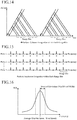
- Fig. 14 is an explanatory drawing showing the concept of measurement by the conventional laser radar device.
- the laser radar device performs a process of splitting the laser light (reflected light) reflected by the aerosol in the atmospheric air at each altitude and returns thereto into segments by time.
- each reflected light split by time is called a "range bin.”
- the laser radar device performs a coherent integration at very short intervals on each range bin, and performs a Fourier transform within the range bin.
- the laser radar device performs N incoherent integrations on a pulse for each range bin, as shown in Fig. 15 .
- Fig. 16 is an explanatory drawing showing the concepts of a wind speed and a wind speed width which are derived from a reception spectrum.
- Fig. 16 a spectrum of wind speed which is acquired when a Gaussian beam is emitted is shown, and the peak of this spectrum is defined as a Doppler speed (wind speed).
- this Doppler speed in addition to a peak detection method of calculating a Doppler speed from a frequency corresponding to a peak value of the SNR, there is a centroid calculation method of calculating the center of gravity of one or more peak values in the SNR, and calculating a Doppler speed from a frequency corresponding to the center of gravity (refer to nonpatent reference 1).
- Fig. 17 is an explanatory drawing explaining a merit and a demerit of wind measurements using the peak detection method and those of wind measurements using the centroid calculation method.
- a frequency resolution ⁇ f is given by fs/p.
- the wind speed acquired by using the peak detection method may have an error for its true value.
- Fig. 17(b) when a clutter exists and noise caused by rain or the like is mixed in the received signal, as shown in Fig. 17(b) , or when there occurs a statistical fluctuation, a clutter component is added to the calculation of the center of gravity, and therefore a larger error is included in the wind speed acquired by using the centroid calculation method. In such a case, the peak detection method can acquire a value closer to the true wind speed. The difference between Fig. 17(a) and Fig. 17(b) is distinguishable according to the wind speed width acquired.
- the above-mentioned maximum likelihood estimation method has a merit of being able to determine a wind speed having a high degree of accuracy because it determines a parameter of a waveform model having the highest correlation with the spectrum of the received signal through repetitive calculations.
- the maximum likelihood estimation method has another merit of, when a plurality of winds are mixing in the same range bin, being able to measure each wind speed (refer to patent reference 2).
- Fig. 18 is an explanatory drawing explaining a wind measurement of a plurality of winds using the maximum likelihood estimation method.
- Nonpatent reference 1 " Radar Remote Sensing of Weather and The Atmosphere", Shoichiro Fukao and Kyosuke Hamazu, Kyoto University Press, March 30, 2005, p.112-113, ISBN 4-87698-653-3
- Nonpatent reference 2 Kameyama et al., "Performance of Discrete-Fourier-Transform-Based Velocity Estimators for a Wind-Sensing Coherent Doppler Lidar System in the Kolmogorov Turbulence Regime", IEEE, VOL. 47, NO. 10-2009 .
- a Doppler speed can be calculated according to a calculation method, such as a peak detection method, a centroid calculation method, or a maximum likelihood estimation method.
- the conventional laser radar devices do not select an appropriate calculation method in consideration of the form of an aerosol in atmospheric air, such as the presence or absence of a clutter, but simply calculates a Doppler speed (wind speed) according to a single calculation method prepared in advance. Therefore, the calculation accuracy of the Doppler speed (wind speed) may degrade dependently upon the form of the aerosol in the atmospheric air.
- a further problem is that the calculation process of calculating the Doppler speed (wind speed) may take a long time.
- the present invention is made in order to solve the above-mentioned problems, and it is therefore an object of the present invention to provide a laser radar device that can calculate the speed of an object to be measured in a short time with a high degree of accuracy, and a method of calculating the speed of an object to be measured in a short time with a high degree of accuracy.
- a laser radar device including: a laser light transmitter and receiver that emits laser light into atmospheric air, receives laser light which is reflected by an object to be measured existing in the atmospheric air and returns thereto, and outputs a received signal of the laser light; a coherent integrator that performs a coherent integration on the received signal outputted from the laser light transmitter and receiver; a spectrum calculator that performs a Fourier transform on the received signal on which the coherent integration is performed by the coherent integrator and performs an incoherent integration on the received signal after the Fourier transform to calculate a spectrum of the received signal; a signal to noise ratio calculator that calculates a signal to noise ratio from both the spectrum of the received signal which is calculated by the spectrum calculator, and a spectrum of a noise signal; and a peak value detector that detects a peak value of the signal to noise ratio calculated by the signal to noise ratio calculator, in which a speed calculator selects a speed calculation method of calculating the speed of the object to be measured from both the peak value of the signal to
- the speed calculator selects a speed calculation method of calculating the speed of the object to be measured from both the peak value of the signal to noise ratio which is detected by the peak value detector from among the plurality of speed calculation methods of calculating a speed of the object to be measured, and calculates the speed of the object to be measured according to the speed calculation method, there is provided an advantage of being able to calculate the speed of the object to be measured in a short time with a high degree of accuracy.
- Fig. 1 is a structural diagram showing a laser radar device in accordance with Embodiment 1 of the present invention.
- a light transmitting and receiving unit 1 is comprised of an optical oscillation unit 2, an optical system 3, and a laser light detecting unit 4, and performs a process of emitting laser light into atmospheric air, receiving laser light which is reflected by an aerosol (object to be measured) existing in the atmospheric air and returns thereto, and outputting a received signal of the laser light to a signal processing unit 5.
- the light transmitting and receiving unit 1 constructs a laser light transmitter and receiver.
- the light transmitting and receiving unit has only to be able to emit laser light which is an electromagnetic wave into atmospheric air, and receive laser light which is reflected by an aerosol and returns thereto, and the light transmitting and receiving unit is not limited to the light transmitting and receiving unit 1 having the structure shown in Fig. 1 . Therefore, for example, the light transmission and reception unit 1 can have a structure disclosed by patent reference 1.
- the optical oscillation unit 2 of the light transmitting and receiving unit 1 is a light source that oscillates laser light.
- the optical system 3 of the light transmitting and receiving unit 1 is comprised of one or more lenses and so on, and is an optical element that focuses the laser light which is reflected by the aerosol and returns thereto onto the laser light detecting unit 4.
- the laser light detecting unit 4 of the light transmitting and receiving unit 1 performs a process of receiving the laser light focused by the optical system 3, converting the waveform of the laser light into an electric signal, and outputting the electric signal to the signal processing unit 5 as a received signal.
- the signal processing unit 5 is comprised of a signal analyzing unit 6 and a display and storage unit 7, and performs a process of calculating the speed (wind speed) of the aerosol by analyzing the received signal outputted from the light transmitting and receiving unit 1, and displaying the wind speed which is the calculation result.
- the signal analyzing unit 6 of the signal processing unit 5 is comprised of, for example, a semiconductor integrated circuit equipped with a CPU, or a one chip microcomputer, and performs a process of calculating the speed (wind speed) of the aerosol by analyzing the received signal outputted from the light transmitting and receiving unit 1.
- each of the components in the signal analyzing unit 6 consists of hardware for exclusive use (refer to Fig. 2 )
- the signal analyzing unit 6 can alternatively consist of a computer.
- a noise signal storage unit 13 which is a component of the signal analyzing unit 6 can be constructed in a memory of the computer and a program in which the details of processing performed by a coherent integration processing unit 11, a spectrum calculating unit 12, an SNR calculating unit 14, a peak SNR detecting unit 15, and a speed calculating unit 16, which are components of the signal analyzing unit 6, are described can be stored in the memory of the computer, and the CPU of the computer can be made to execute the program stored in the memory.
- the display and storage unit 7 of the signal processing unit 5 is comprised of, for example, a storage unit, such as a RAM or a hard disk, and a display unit, such as a liquid crystal display, and performs a process of displaying the speed (wind speed) of the aerosol calculated by the signal analyzing unit 6, and also storing the speed (wind speed) of the aerosol.
- a storage unit such as a RAM or a hard disk
- a display unit such as a liquid crystal display
- Fig. 2 is a structural diagram showing the signal analyzing unit 6 of the laser radar device in accordance with Embodiment 1 of the present invention.
- the coherent integration processing unit 11 performs a process of performing a coherent integration on the received signal outputted from the light transmitting and receiving unit 1, and outputting the received signal after the coherent integration to the spectrum calculating unit 12.
- the coherent integration processing unit 11 constructs a coherent integrator.
- the spectrum calculating unit 12 performs a process of performing a Fourier transform on the received signal on which the coherent integration is performed by the coherent integration processing unit 11, and performing an incoherent integration on the received signal after the Fourier transform to calculate a spectrum of the received signal.
- the spectrum calculating unit 12 constructs a spectrum calculator.
- the noise signal storage unit 13 stores a spectrum of a noise signal (a signal including only noise in which no signal is mixed) in advance.
- a spectrum of the noise signal should just be acquired in advance.
- coherent integration can be performed on a noise signal acquired in real time and a Fourier transform can be performed on this noise signal, and incoherent integration can be then performed on the noise signal after the Fourier transform to calculate a spectrum of the noise signal.
- the SNR calculating unit 14 performs a process of calculating an SNR (Signal to Noise Ratio) which is a signal to noise ratio by dividing the spectrum of the received signal calculated by the spectrum calculating unit 12 by the spectrum of the noise signal stored in the noise signal storage unit 13.
- SNR Signal to Noise Ratio
- a signal to noise ratio calculator is comprised of the noise signal storage unit 13 and the SNR calculating unit 14.
- the peak SNR detecting unit 15 performs a process of detecting a peak value of the SNR calculated by the SNR calculating unit 14.
- the peak SNR detecting unit 15 constructs a peak value detector.
- the speed calculating unit 16 performs a process of selecting a speed calculation method corresponding to the peak value of the SNR detected by the peak SNR detecting unit 15 from among a plurality of speed calculation methods of calculating the speed (wind speed) of an aerosol (e.g., a peak detection method, a centroid calculation method, and a maximum likelihood estimation method), and calculating the speed (wind speed) of the aerosol according to the speed calculation method.
- the speed calculating unit 16 constructs a speed calculator.
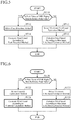
- Fig. 3 is a flow chart showing the details of processing (a method of calculating the speed of an object to be measured) performed by the signal analyzing unit 6 of the laser radar device in accordance with Embodiment 1 of the present invention
- Fig. 4 is a structural diagram showing the speed calculating unit 16 in the signal analyzing unit 6.
- an SNR determining unit 21 when receiving a command for giving a higher priority to the calculation rate of the speed than to the calculation accuracy of the speed from a user, an SNR determining unit 21 performs a process of selecting the "peak detection method" as the speed calculation method if a peak value (referred to as a "peak SNR" from here on) of the SNR detected by the peak SNR detecting unit 15 is higher than a reference peak value P REF (peak SNR>P REF ), or selecting the "maximum likelihood estimation method" as the speed calculation method if the peak SNR is equal to or lower than the reference peak value P REF (peak SNR ⁇ P REF ).
- the SNR determining unit 21 when receiving a command for giving a higher priority to the calculation accuracy of the speed than to the calculation rate of the speed from the user, performs a process of selecting the "centroid calculation method" as the speed calculation method if the peak SNR is higher than the reference peak value P REF (peak SNR>P REF ), or selecting the "maximum likelihood estimation method” as the speed calculation method if the peak SNR is equal to or lower than the reference peak value P REF (peak SNR ⁇ P REF ).
- a peak detection processing unit 22 performs a process of calculating the speed (wind speed) of the aerosol from a frequency corresponding to a peak SNR detected by the peak SNR detecting unit 15 when the "peak detection method" is selected by the SNR determining unit 21 as the speed calculation method.
- a centroid calculation processing unit 23 performs a process of calculating the center of gravity of one or more peak SNRs detected by the peak SNR detecting unit 15 to calculate the speed (wind speed) of the aerosol from a frequency corresponding to the center of gravity when the "centroid calculation method" is selected by SNR determining unit 21 as the speed calculation method.
- a maximum likelihood estimation processing unit 24 performs a process of making variable a parameter of a waveform model of a reception spectrum prepared in advance, searching for a parameter with the highest correlation with the spectrum of the received signal calculated by the spectrum calculating unit 12, and calculating the speed (wind speed) of the aerosol by using the parameter.
- Fig. 5 is a flow chart showing the details of processing performed by the speed calculating unit 16 when a higher priority is given to the calculation rate of the speed than to the calculation accuracy of the speed.
- Fig. 6 is a flow chart showing the details of processing performed by the speed calculating unit 16 when a higher priority is given to the calculation accuracy of the speed than to the calculation rate of the speed.
- the optical oscillation unit 2 of the light transmitting and receiving unit 1 oscillates laser light
- the laser light is emitted into atmospheric air by way of the optical system 3.
- the laser light emitted into the atmospheric air is reflected by an aerosol existing in the atmospheric air, and a reflected part of the laser light is focused by the optical system 3 of the light transmitting and receiving unit 1.
- the laser light detecting unit 4 of the light transmitting and receiving unit 1 receives the laser light focused by the optical system 3, converts the waveform of the laser light into an electric signal, and outputs the electric signal to the signal processing unit 5 as a received signal.
- the signal analyzing unit 6 of the signal processing unit 5 calculates the speed (wind speed) of the aerosol by analyzing the received signal, and displays the wind speed which is the calculation result on the display and storage unit 7.
- the number M of range bins is 10.
- the user can determine the number M of range bins. For example, when the distance from the laser radar device to the aerosol is 1 km, and the user determines the number M of range bins as 20, the distance width of each range bin is 50 m.
- the spectrum calculating unit 12 When receiving the received signal after the coherent integration from the coherent integration processing unit 11, the spectrum calculating unit 12 performs a Fourier transform on the received signal after the coherent integration for each range bin i.
- the spectrum calculating unit 12 then performs an incoherent integration on the received signal after the Fourier transform N integration times, N being set up in advance, for each range bin i (refer to Fig. 15 ) to calculate a spectrum SPC i of the received signal (step ST2).
- the SNR calculating unit 14 calculates an SNR which is a signal to noise ratio for each range bin i by dividing the spectrum SPC i of the received signal by the spectrum of the noise signal stored in the noise signal storage unit 13 (step ST3).
- the peak SNR detecting unit 15 detects a peak SNR which is a peak value of the SNR for each range bin i (step ST4).
- the speed calculating unit 16 selects a speed calculation method corresponding to the peak SNR for each range bin i from among the plurality of speed calculation methods of calculating the speed (wind speed) of an aerosol (e.g., the peak detection method, the centroid calculation method, and the maximum likelihood estimation method) (step ST5), and calculates the speed (wind speed) of the aerosol according to the speed calculation method (step ST6).
- a speed calculation method corresponding to the peak SNR for each range bin i from among the plurality of speed calculation methods of calculating the speed (wind speed) of an aerosol (e.g., the peak detection method, the centroid calculation method, and the maximum likelihood estimation method) (step ST5), and calculates the speed (wind speed) of the aerosol according to the speed calculation method (step ST6).
- the speed calculating unit 16 When receiving a command for giving a higher priority to the calculation rate of the speed than to the calculation accuracy of the speed from the user, the speed calculating unit 16 performs the process shown in Fig. 5 to calculate the speed (wind speed) of the aerosol.
- the speed calculating unit when receiving a command for giving a higher priority to the calculation accuracy of the speed than to the calculation rate of the speed from the user, performs the process shown in Fig. 6 to calculate the speed (wind speed) of the aerosol.
- the SNR determining unit 21 of the speed calculating unit 16 compares a peak SNR detected by the peak SNR detecting unit 15 with the reference peak value P REF for each range bin i (step ST11 of Fig. 5 ).
- the SNR determining unit 21 selects, as the speed calculation method, the "peak detection method” whose calculation time is shorter than that of the maximum likelihood estimation method because the SNR of the received signal is sufficiently high and the speed (wind speed) of the aerosol can be calculated with a high degree of accuracy even if the "maximum likelihood estimation method" is not selected as the speed calculation method (step ST12).
- the SNR determining unit selects the "maximum likelihood estimation method" as the speed calculation method (step ST13). More specifically, because even when a higher priority is given to the calculation rate of the speed, the wind speed may not be able to be calculated with a high degree of accuracy if the "peak detection method" is selected as the speed calculation method under circumstances where the peak SNR is low, the "maximum likelihood estimation method” is selected as the speed calculation method.
- the peak detection processing unit 22 calculates the wind speed v d which is the speed of the aerosol from a frequency f d corresponding to the peak SNR detected by the peak SNR detecting unit 15 (step ST14).
- v d f d ⁇
- ⁇ denotes the wavelength.
- the maximum likelihood estimation processing unit 24 makes variable the parameter of the waveform model of the reception spectrum prepared in advance, and searches for a parameter with the highest correlation with the spectrum of the received signal calculated by the spectrum calculating unit 12.
- the parameters (the amplitude A, the average Doppler speed ⁇ d , and the wind speed width ⁇ d ) at the time when the least square error L is a minimum are the ones which can imitate the received signal most likely.
- the value range of the wind speed width ⁇ d and that of the average Doppler speed ⁇ d are as follows. 1 / ⁇ ⁇ ⁇ d ⁇ K ⁇ 1 / ⁇ ⁇ denotes a transmission pulse width, and K denotes the number of air quantities which are assumed to be included in the range bin. 0 ⁇ ⁇ d ⁇ f w f w denotes a Doppler frequency which is determined by an assumed wind speed, and is determined by the user according to an environment where the device is installed and performs measurements.
- the maximum likelihood estimation processing unit 24 calculates the wind speed v d which is the speed of the aerosol by substituting, as the frequency f d , a frequency corresponding to the average Doppler speed ⁇ d into the above-mentioned equation (1) (step ST15) .
- the spectrum SPC i of the received signal can be normalized by using the largest spectrum of the received signal, and a maximum likelihood estimation can be performed on the normalized spectrum SPC i , thereby being able to reduce the calculator cost.
- the SNR determining unit 21 of the speed calculating unit 16 compares a peak SNR detected by the peak SNR detecting unit 15 with the reference peak value P REF for each range bin i (step ST21 of Fig. 6 ).
- the SNR determining unit 21 selects, as the speed calculation method, the "centroid calculation method" whose calculation time is shorter than that of the maximum likelihood estimation method because the SNR of the received signal is sufficiently high and the speed (wind speed) of the aerosol can be calculated with a high degree of accuracy even if the "maximum likelihood estimation method" is not selected as the speed calculation method (step ST22).
- the SNR determining unit selects the "maximum likelihood estimation method" as the speed calculation method (step ST23). More specifically, because even when a higher priority is given to the calculation rate of the speed, the wind speed may not be able to be calculated with a high degree of accuracy if the "centroid calculation method" or the “peak detection method” is selected as the speed calculation method under circumstances where the peak SNR is low, the "maximum likelihood estimation method” is selected as the speed calculation method.
- the centroid calculation processing unit 23 calculates the center of gravity of one or more peaks SNR detected by the peak SNR detecting unit 15 (in the example of Fig. 17(b) , because a peak SNR for wind components and a peak SNR for clutter components are calculated by the peak SNR detecting unit 15, the center of gravity of the two peak SNRs is calculated).
- the centroid calculation processing unit 23 calculates the wind speed v d which is the speed of the aerosol by substituting, as the frequency f d , a frequency corresponding to the center of gravity into the above-mentioned equation (1) (step ST24).
- S(f) denotes the spectrum SPC i of the received signal and f denotes the frequency corresponding to the spectrum SPC i , and the spectrum SPC i is weighted with the frequency f.
- the maximum likelihood estimation processing unit 24 calculates the wind speed v d which is the speed of the aerosol, like in the case of giving a higher priority to the calculation rate of the speed (step ST25).
- the laser radar device in accordance with this Embodiment 1 is constructed in such a way that the speed calculating unit 16 selects a speed calculation method of calculating the speed (wind speed) of an aerosol corresponding to a peak SNR detected by the peak SNR detecting unit 15 from among the plurality of speed calculation methods of calculating the speed (wind speed) of an aerosol, and calculates the speed (wind speed) of an aerosol according to the speed calculation method, there is provided an advantage of being able to calculate the speed (wind speed) of an aerosol in a short time with a high degree of accuracy.
- the speed (wind speed) of an aerosol can be calculated with a high degree of accuracy even if the "maximum likelihood estimation method” is not selected as the speed calculation method, the speed (wind speed) of the aerosol can be calculated in a short time with a high degree of accuracy.
- the speed (wind speed) of an aerosol cannot be calculated with a high degree of accuracy if the "maximum likelihood estimation method” is not selected as the speed calculation method, the speed (wind speed) of the aerosol can be calculated with a high degree of accuracy even if the peak SNR is low.
- a speed calculation method can be selected in response to another command (e.g., a command for giving a higher priority to a distance resolution) from the user.
- Fig. 7 is a structural diagram showing a signal analyzing unit 6 of a laser radar device in accordance with Embodiment 2 of the present invention.
- the same reference numerals as those shown in Fig. 2 denote the same components or like components, the explanation of the components will be omitted hereafter.
- a speed calculating unit 17 performs a process of calculating a wind speed width S w which is a speed width of an aerosol from a spectrum SPC i of a received signal which is calculated by a spectrum calculating unit 12, selecting a speed calculation method corresponding to both a peak SNR detected by a peak SNR detecting unit 15 and the wind speed width S w from among a plurality of speed calculation methods of calculating the speed (wind speed) of the aerosol (e.g., a peak detection method, a centroid calculation method, and a maximum likelihood estimation method), and calculating the speed (wind speed) of the aerosol according to the speed calculation method.
- the speed calculating unit 17 constructs a speed calculator.
- Fig. 8 is a structural diagram showing the speed calculating unit 17 in the signal analyzing unit 6.
- the same reference numerals as those shown in Fig. 4 denote the same components or like components, the explanation of the components will be omitted hereafter.
- a threshold T SNR2 is set as a reference peak value in addition to a threshold T SNR1 being set up in advance (T SNR1 >T SNR2 ).
- an SNR determining unit 31 performs a process of selecting the "centroid calculation method" as the speed calculation method if a peak SNR detected by the peak SNR detecting unit 15 is higher than the threshold T SNR2 and is equal to or lower than the threshold T SNR1 (T SNR2 ⁇ peak SNR ⁇ T SNR1 ), or selecting the "maximum likelihood estimation method" as the speed calculation method if the peak SNR is equal to or lower than the threshold T SNR2 (peak SNR ⁇ T SNR2 ).
- the SNR determining unit 31 when receiving a command for giving a higher priority to the calculation accuracy of the speed than to the calculation rate of the speed from the user, performs a process of selecting the "maximum likelihood estimation method" as the speed calculation method if the peak SNR is equal to or lower than the threshold T SNR1 (peak SNR ⁇ T SNR1 ).
- a speed width determining unit 32 performs a process of calculating a wind speed width S w from the spectrum SPC i of the received signal calculated by the spectrum calculating unit 12.
- a threshold Tw min is set as a reference speed width in addition to a threshold Tw max being set up in advance (Tw max >Tw min ).
- the speed width determining unit 32 performs a process of, when a peak SNR detected by the peak SNR detecting unit 15 is higher than the threshold T SNR1 , selecting the "peak detection method” as the speed calculation method if the wind speed width S w is wider than the threshold Tw max (S w >Tw max ), or selecting the "centroid calculation method” as the speed calculation method if the wind speed width S w is equal to or narrower than the threshold Tw max (Tw min ⁇ S w ⁇ Tw max ).
- the speed width determining unit 32 performs a process of, when a peak SNR detected by the peak SNR detecting unit 15 is higher than the threshold T SNR1 , selecting the "maximum likelihood estimation method” as the speed calculation method if the wind speed width S w is wider than the threshold Tw max (S w >Tw max ), or selecting the "centroid calculation method” as the speed calculation method if the wind speed width S w is equal to or narrower than the threshold Tw max (Tw min ⁇ S w ⁇ Tw max ).
- the thresholds T SNR1 and T SNR2 in the SNR determining unit 31 and the thresholds Tw max and Tw min in the speed width determining unit 32 can be predetermined by, for example, the user, or values based on a model calculation disclosed by above-mentioned nonpatent reference 2 can be used as the thresholds.
- Fig. 9 is a flow chart showing a part of the details of processing performed by the speed calculating unit 17 when a higher priority is given to the calculation rate of the speed than to the calculation accuracy of the speed.
- Fig. 10 is a flow chart showing a part of the details of processing performed by the speed calculating unit 17 when a higher priority is given to the calculation accuracy of the speed than to the calculation rate of the speed.
- an optical oscillation unit 2 of a light transmitting and receiving unit 1 oscillates laser light
- the laser light is emitted into atmospheric air by way of an optical system 3.
- the laser light emitted into the atmospheric air is reflected by an aerosol existing in the atmospheric air, and a reflected part of the laser light is focused by the optical system 3 of the light transmitting and receiving unit 1.
- a laser light detecting unit 4 of the light transmitting and receiving unit 1 receives the laser light focused by the optical system 3, converts the waveform of the laser light into an electric signal, and outputs the electric signal to a signal processing unit 5 as a received signal.
- the signal analyzing unit 6 of the signal processing unit 5 calculates the speed (wind speed) of the aerosol by analyzing the received signal, and displays the wind speed which is the calculation result on a display and storage unit 7.
- the spectrum calculating unit 12 When receiving the received signal after the coherent integration from the coherent integration processing unit 11, the spectrum calculating unit 12 performs a Fourier transform on the received signal after the coherent integration for each range bin i, like that according to above-mentioned Embodiment 1.
- the spectrum calculating unit 12 then performs an incoherent integration on the received signal after the Fourier transform N integration times, N being set up in advance, for each range bin i (refer to Fig. 15 ) to calculate a spectrum SPC i of the received signal.
- an SNR calculating unit 14 calculates an SNR which is a signal to noise ratio for each range bin i by dividing the spectrum SPC i of the received signal by a spectrum of a noise signal stored in a noise signal storage unit 13, like that according to above-mentioned Embodiment 1.
- the peak SNR detecting unit 15 detects a peak SNR which is a peak value of the SNR for each range bin i, like that according to above-mentioned Embodiment 1.
- the speed calculating unit 17 calculates a wind speed width S w which is a speed width of the aerosol from the spectrum SPC i of the received signal for each range bin i.
- the speed calculating unit 17 selects a speed calculation method corresponding to both the peak SNR and the wind speed width S w from among the plurality of speed calculation methods of calculating the speed (wind speed) of an aerosol (e.g., the peak detection method, the centroid calculation method, and the maximum likelihood estimation method), and calculates the speed (wind speed) of the aerosol according to the speed calculation method.
- a speed calculation method corresponding to both the peak SNR and the wind speed width S w from among the plurality of speed calculation methods of calculating the speed (wind speed) of an aerosol (e.g., the peak detection method, the centroid calculation method, and the maximum likelihood estimation method), and calculates the speed (wind speed) of the aerosol according to the speed calculation method.
- the speed calculating unit 17 When receiving a command for giving a higher priority to the calculation rate of the speed than to the calculation accuracy of the speed from the user, the speed calculating unit 17 performs the process shown in Fig. 9 to calculate the speed (wind speed) of the aerosol.
- the speed calculating unit when receiving a command for giving a higher priority to the calculation accuracy of the speed than to the calculation rate of the speed from the user, performs the process shown in Fig. 10 to calculate the speed (wind speed) of the aerosol.
- the SNR determining unit 31 of the speed calculating unit 17 compares a peak SNR detected by the peak SNR detecting unit 15 with the threshold value T SNR1 for each range bin i (step ST31 of Fig. 9 ).
- Fig. 11 is an explanatory drawing showing the SNR determination in the SNR determining unit 31.
- the SNR determining unit 31 commands the speed width determining unit 32 to select the "peak detection method” or the "centroid calculation method” whose calculation time is shorter than that of the maximum likelihood estimation method because the SNR of the received signal is sufficiently high and the speed (wind speed) of the aerosol can be calculated with a high degree of accuracy even if the "maximum likelihood estimation method" is not selected as the speed calculation method, as shown in Fig. 11 .
- SNR determining unit 31 compares the peak SNR with the threshold T SNR2 (step ST32).
- the SNR determining unit 31 selects the "centroid calculation method" as the speed calculation method because the SNR of the received signal has a middle value and there is a possibility that the speed (wind speed) of the aerosol can be calculated with a high degree of accuracy even if the "maximum likelihood estimation method” is not selected as the speed calculation method, but the speed (wind speed) of the aerosol cannot be calculated with a high degree of accuracy if the "peak detection method” is selected as the speed calculation method, as shown in Fig. 11 (step ST33).
- the SNR determining unit selects the "maximum likelihood estimation method" as the speed calculation method because the SNR of the received signal is low and there is a possibility that the speed (wind speed) of the aerosol cannot be calculated with a high degree of accuracy unless the "maximum likelihood estimation method" having a high degree of calculation accuracy is selected as the speed calculation method, as shown in Fig. 11 (step ST34).
- the speed width determining unit 32 calculates a wind speed width S w from the spectrum SPC i of the received signal calculated by the spectrum calculating unit 12 for each range bin i, as shown in the following equation (5) (step ST35) .
- the equation (5) is disclosed in, for example, nonpatent reference 1.
- S w ⁇ S f f 2 df ⁇ S f df
- S(f) denotes the spectrum SPC i of the received signal
- f denotes a frequency corresponding to the spectrum SPC i .
- the wind speed width S w can be derived by using a width at a point where the SNR has a lower value than the peak value by one-half of this peak value. In this case, the wind speed width can be derived with a smaller amount of calculations.
- the speed width determining unit 32 compares the wind speed width S w with the threshold Tw max (step ST36) .
- the speed width determining unit 32 selects the "peak detection method" as the speed calculation method (step ST37).
- the speed width determining unit 32 compares the wind speed width S w with the threshold Tw min (step ST38).
- the speed width determining unit 32 selects the "centroid calculation method" as the speed calculation method (step ST39).
- the speed width determining unit ends the process of calculating the speed (wind speed) of the aerosol without selecting any speed calculation method (step ST40).
- the thresholds Tw max and Tw min in the speed width determining unit 32 can be determined in advance by the user, as mentioned above, the thresholds Tw max and Tw min can be set with respect to 1/ ⁇ , where a transmission pulse width is denoted by ⁇ , because the spectrum SPC i of an ideal received signal is 1/ ⁇ .
- the "peak detection method” whose calculation accuracy is not influenced greatly by the existence of a clutter is selected as the speed calculation method under circumstances where a clutter exists, while the "centroid calculation method” whose calculation accuracy is higher than that of the peak detection method is selected under circumstances where no clutter exists .
- a peak detection processing unit 22 calculates the wind speed v d which is the speed of the aerosol, like that according to above-mentioned Embodiment 1.
- a centroid calculation processing unit 23 calculates the wind speed v d which is the speed of the aerosol, like that according to above-mentioned Embodiment 1.
- a maximum likelihood estimation processing unit 24 calculates the wind speed v d which is the speed of the aerosol, like that according to above-mentioned Embodiment 1.
- the SNR determining unit 31 of the speed calculating unit 17 compares a peak SNR detected by the peak SNR detecting unit 15 with the threshold T SNR1 for each range bin i (step ST51 of Fig. 10 ).
- the SNR determining unit 31 selects the "maximum likelihood estimation method" as the speed calculation method because there is a possibility that the speed (wind speed) of the aerosol cannot be calculated with a high degree of accuracy unless the "maximum likelihood estimation method" having a high degree of calculation accuracy is selected (step ST52).
- the SNR determining unit commands the speed width determining unit 32 to select the "centroid calculation method” or the “maximum likelihood estimation method.”
- the speed width determining unit 32 calculates a wind speed width S w from the spectrum SPC i of the received signal calculated by the spectrum calculating unit 12 for each range bin i, like in the case of giving a higher priority to the calculation rate of the speed (step ST53).
- the speed width determining unit 32 compares the wind speed width S w with the threshold Tw max (step ST54).
- the speed width determining unit 32 selects the "maximum likelihood estimation method" as the speed calculation method because there is a possibility that the speed (wind speed) of the aerosol cannot be calculated with a high degree of accuracy unless the "maximum likelihood estimation method" having a high degree of calculation accuracy is selected (step ST55).
- the speed width determining unit 32 compares the wind speed width S w with the threshold Tw min (step ST56).
- the speed width determining unit 32 selects the "centroid calculation method" whose calculation time is shorter than that of the maximum likelihood estimation method because the speed (wind speed) of the aerosol can be calculated with a high degree of accuracy even if the "maximum likelihood estimation method" is not selected as the speed calculation method (step ST57).
- the speed calculating unit ends the process of calculating the speed (wind speed) of the aerosol without selecting any speed calculation method because there is a low possibility that the speed (wind speed) of the aerosol can be calculated with a high degree of accuracy even if any speed calculation method is selected (step ST58).
- the centroid calculation processing unit 23 calculates the wind speed v d which is the speed of the aerosol, like that according to above-mentioned Embodiment 1.
- the maximum likelihood estimation processing unit 24 calculates the wind speed v d which is the speed of the aerosol, like that according to above-mentioned Embodiment 1.
- the speed calculating unit 17 in accordance with this Embodiment 2 is constructed in such a way as to calculate a wind speed width S w which is a speed width of an aerosol from a spectrum SPC i of a received signal which is calculated by the spectrum calculating unit 12, selecting a speed calculation method corresponding to both a peak SNR and the wind speed width S w from among the plurality of speed calculation methods of calculating the speed (wind speed) of an aerosol (e.g., the peak detection method, the centroid calculation method, and the maximum likelihood estimation method), and calculate the speed (wind speed) of the aerosol according to the speed calculation method, there is provided an advantage of being able to select an optimal speed calculation method more strictly compared with above-mentioned Embodiment 1.
- a laser radar device is enabled to calculate the speed (wind speed) of an aerosol with a high degree of accuracy even when the SNR does not reach a desired SNR.
- Fig. 12 is a structural diagram showing a signal analyzing unit 6 of the laser radar device in accordance with Embodiment 3 of the present invention.
- Fig. 7 denote the same components or like components, the explanation of the components will be omitted hereafter.
- An number-of-integrations setting unit 18 performs a process of setting up the number N of integrations of the incoherent integration performed by the spectrum calculating unit 12 according to an SNR calculated by an SNR calculating unit 14.
- the number-of-integrations setting unit 18 constructs a number-of-integrations setter.
- Fig. 13 is a flow chart showing the details of processing (a method of calculating the speed of an object to be measured) performed by the signal analyzing unit 6 of the laser radar device in accordance with Embodiment 3 of the present invention.
- the spectrum calculating unit 12 calculates a spectrum SPC i of a received signal by performing an incoherent integration on the received signal after a Fourier transform N integration times, N being set up in advance, for each range bin i.
- the spectrum calculating unit 12 in accordance with this Embodiment 3 differs from that in accordance with any one of above-mentioned Embodiments 1 and 2 in that the spectrum calculating unit calculates a spectrum SPC i of the received signal by performing an incoherent integration on the received signal after the Fourier transform N integration times, N being set up by the number-of-integrations setting unit 18.
- the spectrum calculating unit 12 When receiving the received signal after the coherent integration from a coherent integration processing unit 11, the spectrum calculating unit 12 performs a Fourier transform on the received signal after the coherent integration for each range bin i, like that according to any one of above-mentioned Embodiments 1 and 2.
- the spectrum calculating unit 12 calculates the spectrum SPC i of the received signal by performing an incoherent integration on the received signal after the Fourier transform N integration times, N being set up in advance, for each range bin i (refer to Fig. 15 ) (step ST2 of Fig. 13 ).
- the SNR calculating unit 14 calculates an SNR which is a signal to noise ratio for each range bin i by dividing the spectrum SPC i of the received signal by a spectrum of a noise signal stored in a noise signal storage unit 13, like that according to any one of above-mentioned Embodiments 1 and 2 (step ST3).
- the number-of-integrations setting unit 18 updates the number N of integrations which is set to the spectrum calculating unit 12 in advance (step ST62) when the SNR is lower than a threshold T SNR3 which is required in order that a desired degree of calculation accuracy can be satisfied (e.g., T SNR3 ⁇ T SNR2 ⁇ T SNR1 ) (step ST61).
- the number-of-integrations setting unit 18 sets up the number N of integrations of the incoherent integration performed by the spectrum calculating unit 12 according to the SNR.
- the number-of-integrations setting unit 18 prepares a table in which the number N of integrations corresponding to the SNR is described in advance, refers to the table to read the number N of integrations corresponding to the SNR calculated by the SNR calculating unit 14, and updates the number of integrations of the incoherent integration performed by the spectrum calculating unit 12 to the number N of integrations.
- the number-of-integrations setting unit 18 can update the number N of integrations by, for example, performing an arithmetic operation shown by the following equation (6).
- the arithmetic operation shown by the equation (6) is an example and another arithmetic operation can be alternatively performed.
- N N + T SNR 1 / SNR 2
- the number of integrations can be updated to the number N of integrations which falls within a data acquisition time period which is determined by (a processing time equal to or less than a desired wind speed calculation rate defined by the user + the number of integrations), and which is expected to provide the highest degree of wind speed calculation accuracy.
- the spectrum calculating unit 12 After the number-of-integrations setting unit 18 updates the number N of integrations of the incoherent integration, the spectrum calculating unit 12 performs an incoherent integration on the received signal after the Fourier transform N integration times, N being updated, for each range bin i to calculate a spectrum SPC i of the received signal again (step ST2).
- the SNR calculating unit 14 calculates an SNR which is a signal to noise ratio for each range bin i by dividing the spectrum SPC i of the received signal by the spectrum of the noise signal stored in the noise signal storage unit 13 (step ST3), like that according to any one of above-mentioned Embodiments 1 and 2.
- the peak SNR detecting unit 15 detects a peak SNR which is a peak value of the SNR for each range bin i (step ST4), like that according to any one of above-mentioned Embodiments 1 and 2.
- the speed calculating unit 17 calculates a wind speed width S w which is a speed width of the aerosol from the spectrum SPC i of the received signal for each range bin i, like that according to above-mentioned Embodiment 2.
- the speed calculating unit 17 selects a speed calculation method corresponding to both the peak SNR and the wind speed width S w for each range bin i from the plurality of speed calculation methods of calculating the speed (wind speed) of an aerosol (e.g., the peak detection method, the centroid calculation method, and the maximum likelihood estimation method) (step ST5), and calculates the speed (wind speed) of the aerosol according to the speed calculation method (step ST5).
- a speed calculation method corresponding to both the peak SNR and the wind speed width S w for each range bin i from the plurality of speed calculation methods of calculating the speed (wind speed) of an aerosol (e.g., the peak detection method, the centroid calculation method, and the maximum likelihood estimation method) (step ST5), and calculates the speed (wind speed) of the aerosol according to the speed calculation method (step ST5).
- the number-of-integrations setting unit 18 in accordance with this Embodiment 3 is constructed in such a way as to set up the number N of integrations of the incoherent integration performed by the spectrum calculating unit 12 according to the SNR calculated by the SNR calculating unit 14, there is provided an advantage of being able to calculate the speed (wind speed) of an aerosol with a high degree of accuracy even when the SNR does not reach a desired SNR.
- the processing time required to perform the matching process can be reduced and erroneous detection which is caused due to a shortage of the statistic or instability can also be reduced when the SNR is constant at all times.
- the number-of-integrations setting unit 18 sets up the number N of integrations of the incoherent integration performed by the spectrum calculating unit 12 according to the SNR calculated by the SNR calculating unit 14 is shown in this Embodiment 3, the number of integrations of the coherent integration in the coherent integration processing unit 11 can be sets up and the coherent integration processing unit 11 can perform the coherent integration on the received signal the number of integrations which is set up by the number-of-integrations setting unit 18.
- the number-of-integrations setting unit 18 sets up the number N of integrations of the incoherent integration performed by the spectrum calculating unit 12 according to the SNR if the SNR is lower than the threshold T SNR3 is shown in this Embodiment 3, the time that the number-of-integrations setting unit 18 sets up the number N of integrations is not limited to the step in which the SNR calculating unit 14 calculates the SNR.
- the number-of-integrations setting unit 18 can set up the number N of integrations.
- the speed calculator is constructed in such a way as to select a speed calculation method corresponding to a peak value of a signal to noise ratio detected by a peak value detector from a plurality of speed calculation methods of calculating the speed of an object to be measured, and calculate the speed of the object to be measured according to the speed calculation method, and can calculate the speed of the object to be measured in a short time with a degree of high accuracy
- the laser radar device is suitable for use as a weather radar system or a wind direction wind speed radar device.
- 1 light transmitting and receiving unit laser light transmitter and receiver
- 2 optical oscillation unit 3 optical system
- 4 laser light detecting unit 5 signal processing unit
- 6 signal analyzing unit 7 display and storage unit
- 11 coherent integration processing unit coherent integrator
- 12 spectrum calculating unit spectrum calculating unit
- 13 noise signal storage device signal to noise ratio calculator
- 14 SNR calculating unit signal to noise ratio calculator
- 15 peak SNR detecting unit peak value detector
- 16 and 17 speed calculating unit speed calculator
- 18 number-of-integrations setting unit number-of-integrations setter
- 21 SNR determining unit 22 peak detection processing unit, 23 centroid calculation processing unit, 24 maximum likelihood estimation processing unit, 31 SNR determining unit, 32 speed width determining unit.
Landscapes
- Physics & Mathematics (AREA)
- Engineering & Computer Science (AREA)
- Electromagnetism (AREA)
- General Physics & Mathematics (AREA)
- Computer Networks & Wireless Communication (AREA)
- Radar, Positioning & Navigation (AREA)
- Remote Sensing (AREA)
- Multimedia (AREA)
- Aviation & Aerospace Engineering (AREA)
- Optical Radar Systems And Details Thereof (AREA)
Claims (6)
- Laserradareinrichtung, umfassend:einen Laserlichtsender und -empfänger (1), der Laserlicht in die Atmosphärenluft emittiert, Laserlicht, das von einem in der Atmosphärenluft vorhandenen zu messenden Objekt reflektiert wird und zu diesem zurückkehrt, empfängt und ein Empfangssignal des Laserlichts ausgibt;einen kohärenten Integrator (11), der eine kohärente Integration an dem vom Laserlichtsender und -empfänger (1) ausgegebenen Empfangssignals durchführt;einen Spektrum-Berechner (12), der ein Spektrum des Empfangssignals berechnet, indem er eine Fourier-Transformation an einem Ergebnis der von dem kohärenten Integrator (11) durchgeführten kohärenten Integration und eine inkohärente Integration an einem Ergebnis der Fourier-Transformation durchführt;einen Signal-Rausch-Verhältnis-Berechner (14), der ein Signal-Rausch-Verhältnis berechnet, das ein Verhältnis zwischen dem Spektrum des von dem Spektrum-Berechner (12) berechneten Empfangssignals und einem Spektrum eines im Voraus beschafften Rauschsignals anzeigt;einen Spitzenwerterfasser (15), der einen Spitzenwert des Signal-Rausch-Verhältnisses erfasst, das durch den Signal-Rausch-Verhältnis-Berechner (14) berechnet wird; undeinen Geschwindigkeitsberechner (16), derden Spitzenwert des Signal-Rausch-Verhältnisses mit einem Referenzwert vergleicht,ein Geschwindigkeitsberechnungsverfahren zum Berechnen einer Geschwindigkeit des zu messenden Objekts in Abhängigkeit von einer Kombination aus einem Ergebnis des Vergleichs und einem Benutzerbefehl auswählt, um einer von einer Berechnungsrate und einer Berechnungsgenauigkeit in Bezug auf eine Geschwindigkeit des zu messenden Objekts eine höhere Priorität einzuräumen, unddie Geschwindigkeit des zu messenden Objekts gemäß dem ausgewählten Geschwindigkeitsberechnungsverfahren berechnet.
- Laserradareinrichtung nach Anspruch 1, wobei, wenn der Berechnungsrate der Geschwindigkeit eine höhere Priorität als der Berechnungsgenauigkeit der Geschwindigkeit eingeräumt wird, der Geschwindigkeitsberechner (16) als das Geschwindigkeitsberechnungsverfahren ein Spitzenerfassungsverfahren zum Berechnen der Geschwindigkeit des zu messenden Objekts aus einer Frequenz auswählt, die dem Spitzenwert des Signal-Rausch-Verhältnisses entspricht, das durch den Spitzenwerterfasser (15) erfasst wird, wenn der Spitzenwert des Signal-Rausch-Verhältnisses höher als ein Referenzspitzenwert ist, oder als Geschwindigkeitsberechnungsverfahren ein Maximalwahrscheinlichkeitsschätzverfahren auswählt, um einen Parameter eines Wellenformmodells eines im Voraus vorbereiteten Empfangsspektrums variabel zu machen, wobei nach einem Parameter mit einer höchsten Korrelation mit dem Spektrum des Empfangssignals gesucht wird und die Geschwindigkeit des zu messenden Objekts unter Verwendung des Parameters berechnet wird, wenn der Spitzenwert gleich oder niedriger als der Referenzspitzenwert ist, und, wenn der Berechnungsgenauigkeit der Geschwindigkeit eine höhere Priorität eingeräumt wird als der Berechnungsrate der Geschwindigkeit, der Geschwindigkeitsberechner (16) als das Geschwindigkeitsberechnungsverfahren ein Schwerpunktberechnungsverfahren zum Berechnen eines Schwerpunktes von einem oder mehreren Spitzenwerten des Signal-Rausch-Verhältnisses auswählt und zum Berechnen der Geschwindigkeit des zu messenden Objekts aus einer dem Schwerpunkt entsprechenden Frequenz, wenn der Spitzenwert höher als der Referenzspitzenwert ist, oder als das Geschwindigkeitsberechnungsverfahren das Maximalwahrscheinlichkeitsschätzverfahren auswählt, wenn der Spitzenwert gleich oder niedriger als der Referenzspitzenwert ist.
- Laserradareinrichtung nach Anspruch 1, wobei der Geschwindigkeitsberechner (16) eine Geschwindigkeitsbreite des zu messenden Objekts aus dem Spektrum des Empfangssignals berechnet, das durch den Spektrum-Berechner berechnet wird, ein Geschwindigkeitsberechnungsverfahren auswählt, das dem Spitzenwert des Signal-Rausch-Verhältnisses entspricht, das durch den Spitzenwerterfasser (15), die Informationen und die Geschwindigkeitsbreite aus einer Vielzahl von Geschwindigkeitsberechnungsverfahren zum Berechnen der Geschwindigkeit des zu messenden Objekts erfasst wird und die Geschwindigkeit des zu messenden Objekts gemäß dem Geschwindigkeitsberechnungsverfahren berechnet wird.
- Laserradareinrichtung nach Anspruch 3, wobei, wenn der Berechnungsrate der Geschwindigkeit eine höhere Priorität als der Berechnungsgenauigkeit der Geschwindigkeit eingeräumt wird, der Geschwindigkeitsberechner als das Geschwindigkeitsberechnungsverfahren ein Spitzenerfassungsverfahren zum Berechnen der Geschwindigkeit des zu messenden Objekts aus einer Frequenz auswählt, die dem Spitzenwert des Signal-Rausch-Verhältnisses entspricht, das durch den Spitzenwerterfasser erfasst wird, wenn der Spitzenwert des Signal-Rausch-Verhältnisses höher als ein Referenzspitzenwert ist und die Geschwindigkeitsbreite des zu messenden Objekts breiter als eine Referenzgeschwindigkeitsbreite ist, als das Geschwindigkeitsberechnungsverfahren ein Schwerpunktberechnungsverfahren zum Berechnen eines Schwerpunktes von einem oder mehreren Spitzenwerten des Signal-Rausch-Verhältnisses und zum Berechnen der Geschwindigkeit des zu messenden Objekts aus einer dem Schwerpunkt entsprechenden Frequenz auswählt, wenn der Spitzenwert höher als der Referenzspitzenwert ist und die Geschwindigkeitsbreite des zu messenden Objekts gleich oder schmaler als die Referenzgeschwindigkeitsbreite ist, oder als das Geschwindigkeitsberechnungsverfahren das Maximalwahrscheinlichkeitsschätzverfahren auswählt, um einen Parameter eines Wellenformmodells eines im Voraus vorbereiteten Empfangsspektrums variabel zu machen, nach einem Parameter mit einer höchsten Korrelation mit dem Spektrum des Empfangssignals zu suchen und die Geschwindigkeit des zu messenden Objekts unter Verwendung des Parameters zu berechnen, wenn der Spitzenwert gleich oder niedriger als der Referenzspitzenwert ist, und, wenn der Berechnungsgenauigkeit der Geschwindigkeit eine höhere Priorität eingeräumt wird als der Berechnungsrate der Geschwindigkeit, der Geschwindigkeitsberechner als das Geschwindigkeitsberechnungsverfahren das Schwerpunktberechnungsverfahren auswählt, wenn der Spitzenwert höher als der Referenzspitzenwert ist und die Geschwindigkeitsbreite des zu messenden Objekts gleich oder schmaler als die Referenzgeschwindigkeitsbreite ist, oder als das Geschwindigkeitsberechnungsverfahren das Maximalwahrscheinlichkeitsschätzverfahren auswählt, wenn der Spitzenwert höher als der Referenzspitzenwert ist und die Geschwindigkeitsbreite des zu messenden Objekts breiter als die Referenzgeschwindigkeitsbreite ist, oder wenn der Spitzenwert gleich oder niedriger als der Referenzspitzenwert ist.
- Laserradareinrichtung nach Anspruch 1, wobei ein Integrationsanzahleinrichter (18) angeordnet ist, der eine Anzahl von Integrationen der inkohärenten Integration gemäß dem Signal-Rausch-Verhältnis einrichtet, das durch den Signal-Rausch-Verhältnis-Berechner (14) berechnet wird, und der Spektrum-Berechner (12) das Spektrum des empfangenen Signals berechnet, indem er eine inkohärente Integration an dem Empfangssignal nach der Fourier-Transformation durchführt, wobei die Anzahl von Integrationen durch den Integrationsanzahleinrichter (18) eingerichtet wird.
- Verfahren zum Berechnen einer Geschwindigkeit eines zu messenden Objekts, umfassend:einen Laserlichtsender- und empfangsverarbeitungsschritt des
Abgebens von Laserlicht in die Atmosphärenluft, Empfangens von Laserlicht, das von einem in der Atmosphärenluft vorhandenen zu messenden Objekt reflektiert wird und zu diesem zurückkehrt,und Ausgebens eines Empfangssignals des Laserlichts;einen Kohärenter-Integrator-Verarbeitungsschritt (ST1) des Durchführens einer kohärenten Integration an dem Empfangssignal;einen Spektrumberechnung-Verarbeitungsschritt (ST2) des Berechnens eines Spektrums des Empfangssignals, indem eine Fourier-Transformation an einem Ergebnis der kohärenten Integration durchgeführt wird, und Durchführens einer inkohärenten Integration an einem Ergebnis der Fourier-Transformation;einen Signal-Rausch-Verhältnis-Berechnung-Verarbeitungsschritt (ST3) des Berechnens eines Signal-Rausch-Verhältnisses, das ein Verhältnis zwischen dem Spektrum des Empfangssignals und einem Spektrum eines im Voraus beschafften Rauschsignals anzeigt;einen Spitzenwerterfassung-Verarbeitungsschritt (ST4) des Erfassens eines Spitzenwerts des Signal-Rausch-Verhältnisses; undeinen Geschwindigkeitsberechnung-Verarbeitungsschritt (ST5, ST6) desVergleichens des Spitzenwerts des Signal-Rausch-Verhältnisses mit einem Referenzwert,Auswählens eines Geschwindigkeitsberechnungsverfahrens zum Berechnen einer Geschwindigkeit des zu messenden Objekts in Abhängigkeit von einer Kombination aus einem Ergebnis des Vergleichs und einem Benutzerbefehl, um einer von einer Berechnungsrate und einer Berechnungsgenauigkeit in Bezug auf eine Geschwindigkeit des zu messenden Objekts eine höhere Priorität einzuräumen, undBerechnens der Geschwindigkeit des zu messenden Objekts gemäß dem ausgewählten Geschwindigkeitsberechnungsverfahren.
Applications Claiming Priority (2)
| Application Number | Priority Date | Filing Date | Title |
|---|---|---|---|
| JP2012202888 | 2012-09-14 | ||
| PCT/JP2013/063692 WO2014041852A1 (ja) | 2012-09-14 | 2013-05-16 | レーザーレーダ装置及び測定対象物の速度算出方法 |
Publications (3)
| Publication Number | Publication Date |
|---|---|
| EP2896972A1 EP2896972A1 (de) | 2015-07-22 |
| EP2896972A4 EP2896972A4 (de) | 2016-04-13 |
| EP2896972B1 true EP2896972B1 (de) | 2019-10-30 |
Family
ID=50277987
Family Applications (1)
| Application Number | Title | Priority Date | Filing Date |
|---|---|---|---|
| EP13837680.1A Active EP2896972B1 (de) | 2012-09-14 | 2013-05-16 | Laserradarvorrichtung und verfahren für den nachweis der geschwindigkeit eines gemessenen objekts |
Country Status (5)
| Country | Link |
|---|---|
| US (1) | US9851444B2 (de) |
| EP (1) | EP2896972B1 (de) |
| JP (1) | JP5984944B2 (de) |
| CN (1) | CN104603636B (de) |
| WO (1) | WO2014041852A1 (de) |
Families Citing this family (18)
| Publication number | Priority date | Publication date | Assignee | Title |
|---|---|---|---|---|
| TWI518329B (zh) * | 2014-12-02 | 2016-01-21 | 財團法人工業技術研究院 | 光學式測風系統 |
| EP3296765B1 (de) * | 2015-05-12 | 2019-11-13 | Mitsubishi Electric Corporation | Laserradarvorrichtung und windgeschwindigkeitsbeobachtungsverfahren |
| JP6366880B2 (ja) * | 2016-04-05 | 2018-08-01 | 三菱電機株式会社 | レーザレーダ装置 |
| CN106646422B (zh) * | 2016-09-28 | 2020-06-09 | 成都凯天电子股份有限公司 | 增强相干测风雷达多普勒频移信号信噪比的预处理系统 |
| JP6505343B2 (ja) * | 2017-01-24 | 2019-04-24 | 三菱電機株式会社 | レーザレーダ装置 |
| JPWO2018198225A1 (ja) * | 2017-04-26 | 2019-11-07 | 三菱電機株式会社 | Ai装置、レーザレーダ装置、及びウインドファーム制御システム |
| WO2019008670A1 (ja) | 2017-07-04 | 2019-01-10 | 三菱電機株式会社 | レーザレーダ装置 |
| US10690773B2 (en) * | 2017-12-07 | 2020-06-23 | Velodyne Lidar, Inc. | Systems and methods for efficient multi-return light detectors |
| EP3683600B1 (de) * | 2017-12-27 | 2022-08-24 | Mitsubishi Electric Corporation | Laserradarvorrichtung |
| CN111989593B (zh) * | 2018-04-26 | 2024-05-14 | 三菱电机株式会社 | 激光雷达装置、风力发电装置以及风测量方法 |
| US11333765B2 (en) * | 2018-05-17 | 2022-05-17 | Samsung Electronics Co., Ltd. | Distance measuring device and method |
| CN108594265A (zh) * | 2018-08-02 | 2018-09-28 | 成都英鑫光电科技有限公司 | 测风雷达系统及三维风场检测方法 |
| WO2020175070A1 (ja) * | 2019-02-26 | 2020-09-03 | パナソニックIpマネジメント株式会社 | 散乱体測定方法及び散乱体測定装置 |
| CN109782019B (zh) * | 2019-03-15 | 2020-04-24 | 中国科学技术大学 | 大气污染物二维运动速度测量方法及装置 |
| JP7164613B2 (ja) * | 2019-04-08 | 2022-11-01 | 三菱電機株式会社 | 風計測ライダ装置 |
| DE102020213383A1 (de) * | 2020-10-23 | 2022-04-28 | Robert Bosch Gesellschaft mit beschränkter Haftung | Lidar-Vorrichtung |
| CN114994351A (zh) * | 2022-05-26 | 2022-09-02 | 中煤科工集团重庆智慧城市科技研究院有限公司 | 一种基于质心计算的高精度多普勒测量系统及方法 |
| CN115951328B (zh) * | 2023-03-10 | 2023-05-16 | 中国人民解放军国防科技大学 | 基于概率密度约束的测风激光雷达风速估计方法和装置 |
Family Cites Families (8)
| Publication number | Priority date | Publication date | Assignee | Title |
|---|---|---|---|---|
| JPH03252581A (ja) | 1990-03-02 | 1991-11-11 | Mitsubishi Electric Corp | レーダ装置 |
| JPH08184666A (ja) | 1994-12-27 | 1996-07-16 | Omron Corp | レーダ距離計測装置 |
| GB0411097D0 (en) | 2004-05-19 | 2004-06-23 | Qinetiq Ltd | Laser radar device and method |
| JP4806949B2 (ja) * | 2005-03-31 | 2011-11-02 | 三菱電機株式会社 | レーザレーダ装置 |
| JP2008051541A (ja) * | 2006-08-22 | 2008-03-06 | Mitsubishi Electric Corp | 台風中心検出装置 |
| CN101320086B (zh) * | 2008-06-27 | 2011-03-30 | 北京航空航天大学 | 一种多普勒测速激光雷达的回波信号处理装置和方法 |
| JP5328477B2 (ja) | 2009-05-19 | 2013-10-30 | 三菱電機株式会社 | 風計測装置 |
| CN102608615B (zh) * | 2012-03-08 | 2013-10-09 | 东华大学 | 一种基于啁啾调幅和相干探测的激光雷达测速测距方法 |
-
2013
- 2013-05-16 EP EP13837680.1A patent/EP2896972B1/de active Active
- 2013-05-16 CN CN201380046097.3A patent/CN104603636B/zh active Active
- 2013-05-16 US US14/412,359 patent/US9851444B2/en active Active
- 2013-05-16 JP JP2014535397A patent/JP5984944B2/ja active Active
- 2013-05-16 WO PCT/JP2013/063692 patent/WO2014041852A1/ja not_active Ceased
Non-Patent Citations (1)
| Title |
|---|
| None * |
Also Published As
| Publication number | Publication date |
|---|---|
| US20150185328A1 (en) | 2015-07-02 |
| JPWO2014041852A1 (ja) | 2016-08-18 |
| CN104603636A (zh) | 2015-05-06 |
| EP2896972A1 (de) | 2015-07-22 |
| EP2896972A4 (de) | 2016-04-13 |
| JP5984944B2 (ja) | 2016-09-06 |
| WO2014041852A1 (ja) | 2014-03-20 |
| US9851444B2 (en) | 2017-12-26 |
| CN104603636B (zh) | 2016-10-26 |
Similar Documents
| Publication | Publication Date | Title |
|---|---|---|
| EP2896972A1 (de) | Laserradarvorrichtung und verfahren für den nachweis der geschwindigkeit eines gemessenen objekts | |
| CN107615094B (zh) | 激光雷达装置和风速观测方法 | |
| US9746546B2 (en) | Method and device for sensing surrounding environment based on frequency modulated continuous wave radar | |
| US7567204B2 (en) | Method for determining noise floor level and radar using the same | |
| US20180095173A1 (en) | Radar device and target detecting method | |
| JP5554688B2 (ja) | レーダ装置 | |
| KR101135982B1 (ko) | 주파수 변조 연속파 레이다에서 간섭 제거를 위한 시스템 간 동기화 방법 | |
| JP5623338B2 (ja) | 自動車レーダーシステム、及び自動車レーダーによって出力レーダー波形として送信される掃引パターンを求める方法 | |
| US9804265B2 (en) | Radar device | |
| US20170146648A1 (en) | Radar device for vehicle and target determination method therefor | |
| JP2000241538A (ja) | レーダ装置 | |
| US20180341006A1 (en) | Radar signal processing device | |
| US11035953B2 (en) | Radar apparatus | |
| US8022864B2 (en) | Detection of transient signals in doppler spectra | |
| JP6410390B2 (ja) | 電波センサおよび検知方法 | |
| US7868816B2 (en) | Radio detection device and method | |
| WO2023063093A1 (ja) | レーダ装置及びレーダ装置の干渉対策検出方法 | |
| JP7309062B2 (ja) | レーダ装置 | |
| JP6177008B2 (ja) | レーダ装置 | |
| JPWO2012056791A1 (ja) | 距離測定装置 | |
| JP2018116028A (ja) | レーダ装置および路面検出方法 | |
| JP2014174068A (ja) | レーダ装置 | |
| US20240353560A1 (en) | Object detecting device, object detecting system, and object detecting method | |
| JP2007155425A (ja) | レーダ装置およびレーダ信号処理方法 | |
| RU2552537C2 (ru) | Способ лазерной локации и селекции подвижной цели |
Legal Events
| Date | Code | Title | Description |
|---|---|---|---|
| PUAI | Public reference made under article 153(3) epc to a published international application that has entered the european phase |
Free format text: ORIGINAL CODE: 0009012 |
|
| 17P | Request for examination filed |
Effective date: 20141218 |
|
| AK | Designated contracting states |
Kind code of ref document: A1 Designated state(s): AL AT BE BG CH CY CZ DE DK EE ES FI FR GB GR HR HU IE IS IT LI LT LU LV MC MK MT NL NO PL PT RO RS SE SI SK SM TR |
|
| AX | Request for extension of the european patent |
Extension state: BA ME |
|
| DAX | Request for extension of the european patent (deleted) | ||
| RA4 | Supplementary search report drawn up and despatched (corrected) |
Effective date: 20160316 |
|
| RIC1 | Information provided on ipc code assigned before grant |
Ipc: G01P 5/26 20060101ALI20160310BHEP Ipc: G01S 17/58 20060101ALI20160310BHEP Ipc: G01S 17/95 20060101AFI20160310BHEP |
|
| GRAP | Despatch of communication of intention to grant a patent |
Free format text: ORIGINAL CODE: EPIDOSNIGR1 |
|
| STAA | Information on the status of an ep patent application or granted ep patent |
Free format text: STATUS: GRANT OF PATENT IS INTENDED |
|
| INTG | Intention to grant announced |
Effective date: 20190513 |
|
| GRAS | Grant fee paid |
Free format text: ORIGINAL CODE: EPIDOSNIGR3 |
|
| GRAA | (expected) grant |
Free format text: ORIGINAL CODE: 0009210 |
|
| STAA | Information on the status of an ep patent application or granted ep patent |
Free format text: STATUS: THE PATENT HAS BEEN GRANTED |
|
| AK | Designated contracting states |
Kind code of ref document: B1 Designated state(s): AL AT BE BG CH CY CZ DE DK EE ES FI FR GB GR HR HU IE IS IT LI LT LU LV MC MK MT NL NO PL PT RO RS SE SI SK SM TR |
|
| REG | Reference to a national code |
Ref country code: GB Ref legal event code: FG4D |
|
| REG | Reference to a national code |
Ref country code: CH Ref legal event code: EP |
|
| REG | Reference to a national code |
Ref country code: AT Ref legal event code: REF Ref document number: 1196748 Country of ref document: AT Kind code of ref document: T Effective date: 20191115 |
|
| REG | Reference to a national code |
Ref country code: DE Ref legal event code: R096 Ref document number: 602013062332 Country of ref document: DE |
|
| REG | Reference to a national code |
Ref country code: IE Ref legal event code: FG4D |
|
| REG | Reference to a national code |
Ref country code: LT Ref legal event code: MG4D |
|
| PG25 | Lapsed in a contracting state [announced via postgrant information from national office to epo] |
Ref country code: PT Free format text: LAPSE BECAUSE OF FAILURE TO SUBMIT A TRANSLATION OF THE DESCRIPTION OR TO PAY THE FEE WITHIN THE PRESCRIBED TIME-LIMIT Effective date: 20200302 Ref country code: NL Free format text: LAPSE BECAUSE OF FAILURE TO SUBMIT A TRANSLATION OF THE DESCRIPTION OR TO PAY THE FEE WITHIN THE PRESCRIBED TIME-LIMIT Effective date: 20191030 Ref country code: ES Free format text: LAPSE BECAUSE OF FAILURE TO SUBMIT A TRANSLATION OF THE DESCRIPTION OR TO PAY THE FEE WITHIN THE PRESCRIBED TIME-LIMIT Effective date: 20191030 Ref country code: LT Free format text: LAPSE BECAUSE OF FAILURE TO SUBMIT A TRANSLATION OF THE DESCRIPTION OR TO PAY THE FEE WITHIN THE PRESCRIBED TIME-LIMIT Effective date: 20191030 Ref country code: PL Free format text: LAPSE BECAUSE OF FAILURE TO SUBMIT A TRANSLATION OF THE DESCRIPTION OR TO PAY THE FEE WITHIN THE PRESCRIBED TIME-LIMIT Effective date: 20191030 Ref country code: GR Free format text: LAPSE BECAUSE OF FAILURE TO SUBMIT A TRANSLATION OF THE DESCRIPTION OR TO PAY THE FEE WITHIN THE PRESCRIBED TIME-LIMIT Effective date: 20200131 Ref country code: NO Free format text: LAPSE BECAUSE OF FAILURE TO SUBMIT A TRANSLATION OF THE DESCRIPTION OR TO PAY THE FEE WITHIN THE PRESCRIBED TIME-LIMIT Effective date: 20200130 Ref country code: LV Free format text: LAPSE BECAUSE OF FAILURE TO SUBMIT A TRANSLATION OF THE DESCRIPTION OR TO PAY THE FEE WITHIN THE PRESCRIBED TIME-LIMIT Effective date: 20191030 Ref country code: SE Free format text: LAPSE BECAUSE OF FAILURE TO SUBMIT A TRANSLATION OF THE DESCRIPTION OR TO PAY THE FEE WITHIN THE PRESCRIBED TIME-LIMIT Effective date: 20191030 Ref country code: BG Free format text: LAPSE BECAUSE OF FAILURE TO SUBMIT A TRANSLATION OF THE DESCRIPTION OR TO PAY THE FEE WITHIN THE PRESCRIBED TIME-LIMIT Effective date: 20200130 Ref country code: FI Free format text: LAPSE BECAUSE OF FAILURE TO SUBMIT A TRANSLATION OF THE DESCRIPTION OR TO PAY THE FEE WITHIN THE PRESCRIBED TIME-LIMIT Effective date: 20191030 |
|
| REG | Reference to a national code |
Ref country code: NL Ref legal event code: MP Effective date: 20191030 |
|
| PG25 | Lapsed in a contracting state [announced via postgrant information from national office to epo] |
Ref country code: RS Free format text: LAPSE BECAUSE OF FAILURE TO SUBMIT A TRANSLATION OF THE DESCRIPTION OR TO PAY THE FEE WITHIN THE PRESCRIBED TIME-LIMIT Effective date: 20191030 Ref country code: IS Free format text: LAPSE BECAUSE OF FAILURE TO SUBMIT A TRANSLATION OF THE DESCRIPTION OR TO PAY THE FEE WITHIN THE PRESCRIBED TIME-LIMIT Effective date: 20200229 Ref country code: HR Free format text: LAPSE BECAUSE OF FAILURE TO SUBMIT A TRANSLATION OF THE DESCRIPTION OR TO PAY THE FEE WITHIN THE PRESCRIBED TIME-LIMIT Effective date: 20191030 |
|
| PG25 | Lapsed in a contracting state [announced via postgrant information from national office to epo] |
Ref country code: AL Free format text: LAPSE BECAUSE OF FAILURE TO SUBMIT A TRANSLATION OF THE DESCRIPTION OR TO PAY THE FEE WITHIN THE PRESCRIBED TIME-LIMIT Effective date: 20191030 |
|
| PG25 | Lapsed in a contracting state [announced via postgrant information from national office to epo] |
Ref country code: EE Free format text: LAPSE BECAUSE OF FAILURE TO SUBMIT A TRANSLATION OF THE DESCRIPTION OR TO PAY THE FEE WITHIN THE PRESCRIBED TIME-LIMIT Effective date: 20191030 Ref country code: DK Free format text: LAPSE BECAUSE OF FAILURE TO SUBMIT A TRANSLATION OF THE DESCRIPTION OR TO PAY THE FEE WITHIN THE PRESCRIBED TIME-LIMIT Effective date: 20191030 Ref country code: CZ Free format text: LAPSE BECAUSE OF FAILURE TO SUBMIT A TRANSLATION OF THE DESCRIPTION OR TO PAY THE FEE WITHIN THE PRESCRIBED TIME-LIMIT Effective date: 20191030 Ref country code: RO Free format text: LAPSE BECAUSE OF FAILURE TO SUBMIT A TRANSLATION OF THE DESCRIPTION OR TO PAY THE FEE WITHIN THE PRESCRIBED TIME-LIMIT Effective date: 20191030 |
|
| REG | Reference to a national code |
Ref country code: DE Ref legal event code: R097 Ref document number: 602013062332 Country of ref document: DE |
|
| REG | Reference to a national code |
Ref country code: AT Ref legal event code: MK05 Ref document number: 1196748 Country of ref document: AT Kind code of ref document: T Effective date: 20191030 |
|
| PG25 | Lapsed in a contracting state [announced via postgrant information from national office to epo] |
Ref country code: SM Free format text: LAPSE BECAUSE OF FAILURE TO SUBMIT A TRANSLATION OF THE DESCRIPTION OR TO PAY THE FEE WITHIN THE PRESCRIBED TIME-LIMIT Effective date: 20191030 Ref country code: SK Free format text: LAPSE BECAUSE OF FAILURE TO SUBMIT A TRANSLATION OF THE DESCRIPTION OR TO PAY THE FEE WITHIN THE PRESCRIBED TIME-LIMIT Effective date: 20191030 Ref country code: IT Free format text: LAPSE BECAUSE OF FAILURE TO SUBMIT A TRANSLATION OF THE DESCRIPTION OR TO PAY THE FEE WITHIN THE PRESCRIBED TIME-LIMIT Effective date: 20191030 |
|
| PLBE | No opposition filed within time limit |
Free format text: ORIGINAL CODE: 0009261 |
|
| STAA | Information on the status of an ep patent application or granted ep patent |
Free format text: STATUS: NO OPPOSITION FILED WITHIN TIME LIMIT |
|
| 26N | No opposition filed |
Effective date: 20200731 |
|
| PG25 | Lapsed in a contracting state [announced via postgrant information from national office to epo] |
Ref country code: SI Free format text: LAPSE BECAUSE OF FAILURE TO SUBMIT A TRANSLATION OF THE DESCRIPTION OR TO PAY THE FEE WITHIN THE PRESCRIBED TIME-LIMIT Effective date: 20191030 Ref country code: AT Free format text: LAPSE BECAUSE OF FAILURE TO SUBMIT A TRANSLATION OF THE DESCRIPTION OR TO PAY THE FEE WITHIN THE PRESCRIBED TIME-LIMIT Effective date: 20191030 |
|
| PG25 | Lapsed in a contracting state [announced via postgrant information from national office to epo] |
Ref country code: MC Free format text: LAPSE BECAUSE OF FAILURE TO SUBMIT A TRANSLATION OF THE DESCRIPTION OR TO PAY THE FEE WITHIN THE PRESCRIBED TIME-LIMIT Effective date: 20191030 Ref country code: LI Free format text: LAPSE BECAUSE OF NON-PAYMENT OF DUE FEES Effective date: 20200531 Ref country code: CH Free format text: LAPSE BECAUSE OF NON-PAYMENT OF DUE FEES Effective date: 20200531 |
|
| REG | Reference to a national code |
Ref country code: BE Ref legal event code: MM Effective date: 20200531 |
|
| PG25 | Lapsed in a contracting state [announced via postgrant information from national office to epo] |
Ref country code: LU Free format text: LAPSE BECAUSE OF NON-PAYMENT OF DUE FEES Effective date: 20200516 |
|
| PG25 | Lapsed in a contracting state [announced via postgrant information from national office to epo] |
Ref country code: IE Free format text: LAPSE BECAUSE OF NON-PAYMENT OF DUE FEES Effective date: 20200516 |
|
| PG25 | Lapsed in a contracting state [announced via postgrant information from national office to epo] |
Ref country code: BE Free format text: LAPSE BECAUSE OF NON-PAYMENT OF DUE FEES Effective date: 20200531 |
|
| PGFP | Annual fee paid to national office [announced via postgrant information from national office to epo] |
Ref country code: FR Payment date: 20210412 Year of fee payment: 9 |
|
| PG25 | Lapsed in a contracting state [announced via postgrant information from national office to epo] |
Ref country code: TR Free format text: LAPSE BECAUSE OF FAILURE TO SUBMIT A TRANSLATION OF THE DESCRIPTION OR TO PAY THE FEE WITHIN THE PRESCRIBED TIME-LIMIT Effective date: 20191030 Ref country code: MT Free format text: LAPSE BECAUSE OF FAILURE TO SUBMIT A TRANSLATION OF THE DESCRIPTION OR TO PAY THE FEE WITHIN THE PRESCRIBED TIME-LIMIT Effective date: 20191030 Ref country code: CY Free format text: LAPSE BECAUSE OF FAILURE TO SUBMIT A TRANSLATION OF THE DESCRIPTION OR TO PAY THE FEE WITHIN THE PRESCRIBED TIME-LIMIT Effective date: 20191030 |
|
| PG25 | Lapsed in a contracting state [announced via postgrant information from national office to epo] |
Ref country code: MK Free format text: LAPSE BECAUSE OF FAILURE TO SUBMIT A TRANSLATION OF THE DESCRIPTION OR TO PAY THE FEE WITHIN THE PRESCRIBED TIME-LIMIT Effective date: 20191030 |
|
| PGFP | Annual fee paid to national office [announced via postgrant information from national office to epo] |
Ref country code: GB Payment date: 20220401 Year of fee payment: 10 |
|
| REG | Reference to a national code |
Ref country code: DE Ref legal event code: R084 Ref document number: 602013062332 Country of ref document: DE |
|
| PG25 | Lapsed in a contracting state [announced via postgrant information from national office to epo] |
Ref country code: FR Free format text: LAPSE BECAUSE OF NON-PAYMENT OF DUE FEES Effective date: 20220531 |
|
| P01 | Opt-out of the competence of the unified patent court (upc) registered |
Effective date: 20230512 |
|
| GBPC | Gb: european patent ceased through non-payment of renewal fee |
Effective date: 20230516 |
|
| PG25 | Lapsed in a contracting state [announced via postgrant information from national office to epo] |
Ref country code: GB Free format text: LAPSE BECAUSE OF NON-PAYMENT OF DUE FEES Effective date: 20230516 |
|
| REG | Reference to a national code |
Ref country code: DE Ref legal event code: R085 Ref document number: 602013062332 Country of ref document: DE |
|
| PGFP | Annual fee paid to national office [announced via postgrant information from national office to epo] |
Ref country code: DE Payment date: 20250509 Year of fee payment: 13 |