EP2886245A1 - Lotpaste mit Adipinsäure, Oxalsäure und Aminkomponente - Google Patents
Lotpaste mit Adipinsäure, Oxalsäure und Aminkomponente Download PDFInfo
- Publication number
- EP2886245A1 EP2886245A1 EP13197694.6A EP13197694A EP2886245A1 EP 2886245 A1 EP2886245 A1 EP 2886245A1 EP 13197694 A EP13197694 A EP 13197694A EP 2886245 A1 EP2886245 A1 EP 2886245A1
- Authority
- EP
- European Patent Office
- Prior art keywords
- solder paste
- flux
- solder
- component
- paste according
- Prior art date
- Legal status (The legal status is an assumption and is not a legal conclusion. Google has not performed a legal analysis and makes no representation as to the accuracy of the status listed.)
- Granted
Links
Images

Classifications
-
- B—PERFORMING OPERATIONS; TRANSPORTING
- B23—MACHINE TOOLS; METAL-WORKING NOT OTHERWISE PROVIDED FOR
- B23K—SOLDERING OR UNSOLDERING; WELDING; CLADDING OR PLATING BY SOLDERING OR WELDING; CUTTING BY APPLYING HEAT LOCALLY, e.g. FLAME CUTTING; WORKING BY LASER BEAM
- B23K35/00—Rods, electrodes, materials, or media, for use in soldering, welding, or cutting
- B23K35/22—Rods, electrodes, materials, or media, for use in soldering, welding, or cutting characterised by the composition or nature of the material
- B23K35/36—Selection of non-metallic compositions, e.g. coatings or fluxes; Selection of soldering or welding materials, conjoint with selection of non-metallic compositions, both selections being of interest
- B23K35/3612—Selection of non-metallic compositions, e.g. coatings or fluxes; Selection of soldering or welding materials, conjoint with selection of non-metallic compositions, both selections being of interest with organic compounds as principal constituents
- B23K35/3618—Carboxylic acids or salts
-
- B—PERFORMING OPERATIONS; TRANSPORTING
- B23—MACHINE TOOLS; METAL-WORKING NOT OTHERWISE PROVIDED FOR
- B23K—SOLDERING OR UNSOLDERING; WELDING; CLADDING OR PLATING BY SOLDERING OR WELDING; CUTTING BY APPLYING HEAT LOCALLY, e.g. FLAME CUTTING; WORKING BY LASER BEAM
- B23K35/00—Rods, electrodes, materials, or media, for use in soldering, welding, or cutting
- B23K35/02—Rods, electrodes, materials, or media, for use in soldering, welding, or cutting characterised by mechanical features, e.g. shape
- B23K35/0222—Rods, electrodes, materials, or media, for use in soldering, welding, or cutting characterised by mechanical features, e.g. shape for use in soldering or brazing
- B23K35/0244—Powders, particles or spheres; Preforms made therefrom
- B23K35/025—Pastes, creams or slurries
-
- B—PERFORMING OPERATIONS; TRANSPORTING
- B23—MACHINE TOOLS; METAL-WORKING NOT OTHERWISE PROVIDED FOR
- B23K—SOLDERING OR UNSOLDERING; WELDING; CLADDING OR PLATING BY SOLDERING OR WELDING; CUTTING BY APPLYING HEAT LOCALLY, e.g. FLAME CUTTING; WORKING BY LASER BEAM
- B23K35/00—Rods, electrodes, materials, or media, for use in soldering, welding, or cutting
- B23K35/22—Rods, electrodes, materials, or media, for use in soldering, welding, or cutting characterised by the composition or nature of the material
- B23K35/24—Selection of soldering or welding materials proper
- B23K35/26—Selection of soldering or welding materials proper with the principal constituent melting at less than 400°C
- B23K35/262—Sn as the principal constituent
-
- H—ELECTRICITY
- H05—ELECTRIC TECHNIQUES NOT OTHERWISE PROVIDED FOR
- H05K—PRINTED CIRCUITS; CASINGS OR CONSTRUCTIONAL DETAILS OF ELECTRIC APPARATUS; MANUFACTURE OF ASSEMBLAGES OF ELECTRICAL COMPONENTS
- H05K1/00—Printed circuits
- H05K1/02—Details
- H05K1/09—Use of materials for the conductive, e.g. metallic pattern
- H05K1/092—Dispersed materials, e.g. conductive pastes or inks
-
- H—ELECTRICITY
- H05—ELECTRIC TECHNIQUES NOT OTHERWISE PROVIDED FOR
- H05K—PRINTED CIRCUITS; CASINGS OR CONSTRUCTIONAL DETAILS OF ELECTRIC APPARATUS; MANUFACTURE OF ASSEMBLAGES OF ELECTRICAL COMPONENTS
- H05K1/00—Printed circuits
- H05K1/18—Printed circuits structurally associated with non-printed electric components
- H05K1/181—Printed circuits structurally associated with non-printed electric components associated with surface mounted components
-
- H—ELECTRICITY
- H05—ELECTRIC TECHNIQUES NOT OTHERWISE PROVIDED FOR
- H05K—PRINTED CIRCUITS; CASINGS OR CONSTRUCTIONAL DETAILS OF ELECTRIC APPARATUS; MANUFACTURE OF ASSEMBLAGES OF ELECTRICAL COMPONENTS
- H05K3/00—Apparatus or processes for manufacturing printed circuits
- H05K3/30—Assembling printed circuits with electric components, e.g. with resistors
- H05K3/32—Assembling printed circuits with electric components, e.g. with resistors electrically connecting electric components or wires to printed circuits
- H05K3/34—Assembling printed circuits with electric components, e.g. with resistors electrically connecting electric components or wires to printed circuits by soldering
- H05K3/3465—Application of solder
-
- H—ELECTRICITY
- H05—ELECTRIC TECHNIQUES NOT OTHERWISE PROVIDED FOR
- H05K—PRINTED CIRCUITS; CASINGS OR CONSTRUCTIONAL DETAILS OF ELECTRIC APPARATUS; MANUFACTURE OF ASSEMBLAGES OF ELECTRICAL COMPONENTS
- H05K3/00—Apparatus or processes for manufacturing printed circuits
- H05K3/30—Assembling printed circuits with electric components, e.g. with resistors
- H05K3/32—Assembling printed circuits with electric components, e.g. with resistors electrically connecting electric components or wires to printed circuits
- H05K3/34—Assembling printed circuits with electric components, e.g. with resistors electrically connecting electric components or wires to printed circuits by soldering
- H05K3/3489—Composition of fluxes; Application thereof; Other processes of activating the contact surfaces
-
- H—ELECTRICITY
- H05—ELECTRIC TECHNIQUES NOT OTHERWISE PROVIDED FOR
- H05K—PRINTED CIRCUITS; CASINGS OR CONSTRUCTIONAL DETAILS OF ELECTRIC APPARATUS; MANUFACTURE OF ASSEMBLAGES OF ELECTRICAL COMPONENTS
- H05K2201/00—Indexing scheme relating to printed circuits covered by H05K1/00
- H05K2201/10—Details of components or other objects attached to or integrated in a printed circuit board
- H05K2201/10613—Details of electrical connections of non-printed components, e.g. special leads
- H05K2201/10621—Components characterised by their electrical contacts
Definitions
- the present invention relates to a solder paste for mounting electronic components on substrates containing a mixture of oxalic acid, adipic acid and an amine component, and a process for producing the same. Furthermore, the present invention relates to a method for fixing an electronic component on a substrate using the solder paste according to the invention and a module comprising the solder paste according to the invention.
- solder pastes are mainly used in the manufacture of electronic circuits and serve mainly as an electrical and thermal connection between a component and a substrate, for example a semiconductor chip and a printed circuit board (PCB).
- the solder paste is applied to the circuit board.
- the semiconductor chip is then brought into contact with the printed circuit board via the solder paste.
- the solder paste is heated to reflow the solder in the paste by a reflow process, thereby forming electrical and / or thermal contacts between the semiconductor chip and the circuit board.
- the solder pastes typically contain fluxes that serve, inter alia, to dissolve the oxide layer on the surfaces of the solder powder, the component and the substrate and thus to ensure better wettability in the soldering process. Since solder pastes are processed in the automatic production of electronic circuits predominantly in the screen and stencil printing, the flux usually contain additional substances, such as surfactants and additives that improve the rheological properties of the flux, and thus the solder paste.
- DE 10 2012 019 198 A1 describes a flux composition comprising a carboxylic acid and a polyamine flux wherein the polyamine comprises unsubstituted C 580 alkyl groups having at least two tertiary carbon atoms.
- EP 0 619 162 A2 discloses a solder flux comprising a 2-bis-oxazoline compound, a dithiol, an organic carboxylic acid and an activator. Furthermore, the solder flux may comprise an organic solvent, a thermoplastic resin and / or an epoxy group-containing compound.
- the soft solder paste for soldering electronic components and circuits under protective gas, in particular under nitrogen with a low residual oxygen content.
- the soft solder paste consists of an organic resin, an activator and a solvent.
- DE 41 19 012 C1 relates to a water-rinsable solder paste for electronic parts, which contains as a flux mixture water-soluble salts of fatty amines with organic acids.
- WO 2010/000679 A1 relates to solder materials containing metal stearates.
- the particles of the solder powder have a fine layer of solid metal stearate on the surface.
- US 2009/0152331 A1 describes a resin-free solder paste comprising a metal powder, a polar solvent, a carboxylic acid and a tertiary amine.
- the paste is particularly suitable for under-bumb-metallization as well as for the mounting of surface-mounted components.
- a particular challenge in the production of electronic circuits is the application and mounting of components, which in addition to electrical connection points also have thermal connection points on the underside of the component, such as QFPs with contacts to corresponding heat sinks in the substrate.
- the electrical connection points so-called “legs”, also serve as spacers between the component and the substrate and are contacted in the course of the reflow process via corresponding solder deposits.
- the thermal junctions are also connected to the substrate by means of a reflow process via solder deposits, wherein the solder pastes used for the thermal contacting may differ from those used for the electrical contacting of the component with the substrate. It may happen that the introduced solder depot of the thermal connection points runs during heating.
- solder powder particles usually in the form of so-called solder balls, expelled in the direction of the electrical connection points and can lead to short circuits there.
- solder pastes which do not run during heating and which prevent the formation of unwanted solder balls at the electrical connection points, and thus short-circuits, while at the same time providing a stable mechanical, thermal and / or electronic connection between the component and the substrate is created.
- solder pastes which form clear wetting margins during the melting and thus allow the precise printing of substrates, and thus the manufacture of small integral circuits.
- solder paste for the attachment of components, in particular components with electrical connection points, on substrates which forms clear wetting limits during heating during the soldering process and remains dimensionally stable. In this way, contact between the solder paste and the electrical connection points are avoided and short circuits are prevented. It is another object of the present invention to provide a solder paste, which provides a mechanical and thermal connection between the component and the substrate, without it during heating of the solder paste to a flow out of the same and / or the emergence of unwanted solder balls.
- outflow in the context of the present invention is to be understood as a deliquescence of the solder paste at the thermal connection points of the component when heated, in particular under the thermal conditions during the fastening process, due to which it leads to the formation of solder balls and thereby electrical short circuits to the electrical connection points of the component can lead.
- the flux further comprises an amine component in addition to dicarboxylic acids.
- An essential component of the solder pastes according to the invention is the flux.
- the flux comprises as essential constituent an amine which is selected from the group consisting of amine component A and amine component B.
- Amine component A is a diamine which has at least one tertiary amino group, preferably two tertiary amino groups.
- amine component A is selected from the group consisting of 1,2-tetramethylethylenediamine, 1,2-tetraethylethylenediamine and 1,2-tetrapropylethylenediamine, for example 1,2-tetra-n-propylethylenediamine and 1,2- Tetra-iso-propylethylenediamine.
- Particularly preferred are those diamines in which each tertiary amino group has two identical substituents.
- Tertiary amine in the context of the present invention is an amine whose nitrogen atom carries three carbon-containing substituents.
- Amine Component B is a diamine or polyamine in which at least 2 of the amino groups are separated by at least 3 carbon atoms and which has at least 4 carbon atoms.
- Amine Component B is a diamine in which the two amino groups are separated by at least 3 carbon atoms and which has at least 4 carbon atoms.
- amine component B is a polyamine in which at least two of the amino groups are separated by at least 3 carbon atoms and which has at least 4 carbon atoms.
- solder paste according to the invention for the attachment of components with electrical and / or thermal connection points on substrates, such as printed circuit boards, the occurrence of short circuits at the electrical connection points is reduced, since there is no undesirable contact between the connection points. It has furthermore been found, surprisingly, that the properties of the solder paste with respect to the outflow can be further improved if amine component B has a primary amino group.
- amine component B has at least one primary amino group.
- amine component B is selected from the group consisting of N-coco-1,3-diaminopropane, 1,6-diaminohexane, 1,7-diaminoheptane, 1,8-diaminooctane, 1,9-diaminononane and 1 , 10-diaminodecane.
- the coconut oil-derived residue of N-coco-1,3-diaminopropane has a total length of 8 to 20 carbon atoms.
- a typical distribution of carbon chain lengths of the coconut oil-derived alkyl radicals has, for example, the following composition in mole%: 5% C8, 6% C10, 50% C12, 19% C14, 10% C16 and 10% C18.
- the amine to be used that is to say amine component A or amine component B, has no tertiary and / or quaternary carbon atoms.
- the amine has at least 6 carbon atoms.
- the carbon atoms may be present as a linking chain between two amino groups or may be bonded thereto as substituents of the nitrogen atoms.
- the amount of amine in the flux is preferably chosen so that a good processability of the solder paste and a good wetting of the surfaces of the component to be fastened and the substrate are ensured.
- an embodiment of the solder paste according to the invention is preferred in which the flux is amine component A and / or amine component B in an amount of 0.1 to 2.0 wt .-%, preferably from 0.4 to 1.0 wt .-%, each based on the total weight of the flux having.
- solder paste according to the invention has good Ausffere properties when used as an alternative to amine component A, amine component B.
- the flux of the solder paste according to the invention additionally comprises monoamine.
- the monoamine is present in addition to the amine component A and / or the amine component B.
- the monoamine is a secondary and / or tertiary one Monoamine acted. Therefore, an embodiment is preferred in which the monoamine is selected from the group consisting of secondary monoamine and tertiary monoamine and mixtures thereof.
- the flux comprises monoamine in an amount of from 0.5 to 5.5% by weight, preferably from 1.0 to 5.0% by weight, based in each case on the total weight of the flux.
- the monoamine comprises 3 to 15, preferably 4 to 12 carbon atoms.
- the monoamine is selected from the group consisting of bis (2-ethylhexyl) amine, bis (2-methylhexylamine), diethylamine, triethylamine, cyclohexylamine, diethanolamine and triethanolamine.
- the flux adipic acid in an amount of 7 to 13 wt .-%, preferably from 8 to 12 wt .-%, each based on the total weight of the flux on.
- the wetting properties and the melting behavior of the solder paste can be adjusted by selecting the appropriate amount of dicarboxylic acid in the flux.
- the wetting properties and the processability of the solder paste according to the invention can be achieved if the flux has, in addition to an amine, a mixture of oxalic acid and adipic acid.
- the advantageous effect of oxalic acid can be further enhanced if the amount of oxalic acid is within a limited range and a certain amount is not exceeded.
- an embodiment of the solder paste according to the invention is preferred in which the flux oxalic acid in an amount of 0.3 to 2.0 wt .-%, preferably from 0.4 to 1.5 wt .-%, particularly preferably from 0.45 to 1.0 wt .-%, each based on the total weight of the flux having.
- the amount of oxalic acid in the flux is below the specified limit of 0.3% by weight, based on the total weight of the flux, the corresponding solder pastes show slightly improved properties as far as the heating outflow behavior is concerned. Furthermore, it has been shown that the amount of oxalic acid is advantageously in the range indicated above, in order to achieve optimum melting of the corresponding solder paste.
- the flux additionally contains dicarboxylic acids other than oxalic and adipic acid in an amount of 0 to 2.0% by weight, preferably in an amount of 0.01 to 1.0 Wt .-%, each based on the total weight of the flux having. It has been found that an amount above the range according to the invention can have a negative effect on the wetting properties of the solder paste.
- the additional dicarboxylic acids other than oxalic and adipic acid are selected from the group consisting of malonic acid, succinic acid and glutaric acid.
- solder paste according to the invention is preferred in which the total amount of all dicarboxylic acids in the flux at most 15 wt .-%, preferably 7 to 13 wt .-%, in particular 8 to 12 wt .-%, each based on the total weight of the flux, is.
- the solder paste according to the invention may contain further components which serve to support the application of the solder paste, their flow behavior and the electrical and thermal connection of component and substrate ,
- the solder paste according to the invention may contain thickeners.
- the flux additionally comprises one or more thickeners selected from the group consisting of ethyl cellulose, hydrogenated castor oil, glycerol tris-12-hydroxystearin, and modified glycerol tris-12-hydroxystearin.
- the flux comprises thickening agent in an amount of from 1.0 to 4.0% by weight, preferably from 1.7 to 3.0% by weight, based in each case on the total weight of the flux.
- the flux can furthermore contain solvents.
- the solvent is preferably selected from the group consisting of diols which are liquid at 25 ° C., alcohols, ether alcohols and ketones, in particular trimethylpropanol, 1,2-octanediol, 1,8-octanediol, 2,5-dimethyl-2,5-hexanediol, iso-bornylcyclohexanone, glycol ether, 2-ethyl-1,3-hexanediol, n-decyl alcohol, 2-methyl-2,4-pentanediol, terpineol and isopropanol and mixtures thereof.
- the glycol ether is selected from the group consisting of mono-, di-, tri-propylene glycol methyl ether, mono-, di-, tri-propylene glycol n-butyl ether, mono-, di-, tri-ethylene glycol n-butyl ether, Ethylene glycol methyl ether, triethylene glycol methyl ether, diethylene glycol dibutyl ether, tetraethylene glycol dimethyl ether and diethylene glycol monohexyl ether, and mixtures thereof.
- the flux of the solder paste according to the invention may comprise a resin in order to give the paste the consistency required for the respective use.
- the flux additionally comprises a resin, preferably a resin selected from the group consisting of rosin, tall oil, hydrogenated rosin, dimerized rosin, partially dimerized rosin and mixtures thereof.
- the flux comprises the resin in an amount of from 35 to 50% by weight, preferably from 40 to 48% by weight, in each case based on the total weight of the flux.
- the flux additionally comprises halogen-containing compounds selected from the group consisting of aniline hydrochloride, glutamic acid hydrochloride, diethanolamine hydrochloride, diethanolamine hydrobromide, triethanolamine hydrochloride, triethanolamine hydrobromide and trans-2,3-dibromo-2-butene-1,4-diol, and mixtures from that.
- halogen-containing compounds can serve as additional activators, which activate the surfaces of the component to be joined and the substrate and thus ensure a better connection of the components.
- the amount of halogen-containing compounds in the flux does not exceed 5% by weight, based on the total weight of the flux. Therefore, an embodiment of the solder paste according to the invention is preferred in which the flux halogen-containing compounds in an amount of 0.1 to 3.0 wt .-%, preferably 0.5 to 2.0 wt .-%, each based on the total weight of Fluxing comprises.
- the flux additionally comprises additives in an amount of 0.05 to 3.0 wt .-%, each based on the total weight of the flux.
- additives are preferably compounds which improve the wetting properties of the solder paste, such as, for example, ethoxylated amine resin, amine resin, methyl esters of resins, n-oleyl sarcosine, oleyl imidazoline and mixtures thereof.
- solder paste according to the invention Another essential component of the solder paste according to the invention is a solder.
- the solder preferably has a good thermal conductivity in conjunction with a limited electrical conductivity. These properties are found especially in solders, which have tin as the main component. Therefore, an embodiment in which the solder is a tin-based solder is preferable.
- a tin-based solder in the context of the present invention describes a solder which has at least 80% by weight, preferably at least 83% by weight, in particular between 85 and 90% by weight, of tin, the weight data in each case being based on the total amount of the Lot.
- the solder in addition to tin include other metals, for example, to adjust the liquidus temperature of the solder to an advantageous range for each application.
- the solder comprises silver in an amount of 0.1 to 8 wt .-%, preferably 0.2 to 6 wt .-%, each based on the total weight of the solder.
- the solder comprises copper in an amount of 0.1 to 1.5 wt .-%, preferably 0.2 to 1.0 wt .-%, each based on the total weight of the solder.
- solder is lead-free.
- the solder paste according to the invention is particularly suitable for use in reflow processes, in which the solder is heated to its liquidus temperature and thus ensures an optimal connection between the component and the substrate. From an energy-technical point of view and taking into account the sensitive components and substrates, therefore, the liquidus temperature of the solder should not be too high.
- solder has a liquidus temperature in a range of 200 to 250 ° C, preferably in a range of 200 to 230 ° C.
- the solder is in powder form, preferably with a weight-average particle size of 15 to 50 microns, preferably from 20 to 45 microns, determined according to IPC-TM-650 2.2.14-2.2.14.2.
- the solder paste according to the invention comprises the solder in an amount of 80 to 97 wt .-%, preferably 83 to 95 wt .-%, in particular 85 to 93 wt .-%, each based on the total weight of the solder paste.
- the solder paste according to the invention preferably has a viscosity of 50 to 200 Pa * s on, determined at 23 ° C and a shear rate of 10 -1 s, measured with plate-cone Rheometer measuring system Physica of Anton Paar.
- Another object of the present invention is a process for the preparation of the solder paste according to the invention.
- the addition of the solder powder is preferably carried out in several portions with stirring to a presented mixture of the components of the flux. More preferably, no elevated temperatures are necessary to obtain a homogeneous paste. Therefore, the addition of the solder powder is preferably carried out at normal temperature, for example, at 20 ° C.
- the solder powder is preferably a solder powder according to the invention, as described above. More preferably, the solder powder is a mixture of tin, silver and copper, wherein the amount of silver 0.1 to 8 wt .-%, preferably 0.2 to 6 wt .-%, and the amount of copper , 1 to 1.5 wt .-%, preferably 0.2 to 1.0 wt .-%, each based on the total weight of the solder powder is. Preferably, the 100 wt .-% missing amount is supplemented by tin.
- the component is preferably a surface-mounted component that has electrical connection points on the four sides of the component housing.
- the component has a rectangular or square housing shape.
- the component is particularly preferably a Quad Flat Package (QFP) and / or variants thereof.
- the component preferably has a metallized surface, via which the contacting with the solder paste according to the invention he follows.
- the metal is preferably selected from the group consisting of copper, silver, aluminum, gold, nickel, tin, palladium and alloys thereof.
- the substrate is preferably a substrate having at least one metal surface, via which the contacting takes place with the solder paste according to the invention.
- Suitable substrates are, for example, substrates of metal, ceramic, paper or epoxy resin, which have a metallized surface.
- the surface preferably comprises a metal selected from the group consisting of copper, silver, gold, nickel, aluminum, tin, palladium and alloys thereof.
- the solder paste is heated above the liquidus temperature of the solder, so that there is a connection between the component and the substrate via the solder paste.
- the solder paste is preferably heated so that the solder passes into its liquidus phase, but without causing damage to the solder paste, the component and / or the substrate.
- the solder is preferably heated to a temperature which is 5 to 60 ° C, preferably 10 to 50 ° C, above the liquidus temperature of the solder.
- the components fastened to the substrate according to the fastening method according to the invention have a significantly reduced occurrence of short circuits.
- a further subject of the present invention is therefore a component which is fastened on a substrate and which is obtainable or obtained according to the fastening method according to the invention.
- Another object of the present invention is the use of the solder paste according to the invention for connecting electronic components to substrates, wherein the contacting of the surface of the substrate and the surface of the component takes place via the solder paste according to the invention.
- the module is preferably suitable for use in integrated circuits, especially in the semiconductor industry.
- the processability of the solder pastes was tested by means of a doctor blade automatic stencil printer. For this purpose, the paste was applied to a closed stencil, the test duration being 16 hours and the doctor printing every 10 minutes. After the end of the test, the optical quality of the paste was assessed. The pastes were said to have good processability if they were allowed to roll smoothly over the stencil for 16 hours even after repeated strokes / printing of the squeegee, without the paste accumulating in front of the squeegee or on its sides.
- the wetting properties of the pastes were evaluated by the reflow test according to the IPC-TM-650 test method 2.4.45.
- the paste was applied to a metal substrate.
- the substrates used were sheets with a dimension of 20 ⁇ 20 ⁇ 0.5 mm made of copper or brass. If these sheets had an oxide layer on the surface, they were sanded bare with sandpaper of the grain size P600 and cleaned with alcohol. Copper sheets, which had a bright and clean surface, were only cleaned with alcohol.
- the prepared metal substrates were printed using a template.
- the template was pressed firmly onto the substrate so that the open holes of the template were in the middle of the substrate.
- the paste was placed on a Japan spatula and first lightly stroked, then with a little more pressure over the holes of the stencil until there was no more paste on the stencil. Then, the template was carefully removed to obtain the pattern given by the template.
- the printed substrate was placed on a first hotplate set at a temperature below the liquidus temperature of the solder, in the present case 200 ° C.
- the substrate was left on this plate for 2 minutes and then immediately placed on a second hot plate which had a temperature about 50 ° C above the liquidus temperature of the solder (peak temperature). After melting the paste, the substrate was left for 5 seconds on the hot plate and then removed from the plate and cooled.
- the pastes were divided into 4 classes, with grades 1 and 2 rated as satisfactory results, while grades 3 and 4 represent insufficient results.
- Class 1 The solder paste is melted larger than the previously printed area on the substrate. The wetting margins are even.
- Class 2 The solder paste is melted the same size as the printed surface defined by the template. The wetting margins are even.
- Class 3 The solder paste has melted into several large stains. The wetting margins are uneven and have defects.
- Class 4 The solder paste has melted into several small patches smaller than the original printed area, or the solder paste has not melted at all. Wetting margins are missing.
- the outflow behavior of the solder pastes was assessed by means of the anti-capillary test (AC test).
- AC test anti-capillary test
- the solder paste was applied to the thermal interface of a QFP component (for example, from Infineon Technologies AG, Germany) and covered with a glass plate.
- the QFP component was placed with the opposite surface on a heating plate with a temperature of 200 ° C, so that the behavior of the paste could be assessed.
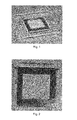
- the experimental setup is in FIG. 1 shown.
- solder pastes were evaluated by the test methods listed above, and in at least two of the tests, they must achieve satisfactory results in order to be considered according to the invention.
- Table 1 shows the composition of solder pastes according to the invention and pastes which were used as comparative examples. The data relate in each case to wt .-%.
- the properties of the pastes, such as processability, wetting and flow-out properties, were determined according to the methods described above and are summarized in Table 2.
- the pastes according to the invention of Examples 3 to 10 show very good results in the AC test and in the wettability. Furthermore, all pastes according to the invention were easy to process and were spreadable even after repeated doctor blade transfer. During the optical test, all the paste after melting and then cooling showed a smooth and shiny surface with clear wetting margins.
- Comparative Example 1 shows a conventional solder paste having as acid component in addition to adipic acid 0.5 wt .-% succinic acid, based on the total weight of the flux.
- Example 12 shows that the properties of the solder paste can be adjusted according to the respective requirements by the amount of adipic acid. Thus, the properties can be further positively enhanced by an amount of adipic acid which is within the preferred range of the invention.
- Table 3 shows the general composition of various pastes in which the testamine component has been varied. The testamines used and the test results of the solder pastes are summarized in Table 4.
- all the pastes according to the invention have good processability and excellent properties with respect to wettability and outflow behavior.
- stable attachment of components to substrates is possible without causing short circuits while at the same time ensuring good heat dissipation.
- Due to the good processability of the solder pastes according to the invention a precise and fast printing of, for example printed circuit boards is possible.
Landscapes
- Engineering & Computer Science (AREA)
- Mechanical Engineering (AREA)
- Microelectronics & Electronic Packaging (AREA)
- Manufacturing & Machinery (AREA)
- Chemical & Material Sciences (AREA)
- Dispersion Chemistry (AREA)
- Electric Connection Of Electric Components To Printed Circuits (AREA)
- Organic Low-Molecular-Weight Compounds And Preparation Thereof (AREA)
- Adhesives Or Adhesive Processes (AREA)
Abstract
Description
- Die vorliegende Erfindung betrifft eine Lotpaste für das Befestigen von elektronischen Bauteilen auf Substraten, die eine Mischung aus Oxalsäure, Adipinsäure und einer Aminkomponente enthält, sowie ein Verfahren zur Herstellung derselben. Weiterhin betrifft die vorliegende Erfindung ein Verfahren zur Befestigung eines elektronischen Bauteils auf einem Substrat unter Verwendung der erfindungsgemäßen Lotpaste sowie ein Modul, das die erfindungsgemäße Lotpaste umfasst.
- Lotpasten, insbesondere Weichlotpasten, finden vor allem in der Fertigung von elektronischen Schaltungen Anwendung und dienen hauptsächlich als elektrische und thermische Verbindung zwischen einem Bauteil und einem Substrat, beispielsweise einem Halbleiterchip und einer Leiterplatte (PCB). Dabei wird die Lotpaste auf die Leiterplatte aufgebracht. Der Halbleiterchip wird dann über die Lotpaste mit der Leiterplatte in Kontakt gebracht. Die Lotpaste wird erwärmt, um das Lot in der Paste durch einen Reflow-Prozess aufzuschmelzen, wodurch elektrische und/oder thermische Kontakte zwischen dem Halbleiterchip und der Leiterplatte gebildet werden. Die Lotpasten enthalten in der Regel Flussmittel, die unter anderem dazu dienen, die Oxidschicht auf den Oberflächen des Lotpulvers, des Bauteils und des Substrates aufzulösen und so für eine bessere Benetzbarkeit beim Lötprozess zu sorgen. Da Lotpasten in der automatischen Fertigung von elektronischen Schaltungen überwiegend im Sieb- und Schablonendruck verarbeitet werden, enthalten die Flussmittel in der Regel zusätzlich Substanzen, wie beispielsweise Tenside und Additive, die die rheologischen Eigenschaften des Flussmittels, und damit der Lotpaste, verbessern.
-
DE 10 2012 019 198 A1 beschreibt eine Flussmittelzusammensetzung, die eine Carbonsäure und ein Polyaminflussmittel umfasst, wobei das Polyamin unsubstituierte C580-Alkylgruppen mit mindestens zwei tertiären Kohlenstoffatomen umfasst. -
EP 0 619 162 A2 offenbart ein Lotflussmittel, das eine 2-Bisoxazolin-Verbindung, ein Dithiol, eine organische Carbonsäure und einen Aktivator umfasst. Weiterhin kann das Lotflussmittel ein organisches Lösungsmittel, ein thermoplastisches Harz und/oder eine Epoxy-Gruppen enthaltende Verbindung aufweisen. -
DE 42 35 575 C2 beschreibt eine Weichlotpaste zum Löten von elektronischen Bauteilen und Schaltungen unter Schutzgas, insbesondere unter Stickstoff mit einem niedrigen Restsauerstoffgehalt. Dabei besteht die Weichlotpaste aus einem organischen Harz, einem Aktivator und einem Lösungsmittel. -
DE 41 19 012 C1 betrifft eine mit Wasser abspülbare Lotpaste für Elektronikteile, die als Flussmittelgemisch wasserlösliche Salze von Fettaminen mit organischen Säuren enthält. -
WO 2010/000679 A1 betrifft Lotmaterialien, die Metallstearate enthalten. Dabei weisen die Partikel des Lotpulvers eine feine Schicht aus festem Metallstearat auf der Oberfläche auf. -
US 2009/0152331 A1 beschreibt eine harzfreie Lotpaste, die ein Metallpulver, ein polares Lösungsmittel, eine Carbonsäure und ein tertiäres Amin aufweist. Die Paste ist besonders für die Unterfüllung (under-bumb-metalization) sowie für das Befestigen von oberflächenmontierten Bauteilen (surface mounted technology) geeignet. - Eine besondere Herausforderung bei der Fertigung von elektronischen Schaltungen ist das Aufbringen und Befestigen von Bauteilen, die neben elektrischen Anschlussstellen auch über thermische Anschlussstellen auf der Unterseite des Bauteils verfügen, wie beispielsweise QFPs mit Kontaktierungen zu entsprechenden Wärmesenken im Substrat. Die elektrischen Anschlussstellen, sogenannte "Beinchen", dienen ebenfalls als Abstandshalter zwischen dem Bauteil und dem Substrat und werden im Verlauf des Reflow-Prozesses über entsprechende Lotdepots kontaktiert. Die thermischen Anschlussstellen werden ebenfalls mittels Reflow-Prozess über Lotdepots mit dem Substrat verbunden, wobei die Lotpasten, die für die thermische Kontaktierung verwendet werden, sich von denen unterscheiden können, die für die elektrische Kontaktierung des Bauteils mit dem Substrat eingesetzt werden. Dabei kann es vorkommen, dass das eingebrachte Lotdepot der thermischen Anschlussstellen beim Erwärmen verläuft. Dabei werden Lotpulverpartikel, meist in Form sogenannter Lotkugeln, in Richtung der elektrischen Anschlussstellen ausgetrieben und können dort zu Kurzschlüssen führen. Um dies zu verhindern, besteht Bedarf an Lotpasten, die während des Erwärmens nicht verlaufen und wobei die Entstehung von unerwünschten Lotkugeln an den elektrischen Anschlussstellen, und damit Kurzschlüsse, verhindert werden, während gleichzeitig eine stabile mechanische, thermische und/oder elektronische Verbindung zwischen dem Bauteil und dem Substrat geschaffen wird. Weiterhin besteht Bedarf an Lotpasten, die beim Aufschmelzen klare Benetzungsränder ausbilden und somit das präzise Bedrucken von Substraten, und damit der Fertigen von kleinen integralen Schaltungen, erlauben.
- Es ist daher Aufgabe der vorliegenden Erfindung, eine Lotpaste für die Befestigung von Bauteilen, insbesondere Bauteilen mit elektrischen Anschlussstellen, auf Substraten bereitzustellen, die beim Erwärmen während des Lotprozesses klare Benetzungsgrenzen ausbildet und formtreu bleibt. Auf diese Weise werden ein Kontakt zwischen der Lotpaste und den elektrischen Anschlussstellen vermieden und Kurzschlüsse unterbunden. Weiterhin ist es Aufgabe der vorliegenden Erfindung, eine Lotpaste bereitzustellen, die für eine mechanische und thermische Verbindung zwischen Bauteil und Substrat sorgt, ohne dass es beim Erwärmen der Lotpaste zu einem Ausfließen derselben und/oder der Entstehung von unerwünschten Lotkugeln kommt.
- Weiterhin war es Aufgabe der Erfindung Lotpasten bereitzustellen, die sowohl eine gute Verarbeitbarkeit der Paste in Siebdruckverfahren als auch gleichzeitig eine gute Benetzbarkeit aufweisen.
- Die Aufgabe wird durch die Gegenstände der unabhängigen Ansprüche der vorliegenden Erfindung gelöst.
- Es wurde überraschend gefunden, dass der Zusatz von Adipinsäure und Oxalsäure in Verbindung mit einem speziellen Amin dazu führt, dass die Lotpaste beim Erwärmen nicht ausfließt, so dass die Entstehung von Lotkugeln und damit von Kurzschlüssen verhindert werden können. Gleichzeitig wurde überraschend gefunden, dass die Benetzbarkeit und Verarbeitbarkeit erheblich verbessert werden konnte.
- Unter dem Begriff "ausfließen" im Rahmen der vorliegenden Erfindung ist ein Zerfließen der Lotpaste an den thermischen Anschlussstellen des Bauteils bei Erwärmen zu verstehen, insbesondere unter den thermischen Bedingungen während des Befestigungsverfahrens, aufgrund dessen es zur Entstehung von Lotkugeln und dadurch zu elektrischen Kurzschlüssen an den elektrischen Anschlussstellen des Bauteils führen kann.
- Es hat sich als besonders vorteilhaft erwiesen, wenn das Flussmittel neben Dicarbonsäuren weiterhin eine Aminkomponente aufweist.
- Ein Gegenstand der vorliegenden Erfindung ist daher eine Lotpaste umfassend
- a) Flussmittel umfassend
- i) Adipinsäure;
- ii) Oxalsäure; und
- iii) Amin ausgewählt aus der Gruppe bestehend aus Aminkomponente A und Aminkomponente B, wobei
- b) ein Lot.
- Ein wesentlicher Bestandteil der erfindungsgemäßen Lotpasten ist das Flussmittel.
- Neben den Dicarbonsäuren Adipinsäure und Oxalsäure umfasst das Flussmittel als wesentlichen Bestandteil ein Amin welches ausgewählt ist aus der Gruppe bestehend aus Aminkomponente A und Aminkomponente B.
- Aminkomponente A ist ein Diamin, welches wenigstens eine tertiäre Aminogruppe, bevorzugt zwei tertiäre Aminogruppen aufweist.
- Es ist eine Ausführungsform bevorzugt, in der Aminkomponente A ausgewählt ist aus der Gruppe bestehend aus 1,2-Tetramethylethylendiamin, 1,2-Tetraethylethylendiamin und 1,2-Tetrapropylethylendiamin, beispielsweise 1,2-Tetra-n-propylethylendiamin und 1,2-Tetra-iso-propylethylendiamin. Insbesondere bevorzugt sind solche Diamine bei denen jede tertiäre Aminogruppe zwei identische Substituenten aufweist.
- Tertiäres Amin im Sinne der vorliegenden Erfindung ist ein Amin, dessen Stickstoffatom drei kohlenstoffhaltige Substituenten trägt.
- Aminkomponente B ist ein Diamin oder Polyamin, bei denen wenigstens 2 der Aminogruppen durch mindestens 3 Kohlenstoffatome voneinander getrennt sind und das wenigstens 4 Kohlenstoffatome aufweist.
- Aminkomponente B ist ein Diamin, bei dem die beiden Aminogruppen durch mindestens 3 Kohlenstoffatome voneinander getrennt sind und das wenigstens 4 Kohlenstoffatome aufweist. Alternativ ist Aminkomponente B ein Polyamin, bei dem wenigstens 2 der Aminogruppen durch mindestens 3 Kohlenstoffatome voneinander getrennt sind und das wenigstens 4 Kohlenstoffatome aufweist.
- Durch die Verwendung der erfindungsgemäßen Lotpaste für die Befestigung von Bauteilen mit elektrischen und/oder thermischen Anschlussstellen auf Substraten, beispielsweise Leiterplatten, wird das Auftreten von Kurzschlüssen an den elektrischen Anschlussstellen vermindert, da es zu keinem unerwünschten Kontakt zwischen den Anschlussstellen kommt. Es wurde weiterhin überraschend gefunden, dass sich die Eigenschaften der Lotpaste bezüglich des Ausfließens weiter verbessern lassen, wenn Aminkomponente B eine primäre Aminogruppe aufweist.
- In einer bevorzugten Ausführungsform der vorliegenden Erfindung weist Aminkomponente B daher mindestens eine primäre Aminogruppe auf.
- Bevorzugt ist eine Ausführungsform in der Aminkomponente B ausgewählt ist aus der Gruppe bestehend aus N-Coco-1,3-diaminopropan, 1,6-Diaminohexan, 1,7-Diaminoheptan, 1,8-Diaminooktan, 1,9-Diaminononan und 1,10-Diaminodecan. Vorzugsweise hat der von Kokosöl abgeleitete Rest des N-Coco-1,3-diaminopropan einen Kettelänge von 8 bis 20 Kohlenstoffatome. Eine typische Verteilung der Kohlenstoffkettenlängen der von Kokosöl abgeleiteten Alkylreste weist beispielsweise die folgende Zusammensetzung in Mol-% auf: 5% C8, 6% C10, 50% C12, 19% C14, 10% C16 und 10% C18.
- In einer weiter bevorzugten Ausführungsform weist das einzusetzende Amin, das heißt Aminkomponente A oder Aminkomponente B, keine tertiären und/oder quarternären Kohlenstoffatome auf.
- Weiterhin bevorzugt ist eine Ausführungsform, in der das Amin mindestens 6 Kohlenstoffatome aufweist. Dabei können die Kohlenstoffatome als Verbindungskette zwischen zwei Aminogruppen vorliegen oder als Substituenten der Stickstoffatome an diese gebunden sein.
- Die Menge an Amin im Flussmittel ist vorzugsweise so gewählt, dass eine gute Verarbeitbarkeit der Lotpaste sowie eine gute Benetzung der Oberflächen des zu befestigenden Bauteils und des Substrates gewährleistet sind.
- Daher ist eine Ausführungsform der erfindungsgemäßen Lotpaste bevorzugt, in der das Flussmittel Aminkomponente A und/oder Aminkomponente B in einer Menge von 0,1 bis 2,0 Gew.-%, vorzugsweise von 0,4 bis 1,0 Gew.-%, jeweils bezogen auf das Gesamtgewicht des Flussmittels, aufweist.
- Es hat sich ebenfalls überraschend gezeigt, dass die erfindungsgemäße Lotpaste gute Ausfließeigenschaften aufweist, wenn alternativ zu Aminkomponente A, Aminkomponente B eingesetzt wird.
- Amine, die weniger als 2 Aminogruppen aufweisen beziehungsweise deren 2 Aminogruppen durch weniger als 3 Kohlenstoffatome voneinander getrennt sind und die insgesamt weniger als 4 Kohlenstoffatome aufweisen, führen zu unzureichenden Eigenschaften, insbesondere hinsichtlich des Ausfließverhaltens, der Benetzungseigenschaften und der Verarbeitbarkeit, wenn sie nicht zusammen mit der Aminkomponente A und/oder B zum Einsatz kommen.
- In einer weiter bevorzugten Ausführungsform weist das Flussmittel der erfindungsgemäßen Lotpaste zusätzlich Monoamin auf. Das Monoamin liegt zusätzlich zu der Aminkomponente A und/oder der Aminkomponente B vor.
- Besonders gute Ergebnisse, vor allem hinsichtlich der Verarbeitbarkeit, des Ausfließverhaltens und der Aufschmelzeigenschaften der erfindungsgemäßen Lotpaste, können erzielt werden, wenn es sich bei dem Monoamin um ein sekundäres und/oder tertiäres Monoamin handelte. Daher ist eine Ausführungsform bevorzugt, in der das Monoamin ausgewählt ist aus der Gruppe bestehend aus sekundärem Monoamin und tertiärem Monoamin sowie Mischungen davon. Vorzugsweise umfasst das Flussmittel Monoamin in einer Menge von 0,5 bis 5,5 Gew.-%, vorzugsweise von 1,0 bis 5,0 Gew.-%, jeweils bezogen auf das Gesamtgewicht des Flussmittels. In einer besonders bevorzugten Ausführungsform umfasst das Monoamin 3 bis 15, vorzugsweise 4 bis 12 Kohlenstoffatome. Weiterhin bevorzugt ist das Monoamin ausgewählt aus der Gruppe bestehend aus Bis(2-ethylhexyl)amin, Bis(2-methylhexylamin), Diethylamin, Triethylamin, Cyclohexylamin, Diethanolamin und Triethanolamin.
- Weiterhin hat es sich gezeigt, dass durch die Menge an Dicarbonsäure im Flussmittel die Verarbeitbarkeit, die Benetzungs- und Ausfließeigenschaften der Lotpaste weiter positiv verstärkt werden können.
- In einer bevorzugten Ausführungsform der Lotpaste weist das Flussmittel Adipinsäure in einer Menge von 7 bis 13 Gew.-%, vorzugsweise von 8 bis 12 Gew.-%, jeweils bezogen auf das Gesamtgewicht des Flussmittels, auf. Vor allem die Benetzungseigenschaften und das Aufschmelzverhalten der Lotpaste können durch die Wahl der geeigneten Menge an Dicarbonsäure im Flussmittel eingestellt werden.
- Besonders gute Ergebnisse bezüglich des Ausfließverhaltens, der Benetzungseigenschaften und der Verarbeitbarkeit der erfindungsgemäßen Lotpaste lassen sich erzielen, wenn das Flussmittel neben einem Amin eine Mischung aus Oxalsäure und Adipinsäure aufweist. Dabei kann der vorteilhafte Effekt der Oxalsäure noch verstärkt werden, wenn die Menge an Oxalsäure in einem begrenzten Bereich liegt und eine bestimmte Menge nicht überschritten wird.
- Daher ist eine Ausführungsform der erfindungsgemäßen Lotpaste bevorzugt, in der das Flussmittel Oxalsäure in einer Menge von 0,3 bis 2,0 Gew.-%, vorzugsweise von 0,4 bis 1,5 Gew.-%, besonders bevorzugt von 0,45 bis 1,0 Gew.-%, jeweils bezogen auf das Gesamtgewicht des Flussmittels, aufweist.
- Liegt die Menge an Oxalsäure im Flussmittel unterhalb der angegebenen Grenze von 0,3 Gew.-%, bezogen auf das Gesamtgewicht des Flussmittels, zeigen die entsprechenden Lotpasten geringfügig verbesserte Eigenschaften, was das Ausfließverhalten beim Erwärmen angeht. Weiterhin hat sich gezeigt, dass die Menge an Oxalsäure vorteilhafterweise in dem oben angegebenen Bereich liegt, um ein optimales Aufschmelzen der entsprechenden Lotpaste zu erreichen.
- Weiterhin hat sich gezeigt, dass die Zugabe weiterer Dicarbonsäuren, die von Oxalsäure und Adipinsäure verschieden sind, zum Flussmittel einen positiven Einfluss auf die Eigenschaften der Lotpaste hat, insbesondere auf die Verarbeitbarkeit und die Ausfließeigenschaften. Allerdings sollte auch hier die Menge an weiterer Dicarbonsäure begrenzt sein.
- Daher ist eine Ausführungsform der vorliegenden Erfindung bevorzugt, in der das Flussmittel zusätzlich Dicarbonsäuren, die von Oxalsäure und Adipinsäure verschieden sind, in einer Menge von 0 bis 2,0 Gew.-%, vorzugsweise in einer Menge von 0,01 bis 1,0 Gew.-%, jeweils bezogen auf das Gesamtgewicht des Flussmittels, aufweist. Es hat sich gezeigt, dass eine Menge, die oberhalb des erfindungsgemäßen Bereichs liegt, negative Auswirkungen auf die Benetzungseigenschaften der Lotpaste haben kann.
- Vorzugsweise sind die zusätzlichen Dicarbonsäuren, die von Oxalsäure und Adipinsäure verschieden sind, ausgewählt aus der Gruppe bestehend aus Malonsäure, Bernsteinsäure und Glutarsäure.
- Weiterhin ist eine Ausführungsform der erfindungsgemäßen Lotpaste bevorzugt, in der die Gesamtmenge aller Dicarbonsäuren im Flussmittel maximal 15 Gew.-%, vorzugsweise 7 bis 13 Gew.-%, insbesondere 8 bis 12 Gew.-%, jeweils bezogen auf das Gesamtgewicht des Flussmittels, beträgt.
- Um eine optimale Verarbeitbarkeit der erfindungsgemäßen Lotpaste zu gewährleisten, vor allem unter dem Gesichtspunkt der automatischen Verarbeitung, kann die erfindungsgemäße Lotpaste weitere Komponenten enthalten, die dazu dienen, das Aufbringen der Lotpaste, deren Fließverhalten sowie die elektrische und thermische Verbindung von Bauteil und Substrat zu unterstützen.
- So kann die erfindungsgemäße Lotpaste beispielsweise Verdickungsmittel enthalten. In einer bevorzugten Ausführungsform umfasst das Flussmittel zusätzlich ein oder mehrere Verdickungsmittel ausgewählt aus der Gruppe bestehend aus Ethylcellulose, hydriertes Rizinusöl, Glycerin-tris-12-hydroxystearin und modifiziertes Glycerin-tris-12-hydroxystearin. Vorzugsweise weist das Flussmittel Verdickungsmittel in einer Menge von 1,0 bis 4,0 Gew.-%, bevorzugt von 1,7 bis 3,0 Gew.-%, jeweils bezogen auf das Gesamtgewicht des Flussmittels, auf.
- Um das Auftragen und die Benetzungseigenschaften der erfindungsgemäßen Lotpaste zu verbessern, kann das Flussmittel weiterhin Lösungsmittel enthalten. Vorzugsweise ist das Lösungsmittel ausgewählt aus der Gruppe bestehend aus bei 25 °C flüssiger Diole, Alkohole, Etheralkohole und Ketone, insbesondere Trimethylpropanol, 1,2-Oktandiol, 1,8-Oktandiol, 2,5-Dimethyl-2,5-hexandiol, iso-Bornylcyclohexanon, Glykolether, 2-Ethyl-1,3-hexandiol, n-Decylalkohol, 2-Methyl-2,4-pentandiol, Terpineol und Isopropanol sowie Mischungen davon. In einer weiteren bevorzugten Ausführungsform ist der Glykolether ausgewählt aus der Gruppe bestehend aus Mono-, Di-, Tri-Propylenglykolmethylether, Mono-, Di-, Tri-Propylenglykol-n-butylether, Mono-, Di-, TriEthylenglykol-n-butylether, Ethylenglykolmethylether, Triethylenglykolmethylether, Diethylenglykol-dibutylether, Tetraethylenglykoldimethylether und Diethylenglykolmonohexylether sowie Mischungen davon.
- Weiterhin kann das Flussmittel der erfindungsgemäßen Lotpaste ein Harz aufweisen, um der Paste die für die jeweilige Verwendung benötigte Konsistenz zu verleihen. In einer bevorzugten Ausführungsform der Lotpaste zeichnet sich diese dadurch aus, dass das Flussmittel zusätzlich ein Harz aufweist, bevorzugt ein Harz ausgewählt aus der Gruppe bestehend aus Kolophonium, Tallöl, hydriertes Kolophonium, dimerisiertes Kolophonium, teilweise dimerisiertes Kolophonium und Mischungen davon.
- In einer bevorzugten Ausführungsform der erfindungsgemäßen Lotpaste umfasst das Flussmittel das Harz in einer Menge von 35 bis 50 Gew-%, vorzugsweise von 40 bis 48 Gew.-%, jeweils bezogen auf das Gesamtgewicht des Flussmittels.
- In einer weiter bevorzugten Ausführungsform der Lotpaste umfasst das Flussmittel zusätzlich halogenhaltige Verbindungen ausgewählt aus der Gruppe bestehend aus Anilinhydrochlorid, Glutaminsäurehydrochlorid, Diethanolaminhydrochlorid, Diethanolaminhydrobromid, Triethanolaminhydrochlorid, Triethanolaminhydrobromid und trans-2,3-Dibrom-2-buten-1,4-diol sowie Mischungen davon. Die halogenhaltigen Verbindungen können als zusätzliche Aktivatoren dienen, die die Oberflächen des zu verbindenden Bauteils und des Substrates aktivieren und so für eine bessere Verbindung der Komponenten sorgen.
- Als besonders vorteilhaft hat es sich erwiesen, wenn die Menge an halogenhaltigen Verbindungen im Flussmittel 5 Gew.-%, bezogen auf das Gesamtgewicht des Flussmittels, nicht überschreitet. Daher ist eine Ausführungsform der erfindungsgemäßen Lotpaste bevorzugt, in der das Flussmittel halogenhaltige Verbindungen in einer Menge von 0,1 bis 3,0 Gew.-%, vorzugsweise 0,5 bis 2,0 Gew.-%, jeweils bezogen auf das Gesamtgewicht des Flussmittels, umfasst.
- Weiterhin ist eine Ausführungsform bevorzugt, in der das Flussmittel zusätzlich Additive in einer Menge von 0,05 bis 3,0 Gew.-%, jeweils bezogen auf das Gesamtgewicht des Flussmittels, umfasst. Bei diesen Additiven handelt es sich vorzugsweise um Verbindungen, die die Benetzungseigenschaften der Lotpaste verbessern, wie zum Beispiel ethoxyliertes Aminharz, Aminharz, Methylester von Harzen, n-Oleylsarcosin, Oleylimidazolin sowie Mischungen davon.
- Ein weiterer wesentlicher Bestandteil der erfindungsgemäßen Lotpaste ist ein Lot.
- Die Anforderungen, die an eine Lotpaste gestellt werden, die für das Befestigen von Bauteilen mit elektrischen und thermischen Anschlussstellen auf Substraten gestellt werden, betreffen, neben dem Ausfließverhalten, insbesondere während des thermischen Kontaktierungsverfahrens, die thermische Verbindung des Bauteils mit dem Substrat, die ein Abführen der während des Betriebs des Bauteils entstehenden Wärme und eine effiziente Kühlung desselben gewährleitstet.
- Daher weist das Lot vorzugsweise eine gute Wärmeleitfähigkeit in Verbindung mit einer begrenzten elektrischen Leitfähigkeit auf. Diese Eigenschaften finden sich vor allem in Loten, die Zinn als Hauptbestandteil aufweisen. Daher ist eine Ausführungsform bevorzugt, in der das Lot ein Lot auf Zinnbasis ist.
- Ein Lot auf Zinnbasis im Rahmen der vorliegenden Erfindung beschreibt ein Lot, das mindestens 80 Gew.-%, vorzugsweise mindestens 83 Gew.-%, insbesondere zwischen 85 und 90 Gew.-%, Zinn aufweist, wobei sich die Gewichtsangaben jeweils auf die Gesamtmenge des Lot beziehen.
- In einer bevorzugten Ausführungsform kann das Lot neben Zinn weitere Metalle umfassen, um beispielsweise die Liquidustemperatur des Lots auf einen für die jeweilige Anwendung vorteilhaften Bereich einzustellen.
- Daher ist eine Ausführungsform bevorzugt, in der das Lot Silber in einer Menge von 0,1 bis 8 Gew.-%, vorzugsweise 0,2 bis 6 Gew.-%, jeweils bezogen auf das Gesamtgewicht des Lots, umfasst.
- In einer weiter bevorzugten Ausführungsform umfasst das Lot Kupfer in einer Menge von 0,1 bis 1,5 Gew.-%, vorzugsweise 0,2 bis 1,0 Gew.-%, jeweils bezogen auf das Gesamtgewicht des Lots.
- Weiterhin bevorzugt ist eine Ausführungsform, in der das Lot bleifrei ist.
- Die erfindungsgemäße Lotpaste eignet sich vor allem für den Einsatz in Reflow-Verfahren, bei denen das Lot bis zu seiner Liquidustemperatur erwärmt wird und so für eine optimale Verbindung zwischen Bauteil und Substrat sorgt. Aus energietechnischen Gesichtspunkten und unter Berücksichtigung der empfindlichen Bauteile und Substrate, sollte daher die Liquidustemperatur des Lots nicht zu hoch sein.
- Daher ist eine Ausführungsform bevorzugt, in der das Lot eine Liquidustemperatur in einem Bereich von 200 bis 250 °C, vorzugsweise in einem Bereich von 200 bis 230 °C, aufweist.
- In einer bevorzugten Ausführungsform liegt das Lot in Pulverform vor, vorzugsweise mit einer gewichtmittleren Teilchengröße von 15 bis 50 µm, vorzugsweise von 20 bis 45 µm, bestimmt gemäß IPC-TM-650 2.2.14-2.2.14.2.
- In einer weiterhin bevorzugten Ausführungsform umfasst die erfindungsgemäße Lotpaste das Lot in einer Menge von 80 bis 97 Gew.-%, vorzugsweise 83 bis 95 Gew.-%, insbesondere 85 bis 93 Gew.-%, jeweils bezogen auf das Gesamtgewicht der Lotpaste.
- Weiterhin ist eine Ausführungsform bevorzugt, in der die erfindungsgemäße Lotpaste die folgenden Komponenten umfasst:
- a) 3 bis 20 Gew.-% Flussmittel, bezogen auf das Gesamtgewicht der Lotpaste, wobei das Flussmittel
- i) 7 bis 13 Gew.-% Adipinsäure;
- ii) 0,3 bis 1,5 Gew.-% Oxalsäure;
- iii) 0,1 bis 2.0 Gew.-% Amin ausgewählt aus der Gruppe bestehend aus
- b) 80 bis 97 Gew.-% Lot, bezogen auf das Gesamtgewicht der Lotpaste.
- In einer weiteren bevorzugten Ausführungsform umfasst die erfindungsgemäße Lotpaste
- a) 3 bis 20 Gew.-% Flussmittel, bezogen auf das Gesamtgewicht der Lotpaste, wobei das Flussmittel
- i) 7 bis 13 Gew.-% Adipinsäure;
- ii) 0,3 bis 1,5 Gew.-% Oxalsäure;
- iii) 0,1 bis 2.0 Gew.-% Amin ausgewählt aus der Gruppe bestehend aus
- iv) 0,05 bis 2 Gew.-% Dicarbonsäuren, die von Adipinsäure und Oxalsäure verschieden sind;
- v) 35 bis 50 Gew.-% Harz;
- vi) 0,1 bis 3,0 Gew.-% halogenhaltige Verbindung;
- vii) Lösungsmittel; und
- viii) gegebenenfalls Additive;
- b) 80 bis 97 Gew.-% Lot, bezogen auf das Gesamtgewicht der Lotpaste.
- Um eine optimale Verarbeitbarkeit und das gewünschte Ausfließverhalten zu erhalten, weist die erfindungsgemäße Lotpaste vorzugsweise eine Viskosität von 50 bis 200 Pa*s auf, bestimmt bei 23 °C und einer Scherrate von 10-1s, gemessen mit Platte-Kegel Rheometer-Messsystem Physica der Firma Anton-Paar.
- Ein weiterer Gegenstand der vorliegenden Erfindung ist ein Verfahren zur Herstellung der erfindungsgemäßen Lotpaste.
- Dabei umfasst das Verfahren zur Herstellung der erfindungsgemäßen Lotpaste die Schritte:
- Mischen der Komponenten des Flussmittels, insbesondere der Komponenten i), ii) und iii); und
- Zugabe eines Lotpulvers.
- Die Zugabe des Lotpulvers erfolgt vorzugsweise in mehreren Portionen unter Rühren zu einer vorgelegten Mischung der Komponenten des Flussmittels. Weiter bevorzugt sind keine erhöhten Temperaturen notwendig, um eine homogene Paste zu erhalten. Daher erfolgt die Zugabe des Lotpulvers vorzugsweise bei Normaltemperatur, beispielsweise bei 20 °C.
- Vorzugsweise handelt es sich bei dem Lotpulver um ein erfindungsgemäßes Lotpulver, wie oben beschrieben. Weiter bevorzugt handelt es sich bei dem Lotpulver um eine Mischung aus Zinn, Silber und Kupfer, wobei die Menge an Silber 0,1 bis 8 Gew.-%, vorzugsweise 0,2 bis 6 Gew.-%, und die Menge an Kupfer 0,1 bis 1,5 Gew.-%, vorzugsweise 0,2 bis 1,0 Gew.-%, jeweils bezogen auf das Gesamtgewicht des Lotpulvers, beträgt. Vorzugsweise wird die zu 100 Gew.-% fehlende Menge durch Zinn ergänzt.
- Ein weiterer Gegenstand der vorliegenden Erfindung ist ein Verfahren zur Befestigung eines Bauteils auf einem Substrat unter Verwendung der erfindungsgemäßen Lotpaste. Das Verfahren umfasst die folgenden Schritte:
- a) Bereitstellen eines Bauteils mit elektrischen Anschlussstellen;
- b) Bereitstellen eines Substrates, wobei das Substrat eine Oberfläche aufweist, die mit der erfindungsgemäßen Lotpaste versehen ist;
- c) Kontaktieren der Oberfläche des Bauteils mit der Oberfläche des Substrates über die Lotpaste; und
- d) Erwärmen der Lotpaste über die Liquidustemperatur des Lots.
- Bei dem Bauteil handelt es sich vorzugsweise um ein Oberflächen-montiertes Bauteil, das über elektrische Anschlussstellen an den vier Seiten des Bauteilgehäuses verfügt. Vorzugsweise weist das Bauteil eine rechteckige oder quadratische Gehäuseform auf. Besonders bevorzugt handelt es sich bei dem Bauteil um ein Quad Flat Package (QFP) und/oder Varianten davon. Weiterhin weist das Bauteil vorzugsweise eine metallisierte Oberfläche auf, über die die Kontaktierung mit der erfindungsgemäßen Lotpaste erfolgt. Dabei ist das Metall vorzugsweise ausgewählt aus der Gruppe bestehend aus Kupfer, Silber, Aluminium, Gold, Nickel, Zinn, Palladium sowie Legierungen davon.
- Das Substrat ist vorzugsweise ein Substrat mit mindestens einer Metalloberfläche, über die die Kontaktierung mit der erfindungsgemäßen Lotpaste erfolgt. Geeignete Substrate sind beispielsweise Substrate aus Metall, Keramik, Papier oder Epoxyharz, die eine metallisierte Oberfläche aufweisen. Die Oberfläche weist vorzugsweise ein Metall ausgewählt aus der Gruppe bestehend aus Kupfer, Silber, Gold, Nickel, Aluminium, Zinn, Palladium sowie Legierungen davon auf.
- Die Lotpaste wird über die Liquidustemperatur des Lots erwärmt, so dass es zu einer Verbindung zwischen Bauteil und Substrat über die Lotpaste kommt. Dabei wird die Lotpaste vorzugsweise so erwärmt, dass das Lot in seine Liquidusphase übergeht, jedoch ohne dass es zu einer Beschädigung der Lotpaste, des Bauteils und/oder des Substrates kommt. Das Lot wird vorzugsweise auf eine Temperatur erwärmt, die 5 bis 60 °C, vorzugsweise 10 bis 50 °C, über der Liquidustemperatur des Lots liegt.
- Die gemäß dem erfindungsgemäßen Befestigungsverfahren mit dem Substrat befestigten Bauteile weisen ein wesentlich verringertes Auftreten von Kurzschlüssen auf.
- Ein weiterer Gegenstand der vorliegenden Erfindung ist daher ein Bauteil, welches auf einem Substrat befestigt ist und welches gemäß dem erfindungsgemäßen Befestigungsverfahren erhältlich ist oder erhalten wird.
- Ein weiterer Gegenstand der vorliegenden Erfindung ist die Verwendung der erfindungsgemäßen Lotpaste zum Verbinden von elektronischen Bauteilen mit Substraten, wobei die Kontaktierung der Oberfläche des Substrates und der Oberfläche des Bauteils über die erfindungsgemäße Lotpaste erfolgt.
- Ein weiterer Gegenstand der vorliegenden Erfindung ist ein Modul, das unter Verwendung der erfindungsgemäßen Lotpaste erhalten wird. Das Modul umfasst
- 1) ein Bauteil mit elektrischen Anschlussstellen mit einer ersten Oberfläche,
- 2) ein Substrat mit wenigstens einer zweiten Oberfläche und
- 3) eine erfindungsgemäße Lotpaste, die mit der ersten Oberfläche und der zweiten Oberfläche in direktem Kontakt steht.
- Das Modul ist vorzugsweise für den Einsatz in integrierten Schaltungen, vor allem in der Halbleiterindustrie, geeignet.
- Die vorliegende Erfindung soll anhand der folgenden Beispiele näher beschriebene werden, wobei diese nicht als Einschränkung des Erfindungsgedanken zu verstehen sind.
- Die Verarbeitbarkeit der Lotpasten wurde mit Hilfe eines automatischen Schablonendruckers mit Rakel getestet. Dazu wurde die Paste auf eine geschlossene Schablone aufgetragen, wobei die Testdauer 16 Stunden betrug und das Rakel alle 10 Minuten einen Druckvorgang ausführte. Nach Ende des Tests wurde die optische Qualität der Paste beurteilt. Den Pasten wurde eine gute Verarbeitbarkeit bescheinigt, wenn sie sich auch nach wiederholten Überstreichen / Drucken des Rakels über 16 Stunden glatt über die Schablone rollen ließen, ohne dass sich die Paste vor dem Rakel oder an dessen Seiten ansammelte.
- Die Benetzungseigenschaften der Pasten wurden mit Hilfe des Aufschmelztests gemäß der IPC-TM-650 Testmethode 2.4.45 beurteilt. Dazu wurde die Paste auf ein Metallsubstrat aufgetragen. Als Substrate dienten Bleche mit einer Abmessung von 20 x 20 x 0,5 mm aus Kupfer oder Messing. Sofern diese Bleche eine Oxidschicht auf der Oberfläche aufwiesen, wurden diese mit Schleifpapier der Körnung P600 metallisch blank geschliffen und mit Alkohol gereinigt. Kupferbleche, die eine helle und reine Oberfläche aufwiesen, wurden lediglich mit Alkohol gereinigt.
- Die vorbereiteten Metallsubstrate wurden mit Hilfe einer Schablone bedruckt. Dazu wurde die Schablone fest auf das Substrat gedrückt, so dass sich die offenen Löcher der Schablone in der Mitte des Substrates befanden. Die Paste wurde auf einen Japanspatel gegeben und zuerst leicht, dann mit etwas mehr Druck über die Löcher der Schablone gestrichen, bis sich keine Paste mehr auf der Schablone befand. Dann wurde die Schablone vorsichtig unter Erhalt des durch die Schablone vorgegebenen Musters entfernt.
- Das bedruckte Substrat wurde auf eine erste Heizplatte gelegt, die auf eine Temperatur eingestellt war, die unterhalb der Liquidustemperatur des Lotes liegt, im vorliegenden Fall auf 200 °C. Das Substrat wurde für 2 Minuten auf dieser Platte belassen und dann sofort auf eine zweite Heizplatte gelegt, die eine Temperatur aufwies, die ca. 50 °C über der Liquidustemperatur des Lots (Peaktemperatur) lag. Nach Aufschmelzen der Paste wurde das Substrat noch 5 Sekunden auf der Heizplatte belassen und dann von der Platte genommen und abgekühlt.
- Nach dem Abkühlen der Paste wurde beurteilt, ob diese zu Flecken aufgeschmolzen war, die der Größe der Löcher der Schablone entsprachen oder zu mehreren kleinen Flecken, und ob die Paste nach dem Aufschmelzen klare Ränder aufwies. Weiterhin wurde beurteilt, ob die Oberfläche glänzend oder matt war.
- Die Pasten wurden in 4 Klassen eingeteilt, wobei die Klassen 1 und 2 als befriedigende Ergebnisse eingestuft wurden, während die Klassen 3 und 4 ungenügende Ergebnisse repräsentieren.
- Klasse 1: Die Lotpaste ist größer aufgeschmolzen als die zuvor bedruckte Fläche auf dem Substrat. Die Benetzungsränder sind gleichmäßig.
- Klasse 2: Die Lotpaste ist genauso groß aufgeschmolzen wie die durch die Schablone vorgegebene bedruckte Fläche. Die Benetzungsränder sind gleichmäßig.
- Klasse 3: Die Lotpaste ist zu mehreren großen Flecken aufgeschmolzen. Die Benetzungsränder sind ungleichmäßig und weisen Fehlstellen auf.
- Klasse 4: Die Lotpaste ist zu mehreren kleinen Flecken aufgeschmolzen, die kleiner sind als die ursprüngliche bedruckte Fläche, oder die Lotpaste ist gar nicht aufgeschmolzen. Benetzungsränder sind nicht vorhanden.
- Das Ausfließverhalten der Lotpasten wurde mit Hilfe des Anti-Capillary-Tests (AC-Test) beurteilt. Dazu wurde die Lotpaste auf die thermische Anschlussstelle eines QFP-Bauteils (beispielsweise von Infineon Technologies AG, Deutschland) aufgebracht und mit einer Glasplatte abgedeckt. Das QFP-Bauteil wurde mit der gegenüber liegenden Oberfläche auf eine Heizplatte mit einer Temperatur von 200 °C gelegt, so dass das Verhalten der Paste beurteilt werden konnte. Der Versuchsaufbau ist in
Figur 1 dargestellt. - Die erhaltenen Ergebnisse wurden mittels Noten bewertet, wobei 0 bis 2 befriedigende Ergebnisse darstellen, bei denen die Paste nicht über den Bereich der thermischen Anschlussstelle hinaus getreten ist (
Figur 2 ). Noten 2,5 bis 3,0 stehen für ungenügende Ergebnisse, bei denen es aufgrund eines zu starken Zerfließens der Paste zu einem Kontakt zwischen der Lotpaste und den elektrischen Anschlussstellen des Bauteils kann (Figur 3 ). - Die folgenden Lotpasten wurden anhand der oben aufgeführten Testmethoden beurteilt, wobei sie in mindestens zwei der Tests befriedigende Ergebnisse erzielen müssen, um als erfindungsgemäß zu gelten.
- Tabelle 1 zeigt die Zusammensetzung erfindungsgemäßer Lotpasten sowie Pasten, die als Vergleichsbeispiele herangezogen wurden. Die Angaben beziehen sich jeweils auf Gew.-%. Die Eigenschaften der Pasten, wie die Verarbeitbarkeit, die Benetzung- und die Ausfließeigenschaften, wurden nach den oben beschriebenen Verfahren bestimmt und sind in Tabelle 2 zusammengefasst.
- Es wurde folgendes Lot eingesetzt:
- SnAgCu: Sn: 96,5% Ag: 3,0% Cu: 0,5%, Typ 3 gemäß IPC J-STD-006 Norm.
Tabelle 1 Beispiel Vgl. 1 Vgl.2 3 4 5 6 7 8 9 10 Flussmittel Adipinsäure 10,0 10,0 10,0 10,0 10,0 10,0 9,5 9,5 9,5 6,0 Oxalsäure 0,7 0,5 0,7 1,0 0,5 0,5 0,5 0,5 Dicarbonsäure 0,5a 0,5b N-Coco-1,3-diaminopropan 0,5 0,5 0,5 0,5 0,5 0,5 0,5 Bis-C8-dialkylamin 2,1 2,1 2,1 N, N-Dialkylfettamin 2,1 2,1 2,1 3,7 3,7 3,7 3,7 3,7 3,7 3,7 Hydriertes Kolophonium 45,4 45,4 45,3 45,4 45,3 45,2 45,8 44,5 46,0 47,0 Triethanolamin·HBr 1,5 1,5 1,5 1,5 1,5 1,5 1,5 1,5 1,5 Rizinusöl 2,7 2,7 2,7 2,7 2,7 2,7 2,7 2,7 2,7 2,7 Tri-Propylenglykol-n-butylether 35,7 35,7 35,6 35,7 35,6 35,4 35,8 37,1 37,1 38,1 Flussmittel (gesamt) 100,0 100,0 100,0 100,0 100,0 100,0 100,0 100,0 100,0 100,0 Paste Lot (SnAgCu) 89,25 89,25 89,25 89,25 89,25 89,25 89,25 89,25 89,25 89,25 Flussmittel ad 100,0 ad 100,0 ad 100,0 ad 100,0 ad 100,0 ad 100,0 ad 100,0 ad 100,0 ad 100,0 ad 100,0 a) Bernsteinsäure
b) GlutarsäureTabelle 2: Beispiel Vgl. 1 Vgl.2 3 4 5 6 7 8 9 10 Benetzbarkeit (Klasse) 3 3 2 2 2 2 2 2 2 4 AC-Test (Note) 2,5 3 1 1,5 1 1 1 1 1 1 Verarbeitbarkeit schlecht schlecht gut gut gut gut gut gut gut gut - Wie Tabelle 2 zu entnehmen ist, zeigen die erfindungsgemäßen Pasten der Beispiele 3 bis 10 sehr gute Ergebnisse im AC-Test sowie in der Benetzbarkeit. Weiterhin ließen sich alle erfindungsgemäßen Pasten gut verarbeiten und waren auch nach wiederholtem Rakelübergang streichfähig. Bei der optischen Prüfung zeigten alle Paste nach dem Aufschmelzen und anschließendem Abkühlen eine glatte und glänzende Oberfläche mit klaren Benetzungsrändern.
- Vergleichsbeispiel 1 zeigt eine herkömmliche Lotpaste, die als Säurekomponente neben Adipinsäure 0,5 Gew.-% Bernsteinsäure, bezogen auf das Gesamtgewicht des Flussmittels, aufweist. Wie den Ergebnissen der Tabelle 2 zu entnehmen ist,
- wies die herkömmliche Paste lediglich ungenügende Ergebnisse bezüglich der getesteten Eigenschaften auf.
- Auch der Ersatz von Bernsteinsäure durch die gleiche Menge Glutarsäure, wie in Vergleichsbeispiel 2 dargestellt, brachte keine Verbesserung hinsichtlich der gewünschten Eigenschaften.
- Beispiel 12 zeigt, dass durch die Menge an Adipinsäure die Eigenschaften der Lotpaste entsprechend den jeweiligen Anforderungen eingestellt werden kann. So können die Eigenschaften durch eine Menge an Adipinsäure, die im bevorzugten erfindungsgemäßen Bereich liegt, weiter positiv verstärkt werden. Tabelle 3 zeigt die allgemeine Zusammensetzung verschiedener Pasten, bei denen die Testaminkomponente variiert wurde. Die eingesetzten Testamine sowie die Testergebnisse der Lotpasten sind in Tabelle 4 zusammengefasst.
Tabelle 3: Komponente Menge (Gew.-%) Adipinsäure 10,0 Oxalsäure 0,5 Testamin 0,5 Bis-C8-dialkylamin 2,1 N,N-Dialkylfettamin 2,1 Hydriertes Kolophonium 44,9 Rizinusöl 2,7 Triethanolamin·HBr 1,5 Tri-Propylenglykol-n-butylether 35,7 Flussmittel (gesamt) 100,0 Paste Lot 89,25 Flussmittel add 100,0 Tabelle 4 Testamin Benetzbarkeit AC-Test Verarbeitbarkeit 11 N-Coco-1,3-diaminopropan 2 0 gut 12 1,6-Diaminohexan 2 0 gut 13 1,10-Diaminodecan 2 0 gut 14 1,2-Tetramethylendiamin 2 1 gut Vgl.15 1,2-Diaminoethan 2 0 schlecht Vgl.16 1,3-Diaminopropan 2 0 schlecht Vgl.17 1,2-Diaminocyclohexan 3 0 schlecht - Wie den Beispielen 11 bis 14 der Tabelle 4 zu entnehmen ist, bei denen die eingesetzten Amine unter die erfindungsgemäße Definition der Aminkomponente A (Beispiel 14) oder der Aminkomponente B (Beispiel 11 bis 13) fallen, zeigen die entsprechenden Lotpasten hervorragende Ergebnisse bezüglich der Benetzbarkeit, der Verarbeitbarkeit und des AC-Tests. Sobald die Aminkomponente nicht mehr unter die erfindungsgemäße Definition fallen (Beispiele 15 bis 17) weisen die entsprechenden Lotpasten eine mangelhafte Verarbeitbarkeit auf. In einigen Fällen, wie bei dem Einsatz von Aminen, bei denen die 2 Aminogruppen nicht durch mindestens 3 Kohlenstoffatome voneinander getrennt sind (Vergleichsbeispiel 17) leiden zusätzlich die Benetzungseigenschaften, so dass ein präzises Bedrucken eines Substrates mit diesen Pasten nicht möglich ist.
- Wie den aufgeführten Beispielen zu entnehmen ist, weisen alle erfindungsgemäßen Pasten eine gute Verarbeitbarkeit und hervorragende Eigenschaften bezüglich der Benetzbarkeit und des Ausfließverhaltens auf. So ist dank der in der vorliegenden Erfindung beschriebenen Pasten eine stabile Befestigung von Bauteilen auf Substraten möglich, ohne dass es zu Kurzschlüssen kommt, während gleichzeitig eine gute Wärmeabfuhr gewährleistet ist. Aufgrund der guten Verarbeitbarkeit der erfindungsgemäßen Lotpasten ist ein präzises und schnelles Bedrucken von beispielsweise Leiterplatten möglich.
Claims (16)
- Lotpaste umfassenda) Flussmittel umfassendi) Adipinsäure;ii) Oxalsäure; undiii) Amin ausgewählt aus der Gruppe bestehend aus Aminkomponente A und Aminkomponente B, wobeiAminkomponente A ein Diamin mit tertiären Aminogruppen und Aminkomponente B ein Diamin oder Polyamin, bei denen wenigstens 2 Aminogruppen durch mindestens 3 Kohlenstoffatome voneinander getrennt sind und das wenigstens 4 Kohlenstoffatome aufweist, ist; undb) ein Lot.
- Lotpaste gemäß Anspruch 1, dadurch gekennzeichnet, dass Aminkomponente B mindestens eine primäre Aminogruppe aufweist.
- Lotpaste gemäß einem oder beiden der Ansprüche 1 und 2, dadurch gekennzeichnet, dass die Aminkomponente A ausgewählt ist aus der Gruppe bestehend aus 1,2-Tetramethylethylendiamin, 1,2-Tetraethylethylendiamin und 1,2-Tetrapropylethylendiamin.
- Lotpaste gemäß einem oder mehrerer der Ansprüche 1 bis 3, dadurch gekennzeichnet, dass die Aminkomponente B ausgewählt ist aus der Gruppe bestehend aus N-Coco-1,3-Diaminopropan, 1,6-Diaminohexan, 1,7-Diaminoheptan, 1,8-Diaminooktan, 1,9-Diaminononan und 1,10-Diaminodecan.
- Lotpaste gemäß einem oder mehrerer der Ansprüche 1 bis 4, dadurch gekennzeichnet, dass das Flussmittel Aminkomponente A und/oder Aminkomponente B in einer Menge von 0,1 bis 2,0 Gew.-%, vorzugsweise von 0,4 bis 1,0 Gew.-%, jeweils bezogen auf das Gesamtgewicht des Flussmittels, aufweist.
- Lotpaste gemäß einem oder mehrerer der Ansprüche 1 bis 5, dadurch gekennzeichnet, dass das Flussmittel Adipinsäure in einer Menge von 7 bis 13 Gew.-%, vorzugsweise von 8 bis 12 Gew.-%, jeweils bezogen auf das Gesamtgewicht des Flussmittels, aufweist.
- Lotpaste gemäß einem oder mehrerer der Ansprüche 1 bis 6, dadurch gekennzeichnet, dass das Flussmittel Oxalsäure in einer Menge von 0,3 bis 2,0 Gew.-%, vorzugsweise von 0,4 bis 1,5 Gew.-%, besonders bevorzugt 0,45 bis 1,0 Gew.-%, jeweils bezogen auf das Gesamtgewicht des Flussmittels, aufweist.
- Lotpaste gemäß einem oder mehrerer der Ansprüche 1 bis 7, dadurch gekennzeichnet, dass das Flussmittel zusätzlich Dicarbonsäuren, die von Oxalsäure und Adipinsäure verschieden sind, in einer Menge von 0 bis 2 Gew.-%, vorzugsweise in einer Menge von 0,01 bis 1,0 Gew.-%, jeweils bezogen auf das Gesamtgewicht des Flussmittels, aufweist.
- Lotpaste gemäß einem oder mehrerer der Ansprüche 1 bis 8, dadurch gekennzeichnet, dass die Gesamtmenge aller Dicarbonsäuren im Flussmittel maximal 15 Gew.-%, vorzugsweise 7 bis 13 Gew.-%, insbesondere 8 bis 12 Gew.-%, jeweils bezogen auf das Gesamtgewicht des Flussmittels, beträgt.
- Lotpaste gemäß einem oder mehrerer der Ansprüche 1 bis 9, dadurch gekennzeichnet, dass das Flussmittel zusätzlich Monoamin, vorzugsweise in einer Menge von 0,5 bis 5,5 Gew.-%, besonders bevorzugt von 1,0 bis 5,0 Gew.-%, jeweils bezogen auf das Gesamtgewicht des Flussmittels, aufweist, wobei das Monoamin vorzugsweise ausgewählt ist aus der Gruppe bestehend aus sekundärem Monoamin und tertiärem Monoamin.
- Lotpaste gemäß einem oder mehrerer der Ansprüche 1 bis 10, dadurch gekennzeichnet, dass das Lot ein Lot auf Zinnbasis ist, wobei das Lot vorzugsweise zusätzlich 0,1 bis 8 Gew.-%, besonders bevorzugt 0,2 bis 6 Gew.-% Silber, und/oder 0,1 bis 1,5 Gew.-%, vorzugsweise 0,2 bis 1,0 Gew.-% Kupfer, jeweils bezogen auf das Gesamtgewicht des Lots, aufweist.
- Lotpaste gemäß einem oder mehrerer der Ansprüche 1 bis 11, dadurch gekennzeichnet, dass die Lotpaste Lot in einer Menge von 80 bis 97 Gew.-%, vorzugsweise von 83 bis 95 Gew.-%, insbesondere 85 bis 93 Gew.-%,
- Verfahren zum Herstellen einer Lotpaste gemäß einem oder mehrerer der Ansprüche 1 bis 12 umfassend die Schritte:- Mischen der Komponenten des Flussmittels; und- Zugabe eines Lotpulver
- Verfahren zur Befestigung eines Bauteils auf einem Substrat umfassend die folgenden Schritte:a) Bereitstellen eines Bauteils mit elektrischen Anschlussstellen;b) Bereitstellen eines Substrates, wobei das Substrat eine Oberfläche aufweist, die mit einer Lotpaste gemäß einem oder mehrerer der Ansprüche 1 bis 12 versehen ist,c) Kontaktieren der Oberfläche des Bauteils mit der Oberfläche des Substrates über die Lotpaste; undd) Erwärmen der Lotpaste über die Liquidustemperatur des Lots.
- Modul umfassend1) ein Bauteil mit elektrischen Anschlussstellen mit einer ersten Oberfläche,2) ein Substrat mit wenigstens einer zweiten Oberfläche und3) eine Lotpaste gemäß einem oder mehrerer der Ansprüche 1 bis 12, die mit der ersten Oberfläche und der zweiten Oberfläche in direktem Kontakt steht.
- Bauteil, welches auf einem Substrat befestigt ist, erhältlich gemäß einem Verfahren gemäß Anspruch 14.
Priority Applications (10)
| Application Number | Priority Date | Filing Date | Title |
|---|---|---|---|
| PL13197694T PL2886245T3 (pl) | 2013-12-17 | 2013-12-17 | Pasta lutownicza zawierająca kwas adypinowy, kwas szczawiowy i składnik aminowy |
| EP13197694.6A EP2886245B1 (de) | 2013-12-17 | 2013-12-17 | Lotpaste mit adipinsäure, oxalsäure und aminkomponente |
| HUE13197694A HUE045153T2 (hu) | 2013-12-17 | 2013-12-17 | Forrasztópaszta adipinsavval, oxálsavval és aminkomponenssel |
| PCT/EP2014/077586 WO2015091272A1 (de) | 2013-12-17 | 2014-12-12 | Lotpaste mit adipinsäure, oxalsäure und aminkomponente |
| CN201480069066.4A CN105813797B (zh) | 2013-12-17 | 2014-12-12 | 包含己二酸、草酸和胺组分的焊膏 |
| MX2016007525A MX2016007525A (es) | 2013-12-17 | 2014-12-12 | Soldadura en pasta con acido adipico, acido oxalico y un componente de amina. |
| KR1020167019218A KR20160101066A (ko) | 2013-12-17 | 2014-12-12 | 아디프산, 옥살산 및 아민 성분을 포함하는 솔더 페이스트 |
| US15/105,169 US10434610B2 (en) | 2013-12-17 | 2014-12-12 | Solder paste with oxalic acid and amine component |
| SG11201604948WA SG11201604948WA (en) | 2013-12-17 | 2014-12-12 | Soldering paste comprising adipic acid, oxalic acid and an amine component |
| JP2016539223A JP6296370B2 (ja) | 2013-12-17 | 2014-12-12 | アジピン酸、シュウ酸およびアミン成分を有するはんだペースト |
Applications Claiming Priority (1)
| Application Number | Priority Date | Filing Date | Title |
|---|---|---|---|
| EP13197694.6A EP2886245B1 (de) | 2013-12-17 | 2013-12-17 | Lotpaste mit adipinsäure, oxalsäure und aminkomponente |
Publications (2)
| Publication Number | Publication Date |
|---|---|
| EP2886245A1 true EP2886245A1 (de) | 2015-06-24 |
| EP2886245B1 EP2886245B1 (de) | 2019-06-12 |
Family
ID=49841529
Family Applications (1)
| Application Number | Title | Priority Date | Filing Date |
|---|---|---|---|
| EP13197694.6A Active EP2886245B1 (de) | 2013-12-17 | 2013-12-17 | Lotpaste mit adipinsäure, oxalsäure und aminkomponente |
Country Status (10)
| Country | Link |
|---|---|
| US (1) | US10434610B2 (de) |
| EP (1) | EP2886245B1 (de) |
| JP (1) | JP6296370B2 (de) |
| KR (1) | KR20160101066A (de) |
| CN (1) | CN105813797B (de) |
| HU (1) | HUE045153T2 (de) |
| MX (1) | MX2016007525A (de) |
| PL (1) | PL2886245T3 (de) |
| SG (1) | SG11201604948WA (de) |
| WO (1) | WO2015091272A1 (de) |
Cited By (2)
| Publication number | Priority date | Publication date | Assignee | Title |
|---|---|---|---|---|
| EP3834980A1 (de) * | 2019-12-10 | 2021-06-16 | Heraeus Deutschland GmbH & Co KG | Lotpaste |
| DE102021110298A1 (de) | 2021-04-22 | 2022-10-27 | Infineon Technologies Ag | Bleifreies lotmaterial, schichtstruktur, verfahren zur herstellung eines lotmaterials und verfahren zur herstellung einer schichtstruktur |
Families Citing this family (3)
| Publication number | Priority date | Publication date | Assignee | Title |
|---|---|---|---|---|
| JP6338007B1 (ja) * | 2017-11-02 | 2018-06-06 | 千住金属工業株式会社 | フラックス及びソルダペースト |
| CA3116600C (en) * | 2018-10-24 | 2023-05-09 | Alpha Assembly Solutions Inc. | Low temperature soldering solutions for polymer substrates, printed circuit boards and other joining applications |
| WO2024011492A1 (en) * | 2022-07-14 | 2024-01-18 | Heraeus Materials Technology Shanghai Ltd. | Solder paste |
Citations (10)
| Publication number | Priority date | Publication date | Assignee | Title |
|---|---|---|---|---|
| GB2198676A (en) * | 1986-12-03 | 1988-06-22 | Multicore Solders Ltd | Solder cream composition |
| EP0389218A1 (de) * | 1989-03-20 | 1990-09-26 | The Boc Group, Inc. | Verfahren zum Rückflusslöten |
| DE4119012C1 (en) | 1991-06-08 | 1992-12-17 | Demetron Gmbh, 6450 Hanau, De | Soft solder paste which is rinsable with water - contg. soft solder powder binder flux mixt. contg. soluble salts of fatty amine(s) with organic acids, activators, surfactants(s) and solvents |
| EP0619162A2 (de) | 1993-04-05 | 1994-10-12 | Takeda Chemical Industries, Ltd. | Weichlotflüssmittel |
| DE4235575C2 (de) | 1992-10-22 | 1994-11-10 | Degussa | Weichlotpaste zum Löten von elektronischen Schaltungen |
| US5417771A (en) * | 1994-02-16 | 1995-05-23 | Takeda Chemical Industries, Ltd. | Soldering flux |
| DE102005053553A1 (de) * | 2005-11-08 | 2007-05-16 | Heraeus Gmbh W C | Lotpasten mit harzfreien Flussmittel |
| WO2010000679A1 (de) | 2008-06-30 | 2010-01-07 | Siemens Aktiengesellschaft | Lotmaterial, enthaltend ein metallstearat sowie verwendung von metallstearaten in lotmaterialien |
| WO2011023394A1 (en) * | 2009-08-29 | 2011-03-03 | Umicore Ag & Co. Kg | Solder alloy |
| DE102012019198A1 (de) | 2011-09-30 | 2013-04-04 | Rohm And Haas Electronic Materials Llc | Polyamin-, Carbonsäure-Flussmittelzusammensetzung und Lötverfahren |
Family Cites Families (6)
| Publication number | Priority date | Publication date | Assignee | Title |
|---|---|---|---|---|
| AU5919890A (en) * | 1989-08-14 | 1991-02-14 | Multicore Solders Limited | Manufacture of printed circuit board assemblies |
| US5127968A (en) * | 1989-08-16 | 1992-07-07 | Yuho Chemicals Inc. | Additive for fluxes and soldering pastes |
| JP3273961B2 (ja) * | 1991-12-18 | 2002-04-15 | トヨタ自動車株式会社 | クリームはんだ |
| JPH06269988A (ja) * | 1993-03-19 | 1994-09-27 | Asahi Glass Co Ltd | 半田ペースト組成物 |
| JP3449778B2 (ja) * | 1993-04-05 | 2003-09-22 | 株式会社日本スペリア社 | はんだ付け用フラックス |
| US7767032B2 (en) | 2006-06-30 | 2010-08-03 | W.C. Heraeus Holding GmbH | No-clean low-residue solder paste for semiconductor device applications |
-
2013
- 2013-12-17 PL PL13197694T patent/PL2886245T3/pl unknown
- 2013-12-17 HU HUE13197694A patent/HUE045153T2/hu unknown
- 2013-12-17 EP EP13197694.6A patent/EP2886245B1/de active Active
-
2014
- 2014-12-12 US US15/105,169 patent/US10434610B2/en active Active
- 2014-12-12 MX MX2016007525A patent/MX2016007525A/es unknown
- 2014-12-12 SG SG11201604948WA patent/SG11201604948WA/en unknown
- 2014-12-12 JP JP2016539223A patent/JP6296370B2/ja not_active Expired - Fee Related
- 2014-12-12 KR KR1020167019218A patent/KR20160101066A/ko not_active Abandoned
- 2014-12-12 WO PCT/EP2014/077586 patent/WO2015091272A1/de not_active Ceased
- 2014-12-12 CN CN201480069066.4A patent/CN105813797B/zh active Active
Patent Citations (11)
| Publication number | Priority date | Publication date | Assignee | Title |
|---|---|---|---|---|
| GB2198676A (en) * | 1986-12-03 | 1988-06-22 | Multicore Solders Ltd | Solder cream composition |
| EP0389218A1 (de) * | 1989-03-20 | 1990-09-26 | The Boc Group, Inc. | Verfahren zum Rückflusslöten |
| DE4119012C1 (en) | 1991-06-08 | 1992-12-17 | Demetron Gmbh, 6450 Hanau, De | Soft solder paste which is rinsable with water - contg. soft solder powder binder flux mixt. contg. soluble salts of fatty amine(s) with organic acids, activators, surfactants(s) and solvents |
| DE4235575C2 (de) | 1992-10-22 | 1994-11-10 | Degussa | Weichlotpaste zum Löten von elektronischen Schaltungen |
| EP0619162A2 (de) | 1993-04-05 | 1994-10-12 | Takeda Chemical Industries, Ltd. | Weichlotflüssmittel |
| US5417771A (en) * | 1994-02-16 | 1995-05-23 | Takeda Chemical Industries, Ltd. | Soldering flux |
| DE102005053553A1 (de) * | 2005-11-08 | 2007-05-16 | Heraeus Gmbh W C | Lotpasten mit harzfreien Flussmittel |
| US20090152331A1 (en) | 2005-11-08 | 2009-06-18 | W.C. Heraeus Gmbh | Solder pastes comprising nonresinous fluxes |
| WO2010000679A1 (de) | 2008-06-30 | 2010-01-07 | Siemens Aktiengesellschaft | Lotmaterial, enthaltend ein metallstearat sowie verwendung von metallstearaten in lotmaterialien |
| WO2011023394A1 (en) * | 2009-08-29 | 2011-03-03 | Umicore Ag & Co. Kg | Solder alloy |
| DE102012019198A1 (de) | 2011-09-30 | 2013-04-04 | Rohm And Haas Electronic Materials Llc | Polyamin-, Carbonsäure-Flussmittelzusammensetzung und Lötverfahren |
Cited By (3)
| Publication number | Priority date | Publication date | Assignee | Title |
|---|---|---|---|---|
| EP3834980A1 (de) * | 2019-12-10 | 2021-06-16 | Heraeus Deutschland GmbH & Co KG | Lotpaste |
| US12138715B2 (en) | 2019-12-10 | 2024-11-12 | Heraeus Deutschland GmbH & Co. KG | Solder paste |
| DE102021110298A1 (de) | 2021-04-22 | 2022-10-27 | Infineon Technologies Ag | Bleifreies lotmaterial, schichtstruktur, verfahren zur herstellung eines lotmaterials und verfahren zur herstellung einer schichtstruktur |
Also Published As
| Publication number | Publication date |
|---|---|
| HUE045153T2 (hu) | 2019-12-30 |
| EP2886245B1 (de) | 2019-06-12 |
| PL2886245T3 (pl) | 2019-12-31 |
| MX2016007525A (es) | 2016-10-03 |
| KR20160101066A (ko) | 2016-08-24 |
| JP6296370B2 (ja) | 2018-03-20 |
| US20160311067A1 (en) | 2016-10-27 |
| CN105813797A (zh) | 2016-07-27 |
| SG11201604948WA (en) | 2016-07-28 |
| WO2015091272A1 (de) | 2015-06-25 |
| US10434610B2 (en) | 2019-10-08 |
| JP2017507026A (ja) | 2017-03-16 |
| CN105813797B (zh) | 2018-03-30 |
Similar Documents
| Publication | Publication Date | Title |
|---|---|---|
| EP1945404B1 (de) | Lotpasten mit harzfreien flussmitteln | |
| EP3186032B1 (de) | Verfahren zur herstellung einer lötverbindung | |
| DE19823615B4 (de) | Lötflussmittel | |
| EP2456589B1 (de) | Bleifreie hochtemperaturverbindung | |
| EP2886245B1 (de) | Lotpaste mit adipinsäure, oxalsäure und aminkomponente | |
| KR102623878B1 (ko) | 요변성제 그리고 이것을 함유하는 플럭스 및 솔더 페이스트 | |
| EP3186033B1 (de) | Lotpaste und verfahren zum stoffschlüssigen verbinden | |
| DE19750104B4 (de) | Verwendung einer Lotpaste für Chipkomponenten | |
| DE112020004146T5 (de) | Lötpasten und lötstellen | |
| EP3834980B1 (de) | Lotpaste | |
| DE102011120100A1 (de) | Flussmittelzusammensetzung und Lötverfahren | |
| DE112020007642T5 (de) | Metallpaste zum verbinden und verbindungsverfahren | |
| EP4144476A1 (de) | Lotpaste | |
| DE4132545A1 (de) | Loet-flussmittel vom rueckstandsarmen typ | |
| DE60216922T2 (de) | Zusatzstoff für das lösungsmittel eines lötflussmittels | |
| DE102011120521A1 (de) | Amin-Flussmittelzusammensetzung und Lötverfarhen | |
| DE69117439T2 (de) | Organisches Trägermedium für elektronische Zusammensetzungen | |
| EP4494804A1 (de) | Flussmittel und dieses umfassende lotpaste | |
| WO2015091260A1 (de) | Verfahren zur befestigung eines bauteils auf einem substrat | |
| EP4086031B1 (de) | Legierung | |
| EP4494803A1 (de) | Flussmittel und dieses umfassende lotpaste | |
| EP4494805A1 (de) | Flussmittel und dieses umfassende lotpaste | |
| DE102023124887A1 (de) | Flussmittel-Zusammensetzung, Lötmittel-Zusammensetzung und elektronische Leiterplatte | |
| EP3782764A1 (de) | Cu-pasten/lotkombination zur erzeugung bleifreier hochtemepraturstabiler lötverbindungen | |
| DE102024107515A1 (de) | Flussmittelzusammensetzung, Lötzusammensetzung und Verfahren zur Herstellung eines elektronischen Substrats |
Legal Events
| Date | Code | Title | Description |
|---|---|---|---|
| PUAI | Public reference made under article 153(3) epc to a published international application that has entered the european phase |
Free format text: ORIGINAL CODE: 0009012 |
|
| 17P | Request for examination filed |
Effective date: 20131217 |
|
| AK | Designated contracting states |
Kind code of ref document: A1 Designated state(s): AL AT BE BG CH CY CZ DE DK EE ES FI FR GB GR HR HU IE IS IT LI LT LU LV MC MK MT NL NO PL PT RO RS SE SI SK SM TR |
|
| AX | Request for extension of the european patent |
Extension state: BA ME |
|
| STAA | Information on the status of an ep patent application or granted ep patent |
Free format text: STATUS: EXAMINATION IS IN PROGRESS |
|
| 17Q | First examination report despatched |
Effective date: 20180517 |
|
| GRAP | Despatch of communication of intention to grant a patent |
Free format text: ORIGINAL CODE: EPIDOSNIGR1 |
|
| STAA | Information on the status of an ep patent application or granted ep patent |
Free format text: STATUS: GRANT OF PATENT IS INTENDED |
|
| GRAS | Grant fee paid |
Free format text: ORIGINAL CODE: EPIDOSNIGR3 |
|
| INTG | Intention to grant announced |
Effective date: 20190412 |
|
| GRAA | (expected) grant |
Free format text: ORIGINAL CODE: 0009210 |
|
| STAA | Information on the status of an ep patent application or granted ep patent |
Free format text: STATUS: THE PATENT HAS BEEN GRANTED |
|
| AK | Designated contracting states |
Kind code of ref document: B1 Designated state(s): AL AT BE BG CH CY CZ DE DK EE ES FI FR GB GR HR HU IE IS IT LI LT LU LV MC MK MT NL NO PL PT RO RS SE SI SK SM TR |
|
| REG | Reference to a national code |
Ref country code: GB Ref legal event code: FG4D Free format text: NOT ENGLISH |
|
| REG | Reference to a national code |
Ref country code: CH Ref legal event code: EP |
|
| REG | Reference to a national code |
Ref country code: AT Ref legal event code: REF Ref document number: 1141959 Country of ref document: AT Kind code of ref document: T Effective date: 20190615 |
|
| REG | Reference to a national code |
Ref country code: DE Ref legal event code: R096 Ref document number: 502013012981 Country of ref document: DE |
|
| REG | Reference to a national code |
Ref country code: IE Ref legal event code: FG4D Free format text: LANGUAGE OF EP DOCUMENT: GERMAN |
|
| REG | Reference to a national code |
Ref country code: RO Ref legal event code: EPE |
|
| REG | Reference to a national code |
Ref country code: NL Ref legal event code: MP Effective date: 20190612 |
|
| REG | Reference to a national code |
Ref country code: LT Ref legal event code: MG4D |
|
| PG25 | Lapsed in a contracting state [announced via postgrant information from national office to epo] |
Ref country code: FI Free format text: LAPSE BECAUSE OF FAILURE TO SUBMIT A TRANSLATION OF THE DESCRIPTION OR TO PAY THE FEE WITHIN THE PRESCRIBED TIME-LIMIT Effective date: 20190612 Ref country code: AL Free format text: LAPSE BECAUSE OF FAILURE TO SUBMIT A TRANSLATION OF THE DESCRIPTION OR TO PAY THE FEE WITHIN THE PRESCRIBED TIME-LIMIT Effective date: 20190612 Ref country code: NO Free format text: LAPSE BECAUSE OF FAILURE TO SUBMIT A TRANSLATION OF THE DESCRIPTION OR TO PAY THE FEE WITHIN THE PRESCRIBED TIME-LIMIT Effective date: 20190912 Ref country code: HR Free format text: LAPSE BECAUSE OF FAILURE TO SUBMIT A TRANSLATION OF THE DESCRIPTION OR TO PAY THE FEE WITHIN THE PRESCRIBED TIME-LIMIT Effective date: 20190612 Ref country code: SE Free format text: LAPSE BECAUSE OF FAILURE TO SUBMIT A TRANSLATION OF THE DESCRIPTION OR TO PAY THE FEE WITHIN THE PRESCRIBED TIME-LIMIT Effective date: 20190612 Ref country code: LT Free format text: LAPSE BECAUSE OF FAILURE TO SUBMIT A TRANSLATION OF THE DESCRIPTION OR TO PAY THE FEE WITHIN THE PRESCRIBED TIME-LIMIT Effective date: 20190612 |
|
| REG | Reference to a national code |
Ref country code: DE Ref legal event code: R082 Ref document number: 502013012981 Country of ref document: DE Representative=s name: BRAND, NORMEN, DR. RER. NAT., DE Ref country code: DE Ref legal event code: R082 Ref document number: 502013012981 Country of ref document: DE Representative=s name: BRAND, NORMEN, DIPL.-CHEM. UNIV. DR. RER. NAT., DE |
|
| PG25 | Lapsed in a contracting state [announced via postgrant information from national office to epo] |
Ref country code: LV Free format text: LAPSE BECAUSE OF FAILURE TO SUBMIT A TRANSLATION OF THE DESCRIPTION OR TO PAY THE FEE WITHIN THE PRESCRIBED TIME-LIMIT Effective date: 20190612 Ref country code: RS Free format text: LAPSE BECAUSE OF FAILURE TO SUBMIT A TRANSLATION OF THE DESCRIPTION OR TO PAY THE FEE WITHIN THE PRESCRIBED TIME-LIMIT Effective date: 20190612 Ref country code: BG Free format text: LAPSE BECAUSE OF FAILURE TO SUBMIT A TRANSLATION OF THE DESCRIPTION OR TO PAY THE FEE WITHIN THE PRESCRIBED TIME-LIMIT Effective date: 20190912 Ref country code: GR Free format text: LAPSE BECAUSE OF FAILURE TO SUBMIT A TRANSLATION OF THE DESCRIPTION OR TO PAY THE FEE WITHIN THE PRESCRIBED TIME-LIMIT Effective date: 20190913 |
|
| REG | Reference to a national code |
Ref country code: HU Ref legal event code: AG4A Ref document number: E045153 Country of ref document: HU |
|
| PG25 | Lapsed in a contracting state [announced via postgrant information from national office to epo] |
Ref country code: CZ Free format text: LAPSE BECAUSE OF FAILURE TO SUBMIT A TRANSLATION OF THE DESCRIPTION OR TO PAY THE FEE WITHIN THE PRESCRIBED TIME-LIMIT Effective date: 20190612 Ref country code: SK Free format text: LAPSE BECAUSE OF FAILURE TO SUBMIT A TRANSLATION OF THE DESCRIPTION OR TO PAY THE FEE WITHIN THE PRESCRIBED TIME-LIMIT Effective date: 20190612 Ref country code: NL Free format text: LAPSE BECAUSE OF FAILURE TO SUBMIT A TRANSLATION OF THE DESCRIPTION OR TO PAY THE FEE WITHIN THE PRESCRIBED TIME-LIMIT Effective date: 20190612 Ref country code: EE Free format text: LAPSE BECAUSE OF FAILURE TO SUBMIT A TRANSLATION OF THE DESCRIPTION OR TO PAY THE FEE WITHIN THE PRESCRIBED TIME-LIMIT Effective date: 20190612 Ref country code: PT Free format text: LAPSE BECAUSE OF FAILURE TO SUBMIT A TRANSLATION OF THE DESCRIPTION OR TO PAY THE FEE WITHIN THE PRESCRIBED TIME-LIMIT Effective date: 20191014 |
|
| PG25 | Lapsed in a contracting state [announced via postgrant information from national office to epo] |
Ref country code: IT Free format text: LAPSE BECAUSE OF FAILURE TO SUBMIT A TRANSLATION OF THE DESCRIPTION OR TO PAY THE FEE WITHIN THE PRESCRIBED TIME-LIMIT Effective date: 20190612 Ref country code: IS Free format text: LAPSE BECAUSE OF FAILURE TO SUBMIT A TRANSLATION OF THE DESCRIPTION OR TO PAY THE FEE WITHIN THE PRESCRIBED TIME-LIMIT Effective date: 20191012 Ref country code: ES Free format text: LAPSE BECAUSE OF FAILURE TO SUBMIT A TRANSLATION OF THE DESCRIPTION OR TO PAY THE FEE WITHIN THE PRESCRIBED TIME-LIMIT Effective date: 20190612 Ref country code: SM Free format text: LAPSE BECAUSE OF FAILURE TO SUBMIT A TRANSLATION OF THE DESCRIPTION OR TO PAY THE FEE WITHIN THE PRESCRIBED TIME-LIMIT Effective date: 20190612 |
|
| REG | Reference to a national code |
Ref country code: DE Ref legal event code: R097 Ref document number: 502013012981 Country of ref document: DE |
|
| PG25 | Lapsed in a contracting state [announced via postgrant information from national office to epo] |
Ref country code: TR Free format text: LAPSE BECAUSE OF FAILURE TO SUBMIT A TRANSLATION OF THE DESCRIPTION OR TO PAY THE FEE WITHIN THE PRESCRIBED TIME-LIMIT Effective date: 20190612 |
|
| PLBE | No opposition filed within time limit |
Free format text: ORIGINAL CODE: 0009261 |
|
| STAA | Information on the status of an ep patent application or granted ep patent |
Free format text: STATUS: NO OPPOSITION FILED WITHIN TIME LIMIT |
|
| PG25 | Lapsed in a contracting state [announced via postgrant information from national office to epo] |
Ref country code: DK Free format text: LAPSE BECAUSE OF FAILURE TO SUBMIT A TRANSLATION OF THE DESCRIPTION OR TO PAY THE FEE WITHIN THE PRESCRIBED TIME-LIMIT Effective date: 20190612 |
|
| 26N | No opposition filed |
Effective date: 20200313 |
|
| PG25 | Lapsed in a contracting state [announced via postgrant information from national office to epo] |
Ref country code: SI Free format text: LAPSE BECAUSE OF FAILURE TO SUBMIT A TRANSLATION OF THE DESCRIPTION OR TO PAY THE FEE WITHIN THE PRESCRIBED TIME-LIMIT Effective date: 20190612 Ref country code: IS Free format text: LAPSE BECAUSE OF FAILURE TO SUBMIT A TRANSLATION OF THE DESCRIPTION OR TO PAY THE FEE WITHIN THE PRESCRIBED TIME-LIMIT Effective date: 20200224 |
|
| PG2D | Information on lapse in contracting state deleted |
Ref country code: IS |
|
| REG | Reference to a national code |
Ref country code: CH Ref legal event code: PL |
|
| REG | Reference to a national code |
Ref country code: BE Ref legal event code: MM Effective date: 20191231 |
|
| PG25 | Lapsed in a contracting state [announced via postgrant information from national office to epo] |
Ref country code: MC Free format text: LAPSE BECAUSE OF FAILURE TO SUBMIT A TRANSLATION OF THE DESCRIPTION OR TO PAY THE FEE WITHIN THE PRESCRIBED TIME-LIMIT Effective date: 20190612 |
|
| PG25 | Lapsed in a contracting state [announced via postgrant information from national office to epo] |
Ref country code: IE Free format text: LAPSE BECAUSE OF NON-PAYMENT OF DUE FEES Effective date: 20191217 Ref country code: LU Free format text: LAPSE BECAUSE OF NON-PAYMENT OF DUE FEES Effective date: 20191217 |
|
| PG25 | Lapsed in a contracting state [announced via postgrant information from national office to epo] |
Ref country code: CH Free format text: LAPSE BECAUSE OF NON-PAYMENT OF DUE FEES Effective date: 20191231 Ref country code: LI Free format text: LAPSE BECAUSE OF NON-PAYMENT OF DUE FEES Effective date: 20191231 Ref country code: BE Free format text: LAPSE BECAUSE OF NON-PAYMENT OF DUE FEES Effective date: 20191231 |
|
| REG | Reference to a national code |
Ref country code: AT Ref legal event code: MM01 Ref document number: 1141959 Country of ref document: AT Kind code of ref document: T Effective date: 20191217 |
|
| PG25 | Lapsed in a contracting state [announced via postgrant information from national office to epo] |
Ref country code: CY Free format text: LAPSE BECAUSE OF FAILURE TO SUBMIT A TRANSLATION OF THE DESCRIPTION OR TO PAY THE FEE WITHIN THE PRESCRIBED TIME-LIMIT Effective date: 20190612 Ref country code: AT Free format text: LAPSE BECAUSE OF NON-PAYMENT OF DUE FEES Effective date: 20191217 |
|
| PG25 | Lapsed in a contracting state [announced via postgrant information from national office to epo] |
Ref country code: MT Free format text: LAPSE BECAUSE OF FAILURE TO SUBMIT A TRANSLATION OF THE DESCRIPTION OR TO PAY THE FEE WITHIN THE PRESCRIBED TIME-LIMIT Effective date: 20190612 |
|
| PG25 | Lapsed in a contracting state [announced via postgrant information from national office to epo] |
Ref country code: MK Free format text: LAPSE BECAUSE OF FAILURE TO SUBMIT A TRANSLATION OF THE DESCRIPTION OR TO PAY THE FEE WITHIN THE PRESCRIBED TIME-LIMIT Effective date: 20190612 |
|
| P01 | Opt-out of the competence of the unified patent court (upc) registered |
Effective date: 20230527 |
|
| PGFP | Annual fee paid to national office [announced via postgrant information from national office to epo] |
Ref country code: GB Payment date: 20231220 Year of fee payment: 11 |
|
| REG | Reference to a national code |
Ref country code: HU Ref legal event code: GB9C Owner name: HERAEUS ELECTRONICS GMBH & CO. KG, DE Free format text: FORMER OWNER(S): HERAEUS DEUTSCHLAND GMBH & CO. KG, DE Ref country code: HU Ref legal event code: FH1C Free format text: FORMER REPRESENTATIVE(S): SBGK SZABADALMI UEGYVIVOEI IRODA, HU Representative=s name: SBGK SZABADALMI UEGYVIVOEI IRODA, HU |
|
| REG | Reference to a national code |
Ref country code: DE Ref legal event code: R082 Ref document number: 502013012981 Country of ref document: DE Ref country code: DE Ref legal event code: R081 Ref document number: 502013012981 Country of ref document: DE Owner name: HERAEUS ELECTRONICS GMBH & CO. KG, DE Free format text: FORMER OWNER: HERAEUS DEUTSCHLAND GMBH & CO. KG, 63450 HANAU, DE |
|
| GBPC | Gb: european patent ceased through non-payment of renewal fee |
Effective date: 20241217 |
|
| PG25 | Lapsed in a contracting state [announced via postgrant information from national office to epo] |
Ref country code: GB Free format text: LAPSE BECAUSE OF NON-PAYMENT OF DUE FEES Effective date: 20241217 |
|
| PGFP | Annual fee paid to national office [announced via postgrant information from national office to epo] |
Ref country code: DE Payment date: 20251211 Year of fee payment: 13 |
|
| PGFP | Annual fee paid to national office [announced via postgrant information from national office to epo] |
Ref country code: HU Payment date: 20251223 Year of fee payment: 13 Ref country code: FR Payment date: 20251223 Year of fee payment: 13 |
|
| PGFP | Annual fee paid to national office [announced via postgrant information from national office to epo] |
Ref country code: PL Payment date: 20251205 Year of fee payment: 13 |
|
| PGFP | Annual fee paid to national office [announced via postgrant information from national office to epo] |
Ref country code: RO Payment date: 20251209 Year of fee payment: 13 |