EP2803548B1 - Fahrzeuggeschwindigkeitsregelungsvorrichtung - Google Patents
Fahrzeuggeschwindigkeitsregelungsvorrichtung Download PDFInfo
- Publication number
- EP2803548B1 EP2803548B1 EP14167485.3A EP14167485A EP2803548B1 EP 2803548 B1 EP2803548 B1 EP 2803548B1 EP 14167485 A EP14167485 A EP 14167485A EP 2803548 B1 EP2803548 B1 EP 2803548B1
- Authority
- EP
- European Patent Office
- Prior art keywords
- driving force
- asl
- vehicle speed
- vehicle
- control apparatus
- Prior art date
- Legal status (The legal status is an assumption and is not a legal conclusion. Google has not performed a legal analysis and makes no representation as to the accuracy of the status listed.)
- Active
Links
Images

Classifications
-
- B—PERFORMING OPERATIONS; TRANSPORTING
- B60—VEHICLES IN GENERAL
- B60W—CONJOINT CONTROL OF VEHICLE SUB-UNITS OF DIFFERENT TYPE OR DIFFERENT FUNCTION; CONTROL SYSTEMS SPECIALLY ADAPTED FOR HYBRID VEHICLES; ROAD VEHICLE DRIVE CONTROL SYSTEMS FOR PURPOSES NOT RELATED TO THE CONTROL OF A PARTICULAR SUB-UNIT
- B60W10/00—Conjoint control of vehicle sub-units of different type or different function
- B60W10/04—Conjoint control of vehicle sub-units of different type or different function including control of propulsion units
- B60W10/06—Conjoint control of vehicle sub-units of different type or different function including control of propulsion units including control of combustion engines
-
- B—PERFORMING OPERATIONS; TRANSPORTING
- B60—VEHICLES IN GENERAL
- B60W—CONJOINT CONTROL OF VEHICLE SUB-UNITS OF DIFFERENT TYPE OR DIFFERENT FUNCTION; CONTROL SYSTEMS SPECIALLY ADAPTED FOR HYBRID VEHICLES; ROAD VEHICLE DRIVE CONTROL SYSTEMS FOR PURPOSES NOT RELATED TO THE CONTROL OF A PARTICULAR SUB-UNIT
- B60W30/00—Purposes of road vehicle drive control systems not related to the control of a particular sub-unit, e.g. of systems using conjoint control of vehicle sub-units
- B60W30/14—Adaptive cruise control
- B60W30/143—Speed control
- B60W30/146—Speed limiting
-
- B—PERFORMING OPERATIONS; TRANSPORTING
- B60—VEHICLES IN GENERAL
- B60K—ARRANGEMENT OR MOUNTING OF PROPULSION UNITS OR OF TRANSMISSIONS IN VEHICLES; ARRANGEMENT OR MOUNTING OF PLURAL DIVERSE PRIME-MOVERS IN VEHICLES; AUXILIARY DRIVES FOR VEHICLES; INSTRUMENTATION OR DASHBOARDS FOR VEHICLES; ARRANGEMENTS IN CONNECTION WITH COOLING, AIR INTAKE, GAS EXHAUST OR FUEL SUPPLY OF PROPULSION UNITS IN VEHICLES
- B60K31/00—Vehicle fittings, acting on a single sub-unit only, for automatically controlling vehicle speed, i.e. preventing speed from exceeding an arbitrarily established velocity or maintaining speed at a particular velocity, as selected by the vehicle operator
- B60K2031/0091—Speed limiters or speed cutters
-
- B—PERFORMING OPERATIONS; TRANSPORTING
- B60—VEHICLES IN GENERAL
- B60K—ARRANGEMENT OR MOUNTING OF PROPULSION UNITS OR OF TRANSMISSIONS IN VEHICLES; ARRANGEMENT OR MOUNTING OF PLURAL DIVERSE PRIME-MOVERS IN VEHICLES; AUXILIARY DRIVES FOR VEHICLES; INSTRUMENTATION OR DASHBOARDS FOR VEHICLES; ARRANGEMENTS IN CONNECTION WITH COOLING, AIR INTAKE, GAS EXHAUST OR FUEL SUPPLY OF PROPULSION UNITS IN VEHICLES
- B60K2310/00—Arrangements, adaptations or methods for cruise controls
- B60K2310/24—Speed setting methods
- B60K2310/246—Speed setting methods releasing speed control, e.g. inhibiting speed control if a brake pedal is depressed
-
- B—PERFORMING OPERATIONS; TRANSPORTING
- B60—VEHICLES IN GENERAL
- B60W—CONJOINT CONTROL OF VEHICLE SUB-UNITS OF DIFFERENT TYPE OR DIFFERENT FUNCTION; CONTROL SYSTEMS SPECIALLY ADAPTED FOR HYBRID VEHICLES; ROAD VEHICLE DRIVE CONTROL SYSTEMS FOR PURPOSES NOT RELATED TO THE CONTROL OF A PARTICULAR SUB-UNIT
- B60W2540/00—Input parameters relating to occupants
- B60W2540/10—Accelerator pedal position
Definitions
- This disclosure is related to a vehicle speed control apparatus.
- the disclosure is directed to providing a vehicle speed control apparatus which can prevent temporary acceleration of a vehicle in canceling a driving force limiting control.
- JP H04 321733 A relates to a speed control device for vehicle which switches from a constant-speed driving mode to a safety deceleration mode if an abnormality, for example a sensor failure, is detected.
- US 2009/111652 A1 relates to a vehicle speed limiting via engine control commands issued by electronic transmission controller.
- US 5 054 570 A relates to a cruise control apparatus for vehicle.
- a vehicle speed control apparatus which performs a driving force limiting control for limiting a driving force of a vehicle such that a set upper limit speed is not exceeded, wherein
- the vehicle speed control apparatus reduces a vehicle speed, and if the vehicle speed control apparatus detects an acceleration intention of a driver while reducing the vehicle speed, it increases the driving force of the vehicle to cancel the driving force limiting control.
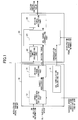
- Fig. 1 is a diagram for schematically illustrating a configuration of a vehicle speed control apparatus 1 according to an embodiment.
- the vehicle speed control apparatus 1 is installed on a vehicle.
- the vehicle may be a vehicle whose driving source is only an engine, or an electric vehicle.
- a type of the electric vehicle or a detailed configuration of the electric vehicle may be arbitrary as long as the electric vehicle is driven with a traveling motor using electric power.
- the electric vehicle includes a hybrid vehicle (HV) which uses an internal combustion engine and the traveling motor as a power source and a genuine electric vehicle which uses the traveling motor only as a power source.
- HV hybrid vehicle
- the vehicle speed control apparatus 1 is installed in a vehicle which only uses an internal combustion engine as a power source.
- the vehicle speed control apparatus 1 includes an ASL (Adjustable Speed Limiter) module 10, and an EFI (Electrical Fuel Injection) module 20.
- the ASL module 10 and the EFI module 20 may be connected directly or via an appropriate bus such as a CAN(controller area network).
- the ASL module 10 and the EFI module 20 may be formed by ECUs (Electronic Control Units), respectively.
- ECUs Electronic Control Units
- the ASL is a function of limiting a driving force of a vehicle such that a set vehicle speed, which is set by a user, is not exceeded.
- a control for implementing the ASL function is referred to as "an ASL control”.
- To the ASL module 10 are input vehicle speed information, shift gear information, acceleration information and engine rpm information. Further, to the ASL module 10 are input information (SW operation information) about switch operations related to the ASL and set vehicle speed information.
- SW operation information input information about switch operations related to the ASL and set vehicle speed information.
- the vehicle speed information may be based on vehicle wheel speed sensors provided in the respective wheels of the vehicle.
- the vehicle speed information may be based on other information such as information about the number of revolutions of an output shaft of a transmission.
- the shift gear information may be based on a sensor which detects a position of a shift lever (i.e., a shift position).
- the acceleration information may be based on a differential (derivative time) of the vehicle speed based on the vehicle speed information.
- the acceleration information may be generated in the ASL module 10.
- the engine rpm information may be based on information from a sensor which detects the number revolutions of the engine, or based on other information such as information about the number of revolutions of an input shaft of the transmission.
- the SW operation information may include a variety of operation information items with respect to switches (not illustrated) which are provided for setting the set vehicle speed related to the ASL.
- Various operations related to the SW operation information may include ON/OFF operations for the ASL function, an operation for changing the set vehicle speed, an operation for restoring the set vehicle speed to the original (previous) value, etc., for example.
- the set vehicle speed information may represent the set vehicle speed related to the ASL.
- the accelerator pedal stroke amount may be detected by a sensor which detects a driver's operation amount of the accelerator pedal.
- the ASL module 10 includes a target acceleration calculating part 12, a driving force converting part 14, and an ASL cancellation generating part 16.
- the EFI module 20 includes a driving force calculating part 22, an ASL cancel controlling part 24, and a driving force arbitration part 26. It is noted that the function of the ASL module 10 may be implemented by a plural of ECUs in cooperation. A part of the function of the EFI module 20 may be implemented by the ASL module 10, and a part of or a whole of the function of the ASL module 10 may be implemented by the EFI module 20.
- the target acceleration calculating part 12 of the ASL module 10 calculates a target acceleration with respect to the set vehicle speed based on the set vehicle speed information, the vehicle speed information and the acceleration information.
- the target acceleration may be calculated, based on the difference between the set vehicle speed and the current vehicle speed, as an upper limit acceleration such that the vehicle speed does not exceed the set vehicle speed.
- the target acceleration may be calculated such that the greater the difference between the set vehicle speed and the current vehicle speed becomes, the greater the target acceleration becomes.
- the target acceleration may be feedback-controlled based on the difference with respect to the current acceleration. Further, the target acceleration may be calculated such that a road slope, a traveling resistance, etc., are considered.
- the driving force converting part 14 of the ASL module 10 converts the target acceleration calculated by the target acceleration calculating part 12 into a dimension of a driving force to output an ASL driving force.
- the ASL driving force means an upper limit value of the driving force with which the vehicle speed does not exceed the set vehicle speed.
- the ASL cancellation generating part 16 of the ASL module 10 monitors whether a predetermined ASL control cancellation condition is met, and if the ASL control cancellation condition is met, the ASL cancellation generating part 16 outputs a cancellation instruction.
- the ASL control cancellation condition is to be met in a circumstance where the ASL control should be canceled due to any abnormality (failure), and may be set in any manner.
- the ASL control cancellation condition may be met if the acquisition of (communication for) the vehicle speed information is stopped, abnormality in a driving system such as the engine or the transmission is detected, or the like.
- an alarm may be output in an acoustic or visual manner so as to inform a driver of the fact that the ASL control is to be canceled.
- the driving force calculating part 22 of the EFI module 20 calculates a driving force (also referred to as "a driver demand driving force", hereinafter) according to the accelerator pedal stroke amount (i.e., the driver's operation amount of the accelerator pedal).
- the driving force calculating part 22 may calculate the target acceleration based on the current vehicle speed and the accelerator pedal stroke amount, and convert the calculated target acceleration into the driver demand driving force.
- the driving force calculating part 22 may merely use a two-dimensional map in which a relationship between the accelerator pedal stroke amount and the target acceleration to calculate the target acceleration, and convert the calculated target acceleration into the driver demand driving force. It is noted that the driving force calculating part 22 may calculate the driver demand driving force directly (i.e., without calculating the target acceleration) based on the accelerator pedal stroke amount, etc.
- the ASL cancel controlling part 24 of the EFI module 20 cancels (stops) the ASL control in response to the cancellation instruction from the ASL module 10.
- the ASL cancel controlling part 24 cancels the ASL control in response to the cancellation instruction such that temporary acceleration does not occur.
- This function of the ASL cancel controlling part 24 is described hereinafter in detail.
- the ASL cancel controlling part 24 performs a correction, etc., of the ASL driving force from the ASL module 10 only if the ASL cancel controlling part 24 receives the cancellation instruction from the ASL module 10.
- the ASL driving force is passed to the driving force arbitration part 26 as it is if the ASL cancel controlling part 24 does not receive the cancellation instruction from the ASL module 10.
- the driving force arbitration part 26 of the EFI module 20 performs arbitration between the driver demand driving force from the driving force calculating part 22 and the ASL driving force from the ASL module 10 (or the ASL driving force from the ASL cancel controlling part 24). In this case, the driving force arbitration part 26 selects (adopts) the smaller of the driver demand driving force and the ASL driving force. In other words, the driving force arbitration part 26 performs a minimum selection between the driver demand driving force and the ASL driving force.
- the driving force arbitration part 26 generates an engine control instruction value based on the selected driving force to control the engine (not illustrated). The control of the engine may be performed in any manner.
- it may include controlling an opening amount (throttle position) of a throttle valve disposed in an intake manifold of the engine, controlling an amount of fuel injected into a combustion chamber of the engine, controlling a phase of an intake cam shaft to adjust a valve opening/closing timing, etc.
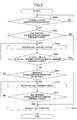
- Fig. 2 is an example of a flowchart of a process executed by the vehicle speed control apparatus 1 (the ASL cancel controlling part 24).
- a process routine illustrated in Fig. 2 may be executed repeatedly at a predetermined cycle during an operation of the ASL control.
- step S200 the ASL cancel controlling part 24 determines whether the ASL cancel controlling part 24 receives the cancellation instruction from the ASL cancellation generating part 16. As described above, the cancellation instruction is generated in the ASL cancellation generating part 16 if the predetermined ASL control cancellation condition is met, and is received by the ASL cancel controlling part 24. If the ASL cancel controlling part 24 receives the cancellation instruction from the ASL cancellation generating part 16, the process routine goes to step S202. On the other hand, if the ASL cancel controlling part 24 does not receive the cancellation instruction from the ASL cancellation generating part 16, a waiting status for the cancellation instruction is formed. In this case, the ASL cancel controlling part 24 does not function, and thus the ASL driving force from the ASL module 10 is supplied to the driving force arbitration part 26 as it is.
- step S202 the ASL cancel controlling part 24 determines whether the ASL driving force from the ASL module 10 is less than the driver demand driving force. If the ASL driving force from the ASL module 10 is less than the driver demand driving force, the process routine goes to step S204. On the other hand, if the ASL driving force from the ASL module 10 is greater than or equal to the driver demand driving force, the process routine goes to step S214 where the ASL cancel controlling part 24 ends (i.e., completes canceling) the ASL control. This is because the fact that the ASL driving force is greater than or equal to the driver demand driving force means that the limitation of the driving force based on the ASL control is not being performed. In this case, since a status where the driving force is controlled based on the driver demand driving force has already been formed, there is no influence on the driving force of the vehicle even if the ASL control is immediately canceled.
- the ASL cancel controlling part 24 reduces the ASL driving force.
- the ASL driving force is reduced such that the current vehicle speed is reduced (i.e., deceleration generates).
- the ASL driving force may be reduced by subtracting a predetermined amount from the previous value of the ASL driving force every control cycle, using, as an initial value, the value of the ASL driving force at the time when the ASL control cancellation condition is met or immediately after that.
- the ASL driving force may be reduced in a nonlinear manner.
- the ASL driving force may be determined such that the vehicle speed is reduced with a constant gradient.
- step S204 the ASL driving force from the ASL module 10 is substantially invalidated (i.e., the ASL module 10 is invalidated), and thus the ASL cancel controlling part 24 determines the ASL driving force until the end of the ASL control at step S214.
- step S206 the ASL cancel controlling part 24 determines whether the vehicle speed is reduced to 0, or whether the ASL driving force determined at step S204 (i.e., the reduced ASL driving force) becomes greater than or equal to the driver demand driving force. If the vehicle speed is not reduced to 0 and the ASL driving force determined at step S204 does not become greater than or equal to the driver demand driving force, the process routine goes to step S208. On the other hand, if the vehicle speed is reduced to 0, or if the ASL driving force determined at step S204 becomes greater than or equal to the driver demand driving force, the process routine goes to step S214 where the ASL cancel controlling part 24 ends (i.e., completes canceling) the ASL control.
- the ASL cancel controlling part 24 ends (i.e., completes canceling) the ASL control.
- the driver demand driving force is reduced such that the ASL driving force becomes greater than or equal to the reduced driver demand driving force, the driver demand driving force is to be selected in the driving force arbitration part 26 and thus the limitation of the driving force based on the ASL control is ended. Further, this is because if the vehicle speed has been reduced to 0, there is no influence on the behavior of the vehicle even if the limitation of the driving force based on the ASL control is ended at that time.
- the ASL cancel controlling part 24 determines whether the ASL cancel controlling part 24 detects an acceleration intention of the driver.
- the acceleration intention of the driver may be detected in any manner. Typically, the acceleration intention of the driver is detected based on operation information of the accelerator pedal. For example, the acceleration intention of the driver may be detected if the driver demand driving force (which is determined according to the accelerator pedal stroke amount) is increased by an amount which is greater than or equal to a predetermined threshold, or if a kick down switch is turned on. The kick down switch may be turned on when the accelerator pedal is in its full-open position.
- the predetermined threshold may correspond to the increased amount of the driver demand driving force which represents the acceleration intention of the driver, and may be adapted based on experience results or the like.
- the increased amount of the driver demand driving force greater than or equal to the predetermined threshold may be determined with reference to the driver demand driving force at the time of starting to reduce the vehicle speed at step S204 or with reference to the previous value of the driver demand driving force.
- the acceleration intention of the driver may be detected if the driver demand driving force is increased with a gradient greater than or equal to a predetermined gradient, or if the accelerator pedal stroke amount is increased with a gradient greater than or equal to a predetermined gradient. If the acceleration intention of the driver is detected, the process routine goes to step 210. Otherwise the process routine returns to step 204. In this way, the ASL driving force is gradually reduced until the vehicle speed has been reduced to 0, the ASL driving force from the ASL module 10 becomes greater than or equal to the driver demand driving force, or the acceleration intention of the driver is detected.
- the ASL cancel controlling part 24 increases the ASL driving force.
- the ASL driving force may be increased by adding a predetermined value to the previous value of the ASL driving force every control cycle.
- the ASL driving force may be increased in a nonlinear manner.
- the increased amount of the ASL driving force at the respective control cycles may be determined according to the difference between the current ASL driving force and the driver demand driving force.
- the increased amount of the ASL driving force may be set such that the greater the difference between the current ASL driving force and the driver demand driving force becomes, the greater the increased amount of the ASL driving force becomes.
- step S212 the ASL cancel controlling part 24 determines whether the ASL driving force determined at step S210 (i.e., the increased ASL driving force) is greater than or equal to the driver demand driving force. If the ASL driving force determined at step S210 does not become greater than or equal to the driver demand driving force, the process routine returns to step S210, and the process of step S210 is to be performed at next control cycle. On the other hand, if the ASL driving force determined at step S210 becomes greater than or equal to the driver demand driving force, the process routine goes to step S214 where the ASL cancel controlling part 24 ends (complete canceling) the ASL control. This is because if the ASL driving force is increased to be greater than or equal to the reduced driver demand driving force, the driver demand driving force is to be selected in the driving force arbitration part 26 and thus the limitation of the driving force based on the ASL control is ended.
- the ASL cancel controlling part 24 may continue to invalidate the ASL driving force such that the ASL driving force is not reduced below the driver demand driving force (i.e., such that the canceled status of the ASL control is continued).
- the invalidation of the ASL driving force may be implemented by continuing to output a predetermined ASL driving force, which is greater than a possible maximum valued of the driver demand driving force, to the driving force arbitration part 26, for example.
- the ASL control cancellation condition is not met and a ASL control starting condition (restarting condition) is met after the ASL control is ended at step S212, the ASL control may be restarted.
- the ASL cancel controlling part 24 may not function and thus the ASL driving force from the ASL module 10 may be supplied to the driving force arbitration part 26 as it is until the ASL cancel controlling part 24 receives the cancellation instruction from the ASL cancellation generating part 16.
- the ASL driving force is reduced at first (step S204), instead of immediately canceling the driving force limitation by the ASL function to form the driving status based on the driver demand driving force.
- the ASL driving force is reduced, a driver, who has the acceleration intention, may be aware of the deceleration and then increase the pressing amount of the accelerator pedal to implement the acceleration.
- the determination result at step S208 is affirmative, and thus the ASL driving force is gradually increased in response to the acceleration intention of the driver.
- the ASL control is ended (cancellation is completed) when the ASL driving force becomes greater than or equal to the driver demand driving force (Yes in step S212).
- Fig. 3 is a diagram for an explanation of Fig. 2 , and illustrating an example of a relationship between the ASL driving force and the driver demand driving force until the ASL control is ended.
- the ASL control cancellation condition is not met and the ASL driving force is less than the driver demand driving force, and thus a status where the driving force is limited by the ASL function is formed. Further, before time t0, the ASL driving force from the ASL module 10 is supplied to the driving force arbitration part 26 as it is.
- the ASL control cancellation condition is met at time t0, the determination in step S200 becomes affirmative, the determination in step S202 becomes affirmative, and the ASL driving force is reduced by the ASL cancel controlling part 24 in step S204. Therefore, as illustrated in Fig. 3 , the ASL driving force is gradually reduced from time t0 and the vehicle is decelerated accordingly.
- a driver who has the acceleration intention, may be aware of the deceleration and then increase the pressing amount of the accelerator pedal to implement the acceleration.
- the acceleration intention of the driver is detected due to the increase in the operation amount of the accelerator pedal by the driver (i.e., the increase in the driver demand driving force).
- the driver demand driving force is increased by the ASL cancel controlling part 24. Therefore, as illustrated in Fig. 3 , the ASL driving force is gradually increased from time t1 and the vehicle is accelerated accordingly.
- the ASL driving force reaches the driver demand driving force, and thus the ASL control is ended (cancellation is completed).
- Fig. 4 is a diagram for a comparative example, and illustrating an example of a relationship between the ASL driving force and the driver demand driving force until the ASL control is ended is illustrated.
- the ASL control cancellation condition is met in a circumstance where the driver demand driving force is greater than the ASL driving force (i.e., the driving force is being limited using the ASL driving force), the ASL driving force is increased toward the driver demand driving force, and thus the vehicle speed is increased temporarily.
- the ASL control cancellation condition is met in a circumstance where the driver demand driving force is greater than the ASL driving force, the ASL driving force is reduced at first, and thus the vehicle speed is reduced.
- the ASL control is ended by utilizing the fact the driver increases the pressing amount of the accelerator pedal in response to the reduction in the vehicle speed. In other words, the vehicle speed is reduced at first, and then if the acceleration intention of the driver is detected, the ASL driving force is increased toward the driver demand driving force, and thus the vehicle speed is increased. With this arrangement, it becomes possible to end the ASL control by increasing the vehicle speed such that the intention of the driver is reflected.
- the ASL control is performed based on the set vehicle speed set by the driver to limit the driving force such that the vehicle speed does not exceed the set vehicle speed; however, the set vehicle speed may be automatically set as is the case with ISA (Intelligent Speed Assistance).
- the set vehicle speed may be set automatically based on limit speed information which may be obtained by communication with an external facility (including a center server) such as an infrastructure and represents the limit speed with respect to the road on which the vehicle is currently traveling.
- the set vehicle speed may be set automatically based on limit speed information of a road sign which may be image-recognized using a vehicle-installed camera or the like.
- the acceleration intention of the driver may be detected by various ways other than the ways described above.
- the acceleration intention of the driver may be detected if the lane in which the vehicle is traveling is changed to a passing lane.
- a lane change may be detected based on map data (lane information) of a navigation apparatus, a white line recognition result by the vehicle-installed camera, operation information of a blinker lever (a turn signal lever), or the like.
- the driver demand driving force and the ASL driving force are subject to the arbitration in a unit of a driving force; however, they may be subject to the arbitration in other units such as a driving torque, a target acceleration, a throttle position.
- a driver demand driving torque and an ASL driving torque an upper limit value of the driving torque with which the vehicle speed does not exceed the set vehicle speed
- the EFI module 20 is provided; however, in the case of the electric vehicle, there is no EFI module 20.
- the function of the EFI module 20 (the function of the ASL cancel controlling part 24, for example) may be implemented by other ECU(s).
- the ASL driving force from the ASL module 10 is invalidated such that the ASL cancel controlling part 24 determines (corrects) the ASL driving force in canceling the ASL control.
- the function of the ASL cancel controlling part 24 may be implemented by the ASL module 10, as described above. In this case, after step 204 in Fig. 2 , the ASL module 10 may supply the corrected ASL driving force, which is obtained based on the function of the ASL cancel controlling part 24, to the driving force arbitration part 26 of the EFI module 20.
- the ASL driving force is reduced continuously until the acceleration intention of the driver is detected (see step S204).
- the ASL driving force may be reduced in other manner.
- the ASL driving force may be reduced and held (to be constant) alternately every predetermined control cycle. Further, reducing and holding may be repeated at random intervals, such as reducing for a certain term, holding for a predetermined time, and then reducing again.
Landscapes
- Engineering & Computer Science (AREA)
- Chemical & Material Sciences (AREA)
- Combustion & Propulsion (AREA)
- Transportation (AREA)
- Mechanical Engineering (AREA)
- Automation & Control Theory (AREA)
- Control Of Driving Devices And Active Controlling Of Vehicle (AREA)
- Control Of Vehicle Engines Or Engines For Specific Uses (AREA)
Claims (6)
- Fahrzeuggeschwindigkeitssteuergerät (1), das eine Antriebskraftbegrenzungssteuerung zur Begrenzung einer Antriebskraft eines Fahrzeuges derart durchführt, dass eine festgelegte obere Begrenzungsgeschwindigkeit nicht überschritten wird, wobei,
falls eine Abbruchbedingung der Antriebskraftbegrenzungssteuerung in einer Situation erfüllt ist, bei der die Antriebskraft des Fahrzeuges aufgrund der Antriebskraftbegrenzungssteuerung begrenzt ist, das Fahrzeuggeschwindigkeitssteuergerät (1) eine Fahrzeuggeschwindigkeit verringert, und,
falls das Fahrzeuggeschwindigkeitssteuergerät (1) während einer Verringerung der Fahrzeuggeschwindigkeit eine Beschleunigungsabsicht eines Fahrers erfasst, es zum Abbrechen der Antriebskraftbegrenzungssteuerung die Antriebskraft des Fahrzeuges erhöht. - Fahrzeuggeschwindigkeitssteuergerät (1) nach Anspruch 1, wobei die Beschleunigungsabsicht des Fahrers auf der Grundlage einer Betätigungsinformation eines Gaspedals erfasst wird.
- Fahrzeuggeschwindigkeitssteuergerät (1) nach Anspruch 1, wobei das Fahrzeuggeschwindigkeitssteuergerät (1) einen oberen Begrenzungswert hinsichtlich der Antriebskraft des Fahrzeugs und einen Anforderungswert hinsichtlich der Antriebskraft des Fahrzeuges während der Durchführung der Antriebskraftbegrenzungssteuerung berechnet, wobei der obere Begrenzungswert derart berechnet ist, dass die obere Begrenzungsgeschwindigkeit nicht überschritten wird, der Anforderungswert auf der Grundlage einer Betätigungsausmaßes eines Gaspedals berechnet wird, und falls der Anforderungswert größer als der obere Begrenzungswert ist, das Fahrzeuggeschwindigkeitssteuergerät (1) die Antriebskraft des Fahrzeugs auf der Grundlage des oberen Begrenzungswertes begrenzt.
- Fahrzeuggeschwindigkeitssteuergerät (1) nach Anspruch 3, wobei die Erhöhung der Antriebskraft des Fahrzeugs durch eine Erhöhung des oberen Begrenzungswertes implementiert ist, und
falls der obere Begrenzungswert zur Entsprechung mit dem Anforderungswert erhöht wird, das Fahrzeuggeschwindigkeitssteuergerät (1) die Antriebskraftbegrenzungssteuerung abbricht. - Fahrzeuggeschwindigkeitssteuergerät (1) nach Anspruch 3 oder 4, wobei die Verringerung der Antriebskraft des Fahrzeugs durch eine Verringerung des oberen Begrenzungswertes mit einem vorbestimmten Gradienten im plem entiert ist.
- Fahrzeuggeschwindigkeitssteuergerät (1) nach einem der Ansprüche 3 bis 5, wobei die Erhöhung der Antriebskraft des Fahrzeugs durch eine Erhöhung des oberen Begrenzungswertes mit einem vorbestimmten Gradienten implementiert ist.
Applications Claiming Priority (1)
| Application Number | Priority Date | Filing Date | Title |
|---|---|---|---|
| JP2013101608A JP5892108B2 (ja) | 2013-05-13 | 2013-05-13 | 車速制御装置 |
Publications (2)
| Publication Number | Publication Date |
|---|---|
| EP2803548A1 EP2803548A1 (de) | 2014-11-19 |
| EP2803548B1 true EP2803548B1 (de) | 2017-04-05 |
Family
ID=50731919
Family Applications (1)
| Application Number | Title | Priority Date | Filing Date |
|---|---|---|---|
| EP14167485.3A Active EP2803548B1 (de) | 2013-05-13 | 2014-05-08 | Fahrzeuggeschwindigkeitsregelungsvorrichtung |
Country Status (2)
| Country | Link |
|---|---|
| EP (1) | EP2803548B1 (de) |
| JP (1) | JP5892108B2 (de) |
Families Citing this family (10)
| Publication number | Priority date | Publication date | Assignee | Title |
|---|---|---|---|---|
| JP6191644B2 (ja) * | 2015-03-26 | 2017-09-06 | トヨタ自動車株式会社 | 車速制限装置 |
| JP6098844B2 (ja) * | 2015-05-22 | 2017-03-22 | マツダ株式会社 | エンジンの制御装置 |
| JP6098843B2 (ja) * | 2015-05-22 | 2017-03-22 | マツダ株式会社 | エンジンの制御装置 |
| JP6252548B2 (ja) | 2015-05-22 | 2017-12-27 | トヨタ自動車株式会社 | 車速制限装置及び車速制御装置 |
| JP6319199B2 (ja) * | 2015-06-16 | 2018-05-09 | トヨタ自動車株式会社 | 車速制限システム |
| JP6296420B2 (ja) * | 2015-10-30 | 2018-03-20 | マツダ株式会社 | ターボ過給機付きエンジンの制御装置 |
| JP6485792B2 (ja) * | 2017-03-17 | 2019-03-20 | マツダ株式会社 | 運転支援制御装置 |
| DE102018204139A1 (de) * | 2018-03-19 | 2019-09-19 | Robert Bosch Gmbh | Verfahren zum Überwachen eines Fahrzeugs |
| CN108674184B (zh) * | 2018-05-02 | 2019-12-20 | 吉利汽车研究院(宁波)有限公司 | 车速控制方法、系统及汽车 |
| JP7456428B2 (ja) * | 2021-09-27 | 2024-03-27 | トヨタ自動車株式会社 | 車両用速度制限装置、車両用速度制限方法及び車両 |
Family Cites Families (12)
| Publication number | Priority date | Publication date | Assignee | Title |
|---|---|---|---|---|
| JPS5981625U (ja) * | 1982-11-26 | 1984-06-01 | 三菱自動車工業株式会社 | スピ−ドリミツト装置 |
| JPH02171343A (ja) * | 1988-12-24 | 1990-07-03 | Mitsubishi Electric Corp | 車両用定速走行制御装置 |
| JP2970032B2 (ja) * | 1991-04-19 | 1999-11-02 | トヨタ自動車株式会社 | 車両用走行制御装置 |
| JP3622240B2 (ja) * | 1994-11-30 | 2005-02-23 | いすゞ自動車株式会社 | エンジン制御装置 |
| JP4010441B2 (ja) * | 2001-11-19 | 2007-11-21 | 日産ディーゼル工業株式会社 | スピードリミッタ装置 |
| JP4706410B2 (ja) * | 2005-09-21 | 2011-06-22 | トヨタ自動車株式会社 | 車速制御装置 |
| JP4229183B2 (ja) * | 2006-12-26 | 2009-02-25 | トヨタ自動車株式会社 | 制御装置 |
| JP4938542B2 (ja) * | 2007-04-27 | 2012-05-23 | トヨタ自動車株式会社 | 車両の車速制御装置 |
| US8260509B2 (en) * | 2007-10-31 | 2012-09-04 | Caterpillar Inc. | Vehicle speed limiting via engine control commands issued by electronic transmission controller |
| JP2010006334A (ja) * | 2008-06-30 | 2010-01-14 | Toyota Motor Corp | 車速制限装置及び車速制限方法 |
| JP2011111979A (ja) * | 2009-11-26 | 2011-06-09 | Toyota Motor Corp | 駆動力制御装置 |
| JP5622104B2 (ja) * | 2010-12-24 | 2014-11-12 | トヨタ自動車株式会社 | 運転支援装置 |
-
2013
- 2013-05-13 JP JP2013101608A patent/JP5892108B2/ja active Active
-
2014
- 2014-05-08 EP EP14167485.3A patent/EP2803548B1/de active Active
Non-Patent Citations (1)
| Title |
|---|
| None * |
Also Published As
| Publication number | Publication date |
|---|---|
| EP2803548A1 (de) | 2014-11-19 |
| JP5892108B2 (ja) | 2016-03-23 |
| JP2014221601A (ja) | 2014-11-27 |
Similar Documents
| Publication | Publication Date | Title |
|---|---|---|
| EP2803548B1 (de) | Fahrzeuggeschwindigkeitsregelungsvorrichtung | |
| US10583836B2 (en) | Control apparatus for vehicle | |
| CN105517867B (zh) | 车辆行驶控制设备 | |
| JP6048457B2 (ja) | 車両走行制御装置 | |
| JP5369504B2 (ja) | 車両用走行制御装置 | |
| JP5867433B2 (ja) | 車両の制御装置 | |
| GB2499657A (en) | Automatic vehicle speed control having predetermined upper and lower limits. | |
| CN113022565A (zh) | 车辆控制装置 | |
| CN110481548A (zh) | 车辆控制装置以及车辆 | |
| US20140243148A1 (en) | Drive force control system | |
| CN113386719B (zh) | 自动停车控制装置 | |
| CN104349958A (zh) | 用于运行机动车中的传动系的方法 | |
| JP6582697B2 (ja) | 制御システム | |
| JP7472892B2 (ja) | 駆動力制御装置 | |
| US11149663B2 (en) | Systems and methods for controlling torque in a vehicle | |
| JP6147863B2 (ja) | 車両制御装置 | |
| JP2018105241A (ja) | 内燃機関制御装置 | |
| JP2018105251A (ja) | 車両用制御装置 | |
| EP3434886B1 (de) | Regelungsverfahren für ein abgasnachbehandlungssystem | |
| JP2014172456A (ja) | アイドルストップ車の制御装置 | |
| JP2012219761A (ja) | 車両制御装置 | |
| JP2016190516A (ja) | 車両の制御装置 | |
| CN106314323B (zh) | 基于ecu和acc的联合驾驶控制方法及系统 | |
| JP6389664B2 (ja) | 車両用制御装置 | |
| JP6488116B2 (ja) | 車両制御装置 |
Legal Events
| Date | Code | Title | Description |
|---|---|---|---|
| PUAI | Public reference made under article 153(3) epc to a published international application that has entered the european phase |
Free format text: ORIGINAL CODE: 0009012 |
|
| 17P | Request for examination filed |
Effective date: 20140606 |
|
| AK | Designated contracting states |
Kind code of ref document: A1 Designated state(s): AL AT BE BG CH CY CZ DE DK EE ES FI FR GB GR HR HU IE IS IT LI LT LU LV MC MK MT NL NO PL PT RO RS SE SI SK SM TR |
|
| AX | Request for extension of the european patent |
Extension state: BA ME |
|
| GRAP | Despatch of communication of intention to grant a patent |
Free format text: ORIGINAL CODE: EPIDOSNIGR1 |
|
| RIC1 | Information provided on ipc code assigned before grant |
Ipc: B60W 30/14 20060101AFI20161004BHEP Ipc: B60W 50/02 20120101ALI20161004BHEP Ipc: B60W 10/04 20060101ALI20161004BHEP |
|
| INTG | Intention to grant announced |
Effective date: 20161026 |
|
| STAA | Information on the status of an ep patent application or granted ep patent |
Free format text: STATUS: GRANT OF PATENT IS INTENDED |
|
| GRAS | Grant fee paid |
Free format text: ORIGINAL CODE: EPIDOSNIGR3 |
|
| GRAA | (expected) grant |
Free format text: ORIGINAL CODE: 0009210 |
|
| STAA | Information on the status of an ep patent application or granted ep patent |
Free format text: STATUS: THE PATENT HAS BEEN GRANTED |
|
| AK | Designated contracting states |
Kind code of ref document: B1 Designated state(s): AL AT BE BG CH CY CZ DE DK EE ES FI FR GB GR HR HU IE IS IT LI LT LU LV MC MK MT NL NO PL PT RO RS SE SI SK SM TR |
|
| REG | Reference to a national code |
Ref country code: GB Ref legal event code: FG4D |
|
| REG | Reference to a national code |
Ref country code: CH Ref legal event code: EP |
|
| REG | Reference to a national code |
Ref country code: AT Ref legal event code: REF Ref document number: 881508 Country of ref document: AT Kind code of ref document: T Effective date: 20170415 |
|
| REG | Reference to a national code |
Ref country code: IE Ref legal event code: FG4D |
|
| REG | Reference to a national code |
Ref country code: FR Ref legal event code: PLFP Year of fee payment: 4 |
|
| REG | Reference to a national code |
Ref country code: DE Ref legal event code: R096 Ref document number: 602014008221 Country of ref document: DE |
|
| REG | Reference to a national code |
Ref country code: NL Ref legal event code: MP Effective date: 20170405 |
|
| REG | Reference to a national code |
Ref country code: LT Ref legal event code: MG4D |
|
| REG | Reference to a national code |
Ref country code: AT Ref legal event code: MK05 Ref document number: 881508 Country of ref document: AT Kind code of ref document: T Effective date: 20170405 |
|
| PG25 | Lapsed in a contracting state [announced via postgrant information from national office to epo] |
Ref country code: NL Free format text: LAPSE BECAUSE OF FAILURE TO SUBMIT A TRANSLATION OF THE DESCRIPTION OR TO PAY THE FEE WITHIN THE PRESCRIBED TIME-LIMIT Effective date: 20170405 |
|
| PG25 | Lapsed in a contracting state [announced via postgrant information from national office to epo] |
Ref country code: GR Free format text: LAPSE BECAUSE OF FAILURE TO SUBMIT A TRANSLATION OF THE DESCRIPTION OR TO PAY THE FEE WITHIN THE PRESCRIBED TIME-LIMIT Effective date: 20170706 Ref country code: HR Free format text: LAPSE BECAUSE OF FAILURE TO SUBMIT A TRANSLATION OF THE DESCRIPTION OR TO PAY THE FEE WITHIN THE PRESCRIBED TIME-LIMIT Effective date: 20170405 Ref country code: NO Free format text: LAPSE BECAUSE OF FAILURE TO SUBMIT A TRANSLATION OF THE DESCRIPTION OR TO PAY THE FEE WITHIN THE PRESCRIBED TIME-LIMIT Effective date: 20170705 Ref country code: LT Free format text: LAPSE BECAUSE OF FAILURE TO SUBMIT A TRANSLATION OF THE DESCRIPTION OR TO PAY THE FEE WITHIN THE PRESCRIBED TIME-LIMIT Effective date: 20170405 Ref country code: AT Free format text: LAPSE BECAUSE OF FAILURE TO SUBMIT A TRANSLATION OF THE DESCRIPTION OR TO PAY THE FEE WITHIN THE PRESCRIBED TIME-LIMIT Effective date: 20170405 Ref country code: ES Free format text: LAPSE BECAUSE OF FAILURE TO SUBMIT A TRANSLATION OF THE DESCRIPTION OR TO PAY THE FEE WITHIN THE PRESCRIBED TIME-LIMIT Effective date: 20170405 Ref country code: FI Free format text: LAPSE BECAUSE OF FAILURE TO SUBMIT A TRANSLATION OF THE DESCRIPTION OR TO PAY THE FEE WITHIN THE PRESCRIBED TIME-LIMIT Effective date: 20170405 |
|
| PG25 | Lapsed in a contracting state [announced via postgrant information from national office to epo] |
Ref country code: RS Free format text: LAPSE BECAUSE OF FAILURE TO SUBMIT A TRANSLATION OF THE DESCRIPTION OR TO PAY THE FEE WITHIN THE PRESCRIBED TIME-LIMIT Effective date: 20170405 Ref country code: BG Free format text: LAPSE BECAUSE OF FAILURE TO SUBMIT A TRANSLATION OF THE DESCRIPTION OR TO PAY THE FEE WITHIN THE PRESCRIBED TIME-LIMIT Effective date: 20170705 Ref country code: PL Free format text: LAPSE BECAUSE OF FAILURE TO SUBMIT A TRANSLATION OF THE DESCRIPTION OR TO PAY THE FEE WITHIN THE PRESCRIBED TIME-LIMIT Effective date: 20170405 Ref country code: LV Free format text: LAPSE BECAUSE OF FAILURE TO SUBMIT A TRANSLATION OF THE DESCRIPTION OR TO PAY THE FEE WITHIN THE PRESCRIBED TIME-LIMIT Effective date: 20170405 Ref country code: IS Free format text: LAPSE BECAUSE OF FAILURE TO SUBMIT A TRANSLATION OF THE DESCRIPTION OR TO PAY THE FEE WITHIN THE PRESCRIBED TIME-LIMIT Effective date: 20170805 Ref country code: SE Free format text: LAPSE BECAUSE OF FAILURE TO SUBMIT A TRANSLATION OF THE DESCRIPTION OR TO PAY THE FEE WITHIN THE PRESCRIBED TIME-LIMIT Effective date: 20170405 Ref country code: PT Free format text: LAPSE BECAUSE OF FAILURE TO SUBMIT A TRANSLATION OF THE DESCRIPTION OR TO PAY THE FEE WITHIN THE PRESCRIBED TIME-LIMIT Effective date: 20170807 |
|
| REG | Reference to a national code |
Ref country code: CH Ref legal event code: PL |
|
| REG | Reference to a national code |
Ref country code: DE Ref legal event code: R097 Ref document number: 602014008221 Country of ref document: DE |
|
| PG25 | Lapsed in a contracting state [announced via postgrant information from national office to epo] |
Ref country code: DK Free format text: LAPSE BECAUSE OF FAILURE TO SUBMIT A TRANSLATION OF THE DESCRIPTION OR TO PAY THE FEE WITHIN THE PRESCRIBED TIME-LIMIT Effective date: 20170405 Ref country code: EE Free format text: LAPSE BECAUSE OF FAILURE TO SUBMIT A TRANSLATION OF THE DESCRIPTION OR TO PAY THE FEE WITHIN THE PRESCRIBED TIME-LIMIT Effective date: 20170405 Ref country code: MC Free format text: LAPSE BECAUSE OF FAILURE TO SUBMIT A TRANSLATION OF THE DESCRIPTION OR TO PAY THE FEE WITHIN THE PRESCRIBED TIME-LIMIT Effective date: 20170405 Ref country code: SK Free format text: LAPSE BECAUSE OF FAILURE TO SUBMIT A TRANSLATION OF THE DESCRIPTION OR TO PAY THE FEE WITHIN THE PRESCRIBED TIME-LIMIT Effective date: 20170405 Ref country code: CZ Free format text: LAPSE BECAUSE OF FAILURE TO SUBMIT A TRANSLATION OF THE DESCRIPTION OR TO PAY THE FEE WITHIN THE PRESCRIBED TIME-LIMIT Effective date: 20170405 Ref country code: RO Free format text: LAPSE BECAUSE OF FAILURE TO SUBMIT A TRANSLATION OF THE DESCRIPTION OR TO PAY THE FEE WITHIN THE PRESCRIBED TIME-LIMIT Effective date: 20170405 |
|
| PLBE | No opposition filed within time limit |
Free format text: ORIGINAL CODE: 0009261 |
|
| STAA | Information on the status of an ep patent application or granted ep patent |
Free format text: STATUS: NO OPPOSITION FILED WITHIN TIME LIMIT |
|
| REG | Reference to a national code |
Ref country code: DE Ref legal event code: R084 Ref document number: 602014008221 Country of ref document: DE |
|
| REG | Reference to a national code |
Ref country code: IE Ref legal event code: MM4A |
|
| PG25 | Lapsed in a contracting state [announced via postgrant information from national office to epo] |
Ref country code: IT Free format text: LAPSE BECAUSE OF FAILURE TO SUBMIT A TRANSLATION OF THE DESCRIPTION OR TO PAY THE FEE WITHIN THE PRESCRIBED TIME-LIMIT Effective date: 20170405 Ref country code: SM Free format text: LAPSE BECAUSE OF FAILURE TO SUBMIT A TRANSLATION OF THE DESCRIPTION OR TO PAY THE FEE WITHIN THE PRESCRIBED TIME-LIMIT Effective date: 20170405 Ref country code: LI Free format text: LAPSE BECAUSE OF NON-PAYMENT OF DUE FEES Effective date: 20170531 Ref country code: CH Free format text: LAPSE BECAUSE OF NON-PAYMENT OF DUE FEES Effective date: 20170531 |
|
| 26N | No opposition filed |
Effective date: 20180108 |
|
| REG | Reference to a national code |
Ref country code: GB Ref legal event code: 746 Effective date: 20180223 |
|
| PG25 | Lapsed in a contracting state [announced via postgrant information from national office to epo] |
Ref country code: LU Free format text: LAPSE BECAUSE OF NON-PAYMENT OF DUE FEES Effective date: 20170508 |
|
| REG | Reference to a national code |
Ref country code: FR Ref legal event code: PLFP Year of fee payment: 5 |
|
| REG | Reference to a national code |
Ref country code: BE Ref legal event code: MM Effective date: 20170531 |
|
| PG25 | Lapsed in a contracting state [announced via postgrant information from national office to epo] |
Ref country code: IE Free format text: LAPSE BECAUSE OF NON-PAYMENT OF DUE FEES Effective date: 20170508 |
|
| PG25 | Lapsed in a contracting state [announced via postgrant information from national office to epo] |
Ref country code: SI Free format text: LAPSE BECAUSE OF FAILURE TO SUBMIT A TRANSLATION OF THE DESCRIPTION OR TO PAY THE FEE WITHIN THE PRESCRIBED TIME-LIMIT Effective date: 20170405 |
|
| PG25 | Lapsed in a contracting state [announced via postgrant information from national office to epo] |
Ref country code: BE Free format text: LAPSE BECAUSE OF NON-PAYMENT OF DUE FEES Effective date: 20170531 |
|
| PG25 | Lapsed in a contracting state [announced via postgrant information from national office to epo] |
Ref country code: MT Free format text: LAPSE BECAUSE OF NON-PAYMENT OF DUE FEES Effective date: 20170508 |
|
| PG25 | Lapsed in a contracting state [announced via postgrant information from national office to epo] |
Ref country code: HU Free format text: LAPSE BECAUSE OF FAILURE TO SUBMIT A TRANSLATION OF THE DESCRIPTION OR TO PAY THE FEE WITHIN THE PRESCRIBED TIME-LIMIT; INVALID AB INITIO Effective date: 20140508 |
|
| PG25 | Lapsed in a contracting state [announced via postgrant information from national office to epo] |
Ref country code: CY Free format text: LAPSE BECAUSE OF FAILURE TO SUBMIT A TRANSLATION OF THE DESCRIPTION OR TO PAY THE FEE WITHIN THE PRESCRIBED TIME-LIMIT Effective date: 20170405 |
|
| PG25 | Lapsed in a contracting state [announced via postgrant information from national office to epo] |
Ref country code: MK Free format text: LAPSE BECAUSE OF FAILURE TO SUBMIT A TRANSLATION OF THE DESCRIPTION OR TO PAY THE FEE WITHIN THE PRESCRIBED TIME-LIMIT Effective date: 20170405 |
|
| PG25 | Lapsed in a contracting state [announced via postgrant information from national office to epo] |
Ref country code: TR Free format text: LAPSE BECAUSE OF FAILURE TO SUBMIT A TRANSLATION OF THE DESCRIPTION OR TO PAY THE FEE WITHIN THE PRESCRIBED TIME-LIMIT Effective date: 20170405 |
|
| PG25 | Lapsed in a contracting state [announced via postgrant information from national office to epo] |
Ref country code: AL Free format text: LAPSE BECAUSE OF FAILURE TO SUBMIT A TRANSLATION OF THE DESCRIPTION OR TO PAY THE FEE WITHIN THE PRESCRIBED TIME-LIMIT Effective date: 20170405 |
|
| REG | Reference to a national code |
Ref country code: FR Ref legal event code: PLFP Year of fee payment: 10 |
|
| P01 | Opt-out of the competence of the unified patent court (upc) registered |
Effective date: 20230427 |
|
| PGFP | Annual fee paid to national office [announced via postgrant information from national office to epo] |
Ref country code: FR Payment date: 20250310 Year of fee payment: 12 |
|
| PGFP | Annual fee paid to national office [announced via postgrant information from national office to epo] |
Ref country code: GB Payment date: 20250320 Year of fee payment: 12 |
|
| PGFP | Annual fee paid to national office [announced via postgrant information from national office to epo] |
Ref country code: DE Payment date: 20250311 Year of fee payment: 12 |