EP2794655B1 - Verfahren zur selektiven quantifizierung von a-beta-aggregaten - Google Patents
Verfahren zur selektiven quantifizierung von a-beta-aggregaten Download PDFInfo
- Publication number
- EP2794655B1 EP2794655B1 EP12818996.6A EP12818996A EP2794655B1 EP 2794655 B1 EP2794655 B1 EP 2794655B1 EP 12818996 A EP12818996 A EP 12818996A EP 2794655 B1 EP2794655 B1 EP 2794655B1
- Authority
- EP
- European Patent Office
- Prior art keywords
- beta
- seq
- aggregates
- probes
- standard
- Prior art date
- Legal status (The legal status is an assumption and is not a legal conclusion. Google has not performed a legal analysis and makes no representation as to the accuracy of the status listed.)
- Active
Links
Images


Classifications
-
- G—PHYSICS
- G01—MEASURING; TESTING
- G01N—INVESTIGATING OR ANALYSING MATERIALS BY DETERMINING THEIR CHEMICAL OR PHYSICAL PROPERTIES
- G01N33/00—Investigating or analysing materials by specific methods not covered by groups G01N1/00 - G01N31/00
- G01N33/48—Biological material, e.g. blood, urine; Haemocytometers
- G01N33/50—Chemical analysis of biological material, e.g. blood, urine; Testing involving biospecific ligand binding methods; Immunological testing
- G01N33/53—Immunoassay; Biospecific binding assay; Materials therefor
- G01N33/543—Immunoassay; Biospecific binding assay; Materials therefor with an insoluble carrier for immobilising immunochemicals
- G01N33/551—Immunoassay; Biospecific binding assay; Materials therefor with an insoluble carrier for immobilising immunochemicals the carrier being inorganic
- G01N33/552—Glass or silica
-
- C—CHEMISTRY; METALLURGY
- C07—ORGANIC CHEMISTRY
- C07K—PEPTIDES
- C07K16/00—Immunoglobulins [IGs], e.g. monoclonal or polyclonal antibodies
- C07K16/18—Immunoglobulins [IGs], e.g. monoclonal or polyclonal antibodies against material from animals or humans
-
- G—PHYSICS
- G01—MEASURING; TESTING
- G01N—INVESTIGATING OR ANALYSING MATERIALS BY DETERMINING THEIR CHEMICAL OR PHYSICAL PROPERTIES
- G01N33/00—Investigating or analysing materials by specific methods not covered by groups G01N1/00 - G01N31/00
- G01N33/48—Biological material, e.g. blood, urine; Haemocytometers
- G01N33/50—Chemical analysis of biological material, e.g. blood, urine; Testing involving biospecific ligand binding methods; Immunological testing
- G01N33/53—Immunoassay; Biospecific binding assay; Materials therefor
- G01N33/543—Immunoassay; Biospecific binding assay; Materials therefor with an insoluble carrier for immobilising immunochemicals
- G01N33/54393—Improving reaction conditions or stability, e.g. by coating or irradiation of surface, by reduction of non-specific binding, by promotion of specific binding
-
- G—PHYSICS
- G01—MEASURING; TESTING
- G01N—INVESTIGATING OR ANALYSING MATERIALS BY DETERMINING THEIR CHEMICAL OR PHYSICAL PROPERTIES
- G01N33/00—Investigating or analysing materials by specific methods not covered by groups G01N1/00 - G01N31/00
- G01N33/48—Biological material, e.g. blood, urine; Haemocytometers
- G01N33/50—Chemical analysis of biological material, e.g. blood, urine; Testing involving biospecific ligand binding methods; Immunological testing
- G01N33/68—Chemical analysis of biological material, e.g. blood, urine; Testing involving biospecific ligand binding methods; Immunological testing involving proteins, peptides or amino acids
- G01N33/6893—Chemical analysis of biological material, e.g. blood, urine; Testing involving biospecific ligand binding methods; Immunological testing involving proteins, peptides or amino acids related to diseases not provided for elsewhere
- G01N33/6896—Neurological disorders, e.g. Alzheimer's disease
-
- G—PHYSICS
- G01—MEASURING; TESTING
- G01N—INVESTIGATING OR ANALYSING MATERIALS BY DETERMINING THEIR CHEMICAL OR PHYSICAL PROPERTIES
- G01N2333/00—Assays involving biological materials from specific organisms or of a specific nature
- G01N2333/435—Assays involving biological materials from specific organisms or of a specific nature from animals; from humans
- G01N2333/46—Assays involving biological materials from specific organisms or of a specific nature from animals; from humans from vertebrates
- G01N2333/47—Assays involving proteins of known structure or function as defined in the subgroups
- G01N2333/4701—Details
- G01N2333/4709—Amyloid plaque core protein
-
- G—PHYSICS
- G01—MEASURING; TESTING
- G01N—INVESTIGATING OR ANALYSING MATERIALS BY DETERMINING THEIR CHEMICAL OR PHYSICAL PROPERTIES
- G01N2458/00—Labels used in chemical analysis of biological material
-
- G—PHYSICS
- G01—MEASURING; TESTING
- G01N—INVESTIGATING OR ANALYSING MATERIALS BY DETERMINING THEIR CHEMICAL OR PHYSICAL PROPERTIES
- G01N2500/00—Screening for compounds of potential therapeutic value
- G01N2500/02—Screening involving studying the effect of compounds C on the interaction between interacting molecules A and B (e.g. A = enzyme and B = substrate for A, or A = receptor and B = ligand for the receptor)
-
- G—PHYSICS
- G01—MEASURING; TESTING
- G01N—INVESTIGATING OR ANALYSING MATERIALS BY DETERMINING THEIR CHEMICAL OR PHYSICAL PROPERTIES
- G01N2800/00—Detection or diagnosis of diseases
- G01N2800/28—Neurological disorders
- G01N2800/2814—Dementia; Cognitive disorders
- G01N2800/2821—Alzheimer
Definitions
- the invention relates to methods for the selective quantification of A-beta aggregates, comprising the immobilization of A-beta capture molecules on a substrate, application of the sample to be examined to the substrate, addition of probes marked for detection, which are bound by specific binding to ABeta- Aggregates mark these and detection of the marked aggregates by means of spatially resolving fluorescence microscopy, and an internal or external standard is used to quantify A-beta aggregates.
- AD Alzheimer's dementia
- Latin Alzheimer's disease
- Age-related dementia is an ever-increasing problem in today's society, since increasing life expectancy is affecting more and more people and the disease is having an impact on social security systems and their ability to be financed.
- amyloid beta peptide deposits A beta peptide deposits
- synuclein deposits are found in Parkinson's disease.
- the amyloid beta peptide deposits represent only the final stage of a process that begins with the cleavage of monomeric amyloid beta peptides from APP (amyloid precursor protein), followed by neurotoxic amyloid beta peptide -Oligomers formed and finally or alternatively with amyloid beta peptide fibrils deposited in plaques, ends.
- AD Alzheimer's disease
- ABeta peptide precursor protein APP
- A-beta fragments of different lengths and types such as A-beta 1-40, A-beta 1-42 or pGluA-beta 3-42.
- Monomeric A-beta peptides are formed throughout life, even in healthy organisms.
- A-beta deposits in the form of plaques are the trigger of the disease symptoms.
- various studies have indicated that the small, freely diffusing A-beta oligomers in particular have the greatest toxicity of all ABeta species and are responsible for the development and progression of AD.
- aggregates of the A-beta peptide are directly linked to AD pathogenesis.
- AD Alzheimer's disease
- biomarkers for AD.
- a starting point for such biomarkers has been the use of PET radio-tracers for imaging methods, which is based on the assumption that the radioactively labeled substances bind amyloid plaques and could therefore be a measure of plaque deposition after detection.
- PET radio-tracers for imaging methods, which is based on the assumption that the radioactively labeled substances bind amyloid plaques and could therefore be a measure of plaque deposition after detection.
- A-beta oligomers are detected by antibodies.
- the antibodies used in it either recognize only very specific types of A-beta oligomers, or non-specifically other oligomers that do not consist of A-beta peptides but of completely different proteins, which has a negative effect on the evaluation.
- Sandwich ELISA measurements are used as a further detection method.
- A-beta-specific antibodies are used to immobilize A-beta molecules.
- the same antibodies are then also used for detection.
- monomers do not lead to a signal since the antibody binding site is already occupied by the capture molecules.
- Specific signals are thus only generated by dimers or larger oligomers.
- such a method only allows the quantification of the sum of all aggregates present in a sample and not the characterization of individual aggregates.
- the ELISA-based methods also lack the necessary sensitivity to reliably detect and quantify individual A-beta aggregates.
- the use of such a sandwich ELISA method is from the WO2008/070229 A2 famous.
- the WO 2007/096076 A2 discloses a recombinant immunogen formed by tandem multimerization of a B cell epitope bearing a fragment of A ⁇ 42.
- JUNGKI RYU ET AL "Surface Plasmon Resonance Analysis of Alzheimer's [beta]-Amyloid Aggregation on a Solid Surface: From Monomers to Fully-Grown Fibrils", ANALYTICAL CHEMISTRY, Vol. 80, No. 7, April 1, 2008 (2008- 04-01), pages 2400-2407 discloses the analysis of aggregation of Alzheimer's beta-amyloid (1-42) peptides from fresh monomers to mature fibrils using in situ surface plasmon resonance (SPR) spectrometry and ex situ atomic force microscopy (AFM).
- SPR surface plasmon resonance
- AFM ex situ atomic force microscopy
- the object of the present invention was to provide an ultra-sensitive method for the quantification and characterization of A-beta aggregates.
- biomarker i.e. determining the number, amount and/or size of this substance (biomarker) in an endogenous fluid or tissue, an exact diagnosis of the disease and/or information about the course of the disease and the condition of the patient should be made possible.
- a further object of the present invention was to provide a method for the selective quantification of A-beta aggregates of any size and composition, A-beta oligomers and at the same time also small, freely diffusing A-beta oligomers.
- Characterization of the A-beta aggregates or A-beta oligomers means determining the shape, size and/or composition.
- A-beta monomer designates a peptide molecule that is part of the amyloid precursor protein APP, known by the name A-beta.
- A-beta the exact amino acid sequence of an A-beta monomer can vary in length and type.
- A-beta oligomers designates both A-beta aggregates and A-beta oligomers and also small, freely diffusing A-beta oligomers.
- Oligomer within the meaning of the invention is a polymer formed from 2, 3, 4, 5, 6, 7, 8, 9, 10, 11, 12, 13, 14, 15, 16, 17, 18, 19 or 20 monomers or multiples of that. All of the ABeta monomers in an A-beta oligomer can, but need not, be identical to one another.
- A-beta aggregates are understood to mean both A-beta oligomers and small, freely diffusing A-beta oligomers. This also includes aggregates such as fragments of fibrils, called “protofibrils", “ADDLs", p56 * . It is essential for the present invention that the size of the A-beta aggregates is aggregates or polymers that can move in the body and not in the form of amyloid beta peptide plaque due to their size. Deposits in the body are immobilized.
- a material is selected as the substrate which has the lowest possible non-specific binding capacity, in particular with regard to A-beta oligomers.
- a glass substrate is selected.
- the substrate can be coated with hydrophilic substances, preferably poly-D-lysine, polyethylene glycol (PEG) or dextran.
- hydrophilic substances preferably poly-D-lysine, polyethylene glycol (PEG) or dextran.
- the glass surface can be hydroxylated and then activated with amino groups.
- Microtiter plates preferably with a glass bottom, can also be used as a substrate. Since the use of concentrated sulfuric acid is not possible when using polystyrene frames, the glass surface is activated analogously in one embodiment of the invention Janissen et al. (Colloids Surf B Biointerfaces, 2009, 71(2), 200-207 ).
- the capture molecules are covalently bound to the substrate.
- the scavenger molecules are covalently bonded to the coating, preferably a dextran layer.
- the capture molecules are immobilized on the substrate, optionally after activation of the CMD-coated carrier with a mixture of EDC/NHS (200 or 50 mM).
- Ethanolamine in DMSO is used to deactivate these carboxylate end groups on the CMD spacer. Before the samples are applied, the substrates or carriers are rinsed with PBS.
- the sample to be measured is incubated on the substrate prepared in this way.
- A-beta aggregates are labeled by probes labeled for later detection.
- anti-A-beta antibodies are used as probes, which specifically bind to the N-terminal epitope of the A-beta peptide and mark them through specific binding to A-beta aggregates.
- Capture molecules and probes can be identical.
- catcher molecules marked with fluorescent dyes can be used for later quality control of the surface.
- a dye that does not interfere with the detection is preferably used for this purpose. This enables subsequent control of the structure and standardization of the measurement results.
- the probes are labeled in such a way that they emit an optically detectable signal, fluorescence emission according to the invention.
- At least 2, 3, 4, 5, 6 or more different probes are used.
- the probes can differ both with regard to their specific binding to the A-beta aggregates and with regard to their different labeling by fluorescent dyes.
- A-beta monomers can be ruled out in particular if the probe and capture molecule are identical or both recognize an overlapping epitope.
- the subject matter of the present invention is therefore also the utilization or application of A-beta aggregate-specific or A-beta oligomer-specific probes, the probes being an anti-A-beta antibody labeled with a fluorescent dye, for specific binding to a particular A-beta aggregate or A-beta oligomer in a process as described in claims 1-8.
- A-beta aggregate or A-beta oligomer bind specifically to a particular A-beta aggregate or A-beta oligomer, preferred for the species mentioned above.
- the type and/or size as well as the structure of the A-beta aggregate or A-beta oligomer can be determined by the specific binding to a certain A-beta aggregate or A-beta oligomer.
- A-beta peptides labeled with fluorescent dyes can be used as probes.
- the present invention is thus also a method for Determination of the composition, size and/or shape of A-beta aggregates.
- the method steps mentioned and described above are used here.
- the labeled aggregates are detected using spatially resolving fluorescence microscopy, preferably using confocal fluorescence microscopy, fluorescence correlation spectroscopy (FCS), in particular in combination with cross-correlation and single-particle immunosolvent laser scanning assay and/or laser scanning microscope (LSM).
- FCS fluorescence correlation spectroscopy
- the detection is carried out with a confocal laser scanning microscope.
- a laser focus such as that used in laser scanning microscopy, or an FCS (Fluorescence Correlation Spectroscopy System) is used, as well as the corresponding super-resolution variants such as STED or SIM.
- detection can be done by a TIRF microscope, as well as the corresponding super-resolution variants thereof, such as STORM, dSTORM. Accordingly, methods that rely on a signal that is not spatially resolved, such as ELISA or sandwich ELISA, are excluded in the practice of the invention.
- the composition of each detected aggregate can also be determined, ie the type of aggregate, i.e. the composition of Abeta species, such as A-beta (1 - 40), A-beta (1 - 42), pyro-glutamate A-Beta (3 - 40/42, 11-40/42) or mixtures thereof.
- the type of aggregate i.e. the composition of Abeta species, such as A-beta (1 - 40), A-beta (1 - 42), pyro-glutamate A-Beta (3 - 40/42, 11-40/42) or mixtures thereof.
- Location-resolved information is essential for the evaluation according to the method described above. This can be, for example, the type and/or intensity of the fluorescence.
- the number of aggregates, their shape, size and/or their composition is determined according to the invention.
- Information about the size of the oligomers can be obtained directly or indirectly, depending on whether the particles are smaller or larger than the spatial resolution of the imaging methods used.
- algorithms for background minimization can be used and/or intensity thresholds can be applied.
- the dyes known to those skilled in the art can be used as the fluorescent dye.
- GFP Green Fluorescence Protein
- conjugates and/or fusion proteins thereof, and quantum dots can be used.
- test results can be compared objectively with one another and are therefore meaningful.
- an internal or external standard is used to quantify A-beta aggregates.
- the method according to the invention is a so-called surface FIDA (surface FIDA).
- surface FIDA surface FIDA
- the small, freely diffusible A-Beta aggregates can be used as biomarkers for the detection and recognition of protein aggregation diseases, especially AD.
- the method according to the invention can be used to identify and/or verify protein aggregation diseases, in particular AD, characterized in that a sample of a patient's body fluid, preferably CSF, is analyzed using the method according to the invention described above. According to the invention, internal or external standards are used.
- Such standards for the quantification of oligomers or pathogenic aggregates, which characterize a protein aggregation disease or amyloid degeneration or protein misfolding disease are characterized in principle by the fact that a polymer is built up from polypeptide sequences that are identical in terms of their sequence in the corresponding section to the endogenous proteins that characterize a protein aggregation disease or an amyloid degeneration or protein misfolding disease wherein the polymers do not aggregate.
- a standard within the meaning of the present invention is a generally valid and accepted, fixed reference value that is used to compare and determine properties and/or quantity, in particular to determine the size and quantity of pathogenic aggregates from endogenous proteins.
- the standard in the sense of the present invention can be used to calibrate devices and/or measurements.
- protein aggregation disease can also include amyloid degenerations and protein misfolding diseases.
- diseases and the endogenous proteins associated with them are: A-beta and tau protein for AD, alpha-synuclein for Parkinson's disease or prion protein for prion diseases such as human Creutzfeldt-Jakob disease (CJD), the sheep disease scrapie and bovine spongiform encephalopathy (BSE).
- CJD human Creutzfeldt-Jakob disease
- BSE bovine spongiform encephalopathy
- homologous sequences means that an amino acid sequence has an identity with an amino acid sequence from an endogenous pathogenic aggregate or oligomer that causes a protein aggregation disease of at least 50, 55, 60, 65, 70, 71, 72, 73, 74 , 75, 76, 77, 78, 79, 80, 81, 82, 83, 84, 85, 86, 87, 88, 89, 90, 91, 92, 93, 94, 95, 96, 97, 98, 99, 100%.
- identity the terms “homologous” or “homology” are used interchangeably in the present description.
- the identity between two nucleic acid sequences or polypeptide sequences is determined by comparison using the BESTFIT program based on the algorithm by Smith, TF and Waterman, MS (Adv. Appl. Math. 2: 482-489 (1981 )) calculated by setting the following parameters for amino acids: gap creation penalty: 8 and gap extension penalty: 2; and the following parameters for nucleic acids: gap creation penalty: 50 and gap extension penalty: 3.
- the identity between two nucleic acid sequences or polypeptide sequences is preferably defined by the identity of the nucleic acid sequence/polypeptide sequence over the entire sequence length in each case, as determined by comparison using the program GAP based on the algorithm by Needleman, SB and Wunsch, CD (J. Mol. Biol. 48: 443-453 ) is calculated by setting the following parameters for amino acids: gap creation penalty: 8 and gap extension penalty: 2; and the following parameters for nucleic acids gap creation penalty: 50 and gap extension penalty: 3.
- Two amino acid sequences are identical within the meaning of the present invention if they have the same amino acid sequence.
- corresponding partial region of endogenous proteins is to be understood as meaning that peptide sequence which, according to the definitions according to the invention, has an identical peptide sequence or a peptide sequence homologous with the stated percentage of a monomer from which the standards according to the invention are built up. What is essential for the standards according to the invention is that the standards do not aggregate, preferably through the use of monomeric sequences which do not aggregate, since the "corresponding subregion" of endogenous proteins is not responsible for the aggregation.
- Aggregates within the meaning of the present invention are particles that consist of several, preferably identical, building blocks that do not are covalently linked to one another and/or - non-covalent agglomerations of several monomers.
- the standards according to the invention are polymers which are built up from the polypeptide sequences described above, optionally containing further elements.
- the epitopes are epitopes of the A-beta peptide selected from the partial regions A-beta 1-8 (SEQ ID NO: 2), A-beta 1-11 (SEQ ID NO: 3), A-beta 1-16 (SEQ ID NO: 4), A-Beta 3-11 (SEQ ID NO: 5) and pyroGluA-Beta 3-11 (SEQ ID NO: 6), A-Beta 11-16 (SEQ ID NO: 7) and pyroGluA-Beta 11-16 (SEQ ID NO: 8), for example the human N-terminal epitope (having the following sequence: DAEFRHDSGYE (1-11; corresponds to SEQ ID NO: 3).
- PyroGlu is the abbreviation for a pyroglutamate located at position 3 and/or 11 of the A beta peptide, preferably based on a cyclization of the N-terminal glutamate.
- the standard molecule according to the invention is a polymer of the polypeptide sequences defined above.
- Oligomer within the meaning of the invention is a polymer formed from 2, 3, 4, 5, 6, 7, 8, 9, 10, 11, 12, 13, 14, 15, 16, 17, 18, 19 or 20 monomers (among Monomer is to be understood as the abovementioned polypeptide sequence), or multiples thereof, preferably 2-16, 4-16, 8-16, particularly preferably 8 or 16, or multiples thereof.
- the standards according to the invention are therefore oligomers or polymers according to the invention.
- the standards are water soluble.
- the standards according to the invention are made up of the same polypeptide sequences.
- the standards according to the invention are made up of different polypeptide sequences.
- polypeptide sequences as defined above are assembled into a branched oligomer according to the invention.
- Branched oligomers according to the invention can be produced by linking individual building blocks using lysine or using click chemistry.
- the standards according to the invention i.e. the oligomers or polymers according to the invention, can contain additional amino acids, spacers and/or functional groups in addition to the polypeptide sequences, the epitopes, present in a precisely defined number, via which the polypeptide sequences, the epitopes, are covalently linked to each other.
- the direct linking of the polypeptide sequences, preferably epitopes with cysteine, in particular by means of disulfide bridging through cysteines, is excluded (to avoid reducing agents breaking the bridging).
- a direct linking of the spacers to the polypeptide sequence on the one hand and to cysteine on the other hand is ruled out.
- the invention relates to a standard molecule containing or made up of copies of the amino-terminal part of the A-beta peptide selected from the partial regions ABeta 1 - 8 (SEQ ID NO: 2), A-beta 1 - 11 (SEQ ID NO: 3) , A-beta 1-16 (SEQ ID NO: 4), A-beta 3-11 (SEQ ID NO: 5) and pyroGluA-beta 3-11 (SEQ ID NO: 6), ABeta 11-16 (SEQ ID NO: 7) and pyroGluA-Beta 11-16 (SEQ ID NO: 8), for example the human N-terminal epitope with the following sequence: DAEFRHDSGYE (1-11).
- the multiplication of the epitopes by functional groups can be carried out before or after the synthesis of the individual building blocks.
- the covalent linkage of the polypeptide sequences is characteristic of the standards according to the invention.
- the standards are constructed as dendrimers.
- the dendrimers according to the invention are made up of the polypeptide sequences to be used according to the invention described above and can contain a central structural molecule.
- the backbone molecule is preferably a streptavidin monomer, particularly preferably a polymer, in particular a tetramer.
- the dendrimers according to the invention contain polypeptide sequences which have a sequence selected from A-Beta 1-8 (SEQ ID NO:2), A-Beta 1-11 (SEQ ID No.3), A-Beta 1-16 (SEQ ID NO:4), A-Beta 3-11 (SEQ ID NO:5), pyroGluA-Beta 3-11 (SEQ ID NO:6), A-BETA 11-16 (SEQ ID NO:7) and/or pyroGLUA - Beta 11-16 (SEQ ID NO:8).
- Standards advantageously with higher aqueous solubility than pathogenic aggregates or oligomers from endogenous proteins, are principally formed from polypeptide sequences which are identical to the N-terminal region of the A-beta peptide.
- an A-beta polypeptide under the N-terminal region of an A-beta polypeptide is the amino acid sequence A-beta 1 - 8 (SEQ ID NO: 2), A-beta 1 - 11 (SEQ ID NO: 3), A-beta 1 - 16 (SEQ ID NO: 4), A-beta 3-11 (SEQ ID NO: 5) and pyroGluA-beta 3-11 (SEQ ID NO: 6), A-beta 11-16 (SEQ ID NO: 7) and pyroGluA-Beta 11-16 (SEQ ID NO: 8).
- a spacer is a molecule that is incorporated into the standard molecule via covalent bonds and has certain physical and/or chemical properties that change the properties of the standard molecule.
- hydrophilic or hydrophobic, preferably hydrophilic, spacers are used. Hydrophilic spacers are selected from the group of molecules formed from polyethylene glycol, sugar, glycerol, poly-L-lysine or beta-alanine.
- Functional groups are understood to mean molecules that are covalently bonded to the standard molecules.
- the functional groups contain biotin groups. This enables strong covalent binding to streptavidin. Standard molecules containing biotin groups can be so attached Molecules containing streptavidin groups are bound. If the standard molecules according to the invention contain biotin and/or streptavidin groups, larger standards can be assembled in this way or several, optionally different, standard molecules can be bound to a framework.
- the standard molecules contain dyes for spectrophotometric determination and/or aromatic amino acids.
- Aromatic amino acids are, for example, tryptophan, tyrosine, phenylalanine or histidine, or selected from this group. The incorporation of tryptophan enables a spectrophotometric determination of the concentration of standards in solution.
- the branching of the first generation of the dendrimer occurs via lysine, specifically three lysine amino acids.
- the standards, the dendrimers, the polypeptide sequences, the epitopes do not have a bond to a sulfur atom, do not have a thioether bond and/or do not have cysteine (possibly by means of disulfide bridging). Cysteine) linked to one another or to other elements of the standards such as amino acids, spacers and/or functional groups and/or other elements described above, in particular bonded covalently.
- the polypeptide sequences, the epitopes, and a spacer bound thereto on the spacer are not linked to a sulfur atom, not via a thioether linkage and/or not via cysteine to one another or to other elements of the standards such as amino acids , Other spacers and / or functional groups and / or other elements described above linked, in particular covalently bonded.
- This standard can be produced by means of peptide synthesis or recombinant methods which are known to the person skilled in the art.
- the use of a standard described above for the quantification of pathogenic aggregates or oligomers from endogenous proteins which characterize a protein aggregation disease is also described.
- the standard of the invention is used to quantify A beta oligomers.
- the standard according to the invention is used in a method for quantifying pathogenic aggregates or oligomers endogenous proteins that characterize a protein aggregation disease or an amyloid degeneration or protein misfolding disease.
- a monomer detection of endogenous polypeptides is excluded by signals with a lower intensity not being evaluated by an intensity cut-off.
- the detection of monomers can be excluded by using three different or three differently labeled probes in the test system bind to a similar or the same epitope. Since larger aggregates have several binding sites for the two probes labeled with different dyes, monomer detection can alternatively or additionally be ruled out by cross-correlation of these signals.
- the capture molecules described above are immobilized on the substrate.
- the KIT can contain solutions and/or buffers. To protect the dextran surface and/or the capture molecules immobilized thereon, they can be covered with a solution or a buffer.
- the method according to the invention can be used for the diagnosis, early diagnosis and/or prognosis of AD.
- samples are measured according to the method according to the invention and the results are compared.
- Another object of the present invention is the use of the method according to the invention and the biomarker for deciding whether a person is included in a clinical study.
- samples are measured according to the method according to the invention and the decision is made in relation to a limit value.
- Another object of the present invention is a method for determining the effectiveness of active ingredients and/or healing methods using the method according to the invention, in which the results of samples are compared with one another.
- the samples are body fluids, taken before or after, or at different times after the active ingredients have been administered or the healing process has been carried out. Based on the results, active ingredients and/or healing methods are selected that have reduced the A-beta aggregates. According to the invention, the results are compared to a control that has not been subjected to the drug and/or treatment.
- Glass carriers were cleaned in an ultrasonic bath for 15 minutes. The surface was rinsed three times with water and in a stream of nitrogen gas dried. The cleaned supports were immersed in a 3:1 (v/v) mixture of concentrated sulfuric acid and hydrogen peroxide for at least 30 minutes to activate the hydroxyl groups. It was then rinsed with water until the rinsing water had a neutral pH. In a second rinsing step, 99% ethanol was used and the supports were then dried in a stream of nitrogen gas. The glass slides were immersed in a solution of 1-7% 3-aminopropyltriethoxysilane (APTES) in dry toluene for 1-4 hours. Good results have been achieved with 5% APTES solution and an incubation time of 2 hours. The slides were then rinsed with acetone and water and dried in a stream of nitrogen gas.
- APTES 3-aminopropyltriethoxysilane
- CMD Carboxymethyl dextran
- EDC N-ethyl-N-(3-dimethylaminopropyl) carbodiimide
- NHS N-hydroxysuccinimide
- a second activation of the surface was carried out with a solution of EDC/NHS (200 or 50 mM) for 5 minutes.
- the solution of antibodies was added and incubated for 2 hours at 4°C. This covalently bound the antibodies to the CMD-coated glass surface.
- it was incubated with 1 M ethanolamine in DSMO for 15 minutes. The substrate was then washed three times with PBS.
- the sample to be measured was incubated for 1 hour on the substrate, this was then washed twice with TBST (0.1%) (w/w), Tween-20 in TBS buffer, TBS: 50 nM Tris-HCl, 0.15 M naCl, pH 7.4).
- Nab 228, antimouse-Alexa 633 and 6 E10-Alexa 488 antibodies were used.
- the Nab 228 antibodies were labeled with a KIT (fluorescence labeling KIT Alexa-647, Molecular Probes, Düsseldorf, Germany) according to the manufacturer's instructions.
- the labeled antibodies were stored in PBS with 2mM sodium azide at 4°C in the dark.
- the measurement was carried out with a confocal laser scanning microscope LSM 710 (Carl Zeiss, Jena, Germany).
- the microscope was equipped with an argon-ion laser and three helium-neon lasers.
- the laser beams were focused to a diffraction-limited spot with a volume of 0.25 femtoliter.
- the fluorescence intensity of an area of 1000 ⁇ 1000 pixels was determined. Since different probes were used, a colocalization analysis was performed. In order to obtain representative values, this area was measured at several points on the carrier.
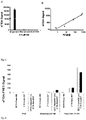
- results of the analysis according to the invention were related to an MMSE (mini mental status test) of the donors. These results are in 2 summarized. From this, the correlation between the evaluation of the MMSE test and the evaluation of the analysis according to the invention becomes clear.
- an A beta oligomer standard was constructed that had 16 epitopes for N-terminal binding A beta antibodies (epitope corresponds to A beta-(1-11), sequence: DAEFRHDSGYE).
- MAP multiple antigen peptide
- A-beta1-11 a multiple antigen peptide consisting of four N-terminal A-beta epitopes A-beta1-11 was synthesized. These were appropriate figure 3 A coupled to a triple lysine core containing two tryptophanes for accurate determination of MAP concentration by UV/VIS spectroscopy.
- a biotin tag was attached at the N-terminal. This was used to couple four 4-MAP units to a streptavidin tetramer, in figure 3 shown under B. After incubation of 4-MAP and streptavidin, 16-MAP was formed as in figure 3 shown under C. 16-MAP was separated from other components of the incubation mixture by size exclusion chromatography.
- MAP-16 was serially diluted in PBS and used in the sFIDA assay Detection of A beta oligomers used.
- Glass microtiter plates were cleaned in an ultrasonic bath for 15 minutes and then treated with a plasma cleaner for 10 minutes. To activate the glass surface, the wells were incubated in 5 M NaOH for at least 3 hours, rinsed with water and then dried in a stream of nitrogen gas. For the coating with dextran, the glass surface was hydroxylated and then activated with amino groups. For this purpose, the glass plates were incubated overnight in a solution of 5 M ethanolamine in DMSO. The glass plates were then rinsed with water and dried in a stream of nitrogen gas.
- Carboxymethyl dextran was dissolved in water at a concentration of 20 mg per ml and treated with N-ethyl-N-(3-dimethylaminopropyl) carbodiimide (EDC), (200 mM) and N-hydroxysuccinimide (NHS), (50 mM) mixed. After a pre-incubation of 10 minutes, the solution was incubated for a further 2 hours at room temperature. Then the glass plates were washed with water.
- EDC N-ethyl-N-(3-dimethylaminopropyl) carbodiimide
- NHS N-hydroxysuccinimide
- a second activation was performed with a solution of EDC/NHS (200 or 50 mM) for 5 minutes.
- the solution of antibodies was added and incubated for 2 hours at 4°C. This covalently bound the antibodies to the CMD-activated glass surface.
- it was incubated with 1M ethanolamine in DMSO for 5 minutes. The glass was then washed three times with PBS.
- the MAP-16-containing sample to be measured was incubated on the glass for 1 hour, then three times with TBST (0.1%) (w/w), Tween-20 in TBS buffer, TBS: 50 nM Tris-HCl, 0.15 M NaCl, pH 7.4).
- Alexa 488 antibodies and IC-16 antibodies were used.
- the IC16 antibodies were labeled with a kit (fluorescence labeling KIT Alexa-647, Molecular Probes, Düsseldorf, Germany) according to the manufacturer's instructions.
- the labeled antibodies were stored in PBS with 2mM sodium azide at 4°C in the dark.
- the measurement was carried out with a confocal laser scanning microscope LSM 710 (Carl Zeiss, Jena, Germany). The microscope was equipped with an argon-ion laser and three helium-neon lasers. The measurements were carried out in tile scan mode, in which neighboring areas in a well are measured and combined to form an image. Each tile scan contained 3 ⁇ 2 individual images, each image had an area of 213 ⁇ 213 ⁇ m.
- TIRF total internal reflection
- figure 4 shows the results of the measurements. It can be clearly seen that the sFIDA signal, ie the amount of colocalized pixels, correlates with the concentration of the MAP-16 molecules.
- a beta monomers and oligomers consisting of synthetic A beta were analyzed according to a Protocol from Johannson et al., FEBS J. 2006, 273, pages 2618-2630 , prepared and tested with the system.
- the A beta oligomers were serially diluted in PBS and the linearity of the test was checked in a concentration series. The measurements were carried out as already described above, a Zeiss LSM 710 microscope was used for the detection and 2 ⁇ 25 images, each with a size of 213 ⁇ 213 ⁇ m and 1024 ⁇ 1024 pixels, were recorded.
- FRET Förster Resonance Energy Transfer. In FRET, the energy of an excited fluorochrome is transferred to a second fluorochrome. The FRET intensity depends, among other things, on the distance between donor and acceptor and can be observed in the range of up to 10 nm. Thus, FRET should be in sFIDA can be used to distinguish A beta monomers from A beta oligomers.
- an anti-A beta antibody eg, 6E10-Alexa488 coupled with a donor dye and an anti-A beta antibody (eg, IC-16-Alexa647) coupled with a matching acceptor dye in close proximity to each other to an A-beta oligomer
- the spatial proximity makes FRET possible. It should be statistically unlikely that 6E10-Alexa-488 and IC-16-Alexa647 would bind to two A-beta monomers that happened to be immobilized less than 10 nm apart. This probability can be reduced to zero if antibodies are used for detection that have an epitope that overlaps with the capture antibody.
- a beta monomers and A beta oligomers were prepared by size exclusion chromatography and immobilized for sFIDA measurements as described above.
- the fluorochromes were excited at a wavelength of 488 nm and the FRET emission was detected at a wavelength of 705 nm.
- Two samples were also measured as controls, in each of which only one fluorescent dye-coupled antibody was added.
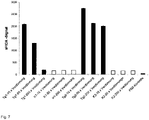
- test procedure corresponds to that described above, but the measurements were carried out on an LSM from Leica. It was found that in one of the two samples from transgenic mice, even when diluted 250-fold a significantly higher sFIDA signal could be detected than in the samples from non-transgenic control animals. 25 areas (each 246 ⁇ m) with 1024 ⁇ 4024 pixels, ie 16% of the well area, were measured per well.
Landscapes
- Health & Medical Sciences (AREA)
- Life Sciences & Earth Sciences (AREA)
- Chemical & Material Sciences (AREA)
- Immunology (AREA)
- Engineering & Computer Science (AREA)
- Molecular Biology (AREA)
- Biomedical Technology (AREA)
- Urology & Nephrology (AREA)
- Hematology (AREA)
- General Health & Medical Sciences (AREA)
- Biochemistry (AREA)
- Medicinal Chemistry (AREA)
- Analytical Chemistry (AREA)
- Microbiology (AREA)
- Physics & Mathematics (AREA)
- Cell Biology (AREA)
- Biotechnology (AREA)
- General Physics & Mathematics (AREA)
- Pathology (AREA)
- Food Science & Technology (AREA)
- Organic Chemistry (AREA)
- Proteomics, Peptides & Aminoacids (AREA)
- Biophysics (AREA)
- Genetics & Genomics (AREA)
- Inorganic Chemistry (AREA)
- Chemical Kinetics & Catalysis (AREA)
- Neurosurgery (AREA)
- Neurology (AREA)
- Peptides Or Proteins (AREA)
- Investigating Or Analysing Biological Materials (AREA)
- Measuring Or Testing Involving Enzymes Or Micro-Organisms (AREA)
- Investigating, Analyzing Materials By Fluorescence Or Luminescence (AREA)
Applications Claiming Priority (2)
| Application Number | Priority Date | Filing Date | Title |
|---|---|---|---|
| DE102011057021A DE102011057021A1 (de) | 2011-12-23 | 2011-12-23 | Verfahren zur selektiven Quantifizierung von A-Beta-Aggregaten |
| PCT/EP2012/076552 WO2013092952A2 (de) | 2011-12-23 | 2012-12-21 | Verfahren zur selektiven quantifizierung von a-beta-aggregaten |
Publications (2)
| Publication Number | Publication Date |
|---|---|
| EP2794655A2 EP2794655A2 (de) | 2014-10-29 |
| EP2794655B1 true EP2794655B1 (de) | 2022-04-13 |
Family
ID=47624003
Family Applications (1)
| Application Number | Title | Priority Date | Filing Date |
|---|---|---|---|
| EP12818996.6A Active EP2794655B1 (de) | 2011-12-23 | 2012-12-21 | Verfahren zur selektiven quantifizierung von a-beta-aggregaten |
Country Status (12)
| Country | Link |
|---|---|
| US (1) | US20150024512A1 (enExample) |
| EP (1) | EP2794655B1 (enExample) |
| JP (2) | JP2015502551A (enExample) |
| CN (1) | CN104080807A (enExample) |
| BR (1) | BR112014015392A2 (enExample) |
| CA (1) | CA2858125A1 (enExample) |
| DE (1) | DE102011057021A1 (enExample) |
| DK (1) | DK2794655T3 (enExample) |
| ES (1) | ES2922201T3 (enExample) |
| IL (1) | IL232870B (enExample) |
| RU (1) | RU2642314C2 (enExample) |
| WO (1) | WO2013092952A2 (enExample) |
Families Citing this family (13)
| Publication number | Priority date | Publication date | Assignee | Title |
|---|---|---|---|---|
| DE102013106713A1 (de) * | 2013-06-26 | 2014-12-31 | Forschungszentrum Jülich GmbH | Verfahren zur Ermittlung von Indikatoren zur Bestimmung von Krankheiten |
| WO2016053621A1 (en) * | 2014-09-16 | 2016-04-07 | Sri International | Affinity reagent and catalyst discovery though fiber-optic array scanning technology |
| DE102015003404B4 (de) * | 2015-03-18 | 2021-10-07 | Forschungszentrum Jülich GmbH | Verfahren zur Herstellung eines Standards für den Nachweis von Proteinaggregaten einer Proteinfehlfaltungserkrankung sowie Standard und dessen Verwendung |
| WO2017138497A1 (ja) * | 2016-02-08 | 2017-08-17 | シスメックス株式会社 | 被検物質の検出方法および被検物質の検出用試薬キット |
| JP6886854B2 (ja) * | 2017-04-13 | 2021-06-16 | シスメックス株式会社 | 被検物質の情報取得方法 |
| DE102017010455A1 (de) * | 2017-06-13 | 2018-12-13 | Forschungszentrum Jülich GmbH | Verfahren zum Nachweis von Aggregaten biotherapeutischer Substanzen in einer Probe |
| DE102017005543A1 (de) * | 2017-06-13 | 2018-12-13 | Forschungszentrum Jülich GmbH | Verfahren zum Nachweis von Extrazellulären Vesikeln in einer Probe |
| DE102017010842A1 (de) * | 2017-11-23 | 2019-05-23 | Forschungszentrum Jülich GmbH | Verfahren zur Quantifizierung von Proteinaggregaten einer Proteinfehlfaltungserkrankung in einer Probe |
| US20200400687A1 (en) * | 2017-12-19 | 2020-12-24 | Chase Therapeutics Corporation | Methods for developing pharmaceuticals for treating neurodegenerative conditions |
| CN111518206B (zh) | 2019-02-01 | 2022-03-29 | 长春金赛药业有限责任公司 | 人源化抗Aβ单克隆抗体及其应用 |
| DE102020114278A1 (de) | 2020-05-28 | 2021-12-02 | Forschungszentrum Jülich GmbH | Bestimmung krankheitsspezifischer Protein-Aggregate in Stuhlproben |
| DE102020003794A1 (de) * | 2020-06-25 | 2021-12-30 | Forschungszentrum Jülich GmbH | Verfahren, Verwendung des Verfahrens sowle Kit zum Nachweis von Bioindikatoren in einer Probe |
| CN116879540B (zh) * | 2023-07-13 | 2024-04-05 | 香港中文大学(深圳) | 一种神经元蛋白聚集体特异性检测试剂盒 |
Family Cites Families (12)
| Publication number | Priority date | Publication date | Assignee | Title |
|---|---|---|---|---|
| SE462454B (sv) * | 1988-11-10 | 1990-06-25 | Pharmacia Ab | Maetyta foer anvaendning i biosensorer |
| US7427392B1 (en) * | 1994-11-14 | 2008-09-23 | Elan Pharmaceuticals, Inc. | Methods for aiding in the diagnosis of alzheimer's disease by measuring amyloid-β peptide (x-≧41) and tau |
| WO2005018424A2 (en) * | 2003-08-18 | 2005-03-03 | Research Foundation For Mental Hygiene, Inc. | Antibodies specific for fibrillar amyloid and a procedure to detect fibrillar amyloid deposits |
| US7258990B2 (en) * | 2004-08-19 | 2007-08-21 | Biocept, Inc. | Alleviation of non-specific binding in microarray assays |
| SG10201706600VA (en) * | 2005-11-30 | 2017-09-28 | Abbvie Inc | Monoclonal antibodies and uses thereof |
| CN101384279B (zh) * | 2006-02-24 | 2012-02-22 | 奇斯药制品公司 | 抗淀粉样蛋白免疫原性组合物、方法和用途 |
| WO2008070229A2 (en) * | 2006-08-28 | 2008-06-12 | Case Western Reserve University | Detection of pathogenic aggregates of protein in a sample by homologous elisa |
| SG185316A1 (en) * | 2007-10-19 | 2012-11-29 | Immunas Pharma Inc | ANTIBODY CAPABLE OF SPECIFICALLY BINDING TO Aβ OLIGOMER, AND USE THEREOF |
| US20110104821A1 (en) * | 2008-05-08 | 2011-05-05 | Takahiko Tokuda | ABeta-OLIGOMER MEASUREMENT METHOD |
| JP5720248B2 (ja) * | 2008-12-24 | 2015-05-20 | コニカミノルタ株式会社 | 表面プラズモンおよび蛍光共鳴エネルギー転移を利用した免疫アッセイ |
| US8512677B2 (en) * | 2009-04-27 | 2013-08-20 | Case Western Reserve University | Pyro-glutamate Aβ targeting agents |
| EP2534490B1 (en) * | 2010-02-09 | 2015-12-16 | Bristol-Myers Squibb Company | Immunoassay standards and measurement of clinical biomarkers using intra-assay calibration standards |
-
2011
- 2011-12-23 DE DE102011057021A patent/DE102011057021A1/de not_active Ceased
-
2012
- 2012-12-21 DK DK12818996.6T patent/DK2794655T3/da active
- 2012-12-21 CA CA2858125A patent/CA2858125A1/en not_active Abandoned
- 2012-12-21 BR BR112014015392A patent/BR112014015392A2/pt not_active IP Right Cessation
- 2012-12-21 WO PCT/EP2012/076552 patent/WO2013092952A2/de not_active Ceased
- 2012-12-21 EP EP12818996.6A patent/EP2794655B1/de active Active
- 2012-12-21 RU RU2014130136A patent/RU2642314C2/ru not_active IP Right Cessation
- 2012-12-21 ES ES12818996T patent/ES2922201T3/es active Active
- 2012-12-21 US US14/366,952 patent/US20150024512A1/en not_active Abandoned
- 2012-12-21 JP JP2014548051A patent/JP2015502551A/ja active Pending
- 2012-12-21 CN CN201280064163.5A patent/CN104080807A/zh active Pending
-
2014
- 2014-05-29 IL IL232870A patent/IL232870B/en active IP Right Grant
-
2018
- 2018-10-04 JP JP2018189249A patent/JP6625709B2/ja not_active Expired - Fee Related
Non-Patent Citations (3)
Also Published As
| Publication number | Publication date |
|---|---|
| ES2922201T3 (es) | 2022-09-09 |
| EP2794655A2 (de) | 2014-10-29 |
| JP6625709B2 (ja) | 2019-12-25 |
| CN104080807A (zh) | 2014-10-01 |
| DK2794655T3 (da) | 2022-07-18 |
| JP2015502551A (ja) | 2015-01-22 |
| RU2014130136A (ru) | 2016-02-10 |
| RU2642314C2 (ru) | 2018-01-24 |
| BR112014015392A2 (pt) | 2019-09-24 |
| IL232870A0 (en) | 2014-07-31 |
| CA2858125A1 (en) | 2013-06-27 |
| IL232870B (en) | 2020-06-30 |
| DE102011057021A1 (de) | 2013-06-27 |
| WO2013092952A2 (de) | 2013-06-27 |
| US20150024512A1 (en) | 2015-01-22 |
| WO2013092952A3 (de) | 2013-08-29 |
| JP2019015738A (ja) | 2019-01-31 |
Similar Documents
| Publication | Publication Date | Title |
|---|---|---|
| EP2794655B1 (de) | Verfahren zur selektiven quantifizierung von a-beta-aggregaten | |
| Kulenkampff et al. | Quantifying misfolded protein oligomers as drug targets and biomarkers in Alzheimer and Parkinson diseases | |
| EP3014279B1 (de) | Verfahren zur bestimmung von proteinaggregaten unter verwendung von oberflächen-fida | |
| Wilhelm et al. | Immune reactivity towards insulin, its amyloid and protein S100B in blood sera of Parkinson's disease patients | |
| WO2011142901A1 (en) | Diagnostic biomarker profiles for the detection and diagnosis of alzheimer's disease | |
| JP2015502551A5 (enExample) | ||
| EP2795336A2 (de) | Standard zur quantifizierung von pathogenen aggregaten aus körpereigenen proteinen | |
| EP3260865A2 (de) | Verfahren zur behandlung von blut, blutprodukten und organen | |
| Rajbanshi et al. | Localization, induction, and cellular effects of tau phosphorylated at threonine 217 1 | |
| DE102017005543A1 (de) | Verfahren zum Nachweis von Extrazellulären Vesikeln in einer Probe | |
| WO2021239700A2 (de) | Bestimmung krankheitsspezifischer protein-aggregate in stuhlproben | |
| Miklosi et al. | Super-resolution microscopical localization of dopamine receptors 1 and 2 in rat hippocampal synaptosomes | |
| DE102007029766A1 (de) | Verfahren zur Detektion von Analyten | |
| Diez-Fraile et al. | Optimizing multiple immunostaining of neural tissue | |
| DE102017010842A1 (de) | Verfahren zur Quantifizierung von Proteinaggregaten einer Proteinfehlfaltungserkrankung in einer Probe | |
| DE102005031429A1 (de) | Verfahren zur selektiven Bestimmung pathologischer Proteinablagerungen | |
| WO2003054548A1 (de) | Verfahren zur quantitativ analytischen bestimmung von aggregaten | |
| KR101365051B1 (ko) | 소고기 월령 판별용 spr 키트 및 이를 이용한 소고기 월령 판별 방법 | |
| WO2004048977A1 (de) | Verfahren zur detektion von membrangebundenen und/oder amyloidogenen proteinen | |
| Plotegher et al. | NADH fluorescence lifetime is an endogenous reporter of a-synuclein aggregation in live cells | |
| Carlred | Detection of Lipids and Proteins on Biological Surfaces using Imaging Mass Spectrometry |
Legal Events
| Date | Code | Title | Description |
|---|---|---|---|
| PUAI | Public reference made under article 153(3) epc to a published international application that has entered the european phase |
Free format text: ORIGINAL CODE: 0009012 |
|
| 17P | Request for examination filed |
Effective date: 20140717 |
|
| AK | Designated contracting states |
Kind code of ref document: A2 Designated state(s): AL AT BE BG CH CY CZ DE DK EE ES FI FR GB GR HR HU IE IS IT LI LT LU LV MC MK MT NL NO PL PT RO RS SE SI SK SM TR |
|
| DAX | Request for extension of the european patent (deleted) | ||
| STAA | Information on the status of an ep patent application or granted ep patent |
Free format text: STATUS: EXAMINATION IS IN PROGRESS |
|
| 17Q | First examination report despatched |
Effective date: 20181113 |
|
| RAP3 | Party data changed (applicant data changed or rights of an application transferred) |
Owner name: FORSCHUNGSZENTRUM JUELICH GMBH |
|
| GRAP | Despatch of communication of intention to grant a patent |
Free format text: ORIGINAL CODE: EPIDOSNIGR1 |
|
| STAA | Information on the status of an ep patent application or granted ep patent |
Free format text: STATUS: GRANT OF PATENT IS INTENDED |
|
| INTG | Intention to grant announced |
Effective date: 20211103 |
|
| GRAS | Grant fee paid |
Free format text: ORIGINAL CODE: EPIDOSNIGR3 |
|
| GRAA | (expected) grant |
Free format text: ORIGINAL CODE: 0009210 |
|
| STAA | Information on the status of an ep patent application or granted ep patent |
Free format text: STATUS: THE PATENT HAS BEEN GRANTED |
|
| AK | Designated contracting states |
Kind code of ref document: B1 Designated state(s): AL AT BE BG CH CY CZ DE DK EE ES FI FR GB GR HR HU IE IS IT LI LT LU LV MC MK MT NL NO PL PT RO RS SE SI SK SM TR |
|
| REG | Reference to a national code |
Ref country code: GB Ref legal event code: FG4D Free format text: NOT ENGLISH |
|
| REG | Reference to a national code |
Ref country code: CH Ref legal event code: EP |
|
| REG | Reference to a national code |
Ref country code: DE Ref legal event code: R096 Ref document number: 502012017022 Country of ref document: DE |
|
| REG | Reference to a national code |
Ref country code: IE Ref legal event code: FG4D Free format text: LANGUAGE OF EP DOCUMENT: GERMAN |
|
| REG | Reference to a national code |
Ref country code: AT Ref legal event code: REF Ref document number: 1483368 Country of ref document: AT Kind code of ref document: T Effective date: 20220515 |
|
| REG | Reference to a national code |
Ref country code: FI Ref legal event code: FGE |
|
| REG | Reference to a national code |
Ref country code: DK Ref legal event code: T3 Effective date: 20220711 |
|
| REG | Reference to a national code |
Ref country code: NL Ref legal event code: FP |
|
| REG | Reference to a national code |
Ref country code: SE Ref legal event code: TRGR |
|
| REG | Reference to a national code |
Ref country code: LT Ref legal event code: MG9D |
|
| REG | Reference to a national code |
Ref country code: NO Ref legal event code: T2 Effective date: 20220413 |
|
| REG | Reference to a national code |
Ref country code: ES Ref legal event code: FG2A Ref document number: 2922201 Country of ref document: ES Kind code of ref document: T3 Effective date: 20220909 |
|
| PG25 | Lapsed in a contracting state [announced via postgrant information from national office to epo] |
Ref country code: PT Free format text: LAPSE BECAUSE OF FAILURE TO SUBMIT A TRANSLATION OF THE DESCRIPTION OR TO PAY THE FEE WITHIN THE PRESCRIBED TIME-LIMIT Effective date: 20220816 Ref country code: LT Free format text: LAPSE BECAUSE OF FAILURE TO SUBMIT A TRANSLATION OF THE DESCRIPTION OR TO PAY THE FEE WITHIN THE PRESCRIBED TIME-LIMIT Effective date: 20220413 Ref country code: HR Free format text: LAPSE BECAUSE OF FAILURE TO SUBMIT A TRANSLATION OF THE DESCRIPTION OR TO PAY THE FEE WITHIN THE PRESCRIBED TIME-LIMIT Effective date: 20220413 Ref country code: GR Free format text: LAPSE BECAUSE OF FAILURE TO SUBMIT A TRANSLATION OF THE DESCRIPTION OR TO PAY THE FEE WITHIN THE PRESCRIBED TIME-LIMIT Effective date: 20220714 Ref country code: BG Free format text: LAPSE BECAUSE OF FAILURE TO SUBMIT A TRANSLATION OF THE DESCRIPTION OR TO PAY THE FEE WITHIN THE PRESCRIBED TIME-LIMIT Effective date: 20220713 |
|
| PG25 | Lapsed in a contracting state [announced via postgrant information from national office to epo] |
Ref country code: RS Free format text: LAPSE BECAUSE OF FAILURE TO SUBMIT A TRANSLATION OF THE DESCRIPTION OR TO PAY THE FEE WITHIN THE PRESCRIBED TIME-LIMIT Effective date: 20220413 Ref country code: PL Free format text: LAPSE BECAUSE OF FAILURE TO SUBMIT A TRANSLATION OF THE DESCRIPTION OR TO PAY THE FEE WITHIN THE PRESCRIBED TIME-LIMIT Effective date: 20220413 Ref country code: LV Free format text: LAPSE BECAUSE OF FAILURE TO SUBMIT A TRANSLATION OF THE DESCRIPTION OR TO PAY THE FEE WITHIN THE PRESCRIBED TIME-LIMIT Effective date: 20220413 Ref country code: IS Free format text: LAPSE BECAUSE OF FAILURE TO SUBMIT A TRANSLATION OF THE DESCRIPTION OR TO PAY THE FEE WITHIN THE PRESCRIBED TIME-LIMIT Effective date: 20220813 |
|
| REG | Reference to a national code |
Ref country code: DE Ref legal event code: R097 Ref document number: 502012017022 Country of ref document: DE |
|
| PG25 | Lapsed in a contracting state [announced via postgrant information from national office to epo] |
Ref country code: SM Free format text: LAPSE BECAUSE OF FAILURE TO SUBMIT A TRANSLATION OF THE DESCRIPTION OR TO PAY THE FEE WITHIN THE PRESCRIBED TIME-LIMIT Effective date: 20220413 Ref country code: SK Free format text: LAPSE BECAUSE OF FAILURE TO SUBMIT A TRANSLATION OF THE DESCRIPTION OR TO PAY THE FEE WITHIN THE PRESCRIBED TIME-LIMIT Effective date: 20220413 Ref country code: RO Free format text: LAPSE BECAUSE OF FAILURE TO SUBMIT A TRANSLATION OF THE DESCRIPTION OR TO PAY THE FEE WITHIN THE PRESCRIBED TIME-LIMIT Effective date: 20220413 Ref country code: EE Free format text: LAPSE BECAUSE OF FAILURE TO SUBMIT A TRANSLATION OF THE DESCRIPTION OR TO PAY THE FEE WITHIN THE PRESCRIBED TIME-LIMIT Effective date: 20220413 Ref country code: CZ Free format text: LAPSE BECAUSE OF FAILURE TO SUBMIT A TRANSLATION OF THE DESCRIPTION OR TO PAY THE FEE WITHIN THE PRESCRIBED TIME-LIMIT Effective date: 20220413 |
|
| PLBE | No opposition filed within time limit |
Free format text: ORIGINAL CODE: 0009261 |
|
| STAA | Information on the status of an ep patent application or granted ep patent |
Free format text: STATUS: NO OPPOSITION FILED WITHIN TIME LIMIT |
|
| 26N | No opposition filed |
Effective date: 20230116 |
|
| PG25 | Lapsed in a contracting state [announced via postgrant information from national office to epo] |
Ref country code: AL Free format text: LAPSE BECAUSE OF FAILURE TO SUBMIT A TRANSLATION OF THE DESCRIPTION OR TO PAY THE FEE WITHIN THE PRESCRIBED TIME-LIMIT Effective date: 20220413 |
|
| PG25 | Lapsed in a contracting state [announced via postgrant information from national office to epo] |
Ref country code: SI Free format text: LAPSE BECAUSE OF FAILURE TO SUBMIT A TRANSLATION OF THE DESCRIPTION OR TO PAY THE FEE WITHIN THE PRESCRIBED TIME-LIMIT Effective date: 20220413 |
|
| REG | Reference to a national code |
Ref country code: NO Ref legal event code: MMEP Ref country code: DK Ref legal event code: EBP Effective date: 20221231 |
|
| REG | Reference to a national code |
Ref country code: CH Ref legal event code: PL |
|
| REG | Reference to a national code |
Ref country code: SE Ref legal event code: EUG |
|
| REG | Reference to a national code |
Ref country code: NL Ref legal event code: MM Effective date: 20230101 |
|
| GBPC | Gb: european patent ceased through non-payment of renewal fee |
Effective date: 20221221 |
|
| REG | Reference to a national code |
Ref country code: BE Ref legal event code: MM Effective date: 20221231 |
|
| PG25 | Lapsed in a contracting state [announced via postgrant information from national office to epo] |
Ref country code: LU Free format text: LAPSE BECAUSE OF NON-PAYMENT OF DUE FEES Effective date: 20221221 |
|
| PG25 | Lapsed in a contracting state [announced via postgrant information from national office to epo] |
Ref country code: NL Free format text: LAPSE BECAUSE OF NON-PAYMENT OF DUE FEES Effective date: 20230101 |
|
| PG25 | Lapsed in a contracting state [announced via postgrant information from national office to epo] |
Ref country code: SE Free format text: LAPSE BECAUSE OF NON-PAYMENT OF DUE FEES Effective date: 20221222 Ref country code: NO Free format text: LAPSE BECAUSE OF NON-PAYMENT OF DUE FEES Effective date: 20221231 Ref country code: LI Free format text: LAPSE BECAUSE OF NON-PAYMENT OF DUE FEES Effective date: 20221231 Ref country code: IE Free format text: LAPSE BECAUSE OF NON-PAYMENT OF DUE FEES Effective date: 20221221 Ref country code: GB Free format text: LAPSE BECAUSE OF NON-PAYMENT OF DUE FEES Effective date: 20221221 Ref country code: CH Free format text: LAPSE BECAUSE OF NON-PAYMENT OF DUE FEES Effective date: 20221231 |
|
| PG25 | Lapsed in a contracting state [announced via postgrant information from national office to epo] |
Ref country code: FR Free format text: LAPSE BECAUSE OF NON-PAYMENT OF DUE FEES Effective date: 20221231 Ref country code: BE Free format text: LAPSE BECAUSE OF NON-PAYMENT OF DUE FEES Effective date: 20221231 |
|
| PG25 | Lapsed in a contracting state [announced via postgrant information from national office to epo] |
Ref country code: IT Free format text: LAPSE BECAUSE OF NON-PAYMENT OF DUE FEES Effective date: 20221221 Ref country code: DK Free format text: LAPSE BECAUSE OF NON-PAYMENT OF DUE FEES Effective date: 20221231 |
|
| REG | Reference to a national code |
Ref country code: AT Ref legal event code: MM01 Ref document number: 1483368 Country of ref document: AT Kind code of ref document: T Effective date: 20221221 |
|
| PG25 | Lapsed in a contracting state [announced via postgrant information from national office to epo] |
Ref country code: HU Free format text: LAPSE BECAUSE OF FAILURE TO SUBMIT A TRANSLATION OF THE DESCRIPTION OR TO PAY THE FEE WITHIN THE PRESCRIBED TIME-LIMIT; INVALID AB INITIO Effective date: 20121221 |
|
| PG25 | Lapsed in a contracting state [announced via postgrant information from national office to epo] |
Ref country code: ES Free format text: LAPSE BECAUSE OF NON-PAYMENT OF DUE FEES Effective date: 20221222 |
|
| PG25 | Lapsed in a contracting state [announced via postgrant information from national office to epo] |
Ref country code: AT Free format text: LAPSE BECAUSE OF NON-PAYMENT OF DUE FEES Effective date: 20221221 |
|
| PG25 | Lapsed in a contracting state [announced via postgrant information from national office to epo] |
Ref country code: FI Free format text: LAPSE BECAUSE OF NON-PAYMENT OF DUE FEES Effective date: 20221221 Ref country code: ES Free format text: LAPSE BECAUSE OF NON-PAYMENT OF DUE FEES Effective date: 20221222 Ref country code: CY Free format text: LAPSE BECAUSE OF FAILURE TO SUBMIT A TRANSLATION OF THE DESCRIPTION OR TO PAY THE FEE WITHIN THE PRESCRIBED TIME-LIMIT Effective date: 20220413 Ref country code: AT Free format text: LAPSE BECAUSE OF NON-PAYMENT OF DUE FEES Effective date: 20221221 |
|
| PG25 | Lapsed in a contracting state [announced via postgrant information from national office to epo] |
Ref country code: MK Free format text: LAPSE BECAUSE OF FAILURE TO SUBMIT A TRANSLATION OF THE DESCRIPTION OR TO PAY THE FEE WITHIN THE PRESCRIBED TIME-LIMIT Effective date: 20220413 |
|
| PG25 | Lapsed in a contracting state [announced via postgrant information from national office to epo] |
Ref country code: MC Free format text: LAPSE BECAUSE OF FAILURE TO SUBMIT A TRANSLATION OF THE DESCRIPTION OR TO PAY THE FEE WITHIN THE PRESCRIBED TIME-LIMIT Effective date: 20220413 |
|
| PG25 | Lapsed in a contracting state [announced via postgrant information from national office to epo] |
Ref country code: TR Free format text: LAPSE BECAUSE OF FAILURE TO SUBMIT A TRANSLATION OF THE DESCRIPTION OR TO PAY THE FEE WITHIN THE PRESCRIBED TIME-LIMIT Effective date: 20220413 Ref country code: MC Free format text: LAPSE BECAUSE OF FAILURE TO SUBMIT A TRANSLATION OF THE DESCRIPTION OR TO PAY THE FEE WITHIN THE PRESCRIBED TIME-LIMIT Effective date: 20220413 |
|
| PG25 | Lapsed in a contracting state [announced via postgrant information from national office to epo] |
Ref country code: MT Free format text: LAPSE BECAUSE OF FAILURE TO SUBMIT A TRANSLATION OF THE DESCRIPTION OR TO PAY THE FEE WITHIN THE PRESCRIBED TIME-LIMIT Effective date: 20220413 |
|
| PG25 | Lapsed in a contracting state [announced via postgrant information from national office to epo] |
Ref country code: BG Free format text: LAPSE BECAUSE OF FAILURE TO SUBMIT A TRANSLATION OF THE DESCRIPTION OR TO PAY THE FEE WITHIN THE PRESCRIBED TIME-LIMIT Effective date: 20220413 |
|
| PG25 | Lapsed in a contracting state [announced via postgrant information from national office to epo] |
Ref country code: BG Free format text: LAPSE BECAUSE OF FAILURE TO SUBMIT A TRANSLATION OF THE DESCRIPTION OR TO PAY THE FEE WITHIN THE PRESCRIBED TIME-LIMIT Effective date: 20220413 |
|
| PGFP | Annual fee paid to national office [announced via postgrant information from national office to epo] |
Ref country code: DE Payment date: 20241216 Year of fee payment: 13 |