EP2748299B1 - Zielgerichtete mikrobläschen - Google Patents
Zielgerichtete mikrobläschen Download PDFInfo
- Publication number
- EP2748299B1 EP2748299B1 EP12826476.9A EP12826476A EP2748299B1 EP 2748299 B1 EP2748299 B1 EP 2748299B1 EP 12826476 A EP12826476 A EP 12826476A EP 2748299 B1 EP2748299 B1 EP 2748299B1
- Authority
- EP
- European Patent Office
- Prior art keywords
- targeting
- microbubbles
- moiety
- microbubble
- solution
- Prior art date
- Legal status (The legal status is an assumption and is not a legal conclusion. Google has not performed a legal analysis and makes no representation as to the accuracy of the status listed.)
- Active
Links
Images


Classifications
-
- A—HUMAN NECESSITIES
- A61—MEDICAL OR VETERINARY SCIENCE; HYGIENE
- A61K—PREPARATIONS FOR MEDICAL, DENTAL OR TOILETRY PURPOSES
- A61K47/00—Medicinal preparations characterised by the non-active ingredients used, e.g. carriers or inert additives; Targeting or modifying agents chemically bound to the active ingredient
- A61K47/50—Medicinal preparations characterised by the non-active ingredients used, e.g. carriers or inert additives; Targeting or modifying agents chemically bound to the active ingredient the non-active ingredient being chemically bound to the active ingredient, e.g. polymer-drug conjugates
-
- A—HUMAN NECESSITIES
- A61—MEDICAL OR VETERINARY SCIENCE; HYGIENE
- A61K—PREPARATIONS FOR MEDICAL, DENTAL OR TOILETRY PURPOSES
- A61K41/00—Medicinal preparations obtained by treating materials with wave energy or particle radiation ; Therapies using these preparations
- A61K41/0028—Disruption, e.g. by heat or ultrasounds, sonophysical or sonochemical activation, e.g. thermosensitive or heat-sensitive liposomes, disruption of calculi with a medicinal preparation and ultrasounds
- A61K41/0033—Sonodynamic cancer therapy with sonochemically active agents or sonosensitizers, having their cytotoxic effects enhanced through application of ultrasounds
-
- A—HUMAN NECESSITIES
- A61—MEDICAL OR VETERINARY SCIENCE; HYGIENE
- A61B—DIAGNOSIS; SURGERY; IDENTIFICATION
- A61B17/00—Surgical instruments, devices or methods
- A61B17/22—Implements for squeezing-off ulcers or the like on inner organs of the body; Implements for scraping-out cavities of body organs, e.g. bones; for invasive removal or destruction of calculus using mechanical vibrations; for removing obstructions in blood vessels, not otherwise provided for
- A61B17/22004—Implements for squeezing-off ulcers or the like on inner organs of the body; Implements for scraping-out cavities of body organs, e.g. bones; for invasive removal or destruction of calculus using mechanical vibrations; for removing obstructions in blood vessels, not otherwise provided for using mechanical vibrations, e.g. ultrasonic shock waves
-
- A—HUMAN NECESSITIES
- A61—MEDICAL OR VETERINARY SCIENCE; HYGIENE
- A61B—DIAGNOSIS; SURGERY; IDENTIFICATION
- A61B17/00—Surgical instruments, devices or methods
- A61B17/22—Implements for squeezing-off ulcers or the like on inner organs of the body; Implements for scraping-out cavities of body organs, e.g. bones; for invasive removal or destruction of calculus using mechanical vibrations; for removing obstructions in blood vessels, not otherwise provided for
- A61B17/22004—Implements for squeezing-off ulcers or the like on inner organs of the body; Implements for scraping-out cavities of body organs, e.g. bones; for invasive removal or destruction of calculus using mechanical vibrations; for removing obstructions in blood vessels, not otherwise provided for using mechanical vibrations, e.g. ultrasonic shock waves
- A61B17/22012—Implements for squeezing-off ulcers or the like on inner organs of the body; Implements for scraping-out cavities of body organs, e.g. bones; for invasive removal or destruction of calculus using mechanical vibrations; for removing obstructions in blood vessels, not otherwise provided for using mechanical vibrations, e.g. ultrasonic shock waves in direct contact with, or very close to, the obstruction or concrement
- A61B17/2202—Implements for squeezing-off ulcers or the like on inner organs of the body; Implements for scraping-out cavities of body organs, e.g. bones; for invasive removal or destruction of calculus using mechanical vibrations; for removing obstructions in blood vessels, not otherwise provided for using mechanical vibrations, e.g. ultrasonic shock waves in direct contact with, or very close to, the obstruction or concrement the ultrasound transducer being inside patient's body at the distal end of the catheter
-
- A—HUMAN NECESSITIES
- A61—MEDICAL OR VETERINARY SCIENCE; HYGIENE
- A61B—DIAGNOSIS; SURGERY; IDENTIFICATION
- A61B17/00—Surgical instruments, devices or methods
- A61B17/22—Implements for squeezing-off ulcers or the like on inner organs of the body; Implements for scraping-out cavities of body organs, e.g. bones; for invasive removal or destruction of calculus using mechanical vibrations; for removing obstructions in blood vessels, not otherwise provided for
- A61B17/22004—Implements for squeezing-off ulcers or the like on inner organs of the body; Implements for scraping-out cavities of body organs, e.g. bones; for invasive removal or destruction of calculus using mechanical vibrations; for removing obstructions in blood vessels, not otherwise provided for using mechanical vibrations, e.g. ultrasonic shock waves
- A61B17/22012—Implements for squeezing-off ulcers or the like on inner organs of the body; Implements for scraping-out cavities of body organs, e.g. bones; for invasive removal or destruction of calculus using mechanical vibrations; for removing obstructions in blood vessels, not otherwise provided for using mechanical vibrations, e.g. ultrasonic shock waves in direct contact with, or very close to, the obstruction or concrement
- A61B17/22022—Implements for squeezing-off ulcers or the like on inner organs of the body; Implements for scraping-out cavities of body organs, e.g. bones; for invasive removal or destruction of calculus using mechanical vibrations; for removing obstructions in blood vessels, not otherwise provided for using mechanical vibrations, e.g. ultrasonic shock waves in direct contact with, or very close to, the obstruction or concrement using electric discharge
-
- A—HUMAN NECESSITIES
- A61—MEDICAL OR VETERINARY SCIENCE; HYGIENE
- A61K—PREPARATIONS FOR MEDICAL, DENTAL OR TOILETRY PURPOSES
- A61K31/00—Medicinal preparations containing organic active ingredients
- A61K31/66—Phosphorus compounds
- A61K31/662—Phosphorus acids or esters thereof having P—C bonds, e.g. foscarnet, trichlorfon
- A61K31/663—Compounds having two or more phosphorus acid groups or esters thereof, e.g. clodronic acid, pamidronic acid
-
- A—HUMAN NECESSITIES
- A61—MEDICAL OR VETERINARY SCIENCE; HYGIENE
- A61K—PREPARATIONS FOR MEDICAL, DENTAL OR TOILETRY PURPOSES
- A61K41/00—Medicinal preparations obtained by treating materials with wave energy or particle radiation ; Therapies using these preparations
- A61K41/0023—Aggression treatment or altering
-
- A—HUMAN NECESSITIES
- A61—MEDICAL OR VETERINARY SCIENCE; HYGIENE
- A61K—PREPARATIONS FOR MEDICAL, DENTAL OR TOILETRY PURPOSES
- A61K41/00—Medicinal preparations obtained by treating materials with wave energy or particle radiation ; Therapies using these preparations
- A61K41/0028—Disruption, e.g. by heat or ultrasounds, sonophysical or sonochemical activation, e.g. thermosensitive or heat-sensitive liposomes, disruption of calculi with a medicinal preparation and ultrasounds
-
- A—HUMAN NECESSITIES
- A61—MEDICAL OR VETERINARY SCIENCE; HYGIENE
- A61K—PREPARATIONS FOR MEDICAL, DENTAL OR TOILETRY PURPOSES
- A61K47/00—Medicinal preparations characterised by the non-active ingredients used, e.g. carriers or inert additives; Targeting or modifying agents chemically bound to the active ingredient
- A61K47/06—Organic compounds, e.g. natural or synthetic hydrocarbons, polyolefins, mineral oil, petrolatum or ozokerite
- A61K47/24—Organic compounds, e.g. natural or synthetic hydrocarbons, polyolefins, mineral oil, petrolatum or ozokerite containing atoms other than carbon, hydrogen, oxygen, halogen, nitrogen or sulfur, e.g. cyclomethicone or phospholipids
-
- A—HUMAN NECESSITIES
- A61—MEDICAL OR VETERINARY SCIENCE; HYGIENE
- A61K—PREPARATIONS FOR MEDICAL, DENTAL OR TOILETRY PURPOSES
- A61K47/00—Medicinal preparations characterised by the non-active ingredients used, e.g. carriers or inert additives; Targeting or modifying agents chemically bound to the active ingredient
- A61K47/30—Macromolecular organic or inorganic compounds, e.g. inorganic polyphosphates
-
- A—HUMAN NECESSITIES
- A61—MEDICAL OR VETERINARY SCIENCE; HYGIENE
- A61K—PREPARATIONS FOR MEDICAL, DENTAL OR TOILETRY PURPOSES
- A61K47/00—Medicinal preparations characterised by the non-active ingredients used, e.g. carriers or inert additives; Targeting or modifying agents chemically bound to the active ingredient
- A61K47/50—Medicinal preparations characterised by the non-active ingredients used, e.g. carriers or inert additives; Targeting or modifying agents chemically bound to the active ingredient the non-active ingredient being chemically bound to the active ingredient, e.g. polymer-drug conjugates
- A61K47/69—Medicinal preparations characterised by the non-active ingredients used, e.g. carriers or inert additives; Targeting or modifying agents chemically bound to the active ingredient the non-active ingredient being chemically bound to the active ingredient, e.g. polymer-drug conjugates the conjugate being characterised by physical or galenical forms, e.g. emulsion, particle, inclusion complex, stent or kit
- A61K47/6905—Medicinal preparations characterised by the non-active ingredients used, e.g. carriers or inert additives; Targeting or modifying agents chemically bound to the active ingredient the non-active ingredient being chemically bound to the active ingredient, e.g. polymer-drug conjugates the conjugate being characterised by physical or galenical forms, e.g. emulsion, particle, inclusion complex, stent or kit the form being a colloid or an emulsion
- A61K47/6911—Medicinal preparations characterised by the non-active ingredients used, e.g. carriers or inert additives; Targeting or modifying agents chemically bound to the active ingredient the non-active ingredient being chemically bound to the active ingredient, e.g. polymer-drug conjugates the conjugate being characterised by physical or galenical forms, e.g. emulsion, particle, inclusion complex, stent or kit the form being a colloid or an emulsion the form being a liposome
-
- A—HUMAN NECESSITIES
- A61—MEDICAL OR VETERINARY SCIENCE; HYGIENE
- A61K—PREPARATIONS FOR MEDICAL, DENTAL OR TOILETRY PURPOSES
- A61K9/00—Medicinal preparations characterised by special physical form
- A61K9/0002—Galenical forms characterised by the drug release technique; Application systems commanded by energy
- A61K9/0009—Galenical forms characterised by the drug release technique; Application systems commanded by energy involving or responsive to electricity, magnetism or acoustic waves; Galenical aspects of sonophoresis, iontophoresis, electroporation or electroosmosis
-
- A—HUMAN NECESSITIES
- A61—MEDICAL OR VETERINARY SCIENCE; HYGIENE
- A61K—PREPARATIONS FOR MEDICAL, DENTAL OR TOILETRY PURPOSES
- A61K9/00—Medicinal preparations characterised by special physical form
- A61K9/0012—Galenical forms characterised by the site of application
- A61K9/0019—Injectable compositions; Intramuscular, intravenous, arterial, subcutaneous administration; Compositions to be administered through the skin in an invasive manner
-
- A—HUMAN NECESSITIES
- A61—MEDICAL OR VETERINARY SCIENCE; HYGIENE
- A61K—PREPARATIONS FOR MEDICAL, DENTAL OR TOILETRY PURPOSES
- A61K9/00—Medicinal preparations characterised by special physical form
- A61K9/08—Solutions
-
- A—HUMAN NECESSITIES
- A61—MEDICAL OR VETERINARY SCIENCE; HYGIENE
- A61K—PREPARATIONS FOR MEDICAL, DENTAL OR TOILETRY PURPOSES
- A61K9/00—Medicinal preparations characterised by special physical form
- A61K9/10—Dispersions; Emulsions
- A61K9/107—Emulsions ; Emulsion preconcentrates; Micelles
- A61K9/1075—Microemulsions or submicron emulsions; Preconcentrates or solids thereof; Micelles, e.g. made of phospholipids or block copolymers
-
- A—HUMAN NECESSITIES
- A61—MEDICAL OR VETERINARY SCIENCE; HYGIENE
- A61K—PREPARATIONS FOR MEDICAL, DENTAL OR TOILETRY PURPOSES
- A61K9/00—Medicinal preparations characterised by special physical form
- A61K9/10—Dispersions; Emulsions
- A61K9/127—Synthetic bilayered vehicles, e.g. liposomes or liposomes with cholesterol as the only non-phosphatidyl surfactant
-
- A—HUMAN NECESSITIES
- A61—MEDICAL OR VETERINARY SCIENCE; HYGIENE
- A61N—ELECTROTHERAPY; MAGNETOTHERAPY; RADIATION THERAPY; ULTRASOUND THERAPY
- A61N7/00—Ultrasound therapy
-
- A—HUMAN NECESSITIES
- A61—MEDICAL OR VETERINARY SCIENCE; HYGIENE
- A61P—SPECIFIC THERAPEUTIC ACTIVITY OF CHEMICAL COMPOUNDS OR MEDICINAL PREPARATIONS
- A61P35/00—Antineoplastic agents
-
- A—HUMAN NECESSITIES
- A61—MEDICAL OR VETERINARY SCIENCE; HYGIENE
- A61P—SPECIFIC THERAPEUTIC ACTIVITY OF CHEMICAL COMPOUNDS OR MEDICINAL PREPARATIONS
- A61P43/00—Drugs for specific purposes, not provided for in groups A61P1/00-A61P41/00
-
- A—HUMAN NECESSITIES
- A61—MEDICAL OR VETERINARY SCIENCE; HYGIENE
- A61B—DIAGNOSIS; SURGERY; IDENTIFICATION
- A61B17/00—Surgical instruments, devices or methods
- A61B17/22—Implements for squeezing-off ulcers or the like on inner organs of the body; Implements for scraping-out cavities of body organs, e.g. bones; for invasive removal or destruction of calculus using mechanical vibrations; for removing obstructions in blood vessels, not otherwise provided for
- A61B17/22004—Implements for squeezing-off ulcers or the like on inner organs of the body; Implements for scraping-out cavities of body organs, e.g. bones; for invasive removal or destruction of calculus using mechanical vibrations; for removing obstructions in blood vessels, not otherwise provided for using mechanical vibrations, e.g. ultrasonic shock waves
- A61B2017/22005—Effects, e.g. on tissue
- A61B2017/22007—Cavitation or pseudocavitation, i.e. creation of gas bubbles generating a secondary shock wave when collapsing
-
- A—HUMAN NECESSITIES
- A61—MEDICAL OR VETERINARY SCIENCE; HYGIENE
- A61B—DIAGNOSIS; SURGERY; IDENTIFICATION
- A61B17/00—Surgical instruments, devices or methods
- A61B17/22—Implements for squeezing-off ulcers or the like on inner organs of the body; Implements for scraping-out cavities of body organs, e.g. bones; for invasive removal or destruction of calculus using mechanical vibrations; for removing obstructions in blood vessels, not otherwise provided for
- A61B17/22004—Implements for squeezing-off ulcers or the like on inner organs of the body; Implements for scraping-out cavities of body organs, e.g. bones; for invasive removal or destruction of calculus using mechanical vibrations; for removing obstructions in blood vessels, not otherwise provided for using mechanical vibrations, e.g. ultrasonic shock waves
- A61B2017/22005—Effects, e.g. on tissue
- A61B2017/22007—Cavitation or pseudocavitation, i.e. creation of gas bubbles generating a secondary shock wave when collapsing
- A61B2017/22008—Cavitation or pseudocavitation, i.e. creation of gas bubbles generating a secondary shock wave when collapsing used or promoted
-
- A—HUMAN NECESSITIES
- A61—MEDICAL OR VETERINARY SCIENCE; HYGIENE
- A61K—PREPARATIONS FOR MEDICAL, DENTAL OR TOILETRY PURPOSES
- A61K2121/00—Preparations for use in therapy
-
- A—HUMAN NECESSITIES
- A61—MEDICAL OR VETERINARY SCIENCE; HYGIENE
- A61N—ELECTROTHERAPY; MAGNETOTHERAPY; RADIATION THERAPY; ULTRASOUND THERAPY
- A61N7/00—Ultrasound therapy
- A61N2007/0039—Ultrasound therapy using microbubbles
Definitions
- the present invention relates to targeting microbubbles comprising an anchoring moiety and a targeting moiety having an affinity for calcium-containing bodies and/or biological targets.
- these microbubbles and solutions thereof are useful for providing targeted placement of microbubbles capable of cavitation on application of high frequency energy.
- Cavitation is a component of some currently used medical interventions, such as a treatment for kidney stones.
- shock waves are focused onto a stone in the kidney or ureter.
- the interaction between the waves and the stone induces the formation of cavitation bubbles.
- the collapse of cavitation bubbles releases energy at the stone, and the energy fragments the stone into pieces small enough to be passed via the ureter.
- a large number of medical conditions are characterized at least in part by the presence of an abnormal mass. Examples include urinary stones, biliary stones, blood clots, fibroids, cancerous tumors, and atheromatous plaques. Destruction or reduction of the mass without injury to healthy tissue is a goal for many therapeutic treatments. Minimally invasive treatments are preferred as they reduce the pain, discomfort, and risks associated with surgical or other invasive therapies.
- WO2012/143739 A discloses microbubble-sonosensitiser complexes in which sonosensitisers are attached or otherwise associated with a microbubble. Subsequent or simultaneous sono-activation of the targeted sonosensitiser results in cell destruction at the target site and regression of tumour tissues.
- WO2012/094541 A discloses techniques, systems, devices and materials for implementing and fabricating drug delivery and imaging vehicles, which are activated in the body at a tissue of interest by focused ultrasound.
- a drug delivery vehicle can include a carrier having an outer membrane that envelopes an acoustic sensitizer particle and a payload substance to be delivered to the target tissue.
- US6261537B discloses targetable diagnostic and/or therapeutically active agents, e.g. ultrasound contrast agents, having reporters comprising gas-filled microbubbles stabilised by monolayers of film-forming surfactants, the reporter being coupled or linked to at least one vector.
- WO2008/131217 discloses compositions and methods for detecting various disorders with targeted microbubbles are disclosed. Microbubbles comprising glycoprotein Ib (GPIb), ligands for VCAM- 1, and ligands for P-selectin such as PSGL-1 are disclosed.
- GPIb glycoprotein Ib
- ligands for VCAM- 1 ligands for VCAM- 1
- P-selectin such as PSGL-1
- US2008/269668 discloses medical apparatus and processes to controllably generate medically useful micro or nano bubbles of medically desirable and controllably selectable size, size distribution, homogeneity and concentration (and/or other key bubble parameters) for patient infusion, and/or which may incorporate therapeutic or other agents for patient infusion and/or may be combined with therapeutic or other agents prior to infusion into patients.
- Rapoport et al., J. Natl. Cancer. Inst. 2007, 99, 1095-1106 discloses the preparation of mixtures of drug-loaded polymeric micelles and perfluoropentane (PFP) nano/microbubbles stabilized by the same biodegradable block copolymer were prepared.
- PFP perfluoropentane
- US2008/045865 discloses systems and methods for localized delivery of heat, useful for localized imaging and treatment of a biological material.
- the disclosed method comprises exposing nanoparticles to electromagnetic radiation under conditions wherein the nanoparticles generate microbubbles which emit heat when exposed to ultrasonic radiation.
- the invention relates to a targeting microbubble comprising: (a) a core containing a fluid having a normal boiling point less than 30°C; (b) an anchoring moiety comprising a bio-lipid, protein, surfactant or synthetic polymer; and (c) a targeting moiety comprising a chemical group having an affinity for a calcium- containing material, wherein the chemical group is a phosphonate; or bisphosphonate.
- the invention in another aspect, relates to a solution comprising a plurality of the targeting microbubbles dispersed in a solvent.
- the solvent may be water or a physiological fluid.
- the present invention provides methods for preparing the solution of microbubbles, the method comprising delivering energy to a solution comprising a bubble-forming material and a solvent, wherein: (a) the bubble-forming material comprises an anchoring moiety and a targeting moiety, said anchoring moiety comprising a bio-lipid, surfactant, synthetic polymer, protein, or combination thereof; said targeting moiety comprising a chemical group having an affinity for a calcium-containing material, wherein the chemical group is a phosphonate; or bisphosphonate; and (b) the energy is sufficient to cause the bubble-forming material to form microbubbles in the solvent
- the invention relates to microbubbles or a solution thereof as described above for use in therapy, wherein the targeting moiety of the microbubble has a specific affinity for a target within a patient, said microbubbles being cavitable when ultrasound, mechanical, or microwave energy is applied thereto.
- compositions comprising and methods of making and using targeting microbubbles.
- compositions or methods may be described in terms of certain embodiments or features. Where the disclosure describes and/or claims a particular feature in a composition or method, it is appreciated that such a feature is intended to relate to all compositions or methods described herein.
- microbubble refers to any container, coil, or other space conforming geometry. Unless otherwise specified, the terms “microbubbles” and “bubbles” are used interchangeably.
- Chemical tags are attached to biocompatible microbubbles and the microbubbles are then delivered to a patient.
- the chemical tags have an affinity for a targeted mass, tissue, or structure, such that microbubbles concentrate near the target.
- Ultrasound or another suitable form of energy is then applied causing the microbubbles to induce cavitation.
- Cavitation of microbubbles causes the delivery of energy at or near the target.
- the target is an unwanted mass
- cavitation causes the mass to break apart into smaller pieces that may be removed from the patient or may pass from the patient via normal biological processes.
- the target is a biological entity such as a tissue or cell
- cavitation causes destruction of the entity and/or disruption of biological processes involving the entity.
- Embodiments provide targeting microbubbles, each microbubble comprising: (a) a core containing a fluid having a normal boiling point less than 30°C; (b) an anchoring moiety comprising a bio-lipid, protein, surfactant, or synthetic polymer; and (c) a targeting moiety comprising a chemical group having an affinity for a calcium-containing material; wherein the chemical group is a phosphonate; or bisphosphonate.
- the targeting moiety has an affinity for a calcium-containing material, such as a atheromatous plaque, biliary stone, a calcified tissue or plaque, a cancerous tumor, or a urinary stone. ; Described but not claimed herein are targeting moieties comprising a cell specific ligand. By virtue of a small molecule cell specific ligand, these targeting ligands may have an affinity for blood clots, fibroids, cancerous tumors, and / or atheromatous or other plaques.
- physiological fluid refers to a fluid of the body, for example, including blood, lymph fluid, saliva, bile, urine, and interstitial fluid.
- such calcium-containing materials may be found within or outside the body of a patient, for example, including atheromatous or other calcium-containing plaque (e.g., dental plaque), biliary stone, a calcified tissue or plaque, a cancerous tumor, or a urinary stone.
- atheromatous or other calcium-containing plaque e.g., dental plaque
- biliary stone e.g., a calcified tissue or plaque
- cancerous tumor e.g., a cancerous tumor
- urinary stone e.g., the term "targeting moiety having an affinity to metal- or calcium-containing materials” refers to a chemical moiety, which by virtue of its chemical affinity for metal- or calcium salts (e.g., calcium carbonate, calcium oxalate, calcium phosphate, or hydroxyapatite) has a tendency to complex with such salts.
- Bisphosphonate is one such moiety particularly useful for calcium-containing materials, and is a preferred embodiment of the present invention.
- small molecule cell specific ligand is intended to connote a ligand comprising a cell specific ligand having a molecular weight less than 1000 Daltons and having an affinity for a particular type of cell or cells, and be distinguished from antibody or protein-based ligand. It is described herein that the cell specific ligand may a cancer tumor cell specific ligand, such as a folate ( see, e.g ., Example 6 , below, not according to the invention), which is known to be a very selective receptor to cancerous tumors and it is not harmful to healthy cells.
- a cancer tumor cell specific ligand such as a folate ( see, e.g ., Example 6 , below, not according to the invention), which is known to be a very selective receptor to cancerous tumors and it is not harmful to healthy cells.
- the anchoring moiety and the targeting moiety of the various embodiments may be linked by one or more covalent, ionic, or hydrogen-bonding linkages.
- the bubble-forming material may further comprise a polymeric linking moiety that covalently links the anchoring moiety with the targeting moiety, as discussed below.
- the anchoring moiety is directly chemically attached to the targeting moiety.
- the anchoring moiety may comprise a bio-lipid, synthetic polymer, surfactant, and / or a protein.
- the targeting microbubbles comprise a core containing a fluid having a normal boiling point less than 30°C or 35°C, such may comprise air, CO 2 , a fluorinated or perfluorinated C 1-6 hydrocarbon (e.g., perfluoropropane), or a combination thereof.
- the core may comprise a fluid comprising a condensed gas; i.e., the composition is at a temperature below the boiling point of the fluid.
- pentafluoropentane with a boiling point of 29.5°C, may exist as a liquid at ambient temperature, but as a gas at physiological temperatures (e.g., 37°C).
- the targeting microbubbles comprise a core containing a fluid having a normal boiling point less than 30°C.
- This invention also teaches methods for preparing a solution of the microbubbles of the invention, each method comprising delivering energy to a solution comprising a bubble-forming material and a solvent, wherein the bubble-forming material comprises an anchoring moiety and a targeting moiety, such that the energy is sufficient to cause the bubble-forming material to form microbubbles in the solvent.
- said anchoring moiety comprises a bio-lipid, surfactant, synthetic polymer, protein, or combination thereof
- said targeting moiety comprises a chemical group having an affinity for a calcium-containing material, wherein the chemical group is a phosphonate; or bisphosphonate.
- the targeting moiety has an affinity for a calcium-containing material
- the bubble-forming material comprises a bio-lipid, surfactant, synthetic polymer, or protein, wherein the compound is not chemically linked to the targeting moiety.
- Additional embodiments provide microbubbles or a solution thereof as described above for use in therapy, wherein the targeting moiety of the microbubble has a specific affinity for a target within a patient, said microbubbles being cavitable when ultrasound, mechanical, or microwave energy is applied thereto.
- Described herein are methods of treating a patient, each method comprising applying energy to microbubbles disposed within the patient, wherein the microbubbles comprise a targeting moiety with a specific affinity to a target within the patient, and wherein the energy is effective to cause cavitation of the microbubbles.
- These described methods may further comprise administering the microbubbles to the patient prior to applying the energy, for example via injection, inhalation, or implantation.
- the target may be a calcium-containing mass, a cancerous cell, a tumor, or a tissue.
- the cavitation may causes damage to the target.
- the target is a cancerous cell
- the cavitation may cause lysis of the target.
- the target is a renal or urinary stone, biliary stone, blood clot, fibroid, cancerous tumor, or atheromatous or other plaque
- the cavitation may cause damage to the target.
- the microbubbles may be alternatively attached to the target, or not attached, in the latter case being proximate to the target.
- the solution may be delivered by any method described herein for such purpose, but especially via implantation, inhalation, injection, or by catheter. Where by inhalation or injection, it is envisioned that the microbubbles have an affinity for a cell, tissue, or calcium-containing mass at that site within the patient.
- microbubble products are available commercially, including microbubbles marketed under the trade names ALBUNEX®, DEFINITY®, and OPTISON®.
- the microbubbles used in the procedures described herein are selected from such commercially available materials and are further modified to include targeting moieties as described herein.
- Microbubbles are prepared having chemical tags that are suitable for binding to kidney stones. Such chemical tags may be, for example, bisphosphonate pendants.
- the microbubbles are administered to a patient suffering from kidney stones. Ultrasound is applied to cause the microbubbles to cavitate and break apart the kidney stones into smaller particles. The smaller particles pass through the kidney / ureter naturally and with limited or no discomfort to the patient.
- Prior medical applications of cavitation have used extracorporeal energy sources to create and collapse air bubbles in the tissue.
- the methods disclosed herein differ from such procedures by utilizing application-specific, gas-containing bubbles that are manufactured ex-vivo.
- the manufactured bubbles are specifically delivered to the surface or vicinity of the targeted tissue or mass.
- the bubbles contain targeting tags that allow them to concentrate on or near the targeted tissue or mass.
- Energy from external sources e.g. ultrasound, RF energy, or the like
- the engineered bubbles act as a cavitation nucleus upon interaction with ultrasound or by absorption of radio frequency energy causing local heating and cavitation. Expansion of bubbles and their rapid collapse causes a shock wave that can fragment or lyse the targeted mass.
- the release of energy will cause fragmentation, as in the case of kidney stones.
- the energy release will cause the lysis of cells, as in tumors.
- the microbubbles of interest include a shell surrounding a hollow core.
- the shell is composed of bio-lipids, proteins (e.g., albumin), surfactants, biocompatible polymers, or any combination thereof. Specific examples of such materials are provided herein below.
- the hollow core is filled with a gas or low boiling fluid, and examples of such gases and fluids are also provided herein below.
- the microbubbles are designed with a shape and size to nucleate cavitation, which refers to the formation and collapse of gaseous bubbles. The violent collapse of cavitation bubbles releases energy that can cause the fragmentation of an adjacent mass.
- microbubbles of the invention are modified to carry chemical tags (referred to herein as "targeting moieties” or “functional moieties”) on or near their surface.
- tags are selected to target specific locations, masses, or structures in vivo. Because of the targeting, microbubbles concentrate at the targeted location, mass, or structure and can be used in therapeutic treatments as described herein.
- microbubbles can be used to transport a load of material within the core to a specific mass, location, or structure in vivo.
- gas-filled microbubbles are synthesized with one or more tags for targeting a specific tissue, tumor, mass, stone or bone.
- the bubbles are delivered to the target as part of a pharmaceutically acceptable formulation.
- cavitation is induced with consequent disruption or fragmentation of the target.
- the bubble contains air, CO 2 , a fluorinated or perfluorinated gas (e.g. a perfluorinated alkane such as perfluoropropane), another gas, or mixtures thereof.
- the bubble may contain a low boiling (e.g., normal boiling point less than 30° or 35°C). This allows that a deflated bubble may be injected into the patient, said bubble inflating as it heats to physiological temperatures (ca. 37°C).
- the bubbles can be filled partially or completely with a payload other than a gas, such as a pharmaceutically active agent, a cytotoxic agent, or an imaging agent.
- the core contains a fluid having a normal boiling point less than 30°C.
- the bubbles are intended for delivery to the site of a targeted mass or tissue that is to be reduced in size or eliminated.
- the bubbles are tagged with a targeting moiety so that they selectively bind or associate with the target.
- the microbubbles are selected from spherical, ellipsoidal, disk-shaped, and asymmetric shapes.
- the shape of the bubbles is not static.
- the unperturbed bubbles may be spherical, but the bubbles may adopt a different shape such as ellipsoidal or disk-shaped when an external force (e.g., a flowing fluid such as blood) is present.
- the microbubbles have an average diameter (wherein "average diameter” refers to the largest dimension for non-spheroidal shapes) between 0.1 ⁇ m and 10 ⁇ m, or between 0.5 ⁇ m and 10 ⁇ m, or between 1 ⁇ m and 10 ⁇ m. In some embodiments, the average diameter is between 0.5 ⁇ m and 3 ⁇ m, or between 1 ⁇ m and 2 ⁇ m. In some embodiments, the microbubbles have an average diameter less than 10 ⁇ m, or less than 5 ⁇ m, or less than 1 ⁇ m, or less than 0.5 ⁇ m, or less than 0.1 ⁇ m.
- the microbubbles have an average diameter greater than 0.1 ⁇ m, or greater than 0.5 ⁇ m, or greater than 1 ⁇ m, or greater than 5 ⁇ m, or greater than 10 ⁇ m.
- the synthetic processes described herein allow the production of bubbles of various sizes and materials. It will be appreciated that use of the term "microbubbles" is not intended to limit the size of the bubbles to any particular range (e.g., micron diameters).
- the microbubbles are targeted to the mass of interest by the attachment of a targeting agent or tag, for example to the surface of the bubble.
- a targeting agent or tag for example to the surface of the bubble.
- microbubbles can be chemically functionalized using a variety of techniques, the details of such techniques being dependent on the exact chemical moiety to be attached.
- targeting moieties examples include covalent and ionic bonds.
- the targeting moiety is chosen based on properties of the target tissue or mass as well as the structure and chemical properties of the microbubbles. A variety of targeting moieties may be used, some of which are described in more detail below.
- Targeting moieties and other functional groups can be attached asymmetrically or in patterns as needed for a particular application.
- only one part of the surface of the microbubble is functionalized with a tagging moiety in order to direct energy toward or away from the intended target.
- Bubbles may be introduced, as examples, by injection or spray. Depending on specific formulations, preparations may be prepared using surfactants or other additives for dispersalBubbles may be introduced to the blood, bile, urine, or cerebral spinal fluid. Bubbles may be introduced to organs by percutaneous injection. Bubbles may be introduced via an orifice of the body. Orifices include any opening such as the mouth, nose, eyes, vagina, urethra, and ears. Bubbles may be introduced under the skin.
- Bubbles may be introduced directly at the target site, such as by direct implantation into a target tissue or mass. In some such cases, it is not necessary for the bubbles to be manufactured with targeting agents.
- bubbles may be introduced at a remote location (e.g., into the bloodstream via percutaneous injection) and are allowed to concentrate at the targeted site.
- bubbles are introduced as part of a pharmaceutical formulation which may include, for example, solvents or other carriers, additives (e.g., stabilizers and preservatives, colorants, surfactants, pH-modifiers, etc.), and/or one or more pharmaceutically active agents.
- solvents or other carriers e.g., solvents or other carriers, additives (e.g., stabilizers and preservatives, colorants, surfactants, pH-modifiers, etc.), and/or one or more pharmaceutically active agents.
- cavitation may be initiated by a variety of means. Such means may involve application of energy, where such energy is generated ex vivo. Examples include application of directed ultrasound and radio waves. In some embodiments, electromagnetic (EM) energy of frequencies between 400 kHz and 10 MHz is suitable because it propagates through tissue without strong interactions (due to low electrical conductivity). In one example, standard ultrasound units are applied within or adjacent to the body with sufficient power to initiate cavitation of the pre-positioned bubbles. According to the present invention, microbubbles or solutions thereof for use in therapy are cavitable when ultrasound, mechanical, or microwave energy is applied thereto.
- EM electromagnetic
- microbubbles used herein may be carried out according to literature procedures, with appropriate modifications as necessary.
- the functionalized (i.e., tagged) microbubbles may be prepared by functionalizing a bubble-forming material.
- microbubbles can be prepared from un-functionalized materials and then subsequently functionalized after bubble formation.
- Microbubbles suitable for medicinal applications may be prepared by adapting a process for creating hollow spheres for use in paints and surface treatments ( C. J. McDonald and M. J. Devon, Advanced in Colloid and Interface Science, 2002, 99, 181-213 ).
- Microbubbles may be prepared using methods known in the art; for example, according to the process reported in Liu et al., J. Controlled Release, 114 (2006) 89-99 , and references cited therein. ,Microbubbles may be prepared according to the process reported in Hu et al., J. Controlled Release, 147 (2010) 154-162 , and references cited therein. Microbubbles may be prepared according to the process reported in Hernot et al., Adv. Drug Delivery Rev. 60 (2008) 1153-1166 , and references cited therein. Microbubbles may be prepared according to the process reported in Geers et al., J.
- Microbubbles may be prepared according to the process reported in Tinkov et al., J. Controlled Release 143 (2010) 143-150 , and reference cited therein. Additional synthetic details for preparing (untagged) microbubbles can be found in Mayer et al., Adv. Drug Delivery Rev. 60 (2008) 1177-1192 . The procedures from any of the above-cited references can be modified according to the examples provided herein below so as to prepare the targeting microbubbles of interest.
- the bubble-forming material includes an anchoring moiety and a targeting moiety.
- the anchoring moiety is hydrophobic and the targeting moiety is hydrophilic.
- the anchoring moiety is hydrophilic and the targeting moiety is hydrophobic. It will be appreciated that in either of these cases, the bubble-forming material is amphiphilic.
- the bubble-forming material may further contain one or more additional moieties as described below
- the various components of the bubble-forming material are chemically bonded to each other via covalent bonds, ionic bonds, hydrogen bonds, or a combination thereof.
- two or more of the various components are separate molecules (not chemically bonded) but are associated with each other as part of the same microbubble.
- the “anchoring moiety” may be a separate compound from the "targeting moiety,” and both compounds together form microbubbles.
- the targeting moiety comprises a chemical group having an affinity for a metal-containing material.
- a metal-containing material comprises any of the elements of Group 2 to Group 12, and the metals of Groups 13-15.
- the targeting moiety comprises a material having an affinity for a calcium-containing material.
- Materials comprising calcium are especially attractive targets for the present invention.
- the variety of structured, chemical, and other characteristics capable of providing an affinity to a metal-containing material are too numerous to mention here, but are known to those skilled in the art.
- such groups will generally include functional groups capable of interacting with such surfaces; e.g., heteroatoms such as nitrogen, oxygen, sulfur and phosphorus.
- One such a chemical group may be a bi- or poly-dentate chelant having at least two amino, carboxy, hydroxyl, phosphoryl, or thiol groups, or a combination thereof.
- Examples include amino acids or polyamino acids, triols, polyamines, polycarboxylates, or combinations thereof.
- the targeting moiety is a phosphonate such as a bisphosphonate.
- Bisphosphonates are useful agents for targeting renal or urinary stones, and are part of a family of bone-targeting agents (any of which may be used herein as desired).
- neridronate and alendronate have the appropriate functionality to attach to kidney stones and other calculous masses.
- Other targeting moieties include antibodies and specific antigens (e.g. biotin / streptavidin).
- the targeting moiety may be a cytokine or chemokine suitable for targeting the microbubbles to cells expressing a corresponding receptor.
- suitable ligands are provided in Hu et al., J. Controlled Release, 147 (2010) 154-162 . Such ligands may be incorporated into the microbubbles via attachment to a bubble-forming material, or may be used as a bubble-forming material and thereby incorporated directly into the microbubbles. Examples of suitable receptors that can be targeted in this manner are also reported in Hu et al.
- the targeting moiety comprises a chemical group having an affinity for a calcium-containing material, wherein the chemical group is a phosphonate; or bisphosphonate.
- the targeting moiety does not provide targeting per se, but provides one or more functional properties.
- functionalizing markers include metal complexes, spin labels, and fluorescent tags or radioactive labels to enhance identification with routine radiographic, ultrasound or magnetic resonance imaging.
- Such functional moieties are particularly suitable where the microbubbles are intended for direct implantation at or near the target.
- a combination of functional moieties and targeting moieties are used.
- the anchoring moiety is selected from bio-lipids (e.g. phospholipids), surfactants, proteins (e.g., denatured human serum albumin), or biocompatible synthetic polymers, or combinations thereof.
- bio-lipids e.g. phospholipids
- surfactants e.g., surfactants
- proteins e.g., denatured human serum albumin
- biocompatible synthetic polymers or combinations thereof.
- the anchoring moiety may be a synthetic polymer.
- suitable polymers include PEG, polylactide, polyglycolide polyacrylates, polymethacrylates, and vinyl polymers such as polystyrene, as well as co-polymers thereof (e.g., poly(lactide-co-glycolide)).
- the structure and molecular weight of the polymer can be adjusted based on the desired application. In some embodiments, the molecular weight of the polymer is less than 10,000 Da, or less than 5000 Da, or less than 1000 Da. In some embodiments, the molecular weight of the polymer is greater than 1000 Da, or greater than 5000 Da, or greater than 10,000 Da.
- the polymer may be linear or non-linear, such as branched or comb-like.
- the anchoring moiety is a surfactant or phospholipid that further comprises an attached polymeric moiety.
- the polymeric moiety functions as a linker that links the targeting moiety to the anchoring moiety.
- PEG moieties of various lengths e.g., 1-30 repeat units as described above
- lipids and steroids examples include lipids and steroids.
- a cholesterol moiety may be included as described below.
- the targeting moiety is chemically attached to the anchoring moiety. Such chemical attachment includes attachment via a covalent, ionic, or hydrogen bond.
- a linking moiety is present, and the targeting moiety and anchoring moiety are indirectly chemically attached via the linking moiety.
- Chemical attachment also referred to as conjugation
- the targeting moiety to the anchoring moiety may be carried out using any of the methods described herein, as well as standard synthetic methods such as via the use of thioether, amide, or disulfide bonding.
- the conjugation reaction may be carried out prior to or after bubble formation.
- each molecule of bubble-forming material contains a single targeting moiety, whereas in other embodiments each molecule contains a plurality of targeting moieties.
- a bubble-forming material prepared from a branched polymer may contain numerous targeting moieties (e.g., one targeting moiety at the end of each branch in the polymer).
- the microbubbles are prepared from a single bubble-forming material such as those described above.
- each microbubble contains at least as many targeting moieties as individual molecules, because each bubble-forming molecule contains at least one targeting moiety.
- the microbubbles are prepared from a mixture of materials.
- one or more of the bubble-forming materials may be functionalized with a targeting moiety, while one or more of the bubble-forming materials does not contain a targeting moiety.
- the targeting moieties are disposed exclusively on the exterior surface of the microbubbles. In other embodiments, some or all of the targeting moieties are disposed beneath the exterior surface of the microbubbles. It will be appreciated that the location of the targeting moieties may be dependent upon environmental conditions such as solvent polarity, pH, ionic strength, etc., and may change with changing conditions.
- MEMS micro-electromechanical systems
- Suitable methods for storage of the bubbles are determined according to properties and applications of specific bubbles and may require water, surfactant, oil or other medium.
- the bubble-forming material is a bisphosphonate having the structure shown below:
- the PEG chain lengths may be varied from 1 to 30 or greater.
- This material may be synthesized analogously to the procedure outline in Bhushan et al., Angewandte Chemie International Edition 2007, 46, 7969-7971 .
- a similar example is a cholesterol derivative containing a phosphonate moiety with the following structure:
- the microbubbles are formed from a lipid shell. Between 1% and 25% of the lipid molecules are covalently attached to polymer molecules, with the percentage being selected based on a variety of factors such as polymer molecular weight and the identity of the microbubble components.
- the polymer molecules form a stabilizing layer around the shell. Some or all of the stabilizing polymer molecules contain an attached targeting moiety that is suitable for the desired application.
- the material described in Deelman et al., Adv. Drug Delivery Rev. 62 (2010) 1369-1377 can be modified according to the procedures disclosed herein in order to contain appropriate targeting moieties.
- solutions of microbubbles may be prepared by combining the bubble-forming material with a solvent and then applying energy to induce bubble formation.
- energy is applied in the form of mechanical (vibrational) energy by shaking or otherwise mixing the solution.
- energy is applied in the form of ultrasound energy sufficient to induce bubble formation (but not sufficient to induce cavitation).
- pre-bubble solution refers to a solution comprising a bubble- forming material and a solvent prior to the application of energy sufficient to induce bubble formation.
- a solution of microbubbles may, over time, revert back to the state of the pre-bubble solution (i.e., where bubble-forming material is present but no bubbles are present). It will further be appreciated that the microbubbles can be re-formed by applying additional bubble-forming energy.
- the manufactured bubbles can be prepared for introduction to a human patient, for example by injection, spray or implantation. As required for medical applications, bubbles are prepared as effective amounts in a pharmaceutical preparation in a pharmaceutically acceptable carrier.
- the microbubble product may be prepared for introduction to a patient or subject.
- the product may be dispersed in fluid for injection or formulated as an aerosol spray for introduction near the target.
- microbubbles may be prepared as a slurry or emulsion suitable for injection, administration via an aerosol spray, or introduction via a catheter.
- various other agents may be added to the formulations as desired.
- One or more surfactants may beincluded in the formulation.
- no surfactants may be added to the microbubble formulation.
- Other additives that may be present include pH-modifying agents, preservatives, labeling compounds and/or image enhancing compounds, salts.
- the methods and materials of interest may provide minimally invasive treatment of medical conditions, including treatments that do not require expensive and bulky equipment for administration to a patient.
- a large number of medical conditions are characterized at least in part by the presence of an abnormal mass. Examples include urinary stones, biliary stones, blood clots, fibroids, cancerous tumors, and atheromatous plaques.
- the methods and materials described herein provide destruction or reduction of the mass with minimal injury to healthy tissue and thus provide therapeutic benefit.
- the therapeutic methods are minimally invasive and are characterized by reduced pain, discomfort, and risks that are associated with open surgical or other invasive therapies.
- the methods and materials disclosed herein are suitable for the treatment of kidney stones.
- targeting microbubbles are injected into the ureter, and upon binding to the kidney stone, ultrasound is applied either locally or via an extracorporeal source to cause cavitation of the microbubbles. This cavitation breaks apart the kidney stone into small particles that can be released by the body, for example following the administration of a diuretic.
- a microbubble solution may be prepared for injection into excess adipose tissue to remodel or destroy intended targets.
- a microbubble solution may be prepared for injection into the lens capsule for subsequent removal in cataract surgery.
- a microbubble solution may be prepared for injection into joints to destroy offending cartilage or to facilitate remodeling of bone.
- a microbubble solution may be prepared for injection into blood stream to target and lyse occlusive blood clots.
- a microbubble solution may be prepared for injection into blood streams to target and fracture atheromatous plaques.
- a microbubble solution may be prepared for injection into targeted tissue to facilitate fenestration.
- a microbubble solution may be prepared for injection into posterior pharynx to induce scarring to alleviate sleep apnea.
- a microbubble solution may be prepared for injection into mammary tissue to facilitate breast reductions.
- a microbubble solution may be prepared for injection into reproductive tract to facilitate sterilization.
- a microbubble solution may be prepared for ex-vivo applications to target selected sperm (male vs. female).
- a solution of microbubbles is synthesized according to the following procedure.
- a modified bisphosphonate lipid is synthesized.
- the amine group of compound 1, which is commercially available, is protected as shown to give compound 2.
- the phosphonate hydroxyl of 2 will subsequently be methylated to yield 3, which is reacted with trifluoroacetic acid in methylene chloride to generate product 4.
- the microbubble solution is then prepared as follows.
- the concentrations and solutions are prepared to mimic "Definity" microbubbles (see Example 2 for general procedure).
- a buffer solution is made as follows. Propylene glycol (5.1750g), glycerin (6.3100g), NaPhosphate monobasic x 1H 2 O (0.1170g), NaPhosphate dibasic 10-hydrate (0.1080g), and NaCl (0.2435g) are combined with 25 mL of distilled water, measured with a volumetric flask. The lipid solution is prepared in chloroform.
- This 25 mL lipid solution will then be added with the 25 mL buffer solution to make the final microbubble solution in a total volume of 50 mL.
- the solution is distributed to vials, and the headspace is filled with octafluoropropane gas through a septum cap.
- the vials is sealed and stored at a cool temperature.
- the microbubbles are generated when desired by shaking using a Vialmix shaker or an equivalent shaker.
- targeting microbubble materials are prepared according to the following scheme:
- microbubbles (untagged) was synthesized according to the following procedure.
- Combined Phospholipids 2X Stock Solution (in water) : Prepared according to the following table. Lipids Conc. In Definity Mg in 50 mL of 2X stock soln. DPPA 0.45 mg/mL 4.5 mg DPPC 0.401 mg/mL 40.1 mg MPEG5000 DPPE 0.304 mg/mL 30.4 mg
- the lipids were dissolved in water by heating to between 60 - 80 °C.
- the lipid solution was stored at 3°C after preparation.
- Buffer Solution Prepared according to the following table. Material Conc. in Definity Conc. in 2X stock Propylene glycol 103.5 mg/mL 207.0 mg/mL Glycerin 26.2 mg/mL 252.4 mg/mL NaPhosphate monobasic x 1 H2O 2.34 mg/mL 4.68 mg/mL NaPhosphate dibasic, 10-hydrate 2.16 mg/mL 4.32 mg/mL NaCl 4.87 mg/mL 9.74 mg/mL Water to 50 mL
- the buffer solution was prepared at room temperature. 400 ⁇ L of lipid mix stock solution and 400 ⁇ L of buffer solution were transferred to amber vials, which were then sealed with silicone injection septum and screw cap. The vial headspace was flushed with octafluoropropane. As needed, the vial is shaken 30 seconds in VialMix shaker at reduced temperature.
- Example 3 Synthesis of Targeting Microbubbles via Cross-Metathesis.
- the second generation Grubbs catalysts which are ruthenium atom centered and contain saturated mesityl-substituted N-heterocyclic carbene ligand, is suitable to prepare proposed microbubble chemical structures due to high catalytic efficiency together with high tolerance of diverse functional groups, organic solvents in the air.
- the chemical tag, bisphosphonate can be introduced to the phospholipid, bubble-forming material, by two synthetic routes.
- the carbon double bond containing phospholipid,5, and bisphosphonate containing structure, 2 are synthesized separately to produce product 2 and 5.
- Cross-metathesis can be performed between product 5 and product 2 in the presence of 2nd generation Grubbs catalyst.
- the cross-metathesis can prevent possible homodimerization of product 2 due to poor electron density of carbon double bond of 2. Therefore, this selective cross-metathesis will help to avoid additional purification step to separate desired product 6 and undesired byproduct, homodimerized products.
- Example 4 In vivo Administration of Microbubbles and Urinary Stone Fragmentation
- Rats (n 2) were anesthetized and a small intramuscular pocket was developed to instill 1.5-2.0 ml of microbubbles followed by placement of a single urinary stone composed of calcium phosphate and calcium oxalate (1.5 grams). This was repeated in a remote location with the same animal with a new stone fragment of the same composition. The intramuscular pockets were closed with 3.0 dexon sutures and the skin was closed with sub-cuticular sutures. A 7.5 mHz ultrasonic transducer was then applied to the skin with coupling gel. The stone and microbubbles were easily identified. Ultrasonic energy was applied for 15-20 minutes with direct visualization of both the stone and associated microbubbles.
- the stone was retrieved and post-procedure stone weight decreased by approximately 0.2 gram (dry then wet weight).
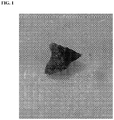
- Gross visualization revealed significant pitting on the stone surface demonstrating proof of concept of urinary stone fragmentation with microbubbles activated by ultrasonic energy.
- An image of the stone is provided in FIG. 1 .
- microbubbles comprising, e.g., phosphonate coating structures can be appended to, e.g., calcium-containing materials (in this case, kidney stones) which have been modified to present a cationic surface (in this case, acid or quarternary ammonium salts) using the methods described herein.
- a cationic surface in this case, acid or quarternary ammonium salts
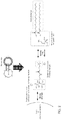
- a kidney stone (calculous) was treated with 0.1 M HCl, as shown pictorially in FIG. 3A , thus generating a positive charge on the surface of the stone (calculous).
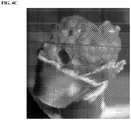
- the microbubbles were shown to adhere to the positively charged stones ( see, e.g ., FIG. 4A ).
- the microbubbles exhibited cavitation ( FIG. 4B ), after which the stones where shown to exhibit fracture damage ( FIG. 4C ).
- a similar strategy may use targeting groups linked to cationic residues, thereby providing positively charged pendants attached to the metal-containing, especially calcium-containing materials which are attachable to microbubbles via ionic bonding to negatively charged microbubbles (e.g., pictorially shown in FIG. 3B ).
- Calcium-containing materials may be treated by such quaternary ammonium compounds either before microbubble injection or simultaneously with microbubble injection.
- Example 6 (Reference Example): Synthesis of Microbubbles Using Small Molecule Cancerous Tumor Cell Specific Ligands
- Microbubbles can also be prepared so as to target tumors using small molecule targeting moieties, including small molecule cancerous tumor cell specific ligands. Such microbubbles can optionally comprise therapeutic pharmaceutical agents, or can be used simply to direct ultrasonic energy to damage or break-up the calculous or tumor body.
- small molecule cell specific agents There are many examples of small molecule cell specific agents, though none of these appear to have been used as described in the present context.
- folate - which is known to be a very selective receptor to cancerous tumor and it is not harmful to healthy cells. - is shown to be incorporated into a phospholipid moiety as the target of the microbubble structure.
- An exemplary synthetic scheme is shown below.
Landscapes
- Health & Medical Sciences (AREA)
- Life Sciences & Earth Sciences (AREA)
- Chemical & Material Sciences (AREA)
- Veterinary Medicine (AREA)
- Animal Behavior & Ethology (AREA)
- General Health & Medical Sciences (AREA)
- Public Health (AREA)
- Medicinal Chemistry (AREA)
- Pharmacology & Pharmacy (AREA)
- Epidemiology (AREA)
- Engineering & Computer Science (AREA)
- Nuclear Medicine, Radiotherapy & Molecular Imaging (AREA)
- Surgery (AREA)
- Molecular Biology (AREA)
- Bioinformatics & Cheminformatics (AREA)
- Biomedical Technology (AREA)
- Dispersion Chemistry (AREA)
- Orthopedic Medicine & Surgery (AREA)
- Medical Informatics (AREA)
- Heart & Thoracic Surgery (AREA)
- Vascular Medicine (AREA)
- Mechanical Engineering (AREA)
- General Chemical & Material Sciences (AREA)
- Chemical Kinetics & Catalysis (AREA)
- Oncology (AREA)
- Biophysics (AREA)
- Organic Chemistry (AREA)
- Oil, Petroleum & Natural Gas (AREA)
- Dermatology (AREA)
- Radiology & Medical Imaging (AREA)
- Inorganic Chemistry (AREA)
- Medicinal Preparation (AREA)
- Pharmaceuticals Containing Other Organic And Inorganic Compounds (AREA)
- Medicines That Contain Protein Lipid Enzymes And Other Medicines (AREA)
Claims (13)
- Ein zielgerichtetes Mikrobläschen, das Folgendes beinhaltet:(a) einen Kern, der ein Fluid mit einem normalen Siedepunkt von weniger als 30 °C enthält;(b) einen Verankerungsteil, der ein Bio-Lipid, Protein, Tensid oder synthetisches Polymer beinhaltet; und(c) einen zielgerichteten Teil, der eine chemische Gruppe mit einer Affinität für ein calciumhaltiges Material beinhaltet, wobei die chemische Gruppe ein Phosphonat; oder Bisphosphonat ist.
- Zielgerichtetes Mikrobläschen gemäß Anspruch 1, wobei der Verankerungsteil und der zielgerichtete Teil über eine kovalente, ionische oder wasserstoffbindende Kopplung verkoppelt sind, wobei optional der Verankerungsteil kovalent an dem zielgerichteten Teil befestigt ist.
- Zielgerichtetes Mikrobläschen gemäß Anspruch 1, das ferner einen polymeren Koppler, der den Verankerungsteil kovalent an dem zielgerichteten Teil befestigt, beinhaltet.
- Zielgerichtetes Mikrobläschen gemäß Anspruch 1, wobei das Fluid Luft, CO2, ein fluorierter oder perfluorierter C1-6-Kohlenwasserstoff oder eine Kombination davon ist, wobei optional das Fluid ein fluorierter Kohlenwasserstoff ist, der aus Perfluorpropan und Perfluorpentan ausgewählt ist.
- Zielgerichtetes Mikrobläschen gemäß Anspruch 1, wobei die chemische Gruppe ein Bisphosphonatteil ist.
- Zielgerichtetes Mikrobläschen gemäß Anspruch 1, wobei das calciumhaltige Material atheromatöse Plaque, Gallenstein, ein kalzifiziertes Gewebe oder eine kalzifizierte Plaque, ein krebsartiger Tumor oder ein Harnstein ist.
- Eine Lösung, die eine Vielzahl der zielgerichteten Mikrobläschen gemäß Anspruch 1, in einem Lösungsmittel dispergiert, beinhaltet.
- Lösung gemäß Anspruch 7, wobei es sich bei dem Lösungsmittel um Wasser oder ein physiologisches Fluid handelt.
- Lösung gemäß Anspruch 7, wobei die Vielzahl von zielgerichteten Mikrobläschen einen mittleren Durchmesser in der Lösung in dem Bereich von 1 Mikrometer bis 10 Mikrometer aufweist.
- Zielgerichtete Mikrobläschen gemäß Anspruch 1, die eine Verbindung beinhalten, die ausgewählt ist aus der Gruppe, bestehend aus Folgendem:


- Ein Verfahren zur Herstellung einer Lösung gemäß Anspruch 7, wobei das Verfahren das Zuführen von Energie zu einer Lösung beinhaltet, die ein blasenbildendes Material und ein Lösungsmittel beinhaltet, wobei:(a) das blasenbildende Material einen Verankerungsteil und einen zielgerichteten Teil beinhaltet, wobei der Verankerungsteil ein Bio-Lipid, Tensid, synthetisches Polymer, Protein oder eine Kombination davon beinhaltet; wobei der zielgerichtete Teil eine chemische Gruppe mit einer Affinität für ein calciumhaltiges Material beinhaltet, wobei die chemische Gruppe ein Phosphonat; oder Bisphosphonat ist; und(b) die Energie ausreicht, um zu bewirken, dass das blasenbildende Material Mikrobläschen in dem Lösungsmittel bildet.
- Verfahren gemäß Anspruch 11, wobei (i) die Energie in Form von Ultraschall-, mechanischer oder Mikrowellenenergie vorliegt.
- Mikrobläschen oder eine Lösung davon gemäß den Ansprüchen 1 bis 10 zur Verwendung in der Therapie, wobei der zielgerichtete Teil der Mikrobläschen eine spezifische Affinität für ein Ziel innerhalb eines Patienten aufweist, wobei die Mikrobläschen kavitierbar sind, wenn Ultraschall-, mechanische oder Mikrowellenenergie darauf angewendet wird.
Priority Applications (1)
| Application Number | Priority Date | Filing Date | Title |
|---|---|---|---|
| EP18154628.4A EP3375435A1 (de) | 2011-08-24 | 2012-08-24 | Zielgerichtete mikrobläschen |
Applications Claiming Priority (2)
| Application Number | Priority Date | Filing Date | Title |
|---|---|---|---|
| US201161527031P | 2011-08-24 | 2011-08-24 | |
| PCT/US2012/052187 WO2013028942A1 (en) | 2011-08-24 | 2012-08-24 | Targeting microbubbles |
Related Child Applications (2)
| Application Number | Title | Priority Date | Filing Date |
|---|---|---|---|
| EP18154628.4A Division-Into EP3375435A1 (de) | 2011-08-24 | 2012-08-24 | Zielgerichtete mikrobläschen |
| EP18154628.4A Division EP3375435A1 (de) | 2011-08-24 | 2012-08-24 | Zielgerichtete mikrobläschen |
Publications (3)
| Publication Number | Publication Date |
|---|---|
| EP2748299A1 EP2748299A1 (de) | 2014-07-02 |
| EP2748299A4 EP2748299A4 (de) | 2015-04-08 |
| EP2748299B1 true EP2748299B1 (de) | 2018-03-14 |
Family
ID=47746887
Family Applications (2)
| Application Number | Title | Priority Date | Filing Date |
|---|---|---|---|
| EP12826476.9A Active EP2748299B1 (de) | 2011-08-24 | 2012-08-24 | Zielgerichtete mikrobläschen |
| EP18154628.4A Withdrawn EP3375435A1 (de) | 2011-08-24 | 2012-08-24 | Zielgerichtete mikrobläschen |
Family Applications After (1)
| Application Number | Title | Priority Date | Filing Date |
|---|---|---|---|
| EP18154628.4A Withdrawn EP3375435A1 (de) | 2011-08-24 | 2012-08-24 | Zielgerichtete mikrobläschen |
Country Status (5)
| Country | Link |
|---|---|
| US (6) | US20130123781A1 (de) |
| EP (2) | EP2748299B1 (de) |
| KR (1) | KR102076069B1 (de) |
| CN (1) | CN103917637B (de) |
| WO (1) | WO2013028942A1 (de) |
Families Citing this family (21)
| Publication number | Priority date | Publication date | Assignee | Title |
|---|---|---|---|---|
| EP2748299B1 (de) | 2011-08-24 | 2018-03-14 | The Regents of The University of California | Zielgerichtete mikrobläschen |
| US9315524B2 (en) * | 2012-05-07 | 2016-04-19 | Kumar Ranjan Bhushan | Magnetic resonance imaging agents for calcification |
| WO2014070687A2 (en) | 2012-10-29 | 2014-05-08 | Molecular Transfer, Inc. | Polycationic methyl phospholipids for improved delivery of nucleic acids to eukaryotic cells |
| EP3240579B1 (de) | 2014-12-31 | 2022-07-27 | Lantheus Medical Imaging, Inc. | Lipidverkapselte gasmikrosphärenzusammensetzungen und zugehörige verfahren |
| EP3310794B1 (de) | 2015-06-18 | 2025-08-06 | California Institute of Technology | Synthese und applikation von mikroblasenbildenden verbindungen |
| MX2018013409A (es) | 2016-05-04 | 2019-07-08 | Lantheus Medical Imaging Inc | Métodos y dispositivos para la preparación de agentes de contraste de ultrasonido. |
| US9789210B1 (en) * | 2016-07-06 | 2017-10-17 | Lantheus Medical Imaging, Inc. | Methods for making ultrasound contrast agents |
| EP3562406A4 (de) * | 2016-12-30 | 2020-10-28 | Applaud Medical, Inc. | System und verfahren zum erfassen und ausrichten eines akustischen strahls in situ auf ein ziel unter verwendung von breitstrahl-niederfrequenz(<1 mhz)-ultraschall |
| CN107556268A (zh) * | 2017-09-21 | 2018-01-09 | 大连理工大学 | 一组用于氨基/酚羟基标记的同位素标记试剂及其合成方法 |
| US11166846B2 (en) | 2019-01-04 | 2021-11-09 | California Institute Of Technology | Method for eye lens removal using cavitating microbubbles |
| US20210015511A1 (en) * | 2019-07-16 | 2021-01-21 | Applaud Medical Inc. | System and method for comminution of biomineralizations using microbubbles |
| CN110269937A (zh) * | 2019-07-23 | 2019-09-24 | 山东百多安医疗器械有限公司 | 一种用于胆结石超声治疗的靶向微泡及其制备方法 |
| KR20220166785A (ko) | 2020-01-28 | 2022-12-19 | 어플러드 메디컬 인코퍼레이티드 | 인지질 화합물 및 제형 |
| US10953023B1 (en) | 2020-01-28 | 2021-03-23 | Applaud Medical, Inc. | Phospholipid compounds and formulations |
| CN111297895A (zh) * | 2020-02-20 | 2020-06-19 | 成都因诺生物医药科技有限公司 | 用于治疗动脉粥样硬化的组合物的制药用途 |
| CN111529718B (zh) * | 2020-04-01 | 2023-05-16 | 四川大学华西医院 | 一种阳离子微泡-rAAV-miRNA病毒复合物及其制备方法以及应用 |
| CN115252277A (zh) * | 2021-04-30 | 2022-11-01 | 微创视神医疗科技(上海)有限公司 | 一种超声乳化仪 |
| WO2023064802A1 (en) | 2021-10-13 | 2023-04-20 | The Trustees Of Columbia University In The City Of New York | Methods for controlling osteocalcin release |
| US20240024503A1 (en) * | 2022-07-14 | 2024-01-25 | The Board Of Trustees Of The Leland Stanford Junior University | Methods and compositions for producing targeted microbubbles |
| CN116462705B (zh) * | 2023-04-26 | 2025-06-13 | 浙江圣达生物药业股份有限公司 | 一种叶酸磷脂化衍生物及其制备方法和应用 |
| CN118416229B (zh) * | 2024-03-22 | 2025-10-10 | 深圳市人民医院 | 一种靶向磁性超声微泡及其制备方法和应用 |
Family Cites Families (33)
| Publication number | Priority date | Publication date | Assignee | Title |
|---|---|---|---|---|
| US5463092A (en) | 1989-11-22 | 1995-10-31 | Vestar, Inc. | Lipid derivatives of phosphonacids for liposomal incorporation and method of use |
| US5860972A (en) | 1995-10-26 | 1999-01-19 | Xintec Corporation | Method of detection and destruction of urinary calculi and similar structures |
| WO1997029782A1 (en) | 1996-02-19 | 1997-08-21 | Nycomed Imaging A/S | Thermally stabilized contrast agent |
| US6261537B1 (en) * | 1996-10-28 | 2001-07-17 | Nycomed Imaging As | Diagnostic/therapeutic agents having microbubbles coupled to one or more vectors |
| US6245318B1 (en) * | 1997-05-27 | 2001-06-12 | Mallinckrodt Inc. | Selectively binding ultrasound contrast agents |
| JP2003506330A (ja) | 1999-08-03 | 2003-02-18 | アメルシャム・パブリック・リミテッド・カンパニー | 放射能標識化ビスホスホネートおよび方法 |
| CA2456988A1 (en) * | 2001-08-16 | 2003-02-27 | Alan P. Carpenter, Jr. | Gas microsphere liposome composites |
| US7807847B2 (en) | 2004-07-09 | 2010-10-05 | Vascular Biogenics Ltd. | Process for the preparation of oxidized phospholipids |
| JP2008509890A (ja) * | 2004-08-05 | 2008-04-03 | ベイラー・リサーチ・インスチチユート | 遺伝子または薬剤送達系 |
| EP1793919A4 (de) | 2004-09-03 | 2009-12-23 | Imarx Therapeutics Inc | Vorrichtung und verfahren zur herstellung einer mikrosphärenbildenden zusammensetzung |
| JP2008519642A (ja) | 2004-11-12 | 2008-06-12 | ケーピーイー リミテッド | ナノ粒子を介した超音波治療および診断影像法 |
| US20070110674A1 (en) * | 2005-07-29 | 2007-05-17 | Yuhong Xu | Sono-active liposomes and lipid particles and use thereof as contrast agents and active-agent delivery systems |
| US8257338B2 (en) * | 2006-10-27 | 2012-09-04 | Artenga, Inc. | Medical microbubble generation |
| AU2007244705A1 (en) * | 2006-04-27 | 2007-11-08 | Barnes-Jewish Hospital | Detection and imaging of target tissue |
| WO2008131217A1 (en) * | 2007-04-20 | 2008-10-30 | Oregon Healty & Science University | Ultrasound imaging with targeted microbubbles |
| US20080311045A1 (en) | 2007-06-06 | 2008-12-18 | Biovaluation & Analysis, Inc. | Polymersomes for Use in Acoustically Mediated Intracellular Drug Delivery in vivo |
| EP2214716B1 (de) | 2007-10-23 | 2021-11-17 | Nektar Therapeutics | Auf hydroxyapatite gezielrichtete multiarm polymere und daraus hergestellte konjugate |
| US20090136594A1 (en) * | 2007-11-27 | 2009-05-28 | Board Of Regents, The University Of Texas System | Functionalization of Micro-And Nano Particles for Selective Attachment to Calcium Biomineral Surfaces |
| US20090215729A1 (en) * | 2008-02-19 | 2009-08-27 | Johnson Erin M | Microparticle compositions to modify cancer promoting cells |
| JP2009280500A (ja) | 2008-05-19 | 2009-12-03 | Tohoku Univ | リン酸カルシウム結合性リポソーム |
| EP2303288A4 (de) | 2008-05-22 | 2015-04-22 | Univ Ramot | Konjugate eines polymers, eines bisphosphonats und eines anti-angiogenese-mittels und ihre verwendungen bei der behandlung und kontrolle von erkrankungen im zusammenhang mit knochen |
| JP5889783B2 (ja) * | 2009-05-05 | 2016-03-22 | テクミラ ファーマシューティカルズ コーポレイションTekmira Pharmaceuticals Corporation | 免疫細胞へオリゴヌクレオチドを送達する方法 |
| US20120148492A1 (en) | 2009-08-20 | 2012-06-14 | Fujifilm Ri Pharma Co., Ltd. | Bisphosphonic acid derivative and compound thereof labeled with radioactive metal nuclide |
| EP2477550A4 (de) | 2009-09-15 | 2013-12-04 | Univ Columbia | Systeme, verfahren und vorrichtungen für mikrobläschen |
| EP2637701A4 (de) | 2010-11-12 | 2014-09-17 | Childrens Medical Center | Gasgefüllte mikrobläschen und systeme zur gasfreisetzung |
| JP2014509311A (ja) * | 2011-01-05 | 2014-04-17 | ザ レジェンツ オブ ザ ユニヴァーシティー オブ カリフォルニア | 低キャビテーション閾値の音響応答性粒子 |
| GB201106803D0 (en) * | 2011-04-21 | 2011-06-01 | Univ Ulster | Sonodynamic therapy |
| EP2748299B1 (de) | 2011-08-24 | 2018-03-14 | The Regents of The University of California | Zielgerichtete mikrobläschen |
| WO2015134671A1 (en) | 2014-03-04 | 2015-09-11 | Targeson, Inc. | Molecular imaging contrast agents and uses thereof |
| EP3310794B1 (de) | 2015-06-18 | 2025-08-06 | California Institute of Technology | Synthese und applikation von mikroblasenbildenden verbindungen |
| CN106047935B (zh) | 2016-05-20 | 2019-08-23 | 中国科学院深圳先进技术研究院 | 一种靶向基因载体及其制备方法和应用 |
| US11896037B2 (en) | 2016-08-03 | 2024-02-13 | Temple University-Of The Commonwealth System Of Higher Education | Microencapsulation of active agents |
| US10953023B1 (en) | 2020-01-28 | 2021-03-23 | Applaud Medical, Inc. | Phospholipid compounds and formulations |
-
2012
- 2012-08-24 EP EP12826476.9A patent/EP2748299B1/de active Active
- 2012-08-24 WO PCT/US2012/052187 patent/WO2013028942A1/en not_active Ceased
- 2012-08-24 US US13/593,747 patent/US20130123781A1/en not_active Abandoned
- 2012-08-24 CN CN201280052066.4A patent/CN103917637B/zh active Active
- 2012-08-24 KR KR1020147007740A patent/KR102076069B1/ko active Active
- 2012-08-24 EP EP18154628.4A patent/EP3375435A1/de not_active Withdrawn
-
2016
- 2016-06-30 US US15/199,710 patent/US10149906B2/en active Active
-
2018
- 2018-10-08 US US16/154,677 patent/US10357565B2/en active Active
-
2019
- 2019-06-04 US US16/431,605 patent/US11224655B2/en active Active
-
2021
- 2021-12-07 US US17/544,630 patent/US11642410B2/en active Active
-
2023
- 2023-03-22 US US18/187,878 patent/US12465642B2/en active Active
Non-Patent Citations (1)
| Title |
|---|
| None * |
Also Published As
| Publication number | Publication date |
|---|---|
| WO2013028942A1 (en) | 2013-02-28 |
| EP2748299A4 (de) | 2015-04-08 |
| KR102076069B1 (ko) | 2020-02-11 |
| US20130123781A1 (en) | 2013-05-16 |
| EP2748299A1 (de) | 2014-07-02 |
| WO2013028942A8 (en) | 2013-04-04 |
| US20220088198A1 (en) | 2022-03-24 |
| US20230285561A1 (en) | 2023-09-14 |
| CN103917637B (zh) | 2016-08-17 |
| EP3375435A1 (de) | 2018-09-19 |
| KR20140069017A (ko) | 2014-06-09 |
| US20190282695A1 (en) | 2019-09-19 |
| US10149906B2 (en) | 2018-12-11 |
| US20190038749A1 (en) | 2019-02-07 |
| US10357565B2 (en) | 2019-07-23 |
| US20160367669A1 (en) | 2016-12-22 |
| US11224655B2 (en) | 2022-01-18 |
| US11642410B2 (en) | 2023-05-09 |
| US12465642B2 (en) | 2025-11-11 |
| CN103917637A (zh) | 2014-07-09 |
Similar Documents
| Publication | Publication Date | Title |
|---|---|---|
| US12465642B2 (en) | Targeting microbubbles | |
| Tharkar et al. | Nano-enhanced drug delivery and therapeutic ultrasound for cancer treatment and beyond | |
| Fateh et al. | Comprehensive review on ultrasound-responsive theranostic nanomaterials: mechanisms, structures and medical applications | |
| US20080311045A1 (en) | Polymersomes for Use in Acoustically Mediated Intracellular Drug Delivery in vivo | |
| US20080294089A1 (en) | Dendritic Polymers for Use in Acoustically Mediated Intracellular Drug Delivery in vivo | |
| Yazdan et al. | Smart ultrasound-responsive polymers for drug delivery: an overview on advanced stimuli-sensitive materials and techniques | |
| CN106456806B (zh) | 结合有含有药物的纳米粒子的两用的pat/超声造影剂及其制备方法 | |
| WO2008157422A1 (en) | Materials, methods, and systems for cavitation-mediated ultrasonic drug delivery | |
| US11571486B2 (en) | Bilirubin derivative-based diagnostic and therapeutic ultrasound contrast agent | |
| Zhang et al. | Functional micro/nanobubbles for ultrasound medicine and visualizable guidance | |
| Tamarov et al. | Nano air seeds trapped in mesoporous janus nanoparticles facilitate cavitation and enhance ultrasound imaging | |
| Joshi et al. | Ultrasound-based drug delivery systems | |
| CN107708742A (zh) | 诊断治疗用气泡制剂(tb)及其使用方法 | |
| JP2010260828A (ja) | リポソーム、リポソームの製造方法、及び医薬組成物 | |
| HK1261234A1 (en) | Targetted microbubbles | |
| JP2005154282A (ja) | ガス封入リポソームの製造法 | |
| WO2006126244A1 (ja) | ガス封入リポソームの製造法 | |
| Mohammad | Acoustically activated release of estrone-targeted liposomes used for breast cancer treatment | |
| Baker et al. | Ultrasound-triggered drug delivery: recent developments and opportunities | |
| CN103140241A (zh) | 抗原特异性超声造影剂、其制备方法及其用途 | |
| Jadhav et al. | Current approaches in nanostructured biomaterials in treatment of leiomyosarcoma | |
| Wang et al. | Application of polyimide in drug delivery systems | |
| Tabassumd et al. | developments, and regulatory | |
| Mishra et al. | Efficient Nanocarriers for Drug-Delivery Systems: Types and Fabrication | |
| Li et al. | Functional Micro/nanobubbles for Ultrasound Medicine and Visualizable Guidance |
Legal Events
| Date | Code | Title | Description |
|---|---|---|---|
| PUAI | Public reference made under article 153(3) epc to a published international application that has entered the european phase |
Free format text: ORIGINAL CODE: 0009012 |
|
| 17P | Request for examination filed |
Effective date: 20140319 |
|
| AK | Designated contracting states |
Kind code of ref document: A1 Designated state(s): AL AT BE BG CH CY CZ DE DK EE ES FI FR GB GR HR HU IE IS IT LI LT LU LV MC MK MT NL NO PL PT RO RS SE SI SK SM TR |
|
| DAX | Request for extension of the european patent (deleted) | ||
| RA4 | Supplementary search report drawn up and despatched (corrected) |
Effective date: 20150311 |
|
| RIC1 | Information provided on ipc code assigned before grant |
Ipc: A61P 43/00 20060101ALI20150316BHEP Ipc: C12M 1/09 20060101ALI20150316BHEP Ipc: A61K 9/00 20060101AFI20150316BHEP |
|
| 17Q | First examination report despatched |
Effective date: 20160511 |
|
| STAA | Information on the status of an ep patent application or granted ep patent |
Free format text: STATUS: EXAMINATION IS IN PROGRESS |
|
| REG | Reference to a national code |
Ref country code: DE Ref legal event code: R079 Ref document number: 602012044045 Country of ref document: DE Free format text: PREVIOUS MAIN CLASS: C12M0001090000 Ipc: A61K0009000000 |
|
| GRAP | Despatch of communication of intention to grant a patent |
Free format text: ORIGINAL CODE: EPIDOSNIGR1 |
|
| STAA | Information on the status of an ep patent application or granted ep patent |
Free format text: STATUS: GRANT OF PATENT IS INTENDED |
|
| RIC1 | Information provided on ipc code assigned before grant |
Ipc: A61K 47/69 20170101ALI20170914BHEP Ipc: A61N 7/00 20060101ALI20170914BHEP Ipc: A61P 43/00 20060101ALI20170914BHEP Ipc: A61K 41/00 20060101ALI20170914BHEP Ipc: A61B 17/22 20060101ALI20170914BHEP Ipc: A61K 31/663 20060101ALI20170914BHEP Ipc: A61K 47/24 20060101ALI20170914BHEP Ipc: C12M 1/09 20060101ALI20170914BHEP Ipc: A61K 9/00 20060101AFI20170914BHEP Ipc: A61K 9/107 20060101ALI20170914BHEP |
|
| INTG | Intention to grant announced |
Effective date: 20171002 |
|
| GRAS | Grant fee paid |
Free format text: ORIGINAL CODE: EPIDOSNIGR3 |
|
| GRAA | (expected) grant |
Free format text: ORIGINAL CODE: 0009210 |
|
| STAA | Information on the status of an ep patent application or granted ep patent |
Free format text: STATUS: THE PATENT HAS BEEN GRANTED |
|
| AK | Designated contracting states |
Kind code of ref document: B1 Designated state(s): AL AT BE BG CH CY CZ DE DK EE ES FI FR GB GR HR HU IE IS IT LI LT LU LV MC MK MT NL NO PL PT RO RS SE SI SK SM TR |
|
| REG | Reference to a national code |
Ref country code: GB Ref legal event code: FG4D |
|
| REG | Reference to a national code |
Ref country code: CH Ref legal event code: EP Ref country code: AT Ref legal event code: REF Ref document number: 978157 Country of ref document: AT Kind code of ref document: T Effective date: 20180315 |
|
| REG | Reference to a national code |
Ref country code: IE Ref legal event code: FG4D |
|
| REG | Reference to a national code |
Ref country code: DE Ref legal event code: R096 Ref document number: 602012044045 Country of ref document: DE |
|
| REG | Reference to a national code |
Ref country code: CH Ref legal event code: NV Representative=s name: MURGITROYD AND COMPANY, CH |
|
| REG | Reference to a national code |
Ref country code: NL Ref legal event code: MP Effective date: 20180314 |
|
| REG | Reference to a national code |
Ref country code: LT Ref legal event code: MG4D |
|
| PG25 | Lapsed in a contracting state [announced via postgrant information from national office to epo] |
Ref country code: NO Free format text: LAPSE BECAUSE OF FAILURE TO SUBMIT A TRANSLATION OF THE DESCRIPTION OR TO PAY THE FEE WITHIN THE PRESCRIBED TIME-LIMIT Effective date: 20180614 Ref country code: ES Free format text: LAPSE BECAUSE OF FAILURE TO SUBMIT A TRANSLATION OF THE DESCRIPTION OR TO PAY THE FEE WITHIN THE PRESCRIBED TIME-LIMIT Effective date: 20180314 Ref country code: LT Free format text: LAPSE BECAUSE OF FAILURE TO SUBMIT A TRANSLATION OF THE DESCRIPTION OR TO PAY THE FEE WITHIN THE PRESCRIBED TIME-LIMIT Effective date: 20180314 Ref country code: HR Free format text: LAPSE BECAUSE OF FAILURE TO SUBMIT A TRANSLATION OF THE DESCRIPTION OR TO PAY THE FEE WITHIN THE PRESCRIBED TIME-LIMIT Effective date: 20180314 Ref country code: CY Free format text: LAPSE BECAUSE OF FAILURE TO SUBMIT A TRANSLATION OF THE DESCRIPTION OR TO PAY THE FEE WITHIN THE PRESCRIBED TIME-LIMIT Effective date: 20180314 Ref country code: FI Free format text: LAPSE BECAUSE OF FAILURE TO SUBMIT A TRANSLATION OF THE DESCRIPTION OR TO PAY THE FEE WITHIN THE PRESCRIBED TIME-LIMIT Effective date: 20180314 |
|
| REG | Reference to a national code |
Ref country code: AT Ref legal event code: MK05 Ref document number: 978157 Country of ref document: AT Kind code of ref document: T Effective date: 20180314 |
|
| REG | Reference to a national code |
Ref country code: FR Ref legal event code: PLFP Year of fee payment: 7 |
|
| PG25 | Lapsed in a contracting state [announced via postgrant information from national office to epo] |
Ref country code: GR Free format text: LAPSE BECAUSE OF FAILURE TO SUBMIT A TRANSLATION OF THE DESCRIPTION OR TO PAY THE FEE WITHIN THE PRESCRIBED TIME-LIMIT Effective date: 20180615 Ref country code: SE Free format text: LAPSE BECAUSE OF FAILURE TO SUBMIT A TRANSLATION OF THE DESCRIPTION OR TO PAY THE FEE WITHIN THE PRESCRIBED TIME-LIMIT Effective date: 20180314 Ref country code: LV Free format text: LAPSE BECAUSE OF FAILURE TO SUBMIT A TRANSLATION OF THE DESCRIPTION OR TO PAY THE FEE WITHIN THE PRESCRIBED TIME-LIMIT Effective date: 20180314 Ref country code: RS Free format text: LAPSE BECAUSE OF FAILURE TO SUBMIT A TRANSLATION OF THE DESCRIPTION OR TO PAY THE FEE WITHIN THE PRESCRIBED TIME-LIMIT Effective date: 20180314 Ref country code: BG Free format text: LAPSE BECAUSE OF FAILURE TO SUBMIT A TRANSLATION OF THE DESCRIPTION OR TO PAY THE FEE WITHIN THE PRESCRIBED TIME-LIMIT Effective date: 20180614 |
|
| PG25 | Lapsed in a contracting state [announced via postgrant information from national office to epo] |
Ref country code: EE Free format text: LAPSE BECAUSE OF FAILURE TO SUBMIT A TRANSLATION OF THE DESCRIPTION OR TO PAY THE FEE WITHIN THE PRESCRIBED TIME-LIMIT Effective date: 20180314 Ref country code: PL Free format text: LAPSE BECAUSE OF FAILURE TO SUBMIT A TRANSLATION OF THE DESCRIPTION OR TO PAY THE FEE WITHIN THE PRESCRIBED TIME-LIMIT Effective date: 20180314 Ref country code: AL Free format text: LAPSE BECAUSE OF FAILURE TO SUBMIT A TRANSLATION OF THE DESCRIPTION OR TO PAY THE FEE WITHIN THE PRESCRIBED TIME-LIMIT Effective date: 20180314 Ref country code: RO Free format text: LAPSE BECAUSE OF FAILURE TO SUBMIT A TRANSLATION OF THE DESCRIPTION OR TO PAY THE FEE WITHIN THE PRESCRIBED TIME-LIMIT Effective date: 20180314 Ref country code: IT Free format text: LAPSE BECAUSE OF FAILURE TO SUBMIT A TRANSLATION OF THE DESCRIPTION OR TO PAY THE FEE WITHIN THE PRESCRIBED TIME-LIMIT Effective date: 20180314 Ref country code: NL Free format text: LAPSE BECAUSE OF FAILURE TO SUBMIT A TRANSLATION OF THE DESCRIPTION OR TO PAY THE FEE WITHIN THE PRESCRIBED TIME-LIMIT Effective date: 20180314 |
|
| PG25 | Lapsed in a contracting state [announced via postgrant information from national office to epo] |
Ref country code: AT Free format text: LAPSE BECAUSE OF FAILURE TO SUBMIT A TRANSLATION OF THE DESCRIPTION OR TO PAY THE FEE WITHIN THE PRESCRIBED TIME-LIMIT Effective date: 20180314 Ref country code: CZ Free format text: LAPSE BECAUSE OF FAILURE TO SUBMIT A TRANSLATION OF THE DESCRIPTION OR TO PAY THE FEE WITHIN THE PRESCRIBED TIME-LIMIT Effective date: 20180314 Ref country code: SM Free format text: LAPSE BECAUSE OF FAILURE TO SUBMIT A TRANSLATION OF THE DESCRIPTION OR TO PAY THE FEE WITHIN THE PRESCRIBED TIME-LIMIT Effective date: 20180314 Ref country code: SK Free format text: LAPSE BECAUSE OF FAILURE TO SUBMIT A TRANSLATION OF THE DESCRIPTION OR TO PAY THE FEE WITHIN THE PRESCRIBED TIME-LIMIT Effective date: 20180314 |
|
| REG | Reference to a national code |
Ref country code: CH Ref legal event code: PK Free format text: BERICHTIGUNGEN |
|
| REG | Reference to a national code |
Ref country code: DE Ref legal event code: R097 Ref document number: 602012044045 Country of ref document: DE |
|
| PG25 | Lapsed in a contracting state [announced via postgrant information from national office to epo] |
Ref country code: PT Free format text: LAPSE BECAUSE OF FAILURE TO SUBMIT A TRANSLATION OF THE DESCRIPTION OR TO PAY THE FEE WITHIN THE PRESCRIBED TIME-LIMIT Effective date: 20180716 |
|
| RIC2 | Information provided on ipc code assigned after grant |
Ipc: A61K 9/00 20060101AFI20170914BHEP Ipc: A61P 43/00 20060101ALI20170914BHEP Ipc: A61N 7/00 20060101ALI20170914BHEP Ipc: A61K 31/663 20060101ALI20170914BHEP Ipc: A61B 17/22 20060101ALI20170914BHEP Ipc: A61K 9/107 20060101ALI20170914BHEP Ipc: A61K 47/69 20170101ALI20170914BHEP Ipc: A61K 41/00 20060101ALI20170914BHEP Ipc: C12M 1/09 20060101ALI20170914BHEP Ipc: A61K 47/24 20060101ALI20170914BHEP |
|
| PLBE | No opposition filed within time limit |
Free format text: ORIGINAL CODE: 0009261 |
|
| STAA | Information on the status of an ep patent application or granted ep patent |
Free format text: STATUS: NO OPPOSITION FILED WITHIN TIME LIMIT |
|
| PG25 | Lapsed in a contracting state [announced via postgrant information from national office to epo] |
Ref country code: DK Free format text: LAPSE BECAUSE OF FAILURE TO SUBMIT A TRANSLATION OF THE DESCRIPTION OR TO PAY THE FEE WITHIN THE PRESCRIBED TIME-LIMIT Effective date: 20180314 |
|
| REG | Reference to a national code |
Ref country code: CH Ref legal event code: PK Free format text: BERICHTIGUNGEN |
|
| RIC2 | Information provided on ipc code assigned after grant |
Ipc: A61N 7/00 20060101ALI20170914BHEP Ipc: A61K 47/69 20170101ALI20170914BHEP Ipc: A61P 43/00 20060101ALI20170914BHEP Ipc: A61B 17/22 20060101ALI20170914BHEP Ipc: C12M 1/09 20060101ALI20170914BHEP Ipc: A61K 47/24 20060101ALI20170914BHEP Ipc: A61K 9/00 20060101AFI20170914BHEP Ipc: A61K 41/00 20060101ALI20170914BHEP Ipc: A61K 9/107 20060101ALI20170914BHEP Ipc: A61K 31/663 20060101ALI20170914BHEP |
|
| 26N | No opposition filed |
Effective date: 20181217 |
|
| PG25 | Lapsed in a contracting state [announced via postgrant information from national office to epo] |
Ref country code: SI Free format text: LAPSE BECAUSE OF FAILURE TO SUBMIT A TRANSLATION OF THE DESCRIPTION OR TO PAY THE FEE WITHIN THE PRESCRIBED TIME-LIMIT Effective date: 20180314 |
|
| PG25 | Lapsed in a contracting state [announced via postgrant information from national office to epo] |
Ref country code: MC Free format text: LAPSE BECAUSE OF FAILURE TO SUBMIT A TRANSLATION OF THE DESCRIPTION OR TO PAY THE FEE WITHIN THE PRESCRIBED TIME-LIMIT Effective date: 20180314 |
|
| PG25 | Lapsed in a contracting state [announced via postgrant information from national office to epo] |
Ref country code: LU Free format text: LAPSE BECAUSE OF NON-PAYMENT OF DUE FEES Effective date: 20180824 |
|
| REG | Reference to a national code |
Ref country code: BE Ref legal event code: MM Effective date: 20180831 |
|
| PG25 | Lapsed in a contracting state [announced via postgrant information from national office to epo] |
Ref country code: BE Free format text: LAPSE BECAUSE OF NON-PAYMENT OF DUE FEES Effective date: 20180831 |
|
| PG25 | Lapsed in a contracting state [announced via postgrant information from national office to epo] |
Ref country code: MT Free format text: LAPSE BECAUSE OF NON-PAYMENT OF DUE FEES Effective date: 20180824 |
|
| PG25 | Lapsed in a contracting state [announced via postgrant information from national office to epo] |
Ref country code: TR Free format text: LAPSE BECAUSE OF FAILURE TO SUBMIT A TRANSLATION OF THE DESCRIPTION OR TO PAY THE FEE WITHIN THE PRESCRIBED TIME-LIMIT Effective date: 20180314 |
|
| PG25 | Lapsed in a contracting state [announced via postgrant information from national office to epo] |
Ref country code: HU Free format text: LAPSE BECAUSE OF FAILURE TO SUBMIT A TRANSLATION OF THE DESCRIPTION OR TO PAY THE FEE WITHIN THE PRESCRIBED TIME-LIMIT; INVALID AB INITIO Effective date: 20120824 |
|
| PG25 | Lapsed in a contracting state [announced via postgrant information from national office to epo] |
Ref country code: MK Free format text: LAPSE BECAUSE OF NON-PAYMENT OF DUE FEES Effective date: 20180314 |
|
| PG25 | Lapsed in a contracting state [announced via postgrant information from national office to epo] |
Ref country code: IS Free format text: LAPSE BECAUSE OF FAILURE TO SUBMIT A TRANSLATION OF THE DESCRIPTION OR TO PAY THE FEE WITHIN THE PRESCRIBED TIME-LIMIT Effective date: 20180714 |
|
| P01 | Opt-out of the competence of the unified patent court (upc) registered |
Effective date: 20230420 |
|
| PGFP | Annual fee paid to national office [announced via postgrant information from national office to epo] |
Ref country code: DE Payment date: 20250828 Year of fee payment: 14 |
|
| PGFP | Annual fee paid to national office [announced via postgrant information from national office to epo] |
Ref country code: GB Payment date: 20250829 Year of fee payment: 14 |
|
| PGFP | Annual fee paid to national office [announced via postgrant information from national office to epo] |
Ref country code: FR Payment date: 20250827 Year of fee payment: 14 |
|
| PGFP | Annual fee paid to national office [announced via postgrant information from national office to epo] |
Ref country code: CH Payment date: 20250901 Year of fee payment: 14 |
|
| PGFP | Annual fee paid to national office [announced via postgrant information from national office to epo] |
Ref country code: IE Payment date: 20250829 Year of fee payment: 14 |