EP2709448B1 - Vorratsgefäss enthaltend einen antibakteriell wirkenden formkörper, verfahren zur sterilisierung von formulierungen, sowie verwendung des vorratsgefässes - Google Patents
Vorratsgefäss enthaltend einen antibakteriell wirkenden formkörper, verfahren zur sterilisierung von formulierungen, sowie verwendung des vorratsgefässes Download PDFInfo
- Publication number
- EP2709448B1 EP2709448B1 EP12721508.5A EP12721508A EP2709448B1 EP 2709448 B1 EP2709448 B1 EP 2709448B1 EP 12721508 A EP12721508 A EP 12721508A EP 2709448 B1 EP2709448 B1 EP 2709448B1
- Authority
- EP
- European Patent Office
- Prior art keywords
- storage vessel
- antibacterial material
- vessel according
- gels
- particular antibacterial
- Prior art date
- Legal status (The legal status is an assumption and is not a legal conclusion. Google has not performed a legal analysis and makes no representation as to the accuracy of the status listed.)
- Active
Links
Images


Classifications
-
- A—HUMAN NECESSITIES
- A61—MEDICAL OR VETERINARY SCIENCE; HYGIENE
- A61L—METHODS OR APPARATUS FOR STERILISING MATERIALS OR OBJECTS IN GENERAL; DISINFECTION, STERILISATION OR DEODORISATION OF AIR; CHEMICAL ASPECTS OF BANDAGES, DRESSINGS, ABSORBENT PADS OR SURGICAL ARTICLES; MATERIALS FOR BANDAGES, DRESSINGS, ABSORBENT PADS OR SURGICAL ARTICLES
- A61L2/00—Disinfection or sterilisation of materials or objects, in general; Accessories therefor
- A61L2/16—Disinfection or sterilisation of materials or objects, in general; Accessories therefor using chemical substances
- A61L2/23—Solid materials, e.g. granules, powders, blocks or tablets
-
- C—CHEMISTRY; METALLURGY
- C08—ORGANIC MACROMOLECULAR COMPOUNDS; THEIR PREPARATION OR CHEMICAL WORKING-UP; COMPOSITIONS BASED THEREON
- C08K—Use of inorganic or non-macromolecular organic substances as compounding ingredients
- C08K9/00—Use of pretreated ingredients
- C08K9/02—Ingredients treated with inorganic substances
-
- B—PERFORMING OPERATIONS; TRANSPORTING
- B05—SPRAYING OR ATOMISING IN GENERAL; APPLYING FLUENT MATERIALS TO SURFACES, IN GENERAL
- B05B—SPRAYING APPARATUS; ATOMISING APPARATUS; NOZZLES
- B05B1/00—Nozzles, spray heads or other outlets, with or without auxiliary devices such as valves, heating means
- B05B1/34—Nozzles, spray heads or other outlets, with or without auxiliary devices such as valves, heating means designed to influence the nature of flow of the liquid or other fluent material, e.g. to produce swirl
-
- A—HUMAN NECESSITIES
- A01—AGRICULTURE; FORESTRY; ANIMAL HUSBANDRY; HUNTING; TRAPPING; FISHING
- A01N—PRESERVATION OF BODIES OF HUMANS OR ANIMALS OR PLANTS OR PARTS THEREOF; BIOCIDES, e.g. AS DISINFECTANTS, AS PESTICIDES OR AS HERBICIDES; PEST REPELLANTS OR ATTRACTANTS; PLANT GROWTH REGULATORS
- A01N25/00—Biocides, pest repellants or attractants, or plant growth regulators, characterised by their forms, or by their non-active ingredients or by their methods of application, e.g. seed treatment or sequential application; Substances for reducing the noxious effect of the active ingredients to organisms other than pests
- A01N25/08—Biocides, pest repellants or attractants, or plant growth regulators, characterised by their forms, or by their non-active ingredients or by their methods of application, e.g. seed treatment or sequential application; Substances for reducing the noxious effect of the active ingredients to organisms other than pests containing solids as carriers or diluents
- A01N25/10—Macromolecular compounds
-
- A—HUMAN NECESSITIES
- A01—AGRICULTURE; FORESTRY; ANIMAL HUSBANDRY; HUNTING; TRAPPING; FISHING
- A01N—PRESERVATION OF BODIES OF HUMANS OR ANIMALS OR PLANTS OR PARTS THEREOF; BIOCIDES, e.g. AS DISINFECTANTS, AS PESTICIDES OR AS HERBICIDES; PEST REPELLANTS OR ATTRACTANTS; PLANT GROWTH REGULATORS
- A01N25/00—Biocides, pest repellants or attractants, or plant growth regulators, characterised by their forms, or by their non-active ingredients or by their methods of application, e.g. seed treatment or sequential application; Substances for reducing the noxious effect of the active ingredients to organisms other than pests
- A01N25/34—Shaped forms, e.g. sheets, not provided for in any other sub-group of this main group
-
- A—HUMAN NECESSITIES
- A01—AGRICULTURE; FORESTRY; ANIMAL HUSBANDRY; HUNTING; TRAPPING; FISHING
- A01N—PRESERVATION OF BODIES OF HUMANS OR ANIMALS OR PLANTS OR PARTS THEREOF; BIOCIDES, e.g. AS DISINFECTANTS, AS PESTICIDES OR AS HERBICIDES; PEST REPELLANTS OR ATTRACTANTS; PLANT GROWTH REGULATORS
- A01N59/00—Biocides, pest repellants or attractants, or plant growth regulators containing elements or inorganic compounds
-
- A—HUMAN NECESSITIES
- A01—AGRICULTURE; FORESTRY; ANIMAL HUSBANDRY; HUNTING; TRAPPING; FISHING
- A01N—PRESERVATION OF BODIES OF HUMANS OR ANIMALS OR PLANTS OR PARTS THEREOF; BIOCIDES, e.g. AS DISINFECTANTS, AS PESTICIDES OR AS HERBICIDES; PEST REPELLANTS OR ATTRACTANTS; PLANT GROWTH REGULATORS
- A01N59/00—Biocides, pest repellants or attractants, or plant growth regulators containing elements or inorganic compounds
- A01N59/16—Heavy metals; Compounds thereof
-
- A—HUMAN NECESSITIES
- A01—AGRICULTURE; FORESTRY; ANIMAL HUSBANDRY; HUNTING; TRAPPING; FISHING
- A01N—PRESERVATION OF BODIES OF HUMANS OR ANIMALS OR PLANTS OR PARTS THEREOF; BIOCIDES, e.g. AS DISINFECTANTS, AS PESTICIDES OR AS HERBICIDES; PEST REPELLANTS OR ATTRACTANTS; PLANT GROWTH REGULATORS
- A01N59/00—Biocides, pest repellants or attractants, or plant growth regulators containing elements or inorganic compounds
- A01N59/16—Heavy metals; Compounds thereof
- A01N59/20—Copper
-
- B—PERFORMING OPERATIONS; TRANSPORTING
- B65—CONVEYING; PACKING; STORING; HANDLING THIN OR FILAMENTARY MATERIAL
- B65D—CONTAINERS FOR STORAGE OR TRANSPORT OF ARTICLES OR MATERIALS, e.g. BAGS, BARRELS, BOTTLES, BOXES, CANS, CARTONS, CRATES, DRUMS, JARS, TANKS, HOPPERS, FORWARDING CONTAINERS; ACCESSORIES, CLOSURES, OR FITTINGS THEREFOR; PACKAGING ELEMENTS; PACKAGES
- B65D81/00—Containers, packaging elements, or packages, for contents presenting particular transport or storage problems, or adapted to be used for non-packaging purposes after removal of contents
- B65D81/24—Adaptations for preventing deterioration or decay of contents; Applications to the container or packaging material of food preservatives, fungicides, pesticides or animal repellants
-
- C—CHEMISTRY; METALLURGY
- C08—ORGANIC MACROMOLECULAR COMPOUNDS; THEIR PREPARATION OR CHEMICAL WORKING-UP; COMPOSITIONS BASED THEREON
- C08K—Use of inorganic or non-macromolecular organic substances as compounding ingredients
- C08K3/00—Use of inorganic substances as compounding ingredients
- C08K3/01—Use of inorganic substances as compounding ingredients characterized by their specific function
- C08K3/013—Fillers, pigments or reinforcing additives
-
- C—CHEMISTRY; METALLURGY
- C08—ORGANIC MACROMOLECULAR COMPOUNDS; THEIR PREPARATION OR CHEMICAL WORKING-UP; COMPOSITIONS BASED THEREON
- C08K—Use of inorganic or non-macromolecular organic substances as compounding ingredients
- C08K3/00—Use of inorganic substances as compounding ingredients
- C08K3/01—Use of inorganic substances as compounding ingredients characterized by their specific function
- C08K3/015—Biocides
-
- C—CHEMISTRY; METALLURGY
- C08—ORGANIC MACROMOLECULAR COMPOUNDS; THEIR PREPARATION OR CHEMICAL WORKING-UP; COMPOSITIONS BASED THEREON
- C08K—Use of inorganic or non-macromolecular organic substances as compounding ingredients
- C08K3/00—Use of inorganic substances as compounding ingredients
- C08K3/02—Elements
- C08K3/08—Metals
-
- C—CHEMISTRY; METALLURGY
- C08—ORGANIC MACROMOLECULAR COMPOUNDS; THEIR PREPARATION OR CHEMICAL WORKING-UP; COMPOSITIONS BASED THEREON
- C08K—Use of inorganic or non-macromolecular organic substances as compounding ingredients
- C08K3/00—Use of inorganic substances as compounding ingredients
- C08K3/40—Glass
-
- B—PERFORMING OPERATIONS; TRANSPORTING
- B05—SPRAYING OR ATOMISING IN GENERAL; APPLYING FLUENT MATERIALS TO SURFACES, IN GENERAL
- B05B—SPRAYING APPARATUS; ATOMISING APPARATUS; NOZZLES
- B05B11/00—Single-unit hand-held apparatus in which flow of contents is produced by the muscular force of the operator at the moment of use
- B05B11/0005—Components or details
- B05B11/0037—Containers
-
- C—CHEMISTRY; METALLURGY
- C08—ORGANIC MACROMOLECULAR COMPOUNDS; THEIR PREPARATION OR CHEMICAL WORKING-UP; COMPOSITIONS BASED THEREON
- C08K—Use of inorganic or non-macromolecular organic substances as compounding ingredients
- C08K2201/00—Specific properties of additives
- C08K2201/002—Physical properties
- C08K2201/005—Additives being defined by their particle size in general
Definitions
- the present invention relates to a storage vessel containing at least one arranged in the interior of the storage vessel antibacterial shaped body, which is formed from a molding composition containing at least one kind of particulate antibacterial material.
- the invention is characterized in that the shaped body has a cylindrical base body, wherein the base body has special dimensions, which depend on the average particle diameter of the particulate antibacterial material used.
- the WO 2009/109370 A1 relates to a metering device for the metered dispensing of liquid preparations, in particular for the metering of medicinal, pharmaceutical and cosmetic liquid preparations, wherein can be dispensed with the use of preservatives.
- the delivery device for a germ-free fluid, in particular for eye drops, described with a reservoir whose discharge channel contains a fluid-soluble substance with oligodynamic effect.
- the delivery device is designed as a dosing pump which operates without compensation and has an inlet valve which closes the inlet opening, and the oligodynamically active substance which is soluble in the fluid is arranged in the region of the inlet valve or its inlet and / or outlet.
- an antibacterial glass composition containing an antibacterial glass and an inorganic filler dispersed in the antibacterial glass composition.
- This glass composition may be present, for example, as pellets or as a paste, as well as it is possible to provide the composition in the form of a film, a molded article or a coating composition. From this, for example, textiles or sheets can be produced.
- the antibacterial effect requires a relatively high content of the antibacterial glass, since the antibacterial effect is due to the fact that the antibacterial glass particles must be arranged on the surface of the composition to their antibacterial effect by contact with the respective To develop bacteria.
- the invention thus provides a storage vessel containing at least one antibacterial shaped body arranged inside the storage vessel, which is formed from a molding composition which comprises at least one kind of particulate antibacterial material having an average particle diameter dispersed in at least one synthetic resin the molding is based on a cylindrical base body whose maximum diameter of the base surface is at most 100 times the mean particle diameter of the particulate antibacterial material and which is wound into a spiral or in the form of a tangled knot.
- the storage vessel contains sterile liquids, solutions, dispersions, suspensions, gels, organogels, microemulsion gels, pastes and / or creams for pharmaceutical, cosmetic and / or food applications, wherein the shaped body for sterilizing the liquids, solutions, Dispersions, suspensions, gels, organogels, microemulsion gels, pastes and / or creams during storage.
- the principle underlying the present invention is thus that the maximum diameter of the cylindrical body is determined in relation to the mean particle diameter of the particulate antibacterial material.
- FIG. 1 shows a cylinder with a circular base, which has a radius r.
- the height or length of the cylinder is dimensioned with h.
- the diameter of the base of the cylinder ie the circle
- the diameter of the base surface, ie 2r is dimensioned such that a maximum of 100 times the average particle diameter of the particulate antibacterial material is given.
- this cylinder with a circular base surface represents only one possible embodiment of a cylindrical base body.
- the base of the cylindrical base body is elliptical, n-angular, with 3 ⁇ n ⁇ 10, or irregular. These include, for example, star-shaped bases.
- the principle of the present invention is therefore based on the fact that a certain diameter of a base body is dimensioned smaller than 100 times the average particle diameter of the particulate antibacterial material, which is embedded in the molding material of which the base body consists. This causes, that only a small part of the particulate antibacterial material is completely enclosed by the molding compound and a relatively large proportion of this material is arranged in the molding such that at least part of the surface of the particulate antibacterial material protrudes from the molding, ie arranged on the surface of the molding is.
- body expresses that it does not have to be a rigid or geometrically fixed body that satisfies the ideal geometric underlying principles, such as cylinders.
- an ideal cylinder is shown extending along a straight axis designated h.
- the concept of the basic body according to the present invention also includes embodiments in which the longitudinal axis of such a cylinder is not straight, but for example curved or curved. Of course, this also applies to other cylindrical shapes, such as the cuboid as a special form of Cylinder.
- main body which is present as a cylinder
- a wire-shaped main body In the case that the cylinder has a straight course, there is a straight wire, but may also be bent.
- the present invention provides that it is assumed that a cylindrical base body and this is wound into a spiral or in the form of a tangled ball.
- This embodiment has the effect of providing a more compact embodiment of the molding according to the invention, so that the antibacterial effect can be concentrated in the smallest spatial volumes.
- a particularly preferred embodiment provides that the maximum diameter of the base area of the cylindrical base body is from 0.5 to 80 times, preferably from 1 to 60 times, particularly preferably from 2 to 30 times, the mean particle diameter of the particulate antibacterial material ,
- the at least one kind of particulate antibacterial material is a particulate antibacterial glass, in particular a particulate antibacterial glass selected from the group consisting of elemental glass, oxide glass, silicate glass, silica glass, alkali silicate glass, soda lime glass, lead (alkali) glass, barium glass, Borosilicate glass, phosphate glass, borate glass, fluoride glass, chloride glass, sulfide glass, carbonate glass, nitrate glass, sulfate glass, water-soluble glass, crystallized glass and mixtures thereof.
- a particulate antibacterial glass selected from the group consisting of elemental glass, oxide glass, silicate glass, silica glass, alkali silicate glass, soda lime glass, lead (alkali) glass, barium glass, Borosilicate glass, phosphate glass, borate glass, fluoride glass, chloride glass, sulfide glass, carbonate glass, nitrate glass, sulfate glass, water-soluble glass, crystallized glass and
- the surface of the particles of the at least one kind of particulate antibacterial material is preferably at least partially or completely coated and / or coated with an antibacterial metal, in particular a metal selected from the group consisting of silver, copper, zinc and / or mixtures or combinations thereof contains ions and / or colloids of the aforementioned metals.
- an antibacterial metal in particular a metal selected from the group consisting of silver, copper, zinc and / or mixtures or combinations thereof contains ions and / or colloids of the aforementioned metals.
- the mean particle diameter of the particles of the particulate antibacterial material is 0.05 to 50 ⁇ m, preferably 0.1 to 25 ⁇ m, particularly preferably 2 to 10 ⁇ m.
- Preferred contents of the metal and / or of the metal ions are, based on the total mass of particulate antibacterial material, from 0.01% by weight or more, preferably from 0.01 to 50% by weight.
- the molding composition may contain at least one particulate inorganic filler, which is preferably selected from the group consisting of barium and / or barium salts, silver or silver salts, silica, zeolites, kaolin, talc, zinc oxide and mixtures thereof.
- particulate inorganic fillers in this case have preferred average particle diameters of 0.1 to 10 microns.
- Preferred contents of the at least one type of particulate antibacterial material are, based on the molding composition, at least 0.01% by weight, preferably 0.01% by weight to 50% by weight and more preferably 0.1% by weight. % to 15% by weight.
- particulate inorganic fillers are further incorporated, to contain from 3 to 50% by weight, based on the at least one kind of particulate antibacterial material.
- the invention also provides a method for the sterile storage of formulations selected from the group consisting of liquids, solutions, dispersions, suspensions, gels, organogels, microemulsion gels, pastes and / or creams, for pharmaceutical, cosmetic and / or food applications, in which at least an inventive molding is brought into contact with the aforementioned formulations.
- the present invention relates to a storage vessel, wherein at least one inventive molded body is arranged in the interior of the storage vessel.
- the storage vessel is suitable for the sterile storage of liquids, solutions, dispersions, suspensions, gels, organogels, microemulsion gels, pastes and / or creams, for pharmaceutical, cosmetic and / or food applications, or can be used for this purpose.
- the aforementioned components i. Liquids, solutions, dispersions, suspensions, gels, organogels, microemulsion gels, pastes and / or creams may, for example, be sterilized prior to introduction into the storage vessel and storage of these components by means of a process known from the prior art.
- the molded body then serves for sterility during storage.
Landscapes
- Life Sciences & Earth Sciences (AREA)
- Health & Medical Sciences (AREA)
- Chemical & Material Sciences (AREA)
- General Health & Medical Sciences (AREA)
- Engineering & Computer Science (AREA)
- Dentistry (AREA)
- Environmental Sciences (AREA)
- Zoology (AREA)
- Agronomy & Crop Science (AREA)
- Wood Science & Technology (AREA)
- Pest Control & Pesticides (AREA)
- Plant Pathology (AREA)
- Medicinal Chemistry (AREA)
- Chemical Kinetics & Catalysis (AREA)
- Organic Chemistry (AREA)
- Polymers & Plastics (AREA)
- Inorganic Chemistry (AREA)
- Toxicology (AREA)
- Food Science & Technology (AREA)
- Mechanical Engineering (AREA)
- Veterinary Medicine (AREA)
- General Chemical & Material Sciences (AREA)
- Animal Behavior & Ethology (AREA)
- Epidemiology (AREA)
- Public Health (AREA)
- Agricultural Chemicals And Associated Chemicals (AREA)
- Compositions Of Macromolecular Compounds (AREA)
- Apparatus For Disinfection Or Sterilisation (AREA)
- Cosmetics (AREA)
- Packages (AREA)
- Medicinal Preparation (AREA)
- Manufacture Of Macromolecular Shaped Articles (AREA)
Description
- Die vorliegende Erfindung betrifft ein Vorratsgefäß enthaltend mindestens einen im Inneren des Vorratsgefäßes angeordneten antibakteriell wirkenden Formkörper, der aus einer Formmasse gebildet ist, die mindestens eine Sorte eines partikulären antibakteriellen Materials enthält. Die Erfindung zeichnet sich dadurch aus, dass der Formkörper einen zylindrischen Grundkörper aufweist, wobei der Grundkörper spezielle Bemessungen aufweist, die vom mittleren Teilchendurchmesser des eingesetzten partikulären antibakteriellen Materials abhängen.
- Die
WO 2009/109370 A1 betrifft eine Dosierungsvorrichtung zur dosierten Abgabe von Flüssigpräparaten, insbesondere zur Dosierung von medizinischen, pharmazeutischen und kosmetischen Flüssigpräparaten, wobei auf die Verwendung von Konservierungsmitteln verzichtet werden kann. - In der
EP 0 473 892 A2 wird eine Fluid-Abgabeeinrichtung für ein keimfreies Fluid, insbesondere für Augentropfen, beschrieben mit einem Vorratsbehälter, dessen Abgabekanal eine im Fluid lösbare Substanz mit oligodynamischer Wirkung enthält. Dabei ist die Abgabeeinrichtung als luftausgleichsfrei arbeitende Dosierpumpe mit einem die Einlassöffnung verschließbaren Einlassventil ausgebildet und die im Fluid lösbare oligodynamisch wirksame Substanz ist im Bereich des Einlassventils oder dessen Zu- und/oder Ablauf angeordnet. - Aus der
EP 1 496 086 A1 ist eine antibakterielle Glaszusammensetzung bekannt, die ein antibakterielles Glas und einen anorganischen Füllstoff enthält, der in der antibakteriellen Glaszusammensetzung dispergiert ist. Diese Glaszusammensetzung kann beispielsweise als Pellets oder als Paste vorliegen, ebenso ist es möglich, die Zusammensetzung in Form eines Films, eines Formkörpers oder einer Beschichtungszusammensetzung bereitzustellen. Hieraus lassen sich beispielsweise Textilien oder Sheets herstellen. - Problematisch bei derartigen Formkörpern ist jedoch, dass die antibakterielle Wirkung einen relativ hohen Gehalt des antibakteriellen Glases erfordert, da die antibakterielle Wirkung darauf zurückzuführen ist, dass die antibakteriellen Glaspartikel an der Oberfläche der Zusammensetzung angeordnet sein müssen, um ihre antibakterielle Wirkung durch Kontakt mit den jeweiligen Bakterien zu entfalten.
- Ausgehend von dieser Problematik ist es Aufgabe der vorliegenden Erfindung, ein Vorratsgefäß enthaltend einen antibakteriell wirkenden Formkörper anzugeben, der durch Wahl seiner Form bei gleicher Beladung mit einem antibakteriell wirkenden Material eine erhöhte antibakterielle Wirkung aufweist.
- Diese Aufgabe wird durch das Vorratsgefäß mit den Merkmalen des Patentanspruchs 1 gelöst. Patentanspruch 12 gibt ein Verfahren zur sterilen Lagerung von Formulierungen mittels des erfindungsgemäßen Formkörpers an. Schließlich werden mit Patentanspruch 13 Verwendungszwecke des Vorratsgefäßes beschrieben. Die jeweiligen abhängigen Patentansprüche stellen dabei vorteilhafte Weiterbildungen dar.
- Erfindungsgemäß wird somit ein Vorratsgefäß, enthaltend mindestens einen im Inneren des Vorratsgefäß angeordneten antibakteriell wirkenden Formkörper angegeben, der aus einer Formmasse gebildet ist, die mindestens eine Sorte eines partikulären antibakteriellen Materials mit einem mittleren Teilchendurchmesser, das in mindestens einem Kunstharz dispergiert vorliegt, umfasst, wobei dem Formkörper ein zylindrischer Grundkörper, dessen maximaler Durchmesser der Grundfläche höchstens das 100-fache des mittleren Teilchendurchmessers des partikulären antibakteriellen Materials beträgt und der zu einer Spirale aufgewickelt oder in Form eines wirrgelegten Knäuels vorliegt, zugrunde liegt.
- Erfindungsgemäß enthält das Vorratsgefäß steril gelagerte Flüssigkeiten, Lösungen, Dispersionen, Suspensionen, Gele, Organogele, Mikroemulsionsgele, Pasten und/oder Cremes für pharmazeutische, kosmetische und/oder Lebensmittelanwendungen, wobei der Formkörper zur Sterilhaltung der Flüssigkeiten, Lösungen, Dispersionen, Suspensionen, Gele, Organogele, Mikroemulsionsgele, Pasten und/oder Cremes bei der Lagerung dient.
- Das Prinzip, das der vorliegenden Erfindung zugrunde liegt, ist somit, dass der maximale Durchmesser des zylindrischen Grundkörpers in Relation zum mittleren Teilchendurchmesser des partikulären antibakteriellen Materials bestimmt ist.
- Ein beispielhafter zylindrischer Grundkörper ist dabei in
Figur 1 dargestellt.Figur 1 zeigt einen Zylinder mit kreisförmiger Grundfläche, die einen Radius r aufweist. Die Höhe bzw. Länge des Zylinders ist dabei mit h bemessen. Der Durchmesser der Grundfläche des Zylinders (d.h. des Kreises) beträgt somit 2r. Erfindungswesentlich ist dabei nun, dass der Durchmesser der Grundfläche, d.h. 2r, so bemessen ist, dass maximal das 100-fache des mittleren Teilchendurchmessers des partikulären antibakteriellen Materials gegeben ist. - Dieser Zylinder mit kreisförmiger Grundfläche stellt jedoch nur eine mögliche Ausführungsform eines zylindrischen Grundkörpers dar. Ebenso kann die Möglichkeit gegeben sein, dass die Grundfläche des zylindrischen Grundkörpers elliptisch, n-eckig, mit 3 ≤ n ≤ 10, oder unregelmäßig ist. Hierzu zählen beispielsweise auch sternförmige Grundflächen.
- Das Prinzip der vorliegenden Erfindung beruht somit darauf, dass ein bestimmter Durchmesser eines Grundkörpers kleiner bemessen ist als das 100-fache des mittleren Teilchendurchmessers des partikulären antibakteriellen Materials, das in der Formmasse, aus der der Grundkörper besteht, eingebettet ist. Dies bewirkt, dass lediglich ein geringer Teil des partikulären antibakteriellen Materials vollständig von der Formmasse umschlossen ist und ein relativ großer Anteil dieses Materials so im Formkörper angeordnet ist, dass zumindest ein Teil der Oberfläche des partikulären antibakteriellen Materials aus dem Formkörper herausragt, d.h. auf der Oberfläche des Formkörpers angeordnet ist. Diese Teilchen aus antibakteriellem Material sind somit nicht vollständig von der Formmasse, die den antibakteriell wirkenden Formkörper bildet, umschlossen, so dass, bezogen auf den Gesamtanteil des partikulären antibakteriellen Materials, ein relativ großer Anteil auf der Oberfläche des Formkörpers angeordnet ist und somit antibakterielle Wirkung entfalten kann. Durch diesen relativ hohen Anteil des an der Oberfläche des Grundkörpers angeordneten antibakteriellen Materials kann der Formkörper, verglichen mit anderen Formmassen, bei denen ein höherer Anteil des antibakteriellen Materials vollständig von der Formmasse umschlossen ist, eine relativ hohe antibakterielle Wirkung entfalten.
- Ebenso bringt der Ausdruck "Grundkörper" zum Ausdruck, dass es sich hierbei nicht um einen starren oder geometrisch festgelegten Grundkörper handeln muss, der den idealen geometrischen zugrunde liegenden Prinzipien, wie beispielsweise Zylinder, genügt. In
Figur 1 ist beispielsweise ein idealer Zylinder dargestellt, der sich entlang einer geraden Achse, die mit h bezeichnet ist, erstreckt. Der Begriff des Grundkörpers gemäß der vorliegenden Erfindung umfasst ebenso Ausführungsformen, bei denen die Längsachse eines derartigen Zylinders nicht gerade, sondern beispielsweise geschwungen oder gebogen verläuft. Dies gilt selbstverständlich ebenso für andere Zylinderformen, wie z.B. den Quader als spezielle Form des Zylinders. - Für den Grundkörper, der als Zylinder vorliegt, kann am besten ein Vergleich mit einem drahtförmigen Grundkörper angestellt werden. Für den Fall, dass der Zylinder einen geradlinigen Verlauf hat, liegt ein gerader Draht vor, der jedoch ebenso gebogen vorliegen kann.
- Die vorliegende Erfindung sieht vor, dass von einem zylindrischen Grundkörper ausgegangen wird und dieser zu einer Spirale aufgewickelt oder in Form eines wirrgelegten Knäuels vorliegt. Diese Ausführungsform bewirkt, dass eine kompaktere Ausgestaltung des erfindungsgemäßen Formkörpers vorliegt, so dass die antibakterielle Wirkung auf kleinste Raumvolumina konzentriert werden kann.
- Eine besonders bevorzugte Ausführungsform sieht vor, dass der maximale Durchmesser der Grundfläche des zylinderförmigen Grundkörpers vom 0,5 bis 80-fachen, bevorzugt vom 1 bis 60-fachen, besonders bevorzugt vom 2 bis 30-fachen, des mittleren Teilchendurchmessers des partikulären antibakteriellen Materials beträgt.
- Für den zylindrischen Grundkörper ergeben sich die folgenden bevorzugten absoluten Bemaßungen:
- Die Länge bzw. Höhe des zylindrischen Formkörpers beträgt bevorzugt von 1 mm bis 100 cm, weiter bevorzugt von 5 mm bis 80 cm, besonders bevorzugt von 10 mm bis 60 cm und/oder der maximale Durchmesser der Grundfläche des zylindrischen Grundkörpers ist kleiner 5 mm, bevorzugt von 0,01 bis 0,9 mm.
- In einer weiteren bevorzugten Ausführungsform ist die mindestens eine Sorte des partikulären antibakteriellen Materials ein partikuläres antibakterielles Glas, insbesondere ein partikuläres antibakterielles Glas ausgewählt aus der Gruppe bestehend aus Elementglas, Oxidglas, Silicatglas, Silicaglas, Alkalisilicatglas, Kalknatronglas, Blei(alkali)glas, Bariumglas, Borsilicatglas, Phosphatglas, Boratglas, Fluoridglas, Chloridglas, Sulfidglas, Carbonatglas, Nitratglas, Sulfatglas, wasserlöslichem Glas, kristallisiertem Glas sowie Mischungen hieraus.
- Bevorzugt ist die Oberfläche der Partikel der mindestens einen Sorte des partikulären antibakteriellen Materials zumindest teilweise oder ganz mit einem antibakteriell wirkenden Metall, insbesondere einem Metall ausgewählt aus der Gruppe bestehend aus Silber, Kupfer, Zink und/oder Mischungen oder Kombinationen hieraus, beschichtet und/oder enthält Ionen und/oder Kolloide der zuvor genannten Metalle.
- Ferner ist vorteilhaft, wenn der mittlere Partikeldurchmesser der Partikel des partikulären antibakteriellen Materials 0,05 bis 50 µm, bevorzugt 0,1 bis 25 µm, besonders bevorzugt 2 bis 10 µm, beträgt.
- Bevorzugte Gehalte des Metalls und/oder der Metallionen betragen dabei, bezogen auf die Gesamtmasse an partikulärem antibakteriellen Material, von 0,01 Gew.-% oder mehr, bevorzugt von 0,01 bis 50 Gew.-%.
- Zusätzlich kann die Formmasse mindestens einen partikulären anorganischen Füllstoff enthalten, der bevorzugt ausgewählt ist aus der Gruppe bestehend aus Barium und/oder Bariumsalzen, Silber oder Silbersalzen, Silica, Zeolithen, Kaolin, Talk, Zinkoxid sowie Mischungen hieraus.
- Diese gegebenenfalls zusätzlich enthaltenen partikulären anorganischen Füllstoffe weisen dabei bevorzugte mittlere Teilchendurchmesser von 0,1 bis 10 µm auf.
- Bevorzugte Kunstharze, die dem erfindungsgemäßen Formkörper zugrunde liegen können, sind dabei ausgewählt aus der Gruppe bestehend aus
- a) Thermoplasten, insbesondere Polyvinylchlorid, Polyethylen, Polypropylen, Acrylnitril-Butadien-Styrol-Harzen (ABS-Harze), Acrylnitril-StyrolHarzen (AS-Harze), Polystyrol, Polyestern, Polyvinylidenchlorid, Polyamiden, Polybutylenterephthalat (PBT), gesättigten Polyestern, Polyacetalen, Polyvinylalkoholen, Polycarbonaten, Urethanharzen, Poly(meth)acrylaten, Polyacrylsäure, (teil)fluorierten Harzen, Ethylenvinylalkoholen (EVA) und/oder Kombinationen hieraus,
- b) wärmehärtenden Harzen, insbesondere Siliconharzen, modifizierten Siliconharzen, ungesättigten Polyestern, Vinylesterharzen, Phenolharzen, Melaminharzen, Harnstoffharzen, Epoxidharzen und/oder Kombinationen hieraus,
- c) Gummimaterialien, insbesondere auf Basis von natürlichem oder synthetischem Kautschuk und/oder Kombinationen hieraus, sowie
- d) Mischungen aus den zuvor genannten Harzen.
- Bevorzugte Gehalte der mindestens einen Sorte des partikulären antibakteriellen Materials betragen dabei, bezogen auf die Formmasse, mindestens 0,01 Gew.-%, bevorzugt 0,01 Gew.-% bis 50 Gew.-% und besonders bevorzugt 0,1 Gew.-% bis 15 Gew.-%.
- Weiterhin ist es möglich, für den Fall, dass weiterhin partikuläre anorganische Füllstoffe eingearbeitet sind, dass diese einen Gehalt von 3 bis 50 Gew.-%, bezogen auf die mindestens eine Sorte des partikulären antibakteriellen Materials, enthalten können.
- Erfindungsgemäß wird ebenso ein Verfahren zur sterilen Lagerung von Formulierungen ausgewählt aus der Gruppe bestehend aus Flüssigkeiten, Lösungen, Dispersionen, Suspensionen, Gelen, Organogelen, Mikroemulsionsgelen, Pasten und/oder Cremes, für pharmazeutische, kosmetische und/oder Lebensmittelanwendungen, angegeben, bei dem mindestens ein erfindungsgemäßer Formkörper mit den zuvor genannten Formulierungen in Kontakt gebracht wird.
- Zudem betrifft die vorliegende Erfindung ein Vorratsgefäß, bei dem mindestens ein erfindungsgemäßer Formkörper im Inneren des Vorratsgefäßes angeordnet ist. Das Vorratsgefäß eignet sich dabei zur sterilen Lagerung von Flüssigkeiten, Lösungen, Dispersionen, Suspensionen, Gelen, Organogelen, Mikroemulsionsgelen, Pasten und/oder Cremes, für pharmazeutische, kosmetische und/oder Lebensmittelanwendungen, bzw. kann hierfür verwendet werden. Die zuvor genannten Komponenten, d.h. Flüssigkeiten, Lösungen, Dispersionen, Suspensionen, Gele, Organogele, Mikroemulsionsgele, Pasten und/oder Cremes, können beispielsweise vor Einbringen in das Vorratsgefäß und Lagerung dieser Komponenten mittels einem aus dem Stand der Technik bekannten Verfahren sterilisiert werden. Der Formkörper dient dann zur Sterilhaltung bei der Lagerung.
- Ebenso ist es jedoch möglich und denkbar, dass die zuvor genannten Komponenten unsterisiliert in das Vorratsgefäß eingebracht werden, wobei bei erstem Kontakt mit dem erfindungsgemäßen antibakteriell wirkenden Formkörper eine Sterisilierung erfolgt. Bei beiden Varianten wird während des gesamten Zeitraums der Lagerung eine Sterilhaltung gewährleistet. Die vorliegende Erfindung wird anhand der nachfolgenden Figuren näher beschrieben.
-
Figur 1 zeigt einen kreisförmigen Zylinder als mögliche Grundform des erfindungsgemäßen Formkörpers. -
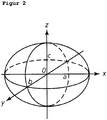
Figur 2 zeigt ein Ellipsoid als mögliche Grundform eines alternativen Formkörpers. -
Figur 3 zeigt eine weitere Variante einer Ausführungsform des erfindungsgemäßen Formkörpers. Dieser weist dabei einen kreisförmigen zylindrischen Grundkörper auf, der zu einer Spirale mit ca. 4,5 Windungen aufgewickelt vorliegt. Der bevorzugte Durchmesser der Grundfläche des Grundkörpers, d.h. der kreisförmigen Grundfläche des Zylinders, beträgt dabei bevorzugt von 0,01 bis 0,9 mm. -
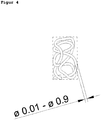
Figur 4 betrifft eine weitere bevorzugte geometrische Ausführungsform eines erfindungsgemäßen Grundkörpers, der in diesem Fall als wirrgelegtes Knäuel vorliegt. Auch diesem Formkörper liegt ein kreisförmiger zylindrischer Grundkörper zugrunde, der durch entsprechende Aufwicklung zum wirrgelegten Knäuel gefertigt werden kann. Der Durchmesser der kreisförmigen Grundfläche des Zylinders beträgt auch hier bevorzugt von 0,01 bis 0,9 mm.
Claims (13)
- Vorratsgefäß, enthaltend mindestens einen im Inneren des Vorratsgefäßes angeordneten antibakteriell wirkenden Formkörper, wobei der antibakteriell wirkende Formkörper aus einer Formmasse, umfassend mindestens eine Sorte eines partikulären antibakteriellen Materials mit einem mittleren Teilchendurchmesser, das in mindestens einem Kunstharz dispergiert vorliegt, gebildet ist,
dadurch gekennzeichnet,
dass dem Formkörper
ein zylindrischer Grundkörper, dessen maximaler Durchmesser der Grundfläche höchstens das 100-fache des mittleren Teilchendurchmessers des partikulären antibakteriellen Materials beträgt und der zu einer Spirale aufgewickelt oder in Form eines wirrgelegten Knäuels vorliegt,
zugrunde liegt,
wobei das Vorratsgefäß steril gelagerte Flüssigkeiten, Lösungen, Dispersionen, Suspensionen, Gele, Organogele, Mikroemulsionsgele, Pasten und/oder Cremes für pharmazeutische, kosmetische und/oder Lebensmittelanwendungen enthält, und
wobei der Formkörper zur Sterilhaltung der Flüssigkeiten, Lösungen, Dispersionen, Suspensionen, Gelen, Organogelen, Mikroemulsionsgelen, Pasten und/oder Cremes bei der Lagerung dient. - Vorratsgefäß nach Anspruch 1, dadurch gekennzeichnet, dass der maximale Durchmesser der Grundfläche des zylinderförmigen Grundkörpers vom 0,5 bis 80-fachen des mittleren Teilchendurchmessers des partikulären antibakteriellen Materials beträgt.
- Vorratsgefäß nach einem der vorhergehenden Ansprüche, dadurch gekennzeichnet, dassa) die Länge des zylindrischen Formkörpers von 1 mm bis 100 cm und/oderb) der maximale Durchmesser der Grundfläche des zylindrischen Grundkörpers kleiner 5 mmbeträgt.
- Vorratsgefäß nach einem der vorhergehenden Ansprüche, dadurch gekennzeichnet, dass die Grundfläche des zylindrischen Grundkörpers kreisförmig, elliptisch, n-eckig, mit 3 ≤ n ≤ 10, oder unregelmäßig ist.
- Vorratsgefäß nach einem der vorhergehenden Ansprüche, dadurch gekennzeichnet, dass die mindestens eine Sorte des partikulären antibakteriellen Materials ein partikuläres antibakterielles Glas ist.
- Vorratsgefäß nach einem der vorhergehenden Ansprüche, dadurch gekennzeichnet, dass die Oberfläche der Partikel der mindestens einen Sorte des partikulären antibakteriellen Materials zumindest teilweise oder ganz mit einem antibakteriell wirkenden Metall beschichtet ist und/oder Ionen und/oder Kolloide der zuvor genannten Metalle enthält.
- Vorratsgefäß nach vorhergehendem Anspruch, dadurch gekennzeichnet, dassa) der mittlere Partikeldurchmesser der Partikel des partikulären antibakteriellen Materials 0,05 bis 50 µm und/oderb) der Gehalt des Metalls und/oder der Metallionen, bezogen auf die Gesamtmasse an partikulärem antibakteriellen Material von 0,01 Gew.-% oder mehrbeträgt.
- Vorratsgefäß nach einem der vorhergehenden Ansprüche, dadurch gekennzeichnet, dass die Formmasse zusätzlich mindestens einen partikulären anorganischen Füllstoff enthält.
- Vorratsgefäß nach vorhergehendem Anspruch, dadurch gekennzeichnet, dass der mindestens eine partikuläre Füllstoff einen mittleren Teilchendurchmesser von 0,1 bis 10 µm aufweist.
- Vorratsgefäß nach einem der vorhergehenden Ansprüche, dadurch gekennzeichnet, dass das mindestens eine Kunstharz ausgewählt ist aus der Gruppe bestehend ausa) Thermoplasten,b) wärmehärtenden Harzen,c) Gummimaterialien, sowied) Mischungen aus den zuvor genannten Harzen.
- Vorratsgefäß nach einem der vorhergehenden Ansprüche, dadurch gekennzeichnet, dass der Gehalta) der mindestens einen Sorte des partikulären antibakteriellen Materials, bezogen auf die Formmasse, mindestens 0,01 Gew.-% und/oderb) ggf. des mindestens einen partikulären anorganischen Füllstoffs, bezogen auf die mindestens eine Sorte des partikulären antibakteriellen Materials, 3 bis 50 Gew.-%beträgt.
- Verfahren zur sterilen Lagerung von Formulierungen ausgewählt aus der Gruppe bestehend aus Flüssigkeiten, Lösungen, Dispersionen, Suspensionen, Gelen, Organogelen, Mikroemulsionsgelen, Pasten und/oder Cremes für pharmazeutische, kosmetische und/oder Lebensmittelanwendungen bei dem mindestens ein antibakteriell wirkender Formkörper mit den zuvor genannten Formulierungen in Kontakt gebracht wird, wobei der antibakteriell wirkende Formkörper aus einer Formmasse, umfassend mindestens eine Sorte eines partikulären antibakteriellen Materials mit einem mittleren Teilchendurchmesser, das in mindestens einem Kunstharz dispergiert vorliegt, gebildet ist, wobei dem Formkörper
ein zylindrischer Grundkörper, dessen maximaler Durchmesser der Grundfläche höchstens das 100-fache des mittleren Teilchendurchmessers des partikulären antibakteriellen Materials beträgt und der zu einer Spirale aufgewickelt oder in Form eines wirrgelegten Knäuels vorliegt,
zugrunde liegt. - Verwendung eines Vorratsgefäßes gemäß einem der Ansprüche 1 bis 11 zur Sterilisierung und/oder zur sterilen Lagerung von Flüssigkeiten, Lösungen, Dispersionen, Suspensionen, Gelen, Organogelen, Mikroemulsionsgelen, Pasten und/oder Cremes für pharmazeutische, kosmetische und/oder Lebensmittelanwendungen.
Priority Applications (1)
| Application Number | Priority Date | Filing Date | Title |
|---|---|---|---|
| PL12721508T PL2709448T3 (pl) | 2011-05-18 | 2012-05-11 | Zasobnik zawierający element kształtowy o działaniu przeciwbakteryjnym, sposób sterylizacji preparatów oraz zastosowanie zasobnika |
Applications Claiming Priority (2)
| Application Number | Priority Date | Filing Date | Title |
|---|---|---|---|
| DE102011106303A DE102011106303A1 (de) | 2011-05-18 | 2011-05-18 | Antibakteriell wirkender Formkörper, Verfahren zur Sterilisierung von Formulierungen, Vorratsgefäß sowie Verwendung des Vorratsgefäßes |
| PCT/EP2012/058803 WO2012156321A1 (de) | 2011-05-18 | 2012-05-11 | Antibakteriell wirkender formkörper, verfahren zur sterilisierung von formulierungen, vorratsgefäss enthaltend den genannten formkörper sowie verwendung des vorratsgefässes |
Publications (2)
| Publication Number | Publication Date |
|---|---|
| EP2709448A1 EP2709448A1 (de) | 2014-03-26 |
| EP2709448B1 true EP2709448B1 (de) | 2017-10-25 |
Family
ID=46085956
Family Applications (1)
| Application Number | Title | Priority Date | Filing Date |
|---|---|---|---|
| EP12721508.5A Active EP2709448B1 (de) | 2011-05-18 | 2012-05-11 | Vorratsgefäss enthaltend einen antibakteriell wirkenden formkörper, verfahren zur sterilisierung von formulierungen, sowie verwendung des vorratsgefässes |
Country Status (17)
| Country | Link |
|---|---|
| US (1) | US20140287012A1 (de) |
| EP (1) | EP2709448B1 (de) |
| JP (1) | JP2014517107A (de) |
| KR (2) | KR102136975B1 (de) |
| CN (1) | CN103635083B (de) |
| AU (1) | AU2012257789B2 (de) |
| CA (1) | CA2836199C (de) |
| CY (1) | CY1119775T1 (de) |
| DE (1) | DE102011106303A1 (de) |
| DK (1) | DK2709448T3 (de) |
| ES (1) | ES2656081T3 (de) |
| LT (1) | LT2709448T (de) |
| MX (1) | MX342891B (de) |
| PL (1) | PL2709448T3 (de) |
| PT (1) | PT2709448T (de) |
| RU (1) | RU2613904C2 (de) |
| WO (1) | WO2012156321A1 (de) |
Families Citing this family (9)
| Publication number | Priority date | Publication date | Assignee | Title |
|---|---|---|---|---|
| US10064273B2 (en) | 2015-10-20 | 2018-08-28 | MR Label Company | Antimicrobial copper sheet overlays and related methods for making and using |
| KR101877016B1 (ko) * | 2017-01-17 | 2018-07-10 | 주식회사 테코플러스 | 바이오매스를 함유하는 복합분해 항균성 조성물 및 이로부터 제조되는 복합분해 항균성 시트 |
| DE102018208110A1 (de) | 2018-05-23 | 2019-11-28 | F. Holzer Gmbh | Abgabekopf und Abgabevorrichtung zur dosierten Abgabe flüssiger Präparate sowie Verwendungsmöglichkeiten |
| CN109161127B (zh) * | 2018-08-15 | 2021-01-19 | 杭州联通管业有限公司 | 一种抗菌聚氯乙烯管材及其制备方法 |
| CN109575526A (zh) * | 2018-12-11 | 2019-04-05 | 邵成杰 | 一种用于腮红笔管的高分子抗菌复合材料及其制备方法 |
| DE202019006192U1 (de) * | 2019-01-29 | 2025-12-09 | Rpc Bramlage Gmbh | Spender zur Ausgabe von fließfähigen, beispielsweise flüssigen oder pastösen Massen |
| USD1107193S1 (en) * | 2023-11-08 | 2025-12-23 | Tyrone D. Barrow | Shower sleeve |
| WO2025105874A1 (ko) * | 2023-11-15 | 2025-05-22 | 주식회사 올담 | 항균 효과가 우수한 상하 접철식 월경컵 보관 용기 |
| JP2025177363A (ja) * | 2024-05-23 | 2025-12-05 | ハドラスホールディングス株式会社 | 水溶性ガラス組成物、コーティング膜、塗膜、合成樹脂フィルム、合成樹脂シート、合成樹脂繊維、成形体、焼結体 |
Citations (1)
| Publication number | Priority date | Publication date | Assignee | Title |
|---|---|---|---|---|
| EP0473892A2 (de) * | 1990-08-29 | 1992-03-11 | Ursapharm Arzneimittel Gmbh | Fluid-Abgabeeinrichtung für keimfreies Fluid |
Family Cites Families (20)
| Publication number | Priority date | Publication date | Assignee | Title |
|---|---|---|---|---|
| JP2503057B2 (ja) * | 1988-09-27 | 1996-06-05 | 株式会社クラレ | 抗菌性成形物及びその製造法 |
| DE9012119U1 (de) * | 1990-08-23 | 1991-12-19 | Münz, Werner, 8056 Neufahrn | Mantelstein für mehrschalige Hausschornsteine |
| US5496860A (en) * | 1992-12-28 | 1996-03-05 | Suntory Limited | Antibacterial fiber, textile and water-treating element using the fiber and method of producing the same |
| US5531908A (en) * | 1993-08-20 | 1996-07-02 | Suntory Limited | Germ-free liquid dispenser |
| US5609953A (en) * | 1994-06-02 | 1997-03-11 | Nippon Planning Co., Ltd. | Plastic molded articles having resin fibers dispersed therein |
| JP3799641B2 (ja) * | 1995-12-29 | 2006-07-19 | 日本エクスラン工業株式会社 | 金属微粒子含有ポリマー粒子とその製造方法 |
| DE19605153A1 (de) * | 1996-02-13 | 1997-08-14 | Pfeiffer Erich Gmbh & Co Kg | Austragvorrichtung für Medien und Verfahren zur Herstellung einer Austragvorrichtung o. dgl. |
| NL1010749C2 (nl) * | 1998-12-07 | 2000-06-08 | V O F Pharmasept | Houder voor het gedoseerd en in hoofdzaak kiemvrij afgeven van een vloeistof. |
| KR100529284B1 (ko) * | 2000-10-06 | 2005-11-17 | 가부시키가이샤 상기 | 향균성 수지 |
| DE10122262A1 (de) * | 2001-05-08 | 2002-11-21 | Schott Glas | Polymere mit bioaktivem Glas mit antimikrobieller Wirkung |
| US20030118658A1 (en) * | 2001-12-21 | 2003-06-26 | Trogolo Jeffrey A. | High aspect ratio encapsulated inorganic antimicrobial additive for controlled release |
| EP1496086A4 (de) | 2002-04-05 | 2005-04-27 | Kanebo Ltd | Antibakterielle glaszusammensetzung, antibakterielle harzzusammensetzung und herstellungsverfahren dafür |
| US20050089580A1 (en) * | 2002-04-05 | 2005-04-28 | Kanebo, Ltd. | Antibacterial glass composition, antibacterial resin composition and method for producing the same |
| JP2005179607A (ja) * | 2003-12-24 | 2005-07-07 | Fuji Xerox Co Ltd | 抗菌性複合粒子 |
| DE202004015240U1 (de) * | 2004-09-27 | 2004-12-09 | Silvertex Gmbh | Fadensystem zur Installation in Trinkwassersystemen |
| JP4086893B2 (ja) * | 2005-05-10 | 2008-05-14 | 興亜硝子株式会社 | 抗菌性繊維の製造方法 |
| JP2006322677A (ja) * | 2005-05-19 | 2006-11-30 | Daikin Ind Ltd | 抗菌材料及び抗菌材料を備えた装置 |
| DE102008027987A1 (de) * | 2008-03-04 | 2009-09-17 | Kist-Europe Forschungsgesellschaft Mbh | Dosierungsvorrichtung |
| DE102008052837A1 (de) * | 2008-10-13 | 2010-04-15 | Aesculap Ag | Textiles Implantat mit Kern-Mantel-Aufbau und Verfahren zu seiner Herstellung |
| ES2393252T3 (es) * | 2009-08-03 | 2012-12-19 | Dsm Ip Assets B.V. | Material antimicrobiano para la esterilización de agua que comprende un vehículo poliamídico y nanopartículas de plata elemental |
-
2011
- 2011-05-18 DE DE102011106303A patent/DE102011106303A1/de not_active Ceased
-
2012
- 2012-05-11 EP EP12721508.5A patent/EP2709448B1/de active Active
- 2012-05-11 MX MX2013013413A patent/MX342891B/es active IP Right Grant
- 2012-05-11 AU AU2012257789A patent/AU2012257789B2/en active Active
- 2012-05-11 CA CA2836199A patent/CA2836199C/en active Active
- 2012-05-11 CN CN201280023619.3A patent/CN103635083B/zh active Active
- 2012-05-11 US US14/118,503 patent/US20140287012A1/en not_active Abandoned
- 2012-05-11 KR KR1020137032928A patent/KR102136975B1/ko active Active
- 2012-05-11 PT PT127215085T patent/PT2709448T/pt unknown
- 2012-05-11 WO PCT/EP2012/058803 patent/WO2012156321A1/de not_active Ceased
- 2012-05-11 PL PL12721508T patent/PL2709448T3/pl unknown
- 2012-05-11 JP JP2014510752A patent/JP2014517107A/ja active Pending
- 2012-05-11 KR KR1020197011100A patent/KR102131643B1/ko active Active
- 2012-05-11 ES ES12721508.5T patent/ES2656081T3/es active Active
- 2012-05-11 DK DK12721508.5T patent/DK2709448T3/en active
- 2012-05-11 LT LTEP12721508.5T patent/LT2709448T/lt unknown
- 2012-05-11 RU RU2013153203A patent/RU2613904C2/ru active
-
2018
- 2018-01-15 CY CY20181100042T patent/CY1119775T1/el unknown
Patent Citations (1)
| Publication number | Priority date | Publication date | Assignee | Title |
|---|---|---|---|---|
| EP0473892A2 (de) * | 1990-08-29 | 1992-03-11 | Ursapharm Arzneimittel Gmbh | Fluid-Abgabeeinrichtung für keimfreies Fluid |
Non-Patent Citations (1)
| Title |
|---|
| J. WESLEY ALEXANDER: "History of the Medical Use of Silver", SURGICAL INFECTIONS, vol. 10, no. 3, 1 June 2009 (2009-06-01), US, pages 289 - 292, XP055288836, ISSN: 1096-2964, DOI: 10.1089/sur.2008.9941 * |
Also Published As
| Publication number | Publication date |
|---|---|
| AU2012257789B2 (en) | 2016-05-19 |
| KR20190045377A (ko) | 2019-05-02 |
| CN103635083A (zh) | 2014-03-12 |
| CA2836199C (en) | 2020-04-14 |
| KR20140051177A (ko) | 2014-04-30 |
| DK2709448T3 (en) | 2018-01-22 |
| US20140287012A1 (en) | 2014-09-25 |
| MX342891B (es) | 2016-10-18 |
| CA2836199A1 (en) | 2012-11-22 |
| WO2012156321A1 (de) | 2012-11-22 |
| CN103635083B (zh) | 2018-04-27 |
| KR102131643B1 (ko) | 2020-07-08 |
| DE102011106303A1 (de) | 2012-11-22 |
| RU2613904C2 (ru) | 2017-03-21 |
| AU2012257789A1 (en) | 2014-01-09 |
| LT2709448T (lt) | 2018-03-26 |
| JP2014517107A (ja) | 2014-07-17 |
| CY1119775T1 (el) | 2018-06-27 |
| EP2709448A1 (de) | 2014-03-26 |
| RU2013153203A (ru) | 2015-06-27 |
| MX2013013413A (es) | 2014-02-27 |
| PT2709448T (pt) | 2018-01-19 |
| KR102136975B1 (ko) | 2020-07-23 |
| ES2656081T3 (es) | 2018-02-23 |
| PL2709448T3 (pl) | 2018-04-30 |
Similar Documents
| Publication | Publication Date | Title |
|---|---|---|
| DE102011106303A1 (de) | Antibakteriell wirkender Formkörper, Verfahren zur Sterilisierung von Formulierungen, Vorratsgefäß sowie Verwendung des Vorratsgefäßes | |
| DE69618425T2 (de) | Flüssigkeits-Abgabeflasche mit permeabler Wand | |
| EP0021123B1 (de) | Sprühapplikator | |
| US8894622B2 (en) | Bottle for packaging liquid that is to be dispensed drop by drop, with antibacterial protection | |
| DE69909834T2 (de) | Quetschbehälter zur dosierten und keimfreien abgabe von flüssigkeiten | |
| DE69101084T2 (de) | Reinigungsvorrichtung für eine Flüssigkeit mit einer im Deckelkörper eines Behälters integrierten Luftpumpe. | |
| KR102584356B1 (ko) | 멸균 패키징 용기로부터 액체를 배출하는 장치 | |
| JP2014516690A (ja) | 抗菌添加物含有容器施栓システム | |
| DE60319936T2 (de) | Vorrichtung, zum Aufbewahren und Auftragen bestehend aus einem aus Partikeln bestehenden Körper | |
| DE102011083355B4 (de) | Tropfenspender | |
| DE102004031955A1 (de) | Wundauflage | |
| DE69116434T2 (de) | Kontaminationsbeständige Verteilungs- und Dosierungsvorrichtung | |
| DE69910982T2 (de) | Medizinischer artikel mit beschichteter oberfläche mit niedriger reibung und geringer eiweissadsorption | |
| EP2253553B1 (de) | Stilförmige Vorrichtung zum Auftragen einer Flüssigkeit | |
| DE102018123667B4 (de) | Vorrichtung zum Aufbewahren und dosierten Abgeben eines sterilen Fluids | |
| DE4229468C2 (de) | Behälter für vom Bakterienbefall bedrohte flüssige oder pastöse Inhaltsstoffe | |
| DE2519330A1 (de) | Tropfgefaess | |
| WO2017202529A1 (de) | Zweiteiliges kunststoffrohling-set | |
| DE202013011596U1 (de) | Zerstäuberpumpenvorrichtung | |
| DE102008001313B9 (de) | Tropfkappe | |
| DE818247C (de) | Verteiler fuer feinpulverisierte und fluessige Stoffe | |
| DE102012202861A1 (de) | Behältnis für eine Flüssigkeit sowie Herstellungsverfahren für ein derartiges Behältnis | |
| EP2734144B1 (de) | Auftragevorrichtung für dentalmassen | |
| WO2021156440A1 (de) | Rückschlagventil, tropfkammer, port zum nadellosen zudosieren einer flüssigkeit, rückflusssperre, infusions- oder transfusionssystem und verfahren zum herstellen eines rückschlagventils | |
| DE102014203109A1 (de) | Vorrichtung zum Öffnen eines in einer Hülle angeordneten Behälters |
Legal Events
| Date | Code | Title | Description |
|---|---|---|---|
| PUAI | Public reference made under article 153(3) epc to a published international application that has entered the european phase |
Free format text: ORIGINAL CODE: 0009012 |
|
| 17P | Request for examination filed |
Effective date: 20131118 |
|
| AK | Designated contracting states |
Kind code of ref document: A1 Designated state(s): AL AT BE BG CH CY CZ DE DK EE ES FI FR GB GR HR HU IE IS IT LI LT LU LV MC MK MT NL NO PL PT RO RS SE SI SK SM TR |
|
| DAX | Request for extension of the european patent (deleted) | ||
| 17Q | First examination report despatched |
Effective date: 20150205 |
|
| GRAP | Despatch of communication of intention to grant a patent |
Free format text: ORIGINAL CODE: EPIDOSNIGR1 |
|
| RIC1 | Information provided on ipc code assigned before grant |
Ipc: A01N 25/10 20060101AFI20170602BHEP Ipc: B05B 11/00 20060101ALI20170602BHEP Ipc: A01P 1/00 20060101ALI20170602BHEP Ipc: A01N 25/34 20060101ALI20170602BHEP Ipc: A01N 59/20 20060101ALI20170602BHEP Ipc: A01N 59/16 20060101ALI20170602BHEP |
|
| INTG | Intention to grant announced |
Effective date: 20170706 |
|
| GRAS | Grant fee paid |
Free format text: ORIGINAL CODE: EPIDOSNIGR3 |
|
| GRAA | (expected) grant |
Free format text: ORIGINAL CODE: 0009210 |
|
| AK | Designated contracting states |
Kind code of ref document: B1 Designated state(s): AL AT BE BG CH CY CZ DE DK EE ES FI FR GB GR HR HU IE IS IT LI LT LU LV MC MK MT NL NO PL PT RO RS SE SI SK SM TR |
|
| REG | Reference to a national code |
Ref country code: GB Ref legal event code: FG4D Free format text: NOT ENGLISH |
|
| REG | Reference to a national code |
Ref country code: CH Ref legal event code: EP |
|
| REG | Reference to a national code |
Ref country code: AT Ref legal event code: REF Ref document number: 938996 Country of ref document: AT Kind code of ref document: T Effective date: 20171115 |
|
| REG | Reference to a national code |
Ref country code: IE Ref legal event code: FG4D Free format text: LANGUAGE OF EP DOCUMENT: GERMAN |
|
| REG | Reference to a national code |
Ref country code: DE Ref legal event code: R096 Ref document number: 502012011533 Country of ref document: DE |
|
| REG | Reference to a national code |
Ref country code: PT Ref legal event code: SC4A Ref document number: 2709448 Country of ref document: PT Date of ref document: 20180119 Kind code of ref document: T Free format text: AVAILABILITY OF NATIONAL TRANSLATION Effective date: 20180115 |
|
| REG | Reference to a national code |
Ref country code: DK Ref legal event code: T3 Effective date: 20180116 |
|
| REG | Reference to a national code |
Ref country code: NL Ref legal event code: FP Ref country code: CH Ref legal event code: PCOW Free format text: NEW ADDRESS: ENSHEIMER STRASSE 42, 66386 ST. INGBERT (DE) |
|
| RAP2 | Party data changed (patent owner data changed or rights of a patent transferred) |
Owner name: F. HOLZER GMBH |
|
| REG | Reference to a national code |
Ref country code: SE Ref legal event code: TRGR |
|
| REG | Reference to a national code |
Ref country code: ES Ref legal event code: FG2A Ref document number: 2656081 Country of ref document: ES Kind code of ref document: T3 Effective date: 20180223 |
|
| REG | Reference to a national code |
Ref country code: EE Ref legal event code: FG4A Ref document number: E014815 Country of ref document: EE Effective date: 20180115 |
|
| PG25 | Lapsed in a contracting state [announced via postgrant information from national office to epo] |
Ref country code: NO Free format text: LAPSE BECAUSE OF FAILURE TO SUBMIT A TRANSLATION OF THE DESCRIPTION OR TO PAY THE FEE WITHIN THE PRESCRIBED TIME-LIMIT Effective date: 20180125 |
|
| REG | Reference to a national code |
Ref country code: FR Ref legal event code: PLFP Year of fee payment: 7 |
|
| PG25 | Lapsed in a contracting state [announced via postgrant information from national office to epo] |
Ref country code: RS Free format text: LAPSE BECAUSE OF FAILURE TO SUBMIT A TRANSLATION OF THE DESCRIPTION OR TO PAY THE FEE WITHIN THE PRESCRIBED TIME-LIMIT Effective date: 20171025 Ref country code: HR Free format text: LAPSE BECAUSE OF FAILURE TO SUBMIT A TRANSLATION OF THE DESCRIPTION OR TO PAY THE FEE WITHIN THE PRESCRIBED TIME-LIMIT Effective date: 20171025 Ref country code: IS Free format text: LAPSE BECAUSE OF FAILURE TO SUBMIT A TRANSLATION OF THE DESCRIPTION OR TO PAY THE FEE WITHIN THE PRESCRIBED TIME-LIMIT Effective date: 20180225 Ref country code: BG Free format text: LAPSE BECAUSE OF FAILURE TO SUBMIT A TRANSLATION OF THE DESCRIPTION OR TO PAY THE FEE WITHIN THE PRESCRIBED TIME-LIMIT Effective date: 20180125 |
|
| REG | Reference to a national code |
Ref country code: GR Ref legal event code: EP Ref document number: 20180400083 Country of ref document: GR Effective date: 20180518 |
|
| REG | Reference to a national code |
Ref country code: SK Ref legal event code: T3 Ref document number: E 26801 Country of ref document: SK |
|
| REG | Reference to a national code |
Ref country code: DE Ref legal event code: R097 Ref document number: 502012011533 Country of ref document: DE |
|
| PG25 | Lapsed in a contracting state [announced via postgrant information from national office to epo] |
Ref country code: RO Free format text: LAPSE BECAUSE OF FAILURE TO SUBMIT A TRANSLATION OF THE DESCRIPTION OR TO PAY THE FEE WITHIN THE PRESCRIBED TIME-LIMIT Effective date: 20171025 Ref country code: SM Free format text: LAPSE BECAUSE OF FAILURE TO SUBMIT A TRANSLATION OF THE DESCRIPTION OR TO PAY THE FEE WITHIN THE PRESCRIBED TIME-LIMIT Effective date: 20171025 |
|
| PLBE | No opposition filed within time limit |
Free format text: ORIGINAL CODE: 0009261 |
|
| STAA | Information on the status of an ep patent application or granted ep patent |
Free format text: STATUS: NO OPPOSITION FILED WITHIN TIME LIMIT |
|
| PG25 | Lapsed in a contracting state [announced via postgrant information from national office to epo] |
Ref country code: MT Free format text: LAPSE BECAUSE OF FAILURE TO SUBMIT A TRANSLATION OF THE DESCRIPTION OR TO PAY THE FEE WITHIN THE PRESCRIBED TIME-LIMIT Effective date: 20171025 |
|
| 26N | No opposition filed |
Effective date: 20180726 |
|
| PG25 | Lapsed in a contracting state [announced via postgrant information from national office to epo] |
Ref country code: SI Free format text: LAPSE BECAUSE OF FAILURE TO SUBMIT A TRANSLATION OF THE DESCRIPTION OR TO PAY THE FEE WITHIN THE PRESCRIBED TIME-LIMIT Effective date: 20171025 |
|
| PG25 | Lapsed in a contracting state [announced via postgrant information from national office to epo] |
Ref country code: HU Free format text: LAPSE BECAUSE OF FAILURE TO SUBMIT A TRANSLATION OF THE DESCRIPTION OR TO PAY THE FEE WITHIN THE PRESCRIBED TIME-LIMIT; INVALID AB INITIO Effective date: 20120511 |
|
| PG25 | Lapsed in a contracting state [announced via postgrant information from national office to epo] |
Ref country code: MK Free format text: LAPSE BECAUSE OF NON-PAYMENT OF DUE FEES Effective date: 20171025 |
|
| PG25 | Lapsed in a contracting state [announced via postgrant information from national office to epo] |
Ref country code: AL Free format text: LAPSE BECAUSE OF FAILURE TO SUBMIT A TRANSLATION OF THE DESCRIPTION OR TO PAY THE FEE WITHIN THE PRESCRIBED TIME-LIMIT Effective date: 20171025 |
|
| REG | Reference to a national code |
Ref country code: EE Ref legal event code: HC1A Ref document number: E014815 Country of ref document: EE |
|
| P01 | Opt-out of the competence of the unified patent court (upc) registered |
Effective date: 20230417 |
|
| P02 | Opt-out of the competence of the unified patent court (upc) changed |
Effective date: 20230508 |
|
| PGFP | Annual fee paid to national office [announced via postgrant information from national office to epo] |
Ref country code: NL Payment date: 20250521 Year of fee payment: 14 |
|
| PGFP | Annual fee paid to national office [announced via postgrant information from national office to epo] |
Ref country code: MC Payment date: 20250527 Year of fee payment: 14 |
|
| PGFP | Annual fee paid to national office [announced via postgrant information from national office to epo] |
Ref country code: FI Payment date: 20250526 Year of fee payment: 14 |
|
| PGFP | Annual fee paid to national office [announced via postgrant information from national office to epo] |
Ref country code: PL Payment date: 20250505 Year of fee payment: 14 Ref country code: DE Payment date: 20250530 Year of fee payment: 14 |
|
| PGFP | Annual fee paid to national office [announced via postgrant information from national office to epo] |
Ref country code: GB Payment date: 20250521 Year of fee payment: 14 Ref country code: ES Payment date: 20250627 Year of fee payment: 14 Ref country code: DK Payment date: 20250526 Year of fee payment: 14 |
|
| PGFP | Annual fee paid to national office [announced via postgrant information from national office to epo] |
Ref country code: LT Payment date: 20250424 Year of fee payment: 14 |
|
| PGFP | Annual fee paid to national office [announced via postgrant information from national office to epo] |
Ref country code: LU Payment date: 20250521 Year of fee payment: 14 Ref country code: IT Payment date: 20250527 Year of fee payment: 14 Ref country code: BE Payment date: 20250521 Year of fee payment: 14 |
|
| PGFP | Annual fee paid to national office [announced via postgrant information from national office to epo] |
Ref country code: PT Payment date: 20250502 Year of fee payment: 14 Ref country code: LV Payment date: 20250514 Year of fee payment: 14 |
|
| PGFP | Annual fee paid to national office [announced via postgrant information from national office to epo] |
Ref country code: EE Payment date: 20250528 Year of fee payment: 14 Ref country code: FR Payment date: 20250528 Year of fee payment: 14 |
|
| PGFP | Annual fee paid to national office [announced via postgrant information from national office to epo] |
Ref country code: GR Payment date: 20250523 Year of fee payment: 14 |
|
| PGFP | Annual fee paid to national office [announced via postgrant information from national office to epo] |
Ref country code: CH Payment date: 20250601 Year of fee payment: 14 |
|
| PGFP | Annual fee paid to national office [announced via postgrant information from national office to epo] |
Ref country code: AT Payment date: 20250522 Year of fee payment: 14 |
|
| PGFP | Annual fee paid to national office [announced via postgrant information from national office to epo] |
Ref country code: TR Payment date: 20250505 Year of fee payment: 14 Ref country code: SK Payment date: 20250505 Year of fee payment: 14 |
|
| PGFP | Annual fee paid to national office [announced via postgrant information from national office to epo] |
Ref country code: CZ Payment date: 20250505 Year of fee payment: 14 |
|
| PGFP | Annual fee paid to national office [announced via postgrant information from national office to epo] |
Ref country code: IE Payment date: 20250521 Year of fee payment: 14 |
|
| PGFP | Annual fee paid to national office [announced via postgrant information from national office to epo] |
Ref country code: SE Payment date: 20250521 Year of fee payment: 14 |
|
| PGFP | Annual fee paid to national office [announced via postgrant information from national office to epo] |
Ref country code: CY Payment date: 20250424 Year of fee payment: 14 |