EP2707438B1 - Beschichtung für polymere - Google Patents
Beschichtung für polymere Download PDFInfo
- Publication number
- EP2707438B1 EP2707438B1 EP12732952.2A EP12732952A EP2707438B1 EP 2707438 B1 EP2707438 B1 EP 2707438B1 EP 12732952 A EP12732952 A EP 12732952A EP 2707438 B1 EP2707438 B1 EP 2707438B1
- Authority
- EP
- European Patent Office
- Prior art keywords
- metal
- coating composition
- substrate
- solution
- substrate coating
- Prior art date
- Legal status (The legal status is an assumption and is not a legal conclusion. Google has not performed a legal analysis and makes no representation as to the accuracy of the status listed.)
- Not-in-force
Links
- 238000000576 coating method Methods 0.000 title claims description 66
- 239000011248 coating agent Substances 0.000 title claims description 50
- 229920000642 polymer Polymers 0.000 title description 19
- 229910052751 metal Inorganic materials 0.000 claims description 79
- 239000002184 metal Substances 0.000 claims description 79
- 239000000243 solution Substances 0.000 claims description 52
- 239000000758 substrate Substances 0.000 claims description 52
- 238000000034 method Methods 0.000 claims description 33
- 239000008199 coating composition Substances 0.000 claims description 31
- 239000008139 complexing agent Substances 0.000 claims description 29
- 239000002253 acid Substances 0.000 claims description 26
- PXHVJJICTQNCMI-UHFFFAOYSA-N Nickel Chemical compound [Ni] PXHVJJICTQNCMI-UHFFFAOYSA-N 0.000 claims description 21
- 150000003839 salts Chemical class 0.000 claims description 21
- BASFCYQUMIYNBI-UHFFFAOYSA-N platinum Chemical compound [Pt] BASFCYQUMIYNBI-UHFFFAOYSA-N 0.000 claims description 20
- 150000002739 metals Chemical class 0.000 claims description 19
- 150000001768 cations Chemical class 0.000 claims description 18
- 229920000620 organic polymer Polymers 0.000 claims description 18
- 229910052709 silver Inorganic materials 0.000 claims description 17
- 239000010931 gold Substances 0.000 claims description 15
- 229910044991 metal oxide Inorganic materials 0.000 claims description 15
- 239000004332 silver Substances 0.000 claims description 15
- BQCADISMDOOEFD-UHFFFAOYSA-N Silver Chemical compound [Ag] BQCADISMDOOEFD-UHFFFAOYSA-N 0.000 claims description 13
- 230000007062 hydrolysis Effects 0.000 claims description 13
- 238000006460 hydrolysis reaction Methods 0.000 claims description 13
- 150000004706 metal oxides Chemical class 0.000 claims description 13
- 239000010936 titanium Substances 0.000 claims description 13
- 239000011701 zinc Substances 0.000 claims description 13
- KDLHZDBZIXYQEI-UHFFFAOYSA-N Palladium Chemical compound [Pd] KDLHZDBZIXYQEI-UHFFFAOYSA-N 0.000 claims description 12
- 239000010949 copper Substances 0.000 claims description 12
- 150000002148 esters Chemical class 0.000 claims description 12
- QGZKDVFQNNGYKY-UHFFFAOYSA-N Ammonia Chemical compound N QGZKDVFQNNGYKY-UHFFFAOYSA-N 0.000 claims description 11
- 229910052782 aluminium Inorganic materials 0.000 claims description 11
- PIICEJLVQHRZGT-UHFFFAOYSA-N Ethylenediamine Chemical compound NCCN PIICEJLVQHRZGT-UHFFFAOYSA-N 0.000 claims description 10
- ZBCBWPMODOFKDW-UHFFFAOYSA-N diethanolamine Chemical compound OCCNCCO ZBCBWPMODOFKDW-UHFFFAOYSA-N 0.000 claims description 10
- XEEYBQQBJWHFJM-UHFFFAOYSA-N Iron Chemical compound [Fe] XEEYBQQBJWHFJM-UHFFFAOYSA-N 0.000 claims description 9
- 238000007654 immersion Methods 0.000 claims description 9
- 238000004519 manufacturing process Methods 0.000 claims description 9
- VILCJCGEZXAXTO-UHFFFAOYSA-N 2,2,2-tetramine Chemical compound NCCNCCNCCN VILCJCGEZXAXTO-UHFFFAOYSA-N 0.000 claims description 8
- KCXVZYZYPLLWCC-UHFFFAOYSA-N EDTA Chemical compound OC(=O)CN(CC(O)=O)CCN(CC(O)=O)CC(O)=O KCXVZYZYPLLWCC-UHFFFAOYSA-N 0.000 claims description 8
- 150000001450 anions Chemical class 0.000 claims description 8
- 229910052733 gallium Inorganic materials 0.000 claims description 8
- 229910052732 germanium Inorganic materials 0.000 claims description 8
- 229910052737 gold Inorganic materials 0.000 claims description 8
- 229910052745 lead Inorganic materials 0.000 claims description 8
- 229910052750 molybdenum Inorganic materials 0.000 claims description 8
- 229910052758 niobium Inorganic materials 0.000 claims description 8
- 239000010955 niobium Substances 0.000 claims description 8
- 229910052715 tantalum Inorganic materials 0.000 claims description 8
- 229910052718 tin Inorganic materials 0.000 claims description 8
- 229910052721 tungsten Inorganic materials 0.000 claims description 8
- 229910052720 vanadium Inorganic materials 0.000 claims description 8
- 229910052726 zirconium Inorganic materials 0.000 claims description 8
- RYGMFSIKBFXOCR-UHFFFAOYSA-N Copper Chemical compound [Cu] RYGMFSIKBFXOCR-UHFFFAOYSA-N 0.000 claims description 7
- WHXSMMKQMYFTQS-UHFFFAOYSA-N Lithium Chemical compound [Li] WHXSMMKQMYFTQS-UHFFFAOYSA-N 0.000 claims description 7
- QPCDCPDFJACHGM-UHFFFAOYSA-N N,N-bis{2-[bis(carboxymethyl)amino]ethyl}glycine Chemical compound OC(=O)CN(CC(O)=O)CCN(CC(=O)O)CCN(CC(O)=O)CC(O)=O QPCDCPDFJACHGM-UHFFFAOYSA-N 0.000 claims description 7
- 230000001476 alcoholic effect Effects 0.000 claims description 7
- PCHJSUWPFVWCPO-UHFFFAOYSA-N gold Chemical compound [Au] PCHJSUWPFVWCPO-UHFFFAOYSA-N 0.000 claims description 7
- 229910052744 lithium Inorganic materials 0.000 claims description 7
- 229910052759 nickel Inorganic materials 0.000 claims description 7
- 229960003330 pentetic acid Drugs 0.000 claims description 7
- JBQYATWDVHIOAR-UHFFFAOYSA-N tellanylidenegermanium Chemical compound [Te]=[Ge] JBQYATWDVHIOAR-UHFFFAOYSA-N 0.000 claims description 7
- 229910052719 titanium Inorganic materials 0.000 claims description 7
- 150000001875 compounds Chemical class 0.000 claims description 6
- 229910052697 platinum Inorganic materials 0.000 claims description 6
- HKJYVRJHDIPMQB-UHFFFAOYSA-N propan-1-olate;titanium(4+) Chemical compound CCCO[Ti](OCCC)(OCCC)OCCC HKJYVRJHDIPMQB-UHFFFAOYSA-N 0.000 claims description 6
- VXUYXOFXAQZZMF-UHFFFAOYSA-N titanium(IV) isopropoxide Chemical compound CC(C)O[Ti](OC(C)C)(OC(C)C)OC(C)C VXUYXOFXAQZZMF-UHFFFAOYSA-N 0.000 claims description 6
- RPNUMPOLZDHAAY-UHFFFAOYSA-N Diethylenetriamine Chemical compound NCCNCCN RPNUMPOLZDHAAY-UHFFFAOYSA-N 0.000 claims description 5
- XSQUKJJJFZCRTK-UHFFFAOYSA-N Urea Chemical compound NC(N)=O XSQUKJJJFZCRTK-UHFFFAOYSA-N 0.000 claims description 5
- 229910052802 copper Inorganic materials 0.000 claims description 5
- HXMVNCMPQGPRLN-UHFFFAOYSA-N 2-hydroxyputrescine Chemical compound NCCC(O)CN HXMVNCMPQGPRLN-UHFFFAOYSA-N 0.000 claims description 4
- 150000007513 acids Chemical class 0.000 claims description 4
- LHIJANUOQQMGNT-UHFFFAOYSA-N aminoethylethanolamine Chemical compound NCCNCCO LHIJANUOQQMGNT-UHFFFAOYSA-N 0.000 claims description 4
- 229910021529 ammonia Inorganic materials 0.000 claims description 4
- 239000007864 aqueous solution Substances 0.000 claims description 4
- 238000001035 drying Methods 0.000 claims description 4
- 229920000307 polymer substrate Polymers 0.000 claims description 4
- 239000000126 substance Substances 0.000 claims description 4
- 229910052725 zinc Inorganic materials 0.000 claims description 4
- NGCRLFIYVFOUMZ-UHFFFAOYSA-N 2,3-dichloroquinoxaline-6-carbonyl chloride Chemical compound N1=C(Cl)C(Cl)=NC2=CC(C(=O)Cl)=CC=C21 NGCRLFIYVFOUMZ-UHFFFAOYSA-N 0.000 claims description 3
- OSXGKVOYAKRLCS-UHFFFAOYSA-N 2-methylpropan-2-olate;tin(4+) Chemical compound CC(C)(C)O[Sn](OC(C)(C)C)(OC(C)(C)C)OC(C)(C)C OSXGKVOYAKRLCS-UHFFFAOYSA-N 0.000 claims description 3
- VHUUQVKOLVNVRT-UHFFFAOYSA-N Ammonium hydroxide Chemical compound [NH4+].[OH-] VHUUQVKOLVNVRT-UHFFFAOYSA-N 0.000 claims description 3
- CQQXCSFSYHAZOO-UHFFFAOYSA-L [acetyloxy(dioctyl)stannyl] acetate Chemical compound CCCCCCCC[Sn](OC(C)=O)(OC(C)=O)CCCCCCCC CQQXCSFSYHAZOO-UHFFFAOYSA-L 0.000 claims description 3
- XAGFODPZIPBFFR-UHFFFAOYSA-N aluminium Chemical compound [Al] XAGFODPZIPBFFR-UHFFFAOYSA-N 0.000 claims description 3
- PVZMSIQWTGPSHJ-UHFFFAOYSA-N butan-1-ol;tantalum Chemical compound [Ta].CCCCO.CCCCO.CCCCO.CCCCO.CCCCO PVZMSIQWTGPSHJ-UHFFFAOYSA-N 0.000 claims description 3
- DINQVNXOZUORJS-UHFFFAOYSA-N butan-1-olate;niobium(5+) Chemical compound [Nb+5].CCCC[O-].CCCC[O-].CCCC[O-].CCCC[O-].CCCC[O-] DINQVNXOZUORJS-UHFFFAOYSA-N 0.000 claims description 3
- YHWCPXVTRSHPNY-UHFFFAOYSA-N butan-1-olate;titanium(4+) Chemical compound [Ti+4].CCCC[O-].CCCC[O-].CCCC[O-].CCCC[O-] YHWCPXVTRSHPNY-UHFFFAOYSA-N 0.000 claims description 3
- BSDOQSMQCZQLDV-UHFFFAOYSA-N butan-1-olate;zirconium(4+) Chemical compound [Zr+4].CCCC[O-].CCCC[O-].CCCC[O-].CCCC[O-] BSDOQSMQCZQLDV-UHFFFAOYSA-N 0.000 claims description 3
- WCRDXYSYPCEIAK-UHFFFAOYSA-N dibutylstannane Chemical compound CCCC[SnH2]CCCC WCRDXYSYPCEIAK-UHFFFAOYSA-N 0.000 claims description 3
- BRWZYZWZBMGMMG-UHFFFAOYSA-J dodecanoate tin(4+) Chemical compound [Sn+4].CCCCCCCCCCCC([O-])=O.CCCCCCCCCCCC([O-])=O.CCCCCCCCCCCC([O-])=O.CCCCCCCCCCCC([O-])=O BRWZYZWZBMGMMG-UHFFFAOYSA-J 0.000 claims description 3
- FIYYPCHPELXPMO-UHFFFAOYSA-N ethanol tungsten Chemical compound [W].CCO.CCO.CCO.CCO.CCO.CCO FIYYPCHPELXPMO-UHFFFAOYSA-N 0.000 claims description 3
- UARGAUQGVANXCB-UHFFFAOYSA-N ethanol;zirconium Chemical compound [Zr].CCO.CCO.CCO.CCO UARGAUQGVANXCB-UHFFFAOYSA-N 0.000 claims description 3
- QQBWQAURZPGDOG-UHFFFAOYSA-N ethyl hexanoate;zinc Chemical compound [Zn].CCCCCC(=O)OCC QQBWQAURZPGDOG-UHFFFAOYSA-N 0.000 claims description 3
- ZTILUDNICMILKJ-UHFFFAOYSA-N niobium(v) ethoxide Chemical compound CCO[Nb](OCC)(OCC)(OCC)OCC ZTILUDNICMILKJ-UHFFFAOYSA-N 0.000 claims description 3
- XZZXKVYTWCYOQX-UHFFFAOYSA-J octanoate;tin(4+) Chemical compound [Sn+4].CCCCCCCC([O-])=O.CCCCCCCC([O-])=O.CCCCCCCC([O-])=O.CCCCCCCC([O-])=O XZZXKVYTWCYOQX-UHFFFAOYSA-J 0.000 claims description 3
- 229910052763 palladium Inorganic materials 0.000 claims description 3
- XPGAWFIWCWKDDL-UHFFFAOYSA-N propan-1-olate;zirconium(4+) Chemical compound [Zr+4].CCC[O-].CCC[O-].CCC[O-].CCC[O-] XPGAWFIWCWKDDL-UHFFFAOYSA-N 0.000 claims description 3
- ZGSOBQAJAUGRBK-UHFFFAOYSA-N propan-2-olate;zirconium(4+) Chemical compound [Zr+4].CC(C)[O-].CC(C)[O-].CC(C)[O-].CC(C)[O-] ZGSOBQAJAUGRBK-UHFFFAOYSA-N 0.000 claims description 3
- PKLMYPSYVKAPOX-UHFFFAOYSA-N tetra(propan-2-yloxy)germane Chemical compound CC(C)O[Ge](OC(C)C)(OC(C)C)OC(C)C PKLMYPSYVKAPOX-UHFFFAOYSA-N 0.000 claims description 3
- GXMNGLIMQIPFEB-UHFFFAOYSA-N tetraethoxygermane Chemical compound CCO[Ge](OCC)(OCC)OCC GXMNGLIMQIPFEB-UHFFFAOYSA-N 0.000 claims description 3
- KSBAEPSJVUENNK-UHFFFAOYSA-L tin(ii) 2-ethylhexanoate Chemical compound [Sn+2].CCCCC(CC)C([O-])=O.CCCCC(CC)C([O-])=O KSBAEPSJVUENNK-UHFFFAOYSA-L 0.000 claims description 3
- VNTDZUDTQCZFKN-UHFFFAOYSA-L zinc 2,2-dimethyloctanoate Chemical compound [Zn++].CCCCCCC(C)(C)C([O-])=O.CCCCCCC(C)(C)C([O-])=O VNTDZUDTQCZFKN-UHFFFAOYSA-L 0.000 claims description 3
- CHJMFFKHPHCQIJ-UHFFFAOYSA-L zinc;octanoate Chemical compound [Zn+2].CCCCCCCC([O-])=O.CCCCCCCC([O-])=O CHJMFFKHPHCQIJ-UHFFFAOYSA-L 0.000 claims description 3
- NHXVNEDMKGDNPR-UHFFFAOYSA-N zinc;pentane-2,4-dione Chemical compound [Zn+2].CC(=O)[CH-]C(C)=O.CC(=O)[CH-]C(C)=O NHXVNEDMKGDNPR-UHFFFAOYSA-N 0.000 claims description 3
- FOIXSVOLVBLSDH-UHFFFAOYSA-N Silver ion Chemical compound [Ag+] FOIXSVOLVBLSDH-UHFFFAOYSA-N 0.000 claims description 2
- 239000000908 ammonium hydroxide Substances 0.000 claims description 2
- 230000015572 biosynthetic process Effects 0.000 claims description 2
- 239000004202 carbamide Substances 0.000 claims description 2
- 238000002156 mixing Methods 0.000 claims description 2
- 238000002604 ultrasonography Methods 0.000 claims description 2
- BMTAFVWTTFSTOG-UHFFFAOYSA-N Butylate Chemical compound CCSC(=O)N(CC(C)C)CC(C)C BMTAFVWTTFSTOG-UHFFFAOYSA-N 0.000 claims 1
- 239000004411 aluminium Substances 0.000 claims 1
- MQPPCKJJFDNPHJ-UHFFFAOYSA-K aluminum;3-oxohexanoate Chemical compound [Al+3].CCCC(=O)CC([O-])=O.CCCC(=O)CC([O-])=O.CCCC(=O)CC([O-])=O MQPPCKJJFDNPHJ-UHFFFAOYSA-K 0.000 claims 1
- 229940054334 silver cation Drugs 0.000 claims 1
- LFQSCWFLJHTTHZ-UHFFFAOYSA-N Ethanol Chemical compound CCO LFQSCWFLJHTTHZ-UHFFFAOYSA-N 0.000 description 38
- 239000010410 layer Substances 0.000 description 27
- XLOMVQKBTHCTTD-UHFFFAOYSA-N Zinc monoxide Chemical compound [Zn]=O XLOMVQKBTHCTTD-UHFFFAOYSA-N 0.000 description 16
- -1 polysiloxanes Polymers 0.000 description 12
- XLYOFNOQVPJJNP-UHFFFAOYSA-N water Chemical compound O XLYOFNOQVPJJNP-UHFFFAOYSA-N 0.000 description 12
- 229910001868 water Inorganic materials 0.000 description 12
- GWEVSGVZZGPLCZ-UHFFFAOYSA-N Titan oxide Chemical compound O=[Ti]=O GWEVSGVZZGPLCZ-UHFFFAOYSA-N 0.000 description 10
- 238000007306 functionalization reaction Methods 0.000 description 8
- 239000011787 zinc oxide Substances 0.000 description 8
- 239000000463 material Substances 0.000 description 7
- 238000001878 scanning electron micrograph Methods 0.000 description 6
- VYPSYNLAJGMNEJ-UHFFFAOYSA-N Silicium dioxide Chemical compound O=[Si]=O VYPSYNLAJGMNEJ-UHFFFAOYSA-N 0.000 description 5
- 150000004703 alkoxides Chemical class 0.000 description 5
- 238000002360 preparation method Methods 0.000 description 5
- 238000003756 stirring Methods 0.000 description 5
- 230000000844 anti-bacterial effect Effects 0.000 description 4
- 239000002245 particle Substances 0.000 description 4
- SQGYOTSLMSWVJD-UHFFFAOYSA-N silver(1+) nitrate Chemical compound [Ag+].[O-]N(=O)=O SQGYOTSLMSWVJD-UHFFFAOYSA-N 0.000 description 4
- 239000004408 titanium dioxide Substances 0.000 description 4
- OKKJLVBELUTLKV-UHFFFAOYSA-N Methanol Chemical compound OC OKKJLVBELUTLKV-UHFFFAOYSA-N 0.000 description 3
- 230000008901 benefit Effects 0.000 description 3
- 239000013522 chelant Substances 0.000 description 3
- XYIBRDXRRQCHLP-UHFFFAOYSA-N ethyl acetoacetate Chemical compound CCOC(=O)CC(C)=O XYIBRDXRRQCHLP-UHFFFAOYSA-N 0.000 description 3
- 239000003446 ligand Substances 0.000 description 3
- 239000004033 plastic Substances 0.000 description 3
- 229920003023 plastic Polymers 0.000 description 3
- 230000000717 retained effect Effects 0.000 description 3
- 101710134784 Agnoprotein Proteins 0.000 description 2
- IJGRMHOSHXDMSA-UHFFFAOYSA-N Atomic nitrogen Chemical compound N#N IJGRMHOSHXDMSA-UHFFFAOYSA-N 0.000 description 2
- OKTJSMMVPCPJKN-UHFFFAOYSA-N Carbon Chemical group [C] OKTJSMMVPCPJKN-UHFFFAOYSA-N 0.000 description 2
- XTEGARKTQYYJKE-UHFFFAOYSA-M Chlorate Chemical compound [O-]Cl(=O)=O XTEGARKTQYYJKE-UHFFFAOYSA-M 0.000 description 2
- VEXZGXHMUGYJMC-UHFFFAOYSA-M Chloride anion Chemical compound [Cl-] VEXZGXHMUGYJMC-UHFFFAOYSA-M 0.000 description 2
- 229910003771 Gold(I) chloride Inorganic materials 0.000 description 2
- KFZMGEQAYNKOFK-UHFFFAOYSA-N Isopropanol Chemical compound CC(C)O KFZMGEQAYNKOFK-UHFFFAOYSA-N 0.000 description 2
- LRHPLDYGYMQRHN-UHFFFAOYSA-N N-Butanol Chemical compound CCCCO LRHPLDYGYMQRHN-UHFFFAOYSA-N 0.000 description 2
- NHNBFGGVMKEFGY-UHFFFAOYSA-N Nitrate Chemical compound [O-][N+]([O-])=O NHNBFGGVMKEFGY-UHFFFAOYSA-N 0.000 description 2
- 101150003085 Pdcl gene Proteins 0.000 description 2
- 239000004743 Polypropylene Substances 0.000 description 2
- QAOWNCQODCNURD-UHFFFAOYSA-L Sulfate Chemical compound [O-]S([O-])(=O)=O QAOWNCQODCNURD-UHFFFAOYSA-L 0.000 description 2
- DKGAVHZHDRPRBM-UHFFFAOYSA-N Tert-Butanol Chemical compound CC(C)(C)O DKGAVHZHDRPRBM-UHFFFAOYSA-N 0.000 description 2
- BOTDANWDWHJENH-UHFFFAOYSA-N Tetraethyl orthosilicate Chemical compound CCO[Si](OCC)(OCC)OCC BOTDANWDWHJENH-UHFFFAOYSA-N 0.000 description 2
- HCHKCACWOHOZIP-UHFFFAOYSA-N Zinc Chemical compound [Zn] HCHKCACWOHOZIP-UHFFFAOYSA-N 0.000 description 2
- 230000004913 activation Effects 0.000 description 2
- 239000002390 adhesive tape Substances 0.000 description 2
- 150000001298 alcohols Chemical class 0.000 description 2
- 230000003385 bacteriostatic effect Effects 0.000 description 2
- 230000009286 beneficial effect Effects 0.000 description 2
- 230000004071 biological effect Effects 0.000 description 2
- DKSMCEUSSQTGBK-UHFFFAOYSA-M bromite Chemical compound [O-]Br=O DKSMCEUSSQTGBK-UHFFFAOYSA-M 0.000 description 2
- 230000003197 catalytic effect Effects 0.000 description 2
- 230000008859 change Effects 0.000 description 2
- 230000000694 effects Effects 0.000 description 2
- 229940093858 ethyl acetoacetate Drugs 0.000 description 2
- 230000009477 glass transition Effects 0.000 description 2
- FDWREHZXQUYJFJ-UHFFFAOYSA-M gold monochloride Chemical compound [Cl-].[Au+] FDWREHZXQUYJFJ-UHFFFAOYSA-M 0.000 description 2
- ZMZDMBWJUHKJPS-UHFFFAOYSA-N hydrogen thiocyanate Natural products SC#N ZMZDMBWJUHKJPS-UHFFFAOYSA-N 0.000 description 2
- 239000007943 implant Substances 0.000 description 2
- 239000002105 nanoparticle Substances 0.000 description 2
- 230000000737 periodic effect Effects 0.000 description 2
- 229920001155 polypropylene Polymers 0.000 description 2
- 238000000746 purification Methods 0.000 description 2
- 229920006395 saturated elastomer Polymers 0.000 description 2
- 239000000377 silicon dioxide Substances 0.000 description 2
- 235000012239 silicon dioxide Nutrition 0.000 description 2
- 229910001961 silver nitrate Inorganic materials 0.000 description 2
- 238000003980 solgel method Methods 0.000 description 2
- WFKWXMTUELFFGS-UHFFFAOYSA-N tungsten Chemical compound [W] WFKWXMTUELFFGS-UHFFFAOYSA-N 0.000 description 2
- 238000009281 ultraviolet germicidal irradiation Methods 0.000 description 2
- ONDPHDOFVYQSGI-UHFFFAOYSA-N zinc nitrate Chemical compound [Zn+2].[O-][N+]([O-])=O.[O-][N+]([O-])=O ONDPHDOFVYQSGI-UHFFFAOYSA-N 0.000 description 2
- IFNXAMCERSVZCV-UHFFFAOYSA-L zinc;2-ethylhexanoate Chemical compound [Zn+2].CCCCC(CC)C([O-])=O.CCCCC(CC)C([O-])=O IFNXAMCERSVZCV-UHFFFAOYSA-L 0.000 description 2
- XDLMVUHYZWKMMD-UHFFFAOYSA-N 3-trimethoxysilylpropyl 2-methylprop-2-enoate Chemical compound CO[Si](OC)(OC)CCCOC(=O)C(C)=C XDLMVUHYZWKMMD-UHFFFAOYSA-N 0.000 description 1
- QTBSBXVTEAMEQO-UHFFFAOYSA-M Acetate Chemical compound CC([O-])=O QTBSBXVTEAMEQO-UHFFFAOYSA-M 0.000 description 1
- BVKZGUZCCUSVTD-UHFFFAOYSA-M Bicarbonate Chemical compound OC([O-])=O BVKZGUZCCUSVTD-UHFFFAOYSA-M 0.000 description 1
- CPELXLSAUQHCOX-UHFFFAOYSA-M Bromide Chemical compound [Br-] CPELXLSAUQHCOX-UHFFFAOYSA-M 0.000 description 1
- VNTMDTPYBLYSMG-UHFFFAOYSA-N CC([O-])C.[Ge+2].CC([O-])C Chemical compound CC([O-])C.[Ge+2].CC([O-])C VNTMDTPYBLYSMG-UHFFFAOYSA-N 0.000 description 1
- BVKZGUZCCUSVTD-UHFFFAOYSA-L Carbonate Chemical compound [O-]C([O-])=O BVKZGUZCCUSVTD-UHFFFAOYSA-L 0.000 description 1
- XFXPMWWXUTWYJX-UHFFFAOYSA-N Cyanide Chemical compound N#[C-] XFXPMWWXUTWYJX-UHFFFAOYSA-N 0.000 description 1
- KRHYYFGTRYWZRS-UHFFFAOYSA-M Fluoride anion Chemical compound [F-] KRHYYFGTRYWZRS-UHFFFAOYSA-M 0.000 description 1
- FEWJPZIEWOKRBE-JCYAYHJZSA-L L-tartrate(2-) Chemical compound [O-]C(=O)[C@H](O)[C@@H](O)C([O-])=O FEWJPZIEWOKRBE-JCYAYHJZSA-L 0.000 description 1
- 229910002651 NO3 Inorganic materials 0.000 description 1
- IOVCWXUNBOPUCH-UHFFFAOYSA-M Nitrite anion Chemical compound [O-]N=O IOVCWXUNBOPUCH-UHFFFAOYSA-M 0.000 description 1
- MUBZPKHOEPUJKR-UHFFFAOYSA-N Oxalic acid Chemical compound OC(=O)C(O)=O MUBZPKHOEPUJKR-UHFFFAOYSA-N 0.000 description 1
- 229910019142 PO4 Inorganic materials 0.000 description 1
- NBIIXXVUZAFLBC-UHFFFAOYSA-L Phosphate ion(2-) Chemical compound OP([O-])([O-])=O NBIIXXVUZAFLBC-UHFFFAOYSA-L 0.000 description 1
- 239000004952 Polyamide Substances 0.000 description 1
- 239000004962 Polyamide-imide Substances 0.000 description 1
- 239000004698 Polyethylene Substances 0.000 description 1
- 239000004642 Polyimide Substances 0.000 description 1
- 239000004793 Polystyrene Substances 0.000 description 1
- 229910004298 SiO 2 Inorganic materials 0.000 description 1
- LSNNMFCWUKXFEE-UHFFFAOYSA-N Sulfurous acid Chemical compound OS(O)=O LSNNMFCWUKXFEE-UHFFFAOYSA-N 0.000 description 1
- ZMZDMBWJUHKJPS-UHFFFAOYSA-M Thiocyanate anion Chemical compound [S-]C#N ZMZDMBWJUHKJPS-UHFFFAOYSA-M 0.000 description 1
- 230000009471 action Effects 0.000 description 1
- 230000001464 adherent effect Effects 0.000 description 1
- 239000000853 adhesive Substances 0.000 description 1
- 230000001070 adhesive effect Effects 0.000 description 1
- 239000012790 adhesive layer Substances 0.000 description 1
- 238000006136 alcoholysis reaction Methods 0.000 description 1
- 150000001408 amides Chemical class 0.000 description 1
- 125000003277 amino group Chemical group 0.000 description 1
- 150000008064 anhydrides Chemical class 0.000 description 1
- 150000001540 azides Chemical class 0.000 description 1
- 230000004888 barrier function Effects 0.000 description 1
- 238000009835 boiling Methods 0.000 description 1
- SXDBWCPKPHAZSM-UHFFFAOYSA-M bromate Inorganic materials [O-]Br(=O)=O SXDBWCPKPHAZSM-UHFFFAOYSA-M 0.000 description 1
- SXDBWCPKPHAZSM-UHFFFAOYSA-N bromic acid Chemical compound OBr(=O)=O SXDBWCPKPHAZSM-UHFFFAOYSA-N 0.000 description 1
- 238000006243 chemical reaction Methods 0.000 description 1
- QBWCMBCROVPCKQ-UHFFFAOYSA-M chlorite Chemical compound [O-]Cl=O QBWCMBCROVPCKQ-UHFFFAOYSA-M 0.000 description 1
- 238000004140 cleaning Methods 0.000 description 1
- 239000011362 coarse particle Substances 0.000 description 1
- 230000007797 corrosion Effects 0.000 description 1
- 238000005260 corrosion Methods 0.000 description 1
- 230000008878 coupling Effects 0.000 description 1
- 238000010168 coupling process Methods 0.000 description 1
- 238000005859 coupling reaction Methods 0.000 description 1
- XLJMAIOERFSOGZ-UHFFFAOYSA-M cyanate Chemical compound [O-]C#N XLJMAIOERFSOGZ-UHFFFAOYSA-M 0.000 description 1
- 238000000354 decomposition reaction Methods 0.000 description 1
- 239000003574 free electron Substances 0.000 description 1
- 239000007789 gas Substances 0.000 description 1
- 238000010438 heat treatment Methods 0.000 description 1
- XMBWDFGMSWQBCA-UHFFFAOYSA-N hydrogen iodide Chemical compound I XMBWDFGMSWQBCA-UHFFFAOYSA-N 0.000 description 1
- 125000002887 hydroxy group Chemical group [H]O* 0.000 description 1
- 238000005286 illumination Methods 0.000 description 1
- ICIWUVCWSCSTAQ-UHFFFAOYSA-M iodate Chemical compound [O-]I(=O)=O ICIWUVCWSCSTAQ-UHFFFAOYSA-M 0.000 description 1
- 238000002844 melting Methods 0.000 description 1
- 230000008018 melting Effects 0.000 description 1
- 239000000203 mixture Substances 0.000 description 1
- 238000000465 moulding Methods 0.000 description 1
- 239000002086 nanomaterial Substances 0.000 description 1
- 229910052757 nitrogen Inorganic materials 0.000 description 1
- 229910000069 nitrogen hydride Inorganic materials 0.000 description 1
- 150000007524 organic acids Chemical class 0.000 description 1
- 235000005985 organic acids Nutrition 0.000 description 1
- 150000002894 organic compounds Chemical class 0.000 description 1
- 230000002085 persistent effect Effects 0.000 description 1
- NBIIXXVUZAFLBC-UHFFFAOYSA-K phosphate Chemical compound [O-]P([O-])([O-])=O NBIIXXVUZAFLBC-UHFFFAOYSA-K 0.000 description 1
- 239000010452 phosphate Substances 0.000 description 1
- 229920000058 polyacrylate Polymers 0.000 description 1
- 229920002647 polyamide Polymers 0.000 description 1
- 229920002312 polyamide-imide Polymers 0.000 description 1
- 239000004417 polycarbonate Substances 0.000 description 1
- 229920000515 polycarbonate Polymers 0.000 description 1
- 229920000728 polyester Polymers 0.000 description 1
- 229920000570 polyether Polymers 0.000 description 1
- 229920000573 polyethylene Polymers 0.000 description 1
- 229920001721 polyimide Polymers 0.000 description 1
- 239000002861 polymer material Substances 0.000 description 1
- 229920000193 polymethacrylate Polymers 0.000 description 1
- 229920001296 polysiloxane Polymers 0.000 description 1
- 229920002223 polystyrene Polymers 0.000 description 1
- 230000008092 positive effect Effects 0.000 description 1
- BDERNNFJNOPAEC-UHFFFAOYSA-N propan-1-ol Chemical compound CCCO BDERNNFJNOPAEC-UHFFFAOYSA-N 0.000 description 1
- 230000005855 radiation Effects 0.000 description 1
- 230000009467 reduction Effects 0.000 description 1
- 238000002310 reflectometry Methods 0.000 description 1
- 230000035939 shock Effects 0.000 description 1
- 229910052814 silicon oxide Inorganic materials 0.000 description 1
- 238000003860 storage Methods 0.000 description 1
- 229920001059 synthetic polymer Polymers 0.000 description 1
- 229940095064 tartrate Drugs 0.000 description 1
- 238000009210 therapy by ultrasound Methods 0.000 description 1
- WOZZOSDBXABUFO-UHFFFAOYSA-N tri(butan-2-yloxy)alumane Chemical compound [Al+3].CCC(C)[O-].CCC(C)[O-].CCC(C)[O-] WOZZOSDBXABUFO-UHFFFAOYSA-N 0.000 description 1
- MYWQGROTKMBNKN-UHFFFAOYSA-N tributoxyalumane Chemical compound [Al+3].CCCC[O-].CCCC[O-].CCCC[O-] MYWQGROTKMBNKN-UHFFFAOYSA-N 0.000 description 1
Images


Classifications
-
- C—CHEMISTRY; METALLURGY
- C09—DYES; PAINTS; POLISHES; NATURAL RESINS; ADHESIVES; COMPOSITIONS NOT OTHERWISE PROVIDED FOR; APPLICATIONS OF MATERIALS NOT OTHERWISE PROVIDED FOR
- C09D—COATING COMPOSITIONS, e.g. PAINTS, VARNISHES OR LACQUERS; FILLING PASTES; CHEMICAL PAINT OR INK REMOVERS; INKS; CORRECTING FLUIDS; WOODSTAINS; PASTES OR SOLIDS FOR COLOURING OR PRINTING; USE OF MATERIALS THEREFOR
- C09D1/00—Coating compositions, e.g. paints, varnishes or lacquers, based on inorganic substances
-
- C—CHEMISTRY; METALLURGY
- C08—ORGANIC MACROMOLECULAR COMPOUNDS; THEIR PREPARATION OR CHEMICAL WORKING-UP; COMPOSITIONS BASED THEREON
- C08J—WORKING-UP; GENERAL PROCESSES OF COMPOUNDING; AFTER-TREATMENT NOT COVERED BY SUBCLASSES C08B, C08C, C08F, C08G or C08H
- C08J7/00—Chemical treatment or coating of shaped articles made of macromolecular substances
- C08J7/04—Coating
- C08J7/043—Improving the adhesiveness of the coatings per se, e.g. forming primers
Definitions
- the present invention relates to a coating of metal oxides as a coating on organic polymers as a substrate to be coated, wherein the coating is very thin and has a high adhesion to the organic polymers.
- the invention equally relates to a method for producing such coatings.
- Organic polymer materials are light in weight, can be easily molded, and have good shock resistance to metals, and transparency accordingly is the field of their application.
- organic polymers can be damaged by UV radiation or the action of high mechanical forces, it makes sense to apply coatings that prevent just such damage.
- An essential prerequisite for a coating which is also suitable for substrates with nanoscale surface structure is a small thickness and high uniformity of the layer.
- nanostructured moldings which are plastic substrates, which are provided with silica-metal oxide coatings.
- hydrolysis alcoholysis
- the silicon oxide-based layers are generally not free of cracks in the scale range of ⁇ 100nm.
- the WO 2009/146 674 A1 describes a silver ion-containing titanium dioxide coating which can be permanently adjusted to a persistent value by subsequent single illumination in its hydrophobicity and is therefore suitable for medical implants and interior coatings of storage and reaction vessels.
- the object of the invention is the very thin, uniform, adhesive and crack-free coating of organic polymers with a layer which likewise has a very good adhesion to metals and which optionally also contains nanoparticles for functionalization.
- the object is achieved by a coating in which the at least one metal oxide to at least 80 wt .-% - particularly preferably at least 90 wt .-% - based on the total mass of the coating, is contained in this coating.
- the object is achieved by a coating in which the coating composition contains silver cations.
- the object is achieved by a coating in which the molar ratio of metal to complexing agent in the coating composition is in a range from 1: 4 to 1:20.
- the object is achieved by a method for producing a coating, characterized in that the contours of the polymer substrate remain after coating in the range of less than or equal to 1 micron.
- the object is achieved by a method for producing a coating, characterized in that the molar ratio of metal to complexing agent in the coating composition in a range of 1: 4 to 1:20.
- the object is achieved by a method for producing a coating, characterized in that the layer thickness of the coating can be adjusted by the choice of the duration for the immersion and the molar ratio of metal and complexing agent.
- the steps i), ii), iii) and iv) are carried out with stirring.
- steps i), ii), iii) and iv) take place at room temperature.
- the process step v) according to the invention preferably takes place in a temperature interval between room temperature and 70 ° C. This depends, in a manner familiar to the person skilled in the art, on the boiling points of the alcohol used and the glass transition temperatures of the polymeric substrate. Both temperatures should not be exceeded. Increasing the temperature can shorten the time required to produce a layer according to the invention, which may be advantageous if short production times are desired.
- the process step viii) and an optional activation for functionalization following process step viii) can take place at elevated temperature compared to room temperature, the choice of temperature depends on the glass transition melting or decomposition temperature u. A. of the polymeric substrate. Preference is given to temperatures between room temperature and 100 ° C. Upon activation of the functionalization by UV irradiation, heating may occur, which is to be considered by the person skilled in the art in a familiar manner.
- the treatment according to the invention of the coated substrate with ultrasound according to method step vii) serves to clean and remove coarse particles not belonging to the system and takes place in alcohol, preferably in ethanol.
- alcohol preferably in ethanol.
- commercially available ultrasonic bath may be used.
- the duration of the treatment is preferably 0.5 to 5 minutes, a longer treatment may be indicated.
- alcohol used in process step vii preference is given here to organic compounds having a saturated or unsaturated, branched or unbranched carbon chain of length C1 to C6; particularly preferred are alcohols which have a saturated, branched or unbranched carbon chain of length C1 to C6 feature. Very particular preference is given to using the alcohols methanol, ethanol, propanol, butanol, isopropanol and tert-butanol.
- alcoholic solution means that an alcohol according to the above definition is contained here.
- Particularly suitable metal alkoxides are alkoxides containing one or more elements selected from the main and subgroup metals.
- the main and subgroup metals are preferably those from the third and fourth main group (in particular Al, Ga, Ge, Sn and Pb) and the third to fifth subgroup of the Periodic Table (in particular Ti, Zr, V, Nb, Ta, Mo and W).
- other metal alcoholates can also give beneficial results, such as those of zinc (Zn).
- Such compounds are aluminum butylate, titanium isopropoxide, titanium propoxide, titanium butoxide, zirconium isopropoxide, zirconium propoxide, zirconium butoxide, zirconium ethoxide, tantalum ethoxide, tantalum butoxide, niobium ethoxide, niobium butoxide, tin t-butoxide.
- Particularly preferred metal esters are esters containing one or more elements selected from the major and minor group metals.
- examples of such compounds are zinc ethylhexanoate, zinc neodecanoate, zinc octanoate, zinc acetylacetonate, tin ethylhexanoate, tin octanoate, tin laurate, dibutyltin dimaleate, dioctyltin diacetate or else aluminum tri (ethylacetoacetate).
- the metal salts are composed of metal cations and anions.
- Preferred metal salts are salts whose metal cations are selected from cations of the main and subgroup metals.
- the main and subgroup metals are preferably those from the third and fourth main group (in particular Al, Ga, Ge, Sn and Pb) and the third to fifth subgroup of the Periodic Table (in particular Ti. Zr, V, Nb, Ta, Mo and W).
- other metal cations can also give beneficial results, such as those of zinc (Zn).
- anions of these metal salts are nitrate, chloride, sulfate, in question.
- Particularly preferred complexing agents are those compounds which have lone pairs of electrons as coordination sites, very particular preference is given to those compounds which have more than one coordination site (chelate ligands); particularly preferred are chelate ligands which have at least one free electron pair on the Bind nitrogen.
- chelate ligands are ethylenediamine (EDA), diethylenetriamine (DETA), triethylenetetramine (TETA) Ethylenediaminetetraacetic acid (EDTA) 2- (2-aminoethylamino) ethanol (AEEA) diethanolamine (DEA) and diethylenetriamine pentaacetic acid (DTPA).
- Substrates in the context of the present invention are organic polymers, which are preferably used in the form of synthetic polymers.
- Such polymers can be selected from the group of polymethacrylates, polyacrylates, polycarbonates, polyesters, polyamides, polyimides, Potyesterimide, polyamide-imides, polyethers, polyethylenes, polypropylenes and polystyrenes.
- Very particular preference is given to those substrates which have a very fine surface structure, in particular so-called polymer nets.
- salts for functionalization in particular compounds are considered to be preferred, which are composed of anions and cations and have the required solubility.
- Possible anions are nitrate (NO 3 ), nitrite (NO 2 - ), amide (NH 2 - ). Azide (N3 - ), chloride (Cl - ), bromide (Br - ), iodide (J - ), fluoride (F - ), chlorate (ClO 3 - ), bromate (BrO 3 - ), iodate (JO 3 - ) , Chlorite (ClO 2 - ), bromite (BrO 2 - ), iodite (JO 2 - ) sulfate (SO 4 2- ), sulfite (SO 3 2- ), phosphate (PO 4 3- ), hydrogen phosphate (HPO 4 2 - and H 2 PO 4 - ), carbonate (CO 3 2- ), bicarbonate (HCO 3 - ), cyanide (CN - ), cyanate (OCN - ), thiocyanate (SCN - ) and
- Such acids are the hydrated hexachloroplatinic acid (H 2 [PtCl 6 ] .nH 2 O), hydrated hexachloropalladic acid (H 2 [PdCl 6 ] .nH 2 O) or hydrated tetrachloroauric acid (H [AuCl 4]. x H 2 O).
- cations of functional metals eg Pt, Pd or Au
- By reduction of the cations for example by UV irradiation, it is thus possible to produce catalytically active layers.
- metals for the coupling of certain biological group eg antibodies
- a molar ratio of metal, for example Ti, of the metal alkoxide titanium propoxide and the complexing agent ethylenediamine of 1: 4 (0.25) is chosen, an immersion time of 45 minutes (0.75 hours) is required, given a molar ratio of metal
- an immersion time of 2 hours is required at a ratio of metal, for example Ti from the metal alkoxide titanium propoxide and the complexing agent ethylenediamine of 1:16 (0.0625) requires an immersion period of 3 hours. This relationship is graphically in Fig. 10 shown.
- the coatings according to the invention consist of greater than or equal to 80% by weight, in particular in the absence of the optional addition of a salt or an acid, preferably greater than or equal to 85% by weight, without the optional addition of a salt or an acid, more preferably greater than or equal to 90% %
- 80% by weight in particular in the absence of the optional addition of a salt or an acid, preferably greater than or equal to 85% by weight, without the optional addition of a salt or an acid, more preferably greater than or equal to 90% %
- metal oxides are known to form very adherent layers on metals. For a high-strength bond / bonding of the two materials organic polymer and metal so well adhering to organic polymers, metal oxide layers would be of great advantage.
- the coatings of the invention are very thin, preferred layer thicknesses are ⁇ 100 nm.
- the coatings of the invention have no cracks or damage.
- Fig. 3 shows a coating according to the invention
- process step i zinc 2-ethylhexanoate in ethanol was used.
- complexing agent process step ii according to the invention
- ethylenediamine was used in twice the excess, based on the molar ratio.
- the immersion time was 2 hours at room temperature.
- the coatings of the invention have a high adhesion.
- Tesa tape test can be used.
- a commercially available one-sided adhesive tape e.g., Tesafilm transparent or Scotsh Magic 810
- Tesafilm transparent or Scotsh Magic 810 is manually pressed at room temperature for a few seconds until completely adhered to the coated material and then peeled off. The coating of the material is retained despite this treatment and is not removed by the adhesive tape.
- the layers according to the invention can be used for functionalizing the organic polymer substrates.
- desired physical, chemical or biological properties e.g. a bacteriostatic, bactericidal, catalytic or a change in the contact angle effect are given.
- Fig. 5 shows a silver-functionalized coating, as Metallalkohlat titanium propoxide was used.
- the complexing agent used was EDA.
- ammonia was used as the hydrolysis accelerator.
- the immersion time (process step v) was 2 hours at room temperature.
- silver nitrate (AgNO 3 ) (0.2 M based on Ti) was added in process step 3.
- silver cations (Ag + ) are used by using silver nitrate (AgNO 3 ), silver cations are placed. These can be reduced in a subsequent step (process step 10) by irradiation with UV light to silver (Ag 0 ). In this way arise catalytically active, antibacterial and adjustable in their hydrophobicity coatings.
- the silver (Ag 0 ) particles are in the Fig. 5 to recognize as dark particles.
- the Fig. 6 also shows according to the invention coated with zinc oxide polymer networks here was in process step i) zinc nitrate ((Zn (NO 3 ) 2 ) and as complexed diethanolamine (DEA) (process step ii) used.
- Fig. 7 is a likewise functionalized with silver coating according to the invention with zinc oxide.
- the silver (Ag 0 ) particles are in the Fig. 5 to recognize as particles with a maximum size of 0.5 - 2 ⁇ m.
- Fig. 8 shows a non-inventive nonuniform coating of titanium dioxide on polymer networks in this case was dispensed with the complexing agent and the hydrolysis accelerator in the coating composition. The unevenness of the layer, as well as its poor adhesion are clearly visible in the light and the exfoliated places.
- the metal alkoxide used here was titanium propoxide.
- Fig. 9 also shows a non-inventive layer of silicon dioxide (SiO 2 ).
- SiO 2 silicon dioxide
- the cracks on the order of 1-500 nm can be clearly seen; because of these cracks, such layers are not suitable for coating polymeric substrates to obtain the structure present in the material and, due to the cracks, also show reduced adhesion and cohesion thus not suitable for bonding polymeric substrates with metal.
- TEOS tetraethyl orthosilicate
- MPS 3-methacryloxypropyltrimethoxysilane 98%
- the end of the immersion time can be recognized by a cloudiness of the solution.
- a faster layer formation occurs by reducing the EDA concentration, e.g. B.
Landscapes
- Chemical & Material Sciences (AREA)
- Organic Chemistry (AREA)
- Engineering & Computer Science (AREA)
- Life Sciences & Earth Sciences (AREA)
- Materials Engineering (AREA)
- Wood Science & Technology (AREA)
- Inorganic Chemistry (AREA)
- Health & Medical Sciences (AREA)
- Chemical Kinetics & Catalysis (AREA)
- Medicinal Chemistry (AREA)
- Polymers & Plastics (AREA)
- Paints Or Removers (AREA)
- Chemically Coating (AREA)
Description
- Die vorliegende Erfindung bezieht sich auf eine Beschichtung aus Metalloxiden als Auftrag auf organische Polymere als zu beschichtendes Substrat, wobei die Beschichtung sehr dünn ist und eine große Haftung zu den organischen Polymeren aufweist. Die Erfindung bezieht sich in gleichem Maße auch auf ein Verfahren zur Erstellung derartiger Beschichtungen.
- Organische Polymer-Materialien haben ein geringes Gewicht, können leicht geformt werden und haben eine gute Schockbeständigkeit gegenüber Metallen und Transparenz dementsprechend weit ist das Feld ihrer Anwendung.
- Da organische Polymere durch UV-Strahlung oder das Einwirken hoher mechanischer Kräfte beschädigt werden können, ist es sinnvoll, Beschichtungen aufzubringen, die eben derartige Beschädigungen verhindern.
- Es wurden daher in der Vergangenheit bereits einige Beschichtungen insbesondere auf Basis von Polysiloxanen entwickelt.
- Wesentliche Vorraussetzung für eine Beschichtung, die sich auch für Substrate mit nanoscaliger Oberflächenstruktur eignet, ist eine geringe Dicke und große Gleichmäßigkeit der Schicht.
- So beschreibt die
DE 10 335 636 B4 eine Siliziumoxid-Metalloxid-Beschichtung für Kunststoffe, die über Sol-Gel-Verfahren hergestellt werden. Die mit diesem Verfahren erreichbaren Dicken der Schicht sind für Anwendungen, in denen die Nanostruktur der Kunststoff-Substrate erhalten bleiben soll, zu groß, die Gleichmäßigkeiten der Schichten sind hingegen zu gering. - In der
DE 198 16136 A1 werden nanostrukturierte Formkörper beschrieben, bei denen es sich um Kunststoff-Substrate handelt, welche mit Siliziumoxid-Metalloxid-Beschichtungen versehen sind. Bei der Herstellung der Schichten wird die Hydrolyse (Alkoholyse) durch Entfernen des gebildeten Alkohols beschleunigt. Nachteil der Siliziumoxid-basierten Schichten ist, dass sie gemeinhin nicht frei von Rissen im Skalen-Bereich von ≤ 100nm sind. - Um die positiven Eigenschaften der Metalle wie z.B. mechanische Robustheit, Druckfestigkeit, hohe Formbeständigkeit, elektrische Leitfähigkeit, Wärmeleitfähigkeit, Reflexionsvermögen mit denen der organischen Polymere (z.B. geringes Gewicht, gute Formbarkeit, Transparenz, und Korrosionsbeständigkeit) zu verbinden, ist es notwendig, die verschiedenen Materialien direkt miteinander zu verkleben, z.B. um nicht gegeneinander verschiebbare Sandwich-Strukturen aufzubauen. Ein Weg zu einer derartigen direkten Verbindung ist es, an beiden Materialien gut haftende Schichten bereitzustellen.
- Für viele Anwendungen ist es von großem Vorteil, den Beschichtungen bestimmte physikalische, chemische oder biologische Eigenschaften, wie z.B. Gas- und Feuchteundurchlässigkeit (Barriereeigenschaften), eine bakteriostatische, bakterizide, katalytische oder eine Änderung des Kontaktwinkels betreffende Wirkung zu verleihen.
- In diesem Sinne beschreibt die
WO 2008/145088 A2 eine robuste, nachträglich in Ihrer Biotoxizität einstellbare Beschichtung für medizinische Implantate auf Basis von Titandioxid und Silber. - Die
WO 2009 / 146 674 A1 beschreibt eine Silberionen enthaltende Titandioxidbeschichtung, die durch nachträgliche einmalige Beleuchtung in ihrer Hydrophobizität dauerhaft auf einen persistenten Wert einstellbar ist und sich somit für medizinische Implantate und Innenbeschichtungen von Aufbewahrungs und Reaktionsgefäßen eignet. - Aus der
US 2005/0272116 A1 ist ein Polymer bekannt, welches über Hydroxygruppen und/oder Aminogruppen verfügt, mit einem Anhydrid eines Komplexbildners umgesetzt. - Ferner zeigt die
US 2002/0007767 A1 allgemein den Einsatz von Komplexbildnern und Hydrolyse-Beschleunigern in Zusammenhang mit Sol-Gel-Prozessen. - Nachteil der beiden letztgenannten Metalloxidschichten ist, das ihre Adhäsion auf organischen Polymeren und ihre Kohäsion nicht ausreicht, um eine Verklebung von Metall und organischem Polymer zu realisieren.
- Aufgabe der Erfindung ist die sehr dünne, gleichmäßige, haftfähige und rissfreie Beschichtung von organischen Polymeren mit einer Schicht, welche ebenfalls auf Metallen eine sehr gute Haftfähigkeit besitzt und welche ggf. noch Nanopartikel zur Funktionalisierung enthält.
- Die Aufgabe wird gelöst durch eine Beschichtung zum Auftrag auf organische Polymere als zu beschichtendes Substrat, wobei die Beschichtungsmasse zur Ausbildung der Beschichtung mindestens eine Chemikalie ausgesucht aus der Liste, umfassend:
- Metallalkoholate
- Metallester
- Metallsalz
- mindestens einen Komplexbildner,
- mindestens einen Hydrolysebeschleuniger,
- In einer bevorzugten Ausführungsform wird die Aufgabe gelöst durch eine Beschichtung, in der das mindestens eine Metalloxid zu mindestens 80 Gew.-% - besonders bevorzugt zu mindestens 90 Gew.-% - bezogen auf die Gesamtmasse der Beschichtung, in dieser Beschichtung enthalten ist.
- In einer bevorzugten Ausführungsform wird die Aufgabe gelöst durch eine Beschichtung, in der das Metallalkoholat ausgesucht ist aus der Liste, umfassend:
- Aluminiumbutylat, Titanisopropoxid, Titanpropoxid, Titanbutoxid, Zirkoniumisopropoxid, Zirkoniumpropoxid, Zirkoniumbutoxid, Zirkoniumethoxid, Tantalethoxid, Tantalbutoxid, Niobethoxid, Niobbutoxid, Zinn-t-butoxid, Wolfram (VI) ethoxid, Germaniumethoxid, und Germanium- isopropoxid.
- In einer weiteren bevorzugten Ausführungsform wird die Aufgabe gelöst durch eine Beschichtung, in der der Metallester ausgesucht ist aus der Liste, umfassend:
- Zinkethylhexanoat, Zinkneodecanoat, Zinkoctanoat Zinkacetylacetonat, Zinnethylhexanoat, Zinnoctanoat, Zinnlaurat, Dibutylzinndimaleat, Dioctylzinndiacetat und Aluminiumtri(ethylacetoacetat).
- In einer weiteren bevorzugten Ausführungsform wird die Aufgabe gelöst durch eine Beschichtung, in der der Komplexbildner ausgesucht ist aus der Liste, umfassend:
- Ethylendiamin (EDA), Diethylentriamin (DETA), Triethylentetramin (TETA)
- Ethylendiamintetraessigsäure (EDTA) 2-(2-Aminoethylamino)ethanol (AEEA)
- Diethanolamin (DEA) und Diethylentriaminpentaessigsäure (DTPA)
- In einer bevorzugten Ausführungsform wird die Aufgabe gelöst durch eine Beschichtung, in der die Beschichtungsmasse mindestens ein Kation eines Metalles enthält, ausgesucht aus der Liste, umfassend:
- Kupfer (Cu), Silber (Ag), Gold (Au), Platin (Pt), Nickel (Ni), Pladium (Pd), Lithium (Li), Zink (Zn) und Eisen (Fe).
- In einer besonders bevorzugten Ausführungsform wird die Aufgabe gelöst durch eine Beschichtung, in der die Beschichtungsmasse Silberkationen enthält.
- In einer weiteren bevorzugten Ausführungsform wird die Aufgabe gelöst durch eine Beschichtung, in der die Beschichtungsmasse mindestens eine Säure enthält, ausgesucht aus der Liste, umfassend:
- hydratisierte Hexachloroplatinsäure (H2[PtCl6] • n H2O),
- hydratisierte Hexachloropalladiumsäure (H2[PdCl6] • n H2O),
- hydratisierte Tetrachlorogoldsäure (H[AuCl4] • x H2O).
- In einer bevorzugten Ausführungsform wird die Aufgabe gelöst durch eine Beschichtung, in der das molare Verhältnis von Metall zu Komplexbildner in der Beschichtungsmasse in einem Bereich von 1:4 bis 1:20 liegt.
- Die zugrundeliegende Aufgabe einer sehr dünnen, rissfreien, gleichmäßigen und sehr gut haftenden Beschichtungen aus Metalloxiden auf organischen Polymeren wird in einen weiteren Aspekt gelöst durch ein Verfahren zur Herstellung einer solchen Beschichtung, mindestens die Verfahrensschritte aufweisend
- i) Bereitstellen einer alkoholischen und / oder wässrigen Lösung A eines Metallalkoholates und/oder eines Metallesters und/oder eines Metallsalzes; wobei es sich um Metallalkoholate und/oder Metallester und/oder Metallsalze der Metalle Al, Ga, Ge, Sn, Pb, Ti, Zr, V, Nb, Ta, Mo, W und Zn handelt.
- ii) Vermischen der Lösung A mit einem Komplexbildner zur Herstellung einer Lösung B;
- iii) Bereitstellen eines Hydrolysebeschleunigers aus einer alkoholischen und/oder wässrigen Lösung C von Ammoniumhydroxid und/oder Harnstoff und/oder Ammoniak;
- iv) Zusammengeben von Lösung B und Lösung C zur Ausbildung von Lösung D;
- v) Eintauchen des organischen Polymers als zu beschichtendes Substrat in die Lösung D für einen Zeitraum in einem Bereich von 5 Minuten bis 4 Stunden zur Erzeugung der Beschichtung;
- vi) Entnahme des beschichteten Substrates aus der Lösung D;
- vii) Behandlung des beschichteten Substrates mit Ultraschall;
- viii) Trocknung des beschichteten Substrates.
- In einer bevorzugten Ausführungsform wird die Aufgabe gelöst durch ein Verfahren zur Herstellung einer Beschichtung, mindestens den zusätzlichen Verfahrensschritt aufweisend:
- Zugabe eines Salzes oder einer Säure zur Funktionalisierung zur Lösung B, wobei Säuren zur Funktionalisierung ausgewählt sein können aus der Gruppe hydratisierte Hexachloroplatinsäure (H2[PtCl6] • n H2O), hydratisierte Hexachloropalladiumsäure (H2[PdCl6] • n H2O) oder hydratisierte Tetrachlorogoldsäure (H[AuCl4] • x H2O) und wobei die Salze aus Anionen und Kationen bestehen und die Kationen Kationen von Metallen sein können ausgewählt aus der Gruppe Kupfer (Cu), Silber (Ag), Gold (Au), Platin (Pt), Nickel (Ni), Pladium (Pd), Lithium (Li), Zink (Zn) und Eisen (Fe)
- In einer bevorzugten Ausführungsform wird die Aufgabe gelöst durch ein Verfahren zur Herstellung einer Beschichtung, dadurch gekennzeichnet, dass die Konturen des Polymeren Substrates nach Beschichtung im Bereich von kleiner gleich 1µm erhalten bleiben.
- In einer bevorzugten Ausführungsform wird die Aufgabe gelöst durch ein Verfahren zur Herstellung einer Beschichtung, dadurch gekennzeichnet, dass das molare Verhältnis von Metall zu Komplexbildner in der Beschichtungsmasse in einem Bereich von 1:4 bis 1:20 liegt.
- In einer bevorzugten Ausführungsform wird die Aufgabe gelöst durch ein Verfahren zur Herstellung einer Beschichtung, dadurch gekennzeichnet, dass sich die Schichtdicke der Beschichtung durch die Wahl der Dauer für das Eintauchen und dem molaren Verhältnis von Metall und Komplexbildner einstellen lässt.
- Es ist möglich, wenn die erfindungsgemäß notwendigen Schritte i), ii) und iii) sowie der optionale Schritt der Zugabe eines Salzes oder einer Säure zur Funktionalisierung zur Lösung B auch gleichzeitig ablaufen können.
- Bevorzugt werden die Schritte i), ii), iii) und iv) unter Rühren durchgeführt.
- Es gilt ebenfalls als eine bevorzugte Ausführungsform des vorgeschlagenen Verfahrens, wenn die Schritte i), ii), iii) und iv) bei Raumtemperatur stattfinden.
- Bevorzugt findet der erfindungsgemäße Verfahrensschritt v) in einem Temperaturintervall zwischen Raumtemperatur und 70°C statt. Dieses hängt in für den Fachmann geläufiger Weise von den Siedepunkten des verwendeten Alkohols und den Glasübergangstemperaturen des polymeren Substrates ab. Beide Temperaturen sollten nicht überschritten werden. Durch eine erhöhte Temperatur lässt sich die Zeit für die Erzeugung einer erfindungsgemäßen Schicht verkürzen, dieses kann, wenn kurze Produktionszeiten erwünscht sind von Vorteil sein.
- Es stellt ebenfalls eine bevorzugte Ausführungsform des vorgeschlagenen Verfahrens dar, wenn die Verfahrensschritte vi) und vii) bei Raumtemperatur stattfinden.
- Der Verfahrensschritt viii) und eine optionale Aktivierung zur Funktionsalisierung im Anschluss an Verfahrensschritt viii) können bei gegenüber der Raumtemperatur erhöhter Temperatur stattfinden, die Wahl der Temperatur hängt von der Glasübergangs- Schmelz- oder Zersetzungstemperatur u. A. des polymeren Substrates ab. Bevorzugt sind Temperaturen zwischen Raumtemperatur und 100°C. Bei einer Aktivierung der Funktionalisierung durch UV-Bestrahlung kann es zu einer Erwärmung kommen dieses ist für den Fachmann in geläufiger Weise zu berücksichtigen.
- Die erfindungsgemäße Behandlung des beschichteten Substrates mit Ultraschall gemäß Verfahrensschritt vii) dient der Reinigung und Entfernung nicht zum System gehöriger grober Partikel und erfolgt in Alkohol, bevorzugt in Ethanol. Zur Durchführung kann ein zu Reinigungszwecken übliches im Handel erhältliches Ultraschallbad verwendet werden. Die Dauer der Behandlung beträgt bevorzugt 0,5 bis 5 Minuten, gegebenenfalls ist eine längere Behandlung angezeigt.
- Als in Verfahrensschritt vii) verwendeter Alkohol kommen hier bevorzugt organische Verbindungen mit einer gesättigten oder ungesättigten, verzweigten oder nicht verzweigten Kohlenstoffkette der Länge C1 bis C6 in Frage, besonders bevorzugt sind Alkohole, die über eine gesättigte, verzweigte oder unverzweigte Kohlenstoffkette der Länge C1 bis C6 verfügen. Ganz besonders bevorzugt kommen die Alkohole Methanol, Ethanol, Propanol, Butanol, iso-Propanol und tert.-Butanol zum Einsatz.
- Im Sinne der vorliegenden Erfindung und insbesondere auch mit Blick auf die Lösung A bedeutet alkoholische Lösung, dass hier ein Alkohol entsprechend obiger Definition enthalten ist.
- Als Metallalkoholate kommen insbesondere Alkoholate in Frage, die eines oder mehrere Elemente enthalten, die ausgewählt sind aus den Haupt- und Nebengruppen-Metallen. Bei den Haupt- und Nebengruppen- Metallen handelt es sich vorzugsweise um solche aus der dritten und vierten Hauptgruppe (insbesondere Al, Ga, Ge, Sn und Pb) und der dritten bis fünften Nebengruppe des Periodensystems (insbesondere Ti, Zr, V, Nb, Ta, Mo und W). Es können jedoch auch andere Metallalkoholate zu vorteilhaften Ergebnissen führen, wie beispielsweise solche von Zink (Zn). Beispiele für derartige Verbindungen sind Aluminiumbutylat, Titanisopropoxid, Titanpropoxid, Titanbutoxid, Zirkoniumisopropoxid, Zirkoniumpropoxid, Zirkoniumbutoxid, Zirkoniumethoxid, Tantalethoxid, Tantalbutoxid, Niobethoxid, Niobbutoxid, Zinn-t-butoxid. Wolfram (VI) ethoxid, Germaniumethoxid, und Germanium- isopropoxid.
- Als Metallester sind insbesondere Ester bevorzugt, die eines oder mehrere Elemente enthalten, die ausgewählt sind aus den Haupt- und Nebengruppen-Metallen. Beispiele für solche Verbindungen sind Zinkethylhexanoat, Zinkneodecanoat, Zinkoctanoat Zinkacetylacetonat, Zinnethylhexanoat, Zinnoctanoat, Zinnlaurat, Dibutylzinndimaleat, Dioctylzinndiacetat oder auch Aluminiumtri(ethylacetoacetat).
- Die Metallsalze setzen sich aus Metallkationen und Anionen zusammen. Als Metallsalze kommen bevorzugt Salze in Frage, deren Metallkationen ausgewählt sind aus Kationen der Haupt- und Nebengruppen-Metalle. Bei den Haupt- und Nebengruppen- Metallen handelt es sich vorzugsweise um solche aus der dritten und vierten Hauptgruppe (insbesondere Al, Ga, Ge, Sn und Pb) und der dritten bis fünften Nebengruppe des Periodensystems (insbesondere Ti. Zr, V, Nb, Ta, Mo und W). Es können jedoch auch andere Metallkationen zu vorteilhaften Ergebnissen führen, wie beispielsweise solche von Zink (Zn). Als Anionen dieser Metallsalze kommen Nitrat, Chlorid, Sulfat, in Frage.
- Als Komplexbildner sind insbesondere solche Verbindungen bevorzugt, die über freie Elektronenpaare als Koordinationsstellen verfügen, ganz besonders bevorzugt sind solche Verbindungen, die über mehr als eine Koordinationsstelle verfügen (Chelat-Liganden), besonders bevorzugt sind Chelat-Liganden, die über mindestens ein freies Elektronenpaar am Stickstoff binden. Beispiele für derartige Chelat-Liganden sind Ethylendiamin (EDA), Diethylentriamin (DETA), Triethylentetramin (TETA) Ethylendiamintetraessigsäure (EDTA) 2-(2-Aminoethylamino)ethanol (AEEA) Diethanolamin (DEA) und Diethylentriaminpentaessigsäure (DTPA).
- Substrate im Rahmen der vorliegenden Erfindung sind organische Polymere, welche bevorzugt in Form von synthetischen Polymeren eingesetzt werden. Derartige Polymere können ausgewählt sein aus der Gruppe der Polymethacrylate, Polyacrylate, Polycarbonate, Polyester, Polyamide, Polyimide, Potyesterimide, Polyamidimide, Polyether, Polyethylenen, Polypropylenen und Polystyrolen. Ganz besonders bevorzugt sind solche Substrate, die über eine sehr feine Oberflächenstruktur verfügen insbesondere sogenannte Polymer-Netze.
- Als Salze zur Funktionalisierung gelten insbesondere Verbindungen als bevorzugt, die aus Anionen und Kationen aufgebaut sind und die erforderliche Löslichkeit besitzen.
- Mögliche Anionen sind Nitrat (NO3), Nitrit (NO2 -), Amid (NH2 -). Azid (N3-), Chlorid (Cl-), Bromid (Br-), Jodid (J-), Fluorid (F-), Chlorat (ClO3 -), Bromat (BrO3 -), Jodat (JO3 -), Chlorit (ClO2 -), Bromit (BrO2 -), Jodit (JO2 -) Sulfat (SO4 2-), Sulfit (SO3 2-), Phosphat (PO4 3-), Hydrogenphosphat (HPO4 2- und H2PO4 -), Carbonat (CO3 2-), Hydrogencarbonat (HCO3 -), Cyanid (CN-), Cyanat (OCN-), Thiocyanat (SCN-) und die Anionen organischer Säuren (z.B Oxalat, Acetat, Tartrat).
- Durch die Wahl des Kations ist es möglich, die Eigenschaften des Systems zu beeinflussen. Besondere Bedeutung kommt hier den Kationen der Metalle Kupfer (Cu), Silber (Ag), Gold (Au), Platin (Pt), Nickel (Ni). Pladium (Pd), Lithium (Li), Zink (Zn) und Eisen (Fe) zu. Bei Verwendung von Silber-Kationen (Ag+) können diese durch einen nachfolgenden Verfahrensschritt durch Bestrahlung mit UV-Licht zu Silber (Ag0) reduziert werden. Auf diesem Wege entstehen katalytisch aktive, antibakteriell wirksame Beschichtungen.
- Des Weiteren ist es möglich, durch Zugabe von Säuren, deren korrespondierende Base ein Anion darstellt, welches über ein Metall verfügt und aus mehr als einem Element besteht, über den Verfahrensschritt 3 funktionelle Metalle einzuführen. Ganz besonders bevorzugte Beispiele für derartige Säuren sind die hydratisierte Hexachloroplatinsäure (H2[PtCl6] • n H2O), hydratisierte Hexachloropalladiumsäure (H2[PdCl6] • n H2O) oder hydratisierte Tetrachlorogoldsäure (H[AuCl4] • x H2O). Auf diesem Wege können Kationen funktionaler Metalle (z.B. Pt, Pd oder Au) eingeführt werden. Durch Reduktion der Kationen z.B durch UV-Bestrahlung lassen sich so katalytisch wirksame Schichten erzeugen. Des Weiteren ist es möglich so Metalle für die Ankopplung bestimmter auch biologischer Gruppe (z.B. Antikörper) durch die Erfindungsgemäßen Schichten einzuführen.
- Es hat sich als besonderer Vorteil erwiesen, die Dicke der erfindungsgemäßen Beschichtungen durch die Wahl des erfindungsgemäß eingebundenen Hydrolysebeschleunigers und der Konzentrationsverhältnisse an Metall -stammend aus dem Metallalkoholat und oder Metallester und oder Metallsalz- und Komplexbildnern gezielt zu steuern.
- Wird beispielsweise ein molares Verhältnis von Metall z.B. Ti aus dem Metallalkoholat Titanpropoxid und dem Komplexbildner Ethylendiamin von 1:4 (0,25) gewählt, so wird eine Immersionsdauer von 45 Minuten (0,75 Std.) benötigt, bei einem molaren Verhältnis von Metall z.B. Ti aus dem Metallalkoholat Titanpropoxid und dem Komplexbildner Ethylendiamin vorn 1:8 (0,125) wird eine Immersionsdauer von 2 Stunden benötigt, bei einem Verhältnis von Metall z.B. Ti aus dem Metallalkoholat Titanpropoxid und dem Komplexbildner Ethylendiamin von 1:16 (0,0625) wird eine Immersionsdauer von 3 Stunden benötigt. Dieser Zusammenhang ist graphisch in
Fig. 10 gezeigt. - Die erfindungsgemäßen Beschichtungen bestehen zu größer gleich 80 Gew.%, insbesondere bei Verzicht auf die optionale Zugabe eines Salzes oder einer Säure bevorzugt zu größer gleich 85 Gew.%, bei Verzicht auf die optionale Zugabe eines Salzes oder einer Säure besonders bevorzugt zu größer gleich 90 Gew.% aus den Metalloxiden der im Verfahrensschritt 1 eingesetzten Metallalkoholate, Metallester und Metallsalze.
- Von vielen Metalloxiden ist bekannt, dass sie sehr gut haftende Schichten auf Metallen bilden können. Für eine hochfeste Verbindung / Verklebung der beiden Materialien organisches Polymer und Metall wären also auf organischen Polymeren gut haftende, Metalloxid-Schichten von großem Vorteil.
- Die erfindungsgemäßen Beschichtungen sind sehr dünn, bevorzugte Schichtdicken liegen bei ≤ 100nm.
- Die erfindungsgemäßen Beschichtungen weisen keine Risse oder Beschädigungen auf.
-
- Die
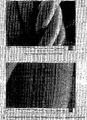
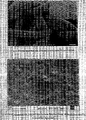
Fig. 1 bis 9 zeigen rasterelektronenmikroskopischen Aufnahmen (SEM) (Scanning Electron Microscope) von polymeren Substraten. Als Polymere Substrate wurden bevorzugt Netze aus Polymeren, sogenannte Polymer-Netze aus Polypropylen verwendet.
Die Struktur eines unbeschichteten Polymer-Netzes ist inFig. 1 zu sehen. -
Fig 2 zeigt einen Ausschnitt ausFig. 1 vergrößert dargestellt.
In denFiguren 3 bis 7 sind die rasterelektronenmikroskopischen Aufnahmen (SEM) (Scanning Electron Microscope) von erfindungsgemäß beschichteten polymeren Substraten zu sehen. -
Fig. 3 : erfindungsgemäß mit Zinkoxid beschichtete Polymer-Netze -
Fig. 4 : erfindungsgemäß mit Zinkoxid beschichtete Polymer-Netze, Bildausschnitt ausFig. 3 vergrößert dargestellt -
Fig. 5 : erfindungsgemäß mit Titandioxid beschichtete, mit Silber funktionalisierte Polymer-Netze -
Fig. 6 erfindungsgemäß mit Zinkoxid beschichtete Polymer-Netze, Variation der erfindungsgemäßen Verfahrensschritte i) und ii) -
Fig. 7 : erfindungsgemäß mit Zinkoxid beschichtete, mit Silber funktionalisierte Polymer-Netze -
Fig. 8 : SEM-Aufnahme einer ungleichmäßigen, nicht haftfähigen Schicht, die hergestellt wurde ohne Komplexbildner und Hydrolysebescheuniger in der Beschichtungsmasse. -
Fig. 9 : SEM-Aufnahme einer rissigen Beschichtung die kein Metalloxid mit einem Anteil von 80 Gew.% enthält, sondern stattdessen aus Siliziumdioxid aufgebaut ist. -
Fig. 10 zeigt die Immersionszeit (Verfahrensschritt v) welche bei Raumtemperatur zur Erzeugung einer 100nm-dicken erfindungsgemäßen Schicht notwendig ist, in Abhängigkeit von dem eingesetzten molaren Konzentrationsverhältnis von Metall zu Komplexbildner. - Eine genaue Darlegung der Herstellung der einzelnen Schichten befindet sich in der Beschreibung am Ende.
-
Fig. 3 zeigt eine erfindungsgemäße Beschichtung - Zur Herstellung der Lösung A (erfindungsgemäßer Verfahrensschritt i) wurde Zink-2-ethylhexanoat in Ethanol verwendet. Als Komplexbildner (erfindungsgemäßer Verfahrensschritt ii) wurde Ethylendiamin im zweifachen Überschuss bezogen auf das molare Verhältnis verwendet. Die Eintauchzeit (Verfahrensschritt v) betrug 2 Stunden bei Raumtemperatur.
- Bei Einsatz der erfindungsgemäßen Beschichtungen bleiben Strukturen des polymeren Substrates, welche eine Größenordnung von weniger als 100nm haben, erhalten. Dieses ist auch in
Fig. 2 zu erkennen - hier ist der Bildausschnitt aus derFig. 1 noch einmal vergrößert dargestellt. - Sehr feine Strukturen des Polymersubstrates bleiben auf Grund der geringen Dicke und der guten Haftfähigkeit der erfindungsgemäßen Beschichtung erhalten.
- Die erfindungsgemäßen Beschichtungen weisen eine hohe Haftfähigkeit auf.
- Zur Demonstration der Haftfähigkeit kann der sogenannte Tesa-Band-Test herangezogen werden. Bei diesem Test wird ein für den Einsatz im Büro handelsübliches einseitiges Klebeband (z.B. Tesafilm transparent oder Scotsh Magic 810) bei Raumtemperatur für einige Sekunden bis zu vollständigen Klebung auf das beschichtete Material manuell aufgedrückt und anschließend abgezogen. Die Beschichtung des Materials bleibt trotz dieser Behandlung erhalten und wird nicht durch das Klebeband entfernt.
- Die erfindungsgemäßen Schichten können zur Funktionalisierung der organischen Polymersubstrate genutzt werden. So können dem Material auch durch Beifügen von bestimmten Nano-Partikeln erwünschte physikalische, chemische oder biologische Eigenschaften, wie z.B. eine bakteriostatische, bakterizide, katalytische oder eine Änderung des Kontaktwinkels betreffende Wirkung verliehen werden.
-
Fig. 5 zeigt eine mit Silber funktionalisierte Beschichtung, als Metallalkohlat wurde Titanpropoxid verwendet. Als Komplexbildner wurde EDA verwendet Im Verfahrensschritt 4 kam als Hydrolysebeschleuniger Ammoniak zum Einsatz. - Die Eintauchzeit (Verfahrensschritt v) betrug 2 Stunden bei Raumtemperatur. Zur Funktionalisierung wurde im Verfahrensschritt 3 Silbernitrat (AgNO3) (0.2 M bezogen auf Ti) zugegeben.
- Bei Verwendung von Silber-Kationen (Ag+) durch Einsatz von Silbernitrat (AgNO3) werden Silber-Kationen platziert. Diese können in einem nachfolgenden Schritt (Verfahrensschritt 10) durch Bestrahlung mit UV-Licht zu Silber (Ag0) reduziert werden. Auf diesem Wege entstehen katalytisch aktive, antibakteriell wirksame und in ihrer Hydrophobizität einstellbare Beschichtungen.
- Die Silber (Ag0)-Partikel sind in der
Fig. 5 als dunkle Partikel zu erkennen. - Die
Fig 6 zeigt ebenfalls erfindungsgemäß mit Zinkoxid beschichtete Polymer-Netze hier wurde im Verfahrensschritt i) Zinknitrat ((Zn(NO3)2) und als Komplexbilder Diethanolamin (DEA) (Verfahrensschritt ii) verwendet. - In
Fig. 7 ist eine ebenfalls mit Silber funktionalisierte erfindungsgemäße Beschichtung mit Zinkoxid zu sehen. Zur Herstellung der Lösung A (erfindungsgemäßer Verfahrensschritt i) wurde Zink-2-ethylhexanoat in Ethanol verwendet. Als Komplexbildner (erfindungsgemäßer Verfahrensschritt ii) wurde Ethylendiamin im zweifachen Überschuss bezogen auf das molare Verhältnis verwendet. Die Silber (Ag0)-Partikel sind in derFig. 5 als Partikel mit einer maximalen Größe von 0,5 - 2 µm zu erkennen. -
Fig. 8 zeigt eine nicht erfindungsgemäße ungleichmäßige Beschichtung von Titandioxid auf Polymer-Netzen in diesem Fall wurde auf den Komplexbildner und auf den Hydrolysebeschleuniger in der Beschichtungsmasse verzichtet. Die Ungleichmäßigkeit der Schicht, sowie ihre schlechte Haftfähigkeit sind deutlich an den hellen und den abgeblätterten Stellen zu erkennen. Als Metallalkohlat wurde hier Titanpropoxid verwendet. -
Fig. 9 zeigt ebenfalls eine nicht erfindungsgemäße Schicht aus Siliziumdioxid (SiO2). Es ist kein Metalloxid in einen Anteil mehr als 10 Gew.-% in der Beschichtung enthalten. Es sind deutlich die Risse in der Größenordnung von 1-500 nm zu erkennen, derartige Schichten sind aufgrund dieser Risse nicht geeignet, polymere Substrate unter Erhalt der im Material vorhandenen Struktur zu beschichten und weisen aufgrund der Risse auch eine verminderte Haftfähigkeit und Kohäsion auf und sind somit auch nicht geeignet um polymere Substrate mit Metall zu verkleben. zur Herstellung dieser Schicht wurde statt einer alkoholischen Lösung eines Metallalkoholates und/oder eines Metallesters und/oder eines Metallsalzes eine alkoholische Lösung von Tetraethylorthosilikat (TEOS) und 3-Methacryloxypropyltrimethoxysilane 98% (MPS) verwendet. - Die Allgemeinheit der Lehre nicht einschränkend ist hier die Herstellung einiger erfindungsgemäßer Beschichtungen
Für die Folgenden Beispiele wurden in allen Fällen eingesetzt: - Als Alkohol Ethanol mit einer Reinheit von 99,5 vol%,
- Wasser immer mit Reinheitsgrad dest. (H2O)
- Als Hydrolysebeschleuniger wird eine wässrige 25 Gew.-% Lösung von Ammoniak eingesetzt (NH3 25%).
- Als Komplexbildner wird EDA mit einer Reinheit von 99 Gew.-% eingesetzt.
- Herstellung einer 0,1M Ti-Lösung mit.EDA als Komplexbildner zur Kontrolle der Hydrolyse und Schichteigenschaften:
- 1) 0,295 ml Titanpropoxid (Tipo) werden unter Rühren in 5ml Ethanol gelöst.
- 2) Zugabe von 0,017 ml EDA
- 3) 0,025 ml NH3 25% mit 5 ml Ethanol mischen
- 4) Zügiges Zusammengeben der beiden Lösungen
- 5) Polymernetz bei Raumtemperatur 3 Stunden eintauchen
- 6) Nach der Entnahme des Polymer-Netzes aus der Lösung erfolgt eine Reinigung in Ethanol mittels Ultraschallbad und Trocknung des Substrates bei 80°C über den Zeitraum von 1 Stunde.
- Das Ende der Eintauchzeit ist an einer Eintrübung der Lösung zu erkennen.
- Für obige Lösung ist das Verhältnis EDA: Tipo = 1:4
- Eine schnellere Schichtbildung erfolgt durch Reduzieren der EDA-Konzentration, z. B.
- EDA:Tipo = 1:8 bzw. 1:16. Hierdurch werden die Schichten dicker und die Beschichtungszeit für eine 100 nm Schicht kürzer (1:4 (3 Stunden); 1:8 (2 Stunden); 1:16 (45 Minuten)).
- Für obige Lösung ist das Verhältnis EDA: Tipo = 1:4
- Herstellung einer 15mM Zn-Lösung mit EDA als Komplexbildner zur Kontrolle der Hydrolyse und Schichteigenschaften:
- Zunächst wird eine 15mM Zn(NO3)2-Lsg. hergestellt, dazu 0, 223g Zn(NO3)2*6H2O unter Rühren in 50 ml H20 lösen, anschließend werden 10 ml dieser Lösung vorgelegt (Lösung A)
-
Zugabe von
- 1) Bereitstellen von 10ml einer 15mM-Lsg. von Zn(NO3)2*6H2O in H2O
- 2) Zugabe von 5µl EDA (Verhältnis EDA:ZnO 1:2) unter Rühren
- 3) Zugabe von 40µl NH3 25% unter Rühren
- 4) Polymer-Netz in die Lösung bei Raumtemperatur 2 Stunden eintauchen
- 5) Nach der Entnahme des Polymer-Netzes aus der Lösung erfolgt eine Reinigung in Ethanol mittels Ultraschallbad und Trocknung des Substrates bei 80°C über den Zeitraum von 1 Stunde.
dass die Beschichtungsmasse ferner aufweist:
Claims (15)
- Substratbeschichtungsmasse auf organische Polymere als zu beschichtendes Substrat zur Ausbildung einer Beschichtung, wobei die Substratbeschichtungsmasse gebildet wird aus mindestens einer Chemikalie ausgesucht aus der Liste, umfassend:- Metallalkoholate,- Metallester,- Metallsalzund die Substratbeschichtungsmasse ferner aufweist:- mindestens einen Komplexbildner, wobei Komplexbildner Verbindung sind, die über freie Elektronenpaare als Koordinationsstellen verfügen,- mindestens einen Hydrolysebeschleuniger, bestehend aus einer alkoholischen und/oder wässrigen Lösung von Ammoniumhydroxid, Harnstoff und/oder Ammoniak,wobei die aus der Substratbeschichtungsmasse gebildete Beschichtung ein oder mehrere Metalloxide der Metalle ausgesucht aus der Liste, umfassend: Al, Ga, Ge, Sn, Pb, Ti, Zr, V, Nb, Ta, Mo, W und Zn enthält.
- Substratbeschichtungsmasse nach Patentanspruch 1, dadurch gekennzeichnet, dass das mindestens eine Metalloxid in der Beschichtung zu mindestens 80 Gew % - bezogen auf die Gesamtmasse der Beschichtung vorliegt.
- Substratbeschichtungsmasse nach einem der Patentansprüche 1 und 2, dadurch gekennzeichnet, dass das mindestens eine Metalloxid in der Beschichtung zu mindestens 90 Gew.-% - bezogen auf die Gesamtmasse der Beschichtung - vorliegt.
- Substratbeschichtungsmasse nach einem der Patentansprüche 1 bis 3, dadurch gekennzeichnet, dass das Metallalkoholate ausgesucht ist aus der Liste, umfassend: Aluminiumbutylat, Titanisopropoxid, Titanpropoxid, Titanbutoxid, Zirkoniumisopropoxid, Zirkoniumpropoxid, Zirkoniumbutoxid, Zirkoniumethoxid, Tantalethoxid Tantalbutoxid, Niobethoxid, Niobbutoxid, Zinn-t-butoxid, Wolfram (VI) ethoxid, Germaniumethoxid, und Germaniumisopropoxid.
- Substratbeschichtungsmasse nach einem der Patentansprüche 1 bis 4, dadurch gekennzeichnet, dass der Metallester ausgesucht ist aus der Liste, umfassend: Zinkethylhexanoat, Zinkneodecanoat, Zinkoctanoat, Zinkacetylacetonat, Zinnethylhexanoat, Zinnoctanoat, Zinnlaurat, Dibutylzinndimaleat, Dioctylzinndiacetat und Aluminiumtri(ethylacetoacetat).
- Substratbeschichtungsmasse nach einem der Patentansprüche 1 bis 5, dadurch gekennzeichnet, dass der Komplexbildner ausgesucht ist aus der Liste, umfassend: Ethylendiamin (EDA), Diethylentriamin (DETA), Triethylentetramin (TETA) Ethylendiamintetraessigsäure (EDTA) 2-(2-Aminoethylamino)ethanol (AEEA) Diethanolamin (DEA) und Diethylentriaminpentaessigsäure (DTPA).
- Substratbeschichtungsmasse nach einem der Patentansprüche 1 bis 6, dadurch gekennzeichnet, dass die Substratbeschichtungsmasse mindestens ein Kation eines Metalles enthält, ausgesucht aus der Liste, umfassend:Kupfer (Cu), Silber (Ag), Gold (Au), Platin (Pt), Nickel (Ni), Palladium (Pd), Lithium (Li), Zink (Zn) und Eisen (Fe).
- Substratbeschichtungsmasse nach Patentanspruch 7, dadurch gekennzeichnet, dass das Kation ein Silberkation ist.
- Substratbeschichtungsmasse nach einem der Patentansprüche 1 bis 8, dadurch gekennzeichnet, dass die Substratbeschichtungsmasse mindestens eine Säure enthält, ausgesucht aus der Liste, umfassend:- hydratisierte Hexachloroplatinsäure (H2[PtCl6] • n H2O),- hydratisierte Hexachloropalladiumsäure (H2[PdCl6] • nH2O),- hydratisierte Tetrachlorogoldsäure (H[AuCl4] • x H2O).
- Substratbeschichtungsmasse nach einem der Patentansprüche 1 bis 9, dadurch gekennzeichnet, dass das molare Verhältnis von Metall zu Komplexbildner in der Substratbeschichtungsmasse in einem Bereich von 1:4 bis 1:20 liegt.
- Substratbeschichtungsmasseherstellungsverfahren einer Substratbeschichtungsmasse nach einem der Patentansprüche 1 bis 10, und Substratbeschichtungsmasseverarbeitung einer Substratbeschichtungsmasse nach einem der Patentansprüche 1 bis 10 auf einem Substrat aus einem organischen Polymer zu einer Substratbeschichtung auf dem Substrat, mindestens die Verfahrensschritte aufweisendi) Bereitstellen einer alkoholischen und/ oder wässrigen Lösung eines Metallalkoholates, eines Metallesters und/oder eines Metallsalzes als Lösung A;
wobei es sich um Metallalkoholate und/oder Metallester und/oder Metallsalze der Metalle Al, Ga, Ge, Sn, Pb, Ti, Zr, V, Nb, Ta, Mo, W und Zn handelt;ii) Vermischen der Lösung A mit einem Komplexbildner zur Herstellung einer Lösung B;iii) Bereitstellen des Hydrolysebeschleunigers aus der Lösung C;iv) Zusammengeben von Lösung B und Lösung C zur Ausbildung von Lösung D;v) Eintauchen des organischen Polymers als zu beschichtendes Substrat in die Lösung D für einen Zeitraum in einem Bereich von 5 Minuten bis 4 Stunden zur Erzeugung der Beschichtung;vi) Entnahme des beschichteten Substrates aus der Lösung D;vii) Behandlung des beschichteten Substrates mit Ultraschall; undviii) Trocknung des beschichteten Substrates. - Verfahren nach Patentanspruch 11, mindestens den zusätzlichen Verfahrensschritt aufweisend:Zugabe eines Salzes oder einer Säure zur Funktionalisierung zur Lösung B, wobei Säuren zur Funktionalisierung ausgewählt sein können aus der Gruppe hydratisierte Hexachloroplatinsäure (H2[PtCl6] • n H2O), hydratisierte Hexachloropalladiumsäure (H2[PdCl6] • n H2O) oder hydratisierte Tetrachforogoldsäure (H[AuCl4] • x H2O) und wobei die Salze aus Anionen und Kationen bestehen und die Kationen Kationen von Metallen sein können ausgewählt aus der Gruppe Kupfer (Cu), Silber (Ag), Gold (Au), Platin (Pt), Nickel (Ni), Palladium (Pd), Lithium (Li), Zink (Zn) und Eisen (Fe).
- Verfahren nach einem der Patentansprüche 11 und 12, dadurch gekennzeichnet, dass die Konturen des Polymeren Substrates nach Beschichtung im Bereich von kleiner gleich 1 µm erhalten bleiben.
- Verfahren nach einem der Patentansprüche 11 bis 13, dadurch gekennzeichnet, dass das molare Verhältnis von Metall zu Komplexbildner in der Beschichtungsmasse in einem Bereich von 1:4 bis 1:20 liegt.
- Verfahren nach einem der Patentansprüche 11 bis 14, dadurch gekennzeichnet, dass die Einstellung der Schichtdicke der Beschichtung durch die Wahl einer Eintauchdauer und das gewählte molaren Verhältnis von Metall und Komplexbildner erfolgt.
Applications Claiming Priority (2)
| Application Number | Priority Date | Filing Date | Title |
|---|---|---|---|
| DE102011101179A DE102011101179A1 (de) | 2011-05-11 | 2011-05-11 | Beschichtungen für Polymere |
| PCT/DE2012/000463 WO2012152251A1 (de) | 2011-05-11 | 2012-05-08 | Beschichtung für polymere |
Publications (2)
| Publication Number | Publication Date |
|---|---|
| EP2707438A1 EP2707438A1 (de) | 2014-03-19 |
| EP2707438B1 true EP2707438B1 (de) | 2016-08-31 |
Family
ID=46466028
Family Applications (1)
| Application Number | Title | Priority Date | Filing Date |
|---|---|---|---|
| EP12732952.2A Not-in-force EP2707438B1 (de) | 2011-05-11 | 2012-05-08 | Beschichtung für polymere |
Country Status (3)
| Country | Link |
|---|---|
| EP (1) | EP2707438B1 (de) |
| DE (1) | DE102011101179A1 (de) |
| WO (1) | WO2012152251A1 (de) |
Family Cites Families (12)
| Publication number | Priority date | Publication date | Assignee | Title |
|---|---|---|---|---|
| JPH11512336A (ja) * | 1995-09-15 | 1999-10-26 | ロディア シミ | 二酸化チタンを基とする光触媒コーティングを有する基材及び二酸化チタンを基とする有機分散体 |
| FR2738813B1 (fr) * | 1995-09-15 | 1997-10-17 | Saint Gobain Vitrage | Substrat a revetement photo-catalytique |
| FR2738812B1 (fr) * | 1995-09-15 | 1997-10-17 | Saint Gobain Vitrage | Substrat a revetement photocatalytique |
| DE19540623A1 (de) * | 1995-10-31 | 1997-05-07 | Inst Neue Mat Gemein Gmbh | Verfahren zur Herstellung von Kompositmaterialien mit hohem Grenzflächenanteil und dadurch erhältliche Kompositmaterialien |
| DE19816136A1 (de) | 1998-04-09 | 1999-10-14 | Inst Neue Mat Gemein Gmbh | Nanostrukturierte Formkörper und Schichten und deren Herstellung über stabile wasserlösliche Vorstufen |
| US6939908B1 (en) * | 2001-09-17 | 2005-09-06 | Nanopowder Enterprises Inc | Optically clear abrasion resistant polymer-ceramic composite coatings |
| JP3938528B2 (ja) | 2002-08-05 | 2007-06-27 | 株式会社豊田中央研究所 | 塗料組成物、塗料組成物を用いた耐摩耗性被覆膜の製造方法および塗料組成物からなる耐摩耗性被覆膜 |
| US20050272116A1 (en) * | 2004-06-04 | 2005-12-08 | Clemson University | Polymer substrate for recombinant protein purification and environmental remediation |
| FR2906539B1 (fr) * | 2006-10-02 | 2009-01-09 | Eads Ccr Groupement D Interet | Revetements mesostructures pour application en aeronautique et aerospatiale |
| CN101641605A (zh) | 2007-03-22 | 2010-02-03 | 株式会社爱德万测试 | 数据接收电路、利用该数据接收电路的测试装置及调节选通信号的时刻调节电路和方法 |
| DE102007023294B4 (de) | 2007-05-26 | 2012-08-23 | Fachhochschule Kiel | Verfahren zur Herstellung eines Implantats mit einer abriebfesten biotoxischen Beschichtung |
| DE102008026988A1 (de) | 2008-06-05 | 2009-12-10 | Fachhochschule Kiel | Hydrophobe Beschichtung |
-
2011
- 2011-05-11 DE DE102011101179A patent/DE102011101179A1/de not_active Ceased
-
2012
- 2012-05-08 WO PCT/DE2012/000463 patent/WO2012152251A1/de not_active Ceased
- 2012-05-08 EP EP12732952.2A patent/EP2707438B1/de not_active Not-in-force
Non-Patent Citations (1)
| Title |
|---|
| None * |
Also Published As
| Publication number | Publication date |
|---|---|
| WO2012152251A1 (de) | 2012-11-15 |
| EP2707438A1 (de) | 2014-03-19 |
| DE102011101179A1 (de) | 2012-11-15 |
Similar Documents
| Publication | Publication Date | Title |
|---|---|---|
| AT405931B (de) | Bildung einer silberbeschichtung auf einem glasartigen substrat | |
| DE69728516T2 (de) | Verfahren zur herstellung einer dünnschicht aus titanoxid und katalysator für photodekomposition | |
| DE69611618T3 (de) | Substrat mit einer photokatalytischen beschichtung auf basis titandioxyd | |
| DE2900099B2 (de) | Wäßrige saure Beschichtungslösung zur Behandlung von Zink- oder Zinklegierungsoberflächen | |
| DE102013223048A1 (de) | Verfahren zur Beschichtung von metallischen Oberflächen mit nanokristallinen Zinkoxidschichten, wässerige Zusammensetzungen hierfür und Verwendung der derart beschichteten Oberflächen | |
| EP2376674B1 (de) | Verfahren zur beschichtung von metallischen oberflächen mit einem aktivierungsmittel vor dem phosphatieren | |
| DE69801290T2 (de) | Metallisches Material mit photokatalytischer Aktivität und Verfahren zur Herstellung | |
| EP1036593A1 (de) | Mit Fe3+-Ionen dotierter Titandioxid-Photokatalysator | |
| DE2307852B2 (de) | Luft- und Lagerbeständige Katalysatoren für die kathodische Wasserstoffentwicklung | |
| DE112006000028T5 (de) | Verfahren zur Herstellung von Kompositpartikeln | |
| DE1521357B1 (de) | Verfahren zum stromlosen Abscheiden einer Goldschicht | |
| DE2204430C3 (de) | Verfahren zur Herstellung eines Metallfilms auf Glas | |
| DE1112814B (de) | Verfahren zum Metallisieren von Gegenstaenden aus Glas oder glasierter Keramik | |
| CN110099742B (zh) | 掺杂的纳米颗粒的制备及其用途 | |
| DE102011101179A1 (de) | Beschichtungen für Polymere | |
| EP2435600B1 (de) | Verfahren zum abscheiden einer für das drahtbonden geeigneten palladiumschicht auf leiterbahnen einer schaltungsträgerplatte und palladiumbad zur verwendung in dem verfahren | |
| DE1958952C3 (de) | Verfahren zur Herstellung eines Trägerkatalysators | |
| DE102008029385B4 (de) | Verfahren zur Herstellung von Seltenerdmetalloxidschichten und Übergangsmetalloxidschichten, Verwendung einer Vorrichtung zur Herstellung von Seltenerdmetalloxidschichten und Übergangsmetalloxidschichten sowie Verwendung eines Metallnitrats | |
| EP2328835A1 (de) | Verfahren zur herstellung von titan-iv-phosphat | |
| DE2057757B2 (de) | Badlosung zum stromlosen Abscheiden von Metallen | |
| DE102010046370B4 (de) | Verfahren zum Beschichten von Substraten aus Keramik, Glass und Metall, Beschichtungszusammensetzung und Formgegenstand | |
| DE102005010012A1 (de) | Photokatalysator und Verfahren zu dessen Herstellung | |
| DE2118583C2 (de) | Verfahren zur Herstellung von metallhaltigen Trägerkatalysatoren | |
| EP1835051A2 (de) | Selbstreinigende Oberfläche | |
| DE10392399T5 (de) | Dünner Siliciumdioxidfilm, Siliciumdioxid-Titandioxid-Verbundfilm und Verfahren zu deren Herstellung |
Legal Events
| Date | Code | Title | Description |
|---|---|---|---|
| PUAI | Public reference made under article 153(3) epc to a published international application that has entered the european phase |
Free format text: ORIGINAL CODE: 0009012 |
|
| 17P | Request for examination filed |
Effective date: 20131202 |
|
| AK | Designated contracting states |
Kind code of ref document: A1 Designated state(s): AL AT BE BG CH CY CZ DE DK EE ES FI FR GB GR HR HU IE IS IT LI LT LU LV MC MK MT NL NO PL PT RO RS SE SI SK SM TR |
|
| DAX | Request for extension of the european patent (deleted) | ||
| 17Q | First examination report despatched |
Effective date: 20140915 |
|
| GRAP | Despatch of communication of intention to grant a patent |
Free format text: ORIGINAL CODE: EPIDOSNIGR1 |
|
| INTG | Intention to grant announced |
Effective date: 20160412 |
|
| GRAS | Grant fee paid |
Free format text: ORIGINAL CODE: EPIDOSNIGR3 |
|
| GRAP | Despatch of communication of intention to grant a patent |
Free format text: ORIGINAL CODE: EPIDOSNIGR1 |
|
| GRAA | (expected) grant |
Free format text: ORIGINAL CODE: 0009210 |
|
| INTG | Intention to grant announced |
Effective date: 20160713 |
|
| INTG | Intention to grant announced |
Effective date: 20160719 |
|
| AK | Designated contracting states |
Kind code of ref document: B1 Designated state(s): AL AT BE BG CH CY CZ DE DK EE ES FI FR GB GR HR HU IE IS IT LI LT LU LV MC MK MT NL NO PL PT RO RS SE SI SK SM TR |
|
| REG | Reference to a national code |
Ref country code: CH Ref legal event code: EP Ref country code: GB Ref legal event code: FG4D Free format text: NOT ENGLISH |
|
| REG | Reference to a national code |
Ref country code: IE Ref legal event code: FG4D Free format text: LANGUAGE OF EP DOCUMENT: GERMAN |
|
| REG | Reference to a national code |
Ref country code: DE Ref legal event code: R096 Ref document number: 502012008133 Country of ref document: DE |
|
| REG | Reference to a national code |
Ref country code: AT Ref legal event code: REF Ref document number: 824967 Country of ref document: AT Kind code of ref document: T Effective date: 20161015 |
|
| REG | Reference to a national code |
Ref country code: NL Ref legal event code: FP |
|
| REG | Reference to a national code |
Ref country code: LT Ref legal event code: MG4D |
|
| PG25 | Lapsed in a contracting state [announced via postgrant information from national office to epo] |
Ref country code: LT Free format text: LAPSE BECAUSE OF FAILURE TO SUBMIT A TRANSLATION OF THE DESCRIPTION OR TO PAY THE FEE WITHIN THE PRESCRIBED TIME-LIMIT Effective date: 20160831 Ref country code: HR Free format text: LAPSE BECAUSE OF FAILURE TO SUBMIT A TRANSLATION OF THE DESCRIPTION OR TO PAY THE FEE WITHIN THE PRESCRIBED TIME-LIMIT Effective date: 20160831 Ref country code: RS Free format text: LAPSE BECAUSE OF FAILURE TO SUBMIT A TRANSLATION OF THE DESCRIPTION OR TO PAY THE FEE WITHIN THE PRESCRIBED TIME-LIMIT Effective date: 20160831 Ref country code: FI Free format text: LAPSE BECAUSE OF FAILURE TO SUBMIT A TRANSLATION OF THE DESCRIPTION OR TO PAY THE FEE WITHIN THE PRESCRIBED TIME-LIMIT Effective date: 20160831 Ref country code: NO Free format text: LAPSE BECAUSE OF FAILURE TO SUBMIT A TRANSLATION OF THE DESCRIPTION OR TO PAY THE FEE WITHIN THE PRESCRIBED TIME-LIMIT Effective date: 20161130 |
|
| PG25 | Lapsed in a contracting state [announced via postgrant information from national office to epo] |
Ref country code: LV Free format text: LAPSE BECAUSE OF FAILURE TO SUBMIT A TRANSLATION OF THE DESCRIPTION OR TO PAY THE FEE WITHIN THE PRESCRIBED TIME-LIMIT Effective date: 20160831 Ref country code: ES Free format text: LAPSE BECAUSE OF FAILURE TO SUBMIT A TRANSLATION OF THE DESCRIPTION OR TO PAY THE FEE WITHIN THE PRESCRIBED TIME-LIMIT Effective date: 20160831 Ref country code: SE Free format text: LAPSE BECAUSE OF FAILURE TO SUBMIT A TRANSLATION OF THE DESCRIPTION OR TO PAY THE FEE WITHIN THE PRESCRIBED TIME-LIMIT Effective date: 20160831 Ref country code: GR Free format text: LAPSE BECAUSE OF FAILURE TO SUBMIT A TRANSLATION OF THE DESCRIPTION OR TO PAY THE FEE WITHIN THE PRESCRIBED TIME-LIMIT Effective date: 20161201 |
|
| PG25 | Lapsed in a contracting state [announced via postgrant information from national office to epo] |
Ref country code: RO Free format text: LAPSE BECAUSE OF FAILURE TO SUBMIT A TRANSLATION OF THE DESCRIPTION OR TO PAY THE FEE WITHIN THE PRESCRIBED TIME-LIMIT Effective date: 20160831 Ref country code: EE Free format text: LAPSE BECAUSE OF FAILURE TO SUBMIT A TRANSLATION OF THE DESCRIPTION OR TO PAY THE FEE WITHIN THE PRESCRIBED TIME-LIMIT Effective date: 20160831 |
|
| REG | Reference to a national code |
Ref country code: FR Ref legal event code: PLFP Year of fee payment: 6 |
|
| PG25 | Lapsed in a contracting state [announced via postgrant information from national office to epo] |
Ref country code: SK Free format text: LAPSE BECAUSE OF FAILURE TO SUBMIT A TRANSLATION OF THE DESCRIPTION OR TO PAY THE FEE WITHIN THE PRESCRIBED TIME-LIMIT Effective date: 20160831 Ref country code: DK Free format text: LAPSE BECAUSE OF FAILURE TO SUBMIT A TRANSLATION OF THE DESCRIPTION OR TO PAY THE FEE WITHIN THE PRESCRIBED TIME-LIMIT Effective date: 20160831 Ref country code: CZ Free format text: LAPSE BECAUSE OF FAILURE TO SUBMIT A TRANSLATION OF THE DESCRIPTION OR TO PAY THE FEE WITHIN THE PRESCRIBED TIME-LIMIT Effective date: 20160831 Ref country code: BG Free format text: LAPSE BECAUSE OF FAILURE TO SUBMIT A TRANSLATION OF THE DESCRIPTION OR TO PAY THE FEE WITHIN THE PRESCRIBED TIME-LIMIT Effective date: 20161130 Ref country code: PL Free format text: LAPSE BECAUSE OF FAILURE TO SUBMIT A TRANSLATION OF THE DESCRIPTION OR TO PAY THE FEE WITHIN THE PRESCRIBED TIME-LIMIT Effective date: 20160831 Ref country code: SM Free format text: LAPSE BECAUSE OF FAILURE TO SUBMIT A TRANSLATION OF THE DESCRIPTION OR TO PAY THE FEE WITHIN THE PRESCRIBED TIME-LIMIT Effective date: 20160831 Ref country code: PT Free format text: LAPSE BECAUSE OF FAILURE TO SUBMIT A TRANSLATION OF THE DESCRIPTION OR TO PAY THE FEE WITHIN THE PRESCRIBED TIME-LIMIT Effective date: 20170102 |
|
| REG | Reference to a national code |
Ref country code: DE Ref legal event code: R097 Ref document number: 502012008133 Country of ref document: DE |
|
| PG25 | Lapsed in a contracting state [announced via postgrant information from national office to epo] |
Ref country code: IT Free format text: LAPSE BECAUSE OF FAILURE TO SUBMIT A TRANSLATION OF THE DESCRIPTION OR TO PAY THE FEE WITHIN THE PRESCRIBED TIME-LIMIT Effective date: 20160831 |
|
| PLBE | No opposition filed within time limit |
Free format text: ORIGINAL CODE: 0009261 |
|
| STAA | Information on the status of an ep patent application or granted ep patent |
Free format text: STATUS: NO OPPOSITION FILED WITHIN TIME LIMIT |
|
| 26N | No opposition filed |
Effective date: 20170601 |
|
| PG25 | Lapsed in a contracting state [announced via postgrant information from national office to epo] |
Ref country code: LU Free format text: LAPSE BECAUSE OF NON-PAYMENT OF DUE FEES Effective date: 20170531 Ref country code: SI Free format text: LAPSE BECAUSE OF FAILURE TO SUBMIT A TRANSLATION OF THE DESCRIPTION OR TO PAY THE FEE WITHIN THE PRESCRIBED TIME-LIMIT Effective date: 20160831 |
|
| REG | Reference to a national code |
Ref country code: CH Ref legal event code: PL |
|
| PG25 | Lapsed in a contracting state [announced via postgrant information from national office to epo] |
Ref country code: MC Free format text: LAPSE BECAUSE OF FAILURE TO SUBMIT A TRANSLATION OF THE DESCRIPTION OR TO PAY THE FEE WITHIN THE PRESCRIBED TIME-LIMIT Effective date: 20160831 |
|
| REG | Reference to a national code |
Ref country code: IE Ref legal event code: MM4A |
|
| PG25 | Lapsed in a contracting state [announced via postgrant information from national office to epo] |
Ref country code: LI Free format text: LAPSE BECAUSE OF NON-PAYMENT OF DUE FEES Effective date: 20170531 Ref country code: CH Free format text: LAPSE BECAUSE OF NON-PAYMENT OF DUE FEES Effective date: 20170531 |
|
| PG25 | Lapsed in a contracting state [announced via postgrant information from national office to epo] |
Ref country code: LU Free format text: LAPSE BECAUSE OF NON-PAYMENT OF DUE FEES Effective date: 20170508 |
|
| REG | Reference to a national code |
Ref country code: BE Ref legal event code: MM Effective date: 20170531 |
|
| PG25 | Lapsed in a contracting state [announced via postgrant information from national office to epo] |
Ref country code: IE Free format text: LAPSE BECAUSE OF NON-PAYMENT OF DUE FEES Effective date: 20170508 |
|
| REG | Reference to a national code |
Ref country code: FR Ref legal event code: PLFP Year of fee payment: 7 |
|
| REG | Reference to a national code |
Ref country code: AT Ref legal event code: MM01 Ref document number: 824967 Country of ref document: AT Kind code of ref document: T Effective date: 20170508 |
|
| PG25 | Lapsed in a contracting state [announced via postgrant information from national office to epo] |
Ref country code: BE Free format text: LAPSE BECAUSE OF NON-PAYMENT OF DUE FEES Effective date: 20170531 Ref country code: AT Free format text: LAPSE BECAUSE OF NON-PAYMENT OF DUE FEES Effective date: 20170508 |
|
| PG25 | Lapsed in a contracting state [announced via postgrant information from national office to epo] |
Ref country code: MT Free format text: LAPSE BECAUSE OF FAILURE TO SUBMIT A TRANSLATION OF THE DESCRIPTION OR TO PAY THE FEE WITHIN THE PRESCRIBED TIME-LIMIT Effective date: 20160831 |
|
| PG25 | Lapsed in a contracting state [announced via postgrant information from national office to epo] |
Ref country code: AL Free format text: LAPSE BECAUSE OF FAILURE TO SUBMIT A TRANSLATION OF THE DESCRIPTION OR TO PAY THE FEE WITHIN THE PRESCRIBED TIME-LIMIT Effective date: 20160831 |
|
| PG25 | Lapsed in a contracting state [announced via postgrant information from national office to epo] |
Ref country code: HU Free format text: LAPSE BECAUSE OF FAILURE TO SUBMIT A TRANSLATION OF THE DESCRIPTION OR TO PAY THE FEE WITHIN THE PRESCRIBED TIME-LIMIT; INVALID AB INITIO Effective date: 20120508 |
|
| PG25 | Lapsed in a contracting state [announced via postgrant information from national office to epo] |
Ref country code: CY Free format text: LAPSE BECAUSE OF NON-PAYMENT OF DUE FEES Effective date: 20160831 |
|
| PG25 | Lapsed in a contracting state [announced via postgrant information from national office to epo] |
Ref country code: MK Free format text: LAPSE BECAUSE OF FAILURE TO SUBMIT A TRANSLATION OF THE DESCRIPTION OR TO PAY THE FEE WITHIN THE PRESCRIBED TIME-LIMIT Effective date: 20160831 |
|
| PG25 | Lapsed in a contracting state [announced via postgrant information from national office to epo] |
Ref country code: TR Free format text: LAPSE BECAUSE OF FAILURE TO SUBMIT A TRANSLATION OF THE DESCRIPTION OR TO PAY THE FEE WITHIN THE PRESCRIBED TIME-LIMIT Effective date: 20160831 |
|
| PG25 | Lapsed in a contracting state [announced via postgrant information from national office to epo] |
Ref country code: IS Free format text: LAPSE BECAUSE OF FAILURE TO SUBMIT A TRANSLATION OF THE DESCRIPTION OR TO PAY THE FEE WITHIN THE PRESCRIBED TIME-LIMIT Effective date: 20161231 |
|
| REG | Reference to a national code |
Ref country code: DE Ref legal event code: R082 Ref document number: 502012008133 Country of ref document: DE Representative=s name: HEESCHEN, SVEN, DIPL.-PHYS., DE |
|
| REG | Reference to a national code |
Ref country code: DE Ref legal event code: R082 Ref document number: 502012008133 Country of ref document: DE Representative=s name: HEESCHEN, SVEN, DIPL.-PHYS., DE |
|
| PGFP | Annual fee paid to national office [announced via postgrant information from national office to epo] |
Ref country code: NL Payment date: 20230510 Year of fee payment: 12 Ref country code: FR Payment date: 20230508 Year of fee payment: 12 Ref country code: DE Payment date: 20230508 Year of fee payment: 12 |
|
| PGFP | Annual fee paid to national office [announced via postgrant information from national office to epo] |
Ref country code: GB Payment date: 20230508 Year of fee payment: 12 |
|
| REG | Reference to a national code |
Ref country code: DE Ref legal event code: R119 Ref document number: 502012008133 Country of ref document: DE |
|
| REG | Reference to a national code |
Ref country code: NL Ref legal event code: MM Effective date: 20240601 |
|
| GBPC | Gb: european patent ceased through non-payment of renewal fee |
Effective date: 20240508 |
|
| PG25 | Lapsed in a contracting state [announced via postgrant information from national office to epo] |
Ref country code: NL Free format text: LAPSE BECAUSE OF NON-PAYMENT OF DUE FEES Effective date: 20240601 |
|
| PG25 | Lapsed in a contracting state [announced via postgrant information from national office to epo] |
Ref country code: DE Free format text: LAPSE BECAUSE OF NON-PAYMENT OF DUE FEES Effective date: 20241203 |
|
| PG25 | Lapsed in a contracting state [announced via postgrant information from national office to epo] |
Ref country code: FR Free format text: LAPSE BECAUSE OF NON-PAYMENT OF DUE FEES Effective date: 20240531 |
|
| PG25 | Lapsed in a contracting state [announced via postgrant information from national office to epo] |
Ref country code: GB Free format text: LAPSE BECAUSE OF NON-PAYMENT OF DUE FEES Effective date: 20240508 |