EP2672992B1 - Nucleic acid molecule encoding hepatitis b virus core protein and vaccine comprising the same - Google Patents
Nucleic acid molecule encoding hepatitis b virus core protein and vaccine comprising the same Download PDFInfo
- Publication number
- EP2672992B1 EP2672992B1 EP12744961.9A EP12744961A EP2672992B1 EP 2672992 B1 EP2672992 B1 EP 2672992B1 EP 12744961 A EP12744961 A EP 12744961A EP 2672992 B1 EP2672992 B1 EP 2672992B1
- Authority
- EP
- European Patent Office
- Prior art keywords
- nucleic acid
- hbv
- seq
- protein
- sequence
- Prior art date
- Legal status (The legal status is an assumption and is not a legal conclusion. Google has not performed a legal analysis and makes no representation as to the accuracy of the status listed.)
- Active
Links
Images








Classifications
-
- A—HUMAN NECESSITIES
- A61—MEDICAL OR VETERINARY SCIENCE; HYGIENE
- A61K—PREPARATIONS FOR MEDICAL, DENTAL OR TOILETRY PURPOSES
- A61K39/00—Medicinal preparations containing antigens or antibodies
- A61K39/12—Viral antigens
- A61K39/29—Hepatitis virus
-
- A—HUMAN NECESSITIES
- A61—MEDICAL OR VETERINARY SCIENCE; HYGIENE
- A61K—PREPARATIONS FOR MEDICAL, DENTAL OR TOILETRY PURPOSES
- A61K39/00—Medicinal preparations containing antigens or antibodies
- A61K39/12—Viral antigens
- A61K39/29—Hepatitis virus
- A61K39/292—Serum hepatitis virus, hepatitis B virus, e.g. Australia antigen
-
- A—HUMAN NECESSITIES
- A61—MEDICAL OR VETERINARY SCIENCE; HYGIENE
- A61K—PREPARATIONS FOR MEDICAL, DENTAL OR TOILETRY PURPOSES
- A61K39/00—Medicinal preparations containing antigens or antibodies
- A61K39/12—Viral antigens
-
- A—HUMAN NECESSITIES
- A61—MEDICAL OR VETERINARY SCIENCE; HYGIENE
- A61K—PREPARATIONS FOR MEDICAL, DENTAL OR TOILETRY PURPOSES
- A61K39/00—Medicinal preparations containing antigens or antibodies
- A61K39/39—Medicinal preparations containing antigens or antibodies characterised by the immunostimulating additives, e.g. chemical adjuvants
-
- A—HUMAN NECESSITIES
- A61—MEDICAL OR VETERINARY SCIENCE; HYGIENE
- A61P—SPECIFIC THERAPEUTIC ACTIVITY OF CHEMICAL COMPOUNDS OR MEDICINAL PREPARATIONS
- A61P31/00—Antiinfectives, i.e. antibiotics, antiseptics, chemotherapeutics
- A61P31/12—Antivirals
- A61P31/20—Antivirals for DNA viruses
-
- C—CHEMISTRY; METALLURGY
- C07—ORGANIC CHEMISTRY
- C07K—PEPTIDES
- C07K14/00—Peptides having more than 20 amino acids; Gastrins; Somatostatins; Melanotropins; Derivatives thereof
- C07K14/005—Peptides having more than 20 amino acids; Gastrins; Somatostatins; Melanotropins; Derivatives thereof from viruses
-
- C—CHEMISTRY; METALLURGY
- C07—ORGANIC CHEMISTRY
- C07K—PEPTIDES
- C07K14/00—Peptides having more than 20 amino acids; Gastrins; Somatostatins; Melanotropins; Derivatives thereof
- C07K14/005—Peptides having more than 20 amino acids; Gastrins; Somatostatins; Melanotropins; Derivatives thereof from viruses
- C07K14/01—DNA viruses
- C07K14/02—Hepadnaviridae, e.g. hepatitis B virus
-
- C—CHEMISTRY; METALLURGY
- C12—BIOCHEMISTRY; BEER; SPIRITS; WINE; VINEGAR; MICROBIOLOGY; ENZYMOLOGY; MUTATION OR GENETIC ENGINEERING
- C12N—MICROORGANISMS OR ENZYMES; COMPOSITIONS THEREOF; PROPAGATING, PRESERVING, OR MAINTAINING MICROORGANISMS; MUTATION OR GENETIC ENGINEERING; CULTURE MEDIA
- C12N15/00—Mutation or genetic engineering; DNA or RNA concerning genetic engineering, vectors, e.g. plasmids, or their isolation, preparation or purification; Use of hosts therefor
- C12N15/09—Recombinant DNA-technology
- C12N15/11—DNA or RNA fragments; Modified forms thereof; Non-coding nucleic acids having a biological activity
-
- C—CHEMISTRY; METALLURGY
- C12—BIOCHEMISTRY; BEER; SPIRITS; WINE; VINEGAR; MICROBIOLOGY; ENZYMOLOGY; MUTATION OR GENETIC ENGINEERING
- C12N—MICROORGANISMS OR ENZYMES; COMPOSITIONS THEREOF; PROPAGATING, PRESERVING, OR MAINTAINING MICROORGANISMS; MUTATION OR GENETIC ENGINEERING; CULTURE MEDIA
- C12N7/00—Viruses; Bacteriophages; Compositions thereof; Preparation or purification thereof
-
- A—HUMAN NECESSITIES
- A61—MEDICAL OR VETERINARY SCIENCE; HYGIENE
- A61K—PREPARATIONS FOR MEDICAL, DENTAL OR TOILETRY PURPOSES
- A61K39/00—Medicinal preparations containing antigens or antibodies
- A61K2039/51—Medicinal preparations containing antigens or antibodies comprising whole cells, viruses or DNA/RNA
- A61K2039/53—DNA (RNA) vaccination
-
- A—HUMAN NECESSITIES
- A61—MEDICAL OR VETERINARY SCIENCE; HYGIENE
- A61K—PREPARATIONS FOR MEDICAL, DENTAL OR TOILETRY PURPOSES
- A61K39/00—Medicinal preparations containing antigens or antibodies
- A61K2039/57—Medicinal preparations containing antigens or antibodies characterised by the type of response, e.g. Th1, Th2
-
- A—HUMAN NECESSITIES
- A61—MEDICAL OR VETERINARY SCIENCE; HYGIENE
- A61K—PREPARATIONS FOR MEDICAL, DENTAL OR TOILETRY PURPOSES
- A61K39/00—Medicinal preparations containing antigens or antibodies
- A61K2039/57—Medicinal preparations containing antigens or antibodies characterised by the type of response, e.g. Th1, Th2
- A61K2039/572—Medicinal preparations containing antigens or antibodies characterised by the type of response, e.g. Th1, Th2 cytotoxic response
-
- C—CHEMISTRY; METALLURGY
- C12—BIOCHEMISTRY; BEER; SPIRITS; WINE; VINEGAR; MICROBIOLOGY; ENZYMOLOGY; MUTATION OR GENETIC ENGINEERING
- C12N—MICROORGANISMS OR ENZYMES; COMPOSITIONS THEREOF; PROPAGATING, PRESERVING, OR MAINTAINING MICROORGANISMS; MUTATION OR GENETIC ENGINEERING; CULTURE MEDIA
- C12N2730/00—Reverse transcribing DNA viruses
- C12N2730/00011—Details
- C12N2730/10011—Hepadnaviridae
- C12N2730/10111—Orthohepadnavirus, e.g. hepatitis B virus
- C12N2730/10134—Use of virus or viral component as vaccine, e.g. live-attenuated or inactivated virus, VLP, viral protein
-
- C—CHEMISTRY; METALLURGY
- C12—BIOCHEMISTRY; BEER; SPIRITS; WINE; VINEGAR; MICROBIOLOGY; ENZYMOLOGY; MUTATION OR GENETIC ENGINEERING
- C12N—MICROORGANISMS OR ENZYMES; COMPOSITIONS THEREOF; PROPAGATING, PRESERVING, OR MAINTAINING MICROORGANISMS; MUTATION OR GENETIC ENGINEERING; CULTURE MEDIA
- C12N2730/00—Reverse transcribing DNA viruses
- C12N2730/00011—Details
- C12N2730/10011—Hepadnaviridae
- C12N2730/10111—Orthohepadnavirus, e.g. hepatitis B virus
- C12N2730/10171—Demonstrated in vivo effect
Definitions
- the present invention relates to nucleic acid sequences encoding hepatitis B virus (HBV) core proteins, to improved HBV vaccines, and nucleic acids or vaccines of the invention for use in improved methods for inducing immune responses against HBV, and for use in improved methods for prophylactically and/or therapeutically immunizing individuals against HBV.
- the disclosure relates to and fragments of nucleic acid sequences encoding hepatitis B virus (HBV) core proteins; to hepatitis B virus (HBV) core proteins and fragments thereof improved methods for inducing immune responses against HBV, and improved methods for prophylactically and/or therapeutically immunizing individuals against HBV
- Hepatitis B is a common infection prevalent across the globe that leads to the development of cirrhosis, liver failure, and hepatocellular carcinoma. A significant number of hepatitis cases go unreported due to the asymptomatic nature of the disease. Nevertheless, about 350 million chronic Hepatitis B cases are reported every year. Most of the hepatitis infected population is in underdeveloped or developing countries.
- the virus is divided into four major serotypes (adr, adw, ayr, ayw) based on antigenic epitopes present on its envelope proteins.
- Adr major serotypes
- adw major serotypes
- ayr major serotypes
- ayw antigenic epitopes present on its envelope proteins.
- A-H genotypes of HBV according to variation of the genomic sequences.
- the alternative genotypes of HBV have prevalent geographic distribution.
- Table 1 the geographic distribution of HBV genotypes.
- Table 1 - Geographic Distribution of HBV HBV genotype HBV genosubtype HBsAg subtype Frequency Main geographical distribution A A2 adw2 High Europe, North America, Australia A1 aywl, adw2 High Africa B B1 B2, B3 adw2 High Far East B4 ayw1 High Far East B2 adw3 Low Far East C C1, C2, C4 adr High Far East C3 adrq- High New Guinea., Pacific C1, C2 ayr High Far East C1, C3 adw2 Low Far East C4 ayw3 Low Far East, Pacific D D1, D3, D4 ayw2 High West Asia, Eastern Europe, Mediterranean D2, D3 ayw3 High Worldwide Not identified adw3 Low Eastern Europe, Spain D2 ayw4 Low Eastern Europe, Spain, United States E - ayw4 High Africa F F1, F2 adw4q
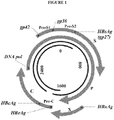
- the HBV genome is a circular DNA molecule that is primarily double stranded but which has a single stranded region arising from one strand being longer than the other
- the double stranded region arises from the hybridization of one strand of a shorter strand of about 3020 nucleotides to a longer strand of about 3320 nucleotides.
- the single stranded region on non-hybridized nucleotides of the longer strand is associated with the HBV DNA polymerase.
- the HBV genomic DNA and HBV DNA polymerase are both contained within a nucleocapsid formed by multiple HBV core protein (HBcAg) molecules.
- the HBV core protein is enveloped by HBV surface protein (HBsAgs) and lipid molecules.
- the HBV genome contains four open reading frames (ORFs): 1) an ORF that encodes the HBV DNA polymerase, 2) an ORF that has two start codons, wherein the sequence linked to the second start codon encodes the core protein and the sequence that includes the additional upstream start codon encodes a sequence referred to as pre-C; 3) an ORF that has three start codons, wherein one encodes the surface protein (gp27), one includes an upstream start codon which encodes a sequence referred to as pre-S2 (gp36) and another which includes a start codon further upstream which encodes a sequence referred to as pre-S 1 (gp42); and 4) an ORF that encodes HBxAg, a protein whose function is less understood.
- ORFs open reading frames
- Prophylactic vaccines and therapies for HBV infection involve injection of subviral particles purified from plasma of chronic carriers, or subviral particles produced as recombinant proteins in stably transfected eukaryotic cell lines.
- the subviral particles are viral proteins and such vaccines are often referred to as subunit vaccines.
- the HBV proteins are administered to an individual and become targets for the individual's immune system.
- an immune response against the subunit vaccine protects the uninfected individual from HBV infection.
- the immune response induced by the vaccine can have therapeutic effects.
- PCT published application WO2008093976 discloses HBV coding sequences, proteins and vaccines including a vaccine comprising a recombinant full length HBV surface antigen and HBV core antigen.
- the entire HBV surface antigen consists of three types of surface protein (L protein, M protein and S protein).
- PCT published application WO2009130588 discloses HBV coding sequences, proteins and vaccines including a nucleic acid encoding a hepatitis B virus core antigen that is codon optimized for expression in humans.
- PCT publication WO2010127115 discloses delivery of HBV sequences using recombinant vectors.
- HBV vaccines have exhibited some efficacy, but are costly to produce.
- plasma-derived subunit vaccines also have concerns about safety.
- Several vaccine approaches have been explored including those based on recombinant live vectors, synthetic peptides, and DNA vaccines that comprise codon optimized coding sequences of HBV proteins. These other approaches have thus far had varying limited efficacy. Additionally, due to genomic differences, some HBV vaccines have exhibited positive efficacy in some geographic areas and limited efficacy in other areas.
- nucleic acid sequences to vaccinate against animal and human diseases have been studied and much effort has focused on effective and efficient means of nucleic acid delivery in order to yield necessary expression of the desired antigens, resulting immunogenic response and ultimately the success of this technique.
- DNA vaccines allow for endogenous antigen synthesis, which induces CD8+ histocompatible complex, class I-restricted cytotoxic T lymphocytes that are rarely obtained with subunit vaccines.
- the antigen synthesis that occurs over a sustained period can help overcome low responsiveness and eliminate or reduce the requirement for booster injections.
- DNA vaccines appear to be very stable and simple to produce.
- broader cellular immune responses can be induced by combining strategies like codon optimization, RNA optimization and adding immunoglobulin leader sequences.
- DNA vaccines are safe, stable, easily produced, and well tolerated in humans with preclinical trials indicating little evidence of plasmid integration [ Martin, T., et al., Plasmid DNA malaria vaccine: the potential for genomic integration after intramuscular injection. Hum Gene Ther, 1999. 10(5): p. 759-68 ; Nichols, W.W., et al., Potential DNA vaccine integration into host cell genome. Ann N Y Acad Sci, 1995. 772: p. 30-9 ].
- DNA vaccines are well suited for repeated administration due to the fact that efficacy of the vaccine is not influenced by pre-existing antibody titers to the vector [ Chattergoon, M., J. Boyer, and D.B.
- HBsAg Hepatitis B surface antigen
- HBcAg hepatitis B core antigen
- US 2004/156863 discloses a method of treating chronic hepatitis B that comprises administering a T-cell stimulating amount of a vaccine to a patient.
- WO 00/26385 discloses recombinant nucleic acid molecules.
- WO 02/14478 discloses immogenic HBc chimer particles having enhanced stability.
- nucleic acid constructs that encode HBV antigens and for compositions useful to induce immune responses against HBV.
- effective vaccines against HBV that are economical and effective.
- effective vaccines that increase neutralizing antibody levels and elicit a T-cell component.
- effective vaccines against HBV including those that are effective against HBV strains having a broad range of genotypes, and preferably, a universal vaccine that would be globally effective.
- the invention provides a nucleic acid molecule comprising a coding sequence that encodes a protein with SEQ ID NO:2.
- the invention also provides a nucleic acid of the invention for use in a method of inducing an immune response against an HBV antigen.
- the invention also provides a nucleic acid of the invention for use in a method of protecting an individual from HBV infection.
- the invention also provides a vaccine useful for generating an immune response against HBV in a subject comprising: a nucleic acid molecule of the invention; and an adjuvant molecule.
- An aspect of the present invention includes vaccines useful for inducing an immune response against HBV.
- the development of an HBV immune therapeutic vaccine with broad effectiveness against a multitude of genotypes can be provided using a therapeutic DNA vaccine for HBV infection based on targeting the universally conserved HBV-core specific antigens.
- the utilization of consensus HBV immunogens induces broader cellular immune responses and can be useful to minimize the degree of sequence dissimilarity among different virus strains.
- proteins selected from the group consisting of: proteins comprising SEQ ID NO:2, SEQ ID NO:4, and SEQ ID NO:6.
- nucleic acid molecules comprising sequences that encode one or more protein molecules set forth above are also provided.
- the nucleic acid molecule comprises a sequence selected from the group consisting of: SEQ ID NO:1; SEQ ID NO:3; and SEQ ID NO:5.
- Some aspects of the invention provide the nucleic acid molecules of the invention for use in inducing an immune response against core antigen from one or more HBV genotypes.
- nucleic acid molecules of the invention for use in methods of protecting an individual against HBV infection.
- the methods comprise the step of: administering to said individual a prophylactically effective amount of a nucleic acid molecule comprising such nucleic acid sequence or compositions; wherein the nucleic acid sequence is expressed in cells of said individual and a protective immune response is induced against a protein encoded by said nucleic acid sequence.
- nucleic acid molecules of the invention for use in methods of treating an individual who has been infected by HBV are provided.
- the methods comprise the step of: administering to said individual a therapeutically effective amount of such nucleic acid molecules and/or composition.
- aspects of the invention additionally related to vaccines comprising nucleic acids that encode proteins selected from the group consisting of: SEQ ID NO:2, SEQ ID NO:4, and SEQ ID NO:6.
- the vaccine may further comprise an adjuvant protein or a nucleic acid sequence that encodes an adjuvant protein.
- the adjuvant is IL-12, IL-15, IL-28, or RANTES.
- Vaccines that comprise nucleic acid molecules may comprise nucleic acid molecules that comprise nucleic acid sequences selected from the group consisting of: SEQ ID NO: 1; SEQ ID NO:3 and SEQ ID NO:5.
- the vaccine may further comprise a nucleic acid sequence that encodes an adjuvant protein.
- the adjuvant is IL-12, IL-15, IL-28, or RANTES.
- each intervening number there between with the same degree of precision is explicitly contemplated.
- the numbers 7 and 8 are contemplated in addition to 6 and 9, and for the range 6.0-7.0, the numbers 6.0, 6.1, 6.2, 6.3, 6.4, 6.5, 6.6, 6.7, 6.8, 6,9, and 7.0 are explicitly contemplated.
- Adjuvant as used herein means any molecule added to the DNA plasmid vaccines described herein to enhance the immunogenicity of the antigens encoded by the DNA plasmids and the encoding nucleic acid sequences described hereinafter.
- Antibody as used herein means an antibody of classes IgG, IgM, IgA, IgD or IgE, or fragments, fragments or derivatives thereof, including Fab, F(ab')2, Fd, and single chain antibodies, diabodies, bispecific antibodies, bifunctional antibodies and derivatives thereof.
- the antibody can be an antibody isolated from the serum sample of mammal, a polyclonal antibody, affinity purified antibody, or mixtures thereof which exhibits sufficient binding specificity to a desired epitope or a sequence derived therefrom.
- Coding sequence or "encoding nucleic acid” as used herein means the nucleic acids (RNA or DNA molecule) that comprise a nucleotide sequence which encodes a protein.
- the coding sequence can further include initiation and termination signals operably linked to regulatory elements including a promoter and polyadenylation signal capable of directing expression in the cells of an individual or mammal to which the nucleic acid is administered.
- “Complement” or “complementary” as used herein means a nucleic acid can mean Watson-Crick (e.g ., A-T/U and C-G) or Hoogsteen base pairing between nucleotides or nucleotide analogs of nucleic acid molecules.
- Consensus or “consensus sequence” as used herein means a polypeptide sequence based on analysis of an alignment of multiple subtypes of a particular HBV antigen.
- Nucleic acid sequences that encode a consensus polypeptide sequence can be prepared.
- Vaccines comprising proteins that comprise consensus sequences and/or nucleic acid molecules that encode such proteins can be used to induce broad immunity against multiple subtypes or serotypes of a particular HBV antigen.
- Electrodeation means the use of a transmembrane electric field pulse to induce microscopic pathways (pores) in a bio-membrane; their presence allows biomolecules such as plasmids, oligonucleotides, siRNA, drugs, ions, and water to pass from one side of the cellular membrane to the other.
- fragment as used herein with respect to nucleic acid sequences means a nucleic acid sequence or a portion thereof, that encodes a polypeptide capable of eliciting an immune response in a mammal that cross reacts with a full length wild type strain HBV antigen.
- the fragments can be DNA fragments selected from at least one of the various nucleotide sequences that encode protein fragments set forth below.
- Fragments of consensus proteins can comprise at least 10%, at least 20%, at least 30%, at least 40%, at least 50%, at least 60%, at least 70%, at least 80%, at least 90% or at least 95% of a consensus protein.
- fragments of consensus proteins can comprise at least 20 amino acids or more, at least 30 amino acids or more, at least 40 amino acids or more, at least 50 amino acids or more, at least 60 amino acids or more, at least 70 amino acids or more, at least 80 amino acids or more, at least 90 amino acids or more, at least 100 amino acids or more, at least 110 amino acids or more, at least 120 amino acids or more, at least 130 amino acids or more, at least 140 amino acids or more, at least 150 amino acids or more, at least 160 amino acids or more, at least 170 amino acids or more, at least 180 amino acids or more of a consensus protein.
- the term “genetic construct” refers to the DNA or RNA molecules that comprise a nucleotide sequence which encodes a protein.
- the coding sequence includes initiation and termination signals operably linked to regulatory elements including a promoter and polyadenylation signal capable of directing expression in the cells of the individual to whom the nucleic acid molecule is administered.
- the term “expressible form” refers to gene constructs that contain the necessary regulatory elements operable linked to a coding sequence that encodes a protein such that when present in the cell of the individual, the coding sequence will be expressed.
- Identity means that the sequences have a specified percentage of residues that are the same over a specified region. The percentage can be calculated by optimally aligning the two sequences, comparing the two sequences over the specified region, determining the number of positions at which the identical residue occurs in both sequences to yield the number of matched positions, dividing the number of matched positions by the total number of positions in the specified region, and multiplying the result by 100 to yield the percentage of sequence identity.
- the residues of single sequence are included in the denominator but not the numerator of the calculation.
- thymine (T) and uracil (U) can be considered equivalent.
- Identity can be performed manually or by using a computer sequence algorithm such as BLAST or BLAST 2.0.
- Immuno response means the activation of a host's immune system, e.g., that of a mammal, in response to the introduction of antigen such as an HBV consensus antigen.
- the immune response can be in the form of a cellular or humoral response, or both.
- Nucleic acid or “oligonucleotide” or “polynucleotide” as used herein means at least two nucleotides covalently linked together.
- the depiction of a single strand also defines the sequence of the complementary strand.
- a nucleic acid also encompasses the complementary strand of a depicted single strand.
- Many variants of a nucleic acid can be used for the same purpose as a given nucleic acid.
- a nucleic acid also encompasses substantially identical nucleic acids and complements thereof.
- a single strand provides a probe that can hybridize to a target sequence under stringent hybridization conditions.
- a nucleic acid also encompasses a probe that hybridizes under stringent hybridization conditions.
- Nucleic acids can be single stranded or double stranded, or can contain portions of both double stranded and single stranded sequence.
- the nucleic acid can be DNA, both genomic and cDNA, RNA, or a hybrid, where the nucleic acid can contain combinations of deoxyribo- and ribo-nucleotides, and combinations of bases including uracil, adenine, thymine, cytosine, guanine, inosine, xanthine hypoxanthine, isocytosine and isoguanine.
- Nucleic acids can be obtained by chemical synthesis methods or by recombinant methods.
- “Operably linked” as used herein means that expression of a gene is under the control of a promoter with which it is spatially connected.
- a promoter can be positioned 5' (upstream) or 3' (downstream) of a gene under its control.
- the distance between the promoter and a gene can be approximately the same as the distance between that promoter and the gene it controls in the gene from which the promoter is derived. As is known in the art, variation in this distance can be accommodated without loss of promoter function.
- Promoter means a synthetic or naturally-derived molecule which is capable of conferring, activating or enhancing expression of a nucleic acid in a cell.
- a promoter can comprise one or more specific transcriptional regulatory sequences to further enhance expression and/or to alter the spatial expression and/or temporal expression of same.
- a promoter can also comprise distal enhancer or repressor elements, which can be located as much as several thousand base pairs from the start site of transcription.
- a promoter can be derived from sources including viral, bacterial, fungal, plants, insects, and animals.
- a promoter can regulate the expression of a gene component constitutively, or differentially with respect to cell, the tissue or organ in which expression occurs or, with respect to the developmental stage at which expression occurs, or in response to external stimuli such as physiological stresses, pathogens, metal ions, or inducing agents.
- promoters include the bacteriophage T7 promoter, bacteriophage T3 promoter, SP6 promoter, lac operator-promoter, tac promoter, SV40 late promoter, SV40 early promoter, RSV-LTR promoter, CMV IE promoter, SV40 early promoter or SV40 late promoter and the CMV IE promoter.
- Signal peptide and leader sequence are used interchangeably herein and refer to an amino acid sequence that can be linked at the amino terminus of an HBV protein set forth herein.
- Signal peptides/leader sequences typically direct localization of a protein.
- Signal peptides/leader sequences used herein preferably facilitate secretion of the protein from the cell in which it is produced.
- Signal peptides/leader sequences are often cleaved from the remainder of the protein, often referred to as the mature protein, upon secretion from the cell.
- Signal peptides/leader sequences are linked at the N terminus of the protein.
- SEQ ID NO:4 is SEQ ID NO:2 with the signal peptide/leader sequence linked at the N terminal of SEQ ID NO:2, i.e. SEQ ID NO:4 is a protein comprising a signal peptide linked to the N terminus of SEQ ID NO:2.
- the first residue in SEQ ID NO:2, "Xaa”, is typically methionine when no signal peptide is present.
- proteins that comprise signal peptides linked to SEQ ID NO:2, such as SEQ ID NO:4, replace the residue 1 methionine at Xaa with the residue that links the signal peptide to the protein.
- the N terminal residue of SEQ ID NO:2 can be anything but if it is encoded by an initiation sequence it is methionine.
- the linkage of the signal peptide/leader sequence at the N terminal of SEQ ID NO:2 typically eliminates the N terminal methionine.
- SEQ ID NO:4 comprises SEQ ID NO:2 with a signal peptide/leader sequence linked at the N terminal of SEQ ID NO:2 notwithstanding the elimination of the N terminus Xaa residue of SEQ ID NO:2.
- the coding sequences for SEQ ID NO:4 comprise coding sequences for SEQ ID NO:2 with coding sequences for a signal peptide/leader sequence linked to the 5' end of the coding sequences encoding SEQ ID NO:2.
- the initiation codon can be the "nnn" in the coding sequences for SEQ ID NO:2 but it is eliminated when the coding sequences for a signal peptide/leader sequence linked to the 5' end of the coding sequences encoding SEQ ID NO:2.
- coding sequences for SEQ ID NO:4 comprises coding sequences for SEQ ID NO:2 with coding sequences for a signal peptide/leader sequence linked at the 5' end of the coding sequence of SEQ ID NO:2 where nnn occurs.
- SEQ ID NO:3 comprises SEQ ID NO:1 with coding sequences for a signal peptide/leader sequence linked at the 5' end of SEQ ID NO: 1, in place of the nnn.
- the nnn is an initiation codon at the 5' end of SEQ ID NO: 1.
- Stringent hybridization conditions means conditions under which a first nucleic acid sequence (e.g., probe) will hybridize to a second nucleic acid sequence (e.g., target), such as in a complex mixture of nucleic acids. Stringent conditions are sequence-dependent and will be different in different circumstances. Stringent conditions can be selected to be about 5-10°C lower than the thermal melting point (T m ) for the specific sequence at a defined ionic strength pH. The T m can be the temperature (under defined ionic strength, pH, and nucleic concentration) at which 50% of the probes complementary to the target hybridize to the target sequence at equilibrium (as the target sequences are present in excess, at T m , 50% of the probes are occupied at equilibrium).
- T m thermal melting point
- Stringent conditions can be those in which the salt concentration is less than about 1.0 M sodium ion, such as about 0.01-1.0 M sodium ion concentration (or other salts) at pH 7.0 to 8.3 and the temperature is at least about 30°C for short probes (e.g., about 10-50 nucleotides) and at least about 60°C for long probes (e.g., greater than about 50 nucleotides). Stringent conditions can also be achieved with the addition of destabilizing agents such as formamide. For selective or specific hybridization, a positive signal can be at least 2 to 10 times background hybridization.
- Exemplary stringent hybridization conditions include the following: 50% formamide, 5x SSC, and 1% SDS, incubating at 42°C, or, 5x SSC, 1% SDS, incubating at 65°C, with wash in 0.2x SSC, and 0.1% SDS at 65°C.
- Substantially complementary as used herein means that a first sequence is at least 60%, 65%, 70%, 75%, 80%, 85%, 90%, 95%, 97%, 98% or 99% identical to the complement of a second sequence over a region of 8, 9, 10, 11, 12, 13, 14, 15, 16, 17, 18, 19, 20, 21, 22, 23, 24, 25, 30, 35, 40, 45, 50, 55, 60, 65, 70, 75, 80, 85, 90, 95, 100, 180, 270, 360, 450, 540, or more nucleotides or amino acids, or that the two sequences hybridize under stringent hybridization conditions.
- substantially identical means that a first and second sequence are at least 60%, 65%, 70%, 75%, 80%, 85%, 90%, 95%, 97%, 98% or 99% identical over a region of 8, 9, 10, 11, 12, 13, 14, 15, 16, 17, 18, 19, 20, 21, 22, 23, 24, 25, 30, 35, 40, 45, 50, 55, 60, 65, 70, 75, 80, 85, 90, 95, 100, 180, 270, 360, 450, 540or more nucleotides or amino acids, or with respect to nucleic acids, if the first sequence is substantially complementary to the complement of the second sequence.
- Subtype or "serotype”: as used herein, interchangeably, and in reference to HBV, means genetic variants of an HBV such that one subtype is recognized by an immune system apart from a different subtype.
- Variant used herein with respect to a nucleic acid means (i) a portion or fragment of a referenced nucleotide sequence; (ii) the complement of a referenced nucleotide sequence or portion thereof; (iii) a nucleic acid that is substantially identical to a referenced nucleic acid or the complement thereof; or (iv) a nucleic acid that hybridizes under stringent conditions to the referenced nucleic acid, complement thereof, or a sequences substantially identical thereto.
- Variant with respect to a peptide or polypeptide that differs in amino acid sequence by the insertion, deletion, or conservative substitution of amino acids, but retain at least one biological activity.
- Variant can also mean a protein with an amino acid sequence that is substantially identical to a referenced protein with an amino acid sequence that retains at least one biological activity.
- a conservative substitution of an amino acid i.e., replacing an amino acid with a different amino acid of similar properties (e.g., hydrophilicity, degree and distribution of charged regions) is recognized in the art as typically involving a minor change. These minor changes can be identified, in part, by considering the hydropathic index of amino acids, as understood in the art. Kyte et al., J. Mol. Biol.
- the hydropathic index of an amino acid is based on a consideration of its hydrophobicity and charge. It is known in the art that amino acids of similar hydropathic indexes can be substituted and still retain protein function. In one aspect, amino acids having hydropathic indexes of ⁇ 2 are substituted.
- the hydrophilicity of amino acids can also be used to reveal substitutions that would result in proteins retaining biological function. A consideration of the hydrophilicity of amino acids in the context of a peptide permits calculation of the greatest local average hydrophilicity of that peptide, a useful measure that has been reported to correlate well with antigenicity and immunogenicity.
- U.S. Patent No. 4,554,101 U.S. Patent No. 4,554,101 .
- Substitution of amino acids having similar hydrophilicity values can result in peptides retaining biological activity, for example immunogenicity, as is understood in the art. Substitutions can be performed with amino acids having hydrophilicity values within ⁇ 2 of each other. Both the hyrophobicity index and the hydrophilicity value of amino acids are influenced by the particular side chain of that amino acid. Consistent with that observation, amino acid substitutions that are compatible with biological function are understood to depend on the relative similarity of the amino acids, and particularly the side chains of those amino acids, as revealed by the hydrophobicity, hydrophilicity, charge, size, and other properties.
- Vector as used herein means a nucleic acid sequence containing an origin of replication.
- a vector can be a viral vector, bacteriophage, bacterial artificial chromosome or yeast artificial chromosome.
- a vector can be a DNA or RNA vector.
- a vector can be a self-replicating extrachromosomal vector, and preferably, is a DNA plasmid.
- the HBV core protein represents an important target for immune mediated viral clearance by inducing 1) cytotoxic T lymphocyte (CTL) responses, 2) T helper cell responses, and/or 3) B cell responses, or preferably all of the aforementioned, for cross presentation.
- CTL cytotoxic T lymphocyte
- HBV-M-core Table 2 shows the similarities across genotypes for core antigen from HBV-A, HBV-B, HBV-C, HBV-D and HBV-E genotypes with the consensus HBV core proteins, referred to in the chart as "HBV-M-core".
- HBV M Core construct was designed to have increased homologies for broad HBV core targets. Similarities Across Genotypes for Core Antigen with designed M-Core construct - increased homologies for broad HBV core targets. All genotypes should be represented in a universal immune therapeutic vaccine for HBV
- antigens capable of eliciting an immune response in a mammal against one or more HBV serotypes.
- the antigen can comprise core protein epitopes that make them particularly effective as immunogens against which anti-HBV immune responses can be induced.
- the HBV antigen can comprise the full length translation product, a variant thereof, a fragment thereof or a combination thereof.
- a consensus HBV core protein (SEQ ID NO:2) is provided. Amino acid sequence was generated which comprised the IgE leader at the N terminus of the HBV core protein consensus sequences.
- Amino acid sequence was generated which comprised the IgE leader at the N terminus of the HBV core protein consensus sequences.
- a protein with an IgE leader (SEQ ID NO:7) linked to consensus HBV core protein (SEQ ID NO:2) to provide an IgE leader-consensus HBV core protein (SEQ ID NO:4).
- Some embodiments provided also comprise an HA tag (SEQ ID NO:8) linked at the C terminus of the HBV core protein consensus sequence.
- an HBV core protein consensus protein (SEQ ID NO:6) which comprises an IgE leader (SEQ ID NO:7) linked to the HBV core protein consensus sequence (SEQ ID NO:2) and an HA Tag (SEQ ID NO:8) linked to the C terminal of the HBV core protein consensus sequences.
- Proteins can be homologous to SEQ ID NO:2, SEQ ID NO:4 and SEQ ID NO:6. It is disclosed herein immunogenic proteins that have 95% homology to the consensus protein sequences herein. It is disclosed herein immunogenic proteins that have 96% homology to the consensus protein sequences herein. It is disclosed herein immunogenic proteins that have 97% homology to the consensus protein sequences herein. It is disclosed herein immunogenic proteins that have 98% homology to the consensus protein sequences herein. It is diclsoed herein immunogenic proteins that have 99% homology to the consensus protein sequences herein.
- the protein is free of a leader sequence. In some embodiments, the protein is free of the IgE leader.
- Fragments of consensus proteins disclosed herein can comprise at least 10%, at least 15%, at least 20%, at least 25%, at least 30%, at least 35%, at least 40%, at least 45%, at least 50% or at least 55% at least 60%, at least 65%, at least 70%, at least 75%, at least 80%, at least 85%, at least 90%, at least 95%, at least 96%, at least 97%, at least 98% or at least 99% of a consensus protein.
- Immunogenic fragments of SEQ ID NO:2, SEQ ID NO:4 and SEQ ID NO:6 are diclosed.
- Immunogenic fragments can comprise at least 10%, at least 15%, at least 20%, at least 25%, at least 30%, at least 35%, at least 40%, at least 45%, at least 50% or at least 55% at least 60%, at least 65%, at least 70%, at least 75%, at least 80%, at least 85%, at least 90%, at least 95%, at least 96%, at least 97%, at least 98% or at least 99% of SEQ ID NO:2, SEQ ID NO:4 and SEQ ID NO:6.
- fragments include an leader sequence, such as for example an immunoglobulin leader, such as the IgE leader.
- fragments are free of a leader sequence.
- fragments are free of a leader sequence the IgE leader.
- Immunogenic fragments of proteins with amino acid sequences homologous immunogenic fragments of SEQ ID NO:2, SEQ ID NO:4 and SEQ ID NO:6 are disclosed.
- Such immunogenic fragments can comprise at least 10%, at least 15%, at least 20%, at least 25%, at least 30%, at least 35%, at least 40%, at least 45%, at least 50% or at least 55% at least 60%, at least 65%, at least 70%, at least 75%, at least 80%, at least 85%, at least 90%, at least 95%, at least 96%, at least 97%, at least 98% or at least 99% of proteins that are 95% homologous to SEQ ID NO:2, SEQ ID NO:4 and SEQ ID NO:6.
- fragments may include a leader sequence, such as for example an immunoglobulin leader, such as the IgE leader. As disclosed herein, fragments may be free of a leader sequence. As disclosed herein, fragments may be free of a leader sequence the IgE leader.
- Nucleic acid sequences encoding the SEQ ID NO:2, SEQ ID NO:4 and SEQ ID NO:6 as well as homologous protein, immunogenic fragment and immunogenic fragments of homologous proteins can be generated routinely.
- nucleic acid molecules that encode immunogenic proteins that have up to 95% homology to a consensus sequence, up to 96% homology to a consensus sequence, up to 96% homology to a consensus sequence, up to 97% homology to a consensus sequence, up to 98% homology to a consensus sequence and up to 99% can be provided.
- nucleic acid sequences encoding the immunogenic fragments set forth herein and the immunogenic fragments of protein homologous to the proteins set forth herein are also provided.
- Nucleic acid molecules encoding the consensus amino acid sequences were generated.
- Vaccines can comprise one or more nucleic acid sequences that encode one or more of the consensus versions of the immunogenic proteins selected from this group of sequences generated to optimize stability and expression in humans.
- nucleic acid molecules that encode immunogenic proteins that have 95% homology to the nucleic acid coding sequences herein It is disclosed herein nucleic acid molecules that encode immunogenic proteins that have 96% homology to the nucleic acid coding sequences herein. It is disclosed herein nucleic acid molecules that encode immunogenic proteins that have 97% homology to the nucleic acid coding sequences herein. It is disclosed herein nucleic acid molecules that encode immunogenic proteins that have 98% homology to the nucleic acid coding sequences herein. It is disclosed herein nucleic acid molecules that encode immunogenic proteins that have 99% homology to the nucleic acid coding sequences herein.
- nucleic acid molecules with coding sequences disclosed herein that are homologous to a coding sequence of a consensus protein disclosed may herein include sequences encoding an IgE leader sequence linked to the 5' end of the coding sequence encoding the homologous protein sequences disclosed herein.
- the nucleic acid sequence is free of coding sequence that encodes a leader sequence. In some embodiments, the nucleic acid sequence is free of coding sequence that encodes the IgE leader.
- the disclosure also provides fragments of SEQ ID NO:1, SEQ ID NO:3 and SEQ ID NO:5. Fragments can be at least 10%, at least 15%, at least 20%, at least 25%, at least 30%, at least 35%, at least 40%, at least 45%, at least 50% or at least 55% at least 60%, at least 65%, at least 70%, at least 75%, at least 80%, at least 85%, at least 90%, at least 95%, at least 96%, at least 97%, at least 98% or at least 99% of SEQ ID NO:1, SEQ ID NO:3 and SEQ ID NO:5.
- Fragments can be at least 95%, at least 96%, at least 97% at least 98% or at least 99% homologous to fragments of SEQ ID NO:1, SEQ ID NO:3 and SEQ ID NO:5.
- Fragments may include sequences that encode an leader sequence, such as for example an immunoglobulin leader, such as the IgE leader. It is disclosed herein that fragments can be free of coding sequences that encode a leader sequence. It is disclosed herein that fragments can be free of coding sequences that encode a leader sequence the IgE leader.
- genetic constructs that can comprise a nucleic acid sequence that encodes the HBV core antigen disclosed herein including consensus protein sequences, sequences homologous to consensus protein sequences, fragments of consensus protein sequences and sequences homologous to fragments of consensus protein sequences.
- the genetic construct can be present in the cell as a functioning extrachromosomal molecule.
- the genetic construct can be linear minichromosome including centromere, telomers or plasmids or cosmids.
- the genetic construct can also be part of a genome of a recombinant viral vector, including recombinant adenovirus, recombinant adenovirus associated virus and recombinant vaccinia.
- the genetic construct can be part of the genetic material in attenuated live microorganisms or recombinant microbial vectors which live in cells.
- the genetic constructs can comprise regulatory elements for gene expression of the coding sequences of the nucleic acid.
- the regulatory elements can be a promoter, an enhancer an initiation codon, a stop codon, or a polyadenylation signal.
- the nucleic acid sequences can make up a genetic construct that can be a vector.
- the vector can be capable of expressing an antigen in the cell of a mammal in a quantity effective to elicit an immune response in the mammal.
- the vector can be recombinant.
- the vector can comprise heterologous nucleic acid encoding the antigen.
- the vector can be a plasmid.
- the vector can be useful for transfecting cells with nucleic acid encoding an antigen, which the transformed host cell is cultured and maintained under conditions wherein expression of the antigen takes place.
- Coding sequences can be optimized for stability and high levels of expression.
- codons are selected to reduce secondary structure formation of the RNA such as that formed due to intramolecular bonding.
- the vector can comprise heterologous nucleic acid encoding an antigen and can further comprise an initiation codon, which can be upstream of the antigen coding sequence, and a stop codon, which can be downstream of the antigen coding sequence.
- the initiation and termination codon can be in frame with the antigen coding sequence.
- the vector can also comprise a promoter that is operably linked to the antigen coding sequence.
- the promoter operably linked to the antigen coding sequence can be a promoter from simian virus 40 (SV40), a mouse mammary tumor virus (MMTV) promoter, a human immunodeficiency virus (HIV) promoter such as the bovine immunodeficiency virus (BIV) long terminal repeat (LTR) promoter, a Moloney virus promoter, an avian leukosis virus (ALV) promoter, a cytomegalovirus (CMV) promoter such as the CMV immediate early promoter, Epstein Barr virus (EBV) promoter, or a Rous sarcoma virus (RSV) promoter.
- SV40 simian virus 40
- MMTV mouse mammary tumor virus
- HSV human immunodeficiency virus
- HSV human immunodeficiency virus
- BIV bovine immunodeficiency virus
- LTR long terminal repeat
- Moloney virus promoter an avian leukosis virus (ALV) promoter
- CMV
- the promoter can also be a promoter from a human gene such as human actin, human myosin, human hemoglobin, human muscle creatine, or human metalothionein.
- the promoter can also be a tissue specific promoter, such as a muscle or skin specific promoter, natural or synthetic. Examples of such promoters are described in US patent application publication no. US20040175727 .
- the vector can also comprise a polyadenylation signal, which can be downstream of the HBV core protein coding sequence.
- the polyadenylation signal can be a SV40 polyadenylation signal, LTR polyadenylation signal, bovine growth hormone (bGH) polyadenylation signal, human growth hormone (hGH) polyadenylation signal, or human ⁇ -globin polyadenylation signal.
- the SV40 polyadenylation signal can be a polyadenylation signal from a pCEP4 vector (Invitrogen, San Diego, CA).
- the vector can also comprise an enhancer upstream of the consensus HBV core protein coding sequence.
- the enhancer can be necessary for DNA expression.
- the enhancer can be human actin, human myosin, human hemoglobin, human muscle creatine or a viral enhancer such as one from CMV, HA, RSV or EBV.
- Polynucleotide function enhances are described in U.S. Patent Nos. 5,593,972 , 5,962,428 , and WO94/016737 .
- the vector can also comprise a mammalian origin of replication in order to maintain the vector extrachromosomally and produce multiple copies of the vector in a cell.
- the vector can be pVAX1, pCEP4 or pREP4 from Invitrogen (San Diego, CA), which can comprise the Epstein Barr virus origin of replication and nuclear antigen EBNA-1 coding region, which can produce high copy episomal replication without integration.
- the vector can be pVAX1 or a pVax1 variant with changes such as the variant plasmid described herein.
- the variant pVax1 plasmid is a 2998 basepair variant of the backbone vector plasmid pVAX1 (Invitrogen, Carlsbad CA).
- the CMV promoter is located at bases 137-724.
- the T7 promoter/priming site is at bases 664-683. Multiple cloning sites are at bases 696-811.
- Bovine GH polyadenylation signal is at bases 829-1053.
- the Kanamycin resistance gene is at bases 1226-2020.
- the pUC origin is at bases 2320-2993.
- the vector can also comprise a regulatory sequence, which can be well suited for gene expression in a mammalian or human cell into which the vector is administered.
- the consensus HBV coding sequence can comprise a codon, which can allow more efficient transcription of the coding sequence in the host cell.
- the vector can be pSE420 (Invitrogen, San Diego, Calif.), which can be used for protein production in Escherichia coli (E. coli).
- the vector can also be pYES2 (Invitrogen, San Diego, Calif.), which can be used for protein production in Saccharomyces cerevisiae strains of yeast.
- the vector can also be of the MAXBACTM complete baculovirus expression system (Invitrogen, San Diego, Calif.), which can be used for protein production in insect cells.
- the vector can also be pcDNA I or pcDNA3 (Invitrogen, San Diego, Calif.), which maybe used for protein production in mammalian cells such as Chinese hamster ovary (CHO) cells.
- the vector can be expression vectors or systems to produce protein by routine techniques and readily available starting materials including Sambrook et al., Molecular Cloning and Laboratory Manual, Second Ed., Cold Spring Harbor (1989 ).
- compositions according to the present invention which comprise about 1 nanogram to about 10 mg of DNA.
- pharmaceutical compositions according to the present invention comprise from between: 1) at least 10, 15, 20, 25, 30, 35, 40, 45, 50, 55, 60, 65, 70, 75, 80, 85, 90, 95 or 100 nanograms, or at least 1, 5, 10, 15, 20, 25, 30, 35, 40, 45, 50, 55, 60, 65, 70, 75, 80, 85, 90, 95,100, 105, 110, 115, 120, 125, 130, 135, 140, 145, 150, 155, 160, 165, 170, 175, 180, 185, 190, 195, 200, 205, 210, 215, 220, 225, 230, 235, 240, 245, 250, 255, 260, 265, 270, 275, 280, 285, 290, 295, 300, 305, 310, 315, 320, 325, 330, 335, 340, 345, 350, 355,
- compositions according to the present invention comprise about 5 nanograms to about 10 mg of DNA. In some embodiments, pharmaceutical compositions according to the present invention comprise about 25 nanogram to about 5 mg of DNA. In some embodiments, the pharmaceutical compositions contain about 50 nanograms to about 1 mg of DNA.
- the pharmaceutical compositions contain about 0.1 to about 500 micrograms of DNA. In some embodiments, the pharmaceutical compositions contain about 1 to about 350 micrograms of DNA. In some embodiments, the pharmaceutical compositions contain about 5 to about 250 micrograms of DNA. In some embodiments, the pharmaceutical compositions contain about 10 to about 200 micrograms of DNA. In some embodiments, the pharmaceutical compositions contain about 15 to about 150 micrograms of DNA. In some embodiments, the pharmaceutical compositions contain about 20 to about 100 micrograms of DNA. In some embodiments, the pharmaceutical compositions contain about 25 to about 75 micrograms of DNA. In some embodiments, the pharmaceutical compositions contain about 30 to about 50 micrograms of DNA. In some embodiments, the pharmaceutical compositions contain about 35 to about 40 micrograms of DNA.
- the pharmaceutical compositions contain about 100 to about 200 microgram DNA. In some embodiments, the pharmaceutical compositions comprise about 10 microgram to about 100 micrograms of DNA. In some embodiments, the pharmaceutical compositions comprise about 20 micrograms to about 80 micrograms of DNA. In some embodiments, the pharmaceutical compositions comprise about 25 micrograms to about 60 micrograms of DNA. In some embodiments, the pharmaceutical compositions comprise about 30 nanograms to about 50 micrograms of DNA. In some embodiments, the pharmaceutical compositions comprise about 35 nanograms to about 45 micrograms of DNA. In some preferred embodiments, the pharmaceutical compositions contain about 0.1 to about 500 micrograms of DNA. In some preferred embodiments, the pharmaceutical compositions contain about 1 to about 350 micrograms of DNA. In some preferred embodiments, the pharmaceutical compositions contain about 25 to about 250 micrograms of DNA. In some preferred embodiments, the pharmaceutical compositions contain about 100 to about 200 microgram DNA.
- compositions according to the present invention are formulated according to the mode of administration to be used.
- pharmaceutical compositions are injectable pharmaceutical compositions, they are sterile, pyrogen free and particulate free.
- An isotonic formulation is preferably used.
- additives for isotonicity can include sodium chloride, dextrose, mannitol, sorbitol and lactose.
- isotonic solutions such as phosphate buffered saline are preferred.
- Stabilizers include gelatin and albumin.
- a vasoconstriction agent is added to the formulation.
- the pharmaceutical composition is a vaccine, and more preferably a DNA vaccine.
- a vaccine capable of generating in a mammal an immune response against one or more genotypes of HBV.
- the vaccine can comprise the genetic construct as discussed above.
- the vaccine can be used to elicit an immune response (humoral, cellular, or both) broadly against one or more genotypes of HBV.
- Vaccines can comprise coding sequences for consensus HBV core protein sequence (SEQ ID NO:2); IgE leader linked to consensus HBV core protein sequence (SEQ ID NO:4); and IgE leader linked to consensus HBV core protein linked to HA Tag sequence (SEQ ID NO:6).
- Vaccines can comprise specific coding sequences for consensus HBV core protein sequence (SEQ ID NO:2) such as (SEQ ID NO:1); IgE leader linked to consensus HBV core protein sequence (SEQ ID NO:4) such as (SEQ ID NO:3) and IgE leader linked to consensus HBV core protein linked to HA Tag sequence (SEQ ID NO:6) such as (SEQ ID NO:5).
- SEQ ID NO:2 consensus HBV core protein sequence
- SEQ ID NO:4 IgE leader linked to consensus HBV core protein sequence
- SEQ ID NO:3 IgE leader linked to consensus HBV core protein linked to HA Tag sequence
- SEQ ID NO:5 IgE leader linked to consensus HBV core protein linked to HA Tag sequence
- Some alternative embodiments include those which comprise nucleic acid sequences encoding immunogenic fragments of consensus HBV core protein, one or more proteins homologous to consensus HBV core protein, and immunogenic fragments of one or more proteins homologous to consensus HBV core protein.
- compositions described herein for use in methods of generating immune responses against HBV core proteins comprise administering to an individual one or more compositions described herein. Some embodiments provide the compositions described herein for use in methods of prophylactically vaccinating an individual against HBV infection comprise administering one or more compositions described herein. Some embodiments provide the compositions described herein for use in methods of therapeutically vaccinating an individual has been infected with HBV comprise administering one or more compositions described herein. Diagnosis of HBV infection prior to administration can be done routinely.
- the vaccine can be a DNA vaccine.
- the DNA vaccine can comprise a plurality of the same or different plasmids comprising nucleic acid sequences encoding consensus HBV core protein.
- DNA vaccines are disclosed in US Patent Nos. 5,593,972 , 5,739,118 , 5,817,637 , 5,830,876 , 5,962,428 , 5,981,505 , 5,580,859 , 5,703,055 , and 5,676,594 .
- the DNA vaccine can further comprise elements or reagents that inhibit it from integrating into the chromosome.
- the vaccine can be an RNA of the HBV core protein.
- the RNA vaccine can be introduced into the cell.
- the vaccine can be a recombinant vaccine comprising the genetic construct or antigen described above.
- the vaccine can also comprise one or more consensus HBV core protein in the form of one or more protein subunits, one or more killed viral particles comprising one or more consensus HBV core protein, or one or more attenuated viral particles comprising one or more consensus HBV core protein.
- the attenuated vaccine can be attenuated live vaccines, killed vaccines and vaccines that use recombinant vectors to deliver foreign genes that encode one or more consensus HBV core protein, and well as subunit and glycoprotein vaccines. Examples of attenuated live vaccines, those using recombinant vectors to deliver foreign antigens, subunit vaccines and glycoprotein vaccines are described in U.S.
- the vaccine can comprise vectors and/or proteins directed to multiple HBV genotypes from multiple particular regions in the world.
- the vaccine provided can be used to induce immune responses including therapeutic or prophylactic immune responses.
- Antibodies and/or killer T cells can be generated which are directed to the consensus HBV core protein, and also broadly across multiple genotypes of HBV viruses. Such antibodies and cells can be isolated.
- the vaccine can further comprise a pharmaceutically acceptable excipient.
- the pharmaceutically acceptable excipient can be functional molecules as vehicles, adjuvants, carriers, or diluents.
- the pharmaceutically acceptable excipient can be a transfection facilitating agent, which can include surface active agents, such as immune-stimulating complexes (ISCOMS), Freunds incomplete adjuvant, LPS analog including monophosphoryl lipid A, muramyl peptides, quinone analogs, vesicles such as squalene and squalene, hyaluronic acid, lipids, liposomes, calcium ions, viral proteins, polyanions, polycations, or nanoparticles, or other known transfection facilitating agents.
- ISCOMS immune-stimulating complexes
- LPS analog including monophosphoryl lipid A, muramyl peptides, quinone analogs, vesicles such as squalene and squalene, hyaluronic acid,
- the transfection facilitating agent is a polyanion, polycation, including poly-L-glutamate (LGS), or lipid.
- the transfection facilitating agent is poly-L-glutamate, and more preferably, the poly-L-glutamate is present in the vaccine at a concentration less than 6 mg/ml.
- the transfection facilitating agent can also include surface active agents such as immune-stimulating complexes (ISCOMS), Freunds incomplete adjuvant, LPS analog including monophosphoryl lipid A, muramyl peptides, quinone analogs and vesicles such as squalene and squalene, and hyaluronic acid can also be used administered in conjunction with the genetic construct.
- ISCOMS immune-stimulating complexes
- LPS analog including monophosphoryl lipid A
- muramyl peptides muramyl peptides
- quinone analogs and vesicles such as squalene and squalene
- the DNA vector vaccines can also include a transfection facilitating agent such as lipids, liposomes, including lecithin liposomes or other liposomes known in the art, as a DNA-liposome mixture (see for example WO9324640 ), calcium ions, viral proteins, polyanions, polycations, or nanoparticles, or other known transfection facilitating agents.
- a transfection facilitating agent such as lipids, liposomes, including lecithin liposomes or other liposomes known in the art, as a DNA-liposome mixture (see for example WO9324640 ), calcium ions, viral proteins, polyanions, polycations, or nanoparticles, or other known transfection facilitating agents.
- the transfection facilitating agent is a polyanion, polycation, including poly-L-glutamate (LGS), or lipid.
- Concentration of the transfection agent in the vaccine is less than 4 mg/ml, less than 2 mg/ml, less than 1 mg/ml, less than 0.750 mg/ml, less than 0.500 mg/ml, less than 0.250 mg/ml, less than 0.100 mg/ml, less than 0.050 mg/ml, or less than 0.010 mg/ml.
- the pharmaceutically acceptable excipient can be an adjuvant.
- the adjuvant can be other genes that are expressed in alternative plasmid or are delivered as proteins in combination with the plasmid above in the vaccine.
- the adjuvant can be selected from the group consisting of: ⁇ -interferon(IFN- ⁇ ), ⁇ -interferon (IFN- ⁇ ), ⁇ -interferon, platelet derived growth factor (PDGF), TNF ⁇ , TNF ⁇ , GM-CSF, epidermal growth factor (EGF), cutaneous T cell-attracting chemokine (CTACK), epithelial thymus-expressed chemokine (TECK), mucosae-associated epithelial chemokine (MEC), IL-12, IL-15, MHC, CD80,CD86 including IL-15 having the signal sequence deleted and optionally including the signal peptide from IgE.
- the adjuvant can be IL-12, IL-15, IL-28, CTACK, TECK, platelet derived growth factor (PDGF), TNF ⁇ , TNF ⁇ , GM-CSF, epidermal growth factor (EGF), IL-1, IL-2, IL-4, IL-5, IL-6, IL-10, IL-12, IL-18, or a combination thereof.
- PDGF platelet derived growth factor
- TNF ⁇ TNF ⁇
- GM-CSF epidermal growth factor
- EGF epidermal growth factor
- IL-1, IL-2, IL-4, IL-5, IL-6, IL-10, IL-12, IL-18, or a combination thereof IL-12, IL-15, IL-28, CTACK, TECK, platelet derived growth factor (PDGF), TNF ⁇ , TNF ⁇ , GM-CSF, epidermal growth factor (EGF), IL-1, IL-2, IL-4, IL-5, IL-6, IL-10,
- genes which can be useful adjuvants include those encoding: MCP-1, MIP-la, MIP-1p, IL-8, RANTES, L-selectin, P-selectin, E-selectin, CD34, GlyCAM-1, MadCAM-1, LFA-1, VLA-1, Mac-1, pl50.95, PECAM, ICAM-1, ICAM-2, ICAM-3, CD2, LFA-3, M-CSF, G-CSF, IL-4, mutant forms of IL-18, CD40, CD40L, vascular growth factor, fibroblast growth factor, IL-7, nerve growth factor, vascular endothelial growth factor, Fas, TNF receptor, Flt, Apo-1, p55, WSL-1, DR3, TRAMP, Apo-3, AIR, LARD, NGRF, DR4, DR5, KILLER, TRAIL-R2, TRICK2, DR6, Caspase ICE, Fos, c-jun, Sp-1, Ap-1, Ap-2, p
- the pharmaceutical formulations preferably vaccines, for providing genetic constructs and proteins of the HBV core protein which comprise epitopes that make them particular effective immunogens against which an immune response to HBV viral infections can be induced.
- the delivery of the vaccine, or vaccination can be provided to induce a therapeutic and/or prophylactic immune response.
- the vaccination process can generate in the mammal an immune response against a plurality of HBV genotypes.
- the vaccine can be delivered to an individual to modulate the activity of the mammal's immune system and enhance the immune response.
- the delivery of the vaccine can be the transfection of the HA antigen as a nucleic acid molecule that is expressed in the cell and delivered to the surface of the cell upon which the immune system recognized and induces a cellular, humoral, or cellular and humoral response.
- the delivery of the vaccine can be use to induce or elicit and immune response in mammals against a plurality of HBV viruses by administering to the mammals the vaccine as discussed herein.
- the transfected cells Upon delivery of the vaccine to the mammal, and thereupon the vector into the cells of the mammal, the transfected cells will express and secrete consensus HBV core protein. These secreted proteins, or synthetic antigens, will be recognized as foreign by the immune system, which will mount an immune response that can include: antibodies made against the antigens, and T-cell response specifically against the antigen.
- a mammal vaccinated with the vaccines discussed herein will have a primed immune system and when challenged with an HBV viral strain, the primed immune system will allow for rapid clearing of subsequent HBV viruses, whether through the humoral, cellular, or both.
- the vaccine can be for delivery to an individual to modulate the activity of the individual's immune system thereby enhancing the immune response.
- the vaccine can be for delivery in the form of a DNA vaccine and methods of delivering a DNA vaccines are described in U.S. Patent Nos. 4,945,050 and 5,036,006 .
- the vaccine can be for administation to a mammal to elicit an immune response in a mammal.
- the mammal can be human, non-human primate, cow, pig, sheep, goat, antelope, bison, water buffalo, bovids, deer, hedgehogs, elephants, llama, alpaca, mice, rats, or chicken, and preferably human, cow, pig, or chicken.
- compositions preferably vaccines described herein, can be for administation in combination with proteins or genes encoding adjuvants, which can include: ⁇ -interferon(IFN- ⁇ ), ⁇ -interferon (IFN- ⁇ ), ⁇ -interferon, IL-12, IL-15, IL-28, CTACK, TECK, platelet derived growth factor (PDGF), TNF ⁇ , TNF ⁇ , GM-CSF, epidermal growth factor (EGF), IL-1, IL-2, IL-4, IL-5, IL-6, IL-10, IL-12, IL-18, MCP-1, MIP-la, MIP-1p, IL-8, RANTES, L-selectin, P-selectin, E-selectin, CD34, GlyCAM-1, MadCAM-1, LFA-1, VLA-1, Mac-1, pl50.95, PECAM, ICAM-1, ICAM-2, ICAM-3, CD2, LFA-3, M-CSF, G-CSF, G-
- the vaccine can be for administation by different routes including orally, parenterally, sublingually, transdermally, rectally, transmucosally, topically, via inhalation, via buccal administration, intrapleurally, intravenous, intraarterial, intraperitoneal, subcutaneous, intramuscular, intranasal intrathecal, and intraarticular or combinations thereof.
- the composition can be for administation as a suitably acceptable formulation in accordance with normal veterinary practice.
- the veterinarian can readily determine the dosing regimen and route of administration that is most appropriate for a particular animal.
- the vaccine can be for administation by traditional syringes, needleless injection devices, "microprojectile bombardment gone guns", or other physical methods such as electroporation ("EP”), "hydrodynamic method", or ultrasound.
- the vector of the vaccine can be for delivery to the mammal by several well known technologies including DNA injection (also referred to as DNA vaccination) with and without in vivo electroporation, liposome mediated, nanoparticle facilitated, recombinant vectors such as recombinant adenovirus, recombinant adenovirus associated virus and recombinant vaccinia.
- DNA injection also referred to as DNA vaccination
- liposome mediated liposome mediated
- nanoparticle facilitated recombinant vectors
- recombinant vectors such as recombinant adenovirus, recombinant adenovirus associated virus and recombinant vaccinia.
- the HBV antigen can be for delivery via DNA injection and along with in vivo electroporation.
- Administration of the vaccine via electroporation of the plasmids of the vaccine can be accomplished using electroporation devices that can be configured to deliver to a desired tissue of a mammal a pulse of energy effective to cause reversible pores to form in cell membranes, and preferable the pulse of energy is a constant current similar to a preset current input by a user.
- the electroporation device can comprise an electroporation component and an electrode assembly or handle assembly.
- the electroporation component can include and incorporate one or more of the various elements of the electroporation devices, including: controller, current waveform generator, impedance tester, waveform logger, input element, status reporting element, communication port, memory component, power source, and power switch.
- the electroporation can be accomplished using an in vivo electroporation device, for example CELLECTRA® EP system (Inovio Pharmaceuticals, Inc., Blue Bell, PA) or Elgen electroporator (Inovio Pharmaceuticals, Inc.) to facilitate transfection of cells by the plasmid.
- CELLECTRA® EP system Inovio Pharmaceuticals, Inc., Blue Bell, PA
- Elgen electroporator Inovio Pharmaceuticals, Inc.
- electroporation devices and electroporation methods that can facilitate delivery of the DNA vaccines of the present invention, include those described in U.S. Patent No. 7,245,963 by Draghia-Akli, et al. , U.S. Patent Pub. 2005/0052630 submitted by Smith, et al.
- Other electroporation devices and electroporation methods that can be used for facilitating delivery of the DNA vaccines include those provided in co-pending and co-owned U.S. Patent Application, Serial No. US2008091135 .
- U.S. Patent No. 7,245,963 by Draghia-Akli, et al. describes modular electrode systems and their use for facilitating the introduction of a biomolecule into cells of a selected tissue in a body or plant.
- the modular electrode systems can comprise a plurality of needle electrodes; a hypodermic needle; an electrical connector that provides a conductive link from a programmable constant-current pulse controller to the plurality of needle electrodes; and a power source.
- An operator can grasp the plurality of needle electrodes that are mounted on a support structure and firmly insert them into the selected tissue in a body or plant.
- the biomolecules are then delivered via the hypodermic needle into the selected tissue.
- the programmable constant-current pulse controller is activated and constant-current electrical pulse is applied to the plurality of needle electrodes.
- the applied constant-current electrical pulse facilitates the introduction of the biomolecule into the cell between the plurality of electrodes.
- U.S. Patent Pub. 2005/0052630 submitted by Smith, et al. describes an electroporation device which can be used to effectively facilitate the introduction of a biomolecule into cells of a selected tissue in a body or plant.
- the electroporation device comprises an electro-kinetic device ("EKD device") whose operation is specified by software or firmware.
- the EKD device produces a series of programmable constant-current pulse patterns between electrodes in an array based on user control and input of the pulse parameters, and allows the storage and acquisition of current waveform data.
- the electroporation device also comprises a replaceable electrode disk having an array of needle electrodes, a central injection channel for an injection needle, and a removable guide disk.
- the electrode arrays and methods described in U.S. Patent No. 7,245,963 and U.S. Patent Pub. 2005/0052630 can be adapted for deep penetration into not only tissues such as muscle, but also other tissues or organs. Because of the configuration of the electrode array, the injection needle (to deliver the biomolecule of choice) is also inserted completely into the target organ, and the injection is administered perpendicular to the target issue, in the area that is predelineated by the electrodes.
- the electrodes described in U.S. Patent No. 7,245,963 and U.S. Patent Pub. 2005/005263 are preferably 20 mm long and 21 gauge.
- electroporation devices that are those described in the following patents: US Patent 5,273,525 issued December 28, 1993 , US Patents 6,110,161 issued August 29, 2000 , 6,261,281 issued July 17, 2001 , and 6,958,060 issued October 25, 2005 , and US patent 6,939,862 issued September 6, 2005 .
- patents covering subject matter provided in US patent 6,697,669 issued February 24, 2004 which concerns delivery of DNA using any of a variety of devices, and US patent 7,328,064 issued February 5, 2008 , drawn to method of injecting DNA are contemplated herein.
- the DNA plasmids after the final subcloning step into the mammalian expression plasmid, can be used to inoculate a cell culture in a large scale fermentation tank, using known methods in the art.
- the DNA plasmids for use with the EP devices of the present invention can be formulated or manufactured using a combination of known devices and techniques, but preferably they are manufactured using an optimized plasmid manufacturing technique that is described in a US published application no. 20090004716, which was filed on May 23, 2007 .
- the DNA plasmids used in these studies can be formulated at concentrations greater than or equal to 10 mg/mL.
- the manufacturing techniques also include or incorporate various devices and protocols that are commonly known to those of ordinary skill in the art, in addition to those described in U.S. Serial No. 60/939792 , including those described in a licensed patent, US Patent No. 7,238,522, which issued on July 3, 2007 .
- HBV modified or M-core construct A consensus HBV core protein, also referred to as HBV modified or M-core construct, was designed from epitope sequences from HBV genotypes A. B, C, D and E. HBV core proteins sequences from these genotypes were selected for inclusion in a construction of a consensus core that would induce immunity against a broad range of genotypes, thus providing a universal vaccine for HBV.
- modifications of the M-core construct included addition of a IgE leader sequence.
- the M-core protein is encoded using codon optimization and RNA optimization for enhanced expression.
- a nucleic acid sequence encoding M-core sequence with IgE leader and HA Tag (SEQ ID NO:5) was cloned into the expression vector pVAX to yield construct pM-core.
- In vitro expression tests were done using the pM construct and pVAX and was used as a control. The results showing positive expression are depicted in the gel images shown in Figures 2A and 2B .
- mice C57BL/6 transgenic mice were separated into two groups of four mice each and using electroporation immunized three times with 20 ⁇ g DNA at biweekly intervals (group 1 - pVAX vector control; group 2 pM-core). Mice were immunized on Day 0, Day 14, Day 28 and sacrificed on Day 35. Spleens, liver and sera were harvested from sacrificed the animals.
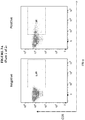
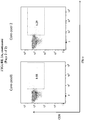
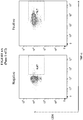
- FIG. 3A and 3B show that vaccination of C57BL/6 micewith pM-Core enhanced the magnitude of IFN- ⁇ secretion in CD8+ and CD4+ T Cells from the spleens.
- Figures 4A and 4B show that vaccination of C57BL/6 micewith pM-Core enhanced the magnitude of TNF- ⁇ secretion in CD8+ and CD4+ T Cells from the spleens.
- Figures 5A and 5B show that vaccination of C57BL/6 micewith pM-Core enhanced the magnitude of CD 107a secretion in CD8+ and CD4+ T Cells from the spleens.
- HBV specific T-cell migration to liver was also demonstrated in animals administered the pM-Core DNA vaccine.
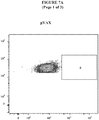
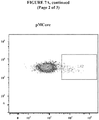
- Targeting HBV core antigen-specific T cells with high frequency and effector function to the liver is an important goal for development of an HBV immune therapy. Following immunization, animals were sacrificed and their livers were removed and HBV specific effector T cell migration to the liver was determined. The results show that the pM-Core vaccine drives effector T cells to the liver in vivo.
- Figure 6A and 6B show interferon- ⁇ T cell liver response
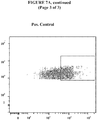
- Figures 7A and 7B show Tumor Necrosis Factor- ⁇ liver immune response
- the elevated response that results from vaccination with pM-Core are examples of the pM-Core.
- the M-core consensus immunogen encoded by the pM-core DNA construct drives strong balanced CD4+/CD8+ T cell immune responses. Induced T cells traffic to the liver at high frequency and exhibit the correct effector phenotype for immune clearance post HBV infection.
- FIG 8 shows Cellular Immune responses Induced by pM-Core using an Enzyme-linked immunosorbent spot (ELISPOT) assay.
- Splenocytes were stimulated with two pools of 15-mer peptides spanning the entire length of pMCore and over lapping by 8 amino acids.
- 200,000 splenocytes in R10 media were plated in a 96 well IFN- ⁇ capture antibody (R&D system) coated plate and stimulated overnight in the presence of a specific peptide pool at 37°C in 5% CO 2 . Cells were washed out and plates were incubated overnight with biotinylated anti-mouse IFN- ⁇ detection antibody (R&D system).
- Streptavidin-alkaline phosphatase and 5-bromo-4-chloro-3'-indolylphosphate p-toluidine salt and nitro blue tetrazolium chloride were subsequently used to develop spots. Spots were counted using an automated ELISPOT reader (CTL Limited). As shown in Figure 8 , immunization with pMCore could induce strong cellular immune responses. The data showed that the dominant epitopes were biased towards peptide pool 2. The average HBcAg-specific IFN- ⁇ T cell responses were about 2000 ( ⁇ 210) SFU per million splenocytes.
- CFSE carboxyfluorescein diacetate succinimidyl ester
- the combined populations of treated, labeled target cells were administered to two groups of mice, a control group and an immunized group.
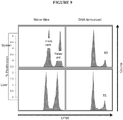
- Splenocytes were isolated from each group of mice and samples were run on a flow cytometer. The amount of CFSE was measured. Typically, in such experiments, two peaks form, the first being the irrelevant peptide; the second being the immunizing peptide in the peak indicating greater CFSE.
- Figure 9 shows that CD8 T cell induced by vaccination can specifically eliminate target cells in vivo.
- the results shows that samples of spleen and liver from naive mice contained nearly equal amounts of cells which were in the irrelevant peptide and relevant peptide peaks while the results clearly show that among immunized groups, the peaks for cells derived from those pulsed with the relevant peptide were significantly less than irrelevant peptide.
- target cells treated with the HBV peptide were specifically eliminated in mice immunized with the HBV vaccine but not in the non-immunized mice. Any elimination of target cells treated with the irrelevant peptide, if it occurred at all, was the same in mice immunized with the HBV vaccine and the non-immunized mice and significantly less than elimination of target cells treated with the HBV peptide.
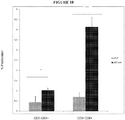
- Figure 10 shows the data collected from the T cell Proliferation Assay using CFSE labeling.
- Percent proliferation of CD3+CD4+ cells and CD3+CD8+ treated with pVax vector (control) or with plasmid pMCore which expresses HBV M-core were compared. Briefly, the isolated splenocytes were stained with the carboxyfluorescein diacetate, succinimidyl ester (CFDA-SE) Cell Tracer Kit (Invitrogen) per the manufacturer's instructions. Stained cells were washed three times with saline and stimulated with the pMCore-specific overlapping peptides. The cells were incubated at 37°C for 96 hours.
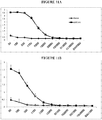
- Figures 11A and 11B are ELISA data showing a comparison of anti-HBV core antibody in serial dilution of sera from animals treated with pVax vector (control) or with plasmid pMCore which expresses HBV M-core.
- high-binding ELISA plates (Costar, Corning, NY) were coated with 1 ⁇ g/ml HBcAg protein in PBS, at 4°C for 24 h and then were washed with PBS-Tween and blocked with PBS containing 1% BSA for 2 h at room temperature. Serially diluted serum samples were added to the wells and incubated for 1 h at room temperature.
- Figure 12 shows percent TNF- ⁇ and IFN- ⁇ from CD4+ and CD8+ spleen and liver cells.
- HBcAg was used to transiently transfect mouse liver through hydrodynamic injection.
- Immunized mice liver were either transfected with pMCore or HCV NS3/4A. Immunohistochemistry staining three days post transfection showed clearance of HBcAg-transfected hepatocytes as compare to the NS3/4A-transfected ones. ALT levels in sera were measured to ensure that the clearance induced by the immunized mice did not cause any liver damage. Results in Figure 13 show clearance induced by the immunized mice did not cause any liver damage
Landscapes
- Health & Medical Sciences (AREA)
- Life Sciences & Earth Sciences (AREA)
- Chemical & Material Sciences (AREA)
- Virology (AREA)
- General Health & Medical Sciences (AREA)
- Medicinal Chemistry (AREA)
- Organic Chemistry (AREA)
- Genetics & Genomics (AREA)
- Microbiology (AREA)
- Veterinary Medicine (AREA)
- Public Health (AREA)
- Animal Behavior & Ethology (AREA)
- Pharmacology & Pharmacy (AREA)
- Immunology (AREA)
- Communicable Diseases (AREA)
- Engineering & Computer Science (AREA)
- Epidemiology (AREA)
- Mycology (AREA)
- Molecular Biology (AREA)
- Biochemistry (AREA)
- Biotechnology (AREA)
- Biophysics (AREA)
- Zoology (AREA)
- Wood Science & Technology (AREA)
- Bioinformatics & Cheminformatics (AREA)
- Biomedical Technology (AREA)
- Proteomics, Peptides & Aminoacids (AREA)
- Gastroenterology & Hepatology (AREA)
- Chemical Kinetics & Catalysis (AREA)
- General Chemical & Material Sciences (AREA)
- General Engineering & Computer Science (AREA)
- Nuclear Medicine, Radiotherapy & Molecular Imaging (AREA)
- Oncology (AREA)
- Physics & Mathematics (AREA)
- Plant Pathology (AREA)
- Medicines Containing Antibodies Or Antigens For Use As Internal Diagnostic Agents (AREA)
- Peptides Or Proteins (AREA)
- Medicines That Contain Protein Lipid Enzymes And Other Medicines (AREA)
- Medicines Containing Material From Animals Or Micro-Organisms (AREA)
Priority Applications (2)
| Application Number | Priority Date | Filing Date | Title |
|---|---|---|---|
| PL12744961T PL2672992T3 (pl) | 2011-02-11 | 2012-02-13 | Cząsteczka kwasu nukleinowego kodująca białko rdzeniowe wirusa zapalenia wątroby typu B i szczepionka je zawierająca |
| EP20168329.9A EP3760227A1 (en) | 2011-02-11 | 2012-02-13 | Nucleic acid molecule encoding hepatitis b virus core protein and vaccine comprising the same |
Applications Claiming Priority (2)
| Application Number | Priority Date | Filing Date | Title |
|---|---|---|---|
| US201161442162P | 2011-02-11 | 2011-02-11 | |
| PCT/US2012/024905 WO2012109668A1 (en) | 2011-02-11 | 2012-02-13 | Nucleic acid molecule encoding hepatitis b virus core protein and vaccine comprising the same |
Related Child Applications (1)
| Application Number | Title | Priority Date | Filing Date |
|---|---|---|---|
| EP20168329.9A Division EP3760227A1 (en) | 2011-02-11 | 2012-02-13 | Nucleic acid molecule encoding hepatitis b virus core protein and vaccine comprising the same |
Publications (3)
| Publication Number | Publication Date |
|---|---|
| EP2672992A1 EP2672992A1 (en) | 2013-12-18 |
| EP2672992A4 EP2672992A4 (en) | 2015-07-08 |
| EP2672992B1 true EP2672992B1 (en) | 2020-04-08 |
Family
ID=46638994
Family Applications (2)
| Application Number | Title | Priority Date | Filing Date |
|---|---|---|---|
| EP12744961.9A Active EP2672992B1 (en) | 2011-02-11 | 2012-02-13 | Nucleic acid molecule encoding hepatitis b virus core protein and vaccine comprising the same |
| EP20168329.9A Pending EP3760227A1 (en) | 2011-02-11 | 2012-02-13 | Nucleic acid molecule encoding hepatitis b virus core protein and vaccine comprising the same |
Family Applications After (1)
| Application Number | Title | Priority Date | Filing Date |
|---|---|---|---|
| EP20168329.9A Pending EP3760227A1 (en) | 2011-02-11 | 2012-02-13 | Nucleic acid molecule encoding hepatitis b virus core protein and vaccine comprising the same |
Country Status (15)
| Country | Link |
|---|---|
| US (3) | US9403879B2 (enExample) |
| EP (2) | EP2672992B1 (enExample) |
| JP (2) | JP6153473B2 (enExample) |
| KR (1) | KR101942372B1 (enExample) |
| CN (1) | CN103442732B (enExample) |
| AU (1) | AU2012214141B2 (enExample) |
| CA (1) | CA2827080C (enExample) |
| EA (3) | EA032364B1 (enExample) |
| ES (1) | ES2806263T3 (enExample) |
| HU (1) | HUE049669T2 (enExample) |
| MX (1) | MX343830B (enExample) |
| PL (1) | PL2672992T3 (enExample) |
| PT (1) | PT2672992T (enExample) |
| WO (1) | WO2012109668A1 (enExample) |
| ZA (1) | ZA201306009B (enExample) |
Families Citing this family (15)
| Publication number | Priority date | Publication date | Assignee | Title |
|---|---|---|---|---|
| US11224659B2 (en) * | 2010-10-29 | 2022-01-18 | Infirst Healthcare Limited | Solid solution compositions and use in severe pain |
| US9238679B2 (en) * | 2011-02-11 | 2016-01-19 | The Trustees Of The University Of Pennslyvania | Nucleic acid molecule encoding hepatitis B virus core protein and surface antigen protein and vaccine comprising the same |
| US9403879B2 (en) * | 2011-02-11 | 2016-08-02 | The Trustees Of The University Of Pennsylvania | Nucleic acid molecule encoding hepatitis B virus core protein and vaccine comprising the same |
| EP3222677A1 (de) * | 2016-03-23 | 2017-09-27 | LANXESS Deutschland GmbH | Metallazopigmente |
| JP7250520B2 (ja) | 2016-04-13 | 2023-04-03 | ヤンセン ファーマシューティカルズ,インコーポレーテッド | 組換えアルテリウイルスレプリコン系およびその使用 |
| ES2993107T3 (en) | 2016-10-17 | 2024-12-23 | Janssen Pharmaceuticals Inc | Recombinant virus replicon systems and uses thereof |
| JP7788787B2 (ja) | 2016-12-05 | 2025-12-19 | ヤンセン ファーマシューティカルズ,インコーポレーテッド | 遺伝子発現増強のための組成物および方法 |
| EA202091516A1 (ru) | 2017-12-19 | 2020-11-03 | Янссен Сайенсиз Айрлэнд Анлимитед Компани | Способы и композиции для индукции иммунного ответа против вируса гепатита b (hbv) |
| EA202091513A1 (ru) | 2017-12-19 | 2020-09-09 | Янссен Сайенсиз Айрлэнд Анлимитед Компани | Вакцины против вируса гепатита b (hbv) и их применение |
| EA202091517A1 (ru) | 2017-12-19 | 2020-11-03 | Янссен Сайенсиз Айрлэнд Анлимитед Компани | Способы и устройство для доставки вакцин против вируса гепатита b (hbv) |
| CA3085492A1 (en) * | 2017-12-19 | 2019-06-27 | Janssen Sciences Ireland Unlimited Company | Methods and apparatus for the delivery of hepatitis b virus (hbv) vaccines |
| KR20200111729A (ko) | 2018-01-19 | 2020-09-29 | 얀센 파마슈티칼즈, 인코포레이티드 | 재조합 레플리콘 시스템을 이용한 면역 반응 유도 및 증진 |
| EP3864027A1 (en) | 2018-10-08 | 2021-08-18 | Janssen Pharmaceuticals, Inc. | Alphavirus-based replicons for administration of biotherapeutics |
| HRP20241379T1 (hr) | 2019-09-30 | 2024-12-20 | Gilead Sciences, Inc. | Cjepiva za hbv i postupci za liječenje hbv |
| CN115461358B (zh) * | 2020-07-17 | 2026-07-07 | 养生堂有限公司 | 一种细胞穿膜肽及其应用 |
Family Cites Families (91)
| Publication number | Priority date | Publication date | Assignee | Title |
|---|---|---|---|---|
| US5077044A (en) | 1980-05-19 | 1991-12-31 | The Board Of Trustees Of The Leland Stanford Jr. University | Novel non-reverting shigella live vaccines |
| US4554101A (en) | 1981-01-09 | 1985-11-19 | New York Blood Center, Inc. | Identification and preparation of epitopes on antigens and allergens on the basis of hydrophilicity |
| US5174993A (en) | 1981-12-24 | 1992-12-29 | Health Research Inc. | Recombinant avipox virus and immunological use thereof |
| US4722848A (en) | 1982-12-08 | 1988-02-02 | Health Research, Incorporated | Method for immunizing animals with synthetically modified vaccinia virus |
| US5110587A (en) | 1981-12-24 | 1992-05-05 | Health Research, Incorporated | Immunogenic composition comprising synthetically modified vaccinia virus |
| US5338683A (en) | 1981-12-24 | 1994-08-16 | Health Research Incorporated | Vaccinia virus containing DNA sequences encoding herpesvirus glycoproteins |
| US4510245A (en) | 1982-11-18 | 1985-04-09 | Chiron Corporation | Adenovirus promoter system |
| ZA858044B (en) | 1984-11-01 | 1987-05-27 | American Home Prod | Oral vaccines |
| US5643579A (en) | 1984-11-01 | 1997-07-01 | American Home Products Corporation | Oral vaccines |
| US5036006A (en) | 1984-11-13 | 1991-07-30 | Cornell Research Foundation, Inc. | Method for transporting substances into living cells and tissues and apparatus therefor |
| US4945050A (en) | 1984-11-13 | 1990-07-31 | Cornell Research Foundation, Inc. | Method for transporting substances into living cells and tissues and apparatus therefor |
| US4797368A (en) | 1985-03-15 | 1989-01-10 | The United States Of America As Represented By The Department Of Health And Human Services | Adeno-associated virus as eukaryotic expression vector |
| GB8508845D0 (en) | 1985-04-04 | 1985-05-09 | Hoffmann La Roche | Vaccinia dna |
| US5223424A (en) | 1985-09-06 | 1993-06-29 | Prutech Research And Development | Attenuated herpesviruses and herpesviruses which include foreign DNA encoding an amino acid sequence |
| US4790987A (en) | 1985-11-15 | 1988-12-13 | Research Corporation | Viral glycoprotein subunit vaccine |
| US5310668A (en) | 1986-06-20 | 1994-05-10 | Merck & Co., Inc. | Varicella-zoster virus as a live recombinant vaccine |
| US5242829A (en) | 1986-09-23 | 1993-09-07 | Therion Biologics Corporation | Recombinant pseudorabies virus |
| US5294441A (en) | 1987-06-04 | 1994-03-15 | Washington University | Avirulent microbes and uses therefor: salmonella typhi |
| IL86583A0 (en) | 1987-06-04 | 1988-11-15 | Molecular Eng Ass | Vaccine containing a derivative of a microbe and method for the production thereof |
| US5387744A (en) | 1987-06-04 | 1995-02-07 | Washington University | Avirulent microbes and uses therefor: Salmonella typhi |
| US5112749A (en) | 1987-10-02 | 1992-05-12 | Praxis Biologics, Inc. | Vaccines for the malaria circumsporozoite protein |
| DE4090351T1 (de) | 1989-03-08 | 1997-07-24 | Health Research Inc | Rekombinantes Pockenvirus-Wirtsselektionssystem |
| US5225336A (en) | 1989-03-08 | 1993-07-06 | Health Research Incorporated | Recombinant poxvirus host range selection system |
| US5703055A (en) | 1989-03-21 | 1997-12-30 | Wisconsin Alumni Research Foundation | Generation of antibodies through lipid mediated DNA delivery |
| US5591439A (en) | 1989-03-24 | 1997-01-07 | The Wistar Institute Of Anatomy And Biology | Recombinant cytomegalovirus vaccine |
| DE69027313T2 (de) | 1989-03-31 | 1997-01-23 | Univ Washington | Impfstoffe enthaltende avirulente phop-type mikroorganismen |
| ES2070997T3 (es) | 1989-12-04 | 1995-06-16 | Akzo Nobel Nv | Virus de herpes recombinante de pavos y vacunas vector vivas derivadas de los mismos. |
| US5294548A (en) | 1990-04-02 | 1994-03-15 | American Biogenetic Sciences, Inc | Recombianant Hepatitis a virus |
| AU7906691A (en) | 1990-05-23 | 1991-12-10 | United States of America, as represented by the Secretary, U.S. Department of Commerce, The | Adeno-associated virus (aav)-based eucaryotic vectors |
| US5462734A (en) | 1990-11-02 | 1995-10-31 | Wisconsin Alumni Research Foundation | Bovine herpesvirus vaccine and method of using same |
| US5240703A (en) | 1991-03-01 | 1993-08-31 | Syntro Corporation | Attenuated, genetically-engineered pseudorabies virus s-prv-155 and uses thereof |
| US6034298A (en) | 1991-08-26 | 2000-03-07 | Prodigene, Inc. | Vaccines expressed in plants |
| US5955088A (en) | 1992-02-03 | 1999-09-21 | Cedars-Sinai Medical Center | Pharmaceutical compsition of herpes simplex virus type-1 (HSV-1), glycoproteins |
| EP0646178A1 (en) | 1992-06-04 | 1995-04-05 | The Regents Of The University Of California | expression cassette with regularoty regions functional in the mammmlian host |
| US5273525A (en) | 1992-08-13 | 1993-12-28 | Btx Inc. | Injection and electroporation apparatus for drug and gene delivery |
| US5981505A (en) | 1993-01-26 | 1999-11-09 | The Trustees Of The University Of Pennsylvania | Compositions and methods for delivery of genetic material |
| ES2249760T3 (es) | 1993-01-26 | 2006-04-01 | The Trustees Of The University Of Pennsylvania (A Corporation Of Pennsylvania) | Composiciones y procedimientos de administracion de materias geneticas. |
| US5593972A (en) | 1993-01-26 | 1997-01-14 | The Wistar Institute | Genetic immunization |
| WO1994028929A1 (en) | 1993-06-07 | 1994-12-22 | Genentech, Inc. | Hiv envelope polypeptides |
| US5407073A (en) | 1993-10-01 | 1995-04-18 | Toyo Chemical Co., Ltd. | Floppy disk container |
| US5739118A (en) | 1994-04-01 | 1998-04-14 | Apollon, Inc. | Compositions and methods for delivery of genetic material |
| US6156319A (en) | 1994-07-25 | 2000-12-05 | The Trustees Of The University Of Pennsylvania | Soluble herpesvirus glycoprotein complex vaccine |
| NL9401820A (nl) | 1994-11-02 | 1996-06-03 | Meyn Maschf | Inrichting voor het bewerken van aan zijn poten opgehangen gevogelte. |
| US5962428A (en) | 1995-03-30 | 1999-10-05 | Apollon, Inc. | Compositions and methods for delivery of genetic material |
| US5650309A (en) | 1995-05-16 | 1997-07-22 | The Regents Of The University Of California | Viral vectors |
| US5698202A (en) | 1995-06-05 | 1997-12-16 | The Wistar Institute Of Anatomy & Biology | Replication-defective adenovirus human type 5 recombinant as a rabies vaccine carrier |
| EP2298900A1 (en) * | 1996-09-17 | 2011-03-23 | Novartis Vaccines and Diagnostics, Inc. | Compositions and methods for treating intracellular diseases |
| WO1998043702A2 (en) | 1997-04-03 | 1998-10-08 | Iacob Mathiesen | Method for introducing pharmaceutical drugs and nucleic acids into skeletal muscle |
| US6261281B1 (en) | 1997-04-03 | 2001-07-17 | Electrofect As | Method for genetic immunization and introduction of molecules into skeletal muscle and immune cells |
| CA2294793A1 (fr) | 1997-06-30 | 1999-01-14 | Rhone-Poulenc Rorer S.A. | Amelioration du transfert d'acide nucleique dans le muscle strie et combinaison permettant la mise en oeuvre du procede |
| EP2428250A1 (en) | 1998-07-13 | 2012-03-14 | Genetronics, Inc. | Skin and muscle-targeted gene therapy by pulsed electrical field |
| US6589529B1 (en) | 1998-10-30 | 2003-07-08 | Children's Hospital Medical Center | Rotavirus subunit vaccine |
| DK1119630T3 (da) * | 1998-11-05 | 2006-05-15 | Powderject Vaccines Inc | Nukleinsyrekonstruktioner til genetisk immunisering |
| US6740323B1 (en) | 1999-11-24 | 2004-05-25 | Chiron Corporation | HBV/HCV virus-like particle |
| EP1278542A2 (en) * | 2000-05-05 | 2003-01-29 | Cytos Biotechnology AG | Molecular antigen arrays and vaccines |
| US20030138769A1 (en) | 2000-08-16 | 2003-07-24 | Birkett Ashley J. | Immunogenic HBc chimer particles having enhanced stability |
| JP3543326B2 (ja) | 2001-08-30 | 2004-07-14 | ソニー株式会社 | 情報処理装置および方法、情報処理システム、情報配信装置、記録媒体、並びにプログラム |
| EP1450856B1 (en) * | 2001-09-14 | 2009-11-11 | Cytos Biotechnology AG | Packaging of immunostimulatory cpg into virus-like particles: method of preparation and use |
| US7045319B2 (en) | 2001-10-30 | 2006-05-16 | Ribomed Biotechnologies, Inc. | Molecular detection systems utilizing reiterative oligonucleotide synthesis |
| US7351413B2 (en) | 2002-02-21 | 2008-04-01 | Lorantis, Limited | Stabilized HBc chimer particles as immunogens for chronic hepatitis |
| US8209006B2 (en) | 2002-03-07 | 2012-06-26 | Vgx Pharmaceuticals, Inc. | Constant current electroporation device and methods of use |
| US7245963B2 (en) | 2002-03-07 | 2007-07-17 | Advisys, Inc. | Electrode assembly for constant-current electroporation and use |
| ES2379346T3 (es) * | 2002-03-28 | 2012-04-25 | Brenntag Biosector A/S | Composiciones de vacuna combinadas de ADN/proteína |
| US7328064B2 (en) | 2002-07-04 | 2008-02-05 | Inovio As | Electroporation device and injection apparatus |
| CN100381463C (zh) | 2002-09-18 | 2008-04-16 | 中国人民解放军免疫学研究所 | 用于生产治疗用乙型肝炎疫苗或药物的免疫原及其制备方法和用途 |
| EP1573004A4 (en) | 2002-11-04 | 2006-08-09 | Advisys Inc | SYNTHETIC MUSCLE PROMOTERS WITH INHERENT CELLS NATURALLY OBTAINING REGULATORY SEQUENCES EXCELLENT ACTIVITIES |
| US7238522B2 (en) | 2003-05-30 | 2007-07-03 | Advisys, Inc. | Devices and methods for biomaterial production |
| NZ570709A (en) | 2003-06-13 | 2010-04-30 | Univ Pennsylvania | Nucleic acid sequences encoding and compositions comprising IgE signal peptide and/or IL-15 and methods for using the same |
| WO2005023293A1 (en) | 2003-09-09 | 2005-03-17 | Pohang University Of Science And Technology | Vaccine composition comprising il-12 adjuvant encapsulated in controlled-release microsphere |
| JP5331340B2 (ja) | 2004-05-18 | 2013-10-30 | バイカル インコーポレイテッド | インフルエンザウィルスワクチン組成物、及びその使用方法 |
| US7964196B2 (en) * | 2004-05-25 | 2011-06-21 | Chimeros, Inc. | Self-assembling nanoparticle drug delivery system |
| US8586055B2 (en) | 2007-01-12 | 2013-11-19 | The United States Of America As Represented By The Secretary Of The Department Of Health And Human Services | DNA immunization protocols |
| KR100836745B1 (ko) | 2007-01-31 | 2008-06-10 | (주)두비엘 | Hbv 백신 및 그의 제조 방법 |
| WO2008103380A2 (en) | 2007-02-21 | 2008-08-28 | Fox Chase Cancer Center | Hepatitis b virus compositions and methods of use |
| ES2622418T3 (es) | 2007-05-23 | 2017-07-06 | Vgxi, Inc. | Composición que comprende alta concentración de moléculas biológicamente activas y procesos para preparar la misma |
| US8138318B2 (en) | 2007-09-13 | 2012-03-20 | Abbott Laboratories | Hepatitis B pre-S2 nucleic acid |
| US9592285B2 (en) * | 2007-11-12 | 2017-03-14 | The Trustees Of The University Of Pennsylvania | Vaccines against multiple subtypes of influenza virus |
| JP5788676B2 (ja) | 2008-01-11 | 2015-10-07 | イノビオ ファーマシューティカルズ,インコーポレイティド | デングウイルスの複数のサブタイプに対する新規ワクチン |
| EP2274442B1 (en) * | 2008-04-04 | 2016-06-29 | The Trustees Of The University Of Pennsylvania | Consensus sequences of chikungunya viral proteins, nucleic acid molecules encoding the same, and compositions and methods for using the same |
| WO2009130588A2 (en) * | 2008-04-22 | 2009-10-29 | Tripep Ab | Immunogen platform |
| WO2010016071A2 (en) | 2008-08-05 | 2010-02-11 | Swati Subodh | Identification of genomic signature for differentiating highly similar sequence variants of an organism |
| WO2010042751A2 (en) * | 2008-10-08 | 2010-04-15 | Chimeros Inc. | Chimeric therapeutics, compositions, and methods for using same |
| JP5753090B2 (ja) | 2008-10-29 | 2015-07-22 | ザ トラスティーズ オブ ザ ユニバーシティ オブ ペンシルバニア | 改良型hcvワクチンおよびその使用方法 |
| CA3001374A1 (en) * | 2008-11-17 | 2010-05-20 | Vgx Pharmaceuticals, Llc | Antigens that elicit immune response against flavivirus and methods of using same |
| CN101502650B (zh) | 2009-03-10 | 2011-12-28 | 邢益平 | 密码子优化的乙型肝炎核酸疫苗 |
| CA2760315C (en) | 2009-04-30 | 2019-05-28 | Centre Hospitalier Universitaire Vaudois Lausanne (Chuv) | Modified immunization vectors |
| US8298820B2 (en) | 2010-01-26 | 2012-10-30 | The Trustees Of The University Of Pennsylvania | Influenza nucleic acid molecules and vaccines made therefrom |
| US9238679B2 (en) * | 2011-02-11 | 2016-01-19 | The Trustees Of The University Of Pennslyvania | Nucleic acid molecule encoding hepatitis B virus core protein and surface antigen protein and vaccine comprising the same |
| US9403879B2 (en) | 2011-02-11 | 2016-08-02 | The Trustees Of The University Of Pennsylvania | Nucleic acid molecule encoding hepatitis B virus core protein and vaccine comprising the same |
| PE20140844A1 (es) | 2011-02-12 | 2014-07-14 | Globeimmune Inc | Terapeuticos a base de levadura para infeccion de la hepatitis b cronica |
| EP3288245B1 (en) | 2016-08-16 | 2019-03-06 | Guangdong Oppo Mobile Telecommunications Corp., Ltd. | Fingerprint sensor and terminal using the same |
-
2012
- 2012-02-13 US US13/984,771 patent/US9403879B2/en active Active
- 2012-02-13 EA EA201391160A patent/EA032364B1/ru unknown
- 2012-02-13 EA EA202092990A patent/EA202092990A3/ru unknown
- 2012-02-13 KR KR1020137023592A patent/KR101942372B1/ko active Active
- 2012-02-13 WO PCT/US2012/024905 patent/WO2012109668A1/en not_active Ceased
- 2012-02-13 HU HUE12744961A patent/HUE049669T2/hu unknown
- 2012-02-13 CN CN201280008596.9A patent/CN103442732B/zh active Active
- 2012-02-13 AU AU2012214141A patent/AU2012214141B2/en active Active
- 2012-02-13 CA CA2827080A patent/CA2827080C/en active Active
- 2012-02-13 EP EP12744961.9A patent/EP2672992B1/en active Active
- 2012-02-13 EA EA201892795A patent/EA037377B1/ru unknown
- 2012-02-13 MX MX2013009274A patent/MX343830B/es active IP Right Grant
- 2012-02-13 EP EP20168329.9A patent/EP3760227A1/en active Pending
- 2012-02-13 PL PL12744961T patent/PL2672992T3/pl unknown
- 2012-02-13 JP JP2013553641A patent/JP6153473B2/ja active Active
- 2012-02-13 PT PT127449619T patent/PT2672992T/pt unknown
- 2012-02-13 ES ES12744961T patent/ES2806263T3/es active Active
-
2013
- 2013-08-08 ZA ZA2013/06009A patent/ZA201306009B/en unknown
-
2016
- 2016-07-19 US US15/213,747 patent/US10195268B2/en active Active
- 2016-12-28 JP JP2016255703A patent/JP2017055772A/ja active Pending
-
2019
- 2019-02-05 US US16/267,454 patent/US10695421B2/en active Active
Non-Patent Citations (1)
| Title |
|---|
| KOWALCZYK D W ET AL: "Immune responses to DNA vaccines", CMLS CELLULAR AND MOLECULAR LIFE SCIENCES, BIRKHAUSER VERLAG, HEIDELBERG, DE, vol. 55, no. 5, 1 May 1999 (1999-05-01), pages 751 - 770, XP002311708, ISSN: 1420-682X, DOI: 10.1007/S000180050330 * |
Also Published As
Similar Documents
| Publication | Publication Date | Title |
|---|---|---|
| US10695421B2 (en) | Nucleic acid molecule encoding hepatitis B virus core protein and vaccine comprising the same | |
| US9675690B2 (en) | Nucleic acid molecule encoding hepatitis B virus core protein and surface antigen protein and vaccine comprising the same | |
| EP3173103A1 (en) | Influenza nucleic acid molecules and vaccines made therefrom | |
| HK1192456B (en) | Nucleic acid molecule encoding hepatitis b virus core protein and vaccine comprising the same | |
| HK1192456A (en) | Nucleic acid molecule encoding hepatitis b virus core protein and vaccine comprising the same | |
| HK1210702B (en) | Hepatitis b virus core protein and surface antigen protein and vaccine comprising the same |
Legal Events
| Date | Code | Title | Description |
|---|---|---|---|
| PUAI | Public reference made under article 153(3) epc to a published international application that has entered the european phase |
Free format text: ORIGINAL CODE: 0009012 |
|
| 17P | Request for examination filed |
Effective date: 20130902 |
|
| AK | Designated contracting states |
Kind code of ref document: A1 Designated state(s): AL AT BE BG CH CY CZ DE DK EE ES FI FR GB GR HR HU IE IS IT LI LT LU LV MC MK MT NL NO PL PT RO RS SE SI SK SM TR |
|
| DAX | Request for extension of the european patent (deleted) | ||
| RA4 | Supplementary search report drawn up and despatched (corrected) |
Effective date: 20150605 |
|
| RIC1 | Information provided on ipc code assigned before grant |
Ipc: C07K 14/02 20060101ALI20150529BHEP Ipc: A61K 39/29 20060101AFI20150529BHEP |
|
| STAA | Information on the status of an ep patent application or granted ep patent |
Free format text: STATUS: EXAMINATION IS IN PROGRESS |
|
| 17Q | First examination report despatched |
Effective date: 20170817 |
|
| REG | Reference to a national code |
Ref country code: DE Ref legal event code: R079 Ref document number: 602012069121 Country of ref document: DE Free format text: PREVIOUS MAIN CLASS: A61K0039290000 Ipc: A61P0031200000 |
|
| GRAP | Despatch of communication of intention to grant a patent |
Free format text: ORIGINAL CODE: EPIDOSNIGR1 |
|
| STAA | Information on the status of an ep patent application or granted ep patent |
Free format text: STATUS: GRANT OF PATENT IS INTENDED |
|
| RIC1 | Information provided on ipc code assigned before grant |
Ipc: A61P 31/20 20060101AFI20190920BHEP |
|
| RIN1 | Information on inventor provided before grant (corrected) |
Inventor name: OBENG-ADJEI, NYAMEKYE Inventor name: YAN, JIAN Inventor name: WEINER, DAVID B |
|
| INTG | Intention to grant announced |
Effective date: 20191021 |
|
| GRAS | Grant fee paid |
Free format text: ORIGINAL CODE: EPIDOSNIGR3 |
|
| GRAA | (expected) grant |
Free format text: ORIGINAL CODE: 0009210 |
|
| STAA | Information on the status of an ep patent application or granted ep patent |
Free format text: STATUS: THE PATENT HAS BEEN GRANTED |
|
| AK | Designated contracting states |
Kind code of ref document: B1 Designated state(s): AL AT BE BG CH CY CZ DE DK EE ES FI FR GB GR HR HU IE IS IT LI LT LU LV MC MK MT NL NO PL PT RO RS SE SI SK SM TR |
|
| REG | Reference to a national code |
Ref country code: GB Ref legal event code: FG4D |
|
| REG | Reference to a national code |
Ref country code: AT Ref legal event code: REF Ref document number: 1253530 Country of ref document: AT Kind code of ref document: T Effective date: 20200415 Ref country code: CH Ref legal event code: EP |
|
| REG | Reference to a national code |
Ref country code: IE Ref legal event code: FG4D |
|
| REG | Reference to a national code |
Ref country code: DE Ref legal event code: R096 Ref document number: 602012069121 Country of ref document: DE |
|
| REG | Reference to a national code |
Ref country code: PT Ref legal event code: SC4A Ref document number: 2672992 Country of ref document: PT Date of ref document: 20200727 Kind code of ref document: T Free format text: AVAILABILITY OF NATIONAL TRANSLATION Effective date: 20200721 |
|
| REG | Reference to a national code |
Ref country code: RO Ref legal event code: EPE |
|
| REG | Reference to a national code |
Ref country code: NL Ref legal event code: MP Effective date: 20200408 |
|
| REG | Reference to a national code |
Ref country code: GR Ref legal event code: EP Ref document number: 20200401906 Country of ref document: GR Effective date: 20200916 |
|
| REG | Reference to a national code |
Ref country code: LT Ref legal event code: MG4D |
|
| REG | Reference to a national code |
Ref country code: HU Ref legal event code: AG4A Ref document number: E049669 Country of ref document: HU |
|
| PG25 | Lapsed in a contracting state [announced via postgrant information from national office to epo] |
Ref country code: NL Free format text: LAPSE BECAUSE OF FAILURE TO SUBMIT A TRANSLATION OF THE DESCRIPTION OR TO PAY THE FEE WITHIN THE PRESCRIBED TIME-LIMIT Effective date: 20200408 Ref country code: IS Free format text: LAPSE BECAUSE OF FAILURE TO SUBMIT A TRANSLATION OF THE DESCRIPTION OR TO PAY THE FEE WITHIN THE PRESCRIBED TIME-LIMIT Effective date: 20200808 Ref country code: SE Free format text: LAPSE BECAUSE OF FAILURE TO SUBMIT A TRANSLATION OF THE DESCRIPTION OR TO PAY THE FEE WITHIN THE PRESCRIBED TIME-LIMIT Effective date: 20200408 Ref country code: LT Free format text: LAPSE BECAUSE OF FAILURE TO SUBMIT A TRANSLATION OF THE DESCRIPTION OR TO PAY THE FEE WITHIN THE PRESCRIBED TIME-LIMIT Effective date: 20200408 Ref country code: NO Free format text: LAPSE BECAUSE OF FAILURE TO SUBMIT A TRANSLATION OF THE DESCRIPTION OR TO PAY THE FEE WITHIN THE PRESCRIBED TIME-LIMIT Effective date: 20200708 Ref country code: FI Free format text: LAPSE BECAUSE OF FAILURE TO SUBMIT A TRANSLATION OF THE DESCRIPTION OR TO PAY THE FEE WITHIN THE PRESCRIBED TIME-LIMIT Effective date: 20200408 |
|
| REG | Reference to a national code |
Ref country code: AT Ref legal event code: MK05 Ref document number: 1253530 Country of ref document: AT Kind code of ref document: T Effective date: 20200408 |
|
| PG25 | Lapsed in a contracting state [announced via postgrant information from national office to epo] |
Ref country code: HR Free format text: LAPSE BECAUSE OF FAILURE TO SUBMIT A TRANSLATION OF THE DESCRIPTION OR TO PAY THE FEE WITHIN THE PRESCRIBED TIME-LIMIT Effective date: 20200408 Ref country code: RS Free format text: LAPSE BECAUSE OF FAILURE TO SUBMIT A TRANSLATION OF THE DESCRIPTION OR TO PAY THE FEE WITHIN THE PRESCRIBED TIME-LIMIT Effective date: 20200408 Ref country code: LV Free format text: LAPSE BECAUSE OF FAILURE TO SUBMIT A TRANSLATION OF THE DESCRIPTION OR TO PAY THE FEE WITHIN THE PRESCRIBED TIME-LIMIT Effective date: 20200408 |
|
| PG25 | Lapsed in a contracting state [announced via postgrant information from national office to epo] |
Ref country code: AL Free format text: LAPSE BECAUSE OF FAILURE TO SUBMIT A TRANSLATION OF THE DESCRIPTION OR TO PAY THE FEE WITHIN THE PRESCRIBED TIME-LIMIT Effective date: 20200408 |
|
| REG | Reference to a national code |
Ref country code: DE Ref legal event code: R097 Ref document number: 602012069121 Country of ref document: DE |
|
| PG25 | Lapsed in a contracting state [announced via postgrant information from national office to epo] |
Ref country code: CZ Free format text: LAPSE BECAUSE OF FAILURE TO SUBMIT A TRANSLATION OF THE DESCRIPTION OR TO PAY THE FEE WITHIN THE PRESCRIBED TIME-LIMIT Effective date: 20200408 Ref country code: AT Free format text: LAPSE BECAUSE OF FAILURE TO SUBMIT A TRANSLATION OF THE DESCRIPTION OR TO PAY THE FEE WITHIN THE PRESCRIBED TIME-LIMIT Effective date: 20200408 Ref country code: EE Free format text: LAPSE BECAUSE OF FAILURE TO SUBMIT A TRANSLATION OF THE DESCRIPTION OR TO PAY THE FEE WITHIN THE PRESCRIBED TIME-LIMIT Effective date: 20200408 Ref country code: SM Free format text: LAPSE BECAUSE OF FAILURE TO SUBMIT A TRANSLATION OF THE DESCRIPTION OR TO PAY THE FEE WITHIN THE PRESCRIBED TIME-LIMIT Effective date: 20200408 Ref country code: DK Free format text: LAPSE BECAUSE OF FAILURE TO SUBMIT A TRANSLATION OF THE DESCRIPTION OR TO PAY THE FEE WITHIN THE PRESCRIBED TIME-LIMIT Effective date: 20200408 |
|
| PLBE | No opposition filed within time limit |
Free format text: ORIGINAL CODE: 0009261 |
|
| STAA | Information on the status of an ep patent application or granted ep patent |
Free format text: STATUS: NO OPPOSITION FILED WITHIN TIME LIMIT |
|
| REG | Reference to a national code |
Ref country code: ES Ref legal event code: FG2A Ref document number: 2806263 Country of ref document: ES Kind code of ref document: T3 Effective date: 20210217 |
|
| PG25 | Lapsed in a contracting state [announced via postgrant information from national office to epo] |
Ref country code: SK Free format text: LAPSE BECAUSE OF FAILURE TO SUBMIT A TRANSLATION OF THE DESCRIPTION OR TO PAY THE FEE WITHIN THE PRESCRIBED TIME-LIMIT Effective date: 20200408 |
|
| 26N | No opposition filed |
Effective date: 20210112 |
|
| PG25 | Lapsed in a contracting state [announced via postgrant information from national office to epo] |
Ref country code: SI Free format text: LAPSE BECAUSE OF FAILURE TO SUBMIT A TRANSLATION OF THE DESCRIPTION OR TO PAY THE FEE WITHIN THE PRESCRIBED TIME-LIMIT Effective date: 20200408 |
|
| PG25 | Lapsed in a contracting state [announced via postgrant information from national office to epo] |
Ref country code: MC Free format text: LAPSE BECAUSE OF FAILURE TO SUBMIT A TRANSLATION OF THE DESCRIPTION OR TO PAY THE FEE WITHIN THE PRESCRIBED TIME-LIMIT Effective date: 20200408 |
|
| REG | Reference to a national code |
Ref country code: BE Ref legal event code: MM Effective date: 20210228 |
|
| PG25 | Lapsed in a contracting state [announced via postgrant information from national office to epo] |
Ref country code: CH Free format text: LAPSE BECAUSE OF NON-PAYMENT OF DUE FEES Effective date: 20210228 Ref country code: LI Free format text: LAPSE BECAUSE OF NON-PAYMENT OF DUE FEES Effective date: 20210228 Ref country code: LU Free format text: LAPSE BECAUSE OF NON-PAYMENT OF DUE FEES Effective date: 20210213 |
|
| PG25 | Lapsed in a contracting state [announced via postgrant information from national office to epo] |
Ref country code: IE Free format text: LAPSE BECAUSE OF NON-PAYMENT OF DUE FEES Effective date: 20210213 |
|
| PG25 | Lapsed in a contracting state [announced via postgrant information from national office to epo] |
Ref country code: BE Free format text: LAPSE BECAUSE OF NON-PAYMENT OF DUE FEES Effective date: 20210228 |
|
| PG25 | Lapsed in a contracting state [announced via postgrant information from national office to epo] |
Ref country code: CY Free format text: LAPSE BECAUSE OF FAILURE TO SUBMIT A TRANSLATION OF THE DESCRIPTION OR TO PAY THE FEE WITHIN THE PRESCRIBED TIME-LIMIT Effective date: 20200408 |
|
| P01 | Opt-out of the competence of the unified patent court (upc) registered |
Effective date: 20230605 |
|
| PG25 | Lapsed in a contracting state [announced via postgrant information from national office to epo] |
Ref country code: MK Free format text: LAPSE BECAUSE OF FAILURE TO SUBMIT A TRANSLATION OF THE DESCRIPTION OR TO PAY THE FEE WITHIN THE PRESCRIBED TIME-LIMIT Effective date: 20200408 |
|
| PG25 | Lapsed in a contracting state [announced via postgrant information from national office to epo] |
Ref country code: TR Free format text: LAPSE BECAUSE OF FAILURE TO SUBMIT A TRANSLATION OF THE DESCRIPTION OR TO PAY THE FEE WITHIN THE PRESCRIBED TIME-LIMIT Effective date: 20200408 |
|
| PG25 | Lapsed in a contracting state [announced via postgrant information from national office to epo] |
Ref country code: MT Free format text: LAPSE BECAUSE OF FAILURE TO SUBMIT A TRANSLATION OF THE DESCRIPTION OR TO PAY THE FEE WITHIN THE PRESCRIBED TIME-LIMIT Effective date: 20200408 |
|
| PGFP | Annual fee paid to national office [announced via postgrant information from national office to epo] |
Ref country code: PL Payment date: 20241128 Year of fee payment: 14 |
|
| PGFP | Annual fee paid to national office [announced via postgrant information from national office to epo] |
Ref country code: GB Payment date: 20241227 Year of fee payment: 14 |
|
| PGFP | Annual fee paid to national office [announced via postgrant information from national office to epo] |
Ref country code: FR Payment date: 20241209 Year of fee payment: 14 Ref country code: BG Payment date: 20241216 Year of fee payment: 14 |
|
| PGFP | Annual fee paid to national office [announced via postgrant information from national office to epo] |
Ref country code: HU Payment date: 20250113 Year of fee payment: 14 |
|
| PGFP | Annual fee paid to national office [announced via postgrant information from national office to epo] |
Ref country code: PT Payment date: 20250127 Year of fee payment: 14 Ref country code: DE Payment date: 20241217 Year of fee payment: 14 |
|
| PGFP | Annual fee paid to national office [announced via postgrant information from national office to epo] |
Ref country code: RO Payment date: 20250113 Year of fee payment: 14 |
|
| PGFP | Annual fee paid to national office [announced via postgrant information from national office to epo] |
Ref country code: ES Payment date: 20250307 Year of fee payment: 14 |
|
| PGFP | Annual fee paid to national office [announced via postgrant information from national office to epo] |
Ref country code: GR Payment date: 20250116 Year of fee payment: 14 |
|
| PGFP | Annual fee paid to national office [announced via postgrant information from national office to epo] |
Ref country code: IT Payment date: 20250110 Year of fee payment: 14 |