EP2656840B1 - Method for producing polymerized coordination compounds of platinum complex - Google Patents
Method for producing polymerized coordination compounds of platinum complex Download PDFInfo
- Publication number
- EP2656840B1 EP2656840B1 EP13176642.0A EP13176642A EP2656840B1 EP 2656840 B1 EP2656840 B1 EP 2656840B1 EP 13176642 A EP13176642 A EP 13176642A EP 2656840 B1 EP2656840 B1 EP 2656840B1
- Authority
- EP
- European Patent Office
- Prior art keywords
- platinum
- group
- cyclohexanediamine
- platinum complex
- reaction
- Prior art date
- Legal status (The legal status is an assumption and is not a legal conclusion. Google has not performed a legal analysis and makes no representation as to the accuracy of the status listed.)
- Expired - Lifetime
Links
Images


Classifications
-
- C—CHEMISTRY; METALLURGY
- C08—ORGANIC MACROMOLECULAR COMPOUNDS; THEIR PREPARATION OR CHEMICAL WORKING-UP; COMPOSITIONS BASED THEREON
- C08G—MACROMOLECULAR COMPOUNDS OBTAINED OTHERWISE THAN BY REACTIONS ONLY INVOLVING UNSATURATED CARBON-TO-CARBON BONDS
- C08G85/00—General processes for preparing compounds provided for in this subclass
-
- C—CHEMISTRY; METALLURGY
- C07—ORGANIC CHEMISTRY
- C07F—ACYCLIC, CARBOCYCLIC OR HETEROCYCLIC COMPOUNDS CONTAINING ELEMENTS OTHER THAN CARBON, HYDROGEN, HALOGEN, OXYGEN, NITROGEN, SULFUR, SELENIUM OR TELLURIUM
- C07F15/00—Compounds containing elements of Groups 8, 9, 10 or 18 of the Periodic Table
- C07F15/0006—Compounds containing elements of Groups 8, 9, 10 or 18 of the Periodic Table compounds of the platinum group
- C07F15/0086—Platinum compounds
- C07F15/0093—Platinum compounds without a metal-carbon linkage
-
- A—HUMAN NECESSITIES
- A61—MEDICAL OR VETERINARY SCIENCE; HYGIENE
- A61K—PREPARATIONS FOR MEDICAL, DENTAL OR TOILETRY PURPOSES
- A61K31/00—Medicinal preparations containing organic active ingredients
- A61K31/28—Compounds containing heavy metals
- A61K31/282—Platinum compounds
-
- A—HUMAN NECESSITIES
- A61—MEDICAL OR VETERINARY SCIENCE; HYGIENE
- A61P—SPECIFIC THERAPEUTIC ACTIVITY OF CHEMICAL COMPOUNDS OR MEDICINAL PREPARATIONS
- A61P35/00—Antineoplastic agents
-
- C—CHEMISTRY; METALLURGY
- C07—ORGANIC CHEMISTRY
- C07F—ACYCLIC, CARBOCYCLIC OR HETEROCYCLIC COMPOUNDS CONTAINING ELEMENTS OTHER THAN CARBON, HYDROGEN, HALOGEN, OXYGEN, NITROGEN, SULFUR, SELENIUM OR TELLURIUM
- C07F15/00—Compounds containing elements of Groups 8, 9, 10 or 18 of the Periodic Table
-
- C—CHEMISTRY; METALLURGY
- C08—ORGANIC MACROMOLECULAR COMPOUNDS; THEIR PREPARATION OR CHEMICAL WORKING-UP; COMPOSITIONS BASED THEREON
- C08G—MACROMOLECULAR COMPOUNDS OBTAINED OTHERWISE THAN BY REACTIONS ONLY INVOLVING UNSATURATED CARBON-TO-CARBON BONDS
- C08G69/00—Macromolecular compounds obtained by reactions forming a carboxylic amide link in the main chain of the macromolecule
- C08G69/02—Polyamides derived from amino-carboxylic acids or from polyamines and polycarboxylic acids
- C08G69/08—Polyamides derived from amino-carboxylic acids or from polyamines and polycarboxylic acids derived from amino-carboxylic acids
- C08G69/10—Alpha-amino-carboxylic acids
-
- C—CHEMISTRY; METALLURGY
- C08—ORGANIC MACROMOLECULAR COMPOUNDS; THEIR PREPARATION OR CHEMICAL WORKING-UP; COMPOSITIONS BASED THEREON
- C08G—MACROMOLECULAR COMPOUNDS OBTAINED OTHERWISE THAN BY REACTIONS ONLY INVOLVING UNSATURATED CARBON-TO-CARBON BONDS
- C08G69/00—Macromolecular compounds obtained by reactions forming a carboxylic amide link in the main chain of the macromolecule
- C08G69/42—Polyamides containing atoms other than carbon, hydrogen, oxygen, and nitrogen
-
- C—CHEMISTRY; METALLURGY
- C08—ORGANIC MACROMOLECULAR COMPOUNDS; THEIR PREPARATION OR CHEMICAL WORKING-UP; COMPOSITIONS BASED THEREON
- C08G—MACROMOLECULAR COMPOUNDS OBTAINED OTHERWISE THAN BY REACTIONS ONLY INVOLVING UNSATURATED CARBON-TO-CARBON BONDS
- C08G83/00—Macromolecular compounds not provided for in groups C08G2/00 - C08G81/00
-
- Y—GENERAL TAGGING OF NEW TECHNOLOGICAL DEVELOPMENTS; GENERAL TAGGING OF CROSS-SECTIONAL TECHNOLOGIES SPANNING OVER SEVERAL SECTIONS OF THE IPC; TECHNICAL SUBJECTS COVERED BY FORMER USPC CROSS-REFERENCE ART COLLECTIONS [XRACs] AND DIGESTS
- Y02—TECHNOLOGIES OR APPLICATIONS FOR MITIGATION OR ADAPTATION AGAINST CLIMATE CHANGE
- Y02P—CLIMATE CHANGE MITIGATION TECHNOLOGIES IN THE PRODUCTION OR PROCESSING OF GOODS
- Y02P20/00—Technologies relating to chemical industry
- Y02P20/50—Improvements relating to the production of bulk chemicals
- Y02P20/55—Design of synthesis routes, e.g. reducing the use of auxiliary or protecting groups
Definitions
- the present invention relates to a method for producing a conjugate, in particular, a coordination compound, of a platinum complex useful as an anti-tumor agent and a block copolymer.
- a certain kind of platinum complexes are useful as anti-tumor agent, and some of them have already been put to clinical use.
- specific stereoisomers of dichloro(1,2-cyclohexanediamine)platinum(II) (hereinafter may be abbreviated as "Dach-Pt(chlorato)" in some cases) have been developed as analogs of cisplatin which has been clinically used of old as an anti-tumor agent, and great interest has been taken in them because of their anti-tumor activity superior to that of cisplatin.
- conjugates of Dach-Pt with, for example, oxidized dextran or carboxymethoxydextran which are obtained by substituting the chlorato groups of Dach-Pt(chlorato) with a polymer having carboxyl groups on its side chains see Non-patent document 1; cited documents are collectively listed later
- conjugate of poly(ethylene glycol)-block-poly(glutamic acid) and Dach-Pt see Non-patent document 2
- Non-patent document 2 discloses that the conjugate described therein forms a polymer micelle and is solubilized in an aqueous medium, and shows not only anti-tumor activity comparable to oxaliplatin but also high drug stability and prolonged, high tumor accumulation.
- the substitution of the chlorato groups of Dach-Pt(chlorato) with the polymer is carried out by treating the Dach-Pt(chlorato) with silver nitrate, removing the resulting silver chloride by filtration, converting the filtrate to corresponding diaquo-complex (occasionally abbreviated as Dach-Pt(hydroxo)) having improved water-solubility, by passing through anion-exchange resin, and reacting the complex with the polymer in water (see page 1088 of the document).
- the silver chloride produced is removed by centrifugation (see the right column at page 226 of the document).
- Patent document 1 describes a coordination complex of a block copolymer comprising a poly(ethylene glycol) segment and a poly(carboxylic acid) segment with diaminocyclohexaneplatinum(II).
- the complex can be effectively used in treatments for tumors, in particular malignant tumors.
- Non-patent document 3 describes the high performance liquid chromatography of potential antitumor platinum(II) complexes of 1R,2R-cyclohexanediamine as well as cis- and trans-DDP, dichlorodiammineplatinum(II).
- DLS dynamic light scattering
- an objective of the present invention is to provide a substantially silver ion-free conjugate (or a coordination compound) of a block copolymer with a platinum complex, especially a conjugate of a block copolymer with Dach-Pt.
- One method to achieve the objective is to thoroughly remove silver ion before a conjugate of a block copolymer and platinum complex is formed.
- diaquo-platinum complex from which silver ion has been thoroughly removed may be used, whereas the present inventors found that the objective of the present invention could also be accomplished when the thorough silver ion elimination was carried out at the stage of bis(nitrato)-platinum complex which corresponds to a precursor of the diaquo-platinum complex and the resulting product was used as the starting material of the platinum complex.
- a method for producing a coordination compound through reaction of platinum complex with a polymer having carboxyl groups on its side chains wherein wherein bis(nitrato)(1,2-cyclohexane-diamine)platinum(II) or diaquo(1,2-cyclohexanediamine)platinum(II), all of which are substantially free of silver ion, is used as starting material for the platinum complex, and a block copolymer represented by the following general formula (1) or (2): wherein R 1 represents hydrogen atom or an unsubstituted or substituted linear or branched C 1 -C 12 alkyl group; L 1 and L 2 each independently represents a linking group; R 2 represents methylene group or ethylene group; R 3 represents hydrogen atom, a protecting group of amino group, hydrophobic group or a polymerizable group; R 4 represents hydroxyl group, protected carboxyl group as formed together with the terminal -CO, or a hydrophobic group;.
- R 1 represents hydrogen atom or an unsub
- R 5 s each independently represents a hydrogen atom, an alkali metal ion or a protecting group of carboxyl group; m represents an integer of 5 to 20,000, n represents an integer of 2 to 5,000, and x represents an integer of 0 to 5,000, with the proviso that x is not larger than n, and hydrogen atom or alkali metal ion occupies 50% or more, preferably 80% or more, and more preferably 100%, of n-x and x R 5 s, is used as the polymer, the method comprising a step of carrying out the reaction in an aqueous medium under the condition that the platinum complex and the block copolymer mutually form a coordination compound, and a step of recovering the so formed coordination compound from the reaction mixture, wherein the ratio of platinum atoms in the platinum complex to the carboxylate groups in the block copolymer in the reaction is set to be 0.475 or more to 0.6 or less, and the platinum complex concentration in the aqueous medium in the reaction is set to be 4.
- diaquo(1,2-cyclohexanediamine)platinum(II) is used as a diaquo-platinum complex
- bis(nitrato)(1, 2-cyclohexanediamine)platinum(II) is used as a bis(nitrato)platinum complex
- dichloro(1,2-cyclohexanediamine)platinum(II) may be used as a dihalo-platinum complex.
- the ratio of platinum atoms in all of the platinum complex(es), preferably bis(nitrato)(1,2-cyclohexanediamine)platinum(II) (hereinafter may be abbreviated as Dach-Pt(nitrate)), to carboxylate groups in the block copolymer (on equivalent basis, which applies hereafter) is set to be 0.475 or more to 0.6 or less, and more preferably 0.5 or more to 0.55 or less.
- Final concentration of total platinum complex(es) in the reaction liquid of the aqueous medium is preferably set to be 2 mg/mL (approximately 4.6 mM) or less, more preferably 1 mg/mL (approximately 2.3 mM) or less.
- particle size distribution of the polymer micelles is an important factor for accumulating the drug in tumor through the enhanced permeability and retention (EPR) effect.
- EPR enhanced permeability and retention
- a solution containing polymer micelles which show a single peak on GPC measurement and furthermore a peak of narrow distribution of cumulant diameter which is one of the criteria for particle diameter, namely a narrow particle size distribution. Therefore, according to the present invention, there is provided an effective method for producing conjugates or coordination compounds that can be conveniently used as anti-tumor agents, for example those which can form polymer micelles suitable for providing stable and excellent EPR effect.
- a coordination compound is a compound which is considered to contain coordination bond(s), wherein the coordinate bond exists between platinum of a platinum complex and a carboxyl group of a block copolymer.
- conjugate of the block copolymer and platinum complex is used in the sense interchangeable with coordination compound.
- Diaquoplatinum complex, bis(nitrato)-platinum complex or dihaloplatinum complex (dichloro-, diiodo-, or dibromo-platinum complex) which are useful platinum complexes may contain any other ligand(s) besides diaquo, bis(nitrato) or dihalo ligands so long as they meet with the objective of the present invention. Examples include the following, but are not limited to these.
- a diaquoplatinum complex may include diaquo(1, 2-cyclohexanediamine)platinum(II), cis-diamine-diaquoplatinum(II), amino-diaquo-cyclohexylamine platinum(II), cis-amine-diaquo(2-methylpyridine)platinum(II) and diaquo(1,2-cyclohexanediamine)platinum(II) is particularly preferred.
- a bis(nitrato)platinum complex may include bis(nitrato)(1,2-cyclohexanediamine)platinum(II), cis-diamine-dinitro platinum(II), amino-dinitro-cyclohexylamine platinum(II), cis-amine-dinitro(2-methylpyridine)-platinum(II) and bis(nitrato)(1,2-cyclohexanediamine)platinum(II) is particularly preferred.
- dichloroplatinum complex can be preferably used, it may include dichloro(1,2-cyclohexanediamine)platinum complex, cis-diamine-dichloro-platinum(II), amino-dichloro-cyclohexylamine platinum(II), and cis-amine dichloro(2-methylpyridine)platinum(II) and dichloro(1,2-cyclohexanediamine)platinum(II) is particularly preferred.
- Substantially silver ion-free means a condition that at the maximum not more than 20 ppm of silver are contained, and preferably silver cannot be detected by conventional methods (for example, atomic absorption method) or is not contained at all.
- Substantially silver ion-free diaquoplatinum complex or bis(nitrato)platinum complex, which are used as the starting material for the platinum complex can be obtained by treating the corresponding dichloroplatinum complex with silver nitrate, removing the produced silver chloride precipitate, and further removing the still remaining silver ion with, for example, reverse osmosis membrane, as described in JP Hei 5(1993)-301884A .
- Useful method for their preparation is not limited thereto.
- any block copolymer represented by the above general formula (1) or (2) can be used to achieve the objective of the present invention.
- preferred block copolymers are those represented by the following general formula (1-a) or (2-a) or their salts: wherein R 1 , L 1 , L 2 , R 3 , R 4 and R 5 are the same as defined as to the general formulae (1) and (2), respectively; m represents an integer of 5 to 20,000; and n represents an integer of 10 to 60, provided that among n R 5 s, hydrogen atom or alkali metal ion occupies 50% or more, preferably 80% or more, more preferably 100%.
- an unsubstituted or substituted, linear or branched C 1 -C 12 alkyl group includes methyl, ethyl, n-propyl, iso-propyl, n-butyl, - sec-butyl, tert-butyl, n-pentyl, n-hexyl, decyl and undecyl.
- the substituent includes an acetalized formyl group, cyano group, formyl group, carboxyl group, amino group, C 1 -C 6 alkoxycarbonyl group, C 2 -C 7 acylamido group, the same or different tri-C 1 -C 6 alkylsiloxy group, siloxy group, or silylamino group.
- Poly(ethylene glycol) (PEG) segments having such a functional group at their one of the terminals can be conveniently produced according to those manufacturing methods for PEG segments of block polymers as described in, for example, WO96/32434 , WO96/33233 and WO97/06202 .
- the block copolymers represented by the general formulae (1), (2), (1-a) or (2-a) thus produced can have any mode of linking depending on the manufacturing method used, and may be linked by any linking group so long as they meet the objective of the invention.
- the methods include a method for producing the object block copolymer by using a PEG derivative having a terminal amino group, polymerizing the same utilizing its amino terminal with, for example, N-carboxylic acid anhydride (NCA) of ⁇ -benzyl-L-aspartate and/or ⁇ -benzyl-L-glutamate, to synthesize a block copolymer, and then either converting the side chain benzyl groups to other ester groups or partially or completely hydrolyzing them.
- NCA N-carboxylic acid anhydride
- the structure of the copolymer becomes one represented by the general formula (1) or (1-a), and the linking group L 1 , has a structure derived from the terminal structure of the PEG segment used, which preferably is -(CH 2 ) b -NH- (in which b is an integer of 1 to 5).
- the copolymer according to the present invention can be produced by a method in which poly(carboxylic acid) or poly(amino acid or a derivative thereof) segment moiety is synthesized and then it is bound to a preliminarily prepared PEG segment moiety.
- the copolymer produced may eventually have the same structure with that of the copolymer produced by the first described method, or a structure corresponding to the general formula (2) or (2-a).
- the linking group L 2 is not particularly limited, preferably it is -(CH 2 ) c -CO- (in which c is an integer of 1 to 5).
- R 5 can be each independently hydrogen atom or a protecting group of carboxyl group.
- the protecting group of carboxyl group includes, but is not limited to, benzyl, benzhydryl or C 1-6 alkyl group, specific examples of alkyl group being methyl, ethyl, n-propyl, iso-propyl, n-butyl, sec-butyl, t-butyl, n-pentyl and n-hexyl.
- R 3 can be each independently hydrogen atom or a protecting group of amino group, for example, benzyloxycarbonyl, t-butyloxycarbonyl, acetyl or trifluoroacetyl group, and it can also be a hydrophobic group such as benzylcarbonyl or benzhydrylcarbonyl group or a polymerizable group such as acryloyl or methacryloyl group.
- R 4 can be each independently hydroxyl group; protected carboxyl group with the terminal -CO, for example, benzyloxy carbonyl, t-butyloxycarbonyl or methoxycarbonyl group; a hydrophobic group such as benzyloxy or benzhydryloxy group; or a polymerizable hydrophobic group such as allyloxy or vinylphenylmethoxy group.
- m is an integer of 5 to 20,000, preferably 10 to 5,000, more preferably 40 to 500
- n is an integer of 2 to 5,000, preferably 5 to 1,000, more preferably 10 to 60, and most preferably 15 to 40. Therefore, although the moiety is expediently referred to as poly(ethylene glycol) in the present specification, the prefix, "poly”, is used as a concept inclusive of those which normally fall under the category of "oligo".
- x which determines the constitution ratio of two kinds of repeating units which can be present in the poly(amino acid or derivative thereof) segment, particularly poly(aspartic acid), can be an integer of 0 to 5,000 (but not larger than n).
- each of the repeating units can be distributed randomly or in blocks.
- the reaction conditions for forming the above described coordination compound comprising platinum complex and block copolymer include the diaquoplatinum complex or the bis(nitrato) platinum complex to be present in an aqueous medium, in particular, water (which can be an aqueous solution containing a water-miscible organic solvent such as methanol, ethanol, acetonitrile, dimethylformamide or the like, where necessary), in an amount soluble in the aqueous medium at temperatures ranging 5°C - 90°C, although not limited thereto; then concurrent presence of the block copolymer; and gently stirring the mixture or allowing the mixture to stand, for a time sufficient for formation of the coordination compound. Although it is impossible to specify the sufficient time because it varies depending on the reaction temperature, it can be 10 to 96 hours at 37°C.
- the use ratio of platinum atoms in the platinum complex to carboxylate groups in the block copolymer is set to be 0.475 or more to 0.6 or less, preferably 0.5 or more to 0.55 or less.
- Coordination compounds obtained under such conditions form few or no aggregated polymer micelle in an aqueous medium and can form polymer micelles having virtually single peak as measured by GPC. Furthermore, the micelles can encapsulate about 80% or more of the platinum complex which is used in the reaction (charged amount).
- Another preferred embodiment of the present invention is a method in which, as the starting materials of the platinum complex,
- Example 10 of Japanese Patent Publication No. 2000-506855A (or WO97/33894 ), there is a disclosure stating that boiling of equimolar amounts of Dach-Pt(chlorato) and Dach-Pt(nitrato) in distilled water results in production of binuclear platinum complex (that is, a platinum complex having two platinum atoms in one molecule).
- the coordination compound according to the present invention may also be produced via the binuclear complex in the presence of the block copolymer according to the present invention
- the coordination compound produced in the present invention and forming the polymer micelles mainly carries a mono-nuclear platinum complex, when the factors including the nature of the reaction mixture are considered.
- the bis(nitrato)platinum complex namely, Dach-Pt(nitrato) and dihaloplatinum complex, especially dichloroplatinum complex, preferably Dach-Pt(halogeno), especially Dach-Pt(chlorato)
- Such mixed or coexisting condition is preferably brought about by mixing bis(nitrato)platinum complex and dihaloplatinum complex in an aqueous medium, especially in water.
- Source of such halide includes, although not limited thereto, hydrochloric acid, sodium chloride and potassium chloride for chloride ion; sodium iodide and potassium iodide for iodide ion; and potassium bromide, sodium bromide and hydrobromic acid for bromide ion.
- the use ratio of the platinum complexes to block copolymer can be 4:10 to 4:1, preferably 4.5:10 to 2:1, more preferably 5:10 to 3:2, in terms of the ratio (equivalent ratio) of platinum atoms in the platinum complexes to carboxylate groups in the block copolymer.
- Desired coordination compound is thus produced.
- the coordination compound can be efficiently recovered or purified by using conventional methods for separating a polymer micelle, for example, dialysis or ultrafiltration or combination thereof because the compound automatically associates and forms stable polymer micelles encapsulating the platinum complexes in the reaction solution.
- This Example describes a specific example in which Dach-Pt(nitrato) and Dach-Pt(chlorato) coexist as stating materials.
- PEG-P(Glu) poly(ethylene glycol)-block-poly(glutamic acid)
- PEG-P(Glu) 12-20 poly(ethylene glycol)-block-poly(glutamic acid)
- the solution obtained was subjected repeatedly to ultrafiltration through an ultrafiltration apparatus (Nippon Millipore: Labscale ⁇ TFF system: molecular weight cutoff 100,000) to remove most of the low molecular byproducts, NaNO 3 and NaCl, and unreacted platinum complex and block copolymer which did not form micelles.
- the filtrate was concentrated to provide 55 mL of the micelle solution.
- the amount of the platinum complex encapsulated in the micelles was 38% of the added amount.
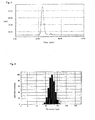
- GPC analysis of the solution by liquid chromatography TOSOH Corporation, AS-8020 series
- the GPC chart was shown in Fig. 1 .
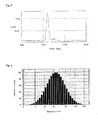
- NICOMP.380ZLS dynamic light scattering measurement
- Fig. 1 it is understood that aggregated polymer micelles or those having very large diameter were not formed because no peak was observed on the high molecular weight side (shorter retention time).
- Fig. 2 it is also understood that the average particle diameter of the formed polymer micelles was 33.3 nm with the standard deviation of 7.9 nm (23.7%).
- This Example describes a specific example in which Dach-Pt(nitrato) alone was used as the starting material and a coordination compound was formed at a specific ratio relative to carboxylate(Glu) in a block copolymer.
- This example used Dach-Pt(nitrato) alone as the starting material and investigated the effect of the use ratio of platinum atoms in the platinum complex to the carboxylate (Glu) in the block copolymer on the configuration of the polymer micelles formed from the coordination compound.
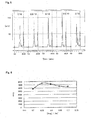
- the final concentration of cis-diaquo(trans-L-1,2-cyclohexanediamine)platinum(II) in each of the solutions was made 2 mg/mL (4.620 mmol/mL) and the solutions were allowed to react at 37°C for 96 hours in a dark place. A portion of each of the resulting solutions was taken and subjected to GPC analysis under the same conditions as in Example 1. Thus obtained GPC charts are shown in Fig. 5 .
- the correlation of the micellear area with [cis-diaquo(trans-L-1,2-cyclohexanediamine)platinum(II) nitrate]/[Glu] was as shown in Fig. 6 .
- micellar area reached the maximum when [cis-diaquo(trans-L-1,2-cyclohexanediamine)platinum(II)nitrate]/[Glu] was 5.5/10. From Fig. 5 , it is inferred that those deemed to be aggregated polymer micelles were formed when the ratio of the platinum complex to the carboxylate was 7/10 to 6/10 because shoulder peaks were observed on the high molecular weight side.
- This example investigates the effect of the mixing ratio of two kinds of platinum complexes on the configuration of the polymer micelles formed from the coordination compounds.
- Cis-diaquo (trans-L-1,2-cyclohexanediamine)platinum(II) nitrate and cis-dichloro(trans-L-1,2-cyclohexanediamine)platinum(II) were dissolved in water at 70°C at the molar ratios 3:1, 4:1, 2:1, 1:1, 1:2, 1:4 and 1:9, respectively (total 2.5 mmol/L).
- micellar area The correlation of the micellar area with cis-diaquo(trans-L-1,2-cyclohexanediamine)platinum(II) nitrate:cis-dichloro(trans-L-1,2-cyclohexanediamine)platinum(II) was as shown in Fig. 8 .
- the micellar area reached the maximum when cis-diaquo(trans-L-1,2-cyclohexanediamine)platinum(II) nitrate:cis-dichloro(trans-L-1,2-cyclohexanediamine)platinum(II) was 1:1.
- This example investigates the effect of the use ratio of platinum atoms in the platinum complexes to the carboxylate (Glu) in the block copolymer on the configuration of the polymer micelles formed of the coordination compounds, when two kinds of platinum complexes are used.
- Cis-diaquo(trans-L-1,2-cyclohexanediamine)platinum(II) nitrate and cis-dichloro(trans-L-1,2-cyclohexanediamine)platinum(II) were dissolved in water at 70°C at a molar ratio of 1:1 (total 2.5 mmol/L).
- micellar area The correlation of the micellar area with [cis-diaquo(trans-L-1,2-cyclohexanediamine)platinum(II) nitrate+cis-dichloro(trans-L-1,2-cyclohexanediamine)platinum(II)]/[Glu] is shown in Fig. 9 .
- the micellar area reached the maximum at the [cis-diaquo(trans-L-1,2-cyclohexanediamine)platinum(II) nitrate+cis-dichloro(trans-L-1,2-cyclohexanediamine)platinum(II)]/[Glu] ratio of 1:1.
- This example describes a specific example in which a coexisting state of two kinds of platinum complexes is brought about in situ.
- This example used Dach-Pt(nitrato) alone as the starting material, to investigate the effect of its concentration in the reaction solution for forming the coordination compound, and investigated the effect of the use ratio of platinum atoms in the platinum complex to the carboxylate (Glu) in the block copolymer on the configuration of the polymer micelles formed of the coordination compounds.
- Cis-diaquo(trans-L-1,2-cyclohexanediamine)platinum(II) nitrate was dissolved at concentrations of 4.620 mmol/L, 2.309 mmol/L and 1.155 mmol/L at 70°C, and the solutions were cooled to about 37°C.
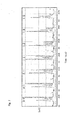
- a portion of each of the reaction solutions was taken and subjected to GPC analysis under the same conditions as in Example 1.
- the GPC charts obtained are shown in Fig. 11 .
Landscapes
- Chemical & Material Sciences (AREA)
- Organic Chemistry (AREA)
- Health & Medical Sciences (AREA)
- Medicinal Chemistry (AREA)
- Chemical Kinetics & Catalysis (AREA)
- Polymers & Plastics (AREA)
- Life Sciences & Earth Sciences (AREA)
- Pharmacology & Pharmacy (AREA)
- Animal Behavior & Ethology (AREA)
- General Health & Medical Sciences (AREA)
- Public Health (AREA)
- Veterinary Medicine (AREA)
- Nuclear Medicine, Radiotherapy & Molecular Imaging (AREA)
- General Chemical & Material Sciences (AREA)
- Epidemiology (AREA)
- Pharmaceuticals Containing Other Organic And Inorganic Compounds (AREA)
- Acyclic And Carbocyclic Compounds In Medicinal Compositions (AREA)
- Other Resins Obtained By Reactions Not Involving Carbon-To-Carbon Unsaturated Bonds (AREA)
Priority Applications (1)
| Application Number | Priority Date | Filing Date | Title |
|---|---|---|---|
| PL13176642T PL2656840T3 (pl) | 2005-06-09 | 2006-06-08 | Sposób wytwarzania spolimeryzowanych związków koordynacyjnych kompleksu platyny |
Applications Claiming Priority (2)
| Application Number | Priority Date | Filing Date | Title |
|---|---|---|---|
| JP2005169917 | 2005-06-09 | ||
| EP06747299.3A EP1897900B1 (en) | 2005-06-09 | 2006-06-08 | Process for production of polymerized coordination compound of platinum complex |
Related Parent Applications (2)
| Application Number | Title | Priority Date | Filing Date |
|---|---|---|---|
| EP06747299.3A Division EP1897900B1 (en) | 2005-06-09 | 2006-06-08 | Process for production of polymerized coordination compound of platinum complex |
| EP06747299.3 Division | 2006-06-08 |
Publications (2)
| Publication Number | Publication Date |
|---|---|
| EP2656840A1 EP2656840A1 (en) | 2013-10-30 |
| EP2656840B1 true EP2656840B1 (en) | 2015-09-16 |
Family
ID=37498609
Family Applications (3)
| Application Number | Title | Priority Date | Filing Date |
|---|---|---|---|
| EP13176642.0A Expired - Lifetime EP2656840B1 (en) | 2005-06-09 | 2006-06-08 | Method for producing polymerized coordination compounds of platinum complex |
| EP06747299.3A Expired - Lifetime EP1897900B1 (en) | 2005-06-09 | 2006-06-08 | Process for production of polymerized coordination compound of platinum complex |
| EP12162996.8A Expired - Lifetime EP2474310B1 (en) | 2005-06-09 | 2006-06-08 | Method for producing polymerized coordination compounds of platinum complex |
Family Applications After (2)
| Application Number | Title | Priority Date | Filing Date |
|---|---|---|---|
| EP06747299.3A Expired - Lifetime EP1897900B1 (en) | 2005-06-09 | 2006-06-08 | Process for production of polymerized coordination compound of platinum complex |
| EP12162996.8A Expired - Lifetime EP2474310B1 (en) | 2005-06-09 | 2006-06-08 | Method for producing polymerized coordination compounds of platinum complex |
Country Status (13)
| Country | Link |
|---|---|
| US (1) | US7781607B2 (pl) |
| EP (3) | EP2656840B1 (pl) |
| JP (1) | JP5201572B2 (pl) |
| KR (1) | KR101275968B1 (pl) |
| CN (1) | CN101203549B (pl) |
| AU (1) | AU2006255938B2 (pl) |
| CA (1) | CA2611450C (pl) |
| DK (1) | DK2656840T3 (pl) |
| ES (1) | ES2555303T3 (pl) |
| PL (1) | PL2656840T3 (pl) |
| PT (1) | PT2656840E (pl) |
| RU (1) | RU2382056C2 (pl) |
| WO (1) | WO2006132430A1 (pl) |
Families Citing this family (10)
| Publication number | Priority date | Publication date | Assignee | Title |
|---|---|---|---|---|
| US20090232762A1 (en) * | 2008-03-11 | 2009-09-17 | May Pang Xiong | Compositions for delivery of therapeutic agents |
| WO2010098265A1 (ja) * | 2009-02-27 | 2010-09-02 | 国立大学法人 東京大学 | プロテアソームインヒビター内包高分子ミセル |
| US20130022592A1 (en) | 2011-06-17 | 2013-01-24 | Daniel Edward Vaughn | Continuous subcutaneous insulin infusion methods with a hyaluronan-degrading enzyme |
| US20130071394A1 (en) | 2011-09-16 | 2013-03-21 | John K. Troyer | Compositions and combinations of organophosphorus bioscavengers and hyaluronan-degrading enzymes, and methods of use |
| SG11201403714TA (en) | 2011-12-30 | 2014-07-30 | Halozyme Inc | Ph20 polypeptide variants, formulations and uses thereof |
| KR102005446B1 (ko) | 2012-09-05 | 2019-07-31 | 삼성전자주식회사 | 과산화수소 민감성 금속 나노 입자, 그의 제조 방법 및 그를 포함하는 과산화수소 검출 시스템 |
| TW201534726A (zh) | 2013-07-03 | 2015-09-16 | Halozyme Inc | 熱穩定ph20玻尿酸酶變異體及其用途 |
| JP6831796B2 (ja) * | 2015-12-22 | 2021-02-17 | 日本化薬株式会社 | スルホキシド誘導体配位白金(ii)錯体の高分子結合体 |
| US20250009895A1 (en) * | 2021-07-27 | 2025-01-09 | Jiaxing Qingzhun Medi-Tech Co., Ltd | Drug loading monomolecular nano polymer, prodrug, micelle, drug delivery system, preparation method, and use |
| CN113929898B (zh) * | 2021-10-09 | 2023-03-24 | 苏州大学 | 一种金属基纳米聚合物及其制备方法与应用 |
Family Cites Families (18)
| Publication number | Priority date | Publication date | Assignee | Title |
|---|---|---|---|---|
| US4115418A (en) * | 1976-09-02 | 1978-09-19 | Government Of The United States Of America | 1,2-diaminocyclohexane platinum (ii) complexes having antineoplastic activity |
| JPS5829957B2 (ja) * | 1977-09-12 | 1983-06-25 | 喜徳 喜谷 | 新規な白金錯体 |
| US4485093A (en) * | 1982-08-13 | 1984-11-27 | Runge Richard G | Immunotoxin conjugate which comprises arsanilic acid, useful for treating malignant tumors, particularly pancreatic cancer |
| IN165717B (pl) * | 1986-08-07 | 1989-12-23 | Battelle Memorial Institute | |
| US4931553A (en) * | 1988-05-11 | 1990-06-05 | Gill Devinder S | Platinum-polymer complexes and their use as antitumor agents |
| JP2517760B2 (ja) * | 1989-05-11 | 1996-07-24 | 新技術事業団 | 水溶性高分子化医薬製剤 |
| JPH0395196A (ja) * | 1989-09-08 | 1991-04-19 | Nippon Kayaku Co Ltd | 高純度白金錯体の製造方法 |
| JPH05301884A (ja) | 1992-04-22 | 1993-11-16 | Tanaka Kikinzoku Kogyo Kk | 白金錯化合物の製造方法 |
| JP4036472B2 (ja) | 1995-04-14 | 2008-01-23 | 一則 片岡 | 片末端に糖、他末端に異なる官能基を有するポリエチレンオキシド及びその製造方法 |
| KR19990007861A (ko) | 1995-04-19 | 1999-01-25 | 가타오카가즈노리 | 헤테로테레케릭 블록 공중합체 및 이의 제조방법 |
| JP3022264B2 (ja) * | 1995-07-25 | 2000-03-15 | デビオファーム エス.アー. | 白金錯体の合成方法 |
| WO1997006202A1 (en) | 1995-08-10 | 1997-02-20 | Kazunori Kataoka | Block polymer having functional groups at both ends |
| JPH09132583A (ja) * | 1995-11-10 | 1997-05-20 | Tanaka Kikinzoku Kogyo Kk | シス−オキザラート(トランス−(−)−1、2−シクロヘキサンジアミン)白金(ii)の製造方法 |
| AU2163797A (en) | 1996-03-11 | 1997-10-01 | Debiopharm S.A. | Binuclear platinum complexes, method for preparing same and pharmaceutical compositions containing said complexes |
| WO2002026241A1 (en) * | 2000-09-26 | 2002-04-04 | Center For Advanced Science And Technology Incubation, Ltd. | Polymeric micelle containing cisplatin enclosed therein and use thereof |
| JP2003342168A (ja) * | 2002-05-24 | 2003-12-03 | Nano Career Kk | 注射用薬物含有ポリマーミセル製剤の製造方法 |
| AU2004222439B2 (en) | 2003-03-20 | 2008-08-21 | Nanocarrier Kabushiki Kaisha | Micellar preparation containing sparingly water-soluble anticancer agent and novel block copolymer |
| CA2548457C (en) * | 2003-12-10 | 2010-08-24 | Toudai Tlo, Ltd. | Coordination complex of diaminocyclohexaneplatinum(ii) with block copolymer containing poly(carboxylic acid) segment and antitumor agent comprising the same |
-
2006
- 2006-06-08 JP JP2007520209A patent/JP5201572B2/ja not_active Expired - Fee Related
- 2006-06-08 PL PL13176642T patent/PL2656840T3/pl unknown
- 2006-06-08 EP EP13176642.0A patent/EP2656840B1/en not_active Expired - Lifetime
- 2006-06-08 AU AU2006255938A patent/AU2006255938B2/en not_active Ceased
- 2006-06-08 PT PT131766420T patent/PT2656840E/pt unknown
- 2006-06-08 KR KR1020087000505A patent/KR101275968B1/ko not_active Expired - Fee Related
- 2006-06-08 EP EP06747299.3A patent/EP1897900B1/en not_active Expired - Lifetime
- 2006-06-08 US US11/921,784 patent/US7781607B2/en not_active Expired - Lifetime
- 2006-06-08 DK DK13176642.0T patent/DK2656840T3/en active
- 2006-06-08 CN CN2006800196152A patent/CN101203549B/zh not_active Expired - Fee Related
- 2006-06-08 CA CA2611450A patent/CA2611450C/en not_active Expired - Fee Related
- 2006-06-08 RU RU2007148462/04A patent/RU2382056C2/ru not_active IP Right Cessation
- 2006-06-08 EP EP12162996.8A patent/EP2474310B1/en not_active Expired - Lifetime
- 2006-06-08 WO PCT/JP2006/311969 patent/WO2006132430A1/ja not_active Ceased
- 2006-06-08 ES ES13176642.0T patent/ES2555303T3/es not_active Expired - Lifetime
Also Published As
| Publication number | Publication date |
|---|---|
| HK1120817A1 (en) | 2009-04-09 |
| EP2656840A1 (en) | 2013-10-30 |
| EP2474310A1 (en) | 2012-07-11 |
| KR101275968B1 (ko) | 2013-06-14 |
| RU2382056C2 (ru) | 2010-02-20 |
| ES2555303T3 (es) | 2015-12-30 |
| AU2006255938A1 (en) | 2006-12-14 |
| AU2006255938B2 (en) | 2011-05-12 |
| RU2007148462A (ru) | 2009-06-27 |
| EP1897900A4 (en) | 2011-09-28 |
| CA2611450C (en) | 2013-12-24 |
| CN101203549A (zh) | 2008-06-18 |
| CN101203549B (zh) | 2011-04-13 |
| PL2656840T3 (pl) | 2016-03-31 |
| JPWO2006132430A1 (ja) | 2009-01-08 |
| EP1897900A1 (en) | 2008-03-12 |
| CA2611450A1 (en) | 2006-12-14 |
| KR20080020672A (ko) | 2008-03-05 |
| EP2474310B1 (en) | 2013-08-21 |
| PT2656840E (pt) | 2016-01-20 |
| US20080249256A1 (en) | 2008-10-09 |
| EP1897900B1 (en) | 2013-08-07 |
| US7781607B2 (en) | 2010-08-24 |
| DK2656840T3 (en) | 2015-11-02 |
| JP5201572B2 (ja) | 2013-06-05 |
| WO2006132430A1 (ja) | 2006-12-14 |
Similar Documents
| Publication | Publication Date | Title |
|---|---|---|
| AU2004297126B2 (en) | Coordination complex of diaminocyclohexaneplatinum(II) with block copolymer containing poly(carboxylic acid) segment and antitumor agent comprising the same | |
| EP1897900B1 (en) | Process for production of polymerized coordination compound of platinum complex | |
| Haxton et al. | Hyperbranched polymers for controlled release of cisplatin | |
| Song et al. | Synthesis, characterization, and tumor selectivity of a polyphosphazene–platinum (II) conjugate | |
| EP1867673B1 (en) | Coordination compound composed of diaminocyclohexane platinum (ii) and block copolymer and anti-cancer agent comprising the same | |
| EP1618117B1 (en) | Tumor selective and biodegradable polyphosphazene-platinum(ii) conjugate antitumor agent, and preparation method thereof | |
| HK1120817B (en) | Process for production of polymerized coordination compound of platinum complex | |
| Neuse et al. | cis-Diaminedichloroplatinum (II) complexes reversibly linked into the main chain of water-soluble polyamides | |
| Howell | Polymer/Dendrimer Supported Organoplatinum Drugs | |
| Howell et al. | Poly (amidoamine) dendrimer-supported |
Legal Events
| Date | Code | Title | Description |
|---|---|---|---|
| PUAI | Public reference made under article 153(3) epc to a published international application that has entered the european phase |
Free format text: ORIGINAL CODE: 0009012 |
|
| AC | Divisional application: reference to earlier application |
Ref document number: 1897900 Country of ref document: EP Kind code of ref document: P |
|
| AK | Designated contracting states |
Kind code of ref document: A1 Designated state(s): AT BE BG CH CY CZ DE DK EE ES FI FR GB GR HU IE IS IT LI LT LU LV MC NL PL PT RO SE SI SK TR |
|
| 17P | Request for examination filed |
Effective date: 20140320 |
|
| RBV | Designated contracting states (corrected) |
Designated state(s): AT BE BG CH CY CZ DE DK EE ES FI FR GB GR HU IE IS IT LI LT LU LV MC NL PL PT RO SE SI SK TR |
|
| 17Q | First examination report despatched |
Effective date: 20140424 |
|
| RAP1 | Party data changed (applicant data changed or rights of an application transferred) |
Owner name: NANOCARRIER CO., LTD. Owner name: THE UNIVERSITY OF TOKYO |
|
| GRAP | Despatch of communication of intention to grant a patent |
Free format text: ORIGINAL CODE: EPIDOSNIGR1 |
|
| INTG | Intention to grant announced |
Effective date: 20150414 |
|
| GRAS | Grant fee paid |
Free format text: ORIGINAL CODE: EPIDOSNIGR3 |
|
| GRAA | (expected) grant |
Free format text: ORIGINAL CODE: 0009210 |
|
| AC | Divisional application: reference to earlier application |
Ref document number: 1897900 Country of ref document: EP Kind code of ref document: P |
|
| AK | Designated contracting states |
Kind code of ref document: B1 Designated state(s): AT BE BG CH CY CZ DE DK EE ES FI FR GB GR HU IE IS IT LI LT LU LV MC NL PL PT RO SE SI SK TR |
|
| REG | Reference to a national code |
Ref country code: GB Ref legal event code: FG4D |
|
| REG | Reference to a national code |
Ref country code: CH Ref legal event code: EP Ref country code: CH Ref legal event code: NV Representative=s name: BUGNION S.A., CH |
|
| REG | Reference to a national code |
Ref country code: IE Ref legal event code: FG4D |
|
| REG | Reference to a national code |
Ref country code: AT Ref legal event code: REF Ref document number: 749229 Country of ref document: AT Kind code of ref document: T Effective date: 20151015 |
|
| REG | Reference to a national code |
Ref country code: RO Ref legal event code: EPE |
|
| REG | Reference to a national code |
Ref country code: DE Ref legal event code: R096 Ref document number: 602006046719 Country of ref document: DE |
|
| REG | Reference to a national code |
Ref country code: DK Ref legal event code: T3 Effective date: 20151029 |
|
| REG | Reference to a national code |
Ref country code: SE Ref legal event code: TRGR |
|
| REG | Reference to a national code |
Ref country code: ES Ref legal event code: FG2A Ref document number: 2555303 Country of ref document: ES Kind code of ref document: T3 Effective date: 20151230 |
|
| REG | Reference to a national code |
Ref country code: PT Ref legal event code: SC4A Free format text: AVAILABILITY OF NATIONAL TRANSLATION Effective date: 20151211 Ref country code: NL Ref legal event code: FP |
|
| PG25 | Lapsed in a contracting state [announced via postgrant information from national office to epo] |
Ref country code: LT Free format text: LAPSE BECAUSE OF FAILURE TO SUBMIT A TRANSLATION OF THE DESCRIPTION OR TO PAY THE FEE WITHIN THE PRESCRIBED TIME-LIMIT Effective date: 20150916 Ref country code: LV Free format text: LAPSE BECAUSE OF FAILURE TO SUBMIT A TRANSLATION OF THE DESCRIPTION OR TO PAY THE FEE WITHIN THE PRESCRIBED TIME-LIMIT Effective date: 20150916 Ref country code: GR Free format text: LAPSE BECAUSE OF FAILURE TO SUBMIT A TRANSLATION OF THE DESCRIPTION OR TO PAY THE FEE WITHIN THE PRESCRIBED TIME-LIMIT Effective date: 20151217 |
|
| REG | Reference to a national code |
Ref country code: LT Ref legal event code: MG4D |
|
| REG | Reference to a national code |
Ref country code: AT Ref legal event code: UEP Ref document number: 749229 Country of ref document: AT Kind code of ref document: T Effective date: 20150916 |
|
| PG25 | Lapsed in a contracting state [announced via postgrant information from national office to epo] |
Ref country code: IS Free format text: LAPSE BECAUSE OF FAILURE TO SUBMIT A TRANSLATION OF THE DESCRIPTION OR TO PAY THE FEE WITHIN THE PRESCRIBED TIME-LIMIT Effective date: 20160116 Ref country code: EE Free format text: LAPSE BECAUSE OF FAILURE TO SUBMIT A TRANSLATION OF THE DESCRIPTION OR TO PAY THE FEE WITHIN THE PRESCRIBED TIME-LIMIT Effective date: 20150916 Ref country code: SK Free format text: LAPSE BECAUSE OF FAILURE TO SUBMIT A TRANSLATION OF THE DESCRIPTION OR TO PAY THE FEE WITHIN THE PRESCRIBED TIME-LIMIT Effective date: 20150916 Ref country code: CZ Free format text: LAPSE BECAUSE OF FAILURE TO SUBMIT A TRANSLATION OF THE DESCRIPTION OR TO PAY THE FEE WITHIN THE PRESCRIBED TIME-LIMIT Effective date: 20150916 |
|
| REG | Reference to a national code |
Ref country code: FR Ref legal event code: PLFP Year of fee payment: 11 |
|
| REG | Reference to a national code |
Ref country code: DE Ref legal event code: R097 Ref document number: 602006046719 Country of ref document: DE |
|
| PLBE | No opposition filed within time limit |
Free format text: ORIGINAL CODE: 0009261 |
|
| STAA | Information on the status of an ep patent application or granted ep patent |
Free format text: STATUS: NO OPPOSITION FILED WITHIN TIME LIMIT |
|
| 26N | No opposition filed |
Effective date: 20160617 |
|
| PG25 | Lapsed in a contracting state [announced via postgrant information from national office to epo] |
Ref country code: SI Free format text: LAPSE BECAUSE OF FAILURE TO SUBMIT A TRANSLATION OF THE DESCRIPTION OR TO PAY THE FEE WITHIN THE PRESCRIBED TIME-LIMIT Effective date: 20150916 |
|
| PG25 | Lapsed in a contracting state [announced via postgrant information from national office to epo] |
Ref country code: MC Free format text: LAPSE BECAUSE OF FAILURE TO SUBMIT A TRANSLATION OF THE DESCRIPTION OR TO PAY THE FEE WITHIN THE PRESCRIBED TIME-LIMIT Effective date: 20150916 |
|
| REG | Reference to a national code |
Ref country code: FR Ref legal event code: PLFP Year of fee payment: 12 |
|
| PG25 | Lapsed in a contracting state [announced via postgrant information from national office to epo] |
Ref country code: HU Free format text: LAPSE BECAUSE OF FAILURE TO SUBMIT A TRANSLATION OF THE DESCRIPTION OR TO PAY THE FEE WITHIN THE PRESCRIBED TIME-LIMIT; INVALID AB INITIO Effective date: 20060608 Ref country code: CY Free format text: LAPSE BECAUSE OF FAILURE TO SUBMIT A TRANSLATION OF THE DESCRIPTION OR TO PAY THE FEE WITHIN THE PRESCRIBED TIME-LIMIT Effective date: 20150916 |
|
| REG | Reference to a national code |
Ref country code: FR Ref legal event code: PLFP Year of fee payment: 13 |
|
| PG25 | Lapsed in a contracting state [announced via postgrant information from national office to epo] |
Ref country code: LU Free format text: LAPSE BECAUSE OF NON-PAYMENT OF DUE FEES Effective date: 20160608 |
|
| PG25 | Lapsed in a contracting state [announced via postgrant information from national office to epo] |
Ref country code: BG Free format text: LAPSE BECAUSE OF FAILURE TO SUBMIT A TRANSLATION OF THE DESCRIPTION OR TO PAY THE FEE WITHIN THE PRESCRIBED TIME-LIMIT Effective date: 20150916 |
|
| PGFP | Annual fee paid to national office [announced via postgrant information from national office to epo] |
Ref country code: IE Payment date: 20180626 Year of fee payment: 13 Ref country code: DK Payment date: 20180606 Year of fee payment: 13 Ref country code: NL Payment date: 20180626 Year of fee payment: 13 Ref country code: CH Payment date: 20180627 Year of fee payment: 13 Ref country code: PT Payment date: 20180604 Year of fee payment: 13 Ref country code: FI Payment date: 20180605 Year of fee payment: 13 |
|
| PGFP | Annual fee paid to national office [announced via postgrant information from national office to epo] |
Ref country code: TR Payment date: 20180511 Year of fee payment: 13 Ref country code: PL Payment date: 20180601 Year of fee payment: 13 Ref country code: RO Payment date: 20180605 Year of fee payment: 13 Ref country code: AT Payment date: 20180605 Year of fee payment: 13 |
|
| PGFP | Annual fee paid to national office [announced via postgrant information from national office to epo] |
Ref country code: SE Payment date: 20180605 Year of fee payment: 13 |
|
| PGFP | Annual fee paid to national office [announced via postgrant information from national office to epo] |
Ref country code: IT Payment date: 20180626 Year of fee payment: 13 Ref country code: ES Payment date: 20180709 Year of fee payment: 13 |
|
| REG | Reference to a national code |
Ref country code: FI Ref legal event code: MAE |
|
| REG | Reference to a national code |
Ref country code: DK Ref legal event code: EBP Effective date: 20190630 |
|
| REG | Reference to a national code |
Ref country code: SE Ref legal event code: EUG |
|
| PG25 | Lapsed in a contracting state [announced via postgrant information from national office to epo] |
Ref country code: FI Free format text: LAPSE BECAUSE OF NON-PAYMENT OF DUE FEES Effective date: 20190608 Ref country code: SE Free format text: LAPSE BECAUSE OF NON-PAYMENT OF DUE FEES Effective date: 20190609 Ref country code: RO Free format text: LAPSE BECAUSE OF NON-PAYMENT OF DUE FEES Effective date: 20190608 Ref country code: PT Free format text: LAPSE BECAUSE OF NON-PAYMENT OF DUE FEES Effective date: 20191209 |
|
| REG | Reference to a national code |
Ref country code: CH Ref legal event code: PL |
|
| REG | Reference to a national code |
Ref country code: NL Ref legal event code: MM Effective date: 20190701 |
|
| REG | Reference to a national code |
Ref country code: AT Ref legal event code: MM01 Ref document number: 749229 Country of ref document: AT Kind code of ref document: T Effective date: 20190608 |
|
| REG | Reference to a national code |
Ref country code: BE Ref legal event code: MM Effective date: 20190630 |
|
| PG25 | Lapsed in a contracting state [announced via postgrant information from national office to epo] |
Ref country code: AT Free format text: LAPSE BECAUSE OF NON-PAYMENT OF DUE FEES Effective date: 20190608 Ref country code: NL Free format text: LAPSE BECAUSE OF NON-PAYMENT OF DUE FEES Effective date: 20190701 Ref country code: IE Free format text: LAPSE BECAUSE OF NON-PAYMENT OF DUE FEES Effective date: 20190608 Ref country code: IT Free format text: LAPSE BECAUSE OF NON-PAYMENT OF DUE FEES Effective date: 20190608 |
|
| PG25 | Lapsed in a contracting state [announced via postgrant information from national office to epo] |
Ref country code: BE Free format text: LAPSE BECAUSE OF NON-PAYMENT OF DUE FEES Effective date: 20190630 Ref country code: LI Free format text: LAPSE BECAUSE OF NON-PAYMENT OF DUE FEES Effective date: 20190630 Ref country code: CH Free format text: LAPSE BECAUSE OF NON-PAYMENT OF DUE FEES Effective date: 20190630 |
|
| PG25 | Lapsed in a contracting state [announced via postgrant information from national office to epo] |
Ref country code: DK Free format text: LAPSE BECAUSE OF NON-PAYMENT OF DUE FEES Effective date: 20190630 |
|
| REG | Reference to a national code |
Ref country code: ES Ref legal event code: FD2A Effective date: 20201027 |
|
| PG25 | Lapsed in a contracting state [announced via postgrant information from national office to epo] |
Ref country code: ES Free format text: LAPSE BECAUSE OF NON-PAYMENT OF DUE FEES Effective date: 20190609 |
|
| PGFP | Annual fee paid to national office [announced via postgrant information from national office to epo] |
Ref country code: FR Payment date: 20210513 Year of fee payment: 16 Ref country code: DE Payment date: 20210511 Year of fee payment: 16 |
|
| PGFP | Annual fee paid to national office [announced via postgrant information from national office to epo] |
Ref country code: GB Payment date: 20210512 Year of fee payment: 16 |
|
| PG25 | Lapsed in a contracting state [announced via postgrant information from national office to epo] |
Ref country code: PL Free format text: LAPSE BECAUSE OF NON-PAYMENT OF DUE FEES Effective date: 20190608 |
|
| PG25 | Lapsed in a contracting state [announced via postgrant information from national office to epo] |
Ref country code: TR Free format text: LAPSE BECAUSE OF NON-PAYMENT OF DUE FEES Effective date: 20190608 |
|
| REG | Reference to a national code |
Ref country code: DE Ref legal event code: R119 Ref document number: 602006046719 Country of ref document: DE |
|
| GBPC | Gb: european patent ceased through non-payment of renewal fee |
Effective date: 20220608 |
|
| PG25 | Lapsed in a contracting state [announced via postgrant information from national office to epo] |
Ref country code: FR Free format text: LAPSE BECAUSE OF NON-PAYMENT OF DUE FEES Effective date: 20220630 |
|
| PG25 | Lapsed in a contracting state [announced via postgrant information from national office to epo] |
Ref country code: GB Free format text: LAPSE BECAUSE OF NON-PAYMENT OF DUE FEES Effective date: 20220608 Ref country code: DE Free format text: LAPSE BECAUSE OF NON-PAYMENT OF DUE FEES Effective date: 20230103 |