EP2653510A2 - Tintensatz und Aufzeichnungsvorrichtung - Google Patents
Tintensatz und Aufzeichnungsvorrichtung Download PDFInfo
- Publication number
- EP2653510A2 EP2653510A2 EP20130157049 EP13157049A EP2653510A2 EP 2653510 A2 EP2653510 A2 EP 2653510A2 EP 20130157049 EP20130157049 EP 20130157049 EP 13157049 A EP13157049 A EP 13157049A EP 2653510 A2 EP2653510 A2 EP 2653510A2
- Authority
- EP
- European Patent Office
- Prior art keywords
- ink composition
- recorded
- ink
- background
- image
- Prior art date
- Legal status (The legal status is an assumption and is not a legal conclusion. Google has not performed a legal analysis and makes no representation as to the accuracy of the status listed.)
- Granted
Links
Images
Classifications
-
- C—CHEMISTRY; METALLURGY
- C09—DYES; PAINTS; POLISHES; NATURAL RESINS; ADHESIVES; COMPOSITIONS NOT OTHERWISE PROVIDED FOR; APPLICATIONS OF MATERIALS NOT OTHERWISE PROVIDED FOR
- C09D—COATING COMPOSITIONS, e.g. PAINTS, VARNISHES OR LACQUERS; FILLING PASTES; CHEMICAL PAINT OR INK REMOVERS; INKS; CORRECTING FLUIDS; WOODSTAINS; PASTES OR SOLIDS FOR COLOURING OR PRINTING; USE OF MATERIALS THEREFOR
- C09D11/00—Inks
- C09D11/30—Inkjet printing inks
- C09D11/40—Ink-sets specially adapted for multi-colour inkjet printing
-
- B—PERFORMING OPERATIONS; TRANSPORTING
- B41—PRINTING; LINING MACHINES; TYPEWRITERS; STAMPS
- B41J—TYPEWRITERS; SELECTIVE PRINTING MECHANISMS, i.e. MECHANISMS PRINTING OTHERWISE THAN FROM A FORME; CORRECTION OF TYPOGRAPHICAL ERRORS
- B41J11/00—Devices or arrangements of selective printing mechanisms, e.g. ink-jet printers or thermal printers, for supporting or handling copy material in sheet or web form
- B41J11/0015—Devices or arrangements of selective printing mechanisms, e.g. ink-jet printers or thermal printers, for supporting or handling copy material in sheet or web form for treating before, during or after printing or for uniform coating or laminating the copy material before or after printing
-
- C—CHEMISTRY; METALLURGY
- C09—DYES; PAINTS; POLISHES; NATURAL RESINS; ADHESIVES; COMPOSITIONS NOT OTHERWISE PROVIDED FOR; APPLICATIONS OF MATERIALS NOT OTHERWISE PROVIDED FOR
- C09D—COATING COMPOSITIONS, e.g. PAINTS, VARNISHES OR LACQUERS; FILLING PASTES; CHEMICAL PAINT OR INK REMOVERS; INKS; CORRECTING FLUIDS; WOODSTAINS; PASTES OR SOLIDS FOR COLOURING OR PRINTING; USE OF MATERIALS THEREFOR
- C09D11/00—Inks
- C09D11/02—Printing inks
- C09D11/03—Printing inks characterised by features other than the chemical nature of the binder
- C09D11/037—Printing inks characterised by features other than the chemical nature of the binder characterised by the pigment
-
- C—CHEMISTRY; METALLURGY
- C09—DYES; PAINTS; POLISHES; NATURAL RESINS; ADHESIVES; COMPOSITIONS NOT OTHERWISE PROVIDED FOR; APPLICATIONS OF MATERIALS NOT OTHERWISE PROVIDED FOR
- C09D—COATING COMPOSITIONS, e.g. PAINTS, VARNISHES OR LACQUERS; FILLING PASTES; CHEMICAL PAINT OR INK REMOVERS; INKS; CORRECTING FLUIDS; WOODSTAINS; PASTES OR SOLIDS FOR COLOURING OR PRINTING; USE OF MATERIALS THEREFOR
- C09D11/00—Inks
- C09D11/02—Printing inks
- C09D11/10—Printing inks based on artificial resins
- C09D11/106—Printing inks based on artificial resins containing macromolecular compounds obtained by reactions only involving carbon-to-carbon unsaturated bonds
- C09D11/107—Printing inks based on artificial resins containing macromolecular compounds obtained by reactions only involving carbon-to-carbon unsaturated bonds from unsaturated acids or derivatives thereof
-
- C—CHEMISTRY; METALLURGY
- C09—DYES; PAINTS; POLISHES; NATURAL RESINS; ADHESIVES; COMPOSITIONS NOT OTHERWISE PROVIDED FOR; APPLICATIONS OF MATERIALS NOT OTHERWISE PROVIDED FOR
- C09D—COATING COMPOSITIONS, e.g. PAINTS, VARNISHES OR LACQUERS; FILLING PASTES; CHEMICAL PAINT OR INK REMOVERS; INKS; CORRECTING FLUIDS; WOODSTAINS; PASTES OR SOLIDS FOR COLOURING OR PRINTING; USE OF MATERIALS THEREFOR
- C09D11/00—Inks
- C09D11/30—Inkjet printing inks
- C09D11/32—Inkjet printing inks characterised by colouring agents
- C09D11/322—Pigment inks
-
- C—CHEMISTRY; METALLURGY
- C09—DYES; PAINTS; POLISHES; NATURAL RESINS; ADHESIVES; COMPOSITIONS NOT OTHERWISE PROVIDED FOR; APPLICATIONS OF MATERIALS NOT OTHERWISE PROVIDED FOR
- C09D—COATING COMPOSITIONS, e.g. PAINTS, VARNISHES OR LACQUERS; FILLING PASTES; CHEMICAL PAINT OR INK REMOVERS; INKS; CORRECTING FLUIDS; WOODSTAINS; PASTES OR SOLIDS FOR COLOURING OR PRINTING; USE OF MATERIALS THEREFOR
- C09D11/00—Inks
- C09D11/30—Inkjet printing inks
- C09D11/38—Inkjet printing inks characterised by non-macromolecular additives other than solvents, pigments or dyes
Definitions
- the present invention relates to an ink set and a recording apparatus.
- a white printing layer as an underlying layer is formed of a white ink, and an image is formed on the formed white layer by a predetermined coloring ink (for example, see JP-A-2008-248008 ).
- An advantage of some aspects of the invention is to provide an ink set which can inhibit not only bleeding caused in the boundary between a background ink composition and a coloring ink composition but also aggregation of the coloring ink composition.
- a further advantage is to provide a recording apparatus having a recording mode appropriate for recording the ink set on a recording medium.
- an ink set including: a background ink composition containing a background pigment; and a coloring ink composition containing a coloring pigment, wherein provided that the surface tension of the background ink composition is S1 (mN/m), and the surface tension of the coloring ink composition is S2 (mN/m), S1 and S2 satisfy -5 ⁇ (S1 - S2) ⁇ 4, and the ink set is used in a first mode in which the background ink composition and the coloring ink composition are recorded on a recording medium by being caused to be adjacent to each other, or in a second mode in which the background ink composition is recorded on an image which has been recorded using the coloring ink composition.
- a difference of surface tension between the background ink composition and the coloring ink composition is set to be greater than -5 and less than 4, whereby the background ink composition may be prevented from being aggregated in the color image formed of the coloring ink composition. Consequently, for example, in recording of an image that is formed on a color image by using the background ink composition, i.e. the second mode, a uniform background image that easily wets and spreads on the color image is formed, and drying of the background ink composition is accelerated, whereby the background pigment may be prevented from sinking into the color image.
- the first mode both the aggregation of the background ink composition that is caused in the boundary adjacent to the color image, and the color mixing of the background ink composition into the color image may be inhibited.
- S1 in the ink set of Application Example 1, S1 is 28 (mN/m) or less.
- wettability with respect to a recording medium in the first mode is excellently maintained, such that the aggregation of the background ink composition caused on the recording medium may be inhibited.
- the Formula (1) is called Stokes' equation.
- a background pigment having a high sedimentation speed calculated by Stokes' equation easily blurs with the underlying image in the second mode.
- such a problem may be prevented excellently.
- the background ink composition and the coloring ink composition contain one or more agents selected from the group consisting of glycol ethers having an HLB value in a range of 4.2 to 7.8 that is measured by Davies' method, a polyether siloxane-based surfactant, and a fluorosurfactant.
- the ink may easily wet and spread on an image.
- a recording apparatus including: the ink set, the first mode, and the second mode according to Application Example 1.
- a recording apparatus that may form a recorded matter in which color mixing or bleeding as sinking is inhibited may be obtained.
- the background ink composition may be inhibited from being aggregated on the color image, and a recording apparatus that may form a recorded matter in which sinking of the background pigment is inhibited may be obtained.
- the recording apparatus further includes a third mode in which the coloring ink composition is recorded on the image which has been recorded using the background ink composition.
- aggregation of the coloring ink composition is also inhibited if a color image is formed of the coloring ink composition on a background image formed of the background ink composition. Therefore, even when an optically transparent substrate is used as a recording medium, a color may be obtained from a desired coloring ink composition.
- the surface tension of the background ink composition becomes higher than the surface tension of the color image formed of the coloring ink composition on a recording medium, for example, an optically transparent resin film.
- a recording medium for example, an optically transparent resin film.
- the recording apparatus of Application Example 7 further includes a drying unit for drying the background ink composition or the coloring ink composition recorded on a recording medium, wherein the drying unit takes a longer time to dry the coloring ink composition recorded before the background ink composition is recorded in the second mode than to dry the background ink composition recorded before the coloring ink composition is recorded in the third mode.
- the degree of drying may be controlled by the drying time. Consequently, by setting the drying time of the color image in the second mode to be longer than the drying time of the color image in the third mode, the degree of drying of the color image in the second mode may be increased. As a result, the background ink composition may be inhibited from being aggregated on the color image.
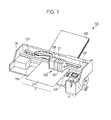
- Fig. 1 is a schematic perspective view showing an ink jet recording apparatus.
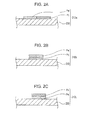
- Figs. 2A to 2C are enlarged cross-sectional views schematically showing matters recorded by an ink jet recording apparatus.
- Fig. 2A shows a recorded matter obtained by a first mode
- Fig. 2B shows a recorded matter obtained by a second mode
- Fig. 2C shows a recorded matter obtained by a third mode.
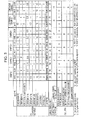
- Fig. 3 is a table showing examples.
- Fig. 1 is a schematic perspective view showing an ink jet recording apparatus 100 as a recording apparatus according to a first embodiment.
- the ink jet recording apparatus 100 includes a carriage 101.
- the carriage 101 is guided by a guide member 104 and reciprocates in the axial direction of a platen 105 via a timing belt 103 driven by a carriage motor 102.
- a recording medium 200 is transported to the gap between the carriage 101 and the platen 105 by a transport mechanism not shown in the drawing.
- An ink jet recording head 300 is mounted on the carriage 101, in a position where the carriage 101 faces the recording medium 200. Moreover, on top of the ink jet recording head 300, a white ink cartridge 106 containing a white ink as the background ink composition and color and black ink cartridges 107 containing color and black inks as the coloring ink composition are detachably mounted so as to supply ink as a liquid to the ink jet recording head 300.
- the recording medium 200 is disposed in a printing area P. When ink is discharged from the ink jet recording head 300, letters, images, and the like are recorded on the recording medium.
- the recording medium 200 on which letters, images, and the like have been recorded is discharged as a recorded matter 210.
- a non-printing area in which the recording medium 200 is not disposed.
- cleaning units including a cap member, a suction unit, or the like, for example, a capping unit 120, a suction pump 130, and a wiping member 140 are disposed.
- the ink jet recording apparatus 100 has recording modes including a first mode for forming a recorded matter 210a shown in Fig. 2A , a second mode for forming a recorded matter 210b shown in Fig. 2B , and a third mode for forming a recorded matter 210c shown in Fig. 2C .
- a white image Pw and a color image Pc are formed on the recording medium 200 while being adjacent to each other.
- the color image Pc is formed on the recording medium 200, and the white image Pw is formed while being superposed on the color image Pc.
- the white image Pw is formed on the recording medium 200, and the color image Pc is formed while being superposed on the white image Pw.
- the recording method performed by the ink jet recording apparatus 100 includes a recording mode selecting step for selecting a recording mode, a first recording step for initially forming a recorded image based on the selected recording mode, a drying step for drying the image formed by the first recording step, and a second recording step for forming the next recorded image based on a recording mode selected after the drying step.
- a recording mode is selected and designated by a method in which one of the first, second, and third modes is selected, and a recording mode is selected and designated by an operation section which is included in the ink jet recording apparatus 100 and not shown in the drawing, a method in which a recording mode is selected and designated by a personal computer which is connected to the ink jet recording apparatus 100 and not shown in the drawing, or the like.
- the recording medium 200 Based on the recording mode selected in the recording mode selecting step, a predetermined ink is discharged onto the recording medium 200 by an ink jet method, whereby an image is formed and recorded.
- the white image Pw as an example of an image for background is formed (hereinafter, the white image Pw as an example of an image for background will be described).
- the recording medium 200 be one kind selected from coated paper such as printing paper, polyethylene terephthalate, polyethylene, polypropylene, polyvinyl chloride, a metal, and glass.
- These kinds of the recording medium 200 does not absorb ink or absorbs ink to a low degree, and the amount of water absorbed by the recording medium 200 that is measured by Bristow method for 30 msec from the initial point of contact with water is 1 ml/m 2 or less.
- an ink for background substantially do not contain alkyl polyol having a boiling point of 280°C or higher under 1 atm.
- the ink for background may contain propylene glycol having a boiling point of 188°C under 1 atm, but does not contain glycerin having a boiling point of 280°C or higher under 1 atm, polyethylene glycol having a boiling point of 280°C or higher under 1 atm, polypropylene glycol having a boiling point of 280°C or higher under 1 atm, and the like.
- the ink for background is not particularly limited as long as it is an ink used for the background, but it is preferable that the ink for the background be a white ink or a glitter ink.
- white pigments contained in the white ink for example, titanium oxide, zinc oxide, zirconium oxide, a resin including fine hollow resin particles can be used.
- pigments containing fine titanium oxide particles are preferable.
- an average particle size of the white pigment is preferably from 100 nm to 1 ⁇ m, more preferably from 200 nm to 400 nm, even more preferably from 250 nm to 380 nm, and most preferably from 260 nm to 350 nm.
- those fine particles may be fine particles coated with silicon oxide, alumina, or the like.
- a glitter ink contains a glitter pigment.
- the glitter pigment is not particularly limited as long as it can glitter when being attached to a medium.
- examples thereof include one or two or more kinds of alloys (also called metallic pigments) selected from a group consisting of aluminum, silver, gold, platinum, nickel, chromium, tin, zinc, indium, titanium, and copper, and pearl pigments having pearly gloss.
- alloys also called metallic pigments
- pearl pigment include pigments having pearly gloss or interference gloss, such as mica coated with titanium dioxide, argentine, and bismuth oxychloride.
- a sedimentation speed v of the background pigment that is obtained by the "Strokes' equation” represented by the following Formula (2) be 2.0 x 10 -6 (cm/s) or higher.
- the background pigment having a high sedimentation speed calculated by the Strokes' equation easily blurs with the underlying image in the second mode.
- such a problem can be prevented excellently.
- V ⁇ - ⁇ w ⁇ gR 2 / 18 ⁇ ⁇
- v a sedimentation speed (cm/s)
- ⁇ a pigment density (g/cm 3 )
- pw a solvent density (g/cm 3 )
- g acceleration of gravity (m/s 2 )
- R represents a pigment diameter (cm)
- ⁇ a solvent viscosity (Pa.s).
- the white image Pw recorded in the first recording step may be a solid image formed on the recording medium 200.
- the white image Pw may be formed according to the position where a colored image is formed of a color or black ink.
- a whiteness of the white image Pw formed of a white ink is preferably 73 or higher and more preferably 75 or higher.
- the amount of the white pigment that is used for recording an image for background is preferably 0.8 g/m 2 or more and more preferably 1.0 g/m 2 or more.
- the surface tension of the white ink is preferably 30 mN/m or less and more preferably 28 mN/m or less.
- the surface tension of the white ink as the background ink composition is S1 (mN/m)
- the surface tension of the coloring ink composition is S2 (mN/m)
- a difference in the surface tension between the white ink and the coloring ink described later is preferably -5 ⁇ (S1 - S2) ⁇ 4.
- the color image Pc is formed of a coloring ink by an ink jet method.
- the coloring ink contains a coloring material, and substantially does not contain alkyl polyol having a boiling point of 280°C or higher under 1 atm.
- the surface tension of the coloring ink is preferably 30 mN/m or less, more preferably 28 mN/m or less, even more preferably 26 mN/m or less, still more preferably from 10 mN/m to 28 mN/m, and most preferably 10 mN/m to 26 mN/m. Drying step
- an activation energy ray (for example, ultraviolet ray) irradiation step or a drying step may be performed before the second recording step.
- the drying step is performed, the white image Pw or the color image Pc formed in the first recording step is dried in the drying step.
- natural drying or drying by heating can be used. Examples of drying by heating include hot-air drying, heater drying in which the image is brought into direct contact with a heat source, drying by activation energy ray (for example, infrared ray), and the like.
- the drying step may be performed simultaneously with the first recording step.
- the white image Pw is formed in the first recording step, that is, in the case of the first and third modes, it is preferable that the white image be dried such that the degree of drying of the image becomes 40% to 90% (preferably 55% to 90%).
- the color image Pc is formed in the first recording step, that is, in the case of the second mode, it is preferable that the color image Pc be dried such that the degree of drying of the image becomes 40% to 90% (preferably 55% to 90%).
- the degree of drying to be achieved in the drying step may be achieved by the time when the coloring ink discharged in the second recording step reaches the white image Pw or the color image Pc formed by the first recording step.
- the drying step is a step that continues until the coloring ink or the white ink reaches the white image Pw or the color image Pc in the second step after the white image Pw or the color image Pc is recorded on the recording medium 200 in the first step.
- Natural drying that is caused in the time period from the first step to the second step is also included in the drying step.
- the degree of drying can be calculated by the following method.
- the mass of the recording medium corresponds to 0% of a degree of drying.
- the degree of drying corresponds to 100%. From these two data and the data (interim degree of drying) obtained by varying the drying time, it is possible to show the change in mass and degree of drying of the recording medium under the same drying conditions. From the results obtained in this manner, the time taken from the formation of the image of background color to the formation of a color (excluding white) image, the mass of the recording medium at the time of the second recording step, and the like, the degree of drying can be calculated. In addition, when the drying temperature changes frequently, it is preferable that the degree of drying be calculated based on mass.
- the white image Pw formed by the first recording step of the third mode and the color image Pc formed by the first recording step of the second mode be dried for a long time. If the images are dried in this manner, when the white ink for forming the white image Pw is superposed by an ink jet method on the color image Pc formed on the recording medium 200 in the second recording step of the second mode described later, bleeding of the white image Pw to the color image Pc, that is, color mixing, blurring, and the like can be inhibited.
- the background pigment tends to have a higher sedimentation speed compared to the coloring pigment used for the coloring ink. Accordingly, blurring caused in the second mode tends to be more serious compared to blurring caused in the third mode. Therefore, it is preferable that the dried state be enhanced in the second mode.
- the color image Pc or the white image Pw is formed.
- the color image Pc is formed so as to be adjacent to the white image Pw as shown in Fig. 2A , whereby the recorded matter 210a can be obtained.
- the white image Pw is formed so as to be superposed on the color image Pc as shown in Fig. 2B , whereby the recorded matter 210b can be obtained.
- the color image is formed so as to be superposed on the white image Pw as shown in Fig. 2C , whereby the recorded matter 210c can be obtained.
- the background ink or the coloring ink contains one or more agents selected from a group consisting of glycol ethers having a Hydrophile Lipophile Balance (HLB) value in a range of 4.2 to 7.8 measured by Davies' method, a polyether siloxane-based surfactant, and a fluorosurfactant.
- HLB Hydrophile Lipophile Balance
- the ink contains such additives, the surface tension is lowered, and wettability with respect to the recording medium 200 becomes excellent.
- the ink when being recorded on an image, the ink exhibits poorer wettability, compared to a case where the ink is recorded on the recording medium 200. Accordingly, in order to lower the surface tension, it is preferable to add the above additives.
- the background ink and the coloring ink contains glycol ether having an HLB value satisfying the above range, it is possible to control the wettability and permeation speed without being influenced so much by the type of the recording medium 200. As a result, it is possible to record a clear image showing little density irregularity on the recording medium 200, particularly, to the ink non-absorbing or low-absorbing recording medium 200.
- the HLB value of the glycol ethers used in the embodiment is a value proposed by Davies, et al. and evaluating hydrophilicity of a compound. It is a value obtained by the Davies' method defined in a document, for example, " J. T. Davies and E. K. Rideal, "Interface Phenomenon” 2nd ed. Academic Press, New York 1963 ", and refers to a value calculated by the following Formula (3).
- HLB value 7 + ⁇ 1 + ⁇ 2 (here, [1] represents the number of hydrophilic group, and [2] represents the number of hydrophobic group).
- Table 1 exemplifies the structure and the number of typical hydrophilic and hydrophobic groups. Table 1 Structure Number -CH 2 - -0.475 -CH 3 -0.475 -(CH 2 CH 2 O)- +0.330 -0.150 -OH +1.900
- the HLB value of the glycol ethers calculated by the Davies' method is in a range of 4.2 to 7.8, preferably in a range of 5.8 to 7.8, and more preferably in a range of 5.8 to 7.1. If the HLB value is less than 4.2, hydrophobicity of the glycol ethers is heightened. Accordingly, when water is used as a main solvent, affinity of the glycol ethers with water is lowered, so storage stability of the ink deteriorates in some cases. On the other hand, if the HLB value is greater than 7.8, the effects such as wettability and permeability with respect to the recording medium 200 are diminished, so density irregularity of the image becomes noticeable in some cases. Particularly, the effect such as wettability with respect to the ink non-absorbing or low-absorbing recording medium 200 which is a hydrophobic surface tends to be markedly diminished.
- glycol ethers include ethylene glycol monoisobutyl ether, ethylene glycol monohexyl ether, ethylene glycol monoisohexyl ether, diethylene glycol monohexyl ether, triethylene glycol monohexyl ether, diethylene glycol monoisohexyl ether, triethylene glycol monoisohexyl ether, ethylene glycol monoisoheptyl ether, diethylene glycol monoisoheptyl ether, triethylene glycol monoisoheptyl ether, ethylene glycol monooctyl ether, ethylene glycol monoisooctyl ether, diethylene glycol monoisooctyl ether, triethylene glycol monoisooctyl ether, ethylene glycol mono-2-ethylhexyl ether, diethylene glycol mono-2-ethylhexyl ether, triethylene glycol mono-2-ethylhexyl ether,
- the glycol ethers containing an alkyl group having a branched structure are more preferable. If the ink contains the glycol ethers containing an alkyl group having a branched structure, it is possible to record a clear image not showing density irregularity, particularly on the ink non-absorbing or low-absorbing recording medium 200.
- glycol ethers include ethylene glycol monoisobutyl ether, ethylene glycol monoisohexyl ether, diethylene glycol monoisohexyl ether, triethylene glycol monoisohexyl ether, ethylene glycol monoisoheptyl ether, diethylene glycol monoisoheptyl ether, triethylene glycol monoisoheptyl ether, ethylene glycol monoisooctyl ether, diethylene glycol monoisooctyl ether, triethylene glycol monoisooctyl ether, ethylene glycol mono-2-ethylhexyl ether, diethylene glycol mono-2-ethylhexyl ether, triethylene glycol mono-2-ethylhexyl ether, diethylene glycol mono-2-ethylpentyl ether, ethylene glycol mono-2-ethylpentyl ether, ethylene glycol mono-2-ethylpentyl
- branched structures of the alkyl group contained in the glycol ethers in view of further improving chromogenic properties, a 2-methylpentyl group, a 2-ethylpentyl group, and a 2-ethylhexyl group are more preferable, and a 2-ethylhexyl group is particularly preferable.
- glycol ethers include ethylene glycol mono-2-ethylhexyl ether, diethylene glycol mono-2-ethylhexyl ether, triethylene glycol mono-2-ethylhexyl ether, diethylene glycol mono-2-ethylpentyl ether, ethylene glycol mono-2-ethylpentyl ether, ethylene glycol mono-2-methylpentyl ether, diethylene glycol mono-2-methylpentyl ether, and the like.
- ethylene glycol mono-2-ethylhexyl ether diethylene glycol mono-2-ethylhexyl ether, triethylene glycol mono-2-ethylhexyl ether, and the like are particularly preferable.
- the content of the glycol ethers is preferably in a range of 0.05% by mass to 6% by mass based on the total amount of the ink composition, in view of the effect of reducing density irregularity by improving wettability and permeability with respect to the recording medium 200 and securing storage stability and discharge reliability of the ink. If the content is less than 0.05% by mass, the wettability, permeability, and drying properties of the ink composition become insufficient. Accordingly, a clear image is not easily obtained, and printing density (chromogenic properties) becomes insufficient in some cases.
- the content is larger than 6% by mass, sometimes head clogging is caused since the viscosity of the ink increases, or the storage stability is not obtained since the glycol ethers do not completely dissolve in the ink composition.
- Glycol ethers poorly soluble in water are effective, and the content thereof is preferably in a range of 0.1 % by mass to 2% by mass based on the total amount of the ink composition.
- each of R 1 to R 7 independently represents an alkyl group having 1 to 6 carbon atoms, and preferably represents a methyl group.
- EO represents ethylene oxide
- PO represents propylene oxide.
- g represents an integer of 0 or greater, preferably represents 1 to 3, and most preferably represents 1.
- each of p and q represents an integer of 0 or greater, and preferably represents 1 to 5.
- p + q is an integer of 1 or greater, and preferably 2 to 4.
- R1 to R7 represent a methyl group
- j represents 1 to 2
- k represents 1 to 2
- g represents 1 to 2
- p represents an ingeter of 1 to 5
- q represents 0.
- the amount of such a polyether siloxane-based surfactant added may be determined appropriately. However, the amount is preferably from 0.03% by weight to 3% by weight, more preferably from about 0.1 % by weight to about 2% by weight, and even more preferably from about 0.2% to about 1 % by weight. If the amount is from 0.2% by weight to 1% by weight, when the surfactant is concurrently used with the glycol ethers described above, the ink is excellently filled in recording media that are flipped easily.
- the polyether siloxane-based surfactant is not particularly limited. However, when an aqueous solution containing 20% by mass of glycerin, 10% by mass of 1,2-hexanediol, 0.1% by mass of the polyether siloxane-based surfactant, and 69.9% by mass of water is used, dynamic surface tension at 1 Hz of the aqueous solution is preferably 26 mN/m or less. The dynamic surface tension can be measured using, for example, a bubble pressure dynamic tensiometer BP2 (manufactured by KRÜSS).
- polyether siloxane-based surfactant commercially available surfactants on sale, for example, OLFINE PD-501 and OLFINE PD-570 (manufactured by Nissin Chemical Industry Co., Ltd.) and BYK-347 and BYK-348 (manufactured by BYK-Chemie), can be used.
- OLFINE PD-501 and OLFINE PD-570 manufactured by Nissin Chemical Industry Co., Ltd.
- BYK-347 and BYK-348 manufactured by BYK-Chemie
- the polyether siloxane-based surfactant those represented by Formula (5) can be used.
- R represents a hydrogen atom or a methyl group
- a represents an integer of 7 to 11 group
- m represents an integer of 30 to 50
- n represents an integer of 3 to 5.
- the surfactant contains one or two or more kinds of compounds represented by Formula (5).
- the surfactant contain one or two or more kinds of compounds represented by Formula (5) in which R represents a hydrogen atom or a methyl group, a represents an integer of 9 to 13, m represents an integer of 2 to 4, and n represents an integer of 1 to 2.
- the surfactant contain one or two or more kinds of compounds represented by Formula (5) in which R represents a hydrogen atom or a methyl group, a represents an integer of 6 to 18, m represents an integer of 0, and n represents an integer of 1. Further, it is still more preferable that the surfactant contain one or two or more kinds of compounds represented by Formula (5) in which R represents a hydrogen atom, a represents an integer of 2 to 5, m represents an integer of 20 to 40, and n represents an integer of 3 to 5. If a specific polyorganosiloxane-based surfactant as above is used, even if the ink is printed on the non-absorbing recording medium 200, bleeding of the ink is further improved.
- the surfactant in which R represents a methyl group is contained in the ink, preferably in an amount of 0.01 % by mass to 1.0% by mass, and more preferably in an amount of 0.05% by mass to 0.70% by mass.
- the background ink composition and the coloring ink may use a fluorosurfactant.
- a fluorosurfactant is known as a solvent that exhibits excellent wettability with respect to the non-absorbing or low-absorbing recording medium 200.
- this surfactant can be preferably used by being concurrently used with the glycol ethers and polyether siloxanes described above.
- the fluorosurfactant is not particularly limited and can be appropriately selected according to the purpose, and examples thereof include perfluoroalkylsulfonate, perfluoroalkylcarboxylate, perfluoroalkyl phosphoric acid ester, a perfluoroalkyl ethylene oxide adduct, perfluoroalkyl betaine, a perfluoroalkyl amine oxide compound, and the like.
- the compounds represented by General Formulae (6) to (11) are particularly preferable in view of reliability, and the compounds represented by Formulae (6), (7), (8), and (11) are more preferable.
- m represents an integer of 0 to 10
- n represents an integer of 0 to 40
- Rf represents a fluorine-containing group, and examples thereof include CF 3 , CF 2 CF 3 , and the like.
- m, n, and p represents an integer.
- m represents an integer of 6 to 25
- n represents an integer of 1 to 4, and
- p represents 1 to 4.
- M + represents one of Li + , Na + , K + , and NH 4 + .
- Rf represents one of CF 3 , C 2 F 5 , C 3 F 7 , and C 4 F 9
- M + represents one of Li + , Na + , K + , and NH 4 +
- Rf represents one of CF 3 , C 2 F 5 , C 3 F 7 , and C 4 F 9
- R represents an alkyl group having 1 to 10 carbon atoms
- M + represents one of Li + , Na + , K + , and NH 4 + .
- M + represents one of Li + , Na + , K + , and NH 4 + .
- fluorosurfactant appropriately synthesized surfactants may be used, or commercially available products may be used.
- commercially available products include S ⁇ 144 and S ⁇ 145 (manufactured by ASAHI GLASS CO., LTD.); FC ⁇ 170C, FC ⁇ 430, and Fluorad ⁇ FC4430 (manufactured by Sumitomo 3M Limited); FSO, FSO ⁇ 100, FSN, FSN ⁇ 100, and FS ⁇ 300 (manufactured by DuPont); FT ⁇ 250 and 251 (manufactured by NEOS COMPANY LIMITED); and the like.
- FSO, FSO ⁇ 100, FSN, FSN ⁇ 100, and FS ⁇ 300 manufactured by DuPont are preferable since these provide excellent printing quality and storability.
- One kind of the above surfactants as nonionic fluorosurfactants may be used alone, or two or more kinds thereof may be used concurrently.
- the white ink contain one or more kinds of non-protonic polar solvents selected from pyrrolidones, sulfoxides, imidazolidinones, and amide ethers.
- pyrrolidones include 2-pyrrolidone, N-methyl-2-pyrrolidone, and N-ethyl-2-pyrrolidone.
- sulfoxides include dimethyl sulfoxide, and typical examples of the imidazolidinones include 1,3-dimethyl-2-imidazolidinone.
- R 1 preferably represents an alkyl group having 1 to 4 carbon atoms.
- the "alkyl group having 1 to 4 carbon atoms" can be a linear or branched alkyl group, for example, a methyl group, an ethyl group, an n-propyl group, an iso-propyl group, an n-butyl group, an iso-butyl group, a sec-butyl group, or a tert-butyl group.
- the solvent represented by Formula (12) in which R 1 represents an alkyl group having 1 to 4 carbon atoms can impart pseudoplastic properties to the ink composition to an appropriate degree, and as a result, excellent discharge stability of the ink can be secured. Moreover, since the solvent represented by Formula (12) in which R 1 represents an alkyl group having 1 to 4 carbon atoms interacts with a vinyl chloride-based resin, it is possible to firmly fix the ink onto the surface of the recording medium 200 containing the vinyl chloride-based resin.
- the HLB value of the solvent represented by Formula (12) is from 10.5 to 20.0 and preferably from 12.0 to 18.5. If the HLB value of the solvent represented by Formula (12) is in the above range, this is preferable in the respect that pseudoplastic properties can be imparted to the ink to an appropriate degree, and the solvent interacts with the vinyl chloride-based resin. Further, The HLB value of the solvent represented by Formula (12) is a value calculated by the following formula from a ratio between an inorganic value (I) and an organic value (O) (hereinafter, also simply called a "I/O ratio”) in the organic conception diagram.
- HLB value inorganic value I / organic value O ⁇ 10
- the I/O value can be calculated based on the respective documents including Atsushi Fujita, "Systematic Organic Qualitative Analysis, Mixture", KAZAMASHOBO, 1974 ; Nobuhiko Kuroki, “Chemistry in theory of dyeing", Makishoten, 1966 ; and Hiroo Inoue, "Organic Compound Separation Method", SHOKABO PUBLISHING CO., LTD., 1990 .
- Surfactants other than the above polyether siloxane-based surfactant and the fluorosurfactant may also be used. That is, anionic surfactants (for example, sodium dodecyl benzene sulfonate, sodium lauryl phosphate, and polyoxyethylene alkyl ether sulfate ammonium salt) and nonionic surfactants (for example, polyoxyethylene alkyl ether, polyoxyethylene alkyl ester, polyoxyethylene sorbitan fatty acid ester, and polyoxyethylene alkyl phenyl ether) may be used.
- anionic surfactants for example, sodium dodecyl benzene sulfonate, sodium lauryl phosphate, and polyoxyethylene alkyl ether sulfate ammonium salt
- nonionic surfactants for example, polyoxyethylene alkyl ether, polyoxyethylene alkyl ester, polyoxyethylene sorbitan fatty acid ester, and polyoxyethylene alkyl phenyl
- the background ink composition and the coloring ink composition may contain alkane diol.
- alkane diol 1,2-alkanediol, diols having an OH group on both terminals, such as 1,4-butanediol, 1,5-pentanediol, 1,6-hexanediol, and 1,7-heptanediol, and diols having a branched structure, such as 3-methyl-1,3-butanediol, 2-ethyl-1,3-hexanediol, 2-methyl-1,3-propanediol, 2,4-dimethyl-1,5-heptanediol, and 3-(2-methoxyphenoxy)-1,2-propanediol can be used.
- 1,2-alkanediol having 4 to 8 carbon atoms such as 1,2-butanediol, 1,2-pentanediol, 1,2-hexanediol, 1,2-heptanediol, or 1,2-octanediol is preferable.
- 1,2-hexanediol, 1,2-heptanediol, and 1,2-octanediol having 6 to 8 carbon atoms are more preferable since these exhibit a particularly high degree of permeability with respect to the recording medium 200.
- the ink composition may contain, for example, alkyl alcohols having 1 to 4 carbon atoms, such as ethanol, methanol, butanol, propanol, and isopropanol, formamide, acetamide, dimethyl sulfoxide, sorbitol, sorbitan, acetin, diacetin, triacetin, sulfolane, dipropylene glycol, ethylene glycol, propylene glycol, and trimethylolpropane.
- alkyl alcohols having 1 to 4 carbon atoms such as ethanol, methanol, butanol, propanol, and isopropanol
- formamide acetamide, dimethyl sulfoxide
- sorbitol sorbitan
- acetin diacetin
- triacetin sulfolane
- dipropylene glycol ethylene glycol, propylene glycol, and trimethylolpropane.
- the background ink composition and the coloring ink composition may be an aqueous ink containing 50% by mass or more of water, a solvent-based ink containing 50% by mass or more of an organic solvent, or an ink cured by activation energy rays that contains 50% by mass or more of a compound polymerized by activation energy rays.
- an aqueous ink or a solvent-based ink is preferable, in the respect that the advantage of the present application can be markedly obtained by the ink. Examples
- an "ink jet printer PX-G930 manufactured by Seiko Epson Corporation, nozzle resolution 180 dpi) was used, and this printer was modified such that a temperature variable heater was installed in a recording medium guiding section of the printer. In addition, the heating temperature was 45°C.
- the recording medium 200 Lumirror (registered trademark) S10-100 ⁇ m (manufactured by TORAY INDUSTRIES, INC., optically transparent PET film) was used.
- a white ink as the background ink composition and a cyan pigment-containing color ink as the coloring ink composition that were composed as described in the table shown in Fig. 3 were used to create the recorded matters 210a and 210b on the recording medium 200 described above by the first mode shown in Fig. 2A and the second mode shown in Fig. 2B , followed by evaluation.
- the evaluation criteria are shown in Table 2.
- titanium dioxide was used as a pigment of the white ink so as to prepare a titanium dioxide dispersion by the following method. 25 parts by mass of a solid acrylic acid / n-butyl acrylate / benzyl methacrylate / styrene copolymer having a glass transition temperature of 40°C, a mass average molecular weight of 10,000, and an acid value of 150 mg KOH/g was dissolved in a mixed solution of 75 parts by mass of diethylene glycol diethyl ether, thereby obtaining a polymer dispersant solution having a 25% by mass of a resin solid content.
- the cyan pigment contained in the color ink composition was dispersed by the following method. 40 parts of a water-soluble resin (obtained by copolymerizing methacryclic acid, butyl acrylate, styrene, and hydroxyethyl acrylate at a mass ratio of 25/50/15/10, weight average molecular weight 12,000) was added to a mixed solution containing 7 parts of potassium hydroxide, 23 parts of water, and 30 parts of triethylene glycol-mono-n-butyl ether, followed by dissolution by heating and stirring at 80°C, thereby preparing a water-soluble resin solution.
- a water-soluble resin obtained by copolymerizing methacryclic acid, butyl acrylate, styrene, and hydroxyethyl acrylate at a mass ratio of 25/50/15/10, weight average molecular weight 12,000
- This pigment-mixed solution was dispersed by a multi-pass method by using a horizontal bead mill which was filled by 85% with 0.5 mm zirconia beads, had an effective volume of 1.5 L, and provided with a multi-disk impeller. Specifically, 2-pass milling was performed at a peripheral speed of beads of 8 m/sec and a discharge rate of 30 L/hour, thereby obtaining the pigment-mixed solution.
- circulation dispersion was performed using a horizontal annular type bead mill which was filled by 95% with 0.05 mm zirconia beads and had an effective volume of 1.5 L.
- 10 kg of the pigment-dispersed and mixed solution was dispersed for 4 hours at a circulation rate of 300 L/hour and a peripheral speed of beads of 10 m/sec by using a 0.015 mm screen, thereby obtaining a pigment dispersion containing 20% of a pigment solid content.
- the degree of drying of the color image shown in Fig. 2B was about 70%, and the degree of drying of the white image shown in Fig. 2C was about 75%.
- the surface tension was measured by a surface tensiometer CBVP-Z (manufactured by Kyowa Interface Science Co., LTD.).
- Table 2 shows the evaluation criteria.
- the evaluation criteria shown in Table 2 are as follows.
- duty refers to a value calculated by the following Formula (12).
- Duty % actual number of printed dots / vertical resolution ⁇ horizontal resolution ⁇ 100
- actual number of printed dots refer to the actual number of dots printed per unit area
- vertical resolution and “horizontal resolution” refer to the resolution per unit length in each of vertical and horizontal directions.
- a duty of 100% means a maximum ink mass of a monochromatic ink based on pixels.
- a state where aggregation was not caused in a duty of 100% was evaluated to be "A”
- a state where aggregation was caused even in a duty of 50% was evaluated to be "C”
- the aggregation was evaluated by being classified into three degrees.
- irregular aggregation of the white ink at the time when the white image Pw is formed on the color image Pc was evaluated.
- the evaluation was performed based on the above duty value.
- a state where aggregation was not caused in a duty of 100% was evaluated to be "A”
- a state where aggregation was caused even in a duty of 50% was evaluated to be "C”
- the aggregation was evaluated by being classified into three degrees.
- a state where sinking was not caused was evaluated to be "A”
- a state where sinking, which can be visually observed from the opposite surface of the surface of the recording medium 200 where recording was performed, was caused was evaluated to be "C”, whereby the sinking was evaluated by being classified into three degrees.
- Comparative example 2 in which a difference between the surface tension (S1) of the white ink and the surface tension (S2) was 3 or greater there were items evaluated to be "C".
Landscapes
- Chemical & Material Sciences (AREA)
- Life Sciences & Earth Sciences (AREA)
- Engineering & Computer Science (AREA)
- Materials Engineering (AREA)
- Wood Science & Technology (AREA)
- Organic Chemistry (AREA)
- Chemical Kinetics & Catalysis (AREA)
- General Chemical & Material Sciences (AREA)
- Inks, Pencil-Leads, Or Crayons (AREA)
- Ink Jet Recording Methods And Recording Media Thereof (AREA)
- Ink Jet (AREA)
Applications Claiming Priority (1)
| Application Number | Priority Date | Filing Date | Title |
|---|---|---|---|
| JP2012043156A JP6040539B2 (ja) | 2012-02-29 | 2012-02-29 | インクセットおよび記録装置 |
Publications (3)
| Publication Number | Publication Date |
|---|---|
| EP2653510A2 true EP2653510A2 (de) | 2013-10-23 |
| EP2653510A3 EP2653510A3 (de) | 2015-03-04 |
| EP2653510B1 EP2653510B1 (de) | 2019-08-21 |
Family
ID=47748548
Family Applications (1)
| Application Number | Title | Priority Date | Filing Date |
|---|---|---|---|
| EP13157049.1A Active EP2653510B1 (de) | 2012-02-29 | 2013-02-27 | Tintensatz und Aufzeichnungsvorrichtung |
Country Status (4)
| Country | Link |
|---|---|
| US (2) | US9382439B2 (de) |
| EP (1) | EP2653510B1 (de) |
| JP (1) | JP6040539B2 (de) |
| CN (1) | CN103289471B (de) |
Families Citing this family (17)
| Publication number | Priority date | Publication date | Assignee | Title |
|---|---|---|---|---|
| US20160264808A1 (en) * | 2015-03-09 | 2016-09-15 | Masahiro Kido | Ink, ink-jetting recording method, and record thereof |
| US10000084B2 (en) * | 2015-12-14 | 2018-06-19 | Seiko Epson Corporation | Ink set and recording method |
| US10399363B2 (en) | 2016-06-30 | 2019-09-03 | Ricoh Company, Ltd. | Print method, ink set, and inkjet print device |
| EP3490802B1 (de) | 2017-01-31 | 2021-08-11 | Hewlett-Packard Development Company, L.P. | Verfahren zum tintenstrahldrucken und fixierzusammensetzung |
| WO2019022746A1 (en) | 2017-07-27 | 2019-01-31 | Hewlett-Packard Development Company, L.P. | POLYMER PARTICLES |
| WO2018144182A1 (en) * | 2017-01-31 | 2018-08-09 | Hewlett-Packard Development Company, L.P. | Inkjet ink set |
| CN109844042B (zh) | 2017-01-31 | 2022-04-19 | 惠普发展公司,有限责任合伙企业 | 喷墨打印系统 |
| WO2018190848A1 (en) | 2017-04-13 | 2018-10-18 | Hewlett-Packard Development Company, L.P. | White inks |
| WO2018143957A1 (en) | 2017-01-31 | 2018-08-09 | Hewlett-Packard Development Company, L.P. | Inkjet ink composition and inkjet cartridge |
| JP7073625B2 (ja) * | 2017-02-10 | 2022-05-24 | 株式会社リコー | 画像形成装置、及び画像形成方法 |
| JP2019042944A (ja) * | 2017-08-30 | 2019-03-22 | 株式会社リコー | 記録方法、記録装置及び印刷物の製造方法 |
| JP6904865B2 (ja) * | 2017-09-29 | 2021-07-21 | 理想科学工業株式会社 | 印刷物の製造方法 |
| JP7067160B2 (ja) * | 2018-03-19 | 2022-05-16 | 株式会社リコー | 白色インク、収容容器、インクジェット印刷装置、インクジェット印刷方法、及び印刷物 |
| JP2019166724A (ja) * | 2018-03-23 | 2019-10-03 | セイコーエプソン株式会社 | 記録方法及びインクジェット記録装置 |
| JP7272000B2 (ja) * | 2019-02-22 | 2023-05-12 | セイコーエプソン株式会社 | インクジェット記録方法及びインクジェット記録装置 |
| JP7443748B2 (ja) * | 2019-12-19 | 2024-03-06 | コニカミノルタ株式会社 | インクジェット記録装置及びインクジェット記録方法 |
| WO2023182436A1 (ja) * | 2022-03-24 | 2023-09-28 | 富士フイルム株式会社 | インクジェット記録方法 |
Citations (3)
| Publication number | Priority date | Publication date | Assignee | Title |
|---|---|---|---|---|
| JP2008248008A (ja) | 2007-03-29 | 2008-10-16 | The Inctec Inc | インクジェット記録用油性白色インク組成物及びその製造方法 |
| WO2010050618A1 (en) | 2008-10-30 | 2010-05-06 | Ricoh Company, Ltd. | Inkjet recording ink, inkjet recording inkset, ink cartridge, inkjet recording method, and recorded matter |
| WO2011007888A1 (en) | 2009-07-14 | 2011-01-20 | Ricoh Company, Ltd. | Inkjet recording ink, ink cartridge and inkjet recording apparatus |
Family Cites Families (25)
| Publication number | Priority date | Publication date | Assignee | Title |
|---|---|---|---|---|
| JP2001246767A (ja) * | 2000-03-07 | 2001-09-11 | Sharp Corp | インクジェット画像形成方法及びインクジェット画像形成装置 |
| JPWO2002090117A1 (ja) * | 2001-05-09 | 2004-08-19 | 松下電器産業株式会社 | インクジェット装置、インクジェットインキ及びそれを用いた電子部品の製造方法 |
| JP2004018546A (ja) * | 2002-06-12 | 2004-01-22 | Konica Minolta Holdings Inc | インクジェット用インクセット及びインクジェット画像形成方法 |
| US7041163B2 (en) * | 2003-03-28 | 2006-05-09 | E.I. Du Pont De Nemours And Company | Non-aqueous inkjet ink set |
| JP4556444B2 (ja) * | 2003-03-27 | 2010-10-06 | コニカミノルタホールディングス株式会社 | 画像記録装置 |
| WO2006087930A1 (ja) * | 2005-02-21 | 2006-08-24 | Konica Minolta Medical & Graphic, Inc. | インクジェット用インクセット及びそれを用いた画像形成方法とインクジェット記録装置 |
| US7312693B2 (en) * | 2005-07-21 | 2007-12-25 | Distribution Control Systems, Inc. | Method of increasing burst capacity for automatic meter reading |
| JP4969578B2 (ja) * | 2005-09-15 | 2012-07-04 | イー・アイ・デュポン・ドウ・ヌムール・アンド・カンパニー | ホワイトインクおよびカラーインクを用いた、織物のデジタル印刷 |
| JP2007154016A (ja) | 2005-12-05 | 2007-06-21 | Konica Minolta Holdings Inc | インクジェット用インクセット及びインクジェット記録方法 |
| US20070197685A1 (en) | 2006-01-18 | 2007-08-23 | Tamotsu Aruga | Recording ink as well as ink media set, ink cartridge, ink recorded matter, inkjet recording apparatus and inkjet recording method |
| US20070188535A1 (en) * | 2006-02-14 | 2007-08-16 | Elwakil Hamdy A | Method for printing on clear or translucent substrates |
| KR100736837B1 (ko) * | 2006-07-07 | 2007-07-10 | 엘지이노텍 주식회사 | 엘씨디 디스플레이용 인버터 |
| JP5105046B2 (ja) * | 2006-09-29 | 2012-12-19 | ブラザー工業株式会社 | インクジェット記録用インク |
| JP5197079B2 (ja) | 2007-06-25 | 2013-05-15 | 理想科学工業株式会社 | 捺染インクジェット用インク |
| JP5315645B2 (ja) * | 2007-08-30 | 2013-10-16 | セイコーエプソン株式会社 | パターン層と白色ベタ塗り層とを長尺シートに記録するインクジェット記録方法 |
| JP5025001B2 (ja) | 2007-10-31 | 2012-09-12 | 日本製紙株式会社 | インクジェット記録媒体及びインクジェット記録方法 |
| JP5360455B2 (ja) | 2007-11-26 | 2013-12-04 | 株式会社リコー | インクジェット記録用インク、インクジェット記録用インクセット、インクジェット記録用インク−メディアセット、インクカートリッジ、インクジェット記録方法、インクジェット記録装置 |
| US8814337B2 (en) * | 2007-12-27 | 2014-08-26 | Eastman Kodak Company | Inkjet ink sets for high speed printing on plain papers and glossy media |
| JP2009166387A (ja) * | 2008-01-17 | 2009-07-30 | Ricoh Co Ltd | 画像形成方法および画像形成記録物 |
| JP5704423B2 (ja) * | 2008-09-30 | 2015-04-22 | セイコーエプソン株式会社 | インクジェット記録用インク組成物 |
| JP5504811B2 (ja) * | 2009-10-07 | 2014-05-28 | 株式会社リコー | インクセット、インクカートリッジ、インクジェット記録装置、インク記録物。 |
| JP2011152737A (ja) * | 2010-01-28 | 2011-08-11 | Seiko Epson Corp | 画像記録方法 |
| EP2368948B1 (de) * | 2010-03-23 | 2014-04-23 | Seiko Epson Corporation | Wässrige Tintenzusammensetzung und Druckverfahren durch Tintenstrahlaufzeichnungssystem mit der Zusammensetzung |
| JP5533105B2 (ja) * | 2010-03-23 | 2014-06-25 | セイコーエプソン株式会社 | インクジェット記録方式の印刷方法 |
| JP5768952B2 (ja) | 2010-04-27 | 2015-08-26 | セイコーエプソン株式会社 | 白色インク組成物およびこれを用いた記録物 |
-
2012
- 2012-02-29 JP JP2012043156A patent/JP6040539B2/ja active Active
-
2013
- 2013-02-26 CN CN201310060226.6A patent/CN103289471B/zh active Active
- 2013-02-27 US US13/778,475 patent/US9382439B2/en active Active
- 2013-02-27 EP EP13157049.1A patent/EP2653510B1/de active Active
-
2016
- 2016-06-01 US US15/170,011 patent/US10329443B2/en active Active
Patent Citations (3)
| Publication number | Priority date | Publication date | Assignee | Title |
|---|---|---|---|---|
| JP2008248008A (ja) | 2007-03-29 | 2008-10-16 | The Inctec Inc | インクジェット記録用油性白色インク組成物及びその製造方法 |
| WO2010050618A1 (en) | 2008-10-30 | 2010-05-06 | Ricoh Company, Ltd. | Inkjet recording ink, inkjet recording inkset, ink cartridge, inkjet recording method, and recorded matter |
| WO2011007888A1 (en) | 2009-07-14 | 2011-01-20 | Ricoh Company, Ltd. | Inkjet recording ink, ink cartridge and inkjet recording apparatus |
Non-Patent Citations (4)
| Title |
|---|
| ATSUSHI FUJITA: "Systematic Organic Qualitative Analysis, Mixture", KAZAMASHOBO, 1974 |
| HIROO INOUE: "Organic Compound Separation Method", 1990, SHOKABO PUBLISHING CO., LTD. |
| J. T. DAVIES; E. K. RIDEAL: "Interface Phenomenon", 1963, ACADEMIC PRESS |
| NOBUHIKO KUROKI, CHEMISTRY IN THEORY OF DYEING, 1966 |
Also Published As
| Publication number | Publication date |
|---|---|
| EP2653510A3 (de) | 2015-03-04 |
| US10329443B2 (en) | 2019-06-25 |
| CN103289471A (zh) | 2013-09-11 |
| JP2013177527A (ja) | 2013-09-09 |
| US20130222503A1 (en) | 2013-08-29 |
| JP6040539B2 (ja) | 2016-12-07 |
| CN103289471B (zh) | 2017-06-13 |
| US9382439B2 (en) | 2016-07-05 |
| US20160272835A1 (en) | 2016-09-22 |
| EP2653510B1 (de) | 2019-08-21 |
Similar Documents
| Publication | Publication Date | Title |
|---|---|---|
| EP2653510B1 (de) | Tintensatz und Aufzeichnungsvorrichtung | |
| CN103085518B (zh) | 喷墨记录方法 | |
| EP3219767B1 (de) | Tintensatz und tintenstrahlaufzeichnungsverfahren | |
| US9309423B2 (en) | Ink composition and image forming method | |
| JP2011153180A (ja) | 白色インク組成物 | |
| US9249323B2 (en) | Inkjet ink, ink cartridge, inkjet recording device, and ink printed matter | |
| JP2012000893A (ja) | インクジェット記録用処理液、カートリッジ、インクジェット記録用インクセット、インクジェット記録方法 | |
| JP2011062946A (ja) | 記録方法、記録物および白色インク | |
| JP6065271B2 (ja) | 画像形成方法、インクジェット記録用インクセット、インクカートリッジ、インクジェット記録装置、及び記録物 | |
| JP2011152737A (ja) | 画像記録方法 | |
| CN101724316B (zh) | 墨液组合物、记录物、记录方法和记录装置 | |
| JP7739786B2 (ja) | インク、インクセット、インク収容容器、印刷方法、及び印刷装置 | |
| JP6264343B2 (ja) | インク組成物、記録物、記録方法 | |
| JP6160748B2 (ja) | インクジェット記録方法 | |
| JP5935867B2 (ja) | 白色インク組成物 | |
| JP2011020362A (ja) | 記録方法および記録物 | |
| JP5656101B2 (ja) | インク組成物 | |
| JP5590806B2 (ja) | インクジェット記録用インク及びインクジェット記録方法 | |
| JP2014028964A (ja) | インク組成物、記録物、記録方法および記録装置 | |
| JP2011079896A (ja) | インク組成物 | |
| JP2010077278A (ja) | インクジェット記録用水性インク、インクカートリッジおよびインクジェット記録装置 | |
| JP2011083977A (ja) | 印刷装置及び印刷方法 |
Legal Events
| Date | Code | Title | Description |
|---|---|---|---|
| PUAI | Public reference made under article 153(3) epc to a published international application that has entered the european phase |
Free format text: ORIGINAL CODE: 0009012 |
|
| AK | Designated contracting states |
Kind code of ref document: A2 Designated state(s): AL AT BE BG CH CY CZ DE DK EE ES FI FR GB GR HR HU IE IS IT LI LT LU LV MC MK MT NL NO PL PT RO RS SE SI SK SM TR |
|
| AX | Request for extension of the european patent |
Extension state: BA ME |
|
| PUAL | Search report despatched |
Free format text: ORIGINAL CODE: 0009013 |
|
| AK | Designated contracting states |
Kind code of ref document: A3 Designated state(s): AL AT BE BG CH CY CZ DE DK EE ES FI FR GB GR HR HU IE IS IT LI LT LU LV MC MK MT NL NO PL PT RO RS SE SI SK SM TR |
|
| AX | Request for extension of the european patent |
Extension state: BA ME |
|
| RIC1 | Information provided on ipc code assigned before grant |
Ipc: C09D 11/00 20140101AFI20150128BHEP |
|
| 17P | Request for examination filed |
Effective date: 20150828 |
|
| RBV | Designated contracting states (corrected) |
Designated state(s): AL AT BE BG CH CY CZ DE DK EE ES FI FR GB GR HR HU IE IS IT LI LT LU LV MC MK MT NL NO PL PT RO RS SE SI SK SM TR |
|
| STAA | Information on the status of an ep patent application or granted ep patent |
Free format text: STATUS: EXAMINATION IS IN PROGRESS |
|
| 17Q | First examination report despatched |
Effective date: 20170307 |
|
| TPAC | Observations filed by third parties |
Free format text: ORIGINAL CODE: EPIDOSNTIPA |
|
| GRAP | Despatch of communication of intention to grant a patent |
Free format text: ORIGINAL CODE: EPIDOSNIGR1 |
|
| STAA | Information on the status of an ep patent application or granted ep patent |
Free format text: STATUS: GRANT OF PATENT IS INTENDED |
|
| INTG | Intention to grant announced |
Effective date: 20190510 |
|
| GRAS | Grant fee paid |
Free format text: ORIGINAL CODE: EPIDOSNIGR3 |
|
| GRAA | (expected) grant |
Free format text: ORIGINAL CODE: 0009210 |
|
| STAA | Information on the status of an ep patent application or granted ep patent |
Free format text: STATUS: THE PATENT HAS BEEN GRANTED |
|
| AK | Designated contracting states |
Kind code of ref document: B1 Designated state(s): AL AT BE BG CH CY CZ DE DK EE ES FI FR GB GR HR HU IE IS IT LI LT LU LV MC MK MT NL NO PL PT RO RS SE SI SK SM TR |
|
| REG | Reference to a national code |
Ref country code: GB Ref legal event code: FG4D |
|
| REG | Reference to a national code |
Ref country code: CH Ref legal event code: EP |
|
| REG | Reference to a national code |
Ref country code: DE Ref legal event code: R096 Ref document number: 602013059361 Country of ref document: DE |
|
| REG | Reference to a national code |
Ref country code: AT Ref legal event code: REF Ref document number: 1169733 Country of ref document: AT Kind code of ref document: T Effective date: 20190915 |
|
| REG | Reference to a national code |
Ref country code: IE Ref legal event code: FG4D |
|
| REG | Reference to a national code |
Ref country code: LT Ref legal event code: MG4D |
|
| REG | Reference to a national code |
Ref country code: NL Ref legal event code: MP Effective date: 20190821 |
|
| PG25 | Lapsed in a contracting state [announced via postgrant information from national office to epo] |
Ref country code: NO Free format text: LAPSE BECAUSE OF FAILURE TO SUBMIT A TRANSLATION OF THE DESCRIPTION OR TO PAY THE FEE WITHIN THE PRESCRIBED TIME-LIMIT Effective date: 20191121 Ref country code: PT Free format text: LAPSE BECAUSE OF FAILURE TO SUBMIT A TRANSLATION OF THE DESCRIPTION OR TO PAY THE FEE WITHIN THE PRESCRIBED TIME-LIMIT Effective date: 20191223 Ref country code: BG Free format text: LAPSE BECAUSE OF FAILURE TO SUBMIT A TRANSLATION OF THE DESCRIPTION OR TO PAY THE FEE WITHIN THE PRESCRIBED TIME-LIMIT Effective date: 20191121 Ref country code: SE Free format text: LAPSE BECAUSE OF FAILURE TO SUBMIT A TRANSLATION OF THE DESCRIPTION OR TO PAY THE FEE WITHIN THE PRESCRIBED TIME-LIMIT Effective date: 20190821 Ref country code: FI Free format text: LAPSE BECAUSE OF FAILURE TO SUBMIT A TRANSLATION OF THE DESCRIPTION OR TO PAY THE FEE WITHIN THE PRESCRIBED TIME-LIMIT Effective date: 20190821 Ref country code: HR Free format text: LAPSE BECAUSE OF FAILURE TO SUBMIT A TRANSLATION OF THE DESCRIPTION OR TO PAY THE FEE WITHIN THE PRESCRIBED TIME-LIMIT Effective date: 20190821 Ref country code: NL Free format text: LAPSE BECAUSE OF FAILURE TO SUBMIT A TRANSLATION OF THE DESCRIPTION OR TO PAY THE FEE WITHIN THE PRESCRIBED TIME-LIMIT Effective date: 20190821 Ref country code: LT Free format text: LAPSE BECAUSE OF FAILURE TO SUBMIT A TRANSLATION OF THE DESCRIPTION OR TO PAY THE FEE WITHIN THE PRESCRIBED TIME-LIMIT Effective date: 20190821 |
|
| PG25 | Lapsed in a contracting state [announced via postgrant information from national office to epo] |
Ref country code: ES Free format text: LAPSE BECAUSE OF FAILURE TO SUBMIT A TRANSLATION OF THE DESCRIPTION OR TO PAY THE FEE WITHIN THE PRESCRIBED TIME-LIMIT Effective date: 20190821 Ref country code: AL Free format text: LAPSE BECAUSE OF FAILURE TO SUBMIT A TRANSLATION OF THE DESCRIPTION OR TO PAY THE FEE WITHIN THE PRESCRIBED TIME-LIMIT Effective date: 20190821 Ref country code: GR Free format text: LAPSE BECAUSE OF FAILURE TO SUBMIT A TRANSLATION OF THE DESCRIPTION OR TO PAY THE FEE WITHIN THE PRESCRIBED TIME-LIMIT Effective date: 20191122 Ref country code: RS Free format text: LAPSE BECAUSE OF FAILURE TO SUBMIT A TRANSLATION OF THE DESCRIPTION OR TO PAY THE FEE WITHIN THE PRESCRIBED TIME-LIMIT Effective date: 20190821 Ref country code: LV Free format text: LAPSE BECAUSE OF FAILURE TO SUBMIT A TRANSLATION OF THE DESCRIPTION OR TO PAY THE FEE WITHIN THE PRESCRIBED TIME-LIMIT Effective date: 20190821 Ref country code: IS Free format text: LAPSE BECAUSE OF FAILURE TO SUBMIT A TRANSLATION OF THE DESCRIPTION OR TO PAY THE FEE WITHIN THE PRESCRIBED TIME-LIMIT Effective date: 20191221 |
|
| REG | Reference to a national code |
Ref country code: AT Ref legal event code: MK05 Ref document number: 1169733 Country of ref document: AT Kind code of ref document: T Effective date: 20190821 |
|
| PG25 | Lapsed in a contracting state [announced via postgrant information from national office to epo] |
Ref country code: TR Free format text: LAPSE BECAUSE OF FAILURE TO SUBMIT A TRANSLATION OF THE DESCRIPTION OR TO PAY THE FEE WITHIN THE PRESCRIBED TIME-LIMIT Effective date: 20190821 |
|
| PG25 | Lapsed in a contracting state [announced via postgrant information from national office to epo] |
Ref country code: PL Free format text: LAPSE BECAUSE OF FAILURE TO SUBMIT A TRANSLATION OF THE DESCRIPTION OR TO PAY THE FEE WITHIN THE PRESCRIBED TIME-LIMIT Effective date: 20190821 Ref country code: RO Free format text: LAPSE BECAUSE OF FAILURE TO SUBMIT A TRANSLATION OF THE DESCRIPTION OR TO PAY THE FEE WITHIN THE PRESCRIBED TIME-LIMIT Effective date: 20190821 Ref country code: IT Free format text: LAPSE BECAUSE OF FAILURE TO SUBMIT A TRANSLATION OF THE DESCRIPTION OR TO PAY THE FEE WITHIN THE PRESCRIBED TIME-LIMIT Effective date: 20190821 Ref country code: DK Free format text: LAPSE BECAUSE OF FAILURE TO SUBMIT A TRANSLATION OF THE DESCRIPTION OR TO PAY THE FEE WITHIN THE PRESCRIBED TIME-LIMIT Effective date: 20190821 Ref country code: AT Free format text: LAPSE BECAUSE OF FAILURE TO SUBMIT A TRANSLATION OF THE DESCRIPTION OR TO PAY THE FEE WITHIN THE PRESCRIBED TIME-LIMIT Effective date: 20190821 Ref country code: EE Free format text: LAPSE BECAUSE OF FAILURE TO SUBMIT A TRANSLATION OF THE DESCRIPTION OR TO PAY THE FEE WITHIN THE PRESCRIBED TIME-LIMIT Effective date: 20190821 |
|
| PG25 | Lapsed in a contracting state [announced via postgrant information from national office to epo] |
Ref country code: IS Free format text: LAPSE BECAUSE OF FAILURE TO SUBMIT A TRANSLATION OF THE DESCRIPTION OR TO PAY THE FEE WITHIN THE PRESCRIBED TIME-LIMIT Effective date: 20200224 Ref country code: CZ Free format text: LAPSE BECAUSE OF FAILURE TO SUBMIT A TRANSLATION OF THE DESCRIPTION OR TO PAY THE FEE WITHIN THE PRESCRIBED TIME-LIMIT Effective date: 20190821 Ref country code: SM Free format text: LAPSE BECAUSE OF FAILURE TO SUBMIT A TRANSLATION OF THE DESCRIPTION OR TO PAY THE FEE WITHIN THE PRESCRIBED TIME-LIMIT Effective date: 20190821 Ref country code: SK Free format text: LAPSE BECAUSE OF FAILURE TO SUBMIT A TRANSLATION OF THE DESCRIPTION OR TO PAY THE FEE WITHIN THE PRESCRIBED TIME-LIMIT Effective date: 20190821 |
|
| REG | Reference to a national code |
Ref country code: DE Ref legal event code: R097 Ref document number: 602013059361 Country of ref document: DE |
|
| PLBE | No opposition filed within time limit |
Free format text: ORIGINAL CODE: 0009261 |
|
| STAA | Information on the status of an ep patent application or granted ep patent |
Free format text: STATUS: NO OPPOSITION FILED WITHIN TIME LIMIT |
|
| PG2D | Information on lapse in contracting state deleted |
Ref country code: IS |
|
| 26N | No opposition filed |
Effective date: 20200603 |
|
| PG25 | Lapsed in a contracting state [announced via postgrant information from national office to epo] |
Ref country code: SI Free format text: LAPSE BECAUSE OF FAILURE TO SUBMIT A TRANSLATION OF THE DESCRIPTION OR TO PAY THE FEE WITHIN THE PRESCRIBED TIME-LIMIT Effective date: 20190821 |
|
| REG | Reference to a national code |
Ref country code: CH Ref legal event code: PL |
|
| REG | Reference to a national code |
Ref country code: BE Ref legal event code: MM Effective date: 20200229 |
|
| PG25 | Lapsed in a contracting state [announced via postgrant information from national office to epo] |
Ref country code: LU Free format text: LAPSE BECAUSE OF NON-PAYMENT OF DUE FEES Effective date: 20200227 Ref country code: MC Free format text: LAPSE BECAUSE OF FAILURE TO SUBMIT A TRANSLATION OF THE DESCRIPTION OR TO PAY THE FEE WITHIN THE PRESCRIBED TIME-LIMIT Effective date: 20190821 |
|
| PG25 | Lapsed in a contracting state [announced via postgrant information from national office to epo] |
Ref country code: CH Free format text: LAPSE BECAUSE OF NON-PAYMENT OF DUE FEES Effective date: 20200229 Ref country code: LI Free format text: LAPSE BECAUSE OF NON-PAYMENT OF DUE FEES Effective date: 20200229 |
|
| PG25 | Lapsed in a contracting state [announced via postgrant information from national office to epo] |
Ref country code: IE Free format text: LAPSE BECAUSE OF NON-PAYMENT OF DUE FEES Effective date: 20200227 |
|
| PG25 | Lapsed in a contracting state [announced via postgrant information from national office to epo] |
Ref country code: BE Free format text: LAPSE BECAUSE OF NON-PAYMENT OF DUE FEES Effective date: 20200229 |
|
| PG25 | Lapsed in a contracting state [announced via postgrant information from national office to epo] |
Ref country code: MT Free format text: LAPSE BECAUSE OF FAILURE TO SUBMIT A TRANSLATION OF THE DESCRIPTION OR TO PAY THE FEE WITHIN THE PRESCRIBED TIME-LIMIT Effective date: 20190821 Ref country code: CY Free format text: LAPSE BECAUSE OF FAILURE TO SUBMIT A TRANSLATION OF THE DESCRIPTION OR TO PAY THE FEE WITHIN THE PRESCRIBED TIME-LIMIT Effective date: 20190821 |
|
| PG25 | Lapsed in a contracting state [announced via postgrant information from national office to epo] |
Ref country code: MK Free format text: LAPSE BECAUSE OF FAILURE TO SUBMIT A TRANSLATION OF THE DESCRIPTION OR TO PAY THE FEE WITHIN THE PRESCRIBED TIME-LIMIT Effective date: 20190821 |
|
| PGFP | Annual fee paid to national office [announced via postgrant information from national office to epo] |
Ref country code: FR Payment date: 20251231 Year of fee payment: 14 |
|
| PGFP | Annual fee paid to national office [announced via postgrant information from national office to epo] |
Ref country code: GB Payment date: 20260106 Year of fee payment: 14 |
|
| PGFP | Annual fee paid to national office [announced via postgrant information from national office to epo] |
Ref country code: DE Payment date: 20260102 Year of fee payment: 14 |