EP2609984A1 - Feuchtigkeitsregulierendes Element zur Verwendung in Verpackungen - Google Patents
Feuchtigkeitsregulierendes Element zur Verwendung in Verpackungen Download PDFInfo
- Publication number
- EP2609984A1 EP2609984A1 EP12198036.1A EP12198036A EP2609984A1 EP 2609984 A1 EP2609984 A1 EP 2609984A1 EP 12198036 A EP12198036 A EP 12198036A EP 2609984 A1 EP2609984 A1 EP 2609984A1
- Authority
- EP
- European Patent Office
- Prior art keywords
- element according
- layer
- moisture
- pulp fibers
- potassium
- Prior art date
- Legal status (The legal status is an assumption and is not a legal conclusion. Google has not performed a legal analysis and makes no representation as to the accuracy of the status listed.)
- Granted
Links
Images
Classifications
-
- F—MECHANICAL ENGINEERING; LIGHTING; HEATING; WEAPONS; BLASTING
- F24—HEATING; RANGES; VENTILATING
- F24F—AIR-CONDITIONING; AIR-HUMIDIFICATION; VENTILATION; USE OF AIR CURRENTS FOR SCREENING
- F24F6/00—Air-humidification, e.g. cooling by humidification
-
- B—PERFORMING OPERATIONS; TRANSPORTING
- B01—PHYSICAL OR CHEMICAL PROCESSES OR APPARATUS IN GENERAL
- B01D—SEPARATION
- B01D53/00—Separation of gases or vapours; Recovering vapours of volatile solvents from gases; Chemical or biological purification of waste gases, e.g. engine exhaust gases, smoke, fumes, flue gases, aerosols
- B01D53/26—Drying gases or vapours
- B01D53/28—Selection of materials for use as drying agents
-
- B—PERFORMING OPERATIONS; TRANSPORTING
- B65—CONVEYING; PACKING; STORING; HANDLING THIN OR FILAMENTARY MATERIAL
- B65D—CONTAINERS FOR STORAGE OR TRANSPORT OF ARTICLES OR MATERIALS, e.g. BAGS, BARRELS, BOTTLES, BOXES, CANS, CARTONS, CRATES, DRUMS, JARS, TANKS, HOPPERS, FORWARDING CONTAINERS; ACCESSORIES, CLOSURES, OR FITTINGS THEREFOR; PACKAGING ELEMENTS; PACKAGES
- B65D81/00—Containers, packaging elements, or packages, for contents presenting particular transport or storage problems, or adapted to be used for non-packaging purposes after removal of contents
- B65D81/24—Adaptations for preventing deterioration or decay of contents; Applications to the container or packaging material of food preservatives, fungicides, pesticides or animal repellants
- B65D81/26—Adaptations for preventing deterioration or decay of contents; Applications to the container or packaging material of food preservatives, fungicides, pesticides or animal repellants with provision for draining away, or absorbing, or removing by ventilation, fluids, e.g. exuded by contents; Applications of corrosion inhibitors or desiccators
- B65D81/264—Adaptations for preventing deterioration or decay of contents; Applications to the container or packaging material of food preservatives, fungicides, pesticides or animal repellants with provision for draining away, or absorbing, or removing by ventilation, fluids, e.g. exuded by contents; Applications of corrosion inhibitors or desiccators for absorbing liquids
-
- B—PERFORMING OPERATIONS; TRANSPORTING
- B01—PHYSICAL OR CHEMICAL PROCESSES OR APPARATUS IN GENERAL
- B01D—SEPARATION
- B01D53/00—Separation of gases or vapours; Recovering vapours of volatile solvents from gases; Chemical or biological purification of waste gases, e.g. engine exhaust gases, smoke, fumes, flue gases, aerosols
- B01D53/26—Drying gases or vapours
- B01D53/261—Drying gases or vapours by adsorption
Definitions
- the present invention relates to a moisture regulating element for use in packaging which comprises a layer of pulp fibers and optionally further layers.
- Storing food under optimal conditions means that parameters such as ambient temperature and relative humidity are controlled or influenced accordingly. Increasing the relative humidity in an area which may adversely affect the quality of the food is caused by many parameters, such as variations in temperature, sweating of the products (also referred to as respiration), moisture released by the product itself ( bio) chemical reactions within the product. In order to optimize the conditions under which the products are stored, the foods are packed according to their type and consistency. It should be remembered that if larger amounts of moisture occur, d. H. the relative humidity exceeds 80%, the growth of microorganisms, such as molds, is greatly favored.
- Optimum conditions of temperature and humidity are of great importance not only for foodstuffs that are packed in household quantities and intended for private consumption, but also in the storage of products at the manufacturer, during transport and in commerce. But there are also many other products that need constant levels of humidity, such as many electronic devices, clothing, etc.
- From the DE 40 00 143 is a packaging or container for food and beverages, eg. As for tobacco, known which contains a fleece for moisture regulation. This fleece is intended to have a high water absorption capacity as a storage fleece, it is surrounded by a largely water vapor-impermeable material layer and communicates with the packaging atmosphere via a second fleece, which is intended to compensate for the moisture losses from the packaging atmosphere and has a predetermined equilibrium moisture content.
- a multi-layered absorbent mat as a food packaging insert having a liquid-impermeable base layer, an absorbent material layer, and a liquid-permeable cover layer, the base layer and the liquid-permeable cover layer projecting beyond the absorbent material layer on at least two sides ,
- the layer of absorbent material is composed essentially of pulp fibers.
- the food or product In the storage of food and other moisture-sensitive products, on the one hand, it is desirable for the food or product to be stored in an environment that has some moisture to prevent it from drying out. On the other hand, it should be avoided that the relative humidity, which forms a good basis for the growth of mold and microorganisms and impairs the quality of the food or product, is too high.
- the present invention has for its object to provide a material that can be used in packaging for the transport and other storage of moisture-sensitive products or can serve as such to store these products under optimum humidity conditions.
- This material should be designed to be suitable for and adaptable to a variety of products and packaging.
- the subject of the present invention is accordingly a moisture-regulating element for use in packaging, which comprises a layer of cellulose fibers and optionally further layers, characterized in that the element contains agents which can regulate the moisture content.
- the moisture-regulating element according to the invention has the advantage that it consists essentially of materials that are readily available and inexpensive.
- the pulp fibers are an inexpensive material that is available in large quantities and can also be processed well.
- As a natural product it is not only environmentally friendly, it is also compatible with most foods and other moisture-proofing products.
- the moisture-regulating element contains agents which can regulate the moisture content of the air.
- agents are substances (substances or mixtures of substances) which, upon contact with air, are capable of attracting or releasing moisture from the air.
- the moisture can be deposited (hydration) or discharged (dehydration).
- moisture attaches to, for example, a salt by the contact of moisture with the salt forms a saturated solution
- the agent used slowly dissolves, but remains between the pulp fibers.
- the agent used can also release the bound water, in which case moisture is released into the air, i. H. the remedy is drained. Balance between the medium and the environment.
- the substances can also be used in the form of solutions which solidify upon absorption of H 2 O from the air or form a gel, ie the moisture is removed from the equilibrium between the environment and the agent.
- the environment can be reduced to a relative humidity of the environment of up to almost 0%.
- suitable moisture control agents are inorganic salts, sugars, starch or modified starch products, alkali and alkaline earth metal salts of alcohols, silicates, polymers such as gel-forming polymers including superabsorbent polymers, and blends of the foregoing. These agents can be selected according to the purpose and absorption capacity with respect to water and moisture.
- Suitable inorganic salts include, for example, sodium chloride, potassium chloride, zinc chloride, sodium carbonate, potassium carbonate, sodium sulfate, potassium sulfate, sodium nitrate, potassium nitrate, sodium hydroxide, potassium hydroxide, calcium chloride, calcium oxide and any mixtures of the foregoing.
- the sugars include, for example, fructose, glucose and sucrose.
- Suitable silicates include silica gel and bentonite. It is also possible to use mixtures of different substances. The selection of these substances depends on the humidity to be set and the product to be stored.
- the moisture-regulating agents are usually used in solid form, preferably particulate. They can be sprinkled on the location on pulp fibers.
- the moisture control agent in the form of particles is incorporated in the pulp layer.
- the mean is available in a layered or statistically distributed manner. It can for example be incorporated directly in the production of the pulp layer.
- the moisture-regulating element according to the invention is preferably a flat body. This can be cut to the desired size and placed in a package or be part of this package.
- the layer of cellulose fibers has the advantage that, on the one hand, it can act, as it were, as a carrier material for the moisture-adsorbing agent, and, on the other hand, a layer of cellulose also exhibits adsorption properties, ie. H. once the adsorption capacity of the moisture-binding agent is exhausted, d. H. When the moisture-binding agent slowly dissolves due to the moisture, this formed solution can be taken up by the cellulose fibers so that the product to be protected and packaged does not come into contact with the moisture.
- the layer of cellulose fibers is preferably in the form of nonwoven or fabric-like material.
- the pulp fibers have the advantage of being inexpensive and commercially available materials that are easy to process. Airlaid nonwovens or tissue papers have proven to be particularly suitable adsorption layers.
- the absorbent layer of pulp fibers is an airlaid.
- the pulp layer has embossed regions distributed over its surface, in which the fibers are pressed together more strongly than in the other regions and are thereby adhesively and / or binder-free.
- the absorbent core in this embodiment is made of a fibrous web of cellulose fibers, which are calendered and bonded in a point-free or linear manner to form the embossed areas in the printing area.
- the production of such materials is for example in the European patent 1 032 342 described.
- the fiber layer of the layer of cellulose fibers is structured in this embodiment so that the pulp fibers outside of these discrete embossed areas loosely one above the other or only slightly adhering to each other, whereas they are in the embossing areas with each other Pressed and enter into an intimate connection with the respective adjacent pulp fibers.
- a complete waiver of adhesives and binders to form the composite of pulp fibers is possible, allowing a simple and complete recycling.
- the fibers do not merely adhere to one another. Rather, it is achieved by the pressurization that adjacent pulp fibers are firmly connected to each other in these embossed areas.
- This compound is also able to withstand the action of moisture, so that the absorption layer used according to the invention is characterized by mechanical strength even in the wet state.
- the areas outside the discrete embossing areas, in which the fibers are loosely stacked or only weakly adhered to each other, are characterized by a good absorption capacity.
- the means for binding moisture are preferably present. These can be distributed within the individual pulp fibers and in the areas outside the discrete embossing areas they are in good contact with the environment, in particular with the moisture, due to the loose association of the pulp fibers. If larger amounts of moisture or liquid are present, they are taken up by the loose composite of cellulose fibers, distributed over the entire surface of the absorbent layer and held there.
- a further layer of fleece, tissue or another thin material is arranged above and / or below the layer of pulp fibers. These additional layers prevent the product from directly contacting the moisture control agent.
- Another object of the present invention is the use of the above-described element as an insert in packaging or as part of packaging of solid or liquid foods, medicines, chemicals, dangerous goods, electronic products, cultural goods and ornamental plants.
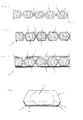
- FIG. 1 shows a partial section through the moisture-regulating element 12 according to the invention.
- This element has a layer 1, which has a high proportion of pulp fibers 2, in which moisture-binding agent 3 are incorporated.
- the layer 1 forms the core of the element 12.
- the pulp fibers 2 are compacted in the embossing areas 4 and connected to each other in this way.
- the embossed areas 4 are in the embodiment shown here on the top and bottom opposite each other, so that in the respective embossing area 4 only a narrow web of interconnected pulp remains.
- the remaining regions of the layer 1 arranged between the respective embossed regions 4 have a loose pulp layer. An intimate connection between the pulp fibers 2 does not exist in these areas.
- the adsorption behavior and the retention capacity of moisture is determined by the layer 1 of the cellulose fibers 2 and the moisture-binding agent 3 used, as well as optionally other substances which may be incorporated into the layer 1.
- the layer 1 has in the embodiment shown here in the embossing areas 4 the shape of truncated pyramids or truncated cones, wherein the angle of the slopes formed should preferably be between 10 ° and 45 °.
- a cellulosic material for the fibrous web 1 can be used inexpensively available mass material.
- a so-called fluff pulp is used, which is characterized by a very good binding behavior, which improves the mechanical strength of the element against vertical tensile forces.
- the fibrous web which later forms the layer 1 is produced from a bed of fibers 2 made of defiberized pulp (wood pulp) and the moisture-binding agent 3 and optionally incorporated further substances.
- defiberized pulp wood pulp
- the moisture-binding agent 3 optionally incorporated further substances.
- the method of pulp as the starting material for the layer 1 allows a dry processing of the pulp fibers 2 and thus in the subsequent embossing of the multilayer web between two structural rollers a very good compression of the Pulp fibers in the discrete embossing areas 4. Outside these embossing areas 4, the fibers lie loosely together, which affects the behavior of the incorporated, the moisture-binding agent that the moisture according to the binding capacity (hygroscopicity) does not affect given binding capacity, in addition by the loose Stratification of the fibers between the respective embossing regions improves the flexibility of the element 1 and when the element 1 is used in packaging, it also serves as protection against impacts etc. of the product to be packaged.
- the element according to the invention can be used as an insert in food packaging, for example of convenience products, bread, sausages, including meatballs.
- the production of the element according to the invention is preferably made of sheet material, which is manufactured in a continuous process.
- the pulp fibers 2 and the moisture-binding agent 3 and, if appropriate, further additives for forming the layer 1 are first of all laid.
- a possible manufacturing process is z.
- the moisture-binding agent is incorporated in layers in the web.
- a homogeneous distribution is achieved if the moisture-binding agents are processed together with the pulp fibers, so evenly distributed in the pulp fibers to sheet material.
- a multilayer web 5, as in FIG. 2 can be prepared, for example, by a cover layer 6 or a base layer 7 are first used as a carrier layer. On this carrier layer 6 and 7, the bed of cellulose fibers 2 and the moisture-binding agent 3 is applied in the air stream. Subsequently, this arrangement of carrier layer and bed is passed together through the structural rollers of the calender. Alternatively, previously, ie before the final passage through the calender, the other of the two layers 6, 7, which is therefore not already the carrier layer, can also be placed on the pulp layer 1.
- the two layers 6 and 7 can also be subsequently applied optionally with further layers in a conventional manner. If the further layers are subsequently applied, then they can have any surface structure, for example smooth.
- FIG. 2 illustrated embodiment shows a total of 3 layers, namely a composite of the layers 6, 1 and 7 web.
- the lowest layer serves as a base material and a layer is applied as the upper layer.
- the cover layer 6 has the advantage that the product to be packaged does not come into direct contact with the pulp fibers and the liquid adsorbing or moisture regulating agent.
- base material and also as a cover layer 6, in particular those materials are contemplated can pass through the water vapor, but are impermeable to the incorporated, the moisture-regulating agent.
- suitable materials are non-woven materials and tissue based on plastic or cellulose.
- the side edges of the element can be open or closed.
- FIG. 3 an inventive element is shown that has the same structure as the element of Fig. 2 , but surrounded by further layers 8 and 9.
- These further layers 8 and 9 may be larger than the layer 1 and the layers 6 and 7 optionally arranged thereon.
- the layers 8 and 9 may be the same or different and serve the properties of the element to the specific requirements of the products to be stored adapt.
- These further layers can be connected to one another without the layer 1 and / or the layers 6 and 7 optionally arranged thereon being detected.
- These two layers form an envelope for the element. They can be made of textile, non-woven or foil-like material or tissue. At least one of the layers 8 and 9 of such a covering should be permeable to moisture.
- the layers 8 and 9 are selected from cotton, non-woven and / or perforated film.
- one of the further layers (8, 9) is impermeable to moisture.
- the layer 9 facing the product may be permeable to moisture and the layer 8 facing the package may be impermeable to moisture.
- Fig. 4 shows a food package consisting of lower shell 10 and lid 11, in which an inventive element 12 has been inserted.
- the stored product 13 is placed on the element 12 and the packaging sealed with the lid 11 ..
- FIG. 4 An in Fig. 4 The packaging shown was used to investigate the influence of the element according to the invention on the shelf life of stored foods.
- the element according to the invention was placed in a package, for comparison, an element with an identical structure, but without moisture-binding agent was inserted.
- these packages different foods were stored for several days, the visual appearance of these foods was compared.
Landscapes
- Engineering & Computer Science (AREA)
- Chemical & Material Sciences (AREA)
- Mechanical Engineering (AREA)
- Analytical Chemistry (AREA)
- Food Science & Technology (AREA)
- General Chemical & Material Sciences (AREA)
- Oil, Petroleum & Natural Gas (AREA)
- Chemical Kinetics & Catalysis (AREA)
- General Engineering & Computer Science (AREA)
- Combustion & Propulsion (AREA)
- Packages (AREA)
- Laminated Bodies (AREA)
- Wrappers (AREA)
Abstract
Description
- Die vorliegende Erfindung betrifft ein feuchtigkeitsregulierendes Element zur Verwendung in Verpackungen, welches eine Lage aus Zellstofffasern und optional weitere Schichten umfasst.
- Lebensmittel unter optimalen Bedingungen zu lagern, bedeutet, dass Parameter wie die Umgebungstemperatur und die relative Luftfeuchtigkeit entsprechend kontrolliert oder beeinflusst werden. Die Erhöhung der relativen Luftfeuchtigkeit in einen Bereich, der sich negativ auf die Qualität des Lebensmittels auswirken kann, wird durch viele Parameter verursacht, wie durch Temperaturschwankungen, Schwitzen der Produkte (auch als Atmung bezeichnet), Feuchtigkeit, die vom Produkt selbst abgegeben wird, (bio)chemische Reaktionen innerhalb des Produktes. Um Bedingungen, unter denen die Produkte gelagert werden, zu optimieren, werden die Lebensmittel ihrer Art und Konsistenz entsprechend verpackt. Dabei ist vor allen Dingen zu berücksichtigen, dass, wenn größere Mengen Feuchtigkeit auftreten, d. h. die relative Luftfeuchtigkeit Werte von 80 % überschreiten, das Wachstum der Mikroorganismen, wie Schimmelpilze, stark begünstigt wird.
- Viele Lebensmittel werden verpackt, um diese vor äußeren Einflüssen, insbesondere auch vor Luftsauerstoff und vor dem Austrocknen zu schützen und eine bessere Qualität, sowie längere Haltbarkeit zu gewährleisten. Das sich bildende Kondenswasser ist üblicherweise in der Verpackung gut sichtbar und wirkt sich negativ auf den optischen Eindruck des Produktes aus. Auch stellt eine hohe relative Luftfeuchtigkeit eine gute Umgebung für das Wachsen von Mikroorganismen dar.
- Optimale Bedingungen von Temperatur und Luftfeuchtigkeit sind aber nicht nur für Lebensmittel, die in Haushaltsmengen verpackt und für den privaten Verzehr gedacht sind, von großer Bedeutung, sondern auch bei der Lagerung der Produkte beim Hersteller, während des Transports und im Handel. Es gibt aber auch eine Vielzahl von anderen Produkten, die konstante Gehalte an Luftfeuchtigkeit benötigen, wie viele elektronische Geräte, Bekleidung etc.
- Aus der
DE 40 00 143 ist eine Verpackung oder Behälter für Lebens- und Genussmittel, z. B. für Tabakwaren, bekannt, das ein Vlies zur Feuchtigkeitsregulierung enthält. Dieses Vlies soll als Speichervlies ein hohes Wasseraufnahmevermögen aufweisen, es ist von einer weitgehend Wasserdampfundurchlässigen Materialschicht umschlossen und mit der Verpackungsatmosphäre über ein zweites Vlies in Verbindung steht, das die Feuchtigkeitsverluste aus der Verpackungsatmosphäre ausgleichen soll und eine vorgegebene Gleichgewichtsfeuchtigkeit aufweist. - Aus der
DE 20 2009 005 971 ist eine mehrlagig aufgebaute Saugmatte als Einlage für Lebensmittelverpackungen bekannt, die eine flüssigkeitsundurchlässige Basisschicht, eine Schicht aus einem absorbierenden Material und eine für Flüssigkeiten durchlässige Deckschicht aufweist, wobei die Basisschicht und die für Flüssigkeiten durchlässige Deckschicht an mindestens zwei Seiten die Schicht aus dem absorbierenden Material überragt. Die Schicht aus einem absorbierenden Material ist im Wesentlichen aus Zellstofffasern aufgebaut. - Bei der Lagerung von Lebensmitteln und auch anderen feuchtigkeitsempfindlichen Produkten ist es auf der einen Seite erwünscht, dass das Lebensmittel oder Produkt in einer Umgebung gelagert wird, die eine gewisse Feuchtigkeit aufweist, um ein Austrocknen zu verhindern. Auf der anderen Seite soll vermieden werden, dass die relative Luftfeuchtigkeit, die eine gute Grundlage für das Wachstum von Schimmel und Mikroorganismen bildet und die Qualität des Lebensmittels oder Produktes beeinträchtigt, zu hoch wird.
- Der vorliegenden Erfindung lag die Aufgabe zugrunde, ein Material zur Verfügung zu stellen, das in Verpackungen für den Transport und sonstige Lagerung von feuchtigkeitsempfindlichen Produkten verwendet werden kann oder als solches dienen kann, um diese Produkte unter optimalen Feuchtigkeitsbedingungen zu lagern.
- Dieses Material sollte derart gestaltet sein, dass es für eine Vielzahl von Produkten und unterschiedlichen Verpackungsformen geeignet ist und an diese angepasst werden kann.
- Gegenstand der vorliegenden Erfindung ist demgemäß ein feuchtigkeitregulierendes Element zur Verwendung in Verpackungen, welches eine Lage aus Zellstofffasern und optional weitere Schichten umfasst, dadurch gekennzeichnet, dass das Element Mittel enthält, die den Feuchtigkeitsgehalt regulieren können.
- Das erfindungsgemäße feuchtigkeitsregulierende Element weist den Vorteil auf, dass es im Wesentlichen aus Materialien besteht, die gut erhältlich und preiswert sind. Die Zellstofffasern sind ein preiswert erhältliches Material, das in großen Mengen verfügbar ist und sich darüber hinaus gut verarbeiten lässt. Darüber hinaus ist es als Naturstoff nicht nur umweltverträglich, es ist auch verträglich mit den meisten Lebensmitteln und anderen vor Feuchtigkeit zu schützenden Produkten.
- Das feuchtigkeitsregulierende Element enthält erfindungsgemäß Mittel, die den Feuchtigkeitsgehalt der Luft regulieren können. Bei diesen Mitteln handelt es sich um Substanzen (Stoffe oder Stoffgemische), die bei Kontakt mit Luft dazu in der Lage sind, die Feuchtigkeit aus der Luft an sich zu ziehen oder abzugeben. Die Feuchtigkeit kann dabei angelagert werden (Hydratation) oder abgegeben werden (Entwässern). Bei Anlagerung von Feuchtigkeit beispielsweise an ein Salz durch den Kontakt von Feuchtigkeit mit dem Salz bildet sich eine gesättigte Lösung, das eingesetzte Mittel zerfließt langsam, verbleibt aber zwischen den Zellstofffasern. Auf der anderen Seite kann das verwendete Mittel das gebundene Wasser auch wieder abgeben, wenn der Feuchtigkeitsgehalt (in Bezug auf die Fähigkeit des verwendeten Mittels, Wasser zu binden) zu niedrig wird, in diesem Fall wird Feuchtigkeit an die Luft abgegeben, d. h. das Mittel wird entwässert. Zwischen dem Mittel und der Umgebung stellt sich ein Gleichgewicht ein.
- In einer möglichen Ausgestaltung können die Substanzen auch in Form von Lösungen eingesetzt werden, die sich bei Aufnahme von H2O aus der Luft verfestigen oder ein Gel bilden, die Feuchtigkeit also aus dem Gleichgewicht zwischen Umgebung und dem Mittel entfernt wird. Mithilfe derartiger Stoffe lässt sich die Umgebung, je nach Auswahl dieser Stoffe auf eine relative Luftfeuchtigkeit der Umgebung bis zu nahe 0 % reduzieren.
- Beispiele für geeignete feuchtigkeitsregulierende Mittel sind anorganische Salze, Zucker, Stärke oder modifizierte Stärkeprodukte, Alkali- und Erdalkalimetallsalze von Alkoholen, Silikate, Polymere, wie gelbildende Polymere einschließlich superabsorbierende Polymere, und Mischungen der voranstehenden. Diese Mittel können je nach Anwendungszweck und Absorptionskapazität in Bezug auf Wasser und Feuchtigkeit ausgewählt werden. Zu den geeigneten anorganischen Salzen zählen beispielsweise Natriumchlorid, Kaliumchlorid, Zinkchlorid, Natriumcarbonat, Kaliumcarbonat, Natriumsulfat, Kaliumsulfat, Natriumnitrat, Kaliumnitrat, Natriumhydroxid, Kaliumhydroxid, Calciumchlorid, Calciumoxid und beliebige Gemische der Voranstehenden. Zu den Zuckern zählen beispielsweise Fructose, Glucose und Saccharose. Als Alkohole, die in die entsprechenden Alkoholate umgewandelt werden können, sind Glycerin und Glycol zu nennen. Zu den geeigneten Silicaten zählen Silicagel und Bentonit. Es ist auch möglich, Gemische von verschiedenen Stoffen einzusetzen. Die Auswahl dieser Substanzen erfolgt in Abhängigkeit von der einzustellenden Luftfeuchtigkeit und dem zu lagernden Produkt.
- Die feuchtigkeitsregulierenden Mittel werden in der Regel in fester Form, vorzugsweise teilchenförmig, eingesetzt. Sie können auf die Lage auf Zellstofffasern aufgestreut werden. In einer bevorzugten Ausführungsform ist das feuchtigkeitsregulierende Mittel in Form von Teilchen in die Lage aus Zellstoff eingearbeitet. In dieser Lage liegt das Mittel lagenweise oder statistisch verteilt vor. Es kann beispielsweise direkt bei der Herstellung der Zellstofflage mit eingearbeitet werden.
- Das erfindungsgemäße feuchtigkeitsregulierende Element ist vorzugsweise ein flächiger Körper. Dieser kann auf die gewünschte Größe zugeschnitten werden und in eine Verpackung eingelegt werden oder Teil dieser Verpackung sein. Die Lage aus Zellstofffasern hat den Vorteil, dass diese zum einen quasi als Trägermaterial für das die Feuchtigkeit adsorbierende Mittel wirken kann, zum anderen zeigt eine Lage aus Zellulose ebenfalls Adsorptionseigenschaften, d. h. sobald die Adsorptionskapazität der feuchtigkeitsbindenden Mittel erschöpft ist, d. h. wenn das feuchtigkeitsbindende Mittel durch die Feuchtigkeit langsam zerfließt, kann diese gebildete Lösung von den Zellulosefasern aufgenommen werden, so dass das zu schützende und zu verpackende Produkt nicht mit der Feuchtigkeit in Kontakt kommt.
- Die Lage aus Zellstofffasern liegt vorzugsweise in Form von vliesartigem oder gewebeartigem Material vor. Die Zellstofffasern haben den Vorteil, dass es sich um preiswerte und im Handel verfügbare Materialien handelt, die einfach zu bearbeiten sind. Als besonders geeignete Adsorptionslagen haben sich Airlaid-Vliese oder Tissuepapiere erwiesen. In einer bevorzugten Ausführungsform ist die Absorptionslage aus Zellstofffasern ein Airlaid. In einer besonders bevorzugten Ausgestaltung weist die Zellstofflage über ihre Fläche verteilte Prägebereiche auf, in denen die Fasern stärker als in den übrigen Bereichen miteinander verpresst und hierdurch klebstoff- und/oder bindemittelfrei verbunden sind. Vorzugsweise ist der Saugkern in dieser Ausführungsform aus einer Faserstoffbahn aus Zellstofffasern hergestellt, welche unter Erzeugung der Prägebereiche im Druckbereich bindemittelfrei, punkt- oder linienförmig kalandriert und verbunden sind. Die Herstellung derartiger Materialien ist beispielsweise im europäischen Patent
1 032 342 beschrieben. Die Faserschicht der Lage aus Zellstofffasern ist in dieser Ausgestaltung so strukturiert, dass die Zellstofffasern außerhalb dieser diskreten Prägebereiche gelockert übereinander oder nur schwach aneinander haftend vorliegen, wohingegen sie in den Prägebereichen miteinander verpresst sind und eine innige Verbindung mit den jeweils benachbarten Zellstofffasern eingehen. Durch diese Ausgestaltung ist ein völliger Verzicht auf Klebstoffe und Bindemittel zur Bildung des Verbundes aus Zellstofffasern möglich, was ein einfaches und vollständiges Recycling ermöglicht. In den Prägebereichen haften die Fasern nicht lediglich aneinander. Vielmehr wird durch die Druckbeaufschlagung erreicht, dass benachbarte Zellstofffasern in diesen Prägebereichen fest miteinander verbunden sind. Diese Verbindung vermag auch der Einwirkung von Feuchtigkeit zu widerstehen, so dass sich die erfindungsgemäß verwendete Absorptionslage durch mechanische Belastbarkeit auch in nassem Zustand auszeichnet. Die Bereiche außerhalb der diskreten Prägebereiche, in denen die Fasern gelockert übereinander oder nur schwach aneinander haftend vorliegen, zeichnen sich durch eine gute Absorptionsfähigkeit aus. In diesen Bereichen liegen vorzugsweise auch die Mittel zum Binden von Feuchtigkeit vor. Diese können innerhalb der einzelnen Zellstofffasern verteilt sein und in den Bereichen außerhalb der diskreten Prägebereiche stehen sie aufgrund des lockeren Verbundes der Zellstofffasern in gutem Kontakt mit der Umgebung, insbesondere mit der Feuchtigkeit. Liegen größere Mengen Feuchtigkeit bzw. Flüssigkeit vor, so werden diese von dem lockeren Verbund aus Zellstofffasern aufgenommen, über die gesamte Fläche der Absorptionslage verteilt und dort gehalten. - In einer möglichen Ausführungsform ist oberhalb und/oder unterhalb der Lage aus Zellstofffasern eine weitere Lage aus Vlies, Tissue oder einem anderen dünnen Material angeordnet. Diese weiteren Lagen verhindern, dass das Produkt unmittelbar mit dem feuchtigkeitsregulierenden Mittel in Kontakt kommt.
- Ein weiterer Gegenstand der vorliegenden Erfindung ist die Verwendung des voranstehend beschriebenen Elements als Einlage in Verpackungen oder als Teil von Verpackungen von festen oder flüssigen Lebensmitteln, Arzneimitteln, chemischen Substanzen, Gefahrgütern, elektronischen Produkten, Kulturgütern und Zierpflanzen.
- Nachfolgend wird das erfindungsgemäße Element anhand eines Ausführungsbeispiels unter Bezugnahme auf die Zeichnung näher erläutert. Darin zeigen:
- Figur 1
- einen stark vergrößerten Teilschnitt durch das Element,
- Figur 2
- einen stark vergrößerten Teilschnitt durch ein mehrlagiges Element,
- Figur 3
- einen stark vergrößerten Teilschnitt durch weiteres mehrlagiges Element,
- Figur 4
- einen Teilschnitt durch eine Verpackung.
-
Figur 1 zeigt einen Teilschnitt durch das erfindungsgemäße feuchtigkeitsregulierende Element 12. Dieses Element weist eine Lage 1 auf, die einen hohen Anteil an Zellstofffasern 2 aufweist, in die feuchtigkeitsbindende Mittel 3 eingearbeitet sind. Die Lage 1 bildet den Kern des Elements 12. - Die Zellstofffasern 2 sind in den Prägebereichen 4 verdichtet und auf diese Weise miteinander verbunden. Die Prägebereiche 4 liegen sich in der hier dargestellten Ausführungsform auf der Ober- und Unterseite einander gegenüber, so dass im jeweiligen Prägebereich 4 nur noch ein schmaler Steg miteinander verbundener Zellstoffmasse verbleibt. Die übrigen, zwischen den jeweiligen Prägebereichen 4 angeordneten Bereiche der Schicht 1 weisen eine lockere Zellstoffschichtung auf. Eine innige Verbindung zwischen den Zellstofffasern 2 besteht in diesen Bereichen nicht.
- Das Adsorptionsverhalten und das Rückhaltevermögen von Feuchtigkeit wird durch die Lage 1 aus den Zellstofffasern 2 sowie dem verwendeten Feuchtigkeit bindenden Mittel 3 sowie gegebenenfalls weiteren Stoffen, die in die Lage 1 eingearbeitet sein können, bestimmt. Die Lage 1 hat in der hier dargestellten Ausführungsform in den Prägebereichen 4 die Gestalt von Pyramidenstümpfen oder Kegelstümpfen, wobei der Winkel der gebildeten Schrägen vorzugsweise zwischen 10° und 45° liegen sollte.
- Als Zellulosematerial für die Faserstoffbahn 1 lässt sich preiswert zur Verfügung stehendes Massenmaterial einsetzen. Vorzugsweise wird ein sogenannter Fluff-Pulp eingesetzt, der sich durch ein sehr gutes Bindungsverhalten auszeichnet, was die mechanische Festigkeit des Elements gegen vertikale Zugkräfte verbessert.
- Bei der Herstellung des erfindungsgemäßen Elements wird zunächst ein Bahnenmaterial hergestellt, das anschließend auf die gewünschte Größe geschnitten wird. Bei der Herstellung des Bahnenmaterials in einem kontinuierlichen Verfahren wird die später die Lage 1 bildende Faserstoffbahn aus einer im Luftstrom aufgeschütteten Schüttung von Fasern 2 aus defiberisiertem Zellstoff (wood pulp) und die Feuchtigkeit bindende Mittel 3 und gegebenenfalls eingearbeiteten weiteren Stoffen hergestellt. Für die Herstellung einer standardisierten, defiberisierten Ware kann auf die am Markt verfügbaren, nachwachsenden Holzrohstoffe zurückgegriffen werden.
- Das Verfahren der Zellstoffschüttung als Ausgangsprodukt für die Lage 1 ermöglicht eine trockene Verarbeitung der Zellstofffasern 2 und damit bei der anschließenden Prägung der mehrlagigen Bahn zwischen zwei Strukturwalzen eine sehr gute Verdichtung der Zellstofffasern in den diskreten Prägebereichen 4. Außerhalb dieser Prägebereiche 4 liegen die Fasern locker aneinander, was das Verhalten der eingearbeiteten, die Feuchtigkeit bindenden Mittel dahingehend beeinflusst, dass die Feuchtigkeit gemäß der Bindekapazität (Hygroskopizität) vorgegebenen Bindungsvermögen nicht beeinträchtigt, darüber hinaus wird durch die lockere Schichtung der Fasern zwischen den jeweiligen Prägebereichen die Flexibilität des Elementes 1 verbessert und wenn das Element 1 in Verpackungen eingesetzt wird, dient es gleichzeitig als Schutz vor Stößen etc. des zu verpackenden Produktes. Das erfindungsgemäße Element kann als Einlage in Lebensmittelverpackungen eingesetzt werden, beispielsweise von Convenience-Produkten, Brot, Wurstwaren einschließlich Frikadellen.
- Die Herstellung des erfindungsgemäßen Elements erfolgt vorzugsweise aus Bahnenmaterial, welches in einem kontinuierlichen Prozess gefertigt wird. In luftunterstützter Schichtung werden zunächst die Zellstofffasern 2 und das die Feuchtigkeit zu binden vermögende Mittel 3 sowie gegebenenfalls weitere Zuschlagstoffe zur Bildung der Schicht 1 gelegt. Anschließend erfolgt in einem Kalander mit zwei strukturierten Kalanderwalzen die Herstellung der Prägebereiche 4. Ein mögliches Herstellungsverfahren wird z. B. im europäischen Patent
1 032 342 offenbart. - In Abhängigkeit davon, wie dick die fertige Bahn sein soll, ist es auch möglich, mehrere Schichten aus Zellstofffasern 2 und Mittel 3 sowie gegebenenfalls weiteren Zuschlagstoffen übereinander zu schichten und anschließend in den Kalander einzuführen, um die Prägebereiche 4 zu erhalten. Auf diese Weise wird das die Feuchtigkeit bindende Mittel lagenweise in die Bahn eingearbeitet. Eine homogene Verteilung wird erreicht, wenn die die Feuchtigkeit bindenden Mittel gemeinsam mit den Zellstofffasern, also in den Zellstofffasern gleichmäßig verteilt, zu Bahnenmaterial verarbeitet werden.
- Eine mehrlagige Bahn 5, wie sie in
Figur 2 dargestellt ist, kann beispielsweise hergestellt werden, indem eine Deckschicht 6 oder eine Basisschicht 7 zunächst als Trägerschicht verwendet werden. Auf diese Trägerschicht 6 bzw. 7 wird die Schüttung von Zellstofffasern 2 und dem die Feuchtigkeit bindende Mittel 3 im Luftstrom aufgetragen. Anschließend wird diese Anordnung aus Trägerschicht und Schüttung gemeinsam durch die Strukturwalzen des Kalanders hindurchgeführt. Alternativ kann zuvor, d. h. vor dem abschließenden Hindurchführen durch den Kalander, die andere der beiden Schichten 6, 7, welche also nicht bereits die Trägerschicht ist, auch auf die Zellstoffschicht 1 aufgelegt werden. - Die beiden Schichten 6 und 7 können auch noch nachträglich gegebenenfalls mit weiteren Lagen in an sich bekannter Weise aufgebracht werden. Werden die weiteren Lagen nachträglich aufgebracht, so können sie eine beliebige Oberflächenstruktur aufweisen, beispielsweise glatt sein.
- Die in
Figur 2 dargestellte Ausführungsform zeigt insgesamt 3 Schichten, nämlich eine aus den Lagen 6, 1 und 7 zusammengesetzte Bahn. - Die unterste Lage dient als Basismaterial und als obere Lage ist eine Schicht aufgebracht. Die Deckschicht 6 hat den Vorteil, dass das zu verpackende Produkt nicht unmittelbar mit den Zellstofffasern und dem die Flüssigkeit adsorbierenden bzw. die Feuchtigkeit regulierenden Mittel in Kontakt tritt.
- Als Basismaterial und auch als Deckschicht 6 kommen insbesondere solche Materialien in Betracht, durch die Wasserdampf hindurchtreten können, die aber für das eingearbeitete, die Feuchtigkeit regulierende Mittel undurchlässig sind. Beispiele für geeignete Materialien sind vliesartige Materialien und Tissue auf Kunststoff- oder Zellulosebasis.
- Die Seitenkanten des Elements können offen oder geschlossen sein.
- In
Fig. 3 ist ein erfindungsgemäßes Element dargestellt, dass den gleichen Aufbau hat, wie das Element ausFig. 2 , jedoch von weiteren Lagen 8 und 9 umgeben ist. Diese weiteren Lagen 8 und 9 können größer sein als die die Lage 1 und die gegebenenfalls daran angeordneten Schichten 6 und 7. Die Lagen 8 und 9 können gleich oder verschieden sein und dienen dazu, die Eigenschaften des Elements an die spezifischen Anforderungen der zu lagernden Produkte anzupassen. Diese weiteren Schichten können miteinander verbunden sein, ohne dass die Lage 1 und/oder die gegebenenfalls daran angeordneten Schichten 6 und 7 mit erfasst ist. Diese beiden Lagen bilden für das Element eine Umhüllung. Sie können aus textilem, vliesartigem oder folienartigem Material oder Tissue sein. Zumindest eine der Schichten 8 bzw. 9 einer solchen Umhüllung sollte für die Feuchtigkeit durchlässig sein. Vorzugsweise sind die Lagen 8 bzw. 9 ausgewählt aus Baumwolle, Vlies und/oder perforierter Folie. In einer möglichen Ausführungsform ist eine der weiteren Lagen (8, 9) für Feuchtigkeit undurchlässig. In einer solchen Ausgestaltung kann beispielsweise die dem Produkt zugewandte Lage 9 für Feuchtigkeit durchlässig und die der Verpackung zugewandte Lage 8 für Feuchtigkeit undurchlässig sein. In dieser Ausführungsform wird vermieden, dass für den Fall, dass das Bindevermögen des erfindungsgemäßen Elements 12 für Feuchtigkeit erschöpft ist und durch den Druck des Produkts 13 auf dem Element 12 Flüssigkeit quasi ausgedrückt wird und sich am Boden der Verpackung 10 sammelt, diese Flüssigkeit über diese untere Lage wieder in Richtung Produkt gelangt. -
Fig. 4 zeigt eine Lebensmittelverpackung bestehend aus Unterschale 10 und Deckel 11, in die ein erfindungsgemäßes Element 12 eingelegt wurde. Das gelagerte Produkt 13 wird auf das Element 12 gelegt und die Verpackung mit dem Deckel 11 verschlossen.. - Eine in
Fig. 4 dargestellte Verpackung wurde verwendet, um den Einfluss des erfindungsgemäßen Elements auf die Haltbarkeit von gelagerten Lebensmitteln zu untersuchen. Dazu wurde in eine Verpackung das erfindungsgemäße Element eingelegt, zum Vergleich wurde ein Element mit einem identischen Aufbau, aber ohne Feuchtigkeit bindendes Mittel eingelegt. In diesen Verpackungen wurden unterschiedliche Lebensmittel über mehrere Tage gelagert, das optische Aussehen dieser Lebensmittel wurde verglichen. -
Gelagertes Lebensmittel Lagerdauer (Tage) Optisches Aussehen Gemäß Erfindung Vergleich Brötchen 12 leicht geschrumpft deutliche Zeichen von Schimmel Brötchen 17 trocken komplett von Schimmel befallen Toastbrot 12 unverändert geringe Schimmelflecken Toastbrot 6 trocken und hart vollflächig von Schimmel umgeben Frischkäse 15 kein Kondenswasser deutliche Mengen an Kondenswasser Harzer Käse 15 kein Kondenswasser deutliche Mengen an Kondenswasser Sandwich 2 kein Kondenswasser, Brot nicht matschig Brot sehr feucht und matschig - Wie die obige Darstellung deutlich macht, konnte die Haltbarkeit von Lebensmitteln deutlich verbessert werden.
- Die Verringerung von Feuchtigkeit und Kondenswasser führt nicht nur zu einer Verlängerung der Haltbarkeit, auch der sensorische Eindruck der Lebensmittel ist deutlich besser. Nicht nur das Aussehen der Produkte war auch nach einigen Tagen der Lagerung im Vergleich zu den herkömmlich gelagerten Lebensmitteln noch sehr gut, auch die haptischen Eigenschaften waren sehr viel besser, so war das Brot, das für die Sandwiches verwendet wurde, im Vergleich zu dem herkömmlich gelagerten Produkt nicht matschig.
- Beim Frischkäse, Harzer Käse kann eine deutliche Verbesserung den optischen Eigenschaften beobachtet werden. Bei diesen Produkte wurde nur die sensorische Änderung studiert, wobei auch eine Verlängerung der Haltbarkeit beim Behalt optimaler optischen Eigenschaften möglich ist.
-
- 1
- Lage
- 2
- Zellstofffasern
- 3
- feuchtigkeitsbindendes Mittel
- 4
- Prägebereich
- 5
- mehrlagige Bahn
- 6
- Deckschicht
- 7
- Basisschicht
- 8, 9
- weitere Lage
- 10
- Unterschale
- 11
- Deckel
- 12
- erfindungsgemäßes Element
- 13
- gelagertes Produkt
- 14
- Seitenkante
Claims (15)
- Feuchtigkeitsregulierendes Element zur Verwendung in Verpackungen, welches eine Lage (1) aus Zellstofffasern (2) und optional weitere Schichten umfasst, dadurch gekennzeichnet, dass das Element Mittel (3), die den Feuchtigkeitsgehalt regulieren können, enthält.
- Element nach Anspruch 1, dadurch gekennzeichnet, dass die Mittel (3), die den Feuchtigkeitsgehalt regulieren können, ausgewählt sind aus anorganischen Salzen, Zuckern, Stärke oder modifizierten Stärkeprodukten, Alkali- und Erdalkalimetallsalzen von Alkoholen, Silikaten, Polymeren, wie gelbildenden Polymeren einschließlich superabsorbierenden Polymeren, und beliebigen Mischungen der Voranstehenden.
- Element nach Anspruch 2, dadurch gekennzeichnet, dass die anorganischen Salze ausgewählt sind aus der Gruppe bestehend aus Natriumchlorid, Kaliumchlorid, Zinkchlorid, Natriumcarbonat, Kaliumcarbonat, Natriumsulfat, Kaliumsulfat, Natriumnitrat, Kaliumnitrat, Natriumhydroxid, Kaliumhydroxid, Calciumchlorid und/oder Calciumoxid.
- Element nach Anspruch 2, dadurch gekennzeichnet, dass die Zucker ausgewählt sind aus hygroskopischen Zuckern wie Fructose, Glucose und Saccharose.
- Element nach Anspruch 2, dadurch gekennzeichnet, dass die Alkoholate ausgewählt sind aus Alkoholaten von Glycerin oder Glycol.
- Element nach Anspruch 2, dadurch gekennzeichnet, dass das Silicat ein Silicagel, Zeolith, Kaolin und/oder Bentonit ist.
- Element nach einem der Ansprüche 1 bis 6, dadurch gekennzeichnet, dass oberhalb oder unterhalb der Lage aus Zellstofffasern eine Basislage (6) angeordnet ist.
- Element nach einem der Ansprüche 1 bis 7, dadurch gekennzeichnet, dass auf der der Basislage gegenüberliegenden Seite eine Deckschicht (7) angeordnet ist.
- Element nach Anspruch 7 oder 8, dadurch gekennzeichnet, dass die Basislage (6) und/oder die Deckschicht (7) gleich oder verschieden sind und ein Vlies oder Tissue sind.
- Element nach Anspruch 7 oder 8, dadurch gekennzeichnet, dass auf der Basislage (6) und/oder der Deckschicht (7) eine für Flüssigkeiten undurchlässige weitere Schicht (8, 9) angeordnet ist.
- Element nach einem der Ansprüche 1 bis 10, dadurch gekennzeichnet, dass die Lage (2) aus Zellstofffasern im Wesentlichen aus unregelmäßig angeordneten Zellstofffasern aufgebaut ist, die bereichsweise durch Verpressen unter Verdichtung der Zellstofffasern in den verpressten Bereichen miteinander verbunden sind.
- Element nach Anspruch 11, dadurch gekennzeichnet, dass die Zellstofffasern in den verpressten Bereichen unter Hitzebeaufschlagung verpresst sind.
- Element nach einem der Ansprüche 10 bis 12, dadurch gekennzeichnet, dass die weitere Schichten (8, 9) gleich oder verschieden sind und ausgewählt sind aus Baumwolle, Vlies und/oder perforierter Folie.
- Element nach einem der Ansprüche 10 bis 13, dadurch gekennzeichnet, dass eine der weiteren Lagen (8, 9) für Feuchtigkeit undurchlässig ist.
- Verwendung des Elements nach einem der Ansprüche 1 bis 14 als Einlage (12) in Verpackungen (10, 11) von festen oder flüssigen Lebensmitteln, Arzneimitteln, chemischen Substanzen, Gefahrgütern, elektronischen Produkten, Kulturgütern und Zierpflanzen.
Applications Claiming Priority (1)
| Application Number | Priority Date | Filing Date | Title |
|---|---|---|---|
| DE202012100002U DE202012100002U1 (de) | 2012-01-02 | 2012-01-02 | Feuchtigkeitsregulierendes Element zur Verwendung in Verpackungen |
Publications (2)
| Publication Number | Publication Date |
|---|---|
| EP2609984A1 true EP2609984A1 (de) | 2013-07-03 |
| EP2609984B1 EP2609984B1 (de) | 2020-02-26 |
Family
ID=47561147
Family Applications (1)
| Application Number | Title | Priority Date | Filing Date |
|---|---|---|---|
| EP12198036.1A Active EP2609984B1 (de) | 2012-01-02 | 2012-12-19 | Feuchtigkeitsregulierendes element zur verwendung in verpackungen |
Country Status (8)
| Country | Link |
|---|---|
| US (2) | US20130180120A1 (de) |
| EP (1) | EP2609984B1 (de) |
| CA (1) | CA2800357C (de) |
| DE (1) | DE202012100002U1 (de) |
| DK (1) | DK2609984T3 (de) |
| ES (1) | ES2782500T3 (de) |
| MX (1) | MX349082B (de) |
| PT (1) | PT2609984T (de) |
Families Citing this family (13)
| Publication number | Priority date | Publication date | Assignee | Title |
|---|---|---|---|---|
| DE102013103834A1 (de) * | 2013-04-16 | 2014-11-13 | McAirlaid's Vliesstoffe GmbH | Verfahren zum Reifen von Fleisch |
| TR201305180A2 (tr) * | 2013-05-02 | 2013-12-23 | Nedim Vidinlisan | Pizza, pide, lahmacun, hamburger gibi pişmiş sıcak taşınabilir yiyeceklerin paket servisi ile tüketiciye ulaştırılmasını sağlayan antibakteriyel termo kutu. |
| SE539751C2 (en) * | 2015-11-09 | 2017-11-14 | Stora Enso Oyj | Active moisture control material for packaging and a method for production thereof |
| DE102016000481A1 (de) * | 2016-01-20 | 2017-07-20 | K.L. Kaschier- Und Laminier Gmbh | Verpackungsmaterial |
| ES2673488B1 (es) * | 2016-12-22 | 2019-04-23 | Univ Valencia | Envase aplicable al deposito y conservacion de productos alimenticios y uso de un agente conservante |
| DE202017006954U1 (de) | 2017-05-03 | 2019-02-13 | Emilio Giusti | Zweiteilige, stapelbare Transportverpackung für Speisen |
| EP3398877A1 (de) | 2017-05-03 | 2018-11-07 | Giusti, Emilio | Transportverpackung für zubereitete, warme speisen |
| DE202017106402U1 (de) | 2017-10-23 | 2017-11-06 | Harald Heinz Peter Benoit | Behälter zum Schutz von Lebensmitteln gegen Schimmelbefall |
| CN109012058A (zh) * | 2018-07-13 | 2018-12-18 | 安徽锦华氧化锌有限公司 | 一种无毒无异味型橡胶用除湿剂 |
| DE202018104337U1 (de) * | 2018-07-27 | 2019-10-30 | McAirlaid's Vliesstoffe GmbH | Bahnenmaterial zur Verwendung in Lebensmittelverpackungen |
| CN110173785B (zh) * | 2019-05-30 | 2021-10-26 | 广东美的制冷设备有限公司 | 用于空气调节设备的加湿滤芯和空气调节设备 |
| US20240199304A1 (en) * | 2022-12-19 | 2024-06-20 | Laura Elizabeth Fancher Hinton | Apparatus for Preventing Sugar from Clumping |
| EP4655094A1 (de) * | 2023-01-27 | 2025-12-03 | Alexium, Inc. | Mehrschichtige textilanordnungen zur reversiblen wasserdampfabsorption |
Citations (5)
| Publication number | Priority date | Publication date | Assignee | Title |
|---|---|---|---|---|
| DE4000143A1 (de) | 1990-01-04 | 1991-07-11 | Badische Tabakmanufaktur | Feuchtigkeitsregulierende verpackung |
| US5143773A (en) * | 1990-03-29 | 1992-09-01 | Showa Denko Kabushiki Kaisha | Highly hygroscopic laminate |
| EP1032342A1 (de) | 1997-11-18 | 2000-09-06 | Alexander Maksimow | Verfahren und vorrichtung zur herstellung einer aus cellulose-fasern bestehenden faserstoffbahn für die verwendung in hygieneartikeln |
| US20050205840A1 (en) * | 2003-10-03 | 2005-09-22 | Farneth William E | Oxygen scavenging compositions and methods of use |
| DE202009005971U1 (de) | 2009-04-27 | 2009-07-02 | Mcairlaid's Vliesstoffe Gmbh & Co. Kg | Einlage für Lebensmittelverpackungen |
Family Cites Families (22)
| Publication number | Priority date | Publication date | Assignee | Title |
|---|---|---|---|---|
| US1812970A (en) * | 1929-01-23 | 1931-07-07 | Masonite Corp | Process of manufacturing insulating board |
| US2545710A (en) * | 1948-09-04 | 1951-03-20 | Wingfoot Corp | Package |
| BE501107A (de) * | 1950-02-09 | |||
| US4449977A (en) * | 1979-10-29 | 1984-05-22 | Johnson & Johnson | Absorbent products, processes and compositions |
| CH667514A5 (en) * | 1984-07-06 | 1988-10-14 | Intersensor S A | Humidifying element for transporting moisture sensitive goods - has porous or cellular material saturated with soluble substance in water enclosed by plastics film |
| FR2590874B1 (fr) * | 1985-12-03 | 1988-05-27 | Participations Ste Charentaise | Nouvel emballage pour produits sensibles a l'humidite |
| US4929480A (en) * | 1987-07-20 | 1990-05-29 | Kimberly-Clark Corporation | Absorbent structure for absorbing food product liquids |
| JPH01130730A (ja) * | 1987-11-18 | 1989-05-23 | Showa Denko Kk | 吸水量を制御した脱水用具 |
| US5022945A (en) * | 1988-09-19 | 1991-06-11 | Clean-Pak, Inc. | Method for constructing absorbent pad |
| US5552169A (en) * | 1991-04-25 | 1996-09-03 | Sealed Air Corporation | Food package adapted for microwave or other cooking |
| US5526607A (en) * | 1991-08-15 | 1996-06-18 | Net/Tech International | Water dispersible delivery system for an agriculturally active chemical |
| US5830543A (en) * | 1994-05-30 | 1998-11-03 | Nippon Shokubai Co., Ltd. | Gelling material for aqueous fluids |
| US6376034B1 (en) * | 1996-01-23 | 2002-04-23 | William M. Brander | Absorbent material for use in disposable articles and articles prepared therefrom |
| US6015582A (en) * | 1997-05-20 | 2000-01-18 | Showa Denko K.K. | Water absorbing article and method of using the same |
| CA2309803A1 (fr) * | 2000-05-31 | 2001-11-30 | Unknown | Buvard alimentaire |
| US20040137116A1 (en) * | 2001-04-04 | 2004-07-15 | Katsunori Saito | Method for processing and preserving food and processed food |
| US6921026B2 (en) * | 2002-02-05 | 2005-07-26 | Albert L. Saari | Preservation of intermediate moisture foods by controlling humidity and inhibition of mold growth |
| US7025198B2 (en) * | 2002-12-31 | 2006-04-11 | Cryovac, Inc. | Absorbent pad with controlled rate of wicking |
| US20050008737A1 (en) * | 2003-07-07 | 2005-01-13 | Young-Won Kwon | Absorbent pad for absorbing liquid exuding from food |
| DE102005032432A1 (de) * | 2005-07-12 | 2007-01-25 | Mcairlaid's Vliesstoffe Gmbh & Co. Kg | Saugeinlage für Lebensmittelverpackungen |
| US20080257151A1 (en) * | 2007-04-17 | 2008-10-23 | Mayer Jonathan A | Water retaining dessicating device |
| US20120003372A1 (en) * | 2010-07-02 | 2012-01-05 | Paper-Pak Industries | Two-sided nonwoven absorbent food pad |
-
2012
- 2012-01-02 DE DE202012100002U patent/DE202012100002U1/de not_active Expired - Lifetime
- 2012-12-19 EP EP12198036.1A patent/EP2609984B1/de active Active
- 2012-12-19 DK DK12198036.1T patent/DK2609984T3/da active
- 2012-12-19 PT PT121980361T patent/PT2609984T/pt unknown
- 2012-12-19 ES ES12198036T patent/ES2782500T3/es active Active
- 2012-12-21 US US13/724,471 patent/US20130180120A1/en not_active Abandoned
- 2012-12-28 CA CA2800357A patent/CA2800357C/en active Active
-
2013
- 2013-01-07 MX MX2013000114A patent/MX349082B/es active IP Right Grant
-
2017
- 2017-04-26 US US15/497,772 patent/US10883734B2/en active Active
Patent Citations (5)
| Publication number | Priority date | Publication date | Assignee | Title |
|---|---|---|---|---|
| DE4000143A1 (de) | 1990-01-04 | 1991-07-11 | Badische Tabakmanufaktur | Feuchtigkeitsregulierende verpackung |
| US5143773A (en) * | 1990-03-29 | 1992-09-01 | Showa Denko Kabushiki Kaisha | Highly hygroscopic laminate |
| EP1032342A1 (de) | 1997-11-18 | 2000-09-06 | Alexander Maksimow | Verfahren und vorrichtung zur herstellung einer aus cellulose-fasern bestehenden faserstoffbahn für die verwendung in hygieneartikeln |
| US20050205840A1 (en) * | 2003-10-03 | 2005-09-22 | Farneth William E | Oxygen scavenging compositions and methods of use |
| DE202009005971U1 (de) | 2009-04-27 | 2009-07-02 | Mcairlaid's Vliesstoffe Gmbh & Co. Kg | Einlage für Lebensmittelverpackungen |
Also Published As
| Publication number | Publication date |
|---|---|
| MX2013000114A (es) | 2014-01-09 |
| DK2609984T3 (da) | 2020-05-11 |
| US20170356662A1 (en) | 2017-12-14 |
| US20130180120A1 (en) | 2013-07-18 |
| PT2609984T (pt) | 2020-05-07 |
| MX349082B (es) | 2017-07-10 |
| DE202012100002U1 (de) | 2013-04-05 |
| US10883734B2 (en) | 2021-01-05 |
| ES2782500T3 (es) | 2020-09-15 |
| EP2609984B1 (de) | 2020-02-26 |
| CA2800357C (en) | 2019-10-22 |
| CA2800357A1 (en) | 2013-07-02 |
Similar Documents
| Publication | Publication Date | Title |
|---|---|---|
| EP2609984B1 (de) | Feuchtigkeitsregulierendes element zur verwendung in verpackungen | |
| EP3105143B1 (de) | Isolierverpackung zur wärmedämmung oder schockabsorption aus stroh oder heu und verfahren zu ihrer herstellung | |
| DE2036124A1 (de) | Tafel aus Isoliermaterial und Verfahren zum Herstellen derselben | |
| EP1917199B2 (de) | Saugeinlage für lebensmittelverpackungen | |
| DE10164632A1 (de) | Elemente zur Entfeuchtung von Gas, sowie ein Verfahren zur Herstellung derselben | |
| CH617087A5 (de) | ||
| DE102013103834A1 (de) | Verfahren zum Reifen von Fleisch | |
| DE102010000081A1 (de) | Materialbahn | |
| DE2853247A1 (de) | Verfahren zur herstellung eines waermespeichers und speichermaterial zur durchfuehrung des verfahrens | |
| DE10251137A1 (de) | Ultradünne Materialien aus Faser und Superabsorber | |
| EP4197417A1 (de) | Verfahren zur herstellung eines reinigungstextils sowie wischbezug | |
| EP0495120B1 (de) | Flüssigkeit absorbierender block | |
| EP4129598A1 (de) | Verfahren und vorrichtung zum verarbeiten von cellulosehaltigen einzelfasern sowie vliesstoff, transportbehälter und formteil | |
| DE19861057C2 (de) | Lager- und Transporteinheit für Dämmstoffelemente | |
| EP1249547A2 (de) | Verfahren zur Herstellung eines Brandschutz-Bauelementes | |
| DE2837894C2 (de) | ||
| EP2864087B1 (de) | Holzverbundwerkstoff mit aerogele und entsprechendes herstellungsverfahren und verwendung | |
| DE202009005971U1 (de) | Einlage für Lebensmittelverpackungen | |
| DE102018114044A1 (de) | Blockförmiger Entfeuchter | |
| DE102022111909A1 (de) | Verfahren und Vorrichtung zum Verarbeiten von cellulosehaltigen Einzelfasern sowie Vliesstoff, Transportbehälter und Formteil | |
| DE202018107140U1 (de) | Einlage für Lebensmittelverpackungen | |
| DE202008003107U1 (de) | Einrichtung zur Feuchtigkeitsabsorption | |
| DE102019008241A1 (de) | Werkstoffplatte, Verfahren und Anlage zur Herstellung einer Werkstoffplatte sowie Verwendung einer Werkstoffplatte | |
| DD293320A5 (de) | Verpackung mit feuchtereguliertem kryptoklima und verfahren zu ihrer herstellung | |
| DE102011104890A1 (de) | Bandelement und Verfahren zur Vermeidung oder Reduzierung von Schimmelbildung |
Legal Events
| Date | Code | Title | Description |
|---|---|---|---|
| PUAI | Public reference made under article 153(3) epc to a published international application that has entered the european phase |
Free format text: ORIGINAL CODE: 0009012 |
|
| AK | Designated contracting states |
Kind code of ref document: A1 Designated state(s): AL AT BE BG CH CY CZ DE DK EE ES FI FR GB GR HR HU IE IS IT LI LT LU LV MC MK MT NL NO PL PT RO RS SE SI SK SM TR |
|
| AX | Request for extension of the european patent |
Extension state: BA ME |
|
| 17P | Request for examination filed |
Effective date: 20131223 |
|
| RBV | Designated contracting states (corrected) |
Designated state(s): AL AT BE BG CH CY CZ DE DK EE ES FI FR GB GR HR HU IE IS IT LI LT LU LV MC MK MT NL NO PL PT RO RS SE SI SK SM TR |
|
| RAP1 | Party data changed (applicant data changed or rights of an application transferred) |
Owner name: MCAIRLAID'S VLIESSTOFFE GMBH |
|
| RAP1 | Party data changed (applicant data changed or rights of an application transferred) |
Owner name: MCAIRLAID'S VLIESSTOFFE GMBH |
|
| STAA | Information on the status of an ep patent application or granted ep patent |
Free format text: STATUS: EXAMINATION IS IN PROGRESS |
|
| 17Q | First examination report despatched |
Effective date: 20171103 |
|
| GRAP | Despatch of communication of intention to grant a patent |
Free format text: ORIGINAL CODE: EPIDOSNIGR1 |
|
| STAA | Information on the status of an ep patent application or granted ep patent |
Free format text: STATUS: GRANT OF PATENT IS INTENDED |
|
| INTG | Intention to grant announced |
Effective date: 20191001 |
|
| GRAS | Grant fee paid |
Free format text: ORIGINAL CODE: EPIDOSNIGR3 |
|
| GRAA | (expected) grant |
Free format text: ORIGINAL CODE: 0009210 |
|
| STAA | Information on the status of an ep patent application or granted ep patent |
Free format text: STATUS: THE PATENT HAS BEEN GRANTED |
|
| AK | Designated contracting states |
Kind code of ref document: B1 Designated state(s): AL AT BE BG CH CY CZ DE DK EE ES FI FR GB GR HR HU IE IS IT LI LT LU LV MC MK MT NL NO PL PT RO RS SE SI SK SM TR |
|
| REG | Reference to a national code |
Ref country code: GB Ref legal event code: FG4D Free format text: NOT ENGLISH |
|
| REG | Reference to a national code |
Ref country code: CH Ref legal event code: EP |
|
| REG | Reference to a national code |
Ref country code: DE Ref legal event code: R096 Ref document number: 502012015800 Country of ref document: DE |
|
| REG | Reference to a national code |
Ref country code: AT Ref legal event code: REF Ref document number: 1236959 Country of ref document: AT Kind code of ref document: T Effective date: 20200315 |
|
| REG | Reference to a national code |
Ref country code: IE Ref legal event code: FG4D Free format text: LANGUAGE OF EP DOCUMENT: GERMAN |
|
| REG | Reference to a national code |
Ref country code: NL Ref legal event code: FP |
|
| REG | Reference to a national code |
Ref country code: PT Ref legal event code: SC4A Ref document number: 2609984 Country of ref document: PT Date of ref document: 20200507 Kind code of ref document: T Free format text: AVAILABILITY OF NATIONAL TRANSLATION Effective date: 20200429 |
|
| REG | Reference to a national code |
Ref country code: DK Ref legal event code: T3 Effective date: 20200505 |
|
| PG25 | Lapsed in a contracting state [announced via postgrant information from national office to epo] |
Ref country code: FI Free format text: LAPSE BECAUSE OF FAILURE TO SUBMIT A TRANSLATION OF THE DESCRIPTION OR TO PAY THE FEE WITHIN THE PRESCRIBED TIME-LIMIT Effective date: 20200226 Ref country code: RS Free format text: LAPSE BECAUSE OF FAILURE TO SUBMIT A TRANSLATION OF THE DESCRIPTION OR TO PAY THE FEE WITHIN THE PRESCRIBED TIME-LIMIT Effective date: 20200226 Ref country code: NO Free format text: LAPSE BECAUSE OF FAILURE TO SUBMIT A TRANSLATION OF THE DESCRIPTION OR TO PAY THE FEE WITHIN THE PRESCRIBED TIME-LIMIT Effective date: 20200526 |
|
| REG | Reference to a national code |
Ref country code: LT Ref legal event code: MG4D |
|
| PG25 | Lapsed in a contracting state [announced via postgrant information from national office to epo] |
Ref country code: BG Free format text: LAPSE BECAUSE OF FAILURE TO SUBMIT A TRANSLATION OF THE DESCRIPTION OR TO PAY THE FEE WITHIN THE PRESCRIBED TIME-LIMIT Effective date: 20200526 Ref country code: IS Free format text: LAPSE BECAUSE OF FAILURE TO SUBMIT A TRANSLATION OF THE DESCRIPTION OR TO PAY THE FEE WITHIN THE PRESCRIBED TIME-LIMIT Effective date: 20200626 Ref country code: LV Free format text: LAPSE BECAUSE OF FAILURE TO SUBMIT A TRANSLATION OF THE DESCRIPTION OR TO PAY THE FEE WITHIN THE PRESCRIBED TIME-LIMIT Effective date: 20200226 Ref country code: SE Free format text: LAPSE BECAUSE OF FAILURE TO SUBMIT A TRANSLATION OF THE DESCRIPTION OR TO PAY THE FEE WITHIN THE PRESCRIBED TIME-LIMIT Effective date: 20200226 Ref country code: GR Free format text: LAPSE BECAUSE OF FAILURE TO SUBMIT A TRANSLATION OF THE DESCRIPTION OR TO PAY THE FEE WITHIN THE PRESCRIBED TIME-LIMIT Effective date: 20200527 Ref country code: HR Free format text: LAPSE BECAUSE OF FAILURE TO SUBMIT A TRANSLATION OF THE DESCRIPTION OR TO PAY THE FEE WITHIN THE PRESCRIBED TIME-LIMIT Effective date: 20200226 |
|
| REG | Reference to a national code |
Ref country code: ES Ref legal event code: FG2A Ref document number: 2782500 Country of ref document: ES Kind code of ref document: T3 Effective date: 20200915 |
|
| PG25 | Lapsed in a contracting state [announced via postgrant information from national office to epo] |
Ref country code: SK Free format text: LAPSE BECAUSE OF FAILURE TO SUBMIT A TRANSLATION OF THE DESCRIPTION OR TO PAY THE FEE WITHIN THE PRESCRIBED TIME-LIMIT Effective date: 20200226 Ref country code: SM Free format text: LAPSE BECAUSE OF FAILURE TO SUBMIT A TRANSLATION OF THE DESCRIPTION OR TO PAY THE FEE WITHIN THE PRESCRIBED TIME-LIMIT Effective date: 20200226 Ref country code: EE Free format text: LAPSE BECAUSE OF FAILURE TO SUBMIT A TRANSLATION OF THE DESCRIPTION OR TO PAY THE FEE WITHIN THE PRESCRIBED TIME-LIMIT Effective date: 20200226 Ref country code: CZ Free format text: LAPSE BECAUSE OF FAILURE TO SUBMIT A TRANSLATION OF THE DESCRIPTION OR TO PAY THE FEE WITHIN THE PRESCRIBED TIME-LIMIT Effective date: 20200226 Ref country code: RO Free format text: LAPSE BECAUSE OF FAILURE TO SUBMIT A TRANSLATION OF THE DESCRIPTION OR TO PAY THE FEE WITHIN THE PRESCRIBED TIME-LIMIT Effective date: 20200226 Ref country code: LT Free format text: LAPSE BECAUSE OF FAILURE TO SUBMIT A TRANSLATION OF THE DESCRIPTION OR TO PAY THE FEE WITHIN THE PRESCRIBED TIME-LIMIT Effective date: 20200226 |
|
| REG | Reference to a national code |
Ref country code: DE Ref legal event code: R097 Ref document number: 502012015800 Country of ref document: DE |
|
| PLBE | No opposition filed within time limit |
Free format text: ORIGINAL CODE: 0009261 |
|
| STAA | Information on the status of an ep patent application or granted ep patent |
Free format text: STATUS: NO OPPOSITION FILED WITHIN TIME LIMIT |
|
| 26N | No opposition filed |
Effective date: 20201127 |
|
| PG25 | Lapsed in a contracting state [announced via postgrant information from national office to epo] |
Ref country code: SI Free format text: LAPSE BECAUSE OF FAILURE TO SUBMIT A TRANSLATION OF THE DESCRIPTION OR TO PAY THE FEE WITHIN THE PRESCRIBED TIME-LIMIT Effective date: 20200226 Ref country code: PL Free format text: LAPSE BECAUSE OF FAILURE TO SUBMIT A TRANSLATION OF THE DESCRIPTION OR TO PAY THE FEE WITHIN THE PRESCRIBED TIME-LIMIT Effective date: 20200226 |
|
| REG | Reference to a national code |
Ref country code: CH Ref legal event code: PL |
|
| PG25 | Lapsed in a contracting state [announced via postgrant information from national office to epo] |
Ref country code: MC Free format text: LAPSE BECAUSE OF FAILURE TO SUBMIT A TRANSLATION OF THE DESCRIPTION OR TO PAY THE FEE WITHIN THE PRESCRIBED TIME-LIMIT Effective date: 20200226 |
|
| PG25 | Lapsed in a contracting state [announced via postgrant information from national office to epo] |
Ref country code: LU Free format text: LAPSE BECAUSE OF NON-PAYMENT OF DUE FEES Effective date: 20201219 Ref country code: IE Free format text: LAPSE BECAUSE OF NON-PAYMENT OF DUE FEES Effective date: 20201219 |
|
| PG25 | Lapsed in a contracting state [announced via postgrant information from national office to epo] |
Ref country code: LI Free format text: LAPSE BECAUSE OF NON-PAYMENT OF DUE FEES Effective date: 20201231 Ref country code: CH Free format text: LAPSE BECAUSE OF NON-PAYMENT OF DUE FEES Effective date: 20201231 |
|
| REG | Reference to a national code |
Ref country code: AT Ref legal event code: MM01 Ref document number: 1236959 Country of ref document: AT Kind code of ref document: T Effective date: 20201219 |
|
| PG25 | Lapsed in a contracting state [announced via postgrant information from national office to epo] |
Ref country code: AT Free format text: LAPSE BECAUSE OF NON-PAYMENT OF DUE FEES Effective date: 20201219 |
|
| PG25 | Lapsed in a contracting state [announced via postgrant information from national office to epo] |
Ref country code: TR Free format text: LAPSE BECAUSE OF FAILURE TO SUBMIT A TRANSLATION OF THE DESCRIPTION OR TO PAY THE FEE WITHIN THE PRESCRIBED TIME-LIMIT Effective date: 20200226 Ref country code: MT Free format text: LAPSE BECAUSE OF FAILURE TO SUBMIT A TRANSLATION OF THE DESCRIPTION OR TO PAY THE FEE WITHIN THE PRESCRIBED TIME-LIMIT Effective date: 20200226 Ref country code: CY Free format text: LAPSE BECAUSE OF FAILURE TO SUBMIT A TRANSLATION OF THE DESCRIPTION OR TO PAY THE FEE WITHIN THE PRESCRIBED TIME-LIMIT Effective date: 20200226 |
|
| PG25 | Lapsed in a contracting state [announced via postgrant information from national office to epo] |
Ref country code: MK Free format text: LAPSE BECAUSE OF FAILURE TO SUBMIT A TRANSLATION OF THE DESCRIPTION OR TO PAY THE FEE WITHIN THE PRESCRIBED TIME-LIMIT Effective date: 20200226 Ref country code: AL Free format text: LAPSE BECAUSE OF FAILURE TO SUBMIT A TRANSLATION OF THE DESCRIPTION OR TO PAY THE FEE WITHIN THE PRESCRIBED TIME-LIMIT Effective date: 20200226 |
|
| PGFP | Annual fee paid to national office [announced via postgrant information from national office to epo] |
Ref country code: NL Payment date: 20221222 Year of fee payment: 11 Ref country code: GB Payment date: 20221223 Year of fee payment: 11 Ref country code: FR Payment date: 20221222 Year of fee payment: 11 Ref country code: DK Payment date: 20221220 Year of fee payment: 11 |
|
| PGFP | Annual fee paid to national office [announced via postgrant information from national office to epo] |
Ref country code: PT Payment date: 20221216 Year of fee payment: 11 Ref country code: BE Payment date: 20221223 Year of fee payment: 11 |
|
| REG | Reference to a national code |
Ref country code: DE Ref legal event code: R082 Ref document number: 502012015800 Country of ref document: DE Representative=s name: COHAUSZ HANNIG BORKOWSKI WISSGOTT PATENTANWALT, DE Ref country code: DE Ref legal event code: R082 Ref document number: 502012015800 Country of ref document: DE Ref country code: DE Ref legal event code: R082 Ref document number: 502012015800 Country of ref document: DE Representative=s name: COHAUSZ HANNIG BORKOWSKI WISSGOTT, DE |
|
| REG | Reference to a national code |
Ref country code: DE Ref legal event code: R082 Ref document number: 502012015800 Country of ref document: DE Representative=s name: COHAUSZ HANNIG BORKOWSKI WISSGOTT PATENTANWALT, DE Ref country code: DE Ref legal event code: R082 Ref document number: 502012015800 Country of ref document: DE Representative=s name: COHAUSZ HANNIG BORKOWSKI WISSGOTT, DE |
|
| PGFP | Annual fee paid to national office [announced via postgrant information from national office to epo] |
Ref country code: ES Payment date: 20230119 Year of fee payment: 11 |
|
| PGFP | Annual fee paid to national office [announced via postgrant information from national office to epo] |
Ref country code: IT Payment date: 20221228 Year of fee payment: 11 Ref country code: DE Payment date: 20221221 Year of fee payment: 11 |
|
| REG | Reference to a national code |
Ref country code: DE Ref legal event code: R119 Ref document number: 502012015800 Country of ref document: DE |
|
| REG | Reference to a national code |
Ref country code: DK Ref legal event code: EBP Effective date: 20231231 |
|
| PG25 | Lapsed in a contracting state [announced via postgrant information from national office to epo] |
Ref country code: PT Free format text: LAPSE BECAUSE OF NON-PAYMENT OF DUE FEES Effective date: 20240619 |
|
| REG | Reference to a national code |
Ref country code: NL Ref legal event code: MM Effective date: 20240101 |
|
| GBPC | Gb: european patent ceased through non-payment of renewal fee |
Effective date: 20231219 |
|
| REG | Reference to a national code |
Ref country code: BE Ref legal event code: MM Effective date: 20231231 |
|
| PG25 | Lapsed in a contracting state [announced via postgrant information from national office to epo] |
Ref country code: PT Free format text: LAPSE BECAUSE OF NON-PAYMENT OF DUE FEES Effective date: 20240619 |
|
| PG25 | Lapsed in a contracting state [announced via postgrant information from national office to epo] |
Ref country code: NL Free format text: LAPSE BECAUSE OF NON-PAYMENT OF DUE FEES Effective date: 20240101 |
|
| PG25 | Lapsed in a contracting state [announced via postgrant information from national office to epo] |
Ref country code: NL Free format text: LAPSE BECAUSE OF NON-PAYMENT OF DUE FEES Effective date: 20240101 |
|
| PG25 | Lapsed in a contracting state [announced via postgrant information from national office to epo] |
Ref country code: DE Free format text: LAPSE BECAUSE OF NON-PAYMENT OF DUE FEES Effective date: 20240702 |
|
| PG25 | Lapsed in a contracting state [announced via postgrant information from national office to epo] |
Ref country code: GB Free format text: LAPSE BECAUSE OF NON-PAYMENT OF DUE FEES Effective date: 20231219 |
|
| PG25 | Lapsed in a contracting state [announced via postgrant information from national office to epo] |
Ref country code: BE Free format text: LAPSE BECAUSE OF NON-PAYMENT OF DUE FEES Effective date: 20231231 |
|
| PG25 | Lapsed in a contracting state [announced via postgrant information from national office to epo] |
Ref country code: FR Free format text: LAPSE BECAUSE OF NON-PAYMENT OF DUE FEES Effective date: 20231231 |
|
| PG25 | Lapsed in a contracting state [announced via postgrant information from national office to epo] |
Ref country code: GB Free format text: LAPSE BECAUSE OF NON-PAYMENT OF DUE FEES Effective date: 20231219 Ref country code: FR Free format text: LAPSE BECAUSE OF NON-PAYMENT OF DUE FEES Effective date: 20231231 Ref country code: DE Free format text: LAPSE BECAUSE OF NON-PAYMENT OF DUE FEES Effective date: 20240702 Ref country code: BE Free format text: LAPSE BECAUSE OF NON-PAYMENT OF DUE FEES Effective date: 20231231 |
|
| PG25 | Lapsed in a contracting state [announced via postgrant information from national office to epo] |
Ref country code: DK Free format text: LAPSE BECAUSE OF NON-PAYMENT OF DUE FEES Effective date: 20231231 |
|
| PG25 | Lapsed in a contracting state [announced via postgrant information from national office to epo] |
Ref country code: DK Free format text: LAPSE BECAUSE OF NON-PAYMENT OF DUE FEES Effective date: 20231231 |
|
| REG | Reference to a national code |
Ref country code: ES Ref legal event code: FD2A Effective date: 20250131 |
|
| PG25 | Lapsed in a contracting state [announced via postgrant information from national office to epo] |
Ref country code: ES Free format text: LAPSE BECAUSE OF NON-PAYMENT OF DUE FEES Effective date: 20231220 |
|
| PG25 | Lapsed in a contracting state [announced via postgrant information from national office to epo] |
Ref country code: IT Free format text: LAPSE BECAUSE OF NON-PAYMENT OF DUE FEES Effective date: 20231219 |