EP2501805B1 - Yeast strains producing mammalian-like complex n-glycans - Google Patents
Yeast strains producing mammalian-like complex n-glycans Download PDFInfo
- Publication number
- EP2501805B1 EP2501805B1 EP10812879.4A EP10812879A EP2501805B1 EP 2501805 B1 EP2501805 B1 EP 2501805B1 EP 10812879 A EP10812879 A EP 10812879A EP 2501805 B1 EP2501805 B1 EP 2501805B1
- Authority
- EP
- European Patent Office
- Prior art keywords
- glcnac
- nucleic acid
- man
- transferase
- glycans
- Prior art date
- Legal status (The legal status is an assumption and is not a legal conclusion. Google has not performed a legal analysis and makes no representation as to the accuracy of the status listed.)
- Active
Links
Images












Classifications
-
- C—CHEMISTRY; METALLURGY
- C12—BIOCHEMISTRY; BEER; SPIRITS; WINE; VINEGAR; MICROBIOLOGY; ENZYMOLOGY; MUTATION OR GENETIC ENGINEERING
- C12N—MICROORGANISMS OR ENZYMES; COMPOSITIONS THEREOF; PROPAGATING, PRESERVING, OR MAINTAINING MICROORGANISMS; MUTATION OR GENETIC ENGINEERING; CULTURE MEDIA
- C12N15/00—Mutation or genetic engineering; DNA or RNA concerning genetic engineering, vectors, e.g. plasmids, or their isolation, preparation or purification; Use of hosts therefor
- C12N15/02—Preparation of hybrid cells by fusion of two or more cells, e.g. protoplast fusion
- C12N15/04—Fungi
-
- C—CHEMISTRY; METALLURGY
- C12—BIOCHEMISTRY; BEER; SPIRITS; WINE; VINEGAR; MICROBIOLOGY; ENZYMOLOGY; MUTATION OR GENETIC ENGINEERING
- C12N—MICROORGANISMS OR ENZYMES; COMPOSITIONS THEREOF; PROPAGATING, PRESERVING, OR MAINTAINING MICROORGANISMS; MUTATION OR GENETIC ENGINEERING; CULTURE MEDIA
- C12N9/00—Enzymes; Proenzymes; Compositions thereof; Processes for preparing, activating, inhibiting, separating or purifying enzymes
- C12N9/10—Transferases (2.)
- C12N9/1048—Glycosyltransferases (2.4)
- C12N9/1051—Hexosyltransferases (2.4.1)
-
- A—HUMAN NECESSITIES
- A61—MEDICAL OR VETERINARY SCIENCE; HYGIENE
- A61P—SPECIFIC THERAPEUTIC ACTIVITY OF CHEMICAL COMPOUNDS OR MEDICINAL PREPARATIONS
- A61P29/00—Non-central analgesic, antipyretic or antiinflammatory agents, e.g. antirheumatic agents; Non-steroidal antiinflammatory drugs [NSAID]
-
- A—HUMAN NECESSITIES
- A61—MEDICAL OR VETERINARY SCIENCE; HYGIENE
- A61P—SPECIFIC THERAPEUTIC ACTIVITY OF CHEMICAL COMPOUNDS OR MEDICINAL PREPARATIONS
- A61P3/00—Drugs for disorders of the metabolism
-
- A—HUMAN NECESSITIES
- A61—MEDICAL OR VETERINARY SCIENCE; HYGIENE
- A61P—SPECIFIC THERAPEUTIC ACTIVITY OF CHEMICAL COMPOUNDS OR MEDICINAL PREPARATIONS
- A61P35/00—Antineoplastic agents
-
- C—CHEMISTRY; METALLURGY
- C07—ORGANIC CHEMISTRY
- C07K—PEPTIDES
- C07K16/00—Immunoglobulins [IG], e.g. monoclonal or polyclonal antibodies
- C07K16/18—Immunoglobulins [IG], e.g. monoclonal or polyclonal antibodies against material from animals or humans
- C07K16/32—Immunoglobulins [IG], e.g. monoclonal or polyclonal antibodies against material from animals or humans against translation products of oncogenes
-
- C—CHEMISTRY; METALLURGY
- C12—BIOCHEMISTRY; BEER; SPIRITS; WINE; VINEGAR; MICROBIOLOGY; ENZYMOLOGY; MUTATION OR GENETIC ENGINEERING
- C12N—MICROORGANISMS OR ENZYMES; COMPOSITIONS THEREOF; PROPAGATING, PRESERVING, OR MAINTAINING MICROORGANISMS; MUTATION OR GENETIC ENGINEERING; CULTURE MEDIA
- C12N15/00—Mutation or genetic engineering; DNA or RNA concerning genetic engineering, vectors, e.g. plasmids, or their isolation, preparation or purification; Use of hosts therefor
- C12N15/09—Recombinant DNA-technology
- C12N15/63—Introduction of foreign genetic material using vectors; Vectors; Use of hosts therefor; Regulation of expression
- C12N15/79—Vectors or expression systems specially adapted for eukaryotic hosts
- C12N15/80—Vectors or expression systems specially adapted for eukaryotic hosts for fungi
- C12N15/81—Vectors or expression systems specially adapted for eukaryotic hosts for fungi for yeasts
-
- C—CHEMISTRY; METALLURGY
- C12—BIOCHEMISTRY; BEER; SPIRITS; WINE; VINEGAR; MICROBIOLOGY; ENZYMOLOGY; MUTATION OR GENETIC ENGINEERING
- C12N—MICROORGANISMS OR ENZYMES; COMPOSITIONS THEREOF; PROPAGATING, PRESERVING, OR MAINTAINING MICROORGANISMS; MUTATION OR GENETIC ENGINEERING; CULTURE MEDIA
- C12N9/00—Enzymes; Proenzymes; Compositions thereof; Processes for preparing, activating, inhibiting, separating or purifying enzymes
- C12N9/14—Hydrolases (3)
- C12N9/24—Hydrolases (3) acting on glycosyl compounds (3.2)
-
- C—CHEMISTRY; METALLURGY
- C12—BIOCHEMISTRY; BEER; SPIRITS; WINE; VINEGAR; MICROBIOLOGY; ENZYMOLOGY; MUTATION OR GENETIC ENGINEERING
- C12N—MICROORGANISMS OR ENZYMES; COMPOSITIONS THEREOF; PROPAGATING, PRESERVING, OR MAINTAINING MICROORGANISMS; MUTATION OR GENETIC ENGINEERING; CULTURE MEDIA
- C12N9/00—Enzymes; Proenzymes; Compositions thereof; Processes for preparing, activating, inhibiting, separating or purifying enzymes
- C12N9/14—Hydrolases (3)
- C12N9/24—Hydrolases (3) acting on glycosyl compounds (3.2)
- C12N9/2402—Hydrolases (3) acting on glycosyl compounds (3.2) hydrolysing O- and S- glycosyl compounds (3.2.1)
-
- C—CHEMISTRY; METALLURGY
- C12—BIOCHEMISTRY; BEER; SPIRITS; WINE; VINEGAR; MICROBIOLOGY; ENZYMOLOGY; MUTATION OR GENETIC ENGINEERING
- C12N—MICROORGANISMS OR ENZYMES; COMPOSITIONS THEREOF; PROPAGATING, PRESERVING, OR MAINTAINING MICROORGANISMS; MUTATION OR GENETIC ENGINEERING; CULTURE MEDIA
- C12N9/00—Enzymes; Proenzymes; Compositions thereof; Processes for preparing, activating, inhibiting, separating or purifying enzymes
- C12N9/14—Hydrolases (3)
- C12N9/24—Hydrolases (3) acting on glycosyl compounds (3.2)
- C12N9/2402—Hydrolases (3) acting on glycosyl compounds (3.2) hydrolysing O- and S- glycosyl compounds (3.2.1)
- C12N9/2477—Hemicellulases not provided in a preceding group
- C12N9/2488—Mannanases
-
- C—CHEMISTRY; METALLURGY
- C12—BIOCHEMISTRY; BEER; SPIRITS; WINE; VINEGAR; MICROBIOLOGY; ENZYMOLOGY; MUTATION OR GENETIC ENGINEERING
- C12N—MICROORGANISMS OR ENZYMES; COMPOSITIONS THEREOF; PROPAGATING, PRESERVING, OR MAINTAINING MICROORGANISMS; MUTATION OR GENETIC ENGINEERING; CULTURE MEDIA
- C12N9/00—Enzymes; Proenzymes; Compositions thereof; Processes for preparing, activating, inhibiting, separating or purifying enzymes
- C12N9/14—Hydrolases (3)
- C12N9/48—Hydrolases (3) acting on peptide bonds (3.4)
- C12N9/50—Proteinases, e.g. Endopeptidases (3.4.21-3.4.25)
- C12N9/58—Proteinases, e.g. Endopeptidases (3.4.21-3.4.25) derived from fungi
- C12N9/60—Proteinases, e.g. Endopeptidases (3.4.21-3.4.25) derived from fungi from yeast
-
- C—CHEMISTRY; METALLURGY
- C12—BIOCHEMISTRY; BEER; SPIRITS; WINE; VINEGAR; MICROBIOLOGY; ENZYMOLOGY; MUTATION OR GENETIC ENGINEERING
- C12P—FERMENTATION OR ENZYME-USING PROCESSES TO SYNTHESISE A DESIRED CHEMICAL COMPOUND OR COMPOSITION OR TO SEPARATE OPTICAL ISOMERS FROM A RACEMIC MIXTURE
- C12P21/00—Preparation of peptides or proteins
- C12P21/005—Glycopeptides, glycoproteins
-
- C—CHEMISTRY; METALLURGY
- C07—ORGANIC CHEMISTRY
- C07K—PEPTIDES
- C07K2317/00—Immunoglobulins specific features
- C07K2317/10—Immunoglobulins specific features characterized by their source of isolation or production
- C07K2317/14—Specific host cells or culture conditions, e.g. components, pH or temperature
-
- C—CHEMISTRY; METALLURGY
- C07—ORGANIC CHEMISTRY
- C07K—PEPTIDES
- C07K2317/00—Immunoglobulins specific features
- C07K2317/40—Immunoglobulins specific features characterized by post-translational modification
- C07K2317/41—Glycosylation, sialylation, or fucosylation
-
- C—CHEMISTRY; METALLURGY
- C12—BIOCHEMISTRY; BEER; SPIRITS; WINE; VINEGAR; MICROBIOLOGY; ENZYMOLOGY; MUTATION OR GENETIC ENGINEERING
- C12Y—ENZYMES
- C12Y204/00—Glycosyltransferases (2.4)
- C12Y204/01—Hexosyltransferases (2.4.1)
-
- C—CHEMISTRY; METALLURGY
- C12—BIOCHEMISTRY; BEER; SPIRITS; WINE; VINEGAR; MICROBIOLOGY; ENZYMOLOGY; MUTATION OR GENETIC ENGINEERING
- C12Y—ENZYMES
- C12Y204/00—Glycosyltransferases (2.4)
- C12Y204/01—Hexosyltransferases (2.4.1)
- C12Y204/01133—Xylosylprotein 4-beta-galactosyltransferase (2.4.1.133)
-
- C—CHEMISTRY; METALLURGY
- C12—BIOCHEMISTRY; BEER; SPIRITS; WINE; VINEGAR; MICROBIOLOGY; ENZYMOLOGY; MUTATION OR GENETIC ENGINEERING
- C12Y—ENZYMES
- C12Y302/00—Hydrolases acting on glycosyl compounds, i.e. glycosylases (3.2)
- C12Y302/01—Glycosidases, i.e. enzymes hydrolysing O- and S-glycosyl compounds (3.2.1)
- C12Y302/01024—Alpha-mannosidase (3.2.1.24)
-
- C—CHEMISTRY; METALLURGY
- C12—BIOCHEMISTRY; BEER; SPIRITS; WINE; VINEGAR; MICROBIOLOGY; ENZYMOLOGY; MUTATION OR GENETIC ENGINEERING
- C12Y—ENZYMES
- C12Y302/00—Hydrolases acting on glycosyl compounds, i.e. glycosylases (3.2)
- C12Y302/01—Glycosidases, i.e. enzymes hydrolysing O- and S-glycosyl compounds (3.2.1)
- C12Y302/01084—Glucan 1,3-alpha-glucosidase (3.2.1.84), i.e. mutanase
-
- C—CHEMISTRY; METALLURGY
- C12—BIOCHEMISTRY; BEER; SPIRITS; WINE; VINEGAR; MICROBIOLOGY; ENZYMOLOGY; MUTATION OR GENETIC ENGINEERING
- C12Y—ENZYMES
- C12Y302/00—Hydrolases acting on glycosyl compounds, i.e. glycosylases (3.2)
- C12Y302/01—Glycosidases, i.e. enzymes hydrolysing O- and S-glycosyl compounds (3.2.1)
- C12Y302/01114—Mannosyl-oligosaccharide 1,3-1,6-alpha-mannosidase (3.2.1.114)
Definitions
- the invention relates to methods and materials for producing glycoproteins in fungal cells, and more particularly, to genetically engineering fungal cells to produce proteins containing mammalian-like complex N-glycans or proteins containing intermediates within a mammalian glycosylation pathway.
- High performance expression systems are required to produce most biopharmaceuticals (e.g., recombinant proteins) currently under development.
- the biological activity of many of these biopharmaceuticals is dependent on their post-translational modification (e.g., phosphorylation or glycosylation).
- a yeast-based expression system combines the ease of genetic manipulation and fermentation of a microbial organism with the capability to secrete and to modify proteins.
- recombinant glycoproteins produced in yeast cells exhibit mainly heterogeneous high-mannose and hyper-mannose glycan structures, which can be detrimental to protein function, downstream processing, and subsequent therapeutic use, particularly where glycosylation plays a biologically significant role.
- target molecules e.g., target proteins
- mammalian-like N-glycans or contain intermediates within the mammalian (e.g., human) glycosylation pathway.
- Target molecules isolated from such engineered cells can be used for biopharmaceutical applications including antibody production, cytokine production, and for treatment of metabolic disorders such as lysosomal storage disorders.
- this document features a method of producing a fungal cell (e.g., Yarrowia lipolytica or Arxula adeninivorans ) capable of producing proteins comprising GlcNAcMan 5 GlcNAc 2 N-glycans.
- a fungal cell e.g., Yarrowia lipolytica or Arxula adeninivorans
- the method includes providing a fungal cell genetically engineered to produce proteins comprising Man 5 GlcNAc 2 N-glycans; and introducing into the cell a nucleic acid encoding a GlcNAc-transferase I, wherein the nucleic acid includes a nucleotide targeting sequence to target the encoded GlcNAc-transferase I to an intracellular compartment (e.g., Golgi apparatus), wherein expression of the GlcNAc-transferase I in the fungal cell produces proteins including GlcNAcMan 5 GlcNAc 2 N-glycans.
- an intracellular compartment e.g., Golgi apparatus
- the method further can include introducing into the cell a nucleic acid encoding a target protein, wherein the cell produces the target protein modified to include the GlcNAcMan 5 GlcNAc 2 N-glycans.
- the target protein can bind to an Fc receptor.
- the target protein can be an antibody or fragment thereof.
- the target protein can be a therapeutic glycoprotein.
- the target protein can be Interferon- ⁇ , GM-CSF, Interferon ⁇ , or erythropoietin.
- the fungal cell genetically engineered to produce proteins containing Man 5 GlcNAc 2 N-glycans can be deficient in OCH1 activity and include a nucleic acid encoding an ⁇ -1,2-mannosidase, wherein the nucleic acid encoding the ⁇ -1,2-mannosidase includes a nucleotide sequence encoding a targeting sequence to target the encoded ⁇ -1,2-mannosidase to the endoplasmic reticulum.
- the targeting sequence can be an HDEL sequence.
- the method further can include introducing into a cell a nucleic acid encoding a mannosidase II, wherein the nucleic acid encoding the mannosidase II includes a nucleotide sequence encoding a targeting sequence to target the encoded mannosidase II to the Golgi apparatus, wherein expression of the mannosidase II in the fungal cell produces proteins containing GlcNAcMan 3 GlcNAc 2 N-glycans.
- the method further can include introducing into a cell a nucleic acid encoding a galactosyltransferase, wherein the nucleic acid encoding the galactosyltransferase includes a nucleotide sequence encoding a targeting sequence to target the encoded galactosyltransferase to the Golgi apparatus, wherein expression of the applications including antibody production, cytokine production, and for treatment of metabolic disorders such as lysosomal storage disorders.
- the present invention provides subject-matter as set forth in any one and all of (1) to (27) below:
- This document features a method of producing a fungal cell (e.g., Yarrowia lipolytica or Arxula adeninivorans ) capable of producing proteins comprising GlcNAcMan 5 GlcNAc 2 N-glycans.
- a fungal cell e.g., Yarrowia lipolytica or Arxula adeninivorans
- the method includes providing a fungal cell genetically engineered to produce proteins comprising Man 5 GlcNAc 2 N-glycans; and introducing into the cell a nucleic acid encoding a GlcNAc-transferase I, wherein the nucleic acid includes a nucleotide targeting sequence to target the encoded GlcNAc-transferase I to an intracellular compartment (e.g., Golgi apparatus), wherein expression of the GlcNAc-transferase I in the fungal cell produces proteins including GlcNAcMan 5 GlcNAc 2 N-glycans.
- an intracellular compartment e.g., Golgi apparatus
- the method further can include introducing into the cell a nucleic acid encoding a target protein, wherein the cell produces the target protein modified to include the GlcNAcMan 5 GlcNAc 2 N-glycans.
- the target protein can bind to an Fc receptor.
- the target protein can be an antibody or fragment thereof.
- the target protein can be a therapeutic glycoprotein.
- the target protein can be Interferon- ⁇ , GM-CSF, Interferon ⁇ , or erythropoietin.
- the fungal cell genetically engineered to produce proteins containing Man 5 GlcNAc 2 N-glycans can be deficient in OCH1 activity and include a nucleic acid encoding an ⁇ -1,2-mannosidase, wherein the nucleic acid encoding the ⁇ -1,2-mannosidase includes a nucleotide sequence encoding a targeting sequence to target the encoded ⁇ -1,2-mannosidase to the endoplasmic reticulum.
- the targeting sequence can be an HDEL sequence.
- the method further can include introducing into a cell a nucleic acid encoding a mannosidase II, wherein the nucleic acid encoding the mannosidase II includes a nucleotide sequence encoding a targeting sequence to target the encoded mannosidase II to the Golgi apparatus, wherein expression of the mannosidase II in the fungal cell produces proteins containing GlcNAcMan 3 GlcNAc 2 N-glycans.
- the method further can include introducing into a cell a nucleic acid encoding a galactosyltransferase, wherein the nucleic acid encoding the galactosyltransferase includes a nucleotide sequence encoding a targeting sequence to target the encoded galactosyltransferase to the Golgi apparatus, wherein expression of the galactosyltransferase in the fungal cell produces proteins containing GalGlcNAcMan 5 GlcNAc 2 or GalGlcNAcMan 3 GlcNAc 2 N-glycans.
- the galactosyltransferase can be a fusion of a UDP-Glc-4-epimerase and the catalytic domain of a ⁇ -1,4-galactosyltransferase I.
- Such a method further can include introducing into the cell a nucleic acid encoding a target protein, wherein the cell produces the target protein modified to contain GalGlcNAcMan 5 GlcNAc 2 or GalGlcNAcMan 3 GlcNAc 2 N-glycans.
- the methods can include isolating the target protein modified to contain the GalGlcNAcMan 5 GlcNAc 2 or GalGlcNAcMan 3 GlcNAc 2 N-glycans.
- This document features a method of producing a target protein containing GlcNAcMan 3 GlcNAc 2 N-glycans.
- the method includes providing a fungal cell (e.g., Yarrowia lipolytica or Arxula adeninivorans ) genetically engineered to include a nucleic acid encoding a GlcNAc-transferase I, an ⁇ -1,2-mannosidase, and a mannosidase II, wherein the nucleic acid includes a nucleotide sequence encoding a targeting sequence, or nucleotide sequences encoding targeting sequences, to target each encoded protein to an intracellular compartment, wherein the fungal cell is deficient in OCH1 activity; and introducing into the cell a nucleic acid encoding a target protein, wherein the cell produces the target protein containing GlcNAcMan 3 GlcNAc 2 N-glycans.
- a fungal cell e.g.
- the nucleic acid encoding the ⁇ -1,2-mannosidase can include an endoplasmic reticulum targeting sequence to target the encoded ⁇ -1,2-mannosidase to the endoplasmic reticulum.
- the targeting sequence can be an HDEL sequence.
- the nucleic acid encoding the GlcNAc-transferase I and the mannosidase II can include a Golgi targeting sequence, or Golgi targeting sequences, to target the encoded GlcNAc-transferase I and mannosidase II to the Golgi apparatus.
- the target protein can bind to an Fc receptor.
- the target protein can be an antibody or fragment thereof.
- the target protein can be a therapeutic glycoprotein.
- the target protein can be Interferon- ⁇ , GM-CSF, Interferon ⁇ , or erythropoietin.
- the method further can include introducing into the cell a nucleic acid encoding a galactosyltransferase, wherein the nucleic acid encoding the galactosyltransferase includes a nucleotide sequence encoding a targeting sequence to target the encoded galactosyltransferase to the Golgi apparatus, wherein expression of the galactosyltransferase in the fungal cell produces the target protein modified to contain GalGlcNAcMan 3 GlcNAc 2 N-glycans.
- the target protein modified to contain GalGlcNAcMan 3 GlcNAc 2 N-glycans can be isolated from the fungal cell.
- This document also features a method of making a fungal cell (e.g., Yarrowia lipolytica or Arxula adeninivorans ) capable of producing proteins containing GlcNAcMan 3 GlcNAc 2 N-glycans.
- a fungal cell e.g., Yarrowia lipolytica or Arxula adeninivorans
- the method includes providing a fungal cell genetically engineered to produce proteins containing Man 3 GlcNAc 2 N-glycans; introducing into the cell a nucleic acid encoding a GlcNAc-transferase I, wherein the nucleic acid includes a nucleotide sequence encoding a targeting sequence to target the encoded GlcNAc-transferase I to an intracellular compartment (e.g., Golgi apparatus), wherein expression of the GlcNAc-transferase I in the fungal cell produces proteins containing GlcNAcMan 3 GlcNAc 2 N-glycans.
- an intracellular compartment e.g., Golgi apparatus
- the method further can include introducing into the cell a nucleic acid encoding a target protein, wherein the cell produces the target protein modified to contain GlcNAcMan 3 GlcNAc 2 N-glycans.
- the target protein can bind to an Fc receptor.
- the target protein can be an antibody or fragment thereof.
- the target protein can be a therapeutic glycoprotein.
- the target protein can be Interferon- ⁇ , GM-CSF, Interferon ⁇ , or erythropoietin.
- the fungal cell genetically engineered to produce proteins containing Man 3 GlcNAc 2 N-glycans can be deficient in ALG3 activity, and include a nucleic acid encoding an ⁇ -1,2-mannosidase, wherein the nucleic acid includes a nucleotide sequence encoding a targeting sequence to target the encoded ⁇ -1,2-mannosidase to the endoplasmic reticulum.
- Such a fungal cell further can be deficient in OCH1 activity and/or further include a nucleic acid encoding ⁇ -1,3-glucosyltransferase (e.g., ALG6).
- the method further can include introducing into the cell a nucleic acid encoding a GlcNAc-transferase II, wherein the nucleic acid encoding the GlcNAc-transferase II includes a nucleotide sequence encoding a targeting sequence to target the encoded GlcNAc-transferase II to an intracellular compartment, wherein expression of the GlcNAc-transferase II in the fungal cell produces proteins containing GlcNAc 2 Man 3 GlcNAc 2 N-glycans.
- the method further can include introducing into the cell a nucleic acid encoding a galactosyltransferase, wherein the nucleic acid encoding the galactosyltransferase includes a nucleotide sequence encoding a targeting sequence to target the encoded galactosyltransferase to the Golgi apparatus, wherein expression of the galactosyltransferase in the fungal cell produces proteins containing GalGlcNAcMan 3 GlcNAc 2 or Gal 2 GlcNAc 2 Man 3 GlcNAc 2 N-glycans.
- the galactosyltransferase can be a fusion of a UDP-Glc-4-epimerase and catalytic domain of a ⁇ -1,4-galactosyltransferase I.
- the method further can include introducing into the cell a nucleic acid encoding a target protein, wherein the cell produces the target protein modified to contain GalGlcNAcMan 3 GlcNAc 2 or Gal 2 GlcNAc 2 Man 3 GlcNAc 2 N-glycans.
- the method further can include introducing into the cell a nucleic acid encoding the ⁇ and ⁇ subunits of a Glucosidase II, wherein expression of the ⁇ and ⁇ subunits of the Glucosidase II in the fungal cell produces proteins including GalGlcNAcMan 3 GlcNAc 2 or Gal 2 GlcNAc 2 Man 3 GlcNAc 2 N-glycans.
- This document also features a method of producing a target protein containing Gal 2 GlcNAc 2 Man 3 GlcNAc 2 N-glycans.
- the method includes providing a fungal cell genetically engineered to be deficient in ALG3 activity and including a nucleic acid encoding a GlcNAc-transferase I, a GlcNAc-transferase II, and a galactosyltransferase, wherein the nucleic acid encoding the GlcNAc-transferase I, the GlcNAc-transferase II, and the galactosyltransferase include a nucleotide sequence encoding a targeting sequence, or nucleotide sequences encoding targeting sequences, to target each encoded protein to an intracellular compartment (e.g., the Golgi apparatus); and introducing into the cell a nucleic acid encoding a target protein, wherein the cell produces the target protein
- the fungal cell can be further deficient in OCH1 activity and/or further include a nucleic acid encoding an ⁇ -1,3-glucosyltransferase such as ALG6.
- the fungal cell further can include a nucleic acid encoding the ⁇ and ⁇ subunits of a Glucosidase II, wherein expression of the ⁇ and ⁇ subunits of the Glucosidase II in the fungal cell produces the target protein containing Gal 2 GlcNAc 2 Man 3 GlcNAc 2 N-glycans.
- the fungal cell can be deficient in OCH1 activity and include a nucleic acid encoding an ⁇ -1,2-mannosidase, a GlcNAc-transferase I, and a mannosidase II, wherein the nucleic acid encoding the ⁇ -1,2-mannosidase, the GlcNAc-transferase I, and the mannosidase II includes a nucleotide sequence encoding a targeting sequence, or nucleotide sequences encoding targeting sequences, to target each encoded protein to an intracellular compartment, wherein expression of the ⁇ -1,2-mannosidase, the GlcNAc-transferase I, and the mannosidase II in the fungal cell produces proteins containing GlcNAcMan 3 GlcNAc 2 N-glycans.
- the fungal cell can be deficient in OCH1 activity and include a nucleic acid encoding an ⁇ -1,2-mannosidase,
- Such a fungal cell can further include a nucleic acid encoding a GlcNAc-transferase II, wherein the nucleic acid encoding the GlcNAc-transferase II includes a nucleotide sequence encoding a targeting sequence to target the encoded GlcNAc-transferase II to an intracellular compartment, wherein expression of the GlcNAc-transferase II in the fungal cell produces proteins containing GlcNAc 2 Man 3 GlcNAc 2 N-glycans.
- Such a fungal cell can further include a nucleic acid encoding a galactosyltransferase, wherein the nucleic acid encoding the galactosyltransferase includes a nucleotide sequence encoding a targeting sequence to target the encoded galactosyltransferase to the Golgi apparatus, wherein expression of the galactosyltransferase in the fungal cell produces proteins containing Gal 2 GlcNAc 2 Man 3 GlcNAc 2 N-glycans.
- the fungal cell is genetically engineered to be deficient in ALG3 activity and includes a nucleic acid encoding a GlcNAc-transferase I and a GlcNAc-transferase II, wherein the nucleic acid encoding the GlcNAc-transferase I and the GlcNAc-transferase II includes a nucleotide sequence encoding a targeting sequence, or nucleotide sequences encoding targeting sequences, to target each encoded protein to an intracellular compartment, wherein expression of the GlcNAc-transferase I, and the GlcNAc-transferase II in the fungal cell produces proteins containing GlcNAc 2 Man 3 GlcNAc 2 N-glycans.
- the genetically engineered fungal cell further can be deficient in OCH1 activity and/or further include a nucleic acid encoding an ⁇ -1,3-glucosyltransferase.
- a genetically engineered fungal cell also can include a nucleic acid encoding a target protein, wherein the cell produces the target protein modified to contain GlcNAc 2 Man 3 GlcNAc 2 N-glycans.
- a fungal cell further can include a nucleic acid encoding the ⁇ and ⁇ subunits of a Glucosidase II, wherein expression of the ⁇ and ⁇ subunits of the Glucosidase II in the fungal cell produces the protein containing GlcNAc 2 Man 3 GlcNAc 2 N-glycans.
- the fungal cell further can include a nucleic acid encoding a galactosyltransferase, wherein the nucleic acid encoding the galactosyltransferase includes a nucleotide sequence encoding a targeting sequence to target the encoded galactosyltransferase to the Golgi apparatus, wherein expression of the galactosyltransferase in the fungal cell produces proteins containing Gal 2 GlcNAc 2 Man 3 GlcNAc 2 N-glycans.
- This document also features a substantially pure culture of Yarrowia lipolytica cells, a substantial number of which are genetically engineered to produce glycoproteins containing Gal 2 GlcNac 2 Man 3 GlcNAc 2 N-glycans.
- the cells are genetically engineered to be deficient in ALG3 activity and include a nucleic acid encoding a GlcNAc-transferase I, a GlcNAc-transferase II, and a galactosyltransferase, wherein the nucleic acid encoding the GlcNAc-transferase I, the GlcNAc-transferase II, and the galactosyltransferase include a nucleotide sequence encoding a targeting sequence, or nucleotides sequences encoding targeting sequences, to target each encoded protein to an intracellular compartment, wherein expression of the GlcNAc-transferase I, the Glc
- the genetically engineered fungal cell further can be deficient in OCH1 activity and/or further include a nucleic acid encoding an ⁇ -1,3-glucosyltransferase (e.g., ALG6).
- the cells further can include a nucleic acid encoding the ⁇ and ⁇ subunits of a Glucosidase II, wherein expression of the ⁇ and ⁇ subunits of the Glucosidase II in the fungal cell produces the target protein containing Gal 2 GlcNAc 2 Man 3 GlcNAc 2 N-glycans.
- This document features a substantially pure culture of Yarrowia lipolytica cells, a substantial number of which are genetically engineered to produce glycoproteins containing Gal 2 GlcNAc 2 Man 3 GlcNAc 2 N-glycans, wherein the cells are genetically engineered to be deficient in OCH1 activity and include a nucleic acid encoding an ⁇ -1,2-mannosidase, a GlcNAc-transferase I, a mannosidase II, a GlcNAc-transferase II, and a galactosyltransferase, wherein the nucleic acid encoding the ⁇ -1,2-mannosidase, the GlcNAc-transferase I, the mannosidase II, the GlcNAc-transferase II, and the galactosyltransferase includes a nucleotide sequence encoding a targeting sequence, or nucleotide sequences en
- composition that includes a glycoprotein, wherein at least 50% (e.g., at least 70% or at least 85% of the N-glycans on the glycoprotein are GlcNAc 2 Man 3 GlcNAc 2 N-glycans.
- yeast cells can be engineered such that ⁇ -1,2-mannosidase activity is increased in an intracellular compartment and Outer CHain elongation (OCH1)activity is decreased.
- Man 3 GlcNAc 2 base structure activity of Asparagine Linked Glycosylation 3 (ALG3) and, in some embodiments, OCH1 is decreased, activity of ⁇ -1,2-mannosidase and activity of ⁇ -1,3-glucosyltransferase is increased.
- the N-glycan profile of proteins produced in such yeast cells can be altered by further engineering the yeast cells to contain one or more of the following activities: GlcNAc transferase I (GnT I) activity, mannosidase II activity, GlcNAc transferase II (GnT II) activity, glucosidase II activity, and galactosyltransferase (Gal T) activity.
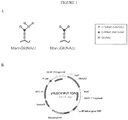
- expressing GnT I in a yeast cell producing Man 5 GlcNAc 2 or Man 3 GlcNAc 2 N-glycans results in the transfer of a GlcNAc moiety to the Man 5 GlcNAc 2 or Man 3 GlcNAc 2 N-glycans such that GlcNAcMan 5 GlcNAc 2 or GlcNAcMan 3 GlcNAc 2 N-glycans, respectively, are produced.
- GlcNAcMan 5 GlcNAc 2 N-glycans In cells producing GlcNAcMan 5 GlcNAc 2 N-glycans, expressing a mannosidase II results in two mannose residues being removed from GlcNAcMan 5 GlcNAc 2 N-glycans to produce GlcNAcMan 3 GlcNAc 2 N-glycans. In cells producing GlcNAcMan 3 GlcNAc 2 N-glycans, expressing GnT II results in the transfer of another GlcNAc moiety to GlcNAcMan 3 GlcNAc 2 N-glycans to produce GlcNAc 2 Man 3 GlcNAc 2 N-glycans.
- glucosidase II e.g., by expressing ⁇ and ⁇ subunits
- Target molecules refer to any molecules that undergo N-glycosylation in a genetically engineered cell (e.g., a fungal cell such as Yarrowia lipolytica, Arxula adeninivorans, or other related species dimorphic yeast cell; a plant cell, or an animal cell).
- a fungal cell such as Yarrowia lipolytica, Arxula adeninivorans, or other related species dimorphic yeast cell
- the target molecules are capable of being trafficked through one or more steps of the Yarrowia lipolytica or Arxula adeninivorans (or other related species dimorphic yeast) secretory pathway, resulting in their N-glycosylation by the host cell machinery.
- the target molecules can be endogenous or exogenous.
- Suitable target proteins include pathogen proteins (e.g., tetanus toxoid; diptheria toxoid; viral surface proteins (e.g., cytomegalovirus (CMV) glycoproteins B, H and gCIII; human immunodeficiency virus 1 (HIV-1) envelope glycoproteins; Rous sarcoma virus (RSV) envelope glycoproteins; herpes simplex virus (HSV) envelope glycoproteins; Epstein Barr virus (EBV) envelope glycoproteins; varicella-zoster virus (VZV) envelope glycoproteins; human papilloma virus (HPV) envelope glycoproteins; Influenza virus glycoproteins; and Hepatitis family surface antigens), lysosomal proteins (e.g., glucocerebrosidase, cerebrosidase, or galactocerebrosidase), insulin, glucagon, growth factors, cytokines, chemokines, a protein binding to an Fc receptor
- Growth factors include, e.g., vascular endothelial growth factor (VEGF), Insulin-like growth factor (IGF), bone morphogenic protein (BMP), Granulocyte-colony stimulating factor (G-CSF), Granulocyte-macrophage colony stimulating factor (GM-CSF), Nerve growth factor (NGF); a Neurotrophin, Platelet-derived growth factor (PDGF), Erythropoietin (EPO), Thrombopoietin (TPO), Myostatin (GDF-8), Growth Differentiation factor-9 (GDF9), basic fibroblast growth factor (bFGF or FGF2), Epidermal growth factor (EGF), Hepatocyte growth factor (HGF).
- VEGF vascular endothelial growth factor
- IGF Insulin-like growth factor
- BMP bone morphogenic protein
- G-CSF Granulocyte-colony stimulating factor
- G-CSF Granulocyte-macrophage colony stimulating factor
- NGF Nerve growth
- Cytokines include, e.g., interleukins (e.g., IL-1 to IL-33 such as IL-1, IL-2, IL-3, IL-4, IL-5, IL-6, IL-7, IL-8, IL-9, IL-10, IL-12, IL-13, or IL-15) and interferons (e.g., interferon ⁇ or interferon ⁇ ).
- interleukins e.g., IL-1 to IL-33 such as IL-1, IL-2, IL-3, IL-4, IL-5, IL-6, IL-7, IL-8, IL-9, IL-10, IL-12, IL-13, or IL-15
- interferons e.g., interferon ⁇ or interferon ⁇
- Chemokines include, e.g., 1-309, TCA-3, MCP-1, MIP-1 ⁇ , MIP-1 ⁇ , RANTES, C10, MRP-2, MARC, MCP-3, MCP-2, MRP-2, CCF18, MIP-1 ⁇ , Eotaxin, MCP-5, MCP-4, NCC-1, Ck ⁇ 10, HCC-1, Leukotactin-1, LEC, NCC-4, TARC, PARC, or Eotaxin-2.
- tumor glycoproteins e.g., tumor-associated antigens
- CEA carcinoembryonic antigen
- human mucins HER-2/neu
- PSA prostate-specific antigen
- the target protein is an anti-HER2/neu antibody.
- the target protein can be one associated with a lysosomal storage disorder, which target proteins include, e.g., alpha-L-iduronidase, beta-D-galactosidase, beta-glucosidase, beta-hexosaminidase, beta-D-mannosidase, alpha-L-fucosidase, arylsulfatase B, arylsulfatase A, alpha-N-acetylgalactosaminidase, aspartylglucosaminidase, iduronate-2-sulfatase, alpha-glucosaminide-N-acetyltransferase, beta-D-glucoronidase, hyaluronidase, alpha-L-mannosidase, alpha-neuraminidase, phosphotransferase, acid lipase, acid ceramidase, sphingomye
- target proteins
- Target proteins also can be fusion proteins. Fusions proteins include, e.g., a fusion of (i) any protein described herein or fragment thereof with (ii) an antibody or fragment thereof.
- antibody fragment refers to (a) an antigen-binding fragment or (b) an Fc part of the antibody that can interact with an Fc receptor.
- An antigen binding fragment can be, for example, a Fab, F(ab') 2 , Fv, and single chain Fv (scFv) fragment.
- An scFv fragment is a single polypeptide chain that includes both the heavy and light chain variable regions of the antibody from which the scFv is derived.
- Target proteins can also be joined to one or more of a polymer, a carrier, an adjuvant, an immunotoxin, or a detectable (e.g., fluorescent, luminescent, or radioactive) moiety.
- a target protein can be joined to polyethyleneglycol, which can be used to increase the molecular weight of small proteins and/or increase circulation residence time.
- the target molecule can be, or contain, dolichol.
- Genetically engineered cells described herein can be used to produce target molecules that contain mammalian-like N-glycans or target molecules that contain intermediates within the mammalian glycosylation pathway.
- nucleic acids encoding one or more enzymes can be introduced into a fungal cell such that the cell produces the desired N-glycan (e.g., GlcNAcMan 5 GlcNAc 2 , GlcNAcMan 3 GlcNAc 2 , GlcNAc 2 Man 3 GlcNAc 2 , GalGlcNAcMan 3 GlcNAc 2 or Gal 2 GlcNAc 2 Man 3 GlcNAc 2 N-glycans).
- a fungal cell may contain a nucleic acid encoding one enzyme, or a nucleic acid may encode multiple enzymes. Each such nucleic acid also can contain a targeting sequence as discussed below.
- a nucleic acid encoding a target molecule also can be introduced into the fungal cell such that the target molecule is produced and modified to contain the desired N-glycan (e.g., GlcNAcMan 5 GlcNAc 2 , GlcNAcMan 3 GlcNAc 2 , GlcNAc 2 Man 3 GlcNAc 2 , GalGlcNAcMan 3 GlcNAc 2 or Gal 2 GlcNAc 2 Man 3 GlcNAc 2 N-glycans).
- nucleic acid and “polynucleotide” are used interchangeably herein, and refer to both RNA and DNA, including cDNA, genomic DNA, synthetic DNA, and DNA (or RNA) containing nucleic acid analogs. Nucleic acids can have any three-dimensional structure. A nucleic acid can be double-stranded or single-stranded (i.e., a sense strand or an antisense strand).
- Non-limiting examples of nucleic acids include genes, gene fragments, exons, introns, messenger RNA (mRNA), transfer RNA, ribosomal RNA, siRNA, micro-RNA, ribozymes, cDNA, recombinant polynucleotides, branched polynucleotides, plasmids, vectors, isolated DNA of any sequence, isolated RNA of any sequence, nucleic acid probes, and primers, as well as nucleic acid analogs.
- mRNA messenger RNA
- transfer RNA transfer RNA
- ribosomal RNA siRNA
- micro-RNA micro-RNA
- ribozymes cDNA
- recombinant polynucleotides branched polynucleotides
- plasmids vectors
- isolated DNA of any sequence isolated RNA of any sequence
- nucleic acid probes and primers, as well as nucleic acid analogs.
- isolated nucleic acid refers to a nucleic acid that is separated from other nucleic acid molecules that are present in a naturally-occurring genome, including nucleic acids that normally flank one or both sides of the nucleic acid in a naturally-occurring genome (e.g., a yeast genome).
- isolated as used herein with respect to nucleic acids also includes any non-naturally-occurring nucleic acid sequence, since such non-naturally-occurring sequences are not found in nature and do not have immediately contiguous sequences in a naturally-occurring genome.
- an isolated nucleic acid can be, for example, a DNA molecule, provided one of the nucleic acid sequences normally found immediately flanking that DNA molecule in a naturally-occurring genome is removed or absent.
- an isolated nucleic acid includes, without limitation, a DNA molecule that exists as a separate molecule (e.g., a chemically synthesized nucleic acid, or a cDNA or genomic DNA fragment produced by PCR or restriction endonuclease treatment) independent of other sequences as well as DNA that is incorporated into a vector, an autonomously replicating plasmid, a virus (e.g., any paramyxovirus, retrovirus, lentivirus, adenovirus, or herpes virus), or into the genomic DNA of a prokaryote or eukaryote.
- a separate molecule e.g., a chemically synthesized nucleic acid, or a cDNA or genomic DNA fragment produced by PCR or restriction endonucleas
- an isolated nucleic acid can include an engineered nucleic acid such as a DNA molecule that is part of a hybrid or fusion nucleic acid.
- exogenous refers to any nucleic acid that does not occur in (and cannot be obtained from) that particular cell as found in nature.
- a non-naturally-occurring nucleic acid is considered to be exogenous to a host cell once introduced into the host cell. It is important to note that non-naturally-occurring nucleic acids can contain nucleic acid subsequences or fragments of nucleic acid sequences that are found in nature provided that the nucleic acid as a whole does not exist in nature.
- a nucleic acid molecule containing a genomic DNA sequence within an expression vector is non-naturally-occurring nucleic acid, and thus is exogenous to a host cell once introduced into the host cell, since that nucleic acid molecule as a whole (genomic DNA plus vector DNA) does not exist in nature.
- any vector, autonomously replicating plasmid, or virus e.g., retrovirus, adenovirus, or herpes virus
- retrovirus e.g., adenovirus, or herpes virus
- genomic DNA fragments produced by PCR or restriction endonuclease treatment as well as cDNAs are considered to be non-naturally-occurring nucleic acid since they exist as separate molecules not found in nature. It also follows that any nucleic acid containing a promoter sequence and polypeptide-encoding sequence (e.g., cDNA or genomic DNA) in an arrangement not found in nature is non-naturally-occurring nucleic acid.
- a nucleic acid that is naturally-occurring can be exogenous to a particular cell. For example, an entire chromosome isolated from a cell of yeast x is an exogenous nucleic acid with respect to a cell of yeast y once that chromosome is introduced into a cell of yeast.
- Cells suitable for genetic engineering include, e.g., fungal cells (e.g., Yarrowia lipolytica or any other related dimorphic yeast cells described herein), plant cells, or animal cells.
- the cells can be primary cells, immortalized cells, or transformed cells.
- the cells can be those in an animal, e.g., a non-human mammal.
- Such cells prior to the genetic engineering as specified herein, can be obtained from a variety of commercial sources and research resource facilities, such as, for example, the American Type Culture Collection (Rockville, MD).
- Genetic engineering of a cell can include genetic modifications such as: (i) deletion of an endogenous gene encoding a protein having N-glycosylation activity; (ii) introduction of a recombinant nucleic acid encoding a mutant form of a protein (e.g., endogenous or exogenous protein) having N-glycosylation activity (i.e., expressing a mutant protein having an N-glycosylation activity); (iii) introduction or expression of an RNA molecule that interferes with the functional expression of a protein having the N-glycosylation activity; (iv) introduction of a recombinant nucleic acid encoding a wild-type (e.g., endogenous or exogenous) protein having N-glycosylation activity (i.e., expressing a protein having an N-glycosylation activity); or (v) altering the promoter or enhancer elements of one or more endogenous genes encoding proteins having N-glycosylation activity to thus alter the expression of
- RNA molecules include, e.g., small-interfering RNA (siRNA), short hairpin RNA (shRNA), anti-sense RNA, or micro RNA (miRNA).
- siRNA small-interfering RNA
- shRNA short hairpin RNA
- miRNA micro RNA
- item (ii) includes, e.g., replacement of an endogenous gene with a gene encoding a protein having greater N-glycosylation activity relative to the endogenous gene so replaced.
- Genetic engineering also includes altering an endogenous gene encoding a protein having an N-glycosylation activity to produce a protein having additions (e.g., a heterologous sequence), deletions, or substitutions (e.g., mutations such as point mutations; conservative or non-conservative mutations).
- Mutations can be introduced specifically (e.g., site-directed mutagenesis or homologous recombination) or can be introduced randomly (for example, cells can be chemically mutagenized as described in, e.g., Newman and Ferro-Novick (1987) J. Cell Biol. 105(4):1587 .
- the genetic modifications described herein can result in one or more of (i) an increase in one or more N-glycosylation activities in the genetically modified cell, (ii) a decrease in one or more N-glycosylation activities in the genetically modified cell, (iii) a change in the localization or intracellular distribution of one or more N-glycosylation activities in the genetically modified cell, or (iv) a change in the ratio of one or more N-glycosylation activities in the genetically modified cell.
- an increase in the amount of an N-glycosylation activity can be due to overexpression of one or more proteins having N-glycosylation activity, an increase in copy number of an endogenous gene (e.g., gene duplication), or an alteration in the promoter or enhancer of an endogenous gene that stimulates an increase in expression of the protein encoded by the gene.
- an increase in copy number of an endogenous gene e.g., gene duplication
- an alteration in the promoter or enhancer of an endogenous gene that stimulates an increase in expression of the protein encoded by the gene e.g., gene duplication
- a decrease in one or more N-glycosylation activities can be due to overexpression of a mutant form (e.g., a dominant negative form) of one or more proteins having N-glysosylation altering activities, introduction or expression of one or more interfering RNA molecules that reduce the expression of one or more proteins having an N-glycosylation activity, or deletion of one or more endogenous genes that encode a protein having N-glycosylation activity.
- a mutant form e.g., a dominant negative form
- a "gene replacement" vector can be constructed in such a way to include a selectable marker gene.
- the selectable marker gene can be operably linked, at both 5' and 3' end, to portions of the gene of sufficient length to mediate homologous recombination.
- the selectable marker can be one of any number of genes which either complement host cell auxotrophy or provide antibiotic resistance, including URA3, LEU2 and HIS3 genes.
- selectable markers include the CAT gene, which confers chloramphenicol resistance to yeast cells, or the lacZ gene, which results in blue colonies due to the expression of ⁇ -galactosidase.
- Linearized DNA fragments of the gene replacement vector are then introduced into the cells using methods well known in the art (see below). Integration of the linear fragments into the genome and the disruption of the gene can be determined based on the selection marker and can be verified by, for example, Southern blot analysis.
- a selectable marker can be removed from the genome of the host cell by, e.g., Cre-loxP systems (see below). This process of marker removal is referred to as "curing" throughout the Examples.
- a gene replacement vector can be constructed in such a way as to include a portion of the gene to be disrupted, where the portion is devoid of any endogenous gene promoter sequence and encodes none, or an inactive fragment of, the coding sequence of the gene.
- An "inactive fragment” is a fragment of the gene that encodes a protein having, e.g., less than about 10% (e.g., less than about 9%, less than about 8%, less than about 7%, less than about 6%, less than about 5%, less than about 4%, less than about 3%, less than about 2%, less than about 1%, or 0%) of the activity of the protein produced from the full-length coding sequence of the gene.
- Such a portion of the gene is inserted in a vector in such a way that no known promoter sequence is operably linked to the gene sequence, but that a stop codon and a transcription termination sequence are operably linked to the portion of the gene sequence.
- This vector can be subsequently linearized in the portion of the gene sequence and transformed into a cell. By way of single homologous recombination, this linearized vector is then integrated in the endogenous counterpart of the gene.
- Expression vectors can be autonomous or integrative.
- a recombinant nucleic acid can be in introduced into the cell in the form of an expression vector such as a plasmid, phage, transposon, cosmid or virus particle.
- the recombinant nucleic acid can be maintained extrachromosomally or it can be integrated into the yeast cell chromosomal DNA.
- Expression vectors can contain selection marker genes encoding proteins required for cell viability under selected conditions (e.g., URA3, which encodes an enzyme necessary for uracil biosynthesis or TRP1, which encodes an enzyme required for tryptophan biosynthesis) to permit detection and/or selection of those cells transformed with the desired nucleic acids (see, e.g., U.S. Patent No. 4,704,362 ).
- Expression vectors can also include an autonomous replication sequence (ARS).
- ARS autonomous replication sequence
- U.S. Patent No. 4,837,148 describes autonomous replication sequences which provide a suitable means for maintaining plasmids in Pichia pastoris.
- Integrative vectors are disclosed, e.g., in U.S. Patent No. 4,882,279 .
- Integrative vectors generally include a serially arranged sequence of at least a first insertable DNA fragment, a selectable marker gene, and a second insertable DNA fragment.
- the first and second insertable DNA fragments are each about 200 (e.g., about 250, about 300, about 350, about 400, about 450, about 500, or about 1000 or more) nucleotides in length and have nucleotide sequences which are homologous to portions of the genomic DNA of the species to be transformed.
- a nucleotide sequence containing a gene of interest (e.g., a gene encoding a protein having N-glycosylation activity) for expression is inserted in this vector between the first and second insertable DNA fragments whether before or after the marker gene.
- Integrative vectors can be linearized prior to yeast transformation to facilitate the integration of the nucleotide sequence of interest into the host cell genome.
- An expression vector can feature a recombinant nucleic acid under the control of a yeast (e.g., Yarrowia lipolytica, Arxula adeninivorans, or other related dimorphic yeast species) promoter, which enables them to be expressed in yeast.
- yeast promoters include the TEF1, HP4D, GAP, POX2, ADC1, TPI1, ADH2, POX, and Gal10 promter. See, e.g., Madzak et al., (2000) J. Mol. Microbiol. Biotechnol. 2:207-216 ; Guarente et al. (1982) Proc. Natl. Acad. Sci. USA 79(23):7410 .
- the expression vector can feature a recombinant nucleic acid under the control of an animal cell promoter suitable for expression in the host cell of interest.
- mammalian promoters include the SV40 and cytomegalovirus (CMV) promoters.
- a promoter can be constitutive or inducible (conditional).
- a constitutive promoter is understood to be a promoter whose expression is constant under the standard culturing conditions.
- Inducible promoters are promoters that are responsive to one or more induction cues.
- an inducible promoter can be chemically regulated (e.g., a promoter whose transcriptional activity is regulated by the presence or absence of a chemical inducing agent such as an alcohol, tetracycline, a steroid, a metal, or other small molecule) or physically regulated (e.g., a promoter whose transcriptional activity is regulated by the presence or absence of a physical inducer such as light or high or low temperatures).
- An inducible promoter can also be indirectly regulated by one or more transcription factors that are themselves directly regulated by chemical or physical cues.
- Genetic engineering of a cell also includes activating an endogenous gene (e.g., a gene encoding a protein having N-glycosylation activity) that is present in the host cell, but is normally not expressed in the cells or is not expressed at significant levels in the cells.
- an endogenous gene e.g., a gene encoding a protein having N-glycosylation activity
- a regulatory sequence e.g., a gene promoter or an enhancer
- a gene promoter or an enhancer can be modified such that the operably-linked coding sequence exhibits increased expression.
- Homologous recombination or targeting can be used to replace or disable the regulatory region normally associated with the gene with a regulatory sequence which causes the gene to be expressed at levels higher than evident in the corresponding non-genetically engineered cell, or causes the gene to display a pattern of regulation or induction that is different than evident in the corresponding non-genetically engineered cell.
- a regulatory sequence e.g., a promoter or enhancer
- a gene can be conditionally deleted using, e.g., a site-specific DNA recombinase such as the Cre-loxP system (see, e.g., Gossen et al. (2002) Ann. Rev. Genetics 36:153-173 and U.S. Application Publication No. 20060014264 ).
- a site-specific DNA recombinase such as the Cre-loxP system (see, e.g., Gossen et al. (2002) Ann. Rev. Genetics 36:153-173 and U.S. Application Publication No. 20060014264 ).
- a recombinant nucleic acid can be introduced into a cell described herein using a variety of methods such as the spheroplast technique or the whole-cell lithium chloride yeast transformation method.
- Other methods useful for transformation of plasmids or linear nucleic acid vectors into cells are described in, for example, U.S. Patent No. 4,929,555 ; Hinnen et al. (1978) Proc. Nat. Acad. Sci. USA 75:1929 ; Ito et al. (1983) J. Bacteriol. 153:163 ; U.S. Patent No. 4,879,231 ; and Sreekrishna et al. (1987) Gene 59:115 .
- Electroporation and PEG1000 whole cell transformation procedures may also be used, as described by Cregg and Russel, Methods in Molecular Biology: Pichia Protocols, Chapter 3, Humana Press, Totowa, N.J., pp. 27-39 (1998 ).
- Transfection of animal cells can feature, for example, the introduction of a vector to the cells using calcium phosphate, electroporation, heat shock, liposomes, or transfection reagents such as FUGENE® or LIPOFECTAMINE®, or by contacting naked nucleic acid vectors with the cells in solution (see, e.g., Sambrook et al., Molecular Cloning: A Laboratory Manual Second Edition vol. 1, 2 and 3. Cold Spring Harbor Laboratory Press: Cold Spring Harbor, New York, USA, Nov. 1989 .
- Transformed yeast cells can be selected for by using appropriate techniques including, but not limited to, culturing auxotrophic cells after transformation in the absence of the biochemical product required (due to the cell's auxotrophy), selection for and detection of a new phenotype, or culturing in the presence of an antibiotic which is toxic to the yeast in the absence of a resistance gene contained in the transformants. Transformants can also be selected and/or verified by integration of the expression cassette into the genome, which can be assessed by, e.g., Southern blot or PCR analysis.
- the vectors Prior to introducing the vectors into a target cell of interest, the vectors can be grown (e.g., amplified) in bacterial cells such as Escherichia coli ( E. coli ).
- the vector DNA can be isolated from bacterial cells by any of the methods known in the art which result in the purification of vector DNA from the bacterial milieu.
- the purified vector DNA can be extracted extensively with phenol, chloroform, and ether, to ensure that no E. coli proteins are present in the plasmid DNA preparation, since these proteins can be toxic to mammalian cells.
- Genetic engineering can be used to express (e.g., overexpress), introduce modifications into, or delete any number of genes encoding proteins having N-glycosylation activity.
- proteins include, for example, OCH1, ALG3, ⁇ -1,3-glucosyltransferase, GnT I, mannosidase II, GnT II, glucosidase II, or Gal T.
- the genes encoding proteins having N-glycosylation activity can be from any species containing such genes.
- Exemplary fungal species from which genes encoding proteins having N-glycosylation activity can be obtained include, without limitation, Pichia anomala, Pichia bovis, Pichia canadensis, Pichia carsonii, Pichia farinose, Pichia fermentans, Pichia fluxuum, Pichia membranaefaciens, Pichia membranaefaciens, Candida valida, Candida albicans, Candida ascalaphidarum, Candida amphixiae, Candida Antarctica, Candida atlantica, Candida atmosphaerica, Candida blattae, Candida carpophila, Candida cerambycidarum, Candida chauliodes, Candida corydalis, Candida dosseyi, Candida dubliniensis, Candida ergatensis, Candida fructus, Candida glabrata, Candida fermentati, Candida guilliermondii, Candida haemulonii, Candida insectamens, Candida insectorum, Candida intermedia, Candida jeffresii
- Saccharomyces bisporas Zygosaccharomyces bisporus, Saccharomyces bisporus, Zygosaccharomyces mellis, Zygosaccharomyces priorianus, Zygosaccharomyces rouxiim, Zygosaccharomyces rouxii, Zygosaccharomyces barkeri, Saccharomyces rouxii, Zygosaccharomyces rouxii, Zygosaccharomyces major, Saccharomyces rousii, Pichia anomala, Pichia bovis, Pichia Canadensis, Pichia carsonii, Pichia farinose, Pichia fermentans, Pichia fluxuum, Pichia membranaefaciens, Pichia pseudopolymorpha, Pichia quercuum, Pichia robertsii, Pseudozyma Antarctica, Rhodospor
- Exemplary lower eukaryotes also include various species of Aspergillus including, but not limited to, Aspergillus caesiellus, Aspergillus candidus, Aspergillus carneus, Aspergillus clavatus, Aspergillus deflectus, Aspergillus flavus, Aspergillus fumigatus, Aspergillus glaucus, Aspergillus nidulans, Aspergillus niger, Aspergillus ochraceus, Aspergillus oryzae, Aspergillus parasiticus, Aspergillus penicilloides, Aspergillus restrictus, Aspergillus sojae, Aspergillus sydowi, Aspergillus tamari, Aspergillus terreus, Aspergillus ustus, or Aspergillus versicolor.
- Aspergillus caesiellus Aspergillus candidus, Aspergillus carne
- Exemplary protozoal genera from which genes encoding proteins having N-glycosylation activity can be obtained include, without limitation, Blastocrithidia, Crithidia, Endotrypanum, Herpetomonas, Leishmania, Leptomonas, Phytomonas, Trypanosoma (e.g., T. bruceii, T. gambiense, T. rhodesiense, and T. cruzi ), and Wallaceina.
- the gene encoding GnT I can be obtained from human (Swiss Protein Accession No.
- the gene encoding GntII can be obtained from human, rat (Swiss Protein Accession No. Q09326), Arabidopsis, or mouse; the gene encoding Man II can be obtained from human, rat, Arabidopsis, mouse, Drosophila (Swiss Protein Accession No. Q24451); and the gene encoding GalT can be obtained from human (Swiss Protein Accession No. P15291), rat, mouse, or bovine.
- a genetically engineered cell lacks the OCH1 (GenBank Accession No: AJ563920) gene or gene product (mRNA or protein) thereof.
- the present genetically engineered cell lacks the ALG3 (Genbank® Accession Nos: XM_503488, Genolevures Ref: YALI0E03190g) gene or gene product (mRNA or protein) thereof.
- the present genetically engineered cell expresses (e.g., overexpresses) an ALG6 ⁇ -1,3-glucosyltransferase (e.g., Genbank® Acccession Nos: XM_502922, Genolevures Ref: YALI0D17028g) protein.
- the present genetically engineered cell expresses an ⁇ -1,2-mannosidase (e.g., Genbank Acccession No.:AF212153) protein.
- the present genetically engineered cell expresses a GlcNAc-transferase I (e.g., Swiss Prot. Accession No. P26572) protein.
- a genetically engineered cell which expresses a mannosidase II protein or catalytic domain thereof (e.g., Swiss Prot. Accession No. Q24451).
- a genetically engineered cell expresses a galactosyltransferase I protein or catalytic domain thereof (e.g., Swiss Prot. Accession No. P15291).
- the present genetically engineered cell expresses a GlcNAc-transferase II protein or catalytic domain thereof (e.g., Swiss Prot. Accession No. Q09326).
- the genetically engineered cell expresses an alpha or beta subunit (or both the alpha and the beta subunit) of a glucosidase II such as the glucosidase II of Yarrowia lipolytica, Trypanosoma brucei or Aspergillus niger.
- a genetically engineered cell can have any combination of these modifications.
- a genetically engineered cell can lack the OCH1 gene and express an ⁇ -1,2-mannosidase, GlcNAc-transferase I, mannosidase II, and a galactosyltransferase I.
- a genetically engineered cell can lack the ALG3 gene, and express an ⁇ -1,2-mannosidase, GlcNAc-transferase I, GlcNAc-transferase I, and a galactosyltransferase I.
- Such a genetically engineered cell further can express an ⁇ -1,3-glucosyltransferase and/or express alpha and beta subunits of a glucosidase II and/or lack the OCH1 gene.
- proteins can be fusion proteins that contain a heterologous targeting sequence.
- the ⁇ -1,2-mannosidase can have an HDEL endoplasmic reticulum (ER)-retention amino acid sequence (see Examples). It is understood that any protein having N-glycosylation activity can be engineered into a fusion protein comprising an HDEL sequence.
- Other proteins can have heterologous sequences that target the protein to the Golgi apparatus. For example, the first 100 N-terminal amino acids encoded by the yeast Kre2p gene, the first 36 N-terminal amino acids (Swiss Prot. Accession No. P38069) encoded by the S.
- nucleic acids encoding a protein to be expressed in a fungal cell can include a nucleotide sequence encoding a targeting sequence to target the encoded protein to an intracellular compartment.
- the ⁇ -1,2-mannosidase can be targeted to the ER, while the GnT I, GnTII, mannosidase, and Gal T can be targeted to the Golgi.
- a nucleic acid encoding the protein can be codon-optimized for expression in the particular cell of interest.
- a nucleic acid encoding a protein having N-glycosylation from Trypanosoma brucei can be codon-optimized for expression in a yeast cell such as Yarrowia lipolytica. Such codon-optimization can be useful for increasing expression of the protein in the cell of interest.
- TABLE 1 Yarrowia lipolytica Codon Usage Table UUU 15.9(46804) CU 21.8(64161) AU 6.8(20043) GU 6.1(17849) UUC 23.0(67672) CC 20.6(60695) AC 23.1(68146) GC 6.1(17903) UUA 1.8(5280) CA 7.8(22845) AA 0.8(2494) GA 0.4(1148) UUG 10.4(30576) CG 15.4(45255) AG 0.8(2325) GG 12.1(35555) CUU 13.2(38890) CU 17.4(51329) AU 9.6(28191) GU 6.0(17622) CUC 22.6(66461) CC 23.3(68633)
- human proteins can be introduced into the cell and one or more endogenous yeast proteins having N-glycosylation activity can be suppressed (e.g., deleted or mutated).
- Techniques for "humanizing" a fungal glycosylation pathway are described in, e.g., Choi et al. (2003) Proc. Natl. Acad. Sci. USA 100(9):5022-5027 ; Vervecken et al. (2004) Appl. Environ. Microb. 70(5):2639-2646 ; and Gerngross (2004) Nature Biotech. 22(11):1410-1414 .
- the genetic engineering involves, e.g., changes in the expression of a protein or expression of an exogenous protein (including a mutant form of an endogenous protein)
- a variety of techniques can be used to determine if the genetically engineered cells express the protein. For example, the presence of mRNA encoding the protein or the protein itself can be detected using, e.g., Northern Blot or RT-PCR analysis or Western Blot analysis, respectively.
- the intracellular localization of a protein having N-glycosylation activity can be analyzed by using a variety of techniques, including subcellular fractionation and immunofluorescence.
- Methods for detecting glycosylation of a target molecule include DNA sequencer-assisted (DSA), fluorophore-assisted carbohydrate electrophoresis (FACE) or surface-enhanced laser desorption/ionization time-of-flight mass spectrometry (SELDI-TOF MS).
- DSA DNA sequencer-assisted
- FACE fluorophore-assisted carbohydrate electrophoresis
- SELDI-TOF MS surface-enhanced laser desorption/ionization time-of-flight mass spectrometry
- an analysis can utilize DSA-FACE in which, for example, glycoproteins are denatured followed by immobilization on, e.g., a membrane. The glycoproteins can then be reduced with a suitable reducing agent such as dithiothreitol (DTT) or ⁇ -mercaptoethanol.
- DTT dithiothreitol
- ⁇ -mercaptoethanol a suitable reducing agent
- the sulfhydryl groups of the proteins can be carboxylated using an acid such as iodoacetic acid.
- the N-glycans can be released from the protein using an enzyme such as N-glycosidase F.
- N-glycans optionally, can be reconstituted and derivatized by reductive amination.
- the derivatized N-glycans can then be concentrated.
- Instrumentation suitable for N-glycan analysis includes, e.g., the ABI PRISM® 377 DNA sequencer (Applied Biosystems). Data analysis can be performed using, e.g., GENESCAN® 3.1 software (Applied Biosystems).
- isolated mannoproteins can be further treated with one or more enzymes to confirm their N-glycan status.
- Additional methods of N-glycan analysis include, e.g., mass spectrometry (e.g., MALDI-TOF-MS), high-pressure liquid chromatography (HPLC) on normal phase, reversed phase and ion exchange chromatography (e.g., with pulsed amperometric detection when glycans are not labeled and with UV absorbance or fluorescence if glycans are appropriately labeled). See also Callewaert et al. (2001) Glycobiology 11(4):275-281 and Freire et al. (2006) Bioconjug. Chem. 17(2):559-564 .
- the genetically engineered cell can, optionally, be cultured in the presence of an inducing agent before, during, or subsequent to the introduction of the nucleic acid.
- an inducing agent e.g., a chemical or physical cue
- the cell can be exposed to a chemical inducing agent that is capable of promoting the expression of one or more proteins having N-glycosylation activity.
- a cell can be contacted with multiple inducing agents.
- Target molecules modified to include the desired N-glycan can be isolated from the genetically engineered cell.
- the modified target molecule can be maintained within the yeast cell and released upon cell lysis or the modified target molecule can be secreted into the culture medium via a mechanism provided by a coding sequence (either native to the exogenous nucleic acid or engineered into the expression vector), which directs secretion of the molecule from the cell.
- the presence of the modified target molecule in the cell lysate or culture medium can be verified by a variety of standard protocols for detecting the presence of the molecule.
- such protocols can include, but are not limited to, immunoblotting or radioimmunoprecipitation with an antibody specific for the altered target protein (or the target protein itself), binding of a ligand specific for the altered target protein (or the target protein itself), or testing for a specific enzyme activity of the modified target protein (or the target protein itself).
- At least about 25% of the target molecules isolated from the genetically engineered cell contain the desired N-glycan.
- at least about 27%, at least about 30%, at least about 35%, at least about 40%, at least about 45%, at least about 50%, at least about 55%, at least about 60%, at least about 65%, at least about 70%, at least about 75%, at least about 80%, at least about 85%, at least about 90%, or at least about 95%, or at least about 99% of the target molecules isolated from the genetically engineered cell can contain the desired N-glycan.
- At least 50% (e.g., at least 55, 60, 65, 70, 75, 80, or 85%) of the N-glycans on the glycoprotein can be GlcNAc 2 Man 3 GlcNAc 2 N-glycans.
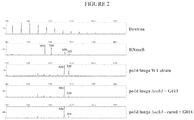
- the percentage of GlcNAc 2 Man 3 GlcNAc 2 N-glycans can be estimated from the peak areas in the DSA-FACE electropherograms. See Example 13.
- the isolated modified target molecules can be frozen, lyophilized, or immobilized and stored under appropriate conditions, e.g., which allow the altered target molecules to retain biological activity.
- a substantially pure culture of a genetically engineered cell is a culture of that cell in which less than about 40% (i.e., less than about: 35%; 30%; 25%; 20%; 15%; 10%; 5%; 2%; 1%; 0.5%; 0.25%; 0.1%; 0.01%; 0.001 %; 0.0001 %; or even less) of the total number of viable cells in the culture are viable cells other than the genetically engineered cell, e.g., bacterial, fungal (including yeast), mycoplasmal, or protozoan cells.
- Such a culture of genetically engineered cells includes the cells and a growth, storage, or transport medium.
- Media can be liquid, semi-solid (e.g., gelatinous media), or frozen.
- the culture includes the cells growing in the liquid or in/on the semi-solid medium or being stored or transported in a storage or transport medium, including a frozen storage or transport medium.
- the cultures are in a culture vessel or storage vessel or substrate (e.g., a culture dish, flask, or tube or a storage vial or tube).
- the genetically engineered cells described herein can be stored, for example, as frozen cell suspensions, e.g., in buffer containing a cryoprotectant such as glycerol or sucrose, as lyophilized cells.
- a cryoprotectant such as glycerol or sucrose
- they can be stored, for example, as dried cell preparations obtained, e.g., by fluidized bed drying or spray drying, or any other suitable drying method.
- the isolated, target molecules modified to contain the desired N-glycan can be used to treat a variety of disorders, including metabolic disorders, cancer, and inflammatory disorders.
- a metabolic disorder is one that affects the production of energy within individual human (or animal) cells. Most metabolic disorders are genetic, though some can be "acquired” as a result of diet, toxins, infections, etc. Genetic metabolic disorders are also known as inborn errors of metabolism. In general, the genetic metabolic disorders are caused by genetic defects that result in missing or improperly constructed enzymes necessary for some step in the metabolic process of the cell.
- metabolic disorders are disorders of carbohydrate metabolism, disorders of amino acid metabolism, disorders of organic acid metabolism (organic acidurias), disorders of fatty acid oxidation and mitochondrial metabolism, disorders of porphyrin metabolism, disorders of purine or pyrimidine metabolism, disorders of steroid metabolism disorders of mitochondrial function, disorders of peroxisomal function, and lysosomal storage disorders (LSDs).
- Examples of metabolic disorders that can be treated through the administration of one or more glycosylated molecules (or pharmaceutical compositions of the same) described herein can include hereditary hemochromatosis, oculocutaneous albinism, protein C deficiency, type I hereditary angioedema, congenital sucrase-isomaltase deficiency, Crigler-Najjar type II, Laron syndrome, hereditary Myeloperoxidase, primary hypothyroidism, congenital long QT syndrome, tyroxine binding globulin deficiency, familial hypercholesterolemia, familial chylomicronemia, abeta-lipoproteinema, low plasma lipoprotein A levels, hereditary emphysema with liver injury, congenital hypothyroidism, osteogenesis imperfecta, hereditary hypofibrinogenemia, alpha-1antichymotrypsin deficiency, nephrogenic diabetes insipidus, neurohypophyse
- metabolic disorders can also include lysosomal storage disorders such as, but not limited to, Fabry disease, Farber disease, Gaucher disease, GM 1 -gangliosidosis, Tay-Sachs disease, Sandhoff disease, GM 2 activator disease, Krabbe disease, metachromatic leukodystrophy, Niemann-Pick disease (types A, B, and C), Hurler disease, Scheie disease, Hunter disease, Sanfilippo disease, Morquio disease, Maroteaux-Lamy disease, hyaluronidase deficiency, aspartylglucosaminuria, fucosidosis, mannosidosis, Schindler disease, sialidosis type 1, Pompe disease, Pycnodysostosis, ceroid lipofuscinosis, cholesterol ester storage disease, Wolman disease, Multiple sulfatase deficiency, galactosialidosis, mucolipidosis (types II ,III, and IV), cystinosis, sialic acid
- Symptoms of a metabolic disorder are numerous and diverse and can include one or more of, e.g., anemia, fatigue, bruising easily, low blood platelets, liver enlargement, spleen enlargement, skeletal weakening, lung impairment, infections (e.g., chest infections or pneumonias), kidney impairment, progressive brain damage, seizures, extra thick meconium, coughing, wheezing, excess saliva or mucous production, shortness of breath, abdominal pain, occluded bowel or gut, fertility problems, polyps in the nose, clubbing of the finger/toe nails and skin, pain in the hands or feet, angiokeratoma, decreased perspiration, corneal and lenticular opacities, cataracts, mitral valve prolapse and/or regurgitation, cardiomegaly, temperature intolerance, difficulty walking, difficulty swallowing, progressive vision loss, progressive hearing loss, hypotonia, macroglossia, areflexia, lower back pain, sleep apnea, orthopnea, somnol
- a given disorder will generally present only symptoms characteristic to that particular disorder.
- a patient with Fabry disease can present a particular subset of the above-mentioned symptoms such as, but not limited to, temperature intolerance, corneal whirling, pain, skin rashes, nausea, or dirarrhea.
- a patient with Gaucher syndrome can present with splenomegaly, cirrhosis, convulsions, hypertonia, apnea, osteoporosis, or skin discoloration.
- a metabolic disorder can also be treated by proper nutrition and vitamins (e.g., cofactor therapy), physical therapy, and pain medications.
- a patient can present these symptoms at any age.
- symptoms can present in childhood or in early adulthood.
- symptoms of Fabry disease can present at an early age, e.g., at 10 or 11 years of age.
- a subject "at risk of developing a metabolic disorder” is a subject that has a predisposition to develop a disorder, i.e., a genetic predisposition to develop metabolic disorder as a result of a mutation in a enzyme such as alpha-L-iduronidase, beta-D-galactosidase, beta-glucosidase, beta-hexosaminidase, beta-D-mannosidase, alpha-L-fucosidase, arylsulfatase B, arylsulfatase A, alpha-N-acteylgalactosaminidase, aspartylglucosaminidase, iduronate-2-sulfatase, alpha-glucosaminide-N-acetyltransferase, beta-D-glucoronidase, hyaluronidase, alpha-L-mannosidase, alpha-neur
- a subject "suspected of having a disorder” is one having one or more symptoms of a disorder such as any of those described herein.
- Cancer is a class of diseases or disorders characterized by uncontrolled division of cells and the ability of these to spread, either by direct growth into adjacent tissue through invasion, or by implantation into distant sites by metastasis (where cancer cells are transported through the bloodstream or lymphatic system). Cancer can affect people at all ages, but risk tends to increase with age. Types of cancers can include, e.g., lung cancer, breast cancer, colon cancer, pancreatic cancer, renal cancer, stomach cancer, liver cancer, bone cancer, hematological cancer, neural tissue cancer, melanoma, thyroid cancer, ovarian cancer, testicular cancer, prostate cancer, cervical cancer, vaginal cancer, or bladder cancer.
- a subject "at risk of developing a cancer” is a subject that has a predisposition to develop a cancer, i.e., a genetic predisposition to develop cancer such as a mutation in a tumor suppressor gene (e.g., mutation in BRCA1, p53, RB, or APC) or has been exposed to conditions that can result in cancer.
- a predisposition to develop a cancer i.e., a genetic predisposition to develop cancer such as a mutation in a tumor suppressor gene (e.g., mutation in BRCA1, p53, RB, or APC) or has been exposed to conditions that can result in cancer.
- a subject can also be one "at risk of developing a cancer" when the subject has been exposed to mutagenic or carcinogenic levels of certain compounds (e.g., carcinogenic compounds in cigarette smoke such as Acrolein, Arsenic, Benzene, Benz ⁇ a ⁇ anthracene, Benzo ⁇ a ⁇ pyrene, Polonium-210 (Radon), Urethane, or Vinyl Chloride).
- carcinogenic compounds in cigarette smoke such as Acrolein, Arsenic, Benzene, Benz ⁇ a ⁇ anthracene, Benzo ⁇ a ⁇ pyrene, Polonium-210 (Radon), Urethane, or Vinyl Chloride.
- the subject can be "at risk of developing a cancer" when the subject has been exposed to, e.g., large doses of ultraviolet light or X-irradiation, or exposed (e.g., infected) to a tumor-causing/associated virus such as papillomavirus, Epstein-Barr virus, hepatitis B virus, or human T-cell leukemia-lymphoma virus.
- a tumor-causing/associated virus such as papillomavirus, Epstein-Barr virus, hepatitis B virus, or human T-cell leukemia-lymphoma virus.
- a subject "suspected of having a cancer” is one having one or more symptoms of a cancer.
- Symptoms of cancer are well-known to those of skill in the art and include, without limitation, breast lumps, nipple changes, breast cysts, breast pain, weight loss, weakness, excessive fatigue, difficulty eating, loss of appetite, chronic cough, worsening breathlessness, coughing up blood, blood in the urine, blood in stool, nausea, vomiting, liver metastases, lung metastases, bone metastases, abdominal fullness, bloating, fluid in peritoneal cavity, vaginal bleeding, constipation, abdominal distension, perforation of colon, acute peritonitis (infection, fever, pain), pain, vomiting blood, heavy sweating, fever, high blood pressure, anemia, diarrhea, jaundice, dizziness, chills, muscle spasms, colon metastases, lung metastases, bladder metastases, liver metastases, bone metastases, kidney metastases, and pancreas metastases, difficulty swallowing, and
- a cancer can also be treated by chemotherapeutic agents, ionizing radiation, immunotherapy agents, or hyperthermotherapy agents.
- Chemotherapeutic agents include, e.g., cisplatin, carboplatin, procarbazine, mechlorethamine, cyclophosphamide, camptothecin, adriamycin, ifosfamide, melphalan, chlorambucil, bisulfan, nitrosurea, dactinomycin, daunorubicin, doxorubicin, bleomycin, plicomycin, mitomycin, etoposide, verampil, podophyllotoxin, tamoxifen, taxol, transplatinum, 5-flurouracil, vincristin, vinblastin, and methotrexate.
- an "inflammatory disorder,” as used herein, refers to a process in which one or more substances (e.g., substances not naturally occurring in the subject), via the action of white blood cells (e.g., B cells, T cells, macrophages, monocytes, or dendritic cells) inappropriately trigger a pathological response, e.g., a pathological immune response. Accordingly, such cells involved in the inflammatory response are referred to as "inflammatory cells.”
- the inappropriately triggered inflammatory response can be one where no foreign substance (e.g., an antigen, a virus, a bacterium, a fungus) is present in or on the subject.
- the inappropriately triggered response can be one where a self-component (e.g., a self-antigen) is targeted (e.g., an autoimmune disorder such as multiple sclerosis) by the inflammatory cells.
- a self-component e.g., a self-antigen
- the inappropriately triggered response can also be a response that is inappropriate in magnitude or duration, e.g., anaphylaxis.
- the inappropriately targeted response can be due to the presence of a microbial infection (e.g., viral, bacterial, or fungal).
- Types of inflammatory disorders can include, but are not limited to, osteoarthritis, rheumatoid arthritis (RA), spondyloarthropathies, POEMS syndrome, Crohn's disease, multicentric Castleman's disease, systemic lupus erythematosus (SLE), multiple sclerosis (MS), muscular dystrophy (MD), insulin-dependent diabetes mellitus (IDDM), dermatomyositis, polymyositis, inflammatory neuropathies such as Guillain Barre syndrome, vasculitis such as Wegener's granulomatosus, polyarteritis nodosa, polymyalgia rheumatica, temporal arteritis, Sjogren's syndrome, Bechet's disease, Churg-Strauss syndrome, or Takayasu's arteritis.
- osteoarthritis rheumatoid arthritis
- RA rheumatoid arthritis
- POEMS syndrome Crohn
- inflammatory disorders are certain types of allergies such as rhinitis, sinusitis, urticaria, hives, angioedema, atopic dermatitis, food allergies (e.g., a nut allergy), drug allergies (e.g., penicillin), insect allergies (e.g., allergy to a bee sting), or mastocytosis.
- Inflammatory disorders can also include ulcerative colitis and asthma.
- a subject "at risk of developing an inflammatory disorder” refers to a subject with a family history of one or more inflammatory disorders (e.g., a genetic predisposition to one or more inflammatory disorders) or one exposed to one or more inflammation-inducing conditions.
- a subject can have been exposed to a viral or bacterial superantigen such as, but not limited to, staphylococcal enterotoxins (SEs), a streptococcus pyogenes exotoxin (SPE), a staphylococcus aureus toxic shock-syndrome toxin (TSST-1), a streptococcal mitogenic exotoxin (SME) and a streptococcal superantigen (SSA).
- SEs staphylococcal enterotoxins
- SPE streptococcus pyogenes exotoxin
- TSST-1 staphylococcus aureus toxic shock-syndrome toxin
- SME streptococcal mit
- a subject "suspected of having an inflammatory disorder” is one who presents with one or more symptoms of an inflammatory disorder.
- Symptoms of inflammatory disorders are well known in the art and include, but are not limited to, redness, swelling (e.g., swollen joints), joints that are warm to the touch, joint pain, stiffness, loss of joint function, fever, chills, fatigue, loss of energy, headaches, loss of appetite, muscle stiffness, insomnia, itchiness, stuffy nose, sneezing, coughing, one or more neurologic symptoms such as dizziness, seizures, or pain. From the above it will be clear that subjects "suspected of having an inflammatory disorder” are not all the subjects within a species of interest.
- an inflammatory disorder can also be treated by non-steroidal anti-inflammatory drug (NSAID), a disease-modifying anti-rheumatic drug (DMARD), a biological response modifier, or a corticosteroid.
- NSAID non-steroidal anti-inflammatory drug
- DMARD disease-modifying anti-rheumatic drug
- Biological response modifiers include, e.g., an anti-TNF agent.
- anti-TNF agents include a soluble TNF receptor or an antibody specific for TNF such as adulimumab, infliximab, or etanercept.
- a target molecule modified to have the desired N-glycan can be incorporated into a pharmaceutical composition containing a therapeutically effective amount of the molecule and one or more adjuvants, excipients, carriers, and/or diluents.
- Acceptable diluents, carriers and excipients typically do not adversely affect a recipient's homeostasis (e.g., electrolyte balance).
- Acceptable carriers include biocompatible, inert or bioabsorbable salts, buffering agents, oligo- or polysaccharides, polymers, viscosity-improving agents, preservatives and the like.
- One exemplary carrier is physiologic saline (0.15 M NaCl, pH 7.0 to 7.4).
- Another exemplary carrier is 50 mM sodium phosphate, 100 mM sodium chloride. Further details on techniques for formulation and administration of pharmaceutical compositions can be found in, e.g., Remington's Pharmaceutical Sciences (Maack Publishing Co., Easton, Pa .). Supplementary active compounds can also be incorporated into the compositions.
- compositions can be systemic or local.
- Pharmaceutical compositions can be formulated such that they are suitable for parenteral and/or non-parenteral administration.
- Specific administration modalities include subcutaneous, intravenous, intramuscular, intraperitoneal, transdermal, intrathecal, oral, rectal, buccal, topical, nasal, ophthalmic, intra-articular, intra-arterial, sub-arachnoid, bronchial, lymphatic, vaginal, and intra-uterine administration.
- Administration can be by periodic injections of a bolus of the pharmaceutical composition or can be uninterrupted or continuous by intravenous or intraperitoneal administration from a reservoir which is external (e.g., an IV bag) or internal (e.g., a bioerodable implant, a bioartificial organ, or a colony of implanted altered N-glycosylation molecule production cells). See, e.g., U.S. Pat. Nos. 4,407,957 , 5,798,113 , and 5,800,828 .
- a pharmaceutical composition can be achieved using suitable delivery means such as: a pump (see, e.g., Annals of Pharmacotherapy, 27:912 (1993 ); Cancer, 41:1270 (1993 ); Cancer Research, 44:1698 (1984 ); microencapsulation (see, e.g., U.S. Pat. Nos. 4,352,883 ; 4,353,888 ; and 5,084,350 ); continuous release polymer implants (see, e.g., Sabel, U.S. Pat. No. 4,883,666 ); macroencapsulation (see, e.g., U.S. Pat. Nos.
- parenteral delivery systems include ethylene-vinyl acetate copolymer particles, osmotic pumps, implantable infusion systems, pump delivery, encapsulated cell delivery, liposomal delivery, needle-delivered injection, needle-less injection, nebulizer, aerosolizer, electroporation, and transdermal patch.
- Formulations suitable for parenteral administration conveniently contain a sterile aqueous preparation of the altered N-glycosylation molecule, which preferably is isotonic with the blood of the recipient (e.g., physiological saline solution). Formulations can be presented in unit-dose or multi-dose form.
- Formulations suitable for oral administration can be presented as discrete units such as capsules, cachets, tablets, or lozenges, each containing a predetermined amount of the altered N-glycosylation molecule; or a suspension in an aqueous liquor or a non-aqueous liquid, such as a syrup, an elixir, an emulsion, or a draught.
- a molecule having N-glycans suitable for topical administration can be administered to a mammal (e.g., a human patient) as, e.g., a cream, a spray, a foam, a gel, an ointment, a salve, or a dry rub.
- a dry rub can be rehydrated at the site of administration.
- Such molecules can also be infused directly into (e.g., soaked into and dried) a bandage, gauze, or patch, which can then be applied topically.
- Such molecules can also be maintained in a semi-liquid, gelled, or fully-liquid state in a bandage, gauze, or patch for topical administration (see, e.g., U.S. Patent No. 4,307,717 ).
- a composition can be administered to the subject, e.g., systemically at a dosage from 0.01 ⁇ g/kg to 10,000 ⁇ g/kg body weight of the subject, per dose.
- the dosage is from 1 ⁇ g/kg to 100 ⁇ g/kg body weight of the subject, per dose.
- the dosage is from 1 ⁇ g/kg to 30 ⁇ g/kg body weight of the subject, per dose, e.g., from 3 ⁇ g/kg to 10 ⁇ g/kg body weight of the subject, per dose.
- a molecule containing an N-glycan can be first administered at different dosing regimens.
- the unit dose and regimen depend on factors that include, e.g., the species of mammal, its immune status, the body weight of the mammal.
- levels of such a molecule in a tissue can be monitored using appropriate screening assays as part of a clinical testing procedure, e.g., to determine the efficacy of a given treatment regimen.
- the frequency of dosing for a molecule is within the skills and clinical judgement of medical practitioners (e.g., doctors or nurses).
- the administration regime is established by clinical trials which may establish optimal administration parameters.
- the practitioner may vary such administration regimes according to the subject's age, health, weight, sex and medical status.
- the frequency of dosing can be varied depending on whether the treatment is prophylactic or therapeutic.
- Toxicity and therapeutic efficacy of such molecules or pharmaceutical compositions thereof can be determined by known pharmaceutical procedures in, for example, cell cultures or experimental animals. These procedures can be used, e.g., for determining the LD50 (the dose lethal to 50% of the population) and the ED50 (the dose therapeutically effective in 50% of the population). The dose ratio between toxic and therapeutic effects is the therapeutic index and it can be expressed as the ratio LD50/ED50. Pharmaceutical compositions that exhibit high therapeutic indices are preferred. While pharmaceutical compositions that exhibit toxic side effects can be used, care should be taken to design a delivery system that targets such compounds to the site of affected tissue in order to minimize potential damage to normal cells (e.g., non-target cells) and, thereby, reduce side effects.
- LD50 the dose lethal to 50% of the population
- ED50 the dose therapeutically effective in 50% of the population
- the dose ratio between toxic and therapeutic effects is the therapeutic index and it can be expressed as the ratio LD50/ED50.
- Pharmaceutical compositions that exhibit high therapeutic indices are
- the data obtained from the cell culture assays and animal studies can be used in formulating a range of dosage for use in appropriate subjects (e.g., human patients).
- the dosage of such pharmaceutical compositions lies generally within a range of circulating concentrations that include the ED50 with little or no toxicity. The dosage may vary within this range depending upon the dosage form employed and the route of administration utilized.
- the therapeutically effective dose can be estimated initially from cell culture assays.
- a dose can be formulated in animal models to achieve a circulating plasma concentration range that includes the IC50 (i.e., the concentration of the pharmaceutical composition which achieves a half-maximal inhibition of symptoms) as determined in cell culture.
- IC50 i.e., the concentration of the pharmaceutical composition which achieves a half-maximal inhibition of symptoms
- levels in plasma can be measured, for example, by high performance liquid chromatography.
- a "therapeutically effective amount" of a molecule containing an N-glycan is an amount of the molecule that is capable of producing a medically desirable result (e.g., amelioration of one or more symptoms of a metabolic disorder) in a treated subject.
- a therapeutically effective amount i.e., an effective dosage
- the subject can be any mammal, e.g., a human (e.g., a human patient) or a non-human primate (e.g., chimpanzee, baboon, or monkey), a mouse, a rat, a rabbit, a guinea pig, a gerbil, a hamster, a horse, a type of livestock (e.g., cow, pig, sheep, or goat), a dog, a cat, or a whale.
- a human e.g., a human patient
- a non-human primate e.g., chimpanzee, baboon, or monkey
- a mouse e.g., a rat, a rabbit, a guinea pig, a gerbil, a hamster, a horse
- a type of livestock e.g., cow, pig, sheep, or goat
- a dog e.g., cow, pig,
- a molecule or pharmaceutical composition thereof described herein can be administered to a subject as a combination therapy with another treatment, e.g., a treatment for a metabolic disorder (e.g., a lysosomal storage disorder).
- the combination therapy can include administering to the subject (e.g., a human patient) one or more additional agents that provide a therapeutic benefit to the subject who has, or is at risk of developing, (or suspected of having) a metabolic disorder (e.g., a lysosomal storage disorder).
- the compound or pharmaceutical composition and the one or more additional agents can be administered at the same time.
- the molecule can be administered first and the one or more additional agents administered second, or vice versa.
- a previous therapy is particularly toxic (e.g., a treatment for a metabolic disorder with significant side-effect profiles)
- administration of a molecule described herein can be used to offset and/or lessen the amount of the previously therapy to a level sufficient to give the same or improved therapeutic benefit, but without the toxicity.
- compositions described herein can be included in a container, pack, or dispenser together with instructions for administration.
- Table 2 contains a list of all of the strains used in the experiments described below.
- MH HDEL-tagged ⁇ -1,2-mannosidase
- ⁇ random integration via zeta sequences
- docking ⁇ integration into a specific locus
- (H) hygromycin resistant.
- Example 1 Yarrowia lipolytica OCH1 disruption
- the generation of a glyco-engineered protein expression strain was done in Yarrowia lipolytica strain pold lnuga (a strain having the auxotrophies leu2-, ura3-, gut2- and ade2 -).
- a strategy to knock out the OCH1 (GenBank Accession No: AJ563920) gene in Yarrowia lipolytica was set up as described for the LIP2 gene ( Fickers et al., 2003 J Microbiol Methods. 55(3):727-37 ).
- the gene construction strategy followed for the OCH1 gene is described in U.S. Patent Publication No. 20090069232-A1 .
- the resulting vector was called pYlOCH1 PUT TOPO (FIG. IB).
- the OCH1 KO fragment was isolated from the plasmid by a SpeI/Bst1107I restriction digest and transformed to Yarrowia lipolytica strain pold lnuga.
- Several uracil prototrophic strains were obtained and screened by PCR on genomic DNA (gDNA) using primers Yloch1 prom fw (5'-TCGCTATCACGTCTCTAGC-3', SEQ ID NO:1) and Yloch1 term rev (5'-ACTCTGTATACTTGTATGTACTGTGAGAC-3', SEQ ID NO:2) to analyze the genomic integration of the plasmid.
- a fragment of the correct size i.e., 2328 bp vs.
- a positive ⁇ och1 clone (called G013, see Table 2) was transformed with the episomal plasmid pUB4-Cre (Fickers et al., 2003, supra ) that contains an expression cassette for the Cre recombinase. Removal of the URA3 gene was screened for by PCR on gDNA using primers Yloch1 prom fw and Yloch1 term rev (see above). Clones in which the URA3 marker was excised no longer resulted in the amplification of a 2328 bp band; instead a PCR-fragment of 1075 bp (excl. URA3 ) was obtained.
- Example 2 overexpression of an ER-retained ⁇ -1,2-mannosidase by either random integration or targeted/docked integration
- Man 5 GlcNAc 2 attached to glycoproteins expressed by a ⁇ och1 strain an ⁇ -1,2-mannosidase was expressed to cleave Man 8 GlcNAc 2 to Man 5 GlcNAc 2 (i.e., a Golgi type ⁇ -1,2-mannosidase activity).
- Mannosidase should be targeted to the secretion system.
- Trichoderma reesei ⁇ -1,2-mannosidase (Genbank accession no. AF212153), fused to the S.
- This Southern analysis was performed on Hind III digested genomic DNA using a DIG-labeled mannosidase-specific PCR fragment that was generated using primers Man for (5'-GCCTTCCAGACCTCTTGGAACGCCTACCACC-3', SEQ ID NO:22) and Man rev (5'-GCCAGGTGGCCGCCTCGTCGAGAAGAAGATCG-3', SEQ ID NO:23).
- Selected ADE2 prototrophic clones had potentially integrated the mannosidase expression cassette into the LEU2 locus, whereas LEU2 prototrophs potentially had integrated the cassette into the AXP1 locus.
- the transformants were checked by Southern analysis to assess proper targeting into the genome.
- a Yarrowia codon-optimized sequence was generated for the expression of a fusion protein consisting of the first 100 N-terminal amino acids of the S. cerevisiae Kre2 protein (SwissProt AccNo P27809) followed by the catalytic domain of human GlcNAc-transferase I (SwissProt AccNo P26572)( FIG. 7 , SEQ ID NO:3 and SEQ ID NO:4).
- the yeast Kre2p 100 N-terminal amino acids serve as a Golgi localization signal for the catalytic GnT I domain.
- the GnT I fusion protein is localized later in the secretion pathway than the ER-retained HDEL-tagged ⁇ -1,2-mannosidase in order to enable the enzyme converting the protein-linked N-glycans from Man 5 GlcNAc 2 to GlcNAcMan 5 GlcNAc 2 .
- the codon optimized synthetic gene for the expression of the fusion protein was placed under the transcriptional control of either the TEF1 or the Hp4d promoter, resulting into the plasmids pYLTmAXhGnTI and pYLHp4mAXhGnTI. The construction strategy is shown in FIG. 8 .
- the plasmids pYLTmAXhGnTI and pYLHp4mAXGnTI were NotI digested before transformation to strain G036 (cf. Example 2), known to produce Man 5 GlcNAc 2 N-glycans on its secreted proteins. Transformants were selected for uracil prototrophy. Analysis of the N-glycosylation profile on the secretome of several of these clones showed a clear change in the N-glycan pattern: the Man 5 GlcNAc 2 was significantly reduced and a new peak, representing an N-glycan with higher molecular weight (about one glucose unit extra), appeared.
- strain G040 One transformant expressing the Kre2-GnT I fusion protein under control of the TEF1 promotor was named strain G040 and selected for further use. Genomic analysis of this strain via Southern blot indicated the presence of one expression cassette. Southern analysis was done on BamHI digested genomic DNA using a DIG-labeled GnT I-specific PCR fragment that was generated using primers 5'-GGATGATCACACAATGGCCCTGTTTCTG-3' (SEQ ID NO:5) and 5'-TGCTCTAGACTAGTTCCAAGAGGGGTC-3' (SEQ ID NO:6).
- a Yarrowia codon-optimized sequence was generated for the expression of a fusion protein consisting of the first 36 N-terminal amino acids of the S. cerevisiae Mnn2 protein (SwissProt AccNo P38069) followed by the catalytic domain of Drosophila melanogaster mannosidase II (SwissProt AccNo Q24451)( FIG. 10 , SEQ ID NO:7 and SEQ ID NO:8).
- the yeast Mnn2 36 N-terminal amino acids serve as a Golgi localization signal for the catalytic Man II domain.
- the Mnn2-Man II fusion protein is localized at the same or even a later position in the secretion pathway than the Kre2-GnT I fusion protein and is therefore able to convert GlcNAcMan 5 GlcNAc 2 into GlcNAcMan 3 GlcNAc 2 .
- the Yarrowia codon optimized synthetic gene for the expression of the fusion protein was placed under the transcriptional control of the TEF1 promoter, resulting into the plasmids pYLTmAXDmManII and pYLTmAXDmManII (LEU2ex). The construction strategy is shown in FIG. 11 .
- Plasmid pYLTmAXDmManII (LEU2ex) was NotI digested before transformation to strain G040 (see Example 3), which was known to produce GlcNAcMan 5 GlcNAc 2 N-glycans on its secreted proteins. Transformants were selected for leucine prototrophy. Analysis of the N-glycosylation profile on the secretome of several of these clones showed a change in the N-glycan pattern: a new peak representing an N-glycan with a lower molecular weight of about two glucose units appeared, which could indicate the formation of GlcNAcMan 3 GlcNAc 2 and thus partial mannosidase II activity.
- a Yarrowia codon-optimized sequence was generated for the expression of a fusion protein consisting of the first 46 N-terminal amino acids of the S. cerevisiae Mnn2 protein, followed by the S. pombe GallO-like protein and the catalytic domain of human GalT I ( FIG. 13 ).
- the resulting synthetic gene was placed under the transcriptional control of the TEF1 promoter, resulting into the plasmids pYLTmAXSpGal10hGalTI and pYLTmAXSpGal10hGalTI (ADE2ex).
- the construction strategy is shown in FIG. 14 .
- Plasmid pYLTmAXSpGal10hGalTI (ADE2ex) was NotI digested before transformation to strain G040 (see Example 3), known to produce GlcNAcMan 5 GlcNAc 2 N-glycans on its secreted proteins. Transformants were selected for their adenine prototrophy. Analysis of the N-glycosylation profile on the secretome of several of these clones showed a change in the N-glycan pattern: a new peak appears, running at a position between Man 7 GlcNAc 2 and Man 8 GlcNAc 2 ( FIG. 15 ).
- Example 6 knock-out of YlALG3 and simultaneous overexpression of YlALG6
- the ALG3 gene of strain G036 (pold lnuga ⁇ och1 + Hp4d-driven ⁇ -1,2-mannosidase) needs to be inactivated. This results into the loss of the ER-localized Alg3p ⁇ -1,6-mannosyltransferase activity and changes the composition of the lipid-linked N-glycan precursor structure. Transfer of this structure to an N-glycosylation site of a nascent polypeptide chain makes it possible to convert the yeast glycosylation profile into mammalian-like N-glycan structures without the need to express the Mannosidase II.
- the Yarrowia ALG6 gene (encoding an ER-localized Alg6p ⁇ -1,3-glucosyl transferase) needs to be overexpressed simultaneously to reduce potential protein underglycosylation as much as possible.
- a vector called pYLalg3PUT-ALG6 ( FIG. 16 ) was constructed previously to allow simultaneous knock-out of YlALG3 and Hp4d-driven overexpression of YlALG6. See U.S. Patent Publication No. 20090069232-A1 .
- Man 4 GlcNAc 2 and Man 5 GlcNAc 2 were confirmed by in vitro treatment of the N-glycans with ⁇ -1,2-mannosidase ( FIG. 17 ).
- the level of Man 3 GlcNAc 2 could increase to up to 60% of the total N-glycan pool, with the glucosylated peaks being insensitive towards ⁇ -1,2-mannosidase and only slightly sensitive towards Jack Bean ⁇ -mannosidase treatment (aspecific ⁇ -mannosidase that can act on ⁇ -1,2-, ⁇ -1,3- and ⁇ -1,6-linked mannose residues).
- the latter enzyme converts the generated Man 3 GlcNAc 2 into Man 1 GlcNAc 2 ( FIG. 17 ).
- G039 One of the two positive transformants was called G039 and used for further glyco-engineering work.
- the strain was transformed transiently with pRRQ2 expressing the Cre-recombinase to allow the curing of the URA3 marker that was introduced upon transformation of G036 with vector pYLalg3PUT-ALG6. Analysis shows that the glycosylation profile remains the same after curing.
- One cured strain was selected for further use and designated G045.
- Example 7 expression of GlcNAc-transferase I in a Man 3 GlcNAc 2 producing strain
- the introduction of a GnT I activity was accomplished via the expression of the Kre2-GnT I fusion protein.
- Random integration of such an expression construct for GnT I was accomplished in three ways: 1) the non cured strain G039 (see Example 6) was transformed with the NotI digested vector pYLTmAXhGnTI (Hygr ex) and GnT I expressing clones were initially selected based on their ability to survive 300 ⁇ g/ml of hygromycin added to the selection plates, 2) the cured strain G045 (see Example 6) was transformed with the NotI digested vector pYLTmAXhGnTI (see also Example 3) and GnT I expressing clones were initially selected based on their uracil prototrophy or 3) the cured strain G045 (see Example 6) was transformed with the NotI digested vector pYLHp4mAXhGnTI and GnT I expressing clones were initially selected based on their
- the construction strategy for pYLTmAXhGnTI (Hygr ex) is shown in FIG. 18 .
- the expression of GnT I was under the transcriptional control of the TEF1 promoter;
- the GnT I expression was under the control of the Hp4d promoter.
- Southern analysis was done on BamHI digested genomic DNA using a DIG-labeled GnT I-specific PCR fragment that was generated using primers 5'-GGATGATCACACAATGGCCCTGTTTCTG-3'(SEQ ID NO:11) and 5'-TGCTCTAGACTAGTTCCAAGAGGGGTC-3' (SEQ ID NO:12).
- a construct JME925 pPTAde2-URA3ex-Hp4dhGnTI was generated to allow targeted integration of the Hp4d-driven GnT I expression cassette into the ADE2 locus of the Yarrowia genome.
- the construction strategy is depicted in FIG. 20 .
- the plasmid Prior to transformation to strain G045, the plasmid was NotI digested and the targeting/expression cassette was isolated. Transformants were selected based on their adenine prototrophy.
- G057 One GnT I expressing transformant (called G057) was selected for curing via transient expression of the Cre recombinase using plasmid pRRQ2. The resulting strain was called G059.
- a Yarrowia codon-optimized sequence was generated for the expression of a fusion protein consisting of the first 36 N-terminal amino acids of the S. cerevisiae Mnn2 protein (SwissProt AccNo P38069) followed by the catalytic domain of rat GlcNAc-transferase II (GnT II) (SwissProt AccNo Q09326) ( FIG. 22 , SEQ ID NO:17 and SEQ ID NO:18).
- the yeast Mnn2 36 N-terminal amino acids serve as a Golgi localization signal for the catalytic GnT II domain.
- strain G045 (see Example 6) was transformed simultaneously with NotI digested pYLTmAXhGnTI and NotI digested pYLTmAXrGnTII (ADE2 ex) and transformants were selected based on their uracil and adenine prototrophy or 2) strain G047 (Example 7) was transformed with NotI digested pYLTmAXrGnTII (ADE2 ex) and transformants were selected based on their adenine prototrophy.
- the conversion rate of the substrate GlcNAcMan 3 GlcNAc 2 to GlcNAc 2 Man 3 GlcNAc 2 was 90%.
- the final selected strains were called G050 (double transformation of G045) and G051 (GnT II expression in G047).
- niger gls2 ⁇ and gls2 ⁇ subunit 2) the cDNA's were cloned in-frame to the Y. lipolytica LIP 2pre-sequence; 3) the resulting LIP 2pre-gls2 ⁇ and LIP 2pre-gls2 ⁇ sequences were cloned under the transcriptional control of the constitutive TEF1 promoter.
- the resulting plasmids were called pYLTUXdL2preAnGlcII ⁇ and pYLeu2ExTEFpreLip2AnGlucII ⁇ ( FIG. 25 ).
- new constructs were generated for the simultaneous overexpression of the A. niger gls2 ⁇ and gls2 ⁇ subunits under either TEF1 promoter control (vector JME923 pPTura3-LEU2ex-TefL2preAnGlcIIa+b[alt1] for targeted integration - FIG 26 ) or Hp4d promoter control (vector JME923 pPTura3-LEU2ex-Hp4dL2preAnGlcIIa+b[alt1] for targeted integration and vector Zeta-LEU2ex-Hp4dL2preAnGlcIIa+b[alt] for random integration - FIG. 27 ).
- TEF1 promoter control vector JME923 pPTura3-LEU2ex-TefL2preAnGlcIIa+b[alt1] for targeted integration - FIG 26
- Hp4d promoter control vector JME923 pPTura3-LEU2ex
- Strain G057 (see example 7) was transformed with NotI digested plasmids JME923 pPTura3-LEU2ex-Hp4dL2preAnGlcIIa+b[alt1] and Zeta-LEU2ex-Hp4dL2preAnGlcIIa+b[alt] and transformants were selected based on their leucine prototrophy.
- Several clones were analyzed genomically via PCR and Southern analysis to evaluate the integration of the gls2 ⁇ and gls2 ⁇ expression cassette.
- PCR-analysis and DIG probe generation for the gls2 ⁇ subunit was done using primers AnGls2 ⁇ -FW (5'-GCTGGACTCTTCTTCTATCC-3') (SEQ ID NO:24) and AnGls2 ⁇ -RV (5'-GGTCTCCTTCAGAGACAGG-3') (SEQ ID NO:25); for the gls2 ⁇ subunit we made use of primers AnGls2 ⁇ -FW (5'-CCAAGTTCTACAAGGACACC-3') (SEQ ID NO:26)and AnGlc2 ⁇ -RV (5'- CCCTTGACGACCTTAGAGG-3') (SEQ ID NO:27).
- N-glycan analysis was performed on several clones confirmed to have the dual Hp4dGls2 ⁇ / ⁇ expression cassette (correctly) integrated. N-glycosylation was examined on total secreted protein after three days of falcon cultivation. Several clones showed a significant reduction of the glucosylated sugars and an increase of Man 3 GlcNAc 2 and GlcNAcMan 3 GlcNAc 2 .
- the two smaller peaks represent Man 4' GlcNAc 2 and Man 5' GlcNAc 2 , since they shift to Man 3 GlcNAc 2 resp.
- Man 1 GlcNAc 2 upon treatment with ⁇ -1,2-mannosidase and Jack Bean mannosidase. The latter treatment also results in a partial conversion of the remaining Glc 1-2 Man 5' GlcNAc 2 into Glc 1-2 Man 4' GlcNAc 2 and of GlcNAcMan 3 GlcNAc 2 into GlcNAcMan 2 GlcNAc 2 .
- Example 10 expression of GlcNAc-transferase II in the GlcNAcMan 3 GlcNAc 2 producing strain G061
- a Yarrowia codon-optimized sequence was generated for the expression of a fusion protein consisting of the first 36 N-terminal amino acids of the S. cerevisiae Mnn2 protein (SwissProt AccNo P38069) followed by the catalytic domain of rat GlcNAc-transferase II (GnT II) (SwissProt AccNo Q09326) ( FIG. 22 , SEQ ID NO:17 and SEQ ID NO:18, respectively).
- the yeast Mnn2 36 N-terminal amino acids serve as a Golgi localization signal for the catalytic GnT II domain.
- the Mnn2-GnT II fusion protein was localized at the same or even a later position in the secretion pathway than the Kre2-GnT I fusion protein and was therefore able to convert GlcNAcMan 3 GlcNAc 2 into GlcNAc 2 Man 3 GlcNAc 2 .
- the synthetic gene for the expression of the fusion protein was placed under the transcriptional control of the Hp4d promoter resulting in plasmid pYLHp4mAXrGnTII, which was used for random integration of the Hp4d-driven GnT II expression cassette into the Yarrowia genome.
- construct OXYP289 pPTAxp1-ADE2ex-Hp4dhGnTII was generated to allow targeted integration of the Hp4d-driven GnT II expression cassette into the AXP1 locus of the Yarrowia genome.
- correct integration into the Axp1 locus can be examined via a PCR reaction on genomic DNA using the forward primer AXPVer1b (5'-GCCTGAACGGCACGATGCGATCGTGGCAATCC-3') (SEQ ID NO: 30) and the reversed primer AXPVer2b (5'-CAAGAAGCCTCAGGCTCGGCGAATCTCCA TC-3') (SEQ ID NO: 31).
- AXPVer1b 5'-GCCTGAACGGCACGATGCGATCGTGGCAATCC-3'
- AXPVer2b 5'-CAAGAAGCCTCAGGCTCGGCGAATCTCCA TC-3'
- N-glycan analysis on the secretome in combination with in vitro treatment of the isolated sugars with Jack Bean ⁇ -N-acetylhexosaminidase or T. reesei ⁇ -1,2-mannosidase, indicated that several transformants were capable of producing GlcNAc 2 Man 3 GlcNAc 2 and thus of expressing a functional GnT II activity ( FIG. 29 ).
- the final selected strains were called G070 (integration of pYLHp4mAXrGnTII into G061) and G071 (integration of OXYP289 pPTAxp1-ADE2ex-Hp4dhGnTII into G061).
- Example 11 construction of a tandem plasmid for simultaneous Hp4d-driven expression of the anti-HER2 heavy chain (HC) and light chain (LC) into Yarrowia lipolytica
- the amino acid sequences for the anti-HER2 antibody heavy and light chains were obtained from Carter et al., Proc Natl Acad Sci USA., 89(10): 4285-4289 (1992 ); and Ward et al., Appl Environ Microbiol., 70(5): 2567-2576 (2004 ).
- the relevant amino acid sequences were reverse translated, codon-optimized for Yarrowia lipolitica, and synthesized by GenArt, Regensburg Germany. Regions of very high (>80%) or very low ( ⁇ 30%) GC content were avoided where possible.
- the coding sequences for preproLip2-HC and -LC were introduced into the same vector, called pYLHp4L2preproHerHC/LC (GUT2ex)-ori2.
- Example 12 expression of the anti-HER2 antibody HC and LC into Yarrowia lipolytica strains with a varying degree of glyco-engineering
- Plasmid pYLHp4L2preproHerHC&LC (GUT2ex)-ori2 was digested with NotI and the HC-/LC-tandem expression cassette was isolated before transforming Yarrowia lipolytica strains G045, G057, G061 and G071 (see Table 2). Transformants containing the randomly integrated HC-/LC-expression cassette were selected based on their ability to grow on glycerol as the sole carbon source.
- HC and LC Expression analysis of the HC and LC was done via western blotting after a 4 day shake flask cultivation of the selected transformants in rich medium containing glycerol as the only carbon source (SuperT/glycerol medium: 0.5% yeast extract; 2% malt extract; 1% trypton; 1.5% glycerol; 200 mM phosphate buffer pH 6.8).
- LC-detection was performed using a mouse monoclonal to Kappa Free Light Chains (4C11) (Abcam) while HC-detection was done using mouse monoclonal anti-human IgG ( ⁇ -chain specific) (Sigma).
- the N-glycans of the secretome of the anti-HER2 antibody producing strains showed a similar profile as the corresponding glyco-engineered strains that were not expressing any HC and LC ( FIG. 32 ).
- the percentages of N-glycans in strains with the G045, G057, G061, and G071 background were determined after a 6-day shake flask cultivation in SuperT/glycerol medium. In a G045 background, 54.6% of the N-glycans were Man 3 GlcNAc 2 . In the G057 background, 47.5% of the N-glycans were GlcNAc 1 Man 3 GlcNAc 2 .
- Example 13 fermentation of Yarrowia strain G096, a GlcNAc 2 Man 3 GlcNAc 2 synthesizing strain expressing the anti-HER2 antibody HC and LC
- Fermentation was done in a 14-litre stirred tank bioreactor (MAVAG AG) equipped with a process control and management system (Lucillus PIMS).
- the relative partial oxygen pressure in the medium, the CO 2 and O 2 concentrations in the exhaust gas, pH value, temperature, reactor overpressure, reactor weight, feed weight and base weight were all monitored on-line.
- Foam generation was counteracted by adding the antifoaming agent polypropylene glycol (PPG). Adjustments in pH were done by either the addition of a 25% ammonia solution or a 8.5% phosphoric acid solution.
- PPG polypropylene glycol
- a seed culture of G096 was grown at 28°C in a shake flask containing rich medium.
- the seed culture was inoculated into the fermentor containing mineral medium to start a batch phase at 28°C with unrestricted growth, using glycerol as only carbon source. This phase was used to rapidly reach a high biomass concentration. From that point onward, the process was shifted to an exponential glycerol fed batch (with glycerol as sole carbon and energy source; pH 6), with a constant growth rate of 0.02.
- glycerol fed batch with glycerol as sole carbon and energy source; pH 6
- the fed-batch phase lasted for 148 hours.
- samples were taken to follow up the following parameters: 1) expression of the LC and HC protein backbones via western blot; 2) expression of functional anti-HER2 antibody via an ELISA; and 3) evolution of the N-glycosylation profile of the secretome.
- the full-length HC expression level reached a maximum around timepoint 7 (39 hrs) and remains approximately equal from then onwards.
- the LC expression reached a maximum between time-points 7 (39 hrs) and 10 (73 hrs), but decreased somewhat in the later time-points.
- Some LC-dimers were produced between time-points 5 (25 hrs) and 9 (62 hrs), but disappeared again from that point onwards.
- a functional ELISA was developed to measure the production of anti-HER2 antibody that has at least one functional antigen binding domain. Plates were coated with a recombinant variant of the natural HER2 antigen, the recombinant human ErbB2/Fc chimera (R&D systems). Then a dilution of the medium, harvested at different time-points, was added to the coated plates. Assessment of the amount of antigen binding protein was done using a HRP-conjugated anti-human kappa LC antibody (Sigma). The evolution of the amount of ErbB2/Fc chimera binding protein (a measure of the amount of secreted functional anti-HER2 antibody) within the fed-batch fermentation is shown in FIG. 33 . The data show a gradual increase in the levels of anti-HER2 antibody, with a maximum of 10 to 12 mg/L at the end of the production phase.
- N-glycan analysis was done on samples taken at several time-points during the fed-batch fermentation. The results are shown in FIG. 34A and 34B .
- the level of glucosylated N-glycans decreased significantly with hardly any left at the time of harvest (time-point 18, 148 hrs). This indicated that proteins originally carrying glucose-containing N-glycans, were diluted out by the end of the fermentation.
- about 86% of the N-glycans isolated from the secretome had the structure GlcNAc 2 Man 3 GlcNAc 2 .
Landscapes
- Life Sciences & Earth Sciences (AREA)
- Health & Medical Sciences (AREA)
- Chemical & Material Sciences (AREA)
- Organic Chemistry (AREA)
- Genetics & Genomics (AREA)
- Engineering & Computer Science (AREA)
- Zoology (AREA)
- Wood Science & Technology (AREA)
- Bioinformatics & Cheminformatics (AREA)
- General Health & Medical Sciences (AREA)
- Biotechnology (AREA)
- General Engineering & Computer Science (AREA)
- Molecular Biology (AREA)
- Biochemistry (AREA)
- Biomedical Technology (AREA)
- Microbiology (AREA)
- Medicinal Chemistry (AREA)
- Mycology (AREA)
- Biophysics (AREA)
- General Chemical & Material Sciences (AREA)
- Chemical Kinetics & Catalysis (AREA)
- Plant Pathology (AREA)
- Physics & Mathematics (AREA)
- Veterinary Medicine (AREA)
- Public Health (AREA)
- Animal Behavior & Ethology (AREA)
- Pharmacology & Pharmacy (AREA)
- Nuclear Medicine, Radiotherapy & Molecular Imaging (AREA)
- Proteomics, Peptides & Aminoacids (AREA)
- Immunology (AREA)
- Oncology (AREA)
- Obesity (AREA)
- Diabetes (AREA)
- Rheumatology (AREA)
- Pain & Pain Management (AREA)
- Hematology (AREA)
- Cell Biology (AREA)
- Preparation Of Compounds By Using Micro-Organisms (AREA)
- Micro-Organisms Or Cultivation Processes Thereof (AREA)
- Medicines That Contain Protein Lipid Enzymes And Other Medicines (AREA)
Applications Claiming Priority (2)
| Application Number | Priority Date | Filing Date | Title |
|---|---|---|---|
| US26282809P | 2009-11-19 | 2009-11-19 | |
| PCT/IB2010/003154 WO2011061629A2 (en) | 2009-11-19 | 2010-11-19 | Yeast strains producing mammalian-like complex n-glycans |
Publications (2)
| Publication Number | Publication Date |
|---|---|
| EP2501805A2 EP2501805A2 (en) | 2012-09-26 |
| EP2501805B1 true EP2501805B1 (en) | 2019-02-20 |
Family
ID=44060124
Family Applications (1)
| Application Number | Title | Priority Date | Filing Date |
|---|---|---|---|
| EP10812879.4A Active EP2501805B1 (en) | 2009-11-19 | 2010-11-19 | Yeast strains producing mammalian-like complex n-glycans |
Country Status (9)
| Country | Link |
|---|---|
| US (3) | US20130053550A1 (enExample) |
| EP (1) | EP2501805B1 (enExample) |
| JP (1) | JP2013511272A (enExample) |
| KR (1) | KR20130055555A (enExample) |
| CN (1) | CN102834509A (enExample) |
| BR (1) | BR112012011980A2 (enExample) |
| CA (1) | CA2781240A1 (enExample) |
| DK (1) | DK2501805T3 (enExample) |
| WO (1) | WO2011061629A2 (enExample) |
Families Citing this family (18)
| Publication number | Priority date | Publication date | Assignee | Title |
|---|---|---|---|---|
| JP5967861B2 (ja) | 2007-04-03 | 2016-08-10 | オキシレイン ユーケー リミテッド | 分子のグリコシル化 |
| KR102000383B1 (ko) | 2009-09-29 | 2019-07-15 | 유니버시테이트 젠트 | 만노스-1-포스포-6-만노스 결합의 포스포-6-만노스로의 가수분해 |
| US20130053550A1 (en) | 2009-11-19 | 2013-02-28 | Oxyrane Uk Limited | Yeast strains producing mammalian-like complex n-glycans |
| JP6131190B2 (ja) | 2010-09-29 | 2017-05-17 | オキシレイン ユーケー リミテッド | リン酸化n−グリカンの脱マンノシル化 |
| BR112013007616B1 (pt) | 2010-09-29 | 2023-01-24 | Oxyrane Uk Limited | Métodos para retirar o cap ("uncapping") de porções de manose-1- fosfo-6-manose e desmanosilar n-glicanos fosforilados em uma glicoproteína, para direcionar uma glicoproteína para o interior de uma célula de mamífero, e para converter uma glicoproteína de uma primeira forma que não se liga substancialmente a um receptor de manose-6-fosfato em uma segunda forma que se liga substancialmente a um receptor de manose-6-fosfato em uma célula de mamífero |
| JP2015503338A (ja) * | 2011-12-30 | 2015-02-02 | オキシレイン ユーケー リミテッド | 組換えタンパク質の分解を低減させる方法および材料 |
| BR112014016587A2 (pt) * | 2012-01-05 | 2020-10-27 | Novartis Ag | células fúngicas filamentosas deficientes de protease e métodos de uso das mesmas |
| CA2867237C (en) | 2012-03-15 | 2024-01-02 | Wouter Vervecken | Methods and materials for treatment of pompe's disease |
| DK2991683T3 (da) | 2013-05-02 | 2019-11-04 | Glykos Finland Oy | Konjugater af et glykoprotein eller en glykan med en toksisk ladning |
| WO2015057064A1 (en) * | 2013-10-14 | 2015-04-23 | Synaffix B.V. | Modified glycoprotein, protein-conjugate and process for the preparation thereof |
| CN113151319A (zh) * | 2014-02-24 | 2021-07-23 | 银杏生物制品公司 | 二酰基甘油酰基转移酶(dga1)多核苷酸,和通过异源dga1的超量表达增加酵母细胞脂质生产的方法 |
| AU2015293949B2 (en) | 2014-07-21 | 2019-07-25 | Teknologian Tutkimuskeskus Vtt Oy | Production of glycoproteins with mammalian-like N-glycans in filamentous fungi |
| KR102378455B1 (ko) * | 2016-05-03 | 2022-03-23 | 브이아이비 브이지더블유 | 진균의 엔지니어링된 숙주로부터 유래된 복합 글리칸의 생성 수단 및 방법 |
| EP3784701A4 (en) | 2018-04-24 | 2022-06-08 | National Research Council of Canada | THE BLOOD-BRAIN BARRIER TRANSMIGRANT THERAPEUTIC COMPOUNDS AND USES THEREOF |
| WO2020060948A1 (en) | 2018-09-17 | 2020-03-26 | Levadura Biotechnology, Inc. | Production of cannabinoids in yeast using a fatty acid feedstock |
| KR102167388B1 (ko) * | 2020-01-15 | 2020-10-19 | 코스맥스 주식회사 | 신규 로도스포리디움 토룰로이데스 균주 및 그 균주 배양액을 포함하는 화장료 조성물 |
| WO2023144739A1 (en) * | 2022-01-27 | 2023-08-03 | Dyadic International (Usa), Inc. | Glycoengineering of thermothelomyces heterothallica |
| CN116042562B (zh) * | 2022-03-11 | 2023-10-20 | 山东恒鲁生物科技有限公司 | 重组酵母菌及其应用 |
Family Cites Families (89)
| Publication number | Priority date | Publication date | Assignee | Title |
|---|---|---|---|---|
| US4307717A (en) | 1977-11-07 | 1981-12-29 | Lectec Corporation | Sterile improved bandage containing a medicament |
| US4704362A (en) | 1977-11-08 | 1987-11-03 | Genentech, Inc. | Recombinant cloning vehicle microbial polypeptide expression |
| US4352883A (en) | 1979-03-28 | 1982-10-05 | Damon Corporation | Encapsulation of biological material |
| JPS5754588A (en) | 1980-09-19 | 1982-04-01 | Eiji Ichijima | Alpha-mannosidase |
| US4353888A (en) | 1980-12-23 | 1982-10-12 | Sefton Michael V | Encapsulation of live animal cells |
| US4407957A (en) | 1981-03-13 | 1983-10-04 | Damon Corporation | Reversible microencapsulation of a core material |
| US4879231A (en) | 1984-10-30 | 1989-11-07 | Phillips Petroleum Company | Transformation of yeasts of the genus pichia |
| US4837148A (en) | 1984-10-30 | 1989-06-06 | Phillips Petroleum Company | Autonomous replication sequences for yeast strains of the genus pichia |
| US4882279A (en) | 1985-10-25 | 1989-11-21 | Phillips Petroleum Company | Site selective genomic modification of yeast of the genus pichia |
| US4883666A (en) | 1987-04-29 | 1989-11-28 | Massachusetts Institute Of Technology | Controlled drug delivery system for treatment of neural disorders |
| US4929555A (en) | 1987-10-19 | 1990-05-29 | Phillips Petroleum Company | Pichia transformation |
| US5158881A (en) | 1987-11-17 | 1992-10-27 | Brown University Research Foundation | Method and system for encapsulating cells in a tubular extrudate in separate cell compartments |
| US5283187A (en) | 1987-11-17 | 1994-02-01 | Brown University Research Foundation | Cell culture-containing tubular capsule produced by co-extrusion |
| DE3829766A1 (de) | 1988-09-01 | 1990-03-22 | Akzo Gmbh | Verfahren zur herstellung von membranen |
| DE3829752A1 (de) | 1988-09-01 | 1990-03-22 | Akzo Gmbh | Integrale asymmetrische polyaethersulfonmembran, verfahren zur herstellung und verwendung zur ultrafiltration und mikrofiltration |
| US5530101A (en) | 1988-12-28 | 1996-06-25 | Protein Design Labs, Inc. | Humanized immunoglobulins |
| US5084350A (en) | 1990-02-16 | 1992-01-28 | The Royal Institution For The Advance Of Learning (Mcgill University) | Method for encapsulating biologically active material including cells |
| US5272070A (en) | 1991-03-08 | 1993-12-21 | Board Of Regents, The University Of Texas System | Method for the preparation of cell lines producing Man3 GlcNac 2 asparagine-linked gylcans and cell lines produced thereby |
| SG47470A1 (en) | 1991-04-25 | 1998-04-17 | Univ Brown Res Found | Implantable biocompatible immunoisolatory vehicle for delivery of a selected therapeutic products |
| US5968502A (en) | 1991-11-05 | 1999-10-19 | Transkaryotic Therapies, Inc. | Protein production and protein delivery |
| US6042828A (en) | 1992-09-07 | 2000-03-28 | Kyowa Hakko Kogyo Co., Ltd. | Humanized antibodies to ganglioside GM2 |
| ES2178654T3 (es) | 1993-08-12 | 2003-01-01 | Neurotech Sa | Capsulas biocompatibles inmonoaisladoras que contienen celulas geneticamente alteradas para el suministro de moleculas biologicamente activas. |
| US5589359A (en) | 1994-08-05 | 1996-12-31 | Chiron Corporation | Chimeric proteins |
| US5834251A (en) * | 1994-12-30 | 1998-11-10 | Alko Group Ltd. | Methods of modifying carbohydrate moieties |
| EP0922109A1 (en) | 1996-05-21 | 1999-06-16 | Novo Nordisk A/S | Novel yeast promoters suitable for expression cloning in yeast and heterologous expression of proteins in yeast |
| US6699658B1 (en) | 1996-05-31 | 2004-03-02 | Board Of Trustees Of The University Of Illinois | Yeast cell surface display of proteins and uses thereof |
| US6300065B1 (en) | 1996-05-31 | 2001-10-09 | Board Of Trustees Of The University Of Illinois | Yeast cell surface display of proteins and uses thereof |
| EP0909312B1 (en) | 1996-07-05 | 2002-12-04 | Novo Nordisk A/S | Method for the production of polypeptides |
| US6110703A (en) | 1996-07-05 | 2000-08-29 | Novo Nordisk A/S | Method for the production of polypeptides |
| WO1998001473A1 (en) | 1996-07-05 | 1998-01-15 | Novo Nordisk A/S | Method for the production of precursors of insulin, precursors of insulin analogues, and insulin like peptides |
| JP2001526533A (ja) | 1997-04-23 | 2001-12-18 | フラームス・インテルウニフェルシタイル・インスティチュート・フォール・ビオテヒノロヒー | λ様プロモーターを有する遺伝子の誘導性発現のための調節系 |
| US7442772B2 (en) | 1997-12-03 | 2008-10-28 | Genentech, Inc. | Antibodies to PRO361 polypeptide |
| WO1999037758A2 (en) | 1998-01-27 | 1999-07-29 | The Board Of Regents Of The University And Community College System Of Nevada On Behalf Of The University Of Nevada-Reno | Expression of proteolytically-sensitive peptides |
| WO2001042462A2 (en) | 1999-12-08 | 2001-06-14 | National University Of Singapore | Phospholipase a2 inhibitory peptides from python reticulatus |
| US20020127219A1 (en) | 1999-12-30 | 2002-09-12 | Okkels Jens Sigurd | Lysosomal enzymes and lysosomal enzyme activators |
| IL150314A0 (en) | 1999-12-30 | 2002-12-01 | Maxygen Aps | Improved lysosomal enzymes and lysosomal enzyme activators |
| WO2001088143A1 (en) | 2000-05-17 | 2001-11-22 | Mitsubishi Pharma Corporation | Process for producing protein with reduction of acidic sugar chain and glycoprotein produced thereby |
| US7863020B2 (en) | 2000-06-28 | 2011-01-04 | Glycofi, Inc. | Production of sialylated N-glycans in lower eukaryotes |
| US8697394B2 (en) * | 2000-06-28 | 2014-04-15 | Glycofi, Inc. | Production of modified glycoproteins having multiple antennary structures |
| US7449308B2 (en) | 2000-06-28 | 2008-11-11 | Glycofi, Inc. | Combinatorial DNA library for producing modified N-glycans in lower eukaryotes |
| US7625756B2 (en) | 2000-06-28 | 2009-12-01 | GycoFi, Inc. | Expression of class 2 mannosidase and class III mannosidase in lower eukaryotic cells |
| US7795002B2 (en) * | 2000-06-28 | 2010-09-14 | Glycofi, Inc. | Production of galactosylated glycoproteins in lower eukaryotes |
| US7598055B2 (en) | 2000-06-28 | 2009-10-06 | Glycofi, Inc. | N-acetylglucosaminyltransferase III expression in lower eukaryotes |
| US7029872B2 (en) | 2000-06-28 | 2006-04-18 | Glycofi, Inc | Methods for producing modified glycoproteins |
| EP2028275A3 (en) | 2000-06-30 | 2009-05-06 | VIB vzw | Protein glycosylation modification in pichia pastoris |
| ES2258371B1 (es) | 2000-08-31 | 2007-05-16 | Dong Kook Pharmaceutical Co. Ltd. | Levadura transformante productora de hormona paratiroidea humana y procedimiento para producir la hormona. |
| US7001994B2 (en) | 2001-01-18 | 2006-02-21 | Genzyme Corporation | Methods for introducing mannose 6-phosphate and other oligosaccharides onto glycoproteins |
| JP4774496B2 (ja) | 2001-06-14 | 2011-09-14 | 独立行政法人産業技術総合研究所 | α−マンノシダーゼ |
| JP4742191B2 (ja) | 2001-06-14 | 2011-08-10 | 独立行政法人産業技術総合研究所 | 糖蛋白質およびその製造方法 |
| US20030186374A1 (en) | 2001-10-01 | 2003-10-02 | Hufton Simon E. | Multi-chain eukaryotic display vectors and uses thereof |
| US7473680B2 (en) * | 2001-11-28 | 2009-01-06 | Neose Technologies, Inc. | Remodeling and glycoconjugation of peptides |
| CA2471551C (en) | 2001-12-27 | 2014-09-30 | Glycofi, Inc. | Methods to engineer mammalian-type carbohydrate structures |
| ES2327830T3 (es) | 2002-03-29 | 2009-11-04 | Schering Corporation | Anticuerpos monoclonales humanos anti-interleuquina-5 y metodos y composiciones que los contienen. |
| JP4464269B2 (ja) | 2002-04-26 | 2010-05-19 | 協和発酵キリン株式会社 | 哺乳類型糖鎖生産メチロトロフ酵母 |
| US7252933B2 (en) * | 2002-06-26 | 2007-08-07 | Flanders Interuniversity Institute For Biotechnology | Protein glycosylation modification in methylotrophic yeast |
| EP1534835B1 (en) | 2002-06-29 | 2010-09-08 | Korea Research Institute of Bioscience and Biotechnology | Hansenula polymorpha yapsin deficient mutant strain and process for the preparation of recombinant proteins using the same |
| KR100470978B1 (ko) | 2003-01-02 | 2005-03-10 | 한국생명공학연구원 | 앱신 다중 결손 효모 변이 균주 및 이를 이용한 재조합 단백질의 생산 방법 |
| AU2012206984B2 (en) | 2003-02-11 | 2015-07-09 | Takeda Pharmaceutical Company Limited | Diagnosis and treatment of multiple sulfatase deficiency and other using a formylglycine generating enzyme (FGE) |
| JP4259169B2 (ja) | 2003-04-16 | 2009-04-30 | 昭和産業株式会社 | 新規α−1,2−マンノシダーゼおよびその遺伝子、ならびに該酵素を用いたα−マンノシル糖化合物の製造方法 |
| US7259255B2 (en) | 2003-06-25 | 2007-08-21 | E. I. Du Pont De Nemours And Company | Glyceraldehyde-3-phosphate dehydrogenase and phosphoglycerate mutase promoters for gene expression in oleaginous yeast |
| EP1696864B1 (en) | 2003-12-24 | 2014-11-12 | GlycoFi, Inc. | Methods for eliminating mannosylphosphorylation of glycans in the production of glycoproteins |
| DE602005020745D1 (de) | 2004-02-10 | 2010-06-02 | Zystor Therapeutics Inc | Saure alpha-glukosidase und fragmente davon |
| WO2005089047A2 (en) | 2004-03-18 | 2005-09-29 | Glycofi, Inc. | Glycosylated glucocerebrosidase expression in fungal hosts |
| JP2007535317A (ja) * | 2004-04-15 | 2007-12-06 | グライコフィ, インコーポレイテッド | 下等真核生物におけるガラクトシル化された糖タンパク質の産生 |
| JP4954866B2 (ja) | 2004-04-29 | 2012-06-20 | グライコフィ, インコーポレイテッド | 糖タンパク質の作製においてアルファ−マンノシダーゼ抵抗性グリカンを減少させるか又は排除する方法 |
| CA2501422C (en) | 2004-04-29 | 2014-08-12 | University Of Rochester | Lymphoid chemokines in the diagnosis, monitoring and treatment of autoimmune disease |
| US20060014264A1 (en) | 2004-07-13 | 2006-01-19 | Stowers Institute For Medical Research | Cre/lox system with lox sites having an extended spacer region |
| US7431927B2 (en) | 2005-03-24 | 2008-10-07 | Epitomics, Inc. | TNFα-neutralizing antibodies |
| WO2007010403A2 (en) | 2005-04-14 | 2007-01-25 | Scir | Recombinant yeasts for synthesizing epoxide hydrolases |
| US8202523B2 (en) | 2005-09-22 | 2012-06-19 | ProSci, Inc. | Glycosylated polypeptides produced in yeast mutants and methods of use thereof |
| US20080081035A1 (en) | 2006-10-03 | 2008-04-03 | National Enzyme Company | Therapeutic protease compositions |
| EP2068914A4 (en) | 2007-02-09 | 2011-07-20 | Medimmune Llc | PRESENTATION OF ANTIBODY BANK BY PLASMA MEMBRANES OF YEAST CELLS |
| JP5967861B2 (ja) | 2007-04-03 | 2016-08-10 | オキシレイン ユーケー リミテッド | 分子のグリコシル化 |
| US8569032B2 (en) | 2007-05-18 | 2013-10-29 | Tokyo Metropolitan Institute Of Medical Science | Proteins having acquired A-galactosidase activity |
| EP2189014B1 (en) * | 2007-09-14 | 2014-06-25 | Unwired Planet International Limited | User data notification in a mobile communications system |
| PL3219795T3 (pl) | 2008-01-18 | 2024-09-16 | Biomarin Pharmaceutical Inc. | Wytwarzanie aktywnych wysoce fosforylowanych ludzkich enzymów sulfatazy lizosomalnej i ich zastosowania |
| JP2011514157A (ja) * | 2008-02-20 | 2011-05-06 | グライコフィ, インコーポレイテッド | 蛋白質生産用ベクター及び酵母株 |
| WO2009137721A2 (en) | 2008-05-07 | 2009-11-12 | Zystor Therapeutics, Inc. | Lysosomal targeting peptides and uses thereof |
| JP2012518999A (ja) | 2009-02-26 | 2012-08-23 | グラクソスミスクライン・リミテッド・ライアビリティ・カンパニー | 宿主細胞およびその使用方法 |
| KR102000383B1 (ko) | 2009-09-29 | 2019-07-15 | 유니버시테이트 젠트 | 만노스-1-포스포-6-만노스 결합의 포스포-6-만노스로의 가수분해 |
| US20130053550A1 (en) | 2009-11-19 | 2013-02-28 | Oxyrane Uk Limited | Yeast strains producing mammalian-like complex n-glycans |
| FR2954349A1 (fr) | 2009-12-22 | 2011-06-24 | Agronomique Inst Nat Rech | Sulfatase modifiant selectivement les glycosaminoglycanes |
| US20130096281A1 (en) | 2010-01-21 | 2013-04-18 | Oxyrane Uk Limited | Methods and compositions for displaying a polypeptide on a yeast cell surface |
| US20120135461A1 (en) | 2010-07-30 | 2012-05-31 | William James Cook | Production of glycoproteins with reduced o-glycosylation comprising the use of an alpha-1,2-mannosidase |
| JP6131190B2 (ja) | 2010-09-29 | 2017-05-17 | オキシレイン ユーケー リミテッド | リン酸化n−グリカンの脱マンノシル化 |
| BR112013007616B1 (pt) | 2010-09-29 | 2023-01-24 | Oxyrane Uk Limited | Métodos para retirar o cap ("uncapping") de porções de manose-1- fosfo-6-manose e desmanosilar n-glicanos fosforilados em uma glicoproteína, para direcionar uma glicoproteína para o interior de uma célula de mamífero, e para converter uma glicoproteína de uma primeira forma que não se liga substancialmente a um receptor de manose-6-fosfato em uma segunda forma que se liga substancialmente a um receptor de manose-6-fosfato em uma célula de mamífero |
| JP2015503338A (ja) | 2011-12-30 | 2015-02-02 | オキシレイン ユーケー リミテッド | 組換えタンパク質の分解を低減させる方法および材料 |
| CA2867237C (en) | 2012-03-15 | 2024-01-02 | Wouter Vervecken | Methods and materials for treatment of pompe's disease |
| US20190040368A1 (en) | 2013-03-05 | 2019-02-07 | Oxyrane Uk Limited | Production of catalytically active type i sulfatase |
-
2010
- 2010-11-19 US US13/510,527 patent/US20130053550A1/en not_active Abandoned
- 2010-11-19 DK DK10812879.4T patent/DK2501805T3/en active
- 2010-11-19 JP JP2012539436A patent/JP2013511272A/ja active Pending
- 2010-11-19 CN CN2010800618574A patent/CN102834509A/zh active Pending
- 2010-11-19 EP EP10812879.4A patent/EP2501805B1/en active Active
- 2010-11-19 BR BR112012011980-0A patent/BR112012011980A2/pt not_active Application Discontinuation
- 2010-11-19 KR KR1020127015208A patent/KR20130055555A/ko not_active Withdrawn
- 2010-11-19 WO PCT/IB2010/003154 patent/WO2011061629A2/en not_active Ceased
- 2010-11-19 CA CA2781240A patent/CA2781240A1/en not_active Abandoned
-
2015
- 2015-03-06 US US14/641,002 patent/US10287557B2/en active Active
-
2019
- 2019-04-11 US US16/381,523 patent/US11225646B2/en not_active Expired - Fee Related
Non-Patent Citations (1)
| Title |
|---|
| None * |
Also Published As
| Publication number | Publication date |
|---|---|
| JP2013511272A (ja) | 2013-04-04 |
| KR20130055555A (ko) | 2013-05-28 |
| CA2781240A1 (en) | 2011-05-26 |
| US20190233802A1 (en) | 2019-08-01 |
| WO2011061629A2 (en) | 2011-05-26 |
| CN102834509A (zh) | 2012-12-19 |
| US20130053550A1 (en) | 2013-02-28 |
| EP2501805A2 (en) | 2012-09-26 |
| US11225646B2 (en) | 2022-01-18 |
| WO2011061629A3 (en) | 2011-12-01 |
| US10287557B2 (en) | 2019-05-14 |
| DK2501805T3 (en) | 2019-04-15 |
| BR112012011980A2 (pt) | 2021-09-08 |
| US20150337273A1 (en) | 2015-11-26 |
Similar Documents
| Publication | Publication Date | Title |
|---|---|---|
| US11225646B2 (en) | Yeast strains producing mammalian-like complex n-glycans | |
| EP2508612B1 (en) | Glycosylation of molecules | |
| US9689015B2 (en) | De-mannosylation of phosphorylated N-glycans | |
| CA2762982A1 (en) | Glycosylation of molecules | |
| HK1171471B (en) | Yeast strains producing mammalian-like complex n-glycans | |
| HK1171471A (en) | Yeast strains producing mammalian-like complex n-glycans | |
| HK1169680B (en) | Glycosylation of molecules | |
| HK1138041B (en) | Glycosylation of molecules | |
| HK1138041A (en) | Glycosylation of molecules | |
| HK1169680A (en) | Glycosylation of molecules |
Legal Events
| Date | Code | Title | Description |
|---|---|---|---|
| PUAI | Public reference made under article 153(3) epc to a published international application that has entered the european phase |
Free format text: ORIGINAL CODE: 0009012 |
|
| 17P | Request for examination filed |
Effective date: 20120615 |
|
| AK | Designated contracting states |
Kind code of ref document: A2 Designated state(s): AL AT BE BG CH CY CZ DE DK EE ES FI FR GB GR HR HU IE IS IT LI LT LU LV MC MK MT NL NO PL PT RO RS SE SI SK SM TR |
|
| DAX | Request for extension of the european patent (deleted) | ||
| REG | Reference to a national code |
Ref country code: HK Ref legal event code: DE Ref document number: 1171471 Country of ref document: HK |
|
| RAP1 | Party data changed (applicant data changed or rights of an application transferred) |
Owner name: OXYRANE UK LIMITED |
|
| 17Q | First examination report despatched |
Effective date: 20150519 |
|
| STAA | Information on the status of an ep patent application or granted ep patent |
Free format text: STATUS: EXAMINATION IS IN PROGRESS |
|
| GRAP | Despatch of communication of intention to grant a patent |
Free format text: ORIGINAL CODE: EPIDOSNIGR1 |
|
| STAA | Information on the status of an ep patent application or granted ep patent |
Free format text: STATUS: GRANT OF PATENT IS INTENDED |
|
| INTG | Intention to grant announced |
Effective date: 20180315 |
|
| GRAJ | Information related to disapproval of communication of intention to grant by the applicant or resumption of examination proceedings by the epo deleted |
Free format text: ORIGINAL CODE: EPIDOSDIGR1 |
|
| STAA | Information on the status of an ep patent application or granted ep patent |
Free format text: STATUS: EXAMINATION IS IN PROGRESS |
|
| INTC | Intention to grant announced (deleted) | ||
| GRAP | Despatch of communication of intention to grant a patent |
Free format text: ORIGINAL CODE: EPIDOSNIGR1 |
|
| STAA | Information on the status of an ep patent application or granted ep patent |
Free format text: STATUS: GRANT OF PATENT IS INTENDED |
|
| INTG | Intention to grant announced |
Effective date: 20180824 |
|
| GRAS | Grant fee paid |
Free format text: ORIGINAL CODE: EPIDOSNIGR3 |
|
| GRAA | (expected) grant |
Free format text: ORIGINAL CODE: 0009210 |
|
| STAA | Information on the status of an ep patent application or granted ep patent |
Free format text: STATUS: THE PATENT HAS BEEN GRANTED |
|
| AK | Designated contracting states |
Kind code of ref document: B1 Designated state(s): AL AT BE BG CH CY CZ DE DK EE ES FI FR GB GR HR HU IE IS IT LI LT LU LV MC MK MT NL NO PL PT RO RS SE SI SK SM TR |
|
| REG | Reference to a national code |
Ref country code: GB Ref legal event code: FG4D |
|
| REG | Reference to a national code |
Ref country code: CH Ref legal event code: EP |
|
| REG | Reference to a national code |
Ref country code: DE Ref legal event code: R096 Ref document number: 602010057100 Country of ref document: DE |
|
| REG | Reference to a national code |
Ref country code: AT Ref legal event code: REF Ref document number: 1098196 Country of ref document: AT Kind code of ref document: T Effective date: 20190315 |
|
| REG | Reference to a national code |
Ref country code: IE Ref legal event code: FG4D |
|
| REG | Reference to a national code |
Ref country code: DK Ref legal event code: T3 Effective date: 20190408 |
|
| REG | Reference to a national code |
Ref country code: SE Ref legal event code: TRGR |
|
| REG | Reference to a national code |
Ref country code: NL Ref legal event code: FP |
|
| REG | Reference to a national code |
Ref country code: LT Ref legal event code: MG4D |
|
| PG25 | Lapsed in a contracting state [announced via postgrant information from national office to epo] |
Ref country code: FI Free format text: LAPSE BECAUSE OF FAILURE TO SUBMIT A TRANSLATION OF THE DESCRIPTION OR TO PAY THE FEE WITHIN THE PRESCRIBED TIME-LIMIT Effective date: 20190220 Ref country code: LT Free format text: LAPSE BECAUSE OF FAILURE TO SUBMIT A TRANSLATION OF THE DESCRIPTION OR TO PAY THE FEE WITHIN THE PRESCRIBED TIME-LIMIT Effective date: 20190220 Ref country code: PT Free format text: LAPSE BECAUSE OF FAILURE TO SUBMIT A TRANSLATION OF THE DESCRIPTION OR TO PAY THE FEE WITHIN THE PRESCRIBED TIME-LIMIT Effective date: 20190620 Ref country code: NO Free format text: LAPSE BECAUSE OF FAILURE TO SUBMIT A TRANSLATION OF THE DESCRIPTION OR TO PAY THE FEE WITHIN THE PRESCRIBED TIME-LIMIT Effective date: 20190520 |
|
| PG25 | Lapsed in a contracting state [announced via postgrant information from national office to epo] |
Ref country code: HR Free format text: LAPSE BECAUSE OF FAILURE TO SUBMIT A TRANSLATION OF THE DESCRIPTION OR TO PAY THE FEE WITHIN THE PRESCRIBED TIME-LIMIT Effective date: 20190220 Ref country code: RS Free format text: LAPSE BECAUSE OF FAILURE TO SUBMIT A TRANSLATION OF THE DESCRIPTION OR TO PAY THE FEE WITHIN THE PRESCRIBED TIME-LIMIT Effective date: 20190220 Ref country code: GR Free format text: LAPSE BECAUSE OF FAILURE TO SUBMIT A TRANSLATION OF THE DESCRIPTION OR TO PAY THE FEE WITHIN THE PRESCRIBED TIME-LIMIT Effective date: 20190521 Ref country code: LV Free format text: LAPSE BECAUSE OF FAILURE TO SUBMIT A TRANSLATION OF THE DESCRIPTION OR TO PAY THE FEE WITHIN THE PRESCRIBED TIME-LIMIT Effective date: 20190220 Ref country code: IS Free format text: LAPSE BECAUSE OF FAILURE TO SUBMIT A TRANSLATION OF THE DESCRIPTION OR TO PAY THE FEE WITHIN THE PRESCRIBED TIME-LIMIT Effective date: 20190620 Ref country code: BG Free format text: LAPSE BECAUSE OF FAILURE TO SUBMIT A TRANSLATION OF THE DESCRIPTION OR TO PAY THE FEE WITHIN THE PRESCRIBED TIME-LIMIT Effective date: 20190520 |
|
| REG | Reference to a national code |
Ref country code: AT Ref legal event code: MK05 Ref document number: 1098196 Country of ref document: AT Kind code of ref document: T Effective date: 20190220 |
|
| PG25 | Lapsed in a contracting state [announced via postgrant information from national office to epo] |
Ref country code: EE Free format text: LAPSE BECAUSE OF FAILURE TO SUBMIT A TRANSLATION OF THE DESCRIPTION OR TO PAY THE FEE WITHIN THE PRESCRIBED TIME-LIMIT Effective date: 20190220 Ref country code: RO Free format text: LAPSE BECAUSE OF FAILURE TO SUBMIT A TRANSLATION OF THE DESCRIPTION OR TO PAY THE FEE WITHIN THE PRESCRIBED TIME-LIMIT Effective date: 20190220 Ref country code: ES Free format text: LAPSE BECAUSE OF FAILURE TO SUBMIT A TRANSLATION OF THE DESCRIPTION OR TO PAY THE FEE WITHIN THE PRESCRIBED TIME-LIMIT Effective date: 20190220 Ref country code: CZ Free format text: LAPSE BECAUSE OF FAILURE TO SUBMIT A TRANSLATION OF THE DESCRIPTION OR TO PAY THE FEE WITHIN THE PRESCRIBED TIME-LIMIT Effective date: 20190220 Ref country code: AL Free format text: LAPSE BECAUSE OF FAILURE TO SUBMIT A TRANSLATION OF THE DESCRIPTION OR TO PAY THE FEE WITHIN THE PRESCRIBED TIME-LIMIT Effective date: 20190220 Ref country code: SK Free format text: LAPSE BECAUSE OF FAILURE TO SUBMIT A TRANSLATION OF THE DESCRIPTION OR TO PAY THE FEE WITHIN THE PRESCRIBED TIME-LIMIT Effective date: 20190220 Ref country code: IT Free format text: LAPSE BECAUSE OF FAILURE TO SUBMIT A TRANSLATION OF THE DESCRIPTION OR TO PAY THE FEE WITHIN THE PRESCRIBED TIME-LIMIT Effective date: 20190220 |
|
| REG | Reference to a national code |
Ref country code: DE Ref legal event code: R097 Ref document number: 602010057100 Country of ref document: DE |
|
| PG25 | Lapsed in a contracting state [announced via postgrant information from national office to epo] |
Ref country code: PL Free format text: LAPSE BECAUSE OF FAILURE TO SUBMIT A TRANSLATION OF THE DESCRIPTION OR TO PAY THE FEE WITHIN THE PRESCRIBED TIME-LIMIT Effective date: 20190220 Ref country code: SM Free format text: LAPSE BECAUSE OF FAILURE TO SUBMIT A TRANSLATION OF THE DESCRIPTION OR TO PAY THE FEE WITHIN THE PRESCRIBED TIME-LIMIT Effective date: 20190220 |
|
| PLBE | No opposition filed within time limit |
Free format text: ORIGINAL CODE: 0009261 |
|
| STAA | Information on the status of an ep patent application or granted ep patent |
Free format text: STATUS: NO OPPOSITION FILED WITHIN TIME LIMIT |
|
| PG25 | Lapsed in a contracting state [announced via postgrant information from national office to epo] |
Ref country code: AT Free format text: LAPSE BECAUSE OF FAILURE TO SUBMIT A TRANSLATION OF THE DESCRIPTION OR TO PAY THE FEE WITHIN THE PRESCRIBED TIME-LIMIT Effective date: 20190220 |
|
| 26N | No opposition filed |
Effective date: 20191121 |
|
| PG25 | Lapsed in a contracting state [announced via postgrant information from national office to epo] |
Ref country code: SI Free format text: LAPSE BECAUSE OF FAILURE TO SUBMIT A TRANSLATION OF THE DESCRIPTION OR TO PAY THE FEE WITHIN THE PRESCRIBED TIME-LIMIT Effective date: 20190220 |
|
| PG25 | Lapsed in a contracting state [announced via postgrant information from national office to epo] |
Ref country code: TR Free format text: LAPSE BECAUSE OF FAILURE TO SUBMIT A TRANSLATION OF THE DESCRIPTION OR TO PAY THE FEE WITHIN THE PRESCRIBED TIME-LIMIT Effective date: 20190220 |
|
| PG25 | Lapsed in a contracting state [announced via postgrant information from national office to epo] |
Ref country code: MC Free format text: LAPSE BECAUSE OF FAILURE TO SUBMIT A TRANSLATION OF THE DESCRIPTION OR TO PAY THE FEE WITHIN THE PRESCRIBED TIME-LIMIT Effective date: 20190220 |
|
| PG25 | Lapsed in a contracting state [announced via postgrant information from national office to epo] |
Ref country code: CY Free format text: LAPSE BECAUSE OF FAILURE TO SUBMIT A TRANSLATION OF THE DESCRIPTION OR TO PAY THE FEE WITHIN THE PRESCRIBED TIME-LIMIT Effective date: 20190220 |
|
| PG25 | Lapsed in a contracting state [announced via postgrant information from national office to epo] |
Ref country code: HU Free format text: LAPSE BECAUSE OF FAILURE TO SUBMIT A TRANSLATION OF THE DESCRIPTION OR TO PAY THE FEE WITHIN THE PRESCRIBED TIME-LIMIT; INVALID AB INITIO Effective date: 20101119 Ref country code: MT Free format text: LAPSE BECAUSE OF FAILURE TO SUBMIT A TRANSLATION OF THE DESCRIPTION OR TO PAY THE FEE WITHIN THE PRESCRIBED TIME-LIMIT Effective date: 20190220 |
|
| PG25 | Lapsed in a contracting state [announced via postgrant information from national office to epo] |
Ref country code: MK Free format text: LAPSE BECAUSE OF FAILURE TO SUBMIT A TRANSLATION OF THE DESCRIPTION OR TO PAY THE FEE WITHIN THE PRESCRIBED TIME-LIMIT Effective date: 20190220 |
|
| PGFP | Annual fee paid to national office [announced via postgrant information from national office to epo] |
Ref country code: SE Payment date: 20221118 Year of fee payment: 13 Ref country code: NL Payment date: 20221118 Year of fee payment: 13 Ref country code: LU Payment date: 20221118 Year of fee payment: 13 Ref country code: IE Payment date: 20221121 Year of fee payment: 13 Ref country code: GB Payment date: 20221125 Year of fee payment: 13 Ref country code: FR Payment date: 20221129 Year of fee payment: 13 Ref country code: DK Payment date: 20221122 Year of fee payment: 13 Ref country code: DE Payment date: 20221123 Year of fee payment: 13 |
|
| PGFP | Annual fee paid to national office [announced via postgrant information from national office to epo] |
Ref country code: CH Payment date: 20221122 Year of fee payment: 13 Ref country code: BE Payment date: 20221118 Year of fee payment: 13 |
|
| REG | Reference to a national code |
Ref country code: DE Ref legal event code: R119 Ref document number: 602010057100 Country of ref document: DE |
|
| REG | Reference to a national code |
Ref country code: DK Ref legal event code: EBP Effective date: 20231130 |
|
| REG | Reference to a national code |
Ref country code: CH Ref legal event code: PL |
|
| REG | Reference to a national code |
Ref country code: SE Ref legal event code: EUG |
|
| REG | Reference to a national code |
Ref country code: NL Ref legal event code: MM Effective date: 20231201 |
|
| PG25 | Lapsed in a contracting state [announced via postgrant information from national office to epo] |
Ref country code: LU Free format text: LAPSE BECAUSE OF NON-PAYMENT OF DUE FEES Effective date: 20231119 |
|
| PG25 | Lapsed in a contracting state [announced via postgrant information from national office to epo] |
Ref country code: CH Free format text: LAPSE BECAUSE OF NON-PAYMENT OF DUE FEES Effective date: 20231130 |
|
| GBPC | Gb: european patent ceased through non-payment of renewal fee |
Effective date: 20231119 |
|
| PG25 | Lapsed in a contracting state [announced via postgrant information from national office to epo] |
Ref country code: LU Free format text: LAPSE BECAUSE OF NON-PAYMENT OF DUE FEES Effective date: 20231119 Ref country code: CH Free format text: LAPSE BECAUSE OF NON-PAYMENT OF DUE FEES Effective date: 20231130 |
|
| REG | Reference to a national code |
Ref country code: BE Ref legal event code: MM Effective date: 20231130 |
|
| PG25 | Lapsed in a contracting state [announced via postgrant information from national office to epo] |
Ref country code: SE Free format text: LAPSE BECAUSE OF NON-PAYMENT OF DUE FEES Effective date: 20231120 |
|
| PG25 | Lapsed in a contracting state [announced via postgrant information from national office to epo] |
Ref country code: NL Free format text: LAPSE BECAUSE OF NON-PAYMENT OF DUE FEES Effective date: 20231201 |
|
| REG | Reference to a national code |
Ref country code: IE Ref legal event code: MM4A |
|
| PG25 | Lapsed in a contracting state [announced via postgrant information from national office to epo] |
Ref country code: NL Free format text: LAPSE BECAUSE OF NON-PAYMENT OF DUE FEES Effective date: 20231201 |
|
| PG25 | Lapsed in a contracting state [announced via postgrant information from national office to epo] |
Ref country code: IE Free format text: LAPSE BECAUSE OF NON-PAYMENT OF DUE FEES Effective date: 20231119 Ref country code: DE Free format text: LAPSE BECAUSE OF NON-PAYMENT OF DUE FEES Effective date: 20240601 |
|
| PG25 | Lapsed in a contracting state [announced via postgrant information from national office to epo] |
Ref country code: DK Free format text: LAPSE BECAUSE OF NON-PAYMENT OF DUE FEES Effective date: 20231130 |
|
| PG25 | Lapsed in a contracting state [announced via postgrant information from national office to epo] |
Ref country code: GB Free format text: LAPSE BECAUSE OF NON-PAYMENT OF DUE FEES Effective date: 20231119 |
|
| PG25 | Lapsed in a contracting state [announced via postgrant information from national office to epo] |
Ref country code: BE Free format text: LAPSE BECAUSE OF NON-PAYMENT OF DUE FEES Effective date: 20231130 |
|
| PG25 | Lapsed in a contracting state [announced via postgrant information from national office to epo] |
Ref country code: FR Free format text: LAPSE BECAUSE OF NON-PAYMENT OF DUE FEES Effective date: 20231130 |
|
| PG25 | Lapsed in a contracting state [announced via postgrant information from national office to epo] |
Ref country code: IE Free format text: LAPSE BECAUSE OF NON-PAYMENT OF DUE FEES Effective date: 20231119 Ref country code: GB Free format text: LAPSE BECAUSE OF NON-PAYMENT OF DUE FEES Effective date: 20231119 Ref country code: FR Free format text: LAPSE BECAUSE OF NON-PAYMENT OF DUE FEES Effective date: 20231130 Ref country code: DK Free format text: LAPSE BECAUSE OF NON-PAYMENT OF DUE FEES Effective date: 20231130 Ref country code: DE Free format text: LAPSE BECAUSE OF NON-PAYMENT OF DUE FEES Effective date: 20240601 Ref country code: BE Free format text: LAPSE BECAUSE OF NON-PAYMENT OF DUE FEES Effective date: 20231130 |