EP2435792B2 - Rechnergestützte überwachung des energieverbrauchs eines beförderungsmittels - Google Patents
Rechnergestützte überwachung des energieverbrauchs eines beförderungsmittels Download PDFInfo
- Publication number
- EP2435792B2 EP2435792B2 EP10720745.8A EP10720745A EP2435792B2 EP 2435792 B2 EP2435792 B2 EP 2435792B2 EP 10720745 A EP10720745 A EP 10720745A EP 2435792 B2 EP2435792 B2 EP 2435792B2
- Authority
- EP
- European Patent Office
- Prior art keywords
- energy consumption
- data
- transportation
- comparison
- route
- Prior art date
- Legal status (The legal status is an assumption and is not a legal conclusion. Google has not performed a legal analysis and makes no representation as to the accuracy of the status listed.)
- Active
Links
Images
Classifications
-
- G—PHYSICS
- G01—MEASURING; TESTING
- G01D—MEASURING NOT SPECIALLY ADAPTED FOR A SPECIFIC VARIABLE; ARRANGEMENTS FOR MEASURING TWO OR MORE VARIABLES NOT COVERED IN A SINGLE OTHER SUBCLASS; TARIFF METERING APPARATUS; MEASURING OR TESTING NOT OTHERWISE PROVIDED FOR
- G01D4/00—Tariff metering apparatus
-
- B—PERFORMING OPERATIONS; TRANSPORTING
- B60—VEHICLES IN GENERAL
- B60L—PROPULSION OF ELECTRICALLY-PROPELLED VEHICLES; SUPPLYING ELECTRIC POWER FOR AUXILIARY EQUIPMENT OF ELECTRICALLY-PROPELLED VEHICLES; ELECTRODYNAMIC BRAKE SYSTEMS FOR VEHICLES IN GENERAL; MAGNETIC SUSPENSION OR LEVITATION FOR VEHICLES; MONITORING OPERATING VARIABLES OF ELECTRICALLY-PROPELLED VEHICLES; ELECTRIC SAFETY DEVICES FOR ELECTRICALLY-PROPELLED VEHICLES
- B60L2200/00—Type of vehicles
- B60L2200/26—Rail vehicles
-
- B—PERFORMING OPERATIONS; TRANSPORTING
- B60—VEHICLES IN GENERAL
- B60L—PROPULSION OF ELECTRICALLY-PROPELLED VEHICLES; SUPPLYING ELECTRIC POWER FOR AUXILIARY EQUIPMENT OF ELECTRICALLY-PROPELLED VEHICLES; ELECTRODYNAMIC BRAKE SYSTEMS FOR VEHICLES IN GENERAL; MAGNETIC SUSPENSION OR LEVITATION FOR VEHICLES; MONITORING OPERATING VARIABLES OF ELECTRICALLY-PROPELLED VEHICLES; ELECTRIC SAFETY DEVICES FOR ELECTRICALLY-PROPELLED VEHICLES
- B60L2250/00—Driver interactions
- B60L2250/16—Driver interactions by display
-
- Y—GENERAL TAGGING OF NEW TECHNOLOGICAL DEVELOPMENTS; GENERAL TAGGING OF CROSS-SECTIONAL TECHNOLOGIES SPANNING OVER SEVERAL SECTIONS OF THE IPC; TECHNICAL SUBJECTS COVERED BY FORMER USPC CROSS-REFERENCE ART COLLECTIONS [XRACs] AND DIGESTS
- Y02—TECHNOLOGIES OR APPLICATIONS FOR MITIGATION OR ADAPTATION AGAINST CLIMATE CHANGE
- Y02B—CLIMATE CHANGE MITIGATION TECHNOLOGIES RELATED TO BUILDINGS, e.g. HOUSING, HOUSE APPLIANCES OR RELATED END-USER APPLICATIONS
- Y02B90/00—Enabling technologies or technologies with a potential or indirect contribution to GHG emissions mitigation
- Y02B90/20—Smart grids as enabling technology in buildings sector
-
- Y—GENERAL TAGGING OF NEW TECHNOLOGICAL DEVELOPMENTS; GENERAL TAGGING OF CROSS-SECTIONAL TECHNOLOGIES SPANNING OVER SEVERAL SECTIONS OF THE IPC; TECHNICAL SUBJECTS COVERED BY FORMER USPC CROSS-REFERENCE ART COLLECTIONS [XRACs] AND DIGESTS
- Y04—INFORMATION OR COMMUNICATION TECHNOLOGIES HAVING AN IMPACT ON OTHER TECHNOLOGY AREAS
- Y04S—SYSTEMS INTEGRATING TECHNOLOGIES RELATED TO POWER NETWORK OPERATION, COMMUNICATION OR INFORMATION TECHNOLOGIES FOR IMPROVING THE ELECTRICAL POWER GENERATION, TRANSMISSION, DISTRIBUTION, MANAGEMENT OR USAGE, i.e. SMART GRIDS
- Y04S20/00—Management or operation of end-user stationary applications or the last stages of power distribution; Controlling, monitoring or operating thereof
- Y04S20/30—Smart metering, e.g. specially adapted for remote reading
Definitions
- a means of transport such as a rail vehicle or a motor vehicle (e.g. bus or truck)
- a driver the energy consumption of the means of transport. This is done, for example, on a screen in the driver's cab of the rail vehicle or in the cockpit of the motor vehicle.
- electrically powered vehicles usually an absorbed energy, a regenerated energy and a resulting net energy consumption are output.
- the energy consumption is usually displayed in liters of diesel per 100 km.
- WO 02/097377 A1 a method for the computer-aided monitoring of an energy consumption of a means of transport, in which measurement data are received from a measuring device which indicate a current energy consumption of the means of transport.
- the DE 10 2005 055243 A1 discloses a method for determining an energetically favorable route for a means of transport, in which, for route planning before the start of the journey, a database is used to compare data indicating the energy consumption of means of transport on previous journeys on a predetermined route.
- the database is filled by receiving measurement data from a measuring device during test drives, indicating the current energy consumption of a means of transport.
- energy consumption data are determined from the measurement data, which data indicate an energy consumption of the means of transport on the route. This energy consumption data is statistically evaluated and saved in the database.
- the publication US 2008/0125958 A1 discloses a method for route planning for a vehicle in which the route is determined with the best fuel efficiency. Historical data from previous routes are taken into account in this determination.
- the invention has for its object to improve the monitoring of the energy consumption of the means of transport.
- the method and the arrangement have the advantage that the energy consumption of the means of transport can be recorded for a predetermined route (for example the route between two stops). This enables the creation of statistics which allow an assessment of the driving behavior of a driver of the means of transport. Because the driver's driving behavior has a significant influence on the energy consumption of the means of transport, since he can decide about acceleration, rolling and braking, or generally about the speed of the means of transport. Another advantage is that the route-related energy consumption data after it is captured by the means of transport transferred to the land side and can be used there.
- the method and the arrangement offer the advantage that the output of the energy consumption information supports and motivates an energy-saving driving behavior of the driver. In this way, an additional potential for energy saving can be exploited.
- the vehicle-side output of the energy consumption information makes it possible to set the energy consumption data in relation to the comparison data, so that the driver is given a meaningful interpretation and evaluation of the energy consumption data. The driver is quickly informed and at the same time motivated to save energy. This promotes energy-saving driving behavior and reduces the energy consumption of the means of transport.
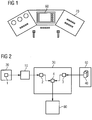
- Figure 1 shows a driver's cab 70 as it is usually located in the driver's compartment of a rail vehicle.
- all other means of transport such as regular buses, trucks or planes and ships, can also be used.
- the prerequisite is that they repeatedly drive on predetermined routes.
- the same means of transport does not necessarily have to travel the route repeatedly, it is sufficient if the route is regularly covered by means of construction of the same type, for example from a fleet of vehicles, ships or aircraft.
- a driver cockpit instead of the driver's cab 70, and a pilot cockpit in the case of an aircraft.
- a driver of the means of transport is therefore understood below to mean a train driver, driver, captain or pilot.
- the routes covered are, for example, routes between stops, for example in the local transport of subway, S-Bahn, regular buses or trains.
- the routes can also be between ports or landing stages in ferry traffic or can be specified as flight routes between airports. It does not matter whether the means of transport in question transports people or goods. However, the degree of loading is taken into account, as will be explained in the following.
- the driver's cab 70 contains an output means 60, via which an energy consumption is output to a driver of the means of transport.
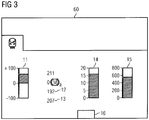
- Figure 2 shows a computer-aided monitoring of an energy consumption of the means of transport.
- 20 measurement data 1 are recorded by a measuring device.
- the measurement data 1 contain, for example, a current consumption of diesel, or energy consumed in electrically powered vehicles and regenerative energy.
- the measurement data 1 are received by a computing unit 30 via an interface 10.
- the interface 10 is, for example, a data bus, a wired network or a wireless network.
- the computing unit 30 is designed, for example, as a processor, circuit board or personal computer. From the measurement data 1, it determines energy consumption data 2, which indicate an energy consumption of the means of transport on a route. Here it makes sense to determine a net energy consumption from the energy absorbed and the energy recovered and to store it in the energy consumption data 2.
- the advantage here is that the energy consumption data 2 are determined for the route, since this enables a comparison with previous trips on the route.
- the position of the means of transport must be determined in order to recognize when the route has been covered and to correctly assign the energy consumption data 2 to the route.
- the position is determined, for example, via GPS, Galileo, a passenger information system, by manually entering a driver or by balises.
- the start and end points of the routes are available as coordinates.
- the position of the means of transport currently determined by GPS is assigned to a start or end point of a route exactly when the means of transport is stationary. In addition, it can be checked whether the doors are released. Under these conditions, it can be assumed that the means of transport is at the start or end point of a route.
- the respective route is now determined in a database of routes based on the current position determined by GPS. It also records whether the means of transport is at its starting or ending point.
- a new energy consumption data record is created for the energy consumption data 2. This contains the starting point of the route, a time and an identifier of the driver, which is usually present on the means of transport.
- a further field of the energy consumption data record indicates a degree of loading of the means of transport. This can be determined, for example, using a passenger counting system or measured by an air suspension system.
- the mathematical integration of measurement data 1 is reset at the starting point of the route.
- the energy consumption data record is saved and a new energy consumption data record is created when the end point of the route coincides with the starting point of another route.
- the energy consumption data 2 are determined from the energy consumption data records.
- the energy consumption data 2 can contain the information of one or more energy consumption data sets or an evaluation thereof.
- comparison data 3 which indicate an energy consumption by means of transport on previous journeys on the route, are taken from a database 40 in a data memory 50.
- a comparison of the energy consumption data 2 with the comparison data 3 results in energy consumption information 4 formed, which is output to the driver of the means of transport using an output means 60.
- the database 40 is created in advance, for example by recording the previously described energy consumption data sets or the energy consumption data 2 during test drives or during operation and storing them in the database 40.
- the database 40 for the means of transportation or a fleet of means of transportation can contain a plurality of energy consumption data records for the route or a number of routes - for example all routes between stops in a local transport network.
- the energy consumption data 2 (or the energy consumption data records) can also be recorded in the database 40 during the current journey, so that they can be used as comparison data 3 for future journeys or used to form the comparison data 3 (if necessary by means of statistical evaluation) can be.
- the database 40 can contain statistical evaluations of the energy consumption data records.
- the statistical evaluations contain, for example, the best, i.e. lowest value of the energy consumption of the means of transport for the route, the worst, i.e. highest value, an average value (e.g.
- arithmetic mean or the median a top ten value (a value of the energy consumption) of the tenth percentile of trips on the route sorted by increasing energy consumption), a top 25 value (a value of the energy consumption of the twenty-fifth percentile of trips on the route sorted according to increasing energy consumption), any other percentile, if applicable, an energy consumption per kilometer , or an energy consumption converted into grams of CO 2 or grams of CO 2 per kilometer, or other climate-relevant units.
- the energy consumption data records themselves or the statistical evaluations of energy consumption data records described above are retrieved from the database 40 as comparison data 3.
- the comparison data 3 are preferably used to retrieve data relating to a specific driver from the database 40. It is also desirable to use the comparison data 3 to specifically retrieve data relating to a specific period, such as a current year for an annual best value, a current month for a monthly best value, a current week for a best week value or a current day for a best day value. It is also advantageous if the comparison data 3 contains data relating to a specific intraday period, for example weekdays between 6.30 a.m. and 10 a.m. The reason for this is that the energy consumption of the means of transport may correlate with the time of day. Rush hours lead to higher loads and denser cycle sequences in local traffic, so that energy-saving driving is not possible to the same extent in these periods.
- the comparison data 3 from the database 40 it is necessary for the comparison data 3 from the database 40 to contain data relating to the same loading of the means of transport.
- the comparison data 3 must be provided with information about the loading, which, as described above, can be provided as a field in the energy consumption data records.
- the comparison data should also include the query of any combination of criteria, such as an annual best performance of the driver on the route in a rush hour from 3:30 p.m. to 3:1 p.m.
- Data storage 50 is optionally arranged on the means of transport or on the land side. In the latter case, the database 40 is therefore not arranged on the means of transport itself, but in the data storage 50 on the land side.
- This offers the advantage that energy consumption records several means of transport, such as all vehicles in a fleet, are transmitted to a central location and processed there. The transmission takes place, for example, by remote data transmission or by local reading of log files on the means of transport. The preparation is a statistical evaluation as described above. The comparison data 3 determined here are transmitted back to the means of transport. The transfer can take place periodically on request, but also in advance.
- comparison data 3 also contain aggregated comparison values of a large number of drivers, such as an absolute best value of all drivers on the route or an absolute best value of all drivers on the route during a rush hour from 3:30 p.m. to 6:30 p.m. on weekdays can. It is sufficient to transmit 3 suitable threshold values as comparison data. It is therefore not necessary to transfer the entire database 40 to the means of transport.
- energy consumption information 4 is formed from a comparison of the energy consumption data 2 with the comparison data 3. This happens, for example, when the means of transport reaches the end point of the route.
- the energy consumption information 4 is then output to a driver of the means of transport using an output means 60.
- the output means 60 is a visual output means such as a screen or an acoustic output means such as loudspeakers.
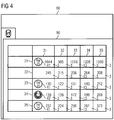
- FIG 3 shows the output of the energy consumption information 4 via a screen as the output means 60.
- Different information is shown which keeps the driver of the means of transport up to date on the energy consumption.
- a tensile / braking force 11 11, a net energy consumption 12, a threshold value 13, a voltage 14 and a current intensity 15 are output to the driver.
- the net energy consumption 12 corresponds to the energy consumption data 2 as described above.
- the threshold value 13 represents the value of the energy consumption, from which the 25% of all energy consumption data records begin with the lowest energy consumption. Since the net energy consumption 12 is below the threshold value 13 in the example shown, the driver is in the case shown among the best 25% of all energy consumption data records for the route section.
- the voltage 14 and current intensity 15 relate approximately to the current drawn from an overhead line. By selecting a button 16, the driver receives further information which is shown in Figure 4 are shown.
- Figure 4 again shows a screen as the output means 60, this time displaying a table 80. Furthermore, a first symbol 41 and a second symbol 42 are shown.
- a first column 31 of table 80 contains the energy consumption data 2 for the driver on his current journey.
- a second column 32 each contains the best value from the comparison data 3.
- a third column 33 already contains the in Figure 3 shown threshold value 13, which is also included in the comparison data 3 and indicates the value from which the most energy-saving 25% of all energy consumption data records begin.
- a fourth column 34 each contains an average value, which is contained in the comparison data 3.
- a fifth column 35 contains the worst value, which is contained in the comparison data 3.
- a first line 21 in table 80 contains total values that are formed over the entire period since the driver started his journey with the means of transport.
- a second line 22 contains values for a first route.
- a third line 23 contains values for a second line, a fourth line 24 values for a third line and a fifth line 25 values for a fourth line.
- the first symbol 41 shows in the first line 21, the third line 23 and the fifth line 25 that the driver has achieved energy consumption since the start of the journey, but also on the second route and the fourth route, which within the best 25% lies. Accordingly, the value in the first column 31 is in each case smaller than the threshold value in the third column 33.
- the second symbol 42 in the fourth line 24 indicates that the driver on the third route has achieved an energy consumption which is one compared to the comparison data 3 Represents best value.
- the driver is informed that he has covered the route in a particularly energy-saving manner by indicating to him via the first symbol 41 that he is among the best 25%.
- the second symbol 42 indicates to him that he has reached a best value.
- the best value and the best 25% can only be determined in comparison with energy consumption data records of the same driver, but also in comparison with energy consumption data records of all other drivers.
- a screen which is already present in the driver's cab of the means of transport, is preferably used as the output means 60.
- both numerical and graphic representations of the energy consumption information 4 are output.
- the energy consumption information 4 includes in the Figure 4 case shown, the entire table 80 with comparison data 3, energy consumption data 2 and the first symbol 41 as well as the second symbol 42. While the energy consumption data 2 and comparison data 3 are output numerically, the graphic symbols enable the driver to be quickly informed and motivated to drive in an energy-saving manner.
- a symbol such as thumbs up or a blooming sunflower could also be selected. The driver can see at a glance that he has achieved a new (general or personal) best performance or that his journey on the section of the route is among the best 10% or 25% of all journeys. Poor driving performance can also be indicated by appropriate symbols (e.g. thumbs down, withering sunflower).
- the energy consumption data 2 and comparison data 3 are also displayed graphically, for example as a bar chart.
- the first symbol 41 and the second symbol 42 are displayed depending on the context if the respective criteria are met.
- text could also be output.
- the energy consumption information 4 can only be the first symbol 41 or the second symbol 42. Alternatively or in addition, the energy consumption information 4 can also include the comparison data 3 or the energy consumption data 2. In Figure 4 includes the energy consumption information 4 with the table 80 all the components mentioned.
- the energy consumption information 4 can also be shown in the Figure 3 appear, for example as a first symbol 41 or a second symbol 42. This enables the driver to quickly record the energy consumption information 4 without further navigation via the button 16.
- the exemplary embodiments described can be implemented analogously for means of transport such as airplanes, ships, ferries, trucks or regular buses. Any external influencing factors such as wind speeds or flow speeds must, however, be taken into account by the computing unit 30 in the respective scenario when determining the energy consumption information 4.
- the method is carried out iteratively for successive routes.
- total energy consumption data are formed which indicate an energy consumption of the means of transport over an entire route, which is composed of the successive routes.
- the total energy consumption data is in Figure 4 shown in the first line 21 and the first column 31.
- the total distance is approximately the sum of all distances since the driver started shift or journey.
- Information that a new driver has occupied the means of transport is usually present in the system, since the driver has to register before starting the journey. Alternatively, this information can be recognized by observing other states, such as opening the driver's door at certain locations.
- the calculation of the sum over the energy consumption data 2 determined for the successive routes can optionally be carried out by the computing unit 30 on the means of transport or on the land side and then communicated back to the means of transport. For example, the net energy consumption on the entire route then results from the sum of the net energy consumption on the successive routes.
- total comparison data are formed from the sum of the comparison data 3 determined for the successive routes, which indicate an energy consumption by means of transport on previous trips on the entire route.
- This total comparison data is in Figure 4 mapped in the first row 21, from the second column 32 to the fifth column 35, while the comparison data 3 determined for the successive routes lie in the rows below (in the present case, further routes were taken into account and added up, which are no longer shown are).
- total energy consumption information formed from a comparison of the total energy consumption data with the total comparison data is output to the driver of the means of transport using the output means (60).
- the total energy consumption information is in particular the first symbol 41 in the first line 21, which indicates to the driver that he is on the entire route among the best 25% of all energy consumption data sets that were used for the comparison.
- the computing unit 30 can transmit all recorded energy consumption data 2 to the database 40 in the data memory 50, so that the energy consumption data records of the current journey can also be used to further develop the database 40.
- Such a transmission of the energy consumption data 2 to the land side is also suitable for driver-related evaluation. This is then used as the basis for decisions about further measures. For example, in the case of poor energy consumption data, 2 training measures can be initiated for the driver to save energy. Training resources are therefore allocated in a targeted manner.
- the energy consumption data 2 can be used as the basis for variable remuneration components, so that energy-saving driving behavior is also rewarded financially for the driver.
- assistance data are determined which consist of cooperation data and acceleration data.
- the cooperation data indicate whether or with what delay the driver followed instructions from a driver assistance system on the route.
- the acceleration data indicate the braking and acceleration processes on the route.
- Comparative assistance data which indicate cooperation data or acceleration data of means of transport on previous journeys on the route, are also taken from a database.
- assistance information formed from a comparison of the assistance data with the comparison assistance data is output to the driver of the means of transport.
- data records can be collected and evaluated in the database 40.
- This evaluated data is provided as comparison assistance data in the database 40.
- the evaluation of the acceleration data provides information about energy-efficient driving behavior, for example an evaluation of the number of braking processes which are immediately followed by acceleration processes.
Landscapes
- Physics & Mathematics (AREA)
- General Physics & Mathematics (AREA)
- Traffic Control Systems (AREA)
- Management, Administration, Business Operations System, And Electronic Commerce (AREA)
- Navigation (AREA)
- Train Traffic Observation, Control, And Security (AREA)
Description
- Bei einem Beförderungsmittel wie etwa einem Schienenfahrzeug oder einem Kraftfahrzeug (z.B. Linienbus oder LKW) ist es bekannt, einem Fahrer einen Energieverbrauch des Beförderungsmittels anzuzeigen. Dies erfolgt beispielsweise auf einem Bildschirm am Führerstand des Schienenfahrzeugs oder im Cockpit des Kraftfahrzeugs. Hierbei werden bei elektrisch angetriebenen Fahrzeugen üblicherweise eine aufgenommene Energie, eine rückgespeiste Energie und ein daraus resultierender Netto-Energieverbrauch ausgegeben. Bei Schienenfahrzeugen mit Dieselantrieb oder bei LKW wird der Energieverbrauch gewöhnlich in Liter Diesel pro 100 km angezeigt.
- So offenbart die
WO 02/097377 A1 - Die
DE 10 2005 055243 A1 offenbart ein Verfahren zur Bestimmung eines energetisch günstigen Streckenverlaufs für ein Beförderungsmittel, bei dem zur Routenplanung vor Fahrtantritt einer Datenbank Vergleichsdaten entnommen werden, die einen Energieverbrauch von Beförderungsmitteln auf vorangegangenen Fahrten auf einer vorgegebenen Strecke angeben. Die Datenbank wird befüllt, indem bei Probefahrten von einer Messeinrichtung Messdaten empfangen werden, die einen aktuellen Energieverbrauch eines Beförderungsmittels angeben. Aus den Messdaten werden mithilfe einer Recheneinheit Energieverbrauchsdaten ermittelt, die einen Energieverbrauch des Beförderungsmittels auf der Strecke angeben. Diese Energieverbrauchsdaten werden statistisch ausgewertet und in der Datenbank abgespeichert. - Die Druckschrift
US 2008/0125958 A1 offenbart ein Verfahren zur Routenplanung für ein Fahrzeug, bei der die Route mit der besten Kraftstoffeffizienz ermittelt wird. Bei dieser Ermittlung werden historische Daten aus früheren Routen berücksichtigt. - In dem Dokument
US 2008/0221787 A1 ist ein Verfahren zur Routenplanung für ein Fahrzeug beschrieben, wobei die Route mit dem geringsten Kraftstoffverbrauch für das Fahrzeug ermittelt wird. Dabei werden eine geschätzte Kraftstoffeffizienz für das Fahrzeug für unterschiedliche Fahrzeuggeschwindigkeiten sowie geschätzte Geschwindigkeiten für die Route berücksichtigt. - Der Erfindung liegt die Aufgabe zugrunde, die Überwachung des Energieverbrauchs des Beförderungsmittels zu verbessern.
- Diese Aufgabe wird mit dem Verfahren zur rechnergestützten Überwachung eines Energieverbrauchs eines Beförderungsmittels nach Anspruch 1 gelöst.
- Ferner wird die Aufgabe mit der Anordnung zur rechnergestützten Überwachung eines Energieverbrauchs eines Beförderungsmittels nach Anspruch 10 gelöst.
- Das Verfahren und die Anordnung weisen den Vorteil auf, dass der Energieverbrauch des Beförderungsmittels für eine vorgegebene Strecke (beispielsweise die Strecke zwischen zwei Haltestellen) erfasst werden kann. Dies ermöglicht eine Erstellung von Statistiken, welche eine Bewertung des Fahrverhaltens eines Fahrers des Beförderungsmittels erlauben. Denn der Fahrer hat durch sein Fahrverhalten wesentlichen Einfluss auf den Energieverbrauch des Beförderungsmittels, da er über Beschleunigung, Rollen und Bremsen, bzw. allgemein über die Geschwindigkeit des Beförderungsmittels entscheiden kann. Ein weiterer Vorteil besteht darin, dass die Strecken-bezogenen Energieverbrauchsdaten nach ihrer Erfassung vom Beförderungsmittel auf die Landseite übertragen und dort weiter genutzt werden können.
- Das Verfahren und die Anordnung bieten den Vorteil, dass die Ausgabe der Energieverbrauchs-Information ein energiesparendes Fahrverhalten des Fahrers unterstützt und motiviert. Auf diese Weise lässt sich ein zusätzliches Potential an Energieeinsparung ausschöpfen. Die fahrzeugseitige Ausgabe der Energieverbrauchs-Information ermöglicht es hierbei, die Energieverbrauchsdaten in Relation zu den Vergleichsdaten zu setzen, so dass dem Fahrer eine sinnvolle Interpretation und Bewertung der Energieverbrauchsdaten ermöglicht wird. Der Fahrer wird schnell informiert und gleichzeitig zu energiesparender Fahrweise motiviert. Hierdurch wird energiesparendes Fahrverhalten gefördert und der Energieverbrauch des Beförderungsmittels gesenkt.
- Weitere vorteilhafte Ausführungsformen der Erfindung sind durch die Merkmale der Unteransprüche gekennzeichnet.
- Im Folgenden werden Ausführungsbeispiele der Erfindung anhand der Figuren näher erläutert. Es zeigen:
- Figur 1
- einen Führerstand in einem Schienenfahrzeug;
- Figur 2
- ein Ausführungsbeispiel einer rechnergestützten Überwachung eines Energieverbrauchs eines Beförderungsmittels;
- Figur 3
- eine Anzeige einer Energieverbrauchs-Information auf einem visuellen Ausgabemittel gemäß einer ersten Variante;
- Figur 4
- eine Anzeige einer Energieverbrauchs-Information auf einem visuellen Ausgabemittel gemäß einer zweiten Variante.
-
Figur 1 zeigt einen Führerstand 70, wie er sich üblicherweise im Fahrerraum eines Schienenfahrzeugs befindet. Anstelle des Schienenfahrzeugs kommen auch alle anderen Beförderungsmittel wie etwa Linienbusse, LKWs oder auch Flugzeuge und Schiffe in Betracht. Voraussetzung ist jedoch, dass diese wiederholt vorgegebene Strecken befahren. Hierbei muss nicht notwendigerweise das gleiche Beförderungsmittel die Strecke wiederholt befahren, es genügt, wenn die Strecke regelmäßig von baugleichen Beförderungsmitteln etwa aus einer Flotte von Fahrzeugen, Schiffen oder Flugzeugen zurückgelegt wird. Im Fall eines Kraftfahrzeuges würde es sich anstelle des Führerstands 70 dementsprechend um ein Fahrer-Cockpit und im Fall eines Flugzeugs um ein Piloten-Cockpit handeln. Unter einem Fahrer des Beförderungsmittels wird daher im Folgenden ein Zugführer, Kraftfahrer, Kapitän oder Pilot verstanden. - In einem ersten Ausführungsbeispiel handelt es sich bei den zurückgelegten Strecken beispielsweise um Strecken zwischen Haltestellen, etwa im Nahverkehr von U-Bahn, S-Bahn, Linienbussen oder Zügen. Die Strecken können auch zwischen Häfen oder Anlegestellen im Fährenverkehr liegen oder als Flugrouten zwischen Flughäfen vorgegeben sein. Ob das jeweilige Beförderungsmittel Personen oder Güter transportiert, ist hier nicht von Bedeutung. Der Grad der Beladung wird jedoch berücksichtigt, wie im Folgenden noch ausgeführt wird.
- Der Führerstand 70 enthält ein Ausgabemittel 60, über welches ein Energieverbrauch an einen Fahrer des Beförderungsmittels ausgegeben wird.
-
Figur 2 zeigt eine rechnergestützte Überwachung eines Energieverbrauchs des Beförderungsmittels. Hierbei werden von einer Messeinrichtung 20 Messdaten 1 erfasst. Die Messdaten 1 enthalten hierbei beispielsweise einen aktuellen Verbrauch von Diesel, oder bei elektrisch angetriebenen Fahrzeugen aufgenommene Energie und rückgespeiste Energie. - Die Messdaten 1 werden von einer Recheneinheit 30 über eine Schnittstelle 10 empfangen. Bei der Schnittstelle 10 handelt es sich beispielsweise um einen Datenbus, ein kabelgebundenes Netzwerk oder ein drahtloses Netzwerk.
- Die Recheneinheit 30 ist beispielsweise als Prozessor, Platine oder Personalcomputer ausgeführt. Sie ermittelt aus den Messdaten 1 Energieverbrauchsdaten 2, die einen Energieverbrauch des Beförderungsmittels auf einer Strecke angeben. Hier bietet es sich an, aus aufgenommener Energie und rückgespeister Energie einen Netto-Energieverbrauch zu ermitteln und in den Energieverbrauchsdaten 2 abzulegen. Der Vorteil besteht hierbei darin, dass die Energieverbrauchsdaten 2 für die Strecke ermittelt werden, da dies einen Vergleich mit vorangegangenen Fahrten auf der Strecke ermöglicht.
- Zunächst muss eine Positionsbestimmung des Beförderungsmittels vorgenommen werden, um zu erkennen, wann die Strecke zurückgelegt wurde, und um die Energieverbrauchsdaten 2 der Strecke korrekt zuzuordnen. Die Positionsbestimmung erfolgt beispielsweise über GPS, Galileo, ein Fahrgastinformationssystem, durch manuelle Eingabe eines Fahrers oder durch Balisen.
- Im Fall der Positionsbestimmung mittels GPS liegen die Anfangs- und Endpunkte der Strecken als Koordinaten vor. Die aktuell mittels GPS ermittelte Position des Beförderungsmittels wird genau dann einem Anfangs- oder Endpunkt einer Strecke zugeordnet, wenn das Beförderungsmittel steht. Zusätzlich kann überprüft werden, ob die Türen freigegeben sind. Unter diesen Voraussetzungen kann davon ausgegangen werden, dass sich das Beförderungsmittel an einem Anfangs- oder Endpunkt einer Strecke befindet. In einer Datenbank von Strecken wird nun anhand der aktuellen mittels GPS ermittelten Position die jeweilige Strecke ermittelt. Weiterhin wird erfasst, ob sich das Beförderungsmittel an deren Anfangs- oder Endpunkt befindet.
- Während das Beförderungsmittel die Strecke zurücklegt, erfolgt eine mathematische Integration über den Messdaten 1, um aus dem fortlaufend gemessenen aktuellen Energieverbrauch den gesamten Energieverbrauch auf der Strecke in Form der Energieverbrauchsdaten 2 zu ermitteln. Bei elektrischen und Hybrid-Antrieben wird hierbei gegebenenfalls zwischen verbrauchter und zurückgespeister Energie unterschieden.
- Nach Erkennung des Anfangspunktes einer Strecke als aktueller Position des Beförderungsmittels wird für die Energieverbrauchsdaten 2 ein neuer Energieverbrauchsdatensatz angelegt. Dieser enthält den Anfangspunkt der Strecke, eine Uhrzeit und einen Identifikator des Fahrers, welcher auf dem Beförderungsmittel in der Regel vorliegt. In einem erfindungsgemäßen Beispiel gibt ein weiteres Feld des Energieverbrauchsdatensatzes einen Beladungsgrad des Beförderungsmittels an. Dieser kann beispielsweise mit Hilfe eines Fahrgastzählsystems ermittelt oder durch ein Luftfederungssystem gemessen werden.
- Die mathematische Integration der Messdaten 1 wird am Anfangspunkt der Strecke zurückgesetzt. Sobald der Endpunkt der Strecke als aktuelle Position des Beförderungsmittels erkannt wird, wird der Energieverbrauchsdatensatz gesichert und ein neuer Energieverbrauchsdatensatz angelegt, wenn der Endpunkt der Strecke mit dem Anfangspunkt einer weiteren Strecke zusammenfällt. Aus den Energieverbrauchsdatensätzen werden die Energieverbrauchsdaten 2 ermittelt. So können die Energieverbrauchsdaten 2 etwa die Informationen eines oder mehrerer Energieverbrauchsdatensätze oder eine Auswertung derselben enthalten.
- Gemäß einer in
Figur 2 gezeigten Variante des ersten Ausführungsbeispiels werden Vergleichsdaten 3, die einen Energieverbrauch von Beförderungsmitteln auf vorangegangenen Fahrten auf der Strecke angeben, einer Datenbank 40 in einem Datenspeicher 50 entnommen. Aus einem Vergleich der Energieverbrauchsdaten 2 mit den Vergleichsdaten 3 wird eine Energieverbrauchs-Information 4 gebildet, die mit einem Ausgabemittel 60 an den Fahrer des Beförderungsmittels ausgegeben wird. - Die Datenbank 40 wird vorab erstellt, beispielsweise indem die zuvor beschriebenen Energieverbrauchsdatensätze oder die Energieverbrauchsdaten 2 bei Probefahrten oder im laufenden Betrieb aufgezeichnet und in der Datenbank 40 gespeichert werden. Auf diese Weise kann die Datenbank 40 für das Beförderungsmittel oder eine Flotte von Beförderungsmitteln eine Vielzahl von Energieverbrauchsdatensätzen für die Strecke oder eine Anzahl von Strecken enthalten - etwa alle Strecken zwischen Haltestellen in einem Nahverkehrsnetz.
- Im übrigen können die Energieverbrauchsdaten 2 (bzw. die Energieverbrauchsdatensätze) auch bei der aktuellen Fahrt in die Datenbank 40 aufgenommen werden, so dass sie bei zukünftigen Fahrten als Vergleichsdaten 3 nutzbar sind bzw. zur Bildung der Vergleichsdaten 3 (ggf. mittels statistischer Auswertung) herangezogen werden können.
- Zusätzlich oder alternativ zu den Energieverbrauchsdatensätzen selbst kann die Datenbank 40 statistische Auswertungen der Energieverbrauchsdatensätze enthalten. Die statistischen Auswertungen enthalten beispielsweise den besten, also niedrigsten Wert des Energieverbrauchs des Beförderungsmittels für die Strecke, weiterhin den schlechtesten, also höchsten Wert, einen Durchschnittswert (etwa das arithmetische Mittel oder den Median), einen Top-Ten-Wert (ein Wert des Energieverbrauchs des zehnten Perzentils der nach aufsteigendem Energieverbrauch sortierten Fahrten auf der Strecke), einen Top-25-Wert (ein Wert des Energieverbrauchs des fünfundzwanzigsten Perzentils der nach aufsteigendem Energieverbrauch sortierten Fahrten auf der Strecke), ggf. ein beliebiges anderes Perzentil, einen Energieverbrauch pro Kilometer, oder einen Energieverbrauch umgerechnet in Gramm CO2 oder Gramm CO2 pro Kilometer, oder weitere klimarelevante Einheiten.
- Je nach Ausgestaltung des Verfahrens werden als Vergleichsdaten 3 die Energieverbrauchsdatensätze selbst oder die zuvor beschriebenen statistische Auswertungen von Energieverbrauchsdatensätzen aus der Datenbank 40 abgerufen.
- Vorzugsweise werden mit den Vergleichsdaten 3 aus der Datenbank 40 Daten abgerufen, welche einen bestimmten Fahrer betreffen. Wünschenswert ist weiterhin, mit den Vergleichsdaten 3 gezielt Daten abzurufen, die einen bestimmten Zeitraum wie etwa ein aktuelles Jahr für einen Jahresbestwert, einen aktuellen Monat für einen Monatsbestwert, eine aktuelle Woche für einen Wochenbestwert oder einen aktuellen Tag für einen Tagesbestwert betreffen. Ferner ist es von Vorteil, wenn die Vergleichsdaten 3 Daten enthalten, die einen bestimmten untertägigen Zeitraum betreffen, beispielsweise Wochentags zwischen 6.30 Uhr und 10.00 Uhr. Dies liegt darin begründet, dass der Energieverbrauch des Beförderungsmittels ggf. mit der Tageszeit korreliert. Stoßzeiten führen zu höherer Beladung und dichteren Taktfolgen im Nahverkehr, so dass in diesen Zeiträumen energiesparendes Fahren nicht im gleichen Maß möglich ist.
- Erfindungsgemäß ist es erforderlich, dass die Vergleichsdaten 3 aus der Datenbank 40 Daten enthalten, welche eine gleiche Beladung des Beförderungsmittels betreffen. In diesem Fall müssen die Vergleichsdaten 3 mit einer Information zur Beladung versehen sein, welche wie oben beschrieben als Feld in den Energieverbrauchsdatensätzen vorgesehen werden kann. Im Übrigen sollten die Vergleichsdaten zusätzlich auch die Abfrage beliebiger Kombinationen von Kriterien umfassen, etwa eine Jahres-Bestleistung des Fahrers auf der Strecke in einer Stoßzeit von 15.30 Uhr bis 18.30 Uhr.
- Wahlweise wird der Datenspeicher 50 auf dem Beförderungsmittel oder auf der Landseite angeordnet. In letzterem Fall ist die Datenbank 40 also nicht auf dem Beförderungsmittel selbst, sondern in dem Datenspeicher 50 auf der Landseite angeordnet. Dies bietet den Vorteil, dass Energieverbrauchsdatensätze mehrerer Beförderungsmittel, etwa aller Fahrzeuge einer Flotte, an eine zentrale Stelle übermittelt und dort aufbereitet werden. Die Übermittlung erfolgt beispielsweise über Datenfernübertragung oder durch lokales Auslesen von Protokolldateien auf dem Beförderungsmittel. Bei der Aufbereitung handelt es sich um eine statistische Auswertung wie oben beschrieben. Die hierbei ermittelten Vergleichsdaten 3 werden zurück an das Beförderungsmittel übertragen. Die Übertragung kann auf Anforderung, jedoch auch vorab periodisch erfolgen. Diese zentrale Aufbereitung der Energieverbrauchsdatensätze bietet den Vorteil, dass die Vergleichsdaten 3 auch aggregierte Vergleichswerte einer Vielzahl von Fahrern wie etwa einen absoluten Bestwert aller Fahrer auf der Strecke oder einen absoluten Bestwert aller Fahrer auf der Strecke wochentags in einer Stoßzeit von 15.30 Uhr bis 18.30 Uhr enthalten können. Hierbei genügt es, als Vergleichsdaten 3 geeignete Schwellwerte zu übertragen. Es muss daher nicht die gesamte Datenbank 40 auf das Beförderungsmittel übertragen werden.
- In einem nächsten Schritt wird aus einem Vergleich der Energieverbrauchsdaten 2 mit den Vergleichsdaten 3 eine Energieverbrauchs-Information 4 gebildet. Dies erfolgt beispielsweise, wenn das Beförderungsmittel den Endpunkt der Strecke erreicht. Anschließend wird die Energieverbrauchs-Information 4 mit einem Ausgabemittel 60 an einen Führer des Beförderungsmittels ausgegeben. Bei dem Ausgabemittel 60 handelt es sich um ein visuelles Ausgabemittel wie einen Bildschirm oder um ein akustisches Ausgabemittel wie Lautsprecher.
-
Figur 3 zeigt die Ausgabe der Energieverbrauchs-Information 4 über einen Bildschirm als Ausgabemittel 60. Gezeigt sind unterschiedliche Informationen, welche den Fahrer des Beförderungsmittels über den Energieverbrauch auf dem Laufenden halten. Hierzu wird eine Zug-/Bremskraft 11, ein Netto-Energieverbrauch 12, ein Schwellwert 13, eine Spannung 14 und eine Stromstärke 15 an den Fahrer ausgegeben. Der Netto-Energieverbrauch 12 entspricht hierbei den Energieverbrauchsdaten 2 wie oben beschrieben. Der Schwellwert 13 stellt in diesem Fall den Wert des Energieverbrauchs dar, ab dem die 25% aller Energieverbrauchsdatensätze mit dem geringsten Energieverbrauch beginnen. Da der Netto-Energieverbrauch 12 im gezeigten Beispiel unterhalb des Schwellwerts 13 liegt, befindet sich der Fahrer im gezeigten Fall unter den besten 25% aller Energieverbrauchsdatensätze für den Streckenabschnitt. Die Spannung 14 und Stromstärke 15 betreffen etwa den einer Oberleitung entnommenen Strom. Durch Anwahl einer Schaltfläche 16 erhält der Fahrer weitere Informationen, welche inFigur 4 gezeigt sind. -
Figur 4 zeigt erneut als Ausgabemittel 60 einen Bildschirm, der diesmal eine Tabelle 80 anzeigt. Ferner sind ein erstes Symbol 41 und ein zweites Symbol 42 abgebildet. Eine erste Spalte 31 der Tabelle 80 enthält jeweils die Energieverbrauchsdaten 2 für den Fahrer auf seiner aktuellen Fahrt. Eine zweite Spalte 32 enthält jeweils den Bestwert aus den Vergleichsdaten 3. Eine dritte Spalte 33 enthält den bereits inFigur 3 gezeigten Schwellwert 13, welcher ebenfalls in den Vergleichsdaten 3 enthalten ist und den Wert angibt, ab dem die energiesparendsten 25% aller Energieverbrauchsdatensätze beginnen. Eine vierte Spalte 34 enthält jeweils einen Durchschnittswert, welcher in den Vergleichsdaten 3 enthalten ist. Eine fünfte Spalte 35 enthält den schlechtesten Wert, der in den Vergleichsdaten 3 enthalten ist. - Eine erste Zeile 21 in der Tabelle 80 enthält Summenwerte, die über den gesamten Zeitraum gebildet werden, seit der Fahrer seine Fahrt mit dem Beförderungsmittel begonnen hat. Eine zweite Zeile 22 enthält Werte für eine erste Strecke. Eine dritte Zeile 23 enthält Werte für eine zweite Strecke, eine vierte Zeile 24 Werte für eine dritte Strecke und eine fünfte Zeile 25 Werte für eine vierte Strecke. Das erste Symbol 41 zeigt in der ersten Zeile 21, der dritten Zeile 23 und der fünften Zeile 25 an, dass der Fahrer seit Fahrtantritt, aber auch auf der zweiten Strecke und der vierten Strecke einen Energieverbrauch erzielt hat, der innerhalb der besten 25% liegt. Entsprechend ist der Wert in der ersten Spalte 31 jeweils kleiner als der Schwellwert in der dritten Spalte 33. Das zweite Symbol 42 in der vierten Zeile 24 zeigt an, dass der Fahrer auf der dritten Strecke einen Energieverbrauch erzielt hat, der gegenüber den Vergleichsdaten 3 einen Bestwert darstellt.
- Neben dem Netto-Energieverbrauch 12 in
Figur 3 wird an den Fahrer ausgegeben, dass er die Strecke besonders energiesparend zurückgelegt hat, indem ihm über das erste Symbol 41 angezeigt wird, dass er unter den besten 25% liegt. Das zweite Symbol 42 zeigt ihm an, dass er einen Bestwert erreicht hat. Der Bestwert und die besten 25% können nur im Vergleich mit Energieverbrauchsdatensätzen des gleichen Fahrers, aber auch im Vergleich mit Energieverbrauchsdatensätzen aller anderen Fahrer ermittelt werden. Als Ausgabemittel 60 wird vorzugsweise ein Bildschirm genutzt, der ohnehin bereits am Führerstand des Beförderungsmittels vorhanden ist. - Im in
Figur 4 gezeigten Fall werden sowohl numerische als auch graphische Darstellungen der Energieverbrauchs-Information 4 ausgegeben. Die Energieverbrauchs-Information 4 umfasst in dem inFigur 4 gezeigten Fall die gesamte Tabelle 80 mit Vergleichsdaten 3, Energieverbrauchsdaten 2 und dem ersten Symbol 41 sowie dem zweiten Symbol 42. Während die Energieverbrauchsdaten 2 und Vergleichsdaten 3 numerisch ausgegeben werden, ermöglichen die graphischen Symbole eine schnelle Information des Fahrers und dessen Motivation zu energiesparender Fahrweise. Alternativ zu der gezeigten Visualisierung könnte auch ein Symbol wie etwa Daumen nach oben oder eine blühende Sonnenblume gewählt werden. Der Fahrer erfährt so auf einen Blick, dass er eine neue (allgemeine oder persönliche) Bestleistung erzielt hat, oder dass seine Fahrt auf dem Streckenabschnitt zu den besten 10% oder 25% aller Fahrten gehört. Auch schlechte Fahrleistungen lassen sich durch entsprechende Symbole anzeigen (z.B. Daumen nach unten, verwelkende Sonnenblume). Alternativ zur numerischen Darstellung der Energieverbrauchsdaten 2 und Vergleichsdaten 3 könnten diese auch graphisch etwa als Balkendiagramm angezeigt werden. Das erste Symbol 41 und das zweite Symbol 42 werden kontextabhängig eingeblendet, wenn die jeweiligen Kriterien erfüllt sind. Anstelle der Symbole könnte auch Text ausgegeben werden. - Bei der Energieverbrauchs-Information 4 kann es sich lediglich um das erste Symbol 41 oder das zweite Symbol 42 handeln. Alternativ oder ergänzend kann die Energieverbrauchs-Information 4 auch die Vergleichsdaten 3 oder die Energieverbrauchsdaten 2 umfassen. In
Figur 4 umfasst die Energieverbrauchs-Information 4 mit der Tabelle 80 alle genannten Bestandteile. - Die Energieverbrauchs-Information 4 kann auch in der Darstellung von
Figur 3 erscheinen, etwa als erstes Symbol 41 oder zweites Symbol 42. Dies ermöglicht eine schnelle Erfassung der Energieverbrauchs-Information 4 durch den Fahrer ohne weitere Navigation über die Schaltfläche 16. - In einer Weiterbildung werden für die Bestleistung, die besten 10% oder die besten 25% nur Fahrleistungen gewertet, welche eine fahrplanmäßig vorgeschriebene Fahrzeit nicht überschreiten bzw. sonstige Kriterien einer Fahrplantreue nicht verletzen. Hierdurch wird sichergestellt, dass ein energiesparendes Verhalten des Fahrers nicht auf Kosten der Fahrplantreue angeregt wird. In diesem Zusammenhang bietet sich auch an, durch ein geeignetes Symbol oder Text anzuzeigen, dass eine Fahrt wegen mangelnder Fahrplantreue vom Vergleich ausgeschlossen wurde.
- Die in
Figur 3 undFigur 4 gezeigte Darstellung ermöglicht es dem Fahrer, den Energieverbrauch sinnvoll zu interpretieren und zu bewerten. Besonders energiesparendes Verhalten wird gefördert. Geeignete graphische Symbole wirken instruktiv und motivierend. Der Fahrer wird informiert, wann sein Fahrverhalten energiesparend wirkt, und durch positive Rückmeldungen motiviert. Dies resultiert in einem Trainingseffekt des Fahrers, welcher es ihm ermöglicht, auch zukünftig gezielt energiesparend zu fahren. Der Gesamtenergieverbrauch des Beförderungsmittels wird hierdurch reduziert. - Die beschriebenen Ausführungsbeispiele lassen sich analog für Beförderungsmittel wie Flugzeuge, Schiffe, Fähren, LKWs oder Linienbusse implementieren. Etwaige externe Einflussfaktoren wie Windgeschwindigkeiten oder Strömungsgeschwindigkeiten sind im jeweiligen Szenario jedoch ggf. durch die Recheneinheit 30 bei der Ermittlung der Energieverbrauchs-Information 4 zu berücksichtigen.
- In einer Variante wird das Verfahren iterativ für aufeinanderfolgende Strecken durchgeführt. Hierdurch werden in
Figur 4 in der Tabelle 80 die Werte in der ersten Zeile 21 ermittelt. Aus der Summe der für die aufeinanderfolgenden Strecken ermittelten Energieverbrauchsdaten 2 werden Gesamt-Energieverbrauchsdaten gebildet, die einen Energieverbrauch des Beförderungsmittels auf einer Gesamtstrecke angeben, die sich aus den aufeinanderfolgenden Strecken zusammensetzt. Die Gesamt-Energieverbrauchsdaten sind inFigur 4 in der ersten Zeile 21 und der ersten Spalte 31 gezeigt. - Die Gesamtstrecke ist etwa die Summe aller Strecken seit Schichtantritt oder Fahrtantritt des Fahrers. Eine Information, dass ein neuer Fahrer das Beförderungsmittel besetzt hat, ist üblicherweise im System vorhanden, da sich der Fahrer vor Fahrtantritt anmelden muss. Alternativ kann diese Information aus Beobachtung weiterer Zustände erkannt werden, etwa dem Öffnen der Fahrertür an bestimmten Orten. Die Summenbildung über den für die aufeinanderfolgenden Strecken ermittelten Energieverbrauchsdaten 2 kann wahlweise durch die Recheneinheit 30 auf dem Beförderungsmittel oder auf der Landseite erfolgen und dann an das Beförderungsmittel zurückkommuniziert werden. Beispielsweise ergibt sich der Netto-Energieverbrauch auf der Gesamtstrecke dann aus der Summe des Netto-Energieverbrauchs auf den aufeinanderfolgenden Strecken.
- Anschließend werden Gesamt-Vergleichsdaten aus der Summe der für die aufeinanderfolgenden Strecken ermittelten Vergleichsdaten 3 gebildet, die einen Energieverbrauch von Beförderungsmitteln auf vorangegangenen Fahrten auf der Gesamtstrecke angeben. Diese Gesamt-Vergleichsdaten sind in
Figur 4 in der ersten Zeile 21, von der zweiten Spalte 32 bis zur fünften Spalte 35 abgebildet, während die für die aufeinanderfolgenden Strecken ermittelten Vergleichs-daten 3 in den Zeilen darunter liegen (im vorliegenden Fall wurden noch weitere Strecken berücksichtigt und aufsummiert, die nicht mehr dargestellt sind). - In einem dritten Schritt wird eine aus einem Vergleich der Gesamt-Energieverbrauchsdaten mit den Gesamt-Vergleichsdaten gebildete Gesamt-Energieverbrauchs-Information mit dem Ausgabemittel (60) an den Fahrer des Beförderungsmittels ausgegeben. Bei der Gesamt-Energieverbrauchs-Information handelt es sich hierbei insbesondere um das erste Symbol 41 in der ersten Zeile 21, welches dem Fahrer anzeigt, dass er auf der Gesamtstrecke unter den besten 25% aller Energieverbrauchsdatensätze, die zum Vergleich herangezogen wurden, liegt.
- Grundsätzlich kann die Recheneinheit 30 alle erfassten Energieverbrauchsdaten 2 an die Datenbank 40 im Datenspeicher 50 übermitteln, so dass auch die Energieverbrauchsdatensätze der laufenden Fahrt genutzt werden können, um die Datenbank 40 weiter aufzubauen. Weiterhin eignet sich eine solche Übermittlung der Energieverbrauchsdaten 2 auf die Landseite (wenn der Datenspeicher 50 landseitig angeordnet ist) auch zur fahrerbezogenen Auswertung. Diese wird dann als Grundlage für Entscheidungen über weitere Maßnahmen verwendet. Beispielsweise lassen sich bei schlechten Energieverbrauchsdaten 2 Trainingsmaßnahmen zu energiesparendem Fahrverhalten für den Fahrer veranlassen. Trainings-Ressourcen werden daher zielgerichtet allokiert. Weiterhin lassen sich die Energieverbrauchsdaten 2 zur Grundlage für variable Entlohnungsbestandteile verwenden, so dass energiesparendes Fahrverhalten auch finanziell für den Fahrer prämiert wird.
- Gemäß einem zweiten Ausführungsbeispiel, welches ergänzend zu dem ersten Ausführungsbeispiel implementiert wird, werden Assistenzdaten ermittelt, die aus Kooperationsdaten und Beschleunigungsdaten bestehen. Die Kooperationsdaten geben an, ob oder mit welcher Verzögerung der Fahrer Anweisungen eines Fahrerassistenzsystems auf der Strecke befolgt hat. Die Beschleunigungsdaten geben die Brems- und Beschleunigungsvorgänge auf der Strecke an. Ferner werden Vergleichs-Assistenzdaten, welche Kooperationsdaten oder Beschleunigungsdaten von Beförderungsmitteln auf vorangegangenen Fahrten auf der Strecke angeben, einer Datenbank entnommen. Abschließend wird eine aus einem Vergleich der Assistenzdaten mit den Vergleichs-Assistenzdaten gebildete Assistenz-Information an den Führer des Beförderungsmittels ausgegeben.
- So kann ausgewertet werden, ob Hinweise eines FahrerAssistenzsystems, welches dem Fahrer Hinweise zu energiesparendem Fahrverhalten gibt, berücksichtigt wurden. Auch hierzu können erneut Datensätze in der Datenbank 40 gesammelt und ausgewertet werden. Diese ausgewerteten Daten werden als Vergleichs-Assistenzdaten in der Datenbank 40 bereitgestellt. Aufschluss über energieeffizientes Fahrverhalten bietet die Auswertung der Beschleunigungsdaten, etwa eine Auswertung der Anzahl von Bremsvorgängen, welche unmittelbar von Beschleunigungsvorgängen gefolgt werden.
Claims (10)
- Verfahren zur rechnergestützten Überwachung eines Energieverbrauchs eines Beförderungsmittels, bei dem- von zumindest einer Messeinrichtung (20) Messdaten (1) empfangen werden, die einen aktuellen Energieverbrauch des Beförderungsmittels angeben,- aus den Messdaten (1) mithilfe einer Recheneinheit (30) Energieverbrauchsdaten (2) ermittelt werden, die einen Energieverbrauch des Beförderungsmittels auf einer vorgegebenen Strecke angeben,- Vergleichsdaten (3), die einen Energieverbrauch von Beförderungsmitteln auf vorangegangenen Fahrten auf der Strecke angeben, einer Datenbank (40) entnommen werden,- die Energieverbrauchsdaten (2) nur mit Vergleichsdaten (3) verglichen werden, die einen Energieverbrauch angeben von Beförderungsmitteln- auf vorangegangenen Fahrten mit einem Beförderungsmittel mit gleicher Beladung, und- eine aus dem Vergleich der Energieverbrauchsdaten (2) mit den Vergleichsdaten (3) gebildete Energieverbrauchs-Information (4) mit einem Ausgabemittel (60) an einen Fahrer des Beförderungsmittels ausgegeben wird.
- Verfahren nach Anspruch 1, bei dem- die Datenbank (40) in einem Datenspeicher (50) auf dem Beförderungsmittel oder in einem Datenspeicher (50) außerhalb des Beförderungsmittels vorgehalten wird.
- Verfahren nach Anspruch 1, bei dem- das Ausgabemittel (60) ein visuelles Ausgabemittel ist.
- Verfahren nach Anspruch 1, bei dem- das Beförderungsmittel ein Schienenfahrzeug, ein Linienbus, ein LKW, eine Fähre oder ein Flugzeug ist.
- Verfahren nach Anspruch 1, bei dem das Verfahren iterativ für aufeinanderfolgende Strecken durchgeführt wird, wobei- aus der Summe der für die aufeinanderfolgenden Strecken ermittelten Energieverbrauchsdaten (2) Gesamt-Energieverbrauchsdaten gebildet werden, die einen Energieverbrauch des Beförderungsmittels auf einer Gesamtstrecke angeben, die sich aus den aufeinanderfolgenden Strecken zusammensetzt,- Gesamt-Vergleichsdaten aus der Summe der für die aufeinanderfolgenden Strecken ermittelten Vergleichsdaten (3) gebildet werden, die einen Energieverbrauch von Beförderungsmitteln auf vorangegangenen Fahrten auf der Gesamtstrecke angeben, und- eine aus einem Vergleich der Gesamt-Energieverbrauchsdaten mit den Gesamt-Vergleichsdaten gebildete Gesamt-Energieverbrauchs-Information mit dem Ausgabemittel (60) an den Fahrer des Beförderungsmittels ausgegeben wird.
- Verfahren nach Anspruch 1, bei dem- Assistenzdaten ermittelt werden, bestehend aus- Kooperationsdaten, welche angeben, ob oder mit welcher Verzögerung der Fahrer Anweisungen eines Fahrerassistenzsystems auf der Strecke befolgt hat, oder- Beschleunigungsdaten, die Brems- und Beschleunigungsvorgänge auf der Strecke angeben,- Vergleichs-Assistenzdaten, die Kooperationsdaten oder Beschleunigungsdaten von Beförderungsmitteln auf vorangegangenen Fahrten auf der Strecke angeben, der Datenbank (40) entnommen werden, und- eine aus einem Vergleich der Assistenzdaten mit den Vergleichs-Assistenzdaten gebildete Assistenz-Information mit dem Ausgabemittel (60) an den Fahrer des Beförderungsmittels ausgegeben wird.
- Verfahren nach Anspruch 1,- bei dem die Energieverbrauchsdaten (2) in die Datenbank (40) aufgenommen werden, so dass sie bei zukünftigen Fahrten als Vergleichsdaten (3) verwendet werden können.
- Computerlesbarer Datenträger,- auf dem ein Computerprogramm gespeichert ist, welches das Verfahren nach einem der vorangegangenen Ansprüche ausführt, wenn es in der Recheneinheit (30) abgearbeitet wird.
- Computerprogramm,- welches in der Recheneinheit (30) abgearbeitet wird und dabei das Verfahren nach einem der Ansprüche 1 bis 7 ausführt.
- Anordnung zur rechnergestützten Überwachung eines Energieverbrauchs eines Beförderungsmittels,- mit einer Schnittstelle (10), ausgelegt zum Empfang von Messdaten (1) von zumindest einer Messeinrichtung (20), die einen aktuellen Energieverbrauch des Beförderungsmittels angeben,- mit einem Datenspeicher (50), der eine Datenbank (40) enthält, welche Vergleichsdaten (3) enthält, die einen Energieverbrauch des Beförderungsmittels auf vorangegangenen Fahrten auf einer vorgegebenen Strecke angeben,- mit einer Recheneinheit (30),- programmiert zur Ermittlung von Energieverbrauchsdaten (2) aus den Messdaten (1), wobei die Energieverbrauchsdaten (2) einen Energieverbrauch des Beförderungsmittels auf der Strecke angeben,- programmiert, um die Energieverbrauchsdaten (2) nur mit Vergleichsdaten (3) zu vergleichen, die einen Energieverbrauch angeben von Beförderungsmitteln- auf vorangegangenen Fahrten mit einem Beförderungsmittel mit gleicher Beladung, und- programmiert, um aus dem Vergleich der Energieverbrauchsdaten (2) mit den Vergleichsdaten (3) eine Energieverbrauchs-Information (4) zu bilden, und- mit einem Ausgabemittel (60), eingerichtet zur Ausgabe der Energieverbrauchs-Information (4) an einen Fahrer des Beförderungsmittels.
Priority Applications (1)
| Application Number | Priority Date | Filing Date | Title |
|---|---|---|---|
| PL10720745T PL2435792T5 (pl) | 2009-05-29 | 2010-05-14 | Komputerowy monitoring zużycia energii środka transportu |
Applications Claiming Priority (2)
| Application Number | Priority Date | Filing Date | Title |
|---|---|---|---|
| DE102009023304A DE102009023304A1 (de) | 2009-05-29 | 2009-05-29 | Rechnergestützte Überwachung eines Energieverbrauchs eines Beförderungsmittels |
| PCT/EP2010/056646 WO2010136343A2 (de) | 2009-05-29 | 2010-05-14 | Rechnergestützte überwachung eines energieverbrauchs eines beförderungsmittels |
Publications (3)
| Publication Number | Publication Date |
|---|---|
| EP2435792A2 EP2435792A2 (de) | 2012-04-04 |
| EP2435792B1 EP2435792B1 (de) | 2016-08-17 |
| EP2435792B2 true EP2435792B2 (de) | 2020-02-26 |
Family
ID=43028505
Family Applications (1)
| Application Number | Title | Priority Date | Filing Date |
|---|---|---|---|
| EP10720745.8A Active EP2435792B2 (de) | 2009-05-29 | 2010-05-14 | Rechnergestützte überwachung des energieverbrauchs eines beförderungsmittels |
Country Status (10)
| Country | Link |
|---|---|
| US (1) | US8515662B2 (de) |
| EP (1) | EP2435792B2 (de) |
| CN (1) | CN102448763B (de) |
| BR (1) | BRPI1012932A2 (de) |
| DE (1) | DE102009023304A1 (de) |
| ES (1) | ES2604128T5 (de) |
| PL (1) | PL2435792T5 (de) |
| PT (1) | PT2435792T (de) |
| RU (1) | RU2534598C2 (de) |
| WO (1) | WO2010136343A2 (de) |
Families Citing this family (18)
| Publication number | Priority date | Publication date | Assignee | Title |
|---|---|---|---|---|
| EP2513125B1 (de) | 2009-12-14 | 2014-10-29 | Basf Se | Metallkomplexe, enthaltend diazabenzimidazolcarben-liganden und deren verwendung in oleds |
| DE102010003247A1 (de) * | 2010-03-25 | 2011-09-29 | Bayerische Motoren Werke Aktiengesellschaft | Verfahren zum Anzeigen mindestens eines Effizienzparameters eines Fahrzeugs, Fahrzeug und System zum Durchführen des Verfahrens |
| DE102011083506A1 (de) * | 2011-09-27 | 2013-03-28 | Zf Friedrichshafen Ag | Verfahren und Vorrichtung zum Auswerten von Betriebszuständen eines Fahrzeuges |
| US9205734B1 (en) | 2011-10-06 | 2015-12-08 | XL Hybrids | Motor integration assembly |
| US9390062B1 (en) | 2012-02-01 | 2016-07-12 | XL Hybrids | Managing vehicle information |
| DE102012018522B4 (de) * | 2012-09-18 | 2015-05-13 | INPRO Innovationsgesellschaft für fortgeschrittene Produktionssysteme in der Fahrzeugindustrie mbH | Verfahren und Anlage zur parallelen Verfolgung von ortszugeordneten energieverbrauchbeeinflussenden Ereignissen einer industriellen Produktionsanlage |
| CN104937378B (zh) * | 2013-01-09 | 2017-05-17 | 西门子工业公司 | 基于在单点处的电力测量的分析的电负载标注后期分项 |
| US20140257988A1 (en) * | 2013-03-07 | 2014-09-11 | Ford Global Technologies, Llc | Method and system for selecting navigation routes and providing on-route advertising |
| US8670888B1 (en) | 2013-06-18 | 2014-03-11 | XL Hybrids | Dynamically assisting hybrid vehicles |
| US9818240B1 (en) * | 2013-09-06 | 2017-11-14 | XL Hybrids | Comparing vehicle performance |
| US9922469B1 (en) | 2013-11-07 | 2018-03-20 | XL Hybrids | Route-based vehicle selection |
| RU2591559C1 (ru) * | 2015-02-16 | 2016-07-20 | Федеральное государственное бюджетное образовательное учреждение высшего профессионального образования Омский государственный университет путей сообщения (ОмГУПС (ОмИИТ) | Способ определения потерь электроэнергии электроподвижным составом при неграфиковых остановках с использованием бортовых информационно-измерительных комплексов учета электроэнергии |
| RU2591558C1 (ru) * | 2015-04-16 | 2016-07-20 | Федеральное государственное бюджетное образовательное учреждение высшего профессионального образования "Омский государственный университет путей сообщения" | Способ определения непроизводительных потерь электроэнергии электроподвижным составом при нагоне графикового времени с использованием бортовых информационно-измерительных комплексов учета электроэнергии |
| RU2600960C1 (ru) * | 2015-04-20 | 2016-10-27 | Федеральное государственное бюджетное образовательное учреждение высшего профессионального образования "Омский государственный университет путей сообщения" | Способ определения непроизводительных потерь электроэнергии электроподвижным составом при проследовании участков с временным ограничением скорости с использованием бортовых информационно-измерительных комплексов учета электроэнергии |
| US10913410B2 (en) * | 2018-01-12 | 2021-02-09 | Ford Global Technologies, Llc | Method and apparatus for driver-centric fuel efficiency determination and utilization |
| JP2022027237A (ja) * | 2020-07-31 | 2022-02-10 | パナソニックIpマネジメント株式会社 | 電費推定装置、電費推定方法、および電費推定プログラム |
| US11993287B2 (en) * | 2021-04-29 | 2024-05-28 | Gm Cruise Holdings Llc | Fleet-level AV simulation system and method |
| US20230384106A1 (en) * | 2022-05-31 | 2023-11-30 | Garmin International, Inc. | Motor assist analytic system for an electric bicycle |
Family Cites Families (23)
| Publication number | Priority date | Publication date | Assignee | Title |
|---|---|---|---|---|
| WO1980000612A1 (en) * | 1978-09-02 | 1980-04-03 | D Nicholls | Method of and apparatus for measuring the rate of fuel consumption in a vehicle |
| US4845630A (en) | 1987-03-23 | 1989-07-04 | Paccar Inc. | Method and apparatus for calculating corrected vehicle fuel economy |
| RU2140654C1 (ru) * | 1996-10-30 | 1999-10-27 | Общество с ограниченной ответственностью "Научно-производственное предприятие "Резонанс" | Способ учета расхода электрической энергии на подвижном составе электрического транспорта и электронный счетчик для его реализации |
| US6687581B2 (en) * | 2001-02-07 | 2004-02-03 | Nissan Motor Co., Ltd. | Control device and control method for hybrid vehicle |
| WO2002097377A1 (fr) * | 2001-05-28 | 2002-12-05 | Jun Zheng | Procede et appareil d'indication instantanee du rendement de fonctionnement de moyens de transport de trafic |
| DE10152486A1 (de) | 2001-10-24 | 2002-05-29 | Voith Turbo Kg | Verfahren zur Erkennung unwirtschaftlicher Betriebsweisen |
| CN1420043A (zh) * | 2001-11-21 | 2003-05-28 | 行毅科技股份有限公司 | 简易型卫星导航系统及其方法 |
| JP4151384B2 (ja) * | 2002-11-07 | 2008-09-17 | 日産自動車株式会社 | 燃料電池システム |
| JP4175923B2 (ja) * | 2003-03-13 | 2008-11-05 | 株式会社エクォス・リサーチ | 走行速度パターン推定装置 |
| DE10335927B4 (de) * | 2003-08-06 | 2005-09-22 | Siemens Ag | Navigationssystem mit Ermittlung einer verbrauchsoptimierten Route |
| RU2281518C2 (ru) * | 2004-09-22 | 2006-08-10 | Государственное образовательное учреждение высшего профессионального обучения Московский государственный университет путей сообщения Министерства путей сообщения Российской Федерации (МИИТ) | Способ прямого определения энергии, потребленной электроподвижным составом из тяговой сети постоянного тока |
| JP5336188B2 (ja) | 2005-08-11 | 2013-11-06 | マロルカ・イーエイチエフ | エネルギー源使用の最適化 |
| DE102005055243A1 (de) * | 2005-11-19 | 2007-05-31 | Daimlerchrysler Ag | Vorrichtung zur energetischen Bewertung eines Streckenverlaufs sowie Verfahren zur Bestimmung eines energetisch günstigen Streckenverlaufs für ein Fahrzeug |
| US9266542B2 (en) | 2006-03-20 | 2016-02-23 | General Electric Company | System and method for optimized fuel efficiency and emission output of a diesel powered system |
| DE102006027584A1 (de) | 2006-04-12 | 2007-10-18 | Knorr-Bremse Systeme für Schienenfahrzeuge GmbH | Nahverkehrssystem mit Energiefernmessung |
| JP4650401B2 (ja) * | 2006-11-22 | 2011-03-16 | 株式会社デンソー | 消費電力量記録装置および消費電力量記録装置用のプログラム |
| US7778769B2 (en) * | 2006-11-27 | 2010-08-17 | International Business Machines Corporation | Method and system for calculating least-cost routes based on historical fuel efficiency, street mapping and location based services |
| CN101197038A (zh) * | 2006-12-07 | 2008-06-11 | 厦门雅迅网络股份有限公司 | 一种基于无线传输技术的汽车油耗统计方法 |
| CN101197077B (zh) * | 2006-12-07 | 2010-05-12 | 厦门雅迅网络股份有限公司 | 一种汽车行驶路线分析、统计方法 |
| JP2010515892A (ja) * | 2007-01-10 | 2010-05-13 | トムトム インターナショナル ベスローテン フエンノートシャップ | 改良ナビゲーションシステム |
| US7783417B2 (en) * | 2007-03-09 | 2010-08-24 | Mitac International Corporation | Methods and apparatus for determining a route having an estimated minimum fuel usage for a vehicle |
| US20100049397A1 (en) * | 2008-08-22 | 2010-02-25 | Garmin Ltd. | Fuel efficient routing |
| US9671241B2 (en) * | 2009-02-03 | 2017-06-06 | Telenav, Inc. | Navigation system having route customization mechanism and method of operation thereof |
-
2009
- 2009-05-29 DE DE102009023304A patent/DE102009023304A1/de not_active Ceased
-
2010
- 2010-05-14 EP EP10720745.8A patent/EP2435792B2/de active Active
- 2010-05-14 US US13/322,715 patent/US8515662B2/en active Active
- 2010-05-14 PT PT107207458T patent/PT2435792T/pt unknown
- 2010-05-14 ES ES10720745T patent/ES2604128T5/es active Active
- 2010-05-14 WO PCT/EP2010/056646 patent/WO2010136343A2/de not_active Ceased
- 2010-05-14 PL PL10720745T patent/PL2435792T5/pl unknown
- 2010-05-14 RU RU2011154039/11A patent/RU2534598C2/ru active
- 2010-05-14 BR BRPI1012932A patent/BRPI1012932A2/pt not_active IP Right Cessation
- 2010-05-14 CN CN201080023713.XA patent/CN102448763B/zh active Active
Also Published As
| Publication number | Publication date |
|---|---|
| EP2435792A2 (de) | 2012-04-04 |
| DE102009023304A1 (de) | 2010-12-02 |
| PL2435792T3 (pl) | 2017-04-28 |
| CN102448763A (zh) | 2012-05-09 |
| WO2010136343A2 (de) | 2010-12-02 |
| RU2011154039A (ru) | 2013-07-10 |
| US8515662B2 (en) | 2013-08-20 |
| ES2604128T5 (es) | 2021-01-04 |
| WO2010136343A3 (de) | 2011-04-14 |
| BRPI1012932A2 (pt) | 2016-09-20 |
| US20120072049A1 (en) | 2012-03-22 |
| PT2435792T (pt) | 2016-11-02 |
| CN102448763B (zh) | 2014-09-03 |
| ES2604128T3 (es) | 2017-03-03 |
| EP2435792B1 (de) | 2016-08-17 |
| RU2534598C2 (ru) | 2014-11-27 |
| PL2435792T5 (pl) | 2020-07-13 |
Similar Documents
| Publication | Publication Date | Title |
|---|---|---|
| EP2435792B1 (de) | Rechnergestützte überwachung des energieverbrauchs eines beförderungsmittels | |
| DE102018211047B4 (de) | Sensorvorrichtung und Verfahren zur Überwachung des fahrbetriebsbedingten Zustandes eines Fahrzeugs | |
| EP2842087B1 (de) | Verfahren zum bestimmen eines zu erwartenden verbrauchswertes eines kraftwagens | |
| DE3709130C2 (de) | ||
| DE102012023632A1 (de) | Aktive Reichweitenbeeinflussung eines Fahrzeuges | |
| EP2945128A1 (de) | Vorrichtungen, Verfahren und Computerprogramme zur Verarbeitung und Darstellung von Telemetriedaten | |
| DE102015213108A1 (de) | Verfahren und System zur Bewertung der Fahrweise eines Fahrzeugführers mit einem Kraftfahrzeug | |
| DE102011116313A1 (de) | Anzeige von Energieflüssen in einem Hybridkraftfahrzeug | |
| DE102009050056A1 (de) | Verfahren zum Anzeigen von Informationen in einem Fahrzeug und Informationssystem dazu | |
| DE102018215336A1 (de) | Verfahren zum Auslasten einer Abstellfläche für Kraftfahrzeuge | |
| DE3221398A1 (de) | Datenerfassungssystem fuer fahrzeuge | |
| DE102018216042A1 (de) | Verfahren und vorrichtung zum automatisierten fahren eines fahrzeugs, und fahrzeug | |
| EP1402232B1 (de) | Verfahren und vorrichtung zur ausgabe von daten zu einem attribut einer digitalen strassenkarte | |
| DE102012020617A1 (de) | Verfahren zum Betreiben einer Flotte von Flurförderzeugen | |
| EP4584653B1 (de) | Verfahren zur bestimmung eines abnutzungsindikators für ein fahrzeug und fahrzeug | |
| EP1200297B1 (de) | Verfahren zur energie- und zeitoptimierung der fahrweise bei einem fahrzeug/zug | |
| DE102019000309A1 (de) | Verfahren zur Fahrtanalyse einer gefahrenen Fahrt eines Fahrzeuges | |
| DE102011116305A1 (de) | Kraftfahrzeug mit erweiterter Kraftstoffverbrauchsanzeige | |
| DE102024113229B3 (de) | Verfahren zur Beeinflussung eines Passagiertransportes | |
| DE102019002594A1 (de) | Verfahren zur Aktualisierung einer optimalen Routenführung | |
| WO2020002045A1 (de) | Alarmierungsvorrichtung für ein schienenfahrzeug | |
| WO2020058054A1 (de) | Automatisch fahrendes servicemobil zur erbringung einer mobilen dienstleistung, verfahren zur auswahl eines automatisch fahrenden servicemobils und computerlesbares speicher-medium mit instruktionen zur auswahl eines automatisch fahrenden servicemobils | |
| DE102021209149B4 (de) | Verfahren zum Betreiben eines Fahrtunterbrechungsverwaltungssystems, Fahrtunterbrechungsverwaltungssystem und Beförderungsfahrzeug | |
| DE102010036224A1 (de) | Anordnung und Verfahren zur Anzeige eines Verbrauchs- und/oder Emissionswerts | |
| EP3593327A1 (de) | Vorrichtung, fortbewegungsmittel und verfahren zur effizienzsteigerung des individualverkehrs |
Legal Events
| Date | Code | Title | Description |
|---|---|---|---|
| PUAI | Public reference made under article 153(3) epc to a published international application that has entered the european phase |
Free format text: ORIGINAL CODE: 0009012 |
|
| 17P | Request for examination filed |
Effective date: 20111004 |
|
| AK | Designated contracting states |
Kind code of ref document: A2 Designated state(s): AL AT BE BG CH CY CZ DE DK EE ES FI FR GB GR HR HU IE IS IT LI LT LU LV MC MK MT NL NO PL PT RO SE SI SK SM TR |
|
| DAX | Request for extension of the european patent (deleted) | ||
| RAP1 | Party data changed (applicant data changed or rights of an application transferred) |
Owner name: SIEMENS AKTIENGESELLSCHAFT |
|
| 17Q | First examination report despatched |
Effective date: 20150511 |
|
| GRAP | Despatch of communication of intention to grant a patent |
Free format text: ORIGINAL CODE: EPIDOSNIGR1 |
|
| INTG | Intention to grant announced |
Effective date: 20160309 |
|
| GRAS | Grant fee paid |
Free format text: ORIGINAL CODE: EPIDOSNIGR3 |
|
| GRAA | (expected) grant |
Free format text: ORIGINAL CODE: 0009210 |
|
| AK | Designated contracting states |
Kind code of ref document: B1 Designated state(s): AL AT BE BG CH CY CZ DE DK EE ES FI FR GB GR HR HU IE IS IT LI LT LU LV MC MK MT NL NO PL PT RO SE SI SK SM TR |
|
| REG | Reference to a national code |
Ref country code: GB Ref legal event code: FG4D Free format text: NOT ENGLISH |
|
| REG | Reference to a national code |
Ref country code: CH Ref legal event code: EP |
|
| REG | Reference to a national code |
Ref country code: IE Ref legal event code: FG4D Free format text: LANGUAGE OF EP DOCUMENT: GERMAN |
|
| REG | Reference to a national code |
Ref country code: AT Ref legal event code: REF Ref document number: 821530 Country of ref document: AT Kind code of ref document: T Effective date: 20160915 |
|
| REG | Reference to a national code |
Ref country code: DE Ref legal event code: R096 Ref document number: 502010012216 Country of ref document: DE |
|
| REG | Reference to a national code |
Ref country code: CH Ref legal event code: NV Representative=s name: SIEMENS SCHWEIZ AG, CH |
|
| REG | Reference to a national code |
Ref country code: PT Ref legal event code: SC4A Ref document number: 2435792 Country of ref document: PT Date of ref document: 20161102 Kind code of ref document: T Free format text: AVAILABILITY OF NATIONAL TRANSLATION Effective date: 20161024 |
|
| REG | Reference to a national code |
Ref country code: NL Ref legal event code: MP Effective date: 20160817 |
|
| REG | Reference to a national code |
Ref country code: LT Ref legal event code: MG4D |
|
| PG25 | Lapsed in a contracting state [announced via postgrant information from national office to epo] |
Ref country code: LT Free format text: LAPSE BECAUSE OF FAILURE TO SUBMIT A TRANSLATION OF THE DESCRIPTION OR TO PAY THE FEE WITHIN THE PRESCRIBED TIME-LIMIT Effective date: 20160817 Ref country code: FI Free format text: LAPSE BECAUSE OF FAILURE TO SUBMIT A TRANSLATION OF THE DESCRIPTION OR TO PAY THE FEE WITHIN THE PRESCRIBED TIME-LIMIT Effective date: 20160817 Ref country code: HR Free format text: LAPSE BECAUSE OF FAILURE TO SUBMIT A TRANSLATION OF THE DESCRIPTION OR TO PAY THE FEE WITHIN THE PRESCRIBED TIME-LIMIT Effective date: 20160817 Ref country code: NO Free format text: LAPSE BECAUSE OF FAILURE TO SUBMIT A TRANSLATION OF THE DESCRIPTION OR TO PAY THE FEE WITHIN THE PRESCRIBED TIME-LIMIT Effective date: 20161117 Ref country code: NL Free format text: LAPSE BECAUSE OF FAILURE TO SUBMIT A TRANSLATION OF THE DESCRIPTION OR TO PAY THE FEE WITHIN THE PRESCRIBED TIME-LIMIT Effective date: 20160817 |
|
| PG25 | Lapsed in a contracting state [announced via postgrant information from national office to epo] |
Ref country code: SE Free format text: LAPSE BECAUSE OF FAILURE TO SUBMIT A TRANSLATION OF THE DESCRIPTION OR TO PAY THE FEE WITHIN THE PRESCRIBED TIME-LIMIT Effective date: 20160817 Ref country code: GR Free format text: LAPSE BECAUSE OF FAILURE TO SUBMIT A TRANSLATION OF THE DESCRIPTION OR TO PAY THE FEE WITHIN THE PRESCRIBED TIME-LIMIT Effective date: 20161118 Ref country code: LV Free format text: LAPSE BECAUSE OF FAILURE TO SUBMIT A TRANSLATION OF THE DESCRIPTION OR TO PAY THE FEE WITHIN THE PRESCRIBED TIME-LIMIT Effective date: 20160817 |
|
| REG | Reference to a national code |
Ref country code: ES Ref legal event code: FG2A Ref document number: 2604128 Country of ref document: ES Kind code of ref document: T3 Effective date: 20170303 |
|
| PG25 | Lapsed in a contracting state [announced via postgrant information from national office to epo] |
Ref country code: EE Free format text: LAPSE BECAUSE OF FAILURE TO SUBMIT A TRANSLATION OF THE DESCRIPTION OR TO PAY THE FEE WITHIN THE PRESCRIBED TIME-LIMIT Effective date: 20160817 Ref country code: RO Free format text: LAPSE BECAUSE OF FAILURE TO SUBMIT A TRANSLATION OF THE DESCRIPTION OR TO PAY THE FEE WITHIN THE PRESCRIBED TIME-LIMIT Effective date: 20160817 |
|
| REG | Reference to a national code |
Ref country code: DE Ref legal event code: R026 Ref document number: 502010012216 Country of ref document: DE |
|
| PLBI | Opposition filed |
Free format text: ORIGINAL CODE: 0009260 |
|
| REG | Reference to a national code |
Ref country code: FR Ref legal event code: PLFP Year of fee payment: 8 |
|
| PG25 | Lapsed in a contracting state [announced via postgrant information from national office to epo] |
Ref country code: BG Free format text: LAPSE BECAUSE OF FAILURE TO SUBMIT A TRANSLATION OF THE DESCRIPTION OR TO PAY THE FEE WITHIN THE PRESCRIBED TIME-LIMIT Effective date: 20161117 Ref country code: SM Free format text: LAPSE BECAUSE OF FAILURE TO SUBMIT A TRANSLATION OF THE DESCRIPTION OR TO PAY THE FEE WITHIN THE PRESCRIBED TIME-LIMIT Effective date: 20160817 Ref country code: SK Free format text: LAPSE BECAUSE OF FAILURE TO SUBMIT A TRANSLATION OF THE DESCRIPTION OR TO PAY THE FEE WITHIN THE PRESCRIBED TIME-LIMIT Effective date: 20160817 Ref country code: DK Free format text: LAPSE BECAUSE OF FAILURE TO SUBMIT A TRANSLATION OF THE DESCRIPTION OR TO PAY THE FEE WITHIN THE PRESCRIBED TIME-LIMIT Effective date: 20160817 |
|
| PLAX | Notice of opposition and request to file observation + time limit sent |
Free format text: ORIGINAL CODE: EPIDOSNOBS2 |
|
| 26 | Opposition filed |
Opponent name: KNORR-BREMSE SYSTEME FUER SCHIENENFAHRZEUGE GMBH Effective date: 20170517 |
|
| RAP2 | Party data changed (patent owner data changed or rights of a patent transferred) |
Owner name: SIEMENS AKTIENGESELLSCHAFT |
|
| PG25 | Lapsed in a contracting state [announced via postgrant information from national office to epo] |
Ref country code: SI Free format text: LAPSE BECAUSE OF FAILURE TO SUBMIT A TRANSLATION OF THE DESCRIPTION OR TO PAY THE FEE WITHIN THE PRESCRIBED TIME-LIMIT Effective date: 20160817 Ref country code: LU Free format text: LAPSE BECAUSE OF NON-PAYMENT OF DUE FEES Effective date: 20170531 |
|
| REG | Reference to a national code |
Ref country code: CH Ref legal event code: PCOW Free format text: NEW ADDRESS: WERNER-VON-SIEMENS-STRASSE 1, 80333 MUENCHEN (DE) |
|
| PLBB | Reply of patent proprietor to notice(s) of opposition received |
Free format text: ORIGINAL CODE: EPIDOSNOBS3 |
|
| PG25 | Lapsed in a contracting state [announced via postgrant information from national office to epo] |
Ref country code: MC Free format text: LAPSE BECAUSE OF FAILURE TO SUBMIT A TRANSLATION OF THE DESCRIPTION OR TO PAY THE FEE WITHIN THE PRESCRIBED TIME-LIMIT Effective date: 20160817 |
|
| REG | Reference to a national code |
Ref country code: IE Ref legal event code: MM4A |
|
| PG25 | Lapsed in a contracting state [announced via postgrant information from national office to epo] |
Ref country code: LU Free format text: LAPSE BECAUSE OF NON-PAYMENT OF DUE FEES Effective date: 20170514 |
|
| PG25 | Lapsed in a contracting state [announced via postgrant information from national office to epo] |
Ref country code: IE Free format text: LAPSE BECAUSE OF NON-PAYMENT OF DUE FEES Effective date: 20170514 |
|
| REG | Reference to a national code |
Ref country code: FR Ref legal event code: PLFP Year of fee payment: 9 |
|
| PG25 | Lapsed in a contracting state [announced via postgrant information from national office to epo] |
Ref country code: MT Free format text: LAPSE BECAUSE OF FAILURE TO SUBMIT A TRANSLATION OF THE DESCRIPTION OR TO PAY THE FEE WITHIN THE PRESCRIBED TIME-LIMIT Effective date: 20160817 |
|
| REG | Reference to a national code |
Ref country code: CH Ref legal event code: PUE Owner name: SIEMENS MOBILITY GMBH, DE Free format text: FORMER OWNER: SIEMENS AKTIENGESELLSCHAFT, DE |
|
| PG25 | Lapsed in a contracting state [announced via postgrant information from national office to epo] |
Ref country code: AL Free format text: LAPSE BECAUSE OF FAILURE TO SUBMIT A TRANSLATION OF THE DESCRIPTION OR TO PAY THE FEE WITHIN THE PRESCRIBED TIME-LIMIT Effective date: 20160817 |
|
| RAP2 | Party data changed (patent owner data changed or rights of a patent transferred) |
Owner name: SIEMENS MOBILITY GMBH |
|
| REG | Reference to a national code |
Ref country code: CH Ref legal event code: NV Representative=s name: SIEMENS SCHWEIZ AG, CH |
|
| REG | Reference to a national code |
Ref country code: DE Ref legal event code: R081 Ref document number: 502010012216 Country of ref document: DE Owner name: SIEMENS MOBILITY GMBH, DE Free format text: FORMER OWNER: SIEMENS AKTIENGESELLSCHAFT, 80333 MUENCHEN, DE |
|
| REG | Reference to a national code |
Ref country code: GB Ref legal event code: 732E Free format text: REGISTERED BETWEEN 20190207 AND 20190213 |
|
| REG | Reference to a national code |
Ref country code: AT Ref legal event code: PC Ref document number: 821530 Country of ref document: AT Kind code of ref document: T Owner name: SIEMENS MOBILITY GMBH, DE Effective date: 20190506 |
|
| PG25 | Lapsed in a contracting state [announced via postgrant information from national office to epo] |
Ref country code: HU Free format text: LAPSE BECAUSE OF FAILURE TO SUBMIT A TRANSLATION OF THE DESCRIPTION OR TO PAY THE FEE WITHIN THE PRESCRIBED TIME-LIMIT; INVALID AB INITIO Effective date: 20100514 |
|
| REG | Reference to a national code |
Ref country code: BE Ref legal event code: PD Owner name: SIEMENS MOBILITY GMBH; DE Free format text: DETAILS ASSIGNMENT: CHANGE OF OWNER(S), CESSION; FORMER OWNER NAME: SIEMENS AKTIENGESELLSCHAFT Effective date: 20190712 |
|
| PG25 | Lapsed in a contracting state [announced via postgrant information from national office to epo] |
Ref country code: CY Free format text: LAPSE BECAUSE OF NON-PAYMENT OF DUE FEES Effective date: 20160817 |
|
| PG25 | Lapsed in a contracting state [announced via postgrant information from national office to epo] |
Ref country code: MK Free format text: LAPSE BECAUSE OF FAILURE TO SUBMIT A TRANSLATION OF THE DESCRIPTION OR TO PAY THE FEE WITHIN THE PRESCRIBED TIME-LIMIT Effective date: 20160817 |
|
| PUAH | Patent maintained in amended form |
Free format text: ORIGINAL CODE: 0009272 |
|
| STAA | Information on the status of an ep patent application or granted ep patent |
Free format text: STATUS: PATENT MAINTAINED AS AMENDED |
|
| REG | Reference to a national code |
Ref country code: CH Ref legal event code: AELC |
|
| 27A | Patent maintained in amended form |
Effective date: 20200226 |
|
| AK | Designated contracting states |
Kind code of ref document: B2 Designated state(s): AL AT BE BG CH CY CZ DE DK EE ES FI FR GB GR HR HU IE IS IT LI LT LU LV MC MK MT NL NO PL PT RO SE SI SK SM TR |
|
| REG | Reference to a national code |
Ref country code: DE Ref legal event code: R102 Ref document number: 502010012216 Country of ref document: DE |
|
| PG25 | Lapsed in a contracting state [announced via postgrant information from national office to epo] |
Ref country code: IS Free format text: LAPSE BECAUSE OF FAILURE TO SUBMIT A TRANSLATION OF THE DESCRIPTION OR TO PAY THE FEE WITHIN THE PRESCRIBED TIME-LIMIT Effective date: 20161217 |
|
| REG | Reference to a national code |
Ref country code: ES Ref legal event code: DC2A Ref document number: 2604128 Country of ref document: ES Kind code of ref document: T5 Effective date: 20210104 |
|
| PGFP | Annual fee paid to national office [announced via postgrant information from national office to epo] |
Ref country code: PT Payment date: 20220426 Year of fee payment: 13 Ref country code: IT Payment date: 20220525 Year of fee payment: 13 Ref country code: GB Payment date: 20220614 Year of fee payment: 13 |
|
| PGFP | Annual fee paid to national office [announced via postgrant information from national office to epo] |
Ref country code: TR Payment date: 20220512 Year of fee payment: 13 Ref country code: PL Payment date: 20220506 Year of fee payment: 13 Ref country code: BE Payment date: 20220519 Year of fee payment: 13 Ref country code: AT Payment date: 20220411 Year of fee payment: 13 |
|
| PGFP | Annual fee paid to national office [announced via postgrant information from national office to epo] |
Ref country code: ES Payment date: 20220823 Year of fee payment: 13 |
|
| PGFP | Annual fee paid to national office [announced via postgrant information from national office to epo] |
Ref country code: CH Payment date: 20220809 Year of fee payment: 13 |
|
| PGFP | Annual fee paid to national office [announced via postgrant information from national office to epo] |
Ref country code: FR Payment date: 20230515 Year of fee payment: 14 Ref country code: CZ Payment date: 20230509 Year of fee payment: 14 |
|
| REG | Reference to a national code |
Ref country code: CH Ref legal event code: PL |
|
| REG | Reference to a national code |
Ref country code: AT Ref legal event code: MM01 Ref document number: 821530 Country of ref document: AT Kind code of ref document: T Effective date: 20230514 |
|
| GBPC | Gb: european patent ceased through non-payment of renewal fee |
Effective date: 20230514 |
|
| REG | Reference to a national code |
Ref country code: BE Ref legal event code: MM Effective date: 20230531 |
|
| PG25 | Lapsed in a contracting state [announced via postgrant information from national office to epo] |
Ref country code: PT Free format text: LAPSE BECAUSE OF NON-PAYMENT OF DUE FEES Effective date: 20231114 Ref country code: LI Free format text: LAPSE BECAUSE OF NON-PAYMENT OF DUE FEES Effective date: 20230531 Ref country code: CH Free format text: LAPSE BECAUSE OF NON-PAYMENT OF DUE FEES Effective date: 20230531 Ref country code: AT Free format text: LAPSE BECAUSE OF NON-PAYMENT OF DUE FEES Effective date: 20230514 |
|
| PG25 | Lapsed in a contracting state [announced via postgrant information from national office to epo] |
Ref country code: IT Free format text: LAPSE BECAUSE OF NON-PAYMENT OF DUE FEES Effective date: 20230514 Ref country code: GB Free format text: LAPSE BECAUSE OF NON-PAYMENT OF DUE FEES Effective date: 20230514 |
|
| PG25 | Lapsed in a contracting state [announced via postgrant information from national office to epo] |
Ref country code: BE Free format text: LAPSE BECAUSE OF NON-PAYMENT OF DUE FEES Effective date: 20230531 |
|
| REG | Reference to a national code |
Ref country code: ES Ref legal event code: FD2A Effective date: 20240628 |
|
| PG25 | Lapsed in a contracting state [announced via postgrant information from national office to epo] |
Ref country code: ES Free format text: LAPSE BECAUSE OF NON-PAYMENT OF DUE FEES Effective date: 20230515 |
|
| PG25 | Lapsed in a contracting state [announced via postgrant information from national office to epo] |
Ref country code: ES Free format text: LAPSE BECAUSE OF NON-PAYMENT OF DUE FEES Effective date: 20230515 |
|
| PG25 | Lapsed in a contracting state [announced via postgrant information from national office to epo] |
Ref country code: CZ Free format text: LAPSE BECAUSE OF NON-PAYMENT OF DUE FEES Effective date: 20240514 |
|
| PG25 | Lapsed in a contracting state [announced via postgrant information from national office to epo] |
Ref country code: CZ Free format text: LAPSE BECAUSE OF NON-PAYMENT OF DUE FEES Effective date: 20240514 |
|
| PG25 | Lapsed in a contracting state [announced via postgrant information from national office to epo] |
Ref country code: FR Free format text: LAPSE BECAUSE OF NON-PAYMENT OF DUE FEES Effective date: 20240531 |
|
| REG | Reference to a national code |
Ref country code: DE Ref legal event code: R081 Ref document number: 502010012216 Country of ref document: DE Owner name: SIEMENS MOBILITY GMBH, DE Free format text: FORMER OWNER: SIEMENS MOBILITY GMBH, 81739 MUENCHEN, DE |
|
| PGFP | Annual fee paid to national office [announced via postgrant information from national office to epo] |
Ref country code: DE Payment date: 20250718 Year of fee payment: 16 |
|
| PG25 | Lapsed in a contracting state [announced via postgrant information from national office to epo] |
Ref country code: TR Free format text: LAPSE BECAUSE OF NON-PAYMENT OF DUE FEES Effective date: 20230514 |
|
| PG25 | Lapsed in a contracting state [announced via postgrant information from national office to epo] |
Ref country code: PL Free format text: LAPSE BECAUSE OF NON-PAYMENT OF DUE FEES Effective date: 20230514 |