EP2420184A1 - Datenbereitstellungssystem, datenbereitstellungsverfahren, programm und servervorrichtung - Google Patents
Datenbereitstellungssystem, datenbereitstellungsverfahren, programm und servervorrichtung Download PDFInfo
- Publication number
- EP2420184A1 EP2420184A1 EP10764408A EP10764408A EP2420184A1 EP 2420184 A1 EP2420184 A1 EP 2420184A1 EP 10764408 A EP10764408 A EP 10764408A EP 10764408 A EP10764408 A EP 10764408A EP 2420184 A1 EP2420184 A1 EP 2420184A1
- Authority
- EP
- European Patent Office
- Prior art keywords
- information
- user
- biometric information
- server device
- fluctuation
- Prior art date
- Legal status (The legal status is an assumption and is not a legal conclusion. Google has not performed a legal analysis and makes no representation as to the accuracy of the status listed.)
- Granted
Links
Images









Classifications
-
- A—HUMAN NECESSITIES
- A61—MEDICAL OR VETERINARY SCIENCE; HYGIENE
- A61B—DIAGNOSIS; SURGERY; IDENTIFICATION
- A61B5/00—Measuring for diagnostic purposes; Identification of persons
- A61B5/0002—Remote monitoring of patients using telemetry, e.g. transmission of vital signals via a communication network
-
- A—HUMAN NECESSITIES
- A61—MEDICAL OR VETERINARY SCIENCE; HYGIENE
- A61B—DIAGNOSIS; SURGERY; IDENTIFICATION
- A61B5/00—Measuring for diagnostic purposes; Identification of persons
-
- A—HUMAN NECESSITIES
- A61—MEDICAL OR VETERINARY SCIENCE; HYGIENE
- A61B—DIAGNOSIS; SURGERY; IDENTIFICATION
- A61B5/00—Measuring for diagnostic purposes; Identification of persons
- A61B5/14—Devices for taking samples of blood ; Measuring characteristics of blood in vivo, e.g. gas concentration within the blood, pH-value of blood
-
- G—PHYSICS
- G16—INFORMATION AND COMMUNICATION TECHNOLOGY [ICT] SPECIALLY ADAPTED FOR SPECIFIC APPLICATION FIELDS
- G16H—HEALTHCARE INFORMATICS, i.e. INFORMATION AND COMMUNICATION TECHNOLOGY [ICT] SPECIALLY ADAPTED FOR THE HANDLING OR PROCESSING OF MEDICAL OR HEALTHCARE DATA
- G16H40/00—ICT specially adapted for the management or administration of healthcare resources or facilities; ICT specially adapted for the management or operation of medical equipment or devices
- G16H40/60—ICT specially adapted for the management or administration of healthcare resources or facilities; ICT specially adapted for the management or operation of medical equipment or devices for the operation of medical equipment or devices
- G16H40/67—ICT specially adapted for the management or administration of healthcare resources or facilities; ICT specially adapted for the management or operation of medical equipment or devices for the operation of medical equipment or devices for remote operation
-
- H—ELECTRICITY
- H04—ELECTRIC COMMUNICATION TECHNIQUE
- H04B—TRANSMISSION
- H04B1/00—Details of transmission systems, not covered by a single one of groups H04B3/00 - H04B13/00; Details of transmission systems not characterised by the medium used for transmission
- H04B1/38—Transceivers, i.e. devices in which transmitter and receiver form a structural unit and in which at least one part is used for functions of transmitting and receiving
-
- A—HUMAN NECESSITIES
- A61—MEDICAL OR VETERINARY SCIENCE; HYGIENE
- A61B—DIAGNOSIS; SURGERY; IDENTIFICATION
- A61B5/00—Measuring for diagnostic purposes; Identification of persons
- A61B5/0002—Remote monitoring of patients using telemetry, e.g. transmission of vital signals via a communication network
- A61B5/0004—Remote monitoring of patients using telemetry, e.g. transmission of vital signals via a communication network characterised by the type of physiological signal transmitted
-
- A—HUMAN NECESSITIES
- A61—MEDICAL OR VETERINARY SCIENCE; HYGIENE
- A61B—DIAGNOSIS; SURGERY; IDENTIFICATION
- A61B5/00—Measuring for diagnostic purposes; Identification of persons
- A61B5/0002—Remote monitoring of patients using telemetry, e.g. transmission of vital signals via a communication network
- A61B5/0015—Remote monitoring of patients using telemetry, e.g. transmission of vital signals via a communication network characterised by features of the telemetry system
- A61B5/0022—Monitoring a patient using a global network, e.g. telephone networks, internet
-
- A—HUMAN NECESSITIES
- A61—MEDICAL OR VETERINARY SCIENCE; HYGIENE
- A61B—DIAGNOSIS; SURGERY; IDENTIFICATION
- A61B5/00—Measuring for diagnostic purposes; Identification of persons
- A61B5/145—Measuring characteristics of blood in vivo, e.g. gas concentration or pH-value ; Measuring characteristics of body fluids or tissues, e.g. interstitial fluid or cerebral tissue
- A61B5/14532—Measuring characteristics of blood in vivo, e.g. gas concentration or pH-value ; Measuring characteristics of body fluids or tissues, e.g. interstitial fluid or cerebral tissue for measuring glucose, e.g. by tissue impedance measurement
-
- A—HUMAN NECESSITIES
- A61—MEDICAL OR VETERINARY SCIENCE; HYGIENE
- A61B—DIAGNOSIS; SURGERY; IDENTIFICATION
- A61B5/00—Measuring for diagnostic purposes; Identification of persons
- A61B5/68—Arrangements of detecting, measuring or recording means, e.g. sensors, in relation to patient
- A61B5/6887—Arrangements of detecting, measuring or recording means, e.g. sensors, in relation to patient mounted on external non-worn devices, e.g. non-medical devices
-
- Y—GENERAL TAGGING OF NEW TECHNOLOGICAL DEVELOPMENTS; GENERAL TAGGING OF CROSS-SECTIONAL TECHNOLOGIES SPANNING OVER SEVERAL SECTIONS OF THE IPC; TECHNICAL SUBJECTS COVERED BY FORMER USPC CROSS-REFERENCE ART COLLECTIONS [XRACs] AND DIGESTS
- Y02—TECHNOLOGIES OR APPLICATIONS FOR MITIGATION OR ADAPTATION AGAINST CLIMATE CHANGE
- Y02A—TECHNOLOGIES FOR ADAPTATION TO CLIMATE CHANGE
- Y02A90/00—Technologies having an indirect contribution to adaptation to climate change
- Y02A90/10—Information and communication technologies [ICT] supporting adaptation to climate change, e.g. for weather forecasting or climate simulation
Definitions
- the present invention relates to an information provision system, an information provision method, a program, a server device, and a handheld device for providing information while managing a condition of a user.
- a medical service employed in a handheld measuring instrument (a handheld device), for example, in which data are transmitted using a portable telephone, has been proposed in the related art of the medical field (see Patent Document 1, for example) .
- the server select information required by the user and provide the user with the selected information not only during an emergency, but also in accordance with a fluctuation in user peripheral information that affects the continuous user biometric information, for example variation in events occurring during everyday life such as eating, sleep, bathing, exercise, and medicine administration, or variation in dietary habits and environmental variation such as climate variation occurring when the user moves to another area.
- a fluctuation in user peripheral information that affects the continuous user biometric information, for example variation in events occurring during everyday life such as eating, sleep, bathing, exercise, and medicine administration, or variation in dietary habits and environmental variation such as climate variation occurring when the user moves to another area.
- the present invention has been designed in consideration of these problems, and an object thereof is to ensure that a server receives only a required amount of information from a handheld device at a required time, and that the server selects information required by a user and provides the information reliably.
- an information provision system includes a handheld device that transmits user peripheral information to a server device and receives information transmitted from the server device, and the server device, wherein the server device either performs processing for receiving continuous user biometric information obtained by measuring user biometric information continuously from the handheld device and calculating a predicted value of future user biometric information from the received continuous user biometric information after determining that a fluctuation has occurred in the user peripheral information, or performs processing for receiving the predicted value of the future user biometric information from the handheld device after determining that a fluctuation has occurred in the user peripheral information, and on the basis of the predicted value of the future user biometric information and the user peripheral information, the server device selects information and transmits the selected information to the handheld device.
- an information provision method uses a handheld device that transmits user peripheral information to a server device and receives information transmitted from the server device, and the server device, wherein the server device executes the steps of: determining whether or not a fluctuation has occurred in the user peripheral information; either receiving continuous user biometric information obtained by measuring user biometric information continuously from the handheld device and calculating a predicted value of future user biometric information from the continuous user biometric information after determining that a fluctuation has occurred in the user peripheral information or receiving the predicted value of the future user biometric information from the handheld device after determining that a fluctuation has occurred in the user peripheral information; selecting information on the basis of the predicted value of the future user biometric information and the user peripheral information; and transmitting the selected information to the handheld device.
- a program causes a computer to execute: processing for receiving user peripheral information transmitted from a handheld device; processing for determining whether or not a fluctuation has occurred in the user peripheral information; either processing for receiving continuous user biometric information obtained by measuring user biometric information continuously from the handheld device and calculating a predicted value of future user biometric information from the received continuous user biometric information after determining that a fluctuation has occurred in the user peripheral information, or processing for transmitting an instruction signal for instructing the handheld device to calculate the predicted value of the future user biometric information from the continuous user biometric information and transmit the predicted value of the future user biometric information, to the handheld device and receiving the predicted value of the future user biometric information transmitted from the handheld device on the basis of the instruction signal after determining that a fluctuation has occurred in the user peripheral information; processing for selecting information on the basis of the predicted value of the future user biometric information and the user peripheral information; and processing for transmitting the selected information to the handheld device.
- a server device which receives user peripheral information transmitted from a handheld device and transmits information to the handheld device, includes a determination unit for determining whether or not a fluctuation has occurred in the user peripheral information, wherein the determination unit either performs processing for receiving continuous user biometric information obtained by measuring user biometric information continuously from the handheld device and calculating a predicted value of future user biometric information from the received continuous user biometric information after determining that a fluctuation has occurred in the user peripheral information, or performs processing for receiving the predicted value of the future user biometric information from the handheld device after determining that a fluctuation has occurred in the user peripheral information, and on the basis of the predicted value of the future user biometric information and the user peripheral information, the determination unit selects information and transmits the selected information to the handheld device.
- the server device can receive required continuous user biometric information at a required time not only during an emergency, but also in accordance with a fluctuation in user peripheral information that affects the continuous user biometric information, for example variation in events occurring during everyday life such as eating, sleep, bathing, exercise, and medicine administration, or variation in dietary habits and environmental variation such as climate variation accompanying a move to another area, and the server device can select information desired by a user on the basis of this information and provide the user with the information reliably.
- a blood sugar level is measured continuously as continuous user biometric information
- the present invention is not limited to the blood sugar level
- the measured biometric information may also be GOT, GPT, LDH, ⁇ -GT, alkaline phosphatase, choline esterase, lipase, creatinine kinase, ammonia, cholesterol level, blood pressure, body temperature, body fat percentage, pulse, and so on.
- the measurement subject is not limited to blood and may be blood serum, plasma, interstitial fluid, and so on.
- the continuous user biometric information is a series of information obtained by converting signals taken continuously over time in a measurement unit into values expressing the measured biometric information, associating times at which the signals were taken with the values expressing the measured biometric information, and arranging the resulting information continuously with respect to time.
- user biometric information is partial information included in the continuous user biometric information, which is obtained by partitioning the values expressing the continuously arranged measured biometric information relative to time.
- the number of values expressing the biometric information included in the user biometric information is smaller than the number of values in the continuous user biometric information.
- user peripheral information is information that affects the continuous user biometric information in some way, for example events occurring during everyday life such as eating, sleep, bathing, exercise, and medicine administration, or variation in dietary habits and environmental variation such as climate variation accompanying a move to another area.
- the user peripheral information is not limited thereto.
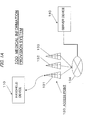
- Fig. 1A is a block diagram showing the overall constitution of an information provision system 100 according to an embodiment of the present invention.
- the user-specific information provision system 100 is constituted by a handheld device 110, access points 130, and a server device 140.
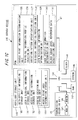
- Fig. 1B is an illustrative view of the handheld device 110 according to this embodiment of the present invention.
- Fig. 1C is an illustrative view of the server device 140 according to this embodiment of the present invention. Constitutions and features of the respective devices will be described below.
- the access points 130 are constituted by access points 131, 132 and 133.
- the access points 131, 132, 133 are disposed in respective areas and respectively define ranges (areas) in which communication is possible with the handheld device 110.
- the handheld device 110 and the server device 140 are connected via a single access point (the access point 131 in Fig. 1 ).
- the access points 130 and the handheld device 110 may be connected wirelessly or through a wire. When the handheld device 110 is in a range enabling communication with the access point 131, the handheld device is assumed to belong to the access point.
- the access points 130 and the server device 140 may be connected either directly or via a communication network 134 (a telephone network, the Internet, a satellite network, and so on) .
- a communication network 134 a telephone network, the Internet, a satellite network, and so on
- the access points 130 are provided with an information attachment unit for attaching access point information to information transmitted via the access points 130 so that the access point information is associated with the transmitted information.
- the access point information is information enabling identification of the individual access points, for example a number, a code, or the like.
- the access points 130 receive blood sugar level data transmitted from the handheld device 110.
- Fig. 1 shows three access points, namely the access point 131, the access point 132, and the access point 133, but the number of access points is not limited to three and may be another plurality.
- the handheld device 110 is configured as a computer, as described below.
- the handheld device 110 includes a CPU 111 that performs overall control of the handheld device 110, and the CPU 111 executes various processing in accordance with instructions from various programs stored in a RAM 118.
- the auxiliary storage unit 116 is constituted by a user identification information storage unit 124, a user-specific information storage unit 125, a measurement data storage unit 126, and a calibration curve data storage unit 127.
- a hard disk, a flash memory, or the like is used as the auxiliary storage unit 116, but the auxiliary storage unit 116 is not limited thereto.
- the handheld device 110 is preferably formed to be portable by a single user but is not limited thereto.
- the measuring unit 112 extracts a fluctuation in the body of the user continuously in the form of signals. For example, a measuring instrument described in Japanese National Publication of International Patent Application No.
- the CPU 111 converts the output signal into a component concentration by referring to the calibration curve data stored in the calibration curve data storage unit 127 of the auxiliary storage unit 116, displays a concentration value on the display unit 122 as measurement data, obtains date and time information from the clock 120, and stores the obtained date and time information and the measurement data in association in the measurement data storage unit 126 as the continuous user biometric information.
- signals expressing blood sugar levels are taken continuously by the measuring unit 112, and therefore the continuous user biometric information stored in the measurement data storage unit 126 is likewise stored as continuous data.
- the transmission/reception unit 115 is connected to a modem 128 and a communication line in order to perform network control.
- the modem 128 demodulates reception data and modulates transmission data.
- the user identification information storage unit 124 stores user identification information.
- the user identification information is information enabling identification of the user of the handheld device or information enabling identification of the handheld device 110 itself, for example an ID number, a passcode, a QR code, a two-dimensional code, a serial number, or the like.
- means for displaying the user identification information on the handheld device 110 includes displaying the identification information on a display unit and adhering the user identification information to a surface of a housing of the handheld device 110.
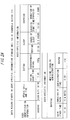
- the user-specific information storage unit 125 is a single record in which the user-specific information is stored in association with the user identification information of the handheld device 110 and an update date and time (the date and time information obtained from the clock) .
- Fig. 2A shows this record. Note that in Fig.
- the user-specific information is listed in each field as the user-specific information, but the user-specific information is not limited thereto, and allergies, past history, chronic diseases, and so on may also be used.
- the user-specific information may be updated in accordance with the wishes of the user, or the CPU 111 may generate an alarm periodically on the display unit using the time and date information obtained from the clock 120, thereby encouraging the user to perform an update operation.
- the CPU refers to the respective fields of the user-specific information storage unit 125 and updates the data in accordance with the update content input into the input unit.
- the server device 140 is configured as a computer, as described below.
- the server device 140 includes a CPU 141 that performs overall control of the server device 140, and the CPU 141 executes various processing in accordance with instructions from various programs stored in a RAM 142.
- a transmission/reception unit 145 constituted by an NCU 143 and a modem 144, an EEPROM 146 storing flags and so on, a ROM 147 storing various programs, the RAM 142 for storing various data and the like processed by the CPU 141 and the programs stored in the ROM 147, an auxiliary storage unit 148, and a clock 149 are connected to the CPU 141 via a bus line.
- the NCU 143 constituting the transmission/reception unit is connected to the modem 144 and a communication line in order to perform network control.
- the modem 144 demodulates reception data and modulates transmission data.
- the auxiliary storage unit 148 is constituted by respective databases of a user-specific information storage unit 150, a user biometric information storage unit 151, an access point information storage unit 152, a profile generation storage unit 153, and an access point area information storage unit 154.
- a hard disk, a flash memory, or the like is used as the auxiliary storage unit 148, but the auxiliary storage unit 148 is not limited thereto.
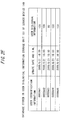
- the access point information storage unit 152 is a database associating the user identification information of individual handheld devices 110, the access point information, and the update time and date (the time and date information obtained from the clock) in order to learn the access point 130 to which each individual handheld device 110 currently belongs.
- Fig. 2B shows this database.
- the user-specific information storage unit 150 is a database associating the user identification information of the individual handheld devices 110, the update time and date (the time and date information obtained from the clock), and the user-specific information of the users using the individual handheld devices.
- Fig. 2C shows this database.
- the user biometric information storage unit 151 is a database associating the user biometric information of the individual handheld devices 110 with the update time and date (the time and date information obtained from the clock) .
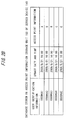
- the access point area information storage unit 154 is a database storing information relating to the areas to which the individual access points belong, or in other words information (here, medical institution information and area information) relating to an area in the communicable range of the access point, in association with the access point information.
- information here, medical institution information and area information
- Fig. 2F addresses, contact addresses, map positions, and so on of medical institutions are used as the medical institution information, while daily weather information, drugstore information (addresses, contact addresses, and map positions of drugstores and pharmacies), and so on are used as the area information.
- the ROM 147 is constituted by an access point information determination unit 155, a biometric information profile generation unit 156, a fluctuation pattern specifying unit 157, a biometric information prediction unit 158, a user biometric information determination unit 159, and a user-specific information determination unit 160.
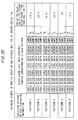
- the biometric information profile generation unit 156 stores a program that enables processing for generating a user-specific biometric information profile on the basis of past user blood sugar level data sequences (past user biometric information of the user transmitted from the handheld device) accumulated over a predetermined period, and storing the user-specific biometric information profile in the profile generation storage unit 153 of the auxiliary storage unit 148 in the form of a database (shown in Fig. 2D ) .
- the fluctuation pattern specifying unit 157 stores a program that enables processing for specifying a fluctuation pattern in the past user biometric information that matches a fluctuation pattern in recent user biometric information of the user from the user-specific biometric information profile stored in the profile generation storage unit 153.
- the biometric information prediction unit 158 stores a program for calculating a predicted value of future user biometric information by adding a fluctuation value of the future user biometric information, which is associated with the fluctuation pattern in the past user biometric information specified by the fluctuation pattern specifying unit 157, to current user biometric information.
- the user biometric information determination unit 159 stores a program for determining whether or not a divergence of at least a predetermined width exists between the user biometric information of the handheld device 110 and the user biometric information stored in the user biometric information storage unit 151 of the server device 140 and, when the divergence of at least the predetermined width exists, executing the programs stored respectively in the fluctuation pattern specifying unit 157 and the biometric information prediction unit 158 to calculate the predicted value of the future user biometric information, and transmitting required information to the handheld device 110 on the basis of the predicted value.
- the user-specific information determination unit 160 stores a program for determining whether or not the user-specific information in the handheld device 110 matches the user-specific information stored in the user-specific information storage unit 150 of the server device 140, and when the information does not match, assuming that the user-specific information has been updated, executing the programs stored respectively in the fluctuation pattern specifying unit 157 and the biometric information prediction unit 158 to calculate the predicted value of the future user biometric information, and transmitting required information to the handheld device 110 on the basis of the predicted value and the update information of the user-specific information.
- the access point information determination unit 155 stores a program for determining whether or not the access point information indicating the access point to which the handheld device 110 belongs matches the access point information stored in the access point information storage unit 152 of the server device 140, and when the information does not match, assuming that the handheld device has moved to a new access point, executing the programs stored respectively in the fluctuation pattern specifying unit 157 and the biometric information prediction unit 158 to calculate the predicted value of the future user biometric information, and transmitting required information to the handheld device 110 on the basis of the predicted value and information relating to the new access point.
- FIG. 3 A flow enabling the server device 140 to provide the handheld device 110 with information using the information provision system described above with reference to Figs. 1A and 1B will now be described using Figs. 3 to 10 .
- Figs. 3 to 10 will be described briefly.
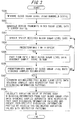
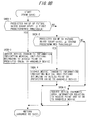
- the flowchart in Fig. 3 illustrates biometric information profile generation processing for generating the user-specific biometric information profile as preparation for calculating the predicted value of the future user biometric information on the server device side.
- the handheld device continues to obtain the continuous user biometric information when no fluctuation has occurred in the user peripheral information, while in the flowcharts of Figs. 6A , 7A , 8A and 9A , to be described below, a determination is made on the server device side as to whether or not a fluctuation has occurred in the user peripheral information.
- the server device 140 calculates the predicted value of the future user biometric information using the user-specific biometric information profile. After the server device 140 completes processing for providing required information to the handheld device in the flowcharts of Figs. 6B , 7B , 7C , 8B and 9B , to be described below, the handheld device returns to processing for continuously obtaining the user biometric information. This flow will now be described.
- the flowcharts of Figs. 6A to 9B illustrate processing in which the user biometric information, the user-specific information, and the access point information indicating the access point to which the handheld device of the user belongs are respectively used as the user peripheral information according to this embodiment, the server device 140 determines whether or not a fluctuation has occurred in this information, and when a fluctuation is acknowledged, required information is selected from this information and the predicted value of the future user biometric information and provided to the handheld device of the user.
- the aforesaid three types of information are cited as the user peripheral information, but the user peripheral information is not limited thereto.
- the measuring unit 112 of the handheld device 110 measures the blood sugar level of the user and obtains blood sugar level data continuously as the continuous user biometric information (step S301) .
- the handheld device 110 may obtain the data periodically using the clock 120.
- the transmission/reception unit 115 of the handheld device 110 transmits the blood sugar level data of the user, obtained continuously by the measuring unit 112, to the server device 140 continuously (step S302) .
- the user may instruct the CPU 111 to transmit the data as desired using the input unit, or the CPU 111 may transmit the data to the server device 140 periodically using the clock 120.
- the continuously transmitted blood sugar level data are preferably suppressed to a required minimum in order to avoid wasteful charges such as communication charges on the user.
- the data are preferably transmitted continuously before and after daily events during which the blood sugar level of the user is likely to vary, for example eating, sleep, bathing, exercise, and administration of insulin or other medicine.
- the CPU 141 reads the program stored in the biometric information profile generation unit 156 of the ROM 147 to the RAM 142 to execute processing for continuously storing the continuously received blood sugar level data of the user in the RAM 142 (step S303) .
- the CPU 141 determines whether or not a predetermined time has elapsed from the start, in the step S303, of continuous storage of the blood sugar level data of the user in the RAM 142 (step S304) .
- the processing returns to the step S303.
- the CPU 141 determines that the predetermined time has elapsed, on the other hand, the blood sugar level data of the user stored continuously in the RAM 142 is partitioned into a single blood sugar level data sequence sample and stored in the RAM 142 again (step S305) .
- the CPU 141 determines whether or not the number of blood sugar level data sequence samples stored in the RAM 142 has reached a predetermined number.
- the processing returns to the step S303, in which a new blood sugar level data sequence sample is stored in the RAM 142 through the processing up to the step S305.
- the processing advances to a step S307 (step S306) .
- the CPU 141 first performs processing for calculating a divergence rate of the blood sugar level, a rate of change in the blood sugar level, and a difference in the blood sugar level exhibited by blood sugar level data sequences obtained at or before a past time P relative to each of the predetermined number of stored blood sugar level data sequence samples (expressing past user biometric information) .
- the past time P is a past time from a newest time included in each blood sugar level data sequence sample.
- the divergence rate of the blood sugar level is calculated using the following Equation 1, in which the blood sugar level at the past time P is DATAp and an average value of blood sugar levels measured within a time period of a predetermined length prior to A hours before the past time P is DATAf. DATAp ⁇ DATAf / DATAf ⁇ 100
- the rate of change in the blood sugar level is calculated using a following Equation 2, in which an average value of blood sugar levels measured within a time period of a predetermined length prior to the past time P is DATAk and the average value of the blood sugar levels measured within the time period of a predetermined length prior to A hours before the past time P is DATAf. DATAf ⁇ DATAk / A
- the difference in the blood sugar level is calculated using a following Equation 3, in which the blood sugar level at the past time P is DATAp and the blood sugar level at A hours before the past time P is DATAa. DATAp ⁇ DATAa
- the CPU 141 calculates the divergence rate of the blood sugar level (Equation 1), the rate of change in the blood sugar level (Equation 2), and the past blood sugar level constituted by the difference in the blood sugar level (Equation 3) for each of the predetermined number of stored blood sugar level data sequence samples.
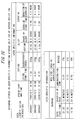
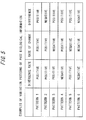
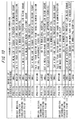
- the CPU 141 then performs processing to determine a pattern, from among Pattern 1 to Pattern 6 shown in Fig. 5 , to which each blood sugar level data sequence sample corresponds (step S307).
- the CPU 141 then advances the processing to a step S308.
- the CPU 141 determines a frequency distribution of fluctuation values of the blood sugar levels measured within X hours after the past time P exhibited by the respective blood sugar level data sequence samples in relation to Pattern 1 to Pattern 6 (representing fluctuation patterns of the past user biometric information) to which the respective blood sugar level data sequence samples correspond, and calculates a median thereof as a future blood sugar level fluctuation value (i.e. a fluctuation value of the future user biometric information) from the past time P.
- a future blood sugar level fluctuation value i.e. a fluctuation value of the future user biometric information
- the CPU 141 then creates user-specific biometric information profiles associating the respective fluctuation patterns of the past user biometric information obtained in the manner described above with the future blood sugar level fluctuation values (i.e. the fluctuation values of the future user biometric information) from the time P of the corresponding fluctuation pattern.
- the CPU 141 stores the user-specific biometric information profiles in the profile generation storage unit 153 of the auxiliary storage unit 148 in the form of the database shown in Fig. 2D .
- the CPU 141 then deletes the program read from the biometric information profile generation unit 156 stored in the RAM 142 and terminates the processing. (Step S308)
- the user-specific biometric information profile can be created as preparation for calculating the predicted value of the future user biometric information on the server device side.
- the measuring unit 112 of the handheld device 110 obtains the continuous user biometric information.
- the measuring unit 112 of the handheld device 110 obtains the continuously measured blood sugar level of the user as the continuous user biometric information.
- the measuring unit 112 of the handheld device 110 may obtain the continuous user biometric information periodically using the clock 120.
- Step S402 when the handheld device 110 performs processing to transmit the user peripheral information to the server device 140, the server device 140 starts the processing of one of the flowcharts shown in Figs. 6A , 7A and 8A . This processing will be described in detail below using the flowcharts shown in Figs. 6A , 7A and 8A . Note that when the handheld device 110 does not perform processing to transmit the user peripheral information to the server device 140, the processing returns to the step S401, where the measuring unit 112 of the handheld device 110 continues to obtain the continuous user biometric information. (Step S402)
- the server device 140 determines that a fluctuation has occurred in the user peripheral information and advances the processing to a step S403. In other cases, the processing returns to the step S401, where the measuring unit 112 of the handheld device 110 resumes continuous acquisition of the blood sugar level data.
- the CPU 141 of the server device 140 reads the program stored in the fluctuation pattern specifying unit 157 of the ROM 147 to the RAM 142.
- the CPU 141 of the server device 140 then transmits an instruction signal instructing that the blood sugar level data obtained continuously by the handheld device 110 in the step S401 be transmitted continuously to the CPU 141 of the server device 140 to the CPU 111 of the handheld device 110 via the transmission/reception unit 145. (Step S403)
- Step S404 the blood sugar level data of the user, transmitted from the handheld device 110 on the basis of the instruction signal, is received continuously in the transmission/reception unit 145 of the server device 140.
- the CPU 141 of the server device 140 then executes processing to store the blood sugar level data of the user continuously in the RAM 142.
- the CPU 141 determines whether or not a predetermined time has elapsed from the start of continuous storage of the blood sugar level data of the user in the RAM 142 in the step S404.
- the processing returns to the step S404. (Step 5405)
- the CPU 141 partitions the blood sugar level data of the user stored continuously in the RAM 142 into a single blood sugar level data sequence and stores the partitioned sequence in the RAM 142 again. (Step S406)
- the CPU 141 creates a recent blood sugar level fluctuation pattern (a fluctuation pattern in recent continuous user biometric information) on the basis of the blood sugar level data sequence stored in the step S406. More specifically, the CPU 141 creates a recent blood sugar level fluctuation pattern (a fluctuation pattern in the recent continuous user biometric information) constituted by the divergence rate of the blood sugar level, the rate of change in the blood sugar level, and the difference in the blood sugar level exhibited by recent blood sugar level data sequences using a similar calculation method to that of the step S307.
- the CPU 141 determines whether or not the past user biometric information fluctuation pattern matches the recent user biometric information fluctuation pattern by referring to the user-specific biometric information profile database ( Fig. 2D ) stored in the profile generation storage unit 153. When a match is not determined, the CPU 141 deletes the blood sugar level data sequence stored in the RAM 142 and returns the processing to the step S404. (Step S408)
- the CPU 141 deletes the program read from the fluctuation pattern specifying unit 157 and stored in the RAM 142, and reads the program stored in the biometric information prediction unit 158 of the ROM 147 to the RAM 142.
- the CPU 141 then refers to the user-specific biometric information profile database ( Fig. 2D ) to perform processing for calculating the predicted value of the future blood sugar level (a predicted value of the future user biometric information) by adding the fluctuation value of the future blood sugar level from the time P (the fluctuation value of the future user biometric information), which is associated with the matching past user biometric information fluctuation pattern, to the current blood sugar level.
- the CPU 141 then stores the calculated predicted value of the future blood sugar level in the RAM 142.
- the CPU 141 then deletes the program read from the biometric information prediction unit 158 and stored in the RAM 142, and terminates the processing for calculating the predicted value of the future blood sugar level. Following termination, the processing advances to a step S410. (Step S409)
- the CPU 141 continues to execute the processing of one of the flowcharts in Figs. 6A , 7A and 8A , which was started in the step S402.
- the CPU 141 executes the processing of a step S605 onward in the flowchart of Fig. 6A , a step S705 onward in the flowchart of Fig. 7A , and a step S806 onward in the flowchart of Fig. 8A .
- This processing will be described in detail below with reference to the flowcharts of Figs. 6A , 7A and 8A .
- the processing returns to the step S401, where the measuring unit 112 of the handheld device 110 continues to obtain the continuous user biometric information.
- the continuous user biometric information is obtained continuously by the handheld device 110 when no fluctuation has occurred in the user peripheral information.
- a determination is made as to whether or not a fluctuation has occurred in the user peripheral information.
- the server device 140 calculates the predicted value of the future user biometric information using the user-specific biometric information profile.
- the processing for continuously obtaining the user biometric information can be resumed in the handheld device 110.
- biometric information profile generation unit 156 fluctuation pattern specifying unit 157, and biometric information prediction unit 158 are used to calculate the predicted value of the future user biometric information using the calculation method described above, but the calculation method is not limited to that described above, and instead, for example, a method described in Japanese Patent Application Publication No. 2005-308742 may be used as the method of predicting the future blood sugar level.
- biometric information profile generation unit 156 may be provided in the ROM 117 of the handheld device 110 rather than the ROM 147 of the server device 140.
- the auxiliary storage unit 116 of the handheld device 110 may include the profile generation storage unit 153.
- the CPU 111 of the handheld device 110 may read the various programs stored in the ROM 117 to the RAM 118 and perform virtually identical processing to the processing performed by the CPU 141 of the server device 140, described using Figs. 3 , 4A , 4B and 5 .
- the CPU 141 of the server device 140 transmits an instruction signal instructing execution of the following processing to the CPU 111 of the handheld device 110 in the following step S403.
- the CPU 111 of the handheld device 110 reads the program stored in the fluctuation pattern specification unit in the ROM 117 of the handheld device 110 to the RAM 118 of the handheld device 110.
- the CPU 111 of the handheld device 110 then executes the processing of the program (steps S403 to 5409), and then executes processing to transmit the calculated predicted value of the future blood sugar level to the CPU 141 of the server device.
- biometric information profile generation unit 156 By storing the various programs stored in the biometric information profile generation unit 156, fluctuation pattern specifying unit 157, and biometric information prediction unit 158 in the ROM 117 of the handheld device 110 and having the CPU 111 of the handheld device 110 execute the processing in this manner, a processing load on the server device can be lightened.
- the CPU 111 of the handheld device 110 transmits the user biometric information stored in the measurement data storage unit 126 to the server device 140 in association with the user identification information of the handheld device 110.
- the user may instruct the CPU 111 to transmit the information as desired using the input unit, or the CPU 111 may transmit the information to the server device 140 automatically at the same time as new user biometric information is input into the measurement data storage unit 126.
- the CPU 111 may transmit the newest user biometric information input into the measurement data storage unit 126 to the server device 140 periodically using the clock 120. Note, however, that regardless of the employed method, the user biometric information, from the continuous user biometric information stored in the measurement data storage unit 126, is used in order to avoid excessive charges such as communication charges on the user. (Step S601)
- the CPU 141 of the server device 140 receives the user biometric information transmitted from the handheld device 110, stores the received information in the RAM 142, reads the program stored in the user biometric information determination unit 159 of the ROM 147 to the RAM 142, and executes the following processing.
- the CPU 141 of the server device 140 refers to the user biometric information storage unit 151 of the server device 140.
- the CPU 141 of the server device 140 compares the user biometric information stored in the database ( Fig. 2E ) of the user biometric information storage unit 151 in the server device 140 with the user biometric information transmitted from the handheld device 110. In this case, the user biometric information stored in the database ( Fig.
- the processing advances to a step S603. In this case, it may be acknowledged that a rapid fluctuation has occurred in the blood sugar level, for example. Further, the server device 140 determines that a fluctuation has occurred in the user peripheral information. When the divergence width is smaller than the predetermined width, the processing advances to a step S606. In this case, the server device determines that a fluctuation has not occurred in the user peripheral information. (Step S602)
- the CPU 141 of the server device 140 reads and executes the programs stored respectively in the fluctuation pattern specifying unit 157 and the biometric information prediction unit 158 of the server device 140 in accordance with the flow of the steps S402 to S409.
- the CPU 141 of the server device 140 thus calculates the final predicted value of the future blood sugar level and stores the predicted value of the future blood sugar level in the RAM 142.
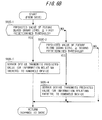
- the server device 140 provides the handheld device 110 with information corresponding to the predicted value of the future blood sugar level calculated in the step S604. This provision processing is performed through steps S605-1 to S605-4 shown in Fig. 6B . (Step S605)
- the CPU 141 of the server device 140 determines whether or not the predicted value of the future blood sugar level is equal to or smaller than a first predetermined threshold.
- the processing advances to the step S605-3.
- the processing advances to the step S605-2.
- the server device 140 transmits the predicted value of the future blood sugar level or information relating to the predicted value of the future blood sugar level to the handheld device 110 via the transmission/reception unit 145.
- the information relating to the predicted value of the future blood sugar level is information indicating the possibility of lapsing into a low blood sugar condition in the near future, corresponding warning information, information describing countermeasures for avoiding lapsing into a low blood sugar condition in the future, and so on.
- the server device 140 may transmit the predicted value of the future blood sugar level and the information relating to the predicted value of the future blood sugar level simultaneously.
- the predicted value of the future blood sugar level and the information relating to the predicted value of the future blood sugar level are received via the transmission/reception unit 115 of the handheld device 110 and displayed on the display unit 122 of the handheld device 110.
- the CPU 141 of the server device 140 determines whether or not the predicted value of the future blood sugar level is equal to or larger than a second predetermined threshold.
- the processing advances to the step S605-4.
- the predicted value of the future blood sugar level is smaller than the second predetermined threshold, this indicates that there is no information to be transmitted to the handheld device 110 from the server device 140, and therefore the series of processes shown in Fig. 6B is terminated, whereupon the processing advances to a step S606.
- the server device 140 transmits the predicted value of the future blood sugar level or information relating to the predicted value of the future blood sugar level to the handheld device 110 via the transmission/reception unit 145.
- the information relating to the predicted value of the future blood sugar level is information indicating the possibility of lapsing into a high blood sugar condition in the near future, corresponding warning information, information describing countermeasures for avoiding lapsing into a high blood sugar condition in the future, and so on.
- the server device 140 may transmit the predicted value of the future blood sugar level and the information relating to the predicted value of the future blood sugar level simultaneously.
- the predicted value of the future blood sugar level and the information relating to the predicted value of the future blood sugar level are received via the transmission/reception unit 115 of the handheld device 110 and displayed on the display unit 122 of the handheld device 110.
- steps S605-1 to S605-4 a series of processes is performed for providing the handheld device 110 with information corresponding to the calculated predicted value of the future blood sugar level.
- this processing advances to the step S606.
- the CPU 141 of the server device 140 updates the user biometric information in the database ( Fig. 2E ) of the user biometric information storage unit 151 in the server device 140 to the user biometric information transmitted from the handheld device 110.
- the CPU 141 of the server device 140 deletes the user biometric information read to the RAM 142 and the program read from the user biometric information determination unit 159, and then terminates the processing.
- the server device 140 can receive only required information on the basis of the user biometric information transmitted from the handheld device 110, determine whether or not the user is in a case of lapsing into a low blood sugar condition or a high blood sugar condition in the future, and transmit a predicted value of the future blood sugar level and information relating thereto to the handheld device 110 while suppressing wasteful charges such as communication charges as far as possible.
- the user is able to implement countermeasures on the basis of the transmitted information.
- the predetermined divergence width (step S602), the first predetermined threshold (step S605-1), and the second predetermined threshold (step S605-2) shown in Figs. 6A and 6B may be set as desired on the user side or set in advance on the server device side, and are not limited to the above description.
- the series of processes for providing the handheld device 110 with the information corresponding to the calculated predicted value of the future blood sugar level in the steps S605-1 to S605-4 is not limited to this flow.
- one, three, or more thresholds may be prepared instead of the first and second predetermined thresholds, and in addition to the predicted value of the future blood sugar level, information corresponding to respective ranges of the predicted value may be transmitted to the handheld device 110.
- the CPU 111 of the handheld device 110 transmits the data record (which is associated with the user identification information of the handheld device 110; shown in Fig. 2A ) stored in the user-specific information storage unit 125 to the server device 140.
- the user may instruct the CPU 111 to transmit the data record as desired using the input unit, or the CPU 111 may transmit the data record periodically.
- the user may input the newest user-specific information into the handheld device 110, and at the same time as the CPU 111 updates the data record stored in the user-specific information storage unit 125, the data record may be transmitted to the server device 140 automatically. (Step S701)
- the CPU 141 of the server device 140 receives the data record ( Fig. 2A ) transmitted from the handheld device 110, stores the received data record in the RAM 142, reads the program stored in the user-specific information determination unit 160 of the ROM 147 to the RAM 142, and executes the following processing.
- the CPU 141 of the server device 140 refers to the user-specific information storage unit 150 of the server device 140.
- the CPU 141 of the server device 140 compares the user-specific information stored in the database ( Fig. 2C ) of the user-specific information storage unit 150 in the server device 140 with the user-specific information in the data record ( Fig. 2A ) transmitted from the handheld device 110. In this case, the user-specific information stored in the database ( Fig.
- the processing advances to a step S703.
- carbohydrates may have been newly ingested during a meal or medicine may have been administered, for example.
- the server device 140 determines that a fluctuation has occurred in the user peripheral information.
- the CPU 141 deletes the data record ( Fig. 2A ) stored in the RAM 142 and the program read from the user-specific information determination unit 160, and terminates the processing. In this case, the server device 140 determines that no fluctuation has occurred in the user peripheral information. (Step S702)
- steps S703 and S704 the CPU 141 of the server device 140 reads and executes the programs stored respectively in the fluctuation pattern specifying unit 157 and the biometric information prediction unit 158 in accordance with the flow of the steps S402 to S409.
- the CPU 141 of the server device 140 thus calculates the final predicted value of the future blood sugar level and stores the predicted value of the future blood sugar level in the RAM 142.
- the server device 140 provides the handheld device 110 with the predicted value of the future blood sugar level calculated in the step S704, and information corresponding to the updated user-specific information (for example, everyday events during which the blood sugar level of the user is likely to vary (eating, exercise, sleep, bathing, medicine administration, and so on)).
- information corresponding to the updated user-specific information for example, everyday events during which the blood sugar level of the user is likely to vary (eating, exercise, sleep, bathing, medicine administration, and so on).
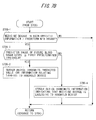
- a case in which the medicine dosage of the user-specific information is updated will be described as examples using Fig. 7B .
- a case in which the eating information of the user-specific information (a carbohydrate intake during a meal) is updated (steps S705-A to S705-D) will be described as examples using Fig. 7C .
- Step S705-1 an amount of a blood sugar level lowering agent such as insulin administered to the user, for example
- the CPU 141 of the server device 140 determines whether or not the medicine dosage is larger than a predetermined dosage.
- the processing advances to the step S705-2.
- the medicine dosage is equal to or smaller than the predetermined dosage, this indicates that there is no information to be provided to the handheld device 110 from the server device 140, and therefore the series of processes shown in Fig. 7B is terminated, whereupon the processing advances to the step S706. (Step S705-1)
- the CPU 141 of the server device 140 determines whether or not the calculated predicted value of the future blood sugar level is equal to or smaller than a first predetermined threshold.
- the processing advances to the step S705-3.
- the processing advances to the step S705-4.
- the server device 140 transmits the predicted value of the future blood sugar level or information relating to the predicted value of the future blood sugar level to the handheld device 110 via the transmission/reception unit 145.
- the information relating to the predicted value of the future blood sugar level is information indicating the possibility of lapsing into a low blood sugar condition in the near future, corresponding warning information, information describing countermeasures for avoiding lapsing into a low blood sugar condition in the future, and so on.
- the server device 140 may transmit the predicted value of the future blood sugar level and the information relating to the predicted value of the future blood sugar level to the handheld device 110 simultaneously.
- the predicted value of the future blood sugar level and the information relating to the predicted value of the future blood sugar level are received via the transmission/reception unit 115 of the handheld device 110 and displayed on the display unit 122 of the handheld device 110.
- the server device 140 transmits a message indicating that the medicine dosage is excessive to the handheld device 110 via the transmission/reception unit 145.
- the server device 140 may also transmit information relating thereto.
- the related information is information indicating the danger of an excessive medicine dosage, countermeasures to be taken in such cases, and so on.
- the transmitted message and related information are received via the transmission/reception unit 115 of the handheld device 110 and displayed on the display unit 122 of the handheld device 110.
- steps S705-1 to S705-4 a series of processes is performed to provide the handheld device 110 with the calculated predicted value of the future blood sugar level and information corresponding to the updated user-specific information (in this example, the medicine dosage is cited as an everyday event during which the blood sugar level of the user is likely to vary) .
- the processing advances to the step S706.
- Step S705-A When the carbohydrate intake during a meal is updated in the step S705-A, the CPU 141 of the server device 140 determines whether or not the carbohydrate intake is larger than a predetermined intake. When the carbohydrate intake is larger than the predetermined carbohydrate intake, the processing advances to the step S705-B. When the carbohydrate intake is equal to or smaller than the predetermined intake, this indicates that there is no information to be provided to the handheld device 110 from the server device 140, and therefore the series of processes shown in Fig. 7C is terminated, whereupon the processing advances to the step S706. (Step S705-A)
- the CPU 141 of the server device 140 determines whether or not the calculated predicted value of the future blood sugar level is equal to or larger than a second predetermined threshold.
- the processing advances to the step S705-C.
- the processing advances to the step S705-D.
- the server device 140 transmits the predicted value of the future blood sugar level or information relating to the predicted value of the future blood sugar level to the handheld device 110 via the transmission/reception unit 145.
- the information relating to the predicted value of the future blood sugar level is information indicating the possibility of lapsing into a high blood sugar condition in the near future, corresponding warning information, information describing countermeasures for avoiding lapsing into a high blood sugar condition in the future, and so on.
- the server device 140 may transmit the predicted value of the future blood sugar level and the information relating to the predicted value of the future blood sugar level simultaneously.
- the predicted value of the future blood sugar level and the information relating to the predicted value of the future blood sugar level are received via the transmission/reception unit 115 of the handheld device 110 and displayed on the display unit 122 of the handheld device 110.
- the server device 140 transmits a message indicating that the carbohydrate intake is excessive to the handheld device 110 via the transmission/reception unit 145.
- the server device 140 may also transmit information relating thereto.
- the related information is information indicating the danger of an excessive carbohydrate intake, countermeasures to be taken in such cases, and so on.
- the transmitted message and related information are received via the transmission/reception unit 115 of the handheld device 110 and displayed on the display unit 122 of the handheld device 110.
- steps S705-A to S705-D a series of processes is performed to provide the handheld device 110 with the calculated predicted value of the future blood sugar level and information corresponding to the updated user-specific information (in this example, the carbohydrate intake during a meal is cited as an everyday event during which the blood sugar level of the user is likely to vary) .
- the processing advances to the step S706.
- the CPU 141 of the server device 140 updates the user-specific information in the database ( Fig. 2C ) of the user-specific information storage unit 150 in the server device 140 to the user-specific information in the data record ( Fig. 2A ) transmitted from the handheld device 110.
- the CPU 141 of the server device 140 deletes the data record ( Fig. 2A ) read to the RAM 142 and the program read from the user-specific information determination unit 160, and then terminates the processing.
- the server device 140 can receive only required information on the basis of an update of the user-specific information transmitted from the handheld device 110, determine whether or not the user is in a case of lapsing into a low blood sugar condition or a high blood sugar condition in the future, and transmit a predicted value of the future blood sugar level and information relating thereto to the handheld device 110 in accordance with the content of the update of the user-specific information while suppressing wasteful charges such as communication charges as far as possible.
- the user is able to implement countermeasures on the basis of the transmitted information.
- the first predetermined threshold (step S705-2) and the second predetermined threshold (step S705-B) shown in Figs. 7A to 7C may be set as desired on the user side or set in advance on the server device side, and are not limited to the above description. Further, the processing of the steps S705-1 to S705-4 and the processing of the steps S705-A to S705-D are not limited to these flows. For example, one, three, or more thresholds may be prepared instead of the first and second predetermined thresholds, and in addition to the predicted value of the future blood sugar level, information corresponding to respective ranges of the predicted value may be transmitted to the handheld device 110.
- Fig. 7B shows an example in which the medicine dosage of the user-specific information is updated (steps S705-1 to S705-4) and Fig. 7C shows an example in which the eating information of the user-specific information (the carbohydrate intake during a meal) is updated (steps S705-A to S705-D).
- the server device 140 can receive only required information on the basis of the update of the user-specific information transmitted from the handheld device 110, determine whether or not the user is in a case of lapsing into a low blood sugar condition or a high blood sugar condition in the future, and transmit a predicted value of the future blood sugar level and information relating thereto to the handheld device 110 in accordance with the content of the update of the user-specific information while suppressing wasteful charges such as communication charges as far as possible.
- this case is also not limited to the flows shown in Figs. 7B and 7C .
- the CPU 111 of the handheld device 110 periodically transmits the user identification information stored in the user identification information storage unit 124 in the form of a signal.
- the access points 130 capable of receiving the signal attach access point information allocated to each individual access point and a reception strength to the signal, and transmit the signal to the server device 140. (Step S801)
- the CPU 141 of the server device 140 receives the user identification information, access point information, and reception strength transmitted via the access point in the step S801, and stores the received information in the RAM 142.
- the CPU 141 of the server device 140 then reads the program stored in the access point information determination unit 155 of the ROM 147 to the RAM 142, and executes the following processing.
- the CPU 141 of the server device 140 compares the reception strengths transmitted from the individual access points in the step S801.
- the CPU 141 of the server device 140 selects the access point information received with the greatest reception strength and stores the selected access point information in the RAM 142 in association with the user identification information.
- the CPU 141 of the server device 140 then deletes the other access point information and reception strength information.
- the server device 140 obtains the access point information indicating the access point to which the handheld device 110 currently belongs. (Step S802)
- the CPU 141 of the server device 140 refers to the database ( Fig. 2B ) in the access point information storage unit 152 of the auxiliary storage unit 148 to retrieve user identification information that matches the user identification information stored in the step S802, and specifies the access point information associated with the retrieved user identification information.
- the CPU 141 of the server device 140 compares the specified access point information with the access point information stored in the RAM 142. When the specified access point information and the access point information stored in the RAM 142 are different, or in other words when the CPU 141 of the server device 140 determines that the handheld device 110 has moved from the access point to which it belonged to another access point, the processing advances to a step S804.
- the server device 140 determines that a fluctuation has occurred in the user peripheral information.
- the server device 140 determines that the handheld device 110 remains at the same access point.
- the CPU 141 of the server device 140 deletes the user identification information and access point information stored in the RAM 142 and the program read from the access point information determination unit 155, and terminates the processing.
- the server device 140 determines that no fluctuation has occurred in the user peripheral information.
- steps S804 and S805 the CPU 141 of the server device 140 reads and executes the programs stored respectively in the fluctuation pattern specifying unit 157 and the biometric information prediction unit 158 in accordance with the flow of the steps S402 to S409.
- the CPU 141 of the server device 140 thus calculates the final predicted value of the future blood sugar level and stores the predicted value of the future blood sugar level in the RAM 142.
- the server device 140 provides the handheld device 110 with the predicted value of the future blood sugar level calculated in the step S805 and information corresponding to the access point to which the handheld device 110 currently belongs (the new access point to which the handheld device 110 is determined to have moved in the step S803).
- This provision processing is performed through steps S806-1 to S806-5 shown in Fig. 8B .
- the CPU 141 of the server device 140 determines whether or not the predicted value of the future blood sugar level is equal to or smaller than a first predetermined threshold.
- the processing advances to the step S806-3.
- the processing advances to the step S806-2.
- the server device 140 transmits the predicted value of the future blood sugar level or information indicating medical institutions belonging to the new access point of the handheld device 110 to the handheld device 110 via the transmission/reception unit 145.
- the medical institution information is obtained by referring to the information stored in the access point area information storage unit 154 of the server device 140, and indicates, but is not limited to, the addresses, contact addresses, and map positions of the medical institutions.
- the server device 140 may also transmit information relating to the predicted value of the future blood sugar level.
- the related information is information indicating the possibility of lapsing into a low blood sugar condition in the near future, corresponding warning information, information describing countermeasures for avoiding lapsing into a low blood sugar condition in the future, and so on.
- the server device 140 may transmit the predicted value of the future blood sugar level, the medical institution information, and the information relating to the predicted value of the future blood sugar level simultaneously. Further, the server device 140 may transmit any one of the predicted value of the future blood sugar level, the medical institution information, and the information relating to the predicted value of the future blood sugar level. The information is received via the transmission/reception unit 115 of the handheld device 110 and displayed on the display unit 122 of the handheld device 110. (Step S806-3)
- the CPU 141 of the server device 140 determines whether or not the predicted value of the future blood sugar level is equal to or larger than a second predetermined threshold.
- the processing advances to the step S806-4.
- the processing advances to the step S806-5.
- the server device 140 transmits the predicted value of the future blood sugar level or the information indicating the medical institutions belonging to the new access point of the handheld device 110 to the handheld device 110 via the transmission/reception unit 145.
- the medical institution information is obtained by referring to the information stored in the access point area information storage unit 154 of the server device 140, and indicates, but is not limited to, the addresses, contact addresses, and map positions of the medical institutions.
- the server device 140 may also transmit the information relating to the predicted value of the future blood sugar level.
- the related information is information indicating the possibility of lapsing into a high blood sugar condition in the near future, corresponding warning information, information describing countermeasures for avoiding lapsing into a high blood sugar condition in the future, and so on.
- the server device 140 may transmit the predicted value of the future blood sugar level, the medical institution information, and the information relating to the predicted value of the future blood sugar level simultaneously. Further, the server device 140 may transmit any one of the predicted value of the future blood sugar level, the medical institution information, and the information relating to the predicted value of the future blood sugar level. The information is received via the transmission/reception unit 115 of the handheld device 110 and displayed on the display unit 122 of the handheld device 110. (Step S806-4)
- the server device 140 transmits area information relating to the new access point of the handheld device 110 to the handheld device 110 via the transmission/reception unit 145.
- the area information may be addresses, contact addresses, and map positions of drugstores and pharmacies, daily weather information or typical climate information relating to the access point, dietary habit information, and so on, for example, but as long as the information is unique to the area of the access point, the information is not limited to these examples. Note that this information is obtained by referring to the information stored in the access point area information storage unit 154 of the server device 140.
- the transmitted information is received via the transmission/reception unit 115 of the handheld device 110 and displayed on the display unit 122 of the handheld device 110. (Step S806-5)
- steps S806-1 to S806-5 a series of processes is performed to provide the handheld device 110 with the calculated predicted value of the future blood sugar level and information corresponding to the access point to which the handheld device 110 currently belongs (the access point to which the handheld device 110 is determined to have moved in the step S803).
- the processing advances to the step S807.
- the CPU 141 of the server device 140 updates the access point information in the database ( Fig. 2B ) of the access point information storage unit 152 in the server device 140 to the access point information specified and stored in the RAM 142 in the step S803.
- the CPU 141 of the server device 140 deletes the access point information specified and stored in the RAM 142 in the step S803 and the program read from the access point information determination unit 155.
- the server device 140 can receive only required information on the basis of the access point information transmitted from the handheld device 110, determine whether or not the user is in a case of lapsing into a low blood sugar condition or a high blood sugar condition in the future, and transmit a predicted value of the future blood sugar level and information relating thereto to the handheld device 110 while suppressing wasteful charges such as communication charges as far as possible.
- the user is able to implement countermeasures on the basis of the transmitted information.
- the first predetermined threshold (step S806-1), and the second predetermined threshold (step S806-2) shown in Fig. 8B may be set as desired on the user side or set in advance on the server device side, and are not limited to the above description.
- the series of processes for providing the handheld device 110 with the information corresponding to the calculated predicted value of the future blood sugar level in the steps S806-1 to S806-5 is not limited to this flow.
- one, three, or more thresholds may be prepared instead of the first and second predetermined thresholds, and in addition to the predicted value of the future blood sugar level, information corresponding to respective ranges of the predicted value may be transmitted to the handheld device 110.
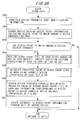
- FIG. 9A The processing of the flowcharts shown in Figs. 9A and 9B may be implemented in place of the processing of the flowcharts shown in Figs. 8A and 8B .
- the steps S801 to S807 of the flowchart shown in Fig. 8A should be replaced with steps S901 to S907 of the flowchart shown in Fig. 9A .
- the processing of the flowchart shown in Fig. 8B is modified to the processing of the flowchart shown in Fig.
- the steps S806-1 to S806-5 of the flowchart shown in Fig. 8B should be replaced with steps S906-1 to S906-9 of the flowchart shown in Fig. 9B .
- the processing of the flowcharts shown in Figs. 9A and 9B may be implemented in parallel with the processing of the flowcharts shown in Figs. 8A and 8B .
- the processing of the flowcharts shown in Figs. 8A and 8B or the processing of the flowcharts shown in Figs. 9A and 9B may be implemented selectively.
- the CPU 111 of the handheld device 110 periodically transmits the user identification information stored in the user identification information storage unit 124 in the form of a signal.
- the access points 130 capable of receiving the signal attach the access point information allocated to each individual access point and a reception strength of the access points 130 to the user identification information, and transmit the result to the server device 140.
- the CPU 141 of the server device 140 receives the user identification information, access point information, and reception strengths transmitted via the access points in the step S901, and stores the received information in the RAM 142.
- the CPU 141 of the server device 140 then reads the program stored in the access point information determination unit 155 of the ROM 147 to the RAM 142, and executes the following processing.
- the CPU 141 of the server device 140 compares the reception strengths transmitted from the individual access points in the step S901.
- the CPU 141 of the server device 140 selects the access point information received with the greatest reception strength and stores the selected access point information in the RAM 142 in association with the user identification information.
- the CPU 141 of the server device 140 then deletes the other access point information and reception strength information.
- the server device 140 obtains access point information indicating the access point to which the handheld device 110 currently belongs. (Step S902)
- the CPU 141 of the server device 140 refers to the database ( Fig. 2B ) in the access point information storage unit 152 of the auxiliary storage unit 148 to retrieve the user identification information that matches the user identification information stored in the step S902, and specifies the access point information associated with the retrieved user identification information.
- the CPU 141 of the server device 140 compares the specified access point information with the access point information stored in the RAM 142. When the specified access point information and the access point information stored in the RAM 142 are different, or in other words when the CPU 141 of the server device 140 determines that the handheld device 110 has moved from the access point to which it belonged to another access point, the processing advances to a step S904.
- the server device 140 determines that a fluctuation has occurred in the user peripheral information.
- the server device 140 determines that the handheld device 110 belongs to the same access point as before.
- the CPU 141 of the server device 140 deletes the user identification information and access point information stored in the RAM 142 and the program read from the access point information determination unit 155, and terminates the processing.
- the server device 140 determines that no fluctuation has occurred in the user peripheral information.
- steps S904 and S905 the CPU 141 of the server device 140 reads and executes the programs stored respectively in the fluctuation pattern specifying unit 157 and the biometric information prediction unit 158 in accordance with the flow of the steps S402 to S409.
- the CPU 141 of the server device 140 thus calculates the final predicted value of the future blood sugar level and stores the predicted value of the future blood sugar level in the RAM 142.
- the server device 140 provides the handheld device 110 with the predicted value of the future blood sugar level calculated in the step S905 and information corresponding to the access point to which the handheld device 110 currently belongs (the new access point to which the handheld device 110 is determined to have moved in the step S903).
- This provision processing is performed through steps S906-1 to S906-9 shown in Fig. 9B .
- the measuring unit 112 of the handheld device 110 measures the blood sugar level of the user as the continuous user biometric information, and thus obtains blood sugar level data continuously.
- the transmission/reception unit 115 of the handheld device 110 transmits the blood sugar level data relating to the user, obtained continuously by the measuring unit 112, continuously to the server device 140.
- the access point 130 receives the blood sugar level data of the user transmitted from the handheld device 110.
- the server device 140 determines whether or not the access point that received the blood sugar level data of the user transmitted from the handheld device 110 is the access point 131. (Step S906-1)
- the server device 140 obtains blood sugar level reference data of the access point 131 that received the blood sugar level data of the user (step S906-4).
- the server device 140 compares the predicted value of the future blood sugar level calculated in the step S905 with the blood sugar level reference data of the access point 131 that received the blood sugar level data of the user. (Step S906-7)
- the server device 140 determines whether or not a result of the comparison between the predicted value of the future blood sugar level and the blood sugar level reference data of the access point 131 that received the blood sugar level data of the user indicates a divergence of at least a predetermined value. (Step S906-8)
- the processing advances to the step S907.
- the server device 140 refers to a medical information table 300 to read unique medical information relating to the access point 131 on the basis of a sign and a degree of the divergence.
- the medical information table 300 is stored in the server device 140.
- the medical information table 300 may be stored in the ROM 147 or the auxiliary storage unit 148 of the server device 140, for example.
- unique medical information corresponding to the access point 131 is read from the medical information table 300 shown in Fig. 10 .
- the sign of the divergence is positive and the degree of divergence is small
- "Eat a meal low in sugar to prevent high blood sugar” is read as the medical information.
- the sign of the divergence is positive and the degree of divergence is medium
- "Talk to your doctor about your insulin administration” is read as the medical information.
- the sign of the divergence is positive and the degree of divergence is large, "Go to AMunicipal Hospital” is read as the medical information.
- the sign of the divergence is negative and the degree of divergence is small
- "Eat a meal containing sugar to prevent low blood sugar” is read as the medical information.
- the server device 140 transmits the medical information read from the medical information table 300 to the handheld device 110 via the transmission/reception unit 145.
- the medical information is received via the transmission/reception unit 115 of the handheld device 110 and displayed on the display unit 122 of the handheld device 110. For example, "Go to A Town Hospital” is displayed on the display unit 122 of the handheld device 110 as the medical information. (Step S906-9)
- Step S906-1 When it is determined in the step S906-1 that the access point that received the blood sugar level data of the user is not the access point 131, on the other hand, the processing advances to the step S906-2, where the server device 140 determines whether or not the access point that received the blood sugar level data of the user transmitted from the handheld device 110 is the access point 132. (Step S906-2)
- the server device 140 obtains the blood sugar level reference data of the access point 132 that received the blood sugar level data of the user. (Step S906-5)
- the server device 140 compares the predicted value of the future blood sugar level calculated in the step S905 with the blood sugar level reference data of the access point 132 that received the blood sugar level data of the user. (Step S906-7)
- the server device 140 determines whether or not a result of the comparison between the predicted value of the future blood sugar level and the blood sugar level reference data of the access point 132 that received the blood sugar level data of the user indicates a divergence of at least a predetermined value. (Step S906-8)
- the processing advances to the step S907 .
- the server device 140 refers to the medical information table 300 to read the unique medical information corresponding to the access point 132 on the basis of the sign and the degree of the divergence.
- the unique medical information corresponding to the access point 132 is read from the medical information table 300 shown in Fig. 10 .
- the sign of the divergence is positive and the degree of divergence is small
- "Eat a meal low in sugar to prevent high blood sugar” is read as the medical information.
- the sign of the divergence is positive and the degree of divergence is medium
- "Talk to your doctor about your insulin administration and take appropriate exercise” is read as the medical information.
- the sign of the divergence is positive and the degree of divergence is large, "Go to B Municipal Hospital” is read as the medical information.
- the sign of the divergence is negative and the degree of divergence is small
- "Eat a meal containing sugar to prevent low blood sugar” is read as the medical information.
- the server device 140 transmits the medical information read from the medical information table 300 to the handheld device 110 via the transmission/reception unit 145.
- the medical information is received via the transmission/reception unit 115 of the handheld device 110 and displayed on the display unit 122 of the handheld device 110. For example, "Go to B Memorial Hospital” is displayed on the display unit 122 of the handheld device 110 as the medical information. (Step S906-9)
- Step S906-3 the server device 140 determines whether or not the access point that received the blood sugar level data of the user transmitted from the handheld device 110 is the access point 133.
- the server device 140 obtains the blood sugar level reference data of the access point 133 that received the blood sugar level data of the user. (Step S906-6)
- the server device 140 compares the predicted value of the future blood sugar level calculated in the step S905 with the blood sugar level reference data of the access point 133 that received the blood sugar level data of the user. (Step S906-7)
- the server device 140 determines whether or not a result of the comparison between the predicted value of the future blood sugar level and the blood sugar level reference data of the access point 133 that received the blood sugar level data of the user indicates a divergence of at least a predetermined value. (Step S906-8)
- the processing advances to the step S907.
- the server device 140 refers to the medical information table 300 to read the unique medical information corresponding to the access point 133 on the basis of the sign and the degree of the divergence.
- the unique medical information corresponding to the access point 133 is read from the medical information table 300 shown in Fig. 10 .
- the sign of the divergence is positive and the degree of divergence is small, "Eat a meal low in sugar to prevent high blood sugar” is read as the medical information.
- the sign of the divergence is positive and the degree of divergence is medium, "Talk to your doctor about your insulin administration and make sure you get enough sleep” is read as the medical information.
- the sign of the divergence is positive and the degree of divergence is large, "Go to C Memorial Hospital” is read as the medical information.
- the server device 140 transmits the medical information read from the medical information table 300 to the handheld device 110 via the transmission/reception unit 145.
- the medical information is received via the transmission/reception unit 115 of the handheld device 110 and displayed on the display unit 122 of the handheld device 110. For example, "Go to C Municipal Hospital” is displayed on the display unit 122 of the handheld device 110 as the medical information. (Step S906-9)
- steps S906-1 to S906-9 a series of processes is performed for providing the handheld device 110 with unique medical information corresponding to respective access points 131 to 133.
- this processing advances to the step S907.
- the server device 140 can receive only required information on the basis of the access point information transmitted from the handheld device 110, determine whether or not the user is in a case of lapsing into a low blood sugar condition or a high blood sugar condition in the future, and transmit the unique medical information corresponding to the access point to the handheld device 110 while suppressing wasteful charges such as communication charges as far as possible.
- the user is able to implement countermeasures on the basis of the transmitted information.
- the server device 140 can transmit optimum medical information unique to the area in which the user is located, which is specified from the access point, to the handheld device 110 in accordance with the blood sugar condition of the user.
- the server device 140 may also obtain blood sugar level data relating to other users received by the access point and averaged on the basis of gender as the blood sugar level reference data. In so doing, the blood sugar level data of the user can be compared with gender-based average reference data relating to the blood sugar condition of other users located in the area specified by the access point, and as a result, the server device 140 can transmit optimum medical information unique to the area specified by the access point to the handheld device 110.
- the server device 140 may also obtain blood sugar level data relating to other users received by the access point and averaged on the basis of age as the blood sugar level reference data. In so doing, the blood sugar level data of the user can be compared with age-based average reference data relating to the blood sugar condition of other users located in the area specified by the access point, and as a result, the server device 140 can transmit optimum medical information unique to the area specified by the access point to the handheld device 110.
- the server device 140 may also obtain blood sugar level data relating to other users received by the access point and averaged on the basis of a measurement time span as the blood sugar level reference data. In so doing, the blood sugar level data of the user can be compared with measurement time span-based average reference data relating to the blood sugar condition of other users located in the area specified by the access point, and as a result, the server device 140 can transmit optimum medical information unique to the area specified by the access point to the handheld device 110.
- the server device 140 may further include a blood sugar level reference data request unit so that blood sugar level reference data requested by the user can be obtained by the blood sugar level reference data request unit.
- the user indicates desired reference data, from among the gender-based average reference data, age-based average reference data, measurement time span-based average reference data, and so on, to the blood sugar level reference data request unit.
- the blood sugar level data of the user can be compared with the blood sugar level reference data desired by the user, from among the blood sugar conditions of the other users located in the area specified by the access point, and as a result, the server device 140 can transmit optimum medical information unique to the area specified by the access point to which the handheld device 110 belongs to the handheld device 110.
- the server device 140 may transmit information indicating a lifestyle improvement to be made by the user in accordance with the result of the comparison between the blood sugar level reference data and the blood sugar level data of the user to the handheld device 110 as the medical information. In so doing, the server device 140 can transmit to the handheld device 110 information indicating a lifestyle improvement to be made by the user that is unique to the area specified by the access point to which the handheld device 110 belongs. Moreover, the server device 140 may transmit information indicating the climate, temperature, and humidity of the area in which the user is located or medical information based thereon to the handheld device 110.
- processing shown in Figs. 3 , 4 , and 6 to 9 may be implemented by having the CPU 141 execute individual programs stored in the ROM 147 of the server device 140 or by having the CPU 141 execute a series of programs stored in the ROM 147 of the server device 140.
- This embodiment does not limit realization methods employed by the respective processing units such as the access point information determination unit 155, the biometric information profile generation unit 156, the fluctuation pattern specifying unit 157, the biometric information prediction unit 158, the user biometric information determination unit 159, the user-specific information determination unit 160, and a blood sugar level reference data acquisition unit 161.
- These processing units may be constituted by hardware constitutional elements, software constitutional elements, or a combination thereof using a method that can be realized by an ordinary person skilled in the art of the technical field.
- the hardware constituent elements include hardware circuits, for example a field programmable gate array (FPGA), an application specific integrated circuit (ASIC), a gate array, a combination of logic gates, a signal processing circuit, an analog circuit, and so on.
- the software constituent elements are components (fragments) for realizing the processing described above as software, but are not limited to a language, a development environment, and so on for realizing the software.
- the software constituent elements include tasks, processes, threads, drivers, firmware, databases, tables, functions, procedures, sub-routines, predetermined parts of program code, data structures, arrays, variables, parameters, and so on.
- These software constituent elements are realized in a computer on one or a plurality of memories or realized by executing data on one or a plurality of memories using one or a plurality of processors (for example, a CPU (Central Processing Unit), a DSP (Digital Signal Processor), or the like).
- processors for example, a CPU (Central Processing Unit), a DSP (Digital Signal Processor), or the like.
- Any of the functions of the embodiment described above may be encoded and stored in a storage area of a computer-readable medium.
- a program for realizing the function may be provided to the computer, or to a computer incorporated into a machine or an apparatus, via the computer-readable medium.
- the function can be realized by having the computer, or the computer incorporated into a machine or an apparatus, read the program from the storage area of the computer-readable medium and execute the program.
- the computer-readable medium denotes a recording medium that employs an electric, magnetic, optical, chemical, physical, or mechanical action to accumulate information such as programs and data and holds the information in a condition that allows reading thereof to a computer.
- a flexible disk, a magneto-optical disk, a CD-ROM, a CD-R/W, a DVD, a DAT, 8 mm tape, a memory card, and so on may be cited as examples of recording media that can be attached to and detached from a computer.
- a hard disk, a ROM, and so on may be cited as recording media that are fixed to a computer.
- a server device can receive required continuous user biometric information at a required time not only during an emergency, but also in accordance with a fluctuation in user peripheral information that affects the continuous user biometric information, for example variation in events occurring during everyday life such as eating, sleep, bathing, exercise, and medicine administration, or variation in dietary habits and environmental variation such as climate variation accompanying a move to another area, and the server device can select information desired by a user on the basis of this information and provide the user with the information reliably.
Landscapes
- Health & Medical Sciences (AREA)
- Engineering & Computer Science (AREA)
- Life Sciences & Earth Sciences (AREA)
- Biomedical Technology (AREA)
- Public Health (AREA)
- General Health & Medical Sciences (AREA)
- Medical Informatics (AREA)
- Molecular Biology (AREA)
- Biophysics (AREA)
- Heart & Thoracic Surgery (AREA)
- Physics & Mathematics (AREA)
- Pathology (AREA)
- Surgery (AREA)
- Animal Behavior & Ethology (AREA)
- Veterinary Medicine (AREA)
- Computer Networks & Wireless Communication (AREA)
- Epidemiology (AREA)
- Business, Economics & Management (AREA)
- General Business, Economics & Management (AREA)
- Primary Health Care (AREA)
- Signal Processing (AREA)
- Hematology (AREA)
- Measuring And Recording Apparatus For Diagnosis (AREA)
- Medical Treatment And Welfare Office Work (AREA)
Applications Claiming Priority (4)
| Application Number | Priority Date | Filing Date | Title |
|---|---|---|---|
| JP2009101291 | 2009-04-17 | ||
| JP2009101290 | 2009-04-17 | ||
| JP2010009474 | 2010-01-19 | ||
| PCT/JP2010/056471 WO2010119824A1 (ja) | 2009-04-17 | 2010-04-09 | 情報提供システム、情報提供方法、プログラム及びサーバ装置 |
Publications (3)
| Publication Number | Publication Date |
|---|---|
| EP2420184A1 true EP2420184A1 (de) | 2012-02-22 |
| EP2420184A4 EP2420184A4 (de) | 2014-05-14 |
| EP2420184B1 EP2420184B1 (de) | 2016-05-11 |
Family
ID=42982486
Family Applications (1)
| Application Number | Title | Priority Date | Filing Date |
|---|---|---|---|
| EP10764408.0A Active EP2420184B1 (de) | 2009-04-17 | 2010-04-09 | Datenbereitstellungsverfahren, programm und servervorrichtung |
Country Status (6)
| Country | Link |
|---|---|
| US (1) | US8769002B2 (de) |
| EP (1) | EP2420184B1 (de) |
| JP (1) | JP5410511B2 (de) |
| KR (1) | KR101297767B1 (de) |
| CN (1) | CN102458234B (de) |
| WO (1) | WO2010119824A1 (de) |
Families Citing this family (7)
| Publication number | Priority date | Publication date | Assignee | Title |
|---|---|---|---|---|
| US9176141B2 (en) * | 2006-05-15 | 2015-11-03 | Cercacor Laboratories, Inc. | Physiological monitor calibration system |
| FR2989261B1 (fr) * | 2012-04-12 | 2021-07-30 | Welcoop Pharma | Dispositif medical pour la mesure et le traitement d'un parametre de sante d'un patient |
| TWI620547B (zh) * | 2013-08-30 | 2018-04-11 | 新力股份有限公司 | Information processing device, information processing method and information processing system |
| JP6586909B2 (ja) * | 2016-03-09 | 2019-10-09 | 富士通株式会社 | データ管理方法及びデータ管理システム |
| CN106446581A (zh) * | 2016-10-18 | 2017-02-22 | 江西博瑞彤芸科技有限公司 | 体征数据的分析方法 |
| US11645372B2 (en) * | 2020-01-22 | 2023-05-09 | International Business Machines Corporation | Multifactor handwritten signature verification |
| JP7596740B2 (ja) * | 2020-11-24 | 2024-12-10 | コニカミノルタ株式会社 | 生体情報検出装置、生体情報検出システム及びプログラム |
Family Cites Families (56)
| Publication number | Priority date | Publication date | Assignee | Title |
|---|---|---|---|---|
| US5956501A (en) * | 1997-01-10 | 1999-09-21 | Health Hero Network, Inc. | Disease simulation system and method |
| US6206829B1 (en) * | 1996-07-12 | 2001-03-27 | First Opinion Corporation | Computerized medical diagnostic and treatment advice system including network access |
| DE69715255T2 (de) | 1996-07-16 | 2003-05-08 | Kyoto Daiichi Kagaku Co. Ltd., Kyoto | Verteilte überwachungs-/mess-anordnung zur gesundheitsversorgung |
| US6269314B1 (en) | 1997-08-19 | 2001-07-31 | Omron Corporation | Blood sugar measuring device |
| US7945451B2 (en) * | 1999-04-16 | 2011-05-17 | Cardiocom, Llc | Remote monitoring system for ambulatory patients |
| US7256708B2 (en) * | 1999-06-23 | 2007-08-14 | Visicu, Inc. | Telecommunications network for remote patient monitoring |
| US8175895B2 (en) * | 1999-06-23 | 2012-05-08 | Koninklijke Philips Electronics N.V. | Remote command center for patient monitoring |
| WO2001028416A1 (en) | 1999-09-24 | 2001-04-26 | Healthetech, Inc. | Physiological monitor and associated computation, display and communication unit |
| US6478736B1 (en) | 1999-10-08 | 2002-11-12 | Healthetech, Inc. | Integrated calorie management system |
| US20020062069A1 (en) | 1999-10-08 | 2002-05-23 | Mault James R. | System and method of integrated calorie management using interactive television |
| US20020107433A1 (en) | 1999-10-08 | 2002-08-08 | Mault James R. | System and method of personal fitness training using interactive television |
| US6368284B1 (en) * | 1999-11-16 | 2002-04-09 | Cardiac Intelligence Corporation | Automated collection and analysis patient care system and method for diagnosing and monitoring myocardial ischemia and outcomes thereof |
| US6411840B1 (en) * | 1999-11-16 | 2002-06-25 | Cardiac Intelligence Corporation | Automated collection and analysis patient care system and method for diagnosing and monitoring the outcomes of atrial fibrillation |
| US6398728B1 (en) * | 1999-11-16 | 2002-06-04 | Cardiac Intelligence Corporation | Automated collection and analysis patient care system and method for diagnosing and monitoring respiratory insufficiency and outcomes thereof |
| US6336903B1 (en) * | 1999-11-16 | 2002-01-08 | Cardiac Intelligence Corp. | Automated collection and analysis patient care system and method for diagnosing and monitoring congestive heart failure and outcomes thereof |
| US6980958B1 (en) * | 2000-01-11 | 2005-12-27 | Zycare, Inc. | Apparatus and methods for monitoring and modifying anticoagulation therapy of remotely located patients |
| DE10006044A1 (de) | 2000-02-10 | 2001-08-16 | Roche Diagnostics Gmbh | Anordnung und Verfahren zur Dosierung eines die Blutglukose eines Patienten regulierenden Hormons |
| US6699188B2 (en) * | 2000-06-22 | 2004-03-02 | Guidance Interactive Technologies | Interactive reward devices and methods |
| US20020019752A1 (en) | 2000-06-23 | 2002-02-14 | Isamu Takase | System for therapy management and terminal used therefor |
| US6560471B1 (en) | 2001-01-02 | 2003-05-06 | Therasense, Inc. | Analyte monitoring device and methods of use |
| US6475161B2 (en) * | 2001-03-29 | 2002-11-05 | The Mclean Hospital Corporation | Methods for diagnosing Alzheimer's disease and other forms of dementia |
| JP4836354B2 (ja) | 2001-06-05 | 2011-12-14 | アークレイ株式会社 | データ通信用アダプタ |
| JP4701556B2 (ja) | 2001-08-01 | 2011-06-15 | 住友電気工業株式会社 | 活動支援方法及びシステム |
| JP3775263B2 (ja) * | 2001-08-10 | 2006-05-17 | ニプロ株式会社 | 記録媒体およびこの記録媒体を用いた血糖測定システム |
| JP2003173375A (ja) | 2001-09-28 | 2003-06-20 | Toshiba Corp | 生活管理端末装置、生活管理方法並びに生活管理システム |
| US7448996B2 (en) * | 2002-04-16 | 2008-11-11 | Carematix, Inc. | Method and apparatus for remotely monitoring the condition of a patient |
| EP1498067A1 (de) | 2002-04-25 | 2005-01-19 | Matsushita Electric Industrial Co., Ltd. | System zur unterstützung der dosisbestimmung, injektionsgerät und system zur aufrechterhaltung der gesundheit |
| EP2322092B1 (de) * | 2002-08-13 | 2015-11-25 | University Of Virginia Patent Foundation | Verfahren, System und Computerprogrammprodukt zur Verarbeitung von Selbstmessungsdaten der Blutglukose (SMBG) zur Verbesserung der Diabetesselbstverwaltung |
| JP2004157596A (ja) | 2002-11-01 | 2004-06-03 | Junichi Ninomiya | 健康管理システム及び健康管理方法 |
| WO2005089103A2 (en) * | 2004-02-17 | 2005-09-29 | Therasense, Inc. | Method and system for providing data communication in continuous glucose monitoring and management system |
| CA2556592C (en) | 2004-02-26 | 2014-01-28 | Lars Gustaf Liljeryd | Metabolic monitoring, a method and apparatus for indicating a health-related condition of a subject |
| JP2005267364A (ja) | 2004-03-19 | 2005-09-29 | Asahi Kasei Medical Co Ltd | 治療支援システム |
| US20050228300A1 (en) * | 2004-04-07 | 2005-10-13 | Triage Data Networks | Cuffless blood-pressure monitor and accompanying wireless mobile device |
| DE102004020160A1 (de) | 2004-04-24 | 2005-11-10 | Roche Diagnostics Gmbh | Verfahren und Vorrichtung zum Überwachen einer Konzentration eines Analyten im lebenden Körper eines Menschen oder Tieres |
| JP2005328924A (ja) | 2004-05-18 | 2005-12-02 | Toyama Univ | 血糖値予測装置、血糖値予測モデル作成装置、およびプログラム |
| US7126467B2 (en) * | 2004-07-23 | 2006-10-24 | Innovalarm Corporation | Enhanced fire, safety, security, and health monitoring and alarm response method, system and device |
| JP2006099301A (ja) | 2004-09-29 | 2006-04-13 | Akira Ichikawa | 携帯電話のモバイルコンテンツによる健康管理システム |
| JP4547667B2 (ja) | 2004-12-08 | 2010-09-22 | 社団法人鹿児島県工業倶楽部 | 転地滞在型健康保養システム |
| US9020887B2 (en) * | 2004-12-21 | 2015-04-28 | Proofpoint, Inc. | Managing the status of documents in a distributed storage system |
| US20090054735A1 (en) | 2005-03-08 | 2009-02-26 | Vanderbilt University Office Of Technology Transfer And Enterprise Development | System and method for remote monitoring of multiple healthcare patients |
| US20060206011A1 (en) * | 2005-03-08 | 2006-09-14 | Higgins Michael S | System and method for remote monitoring of multiple healthcare patients |
| JP2006323468A (ja) | 2005-05-17 | 2006-11-30 | Nippon Telegr & Teleph Corp <Ntt> | 旅行中のヘルスケアサポートシステム |
| EP1733677A1 (de) | 2005-06-18 | 2006-12-20 | Roche Diagnostics GmbH | Blutzuckermessgerät mit Signaleinrichtung |
| US20060293571A1 (en) * | 2005-06-23 | 2006-12-28 | Skanda Systems | Distributed architecture for remote patient monitoring and caring |
| CN100471444C (zh) * | 2006-01-27 | 2009-03-25 | 周常安 | 可携式无线生理信号监测装置 |
| US7535358B2 (en) * | 2006-03-15 | 2009-05-19 | Elaine A. Crider | Method and apparatus for electronically tracking luggage |
| US7558622B2 (en) * | 2006-05-24 | 2009-07-07 | Bao Tran | Mesh network stroke monitoring appliance |
| US20080092638A1 (en) | 2006-10-19 | 2008-04-24 | Bayer Healthcare Llc | Wireless analyte monitoring system |
| US20080114215A1 (en) | 2006-11-09 | 2008-05-15 | Isense Corporation | Shape recognition of hypoglycemia and hyperglycemia |
| JP2008167829A (ja) | 2007-01-10 | 2008-07-24 | Matsushita Electric Ind Co Ltd | 血液検査装置 |
| JP5090013B2 (ja) | 2007-02-23 | 2012-12-05 | 株式会社日立製作所 | 情報管理システム及びサーバ |
| US20080235053A1 (en) | 2007-03-20 | 2008-09-25 | Pinaki Ray | Communication medium for diabetes management |
| US8758245B2 (en) | 2007-03-20 | 2014-06-24 | Lifescan, Inc. | Systems and methods for pattern recognition in diabetes management |
| US20100152549A1 (en) | 2007-04-24 | 2010-06-17 | Fibertech Co., Ltd. | Biological information detection device |
| US8344847B2 (en) * | 2009-07-09 | 2013-01-01 | Medtronic Minimed, Inc. | Coordination of control commands in a medical device system having at least one therapy delivery device and at least one wireless controller device |
| US20110231296A1 (en) * | 2010-03-16 | 2011-09-22 | UberMedia, Inc. | Systems and methods for interacting with messages, authors, and followers |
-
2010
- 2010-04-09 US US13/259,950 patent/US8769002B2/en active Active
- 2010-04-09 JP JP2011509278A patent/JP5410511B2/ja active Active
- 2010-04-09 EP EP10764408.0A patent/EP2420184B1/de active Active
- 2010-04-09 WO PCT/JP2010/056471 patent/WO2010119824A1/ja not_active Ceased
- 2010-04-09 KR KR1020117025743A patent/KR101297767B1/ko active Active
- 2010-04-09 CN CN201080027293.2A patent/CN102458234B/zh active Active
Also Published As
| Publication number | Publication date |
|---|---|
| CN102458234A (zh) | 2012-05-16 |
| US8769002B2 (en) | 2014-07-01 |
| JPWO2010119824A1 (ja) | 2012-10-22 |
| JP5410511B2 (ja) | 2014-02-05 |
| CN102458234B (zh) | 2014-02-26 |
| US20120110054A1 (en) | 2012-05-03 |
| EP2420184B1 (de) | 2016-05-11 |
| KR101297767B1 (ko) | 2013-08-20 |
| WO2010119824A1 (ja) | 2010-10-21 |
| KR20120011861A (ko) | 2012-02-08 |
| EP2420184A4 (de) | 2014-05-14 |
Similar Documents
| Publication | Publication Date | Title |
|---|---|---|
| EP2420184A1 (de) | Datenbereitstellungssystem, datenbereitstellungsverfahren, programm und servervorrichtung | |
| EP2797495B1 (de) | Tragbarer diabetesmanager mit einer benutzerschnittstelle für die anzeige eines zustandes eines externen medizinischen vorrichtung | |
| CN100405970C (zh) | 健康管理系统 | |
| RU2285442C2 (ru) | Персональная система контроля состояния | |
| US9928341B2 (en) | Systems and methods for providing comprehensive care for stoma patients | |
| CN103976741B (zh) | 用于糖尿病管理的被分析物测试方法和装置 | |
| JP2006026208A (ja) | 健康管理システム | |
| US20150134344A1 (en) | Personal Health Data Gathering for Incentive and Insurance Rating Purposes | |
| WO2009137661A1 (en) | Analyte measurement and management device and associated methods | |
| JP2008048382A (ja) | 分析物検出のための糖尿病管理装置と選択的にデータを転送する方法 | |
| US20130085682A1 (en) | Memory card usage with blood glucose devices | |
| CN103440421A (zh) | 医学数据处理方法和系统 | |
| WO2021140731A1 (ja) | 情報伝達装置および情報伝達方法 | |
| US20150119749A1 (en) | Systems and methods for monitoring fertility using a portable electronic device | |
| KR102416715B1 (ko) | 피크혈당 값을 이용한 혈당 예측 방법 및 음식 제안 시스템 | |
| CN106663303A (zh) | 少儿健康管理系统及少儿健康管理方法 | |
| JP5616331B2 (ja) | ユーザ固有情報提供システム、ユーザ固有情報提供方法、サーバ装置及び携帯装置 | |
| US20230080234A1 (en) | Information processing apparatus, information processing system, information processing method, and computer program | |
| KR101235338B1 (ko) | 건강 관리 단말기 및 건강 관리 방법 | |
| KR102009214B1 (ko) | 모바일을 활용한 스마트 주치의 시스템 | |
| KR20240005255A (ko) | 사용자 위치 정보에 기반한 정보제공 방법 | |
| WO2021152710A1 (ja) | 情報伝達装置および情報伝達方法 |
Legal Events
| Date | Code | Title | Description |
|---|---|---|---|
| PUAI | Public reference made under article 153(3) epc to a published international application that has entered the european phase |
Free format text: ORIGINAL CODE: 0009012 |
|
| 17P | Request for examination filed |
Effective date: 20111109 |
|
| AK | Designated contracting states |
Kind code of ref document: A1 Designated state(s): AT BE BG CH CY CZ DE DK EE ES FI FR GB GR HR HU IE IS IT LI LT LU LV MC MK MT NL NO PL PT RO SE SI SK SM TR |
|
| DAX | Request for extension of the european patent (deleted) | ||
| A4 | Supplementary search report drawn up and despatched |
Effective date: 20140411 |
|
| RIC1 | Information provided on ipc code assigned before grant |
Ipc: A61B 5/00 20060101AFI20140407BHEP |
|
| 17Q | First examination report despatched |
Effective date: 20150702 |
|
| RAP1 | Party data changed (applicant data changed or rights of an application transferred) |
Owner name: ARKRAY, INC. |
|
| REG | Reference to a national code |
Ref country code: DE Ref legal event code: R079 Ref document number: 602010033318 Country of ref document: DE Free format text: PREVIOUS MAIN CLASS: A61B0005000000 Ipc: A61B0005145000 |
|
| GRAP | Despatch of communication of intention to grant a patent |
Free format text: ORIGINAL CODE: EPIDOSNIGR1 |
|
| RIC1 | Information provided on ipc code assigned before grant |
Ipc: G06F 19/00 20110101ALI20160113BHEP Ipc: A61B 5/145 20060101AFI20160113BHEP |
|
| INTG | Intention to grant announced |
Effective date: 20160126 |
|
| GRAS | Grant fee paid |
Free format text: ORIGINAL CODE: EPIDOSNIGR3 |
|
| GRAA | (expected) grant |
Free format text: ORIGINAL CODE: 0009210 |
|
| AK | Designated contracting states |
Kind code of ref document: B1 Designated state(s): AT BE BG CH CY CZ DE DK EE ES FI FR GB GR HR HU IE IS IT LI LT LU LV MC MK MT NL NO PL PT RO SE SI SK SM TR |
|
| REG | Reference to a national code |
Ref country code: GB Ref legal event code: FG4D |
|
| REG | Reference to a national code |
Ref country code: CH Ref legal event code: EP |
|
| REG | Reference to a national code |
Ref country code: AT Ref legal event code: REF Ref document number: 797970 Country of ref document: AT Kind code of ref document: T Effective date: 20160515 |
|
| REG | Reference to a national code |
Ref country code: IE Ref legal event code: FG4D |
|
| REG | Reference to a national code |
Ref country code: DE Ref legal event code: R096 Ref document number: 602010033318 Country of ref document: DE |
|
| REG | Reference to a national code |
Ref country code: LT Ref legal event code: MG4D |
|
| REG | Reference to a national code |
Ref country code: NL Ref legal event code: MP Effective date: 20160511 |
|
| PG25 | Lapsed in a contracting state [announced via postgrant information from national office to epo] |
Ref country code: FI Free format text: LAPSE BECAUSE OF FAILURE TO SUBMIT A TRANSLATION OF THE DESCRIPTION OR TO PAY THE FEE WITHIN THE PRESCRIBED TIME-LIMIT Effective date: 20160511 Ref country code: LT Free format text: LAPSE BECAUSE OF FAILURE TO SUBMIT A TRANSLATION OF THE DESCRIPTION OR TO PAY THE FEE WITHIN THE PRESCRIBED TIME-LIMIT Effective date: 20160511 Ref country code: NL Free format text: LAPSE BECAUSE OF FAILURE TO SUBMIT A TRANSLATION OF THE DESCRIPTION OR TO PAY THE FEE WITHIN THE PRESCRIBED TIME-LIMIT Effective date: 20160511 Ref country code: NO Free format text: LAPSE BECAUSE OF FAILURE TO SUBMIT A TRANSLATION OF THE DESCRIPTION OR TO PAY THE FEE WITHIN THE PRESCRIBED TIME-LIMIT Effective date: 20160811 |
|
| REG | Reference to a national code |
Ref country code: AT Ref legal event code: MK05 Ref document number: 797970 Country of ref document: AT Kind code of ref document: T Effective date: 20160511 |
|
| PG25 | Lapsed in a contracting state [announced via postgrant information from national office to epo] |
Ref country code: GR Free format text: LAPSE BECAUSE OF FAILURE TO SUBMIT A TRANSLATION OF THE DESCRIPTION OR TO PAY THE FEE WITHIN THE PRESCRIBED TIME-LIMIT Effective date: 20160812 Ref country code: LV Free format text: LAPSE BECAUSE OF FAILURE TO SUBMIT A TRANSLATION OF THE DESCRIPTION OR TO PAY THE FEE WITHIN THE PRESCRIBED TIME-LIMIT Effective date: 20160511 Ref country code: PT Free format text: LAPSE BECAUSE OF FAILURE TO SUBMIT A TRANSLATION OF THE DESCRIPTION OR TO PAY THE FEE WITHIN THE PRESCRIBED TIME-LIMIT Effective date: 20160912 Ref country code: HR Free format text: LAPSE BECAUSE OF FAILURE TO SUBMIT A TRANSLATION OF THE DESCRIPTION OR TO PAY THE FEE WITHIN THE PRESCRIBED TIME-LIMIT Effective date: 20160511 Ref country code: SE Free format text: LAPSE BECAUSE OF FAILURE TO SUBMIT A TRANSLATION OF THE DESCRIPTION OR TO PAY THE FEE WITHIN THE PRESCRIBED TIME-LIMIT Effective date: 20160511 Ref country code: ES Free format text: LAPSE BECAUSE OF FAILURE TO SUBMIT A TRANSLATION OF THE DESCRIPTION OR TO PAY THE FEE WITHIN THE PRESCRIBED TIME-LIMIT Effective date: 20160511 |
|
| PG25 | Lapsed in a contracting state [announced via postgrant information from national office to epo] |
Ref country code: SK Free format text: LAPSE BECAUSE OF FAILURE TO SUBMIT A TRANSLATION OF THE DESCRIPTION OR TO PAY THE FEE WITHIN THE PRESCRIBED TIME-LIMIT Effective date: 20160511 Ref country code: CZ Free format text: LAPSE BECAUSE OF FAILURE TO SUBMIT A TRANSLATION OF THE DESCRIPTION OR TO PAY THE FEE WITHIN THE PRESCRIBED TIME-LIMIT Effective date: 20160511 Ref country code: EE Free format text: LAPSE BECAUSE OF FAILURE TO SUBMIT A TRANSLATION OF THE DESCRIPTION OR TO PAY THE FEE WITHIN THE PRESCRIBED TIME-LIMIT Effective date: 20160511 Ref country code: RO Free format text: LAPSE BECAUSE OF FAILURE TO SUBMIT A TRANSLATION OF THE DESCRIPTION OR TO PAY THE FEE WITHIN THE PRESCRIBED TIME-LIMIT Effective date: 20160511 Ref country code: DK Free format text: LAPSE BECAUSE OF FAILURE TO SUBMIT A TRANSLATION OF THE DESCRIPTION OR TO PAY THE FEE WITHIN THE PRESCRIBED TIME-LIMIT Effective date: 20160511 |
|
| REG | Reference to a national code |
Ref country code: DE Ref legal event code: R097 Ref document number: 602010033318 Country of ref document: DE |
|
| PG25 | Lapsed in a contracting state [announced via postgrant information from national office to epo] |
Ref country code: PL Free format text: LAPSE BECAUSE OF FAILURE TO SUBMIT A TRANSLATION OF THE DESCRIPTION OR TO PAY THE FEE WITHIN THE PRESCRIBED TIME-LIMIT Effective date: 20160511 Ref country code: BE Free format text: LAPSE BECAUSE OF FAILURE TO SUBMIT A TRANSLATION OF THE DESCRIPTION OR TO PAY THE FEE WITHIN THE PRESCRIBED TIME-LIMIT Effective date: 20160511 Ref country code: SM Free format text: LAPSE BECAUSE OF FAILURE TO SUBMIT A TRANSLATION OF THE DESCRIPTION OR TO PAY THE FEE WITHIN THE PRESCRIBED TIME-LIMIT Effective date: 20160511 Ref country code: AT Free format text: LAPSE BECAUSE OF FAILURE TO SUBMIT A TRANSLATION OF THE DESCRIPTION OR TO PAY THE FEE WITHIN THE PRESCRIBED TIME-LIMIT Effective date: 20160511 |
|
| PLBE | No opposition filed within time limit |
Free format text: ORIGINAL CODE: 0009261 |
|
| STAA | Information on the status of an ep patent application or granted ep patent |
Free format text: STATUS: NO OPPOSITION FILED WITHIN TIME LIMIT |
|
| 26N | No opposition filed |
Effective date: 20170214 |
|
| REG | Reference to a national code |
Ref country code: FR Ref legal event code: PLFP Year of fee payment: 8 |
|
| PG25 | Lapsed in a contracting state [announced via postgrant information from national office to epo] |
Ref country code: SI Free format text: LAPSE BECAUSE OF FAILURE TO SUBMIT A TRANSLATION OF THE DESCRIPTION OR TO PAY THE FEE WITHIN THE PRESCRIBED TIME-LIMIT Effective date: 20160511 |
|
| PG25 | Lapsed in a contracting state [announced via postgrant information from national office to epo] |
Ref country code: MC Free format text: LAPSE BECAUSE OF FAILURE TO SUBMIT A TRANSLATION OF THE DESCRIPTION OR TO PAY THE FEE WITHIN THE PRESCRIBED TIME-LIMIT Effective date: 20160511 |
|
| REG | Reference to a national code |
Ref country code: CH Ref legal event code: PL |
|
| REG | Reference to a national code |
Ref country code: IE Ref legal event code: MM4A |
|
| PG25 | Lapsed in a contracting state [announced via postgrant information from national office to epo] |
Ref country code: LI Free format text: LAPSE BECAUSE OF NON-PAYMENT OF DUE FEES Effective date: 20170430 Ref country code: LU Free format text: LAPSE BECAUSE OF NON-PAYMENT OF DUE FEES Effective date: 20170409 Ref country code: CH Free format text: LAPSE BECAUSE OF NON-PAYMENT OF DUE FEES Effective date: 20170430 |
|
| REG | Reference to a national code |
Ref country code: FR Ref legal event code: PLFP Year of fee payment: 9 |
|
| PG25 | Lapsed in a contracting state [announced via postgrant information from national office to epo] |
Ref country code: IE Free format text: LAPSE BECAUSE OF NON-PAYMENT OF DUE FEES Effective date: 20170409 |
|
| PG25 | Lapsed in a contracting state [announced via postgrant information from national office to epo] |
Ref country code: MT Free format text: LAPSE BECAUSE OF NON-PAYMENT OF DUE FEES Effective date: 20170409 |
|
| PG25 | Lapsed in a contracting state [announced via postgrant information from national office to epo] |
Ref country code: HU Free format text: LAPSE BECAUSE OF FAILURE TO SUBMIT A TRANSLATION OF THE DESCRIPTION OR TO PAY THE FEE WITHIN THE PRESCRIBED TIME-LIMIT; INVALID AB INITIO Effective date: 20100409 |
|
| PG25 | Lapsed in a contracting state [announced via postgrant information from national office to epo] |
Ref country code: BG Free format text: LAPSE BECAUSE OF FAILURE TO SUBMIT A TRANSLATION OF THE DESCRIPTION OR TO PAY THE FEE WITHIN THE PRESCRIBED TIME-LIMIT Effective date: 20160511 |
|
| PG25 | Lapsed in a contracting state [announced via postgrant information from national office to epo] |
Ref country code: CY Free format text: LAPSE BECAUSE OF NON-PAYMENT OF DUE FEES Effective date: 20160511 |
|
| PG25 | Lapsed in a contracting state [announced via postgrant information from national office to epo] |
Ref country code: MK Free format text: LAPSE BECAUSE OF FAILURE TO SUBMIT A TRANSLATION OF THE DESCRIPTION OR TO PAY THE FEE WITHIN THE PRESCRIBED TIME-LIMIT Effective date: 20160511 |
|
| PG25 | Lapsed in a contracting state [announced via postgrant information from national office to epo] |
Ref country code: TR Free format text: LAPSE BECAUSE OF FAILURE TO SUBMIT A TRANSLATION OF THE DESCRIPTION OR TO PAY THE FEE WITHIN THE PRESCRIBED TIME-LIMIT Effective date: 20160511 |
|
| PG25 | Lapsed in a contracting state [announced via postgrant information from national office to epo] |
Ref country code: IS Free format text: LAPSE BECAUSE OF FAILURE TO SUBMIT A TRANSLATION OF THE DESCRIPTION OR TO PAY THE FEE WITHIN THE PRESCRIBED TIME-LIMIT Effective date: 20160911 |
|
| PGFP | Annual fee paid to national office [announced via postgrant information from national office to epo] |
Ref country code: DE Payment date: 20250422 Year of fee payment: 16 |
|
| PGFP | Annual fee paid to national office [announced via postgrant information from national office to epo] |
Ref country code: GB Payment date: 20250423 Year of fee payment: 16 |
|
| PGFP | Annual fee paid to national office [announced via postgrant information from national office to epo] |
Ref country code: IT Payment date: 20250424 Year of fee payment: 16 |
|
| PGFP | Annual fee paid to national office [announced via postgrant information from national office to epo] |
Ref country code: FR Payment date: 20250425 Year of fee payment: 16 |