EP2397956B1 - Verfahren zur Simulation eines Artikels aus einem viskoelastischen Material - Google Patents
Verfahren zur Simulation eines Artikels aus einem viskoelastischen Material Download PDFInfo
- Publication number
- EP2397956B1 EP2397956B1 EP11002881.8A EP11002881A EP2397956B1 EP 2397956 B1 EP2397956 B1 EP 2397956B1 EP 11002881 A EP11002881 A EP 11002881A EP 2397956 B1 EP2397956 B1 EP 2397956B1
- Authority
- EP
- European Patent Office
- Prior art keywords
- simulation
- strain amount
- elements
- model
- viscoelastic property
- Prior art date
- Legal status (The legal status is an assumption and is not a legal conclusion. Google has not performed a legal analysis and makes no representation as to the accuracy of the status listed.)
- Not-in-force
Links
Images





Classifications
-
- G—PHYSICS
- G06—COMPUTING OR CALCULATING; COUNTING
- G06F—ELECTRIC DIGITAL DATA PROCESSING
- G06F30/00—Computer-aided design [CAD]
- G06F30/20—Design optimisation, verification or simulation
- G06F30/23—Design optimisation, verification or simulation using finite element methods [FEM] or finite difference methods [FDM]
-
- G—PHYSICS
- G06—COMPUTING OR CALCULATING; COUNTING
- G06F—ELECTRIC DIGITAL DATA PROCESSING
- G06F30/00—Computer-aided design [CAD]
- G06F30/10—Geometric CAD
- G06F30/15—Vehicle, aircraft or watercraft design
-
- Y—GENERAL TAGGING OF NEW TECHNOLOGICAL DEVELOPMENTS; GENERAL TAGGING OF CROSS-SECTIONAL TECHNOLOGIES SPANNING OVER SEVERAL SECTIONS OF THE IPC; TECHNICAL SUBJECTS COVERED BY FORMER USPC CROSS-REFERENCE ART COLLECTIONS [XRACs] AND DIGESTS
- Y02—TECHNOLOGIES OR APPLICATIONS FOR MITIGATION OR ADAPTATION AGAINST CLIMATE CHANGE
- Y02T—CLIMATE CHANGE MITIGATION TECHNOLOGIES RELATED TO TRANSPORTATION
- Y02T90/00—Enabling technologies or technologies with a potential or indirect contribution to GHG emissions mitigation
Definitions
- the present invention relates to a method for computer simulation of an article made of a viscoelastic material, wherein when the article model is deformed, the viscoelastic property already defined for elements constituting an article model are renewed correspondingly to the strain amounts obtained when the article model is deformed.
- the article as an analysis object is modeled by a finite number of elements to define an article model, and values of a viscoelastic property are defined for the elements correspondingly to the materials represented by the elements, then deformation simulation or deformation calculation is carried out on the article model under specified conditions.
- US 7 130 748 B2 discloses a simulation method for estimating the performance of a product made of a viscoelastic material, in which:
- a primary object of the present invention to provide a method for simulating an article made of a viscoelastic material by which the article is simulated with accuracy and thereby it is possible to accurately estimate performances and/or properties of the article.
- the term "article” means every thing having a definite shape as the analysis object.
- finished products supplied to the users for example, golf ball, rubber roller, tire, etc.
- unfinished products including their component parts for example, a core of a golf ball and the like.
- the article is made of one or more kinds of viscoelastic materials.
- viscoelastic material means every material having viscosity and elasticity.
- thermoplastic resins thermo-setting resins, various elastomers, rubber and the like are included.
- the viscoelastic property include at least the relation between stress ⁇ and strain ⁇ of the viscoelastic material.
- the values of the viscoelastic property can be determined from measurement of the viscoelastic material, using various test procedures, for example, creep test, dynamic viscoelastic property test, split Hopkinson bar test, relaxation test, ultrasonic test and the like.
- the object of the invention is solved by a method for computerized simulation of an article made of a viscoelastic material as defined in claim 1.
- Fig.1 shows a computer 1 for executing a simulation method according to the present invention.
- the computer 1 in this example comprises main units 1a, input devices, e.g. a keyboard 1b, mouse 1c and the like, output devices, e.g. a display 1d, printer and the like.
- the main units 1a comprises a central processing unit (CPU), memories, a magnetic disk, a compact-disc unit 1a1, a flexible disk unit 1a2 and the like.
- programs for carrying out the simulation method according to the present invention are stored.
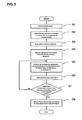
- Fig.2 shows an example of the flowchart of the procedure of a simulation method according to the present invention.
- This simulation method comprises the following steps S1-S8.
- the article model is a model of an article modeled by a finite number of elements (e) so that numerical analysis method, e.g. for example finite element method and the like can be used to make calculations.
- Fig.3 shows a visualization of the article model 2 in perspective.
- the article model 2 is a three-dimensional model 2a of a golf ball made with Lagrange elements of which unknown quantities are displacement.
- the golf ball model 2a is modeled as a hemispheroid.
- the article model 2 is entered and stored in the computer 1. More specifically, numerical data on indexes of the elements (e) constituting the article model 2 and coordinate values of node points thereof are entered in the storage device of the computer 1. This operation is performed by an operator through the input devices.
- the golf ball model 2a is made up of three-dimensional hexahedral elements, most of the node points of which are coupled with one another.
- the spherical golf ball is modeled as a pseudo-spherical polyhedron.
- the golf ball model 2a is made with other types of elements than the above-mentioned hexahedral elements.
- the golf ball as the analysis object is made of viscoelastic materials only, and composed of a spherical core and a thin cover surrounding the core.
- the core and cover are made of different viscoelastic materials suitable for the respective functions.
- a value of a viscoelastic property of the viscoelastic material which the element represents is defined.
- the viscoelastic material has a strain amount dependency and shows different stress-strain relation and hysteresis loss depending on the strain amount (maximum strain amount).
- Fig.4 is a graph showing a viscoelastic property (stress-strain relation) of a viscoelastic material whose principal component is polyurethane obtained by a split Hopkinson bar method at an ambient temperature of 23 deg.c, and a relative humidity of 50%.
- different types of lines show stress-strain curves obtained by changing the maximum of the strain amount.
- Each of the stress-strain curves loops, and the area enclosed in the loop corresponds to the hysteresis loss.
- a value of the viscoelastic property of the material measured at a certain strain amount is defined.
- a value of the viscoelastic property of the viscoelastic material of the cover measured at a certain strain amount x is defined.
- a value of the viscoelastic property of the viscoelastic material of the core measured at the same strain amount x as in the cover is defined.
- a value of the viscoelastic property corresponding to a strain amount which is expected in the undermentioned deformation simulation is defined.
- the strain amount in each part of the golf ball may be assumed from previously obtained actual test data. Therefore, if the deformation simulation is for a rebound characteristic simulation in which the golf ball model is hit by a golf club model at a certain hitting speed, a value of the viscoelastic property measured at the expected strain amount is used as the initial value of the viscoelastic property of the golf ball material.
- the values of the viscoelastic property are defined for the elements of the golf ball model 2a (article model 2) corresponding to the core and cover, and entered and stored in the computer 1. Thereby, the article model 2 is defined.
- the measuring of the viscoelastic material is carried out at a strain rate corresponding to the deformation rate in the deformation simulation, whereby it is possible to include a strain rate dependency in the initial value of the viscoelastic property.
- the deformation simulation includes various kinds of simulations.
- the deformation simulation can include a rebound evaluation simulation in which rebound characteristics of a golf ball are evaluated.
- Figs.5 (a) and 5(b) show a rebound evaluation simulation in which the golf ball model 2a and a flat hitting surface 3f of a cylindrical impact tool model 3 hit each other under conditions approximate to the actual hitting conditions.
- static simulations for example, a compression test in which the golf ball model 2a or article model 2 is compressed to a plane by a specified force
- static simulations for example, a compression test in which the golf ball model 2a or article model 2 is compressed to a plane by a specified force
- deformed state of the article model 2 is calculated at small time intervals from the beginning of the deformation (beginning of the hit of the golf ball model 2a), and the necessary historical data on the change in the physical value are stored in the computer 1.
- a viscoelasticity model can be employed in the deformation calculation of the element.
- Maxwell model, Kelvin-voight model and generalized Maxwell model are typical examples of the viscoelasticity model which can be used suitably.
- This kind of the deformation simulation can be made, for example, by using a general-purpose explicit solver software "LS-DYNA" of Livermore software Technology Corp. on the computer.
- Fig.5(b) shows a visualization of the deformed state at a certain moment during the impact of the golf ball model 2a and impact tool model 3.
- the strain amount becomes larger on the impact tool model 3 side, but becomes smaller on the opposite side.
- the strain amount is broken up into several levels to indicate in different colors, therefore, the level of the strain amount is readily recognizable.
- All of the elements (e) constituting the article model 2 (golf ball model 2a) are classified into a plurality of groups based on their strain amount. This process is automatically carried out by the computer 1.
- the strain amount during one deformation cycle from the beginning of the deformation to the dissipation of the deformation is determined from the above-mentioned deformation simulation.
- the maximum value of the strain amount of each element (e) during one deformation cycle is used in this embodiment.
- an average value of the strain amount over one deformation cycle or a value of the strain amount at a certain moment from the beginning of the deformation can be used instead of the maximum value of the strain amount.
- tensile strain As to the direction of the strain, tensile strain, compressive strain, and/or shear strain can be used according to the needs of the deformation simulation to be made.
- the elements are classified into five groups G1-G5 as follows.
- Fig.6 shows these five groups G1-G5 which are differentiated from one another by using different colors in actuality.
- the left-hand side of the golf ball model 2a is hit by the impact tool model 3.
- the groups G1-G5 are separately shown in Figs.7-11 , respectively.
- the values of the viscoelastic property are measured in advance changing the strain amount, and data on the relations between the strain amount and the viscoelastic property are stored in the computer beforehand. Therefore, the appropriate value of the viscoelastic property can be retrieved based on the strain amount obtained from the deformation simulation in Step 3.
- the obtained strain amount of the elements in each of the groups G1-G5 has a certain range. Therefore, in this embodiment, for all of the elements in each of the groups G1-G5, an identical strain amount is used to retrieve the appropriate value(s) of the viscoelastic property.
- the intermediate value in the strain amount range is used.
- the strain amount ranges from 0 to 10%, therefore, the intermediate value of 5% is preferably used. Namely,
- a convergence calculation process is made by repeating the step S5 and step S6 at least once or until the difference between a physical quantity obtained from the present deformation simulation and that obtained from the most recent deformation simulation becomes within the predetermined acceptable range.
- the physical quantity may be all kinds of physical quantity necessary for evaluating the performance and/or characteristic are obtained, for example, the strain amount of each element, compressibility, coefficient of restitution and the like.
- the steps S5 and S6 are repeated until the difference between the coefficient of restitution obtained from the most recent rebound evaluation simulation and the coefficient of restitution obtained from the rebound evaluation simulation after the values of the viscoelastic property has been redefined becomes not more than 10%, more preferably not more than 5%, still more preferably not more than 3%.
- the physical quantities are obtained, and the obtained quantities are outputted in an appropriate form, for example, as visual information such as printed or displayed graph, image, characters, etc., and/or as electrical data or signals to be used in the subsequent data processing.
- the number of the groups is preferably not less than 3, more preferably not less than 5, still more preferably not less than 10. However, if the groups are too many, the computational time and cost increases, therefore, it is preferable that the number of the groups is not more than 20.
- the golf balls A-D each had such a hardness distribution such that the hardness is smoothly increased from the center of the core towards the outside.
- the values of JIS-C hardness measured at the distances of 0, 5, 10 and 15 mm from the center of the core are shown in the table.
- Each of the core model and the cover model was a generalized Maxwell model.
- the values of the viscoelastic property was determined through a relaxation test using a slab of the viscoelastic material.
- the core model was one half (hemisphere) of the part corresponding to the core of the golf ball model, wherein the core model was made with hexahedral solid elements the number of which was 15200, and the impact tool model 3 was made with tetrahedral solid elements the number of which was 39119.
- the golf ball model 2a was made with hexahedral solid elements the number of which was 30400, and a club head model 4 of a driver was made with tetrahedral solid elements the number of which was 84927.
- the coefficient of friction between the club head model 4 and the golf ball model 2a was set to 0.15.
- the club head model 4 was moved according to the three-dimensional motion measured in the above-mentioned actual rebound test immediately before the impact.
- the solver used was LS-DYNA ver.971R4.2.
- the computer used was Altix XE340 (CPU: two parallel Intel(R) xeon(R) processors, Memory: 16 GB) manufactured by SGI Japan Ltd.
- the calculation time of the rebound evaluation simulation was about 20 minutes.
- the calculation time of the ball-hitting simulation was about 100 minutes.
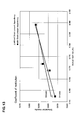
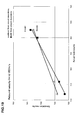
- the maximum value ⁇ m of the strain amount of each of the elements was pulled up from the time history of the strain amount of each of the elements calculated in the first simulation.
- test results of the second simulation corresponding to a method according to the present invention show higher correlation coefficients than those in the first simulation corresponding to a conventional simulation method. Therefore, according to the present invention, it is possible to quantitatively predict performances and/or properties of the article with accuracy which is very important for the simulations for the purpose of development of articles.
Landscapes
- Engineering & Computer Science (AREA)
- Physics & Mathematics (AREA)
- Geometry (AREA)
- Theoretical Computer Science (AREA)
- General Physics & Mathematics (AREA)
- Computer Hardware Design (AREA)
- Evolutionary Computation (AREA)
- General Engineering & Computer Science (AREA)
- Automation & Control Theory (AREA)
- Aviation & Aerospace Engineering (AREA)
- Computational Mathematics (AREA)
- Mathematical Analysis (AREA)
- Mathematical Optimization (AREA)
- Pure & Applied Mathematics (AREA)
- Investigating Strength Of Materials By Application Of Mechanical Stress (AREA)
- Management, Administration, Business Operations System, And Electronic Commerce (AREA)
Claims (5)
- Verfahren zur rechnergestützten Simulation eines aus einem viskoelastischen Material hergestellten Gegenstandes, umfassend:einen Schritt eines Definierens eines Gegenstandmodells (2, 2a) des hergestellten Gegenstandes mit einer finiten Zahl von Elementen;einen Schritt eines Definierens eines Wertes einer Viskoelastizitätseigenschaft für jedes der Elemente (e) des Gegenstandmodells (2, 2a);einen Schritt eines Durchführens einer Verformungssimulation des Gegenstandmodells (2, 2a);wobei die folgenden drei Schritte zumindest einmal ausgeführt werden:ein Schritt eines Beschaffens eines Dehnungsbetrages von jedem der Elemente (e) aus der Verformungssimulation,ein Schritt eines Erneuerns des Wertes der Viskoelastizitätseigenschaft gemäß den erhaltenen Dehnungsbeträgen, um das Gegenstandmodell (2, 2a) neu zu definieren, undein Schritt eines erneuten Durchführens der Verformungssimulation des neu definierten Gegenstandmodells (2, 2a); undeinen Schritt eines Ausgebens eines Simulationsergebnisses der Verformungssimulation,wobei bei dem Schritt des Erneuerns der Werte der Viskoelastizitätseigenschaft alle Elemente (e) des Gegenstandmodells (2, 2a) in zumindest zwei Gruppen gemäß dem Dehnungsbetrag klassifiziert werden, undin jeder der Gruppen die Elemente (e) darin mit einem Wert/Werten der Viskoelastizitätseigenschaft bei einem identischen Dehnungsbetrag versehen werden.
- Verfahren nach Anspruch 1, wobei
diskrete Daten von Werten der Viskoelastizitätseigenschaft im Voraus vorbereitet werden, indem das viskoelastische Material bei unterschiedlichen Dehnungsbeträgen gemessen wird, und
bei dem Schritt des Erneuerns der Werte der Viskoelastizitätseigenschaft der im Voraus definierte Wert der Viskoelastizitätseigenschaft durch ein Datenelement der diskreten Daten ersetzt wird, dessen Dehnungsbetrag am Nächsten bei dem erhaltenen Dehnungsbetrag liegt. - Verfahren nach einem der Ansprüche 1-2, wobei die drei Schritte, die zumindest einmal ausgeführt werden, wiederholt werden, bis die Differenz zwischen einer physikalischen Größe, die aus der gegenwärtigen Verformungssimulation erhalten wird, und einer physikalischen Größe, die aus der jüngsten Verformungssimulation erhalten wird, derart wird, dass sie in einem vorbestimmten annehmbaren Bereich liegt.
- Verfahren nach einem der Ansprüche 1-3, wobei der Dehnungsbetrag ein maximaler Dehnungsbetrag während eines Verformungszyklus ist.
- Verfahren nach einem der Ansprüche 1-4, wobei bei dem Schritt des Definierens eines Wertes einer Viskoelastizitätseigenschaft für jedes der Elemente des Gegenstandmodells der Wert der Viskoelastizitätseigenschaft derjenige ist, der aus einer vorherigen Messung der Viskoelastizitätseigenschaft bei einem bei der Verformungssimulation erwarteten Dehnungsbetrag erhalten wird.
Applications Claiming Priority (1)
| Application Number | Priority Date | Filing Date | Title |
|---|---|---|---|
| JP2010140838A JP5039178B2 (ja) | 2010-06-21 | 2010-06-21 | 粘弾性材料からなる製品のシミュレーション方法 |
Publications (3)
| Publication Number | Publication Date |
|---|---|
| EP2397956A2 EP2397956A2 (de) | 2011-12-21 |
| EP2397956A3 EP2397956A3 (de) | 2014-01-29 |
| EP2397956B1 true EP2397956B1 (de) | 2015-08-26 |
Family
ID=44546148
Family Applications (1)
| Application Number | Title | Priority Date | Filing Date |
|---|---|---|---|
| EP11002881.8A Not-in-force EP2397956B1 (de) | 2010-06-21 | 2011-04-06 | Verfahren zur Simulation eines Artikels aus einem viskoelastischen Material |
Country Status (3)
| Country | Link |
|---|---|
| US (1) | US20110313742A1 (de) |
| EP (1) | EP2397956B1 (de) |
| JP (1) | JP5039178B2 (de) |
Families Citing this family (3)
| Publication number | Priority date | Publication date | Assignee | Title |
|---|---|---|---|---|
| JP5227384B2 (ja) * | 2010-10-12 | 2013-07-03 | 住友ゴム工業株式会社 | 構造格子を用いたシミュレーション方法 |
| CN103344482B (zh) * | 2013-07-05 | 2015-04-29 | 湖南大学 | 一种基于计算反求的混凝土材料动态本构参数识别方法 |
| JP6658951B1 (ja) * | 2019-07-19 | 2020-03-04 | 横浜ゴム株式会社 | 非弾性材料のシミュレーション方法 |
Family Cites Families (14)
| Publication number | Priority date | Publication date | Assignee | Title |
|---|---|---|---|---|
| JP4223178B2 (ja) * | 2000-08-10 | 2009-02-12 | Sriスポーツ株式会社 | ボールの反発特性予測方法 |
| US6829563B2 (en) * | 2001-05-31 | 2004-12-07 | Sumitomo Rubber Industries, Ltd. | Simulation method for estimating performance of product made of viscoelastic material |
| JP3466584B2 (ja) * | 2001-06-06 | 2003-11-10 | 住友ゴム工業株式会社 | 粘弾性材料からなる製品の性能予測のためのシミュレーション方法 |
| JP3466585B2 (ja) * | 2001-06-06 | 2003-11-10 | 住友ゴム工業株式会社 | 粘弾性材料からなる製品の性能予測のためのシミュレーション方法 |
| JP3597517B2 (ja) * | 2001-06-28 | 2004-12-08 | 住友ゴム工業株式会社 | ゴルフボールのエネルギーロス評価方法 |
| JP3466590B2 (ja) * | 2001-07-18 | 2003-11-10 | 住友ゴム工業株式会社 | 粘弾性材料からなる製品の性能予測のためのシミュレーション方法 |
| US7130748B2 (en) * | 2001-07-18 | 2006-10-31 | Sri Sports Limited | Simulation method for estimating performance of product made of viscoelastic material |
| JP3910825B2 (ja) * | 2001-11-06 | 2007-04-25 | Sriスポーツ株式会社 | 粘弾性材料からなる製品の性能予測のためのシミュレーション方法 |
| JP2004013652A (ja) * | 2002-06-10 | 2004-01-15 | Sumitomo Rubber Ind Ltd | ゴルフボールの物性を解析する方法 |
| US7308387B1 (en) * | 2003-09-23 | 2007-12-11 | Livermore Software Technology Corp. | Method and system for numerically simulating foam-like material in finite element analysis |
| EP1526468B1 (de) * | 2003-10-17 | 2009-09-30 | Sumitomo Rubber Industries Limited | Verfahren zur Simulation von viskoelastischem Material |
| JP4594043B2 (ja) * | 2004-11-15 | 2010-12-08 | 住友ゴム工業株式会社 | ゴム材料のシミュレーション方法 |
| JP2006285503A (ja) * | 2005-03-31 | 2006-10-19 | Mizuno Corp | 製品の性能を予測可能なシミュレーション方法 |
| US20110288827A1 (en) * | 2010-05-18 | 2011-11-24 | Livermore Software Technology Corporation | Numerical Model For Simulating Polymeric Material Properties |
-
2010
- 2010-06-21 JP JP2010140838A patent/JP5039178B2/ja not_active Expired - Fee Related
-
2011
- 2011-02-07 US US13/022,284 patent/US20110313742A1/en not_active Abandoned
- 2011-04-06 EP EP11002881.8A patent/EP2397956B1/de not_active Not-in-force
Also Published As
| Publication number | Publication date |
|---|---|
| EP2397956A3 (de) | 2014-01-29 |
| JP2012002786A (ja) | 2012-01-05 |
| EP2397956A2 (de) | 2011-12-21 |
| JP5039178B2 (ja) | 2012-10-03 |
| US20110313742A1 (en) | 2011-12-22 |
Similar Documents
| Publication | Publication Date | Title |
|---|---|---|
| JP2004132869A (ja) | 粘弾性材料に生じるエネルギーロスの算出方法、及び該方法を用いたゴルフボールのエネルギーロス評価方法 | |
| Besdo et al. | A phenomenological constitutive model for rubberlike materials and its numerical applications | |
| CN114818401A (zh) | 机器学习模型的训练方法、训练装置、评价系统 | |
| CN101673316B (zh) | 基于混合监测来识别需调整索力的支承索的方法 | |
| Mao et al. | Modelling and simulation of the straw-grain separation process based on a discrete element model with flexible hollow cylindrical bonds | |
| JP6405183B2 (ja) | ゴム材料のシミュレーション方法 | |
| WO2013042600A1 (ja) | Chabocheモデルを用いた応力-ひずみ関係シミュレーション方法、応力-ひずみ関係シミュレーションシステム、応力-ひずみ関係シミュレーションプログラム | |
| EP2397956A2 (de) | Verfahren zur Simulation eines Artikels aus einem viskoelastischen Material | |
| US6829563B2 (en) | Simulation method for estimating performance of product made of viscoelastic material | |
| JP3466584B2 (ja) | 粘弾性材料からなる製品の性能予測のためのシミュレーション方法 | |
| US7130748B2 (en) | Simulation method for estimating performance of product made of viscoelastic material | |
| Wan et al. | Determination of melon seed physical parameters and calibration of discrete element simulation parameters | |
| CN113962134A (zh) | 条件生成式对抗网络与载荷应变线性叠加的应变监测方法 | |
| JP3910826B2 (ja) | 粘弾性材料からなる製品の性能予測のためのシミュレーション方法 | |
| US20030226410A1 (en) | Method of analyzing physical property of golf ball | |
| JP3910825B2 (ja) | 粘弾性材料からなる製品の性能予測のためのシミュレーション方法 | |
| CN115688253B (zh) | 一种桥梁全场动态位移重构方法 | |
| JP2009259043A (ja) | ゴム材料のシミュレーション方法 | |
| CN112613085A (zh) | 一种谷物物料离散元仿真模型构建方法 | |
| JP3466590B2 (ja) | 粘弾性材料からなる製品の性能予測のためのシミュレーション方法 | |
| JP3466585B2 (ja) | 粘弾性材料からなる製品の性能予測のためのシミュレーション方法 | |
| JP3597517B2 (ja) | ゴルフボールのエネルギーロス評価方法 | |
| JP3466583B2 (ja) | 粘弾性材料からなる製品の性能予測のためのシミュレーション方法 | |
| JP6578973B2 (ja) | タイヤの振動性能評価方法及びタイヤのシミュレーション装置 | |
| CN122046809A (zh) | 一种融合生物力学特性的骨骼肌变形建模方法 |
Legal Events
| Date | Code | Title | Description |
|---|---|---|---|
| AK | Designated contracting states |
Kind code of ref document: A2 Designated state(s): AL AT BE BG CH CY CZ DE DK EE ES FI FR GB GR HR HU IE IS IT LI LT LU LV MC MK MT NL NO PL PT RO RS SE SI SK SM TR |
|
| AX | Request for extension of the european patent |
Extension state: BA ME |
|
| PUAI | Public reference made under article 153(3) epc to a published international application that has entered the european phase |
Free format text: ORIGINAL CODE: 0009012 |
|
| PUAL | Search report despatched |
Free format text: ORIGINAL CODE: 0009013 |
|
| AK | Designated contracting states |
Kind code of ref document: A3 Designated state(s): AL AT BE BG CH CY CZ DE DK EE ES FI FR GB GR HR HU IE IS IT LI LT LU LV MC MK MT NL NO PL PT RO RS SE SI SK SM TR |
|
| AX | Request for extension of the european patent |
Extension state: BA ME |
|
| RIC1 | Information provided on ipc code assigned before grant |
Ipc: G06F 17/50 20060101AFI20131220BHEP |
|
| 17P | Request for examination filed |
Effective date: 20140612 |
|
| RBV | Designated contracting states (corrected) |
Designated state(s): AL AT BE BG CH CY CZ DE DK EE ES FI FR GB GR HR HU IE IS IT LI LT LU LV MC MK MT NL NO PL PT RO RS SE SI SK SM TR |
|
| GRAP | Despatch of communication of intention to grant a patent |
Free format text: ORIGINAL CODE: EPIDOSNIGR1 |
|
| INTG | Intention to grant announced |
Effective date: 20150302 |
|
| GRAS | Grant fee paid |
Free format text: ORIGINAL CODE: EPIDOSNIGR3 |
|
| GRAA | (expected) grant |
Free format text: ORIGINAL CODE: 0009210 |
|
| AK | Designated contracting states |
Kind code of ref document: B1 Designated state(s): AL AT BE BG CH CY CZ DE DK EE ES FI FR GB GR HR HU IE IS IT LI LT LU LV MC MK MT NL NO PL PT RO RS SE SI SK SM TR |
|
| REG | Reference to a national code |
Ref country code: GB Ref legal event code: FG4D |
|
| REG | Reference to a national code |
Ref country code: CH Ref legal event code: EP |
|
| REG | Reference to a national code |
Ref country code: AT Ref legal event code: REF Ref document number: 745564 Country of ref document: AT Kind code of ref document: T Effective date: 20150915 |
|
| REG | Reference to a national code |
Ref country code: IE Ref legal event code: FG4D |
|
| REG | Reference to a national code |
Ref country code: DE Ref legal event code: R096 Ref document number: 602011019057 Country of ref document: DE |
|
| REG | Reference to a national code |
Ref country code: AT Ref legal event code: MK05 Ref document number: 745564 Country of ref document: AT Kind code of ref document: T Effective date: 20150826 |
|
| REG | Reference to a national code |
Ref country code: LT Ref legal event code: MG4D |
|
| PG25 | Lapsed in a contracting state [announced via postgrant information from national office to epo] |
Ref country code: GR Free format text: LAPSE BECAUSE OF FAILURE TO SUBMIT A TRANSLATION OF THE DESCRIPTION OR TO PAY THE FEE WITHIN THE PRESCRIBED TIME-LIMIT Effective date: 20151127 Ref country code: LV Free format text: LAPSE BECAUSE OF FAILURE TO SUBMIT A TRANSLATION OF THE DESCRIPTION OR TO PAY THE FEE WITHIN THE PRESCRIBED TIME-LIMIT Effective date: 20150826 Ref country code: NO Free format text: LAPSE BECAUSE OF FAILURE TO SUBMIT A TRANSLATION OF THE DESCRIPTION OR TO PAY THE FEE WITHIN THE PRESCRIBED TIME-LIMIT Effective date: 20151126 Ref country code: LT Free format text: LAPSE BECAUSE OF FAILURE TO SUBMIT A TRANSLATION OF THE DESCRIPTION OR TO PAY THE FEE WITHIN THE PRESCRIBED TIME-LIMIT Effective date: 20150826 Ref country code: FI Free format text: LAPSE BECAUSE OF FAILURE TO SUBMIT A TRANSLATION OF THE DESCRIPTION OR TO PAY THE FEE WITHIN THE PRESCRIBED TIME-LIMIT Effective date: 20150826 |
|
| REG | Reference to a national code |
Ref country code: NL Ref legal event code: MP Effective date: 20150826 |
|
| PG25 | Lapsed in a contracting state [announced via postgrant information from national office to epo] |
Ref country code: ES Free format text: LAPSE BECAUSE OF FAILURE TO SUBMIT A TRANSLATION OF THE DESCRIPTION OR TO PAY THE FEE WITHIN THE PRESCRIBED TIME-LIMIT Effective date: 20150826 Ref country code: HR Free format text: LAPSE BECAUSE OF FAILURE TO SUBMIT A TRANSLATION OF THE DESCRIPTION OR TO PAY THE FEE WITHIN THE PRESCRIBED TIME-LIMIT Effective date: 20150826 Ref country code: IS Free format text: LAPSE BECAUSE OF FAILURE TO SUBMIT A TRANSLATION OF THE DESCRIPTION OR TO PAY THE FEE WITHIN THE PRESCRIBED TIME-LIMIT Effective date: 20151226 Ref country code: RS Free format text: LAPSE BECAUSE OF FAILURE TO SUBMIT A TRANSLATION OF THE DESCRIPTION OR TO PAY THE FEE WITHIN THE PRESCRIBED TIME-LIMIT Effective date: 20150826 Ref country code: PL Free format text: LAPSE BECAUSE OF FAILURE TO SUBMIT A TRANSLATION OF THE DESCRIPTION OR TO PAY THE FEE WITHIN THE PRESCRIBED TIME-LIMIT Effective date: 20150826 Ref country code: AT Free format text: LAPSE BECAUSE OF FAILURE TO SUBMIT A TRANSLATION OF THE DESCRIPTION OR TO PAY THE FEE WITHIN THE PRESCRIBED TIME-LIMIT Effective date: 20150826 Ref country code: SE Free format text: LAPSE BECAUSE OF FAILURE TO SUBMIT A TRANSLATION OF THE DESCRIPTION OR TO PAY THE FEE WITHIN THE PRESCRIBED TIME-LIMIT Effective date: 20150826 Ref country code: PT Free format text: LAPSE BECAUSE OF FAILURE TO SUBMIT A TRANSLATION OF THE DESCRIPTION OR TO PAY THE FEE WITHIN THE PRESCRIBED TIME-LIMIT Effective date: 20151228 |
|
| REG | Reference to a national code |
Ref country code: FR Ref legal event code: PLFP Year of fee payment: 6 |
|
| PG25 | Lapsed in a contracting state [announced via postgrant information from national office to epo] |
Ref country code: NL Free format text: LAPSE BECAUSE OF FAILURE TO SUBMIT A TRANSLATION OF THE DESCRIPTION OR TO PAY THE FEE WITHIN THE PRESCRIBED TIME-LIMIT Effective date: 20150826 |
|
| PG25 | Lapsed in a contracting state [announced via postgrant information from national office to epo] |
Ref country code: SK Free format text: LAPSE BECAUSE OF FAILURE TO SUBMIT A TRANSLATION OF THE DESCRIPTION OR TO PAY THE FEE WITHIN THE PRESCRIBED TIME-LIMIT Effective date: 20150826 Ref country code: EE Free format text: LAPSE BECAUSE OF FAILURE TO SUBMIT A TRANSLATION OF THE DESCRIPTION OR TO PAY THE FEE WITHIN THE PRESCRIBED TIME-LIMIT Effective date: 20150826 Ref country code: CZ Free format text: LAPSE BECAUSE OF FAILURE TO SUBMIT A TRANSLATION OF THE DESCRIPTION OR TO PAY THE FEE WITHIN THE PRESCRIBED TIME-LIMIT Effective date: 20150826 Ref country code: IT Free format text: LAPSE BECAUSE OF FAILURE TO SUBMIT A TRANSLATION OF THE DESCRIPTION OR TO PAY THE FEE WITHIN THE PRESCRIBED TIME-LIMIT Effective date: 20150826 Ref country code: DK Free format text: LAPSE BECAUSE OF FAILURE TO SUBMIT A TRANSLATION OF THE DESCRIPTION OR TO PAY THE FEE WITHIN THE PRESCRIBED TIME-LIMIT Effective date: 20150826 |
|
| REG | Reference to a national code |
Ref country code: DE Ref legal event code: R097 Ref document number: 602011019057 Country of ref document: DE |
|
| PG25 | Lapsed in a contracting state [announced via postgrant information from national office to epo] |
Ref country code: RO Free format text: LAPSE BECAUSE OF FAILURE TO SUBMIT A TRANSLATION OF THE DESCRIPTION OR TO PAY THE FEE WITHIN THE PRESCRIBED TIME-LIMIT Effective date: 20150826 |
|
| PLBE | No opposition filed within time limit |
Free format text: ORIGINAL CODE: 0009261 |
|
| STAA | Information on the status of an ep patent application or granted ep patent |
Free format text: STATUS: NO OPPOSITION FILED WITHIN TIME LIMIT |
|
| 26N | No opposition filed |
Effective date: 20160530 |
|
| PG25 | Lapsed in a contracting state [announced via postgrant information from national office to epo] |
Ref country code: BE Free format text: LAPSE BECAUSE OF NON-PAYMENT OF DUE FEES Effective date: 20160430 Ref country code: SI Free format text: LAPSE BECAUSE OF FAILURE TO SUBMIT A TRANSLATION OF THE DESCRIPTION OR TO PAY THE FEE WITHIN THE PRESCRIBED TIME-LIMIT Effective date: 20150826 |
|
| REG | Reference to a national code |
Ref country code: CH Ref legal event code: PL |
|
| GBPC | Gb: european patent ceased through non-payment of renewal fee |
Effective date: 20160406 |
|
| PG25 | Lapsed in a contracting state [announced via postgrant information from national office to epo] |
Ref country code: LU Free format text: LAPSE BECAUSE OF FAILURE TO SUBMIT A TRANSLATION OF THE DESCRIPTION OR TO PAY THE FEE WITHIN THE PRESCRIBED TIME-LIMIT Effective date: 20160406 Ref country code: BE Free format text: LAPSE BECAUSE OF FAILURE TO SUBMIT A TRANSLATION OF THE DESCRIPTION OR TO PAY THE FEE WITHIN THE PRESCRIBED TIME-LIMIT Effective date: 20150826 |
|
| REG | Reference to a national code |
Ref country code: IE Ref legal event code: MM4A |
|
| PG25 | Lapsed in a contracting state [announced via postgrant information from national office to epo] |
Ref country code: GB Free format text: LAPSE BECAUSE OF NON-PAYMENT OF DUE FEES Effective date: 20160406 Ref country code: LI Free format text: LAPSE BECAUSE OF NON-PAYMENT OF DUE FEES Effective date: 20160430 Ref country code: CH Free format text: LAPSE BECAUSE OF NON-PAYMENT OF DUE FEES Effective date: 20160430 |
|
| REG | Reference to a national code |
Ref country code: FR Ref legal event code: PLFP Year of fee payment: 7 |
|
| PG25 | Lapsed in a contracting state [announced via postgrant information from national office to epo] |
Ref country code: IE Free format text: LAPSE BECAUSE OF NON-PAYMENT OF DUE FEES Effective date: 20160406 |
|
| REG | Reference to a national code |
Ref country code: FR Ref legal event code: PLFP Year of fee payment: 8 |
|
| PG25 | Lapsed in a contracting state [announced via postgrant information from national office to epo] |
Ref country code: CY Free format text: LAPSE BECAUSE OF FAILURE TO SUBMIT A TRANSLATION OF THE DESCRIPTION OR TO PAY THE FEE WITHIN THE PRESCRIBED TIME-LIMIT Effective date: 20150826 Ref country code: HU Free format text: LAPSE BECAUSE OF FAILURE TO SUBMIT A TRANSLATION OF THE DESCRIPTION OR TO PAY THE FEE WITHIN THE PRESCRIBED TIME-LIMIT; INVALID AB INITIO Effective date: 20110406 Ref country code: SM Free format text: LAPSE BECAUSE OF FAILURE TO SUBMIT A TRANSLATION OF THE DESCRIPTION OR TO PAY THE FEE WITHIN THE PRESCRIBED TIME-LIMIT Effective date: 20150826 |
|
| PG25 | Lapsed in a contracting state [announced via postgrant information from national office to epo] |
Ref country code: MK Free format text: LAPSE BECAUSE OF FAILURE TO SUBMIT A TRANSLATION OF THE DESCRIPTION OR TO PAY THE FEE WITHIN THE PRESCRIBED TIME-LIMIT Effective date: 20150826 Ref country code: MT Free format text: LAPSE BECAUSE OF NON-PAYMENT OF DUE FEES Effective date: 20160430 Ref country code: TR Free format text: LAPSE BECAUSE OF FAILURE TO SUBMIT A TRANSLATION OF THE DESCRIPTION OR TO PAY THE FEE WITHIN THE PRESCRIBED TIME-LIMIT Effective date: 20150826 Ref country code: MC Free format text: LAPSE BECAUSE OF FAILURE TO SUBMIT A TRANSLATION OF THE DESCRIPTION OR TO PAY THE FEE WITHIN THE PRESCRIBED TIME-LIMIT Effective date: 20150826 |
|
| PG25 | Lapsed in a contracting state [announced via postgrant information from national office to epo] |
Ref country code: BG Free format text: LAPSE BECAUSE OF FAILURE TO SUBMIT A TRANSLATION OF THE DESCRIPTION OR TO PAY THE FEE WITHIN THE PRESCRIBED TIME-LIMIT Effective date: 20150826 |
|
| PG25 | Lapsed in a contracting state [announced via postgrant information from national office to epo] |
Ref country code: AL Free format text: LAPSE BECAUSE OF FAILURE TO SUBMIT A TRANSLATION OF THE DESCRIPTION OR TO PAY THE FEE WITHIN THE PRESCRIBED TIME-LIMIT Effective date: 20150826 |
|
| REG | Reference to a national code |
Ref country code: DE Ref legal event code: R079 Ref document number: 602011019057 Country of ref document: DE Free format text: PREVIOUS MAIN CLASS: G06F0017500000 Ipc: G06F0030000000 |
|
| PGFP | Annual fee paid to national office [announced via postgrant information from national office to epo] |
Ref country code: FR Payment date: 20210309 Year of fee payment: 11 |
|
| PGFP | Annual fee paid to national office [announced via postgrant information from national office to epo] |
Ref country code: DE Payment date: 20210316 Year of fee payment: 11 |
|
| REG | Reference to a national code |
Ref country code: DE Ref legal event code: R119 Ref document number: 602011019057 Country of ref document: DE |
|
| PG25 | Lapsed in a contracting state [announced via postgrant information from national office to epo] |
Ref country code: FR Free format text: LAPSE BECAUSE OF NON-PAYMENT OF DUE FEES Effective date: 20220430 Ref country code: DE Free format text: LAPSE BECAUSE OF NON-PAYMENT OF DUE FEES Effective date: 20221103 |