EP2380488A2 - Perimeter und Verfahren zur Perimetersteuerung - Google Patents
Perimeter und Verfahren zur Perimetersteuerung Download PDFInfo
- Publication number
- EP2380488A2 EP2380488A2 EP11152281A EP11152281A EP2380488A2 EP 2380488 A2 EP2380488 A2 EP 2380488A2 EP 11152281 A EP11152281 A EP 11152281A EP 11152281 A EP11152281 A EP 11152281A EP 2380488 A2 EP2380488 A2 EP 2380488A2
- Authority
- EP
- European Patent Office
- Prior art keywords
- stimulus
- retest
- fixation state
- presented
- examinee
- Prior art date
- Legal status (The legal status is an assumption and is not a legal conclusion. Google has not performed a legal analysis and makes no representation as to the accuracy of the status listed.)
- Granted
Links
Images


Classifications
-
- A—HUMAN NECESSITIES
- A61—MEDICAL OR VETERINARY SCIENCE; HYGIENE
- A61B—DIAGNOSIS; SURGERY; IDENTIFICATION
- A61B3/00—Apparatus for testing the eyes; Instruments for examining the eyes
- A61B3/02—Subjective types, i.e. testing apparatus requiring the active assistance of the patient
- A61B3/024—Subjective types, i.e. testing apparatus requiring the active assistance of the patient for determining the visual field, e.g. perimeter types
Definitions
- This invention relates to a perimeter for measuring a visual field of an examinee in such a state that the examinee fixates a fixation target.
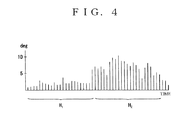
- Fig.4 is a view that shows a graph of change of a pupil position displayed in a test result table of a Humphrey perimeter.
- a longitudinal axis shows amount of deviation of pupil from a fixation target (rotational angle of eye ball: deg) and a traverse axis shows time from start of perimetry.
- An examiner judges whether the fixation state at the time of perimetry is good or not, watching such a graph, and the whole perimetry is conducted again if no good fixation state is judged. In other words, the perimetry is conducted again for the whole time zones of H 1 and H 2 even if retest is judged to be necessary due to no good fixation state in time zone H 2 only.
- the above-mentioned conventional testing method has such a problem that perimetry data at the time when the fixation state was good (the perimetry data in time zone H 1 ) becomes vain since the whole perimetry (that is, H 1 and H 2 in Fig.4 ) is conducted again although no good fixation state is only a part (see H 2 in Fig.4 ) .
- time for retest becomes longer and burdens on the examinee and the examiner become heavier thereby.
- the obj ect of the invention is to provide a perimeter for solving the above-mentioned problems and a method of controlling the perimeter.
- One aspect of the invention is a perimeter for measuring a visual field of an examinee in such a state the examinee fixates a predetermined fixation target, comprising:
- Another aspect of the invention is the perimeter, wherein the retest judging means judges the portion where the stimulus was presented but the fixation state was not detected by the fixation state detecting means to "be necessary to be retested".
- Another aspect of the invention is the perimeter, further comprising retest execution means for conducting a retest of the visual field in such a way that the stimulus presentation means is controlled to present the stimulus again to the portion where the stimulus should be presented that was judged to be necessary to be retested through the retest judging means, and the visual field judging means judges the visual field of the examinee based upon signals from the stimulus presentation means and the operation means.
- Another aspect of the invention is the perimeter, further comprising means for outputting discriminant figure of the fixation state showing the fixation state detected by the fixation state detecting means in order in association with the portion where the stimulus should be presented.
- Another aspect of the invention is the perimeter according to claim 1, wherein the standard value setting means can manually change the standard value.
- Another aspect of the invention is the perimeter, wherein if the fixation state exceeding the standard value is almost continuously detected predetermined times or more, the retest judging means judges "a point of time when the fixation state started to exceed the standard value" as a retest start point of time” and if the fixation state being lower than the standard value is almost continuously detected predetermined times or more thereafter, the retest judging means judges "a point of time when the fixation state started to become lower than the standard value" as a point of time of finish of retest.
- Another aspect of the invention is the perimeter, further comprising means for outputting discriminant figure that shows the fixation state detectedby the fixation state detecting means in order in association with each portion where the stimulus should be presented, and the means for outputting discriminant figure outputs the discriminant figure of the fixation state so as to discriminate the portions judged to be necessary to be retested and not necessary to be retested from each other through said retest judging means.
- Another aspect of the invention is a perimeter for measuring a visual field of an examinee in such a state the examinee fixates a predetermined fixation target, comprising:
- Another aspect of the invention is a method of controlling a perimeter, comprising:
- Another aspect of the invention is the method of controlling the perimeter, further comprising:
- Another aspect of the invention is the method of controlling the perimeter, further comprising:
- judgments as to whether retest is necessary or not are respectively made in association with the respective locations where the stimulus is presented.
- measurement points having high credibility and lower credibility can be discriminated from each other. It is sufficient to retest only the location where the stimulus is presented that is judged to be necessary to be retested. Therefore, burdens on the examiner and examinee are lighter and time for retest is shorter, and the test efficiency becomes good in comparison with a case where the whole perimetry is retried from the first as a conventional way. And, the perimetry data at the time of good fixation state is of some use without discarding.
- a perimeter according to the invention is constructed so as to measure a visual field of an examinee (perimetry) in such a state that the examinee fixates a predetermined fixation target, such as a center point of a visual field dome B shown in Fig.2 ).
- a perimeter is exemplarily shown with a reference number 1 in Fig. 1 or Fig.2 , and has stimulus presentation means 2 (will be mentioned in detail) for presenting a stimulus A having predetermined luminance at a plurality of peripheral portions of the fixation target in order.
- Such an perimeter 1 is provided with operation means 3, such as a push switch.
- An examinee can operate the operation means 3 when perceiving the presented stimulus A, through which signals showing the perception of the stimulus are transmitted.
- the perimeter 1 has visual field judging means 4 for judging the visual field of the examinee based upon the signals from the stimulus presentation means 2 and the operation means 3 so as to judge whether or not the examinee can perceive the stimulus at the respective stimulus presentation portions.
- visual field judging means 4 makes judgments according to kinds of perimetry, such as a screening perimetry, a threshold perimetry and an isopter perimetry.
- the perimetry 1 has fixation state detecting means 5 for detecting a fixation state of an examinee in order in association of each portion where the stimulus should be presented, standard value setting means 6 for setting a standard value that is a basis as to whether the fixation state needs to retest the visual field, and retest judging means 7 for judging as to whether retest is necessary or not for each portion where the stimulus should be presented by comparing each fixation state detected in order by the fixation state detecting means 5 and the standard value set by the standard value setting means 6 with each other.
- necessity of retest is individually judged in association with each portion where the stimulus should be presented.
- a measurement point having high credibility and a measurement point having low credibility can be discriminated from each other.
- burdens on the examinee and examiner are lighter in comparison with a case where the whole test is done from the first.
- test time is made shorter and efficiency of the test is made better.
- perimetry data at the time of good fixation state is not useless as a conventional way.
- the perimeter according to the invention it is possible to continue to retest till the portion where fixation state is not good disappears. But, only the tests for twice times, first perimetry and retest thereafter, are mentioned in the specification for easy understanding.
- the first perimetry is referred to as "the first test” and the next perimetry to be conducted for the portion where the fixation state is not good is referred to as “the retest” for each understanding, and both perimetries are referred to as only "tests" if discrimination of both is not necessary.
- the fixation state detecting means 5 is not possible to detect the fixation state if the examinee closed his eyes in the first test (see G 1 and G 2 of Fig.3 (c) ) .
- the retest judging means 7 judges the portion where the stimulus was presented but the fixation state was not detected to be "necessary to be retested".
- Retest execution means 8 may be provided for executing retest of the visual filed for the portion where the retest is judged to be necessary by the retest judging means 7. Concretely speaking, the retest execution means 8 executes the retest in such a way that the stimulus presentation means 2 is controlled to represent the stimulus again to the portion where the retest was judged to be necessary by the retest judging means 7, and the visual filed of the examinee is judged by the visual filed judgingmeans 4 basedupon signals from the stimulus presentation means 2 and the operation means 3.
- the examiner can select the standard value according to the objects or kinds of the test by manually changing the standard value (not setting a constant standard value) through the standard value setting means 6.
- the standard value setting means 6 maybeaswitch, such as volume control, a user interface displayed on a monitor screen and the other well-known means.
- Fig. 3 is the view showing an example of such a discriminant figure of the fixation state (bar graph) wherein a longitudinal axis shows deviation of a pupil from a fixation target (rotational angle of an eye ball: deg) and a transverse axis shows time from start of perimetry (that is, start of first test).
- time-series fixation states detected by the fixation state detecting means 5 in order are shown in the figure. If time when no good fixation occurred (time from the start of the first test) is known, the portion where the stimulus was presented at such a time is specified.
- a broken line B in the figure shows a standard value in connection with the deviation (the standard value to be adjusted by the standard value setting means 6). Since a general size of a blind spot is 5°or so in its diameter, the standard value may be about 2.5°that is a half (radius) thereof.
- the standard value setting means 6 may manually set the standard value before the first test, but may be set before the retest after the first test, watching the discriminant figure of the fixation state.
- the examiner manually operates the standard value setting means 6 so as to adjust the standard value B, watching the discriminant figure of the fixation state (see arrow C)
- the retest execution means 8 controls the stimulus presentation means 2 to present the stimulus again at a predetermined portion (that is, the portion where the retest was judged to be necessary by the retest judging means 7), and the visual field of the examinee is judged by the visual field judging means 4 based upon the signals from the stimulus presentation means 2 and the operation means 3.
- the retest execution means 8 presents the stimulus again at the portions where the stimulus was presented at the times D 1 and D 2 so as to execute the retest.
- the standard value that is manually adjusted by the standard value setting means 6 relates to the deviation of the longitudinal axis (the rotational angle of the eye ball), but the standard value may be set in connection with time of the transverse axis.
- the above-mentioned retest may be conducted in such a manner that the examiner operates some operation means (retest designating means for designating time zone in which retest should be conducted in the discriminant figure of the fixation state), watching this graph so as to designate a point of time when retest is started (the standard value in connection with time, such as D 3 and D 5 ), and a point of time when retest is finished (the standard value in connection with time, such as D 4 and D 6 ), and the retest execution means 8 controls the stimulus presentation means 2 so as to execute the retest by presenting the stimulus again at the portions where the stimulus was presented at such time zones (D 3 to D 4 and D 5 to D 6 ).
- selection means for selecting as to whether the standard value of the longitudinal axis or the standard value of the transverse axis is adjusted, a switch or a user interface displayed on a monitor screen, may be provided and the examiner may select one of both.
- the retest judging means 7 may judge "the point of time when the fixation state starts to exceed the standard value, such as the point of time as shown with a reference mark F 1 " as "retest start time". If the fixation state being lower than the standard value is almost continuously detected predetermined times or more thereafter (see reference mark F 2 of Fig.3(b) , for example), the retest judging means 7 may judge "the point of time when the fixation state starts to become lower the standard value, such as the point of time as shown by a reference mark F 2 in Fig.3(b) " as retest finish time.
- the time for retest can be shortened although in case of the method as shown in Fig.3(a) , retest is executed for all portions where the deviation exceeds the standard value B and it takes a longer time for retest thereby.
- a longitudinal axis denotes the rotational angle of the eye ball and a transverse axis denotes time
- the other type of the discriminant figure of the fixation state may be outputted.
- the longitudinal axis may denote some value showing the fixation state
- the transverse axis may denote some value through which the portion where the stimulus is presented is known.
- the figure may be a graph excluding a bar graph or a table.
- any discriminant figure of the fixation state is available as long as the figure is a graph or a table that shows the fixation state at the time when each stimulus is presented in association with the portion where the stimulus is presented, such as the fixation state at the time when the first stimulus is presented, the fixation state at the time when the second stimulus is presented, ... .
- the above-mentioned discriminant figure outputting means 9 may be provided and the discriminant figure outputting means 9 outputs the discriminant figure of the fixation state so as to discriminate the portions that are judged to be necessary to be retested and not necessary to be retested by the retest judging means from each other.
- the methods of discriminating is to highlight the portion where the fixation state is not good.
- the above-mentioned fixation state detecting means 5 is comprised of a photographing portion, such as an infrared CCD, for obtaining successive images by photographing a front eye of an examinee.
- the fixation state detecting means 5 may have an image processing portion for processing images obtained by the photographing portion in order to extract a pupil of an examinee and obtaining a center of the pupil, in addition to the photographing portion.
- the fixation state detecting means 5 may have deviation amount computing portion for computing amount of deviation of the center of pupil to the standard position (the position of the center of the pupil when the examinee correctly fixates the fixation target) in addition to the photographing portion and the image processing portion.
- a method of controlling the perimeter according to the invention according to the invention has a step of presenting the stimulus having predetermined luminance at a plurality of portions in order through the stimulus presentation means 2; a step of judging the visual field of the examinee through the visual field judging means 4 based upon signals outputted by the examinee who perceived the presented stimulus through the operation means 3 and signals from the stimulus presentation means 2; a step of detecting the fixation state of the examinee in connection with each portion where the stimulus is presented in order through the fixation state detecting means 5; a step of setting the standard value that is a basis whether the retest of the visual field is necessary or not in the fixation state through the standard value setting means 6; and a step of judging as to whether the retest is necessary or not for each portion where the stimulus is presented through the retest judging means 7 by comparing each fixation state detected in order through the fixation state detecting means 5 and the standard value that is set through the standard value setting means 6.
- Such a method may has a step of representing the stimulus again to the portion that was judged to be necessary to retest by the retest judging means 7 by controlling the stimulus presentation means 2 through the retest execution means 8; and a step of conducting a retest of the visual field by judging the visual field of the examinee by the visual field judging means 4 based upon the signals from the stimulus presentation means 2 and the operation means 3.
- the method may has a step of outputting the discriminant figure of the fixation state that shows the fixation states detected in order by the fixation state detecting means 5 in association with the portions where the stimulus is presented through the discriminant figure outputting means 9.
- the discriminant figure outputting means 9 may output the discriminant figure of the fixation state so as to discriminate the portions judged to be necessary to retest and to not necessary to retest through the retest judging means 7 from each other.
- a structure of the stimulus presentation means 2 as shown in Fig.2 is mentioned briefly.
- a reference number 20 in the figure denotes the stimulus presentation portion for presenting stimulus A in the visual field of the examinee
- a reference numeral 21 denotes the presentation portion changing portion for changing the portion where the stimulus A is presented
- a reference numeral 22 denotes the luminance setting portion for setting the luminance of the stimulus A.
- the stimulus presentation portion 20 in the figure is comprised of a projection optical system 20A for projecting stimuli and projection member 20B where stimuli are projected by the projection optical system 20A, but may have any structure as long as the stimulus presentation portion 20 can present the stimuli in the visual field of the examinee.
- a plurality of LEDs may be located and be selectively lighted.
- the projection member 20B has a semi-spherical dome shape (visual field dome), but may have a shape with a curved face excluding a semi-sphere or a shape with a plane.
- the presentation portion changing portion 21 may be comprised of driving means for changing positions of structural elements of the projection optical system 20A, such as projector mirrors 211, 212 (not shown). If the stimulus presentation portion is comprised of a plurality of LEDs, which LED should be lighted may be controlled by the presentation portion changing portion. Even if any of the projection optical system and LED is used, an examiner may manually instruct to change the portion to be presented with a touch pen, a mouse or a keyboard, watching a display, or the change of the portion to be presented may be automatically instructed through a program prepared in advance.
- the luminance setting portion 22 as shown in Fig.2 is comprised of turrets 221, 222 having a plurality of filters rotatably supported which attenuation is different and driving mechanism 223 for changing positions of the turrets 221, 222, but may have another structure.
Landscapes
- Life Sciences & Earth Sciences (AREA)
- Health & Medical Sciences (AREA)
- Medical Informatics (AREA)
- Biophysics (AREA)
- Ophthalmology & Optometry (AREA)
- Engineering & Computer Science (AREA)
- Biomedical Technology (AREA)
- Heart & Thoracic Surgery (AREA)
- Physics & Mathematics (AREA)
- Molecular Biology (AREA)
- Surgery (AREA)
- Animal Behavior & Ethology (AREA)
- General Health & Medical Sciences (AREA)
- Public Health (AREA)
- Veterinary Medicine (AREA)
- Eye Examination Apparatus (AREA)
Applications Claiming Priority (1)
| Application Number | Priority Date | Filing Date | Title |
|---|---|---|---|
| JP2010074142A JP5553659B2 (ja) | 2010-03-29 | 2010-03-29 | 視野計 |
Publications (3)
| Publication Number | Publication Date |
|---|---|
| EP2380488A2 true EP2380488A2 (de) | 2011-10-26 |
| EP2380488A3 EP2380488A3 (de) | 2012-01-11 |
| EP2380488B1 EP2380488B1 (de) | 2013-08-28 |
Family
ID=44341324
Family Applications (1)
| Application Number | Title | Priority Date | Filing Date |
|---|---|---|---|
| EP11152281.9A Active EP2380488B1 (de) | 2010-03-29 | 2011-01-26 | Perimeter zur Fixierung |
Country Status (3)
| Country | Link |
|---|---|
| US (1) | US8727535B2 (de) |
| EP (1) | EP2380488B1 (de) |
| JP (1) | JP5553659B2 (de) |
Families Citing this family (4)
| Publication number | Priority date | Publication date | Assignee | Title |
|---|---|---|---|---|
| JP5936371B2 (ja) * | 2012-01-26 | 2016-06-22 | キヤノン株式会社 | 眼科装置、眼科装置の制御方法、およびプログラム |
| US20160345823A1 (en) * | 2014-02-12 | 2016-12-01 | Kowa Company, Ltd | Perimeter |
| JP6403836B1 (ja) * | 2017-06-08 | 2018-10-10 | 株式会社ナックイメージテクノロジー | 視機能検査装置、視機能訓練装置及び方法 |
| JP7298134B2 (ja) * | 2018-11-01 | 2023-06-27 | 株式会社ニデック | 検眼システム |
Citations (4)
| Publication number | Priority date | Publication date | Assignee | Title |
|---|---|---|---|---|
| JPS629330A (ja) | 1985-07-08 | 1987-01-17 | Mamiya Koki Kk | 4眼カメラにおける撮影枚数切換装置 |
| JPH043213A (ja) | 1990-04-20 | 1992-01-08 | Seiichi Inoue | 思考分析表 |
| JP2002272685A (ja) | 2001-03-15 | 2002-09-24 | Kowa Co | 眼科測定装置 |
| JP2010074142A (ja) | 2008-08-20 | 2010-04-02 | Panasonic Corp | 半導体装置及びそれを用いた電子機器 |
Family Cites Families (8)
| Publication number | Priority date | Publication date | Assignee | Title |
|---|---|---|---|---|
| US5050983A (en) * | 1990-04-30 | 1991-09-24 | The Regents Of The University Of California | Visual testing method and apparatus |
| JPH04117941A (ja) * | 1990-09-07 | 1992-04-17 | Topcon Corp | 固視監視手段付視野計 |
| JPH10234672A (ja) * | 1997-02-26 | 1998-09-08 | Nikon Corp | 眼科撮影装置 |
| JP3870079B2 (ja) * | 2001-12-04 | 2007-01-17 | 株式会社コーナン・メディカル | 視野計 |
| JP4558259B2 (ja) * | 2002-05-23 | 2010-10-06 | シャープ株式会社 | コンビネーション型icカード |
| JP3950876B2 (ja) * | 2004-08-27 | 2007-08-01 | キヤノン株式会社 | 眼底検査装置 |
| JP4806602B2 (ja) * | 2006-08-09 | 2011-11-02 | 興和株式会社 | 視野計 |
| JP5624272B2 (ja) * | 2008-10-06 | 2014-11-12 | 興和株式会社 | 視野計 |
-
2010
- 2010-03-29 JP JP2010074142A patent/JP5553659B2/ja active Active
- 2010-08-25 US US12/868,055 patent/US8727535B2/en active Active
-
2011
- 2011-01-26 EP EP11152281.9A patent/EP2380488B1/de active Active
Patent Citations (4)
| Publication number | Priority date | Publication date | Assignee | Title |
|---|---|---|---|---|
| JPS629330A (ja) | 1985-07-08 | 1987-01-17 | Mamiya Koki Kk | 4眼カメラにおける撮影枚数切換装置 |
| JPH043213A (ja) | 1990-04-20 | 1992-01-08 | Seiichi Inoue | 思考分析表 |
| JP2002272685A (ja) | 2001-03-15 | 2002-09-24 | Kowa Co | 眼科測定装置 |
| JP2010074142A (ja) | 2008-08-20 | 2010-04-02 | Panasonic Corp | 半導体装置及びそれを用いた電子機器 |
Also Published As
| Publication number | Publication date |
|---|---|
| US8727535B2 (en) | 2014-05-20 |
| EP2380488A3 (de) | 2012-01-11 |
| JP5553659B2 (ja) | 2014-07-16 |
| US20110234979A1 (en) | 2011-09-29 |
| JP2011206105A (ja) | 2011-10-20 |
| EP2380488B1 (de) | 2013-08-28 |
Similar Documents
| Publication | Publication Date | Title |
|---|---|---|
| US8066376B2 (en) | Dynamic shape discrimination vision test | |
| EP2827758B1 (de) | Verfahren zur beurteilung der funktion des visuellen systems und vorrichtung dafür | |
| CN101730500B (zh) | 用于客观地测试视野的设备和方法 | |
| EP2172148A1 (de) | Perimeter | |
| US8419186B2 (en) | Fundus observation apparatus | |
| US10736502B2 (en) | Testing and determining a threshold value | |
| JP6098061B2 (ja) | 眼底撮影装置 | |
| US20070013870A1 (en) | Ophthalmic testing unit and ophthalmic testing equipment | |
| US10537240B2 (en) | Method for assessing function of the visual system and apparatus thereof | |
| US8727535B2 (en) | Perimeter and method of controlling perimeter | |
| US20190216311A1 (en) | Systems, Methods and Devices for Monitoring Eye Movement to Test A Visual Field | |
| JP6281177B2 (ja) | 眼科撮影装置 | |
| JPWO2009075385A1 (ja) | 視野検査方法および装置 | |
| JP2014188254A (ja) | 視野検査装置 | |
| US11116393B2 (en) | Vision assessment based on gaze | |
| JP2002209849A (ja) | 網膜機能の検査方法および検査装置 | |
| CN116137800A (zh) | 眼睛移动评估 | |
| JP2016116542A (ja) | 視覚検査装置、視覚検査方法、視覚検査プログラム及び同プログラムを格納した記録媒体 | |
| JP2018083106A (ja) | 眼科撮影装置および撮影制御プログラム | |
| JP5852187B2 (ja) | 視野計 | |
| US20190117059A1 (en) | Perimeter |
Legal Events
| Date | Code | Title | Description |
|---|---|---|---|
| AK | Designated contracting states |
Kind code of ref document: A2 Designated state(s): AL AT BE BG CH CY CZ DE DK EE ES FI FR GB GR HR HU IE IS IT LI LT LU LV MC MK MT NL NO PL PT RO RS SE SI SK SM TR |
|
| AX | Request for extension of the european patent |
Extension state: BA ME |
|
| PUAI | Public reference made under article 153(3) epc to a published international application that has entered the european phase |
Free format text: ORIGINAL CODE: 0009012 |
|
| PUAL | Search report despatched |
Free format text: ORIGINAL CODE: 0009013 |
|
| AK | Designated contracting states |
Kind code of ref document: A3 Designated state(s): AL AT BE BG CH CY CZ DE DK EE ES FI FR GB GR HR HU IE IS IT LI LT LU LV MC MK MT NL NO PL PT RO RS SE SI SK SM TR |
|
| AX | Request for extension of the european patent |
Extension state: BA ME |
|
| RIC1 | Information provided on ipc code assigned before grant |
Ipc: A61B 3/024 20060101AFI20111206BHEP |
|
| 17P | Request for examination filed |
Effective date: 20120629 |
|
| GRAP | Despatch of communication of intention to grant a patent |
Free format text: ORIGINAL CODE: EPIDOSNIGR1 |
|
| INTG | Intention to grant announced |
Effective date: 20130409 |
|
| GRAS | Grant fee paid |
Free format text: ORIGINAL CODE: EPIDOSNIGR3 |
|
| GRAA | (expected) grant |
Free format text: ORIGINAL CODE: 0009210 |
|
| RIN1 | Information on inventor provided before grant (corrected) |
Inventor name: HARA, TAKUYA |
|
| AK | Designated contracting states |
Kind code of ref document: B1 Designated state(s): AL AT BE BG CH CY CZ DE DK EE ES FI FR GB GR HR HU IE IS IT LI LT LU LV MC MK MT NL NO PL PT RO RS SE SI SK SM TR |
|
| REG | Reference to a national code |
Ref country code: GB Ref legal event code: FG4D |
|
| REG | Reference to a national code |
Ref country code: CH Ref legal event code: EP |
|
| REG | Reference to a national code |
Ref country code: AT Ref legal event code: REF Ref document number: 628831 Country of ref document: AT Kind code of ref document: T Effective date: 20130915 |
|
| REG | Reference to a national code |
Ref country code: IE Ref legal event code: FG4D |
|
| REG | Reference to a national code |
Ref country code: DE Ref legal event code: R096 Ref document number: 602011002744 Country of ref document: DE Effective date: 20131024 |
|
| REG | Reference to a national code |
Ref country code: AT Ref legal event code: MK05 Ref document number: 628831 Country of ref document: AT Kind code of ref document: T Effective date: 20130828 |
|
| REG | Reference to a national code |
Ref country code: LT Ref legal event code: MG4D |
|
| REG | Reference to a national code |
Ref country code: NL Ref legal event code: VDEP Effective date: 20130828 |
|
| PG25 | Lapsed in a contracting state [announced via postgrant information from national office to epo] |
Ref country code: HR Free format text: LAPSE BECAUSE OF FAILURE TO SUBMIT A TRANSLATION OF THE DESCRIPTION OR TO PAY THE FEE WITHIN THE PRESCRIBED TIME-LIMIT Effective date: 20130828 Ref country code: AT Free format text: LAPSE BECAUSE OF FAILURE TO SUBMIT A TRANSLATION OF THE DESCRIPTION OR TO PAY THE FEE WITHIN THE PRESCRIBED TIME-LIMIT Effective date: 20130828 Ref country code: SE Free format text: LAPSE BECAUSE OF FAILURE TO SUBMIT A TRANSLATION OF THE DESCRIPTION OR TO PAY THE FEE WITHIN THE PRESCRIBED TIME-LIMIT Effective date: 20130828 Ref country code: PT Free format text: LAPSE BECAUSE OF FAILURE TO SUBMIT A TRANSLATION OF THE DESCRIPTION OR TO PAY THE FEE WITHIN THE PRESCRIBED TIME-LIMIT Effective date: 20131230 Ref country code: NO Free format text: LAPSE BECAUSE OF FAILURE TO SUBMIT A TRANSLATION OF THE DESCRIPTION OR TO PAY THE FEE WITHIN THE PRESCRIBED TIME-LIMIT Effective date: 20131128 Ref country code: CY Free format text: LAPSE BECAUSE OF FAILURE TO SUBMIT A TRANSLATION OF THE DESCRIPTION OR TO PAY THE FEE WITHIN THE PRESCRIBED TIME-LIMIT Effective date: 20130724 Ref country code: LT Free format text: LAPSE BECAUSE OF FAILURE TO SUBMIT A TRANSLATION OF THE DESCRIPTION OR TO PAY THE FEE WITHIN THE PRESCRIBED TIME-LIMIT Effective date: 20130828 Ref country code: IS Free format text: LAPSE BECAUSE OF FAILURE TO SUBMIT A TRANSLATION OF THE DESCRIPTION OR TO PAY THE FEE WITHIN THE PRESCRIBED TIME-LIMIT Effective date: 20131228 |
|
| REG | Reference to a national code |
Ref country code: NL Ref legal event code: VDEP Effective date: 20130828 |
|
| PG25 | Lapsed in a contracting state [announced via postgrant information from national office to epo] |
Ref country code: LV Free format text: LAPSE BECAUSE OF FAILURE TO SUBMIT A TRANSLATION OF THE DESCRIPTION OR TO PAY THE FEE WITHIN THE PRESCRIBED TIME-LIMIT Effective date: 20130828 Ref country code: PL Free format text: LAPSE BECAUSE OF FAILURE TO SUBMIT A TRANSLATION OF THE DESCRIPTION OR TO PAY THE FEE WITHIN THE PRESCRIBED TIME-LIMIT Effective date: 20130828 Ref country code: FI Free format text: LAPSE BECAUSE OF FAILURE TO SUBMIT A TRANSLATION OF THE DESCRIPTION OR TO PAY THE FEE WITHIN THE PRESCRIBED TIME-LIMIT Effective date: 20130828 Ref country code: SI Free format text: LAPSE BECAUSE OF FAILURE TO SUBMIT A TRANSLATION OF THE DESCRIPTION OR TO PAY THE FEE WITHIN THE PRESCRIBED TIME-LIMIT Effective date: 20130828 Ref country code: GR Free format text: LAPSE BECAUSE OF FAILURE TO SUBMIT A TRANSLATION OF THE DESCRIPTION OR TO PAY THE FEE WITHIN THE PRESCRIBED TIME-LIMIT Effective date: 20131129 Ref country code: BE Free format text: LAPSE BECAUSE OF FAILURE TO SUBMIT A TRANSLATION OF THE DESCRIPTION OR TO PAY THE FEE WITHIN THE PRESCRIBED TIME-LIMIT Effective date: 20130828 |
|
| PG25 | Lapsed in a contracting state [announced via postgrant information from national office to epo] |
Ref country code: CY Free format text: LAPSE BECAUSE OF FAILURE TO SUBMIT A TRANSLATION OF THE DESCRIPTION OR TO PAY THE FEE WITHIN THE PRESCRIBED TIME-LIMIT Effective date: 20130828 |
|
| PG25 | Lapsed in a contracting state [announced via postgrant information from national office to epo] |
Ref country code: EE Free format text: LAPSE BECAUSE OF FAILURE TO SUBMIT A TRANSLATION OF THE DESCRIPTION OR TO PAY THE FEE WITHIN THE PRESCRIBED TIME-LIMIT Effective date: 20130828 Ref country code: SK Free format text: LAPSE BECAUSE OF FAILURE TO SUBMIT A TRANSLATION OF THE DESCRIPTION OR TO PAY THE FEE WITHIN THE PRESCRIBED TIME-LIMIT Effective date: 20130828 Ref country code: RO Free format text: LAPSE BECAUSE OF FAILURE TO SUBMIT A TRANSLATION OF THE DESCRIPTION OR TO PAY THE FEE WITHIN THE PRESCRIBED TIME-LIMIT Effective date: 20130828 Ref country code: CZ Free format text: LAPSE BECAUSE OF FAILURE TO SUBMIT A TRANSLATION OF THE DESCRIPTION OR TO PAY THE FEE WITHIN THE PRESCRIBED TIME-LIMIT Effective date: 20130828 Ref country code: DK Free format text: LAPSE BECAUSE OF FAILURE TO SUBMIT A TRANSLATION OF THE DESCRIPTION OR TO PAY THE FEE WITHIN THE PRESCRIBED TIME-LIMIT Effective date: 20130828 Ref country code: NL Free format text: LAPSE BECAUSE OF FAILURE TO SUBMIT A TRANSLATION OF THE DESCRIPTION OR TO PAY THE FEE WITHIN THE PRESCRIBED TIME-LIMIT Effective date: 20130828 |
|
| PG25 | Lapsed in a contracting state [announced via postgrant information from national office to epo] |
Ref country code: ES Free format text: LAPSE BECAUSE OF FAILURE TO SUBMIT A TRANSLATION OF THE DESCRIPTION OR TO PAY THE FEE WITHIN THE PRESCRIBED TIME-LIMIT Effective date: 20130828 Ref country code: IT Free format text: LAPSE BECAUSE OF FAILURE TO SUBMIT A TRANSLATION OF THE DESCRIPTION OR TO PAY THE FEE WITHIN THE PRESCRIBED TIME-LIMIT Effective date: 20130828 |
|
| REG | Reference to a national code |
Ref country code: DE Ref legal event code: R097 Ref document number: 602011002744 Country of ref document: DE |
|
| PLBE | No opposition filed within time limit |
Free format text: ORIGINAL CODE: 0009261 |
|
| STAA | Information on the status of an ep patent application or granted ep patent |
Free format text: STATUS: NO OPPOSITION FILED WITHIN TIME LIMIT |
|
| 26N | No opposition filed |
Effective date: 20140530 |
|
| PG25 | Lapsed in a contracting state [announced via postgrant information from national office to epo] |
Ref country code: LU Free format text: LAPSE BECAUSE OF FAILURE TO SUBMIT A TRANSLATION OF THE DESCRIPTION OR TO PAY THE FEE WITHIN THE PRESCRIBED TIME-LIMIT Effective date: 20140126 |
|
| REG | Reference to a national code |
Ref country code: CH Ref legal event code: PL |
|
| REG | Reference to a national code |
Ref country code: DE Ref legal event code: R097 Ref document number: 602011002744 Country of ref document: DE Effective date: 20140530 |
|
| PG25 | Lapsed in a contracting state [announced via postgrant information from national office to epo] |
Ref country code: LI Free format text: LAPSE BECAUSE OF NON-PAYMENT OF DUE FEES Effective date: 20140131 Ref country code: CH Free format text: LAPSE BECAUSE OF NON-PAYMENT OF DUE FEES Effective date: 20140131 |
|
| REG | Reference to a national code |
Ref country code: FR Ref legal event code: ST Effective date: 20140930 |
|
| REG | Reference to a national code |
Ref country code: IE Ref legal event code: MM4A |
|
| PG25 | Lapsed in a contracting state [announced via postgrant information from national office to epo] |
Ref country code: FR Free format text: LAPSE BECAUSE OF NON-PAYMENT OF DUE FEES Effective date: 20140131 |
|
| PG25 | Lapsed in a contracting state [announced via postgrant information from national office to epo] |
Ref country code: IE Free format text: LAPSE BECAUSE OF NON-PAYMENT OF DUE FEES Effective date: 20140126 |
|
| PG25 | Lapsed in a contracting state [announced via postgrant information from national office to epo] |
Ref country code: MC Free format text: LAPSE BECAUSE OF FAILURE TO SUBMIT A TRANSLATION OF THE DESCRIPTION OR TO PAY THE FEE WITHIN THE PRESCRIBED TIME-LIMIT Effective date: 20130828 |
|
| PG25 | Lapsed in a contracting state [announced via postgrant information from national office to epo] |
Ref country code: MT Free format text: LAPSE BECAUSE OF FAILURE TO SUBMIT A TRANSLATION OF THE DESCRIPTION OR TO PAY THE FEE WITHIN THE PRESCRIBED TIME-LIMIT Effective date: 20130828 |
|
| PG25 | Lapsed in a contracting state [announced via postgrant information from national office to epo] |
Ref country code: SM Free format text: LAPSE BECAUSE OF FAILURE TO SUBMIT A TRANSLATION OF THE DESCRIPTION OR TO PAY THE FEE WITHIN THE PRESCRIBED TIME-LIMIT Effective date: 20130828 |
|
| PG25 | Lapsed in a contracting state [announced via postgrant information from national office to epo] |
Ref country code: BG Free format text: LAPSE BECAUSE OF FAILURE TO SUBMIT A TRANSLATION OF THE DESCRIPTION OR TO PAY THE FEE WITHIN THE PRESCRIBED TIME-LIMIT Effective date: 20130828 Ref country code: RS Free format text: LAPSE BECAUSE OF NON-PAYMENT OF DUE FEES Effective date: 20130828 |
|
| PG25 | Lapsed in a contracting state [announced via postgrant information from national office to epo] |
Ref country code: HU Free format text: LAPSE BECAUSE OF FAILURE TO SUBMIT A TRANSLATION OF THE DESCRIPTION OR TO PAY THE FEE WITHIN THE PRESCRIBED TIME-LIMIT; INVALID AB INITIO Effective date: 20110126 Ref country code: TR Free format text: LAPSE BECAUSE OF FAILURE TO SUBMIT A TRANSLATION OF THE DESCRIPTION OR TO PAY THE FEE WITHIN THE PRESCRIBED TIME-LIMIT Effective date: 20130828 |
|
| PG25 | Lapsed in a contracting state [announced via postgrant information from national office to epo] |
Ref country code: MK Free format text: LAPSE BECAUSE OF FAILURE TO SUBMIT A TRANSLATION OF THE DESCRIPTION OR TO PAY THE FEE WITHIN THE PRESCRIBED TIME-LIMIT Effective date: 20130828 |
|
| PG25 | Lapsed in a contracting state [announced via postgrant information from national office to epo] |
Ref country code: AL Free format text: LAPSE BECAUSE OF FAILURE TO SUBMIT A TRANSLATION OF THE DESCRIPTION OR TO PAY THE FEE WITHIN THE PRESCRIBED TIME-LIMIT Effective date: 20130828 |
|
| PGFP | Annual fee paid to national office [announced via postgrant information from national office to epo] |
Ref country code: GB Payment date: 20231207 Year of fee payment: 14 |
|
| GBPC | Gb: european patent ceased through non-payment of renewal fee |
Effective date: 20250126 |
|
| PG25 | Lapsed in a contracting state [announced via postgrant information from national office to epo] |
Ref country code: GB Free format text: LAPSE BECAUSE OF NON-PAYMENT OF DUE FEES Effective date: 20250126 |
|
| PGFP | Annual fee paid to national office [announced via postgrant information from national office to epo] |
Ref country code: DE Payment date: 20251203 Year of fee payment: 16 |