EP2069403B1 - High affinity human antibodies to human il-4 receptor - Google Patents
High affinity human antibodies to human il-4 receptor Download PDFInfo
- Publication number
- EP2069403B1 EP2069403B1 EP07867197.1A EP07867197A EP2069403B1 EP 2069403 B1 EP2069403 B1 EP 2069403B1 EP 07867197 A EP07867197 A EP 07867197A EP 2069403 B1 EP2069403 B1 EP 2069403B1
- Authority
- EP
- European Patent Office
- Prior art keywords
- synthetic
- artificial sequence
- prt
- dna
- antibody
- Prior art date
- Legal status (The legal status is an assumption and is not a legal conclusion. Google has not performed a legal analysis and makes no representation as to the accuracy of the status listed.)
- Active
Links
Images


Classifications
-
- C—CHEMISTRY; METALLURGY
- C07—ORGANIC CHEMISTRY
- C07K—PEPTIDES
- C07K16/00—Immunoglobulins [IGs], e.g. monoclonal or polyclonal antibodies
- C07K16/18—Immunoglobulins [IGs], e.g. monoclonal or polyclonal antibodies against material from animals or humans
- C07K16/28—Immunoglobulins [IGs], e.g. monoclonal or polyclonal antibodies against material from animals or humans against receptors, cell surface antigens or cell surface determinants
- C07K16/2866—Immunoglobulins [IGs], e.g. monoclonal or polyclonal antibodies against material from animals or humans against receptors, cell surface antigens or cell surface determinants against receptors for cytokines, lymphokines, interferons
-
- C—CHEMISTRY; METALLURGY
- C07—ORGANIC CHEMISTRY
- C07K—PEPTIDES
- C07K16/00—Immunoglobulins [IGs], e.g. monoclonal or polyclonal antibodies
- C07K16/18—Immunoglobulins [IGs], e.g. monoclonal or polyclonal antibodies against material from animals or humans
- C07K16/28—Immunoglobulins [IGs], e.g. monoclonal or polyclonal antibodies against material from animals or humans against receptors, cell surface antigens or cell surface determinants
-
- A—HUMAN NECESSITIES
- A61—MEDICAL OR VETERINARY SCIENCE; HYGIENE
- A61K—PREPARATIONS FOR MEDICAL, DENTAL OR TOILETRY PURPOSES
- A61K39/00—Medicinal preparations containing antigens or antibodies
- A61K39/395—Antibodies; Immunoglobulins; Immune serum, e.g. antilymphocytic serum
-
- A—HUMAN NECESSITIES
- A61—MEDICAL OR VETERINARY SCIENCE; HYGIENE
- A61P—SPECIFIC THERAPEUTIC ACTIVITY OF CHEMICAL COMPOUNDS OR MEDICINAL PREPARATIONS
- A61P11/00—Drugs for disorders of the respiratory system
-
- A—HUMAN NECESSITIES
- A61—MEDICAL OR VETERINARY SCIENCE; HYGIENE
- A61P—SPECIFIC THERAPEUTIC ACTIVITY OF CHEMICAL COMPOUNDS OR MEDICINAL PREPARATIONS
- A61P11/00—Drugs for disorders of the respiratory system
- A61P11/06—Antiasthmatics
-
- A—HUMAN NECESSITIES
- A61—MEDICAL OR VETERINARY SCIENCE; HYGIENE
- A61P—SPECIFIC THERAPEUTIC ACTIVITY OF CHEMICAL COMPOUNDS OR MEDICINAL PREPARATIONS
- A61P13/00—Drugs for disorders of the urinary system
- A61P13/08—Drugs for disorders of the urinary system of the prostate
-
- A—HUMAN NECESSITIES
- A61—MEDICAL OR VETERINARY SCIENCE; HYGIENE
- A61P—SPECIFIC THERAPEUTIC ACTIVITY OF CHEMICAL COMPOUNDS OR MEDICINAL PREPARATIONS
- A61P13/00—Drugs for disorders of the urinary system
- A61P13/12—Drugs for disorders of the urinary system of the kidneys
-
- A—HUMAN NECESSITIES
- A61—MEDICAL OR VETERINARY SCIENCE; HYGIENE
- A61P—SPECIFIC THERAPEUTIC ACTIVITY OF CHEMICAL COMPOUNDS OR MEDICINAL PREPARATIONS
- A61P17/00—Drugs for dermatological disorders
-
- A—HUMAN NECESSITIES
- A61—MEDICAL OR VETERINARY SCIENCE; HYGIENE
- A61P—SPECIFIC THERAPEUTIC ACTIVITY OF CHEMICAL COMPOUNDS OR MEDICINAL PREPARATIONS
- A61P19/00—Drugs for skeletal disorders
-
- A—HUMAN NECESSITIES
- A61—MEDICAL OR VETERINARY SCIENCE; HYGIENE
- A61P—SPECIFIC THERAPEUTIC ACTIVITY OF CHEMICAL COMPOUNDS OR MEDICINAL PREPARATIONS
- A61P19/00—Drugs for skeletal disorders
- A61P19/02—Drugs for skeletal disorders for joint disorders, e.g. arthritis, arthrosis
-
- A—HUMAN NECESSITIES
- A61—MEDICAL OR VETERINARY SCIENCE; HYGIENE
- A61P—SPECIFIC THERAPEUTIC ACTIVITY OF CHEMICAL COMPOUNDS OR MEDICINAL PREPARATIONS
- A61P29/00—Non-central analgesic, antipyretic or antiinflammatory agents, e.g. antirheumatic agents; Non-steroidal antiinflammatory drugs [NSAID]
-
- A—HUMAN NECESSITIES
- A61—MEDICAL OR VETERINARY SCIENCE; HYGIENE
- A61P—SPECIFIC THERAPEUTIC ACTIVITY OF CHEMICAL COMPOUNDS OR MEDICINAL PREPARATIONS
- A61P35/00—Antineoplastic agents
-
- A—HUMAN NECESSITIES
- A61—MEDICAL OR VETERINARY SCIENCE; HYGIENE
- A61P—SPECIFIC THERAPEUTIC ACTIVITY OF CHEMICAL COMPOUNDS OR MEDICINAL PREPARATIONS
- A61P37/00—Drugs for immunological or allergic disorders
-
- A—HUMAN NECESSITIES
- A61—MEDICAL OR VETERINARY SCIENCE; HYGIENE
- A61P—SPECIFIC THERAPEUTIC ACTIVITY OF CHEMICAL COMPOUNDS OR MEDICINAL PREPARATIONS
- A61P37/00—Drugs for immunological or allergic disorders
- A61P37/08—Antiallergic agents
-
- A—HUMAN NECESSITIES
- A61—MEDICAL OR VETERINARY SCIENCE; HYGIENE
- A61P—SPECIFIC THERAPEUTIC ACTIVITY OF CHEMICAL COMPOUNDS OR MEDICINAL PREPARATIONS
- A61P7/00—Drugs for disorders of the blood or the extracellular fluid
- A61P7/06—Antianaemics
-
- A—HUMAN NECESSITIES
- A61—MEDICAL OR VETERINARY SCIENCE; HYGIENE
- A61P—SPECIFIC THERAPEUTIC ACTIVITY OF CHEMICAL COMPOUNDS OR MEDICINAL PREPARATIONS
- A61P9/00—Drugs for disorders of the cardiovascular system
-
- C—CHEMISTRY; METALLURGY
- C12—BIOCHEMISTRY; BEER; SPIRITS; WINE; VINEGAR; MICROBIOLOGY; ENZYMOLOGY; MUTATION OR GENETIC ENGINEERING
- C12N—MICROORGANISMS OR ENZYMES; COMPOSITIONS THEREOF; PROPAGATING, PRESERVING, OR MAINTAINING MICROORGANISMS; MUTATION OR GENETIC ENGINEERING; CULTURE MEDIA
- C12N15/00—Mutation or genetic engineering; DNA or RNA concerning genetic engineering, vectors, e.g. plasmids, or their isolation, preparation or purification; Use of hosts therefor
- C12N15/09—Recombinant DNA-technology
- C12N15/11—DNA or RNA fragments; Modified forms thereof; Non-coding nucleic acids having a biological activity
-
- A—HUMAN NECESSITIES
- A61—MEDICAL OR VETERINARY SCIENCE; HYGIENE
- A61K—PREPARATIONS FOR MEDICAL, DENTAL OR TOILETRY PURPOSES
- A61K39/00—Medicinal preparations containing antigens or antibodies
- A61K2039/505—Medicinal preparations containing antigens or antibodies comprising antibodies
-
- C—CHEMISTRY; METALLURGY
- C07—ORGANIC CHEMISTRY
- C07K—PEPTIDES
- C07K2317/00—Immunoglobulins specific features
- C07K2317/20—Immunoglobulins specific features characterized by taxonomic origin
- C07K2317/21—Immunoglobulins specific features characterized by taxonomic origin from primates, e.g. man
-
- C—CHEMISTRY; METALLURGY
- C07—ORGANIC CHEMISTRY
- C07K—PEPTIDES
- C07K2317/00—Immunoglobulins specific features
- C07K2317/70—Immunoglobulins specific features characterized by effect upon binding to a cell or to an antigen
- C07K2317/73—Inducing cell death, e.g. apoptosis, necrosis or inhibition of cell proliferation
-
- C—CHEMISTRY; METALLURGY
- C07—ORGANIC CHEMISTRY
- C07K—PEPTIDES
- C07K2317/00—Immunoglobulins specific features
- C07K2317/70—Immunoglobulins specific features characterized by effect upon binding to a cell or to an antigen
- C07K2317/76—Antagonist effect on antigen, e.g. neutralization or inhibition of binding
-
- C—CHEMISTRY; METALLURGY
- C07—ORGANIC CHEMISTRY
- C07K—PEPTIDES
- C07K2317/00—Immunoglobulins specific features
- C07K2317/90—Immunoglobulins specific features characterized by (pharmaco)kinetic aspects or by stability of the immunoglobulin
- C07K2317/92—Affinity (KD), association rate (Ka), dissociation rate (Kd) or EC50 value
Definitions
- Interleukin-4 also known as B cell stimulating factor or BSF-1
- BSF-1 B cell stimulating factor 1
- BSF-1 B cell stimulating factor 1
- IL-4 has been shown to possess a broad spectrum of biological activities, including growth stimulation of T cells, mast cells, granulocytes, megakaryocytes and erythrocytes.
- IL-4 induces the expression of class II major histocompatibility complex molecules in resting B cells, and enhances the secretion of IgE and IgG1 isotypes by stimulated B cells.
- IL-4 receptor alpha Human IL-4 receptor alpha (hIL-4R) (SEQ ID NO:1) is described in, for example, U.S. Patent No. 5,599,905 , 5,767,065 ,'and 5,840,869 .
- Antibodies to hIL-4R are described in U.S. Patent No. 5,717,072 .
- IL-4 receptor alpha Human IL-4 receptor alpha (hIL-4R) (SEQ ID NO:1) is described in, for example, U.S. Patent No. 5,599,905 , 5,767,065 , and 5,840,869 .
- Antibodies to hIL-4R are described in U.S. Patent No. 5,717,072 and 7,186,809 .
- Methods to produce antibodies useful as human therapeutics include generating chimeric antibodies and humanized antibodies (see, for example, US 6,949,245 ). See, for example, WO 94/02602 (Abgenix) and US 6,596,541 (Regeneron Pharmaceuticals) describing methods of generating nonhuman transgenic mice capable of producing human antibodies.
- the invention provides:
- human antibodies preferably recombinant human antibodies, that specifically bind human interleukin-4 receptor (hIL-4R).
- the human antibodies are characterized by binding to hIL-4R with high affinity and by the ability to neutralize hIL-4 activity.
- the human antibodies are capable of blocking hIL-13/hIL-13R1 complex binding to hIL-4R, and thus inhibit signaling by hIL-13.
- the antibodies can be full-length (for example, an IgG1 or IgG4 antibody) or may comprise only an antigen-binding portion (for example, a Fab, F(ab') 2 or scFv fragment), and may be modified to effect functionality, e.g., to eliminate residual effector functions ( Reddy et al. (2000) J. Immunol. 164:1925-1933 ).
- an antibody or antigen-binding fragment thereof that specifically binds hIL-4R (SEQ ID NO:1) with a K D of about 200 pM or less, as measured by surface plasmon resonance.
- the antibody or antigen-binding portion thereof exhibits a K D of less than about 150 pM, or less than about 50 pM, or less than about 20 pM.
- the antibody or antigen-binding fragment blocks hIL-4 activity with an IC 50 of about 200 pM or less, as measured by STAT6 luciferase bioassay.
- the antibody or antigen-binding fragment exhibits an IC 50 of about 150 pM or less, or about 100 pM or less, or even about 50 pM or less as measured by luciferase bioassay. In various embodiments, the antibody or antigen-binding fragment blocks hIL-13 activity with an IC 50 of about 100 pM or less, as measured by STAT6 luciferase bioassay. In more specific embodiments, the antibody or antigen-binding fragment exhibits an IC 50 of about 75 pM or less, or about 50 pM or less, or even about 20 pM or less.
- the antibody of the invention comprises a heavy chain variable region (HCVR) selected from the group consisting of SEQ ID NO: 579 and 581, or a substantially similar sequence thereof.
- HCVR heavy chain variable region
- the antibody of the invention comprises the light chain variable region (LCVR) of SEQ ID NO: 59 or a substantially similar sequence thereof.
- LCVR light chain variable region
- the antibody or antibody fragment of the invention comprises a HCVR and a LCVR (HCVR/LCVR) selected from the group consisting of SEQ ID NO: 579/59 and 581/59.
- nucleic acid molecule encoding an HCVR, wherein the nucleic acid molecule is a nucleotide sequence selected from the group consisting of SEQ ID NO: 578 and 580, or a substantially identical sequence having at least 95% homology thereof.
- nucleic acid molecule encoding a LCVR, wherein the nucleic acid molecule is SEQ ID NO: 58, or a substantially identical sequence having at least 95% homology thereof.
- the antibody of the invention comprises a HCVR and LCVR encoded by a nucleotide sequence pairs selected from the group consisting of SEQ ID NO: 578/58 and 580/58.
- the antibody or antibody fragment comprises a light chain CDR1 of SEQ ID NO: 61; a light chain CDR2 domain of SEQ ID NO: 63; and a light chain CDR3 domain of SEQ ID NO: 65
- the invention features a human antibody or antibody fragment comprising a light chain CDR1 domain encoded by a nucleotide sequence selected from the group consisting of SEQ ID NO: 60; a light chain CDR2 domain encoded by a nucleotide sequence of SEQ ID NO: 62; and a light chain CDR3 domain encoded by a nucleotide sequence selected SEQ ID NO: 64.
- the invention encompasses anti-hIL-4R antibodies having a modified glycosylation pattern.
- modification to remove undesirable glycosylation sites may be useful, or an antibody lacking a fucose moiety present on the oligosaccharide chain, for example, to increase antibody dependent cellular cytotoxicity (ADCC) function (see Shield et al. (2002) JBC 277:26733).
- ADCC antibody dependent cellular cytotoxicity
- modification of a galactosylation can be made in order to modify complement dependent cytotoxicity (CDC).
- the host cell may be a prokaryotic or eukaryotic cell, preferably the host cell is an E. coli cell or a mammalian cell, such as a CHO cell.
- composition comprising a recombinant human antibody that specifically binds hIL-4R and an acceptable carrier.
- the antibodies disclosed herein also block hIL-13/hIL-13R1 complex binding to hIL-4R.
- the method comprises contacting hIL-4R with the antibody disclosed herein, or antigen-binding portion thereof, such that hIL-4 or hIL-4/hIL-13 activity is inhibited.
- the method comprises administering an antibody disclosed herein, or antigen-binding portion thereof, to a human subject suffering from a disorder that is ameliorated by inhibition of hIL-4 or hIL-4/hIL-13 activity.
- the disorder treated is any disease or condition that is improved, ameliorated, inhibited or prevented by removal, inhibition or reduction of hIL-4 or hIL-4/hIL-13 activity.
- an antibody or antigen-binding fragment of an antibody of the invention in the manufacture of a medicament for use to attenuate or inhibit an IL-4-mediated disease or disorder in a human.
- IL-4-mediated or related disorders which are treated by the antibodies or antibody fragments of the invention include, for example, arthritis (including septic arthritis), herpetiformis, chronic idiopathic urticaria, scleroderma, hypertrophic scarring, Whipple's Disease, benign prostate hyperplasia, lung disorders, such as mild, moderate or severe asthma, inflammatory disorders such as inflammatory bowel disease, allergic reactions, Kawasaki disease, sickle cell disease, Churg-Strauss syndrome, Grave's disease, prè-eclampsia, Sjogren's syndrome, autoimmune lymphoproliferative syndrome, autoimmune hemolytic anemia, Barrett's esophagus, autoimmune uveitis, tuberculosis, and nephrosis.
- arthritis including septic arthritis
- herpetiformis chronic idiopathic urticaria
- scleroderma hypertrophic scarring
- Whipple's Disease benign prostate hyperplasia
- lung disorders such as
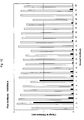
- Fig. 1(A) is a bar graph showing results obtained when the first antibody exposed to bound antigen is the control antibody.
- Fig. 1(B) the first antibody exposed to bound antigen is VAB16F3-1.
- Fig. 1(C) the first antibody exposed to bound antigen is VAK5H4-4.
- human IL4R (hIL-4R), as used herein, is intended to refer to a human cytokine receptor that specifically binds interleukin-4 (IL-4), IL-4R ⁇ (SEQ ID NO:1).
- IL-4 interleukin-4
- IL-4R ⁇ SEQ ID NO:1
- human interleukin-13 (hIL-13) refers to a cytokine that specifically binds IL-13 receptor
- hIL-13/hIL-13R1 complex refers to the complex formed by hIL-13 binding to hIL-13R1 complex, which complex binds hIL-4 receptor to initiate biological activity.
- antibody is intended to refer to immunoglobulin molecules comprising four polypeptide chains, two heavy (H) chains and two light (L) chains interconnected by disulfide bonds.
- Each heavy chain comprises a heavy chain variable region (abbreviated herein as HCVR or VH) and a heavy chain constant region.
- the heavy chain constant region comprises three domains, CH1, CH2 and CH3.
- Each light chain comprises a light chain variable region (abbreviated herein as LCVR or VL) and a light chain constant region.
- the light chain constant region comprises one domain (CL1).
- VH and VL regions can be further subdivided into regions of hypervariability, termed complementary determining regions (CDR), interspersed with regions that are more conserved, termed framework regions (FR).
- CDR complementary determining regions
- FR framework regions
- Each VH and VL is composed of three CDRs and four FRs, arranged from amino-terminus to carboxy-terminus in the following order: FR1, CDR1, FR2, CDR2, FR3, CDR3, FR4.
- antigen-binding portion of an antibody refers to one or more fragments of an antibody that retain the ability to specifically bind to an antigen (e.g., hIL-4R). It has been shown that the antigen-binding function of an antibody can be performed by fragments of a full-length antibody.
- binding fragments encompassed within the term "antigen-binding portion" of an antibody include (i) a Fab fragment, a monovalent fragment consisting of the VL, VH, CL1 and CH1 domains; (ii) a F(ab') 2 fragment, a bivalent fragment comprising two F(ab)' fragments linked by a disulfide bridge at the hinge region; (iii) a Fd fragment consisting of the VH and CH1 domains; (iv) a Fv fragment consisting of the VL and VH domains of a single arm of an antibody, (v) a dAb fragment ( Ward et al.
- VL and VH are coded for by separate genes, they can be joined, using recombinant methods, by a synthetic linker that enables them to be made as a single contiguous chain in which the VL and VH regions pair to form monovalent molecules (known as single chain Fv (scFv); see e.g., Bird et al. (1988) Science 242:423-426 ; and Huston et al. (1988) Proc. Natl. Acad. Sci. USA 85:5879-5883 .
- scFv single chain Fv
- single chain antibodies are also intended to be encompassed within the term "antigen-binding portion" of an antibody.
- Other forms of single chain antibodies, such as diabodies, are also encompassed (see e.g., Holliger et al. (1993) Proc. Natl. Acad Sci. USA 90:6444-6448 ).
- a “neutralizing” or “blocking” antibody is intended to refer to an antibody whose binding to hIL-4R results in inhibition of the biological activity of hIL-4 and/or hIL-13.
- This inhibition of the biological activity of hIL-4 and/or IL-13 can be assessed by measuring one or more indicators of hIL-4 and/or hIL-13 biological activity known to the art, such as hIL-4- and/or IL-13-induced cellular activation and hIL-4 binding to hIL-4R (see examples below).
- a “CDR” or complementary determining region is a region of hypervariability interspersed within regions that are more conserved, termed “framework regions” (FR).
- FR framework regions
- the FRs may be identical to the human germline sequences, or may be naturally or artificially modified.
- surface plasmon resonance refers to an optical phenomenon that allows for the analysis of real-time interactions by detection of alterations in protein concentrations within a biosensor matrix, for example using the BIAcoreTM system (Pharmacia Biosensor AB).
- epitope is an antigenic determinant that interacts with a specific antigen binding site in the variable region of an antibody molecule known as a paratope.
- a single antigen may have more than one epitope.
- Epitopes may be either conformational or linear.
- a conformational epitope is produced by spatially juxtaposed amino acids from different segments of the linear polypeptide chain.
- a linear epitope is one produced by adjacent amino acid residues in a polypeptide chain.
- an epitope may include moieties of saccharides, phosphoryl groups, or sufonyl groups on the antigen.
- nucleic acid or fragment thereof indicates that, when optimally aligned with appropriate nucleotide insertions or deletions with another nucleic acid (or its complementary strand), there is nucleotide sequence identity in at least about 95%, and more preferably at least about 96%, 97%, 98% or 99% of the nucleotide bases, as measured by any well-known algorithm of sequence identity, such as FASTA, BLAST or Gap, as discussed below.
- the term "substantial similarity" or “substantially similar” means that two peptide sequences, when optimally aligned, such as by the programs GAP or BESTFIT using default gap weights, share at least 95% sequence identity, even more preferably at least 98% or 99% sequence identity.
- residue positions which are not identical differ by conservative amino acid substitutions.
- a "conservative amino acid substitution” is one in which an amino acid residue is substituted by another amino acid residue having a side chain (R group) with similar chemical properties (e.g., charge or hydrophobicity). In general, a conservative amino acid substitution will not substantially change the functional properties of a protein.
- the percent sequence identity or degree of similarity may be adjusted upwards to correct for the conservative nature of the substitution. Means for making this adjustment are well-known to those of skill in the art. See, e.g., Pearson (1994) Methods Mol. Biol. 24: 307-331 .
- Examples of groups of amino acids that have side chains with similar chemical properties include (1) aliphatic side chains: glycine, alanine, valine, leucine and isoleucine; (2) aliphatic-hydroxyl side chains: serine and threonine; (3) amide-containing side chains: asparagine and glutamine; (4) aromatic side chains: phenylalanine, tyrosine, and tryptophan; (5) basic side chains: lysine, arginine, and histidine; (6) acidic side chains: aspartate and glutamate, and (7) sulfur-containing side chains are cysteine and methionine.
- Preferred conservative amino acids substitution groups are: valine-leucine-isoleucine, phenylalanine-tyrosine, lysine-arginine, alanine-valine, glutamate-aspartate, and asparagine-glutamine.
- a conservative replacement is any change having a positive value in the PAM250 log-likelihood matrix disclosed in Gonnet et al. (1992) Science 256: 1443 45 .
- a "moderately conservative" replacement is any change having a nonnegative value in the PAM250 log-likelihood matrix.
- Sequence similarity for polypeptides is typically measured using sequence analysis software. Protein analysis software matches similar sequences using measures of similarity assigned to various substitutions, deletions and other modifications, including conservative amino acid substitutions.
- GCG software contains programs such as Gap and Bestfit which can be used with default parameters to determine sequence homology or sequence identity between closely related polypeptides, such as homologous polypeptides from different species of organisms or between a wild type protein and a mutein thereof. See, e.g., GCG Version 6.1. Polypeptide sequences also can be compared using FASTA using default or recommended parameters, a program in GCG Version 6.1.
- FASTA e.g., FASTA2 and FASTA3
- FASTA2 and FASTA3 provides alignments and percent sequence identity of the regions of the best overlap between the query and search sequences (Pearson (2000) supra ).
- Another preferred algorithm when comparing a sequence of the invention to a database containing a large number of sequences from different organisms is the computer program BLAST, especially BLASTP or TBLASTN, using default parameters. See, e.g., Altschul et al. (1990) J. Mol. Biol. 215:403-410 and Altschul et al. (1997) Nucleic Acids Res. 25:3389-402 .
- Methods for generating human antibodies include, for example, VeloclmmuneTM (Regeneron Pharmaceuticals), XenoMouseTM technology ( Green et al. (1994) Nature Genetics 7:13-21 ; Abgenix), the "minilocus” approach, and phage display (and see, for example, US 5,545,807 , US 6,787,637 ).
- the VelocImmuneTM technology ( US 6, 596,541 ) encompasses a method of generating a high specificity fully human antibody to a select antigen.
- hIL-4R antigen is administered directly to mice that comprise DNA loci encoding both a human Ig heavy chain variable region and a Kappa light chain variable region (VelocImmuneTM, Regeneron Pharmaceuticals, Inc.; US 6,596,541 ), with an adjuvant to stimulate the immune response, for example, complete and incomplete Freund's adjuvant, MPL+TDM adjuvant system (Sigma), or RIBI (muramyl dipeptides) (see O'Hagan (2000) Vaccine Adjuvant, Human Press, NJ ).
- An adjuvant can prevent rapid dispersal of polypeptide by sequestering the antigen in a local depot, and may contain factors that can stimulate host immune response.
- VelocImmuneTM technology involves generating a transgenic mouse having a genome comprising human heavy and light chain variable regions operably linked to endogenous mouse constant region loci such that the mouse produces an antibody comprising a human variable region and a mouse constant region in response to antigenic stimulation.
- the DNA encoding the variable regions of the heavy and light chains of the antibody are isolated and operably linked to DNA encoding the human heavy and light chain constant regions.
- the DNA is then expressed in a cell capable of expressing the fully human antibody.
- the cell is a CHO cell.
- Antibodies may be therapeutically useful in blocking a ligand-receptor interaction or inhibiting receptor component interaction, rather than by killing cells through fixation of complement (complement-dependent cytotoxicity) (CDC) and participation antibody-dependent cell-mediated cytotoxicity (ADCC).
- CDC complement-dependent cytotoxicity
- ADCC participation antibody-dependent cell-mediated cytotoxicity
- the constant region of an antibody is important in the ability of an antibody to fix complement and mediate cell-dependent cytotoxicity.
- the isotype of an antibody may be selected on the basis of whether it is desirable for the antibody to mediate cytotoxicity.
- Human immunoglobulins can exist in two forms that are associated with hinge heterogeneity.
- an immunoglobulin molecule comprises a stable four-chain construct of approximately 150-160 kDa in which the dimers are held together by an interchain heavy chain disulfide bond.
- the dimers are not linked via interchain disulfide bonds and a molecule of about 75-80 kDa is formed composed of a covalently coupled light and heavy chain (half-antibody). These forms have been extremely difficult to separate, even after affinity purification.
- the frequency of appearance of the second form in various intact IgG isotypes is due to, but not limited to, structural differences associated with the hinge region isotype of the antibody.
- a single amino acid substitution in the hinge region of the human IgG4 hinge can significantly reduce the appearance of the second form ( Angal et al. (1993) Molecular Immunology 30: 105 ) to levels typically observed using a human IgG1 hinge.
- the instant invention encompasses antibodies having one or more mutations in the hinge, CH2 or CH3 region that may be desirable, for example, in production, to improve the yield of the desired antibody form.
- Antibodies of the invention are preferably prepared with the use of VelocImmuneTM technology.
- a transgenic mouse in which the endogenous immunoglobulin heavy and light chain variable regions are replaced with the corresponding human variable regions is challenged with the antigen of interest, and lymphatic cells (such as B-cells) are recovered from the mice that express antibodies.
- lymphatic cells such as B-cells
- the lymphatic cells may be fused with a myeloma cell line to prepare immortal hybridoma cell lines, and such hybridoma cell lines are screened and selected to identify hybridoma cell lines that produce antibodies specific to the antigen of interest.
- DNA encoding the variable regions of the heavy chain and light chain may be isolated and linked to desirable isotypic constant regions of the heavy chain and light chain.
- Such an antibody protein may be produced in a cell, such as a CHO cell.
- DNA encoding the antigen-specific chimeric antibodies or the variable regions of the light and heavy chains may be isolated directly from antigen-specific lymphocytes.
- the transgenic mouse comprises up to 18 functional human variable heavy chain genes and 12 functional human variable kappa light chain genes. In another instance, the transgenic mouse comprises up to 39 human variable heavy chain genes and 30 human variable kappa light chain genes. In yet another embodiment, the transgenic mouse comprises up to 80 human variable heavy chain genes and 40 human variable kappa light chain genes.
- the antibodies of the instant invention possess very high affinities, typically possessing K D s of from about 10 -9 through about 10 -12 M, when measured by binding to antigen either immobilized on a solid phase or measured in solution.
- high affinity chimeric antibodies are isolated having a human variable region and a mouse constant region.
- the antibodies are characterized and selected for desirable characteristics, including binding affinity to hIL-4R, ability to block hIL-4 binding to hIL-4R, and/or selectivity for the human protein.
- the mouse constant regions are replaced with desired human constant regions to generate the fully human antibodies of the invention, for example wild-type or modified IgG4 or igG1 (for example, SEQ ID NO:588, 589, 590). While the constant region selected may vary according to specific use, high affinity antigen-binding and target specificity characteristics reside in the variable region.
- MAP Modification-Assisted, Profiling
- SAP Antigen Structure-based Antibody Profiling
- mAbs monoclonal antibodies
- Each category may reflect a unique epitope either distinctly different from, or partially overlapping with, an epitope represented by another category. This technology allows rapid filtering of genetically identical antibodies, such that characterization can be focused on genetically distinct antibodies.
- MAP may facilitate identification of rare hybridoma clones with desired characteristics.
- MAP may be used to sort the hIL-4R antibodies of the invention into groups of antibodies binding different epitopes.
- Agents useful for altering the structure of the immobilized antigen are enzymes, such as, for example, proteolytic enzymes and chemical agents.
- the antigen protein may be immobilized on either biosensor chip surfaces or polystyrene beads.
- the latter can be processed with, for example, an assay such as a multiplex LuminexTM detection assay (Luminex Corp., TX). Because of the capacity of LuminexTM to handle multiplex analysis with up to 100 different types of beads, LuminexTM provides almost unlimited antigen surfaces with various modifications, resulting in improved resolution in antibody epitope profiling over a biosensor assay.
- Administration of therapeutic entities in accordance with the invention can be achieved with suitable carriers, excipients, and other agents that are incorporated into formulations to provide improved transfer, delivery, tolerance, and the like.
- suitable carriers, excipients, and other agents that are incorporated into formulations to provide improved transfer, delivery, tolerance, and the like.
- a multitude of appropriate formulations can be found in the formulary known to all pharmaceutical chemists: Remington: The Science and Practice of Pharmacy (2003, 20th ed, Lippincott Williams & Wilkins ).
- formulations include, for example, powders, pastes, ointments, jellies, waxes, oils, lipids, lipid (cationic or anionic) containing vesicles (such as LIPOFECTINTM), DNA conjugates, anhydrous absorption pastes, oil-in-water and water-in-oil emulsions, emulsions carbowax (polyethylene glycols of various molecular weights), semi-solid gels, and semi-solid mixtures containing carbowax. Any of the foregoing mixtures may be appropriate in treatments and therapies in accordance with the present invention, provided that the active ingredient in the formulation is not inactivated by the formulation and the formulation is physiologically compatible and tolerable with the route of administration.
- the therapeutic molecules of the invention may be administered to a patient in a manner appropriate to the indication, for example, parenterally, topically, or by inhalation.
- the antagonist can be administered, for example, via intra-articular, intravenous, intramuscular, intralesional, intraperitoneal or subcutaneous routes, by bolus injection, or continuous infusion.
- Localized administration at a site of disease or injury is contemplated, as are transdermal delivery and sustained release from implants. Delivery by inhalation includes, for example, nasal or oral inhalation, use of a nebulizer, inhalation of the antagonist in aerosol form, and the like.
- Other alternatives include eyedrops; oral preparations including pills, syrups, lozenges or chewing gum; and topical preparations such as lotions, gels, sprays, and ointments.
- Specific dosages and the frequency of administration may vary according to such factors as the route of administration, the nature and severity of the disease to be treated, whether the condition is acute or chronic, and the size and general condition of the patient. Appropriate dosages can be determined by procedures known in the pertinent art, e.g. in clinical trials that may involve dose escalation studies.
- the therapeutic molecules of the invention may be once, or repeatedly.
- the antibody or antibody fragment is administered over a period of at least a month or more, e.g., for one, two, or three months or even indefinitely.
- long-term treatment is generally most effective.
- administration for shorter periods e.g. from one to six weeks, may be sufficient.
- the therapeutic is administered until the patient manifests a medically relevant degree of improvement over baseline for the chosen indicator or indicators.
- the level of IL-4 may be monitored during and/or after treatment with the therapeutic molecule of the invention. Methods for measuring IL-4 serum levels are known in the art, for example by ELISA, etc.
- the antibodies and antibody fragments of the invention are useful for treating diseases and disorders which are improved, inhibited or ameliorated by reducing IL-4 activity. These disorders include those characterized by abnormal or excess expression of IL-4, or by an abnormal host response to IL-4 production.
- IL-4 related disorders which are treated by the antibodies or antibody fragments of the include, for example, arthritis (including septic arthritis), herpetiformis, chronic idiopathic urticaria, scleroderma, hypertrophic scarring, Whipple's Disease, benign prostate hyperplasia, pulmonary disorders such as asthma (mild, moderate or severe), inflammatory disorders such as inflammatory bowel disease, allergic reactions, Kawasaki disease, sickle cell disease, Churg-Strauss syndrome, Grave's disease, pre-eclampsia, Sjogren's syndrome, autoimmune lymphoproliferative syndrome, autoimmune hemolytic anemia, Barrett's esophagus, autoimmune uveitis, tuberculosis, atopic
- the invention encompasses combination therapies in which the anti-IL-4R antibody or antibody fragment is administered in combination with a second therapeutic agent.
- Coadministration and combination therapy are not limited to simultaneous administration, but include treatment regimens in which an anti-IL-4R antibody or antibody fragment is administered at least once during a course of treatment that involves administering at least one other therapeutic agent to the patient.
- a second therapeutic agent may be another IL-4 antagonist, such as another antibody/antibody fragment, or a soluble cytokine receptor, an IgE antagonist, an anti-asthma medication (corticosteroids, non-steroidal agents, beta agonists, leukotriene antagonists, xanthines, fluticasone, salmeterol, albuterol) which may be delivered by inhalation or other appropriate means.
- the anti-IL-4R antibody or antibody fragment of the invention may be administered with an IL-1 antagonist, such as rilonacept, or an IL-13 antagonist.
- the second agent may include one or more leukotriene receptor antagonists to treat disorders such as allergic inflammatory diseases, e.g., asthma and allergies. Examples of leukotriene receptor antagonists include but are not limited to montelukast, pranlukast, and zafirlukast.
- the second agent may include a cytokine inhibitor such as one or more of a TNF (etanercept, ENBRELTM), IL-9, IL-5 or IL-17 antagonist.
- Example 1 Generation of Human Antibodies to Human IL-4 Receptor.
- mice comprising DNA loci encoding both a human Ig heavy chain variable region and a kappa light chain variable region (VelocImmuneTM, Regeneron Pharmaceuticals, Inc.; US Patent No. 6,596,541 ) were immunized with human IL-4R (hIL-4R, SEQ ID NO:1).
- the hIL-4R was administered by direct injection of purified antigen in an adjuvant or indirectly by providing the DNA sequence of hIL-4R in a DNA plasmid that contains the hIL-4R gene and expresses hIL-4R using the host's cellular protein expression machinery to produce antigen polypeptide in vivo.
- animals were subsequently boosted every 3-4 weeks and bleeds obtained 10 after each boost for assessment of progression of anti-antigen response.
- antibody-expressing B cells were harvested and fused with mouse myeloma cells to form hybridomas.
- Functionally desirable monoclonal antibodies were selected by screening conditioned media of the hybridomas or transfected cells for specificity, antigen-binding affinity, and potency in blocking hIL-4 binding to hIL-4R (described below).
- VX 4E7-9 SEQ ID NO:3/11; 387/389; 391/393
- VX 3F7-6 SEQ ID NO:19/27; 395/397; 399/401
- VAB 16G1-1 SEQ ID NO:35/43; 403/405; 407/409
- VAB 16F3-1 SEQ ID NO:51/59, 411/413, 415/417, 579/59 and 581/59
- VAB 15C8-17 SEQ ID NO:67/75, 419/421, 423/425
- VAB 13A1-6 SEQ ID NO:83/91, 427/429, 431/433
- VAB 11 G8-1 SEQ I D NO:99/107, 435/437, 439/441
- VAB 10G8-19 SEQ ID NO:115/123, 443/445, 447/449
- Binding affinity (K D ) of selected antibodies with respect to hIL-4R was determined using a real-time biosensor surface plasmon resonance assay (BIAcoreTM 2000). Briefly, antibody was captured on a goat anti-mouse (GAM) IgG polyclonal antibody surface created through direct chemical coupling of the GAM IgG to a BIAcoreTM chip to form a captured antibody surface. Various concentrations (ranging from 12.5 nM to 0.625 nM) of monomeric hIL-4R (R&D Systems) or dimeric hIL-4R-hFc were injected over the captured antibody surface. Binding of antigen to antibody, and dissociation of the bound complex, were monitored in real time.
- Antibody-antigen binding affinity was also assessed using an ELISA-based solution competition assay. Briefly, antibodies (purified proteins at 1 or 3.3 ng/ml) were premixed with serial dilutions of antigen protein (monomeric or dimeric) ranging from 0 to 10 ⁇ g/ml. Solutions of the antibody and antigen mixture were then incubated for two to four hours at room temperature to reach binding equilibrium. Free antibody in the mixtures was then measured using a quantitative sandwich ELISA. Briefly, 96-well MaxisorpTM plates (VWR, West Chester, PA) were coated with 2 ⁇ g/ml hIL-4R-hFc protein in PBS overnight at 4° C followed by blocking nonspecific binding with BSA.
- VWR West Chester, PA
- the antibody-antigen mixture solutions were then transferred to the coated MaxisorbTM plates followed by a one-hour incubation.
- the plates were then washed with washing buffer and plate-bound antibodies were detected with an HRP-conjugated goat anti-mouse IgG polyclonal antibody reagent (Jackson ImmunoResearch) or an HRP-conjugated goat anti-human IgG polyclonal antibody reagent (Jackson ImmunoResearch) for control antibody and developed using colorimetric substrates such as BD OptEIATM (BD Biosciences Pharmingen, San Diego, CA). After the reaction was stopped with 1 M phosphoric or sulfuric acid, absorbances at 450 nm were recorded and the data were analyzed using GraphPadTM Prism software.
- the antibody or antibody fragment of the invention exhibits an IC 50 for dimeric hIL-4R of about 20 pM or less, and an IC 50 for monomeric hIL-4R of about 150 pM or less, or about 100 pM or less, as measured by ELISA solution competition assay.
- the ability of the antibodies to block hIL-4 binding to the hIL-4R receptor was determined using surface plasmon resonance.
- Purified hIL-4R-hFc molecules were captured by goat anti-human IgG polyclonal antibody immobilized on CM-5 to a density of 260 RU, to prepare a receptor-coated surface.
- Human IL-4 (0.25 ml at 50 nM) was then injected over the receptor-coated surface and the amount of bound hIL-4 was recorded (first injection of hIL-4).
- the bound hIL-4 was then removed with a pulse of 3 M MgCl 2 followed by conditioning buffer.
- Pre-bound antibody-antigen samples were transferred to the hIL-4-coated detection plate. After a one-hour incubation at room temperature, the detection plate was washed and plate-bound hIL-4R-hFc was detected using HRP conjugated goat anti-hFc polyclonal antibodies and developed using colorimetric substrates such as BD OptEIA TM (BD Biosciences Pharmingen, San Diego, CA). After the reaction was stopped with 1 M phosphoric or sulfuric acid, absorbances at 450 nm were recorded and the data were analyzed using GraphPadTM Prism software. IC 50 s were determined as the amount of antibody required to reduce 50% of IL-4R-hFc detectable to plate bound hIL-4.
- the antibody or antibody fragment of the invention exhibits an IC 50 for blocking 25 pM hIL-4R of less than about 50 pM, or less than about 40 pM, or less than about 30 pM, or less than about 20 pM, as measured by ELISA.
- IL-4 can stimulate two receptor complexes, type I and type II.
- Type I receptor complexes are formed by the binding of IL-4 to IL-4R and the subsequent heterodimerization with the common gamma chain.
- IL4/IL4R complex can heterodimerize with the IL-13 receptor 1 to form type II receptor complexes.
- Both type I and type II complexes signal mainly through STAT6. Therefore, the ability of the selected antibodies to block signaling through STAT6 was assessed as described below.
- HEK293 cells were stably transfected with human STAT6 and a STAT6 luciferase reporter plasmid, and was maintained in growth media (DMEM, 10% FBS, L-glutamine, penicillin, streptomycin).
- growth media DMEM, 10% FBS, L-glutamine, penicillin, streptomycin.
- hIL-4 For bioassay of the hIL-4 response, cells were washed once in assay media (Optimem I (Gibco) plus 0.1 % FBS) and plated at 1 x 10 4 cells/well (96 well plate) in 80 ⁇ l of assay media. Purified antibodies were serially diluted into assay media (final concentrations ranging from 20 nM to 0) and 10 ⁇ l of each of the test antibody was added to the cells along with 10 ⁇ l of hIL-4 (10 pM constant final concentration). Cells were then incubated at 37°C, 5% CO 2 for 6 hrs. The extent of cellular response was measured in a luciferase assay (Promega Biotech). Results are shown in Table 4.
- IL-4-dependent biological activity in vitro was also confirmed using either a human erythroblast cell line, TF1, or a modified, II-13R ⁇ overexpressing TF1 cell line (TF1/A12).
- TF1 human erythroblast cell line
- TF1/A12 modified, II-13R ⁇ overexpressing TF1 cell line
- 20,000 cells were seeded in each well of a 96-well plate in RPMI 1640 medium containing 10% FBS, 2mM L-glutamine, and penicillin and streptomycin. Twenty-five ⁇ l of purified antibodies ranging from 0 to 50 nM (final concentration) were added together with 25 ⁇ I of hIL-4 recombinant protein to a final concentration of either 50 pM for cell line TF1 or 20 pM for cell line TF1/A12.
- IL-4R has been shown to be a modulator for IL-13 activity through its binding to IL-13/IL-13R complex
- the selected antibodies were tested for their ability to block IL-13 activity in a modification of the HEK293 STAT6 luciferase assay described above, with the modification being replacement of 10 pM IL-4 with 40 pM hIL-13.
- the antibodies were also assessed for potency in blocking hIL-13 activity in the TF-1 cell line assay described above, with hIL-13 at 150 pM in the presence of 0-50 nM antibodies. Results are shown in Table 5.
- An antibody binding profile can be established by determining the effect that an antibody (bound to its antigen) can have on the ability of a panel of different antibodies to subsequent bind the same antigen.
- the antigen can be immobilized on a support to form an antigen-coated surface, the antigen-coated surface can be saturated with the antibody, and then the antibody-saturated antigen-coated surface can be exposed to a panel of other antibodies.
- the extent of binding of the panel of other antibodies to the antibody-saturated antigen surface provides an antibody binding profile.
- OCTET TM -based sequential binding assays were employed to generate an antibody binding profile.
- a group of 24 strepavidin High Binding FA Biosensors (ForteBio, Inc., Menlo Park, CA) were first incubated with antigen, biotin-hIL-4R-hFc, at 2 ⁇ g/ml for 10 min at 30°C to achieve saturation and the amount of bound antigen was measured as a change in thickness (nm) of the biological layer due to bound protein, which is directly measured by the wavelength shift.
- Biotin-hIL-4R-hFc-bound biosensors were then incubated with the first antibody (control antibody) at 50 ⁇ g/ml for 15 min at 30°C to achieve saturation and the amount of bound control antibody was measured as a change in thickness (nm) of the biological layer.
- Each control antibody-bound sensor was then incubated with one of a panel of 24 different anti-hIL-4R antibodies (second antibody) at 50 ⁇ g/ml for 15 min at 30°C, and the amount of second antibody bound was measured as a change in thickness of the biological layer.
- the same assay was repeated using either VAB16F3-1 or VAK5H4-4 anti-hIL-4R antibody as the first antibody. Results are shown in Fig. 1A-C .
- hIL-4R monomer 200 ng per lane
- mfIL-4R His-tagged monomer 200 ng per lane
- SDS-PAGE gels Four separate gels were each transferred to a PVDF membrane and each membrane was exposed to one of four primary antibodies: anti-His mAb (Qiagen), VAB 16F3-1, VAK 5H4-4, or control anti-hIL-4R antibody, with either HRP-conjugated goat anti-mIgG or anti-hIgG (Pierce) as secondary antibody.
Landscapes
- Health & Medical Sciences (AREA)
- Chemical & Material Sciences (AREA)
- Life Sciences & Earth Sciences (AREA)
- Organic Chemistry (AREA)
- Medicinal Chemistry (AREA)
- General Health & Medical Sciences (AREA)
- Engineering & Computer Science (AREA)
- Bioinformatics & Cheminformatics (AREA)
- Animal Behavior & Ethology (AREA)
- Veterinary Medicine (AREA)
- Public Health (AREA)
- Pharmacology & Pharmacy (AREA)
- Chemical Kinetics & Catalysis (AREA)
- General Chemical & Material Sciences (AREA)
- Nuclear Medicine, Radiotherapy & Molecular Imaging (AREA)
- Immunology (AREA)
- Genetics & Genomics (AREA)
- Molecular Biology (AREA)
- Biochemistry (AREA)
- Pulmonology (AREA)
- Biophysics (AREA)
- Proteomics, Peptides & Aminoacids (AREA)
- Biomedical Technology (AREA)
- Rheumatology (AREA)
- Microbiology (AREA)
- Physical Education & Sports Medicine (AREA)
- Zoology (AREA)
- Urology & Nephrology (AREA)
- Wood Science & Technology (AREA)
- General Engineering & Computer Science (AREA)
- Biotechnology (AREA)
- Epidemiology (AREA)
- Heart & Thoracic Surgery (AREA)
- Mycology (AREA)
- Orthopedic Medicine & Surgery (AREA)
- Diabetes (AREA)
- Physics & Mathematics (AREA)
- Cardiology (AREA)
- Hematology (AREA)
- Plant Pathology (AREA)
Priority Applications (7)
| Application Number | Priority Date | Filing Date | Title |
|---|---|---|---|
| PL14162081T PL2769992T3 (pl) | 2006-10-02 | 2007-10-02 | Przeciwciała ludzkie o wysokim powinowactwie względem ludzkiego receptora IL-4 |
| SI200731493T SI2069403T1 (sl) | 2006-10-02 | 2007-10-02 | Visokoafinitetna humana protitelesa za humani IL-4receptor |
| EP14162081.5A EP2769992B1 (en) | 2006-10-02 | 2007-10-02 | High affinity human antibodies to human IL-4 receptor |
| PL07867197T PL2069403T3 (pl) | 2006-10-02 | 2007-10-02 | Przeciwciała ludzkie o wysokim powinowactwie wobec receptora ludzkiej IL-4 |
| DK14162081.5T DK2769992T3 (da) | 2006-10-02 | 2007-10-02 | Humane antistoffer med høj affinitet for human IL-4-receptor |
| EP20207210.4A EP3845563A3 (en) | 2006-10-02 | 2007-10-02 | High affinity human antibodies to human il-4 receptor |
| CY20141100620T CY1115551T1 (el) | 2006-10-02 | 2014-08-07 | Ανθρωπινα αντισωματα υψηλης συναφειας κατα του ανθρωπινου υποδοχεα il-4 |
Applications Claiming Priority (3)
| Application Number | Priority Date | Filing Date | Title |
|---|---|---|---|
| US84869406P | 2006-10-02 | 2006-10-02 | |
| US95773807P | 2007-08-24 | 2007-08-24 | |
| PCT/US2007/021210 WO2008054606A2 (en) | 2006-10-02 | 2007-10-02 | High affinity human antibodies to human il-4 receptor |
Related Child Applications (3)
| Application Number | Title | Priority Date | Filing Date |
|---|---|---|---|
| EP14162081.5A Division EP2769992B1 (en) | 2006-10-02 | 2007-10-02 | High affinity human antibodies to human IL-4 receptor |
| EP14162081.5A Division-Into EP2769992B1 (en) | 2006-10-02 | 2007-10-02 | High affinity human antibodies to human IL-4 receptor |
| EP20207210.4A Division EP3845563A3 (en) | 2006-10-02 | 2007-10-02 | High affinity human antibodies to human il-4 receptor |
Publications (2)
| Publication Number | Publication Date |
|---|---|
| EP2069403A2 EP2069403A2 (en) | 2009-06-17 |
| EP2069403B1 true EP2069403B1 (en) | 2014-05-07 |
Family
ID=39344836
Family Applications (3)
| Application Number | Title | Priority Date | Filing Date |
|---|---|---|---|
| EP07867197.1A Active EP2069403B1 (en) | 2006-10-02 | 2007-10-02 | High affinity human antibodies to human il-4 receptor |
| EP14162081.5A Active EP2769992B1 (en) | 2006-10-02 | 2007-10-02 | High affinity human antibodies to human IL-4 receptor |
| EP20207210.4A Pending EP3845563A3 (en) | 2006-10-02 | 2007-10-02 | High affinity human antibodies to human il-4 receptor |
Family Applications After (2)
| Application Number | Title | Priority Date | Filing Date |
|---|---|---|---|
| EP14162081.5A Active EP2769992B1 (en) | 2006-10-02 | 2007-10-02 | High affinity human antibodies to human IL-4 receptor |
| EP20207210.4A Pending EP3845563A3 (en) | 2006-10-02 | 2007-10-02 | High affinity human antibodies to human il-4 receptor |
Country Status (34)
| Country | Link |
|---|---|
| US (4) | US7605237B2 (OSRAM) |
| EP (3) | EP2069403B1 (OSRAM) |
| JP (1) | JP2010505418A (OSRAM) |
| KR (1) | KR101474227B1 (OSRAM) |
| CN (1) | CN101522716B (OSRAM) |
| AU (1) | AU2007314522C9 (OSRAM) |
| BR (1) | BRPI0719953B8 (OSRAM) |
| CA (1) | CA2664343C (OSRAM) |
| CO (1) | CO6160305A2 (OSRAM) |
| CR (1) | CR10689A (OSRAM) |
| CY (1) | CY1115551T1 (OSRAM) |
| DK (2) | DK2769992T3 (OSRAM) |
| DO (1) | DOP2009000058A (OSRAM) |
| ES (2) | ES2859825T3 (OSRAM) |
| HR (2) | HRP20140512T1 (OSRAM) |
| HU (1) | HUE054090T2 (OSRAM) |
| IL (1) | IL197479A (OSRAM) |
| LT (1) | LT2769992T (OSRAM) |
| MA (1) | MA31138B1 (OSRAM) |
| ME (1) | ME00616B (OSRAM) |
| MX (1) | MX2009003393A (OSRAM) |
| MY (1) | MY149079A (OSRAM) |
| NI (1) | NI200900041A (OSRAM) |
| NO (1) | NO347180B1 (OSRAM) |
| NZ (1) | NZ576040A (OSRAM) |
| PL (2) | PL2769992T3 (OSRAM) |
| PT (2) | PT2069403E (OSRAM) |
| RS (2) | RS53340B (OSRAM) |
| RU (1) | RU2445318C2 (OSRAM) |
| SI (2) | SI2069403T1 (OSRAM) |
| TN (1) | TN2009000110A1 (OSRAM) |
| UA (1) | UA98943C2 (OSRAM) |
| WO (1) | WO2008054606A2 (OSRAM) |
| ZA (1) | ZA200901617B (OSRAM) |
Families Citing this family (141)
| Publication number | Priority date | Publication date | Assignee | Title |
|---|---|---|---|---|
| US6596541B2 (en) | 2000-10-31 | 2003-07-22 | Regeneron Pharmaceuticals, Inc. | Methods of modifying eukaryotic cells |
| US20050144655A1 (en) | 2000-10-31 | 2005-06-30 | Economides Aris N. | Methods of modifying eukaryotic cells |
| USRE47770E1 (en) | 2002-07-18 | 2019-12-17 | Merus N.V. | Recombinant production of mixtures of antibodies |
| SI1523496T1 (sl) | 2002-07-18 | 2011-11-30 | Merus B V | Rekombinantno proizvajanje zmesi protiteles |
| US20100069614A1 (en) | 2008-06-27 | 2010-03-18 | Merus B.V. | Antibody producing non-human mammals |
| EP2395017A3 (en) | 2003-05-30 | 2012-12-19 | Merus B.V. | Design and use of paired variable regions of specific binding molecules |
| US7608693B2 (en) * | 2006-10-02 | 2009-10-27 | Regeneron Pharmaceuticals, Inc. | High affinity human antibodies to human IL-4 receptor |
| US8092804B2 (en) | 2007-12-21 | 2012-01-10 | Medimmune Limited | Binding members for interleukin-4 receptor alpha (IL-4Rα)-173 |
| EP2604628A3 (en) | 2007-12-21 | 2013-08-21 | Medimmune Limited | Binding members for interleukin-4 receptor alpha (IL-4R) - 173 |
| EP2556747B1 (en) | 2008-06-27 | 2020-12-02 | Merus N.V. | Antibody producing transgenic mice |
| KR20110049802A (ko) | 2008-07-25 | 2011-05-12 | 인스티튜트 포 리서치 인 바이오메드슨 | 중화 항-인플루엔자 a 바이러스 항체 및 이의 용도 |
| US8871207B2 (en) | 2008-07-25 | 2014-10-28 | Humabs, LLC | Neutralizing anti-influenza A virus antibodies and uses thereof |
| AU2014216019B2 (en) * | 2008-10-29 | 2016-04-21 | Regeneron Pharmaceuticals, Inc. | High affinity human antibodies to Human IL-4 receptor |
| US20130064834A1 (en) | 2008-12-15 | 2013-03-14 | Regeneron Pharmaceuticals, Inc. | Methods for treating hypercholesterolemia using antibodies to pcsk9 |
| US9445581B2 (en) | 2012-03-28 | 2016-09-20 | Kymab Limited | Animal models and therapeutic molecules |
| PT2564695E (pt) | 2009-07-08 | 2015-06-03 | Kymab Ltd | Modelos animais e moléculas terapêuticas |
| US20130045492A1 (en) | 2010-02-08 | 2013-02-21 | Regeneron Pharmaceuticals, Inc. | Methods For Making Fully Human Bispecific Antibodies Using A Common Light Chain |
| DK2505654T4 (da) | 2010-02-08 | 2020-07-27 | Regeneron Pharma | Mus med fælles letkæde |
| US9796788B2 (en) | 2010-02-08 | 2017-10-24 | Regeneron Pharmaceuticals, Inc. | Mice expressing a limited immunoglobulin light chain repertoire |
| RU2601297C2 (ru) | 2010-06-22 | 2016-10-27 | Ридженерон Фармасьютикалз, Инк. | Мыши, экспрессирующие гибридную легкую цепь иммуноглобулина |
| CA3250882A1 (en) * | 2010-08-02 | 2025-11-29 | Regeneron Pharamaceuticals, Inc. | Mice that Make Binding Proteins Comprising VL Domains |
| CN106267189B (zh) | 2010-10-06 | 2021-02-26 | 瑞泽恩制药公司 | 含有抗白介素-4受体(il-4r)的抗体的稳定制剂 |
| ES2704038T3 (es) | 2011-05-24 | 2019-03-13 | Zyngenia Inc | Complejos multiespecíficos multivalentes y monovalentes y sus usos |
| CN102830228B (zh) * | 2011-06-15 | 2015-01-21 | 格诺思博生物科技(上海)有限公司 | 定量分析循环肿瘤细胞的试剂及试剂盒 |
| AR087329A1 (es) * | 2011-06-17 | 2014-03-19 | Regeneron Pharma | Anticuerpos humanos contra proteina 3 de tipo angiopoietina humana |
| EA036047B1 (ru) | 2011-07-11 | 2020-09-18 | Икнос Сайенсиз Са | Антитела, которые связываются с ox40, и их применение |
| LT2734545T (lt) | 2011-07-18 | 2019-05-10 | Institute For Research In Biomedicine | Antikūnai, neutralizuojantys influenza a virusą, ir jų panaudojimo būdai |
| MY172718A (en) | 2011-08-05 | 2019-12-11 | Regeneron Pharma | Humanized universal light chain mice |
| MX363642B (es) | 2011-09-16 | 2019-03-28 | Regeneron Pharma | Metodos para reducir los niveles de lipoproteina (a) administrando un inhibidor de proproteina convertasa subtilisina kexina-9 (pcsk9). |
| WO2013041844A2 (en) | 2011-09-19 | 2013-03-28 | Kymab Limited | Antibodies, variable domains & chains tailored for human use |
| CA2791109C (en) | 2011-09-26 | 2021-02-16 | Merus B.V. | Generation of binding molecules |
| WO2013045916A1 (en) | 2011-09-26 | 2013-04-04 | Kymab Limited | Chimaeric surrogate light chains (slc) comprising human vpreb |
| US9253965B2 (en) | 2012-03-28 | 2016-02-09 | Kymab Limited | Animal models and therapeutic molecules |
| KR102081657B1 (ko) | 2011-12-20 | 2020-02-26 | 리제너론 파마슈티칼스 인코포레이티드 | 인간화 경쇄 마우스 |
| CN104302170B (zh) | 2012-03-16 | 2016-09-28 | 瑞泽恩制药公司 | 生产具有ph依赖性结合特性的抗原结合蛋白的小鼠 |
| NZ730271A (en) | 2012-03-16 | 2022-09-30 | Regeneron Pharma | Non-human animals expressing ph-sensitive immunoglobulin sequences |
| US20140013456A1 (en) | 2012-03-16 | 2014-01-09 | Regeneron Pharmaceuticals, Inc. | Histidine Engineered Light Chain Antibodies and Genetically Modified Non-Human Animals for Generating the Same |
| ES2665793T3 (es) | 2012-03-16 | 2018-04-27 | Regeneron Pharmaceuticals, Inc. | Anticuerpos de cadena ligera modificada mediante ingeniería genética con histidina y roedores modificados genéticamente para la generación de los mismos |
| GB2502127A (en) | 2012-05-17 | 2013-11-20 | Kymab Ltd | Multivalent antibodies and in vivo methods for their production |
| US10251377B2 (en) | 2012-03-28 | 2019-04-09 | Kymab Limited | Transgenic non-human vertebrate for the expression of class-switched, fully human, antibodies |
| CA2870821C (en) | 2012-04-20 | 2022-06-14 | Merus B.V. | Methods and means for the production of ig-like molecules |
| KR102307248B1 (ko) | 2012-08-21 | 2021-10-01 | 사노피 바이오테크놀로지 | Il-4r 길항제의 투여에 의한 천식의 치료 또는 예방 방법 |
| NZ630178A (en) | 2012-09-07 | 2017-06-30 | Regeneron Pharma | Methods for treating atopic dermatitis by administering an il-4r antagonist |
| TWI635098B (zh) | 2013-02-01 | 2018-09-11 | 再生元醫藥公司 | 含嵌合恆定區之抗體 |
| DK2958941T3 (da) | 2013-02-20 | 2019-06-24 | Innate Pharma | Forbindelse, der binder specifikt til kir3dl2, til anvendelse til behandling af perifert t-cellelymfom |
| ES2678221T3 (es) * | 2013-02-20 | 2018-08-09 | Regeneron Pharmaceuticals, Inc. | Animales no humanos con secuencias de cadena pesada de inmunoglobulina modificadas |
| US10150800B2 (en) | 2013-03-15 | 2018-12-11 | Zyngenia, Inc. | EGFR-binding modular recognition domains |
| US9788534B2 (en) | 2013-03-18 | 2017-10-17 | Kymab Limited | Animal models and therapeutic molecules |
| US9783618B2 (en) | 2013-05-01 | 2017-10-10 | Kymab Limited | Manipulation of immunoglobulin gene diversity and multi-antibody therapeutics |
| US9783593B2 (en) | 2013-05-02 | 2017-10-10 | Kymab Limited | Antibodies, variable domains and chains tailored for human use |
| US11707056B2 (en) | 2013-05-02 | 2023-07-25 | Kymab Limited | Animals, repertoires and methods |
| US10111953B2 (en) | 2013-05-30 | 2018-10-30 | Regeneron Pharmaceuticals, Inc. | Methods for reducing remnant cholesterol and other lipoprotein fractions by administering an inhibitor of proprotein convertase subtilisin kexin-9 (PCSK9) |
| TWI755763B (zh) | 2013-06-04 | 2022-02-21 | 美商再生元醫藥公司 | 藉由投與il-4r抑制劑以治療過敏及增強過敏原-特異之免疫療法的方法 |
| MX368068B (es) * | 2013-06-21 | 2019-09-18 | Sanofi Biotechnology | Antagonista de il-4r para usarse para tratar la poliposis nasal. |
| TWI682781B (zh) | 2013-07-11 | 2020-01-21 | 美商再生元醫藥公司 | 藉由投與il-4r抑制劑治療嗜酸性食道炎的方法 |
| NL2013554B1 (en) | 2013-10-01 | 2016-01-08 | Kymab Ltd | Animal models and therapeutic molecules. |
| LT3052192T (lt) | 2013-10-02 | 2020-12-10 | Medimmune, Llc | Neutralizuojantys antikūnai prieš gripą a ir jų naudojimas |
| US8986691B1 (en) | 2014-07-15 | 2015-03-24 | Kymab Limited | Method of treating atopic dermatitis or asthma using antibody to IL4RA |
| US8980273B1 (en) | 2014-07-15 | 2015-03-17 | Kymab Limited | Method of treating atopic dermatitis or asthma using antibody to IL4RA |
| DE202014010499U1 (de) | 2013-12-17 | 2015-10-20 | Kymab Limited | Targeting von humaner PCSK9 zur Cholesterinbehandlung |
| WO2015123777A1 (en) * | 2014-02-19 | 2015-08-27 | Cangene Corporation | Methods of modulating an immune response |
| IL315136A (en) | 2014-02-21 | 2024-10-01 | Sanofi Biotechnology | Methods for treating or preventing asthma by administering an il-4rantagonist |
| KR20160120735A (ko) | 2014-02-28 | 2016-10-18 | 리제너론 파아마슈티컬스, 인크. | Il-4r 길항제의 투여에 의한 피부 감염의 치료 방법 |
| BR112016021679A2 (pt) | 2014-03-21 | 2018-12-04 | Regeneron Pharmaceuticals, Inc. | proteína de ligação ao antígeno, métodos de produção de uma proteína de ligação ao antígeno e de identificação de uma ou mais proteínas de ligação ao antígeno, hibridoma, ácido nucleico, célula, e, animal não humano geneticamente modificado. |
| BR112016021572A2 (pt) | 2014-03-21 | 2017-10-03 | Regeneron Pharma | Métodos para preparar um animal não humano geneticamente modificado e para produzir proteínas de ligação, hibridoma, ácido nucleico, célula, e, proteína de ligação |
| AU2015289805B2 (en) | 2014-07-15 | 2020-06-25 | Humabs Biomed Sa | Neutralizing anti-influenza B antibodies and uses thereof |
| WO2016023916A1 (en) | 2014-08-12 | 2016-02-18 | Kymab Limited | Treatment of disease using ligand binding to targets of interest |
| WO2016071701A1 (en) | 2014-11-07 | 2016-05-12 | Kymab Limited | Treatment of disease using ligand binding to targets of interest |
| CA2967602C (en) | 2014-11-14 | 2024-09-24 | Regeneron Pharmaceuticals, Inc. | METHODS OF TREATMENT OF CHRONIC SINUSITIS WITH NASAL POLYPOSIS BY ADMINISTRATION OF AN IL-4R ANTAGONIST |
| WO2016144876A2 (en) * | 2015-03-06 | 2016-09-15 | Sorrento Therapeutics, Inc. | Antibody therapeutics that bind jag1 |
| CA2979702A1 (en) | 2015-03-19 | 2016-09-22 | Regeneron Pharmaceuticals, Inc. | Non-human animals that select for light chain variable regions that bind antigen |
| PL3277725T3 (pl) | 2015-03-30 | 2021-06-14 | Regeneron Pharmaceuticals, Inc. | Regiony stałe łańcucha ciężkiego o zmniejszonym wiązaniu do receptorów Fc gamma |
| CN113861294B (zh) | 2015-04-02 | 2024-03-08 | 英特维特国际股份有限公司 | 针对犬白介素-4受体α的抗体 |
| PL3303384T3 (pl) | 2015-06-01 | 2022-01-03 | Medimmune, Llc | Neutralizujące cząsteczki wiążące przeciw grypie i ich zastosowania |
| CN106699888B (zh) * | 2015-07-28 | 2020-11-06 | 上海昀怡健康科技发展有限公司 | 一种pd-1抗体及其制备方法和应用 |
| TWI870789B (zh) * | 2015-08-04 | 2025-01-21 | 美商再生元醫藥公司 | 補充牛磺酸之細胞培養基及用法 |
| CN106939047B (zh) | 2016-01-04 | 2021-08-31 | 江苏怀瑜药业有限公司 | 一种pd-l1抗体及其制备方法 |
| CA3010313A1 (en) | 2016-01-13 | 2017-07-20 | Medimmune, Llc | Method of treating influenza a |
| CA3014202A1 (en) | 2016-02-19 | 2017-08-24 | Regeneron Pharmaceuticals, Inc. | Methods for enhancing efficacy of a vaccine by administering an il-4r antagonist |
| CN107474134B (zh) * | 2016-06-08 | 2021-07-27 | 苏州康乃德生物医药有限公司 | 用于结合白细胞介素4受体的抗体 |
| US11771743B2 (en) | 2016-09-01 | 2023-10-03 | Regeneron Pharmaceuticals, Inc. | Methods for preventing or treating allergy by administering an IL-4R antagonist |
| US10485844B2 (en) | 2016-09-22 | 2019-11-26 | Regeneron Pharmaceuticals, Inc. | Methods for treating severe atopic dermatitis by administering an IL-4R inhibitor |
| JP7164530B2 (ja) | 2016-09-22 | 2022-11-01 | リジェネロン・ファーマシューティカルズ・インコーポレイテッド | Il-4r阻害剤を投与することによって重度のアトピー性皮膚炎を処置するための方法 |
| EP3525820A4 (en) * | 2016-10-17 | 2020-09-16 | Vanderbilt University | ANTIBODIES AGAINST HUMAN RESPIRATORY SYNCYTIAL VIRUS AND THEIR USE METHODS |
| TWI857389B (zh) | 2016-12-01 | 2024-10-01 | 美商再生元醫藥公司 | 治療發炎症狀的方法 |
| WO2018112334A1 (en) | 2016-12-16 | 2018-06-21 | Bluefin Biomedicine, Inc. | Anti-cub domain-containing protein 1 (cdcp1) antibodies, antibody drug conjugates, and methods of use thereof |
| KR102751957B1 (ko) | 2017-04-13 | 2025-01-09 | 리제너론 파마슈티칼스 인코포레이티드 | Il33 및 il1rl1을 코딩하는 유전자에서의 위험 대립유전자를 갖는 환자에서의 폐 질환의 치료 및 저해 |
| WO2019028367A1 (en) | 2017-08-04 | 2019-02-07 | Regeneron Pharmaceuticals, Inc. | METHODS OF TREATING ESOPHAGITIS WITH ACTIVE EOSINOPHILES |
| CN107216388B (zh) * | 2017-08-07 | 2020-05-05 | 广州泰诺迪生物科技有限公司 | 一种治疗丙型肝炎病毒药物的制备方法和用途 |
| EP4344706A3 (en) | 2017-10-30 | 2024-05-22 | Sanofi Biotechnology | Methods for treating or preventing asthma by administering an il-4r antagonist |
| CN108373505B (zh) | 2018-04-20 | 2019-08-20 | 北京智仁美博生物科技有限公司 | 抗il-4r抗体及其用途 |
| CN120227453A (zh) | 2018-05-13 | 2025-07-01 | 瑞泽恩制药公司 | 用于通过施用il-4r抑制剂治疗特应性皮炎的方法 |
| CN110540590B (zh) | 2018-05-29 | 2023-08-18 | 康诺亚生物医药科技(成都)有限公司 | 一种自免疫抑制物的开发和应用 |
| WO2020018511A1 (en) * | 2018-07-16 | 2020-01-23 | Regeneron Pharmaceuticals, Inc. | Non-human animal models of ditra disease and uses thereof |
| KR102840973B1 (ko) * | 2018-08-24 | 2025-07-30 | 지앙수 헨그루이 파마슈티컬스 컴퍼니 리미티드 | 인간 il-4r 결합 항체, 이의 항원 결합 단편, 및 이의 의학적 용도 |
| EP3878868B1 (en) * | 2018-11-09 | 2024-10-09 | Ajou University Industry-Academic Cooperation Foundation | Human antibody having high affinity to human il-4 receptor alpha, and use thereof |
| CN111514292B (zh) * | 2018-12-25 | 2023-06-20 | 江苏荃信生物医药股份有限公司 | 抗人白介素4受体α单克隆抗体的制药用途 |
| MX2021010560A (es) | 2019-03-06 | 2021-11-12 | Regeneron Pharma | Inhibidores de la via il-4/il-13 para una eficacia aumentada en el tratamiento de cancer. |
| KR20210143246A (ko) | 2019-03-21 | 2021-11-26 | 리제너론 파아마슈티컬스, 인크. | 알레르기 치료용 il-4/il-13 경로 억제제 및 형질 세포 절제의 병용 |
| US20220184127A1 (en) * | 2019-04-08 | 2022-06-16 | Phanes Therapeutics, Inc. | Humanized anti-dll3 chimeric antigen receptors and uses thereof |
| CN112010977B (zh) | 2019-05-29 | 2022-04-26 | 山东博安生物技术股份有限公司 | 抗白介素4受体(il-4r)的抗体及其应用 |
| BR112022000740A2 (pt) | 2019-07-16 | 2022-07-05 | Sanofi Biotechnology | Métodos para tratamento ou prevenção de asma por administração de um antagonista de il-4r |
| CN112279914A (zh) * | 2019-07-25 | 2021-01-29 | 苏州丁孚靶点生物技术有限公司 | Il4ra抗体、基因、载体、宿主细胞和il4ra拮抗剂 |
| EP4010373A1 (en) | 2019-08-05 | 2022-06-15 | Regeneron Pharmaceuticals, Inc. | Methods for treating atopic dermatitis by administering an il-4r antagonist |
| KR20220042217A (ko) | 2019-08-05 | 2022-04-04 | 리제너론 파아마슈티컬스, 인크. | Il-4r 길항제를 투여함에 의해 알레르기를 치료하고 알레르겐-특이적 면역치료요법을 증진시키기 위한 방법 |
| EP3992974A1 (en) | 2020-11-02 | 2022-05-04 | Sanofi Biotechnology | Methods for treating digitally-identified il-4/il-13 related disorders |
| KR20220110829A (ko) | 2019-12-09 | 2022-08-09 | 사노피 바이오테크놀로지 | 디지털 식별된 il-4/il-13 관련 장애의 치료 방법 |
| US20230075244A1 (en) * | 2020-02-20 | 2023-03-09 | The Feinstein Institutes For Medical Research | Agonist antibodies against endoglin and uses thereof |
| MX2022010217A (es) | 2020-02-21 | 2022-09-19 | Jiangsu Hengrui Pharmaceuticals Co Ltd | Composicion farmaceutica que contiene anticuerpo anti-il-4r y uso de la misma. |
| CN119859187A (zh) * | 2020-02-27 | 2025-04-22 | 正大天晴药业集团股份有限公司 | 结合il4r的抗体及其用途 |
| JP2023520676A (ja) | 2020-03-27 | 2023-05-18 | リジェネロン・ファーマシューティカルズ・インコーポレイテッド | Il-4rアンタゴニストを投与することによりアトピー性皮膚炎を処置するための方法 |
| WO2021207709A1 (en) * | 2020-04-10 | 2021-10-14 | Seattle Children's Hospital (dba Seattle Children's Research Institute) | Binders and chimeric antigen receptors specific for interleukin-1 receptor accessory protein |
| CN113527485B (zh) | 2020-04-17 | 2024-11-15 | 湖南麦济生物技术股份有限公司 | 抗人白细胞介素-4受体α抗体及其制备方法和应用 |
| CN113549151A (zh) * | 2020-04-24 | 2021-10-26 | 苏州康乃德生物医药有限公司 | 与人IL-4Rα中特定表位结合的抗体及其应用 |
| CN115768516A (zh) | 2020-05-22 | 2023-03-07 | 瑞泽恩制药公司 | 通过施用il-4r抑制剂治疗嗜酸细胞性食管炎的方法 |
| US20230279124A1 (en) | 2020-07-17 | 2023-09-07 | Gi Innovation, Inc. | Fusion protein comprising ige fc receptor alpha subunit extracellular domain and anti-il-4r antibody, and use thereof |
| KR102697769B1 (ko) | 2020-09-14 | 2024-08-23 | 아주대학교산학협력단 | 인터루킨-4 수용체 알파 서브유닛과 인터루킨-5 수용체 알파 서브유닛에 동시에 결합하는 이중특이항체 및 이의 용도 |
| CA3194111A1 (en) | 2020-10-05 | 2022-04-14 | Christine XU | Methods for treating asthma in pediatric subjects by administering an il-4r antagonist |
| CN116583539A (zh) | 2020-12-22 | 2023-08-11 | 江苏恒瑞医药股份有限公司 | 抗il-4r抗体或其抗原结合片段的复合物及医药用途 |
| KR20230130681A (ko) | 2021-01-08 | 2023-09-12 | 리제너론 파아마슈티컬스, 인크. | Il-4r 길항제 투여에 의한 땅콩 알레르기를 치료하는방법 및 땅콩 알레르기원 특이적 면역치료를 강화하는 방법 |
| JP2024505390A (ja) * | 2021-01-08 | 2024-02-06 | ブリストル-マイヤーズ スクイブ カンパニー | 第xia因子阻害剤としての抗体および抗原結合ペプチド、およびその使用 |
| EP4377345A1 (en) | 2021-07-26 | 2024-06-05 | Sanofi Biotechnology | Methods for treating chronic spontaneous urticaria by administering an il-4r antagonist |
| TWI876192B (zh) * | 2021-08-05 | 2025-03-11 | 美商美國禮來大藥廠 | 人類介白素-4受體α抗體 |
| AU2022333073A1 (en) | 2021-08-23 | 2024-04-04 | Regeneron Pharmaceuticals, Inc. | Methods for treating atopic dermatitis by administering an il-4r antagonist |
| CN119174816A (zh) * | 2021-08-26 | 2024-12-24 | 正大天晴药业集团股份有限公司 | 抗il4r抗体的药物组合物及其用途 |
| CA3235380A1 (en) | 2021-10-20 | 2023-04-27 | Elizabeth Laws | Methods for treating prurigo nodularis by administering an il-4r antagonist |
| CA3241374A1 (en) | 2021-12-30 | 2023-07-06 | Gregory GEBA | Methods for attenuating atopic march by administering an il-4/il-13 antagonist |
| CN118678972A (zh) | 2022-01-29 | 2024-09-20 | 上海盛迪医药有限公司 | 糖皮质激素的药物偶联物 |
| CN119095875A (zh) | 2022-03-02 | 2024-12-06 | 瑞泽恩制药公司 | 高滴度抗体的制造工艺 |
| IL316264A (en) | 2022-05-02 | 2024-12-01 | Regeneron Pharma | Antibody formulations against interleukin-4 receptor (IL-4R) |
| EP4518839A2 (en) | 2022-05-02 | 2025-03-12 | Regeneron Pharmaceuticals, Inc. | Methods for reducing lipase activity |
| CN119546337A (zh) | 2022-07-08 | 2025-02-28 | 瑞泽恩制药公司 | 通过施用il-4r拮抗剂治疗小儿嗜酸性粒细胞性食管炎的方法 |
| CN120091829A (zh) | 2022-08-29 | 2025-06-03 | 赛诺菲生物技术公司 | 通过施用il-4r拮抗剂治疗慢性诱导性寒冷性荨麻疹的方法 |
| TW202432598A (zh) | 2022-11-01 | 2024-08-16 | 美商再生元醫藥公司 | 藉由投予il-4r拮抗劑治療手足皮膚炎的方法 |
| JP2025541690A (ja) | 2022-11-23 | 2025-12-23 | リジェネロン・ファーマシューティカルズ・インコーポレイテッド | Il-4rアンタゴニストを投与することによる、骨成長を改善するための方法 |
| AU2024241290A1 (en) | 2023-03-22 | 2025-11-06 | Regeneron Pharmaceuticals, Inc. | Methods for treating chronic obstructive pulmonary disease (copd) by administering an il-4r antagonist |
| TW202502820A (zh) | 2023-03-27 | 2025-01-16 | 美商再生元醫藥公司 | 藉由投予il—4r拮抗劑治療嗜酸性球性胃腸炎之方法 |
| TW202529831A (zh) | 2023-10-02 | 2025-08-01 | 美商再生元醫藥公司 | 藥物遞輸裝置安全系統 |
| US20250145662A1 (en) | 2023-11-02 | 2025-05-08 | Regeneron Pharmaceuticals, Inc. | Methods for reducing lipase activity using stress |
| WO2025137344A1 (en) | 2023-12-20 | 2025-06-26 | Bristol-Myers Squibb Company | Antibodies targeting il-18 receptor beta (il-18rβ) and related methods |
| WO2025221640A1 (en) | 2024-04-15 | 2025-10-23 | Sanofi Biotechnology | Methods for treating chronic rhinosinusitis without nasal polyps by administering an il-4r antagonist |
Family Cites Families (23)
| Publication number | Priority date | Publication date | Assignee | Title |
|---|---|---|---|---|
| US7186A (en) | 1850-03-19 | fetchec | ||
| US809A (en) | 1838-06-27 | Improved mode of changing the poles of electro-magnets | ||
| GB8808015D0 (en) * | 1988-04-06 | 1988-05-05 | Ritter M A | Chemical compounds |
| GB8823869D0 (en) | 1988-10-12 | 1988-11-16 | Medical Res Council | Production of antibodies |
| AU643427B2 (en) | 1988-10-31 | 1993-11-18 | Immunex Corporation | Interleukin-4 receptors |
| SG48760A1 (en) | 1992-07-24 | 2003-03-18 | Abgenix Inc | Generation of xenogenetic antibodies |
| US5714146A (en) | 1992-08-26 | 1998-02-03 | Board Of Regents Of The University Of Washington | IL-4 bone therapy |
| EP0604693A1 (en) * | 1992-12-29 | 1994-07-06 | Schering-Plough | Monoclonal antibodies against the human interleukin-4 receptor and hybridomas producing the same |
| ZA946875B (en) * | 1993-09-07 | 1995-07-06 | Smithkline Beecham Corp | Recombinant il4 antibodies useful in treatment of il4 mediated disorders |
| US6787637B1 (en) | 1999-05-28 | 2004-09-07 | Neuralab Limited | N-Terminal amyloid-β antibodies |
| US6949245B1 (en) | 1999-06-25 | 2005-09-27 | Genentech, Inc. | Humanized anti-ErbB2 antibodies and treatment with anti-ErbB2 antibodies |
| PT2990420T (pt) * | 2000-05-26 | 2017-03-16 | Immunex Corp | Uso de anticorpos de recetor de interleucina-4 e composições dos mesmos |
| US7879328B2 (en) * | 2000-06-16 | 2011-02-01 | Human Genome Sciences, Inc. | Antibodies that immunospecifically bind to B lymphocyte stimulator |
| US6596541B2 (en) | 2000-10-31 | 2003-07-22 | Regeneron Pharmaceuticals, Inc. | Methods of modifying eukaryotic cells |
| CA2468733C (en) * | 2001-11-30 | 2013-06-11 | Biogen Idec Ma Inc. | Antibodies against monocyte chemotactic proteins |
| US20040101920A1 (en) | 2002-11-01 | 2004-05-27 | Czeslaw Radziejewski | Modification assisted profiling (MAP) methodology |
| NZ547588A (en) * | 2003-11-07 | 2009-05-31 | Immunex Corp | Antibodies that bind interleukin-4 receptor |
| CA2550933A1 (en) * | 2003-12-22 | 2005-07-14 | Amgen Inc. | Methods for identifying functional antibodies |
| AU2005219837A1 (en) * | 2004-02-27 | 2005-09-15 | Regeneron Pharmaceuticals, Inc. | IL-4/IL-13 sepecific polypetides and therapeutic uses thereof |
| US20090098142A1 (en) * | 2004-06-09 | 2009-04-16 | Kasaian Marion T | Methods and compositions for treating and monitoring treatment of IL-13-associated disorders |
| TWI307630B (en) * | 2004-07-01 | 2009-03-21 | Glaxo Group Ltd | Immunoglobulins |
| TWI306862B (en) * | 2005-01-03 | 2009-03-01 | Hoffmann La Roche | Antibodies against il-13 receptor alpha 1 and uses thereof |
| US7608693B2 (en) * | 2006-10-02 | 2009-10-27 | Regeneron Pharmaceuticals, Inc. | High affinity human antibodies to human IL-4 receptor |
-
2007
- 2007-10-02 DK DK14162081.5T patent/DK2769992T3/da active
- 2007-10-02 SI SI200731493T patent/SI2069403T1/sl unknown
- 2007-10-02 CA CA2664343A patent/CA2664343C/en active Active
- 2007-10-02 LT LTEP14162081.5T patent/LT2769992T/lt unknown
- 2007-10-02 NZ NZ576040A patent/NZ576040A/en unknown
- 2007-10-02 PT PT78671971T patent/PT2069403E/pt unknown
- 2007-10-02 ES ES14162081T patent/ES2859825T3/es active Active
- 2007-10-02 WO PCT/US2007/021210 patent/WO2008054606A2/en not_active Ceased
- 2007-10-02 EP EP07867197.1A patent/EP2069403B1/en active Active
- 2007-10-02 ME MEP-2009-111A patent/ME00616B/me unknown
- 2007-10-02 MX MX2009003393A patent/MX2009003393A/es active IP Right Grant
- 2007-10-02 RU RU2009116608/10A patent/RU2445318C2/ru active
- 2007-10-02 MY MYPI20091180A patent/MY149079A/en unknown
- 2007-10-02 ES ES07867197.1T patent/ES2466669T3/es active Active
- 2007-10-02 SI SI200732172T patent/SI2769992T1/sl unknown
- 2007-10-02 PT PT141620815T patent/PT2769992T/pt unknown
- 2007-10-02 CN CN200780036872.1A patent/CN101522716B/zh active Active
- 2007-10-02 KR KR1020097008844A patent/KR101474227B1/ko active Active
- 2007-10-02 UA UAA200904256A patent/UA98943C2/ru unknown
- 2007-10-02 HR HRP20140512TT patent/HRP20140512T1/hr unknown
- 2007-10-02 PL PL14162081T patent/PL2769992T3/pl unknown
- 2007-10-02 RS RS20140308A patent/RS53340B/sr unknown
- 2007-10-02 PL PL07867197T patent/PL2069403T3/pl unknown
- 2007-10-02 EP EP14162081.5A patent/EP2769992B1/en active Active
- 2007-10-02 NO NO20091758A patent/NO347180B1/no unknown
- 2007-10-02 EP EP20207210.4A patent/EP3845563A3/en active Pending
- 2007-10-02 RS RS20210392A patent/RS61650B1/sr unknown
- 2007-10-02 AU AU2007314522A patent/AU2007314522C9/en active Active
- 2007-10-02 DK DK07867197.1T patent/DK2069403T3/da active
- 2007-10-02 US US11/906,517 patent/US7605237B2/en active Active
- 2007-10-02 HU HUE14162081A patent/HUE054090T2/hu unknown
- 2007-10-02 JP JP2009531433A patent/JP2010505418A/ja active Pending
- 2007-10-02 BR BRPI0719953A patent/BRPI0719953B8/pt active IP Right Grant
-
2009
- 2009-03-06 ZA ZA2009/01617A patent/ZA200901617B/en unknown
- 2009-03-08 IL IL197479A patent/IL197479A/en active IP Right Grant
- 2009-03-24 CR CR10689A patent/CR10689A/es unknown
- 2009-03-30 NI NI200900041A patent/NI200900041A/es unknown
- 2009-03-31 TN TN2009000110A patent/TN2009000110A1/fr unknown
- 2009-04-01 DO DO2009000058A patent/DOP2009000058A/es unknown
- 2009-04-30 MA MA31835A patent/MA31138B1/fr unknown
- 2009-04-30 CO CO09044043A patent/CO6160305A2/es unknown
- 2009-09-04 US US12/554,029 patent/US7794717B2/en active Active
-
2010
- 2010-06-23 US US12/821,499 patent/US8092802B2/en active Active
-
2011
- 2011-12-02 US US13/309,594 patent/US8338135B2/en active Active
-
2014
- 2014-08-07 CY CY20141100620T patent/CY1115551T1/el unknown
-
2021
- 2021-03-10 HR HRP20210408TT patent/HRP20210408T1/hr unknown
Also Published As
Similar Documents
| Publication | Publication Date | Title |
|---|---|---|
| EP2069403B1 (en) | High affinity human antibodies to human il-4 receptor | |
| US12162943B2 (en) | High affinity human antibodies to human IL-4 receptor | |
| HK40055815A (en) | High affinity human antibodies to human il-4 receptor | |
| HK40102995A (en) | High affinity human antibodies to human il-4 receptor | |
| US20250197516A1 (en) | High affinity human antibodies to human il-4 receptor | |
| HK1200846B (en) | High affinity human antibodies to human il-4 receptor | |
| HK1250733B (en) | Medical use of high affinity human antibodies to human il-4 receptor | |
| HK1228425A1 (en) | Medical use of high affinity human antibodies to human il-4 receptor | |
| HK1228425B (en) | Medical use of high affinity human antibodies to human il-4 receptor | |
| HK1159136B (en) | High affinity human antibodies to human il-4 receptor |
Legal Events
| Date | Code | Title | Description |
|---|---|---|---|
| PUAI | Public reference made under article 153(3) epc to a published international application that has entered the european phase |
Free format text: ORIGINAL CODE: 0009012 |
|
| 17P | Request for examination filed |
Effective date: 20090402 |
|
| AK | Designated contracting states |
Kind code of ref document: A2 Designated state(s): AT BE BG CH CY CZ DE DK EE ES FI FR GB GR HU IE IS IT LI LT LU LV MC MT NL PL PT RO SE SI SK TR |
|
| AX | Request for extension of the european patent |
Extension state: AL BA HR MK RS |
|
| 17Q | First examination report despatched |
Effective date: 20130207 |
|
| GRAP | Despatch of communication of intention to grant a patent |
Free format text: ORIGINAL CODE: EPIDOSNIGR1 |
|
| RAP1 | Party data changed (applicant data changed or rights of an application transferred) |
Owner name: REGENERON PHARMACEUTICALS, INC. |
|
| INTG | Intention to grant announced |
Effective date: 20131125 |
|
| GRAS | Grant fee paid |
Free format text: ORIGINAL CODE: EPIDOSNIGR3 |
|
| GRAA | (expected) grant |
Free format text: ORIGINAL CODE: 0009210 |
|
| AK | Designated contracting states |
Kind code of ref document: B1 Designated state(s): AT BE BG CH CY CZ DE DK EE ES FI FR GB GR HU IE IS IT LI LT LU LV MC MT NL PL PT RO SE SI SK TR |
|
| AX | Request for extension of the european patent |
Extension state: AL BA HR MK RS |
|
| REG | Reference to a national code |
Ref country code: GB Ref legal event code: FG4D |
|
| REG | Reference to a national code |
Ref country code: AT Ref legal event code: REF Ref document number: 666626 Country of ref document: AT Kind code of ref document: T Effective date: 20140515 |
|
| REG | Reference to a national code |
Ref country code: HR Ref legal event code: TUEP Ref document number: P20140512 Country of ref document: HR |
|
| REG | Reference to a national code |
Ref country code: IE Ref legal event code: FG4D |
|
| REG | Reference to a national code |
Ref country code: RO Ref legal event code: EPE |
|
| REG | Reference to a national code |
Ref country code: ES Ref legal event code: FG2A Ref document number: 2466669 Country of ref document: ES Kind code of ref document: T3 Effective date: 20140610 |
|
| REG | Reference to a national code |
Ref country code: CH Ref legal event code: NV Representative=s name: OFFICE ERNEST T. FREYLINGER S.A., CH |
|
| REG | Reference to a national code |
Ref country code: DE Ref legal event code: R096 Ref document number: 602007036631 Country of ref document: DE Effective date: 20140618 |
|
| REG | Reference to a national code |
Ref country code: HR Ref legal event code: T1PR Ref document number: P20140512 Country of ref document: HR |
|
| REG | Reference to a national code |
Ref country code: NL Ref legal event code: T3 |
|
| REG | Reference to a national code |
Ref country code: PT Ref legal event code: SC4A Free format text: AVAILABILITY OF NATIONAL TRANSLATION Effective date: 20140709 |
|
| REG | Reference to a national code |
Ref country code: DK Ref legal event code: T3 Effective date: 20140722 |
|
| REG | Reference to a national code |
Ref country code: SE Ref legal event code: TRGR |
|
| REG | Reference to a national code |
Ref country code: SK Ref legal event code: T3 Ref document number: E 16427 Country of ref document: SK |
|
| REG | Reference to a national code |
Ref country code: EE Ref legal event code: FG4A Ref document number: E009544 Country of ref document: EE Effective date: 20140724 |
|
| REG | Reference to a national code |
Ref country code: GR Ref legal event code: EP Ref document number: 20140401525 Country of ref document: GR Effective date: 20140901 |
|
| REG | Reference to a national code |
Ref country code: HU Ref legal event code: AG4A Ref document number: E021103 Country of ref document: HU |
|
| REG | Reference to a national code |
Ref country code: DE Ref legal event code: R097 Ref document number: 602007036631 Country of ref document: DE |
|
| PLBE | No opposition filed within time limit |
Free format text: ORIGINAL CODE: 0009261 |
|
| STAA | Information on the status of an ep patent application or granted ep patent |
Free format text: STATUS: NO OPPOSITION FILED WITHIN TIME LIMIT |
|
| 26N | No opposition filed |
Effective date: 20150210 |
|
| REG | Reference to a national code |
Ref country code: DE Ref legal event code: R097 Ref document number: 602007036631 Country of ref document: DE Effective date: 20150210 |
|
| REG | Reference to a national code |
Ref country code: PL Ref legal event code: T3 |
|
| REG | Reference to a national code |
Ref country code: FR Ref legal event code: PLFP Year of fee payment: 10 |
|
| REG | Reference to a national code |
Ref country code: FR Ref legal event code: PLFP Year of fee payment: 11 |
|
| REG | Reference to a national code |
Ref country code: FR Ref legal event code: PLFP Year of fee payment: 12 |
|
| REG | Reference to a national code |
Ref country code: HR Ref legal event code: ODRP Ref document number: P20140512 Country of ref document: HR Payment date: 20190918 Year of fee payment: 13 |
|
| REG | Reference to a national code |
Ref country code: HR Ref legal event code: ODRP Ref document number: P20140512 Country of ref document: HR Payment date: 20200922 Year of fee payment: 14 |
|
| REG | Reference to a national code |
Ref country code: HR Ref legal event code: ODRP Ref document number: P20140512 Country of ref document: HR Payment date: 20210930 Year of fee payment: 15 |
|
| REG | Reference to a national code |
Ref country code: HR Ref legal event code: ODRP Ref document number: P20140512 Country of ref document: HR Payment date: 20220928 Year of fee payment: 16 |
|
| P01 | Opt-out of the competence of the unified patent court (upc) registered |
Effective date: 20230526 |
|
| REG | Reference to a national code |
Ref country code: HR Ref legal event code: ODRP Ref document number: P20140512 Country of ref document: HR Payment date: 20230926 Year of fee payment: 17 |
|
| PGFP | Annual fee paid to national office [announced via postgrant information from national office to epo] |
Ref country code: IS Payment date: 20240923 Year of fee payment: 18 |
|
| REG | Reference to a national code |
Ref country code: HR Ref legal event code: ODRP Ref document number: P20140512 Country of ref document: HR Payment date: 20240923 Year of fee payment: 18 |
|
| PGFP | Annual fee paid to national office [announced via postgrant information from national office to epo] |
Ref country code: MT Payment date: 20240927 Year of fee payment: 18 |
|
| PGFP | Annual fee paid to national office [announced via postgrant information from national office to epo] |
Ref country code: DE Payment date: 20240919 Year of fee payment: 18 |
|
| PGFP | Annual fee paid to national office [announced via postgrant information from national office to epo] |
Ref country code: AT Payment date: 20240923 Year of fee payment: 18 |
|
| PGFP | Annual fee paid to national office [announced via postgrant information from national office to epo] |
Ref country code: RO Payment date: 20241002 Year of fee payment: 18 |
|
| PGFP | Annual fee paid to national office [announced via postgrant information from national office to epo] |
Ref country code: ES Payment date: 20241104 Year of fee payment: 18 |
|
| PGFP | Annual fee paid to national office [announced via postgrant information from national office to epo] |
Ref country code: CH Payment date: 20241101 Year of fee payment: 18 |
|
| PGFP | Annual fee paid to national office [announced via postgrant information from national office to epo] |
Ref country code: CY Payment date: 20240920 Year of fee payment: 18 |
|
| PGFP | Annual fee paid to national office [announced via postgrant information from national office to epo] |
Ref country code: PT Payment date: 20250926 Year of fee payment: 19 Ref country code: FI Payment date: 20250923 Year of fee payment: 19 |
|
| PGFP | Annual fee paid to national office [announced via postgrant information from national office to epo] |
Ref country code: LT Payment date: 20250923 Year of fee payment: 19 Ref country code: DK Payment date: 20250923 Year of fee payment: 19 |
|
| PGFP | Annual fee paid to national office [announced via postgrant information from national office to epo] |
Ref country code: MC Payment date: 20250929 Year of fee payment: 19 Ref country code: GR Payment date: 20250925 Year of fee payment: 19 |
|
| PGFP | Annual fee paid to national office [announced via postgrant information from national office to epo] |
Ref country code: PL Payment date: 20250925 Year of fee payment: 19 Ref country code: TR Payment date: 20250926 Year of fee payment: 19 Ref country code: NL Payment date: 20250923 Year of fee payment: 19 Ref country code: IT Payment date: 20250923 Year of fee payment: 19 Ref country code: LU Payment date: 20250923 Year of fee payment: 19 |
|
| PGFP | Annual fee paid to national office [announced via postgrant information from national office to epo] |
Ref country code: BE Payment date: 20250923 Year of fee payment: 19 Ref country code: BG Payment date: 20250924 Year of fee payment: 19 Ref country code: GB Payment date: 20250923 Year of fee payment: 19 |
|
| PGFP | Annual fee paid to national office [announced via postgrant information from national office to epo] |
Ref country code: FR Payment date: 20250923 Year of fee payment: 19 |
|
| PGFP | Annual fee paid to national office [announced via postgrant information from national office to epo] |
Ref country code: SE Payment date: 20250923 Year of fee payment: 19 |
|
| PGFP | Annual fee paid to national office [announced via postgrant information from national office to epo] |
Ref country code: IE Payment date: 20250925 Year of fee payment: 19 Ref country code: EE Payment date: 20250927 Year of fee payment: 19 Ref country code: CZ Payment date: 20250926 Year of fee payment: 19 |
|
| REG | Reference to a national code |
Ref country code: HR Ref legal event code: ODRP Ref document number: P20140512 Country of ref document: HR Payment date: 20250929 Year of fee payment: 19 |
|
| PGFP | Annual fee paid to national office [announced via postgrant information from national office to epo] |
Ref country code: SK Payment date: 20250929 Year of fee payment: 19 |
|
| PGFP | Annual fee paid to national office [announced via postgrant information from national office to epo] |
Ref country code: LV Payment date: 20250923 Year of fee payment: 19 |
|
| PGFP | Annual fee paid to national office [announced via postgrant information from national office to epo] |
Ref country code: SI Payment date: 20250930 Year of fee payment: 19 |
|
| REG | Reference to a national code |
Ref country code: CH Ref legal event code: U11 Free format text: ST27 STATUS EVENT CODE: U-0-0-U10-U11 (AS PROVIDED BY THE NATIONAL OFFICE) Effective date: 20251101 |
|
| PGFP | Annual fee paid to national office [announced via postgrant information from national office to epo] |
Ref country code: HU Payment date: 20251029 Year of fee payment: 19 |