EP2000625B1 - Zweifluegelige Brandschutztuer - Google Patents
Zweifluegelige Brandschutztuer Download PDFInfo
- Publication number
- EP2000625B1 EP2000625B1 EP07460027A EP07460027A EP2000625B1 EP 2000625 B1 EP2000625 B1 EP 2000625B1 EP 07460027 A EP07460027 A EP 07460027A EP 07460027 A EP07460027 A EP 07460027A EP 2000625 B1 EP2000625 B1 EP 2000625B1
- Authority
- EP
- European Patent Office
- Prior art keywords
- leaf
- section
- door stop
- doors
- wing
- Prior art date
- Legal status (The legal status is an assumption and is not a legal conclusion. Google has not performed a legal analysis and makes no representation as to the accuracy of the status listed.)
- Not-in-force
Links
- 239000000463 material Substances 0.000 claims abstract description 15
- 239000012774 insulation material Substances 0.000 claims description 4
- 238000009413 insulation Methods 0.000 claims description 3
- 229920003266 Leaf® Polymers 0.000 claims 22
- 230000009970 fire resistant effect Effects 0.000 claims 5
- 239000011810 insulating material Substances 0.000 abstract 1
- 239000002184 metal Substances 0.000 description 14
- 239000004744 fabric Substances 0.000 description 5
- 230000002349 favourable effect Effects 0.000 description 5
- 229910052602 gypsum Inorganic materials 0.000 description 4
- 239000010440 gypsum Substances 0.000 description 4
- 239000011490 mineral wool Substances 0.000 description 3
- 239000002023 wood Substances 0.000 description 2
- 230000009286 beneficial effect Effects 0.000 description 1
- 239000011819 refractory material Substances 0.000 description 1
- 230000000284 resting effect Effects 0.000 description 1
Images

Classifications
-
- E—FIXED CONSTRUCTIONS
- E06—DOORS, WINDOWS, SHUTTERS, OR ROLLER BLINDS IN GENERAL; LADDERS
- E06B—FIXED OR MOVABLE CLOSURES FOR OPENINGS IN BUILDINGS, VEHICLES, FENCES OR LIKE ENCLOSURES IN GENERAL, e.g. DOORS, WINDOWS, BLINDS, GATES
- E06B3/00—Window sashes, door leaves, or like elements for closing wall or like openings; Layout of fixed or moving closures, e.g. windows in wall or like openings; Features of rigidly-mounted outer frames relating to the mounting of wing frames
- E06B3/32—Arrangements of wings characterised by the manner of movement; Arrangements of movable wings in openings; Features of wings or frames relating solely to the manner of movement of the wing
- E06B3/34—Arrangements of wings characterised by the manner of movement; Arrangements of movable wings in openings; Features of wings or frames relating solely to the manner of movement of the wing with only one kind of movement
- E06B3/36—Arrangements of wings characterised by the manner of movement; Arrangements of movable wings in openings; Features of wings or frames relating solely to the manner of movement of the wing with only one kind of movement with a single vertical axis of rotation at one side of the opening, or swinging through the opening
- E06B3/362—Double winged doors or windows
- E06B3/365—Astragals for double doors
-
- E—FIXED CONSTRUCTIONS
- E06—DOORS, WINDOWS, SHUTTERS, OR ROLLER BLINDS IN GENERAL; LADDERS
- E06B—FIXED OR MOVABLE CLOSURES FOR OPENINGS IN BUILDINGS, VEHICLES, FENCES OR LIKE ENCLOSURES IN GENERAL, e.g. DOORS, WINDOWS, BLINDS, GATES
- E06B5/00—Doors, windows, or like closures for special purposes; Border constructions therefor
- E06B5/10—Doors, windows, or like closures for special purposes; Border constructions therefor for protection against air-raid or other war-like action; for other protective purposes
- E06B5/16—Fireproof doors or similar closures; Adaptations of fixed constructions therefor
Definitions
- the subject of the invention is a double-leaf fire door, which serves for the closing of traffic openings in building walls and for the protection of the separated rooms from fire spread.
- a two-wing fire door with a pivotable, active wing and a pivotable, passive wing, which are inserted in a fixed frame by means of hinges, is known.
- Each wing has a rectangular metal frame on the circumference.
- thermo-insulating filling of non-combustible material most preferably mineral wool or gypsum. This filling is covered by parallel sheet metal coverings, which complete the sash frame on both sides.
- a double-leaf frameless fire door is known.
- Each wing of this fire door has two parallel, generally flat sheet metal coverings with transversely bent edges. The space between the sheet metal is filled with a non-combustible thermal insulation material.
- Double-leaf fire door with pivoting, active leaf and pivoting passive wing each of which has two parallel, generally flat coverings with transversely folded edges, while the space between the coverings is filled with non-combustible thermal insulation material and at least one of the wings has at its edge vertical stop bar, which rests against the lining of the adjacent wing, according to the invention is characterized in that the stop bar forms an arm of a T-like profile, which is made of non-metallic fireproof fabric, wherein the web and the opposite arm of this profile are attached to the edge of the wing.
- the web of the profile is best used in the side gap of the wing, which consists between the transversely folded edges of its coverings. In the favorable solution, the profile is connected to the passive wing.
- the stop bar of this profile is best located on the active, non-impact wing.
- the stop bar of the profile is applied to the active wing, from which protrudes a vertical stop, which bears against the passive wing.
- the stop bar of the profile abuts against the active, non-stop wing, in whose side gap an insulating strip of non-metallic, fire-proof material is inserted.
- the stop bar of the profile is applied to the active wing, in whose side gap an insulating strip of non-metallic, fireproof fabric is used and from which protrudes a vertical stop, which rests against the passive wing.
- each of the wings has a profile, which stop bar rests against the adjacent wing.
- the double-leaf fire door in its second embodiment according to the invention is characterized in that the stop bar forms an arm of a T-like profile and the opposite arm and the web of this profile are attached to the edge of the wing, the web of non-metallic, relatively light Core consists of enclosure and consists of both arms of the profile and the enclosure of the core of non-metallic fireproof material.
- the core of the web is made of fireproof material, although it may also be made of combustible material.
- the fire door according to the invention is characterized by high resistance to high temperatures and direct fire.
- Fig. 1 in horizontal cross-section double-winged Fire door, the passive wing of which has a non-metallic profile with a stop bar resting against active, non-winged wings
- Fig. 2 the horizontal cross-section of the fire door, in which the passive wing has a non-metallic profile with a stop bar and the active wing has a sheet stop
- Fig. 3 the horizontal cross-section of the fire door, in which the passive wing has a non-metallic profile with stop bar, whereas the active, non-wing wing has an insulating strip
- Fig. 1 in horizontal cross-section double-winged Fire door, the passive wing of which has a non-metallic profile with a stop bar resting against active, non-winged wings
- Fig. 2 the horizontal cross-section of the fire door, in which the passive wing has a non-metallic profile with a stop bar and the active wing has a sheet stop
- Fig. 3 the horizontal cross-section of the fire door, in which
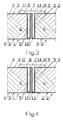
- Fig. 4 The horizontal cross-section of the fire door, in which the passive wing has a non-metallic profile with stop bar and the active wing has a sheet metal stopper and an insulating strip
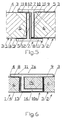
- Fig. 5 The horizontal cross-section of the fire door, in which both wings do not have metallic profiles with stop strips, however Fig. 6 shows the horizontal cross section of the fire door with non-metallic profile, the web has a lightweight core with fireproof enclosure.
- Two-wing fire door consists of a pivotable active wing 1 and a pivotable passive wing 2, which are placed on the hinge, not shown in the drawing.
- Each of the wings 1, 2 has two parallel pads 3 with basically flat face plates 4 made of sheet metal with transversely bent edges 5.
- the pads 3 can also be made of another material, for example made of wood or synthetic veneer.
- the filling 6 of non-combustible Därmedämmstoff most preferably mineral wool.
- the passive wing 2 of the fire door which on Fig. 1, 2 . 3 and 4 is shown, has on its edge vertically arranged profile 7 with T-like cross-section, which is arranged on the side of the active wing 1 .
- the profile 7 has two arms 8, 9 and a web 10 and is made of non-metallic fireproof fabric, most preferably made of refined gypsum with high density.
- the protruding arm 8 of the profile 7 forms a vertical stop bar 11 and its web 10 and the opposite arm 9 are attached to the edge of the wing 2 .
- the web 10 of the profile 7 is inserted in the lateral gap 12 of the wing 2 , wherein the gap is formed between the transverse edges 5 of the linings 3 of the wing 2 .
- the stop bar 11 abuts against the front plate 4 of the active, non-impact wing 1 .
- Fig. 3 shows a door where the stop bar 11 rests against the front plate 4 of the active, non-impact wing 1 .
- the heat-insulating strip 14 is inserted from non-metallic, refractory material, most preferably made of refined gypsum with high density.
- the stop bar 11 is located on the front plate 4 of the active wing 1 , where from the wing a vertical stop 13 protrudes from sheet metal.
- the stop 13 is located on the opposite side of the front plate 4 of the passive wing 2 .
- the heat-insulating strip 14 is inserted in the lateral gap 12 of the active wing 1 .
- each of the wings 1, 2 is provided with a profile 7 , the stop bar 11 rests against the adjacent wing 1 or 2 .
- Fig. 6 shows a similar door, where the active wing 1 has a protruding, vertical stop 13 made of sheet metal, whereas the passive wing 2 has on its edge a vertically arranged profile 7a with a T-like cross-section.
- the protruding arm 8 of this profile forms the vertical stop bar 11 and its web 10 a and the opposite arm 9 are attached to the edge of the wing 2 .
- the web 10a is made of non-metallic, relatively lightweight core 15 and from its angular enclosure 16.
- the core 15 is made of a fire-proof fabric, from cheapest mineral wool, but can also be made of combustible material, for example made of wood.
- Both arms 6, 9 of the profile 7a and the enclosure 16 of the core 15 are made of non-metallic, fire-proof fabric, most preferably made of refined gypsum with high density.
- the profiles 7, 7a and insulating strips 14 are glued to the edges of the wings 1, 2 and / or secured by means not shown countersunk screws. In order to achieve the required BranSearch the fire door, not shown in the drawing edges of each wing 1, 2 from the side of the frame, not shown, with non-metallic, fireproof profiles 7, 7a equipped with stop strips 11 .
Landscapes
- Engineering & Computer Science (AREA)
- Civil Engineering (AREA)
- Structural Engineering (AREA)
- Special Wing (AREA)
Description
- Der Gegenstand der Erfindung ist eine zweiflügelige Brandschutztür, welche für das Schließen von Verkehrsöffnungen in Gebäudewänden sowie für den Schutz der voneinander abgetrennten Räume vor Brandausbreitung dient.
- Relevante zweiflügelige Brandschutztüre sind aus
GB 2 270 495 A FR 2 780 437 A1 NL 1 014 421 C2 - Bekannt ist eine zweiflügelige Brandschutztür mit einem schwenkbaren, aktiven Flügel und einem schwenkbaren, passiven Flügel, welche in einem festen Blendrahmen mittels Scharnieren eingesetzt sind. Jeder Flügel hat am Umfang einen rechteckigen Metallrahmen. Innerhalb des Metallrahmens befindet sich thermoisolierende Ausfüllung aus nicht brennbarem Stoff, am günstigsten aus Mineralwolle oder Gips. Diese Ausfüllung ist mittels paralleler Blechbeläge bedeckt, welche den Flügelrahmen beiderseitig abschließen. Darüber hinaus bekannt ist eine zweiflügelige rahmenlose Brandschutztür. Jeder Flügel dieser Brandschutztür hat zwei parallele, grundsätzlich flache Blechbeläge mit quer abgeknickten Rändern. Der Raum zwischen den Blechbelägen ist mit einem nicht brennbaren Wärmedämmstoff ausgefüllt. In den beiden bekannten Lösungen ragt aus dem senkrechten Flügelrand eine Anschlagleiste aus Blech heraus, welche an den Blechbelag des benachbarten Flügels anliegt. Im Fall eines Brandes auf der brandnahen Seite der Brandschutztür entsteht eine bedeutsam höhere Temperatur als auf der gegenüberliegenden Seite. Infolgedessen die Flügelrahmen aus Metall oder deren Anschlagleisten aus Blech sich verbiegen, wonach die Brandschutztür die geforderte Dichtheit verliert.
- Zweiflügelige Brandschutztür mit schwenkbarem, aktiven Flügel und schwenkbarem, passiven Flügel, von welchen jede zwei parallele, grundsätzlich flache Beläge mit quer geknickten Rändern haben, dagegen der Raum zwischen den Belägen ist mit nicht brennbarem Wärmedämmstoff ausgefüllt und wenigstens ein der Flügel hat an seinem Rand eine senkrechte Anschlagleiste, welche an den Belag des benachbarten Flügels anliegt, ist gemäß der Erfindung dadurch gekennzeichnet, daß die Anschlagleiste einen Arm eines T-ähnlichen Profils bildet, welches aus nicht metallischem brandsicheren Stoff hergestellt ist, wobei der Steg und der gegenüberliegende Arm dieses Profils am Rand des Flügels befestigt sind. Der Steg des Profils ist am günstigsten im Seitenspalt des Flügels eingesetzt, welcher zwischen den quer geknickten Rändern dessen Belägen besteht. In der günstigen Lösung ist das Profil mit dem passiven Flügel verbunden. Die Anschlagleiste dieses Profils liegt am günstigsten an den aktiven, anschlaglosen Flügel an. In einer anderen günstigen Lösung liegt die Anschlagleiste des Profils an den aktiven Flügel an, aus welchem ein senkrechter Anschlag herausragt, der an den passiven Flügel anliegt. In einer noch anderen günstigen Lösung liegt die Anschlagleiste des Profils an den aktiven, anschlaglosen Flügel an, in dessem Seitenspalt eine Dämmleiste aus nicht metallischem, brandsicheren Stoff eingesetzt ist. In einer noch anderen günstigen Lösung liegt die Anschlagleiste des Profils an den aktiven Flügel an, in dessem Seitenspalt eine Dämmleiste aus nicht metallischem, brandsicheren Stoff eingesetzt ist und aus welchem ein senkrechter Anschlag herausragt, der an den passiven Flügel anliegt. Günstig ist auch, wenn jeder der Flügel ein Profil hat, welchen Anschlagleiste an den benachbarten Flügel anliegt. Die zweiflügelige Brandschutztür in ihrer zweiten Ausführung gemäß der Erfindung ist dadurch gekennzeichnet, daß die Anschlagleiste einen Arm eines T-ähnlichen Profils bildet und der gegenüberliegende Arm und der Steg dieses Profils sind am Rand des Flügels befestigt, wobei der Steg aus nicht metallischen, verhältnismäßig leichten Kern mit Umfassung besteht und beide Arme des Profils sowie die Umfassung des Kerns aus nicht metallischem brandsicheren Stoff besteht. In der günstigen Lösung der Erfindung ist der Kern des Stegs aus brandsicherem Stoff hergestellt, obwohl er auch aus brennbarem Stoff sein kann.
- Dank der Anwendung der Anschlagleiste aus nicht metallischem, brandsicheren Stoff, die Brandschutztür gemäß der Erfindung ist durch hohe Beständigkeit gegen hohe Temperaturen und unmittelbare Brandeinwirkung gekennzeichnet.
- Der Gegenstand der Erfindung ist am Ausführungsbeispiel auf der Zeichnung dargestellt, wo
Fig. 1 im waagerechtem Querschnitt zweiflügelige Brandschutztür zeigt, deren passiver Flügel ein nicht metallisches Profil mit Anschlagleiste hat, die an aktiven, anlehnlosen Flügel anliegt,Fig. 2 - den waagerechten Querschnitt der Brandschutztür, in welcher der passive Flügel ein nicht metallisches Profil mit Anschlagleiste und der aktive Flügel einen Blechanschlag hat,Fig. 3 - den waagerechten Querschnitt der Brandschutztür, in welcher der passive Flügel ein nicht metallisches Profil mit Anschlagleiste, dagegen der aktive, anlehnlose Flügel eine Dämmstoffleiste hat,Fig. 4 - den waagerechten Querschnitt der Brandschutztür, in welcher der passive Flügel ein nicht metallisches Profil mit Anschlagleiste hat und der aktive Flügel einen Blechanschlag sowie eine Dämmstoffleiste hat,Fig. 5 - den waagerechten Querschnitt der Brandschutztür, in welcher beide Flügel nicht metallische Profile mit Anschlagleisten haben, dagegenFig. 6 den waagerechten Querschnitt der Brandschutztür mit nicht metallischem Profil zeigt, dessen Steg einen leichten Kern mit brandsicherer Umfassung hat. - Zweiflügelige Brandschutztür gemäß Erfindung besteht aus einem schwenkbaren aktiven Flügel 1 sowie aus einem schwenkbaren passiven Flügel 2, welche auf den auf der Zeichnung nicht gezeigten Scharnieren aufgesetzt sind. Jeder der Flügel 1, 2 hat zwei parallele Beläge 3 mit grundsätzlich flachen Stirnplatten 4 aus Blech mit quer geknickten Rändern 5. Die Beläge 3 können auch aus einem anderen Stoff hergestellt werden, zum Beispiel aus Holz- oder Synthetikfurnier. Im Raum zwischen den Belägen 3 befindet sich die Ausfüllung 6 aus nicht brennbarem Därmedämmstoff, am günstigsten aus Mineralwolle. Der passive Flügel 2 der Brandschutztür, welcher auf
Fig. 1, 2 ,3 und 4 dargestellt ist, hat auf seinem Rand senkrecht angeordnetes Profil 7 mit T-ähnlichen Querschnitt, welches auf der Seite des aktiven Flügels 1 angeordnet ist. Das Profil 7 hat zwei Arme 8, 9 sowie einen Steg 10 und ist aus nicht metallischem brandsicheren Stoff hergestellt, am günstigsten aus veredeltem Gips mit hoher Dichte. Der herausragende Arm 8 des Profils 7 bildet eine senkrechte Anschlagleiste 11 sowie dessen Steg 10 und der gegen überliegende Arm 9 sind am Rand des Flügels 2 befestigt. Der Steg 10 des Profils 7 ist im seitlichen Spalt 12 des Flügels 2 eingesetzt, wobei der Spalt ist zwischen den querliegenden Rändern 5 der Beläge 3 des Flügels 2 gebildet. In der Lösung gemäßFig. 1 die Anschlagleiste 11 liegt an die Stirnplatte 4 des aktiven, anschlaglosen Flügels 1 an. Die Anschlagleiste 11 gemäßFig. 2 liegt an die Stirnplatte 4 des aktiven Flügels 1 an, von dem ein senkrechter Anschlag 13 aus Blech herausragt. Der Anschlag 13 liegt von der gegenüberliegenden Seite an die Stirnplatte 4 des passiven Flügels 2 an.Fig. 3 zeigt eine Tür, wo die Anschlagleiste 11 an die Stirnplatte 4 des aktiven, anschlaglosen Flügels 1 anliegt. Im seitlichen Spalt 12 des Flügels ist die Wärmedämmleiste 14 aus nicht metallischem, feuerfesten Stoff eingesetzt, am günstigsten aus veredeltem Gips mit hoher Dichte. In der Lösung gemäßFig. 4 die Anschlagleiste 11 liegt die Stirnplatte 4 des aktiven Flügels 1 an, wo aus dem Flügel ein senkrechter Anschlag 13 aus Blech herausragt. Der Anschlag 13 liegt auf der gegenüberliegenden Seite die Stirnplatte 4 des passiven Flügels 2 an. Darüber hinaus im seitlichem Spalt 12 des aktiven Flügels 1 ist die Wärmedämmleiste 14 eingesetzt. GemäßFig. 5 jeder der Flügel 1, 2 ist mit einem Profil 7 ausgestattet, dessen Anschlagleiste 11 an den benachbarten Flügel 1 oder 2 anliegt. FolglichFig. 6 zeigt eine ähnliche Tür, wo der aktive Flügel 1 einen herausragenden, senkrechten Anschlag 13 aus Blech hat, dagegen der passive Flügel 2 hat auf seinem Rand ein senkrecht angeordnetes Profil 7a mit einem T-ähnlichen Querschnitt. Der herausragende Arm 8 dieses Profils bildet die senkrechte Anschlagleiste 11 und dessen Steg 10a sowie der gegenüberliegende Arm 9 sind am Rand des Flügels 2 befestigt. Der Steg 10a besteht aus nicht metallischem, verhältnismäßig leichtem Kern 15 sowie aus dessen winkeliger Umfassung 16. Der Kern 15 ist aus einem brandsicheren Stoff hergestellt, ab günstigsten aus Mineralwolle, jedoch kann auch aus brennbarem Stoff sein, zum Beispiel aus Holz. Beide Arme 6, 9 des Profils 7a und die Umfassung 16 des Kerns 15 sind aus nicht metallischem, brandsicheren Stoff hergestellt, am günstigsten aus veredeltem Gips mit hoher Dichte. Die Profile 7, 7a sowie Dämmstoffleisten 14 sind an den Rändern der Flügel 1, 2 angeklebt und/oder mittels nicht gezeigter Senkschrauben befestigt. Um die geforderte Bransicherheit der Brandschutztür zu erreichen, sind die auf der Zeichnung nicht gezeigten Ränder jedes Flügels 1, 2 von der Seite des nicht gezeigten Blendrahmens auch mit nicht metallischen, brandsicheren Profilen 7, 7a mit Anschlagleisten 11 ausgestattet. -
- 1 -
- Flügel
- 2 -
- Flügel
- 3 -
- Belag
- 4 -
- Stirnplatte
- 5 -
- Rand
- 6 -
- Ausfüllung
- 7 -
- Profil
- 7a -
- Profil
- 8 -
- Arm
- 9 -
- Arm
- 10 -
- Steg
- 10a -
- Steg
- 11 -
- Anschlagleiste
- 12 -
- Seitenspalt
- 13 -
- Anschlag
- 14 -
- Wärmedämmleiste
- 15 -
- Kern
- 16 -
- Umfassung
Claims (11)
- Zweiflügelige Brandschutztür mit schwenkbarem aktiven Flügel und schwenkbarem passiven Flügel, aus welchen jede zwei parallele, grundsätzlich flache Beläge mit quer geknickten Rändern haben, dagegen der Raum zwischen den Belägen ist mit nicht brennbarem Wärmedämmstoff ausgefüllt und wenigstens ein der Flügel hat an seinem Rand eine senkrechte Anschlagleiste, welche an den Belag des benachbarten Flügels anliegt, gekennzeichnet dadurch, daß die Anschlagleiste (11) der Arm (8) des Profils (7) mit T-ähnlichem Querschnitt bildet, das aus nicht metallischem, feuerfesten Stoff hergestellt ist, wobei der Steg (10) und der gegenüberliegende Arm (9) dieses Profils am Rand des Flügels (1, 2) befestigt ist.
- Zweiflügelige Brandschutztür gemäß Anspruch 1, gekennzeichnet dadurch, daß der Steg (10) des Profils (7) im Seitenspalt (12) des Flügels (1, 2) zwischen den quer geknickten Rändern (5) dessen Beläge (3) eingesetzt ist.
- Zweiflügelige Brandschutztür gemäß Anspruch 1 oder 2, gekennzeichnet dadurch, daß das Profil (7) mit dem passiven Flügel (2) verbunden ist.
- Zweiflügelige Brandschutztür gemäß Anspruch 3, gekennzeichnet dadurch, daß die Anschlagleiste (11) des Profils (7) an den aktiven, anschlaglosen Flügel (1) anliegt.
- Zweiflügelige Brandschutztür gemäß Anspruch 3, gekennzeichnet dadurch, daß die Anschlagleiste (11) des Profils (7) an den aktiven Flügel (1) anliegt, aus welchem ein senkrechter Anschlag (13) hinausragt, welcher an den passiven Flügel (2) anliegt.
- Zweiflügelige Brandschutztür gemäß Anspruch 3, gekennzeichnet dadurch, daß die Anschlagleiste (11) des Profils (7) an den aktiven, anschlaglosen Flügel (1) anliegt, in dessen Seitenspalt (12) die Wärmedämmleiste (14) aus nicht metallischem feuerfesten Stoff eingesetzt ist.
- Zweiflügelige Brandschutztür gemäß Anspruch 3, gekennzeichnet dadurch, daß die Anschlagleiste (11) des Profils (7) an den aktiven Flügel (1) anliegt, in dessen Seitenspalt (12) die Wärmedämmsleiste (14) aus nicht metallischem feuerfesten Stoff eingesetzt ist und aus welchem ein an den passiven Flügel (2) anliegendes senkrechter Anschlag (13) hinausragt.
- Zweiflügelige Brandschutztür gemäß Anspruch 1 oder 2, gekennzeichnet dadurch, daß jeder der Flügel (1, 2) ein Profil (7) hat, dessen Anschlagleiste (11) an den benachbarten Flügel (1 oder 2) anliegt.
- Zweiflügelige Brandschutztür mit schwenkbarem aktiven Flügel und schwenkbarem passiven Flügel, aus welchen jeder zwei parallele, grunsätzlich flache Beläge mit quer geknickten Rändern hat, dagegen der Raum zwischen den Belägen mit nicht brennbarem Wärmedämmstoff ausgefüllt ist und wenigstens ein der Flügel auf seinem Rand eine senkrechte Anschlagleiste hat, welche an den Belag des benachbarten Flügels anliegt, gekennzeichnet dadurch, daß die Anschlagleiste (11) ein der Arme (8) des Profils (7a) mit T-ähnlichem Querschnitt ist und der gegenüberliegende Arm (9) sowie der Steg (10a) dieses Profils am Rand des Flügels (1, 2) befestigt sind, wobei der Steg (10a) aus einem nicht metallischen, verhältnismäßig leichten Kern (15) mit der Umfassung (16) besteht, dagegen beide Arme (8, 9) des Profils (7a) sowie die Umfassung (16) des Kerns (15) aus nicht metallischem feuerfesten Stoff hergestellt sind.
- Zweiflügelige Brandschutztür gemäß Anspruch 9, gekennzeichnet dadurch, daß der Kern (15) des Stegs (10a) aus feuerfestem Stoff hergestellt ist.
- Zweiflügelige Brandschutztür gemäß Anspruch 9, gekennzeichnet dadurch, daß der Kern (15) des Stegs (10a) aus brennbarem Stoff hergestellt ist.
Priority Applications (1)
| Application Number | Priority Date | Filing Date | Title |
|---|---|---|---|
| PL07460027T PL2000625T3 (pl) | 2007-06-04 | 2007-10-15 | Dwuskrzydłowe drzwi przeciwpożarowe |
Applications Claiming Priority (1)
| Application Number | Priority Date | Filing Date | Title |
|---|---|---|---|
| PL382573A PL210827B1 (pl) | 2007-06-04 | 2007-06-04 | Drzwi przeciwpożarowe dwuskrzydłowe |
Publications (3)
| Publication Number | Publication Date |
|---|---|
| EP2000625A2 EP2000625A2 (de) | 2008-12-10 |
| EP2000625A3 EP2000625A3 (de) | 2011-04-27 |
| EP2000625B1 true EP2000625B1 (de) | 2012-04-18 |
Family
ID=39047762
Family Applications (1)
| Application Number | Title | Priority Date | Filing Date |
|---|---|---|---|
| EP07460027A Not-in-force EP2000625B1 (de) | 2007-06-04 | 2007-10-15 | Zweifluegelige Brandschutztuer |
Country Status (5)
| Country | Link |
|---|---|
| EP (1) | EP2000625B1 (de) |
| AT (1) | ATE554259T1 (de) |
| DK (1) | DK2000625T3 (de) |
| ES (1) | ES2386265T3 (de) |
| PL (2) | PL210827B1 (de) |
Families Citing this family (1)
| Publication number | Priority date | Publication date | Assignee | Title |
|---|---|---|---|---|
| DE102014108205A1 (de) * | 2014-06-11 | 2015-12-17 | IsoBouw Dämmtechnik GmbH | Brandschutzbausatz mit einem Sturzschutz für einen in eine Maueröffnung eingesetzten Rahmen, insbesondere Fenster- oder Türrahmen |
Family Cites Families (3)
| Publication number | Priority date | Publication date | Assignee | Title |
|---|---|---|---|---|
| GB2270495A (en) * | 1992-09-08 | 1994-03-16 | Timber Technology Limited | Doors |
| FR2780437B1 (fr) * | 1998-06-30 | 2000-09-29 | Malerba Dugelet | Joint anti-pince-doigts, garniture en faisant application et panneau la mettant en oeuvre |
| NL1014421C2 (nl) * | 1999-03-02 | 2000-09-14 | Alprokon Promotie Ontwikk Bv | Dubbeldeur-deurnaaldsamenstel. |
-
2007
- 2007-06-04 PL PL382573A patent/PL210827B1/pl unknown
- 2007-10-15 DK DK07460027.1T patent/DK2000625T3/da active
- 2007-10-15 PL PL07460027T patent/PL2000625T3/pl unknown
- 2007-10-15 AT AT07460027T patent/ATE554259T1/de active
- 2007-10-15 EP EP07460027A patent/EP2000625B1/de not_active Not-in-force
- 2007-10-15 ES ES07460027T patent/ES2386265T3/es active Active
Also Published As
| Publication number | Publication date |
|---|---|
| PL2000625T3 (pl) | 2012-09-28 |
| PL210827B1 (pl) | 2012-03-30 |
| ES2386265T3 (es) | 2012-08-14 |
| PL382573A1 (pl) | 2008-12-08 |
| DK2000625T3 (da) | 2012-07-23 |
| EP2000625A2 (de) | 2008-12-10 |
| EP2000625A3 (de) | 2011-04-27 |
| ATE554259T1 (de) | 2012-05-15 |
Similar Documents
| Publication | Publication Date | Title |
|---|---|---|
| EP1115953B1 (de) | Brandschutzwand | |
| EP3080375B2 (de) | Vorrichtung für das verschliessen einer gebäudeöffnung | |
| EP0549769B1 (de) | Feuerwiderstandsfähige glastrennwand | |
| EP0590236A2 (de) | Feuerhemmendes Bauteil | |
| WO2001007745A9 (de) | Brandschutztür mit einem diese umfassenden türstock | |
| EP2581538B1 (de) | Profillose brandschutzverglasung mit anschlagtür | |
| DE2439034B2 (de) | Gegen hitzeeinwirkung widerstandsfaehige verglasung | |
| DE19635409B4 (de) | Glastür für Brandschutzzwecke sowie Verfahren zum Herstellen einer Glastür für Brandschutzzwecke | |
| EP2427621B1 (de) | Tür, insbesondere feuer- und brandschutztür mit türfalz | |
| EP2000624B1 (de) | Feuerfeste Trennwand | |
| DE9321360U1 (de) | Feuerhemmendes Bauteil | |
| EP2657012B1 (de) | Zargenfreie Brandschutz-Ganzglastür | |
| EP2594724B1 (de) | Einbruchhemmende Tür oder einbruchhemmendes Fenster | |
| EP2000625A2 (de) | Zweifluegelige Brandschutztuer | |
| AT504806B1 (de) | Zarge für feuerschutztüren, welche aus mehreren parallel verlaufenden teilprofilen gebildet wird | |
| EP3478919B1 (de) | Brandschutzglastür mit einem schlosskasten | |
| EP1209314B1 (de) | T90-Holzrahmen-Glastür | |
| DE2406562A1 (de) | Feuerhemmende tuer | |
| DE19957026C2 (de) | Brandsichere Verglasung mit Glashalteleistenbefestigung | |
| DE2942559A1 (de) | Feuerbestaendige tuerkonstruktion | |
| DE212005000046U1 (de) | Brandschutz-Bauelement für Tür- oder Fensterflügel | |
| DE10115970B4 (de) | Zarge, insbesondere für eine Brandschutztür | |
| AT383862B (de) | Rahmen fuer fenster, tueren od.dgl. | |
| EP3604726B1 (de) | Türumrahmung bzw. tür | |
| DE4345204A1 (de) | Rahmenprofil, insbesondere Aluminiumrahmenprofil, für Sicherheitsfenster, Türen und/oder Wandelemente |
Legal Events
| Date | Code | Title | Description |
|---|---|---|---|
| PUAI | Public reference made under article 153(3) epc to a published international application that has entered the european phase |
Free format text: ORIGINAL CODE: 0009012 |
|
| 17P | Request for examination filed |
Effective date: 20071025 |
|
| AK | Designated contracting states |
Kind code of ref document: A2 Designated state(s): AT BE BG CH CY CZ DE DK EE ES FI FR GB GR HU IE IS IT LI LT LU LV MC MT NL PL PT RO SE SI SK TR |
|
| AX | Request for extension of the european patent |
Extension state: AL BA HR MK RS |
|
| PUAL | Search report despatched |
Free format text: ORIGINAL CODE: 0009013 |
|
| AK | Designated contracting states |
Kind code of ref document: A3 Designated state(s): AT BE BG CH CY CZ DE DK EE ES FI FR GB GR HU IE IS IT LI LT LU LV MC MT NL PL PT RO SE SI SK TR |
|
| AX | Request for extension of the european patent |
Extension state: AL BA HR MK RS |
|
| RAP1 | Party data changed (applicant data changed or rights of an application transferred) |
Owner name: MALKOWSKI, MARCIN Owner name: MALKOWSKA, MAGDALENA Owner name: MALKOWSKA, RENATA |
|
| RIN1 | Information on inventor provided before grant (corrected) |
Inventor name: MALKOWSKI, MARCIN Inventor name: MALKOWSKA, MAGDALENA Inventor name: MALKOWSKA, RENATA |
|
| GRAP | Despatch of communication of intention to grant a patent |
Free format text: ORIGINAL CODE: EPIDOSNIGR1 |
|
| AKX | Designation fees paid |
Designated state(s): AT BE BG CH CY CZ DE DK EE ES FI FR GB GR HU IE IS IT LI LT LU LV MC MT NL PL PT RO SE SI SK TR |
|
| GRAS | Grant fee paid |
Free format text: ORIGINAL CODE: EPIDOSNIGR3 |
|
| GRAA | (expected) grant |
Free format text: ORIGINAL CODE: 0009210 |
|
| AK | Designated contracting states |
Kind code of ref document: B1 Designated state(s): AT BE BG CH CY CZ DE DK EE ES FI FR GB GR HU IE IS IT LI LT LU LV MC MT NL PL PT RO SE SI SK TR |
|
| REG | Reference to a national code |
Ref country code: GB Ref legal event code: FG4D |
|
| REG | Reference to a national code |
Ref country code: CH Ref legal event code: EP |
|
| REG | Reference to a national code |
Ref country code: IE Ref legal event code: FG4D Free format text: LANGUAGE OF EP DOCUMENT: GERMAN |
|
| REG | Reference to a national code |
Ref country code: AT Ref legal event code: REF Ref document number: 554259 Country of ref document: AT Kind code of ref document: T Effective date: 20120515 |
|
| REG | Reference to a national code |
Ref country code: DE Ref legal event code: R096 Ref document number: 502007009724 Country of ref document: DE Effective date: 20120614 |
|
| REG | Reference to a national code |
Ref country code: DK Ref legal event code: T3 |
|
| REG | Reference to a national code |
Ref country code: ES Ref legal event code: FG2A Ref document number: 2386265 Country of ref document: ES Kind code of ref document: T3 Effective date: 20120814 |
|
| REG | Reference to a national code |
Ref country code: NL Ref legal event code: T3 |
|
| LTIE | Lt: invalidation of european patent or patent extension |
Effective date: 20120418 |
|
| REG | Reference to a national code |
Ref country code: PL Ref legal event code: T3 |
|
| PG25 | Lapsed in a contracting state [announced via postgrant information from national office to epo] |
Ref country code: IS Free format text: LAPSE BECAUSE OF FAILURE TO SUBMIT A TRANSLATION OF THE DESCRIPTION OR TO PAY THE FEE WITHIN THE PRESCRIBED TIME-LIMIT Effective date: 20120818 Ref country code: CY Free format text: LAPSE BECAUSE OF FAILURE TO SUBMIT A TRANSLATION OF THE DESCRIPTION OR TO PAY THE FEE WITHIN THE PRESCRIBED TIME-LIMIT Effective date: 20120418 Ref country code: SE Free format text: LAPSE BECAUSE OF FAILURE TO SUBMIT A TRANSLATION OF THE DESCRIPTION OR TO PAY THE FEE WITHIN THE PRESCRIBED TIME-LIMIT Effective date: 20120418 Ref country code: LT Free format text: LAPSE BECAUSE OF FAILURE TO SUBMIT A TRANSLATION OF THE DESCRIPTION OR TO PAY THE FEE WITHIN THE PRESCRIBED TIME-LIMIT Effective date: 20120418 Ref country code: FI Free format text: LAPSE BECAUSE OF FAILURE TO SUBMIT A TRANSLATION OF THE DESCRIPTION OR TO PAY THE FEE WITHIN THE PRESCRIBED TIME-LIMIT Effective date: 20120418 |
|
| PG25 | Lapsed in a contracting state [announced via postgrant information from national office to epo] |
Ref country code: GR Free format text: LAPSE BECAUSE OF FAILURE TO SUBMIT A TRANSLATION OF THE DESCRIPTION OR TO PAY THE FEE WITHIN THE PRESCRIBED TIME-LIMIT Effective date: 20120719 Ref country code: SI Free format text: LAPSE BECAUSE OF FAILURE TO SUBMIT A TRANSLATION OF THE DESCRIPTION OR TO PAY THE FEE WITHIN THE PRESCRIBED TIME-LIMIT Effective date: 20120418 Ref country code: LV Free format text: LAPSE BECAUSE OF FAILURE TO SUBMIT A TRANSLATION OF THE DESCRIPTION OR TO PAY THE FEE WITHIN THE PRESCRIBED TIME-LIMIT Effective date: 20120418 Ref country code: PT Free format text: LAPSE BECAUSE OF FAILURE TO SUBMIT A TRANSLATION OF THE DESCRIPTION OR TO PAY THE FEE WITHIN THE PRESCRIBED TIME-LIMIT Effective date: 20120820 |
|
| PG25 | Lapsed in a contracting state [announced via postgrant information from national office to epo] |
Ref country code: CZ Free format text: LAPSE BECAUSE OF FAILURE TO SUBMIT A TRANSLATION OF THE DESCRIPTION OR TO PAY THE FEE WITHIN THE PRESCRIBED TIME-LIMIT Effective date: 20120418 Ref country code: RO Free format text: LAPSE BECAUSE OF FAILURE TO SUBMIT A TRANSLATION OF THE DESCRIPTION OR TO PAY THE FEE WITHIN THE PRESCRIBED TIME-LIMIT Effective date: 20120418 Ref country code: EE Free format text: LAPSE BECAUSE OF FAILURE TO SUBMIT A TRANSLATION OF THE DESCRIPTION OR TO PAY THE FEE WITHIN THE PRESCRIBED TIME-LIMIT Effective date: 20120418 Ref country code: SK Free format text: LAPSE BECAUSE OF FAILURE TO SUBMIT A TRANSLATION OF THE DESCRIPTION OR TO PAY THE FEE WITHIN THE PRESCRIBED TIME-LIMIT Effective date: 20120418 |
|
| PGFP | Annual fee paid to national office [announced via postgrant information from national office to epo] |
Ref country code: FR Payment date: 20121017 Year of fee payment: 6 |
|
| PLBE | No opposition filed within time limit |
Free format text: ORIGINAL CODE: 0009261 |
|
| STAA | Information on the status of an ep patent application or granted ep patent |
Free format text: STATUS: NO OPPOSITION FILED WITHIN TIME LIMIT |
|
| PGFP | Annual fee paid to national office [announced via postgrant information from national office to epo] |
Ref country code: GB Payment date: 20121005 Year of fee payment: 6 |
|
| 26N | No opposition filed |
Effective date: 20130121 |
|
| REG | Reference to a national code |
Ref country code: DE Ref legal event code: R097 Ref document number: 502007009724 Country of ref document: DE Effective date: 20130121 |
|
| PG25 | Lapsed in a contracting state [announced via postgrant information from national office to epo] |
Ref country code: MC Free format text: LAPSE BECAUSE OF NON-PAYMENT OF DUE FEES Effective date: 20121031 |
|
| REG | Reference to a national code |
Ref country code: CH Ref legal event code: PL |
|
| REG | Reference to a national code |
Ref country code: IE Ref legal event code: MM4A |
|
| PG25 | Lapsed in a contracting state [announced via postgrant information from national office to epo] |
Ref country code: LI Free format text: LAPSE BECAUSE OF NON-PAYMENT OF DUE FEES Effective date: 20121031 Ref country code: CH Free format text: LAPSE BECAUSE OF NON-PAYMENT OF DUE FEES Effective date: 20121031 Ref country code: BG Free format text: LAPSE BECAUSE OF FAILURE TO SUBMIT A TRANSLATION OF THE DESCRIPTION OR TO PAY THE FEE WITHIN THE PRESCRIBED TIME-LIMIT Effective date: 20120718 Ref country code: IE Free format text: LAPSE BECAUSE OF NON-PAYMENT OF DUE FEES Effective date: 20121015 |
|
| PG25 | Lapsed in a contracting state [announced via postgrant information from national office to epo] |
Ref country code: MT Free format text: LAPSE BECAUSE OF FAILURE TO SUBMIT A TRANSLATION OF THE DESCRIPTION OR TO PAY THE FEE WITHIN THE PRESCRIBED TIME-LIMIT Effective date: 20120418 |
|
| PG25 | Lapsed in a contracting state [announced via postgrant information from national office to epo] |
Ref country code: TR Free format text: LAPSE BECAUSE OF FAILURE TO SUBMIT A TRANSLATION OF THE DESCRIPTION OR TO PAY THE FEE WITHIN THE PRESCRIBED TIME-LIMIT Effective date: 20120418 |
|
| PG25 | Lapsed in a contracting state [announced via postgrant information from national office to epo] |
Ref country code: LU Free format text: LAPSE BECAUSE OF NON-PAYMENT OF DUE FEES Effective date: 20121015 |
|
| GBPC | Gb: european patent ceased through non-payment of renewal fee |
Effective date: 20131015 |
|
| PG25 | Lapsed in a contracting state [announced via postgrant information from national office to epo] |
Ref country code: GB Free format text: LAPSE BECAUSE OF NON-PAYMENT OF DUE FEES Effective date: 20131015 Ref country code: HU Free format text: LAPSE BECAUSE OF FAILURE TO SUBMIT A TRANSLATION OF THE DESCRIPTION OR TO PAY THE FEE WITHIN THE PRESCRIBED TIME-LIMIT Effective date: 20071015 |
|
| REG | Reference to a national code |
Ref country code: FR Ref legal event code: ST Effective date: 20140630 |
|
| PG25 | Lapsed in a contracting state [announced via postgrant information from national office to epo] |
Ref country code: FR Free format text: LAPSE BECAUSE OF NON-PAYMENT OF DUE FEES Effective date: 20131031 |
|
| PGFP | Annual fee paid to national office [announced via postgrant information from national office to epo] |
Ref country code: DK Payment date: 20140905 Year of fee payment: 8 Ref country code: NL Payment date: 20140908 Year of fee payment: 8 |
|
| PGFP | Annual fee paid to national office [announced via postgrant information from national office to epo] |
Ref country code: ES Payment date: 20140908 Year of fee payment: 8 |
|
| PGFP | Annual fee paid to national office [announced via postgrant information from national office to epo] |
Ref country code: DE Payment date: 20140908 Year of fee payment: 8 |
|
| PGFP | Annual fee paid to national office [announced via postgrant information from national office to epo] |
Ref country code: AT Payment date: 20141021 Year of fee payment: 8 |
|
| PGFP | Annual fee paid to national office [announced via postgrant information from national office to epo] |
Ref country code: BE Payment date: 20141020 Year of fee payment: 8 |
|
| PGFP | Annual fee paid to national office [announced via postgrant information from national office to epo] |
Ref country code: PL Payment date: 20140905 Year of fee payment: 8 |
|
| PGFP | Annual fee paid to national office [announced via postgrant information from national office to epo] |
Ref country code: IT Payment date: 20151005 Year of fee payment: 9 |
|
| REG | Reference to a national code |
Ref country code: DE Ref legal event code: R119 Ref document number: 502007009724 Country of ref document: DE |
|
| REG | Reference to a national code |
Ref country code: DK Ref legal event code: EBP Effective date: 20151031 |
|
| REG | Reference to a national code |
Ref country code: AT Ref legal event code: MM01 Ref document number: 554259 Country of ref document: AT Kind code of ref document: T Effective date: 20151015 |
|
| REG | Reference to a national code |
Ref country code: NL Ref legal event code: MM Effective date: 20151101 |
|
| PG25 | Lapsed in a contracting state [announced via postgrant information from national office to epo] |
Ref country code: DE Free format text: LAPSE BECAUSE OF NON-PAYMENT OF DUE FEES Effective date: 20160503 |
|
| PG25 | Lapsed in a contracting state [announced via postgrant information from national office to epo] |
Ref country code: NL Free format text: LAPSE BECAUSE OF NON-PAYMENT OF DUE FEES Effective date: 20151101 Ref country code: AT Free format text: LAPSE BECAUSE OF NON-PAYMENT OF DUE FEES Effective date: 20151015 |
|
| PG25 | Lapsed in a contracting state [announced via postgrant information from national office to epo] |
Ref country code: DK Free format text: LAPSE BECAUSE OF NON-PAYMENT OF DUE FEES Effective date: 20151031 |
|
| PG25 | Lapsed in a contracting state [announced via postgrant information from national office to epo] |
Ref country code: PL Free format text: LAPSE BECAUSE OF NON-PAYMENT OF DUE FEES Effective date: 20151015 |
|
| PG25 | Lapsed in a contracting state [announced via postgrant information from national office to epo] |
Ref country code: ES Free format text: LAPSE BECAUSE OF NON-PAYMENT OF DUE FEES Effective date: 20151016 |
|
| PG25 | Lapsed in a contracting state [announced via postgrant information from national office to epo] |
Ref country code: BE Free format text: LAPSE BECAUSE OF NON-PAYMENT OF DUE FEES Effective date: 20151031 |
|
| PG25 | Lapsed in a contracting state [announced via postgrant information from national office to epo] |
Ref country code: IT Free format text: LAPSE BECAUSE OF NON-PAYMENT OF DUE FEES Effective date: 20161015 |
|
| REG | Reference to a national code |
Ref country code: ES Ref legal event code: FD2A Effective date: 20180710 |