EP1994932A1 - Use of N-desmethylclozapine to treat human psychosis - Google Patents
Use of N-desmethylclozapine to treat human psychosis Download PDFInfo
- Publication number
- EP1994932A1 EP1994932A1 EP08016004A EP08016004A EP1994932A1 EP 1994932 A1 EP1994932 A1 EP 1994932A1 EP 08016004 A EP08016004 A EP 08016004A EP 08016004 A EP08016004 A EP 08016004A EP 1994932 A1 EP1994932 A1 EP 1994932A1
- Authority
- EP
- European Patent Office
- Prior art keywords
- desmethylclozapine
- subject
- additional therapeutic
- therapeutic agent
- medicament
- Prior art date
- Legal status (The legal status is an assumption and is not a legal conclusion. Google has not performed a legal analysis and makes no representation as to the accuracy of the status listed.)
- Withdrawn
Links
- JNNOSTQEZICQQP-UHFFFAOYSA-N N-desmethylclozapine Chemical compound N=1C2=CC(Cl)=CC=C2NC2=CC=CC=C2C=1N1CCNCC1 JNNOSTQEZICQQP-UHFFFAOYSA-N 0.000 title claims abstract description 156
- 208000028017 Psychotic disease Diseases 0.000 title claims abstract description 21
- 239000003814 drug Substances 0.000 claims description 145
- 208000024891 symptom Diseases 0.000 claims description 34
- 102000014415 Muscarinic acetylcholine receptor Human genes 0.000 claims description 25
- 108050003473 Muscarinic acetylcholine receptor Proteins 0.000 claims description 25
- 238000002360 preparation method Methods 0.000 claims description 12
- 102000017927 CHRM1 Human genes 0.000 claims description 9
- 101150073075 Chrm1 gene Proteins 0.000 claims description 9
- 208000028698 Cognitive impairment Diseases 0.000 claims description 6
- 208000010877 cognitive disease Diseases 0.000 claims description 6
- 201000000980 schizophrenia Diseases 0.000 claims description 4
- 208000007415 Anhedonia Diseases 0.000 claims description 2
- 206010002942 Apathy Diseases 0.000 claims description 2
- 206010012239 Delusion Diseases 0.000 claims description 2
- 208000004547 Hallucinations Diseases 0.000 claims description 2
- 206010041243 Social avoidant behaviour Diseases 0.000 claims description 2
- 231100000868 delusion Toxicity 0.000 claims description 2
- 238000000034 method Methods 0.000 abstract description 82
- 229940124597 therapeutic agent Drugs 0.000 description 77
- 150000001875 compounds Chemical class 0.000 description 37
- 239000000164 antipsychotic agent Substances 0.000 description 30
- QZUDBNBUXVUHMW-UHFFFAOYSA-N clozapine Chemical compound C1CN(C)CCN1C1=NC2=CC(Cl)=CC=C2NC2=CC=CC=C12 QZUDBNBUXVUHMW-UHFFFAOYSA-N 0.000 description 29
- 239000003136 dopamine receptor stimulating agent Substances 0.000 description 26
- 239000002767 noradrenalin uptake inhibitor Substances 0.000 description 26
- 229940127221 norepinephrine reuptake inhibitor Drugs 0.000 description 26
- 229940124834 selective serotonin reuptake inhibitor Drugs 0.000 description 26
- 239000012896 selective serotonin reuptake inhibitor Substances 0.000 description 26
- 239000002399 serotonin 2A agonist Substances 0.000 description 26
- 230000000694 effects Effects 0.000 description 25
- 229960004170 clozapine Drugs 0.000 description 22
- 229940052760 dopamine agonists Drugs 0.000 description 22
- 206010012289 Dementia Diseases 0.000 description 19
- 208000010412 Glaucoma Diseases 0.000 description 18
- 208000019022 Mood disease Diseases 0.000 description 17
- 239000000203 mixture Substances 0.000 description 17
- 239000000556 agonist Substances 0.000 description 16
- 208000017194 Affective disease Diseases 0.000 description 15
- 102000005962 receptors Human genes 0.000 description 15
- 108020003175 receptors Proteins 0.000 description 15
- 238000003556 assay Methods 0.000 description 14
- 239000003795 chemical substances by application Substances 0.000 description 14
- 208000004296 neuralgia Diseases 0.000 description 14
- 208000021722 neuropathic pain Diseases 0.000 description 14
- KVWDHTXUZHCGIO-UHFFFAOYSA-N olanzapine Chemical compound C1CN(C)CCN1C1=NC2=CC=CC=C2NC2=C1C=C(C)S2 KVWDHTXUZHCGIO-UHFFFAOYSA-N 0.000 description 13
- LNEPOXFFQSENCJ-UHFFFAOYSA-N haloperidol Chemical compound C1CC(O)(C=2C=CC(Cl)=CC=2)CCN1CCCC(=O)C1=CC=C(F)C=C1 LNEPOXFFQSENCJ-UHFFFAOYSA-N 0.000 description 12
- 208000037265 diseases, disorders, signs and symptoms Diseases 0.000 description 11
- 230000004044 response Effects 0.000 description 11
- 229940079593 drug Drugs 0.000 description 10
- 150000003839 salts Chemical class 0.000 description 10
- RGCVKNLCSQQDEP-UHFFFAOYSA-N Perphenazine Chemical compound C1CN(CCO)CCN1CCCN1C2=CC(Cl)=CC=C2SC2=CC=CC=C21 RGCVKNLCSQQDEP-UHFFFAOYSA-N 0.000 description 9
- KLBQZWRITKRQQV-UHFFFAOYSA-N Thioridazine Chemical compound C12=CC(SC)=CC=C2SC2=CC=CC=C2N1CCC1CCCCN1C KLBQZWRITKRQQV-UHFFFAOYSA-N 0.000 description 9
- 229960001076 chlorpromazine Drugs 0.000 description 9
- ZPEIMTDSQAKGNT-UHFFFAOYSA-N chlorpromazine Chemical compound C1=C(Cl)C=C2N(CCCN(C)C)C3=CC=CC=C3SC2=C1 ZPEIMTDSQAKGNT-UHFFFAOYSA-N 0.000 description 9
- XJGVXQDUIWGIRW-UHFFFAOYSA-N loxapine Chemical compound C1CN(C)CCN1C1=NC2=CC=CC=C2OC2=CC=C(Cl)C=C12 XJGVXQDUIWGIRW-UHFFFAOYSA-N 0.000 description 9
- SLVMESMUVMCQIY-UHFFFAOYSA-N mesoridazine Chemical compound CN1CCCCC1CCN1C2=CC(S(C)=O)=CC=C2SC2=CC=CC=C21 SLVMESMUVMCQIY-UHFFFAOYSA-N 0.000 description 9
- YVUQSNJEYSNKRX-UHFFFAOYSA-N pimozide Chemical compound C1=CC(F)=CC=C1C(C=1C=CC(F)=CC=1)CCCN1CCC(N2C(NC3=CC=CC=C32)=O)CC1 YVUQSNJEYSNKRX-UHFFFAOYSA-N 0.000 description 9
- ZTHJULTYCAQOIJ-WXXKFALUSA-N quetiapine fumarate Chemical compound [H+].[H+].[O-]C(=O)\C=C\C([O-])=O.C1CN(CCOCCO)CCN1C1=NC2=CC=CC=C2SC2=CC=CC=C12.C1CN(CCOCCO)CCN1C1=NC2=CC=CC=C2SC2=CC=CC=C12 ZTHJULTYCAQOIJ-WXXKFALUSA-N 0.000 description 9
- 229940035004 seroquel Drugs 0.000 description 9
- MVWVFYHBGMAFLY-UHFFFAOYSA-N ziprasidone Chemical compound C1=CC=C2C(N3CCN(CC3)CCC3=CC=4CC(=O)NC=4C=C3Cl)=NSC2=C1 MVWVFYHBGMAFLY-UHFFFAOYSA-N 0.000 description 9
- 230000003542 behavioural effect Effects 0.000 description 8
- AIXAANGOTKPUOY-UHFFFAOYSA-N carbachol Chemical compound [Cl-].C[N+](C)(C)CCOC(N)=O AIXAANGOTKPUOY-UHFFFAOYSA-N 0.000 description 8
- 229960004484 carbachol Drugs 0.000 description 8
- 238000001727 in vivo Methods 0.000 description 8
- 239000000472 muscarinic agonist Substances 0.000 description 8
- 102000043136 MAP kinase family Human genes 0.000 description 7
- 108091054455 MAP kinase family Proteins 0.000 description 7
- 229940121743 Muscarinic receptor agonist Drugs 0.000 description 7
- 230000004913 activation Effects 0.000 description 7
- 239000005557 antagonist Substances 0.000 description 7
- 208000035475 disorder Diseases 0.000 description 7
- PLDUPXSUYLZYBN-UHFFFAOYSA-N Fluphenazine Chemical compound C1CN(CCO)CCN1CCCN1C2=CC(C(F)(F)F)=CC=C2SC2=CC=CC=C21 PLDUPXSUYLZYBN-UHFFFAOYSA-N 0.000 description 6
- 206010026749 Mania Diseases 0.000 description 6
- XSQUKJJJFZCRTK-UHFFFAOYSA-N Urea Chemical compound NC(N)=O XSQUKJJJFZCRTK-UHFFFAOYSA-N 0.000 description 6
- 229940068796 clozaril Drugs 0.000 description 6
- 229940088505 compazine Drugs 0.000 description 6
- 230000001276 controlling effect Effects 0.000 description 6
- 229940003380 geodon Drugs 0.000 description 6
- 229940095895 haldol Drugs 0.000 description 6
- 229940089527 loxitane Drugs 0.000 description 6
- 229940109739 orap Drugs 0.000 description 6
- 230000000144 pharmacologic effect Effects 0.000 description 6
- DSKIOWHQLUWFLG-SPIKMXEPSA-N prochlorperazine maleate Chemical compound [H+].[H+].[H+].[H+].[O-]C(=O)\C=C/C([O-])=O.[O-]C(=O)\C=C/C([O-])=O.C1CN(C)CCN1CCCN1C2=CC(Cl)=CC=C2SC2=CC=CC=C21 DSKIOWHQLUWFLG-SPIKMXEPSA-N 0.000 description 6
- 229960004431 quetiapine Drugs 0.000 description 6
- URKOMYMAXPYINW-UHFFFAOYSA-N quetiapine Chemical compound C1CN(CCOCCO)CCN1C1=NC2=CC=CC=C2SC2=CC=CC=C12 URKOMYMAXPYINW-UHFFFAOYSA-N 0.000 description 6
- 229940039925 zyprexa Drugs 0.000 description 6
- OIPILFWXSMYKGL-UHFFFAOYSA-N acetylcholine Chemical compound CC(=O)OCC[N+](C)(C)C OIPILFWXSMYKGL-UHFFFAOYSA-N 0.000 description 5
- 229960004373 acetylcholine Drugs 0.000 description 5
- 230000009471 action Effects 0.000 description 5
- 230000001668 ameliorated effect Effects 0.000 description 5
- 230000008499 blood brain barrier function Effects 0.000 description 5
- 210000001218 blood-brain barrier Anatomy 0.000 description 5
- 230000001404 mediated effect Effects 0.000 description 5
- 230000003389 potentiating effect Effects 0.000 description 5
- 229940044601 receptor agonist Drugs 0.000 description 5
- 239000000018 receptor agonist Substances 0.000 description 5
- WHXSMMKQMYFTQS-UHFFFAOYSA-N Lithium Chemical compound [Li] WHXSMMKQMYFTQS-UHFFFAOYSA-N 0.000 description 4
- 208000028389 Nerve injury Diseases 0.000 description 4
- GLUUGHFHXGJENI-UHFFFAOYSA-N Piperazine Chemical compound C1CNCCN1 GLUUGHFHXGJENI-UHFFFAOYSA-N 0.000 description 4
- 241000700159 Rattus Species 0.000 description 4
- 230000003247 decreasing effect Effects 0.000 description 4
- 201000010099 disease Diseases 0.000 description 4
- 230000004406 elevated intraocular pressure Effects 0.000 description 4
- 229910052744 lithium Inorganic materials 0.000 description 4
- 230000008764 nerve damage Effects 0.000 description 4
- 229960005017 olanzapine Drugs 0.000 description 4
- 210000001328 optic nerve Anatomy 0.000 description 4
- 239000004031 partial agonist Substances 0.000 description 4
- 239000008194 pharmaceutical composition Substances 0.000 description 4
- 229950006755 xanomeline Drugs 0.000 description 4
- JOLJIIDDOBNFHW-UHFFFAOYSA-N xanomeline Chemical compound CCCCCCOC1=NSN=C1C1=CCCN(C)C1 JOLJIIDDOBNFHW-UHFFFAOYSA-N 0.000 description 4
- AHOUBRCZNHFOSL-YOEHRIQHSA-N (+)-Casbol Chemical compound C1=CC(F)=CC=C1[C@H]1[C@H](COC=2C=C3OCOC3=CC=2)CNCC1 AHOUBRCZNHFOSL-YOEHRIQHSA-N 0.000 description 3
- WSEQXVZVJXJVFP-HXUWFJFHSA-N (R)-citalopram Chemical compound C1([C@@]2(C3=CC=C(C=C3CO2)C#N)CCCN(C)C)=CC=C(F)C=C1 WSEQXVZVJXJVFP-HXUWFJFHSA-N 0.000 description 3
- RTHCYVBBDHJXIQ-MRXNPFEDSA-N (R)-fluoxetine Chemical compound O([C@H](CCNC)C=1C=CC=CC=1)C1=CC=C(C(F)(F)F)C=C1 RTHCYVBBDHJXIQ-MRXNPFEDSA-N 0.000 description 3
- ZEUITGRIYCTCEM-KRWDZBQOSA-N (S)-duloxetine Chemical compound C1([C@@H](OC=2C3=CC=CC=C3C=CC=2)CCNC)=CC=CS1 ZEUITGRIYCTCEM-KRWDZBQOSA-N 0.000 description 3
- WSPOMRSOLSGNFJ-AUWJEWJLSA-N (Z)-chlorprothixene Chemical compound C1=C(Cl)C=C2C(=C/CCN(C)C)\C3=CC=CC=C3SC2=C1 WSPOMRSOLSGNFJ-AUWJEWJLSA-N 0.000 description 3
- WJFKNYWRSNBZNX-UHFFFAOYSA-N 10H-phenothiazine Chemical compound C1=CC=C2NC3=CC=CC=C3SC2=C1 WJFKNYWRSNBZNX-UHFFFAOYSA-N 0.000 description 3
- WKEMJKQOLOHJLZ-UHFFFAOYSA-N Almogran Chemical compound C1=C2C(CCN(C)C)=CNC2=CC=C1CS(=O)(=O)N1CCCC1 WKEMJKQOLOHJLZ-UHFFFAOYSA-N 0.000 description 3
- 208000024827 Alzheimer disease Diseases 0.000 description 3
- CEUORZQYGODEFX-UHFFFAOYSA-N Aripirazole Chemical compound ClC1=CC=CC(N2CCN(CCCCOC=3C=C4NC(=O)CCC4=CC=3)CC2)=C1Cl CEUORZQYGODEFX-UHFFFAOYSA-N 0.000 description 3
- KORNTPPJEAJQIU-KJXAQDMKSA-N Cabaser Chemical compound C1=CC([C@H]2C[C@H](CN(CC=C)[C@@H]2C2)C(=O)N(CCCN(C)C)C(=O)NCC)=C3C2=CNC3=C1 KORNTPPJEAJQIU-KJXAQDMKSA-N 0.000 description 3
- PWWVAXIEGOYWEE-UHFFFAOYSA-N Isophenergan Chemical compound C1=CC=C2N(CC(C)N(C)C)C3=CC=CC=C3SC2=C1 PWWVAXIEGOYWEE-UHFFFAOYSA-N 0.000 description 3
- KLPWJLBORRMFGK-UHFFFAOYSA-N Molindone Chemical compound O=C1C=2C(CC)=C(C)NC=2CCC1CN1CCOCC1 KLPWJLBORRMFGK-UHFFFAOYSA-N 0.000 description 3
- AHOUBRCZNHFOSL-UHFFFAOYSA-N Paroxetine hydrochloride Natural products C1=CC(F)=CC=C1C1C(COC=2C=C3OCOC3=CC=2)CNCC1 AHOUBRCZNHFOSL-UHFFFAOYSA-N 0.000 description 3
- BKRGVLQUQGGVSM-KBXCAEBGSA-N Revanil Chemical compound C1=CC(C=2[C@H](N(C)C[C@H](C=2)NC(=O)N(CC)CC)C2)=C3C2=CNC3=C1 BKRGVLQUQGGVSM-KBXCAEBGSA-N 0.000 description 3
- GFBKORZTTCHDGY-UWVJOHFNSA-N Thiothixene Chemical compound C12=CC(S(=O)(=O)N(C)C)=CC=C2SC2=CC=CC=C2\C1=C\CCN1CCN(C)CC1 GFBKORZTTCHDGY-UWVJOHFNSA-N 0.000 description 3
- 229960002133 almotriptan Drugs 0.000 description 3
- 229960003805 amantadine Drugs 0.000 description 3
- DKNWSYNQZKUICI-UHFFFAOYSA-N amantadine Chemical compound C1C(C2)CC3CC2CC1(N)C3 DKNWSYNQZKUICI-UHFFFAOYSA-N 0.000 description 3
- 230000037396 body weight Effects 0.000 description 3
- 229960002802 bromocriptine Drugs 0.000 description 3
- OZVBMTJYIDMWIL-AYFBDAFISA-N bromocriptine Chemical compound C1=CC(C=2[C@H](N(C)C[C@@H](C=2)C(=O)N[C@]2(C(=O)N3[C@H](C(N4CCC[C@H]4[C@]3(O)O2)=O)CC(C)C)C(C)C)C2)=C3C2=C(Br)NC3=C1 OZVBMTJYIDMWIL-AYFBDAFISA-N 0.000 description 3
- 229960004596 cabergoline Drugs 0.000 description 3
- 235000013877 carbamide Nutrition 0.000 description 3
- 239000004202 carbamide Substances 0.000 description 3
- 229960001552 chlorprothixene Drugs 0.000 description 3
- 229960001653 citalopram Drugs 0.000 description 3
- RMEDXOLNCUSCGS-UHFFFAOYSA-N droperidol Chemical compound C1=CC(F)=CC=C1C(=O)CCCN1CC=C(N2C(NC3=CC=CC=C32)=O)CC1 RMEDXOLNCUSCGS-UHFFFAOYSA-N 0.000 description 3
- 229960000394 droperidol Drugs 0.000 description 3
- 229960002866 duloxetine Drugs 0.000 description 3
- 229960004341 escitalopram Drugs 0.000 description 3
- WSEQXVZVJXJVFP-FQEVSTJZSA-N escitalopram Chemical compound C1([C@]2(C3=CC=C(C=C3CO2)C#N)CCCN(C)C)=CC=C(F)C=C1 WSEQXVZVJXJVFP-FQEVSTJZSA-N 0.000 description 3
- 229940103472 etrafon Drugs 0.000 description 3
- 238000002474 experimental method Methods 0.000 description 3
- 229960002464 fluoxetine Drugs 0.000 description 3
- 229960004038 fluvoxamine Drugs 0.000 description 3
- CJOFXWAVKWHTFT-XSFVSMFZSA-N fluvoxamine Chemical compound COCCCC\C(=N/OCCN)C1=CC=C(C(F)(F)F)C=C1 CJOFXWAVKWHTFT-XSFVSMFZSA-N 0.000 description 3
- 229960002284 frovatriptan Drugs 0.000 description 3
- SIBNYOSJIXCDRI-SECBINFHSA-N frovatriptan Chemical compound C1=C(C(N)=O)[CH]C2=C(C[C@H](NC)CC3)C3=NC2=C1 SIBNYOSJIXCDRI-SECBINFHSA-N 0.000 description 3
- 229960003878 haloperidol Drugs 0.000 description 3
- 230000000971 hippocampal effect Effects 0.000 description 3
- 229960003587 lisuride Drugs 0.000 description 3
- XGZVUEUWXADBQD-UHFFFAOYSA-L lithium carbonate Chemical compound [Li+].[Li+].[O-]C([O-])=O XGZVUEUWXADBQD-UHFFFAOYSA-L 0.000 description 3
- 229910052808 lithium carbonate Inorganic materials 0.000 description 3
- 229960000423 loxapine Drugs 0.000 description 3
- 229960000300 mesoridazine Drugs 0.000 description 3
- 239000002207 metabolite Substances 0.000 description 3
- IRQVJPHZDYMXNW-UHFFFAOYSA-N metoclopramide dihydrochloride monohydrate Chemical compound O.[Cl-].[Cl-].CC[NH+](CC)CCNC(=O)C1=CC(Cl)=C([NH3+])C=C1OC IRQVJPHZDYMXNW-UHFFFAOYSA-N 0.000 description 3
- 229940028394 moban Drugs 0.000 description 3
- NDVZIUGCCMZHLG-UHFFFAOYSA-N n-methyl-3-(2-methylsulfanylphenoxy)-3-phenylpropan-1-amine Chemical group C=1C=CC=CC=1C(CCNC)OC1=CC=CC=C1SC NDVZIUGCCMZHLG-UHFFFAOYSA-N 0.000 description 3
- 229960005254 naratriptan Drugs 0.000 description 3
- UNHGSHHVDNGCFN-UHFFFAOYSA-N naratriptan Chemical compound C=12[CH]C(CCS(=O)(=O)NC)=CC=C2N=CC=1C1CCN(C)CC1 UNHGSHHVDNGCFN-UHFFFAOYSA-N 0.000 description 3
- 229960002296 paroxetine Drugs 0.000 description 3
- 229960004851 pergolide Drugs 0.000 description 3
- YEHCICAEULNIGD-MZMPZRCHSA-N pergolide Chemical compound C1=CC([C@H]2C[C@@H](CSC)CN([C@@H]2C2)CCC)=C3C2=CNC3=C1 YEHCICAEULNIGD-MZMPZRCHSA-N 0.000 description 3
- 229940107333 phenergan Drugs 0.000 description 3
- 229950000688 phenothiazine Drugs 0.000 description 3
- 229960003634 pimozide Drugs 0.000 description 3
- 229960003089 pramipexole Drugs 0.000 description 3
- FASDKYOPVNHBLU-ZETCQYMHSA-N pramipexole Chemical compound C1[C@@H](NCCC)CCC2=C1SC(N)=N2 FASDKYOPVNHBLU-ZETCQYMHSA-N 0.000 description 3
- WIKYUJGCLQQFNW-UHFFFAOYSA-N prochlorperazine Chemical compound C1CN(C)CCN1CCCN1C2=CC(Cl)=CC=C2SC2=CC=CC=C21 WIKYUJGCLQQFNW-UHFFFAOYSA-N 0.000 description 3
- 229960003111 prochlorperazine Drugs 0.000 description 3
- 239000000651 prodrug Substances 0.000 description 3
- 229940002612 prodrug Drugs 0.000 description 3
- 210000001176 projection neuron Anatomy 0.000 description 3
- CBQGYUDMJHNJBX-RTBURBONSA-N reboxetine Chemical compound CCOC1=CC=CC=C1O[C@H](C=1C=CC=CC=1)[C@@H]1OCCNC1 CBQGYUDMJHNJBX-RTBURBONSA-N 0.000 description 3
- 229960003770 reboxetine Drugs 0.000 description 3
- 229940080693 reglan Drugs 0.000 description 3
- 229940106887 risperdal Drugs 0.000 description 3
- RAPZEAPATHNIPO-UHFFFAOYSA-N risperidone Chemical compound FC1=CC=C2C(C3CCN(CC3)CCC=3C(=O)N4CCCCC4=NC=3C)=NOC2=C1 RAPZEAPATHNIPO-UHFFFAOYSA-N 0.000 description 3
- 229960000425 rizatriptan Drugs 0.000 description 3
- TXHZXHICDBAVJW-UHFFFAOYSA-N rizatriptan Chemical compound C=1[C]2C(CCN(C)C)=CN=C2C=CC=1CN1C=NC=N1 TXHZXHICDBAVJW-UHFFFAOYSA-N 0.000 description 3
- 229960001879 ropinirole Drugs 0.000 description 3
- UHSKFQJFRQCDBE-UHFFFAOYSA-N ropinirole Chemical compound CCCN(CCC)CCC1=CC=CC2=C1CC(=O)N2 UHSKFQJFRQCDBE-UHFFFAOYSA-N 0.000 description 3
- 229960002073 sertraline Drugs 0.000 description 3
- VGKDLMBJGBXTGI-SJCJKPOMSA-N sertraline Chemical compound C1([C@@H]2CC[C@@H](C3=CC=CC=C32)NC)=CC=C(Cl)C(Cl)=C1 VGKDLMBJGBXTGI-SJCJKPOMSA-N 0.000 description 3
- UNAANXDKBXWMLN-UHFFFAOYSA-N sibutramine Chemical compound C=1C=C(Cl)C=CC=1C1(C(N(C)C)CC(C)C)CCC1 UNAANXDKBXWMLN-UHFFFAOYSA-N 0.000 description 3
- 229960004425 sibutramine Drugs 0.000 description 3
- 229960003708 sumatriptan Drugs 0.000 description 3
- KQKPFRSPSRPDEB-UHFFFAOYSA-N sumatriptan Chemical compound CNS(=O)(=O)CC1=CC=C2NC=C(CCN(C)C)C2=C1 KQKPFRSPSRPDEB-UHFFFAOYSA-N 0.000 description 3
- 230000001225 therapeutic effect Effects 0.000 description 3
- 229960002784 thioridazine Drugs 0.000 description 3
- ZEWQUBUPAILYHI-UHFFFAOYSA-N trifluoperazine Chemical compound C1CN(C)CCN1CCCN1C2=CC(C(F)(F)F)=CC=C2SC2=CC=CC=C21 ZEWQUBUPAILYHI-UHFFFAOYSA-N 0.000 description 3
- PNVNVHUZROJLTJ-UHFFFAOYSA-N venlafaxine Chemical compound C1=CC(OC)=CC=C1C(CN(C)C)C1(O)CCCCC1 PNVNVHUZROJLTJ-UHFFFAOYSA-N 0.000 description 3
- 229960004688 venlafaxine Drugs 0.000 description 3
- 229960000607 ziprasidone Drugs 0.000 description 3
- -1 zomitriptan Chemical compound 0.000 description 3
- 229930000680 A04AD01 - Scopolamine Natural products 0.000 description 2
- 208000020925 Bipolar disease Diseases 0.000 description 2
- 102000009660 Cholinergic Receptors Human genes 0.000 description 2
- 108010009685 Cholinergic Receptors Proteins 0.000 description 2
- OGUCZBIQSYYWEF-UHFFFAOYSA-N Clozapine N-oxide Chemical compound C1C[N+](C)([O-])CCN1C1=NC2=CC(Cl)=CC=C2NC2=CC=CC=C12 OGUCZBIQSYYWEF-UHFFFAOYSA-N 0.000 description 2
- STECJAGHUSJQJN-GAUPFVANSA-N Hyoscine Natural products C1([C@H](CO)C(=O)OC2C[C@@H]3N([C@H](C2)[C@@H]2[C@H]3O2)C)=CC=CC=C1 STECJAGHUSJQJN-GAUPFVANSA-N 0.000 description 2
- 241001465754 Metazoa Species 0.000 description 2
- STECJAGHUSJQJN-UHFFFAOYSA-N N-Methyl-scopolamin Natural products C1C(C2C3O2)N(C)C3CC1OC(=O)C(CO)C1=CC=CC=C1 STECJAGHUSJQJN-UHFFFAOYSA-N 0.000 description 2
- 230000003321 amplification Effects 0.000 description 2
- 230000000157 blood function Effects 0.000 description 2
- 210000004556 brain Anatomy 0.000 description 2
- 210000004027 cell Anatomy 0.000 description 2
- 210000003169 central nervous system Anatomy 0.000 description 2
- 230000007012 clinical effect Effects 0.000 description 2
- 230000003412 degenerative effect Effects 0.000 description 2
- 238000009472 formulation Methods 0.000 description 2
- 230000005714 functional activity Effects 0.000 description 2
- 210000001320 hippocampus Anatomy 0.000 description 2
- 230000007062 hydrolysis Effects 0.000 description 2
- 238000006460 hydrolysis reaction Methods 0.000 description 2
- 238000000338 in vitro Methods 0.000 description 2
- 238000002347 injection Methods 0.000 description 2
- 239000007924 injection Substances 0.000 description 2
- 230000004410 intraocular pressure Effects 0.000 description 2
- 229940125425 inverse agonist Drugs 0.000 description 2
- 208000024714 major depressive disease Diseases 0.000 description 2
- 230000003551 muscarinic effect Effects 0.000 description 2
- 208000015122 neurodegenerative disease Diseases 0.000 description 2
- 210000002569 neuron Anatomy 0.000 description 2
- 238000003199 nucleic acid amplification method Methods 0.000 description 2
- 239000006187 pill Substances 0.000 description 2
- STECJAGHUSJQJN-FWXGHANASA-N scopolamine Chemical compound C1([C@@H](CO)C(=O)O[C@H]2C[C@@H]3N([C@H](C2)[C@@H]2[C@H]3O2)C)=CC=CC=C1 STECJAGHUSJQJN-FWXGHANASA-N 0.000 description 2
- 229960002646 scopolamine Drugs 0.000 description 2
- 210000002966 serum Anatomy 0.000 description 2
- 239000000243 solution Substances 0.000 description 2
- 150000003571 thiolactams Chemical class 0.000 description 2
- 230000000699 topical effect Effects 0.000 description 2
- QQJYLLIIPXDRGF-UHFFFAOYSA-N 11h-benzo[b][1,4]benzodiazepin-6-amine Chemical compound NC1=NC2=CC=CC=C2NC2=CC=CC=C12 QQJYLLIIPXDRGF-UHFFFAOYSA-N 0.000 description 1
- NZDVQIKGLZNHOC-UHFFFAOYSA-N 5h-benzo[d][1,2]benzodiazepine Chemical compound N1N=CC2=CC=CC=C2C2=CC=CC=C12 NZDVQIKGLZNHOC-UHFFFAOYSA-N 0.000 description 1
- 229940122578 Acetylcholine receptor agonist Drugs 0.000 description 1
- 102000012440 Acetylcholinesterase Human genes 0.000 description 1
- 108010022752 Acetylcholinesterase Proteins 0.000 description 1
- 238000011740 C57BL/6 mouse Methods 0.000 description 1
- 102000017926 CHRM2 Human genes 0.000 description 1
- 102000017924 CHRM4 Human genes 0.000 description 1
- 102000013830 Calcium-Sensing Receptors Human genes 0.000 description 1
- 108010050543 Calcium-Sensing Receptors Proteins 0.000 description 1
- 101150012960 Chrm2 gene Proteins 0.000 description 1
- 206010010144 Completed suicide Diseases 0.000 description 1
- 102000004190 Enzymes Human genes 0.000 description 1
- 108090000790 Enzymes Proteins 0.000 description 1
- 102000007665 Extracellular Signal-Regulated MAP Kinases Human genes 0.000 description 1
- 108010007457 Extracellular Signal-Regulated MAP Kinases Proteins 0.000 description 1
- 102000003688 G-Protein-Coupled Receptors Human genes 0.000 description 1
- 108090000045 G-Protein-Coupled Receptors Proteins 0.000 description 1
- 241000282412 Homo Species 0.000 description 1
- 241000124008 Mammalia Species 0.000 description 1
- 241000699666 Mus <mouse, genus> Species 0.000 description 1
- 102000007207 Muscarinic M1 Receptor Human genes 0.000 description 1
- 108010008406 Muscarinic M1 Receptor Proteins 0.000 description 1
- 229940121948 Muscarinic receptor antagonist Drugs 0.000 description 1
- 208000002193 Pain Diseases 0.000 description 1
- 101100107916 Xenopus laevis chrm4 gene Proteins 0.000 description 1
- 230000005856 abnormality Effects 0.000 description 1
- 238000011360 adjunctive therapy Methods 0.000 description 1
- 230000002411 adverse Effects 0.000 description 1
- 230000008484 agonism Effects 0.000 description 1
- 230000036626 alertness Effects 0.000 description 1
- 230000029936 alkylation Effects 0.000 description 1
- 238000005804 alkylation reaction Methods 0.000 description 1
- 238000007098 aminolysis reaction Methods 0.000 description 1
- 230000000561 anti-psychotic effect Effects 0.000 description 1
- 229940125682 antidementia agent Drugs 0.000 description 1
- 229940005529 antipsychotics Drugs 0.000 description 1
- 239000003693 atypical antipsychotic agent Substances 0.000 description 1
- 229940127236 atypical antipsychotics Drugs 0.000 description 1
- 230000004071 biological effect Effects 0.000 description 1
- 230000008512 biological response Effects 0.000 description 1
- 230000015572 biosynthetic process Effects 0.000 description 1
- 208000028683 bipolar I disease Diseases 0.000 description 1
- 230000000903 blocking effect Effects 0.000 description 1
- 239000002775 capsule Substances 0.000 description 1
- 230000015556 catabolic process Effects 0.000 description 1
- 210000005056 cell body Anatomy 0.000 description 1
- 238000006243 chemical reaction Methods 0.000 description 1
- 239000000544 cholinesterase inhibitor Substances 0.000 description 1
- 230000019771 cognition Effects 0.000 description 1
- 230000007278 cognition impairment Effects 0.000 description 1
- 230000037411 cognitive enhancing Effects 0.000 description 1
- 230000037011 constitutive activity Effects 0.000 description 1
- 238000006731 degradation reaction Methods 0.000 description 1
- 210000001787 dendrite Anatomy 0.000 description 1
- 239000007933 dermal patch Substances 0.000 description 1
- JSYGRUBHOCKMGQ-UHFFFAOYSA-N dichloramine Chemical compound ClNCl JSYGRUBHOCKMGQ-UHFFFAOYSA-N 0.000 description 1
- VAYGXNSJCAHWJZ-UHFFFAOYSA-N dimethyl sulfate Chemical compound COS(=O)(=O)OC VAYGXNSJCAHWJZ-UHFFFAOYSA-N 0.000 description 1
- 239000008298 dragée Substances 0.000 description 1
- 229940000406 drug candidate Drugs 0.000 description 1
- 229940088598 enzyme Drugs 0.000 description 1
- 238000002825 functional assay Methods 0.000 description 1
- 230000002140 halogenating effect Effects 0.000 description 1
- 229940088597 hormone Drugs 0.000 description 1
- 239000005556 hormone Substances 0.000 description 1
- 230000000917 hyperalgesic effect Effects 0.000 description 1
- 238000003364 immunohistochemistry Methods 0.000 description 1
- 230000005764 inhibitory process Effects 0.000 description 1
- 230000003993 interaction Effects 0.000 description 1
- 238000010253 intravenous injection Methods 0.000 description 1
- 230000003907 kidney function Effects 0.000 description 1
- 238000002372 labelling Methods 0.000 description 1
- 230000003908 liver function Effects 0.000 description 1
- 230000007246 mechanism Effects 0.000 description 1
- 230000015654 memory Effects 0.000 description 1
- 230000036651 mood Effects 0.000 description 1
- 230000001095 motoneuron effect Effects 0.000 description 1
- 239000003149 muscarinic antagonist Substances 0.000 description 1
- 230000004770 neurodegeneration Effects 0.000 description 1
- 239000002858 neurotransmitter agent Substances 0.000 description 1
- 230000007935 neutral effect Effects 0.000 description 1
- 230000003040 nociceptive effect Effects 0.000 description 1
- 239000002664 nootropic agent Substances 0.000 description 1
- 210000001002 parasympathetic nervous system Anatomy 0.000 description 1
- 238000007911 parenteral administration Methods 0.000 description 1
- 230000008447 perception Effects 0.000 description 1
- 239000008177 pharmaceutical agent Substances 0.000 description 1
- 239000000546 pharmaceutical excipient Substances 0.000 description 1
- 125000001484 phenothiazinyl group Chemical group C1(=CC=CC=2SC3=CC=CC=C3NC12)* 0.000 description 1
- 150000003905 phosphatidylinositols Chemical class 0.000 description 1
- UHZYTMXLRWXGPK-UHFFFAOYSA-N phosphorus pentachloride Chemical compound ClP(Cl)(Cl)(Cl)Cl UHZYTMXLRWXGPK-UHFFFAOYSA-N 0.000 description 1
- CYQAYERJWZKYML-UHFFFAOYSA-N phosphorus pentasulfide Chemical compound S1P(S2)(=S)SP3(=S)SP1(=S)SP2(=S)S3 CYQAYERJWZKYML-UHFFFAOYSA-N 0.000 description 1
- 239000002243 precursor Substances 0.000 description 1
- 108090000623 proteins and genes Proteins 0.000 description 1
- 229940044551 receptor antagonist Drugs 0.000 description 1
- 239000002464 receptor antagonist Substances 0.000 description 1
- 230000000698 schizophrenic effect Effects 0.000 description 1
- 230000020341 sensory perception of pain Effects 0.000 description 1
- 230000019491 signal transduction Effects 0.000 description 1
- 230000011664 signaling Effects 0.000 description 1
- 241000894007 species Species 0.000 description 1
- GLBQVJGBPFPMMV-UHFFFAOYSA-N sulfilimine Chemical compound S=N GLBQVJGBPFPMMV-UHFFFAOYSA-N 0.000 description 1
- 239000003826 tablet Substances 0.000 description 1
- 150000003568 thioethers Chemical class 0.000 description 1
- 231100000331 toxic Toxicity 0.000 description 1
- 230000002588 toxic effect Effects 0.000 description 1
- 102000035160 transmembrane proteins Human genes 0.000 description 1
- 108091005703 transmembrane proteins Proteins 0.000 description 1
Images

Classifications
-
- A—HUMAN NECESSITIES
- A61—MEDICAL OR VETERINARY SCIENCE; HYGIENE
- A61K—PREPARATIONS FOR MEDICAL, DENTAL OR TOILETRY PURPOSES
- A61K31/00—Medicinal preparations containing organic active ingredients
- A61K31/33—Heterocyclic compounds
- A61K31/395—Heterocyclic compounds having nitrogen as a ring hetero atom, e.g. guanethidine or rifamycins
- A61K31/55—Heterocyclic compounds having nitrogen as a ring hetero atom, e.g. guanethidine or rifamycins having seven-membered rings, e.g. azelastine, pentylenetetrazole
- A61K31/551—Heterocyclic compounds having nitrogen as a ring hetero atom, e.g. guanethidine or rifamycins having seven-membered rings, e.g. azelastine, pentylenetetrazole having two nitrogen atoms, e.g. dilazep
-
- A—HUMAN NECESSITIES
- A61—MEDICAL OR VETERINARY SCIENCE; HYGIENE
- A61K—PREPARATIONS FOR MEDICAL, DENTAL OR TOILETRY PURPOSES
- A61K31/00—Medicinal preparations containing organic active ingredients
- A61K31/33—Heterocyclic compounds
- A61K31/395—Heterocyclic compounds having nitrogen as a ring hetero atom, e.g. guanethidine or rifamycins
- A61K31/55—Heterocyclic compounds having nitrogen as a ring hetero atom, e.g. guanethidine or rifamycins having seven-membered rings, e.g. azelastine, pentylenetetrazole
- A61K31/551—Heterocyclic compounds having nitrogen as a ring hetero atom, e.g. guanethidine or rifamycins having seven-membered rings, e.g. azelastine, pentylenetetrazole having two nitrogen atoms, e.g. dilazep
- A61K31/5513—1,4-Benzodiazepines, e.g. diazepam or clozapine
-
- A—HUMAN NECESSITIES
- A61—MEDICAL OR VETERINARY SCIENCE; HYGIENE
- A61P—SPECIFIC THERAPEUTIC ACTIVITY OF CHEMICAL COMPOUNDS OR MEDICINAL PREPARATIONS
- A61P25/00—Drugs for disorders of the nervous system
-
- A—HUMAN NECESSITIES
- A61—MEDICAL OR VETERINARY SCIENCE; HYGIENE
- A61P—SPECIFIC THERAPEUTIC ACTIVITY OF CHEMICAL COMPOUNDS OR MEDICINAL PREPARATIONS
- A61P25/00—Drugs for disorders of the nervous system
- A61P25/04—Centrally acting analgesics, e.g. opioids
-
- A—HUMAN NECESSITIES
- A61—MEDICAL OR VETERINARY SCIENCE; HYGIENE
- A61P—SPECIFIC THERAPEUTIC ACTIVITY OF CHEMICAL COMPOUNDS OR MEDICINAL PREPARATIONS
- A61P25/00—Drugs for disorders of the nervous system
- A61P25/18—Antipsychotics, i.e. neuroleptics; Drugs for mania or schizophrenia
-
- A—HUMAN NECESSITIES
- A61—MEDICAL OR VETERINARY SCIENCE; HYGIENE
- A61P—SPECIFIC THERAPEUTIC ACTIVITY OF CHEMICAL COMPOUNDS OR MEDICINAL PREPARATIONS
- A61P25/00—Drugs for disorders of the nervous system
- A61P25/24—Antidepressants
-
- A—HUMAN NECESSITIES
- A61—MEDICAL OR VETERINARY SCIENCE; HYGIENE
- A61P—SPECIFIC THERAPEUTIC ACTIVITY OF CHEMICAL COMPOUNDS OR MEDICINAL PREPARATIONS
- A61P25/00—Drugs for disorders of the nervous system
- A61P25/28—Drugs for disorders of the nervous system for treating neurodegenerative disorders of the central nervous system, e.g. nootropic agents, cognition enhancers, drugs for treating Alzheimer's disease or other forms of dementia
-
- A—HUMAN NECESSITIES
- A61—MEDICAL OR VETERINARY SCIENCE; HYGIENE
- A61P—SPECIFIC THERAPEUTIC ACTIVITY OF CHEMICAL COMPOUNDS OR MEDICINAL PREPARATIONS
- A61P27/00—Drugs for disorders of the senses
- A61P27/02—Ophthalmic agents
- A61P27/06—Antiglaucoma agents or miotics
-
- A—HUMAN NECESSITIES
- A61—MEDICAL OR VETERINARY SCIENCE; HYGIENE
- A61P—SPECIFIC THERAPEUTIC ACTIVITY OF CHEMICAL COMPOUNDS OR MEDICINAL PREPARATIONS
- A61P29/00—Non-central analgesic, antipyretic or antiinflammatory agents, e.g. antirheumatic agents; Non-steroidal antiinflammatory drugs [NSAID]
-
- A—HUMAN NECESSITIES
- A61—MEDICAL OR VETERINARY SCIENCE; HYGIENE
- A61P—SPECIFIC THERAPEUTIC ACTIVITY OF CHEMICAL COMPOUNDS OR MEDICINAL PREPARATIONS
- A61P43/00—Drugs for specific purposes, not provided for in groups A61P1/00-A61P41/00
Definitions
- the present invention relates to the discovery of potent muscarinic receptor agonist properties of the dibenzodiazepine compound N-desmethylclozapine, 8-chloro-11-(1-piperazinyl)-5H-dibenzo[b,e][1,4]diazepine, which supports the clinical use of this drug as a superior therapeutic agent for the treatment of pain, glaucoma, dementia, affective disease, and psychosis.
- Muscarinic receptors comprise a family of five (M1-M5) transmembrane proteins that mediate slow, modulatory signalling in cells and tissues expressing these genes. Muscarinic receptors are the targets of a number of therapeutically useful agents (1, 2). Peripherally, muscarinic receptors mediate the actions of acetylcholine in the parasympathetic nervous system. Peripherally acting muscarinic receptor agonists are therapuetically useful in lowering intra-ocular pressure in patients with glaucoma (3). Compounds that potentiate the central actions of acetylcholine as well as centrally acting muscarinic receptor agonists have both demonstrated clinical utility in the treatment of a number of neuropsychiatric diseases (1, 2, 4-7).
- acetylcholine The actions of acetylcholine are terminated by degradation of the molecule by acetylcholinesterase enzymes. Inhibition of these enzymes within the central nervous system leads to increased concentrations of acetylcholine at muscarinic receptors.
- acetylcholinesterase inhibitors have been developed and are in routine clinical use as cognitive enhancing agents in dementia (4).
- muscarinic receptor agonists A number of centrally acting muscarinic agonist have been the subject of clinical testing.
- Xanomeline has been shown to possess efficacy in controlling psychosis and related behavioral disturbances observed in Alzheimer's Disease patients (5).
- xanomeline is efficacious in treating schizophrenia (6).
- muscarinic receptor agonists have shown activity in pre-clinical models of neuropathic pain states (7).
- the medicament is suitable for administration to a human.
- the medicament is administered as a single dose.
- the medicament is administered as a plurality of doses.
- the medicament also comprises an additional therapeutic agent.
- the additional therapeutic agent is selected from the group consisting of selective serotonin reuptake inhibitors, norepinephrine reuptake inhibitors, dopamine agonists, antipsychotic agents, and inverse serotonin 2A agonists.
- the medicament is suitable for administration to a human.
- the affective disorder is depression.
- the affective disorder is mania.
- the medicament is administered as a single dose.
- the medicament is administered as a plurality of doses.
- the medicament also comprises an additional therapeutic agent.
- the additional therapeutic agent is selected from the group consisting of selective serotonin reuptake inhibitors, norepinephrine reuptake inhibitors, dopamine agonists, antipsychotic agents, and inverse serotonin 2A agonists.
- the medicament is suitable for administration to a human.
- the medicament is administered as a single dose.
- the medicament is administered as a plurality of doses.
- the dementia manifests as a cognitive impairment.
- the dementia manifests as a behavioral disturbance.
- the medicament also comprises an additional therapeutic agent.
- the additional therapeutic agent is selected from the group consisting of selective serotonin reuptake inhibitors, norepinephrine reuptake inhibitors, dopamine agonists, antipsychotic agents, and inverse serotonin 2A agonists.
- the medicament is suitable for administration to a human.
- the medicament is administered as a single dose.
- the medicament is administered as a plurality of doses.
- the medicament also comprises an additional therapeutic agent.
- the additional therapeutic agent is selected from the group consisting of selective serotonin reuptake inhibitors, norepinephrine reuptake inhibitors, dopamine agonists, antipsychotic agents, and inverse serotonin 2A agonists.
- the medicament is suitable for administration to a human.
- the medicament is administered as a single dose.
- the medicament is administered as a plurality of doses.
- the symptoms of glaucoma are selected from the group consisting of elevated intraocular pressure, optic nerve damage, and decreased field of vision.
- the medicament also comprises an additional therapeutic agent.
- the additional therapeutic agent is selected from the group consisting of selective serotonin reuptake inhibitors, norepinephrine reuptake inhibitors, dopamine agonists, antipsychotic agents, and inverse serotonin 2A agonists.
- Also disclosed herein is a method of treating psychosis comprising: identifying a subject suffering from one or more symptoms of psychosis; and contacting the subject with a therapeutically effective amount of N-desmethylclozapine; whereby the one or more symptoms of psychosis are ameliorated.
- the subject is human.
- the therapeutically effective amount of N-desmethylclozapine is administered as a single dose.
- the therapeutically effective amount of N-desmethylclozapine is administered as a plurality of doses.
- the method further comprises contacting the subject with an additional therapeutic agent.
- the subject is contacted with the additional therapeutic agent subsequent to the contacting with N-desmethylclozapine.
- the subject is contacted with the additional therapeutic agent prior to the contacting with N-desmethylclozapine. In still another embodiment, the subject is contacted with the additional therapeutic agent substantially simultaneously with N-desmethylclozapine.
- the additional therapeutic agent is selected from the group consisting of selective serotonin reuptake inhibitors, norepinephrine reuptake inhibitors, dopamine agonists, antipsychotic agents, and inverse serotonin 2A agonists.
- Also disclosed herein is a method of treating affective disorders comprising: identifying a subject suffering from one or more symptoms of an affective disorder; and administering a therapeutically effective amount of N-desmethylclozapine to the subject, whereby the one or more symptoms of the affective disorder are ameliorated.
- the subject is human.
- the affective disorder is depression.
- the affective disorder is mania.
- the therapeutically effective amount of N-desmethylclozapine is administered as a single dose.
- the therapeutically effective amount of N-desmethylclozapine is administered as a plurality of doses.
- the method further comprises administering to the subject an additional therapeutic agent.
- the subject is contacted with the additional therapeutic agent subsequent to the contacting with N-desmethylclozapine. In another embodiment, the subject is contacted with the additional therapeutic agent prior to the contacting with N-desmethylclozapine. In still another embodiment, the subject is contacted with the additional therapeutic agent substantially simultaneously with N-desmethylclozapine.
- the additional therapeutic agent is selected from the group consisting of selective serotonin reuptake inhibitors, norepinephrine reuptake inhibitors, dopamine agonists, antipsychotic agents, and inverse serotonin 2A agonists.
- Also disclosed herein is a method of treating dementia, comprising: identifying a subject suffering from one or more symptoms of dementia; and administering a therapeutically effective amount of N-desmethylclozapine to said subject, whereby a desired clinical effect is produced.
- the subject is human.
- the therapeutically effective amount of N-desmethylclozapine is administered as a single dose.
- the therapeutically effective amount of N-desmethylclozapine is administered as a plurality of doses.
- the dementia manifests as a cognitive impairment.
- the dementia manifests as a behavioral disturbance.
- the method further comprises administering to the subject an additional therapeutic agent.
- the subject is contacted with the additional therapeutic agent subsequent to the contacting with N-desmethylclozapine. In another embodiment, the subject is contacted with the additional therapeutic agent prior to the contacting with N-desmethylclozapine. In still another embodiment, the subject is contacted with the additional therapeutic agent substantially simultaneously with N-desmethylclozapine.
- the additional therapeutic agent is selected from the group consisting of selective serotonin reuptake inhibitors, norepinephrine reuptake inhibitors, dopamine agonists, antipsychotic agents, and inverse serotonin 2A agonists.
- Also disclosed herein is a method of treating neuropathic pain comprising: identifying a subject suffering from one or more symptoms of neuropathic pain; and contacting said subject with a therapeutically effective amount of N-desmethylclozapine, whereby the symptoms of neuropathic pain are reduced.
- the subject is human.
- the therapeutically effective amount of N-desmethylclozapine is administered as a single dose.
- the therapeutically effective amount of N-desmethylclozapine is administered as a plurality of doses.
- the method further comprises contacting the subject with an additional therapeutic agent.
- the subject is contacted with the additional therapeutic agent subsequent to the contacting with N-desmethylclozapine.
- the subject is contacted with the additional therapeutic agent prior to the contacting with N-desmethylclozapine. In still another embodiment, the subject is contacted with the additional therapeutic agent substantially simultaneously with N-desmethylclozapine.
- the additional therapeutic agent is selected from the group consisting of selective serotonin reuptake inhibitors, norepinephrine reuptake inhibitors, dopamine agonists, antipsychotic agents, and inverse serotonin 2A agonists.
- Also disclosed herein is a method of treating glaucoma comprising: identifying a subject suffering from one or more symptoms of glaucoma; and contacting said subject with a therapeutically effective amount of N-desmethylclozapine, whereby the symptoms of glaucoma are reduced.
- the subject is human.
- the therapeutically effective amount of N-desmethylclozapine is administered as a single dose.
- the therapeutically effective amount of N-desmethylclozapine is administered as a plurality of doses.
- the symptoms of glaucoma are selected from the group consisting of elevated intraocular pressure, optic nerve damage, and decreased field of vision.
- the method further comprises contacting the subject with an additional therapeutic agent.
- the subject is contacted with the additional therapeutic agent subsequent to the contacting with N-desmethylclozapine. In another embodiment, the subject is contacted with the additional therapeutic agent prior to the contacting with N-desmethylclozapine. In still another embodiment, the subject is contacted with the additional therapeutic agent substantially simultaneously with N-desmethylclozapine.
- the additional therapeutic agent is selected from the group consisting of selective serotonin reuptake inhibitors, norepinephrine reuptake inhibitors, dopamine agonists, antipsychotic agents, and inverse serotonin 2A agonists.
- a pharmaceutical composition comprising a pharmaceutically effective amount of N-desmethylclozapine and an additional therapeutic agent.
- the additional therapeutic agent is selected from the group consisting of selective serotonin reuptake inhibitors, norepinephrine reuptake inhibitors, dopamine agonists, antipsychotic agents, and inverse serotonin 2A agonists.
- the antipsychotic agent is selected from the group consisting of a phenothiazine, phenylbutylpiperadine, debenzapine, benzisoxidil, and salt of lithium.
- the antipsychotic agent is selected from the group consisting of chlorpromazine (Thorazine®), mesoridazine (Serentil®), prochlorperazine (Compazine®), thioridazine (Mellaril®), haloperidol (Haldol®), pimozide (Orap®), clozapine (Clozaril®), loxapine (Loxitane®), olanzapine (Zyprexa®), quetiapine (Seroquel®), resperidone (Resperidal®), ziprasidone (Geodon®), lithium carbonate, Aripiprazole (Abilify), Clozapine, Clozaril, Compazine, Etrafon, Geodon, Haldol, Inapsine, Loxitane, Mellaril, Moban, Navane, Olanzapine (Zyprexa), Orap, Permitil, Prolixin,
- the selective serotonin reuptake inhibitor is selected from the group consisting of fluoxetine, fluvoxamine, sertraline, paroxetine, citalopram, escitalopram, sibutramine, duloxetine, venlafaxine, and pharmaceutically acceptable salts and prodrugs thereof.
- the norepinephrine reuptake inhibitor is selected from the group consisting of thionisoxetine and reboxetine.
- the dopamine agonist is selected from the group consisting of sumatriptan, almotriptan, naratriptan, frovatriptan, rizatriptan, zomitriptan, cabergoline, amantadine, lisuride, pergolide, ropinirole, pramipexole, and bromocriptine.
- the inverse serotonin 2A agonist is N-(1-methylpiperidin-4-yl)-N-(4-flourophenylmethyl)-N'-(4-(2-methylpropyloxy)phenylmethyl)carbamide.
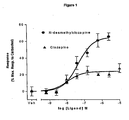
- Figure 1 is a graph showing the results of agonist activity of N-desmethylclozapine at M1 musacrinic acetylcholine receptors in R-SAT Assays.
- Figure 2 is a graph showing the results of agonist activity of N-desmethylclozapine at M1 musacrinic acetylcholine receptors in Phosphatidyl Inositol Assay.
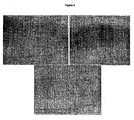
- Figure 3 shows photographs of MAP kinase activation in rat hippocampus following parenteral administration of N-desmethylclozapine.
- N-desmethylclozapine, 8- chloro -11- (1-piperazinyl) -5H- dibenzo [b,e] [1,4] diazepine is defined as the compound having the molecular structure depicted in Formula (I).
- An "agonist” is defined as a compound that increases the basal activity of a receptor (i.e. signal transduction mediated by the receptor).
- an “antagonist” is defined as a compound that competes with an agonist or inverse agonist for binding to a receptor, thereby blocking the action of an agonist or inverse agonist on the receptor.
- an antagonist also known as a “neutral” antagonist
- a partial agonist is defined as an agonist that displays limited, or less than complete, activity such that it fails to activate a receptor in vitro, functioning as an antagonist in vivo.
- subject refers to an animal, preferably a mammal, and most preferably a human, who is the object of treatment, observation or experiment.
- terapéuticaally effective amount is used to indicate an amount of an active compound, or pharmaceutical agent, that elicits the biological or medicinal response indicated. This response may occur in a tissue, system, animal or human that is being sought by a researcher, veterinarian, medical doctor or other clinician, and includes alleviation of the symptoms of the disease being treated.
- the method disclosed herein includes administering a therapeutically effective amount of NDMC to a subject for the purpose of treating psychosis.
- the method includes administering a therapeutically effective amount of NDMC to a subject for the purpose of treating depression or mania.
- the method includes administering a therapeutically effective amount of NDMC to a subject for the purpose of treating the psychiatric and other behavioral disturbances characteristic of dementia or cognitive impairment of any origin.
- the method includes administering a therapeutically effective amount of NDMC to a subject for the purpose of treating neuropathic pain.
- the present inventors have profiled a large series of drugs that have utility in treating human disease for functional activity at the five human muscarinic receptor subtypes.
- muscarinic drugs only two agents studied (out of more than 500) displayed muscarinic receptor agonist activity.
- this compound In vitro , this compound has been shown to possess weak partial agonist/antagonist activity at muscarinic M1, M2, and M4 receptors (9, 10), while in vivo it is generally considered to display muscarinic receptor antagonist properties.
- the other was the related compound N-desmethylclozapine.
- clozapine-N-oxide is a polar metabolite that is rapidly excreted and likely does not contribute to the biological activity of the parent compound.
- NDMC N-desmethylclozapine
- clozapine-N-oxide is a polar metabolite that is rapidly excreted and likely does not contribute to the biological activity of the parent compound.
- NDMC constitutes 40-75% of the total serum clozapine concentrations during steady state kinetics in humans (13).
- NDMC N-desmethylclozapine
- a method of agonizing the activity of a muscarinic receptor comprising contacting the receptor with an effective amount of NDMC.
- a mtehod of treating a subject suffering from a muscarinic receptor related disorder comprising indentifying a subject in need thereof and administering to the subject a therapeutically effective amount of NDMC.
- muscarinic related disorder it is meant a disorder whose symptoms are ameliorated by agonizing a muscarinic receptor.
- a method of treating schizophrenia or psychosis of any origin in a subject comprising identifying a subject in need thereof and administering to the subject a therapeutically effective amount of NDMC.
- the method comprises contacting a subject with a pharmacologically active dose of NDMC, for the purpose of controlling the positive (hallucinations and delusion) and negative (apathy, social withdrawal, anhedonia) symptoms of schizophrenia or related psychosis.
- a method of treating affective disorders including major depression, mania, bipolar disorder, and suicide, in a subject, comprising identifying a subject in need thereof and administering to the subject a therapeutically effective amount of NDMC.
- the method comprises contacting a subject with a pharmacologically active dose of NDMC, for the purpose of controlling the symptoms observed during major depression or manic depression.
- a method of treating Alzheimer's Disease and related neurodegenerative disorders in a subject comprising identifying a subject in need thereof and administering to the subject a therapeutically effective amount of NDMC.
- the method comprises contacting a subject with a pharmacologically active dose of NDMC, for the purpose of improving the cognitive deficits, and controlling the associated behavioral abnormalities, observed in degenerative dementias.
- a method of treating neuropathic pain in a subject comprising identifying a subject in need thereof and administering to the subject a therapeutically effective amount of NDMC.
- the method comprises contacting a subject with a pharmacologically active dose of NDMC, for the purpose of controlling the dysthesthetic, hyperalgesic, and other altered nociceptive symptoms observed in neuropathic pain states regardless of their etiology.
- a method of treating glaucoma in a subject comprising identifying a subject in need thereof and administering to the subject a therapeutically effective amount of NDMC.
- the method comprises contacting a subject with a pharmacologically active dose of NDMC, for the purpose of controlling the raised intra-ocular pressure observed in glaucoma, regardless of its etiology.
- NDMC is shown to possess potent agonist activity at the human muscarinic receptors. It is further disclosed herein that NDMC can cross the blood brain barrier, and function in vivo as a muscarinic receptor agonist measured via the activation of MAP kinase activity in rat hippocampus.
- N-desmethylclozapine has the structure of Formula (I).
- NDMC N-desmethylclozapine
- the dibenzo-diazepine-lactam (II) may be converted into the imino-chloride (V) by treatment with a halogenating agent such as phosphorus pentachloride and the product V is converted to N-desmethylclozapine (I) by reaction with piperazine.
- a halogenating agent such as phosphorus pentachloride
- NDMC may be formulated in pharmaceutical compositions comprising NDMC together with a pharmaceutically acceptable dilutant or excipient.
- Such compositions may be formulated in an appropriate manner and in accordance with accepted practices such as those disclosed in Remington's Pharmaceutical Sciences, Gennaro, Ed., Mack Publishing Co., Easton PA, 1990 .
- NDMC may be administered in a single daily dose, or the total daily dosage may be administered as a plurality of doses, ( e . g ., divided doses two, three or four times daily).
- compound for the present invention may be administered in intranasal form via topical use of suitable intranasal vehicles, or via transdermal routes, or via topical use of ocular formulations, or using those forms of transdermal skin patches well known to persons skilled in the art.
- the dosage regimen of NDMC can be selected in accordance with a variety of factors. These include type, species, age, weight, sex and medical condition of the patient; the severity of the condition to be treated; the route of administration; the renal and hepatic function of the patient; and the particular compound employed. A physician of ordinary skill can readily determine and prescribe the effective amount of the drug required to prevent, counter or arrest the progress of the disease or disorder that is being treated.
- the daily dosage of the products may be varied over a wide range from 0.01 to 1000 mg per adult human per day.
- An effective amount of the drug is ordinarily supplied at a dosage level of about 0.0001 mg/kg to about 25 mg/kg body weight per day.
- the range is from about 0.001 to 10 mg/kg of body weight per day, and especially from about 0.001 mg/kg to 1 mg/kg of body weight per day.
- the compounds may be administered on a regimen of 1 to 4 times per day.
- NDMC may be used alone at appropriate dosages defined by routine testing in order to obtain optimal pharmacological effect, while minimizing any potential toxic or otherwise unwanted effects.
- NDMC may be used as adjunctive therapy with known drugs to reduce the dosage required of these traditional drugs, and thereby reduce their side effects.
- NDMC is administered in combination with one or more additional therapeutic agents.
- the additional therapeutic agents can include, but are not limited to, a neuropsychiatric agent.
- a neuropsychiatric agent refers to a compound, or a combination of compounds, that affects the neurons in the brain either directly or indirectly, or affects the signal transmitted to the neurons in the brain. Neuropsychiatric agents, therefore, may affect a person's psyche, such as the person's mood, perception, nociception, cognition, alertness, memory, etc.
- the neuropsychiatric agent may be selected from the group consisting of a selective serotonin reuptake inhibitor, norepinephrine reuptake inhibitor, dopamine agonist, antipsychotic agent, and inverse serotonin 2A agonists.
- the antipsychotic agent may be selected from the group consisting of a phenothiazine, phenylbutylpiperadine, debenzapine, benzisoxidil, and salt of lithium.
- the phenothiazine group of compounds may be selected from the group consisting of chlorpromazine (Thorazine®), mesoridazine (Serentil®), prochlorperazine (Compazine®), and thioridazine (Mellaril®).
- the phenylbutylpiperadine group of compounds may be selected from the group consisting of haloperidol (Haldol®), and pimozide (Orap®).
- the debenzapine group of compounds may be selected from the group consisting of clozapine (Clozaril®), loxapine (Loxitane®), olanzapine (Zyprexa®) and quetiapine (Seroquel®).
- the benzisoxidil group of compounds may be selected from the group consisting of resperidone (Resperidal®) and ziprasidone (Geodon®).
- the salt of lithium may be lithium carbonate.
- the antipsychotic agent may be selected from the group consisting of Aripiprazole (Abilify), Clozapine, Clozaril, Compazine, Etrafon, Geodon, Haldol, Inapsine, Loxitane, Mellaril, Moban, Navane, Olanzapine (Zyprexa), Orap, Permitil, Prolixin, Phenergan, Quetiapine (Seroquel), Reglan, Risperdal, Serentil, Seroquel, Stelazine, Taractan, Thorazine, Triavil, Trilafon, and Zyprexa, or pharmaceutically acceptable salts thereof.
- Aripiprazole Abilify
- Clozapine Clozaril
- Compazine Etrafon
- Geodon Haldol
- Inapsine Loxitane
- Mellaril Moban
- Navane Olanzapine
- Orap Permitil
- Prolixin Phenergan
- the selective serotonin reuptake inhibitor is selected from the group consisting of fluoxetine, fluvoxamine, sertraline, paroxetine, citalopram, escitalopram, sibutramine, duloxetine, and venlafaxine, and pharmaceutically acceptable salts or prodrugs thereof.
- the norepinephrine reuptake inhibitor is selected from the group consisting of thionisoxetine and reboxetine.
- the dopamine agonist is selected from the group consisting of sumatriptan, almotriptan, naratriptan, frovatriptan, rizatriptan, zomitriptan, cabergoline, amantadine, lisuride, pergolide, ropinirole, pramipexole, and bromocriptine.
- the inverse serotonin 2A agonist is N-(1-methylpiperidin-4-yl)-N-(4-flourophenylmethyl)-N'-(4-(2-methylpropyloxy)phenylmethyl)carbamide.
- the present disclosure is directed to a method of treating neuropsychiatric disorder in a patient comprising identifying a patient in need thereof and administering to said patient a therapeutically effective amount of a pharmaceutical composition comprising a compound of Formula (I) and a neuropsychiatric agent.
- the present disclosure is directed to a method of treating neuropsychiatric disorder in a patient comprising identifying a patient in need thereof and administering to said patient a therapeutically effective amount of a compound of Formula (I) and a therapeutically effective amount of a neuropsychiatric agent.
- NDMC and additional therapeutic agent(s) are administered nearly simultaneously.
- these embodiments include those in which the compounds are in the same administrable composition, i.e., a single tablet, pill, or capsule, or a single solution for intravenous injection, or a single drinkable solution, or a single dragee formulation or patch, contains the compounds.
- the embodiments also include those in which each compound is in a separate administrable composition, but the patient is directed to take the separate compositions nearly simultaneously, i.e., one pill is taken right after the other or that one injection of one compound is made right after the injection of another compound, etc.
- one of NDMC and an additional therapeutic compound is administered first and then the other one of NDMC and the additional therapeutic compound is administered second.
- the patient may be administered a composition comprising one of the compounds and then at some time, a few minutes or a few hours later, be administered another composition comprising the other one of the compounds.
- Also included in these embodiments are those in which the patient is administered a composition comprising one of the compounds on a routine or continuous basis while receiving a composition comprising the other compound occasionally.
- Defining the functional pharmacological activity of NDMC at a given receptor can be achieved by a variety of methodologies.
- a currently favored assay is the Receptor Selection and Amplification Technology (R-SAT) assay disclosed in US 5,707,798 .
- Defining the functional pharmacological activity of NDMC at a given receptor can be achieved by a variety of methodologies.
- Another currently favored assay is the PI Hydrolysis assay (18).
- NDMC neurotrophic factor
- R-SAT Receptor Selection and Amplification Technology
- clozapine displays high potency (pEC 50 of 7.2) yet limited intrinsic efficacy ( ⁇ 25% relative efficacy) at human M1 receptors.
- Clozapine is thus defined as a weak partial agonist. Partial agonists lack sufficient positive intrinsic activity to stimulate the receptor in a manner similar to full agonists. They thus behave as antagonists in vivo.
- NDMC also displays high potency (pEC 50 of 7.2) at human M1 receptors, yet it displays significantly greater positive intrinsic activity at M1 receptors (65% relative efficacy to carbachol), behaving as a robust agonist in R-SAT assays. This increased efficacy suggests that NDMC will act as an agonist in vivo, a functional profile distinct from that observed for clozapine.
- pEC 50 7.0
- full efficacy >65% relative efficacy to carbachol.
- Clozapine and NDMC were tested at the remaining muscarinic receptor subtypes. These data are disclosed in Table 2.
- the data in Table 2 are derived from R-SAT assays as previously described (20). Potency is reported as pEC 50 values and efficacy is reported as that relative to the full agonist carbachol, both +/- standard deviation. N denotes number of experimental determinations.
- NDMC displays increased intrinsic activity at all five muscarinic receptor subtypes when compared to clozapine.
- the profile of NDMC at human muscarinic receptors is most similar to that observed for the investigational agent Xanomeline, with one important distinction, a significantly lower efficacy at human m3 receptors.
- NDMC hippocampal MAP kinase
Landscapes
- Health & Medical Sciences (AREA)
- General Health & Medical Sciences (AREA)
- Life Sciences & Earth Sciences (AREA)
- Chemical & Material Sciences (AREA)
- Veterinary Medicine (AREA)
- Public Health (AREA)
- Medicinal Chemistry (AREA)
- Animal Behavior & Ethology (AREA)
- Pharmacology & Pharmacy (AREA)
- Engineering & Computer Science (AREA)
- Bioinformatics & Cheminformatics (AREA)
- Organic Chemistry (AREA)
- Nuclear Medicine, Radiotherapy & Molecular Imaging (AREA)
- General Chemical & Material Sciences (AREA)
- Chemical Kinetics & Catalysis (AREA)
- Biomedical Technology (AREA)
- Neurology (AREA)
- Neurosurgery (AREA)
- Epidemiology (AREA)
- Pain & Pain Management (AREA)
- Psychiatry (AREA)
- Ophthalmology & Optometry (AREA)
- Hospice & Palliative Care (AREA)
- Rheumatology (AREA)
- Pharmaceuticals Containing Other Organic And Inorganic Compounds (AREA)
- Medicines That Contain Protein Lipid Enzymes And Other Medicines (AREA)
Applications Claiming Priority (2)
| Application Number | Priority Date | Filing Date | Title |
|---|---|---|---|
| US44269003P | 2003-01-23 | 2003-01-23 | |
| EP04704073A EP1589974A2 (en) | 2003-01-23 | 2004-01-21 | Use of n-desmethylclozapine to treat human neuropsychiatric disease |
Related Parent Applications (1)
| Application Number | Title | Priority Date | Filing Date |
|---|---|---|---|
| EP04704073A Division EP1589974A2 (en) | 2003-01-23 | 2004-01-21 | Use of n-desmethylclozapine to treat human neuropsychiatric disease |
Publications (1)
| Publication Number | Publication Date |
|---|---|
| EP1994932A1 true EP1994932A1 (en) | 2008-11-26 |
Family
ID=32772052
Family Applications (2)
| Application Number | Title | Priority Date | Filing Date |
|---|---|---|---|
| EP08016004A Withdrawn EP1994932A1 (en) | 2003-01-23 | 2004-01-21 | Use of N-desmethylclozapine to treat human psychosis |
| EP04704073A Ceased EP1589974A2 (en) | 2003-01-23 | 2004-01-21 | Use of n-desmethylclozapine to treat human neuropsychiatric disease |
Family Applications After (1)
| Application Number | Title | Priority Date | Filing Date |
|---|---|---|---|
| EP04704073A Ceased EP1589974A2 (en) | 2003-01-23 | 2004-01-21 | Use of n-desmethylclozapine to treat human neuropsychiatric disease |
Country Status (14)
| Country | Link |
|---|---|
| US (2) | US20040224942A1 (enExample) |
| EP (2) | EP1994932A1 (enExample) |
| JP (1) | JP2006515628A (enExample) |
| KR (1) | KR20050092123A (enExample) |
| CN (1) | CN1741803A (enExample) |
| AU (1) | AU2004206931A1 (enExample) |
| BR (1) | BRPI0406592A (enExample) |
| CA (1) | CA2512043A1 (enExample) |
| MX (1) | MXPA05007784A (enExample) |
| NZ (1) | NZ541014A (enExample) |
| RU (2) | RU2336879C2 (enExample) |
| SG (1) | SG159390A1 (enExample) |
| WO (1) | WO2004064753A2 (enExample) |
| ZA (1) | ZA200505878B (enExample) |
Families Citing this family (51)
| Publication number | Priority date | Publication date | Assignee | Title |
|---|---|---|---|---|
| IL151164A0 (en) | 2000-03-06 | 2003-04-10 | Acadia Pharm Inc | Azacyclic compounds for use in the treatment of serotonin related diseases |
| DE60236206D1 (de) | 2001-12-28 | 2010-06-10 | Acadia Pharm Inc | Spiroazacyclische verbindungen als monoaminrezeptormodulatoren |
| US7253186B2 (en) | 2002-06-24 | 2007-08-07 | Carl-Magnus Andersson | N-substituted piperidine derivatives as serotonin receptor agents |
| MXPA04012893A (es) | 2002-06-24 | 2005-03-31 | Acadia Pharm Inc | Derivados de piperidina n-substituidos como agentes receptores de serotonina. |
| US7538222B2 (en) | 2002-06-24 | 2009-05-26 | Acadia Pharmaceuticals, Inc. | N-substituted piperidine derivatives as serotonin receptor agents |
| ATE407117T1 (de) | 2003-01-16 | 2008-09-15 | Acadia Pharm Inc | Selektive serotonin 2a/2c inverse rezeptoragonisten als therapeutika für neurodegenerative erkrankungen |
| US20050250767A1 (en) * | 2003-01-23 | 2005-11-10 | Weiner David M | Use of N-desmethylclozapine to treat human neuropsychiatric disease |
| NZ541014A (en) * | 2003-01-23 | 2008-05-30 | Acadia Pharm Inc | Use of N-desmethylclozapine to treat schizophrenia while increasing the level of activity of a muscarinic receptor |
| US20050085463A1 (en) * | 2003-01-23 | 2005-04-21 | Weiner David M. | Use of N-desmethylclozapine to treat human neuropsychiatric disease |
| WO2006017614A1 (en) * | 2004-08-05 | 2006-02-16 | Acadia Pharmaceuticals Inc. | Use of n-desmethylclozapine to treat human neuropsychiatric disease |
| WO2004073639A2 (en) * | 2003-02-19 | 2004-09-02 | Merck & Co. Inc. | Treatment of psychosis with a muscarinic m1 receptor ectopic activator |
| EP1644005B1 (en) * | 2003-07-02 | 2010-08-18 | AstraZeneca AB | Metabolite of quetiapine |
| US20090093461A1 (en) * | 2003-07-02 | 2009-04-09 | Astrazeneca Ab | Methods of Treating Anxiety and Mood Disorders |
| US20060217366A1 (en) * | 2003-07-02 | 2006-09-28 | Astrazeneca Ab | Method of treating schizophrenia and other disorders |
| US20060252743A1 (en) * | 2005-01-07 | 2006-11-09 | Astrazeneca Ab | Method of treating sleep disorders |
| US20060217367A1 (en) * | 2004-07-01 | 2006-09-28 | Astrazeneca Ab | Method of treating anxiety disorders |
| US20060229292A1 (en) * | 2005-01-07 | 2006-10-12 | Astrazeneca Ab | Method of treating childhood disorders |
| US20060217365A1 (en) * | 2003-07-02 | 2006-09-28 | Astrazeneca Ab | Method of treating mood disorders |
| US20070117789A1 (en) * | 2005-11-18 | 2007-05-24 | Astrazeneca Ab | Method of treatment |
| US20090093460A1 (en) * | 2003-07-02 | 2009-04-09 | Astrazeneca Ab | Compositions |
| US20090239840A1 (en) * | 2003-12-22 | 2009-09-24 | Acadia Pharmaceuticals, Inc. | AMINO SUBSTITUTED DIARYL[a,d]CYCLOHEPTENE ANALOGS AS MUSCARINIC AGONISTS AND METHODS OF TREATMENT OF NEUROPSYCHIATRIC DISORDERS |
| ATE426405T1 (de) * | 2003-12-22 | 2009-04-15 | Acadia Pharm Inc | Amino-substituierte diarylaa,ducyclohepten- analoga als muscarinische agonisten und verfahren zur behandlung von neuropsychiatrischen erkrankungen |
| US20050171088A1 (en) * | 2004-01-30 | 2005-08-04 | Astrazeneca Ab | Treatment of psychoses with dibenzothiazepine antipsychotic |
| CA2560671A1 (en) * | 2004-04-01 | 2006-01-05 | Acadia Pharmaceuticals Inc. | Crystalline forms of n-desmethylclozapine |
| US7820695B2 (en) | 2004-05-21 | 2010-10-26 | Acadia Pharmaceuticals, Inc. | Selective serotonin receptor inverse agonists as therapeutics for disease |
| US20050261278A1 (en) * | 2004-05-21 | 2005-11-24 | Weiner David M | Selective serotonin receptor inverse agonists as therapeutics for disease |
| US7790899B2 (en) | 2004-09-27 | 2010-09-07 | Acadia Pharmaceuticals, Inc. | Synthesis of N-(4-fluorobenzyl)-N-(1-methylpiperidin-4-yl)-N′-(4-(2-methylpropyloxy)phenylmethyl)carbamide and its tartrate salt and crystalline forms |
| US7868176B2 (en) | 2004-09-27 | 2011-01-11 | Acadia Pharmaceuticals, Inc. | Salts of N-(4-fluorobenzyl)-N-(1-methylpiperidin-4-y1)-N′-(4-(2-methylpropyloxy)phenylmethyl)carbamide and their preparation |
| WO2006107948A2 (en) * | 2005-04-04 | 2006-10-12 | Acadia Pharmaceuticals Inc. | Use of n-desmethylclozapine and related compounds as dopamine stabilizing agents |
| AU2006282896A1 (en) * | 2005-08-26 | 2007-03-01 | Braincells, Inc. | Neurogenesis by muscarinic receptor modulation |
| US20070105836A1 (en) * | 2005-10-31 | 2007-05-10 | Lars Pettersson | Prodrugs of muscarinic agonists and methods of treatment of neuropsychiatric disorders |
| US9278947B2 (en) | 2006-06-22 | 2016-03-08 | Ramot At Tel-Aviv University Ltd. | Serotonin reuptake inhibitors as drugs having peripheral-system-restricted activity |
| WO2007148341A2 (en) | 2006-06-22 | 2007-12-27 | Ramot At Tel Aviv University Ltd. | Novel serotonin reuptake inhibitors as drugs having peripheral-system-restricted activity |
| EP2134330B1 (en) | 2007-03-19 | 2013-05-08 | Acadia Pharmaceuticals Inc. | Combinations of 5-ht2a inverse agonists and antagonists with antipsychotics |
| RS52703B (sr) * | 2008-06-20 | 2013-08-30 | Astrazeneca Ab | Derivat dibenzotiazepina i njegova upotreba |
| US9018202B2 (en) * | 2010-12-03 | 2015-04-28 | Allergan, Inc. | Methods for treating diseases of the retina |
| RU2506073C1 (ru) * | 2012-09-06 | 2014-02-10 | Алексей Николаевич Паршин | Способ лечения расстройства адаптации у пациентов с суицидальным риском |
| US20160184290A1 (en) * | 2014-12-31 | 2016-06-30 | Paul J. Markovitz | Method of treating schizophrenia |
| EP3325444B1 (en) | 2015-07-20 | 2021-07-07 | Acadia Pharmaceuticals Inc. | Methods for preparing n-(4-fluorobenzyl)-n-(1-methylpiperidin-4-yl)-n'-(4-(2-methylpropyloxy)phenylmethyl)carbamide and its tartrate salt and polymorphic form c |
| WO2017117347A1 (en) * | 2015-12-30 | 2017-07-06 | Markovitz M D Paul | Method of treating schizophrenia |
| RU2667954C2 (ru) * | 2016-03-04 | 2018-09-25 | Общество С Ограниченной Ответственностью "Валентек" | Фармацевтическая композиция для лечения функциональных психических расстройств |
| WO2017165635A1 (en) | 2016-03-25 | 2017-09-28 | Acadia Pharmaceuticals Inc. | Combination of pimavanserin and cytochrome p450 modulators |
| US10953000B2 (en) | 2016-03-25 | 2021-03-23 | Acadia Pharmaceuticals Inc. | Combination of pimavanserin and cytochrome P450 modulators |
| US11464768B2 (en) | 2016-12-20 | 2022-10-11 | Acadia Pharmaceuticals Inc. | Pimavanserin alone or in combination for use in the treatment of Alzheimer's disease psychosis |
| US11135211B2 (en) | 2017-04-28 | 2021-10-05 | Acadia Pharmaceuticals Inc. | Pimavanserin for treating impulse control disorder |
| US20210077479A1 (en) | 2017-08-30 | 2021-03-18 | Acadia Pharmaceuticals Inc. | Formulations of pimavanserin |
| US12459965B2 (en) | 2017-10-09 | 2025-11-04 | Compass Pathfinder Limited | Preparation of psilocybin, different polymorphic forms, intermediates, formulations and their use |
| GB2571696B (en) | 2017-10-09 | 2020-05-27 | Compass Pathways Ltd | Large scale method for the preparation of Psilocybin and formulations of Psilocybin so produced |
| CN107970243B (zh) * | 2017-10-30 | 2020-07-28 | 江苏理工学院 | 一种去甲氯氮平的新用途 |
| CN109761826B (zh) * | 2019-01-17 | 2022-02-25 | 烟台大学 | 一种o-去甲基文拉法辛苯醚化合物及其制备方法和用途 |
| AU2020258086A1 (en) | 2019-04-17 | 2021-11-11 | Compass Pathfinder Limited | Methods of treating neurocognitive disorders, chronic pain and reducing inflammation |
Citations (4)
| Publication number | Priority date | Publication date | Assignee | Title |
|---|---|---|---|---|
| US5707798A (en) | 1993-07-13 | 1998-01-13 | Novo Nordisk A/S | Identification of ligands by selective amplification of cells transfected with receptors |
| WO2002060870A2 (en) * | 2000-11-17 | 2002-08-08 | Adolor Corporation | Delta agonist analgesics |
| WO2004064738A2 (en) * | 2003-01-16 | 2004-08-05 | Acadia Pharmaceuticals Inc. | Selective serotonin 2a/2c receptor inverse agonists as therapeutics for neurodegenerative diseases |
| WO2004073639A2 (en) * | 2003-02-19 | 2004-09-02 | Merck & Co. Inc. | Treatment of psychosis with a muscarinic m1 receptor ectopic activator |
Family Cites Families (59)
| Publication number | Priority date | Publication date | Assignee | Title |
|---|---|---|---|---|
| NL140242B (nl) * | 1963-03-01 | 1973-11-15 | Wander Ag Dr A | Werkwijze voor het bereiden van op de 11-plaats door een basische groep gesubstitueerde dibenz (b.f.)(1.4) oxazepinen. |
| US3389139A (en) * | 1963-06-14 | 1968-06-18 | Wander Ag Dr A | 6-homopiperazino and piperazinomorphanthridines |
| US3908010A (en) * | 1967-03-22 | 1975-09-23 | Wander Ag Dr A | Basically substituted heterocycles as anti-emetics |
| US3884920A (en) * | 1967-07-14 | 1975-05-20 | Sandoz Ag | 11-Basically substituted dibenz {8 b,f{9 {0 {8 1,4{9 {0 oxazepines |
| US3412193A (en) * | 1965-12-13 | 1968-11-19 | American Cyanamid Co | 11-(4-methyl-1-piperazinyl)dibenz[b, f][1, 4]oxazepines or thiazepines for controlling fertility |
| US3444169A (en) * | 1966-01-17 | 1969-05-13 | American Cyanamid Co | Process for 11 - aminodibenz(b,f)(1,4)oxazepines and analogous thiazepines |
| GB1184251A (en) * | 1966-04-15 | 1970-03-11 | American Cyanamid Co | Oxazepines and Thiazepines |
| GB1192812A (en) * | 1966-05-20 | 1970-05-20 | American Cyanamid Co | 2-Chloro-11-(1-Piperazinyl)Dibenz[b,f]-[1,4]Oxazepine, Non-Toxic Acid Addition Salts thereof, and Therapeutic Compositions containing said Oxazepine or Salts |
| US3852446A (en) * | 1967-03-13 | 1974-12-03 | Sandoz Ag | Organic compounds in treatment of psychotic disturbances |
| US3758479A (en) * | 1967-03-22 | 1973-09-11 | Sandoz Ag | Nitro and sulphamoyl substituted dibenzodiazepines |
| US3539573A (en) * | 1967-03-22 | 1970-11-10 | Jean Schmutz | 11-basic substituted dibenzodiazepines and dibenzothiazepines |
| US3751415A (en) * | 1967-03-22 | 1973-08-07 | Sandoz Ag | 2-nitro-11-(1-piperazinyl)-dibenz(b,f)(1,4)oxazepines |
| CA918659A (en) * | 1969-07-31 | 1973-01-09 | Yoshitomi Pharmaceutical Industries | 11-(4-substituted-1-piperazinyl)-dibenzo (b,f) (1,4) thiazepines |
| US3660406A (en) * | 1970-10-26 | 1972-05-02 | American Cyanamid Co | 2-chloro-7-hydroxy-11-(1-piperazinyl)dibenz(b f)(1 4)oxazepines |
| CH555856A (de) * | 1971-05-04 | 1974-11-15 | Hoffmann La Roche | Verfahren zur herstellung von tricyclischen verbindungen. |
| US3962248A (en) * | 1972-04-04 | 1976-06-08 | Sandoz, Inc. | Process for making 11-piperazino-diazepines, oxazepines, thiazepines and azepines |
| US3884446A (en) * | 1973-12-10 | 1975-05-20 | Dahl Co G W | Low profile control valve actuator |
| US3983234A (en) * | 1974-07-04 | 1976-09-28 | Sandoz Ltd. | Treatment of dyskinesias |
| SE7610219L (sv) * | 1975-09-24 | 1977-03-25 | Sandoz Ag | Nya dibenso /b,e//1,4/ diazepiner |
| US4045445A (en) * | 1975-12-14 | 1977-08-30 | American Cyanamid Company | 11-(4-Piperidyl)dibenzo-diazepines |
| CH624682A5 (enExample) * | 1976-11-10 | 1981-08-14 | Sandoz Ag | |
| US4406900A (en) * | 1976-11-10 | 1983-09-27 | Sandoz Ltd. | Neuroleptic use of morphanthridines |
| US4191760A (en) * | 1977-02-23 | 1980-03-04 | Abbott Laboratories | Dibenzodiazepines |
| US4097597A (en) * | 1977-02-23 | 1978-06-27 | Abbott Laboratories | Dibenzo b,e! 1,4!diazepines |
| US4096261A (en) * | 1977-02-23 | 1978-06-20 | Abbott Laboratories | Dibenzodiazepines |
| CS196893B1 (en) * | 1977-12-22 | 1980-04-30 | Miroslav Protiva | 3-fluor-10-piperazino-8-substituted 10,11-dihydro-dibenzothiepines |
| US4263207A (en) * | 1978-08-01 | 1981-04-21 | Merck & Co., Inc. | 10,11-Dihydrodibenzo[b,f][1,4]thiazepine carboxylic acids esters and amides thereof |
| US4268207A (en) * | 1979-07-06 | 1981-05-19 | Eaton Corporation | Load support and shuttle |
| US4404137A (en) * | 1979-10-16 | 1983-09-13 | Lilly Industries Limited | Pyrazolo [3,4-b][1,5]benzodiazepine compounds |
| CH641876A5 (de) * | 1980-02-14 | 1984-03-15 | Sulzer Ag | Kolbenkompressor, insbesondere zum verdichten von sauerstoff. |
| US4663453A (en) * | 1983-05-18 | 1987-05-05 | Hoechst-Roussel Pharmaceuticals Inc. | Benzo[b]pyrrolo[3,2,1-jk][1,4]benzodiazepines having dopamine receptor activity |
| US4764616A (en) * | 1983-05-18 | 1988-08-16 | Hoechst-Roussel Pharmaceuticals Inc. | Benzopyrrolobenzodiazepines and quinobenzodiazepines |
| JPH04211071A (ja) * | 1990-03-05 | 1992-08-03 | Hokuriku Seiyaku Co Ltd | 多環式化合物 |
| US5817655A (en) * | 1991-04-23 | 1998-10-06 | Eli Lilly And Company | Methods of treatment using a thieno-benzodiazepine |
| US5300422A (en) * | 1991-12-04 | 1994-04-05 | Case Western Reserve University | Screening method for controlling agranulocytosis |
| US5393752A (en) * | 1992-05-26 | 1995-02-28 | Therabel Research S.A./N.V. | Methylpiperazinoazepine compounds, preparation and use thereof |
| WO1994026107A1 (en) * | 1993-05-13 | 1994-11-24 | New York University | Psychosis protecting nucleic acid, peptides, compositions and method of use |
| US5354747A (en) * | 1993-06-16 | 1994-10-11 | G. D. Searle & Co. | 2-, 3-, 4-, 5-, 6-, 7-, 8-, 9- and/or 10-substituted dibenzoxazepine and dibenzthiazepine compounds, pharmaceutical compositions and methods of use |
| US5538965A (en) * | 1993-12-23 | 1996-07-23 | Allelix Biopharmaceuticals Inc. | Dopamine receptor ligands |
| US6566065B1 (en) * | 1994-05-26 | 2003-05-20 | Mcgill University | Method of diagnosing schizophrenia by detecting a mutation in the (MTHFR) gene |
| US5602120A (en) * | 1994-12-12 | 1997-02-11 | Allelix Biopharmaceuticals, Inc. | Benzyl-substituted compounds having dopamine receptor affinity |
| US5700445A (en) * | 1994-12-12 | 1997-12-23 | Allelix Biopharmaceuticals, Inc. | N-methyl piperazine compounds having dopamine receptor affinity |
| US5602124A (en) * | 1994-12-12 | 1997-02-11 | Allelix Biopharmaceuticals, Inc. | 5-HT2 receptor ligands |
| US5602121A (en) * | 1994-12-12 | 1997-02-11 | Allelix Biopharmaceuticals, Inc. | Alkyl-substituted compounds having dopamine receptor affinity |
| GB9617305D0 (en) * | 1996-08-17 | 1996-09-25 | Glaxo Wellcome Spa | Heterocyclic compounds |
| BR0110420A (pt) * | 2000-04-28 | 2003-07-01 | Acadia Pharm Inc | Agonistas muscarìnicos |
| RU2195957C2 (ru) * | 2000-11-17 | 2003-01-10 | Московский научно-исследовательский институт психиатрии | Способ лечения негативных расстройств при шизофрении |
| CN1681388A (zh) * | 2002-09-18 | 2005-10-12 | Fmc有限公司 | 三环衍生物杀虫剂 |
| US20060069083A1 (en) * | 2002-12-20 | 2006-03-30 | Gerd Steiner | Pesticidal dibenzo(hetero)azepine derivatives |
| US20070275957A1 (en) * | 2003-01-23 | 2007-11-29 | Weiner David M | Use of n-desmethylclozapine to treat human neuropsychiatric disease |
| NZ541014A (en) * | 2003-01-23 | 2008-05-30 | Acadia Pharm Inc | Use of N-desmethylclozapine to treat schizophrenia while increasing the level of activity of a muscarinic receptor |
| US20050250767A1 (en) * | 2003-01-23 | 2005-11-10 | Weiner David M | Use of N-desmethylclozapine to treat human neuropsychiatric disease |
| US20050085463A1 (en) * | 2003-01-23 | 2005-04-21 | Weiner David M. | Use of N-desmethylclozapine to treat human neuropsychiatric disease |
| ATE426405T1 (de) * | 2003-12-22 | 2009-04-15 | Acadia Pharm Inc | Amino-substituierte diarylaa,ducyclohepten- analoga als muscarinische agonisten und verfahren zur behandlung von neuropsychiatrischen erkrankungen |
| CA2560671A1 (en) * | 2004-04-01 | 2006-01-05 | Acadia Pharmaceuticals Inc. | Crystalline forms of n-desmethylclozapine |
| US20060063754A1 (en) * | 2004-09-21 | 2006-03-23 | Edgar Dale M | Methods of treating a sleep disorder |
| AU2005286713B2 (en) * | 2004-09-21 | 2010-10-28 | Hypnion, Inc. | Loxapine analogs and methods of use thereof |
| WO2006107948A2 (en) * | 2005-04-04 | 2006-10-12 | Acadia Pharmaceuticals Inc. | Use of n-desmethylclozapine and related compounds as dopamine stabilizing agents |
| US20070105836A1 (en) * | 2005-10-31 | 2007-05-10 | Lars Pettersson | Prodrugs of muscarinic agonists and methods of treatment of neuropsychiatric disorders |
-
2004
- 2004-01-21 NZ NZ541014A patent/NZ541014A/en unknown
- 2004-01-21 SG SG200705214-5A patent/SG159390A1/en unknown
- 2004-01-21 MX MXPA05007784A patent/MXPA05007784A/es not_active Application Discontinuation
- 2004-01-21 WO PCT/US2004/001509 patent/WO2004064753A2/en not_active Ceased
- 2004-01-21 CN CNA200480002642XA patent/CN1741803A/zh active Pending
- 2004-01-21 JP JP2006501063A patent/JP2006515628A/ja not_active Withdrawn
- 2004-01-21 CA CA002512043A patent/CA2512043A1/en not_active Abandoned
- 2004-01-21 BR BR0406592-1A patent/BRPI0406592A/pt not_active IP Right Cessation
- 2004-01-21 RU RU2005126614/15A patent/RU2336879C2/ru not_active IP Right Cessation
- 2004-01-21 EP EP08016004A patent/EP1994932A1/en not_active Withdrawn
- 2004-01-21 US US10/761,787 patent/US20040224942A1/en not_active Abandoned
- 2004-01-21 KR KR1020057013323A patent/KR20050092123A/ko not_active Withdrawn
- 2004-01-21 EP EP04704073A patent/EP1589974A2/en not_active Ceased
- 2004-01-21 AU AU2004206931A patent/AU2004206931A1/en not_active Abandoned
-
2005
- 2005-07-21 ZA ZA200505878A patent/ZA200505878B/en unknown
-
2008
- 2008-04-28 RU RU2008116931/14A patent/RU2008116931A/ru not_active Application Discontinuation
- 2008-09-22 US US12/235,526 patent/US20090018119A1/en not_active Abandoned
Patent Citations (4)
| Publication number | Priority date | Publication date | Assignee | Title |
|---|---|---|---|---|
| US5707798A (en) | 1993-07-13 | 1998-01-13 | Novo Nordisk A/S | Identification of ligands by selective amplification of cells transfected with receptors |
| WO2002060870A2 (en) * | 2000-11-17 | 2002-08-08 | Adolor Corporation | Delta agonist analgesics |
| WO2004064738A2 (en) * | 2003-01-16 | 2004-08-05 | Acadia Pharmaceuticals Inc. | Selective serotonin 2a/2c receptor inverse agonists as therapeutics for neurodegenerative diseases |
| WO2004073639A2 (en) * | 2003-02-19 | 2004-09-02 | Merck & Co. Inc. | Treatment of psychosis with a muscarinic m1 receptor ectopic activator |
Non-Patent Citations (26)
| Title |
|---|
| "Remington's Pharmaceutical Sciences", 1990, MACK PUBLISHING CO. |
| BALDESSARINI, R., J.; CENTORRINO, F.; FLOOD, J., G.: "Tissue concentrations of clozapine and its metabolites in the rat", NEUROPSYCHOPHARMACOLOGY, vol. 9, no. 2, 1993, pages 117124 |
| BALDESSARINI, R., J.; FRANKENBURG, F., R.: "Clozapine. A novel antipsychotic agent", NEW. ENGL. J. MED., vol. 324, no. 11, 1991, pages 746 - 754 |
| BERKELEY J., L. ET AL.: "M muscarinic acetylcholine receptors activate extracellular signal-regulated kinase in CA1 pyramidal neurons in mouse hippocampal slices", MOL. CELL NEUROSCI., vol. 18, no. 5, 2001, pages 512 - 24 |
| BODICK, N., C.; OFFEN, W., W.; LEVEY, A., I.: "Effects of xanomeline, a selective muscarinic receptor agonist, on cognitive function and behavioral symptoms in Alzheimer's disease", ARCH. NEUROL, vol. 54, 1997, pages 465 - 473 |
| BONDESSON, U.; LINDSTROM. L., H.: "Determination of clozapine and its N-desmethylated metabolite in plasma by use of gas chromatography-mass spectrometry with single ion detection", PSYCHOPHARMACOLOGY, vol. 95, 1988, pages 472 - 475 |
| BROWN, J., H.; TAYLOR, P.: "The pharmacological basis of therapeutics", 1996, MCGRAW-HILL, article "Muscarinic receptor agonists and antagonists", pages: 141 - 161 |
| CENTORRINO, F.; BALDESSARINI, R., J.; KANDO, J., C.: "Clozapine and metabolites: concentrations in serum and clinical findings during treatment of chronically psychotic patients", J. CLIN. PSYCHOPHARMACOL, vol. 14, 1994, pages 119 - 125 |
| DAVIS, R E ET AL.: "Cholinergic therapies for Alzheimer's disease: Palliative or disease altering?", ARZNEIMITTELFORSCHUNG, vol. 45, 1995, pages 425 - 431 |
| EGLEN, R., M.; CHOPPIN, A.; WATSON, N.: "Therapeutic opportunities from muscarinic receptor research", TRENDS PHARMACOL. SCI., vol. 22, no. 8, 2001, pages 409 - 414 |
| HUNZIKER F.; FISHER, E.; SCMUTZ, J.: "1 1-amino-5H-dibenzo[b,e]- 1,4-diazepine. Mitteilung uber siebenglienrige Heterocyclen", HELV. CHINA. ACTA, vol. 50, 1967, pages 1588 - 1599 |
| JANN, M., W. ET AL.: "Pharmacokinetic and pharmacodynamics of clozapine", CLIN. PHARMACOKINET., vol. 24, no. 2, 1993, pages 161 - 176 |
| JENSEN, A., A.; SPALDING, T., A.; BURSTEIN E., S.: "Functional importance of the Ala(116)-Pro(136) region in the calcium-sensing receptor. Constitutive activity and inverse agonism in a family C G-protein-coupled receptor", JBIOL CHEM., vol. 275, no. 38, 2000, pages 29547 - 55 |
| KUOPPAMAKI, M.; SYVALAHTI, E.; HIETALA, J.: "Clozapine and N- desmethylclozapine are potent 5-HT1C receptor antagonists", EUR. J PHARM., vol. 245, 1993, pages 179 - 182 |
| MOROI, S., E.; LICHTER, P., R.: "The pharmacological basis of therapeutics", 1996, MCGRAW-HILL, article "Ocular pharmacology", pages: 1619 - 1647 |
| OLIANIS, M., C.; MAULLU, C.; ONALI, P.: "Mixed agonist-antagonist properties of clozapine at different human cloned muscarinic receptor subtypes expressed in Chinese hamster ovary cells", NEUROPSYCHOPHARMACOLOGY, vol. 20, no. 3, 1999, pages 263 - 270 |
| OZDEMIR VURAL ET AL: "CYP1A2 activity as measured by a caffeine test predicts clozapine and active metabolite norclozapine steady-state concentration in patients with schizophrenia", JOURNAL OF CLINICAL PSYCHOPHARMACOLOGY, vol. 21, no. 4, August 2001 (2001-08-01), pages 398 - 407, XP008031203, ISSN: 0271-0749 * |
| RODRIQUEZ, M.A.; WHIPPLE, B.; OCAMPO, G.: "Muscarinic agonists in neuropathic and nociceptive pain assays in rats", INTERNATIONAL ASSOCIATION FOR THE STUDY OF PAIN'S 10TH WORLD CONGRESS, vol. 388, 2002, pages 1160 - 76 |
| SHEKHAR, A.; POTTER, W., Z.; LIENEMANN, J.: "Efficacy of xanomeline, a selective muscarinic agonist, in treating schizophrenia: a double blind placebo controlled study", ACNP, 2001, pages 173 |
| SPINA E ET AL: "Effect of fluoxetine on the plasma concentrations of clozapine and its major metabolites in patients with schizophrenia.", INTERNATIONAL CLINICAL PSYCHOPHARMACOLOGY. MAY 1998, vol. 13, no. 3, May 1998 (1998-05-01), pages 141 - 145, XP008031208, ISSN: 0268-1315 * |
| SUR CYRILLE ET AL: "N-desmethylclozapine, an allosteric agonist at muscarinic 1 receptor, potentiates N-methyl-D-aspartate receptor activity.", PROCEEDINGS OF THE NATIONAL ACADEMY OF SCIENCES OF THE UNITED STATES OF AMERICA, vol. 100, no. 23, 11 November 2003 (2003-11-11), pages 13674 - 13679, XP001191264, ISSN: 0027-8424 * |
| WEIGMANN H ET AL: "Does the pharmacologically active N-demethylated metabolite of clozapine pass the blood-brain barrier?", PHARMACOPSYCHIATRY, vol. 30, no. 5, September 1997 (1997-09-01), & 20TH SYMPOSIUM OF THE STUDY GROUP OF NEUROPSYCHOPHARMACOLOGY AND PHARMACOPSYCHIATRY (ARBEITSGEMEINSC; NUREMBERG, GERMANY; OCTOBER 8-11, 1997, pages 233, XP008031187, ISSN: 0176-3679 * |
| WEIGMANN, H. ET AL.: "Distribution of clozapine and desmethylclozapine between blood and brain in rats", EUROPEAN NEUROPHARMACOLOGY, vol. 9, 1999, pages 253 - 256 |
| WEINER, D., M.; BURSTEIN, E., S.; NASH, N.: "5- hydroxytryptamine 2A receptor inverse agonists as antipsychotics", JPHARMACOL EXP THER., vol. 299, no. 1, 2001, pages 268 - 76 |
| YOUNG CHERYL D ET AL: "Effects of desmethylclozapine on Fos protein expression in the forebrain: In vivo biological activity of the clozapine metabolite", NEUROPSYCHOPHARMACOLOGY, vol. 19, no. 1, July 1998 (1998-07-01), pages 99 - 103, XP001191184, ISSN: 0893-133X * |
| ZORN, S., H. ET AL.: "Clozapine is a potent and selective muscarinic m4 receptor agonist", EUR. J PHARM., vol. 269, 1994, pages R1 - R2 |
Also Published As
| Publication number | Publication date |
|---|---|
| RU2008116931A (ru) | 2009-11-10 |
| CN1741803A (zh) | 2006-03-01 |
| JP2006515628A (ja) | 2006-06-01 |
| SG159390A1 (en) | 2010-03-30 |
| WO2004064753A3 (en) | 2004-11-25 |
| ZA200505878B (en) | 2006-04-26 |
| WO2004064753A2 (en) | 2004-08-05 |
| MXPA05007784A (es) | 2005-09-30 |
| US20090018119A1 (en) | 2009-01-15 |
| RU2005126614A (ru) | 2006-01-27 |
| KR20050092123A (ko) | 2005-09-20 |
| BRPI0406592A (pt) | 2005-12-20 |
| EP1589974A2 (en) | 2005-11-02 |
| RU2336879C2 (ru) | 2008-10-27 |
| AU2004206931A1 (en) | 2004-08-05 |
| CA2512043A1 (en) | 2004-08-05 |
| US20040224942A1 (en) | 2004-11-11 |
| NZ541014A (en) | 2008-05-30 |
Similar Documents
| Publication | Publication Date | Title |
|---|---|---|
| EP1994932A1 (en) | Use of N-desmethylclozapine to treat human psychosis | |
| US20060199807A1 (en) | Use of N-desmethylclozapine to treat human neuropsychia tric disease | |
| Baldessarini et al. | Pharmacotherapy of psychosis and mania | |
| US20050085463A1 (en) | Use of N-desmethylclozapine to treat human neuropsychiatric disease | |
| US20070275957A1 (en) | Use of n-desmethylclozapine to treat human neuropsychiatric disease | |
| CN101128198A (zh) | 沙贝马啉与安定药物联合治疗精神病 | |
| AU2005271906A1 (en) | Memantine as adjunctive treatment to atypical antipsychotics in schizophrenia patients | |
| US20240115549A1 (en) | Treatment of mental disorders | |
| RU2268725C2 (ru) | Комбинация лекарственных препаратов, включающая миртазапин, для лечения депрессии и связанных расстройств | |
| WO2006017614A1 (en) | Use of n-desmethylclozapine to treat human neuropsychiatric disease | |
| WO2007137590A1 (en) | Sertindole for the preventive treatment of suicidal behaviour | |
| US6350773B1 (en) | Therapeutic combinations of (S)-2-(benzylamino-methyl)-2,3,8,9,-tetrahydro 7H-1,4-dioxino{2,3-e}indol-8-one and neuroleptics for the treatment or prevention of psychotic disorders | |
| IL149669A (en) | Combinations of (S) - 2) Benzylamino – methyl) 2,9,8,3,2 –– Tetrahydro-H7–1, 4 – Dioxino] E – 3,2 [Indole-8 – on and neuroleptic for the treatment or prevention of Psychotic arrangements | |
| WO2008002602A1 (en) | Use of n-desmethylclozapine to treat psychosis | |
| CN101094674A (zh) | N-去甲基氯氮平治疗人神经精神疾病的用途 | |
| HK1088839A (en) | Use of n-desmethylclozapine to treat human neuropsychiatric disease | |
| US20250221963A1 (en) | 5-meo-dmt for use in the treatment of postpartum depression | |
| HK1116664A (en) | Use of n-desmethylclozapine to treat human neuropsychiatric disease | |
| Edrich et al. | 12 Anesthetic Agents | |
| Medrano | Anxiolytics and Hypnotics | |
| Buckley et al. | Onset of efficacy of quetiapine in patients with schizophrenia occurs within 1 week: Results of a meta-analysis | |
| HK1066742B (en) | Use of desoxypeganine for treating clinical depression | |
| HK1066742A1 (zh) | 用於治療憂鬱症之去氧鴨嘴花鹼 |
Legal Events
| Date | Code | Title | Description |
|---|---|---|---|
| PUAI | Public reference made under article 153(3) epc to a published international application that has entered the european phase |
Free format text: ORIGINAL CODE: 0009012 |
|
| AC | Divisional application: reference to earlier application |
Ref document number: 1589974 Country of ref document: EP Kind code of ref document: P |
|
| AK | Designated contracting states |
Kind code of ref document: A1 Designated state(s): AT BE BG CH CY CZ DE DK EE ES FI FR GB GR HU IE IT LI LU MC NL PT RO SE SI SK TR |
|
| RIN1 | Information on inventor provided before grant (corrected) |
Inventor name: BRANN, MARK, R. Inventor name: WEINER, DAVID, M. |
|
| AKX | Designation fees paid | ||
| REG | Reference to a national code |
Ref country code: DE Ref legal event code: 8566 |
|
| STAA | Information on the status of an ep patent application or granted ep patent |
Free format text: STATUS: THE APPLICATION IS DEEMED TO BE WITHDRAWN |
|
| 18D | Application deemed to be withdrawn |
Effective date: 20090527 |