EP1985338A1 - Spielvorrichtung, steuerverfahren für eine spielvorrichtung und informationsspeichermedium - Google Patents
Spielvorrichtung, steuerverfahren für eine spielvorrichtung und informationsspeichermedium Download PDFInfo
- Publication number
- EP1985338A1 EP1985338A1 EP06834892A EP06834892A EP1985338A1 EP 1985338 A1 EP1985338 A1 EP 1985338A1 EP 06834892 A EP06834892 A EP 06834892A EP 06834892 A EP06834892 A EP 06834892A EP 1985338 A1 EP1985338 A1 EP 1985338A1
- Authority
- EP
- European Patent Office
- Prior art keywords
- action
- game
- taken
- evaluation value
- evaluation
- Prior art date
- Legal status (The legal status is an assumption and is not a legal conclusion. Google has not performed a legal analysis and makes no representation as to the accuracy of the status listed.)
- Withdrawn
Links
Images


Classifications
-
- A63F13/10—
-
- A—HUMAN NECESSITIES
- A63—SPORTS; GAMES; AMUSEMENTS
- A63F—CARD, BOARD, OR ROULETTE GAMES; INDOOR GAMES USING SMALL MOVING PLAYING BODIES; VIDEO GAMES; GAMES NOT OTHERWISE PROVIDED FOR
- A63F13/00—Video games, i.e. games using an electronically generated display having two or more dimensions
- A63F13/45—Controlling the progress of the video game
- A63F13/49—Saving the game status; Pausing or ending the game
- A63F13/497—Partially or entirely replaying previous game actions
-
- A—HUMAN NECESSITIES
- A63—SPORTS; GAMES; AMUSEMENTS
- A63F—CARD, BOARD, OR ROULETTE GAMES; INDOOR GAMES USING SMALL MOVING PLAYING BODIES; VIDEO GAMES; GAMES NOT OTHERWISE PROVIDED FOR
- A63F13/00—Video games, i.e. games using an electronically generated display having two or more dimensions
- A63F13/45—Controlling the progress of the video game
-
- A—HUMAN NECESSITIES
- A63—SPORTS; GAMES; AMUSEMENTS
- A63F—CARD, BOARD, OR ROULETTE GAMES; INDOOR GAMES USING SMALL MOVING PLAYING BODIES; VIDEO GAMES; GAMES NOT OTHERWISE PROVIDED FOR
- A63F13/00—Video games, i.e. games using an electronically generated display having two or more dimensions
- A63F13/50—Controlling the output signals based on the game progress
- A63F13/54—Controlling the output signals based on the game progress involving acoustic signals, e.g. for simulating revolutions per minute [RPM] dependent engine sounds in a driving game or reverberation against a virtual wall
-
- A—HUMAN NECESSITIES
- A63—SPORTS; GAMES; AMUSEMENTS
- A63F—CARD, BOARD, OR ROULETTE GAMES; INDOOR GAMES USING SMALL MOVING PLAYING BODIES; VIDEO GAMES; GAMES NOT OTHERWISE PROVIDED FOR
- A63F13/00—Video games, i.e. games using an electronically generated display having two or more dimensions
- A63F13/80—Special adaptations for executing a specific game genre or game mode
- A63F13/812—Ball games, e.g. soccer or baseball
-
- A—HUMAN NECESSITIES
- A63—SPORTS; GAMES; AMUSEMENTS
- A63F—CARD, BOARD, OR ROULETTE GAMES; INDOOR GAMES USING SMALL MOVING PLAYING BODIES; VIDEO GAMES; GAMES NOT OTHERWISE PROVIDED FOR
- A63F2300/00—Features of games using an electronically generated display having two or more dimensions, e.g. on a television screen, showing representations related to the game
- A63F2300/50—Features of games using an electronically generated display having two or more dimensions, e.g. on a television screen, showing representations related to the game characterized by details of game servers
- A63F2300/55—Details of game data or player data management
- A63F2300/5546—Details of game data or player data management using player registration data, e.g. identification, account, preferences, game history
-
- A—HUMAN NECESSITIES
- A63—SPORTS; GAMES; AMUSEMENTS
- A63F—CARD, BOARD, OR ROULETTE GAMES; INDOOR GAMES USING SMALL MOVING PLAYING BODIES; VIDEO GAMES; GAMES NOT OTHERWISE PROVIDED FOR
- A63F2300/00—Features of games using an electronically generated display having two or more dimensions, e.g. on a television screen, showing representations related to the game
- A63F2300/60—Methods for processing data by generating or executing the game program
- A63F2300/6063—Methods for processing data by generating or executing the game program for sound processing
-
- A—HUMAN NECESSITIES
- A63—SPORTS; GAMES; AMUSEMENTS
- A63F—CARD, BOARD, OR ROULETTE GAMES; INDOOR GAMES USING SMALL MOVING PLAYING BODIES; VIDEO GAMES; GAMES NOT OTHERWISE PROVIDED FOR
- A63F2300/00—Features of games using an electronically generated display having two or more dimensions, e.g. on a television screen, showing representations related to the game
- A63F2300/60—Methods for processing data by generating or executing the game program
- A63F2300/63—Methods for processing data by generating or executing the game program for controlling the execution of the game in time
-
- A—HUMAN NECESSITIES
- A63—SPORTS; GAMES; AMUSEMENTS
- A63F—CARD, BOARD, OR ROULETTE GAMES; INDOOR GAMES USING SMALL MOVING PLAYING BODIES; VIDEO GAMES; GAMES NOT OTHERWISE PROVIDED FOR
- A63F2300/00—Features of games using an electronically generated display having two or more dimensions, e.g. on a television screen, showing representations related to the game
- A63F2300/60—Methods for processing data by generating or executing the game program
- A63F2300/63—Methods for processing data by generating or executing the game program for controlling the execution of the game in time
- A63F2300/636—Methods for processing data by generating or executing the game program for controlling the execution of the game in time involving process of starting or resuming a game
-
- A—HUMAN NECESSITIES
- A63—SPORTS; GAMES; AMUSEMENTS
- A63F—CARD, BOARD, OR ROULETTE GAMES; INDOOR GAMES USING SMALL MOVING PLAYING BODIES; VIDEO GAMES; GAMES NOT OTHERWISE PROVIDED FOR
- A63F2300/00—Features of games using an electronically generated display having two or more dimensions, e.g. on a television screen, showing representations related to the game
- A63F2300/60—Methods for processing data by generating or executing the game program
- A63F2300/65—Methods for processing data by generating or executing the game program for computing the condition of a game character
-
- A—HUMAN NECESSITIES
- A63—SPORTS; GAMES; AMUSEMENTS
- A63F—CARD, BOARD, OR ROULETTE GAMES; INDOOR GAMES USING SMALL MOVING PLAYING BODIES; VIDEO GAMES; GAMES NOT OTHERWISE PROVIDED FOR
- A63F2300/00—Features of games using an electronically generated display having two or more dimensions, e.g. on a television screen, showing representations related to the game
- A63F2300/80—Features of games using an electronically generated display having two or more dimensions, e.g. on a television screen, showing representations related to the game specially adapted for executing a specific type of game
- A63F2300/8011—Ball
Definitions
- the present invention relate to a game device, a game device control method, and an information storage medium.
- Patent Document 1 Japanese Patent No. 3209988
- the above-described game device may output sound corresponding to an action taken by the one or more game characters.
- a game device carrying out the above mentioned sport game may show, on the monitor, a replay image of a scene where a specific play (e.g., a shot and so forth) takes place, and output sound of a comment made by a commentator or the like about the replay scene, to thereby enhance excitement of a sport game, like real TV sport match broadcasting.
- mere output of a predetermined sound for each type of scene of a replay image may lack an entertaining nature. For example, mere output of the sound "nice shot” for a scene where a score is made and "pitiful shot” for a scene where a shot failing to make a score is performed, may lack interest.
- the present invention has been conceived in view of the above, and aims to provide a game device, a game device control method, and an information storage medium capable of enhancing excitement in relation to sound output corresponding to a game character's action, that is, e.g., excitement in relation to sound output corresponding to a replay image in a sport game.
- a game device for carrying out a game showing a picture of one or more game characters sequentially taking actions, comprising: action history data recording means for recording action history data about history of the actions taken by the one or more game characters during at least a given evaluation target period in the game; evaluation value calculation means for calculating evaluation values of the respective actions sequentially taken by the one or more game characters during the evaluation target period, based on the action history data recorded by the action history data recording means, in which the evaluation value of at least one action is calculated based on an action taken after that action is taken; action selection means for selecting at least one of the actions sequentially taken by the one or more game characters during the evaluation target period, based on a result of calculation by the evaluation value calculation means; and action-related sound output means for outputting sound corresponding to the action selected by the action selection means.
- a control method for controlling a game device for carrying out a game showing a picture of one or more game characters sequentially taking actions comprising: an action history data recording step of recording action history data about history of the actions taken by the one or more game characters during at least a given evaluation target period in the game; an evaluation value calculating step of calculating evaluation values of the respective actions sequentially taken by the one or more game characters during the evaluation target period, based on the action history data recorded at the action history data recording step, in which the evaluation value of at least one action is calculated based on an action taken after that action is taken; an action selection step of selecting at least one of the actions sequentially taken by the one or more game characters during the evaluation target period, based on a result of calculation at the evaluation value calculating step; and an action-related sound output step of outputting sound corresponding to the action selected at the action selection step.
- a program for causing a computer such as a consumer game device, a portable game device, a commercial game device, a portable phone, a personal digital assistant (PDA), a personal computer, and so forth, to operate as a game device for carrying out a game showing a picture of one or more game characters sequentially taking actions
- the computer operating as: action history data recording means for recording action history data about history of the actions taken by the one or more game characters during at least a given evaluation target period in the game; evaluation value calculation means for calculating evaluation values of the respective actions sequentially taken by the one or more game characters during the evaluation target period, based on the action history data recorded by the action history data recording means, in which the evaluation value of at least one action is calculated based on an action taken after that action is taken; action selection means for selecting at least one of the actions sequentially taken by the one or more game characters during the evaluation target period, based on a result of calculation by the evaluation value calculation means; and action-related sound output means for out
- an information storage medium as a computer readable information storage medium storing the above described program.
- a program distribution device comprising an information storage medium storing the above described program, for reading the program from the information storage medium, and distributing the program.
- a program distribution method using an information storage medium storing the above described program, for reading the program from the information storage medium according to the present invention, and distributing the program.
- the present invention relates to a game device for carrying out a game showing a picture of one or more game characters sequentially taking actions.
- action history data about history of actions taken by the one or more game characters is recorded, and based on the action history data, evaluation values of the respective actions sequentially taken by the one or more game characters during the evaluation target period are calculated.
- an evaluation value of at least one action is calculated based on an action taken after that action is taken.
- at least one of the actions sequentially taken by the one or more game characters during the evaluation target period is selected, and sound corresponding to the selected action is output.
- excitement in relation to sound output corresponding to an action taken by a game character e.g., excitement in relation to sound output corresponding to a replay image in a sport game, can be enhanced.
- the evaluation value calculation means may calculate the evaluation value of the at least one action based on whether or not a result of the action taken after that action is taken is a predetermined action result.
- the evaluation value calculation means may calculate the evaluation value of the at least one action based on whether or not a combination between that action and one or more actions taken after that action is taken is a predetermined combination.
- the game device may further comprise reproduced image displaying means for displaying a reproduced image reproducing the action taken by the one or more game characters during a given reproduction target period in the game, wherein the evaluation target period may be a period based on the reproduction target period.
- Fig. 1 is a diagram showing a structure of a game device according to this embodiment of the present invention.
- the shown game device 10 comprises a consumer game device 11 having a DVD-ROM 25 and a memory card 28, or information storage media, mounted thereto, and a monitor 18 and a speaker 22 connected thereto.
- the monitor 18 may be a home-use television set receiver; the speaker 22 may be a built-in speaker thereof.
- the consumer game device 11 is a publicly known computer game system comprising a bus 12, a microprocessor 14, an image processing unit 16, a sound processing unit 20, a DVD-ROM reproduction unit 24, a main memory 26, an input/output processing unit 30, and a controller 32.
- the respective structural elements other than the controller 32 are accommodated in an enclosure.
- the bus 12 is used for exchanging an address and/or data among the respective units of the consumer game device 11.
- the microprocessor 14, image processing unit 16, main memory 26, and input/output processing unit 30 are connected via the bus 12 for data exchange.
- the microprocessor 14 controls the respective units of the consumer game device 11 based on an operation system stored in a ROM (not shown), a program read from the DVD-ROM 25, and data read from the memory card 28.
- the main memory 26 comprises a RAM, for example, into which a program read from the DVD-ROM 25 and/or data read from the memory card 28 is written when required.
- the main memory 26 is used also as a working memory of the microprocessor 14.
- the image processing unit 16 which comprises a VRAM, renders a game screen image into the VRAM based on image data sent from the microprocessor 14, then converts the content of the rendered game screen image into a video signal, and outputs the video signal to the monitor 18 at a predetermined timing.
- the input/output processing unit 30 is an interface via which the microprocessor 14 accesses the sound processing unit 20, DVD-ROM reproduction unit 24, memory card 28, and controller 32.
- the sound processing unit 20, DVD-ROM reproduction unit 24, memory card 28, and controller 32 are connected to the input/output processing unit 30.
- the sound processing unit 20 which comprises a sound buffer, reproduces and outputs, via the speaker 22, various sound data, such as game music, game sound effects, messages, and so forth, read from the DVD-ROM 25 and stored in the sound buffer.
- the DVD-ROM reproduction unit 24 reads a program from the DVD-ROM 25 according to an instruction from the microprocessor 14. It should be noted that although the DVD-ROM 25 is used here to provide a program to the consumer game device 11, any other information storage medium, such as a CD-ROM, a ROM card, or the like, may be used instead. Alternatively, a program may be provided via a data communication network, such as the Internet, or the like, from a remote place to the consumer game device 11.
- the memory card 28 comprises a nonvolatile memory (for example, EEPROM, or the like).
- the consumer game device 11 has a plurality of memory card slots defined therein, each for accepting a memory card 28, so that a plurality of memory cards 28 can be inserted into the consumer game device 11 at the same time.
- the memory card 28 is removable from the slot and stores various game data, such as saved data, or the like.
- the controller 32 is a general purpose operation input means for inputting various game operations by a user (a game player).
- the input/output processing unit 30 scans the states of the respective units of the controller 32 at a constant cycle (e.g., for every 1/60 th of a second) and sends an operation signal describing the scanning result to the microprocessor 14 via the bus 12.
- the microprocessor 14 determines the game operation by the user based on the operation signal.
- the consumer game device 11 is adapted to connection to a plurality of controllers 32 so that the microprocessor 14 controls a game based on the operation signals input from the respective controllers 32.
- a soccer game in which a user, operating a player object (an object representative of a soccer player) belonging to a team to be operated (hereinafter referred to as an operation target team), aims to produce more score events than those by the opponent team.
- the soccer game is realized by executing a soccer game program read from the DVD-ROM 25.
- a virtual three-dimensional space (a game space) for providing the soccer game is created in the main memory 26.
- Fig. 2 shows one example of a virtual three dimensional space created in the main memory 26.
- a field object 42 representing a soccer pitch and goal objects 44 are placed in the virtual three dimensional space 40, constituting a soccer game field.
- a player object 46 (a game character) representing a soccer player and a ball object 48 representing a soccer ball are placed on the field object 42.
- eleven player objects 46 belonging to the operation target team and another eleven player objects 46 belonging to the opponent team are actually placed.
- any of the player objects 46 belonging to the operation target team is selected as a target of user operation.
- a player object 46 located closest to the ball object 48 may be selected as a target of user operation, which is thereafter switched to other player object 46 according to the ball object 48 moving, or in response to a predetermined switch instruction operation by a user.
- the state (position, posture, and so forth) of the user operation target player object 46 (hereinafter referred to as an operation target player object) in the virtual three dimensional space 40 is changed according to an operation signal input from the controller 32.
- the operation target player object moves in the direction designated by the user.
- the ball object 48 is caused to be associated with the player object 46 under a predetermined condition, to be thereafter kept by the player object 46. That is, the ball object 48 moves according to movement of the player object 46. This is expressed as the player object 46 engaging in a dribble action, shown on the monitor 18.
- the operation target player object when the user carries out a pass instruction operation while the operation target player object keeps the ball object 48, the operation target player object carries out a pass action. In this case, the ball object 48 moves in the direction designated by the user.
- the operation target player object when the user carries out a centering (cross) instruction operation or shoot instruction operation while the operation target player object keeps the ball object 48, the operation target player object carries out a centering action or shooting action accordingly. In this case also, the ball object 48 moves in the direction designated by the user.
- Player objects 46 belonging to the operation target team other than the operation target player object (hereinafter referred to as teammate player objects) and player objects 46 belonging to the opponent team (hereinafter referred to as opponent player objects) are automatically controlled according to a predetermined algorithm.
- the operation target team may be cooperatively operated by a plurality of users, and in such a case at least one teammate player object is selected as another user's operation target player object, which takes action according to the other user' s operation.
- the other user may operate the opponent team, and in such a case any of the opponent player objects is selected as the other user' s operation target player object, which takes action according to the other user's operation.
- a viewpoint is defined in the virtual three dimensional space 40 so as to move according to the movement of the ball object 48 or an operation target player object, for example.
- a game screen image showing a picture obtained by viewing, from the viewpoint, the virtual three dimensional space 40 is produced and shown on the monitor 18. The user can operate the controller 32 to play the soccer game while looking at the game screen image shown on the monitor 18.
- the soccer game has a highlight scene function. That is, like real soccer match TV broadcasting, replay images of a plurality of scenes are sequentially shown as highlight scenes after the entire game or a first half thereof ends, and so forth.
- replay images including a scene with a score made (hereinafter referred to as a score scene) and a scene with nice shot failing to make a score (hereinafter referred to as a shot scene) or the like are shown as highlight scenes.
- the highlight scene function sound of a comment (hereinafter referred to as comment sound) made by a commentator or the like about a highlight scene is output.
- comment sound sound of a comment made by a commentator or the like about a highlight scene is output.
- the highlight scene function in this embodiment has a key play comment function, according to which the sound of a comment made by a commentator or the like about a significant play (play to which attention should be paid) in a highlight scene is output as comment sound.
- a score results from the shoot action (MC1) by the player C in this scene, that is, the scene shown in Fig. 3 becomes a score scene
- a comment sound such as, e.g., "the shot by the player C was nice, and the pass by the player B was particularly terrific” or the like is output.
- a comment sound such as, e.g., "although no score resulted from the shot by the player C, the pass by the player B was terrific" or the like is output.
- Fig. 4 is a functional block diagram mainly showing the functions according to the present invention among those realized in the game device 10.
- the game device 10 comprises, in terms of functions, an operating unit 60, a game situation information update unit 62, a game situation information storage unit 64, a game screen image display control unit 66, a display unit 68, a game play recording unit 70, a highlight scene display control unit 72, a sound data storage unit 74, a comment sound output control unit 76, and a sound output unit 78.
- These functions are realized by the microprocessor 14 by executing a program read from the DVD-ROM 25.
- the operating unit 60, game situation information update unit 62, game situation information storage unit 64, game screen image display control unit 66, and display unit 68 are functional blocks for realizing the basic function.
- the operating unit 60 is realized mainly using the controller 32.
- the operating unit 60 provides operation information describing an operation state of the controller 32 to the game situation information update unit 62 every predetermined period of time (1/60 th of a second in this embodiment).
- the game situation information storage unit 64 is realized mainly using the main memory 26.
- the game situation information storage unit 64 stores game situation information describing the situation of a game.
- the game situation information describes the state (position, posture, action kind, and so forth) of each player object 46 and that (position, movement direction and speed, and so forth) of the ball object 48 in the virtual three dimensional space 40, for example.
- the game situation information storage unit 64 stores not only information describing the current state of each player object 46 and ball object 48, but also information describing the state of each player object 46 and ball object 48 for every predetermined period of time (1/60 th of a second, for example) during a period between a moment prior to the current moment by a predetermined period of time (e.g., ten seconds) and the current moment. That is, change in the states of each player object 46 and ball object 48 during a period between a moment prior to the current moment by a predetermined period of time and the current moment is held in the game situation information storage unit 64.
- a predetermined period of time e.g., ten seconds
- the game situation information update unit 62 is realized mainly using the microprocessor 14.
- the game situation information update unit 62 updates the game situation information stored in the game situation information storage unit 64.
- the game situation information update unit 62 updates the current states of the operation target player object and ball object 48, held in the game situation information storage unit 64, based on the operation information supplied from the operating unit 60.
- the game situation information update unit 62 updates the current state of the player objects 46 other than the operation target player object, held in the game situation information storage unit 64, according to predetermined algorithm.
- the game screen image display control unit 66 is realized mainly using the microprocessor 14 and image processing unit 16.
- the display unit 68 is realized mainly using the monitor 18.
- the game screen image display control unit 66 produces a game screen image showing a picture obtained by viewing, from a given viewpoint, "a virtual three dimensional space 40 where the respective player objects 46 and ball object 48 are placed based on the current states of the respective player objects 46 and ball object 48, held in the game situation information storage unit 64", and causes display of the produced game screen image on the display unit 68.
- the game play recording unit 70, highlight scene image display control unit 72, sound data storage unit 74, comment sound output control unit 76, and sound output unit 78 are functional blocks for realizing the highlight scene function.
- the game play recording unit 70 is realized mainly using the microprocessor 14 and main memory 26.
- the game play recording unit 70 includes a replay data recording unit 70a and event history data recording unit 70b.
- the replay data recording unit 70a records replay data for reproducing change in the states of the respective player objects 46 and ball object 48.
- the replay data recording unit 70a monitors, during a game, whether or not the current scene corresponds to a specific scene which can be a highlight scene (either a score or shoot scene or the like in this embodiment). Determination as to whether or not the current scene corresponds to a specific scene is made based on the content stored in the game situation information storage unit 64.
- the replay data recording unit 70a reads "information describing the states of the respective player objects 46 and ball object 48 for every predetermined period of time (e.g., 1/60 th pf a second) during a period between a moment prior to the current moment by a predetermined period of time (e.g., ten seconds) and the current moment" from the game situation information storage unit 64, and stores as replay data.
- predetermined period of time e.g., 1/60 th pf a second
- a predetermined period of time e.g., ten seconds
- Fig. 5 shows one example of content stored in the replay data recording unit 70a.
- the replay data recording unit 70a stores one or more items of replay data.
- the kind of a scene in relation to replay data and a time at which the scene begins are stored in association with each replay data item in the replay data recording unit 70a.
- the example shown in Fig. 5 shows that a score scene begins at time "T1", or at a moment elapsed by "T1" seconds after the game begins.
- Fig. 5 shows that a score scene begins at time "T1", or at a moment elapsed by "T1" seconds after the game begins.
- replay data refers to replay data about change in the states of the respective player objects 46 and ball object 48, caused during a period (a reproduction target period) between a moment elapsed by "T1-10" seconds after the game begins and a moment elapsed by "T1" seconds after the game begins.
- the event history data recording unit 70b stores event history data about history of specific events that have happened in a game.
- Event history data includes events, such as "score event”, “corner kick event”, “goal kick event”, “free kick event”, “foul event”, “off-side event”, and so forth, that have happened after the game begins and before the game ends.
- an individual action involving the ball object 48 (hereinafter referred to as a ball-related action), taken by the player object 46 after the game begins and before the game ends is recorded as an event (hereinafter referred to as a ball-related action event). That is, when the player object 46 carries out any ball-related action, that action is recorded as a ball-related action event in the event history data.
- the event history data serves as action history data describing history of ball-related actions taken by the player object 46 after the game begins and before the game ends.
- the ball-related action includes, e.g., dribble action, pass action, centering action, shoot action, free kick action, ball keep action, and tackle action relative to a player object 46 keeping the ball object 48, and so forth.
- Fig. 6 shows one example of content stored in the event history data recording unit 70b.
- the event history data recording unit 70b stores, for each of all specific events that have happened in a match, ID, or identification information, uniquely identifying each event and stating the order at which the event happens among all events, a time at which the event happens (a period of time elapsed after the match begins), and content of the event (event kind and/or an entity carrying out the event, or the like) so as to be associated with one another.
- identification information of the player object 46 having taken the ball-related action and the kind of the ball-related action are stored in addition to the ID of the event and the time at which the event happens.
- the identification information of the player object 46 having made a score is stored in addition to the ID of the event and the time at which the event happens.
- the highlight scene display control unit 72 is realized mainly using the microprocessor 14 and image processing unit 16.
- the highlight scene display control unit 72 causes display on the display unit 68 of a replay image (a reproduced image) reproducing an action of the player object 46 and movement of the ball object 48, carried out during a given period (a reproduction target period) in a game. That is, the highlight scene display control unit 72 sequentially reads replay data from the replay data recording unit 70a according to a predetermined order, and causes display on the display unit 68 of the replay images (highlight scenes) reproduced based on the replay data.
- the replay image shows a scene of the virtual three dimensional space 40 (each player object 46, ball object 48, and so forth).
- the sound data storage unit 74 is realized mainly using the DVD-ROM 25 and main memory 26.
- the sound data storage unit 74 stores sound data for outputting comment sound.
- the sound data storage unit 74 stores sound data (hereinafter referred to as player name sound data) for outputting as sound a name set on each player object 46.
- sound data for outputting the sound "A" is stored as player name sound data so as to be associated with the player A (a player object 46 named as "A").
- basic comment sound data is stored in the sound data storage unit 74 so as to be associated with a combination between scene kind and action kind.
- Basic comment sound data is sound data for outputting comment sound based thereon, more particularly, sound data for outputting the rest of the comment sound other than the player name.
- Fig. 7 shows one example of content (regarding basic comment sound data) stored in the sound data storage unit 74.
- the comment sound output control unit 76 is realized mainly using the microprocessor 14 and sound processing unit 20.
- the sound output unit 78 (action-related sound output means) is realized mainly using the speaker 22.
- the comment sound output control unit 76 causes output of comment sound corresponding to a highlight scene via the sound output unit 78.
- the comment sound output control unit 76 contains an evaluation value calculation unit 76a and a key play selection unit 76b.
- the evaluation value calculation unit 76a calculates evaluation values of the respective actions (ball-related actions) sequentially taken by the player object 46 during an evaluation target period in a game, based on the event history data recorded by the event history data recording unit 70b.
- an "evaluation target period” is a period based on a period (a reproduction target period) in relation to a highlight scene in a game.
- the evaluation target period may be a period identical to, e.g., a reproduction target period or a period including, and longer than, a reproduction target period.
- the evaluation value calculation unit 76a calculates an evaluation value of at least one of the actions (ball-related actions) sequentially taken by the player object 46 during the evaluation target period, based on an action taken after that action is taken.
- the evaluation value calculation unit 76a calculates an evaluation value of at least one action, based on whether or not an action taken after that action is taken results in a predetermined action result. For example, an evaluation value of at least one action is calculated, based on whether or not an action taken after that action is taken results in producing a predetermined game event (a score event and so forth).
- the evaluation value of the centering action (MA3) by the player A may be calculated based on whether or not the shoot action (MC1) by the player C is successful. That is, with a score won by the shoot action (MC1) by the player C, the centering action (MA3) by the player A is considered nice, and therefore a higher evaluation value results for the centering action (MA3) by the player A than that in an otherwise case.
- the evaluation value of the pass action (MB1) by the player B may be calculated based on whether or not the centering action (MA3) by the player A is successful.
- the evaluation value of the pass action (MB1) by the player B may be calculated based on whether or not the shoot action (MC1) by the player C is successful. That is, with a score won by the shoot action (MC1) by the player C, a higher evaluation value may result for the pass action (MB1) by the player B than that in an otherwise case.
- the evaluation value calculation unit 76a calculates an evaluation value of at least one action, based on whether or not a combination between the action and one or more actions taken after that action is taken is a specific combination.
- a higher evaluation value may result for the pass action (MA2) by the player A than that for a simple pass action.
- a higher evaluation value may also result for the pass action (MB1) by the player B than that for a simple pass action.
- Fig. 8 is a flowchart of a process to be carried out by the evaluation value calculation unit 76a. As shown, the process is realized by the microprocessor 14 by executing a program read from the DVD-ROM 25.
- event history data relating to an evaluation target period among all event history data stored in the event history data recording unit 70b is obtained (S101).
- the evaluation target period is specified based on time information stored in the replay data recording unit 70a in association with replay data (see Fig. 5 ).
- an action evaluation value table is initialized (S102).
- Fig. 9 shows one example of an action evaluation value table.
- the action evaluation value table shows association among the ID of a ball-related action event happened during an evaluation target period, the identification information of the player object 46 carrying out the ball-related action in relation to the ball-related action event, the kind of the ball-related action, and the evaluation value of the ball-related action.
- variable i is initialized to the ID of the initial event that happened during the evaluation target period (S103). Then, whether or not the event having the ID "i" (hereinafter denoted as an event "i") is a ball-related action event is determined (S104).
- the evaluation value of the ball-related action having the ID "i" (hereinafter denoted as a ball-related action "i") in the action evaluation value table is updated to a basic evaluation value corresponding to the action kind of the ball-related action "i" (S105).
- the evaluation value calculation unit 76a stores a basic evaluation value table, e.g., such as is shown in Fig. 10 .
- the basic evaluation value table shows a basic evaluation value corresponding to each action kind.
- the basic evaluation value corresponding to each action kind may be either a constant value or determined based on the content of each action kind.
- the basic evaluation value corresponding to a dribble action may be changed according to the duration of the dribble action, or the like.
- the basic evaluation value corresponding to a shoot action may be changed according to the manner (volley shoot, heading shoot, overhead shoot, and so forth) in which the shoot action is carried out.
- a basic evaluation value corresponding to the action kind of the ball-related action "i” is obtained with reference to the basic evaluation value table, and the evaluation value of the ball-related action "i", held in the action evaluation value table, is updated to the obtained basic evaluation value.
- the evaluation value of the ball-related action "200”, held in the action evaluation value table is updated to P1.
- the evaluation value calculation unit 76a stores evaluation value correction data having content, e.g., such as is shown in Fig. 11 . As shown, the evaluation value calculation unit 76a holds evaluation value correction condition and evaluation value correction information so as to be associated with each other. It should be noted that the evaluation value correction condition contains condition concerning ball-related action "i", and the evaluation value correction information contains information concerning correction of evaluation values of ball-related action "i" and of ball-related action (e.g., ball-related action "i-1" or the like) taken before the ball-related action "i" is taken.
- the evaluation values of the ball-related actions e.g., "i", "i-1", and so forth, held in the action evaluation value table are corrected according to the evaluation value correction information corresponding to the evaluation value correction condition (S107).
- the evaluation value correction condition a shown in Fig. 11 , is satisfied.
- ⁇ Pa is added to the evaluation value of the ball-related action "204", held in the action evaluation value table.
- the result by the ball-related action "204" is to score
- the event "203” is a ball-related action event
- the ball-related action "203” is centering
- the evaluation value correction condition b shown in Fig. 11 .
- ⁇ Pb is added to the evaluation value of the ball-related action "203", held in the action evaluation value table.
- the event "201" is a ball-related action event
- the ball-related actions "201" and "202", respectively are pass, and the ball-related action "202" is carried out with respect to the player A, who has carried out the ball-related action "201", that is, the ball-related actions "201” and "202" constitute a so-called one-two pass
- the evaluation value correction condition c shown in Fig. 11 .
- ⁇ Pc1 is added to the evaluation value of the ball-related action "202”
- ⁇ Pc2 is added to the evaluation value of the ball-related action "201", both held in the action evaluation value table.
- the key play selection unit 76b (action selection means) selects at least one of the actions (ball-related action) sequentially taken by the player object 46 during an evaluation target period, based on the result of calculation by the evaluation value calculation unit 76a.
- the comment sound output control unit 76 causes output of sound corresponding to the action selected by the key play selection unit 76b via the sound output unit 78.
- the key play selection unit 76b selects any player object 46 as a key player in a highlight scene, based on the result of calculation by the evaluation value calculation unit 76a, and then selects, as a key play, an action having the highest evaluation value from among those (ball-related actions) taken by the player object 46 selected as a key player during the evaluation target period.
- the key play selection unit 76b may select, as a key play, an action having the highest evaluation value from among all actions carried out during the evaluation target period, without selecting a key player.
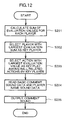
- Fig. 12 is a flowchart of a process to be carried out mainly by the key play selection unit 76b. The shown process is carried out by the microprocessor 14 by executing a program read from the DVD-ROM 25.
- the sum of the valuation values is calculated for every player object 46, based on the action evaluation value table (see Fig. 9 ) produced by the evaluation value calculation unit 76a (S201). Also, the player object 46 having the largest sum of the evaluation values is selected as a key player (S202). Further, an action having the highest evaluation value among those (ball-related actions) taken by the player object 46 selected as a key player is selected as a key play (S203).
- the comment sound output control unit 76 reads basic comment sound data and player name sound data from the sound data storage unit 74 (S204). For example, in the case of a highlight scene being a score scene, the comment sound output control unit 76 reads from the sound data storage unit 74 "basic comment sound data corresponding to a combination of a score scene and the action kind of the key play selected at S203", "player name sound data of the player object 46 having shot”, and "player name sound data of the player object 46 selected as a key player at S202".
- the comment sound output control unit 76 reads from the sound data storage unit 74, "basic comment sound data corresponding to a combination of a shoot scene and the action kind of the key play selected at S203", "player name sound data of the player object 46 having shot”, and "player name sound data of the player object 46 selected as a key player at S202".
- the comment sound output control unit 76 causes output of comment sound based on the sound data via the sound output unit 78 (S205). For example, suppose that a highlight scene is a score scene, the name of the player object 46 having shot is "C”, the name of the player object 46 selected at S202 as a key player is "B”, and the action kind of the key play selected at S203 is pass. In the above, comment sound such as "the shot by the player C was nice, and the pass by the player B was particularly terrific" is output via the sound output unit 78.
- evaluation values of the respective actions (ball-related actions) taken by the player object 46 during an evaluation target period based on a period (a reproduction target period) corresponding to a highlight scene in a game are calculated. Also, based on the calculation result, any of the actions taken during the evaluation target period are selected, and sound corresponding to the selected action is output.
- an evaluation value of an action is calculated based on an action taken after the action is taken, so that a key action (play) in the highlight scene is selected and sound corresponding to the key action is output.
- a key play comment function in the highlight scene function is realized in the game device 10, so that sound of a comment made by a commentator or the like about a key play in a highlight scene is output as sound of a comment made by a commentator or the like about the highlight scene (comment sound). This can enhance excitement in relation to the highlight scene function.
- the evaluation value calculation unit 76a may calculate an evaluation value of an action taken by the player object 46, based on the replay data recorded by the replay data recording unit 70a. That is, the replay data recording unit 70a is caused to function as the event history data recording unit 70b so that the replay data recorded by the replay data recording unit 70a is used as event history data.
- replay image of the scene may be displayed immediately after the score or shoot scene or the like, and the sound of a comment made by a commentator or the like about the key play in the scene may be output while the replay image is being displayed.
- the sound of a comment made by a commentator or the like about the key play in the scene may be solely output, while displaying no replay image.
- a play with the lowest evaluation, rather than the highest evaluation may be commented about as a key play.
- the evaluation value calculation unit 76a may diminish an evaluation value of at least one action, based on an action taken after that action is taken. For example, for a scene in which a shoot action taken by a teammate player (player F, here) having received a ball from a player (player E, here) having kept the ball in front of the opponent team goal is blocked by an opponent player and the ball comes into the possession of the opponent team, the evaluation values of the ball keep action and pass action by the player E may be diminished as it can be considered that, based on the fact that the shoot action by the player F was blocked by an opponent player, the player E might have been better off, e.g., taking a shoot action by himself, rather than the ball keep action and pass action.
- the evaluation value of the tackle action by the player G may be diminished so that a lower evaluation value than that for a simple tackle action may result.
- application of the present invention is not limited to a soccer game, and the present invention can be applied to any sport games other than a soccer game, as well as games other than sport games.
- the present invention is applicable to games having a highlight scene replay function, such as race games, fighting games, action games, and so forth.
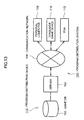
- Fig. 13 is a diagram showing an overall structure of a program distribution system using a communication network. Referring to Fig. 13 , a program distribution method according to the present invention will be described. As shown, the program distribution system 100 comprises a game database 102, a server 104, a communication network 106, a personal computer 108, a consumer game device 110, and a PDA (a personal digital assistant) 112. Among those structural elements, the game database 102 and server 104 together constitute a program distribution device 114.
- the communication network 106 comprises, for example, the Internet and/or a cable television network.
- the game database 102 (an information storage medium) stores a program having content identical to that recorded in the DVD-ROM 25. Then, when a user wishing to obtain a game makes a request for game distribution, using the personal computer 108, consumer game device 110, PDA 112, or the like, the request is transmitted via the communication network 106 to the server 104. Then, the server 104, in response to the game distribution request, reads a program from the game database 102, and sends to the entity, such as the personal computer 108, consumer game device 110, PDA 112, or the like, having made the game distribution request.
- the server 104 may send a game unidirectionally.
- all programs necessary to realize the game are not necessarily distributed all at once (collective distribution), but only game components necessary for a particular aspect of the game may be distributed (divided distribution).
- game distribution via the communication network 106 makes it easier for the user wishing to obtain a program to obtain the program.
Landscapes
- Engineering & Computer Science (AREA)
- Multimedia (AREA)
- Physics & Mathematics (AREA)
- Acoustics & Sound (AREA)
- Processing Or Creating Images (AREA)
- Television Signal Processing For Recording (AREA)
- Electrically Operated Instructional Devices (AREA)
- Signal Processing For Digital Recording And Reproducing (AREA)
Applications Claiming Priority (2)
| Application Number | Priority Date | Filing Date | Title |
|---|---|---|---|
| JP2006038852A JP3962079B1 (ja) | 2006-02-16 | 2006-02-16 | ゲーム装置、ゲーム装置の制御方法及びプログラム |
| PCT/JP2006/325180 WO2007094120A1 (ja) | 2006-02-16 | 2006-12-18 | ゲーム装置、ゲーム装置の制御方法及び情報記憶媒体 |
Publications (2)
| Publication Number | Publication Date |
|---|---|
| EP1985338A1 true EP1985338A1 (de) | 2008-10-29 |
| EP1985338A4 EP1985338A4 (de) | 2009-09-23 |
Family
ID=38371308
Family Applications (1)
| Application Number | Title | Priority Date | Filing Date |
|---|---|---|---|
| EP06834892A Withdrawn EP1985338A4 (de) | 2006-02-16 | 2006-12-18 | Spielvorrichtung, steuerverfahren für eine spielvorrichtung und informationsspeichermedium |
Country Status (7)
| Country | Link |
|---|---|
| US (1) | US20100190551A1 (de) |
| EP (1) | EP1985338A4 (de) |
| JP (1) | JP3962079B1 (de) |
| KR (1) | KR101027359B1 (de) |
| CN (1) | CN101370561B (de) |
| TW (1) | TWI324527B (de) |
| WO (1) | WO2007094120A1 (de) |
Cited By (2)
| Publication number | Priority date | Publication date | Assignee | Title |
|---|---|---|---|---|
| EP2500068A1 (de) * | 2011-03-18 | 2012-09-19 | Konami Digital Entertainment Co., Ltd. | Spielvorrichtung, Steuerungsverfahren für eine Spielvorrichtung, Programm und Informationsspeichermedium |
| US9566519B2 (en) | 2008-07-10 | 2017-02-14 | Konami Digital Entertainment Co., Ltd. | Game system, game device control method, program, and information storage medium |
Families Citing this family (16)
| Publication number | Priority date | Publication date | Assignee | Title |
|---|---|---|---|---|
| IL190111A0 (en) * | 2008-03-11 | 2008-12-29 | Oren Cohen | Method and system for representing game data in a generic form |
| FR2933604B1 (fr) * | 2008-07-10 | 2012-01-06 | Proteor | Prothese de cheville |
| US20100035689A1 (en) * | 2008-08-11 | 2010-02-11 | Yaniv Altshuler | System and method for a gaming community |
| JP5396044B2 (ja) | 2008-08-20 | 2014-01-22 | 株式会社コナミデジタルエンタテインメント | ゲーム装置、ゲーム装置の制御方法、及びプログラム |
| JP5546846B2 (ja) * | 2009-12-16 | 2014-07-09 | 株式会社スクウェア・エニックス | 効果音情報生成装置、効果音情報生成方法、及び効果音情報生成プログラム |
| JP5193348B2 (ja) * | 2011-10-03 | 2013-05-08 | 株式会社コナミデジタルエンタテインメント | ゲーム装置、ゲーム装置の制御方法、及びプログラム |
| CN104915542B (zh) * | 2015-05-08 | 2018-05-22 | 珠海金山网络游戏科技有限公司 | 一种基于数据同步的网游录像与回放的方法 |
| EP4015055A1 (de) * | 2016-03-16 | 2022-06-22 | Skillz Platform Inc. | Verwaltung von streaming-videodaten |
| JP6828590B2 (ja) * | 2017-05-23 | 2021-02-10 | 株式会社Jvcケンウッド | チャット端末装置、チャットシステム、チャット表示方法、及びチャット表示プログラム |
| JP6947985B2 (ja) * | 2018-12-17 | 2021-10-13 | 株式会社カプコン | ゲーム動画編集プログラムならびにゲーム動画編集システム |
| CN112233647B (zh) * | 2019-06-26 | 2025-10-17 | 索尼公司 | 信息处理设备和方法以及计算机可读存储介质 |
| JP7218873B6 (ja) * | 2019-09-24 | 2023-12-11 | 株式会社RiBLA | アニメーション制作システム |
| CN112535865B (zh) * | 2020-12-15 | 2024-08-23 | 网易(杭州)网络有限公司 | 游戏内容的回放方法、终端、可读存储介质及电子设备 |
| JP7053931B1 (ja) * | 2021-08-17 | 2022-04-12 | 株式会社Cygames | 不具合原因を推定するための方法、プログラム、システム、及び装置 |
| CN115779426B (zh) * | 2022-12-05 | 2026-02-13 | 广州博冠信息科技有限公司 | 游戏数据处理方法及装置、存储介质、电子设备 |
| CN116531754A (zh) * | 2023-05-06 | 2023-08-04 | 网易(杭州)网络有限公司 | 游戏中虚拟角色的控制方法、装置以及电子终端 |
Family Cites Families (11)
| Publication number | Priority date | Publication date | Assignee | Title |
|---|---|---|---|---|
| JP3890646B2 (ja) * | 1997-01-30 | 2007-03-07 | 株式会社セガ | ゲーム機における音声発生装置及び方法 |
| JPH114969A (ja) | 1997-06-16 | 1999-01-12 | Konami Co Ltd | ゲーム装置、ゲーム方法および可読記録媒体 |
| JP3209988B2 (ja) | 1999-11-05 | 2001-09-17 | 株式会社ナムコ | ゲーム装置、処理方法および記録媒体 |
| JP3265296B2 (ja) * | 2000-02-04 | 2002-03-11 | コナミ株式会社 | ゲームシステムおよびそれに使用するコンピュータ読みとり可能な記憶媒体 |
| US6699127B1 (en) * | 2000-06-20 | 2004-03-02 | Nintendo Of America Inc. | Real-time replay system for video game |
| US6606689B1 (en) * | 2000-08-23 | 2003-08-12 | Nintendo Co., Ltd. | Method and apparatus for pre-caching data in audio memory |
| US20030204275A1 (en) * | 2002-04-26 | 2003-10-30 | Krubeck Ronald Lee | Sports charting system |
| US6830513B1 (en) * | 2003-05-23 | 2004-12-14 | Acceleration Corp. | Computer-based player performance variation |
| JP3735359B2 (ja) * | 2003-09-12 | 2006-01-18 | コナミ株式会社 | ビデオゲームプログラム、ビデオゲーム装置及びビデオゲーム方法 |
| JP4409994B2 (ja) | 2004-03-04 | 2010-02-03 | 株式会社バンダイナムコゲームス | プログラム、情報記憶媒体及びゲーム装置 |
| JP2006014954A (ja) * | 2004-07-01 | 2006-01-19 | Aruze Corp | ゲームシステム |
-
2006
- 2006-02-16 JP JP2006038852A patent/JP3962079B1/ja not_active Expired - Lifetime
- 2006-12-18 EP EP06834892A patent/EP1985338A4/de not_active Withdrawn
- 2006-12-18 US US12/279,674 patent/US20100190551A1/en not_active Abandoned
- 2006-12-18 CN CN2006800527530A patent/CN101370561B/zh not_active Expired - Fee Related
- 2006-12-18 WO PCT/JP2006/325180 patent/WO2007094120A1/ja not_active Ceased
- 2006-12-18 KR KR1020087021604A patent/KR101027359B1/ko not_active Expired - Fee Related
-
2007
- 2007-02-02 TW TW096103836A patent/TWI324527B/zh not_active IP Right Cessation
Cited By (3)
| Publication number | Priority date | Publication date | Assignee | Title |
|---|---|---|---|---|
| US9566519B2 (en) | 2008-07-10 | 2017-02-14 | Konami Digital Entertainment Co., Ltd. | Game system, game device control method, program, and information storage medium |
| EP2500068A1 (de) * | 2011-03-18 | 2012-09-19 | Konami Digital Entertainment Co., Ltd. | Spielvorrichtung, Steuerungsverfahren für eine Spielvorrichtung, Programm und Informationsspeichermedium |
| US9289682B2 (en) | 2011-03-18 | 2016-03-22 | Konami Digital Entertainment Co., Ltd. | Game device, control method for a game device, and information storage medium |
Also Published As
| Publication number | Publication date |
|---|---|
| WO2007094120A1 (ja) | 2007-08-23 |
| CN101370561A (zh) | 2009-02-18 |
| TWI324527B (en) | 2010-05-11 |
| US20100190551A1 (en) | 2010-07-29 |
| TW200735936A (en) | 2007-10-01 |
| JP2007215713A (ja) | 2007-08-30 |
| JP3962079B1 (ja) | 2007-08-22 |
| CN101370561B (zh) | 2012-01-25 |
| KR20080091511A (ko) | 2008-10-13 |
| EP1985338A4 (de) | 2009-09-23 |
| KR101027359B1 (ko) | 2011-04-11 |
Similar Documents
| Publication | Publication Date | Title |
|---|---|---|
| US20100190551A1 (en) | Game device, game device control method, and information storage medium | |
| US8814684B2 (en) | Game machine, game machine control method, and information storage medium | |
| US8496526B2 (en) | Game machine, control method of game machine and information storage medium | |
| US20090253506A1 (en) | Game movie distribution method and system | |
| EP2184090A1 (de) | Netzwerkspielsystem, verfahren zur netzwerkspielsystemsteuerung, programm und informationsspeichermittel | |
| US7677966B2 (en) | Game device | |
| US9399169B2 (en) | Game system, control method for game system, output device, control method for output device, and information storage medium | |
| US6682425B2 (en) | Game system for generating random on-the-spot broadcasting data based on player historical performance data | |
| US8333663B2 (en) | Game device, method of controlling game device, program, and information storage medium | |
| US7976371B2 (en) | Game device, game device control method, and information storage medium | |
| US8267796B2 (en) | Game machine, game machine control method, and information storage medium | |
| US20090280895A1 (en) | Game machine, game machine control method, and information storage medium | |
| JP5044171B2 (ja) | ゲーム装置、ゲーム装置の制御方法及びプログラム | |
| KR100907207B1 (ko) | 게임 시스템, 게임 시스템의 제어 방법 및 정보 기억 매체 | |
| US20110034249A1 (en) | Game device, game device control method, and information storage medium | |
| TWI381870B (zh) | 遊戲裝置、遊戲裝置之控制方法及資訊記憶媒體 | |
| KR100907206B1 (ko) | 게임 시스템, 게임 시스템의 제어 방법 및 정보 기억 매체 | |
| US7985126B2 (en) | Game device, game device control method, and information storage medium |
Legal Events
| Date | Code | Title | Description |
|---|---|---|---|
| PUAI | Public reference made under article 153(3) epc to a published international application that has entered the european phase |
Free format text: ORIGINAL CODE: 0009012 |
|
| 17P | Request for examination filed |
Effective date: 20080821 |
|
| AK | Designated contracting states |
Kind code of ref document: A1 Designated state(s): DE FR GB |
|
| DAX | Request for extension of the european patent (deleted) | ||
| RBV | Designated contracting states (corrected) |
Designated state(s): DE FR GB |
|
| A4 | Supplementary search report drawn up and despatched |
Effective date: 20090826 |
|
| 17Q | First examination report despatched |
Effective date: 20100412 |
|
| GRAP | Despatch of communication of intention to grant a patent |
Free format text: ORIGINAL CODE: EPIDOSNIGR1 |
|
| RIC1 | Information provided on ipc code assigned before grant |
Ipc: A63F 13/45 20140101AFI20140513BHEP |
|
| INTG | Intention to grant announced |
Effective date: 20140528 |
|
| STAA | Information on the status of an ep patent application or granted ep patent |
Free format text: STATUS: THE APPLICATION IS DEEMED TO BE WITHDRAWN |
|
| 18D | Application deemed to be withdrawn |
Effective date: 20140701 |