EP1981835B1 - Procede de preparation d'acide acrylique - Google Patents
Procede de preparation d'acide acrylique Download PDFInfo
- Publication number
- EP1981835B1 EP1981835B1 EP07731584A EP07731584A EP1981835B1 EP 1981835 B1 EP1981835 B1 EP 1981835B1 EP 07731584 A EP07731584 A EP 07731584A EP 07731584 A EP07731584 A EP 07731584A EP 1981835 B1 EP1981835 B1 EP 1981835B1
- Authority
- EP
- European Patent Office
- Prior art keywords
- propylene
- acrolein
- oxidation
- glycerol
- acrylic acid
- Prior art date
- Legal status (The legal status is an assumption and is not a legal conclusion. Google has not performed a legal analysis and makes no representation as to the accuracy of the status listed.)
- Not-in-force
Links
- NIXOWILDQLNWCW-UHFFFAOYSA-N 2-Propenoic acid Natural products OC(=O)C=C NIXOWILDQLNWCW-UHFFFAOYSA-N 0.000 title claims abstract description 61
- SMZOUWXMTYCWNB-UHFFFAOYSA-N 2-(2-methoxy-5-methylphenyl)ethanamine Chemical compound COC1=CC=C(C)C=C1CCN SMZOUWXMTYCWNB-UHFFFAOYSA-N 0.000 title claims abstract description 57
- 238000002360 preparation method Methods 0.000 title claims description 4
- PEDCQBHIVMGVHV-UHFFFAOYSA-N Glycerine Chemical compound OCC(O)CO PEDCQBHIVMGVHV-UHFFFAOYSA-N 0.000 claims abstract description 199
- HGINCPLSRVDWNT-UHFFFAOYSA-N Acrolein Chemical compound C=CC=O HGINCPLSRVDWNT-UHFFFAOYSA-N 0.000 claims abstract description 172
- QQONPFPTGQHPMA-UHFFFAOYSA-N propylene Natural products CC=C QQONPFPTGQHPMA-UHFFFAOYSA-N 0.000 claims abstract description 96
- 125000004805 propylene group Chemical group [H]C([H])([H])C([H])([*:1])C([H])([H])[*:2] 0.000 claims abstract description 94
- 238000007254 oxidation reaction Methods 0.000 claims abstract description 90
- 230000003647 oxidation Effects 0.000 claims abstract description 67
- 239000007789 gas Substances 0.000 claims abstract description 51
- 238000006297 dehydration reaction Methods 0.000 claims abstract description 43
- 230000018044 dehydration Effects 0.000 claims abstract description 33
- 238000000034 method Methods 0.000 claims abstract description 30
- 239000012495 reaction gas Substances 0.000 claims abstract description 7
- 239000003054 catalyst Substances 0.000 claims description 50
- 208000005156 Dehydration Diseases 0.000 claims description 32
- MYMOFIZGZYHOMD-UHFFFAOYSA-N Dioxygen Chemical compound O=O MYMOFIZGZYHOMD-UHFFFAOYSA-N 0.000 claims description 12
- 229910001882 dioxygen Inorganic materials 0.000 claims description 12
- 239000007864 aqueous solution Substances 0.000 claims description 7
- 239000007788 liquid Substances 0.000 claims description 3
- 238000004519 manufacturing process Methods 0.000 abstract description 7
- 239000002994 raw material Substances 0.000 abstract description 3
- 238000006243 chemical reaction Methods 0.000 description 31
- 239000000203 mixture Substances 0.000 description 26
- XLYOFNOQVPJJNP-UHFFFAOYSA-N water Chemical compound O XLYOFNOQVPJJNP-UHFFFAOYSA-N 0.000 description 21
- QVGXLLKOCUKJST-UHFFFAOYSA-N atomic oxygen Chemical compound [O] QVGXLLKOCUKJST-UHFFFAOYSA-N 0.000 description 14
- 239000008246 gaseous mixture Substances 0.000 description 14
- 239000001301 oxygen Substances 0.000 description 14
- 229910052760 oxygen Inorganic materials 0.000 description 14
- 239000002245 particle Substances 0.000 description 14
- ATUOYWHBWRKTHZ-UHFFFAOYSA-N Propane Chemical compound CCC ATUOYWHBWRKTHZ-UHFFFAOYSA-N 0.000 description 12
- HBMJWWWQQXIZIP-UHFFFAOYSA-N silicon carbide Chemical compound [Si+]#[C-] HBMJWWWQQXIZIP-UHFFFAOYSA-N 0.000 description 11
- 229910010271 silicon carbide Inorganic materials 0.000 description 11
- IJGRMHOSHXDMSA-UHFFFAOYSA-N Atomic nitrogen Chemical compound N#N IJGRMHOSHXDMSA-UHFFFAOYSA-N 0.000 description 10
- 230000003197 catalytic effect Effects 0.000 description 10
- 239000006227 byproduct Substances 0.000 description 9
- XKRFYHLGVUSROY-UHFFFAOYSA-N Argon Chemical compound [Ar] XKRFYHLGVUSROY-UHFFFAOYSA-N 0.000 description 6
- MCMNRKCIXSYSNV-UHFFFAOYSA-N Zirconium dioxide Chemical compound O=[Zr]=O MCMNRKCIXSYSNV-UHFFFAOYSA-N 0.000 description 6
- YOXPXVNXEBECOA-UHFFFAOYSA-N helium krypton Chemical compound [He].[Kr] YOXPXVNXEBECOA-UHFFFAOYSA-N 0.000 description 6
- 239000012071 phase Substances 0.000 description 6
- 239000001294 propane Substances 0.000 description 6
- 238000001816 cooling Methods 0.000 description 5
- JMBPWMGVERNEJY-UHFFFAOYSA-N helium;hydrate Chemical compound [He].O JMBPWMGVERNEJY-UHFFFAOYSA-N 0.000 description 5
- 229910052757 nitrogen Inorganic materials 0.000 description 5
- 239000000243 solution Substances 0.000 description 5
- KFZMGEQAYNKOFK-UHFFFAOYSA-N Isopropanol Chemical compound CC(C)O KFZMGEQAYNKOFK-UHFFFAOYSA-N 0.000 description 4
- 230000008901 benefit Effects 0.000 description 4
- 230000000694 effects Effects 0.000 description 4
- 239000011261 inert gas Substances 0.000 description 4
- BDERNNFJNOPAEC-UHFFFAOYSA-N propan-1-ol Chemical compound CCCO BDERNNFJNOPAEC-UHFFFAOYSA-N 0.000 description 4
- 238000011144 upstream manufacturing Methods 0.000 description 4
- QTBSBXVTEAMEQO-UHFFFAOYSA-N Acetic acid Chemical compound CC(O)=O QTBSBXVTEAMEQO-UHFFFAOYSA-N 0.000 description 3
- 229910004298 SiO 2 Inorganic materials 0.000 description 3
- 229910052786 argon Inorganic materials 0.000 description 3
- 239000000470 constituent Substances 0.000 description 3
- -1 glycerol ethers Chemical class 0.000 description 3
- 229910052743 krypton Inorganic materials 0.000 description 3
- 238000000926 separation method Methods 0.000 description 3
- WFKWXMTUELFFGS-UHFFFAOYSA-N tungsten Chemical compound [W] WFKWXMTUELFFGS-UHFFFAOYSA-N 0.000 description 3
- 229910052721 tungsten Inorganic materials 0.000 description 3
- 239000010937 tungsten Substances 0.000 description 3
- RZVAJINKPMORJF-UHFFFAOYSA-N Acetaminophen Chemical compound CC(=O)NC1=CC=C(O)C=C1 RZVAJINKPMORJF-UHFFFAOYSA-N 0.000 description 2
- 229910018072 Al 2 O 3 Inorganic materials 0.000 description 2
- 101000780208 Homo sapiens Long-chain-fatty-acid-CoA ligase 4 Proteins 0.000 description 2
- 102100034319 Long-chain-fatty-acid-CoA ligase 4 Human genes 0.000 description 2
- 101100000595 Saccharomyces cerevisiae (strain ATCC 204508 / S288c) ACF4 gene Proteins 0.000 description 2
- VYPSYNLAJGMNEJ-UHFFFAOYSA-N Silicium dioxide Chemical compound O=[Si]=O VYPSYNLAJGMNEJ-UHFFFAOYSA-N 0.000 description 2
- 239000002253 acid Substances 0.000 description 2
- 230000002378 acidificating effect Effects 0.000 description 2
- 150000007513 acids Chemical class 0.000 description 2
- XXROGKLTLUQVRX-UHFFFAOYSA-N allyl alcohol Chemical compound OCC=C XXROGKLTLUQVRX-UHFFFAOYSA-N 0.000 description 2
- 150000001412 amines Chemical class 0.000 description 2
- 230000015572 biosynthetic process Effects 0.000 description 2
- 229910002091 carbon monoxide Inorganic materials 0.000 description 2
- 238000006555 catalytic reaction Methods 0.000 description 2
- 239000007795 chemical reaction product Substances 0.000 description 2
- 238000004587 chromatography analysis Methods 0.000 description 2
- 230000000052 comparative effect Effects 0.000 description 2
- 239000012809 cooling fluid Substances 0.000 description 2
- 239000000446 fuel Substances 0.000 description 2
- 239000012535 impurity Substances 0.000 description 2
- 238000002347 injection Methods 0.000 description 2
- 239000007924 injection Substances 0.000 description 2
- DNNSSWSSYDEUBZ-UHFFFAOYSA-N krypton atom Chemical compound [Kr] DNNSSWSSYDEUBZ-UHFFFAOYSA-N 0.000 description 2
- 239000000463 material Substances 0.000 description 2
- 239000000843 powder Substances 0.000 description 2
- 239000000047 product Substances 0.000 description 2
- CMDGQTVYVAKDNA-UHFFFAOYSA-N propane-1,2,3-triol;hydrate Chemical compound O.OCC(O)CO CMDGQTVYVAKDNA-UHFFFAOYSA-N 0.000 description 2
- YPFDHNVEDLHUCE-UHFFFAOYSA-N propane-1,3-diol Chemical compound OCCCO YPFDHNVEDLHUCE-UHFFFAOYSA-N 0.000 description 2
- 239000005297 pyrex Substances 0.000 description 2
- 229910052710 silicon Inorganic materials 0.000 description 2
- 239000010703 silicon Substances 0.000 description 2
- 238000001179 sorption measurement Methods 0.000 description 2
- 229910001887 tin oxide Inorganic materials 0.000 description 2
- 238000005406 washing Methods 0.000 description 2
- 239000010457 zeolite Substances 0.000 description 2
- KRQUFUKTQHISJB-YYADALCUSA-N 2-[(E)-N-[2-(4-chlorophenoxy)propoxy]-C-propylcarbonimidoyl]-3-hydroxy-5-(thian-3-yl)cyclohex-2-en-1-one Chemical compound CCC\C(=N/OCC(C)OC1=CC=C(Cl)C=C1)C1=C(O)CC(CC1=O)C1CCCSC1 KRQUFUKTQHISJB-YYADALCUSA-N 0.000 description 1
- LSNNMFCWUKXFEE-UHFFFAOYSA-M Bisulfite Chemical compound OS([O-])=O LSNNMFCWUKXFEE-UHFFFAOYSA-M 0.000 description 1
- BTBUEUYNUDRHOZ-UHFFFAOYSA-N Borate Chemical compound [O-]B([O-])[O-] BTBUEUYNUDRHOZ-UHFFFAOYSA-N 0.000 description 1
- 229920000557 Nafion® Polymers 0.000 description 1
- BPQQTUXANYXVAA-UHFFFAOYSA-N Orthosilicate Chemical compound [O-][Si]([O-])([O-])[O-] BPQQTUXANYXVAA-UHFFFAOYSA-N 0.000 description 1
- 229910019142 PO4 Inorganic materials 0.000 description 1
- 239000004743 Polypropylene Substances 0.000 description 1
- KWYUFKZDYYNOTN-UHFFFAOYSA-M Potassium hydroxide Chemical compound [OH-].[K+] KWYUFKZDYYNOTN-UHFFFAOYSA-M 0.000 description 1
- GOOHAUXETOMSMM-UHFFFAOYSA-N Propylene oxide Chemical compound CC1CO1 GOOHAUXETOMSMM-UHFFFAOYSA-N 0.000 description 1
- 229910006404 SnO 2 Inorganic materials 0.000 description 1
- QAOWNCQODCNURD-UHFFFAOYSA-L Sulfate Chemical compound [O-]S([O-])(=O)=O QAOWNCQODCNURD-UHFFFAOYSA-L 0.000 description 1
- 229910010413 TiO 2 Inorganic materials 0.000 description 1
- GWEVSGVZZGPLCZ-UHFFFAOYSA-N Titan oxide Chemical compound O=[Ti]=O GWEVSGVZZGPLCZ-UHFFFAOYSA-N 0.000 description 1
- 240000008042 Zea mays Species 0.000 description 1
- PNEYBMLMFCGWSK-UHFFFAOYSA-N aluminium oxide Inorganic materials [O-2].[O-2].[O-2].[Al+3].[Al+3] PNEYBMLMFCGWSK-UHFFFAOYSA-N 0.000 description 1
- 238000005815 base catalysis Methods 0.000 description 1
- 239000000969 carrier Substances 0.000 description 1
- 238000004523 catalytic cracking Methods 0.000 description 1
- 239000003153 chemical reaction reagent Substances 0.000 description 1
- 238000004939 coking Methods 0.000 description 1
- 238000004440 column chromatography Methods 0.000 description 1
- 239000002131 composite material Substances 0.000 description 1
- 150000001875 compounds Chemical class 0.000 description 1
- 238000007796 conventional method Methods 0.000 description 1
- 230000009849 deactivation Effects 0.000 description 1
- 230000001419 dependent effect Effects 0.000 description 1
- 238000007599 discharging Methods 0.000 description 1
- 229920002313 fluoropolymer Polymers 0.000 description 1
- 238000010438 heat treatment Methods 0.000 description 1
- 239000001307 helium Substances 0.000 description 1
- 229910052734 helium Inorganic materials 0.000 description 1
- SWQJXJOGLNCZEY-UHFFFAOYSA-N helium atom Chemical compound [He] SWQJXJOGLNCZEY-UHFFFAOYSA-N 0.000 description 1
- 238000006703 hydration reaction Methods 0.000 description 1
- 238000009434 installation Methods 0.000 description 1
- 239000007791 liquid phase Substances 0.000 description 1
- 238000011068 loading method Methods 0.000 description 1
- 239000012528 membrane Substances 0.000 description 1
- 229910044991 metal oxide Inorganic materials 0.000 description 1
- 150000004706 metal oxides Chemical class 0.000 description 1
- 238000006140 methanolysis reaction Methods 0.000 description 1
- 150000004702 methyl esters Chemical class 0.000 description 1
- 150000007522 mineralic acids Chemical class 0.000 description 1
- MEFBJEMVZONFCJ-UHFFFAOYSA-N molybdate Chemical compound [O-][Mo]([O-])(=O)=O MEFBJEMVZONFCJ-UHFFFAOYSA-N 0.000 description 1
- 229930014626 natural product Natural products 0.000 description 1
- 229910000484 niobium oxide Inorganic materials 0.000 description 1
- URLJKFSTXLNXLG-UHFFFAOYSA-N niobium(5+);oxygen(2-) Chemical compound [O-2].[O-2].[O-2].[O-2].[O-2].[Nb+5].[Nb+5] URLJKFSTXLNXLG-UHFFFAOYSA-N 0.000 description 1
- 239000003921 oil Substances 0.000 description 1
- 235000019198 oils Nutrition 0.000 description 1
- BPUBBGLMJRNUCC-UHFFFAOYSA-N oxygen(2-);tantalum(5+) Chemical compound [O-2].[O-2].[O-2].[O-2].[O-2].[Ta+5].[Ta+5] BPUBBGLMJRNUCC-UHFFFAOYSA-N 0.000 description 1
- 230000003071 parasitic effect Effects 0.000 description 1
- 239000003208 petroleum Substances 0.000 description 1
- NBIIXXVUZAFLBC-UHFFFAOYSA-K phosphate Chemical compound [O-]P([O-])([O-])=O NBIIXXVUZAFLBC-UHFFFAOYSA-K 0.000 description 1
- 239000010452 phosphate Substances 0.000 description 1
- 235000021317 phosphate Nutrition 0.000 description 1
- IYDGMDWEHDFVQI-UHFFFAOYSA-N phosphoric acid;trioxotungsten Chemical compound O=[W](=O)=O.O=[W](=O)=O.O=[W](=O)=O.O=[W](=O)=O.O=[W](=O)=O.O=[W](=O)=O.O=[W](=O)=O.O=[W](=O)=O.O=[W](=O)=O.O=[W](=O)=O.O=[W](=O)=O.O=[W](=O)=O.OP(O)(O)=O IYDGMDWEHDFVQI-UHFFFAOYSA-N 0.000 description 1
- 229920001155 polypropylene Polymers 0.000 description 1
- 229940072033 potash Drugs 0.000 description 1
- BWHMMNNQKKPAPP-UHFFFAOYSA-L potassium carbonate Substances [K+].[K+].[O-]C([O-])=O BWHMMNNQKKPAPP-UHFFFAOYSA-L 0.000 description 1
- 235000015320 potassium carbonate Nutrition 0.000 description 1
- PBDKKYFZLPVGMK-UHFFFAOYSA-N prop-2-enal;prop-1-ene Chemical group CC=C.C=CC=O PBDKKYFZLPVGMK-UHFFFAOYSA-N 0.000 description 1
- 238000000746 purification Methods 0.000 description 1
- 238000004445 quantitative analysis Methods 0.000 description 1
- 239000012429 reaction media Substances 0.000 description 1
- 238000004064 recycling Methods 0.000 description 1
- 150000003839 salts Chemical class 0.000 description 1
- 239000000377 silicon dioxide Substances 0.000 description 1
- 239000007787 solid Substances 0.000 description 1
- 239000011949 solid catalyst Substances 0.000 description 1
- 238000004230 steam cracking Methods 0.000 description 1
- 238000006467 substitution reaction Methods 0.000 description 1
- 238000003786 synthesis reaction Methods 0.000 description 1
- 230000002194 synthesizing effect Effects 0.000 description 1
- 229910001936 tantalum oxide Inorganic materials 0.000 description 1
- XOLBLPGZBRYERU-UHFFFAOYSA-N tin dioxide Chemical compound O=[Sn]=O XOLBLPGZBRYERU-UHFFFAOYSA-N 0.000 description 1
- QHGNHLZPVBIIPX-UHFFFAOYSA-N tin(ii) oxide Chemical class [Sn]=O QHGNHLZPVBIIPX-UHFFFAOYSA-N 0.000 description 1
- 150000003608 titanium Chemical class 0.000 description 1
- OGIDPMRJRNCKJF-UHFFFAOYSA-N titanium oxide Inorganic materials [Ti]=O OGIDPMRJRNCKJF-UHFFFAOYSA-N 0.000 description 1
- 238000004448 titration Methods 0.000 description 1
- 238000011282 treatment Methods 0.000 description 1
- PBYZMCDFOULPGH-UHFFFAOYSA-N tungstate Chemical compound [O-][W]([O-])(=O)=O PBYZMCDFOULPGH-UHFFFAOYSA-N 0.000 description 1
- 239000012808 vapor phase Substances 0.000 description 1
- 238000009834 vaporization Methods 0.000 description 1
- 230000008016 vaporization Effects 0.000 description 1
- 235000015112 vegetable and seed oil Nutrition 0.000 description 1
- 239000008158 vegetable oil Substances 0.000 description 1
- LEHFSLREWWMLPU-UHFFFAOYSA-B zirconium(4+);tetraphosphate Chemical class [Zr+4].[Zr+4].[Zr+4].[O-]P([O-])([O-])=O.[O-]P([O-])([O-])=O.[O-]P([O-])([O-])=O.[O-]P([O-])([O-])=O LEHFSLREWWMLPU-UHFFFAOYSA-B 0.000 description 1
Images
Classifications
-
- C—CHEMISTRY; METALLURGY
- C07—ORGANIC CHEMISTRY
- C07C—ACYCLIC OR CARBOCYCLIC COMPOUNDS
- C07C45/00—Preparation of compounds having >C = O groups bound only to carbon or hydrogen atoms; Preparation of chelates of such compounds
- C07C45/51—Preparation of compounds having >C = O groups bound only to carbon or hydrogen atoms; Preparation of chelates of such compounds by pyrolysis, rearrangement or decomposition
- C07C45/52—Preparation of compounds having >C = O groups bound only to carbon or hydrogen atoms; Preparation of chelates of such compounds by pyrolysis, rearrangement or decomposition by dehydration and rearrangement involving two hydroxy groups in the same molecule
-
- B—PERFORMING OPERATIONS; TRANSPORTING
- B01—PHYSICAL OR CHEMICAL PROCESSES OR APPARATUS IN GENERAL
- B01J—CHEMICAL OR PHYSICAL PROCESSES, e.g. CATALYSIS OR COLLOID CHEMISTRY; THEIR RELEVANT APPARATUS
- B01J8/00—Chemical or physical processes in general, conducted in the presence of fluids and solid particles; Apparatus for such processes
- B01J8/02—Chemical or physical processes in general, conducted in the presence of fluids and solid particles; Apparatus for such processes with stationary particles, e.g. in fixed beds
- B01J8/04—Chemical or physical processes in general, conducted in the presence of fluids and solid particles; Apparatus for such processes with stationary particles, e.g. in fixed beds the fluid passing successively through two or more beds
- B01J8/0446—Chemical or physical processes in general, conducted in the presence of fluids and solid particles; Apparatus for such processes with stationary particles, e.g. in fixed beds the fluid passing successively through two or more beds the flow within the beds being predominantly vertical
- B01J8/0449—Chemical or physical processes in general, conducted in the presence of fluids and solid particles; Apparatus for such processes with stationary particles, e.g. in fixed beds the fluid passing successively through two or more beds the flow within the beds being predominantly vertical in two or more cylindrical beds
- B01J8/0453—Chemical or physical processes in general, conducted in the presence of fluids and solid particles; Apparatus for such processes with stationary particles, e.g. in fixed beds the fluid passing successively through two or more beds the flow within the beds being predominantly vertical in two or more cylindrical beds the beds being superimposed one above the other
-
- B—PERFORMING OPERATIONS; TRANSPORTING
- B01—PHYSICAL OR CHEMICAL PROCESSES OR APPARATUS IN GENERAL
- B01J—CHEMICAL OR PHYSICAL PROCESSES, e.g. CATALYSIS OR COLLOID CHEMISTRY; THEIR RELEVANT APPARATUS
- B01J8/00—Chemical or physical processes in general, conducted in the presence of fluids and solid particles; Apparatus for such processes
- B01J8/02—Chemical or physical processes in general, conducted in the presence of fluids and solid particles; Apparatus for such processes with stationary particles, e.g. in fixed beds
- B01J8/04—Chemical or physical processes in general, conducted in the presence of fluids and solid particles; Apparatus for such processes with stationary particles, e.g. in fixed beds the fluid passing successively through two or more beds
- B01J8/0446—Chemical or physical processes in general, conducted in the presence of fluids and solid particles; Apparatus for such processes with stationary particles, e.g. in fixed beds the fluid passing successively through two or more beds the flow within the beds being predominantly vertical
- B01J8/0449—Chemical or physical processes in general, conducted in the presence of fluids and solid particles; Apparatus for such processes with stationary particles, e.g. in fixed beds the fluid passing successively through two or more beds the flow within the beds being predominantly vertical in two or more cylindrical beds
- B01J8/0457—Chemical or physical processes in general, conducted in the presence of fluids and solid particles; Apparatus for such processes with stationary particles, e.g. in fixed beds the fluid passing successively through two or more beds the flow within the beds being predominantly vertical in two or more cylindrical beds the beds being placed in separate reactors
-
- B—PERFORMING OPERATIONS; TRANSPORTING
- B01—PHYSICAL OR CHEMICAL PROCESSES OR APPARATUS IN GENERAL
- B01J—CHEMICAL OR PHYSICAL PROCESSES, e.g. CATALYSIS OR COLLOID CHEMISTRY; THEIR RELEVANT APPARATUS
- B01J8/00—Chemical or physical processes in general, conducted in the presence of fluids and solid particles; Apparatus for such processes
- B01J8/02—Chemical or physical processes in general, conducted in the presence of fluids and solid particles; Apparatus for such processes with stationary particles, e.g. in fixed beds
- B01J8/04—Chemical or physical processes in general, conducted in the presence of fluids and solid particles; Apparatus for such processes with stationary particles, e.g. in fixed beds the fluid passing successively through two or more beds
- B01J8/0492—Feeding reactive fluids
-
- B—PERFORMING OPERATIONS; TRANSPORTING
- B01—PHYSICAL OR CHEMICAL PROCESSES OR APPARATUS IN GENERAL
- B01J—CHEMICAL OR PHYSICAL PROCESSES, e.g. CATALYSIS OR COLLOID CHEMISTRY; THEIR RELEVANT APPARATUS
- B01J8/00—Chemical or physical processes in general, conducted in the presence of fluids and solid particles; Apparatus for such processes
- B01J8/02—Chemical or physical processes in general, conducted in the presence of fluids and solid particles; Apparatus for such processes with stationary particles, e.g. in fixed beds
- B01J8/04—Chemical or physical processes in general, conducted in the presence of fluids and solid particles; Apparatus for such processes with stationary particles, e.g. in fixed beds the fluid passing successively through two or more beds
- B01J8/0496—Heating or cooling the reactor
-
- C—CHEMISTRY; METALLURGY
- C07—ORGANIC CHEMISTRY
- C07C—ACYCLIC OR CARBOCYCLIC COMPOUNDS
- C07C45/00—Preparation of compounds having >C = O groups bound only to carbon or hydrogen atoms; Preparation of chelates of such compounds
- C07C45/27—Preparation of compounds having >C = O groups bound only to carbon or hydrogen atoms; Preparation of chelates of such compounds by oxidation
- C07C45/32—Preparation of compounds having >C = O groups bound only to carbon or hydrogen atoms; Preparation of chelates of such compounds by oxidation with molecular oxygen
- C07C45/33—Preparation of compounds having >C = O groups bound only to carbon or hydrogen atoms; Preparation of chelates of such compounds by oxidation with molecular oxygen of CHx-moieties
- C07C45/34—Preparation of compounds having >C = O groups bound only to carbon or hydrogen atoms; Preparation of chelates of such compounds by oxidation with molecular oxygen of CHx-moieties in unsaturated compounds
- C07C45/35—Preparation of compounds having >C = O groups bound only to carbon or hydrogen atoms; Preparation of chelates of such compounds by oxidation with molecular oxygen of CHx-moieties in unsaturated compounds in propene or isobutene
-
- C—CHEMISTRY; METALLURGY
- C07—ORGANIC CHEMISTRY
- C07C—ACYCLIC OR CARBOCYCLIC COMPOUNDS
- C07C51/00—Preparation of carboxylic acids or their salts, halides or anhydrides
- C07C51/16—Preparation of carboxylic acids or their salts, halides or anhydrides by oxidation
- C07C51/21—Preparation of carboxylic acids or their salts, halides or anhydrides by oxidation with molecular oxygen
- C07C51/23—Preparation of carboxylic acids or their salts, halides or anhydrides by oxidation with molecular oxygen of oxygen-containing groups to carboxyl groups
- C07C51/235—Preparation of carboxylic acids or their salts, halides or anhydrides by oxidation with molecular oxygen of oxygen-containing groups to carboxyl groups of —CHO groups or primary alcohol groups
-
- B—PERFORMING OPERATIONS; TRANSPORTING
- B01—PHYSICAL OR CHEMICAL PROCESSES OR APPARATUS IN GENERAL
- B01J—CHEMICAL OR PHYSICAL PROCESSES, e.g. CATALYSIS OR COLLOID CHEMISTRY; THEIR RELEVANT APPARATUS
- B01J2208/00—Processes carried out in the presence of solid particles; Reactors therefor
- B01J2208/00008—Controlling the process
- B01J2208/00017—Controlling the temperature
- B01J2208/00106—Controlling the temperature by indirect heat exchange
- B01J2208/00168—Controlling the temperature by indirect heat exchange with heat exchange elements outside the bed of solid particles
- B01J2208/00203—Coils
-
- B—PERFORMING OPERATIONS; TRANSPORTING
- B01—PHYSICAL OR CHEMICAL PROCESSES OR APPARATUS IN GENERAL
- B01J—CHEMICAL OR PHYSICAL PROCESSES, e.g. CATALYSIS OR COLLOID CHEMISTRY; THEIR RELEVANT APPARATUS
- B01J2208/00—Processes carried out in the presence of solid particles; Reactors therefor
- B01J2208/00796—Details of the reactor or of the particulate material
- B01J2208/00805—Details of the particulate material
- B01J2208/00814—Details of the particulate material the particulate material being provides in prefilled containers
-
- Y—GENERAL TAGGING OF NEW TECHNOLOGICAL DEVELOPMENTS; GENERAL TAGGING OF CROSS-SECTIONAL TECHNOLOGIES SPANNING OVER SEVERAL SECTIONS OF THE IPC; TECHNICAL SUBJECTS COVERED BY FORMER USPC CROSS-REFERENCE ART COLLECTIONS [XRACs] AND DIGESTS
- Y02—TECHNOLOGIES OR APPLICATIONS FOR MITIGATION OR ADAPTATION AGAINST CLIMATE CHANGE
- Y02P—CLIMATE CHANGE MITIGATION TECHNOLOGIES IN THE PRODUCTION OR PROCESSING OF GOODS
- Y02P20/00—Technologies relating to chemical industry
- Y02P20/50—Improvements relating to the production of bulk chemicals
- Y02P20/582—Recycling of unreacted starting or intermediate materials
Definitions
- the present invention relates to a process for the preparation of acrylic acid from propylene comprising a first stage of oxidation of propylene to acrolein and a second stage of oxidation of acrolein to acrylic acid, in which a process is carried out. step of dehydration of glycerol in the presence of a propylene-containing gas, and more particularly in the presence of the reaction gas resulting from the propylene oxidation step of acrolein.
- Glycerol can lead to acrolein.
- Glycerol comes from the methanolysis of vegetable oils at the same time methyl esters, which are used in particular as fuels or fuels in diesel and heating oil. It is a natural product that has a "green" aura, is available in large quantities and can be stored and transported without difficulty. Many studies are devoted to the valorisation of glycerol according to its degree of purity, and the dehydration of glycerol to acrolein is one of the ways envisaged.
- the hydration reaction is favored at low temperatures, and the dehydration reaction is favored at high temperatures.
- the reaction can be carried out in the liquid phase or in the gas phase. This type of reaction is known to be catalyzed by acids.
- Various methods of synthesizing acrolein from glycerol are described in the prior art; we can mention the documents FR 695931 , US 2,558,520 , WO 99/05085 , US5,387,720 .
- the document WO 2005/073160 discloses a process for preparing acrylic acid from glycerol in two steps, the first step of subjecting the glycerol to a gas phase dehydration reaction, the second step of subjecting the gaseous reaction product thus obtained to a reaction oxidation in the gas phase.
- the document EP-A-0257565 discloses a process for preparing acrylic acid from propylene in two stages.
- the object of the present invention is therefore a process for the preparation of acrylic acid from propylene comprising a first stage of oxidation of propylene to acrolein and a second stage of oxidation of acrolein to acrylic acid, characterized in that it comprises a step of dehydration of glycerol in the presence of a gas containing propylene.
- the gas containing propylene is the reaction gas resulting from the propylene oxidation step of acrolein.
- the glycerol dehydration step makes it possible to cool the reaction gases resulting from the first propylene oxidation step to acrolein, before carrying out the second step of oxidation of acrolein to acrylic acid.
- the reaction gases leave the reaction zone at an elevated temperature, the propylene oxidation reaction being exothermic.
- acrolein to acrylic acid because the acrolein oxidation reaction to acrylic acid takes place at a lower temperature than the propylene oxidation reaction to acrolein.
- acrolein can self-ignite at high temperatures resulting in yield losses.
- This cooling is generally obtained through a heat exchanger placed downstream of the catalytic zone of the first stage.
- the same effect can, in all or part, be obtained through the implementation of an endothermic reaction, such as the dehydration of glycerol.
- the glycerol dehydration reaction has the advantage of leading to the same main reaction product (acrolein) as the propylene oxidation reaction. This results in an increase in the acrolein productivity while efficiently recovering the heat of the oxidation reaction, and therefore an increase in the productivity of acrylic acid.
- the dehydration step of glycerol is carried out in the gas phase in the presence of a catalyst at a temperature ranging from 150 ° C. to 500 ° C., preferably between 250 ° C. and 350 ° C. and a pressure of between 1 and 5 bar.
- the glycerol dehydration step is carried out upstream of the catalytic oxidation reaction of propylene with acrolein in the presence of the feed gas comprising propylene, or downstream of the catalytic oxidation reaction of propylene with acrolein, with presence of the gaseous mixture resulting from this reaction. It can be integrated directly into the oxidation reactor or be carried out in a reactor placed immediately upstream or downstream of the acrolein propylene oxidation reactor.
- the dehydration reaction being poorly endothermic, it is not necessary to have a multitubular bed for this reaction.
- the conventional fixed bed and a configuration in modules may be suitable. The modules have the advantage of being easily loaded and unloaded when the catalyst is deactivated.
- Suitable catalysts are homogeneous or multiphase materials which are insoluble in the reaction medium and which have a Hammett acidity, denoted H 0 of less than +2.
- H 0 Hammett acidity
- the catalysts meeting the acidity criterion H 0 of less than +2 may be chosen from natural or synthetic siliceous materials or acidic zeolites; inorganic carriers, such as oxides, coated with inorganic acids, mono, di, tri or polyacids; oxides or mixed oxides or heteropolyacids.
- the catalysts are chosen from zeolites, Nafion ® composites (based on sulfonic acid of fluorinated polymers), chlorinated aluminas, phosphotungstic acid and salts of acids and / or silicotungstic, and various metal oxide type solid such as tantalum oxide Ta 2 O 5 , niobium oxide Nb 2 O 5 , alumina Al 2 O 3 , titanium oxide TiO 2 , zirconia ZrO 2 , tin oxide SnO 2 , silica SiO 2 or silico-aluminate SiO 2 -Al 2 O 3 , impregnated with acidic functions such as BO 3 borate, SO 4 sulfate, WO 3 tungstate, PO 4 phosphate, SiO 2 silicate, or MoO 3 molybdate. According to the data of the literature, these catalysts all have a Hammett acidity H 0 of less than +2.
- the preferred catalysts are sulphated zirconias, zirconium phosphates, tungsten zirconias, silicified zirconias, sulphated titanium or tin oxides, phosphated aluminas or silicas.
- Glycerol is used pure, or as a concentrated or dilute aqueous solution.
- pure glycerol or an aqueous glycerol solution of concentration ranging from 10% to 100% by weight, preferably ranging from 50% to 100%, is used when used downstream of the oxidation of propylene; the water vapor present in the reaction gas resulting from the propylene oxidation step of acrolein makes it possible to dilute the glycerol solution and thus to avoid parasitic reactions such as the formation of glycerol ethers or reactions between acrolein produced and glycerol.
- an aqueous solution of glycerol preferably of concentration ranging from 10% to 50% by weight, more particularly from 15% to 30% by weight.
- Glycerol can be injected in liquid form or in gaseous form.
- the injection in liquid form makes it possible to benefit from the latent heat of vaporization of the glycerol, thus making it possible to cool the gases resulting from the upstream stage of oxidation propylene.
- the dehydration catalyst may be preceded by a bed of inerts on which glycerol is vaporized. It can be injected in gaseous form at a temperature lower than that of the gases leaving the oxidation zone, which makes it possible to further accentuate the cooling effect of these gases.
- glycerol can be injected under pressure so that the expansion of the gas allows additional consumption of heat.
- the gaseous mixture which feeds the reactor for the first stage of oxidation of propylene to acrolein generally consists of propylene, water vapor, an inert gas which may be nitrogen or argon, and molecular oxygen or a gas containing molecular oxygen.
- the reaction gas resulting from the propylene oxidation step of acrolein generally consists of a mixture of the unreacted gases (unprocessed propylene, propane initially present in propylene, inert gas, water vapor, oxygen, CO, CO 2 ), produced acrolein and various by-products such as acrylic acid, acetic acid and other minor compounds.
- the dehydration reaction of glycerol in the process according to the invention is therefore carried out in the presence of molecular oxygen which is either in the gaseous mixture which supplies the reactor for the first stage of oxidation of propylene to acrolein, or in the gaseous mixture resulting from the propylene oxidation step of acrolein.
- the molecular oxygen may be present as air or as a mixture of gases containing molecular oxygen.
- the amount of oxygen is chosen to be outside the flammability range at any point in the installation.
- the presence of oxygen makes it possible to limit the deactivation of the dehydration catalyst by coking.
- the addition of oxygen improves the reaction efficiency for many catalytic systems.
- the catalytic oxidation reaction of propylene to acrylic acid in two stages in the process according to the invention is carried out according to conditions known to those skilled in the art, by passing a gaseous mixture which may comprise propylene, steam or propylene oxide. water, an inert gas which may be nitrogen or argon and molecular oxygen or a molecular oxygen-containing gas on a propylene oxidation catalyst to obtain a gaseous mixture rich in acrolein. Then, the selective oxidation reaction of acrolein to acrylic acid is carried out on a suitable catalyst for the oxidation of acrolein.
- the process can be carried out in a single reactor or in two reactors placed in series. The reactors are generally fixed-bed multitubular reactors. It is also possible to use a plate heat exchanger with a modular arrangement of the catalyst as described in the documents EP 995491 , EP 1147807 or US 2005/0020851 .
- the gaseous mixture resulting from the reaction has a higher specific heat Cp.
- the process according to the invention is particularly advantageous in this case for discharging the excess heat transported by the reaction gases.
- a preferred embodiment of the invention consists in using propane as an inert gas as a substitution for all or part of the nitrogen in the air.
- propane thanks to its higher specific heat brings more calories to the reactor, making it easier to carry out the glycerol dehydration reaction.
- the gas resulting from the dehydration step then contains as main constituents of water vapor, propane, acrolein and residual oxygen. This gas then directly feeds the acrolein oxidation stage to acrylic acid.
- propane is useful for carrying calories from the oxidation reaction which is highly exothermic. After absorbing acrylic acid, the propane-rich gases can be recycled to the dehydration stage.
- the gas undergoes purification treatments in order to eliminate impurities which can be troublesome for the dehydration and oxidation reactions, such as CO and / or CO 2 , and in order to limit the concentration of these impurities in the recycling loop.
- impurities which can be troublesome for the dehydration and oxidation reactions, such as CO and / or CO 2
- separation techniques that may be used alone or in combination, mention may be made of the selective oxidation of CO 2 , amine washing, potash washing, adsorption techniques, membrane separation or cryogenic separation.
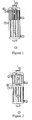
- a gaseous mixture 1 comprising polypropylene, water vapor, propylene, propylene, propylene, propylene, propylene, is passed from bottom to top in a multitubular reactor. nitrogen and molecular oxygen, on a propylene oxidation catalyst 2.
- the mixture resulting from this reaction comprising unreacted gases, acrolein produced and by-products, then passes over a catalyst 4 for the oxidation of acrolein to acrylic acid.
- a mixture is obtained comprising acrylic acid produced, residual acrolein, unreacted gases, water and by-products.
- Cooling fluids circulate at 6 and 7 so as to maintain a reaction temperature of between 300 ° C. and 380 ° C. for the propylene oxidation reaction to acrolein and a temperature that may be between 260 ° C. and 320 ° C. C for the oxidation of acrolein to acrylic acid.
- a heat exchanger 8 for cooling the reaction gases is placed downstream of the two oxidation steps, as in FIG. Figure 1 ; preferably, the heat exchanger 8 of the figure 1 is downstream of the reactor and not in the reactor, which facilitates the loading and unloading of the reactor.
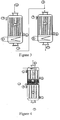
- a second heat exchanger 8 can be placed between the two catalytic beds, as shown in FIG. Figure 2 , for cooling the intermediate gas mixture.
- a gaseous mixture 1 comprising propylene and water vapor is passed through a first multitubular reactor from top to bottom; nitrogen and molecular oxygen, on a propylene oxidation catalyst 2.
- the mixture 3 resulting from this reaction comprising the unreacted gases, the produced acrolein and by-products, feeds a second reactor comprising a catalyst 4 for the oxidation of acrolein to acrylic acid.
- the second reactor is optionally fed at 9 with oxygen or air.
- a mixture is obtained comprising acrylic acid produced, residual acrolein, unreacted gases, water and by-products.
- Cooling fluids circulate at 6 and 7 so as to maintain a reaction temperature of between 300 ° C and 380 ° C for the propylene oxidation reaction to acrolein and a temperature of between 260 ° C and 320 ° C for the oxidation of acrolein to acrylic acid.
- a heat exchanger 8 for cooling the gases reaction from the first step is placed in the bottom of the first reactor.
- a second heat exchanger 8 is placed downstream of the two oxidation steps.
- the exchangers 8 may be outside the reactors.
- the heat exchanger 8 in the conventional configuration of the Figure 2 placed between the two catalytic beds and making it possible to cool the gaseous mixture resulting from the propylene oxidation reaction to acrolein is replaced by a glycerol dehydration step.
- This step consists of passing a mixture 11 composed of glycerol in the form of vaporized aqueous solution and optionally of oxygen, together with the gaseous mixture leaving the oxidation zone comprising propylene oxidation catalyst 2 to acrolein, on a glycerol dehydration catalyst.
- This mixture then passes over the catalyst 4 on which the acrolein is oxidized to acrylic acid.
- a mixture is obtained comprising acrylic acid produced, residual acrolein, unreacted gases, water and by-products.
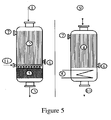
- the heat exchanger 8 placed downstream of the first reactor in a conventional process for the oxidation of propylene to acrylic acid in two stages in two consecutive reactors, as shown in FIG. Figure 3 is replaced by a dehydration step of glycerol.
- This step consists of passing a mixture 11, consisting of glycerol in the form of vaporized aqueous solution and optionally of oxygen, at the same time as the gaseous mixture leaving the oxidation zone comprising the propylene oxidation catalyst 2 in acrolein. on a dehydration catalyst of glycerol.
- This mixture 3 feeds the second reactor comprising catalyst 4 on which acrolein is oxidized to acrylic acid.
- a mixture is obtained comprising acrylic acid produced, residual acrolein, unreacted gases, water and by-products.
- the products formed, acrolein and acrylic acid are analyzed by capillary column chromatography EC-1000 mounted on an HP6980 chromatograph equipped with an FID detector. Quantitative analysis is performed with an external standard.
- a reactor configuration is used wherein the glycerol is co-fed with the propylene-containing gas mixture from top to bottom, and has three catalyst beds.
- the Pyrex reactor is provided with a sinter to retain the catalyst.
- a mass of 5 g of acrolein oxidation catalyst is applied to acrylic acid of reference ACS4 (from Nippon Shokubai), reduced to powder in a particle size of 100 to 160 microns, diluted with 5 ml of carbide of silicon with a particle size of 0.125 mm.
- 9 ml of silicon carbide with a particle size of 0.5 mm are charged.
- 6.498 g of propylene oxidation catalyst are then added to the acrolein reference ACF4 (from Nippon Shokubai), diluted with 7 ml of silicon carbide with a particle size of 0.125 mm.
- the reactor is then connected to the test facility.
- the temperatures of the three catalyst layers are independently controlled at 305 ° C for the two upper layers of glycerol dehydration and propylene oxidation, and at 280 ° C for the lower acrolein oxidation layer. acrylic.
- the reactor is supplied with a gas mixture of propylene / oxygen / helium-krypton / water-glycerol with hourly molar flow rates (expressed in micromol per hour) 30089/55584/288393 / water: 53489 - glycerol: 4509.
- the gaseous helium mixture -krypton contains 4.92% krypton which serves as internal standard.
- the water-glycerol mixture contains 30% by weight of glycerol.
- the effluents are accumulated in the trap for a period of 80 minutes.
- Non-condensable gases are analyzed during the balance sheet.
- the amount of acrolein produced is 503 micromol / h, and the amount of acrylic acid is 26103 micromol / h.
- Example 1 is repeated, but the aqueous solution of glycerol is replaced by pure water.
- the molar flow rates of the reagents are then: propylene / oxygen / helium-krypton / water-glycerol: 30089/55584/288393 / water: 76666 - Glycerol: 0 (micromol / h).
- the effluents are accumulated in the trap for a duration of 78 minutes.
- Non-condensable gases are analyzed during the balance sheet.
- the amount of acrolein produced is 457 micromol / h, and the amount of acrylic acid is 23257 micromol / h.
- Example 2 is repeated, but replacing the dehydration catalyst with silicon carbide. The same feeding conditions are used.
- the effluents are accumulated in the trap for a duration of 75 minutes.
- Non-condensable gases are analyzed during the balance sheet.
- the amount of acrolein produced is 521 micromol / h, and the amount of acrylic acid is 23363 micromol / h.
- a reactor configuration having three catalyst beds is used with a feed of the gaseous mixture containing propylene from top to bottom and an intermediate feed for the glycerol solution.
- the Pyrex reactor is provided with a sinter to retain the catalyst.
- a mass of 5 g of acrolein oxidation catalyst is applied to acrylic acid of reference ACS4 (from Nippon Shokubai), reduced to powder in a particle size of 100 to 160 microns, diluted with 5 ml of carbide of silicon with a particle size of 0.125 mm.
- 9 ml of silicon carbide with a particle size of 0.5 mm are charged.
- a mass of 1.578 g of reference glycerol dehydration catalyst Z1044 (Daiichi Kigenso KK tungsten zirconia), diluted with 4 ml of silicon carbide with a particle size of 0.062 mm, is charged.
- the reactor is then connected to the test facility.
- the temperatures of the catalyst layers are independently controlled at 260 ° C for the lower layers of glycerol dehydration and acrolein oxidation to acrylic acid, and at 305 ° C for the higher propylene oxidation layer. acrolein.
- the reactor is fed with a gas mixture of propylene / oxygen / helium-krypton / water at its upper part with hourly molar rates (expressed in micromol per hour) 30089/55584/288393 / 76666.
- the gaseous mixture helium-krypton contains 4 92% of krypton which serves as internal standard.
- a water-glycerol mixture containing 80% by weight of glycerol is fed between the propylene oxidation catalyst layer and the dehydration catalyst. with a glycerol / water flow: 4530/5794 (micromol / h). These conditions represent a total molar flow rate of C 3 compounds (propylene + glycerol) of 34619 micromol / h.
- the effluents are collected at the outlet of the reactor by a cold ice trap and the acrolein and acrylic acid produced are assayed by chromatographic analysis.
- the effluents are accumulated in the trap for a period of 84 minutes.
- Non-condensable gases are analyzed during the balance sheet.
- the amount of acrolein produced is 389 micromol / h, and the amount of acrylic acid is 26360 micromol / h.
- the residual propylene is 2613 micromol / h.
- Example 4 is repeated, but using a 95% weight glycerol solution (glycerol hydrate).
- the hourly molar rates (in micromol per hour) of the constituents of the mixture are the following: propylene / oxygen / helium-krypton / water: 30089/55584/288393/76666 for the upper feed, and glycerol / water: 8220/2205 for the intermediate supply. These conditions represent a total molar flow rate of C 3 compounds (propylene + glycerol) of 38309 micromol / h.
- the effluents are accumulated in the trap for a period of 81 minutes.
- Non-condensable gases are analyzed during the balance sheet.
- the amount of acrolein produced is 633 micromol / h, and the amount of acrylic acid is 29898 micromol / h.
- the residual propylene is 2803 micromol / h.
- Example 4 is repeated, but using a solution of glycerol at 70% by weight.
- the hourly molar rates (in micromoles per hour) of the constituents of the mixture are the following: propylene / oxygen / helium-krypton / water: 30089/55584/288393 These conditions represent a total molar flow rate of C 3 compounds (propylene + glycerol) of 36439 micromol / h.
- the effluents are accumulated in the trap for a duration of 78 minutes.
- Non-condensable gases are analyzed during the balance sheet.
- the amount of acrolein produced is 612 micromol / h, and the amount of acrylic acid is 28212 micromol / h.
- the residual propylene is 2702 micromol / h.
Landscapes
- Chemical & Material Sciences (AREA)
- Organic Chemistry (AREA)
- Chemical Kinetics & Catalysis (AREA)
- Engineering & Computer Science (AREA)
- Oil, Petroleum & Natural Gas (AREA)
- Organic Low-Molecular-Weight Compounds And Preparation Thereof (AREA)
- Low-Molecular Organic Synthesis Reactions Using Catalysts (AREA)
Priority Applications (1)
| Application Number | Priority Date | Filing Date | Title |
|---|---|---|---|
| PL07731584T PL1981835T3 (pl) | 2006-02-07 | 2007-02-06 | Sposób wytwarzania kwasu akrylowego |
Applications Claiming Priority (2)
| Application Number | Priority Date | Filing Date | Title |
|---|---|---|---|
| FR0601061A FR2897059B1 (fr) | 2006-02-07 | 2006-02-07 | Procede de preparation d'acide acrylique |
| PCT/FR2007/050758 WO2007090991A2 (fr) | 2006-02-07 | 2007-02-06 | Procede de preparation d'acide acrylique |
Publications (2)
| Publication Number | Publication Date |
|---|---|
| EP1981835A2 EP1981835A2 (fr) | 2008-10-22 |
| EP1981835B1 true EP1981835B1 (fr) | 2009-05-06 |
Family
ID=37075914
Family Applications (1)
| Application Number | Title | Priority Date | Filing Date |
|---|---|---|---|
| EP07731584A Not-in-force EP1981835B1 (fr) | 2006-02-07 | 2007-02-06 | Procede de preparation d'acide acrylique |
Country Status (16)
| Country | Link |
|---|---|
| US (1) | US7880034B2 (enExample) |
| EP (1) | EP1981835B1 (enExample) |
| JP (1) | JP5097128B2 (enExample) |
| KR (1) | KR101004593B1 (enExample) |
| CN (1) | CN101400639B (enExample) |
| AT (1) | ATE430724T1 (enExample) |
| BR (1) | BRPI0707533A2 (enExample) |
| DE (1) | DE602007001072D1 (enExample) |
| ES (1) | ES2325695T3 (enExample) |
| FR (1) | FR2897059B1 (enExample) |
| MY (1) | MY139630A (enExample) |
| PL (1) | PL1981835T3 (enExample) |
| PT (1) | PT1981835E (enExample) |
| RU (1) | RU2397156C2 (enExample) |
| WO (1) | WO2007090991A2 (enExample) |
| ZA (1) | ZA200806644B (enExample) |
Families Citing this family (28)
| Publication number | Priority date | Publication date | Assignee | Title |
|---|---|---|---|---|
| FR2920767B1 (fr) * | 2007-09-06 | 2009-12-18 | Arkema France | Procede de vaporisation reactive de glycerol |
| FR2934261B1 (fr) * | 2008-07-25 | 2015-04-10 | Arkema France | Procede de synthese d'esters de l'acide acrylique |
| WO2010012586A1 (de) | 2008-07-28 | 2010-02-04 | Basf Se | Verfahren zur auftrennung von in einem produktgasgemisch einer partiellen heterogen katalysierten gasphasenoxidation einer c3-vorläuferverbindung der acrylsäure als hauptbestandteil enthaltener acrylsäure und als nebenprodukt enthaltenem glyoxal |
| DE102008040799A1 (de) | 2008-07-28 | 2008-12-11 | Basf Se | Verfahren zur Auftrennung von in einem Produktgasgemisch einer partiellen heterogen katalysierten Gasphasenoxidation einer C3-Vorläuferverbindung der Acrylsäure als Hauptbestandteil enthaltener Acrylsäure und als Nebenprodukt enthaltenem Glyoxal |
| DE102008041573A1 (de) | 2008-08-26 | 2010-03-04 | Basf Se | Verfahren zur Auftrennung von in einem Produktgasgemisch einer partiellen heterogen katalysierten Gasphasenoxidation einer C3-Vorläuferverbindung der Acrylsäure als Hauptbestandteil enhaltener Acrylsäure und als Nebenprodukt enthaltenem Glyoxal |
| JP5305827B2 (ja) * | 2008-10-17 | 2013-10-02 | 株式会社日本触媒 | アクロレイン及びアクリル酸の製造方法 |
| FR2943351B1 (fr) * | 2009-03-18 | 2011-04-29 | Arkema France | Agent de mise en oeuvre acrylique |
| US8105971B2 (en) * | 2009-04-02 | 2012-01-31 | Lummus Technology Inc. | Process for making catalysts useful for the conversion of paraffins to olefins |
| WO2011000808A2 (de) | 2009-07-01 | 2011-01-06 | Basf Se | Verfahren der abtrennung von acrylsäure aus dem produktgasgemisch einer heterogen katalysierten partiellen gasphasenoxidation wenigstens einer c3-vorläuferverbindung |
| DE102010001228A1 (de) | 2010-01-26 | 2011-02-17 | Basf Se | Verfahren der Abtrennung von Acrylsäure aus dem Produktgasgemisch einer heterogen katalysierten partiellen Gasphasenoxidation wenigstens einer C3-Vorläuferverbindung |
| DE102009027401A1 (de) | 2009-07-01 | 2010-02-18 | Basf Se | Verfahren der Abtrennung von Acrylsäure aus dem Produktgasgemisch einer heterogen katalysierten partiellen Gasphasenoxidation wenigstens einer C3-Vorläuferverbindung |
| FR2948365B1 (fr) * | 2009-07-22 | 2011-09-09 | Arkema France | Procede de fabrication d'acide acrylique bio-ressource a partir de glycerol |
| SG179188A1 (en) | 2009-09-18 | 2012-04-27 | Nippon Kayaku Kk | Catalyst and process for preparing acrolein and/or acrylic acid by dehydration reaction of glycerin |
| FR2958185B1 (fr) * | 2010-03-30 | 2012-04-20 | Arkema France | Procede d'oxydation selective de monoxyde de carbone |
| WO2012010923A1 (en) | 2010-07-19 | 2012-01-26 | Arkema France | Process for manufacturing acrolein from glycerol |
| DE102010040921A1 (de) * | 2010-09-16 | 2012-03-22 | Basf Se | Verfahren zur Herstellung von Acrylsäure aus Methanol und Essigsäure |
| DE102010040923A1 (de) * | 2010-09-16 | 2012-03-22 | Basf Se | Verfahren zur Herstellung von Acrylsäure aus Ethanol und Formaldehyd |
| DE102010042216A1 (de) | 2010-10-08 | 2011-06-09 | Basf Se | Verfahren zur Hemmung der unerwünschten radikalischen Polymerisation von in einer flüssigen Phase P befindlicher Acrylsäure |
| DE102011076931A1 (de) | 2011-06-03 | 2012-12-06 | Basf Se | Wässrige Lösung, enthaltend Acrylsäure und deren konjugierte Base |
| WO2013008279A1 (en) | 2011-07-14 | 2013-01-17 | Nippon Kayaku Kabushiki Kaisha | Process for preparing catalyst used in production of acrolein and/or acrylic acid and process for preparing acrolein and/or acrylic acid by dehydration reaction of glycerin |
| WO2013017904A1 (en) | 2011-07-29 | 2013-02-07 | Arkema France | Improved process of dehydration reactions |
| FR2989684B1 (fr) * | 2012-04-18 | 2014-10-31 | Arkema France | Procede de fabrication d'acroleine et/ou d'acide acrylique a partir de glycerol |
| US9440903B2 (en) * | 2012-09-24 | 2016-09-13 | Arkema Inc. | Shell and tube oxidation reactor with improved resistance to fouling |
| EP3004041B1 (de) * | 2013-06-03 | 2020-05-06 | Evonik Operations GmbH | Verfahren zur herstellung von acrolein |
| WO2017025391A1 (en) | 2015-08-07 | 2017-02-16 | Basf Se | Process for production of acrylic acid |
| KR102044428B1 (ko) | 2015-12-23 | 2019-12-02 | 주식회사 엘지화학 | 글리세린으로부터 아크릴산의 제조방법 |
| WO2020020697A1 (de) | 2018-07-26 | 2020-01-30 | Basf Se | Verfahren zur hemmung der unerwünschten radikalischen polymerisation von in einer flüssigen phase p befindlicher acrylsäure |
| JP7651589B2 (ja) | 2020-03-26 | 2025-03-26 | ベーアーエスエフ・エスエー | 液相pに存在するアクリル酸の望ましくないフリーラジカル重合を抑制する方法 |
Family Cites Families (18)
| Publication number | Priority date | Publication date | Assignee | Title |
|---|---|---|---|---|
| FR695931A (fr) | 1929-06-15 | 1930-12-23 | Schering Kahlbaum Ag | Procédé de fabrication d'acroléine |
| US2558520A (en) * | 1948-01-29 | 1951-06-26 | Us Ind Chemicals Inc | Production of acrolein from glycerol |
| GB1152215A (en) * | 1965-10-12 | 1969-05-14 | Rohm & Haas | Preparation of Acrolein |
| JPS55102536A (en) * | 1979-01-30 | 1980-08-05 | Mitsubishi Petrochem Co Ltd | Preparation of acrylic acid |
| US5080898A (en) * | 1982-05-12 | 1992-01-14 | The University Hospital | Enzymatically active toxin coupled to a cell-specific ligand |
| CA1299193C (en) * | 1986-07-17 | 1992-04-21 | Gordon Gene Harkreader | Anhydrous diluents for the propylene oxidation reaction to acrolein and acrolein oxidation to acrylic acid |
| CA1305178C (en) * | 1986-08-21 | 1992-07-14 | Gordon Gene Harkreader | Anhydrous diluent process for the propylene oxidation reaction to acrolein and acrolein oxidation to acrylic acid |
| JPH0813777B2 (ja) * | 1986-12-11 | 1996-02-14 | 三菱化学株式会社 | アクリル酸の製造法 |
| US5218146A (en) * | 1987-05-27 | 1993-06-08 | Nippon Shokubai Kagaku Kogyo Co., Ltd. | Process for production of acrylic acid |
| JPH0686399B2 (ja) * | 1987-05-27 | 1994-11-02 | 株式会社日本触媒 | アクリル酸の製造方法 |
| AU606160B2 (en) * | 1987-05-27 | 1991-01-31 | Nippon Shokubai Kagaku Kogyo Co. Ltd. | Process for production of acrylic acid |
| DE4238493C1 (de) * | 1992-11-14 | 1994-04-21 | Degussa | Verfahren zur Herstellung von Acrolein und dessen Verwendung |
| TW476746B (en) | 1997-07-23 | 2002-02-21 | Shell Int Research | Hydrogenolysis of glycerol |
| DE19848208A1 (de) | 1998-10-20 | 2000-04-27 | Deg Engineering Gmbh | Reaktor für die katalytische Umsetzung von Reaktionsmedien, insbesondere von gasförmigen Reaktionsmedien |
| DE10019381B4 (de) | 2000-04-19 | 2006-05-18 | Daun, Klaus-Dieter, Dipl.-Ing. | Reaktor für die katalytische Umsetzung von Reaktionsmedien, insbesondere von gasförmigen Reaktionsmedien |
| DE60133473T2 (de) * | 2001-12-14 | 2009-05-20 | Evonik Stockhausen Gmbh | Verfahren zur Herstellung von Acrylsäure |
| US7294734B2 (en) * | 2003-05-02 | 2007-11-13 | Velocys, Inc. | Process for converting a hydrocarbon to an oxygenate or a nitrile |
| JP5006507B2 (ja) * | 2004-01-30 | 2012-08-22 | 株式会社日本触媒 | アクリル酸の製造方法 |
-
2006
- 2006-02-07 FR FR0601061A patent/FR2897059B1/fr not_active Expired - Fee Related
-
2007
- 2007-02-06 JP JP2008551845A patent/JP5097128B2/ja not_active Expired - Fee Related
- 2007-02-06 PL PL07731584T patent/PL1981835T3/pl unknown
- 2007-02-06 DE DE602007001072T patent/DE602007001072D1/de active Active
- 2007-02-06 RU RU2008135966/04A patent/RU2397156C2/ru not_active IP Right Cessation
- 2007-02-06 PT PT07731584T patent/PT1981835E/pt unknown
- 2007-02-06 BR BRPI0707533-2A patent/BRPI0707533A2/pt not_active IP Right Cessation
- 2007-02-06 MY MYPI20083003A patent/MY139630A/en unknown
- 2007-02-06 CN CN2007800045903A patent/CN101400639B/zh not_active Expired - Fee Related
- 2007-02-06 ES ES07731584T patent/ES2325695T3/es active Active
- 2007-02-06 EP EP07731584A patent/EP1981835B1/fr not_active Not-in-force
- 2007-02-06 US US12/278,016 patent/US7880034B2/en not_active Expired - Fee Related
- 2007-02-06 AT AT07731584T patent/ATE430724T1/de not_active IP Right Cessation
- 2007-02-06 KR KR1020087019397A patent/KR101004593B1/ko not_active Expired - Fee Related
- 2007-02-06 WO PCT/FR2007/050758 patent/WO2007090991A2/fr not_active Ceased
-
2008
- 2008-07-30 ZA ZA200806644A patent/ZA200806644B/xx unknown
Also Published As
| Publication number | Publication date |
|---|---|
| FR2897059A1 (fr) | 2007-08-10 |
| ZA200806644B (en) | 2009-05-27 |
| JP5097128B2 (ja) | 2012-12-12 |
| JP2009524630A (ja) | 2009-07-02 |
| PT1981835E (pt) | 2009-07-06 |
| KR20080092429A (ko) | 2008-10-15 |
| ES2325695T3 (es) | 2009-09-14 |
| PL1981835T3 (pl) | 2009-11-30 |
| RU2008135966A (ru) | 2010-03-20 |
| US20090018362A1 (en) | 2009-01-15 |
| RU2397156C2 (ru) | 2010-08-20 |
| US7880034B2 (en) | 2011-02-01 |
| WO2007090991A2 (fr) | 2007-08-16 |
| DE602007001072D1 (de) | 2009-06-18 |
| CN101400639B (zh) | 2012-05-30 |
| KR101004593B1 (ko) | 2010-12-28 |
| WO2007090991A3 (fr) | 2007-12-06 |
| CN101400639A (zh) | 2009-04-01 |
| EP1981835A2 (fr) | 2008-10-22 |
| BRPI0707533A2 (pt) | 2011-05-03 |
| ATE430724T1 (de) | 2009-05-15 |
| FR2897059B1 (fr) | 2008-04-18 |
| MY139630A (en) | 2009-10-30 |
Similar Documents
| Publication | Publication Date | Title |
|---|---|---|
| EP1981835B1 (fr) | Procede de preparation d'acide acrylique | |
| EP1981834B1 (fr) | Procede de preparation d'acroleine | |
| EP2097365B1 (fr) | Procede de preparation d'acide acrylique a partir de glycerol | |
| EP2912005B1 (fr) | Procede de synthese directe d'aldehydes insatures a partir de melanges d'alcools | |
| EP2303808B1 (fr) | Fabrication de propionate de vinyle a partir de matieres renouvelables | |
| EP2365954B1 (fr) | Procede de preparation d'acroleine a partir de glycerol ou de glycerine | |
| FR2912742A1 (fr) | Procede de synthese d'acrylonitrile a partir de glycerol | |
| FR2882052A1 (fr) | Procede de deshydratation du glycerol en acroleine | |
| EP2582652B1 (fr) | Procede de preparation d'acroleine a partir de glycerol ou de glycerine | |
| FR2953830A1 (fr) | Procede de fabrication d'acroleine et/ou d'acide acrylique a partir de glycerol | |
| FR2931820A1 (fr) | Procede de fabrication d'acroleine par deshydratation du glycerol | |
| EP2513026B1 (fr) | Procede de fabrication d'acroleine et/ou d'acide acrylique a partir de glycerol | |
| EP2547643A1 (fr) | Procede de fabrication d'acide acrylique bio-ressource de grade polymere a partir de glycerol | |
| FR2884817A1 (fr) | Procede de preparation d'acide acrylique a partir de glycerol | |
| EP2632883B1 (fr) | Procédé d'obtention d'acroléine par déshydratation catalytique de glycérol ou de glycérine | |
| EP3107885A1 (fr) | Procede de production d'acide acrylique bio-source | |
| EP3126318B1 (fr) | Procédé de synthèse directe de (méth)acroléine a partir d'éthers et/ou acétals | |
| EP4392399A1 (fr) | Procede perfectionne de fabrication d'acrylate de butyle de purete elevee | |
| MX2008010086A (en) | Acrylic acid preparation method |
Legal Events
| Date | Code | Title | Description |
|---|---|---|---|
| PUAI | Public reference made under article 153(3) epc to a published international application that has entered the european phase |
Free format text: ORIGINAL CODE: 0009012 |
|
| 17P | Request for examination filed |
Effective date: 20080708 |
|
| AK | Designated contracting states |
Kind code of ref document: A2 Designated state(s): AT BE BG CH CY CZ DE DK EE ES FI FR GB GR HU IE IS IT LI LT LU LV MC NL PL PT RO SE SI SK TR |
|
| GRAP | Despatch of communication of intention to grant a patent |
Free format text: ORIGINAL CODE: EPIDOSNIGR1 |
|
| DAX | Request for extension of the european patent (deleted) | ||
| GRAS | Grant fee paid |
Free format text: ORIGINAL CODE: EPIDOSNIGR3 |
|
| GRAA | (expected) grant |
Free format text: ORIGINAL CODE: 0009210 |
|
| AK | Designated contracting states |
Kind code of ref document: B1 Designated state(s): AT BE BG CH CY CZ DE DK EE ES FI FR GB GR HU IE IS IT LI LT LU LV MC NL PL PT RO SE SI SK TR |
|
| REG | Reference to a national code |
Ref country code: GB Ref legal event code: FG4D Free format text: NOT ENGLISH |
|
| REG | Reference to a national code |
Ref country code: CH Ref legal event code: EP |
|
| REG | Reference to a national code |
Ref country code: IE Ref legal event code: FG4D |
|
| REF | Corresponds to: |
Ref document number: 602007001072 Country of ref document: DE Date of ref document: 20090618 Kind code of ref document: P |
|
| REG | Reference to a national code |
Ref country code: CH Ref legal event code: NV Representative=s name: BOHEST AG |
|
| REG | Reference to a national code |
Ref country code: PT Ref legal event code: SC4A Free format text: AVAILABILITY OF NATIONAL TRANSLATION Effective date: 20090629 |
|
| REG | Reference to a national code |
Ref country code: ES Ref legal event code: FG2A Ref document number: 2325695 Country of ref document: ES Kind code of ref document: T3 |
|
| PG25 | Lapsed in a contracting state [announced via postgrant information from national office to epo] |
Ref country code: AT Free format text: LAPSE BECAUSE OF FAILURE TO SUBMIT A TRANSLATION OF THE DESCRIPTION OR TO PAY THE FEE WITHIN THE PRESCRIBED TIME-LIMIT Effective date: 20090506 Ref country code: LT Free format text: LAPSE BECAUSE OF FAILURE TO SUBMIT A TRANSLATION OF THE DESCRIPTION OR TO PAY THE FEE WITHIN THE PRESCRIBED TIME-LIMIT Effective date: 20090506 Ref country code: FI Free format text: LAPSE BECAUSE OF FAILURE TO SUBMIT A TRANSLATION OF THE DESCRIPTION OR TO PAY THE FEE WITHIN THE PRESCRIBED TIME-LIMIT Effective date: 20090506 |
|
| PG25 | Lapsed in a contracting state [announced via postgrant information from national office to epo] |
Ref country code: IS Free format text: LAPSE BECAUSE OF FAILURE TO SUBMIT A TRANSLATION OF THE DESCRIPTION OR TO PAY THE FEE WITHIN THE PRESCRIBED TIME-LIMIT Effective date: 20090906 Ref country code: SI Free format text: LAPSE BECAUSE OF FAILURE TO SUBMIT A TRANSLATION OF THE DESCRIPTION OR TO PAY THE FEE WITHIN THE PRESCRIBED TIME-LIMIT Effective date: 20090506 Ref country code: LV Free format text: LAPSE BECAUSE OF FAILURE TO SUBMIT A TRANSLATION OF THE DESCRIPTION OR TO PAY THE FEE WITHIN THE PRESCRIBED TIME-LIMIT Effective date: 20090506 Ref country code: SE Free format text: LAPSE BECAUSE OF FAILURE TO SUBMIT A TRANSLATION OF THE DESCRIPTION OR TO PAY THE FEE WITHIN THE PRESCRIBED TIME-LIMIT Effective date: 20090806 |
|
| REG | Reference to a national code |
Ref country code: PL Ref legal event code: T3 |
|
| REG | Reference to a national code |
Ref country code: IE Ref legal event code: FD4D |
|
| REG | Reference to a national code |
Ref country code: HU Ref legal event code: AG4A Ref document number: E006335 Country of ref document: HU |
|
| PG25 | Lapsed in a contracting state [announced via postgrant information from national office to epo] |
Ref country code: EE Free format text: LAPSE BECAUSE OF FAILURE TO SUBMIT A TRANSLATION OF THE DESCRIPTION OR TO PAY THE FEE WITHIN THE PRESCRIBED TIME-LIMIT Effective date: 20090506 Ref country code: DK Free format text: LAPSE BECAUSE OF FAILURE TO SUBMIT A TRANSLATION OF THE DESCRIPTION OR TO PAY THE FEE WITHIN THE PRESCRIBED TIME-LIMIT Effective date: 20090506 Ref country code: IE Free format text: LAPSE BECAUSE OF FAILURE TO SUBMIT A TRANSLATION OF THE DESCRIPTION OR TO PAY THE FEE WITHIN THE PRESCRIBED TIME-LIMIT Effective date: 20090506 Ref country code: RO Free format text: LAPSE BECAUSE OF FAILURE TO SUBMIT A TRANSLATION OF THE DESCRIPTION OR TO PAY THE FEE WITHIN THE PRESCRIBED TIME-LIMIT Effective date: 20090506 |
|
| PG25 | Lapsed in a contracting state [announced via postgrant information from national office to epo] |
Ref country code: SK Free format text: LAPSE BECAUSE OF FAILURE TO SUBMIT A TRANSLATION OF THE DESCRIPTION OR TO PAY THE FEE WITHIN THE PRESCRIBED TIME-LIMIT Effective date: 20090506 |
|
| PLBE | No opposition filed within time limit |
Free format text: ORIGINAL CODE: 0009261 |
|
| STAA | Information on the status of an ep patent application or granted ep patent |
Free format text: STATUS: NO OPPOSITION FILED WITHIN TIME LIMIT |
|
| PG25 | Lapsed in a contracting state [announced via postgrant information from national office to epo] |
Ref country code: BG Free format text: LAPSE BECAUSE OF FAILURE TO SUBMIT A TRANSLATION OF THE DESCRIPTION OR TO PAY THE FEE WITHIN THE PRESCRIBED TIME-LIMIT Effective date: 20090806 |
|
| 26N | No opposition filed |
Effective date: 20100209 |
|
| PG25 | Lapsed in a contracting state [announced via postgrant information from national office to epo] |
Ref country code: GR Free format text: LAPSE BECAUSE OF FAILURE TO SUBMIT A TRANSLATION OF THE DESCRIPTION OR TO PAY THE FEE WITHIN THE PRESCRIBED TIME-LIMIT Effective date: 20090807 |
|
| PG25 | Lapsed in a contracting state [announced via postgrant information from national office to epo] |
Ref country code: IT Free format text: LAPSE BECAUSE OF FAILURE TO SUBMIT A TRANSLATION OF THE DESCRIPTION OR TO PAY THE FEE WITHIN THE PRESCRIBED TIME-LIMIT Effective date: 20090506 |
|
| PG25 | Lapsed in a contracting state [announced via postgrant information from national office to epo] |
Ref country code: CY Free format text: LAPSE BECAUSE OF FAILURE TO SUBMIT A TRANSLATION OF THE DESCRIPTION OR TO PAY THE FEE WITHIN THE PRESCRIBED TIME-LIMIT Effective date: 20090506 |
|
| PG25 | Lapsed in a contracting state [announced via postgrant information from national office to epo] |
Ref country code: LU Free format text: LAPSE BECAUSE OF NON-PAYMENT OF DUE FEES Effective date: 20100206 |
|
| PGFP | Annual fee paid to national office [announced via postgrant information from national office to epo] |
Ref country code: NL Payment date: 20140208 Year of fee payment: 8 Ref country code: DE Payment date: 20140129 Year of fee payment: 8 Ref country code: CH Payment date: 20140212 Year of fee payment: 8 Ref country code: MC Payment date: 20140110 Year of fee payment: 8 Ref country code: CZ Payment date: 20140114 Year of fee payment: 8 |
|
| PGFP | Annual fee paid to national office [announced via postgrant information from national office to epo] |
Ref country code: BE Payment date: 20140214 Year of fee payment: 8 Ref country code: PL Payment date: 20140115 Year of fee payment: 8 Ref country code: TR Payment date: 20140127 Year of fee payment: 8 Ref country code: ES Payment date: 20140113 Year of fee payment: 8 Ref country code: FR Payment date: 20140211 Year of fee payment: 8 Ref country code: HU Payment date: 20140110 Year of fee payment: 8 |
|
| PGFP | Annual fee paid to national office [announced via postgrant information from national office to epo] |
Ref country code: GB Payment date: 20140206 Year of fee payment: 8 Ref country code: PT Payment date: 20140206 Year of fee payment: 8 |
|
| REG | Reference to a national code |
Ref country code: CH Ref legal event code: PCAR Free format text: NEW ADDRESS: HOLBEINSTRASSE 36-38, 4051 BASEL (CH) |
|
| PG25 | Lapsed in a contracting state [announced via postgrant information from national office to epo] |
Ref country code: BE Free format text: LAPSE BECAUSE OF NON-PAYMENT OF DUE FEES Effective date: 20150228 |
|
| REG | Reference to a national code |
Ref country code: PT Ref legal event code: MM4A Free format text: LAPSE DUE TO NON-PAYMENT OF FEES Effective date: 20150806 |
|
| REG | Reference to a national code |
Ref country code: DE Ref legal event code: R119 Ref document number: 602007001072 Country of ref document: DE |
|
| REG | Reference to a national code |
Ref country code: NL Ref legal event code: V1 Effective date: 20150901 |
|
| PG25 | Lapsed in a contracting state [announced via postgrant information from national office to epo] |
Ref country code: NL Free format text: LAPSE BECAUSE OF NON-PAYMENT OF DUE FEES Effective date: 20150901 |
|
| REG | Reference to a national code |
Ref country code: CH Ref legal event code: PL |
|
| GBPC | Gb: european patent ceased through non-payment of renewal fee |
Effective date: 20150206 |
|
| PG25 | Lapsed in a contracting state [announced via postgrant information from national office to epo] |
Ref country code: MC Free format text: LAPSE BECAUSE OF NON-PAYMENT OF DUE FEES Effective date: 20150302 Ref country code: CZ Free format text: LAPSE BECAUSE OF NON-PAYMENT OF DUE FEES Effective date: 20150206 Ref country code: CH Free format text: LAPSE BECAUSE OF NON-PAYMENT OF DUE FEES Effective date: 20150228 Ref country code: LI Free format text: LAPSE BECAUSE OF NON-PAYMENT OF DUE FEES Effective date: 20150228 Ref country code: PT Free format text: LAPSE BECAUSE OF NON-PAYMENT OF DUE FEES Effective date: 20150806 |
|
| REG | Reference to a national code |
Ref country code: FR Ref legal event code: ST Effective date: 20151030 |
|
| PG25 | Lapsed in a contracting state [announced via postgrant information from national office to epo] |
Ref country code: HU Free format text: LAPSE BECAUSE OF NON-PAYMENT OF DUE FEES Effective date: 20150207 |
|
| PG25 | Lapsed in a contracting state [announced via postgrant information from national office to epo] |
Ref country code: DE Free format text: LAPSE BECAUSE OF NON-PAYMENT OF DUE FEES Effective date: 20150901 Ref country code: GB Free format text: LAPSE BECAUSE OF NON-PAYMENT OF DUE FEES Effective date: 20150206 |
|
| PG25 | Lapsed in a contracting state [announced via postgrant information from national office to epo] |
Ref country code: FR Free format text: LAPSE BECAUSE OF NON-PAYMENT OF DUE FEES Effective date: 20150302 |
|
| PG25 | Lapsed in a contracting state [announced via postgrant information from national office to epo] |
Ref country code: PL Free format text: LAPSE BECAUSE OF NON-PAYMENT OF DUE FEES Effective date: 20150206 |
|
| PG25 | Lapsed in a contracting state [announced via postgrant information from national office to epo] |
Ref country code: ES Free format text: LAPSE BECAUSE OF NON-PAYMENT OF DUE FEES Effective date: 20150207 |
|
| PG25 | Lapsed in a contracting state [announced via postgrant information from national office to epo] |
Ref country code: TR Free format text: LAPSE BECAUSE OF NON-PAYMENT OF DUE FEES Effective date: 20150206 |
|
| REG | Reference to a national code |
Ref country code: ES Ref legal event code: FD2A Effective date: 20180710 |