EP1981549B1 - Procede d'inactivation virale par chauffage a sec - Google Patents
Procede d'inactivation virale par chauffage a sec Download PDFInfo
- Publication number
- EP1981549B1 EP1981549B1 EP06847095A EP06847095A EP1981549B1 EP 1981549 B1 EP1981549 B1 EP 1981549B1 EP 06847095 A EP06847095 A EP 06847095A EP 06847095 A EP06847095 A EP 06847095A EP 1981549 B1 EP1981549 B1 EP 1981549B1
- Authority
- EP
- European Patent Office
- Prior art keywords
- biological product
- viral
- product
- transition temperature
- inactivation
- Prior art date
- Legal status (The legal status is an assumption and is not a legal conclusion. Google has not performed a legal analysis and makes no representation as to the accuracy of the status listed.)
- Active
Links
Images


Classifications
-
- A—HUMAN NECESSITIES
- A61—MEDICAL OR VETERINARY SCIENCE; HYGIENE
- A61L—METHODS OR APPARATUS FOR STERILISING MATERIALS OR OBJECTS IN GENERAL; DISINFECTION, STERILISATION OR DEODORISATION OF AIR; CHEMICAL ASPECTS OF BANDAGES, DRESSINGS, ABSORBENT PADS OR SURGICAL ARTICLES; MATERIALS FOR BANDAGES, DRESSINGS, ABSORBENT PADS OR SURGICAL ARTICLES
- A61L2/00—Methods or apparatus for disinfecting or sterilising materials or objects other than foodstuffs or contact lenses; Accessories therefor
- A61L2/02—Methods or apparatus for disinfecting or sterilising materials or objects other than foodstuffs or contact lenses; Accessories therefor using physical phenomena
- A61L2/04—Heat
-
- A—HUMAN NECESSITIES
- A61—MEDICAL OR VETERINARY SCIENCE; HYGIENE
- A61L—METHODS OR APPARATUS FOR STERILISING MATERIALS OR OBJECTS IN GENERAL; DISINFECTION, STERILISATION OR DEODORISATION OF AIR; CHEMICAL ASPECTS OF BANDAGES, DRESSINGS, ABSORBENT PADS OR SURGICAL ARTICLES; MATERIALS FOR BANDAGES, DRESSINGS, ABSORBENT PADS OR SURGICAL ARTICLES
- A61L2/00—Methods or apparatus for disinfecting or sterilising materials or objects other than foodstuffs or contact lenses; Accessories therefor
- A61L2/0005—Methods or apparatus for disinfecting or sterilising materials or objects other than foodstuffs or contact lenses; Accessories therefor for pharmaceuticals, biologicals or living parts
- A61L2/0011—Methods or apparatus for disinfecting or sterilising materials or objects other than foodstuffs or contact lenses; Accessories therefor for pharmaceuticals, biologicals or living parts using physical methods
- A61L2/0023—Heat
-
- A—HUMAN NECESSITIES
- A61—MEDICAL OR VETERINARY SCIENCE; HYGIENE
- A61L—METHODS OR APPARATUS FOR STERILISING MATERIALS OR OBJECTS IN GENERAL; DISINFECTION, STERILISATION OR DEODORISATION OF AIR; CHEMICAL ASPECTS OF BANDAGES, DRESSINGS, ABSORBENT PADS OR SURGICAL ARTICLES; MATERIALS FOR BANDAGES, DRESSINGS, ABSORBENT PADS OR SURGICAL ARTICLES
- A61L2/00—Methods or apparatus for disinfecting or sterilising materials or objects other than foodstuffs or contact lenses; Accessories therefor
-
- A—HUMAN NECESSITIES
- A61—MEDICAL OR VETERINARY SCIENCE; HYGIENE
- A61P—SPECIFIC THERAPEUTIC ACTIVITY OF CHEMICAL COMPOUNDS OR MEDICINAL PREPARATIONS
- A61P7/00—Drugs for disorders of the blood or the extracellular fluid
- A61P7/04—Antihaemorrhagics; Procoagulants; Haemostatic agents; Antifibrinolytic agents
Definitions
- Any solid biological material presents a risk of viral contamination and the latter, or its derived products, or products derived from processes in which it intervenes, must be subjected to viral inactivation processes for use in therapy or in prophylaxis.
- active principles derived from biological sources or active principles that may be contaminated by a biological source during their manufacturing process are used.
- active principles may be proteins, peptides, polypeptides, antibodies, optionally substituted by lipid or carbohydrate groups, nucleic acids, DNA, RNA, polysaccharides, bacteria, viral particles and the like.
- the biological source from which they are derived or likely to contaminate their obtaining process may be any human or animal tissue, blood, plasma, bones, any plant tissue, any microorganism , a cell culture medium, culture of viruses, bacteria, yeasts, molds, fungi.
- biological product means a product comprising an active principle produced from a biological source and other compounds or excipients resulting from the process for obtaining said active ingredient.
- Viral inactivation methods by treatment with chemicals and / or heat are known from the prior art. The vast majority of these come from the field of blood transfusion in which the effectiveness of viral inactivation is crucial because we must try to overcome the potential contamination resulting from products from a donor.
- Heating has been advocated from the beginning of the recognition of the viral origin of HIV to inactivate it, especially in blood, plasma, biological products from blood or plasma.
- Dry heating ie heating at a temperature T for a time t of a dry product, has been recommended, for example for freeze-dried or freeze-dried coagulation factor concentrates which have not been heated. in liquid form.
- blood coagulation factor VIII extracted from human plasma, was heated at 60 ° C for 72 to 96 h in the freeze-dried state to secure this biological active ingredient for treating hemophiliacs.
- the inconsistency of the viral titre reductions led to the abandonment of this process because several cases of HIV infection in hemophiliacs were identified despite this heating.
- the viral reduction factor of a viral inactivation method is defined as the viral titre reduction factor, that is to say the log 10 of the viral titre ratio before the viral titre inactivation step after the viral inactivation factor. inactivation step.
- the moisture content is defined as the amount of water by weight per 100g of product. This is why it is expressed as a percentage by weight.
- the conventional method of measurement is to determine the weight loss of the product after heating to a temperature above 100 ° C until the weight of the product is constant.
- Bunch et al. (Alpha Therapeutic Corporation) showed that two different moisture levels (0.4 and 1.4%) of a recombinant factor VIII had no influence on the hepatitis A virus reduction factor ( ⁇ 6 , 9 log 10 ) by heating at 80 ° C for 72h.
- Roberts PL et al. (Biologicals., 2000 Sep; 28 (3): 185-8., "Comparison of the inactivation of canine and bovine parvovirus by freeze-drying and dry-heat treatment in two high purity factor VIII concentrates ") showed the influence of the biological product formulation and viral resistance by viral inactivation of 2 bovine parvovirus and canine by heating at 80 ° C for 72h of a Factor VIII concentrate in. 2 lyophilized formulations.
- the patent application EP 0 844 005 discloses that the residual moisture of the dried biological product to be treated is the critical element in the effectiveness of viral inactivation by a dry heating method at 80 ° C, for 72-77h.
- the viruses tested are HAV, porcine parvovirus and pseudorabies virus.
- the inventors have shown that the residual moisture must be greater than or equal to 0.8% to achieve a viral reduction factor of ⁇ 4 log 10 with this method. For residual moisture ⁇ 0.8%, the viral reduction factor is 0.12 log 10 on average.
- HAV hepatitis A virus
- HAV human immunodeficiency virus
- BVDV bovine viral diarrhea virus
- PSV porcine parvovirus
- the residual moisture of the product to be treated is therefore not the determining factor: results of viral inactivation by dry heating but a factor important on which the determining factor depended.
- the problem is therefore to determine the measurable multi-factor physico-chemical parameter giving a threshold value on either side of which the viral inactivation will be satisfactory or unsatisfactory.
- this measurable physicochemical parameter is the glass transition temperature of the biological product to be treated.
- the glass transition is a second order transition, ie a thermal transition that involves a change in heat capacity, but not latent heat. It is characteristic of supercooled liquids which are cooled to a sufficiently low temperature sufficiently rapidly without crystallisation and which become a glass and amorphous polymers or of the amorphous part of the crystalline polymers which pass from a hard and brittle state to a soft state and flexible.
- the glass transition temperature or Tg is the temperature at which the glass transition occurs. When a polymer is cooled below this temperature it becomes hard and brittle, like glass, it is said to be in the glassy state.
- Elastomeric rubbers such as polyisoprene and polyisobutylene are used above their glass transition temperature, i.e., in the rubbery state, and are soft and flexible.
- the glass transition temperature is known to those skilled in the art as dependent on certain parameters. In the case of polymers, it depends on the molecular weight, the chemical structure of the chain, the amount of plasticizers.
- Plasticizers are small molecules, such as salts, that creep between the polymer molecules and allow them to slide better between them, thus facilitating their movement. The addition of plasticizer thus makes it possible to lower the glass transition temperature.
- high molecular weight molecules block the movement of the polymer molecules together and increase the glass transition temperature.
- the Applicant has shown that the glass transition temperature is directly correlated to the residual moisture of a given Von Willebrand factor (FvW) lyophilisate.
- FvW Von Willebrand factor
- the glass transition temperature of a biological product therefore depends on the nature of the active ingredient, the nature of the excipients: plasticizers or not, crystalline form or amorphous form, the molecular weight of the excipients and the residual moisture of the biological product .
- a dried product is a product having undergone a drying method known to those skilled in the art such as lyophilization, vacuum drying, pervaporation, atomization.
- a dried product is a freeze-dried product, that is to say a first frozen product, part of whose water is then sublimed under vacuum.
- the Applicant has observed that the viral reduction factor and viral inactivation kinetics are favored when the heating temperature is greater than or equal to Tg.
- the value of the glass transition temperature therefore makes it possible to predict whether an inactivation process is satisfactory and to modify it in this sense.
- the viral inactivation method by dry heating in a biological product according to the invention is particularly suitable in the case of a non-enveloped virus.
- This method can be used to treat a composition containing one or more proteins extracted from the blood plasma as a dried biological product.
- the dry heating temperature T is chosen to allow the inactivation of a non-enveloped virus.
- the glass transition temperature is increased by adding high molecular weight excipients to the biological product or by reducing the moisture of the biological product or it is decreased by adding salts or excipients of: low mass molecular to the biological product or by increasing the moisture of the biological product.
- the glass transition temperature is measured by means of a differential scanning thermoanalyzer.
- State changes are defined by a a change in heat capacity measured against an inert product that does not undergo transformation within the temperature range considered.
- the heating temperature T of the process according to the invention be between Tg and Tg + 20 ° C to maintain satisfactory product stability.
- T so as to increase the difference between Tg and T within the limit of Tg + 20 ° C, to promote the viral reduction factor and viral inactivation kinetics, or choose T so to reduce the difference between Tg and T, to promote the stability of the product.
- the dry heating temperature T is chosen so as to obtain a viral reduction factor ⁇ 3 log 10 , preferably ⁇ 4 log 10 .
- the effectiveness of viral inactivation in the treated dried biological product is measured and, if said efficacy is judged to be insufficient, the viral inactivation of dried biological product is continued after growth. a difference between the heating temperature T and the glass transition temperature Tg.
- the stability of the treated dried biological product is evaluated and, if said stability is judged to be insufficient, the viral inactivation of dried biological product continues after a decrease of a gap between heating temperature T and the glass transition temperature Tg.
- Example 1 Inactivation of bacteriophage PR772 by dry heating in lyophilizates:
- the physical characteristics of the lyophilizates are modified in order to vary the glass transition temperature (Tg).
- the glass transition temperature is determined by a differential scanning thermoanalyzer. The temperature of the differential scanning thermoanalyzer is calibrated using indium (Tm 156.6 ° C) and n-octadecane (Tm-28.2 ° C). The samples undergo temperatures from -50 ° C to 130 ° C at a rate of 20 ° C / min. Liquid nitrogen is used to conduct the experiments at a temperature below room temperature. The glass transition temperature is taken at the midpoint of the endothermic change in the apparent specific heat. Two measurements are made and their average gives the Tg.
- Heating is performed at a temperature below Tg, either in the glassy solid state, or at a temperature above Tg of about 20 ° C, or in the viscoelastic (rubbery) state. All lyophilisates have a water content of less than 1%. The water content is determined by the Karl-Fischer method, well known to those skilled in the art, based on on the reaction between water and iodine.
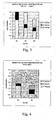
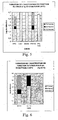
- Products C and D have Tg values of 80 ° C. and 90 ° C. respectively.
- the PR772 bacteriophage reduction factor was measured at 12, 24 and 72h for heating at 62 and 80 ° C.
- the viral titre is calculated according to Spearman Kärber's formula as described in Federal Gazette No. 84, May 4, 1994 and in Schmidt, NJ and Emmons, RW (1989) in Diagnostic Procedures for Viral, Rickettsial and Chlamydial Infection, 6th Edition we.
- the reduction factor is the result of the ratio of viral titer / ml before dry heat treatment to viral titer / ml after dry heat treatment.
Landscapes
- Health & Medical Sciences (AREA)
- Life Sciences & Earth Sciences (AREA)
- Veterinary Medicine (AREA)
- Public Health (AREA)
- General Health & Medical Sciences (AREA)
- Animal Behavior & Ethology (AREA)
- Epidemiology (AREA)
- Engineering & Computer Science (AREA)
- Chemical & Material Sciences (AREA)
- Medicinal Chemistry (AREA)
- Molecular Biology (AREA)
- Biomedical Technology (AREA)
- Bioinformatics & Cheminformatics (AREA)
- Pharmacology & Pharmacy (AREA)
- General Chemical & Material Sciences (AREA)
- Chemical Kinetics & Catalysis (AREA)
- Hematology (AREA)
- Organic Chemistry (AREA)
- Nuclear Medicine, Radiotherapy & Molecular Imaging (AREA)
- Diabetes (AREA)
- Medicines Containing Material From Animals Or Micro-Organisms (AREA)
- Medicines That Contain Protein Lipid Enzymes And Other Medicines (AREA)
- Medicines Containing Plant Substances (AREA)
- Micro-Organisms Or Cultivation Processes Thereof (AREA)
- Pharmaceuticals Containing Other Organic And Inorganic Compounds (AREA)
- Immobilizing And Processing Of Enzymes And Microorganisms (AREA)
- Measuring Or Testing Involving Enzymes Or Micro-Organisms (AREA)
Priority Applications (1)
| Application Number | Priority Date | Filing Date | Title |
|---|---|---|---|
| PL06847095T PL1981549T3 (pl) | 2005-12-19 | 2006-12-19 | Sposób inakytwacji wirusa poprzez ogrzewanie na sucho w temperaturze przejścia w stan szklisty |
Applications Claiming Priority (2)
| Application Number | Priority Date | Filing Date | Title |
|---|---|---|---|
| FR0512875A FR2894830B1 (fr) | 2005-12-19 | 2005-12-19 | Procede d'inactivation virale par chauffage a sec selon la temperature de transition vitreuse |
| PCT/FR2006/002817 WO2007071845A2 (fr) | 2005-12-19 | 2006-12-19 | Procede d'inactivation virale par chauffage a sec selon la temperature de transition vitreuse |
Publications (2)
| Publication Number | Publication Date |
|---|---|
| EP1981549A2 EP1981549A2 (fr) | 2008-10-22 |
| EP1981549B1 true EP1981549B1 (fr) | 2009-05-13 |
Family
ID=36698885
Family Applications (1)
| Application Number | Title | Priority Date | Filing Date |
|---|---|---|---|
| EP06847095A Active EP1981549B1 (fr) | 2005-12-19 | 2006-12-19 | Procede d'inactivation virale par chauffage a sec |
Country Status (16)
| Country | Link |
|---|---|
| US (1) | US8252227B2 (enExample) |
| EP (1) | EP1981549B1 (enExample) |
| JP (1) | JP5085558B2 (enExample) |
| KR (1) | KR101162060B1 (enExample) |
| CN (1) | CN101355972B (enExample) |
| AT (1) | ATE431162T1 (enExample) |
| AU (1) | AU2006328804B2 (enExample) |
| BR (1) | BRPI0621074B1 (enExample) |
| CA (1) | CA2633338C (enExample) |
| DE (1) | DE602006006875D1 (enExample) |
| DK (1) | DK1981549T3 (enExample) |
| ES (1) | ES2327279T3 (enExample) |
| FR (1) | FR2894830B1 (enExample) |
| IL (1) | IL192194A (enExample) |
| PL (1) | PL1981549T3 (enExample) |
| WO (1) | WO2007071845A2 (enExample) |
Families Citing this family (4)
| Publication number | Priority date | Publication date | Assignee | Title |
|---|---|---|---|---|
| PH12013501365A1 (en) | 2010-12-30 | 2013-09-16 | Laboratoire Francais Du Fractionnment Et Des Biotechnologies | Glycols as pathogen inactivating agents |
| USD689039S1 (en) * | 2012-07-12 | 2013-09-03 | Alljack Co., Ltd. | Stereo set |
| CN109444209A (zh) * | 2018-10-26 | 2019-03-08 | 北京食品科学研究院 | 一种测量蛋清粉玻璃化转变温度的方法 |
| CN116059410A (zh) * | 2021-08-19 | 2023-05-05 | 南京金斯瑞生物科技有限公司 | 一种去除生物样本中噬菌体的方法 |
Family Cites Families (9)
| Publication number | Priority date | Publication date | Assignee | Title |
|---|---|---|---|---|
| DE2248817C2 (de) * | 1972-10-05 | 1981-09-24 | Bayer Ag, 5090 Leverkusen | Polycarbonatmischungen |
| US4456590B2 (en) * | 1981-11-02 | 1989-05-30 | Heat treatment of lyphilized blood clotting factor viii concentrate | |
| GB9424732D0 (en) * | 1994-12-08 | 1995-02-08 | Common Services Agency | Heat treated blood plasma proteins |
| US5837519A (en) * | 1996-11-21 | 1998-11-17 | Bayer Corporation | Dry-heat viral inactivation under controlled moisture conditions |
| ATE429491T1 (de) * | 1997-09-23 | 2009-05-15 | Ib2 L L C | Verfahren und vorrichtung für schnelle thermozyklen |
| CN1286725A (zh) * | 1997-11-26 | 2001-03-07 | 环球保藏技术股份有限公司 | 敏感性生物样品的玻化保质法 |
| DK1121015T4 (da) * | 1998-10-14 | 2012-05-21 | Katrina T Forest | Fremgangsmåde til forglasning af et biologisk materiale |
| WO2001049112A2 (en) * | 2000-01-04 | 2001-07-12 | University Of Connecticut | Oocyte vitrification technique |
| JP2007501224A (ja) * | 2003-08-05 | 2007-01-25 | フジ フォト フィルム ビー.ブイ. | 安定剤としての組換え又は合成ゼラチン様タンパク質の、凍結乾燥医薬組成物中の使用 |
-
2005
- 2005-12-19 FR FR0512875A patent/FR2894830B1/fr not_active Expired - Lifetime
-
2006
- 2006-12-19 WO PCT/FR2006/002817 patent/WO2007071845A2/fr not_active Ceased
- 2006-12-19 CN CN2006800479202A patent/CN101355972B/zh active Active
- 2006-12-19 DK DK06847095T patent/DK1981549T3/da active
- 2006-12-19 CA CA2633338A patent/CA2633338C/en active Active
- 2006-12-19 BR BRPI0621074A patent/BRPI0621074B1/pt not_active IP Right Cessation
- 2006-12-19 ES ES06847095T patent/ES2327279T3/es active Active
- 2006-12-19 US US12/097,860 patent/US8252227B2/en active Active
- 2006-12-19 AT AT06847095T patent/ATE431162T1/de active
- 2006-12-19 JP JP2008545048A patent/JP5085558B2/ja not_active Expired - Fee Related
- 2006-12-19 AU AU2006328804A patent/AU2006328804B2/en not_active Ceased
- 2006-12-19 DE DE602006006875T patent/DE602006006875D1/de active Active
- 2006-12-19 PL PL06847095T patent/PL1981549T3/pl unknown
- 2006-12-19 KR KR1020087016839A patent/KR101162060B1/ko not_active Expired - Fee Related
- 2006-12-19 EP EP06847095A patent/EP1981549B1/fr active Active
-
2008
- 2008-06-15 IL IL192194A patent/IL192194A/en not_active IP Right Cessation
Also Published As
| Publication number | Publication date |
|---|---|
| IL192194A0 (en) | 2009-02-11 |
| ES2327279T3 (es) | 2009-10-27 |
| WO2007071845A3 (fr) | 2007-08-16 |
| KR101162060B1 (ko) | 2012-07-03 |
| CN101355972A (zh) | 2009-01-28 |
| PL1981549T3 (pl) | 2009-10-30 |
| KR20080093098A (ko) | 2008-10-20 |
| WO2007071845A2 (fr) | 2007-06-28 |
| IL192194A (en) | 2010-12-30 |
| US8252227B2 (en) | 2012-08-28 |
| CA2633338A1 (en) | 2007-06-28 |
| FR2894830A1 (fr) | 2007-06-22 |
| EP1981549A2 (fr) | 2008-10-22 |
| ATE431162T1 (de) | 2009-05-15 |
| FR2894830B1 (fr) | 2008-04-04 |
| AU2006328804B2 (en) | 2012-08-02 |
| US20090297398A1 (en) | 2009-12-03 |
| CA2633338C (en) | 2012-02-28 |
| BRPI0621074B1 (pt) | 2016-07-26 |
| JP2009519920A (ja) | 2009-05-21 |
| CN101355972B (zh) | 2012-07-04 |
| DE602006006875D1 (de) | 2009-06-25 |
| BRPI0621074A2 (pt) | 2011-11-29 |
| DK1981549T3 (da) | 2009-08-17 |
| JP5085558B2 (ja) | 2012-11-28 |
| AU2006328804A1 (en) | 2007-06-28 |
Similar Documents
| Publication | Publication Date | Title |
|---|---|---|
| EP1610819B1 (fr) | Formulation stabilisante pour compositions d'immunoglobulines g sous forme liquide et sous forme lyophilisee | |
| CA2073734C (fr) | Procede de preparation d'un concentre de thrombine humaine destine a un usage therapeutique | |
| FR2526660A1 (fr) | Procede de traitement thermique d'une fraction de plasma, produit obtenu et composition pharmaceutique le contenant | |
| CZ117998A3 (cs) | Způsob stabilizace biologických materiálů a přípravky k provádění tohoto způsobu | |
| JP2012051895A (ja) | ウイルス不活性化熱処理へ供するための血漿タンパク質の寒冷沈降物を安定化する方法 | |
| EP0346241B1 (fr) | Procédé de préparation d'une fraction concentrée en facteur Vlla et son application à titre de médicament | |
| EP1981549B1 (fr) | Procede d'inactivation virale par chauffage a sec | |
| FR2887883A1 (fr) | Procede de separation des proteines fibrinogene, facteur xiii et colle biologique d'une fraction plasmatique solubilisee et de preparation de concentres lyophilises desdites proteines | |
| EP3558381B1 (fr) | Composition liquide de fibrinogene humain | |
| CH412201A (fr) | Procédé de stabilisation d'un produit à base de virus antigène labile | |
| FR2881139A1 (fr) | Composition pour la lyophilisation de proteines | |
| BE665076A (enExample) | ||
| EP1057490A2 (en) | Use of tranexamic acid for the preparation of a human fibrinogen composition | |
| EP0250502B1 (en) | A process for inactivating thermally sensitive, pathogenic, blood-carried vira in igg preparations | |
| FR3090321A1 (fr) | Procédé de filtration du fibrinogène | |
| FR3053592A1 (fr) | Fibrinogene liquide stable | |
| AU8723198A (en) | Dried biologically or therapeutically active preparations | |
| BE499166A (enExample) | ||
| CH644249A5 (fr) | Procede de sterilisation ou de decontamination d'appareillage. |
Legal Events
| Date | Code | Title | Description |
|---|---|---|---|
| PUAI | Public reference made under article 153(3) epc to a published international application that has entered the european phase |
Free format text: ORIGINAL CODE: 0009012 |
|
| 17P | Request for examination filed |
Effective date: 20080704 |
|
| AK | Designated contracting states |
Kind code of ref document: A2 Designated state(s): AT BE BG CH CY CZ DE DK EE ES FI FR GB GR HU IE IS IT LI LT LU LV MC NL PL PT RO SE SI SK TR |
|
| GRAP | Despatch of communication of intention to grant a patent |
Free format text: ORIGINAL CODE: EPIDOSNIGR1 |
|
| RTI1 | Title (correction) |
Free format text: METHOD OF VIRAL INACTIVATION BY DRY HEATING |
|
| GRAS | Grant fee paid |
Free format text: ORIGINAL CODE: EPIDOSNIGR3 |
|
| GRAA | (expected) grant |
Free format text: ORIGINAL CODE: 0009210 |
|
| AK | Designated contracting states |
Kind code of ref document: B1 Designated state(s): AT BE BG CH CY CZ DE DK EE ES FI FR GB GR HU IE IS IT LI LT LU LV MC NL PL PT RO SE SI SK TR |
|
| REG | Reference to a national code |
Ref country code: GB Ref legal event code: FG4D Free format text: NOT ENGLISH |
|
| REG | Reference to a national code |
Ref country code: CH Ref legal event code: EP |
|
| REG | Reference to a national code |
Ref country code: IE Ref legal event code: FG4D |
|
| REF | Corresponds to: |
Ref document number: 602006006875 Country of ref document: DE Date of ref document: 20090625 Kind code of ref document: P |
|
| REG | Reference to a national code |
Ref country code: CH Ref legal event code: NV Representative=s name: ZIMMERLI, WAGNER & PARTNER AG |
|
| REG | Reference to a national code |
Ref country code: DK Ref legal event code: T3 |
|
| REG | Reference to a national code |
Ref country code: SE Ref legal event code: TRGR |
|
| REG | Reference to a national code |
Ref country code: ES Ref legal event code: FG2A Ref document number: 2327279 Country of ref document: ES Kind code of ref document: T3 |
|
| PG25 | Lapsed in a contracting state [announced via postgrant information from national office to epo] |
Ref country code: LT Free format text: LAPSE BECAUSE OF FAILURE TO SUBMIT A TRANSLATION OF THE DESCRIPTION OR TO PAY THE FEE WITHIN THE PRESCRIBED TIME-LIMIT Effective date: 20090513 Ref country code: PT Free format text: LAPSE BECAUSE OF FAILURE TO SUBMIT A TRANSLATION OF THE DESCRIPTION OR TO PAY THE FEE WITHIN THE PRESCRIBED TIME-LIMIT Effective date: 20090913 Ref country code: FI Free format text: LAPSE BECAUSE OF FAILURE TO SUBMIT A TRANSLATION OF THE DESCRIPTION OR TO PAY THE FEE WITHIN THE PRESCRIBED TIME-LIMIT Effective date: 20090513 |
|
| REG | Reference to a national code |
Ref country code: PL Ref legal event code: T3 |
|
| REG | Reference to a national code |
Ref country code: CH Ref legal event code: PFA Owner name: LABORATOIRE FRANCAIS DU FRACTIONNEMENT ET DES BIO Free format text: LABORATOIRE FRANCAIS DU FRACTIONNEMENT ET DES BIOTECHNOLOGIES SOCIETE ANONYME#3, AVENUE DES TROPIQUES ZA DE COURTABOEUF#91940 LES ULIS (FR) -TRANSFER TO- LABORATOIRE FRANCAIS DU FRACTIONNEMENT ET DES BIOTECHNOLOGIES SOCIETE ANONYME#3, AVENUE DES TROPIQUES ZA DE COURTABOEUF#91940 LES ULIS (FR) |
|
| PG25 | Lapsed in a contracting state [announced via postgrant information from national office to epo] |
Ref country code: SI Free format text: LAPSE BECAUSE OF FAILURE TO SUBMIT A TRANSLATION OF THE DESCRIPTION OR TO PAY THE FEE WITHIN THE PRESCRIBED TIME-LIMIT Effective date: 20090513 Ref country code: LV Free format text: LAPSE BECAUSE OF FAILURE TO SUBMIT A TRANSLATION OF THE DESCRIPTION OR TO PAY THE FEE WITHIN THE PRESCRIBED TIME-LIMIT Effective date: 20090513 Ref country code: IS Free format text: LAPSE BECAUSE OF FAILURE TO SUBMIT A TRANSLATION OF THE DESCRIPTION OR TO PAY THE FEE WITHIN THE PRESCRIBED TIME-LIMIT Effective date: 20090913 |
|
| REG | Reference to a national code |
Ref country code: IE Ref legal event code: FD4D |
|
| PG25 | Lapsed in a contracting state [announced via postgrant information from national office to epo] |
Ref country code: IE Free format text: LAPSE BECAUSE OF FAILURE TO SUBMIT A TRANSLATION OF THE DESCRIPTION OR TO PAY THE FEE WITHIN THE PRESCRIBED TIME-LIMIT Effective date: 20090513 Ref country code: CZ Free format text: LAPSE BECAUSE OF FAILURE TO SUBMIT A TRANSLATION OF THE DESCRIPTION OR TO PAY THE FEE WITHIN THE PRESCRIBED TIME-LIMIT Effective date: 20090513 Ref country code: EE Free format text: LAPSE BECAUSE OF FAILURE TO SUBMIT A TRANSLATION OF THE DESCRIPTION OR TO PAY THE FEE WITHIN THE PRESCRIBED TIME-LIMIT Effective date: 20090513 |
|
| PG25 | Lapsed in a contracting state [announced via postgrant information from national office to epo] |
Ref country code: SK Free format text: LAPSE BECAUSE OF FAILURE TO SUBMIT A TRANSLATION OF THE DESCRIPTION OR TO PAY THE FEE WITHIN THE PRESCRIBED TIME-LIMIT Effective date: 20090513 |
|
| PLBE | No opposition filed within time limit |
Free format text: ORIGINAL CODE: 0009261 |
|
| STAA | Information on the status of an ep patent application or granted ep patent |
Free format text: STATUS: NO OPPOSITION FILED WITHIN TIME LIMIT |
|
| PG25 | Lapsed in a contracting state [announced via postgrant information from national office to epo] |
Ref country code: BG Free format text: LAPSE BECAUSE OF FAILURE TO SUBMIT A TRANSLATION OF THE DESCRIPTION OR TO PAY THE FEE WITHIN THE PRESCRIBED TIME-LIMIT Effective date: 20090813 |
|
| 26N | No opposition filed |
Effective date: 20100216 |
|
| PG25 | Lapsed in a contracting state [announced via postgrant information from national office to epo] |
Ref country code: MC Free format text: LAPSE BECAUSE OF NON-PAYMENT OF DUE FEES Effective date: 20100701 |
|
| PG25 | Lapsed in a contracting state [announced via postgrant information from national office to epo] |
Ref country code: GR Free format text: LAPSE BECAUSE OF FAILURE TO SUBMIT A TRANSLATION OF THE DESCRIPTION OR TO PAY THE FEE WITHIN THE PRESCRIBED TIME-LIMIT Effective date: 20090814 |
|
| PG25 | Lapsed in a contracting state [announced via postgrant information from national office to epo] |
Ref country code: RO Free format text: LAPSE BECAUSE OF FAILURE TO SUBMIT A TRANSLATION OF THE DESCRIPTION OR TO PAY THE FEE WITHIN THE PRESCRIBED TIME-LIMIT Effective date: 20090513 |
|
| PG25 | Lapsed in a contracting state [announced via postgrant information from national office to epo] |
Ref country code: LU Free format text: LAPSE BECAUSE OF NON-PAYMENT OF DUE FEES Effective date: 20091219 |
|
| PG25 | Lapsed in a contracting state [announced via postgrant information from national office to epo] |
Ref country code: HU Free format text: LAPSE BECAUSE OF FAILURE TO SUBMIT A TRANSLATION OF THE DESCRIPTION OR TO PAY THE FEE WITHIN THE PRESCRIBED TIME-LIMIT Effective date: 20091114 |
|
| PG25 | Lapsed in a contracting state [announced via postgrant information from national office to epo] |
Ref country code: TR Free format text: LAPSE BECAUSE OF FAILURE TO SUBMIT A TRANSLATION OF THE DESCRIPTION OR TO PAY THE FEE WITHIN THE PRESCRIBED TIME-LIMIT Effective date: 20090513 |
|
| PG25 | Lapsed in a contracting state [announced via postgrant information from national office to epo] |
Ref country code: CY Free format text: LAPSE BECAUSE OF FAILURE TO SUBMIT A TRANSLATION OF THE DESCRIPTION OR TO PAY THE FEE WITHIN THE PRESCRIBED TIME-LIMIT Effective date: 20090513 |
|
| REG | Reference to a national code |
Ref country code: CH Ref legal event code: NV Representative=s name: WAGNER PATENT AG, CH |
|
| REG | Reference to a national code |
Ref country code: FR Ref legal event code: PLFP Year of fee payment: 10 |
|
| REG | Reference to a national code |
Ref country code: DE Ref legal event code: R082 Ref document number: 602006006875 Country of ref document: DE |
|
| REG | Reference to a national code |
Ref country code: FR Ref legal event code: PLFP Year of fee payment: 11 |
|
| REG | Reference to a national code |
Ref country code: FR Ref legal event code: PLFP Year of fee payment: 12 |
|
| PGFP | Annual fee paid to national office [announced via postgrant information from national office to epo] |
Ref country code: PL Payment date: 20181121 Year of fee payment: 13 |
|
| PG25 | Lapsed in a contracting state [announced via postgrant information from national office to epo] |
Ref country code: PL Free format text: LAPSE BECAUSE OF NON-PAYMENT OF DUE FEES Effective date: 20191219 |
|
| REG | Reference to a national code |
Ref country code: DE Ref legal event code: R081 Ref document number: 602006006875 Country of ref document: DE Owner name: LABORATOIRE FRANCAIS DU FRACTIONNEMENT ET DES , FR Free format text: FORMER OWNER: LABORATOIRE FRANCAIS DU FRACTIONNEMENT ET DES BIOTECHNOLOGIES S.A., LES ULIS-COURTABOEUF, FR |
|
| REG | Reference to a national code |
Ref country code: BE Ref legal event code: PD Owner name: LABORATOIRE FRANCAIS DU FRACTIONNEMENT ET DES BIOTECHNOLOGIES; FR Free format text: DETAILS ASSIGNMENT: CHANGE OF OWNER(S), OTHER; FORMER OWNER NAME: LABORATOIRE FRANCAIS DU FRACTIONNEMENT ET DES BIOTECHNOLOGIES SOCIETE ANONYME Effective date: 20220810 |
|
| P01 | Opt-out of the competence of the unified patent court (upc) registered |
Effective date: 20230427 |
|
| PGFP | Annual fee paid to national office [announced via postgrant information from national office to epo] |
Ref country code: DK Payment date: 20241226 Year of fee payment: 19 |
|
| PGFP | Annual fee paid to national office [announced via postgrant information from national office to epo] |
Ref country code: BE Payment date: 20241227 Year of fee payment: 19 Ref country code: NL Payment date: 20241226 Year of fee payment: 19 |
|
| PGFP | Annual fee paid to national office [announced via postgrant information from national office to epo] |
Ref country code: GB Payment date: 20241227 Year of fee payment: 19 |
|
| PGFP | Annual fee paid to national office [announced via postgrant information from national office to epo] |
Ref country code: FR Payment date: 20241226 Year of fee payment: 19 |
|
| PGFP | Annual fee paid to national office [announced via postgrant information from national office to epo] |
Ref country code: AT Payment date: 20241204 Year of fee payment: 19 |
|
| PGFP | Annual fee paid to national office [announced via postgrant information from national office to epo] |
Ref country code: IT Payment date: 20241218 Year of fee payment: 19 |
|
| PGFP | Annual fee paid to national office [announced via postgrant information from national office to epo] |
Ref country code: SE Payment date: 20241227 Year of fee payment: 19 |
|
| PGFP | Annual fee paid to national office [announced via postgrant information from national office to epo] |
Ref country code: DE Payment date: 20241227 Year of fee payment: 19 |
|
| PGFP | Annual fee paid to national office [announced via postgrant information from national office to epo] |
Ref country code: ES Payment date: 20250102 Year of fee payment: 19 |
|
| PGFP | Annual fee paid to national office [announced via postgrant information from national office to epo] |
Ref country code: CH Payment date: 20250108 Year of fee payment: 19 |