EP1973301A2 - Präsenzdienstsystem - Google Patents
Präsenzdienstsystem Download PDFInfo
- Publication number
- EP1973301A2 EP1973301A2 EP08102807A EP08102807A EP1973301A2 EP 1973301 A2 EP1973301 A2 EP 1973301A2 EP 08102807 A EP08102807 A EP 08102807A EP 08102807 A EP08102807 A EP 08102807A EP 1973301 A2 EP1973301 A2 EP 1973301A2
- Authority
- EP
- European Patent Office
- Prior art keywords
- assignment
- database
- server
- servers
- databases
- Prior art date
- Legal status (The legal status is an assumption and is not a legal conclusion. Google has not performed a legal analysis and makes no representation as to the accuracy of the status listed.)
- Withdrawn
Links
- 238000000034 method Methods 0.000 claims abstract description 121
- 230000008569 process Effects 0.000 claims abstract description 104
- 230000008707 rearrangement Effects 0.000 claims description 44
- 238000012546 transfer Methods 0.000 claims description 18
- 230000000977 initiatory effect Effects 0.000 claims description 7
- 238000004364 calculation method Methods 0.000 claims description 4
- 238000004590 computer program Methods 0.000 claims 1
- 230000004044 response Effects 0.000 description 23
- 238000004891 communication Methods 0.000 description 15
- 238000010586 diagram Methods 0.000 description 10
- 238000012360 testing method Methods 0.000 description 7
- 230000003247 decreasing effect Effects 0.000 description 5
- 238000012545 processing Methods 0.000 description 4
- 230000008901 benefit Effects 0.000 description 2
- 230000006870 function Effects 0.000 description 2
- 230000008859 change Effects 0.000 description 1
- 230000003203 everyday effect Effects 0.000 description 1
- 238000012423 maintenance Methods 0.000 description 1
- 238000012986 modification Methods 0.000 description 1
- 230000004048 modification Effects 0.000 description 1
- 238000011144 upstream manufacturing Methods 0.000 description 1
Images


Classifications
-
- H—ELECTRICITY
- H04—ELECTRIC COMMUNICATION TECHNIQUE
- H04L—TRANSMISSION OF DIGITAL INFORMATION, e.g. TELEGRAPHIC COMMUNICATION
- H04L67/00—Network arrangements or protocols for supporting network services or applications
- H04L67/01—Protocols
- H04L67/10—Protocols in which an application is distributed across nodes in the network
- H04L67/1001—Protocols in which an application is distributed across nodes in the network for accessing one among a plurality of replicated servers
- H04L67/1004—Server selection for load balancing
- H04L67/1008—Server selection for load balancing based on parameters of servers, e.g. available memory or workload
-
- H—ELECTRICITY
- H04—ELECTRIC COMMUNICATION TECHNIQUE
- H04L—TRANSMISSION OF DIGITAL INFORMATION, e.g. TELEGRAPHIC COMMUNICATION
- H04L67/00—Network arrangements or protocols for supporting network services or applications
- H04L67/01—Protocols
- H04L67/10—Protocols in which an application is distributed across nodes in the network
- H04L67/1001—Protocols in which an application is distributed across nodes in the network for accessing one among a plurality of replicated servers
- H04L67/1036—Load balancing of requests to servers for services different from user content provisioning, e.g. load balancing across domain name servers
-
- H—ELECTRICITY
- H04—ELECTRIC COMMUNICATION TECHNIQUE
- H04L—TRANSMISSION OF DIGITAL INFORMATION, e.g. TELEGRAPHIC COMMUNICATION
- H04L67/00—Network arrangements or protocols for supporting network services or applications
- H04L67/50—Network services
- H04L67/54—Presence management, e.g. monitoring or registration for receipt of user log-on information, or the connection status of the users
Definitions
- the invention relates to a presence service system, a network system including the presence service system, an assignment presence server, a method of assigning a request relating to presence service, and a program for causing a computer to carry out the method.
- Presence information information relating to a user
- his/her communication terminal which is able to make communication with others through a network.
- Such a presence service system generally includes a database server storing therein subscriber information, and presence information of each of subscribers.
- a presence service system is in a large scale, since one presence server cannot cover all of subscribers, it would be necessary for a presence service system to include a plurality of presence servers, and a plurality of database servers each associated with each of the presence servers.
- FIG. 1 is a block diagram of a related network system 1500 including a presence service system 1000 including a plurality of database servers.
- the related network system 1500 is comprised of an IMS (IP Multimedia Subsystems) core network 1010, and a presence service system 1000.
- IMS IP Multimedia Subsystems
- the presence service system 1000 includes first to third presence servers 1041, 1042 and 1043, and first to third database servers 1061, 1062 and 1063 each associated with the first to third presence servers 1041, 1042 and 1043, respectively.
- the first to third database servers 1061, 1062 and 1063 include first to third presence databases 1051, 1052 and 1053, respectively.
- the presence service system 1000 may include any number of presence databases or database servers.
- the presence service system 1000 illustrated in FIG. 1 is exemplified as including three presence databases or database servers.
- the presence service system 1000 may include any number of presence servers.
- the presence service system 1000 illustrated in FIG. 1 is exemplified as including three presence servers in conformity with a number of the presence databases.
- the IMS core network 1010 includes a HSS (Home Subscriber Server) 1011, and a CSCF (Call Session Control Function) 1012.
- HSS Home Subscriber Server
- CSCF Call Session Control Function
- the HSS 1011 defines a subscriber database server at a core network side, and stores subscriber ID data, authentication data, data relating to IFC (Initial Filter Criteria), and other various subscriber data.
- the HSS 1011 stores data indicative of which presence server stores data about each of subscribers (users).
- the first presence server 1041 carries out a step relating to presence information of a certain user
- the first presence server 1041 is called "a presence server covering the user" in the specification.
- a presence database associated with a presence server covering a certain user stores presence information and subscriber information of the certain user.
- presence server addresses stored in the HSS 1011 are addresses of the first to third presence servers 1041, 1042 and 1043.
- the CSCF 1012 works as a window of communication made in the IMS core network 1010.
- User terminals 1071 and 1072 illustrated in FIG. 1 are communication terminal devices capable of making communication with others through a network.
- the user terminals 1071 and 1072 are comprised of a PC (Personal Computer), a mobile phone, a PHS (Personal Handy-phone System) or other communication terminal devices.
- PC Personal Computer
- PHS Personal Handy-phone System
- FIG. 1 illustrates only two user terminals for simplification.
- Each of the user terminals 1071 and 1072 is designed to be able to transmit a request relating to presence service (specifically, a signal indicative of such a request) to the CSCF 1012 in the IMS core network 1010.
- a first user of the user terminal 1071 is covered by the first presence server 1041
- a second user of the user terminal 1072 is covered by the second presence server 1042
- subscriber information and presence information of the first user are stored in the first presence database 1051
- subscriber information and presence information of the second user are stored in the second presence database 1052.
- FIG. 2 shows steps for the first and second users to request updating their presence information through their user terminals 1071 and 1072.
- the user terminal 1071 transmits an information-updating request signal to the CSCF 1012 of the IMS core network 1010 through Internet or other network, in step S1001.
- an information-updating request signal indicates a signal by which a user requests that his/her presence information is updated, when his/her presence information changes.
- the information-updating request signal includes identification data to be used for identifying a user, and data indicative of how his/her presence information changed.
- the CSCF 1012 On receipt of the information-updating request signal from the user terminal 1071, the CSCF 1012 makes an inquiry to the HSS 1011 about which presence server covers a user designated by the request, that is, the first user, in step S1002.
- the HSS 1011 On receipt of the inquiry from the CSCF 1012, the HSS 1011 retrieves a database equipped in the HSS 1011 to find a presence server which covers the first user.
- the HSS 1011 since the HSS 1011 gets to know that the first user is covered by the first presence server 1041, the HSS 1011 informs the CSCF 1012 that the first user is covered by the first presence server 1041, in step S1003.
- the CSCF 1012 On receipt of a response from the HSS 1011, the CSCF 1012 transfers the information-updating request signal to the first presence server 1041, in step S1004.
- the first presence server 1041 On receipt of the information-updating request signal from the CSCF 1012, the first presence server 1041 transmits an instruction signal indicating that presence information of the first user should be updated in accordance with what is indicated by the information-updating request signal, to a database server associated with the first presence server 1041, that is, the first database server 1061, in step S1005.
- the first database server 1061 On receipt of the instruction signal, the first database server 1061 carries out a step in accordance with the received instruction signal, in step S1006. For instance, the first database server 1061 carries out a step of updating presence information of the first user.
- the first database server 1061 transmits a result of the step having been carried out in accordance with the instruction signal, to a presence server associated with the first database server 1061, that is, the first presence server 1041, in step S1007.
- the first presence server 1041 On receipt of the result of the step from the first database server 1061, the first presence server 1041 produces response data in conformity with the request, and transmits the thus produced response data to the CSCF 1012, in step S1008.
- the CSCF 1012 On receipt of the response data from the first presence server 1041, the CSCF 1012 transfers the received response data to the user terminal 1071, in step S1009.
- the response data indicative of how the request relating to presence service was dealt with is transmitted back to the first user who transmitted the request, in a route opposite to a route in which the request was transferred.
- the first user of the user terminal 1071 receives the response data, and can know that his/her presence information was correctly updated in accordance with the information-updating request signal transmitted by himself/herself.
- An operation to be carried out when an information-updating request signal is transmitted from the second user of the user terminal 1072, specifically the steps S1011 to S1019 illustrated in FIG. 2 , is identical with the operation to be carried out when an information-updating request signal is transmitted from the first user of the user terminal 1071, specifically the steps S1001 to S1009 illustrated in FIG. 2 .
- the CSCF 1012 gets to know that an information-updating request signal should be transferred to the second presence server 1042, the CSCF 1012 transfers the information-updating request signal to the second presence server 1042, in step S1014.
- the second presence server 1042 transmits an instruction signal indicating that presence information of the second user should be updated in accordance with what is indicated by the information-updating request signal, to a database server associated with the second presence server 1042, that is, the second database server 1062, in step S1015.
- the second database server 1062 updates the presence information of the second user, in step S1016.
- Japanese Patent Application Publication No. 2005-318503 has suggested an example of a presence service system.
- the CSCF 1012 On receipt of the above-mentioned request from a user terminal, it is necessary for the CSCF 1012 to make an inquiry to the HSS 1011 about which presence server covers a user designated in the request.
- the HSS 1011 it is also necessary for the HSS 1011 to include a database indicating which presence server covers each of users, in order to respond to the inquiry.
- IFC in the HSS 1011 has to be changed each time a number of the database servers is increased or decreased.
- a presence service system including at least two presence servers, and at least two presence databases storing therein presence information of users, each of the presence databases being associated with any one of the presence servers, characterized by an assignment presence server which, when a request relating to presence service is transmitted to the presence service system from a user terminal, carries out an assignment process in which the request is transmitted to one of the presence servers covering a user designated in the request.
- a network system including a core network, and the above-mentioned presence service system, wherein the core network, on receipt of the request from the user terminal, transfers the request to the presence service system without confirming which presence server covers a user designated in the request.
- an assignment presence server used in a presence service system including at least two presence servers, at least two presence databases storing therein presence information of users, each of the presence databases being associated with any one of the presence servers, wherein when a request relating to presence service is transmitted to the presence service system from a user terminal, the assignment presence server carries out an assignment process in which the request is transmitted to one of the presence servers covering a user designated in the request.
- a method of assigning a request relating to presence service transmitted from a user terminal to a presence service system including at least two presence servers, and at least two presence databases storing therein presence information of users, each of the presence databases being associated with any one of the presence servers, the method including detecting which presence server covers a user designated in the request, and transferring the request to the detected presence server.
- a recording medium readable by a computer, storing a program therein for causing a computer to carry out a method of assigning a request relating to presence service transmitted from a user terminal to a presence service system including at least two presence servers, and at least two presence databases storing therein presence information of users, each of the presence databases being associated with any one of the presence servers, the method including detecting which presence server covers a user designated in the request, and transferring the request to the detected presence server.
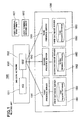
- FIG. 3 is a block diagram illustrating a structure of a network system 150 in accordance with the first exemplary embodiment of the present invention.
- the network system 150 is comprised of an IMS (IP Multimedia Subsystems) core network 10, and a presence service system 100.
- IMS IP Multimedia Subsystems
- the IMS core network 10 includes a HSS (Home Subscriber Server) 11, and a CSCF (Call Session Control Function) 12.
- HSS Home Subscriber Server
- CSCF Call Session Control Function
- the HSS 11 defines a subscriber database server at a core network side, and includes a database which stores subscriber ID data, authentication data, data relating to IFC (Initial Filter Criteria), and other various subscriber data.
- an IFC presence server address stored in the HSS 11 is just an IP address of a later-mentioned assignment presence server 20.
- the CSCF 1012 works as a window of communication made in the IMS core network 10.
- the presence service system 10 includes an assignment presence server 20 which carries out an assignment process in which a request signal (signal indicative of a request relating to presence service) transmitted from user terminals 71 and 72 through the IMS core network 10 is assigned to one of later-mentioned first to third presence servers 41, 42 and 43, an assignment database 30 which the assignment presence server 20 retrieves when the assignment process is carried out, first to third presence servers 41, 42 and 43, and first to third database servers 61, 62 and 63 each associated with the first to third presence servers 41, 42 and 43, respectively.
- a request signal signal indicative of a request relating to presence service
- the first to third database servers 61, 62 and 63 include first to third presence databases 51, 52 and 53, respectively.
- the presence service system 100 may include any number of presence databases or database servers.
- the presence service system 100 illustrated in FIG. 3 is exemplified as including three presence databases or database servers.
- the presence service system 100 may include any number of presence servers.
- the presence service system 100 illustrated in FIG. 3 is exemplified as including three presence servers in conformity with a number of the presence databases.
- User terminals 71 and 72 illustrated in FIG. 3 are communication terminal devices capable of making communication with others through a network.
- each of the user terminals 71 and 72 is comprised of a PC (Personal Computer), a mobile phone, a PHS (Personal Handy-phone System) or other communication terminal devices.
- PC Personal Computer
- PHS Personal Handy-phone System
- FIG. 3 illustrates only two user terminals for simplification.
- Each of the user terminals 71 and 72 is designed to be able to transmit a request signal including a request relating to presence service to the CSCF 12 in the IMS core network 10.
- the request signal is comprised of a signal which, when presence information of a user and/or his/her user terminal changes, requests to update the presence information, or a signal which requests to transmit presence information of other users and/or their user terminals thereto.
- the first or second user When the first or second user would like to have presence service, he or she transmits a request signal to the CSCF 12 equipped in the IMS core network 10 through his/her user terminals 71 and 72 via Internet or other networks.
- a request signal includes data for identifying the user terminals 71 and 72 through which a request signal is transmitted, data for identifying the first and second users of the user terminals 71 and 72, data indicative of what is requested by a request signal, and data for identifying a user designated in a request, for instance.
- Each of data for identifying the first and second users and data for identifying a user designated in a request is comprised of a telephone number or SIP-URI (Uniform Resource Identifier), for instance.
- Data indicative of what is requested by a request signal is comprised of the following data (A), (B) or (C), for instance.
- the request signal is comprised of a SIP (Session Initiation Protocol) signal or an XCAP (extensible markup language Configuration Access Protocol) signal.
- SIP Session Initiation Protocol
- XCAP extensible markup language Configuration Access Protocol
- An SIP signal is used to establish session between user terminals to make communication with each other, and an XCAP signal is used to retrieve and update a network address directory.
- the CSCF 12 of the IMS core network 10 transmits the request signal received from the user terminals 71 and 72, to the assignment presence server 20 of the presence service system 100 through Internet or other networks.
- the CSCF 12 makes an inquiry to the HSS 11 about which presence server covers a user designated in the request signal.
- the CSCF 12 in the first exemplary embodiment does not make such an inquiry to the HSS 11, but transmits the request signal received from the user terminals 71 and 72, to the assignment presence server 20.
- the assignment presence server 20 On receipt of the request signal from the CSCF 12 of the IMS core network 10, the assignment presence server 20 carries out an assignment process as follows.
- the assignment presence server 20 retrieves the assignment database 30 to select one of the first to third presence servers 41, 42 and 43 to which the request signal received from the CSCF 12 of the IMS core network 10 should be transferred.
- the assignment database 30 stores therein a later-mentioned assignment table indicating which presence server among the first to third presence servers 41, 42 and 43 covers each of users. Accordingly, it is possible to select one of the first to third presence servers 41, 42 and 43 to which the request signal should be transmitted, by retrieving the assignment table.
- the assignment presence server 20 transmits the request signal to the thus selected presence server among the first to third presence servers 41, 42 and 43 through Internet or other networks.
- the assignment presence server 20 transmits the request signal to one of the first to third presence servers 41, 42 and 43 which covers a user designated in the request signal as a target.
- Each of the first to third presence servers 41, 42 and 43 is associated one to one with each of the first to third database servers 61, 62 and 63.
- the first presence server 41 is associated with the first database server 61
- the second presence server 42 is associated with the second database server 62
- the third presence server 43 is associated with the third database server 63.
- the first presence server 41 carries out a step relating to presence information of a certain user (for instance, a step of updating presence information)
- the first presence server 41 is called "a presence server covering the user" in the specification.
- a presence database associated with a presence server covering a certain user stores presence information and subscriber information of the certain user.
- the first presence server 41 carries out a step relating to presence information of the first user of the user terminal 71, it is said that "the first user is covered by the first presence server 41", in which case, presence information and subscriber information of the first user is stored in the first presence database 51 associated with the first presence server 41.
- each of the first to third presence servers 41, 42 and 43 On receipt of the request signal from the assignment presence server 20, each of the first to third presence servers 41, 42 and 43 transmits an instruction which is in conformity with the received request signal, to the associated database server (specifically, the first to third database servers 61, 62 and 63, respectively) through Internet and other networks.
- An instruction transmitted from each of the first to third presence servers 41, 42 and 43 to each of the first to third database servers 61, 62 and 63, respectively, may be an instruction to update presence information or an instruction to transmit presence information of other users thereto, for example.
- each of the first to third database servers 61, 62 and 63 On receipt of the instruction from the associated presence server among the first to third presence servers 41, 42 and 43, each of the first to third database servers 61, 62 and 63 carries out a task in accordance with the received instruction, and transmits the result of the task to the associated presence server.
- the user terminals 71 and 72, the CSCF 12, the assignment presence server 20, the first to third presence servers 41, 42 and 43, and the first to third database servers 61, 62 and 63 have an IP address assigned thereto, and can make communication with one another through the use of the IP address.
- the user terminals 71 and 72, the CSCF 12, the assignment presence server 20, the first to third presence servers 41, 42 and 43, and the first to third database servers 61, 62 and 63 are comprised of a central processing unit (CPU), a memory such as a read only memory (ROM) storing therein a program for operating the central processing unit, and a memory such as random access memory (RAM) presenting an area in which the central processing unit works.
- the central processing unit equipped in each of the user terminals 71 and 72, the CSCF 12, the assignment presence server 20, the first to third presence servers 41, 42 and 43, and the first to third database servers 61, 62 and 63 executes the program to thereby accomplish later-mentioned steps.
- FIG. 4 shows steps for the first and second users to request updating their presence information through their user terminals 71 and 72.
- first user of the user terminal 71 is covered by the first presence server 41
- second user of the user terminal 72 is covered by the second presence server 42
- subscriber information and presence information of the first user are stored in the first presence database 51
- subscriber information and presence information of the second user are stored in the second presence database 52.
- the user terminal 71 transmits an information-updating request signal to the CSCF 12 of the IMS core network 10 through Internet or other network, in step S11.
- an information-updating request signal indicates a signal by which a user requests that his/her presence information is updated, when his/her presence information changes.
- the information-updating request signal includes data for identifying the user terminal 71 through which an information-updating request signal is transmitted, data for identifying the first user of the user terminal 71, data indicative of what is requested by an information-updating request signal, and data for identifying a user designated in a request, for instance.
- data for identifying the first user of the user terminal 71 is identical with data for identifying a user designated in a request, both of which are used to identify the first user.
- the CSCF 12 On receipt of the information-updating request signal from the user terminal 71, the CSCF 12 transfers the received information-updating request signal to the assignment presence server 20, in step 512.
- the assignment presence server 20 On receipt of the information-updating request signal from the CSCF 12, the assignment presence server 20 carries out an assignment process as follows, in step S 13.
- the assignment presence server 20 selects one of the first to third presence servers 41, 42 and 43 to which the information-updating request signal should be transferred.
- FIG. 5 illustrates steps in the assignment process carried out by the assignment presence server 20 to determine a presence server to which the information-updating request signal should be transferred.
- the assignment presence server 20 retrieves an assignment table 35 included in the assignment database 30 through the use, as an index, of a predetermined number of columns 82 (for instance, five columns "51111" illustrated in FIG. 5 ) of SIP-URI (Uniform Resource Identifier) included in the SIP signal 81 as data for identifying a user designated in a request.
- a predetermined number of columns 82 for instance, five columns "51111" illustrated in FIG. 5
- SIP-URI Uniform Resource Identifier
- the assignment table 35 indicates correspondence between each of indexes comprised of the above-mentioned columns 82 and a presence server (specifically, a presence server covering users designated by a particular index) associated with each of indexes.
- users transmitting the SIP signal 81 including the columns "51111” are all covered by the first presence server 41, and users transmitting the SIP signal 81 including the columns "62222" are covered by the second presence server 42, as illustrated in FIG. 5 .
- the assignment presence server 20 judges that a presence server to which the information-updating request signal should be transferred is the first presence server 41, by retrieving the assignment table 35 included in the assignment database 30.
- the assignment presence server 20 transfers the information-updating request signal to the first presence server 41, in step S14.
- the first presence server 41 On receipt of the information-updating request signal from the assignment presence server 20, the first presence server 41 transmits an instruction signal indicating that presence information of the first user should be updated in accordance with what is indicated by the information-updating request signal, to a database server associated with the first presence server 41, that is, the first database server 61, in step S15.
- an instruction signal includes an instruction that presence information indicating that the user terminal 71 is not making communication should be updated to presence information indicating that the user terminal 71 is presently making communication.
- the first database server 61 On receipt of the instruction signal, the first database server 61 carries out a step in accordance with the received instruction signal, in step S16. For instance, the first database server 61 carries out a step of updating presence information of the first user.
- the first database server 61 transmits a result of the step having been carried out in accordance with the instruction signal, to a presence server associated with the first database server 61, that is, the first presence server 41, in step S17.
- the first presence server 41 On receipt of the result of the step from the first database server 61, the first presence server 41 produces response data in conformity with the request, and transmits the thus produced response data to the assignment presence server 20, in step S18.
- the assignment presence server 20 transfers the received response data to the CSCF 12 of the IMS core network 10, in step S19.
- the CSCF 12 of the IMS core network 10 On receipt of the response data from the assignment presence server 20, the CSCF 12 of the IMS core network 10 transmits the received response data to the user terminal 71, in step S20.
- the response data indicative of how the request relating to presence service was dealt with is transmitted back to the first user who transmitted the request, in a route opposite to a route in which the request was transferred.
- the first user of the user terminal 71 receives the response data, and can know that his/her presence information was correctly updated in accordance with the information-updating request signal transmitted by himself/herself.
- An operation to be carried out when an information-updating request signal is transmitted from the second user of the user terminal 72 is identical with the operation to be carried out when an information-updating request signal is transmitted from the first user of the user terminal 71.
- the second user of the user terminal 72 is covered by the second presence server 42.
- the user terminal 72 transmits an information-updating request signal to the CSCF 12 of the IMS core network 10 through Internet or other network, in step S21.
- the CSCF 12 On receipt of the information-updating request signal from the user terminal 72, the CSCF 12 transfers the received information-updating request signal to the assignment presence server 20, in step S22.
- the assignment presence server 20 On receipt of the information-updating request signal from the CSCF 12, the assignment presence server 20 carries out the above-mentioned assignment process as follows, in step S23.
- the assignment presence server 20 transfers the information-updating request signal to the second presence server 42, in step S24.
- the second presence server 42 On receipt of the information-updating request signal from the assignment presence server 20, the second presence server 42 transmits an instruction signal indicating that presence information of the second user should be updated in accordance with what is indicated by the information-updating request signal, to a database server associated with the second presence server 42, that is, the second database server 62, in step S25.
- the second database server 62 On receipt of the instruction signal, the second database server 62 carries out a step in accordance with the received instruction signal, in step S26. For instance, the second database server 62 updates presence information of the second user.
- the second database server 62 transmits a result of the step having been carried out in accordance with the instruction signal, to a presence server associated with the second database server 62, that is, the second presence server 42, in step S27.
- the second presence server 42 On receipt of the result of the step from the second database server 62, the second presence server 42 produces response data in conformity with the request, and transmits the thus produced response data to the assignment presence server 20, in step S28.
- the assignment presence server 20 transfers the received response data to the CSCF 12 of the IMS core network 10, in step S29.
- the CSCF 12 of the IMS core network 10 transmits the received response data to the user terminal 72, in step S30.
- the response data indicative of how the request relating to presence service was dealt with is transmitted back to the second user who transmitted the request, in a route opposite to a route in which the request was transferred.
- the first user of the second terminal 72 receives the response data, and can know that his/her presence information was correctly updated in accordance with the information-updating request signal transmitted by himself/herself.
- each of the first to third presence servers 41, 42 and 43 calculates a storage ratio in the associated presence database, that is, each of the first to third presence databases 51, 52 and 53, respectively, at a predetermined time interval (for instance, once a day).
- the first to third presence servers 41, 42 and 43 may be designed to include a storage-ratio calculator 411, 421, and 431, respectively, as illustrated in FIG. 3 .
- SR Y / X ⁇ 100 %
- each of the first to third presence servers 41, 42 and 43 carries out, in sequence, steps of counting a number Y of presence information currently stored in the associated presence database, that is, each of the first to third presence databases 51, 52 and 53, respectively, and dividing the counted number Y by a maximum number X of presence information.
- each of the first to third presence servers 41, 42 and 43 After calculating a storage ratio, each of the first to third presence servers 41, 42 and 43 transmits the calculated storage ratio to the assignment presence server 20.
- the assignment database 30 in the first exemplary embodiment stores not only the above-mentioned assignment table 35 illustrated in FIG. 5 , but also a storage ratio table 36 as illustrated in FIG. 6 .
- the storage ratio table 36 indicates correspondence between each of the first to third presence databases 51, 52 and 53 and a storage ratio of each of the first to third presence databases 51, 52 and 53.
- the assignment presence server 20 On receipt of the calculated storage ratio from each of the first to third presence servers 41, 42 and 43, the assignment presence server 20 updates a storage ratio stored in the storage table 36 in accordance with the received storage ratio. That is, the assignment presence server 20 carries out a process of updating the storage table 36.
- a rearrangement process in which presence information is transferred among the first to third presence databases 51, 52 and 53 is carried out by, for instance, the assignment presence server 20 in order to reduce the difference.
- the assignment presence server 20 carries out a process of updating the assignment table 35 together with the rearrangement process.
- FIG. 7 is a flow-chart showing steps to be carried out by the assignment presence server 20 in a test for determining whether the rearrangement process is carried out.
- the assignment presence server 20 first judges whether a rearrangement process has been already carried out today, in step S51.
- step S51 If a rearrangement process has been already carried out today (YES in step S51), the assignment presence server 20 finishes the test.
- the assignment presence server 20 judges whether the assignment presence server 20 receives today's storage ratios from all of the first to third presence servers 41, 42 and 43, in step S52.
- the assignment presence server 20 If the assignment presence server 20 does not receive a today's storage ratio from at least one of the first to third presence servers 41, 42 and 43 (NO in step S52), the assignment presence server 20 repeatedly judges whether the assignment presence server 20 receives today's storage ratios from all of the first to third presence servers 41, 42 and 43, until the assignment presence server 20 receives today's storage ratios from all of the first to third presence servers 41, 42 and 43.
- the assignment presence server 20 judges a difference among the today's storage ratios is equal to or greater than a predetermined threshold, in step S53.
- the assignment presence server 20 carries out the rearrangement process in step S54.
- the assignment presence server 20 finishes the test without carrying out the rearrangement process.
- the rearrangement process is carried out in a unit of the above-mentioned index.
- the assignment presence server 20 carries out the rearrangement process such that presence information stored in the first presence database 51 is transferred to the second presence database 52 index by index in order to reduce a difference (31%) between the storage ratios. For instance, presence information of user terminals identified with the column "51111" is all transferred to the second presence database 52 from the first presence database 51.
- a step of transferring presence information index by index can be carried out by the assignment presence server 20, for instance, by informing the first presence server 41 of both index to be transferred (for instance, "51111") and a presence database to which presence information should be transferred (for instance, the second presence database 52).
- the first presence server 41 On receipt of the information from the assignment presence server 20, the first presence server 41 takes presence information identified with the informed index (for instance, "51111") out of the first presence database 51 of the first database server 61, and transfers the thus taken-out presence information to the second presence database 52 of the second database server 62 through the second presence server 42.
- the informed index for instance, "51111”
- the assignment presence server 20 carries out a process of updating the assignment table 35 together with the above-mentioned rearrangement process. For instance, presence database associated with the index "51111" is transferred to the second presence database 52 from the first presence database 51.
- FIG. 8 is a block diagram of the presence service system 100 to which a fourth database server 64 including a fourth presence database 54, and a fourth presence server 44 associated with the fourth database server 64 are added in comparison with the presence service system 100 illustrated in FIG. 3 .
- the fourth database server 64 are structurally identical with the first to third database servers 61, 62 and 63, and the fourth presence server 44 is structurally identical with the first to third presence servers 41, 42 and 43.
- a space for storing index associated with the fourth presence database 54 is added to the assignment table 35 of the assignment database 30, and a space for storing a storage ratio of the fourth presence database 54 is added to the assignment table 36.
- the fourth presence server 44 calculates a storage ratio of the fourth presence database 54, for instance, once a day, and transmits the calculated storage ratio to the assignment presence server 20.
- a storage ratio of the fourth presence database at a first day is 0%, for instance. If there is a difference in a storage ratio among the first to fourth presence databases 51, 52, 53 and 54, the rearrangement process is carried out as mentioned above. Thus, even if a number of the presence databases is increased, a difference in a storage ratio among the first to fourth presence databases 51, 52, 53 and 54 is reduced as days go by.
- FIG. 9 is a block diagram of the presence service system 100 out of which the third database server 63 and the associated third presence server 43 are removed in comparison with the presence service system 100 illustrated in FIG. 3 .
- the assignment presence server 20 When a number of the database servers is increased or reduced, it is not always necessary for the assignment presence server 20 to automatically carry out the rearrangement process. At least a part of the rearrangement process may be manually carried out by an administrator of the presence service system 100, in which case, it is preferable that the rearrangement process is carried out index by index.
- the assignment presence server 20 which is a part of the presence service system 100 carries out the assignment process, it is no longer necessary for the IMS core network 10 to include a database storing which presence server covers each of users.
- the HSS 11 stores only one IFC presence server address. Specifically, the HSS 11 in the first exemplary embodiment stores only an IP address of the assignment presence server 20.
- the rearrangement process is carried out automatically by the assignment presence server 20.
- the rearrangement process may be carried out manually by an administrator of the presence service system 100.
- the second exemplary embodiment is different from the first exemplary embodiment only in that the assignment presence server 20 carries out a process illustrated in FIG. 10 in place of the process illustrated in FIG. 7 .
- FIG. 10 is a flow-chart showing steps to be carried out by the assignment presence server 20 in a test for determining whether an alarm process as an annunciation process is to be carried out.
- the assignment presence server 20 first judges whether an alarm process has been already carried out today, in step S61.
- step S61 If an alarm process has been already carried out today (YES in step S61), the assignment presence server 20 finishes the test.
- the assignment presence server 20 judges whether the assignment presence server 20 receives today's storage ratios from all of the first to third presence servers 41, 42 and 43, in step S62.
- the assignment presence server 20 If the assignment presence server 20 does not receive a today's storage ratio from at least one of the first to third presence servers 41, 42 and 43 (NO in step S62), the assignment presence server 20 repeatedly judges whether the assignment presence server 20 receives today's storage ratios from all of the first to third presence servers 41, 42 and 43, until the assignment presence server 20 receives today's storage ratios from all of the first to third presence servers 41, 42 and 43.
- the assignment presence server 20 judges a difference among the today's storage ratios is equal to or greater than a predetermined threshold, in step S63.
- the assignment presence server 20 carries out the alarm process in step S64.
- the assignment presence server 20 finishes the test without carrying out the alarm process.
- the alarm process may be comprised of outputting annunciation sound out of a speaker (not illustrated), displaying an alarm in a display device (not illustrated), or emitting a light out of a light-emitting device (not illustrated).
- an administrator of the presence service system 100 can know necessity of carrying out the rearrangement process.
- the rearrangement process carried out manually by an administrator of the presence service system 100 is carried out index by index similarly to the above-mentioned first exemplary embodiment.
- a threshold may be arbitrarily determined.
- the presence service system 100 in the above-mentioned first and second exemplary embodiments is designed to include a single assignment presence server 20.
- the presence service system 100 in the third exemplary embodiment is designed to include a plurality of assignment presence servers, and a load balancer disposed upstream of the assignment presence servers.
- FIG. 11 is a block diagram of a network system 250 in accordance with the third exemplary embodiment.
- the network system 250 in accordance with the third exemplary embodiment is designed to include a presence service system 200.
- the network system 250 in accordance with the third exemplary embodiment is structurally different from the network system 150 in accordance with the first and second exemplary embodiments only in including the presence service system 200 in place of the presence service system 100. Accordingly, parts or elements that correspond to those of the network system 150 illustrated in FIG. 3 have been provided with the same reference numerals, and operate in the same manner as corresponding parts or elements in the first and second exemplary embodiments, unless explicitly explained hereinbelow.
- the presence service system 200 in the third exemplary embodiment is structurally different from the presence service system 100 in the first and second exemplary embodiments in including first to third assignment presence servers 21, 22 and 23, first to third assignment databases 31, 32 and 33, and a load balancer 90 dispersing a load to the first to third assignment presence servers 21, 22 and 23 in place of the assignment presence server 20 and the assignment database 30.
- the presence service system 200 in the third exemplary embodiment may include any number of assignment presence servers, unless the number is equal to or greater than two.
- the presence service system 200 illustrated in FIG. 11 is exemplified as including three assignment presence servers.
- the presence service system 200 in the third exemplary embodiment may include any number of assignment databases, unless the number is equal to or greater than two.
- the presence service system 200 illustrated in FIG. 11 is exemplified as including two assignment presence servers in conformity with a number of the assignment presence servers.
- an IFC presence server address stored in the HSS 11 is only an IP address of the load balancer 90.
- the CSCF 12 of the IMS core network 10 receives an information-updating request signal from the user terminals 71 and 72, and transfers the received information-updating request signal to the load balancer 90 through Internet or other networks.
- the load balancer 90 selects one of the first to third assignment presence servers 21, 22 and 23, and transfers the received information-updating request signal to the selected assignment presence server in order to uniformize a load in the first to third assignment presence servers 21, 22 and 23.
- the load balancer 90 may transfer received information-updating request signals to the first to third assignment presence servers 21, 22 and 23 in order. Specifically, the load balancer 90 transfers a firstly received information-updating request signal to the first assignment presence server 21, a secondly received information-updating request signal to the second assignment presence server 22, a thirdly received information-updating request signal to the third assignment presence server 23, a fourthly received information-updating request signal to the first assignment presence server 21, and so on.
- One assignment presence server among the first to third assignment presence servers 21, 22 and 23 (for instance, the first assignment presence server 21) is selected in advance as a representative assignment presence server, which is works in the same way as the assignment presence server 20 in the above-mentioned first and second exemplary embodiments.
- Assignment presence servers other than the representative assignment presence server are different from the assignment presence server 20 in the above-mentioned first and second exemplary embodiments in that they do not carry out the above-mentioned rearrangement or alarm process, a process for updating the storage ratio table 36, and a process for updating the assignment table 35, but is identical with the assignment presence server 20 in other matters such as carrying out the assignment process.
- Each of the first to third assignment databases 31, 32 and 33 is structurally identical with the assignment database 30 in the above-mentioned first and second exemplary embodiments.
- the first assignment presence server 21 retrieves the first assignment database 31 in the assignment process
- the second assignment presence server 22 retrieves the second assignment database 32 in the assignment process
- the third assignment presence server 23 retrieves the third assignment database 33 in the assignment process.
- each of the first to third presence servers 41, 42 and 43 transmits a signal indicative of the calculated storage ratio to the first assignment presence server 21, for instance, and the first assignment presence server 21 reflects the received storage ratio on the storage ratio table 36 included in the first assignment database 31, in other words, the first assignment presence server 21 updates the storage ratio table 36 included in the first assignment database 31 in accordance with the received storage ratio.
- the first assignment presence server 21 reflects the received storage ratio further on the storage ratio tables 36 included in the assignment databases (for instance, the second and third assignment databases 32 and 33) associated with the other assignment presence servers.
- the storage ratio tables 36 and the assignment tables 35 included in the first to third assignment databases 31, 32 and 33 are kept identical with one another.
- an assignment presence server selected in advance among the first to third assignment presence servers 21, 22 and 23 (for instance, the first assignment presence server) carries out the rearrangement process.
- the first assignment presence server 21 not only carries out the rearrangement process, but also updates the assignment tables 35 of the first to third assignment databases 31, 32 and 33.
- the assignment tables 35 of the first to third assignment databases 31, 32 and 33 are kept to store the same data as one another.
- an administrator of the presence service system 200 arbitrarily selects one of the first to third assignment presence servers 21, 22 and 23 as a representative assignment presence server.
- each of the first to third assignment presence servers 21, 22 and 23 can always preferably carry out the assignment process.
- the first to third assignment presence servers 21, 22 and 23 are associated with the first to third assignment databases 31, 32 and 33, respectively.
- the first to third assignment presence servers 21, 22 and 23 may be designed to commonly include one assignment database (for instance, the first assignment database 31).
- the IMS core network 10 is exemplified as a core network.
- IMS is a standard in 3GPP, and it is called MMD (MultiMedia Domain) in 3GPP2. Accordingly, a MMD core network is used in 3GPP2 in place of the IMS core network 10.
- MMD MultiMedia Domain
- a core network may be comprised of an SIP server.
- the assignment database 30 is separate from the assignment presence server 20.
- the assignment database 30 may be included in the assignment presence server 20.
- the first to third assignment databases 31, 32 and 33 are separate from the first to third presence servers 21, 22 and 23, respectively, in the above-mentioned third exemplary embodiment, but the first to third assignment databases 31, 32 and 33 may be designed to be included in the first to third presence servers 21, 22 and 23, respectively.
- the assignment presence server 20 when the rearrangement process is automatically carried out, is designed to carry out the rearrangement process.
- the presence service system 100 may be designed to include a server (not illustrated) which carries out the rearrangement process in which the steps illustrated in FIG. 7 are carried out.
- the assignment presence server 20 is designed to carry out the alarm process as an annunciation process.
- the presence service system 100 may be designed to include a server (not illustrated) which carries out the alarm process as an annunciation process.
- each of the first to third presence servers 41, 42 and 43 calculates a storage ratio, and transmits the calculated storage ratio to the assignment presence server 20.
- the presence service system 100 may be designed to include a server (not illustrated) which calculates a storage ratio, and transmits the calculated storage ratio to the assignment presence server 20 in place of the first to third presence servers 41, 42 and 43.
- the network system in accordance with the present invention has preferred exemplary embodiments as follows.
- the presence service system in accordance with the present invention further includes an assignment database storing correspondence between each of users and each of the presence servers covering the each of users, the assignment presence server carrying out the assignment process by retrieving the assignment database, to select one of the presence servers which covers a user designated in the request.
- the assignment database stores therein correspondence between each of groups and each of the presence servers associated with the each of groups.
- the assignment presence server carries out a rearrangement process in which presence information is transferred among the presence databases to reduce the difference.
- the presence service system in accordance with the present invention further includes a storage-ratio database storing the storage ratio in each of the presence databases, the assignment presence server retrieves the storage-ratio database to judge whether the difference is equal to or greater than the predetermined threshold, and, if the difference is judged to be equal to or greater than the predetermined threshold, carries out the rearrangement process.
- the assignment presence server carries out an annunciation process for annunciating that the difference is equal to or greater than the predetermined threshold.
- the presence service system in accordance with the present invention further includes a storage-ratio database storing the storage ratio in each of the presence databases, the assignment presence server retrieves the storage-ratio database to judge whether the difference is equal to or greater than the predetermined threshold, and, if the difference is judged to be equal to or greater than the predetermined threshold, carries out the annunciation process.
- the presence service system in accordance with the present invention further includes a storage-ratio calculator for calculating the storage ratio in each of the presence databases at a predetermined time interval, and wherein result of calculation carried out by the storage-ratio calculator is reflected on the storage-ratio database.
- each of the presence servers calculates the storage ratio of an associated presence database at a predetermined time interval, and result of calculation carried out by each of the presence servers is reflected on the storage-ratio database.
- each of the presence databases stores presence information in a unit of the group.
- the presence service system in accordance with the present invention includes at least two the assignment presence servers, and a load balancer which, when the request is transmitted to the presence service system from a user terminal, transfers the request to a selected one of the assignment presence servers.
- the assignment presence server carries out the assignment process by retrieving an assignment database storing correspondence between each of users and each of the presence servers covering the each of users, to select one of the presence servers which covers a user designated in the request.
- the assignment presence server in accordance with the present invention, assuming that X indicates a maximum number of presence information stored in one presence database, Y indicates a number of presence information currently stored in the one presence database, and Y/X indicates a storage ratio in the one presence database, when a difference in the storage ratio among the presence databases is equal to or greater than a predetermined threshold, the assignment presence server carries out a rearrangement process in which presence information is transferred among the presence databases to reduce the difference.
- the assignment presence server retrieves a storage-ratio database storing the storage ratio in each of the presence databases, to judge whether the difference is equal to or greater than the predetermined threshold, and, if the difference is judged to be equal to or greater than the predetermined threshold, carries out the rearrangement process.
- the assignment presence server in accordance with the present invention, assuming that X indicates a maximum number of presence information stored in one presence database, Y indicates a number of presence information currently stored in the one presence database, and Y/X indicates a storage ratio in the one presence database, when a difference in the storage ratio among the presence databases is equal to or greater than a predetermined threshold, the assignment presence server carries out an annunciation process for annunciating that the difference is equal to or greater than the predetermined threshold.
- the assignment presence server retrieves a storage-ratio database storing the storage ratio in each of the presence databases, to judge whether the difference is equal to or greater than the predetermined threshold, and, if the difference is judged to be equal to or greater than the predetermined threshold, carries out the annunciation process.
- the method may further include, assuming that X indicates a maximum number of presence information stored in one presence database, Y indicates a number of presence information currently stored in the one presence database, and Y/X indicates a storage ratio in the one presence database, judging whether a difference in the storage ratio among the presence databases is equal to or greater than a predetermined threshold, and if the difference is judged to be equal to or greater than the predetermined threshold, carrying out a rearrangement process in which presence information is transferred among the presence databases to reduce the difference.
- the method may further include, assuming that X indicates a maximum number of presence information stored in one presence database, Y indicates a number of presence information currently stored in the one presence database, and Y/X indicates a storage ratio in the one presence database, judging whether a difference in the storage ratio among the presence databases is equal to or greater than a predetermined threshold, and if the difference is judged to be equal to or greater than the predetermined threshold, carrying out an annunciation process for annunciating that the difference is equal to or greater than the predetermined threshold.
- the presence service system carries out the assignment process in which a request relating to presence service is transferred to one of the presence servers which covers a user designated in the request. Accordingly, it is no longer necessary for the core network to include a database indicating which presence server covers each of users.
- a number of presence server addresses to be stored in the core network is just one.
Landscapes
- Engineering & Computer Science (AREA)
- Computer Networks & Wireless Communication (AREA)
- Signal Processing (AREA)
- Computer Hardware Design (AREA)
- General Engineering & Computer Science (AREA)
- Telephonic Communication Services (AREA)
- Information Transfer Between Computers (AREA)
- Hardware Redundancy (AREA)
- Computer And Data Communications (AREA)
Applications Claiming Priority (1)
| Application Number | Priority Date | Filing Date | Title |
|---|---|---|---|
| JP2007073226A JP5239184B2 (ja) | 2007-03-20 | 2007-03-20 | プレゼンスサービスシステム |
Publications (2)
| Publication Number | Publication Date |
|---|---|
| EP1973301A2 true EP1973301A2 (de) | 2008-09-24 |
| EP1973301A3 EP1973301A3 (de) | 2012-08-15 |
Family
ID=39344641
Family Applications (1)
| Application Number | Title | Priority Date | Filing Date |
|---|---|---|---|
| EP08102807A Withdrawn EP1973301A3 (de) | 2007-03-20 | 2008-03-20 | Präsenzdienstsystem |
Country Status (4)
| Country | Link |
|---|---|
| US (1) | US20080235178A1 (de) |
| EP (1) | EP1973301A3 (de) |
| JP (1) | JP5239184B2 (de) |
| AU (1) | AU2008201325A1 (de) |
Cited By (1)
| Publication number | Priority date | Publication date | Assignee | Title |
|---|---|---|---|---|
| GB2454289A (en) * | 2007-11-01 | 2009-05-06 | Toshiba Kk | Reducing the traffic involved in presence change notification between two networks by using watcher lists in network presence servers |
Families Citing this family (4)
| Publication number | Priority date | Publication date | Assignee | Title |
|---|---|---|---|---|
| US20090276653A1 (en) * | 2008-05-02 | 2009-11-05 | Pattabhiraman Ramesh V | Presence server for discrete time updates |
| KR101593912B1 (ko) * | 2009-03-26 | 2016-02-15 | 삼성전자주식회사 | 이동통신 시스템에서 프리젠스 정보 관리 방법 및 장치 |
| JP5701224B2 (ja) * | 2012-01-11 | 2015-04-15 | 日本電信電話株式会社 | 分散データベースシステム及びデータ更新・配信方法 |
| US9299111B2 (en) * | 2012-09-04 | 2016-03-29 | Futurewei Technologies, Inc. | Efficient presence distribution mechanism for a large enterprise |
Citations (2)
| Publication number | Priority date | Publication date | Assignee | Title |
|---|---|---|---|---|
| JP2005318503A (ja) | 2004-03-29 | 2005-11-10 | Hitachi Ltd | プレゼンスサーバ、セッション制御サーバ、パケット中継システム、サーバ、及びシステム |
| JP2007073226A (ja) | 2005-09-05 | 2007-03-22 | Fujifilm Corp | 透過率調整体ユニット、これを用いる面状照明装置及び液晶表示装置 |
Family Cites Families (7)
| Publication number | Priority date | Publication date | Assignee | Title |
|---|---|---|---|---|
| JP2005518114A (ja) * | 2002-02-14 | 2005-06-16 | アバイア テクノロジー コーポレーション | 存在追跡および名前空間相互接続の技術 |
| US7640300B2 (en) * | 2002-06-10 | 2009-12-29 | Microsoft Corporation | Presence and notification system for maintaining and communicating information |
| JP3812828B2 (ja) * | 2002-08-21 | 2006-08-23 | 日本電信電話株式会社 | 複数ユーザの位置情報および帯域情報を管理および通知する通信方法および通信システム、ならびにそのプログラムとProxyプレゼンスサーバ |
| US7949712B2 (en) * | 2003-02-10 | 2011-05-24 | At&T Intellectual Property I, L.P. | High availability presence engine for instant messaging |
| US7522548B2 (en) * | 2004-12-08 | 2009-04-21 | Motorola, Inc. | Providing presence information in a communication network |
| US7676577B2 (en) * | 2004-12-21 | 2010-03-09 | Alcatel Lucent | Scalable presence distribution system and method |
| JP4170302B2 (ja) * | 2005-03-10 | 2008-10-22 | 富士通株式会社 | 負荷制御装置および負荷制御プログラム |
-
2007
- 2007-03-20 JP JP2007073226A patent/JP5239184B2/ja not_active Expired - Fee Related
-
2008
- 2008-03-18 US US12/050,287 patent/US20080235178A1/en not_active Abandoned
- 2008-03-20 AU AU2008201325A patent/AU2008201325A1/en not_active Abandoned
- 2008-03-20 EP EP08102807A patent/EP1973301A3/de not_active Withdrawn
Patent Citations (2)
| Publication number | Priority date | Publication date | Assignee | Title |
|---|---|---|---|---|
| JP2005318503A (ja) | 2004-03-29 | 2005-11-10 | Hitachi Ltd | プレゼンスサーバ、セッション制御サーバ、パケット中継システム、サーバ、及びシステム |
| JP2007073226A (ja) | 2005-09-05 | 2007-03-22 | Fujifilm Corp | 透過率調整体ユニット、これを用いる面状照明装置及び液晶表示装置 |
Cited By (1)
| Publication number | Priority date | Publication date | Assignee | Title |
|---|---|---|---|---|
| GB2454289A (en) * | 2007-11-01 | 2009-05-06 | Toshiba Kk | Reducing the traffic involved in presence change notification between two networks by using watcher lists in network presence servers |
Also Published As
| Publication number | Publication date |
|---|---|
| EP1973301A3 (de) | 2012-08-15 |
| AU2008201325A1 (en) | 2008-10-09 |
| JP5239184B2 (ja) | 2013-07-17 |
| JP2008234328A (ja) | 2008-10-02 |
| US20080235178A1 (en) | 2008-09-25 |
Similar Documents
| Publication | Publication Date | Title |
|---|---|---|
| JP4205955B2 (ja) | 無線装置を介して個別のビデオ/オーディオウェブコンテンツを対象としてアクセスする方法及び装置 | |
| US8155279B2 (en) | Method and system for routing calls based on a language preference | |
| US7945641B2 (en) | Method and apparatus of triggering a transfer of data stored in a database | |
| US20150111546A1 (en) | System and method for sending local information from a wireless browser to a web server | |
| KR20030064777A (ko) | 전화번호 안내방법 및 전화번호 안내 시스템 | |
| EP1973301A2 (de) | Präsenzdienstsystem | |
| US20030004838A1 (en) | Information search system, information search method, call center system, server and information search apparatus | |
| CN1509563A (zh) | 呼叫中心系统 | |
| US20100125433A1 (en) | Contact center routing using characteristic mapping | |
| KR101116534B1 (ko) | 원거리 데이타 베이스에서 대상자에 관한 정보를 입력하고 검색하는 방법 | |
| US7813723B2 (en) | Method and system for connecting a voice call using a domain name database | |
| JP4085775B2 (ja) | 端末メディア選択方法及び発信方法及び通信メディア選択装置及び端末メディア選択システム | |
| KR100776322B1 (ko) | 통신망에서 일대일 질문 및 답변을 중개하는 방법 및 상기방법을 실행하는 시스템 | |
| JP7447612B2 (ja) | Faq提供装置およびfaq提供プログラム | |
| KR20020038441A (ko) | 휴대통신 단말기를 이용한 통역서비스 제공시스템 | |
| JP2006185319A (ja) | 顧客対応支援方法及び顧客対応支援システム | |
| KR101698135B1 (ko) | 전화번호 업데이트 장치 및 방법 | |
| JP5748050B2 (ja) | 情報提供装置及び情報提供方法 | |
| KR20090047565A (ko) | 이용자별 택시운전자 지정호출 방법 및 시스템 | |
| KR100699330B1 (ko) | 실시간 스트리밍 전송 방법을 이용한 정보 제공 시스템 및그 방법 | |
| KR20020032733A (ko) | 이동통신 단말기를 이용한 정보 검색 및 제공 방법 | |
| KR20030019673A (ko) | 음성 다이얼링 서비스 방법 및 그 시스템 | |
| JP6632144B2 (ja) | 情報処理装置、情報処理システム、情報処理方法、及び情報処理プログラム | |
| JP3241674B2 (ja) | 交換装置 | |
| JP2009253816A (ja) | 電話機及び計算機システム |
Legal Events
| Date | Code | Title | Description |
|---|---|---|---|
| PUAI | Public reference made under article 153(3) epc to a published international application that has entered the european phase |
Free format text: ORIGINAL CODE: 0009012 |
|
| AK | Designated contracting states |
Kind code of ref document: A2 Designated state(s): AT BE BG CH CY CZ DE DK EE ES FI FR GB GR HR HU IE IS IT LI LT LU LV MC MT NL NO PL PT RO SE SI SK TR |
|
| AX | Request for extension of the european patent |
Extension state: AL BA MK RS |
|
| PUAL | Search report despatched |
Free format text: ORIGINAL CODE: 0009013 |
|
| AK | Designated contracting states |
Kind code of ref document: A3 Designated state(s): AT BE BG CH CY CZ DE DK EE ES FI FR GB GR HR HU IE IS IT LI LT LU LV MC MT NL NO PL PT RO SE SI SK TR |
|
| AX | Request for extension of the european patent |
Extension state: AL BA MK RS |
|
| RIC1 | Information provided on ipc code assigned before grant |
Ipc: H04L 29/08 20060101AFI20120709BHEP |
|
| 17P | Request for examination filed |
Effective date: 20130215 |
|
| AKX | Designation fees paid |
Designated state(s): DE ES FR GB |
|
| STAA | Information on the status of an ep patent application or granted ep patent |
Free format text: STATUS: THE APPLICATION HAS BEEN WITHDRAWN |
|
| 18W | Application withdrawn |
Effective date: 20140530 |