EP1971565B1 - Catalyst and process for oxidation of saturated and unsaturated aldehydes to unsaturated carboxylic acid - Google Patents
Catalyst and process for oxidation of saturated and unsaturated aldehydes to unsaturated carboxylic acid Download PDFInfo
- Publication number
- EP1971565B1 EP1971565B1 EP06848678.6A EP06848678A EP1971565B1 EP 1971565 B1 EP1971565 B1 EP 1971565B1 EP 06848678 A EP06848678 A EP 06848678A EP 1971565 B1 EP1971565 B1 EP 1971565B1
- Authority
- EP
- European Patent Office
- Prior art keywords
- heteropoly acid
- acid compound
- catalyst
- supported
- added
- Prior art date
- Legal status (The legal status is an assumption and is not a legal conclusion. Google has not performed a legal analysis and makes no representation as to the accuracy of the status listed.)
- Not-in-force
Links
Images

Classifications
-
- B—PERFORMING OPERATIONS; TRANSPORTING
- B01—PHYSICAL OR CHEMICAL PROCESSES OR APPARATUS IN GENERAL
- B01J—CHEMICAL OR PHYSICAL PROCESSES, e.g. CATALYSIS OR COLLOID CHEMISTRY; THEIR RELEVANT APPARATUS
- B01J37/00—Processes, in general, for preparing catalysts; Processes, in general, for activation of catalysts
- B01J37/02—Impregnation, coating or precipitation
- B01J37/03—Precipitation; Co-precipitation
-
- B—PERFORMING OPERATIONS; TRANSPORTING
- B01—PHYSICAL OR CHEMICAL PROCESSES OR APPARATUS IN GENERAL
- B01J—CHEMICAL OR PHYSICAL PROCESSES, e.g. CATALYSIS OR COLLOID CHEMISTRY; THEIR RELEVANT APPARATUS
- B01J23/00—Catalysts comprising metals or metal oxides or hydroxides, not provided for in group B01J21/00
- B01J23/002—Mixed oxides other than spinels, e.g. perovskite
-
- B—PERFORMING OPERATIONS; TRANSPORTING
- B01—PHYSICAL OR CHEMICAL PROCESSES OR APPARATUS IN GENERAL
- B01J—CHEMICAL OR PHYSICAL PROCESSES, e.g. CATALYSIS OR COLLOID CHEMISTRY; THEIR RELEVANT APPARATUS
- B01J27/00—Catalysts comprising the elements or compounds of halogens, sulfur, selenium, tellurium, phosphorus or nitrogen; Catalysts comprising carbon compounds
- B01J27/14—Phosphorus; Compounds thereof
- B01J27/186—Phosphorus; Compounds thereof with arsenic, antimony, bismuth, vanadium, niobium, tantalum, polonium, chromium, molybdenum, tungsten, manganese, technetium or rhenium
- B01J27/195—Phosphorus; Compounds thereof with arsenic, antimony, bismuth, vanadium, niobium, tantalum, polonium, chromium, molybdenum, tungsten, manganese, technetium or rhenium with vanadium, niobium or tantalum
- B01J27/198—Vanadium
- B01J27/199—Vanadium with chromium, molybdenum, tungsten or polonium
-
- B—PERFORMING OPERATIONS; TRANSPORTING
- B01—PHYSICAL OR CHEMICAL PROCESSES OR APPARATUS IN GENERAL
- B01J—CHEMICAL OR PHYSICAL PROCESSES, e.g. CATALYSIS OR COLLOID CHEMISTRY; THEIR RELEVANT APPARATUS
- B01J35/00—Catalysts, in general, characterised by their form or physical properties
- B01J35/30—Catalysts, in general, characterised by their form or physical properties characterised by their physical properties
- B01J35/34—Mechanical properties
- B01J35/37—Crush or impact strength
-
- C—CHEMISTRY; METALLURGY
- C07—ORGANIC CHEMISTRY
- C07C—ACYCLIC OR CARBOCYCLIC COMPOUNDS
- C07C51/00—Preparation of carboxylic acids or their salts, halides or anhydrides
- C07C51/16—Preparation of carboxylic acids or their salts, halides or anhydrides by oxidation
- C07C51/21—Preparation of carboxylic acids or their salts, halides or anhydrides by oxidation with molecular oxygen
- C07C51/25—Preparation of carboxylic acids or their salts, halides or anhydrides by oxidation with molecular oxygen of unsaturated compounds containing no six-membered aromatic ring
- C07C51/252—Preparation of carboxylic acids or their salts, halides or anhydrides by oxidation with molecular oxygen of unsaturated compounds containing no six-membered aromatic ring of propene, butenes, acrolein or methacrolein
-
- B—PERFORMING OPERATIONS; TRANSPORTING
- B01—PHYSICAL OR CHEMICAL PROCESSES OR APPARATUS IN GENERAL
- B01J—CHEMICAL OR PHYSICAL PROCESSES, e.g. CATALYSIS OR COLLOID CHEMISTRY; THEIR RELEVANT APPARATUS
- B01J2235/00—Indexing scheme associated with group B01J35/00, related to the analysis techniques used to determine the catalysts form or properties
- B01J2235/15—X-ray diffraction
-
- B—PERFORMING OPERATIONS; TRANSPORTING
- B01—PHYSICAL OR CHEMICAL PROCESSES OR APPARATUS IN GENERAL
- B01J—CHEMICAL OR PHYSICAL PROCESSES, e.g. CATALYSIS OR COLLOID CHEMISTRY; THEIR RELEVANT APPARATUS
- B01J2523/00—Constitutive chemical elements of heterogeneous catalysts
-
- B—PERFORMING OPERATIONS; TRANSPORTING
- B01—PHYSICAL OR CHEMICAL PROCESSES OR APPARATUS IN GENERAL
- B01J—CHEMICAL OR PHYSICAL PROCESSES, e.g. CATALYSIS OR COLLOID CHEMISTRY; THEIR RELEVANT APPARATUS
- B01J35/00—Catalysts, in general, characterised by their form or physical properties
- B01J35/30—Catalysts, in general, characterised by their form or physical properties characterised by their physical properties
-
- B—PERFORMING OPERATIONS; TRANSPORTING
- B01—PHYSICAL OR CHEMICAL PROCESSES OR APPARATUS IN GENERAL
- B01J—CHEMICAL OR PHYSICAL PROCESSES, e.g. CATALYSIS OR COLLOID CHEMISTRY; THEIR RELEVANT APPARATUS
- B01J35/00—Catalysts, in general, characterised by their form or physical properties
- B01J35/30—Catalysts, in general, characterised by their form or physical properties characterised by their physical properties
- B01J35/34—Mechanical properties
- B01J35/36—Mechanical strength
Definitions
- This invention relates to supported or bound heteropoly acid catalyst compositions, a method of making such catalyst compositions and a process for the oxidation of saturated and/or unsaturated aldehydes, such as methacrolein, to unsaturated carboxylic acids, such as methacrylic acid, in a vapor phase reaction using such catalyst compositions.
- Various catalysts are known for the gas phase catalytic oxidation of unsaturated aldehydes to unsaturated carboxylic acids. Included are molybdenum-based mixed metal oxides compound which can contain oxides of metals such as phosphorus, arsenic, cesium, rubidium, cobalt, nickel, iron, chromium, antimony, tellurium and silicon in addition to molybdenum. These same metals and others may occur in heteropoly acid compounds as metal oxide clusters forming heteropolyoxoanions in acid form instead of simple metal oxides.
- Heteropoly acid compounds are also known as catalysts for the gas phase catalytic oxidation of unsaturated aldehydes to unsaturated carboxylic acids.
- Heteropoly acid compounds have a central metal atom surrounded by a framework of other metal atoms connected to each other and the central metal atom through oxygen atoms. The central metal atom is different (“hetero") from the framework metal atoms.
- U.S. Patent no 3,998,876 discloses a catalyst of a heteropoly acid compound containing phosphorus, molybdenum, arsenic, at least one of vanadium, tungsten, copper, iron, manganese or tin, at least one of lithium, sodium, potassium, rubidium or cesium and ammonium groups in the form of a salt of the heteropoly acid.
- the examples of the nonsupported catalyst were shown to have a higher degree of conversion at comparable selectivities compared to a catalyst supported on an alumina/silica carrier.
- U.S. Patent no. 4,320,227 discloses a heteropoly acid catalyst containing molybdenum, vanadium, phosphorus, one or more of copper, tin, thorium, aluminum, germanium, nickel, iron, cobalt, zinc, titanium, lead, rhenium, zirconium, cerium, chromium, bismuth or arsenic, and one or more of potassium, rubidium, cesium or thallium.
- a suitable carrier such as silicon carbide, ⁇ -alumina, aluminum powder, diatomaceous earth or titanium oxide, can be used. Active carriers which react with heteropoly acids are not preferable.
- U.S. Patent no. 5,191,116 discloses a heteropoly acid catalyst containing molybdenum, vanadium and/or copper, phosphorus and/or arsenic, at least one of an alkali metal, such as lithium sodium, potassium, rubidium, and cesium, an alkaline earth metal, such as magnesium, calcium, strontium and barium, or thallium and at least one of silver, zinc, cadmium, titanium, zirconium, niobium, tantalum, chromium, tungsten, manganese, iron, cobalt, nickel, boron, aluminum, germanium, rhodium, tin, antimony, bismuth, selenium, tellurium, yttrium, lanthanum, cerium, praseodymium and neodymium.
- an alkali metal such as lithium sodium, potassium, rubidium, and cesium
- an alkaline earth metal such as magnesium, calcium, strontium and barium, or
- the catalysts may be carried on a carrier, such as silica, ⁇ -alumina, titania, zirconia, diatom earth, silica alumina, water soluble silica sol and silicon carbide.
- a carrier such as silica, ⁇ -alumina, titania, zirconia, diatom earth, silica alumina, water soluble silica sol and silicon carbide.
- Inert carriers having a vast plurality of macropores and high porosity are preferred.
- One working example used a carrier of silica.
- Heteropoly acid compounds which are active catalysts generally lack thermal stability. High temperatures will decompose the heteropoly acid structure. Heteropoly acid compounds also generally lack mechanical stability. Their framework structure is inherently fragile and lack of mechanical and thermal strength is a typical characteristic of heteropoly acid compounds. Supporting or binding the heteropoly acid compound to improve mechanical and thermal strength can result in decreased catalyst performance. It would be advantageous to have a supported or bound heteropoly acid compound with increased mechanical and thermal strength without loss of catalyst performance.
- U.S. Patent no. 5,618,974 discloses a catalyst for producing methacrylic acid by oxidation of methacrolein, isobutyl aldehyde or isobutyric acid which contains (A) a composite oxide which may be a heteropoly acid of molybdenum, phosphorus, at least one element of arsenic, antimony, germanium, bismuth, zirconium, cerium or selenium, at least one element of cooper, iron, chromium, nickel, manganese, cobalt, tin, silver, zinc, palladium, rhodium or tellurium, at least one of vanadium, tungsten, or niobium and at least one of alkali metals, alkaline earth metals or thallium and (B) a solid acid having acid strength (Ho) of no more than -11.93.
- A a composite oxide which may be a heteropoly acid of molybdenum, phosphorus, at least one element
- Supported heteropoly acid compounds are used in processes other than gas phase catalytic oxidation of unsaturated aldehydes to unsaturated carboxylic acids.
- U.S. Patent no. 5,990,348 discloses a process for converting alkanes, such as propane or isobutane, to unsaturated carboxylic acids, such as acrylic acid or methacrylic acid, with an oxidizing agent and a heteropoly acid supported on an insoluble polyoxometallate salt, both acid and salt having a polyhedral cage structure or framework.
- the support can be a cesium salt of a heteropoly acid.
- the heteropoly acid is water soluble.
- U.S. Patent no. 6,043,184 discloses a process for converting alkanes, such as propane and isobutane, to unsaturated carboxylic acids, such as acrylic acid and methacrylic acid, with an oxidizing agent and a heteropoly acid supported on a porous cesium polyoxometallate salt.
- the heteropoly acid is water soluble.
- Jentoft et al. disclose that during formation of Cs containing heteropoly acids mixed solids form with a variable amount of Cs + per Keggin unit.
- the unstable arranegement transforms during thermal treatment into a core-shell structure formed by a stable Cs salt and a shell of less stable, but catalytically active phases of salts with a lower Cs content. This arrangement can be considered as a heteropoly acid supported on the Cs salt.
- EP 0 467 144 A discloses a heteropoly acid as catalyst for converting methacrolein to methacrylic acid. Such document mentions generally that the catalyst may be supported on a carrier or together with a binder.
- the present invention is for a heteropoly acid catalyst composition as defined in appended claim 1, a method of making the catalyst composition and a process of using the catalyst composition for the oxidation of saturated and/or unsaturated aldehydes, such as methacrolein, to unsaturated carboxylic. acids, such as methacrylic acid, in a vapor phase reaction.
- the catalyst composition has an active heteropoly acid component and an inert heteropoly acid component. This catalyst composition is essentially insoluble in water.
- the supported or bound heteropoly acid compound catalyst of the present invention comprises:
- the method of making the catalyst is to dissolve compounds of the catalyst components of the heteropoly acid compound in an acidified aqueous solution, precipitating particles of the catalyst precursor, drying the solid particles and calcining the solid particles.
- the process of using the catalyst compositions for the oxidation of unsaturated aldehydes to unsaturated carboxylic acids in a vapor phase reaction is to contact the unsaturated aldehyde, such as methacrolein, with an oxidizing agent, such as air or another oxygen-containing gas, in the presence of the heteropoly acid compound catalyst at conditions to produce an unsaturated carboxylic acid, such as methacrylic acid.
- unsaturated aldehyde such as methacrolein
- an oxidizing agent such as air or another oxygen-containing gas
- Heteropoly acid compounds containing molybdenum, vanadium and bismuth are effective as catalysts for the oxidation of unsaturated aldehydes, such as methacrolein, to unsaturated carboxylic acids, such as methacrylic acid, in a vapor phase reaction.
- the presence of cesium in a heteropoly compound can be beneficial for improvement of thermal strength.
- catalyst performance both activity and selectivity, decreases.
- the catalyst becomes inert for the oxidation of methacrolein to methacrylic acid in a vapor phase reaction.
- “Inert” in this context means a relative activity (as defined below) of 0.1 or less.
- the catalyst of the present invention has an active heteropoly acid component and an inert heteropoly acid component.
- the active heteropoly acid component is of the general formula Mo 12 V a P b Cs c Cu d M' e M" f O x where Mo is molybdenum, V is vanadium, P is phosphorus, Cs is cesium, Cu is copper, M' is bismuth and/or boron, M" is one or more of antimony, tungsten, cerium, niobium, indium, iron, chromium, cobalt, nickel, manganese, arsenic, silver, zinc, lead, tin, titanium, aluminum, silicon, tantalum, germanium, gallium, zirconium, magnesium, barium or lanthanum, O is oxygen, a is 0.01 to 5.0, b is 0.5 to 3.5, c is 0.1 to 2.0, d is 0.0 to 1.5, e is 0.0 to 2.0, f is 0.0 to 5.0, and
- This catalyst composition is bound with or supported on an inert heteropoly acid compound of the general formula Mo 12 V a' P b' Cs c' Cu d' M' e' M" f' O x'
- Mo molybdenum
- V vanadium
- P phosphorus
- Cs cesium
- Cu copper
- M' bismuth and/or boron
- M" is one or more of antimony, tungsten, cerium, niobium, indium, iron, chromium, cobalt, nickel, manganese, arsenic, silver, zinc, lead, tin, titanium, aluminum, silicon, tantalum, germanium, gallium, zirconium, magnesium, barium or lanthanum
- O oxygen
- a' 0.0 to 5.0
- b' 0.5 to 3.5
- c' 2.0 to 6.0
- d' 0.0 to 1.5
- e' 0.0 to 2.0
- f' 0.0 to 5.0
- the methods of making the active heteropoly acid component and the inert support/binder which is also a heteropoly acid compound are similar.
- Compounds containing the elements of the particular heteropoly acid compound, whether the active heteropoly acid component or the inert heteropoly acid support/binder are dissolved in a liquid which may be aqueous, aqueous/organic mixtures or organic.
- the liquid is preferably aqueous.
- the liquid is acidified to promote dissolution of the compounds.
- the acid may be organic, such as acetic acid, or inorganic, such as nitric acid.
- the acidity of the liquid may be completely or partially neutralized by the addition of a base, such as an ammonium-containing compound, e.g. ammonium hydroxide.
- Precipitation may occur spontaneously as the compounds are mixed together in solution or it may be promoted by heating, cooling or other changes in ambient conditions or by adding a material which will act as a nucleus or "seed" for precipitation of particles.
- This "seed” material can be a compound containing one or more of the elements of the catalyst composition.
- Suitable molybdenum compounds are, but not limited to, ammonium paramolybdate, molybdenum trioxide, molybdenum chloride or mixtures or combinations thereof.
- Suitable vanadium components are, but not limited to, ammonium metavanadate, vanadium pentoxide, vanadium chloride or mixtures or combinations thereof.
- Suitable phosphorus compounds are, but not limited to, phosphoric acid, ammonium phosphite or mixtures or combinations thereof.
- Suitable copper compounds are, but not limited to, copper nitrate, copper chloride or mixtures or combinations thereof.
- Suitable bismuth compounds are, but not limited to, bismuth nitrate, bismuth oxide, bismuth chloride or mixtures or combinations thereof.
- Suitable boron compounds are, but not limited to, boric acid, boric acid salts, boric oxide, borate esters or mixtures or combinations thereof.
- Suitable cesium compounds are, but not limited to, nitrates, oxides, chlorides or mixtures or combinations thereof.
- Suitable antimony, tungsten, cerium, niobium, indium, iron, chromium, cobalt, nickel, manganese, arsenic, silver, zinc, lead, tin, titanium, aluminum, silicon, tantalum, germanium, gallium, zirconium, magnesium, barium and lanthanum compounds are, but not limited to, nitrates, oxides, chlorides or mixtures or combinations thereof.
- the active heteropoly acid compound and the inert heteropoly acid compound are brought into contact to form a catalyst precursor.
- the weight of the active heteropoly acid compound component relative to the weight of the inert heteropoly acid compound component is in the ratio of 1:2 to 2:1, most preferably about 1:1.
- the active heteropoly acid compound and the inert heteropoly acid compound may be synthesized separately to dried particles which are mixed together and calcined.
- the dried particles of one of the heteropoly acid compounds may be added during the synthesis prior to precipitation of the other heteropoly acid compound.
- the inert heteropoly acid compound may be synthesized to dried particles which are added during the synthesis prior to precipitation of the active heteropoly acid compound.
- the active heteropoly acid compound and the inert heteropoly acid compound may be synthesized sequentially through the precipitation step in the same reaction vessel and then the mixed particles of both heteropoly acid compounds may be dried and calcined.
- the present invention includes any synthesis method which produces the active heteropoly acid compound which is supported on or bound with the inert heteropoly acid compound.
- the catalyst precursor may be calcined at a temperature of above about 350°C for about 2 to about 12 hours.
- the calcination may be in two stages, one at a temperature lower than about 350°C for about 1 to about 8 hours and another at a temperature above 350°C for about 2 to about 12 hours. Calcination may be done in a high temperature oven or kiln.
- the process of using the present invention is to contact feedstock containing saturated and/or unsaturated aldehydes with an oxidizing agent in the presence of the heteropoly acid compound catalyst in a vapor phase reaction at reaction conditions to produce an unsaturated carboxylic acid.
- the feedstock for this process is an unsaturated aldehyde, such as methacrolein, which is the product of an oxidation reaction of an olefin, such as isobutylene, and may contain a recycle of the oxidation of the unsaturated aldehyde, such as methacrolein, to unsaturated carboxylic acids, such as methacrylic acid.
- the feedstock contains, in addition to unsaturated aldehydes, unreacted reactants, inerts and byproducts, such as water, oxygen, nitrogen, carbon monoxide, carbon dioxide, noble gases, acetone, acetic acid, acrolein, methacrylic acid, isobutylene, and other olefins and saturated and unsaturated hydrocarbons.
- concentration of unsaturated aldehydes in the feedstock may vary over a wide range. Examples of the concentration of methacrolein are from about 1 vol.% to about 20 vol.% or from about 2 viol.% to about 8 vol.%.
- the feedstock contains products and byproducts from a process for hydroformylation of an olefin, such as propylene, to saturated aldehydes, such as butanals, e.g., butanal and isobutanal or isobutyraldehyde.
- the feedstock contains a combination saturated and unsaturated aldehydes in proportions from about 5 wt% to about 95 wt%.
- the oxidizing agent may be air or another oxygen-containing gas. There may be gases or vapors other than oxygen, such as nitrogen, carbon dioxide, noble gases and steam, in the oxidizing agent.
- the oxidizing agent may be pure oxygen.
- the amount of oxygen relative to aldehyde would be from 40% less than stoichiometric to 700% more than stoichiometric on a molar basis, preferably 60% more than stoichiometric to 360% more than stoichiometric on a molar basis.
- the amount of oxygen relative to methacrolein is from about 0.3 to about 4, preferably from about 0.8 to about 2.3 by mole ratio.
- the process conditions are at a pressure from about 0 atm to about 5 atm, preferably at about 1 atm, and at a temperature from about 230°C to about 450°C, preferably 250°C to about 400°C, more preferably about 250°C to about 350°C.
- the reactor for the process of the present invention may be any reactor for a vapor phase reaction, such as a fixed bed reactor, a fluidized bed reactor or a moving bed reactor.
- Ammonium paramolybdate (46.49 g.) was added to 200 ml de-ionized (DI) water at room temperature.
- Ammonium meta-vanadate (1.28 g.) was added to the above solution. The mixture was stirred at room temperature and all particles were dissolved.
- Cesium nitrate (4.28 g.) was added to 25 ml DI water, and the solution was added to the above solution.
- Phosphoric acid (3.80 g.) dissolved in 6 ml DI water was added to the above solution.
- Copper nitrate (0.51 g.) was added to 5 ml DI water and the solution obtained was added into the above solution.
- Nitric acid (70%, 11.32 g.) was added to DI water (30 g.), then 7 ml NH 4 OH (28%) followed by bismuth nitrate (5.32 g.) was added to the solution and dissolved. This bismuth nitrate solution was added to the above solution and solid particles were precipitated. The mixture temperature was increased to 95°C. Then, antimony trioxide (2.56 g.) and boric acid (0.68 g.) were added to the above mixture.
- the liquid of the mixture was evaporated at 100°C and the solid particles were dried at 130°C for 16 hrs and sieved to obtain 20-30 mesh particles.
- the particles were calcined at 380°C for 5 hrs under air.
- a catalyst with composition of Mo 12 Cs 1.0 Bi 0.5 P 1.5 Cu 0.1 V 0.5 Sb 0.8 B 0.5 O x . was obtained.
- the relative activity of Active Component 1 is defined as 2.0 and the relative selectivity of Active Component 1 is defined as 0.0. If a catalyst showed an activity 50% higher than Active Component 1, then this catalyst would have a relative activity 3.0.
- selectivity for methacrolein oxidation is dependent on methacrolein conversion, i.e., as conversion is increased the selectivity decreases due to further oxidation of the desired products.
- selectivities of two different catalysts must be compared at the same conversion for the comparison to be meaningful.
- the selectivity of active component 1 was measured across a wide range of conversions, from about 65% to about 97% and a curve was fit to this data over that range.
- the actual selectivities of the following Examples were compared to the selectivity curve that was generated for the catalyst of Active Component 1 at the same conversion.
- Ammonium paramolybdate (45.86 g.) was added to 200 ml de-ionized (DI) water at room temperature. Ammonium meta-vanadate (1.27 g.) was added to the above solution. The mixture was stirred at room temperature and all particles were dissolved.
- Cesium nitrate (12.66 g.) was added to 60 ml DI water, and the solution was added to the above solution.
- Phosphoric acid (3.74 g.) dissolved in 6 ml DI water was added to the above solution.
- Copper nitrate (0.50 g.) was added to 5 ml DI water and the solution obtained was added into the above solution.
- Nitric acid (70%, 11.41 g.) was added to DI water (30 g.), then 7 ml NH 4 OH (28%) was added into this solution. The solution obtained then was added to the above solution.
- the mixture was heated to 100°C to precipitate solid particles. Liquid was evaporated from the mixture and the solid particles were dried at 130°C for 16 hrs. Part of the dried material was formed and sieved to obtain 20-30 mesh particles. The particles were calcined at 380°C for 5 hrs under air. A material with composition of Mo 12 Cs 3.0 P 1.5 Cu 0.1 V 0.5 O x was obtained.
- 50 wt% of the fines after drying of the SupportBinder 1 material and 50 wt% of the fines after drying of the above Active Component 1 were mixed, formed, sized and calcined at 380°C for five hours under air.
- a catalyst with composition of 50% of SupportBinder 1 and 50% of the above Active Component 1 was obtained.
- Ammonium paramolybdate (27.90 g.) was added to 120 ml de-ionized (DI) water at room temperature. Ammonium meta-vanadate (0.77 g.) was added to the above solution. The mixture was stirred at room temperature and all particles were dissolved.
- Cesium nitrate (2.56 g.) was added to 15 ml DI water, and the solution was added to the above solution.
- Phosphoric acid (2.28 g.) dissolved in 4 ml DI water was added to the above solution.
- Copper nitrate (0.30 g.) was added to 4 ml DI water and the solution obtained was added into the above solution. 30 grams of the fines of Support/Binder 1 after drying was added into the above solution.
- the mixture was heated to 100°C and liquid was evaporated from the mixture.
- the solid particles were dried at 130°C for 16 hrs, and sieved to obtain 20-30 mesh particles.
- the particles were calcined at 380°C for 5 hrs under air to obtain the catalyst.
- the inert were not added in the above preparation, it is estimated, based on the amounts of raw material used, that 30 grams of catalyst would have been obtained after calcination. It is further estimated that the 30 grams inert material added resulted in 21.6 grams of additional material after calcination. These estimates are from calculations based on the amounts of the reactive components and from empirical observation of weight loss after calcination due to evolution of water and other volatiles, such as nitrates. Based on these estimates, the inert content was about 42% in this example.
- Ammonium paramolybdate (46.49 g.) was added to 200 ml de-ionized (DI) water at room temperature.
- Ammonium meta-vanadate (1.28 g.) was added to the above solution. The mixture was stirred at room temperature and all particles were dissolved.
- Cesium nitrate (4.28 g.) was added to 25 ml DI water, and the solution was added to the above solution.
- Phosphoric acid (3.80 g.) dissolved in 6 ml DI water was added to the above solution.
- Copper nitrate (0.51 g.) was added to 5 ml DI water and the solution obtained was added into the above solution.
- Nitric acid (70%, 4.31 g.) was added to DI water (30 g.), then bismuth nitrate (5.32 g.) was added to the solution and dissolved. This bismuth nitrate solution was added to the above solution. The mixture temperature was increased to 95°C. Then, antimony trioxide (2.56 g.) and boric acid (0.68 g.) were added to the above mixture.
- the mixture was heated to 100°C and liquid was evaporated from the mixture.
- the solid particles were dried at 130°C for 16 hrs, and sieved to obtain 20-30 mesh particles.
- the particles were calcined at 380°C for 5 hrs under air.
- a catalyst with composition of Mo 12 Cs 1.0 Bi 0.5 P 1.5 Cu 0.1 V 0.5 Sb 0.8 B 0.5 O x was obtained.
- Ammonium paramolybdate (23.25 g.) was added to 100 ml de-ionized (DI) water at room temperature. Ammonium meta-vanadate (0.65 g.) was added to the above solution. The mixture was stirred at room temperature and all particles were dissolved.
- Cesium nitrate (2.13 g.) was added to 13 ml DI water, and the solution was added to the above solution.
- Phosphoric acid (1.92 g.) dissolved in 3 ml DI water was added to the above solution.
- Copper nitrate (0.26 g.) was added to 3 ml DI water and the solution obtained was added into the above solution. 30.0 grams of Support/Binder 1 was added into the above solution.
- the mixture was heated to 100°C and liquid was evaporated from the mixture.
- the solid particles were dried at 130°C for 16 hrs, and sieved to obtain 20-30 mesh particles.
- the particles were calcined at 380°C for 5 hrs under air.
- Ammonium paramolybdate (11.62 g.) was added to 50 ml de-ionized (DI) water at room temperature. Ammonium meta-vanadate (0.32 g.) was added to the above solution. The mixture was stirred at room temperature and all particles were dissolved.
- Cesium nitrate (1.07 g.) was added to 6.3 ml DI water, and the solution was added to the above solution.
- Phosphoric acid (0.98 g.) dissolved in 2 ml DI water was added to the above solution.
- Copper nitrate (0.13 g.) was added to 2 ml DI water and the solution obtained was added into the above solution. 30.0 grams of SupportBinder 1 was added into the above solution.
- the mixture was heated to 100°C and liquid was evaporated from the mixture.
- the solid particles were dried at 130°C for 16 hrs, and sieved to obtain 20-30 mesh particles.
- the particles were calcined at 380°C for 5 hrs under air.
- Ammonium paramolybdate (45.86 g.) was added to 200 ml de-ionized (DI) water at room temperature.
- Ammonium meta-vanadate (1.27 g.) was added to the above solution. The mixture was stirred at room temperature and all particles were dissolved.
- Cesium nitrate (12.66 g.) was added to 60 ml DI water, and the solution was added to the above solution.
- Phosphoric acid (3.76 g.) dissolved in 6 ml DI water was added to the above solution.
- Copper nitrate (0.50 g.) was added to 5 ml DI water and the solution obtained was added into the above solution.
- Nitric acid (70%, 11.41 g.) was added to DI water (30 g.), then 7 ml NH 4 OH (28%) was added into this solution and the solution obtained then was added to the above solution. The temperature of this mixture was raised to 95°C, then antimony trioxide (2.56 g.) and boric acid (0.68 g.) were added to the above mixture.
- This material has the composition: Mo 12 Cs 3.0 P 1.5 Cu 0.1 V 0.5 Sb 0.8 B 0.5 O x .
- Ammonium paramolybdate (69.73 g.) was added to 250 ml de-ionized (DI) water at room temperature.
- Ammonium meta-vanadate (1.93 g.) was added to the above solution. The mixture was stirred at room temperature and all particles were dissolved.
- Cesium nitrate (6.42 g.) was added to 35 ml DI water, and the solution was added to the above solution.
- Phosphoric acid (5.71 g.) dissolved in 9 ml DI water was added to the above solution.
- Copper nitrate (0.77 g.) was added to 8 ml DI water and the solution obtained was added into the above solution.
- Nitric acid (70%, 16.98 g.) was added to DI water (45 g.), then 12 ml NH 4 OH (28%) was added into this solution, and then bismuth nitrate (7.89 g.) was added to the solution and dissolved. This bismuth nitrate solution was added to the above solution. The mixture temperature was increased to 95°C. Then, antimony trioxide (3.84 g.) and boric acid (1.02 g.) were added to the above mixture.
- the mixture was heated to 100°C and liquid was evaporated from the mixture.
- the solid particles were dried at 130°C for 16 hrs, and sieved to obtain 20-30 mesh particles.
- the particles were calcined at 380°C for 5 hrs under air.
- a catalyst with composition of Mo 12 Cs 1.0 Bi 0.5 P 1.5 Cu 0.5 V 0.5 Sb 0.8 B 0.5 O x was obtained.
- Active Component 4 is an unsupported catalyst made by the following procedure:
- the mixture was heated to 100°C and liquid was evaporated from the mixture.
- the solid particles were dried at 130°C for 16 hrs, and sieved to obtain 20-30 mesh particles.
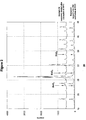
- Example 6 a catalyst with composition of Mo 12 Cs 1.0 Bi 0.5 P 1.5 Cu 0.1 V 0.5 Sb 0.8 B 0.5 O x was obtained but the unsupported catalyst precursors were calcined under different temperatures. One portion of particles was calcined at 380°C (Example 6), another portion of particles was calcined at 415°C (Example 7) and another portion of particles was calcined at 425°C (Example 8), all for 5 hrs under air. XRD data for these catalysts after calcination are shown in Figure 1 .
- Example 6 For Example 6 (380°C calcination temperature), there is no structure damage observed, i.e., no MoO 3 is formed, as evidenced by the XRD patterns shown in Figure 1 .
- Example 7 For Example 7 (415°C calcination temperature) some damage is observed, evidenced by the formation of MoO 3 .
- Example 8 For Example 8 (425°C calcination temperature) more MoO 3 is observed.
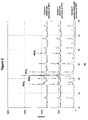
- Example 10 A portion of the particles of SupportBinder 1 was calcined at 470°C (Example 10), higher by 90°C than the calcination temperature used in the preparation above (Example 9). As shown in Figure 2 , there is no significant degradation of the Keggin structure as evidenced by the minimal formation of MoO 3 which demonstrates thermal stability over this temperature range.
- Example 2 The supported or bound catalyst precursor of Example 2 as described above was calcined at 425°C. As shown in Figure 3 , the MoO 3 formed for this supported or bound catalyst is much less than that for Example 8 (unsupported, 425°C calcination temperature) and even less than that of Example 7 (unsupported, 415°C calcination temperature). This result clearly indicates that the thermal stability of the supported or bound material is higher than that of the unsupported materials.
- the mechanical strength is also increased with the binder or support of the present invention.
- the experimental data of relative crush strength of pellets made of above catalysts are shown in Table 3. Table 3.
Landscapes
- Chemical & Material Sciences (AREA)
- Organic Chemistry (AREA)
- Engineering & Computer Science (AREA)
- Materials Engineering (AREA)
- Chemical Kinetics & Catalysis (AREA)
- Oil, Petroleum & Natural Gas (AREA)
- Catalysts (AREA)
- Organic Low-Molecular-Weight Compounds And Preparation Thereof (AREA)
- Low-Molecular Organic Synthesis Reactions Using Catalysts (AREA)
Applications Claiming Priority (2)
| Application Number | Priority Date | Filing Date | Title |
|---|---|---|---|
| US11/316,211 US7273829B2 (en) | 2005-12-22 | 2005-12-22 | Catalyst for oxidation of saturated and unsaturated aldehydes to unsaturated carboxylic acid, method of making and method of using thereof |
| PCT/US2006/048757 WO2007073492A2 (en) | 2005-12-22 | 2006-12-22 | Catalyst for oxidation of saturated and unsaturated aldehydes to unsaturated carboxylic acid, method of making and method of using thereof |
Publications (3)
| Publication Number | Publication Date |
|---|---|
| EP1971565A2 EP1971565A2 (en) | 2008-09-24 |
| EP1971565A4 EP1971565A4 (en) | 2012-01-04 |
| EP1971565B1 true EP1971565B1 (en) | 2016-09-28 |
Family
ID=38189123
Family Applications (1)
| Application Number | Title | Priority Date | Filing Date |
|---|---|---|---|
| EP06848678.6A Not-in-force EP1971565B1 (en) | 2005-12-22 | 2006-12-22 | Catalyst and process for oxidation of saturated and unsaturated aldehydes to unsaturated carboxylic acid |
Country Status (4)
| Country | Link |
|---|---|
| US (1) | US7273829B2 (enExample) |
| EP (1) | EP1971565B1 (enExample) |
| JP (1) | JP5384940B2 (enExample) |
| WO (1) | WO2007073492A2 (enExample) |
Families Citing this family (7)
| Publication number | Priority date | Publication date | Assignee | Title |
|---|---|---|---|---|
| US8481448B2 (en) * | 2010-07-19 | 2013-07-09 | Saudi Basic Industries Corporation | Catalyst for oxidation of saturated and unsaturated aldehydes to unsaturated carboxylic acid, method of making and method of using thereof |
| JP6653871B2 (ja) * | 2015-03-11 | 2020-02-26 | 国立大学法人北海道大学 | メタクリル酸製造用触媒及びその製造方法、並びにメタクリル酸の製造方法 |
| CN110062656B (zh) * | 2016-12-12 | 2022-05-13 | 三菱化学株式会社 | α,β-不饱和羧酸制造用催化剂前体的制造方法 |
| CN108906123A (zh) * | 2018-07-03 | 2018-11-30 | 上海应用技术大学 | 一种杂多酸-氧化石墨烯复合催化材料、制备方法及其应用 |
| KR102876188B1 (ko) * | 2020-09-03 | 2025-10-27 | 가부시키가이샤 닛폰 쇼쿠바이 | 아크릴산 제조용 촉매와 그의 제조 방법 및 아크릴산의 제조 방법 |
| CN114276850B (zh) * | 2021-12-24 | 2023-02-07 | 安徽工业大学 | 一种氟掺杂石墨烯负载Pb复合材料及其制备方法和应用 |
| CN116196950B (zh) * | 2023-02-16 | 2024-05-24 | 北华大学 | 一种双金属掺杂杂多酸催化剂的合成方法及在木质素转化中的应用 |
Citations (1)
| Publication number | Priority date | Publication date | Assignee | Title |
|---|---|---|---|---|
| US4118419A (en) * | 1975-12-03 | 1978-10-03 | Mitsubishi Rayon Company, Ltd. | Catalytic process for the preparation of an unsaturated carboxylic acid |
Family Cites Families (19)
| Publication number | Priority date | Publication date | Assignee | Title |
|---|---|---|---|---|
| JPS5413876B2 (enExample) * | 1974-10-23 | 1979-06-02 | ||
| JPS60232247A (ja) * | 1984-05-02 | 1985-11-18 | Nippon Shokubai Kagaku Kogyo Co Ltd | ヘテロポリ酸系触媒の再生方法 |
| JP2574948B2 (ja) * | 1990-02-08 | 1997-01-22 | 株式会社日本触媒 | メタクリル酸の製造方法 |
| DE4022212A1 (de) * | 1990-07-12 | 1992-01-16 | Basf Ag | Massen der allgemeinen formel mo(pfeil abwaerts)1(pfeil abwaerts)(pfeil abwaerts)2(pfeil abwaerts)(pfeil hoch)p(pfeil hoch)(pfeil abwaerts)a(pfeil abwaerts)(pfeil hoch)v(pfeil hoch)(pfeil abwaerts)b(pfeil abwaerts)(pfeil hoch)x(pfeil hoch)(pfeil hoch)1(pfeil hoch)(pfeil abwaerts)c(pfeil abwaerts)(pfeil hoch)x(pfeil hoch)(pfeil hoch)2(pfeil hoch)(pfeil abwaerts)d(pfeil abwaerts)(pfeil hoch)x(pfeil hoch)(pfeil hoch)3(pfeil hoch)(pfeil abwaerts)e(pfeil abwaerts)(pfeil hoch)s(pfeil hoch)(pfeil hoch)b(pfeil hoch)(pfeil abwaerts)f(pfeil abwaerts)(pfeil hoch)r(pfeil hoch)(pfeil hoch)e(pfeil hoch)(pfeil abwaerts)g(pfeil abwaerts)(pfeil hoch)s(pfeil hoch)(pfeil abwaerts)h(pfeil abwaerts)(pfeil hoch)o(pfeil hoch)(pfeil abwaerts)n(pfeil abwaerts) |
| US5198579A (en) * | 1990-11-14 | 1993-03-30 | Mitsui Toatsu Chemicals, Inc. | Catalyst for oxidizing methacrolein and method for preparing methacrylic acid |
| JPH0531368A (ja) * | 1990-11-14 | 1993-02-09 | Mitsui Toatsu Chem Inc | メタクリル酸製造用触媒及びメタクリル酸の製造方法 |
| TW349033B (en) | 1994-05-31 | 1999-01-01 | Nippon Catalytic Chem Ind | Catalyst for production of methacrylic acid and method for production of methacrylic acid by the use of the catalysta catalyst for the production of methacrylic acid by the vapor-phase catalytic oxidation and/or oxidative dehydrogenation of at least one compound |
| JPH08157414A (ja) * | 1994-12-01 | 1996-06-18 | Mitsui Toatsu Chem Inc | メタクリル酸製造用触媒及びメタクリル酸の製造方法 |
| JP3370589B2 (ja) * | 1997-12-25 | 2003-01-27 | 三菱レイヨン株式会社 | メタクリル酸製造用触媒およびそれを用いたメタクリル酸の製造法 |
| US6060419A (en) * | 1998-01-05 | 2000-05-09 | Sunoco, Inc. (R&M) | Wells-Dawson type heteropolyacids, their preparation and use as oxidation catalysts |
| US5990348A (en) | 1998-01-05 | 1999-11-23 | Sunoco, Inc. | Conversion of alkanes to unsaturated carboxylic acids over heteroploy acids supported on polyoxometallate salts |
| US6043184A (en) | 1998-01-05 | 2000-03-28 | Sunoco, Inc. (R&M) | Heteropoly acids supported on polyoxometallate salts and their preparation |
| BR0013338B1 (pt) * | 1999-08-19 | 2012-01-24 | catalizador de leito fluidificado para a amoxidacão de propileno para acrilonitrila. | |
| US6387841B1 (en) * | 1999-08-23 | 2002-05-14 | Rohm And Haas Company | Polyoxometallate supported catalysts |
| WO2002024328A1 (en) * | 2000-09-21 | 2002-03-28 | Nippon Kayaku Kabushiki Kaisha | Catalyst for methacrylic acid production, coated catalyst, and process for producing the same |
| JP4022047B2 (ja) * | 2001-02-07 | 2007-12-12 | 三菱レイヨン株式会社 | メタクリル酸合成用触媒の製造方法、メタクリル酸合成用触媒およびメタクリル酸の製造方法 |
| JP4634633B2 (ja) * | 2001-03-30 | 2011-02-16 | 三菱レイヨン株式会社 | 不飽和カルボン酸合成用触媒、その調製方法、およびその触媒を用いた不飽和カルボン酸の合成方法 |
| JP2002306970A (ja) * | 2001-04-12 | 2002-10-22 | Mitsubishi Rayon Co Ltd | メタクリル酸製造用触媒、その製造方法、および、メタクリル酸の製造方法 |
| MY144325A (en) * | 2003-02-20 | 2011-08-29 | Nippon Kayaku Kk | Catalyst for producing methacrylic acid and preparation method thereof |
-
2005
- 2005-12-22 US US11/316,211 patent/US7273829B2/en not_active Expired - Lifetime
-
2006
- 2006-12-22 EP EP06848678.6A patent/EP1971565B1/en not_active Not-in-force
- 2006-12-22 WO PCT/US2006/048757 patent/WO2007073492A2/en not_active Ceased
- 2006-12-22 JP JP2008547537A patent/JP5384940B2/ja not_active Expired - Fee Related
Patent Citations (1)
| Publication number | Priority date | Publication date | Assignee | Title |
|---|---|---|---|---|
| US4118419A (en) * | 1975-12-03 | 1978-10-03 | Mitsubishi Rayon Company, Ltd. | Catalytic process for the preparation of an unsaturated carboxylic acid |
Non-Patent Citations (2)
| Title |
|---|
| JENTOFT F C ET AL: "The structure of molybdenum-heteropoly acids under conditions of gas-phase selective oxidation catalysis: a multi-method in situ study", APPLIED CATALYSIS A: GENERAL, ELSEVIER SCIENCE, AMSTERDAM, NL, vol. 256, no. 1-2, 30 December 2003 (2003-12-30), pages 291 - 317, XP004475317, ISSN: 0926-860X, DOI: 10.1016/S0926-860X(03)00409-5 * |
| TSIGDINOS ET AL: "Molybdovanadophosphoric Acids and Their Salts", INORGANIC CHEMISTRY, AMERICAN CHEMICAL SOCIETY, EASTON, US, vol. 7, no. 3, 1 March 1968 (1968-03-01), pages 437 - 441, XP002131485, ISSN: 0020-1669, DOI: 10.1021/IC50061A009 * |
Also Published As
| Publication number | Publication date |
|---|---|
| EP1971565A2 (en) | 2008-09-24 |
| JP2009521316A (ja) | 2009-06-04 |
| JP5384940B2 (ja) | 2014-01-08 |
| WO2007073492A9 (en) | 2007-08-09 |
| US7273829B2 (en) | 2007-09-25 |
| US20070149806A1 (en) | 2007-06-28 |
| EP1971565A4 (en) | 2012-01-04 |
| WO2007073492A3 (en) | 2007-11-22 |
| WO2007073492A2 (en) | 2007-06-28 |
Similar Documents
| Publication | Publication Date | Title |
|---|---|---|
| JP5192495B2 (ja) | 飽和および不飽和アルデヒドの不飽和カルボン酸への酸化のための触媒、およびその製造方法と使用方法 | |
| EP1424125B1 (en) | Process for preparing an antimony based mixed metal oxide catalyst and catalyst obtained | |
| JP5612202B2 (ja) | ヘテロポリ酸を含む飽和および不飽和アルデヒド類の不飽和カルボン酸への酸化のための触媒、その製造方法および使用方法 | |
| JP5574434B2 (ja) | メタクリル酸の製造方法及びメタクリル酸製造用触媒 | |
| EP1915208B1 (en) | Method for the oxidation of a mixed aldehyde feedstock to methacrylic acid and process for the production of a catalyst | |
| KR100237976B1 (ko) | 바나듐-인계 산화물과 그 제조방법, 상기 산화물로 이루어지는 기상산화용촉매 및 탄화수소류의 부분기상산화방법 | |
| EP1867387B1 (en) | Method for manufacturing a catalyst for use in the production of methacrylic acid | |
| US4558029A (en) | Antimony-containing C4 oxidation catalysts | |
| EP1971565B1 (en) | Catalyst and process for oxidation of saturated and unsaturated aldehydes to unsaturated carboxylic acid | |
| EP0146099A2 (en) | A process for producing acrylic acid by oxidation of acrolein and a novel catalyst useful thereof | |
| JP3502526B2 (ja) | バナジウム−リン系酸化物、その製造方法、該酸化物からなる気相酸化用触媒および炭化水素類の部分気相酸化方法 | |
| EP0060066B1 (en) | Process for the production of methacrylic acid from isobutyraldehyde employing a catalyst | |
| JP7105397B1 (ja) | 触媒及びそれを用いた不飽和カルボン酸の製造方法 | |
| WO2022163725A1 (ja) | 触媒及びそれを用いた不飽和カルボン酸の製造方法 |
Legal Events
| Date | Code | Title | Description |
|---|---|---|---|
| PUAI | Public reference made under article 153(3) epc to a published international application that has entered the european phase |
Free format text: ORIGINAL CODE: 0009012 |
|
| 17P | Request for examination filed |
Effective date: 20081001 |
|
| RBV | Designated contracting states (corrected) |
Designated state(s): AT BE BG CH CY CZ DE DK EE ES FI FR GB GR HU IE IS IT LI LT LU LV MC NL PL PT RO SE SI SK TR |
|
| A4 | Supplementary search report drawn up and despatched |
Effective date: 20111201 |
|
| RIC1 | Information provided on ipc code assigned before grant |
Ipc: C07C 51/235 20060101AFI20111125BHEP Ipc: B01J 27/192 20060101ALI20111125BHEP |
|
| DAX | Request for extension of the european patent (deleted) | ||
| 17Q | First examination report despatched |
Effective date: 20121001 |
|
| REG | Reference to a national code |
Ref country code: DE Ref legal event code: R079 Ref document number: 602006050449 Country of ref document: DE Free format text: PREVIOUS MAIN CLASS: C07C0051235000 Ipc: C07C0051250000 |
|
| GRAP | Despatch of communication of intention to grant a patent |
Free format text: ORIGINAL CODE: EPIDOSNIGR1 |
|
| RIC1 | Information provided on ipc code assigned before grant |
Ipc: C07C 51/25 20060101AFI20160216BHEP Ipc: B01J 37/03 20060101ALI20160216BHEP Ipc: B01J 35/00 20060101ALI20160216BHEP Ipc: B01J 23/00 20060101ALI20160216BHEP Ipc: B01J 27/199 20060101ALI20160216BHEP |
|
| INTG | Intention to grant announced |
Effective date: 20160307 |
|
| GRAS | Grant fee paid |
Free format text: ORIGINAL CODE: EPIDOSNIGR3 |
|
| GRAA | (expected) grant |
Free format text: ORIGINAL CODE: 0009210 |
|
| AK | Designated contracting states |
Kind code of ref document: B1 Designated state(s): AT BE BG CH CY CZ DE DK EE ES FI FR GB GR HU IE IS IT LI LT LU LV MC NL PL PT RO SE SI SK TR |
|
| REG | Reference to a national code |
Ref country code: GB Ref legal event code: FG4D |
|
| REG | Reference to a national code |
Ref country code: CH Ref legal event code: EP |
|
| REG | Reference to a national code |
Ref country code: AT Ref legal event code: REF Ref document number: 832594 Country of ref document: AT Kind code of ref document: T Effective date: 20161015 |
|
| REG | Reference to a national code |
Ref country code: NL Ref legal event code: FP |
|
| REG | Reference to a national code |
Ref country code: IE Ref legal event code: FG4D |
|
| REG | Reference to a national code |
Ref country code: DE Ref legal event code: R096 Ref document number: 602006050449 Country of ref document: DE |
|
| REG | Reference to a national code |
Ref country code: FR Ref legal event code: PLFP Year of fee payment: 11 |
|
| REG | Reference to a national code |
Ref country code: LT Ref legal event code: MG4D |
|
| PG25 | Lapsed in a contracting state [announced via postgrant information from national office to epo] |
Ref country code: LT Free format text: LAPSE BECAUSE OF FAILURE TO SUBMIT A TRANSLATION OF THE DESCRIPTION OR TO PAY THE FEE WITHIN THE PRESCRIBED TIME-LIMIT Effective date: 20160928 Ref country code: FI Free format text: LAPSE BECAUSE OF FAILURE TO SUBMIT A TRANSLATION OF THE DESCRIPTION OR TO PAY THE FEE WITHIN THE PRESCRIBED TIME-LIMIT Effective date: 20160928 |
|
| REG | Reference to a national code |
Ref country code: AT Ref legal event code: MK05 Ref document number: 832594 Country of ref document: AT Kind code of ref document: T Effective date: 20160928 |
|
| PG25 | Lapsed in a contracting state [announced via postgrant information from national office to epo] |
Ref country code: LV Free format text: LAPSE BECAUSE OF FAILURE TO SUBMIT A TRANSLATION OF THE DESCRIPTION OR TO PAY THE FEE WITHIN THE PRESCRIBED TIME-LIMIT Effective date: 20160928 Ref country code: GR Free format text: LAPSE BECAUSE OF FAILURE TO SUBMIT A TRANSLATION OF THE DESCRIPTION OR TO PAY THE FEE WITHIN THE PRESCRIBED TIME-LIMIT Effective date: 20161229 Ref country code: SE Free format text: LAPSE BECAUSE OF FAILURE TO SUBMIT A TRANSLATION OF THE DESCRIPTION OR TO PAY THE FEE WITHIN THE PRESCRIBED TIME-LIMIT Effective date: 20160928 |
|
| PG25 | Lapsed in a contracting state [announced via postgrant information from national office to epo] |
Ref country code: RO Free format text: LAPSE BECAUSE OF FAILURE TO SUBMIT A TRANSLATION OF THE DESCRIPTION OR TO PAY THE FEE WITHIN THE PRESCRIBED TIME-LIMIT Effective date: 20160928 Ref country code: EE Free format text: LAPSE BECAUSE OF FAILURE TO SUBMIT A TRANSLATION OF THE DESCRIPTION OR TO PAY THE FEE WITHIN THE PRESCRIBED TIME-LIMIT Effective date: 20160928 |
|
| PG25 | Lapsed in a contracting state [announced via postgrant information from national office to epo] |
Ref country code: BE Free format text: LAPSE BECAUSE OF FAILURE TO SUBMIT A TRANSLATION OF THE DESCRIPTION OR TO PAY THE FEE WITHIN THE PRESCRIBED TIME-LIMIT Effective date: 20160928 Ref country code: AT Free format text: LAPSE BECAUSE OF FAILURE TO SUBMIT A TRANSLATION OF THE DESCRIPTION OR TO PAY THE FEE WITHIN THE PRESCRIBED TIME-LIMIT Effective date: 20160928 Ref country code: CZ Free format text: LAPSE BECAUSE OF FAILURE TO SUBMIT A TRANSLATION OF THE DESCRIPTION OR TO PAY THE FEE WITHIN THE PRESCRIBED TIME-LIMIT Effective date: 20160928 Ref country code: BG Free format text: LAPSE BECAUSE OF FAILURE TO SUBMIT A TRANSLATION OF THE DESCRIPTION OR TO PAY THE FEE WITHIN THE PRESCRIBED TIME-LIMIT Effective date: 20161228 Ref country code: IS Free format text: LAPSE BECAUSE OF FAILURE TO SUBMIT A TRANSLATION OF THE DESCRIPTION OR TO PAY THE FEE WITHIN THE PRESCRIBED TIME-LIMIT Effective date: 20170128 Ref country code: PL Free format text: LAPSE BECAUSE OF FAILURE TO SUBMIT A TRANSLATION OF THE DESCRIPTION OR TO PAY THE FEE WITHIN THE PRESCRIBED TIME-LIMIT Effective date: 20160928 Ref country code: SK Free format text: LAPSE BECAUSE OF FAILURE TO SUBMIT A TRANSLATION OF THE DESCRIPTION OR TO PAY THE FEE WITHIN THE PRESCRIBED TIME-LIMIT Effective date: 20160928 |
|
| REG | Reference to a national code |
Ref country code: DE Ref legal event code: R097 Ref document number: 602006050449 Country of ref document: DE |
|
| PG25 | Lapsed in a contracting state [announced via postgrant information from national office to epo] |
Ref country code: IT Free format text: LAPSE BECAUSE OF FAILURE TO SUBMIT A TRANSLATION OF THE DESCRIPTION OR TO PAY THE FEE WITHIN THE PRESCRIBED TIME-LIMIT Effective date: 20160928 |
|
| PG25 | Lapsed in a contracting state [announced via postgrant information from national office to epo] |
Ref country code: DK Free format text: LAPSE BECAUSE OF FAILURE TO SUBMIT A TRANSLATION OF THE DESCRIPTION OR TO PAY THE FEE WITHIN THE PRESCRIBED TIME-LIMIT Effective date: 20160928 |
|
| REG | Reference to a national code |
Ref country code: CH Ref legal event code: PL |
|
| PLBE | No opposition filed within time limit |
Free format text: ORIGINAL CODE: 0009261 |
|
| STAA | Information on the status of an ep patent application or granted ep patent |
Free format text: STATUS: NO OPPOSITION FILED WITHIN TIME LIMIT |
|
| 26N | No opposition filed |
Effective date: 20170629 |
|
| PG25 | Lapsed in a contracting state [announced via postgrant information from national office to epo] |
Ref country code: MC Free format text: LAPSE BECAUSE OF FAILURE TO SUBMIT A TRANSLATION OF THE DESCRIPTION OR TO PAY THE FEE WITHIN THE PRESCRIBED TIME-LIMIT Effective date: 20160928 |
|
| REG | Reference to a national code |
Ref country code: IE Ref legal event code: MM4A |
|
| PG25 | Lapsed in a contracting state [announced via postgrant information from national office to epo] |
Ref country code: CH Free format text: LAPSE BECAUSE OF NON-PAYMENT OF DUE FEES Effective date: 20161231 Ref country code: LU Free format text: LAPSE BECAUSE OF NON-PAYMENT OF DUE FEES Effective date: 20161222 Ref country code: LI Free format text: LAPSE BECAUSE OF NON-PAYMENT OF DUE FEES Effective date: 20161231 |
|
| REG | Reference to a national code |
Ref country code: FR Ref legal event code: PLFP Year of fee payment: 12 |
|
| PG25 | Lapsed in a contracting state [announced via postgrant information from national office to epo] |
Ref country code: SI Free format text: LAPSE BECAUSE OF FAILURE TO SUBMIT A TRANSLATION OF THE DESCRIPTION OR TO PAY THE FEE WITHIN THE PRESCRIBED TIME-LIMIT Effective date: 20160928 Ref country code: IE Free format text: LAPSE BECAUSE OF NON-PAYMENT OF DUE FEES Effective date: 20161222 |
|
| PGFP | Annual fee paid to national office [announced via postgrant information from national office to epo] |
Ref country code: NL Payment date: 20171213 Year of fee payment: 12 Ref country code: FR Payment date: 20171113 Year of fee payment: 12 |
|
| PGFP | Annual fee paid to national office [announced via postgrant information from national office to epo] |
Ref country code: GB Payment date: 20171220 Year of fee payment: 12 |
|
| PGFP | Annual fee paid to national office [announced via postgrant information from national office to epo] |
Ref country code: DE Payment date: 20171220 Year of fee payment: 12 |
|
| PG25 | Lapsed in a contracting state [announced via postgrant information from national office to epo] |
Ref country code: CY Free format text: LAPSE BECAUSE OF FAILURE TO SUBMIT A TRANSLATION OF THE DESCRIPTION OR TO PAY THE FEE WITHIN THE PRESCRIBED TIME-LIMIT Effective date: 20160928 Ref country code: ES Free format text: LAPSE BECAUSE OF FAILURE TO SUBMIT A TRANSLATION OF THE DESCRIPTION OR TO PAY THE FEE WITHIN THE PRESCRIBED TIME-LIMIT Effective date: 20160928 Ref country code: HU Free format text: LAPSE BECAUSE OF FAILURE TO SUBMIT A TRANSLATION OF THE DESCRIPTION OR TO PAY THE FEE WITHIN THE PRESCRIBED TIME-LIMIT; INVALID AB INITIO Effective date: 20061222 |
|
| PG25 | Lapsed in a contracting state [announced via postgrant information from national office to epo] |
Ref country code: TR Free format text: LAPSE BECAUSE OF FAILURE TO SUBMIT A TRANSLATION OF THE DESCRIPTION OR TO PAY THE FEE WITHIN THE PRESCRIBED TIME-LIMIT Effective date: 20160928 Ref country code: PT Free format text: LAPSE BECAUSE OF FAILURE TO SUBMIT A TRANSLATION OF THE DESCRIPTION OR TO PAY THE FEE WITHIN THE PRESCRIBED TIME-LIMIT Effective date: 20160928 |
|
| REG | Reference to a national code |
Ref country code: DE Ref legal event code: R119 Ref document number: 602006050449 Country of ref document: DE |
|
| REG | Reference to a national code |
Ref country code: NL Ref legal event code: MM Effective date: 20190101 |
|
| GBPC | Gb: european patent ceased through non-payment of renewal fee |
Effective date: 20181222 |
|
| PG25 | Lapsed in a contracting state [announced via postgrant information from national office to epo] |
Ref country code: NL Free format text: LAPSE BECAUSE OF NON-PAYMENT OF DUE FEES Effective date: 20190101 |
|
| PG25 | Lapsed in a contracting state [announced via postgrant information from national office to epo] |
Ref country code: FR Free format text: LAPSE BECAUSE OF NON-PAYMENT OF DUE FEES Effective date: 20181231 Ref country code: DE Free format text: LAPSE BECAUSE OF NON-PAYMENT OF DUE FEES Effective date: 20190702 |
|
| PG25 | Lapsed in a contracting state [announced via postgrant information from national office to epo] |
Ref country code: GB Free format text: LAPSE BECAUSE OF NON-PAYMENT OF DUE FEES Effective date: 20181222 |