EP1971024A2 - Fernseher und Audioausgabeeinheit - Google Patents
Fernseher und Audioausgabeeinheit Download PDFInfo
- Publication number
- EP1971024A2 EP1971024A2 EP08003733A EP08003733A EP1971024A2 EP 1971024 A2 EP1971024 A2 EP 1971024A2 EP 08003733 A EP08003733 A EP 08003733A EP 08003733 A EP08003733 A EP 08003733A EP 1971024 A2 EP1971024 A2 EP 1971024A2
- Authority
- EP
- European Patent Office
- Prior art keywords
- audio
- control
- temperature
- drive voltage
- circuit
- Prior art date
- Legal status (The legal status is an assumption and is not a legal conclusion. Google has not performed a legal analysis and makes no representation as to the accuracy of the status listed.)
- Withdrawn
Links
- 238000012544 monitoring process Methods 0.000 claims abstract description 35
- 230000001012 protector Effects 0.000 claims description 53
- 230000006378 damage Effects 0.000 claims description 28
- 230000008859 change Effects 0.000 claims description 24
- 238000012545 processing Methods 0.000 claims description 10
- 230000009467 reduction Effects 0.000 abstract description 15
- 230000003321 amplification Effects 0.000 description 10
- 238000003199 nucleic acid amplification method Methods 0.000 description 10
- 238000010586 diagram Methods 0.000 description 7
- 230000005236 sound signal Effects 0.000 description 5
- 230000001629 suppression Effects 0.000 description 5
- 230000000694 effects Effects 0.000 description 4
- 239000003990 capacitor Substances 0.000 description 3
- 230000010355 oscillation Effects 0.000 description 3
- 230000006870 function Effects 0.000 description 2
- 230000006872 improvement Effects 0.000 description 2
- 238000000034 method Methods 0.000 description 2
- 230000005855 radiation Effects 0.000 description 2
- 230000002238 attenuated effect Effects 0.000 description 1
- 238000007796 conventional method Methods 0.000 description 1
- 238000011161 development Methods 0.000 description 1
- 239000000284 extract Substances 0.000 description 1
- 230000020169 heat generation Effects 0.000 description 1
- 239000004973 liquid crystal related substance Substances 0.000 description 1
- 239000000463 material Substances 0.000 description 1
- 230000000737 periodic effect Effects 0.000 description 1
- 230000002441 reversible effect Effects 0.000 description 1
- 239000004065 semiconductor Substances 0.000 description 1
- 239000000758 substrate Substances 0.000 description 1
- 230000007704 transition Effects 0.000 description 1
Images

Classifications
-
- H—ELECTRICITY
- H03—ELECTRONIC CIRCUITRY
- H03F—AMPLIFIERS
- H03F1/00—Details of amplifiers with only discharge tubes, only semiconductor devices or only unspecified devices as amplifying elements
- H03F1/52—Circuit arrangements for protecting such amplifiers
-
- H—ELECTRICITY
- H04—ELECTRIC COMMUNICATION TECHNIQUE
- H04N—PICTORIAL COMMUNICATION, e.g. TELEVISION
- H04N21/00—Selective content distribution, e.g. interactive television or video on demand [VOD]
- H04N21/40—Client devices specifically adapted for the reception of or interaction with content, e.g. set-top-box [STB]; Operations thereof
- H04N21/43—Processing of content or additional data, e.g. demultiplexing additional data from a digital video stream; Elementary client operations, e.g. monitoring of home network or synchronising decoder's clock; Client middleware
- H04N21/439—Processing of audio elementary streams
-
- H—ELECTRICITY
- H04—ELECTRIC COMMUNICATION TECHNIQUE
- H04N—PICTORIAL COMMUNICATION, e.g. TELEVISION
- H04N21/00—Selective content distribution, e.g. interactive television or video on demand [VOD]
- H04N21/40—Client devices specifically adapted for the reception of or interaction with content, e.g. set-top-box [STB]; Operations thereof
- H04N21/43—Processing of content or additional data, e.g. demultiplexing additional data from a digital video stream; Elementary client operations, e.g. monitoring of home network or synchronising decoder's clock; Client middleware
- H04N21/443—OS processes, e.g. booting an STB, implementing a Java virtual machine in an STB or power management in an STB
- H04N21/4436—Power management, e.g. shutting down unused components of the receiver
-
- H—ELECTRICITY
- H04—ELECTRIC COMMUNICATION TECHNIQUE
- H04N—PICTORIAL COMMUNICATION, e.g. TELEVISION
- H04N21/00—Selective content distribution, e.g. interactive television or video on demand [VOD]
- H04N21/40—Client devices specifically adapted for the reception of or interaction with content, e.g. set-top-box [STB]; Operations thereof
- H04N21/47—End-user applications
- H04N21/488—Data services, e.g. news ticker
- H04N21/4882—Data services, e.g. news ticker for displaying messages, e.g. warnings, reminders
-
- H—ELECTRICITY
- H04—ELECTRIC COMMUNICATION TECHNIQUE
- H04N—PICTORIAL COMMUNICATION, e.g. TELEVISION
- H04N5/00—Details of television systems
- H04N5/44—Receiver circuitry for the reception of television signals according to analogue transmission standards
- H04N5/60—Receiver circuitry for the reception of television signals according to analogue transmission standards for the sound signals
Definitions
- the present invention relates to an audio output unit provided with a voice amplifier, and a television set.
- display devices such as plasma television sets and liquid crystal displays which quite differ from the cathode ray tube have recently been developed as the result of improvements in the electronic, semiconductor or material technique. These display devices are thinner as compared with the conventional cathode ray tube. Accordingly, television sets provided with these display devices are generally referred to as flat-screen television sets.
- the flat-screen television sets have realized lower costs and larger size together with progress in the technical development and volume efficiency.
- the flat-screen television sets have now replaced the conventional cathode ray tube system and enlarged its market because of demand due to replacement with transition from terrestrial broadcasting to digital and in consistent with housing conditions in Japan.
- the flat-screen television sets have been developed into high-definition television sets so as to meet high-definition broadcasting.
- the flat-screen television sets are capable of displaying fine high-quality dynamic images though having large-sized screens.
- the number of viewers has increased who enjoy powerful video pictures such as movies or live music concerts through high-quality medium such as digital versatile disc (DVD) on a flat-screen television set installed in a living room or the like.
- DVD digital versatile disc
- Functions viewers demand for the television sets in the above-described case include requirement of high audio performance as well as high video performance.
- a demand for high audio output such as in audio apparatus is high. Normal loud speakers equipped in television sets have been had lower performance.
- some types of televisions having high audio performance comparable with those of audio apparatus have been developed.
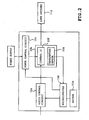
- FIG. 5 is a block diagram showing audio output control in a flat-screen television set having high audio performance affording a larger volume of sound.
- the aforesaid flat-screen television set comprises an audio control circuit 1 outputting an audio control signal based on a volume signal supplied from a remote-controller (not shown) or an audio adjustment switch provided on a television body, an audio amplifier 2 amplifying an audio control signal from the audio control circuit 1 to an audio output signal with a predetermined volume of sound, a loud speaker 3 producing sound based on the audio output signal supplied from the audio amplifier 2, and a power supply control circuit 4 controlling power supplied to obtain a suitable drive voltage and outputting the drive voltage to the audio amplifier 2.
- the audio amplifier 2 includes a control IC 5 having an IC element die-bonded onto a radiator plate and wire-bonded to a connecting terminal, and resin-molded and mounted on a control circuit board of the flat-screen television.
- the control IC 5 generates heat in the case of amplification into the audio output signal with a predetermined volume of sound by the drive voltage supplied from the power supply control circuit 4. However, the heat is dissipated by the radiator plate, which suppresses temperature increase of the IC element.
- the control IC 5 is incorporated with a thermal protector circuit for preventing the aforementioned thermal destruction.
- the thermal protector circuit detects a temperature of the IC element and rapidly reduces an audio signal delivered to the loud speaker 3 by a large amount when the detected temperature has reached a predetermined temperature at which thermal destruction occurs, thereby dropping the temperature of the IC element for protection of the same.
- the thermal protector circuit restores the original audio output signal.
- the control IC 5 When incorporated with the thermal protector circuit, the control IC 5 can in fact be protected against thermal destruction reliably even in the case where the viewer views with a large volume of sound.
- the audio output signal delivered to the loud speaker 3 is forced to rapidly be reduced by a large amount during operation of the thermal protector circuit. Accordingly, sound suddenly disappears and is suddenly returned to the original level when the detected temperature thereafter has dropped to or below the predetermined value. As a result, there is a possibility that the viewer may feel an intense sense of discomfort.
- thermal protector circuit need not be continued when an input mode of the thin television set is changed from receipt by an incorporated tuner to an external input such as DVD during the sound reduction by the thermal protector circuit. Despite this, unnecessary sound reduction is continued, causing the viewer to feel inconvenience.
- the following are conventional techniques of reducing sound volume for preventing the temperature of the audio amplifier from increasing.
- JP-A-2004-112707 discloses an audio reproducer which supplies audio signals via a sound volume adjuster and a power amplifier to a loud speaker.
- a temperature detector is provided for detecting a temperature of the power amplifier. Sound volume of the sound volume adjuster is automatically reduced in a stepwise manner every time a temperature detected by the temperature detector reaches a predetermined set temperature.
- JP-A-H11-355059 discloses an arrangement comprising a temperature detecting circuit detecting a temperature of an amplifier having exceeded a predetermined value, an oscillation circuit outputting periodic pulse signals according to output of the temperature detecting circuit, and a mute circuit attenuating an audio input signal according to the pulse signal delivered from the oscillation circuit.
- JP-A-2001-274634 discloses an audio device comprising an acoustic signal amplifier having an electronic volume for controlling an amplification degree according to a control signal and an output amplifying circuit amplifying output of the acoustic signal amplifier and supplying the amplified output to a loud speaker.
- a temperature detector is provided for detecting an inner temperature of the audio device.
- the amplification degree is set at a predetermined value larger than zero when the state where the detected temperature is at or above a predetermined temperature continues for a first time period.
- JP-A-H08-18349 discloses an arrangement comprising an output transistor amplifying input and output signals, a diode generating a constant voltage, a voltage divider circuit dividing the constant voltage, an attenuation circuit attenuating bias of the output transistor according to output of the voltage divider circuit, and a detector circuit detecting electric current which flows into the voltage divider circuit and which is at or above a predetermined voltage. An input voltage to the attenuation circuit is increased according to an output signal of the detector circuit.
- the audio input signal is attenuated according to the pulse signal generated by the oscillation circuit. Consequently, the sound volume can certainly be prevented from sudden stop.
- the mute circuit since the mute circuit attenuates the audio input signal only by two levels, a sound volume the mute circuit can attenuate is limited, whereupon the mute circuit is insufficient to prevent thermal destruction in the case where a large amount of heat is generated by the element.
- the second document cannot overcome the problem of unnecessary continuance of sound adjustment in the case where the input mode has been changed as described above, either.
- the amplification degree is set at the predetermined value larger than zero when the state where the detected temperature is at or above the predetermined temperature continues for the first time period. Consequently, the sound volume can certainly be prevented from sudden stop.
- adjustment of the amplification degree depends upon a single set value, fine adjustment according to a state of heat generation cannot be carried out, When an amount of heat generated by the element is large, there is a possibility that temperature suppression cannot catch up with the temperature increase when an amount of heat generated by the element is large. In this case, there is a possibility of thermal destruction of the element.
- the third document cannot overcome the problem of unnecessary continuance of sound adjustment in the case where the input mode has been changed as described above, either.
- the output transistor is slowly controlled such that the sound volume can certainly be prevented from sudden stop.
- the output transistor is rapidly controlled. Accordingly, the sound volume is rapidly reduced when an amount of heat generated by the element is large. As a result, there is a possibility that the viewer may feel uncomfortable.
- the sound volume control of the output transistor
- temperature suppression may not catch up with the temperature increase when an amount of heat generated by the element is rapidly increased by a large amount during operation with a large sound volume, for example. In this case, there is a possibility of thermal destruction of the element.
- the fourth document cannot overcome the problem of unnecessary continuance of sound adjustment in the case where the input mode has been changed as described above, either.
- the present invention was made in view of the foregoing problems and an object thereof is to provide an audio output unit in which the control IC can be prevented from thermal destruction without operation of the thermal protector circuit incorporated with the control IC accompanying rapid sound reduction and restart while uncomfortableness the viewer feels during volume adjustment can be reduced and unnecessary adjustment during change in the input mode can be avoided, and a television set provided with the audio output unit.
- the present invention provides a television set in which a predetermined image is displayed on a screen of a display based on an externally supplied image signal, the television comprising the display, a tuner extracting a broadcast signal corresponding to a selected channel from a received television broadcast signal and outputting the extracted signal, a controller carrying out control processing for video, audio, power supply and the like, a remote controller for carrying out power on/off, channel selection, volume adjustment, change to external input and the like in a wireless manner, an audio processor controlled by the controller so that audio processing is carried out, an OSD circuit displaying information of sound volume, a channel, an input mode and the like on the display, and a loud speaker producing sound based on audio output signal supplied from the audio processor.
- the audio processor includes an audio control circuit outputting an audio control signal based on a volume signal supplied from the remote controller or an audio adjustment switch equipped on a television body, an audio amplifier which carries out amplification into an audio output signal with a predetermined sound volume based on the audio control signal supplied from the audio control circuit, a power control circuit which controls an input power supply so that a predetermined drive voltage is arbitrarily obtained from the input power supply, outputting the obtained drive voltage to the audio amplifier, a microcomputer adjusting the audio control signal delivered from the audio control circuit and the drive voltage delivered from the power control circuit into respective predetermined levels, and an EEPROM storing respective levels of the audio control signal delivered from the audio control circuit and the drive voltage delivered from the power control circuit before adjustment by the microcomputer.
- the audio amplifier includes a control IC incorporated with a thermal protector circuit which rapidly reduces the audio output signal delivered to the loud speaker when a temperature of an element is increased to a temperature having a possibility of thermal destruction, thereby protecting the element, the control IC having a package and a radiator plate, and a temperature sensor detecting a temperature of the package or the radiator plate of the control IC.
- the microcomputer causes the EEPROM to store respective levels of the audio control signal output from the audio control circuit and the drive voltage output from the power control circuit just when the temperature of the control IC has reached a set temperature having a value reached immediately before actuation of the thermal protector circuit.
- the microcomputer reduces a level of the audio control signal output from the audio control circuit by a previously set first step amount that is a level at which a viewer does not feel uncomfortable and a level of the drive voltage output from the power control circuit by a previously set first voltage that is a level at which the viewer does not feel uncomfortable.
- the microcomputer thereafter controls the OSD circuit to display adjustment start information on the display and monitoring for a predetermined time period as to whether the temperature of the control IC is increased to or above a set temperature which is equal to a value immediately before actuation of the thermal protector circuit.
- the microcomputer reads values of an initial audio control signal and an initial drive voltage before adjustment both stored on the EEPROM to return the audio control signal and the drive voltage to the respective initial levels.
- the microcomputer simultaneously controls the OSD circuit to display adjustment completion information on the display.
- the microcomputer reduces the drive voltage level by a second step amount smaller than the first step amount when the temperature of the control IC in not reduced below the set temperature.
- the microcomputer re-monitoring for a predetermined time period as to whether the temperature of the control IC is increased to or above the set temperature which is equal to a value immediately before actuation of the thermal protector circuit.
- the microcomputer thereafter repeats a control of monitoring as to whether the temperature of the control IC is increased to or above the set temperature, a control of reducing the audio control signal and the drive voltage or returning the audio control signal and the drive voltage to the immediately preceding step amount and voltage and a control of thereafter monitoring the temperature of the control IC for a predetermined time period, the microcomputer controlling the OSD circuit to display adjustment completion information on the display.
- the microcomputer consequently controls the OSD circuit to display the adjustment completion information on the display when the audio control signal and the drive voltage have been returned to the respective initial values before adjustment.
- the microcomputer returns the levels of the audio control signal output from the audio control circuit and the drive signal output from the power control circuit to the respective initial values before adjustment stored on the EEPROM and controlling the OSD circuit to display adjustment cancel information on the display, whereby the levels of the audio control signal output from the audio control circuit and the drive voltage output from the power control circuit are previously are repeatedly adjusted step by step without actuation of the thermal protector circuit incorporated in the control IC, thereby reducing uncomfortableness of the viewer during volume adjustment and avoiding unnecessary adjustment during change of the input mode.
- the microcomputer reduces the audio control signal output from the audio control circuit and the drive voltage output from the power control circuit by the first step amount and the first voltage for both of which the viewer does not feel uncomfortable when the temperature of the control IC supplied by the temperature sensor has reached the set temperature immediately before which the thermal protector circuit incorporated in the control IC actuates.
- the microcomputer further re-monitors the temperature of the control IC for the predetermined time period and thereafter repeats a first control of reducing the audio control signal and the drive voltage by the second step amount and a second voltage respectively or returning the audio control signal and the drive voltage to the immediately preceding levels respectively depending upon whether the temperature of the control IC is at or above the set temperature and a second control of thereafter repeatedly monitoring the temperature of the control IC for the predetermined time period, thereby adjusting the audio control signal and the drive voltage step by step and displaying adjustment start information and adjustment completion information on a screen.
- the audio control signal and the drive voltage are released from the adjustment control by the microcomputer and returned to the original values, and the adjustment completion information is displayed on the screen.
- the microcomputer reduces the audio control signal output from the audio control circuit and the drive voltage output from the power control circuit by the first step amount and the first voltage both of which do not cause the viewer to feel uncomfortable, respectively, and thereafter re-monitors the temperature of the control IC for the predetermined time period.
- the microcomputer subsequently continuously repeats the first control of reducing the audio control signal and the drive voltage by the second step amount and the second voltage respectively or returning the audio control signal and the drive voltage to the immediately preceding levels respectively depending upon whether the temperature of the control IC is at or above the set temperature and a second control of thereafter repeatedly monitoring the temperature of the control IC for the predetermined time period, thereby adjusting the audio control signal and the drive voltage step by step and displaying adjustment start information and adjustment completion information on a screen.
- the audio control signal and the drive voltage are released from the adjustment control by the microcomputer and returned to the original values, and the adjustment completion information is displayed on the screen. Consequently, the television set can be provided in which the levels of the audio control signal output from the audio control circuit and the drive voltage output from the power control circuit are repeatedly adjusted step by step without actuation of the thermal protector circuit incorporated in the control IC which results in rapid sound reduction and reproduction, thereby reducing uncomfortableness of the viewer during the volume adjustment while preventing thermal destruction of the control IC. Furthermore, unnecessary adjustment can be avoided when the input mode is changed.
- an audio output device producing sound comprises an audio control circuit outputting to an audio amplifier an audio control signal generated based on a volume signal supplied from an audio adjustment switch, the audio amplifier amplifying an audio signal supplied thereto into an audio output signal with a predetermined volume based on the audio control signal supplied from the audio control circuit, the audio amplifier including a control IC, a power control circuit generating a predetermined drive voltage from a power supply voltage supplied thereto and supplying the generated drive voltage to the audio amplifier, and a microcomputer monitoring a temperature of the control IC of the audio amplifier and gradually reducing the audio control signal output from the audio control circuit and the drive voltage output from the power control circuit when the temperature of the control IC has reached a set temperature, the microcomputer gradually returning the audio control signal and the drive voltage to respective levels before reduction.
- the microcomputer When the temperature of the control IC has reached the set temperature, the microcomputer reduces the audio control signal output from the audio control circuit and the drive voltage output from the power control circuit by the respective levels within a range in which the viewer does not feel uncomfortable and subsequently re-monitors the temperature of the control IC for the predetermined time period.
- the microcomputer subsequently continuously repeats a first control of further reducing the audio control signal and the drive voltage or returning the audio control signal and the drive voltage to the immediately preceding levels respectively depending upon whether the temperature of the control IC is at or above the set temperature and a second control of thereafter repeatedly monitoring the temperature of the control IC for the predetermined time period, thereby adjusting the audio control signal and the drive voltage step by step.
- the microcomputer When the temperature of the control IC has reached the set temperature, the microcomputer reduces the audio control signal output from the audio control circuit and the drive voltage output from the power control circuit to the levels within the range in which the viewer does not feel uncomfortable and subsequently re-monitors the temperature of the control IC for the predetermined time period.
- the microcomputer subsequently continuously repeats the first control of further reducing the audio control signal and the drive voltage or returning the audio control signal and the drive voltage to the immediately preceding levels respectively depending upon whether the temperature of the control IC is at or above the set temperature and the second control of thereafter repeatedly monitoring the temperature of the control IC for the predetermined time period, thereby adjusting the audio control signal and the drive voltage step by step.
- the audio output device can be provided in which the levels of the audio control signal output from the audio control circuit and the drive voltage output from the power control circuit are repeatedly adjusted step by step without actuation of the thermal protector circuit incorporated in the control IC which results in rapid sound reduction and reproduction, thereby reducing uncomfortableness of the viewer during the volume adjustment while preventing thermal destruction of the control IC.
- the microcomputer When the temperature of the control IC has reached the set temperature, the microcomputer reduces the audio control signal output from the audio control circuit and the drive voltage output from the power control circuit by the first step amount and the first voltage for which the viewer does not feel uncomfortable and subsequently re-monitors the temperature of the control IC for the predetermined time period.
- the microcomputer subsequently continuously repeats the first control of reducing the audio control signal and the drive voltage by the second step amount and the second voltage depending upon whether the temperature of the control IC is at or above the set temperature or returning the levels of the audio control signal and the drive voltage to the respective immediately preceding levels and the second control of thereafter monitoring the temperature of the control IC for the predetermined time period, thereby adjusting the audio control signal and the drive voltage step by step.
- the audio output device can be provided in which the levels of the audio control signal output from the audio control circuit and the drive voltage output from the power control circuit are repeatedly adjusted step by step without actuation of the thermal protector circuit incorporated in the control IC which results in rapid sound reduction and reproduction, thereby reducing uncomfortableness of the viewer during the volume adjustment while preventing thermal destruction of the control IC.
- the microcomputer reduces the audio control signal output from the audio control circuit and the drive voltage output from the power control circuit by the first step amount and the first voltage both of which do not cause the viewer to feel uncomfortable when the temperature of the control IC supplied by the temperature sensor has reached the set temperature immediately before which the thermal protector circuit incorporated in the control IC actuates.
- the microcomputer further re-monitors the temperature of the control IC for the predetermined time period and thereafter repeats a first control of reducing the audio control signal and the drive voltage by the second step amount and a second voltage respectively or returning the audio control signal and the drive voltage to the immediately preceding levels respectively depending upon whether the temperature of the control IC is at or above the set temperature and a second control of thereafter repeatedly monitoring the temperature of the control IC for the predetermined time period, thereby adjusting the audio control signal and the drive voltage step by step and displaying adjustment start information and adjustment completion information on a screen.
- the audio output device can be provided in which the levels of the audio control signal output from the audio control circuit and the drive voltage output from the power control circuit are repeatedly adjusted step by step without actuation of the thermal protector circuit incorporated in the control IC which results in rapid sound reduction and reproduction, thereby reducing uncomfortableness of the viewer during the volume adjustment while preventing thermal destruction of the control IC.
- the audio output device is a television set which displays a predetermined image based on an image signal externally supplied thereto.
- the audio output device includes a tuner extracting a broadcast signal corresponding to a selected channel from a received television broadcast signal and outputting the extracted signal, a controller carrying out control processing for video, audio, power supply and the like, a remote controller for carrying out power on/off, channel selection, volume adjustment, change to external input and the like in a wireless manner, an audio processor controlled by the controller so that audio processing is carried out, an OSD circuit displaying information of sound volume, a channel, an input mode and the like on the display, and a loud speaker producing sound based on audio output signal supplied from the audio processor.
- the audio processor includes an audio control circuit outputting an audio control signal based on a volume signal supplied from the remote controller or an audio adjustment switch equipped on a television body, an audio amplifier which carries out amplification into an audio output signal with a predetermined sound volume based on the audio control signal supplied from the audio control circuit, a power control circuit which controls an input power supply so that a predetermined drive voltage is arbitrarily obtained from the input power supply, outputting the obtained drive voltage to the audio amplifier, a microcomputer adjusting the audio control signal delivered from the audio control circuit and the drive voltage delivered from the power control circuit into respective predetermined levels, and an EEPROM storing respective levels of the audio control signal delivered from the audio control circuit and the drive voltage delivered from the power control circuit before adjustment by the microcomputer.
- the audio amplifier includes a control IC incorporated with a thermal protector circuit which rapidly reduces the audio output signal delivered to the loud speaker when a temperature of an element is increased to a temperature having a possibility of thermal destruction, thereby protecting the element, the control IC having a package and a radiator plate, and a temperature sensor detecting a temperature of the package or the radiator plate of the control IC.
- the microcomputer causes the EEPROM to store respective levels of the audio control signal output from the audio control circuit and the drive voltage output from the power control circuit just when the temperature of the control IC has reached a set temperature having a value reached immediately before actuation of the thermal protector circuit.
- the microcomputer reduces a level of the audio control signal output from the audio control circuit by a previously set first step amount that is a level at which a viewer does not feel uncomfortable and a level of the drive voltage output from the power control circuit by a previously set first voltage that is a level at which the viewer does not feel uncomfortable, the microcomputer thereafter controlling the OSD circuit to display adjustment start information on the display and monitoring for a predetermined time period as to whether the temperature of the control IC is increased to or above a set temperature which is equal to a value immediately before actuation of the thermal protector circuit.
- the microcomputer reads values of an initial audio control signal and an initial drive voltage before adjustment both stored on the EEPROM to return the audio control signal and the drive voltage to the respective initial levels.
- the microcomputer simultaneously controls the OSD circuit to display adjustment completion information on the display.
- the microcomputer reduces the drive voltage level by a second step amount smaller than the first step amount when the temperature of the control IC in not reduced below the set temperature.
- the microcomputer re-monitors for a predetermined time period as to whether the temperature of the control IC is increased to or above the set temperature which is equal to a value immediately before actuation of the thermal protector circuit.
- the microcomputer thereafter repeats a control of monitoring as to whether the temperature of the control IC is increased to or above the set temperature, a control of reducing the audio control signal and the drive voltage or returning the audio control signal and the drive voltage to the immediately preceding step amount and voltage and a control of thereafter monitoring the temperature of the control IC for a predetermined time period.
- the microcomputer controls the OSD circuit to display adjustment completion information on the display.
- the microcomputer consequently controls the OSD circuit to display the adjustment completion information on the display when the audio control signal and the drive voltage have been returned to the respective initial values before adjustment.
- the microcomputer returns the levels of the audio control signal output from the audio control circuit and the drive signal output from the power control circuit to the respective initial values before adjustment stored on the EEPROM and controlling the OSD circuit to display adjustment cancel information on the display, whereby the levels of the audio control signal output from the audio control circuit and the drive voltage output from the power control circuit are previously are repeatedly adjusted step by step without actuation of the thermal protector circuit incorporated in the control IC, thereby reducing uncomfortableness of the viewer during volume adjustment and avoiding unnecessary adjustment during change of the input mode.
- the audio output device can be provided in which the levels of the audio control signal output from the audio control circuit and the drive voltage output from the power control circuit are repeatedly adjusted step by step without actuation of the thermal protector circuit incorporated in the control IC which results in rapid sound reduction and reproduction, thereby reducing uncomfortableness of the viewer during the volume adjustment while preventing thermal destruction of the control IC.
- the audio control signal and the drive voltage are released from the adjusting control by the microcomputer.
- the audio control signal and the drive voltage are returned to the respective original values and adjustment release information is displayed.
- the audio output device can be provided which can avoid unnecessary adjustment during change of the input mode.
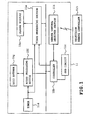
- FIG. 1 is a block diagram showing a schematic electrical arrangement of the plasma television set 11 of the embodiment. Detailed description and drawings of the structure of the plasma television set 11 which has no direct relation with the invention will be eliminated.
- the plasma television set 11 comprises a plasma display 11a, a controller which controls the operation of plasma television body, a tuner 11d which extracts an television broadcast signal for a selected channel from television broadcast signals received by an antenna (not shown) and outputting the extracted signals, a video processing section 11e which displays on the plasma display 11a an image based on the television broadcast signal output from the tuner 11d or an externally supplied image signal, an audio processor 11f producing from a loud speaker 11g sound based on the television broadcast signal delivered from the tuner 11d or an externally supplied audio signal, a remote controller 11h which carries out power on/off, channel selection, sound volume adjustment, change to external input and the like in a wireless manner, a remote control receiving section 11i which receives a control command transmitted from the remote controller 11h, and an on screen display (OSD) 11c displaying various pieces of information such as sound volume, channel and an input mode on the display.
- OSD on screen display
- the controller 11b controls on/off of power supply, channel change, up/down of sound volume and the like according to a control command received by the remote control receiving section 11i.
- Operating power is supplied from a power supply circuit (not shown) to various sections of the plasma television set 11.
- the power supply circuit is connected to a commercial power supply (AC 100 V, for example).
- the audio processor 11f includes an audio control circuit 12a which delivers an audio control signal based on a sound volume signal supplied thereto from an audio adjustment switch provided on the television body or from the remote controller 11h, an audio amplifier 12b which amplifies the audio control signal into an audio output signal with a predetermined sound volume and deliver the audio output signal to the loud speaker 11g, a power control circuit 12c, a microcomputer 12d which adjusts the audio control signal output from the audio control circuit 12a and the drive voltage output from the power control circuit 12c to respective predetermined levels, and an EEPROM 12e storing levels of the audio control signal output from the audio control circuit 12a and the drive voltage output from the power control circuit 12c before level adjustment by the microcomputer 12d.
- an audio control circuit 12a which delivers an audio control signal based on a sound volume signal supplied thereto from an audio adjustment switch provided on the television body or from the remote controller 11h
- an audio amplifier 12b which amplifies the audio control signal into an audio output signal with a predetermined sound volume and deliver the audio output signal to the
- the audio amplifier 12b comprises a control IC 12f and a temperature sensor 12g detecting a temperature of a package or a radiator plate of the control IC 12f.
- the control IC 12f comprises integrated circuit (IC) elements die-bonded to the radiator plate and wire-bonded to a connection terminal and then resin-molded and then mounted on a substrate. Heat generated during amplification of the audio control signal into the audio output signal is dissipated by the radiator plate so that temperature rise of the IC elements is suppressed.
- IC integrated circuit
- the control IC 12f is incorporated with a thermal protector circuit for preventing the aforementioned thermal destruction.
- the thermal protector circuit detects a temperature of the IC element and rapidly reduces an audio signal delivered to the loud speaker 11g by a large amount when the detected temperature has reached a predetermined temperature at which thermal destruction occurs, thereby dropping the temperature of the IC element for protection of the same.
- the thermal protector circuit restores the original audio output signal.
- the microcomputer 12d causes the EEPROM 12e to store the levels of the audio control signal output from the audio control circuit 12a and the drive voltage output from the power control circuit 12c at that time.
- the microcomputer 12d further reduces the level of the audio control signal by a previously set first step amount that is a level for which viewers do not feel uncomfortable and the level of the drive voltage by a previously set first voltage that is a level for which viewers do not feel uncomfortable. Thereafter, the microcomputer 12d causes the OSD circuit 11c to display adjustment start information on the display.
- That viewers do not feel uncomfortable means that a person does not aurally feel uncomfortable. More specifically, this means that a fluctuation intensity of psychological acoustic index has a level at which a person can aurally feel nothing. For example, it is known that a person usually has a difficulty in feeling aural changes regarding changes up to decibel equivalent of 3 dB. Accordingly, the foregoing first step amount and first voltage are determined so that a sound volume changes within a range in which a person has a difficulty in feeling aural changes.
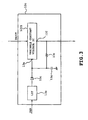
- FIG. 3 is a circuit diagram explaining adjustment of the above-described drive voltage level output from the power control circuit 12c.
- the microcomputer 12d supplies a PWM signal via a low-pass filter 13b and a rectifier diode 13c to a voltage control input terminal 13a of a variable constant voltage IC 12c1 composing the power control circuit 12c.
- a common node between the rectifier diode 13c and the voltage control input terminal 13a is grounded via a electrolytic capacitor 13d and connected via a resistance 13e to an output terminal 13f of the variable constant voltage IC 12c1.
- the PWM signal with a predetermined duty ratio is supplied from the microcomputer 12d to the power control circuit 12c.
- a lower frequency component of the PWM signal is rectified via the low-pass filter 13b and subsequently, the electrolytic capacitor 13d is charged.
- the electrolytic capacitor 13d repeats full charge and discharge, whereby the analog voltage is supplied to the voltage control terminal 13 a so that the level of drive voltage of the variable constant voltage IC 12c1 is adjusted based on he analog voltage.
- the microcomputer 12d reduces the level of audio control signal output from the audio control circuit 12a by a previously set first step amount which is the level at which viewers do not feel uncomfortable.
- the microcomputer 12d further reduces the level of drive voltage output from the power control circuit 12c by a previously set first voltage which is the level at which viewers do not feel uncomfortable.
- the microcomputer 12d monitors the temperature of the control IC 12f supplied thereto from the temperature sensor 12g, for a predetermined time period as to whether the temperature is increased to or above a set temperature immediately before which the thermal protector circuit is actuated.
- the microcomputer 12d reads the initial values of audio control signal and drive voltage before adjustment from the EEPROM 12e to return the audio control signal and drive voltage to the respective initial values.
- the microcomputer 12d simultaneously controls the OSD circuit 11c to display adjustment completion information on the display 11a.
- the microcomputer 12d reduces the audio control signal and the drive voltage by a second step amount that is smaller than the first step amount and by a second voltage that is smaller than the first voltage, respectively.
- the microcomputer 12d further re-monitors the temperature of the control IC 12f supplied thereto from the temperature sensor 12g, for a predetermined time period as to whether the temperature is increased to or above a set temperature immediately before which the thermal protector circuit is actuated.
- the microcomputer 12d continuously repeats a first control of reducing the audio control signal and the drive voltage or returning the audio control signal and the drive voltage to the respective immediately preceding levels of step amount and voltage and a second control of thereafter monitoring the temperature of the control IC for a predetermined time period. Consequently, when the audio control signal and the drive voltage has returned to the initial values of the audio control signal and drive voltage before adjustment, the microcomputer 12d controls the OSD circuit 11c to display the adjustment completion information on the display 11a.
- the microcomputer 12d reduces the level of the audio control signal by the first step amount which is the level at which the viewer does not feel uncomfortable and further reduces the level of the drive voltage by the first voltage which is the level at which the viewer does not feel uncomfortable. Consequently, there is no possibility that sound is interrupted as in the conventional television sets.
- the OSD circuit is controlled so as to display the adjustment start information and the adjustment completion information on the display 11a, whereby the viewer is notified that adjustment control is being carried out. Consequently, the viewer's uncomfortableness can be reduced.
- the microcomputer 12d reduces the drive voltage as well as the audio control signal which is conventionally reduced. Accordingly, the temperature of the control IC 12f can be reduced quickly. As a result, the control IC can be protected against thermal destruction more reliably even when an amount of heat generated is enormously large such as the case where a viewer watches the TV with a large sound volume.
- the second step amount and the second voltage are set at smaller values than the first step amount and the second voltage respectively. Accordingly, for example, even when the temperature of the control IC 12f is additionally reduced after not having been rendered lower than the set temperature by the reduction of the first step amount and the first voltage, smaller step amount and smaller voltage are applied such that the viewer's uncomfortableness can be reduced.
- the microcomputer 12d returns the levels of the audio control signal output from the audio control circuit 12a and the drive voltage output from the power control circuit 12c to the respective initial levels before adjustment the data of which is stored on the EEPROM 12e. Furthermore, the microcomputer 12d controls the OSD circuit 11c to display the adjustment completion information on the display 11a.
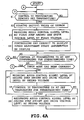
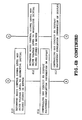
- the microcomputer 12d determines, at step 1, whether the temperature of the audio control circuit 12a has reached the set temperature. When the temperature of the audio control circuit 12a has reached the set temperature, the microcomputer 12d advances to step 2. On the other hand, when the temperature of the audio control circuit 12a has not reached the set temperature, the microcomputer 12d repeats the determination.
- the microcomputer 12d stores the initial values of the audio control signal and the drive voltage on the EEPROM 12e, advancing to step 3.
- the microcomputer 12d reduces the levels of the audio control signal and the drive voltage by the first step amount and first voltage respectively, advancing to step 4.
- the microcomputer 12d causes the OSD circuit 11c to display the audio adjustment start information on the display 11a, advancing to step 5.
- the microcomputer 12d monitors the temperature of the control IC 12f for the set time period to determine whether the control IC 12f has reached the set temperature.
- the microcomputer 12d advances to step 6 when the control IC 12f has reached the set temperature.
- the microcomputer 12d advances to step 10 when the control IC 12f has not reached the set temperature.
- the microcomputer 12d determines whether the input mode has been changed between the internal input and the external input.
- the microcomputer 12d advances to step 12 when the input mode has been changed between the internal input and the external input.
- the microcomputer 12d advances to step 7 when the input mode has not been changed between the internal input and the external input.
- step 7 the microcomputer 12d reduces the levels of the audio control signal and the drive voltage by the second step amount and the second voltage respectively, advancing to step 8.
- the microcomputer 12d monitors the temperature of the control IC 12f for the predetermined time period to determine whether the control IC 12f has reached the set temperature.
- the microcomputer 12d advances to step 7 when the control IC 12f has reached the set temperature.
- the microcomputer 12d advances to step 9 when the control IC 12f has not reached the set temperature.
- step 9 the microcomputer 12d returns the levels of the audio control signal and the drive voltage by the second step amount and the second voltage respectively, advancing to step 5.
- the microcomputer 12d returns the levels of the audio control signal and the drive voltage to the respective initial values stored on the EEPROM 12e, advancing to step 11.
- the microcomputer 12d causes the OSD circuit 11c to display the audio adjustment start information on the display 11a, advancing to step 1.
- the microcomputer 12d returns the levels of the audio control signal and the drive voltage to the respective initial values stored on the EEPROM 12e, advancing to step 13.
- the microcomputer 12d causes the OSD circuit 11c to display the audio adjustment interrupt information on the display 11a, advancing to step 1.
- the television set can be provided in which the levels of the audio control signal output from the audio control circuit 12a and the drive voltage output from the power control circuit 12c are repeatedly adjusted step by step without actuation of the thermal protector circuit incorporated in the control IC which results in rapid sound reduction and reproduction, thereby reducing uncomfortableness of the viewer during the volume adjustment while preventing thermal destruction of the control IC 12f Furthermore, unnecessary adjustment can be avoided when the input mode is changed.
- the audio adjustment display device may be eliminated.
- adjustment display cannot be carried out for the viewer, the effect of preventing the control IC from thermal destruction without uncomfortableness of the viewer can be achieved reliably.
- an amount of step by which the audio control signal the audio control circuit delivers based on the temperature of the control IC and the voltage by which the power control circuit delivers based on the temperature of the control IC include a first step amount and a first voltage which reduce the audio control signal and the voltage to both initial values before adjustment and a second step amount and a second voltage both delivered subsequently to the first step amount and the first voltage, the second step amount and the second voltage being set to be smaller than the first step amount and the first voltage respectively.
- the microcomputer When the temperature of the control IC has reached the set temperature, the microcomputer reduces the audio control signal output from the audio control circuit and the drive voltage output from the power control circuit by the first step amount and the first voltage for which the viewer does not feel uncomfortable and subsequently re-monitors the temperature of the control IC for the predetermined time period.
- the microcomputer subsequently continuously repeats the first control of reducing the audio control signal and the drive voltage by the second step amount and the second voltage depending upon whether the temperature of the control IC is at or above the set temperature or returning the levels of the audio control signal and the drive voltage to the respective immediately preceding levels and the second control of thereafter monitoring the temperature of the control IC for the predetermined time period, thereby adjusting the audio control signal and the drive voltage step by step.
- the audio output device further comprises an audio adjustment display unit which displays start and completion of an adjustment control of the audio control signal output from the audio control circuit and the drive voltage output from the power control circuit, the adjustment control being carried out by the control IC on the basis of the temperature of the control IC.
- the microcomputer reduces the audio control signal output from the audio control circuit and the drive voltage output from the power control circuit by the first step amount and the first voltage both of which do not cause the viewer to feel uncomfortable when the temperature of the control IC supplied by the temperature sensor has reached the set temperature immediately before which the thermal protector circuit incorporated in the control IC actuates.
- the microcomputer further re-monitors the temperature of the control IC for the predetermined time period and thereafter repeats a first control of reducing the audio control signal and the drive voltage by the second step amount and a second voltage respectively or returning the audio control signal and the drive voltage to the immediately preceding levels respectively depending upon whether the temperature of the control IC is at or above the set temperature and a second control of thereafter repeatedly monitoring the temperature of the control IC for the predetermined time period, thereby adjusting the audio control signal and the drive voltage step by step and displaying adjustment start information and adjustment completion information on a screen.
- the audio output device is a television set which displays a predetermined image based on an image signal externally supplied thereto.
- the audio output device includes a tuner extracting a broadcast signal corresponding to a selected channel from a received television broadcast signal and outputting the extracted signal, a controller carrying out control processing for video, audio, power supply and the like, a remote controller for carrying out power on/off, channel selection, volume adjustment, change to external input and the like in a wireless manner, an audio processor controlled by the controller so that audio processing is carried out, an OSD circuit displaying information of sound volume, a channel, an input mode and the like on the display, and a loud speaker producing sound based on audio output signal supplied from the audio processor.
- the audio processor includes an audio control circuit outputting an audio control signal based on a volume signal supplied from the remote controller or an audio adjustment switch equipped on a television body, an audio amplifier which carries out amplification into an audio output signal with a predetermined sound volume based on the audio control signal supplied from the audio control circuit, a power control circuit which controls an input power supply so that a predetermined drive voltage is arbitrarily obtained from the input power supply, outputting the obtained drive voltage to the audio amplifier, a microcomputer adjusting the audio control signal delivered from the audio control circuit and the drive voltage delivered from the power control circuit into respective predetermined levels, and an EEPROM storing respective levels of the audio control signal delivered from the audio control circuit and the drive voltage delivered from the power control circuit before adjustment by the microcomputer.
- the audio amplifier includes a control IC incorporated with a thermal protector circuit which rapidly reduces the audio output signal delivered to the loud speaker when a temperature of an element is increased to a temperature having a possibility of thermal destruction, thereby protecting the element, the control IC having a package and a radiator plate, and a temperature sensor detecting a temperature of the package or the radiator plate of the control IC.
- the microcomputer causes the EEPROM to store respective levels of the audio control signal output from the audio control circuit and the drive voltage output from the power control circuit just when the temperature of the control IC has reached a set temperature having a value reached immediately before actuation of the thermal protector circuit.
- the microcomputer reduces a level of the audio control signal output from the audio control circuit by a previously set first step amount that is a level at which a viewer does not feel uncomfortable and a level of the drive voltage output from the power control circuit by a previously set first voltage that is a level at which the viewer does not feel uncomfortable, the microcomputer thereafter controlling the OSD circuit to display adjustment start information on the display and monitoring for a predetermined time period as to whether the temperature of the control IC is increased to or above a set temperature which is equal to a value immediately before actuation of the thermal protector circuit.
- the microcomputer reads values of an initial audio control signal and an initial drive voltage before adjustment both stored on the EEPROM to return the audio control signal and the drive voltage to the respective initial levels.
- the microcomputer simultaneously controls the OSD circuit to display adjustment completion information on the display.
- the microcomputer reduces the drive voltage level by a second step amount smaller than the first step amount when the temperature of the control IC in not reduced below the set temperature.
- the microcomputer re-monitors for a predetermined time period as to whether the temperature of the control IC is increased to or above the set temperature which is equal to a value immediately before actuation of the thermal protector circuit.
- the microcomputer thereafter repeats a control of monitoring as to whether the temperature of the control IC is increased to or above the set temperature, a control of reducing the audio control signal and the drive voltage or returning the audio control signal and the drive voltage to the immediately preceding step amount and voltage and a control of thereafter monitoring the temperature of the control IC for a predetermined time period.
- the microcomputer controls the OSD circuit to display adjustment completion information on the display.
- the microcomputer consequently controls the OSD circuit to display the adjustment completion information on the display when the audio control signal and the drive voltage have been returned to the respective initial values before adjustment.
- the microcomputer returns the levels of the audio control signal output from the audio control circuit and the drive signal output from the power control circuit to the respective initial values before adjustment stored on the EEPROM and controlling the OSD circuit to display adjustment cancel information on the display, whereby the levels of the audio control signal output from the audio control circuit and the drive voltage output from the power control circuit are previously are repeatedly adjusted step by step without actuation of the thermal protector circuit incorporated in the control IC, thereby reducing uncomfortableness of the viewer during volume adjustment and avoiding unnecessary adjustment during change of the input mode.
- the microcomputer reduces the audio control signal output from the audio control circuit and the drive voltage output from the power control circuit by the first step amount and the first voltage for both of which the viewer does not feel uncomfortable when the temperature of the control IC supplied by the temperature sensor has reached the set temperature immediately before which the thermal protector circuit incorporated in the control IC actuates.
- the microcomputer further re-monitors the temperature of the control IC for the predetermined time period and thereafter continuously repeats the first control of reducing the audio control signal and the drive voltage by the second step amount or second voltage or returning the audio control signal and the drive voltage to the immediately preceding levels, respectively, and a second control of thereafter monitoring the temperature of the control IC for the predetermined time period, thereby adjusting the audio control signal and the drive voltage step by step.
- the microcomputer further displays the adjustment start information and adjustment completion information on a screen.
- the microcomputer when an input mode is changed between an internal input by the tuner and an external input by operation of the remote controller or an external input change switch during the adjustment control of the audio control signal previously output from the audio control circuit and the drive voltage output from the power control circuit, the adjustment control being carried out on the basis of the temperature of the control IC, the microcomputer returns levels of the audio control signal output from the audio control circuit and the drive voltage to initial values before the adjustment, the data of which is stored on the EEPROM, respectively, whereby unnecessary adjustment during change in the input mode is avoided.
- the audio control signal and the drive voltage are released from the adjusting control by the microcomputer.
- the audio control signal and the drive voltage are returned to the respective original values and adjustment release information is displayed.
- the microcomputer repeatedly adjusts the levels of the audio control signal previously output from the audio control circuit and the drive voltage output from power control circuit step by step without actuation of a thermal protector circuit according to a flowchart without actuation of a thermal protector circuit incorporated in the control IC, thereby reducing uncomfortableness a viewer feels during volume adjustment and avoiding unnecessary adjustment during change in an input mode, the flowchart including (1) a first step of determining whether a temperature of the control IC has reached a set temperature and advancing to a second step when the temperature of the control IC has reached the set temperature and advancing to a second step, whereas repeating the determination when the temperature of the control IC has not reached the set temperature; (2) the second step of storing on an EEPROM an initial value of the audio control signal and an initial value of the drive voltage and advancing to a third step; (3) the third step of reducing the level of the audio control signal by a first step amount and reducing the drive voltage by
Landscapes
- Engineering & Computer Science (AREA)
- Multimedia (AREA)
- Signal Processing (AREA)
- Power Engineering (AREA)
- General Engineering & Computer Science (AREA)
- Software Systems (AREA)
- Amplifiers (AREA)
- Circuit For Audible Band Transducer (AREA)
- Control Of Amplification And Gain Control (AREA)
Applications Claiming Priority (1)
| Application Number | Priority Date | Filing Date | Title |
|---|---|---|---|
| JP2007056356A JP2008219647A (ja) | 2007-03-06 | 2007-03-06 | テレビジョン、及び音声出力機器 |
Publications (1)
| Publication Number | Publication Date |
|---|---|
| EP1971024A2 true EP1971024A2 (de) | 2008-09-17 |
Family
ID=39427617
Family Applications (1)
| Application Number | Title | Priority Date | Filing Date |
|---|---|---|---|
| EP08003733A Withdrawn EP1971024A2 (de) | 2007-03-06 | 2008-02-28 | Fernseher und Audioausgabeeinheit |
Country Status (3)
| Country | Link |
|---|---|
| US (1) | US20080218631A1 (de) |
| EP (1) | EP1971024A2 (de) |
| JP (1) | JP2008219647A (de) |
Cited By (2)
| Publication number | Priority date | Publication date | Assignee | Title |
|---|---|---|---|---|
| GB2536973A (en) * | 2015-04-02 | 2016-10-05 | Entotem Ltd | Amplifying an audio signal |
| US9774952B2 (en) | 2015-04-02 | 2017-09-26 | Entotem Limited | Processing analog audio signals |
Families Citing this family (8)
| Publication number | Priority date | Publication date | Assignee | Title |
|---|---|---|---|---|
| EP1850474B1 (de) * | 2006-04-27 | 2010-03-10 | Harman/Becker Automotive Systems GmbH | Thermomanagement-Verfahren und System für Verstärker |
| US20110115766A1 (en) * | 2009-11-16 | 2011-05-19 | Sharp Laboratories Of America,Inc. | Energy efficient display system |
| WO2011138827A1 (ja) * | 2010-05-06 | 2011-11-10 | トヨタ自動車株式会社 | 電源制御システム |
| GB201019077D0 (en) * | 2010-11-11 | 2010-12-29 | Benmore Ventures Ltd | Electronic display device |
| CN104168431B (zh) * | 2014-08-06 | 2017-08-25 | 青岛海信宽带多媒体技术有限公司 | 一种音量调节方法、装置和一种机顶盒 |
| EP4101180B1 (de) | 2020-03-13 | 2025-07-02 | Google LLC | Plattenlautsprechertemperaturüberwachung und -steuerung |
| CN114035632B (zh) * | 2021-11-08 | 2022-11-11 | 北京耐德佳显示技术有限公司 | 一种显示系统的低温启动电路及低温启动方法 |
| CN116320567B (zh) * | 2023-05-23 | 2024-01-30 | 深圳市芯启源科技有限公司 | 信号源设备 |
Citations (4)
| Publication number | Priority date | Publication date | Assignee | Title |
|---|---|---|---|---|
| JPH0818349A (ja) | 1994-06-30 | 1996-01-19 | Sanyo Electric Co Ltd | 増幅器の熱保護回路 |
| JPH11355059A (ja) | 1998-06-04 | 1999-12-24 | Alpine Electronics Inc | 増幅器の熱保護回路 |
| JP2001274634A (ja) | 2000-03-28 | 2001-10-05 | Kenwood Corp | オーディオ装置 |
| JP2004112707A (ja) | 2002-09-20 | 2004-04-08 | Sony Corp | 音声再生装置 |
Family Cites Families (3)
| Publication number | Priority date | Publication date | Assignee | Title |
|---|---|---|---|---|
| US4742312A (en) * | 1987-05-22 | 1988-05-03 | Delco Electronics Corporation | Power limiting audio amplifier temperature protection circuit |
| US6490359B1 (en) * | 1992-04-27 | 2002-12-03 | David A. Gibson | Method and apparatus for using visual images to mix sound |
| KR100228731B1 (ko) * | 1997-03-19 | 1999-11-01 | 윤종용 | 음성 처리부의 전원 제어방법 및 제어회로 |
-
2007
- 2007-03-06 JP JP2007056356A patent/JP2008219647A/ja active Pending
-
2008
- 2008-02-28 EP EP08003733A patent/EP1971024A2/de not_active Withdrawn
- 2008-02-29 US US12/074,150 patent/US20080218631A1/en not_active Abandoned
Patent Citations (4)
| Publication number | Priority date | Publication date | Assignee | Title |
|---|---|---|---|---|
| JPH0818349A (ja) | 1994-06-30 | 1996-01-19 | Sanyo Electric Co Ltd | 増幅器の熱保護回路 |
| JPH11355059A (ja) | 1998-06-04 | 1999-12-24 | Alpine Electronics Inc | 増幅器の熱保護回路 |
| JP2001274634A (ja) | 2000-03-28 | 2001-10-05 | Kenwood Corp | オーディオ装置 |
| JP2004112707A (ja) | 2002-09-20 | 2004-04-08 | Sony Corp | 音声再生装置 |
Cited By (3)
| Publication number | Priority date | Publication date | Assignee | Title |
|---|---|---|---|---|
| GB2536973A (en) * | 2015-04-02 | 2016-10-05 | Entotem Ltd | Amplifying an audio signal |
| US9774952B2 (en) | 2015-04-02 | 2017-09-26 | Entotem Limited | Processing analog audio signals |
| GB2536973B (en) * | 2015-04-02 | 2018-10-10 | Entotem Ltd | Processing an input analog audio signal derived from a vinyl record |
Also Published As
| Publication number | Publication date |
|---|---|
| JP2008219647A (ja) | 2008-09-18 |
| US20080218631A1 (en) | 2008-09-11 |
Similar Documents
| Publication | Publication Date | Title |
|---|---|---|
| US20080218631A1 (en) | Television set and audio output unit | |
| JP3279434B2 (ja) | オンスクリーン表示発生装置 | |
| JP4588124B2 (ja) | テレビジョン番組用のオーディオ及びビデオ設定値の自動制御システム並びに方法 | |
| JP5367839B2 (ja) | 表示装置、当該表示装置の制御方法、プログラムおよびプログラムが記録されたコンピュータ読み取り可能な記録媒体 | |
| US8045004B2 (en) | Display signal control apparatus, and display signal control method | |
| CN101163216A (zh) | 视频播放装置以及在视频播放装置中控制音量的方法 | |
| US5194951A (en) | Sleep timer arrangement for a television receiver | |
| KR20100044477A (ko) | 디스플레이장치 및 그 제어방법 | |
| KR20010015349A (ko) | 비디오 프로세싱 장치와 그 방법 | |
| CA2381493C (en) | Method and apparatus for control of auxiliary video information display | |
| CN1314263C (zh) | 用于控制视频信号处理装置以防止屏幕老化的方法和装置 | |
| JP4498130B2 (ja) | パレンタル・コントロール・チャンネルリストの追跡方法 | |
| US5835813A (en) | Picture display apparatus in which the lower part of the picture is shifted | |
| JP2006067490A (ja) | 音声出力装置 | |
| JP2006180121A (ja) | ディスク装置内蔵型テレビジョン受像機及びその視聴制限レベル設定方法 | |
| JP3666595B2 (ja) | Crt付きav装置 | |
| KR200326140Y1 (ko) | 원격 조종기의 osd 장치 | |
| JP4623319B2 (ja) | 映像機器 | |
| KR101067775B1 (ko) | 티브이의 우퍼 제어장치 및 방법 | |
| KR100722018B1 (ko) | 텔레비젼 수상기에서 샤프니스의 자동 조절 장치 및 방법 | |
| JP4501520B2 (ja) | テレビジョン受像機 | |
| KR960002505B1 (ko) | 뮤트(Mute) 신호를 이용한 텔레비젼 자막표시장치 | |
| KR20050056597A (ko) | 텔레비젼을 이용한 알람 방법 | |
| JP2001185931A (ja) | 落雷保護装置 | |
| KR20080001360A (ko) | 외부기기의 사운드 조정 장치 |
Legal Events
| Date | Code | Title | Description |
|---|---|---|---|
| PUAI | Public reference made under article 153(3) epc to a published international application that has entered the european phase |
Free format text: ORIGINAL CODE: 0009012 |
|
| AK | Designated contracting states |
Kind code of ref document: A2 Designated state(s): AT BE BG CH CY CZ DE DK EE ES FI FR GB GR HR HU IE IS IT LI LT LU LV MC MT NL NO PL PT RO SE SI SK TR |
|
| AX | Request for extension of the european patent |
Extension state: AL BA MK RS |
|
| RIN1 | Information on inventor provided before grant (corrected) |
Inventor name: SUZUKI, HIROTSUGU |
|
| STAA | Information on the status of an ep patent application or granted ep patent |
Free format text: STATUS: THE APPLICATION IS DEEMED TO BE WITHDRAWN |
|
| 18D | Application deemed to be withdrawn |
Effective date: 20100901 |