EP1957683B1 - Thermal and electrochemical process for metal production - Google Patents
Thermal and electrochemical process for metal production Download PDFInfo
- Publication number
- EP1957683B1 EP1957683B1 EP20060850220 EP06850220A EP1957683B1 EP 1957683 B1 EP1957683 B1 EP 1957683B1 EP 20060850220 EP20060850220 EP 20060850220 EP 06850220 A EP06850220 A EP 06850220A EP 1957683 B1 EP1957683 B1 EP 1957683B1
- Authority
- EP
- European Patent Office
- Prior art keywords
- tio
- titanium
- carbon
- cathode
- metal
- Prior art date
- Legal status (The legal status is an assumption and is not a legal conclusion. Google has not performed a legal analysis and makes no representation as to the accuracy of the status listed.)
- Not-in-force
Links
- 238000000034 method Methods 0.000 title claims description 63
- 229910052751 metal Inorganic materials 0.000 title claims description 37
- 239000002184 metal Substances 0.000 title claims description 37
- 238000004519 manufacturing process Methods 0.000 title claims description 6
- 230000008569 process Effects 0.000 title description 51
- 239000010936 titanium Substances 0.000 claims description 111
- RTAQQCXQSZGOHL-UHFFFAOYSA-N Titanium Chemical compound [Ti] RTAQQCXQSZGOHL-UHFFFAOYSA-N 0.000 claims description 94
- 229910052719 titanium Inorganic materials 0.000 claims description 90
- OKTJSMMVPCPJKN-UHFFFAOYSA-N Carbon Chemical compound [C] OKTJSMMVPCPJKN-UHFFFAOYSA-N 0.000 claims description 75
- 229910052799 carbon Inorganic materials 0.000 claims description 53
- 230000009467 reduction Effects 0.000 claims description 37
- 238000010438 heat treatment Methods 0.000 claims description 34
- 239000012298 atmosphere Substances 0.000 claims description 19
- 239000003638 chemical reducing agent Substances 0.000 claims description 16
- 238000002156 mixing Methods 0.000 claims description 10
- 229910044991 metal oxide Inorganic materials 0.000 claims description 9
- 150000004706 metal oxides Chemical class 0.000 claims description 9
- 239000011295 pitch Substances 0.000 claims description 9
- 239000007788 liquid Substances 0.000 claims description 6
- 239000011347 resin Substances 0.000 claims description 4
- 229920005989 resin Polymers 0.000 claims description 4
- XPFVYQJUAUNWIW-UHFFFAOYSA-N furfuryl alcohol Chemical compound OCC1=CC=CO1 XPFVYQJUAUNWIW-UHFFFAOYSA-N 0.000 claims description 2
- OGIDPMRJRNCKJF-UHFFFAOYSA-N titanium oxide Inorganic materials [Ti]=O OGIDPMRJRNCKJF-UHFFFAOYSA-N 0.000 description 48
- GWEVSGVZZGPLCZ-UHFFFAOYSA-N Titan oxide Chemical compound O=[Ti]=O GWEVSGVZZGPLCZ-UHFFFAOYSA-N 0.000 description 39
- 229910052760 oxygen Inorganic materials 0.000 description 38
- 239000001301 oxygen Substances 0.000 description 38
- 238000006722 reduction reaction Methods 0.000 description 36
- QVGXLLKOCUKJST-UHFFFAOYSA-N atomic oxygen Chemical compound [O] QVGXLLKOCUKJST-UHFFFAOYSA-N 0.000 description 35
- 239000003792 electrolyte Substances 0.000 description 32
- 239000000203 mixture Substances 0.000 description 32
- 239000011575 calcium Substances 0.000 description 27
- XKRFYHLGVUSROY-UHFFFAOYSA-N Argon Chemical compound [Ar] XKRFYHLGVUSROY-UHFFFAOYSA-N 0.000 description 26
- 238000002441 X-ray diffraction Methods 0.000 description 24
- XEEYBQQBJWHFJM-UHFFFAOYSA-N Iron Chemical compound [Fe] XEEYBQQBJWHFJM-UHFFFAOYSA-N 0.000 description 21
- 238000005868 electrolysis reaction Methods 0.000 description 21
- 229910002804 graphite Inorganic materials 0.000 description 21
- 239000010439 graphite Substances 0.000 description 21
- ODINCKMPIJJUCX-UHFFFAOYSA-N calcium oxide Inorganic materials [Ca]=O ODINCKMPIJJUCX-UHFFFAOYSA-N 0.000 description 20
- YDZQQRWRVYGNER-UHFFFAOYSA-N iron;titanium;trihydrate Chemical compound O.O.O.[Ti].[Fe] YDZQQRWRVYGNER-UHFFFAOYSA-N 0.000 description 17
- 239000011294 coal tar pitch Substances 0.000 description 16
- 239000000047 product Substances 0.000 description 16
- 229910052791 calcium Inorganic materials 0.000 description 15
- 239000002893 slag Substances 0.000 description 15
- OYPRJOBELJOOCE-UHFFFAOYSA-N Calcium Chemical compound [Ca] OYPRJOBELJOOCE-UHFFFAOYSA-N 0.000 description 14
- 239000002245 particle Substances 0.000 description 14
- 229910052786 argon Inorganic materials 0.000 description 13
- 239000011777 magnesium Substances 0.000 description 12
- UXVMQQNJUSDDNG-UHFFFAOYSA-L Calcium chloride Chemical compound [Cl-].[Cl-].[Ca+2] UXVMQQNJUSDDNG-UHFFFAOYSA-L 0.000 description 11
- 239000000292 calcium oxide Substances 0.000 description 11
- 238000012545 processing Methods 0.000 description 11
- VYPSYNLAJGMNEJ-UHFFFAOYSA-N Silicium dioxide Chemical compound O=[Si]=O VYPSYNLAJGMNEJ-UHFFFAOYSA-N 0.000 description 10
- 230000015572 biosynthetic process Effects 0.000 description 10
- 239000001110 calcium chloride Substances 0.000 description 10
- 229910001628 calcium chloride Inorganic materials 0.000 description 10
- 239000011734 sodium Substances 0.000 description 9
- 150000001875 compounds Chemical class 0.000 description 8
- KWGKDLIKAYFUFQ-UHFFFAOYSA-M lithium chloride Chemical compound [Li+].[Cl-] KWGKDLIKAYFUFQ-UHFFFAOYSA-M 0.000 description 8
- 150000003839 salts Chemical class 0.000 description 8
- PNEYBMLMFCGWSK-UHFFFAOYSA-N aluminium oxide Inorganic materials [O-2].[O-2].[O-2].[Al+3].[Al+3] PNEYBMLMFCGWSK-UHFFFAOYSA-N 0.000 description 7
- 239000011872 intimate mixture Substances 0.000 description 7
- 229910052742 iron Inorganic materials 0.000 description 7
- 239000008188 pellet Substances 0.000 description 7
- -1 Ca++ cations Chemical class 0.000 description 6
- 229910009973 Ti2O3 Inorganic materials 0.000 description 6
- YXFVVABEGXRONW-UHFFFAOYSA-N Toluene Chemical compound CC1=CC=CC=C1 YXFVVABEGXRONW-UHFFFAOYSA-N 0.000 description 6
- 239000010949 copper Substances 0.000 description 6
- LIVNPJMFVYWSIS-UHFFFAOYSA-N silicon monoxide Chemical compound [Si-]#[O+] LIVNPJMFVYWSIS-UHFFFAOYSA-N 0.000 description 6
- 239000007787 solid Substances 0.000 description 6
- GQUJEMVIKWQAEH-UHFFFAOYSA-N titanium(III) oxide Chemical compound O=[Ti]O[Ti]=O GQUJEMVIKWQAEH-UHFFFAOYSA-N 0.000 description 6
- SECXISVLQFMRJM-UHFFFAOYSA-N N-Methylpyrrolidone Chemical compound CN1CCCC1=O SECXISVLQFMRJM-UHFFFAOYSA-N 0.000 description 5
- 229910052782 aluminium Inorganic materials 0.000 description 5
- XAGFODPZIPBFFR-UHFFFAOYSA-N aluminium Chemical compound [Al] XAGFODPZIPBFFR-UHFFFAOYSA-N 0.000 description 5
- WUKWITHWXAAZEY-UHFFFAOYSA-L calcium difluoride Chemical compound [F-].[F-].[Ca+2] WUKWITHWXAAZEY-UHFFFAOYSA-L 0.000 description 5
- 238000006243 chemical reaction Methods 0.000 description 5
- 229910052593 corundum Inorganic materials 0.000 description 5
- 239000000377 silicon dioxide Substances 0.000 description 5
- 238000011282 treatment Methods 0.000 description 5
- 229910001845 yogo sapphire Inorganic materials 0.000 description 5
- FYYHWMGAXLPEAU-UHFFFAOYSA-N Magnesium Chemical compound [Mg] FYYHWMGAXLPEAU-UHFFFAOYSA-N 0.000 description 4
- TWRXJAOTZQYOKJ-UHFFFAOYSA-L Magnesium chloride Chemical compound [Mg+2].[Cl-].[Cl-] TWRXJAOTZQYOKJ-UHFFFAOYSA-L 0.000 description 4
- ZOKXTWBITQBERF-UHFFFAOYSA-N Molybdenum Chemical compound [Mo] ZOKXTWBITQBERF-UHFFFAOYSA-N 0.000 description 4
- 239000003513 alkali Substances 0.000 description 4
- 229910001634 calcium fluoride Inorganic materials 0.000 description 4
- AOWKSNWVBZGMTJ-UHFFFAOYSA-N calcium titanate Chemical compound [Ca+2].[O-][Ti]([O-])=O AOWKSNWVBZGMTJ-UHFFFAOYSA-N 0.000 description 4
- 150000001768 cations Chemical class 0.000 description 4
- 229910052681 coesite Inorganic materials 0.000 description 4
- 229910052906 cristobalite Inorganic materials 0.000 description 4
- 239000007789 gas Substances 0.000 description 4
- 239000012535 impurity Substances 0.000 description 4
- 229910052749 magnesium Inorganic materials 0.000 description 4
- 239000000395 magnesium oxide Substances 0.000 description 4
- CPLXHLVBOLITMK-UHFFFAOYSA-N magnesium oxide Inorganic materials [Mg]=O CPLXHLVBOLITMK-UHFFFAOYSA-N 0.000 description 4
- AXZKOIWUVFPNLO-UHFFFAOYSA-N magnesium;oxygen(2-) Chemical compound [O-2].[Mg+2] AXZKOIWUVFPNLO-UHFFFAOYSA-N 0.000 description 4
- 239000000463 material Substances 0.000 description 4
- 150000002739 metals Chemical class 0.000 description 4
- 229910052750 molybdenum Inorganic materials 0.000 description 4
- 239000011733 molybdenum Substances 0.000 description 4
- 229910052682 stishovite Inorganic materials 0.000 description 4
- 229910052861 titanite Inorganic materials 0.000 description 4
- 229910052905 tridymite Inorganic materials 0.000 description 4
- VEXZGXHMUGYJMC-UHFFFAOYSA-M Chloride anion Chemical compound [Cl-] VEXZGXHMUGYJMC-UHFFFAOYSA-M 0.000 description 3
- DGAQECJNVWCQMB-PUAWFVPOSA-M Ilexoside XXIX Chemical compound C[C@@H]1CC[C@@]2(CC[C@@]3(C(=CC[C@H]4[C@]3(CC[C@@H]5[C@@]4(CC[C@@H](C5(C)C)OS(=O)(=O)[O-])C)C)[C@@H]2[C@]1(C)O)C)C(=O)O[C@H]6[C@@H]([C@H]([C@@H]([C@H](O6)CO)O)O)O.[Na+] DGAQECJNVWCQMB-PUAWFVPOSA-M 0.000 description 3
- 238000004458 analytical method Methods 0.000 description 3
- 238000013459 approach Methods 0.000 description 3
- 239000011230 binding agent Substances 0.000 description 3
- BRPQOXSCLDDYGP-UHFFFAOYSA-N calcium oxide Chemical compound [O-2].[Ca+2] BRPQOXSCLDDYGP-UHFFFAOYSA-N 0.000 description 3
- 239000006229 carbon black Substances 0.000 description 3
- 239000000571 coke Substances 0.000 description 3
- 229910001610 cryolite Inorganic materials 0.000 description 3
- 230000008021 deposition Effects 0.000 description 3
- 238000011835 investigation Methods 0.000 description 3
- 238000002386 leaching Methods 0.000 description 3
- 230000001590 oxidative effect Effects 0.000 description 3
- 239000000049 pigment Substances 0.000 description 3
- 235000013824 polyphenols Nutrition 0.000 description 3
- 239000002243 precursor Substances 0.000 description 3
- 238000011946 reduction process Methods 0.000 description 3
- 229910052708 sodium Inorganic materials 0.000 description 3
- 238000003756 stirring Methods 0.000 description 3
- MTPVUVINMAGMJL-UHFFFAOYSA-N trimethyl(1,1,2,2,2-pentafluoroethyl)silane Chemical compound C[Si](C)(C)C(F)(F)C(F)(F)F MTPVUVINMAGMJL-UHFFFAOYSA-N 0.000 description 3
- 229910052720 vanadium Inorganic materials 0.000 description 3
- CSDQQAQKBAQLLE-UHFFFAOYSA-N 4-(4-chlorophenyl)-4,5,6,7-tetrahydrothieno[3,2-c]pyridine Chemical compound C1=CC(Cl)=CC=C1C1C(C=CS2)=C2CCN1 CSDQQAQKBAQLLE-UHFFFAOYSA-N 0.000 description 2
- 229910002971 CaTiO3 Inorganic materials 0.000 description 2
- ZAMOUSCENKQFHK-UHFFFAOYSA-N Chlorine atom Chemical compound [Cl] ZAMOUSCENKQFHK-UHFFFAOYSA-N 0.000 description 2
- FUJCRWPEOMXPAD-UHFFFAOYSA-N Li2O Inorganic materials [Li+].[Li+].[O-2] FUJCRWPEOMXPAD-UHFFFAOYSA-N 0.000 description 2
- 229910019714 Nb2O3 Inorganic materials 0.000 description 2
- 229910000805 Pig iron Inorganic materials 0.000 description 2
- 229910000831 Steel Inorganic materials 0.000 description 2
- 238000000498 ball milling Methods 0.000 description 2
- 239000006227 byproduct Substances 0.000 description 2
- 239000007833 carbon precursor Substances 0.000 description 2
- 238000005660 chlorination reaction Methods 0.000 description 2
- 239000000460 chlorine Substances 0.000 description 2
- 229910052801 chlorine Inorganic materials 0.000 description 2
- 239000011248 coating agent Substances 0.000 description 2
- 238000000576 coating method Methods 0.000 description 2
- 239000002131 composite material Substances 0.000 description 2
- 239000004020 conductor Substances 0.000 description 2
- 238000011109 contamination Methods 0.000 description 2
- 238000001816 cooling Methods 0.000 description 2
- 238000000354 decomposition reaction Methods 0.000 description 2
- 238000009792 diffusion process Methods 0.000 description 2
- XUCJHNOBJLKZNU-UHFFFAOYSA-M dilithium;hydroxide Chemical group [Li+].[Li+].[OH-] XUCJHNOBJLKZNU-UHFFFAOYSA-M 0.000 description 2
- 238000002474 experimental method Methods 0.000 description 2
- 150000004820 halides Chemical class 0.000 description 2
- 229910052500 inorganic mineral Inorganic materials 0.000 description 2
- 150000002500 ions Chemical class 0.000 description 2
- 239000012705 liquid precursor Substances 0.000 description 2
- 229910001629 magnesium chloride Inorganic materials 0.000 description 2
- 230000007246 mechanism Effects 0.000 description 2
- 238000002844 melting Methods 0.000 description 2
- 230000008018 melting Effects 0.000 description 2
- 235000010755 mineral Nutrition 0.000 description 2
- 239000011707 mineral Substances 0.000 description 2
- SOQBVABWOPYFQZ-UHFFFAOYSA-N oxygen(2-);titanium(4+) Chemical class [O-2].[O-2].[Ti+4] SOQBVABWOPYFQZ-UHFFFAOYSA-N 0.000 description 2
- ISWSIDIOOBJBQZ-UHFFFAOYSA-N phenol group Chemical group C1(=CC=CC=C1)O ISWSIDIOOBJBQZ-UHFFFAOYSA-N 0.000 description 2
- 239000000843 powder Substances 0.000 description 2
- 238000002360 preparation method Methods 0.000 description 2
- PUZPDOWCWNUUKD-UHFFFAOYSA-M sodium fluoride Chemical compound [F-].[Na+] PUZPDOWCWNUUKD-UHFFFAOYSA-M 0.000 description 2
- 239000000243 solution Substances 0.000 description 2
- 239000010959 steel Substances 0.000 description 2
- WFKWXMTUELFFGS-UHFFFAOYSA-N tungsten Chemical compound [W] WFKWXMTUELFFGS-UHFFFAOYSA-N 0.000 description 2
- 229910052721 tungsten Inorganic materials 0.000 description 2
- 239000010937 tungsten Substances 0.000 description 2
- KXGFMDJXCMQABM-UHFFFAOYSA-N 2-methoxy-6-methylphenol Chemical compound [CH]OC1=CC=CC([CH])=C1O KXGFMDJXCMQABM-UHFFFAOYSA-N 0.000 description 1
- KZBUYRJDOAKODT-UHFFFAOYSA-N Chlorine Chemical compound ClCl KZBUYRJDOAKODT-UHFFFAOYSA-N 0.000 description 1
- RYGMFSIKBFXOCR-UHFFFAOYSA-N Copper Chemical compound [Cu] RYGMFSIKBFXOCR-UHFFFAOYSA-N 0.000 description 1
- 229910005451 FeTiO3 Inorganic materials 0.000 description 1
- KRHYYFGTRYWZRS-UHFFFAOYSA-M Fluoride anion Chemical compound [F-] KRHYYFGTRYWZRS-UHFFFAOYSA-M 0.000 description 1
- UFHFLCQGNIYNRP-UHFFFAOYSA-N Hydrogen Chemical compound [H][H] UFHFLCQGNIYNRP-UHFFFAOYSA-N 0.000 description 1
- WHXSMMKQMYFTQS-UHFFFAOYSA-N Lithium Chemical compound [Li] WHXSMMKQMYFTQS-UHFFFAOYSA-N 0.000 description 1
- XUIMIQQOPSSXEZ-UHFFFAOYSA-N Silicon Chemical compound [Si] XUIMIQQOPSSXEZ-UHFFFAOYSA-N 0.000 description 1
- 229910009815 Ti3O5 Inorganic materials 0.000 description 1
- 229910003087 TiOx Inorganic materials 0.000 description 1
- NRTOMJZYCJJWKI-UHFFFAOYSA-N Titanium nitride Chemical compound [Ti]#N NRTOMJZYCJJWKI-UHFFFAOYSA-N 0.000 description 1
- QCWXUUIWCKQGHC-UHFFFAOYSA-N Zirconium Chemical compound [Zr] QCWXUUIWCKQGHC-UHFFFAOYSA-N 0.000 description 1
- 238000007792 addition Methods 0.000 description 1
- 125000000129 anionic group Chemical group 0.000 description 1
- 239000010405 anode material Substances 0.000 description 1
- 239000007864 aqueous solution Substances 0.000 description 1
- 239000002585 base Substances 0.000 description 1
- 238000004364 calculation method Methods 0.000 description 1
- 150000003841 chloride salts Chemical class 0.000 description 1
- 150000001805 chlorine compounds Chemical class 0.000 description 1
- UHZZMRAGKVHANO-UHFFFAOYSA-M chlormequat chloride Chemical compound [Cl-].C[N+](C)(C)CCCl UHZZMRAGKVHANO-UHFFFAOYSA-M 0.000 description 1
- 239000003245 coal Substances 0.000 description 1
- 230000000536 complexating effect Effects 0.000 description 1
- 229910052802 copper Inorganic materials 0.000 description 1
- 238000005260 corrosion Methods 0.000 description 1
- 230000007797 corrosion Effects 0.000 description 1
- 239000013078 crystal Substances 0.000 description 1
- 238000011161 development Methods 0.000 description 1
- 238000011143 downstream manufacturing Methods 0.000 description 1
- 239000011532 electronic conductor Substances 0.000 description 1
- 230000001747 exhibiting effect Effects 0.000 description 1
- 239000000284 extract Substances 0.000 description 1
- 238000000605 extraction Methods 0.000 description 1
- 230000004927 fusion Effects 0.000 description 1
- WHJFNYXPKGDKBB-UHFFFAOYSA-N hafnium;methane Chemical compound C.[Hf] WHJFNYXPKGDKBB-UHFFFAOYSA-N 0.000 description 1
- 230000000977 initiatory effect Effects 0.000 description 1
- 229910052744 lithium Inorganic materials 0.000 description 1
- 239000002923 metal particle Substances 0.000 description 1
- 238000003801 milling Methods 0.000 description 1
- 239000011812 mixed powder Substances 0.000 description 1
- 239000012299 nitrogen atmosphere Substances 0.000 description 1
- 239000003208 petroleum Substances 0.000 description 1
- 239000005011 phenolic resin Substances 0.000 description 1
- 229920001568 phenolic resin Polymers 0.000 description 1
- 229910052761 rare earth metal Inorganic materials 0.000 description 1
- 230000009257 reactivity Effects 0.000 description 1
- 238000004064 recycling Methods 0.000 description 1
- 238000012552 review Methods 0.000 description 1
- 238000010079 rubber tapping Methods 0.000 description 1
- 239000011833 salt mixture Substances 0.000 description 1
- 230000035945 sensitivity Effects 0.000 description 1
- 150000004760 silicates Chemical class 0.000 description 1
- 229910052710 silicon Inorganic materials 0.000 description 1
- 239000010703 silicon Substances 0.000 description 1
- 229910052709 silver Inorganic materials 0.000 description 1
- 239000004332 silver Substances 0.000 description 1
- 239000011775 sodium fluoride Substances 0.000 description 1
- 235000013024 sodium fluoride Nutrition 0.000 description 1
- 239000002904 solvent Substances 0.000 description 1
- 229910001220 stainless steel Inorganic materials 0.000 description 1
- 239000010935 stainless steel Substances 0.000 description 1
- 239000000126 substance Substances 0.000 description 1
- 235000000346 sugar Nutrition 0.000 description 1
- 150000008163 sugars Chemical class 0.000 description 1
- 239000011269 tar Substances 0.000 description 1
- HLLICFJUWSZHRJ-UHFFFAOYSA-N tioxidazole Chemical compound CCCOC1=CC=C2N=C(NC(=O)OC)SC2=C1 HLLICFJUWSZHRJ-UHFFFAOYSA-N 0.000 description 1
- XJDNKRIXUMDJCW-UHFFFAOYSA-J titanium tetrachloride Chemical compound Cl[Ti](Cl)(Cl)Cl XJDNKRIXUMDJCW-UHFFFAOYSA-J 0.000 description 1
- 231100000331 toxic Toxicity 0.000 description 1
- 230000002588 toxic effect Effects 0.000 description 1
- 238000005292 vacuum distillation Methods 0.000 description 1
- 238000007738 vacuum evaporation Methods 0.000 description 1
- 238000009489 vacuum treatment Methods 0.000 description 1
- 230000035899 viability Effects 0.000 description 1
- XLYOFNOQVPJJNP-UHFFFAOYSA-N water Substances O XLYOFNOQVPJJNP-UHFFFAOYSA-N 0.000 description 1
- 239000013585 weight reducing agent Substances 0.000 description 1
- 229910052726 zirconium Inorganic materials 0.000 description 1
Images




Classifications
-
- C—CHEMISTRY; METALLURGY
- C22—METALLURGY; FERROUS OR NON-FERROUS ALLOYS; TREATMENT OF ALLOYS OR NON-FERROUS METALS
- C22B—PRODUCTION AND REFINING OF METALS; PRETREATMENT OF RAW MATERIALS
- C22B5/00—General methods of reducing to metals
- C22B5/02—Dry methods smelting of sulfides or formation of mattes
- C22B5/10—Dry methods smelting of sulfides or formation of mattes by solid carbonaceous reducing agents
-
- C—CHEMISTRY; METALLURGY
- C22—METALLURGY; FERROUS OR NON-FERROUS ALLOYS; TREATMENT OF ALLOYS OR NON-FERROUS METALS
- C22B—PRODUCTION AND REFINING OF METALS; PRETREATMENT OF RAW MATERIALS
- C22B5/00—General methods of reducing to metals
-
- C—CHEMISTRY; METALLURGY
- C22—METALLURGY; FERROUS OR NON-FERROUS ALLOYS; TREATMENT OF ALLOYS OR NON-FERROUS METALS
- C22B—PRODUCTION AND REFINING OF METALS; PRETREATMENT OF RAW MATERIALS
- C22B34/00—Obtaining refractory metals
- C22B34/10—Obtaining titanium, zirconium or hafnium
-
- C—CHEMISTRY; METALLURGY
- C22—METALLURGY; FERROUS OR NON-FERROUS ALLOYS; TREATMENT OF ALLOYS OR NON-FERROUS METALS
- C22B—PRODUCTION AND REFINING OF METALS; PRETREATMENT OF RAW MATERIALS
- C22B34/00—Obtaining refractory metals
- C22B34/10—Obtaining titanium, zirconium or hafnium
- C22B34/12—Obtaining titanium or titanium compounds from ores or scrap by metallurgical processing; preparation of titanium compounds from other titanium compounds see C01G23/00 - C01G23/08
- C22B34/1263—Obtaining titanium or titanium compounds from ores or scrap by metallurgical processing; preparation of titanium compounds from other titanium compounds see C01G23/00 - C01G23/08 obtaining metallic titanium from titanium compounds, e.g. by reduction
- C22B34/1281—Obtaining titanium or titanium compounds from ores or scrap by metallurgical processing; preparation of titanium compounds from other titanium compounds see C01G23/00 - C01G23/08 obtaining metallic titanium from titanium compounds, e.g. by reduction using carbon containing agents, e.g. C, CO, carbides
-
- C—CHEMISTRY; METALLURGY
- C22—METALLURGY; FERROUS OR NON-FERROUS ALLOYS; TREATMENT OF ALLOYS OR NON-FERROUS METALS
- C22B—PRODUCTION AND REFINING OF METALS; PRETREATMENT OF RAW MATERIALS
- C22B34/00—Obtaining refractory metals
- C22B34/10—Obtaining titanium, zirconium or hafnium
- C22B34/12—Obtaining titanium or titanium compounds from ores or scrap by metallurgical processing; preparation of titanium compounds from other titanium compounds see C01G23/00 - C01G23/08
- C22B34/129—Obtaining titanium or titanium compounds from ores or scrap by metallurgical processing; preparation of titanium compounds from other titanium compounds see C01G23/00 - C01G23/08 obtaining metallic titanium from titanium compounds by dissociation, e.g. thermic dissociation of titanium tetraiodide, or by electrolysis or with the use of an electric arc
-
- C—CHEMISTRY; METALLURGY
- C22—METALLURGY; FERROUS OR NON-FERROUS ALLOYS; TREATMENT OF ALLOYS OR NON-FERROUS METALS
- C22B—PRODUCTION AND REFINING OF METALS; PRETREATMENT OF RAW MATERIALS
- C22B5/00—General methods of reducing to metals
- C22B5/02—Dry methods smelting of sulfides or formation of mattes
- C22B5/18—Reducing step-by-step
-
- C—CHEMISTRY; METALLURGY
- C25—ELECTROLYTIC OR ELECTROPHORETIC PROCESSES; APPARATUS THEREFOR
- C25C—PROCESSES FOR THE ELECTROLYTIC PRODUCTION, RECOVERY OR REFINING OF METALS; APPARATUS THEREFOR
- C25C3/00—Electrolytic production, recovery or refining of metals by electrolysis of melts
- C25C3/26—Electrolytic production, recovery or refining of metals by electrolysis of melts of titanium, zirconium, hafnium, tantalum or vanadium
- C25C3/28—Electrolytic production, recovery or refining of metals by electrolysis of melts of titanium, zirconium, hafnium, tantalum or vanadium of titanium
-
- C—CHEMISTRY; METALLURGY
- C22—METALLURGY; FERROUS OR NON-FERROUS ALLOYS; TREATMENT OF ALLOYS OR NON-FERROUS METALS
- C22B—PRODUCTION AND REFINING OF METALS; PRETREATMENT OF RAW MATERIALS
- C22B7/00—Working up raw materials other than ores, e.g. scrap, to produce non-ferrous metals and compounds thereof; Methods of a general interest or applied to the winning of more than two metals
- C22B7/04—Working-up slag
-
- Y—GENERAL TAGGING OF NEW TECHNOLOGICAL DEVELOPMENTS; GENERAL TAGGING OF CROSS-SECTIONAL TECHNOLOGIES SPANNING OVER SEVERAL SECTIONS OF THE IPC; TECHNICAL SUBJECTS COVERED BY FORMER USPC CROSS-REFERENCE ART COLLECTIONS [XRACs] AND DIGESTS
- Y02—TECHNOLOGIES OR APPLICATIONS FOR MITIGATION OR ADAPTATION AGAINST CLIMATE CHANGE
- Y02P—CLIMATE CHANGE MITIGATION TECHNOLOGIES IN THE PRODUCTION OR PROCESSING OF GOODS
- Y02P10/00—Technologies related to metal processing
- Y02P10/20—Recycling
Definitions
- the present invention relates to the production of titanium.
- titanium tetrachloride TiCl 4
- TiO 2 titanium tetrachloride
- TiCl 4 is reduced with molten magnesium at ⁇ 800°C in an atmosphere of argon. This produces metallic titanium as a spongy mass according to the reaction: 2Mg(I)+TiCl 4 (g) ⁇ Ti(s)+2MgCl 2 (I) from which the excess Mg and MgCl 2 is removed by volatilization, under vacuum at ⁇ 1000°C. The MgCl 2 is then separated and recycled electrolytically to produce Mg as the reductant to further reduce the TiCl 4 .
- the high cost of the Kroll process results in a high cost of titanium products limiting their widespread utilization in spite of their exceptionally desirable properties. Since titanium's discovery, investigations have been conducted to produce titanium by more economical processing other than the metalothermic reduction such as magnesium or sodium reduction of TiCl 4 , but without sufficient success to replace the high cost Kroll process. The intensive interest to develop low cost processing to produce titanium has recently spun several published processes. Since titanium primarily appears as the oxide (TiO 2 ), it can be conceived that an oxide feed to produce titanium could be more economical than making the chloride (TiCl 4 ) by carbo-chlorination of the oxide as the feed (TiCl 4 ) which is used in the Kroll process.
- titanium dioxide TiO 2
- CaCl 2 molten calcium chloride
- WO 02/066711 A1 The first aspect of the teachings of WO 02/066711 A1 is that the electrical contact to the TiO 2 cathode influences the reduction process and that a high resistive electrical conductor to the cathode is made part of the cathode. It is further reported the oxygen removed from the TiO 2 cathode in a pellet form passes onto solution and/or chemically reacts with the electrolyte cation.
- the teaching is that deposition of the cation at the cathode is prevented through controlled potential at under 3.0V in the CaCl 2 electrolyte. It is stated Al 2 O 3 in the cathode with TiO 2 can also be reduced but non-uniformly with the only reduction taking place where the Al 2 O 3 touches the cathode conductor.
- the publication WO 02/066711 A1 teaches the TiO 2 must be made into a pellet and presintered before use as a cathode and states the Fray et al. application mechanism is incorrect, produces 18 wt% carbon in the final titanium pellet as well as calcium titanites and silicates if silica is in the titania (TiO 2 ) pellets. This publication claims to avoid or prevent anode material (graphite/carbon) from transport into the cathode, but provides no teaching of how this is accomplished.
- the method teaches carrying out the reduction of TiO 2 in a series of electrolytic cells of successively transferring the partially reduced titanium oxide to each of the cells in the series.
- the cell potential is above the potential at which Ca metal can be deposited via the decomposition of CaO wherein the Ca metal is dissolved in the electrolyte which migrates to the vicinity of the cathode TiO 2 .
- US Patent 6,540,902 B1 to Redey teaches that a dissolved oxide in the electrolyte is required to cathodically reduce a metal oxide such as UO 2 .
- the example is Li 2 O in LiCl and the oxygen-ion species is dissolved in the electrolyte for transport to the anode which is shrouded with a MgO tube to prevent back diffusion of oxygen. It is reported the cathodic reduction of the oxide (examples UO 2 and Nb 2 O 3 ) may not take place if the cathode is maintained at a less negative potential than that which lithium deposition will occur.
- the electrolyte (LiCl) should contain mobile oxide ions which may compress titanium oxide whose concentration of the dissolved oxide species are controlled during the process by controlled additions of soluble oxides. Which titanium oxide is not defined, however, as there are a plethora of different titanium oxides. It is generally known titanium oxides are not soluble in molten salts which accounts for the fact titanium is not electrowon from an oxide feed analogous to aluminum being electrowon from the solubility of Al 2 O 3 in cryolite/sodium fluoride.
- titanium is reportedly deposited at the molten slag electrolyte interface and also sinks through the slag settling to the bottom of the cell for subsequent tapping.
- Titanium is the fourth most abundant metal in the Earths' crust in several mineral forms.
- the most common utilized minerals are rutile (TiO 2 ) and ilmenite (FeTiO 3 ).
- Calcium titanates are also an abundant source which contains the element titanium.
- TiO 2 Utilized as mined or purified through various leaching and/or thermal processing's TiO 2 is the most utilized compound which has applications as pigment and for carbo chlorination to produce TiCl 4 which is reduced with metals such as magnesium (Kroll Process) or sodium (Hunter Process) that produces titanium metal or the chloride is oxidized to produce a highly purified pigment.
- Titanium exists in multivalent species of Ti +4 , Ti +3 , and Ti +2 in various anionic compositions such as the oxide or chloride. Except for the oxide those compounds are typically unstable in the ambient atmosphere. In general there has been limited application of these subvalent compounds which has not generated processing to produce the subvalent oxides or others compounds.
- titanium metal has limited its usage to critical aerospace where weight reduction over rides cost sensitivity. Because of the high cost of producing titanium by the Kroll or Hunter processes the cost volume ratio of titanium has tended to be inelastic. The holy grail of titanium is to reduce the cost of the primary metal as well as down stream processing cost. Initiatives are known to be underway to improve efficiency and reduce cost of the basic Kroll and Hunter processes as well as alternative processing involving electrolytic processing. It is known as stated above the FFC Cambridge process which cathodically reduces TiO 2 in a calcium chloride process is under development to reduce the cost of primary titanium. It is also known that calcium titanate also forms in this process which limits the process commercial viability.
- titanium would be produced by an electrolytic process and that process would be similar to the Hall process to produce aluminum.
- the latter process consist of alumina (Al 2 O 3 ) exhibiting solubility in fused cryolite (Na 3 AlF 6 ) which is electrolyzed with a carbon anode that produces CO 2 with some CO and the metal aluminum.
- fused cryolite Na 3 AlF 6
- no equivalent process has been developed for solubalizing TiO 2 . It is possible; however, that the suboxides of titanium can exhibit solubility in some fused salts that may include the alkali, alkaline earth and rare earth halides.
- titanium suboxides that could be used as a feed to electrolytically produce titanium.
- the titanium suboxide could be utilized cathodically and electrolytically reduced to titanium metal without the calcium titanate problem when using TiO 2 , and the titanium suboxide could be dissolved in fused salts with electrolysis with a carbon or inert anode to produce titanium. Either processing extreme can produce titanium more economically then the Kroll or Hunter processes.
- the enabling requirement to produce titanium by these electrolytic processes is a low cost source of titanium suboxides.
- titanium suboxides as well as most metal suboxides can be produced by the metal reducing the highest valent oxide.
- the SiO 2 can be reduced with other reductants but the product is contaminated with the reductant as well as unwanted other compounds can be produced.
- SiO 2 +C+heat SiO and SiC+CO.
- Producing a titanium suboxide by reducing TiO 2 with titanium metal is uneconomical since titanium metal must first be produced. Also if carbon is utilized as the reducing agent, titanium carbide is typically a contaminate.
- Titanium carbide has a very high free energy of formation which is exceeded only by zirconium and hafnium carbide.
- the free energy of formation of TiC is approximately 183 KJ/mole which makes it formation prominent in any carbon reduction process.
- carbon is meant to include carbon in any of its several crystalline forms including, for example, graphite.
- carbo-thermic reduction of TiO 2 would be ideal to produce titanium suboxides if the formation of TiC can be prevented and only one suboxide produced such as Ti 2 O 3 or TiO.
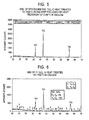
- a two step heat treatment was performed which consisted of first heating to 1450°C and then in a second step heating to 2100°C in vacuum of approximately 0.1 atmosphere.
- TiO was formed as shown in Fig. 5 .
- Desirably TiO which is in a +2 valence is produced and serves as a feed to electrolytically produce titanium.
- heating to 2100°C in vacuum is an expensive batch operation not conducive to commercial production of titanium at low cost, consequently less severe heat treatments were investigated to produce TiO.
- Example liquid precursors that have a high yield of carbon when pyrolized are furfural alcohol, resins such as phenyol formalide (phenolics) and pitches (coal and petroleum tars). Sugars and other materials can be used but their carbon char yield is low. Pitches have melting points from under 100°C up to nearly 400°C.
- TiO 2 was mixed with phenolic resin such as Borden B1008 and heated to form a solid at approximately 110°C.
- TiO 2 was mixed with a 110°C softening point coal tar pitch at a mixing temperature of 190°C.
- the char yield on the phenolic or coal tar pitch is approximately 50%.
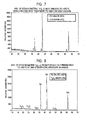
- a stoichiometric mixture of each type of precursor was heated to temperatures of 1300°C to 1650°C with the results subjected to XRD analysis. The lower temperature, the 1450°C example is shown in Fig. 8 . As can be seen the major portion is TiO but some higher oxide of Ti 2 O 3 remains; however, the amount of TiO produced is greater than when only particles of carbon and TiO 2 were heated together, and importantly no TiC was formed.
- the XRD of the sample heated to 1650°C is shown in Fig. 9 .
- the atmospheric pressure treatment is quite economical and the pure TiO produced can be used to electrolytically produce low cost titanium, e.g., by the electrochemical reduction method described in our aforementioned parent application.
- the intimate mixing of the carbon precursor with the metal oxide can also be used to purify titania type ores.
- titania slag or ilmenite ore can be purified to a higher purity titanium oxide utilizing the intimate mixing of the carbon reductant.
- Titania slag which is a by product of pig iron production from ilmenite ore, obtained through QIT in Canada which has the composition shown in Table 1 was mixed with a 110°C softening point coal tar pitch at 190°C to obtain an intimate mixture of the carbon precursor and the slag particulate.
- the mixture was heated to 1650°C in an argon inert atmosphere wherein the coal tar pitch was pyrolized with the heat treatment producing carbon in intimate contact with the titania slag particulate.
- the intimate carbon contact with the slag particulate produced TiO with the composition shown in Table 2.
- slag is purified from approximately 95% purity to 99+% purity utilizing the intimate carbon pretreatment before the heat treatment to 1650°C.
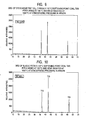
- the XRD after the 1650°C treatment with the carbon in intimate contact with the TiO 2 slag is shown in Fig. 10 .
- Ilmenite which is iron titanite FeTiO 3 with a variety of impurities consists typically of the composition shown in Table 3.
- Table 3-Composition of Ilmenite ore. Element Elemental Composition Parts per million (ppm) Al 4400 B ⁇ 100 Ba ⁇ 100 Be ⁇ 100 Ca 200 Cd ⁇ 100 Co ⁇ 100 Cr 500 Cu ⁇ 100 Fe 19.5% HF ⁇ 100 K ⁇ 100 Li ⁇ 100 Mg 1400 Mn 9400 Mo ⁇ 100 Na 400 Nb 500 Ni ⁇ 100 P 800 Pb ⁇ 100 Si 1500 Sn 100 Ta ⁇ 100 Ti 38.5% V 650 W ⁇ 100 Y ⁇ 100 Zn 200 Zr ⁇ 100
- the ilmenite ore was mixed with 110°C softening point coal tar pitch heated to 190°C to provide intimate mixture of stoichiometric carbon and the ilmenite ore particles.
- the mixture was heated to 1650°C heat treatment in an inert atmosphere which pyrolized the pitch providing intimate contact of the carbon on metal oxide particles.
- the chemical composition after the 1650°C in an inert atmosphere which pyrolized the pitch providing intimate contact of the carbon on the metal oxide particles is shown in Table 4 and the XRD in Fig. 11 .
- Fig. 11 shows iron metal is present.
- the iron metal can be removed by leaching and/or complexing in an aqueous solution at ambient temperature.
- the iron and other impurities can be removed by heating in a vacuum less than 0.133 Pa (10 -3 Torr) to 1800° C after or instead of the 1650° C heat treatment.
- the purity of the high vacuum 1800° C treated material is shown in Table 5 and the XRD in Fig. 12 .
- Ilmenite ore obtained from QIT - Fer et Titane, Inc., of Quebec, Canada, which had the composition shown in Table 3 was mixed at room temperature with 110°C softening point powdered coal tar pitch (CTP) in a ratio of 100 grams of ilmenite ore to 40 grams of CTP and 100 grams of toluene.
- CTP coal tar pitch
- the mixture was ball milled for four hours at room temperature to achieve good mixing and then heated to evaporate the toluene which was collected for reuse.
- the mixture was further heated to 1700°C under an inert atmosphere at atmospheric pressure followed by reducing the pressure to 0.133 Pa (10 -3 Torr) or less and the temperature raised to 1800°C and held for one hour.
- the purified TiO product was subjected to the same electrolysis trials listed in Trials 1, 2 and 5 producing purified titanium metal from an impure ore.
- Trial 5- The same set-up was used as given in Trial 2.
- hydrogen gas was bubbled over the TiO in the cathode.
- the titanium particles were subjected to vacuum evaporation of the residual salt at 1200° C and 0.133 Pa (10 -3 Torr) vacuum.
- the residual oxygen content was 300 ppm.
- TiO is an electronic conductor with a conductivity superior to graphite, electrical contact is easily made which eliminates the necessity to form a partially sintered porous body to serve as a cathode for the electrolytic reduction to Ti metal particles.
- cathodic reduction of TiO 2 to the metal it is necessary to produce a porous perform in order that current can flow to the TiO 2 body whereas with the high electrolytic conduction of TiO particles are easily contacted to achieve cathodic reduction and making it possible for the continuous cathodic reduction as compared to batch processing of porous TiO 2 preforms.
- the concentrations of titanium and oxygen in TiO are 74.96% titanium and 25.04% oxygen.
- This composition of TiO is typical of the material such as shown in Fig. 9 .
- the higher titanium content is desirably obtained carbothermically which results in less electronic reduction in a second electrolysis step to obtain pure metallic titanium with very low oxygen contents of less than 500ppm. Greater carbothermic reduction can be achieved by heating to higher temperatures than the 1650-1700°C as above described.
- TiO 2 the ores of ilmenite, rutile, slag, etc can also be used
- carbon when intimately mixed and heated to higher temperatures, produces a higher titanium content in the remaining product.
- TiO 2 was intimately mixed at 190°C with coal tar pitch in stoichiometric ratio to produce low oxygen content titanium and was heated to 2100°C in a non-oxidizing atmosphere.
- the XRD of the product is shown in Fig. 13 .
- the analysis of the product obtained from an outside laboratory, Wah Chang showed a residual oxygen content of 5.4%. Residual carbon content is quite low in the range of 0.7 to 2%.
- a sample was heated to 2800°C in a non-oxidizing atmosphere in a graphite container.
- the XRD of that product showed primarily TiC which is believed the graphite crucible contributed to the TiC formation.
- a TiC crucible was fabricated and a TiO 2 -C sample was heat treated to 2800°C which resulted in little TiC and a reduced oxygen content of less than TiO in the residual titanium.
- TiO 2 and carbon are heated above about 1200'C the product is a mixture of TiO and TiC. It is noted here that TiO 2 when heated at atmospheric pressure and/or at reduced pressure only TiO is produced as exemplified in the XRD patterns shown in Figs. 10 , 12 and 13 and verified from carbon and oxygen analysis which showed less than 1% carbon thus ruling out any appreciable amount of TiC formation with a remaining oxygen content depending on the heat treatment temperature of down to about 5% oxygen at 2100°C. It was also noted there was some difference in reactivity between the crystal forms of TiO 2 in rutile and anatase.
- an enabling step is the intimate mixing of the TiO 2 /ore source with the carbon source as a pitch, resin or other carbon source in the liquid state.
- the metal oxide produced by carbothermic reduction as above-described may then be formed into a feed electrode or used as a solute in the electrochemical reduction system described in US 2005/0166706 A1 .
Landscapes
- Chemical & Material Sciences (AREA)
- Engineering & Computer Science (AREA)
- Metallurgy (AREA)
- Materials Engineering (AREA)
- Organic Chemistry (AREA)
- Manufacturing & Machinery (AREA)
- Mechanical Engineering (AREA)
- Geology (AREA)
- General Life Sciences & Earth Sciences (AREA)
- Environmental & Geological Engineering (AREA)
- Life Sciences & Earth Sciences (AREA)
- Chemical Kinetics & Catalysis (AREA)
- Electrochemistry (AREA)
- Electrolytic Production Of Metals (AREA)
- Manufacture And Refinement Of Metals (AREA)
Applications Claiming Priority (2)
| Application Number | Priority Date | Filing Date | Title |
|---|---|---|---|
| US11/294,872 US7794580B2 (en) | 2004-04-21 | 2005-12-06 | Thermal and electrochemical process for metal production |
| PCT/US2006/061461 WO2007097823A2 (en) | 2005-12-06 | 2006-12-01 | Thermal and electrochemical process for metal production |
Publications (2)
| Publication Number | Publication Date |
|---|---|
| EP1957683A2 EP1957683A2 (en) | 2008-08-20 |
| EP1957683B1 true EP1957683B1 (en) | 2014-11-05 |
Family
ID=38437833
Family Applications (1)
| Application Number | Title | Priority Date | Filing Date |
|---|---|---|---|
| EP20060850220 Not-in-force EP1957683B1 (en) | 2005-12-06 | 2006-12-01 | Thermal and electrochemical process for metal production |
Country Status (8)
| Country | Link |
|---|---|
| US (1) | US7794580B2 (enExample) |
| EP (1) | EP1957683B1 (enExample) |
| JP (1) | JP5390860B2 (enExample) |
| KR (1) | KR101370007B1 (enExample) |
| CN (1) | CN101278063A (enExample) |
| AU (1) | AU2006338573B2 (enExample) |
| CA (1) | CA2621464C (enExample) |
| WO (1) | WO2007097823A2 (enExample) |
Families Citing this family (25)
| Publication number | Priority date | Publication date | Assignee | Title |
|---|---|---|---|---|
| CN101343755B (zh) * | 2008-08-20 | 2010-08-25 | 攀钢集团研究院有限公司 | 生产金属钒的方法 |
| GB0913736D0 (en) | 2009-08-06 | 2009-09-16 | Chinuka Ltd | Treatment of titanium ores |
| EP2640871B1 (en) * | 2010-11-18 | 2018-10-17 | Metalysis Limited | Method and system for electrlytically reducing a solid feedstock |
| MY180279A (en) | 2010-11-18 | 2020-11-26 | Metalysis Ltd | Electrolysis apparatus |
| JP2014515792A (ja) | 2011-04-27 | 2014-07-03 | マテリアルズ アンド エレクトロケミカル リサーチ コーポレイション | 球状チタンおよび球状チタン合金粉末を生成する低コスト処理法 |
| CN102808091B (zh) * | 2011-06-01 | 2015-12-02 | 攀钢集团有限公司 | 一种高纯钛的制备方法 |
| EP2794943B8 (en) * | 2011-12-22 | 2019-07-10 | Universal Achemetal Titanium, LLC | A method for extraction and refining of titanium |
| EP3036195B1 (en) | 2013-08-19 | 2020-07-01 | University Of Utah Research Foundation | Producing a titanium product |
| WO2015123502A1 (en) | 2014-02-13 | 2015-08-20 | Phinix, LLC | Electrorefining of magnesium from scrap metal aluminum or magnesium alloys |
| CN104451781A (zh) * | 2014-12-08 | 2015-03-25 | 中国铝业股份有限公司 | 一种电解生产金属钛的阳极制备方法 |
| US10294116B2 (en) * | 2015-05-05 | 2019-05-21 | Iluka Resources Limited | Synthetic rutile products and processes for their production |
| WO2018125322A1 (en) * | 2016-09-14 | 2018-07-05 | Universal Technical Resource Services, Inc. | A method for producing titanium-aluminum-vanadium alloy |
| CA3049769C (en) | 2017-01-13 | 2023-11-21 | Universal Achemetal Titanium, Llc | Titanium master alloy for titanium-aluminum based alloys |
| CN107245576B (zh) * | 2017-06-30 | 2018-12-14 | 马鞍山华盛冶金科技发展有限公司 | 一种复合还原剂的制备方法及其用于冶炼的方法 |
| CN109517986B (zh) * | 2017-06-30 | 2020-08-07 | 马鞍山华盛冶金科技发展有限公司 | 一种钨钼矿球团及其火法冶炼低品位钨钼矿的方法 |
| KR101815917B1 (ko) | 2017-08-23 | 2018-01-08 | (주)이엔비에스 | 폐 고분자 화합물을 이용한 정제유 생산 및 티타늄 정련 장치 및 그 방법 |
| CN110085338B (zh) * | 2018-01-25 | 2022-09-20 | 国家电投集团科学技术研究院有限公司 | UO2/Cr复合燃料芯块的制备方法以及制备装置 |
| CN113528821B (zh) * | 2019-07-29 | 2023-05-02 | 孙旭阳 | 利用单原子碳还原制备单质材料的方法 |
| US10907239B1 (en) | 2020-03-16 | 2021-02-02 | University Of Utah Research Foundation | Methods of producing a titanium alloy product |
| CN112281191A (zh) * | 2020-10-28 | 2021-01-29 | 攀钢集团攀枝花钢铁研究院有限公司 | 一种从钛矿制备钛铝合金的方法 |
| CN113832499B (zh) * | 2021-09-15 | 2023-03-21 | 武钢集团昆明钢铁股份有限公司 | 一种应用电能的两步炼钢法 |
| GB2613588A (en) | 2021-12-07 | 2023-06-14 | Chinuka Ltd | Treatment of metal ores |
| CN114481228B (zh) * | 2022-02-21 | 2023-11-24 | 中国工程物理研究院材料研究所 | 一种制备铀钛合金的方法 |
| CN114672850B (zh) * | 2022-05-07 | 2023-08-29 | 华北理工大学 | 一种利用熔盐电解脱氧分离钛铝合金制取金属钛的方法 |
| JP7642722B2 (ja) * | 2023-06-14 | 2025-03-10 | 東邦チタニウム株式会社 | チタン系電解原料の製造方法及び、金属チタン又はチタン合金の製造方法 |
Family Cites Families (91)
| Publication number | Priority date | Publication date | Assignee | Title |
|---|---|---|---|---|
| US2733133A (en) | 1956-01-31 | Production of titanium monoxide | ||
| CA626363A (en) | 1961-08-29 | E. Sibert Merle | Production of titanium by fused bath electrolysis | |
| GB251527A (en) | 1925-10-20 | 1926-05-06 | Arnold William Gregory | An improved process for the treatment of ores for the recovery of titanium, tungstenand tantalum |
| GB452269A (en) | 1935-03-13 | 1936-08-19 | Magall Ag | Improvements in and relating to the production of magnesium and alkali earth metals by electrolysis of fused starting materials |
| US2302604A (en) | 1939-11-15 | 1942-11-17 | Alexander W Reid | Fused bath electrolytic production of ferrochromium |
| GB635267A (en) | 1945-12-18 | 1950-04-05 | Husqvarna Vapenfabriks Ab | Improvements in and relating to the production of metals by electrolysis in a fused bath |
| US3137641A (en) | 1949-08-10 | 1964-06-16 | Timax Associates | Electrolytic process for the production of titanium metal |
| US2707168A (en) | 1950-12-26 | 1955-04-26 | Horizons Titanium Corp | Preparation of titanium monoxide by electrolysis |
| US2681847A (en) | 1951-01-18 | 1954-06-22 | Horizons Titanium Corp | Thermal preparation of titanium monoxide |
| US2681848A (en) | 1951-07-12 | 1954-06-22 | Horizons Titanium Corp | Preparation of titanium monoxide |
| US2698221A (en) | 1951-08-25 | 1954-12-28 | Horizons Titanium Corp | Preparing titanium compounds |
| US2994650A (en) | 1951-10-24 | 1961-08-01 | Harvey L Slatin | Preparation of pure metals from their compounds |
| US2831802A (en) | 1951-11-14 | 1958-04-22 | Chicago Dev Corp | Production of subdivided metals |
| US2743166A (en) | 1952-05-10 | 1956-04-24 | Horizons Titanium Corp | Preparation of titanium monoxide |
| US2681849A (en) | 1952-05-24 | 1954-06-22 | Horizons Titanium Corp | Production of titanium monoxide |
| US2722509A (en) | 1952-11-12 | 1955-11-01 | Horizons Titanium Corp | Production of titanium |
| US2792310A (en) | 1953-07-21 | 1957-05-14 | Horizons Titanium Corp | Production of a mutual solid solution of tic and tio |
| US2750259A (en) | 1953-07-21 | 1956-06-12 | Horizons Titanium Corp | Method of producing titanium monoxide |
| US2828251A (en) | 1953-09-30 | 1958-03-25 | Horizons Titanium Corp | Electrolytic cladding process |
| US2904428A (en) | 1954-09-22 | 1959-09-15 | Chicago Dev Corp | Method of reducing titanium oxide |
| US2868703A (en) | 1954-11-08 | 1959-01-13 | Horizons Titanium Corp | Cell feed material for the production of titanium |
| US2848303A (en) | 1955-01-25 | 1958-08-19 | Walter M Weil | Production of lower oxides of titanium |
| US2798844A (en) | 1955-02-10 | 1957-07-09 | Horizons Titanium Corp | Electrolyte for titanium production |
| GB825872A (en) | 1955-06-20 | 1959-12-23 | Ichiro Egami | Improvements in or relating to the electrolytic production of magnesium |
| US3083153A (en) | 1955-07-29 | 1963-03-26 | Continental Titanium Corp | Titanium producing apparatus |
| US2880149A (en) | 1956-07-09 | 1959-03-31 | Horizons Titanium Corp | Electrolytic process |
| US2833704A (en) | 1956-08-16 | 1958-05-06 | Horizons Titanium Corp | Production of titanium |
| US2909473A (en) | 1956-09-04 | 1959-10-20 | Chicago Dev Corp | Process for producing titanium group metals |
| FR1167261A (fr) | 1957-02-27 | 1958-11-24 | Blancs De Zinc De La Mediterra | Procédé de préparation du titane métallique |
| US2913379A (en) | 1957-05-21 | 1959-11-17 | Morris A Steinberg | Separation process |
| US2939823A (en) | 1957-09-26 | 1960-06-07 | New Jersey Zinc Co | Electrorefining metallic titanium |
| US3047477A (en) | 1957-10-30 | 1962-07-31 | Gen Am Transport | Reduction of titanium dioxide |
| US2968221A (en) * | 1959-03-17 | 1961-01-17 | Zeiss Jena Veb Carl | Photographic five-element lenses of the modified gauss type |
| US3098805A (en) | 1959-06-25 | 1963-07-23 | Norton Co | Process for the extraction of relatively pure titanium and of relatively pure zirconium and hafnium |
| US3078149A (en) | 1962-02-01 | 1963-02-19 | American Cyanamid Co | Method of producing titanium monoxide or titanium carbide |
| JPS4319739Y1 (enExample) | 1965-06-17 | 1968-08-17 | ||
| JPS438334Y1 (enExample) | 1967-10-11 | 1968-04-13 | ||
| US3850615A (en) * | 1970-11-24 | 1974-11-26 | Du Pont | Method of ilmenite reduction |
| US3794482A (en) | 1971-02-05 | 1974-02-26 | Parlee Anderson Corp | Carbothermic reduction method for converting metal oxides to metal form |
| GB1355433A (en) | 1971-07-28 | 1974-06-05 | Electricity Council | Production of titanium |
| GB1399910A (en) | 1972-11-29 | 1975-07-02 | British Titan Ltd | Process for the production of iron-containing titaniferous particles |
| NL7315931A (enExample) | 1972-12-04 | 1974-06-06 | ||
| US3915837A (en) | 1973-07-18 | 1975-10-28 | Jr Norman G Feige | Anode and method of production thereof |
| US3880729A (en) | 1973-10-18 | 1975-04-29 | United Aircraft Corp | Process for electrodepositing titanium diboride from fused salts |
| US3989511A (en) | 1975-03-10 | 1976-11-02 | Westinghouse Electric Corporation | Metal powder production by direct reduction in an arc heater |
| US4072506A (en) | 1975-10-17 | 1978-02-07 | Teledyne Industries, Inc. | Method of separating hafnium from zirconium |
| AU514181B2 (en) | 1976-11-26 | 1981-01-29 | Westinghouse Electric Corporation | High temperature reactor |
| US4080194A (en) | 1976-11-26 | 1978-03-21 | Westinghouse Electric Corporation | Titanium or zirconium reduction process by arc heater |
| US4338177A (en) | 1978-09-22 | 1982-07-06 | Metallurgical, Inc. | Electrolytic cell for the production of aluminum |
| US4342637A (en) | 1979-07-30 | 1982-08-03 | Metallurgical, Inc. | Composite anode for the electrolytic deposition of aluminum |
| US4670110A (en) | 1979-07-30 | 1987-06-02 | Metallurgical, Inc. | Process for the electrolytic deposition of aluminum using a composite anode |
| US4409083A (en) | 1980-02-06 | 1983-10-11 | Metallurgical, Inc. | Cell with composite anode for electrolytic production of magnesium |
| DE3017782C2 (de) | 1980-05-09 | 1982-09-30 | Th. Goldschmidt Ag, 4300 Essen | Verfahren zur Herstellung von sinterfähigen Legierungspulvern auf der Basis von Titan |
| US4302604A (en) * | 1980-07-24 | 1981-11-24 | Phillips Petroleum Company | Increasing the life of a supported ruthenium catalyst in the hydrogenation of an olefinically unsaturated dinitrile |
| US4431503A (en) | 1981-06-22 | 1984-02-14 | Metallurgical, Inc. | Energy reduction in the manufacture of pre-baked carbon containing electrodes for electrolytic production of metals such as aluminum |
| JPS5950604B2 (ja) | 1981-11-27 | 1984-12-10 | 三菱マテリアル株式会社 | 酸化チタン粉末の製造法 |
| US5215631A (en) | 1982-06-25 | 1993-06-01 | Cel Systems Corporation | Electrolytic preparation of tin, other metals, alloys and compounds |
| US4521281A (en) | 1983-10-03 | 1985-06-04 | Olin Corporation | Process and apparatus for continuously producing multivalent metals |
| JPS6131302A (ja) | 1984-07-24 | 1986-02-13 | Inoue Japax Res Inc | 金属水素化物製造方法 |
| US4931213A (en) | 1987-01-23 | 1990-06-05 | Cass Richard B | Electrically-conductive titanium suboxides |
| JPS63199832A (ja) * | 1987-02-13 | 1988-08-18 | Tosoh Corp | 高純度金属クロムの製造方法 |
| GB8707781D0 (en) | 1987-04-01 | 1987-05-07 | Shell Int Research | Electrolytic production of metals |
| JPH0196390A (ja) | 1987-10-06 | 1989-04-14 | Nobuyuki Koura | 電解法による高純度クロムの作製法およびその電解浴 |
| SE8900918L (sv) * | 1988-03-22 | 1989-09-23 | Inst Struturnoi Makrokinetikia | Foerfarande foer framstaellning av pulverformiga svaarsmaelta oorganiska foereningar och metallkompositioner |
| KR960014946B1 (ko) * | 1988-12-22 | 1996-10-21 | 더 유니버어스티 오브 웨스트런 오스트레일리아 | 금속, 합금, 세라믹 재료의 제조 방법 |
| US5224534A (en) | 1990-09-21 | 1993-07-06 | Nippon Mining And Metals Company, Limited | Method of producing refractory metal or alloy materials |
| JP3214714B2 (ja) * | 1991-08-28 | 2001-10-02 | 亮拿 佐藤 | チタンの製錬装置 |
| FR2692880B1 (fr) | 1992-06-29 | 1994-09-02 | Pechiney Uranium | Procédé d'électro-fluoration sélective d'alliages ou de mélanges métalliques à base d'uranium. |
| JP3934686B2 (ja) * | 1994-01-31 | 2007-06-20 | 東ソー株式会社 | 高純度金属クロムの製造方法 |
| JP2863469B2 (ja) | 1995-10-06 | 1999-03-03 | 株式会社住友シチックス尼崎 | 高純度チタン材の製造方法 |
| US5679131A (en) * | 1996-03-13 | 1997-10-21 | Photran Corporation | Method for producing titanium oxide from ore concentrates |
| US6506231B2 (en) * | 1996-03-15 | 2003-01-14 | Kabushiki Kaisha Kobe Seiko Sho | Method and apparatus for making metallic iron |
| US5707168A (en) * | 1996-08-15 | 1998-01-13 | Houston Industries, Inc. | Heavy object lifting connector device |
| US6063254A (en) | 1997-04-30 | 2000-05-16 | The Alta Group, Inc. | Method for producing titanium crystal and titanium |
| US6231636B1 (en) | 1998-02-06 | 2001-05-15 | Idaho Research Foundation, Inc. | Mechanochemical processing for metals and metal alloys |
| GB9812169D0 (en) | 1998-06-05 | 1998-08-05 | Univ Cambridge Tech | Purification method |
| JP4319739B2 (ja) | 1999-06-14 | 2009-08-26 | マクセル精器株式会社 | チップカードユニットの製造方法とチップカードユニット |
| DE60130322T2 (de) | 2000-02-22 | 2008-06-12 | Metalysis Ltd., Wath-Upon-Dearne | Verfahren zur herstellung von metallschaum durch elektrolytische reduktion poröser oxidischer vorformen |
| AUPR317201A0 (en) | 2001-02-16 | 2001-03-15 | Bhp Innovation Pty Ltd | Extraction of Metals |
| US6827828B2 (en) | 2001-03-29 | 2004-12-07 | Honeywell International Inc. | Mixed metal materials |
| AUPR443801A0 (en) | 2001-04-10 | 2001-05-17 | Bhp Innovation Pty Ltd | Removal of oxygen from metal oxides and solid metal solutions |
| AUPR602901A0 (en) | 2001-06-29 | 2001-07-26 | Bhp Innovation Pty Ltd | Removal of oxygen from metals oxides and solid metal solutions |
| US6540902B1 (en) | 2001-09-05 | 2003-04-01 | The United States Of America As Represented By The United States Department Of Energy | Direct electrochemical reduction of metal-oxides |
| WO2003046258A2 (en) | 2001-11-22 | 2003-06-05 | Qit - Fer Et Titane Inc. | A method for electrowinning of titanium metal or alloy from titanium oxide containing compound in the liquid state |
| CN1253605C (zh) | 2001-12-28 | 2006-04-26 | 中国铝业股份有限公司 | 用含氧化钛炭阳极直接电解生产铝钛合金的方法 |
| FR2835000B1 (fr) | 2002-01-21 | 2004-11-05 | Delachaux Sa | Procede de fabrication d'elements metalliques au moyen d'un creuset |
| AUPS107102A0 (en) | 2002-03-13 | 2002-04-11 | Bhp Billiton Innovation Pty Ltd | Electrolytic reduction of metal oxides |
| US7470351B2 (en) | 2002-09-12 | 2008-12-30 | Teck Cominco Metals Ltd. | Discrete particle electrolyzer cathode and method of making same |
| US7410562B2 (en) * | 2003-08-20 | 2008-08-12 | Materials & Electrochemical Research Corp. | Thermal and electrochemical process for metal production |
| CN100415940C (zh) | 2005-05-08 | 2008-09-03 | 北京科技大学 | 一氧化钛/碳化钛可溶性固溶体阳极电解生产纯钛的方法 |
| JP4525561B2 (ja) | 2005-11-11 | 2010-08-18 | ソニー株式会社 | 撮像装置、画像処理方法、並びにプログラム |
-
2005
- 2005-12-06 US US11/294,872 patent/US7794580B2/en not_active Expired - Fee Related
-
2006
- 2006-12-01 CN CNA2006800360212A patent/CN101278063A/zh active Pending
- 2006-12-01 JP JP2008544618A patent/JP5390860B2/ja not_active Expired - Fee Related
- 2006-12-01 CA CA2621464A patent/CA2621464C/en not_active Expired - Fee Related
- 2006-12-01 AU AU2006338573A patent/AU2006338573B2/en not_active Ceased
- 2006-12-01 KR KR1020087007262A patent/KR101370007B1/ko not_active Expired - Fee Related
- 2006-12-01 WO PCT/US2006/061461 patent/WO2007097823A2/en not_active Ceased
- 2006-12-01 EP EP20060850220 patent/EP1957683B1/en not_active Not-in-force
Also Published As
| Publication number | Publication date |
|---|---|
| AU2006338573B2 (en) | 2011-01-20 |
| WO2007097823A3 (en) | 2007-11-15 |
| KR101370007B1 (ko) | 2014-03-04 |
| US20060237327A1 (en) | 2006-10-26 |
| CA2621464C (en) | 2016-06-14 |
| CA2621464A1 (en) | 2007-08-30 |
| JP2009518544A (ja) | 2009-05-07 |
| AU2006338573A1 (en) | 2007-08-30 |
| CN101278063A (zh) | 2008-10-01 |
| US7794580B2 (en) | 2010-09-14 |
| KR20080074092A (ko) | 2008-08-12 |
| WO2007097823A2 (en) | 2007-08-30 |
| EP1957683A2 (en) | 2008-08-20 |
| JP5390860B2 (ja) | 2014-01-15 |
Similar Documents
| Publication | Publication Date | Title |
|---|---|---|
| EP1957683B1 (en) | Thermal and electrochemical process for metal production | |
| EP2322693B1 (en) | Electrochemical process for titanium production | |
| US10081874B2 (en) | Method for electrowinning titanium from titanium-containing soluble anode molten salt | |
| EP2462251B1 (en) | Treatment of titanium ores | |
| EP2109691B1 (en) | Metallothermic reduction of in-situ generated titanium chloride | |
| US12215436B2 (en) | Treatment of metal ores | |
| HK1158277B (en) | Electrochemical process for titanium production | |
| HK1158277A (en) | Electrochemical process for titanium production | |
| HK1098517A (en) | Thermal and electrochemical process for metal production |
Legal Events
| Date | Code | Title | Description |
|---|---|---|---|
| PUAI | Public reference made under article 153(3) epc to a published international application that has entered the european phase |
Free format text: ORIGINAL CODE: 0009012 |
|
| 17P | Request for examination filed |
Effective date: 20080312 |
|
| AK | Designated contracting states |
Kind code of ref document: A2 Designated state(s): DE FR GB IT |
|
| RBV | Designated contracting states (corrected) |
Designated state(s): DE FR GB IT |
|
| 17Q | First examination report despatched |
Effective date: 20091119 |
|
| DAX | Request for extension of the european patent (deleted) | ||
| REG | Reference to a national code |
Ref country code: DE Ref legal event code: R079 Ref document number: 602006043601 Country of ref document: DE Free format text: PREVIOUS MAIN CLASS: C22B0005100000 Ipc: C25C0003280000 |
|
| RIC1 | Information provided on ipc code assigned before grant |
Ipc: C22B 5/18 20060101ALI20140411BHEP Ipc: C22B 7/04 20060101ALI20140411BHEP Ipc: C22B 5/10 20060101ALI20140411BHEP Ipc: C25C 3/28 20060101AFI20140411BHEP Ipc: C22B 34/12 20060101ALI20140411BHEP |
|
| GRAP | Despatch of communication of intention to grant a patent |
Free format text: ORIGINAL CODE: EPIDOSNIGR1 |
|
| INTG | Intention to grant announced |
Effective date: 20140604 |
|
| GRAS | Grant fee paid |
Free format text: ORIGINAL CODE: EPIDOSNIGR3 |
|
| GRAA | (expected) grant |
Free format text: ORIGINAL CODE: 0009210 |
|
| AK | Designated contracting states |
Kind code of ref document: B1 Designated state(s): DE FR GB IT |
|
| REG | Reference to a national code |
Ref country code: GB Ref legal event code: FG4D |
|
| REG | Reference to a national code |
Ref country code: DE Ref legal event code: R096 Ref document number: 602006043601 Country of ref document: DE Effective date: 20141218 |
|
| REG | Reference to a national code |
Ref country code: DE Ref legal event code: R097 Ref document number: 602006043601 Country of ref document: DE |
|
| PLBE | No opposition filed within time limit |
Free format text: ORIGINAL CODE: 0009261 |
|
| STAA | Information on the status of an ep patent application or granted ep patent |
Free format text: STATUS: NO OPPOSITION FILED WITHIN TIME LIMIT |
|
| 26N | No opposition filed |
Effective date: 20150806 |
|
| REG | Reference to a national code |
Ref country code: FR Ref legal event code: PLFP Year of fee payment: 10 |
|
| REG | Reference to a national code |
Ref country code: FR Ref legal event code: PLFP Year of fee payment: 11 |
|
| REG | Reference to a national code |
Ref country code: FR Ref legal event code: PLFP Year of fee payment: 12 |
|
| PGFP | Annual fee paid to national office [announced via postgrant information from national office to epo] |
Ref country code: FR Payment date: 20191226 Year of fee payment: 14 Ref country code: IT Payment date: 20191219 Year of fee payment: 14 |
|
| PGFP | Annual fee paid to national office [announced via postgrant information from national office to epo] |
Ref country code: GB Payment date: 20200102 Year of fee payment: 14 Ref country code: DE Payment date: 20191231 Year of fee payment: 14 |
|
| REG | Reference to a national code |
Ref country code: DE Ref legal event code: R119 Ref document number: 602006043601 Country of ref document: DE |
|
| GBPC | Gb: european patent ceased through non-payment of renewal fee |
Effective date: 20201201 |
|
| PG25 | Lapsed in a contracting state [announced via postgrant information from national office to epo] |
Ref country code: FR Free format text: LAPSE BECAUSE OF NON-PAYMENT OF DUE FEES Effective date: 20201231 Ref country code: IT Free format text: LAPSE BECAUSE OF NON-PAYMENT OF DUE FEES Effective date: 20201201 |
|
| PG25 | Lapsed in a contracting state [announced via postgrant information from national office to epo] |
Ref country code: DE Free format text: LAPSE BECAUSE OF NON-PAYMENT OF DUE FEES Effective date: 20210701 Ref country code: GB Free format text: LAPSE BECAUSE OF NON-PAYMENT OF DUE FEES Effective date: 20201201 |