EP1917228B1 - Mesoporöses metallorganisches gerüstmaterial - Google Patents
Mesoporöses metallorganisches gerüstmaterial Download PDFInfo
- Publication number
- EP1917228B1 EP1917228B1 EP06792831A EP06792831A EP1917228B1 EP 1917228 B1 EP1917228 B1 EP 1917228B1 EP 06792831 A EP06792831 A EP 06792831A EP 06792831 A EP06792831 A EP 06792831A EP 1917228 B1 EP1917228 B1 EP 1917228B1
- Authority
- EP
- European Patent Office
- Prior art keywords
- framework
- optionally
- organic compound
- metal
- framework according
- Prior art date
- Legal status (The legal status is an assumption and is not a legal conclusion. Google has not performed a legal analysis and makes no representation as to the accuracy of the status listed.)
- Expired - Lifetime
Links
Images



Classifications
-
- C—CHEMISTRY; METALLURGY
- C07—ORGANIC CHEMISTRY
- C07F—ACYCLIC, CARBOCYCLIC OR HETEROCYCLIC COMPOUNDS CONTAINING ELEMENTS OTHER THAN CARBON, HYDROGEN, HALOGEN, OXYGEN, NITROGEN, SULFUR, SELENIUM OR TELLURIUM
- C07F5/00—Compounds containing elements of Groups 3 or 13 of the Periodic Table
- C07F5/06—Aluminium compounds
- C07F5/069—Aluminium compounds without C-aluminium linkages
-
- C—CHEMISTRY; METALLURGY
- C01—INORGANIC CHEMISTRY
- C01B—NON-METALLIC ELEMENTS; COMPOUNDS THEREOF; METALLOIDS OR COMPOUNDS THEREOF NOT COVERED BY SUBCLASS C01C
- C01B3/00—Hydrogen; Gaseous mixtures containing hydrogen; Separation of hydrogen from mixtures containing it; Purification of hydrogen; Reversible storage of hydrogen
-
- B—PERFORMING OPERATIONS; TRANSPORTING
- B01—PHYSICAL OR CHEMICAL PROCESSES OR APPARATUS IN GENERAL
- B01J—CHEMICAL OR PHYSICAL PROCESSES, e.g. CATALYSIS OR COLLOID CHEMISTRY; THEIR RELEVANT APPARATUS
- B01J20/00—Solid sorbent compositions or filter aid compositions; Sorbents for chromatography; Processes for preparing, regenerating or reactivating thereof
- B01J20/22—Solid sorbent compositions or filter aid compositions; Sorbents for chromatography; Processes for preparing, regenerating or reactivating thereof comprising organic material
- B01J20/223—Solid sorbent compositions or filter aid compositions; Sorbents for chromatography; Processes for preparing, regenerating or reactivating thereof comprising organic material containing metals, e.g. organo-metallic compounds, coordination complexes
- B01J20/226—Coordination polymers, e.g. metal-organic frameworks [MOF], zeolitic imidazolate frameworks [ZIF]
-
- B—PERFORMING OPERATIONS; TRANSPORTING
- B01—PHYSICAL OR CHEMICAL PROCESSES OR APPARATUS IN GENERAL
- B01J—CHEMICAL OR PHYSICAL PROCESSES, e.g. CATALYSIS OR COLLOID CHEMISTRY; THEIR RELEVANT APPARATUS
- B01J20/00—Solid sorbent compositions or filter aid compositions; Sorbents for chromatography; Processes for preparing, regenerating or reactivating thereof
- B01J20/30—Processes for preparing, regenerating, or reactivating
- B01J20/3085—Chemical treatments not covered by groups B01J20/3007 - B01J20/3078
-
- C—CHEMISTRY; METALLURGY
- C01—INORGANIC CHEMISTRY
- C01B—NON-METALLIC ELEMENTS; COMPOUNDS THEREOF; METALLOIDS OR COMPOUNDS THEREOF NOT COVERED BY SUBCLASS C01C
- C01B3/00—Hydrogen; Gaseous mixtures containing hydrogen; Separation of hydrogen from mixtures containing it; Purification of hydrogen; Reversible storage of hydrogen
- C01B3/0005—Reversible storage of hydrogen, e.g. by hydrogen getters or electrodes
- C01B3/001—Reversible storage of hydrogen, e.g. by hydrogen getters or electrodes characterised by the uptaking media; Treatment thereof
- C01B3/0015—Organic compounds, e.g. liquid organic hydrogen carriers [LOHC] or metalorganic compounds; Solutions thereof
-
- C—CHEMISTRY; METALLURGY
- C01—INORGANIC CHEMISTRY
- C01B—NON-METALLIC ELEMENTS; COMPOUNDS THEREOF; METALLOIDS OR COMPOUNDS THEREOF NOT COVERED BY SUBCLASS C01C
- C01B3/00—Hydrogen; Gaseous mixtures containing hydrogen; Separation of hydrogen from mixtures containing it; Purification of hydrogen; Reversible storage of hydrogen
- C01B3/0005—Reversible storage of hydrogen, e.g. by hydrogen getters or electrodes
- C01B3/001—Reversible storage of hydrogen, e.g. by hydrogen getters or electrodes characterised by the uptaking media; Treatment thereof
- C01B3/0018—Inorganic elements or compounds, e.g. oxides, nitrides, borohydrides or zeolites; Solutions thereof
- C01B3/0026—Metals or metal hydrides
-
- C—CHEMISTRY; METALLURGY
- C07—ORGANIC CHEMISTRY
- C07C—ACYCLIC OR CARBOCYCLIC COMPOUNDS
- C07C51/00—Preparation of carboxylic acids or their salts, halides or anhydrides
- C07C51/41—Preparation of salts of carboxylic acids
- C07C51/418—Preparation of metal complexes containing carboxylic acid moieties
-
- C—CHEMISTRY; METALLURGY
- C07—ORGANIC CHEMISTRY
- C07F—ACYCLIC, CARBOCYCLIC OR HETEROCYCLIC COMPOUNDS CONTAINING ELEMENTS OTHER THAN CARBON, HYDROGEN, HALOGEN, OXYGEN, NITROGEN, SULFUR, SELENIUM OR TELLURIUM
- C07F5/00—Compounds containing elements of Groups 3 or 13 of the Periodic Table
- C07F5/06—Aluminium compounds
-
- Y—GENERAL TAGGING OF NEW TECHNOLOGICAL DEVELOPMENTS; GENERAL TAGGING OF CROSS-SECTIONAL TECHNOLOGIES SPANNING OVER SEVERAL SECTIONS OF THE IPC; TECHNICAL SUBJECTS COVERED BY FORMER USPC CROSS-REFERENCE ART COLLECTIONS [XRACs] AND DIGESTS
- Y02—TECHNOLOGIES OR APPLICATIONS FOR MITIGATION OR ADAPTATION AGAINST CLIMATE CHANGE
- Y02E—REDUCTION OF GREENHOUSE GAS [GHG] EMISSIONS, RELATED TO ENERGY GENERATION, TRANSMISSION OR DISTRIBUTION
- Y02E60/00—Enabling technologies; Technologies with a potential or indirect contribution to GHG emissions mitigation
- Y02E60/30—Hydrogen technology
- Y02E60/32—Hydrogen storage
Definitions
- the present invention relates to a porous organometallic framework material and a process for its preparation and its use.
- Porous organometallic frameworks are known in the art.
- MOF metal organic framework
- MO Keefe J. Sol. State Chem. 152 (2000), 3-20
- H. Li et al. Nature 402 (1999), 276
- M. Eddaoudi Topics in Catalysis 9 (1999), 105-111
- Chen et al. Science 291 (2001), 1021-1023 and DE-A 101 11 230 described.
- organometallic framework materials investigated in the prior art are suitable in many ways. These can be used for example for storage, for separation or in the chemical conversion of substances. In particular, these can be used as carriers for catalysts or catalysts.
- organometallic frameworks in which the metal ion is a main group element of the periodic system have come into focus.
- the X-ray diffractograms of the framework according to the invention in comparison to the above-mentioned known in the prior art framework materials hardly characteristic of known frameworks sharp signals between 5 and 30 ° (2 ⁇ ), in particular between 5 and 12 °.
- the framework material may also occur in the framework material, other organic compounds, in particular one or more monodentate ligands.
- the molar fraction of the first-mentioned organic compound which must be present is at least 50%, more preferably at least 75% and particularly preferably at least 90% of the total amount of the organic compounds in the framework.
- ring A is a benzene, pyridine, pyridazine, pyrimidine, pyrazine or triazine ring.
- A is preferably benzene.
- ring A has three substituents X. These are the carboxylate group and their thio analogs. At least part of the carboxylate groups and / or thio analogs occurring in the framework material A can be present in protonated form.
- the ring A may have one or more further substituents. These are the functional groups R, NRR ', OR, SR, F, Cl, and Br, where R and R' independently of one another may be hydrogen, methyl or ethyl. The methyl and the ethyl group may also be mono- or polyfluorinated. Preferably, however, the ring A has no further substituents except for X.
- the organic compound is 1,2,3-, 1,2,4- or 1,3,5-benzenetricarboxylate or their at least partially protonated analogs.
- 1,3,5-benzenetricarboxylate is especially preferred.
- the organometallic framework according to the invention contains pores, in particular micropores and / or mesopores.
- Micropores are defined as those having a diameter of 2 nm or smaller and mesopores are defined by a diameter in the range of 2 to 50 nm, each according to the definition as defined in Pure Applied Chemistry 57 (1985), pages 603-619 , in particular on page 606 is.
- the presence of micro- and / or mesopores can be checked by means of sorption measurements, these measurements determining the absorption capacity of the organometallic frameworks for nitrogen at 77 K according to DIN 66131 and / or DIN 66134.
- the organometallic framework according to the invention has an average pore diameter of 2 to 10 nm, preferably of 3 to 9 nm.
- the distribution of the pore size is at most +/- 5 nm.
- the most frequently occurring pore diameter is preferably in the range from 3 to 9 nm.
- the specific surface area - calculated according to the Langmuir model according to DIN 66135 is at least 800 m 2 / g for a metal organic framework material according to the invention in powder form.
- the specific surface area is preferably at least 1000 m 2 / g and particularly preferably at least 1300 m 2 / g. Most preferably, the specific surface area is at least 1500 m 2 / g.
- the pore volume be formed by pores having a pore diameter of 2 to 10 nm (mesopores).
- the proportion of the pore volume is at least 65%, most preferably at least 80%.
- the pore volume is preferably at least 0.8 ml / g, more preferably at least 1.1 ml / g.
- MOF shaped bodies can have a low specific surface area. However, this is preferably more than 10 m 2 / g, more preferably more than 50 m 2 / g and more preferably more than 500 m 2 / g.
- pores whose size distribution may vary.
- more than 50% of the total pore volume, in particular more than 75%, of pores having a pore diameter of up to 1000 nm is formed.
- a majority of the pore volume is formed by pores of two diameter ranges. It is therefore further preferred if more than 25% of the total pore volume, in particular more than 50% of the total pore volume, is formed by pores which are in a diameter range of 100 nm to 800 nm and if more than 15% of the total pore volume, in particular more than 25% of the total pore volume is formed by pores ranging in diameter up to 10 nm.
- the pore distribution can be determined by means of mercury porosymmetry.
- Another object of the present invention is a process for preparing a framework according to the invention comprising the step
- the reaction preferably takes place with stirring at a pressure of at most 2 bar (absolute).
- the pressure is at most 1230 mbar (absolute). More preferably, the reaction takes place under atmospheric pressure.
- N, N-dimethylformamide, N, N-diethylformamide, N-methylpyrrolidone or mixtures thereof it is possible to dispense with a base. Likewise, however, a base can also be added.
- Preferred starting materials when using an aluminum salt in the synthesis are the hydrates of aluminum chloride or nitrate, in particular the chloride is preferred.
- the metal compound used for the preparation of the porous organometallic framework according to the invention may be nonionic and / or the counterion to the Al III cation may be derived from a protic solvent.
- a non-ionic compound it can be avoided, with a suitable choice, that the metal is present in the form of a salt in the reaction to the porous organometallic framework material and thus difficulties in the removal of the corresponding anion in the metal salt can be avoided if provided by the metal compound no further interfering salts are generated during the reaction.
- the counterion represents a solvent anion, this may, with a suitable choice after conversion, be present as a solvent which is equal to the non-aqueous organic solvent used or different therefrom can be. In the latter case, it is preferred if this solvent is at least partially miscible with the non-aqueous organic solvent.
- nonionic compounds or counterions to the metal cation which can be derived from protic solvents can be, for example, metal alcoholates, for example methanolates, ethanolates, propanolates, butanolates.
- metal alcoholates for example methanolates, ethanolates, propanolates, butanolates.
- oxides or hydroxides are conceivable.
- Non-aqueous organic solvents are N, N-dimethylformamide (DMF), N, N-diethylformamide (DEF), N-methylpyrrolidone (NMP), or mixtures thereof.
- Preferred solvents are DMF, DEF and NMP. Particularly preferred is DMF.
- non-aqueous preferably refers to a solvent having a maximum water content of 10% by weight, more preferably 5% by weight, still more preferably 1% by weight, further preferably 0.1% by weight. , particularly preferably 0.01 wt .-% based on the total weight of the solvent does not exceed.
- the maximum water content during the reaction is 10% by weight, more preferably 5% by weight, and still more preferably 1% by weight.
- solvent refers to pure solvents as well as mixtures of different solvents.
- the process step of reacting the at least one metal compound with the at least one at least bidentate organic compound is followed by a calcination step.
- the temperature set here is typically more than 250 ° C, preferably 300 to 400 ° C.
- the ligand present in the pores can be removed.
- the removal of ligand from the pores of the porous organometallic framework material may be accomplished by treatment of the resulting framework with a nonaqueous solvent.
- the ligand is removed in a kind of "extraction process" and optionally replaced in the framework by a solvent molecule.
- the extraction process takes place before calcination, when the latter is provided.
- the treatment is preferably at least 30 minutes and may typically be up to two days. This can be done at room temperature or elevated temperature. This is preferably carried out at elevated temperature, for example at at least 40 ° C., preferably 60 ° C. Also preferred is a reaction at the boiling point of the solvent (reflux).
- the treatment can be carried out in a simple boiler by slurrying and stirring the framework material. It is also possible to use extraction apparatuses such as Soxhlet apparatuses, in particular technical extraction apparatuses.
- the above-mentioned can be used, ie C 1-6 alkanol, DMSO, DMF, DEF, acetonitrile, toluene, dioxane, benzene, chlorobenzene, MEK, pyridine, THF, ethyl acetate, optionally halogenated C 1-200 alkane , Sulfolene, glycol, NMP or mixtures thereof.
- the solvent used for the extraction may be the same as or different from that for the reaction of the at least one metal compound with the at least one at least bidentate organic compound.
- extraction does not necessarily require the solvent to be anhydrous.
- a preferred extraction solvent is methanol, ethanol, acetone, MEK or a mixture thereof. Particularly preferred is methanol.
- Another object of the present invention is a method for producing the metal-organic framework material of the invention in which Al is provided by anodic oxidation of III to the reaction.
- organometallic frameworks by electrochemical means is known in WO-A 2005/049892 described.
- the organometallic framework according to the invention can be present in powder form or as an agglomerate.
- the framework material may be used as such or it may be converted into a shaped body. Preferred methods here are the extrusion or tableting.
- the framework material may include other materials such as binders, lubricants, or other additives added during manufacture. It is also conceivable that the framework material has further components, such as adsorbents such as activated carbon or the like.
- pellets such as disc-shaped pellets, pills, spheres, granules, extrudates such as strands, honeycomb, mesh or hollow body may be mentioned.
- Kneading / mulling and shaping can be done according to any suitable method, such as in Ullmanns Enzyklopadie der Technischen Chemie, 4th Edition, Volume 2, p. 313 et seq. (1972 ).
- the kneading / hulling and / or shaping by means of a reciprocating press, roller press in the presence or absence of at least one binder material, compounding, pelleting, tableting, extrusion, co-extruding, foaming, spinning, coating, granulation, preferably spray granulation, spraying, spray drying or a combination of two or more of these methods.
- pellets and / or tablets are produced.
- Kneading and / or molding may be carried out at elevated temperatures such as, for example, in the range of room temperature to 300 ° C and / or elevated pressure such as in the range of normal pressure up to a few hundred bar and / or in a protective gas atmosphere such as in the presence of at least one Noble gas, nitrogen or a mixture of two or more thereof.
- elevated temperatures such as, for example, in the range of room temperature to 300 ° C and / or elevated pressure such as in the range of normal pressure up to a few hundred bar and / or in a protective gas atmosphere such as in the presence of at least one Noble gas, nitrogen or a mixture of two or more thereof.
- binders may be both viscosity-increasing and viscosity-reducing compounds.
- Preferred binders include but are not limited to, for example, alumina or alumina-containing binders such as those described in U.S. Pat WO 94/29408 silica, as described, for example, in US Pat EP 0 592 050 A1 Mixtures as silica and alumina, as described for example in WO 94/13584 are described, clay minerals, such as in JP 03-037156 A For example, montmorillonite, kaolin, bentonite, halloysite, dickite, nacrit and anauxite, alkoxysilanes, as described for example in EP 0 102 544 B1 For example, tetraalkoxysilanes such as tetramethoxysilane, tetraethoxysilane, tetrapropoxysilane, tetrabutoxysilane, or example trialkoxysilanes such as trimethoxysilane, triethoxysilane, triprop
- an organic compound and / or a hydrophilic polymer such as cellulose or a cellulose derivative such as methylcellulose and / or a polyacrylate and / or a polymethacrylate and / or a polyvinyl alcohol and / or a polyvinylpyrrolidone and / or a polyisobutene and / or a polytetrahydrofuran and / or a polyethylene oxide are used.
- a pasting agent inter alia, preferably water or at least one alcohol such as a monoalcohol having 1 to 4 carbon atoms such as methanol, ethanol, n-propanol, iso-propanol, 1-butanol, 2-butanol, 2-methyl-1 propanol or 2-methyl-2-propanol or a mixture of water and at least one of said alcohols or a polyhydric alcohol such as a glycol, preferably a water-miscible polyhydric alcohol used alone or as a mixture with water and / or at least one of said monohydric alcohols become.
- a monoalcohol having 1 to 4 carbon atoms such as methanol, ethanol, n-propanol, iso-propanol, 1-butanol, 2-butanol, 2-methyl-1 propanol or 2-methyl-2-propanol or a mixture of water and at least one of said alcohols or a polyhydric alcohol
- a polyhydric alcohol such as
- additives that can be used for kneading and / or shaping include amines or amine derivatives such as tetraalkylammonium compounds or amino alcohols, and carbonate containing compounds such as calcium carbonate. Such other additives are about in EP 0 389 041 A1 . EP 0 200 260 A1 or WO 95/19222 described.
- the order of the additives such as template compound, binder, pasting agent, viscosity-increasing substance in the molding and kneading is basically not critical.
- the molding obtained according to kneading and / or molding is subjected to at least one drying, which is generally carried out at a temperature in the range of 25 to 300 ° C, preferably in the range of 50 to 300 ° C and more preferably in the range of 100 to 300 ° C is performed. It is also possible to dry in vacuo or under a protective gas atmosphere or by spray drying.
- At least one of the compounds added as additives is at least partially removed from the shaped body.
- Another object of the present invention is the use of the porous organometallic framework according to the invention for receiving at least one substance for its storage, separation, controlled release or chemical reaction and as a carrier material, for example for metals, metal oxides, metal sulfides or other framework structures, and in catalysis.
- the at least one substance may be a gas or a liquid.
- the substance is a gas.
- gas and liquid are used in a simplified manner, but here too gas mixtures and liquid mixtures or liquid solutions are to be understood by the term “gas” or "liquid”.
- Preferred gases are hydrogen, hydrocarbons, in particular methane, ethane, ethene, acetylene, propane, n-butane and i-butane, carbon monoxide, carbon dioxide, nitrogen oxides, oxygen, sulfur oxides, halogens, halogenated hydrocarbons, NF 3 , SF 6 , ammonia, boranes , Phosphines, hydrogen sulfide, amines, formaldehyde, E-delgase, in particular helium, neon, argon, krypton and xenon.
- an organometallic framework according to the invention for hydrogen storage and for the diffusion-limited reaction with large volume reactants.
- the reactions mentioned above may be hydrogenations, liquid phase oxidation, liquid phase metathesis, alkoxylations, etherifications, transfers, alkylations, hydrolyzations or similar reactions.
- Typical large reactants in diffusion-limited reactions may be, for example, polyols, substituted benzenes, dyes or other compounds.
- the at least one substance may also be a liquid as described above.
- a liquid examples of such a liquid are disinfectants, inorganic or organic solvents, fuels - in particular gasoline or diesel, hydraulic, radiator, brake fluid or an oil, in particular machine oil.
- the liquid may be halogenated aliphatic or aromatic, cyclic or acyclic hydrocarbons or mixtures thereof.
- the at least one substance may be an odorant.
- the odorant is a volatile organic or inorganic compound containing at least one of nitrogen, phosphorus, oxygen, sulfur, fluorine, chlorine, bromine or iodine or an unsaturated or aromatic hydrocarbon or a saturated or unsaturated aldehyde or Ketone is. More preferred elements are nitrogen, oxygen, phosphorus, sulfur, chlorine, bromine; especially preferred are nitrogen, oxygen, phosphorus and sulfur.
- the odorant is ammonia, hydrogen sulfide, sulfur oxides, nitrogen oxides, ozone, cyclic or acyclic amines, thiols, thioethers and aldehydes, ketones, esters, ethers, acids or alcohols.
- ammonia hydrogen sulphide
- organic acids preferably acetic acid, propionic acid, butyric acid, isobutyric acid, valeric acid, isovaleric acid, caproic acid, heptanoic acid, lauric acid, pelargonic acid
- cyclic or acyclic hydrocarbons which contain nitrogen or sulfur and saturated or unsaturated aldehydes, such as hexanal , Heptanal, octanal, nonanal, decanal, octenal or nonenal, and in particular volatile aldehydes such as butyraldehyde, propionaldehyde, acetaldehyde and formaldehyde, and further fuels such as gasoline, diesel (ingredients).
- the odorous substances may also be fragrances which are used, for example, for the production of perfumes.
- fragrances or oils which release such fragrances include essential oils, basil oil, geranium oil, mint oil, cananga oil, cardamom oil, lavender oil, peppermint oil, nutmeg oil, Chamomile oil, eucalyptus oil, rosemary oil, lemon oil, lime oil, orange oil, bergamot oil, clary sage oil, coriander oil, cypress oil, 1,1-dimethoxy-2-pherylethane, 2,4-dimethyl-4-phenyltetrahydrofuran, dimethyltetrahydrobenzaldehyde, 2,6-dimethyl-7 octene-2-ol, 1,2-diethoxy-3,7-dimethyl-2,6-octadiene, phenylacetaldehyde, rose oxide, ethyl 2-methyl-pentanoate, 1- (2,6,6-trimethyl-1
- a volatile odorant preferably has a boiling point or boiling point range of less than 300 ° C. More preferably, the odorant is a volatile compound or mixture. Most preferably, the odorant has a boiling point or boiling range of less than 250 ° C, more preferably less than 230 ° C, most preferably less than 200 ° C.
- odors which have a high volatility.
- a volatile odorant preferably has a vapor pressure greater than 0.001 kPa (20 ° C). More preferably, the odorant is a volatile compound or mixture. Most preferably, the odorant has a vapor pressure of greater than 0.01 kPa (20 ° C), more preferably a vapor pressure greater than 0.05 kPa (20 ° C). Most preferably, the odors have a vapor pressure of greater than 0.1 kPa (20 ° C).
- XRD X-ray diffractogram
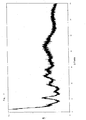
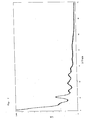
- Fig. 1 The X-ray diffractogram
- the sample is prepared undisturbed under an N 2 bell and coated airtight with a Styroflex film.
- the sample is taken on a Siemens D5000 device with a Cu anode at a step width of 0.02 ° and a step speed of 3.6 s.
- the diffractogram shows - atypical for MOFs - hardly any reflexes and is very amorphous.
- the pore distribution is in Fig. 8 played.
- Dargdefending is in Fig. 8 the pore volume V (ml / g) as a function of the pore diameter d (nm). This shows the unusually high proportion of mesopores for MOFs.
- TEM images are in Fig. 3 and Fig. 4 shown. These clearly show the presence of crystalline substructures.
- the TEM image is taken by adding a little ethanol to the sample and grinding between 2 glass slides. Then it is thinly spread and dabbed with a Formvar / charcoal coated slide carrier mesh. The images were taken with a 200 kV FEG-TEM from FEI. Designation: Tecnai G 2nd
Landscapes
- Chemical & Material Sciences (AREA)
- Organic Chemistry (AREA)
- Engineering & Computer Science (AREA)
- Chemical Kinetics & Catalysis (AREA)
- Inorganic Chemistry (AREA)
- Combustion & Propulsion (AREA)
- Environmental & Geological Engineering (AREA)
- Life Sciences & Earth Sciences (AREA)
- Analytical Chemistry (AREA)
- General Life Sciences & Earth Sciences (AREA)
- Geology (AREA)
- Health & Medical Sciences (AREA)
- General Health & Medical Sciences (AREA)
- Oil, Petroleum & Natural Gas (AREA)
- Organic Low-Molecular-Weight Compounds And Preparation Thereof (AREA)
- Solid-Sorbent Or Filter-Aiding Compositions (AREA)
- Hydrogen, Water And Hydrids (AREA)
- Catalysts (AREA)
- Laminated Bodies (AREA)
Description
- Die vorliegende Erfindung betrifft ein poröses metallorganisches Gerüstmaterial sowie ein Verfahren zu dessen Herstellung und dessen Verwendung.
- Poröse metallorganische Gerüstmaterialien sind im Stand der Technik bekannt.
- Diese enthalten typischerweise mindestens eine an mindestens ein Metallion koordinativ gebundene mindestens zweizähnige organische Verbindung. Solche metallorganischen Gerüstmaterialien (MOF = metal organic framework) werden beispielsweise in
US-A 5,648,508 ,EP-A 0 790 253 , M. O. Keefe, J. Sol. State Chem. 152 (2000), 3-20; H. Li et al., Nature 402 (1999), 276; M. Eddaoudi, Topics in Catalysis 9 (1999), 105-111; B. Chen et al., Science 291 (2001), 1021 - 1023 undDE-A 101 11 230 beschrieben. - Die im Stand der Technik untersuchten metallorganischen Gerüstmaterialien eignen sich in vielfältiger Weise. Diese können beispielsweise zur Speicherung, zur Abtrennung oder bei der chemischen Umsetzung von Stoffen eingesetzt werden. Insbesondere können diese als Träger für Katalysatoren oder Katalysatoren verwendet werden.
- Auf der Suche nach weiteren Anwendungsgebieten oder Verbesserung der Eigenschaften solcher metallorganischer Gerüstmaterialien sind zahlreiche Kombinationen von Metallionen und mindestens zweizähniger organischer Verbindungen getestet worden. Hierbei gelangten in jüngerer Zeit auch metallorganische Gerüstmaterialien in den Blickpunkt, bei denen es sich bei dem Metallion um ein Hauptgruppenelement des Periodensystems handelt.
- T. Loiseau et al., Chem. Eur. J. 10 (2004), 1373-1382 beschreiben beispielsweise poröses Aluminiumterephthalat. Dieses weist jedoch Poren vergleichsweise geringer Dimension auf. Diese liegt in einem Bereich, wie sie auch für andere metallorganische Gerüstmaterialien auf Basis anderer Metalle, wie etwa Zink, bekannt und üblich sind. Dies ist insbesondere nachteilig für Reaktionen, bei denen vergleichsweise großvolumige Reaktanden in einer diffusionslimitierten Reaktion umgesetzt werden.
- Z.-Z. Lin et al., Eur. J. Inorg. Chem. 2005, 77-81 beschreiben ein Gerüstmaterial basierend auf InIII-BTC (BTC = 1,3,5-Benzoltricarbonsäure). Das so erhaltene Gerüstmaterial weist jedoch geringe bis keine Absorptionseigenschaften auf. Dies ist insbesondere nachteilig für Anwendungen auf dem Gebiet der Trennung oder Speicherung von Verbindungen, insbesondere Gasen.
- Es besteht also nach wie vor ein Bedarf, neue metallorganische Gerüstmaterialien bereitzustellen, die zumindest teilweise überlegene Eigenschaften gegenüber den im Stand der Technik bekannten Gerüstmaterialien aufweisen.
- Eine Aufgabe der vorliegenden Erfindung liegt somit darin, ein poröses metallorganisches Gerüstmaterial bereitzustellen, das die oben geschilderten Eigenschaften aufweist.
- Die Aufgabe wird gelöst durch ein poröses metallorganisches Gerüstmaterial enthaltend mindestens eine an mindestens ein Metallion koordinativ gebundene mindestens zweizähnige organische Verbindung, wobei das mindestens eine Metallion AlIII ist und es sich bei der mindestens einen mindestens zweizähnigen organischen Verbindung um einen sechsgliedrigen aromatischen Kohlenwasserstoffring A, bei dem ein oder mehrere Ringkohlenstoffatome durch Stickstoff ersetzt sein können und der drei Substituenten X sowie gegebenenfalls einen oder mehrere Substituenten ausgewählt aus der Gruppe bestehend aus R, NRR', OR, SR, F, Cl, und Br aufweist, wobei R, R' unabhängig voneinander Wasserstoff, optional mit einem oder mehreren Fluoratomen substituiertes Methyl oder optional mit einem oder mehreren Fluoratomen substituiertes Ethyl sind und jedes X jeweils unabhängig C(=O)O-, C(=S)O-, C(=O)S-, C(=S)S- oder deren protonierte Form ist, handelt, wobei das metallorganische Gerüstmaterial in Pulverform eine spezifische Oberfläche nach Langmuir von mindestens 800 m2/g aufweist und wobei mindestens 50% des Poremvolumens durch Poren mit einem Porendurchmesser von 2 bis 10 nm gebildet wird.
- Es wurde nämlich gefunden, dass oben beschriebene Gerüstmaterialien über einen vergleichsweise ungewöhnlich hohen Anteil an großvolumigen Poren (Mesoporen) aufweisen und ebenso vergleichsweise hohe spezifische Oberflächen zeigen, was zu Vorteilen bei den nachfolgend aufgeführten Verwendungen führt. Dies ist umso überraschender, da diese Eigenschaften nicht bestehen bleiben, wenn Aluminium durch sein Gruppenanalogon im Periodensystem Indium ausgetauscht wird oder anstelle der mit drei X-Gruppen substituierten organischen Verbindung nur zwei dieser Gruppen für den Aufbau eines metallorganischen Gerüstmaterials eingesetzt werden. Dies gilt insbesondere, wenn es sich bei der organischen Verbindung um ein Benzoltricarboxylat handelt.
- Darüber hinaus zeigen die Röntgendiffraktogramme des erfindungsgemäßen Gerüstmaterials im Vergleich zu den oben genannten im Stand der Technik bekannten Gerüstmaterialien kaum die für bekannte Gerüstmaterialien charakteristischen scharfen Signale zwischen 5 und 30° (2 Θ), insbesondere zwischen 5 und 12°.
- Das metallorganische Gerüstmaterial enthält mindestens eine mindestens zweizähnige organische Verbindung, wobei es sich bei der mindestens einen mindestens zweizähnigen organischen Verbindung um einen sechsgliedrigen aromatischen Kohlenwasserstoffring A, bei dem ein oder mehrere Ringkohlenstoffatome durch Stickstoff ersetzt sein können und der drei Substituenten X sowie gegebenenfalls einen oder mehrere Substituenten ausgewählt aus der Gruppe bestehend aus R, NRR', OR, SR, F, Cl, und Br aufweist, wobei R, R' unabhängig voneinander Wasserstoff, optional mit einem oder mehreren Fluoratomen substituiertes Methyl oder optional mit einem oder mehreren Fluoratomen substituiertes Ethyl sind und jedes X jeweils unabhängig C(=O)O-, C(=S)O-, C(=O)S-, C(=S)S- oder deren protonierte Form ist, handelt. Es können in dem Gerüstmaterial auch weitere organische Verbindungen auftreten, insbesondere eine oder mehrere einzähnige Liganden. Hierbei ist jedoch bevorzugt, dass der molare Anteil an erstgenannter organischer Verbindung, die vorhanden sein muss, mindestens 50 %, mehr bevorzugt mindestens 75 % und besonders bevorzugt mindestens 90 % der Gesamtmenge der organischen Verbindungen im Gerüstmaterial beträgt.
- Vorzugsweise handelt es sich bei dem Ring A um einen Benzol-, Pyridin-, Pyridazin-, Pyrimidin-, Pyrazin- oder Triazinring. Besonders bevorzugt handelt es sich bei A um Benzol.
- Weiterhin weist der Ring A drei Substituenten X auf. Hierbei handelt es sich um die Carboxylatgruppe sowie deren Thioanaloga. Zumindest ein Teil der im Gerüstmaterial an A auftretenden Carboxylatgruppen und/oder Thioanaloga können in protonierten Form vorliegen.
- Zudem kann der Ring A einen oder mehrere weitere Substituenten aufweisen. Hierbei handelt es sich um die funktionellen Gruppen R, NRR', OR, SR, F, Cl, und Br, wobei R und R' unabhängig voneinander Wasserstoff, Methyl oder Ethyl sein können. Die Methyl- sowie die Ethylgruppe können auch ein- oder mehrfach fluoriert sein. Vorzugsweise weist der Ring A jedoch mit Ausnahme von X keine weiteren Substituenten auf.
- Besonders bevorzugt handelt es sich bei der organischen Verbindung um 1,2,3-, 1,2,4-oder 1,3,5-Benzoltricarboxylat bzw. deren zumindest teilweise protonierten Analoga. Insbesondere bevorzugt ist 1,3,5-Benzoltricarboxylat.
- Das erfindungsgemäße metallorganische Gerüstmaterial enthält Poren, insbesondere Mikro- und/oder Mesoporen. Mikroporen sind definiert als solche mit einem Durchmesser von 2 nm oder kleiner und Mesoporen sind definiert durch einen Durchmesser im Bereich von 2 bis 50 nm, jeweils entsprechend nach der Definition, wie sie in Pure Applied Chemistry 57 (1985), Seiten 603 - 619, insbesondere auf Seite 606 angegeben ist. Die Anwesenheit von Mikro- und/oder Mesoporen kann mit Hilfe von Sorptionsmessungen überprüft werden, wobei diese Messungen die Aufnahmekapazität der metallorganischen Gerüstmaterialien für Stickstoff bei 77 K gemäß DIN 66131 und/oder DIN 66134 bestimmt.
- Das erfindungsgemäße metallorganische Gerüstmaterial besitzt einen durchschnittlichen Porendurchmesser von 2 bis 10 nm, bevorzugt von 3 bis 9 nm. Insbesondere ist bevorzugt, dass die Verteilung der Porengröße maximal +/- 5 nm beträgt. Weiterhin bevorzugt liegt der am häufigsten auftretende Porendurchmesser in einem Bereich von 3 bis 9 nm.
- Die spezifische Oberfläche - berechnet nach dem Langmuir-Modell gemäß DIN 66135 (DIN 66131, 66134) beträgt für ein erfindungsgemäßes metallorganisches Gerüstmaterial in Pulverform mindestens 800 m2/g. Bevorzugt beträgt die spezifische Oberfläche mindestens 1000 m2/g und insbesondere bevorzugt mindestens 1300 m2/g. Ganz besonders bevorzugt beträgt die spezifische Oberfläche mindestens 1500 m2/g.
- Hierbei ist bevorzugt, dass mindestens 50 % des Porenvolumens durch Poren mit einem Porendurchmesser von 2 bis 10 nm (Mesoporen) gebildet werden. Vorzugsweise beträgt der Anteil am Porenvolumen mindestens 65 %, ganz besonders bevorzugt mindestens 80 %. Das Porenvolumen beträgt vorzugsweise mindestens 0,8 ml/g, mehr bevorzugt mindestens 1,1 ml/g.
- MOF-Formkörper können eine niedrige spezifische Oberfläche besitzen. Vorzugsweise beträgt diese jedoch mehr als 10 m2/g, mehr bevorzugt mehr als 50 m2/g und weiter mehr bevorzugt mehr als 500 m2/g.
- Für das erfindungsgemäße metallorganische Gerüstmaterial treten neben den oben beschriebenen Poren in einem Formkörper auch größere Poren auf, deren Größenverteilung variieren kann. Vorzugsweise wird jedoch mehr als 50 % des gesamten Porenvolumens, insbesondere mehr als 75 % von Poren mit einem Porendurchmesser von bis zu 1000 nm gebildet. Vorzugsweise wird jedoch ein Großteil des Porenvolumens von Poren aus zwei Durchmesserbereichen gebildet. Es ist daher weiter bevorzugt, wenn mehr als 25 % des gesamten Porenvolumens, insbesondere mehr als 50 % des gesamten Porenvolumens von Poren gebildet wird, die in einem Durchmesserbereich von 100 nm bis 800 nm liegen und wenn mehr als 15 % des gesamten Porenvolumens, insbesondere mehr als 25 % des gesamten Porenvolumens von Poren gebildet wird, die in einem Durchmesserbereich bis zu 10 nm liegen. Die Porenverteilung kann mittels Quecksilber-Porosymmetrie bestimmt werden.
- Ein weiterer Gegenstand der vorliegenden Erfindung ist ein Verfahren zur Herstellung eines erfindungsgemäßen Gerüstmaterials den Schritt enthaltend
- Umsetzung mindestens einer Metallverbindung mit mindestens einer mindestens zweizähnigen organischen Verbindung, die koordinativ an das Metallion binden kann, in N,N-Dimethylformamid, N,N-Diethylformamid, N-Methylpyrrolidon oder Mischungen davon, wobei das Metall AlIII ist und wobei es sich bei der mindestens einen mindestens zweizähnigen organischen Verbindung um einen sechsgliedrigen aromatischen Kohlenwasserstoffring A, bei dem ein oder mehrere Ringkohlenstoffatome durch Stickstoff ersetzt sein können und der drei Substituenten X sowie gegebenenfalls einen oder mehrere Substituenten ausgewählt aus der Gruppe bestehend aus R, NRR', OR, SR, F, Cl, und Br aufweist, wobei R, R' unabhängig voneinander Wasserstoff, optional mit einem oder mehreren Fluoratomen substituiertes Methyl oder optional mit einem oder mehreren Fluoratomen substituiertes Ethyl sind und jedes X jeweils unabhängig C(=O)O-, C(=S)O-, C(=O)S-, C(=S)S- oder deren protonierte Form ist, handelt.
- Vorzugsweise findet die Umsetzung unter Rühren bei einem Druck von höchsten 2 bar (absolut) statt.
- Mehr bevorzugt beträgt der Druck maximal 1230 mbar (absolut). Weiter bevorzugt findet die Umsetzung unter Atmosphärendruck statt.
- Durch Einsatz von N,N-Dimethylformamid, N,N-Diethylformamid, N-Methylpyrrolidon oder Mischungen davon kann auf eine Base verzichtet werden. Ebenso kann aber auch eine Base zugesetzt werden.
- Bevorzugte Einsatzstoffe bei Verwendung eines Aluminiumsalzes in der Synthese sind die Hydrate von Aluminiumchlorid oder -nitrat, insbesondere ist das Chlorid bevorzugt.
- Weiterhin bevorzugt kann die verwendete Metallverbindung zur Herstellung des erfindungsgemäßen porösen metallorganischen Gerüstmaterials nicht-ionisch sein und/oder das Gegenion zum AlIII-Kation kann sich von einem protischen Lösemittel ableiten lassen. Durch die Verwendung einer nicht-ionischen Verbindung kann bei geeigneter Wahl vermieden werden, dass bei der Umsetzung zum porösen metallorganischen Gerüstmaterial das Metall in Form eines Salzes vorliegt und so gegebenenfalls Schwierigkeiten bei der Entfernung des korrespondierenden Anions im Metallsalz vermieden werden können, sofern durch die Metallverbindung bei der Umsetzung keine weiteren störenden Salze erzeugt werden. Stellt das Gegenion ein Lösemittelanion dar, kann dieses bei geeigneter Wahl nach Umsetzung als Lösemittel vorliegen, das gleich dem eingesetzten nicht-wässrigen organischen Lösemittel oder verschieden davon sein kann. In letzterem Fall ist bevorzugt, wenn dieses Lösemittel mit dem nicht-wässrigen organischen Lösemittel zumindest zum Teil mischbar ist.
- Solche nicht-ionischen Verbindungen beziehungsweise Gegenionen zum Metallkation, die sich von protischen Lösemitteln ableiten lassen, können beispielsweise Metallalkoholate, beispielsweise Methanolate, Ethanolate, Propanolate, Butanolate sein. Ebenso sind Oxide oder Hydroxide denkbar.
- Als nicht-wässrige organische Lösemittel dient N,N-Dimethylformamid (DMF), N,N-Diethylformamid (DEF), N-Methylpyrrolidon (NMP), oder Mischungen davon.
- Bevorzugte Lösemittel sind DMF, DEF und NMP. Besonders bevorzugt ist DMF.
- Der Begriff "nicht-wässrig" bezieht sich vorzugsweise auf ein Lösemittel, das einen Höchstwassergehalt von 10 Gew.-%, mehr bevorzugt 5 Gew.-%, weiterhin mehr bevorzugt 1 Gew.-%, weiterhin bevorzugt 0,1 Gew.-%, besonders bevorzugt 0,01 Gew.-% bezogen auf das Gesamtgewicht des Lösemittels nicht überschreitet.
- Vorzugsweise beträgt der Höchstwassergehalt während der Umsetzung 10 Gew.-%, mehr bevorzugt 5 Gew.-% und weiterhin mehr bevorzugt 1 Gew.-%.
- Der Begriff "Lösemittel" betrifft reine Lösemittel sowie Gemische von unterschiedlichen Lösemitteln.
- Weiterhin bevorzugt schließt sich an den Verfahrensschritt der Umsetzung der mindestens einen Metallverbindung mit der mindestens einen mindestens zweizähnigen organischen Verbindung ein Calcinierungsschritt an. Die hierbei eingestellte Temperatur beträgt typischerweise mehr als 250 °C, bevorzugt 300 bis 400 °C.
- Aufgrund des Calcinierungsschrittes kann der in den Poren befindliche Ligand entfernt werden.
- Ergänzend oder alternativ hierzu kann die Entfernung von Ligand aus den Poren des porösen metallorganischen Gerüstmaterials durch die Behandlung des gebildeten Gerüstmaterials mit einem nicht-wässrigen Lösemittel erfolgen. Hierbei wird in einer Art "Extraktionsverfahren" der Ligand entfernt und gegebenenfalls im Gerüstmaterial durch ein Lösemittelmolekül ersetzt. Vorzugsweise findet das Extraktionsverfahren vor einer Calcinierung statt, wenn letztere vorgesehen ist.
- Die Behandlung erfolgt vorzugsweise mindestens 30 Minuten und kann typischerweise bis zu zwei Tagen betragen. Dies kann bei Raumtemperatur oder erhöhter Temperatur geschehen. Vorzugsweise erfolgt dies unter erhöhter Temperatur, beispielsweise bei mindestens 40 °C, bevorzugt 60 °C. Weiterhin bevorzugt ist eine Umsetzung bei der Siedetemperatur des Lösemittels (Rückfluss).
- Die Behandlung kann in einem einfachen Kessel durch Aufschlämmen und Rühren des Gerüstmaterials erfolgen. Es können auch Extraktionsapparaturen wie Soxhlet-Apparaturen, insbesondere technische Extraktionsapparaturen verwendet werden.
- Als geeignete Lösemittel können die oben genannten verwendet werden, also C1-6-Alkanol, DMSO, DMF, DEF, Acetonitril, Toluol, Dioxan, Benzol, Chlorbenzol, MEK, Pyridin, THF, Essigsäureethylester, gegebenenfalls halogeniertes C1-200-Alkan, Sulfolen, Glykol, NMP oder Mischungen davon.
- Das verwendete Lösemittel zur Extraktion kann gleich oder verschieden zu demjenigen für die Umsetzung der mindestens einen Metallverbindung mit der mindestens einen mindestens zweizähnigen organischen Verbindung sein. Insbesondere ist es bei der Extraktion nicht unbedingt erforderlich, dass das Lösemittel wasserfrei ist.
- Ein bevorzugtes Extraktionslösemittel ist Methanol, Ethanol, Aceton, MEK oder eine Mischung davon. Besonders bevorzugt ist Methanol.
- Ein weiterer Gegenstand der vorliegenden Erfindung ist ein Verfahren zur Herstellung des erfindungsgemäßen metallorganischen Gerüstmaterials, bei dem AlIII durch anodische Oxidation für die Umsetzung bereitgestellt wird.
- Die Herstellung von metallorganischen Gerüstmaterialien auf elektrochemischem Wege ist in
WO-A 2005/049892 beschrieben. - Das erfindungsgemäße metallorganische Gerüstmaterial kann pulverförmig beziehungsweise als Agglomerat vorliegen. Das Gerüstmaterial kann als solches verwendet werden oder es wird in einen Formkörper umgewandelt. Bevorzugte Verfahren sind hierbei die Verstrangung oder Tablettierung. Bei der Formkörperherstellung kann das Gerüstmaterial weitere Materialien, wie beispielsweise Binder, Gleitmittel oder andere Additive aufweisen, welche während der Herstellung hinzugesetzt werden. Ebenso ist es denkbar, dass das Gerüstmaterial weitere Bestandteile aufweist, wie zum Beispiel Adsorbentien wie Aktivkohle oder dergleichen.
- Hinsichtlich der möglichen Geometrien der Formkörper existieren im Wesentlichen keine Beschränkungen. Beispielsweise sind unter anderem Pellets wie beispielsweise scheibenförmige Pellets, Pillen, Kugeln, Granulat, Extrudate wie beispielsweise Stränge, Waben, Gitter oder Hohlkörper zu nennen.
- Zur Herstellung dieser Formkörper sind grundsätzlich sämtliche geeigneten Verfahren möglich. Es sind insbesondere folgende Verfahrensführungen bevorzugt:
- Kneten/Kollern des Gerüstmaterials allein oder zusammen mit mindestens einem Bindemittel und/oder mindestens einem Anteigungsmittel und/oder mindestens einer Templatverbindung unter Erhalt eines Gemisches; Verformen des erhaltenen Gemisches mittels mindestens einer geeigneten Methode wie beispielsweise Extrudieren; optional Waschen und/oder Trocknen und/oder Calcinieren des Extrudates; optional Konfektionieren.
- Aufbringen des Gerüstmaterials auf mindestens ein gegebenenfalls poröses Trägermaterial. Das erhaltene Material kann dann gemäß der vorstehend beschriebenen Methode zu einem Formkörper weiterverarbeitet werden.
- Aufbringen des Gerüstmaterials auf mindestens ein gegebenenfalls poröses Substrat.
- Kneten/Kollern und Verformen kann gemäß eines jeden geeigneten Verfahrens erfolgen, wie beispielsweise in Ullmanns Enzyklopädie der Technischen Chemie, 4. Auflage, Band 2, S. 313 ff. (1972) beschrieben.
- Beispielsweise kann das Kneten/Kollern und/oder Verformen mittels einer Kolbenpresse, Walzenpresse in Anwesenheit oder Abwesenheit mindestens eines Bindermaterials, Compoundieren, Pelletieren, Tablettieren, Extrudieren, Co-Extrudieren, Verschäumen, Verspinnen, Beschichten, Granulieren, bevorzugt Sprühgranulieren, Versprühen, Sprühtrocknen oder einer Kombination aus zwei oder mehr dieser Methoden erfolgen.
- Ganz besonders bevorzugt werden Pellets und/oder Tabletten hergestellt.
- Das Kneten und/oder Verformen kann bei erhöhten Temperaturen wie beispielsweise im Bereich von Raumtemperatur bis 300 °C und/oder bei erhöhtem Druck wie beispielsweise im Bereich von Normaldruck bis hin zu einigen hundert bar und/oder in einer Schutzgasatmosphäre wie beispielsweise in Anwesenheit mindestens eines Edelgases, Stickstoff oder einem Gemisch aus zwei oder mehr davon erfolgen.
- Das Kneten und/oder Verformen wird gemäß einer weiteren Ausführungsform unter Zugabe mindestens eines Bindemittels durchgeführt, wobei als Bindemittel grundsätzlich jede chemische Verbindung eingesetzt werden kann, die die zum Kneten und/oder Verformen gewünschte Viskosität der zu verknetenden und/oder verformenden Masse gewährleistet. Demgemäß können Bindemittel im Sinne der vorliegenden Erfindung sowohl viskositätserhöhende als auch viskositätserniedrigende Verbindungen sein.
- Als unter anderem bevorzugte Bindemittel sind beispielsweise Aluminiumoxid oder Aluminiumoxid enthaltende Binder, wie sie beispielsweise in
WO 94/29408 EP 0 592 050 A1 beschrieben ist, Mischungen ais Siliciumdioxid und Aluminiumoxid, wie sie beispielsweise inWO 94/13584 JP 03-037156 A EP 0 102 544 B1 beschrieben sind, beispielsweise Tetraalkoxysilane wie beispielsweise Tetramethoxysilan, Tetraethoxysilan, Tetrapropoxysilan, Tetrabutoxysilan, oder beispielsweise Trialkoxysilane wie beispielsweise Trimethoxysilan, Triethoxysilan, Tripropoxysilan, Tributoxysilan, Alkoxytitanate, beispielsweise Tetraalkoxytitanate wie beispielsweise Tetramethoxytitanat, Tetraethoxytitanat, Tetrapropoxytitanat, Tetrabutoxytitanat, oder beispielsweise Trialkoxytitanate wie beispielsweise Trimethoxytitanat, Triethoxytitanat, Tripropoxytitanat, Tributoxytitanat, Alkoxyzirkonate, beispielsweise Tetraalkoxyzirkonate wie beispielsweise Tetramethoxyzirkonat, Tetraethoxyzirkonat, Tetrapropoxyzirkonat, Tetrabutoxyzirkonat oder beispielsweise Trialkoxyzirkonate wie beispielsweise Trimethoxyzirkonat, Triethoxyzirkonat, Tripropoxyzirkonat, Tributoxyzirkonat, Silikasole, amphiphile Substanzen und/oder Graphite zu nennen. Insbesondere bevorzugt ist Graphit. - Als viskositätssteigernde Verbindung kann beispielsweise auch, gegebenenfalls zusätzlich, zu den oben genannten Verbindungen eine organische Verbindung und/oder ein hydrophiles Polymer wie beispielsweise Cellulose oder ein Cellulosederivat wie beispielsweise Methylcellulose und/oder ein Polyacrylat und/oder ein Polymethacrylat und/oder ein Polyvinylalkohol und/oder ein Polyvinylpyrrolidon und/oder ein Polyisobuten und/oder ein Polytetrahydrofuran und/oder ein Polyethylenoxid eingesetzt werden.
- Als Anteigungsmittel kann unter anderem bevorzugt Wasser oder mindestens ein Alkohol wie beispielsweise ein Monoalkohol mit 1 bis 4 C-Atomen wie beispielsweise Methanol, Ethanol, n-Propanol, iso-Propanol, 1-Butanol, 2-Butanol, 2-Methyl-1-propanol oder 2-Methyl-2-propanol oder ein Gemisch aus Wasser und mindestens einem der genannten Alkohole oder ein mehrwertiger Alkohol wie beispielsweise ein Glykol, bevorzugt ein wassermischbarer mehrwertiger Alkohol allein oder als Gemisch mit Wasser und/oder mindestens einem der genannten einwertigen Alkohole eingesetzt werden.
- Weitere Additive, die zum Kneten und/oder Verformen eingesetzt werden können, sind unter anderem Amine oder Aminderivate wie beispielsweise Tetraalkylammonium-Verbindungen oder Aminoalkohole und Carbonat enthaltende Verbindungen wie etwa Calciumcarbonat. Solche weiteren Additive sind etwa in
EP 0 389 041 A1 ,EP 0 200 260 A1 oderWO 95/19222 - Die Reihenfolge der Additive wie Templatverbindung, Binder, Anteigungsmittel, viskositätssteigernde Substanz beim Verformen und Kneten ist grundsätzlich nicht kritisch.
- Gemäß einer weiteren bevorzugten Ausführungsform wird der gemäß Kneten und/oder Verformen erhaltene Formkörper mindestens einer Trocknung unterzogen, die im Allgemeinen bei einer Temperatur im Bereich von 25 bis 300 °C, bevorzugt im Bereich von 50 bis 300 °C und besonders bevorzugt im Bereich von 100 bis 300 °C durchgeführt wird. Ebenso ist es möglich, im Vakuum oder unter Schutzgasatmosphäre oder durch Sprühtrocknung zu trocknen.
- Gemäß einer besonders bevorzugten Ausführungsform wird im Rahmen dieses Trocknungsvorgangs mindestens eine der als Additive zugesetzten Verbindungen zumindest teilweise aus dem Formkörper entfernt.
- Ein weiterer Gegenstand der vorliegenden Erfindung ist die Verwendung des erfindungsgemäßen porösen metallorganischen Gerüstmaterials zur Aufnahme mindestens eines Stoffes zu dessen Speicherung, Abtrennung, kontrollierten Abgabe oder chemischen Umsetzung sowie als Trägermaterial, beispielsweise für Metalle, Metalloxide, Metallsulfide oder andere Gerüststrukturen, und in der Katalyse.
- Bei dem mindestens einen Stoff kann es sich um ein Gas oder eine Flüssigkeit handeln. Vorzugsweise handelt es sich bei dem Stoff um ein Gas.
- Im Rahmen der vorliegenden Erfindung werden vereinfachend die Begriffe "Gas" und "Flüssigkeit" verwendet, wobei hier jedoch ebenso Gasgemische sowie Flüssigkeitsgemische beziehungsweise flüssige Lösungen unter dem Begriff "Gas" beziehungsweise "Flüssigkeit" zu verstehen sind.
- Bevorzugte Gase sind Wasserstoff, Kohlenwasserstoffe, insbesondere Methan, Ethan, Ethen, Acetylen, Propan, n-Butan sowie i-Butan, Kohlenmonoxid, Kohlendioxid, Stickoxide, Sauerstoff, Schwefeloxide, Halogene, halogenierte Kohlenwasserstoffe, NF3, SF6, Ammoniak, Borane, Phosphane, Schwefelwasserstoff, Amine, Formaldehyd, E-delgase, insbesondere Helium, Neon, Argon, Krypton sowie Xenon.
- Insbesondere bevorzugt ist die Verwendung eines erfindungsgemäßen metallorganischen Gerüstmaterials zur Wasserstoffspeicherung und für die diffusionslimitierte Reaktion mit großvolumigen Reaktanden. Weiterhin bevorzugt ist die Speicherung von vergleichsweise großen Substanzen, die typischerweise in anderen metallorganischen Gerüstmaterialien oder anderen porösen Materialien wie Zeolithe nicht oder nur unzureichend gespeichert werden können. Beispiele hierfür sind Farbstoffe (Pigmente) oder kleiner Proteine - wie z.B. Enzyme.
- Die oben erwähnten Reaktionen können Hydrierungen, Oxidationen in flüssiger Phase, Metathese in flüssiger Phase, Alkoxylierungen, Veretherungen, Verseterungen, Alkylierungen, Hydrolysierungen oder vergleichbare Reaktionen sein. Typische große Reaktanden in diffusionslimitierten Reaktionen können beispielsweise Polyole, substituierte Benzole, Farbstoffe oder andere Verbindungen sein.
- Bei dem mindestens einen Stoff kann es sich wie oben beschrieben auch um eine Flüssigkeit handeln. Beispiele für eine solche Flüssigkeit sind Desinfektionsmittel, anorganische oder organische Lösemittel, Treibstoffe - insbesondere Benzin oder Diesel-, Hydraulik-, Kühler-, Bremsflüssigkeit oder ein Öl, insbesondere Maschinenöl. Weiterhin kann es sich bei der Flüssigkeit um halogenierte aliphatische oder aromatische, cyclische oder acyclische Kohlenwasserstoffe oder Mischungen davon handeln. Insbesondere kann die Flüssigkeit Aceton, Acetonitril, Anilin, Anisol, Benzol, Benzonitril, Brombenzol, Butanol, tert.-Butanol, Chinolin, Chlorbenzol, Chloroform, Cyclohexan, Diethylenglykol, Diethylether, Dimethylacetamid, Dimethylformamid, Dimethylsulfoxid, Dioxan, Eisessig, Essigsäureanhydrid, Essigsäureethylester, Ethanol, Ethylencarbonat, Ethylendichlorid, Ethylenglykol, Ethylenglykoldimethylether, Formamid, Hexan, Isopropanol, Methanol, Methoxypropanol, 3-Methyl-1-butanol, Methylenchlorid, Methylethylketon, N-Methylformamid, N-Methylpyrrolidon, Nitrobenzol, Nitromethan, Piperidin, Propanol, Propylencarbonat, Pyridin, Schwefelkohlenstoff, Sulfolan, Tetrachlorethen, Tetrachlorkohlenstoff, Tetrahydrofuran, Toluol, 1,1,1-Trichlorethan, Trichlorethylen, Triethylamin, Triethylenglykol, Triglyme, Wasser oder Mischungen hiervon handeln.
- Weiterhin kann der mindestens eine Stoff ein Geruchsstoff sein.
- Vorzugsweise handelt es sich bei dem Geruchsstoff um eine flüchtige organische oder anorganische Verbindung, die mindestens eines der Elemente Stickstoff, Phosphor, Sauerstoff, Schwefel, Fluor, Chlor, Brom oder Iod enthält oder ein ungesättigter oder aromatischer Kohlenwasserstoff oder ein gesättigter oder ungesättigter Aldehyd oder ein Keton ist. Mehr bevorzugte Elemente sind Stickstoff, Sauerstoff, Phosphor, Schwefel, Chlor, Brom; insbesondere bevorzugt sind Stickstoff, Sauerstoff, Phosphor und Schwefel.
- Insbesondere handelt es sich bei dem Geruchsstoff um Ammoniak, Schwefelwasserstoff, Schwefeloxide, Stickoxide, Ozon, cyclische oder acyclische Amine, Thiole, Thioether sowie Aldehyde, Ketone, Ester, Ether, Säuren oder Alkohole. Besonders bevorzugt sind Ammoniak, Schwefelwasserstoff, organische Säuren (bevorzugt Essigsäure, Propionsäure, Buttersäure, Isobuttersäure, Valeriansäure, Isovaleriansäure, Capronsäure, Heptylsäure, Laurinsäure, Pelargonsäure) sowie cyclische oder acyclische Kohlenwasserstoffe, die Stickstoff oder Schwefel enthalten sowie gesättigte oder ungesättigte Aldehyde, wie Hexanal, Heptanal, Oktanal, Nonanal, Decanal, Octenal oder Nonenal und insbesondere flüchtige Aldehyde wie Butyraldehyd, Propionaldehyd, Acetaldehyd und Formaldehyd und weiterhin Treibstoffe wie Benzin, Diesel (Inhaltsstoffe).
- Bei den Geruchsstoffen kann es sich auch um Riechstoffe, die beispielsweise zur Herstellung von Parfümen verwendet werden, handeln. Beispielhaft seien als Riechstoffe oder Öle, die solche Riechstoffe freisetzen zu nennen: ätherische Öle, Basilikumöl, Geranienöl, Minzöl, Canangabaumöl, Kardamomöl, Lavendelöl, Pfefferminzöl, Muskatöl, Kamillenöl, Eukalyptusöl, Rosmarinöl, Zitronenöl, Limettenöl, Orangenöl, Bergamottenöl, Muskatellersalbeiöl, Korianderöl, Zypressenöl, 1,1-Dimethoxy-2-pherylethan, 2,4-Dimethyl-4-phenyltetrahydrofuran, Dimethyltetrahydrobenzaldehyd, 2,6-Dimethyl-7-octen-2-ol, 1,2-Diethoxy-3,7-dimethyl-2,6-octadien, Phenylacetaldehyd, Rosenoxid, Ethyl-2-methylpentanoat, 1-(2,6,6-Trimethyl-1,3-cyclohexadien-1-yl)-2-buten-1-on, Ethylvanillin, 2,6-Dimethyl-2-octenol, 3,7-Dimethyl-2-octenol, tert-Butylcyclohexylacetat, Anisylacetate, Allylcyclohexyloxyacetat, Ethyllinalool, Eugenol, Cumarin, Ethylacetacetat, 4-Phenyl-2,4,6-trimethyl-1,3-dioxan, 4-Methylen-3,5,6,6-tetramethyl-2-heptanon, Ethyltetrahydrosafranat, Geranylnitril, cis-3-Hexen-1-ol, cis-3-Hexenylacetat, cis-3-Hexenylmethylcarbonate, 2,6-Dimethyl-5-hepten-1-al, 4-(Tricyclo[5.2.1.0]decylidene)-8-butanal, 5-(2,2,3-Trimethyl-3-cyclopentenyl)-3-methylpentan-2-ol, p-tert-Butylalpha-methylhydrozimtaldehyd, Ethyl[5.2.1.0]tricyclodecancarboxylat, Geraniol, Citronellol, Citral, Linalool, Linalylacetat, Jonone, Phenylethanol oder Mischungen hiervon.
- Im Rahmen der vorliegenden Erfindung weist ein flüchtiger Geruchsstoff vorzugsweise einen Siedepunkt oder Siedepunktsbereich von weniger als 300 °C auf. Mehr bevorzugt ist der Geruchsstoff eine leicht flüchtige Verbindung oder ein Gemisch. Insbesondere bevorzugt weist der Geruchsstoff einen Siedepunkt oder Siedebereich von weniger als 250 °C, mehr bevorzugt weniger als 230 °C, insbesondere bevorzugt weniger als 200 °C auf.
- Bevorzugt sind ebenfalls Geruchsstoffe, die eine hohe Flüchtigkeit aufweisen. Als Maß für die Flüchtigkeit kann der Dampfdruck herangezogen werden. Im Rahmen der vorliegenden Erfindung weist ein flüchtiger Geruchsstoff vorzugsweise einen Dampfdruck von mehr als 0,001 kPa (20°C) auf. Mehr bevorzugt ist der Geruchsstoff eine leicht flüchtige Verbindung oder ein Gemisch. Insbesondere bevorzugt weist der Geruchsstoff einen Dampfdruck von mehr als 0,01 kPa (20°C) auf, mehr bevorzugt einen Dampfdruck von mehr als 0,05 kPa (20°C) auf. Besonders bevorzugt weisen die Geruchsstoffe einen Dampfdruck von mehr als 0,1 kPa (20°C) auf.
- 7,8 g 1,3,5-Benzoltricarbonsäure und 22,9 g Al(NO3)3*9H2O werden in 520,5 g DMF in einem Glaskolben suspendiert und 4 Tage bei 130°C unter Rückfluss gerührt. Nach dem Abkühlen wird der Feststoff abfiltriert, mit 2x100 ml DMF und 4x100 ml Methanol gewaschen und im Vakuumtrockenschrank 16 h bei 200°C getrocknet. Anschließend wird die Probe 3 Tage lang in einem Muffelofen (100 l/h Luft) bei 330°C nachbehandelt (Aufheizen mit ca. 75 °C/h). Es werden 8,4 g eines Al-BTC-MOFs erhalten mit einer Oberfläche von 1791 m2/g (mit N2 nach Langmuir). Das Röntgendiffraktogramm (XRD) ist in
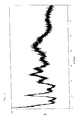
Fig. 1 gezeigt. Für sämtliche Diffraktogramme wird die Probe ungemörsert unter einer N2-Glocke präpariert und mit einer Styroflexfolie luftdicht überzogen. Die Probe wird an einem Gerät D5000 der Firma Siemens mit einer Cu-Anode bei einer Schrittbreite von 0,02° und einer Schrittgeschwindigkeit von 3,6 s aufgenommen. Das Diffraktogramm zeigt - untypisch für MOFs - kaum Reflexe und wirkt sehr amorph. Die Porenverteilung ist inFig. 8 wiedergegeben. Dargstellt is inFig. 8 das Porenvolumen V (ml/g) als Funktion des Porendurchmessers d (nm). Hier zeigt sich der für MOFs ungewöhnlich hohe Anteil an Mesoporen. - 2,46 g 1,3,5-Benzoltricarbonsäure und 8,7 g Al(NO3)3*9H2O werden in 33 ml DMF suspendiert. Das Gemisch wird in einem Berghoff-Autoklaven ("Teflon-Liner") 1 Tag bei 170°C getempert. Nach dem Abkühlen wird der Feststoff abfiltriert, mit DMF und Methanol gewaschen und im Vakuumtrockenschrank 5 h bei 200°C getrocknet. Anschließend wird die Probe 3 Tage lang in einem Muffelofen (100 l/h Luft) bei 330 °C nachbehandelt (Aufheizen mit ca. 75 °C/h). Es werden 2,5 g eines Al-BTC-MOFs erhalten mit einer Oberfläche von 1516 m2/g (mit N2 nach Langmuir). Das XRD ist in
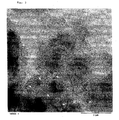
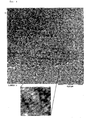
Fig. 2 gezeigt. Das Diffraktogramm zeigt - untypisch für MOFs - kaum Reflexe und wirkt sehr amorph. - Transmissionselektronenmikroskop (TEM)-Aufnahmen sind in
Fig. 3 undFig. 4 gezeigt. Diese zeigen klar das Vorhandensein von kristallinen Teilstrukturen. - Die TEM-Aufnahme erfolgt, indem die Probe mit etwas Ethanol versetzt und zwischen 2 Glasobjektträgern zerrieben wird. Dann wird diese dünn ausgestrichen und mit einem mit Formvar/Kohle befilmten Präparatträgernetzchen aufgetupft. Die Aufnahmen entstanden mit einem 200 kV FEG-TEM der Firma FEI. Gerätebezeichnung: Tecnai G2.
- 15,6 g 1,3,5-Benzoltricarbonsäure und 45,8 g Al(NO3)3*9H2O werden in 520,5 g DMF in einem Glaskolben suspendiert 4 Tage bei 130°C unter Rückfluss gerührt. Nach dem Abkühlen wird der Feststoff abfiltriert, mit 2x100 ml DMF und 4x100 ml Methanol gewaschen und im Vakuumtrockenschrank 16 h bei 200°C getrocknet. Anschließend wird die Probe 3 Tage lang in einem Muffelofen (100 l/h Luft) bei 330 °C nachbehandelt (Aufheizen mit ca. 75 °C/h). Es werden 17,7 g eines Al-BTC-MOFs erhalten mit einer Oberfläche von 1696 m2/g (mit N2 nach Langmuir). Das Diffraktogramm (XRD) zeigt im Vergleich zu Beispiel 2 keine signifikanten Unterschiede.
- 7,8 g 1,3,5-Benzoltricarbonsäure und 14,7 g AlCl3*6H2O werden in 520,5 g DMF in einem Glaskolben suspendiert 4 Tage bei 130°C unter Rückfluss gerührt. Nach dem Abkühlen wird der Feststoff abfiltriert, mit 2x100 ml DMF und 4x100 ml Methanol gewaschen und im Vakuumtrockenschrank 16 h bei 200°C getrocknet. Anschließend wird die Probe 3 Tage lang in einem Muffelofen (100 l/h Luft) bei 330 °C nachbehandelt (Aufheizen mit ca. 75 °C/h). Es werden 10,9 g eines Al-BTC-MOFs erhalten mit einer Oberfläche von 1451 m2/g (mit N2 nach Langmuir). Das Diffraktogramm (XRD) ist in
Fig. 5 dargestellt. - 23,1 g 1,3,5-Benzoltricarbonsäure und 29,4 g AlCl3*6H2O werden in 520,5 g DMF in einem Glaskolben suspendiert 4 Tage bei 130°C unter Rückfluss gerührt. Nach dem Abkühlen wird der Feststoff abfiltriert, mit 2x100 ml DMF und 4x100 ml Methanol gewaschen und im Vakuumtrockenschrank 16 h bei 200°C getrocknet. Anschließend wird die Probe 3 Tage lang in einem Muffelofen (100 l/h Luft) bei 330 °C nachbehandelt (Aufheizen mit ca. 75 °C/h). Es werden 12,3 g eines Al-BTC-MOFs erhalten mit einer Oberfläche von 2033 m2/g (mit N2 nach Langmuir). Das Diffraktogramm (XRD) ist in
Fig. 6 dargestellt. - 15,6 g 1,3,5-Benzoltricarbonsäure und 29,4 g AlCl3*6H2O werden in 520,5 g DMF in einem Glaskolben suspendiert 4 Tage bei 130°C unter Rückfluss gerührt. Nach dem Abkühlen wird der Feststoff abfiltriert, mit 2x100 ml DMF und 4x100 ml Methanol gewaschen und im Vakuumtrockenschrank 16 h bei 200°C getrocknet. Anschließend wird die Probe 3 Tage lang in einem Muffelofen (100 l/h Luft) bei 330 °C nachbehandelt (Aufheizen mit ca. 75 °C/h). Es werden 20,1 g eines Al-BTC-MOFs erhalten mit einer Oberfläche von 1898 m2/g (mit N2 nach Langmuir). Das Diffraktogramm (XRD) ist in
Fig. 7 dargestellt. - 314 mg des Gerüstmaterials aus Beispiel 1 werden zunächst bei 200°C evakuiert. Anschließend erfolgt die Wasserstoffaufnahme mit Hilfe des Gerätes Quantachrome Autosorb 1 bei 77 K. Es ergab sich eine Wasserstoffaufnahme bei p/p0 = 6,5 * 10-3 von ca. 100 ml/g.
Claims (12)
- Poröses metallorganisches Gerüstmaterial enthaltend mindestens eine an mindestens ein Metallion koordinativ gebundene mindestens zweizähnige organische Verbindung, wobei das mindestens eine Metallion AlIII ist und es sich bei der mindestens einen mindestens zweizähnigen organischen Verbindung um einen sechsgliedrigen aromatischen Kohlenwasserstoffring A, bei dem ein oder mehrere Ringkohlenstoffatome durch Stickstoff ersetzt sein können und der drei Substituenten X sowie gegebenenfalls einen oder mehrere Substituenten ausgewählt aus der Gruppe bestehend aus R, NRR', OR, SR, F, Cl, und Br aufweist, wobei R, R' unabhängig voneinander Wasserstoff, optional mit einem oder mehreren Fluoratomen substituiertes Methyl oder optional mit einem oder mehreren Fluoratomen substituiertes Ethyl sind und jedes X jeweils unabhängig C(=O)O-, C(=S)O-, C(=O)S-, C(=S)S- oder deren protonierte Form ist, handelt, wobei das metallorganische Gerüstmaterial in Pulverform eine spezifische Oberfläche nach Langmuir von mindestens 800 m2/g aufweist und wobei mindestens 50% des Porenvolumens durch Poren mit einem Porendurchmesser von 2 bis 10 nm gebildet wird.
- Gerüstmaterial nach Anspruch 1, dadurch gekennzeichnet, dass A Benzol, Pyridin, Pyridazin, Pyrimidin, Pyrazin oder Triazin ist.
- Gerüstmaterial nach Anspruch 1 oder 2, dadurch gekennzeichnet, dass die mindestens eine mindestens zweizähnige organische Verbindung 1,3,5-, 1,2,3-, 1,2,4-Benzoltricarboxylat oder deren protonierte Form ist.
- Gerüstmaterial nach einem der Ansprüche 1 bis 3, dadurch gekennzeichnet, dass das Gerüstmaterial einen molaren Anteil an der mindestens einen mindestens zweizähnigen organischen Verbindung von mindestens 50 % der Gesamtmenge der organischen Verbindungen aufweist.
- Gerüstmaterial nach einem der Ansprüche 1 bis 4, dadurch gekennzeichnet, dass der am häufigsten auftretende Porendurchmesser im Bereich von 3 bis 9 nm liegt.
- Gerüstmaterial nach einem der Ansprüche 1 bis 5, dadurch gekennzeichnet, dass das Porenvolumen des Gerüstmaterials mindestens 0,8 mg/l aufweist.
- Gerüstmaterial nach einem der Ansprüche 1 bis 6, dadurch gekennzeichnet, dass dieses in Pulverform eine spezifische Oberfläche nach Langmuir von mindestens 1000 m2/g aufweist.
- Verfahren zur Herstellung eines Gerüstmaterials nach einem der Ansprüche 1 bis 7 den Schritt enthaltend
Umsetzung mindestens einer Metallverbindung mit mindestens einer mindestens zweizähnigen organischen Verbindung, die koordinativ an das Metallion binden kann, in N,N-Dimethylformamid, N,N-Diethylformamid, N-Methylpyrolidon oder Mischungen davon, wobei das Metall AlIII ist und wobei es sich bei der mindestens einen mindestens zweizähnigen organischen Verbindung um einen sechsgliedrigen aromatischen Kohlenwasserstoffring A, bei dem ein oder mehrere Ringkohlenstoffatome durch Stickstoff ersetzt sein können und der drei Substituenten X sowie gegebenenfalls einen oder mehrere Substituenten ausgewählt aus der Gruppe bestehend aus R, NRR', OR, SR, F, Cl, und Br aufweist, wobei R, R' unabhängig voneinander Wasserstoff, optional mit einem oder mehreren Fluoratomen substituiertes Methyl oder optional mit einem oder mehreren Fluoratomen substituiertes Ethyl sind und jedes X jeweils unabhängig C(=O)O-, C(=S)O-, C(=O)S-, C(=S)S- oder deren protonierte Form ist, handelt. - Verfahren nach Anspruch 8, dadurch gekennzeichnet, dass nach der Umsetzung das gebildete Gerüstmaterial mit einem organischen Lösemittel nachbehandelt und/oder calciniert wird.
- Verfahren nach Anspruch 7 oder 8, dadurch gekennzeichnet, dass AlIII durch anodische Oxidation für die Umsetzung bereitgestellt wird.
- Verwendung eines Gerüstmaterials nach einem der Ansprüche 1 bis 7 zur Aufnahme mindestens eines Stoffes zu dessen Speicherung, Abtrennung oder kontrollierten Abgabe.
- Verwendung nach Anspruch 11 zur Wasserstoffspeicherung.
Applications Claiming Priority (2)
| Application Number | Priority Date | Filing Date | Title |
|---|---|---|---|
| DE102005039654A DE102005039654A1 (de) | 2005-08-22 | 2005-08-22 | Mesoporöses metallorganisches Gerüstmaterial |
| PCT/EP2006/065346 WO2007023119A1 (de) | 2005-08-22 | 2006-08-16 | Mesoporöses metallorganisches gerüstmaterial |
Publications (2)
| Publication Number | Publication Date |
|---|---|
| EP1917228A1 EP1917228A1 (de) | 2008-05-07 |
| EP1917228B1 true EP1917228B1 (de) | 2010-11-24 |
Family
ID=37603040
Family Applications (1)
| Application Number | Title | Priority Date | Filing Date |
|---|---|---|---|
| EP06792831A Expired - Lifetime EP1917228B1 (de) | 2005-08-22 | 2006-08-16 | Mesoporöses metallorganisches gerüstmaterial |
Country Status (10)
| Country | Link |
|---|---|
| US (1) | US7842827B2 (de) |
| EP (1) | EP1917228B1 (de) |
| JP (1) | JP5455367B2 (de) |
| KR (1) | KR101423784B1 (de) |
| CN (1) | CN101243034B (de) |
| AT (1) | ATE489353T1 (de) |
| CA (1) | CA2618869A1 (de) |
| DE (2) | DE102005039654A1 (de) |
| ES (1) | ES2356130T3 (de) |
| WO (1) | WO2007023119A1 (de) |
Families Citing this family (50)
| Publication number | Priority date | Publication date | Assignee | Title |
|---|---|---|---|---|
| DE102005039623A1 (de) * | 2005-08-22 | 2007-03-01 | Basf Ag | Verfahren zur Herstellung von metallorganischen Gerüstmaterialien Hauptgruppen Metallionen enthaltend |
| EP2134999A1 (de) * | 2007-04-05 | 2009-12-23 | Basf Se | Gasdruckbehälter mit einer mischung enthaltend ein metallorganisches gerüstmaterial sowie einen latentwärmespeicher |
| EP2155390B1 (de) * | 2007-04-24 | 2012-10-17 | Basf Se | Metallorganische gerüstmaterialien mit hexagonal-trigonaler struktur basierend auf aluminium, eisen oder chrom, sowie einer dicarbonsäure |
| ES2402323T3 (es) * | 2007-05-21 | 2013-04-30 | Basf Se | Aminocarboxilatos de aluminio como materiales estructurales organometálicos porosos |
| US8372305B2 (en) * | 2007-05-24 | 2013-02-12 | Basf Se | Chemical-mechanical polishing composition comprising metal-organic framework materials |
| WO2009007267A1 (en) * | 2007-07-10 | 2009-01-15 | Basf Se | Process for the separation of unbranched hydrocarbons from their branched isomers |
| JP5305279B2 (ja) * | 2007-10-12 | 2013-10-02 | Jx日鉱日石エネルギー株式会社 | 多孔性金属錯体及びその製造方法 |
| DE102008005218A1 (de) * | 2007-11-04 | 2009-05-07 | BLüCHER GMBH | Sorptionsfiltermaterial und seine Verwendung |
| JP5549901B2 (ja) * | 2008-02-25 | 2014-07-16 | 本田技研工業株式会社 | 水素貯蔵材 |
| KR101034988B1 (ko) * | 2008-04-17 | 2011-05-17 | 한국화학연구원 | 유무기 혼성체 및 거대 메조세공 물질의 공유결합에 의하여 형성된 초다공성 유무기 나노세공 복합체 |
| KR101112077B1 (ko) * | 2008-09-10 | 2012-03-14 | 단국대학교 산학협력단 | 나노 기공성 물질을 이용한 수소저장장치 |
| FR2938540B1 (fr) * | 2008-11-18 | 2017-08-11 | Centre Nat Rech Scient | Procede de preparationhydrothermale de carboxylates d'aluminium poreux cristallises de type "metal-organic framework" |
| FR2938539B1 (fr) * | 2008-11-18 | 2012-12-21 | Centre Nat Rech Scient | Procede de preparation d'azocarboxylates aromatiques d'aluminium poreux et cristallises de type "metal-organic framework" |
| JP2013513541A (ja) * | 2009-12-14 | 2013-04-22 | カリフォルニア インスティチュート オブ テクノロジー | 水素の貯蔵及び/又は発生 |
| GB201000824D0 (en) | 2010-01-19 | 2010-03-03 | Univ East Anglia | Material for storing hydrogen |
| WO2011123795A1 (en) | 2010-04-02 | 2011-10-06 | Battelle Memorial Institute | Methods for associating or dissociating guest materials with a metal organic framework, systems for associating or dissociating guest materials within a series of metal organic frameworks, and gas separation assemblies |
| AU2011298030A1 (en) * | 2010-09-01 | 2013-03-21 | Basf Se | Process for producing carbon-comprising composite |
| EP2721150B1 (de) * | 2011-06-16 | 2016-12-07 | University of South Florida | Polyhedrischer käfig mit mesoporösen metallorganischen gerüsten als biokatalyseplattform, verfahren zur herstellung dieser gerüste und verfahren zur verwendung dieser gerüste |
| US9307790B2 (en) | 2011-08-01 | 2016-04-12 | Massachusetts Institute Of Technology | Porous catalytic matrices for elimination of toxicants found in tobacco combustion products |
| CN102532537A (zh) * | 2011-12-09 | 2012-07-04 | 苏州纳埃净化科技有限公司 | 一种利用路易斯酸催化制备有机多孔材料方法 |
| US8809569B2 (en) | 2012-02-28 | 2014-08-19 | Saudi Basic Industries Corporation | Process for preparing dialkyl carbonate and diol products |
| US8735608B2 (en) | 2012-02-28 | 2014-05-27 | Saudi Basic Industries Corporation | Process for preparing carbonate and diol products |
| GB201207208D0 (en) * | 2012-04-25 | 2012-06-06 | Johnson Matthey Plc | Compound and method of manufacture |
| CN102780001B (zh) * | 2012-07-27 | 2014-09-17 | 中南大学 | 一种锂硫电池正极材料及其制备方法 |
| US9597658B2 (en) | 2013-04-01 | 2017-03-21 | Savannah River Nuclear Solutions, Llc | Metal-organic framework templated synthesis of porous inorganic materials as novel sorbents |
| KR101648845B1 (ko) * | 2013-09-10 | 2016-08-30 | 한국화학연구원 | 금속 유기 골격체에 방향제 활성 성분이 포집된 서방형 방향제 복합체 |
| US20160214079A1 (en) * | 2013-09-27 | 2016-07-28 | Toyobo Co., Ltd. | Aldehyde removing agent |
| CN104667876B (zh) * | 2013-11-29 | 2018-02-13 | 北京思达安新材料科技有限公司 | 系列MOF型多级孔材料IPD‑mesoMOF‑1~8及其制备方法,以及介孔大小的调节方法 |
| US10174063B2 (en) | 2014-05-06 | 2019-01-08 | Massachusetts Institute Of Technology | Compositions and methods comprising conductive metal organic frameworks and uses thereof |
| BR112018004265A2 (pt) | 2015-09-14 | 2018-10-09 | Massachusetts Inst Technology | composições e métodos para oligomerização seletiva de olefinas compreendendo estruturas metal-orgânicas |
| WO2017048795A1 (en) | 2015-09-14 | 2017-03-23 | Massachusetts Institute Of Technology | Compositions and methods for olefin polymerization comprising metal organic frameworks |
| DE102015115738A1 (de) | 2015-09-17 | 2017-03-23 | Christian-Albrechts-Universität Zu Kiel | Verfahren zur Herstellung von metallorganischen Gerüststrukturverbindungen |
| CN105925259B (zh) * | 2016-04-26 | 2018-11-09 | 安徽师范大学 | 一种Tb3+修饰的Al-BTC纳米管的合成方法及其应用 |
| CN109414688A (zh) | 2016-05-27 | 2019-03-01 | 麻省理工学院 | 用于化合物吸收的包含金属有机骨架的组合物和相关方法 |
| CN106397491B (zh) * | 2016-08-31 | 2018-06-19 | 太原理工大学 | 一种利用助剂二甲胺合成Ni-BTC的方法 |
| WO2018067636A1 (en) * | 2016-10-04 | 2018-04-12 | Massachusetts Institute Of Technology | Compositions and methods for selective carbonylation of heterocyclic compounds |
| KR102011393B1 (ko) * | 2016-10-17 | 2019-08-16 | 한국화학연구원 | 탄소수 2개 내지 4개 범위의 올레핀-파라핀 혼합물 분리를 위한 흡착제 및 이를 이용한 올레핀-파라핀 기체 혼합물의 분리 방법 |
| WO2018129406A1 (en) * | 2017-01-06 | 2018-07-12 | University Of South Florida | Amphiphobic porous materials |
| CN107674088A (zh) * | 2017-09-19 | 2018-02-09 | 太原理工大学 | 一种多孔复合骨架材料的浆态合成方法 |
| WO2019147065A1 (ko) * | 2018-01-25 | 2019-08-01 | 숙명여자대학교산학협력단 | 광분해성 금속유기구조체 및 이의 제조방법 |
| JP7828720B2 (ja) * | 2018-06-11 | 2026-03-12 | マサチューセッツ インスティテュート オブ テクノロジー | 混合マトリックス膜中の分岐金属-有機構造体ナノ粒子および関連する方法 |
| ES2799351B2 (es) | 2019-06-14 | 2021-09-28 | Univ La Laguna | Fase estacionaria para dispositivo de microextracción en fase sólida |
| KR20220024059A (ko) * | 2019-06-25 | 2022-03-03 | 각코호진 릿쿄가쿠인 | 금속 유기 구조체를 함유하는 수소 저장 재료 |
| CN110526208B (zh) * | 2019-09-04 | 2022-12-02 | 上海交通大学 | 基于MOFs材料纳米限域的镁基复合储氢材料的制备方法 |
| CN110935415B (zh) * | 2019-12-10 | 2021-10-15 | 华东理工大学 | 一种用于油水混合液分离的改性聚四氟乙烯复合聚结填料 |
| KR102347460B1 (ko) * | 2020-03-10 | 2022-01-05 | 한국화학연구원 | 유무기 하이브리드 나노세공체의 제조방법 |
| CN112760981B (zh) * | 2021-01-04 | 2022-02-08 | 中国科学院兰州化学物理研究所 | 一种二维Ni-BDC改性纤维织物及其制备方法和应用 |
| WO2023002141A1 (fr) | 2021-07-23 | 2023-01-26 | Centre National De La Recherche Scientifique | Procede de preparation d'un tetracarboxylate d'aluminium poreux cristallise de type mof, et utilisations de celui-ci |
| CN116685397B (zh) * | 2021-11-15 | 2026-03-06 | 俄罗斯天然气工业公开股份公司 | 天然气、甲烷积聚用有机金属配位聚合物及其生产方法 |
| ES2944724B2 (es) | 2021-12-23 | 2024-02-01 | Univ La Laguna | Recipiente de vidrio recubierto interiormente con una red metal-organica |
Family Cites Families (6)
| Publication number | Priority date | Publication date | Assignee | Title |
|---|---|---|---|---|
| JPS59155333A (ja) * | 1983-02-23 | 1984-09-04 | Maruzen Sekiyu Kagaku Kk | オルソアルキルフエノ−ル類の製造法 |
| US5648508A (en) * | 1995-11-22 | 1997-07-15 | Nalco Chemical Company | Crystalline metal-organic microporous materials |
| US6372932B1 (en) | 1997-07-25 | 2002-04-16 | University Of Liverpool | Porous solid products of 1,3,5-benzenetricarboxylate and metal ions |
| DE10111230A1 (de) * | 2001-03-08 | 2002-09-19 | Basf Ag | Metallorganische Gerüstmaterialien und Verfahren zu deren Herstellung |
| DE10355087A1 (de) * | 2003-11-24 | 2005-06-09 | Basf Ag | Verfahren zur elektrochemischen Herstellung eines kristallinen porösen metallorganischen Gerüstmaterials |
| DE102005039623A1 (de) * | 2005-08-22 | 2007-03-01 | Basf Ag | Verfahren zur Herstellung von metallorganischen Gerüstmaterialien Hauptgruppen Metallionen enthaltend |
-
2005
- 2005-08-22 DE DE102005039654A patent/DE102005039654A1/de not_active Withdrawn
-
2006
- 2006-08-16 JP JP2008527444A patent/JP5455367B2/ja not_active Expired - Lifetime
- 2006-08-16 WO PCT/EP2006/065346 patent/WO2007023119A1/de not_active Ceased
- 2006-08-16 AT AT06792831T patent/ATE489353T1/de active
- 2006-08-16 US US11/996,976 patent/US7842827B2/en active Active
- 2006-08-16 CN CN2006800303351A patent/CN101243034B/zh not_active Expired - Fee Related
- 2006-08-16 CA CA002618869A patent/CA2618869A1/en not_active Abandoned
- 2006-08-16 EP EP06792831A patent/EP1917228B1/de not_active Expired - Lifetime
- 2006-08-16 ES ES06792831T patent/ES2356130T3/es not_active Expired - Lifetime
- 2006-08-16 KR KR1020087004873A patent/KR101423784B1/ko not_active Expired - Fee Related
- 2006-08-16 DE DE502006008393T patent/DE502006008393D1/de not_active Expired - Lifetime
Also Published As
| Publication number | Publication date |
|---|---|
| DE102005039654A1 (de) | 2007-03-01 |
| EP1917228A1 (de) | 2008-05-07 |
| KR20080038191A (ko) | 2008-05-02 |
| KR101423784B1 (ko) | 2014-07-25 |
| US7842827B2 (en) | 2010-11-30 |
| WO2007023119A1 (de) | 2007-03-01 |
| CN101243034A (zh) | 2008-08-13 |
| DE502006008393D1 (de) | 2011-01-05 |
| JP5455367B2 (ja) | 2014-03-26 |
| JP2009504797A (ja) | 2009-02-05 |
| CN101243034B (zh) | 2011-04-20 |
| ATE489353T1 (de) | 2010-12-15 |
| CA2618869A1 (en) | 2007-03-01 |
| ES2356130T3 (es) | 2011-04-05 |
| US20080188677A1 (en) | 2008-08-07 |
Similar Documents
| Publication | Publication Date | Title |
|---|---|---|
| WO2007023119A1 (de) | Mesoporöses metallorganisches gerüstmaterial | |
| EP2089153B1 (de) | Aluminium-naphthalindicarboxylat als poröses metallorganisches gerüstmaterial | |
| EP2155390B1 (de) | Metallorganische gerüstmaterialien mit hexagonal-trigonaler struktur basierend auf aluminium, eisen oder chrom, sowie einer dicarbonsäure | |
| EP2004589B1 (de) | Verfahren zur herstellung poröser metallorganischer gerüstmaterialien | |
| EP2089157B1 (de) | Magnesiumbutylisophthalat als poröses metallorganisches gerüstmaterial | |
| EP2010315A2 (de) | Metallorganisches gerüstmaterial aus aluminiumfumarat | |
| EP1922299B1 (de) | Verfahren zur herstellung von metallorganischen gerüstmaterialien hauptgruppen metallionen enthaltend | |
| EP2507247B1 (de) | Metallorganische gerüstmaterialien basierend auf 2,5-furandicarbonsäure oder 2,5-thiophendicarbonsäure | |
| EP2150338B1 (de) | Aluminium-aminocarboxylate als poröse metallorganische gerüstmaterialien | |
| WO2008129024A1 (de) | Mit katalysator-metallkomponenten beladene poröse metallorganische gerüstmaterialien | |
| EP2010547A1 (de) | Verfahren zur herstellung metallorganischer gerüstmaterialien mit metallen der iv. nebengruppe | |
| EP2010546A1 (de) | Metallorganische gerüstmaterialien aus zirkonium | |
| EP1954395A1 (de) | Metallorganische gerüstmaterialien der iii. nebengruppe | |
| KR20150058430A (ko) | 아세틸렌 가교 링커 및 그로부터 제조된 금속-유기 골격체(MOFs) |
Legal Events
| Date | Code | Title | Description |
|---|---|---|---|
| PUAI | Public reference made under article 153(3) epc to a published international application that has entered the european phase |
Free format text: ORIGINAL CODE: 0009012 |
|
| 17P | Request for examination filed |
Effective date: 20080213 |
|
| AK | Designated contracting states |
Kind code of ref document: A1 Designated state(s): AT BE BG CH CY CZ DE DK EE ES FI FR GB GR HU IE IS IT LI LT LU LV MC NL PL PT RO SE SI SK TR |
|
| 17Q | First examination report despatched |
Effective date: 20081128 |
|
| GRAP | Despatch of communication of intention to grant a patent |
Free format text: ORIGINAL CODE: EPIDOSNIGR1 |
|
| DAX | Request for extension of the european patent (deleted) | ||
| RIN1 | Information on inventor provided before grant (corrected) |
Inventor name: TONIGOLD, MARKUS Inventor name: MATTENHEIMER, HENDRICK Inventor name: MUELLER, ULRICH Inventor name: SCHUBERT, MARKUS |
|
| GRAS | Grant fee paid |
Free format text: ORIGINAL CODE: EPIDOSNIGR3 |
|
| GRAA | (expected) grant |
Free format text: ORIGINAL CODE: 0009210 |
|
| AK | Designated contracting states |
Kind code of ref document: B1 Designated state(s): AT BE BG CH CY CZ DE DK EE ES FI FR GB GR HU IE IS IT LI LT LU LV MC NL PL PT RO SE SI SK TR |
|
| REG | Reference to a national code |
Ref country code: GB Ref legal event code: FG4D Free format text: NOT ENGLISH |
|
| REG | Reference to a national code |
Ref country code: CH Ref legal event code: EP |
|
| REG | Reference to a national code |
Ref country code: IE Ref legal event code: FG4D |
|
| REF | Corresponds to: |
Ref document number: 502006008393 Country of ref document: DE Date of ref document: 20110105 Kind code of ref document: P |
|
| REG | Reference to a national code |
Ref country code: NL Ref legal event code: VDEP Effective date: 20101124 |
|
| REG | Reference to a national code |
Ref country code: ES Ref legal event code: FG2A Ref document number: 2356130 Country of ref document: ES Kind code of ref document: T3 Effective date: 20110405 |
|
| LTIE | Lt: invalidation of european patent or patent extension |
Effective date: 20101124 |
|
| PG25 | Lapsed in a contracting state [announced via postgrant information from national office to epo] |
Ref country code: LT Free format text: LAPSE BECAUSE OF FAILURE TO SUBMIT A TRANSLATION OF THE DESCRIPTION OR TO PAY THE FEE WITHIN THE PRESCRIBED TIME-LIMIT Effective date: 20101124 |
|
| PG25 | Lapsed in a contracting state [announced via postgrant information from national office to epo] |
Ref country code: NL Free format text: LAPSE BECAUSE OF FAILURE TO SUBMIT A TRANSLATION OF THE DESCRIPTION OR TO PAY THE FEE WITHIN THE PRESCRIBED TIME-LIMIT Effective date: 20101124 Ref country code: SI Free format text: LAPSE BECAUSE OF FAILURE TO SUBMIT A TRANSLATION OF THE DESCRIPTION OR TO PAY THE FEE WITHIN THE PRESCRIBED TIME-LIMIT Effective date: 20101124 Ref country code: IS Free format text: LAPSE BECAUSE OF FAILURE TO SUBMIT A TRANSLATION OF THE DESCRIPTION OR TO PAY THE FEE WITHIN THE PRESCRIBED TIME-LIMIT Effective date: 20110324 Ref country code: FI Free format text: LAPSE BECAUSE OF FAILURE TO SUBMIT A TRANSLATION OF THE DESCRIPTION OR TO PAY THE FEE WITHIN THE PRESCRIBED TIME-LIMIT Effective date: 20101124 Ref country code: PT Free format text: LAPSE BECAUSE OF FAILURE TO SUBMIT A TRANSLATION OF THE DESCRIPTION OR TO PAY THE FEE WITHIN THE PRESCRIBED TIME-LIMIT Effective date: 20110324 Ref country code: SE Free format text: LAPSE BECAUSE OF FAILURE TO SUBMIT A TRANSLATION OF THE DESCRIPTION OR TO PAY THE FEE WITHIN THE PRESCRIBED TIME-LIMIT Effective date: 20101124 Ref country code: BG Free format text: LAPSE BECAUSE OF FAILURE TO SUBMIT A TRANSLATION OF THE DESCRIPTION OR TO PAY THE FEE WITHIN THE PRESCRIBED TIME-LIMIT Effective date: 20110224 Ref country code: CY Free format text: LAPSE BECAUSE OF FAILURE TO SUBMIT A TRANSLATION OF THE DESCRIPTION OR TO PAY THE FEE WITHIN THE PRESCRIBED TIME-LIMIT Effective date: 20101124 Ref country code: LV Free format text: LAPSE BECAUSE OF FAILURE TO SUBMIT A TRANSLATION OF THE DESCRIPTION OR TO PAY THE FEE WITHIN THE PRESCRIBED TIME-LIMIT Effective date: 20101124 |
|
| REG | Reference to a national code |
Ref country code: IE Ref legal event code: FD4D |
|
| PG25 | Lapsed in a contracting state [announced via postgrant information from national office to epo] |
Ref country code: GR Free format text: LAPSE BECAUSE OF FAILURE TO SUBMIT A TRANSLATION OF THE DESCRIPTION OR TO PAY THE FEE WITHIN THE PRESCRIBED TIME-LIMIT Effective date: 20110225 |
|
| PG25 | Lapsed in a contracting state [announced via postgrant information from national office to epo] |
Ref country code: IE Free format text: LAPSE BECAUSE OF FAILURE TO SUBMIT A TRANSLATION OF THE DESCRIPTION OR TO PAY THE FEE WITHIN THE PRESCRIBED TIME-LIMIT Effective date: 20101124 Ref country code: CZ Free format text: LAPSE BECAUSE OF FAILURE TO SUBMIT A TRANSLATION OF THE DESCRIPTION OR TO PAY THE FEE WITHIN THE PRESCRIBED TIME-LIMIT Effective date: 20101124 Ref country code: EE Free format text: LAPSE BECAUSE OF FAILURE TO SUBMIT A TRANSLATION OF THE DESCRIPTION OR TO PAY THE FEE WITHIN THE PRESCRIBED TIME-LIMIT Effective date: 20101124 |
|
| PG25 | Lapsed in a contracting state [announced via postgrant information from national office to epo] |
Ref country code: DK Free format text: LAPSE BECAUSE OF FAILURE TO SUBMIT A TRANSLATION OF THE DESCRIPTION OR TO PAY THE FEE WITHIN THE PRESCRIBED TIME-LIMIT Effective date: 20101124 Ref country code: RO Free format text: LAPSE BECAUSE OF FAILURE TO SUBMIT A TRANSLATION OF THE DESCRIPTION OR TO PAY THE FEE WITHIN THE PRESCRIBED TIME-LIMIT Effective date: 20101124 Ref country code: SK Free format text: LAPSE BECAUSE OF FAILURE TO SUBMIT A TRANSLATION OF THE DESCRIPTION OR TO PAY THE FEE WITHIN THE PRESCRIBED TIME-LIMIT Effective date: 20101124 Ref country code: PL Free format text: LAPSE BECAUSE OF FAILURE TO SUBMIT A TRANSLATION OF THE DESCRIPTION OR TO PAY THE FEE WITHIN THE PRESCRIBED TIME-LIMIT Effective date: 20101124 |
|
| PLBE | No opposition filed within time limit |
Free format text: ORIGINAL CODE: 0009261 |
|
| STAA | Information on the status of an ep patent application or granted ep patent |
Free format text: STATUS: NO OPPOSITION FILED WITHIN TIME LIMIT |
|
| 26N | No opposition filed |
Effective date: 20110825 |
|
| REG | Reference to a national code |
Ref country code: DE Ref legal event code: R097 Ref document number: 502006008393 Country of ref document: DE Effective date: 20110825 |
|
| BERE | Be: lapsed |
Owner name: BASF SE Effective date: 20110831 |
|
| PG25 | Lapsed in a contracting state [announced via postgrant information from national office to epo] |
Ref country code: MC Free format text: LAPSE BECAUSE OF NON-PAYMENT OF DUE FEES Effective date: 20110831 |
|
| REG | Reference to a national code |
Ref country code: CH Ref legal event code: PL |
|
| PG25 | Lapsed in a contracting state [announced via postgrant information from national office to epo] |
Ref country code: LI Free format text: LAPSE BECAUSE OF NON-PAYMENT OF DUE FEES Effective date: 20110831 Ref country code: CH Free format text: LAPSE BECAUSE OF NON-PAYMENT OF DUE FEES Effective date: 20110831 |
|
| PG25 | Lapsed in a contracting state [announced via postgrant information from national office to epo] |
Ref country code: BE Free format text: LAPSE BECAUSE OF NON-PAYMENT OF DUE FEES Effective date: 20110831 |
|
| REG | Reference to a national code |
Ref country code: AT Ref legal event code: MM01 Ref document number: 489353 Country of ref document: AT Kind code of ref document: T Effective date: 20110816 |
|
| PG25 | Lapsed in a contracting state [announced via postgrant information from national office to epo] |
Ref country code: AT Free format text: LAPSE BECAUSE OF NON-PAYMENT OF DUE FEES Effective date: 20110816 |
|
| PG25 | Lapsed in a contracting state [announced via postgrant information from national office to epo] |
Ref country code: LU Free format text: LAPSE BECAUSE OF NON-PAYMENT OF DUE FEES Effective date: 20110816 |
|
| PG25 | Lapsed in a contracting state [announced via postgrant information from national office to epo] |
Ref country code: TR Free format text: LAPSE BECAUSE OF FAILURE TO SUBMIT A TRANSLATION OF THE DESCRIPTION OR TO PAY THE FEE WITHIN THE PRESCRIBED TIME-LIMIT Effective date: 20101124 |
|
| PG25 | Lapsed in a contracting state [announced via postgrant information from national office to epo] |
Ref country code: HU Free format text: LAPSE BECAUSE OF FAILURE TO SUBMIT A TRANSLATION OF THE DESCRIPTION OR TO PAY THE FEE WITHIN THE PRESCRIBED TIME-LIMIT Effective date: 20101124 |
|
| PGFP | Annual fee paid to national office [announced via postgrant information from national office to epo] |
Ref country code: FR Payment date: 20140828 Year of fee payment: 9 |
|
| PGFP | Annual fee paid to national office [announced via postgrant information from national office to epo] |
Ref country code: IT Payment date: 20140821 Year of fee payment: 9 |
|
| PG25 | Lapsed in a contracting state [announced via postgrant information from national office to epo] |
Ref country code: IT Free format text: LAPSE BECAUSE OF NON-PAYMENT OF DUE FEES Effective date: 20150816 |
|
| REG | Reference to a national code |
Ref country code: FR Ref legal event code: ST Effective date: 20160429 |
|
| PG25 | Lapsed in a contracting state [announced via postgrant information from national office to epo] |
Ref country code: FR Free format text: LAPSE BECAUSE OF NON-PAYMENT OF DUE FEES Effective date: 20150831 |
|
| PGFP | Annual fee paid to national office [announced via postgrant information from national office to epo] |
Ref country code: DE Payment date: 20240828 Year of fee payment: 19 |
|
| PGFP | Annual fee paid to national office [announced via postgrant information from national office to epo] |
Ref country code: GB Payment date: 20240827 Year of fee payment: 19 |
|
| PGFP | Annual fee paid to national office [announced via postgrant information from national office to epo] |
Ref country code: ES Payment date: 20240918 Year of fee payment: 19 |
|
| REG | Reference to a national code |
Ref country code: DE Ref legal event code: R119 Ref document number: 502006008393 Country of ref document: DE |
|
| GBPC | Gb: european patent ceased through non-payment of renewal fee |
Effective date: 20250816 |
|
| PG25 | Lapsed in a contracting state [announced via postgrant information from national office to epo] |
Ref country code: GB Free format text: LAPSE BECAUSE OF NON-PAYMENT OF DUE FEES Effective date: 20250816 |
|
| PG25 | Lapsed in a contracting state [announced via postgrant information from national office to epo] |
Ref country code: DE Free format text: LAPSE BECAUSE OF NON-PAYMENT OF DUE FEES Effective date: 20260303 |