EP1850587A2 - Digitales Rundfunkempfänger und Steuerungsverfahren dafür - Google Patents
Digitales Rundfunkempfänger und Steuerungsverfahren dafür Download PDFInfo
- Publication number
- EP1850587A2 EP1850587A2 EP07106716A EP07106716A EP1850587A2 EP 1850587 A2 EP1850587 A2 EP 1850587A2 EP 07106716 A EP07106716 A EP 07106716A EP 07106716 A EP07106716 A EP 07106716A EP 1850587 A2 EP1850587 A2 EP 1850587A2
- Authority
- EP
- European Patent Office
- Prior art keywords
- closed caption
- receiving apparatus
- genre
- digital broadcast
- information
- Prior art date
- Legal status (The legal status is an assumption and is not a legal conclusion. Google has not performed a legal analysis and makes no representation as to the accuracy of the status listed.)
- Withdrawn
Links
Images



Classifications
-
- H—ELECTRICITY
- H04—ELECTRIC COMMUNICATION TECHNIQUE
- H04N—PICTORIAL COMMUNICATION, e.g. TELEVISION
- H04N21/00—Selective content distribution, e.g. interactive television or video on demand [VOD]
- H04N21/40—Client devices specifically adapted for the reception of or interaction with content, e.g. set-top-box [STB]; Operations thereof
- H04N21/45—Management operations performed by the client for facilitating the reception of or the interaction with the content or administrating data related to the end-user or to the client device itself, e.g. learning user preferences for recommending movies, resolving scheduling conflicts
- H04N21/4508—Management of client data or end-user data
- H04N21/4532—Management of client data or end-user data involving end-user characteristics, e.g. viewer profile, preferences
-
- H—ELECTRICITY
- H04—ELECTRIC COMMUNICATION TECHNIQUE
- H04N—PICTORIAL COMMUNICATION, e.g. TELEVISION
- H04N21/00—Selective content distribution, e.g. interactive television or video on demand [VOD]
- H04N21/40—Client devices specifically adapted for the reception of or interaction with content, e.g. set-top-box [STB]; Operations thereof
- H04N21/47—End-user applications
-
- H—ELECTRICITY
- H04—ELECTRIC COMMUNICATION TECHNIQUE
- H04N—PICTORIAL COMMUNICATION, e.g. TELEVISION
- H04N7/00—Television systems
- H04N7/08—Systems for the simultaneous or sequential transmission of more than one television signal, e.g. additional information signals, the signals occupying wholly or partially the same frequency band, e.g. by time division
-
- H—ELECTRICITY
- H04—ELECTRIC COMMUNICATION TECHNIQUE
- H04N—PICTORIAL COMMUNICATION, e.g. TELEVISION
- H04N21/00—Selective content distribution, e.g. interactive television or video on demand [VOD]
- H04N21/40—Client devices specifically adapted for the reception of or interaction with content, e.g. set-top-box [STB]; Operations thereof
- H04N21/43—Processing of content or additional data, e.g. demultiplexing additional data from a digital video stream; Elementary client operations, e.g. monitoring of home network or synchronising decoder's clock; Client middleware
- H04N21/431—Generation of visual interfaces for content selection or interaction; Content or additional data rendering
- H04N21/4312—Generation of visual interfaces for content selection or interaction; Content or additional data rendering involving specific graphical features, e.g. screen layout, special fonts or colors, blinking icons, highlights or animations
-
- H—ELECTRICITY
- H04—ELECTRIC COMMUNICATION TECHNIQUE
- H04N—PICTORIAL COMMUNICATION, e.g. TELEVISION
- H04N21/00—Selective content distribution, e.g. interactive television or video on demand [VOD]
- H04N21/40—Client devices specifically adapted for the reception of or interaction with content, e.g. set-top-box [STB]; Operations thereof
- H04N21/43—Processing of content or additional data, e.g. demultiplexing additional data from a digital video stream; Elementary client operations, e.g. monitoring of home network or synchronising decoder's clock; Client middleware
- H04N21/434—Disassembling of a multiplex stream, e.g. demultiplexing audio and video streams, extraction of additional data from a video stream; Remultiplexing of multiplex streams; Extraction or processing of SI; Disassembling of packetised elementary stream
- H04N21/4348—Demultiplexing of additional data and video streams
-
- H—ELECTRICITY
- H04—ELECTRIC COMMUNICATION TECHNIQUE
- H04N—PICTORIAL COMMUNICATION, e.g. TELEVISION
- H04N21/00—Selective content distribution, e.g. interactive television or video on demand [VOD]
- H04N21/40—Client devices specifically adapted for the reception of or interaction with content, e.g. set-top-box [STB]; Operations thereof
- H04N21/47—End-user applications
- H04N21/488—Data services, e.g. news ticker
- H04N21/4884—Data services, e.g. news ticker for displaying subtitles
-
- H—ELECTRICITY
- H04—ELECTRIC COMMUNICATION TECHNIQUE
- H04N—PICTORIAL COMMUNICATION, e.g. TELEVISION
- H04N21/00—Selective content distribution, e.g. interactive television or video on demand [VOD]
- H04N21/80—Generation or processing of content or additional data by content creator independently of the distribution process; Content per se
- H04N21/83—Generation or processing of protective or descriptive data associated with content; Content structuring
- H04N21/84—Generation or processing of descriptive data, e.g. content descriptors
-
- H—ELECTRICITY
- H04—ELECTRIC COMMUNICATION TECHNIQUE
- H04N—PICTORIAL COMMUNICATION, e.g. TELEVISION
- H04N5/00—Details of television systems
- H04N5/44—Receiver circuitry for the reception of television signals according to analogue transmission standards
- H04N5/445—Receiver circuitry for the reception of television signals according to analogue transmission standards for displaying additional information
Definitions
- the present invention relates to a digital broadcast receiving apparatus, and more particularly, to closed-caption display in digital television broadcasting.
- a transmission protocol used in digital television broadcasting conforms to the operational standard set by Association of Radio Industries and Businesses (ARIB).
- ARIB Association of Radio Industries and Businesses
- video and audio signals are transmitted by an MPEG (Moving Picture Coding Experts Group) 2-TS (Transport Stream) system.
- MPEG Motion Picture Coding Experts Group
- 2-TS Transport Stream
- signals are multiplexed in a multiplexing format called a transport stream (TS).
- TS transport stream
- a TS includes 188-byte data packets into which a PES (Packetized Elementary Stream) is divided.
- PES Packetized Elementary Stream
- Each of the packets in the TS includes a 32-bit header, and 13-bit information, called a packet identifier (PID), which indicates the attribute or attributes of the packet.
- PID packet identifier
- closed-caption information is transmitted in a plurality of TS packets having the same PID number, in a manner similar to that used for video and audio data.
- a closed caption includes a service provided synchronously to main video and audio data (e.g., a translated subtitle), and a service provided asynchronously to main video and audio data (e.g., a news flash).
- a TS mainly contains packets of PSI (Program Specific Information) serving as basic information for program selection, and SI (Service Information) serving as supplementary information about programs.
- SI contains an EIT (Event Information Table) that includes information about the names, contents, and genres of programs. The EIT can be used by a receiver side for program search and channel selection.
- Closed-caption information contains not only character codes and font sizes, but also information about the display coordinates on the screen. By decoding the information on the receiver side, a closed caption can be displayed in a manner designed by the program creator.
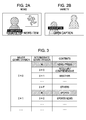
- a closed caption is frequently displayed near the center of the screen so as not to overlap with an open caption, as shown in FIG. 2B. This interferes with viewing of the viewer because a main picture is normally displayed near the center of the screen.
- closed captions are produced and transmitted in real time in a live program such as a news program, it is difficult to optimize the display position and timing of the closed captions.
- the displayed closed caption sometimes overlaps with an open caption contained in the picture.
- the open caption is hidden under the closed caption, and is not viewed by the viewer.
- Japanese Patent Laid-Open No. 2004-208014 discloses that a display position of an open caption is detected and a display position of a closed caption is changed in accordance with the detected position of the open caption in contents in which a closed caption is produced and transmitted in real time.
- closed-caption data and closed-caption display position information contained in PES data and display position information about an open caption contained in picture signals are analyzed by image recognition.
- the closed-caption data and the display position are corrected, and the correction is reflected in the picture, thereby preventing the closed caption from overlapping with the open caption. For this reason, depending on the corrected position, the closed caption is displayed closer to the center of the motion picture, and it is difficult to sufficiently avoid interference with viewing.
- image recognition is performed, the scale of the circuit is increased.
- the present invention provides a digital broadcast receiving apparatus as specified in claims 1 to 6.
- the layout of the closed caption is determined on the basis of the genre of the contents that are on air. Therefore, it is possible to optimize the display position and timing of closed captions even in contents in which closed captions are produced and transmitted in real time.
- image recognition is not indispensable. This can reduce the scale of the circuit.
- the present invention in its second aspect provides a control method for a digital broadcast receiving apparatus as specified in claim 7.
- FIG. 1 is a block diagram of a digital broadcast receiving apparatus according to an embodiment of the present invention.
- FIGS. 2A and 2B are explanatory views showing examples of conventional displayed closed captions.
- FIG. 3 is an explanatory view showing the format of genre information.
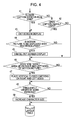
- FIG. 4 is a flowchart showing a process performed in the embodiment of the present invention.
- FIGS. 5A to 5D are explanatory views showing examples of displayed closed captions according to an embodiment of the present invention.
- FIG. 6 is an explanatory view showing a method for producing a motion-vector table according to an embodiment of the present invention.
- a digital broadcast receiving apparatus according to an embodiment of the present invention will be specifically described below with reference to FIG. 1.
- a digital broadcast signal is received by a tuner 101.
- a streaming or server type broadcast signal delivered by the Internet can be received by the tuner 101.
- An MPEG2-TS is input from the tuner 101 to a demultiplexer 102 serving as the extraction unit.
- the MPEG2-TS contains information packets such as PSI and SI as well as packets of video and audio data and closed-caption information.
- the demultiplexer 102 divides the TS packets into a video packet, an audio packet, data packets, a PSI packet, and a SI packet according to packet identifiers (PID) provided in headers of the respective packets.
- PID packet identifiers
- the audio packet is transmitted to an audio decoder 103, and is subjected to MPEG2-AAC decoding so as to generate an audio signal. Voice based on the audio signal is output from a speaker 118.
- the video packet is transmitted to a video decoder 104, and is subjected to MPEG2 decoding so as to reproduce a video signal.
- the reproduced video signal is appropriately subjected to resolution conversion by a resolution converter 105.
- a motion-picture plane 107 is assigned as a display plane.
- the data packet for a still picture and the data packet for a closed caption are respectively transmitted to a still-image decoder 106 and a character/figure decoder 111, and are subjected to decoding.
- a still-image plane 108, a character/figure plane 109, and a closed-caption plane 110 are assigned as display planes. Data on the planes are subjected to combination including alpha blending.
- a picture based on the combined picture data is displayed on a screen of a display 119.
- the demultiplexer 102 extracts an EIT from the SI (service information) packet, and transmits the EIT to a genre determining unit 117.
- the genre determining unit 117 determines a genre of a program that is on air, according to genre information in the EIT.
- the EIT contains not only information about the name and contents of the program, but also genre information about the program.
- the genre information can be used for display and genre search.
- FIG. 3 shows an example of a format of genre information.
- predetermined codes are respectively assigned to major divisions and intermediate divisions. Predetermined codes may be assigned only to major divisions.
- the genre information is commonly controlled among digital terrestrial broadcasting, BS digital broadcasting, and broadband CS digital broadcasting.
- a layout selecting unit 115 receives the genre information from the genre determining unit 117, and motion vectors of a motion picture from the video decoder 104.
- the layout selecting unit 115 selects a layout corresponding to the genre from a layout table, and a layout corresponding to the motion vectors from a motion-vector table.
- These tables are respectively stored as information about the display form of a closed caption corresponding to the genre information in storage means 113 and 114.
- These storage means 113 and 114 may be formed of separate memories, or of different storage regions in the same memory.
- optimum closed-caption display positions are held beforehand in association with genres of broadcasting contents.
- the optimum closed-caption display position for a genre is determined on the basis of parameters, for example, the tendency of the manner in which contents of the genre are displayed on the screen and requests from the viewer.
- the following five parameters may represent the characteristics of the genre. That is, it is determined whether closed-captions are frequently added in real time, whether open captions are heavily used, whether many contents require motion pictures to be displayed with high resolution, whether a target region is frequently displayed in the center of the screen, and whether contents of the genre are frequently viewed by older persons (e.g. people over 45). Priorities are assigned to these five parameters, and a layout change position is determined for each genre according to a flowchart shown in FIG. 4.
- Step 41 closed captions are added in real time in a news program (Step 41), and open captions are heavily used in a variety program (Step 42), and therefore, an out-screen display is set (Step 43).
- Out-screen means a display in which a picture is displayed in a smaller size than normal and a closed caption is displayed outside the picture so that the picture and the closed caption do not overlap on the display screen. Since programs of both genres do not need to be displayed with high resolution (Step 44), it is unnecessary to cancel a reduction display mode of a motion picture. Further, since a target region is not provided (Step 46) and the program is not frequently viewed by older persons (Step 48), closed captions are displayed in a picture non-display region obtained by resolution conversion without changing the character size. A display example in this case is shown in FIG. 5A.
- Step 48 When contents of the genre are frequently viewed by older persons (Step 48), the size of characters in the displayed closed caption is increased (Step 49).
- Step 41 closed-captions are not added in real time (Step 41), and open captions are not heavily used (Step 42), and therefore, an out-screen display is not performed. Since a request for viewing the program with high quality does not seem to be so strong, resolution conversion of a picture motion is not performed. Since a target region seems to be frequently provided in the center of the screen (Step 46), the layout is changed so that closed captions are displayed on the right and left sides of the screen (Step 47). Moreover, since this program is frequently viewed by older persons (Step 48), the character size used in the closed captions is increased (Step 49). A display example in this case is shown in FIG. 5C.
- the items, number, and priorities of the parameters may be arbitrarily determined in design.
- the display form of a closed caption is determined on the basis of at least one of the picture display form of a program belonging to each genre and the tendency (e.g. statistically determined likely preferences) of the viewer. This allows the optimum display form of the closed caption to be selected for each content.
- one program content sometimes belongs to a plurality of genres.
- genre information added to the content sometimes belongs to major divisions “drama” and “documentary/culture”.
- the program content is sometimes defined as belonging to more genres.
- Genres and the appearance ratios of motion vectors are pre-stored in association with each other in a motion-vector table. This allows the optimum genre to be selected from a plurality of genres given to the content.
- a method for generating a motion-vector table will be described below.
- an image is divided into a plurality of areas.
- the image is to be displayed in a motion-picture plane having no closed caption.
- motion vectors of the picture signal are obtained at regular intervals.
- the distribution of motion vectors in one picture is obtained for a predetermined period, and the tendency of characteristic motion vectors that appear at regular intervals is put in a table in association with the genre.
- a plurality of pieces of distribution information about motion vectors may be provided corresponding to one genre (FIG. 6).
- a plurality of small areas may be connected, and a representative motion vector may be produced as motion distribution information.
- the appearance interval of motion vectors indicating the open captions is stored in association with the genre.
- the optimum genre for the contents can be selected on the basis of the tendency of motion vectors of the motion picture.
- the layout selecting unit 115 may cancel the layout change in response to a signal from a remote-control-signal input device 116 so as to return the layout to a layout designated by the signal transmission side.
- a layout change controller 112 appropriately changes the display method for closed-caption data received from the character/figure decoder 111. Consequently, a closed caption is displayed on the television screen so as not to interfere with viewing of the program and so as not to overlap with an open caption.
Landscapes
- Engineering & Computer Science (AREA)
- Multimedia (AREA)
- Signal Processing (AREA)
- Databases & Information Systems (AREA)
- Two-Way Televisions, Distribution Of Moving Picture Or The Like (AREA)
- Television Systems (AREA)
- Circuits Of Receivers In General (AREA)
Applications Claiming Priority (1)
| Application Number | Priority Date | Filing Date | Title |
|---|---|---|---|
| JP2006125015A JP4871635B2 (ja) | 2006-04-28 | 2006-04-28 | デジタル放送受信装置及びその制御方法 |
Publications (2)
| Publication Number | Publication Date |
|---|---|
| EP1850587A2 true EP1850587A2 (de) | 2007-10-31 |
| EP1850587A3 EP1850587A3 (de) | 2010-06-16 |
Family
ID=38227769
Family Applications (1)
| Application Number | Title | Priority Date | Filing Date |
|---|---|---|---|
| EP07106716A Withdrawn EP1850587A3 (de) | 2006-04-28 | 2007-04-23 | Digitales Rundfunkempfänger und Steuerungsverfahren dafür |
Country Status (5)
| Country | Link |
|---|---|
| US (1) | US20070252913A1 (de) |
| EP (1) | EP1850587A3 (de) |
| JP (1) | JP4871635B2 (de) |
| KR (1) | KR100894459B1 (de) |
| CN (1) | CN100477757C (de) |
Cited By (3)
| Publication number | Priority date | Publication date | Assignee | Title |
|---|---|---|---|---|
| EP2173092A1 (de) * | 2008-10-02 | 2010-04-07 | Thomson Licensing, Inc. | Verfahren zur Bildformatumwandlung mit Einfügen eines Informationsbanners |
| WO2015010919A1 (en) * | 2013-07-24 | 2015-01-29 | Telefonaktiebolaget L M Ericsson (Publ) | Media rendering apparatus and method with widget control |
| EP2902895A4 (de) * | 2012-09-26 | 2016-07-27 | Nec Corp | Informationsverarbeitungsvorrichtung, buchungssystem, anzeigesteuerungsverfahren und programm |
Families Citing this family (28)
| Publication number | Priority date | Publication date | Assignee | Title |
|---|---|---|---|---|
| JP2008250899A (ja) * | 2007-03-30 | 2008-10-16 | Ricoh Co Ltd | コンテンツ再生方法、コンテンツ再生システム、コンテンツ再生プログラム及びコンテンツ再生プログラムを記録した媒体 |
| KR101435825B1 (ko) * | 2008-01-11 | 2014-08-29 | 엘지전자 주식회사 | 캡션 데이터 송수신 방법 및 캡션 표시 장치 |
| US20090228948A1 (en) * | 2008-03-10 | 2009-09-10 | Sony Corporation | Viewer selection of subtitle position on tv screen |
| CN101534377A (zh) * | 2008-03-13 | 2009-09-16 | 扬智科技股份有限公司 | 根据节目内容自动改变字幕设定的方法与系统 |
| US8621505B2 (en) * | 2008-03-31 | 2013-12-31 | At&T Intellectual Property I, L.P. | Method and system for closed caption processing |
| JP5266035B2 (ja) * | 2008-12-17 | 2013-08-21 | 株式会社アステム | 手話映像表示装置、手話映像表示方法、及びプログラム |
| EP2352302B1 (de) | 2008-12-18 | 2019-04-17 | LG Electronics Inc. | Digitales rundfunkempfangsverfahren zur anzeige stereoskopischer bilder sowie digitale rundfunkempfangsvorrichtung damit |
| KR101326739B1 (ko) * | 2009-08-12 | 2013-11-08 | 소니 컴퓨터 엔터테인먼트 인코포레이티드 | 정보처리 시스템 및 정보처리 장치 |
| JP5330947B2 (ja) * | 2009-09-25 | 2013-10-30 | シャープ株式会社 | 表示装置、表示方法、プログラムおよび記録媒体 |
| JP5442373B2 (ja) * | 2009-09-25 | 2014-03-12 | シャープ株式会社 | 表示制御装置、表示制御装置の制御方法、制御プログラムおよび記録媒体 |
| JP2013141051A (ja) * | 2010-04-20 | 2013-07-18 | Panasonic Corp | 画像表示装置、携帯端末装置、及び画像表示方法 |
| EP2663896A1 (de) | 2011-01-10 | 2013-11-20 | Thomson Licensing | System und verfahren zur anzeige von untertiteln |
| US8902344B2 (en) * | 2011-12-28 | 2014-12-02 | Canon Kabushiki Kaisha | Display control apparatus, image capture apparatus, display control method, and image capture apparatus control method |
| JP6046961B2 (ja) * | 2012-09-06 | 2016-12-21 | 日本放送協会 | 映像合成装置及び映像合成プログラム |
| US9628865B2 (en) * | 2012-09-10 | 2017-04-18 | Apple Inc. | Enhanced closed caption feature |
| JP6288476B2 (ja) * | 2013-04-17 | 2018-03-07 | パナソニックIpマネジメント株式会社 | 映像受信装置、及び、映像受信装置における情報表示制御方法 |
| CN104427263B (zh) * | 2013-08-23 | 2017-11-28 | 联想(北京)有限公司 | 一种显示字幕的方法和多媒体播放装置 |
| JP2016116032A (ja) * | 2014-12-12 | 2016-06-23 | シャープ株式会社 | 受信装置、放送システム、受信方法及びプログラム |
| CN104917983B (zh) * | 2015-05-29 | 2018-04-27 | 北京时代奥视科技股份有限公司 | 用于处理数字视频信号中的隐藏字幕的装置、系统和方法 |
| TWI728061B (zh) * | 2016-03-15 | 2021-05-21 | 日商新力股份有限公司 | 送訊裝置及收訊裝置 |
| JP2018098631A (ja) * | 2016-12-13 | 2018-06-21 | パイオニア株式会社 | 表示制御装置及び表示制御方法 |
| CN107277562B (zh) * | 2017-05-05 | 2020-02-11 | 中广热点云科技有限公司 | 一种调整屏幕显示画面隐藏预告滚动条的方法及系统 |
| US10880515B2 (en) * | 2018-12-14 | 2020-12-29 | Sony Corporation | Audio-video reproduction for closed caption display control based on multi-media content |
| CN111356025A (zh) * | 2018-12-24 | 2020-06-30 | 深圳Tcl新技术有限公司 | 一种多字幕显示方法、智能终端及存储介质 |
| US12114038B2 (en) * | 2021-04-02 | 2024-10-08 | Rovi Guides, Inc. | Methods and systems for providing dynamic content based on user preferences |
| CN113891121A (zh) * | 2021-09-29 | 2022-01-04 | 北京百度网讯科技有限公司 | 视频字幕处理方法、视频字幕展示方法及装置 |
| JP7784871B2 (ja) * | 2021-11-25 | 2025-12-12 | 日本放送協会 | 画面制御装置およびプログラム |
| KR102759570B1 (ko) * | 2023-06-09 | 2025-01-23 | 엘지전자 주식회사 | 영상표시장치 및 그 동작방법 |
Family Cites Families (18)
| Publication number | Priority date | Publication date | Assignee | Title |
|---|---|---|---|---|
| US5345270A (en) * | 1990-06-01 | 1994-09-06 | Thomson Consumer Electronics, Inc. | Managing letterbox signals with logos and closed captions |
| JP2664611B2 (ja) * | 1992-11-18 | 1997-10-15 | 三洋電機株式会社 | クローズド・キャプションデコーダ及びこれを備えたテレビジョン受信機 |
| KR20000028179A (ko) * | 1998-10-30 | 2000-05-25 | 전주범 | 텔레비전의 osd 위치 조정 방법 |
| US20060064716A1 (en) * | 2000-07-24 | 2006-03-23 | Vivcom, Inc. | Techniques for navigating multiple video streams |
| KR20020059545A (ko) * | 2001-01-08 | 2002-07-13 | 구자홍 | 티브이의 영상표시 제어방법 |
| US7050109B2 (en) * | 2001-03-02 | 2006-05-23 | General Instrument Corporation | Methods and apparatus for the provision of user selected advanced close captions |
| JP3714880B2 (ja) * | 2001-03-07 | 2005-11-09 | シャープ株式会社 | 字幕表示装置 |
| JP4496358B2 (ja) * | 2001-05-17 | 2010-07-07 | 独立行政法人情報通信研究機構 | オープンキャプションに対する字幕表示制御方法 |
| US6778224B2 (en) * | 2001-06-25 | 2004-08-17 | Koninklijke Philips Electronics N.V. | Adaptive overlay element placement in video |
| AUPS058602A0 (en) * | 2002-02-15 | 2002-03-14 | Canon Kabushiki Kaisha | Representing a plurality of independent data items |
| US8522267B2 (en) * | 2002-03-08 | 2013-08-27 | Caption Colorado Llc | Method and apparatus for control of closed captioning |
| JP2004140505A (ja) * | 2002-10-16 | 2004-05-13 | Sharp Corp | 放送番組の提供方法および受信装置および送信装置 |
| US20040123327A1 (en) * | 2002-12-19 | 2004-06-24 | Tsang Fai Ma | Method and system for managing multimedia settings |
| JP2004208014A (ja) * | 2002-12-25 | 2004-07-22 | Mitsubishi Electric Corp | 字幕表示装置及び字幕表示プログラム |
| JP2004227519A (ja) * | 2003-01-27 | 2004-08-12 | Matsushita Electric Ind Co Ltd | 画像処理方法 |
| JP2006005418A (ja) * | 2004-06-15 | 2006-01-05 | Sharp Corp | 情報受信・再生装置、情報受信・再生方法、情報受信・再生プログラム及びプログラム記録媒体 |
| KR101061115B1 (ko) * | 2004-08-13 | 2011-08-31 | 엘지전자 주식회사 | 디지털 방송 수신기 및 그의 서브타이틀 데이터 처리 방법 |
| US20100225808A1 (en) * | 2006-01-27 | 2010-09-09 | Thomson Licensing | Closed-Captioning System and Method |
-
2006
- 2006-04-28 JP JP2006125015A patent/JP4871635B2/ja not_active Expired - Fee Related
-
2007
- 2007-04-23 EP EP07106716A patent/EP1850587A3/de not_active Withdrawn
- 2007-04-23 KR KR1020070039189A patent/KR100894459B1/ko not_active Expired - Fee Related
- 2007-04-25 US US11/739,891 patent/US20070252913A1/en not_active Abandoned
- 2007-04-27 CN CNB2007100975694A patent/CN100477757C/zh not_active Expired - Fee Related
Cited By (5)
| Publication number | Priority date | Publication date | Assignee | Title |
|---|---|---|---|---|
| EP2173092A1 (de) * | 2008-10-02 | 2010-04-07 | Thomson Licensing, Inc. | Verfahren zur Bildformatumwandlung mit Einfügen eines Informationsbanners |
| FR2936924A1 (fr) * | 2008-10-02 | 2010-04-09 | Thomson Licensing | Procede de conversion de format d'image avec insertion de bandeau d'information. |
| US8264602B2 (en) | 2008-10-02 | 2012-09-11 | Thomson Licensing | Method for image format conversion with insertion of an information banner |
| EP2902895A4 (de) * | 2012-09-26 | 2016-07-27 | Nec Corp | Informationsverarbeitungsvorrichtung, buchungssystem, anzeigesteuerungsverfahren und programm |
| WO2015010919A1 (en) * | 2013-07-24 | 2015-01-29 | Telefonaktiebolaget L M Ericsson (Publ) | Media rendering apparatus and method with widget control |
Also Published As
| Publication number | Publication date |
|---|---|
| JP4871635B2 (ja) | 2012-02-08 |
| CN101064802A (zh) | 2007-10-31 |
| JP2007300270A (ja) | 2007-11-15 |
| US20070252913A1 (en) | 2007-11-01 |
| KR20070106408A (ko) | 2007-11-01 |
| EP1850587A3 (de) | 2010-06-16 |
| KR100894459B1 (ko) | 2009-04-22 |
| CN100477757C (zh) | 2009-04-08 |
Similar Documents
| Publication | Publication Date | Title |
|---|---|---|
| EP1850587A2 (de) | Digitales Rundfunkempfänger und Steuerungsverfahren dafür | |
| US6993782B1 (en) | Program guide information and processor for providing program and channel substitution | |
| US6707504B2 (en) | Caption display method of digital television | |
| US7150029B1 (en) | System for formatting and processing multimedia program data and program guide information | |
| US8176517B2 (en) | Automatic display of new program information during current program viewing | |
| US20020087973A1 (en) | Inserting local signals during MPEG channel changes | |
| US20050066278A1 (en) | Full scale video with overlaid graphical user interface and scaled image | |
| US20060059514A1 (en) | Method and apparatus for utilizing blank space on a high definition television screen | |
| US8640180B2 (en) | Apparatus and method for client-side compositing of video streams | |
| JP2000152238A (ja) | 多数の放送源から得られる番組及びパラメ―タ情報を処理するシステム | |
| US8750386B2 (en) | Content reproduction device | |
| KR20020002504A (ko) | 방송 프로그램 및 프로그램 가이드 데이터를 획득하고처리하기 위한 시스템 | |
| KR100664012B1 (ko) | 디지털 티브이의 출력언어 표시방법 | |
| US20040163110A1 (en) | Method of controlling ETT information display on electronic program guide screen of digital television | |
| EP1928181B1 (de) | Empfänger und Empfangsverfahren | |
| JP2000152239A (ja) | 多数の放送源から得られる番組及びシステムタイミング情報を処理するシステム | |
| JP2008199117A (ja) | デジタル放送受信機 | |
| JP5013832B2 (ja) | 映像制御装置及びその方法 | |
| EP1264481B1 (de) | Programmführer-information und prozessor zur bereitstellung von programm- und kanal-substitution | |
| KR100819738B1 (ko) | 방송신호 수신장치 및 그 제어방법 | |
| US20030037329A1 (en) | Alternative video program display control system | |
| US8769562B2 (en) | Digital broadcast method, data receiving device, and data transmitting device | |
| US9247283B1 (en) | Mosaic presentation screen production | |
| JP2011182008A (ja) | 字幕合成装置 | |
| JP2006270299A (ja) | Cm検出装置およびcm検出方法 |
Legal Events
| Date | Code | Title | Description |
|---|---|---|---|
| PUAI | Public reference made under article 153(3) epc to a published international application that has entered the european phase |
Free format text: ORIGINAL CODE: 0009012 |
|
| AK | Designated contracting states |
Kind code of ref document: A2 Designated state(s): AT BE BG CH CY CZ DE DK EE ES FI FR GB GR HU IE IS IT LI LT LU LV MC MT NL PL PT RO SE SI SK TR |
|
| AX | Request for extension of the european patent |
Extension state: AL BA HR MK YU |
|
| PUAL | Search report despatched |
Free format text: ORIGINAL CODE: 0009013 |
|
| AK | Designated contracting states |
Kind code of ref document: A3 Designated state(s): AT BE BG CH CY CZ DE DK EE ES FI FR GB GR HU IE IS IT LI LT LU LV MC MT NL PL PT RO SE SI SK TR |
|
| AX | Request for extension of the european patent |
Extension state: AL BA HR MK RS |
|
| 17P | Request for examination filed |
Effective date: 20101216 |
|
| AKX | Designation fees paid |
Designated state(s): DE FR GB |
|
| STAA | Information on the status of an ep patent application or granted ep patent |
Free format text: STATUS: THE APPLICATION HAS BEEN WITHDRAWN |
|
| 18W | Application withdrawn |
Effective date: 20130426 |