EP1840974B1 - Fotovoltaisches Modul und Herstellungsverfahren dafür - Google Patents
Fotovoltaisches Modul und Herstellungsverfahren dafür Download PDFInfo
- Publication number
- EP1840974B1 EP1840974B1 EP07251251.0A EP07251251A EP1840974B1 EP 1840974 B1 EP1840974 B1 EP 1840974B1 EP 07251251 A EP07251251 A EP 07251251A EP 1840974 B1 EP1840974 B1 EP 1840974B1
- Authority
- EP
- European Patent Office
- Prior art keywords
- sealing material
- light receiving
- surface side
- back surface
- solar cell
- Prior art date
- Legal status (The legal status is an assumption and is not a legal conclusion. Google has not performed a legal analysis and makes no representation as to the accuracy of the status listed.)
- Not-in-force
Links
- 238000000034 method Methods 0.000 title claims description 65
- 238000004519 manufacturing process Methods 0.000 title claims description 11
- 239000003566 sealing material Substances 0.000 claims description 140
- 238000010438 heat treatment Methods 0.000 claims description 21
- 238000004132 cross linking Methods 0.000 claims description 17
- 238000010030 laminating Methods 0.000 claims description 12
- 239000003431 cross linking reagent Substances 0.000 claims description 11
- 239000000969 carrier Substances 0.000 claims description 6
- 238000007789 sealing Methods 0.000 claims description 3
- 230000002349 favourable effect Effects 0.000 claims description 2
- 230000001737 promoting effect Effects 0.000 claims description 2
- 239000000463 material Substances 0.000 description 22
- 238000010586 diagram Methods 0.000 description 17
- 239000010408 film Substances 0.000 description 12
- 229920005989 resin Polymers 0.000 description 12
- 239000011347 resin Substances 0.000 description 12
- DQXBYHZEEUGOBF-UHFFFAOYSA-N but-3-enoic acid;ethene Chemical compound C=C.OC(=O)CC=C DQXBYHZEEUGOBF-UHFFFAOYSA-N 0.000 description 11
- 239000005038 ethylene vinyl acetate Substances 0.000 description 11
- 229920001200 poly(ethylene-vinyl acetate) Polymers 0.000 description 11
- 238000012360 testing method Methods 0.000 description 10
- 230000000052 comparative effect Effects 0.000 description 9
- 239000011521 glass Substances 0.000 description 7
- XUIMIQQOPSSXEZ-UHFFFAOYSA-N Silicon Chemical compound [Si] XUIMIQQOPSSXEZ-UHFFFAOYSA-N 0.000 description 6
- 238000003475 lamination Methods 0.000 description 6
- 239000010410 layer Substances 0.000 description 6
- 229910052710 silicon Inorganic materials 0.000 description 6
- 239000010703 silicon Substances 0.000 description 6
- 230000006866 deterioration Effects 0.000 description 4
- 229920002037 poly(vinyl butyral) polymer Polymers 0.000 description 4
- 229920002799 BoPET Polymers 0.000 description 3
- RYGMFSIKBFXOCR-UHFFFAOYSA-N Copper Chemical compound [Cu] RYGMFSIKBFXOCR-UHFFFAOYSA-N 0.000 description 3
- 229910052782 aluminium Inorganic materials 0.000 description 3
- XAGFODPZIPBFFR-UHFFFAOYSA-N aluminium Chemical compound [Al] XAGFODPZIPBFFR-UHFFFAOYSA-N 0.000 description 3
- 239000004020 conductor Substances 0.000 description 3
- 230000008602 contraction Effects 0.000 description 3
- 229910052802 copper Inorganic materials 0.000 description 3
- 239000010949 copper Substances 0.000 description 3
- 238000011161 development Methods 0.000 description 3
- 229920000139 polyethylene terephthalate Polymers 0.000 description 3
- 239000005020 polyethylene terephthalate Substances 0.000 description 3
- 239000004065 semiconductor Substances 0.000 description 3
- 239000002904 solvent Substances 0.000 description 3
- 239000000758 substrate Substances 0.000 description 3
- DMWVYCCGCQPJEA-UHFFFAOYSA-N 2,5-bis(tert-butylperoxy)-2,5-dimethylhexane Chemical compound CC(C)(C)OOC(C)(C)CCC(C)(C)OOC(C)(C)C DMWVYCCGCQPJEA-UHFFFAOYSA-N 0.000 description 2
- UWNADWZGEHDQAB-UHFFFAOYSA-N 2,5-dimethylhexane Chemical compound CC(C)CCC(C)C UWNADWZGEHDQAB-UHFFFAOYSA-N 0.000 description 2
- PXHVJJICTQNCMI-UHFFFAOYSA-N Nickel Chemical compound [Ni] PXHVJJICTQNCMI-UHFFFAOYSA-N 0.000 description 2
- CTQNGGLPUBDAKN-UHFFFAOYSA-N O-Xylene Chemical compound CC1=CC=CC=C1C CTQNGGLPUBDAKN-UHFFFAOYSA-N 0.000 description 2
- VYPSYNLAJGMNEJ-UHFFFAOYSA-N Silicium dioxide Chemical compound O=[Si]=O VYPSYNLAJGMNEJ-UHFFFAOYSA-N 0.000 description 2
- 230000002411 adverse Effects 0.000 description 2
- 229910021417 amorphous silicon Inorganic materials 0.000 description 2
- 230000015572 biosynthetic process Effects 0.000 description 2
- 230000003247 decreasing effect Effects 0.000 description 2
- 238000007654 immersion Methods 0.000 description 2
- 150000001451 organic peroxides Chemical class 0.000 description 2
- XOLBLPGZBRYERU-UHFFFAOYSA-N tin dioxide Chemical compound O=[Sn]=O XOLBLPGZBRYERU-UHFFFAOYSA-N 0.000 description 2
- 239000008096 xylene Substances 0.000 description 2
- QEQBMZQFDDDTPN-UHFFFAOYSA-N (2-methylpropan-2-yl)oxy benzenecarboperoxoate Chemical compound CC(C)(C)OOOC(=O)C1=CC=CC=C1 QEQBMZQFDDDTPN-UHFFFAOYSA-N 0.000 description 1
- HSLFISVKRDQEBY-UHFFFAOYSA-N 1,1-bis(tert-butylperoxy)cyclohexane Chemical compound CC(C)(C)OOC1(OOC(C)(C)C)CCCCC1 HSLFISVKRDQEBY-UHFFFAOYSA-N 0.000 description 1
- HQOVXPHOJANJBR-UHFFFAOYSA-N 2,2-bis(tert-butylperoxy)butane Chemical compound CC(C)(C)OOC(C)(CC)OOC(C)(C)C HQOVXPHOJANJBR-UHFFFAOYSA-N 0.000 description 1
- XMNIXWIUMCBBBL-UHFFFAOYSA-N 2-(2-phenylpropan-2-ylperoxy)propan-2-ylbenzene Chemical compound C=1C=CC=CC=1C(C)(C)OOC(C)(C)C1=CC=CC=C1 XMNIXWIUMCBBBL-UHFFFAOYSA-N 0.000 description 1
- 229920000178 Acrylic resin Polymers 0.000 description 1
- 239000004925 Acrylic resin Substances 0.000 description 1
- 239000004342 Benzoyl peroxide Substances 0.000 description 1
- OMPJBNCRMGITSC-UHFFFAOYSA-N Benzoylperoxide Chemical compound C=1C=CC=CC=1C(=O)OOC(=O)C1=CC=CC=C1 OMPJBNCRMGITSC-UHFFFAOYSA-N 0.000 description 1
- 239000004593 Epoxy Substances 0.000 description 1
- YCKRFDGAMUMZLT-UHFFFAOYSA-N Fluorine atom Chemical compound [F] YCKRFDGAMUMZLT-UHFFFAOYSA-N 0.000 description 1
- 229910001218 Gallium arsenide Inorganic materials 0.000 description 1
- 206010070834 Sensitisation Diseases 0.000 description 1
- BLRPTPMANUNPDV-UHFFFAOYSA-N Silane Chemical compound [SiH4] BLRPTPMANUNPDV-UHFFFAOYSA-N 0.000 description 1
- BQCADISMDOOEFD-UHFFFAOYSA-N Silver Chemical compound [Ag] BQCADISMDOOEFD-UHFFFAOYSA-N 0.000 description 1
- ATJFFYVFTNAWJD-UHFFFAOYSA-N Tin Chemical compound [Sn] ATJFFYVFTNAWJD-UHFFFAOYSA-N 0.000 description 1
- 229910045601 alloy Inorganic materials 0.000 description 1
- 239000000956 alloy Substances 0.000 description 1
- PNEYBMLMFCGWSK-UHFFFAOYSA-N aluminium oxide Inorganic materials [O-2].[O-2].[O-2].[Al+3].[Al+3] PNEYBMLMFCGWSK-UHFFFAOYSA-N 0.000 description 1
- 229960003328 benzoyl peroxide Drugs 0.000 description 1
- 235000019400 benzoyl peroxide Nutrition 0.000 description 1
- 239000001273 butane Substances 0.000 description 1
- 239000003795 chemical substances by application Substances 0.000 description 1
- 150000001875 compounds Chemical class 0.000 description 1
- 239000002826 coolant Substances 0.000 description 1
- 238000001816 cooling Methods 0.000 description 1
- 239000013078 crystal Substances 0.000 description 1
- 229910021419 crystalline silicon Inorganic materials 0.000 description 1
- 230000000694 effects Effects 0.000 description 1
- 230000005611 electricity Effects 0.000 description 1
- 229920006242 ethylene acrylic acid copolymer Polymers 0.000 description 1
- 229920005648 ethylene methacrylic acid copolymer Polymers 0.000 description 1
- 238000001704 evaporation Methods 0.000 description 1
- 229910052731 fluorine Inorganic materials 0.000 description 1
- 239000011737 fluorine Substances 0.000 description 1
- NBVXSUQYWXRMNV-UHFFFAOYSA-N fluoromethane Chemical compound FC NBVXSUQYWXRMNV-UHFFFAOYSA-N 0.000 description 1
- 239000011888 foil Substances 0.000 description 1
- PCHJSUWPFVWCPO-UHFFFAOYSA-N gold Chemical compound [Au] PCHJSUWPFVWCPO-UHFFFAOYSA-N 0.000 description 1
- 229910052737 gold Inorganic materials 0.000 description 1
- 239000010931 gold Substances 0.000 description 1
- 229920000554 ionomer Polymers 0.000 description 1
- 230000001678 irradiating effect Effects 0.000 description 1
- 238000005259 measurement Methods 0.000 description 1
- 229910052751 metal Inorganic materials 0.000 description 1
- 239000002184 metal Substances 0.000 description 1
- 229910044991 metal oxide Inorganic materials 0.000 description 1
- 150000004706 metal oxides Chemical class 0.000 description 1
- 229910021421 monocrystalline silicon Inorganic materials 0.000 description 1
- IJDNQMDRQITEOD-UHFFFAOYSA-N n-butane Chemical compound CCCC IJDNQMDRQITEOD-UHFFFAOYSA-N 0.000 description 1
- OFBQJSOFQDEBGM-UHFFFAOYSA-N n-pentane Natural products CCCCC OFBQJSOFQDEBGM-UHFFFAOYSA-N 0.000 description 1
- 229910052759 nickel Inorganic materials 0.000 description 1
- QRMPKOFEUHIBNM-UHFFFAOYSA-N p-dimethylcyclohexane Natural products CC1CCC(C)CC1 QRMPKOFEUHIBNM-UHFFFAOYSA-N 0.000 description 1
- 229920003023 plastic Polymers 0.000 description 1
- 239000004033 plastic Substances 0.000 description 1
- 229910021420 polycrystalline silicon Inorganic materials 0.000 description 1
- 229920005678 polyethylene based resin Polymers 0.000 description 1
- -1 polyethylene terephthalate Polymers 0.000 description 1
- 229920005672 polyolefin resin Polymers 0.000 description 1
- 229920005673 polypropylene based resin Polymers 0.000 description 1
- 238000012545 processing Methods 0.000 description 1
- 230000008313 sensitization Effects 0.000 description 1
- 229910000077 silane Inorganic materials 0.000 description 1
- 239000000377 silicon dioxide Substances 0.000 description 1
- 239000002210 silicon-based material Substances 0.000 description 1
- 229920002050 silicone resin Polymers 0.000 description 1
- 229910052709 silver Inorganic materials 0.000 description 1
- 239000004332 silver Substances 0.000 description 1
- 239000002356 single layer Substances 0.000 description 1
- 238000010998 test method Methods 0.000 description 1
- 229920002803 thermoplastic polyurethane Polymers 0.000 description 1
- 239000010409 thin film Substances 0.000 description 1
- 229910052718 tin Inorganic materials 0.000 description 1
- 239000011135 tin Substances 0.000 description 1
Images




Classifications
-
- H—ELECTRICITY
- H10—SEMICONDUCTOR DEVICES; ELECTRIC SOLID-STATE DEVICES NOT OTHERWISE PROVIDED FOR
- H10F—INORGANIC SEMICONDUCTOR DEVICES SENSITIVE TO INFRARED RADIATION, LIGHT, ELECTROMAGNETIC RADIATION OF SHORTER WAVELENGTH OR CORPUSCULAR RADIATION
- H10F19/00—Integrated devices, or assemblies of multiple devices, comprising at least one photovoltaic cell covered by group H10F10/00, e.g. photovoltaic modules
- H10F19/80—Encapsulations or containers for integrated devices, or assemblies of multiple devices, having photovoltaic cells
-
- H—ELECTRICITY
- H10—SEMICONDUCTOR DEVICES; ELECTRIC SOLID-STATE DEVICES NOT OTHERWISE PROVIDED FOR
- H10F—INORGANIC SEMICONDUCTOR DEVICES SENSITIVE TO INFRARED RADIATION, LIGHT, ELECTROMAGNETIC RADIATION OF SHORTER WAVELENGTH OR CORPUSCULAR RADIATION
- H10F19/00—Integrated devices, or assemblies of multiple devices, comprising at least one photovoltaic cell covered by group H10F10/00, e.g. photovoltaic modules
- H10F19/80—Encapsulations or containers for integrated devices, or assemblies of multiple devices, having photovoltaic cells
- H10F19/804—Materials of encapsulations
-
- Y—GENERAL TAGGING OF NEW TECHNOLOGICAL DEVELOPMENTS; GENERAL TAGGING OF CROSS-SECTIONAL TECHNOLOGIES SPANNING OVER SEVERAL SECTIONS OF THE IPC; TECHNICAL SUBJECTS COVERED BY FORMER USPC CROSS-REFERENCE ART COLLECTIONS [XRACs] AND DIGESTS
- Y02—TECHNOLOGIES OR APPLICATIONS FOR MITIGATION OR ADAPTATION AGAINST CLIMATE CHANGE
- Y02E—REDUCTION OF GREENHOUSE GAS [GHG] EMISSIONS, RELATED TO ENERGY GENERATION, TRANSMISSION OR DISTRIBUTION
- Y02E10/00—Energy generation through renewable energy sources
- Y02E10/50—Photovoltaic [PV] energy
Definitions
- the temperature on the light receiving surface side of the solar cell 101 becomes higher than the temperature on the back surface side of the solar cell 101.
- the sealing material 104 is thermally expanded more on the light receiving surface side of the solar cell 101 than on the back surface side of the solar cell 101. Since a coefficient of thermal expansion of the sealing material 104 is greater than that of the solar cell 101, the stress a on the light receiving surface side of the solar cell 101 becomes smaller than the stress b on the back surface side thereof, as shown in Fig. 2 .
- the solar cell 101 receives the solar light, the balance between the stress a and the stress b is disrupted. As a result, the solar cell 101 is warped as shown in Fig. 2 .
- the solar cell 101 in order to collect photogenerated carriers generated in a photovoltaic body 105, the solar cell 101 is provided with a collector electrode 106 on the light receiving surface of the photovoltaic body 105, and a collector electrode 107 on the back surface of the photovoltaic body 105. Since the collector electrode 106 is provided on the light receiving surface side of the photovoltaic body 105, it is preferable to form the collector electrode 106 as narrow as possible in order not to block the reception of the solar light.
- the solar cell 101 when the solar cell 101 is warped due to the reception of the solar light, a stress is applied to the collector electrode 106.
- the photovoltaic module 100 since the photovoltaic module 100 is used in the open air, and repeats receiving and not receiving the solar light, damage in the collector electrode 106 is accumulated. For this reason, the electron collection performance of the collector electrode 106 is likely to be lowered.
- the thinner the thickness of a substrate constituting the photovoltaic body 105 is, the more heavily the solar cell 101 is warped. Accordingly, heretofore, the thickness of the substrate cannot be made extremely thin.
- An object of the present invention is to provide a photovoltaic module that achieves a reduction in adverse influence of damage accumulated in a collector electrode provided on a light receiving surface side, and a method for manufacturing the photovoltaic module.
- a photovoltaic module includes a solar cell, a light receiving surface side supporting member, a back surface side supporting member and a polymeric sealing material, and also has the following features.
- the solar cell has a light receiving surface allowing light to enter therein, and a back surface provided on the opposite side of the light receiving surface.
- the light receiving surface side supporting member is provided at the light receiving surface side of the solar cell.
- the back surface side supporting member is provided at the back surface side of the solar cell.
- the sealing material seals the solar cell between the light receiving surface side supporting member and the back surface side supporting member.
- the sealing material includes a first region that is in contact with the whole light receiving surface, and a second region that is in contact with the whole back surface. The degree of cross-linkage of the second region is smaller than that of the first region.
- the second region of the sealing material that is in contact with the back surface of the solar cell is thermally expanded easily at a lower temperature than the first region of the sealing material that is in contact with the light receiving surface of the solar cell. Accordingly, when the photovoltaic module is subjected to the solar light during daytime, the second region whose temperature is less likely to rise can also be thermally expanded. This makes it possible to reduce the stress applied to the solar cell on the back surface side as well, and thereby to reduce the difference between the stresses of the light receiving surface side and the back surface side of the solar cell. This results in a relaxation of a force that acts to warp the solar cell so as to be convex toward the light receiving side. Hence, the stress applied to a collector electrode adhering to the light receiving surface is lowered.
- the solar cell has a photovoltaic body for generating photogenerated carriers by receiving light, and a collector electrode which adheres onto the light receiving surface and the back surface of the photovoltaic body, and which collects the photogenerated carriers from the photovoltaic body.
- an adhesion area where the collector electrode adheres onto the light receiving surface of the photovoltaic body is smaller than that where the collector electrode adheres onto the back surface of the photovoltaic body.
- a method for manufacturing a photovoltaic module according to the first aspect of the invention including a solar cell having a light receiving surface allowing light to enter therein, and a back surface provided on the opposite side of the light receiving surface; a light receiving surface side supporting member provided at the light receiving surface side of the solar cell; a back surface side supporting member provided at the back surface side of the solar cell; and a polymeric sealing material for sealing the solar cell between the light receiving surface side supporting member and the back surface side supporting member, the method comprising the steps of:
- step (B) a condition for heating the second sealing material sheet is less favorable for the crosslinking reaction in the sealing material than a condition for heating the first sealing material sheet,
- the present invention it is possible to provide a photovoltaic module that achieves a reduction in adverse influence of damage accumulated in a collector electrode provided on a light receiving surface side, and a method for manufacturing the photovoltaic module.
- Figs. 4A and 4B show cross sectional diagrams of a photovoltaic module 10 according to this embodiment.
- Fig. 4A is a diagram for illustrating a cross sectional structure of the photovoltaic module 10 that has been integrated through a module forming process.
- Fig. 4B is an exploded diagram for illustrating the photovoltaic module 10 before the module forming process.
- the photovoltaic module 10 includes a solar cell string 1, a sealing material 2, a light receiving surface side supporting member 3 and a back surface side supporting member 4.
- the solar cell string 1 is formed of a plurality of solar cells 1a which are electrically connected to one another with wiring materials 5.
- the solar cell 1a includes a photovoltaic body 6 and a collector electrode 7.
- the photovoltaic body 6 can be formed of a general solar cell material which includes a semiconductor junction such as a pn junction or a pin junction therein, including : a crystal type semiconductor material such as single-crystalline silicon (Si) and poly-crystalline Si; a compound type semiconductor material such as GaAs and CuInSe ; a thin-film silicon type material; a organic type material such as dye sensitization type material; or the like.
- a semiconductor junction such as a pn junction or a pin junction therein, including : a crystal type semiconductor material such as single-crystalline silicon (Si) and poly-crystalline Si; a compound type semiconductor material such as GaAs and CuInSe ; a thin-film silicon type material; a organic type material such as dye sensitization type material; or the like.
- the collector electrode 7 adheres onto the light receiving surface and the back surface of the photovoltaic body 6, and collects photogenerated carriers generated in the photovoltaic body 6.
- the collector electrode 7 includes a light receiving surface side electrode 7a and a back surface side electrode 7b.
- the light receiving surface side electrode 7a and the back surface side electrode 7b are formed of a conductive material including silver, aluminum, copper, nickel, tin, gold or the like, or alloy of any of these.
- the collector electrode 7 may have a monolayer structure or a multilayer structure including the conductive material.
- the electrode may have a layer including a translucent conductive oxide such as SnO 2 , ITO, IWO or ZnO.
- the light receiving surface side electrode 7a is provided so as to occupy an area as small as possible for the purpose of securing a large light receiving area on the light receiving surface side of the photovoltaic body 6, that is, for securing the large exposed area on the light receiving surface side of the photovoltaic body 6.
- the light receiving surface side electrode 7a is formed in a comb-like shape with the width of the light receiving surface side electrode 7a made narrow, as shown in a top view of the solar cell 1a (see Fig. 5 ).
- the back surface side electrode 7b may be formed in a comb-like shape, or may be formed over an entire area of the back surface of the photovoltaic body 6.
- the adhesion area where the light receiving surface side electrode 7a adheres onto the light receiving surface of the photovoltaic body 6 is smaller than the adhesion area where the back surface side electrode 7b adheres onto the back surface of the photovoltaic body 6.
- the sealing material 2 seals the solar cell string 1. Specifically, as shown in Fig. 4B , the light receiving surface of the solar cell 1a is in contact with a first region 2a of the sealing material 2, and the back surface of the solar cell 1a is in contact with a second region 2b of the sealing material 2.
- the sealing material 2 can be formed of a resin material such as EVA (ethylene vinyl acetate), PVB (polyvinyl butyral), silicone resin, urethane resin, acrylic resin, fluorocarbon-based resin, ionomer resin, silane denatured resin, ethylene-acrylic acid copolymer, ethylene-methacrylic acid copolymer, polyethylene-based resin, polypropylene-based resin, acid-denatured polyolefin based resin, or epoxy-based resin. More than one type of the above resin materials may be used and compounded to form the sealing material 2.
- a resin material such as EVA (ethylene vinyl acetate), PVB (polyvinyl butyral), silicone resin, urethane resin, acrylic resin, fluorocarbon-based resin, ionomer resin, silane denatured resin, ethylene-acrylic acid copolymer, ethylene-methacrylic acid copolymer, polyethylene-based resin, polypropylene-based resin, acid-denature
- the degree of cross-linkage in the second region 2b of the sealing material 2 that is in contact with the back surface of the solar cell 1a is smaller than that of the first region 2a of the sealing material 2 that is in contact with the light receiving surface of the solar cell 1a.
- the degree of cross-linkage means a crosslinking rate in the sealing material 2
- a smaller degree of cross-linkage means that a larger region containing non-crosslinked resin component exists.
- the light receiving surface side supporting member 3 is joined to the light receiving side of the solar cell 1a on contact with the first region 2a of the sealing material 2 interposed in between.
- the light receiving surface side supporting member 3 may be formed of a material, such as glass or plastic, allowing greater part of light with a wavelength which the solar cell 1a can absorb to pass therethrough.
- the back surface side supporting member 4 is joined to the back surface of the solar cell 1a on contact with the second region 2b of the sealing material 2 interposed in between.
- the back surface side supporting member 4 can be formed of a material such as a resin film including a PET (polyethylene terephthalate) film, a fluorine resin film, or the like; a resin film in which a vapordeposited film of metal oxide such as silica or alumina is formed; a metal film such as an aluminum foil; or a lamination film including some of these films.
- the light receiving surface of the solar cell 1a is in contact with the first region 2a of the sealing material 2, and the back surface of the solar cell 1a is in contact with the second region 2b of the sealing material 2.
- This embodiment is characterized in that the degree of cross-linkage of the second region 2b of the sealing material 2 which is in contact with the back surface of the solar cell 1a is smaller than that of the first region 2a of the sealing material 2 which is in contact with the light receiving surface of the solar cell 1a_ Any of the following methods can be used to make the degree of cross-linkage of the second region 2b smaller than that of the first region 2a like the above.
- the same sealing material to which a cross-linking agent of the same type and the same amount is added is used as a sealing material to form the first region 2a and the second region 2b.
- different crosslinking conditions are employed to form the respective regions 2a and 2b.
- the degree of cross-linkage of the second region 2b can be made smaller than that of the first region 2a.
- a temperature that causes crosslinks to be formed in the sealing material used for forming the second region 2b is set lower than a temperature that causes crosslinks to be formed in the sealing material used for forming the second region 2a.
- the degree of cross-linkage of the second region 2b can be made smaller than that of the first region 2a.
- the degree of cross-linkage of the second region 2b can be made smaller than that of the first region 2a by using the smaller amount of cross-linking agent added to the sealing material for forming the second region 2b, than that of cross-linking agent added to the sealing material for forming the second region 2a.
- the degree of cross-linkage of the sealing material mainly depends on the amount of cross-linking agent added to the sealing material, and depends on the type of the sealing material only to a slight degree. For this reason, any one of or a combination of the foregoing resin materials such as the EVA and the PVB can be used as the sealing material for forming the first region 2a and the second region 2b.
- an organic peroxide is used as a cross-linking agent, in general.
- the organic peroxide for causing crosslinks to be formed in the EVA it is possible to use 2,5-dimethylhexane, 2,5-dihydroperoxide, 2,5-dimethyl-2,5-di(t-butylperoxy)hexane, 3-di-t-butylperoxide, t-dicumylperoxide, 2,5-dimethyl-2,5-di(t-butylperoxy)hexane, dicumylperoxide, ⁇ , ⁇ '-bis(t-butylperoxyisopropyl) benzene, n-butyl-4,4-bis(t-butylpernxy) butane, 2,2-bis(t-butylperoxy)butane, 1,1-bis(t-butylperoxy) cyclohexane, 1,1-bis(t-butylyl
- the present invention is characterized in that the above-described relationship is satisfied between the degrees of cross-linkage of the first region 2a and the second region 2b of the sealing material 2 which are in contact with the light receiving surface and the back surface of the solar cell 1a, respectively.
- the sealing material 2 may further include another sealing material as long as it includes the first region 2a and the second region 2b that satisfy the above-described relationship.
- the sealing material 2 may include the first region 2a that is in contact with the light receiving surface of the solar cell 1a, and may further include one or more sealing material layers on the light receiving surface side of the first region 2a.
- the sealing material 2 may include the second region 2b that is in contact with the back surface of the solar cell 1a, and may further include one or more sealing material layers on the back surface side of the second region 2b.
- the sealing material 2 may have a structure formed by combining these two.
- Fig. 6 is an exploded cross sectional diagram of the photovoltaic module 10 including a third region 2c on the light receiving surface of the first region 2a, and also a fourth region 2d on the back surface of the second region 2b.
- the degree of cross-linkage of the second region 2b of the sealing material 2 that is in contact with the back surface of the solar cell 1a is smaller than that of the first region 2a of the sealing material 2 that is in contact with the light receiving surface of the solar cell 1a.
- sealing materials for forming the third region and the fourth region it is possible to select any one of or a combination of the foregoing materials such as the EVA and the PVB.
- the sealing material 2 may have a multi-layered structure including three layers or more.
- a method for manufacturing the photovoltaic module 10 according to the present invention that is, a module forming process for the photovoltaic module 10.
- the descriptions will be given of a case where the same sealing material is used for the first region 2a and the second region 2b firstly, and then a case where the amount of cross-linking agent added to a sealing material for the second region 2b is made smaller than that for the first region 2a.
- the degree of cross-linkage of the second region 2b of the sealing material 2 that is in contact with the back surface of the solar cell 1a is made smaller than that of the first region 2a of the sealing material 2 that is in contact with the light receiving surface of the solar cell 1a.
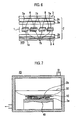
- Laminating process In this process, internal materials are made to temporarily adhere to each other by using a vacuum lamination apparatus 20 shown in Fig. 7 while an air bubble is prevented from forming between each pair of the internal materials.
- the interior of the vacuum lamination apparatus 20 is divided into two chambers, that is, upper and lower chambers with a diaphragm 30, and thereby it is possible to decompress each of the chambers independently.
- the light receiving surface side supporting member 3, the light receiving side sealing material sheet (first region) 2a, the solar cell string 1, the back surface side sealing material sheet (second region) 2b and the back surface side supporting member 4 are mounted in this order on a mounting table 40 which can be heated.
- the air is discharged from each of the upper and lower chambers, while the mounting table 40 is being heated up to a predetermined temperature.
- the predetermined temperature is lower than a temperature causing crosslinks to be formed in the sealing material 2.
- the photovoltaic module 10 is pressed with the diaphragm 30 for a predetermined duration by causing the air to flow into the upper chamber. Hence, the temporary adhesion is completed.
- the sealing material 2 is cured crosslinks are formed in the sealing material 2 by using a heater 50 shown in Fig. 8A -
- the heater 50 is capable of uniformly heating the photovoltaic module 10 by high-temperature blast thereto.
- the photovoltaic module 10 including the temporarily adhering internal materials is placed inside the heater 50.
- the photovoltaic module 10 is heated at a predetermined temperature for a predetermined duration.
- the predetermined temperature is set to be higher than the temperature causing crosslinks to be formed in the sealing material 2.
- crosslinking reaction occurs in the first region 2a of the sealing material 2 that is in contact with the light receiving surface of the solar cell 1a, and in the second region 2b of the sealing material 2 that is in contact with the back surface of the solar cell 1a.
- the crosslinking reaction is more advanced in the first region 2a of the scaling material 2 that is in contact with the light receiving surface of the solar cell 1a, by using a heater 60 shown in Fig. 8B or 8C .
- the heater 60 shown in Fig. 8B or 8C heats the light receiving surface side by using the hot air, while cooling the back surface side by using a cooling medium or a cool air.
- the heater 60 heats only the sealing material on the light receiving surface side at the temperature higher than the crosslinking temperature, while heating the sealing material on the back surface side at the temperature lower than the crosslinking temperature. In this manner, the crosslinking reaction is advanced only in the first region 2a of the sealing material 2 that is in contact with the light receiving surface of the solar cell 1a.
- the crosslinks are formed in the sealing material on the light receiving surface side during the first curing process and the second curing process.
- the crosslinks are formed in the sealing material on the back surface side during only the first curing process.
- the photovoltaic module 10 After being processed in the foregoing laminating process, the photovoltaic module 10 is heated at the temperature higher than the crosslinking temperature of the sealing material 2 for a predetermined duration.
- the predetermined duration is one during which the crosslink formation in the sealing material 2 is completed. There is no need to perform the second curing process.
- the photovoltaic module 10 of this embodiment is manufactured.
- Table 1 is a property table showing the linear expansion coefficients of main materials constituting a photovoltaic module.
- the sealing material shown is the value of EVA resin, which is a typically used material.
- the solar cell shown is the value of silicon, which is a generally used material.
- the back surface side supporting member shown is the value of a PET film.
- the linear expansion coefficients have a relationship of the sealing material > the PET film > copper > glass ⁇ the silicon.
- a difference between the linear expansion coefficients of the sealing material and the silicon is the largest among those between any pair of the components constituting the photovoltaic module.
- the sealing material with the largest linear expansion coefficient has the largest contraction degree
- the solar cell formed of a silicon material with the smallest linear expansion coefficient has the smallest contraction degree
- the conventional photovoltaic module 100 receives the solar light, the stress a applied to the light receiving surface of the solar cell 101, and the stress b applied to the back surface of the solar cell 101 are unbalanced, and thereby the solar cell 101 is warped, as shown in Figs. 2 and 3 .
- damage to the collector electrode 106 is accumulated therein, and this deteriorates the electron collection performance of the collector electrode 106.
- the second region 2b of the sealing material 2 that is in contact with the back surface of the solar cell 1a is thermally expanded easily at a lower temperature than the first region 2a of the sealing material 2 that is in contact with the light receiving surface of the solar cell 1a, by making the degree of cross-linkage of the second region 2b smaller than that of the first region 2a. Accordingly, when the photovoltaic module 10 is subjected to the solar light during daytime, the second region 2b whose temperature is less likely to rise can also be thermally expanded.
- the stress applied to the light receiving surface of the solar cell 1a is equal in magnitude to the stress applied to the back surface (see Fig. 9A ), or the stress applied to the back surface is greater than that applied to the light receiving surface (see Fig. 9B ).
- the adhesion strength of the back surface side electrode 7b can be made larger by enlarging an adhesion area where the electrode 7b adheres onto the photovoltaic body 6. Accordingly, even when the solar cell 1a is warped to be convex toward the back surface side as shown in Fig. 9B , damage to the back surface side electrode 7b is small.
- the photovoltaic module 10 of this embodiment it is possible to provide a photovoltaic module that allows the reliability to be improved by suppressing the damage accumulated in the collector electrode provided on the light receiving surface side, and the method for manufacturing such a photovoltaic module.
- the back surface side electrode 7b is made to adhere to the entire back surface of the photovoltaic body 6 in the foregoing embodiment, the back surface side electrode 7b may adhere to the photovoltaic body 6 so as to expose a part of the photovoltaic body 6, or the back surface side electrode 7b may be formed in a comb-like shape similar to that of the light receiving surface side electrode 7a.
- the crosslinking processes were performed with the heating duration changed within a range of 5 minutes to 45 minutes, since the degree of cross-linkage of the sealing material(EVA) also depends on the heating duration.
- the sealing material was taken off from the glass plate of each of the samples thus manufactured, and then the gel fraction was measured in the following manner. Thereby, the degree of cross-linkage of each of sealing materials was evaluated.
- each sealing material taken off from the glass plate was measured.
- each sealing material was immersed in a xylene solvent, and thereby a region in a sol state where crosslinks were not formed was dissolved into the solvent.
- the crosslinked gel region was extracted by evaporating the xylene solution.
- the weight of the extracted gel region was measured, and the gel fraction was figured out by calculating a ratio of the weight of the gel region, to the weight of the sealing material before the immersion into the solvent. The following shows the equation for this calculation.
- Table 2 is a property table showing the thus figured-out gel fractions of the respective samples.
- Table 2 HEATING DURATION AT 150°C GEL FRACTION(%) 0 0 5 13 10 27 15 35 20 53 30 71 45 87
- the gel fraction of an obtained sealing material can be changed within a range of 13% to 87% by adjusting the heating duration within a range of 5 minutes to 45 minutes when the crosslinking process is performed at the temperature of approximately 150°C.
- photovoltaic modules according to the present invention were manufactured on the basis of the result shown in Table 2, in the following manner.
- the same sealing material sheet was used as a sealing material of the light receiving side and a sealing material of the back surface side.
- the photovoltaic modules of the present invention were each manufactured by performing the second curing process using the lower heating temperature for the sealing material sheet of the back surface side than that for the sealing material sheet of the light receiving side.
- an EVA sheet with the thickness of approximately 0.6 mm was used as each of the sealing material sheets of the light receiving side and the back surface side in the following examples.
- a solar cell with the thickness of 100 to 140 ⁇ m having a HIT (registered trademark) structure that includes a pn junction consisting of n -type single-crystal silicon and p-type amorphous silicon with a thin i -type amorphous silicon layer interposed in between.
- a glass plate with the thickness of approximately 3.2 mm was used as each of the light receiving surface side supporting members, and a lamination film consisting of a tedra film with the thickness of approximately 38 ⁇ m, an aluminum film with the thickness of approximately 30 ⁇ m, and a tedra film with the thickness of approximately 38 ⁇ m was used as each of the back surface side supporting members.
- a sample of an example 1 was fabricated by performing the laminating process for 10 minutes, the first curing process for 0 minute, and the second curing process for 45 minutes.
- the sealing material on the light receiving surface side was heated at the temperature of 150°C for 45 minutes, while the sealing material on the back surface side was heated at the temperature of 150°C for 0 minute.
- the gel fraction of the sealing material on the light receiving surface side is approximately 87%, and that the gel fraction of the sealing material on the back surface side is approximately 0%.
- a sample of an example 2 was fabricated by performing the laminating process for 10 minutes, the first curing process for 5 minutes, and the second curing process for 40 minutes.
- the sealing material on the light receiving surface side was heated at the temperature of 150°C for 45 minutes, while the sealing material on the back surface side was heated at the temperature of 150°C for 5 minutes.
- the gel fraction of the sealing material on the light receiving surface side is approximately 87%, and that the gel fraction of the sealing material on the back surface side is approximately 13%.
- a sample of an example 3 was fabricated by performing the laminating process for 10 minutes, the first curing process for 10 minutes, and the second curing process for 35 minutes.
- the sealing material on the light receiving surface side was heated at the temperature of 150°C for 45 minutes, while the sealing material on the back surface side was heated at the temperature of 150°C for 10 minutes.
- the gel fraction of the sealing material on the light receiving surface side is approximately 87%, and that the gel fraction of the sealing material on the back surface side is approximately 27%.
- a sample of an example 4 was fabricated by performing the laminating process for 10 minutes, the first curing process for 20 minutes, and the second curing process for 25 minutes.
- the sealing material on the light receiving surface side was heated at the temperature of 150°C for 45 minutes, while the sealing material on the back surface side was heated at the temperature of 150°C for 20 minutes.
- the gel fraction of the sealing material on the light receiving surface side is approximately 87%, and that the gel fraction of the sealing material on the back surface side is approximately 53%.
- a sample of an example 5 was fabricated by performing the laminating process for 10 minutes, the first curing process for 30 minutes, and the second curing process for 15 minutes.
- the sealing material on the light receiving surface side was heated at the temperature of 150°C for 45 minutes, while the sealing material on the back surface side was heated at the temperature of 150°C for 15 minutes.
- the gel fraction of the sealing material on the light receiving surface side is approximately 87%, and that the gel fraction of the sealing material on the back surface side is approximately 71%.
- a sample of a comparative example 1 was fabricated by performing the laminating process for 10 minutes, the first curing process for 45 minutes, and the second curing process for 0 minute
- Each of the photovoltaic modules of the examples 1 to 5 and the comparative example 1 was examined by performing the below-described temperature cycle test with a temperature-controlled bath, and the output power of the photovoltaic module before and after the cycle test were compared.
- Fig.10 is a graph showing a change of the temperature condition that was programmed in a controller of the temperature-controlled bath. As shown in Fig. 10 , firstly the temperature was increased from 25°C to 90°C by taking 45 minutes, secondly the upper limit temperature was maintained for 90 minutes, thirdly the temperature was decreased up to 40°C by taking 90 minutes, fourthly the lower limit temperature was maintained for 90 minutes, and fifthly the temperature was increased up to 25°C by taking 45 minutes.
- One cycle (6 hours) consists of these five time periods.
- the inventors of the present invention irradiated the photovoltaic module with light of AM1.5, 100 mW/cm 2 from the light receiving surface side for the first 180 minutes, in order to make the test environment closer to an environment under exposure to the solar rays.
- the irradiating duration was set to 180 minutes, the period of which is half of one cycle.
- the temperature of the test-target photovoltaic module on the light receiving surface side can be made higher than that on the back surface side.
- this light irradiation caused the temperature of the sealing material on the light receiving surface side to be higher than 90°C, when the temperature inside the temperature-controlled bath was kept at 90°C.
- Table 3 shows each measurement result by using a normalized power reduction ratio.
- the smaller power reduction ratio means that the power reduction is smaller, and thereby that the photovoltaic module brings the superior reliability.
- the normalized power reduction ratio is a normalized value by using the power reduction ratio of the comparative example as 1.00.
- Table 3 GEL FRACTION ON FRONT SURFACE (%)
- EXAMPLE 3 27 0.53
- EXAMPLE 4 87 53 0.70 EXAMPLE 5 87 71 0.73
- the power reduction ratio is decreased by approximately half as compared with that of the comparative example.
- the present invention it is possible to provide a photovoltaic module that brings superior reliability by suppressing the property deterioration after long-time use attributable to the difference in the way that the light receiving and back surfaces of the collector electrode are subjected to the solar light. Moreover, the present invention is particularly suitable for a photovoltaic module including solar cells each using a thin substrate that is more likely to be warped because of stresses.
Landscapes
- Photovoltaic Devices (AREA)
Claims (5)
- Photovoltaikmodul, umfassend:eine Solarzelle (1a) mit einer lichtaufnehmenden Oberfläche, welche es erlaubt, dass Licht darin eindringt, und einer rückseitigen Oberfläche, die auf der entgegengesetzten Seite der lichtaufnehmenden Oberfläche bereitgestellt ist;ein Stützelement (3) für die lichtaufnehmende Oberflächenseite, welches an der lichtaufnehmenden Oberflächenseite der Solarzelle bereitgestellt ist;ein Stützelement (4) für die rückseitige Oberflächenseite, welches an der rückseitigen Oberflächenseite der Solarzelle bereitgestellt ist; sowieein polymerisches Versiegelungsmaterial zum Versiegeln der Solarzelle zwischen dem Stützelement für die lichtaufnehmende Oberflächenseite und dem Stützelement für die rückseitige Oberflächenseite; worindas Versiegelungsmaterial eine erste Region (2a), welche mit der gesamten lichtaufnehmenden Oberfläche in Berührung steht, und eine zweite Region (2b) umfasst, die mit der gesamten rückseitigen Oberfläche in Berührung steht, undder Vernetzungsgrad der zweiten Region geringer als der Vernetzungsgrad der ersten Region ist.
- Photovoltaikmodul nach Anspruch 1, worin der Gelanteil der zweiten Region geringer als der Gelanteil der ersten Region ist.
- Photovoltaikmodul nach einem der Ansprüche 1 und 2, worin die Menge eines Vernetzungsmittels, das zum Ausbilden von Vernetzungen in der zweiten Region verwendet wird, geringer als die Menge eines Vernetzungsmittels ist, welches zum Ausbilden von Vernetzungen in der ersten Region verwendet wird.
- Photovoltaikmodul nach Anspruch 1, worin die Solarzelle ferner einen photovoltaischen Körper zum Erzeugen photogenerierter Ladungsträger durch das Aufnehmen von Licht sowie eine Kollektorelektrode umfasst, die auf der lichtaufnehmenden Oberfläche und der rückseitigen Oberfläche des photovoltaischen Körpers haftet, und welche die photogenerierten Ladungsträger vom photovoltaischen Körper sammelt, und
ein Haftbereich, in dem die Kollektorelektrode an der lichtaufnehmenden Oberfläche des photovoltaischen Körpers haftet, geringer ist als ein Haftbereich, in dem die Kollektorelektrode an der rückseitigen Oberfläche des photovoltaischen Körpers haftet. - Verfahren zur Herstellung eines Photovoltaikmoduls nach Anspruch 1, welches eine Solarzelle (1a) umfasst, die eine lichtaufnehmende Oberfläche, welche es erlaubt, dass Licht darin eindringt, und eine rückseitige Oberfläche, die auf der entgegengesetzten Seite der lichtaufnehmenden Oberfläche bereitgestellt ist; ein Stützelement (3) für die lichtaufnehmende Oberflächenseite, welches an der lichtaufnehmenden Oberflächenseite der Solarzelle bereitgestellt ist; ein Stützelement (4) für die rückseitige Oberflächenseite, welches an der rückseitigen Oberflächenseite der Solarzelle bereitgestellt ist; und ein polymerisches Versiegelungsmaterial (2) umfasst, um die Solarzelle zwischen dem Stützelement für die lichtempfangende Oberflächenseite und dem Stützelement für die rückseitige Oberflächenseite zu versiegeln, wobei das Verfahren die folgenden Schritte umfasst:(A) das Erzielen eines Schichtproduktes durch das Übereinanderschichten des Stützelements für die lichtaufnehmende Oberflächenseite, wobei eine erste Versiegelungsmaterialplatte das Versiegelungsmaterial darstellt, der Solarzelle, wobei eine zweite Versiegelungsmaterialplatte das Versiegelungsmaterial darstellt, und des Stützelements für die rückseitige Oberflächenseite in dieser Reihenfolge; und(B) das Fördern einer Vernetzungsreaktion im Versiegelungsmaterial durch das Erhitzen des Schichtprodukts, worinin Schritt (B), eine Bedingung für das Erhitzen der zweiten Versiegelungsmaterialplatte weniger günstig für die Vernetzung im Versiegelungsmaterial als eine Bedingung für das Erhitzen der ersten Versiegelungsmaterialplatte ist.
Applications Claiming Priority (2)
| Application Number | Priority Date | Filing Date | Title |
|---|---|---|---|
| JP2006095647 | 2006-03-30 | ||
| JP2007029661A JP4667406B2 (ja) | 2006-03-30 | 2007-02-08 | 太陽電池モジュール及びその製造方法 |
Publications (3)
| Publication Number | Publication Date |
|---|---|
| EP1840974A2 EP1840974A2 (de) | 2007-10-03 |
| EP1840974A3 EP1840974A3 (de) | 2009-12-30 |
| EP1840974B1 true EP1840974B1 (de) | 2015-11-11 |
Family
ID=38289105
Family Applications (1)
| Application Number | Title | Priority Date | Filing Date |
|---|---|---|---|
| EP07251251.0A Not-in-force EP1840974B1 (de) | 2006-03-30 | 2007-03-23 | Fotovoltaisches Modul und Herstellungsverfahren dafür |
Country Status (6)
| Country | Link |
|---|---|
| US (2) | US8178776B2 (de) |
| EP (1) | EP1840974B1 (de) |
| JP (1) | JP4667406B2 (de) |
| KR (1) | KR101215694B1 (de) |
| CN (1) | CN101047212B (de) |
| TW (1) | TWI396290B (de) |
Families Citing this family (30)
| Publication number | Priority date | Publication date | Assignee | Title |
|---|---|---|---|---|
| AT505168B1 (de) | 2007-06-29 | 2008-11-15 | Span Gerhard Dipl Ing Dr | Thermoelektrisches element |
| EP2068375A1 (de) * | 2007-12-03 | 2009-06-10 | Tendris Solutions B.V. | Flexibles Solarzellenlaminat mit einer kristallinen Halbleiterschicht |
| JP5450970B2 (ja) * | 2008-03-27 | 2014-03-26 | 京セラ株式会社 | 太陽電池モジュールの製造方法 |
| US20110315187A1 (en) * | 2008-12-24 | 2011-12-29 | Fuji Electric Co., Ltd. | Photovoltaic module |
| KR101135591B1 (ko) * | 2009-03-11 | 2012-04-19 | 엘지전자 주식회사 | 태양 전지 및 태양 전지 모듈 |
| JP2010226042A (ja) * | 2009-03-25 | 2010-10-07 | Asahi Kasei E-Materials Corp | 低架橋樹脂封止シート及びそれを用いた太陽電池モジュール |
| JP5330178B2 (ja) * | 2009-09-30 | 2013-10-30 | 旭化成イーマテリアルズ株式会社 | 樹脂封止シート及びそれを用いた太陽電池モジュール |
| TWI379424B (en) * | 2009-10-30 | 2012-12-11 | Atomic Energy Council | Measurement apparatus of temperature coefficients for concentrator photovoltaic module |
| JP2011176231A (ja) * | 2010-02-25 | 2011-09-08 | Sanyo Electric Co Ltd | 太陽電池モジュール |
| US20130174907A1 (en) * | 2010-05-31 | 2013-07-11 | Dai Nippon Printing Co Ltd | Sealing material for solar cell modules, and manufacturing method thereof |
| KR101031582B1 (ko) * | 2010-06-24 | 2011-04-27 | 주식회사 비봉 이앤지 | 아이오노머를 이용한 태양전지 모듈 |
| CN103238054A (zh) * | 2010-09-15 | 2013-08-07 | 美国弗劳恩霍夫股份公司 | 用于检测聚合物中的交联的方法和装置 |
| DE102010053621A1 (de) * | 2010-12-07 | 2012-06-14 | Duraproof Technologies Gmbh | Rückseitenabdeckung eines Photovoltaikmoduls |
| JP5995007B2 (ja) * | 2011-08-31 | 2016-09-21 | パナソニックIpマネジメント株式会社 | 太陽電池モジュール |
| CN103843152B (zh) * | 2011-11-10 | 2017-04-26 | 松下知识产权经营株式会社 | 太阳能电池组件 |
| WO2013094502A1 (ja) * | 2011-12-22 | 2013-06-27 | 三洋電機株式会社 | 太陽電池モジュール |
| WO2013121549A1 (ja) * | 2012-02-16 | 2013-08-22 | 三洋電機株式会社 | 太陽電池モジュール及びその製造方法 |
| JP2014003118A (ja) * | 2012-06-18 | 2014-01-09 | Mitsui Chemicals Tohcello Inc | 太陽電池封止シート、並びに太陽電池モジュール及びその製造方法 |
| JP5971076B2 (ja) * | 2012-10-17 | 2016-08-17 | 大日本印刷株式会社 | 太陽電池モジュール |
| JP2014184717A (ja) * | 2013-02-25 | 2014-10-02 | Panasonic Corp | ラミネート装置 |
| JP5895971B2 (ja) * | 2014-06-05 | 2016-03-30 | Tdk株式会社 | 太陽電池、及び太陽電池の製造方法 |
| WO2016153007A1 (ja) * | 2015-03-26 | 2016-09-29 | 株式会社カネカ | 太陽電池モジュールおよびその製造方法 |
| JP2016207849A (ja) * | 2015-04-23 | 2016-12-08 | 株式会社豊田自動織機 | 太陽電池モジュールの製造方法 |
| JP6484161B2 (ja) * | 2015-11-02 | 2019-03-13 | 株式会社豊田自動織機 | 太陽電池モジュール、その実装構造、これを含む車両、および、太陽電池モジュールの製造方法 |
| ES2772256T3 (es) * | 2015-11-06 | 2020-07-07 | Meyer Burger Switzerland Ag | Láminas conductoras de polímero, celdas solares y métodos para producirlos |
| JP6311748B2 (ja) * | 2016-07-12 | 2018-04-18 | 大日本印刷株式会社 | 太陽電池モジュールの製造方法 |
| JP2017050571A (ja) * | 2016-12-09 | 2017-03-09 | 三井化学東セロ株式会社 | 太陽電池封止シート、並びに太陽電池モジュール及びその製造方法 |
| JP6460269B2 (ja) * | 2018-02-02 | 2019-01-30 | 大日本印刷株式会社 | 太陽電池モジュール封止材の製造方法及び太陽電池モジュール封止材 |
| JP6924887B1 (ja) * | 2020-11-02 | 2021-08-25 | ジョジアン ジンコ ソーラー カンパニー リミテッド | 光起電力モジュール |
| DE102022116809A1 (de) | 2022-05-17 | 2023-11-23 | SOLAR MATERIALS GmbH | Verfahren zum Verarbeiten eines Schichtelementes |
Family Cites Families (14)
| Publication number | Priority date | Publication date | Assignee | Title |
|---|---|---|---|---|
| JPH07302926A (ja) | 1994-04-30 | 1995-11-14 | Canon Inc | 太陽電池モジュール |
| CN1169228C (zh) * | 1995-08-24 | 2004-09-29 | 佳能株式会社 | 太阳能电池组件,其制造方法以及建筑物构件 |
| JP3825843B2 (ja) * | 1996-09-12 | 2006-09-27 | キヤノン株式会社 | 太陽電池モジュール |
| JPH10112549A (ja) * | 1996-10-08 | 1998-04-28 | Canon Inc | 太陽電池モジュール |
| JP3740251B2 (ja) * | 1997-06-09 | 2006-02-01 | キヤノン株式会社 | 太陽電池モジュールの製造方法 |
| JPH1161055A (ja) * | 1997-08-12 | 1999-03-05 | Sekisui Chem Co Ltd | 太陽電池用接着シートならびに太陽電池モジュールと太陽電池モジュールの製造方法 |
| JPH11289103A (ja) * | 1998-02-05 | 1999-10-19 | Canon Inc | 半導体装置および太陽電池モジュ―ル及びその解体方法 |
| JP4086353B2 (ja) * | 1998-02-05 | 2008-05-14 | キヤノン株式会社 | ラミネート体の製造方法及び太陽電池モジュールの製造方法 |
| JPH11317475A (ja) * | 1998-02-27 | 1999-11-16 | Canon Inc | 半導体用封止材樹脂および半導体素子 |
| DE10101770A1 (de) | 2001-01-17 | 2002-07-18 | Bayer Ag | Solarmodule mit Polyurethaneinbettung und ein Verfahren zu deren Herstellung |
| AU2002301252B2 (en) * | 2001-10-12 | 2007-12-20 | Bayer Aktiengesellschaft | Photovoltaic modules with a thermoplastic hot-melt adhesive layer and a process for their production |
| JP4271412B2 (ja) * | 2002-06-06 | 2009-06-03 | シャープ株式会社 | 太陽電池モジュールの再生方法 |
| ES2365904T3 (es) * | 2004-01-13 | 2011-10-13 | Sanyo Electric Co., Ltd. | Dispositivo fotovoltaico. |
| JP2005277187A (ja) * | 2004-03-25 | 2005-10-06 | Sharp Corp | 太陽電池モジュール |
-
2007
- 2007-02-08 JP JP2007029661A patent/JP4667406B2/ja active Active
- 2007-03-13 TW TW096108513A patent/TWI396290B/zh not_active IP Right Cessation
- 2007-03-22 US US11/723,849 patent/US8178776B2/en active Active
- 2007-03-23 EP EP07251251.0A patent/EP1840974B1/de not_active Not-in-force
- 2007-03-29 KR KR1020070030697A patent/KR101215694B1/ko active Active
- 2007-03-29 CN CN2007100913255A patent/CN101047212B/zh not_active Expired - Fee Related
-
2012
- 2012-03-21 US US13/426,558 patent/US20120174982A1/en not_active Abandoned
Also Published As
| Publication number | Publication date |
|---|---|
| US20070227584A1 (en) | 2007-10-04 |
| TW200742104A (en) | 2007-11-01 |
| KR20070098637A (ko) | 2007-10-05 |
| EP1840974A3 (de) | 2009-12-30 |
| US20120174982A1 (en) | 2012-07-12 |
| CN101047212A (zh) | 2007-10-03 |
| US8178776B2 (en) | 2012-05-15 |
| KR101215694B1 (ko) | 2012-12-26 |
| JP2007294868A (ja) | 2007-11-08 |
| CN101047212B (zh) | 2010-12-08 |
| JP4667406B2 (ja) | 2011-04-13 |
| TWI396290B (zh) | 2013-05-11 |
| EP1840974A2 (de) | 2007-10-03 |
Similar Documents
| Publication | Publication Date | Title |
|---|---|---|
| EP1840974B1 (de) | Fotovoltaisches Modul und Herstellungsverfahren dafür | |
| US8080725B2 (en) | Photovoltaic module | |
| KR100264231B1 (ko) | 자외선 흡수제가 분산된 불소수지로 이루어진 표면 보호 부재를 갖는 태양 전지 모듈 | |
| CN1112734C (zh) | 具有三层结构表面覆盖材料的太阳能电池组件 | |
| EP2549549B1 (de) | Solarzellenmodul | |
| EP1172864A1 (de) | Solarzellenmodul | |
| WO2012047553A2 (en) | Small gauge wire solar cell interconnect | |
| EP1921684A1 (de) | Solarzellenmodul und herstellungsverfahren dafür | |
| AU2015222967A1 (en) | Solar module with aligning encapsulant | |
| US20090145478A1 (en) | Surface protective sheet for solar cell and solar cell module | |
| EP2405489A1 (de) | Hocheffiziente Solarzelle und Verfahren zu deren Herstellung | |
| Steckenreiter et al. | Qualification of encapsulation materials for module-level-processing | |
| US20160043249A1 (en) | Solar cell module and method of fabricating the same | |
| CN104051567B (zh) | 固化太阳能电池以降低层压引起的效率损失的方法 | |
| JPH0951114A (ja) | 真空ラミネート装置および真空ラミネート方法 | |
| Laucher et al. | Permanent bonding process for III-V/Ge multijunction solar cell integration | |
| JP3073326B2 (ja) | 封止用樹脂組成物及びそれを用いた太陽電池 | |
| JP2011228530A (ja) | 太陽電池用封止材、及びこれを用いた太陽電池用裏面側保護部材 | |
| CN102473784A (zh) | 太阳能模块的生产方法 | |
| Vijh | Triple junction amorphous silicon based flexible photovoltaic submodules on polyimide substrates | |
| Pern et al. | A study of various encapsulation schemes for c-Si solar cells with EVA encapsulants | |
| JP3031660B2 (ja) | 太陽電池モジュール及びその製造方法 | |
| JP2000012887A (ja) | 太陽電池モジュ―ル | |
| JP2014160814A (ja) | 太陽電池モジュール及びその製造方法 | |
| JP2001068703A (ja) | 太陽電池モジュール並びに該太陽電池モジュールを用いた建材および太陽光発電装置 |
Legal Events
| Date | Code | Title | Description |
|---|---|---|---|
| PUAI | Public reference made under article 153(3) epc to a published international application that has entered the european phase |
Free format text: ORIGINAL CODE: 0009012 |
|
| AK | Designated contracting states |
Kind code of ref document: A2 Designated state(s): AT BE BG CH CY CZ DE DK EE ES FI FR GB GR HU IE IS IT LI LT LU LV MC MT NL PL PT RO SE SI SK TR |
|
| AX | Request for extension of the european patent |
Extension state: AL BA HR MK YU |
|
| PUAL | Search report despatched |
Free format text: ORIGINAL CODE: 0009013 |
|
| AK | Designated contracting states |
Kind code of ref document: A3 Designated state(s): AT BE BG CH CY CZ DE DK EE ES FI FR GB GR HU IE IS IT LI LT LU LV MC MT NL PL PT RO SE SI SK TR |
|
| AX | Request for extension of the european patent |
Extension state: AL BA HR MK RS |
|
| 17P | Request for examination filed |
Effective date: 20100528 |
|
| 17Q | First examination report despatched |
Effective date: 20100625 |
|
| AKX | Designation fees paid |
Designated state(s): AT BE BG CH CY CZ DE DK EE ES FI FR GB GR HU IE IS IT LI LT LU LV MC MT NL PL PT RO SE SI SK TR |
|
| GRAP | Despatch of communication of intention to grant a patent |
Free format text: ORIGINAL CODE: EPIDOSNIGR1 |
|
| INTG | Intention to grant announced |
Effective date: 20150703 |
|
| GRAS | Grant fee paid |
Free format text: ORIGINAL CODE: EPIDOSNIGR3 |
|
| GRAA | (expected) grant |
Free format text: ORIGINAL CODE: 0009210 |
|
| AK | Designated contracting states |
Kind code of ref document: B1 Designated state(s): AT BE BG CH CY CZ DE DK EE ES FI FR GB GR HU IE IS IT LI LT LU LV MC MT NL PL PT RO SE SI SK TR |
|
| REG | Reference to a national code |
Ref country code: GB Ref legal event code: FG4D |
|
| REG | Reference to a national code |
Ref country code: CH Ref legal event code: EP |
|
| REG | Reference to a national code |
Ref country code: IE Ref legal event code: FG4D |
|
| REG | Reference to a national code |
Ref country code: AT Ref legal event code: REF Ref document number: 760838 Country of ref document: AT Kind code of ref document: T Effective date: 20151215 |
|
| REG | Reference to a national code |
Ref country code: DE Ref legal event code: R096 Ref document number: 602007043843 Country of ref document: DE |
|
| REG | Reference to a national code |
Ref country code: FR Ref legal event code: PLFP Year of fee payment: 10 |
|
| REG | Reference to a national code |
Ref country code: LT Ref legal event code: MG4D |
|
| REG | Reference to a national code |
Ref country code: NL Ref legal event code: MP Effective date: 20160211 |
|
| REG | Reference to a national code |
Ref country code: AT Ref legal event code: MK05 Ref document number: 760838 Country of ref document: AT Kind code of ref document: T Effective date: 20151111 |
|
| PG25 | Lapsed in a contracting state [announced via postgrant information from national office to epo] |
Ref country code: LT Free format text: LAPSE BECAUSE OF FAILURE TO SUBMIT A TRANSLATION OF THE DESCRIPTION OR TO PAY THE FEE WITHIN THE PRESCRIBED TIME-LIMIT Effective date: 20151111 Ref country code: ES Free format text: LAPSE BECAUSE OF FAILURE TO SUBMIT A TRANSLATION OF THE DESCRIPTION OR TO PAY THE FEE WITHIN THE PRESCRIBED TIME-LIMIT Effective date: 20151111 Ref country code: IS Free format text: LAPSE BECAUSE OF FAILURE TO SUBMIT A TRANSLATION OF THE DESCRIPTION OR TO PAY THE FEE WITHIN THE PRESCRIBED TIME-LIMIT Effective date: 20160311 Ref country code: NL Free format text: LAPSE BECAUSE OF FAILURE TO SUBMIT A TRANSLATION OF THE DESCRIPTION OR TO PAY THE FEE WITHIN THE PRESCRIBED TIME-LIMIT Effective date: 20151111 |
|
| PG25 | Lapsed in a contracting state [announced via postgrant information from national office to epo] |
Ref country code: PL Free format text: LAPSE BECAUSE OF FAILURE TO SUBMIT A TRANSLATION OF THE DESCRIPTION OR TO PAY THE FEE WITHIN THE PRESCRIBED TIME-LIMIT Effective date: 20151111 Ref country code: SE Free format text: LAPSE BECAUSE OF FAILURE TO SUBMIT A TRANSLATION OF THE DESCRIPTION OR TO PAY THE FEE WITHIN THE PRESCRIBED TIME-LIMIT Effective date: 20151111 Ref country code: FI Free format text: LAPSE BECAUSE OF FAILURE TO SUBMIT A TRANSLATION OF THE DESCRIPTION OR TO PAY THE FEE WITHIN THE PRESCRIBED TIME-LIMIT Effective date: 20151111 Ref country code: AT Free format text: LAPSE BECAUSE OF FAILURE TO SUBMIT A TRANSLATION OF THE DESCRIPTION OR TO PAY THE FEE WITHIN THE PRESCRIBED TIME-LIMIT Effective date: 20151111 Ref country code: PT Free format text: LAPSE BECAUSE OF FAILURE TO SUBMIT A TRANSLATION OF THE DESCRIPTION OR TO PAY THE FEE WITHIN THE PRESCRIBED TIME-LIMIT Effective date: 20160311 Ref country code: GR Free format text: LAPSE BECAUSE OF FAILURE TO SUBMIT A TRANSLATION OF THE DESCRIPTION OR TO PAY THE FEE WITHIN THE PRESCRIBED TIME-LIMIT Effective date: 20160212 Ref country code: LV Free format text: LAPSE BECAUSE OF FAILURE TO SUBMIT A TRANSLATION OF THE DESCRIPTION OR TO PAY THE FEE WITHIN THE PRESCRIBED TIME-LIMIT Effective date: 20151111 |
|
| PG25 | Lapsed in a contracting state [announced via postgrant information from national office to epo] |
Ref country code: CZ Free format text: LAPSE BECAUSE OF FAILURE TO SUBMIT A TRANSLATION OF THE DESCRIPTION OR TO PAY THE FEE WITHIN THE PRESCRIBED TIME-LIMIT Effective date: 20151111 |
|
| REG | Reference to a national code |
Ref country code: DE Ref legal event code: R097 Ref document number: 602007043843 Country of ref document: DE |
|
| PG25 | Lapsed in a contracting state [announced via postgrant information from national office to epo] |
Ref country code: DK Free format text: LAPSE BECAUSE OF FAILURE TO SUBMIT A TRANSLATION OF THE DESCRIPTION OR TO PAY THE FEE WITHIN THE PRESCRIBED TIME-LIMIT Effective date: 20151111 Ref country code: BE Free format text: LAPSE BECAUSE OF NON-PAYMENT OF DUE FEES Effective date: 20160331 Ref country code: EE Free format text: LAPSE BECAUSE OF FAILURE TO SUBMIT A TRANSLATION OF THE DESCRIPTION OR TO PAY THE FEE WITHIN THE PRESCRIBED TIME-LIMIT Effective date: 20151111 Ref country code: RO Free format text: LAPSE BECAUSE OF FAILURE TO SUBMIT A TRANSLATION OF THE DESCRIPTION OR TO PAY THE FEE WITHIN THE PRESCRIBED TIME-LIMIT Effective date: 20151111 Ref country code: SK Free format text: LAPSE BECAUSE OF FAILURE TO SUBMIT A TRANSLATION OF THE DESCRIPTION OR TO PAY THE FEE WITHIN THE PRESCRIBED TIME-LIMIT Effective date: 20151111 |
|
| PLBE | No opposition filed within time limit |
Free format text: ORIGINAL CODE: 0009261 |
|
| STAA | Information on the status of an ep patent application or granted ep patent |
Free format text: STATUS: NO OPPOSITION FILED WITHIN TIME LIMIT |
|
| 26N | No opposition filed |
Effective date: 20160812 |
|
| PG25 | Lapsed in a contracting state [announced via postgrant information from national office to epo] |
Ref country code: MC Free format text: LAPSE BECAUSE OF FAILURE TO SUBMIT A TRANSLATION OF THE DESCRIPTION OR TO PAY THE FEE WITHIN THE PRESCRIBED TIME-LIMIT Effective date: 20151111 Ref country code: LU Free format text: LAPSE BECAUSE OF FAILURE TO SUBMIT A TRANSLATION OF THE DESCRIPTION OR TO PAY THE FEE WITHIN THE PRESCRIBED TIME-LIMIT Effective date: 20160323 |
|
| REG | Reference to a national code |
Ref country code: CH Ref legal event code: PL |
|
| PG25 | Lapsed in a contracting state [announced via postgrant information from national office to epo] |
Ref country code: SI Free format text: LAPSE BECAUSE OF FAILURE TO SUBMIT A TRANSLATION OF THE DESCRIPTION OR TO PAY THE FEE WITHIN THE PRESCRIBED TIME-LIMIT Effective date: 20151111 |
|
| REG | Reference to a national code |
Ref country code: IE Ref legal event code: MM4A |
|
| PG25 | Lapsed in a contracting state [announced via postgrant information from national office to epo] |
Ref country code: BE Free format text: LAPSE BECAUSE OF FAILURE TO SUBMIT A TRANSLATION OF THE DESCRIPTION OR TO PAY THE FEE WITHIN THE PRESCRIBED TIME-LIMIT Effective date: 20151111 |
|
| PG25 | Lapsed in a contracting state [announced via postgrant information from national office to epo] |
Ref country code: CH Free format text: LAPSE BECAUSE OF NON-PAYMENT OF DUE FEES Effective date: 20160331 Ref country code: LI Free format text: LAPSE BECAUSE OF NON-PAYMENT OF DUE FEES Effective date: 20160331 Ref country code: IE Free format text: LAPSE BECAUSE OF NON-PAYMENT OF DUE FEES Effective date: 20160323 |
|
| REG | Reference to a national code |
Ref country code: FR Ref legal event code: PLFP Year of fee payment: 11 |
|
| PG25 | Lapsed in a contracting state [announced via postgrant information from national office to epo] |
Ref country code: MT Free format text: LAPSE BECAUSE OF FAILURE TO SUBMIT A TRANSLATION OF THE DESCRIPTION OR TO PAY THE FEE WITHIN THE PRESCRIBED TIME-LIMIT Effective date: 20151111 |
|
| REG | Reference to a national code |
Ref country code: FR Ref legal event code: PLFP Year of fee payment: 12 |
|
| PG25 | Lapsed in a contracting state [announced via postgrant information from national office to epo] |
Ref country code: CY Free format text: LAPSE BECAUSE OF FAILURE TO SUBMIT A TRANSLATION OF THE DESCRIPTION OR TO PAY THE FEE WITHIN THE PRESCRIBED TIME-LIMIT Effective date: 20151111 Ref country code: HU Free format text: LAPSE BECAUSE OF FAILURE TO SUBMIT A TRANSLATION OF THE DESCRIPTION OR TO PAY THE FEE WITHIN THE PRESCRIBED TIME-LIMIT; INVALID AB INITIO Effective date: 20070323 |
|
| PG25 | Lapsed in a contracting state [announced via postgrant information from national office to epo] |
Ref country code: TR Free format text: LAPSE BECAUSE OF FAILURE TO SUBMIT A TRANSLATION OF THE DESCRIPTION OR TO PAY THE FEE WITHIN THE PRESCRIBED TIME-LIMIT Effective date: 20151111 Ref country code: MT Free format text: LAPSE BECAUSE OF FAILURE TO SUBMIT A TRANSLATION OF THE DESCRIPTION OR TO PAY THE FEE WITHIN THE PRESCRIBED TIME-LIMIT Effective date: 20160331 |
|
| PG25 | Lapsed in a contracting state [announced via postgrant information from national office to epo] |
Ref country code: BG Free format text: LAPSE BECAUSE OF FAILURE TO SUBMIT A TRANSLATION OF THE DESCRIPTION OR TO PAY THE FEE WITHIN THE PRESCRIBED TIME-LIMIT Effective date: 20151111 |
|
| PGFP | Annual fee paid to national office [announced via postgrant information from national office to epo] |
Ref country code: FR Payment date: 20230322 Year of fee payment: 17 |
|
| PGFP | Annual fee paid to national office [announced via postgrant information from national office to epo] |
Ref country code: GB Payment date: 20230321 Year of fee payment: 17 Ref country code: DE Payment date: 20230321 Year of fee payment: 17 |
|
| PGFP | Annual fee paid to national office [announced via postgrant information from national office to epo] |
Ref country code: IT Payment date: 20230328 Year of fee payment: 17 |
|
| REG | Reference to a national code |
Ref country code: DE Ref legal event code: R119 Ref document number: 602007043843 Country of ref document: DE |
|
| GBPC | Gb: european patent ceased through non-payment of renewal fee |
Effective date: 20240323 |
|
| PG25 | Lapsed in a contracting state [announced via postgrant information from national office to epo] |
Ref country code: DE Free format text: LAPSE BECAUSE OF NON-PAYMENT OF DUE FEES Effective date: 20241001 |
|
| PG25 | Lapsed in a contracting state [announced via postgrant information from national office to epo] |
Ref country code: GB Free format text: LAPSE BECAUSE OF NON-PAYMENT OF DUE FEES Effective date: 20240323 |
|
| PG25 | Lapsed in a contracting state [announced via postgrant information from national office to epo] |
Ref country code: FR Free format text: LAPSE BECAUSE OF NON-PAYMENT OF DUE FEES Effective date: 20240331 |
|
| PG25 | Lapsed in a contracting state [announced via postgrant information from national office to epo] |
Ref country code: GB Free format text: LAPSE BECAUSE OF NON-PAYMENT OF DUE FEES Effective date: 20240323 Ref country code: FR Free format text: LAPSE BECAUSE OF NON-PAYMENT OF DUE FEES Effective date: 20240331 Ref country code: DE Free format text: LAPSE BECAUSE OF NON-PAYMENT OF DUE FEES Effective date: 20241001 |
|
| PG25 | Lapsed in a contracting state [announced via postgrant information from national office to epo] |
Ref country code: IT Free format text: LAPSE BECAUSE OF NON-PAYMENT OF DUE FEES Effective date: 20240323 |