EP1761515B1 - 2-(hetero-)aryl substituierte tetrahydrochinolinderivate - Google Patents
2-(hetero-)aryl substituierte tetrahydrochinolinderivate Download PDFInfo
- Publication number
- EP1761515B1 EP1761515B1 EP04803833A EP04803833A EP1761515B1 EP 1761515 B1 EP1761515 B1 EP 1761515B1 EP 04803833 A EP04803833 A EP 04803833A EP 04803833 A EP04803833 A EP 04803833A EP 1761515 B1 EP1761515 B1 EP 1761515B1
- Authority
- EP
- European Patent Office
- Prior art keywords
- aryl
- phenyl
- heteroaryl
- compounds
- denotes
- Prior art date
- Legal status (The legal status is an assumption and is not a legal conclusion. Google has not performed a legal analysis and makes no representation as to the accuracy of the status listed.)
- Expired - Lifetime
Links
- 0 CC1=CC=C*1 Chemical compound CC1=CC=C*1 0.000 description 38
- DBJXODAVKFKHQW-JBYOLUDKSA-N Bc1cc([C@@H]2Nc3ccc(C(C)(C)C)cc3[C@H]3OCCC[C@@H]23)cc(B)c1O Chemical compound Bc1cc([C@@H]2Nc3ccc(C(C)(C)C)cc3[C@H]3OCCC[C@@H]23)cc(B)c1O DBJXODAVKFKHQW-JBYOLUDKSA-N 0.000 description 1
- NNBCJSIAXXSBNX-RYQLBKOJSA-N C(C[C@H]12)CO[C@@H]1c1ccccc1N[C@H]2c1ccccc1 Chemical compound C(C[C@H]12)CO[C@@H]1c1ccccc1N[C@H]2c1ccccc1 NNBCJSIAXXSBNX-RYQLBKOJSA-N 0.000 description 1
- XPKYNRXEJMDHIX-BFODHCRYSA-N C/N=C\Cc(cc1)cc([C@H]2OCCC[C@H]22)c1N[C@H]2c1ccccc1 Chemical compound C/N=C\Cc(cc1)cc([C@H]2OCCC[C@H]22)c1N[C@H]2c1ccccc1 XPKYNRXEJMDHIX-BFODHCRYSA-N 0.000 description 1
- YQJDVBFTQHZXBM-UHFFFAOYSA-N CC(C)(C)c(cc1)cc(C2OCCC22)c1NC2c(cccc1)c1F Chemical compound CC(C)(C)c(cc1)cc(C2OCCC22)c1NC2c(cccc1)c1F YQJDVBFTQHZXBM-UHFFFAOYSA-N 0.000 description 1
- ISKVOIMQAOHAJE-UHFFFAOYSA-N CC(C)(C)c(cc1)cc(C2OCCCC22)c1NC2c(cc(cc1)F)c1F Chemical compound CC(C)(C)c(cc1)cc(C2OCCCC22)c1NC2c(cc(cc1)F)c1F ISKVOIMQAOHAJE-UHFFFAOYSA-N 0.000 description 1
- ZHNGBCHPXFLJTR-UHFFFAOYSA-N CC(C)(C)c(cc1)cc(C2OCCCC22)c1NC2c(cc1)ccc1OC(C)=O Chemical compound CC(C)(C)c(cc1)cc(C2OCCCC22)c1NC2c(cc1)ccc1OC(C)=O ZHNGBCHPXFLJTR-UHFFFAOYSA-N 0.000 description 1
- HWBHNMJNAWDWGG-DUXKGJEZSA-N CC(C)(C)c(cc1)cc([C@@H]2OCCC[C@@H]22)c1N[C@@H]2c(cc1)ccc1O Chemical compound CC(C)(C)c(cc1)cc([C@@H]2OCCC[C@@H]22)c1N[C@@H]2c(cc1)ccc1O HWBHNMJNAWDWGG-DUXKGJEZSA-N 0.000 description 1
- UIAISHPURUZRGB-SFTDATJTSA-N CC(C)(C)c(cc1)cc([C@H](C2)N(CCC3)C3=O)c1N[C@@H]2c1cccc(O)c1 Chemical compound CC(C)(C)c(cc1)cc([C@H](C2)N(CCC3)C3=O)c1N[C@@H]2c1cccc(O)c1 UIAISHPURUZRGB-SFTDATJTSA-N 0.000 description 1
- XAMWWFMFGJNZFT-UUJABZRESA-N CC(C)(C)c(cc1)cc([C@H]2OCCC[C@H]22)c1N[C@H]2C(C=CC1)=CC1Cl Chemical compound CC(C)(C)c(cc1)cc([C@H]2OCCC[C@H]22)c1N[C@H]2C(C=CC1)=CC1Cl XAMWWFMFGJNZFT-UUJABZRESA-N 0.000 description 1
- OMRVNSPKJUROIN-IDJLGEMNSA-N CC(C)(C)c(cc1)cc([C@H]2O[C@H](CN3CCN(C)CC3)CC[C@H]22)c1N[C@@H]2c1ccccc1 Chemical compound CC(C)(C)c(cc1)cc([C@H]2O[C@H](CN3CCN(C)CC3)CC[C@H]22)c1N[C@@H]2c1ccccc1 OMRVNSPKJUROIN-IDJLGEMNSA-N 0.000 description 1
- SAYQDPFOAHZYSS-YDWJEQILSA-N CC(C)(C)c(cc1)cc([C@H]2O[C@H](CO)CC[C@H]22)c1NC[C@H]2c1ccccc1 Chemical compound CC(C)(C)c(cc1)cc([C@H]2O[C@H](CO)CC[C@H]22)c1NC[C@H]2c1ccccc1 SAYQDPFOAHZYSS-YDWJEQILSA-N 0.000 description 1
- WYPJOZDEPJZNTH-UHFFFAOYSA-N CC(C)(C)c(cc1C2OC(CN(CCCNC(OC(C)(C)C)=O)C(c3ccc(C)cc3)=O)CCC22)ccc1NC2c1ccccc1 Chemical compound CC(C)(C)c(cc1C2OC(CN(CCCNC(OC(C)(C)C)=O)C(c3ccc(C)cc3)=O)CCC22)ccc1NC2c1ccccc1 WYPJOZDEPJZNTH-UHFFFAOYSA-N 0.000 description 1
- WZXMPJFMQLSACG-UHFFFAOYSA-N CC(C)(C)c(cc1C2OCCCC22)ccc1NC2c(c(F)ccc1)c1F Chemical compound CC(C)(C)c(cc1C2OCCCC22)ccc1NC2c(c(F)ccc1)c1F WZXMPJFMQLSACG-UHFFFAOYSA-N 0.000 description 1
- PNGIECUQKFOIIK-KYNGSXCRSA-N CC(C)(C)c(cc1[C@H]2OCCC[C@H]22)ccc1N[C@H]2c1ccc[o]1 Chemical compound CC(C)(C)c(cc1[C@H]2OCCC[C@H]22)ccc1N[C@H]2c1ccc[o]1 PNGIECUQKFOIIK-KYNGSXCRSA-N 0.000 description 1
- ZMCBZAQJEJBTHY-ITKAJJHTSA-N CC(C)(C)c(cc1[C@H]2O[C@@H](CO)CC[C@H]22)ccc1N[C@H]2c1ccc[s]1 Chemical compound CC(C)(C)c(cc1[C@H]2O[C@@H](CO)CC[C@H]22)ccc1N[C@H]2c1ccc[s]1 ZMCBZAQJEJBTHY-ITKAJJHTSA-N 0.000 description 1
- ZGVZXPRTLYOKED-SNRMKQJTSA-O CC(C)(C)c(cc1[C@H]2[OH+]CCC[C@H]22)ccc1N[C@H]2c1c[s]cc1 Chemical compound CC(C)(C)c(cc1[C@H]2[OH+]CCC[C@H]22)ccc1N[C@H]2c1c[s]cc1 ZGVZXPRTLYOKED-SNRMKQJTSA-O 0.000 description 1
- FBMCSKMSVOWBAD-UHFFFAOYSA-N CC(C)c(cc1)cc(C2OCCC22)c1NC2c(c(F)c1)cc(F)c1F Chemical compound CC(C)c(cc1)cc(C2OCCC22)c1NC2c(c(F)c1)cc(F)c1F FBMCSKMSVOWBAD-UHFFFAOYSA-N 0.000 description 1
- PTDFPEFJWKIUIL-UHFFFAOYSA-N CC(C)c(cc1)cc(C2OCCCC22)c1NC2c1cc(F)ccc1 Chemical compound CC(C)c(cc1)cc(C2OCCCC22)c1NC2c1cc(F)ccc1 PTDFPEFJWKIUIL-UHFFFAOYSA-N 0.000 description 1
- IJFCRJSQSFSEKK-MAODMQOUSA-N CC(C)c(cc1)cc([C@@H]2OCCC[C@@H]22)c1N[C@@H]2c(cccc1)c1F Chemical compound CC(C)c(cc1)cc([C@@H]2OCCC[C@@H]22)c1N[C@@H]2c(cccc1)c1F IJFCRJSQSFSEKK-MAODMQOUSA-N 0.000 description 1
- JACVWNXGHHIBBW-UHFFFAOYSA-N CC(C)c(cc1C2OCCCC22)ccc1NC2c1c[s]cc1 Chemical compound CC(C)c(cc1C2OCCCC22)ccc1NC2c1c[s]cc1 JACVWNXGHHIBBW-UHFFFAOYSA-N 0.000 description 1
- TYKPBPZKWOTNSY-UHFFFAOYSA-N CC(C)c(cc1C2OCCCC22)ccc1NC2c1ccccc1 Chemical compound CC(C)c(cc1C2OCCCC22)ccc1NC2c1ccccc1 TYKPBPZKWOTNSY-UHFFFAOYSA-N 0.000 description 1
- JHYRUMFQPJCYLM-DLPLYFIVSA-N CC(C)c(cc1[C@H]2OCCC[C@H]22)ccc1N[C@H]2c(c(F)ccc1)c1F Chemical compound CC(C)c(cc1[C@H]2OCCC[C@H]22)ccc1N[C@H]2c(c(F)ccc1)c1F JHYRUMFQPJCYLM-DLPLYFIVSA-N 0.000 description 1
- KUWSAMJRRGBNTO-UHFFFAOYSA-N CC(Oc(cc1)cc(C2OCCCC22)c1NC2c1ccccc1)(F)F Chemical compound CC(Oc(cc1)cc(C2OCCCC22)c1NC2c1ccccc1)(F)F KUWSAMJRRGBNTO-UHFFFAOYSA-N 0.000 description 1
- FKTRBWPJNGLMDB-QUFVLAJSSA-N CC(c(cc1[C@H]2OC(C[O-])(CO)CC[C@H]22)ccc1N[C@H]2c1ccccc1)(F)F Chemical compound CC(c(cc1[C@H]2OC(C[O-])(CO)CC[C@H]22)ccc1N[C@H]2c1ccccc1)(F)F FKTRBWPJNGLMDB-QUFVLAJSSA-N 0.000 description 1
- VWSLLSXLURJCDF-UHFFFAOYSA-N CC1=NCCN1 Chemical compound CC1=NCCN1 VWSLLSXLURJCDF-UHFFFAOYSA-N 0.000 description 1
- WQNPMOJSOWUSAR-UHFFFAOYSA-N CCC(C)c(cc1)cc(C(C2)N(CCC3)C3=O)c1NC2c1ccccc1F Chemical compound CCC(C)c(cc1)cc(C(C2)N(CCC3)C3=O)c1NC2c1ccccc1F WQNPMOJSOWUSAR-UHFFFAOYSA-N 0.000 description 1
- TVXSYSLZECWBCR-UHFFFAOYSA-O CCC(C)c(cc1)cc(C2OCCCC22)c1[NH2+]C2c1ccc[o]1 Chemical compound CCC(C)c(cc1)cc(C2OCCCC22)c1[NH2+]C2c1ccc[o]1 TVXSYSLZECWBCR-UHFFFAOYSA-O 0.000 description 1
- AZDGDWZGHDCDMP-UHFFFAOYSA-N CCC(C)c(cc1C2OCCCC22)ccc1NC2c(cc1F)ccc1F Chemical compound CCC(C)c(cc1C2OCCCC22)ccc1NC2c(cc1F)ccc1F AZDGDWZGHDCDMP-UHFFFAOYSA-N 0.000 description 1
- PEKZSIRRDLNJDI-IBFUFFJGSA-N CCC(C)c(cccc1[C@H]2OCCC[C@H]22)c1N=C2C(CC(C)C1C)=CC1O Chemical compound CCC(C)c(cccc1[C@H]2OCCC[C@H]22)c1N=C2C(CC(C)C1C)=CC1O PEKZSIRRDLNJDI-IBFUFFJGSA-N 0.000 description 1
- SMQUWDQMQZPUMI-MMRQGHOYSA-N CCCCC(OC[C@@H](CC[C@H]12)O[C@@H]1c(cc(C(F)(F)F)cc1)c1N[C@H]2c(cccc1)c1F)=O Chemical compound CCCCC(OC[C@@H](CC[C@H]12)O[C@@H]1c(cc(C(F)(F)F)cc1)c1N[C@H]2c(cccc1)c1F)=O SMQUWDQMQZPUMI-MMRQGHOYSA-N 0.000 description 1
- FXJWJLBRIFVEGJ-YYWHXJBOSA-N CCCc(cc1[C@H]2OCCC[C@H]22)ccc1N[C@H]2c1ccccc1 Chemical compound CCCc(cc1[C@H]2OCCC[C@H]22)ccc1N[C@H]2c1ccccc1 FXJWJLBRIFVEGJ-YYWHXJBOSA-N 0.000 description 1
- BKNHSYCWCPLZQU-UHFFFAOYSA-N CCc(cc1)cc(C2OCCCC22)c1NC2c1ccccc1 Chemical compound CCc(cc1)cc(C2OCCCC22)c1NC2c1ccccc1 BKNHSYCWCPLZQU-UHFFFAOYSA-N 0.000 description 1
- NLDWUMXTKMCGBL-UHFFFAOYSA-N CCc(cc1C(C2)N(CCC3)C3=O)ccc1NC2c1cccc(O)c1 Chemical compound CCc(cc1C(C2)N(CCC3)C3=O)ccc1NC2c1cccc(O)c1 NLDWUMXTKMCGBL-UHFFFAOYSA-N 0.000 description 1
- SGCFPSAOOUFSHA-GKCIPKSASA-N CCc(cc1[C@H]2OCCC[C@H]22)ccc1N[C@H]2c(cc1)cc([F-])c1O Chemical compound CCc(cc1[C@H]2OCCC[C@H]22)ccc1N[C@H]2c(cc1)cc([F-])c1O SGCFPSAOOUFSHA-GKCIPKSASA-N 0.000 description 1
- MARIUIDCPUZLKZ-FUKQBSRTSA-N CN(C)CCNC(NC[C@@H](CC[C@H]12)O[C@@H]1c1cc(C(F)(F)F)ccc1N[C@H]2c1ccccc1)=O Chemical compound CN(C)CCNC(NC[C@@H](CC[C@H]12)O[C@@H]1c1cc(C(F)(F)F)ccc1N[C@H]2c1ccccc1)=O MARIUIDCPUZLKZ-FUKQBSRTSA-N 0.000 description 1
- JRGPFCACCBCNBN-UHFFFAOYSA-N COC1C=CC=CC1 Chemical compound COC1C=CC=CC1 JRGPFCACCBCNBN-UHFFFAOYSA-N 0.000 description 1
- SRTKMTUZIOZYNA-UHFFFAOYSA-N CSc(cccc1C2OCCCC22)c1NC2c1cc(C(O)=O)ccc1[Cl-] Chemical compound CSc(cccc1C2OCCCC22)c1NC2c1cc(C(O)=O)ccc1[Cl-] SRTKMTUZIOZYNA-UHFFFAOYSA-N 0.000 description 1
- BCNBMSZKALBQEF-RXMQYKEDSA-N C[C@H](CCN1C)C1=O Chemical compound C[C@H](CCN1C)C1=O BCNBMSZKALBQEF-RXMQYKEDSA-N 0.000 description 1
- RTSSHGMLOVUJPZ-NKIORRDJSA-N C[C@](CN(CCCC[NH-])C(Cc1ccccc1)=O)(CC[C@H]12)O[C@@H]1c(cc(C(F)(F)F)cc1)c1N[C@H]2c1ccccc1 Chemical compound C[C@](CN(CCCC[NH-])C(Cc1ccccc1)=O)(CC[C@H]12)O[C@@H]1c(cc(C(F)(F)F)cc1)c1N[C@H]2c1ccccc1 RTSSHGMLOVUJPZ-NKIORRDJSA-N 0.000 description 1
- ACDLOOGOFKSUPO-UHFFFAOYSA-N Cc([s]1)ccc1Br Chemical compound Cc([s]1)ccc1Br ACDLOOGOFKSUPO-UHFFFAOYSA-N 0.000 description 1
- JSMMZMYGEVUURX-UHFFFAOYSA-N Cc([s]1)ccc1Cl Chemical compound Cc([s]1)ccc1Cl JSMMZMYGEVUURX-UHFFFAOYSA-N 0.000 description 1
- KUFFULVDNCHOFZ-UHFFFAOYSA-N Cc(cc1)cc(C)c1O Chemical compound Cc(cc1)cc(C)c1O KUFFULVDNCHOFZ-UHFFFAOYSA-N 0.000 description 1
- GRUROJRGXLTBIB-UHFFFAOYSA-N Cc(cc1)cc(C2OCCCC22)c1N(C)C2c1ccccc1 Chemical compound Cc(cc1)cc(C2OCCCC22)c1N(C)C2c1ccccc1 GRUROJRGXLTBIB-UHFFFAOYSA-N 0.000 description 1
- MTIDYGLTAOZOGU-UHFFFAOYSA-N Cc(cc1Br)ccc1O Chemical compound Cc(cc1Br)ccc1O MTIDYGLTAOZOGU-UHFFFAOYSA-N 0.000 description 1
- AQJFATAFTQCRGC-UHFFFAOYSA-N Cc(cc1Cl)ccc1O Chemical compound Cc(cc1Cl)ccc1O AQJFATAFTQCRGC-UHFFFAOYSA-N 0.000 description 1
- FALWUVSXNUUXQA-UHFFFAOYSA-N Cc(cc1OC)cc(O)c1O Chemical compound Cc(cc1OC)cc(O)c1O FALWUVSXNUUXQA-UHFFFAOYSA-N 0.000 description 1
- UIEPEUPAGSSSFK-VDGAXYAQSA-N Cc(cc1[C@H]2OCCC[C@H]22)cc(C)c1N[C@H]2c1cccc(O)c1 Chemical compound Cc(cc1[C@H]2OCCC[C@H]22)cc(C)c1N[C@H]2c1cccc(O)c1 UIEPEUPAGSSSFK-VDGAXYAQSA-N 0.000 description 1
- PGSWEKYNAOWQDF-UHFFFAOYSA-N Cc(cccc1O)c1O Chemical compound Cc(cccc1O)c1O PGSWEKYNAOWQDF-UHFFFAOYSA-N 0.000 description 1
- BZYUMXXOAYSFOW-UHFFFAOYSA-N Cc1c(C)[s]cc1 Chemical compound Cc1c(C)[s]cc1 BZYUMXXOAYSFOW-UHFFFAOYSA-N 0.000 description 1
- OIPPWFOQEKKFEE-UHFFFAOYSA-N Cc1cc(O)cc(O)c1 Chemical compound Cc1cc(O)cc(O)c1 OIPPWFOQEKKFEE-UHFFFAOYSA-N 0.000 description 1
- CNHDIAIOKMXOLK-UHFFFAOYSA-N Cc1cc(O)ccc1O Chemical compound Cc1cc(O)ccc1O CNHDIAIOKMXOLK-UHFFFAOYSA-N 0.000 description 1
- VSUGUKXAAPOFPQ-UHFFFAOYSA-N Cc1ccc(SC)[s]1 Chemical compound Cc1ccc(SC)[s]1 VSUGUKXAAPOFPQ-UHFFFAOYSA-N 0.000 description 1
- KZSDWPJBSOSTEB-XZJROXQQSA-N FC(F)(F)Sc(cc1[C@H]2OCCC[C@H]22)ccc1N[C@H]2c1ccc[s]1 Chemical compound FC(F)(F)Sc(cc1[C@H]2OCCC[C@H]22)ccc1N[C@H]2c1ccc[s]1 KZSDWPJBSOSTEB-XZJROXQQSA-N 0.000 description 1
- KCSJMMBSFTYCCV-RCBQFDQVSA-N FC(Oc(cc1[C@H]2OCCC[C@H]22)ccc1N[C@H]2c1c[s]cc1)(F)F Chemical compound FC(Oc(cc1[C@H]2OCCC[C@H]22)ccc1N[C@H]2c1c[s]cc1)(F)F KCSJMMBSFTYCCV-RCBQFDQVSA-N 0.000 description 1
- RWBXPVUKJUHRPM-UHFFFAOYSA-N Fc1c(C2Nc3c(C4CC4)cccc3C3OCCCC23)cccc1 Chemical compound Fc1c(C2Nc3c(C4CC4)cccc3C3OCCCC23)cccc1 RWBXPVUKJUHRPM-UHFFFAOYSA-N 0.000 description 1
- FNOJZTQYFHKDPQ-UHFFFAOYSA-N I[n]1ncnc1 Chemical compound I[n]1ncnc1 FNOJZTQYFHKDPQ-UHFFFAOYSA-N 0.000 description 1
- RNKSVEGTUQPONU-UHFFFAOYSA-N N#CCc(cc1C2OCCCC22)ccc1NC2c1cc(Cl)ccc1 Chemical compound N#CCc(cc1C2OCCCC22)ccc1NC2c1cc(Cl)ccc1 RNKSVEGTUQPONU-UHFFFAOYSA-N 0.000 description 1
- KFZNJDLUMYQCTC-UHFFFAOYSA-N N#CSc(cc1)cc(C2OCCCC22)c1NC2c1ccccc1 Chemical compound N#CSc(cc1)cc(C2OCCCC22)c1NC2c1ccccc1 KFZNJDLUMYQCTC-UHFFFAOYSA-N 0.000 description 1
- GOPNYHFGWVLGHX-UHFFFAOYSA-N N=CSc(cc1)cc(C2OCCCC22)c1NC2c1ccccc1 Chemical compound N=CSc(cc1)cc(C2OCCCC22)c1NC2c1ccccc1 GOPNYHFGWVLGHX-UHFFFAOYSA-N 0.000 description 1
- HHGMIBPOVFSHFX-RFHZUNJHSA-N NC[C@@H](CC[C@H]12)C[C@@H]1c1cc(C(F)(F)F)ccc1N[C@H]2c1ccccc1 Chemical compound NC[C@@H](CC[C@H]12)C[C@@H]1c1cc(C(F)(F)F)ccc1N[C@H]2c1ccccc1 HHGMIBPOVFSHFX-RFHZUNJHSA-N 0.000 description 1
- XVFLMIIZZKKHEB-FVMCSLIISA-N OCC(CC[C@H]12)O[C@@H]1c1cc(C([F-2])(F)F)ccc1N[C@H]2c1ccc[s]1 Chemical compound OCC(CC[C@H]12)O[C@@H]1c1cc(C([F-2])(F)F)ccc1N[C@H]2c1ccc[s]1 XVFLMIIZZKKHEB-FVMCSLIISA-N 0.000 description 1
- CSMDNXHQEMIARL-JMVFIXPQSA-N OC[C@@H](CC[C@H]12)O[C@@H]1c(cc(C(F)(F)F)cc1)c1NC[C@H]2c1ccccc1 Chemical compound OC[C@@H](CC[C@H]12)O[C@@H]1c(cc(C(F)(F)F)cc1)c1NC[C@H]2c1ccccc1 CSMDNXHQEMIARL-JMVFIXPQSA-N 0.000 description 1
- LSAHDQJPCKCRPP-PBQZTSCYSA-N Oc1cc([C@@H]([C@H]2[C@@H](c3c(c(C(F)(F)F)c4)F)OCCC2)Nc3c4F)ccc1 Chemical compound Oc1cc([C@@H]([C@H]2[C@@H](c3c(c(C(F)(F)F)c4)F)OCCC2)Nc3c4F)ccc1 LSAHDQJPCKCRPP-PBQZTSCYSA-N 0.000 description 1
- AQVWDLUIXOCMMW-WBAXXEDZSA-N Oc1cc([C@@H]([C@H]2[C@@H](c3c4)OCCC2)Nc3ccc4Cl)ccc1 Chemical compound Oc1cc([C@@H]([C@H]2[C@@H](c3c4)OCCC2)Nc3ccc4Cl)ccc1 AQVWDLUIXOCMMW-WBAXXEDZSA-N 0.000 description 1
- IYIBQWGJIUFSBF-KRWDZBQOSA-N Oc1cc([C@@H]2Nc3cc(F)c(C(F)(F)F)c(F)c3C3=C2CCCO3)ccc1 Chemical compound Oc1cc([C@@H]2Nc3cc(F)c(C(F)(F)F)c(F)c3C3=C2CCCO3)ccc1 IYIBQWGJIUFSBF-KRWDZBQOSA-N 0.000 description 1
- KUBFXFRLGGRVNE-VBSNWNEZSA-N [F-]C(c(cc1)cc([C@H]2OCCC[C@H]22)c1NC2c(cc1)cc2c1OCC2)(F)F Chemical compound [F-]C(c(cc1)cc([C@H]2OCCC[C@H]22)c1NC2c(cc1)cc2c1OCC2)(F)F KUBFXFRLGGRVNE-VBSNWNEZSA-N 0.000 description 1
- GRTIVTHLJJJUEW-XZJROXQQSA-N [F-]C(c(cc1)cc([C@H]2OCCC[C@H]22)c1N[C@H]2c1ccc[s]1)(F)F Chemical compound [F-]C(c(cc1)cc([C@H]2OCCC[C@H]22)c1N[C@H]2c1ccc[s]1)(F)F GRTIVTHLJJJUEW-XZJROXQQSA-N 0.000 description 1
Images







Classifications
-
- C—CHEMISTRY; METALLURGY
- C07—ORGANIC CHEMISTRY
- C07D—HETEROCYCLIC COMPOUNDS
- C07D401/00—Heterocyclic compounds containing two or more hetero rings, having nitrogen atoms as the only ring hetero atoms, at least one ring being a six-membered ring with only one nitrogen atom
- C07D401/02—Heterocyclic compounds containing two or more hetero rings, having nitrogen atoms as the only ring hetero atoms, at least one ring being a six-membered ring with only one nitrogen atom containing two hetero rings
- C07D401/04—Heterocyclic compounds containing two or more hetero rings, having nitrogen atoms as the only ring hetero atoms, at least one ring being a six-membered ring with only one nitrogen atom containing two hetero rings directly linked by a ring-member-to-ring-member bond
-
- A—HUMAN NECESSITIES
- A61—MEDICAL OR VETERINARY SCIENCE; HYGIENE
- A61K—PREPARATIONS FOR MEDICAL, DENTAL OR TOILETRY PURPOSES
- A61K31/00—Medicinal preparations containing organic active ingredients
- A61K31/33—Heterocyclic compounds
- A61K31/395—Heterocyclic compounds having nitrogen as a ring hetero atom, e.g. guanethidine or rifamycins
- A61K31/435—Heterocyclic compounds having nitrogen as a ring hetero atom, e.g. guanethidine or rifamycins having six-membered rings with one nitrogen as the only ring hetero atom
- A61K31/47—Quinolines; Isoquinolines
- A61K31/4706—4-Aminoquinolines; 8-Aminoquinolines, e.g. chloroquine, primaquine
-
- A—HUMAN NECESSITIES
- A61—MEDICAL OR VETERINARY SCIENCE; HYGIENE
- A61K—PREPARATIONS FOR MEDICAL, DENTAL OR TOILETRY PURPOSES
- A61K31/00—Medicinal preparations containing organic active ingredients
- A61K31/33—Heterocyclic compounds
- A61K31/395—Heterocyclic compounds having nitrogen as a ring hetero atom, e.g. guanethidine or rifamycins
- A61K31/435—Heterocyclic compounds having nitrogen as a ring hetero atom, e.g. guanethidine or rifamycins having six-membered rings with one nitrogen as the only ring hetero atom
- A61K31/47—Quinolines; Isoquinolines
- A61K31/4709—Non-condensed quinolines and containing further heterocyclic rings
-
- A—HUMAN NECESSITIES
- A61—MEDICAL OR VETERINARY SCIENCE; HYGIENE
- A61K—PREPARATIONS FOR MEDICAL, DENTAL OR TOILETRY PURPOSES
- A61K31/00—Medicinal preparations containing organic active ingredients
- A61K31/33—Heterocyclic compounds
- A61K31/395—Heterocyclic compounds having nitrogen as a ring hetero atom, e.g. guanethidine or rifamycins
- A61K31/435—Heterocyclic compounds having nitrogen as a ring hetero atom, e.g. guanethidine or rifamycins having six-membered rings with one nitrogen as the only ring hetero atom
- A61K31/47—Quinolines; Isoquinolines
- A61K31/4738—Quinolines; Isoquinolines ortho- or peri-condensed with heterocyclic ring systems
- A61K31/4745—Quinolines; Isoquinolines ortho- or peri-condensed with heterocyclic ring systems condensed with ring systems having nitrogen as a ring hetero atom, e.g. phenantrolines
-
- A—HUMAN NECESSITIES
- A61—MEDICAL OR VETERINARY SCIENCE; HYGIENE
- A61K—PREPARATIONS FOR MEDICAL, DENTAL OR TOILETRY PURPOSES
- A61K45/00—Medicinal preparations containing active ingredients not provided for in groups A61K31/00 - A61K41/00
- A61K45/06—Mixtures of active ingredients without chemical characterisation, e.g. antiphlogistics and cardiaca
-
- A—HUMAN NECESSITIES
- A61—MEDICAL OR VETERINARY SCIENCE; HYGIENE
- A61P—SPECIFIC THERAPEUTIC ACTIVITY OF CHEMICAL COMPOUNDS OR MEDICINAL PREPARATIONS
- A61P35/00—Antineoplastic agents
-
- A—HUMAN NECESSITIES
- A61—MEDICAL OR VETERINARY SCIENCE; HYGIENE
- A61P—SPECIFIC THERAPEUTIC ACTIVITY OF CHEMICAL COMPOUNDS OR MEDICINAL PREPARATIONS
- A61P35/00—Antineoplastic agents
- A61P35/02—Antineoplastic agents specific for leukemia
-
- A—HUMAN NECESSITIES
- A61—MEDICAL OR VETERINARY SCIENCE; HYGIENE
- A61P—SPECIFIC THERAPEUTIC ACTIVITY OF CHEMICAL COMPOUNDS OR MEDICINAL PREPARATIONS
- A61P43/00—Drugs for specific purposes, not provided for in groups A61P1/00-A61P41/00
-
- C—CHEMISTRY; METALLURGY
- C07—ORGANIC CHEMISTRY
- C07D—HETEROCYCLIC COMPOUNDS
- C07D401/00—Heterocyclic compounds containing two or more hetero rings, having nitrogen atoms as the only ring hetero atoms, at least one ring being a six-membered ring with only one nitrogen atom
- C07D401/14—Heterocyclic compounds containing two or more hetero rings, having nitrogen atoms as the only ring hetero atoms, at least one ring being a six-membered ring with only one nitrogen atom containing three or more hetero rings
-
- C—CHEMISTRY; METALLURGY
- C07—ORGANIC CHEMISTRY
- C07D—HETEROCYCLIC COMPOUNDS
- C07D409/00—Heterocyclic compounds containing two or more hetero rings, at least one ring having sulfur atoms as the only ring hetero atoms
- C07D409/14—Heterocyclic compounds containing two or more hetero rings, at least one ring having sulfur atoms as the only ring hetero atoms containing three or more hetero rings
-
- C—CHEMISTRY; METALLURGY
- C07—ORGANIC CHEMISTRY
- C07D—HETEROCYCLIC COMPOUNDS
- C07D491/00—Heterocyclic compounds containing in the condensed ring system both one or more rings having oxygen atoms as the only ring hetero atoms and one or more rings having nitrogen atoms as the only ring hetero atoms, not provided for by groups C07D451/00 - C07D459/00, C07D463/00, C07D477/00 or C07D489/00
- C07D491/02—Heterocyclic compounds containing in the condensed ring system both one or more rings having oxygen atoms as the only ring hetero atoms and one or more rings having nitrogen atoms as the only ring hetero atoms, not provided for by groups C07D451/00 - C07D459/00, C07D463/00, C07D477/00 or C07D489/00 in which the condensed system contains two hetero rings
- C07D491/04—Ortho-condensed systems
-
- C—CHEMISTRY; METALLURGY
- C07—ORGANIC CHEMISTRY
- C07D—HETEROCYCLIC COMPOUNDS
- C07D491/00—Heterocyclic compounds containing in the condensed ring system both one or more rings having oxygen atoms as the only ring hetero atoms and one or more rings having nitrogen atoms as the only ring hetero atoms, not provided for by groups C07D451/00 - C07D459/00, C07D463/00, C07D477/00 or C07D489/00
- C07D491/02—Heterocyclic compounds containing in the condensed ring system both one or more rings having oxygen atoms as the only ring hetero atoms and one or more rings having nitrogen atoms as the only ring hetero atoms, not provided for by groups C07D451/00 - C07D459/00, C07D463/00, C07D477/00 or C07D489/00 in which the condensed system contains two hetero rings
- C07D491/04—Ortho-condensed systems
- C07D491/044—Ortho-condensed systems with only one oxygen atom as ring hetero atom in the oxygen-containing ring
- C07D491/052—Ortho-condensed systems with only one oxygen atom as ring hetero atom in the oxygen-containing ring the oxygen-containing ring being six-membered
-
- C—CHEMISTRY; METALLURGY
- C07—ORGANIC CHEMISTRY
- C07D—HETEROCYCLIC COMPOUNDS
- C07D491/00—Heterocyclic compounds containing in the condensed ring system both one or more rings having oxygen atoms as the only ring hetero atoms and one or more rings having nitrogen atoms as the only ring hetero atoms, not provided for by groups C07D451/00 - C07D459/00, C07D463/00, C07D477/00 or C07D489/00
- C07D491/12—Heterocyclic compounds containing in the condensed ring system both one or more rings having oxygen atoms as the only ring hetero atoms and one or more rings having nitrogen atoms as the only ring hetero atoms, not provided for by groups C07D451/00 - C07D459/00, C07D463/00, C07D477/00 or C07D489/00 in which the condensed system contains three hetero rings
- C07D491/14—Ortho-condensed systems
Definitions
- the invention had the object of finding new compounds with valuable properties, in particular those that can be used for the production of medicaments.
- the present invention relates to compounds of the formula I and their use for the treatment and prophylaxis of diseases in which the inhibition, regulation and / or modulation of mitotic motor proteins, in particular of the mitotic motor protein Eg5 plays a role, and also pharmaceutical compositions which contain these compounds.
- the present invention relates to compounds of the formula I which inhibit, regulate and / or modulate, preferably, one or more mitotic motor proteins, compositions containing these compounds and methods for their use in the treatment of diseases and conditions, such as angiogenesis, Cancer, tumorigenesis, growth and spread, arteriosclerosis, ocular disorders, choroidal neovascularization and diabetic retinopathy, inflammatory diseases, arthritis, neurodegeneration, restenosis, wound healing or graft rejection.
- diseases and conditions such as angiogenesis, Cancer, tumorigenesis, growth and spread, arteriosclerosis, ocular disorders, choroidal neovascularization and diabetic retinopathy, inflammatory diseases, arthritis, neurodegeneration, restenosis, wound healing or graft rejection.
- diseases and conditions such as angiogenesis, Cancer, tumorigenesis, growth and spread, arteriosclerosis, ocular disorders, choroidal neovascularization and diabetic retinopathy, inflammatory diseases, arthritis, neurodegeneration, restenosis, wound healing or graf
- Eg5 regulates exclusively the movement of mitotic microtubules (spindle apparatus) and not those of the cytoskeleton. This is crucial for the side effect profile of the compounds according to the invention, since, for example, neuropathies, as are observed in taxol, do not occur or only weakened. Therefore, the inhibition of Eg5 by the compounds according to the invention is a relevant therapeutic concept for the treatment of malignant tumors.
- all solid and non-solid tumors can be treated with the compounds of formula I, e.g. monocytic leukemia, brain, urogenital, lymphatic, gastric, laryngeal and lung carcinomas, including lung adenocarcinoma and small cell lung carcinoma.
- Other examples include prostate, pancreatic and breast carcinoma.
- the compounds according to the invention bring about a specific inhibition of the mitotic Moter proteins, in particular Eg5.
- the compounds of the invention preferably exhibit a beneficial biological activity which is readily detectable in the assays described herein, for example.
- the compounds of the invention preferably exhibit and effect an inhibitory effect, usually documented by IC 50 values in a suitable range, preferably in the micromolar range, and more preferably in the nanomolar range.
- the compounds of the invention are useful in the prophylaxis and / or treatment of diseases that are affected by inhibition of one or more mitotic motor proteins, particularly Eg5.
- the present invention therefore relates to compounds according to the invention as medicaments and / or active pharmaceutical ingredients in the treatment and / or prophylaxis of said diseases and the use of compounds according to the invention for the preparation of a pharmaceutical for the treatment and / or prophylaxis of said diseases as well as a method of treatment said diseases comprising administering one or more of the compounds of the invention to a patient in need of such administration.
- the compounds according to the invention have a beneficial effect in a xenograft tumor model.
- the host or patient may be of any mammalian species, e.g. A primate species, especially humans; Rodents, including mice, rats and hamsters; Rabbits; Horses, cattle, dogs, cats, etc. Animal models are of interest for experimental studies, providing a model for the treatment of human disease.
- the susceptibility of a particular cell to treatment with the compounds of the invention can be determined by testing in vitro.
- a culture of the cell is combined with a compound of the invention at various concentrations for a time sufficient to allow the drugs to Induce cell death or inhibit migration, usually between about one hour and one week.
- cultured cells from a biopsy sample can be used.
- the viable cells remaining after treatment are then counted.
- the dose will vary depending on the specific compound used, the specific disease, the patient status, etc.
- a therapeutic dose will be sufficient to substantially reduce the unwanted cell population in the target tissue while maintaining patient viability. Treatment is generally continued until there is a significant reduction, e.g. B. at least about 50% reduction in cell load and can be continued until essentially no more unwanted cells are detected in the body.
- the invention also relates to the optically active forms, the enantiomers, the racemates, the diastereomers and the hydrates and solvates of these compounds.
- Solvates of the compounds are understood to mean additions of inert solvent molecules to the compounds of the formula I which form on account of their mutual attraction. Solvates are e.g. Mono or dihydrate or alcoholates.
- the term "effective amount” means the amount of a drug or pharmaceutical agent that elicits a biological or medical response in a tissue, system, animal, or human, such as is sought or sought by a researcher or physician.
- therapeutically effective amount means an amount that produces at least one of the following effects in a human or other mammal (as compared to a subject who has not received that amount): Improvement of the curative treatment, cure, prevention or elimination of a disease, a clinical picture, a disease state, a disease, a disorder or side effects or even the reduction of the progression of a disease, a disease or a disorder.
- therapeutically effective amount also includes those amounts effective to increase or enhance normal physiological function.
- the invention also provides for the use of mixtures of the compounds of the formula I, for example mixtures of two diastereomers, for example in a ratio of 1: 1, 1: 2, 1: 3, 1: 4, 1: 5, 1:10, 1: 100 or 1: 1000th
- mixtures of the compounds of the formula I for example mixtures of two diastereomers, for example in a ratio of 1: 1, 1: 2, 1: 3, 1: 4, 1: 5, 1:10, 1: 100 or 1: 1000th
- mixtures of the compounds of the formula I for example mixtures of two diastereomers, for example in a ratio of 1: 1, 1: 2, 1: 3, 1: 4, 1: 5, 1:10, 1: 100 or 1: 1000th
- the invention relates to the compounds of formula I and their salts and to a process for the preparation of compounds of formula I according to the claims and their salts, solvates and stereoisomers, characterized in that a compound of formula II wherein R 1 , R 2 and R 3 have the meanings given above, with a compound of formula III wherein R 6 has the abovementioned meaning, and with a compound of formula IV, its double bond isomer (E-isomer) or mixtures thereof wherein R 4 and R 5 have the meanings given above, preferably in the presence of a protic acid or Lewis acid such as trifluoroacetic acid, hexafluoroisopropanol, bismuth (III) chloride, ytterbium (III) triflate, scandium (III) triflate or cerium ammonium (IV) nitrate, and, if appropriate, introduction of a residue other than H by customary methods for R 7 .
- a protic acid or Lewis acid such as trifluoroace
- the mixtures of diastereomers and enantiomers of the compounds of the formula I optionally obtained by the process described above are separated by chromatography or crystallization.
- the bases and acids of formula I obtained by the process described above are converted into their salts.
- radicals R, R 1 , R 2 , R 3 , R 4 , R 5 , R 6 , R 7 , X, Y, Q, R a , Z, W, m and n have the formula I given meanings, unless expressly stated otherwise.
- the radicals independently of one another assume the meanings indicated.
- A is alkyl, is preferably unbranched (linear) or branched, and has 1, 2, 3, 4, 5, 6, 7, 8, 9 or 10 C-atoms.
- A is preferably methyl, furthermore ethyl, propyl, isopropyl, butyl, isobutyl, sec-butyl or tert-butyl, furthermore also pentyl, 1-, 2- or 3-methylbutyl, 1,1-, 1,2- or 2,2-dimethylpropyl, 1-ethylpropyl, hexyl, 1-, 2-, 3- or 4-methylpentyl, 1,1-, 1,2-, 1,3-, 2,2-, 2,3- or 3,3-dimethylbutyl, 1- or 2-ethylbutyl, 1-ethyl-1-methylpropyl, 1-ethyl-2-methylpropyl, 1,1,2- or 1,2,2-trimethylpropyl, more preferably, for example, trifluoromethyl.
- A also denotes cycloalkyl. Cycloalkyl is preferably cyclopropyl, cyclobutyl, cyclopentyl, cyclohexyl or cycloheptyl, but especially cyclopentyl.
- R 1 is preferably A, CF 3 , OCF 3 , SA, SCN, CH 2 CN, -OCOA, Hal, SCF 3 , preferably also t-butyl, -CH (CH 3 ) CH 2 CH 3 , isopropyl, ethyl or methyl ,
- R 1 is t-butyl, isopropyl, ethyl, CF 3 , methyl, Br, Cl, SCF 3 , CH (CH 3 ) CH 2 CH 3 , n -propyl, OCH 3 , SCH 3 , n -butyl, -SCN , CH 2 CN. More preferably R 1 is t-butyl, isopropyl, ethyl or CF 3 .
- R 2 is preferably Hal, A or OA, in particular Br, cyclopropyl, OCH 3 . Furthermore, particularly preferably H or F.
- R 3 is preferably H or A, in particular H.
- R 3 is preferably in the 5-position.
- R 3 is H or F.
- R 2 and R 3 simultaneously have the meaning H.
- one of the radicals R 2 and R 3 has the meaning H and the other radical has the meaning F.
- R 4 preferably denotes one of the following groups, provided that R 5 denotes H: or -X- (CH 2 ) 2 -NR 2 R 5 is preferably H or taken together with R 4 has one of the following meanings: wherein X, R and R a have the meaning given above.
- R 4 together with R 5 assumes one of the following meanings: wherein R has the meaning given above.
- R a is preferably 1-piperazinyl, N-morpholinyl, NHR or NR 2 .
- radicals and indices can independently assume different values.
- R a is preferably 2 or 0 and m is preferably 0.
- R 7 is preferably H or A, in particular H.
- Aryl is preferably unsubstituted or mono-, di- or tri-halo by Hal, A, OH, OA, NH 2 , NO 2 , CN, COOH, COOA, CONH 2 , NHCOA, NHCONH 2 , NHSO 2 A CHO, COA, SO 2 NH 2 , SO 2 A, -CH 2 -COOH or -OCH 2 -COOH substituted phenyl, naphthyl or biphenyl.
- Aryl is preferably phenyl, o-, m- or p-tolyl, o-, m- or p-ethylphenyl, o-, m- or p-propylphenyl, o-, m- or p-isopropylphenyl, o-, m- or p-tert-butylphenyl, o-, m- or p-hydroxyphenyl, o-, m- or p-methoxyphenyl, o-, m- or p-nitrophenyl, o-, m- or p-aminophenyl, o- , m- or p- (N-methylamino) -phenyl, o-, m- or p- (N-methylaminocarbonyl) -phenyl, o-, m- or p-acetamidophenyl, o-, m- or
- Heteroaryl preferably denotes a mono- or binuclear unsubstituted or mono-, di- or trisubstituted by Hal, A, NO 2 , NHA, NA 2 , OA, COOA or CN substituted aromatic heterocycle having one or more N, O and / or S atoms.
- Heteroaryl particularly preferably denotes a monocyclic saturated or aromatic heterocycle having an N, S or O atom which may be unsubstituted or mono-, di- or trisubstituted by Hal, A, NHA, NA 2 , NO 2 , COOA or benzyl.
- unsubstituted heteroaryl means e.g. 2- or 3-furyl, 2- or 3-thienyl, 1-, 2- or 3-pyrrolyl, 1-, 2-, 4- or 5-imidazolyl, 1-, 3-, 4- or 5-pyrazolyl, 2 -, 4- or 5-oxazolyl, 3-, 4- or 5-isoxazolyl, 2-, 4- or 5-thiazolyl, 3-, 4- or 5-isothiazolyl, 2-, 3- or 4-pyridyl, 2 -, 4-, 5- or 6-pyrimidinyl, more preferably 1,2,3-triazole-1, - 4 or -5-yl, 1,2,4-triazole-1, -3 or 5 -yl, 1- or 5-tetrazolyl, 1,2,3-oxadiazol-4 or -5-yl, 1,2,4-oxadiazol-3 or -5-yl, 1,3,4-thiadiazole 2- or 5-yl, 1,2,4-thiadiazol-3 or -5-yl,
- Hal is preferably F, Cl or Br, but also I, more preferably F or Cl.
- the compounds of the formula I can possess one or more chiral centers and therefore occur in different stereoisomeric forms.
- Formula I encompasses all these forms.
- Particularly preferred compounds of the formula IA are those of the subformulae IA1 to IA4: wherein R, R a , R 1 , R 2 , R 3 , R 6 and R 7 have the meanings given above.
- R 8 has the meaning H.
- radicals R 4 and R 5 are particularly preferably in the cis-position relative to one another. Further preferably, the radical R 6 is trans to the radical R 5 .
- the invention relates in particular to those compounds of the formula I in which at least one of the radicals mentioned has one of the preferred meanings given above.
- Some preferred groups of compounds can be expressed by the following partial formulas I1 to 145a:
- the starting materials may, if desired, also be formed in situ, so that they are not isolated from the reaction mixture, but immediately further reacted to the compounds of formula I.
- the reaction is generally carried out in an inert solvent, preferably in the presence of a protic acid or Lewis acid such as TFA, HFIP, bismuth (III) salts, ytterhium (III) salts or CAN.
- a protic acid or Lewis acid such as TFA, HFIP, bismuth (III) salts, ytterhium (III) salts or CAN.
- the reaction time is between a few minutes and 14 days depending on the conditions used, the reaction temperature between about 0 ° and 180 °, usually between 0 ° and 100 °, particularly preferably between 15 ° and 35 ° C.
- Suitable inert solvents are, for example, hydrocarbons such as hexane, petroleum ether, benzene, toluene or xylene; chlorinated hydrocarbons such as trichlorethylene, 1,2-dichloroethane, carbon tetrachloride, chloroform or dichloromethane; Nitriles such as acetonitrile; Carbon disulphide; Carboxylic acids such as formic acid or acetic acid; Nitro compounds such as nitromethane or nitrobenzene or mixtures of said solvents.
- hydrocarbons such as hexane, petroleum ether, benzene, toluene or xylene
- chlorinated hydrocarbons such as trichlorethylene, 1,2-dichloroethane, carbon tetrachloride, chloroform or dichloromethane
- Nitriles such as acetonitrile
- Carbon disulphide Carboxylic acids
- Nitro compounds such as nitromethane or
- a functionally modified amino and / or hydroxyl group can be liberated by solvolysis or hydrogenolysis by customary methods. This can e.g. with NaOH or KOH in water, water-THF or water-dioxane at temperatures between 0 and 100 °.
- the abovementioned compounds according to the invention can be used in their final non-salt form.
- the present invention also encompasses the use of these compounds in the form of their pharmaceutically acceptable salts, which can be derived from various organic and inorganic acids and bases according to procedures known in the art.
- Pharmaceutically acceptable salt forms of the compounds of formula I are for the most part prepared conventionally. If the compound of the formula I contains a carboxylic acid group, one of its suitable salts can be formed by reacting the compound with a suitable base to give the corresponding base addition salt.
- Such bases include, for example, alkali metal hydroxides, including potassium hydroxide, sodium hydroxide and lithium hydroxide; Alkaline earth metal hydroxides such as barium hydroxide and calcium hydroxide; Alkali metal alcoholates, eg, potassium ethanolate and sodium propanolate; and various organic bases such as piperidine, diethanolamine and N-methylglutamine.
- alkali metal hydroxides including potassium hydroxide, sodium hydroxide and lithium hydroxide
- Alkaline earth metal hydroxides such as barium hydroxide and calcium hydroxide
- Alkali metal alcoholates eg, potassium ethanolate and sodium propanolate
- various organic bases such as piperidine, diethanolamine and N-methylglutamine.
- the aluminum salts of the compounds of formula I are also included.
- organic and inorganic acids for example hydrogen halides such as hydrogen chloride, hydrogen bromide or hydrogen iodide, other mineral acids and their corresponding salts such as sulfate, nitrate or phosphate and the like, and alkyl and monoarylsulfonates such as ethanesulfonate, toluenesulfonate and Benzenesulfonate, and other organic acids and their corresponding salts such as acetate, trifluoroacetate, tartrate, maleate, succinate, citrate, benzoate, salicylate, ascorbate and the like.
- organic acids for example hydrogen halides such as hydrogen chloride, hydrogen bromide or hydrogen iodide, other mineral acids and their corresponding salts such as sulfate, nitrate or phosphate and the like, and alkyl and monoarylsulfonates such as ethanesulfonate, toluenesulfonate and Benzenes
- pharmaceutically acceptable acid addition salts of the compounds of formula I include the following: acetate, adipate, alginate, arginate, aspartate, benzoate, benzenesulfonate (besylate), bisulfate, bisulfite, bromide, butyrate, camphorate, camphorsulfonate, caprylate, chloride, chlorobenzoate, citrate , Cyclopentanepionate, digluconate, dihydrogenphosphate, dinitrobenzoate, dodecylsulfate, ethanesulfonate, fumarate, galacterate (from mucic acid), galacturonate, glucoheptanoate, gluconate, glutamate, glycerophosphate, hemisuccinate, hemisulfate, heptanoate, hexanoate, hippurate, hydrochloride, hydrobromide, hydroiodide, 2-hydroxyethanesulfon
- the base salts of the compounds according to the invention include aluminum, ammonium, calcium, copper, iron (III), iron (II), lithium, magnesium, manganese (III), manganese (II), potassium , Sodium and zinc salts, but this should not be limiting.
- Preferred among the above salts are ammonium; the alkali metal salts sodium and potassium, and the alkaline earth metal salts calcium and magnesium.
- Derive bases include salts of primary, secondary and tertiary amines, substituted amines, including naturally occurring substituted amines, cyclic amines and basic ion exchange resins, eg arginine, betaine, caffeine, chloroprocaine, choline, N, N'-dibenzylethylenediamine (benzathine), dicyclohexylamine , Diethanolamine, diethylamine, 2-diethylaminoethanol, 2-dimethylaminoethanol, ethanolamine, ethylenediamine, N-ethylmorpholine, N-ethylpiperidine, glucamine, glucosamine, histidine, hydrabamine, iso-propylamine, lidocaine, lysine, meglumine, N-methyl-D-glucamine , Morpholine, piperazine, piperidine, polyamine resins, proca
- Compounds of the present invention containing basic nitrogen-containing groups can be reacted with agents such as (C 1 -C 4 ) alkyl halides, eg, methyl, ethyl, isopropyl, and tert-butyl chloride, bromide, and iodide; Di (C 1 -C 4 ) alkyl sulfates, for example dimethyl, diethyl and diamyl sulfate; (C 10 -C 18 ) alkyl halides, for example decyl, dodecyl, lauryl, myristyl and stearyl chloride, bromide and iodide; and aryl (C 1 -C 4 ) alkyl halides, eg benzyl chloride and phenethyl bromide, quaternize. With such salts, both water- and oil-soluble compounds of the invention can be prepared.
- agents such as (C 1 -C 4 )
- Preferred pharmaceutical salts include acetate, trifluoroacetate, besylate, citrate, fumarate, gluconate, hemisuccinate, hippurate, hydrochloride, hydrobromide, isethionate, mandelate, meglumine, nitrate, oleate, phosphonate, pivalate, sodium phosphate, stearate, Sulfate, sulfosalicylate, tartrate, thiomalate, tosylate and tromethamine, which is not intended to be limiting.
- the acid addition salts of basic compounds of the formula I are prepared by reacting the free base form with a sufficient The amount of the desired acid brings into contact, which is the salt in a conventional manner.
- the free base can be regenerated by contacting the salt form with a base and isolating the free base in a conventional manner.
- the free base forms in some sense differ from their corresponding salt forms in terms of certain physical properties such as solubility in polar solvents; however, in the context of the invention, the salts otherwise correspond to their respective free base forms.
- the pharmaceutically acceptable base addition salts of the compounds of formula I are formed with metals or amines such as alkali metals and alkaline earth metals or organic amines.
- metals are sodium, potassium, magnesium and calcium.
- Preferred organic amines are N, N'-dibenzylethylenediamine, chloroprocaine, choline, diethanolamine, ethylenediamine, N-methyl-D-glucamine and procaine.
- the base addition salts of acidic compounds of the invention are prepared by contacting the free acid form with a sufficient amount of the desired base to form the salt in a conventional manner.
- the free acid can be regenerated by contacting the salt form with an acid and isolating the free acid in a conventional manner.
- the free acid forms in some sense differ from their corresponding salt forms in terms of certain physical properties such as solubility in polar solvents; However, in the context of the invention, the salts otherwise correspond to their respective free acid forms.
- a compound according to the invention contains more than one group which can form such pharmaceutically acceptable salts
- the invention also encompasses multiple salts.
- Typical multiple salt forms include, for example, bitartrate, diacetate, difumarate, dimeglumine, diphosphate, an active substance is to be understood which contains a compound of the formula I in the form of one of its salts, in particular if this salt form has the pharmacokinetic improved pharmacokinetic agent compared to the free form of the active ingredient or any other salt form of the active ingredient used earlier Lends properties.
- the pharmaceutically acceptable salt form of the active substance may also first impart a desired pharmacokinetic property to this active ingredient which it has not previously possessed, and may even positively influence the pharmacodynamics of this active ingredient in terms of its therapeutic activity in the body.
- the invention furthermore relates to medicaments containing at least one compound of the formula I and / or their solvates and stereoisomers, including mixtures thereof in all ratios, and optionally excipients and / or adjuvants.
- compositions may be presented in the form of dosage units containing a predetermined amount of active ingredient per unit dose.
- a moiety may contain, for example, 0.5 mg to 1 g, preferably 1 mg to 700 mg, more preferably 5 mg to 100 mg of a compound of the invention, depending on the condition being treated, the route of administration and the age, weight and condition of the patient, or pharmaceutical formulations may be presented in the form of dosage units containing a predetermined amount of active ingredient per unit dose.
- Preferred dosage unit formulations are those containing a daily or partial dose as indicated above or a corresponding fraction thereof of an active ingredient.
- such pharmaceutical formulations can be prepared by any of the methods well known in the pharmaceutical art.
- Active ingredient included can be prepared by any of the methods well known in the pharmaceutical art.
- compositions may be administered by any suitable route, for example, oral (including buccal or sublingual), rectal, nasal, topical (including buccal, sublingual or transdermal), vaginal or parenteral (including subcutaneous, intramuscular, intravenous or intradermal). Ways, adapt.
- Such formulations can be prepared by any method known in the pharmaceutical art, for example, by bringing the active ingredient together with the carrier (s) or excipient (s).
- compositions adapted for oral administration may be administered as separate units, e.g. Capsules or tablets; Powder or granules; Solutions or suspensions in aqueous or non-aqueous liquids; edible foams or foam foods; or oil-in-water liquid emulsions or water-in-oil liquid emulsions.
- the active ingredient component in the case of oral administration in the form of a tablet or capsule, can be mixed with an oral, non-toxic and pharmaceutically acceptable inert carrier such as ethanol, glycerine, water and the like. combine. Powders are prepared by comminuting the compound to a suitable fine size and mixing it with a similarly comminuted pharmaceutical carrier such as an edible carbohydrate such as starch or mannitol. A flavor, preservative, dispersant and dye may also be present.
- an oral, non-toxic and pharmaceutically acceptable inert carrier such as ethanol, glycerine, water and the like.
- Powders are prepared by comminuting the compound to a suitable fine size and mixing it with a similarly comminuted pharmaceutical carrier such as an edible carbohydrate such as starch or mannitol.
- a flavor, preservative, dispersant and dye may also be present.
- Capsules are made by preparing a powder mix as described above and filling shaped gelatin casings therewith.
- Lubricants such as e.g. fumed silica, talc, magnesium stearate, calcium stearate or polyethylene glycol in solid form can be added to the powder mixture before the filling process.
- a disintegrants or solubilizers e.g. Agar-agar, calcium carbonate or sodium carbonate may also be added to improve the availability of the drug after ingestion of the capsule.
- suitable binding, lubricating and disintegrants as well as dyes can also be incorporated into the mixture.
- suitable binders include starch, gelatin, natural sugars such as glucose or beta-lactose, corn sweeteners, natural and synthetic gums such as acacia, tragacanth or sodium alginate, carboxymethyl cellulose, polyethylene glycol, waxes, and the like.
- the lubricants used in these dosage forms include sodium oleate, sodium stearate, magnesium stearate, sodium benzoate, sodium acetate, sodium chloride, and the like.
- the disintegrating agents include, but are not limited to, starch, methyl cellulose, agar, bentonite, xanthan gum and the like.
- the tablets are formulated by, for example, preparing a powder mixture, granulating or dry pressing, adding a lubricant and a disintegrating agent and pressing the whole into tablets.
- a powder mixture is prepared by dissolving the appropriately comminuted compound with a diluent or base as described above and optionally with a binder such as carboxymethyl cellulose, an alginate, gelatin or polyvinylpyrrolidone, a dissolution reducer such as paraffin, a resorption accelerator, such as a quaternary salt and / or an absorbent, such as bentonite, kaolin or dicalcium phosphate.
- a binder such as carboxymethyl cellulose, an alginate, gelatin or polyvinylpyrrolidone
- a dissolution reducer such as paraffin
- a resorption accelerator such as a quaternary salt and / or an absorbent, such as bentonite, kaolin or dicalcium phosphate.
- the powder mixture can be granulated by wetting it with a binder, such as syrup, starch paste, Acadia slime or solutions of cellulosic or polymeric materials and by a Sieve is pressed.
- a binder such as syrup, starch paste, Acadia slime or solutions of cellulosic or polymeric materials and by a Sieve is pressed.
- the powder mixture can be run through a tabletting machine to produce non-uniformly shaped lumps which are broken up into granules.
- the granules may be greased by the addition of stearic acid, a stearate salt, talc or mineral oil to prevent sticking to the tablet molds.
- the greased mixture is then compressed into tablets.
- the compounds according to the invention can also be combined with a free-flowing inert carrier and then pressed directly into tablets without carrying out the granulation or dry-pressing steps.
- a transparent or opaque protective layer consisting of a shellac sealant, a layer of
- Oral fluids e.g. Solution, syrups and elixirs may be prepared in unit dosage form such that a given quantity contains a predetermined amount of the compound.
- Syrups can be prepared by dissolving the compound in an appropriate taste aqueous solution while preparing elixirs using a non-toxic alcoholic vehicle.
- Suspensions can be formulated by dispersing the compound in a non-toxic vehicle.
- Solubilizers and emulsifiers e.g. ethoxylated isostearyl alcohols and polyoxyethylene sorbitol ethers, preservatives, flavoring additives such as e.g. Peppermint oil or natural sweeteners or saccharin or other artificial sweeteners, etc. can also be added.
- the unit dosage formulations for oral administration may optionally be encapsulated in microcapsules.
- the formulation can also be prepared so that the release is prolonged or retarded For example, by coating or embedding particulate material in polymers, wax, and the like.
- the compounds of formula I as well as salts, solvates and physiologically functional derivatives thereof can also be administered in the form of liposome delivery systems, such as e.g. small unilamellar vesicles, large unilamellar vesicles and multilamellar vesicles.
- liposomes can be prepared from various phospholipids, such as e.g. Cholesterol, stearylamine or phosphatidylcholines.
- the compounds of formula I as well as the salts, solvates and physiologically functional derivatives thereof can also be delivered using monoclonal antibodies as individual carriers to which the compound molecules are coupled.
- the compounds can also be coupled with soluble polymers as targeted drug carriers.
- Such polymers may include polyvinylpyrrolidone, pyran copolymer, polyhydroxypropylmethacrylamidephenol, polyhydroxyethylaspartamidephenol or polyethyleneoxidepolylysine substituted with palmitoyl radicals.
- the compounds can be attached to a class of biodegradable polymers suitable for the controlled release of a drug, e.g.
- Polylactic acid Polyepsilon-caprolactone, polyhydroxybutyric acid, polyorthoesters, polyacetals, polydihydroxypyrans, polycyanoacrylates, and crosslinked or amphipathic block copolymers of hydrogels.
- compositions adapted for transdermal administration may be presented as discrete patches for prolonged, intimate contact with the epidermis of the recipient.
- the drug may be delivered from the patch by iontophoresis as generally described in Pharmaceutical Research, 3 (6), 318 (1986).
- Pharmaceutical compounds adapted for topical administration may be formulated as ointments, creams, suspensions, lotions, powders, solutions, pastes, gels, sprays, aerosols or oils.
- the formulations are preferably applied as a topical ointment or cream.
- the active ingredient can be used with either a paraffinic or water miscible cream base.
- the active ingredient can be formulated into a cream with an oil-in-water cream base or a water-in-oil base.
- the pharmaceutical formulations adapted for topical application to the eye include eye drops wherein the active ingredient is dissolved or suspended in a suitable carrier, especially an aqueous solvent.
- compositions adapted for topical application in the mouth include lozenges, troches and mouthwashes.
- compositions adapted for rectal administration may be presented in the form of suppositories or enemas.
- compositions adapted for nasal administration in which the vehicle is a solid contain a coarse powder having a particle size, for example in the range of 20-500 microns, which is administered in the manner in which snuff is received, ie by rapid inhalation via the nasal passages from a container held close to the nose with the powder.
- Suitable formulations for administration as a nasal spray or Nasal drops containing a liquid carrier include drug solutions in water or oil.
- Fine particulate dusts or mists which may be generated by various types of pressurized dosing dispensers with aerosols, nebulizers or insufflators.
- compositions adapted for vaginal administration may be presented as pessaries, tampons, creams, gels, pastes, foams or spray formulations.
- compositions adapted for parenteral administration include aqueous and nonaqueous sterile injection solutions containing antioxidants, buffers, bacteriostats and solutes which render the formulation isotonic with the blood of the recipient to be treated; and aqueous and non-aqueous sterile suspensions which may contain suspending agents and thickeners.
- the formulations may be administered in single or multiple dose containers, e.g. sealed vials and vials, and stored in the freeze-dried (lyophilized) state so that only the addition of the sterile carrier liquid, e.g. Water for injections, needed immediately before use.
- Injection solutions and suspensions prepared by formulation can be prepared from sterile powders, granules and tablets.
- formulations may include other means conventional in the art with respect to the particular type of formulation; for example, formulations suitable for oral administration may contain flavorings.
- a therapeutically effective amount of a compound of formula I will depend on a number of factors including, but not limited to, the age and weight of the animal, the exact condition requiring treatment, as well as its severity, the nature of the formulation, and the route of administration determined by the attending physician or veterinarian.
- an effective amount of a compound of the invention for the treatment of neoplastic growth, eg, colon or breast carcinoma is generally in the range of 0.1 to 100 mg / kg body weight of the recipient (mammal) per day, and more typically in the range of 1 to 10 mg / kg body weight per day.
- the actual amount per day would usually be between 70 and 700 mg, this amount as a single dose per day or more commonly in a number of divided doses (such as two, three, four, five or six) per Day can be given so that the total daily dose is the same.
- An effective amount of a salt or solvate or a physiologically functional derivative thereof can be determined as a proportion of the effective amount of the compound of the invention per se . It can be assumed that similar dosages are suitable for the treatment of the other, above-mentioned disease states.
- the invention furthermore relates to medicaments comprising at least one compound of the formula I and / or pharmaceutically usable derivatives, solvates and stereoisomers thereof, including mixtures thereof in all ratios, and at least one further active pharmaceutical ingredient.
- the kit contains suitable containers, such as boxes or boxes, individual bottles, bags or ampoules.
- suitable containers such as boxes or boxes, individual bottles, bags or ampoules.
- the kit may contain separate ampoules each containing an effective amount of a compound of formula I and / or its pharmaceutically acceptable derivatives, solvates and stereoisomers, including mixtures thereof in all proportions, and an effective amount of another drug ingredient is dissolved or in lyophilized form.
- the medicaments of Table 1 are combined with the compounds of the formula I.
- a combination of formula I and drugs of Table 1 can also be combined with compounds of formula V.
- Table 1. alkylating agent cyclophosphamide lomustine busulfan procarbazine ifosfamide altretamine melphalan estramustine phosphate hexamethylmelamine mechlorethamine thiotepa streptozocin chlorambucil temozolomide dacarbazine semustine carmustine platinum agents cisplatin carboplatin oxaliplatin ZD-0473 (AnorMED) spiro platinum Lobaplatine (Aetema) Carboxyphthalatoplatinum Satraplatin (Johnson Tetra platinum Matthey) Ormiplatin BBR-3464 (Hoffrnann-La Roche) iproplatin SM-11355 (Sumitomo) AP-5280 (Access) Antimetabolites azacytidine To
- CTL Immuno CLL-Thera (Vasogen) Melanoma vaccine
- CTL Immuno p21-RAS vaccine
- Hormonal and anti-hormonal agents estrogens prednisone conjugated estrogens methylprednisolone ethinyl estradiol prednisolone chlorotrianisene aminoglutethimide Idenestrol leuprolide hydroxyprogesterone goserelin medroxyprogesterone
- Leuporelin testosterone bicalutamide testosterone flutamide Fluoxymesteron octreotide methyltestosterone nilutamide diethylstilbestrol mitotane megestrol P-04 (Novogen) tamoxifen 2methoxyestradiol Toremofin (EntreMed) dexamethasone Arzoxifen (Eli Lilly) Photodynamic agents Talaporfin (Light Sciences)
- the compounds of the formula I are combined with those with known anticancer agents:
- These known anticancer agents include the following: Estrogen receptor modulators, androgen receptor modulators, retinoid receptor modulators, cytotoxic agents, antiproliferative agents, prenyl-protein transferase inhibitors, HMG-CoA reductase inhibitors, HIV protease inhibitors, reverse transcriptase inhibitors and other angiogenesis inhibitors.
- the present compounds are particularly suitable for co-administration with radiotherapy.
- the synergistic effects of inhibition of VEGF in combination with radiotherapy have been described in the art (see WO 00/61186 ).
- Estrogen receptor modulators refers to compounds that interfere with or inhibit the binding of estrogen to the receptor, regardless of how this occurs.
- Estrogen receptor modulators include, for example, tamoxifen, raloxifene, idoxifen, LY353381, LY 117081, toremifene, fulvestrant, 4- [7- (2,2-dimethyl-1-oxopropoxy-4-methyl-2- [4- [2- (2- 1-piperidinyl) ethoxy] phenyl] -2H-1-benzopyran-3-yl] phenyl 2,2-dimethylpropanoate, 4,4'-Dihydroxybenzophenone-2,4-dinitrophenylhydrazone and SH646, but this is not intended to be limiting.
- Androgen receptor modulators refers to compounds that interfere with or inhibit the binding of androgens to the receptor, regardless of how this occurs.
- the androgen receptor modulators include, for example, finasteride and other 5 ⁇ -reductase inhibitors, nilutamide, flutamide, bicalutamide, liarozole, and abiraterone acetate.
- Retinoid receptor modulators refers to compounds that interfere with or inhibit the binding of retinoids to the receptor, regardless of how this occurs.
- Such retinoid receptor modulators include, for example, bexarotene, tretinoin, 13-cis-retinoic acid, 9-cis-retinoic acid, ⁇ -difluoromethylornithine, ILX23-7553, trans-N- (4'-hydroxyphenyl) -retinamide and N-4-carboxyphenylretinamide.
- Cytotoxic agents refers to compounds that cause cell death, primarily by direct action on cell function, or that inhibit or interfere with cell myosis, including alkylating agents, tumor necrosis factors, intercalators, microtubulin inhibitors, and topoisomerase inhibitors.
- the cytotoxic agents include, for example, tirapazimine, Sertenef, cachectin, ifosfamide, tasonermine, lonidamine, carboplatin, altretamine, prednimustine, dibromodulcite, ranimustine, fotemustine, nedaplatin, oxaliplatin, temozolomide, heptaplatin, estramustine, improvisulfan-tosylate, trofosfamide, nimustine, dibrospidium chloride, Pumitepa, Lobaplatin, Satraplatin, Profiromycin, Cisplatin, Irofulven, Dexifosfamide, cis-Amine dichloro (2-methylpyridine) platinum, Benzylguanine, Glufosfamide, GPX100, (trans, trans, trans) -bis-mu (hexane-1.6 -diamine) -mu- [diamine-
- microtubulin inhibitors include, for example, paclitaxel, vindesine sulfate, 3 ', 4'-didehydro-4'-deoxy-8'-norvincaleukoblastin, docetaxol, rhizoxin, dolastatin, mivobulinisethionate, auristatin, cemadotin, RPR109881, BMS184476, vinflunine, Cryptophycin, 2,3,4,5,6-pentafluoro-N- (3-fluoro-4-methoxyphenyl) benzenesulfonamide, anhydrovinblastine, N, N-dimethyl-L-valyl-L-valyl-N-methyl-L-valyl -L-prolyl-L-proline t-butylamide, TDX258 and BMS188797.
- paclitaxel vindesine sulfate
- Topoisomerase inhibitors are, for example, topotecan, hycaptamine, irinotecan, rubitecane, 6-ethoxypropionyl-3 ', 4'-O-exo-benzylidenchartreusine, 9-methoxy-N, N-dimethyl-5-nitropyrazolo [3,4,5- Kl] acridine-2- (6H) propanamine, 1-amino-9-ethyl-5-fluoro-2,3-dihydro-9-hydroxy-4-methyl-1H, 12H-benzo [de] pyrano [3 ' , 4 ': b, 7] indolizino [1,2b] quinoline-10,13 (9H, 15H) -dione, lurtotecan, 7- [2- (N-isopropylamino) ethyl] - (20S) camptothecin, BNP1350, BNPI1100 , BN80915, BN80942,
- Antiproliferative agents include antisense RNA and DNA oligonucleotides such as G3139, ODN698, RVASKRAS, GEM231 and INX3001, and antimetabolites such as enocitabine, carmofur, tegafur, pentostatin, doxifluridine, trimetrexate, fludarabine, capecitabine, galocitabine, cytarabinocfosfate, fosteabic sodium hydrate, raltitrexed, paltitrexide, emitefur, tiazofurin, decitabine, nolatrexed, pemetrexed, nelzarabine, 2'-deoxy-2 ' -methylidenecytidine, 2'-fluoromethylene-2'-deoxycytidine, N- [5- (2,3-dihydrobenzofuryl) sulfonyl] -N '- (3,4-dichlorophenyl) ure
- antiproliferative agents also include other monoclonal antibodies against growth factors already mentioned among the “angiogenesis inhibitors”, such as trastuzumab, as well as tumor suppressor genes, such as p53, which can be delivered via recombinant virus-mediated gene transfer (see, eg U.S. Patent No. 6,069,134 ).
- Particularly preferred is the use of the compound according to the invention for the treatment and prophylaxis of tumor diseases.
- the tumor is preferably selected from the group of squamous cell tumors, bladder, stomach, kidney, head and neck, esophagus, cervix, thyroid, intestine, liver, brain, prostate, genitourinary tract , the lymphatic system, the stomach, the larynx and / or the lungs.
- the tumor is furthermore preferably selected from the group lung adenocarcinoma, small cell lung carcinomas, pancreatic cancer, glioblastomas, colon carcinoma and breast carcinoma.
- a tumor of the blood and immune system preferably for the treatment of a tumor selected from the group of acute myelotic leukemia, chronic myelotic leukemia, acute lymphoblastic leukemia and / or chronic lymphocytic leukemia.
- pentamidine or its derivatives appear to have pleiotropic effects as it leads to a decrease in DNA, RNA and protein synthesis.
- Pentamidine has recently been described as a potent inhibitor of PRL1, -2 and 3 phosphatases (Pathak et al., 2002) and tyrosine phosphatases, and its overexpression is associated with human neoplastic malignant tumors.
- pentamidine is a drug that binds to the small DNA groove (Puckowska et al., 2004) and that can exert its effect via the disruption of gene expression and / or DNA synthesis.
- Suitable pentamidine analogs include stilbamidine (G-1) and hydroxystilbamidine (G-2) and their indole analogs (eg G-3): and
- Each amidine unit can be independently replaced by one of the units defined above for R 8 and R 11 .
- salts of stilbamidine, Hydroxystilbamidine and its indole derivatives for the process according to the invention include, for example, dihydrochloride and methanesulfonate salts.
- Exemplary analogs include 1,5-bis (4 '- (N-hydroxyamidino) phenoxy) pentane, 1,3-bis (4' - (N-hydroxyamidino) phenoxy) propane, 1,3-bis (2 '-methoxy-4' - (N-hydroxyamidino) phenoxy) -propane, 1,4-bis (4 '- (N-hydroxyamidino) phenoxy) butane, 1,5-bis- (4' - (N-) hydroxyamidino) phenoxy) pentane, 1,4-bis (4 '- (N-hydroxyamidino) phenoxy) butane, 1,3-bis (4' - (4-hydroxyamidino) phenoxy) propane, 1,3-bis - (2'-methoxy-4 '- (N-hydroxyamidino) phenoxy) propane, 2,5-bis- [4-amidinophenyl] furan, 2,5-bis- [4-amidinophenyl] furan-bis-amidoxime, 2
- Pentamidine metabolites are also useful in the antiproliferative combination of this invention. Pentamidine is rapidly metabolized in the body to at least seven primary metabolites. Some of these metabolites share one or more effects with pentamidine. Pentamidine metabolites have an antiproliferative effect when combined with a benzimidazole or an analog thereof.
- Combination therapy may be performed alone or in conjunction with another therapy (eg surgery, radiation, chemotherapy, biological therapy).
- another therapy eg surgery, radiation, chemotherapy, biological therapy.
- a person whose risk of developing a neoplasm is greater eg, someone who is genetically predisposed or someone who previously had a neoplasm
- prophylactic treatment to inhibit or delay neoplasm formation.
- kinesin ATPase Eg5 / KSP with the compounds of formula V, pentamidine, its analogues and / or its metabolites is also an object of the invention.
- each compound of the combination can be independently controlled. For example, a compound may be administered orally three times a day while the second compound may be administered intramuscularly once a day.
- the compounds may also be formulated together so that administration will deliver to both compounds.
- the antiproliferative combinations of the invention may also be provided as components of a pharmaceutical package.
- the two drugs may be formulated together or separately and in single dosage amounts.
- the invention includes a method of treating a patient having a neoplasm such as a cancer by administering a compound of the formula (I) and (V) in combination with an antiproliferative agent.
- Suitable antiproliferative agents include those provided in Table 1.
- “usual workup” means adding water if necessary, adjusting to pH values between 2 and 10, if necessary, depending on the constitution of the final product, extracted with ethyl acetate or dichloromethane, separating, drying organic phase over sodium sulfate, evaporated and purified by chromatography on silica gel and / or by crystallization.
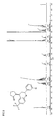
- the solid was taken up in 0.1 N HCl in isopropanol (20 ml), in each case 100 ml of diethyl ether and cyclohexane were added and crystallized overnight at 4 ° C. The colorless solid was filtered off, washed with a little diethyl ether and dried. 570 mg (1.52 mmol) of the colorless compound rac-1 hydrochloride could be recovered. The mother liquor was evaporated to dryness and the cis isomer was purified by column chromatography and converted into the hydrochloride (70 mg, 0.19 mmol of a colorless solid). Smaller amounts of rac-1 and rac-2 were separated by chiral HPLC (2x Chiralpak AD 20 ⁇ m, eluent: methanol) into the corresponding enantiomers and re-converted to the hydrochlorides.
- hexafluoroisopropanol was used instead of TFA.
- 4- tert. Butylaniline (0.50 g, 3.35 mmol)
- 3-hydroxybenzaldehyde (0.41 g, 3.35 mmol)
- 3,4-dihydro-2H-pyran (0.28 g, 3.35 mmol) were dissolved in acetonitrile (1 mL) at RT HFIP ( 0.56 g, 3.35 mmol) was added dropwise and stirred for a further 18 h at RT.
- the reaction solution was evaporated to dryness and separated by column chromatography.
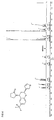
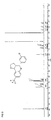
- the reaction solution was concentrated, taken up with a little ethyl acetate and crystallized with diethyl ether. A colorless solid (390 mg, 1.06 mmol, 35%) was obtained, which turned out to be a cis isomer. To separate the cis / trans isomers, the filtrate was concentrated to dryness and purified by column chromatography. The trans isomer was obtained as a colorless solid (160 mg, 0.44 mmol, 14%). Smaller amounts of rac-3 and rac-4 were separated by chiral HPLC (2x Chiralpak AD 20 ⁇ m, eluent: methanol) into the corresponding enantiomers and converted to the hydrochlorides.
- the compounds of the formula I from Examples 562 to 654 are particularly preferred because they show an increased effect according to the invention.
- the determination of the effectiveness of the compounds of the invention may, for. B. via the Eg5-ATPase activity, which is measured via an enzymatic regeneration of the product ADP to ATP by pyruvate kinase (PK) and subsequent coupling to an NADH-dependent lactate dehydrogenase (LDH) reaction.
- PK pyruvate kinase
- LDH lactate dehydrogenase
- the reaction can be monitored by changing the absorbance at 340 nm.
- the regeneration of the ATP simultaneously ensures that the substrate concentration remains constant.
- the absorbance change per unit time is analyzed graphically and a linear regression is performed in the vusually linear region of the reaction.
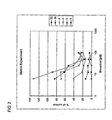
- Eg5 / KSP The combination of the antiprotozoic pentamidine and the inhibitors of kinesin ATPase Eg5 / KSP leads to increased inhibitory effects in cell proliferation tests with the colon carcinoma cell line HCT116. Eg5 inhibitors interfere with ATPase activity and inhibit the progression of the cell cycle due to a spindle pole separation error.
- the determination of the activity of the compounds of the formula I according to the invention in combination with compounds of the formula V and / or medicaments of Table I can be shown in combination assays as follows: 10 3 to 10 4 cells of a defined cell line (HCT116, Colo 205, MDA-MB 231, etc.) are seeded per well in a 96-well microtiter plate and cultured overnight under standard conditions. For the substances of the combination to be tested, 10-50 mM stock solutions in DMSO were prepared. Dilution series (usually 3-fold dilution steps) of the individual substances were combined in the form of a pipetting scheme (see scheme below) while maintaining a final DMSO concentration of 0.5% (v / v).
- the cells were mixed with the substance mixtures the next morning and incubated for a further 48 hours under culture conditions. At the end of the cultivation, a crystal violet staining of the cells was performed. After extracting the crystal violet from the fixed cells, absorbance at 550 nm was measured spectrophotometrically. It can be used as a quantitative measure of the existing adherent cells.
- Example C Injection glasses
- a solution of 100 g of an active compound of the formula I and 5 g of disodium hydrogen phosphate is dissolved in 3 l of bidistilled water with 2N hydrochloric acid adjusted to pH 6.5, sterile filtered, filled into injection jars, lyophilized under sterile conditions and sealed sterile. Each injection jar contains 5 mg of active ingredient.
- a mixture of 20 g of an active compound of the formula I is melted with 100 g of soya lecithin and 1400 g of cocoa butter, poured into molds and allowed to cool. Each suppository contains 20 mg of active ingredient.
- a solution of 1 g of an active ingredient of the formula I, 9.38 g of NaH 2 PO 4 ⁇ 2 H 2 O, 28.48 g Na 2 HPO 4 ⁇ 12 H 2 O and 0.1 g of benzalkonium chloride in 940 ml of double-one prepares distilled water. Adjust to pH 6.8, make up to 1 liter and sterilize by irradiation. This solution can be used in the form of eye drops.
- Example F ointment
- 500 mg of an active compound of the formula I are mixed with 99.5 g of Vaseline under aseptic conditions.
- a mixture of 1 kg of active ingredient of the formula I, 4 kg of lactose, 1.2 kg of potato starch, 0.2 kg of talc and 0.1 kg of magnesium stearate is compressed in the usual way into tablets, such that each tablet contains 10 mg of active ingredient.
- Tablets are pressed analogously to Example E, which are then coated in the usual way with a coating of sucrose, potato starch, talc, tragacanth and dye.
- a solution of 1 kg of active compound of the formula I in 60 l of bidistilled water is sterile filtered, filled into ampoules, lyophilized under sterile conditions and sealed sterile. Each vial contains 10 mg of active ingredient.
Landscapes
- Chemical & Material Sciences (AREA)
- Organic Chemistry (AREA)
- Health & Medical Sciences (AREA)
- Animal Behavior & Ethology (AREA)
- Veterinary Medicine (AREA)
- Public Health (AREA)
- Medicinal Chemistry (AREA)
- General Health & Medical Sciences (AREA)
- Pharmacology & Pharmacy (AREA)
- Life Sciences & Earth Sciences (AREA)
- Epidemiology (AREA)
- General Chemical & Material Sciences (AREA)
- Nuclear Medicine, Radiotherapy & Molecular Imaging (AREA)
- Chemical Kinetics & Catalysis (AREA)
- Engineering & Computer Science (AREA)
- Hematology (AREA)
- Oncology (AREA)
- Bioinformatics & Cheminformatics (AREA)
- Pharmaceuticals Containing Other Organic And Inorganic Compounds (AREA)
- Nitrogen Condensed Heterocyclic Rings (AREA)
- Plural Heterocyclic Compounds (AREA)
- Acyclic And Carbocyclic Compounds In Medicinal Compositions (AREA)
- Saccharide Compounds (AREA)
Priority Applications (6)
| Application Number | Priority Date | Filing Date | Title |
|---|---|---|---|
| PL08014660T PL2033959T3 (pl) | 2003-12-20 | 2004-12-14 | Pochodne tetrahydropiranochinolinowe |
| DK08014660.8T DK2033959T3 (da) | 2003-12-20 | 2004-12-14 | Tetrahydropyranoquinolinderivater |
| SI200430985T SI1761515T1 (sl) | 2003-12-20 | 2004-12-14 | 2-(hetero-)aril substituirani derivati tetrahidrokinolina |
| EP08014660A EP2033959B1 (de) | 2003-12-20 | 2004-12-14 | Tetrahydropyranochinolinderivate |
| PL04803833T PL1761515T3 (pl) | 2003-12-20 | 2004-12-14 | 2-(hetero-)arylo podstawione pochodne tetrahydrochinoliny |
| CY20091100093T CY1110467T1 (el) | 2003-12-20 | 2009-01-27 | 2-(ετερο-)αρυλιο υποκατεστημενα παραγωγα τετραϋδροκινολινης |
Applications Claiming Priority (4)
| Application Number | Priority Date | Filing Date | Title |
|---|---|---|---|
| DE10360154A DE10360154A1 (de) | 2003-12-20 | 2003-12-20 | Tetrahydrochinoline |
| US53996104P | 2004-01-30 | 2004-01-30 | |
| DE102004026026A DE102004026026A1 (de) | 2004-05-27 | 2004-05-27 | Tetrahydrochinoline |
| PCT/EP2004/014205 WO2005063735A1 (de) | 2003-12-20 | 2004-12-14 | 2- (hetero) -arylsubstituierte tetrahydrochinolinderivate |
Related Child Applications (1)
| Application Number | Title | Priority Date | Filing Date |
|---|---|---|---|
| EP08014660A Division EP2033959B1 (de) | 2003-12-20 | 2004-12-14 | Tetrahydropyranochinolinderivate |
Publications (2)
| Publication Number | Publication Date |
|---|---|
| EP1761515A1 EP1761515A1 (de) | 2007-03-14 |
| EP1761515B1 true EP1761515B1 (de) | 2008-11-05 |
Family
ID=43969203
Family Applications (2)
| Application Number | Title | Priority Date | Filing Date |
|---|---|---|---|
| EP04803833A Expired - Lifetime EP1761515B1 (de) | 2003-12-20 | 2004-12-14 | 2-(hetero-)aryl substituierte tetrahydrochinolinderivate |
| EP08014660A Expired - Lifetime EP2033959B1 (de) | 2003-12-20 | 2004-12-14 | Tetrahydropyranochinolinderivate |
Family Applications After (1)
| Application Number | Title | Priority Date | Filing Date |
|---|---|---|---|
| EP08014660A Expired - Lifetime EP2033959B1 (de) | 2003-12-20 | 2004-12-14 | Tetrahydropyranochinolinderivate |
Country Status (14)
| Country | Link |
|---|---|
| US (1) | US7868172B2 (https=) |
| EP (2) | EP1761515B1 (https=) |
| JP (1) | JP5237555B2 (https=) |
| AT (2) | ATE507220T1 (https=) |
| AU (1) | AU2004309028B9 (https=) |
| BR (1) | BRPI0417838A (https=) |
| CA (1) | CA2550350C (https=) |
| DE (1) | DE502004012458D1 (https=) |
| DK (2) | DK2033959T3 (https=) |
| ES (1) | ES2315727T3 (https=) |
| PL (2) | PL2033959T3 (https=) |
| PT (2) | PT2033959E (https=) |
| SI (2) | SI1761515T1 (https=) |
| WO (1) | WO2005063735A1 (https=) |
Cited By (1)
| Publication number | Priority date | Publication date | Assignee | Title |
|---|---|---|---|---|
| WO2011009523A1 (en) | 2009-07-24 | 2011-01-27 | Merck Patent Gmbh | Eg5 as biomarker in rare thoracic cancer |
Families Citing this family (23)
| Publication number | Priority date | Publication date | Assignee | Title |
|---|---|---|---|---|
| GB0219660D0 (en) | 2002-08-23 | 2002-10-02 | Astrazeneca Ab | Therapeutic use |
| GB0403744D0 (en) | 2004-02-20 | 2004-03-24 | Astrazeneca Ab | Chemical process |
| GB0425854D0 (en) * | 2004-11-25 | 2004-12-29 | Astrazeneca Ab | Therapeutic treatment |
| DE102005027170A1 (de) * | 2005-06-13 | 2006-12-14 | Merck Patent Gmbh | Substituierte Tetrahydrochinoline |
| US7875721B2 (en) | 2005-08-04 | 2011-01-25 | Stc.Unm | Compounds for binding to ERα/β and GPR30, methods of treating disease states and conditions mediated through these receptors and identification thereof |
| ES2537759T3 (es) * | 2006-06-19 | 2015-06-11 | Merck Patent Gmbh | Compuestos enriquecidos enantioméricamente y proceso |
| DE102007013856A1 (de) | 2007-03-20 | 2008-09-25 | Merck Patent Gmbh | Substituierte Tetrahydropyrrolochinoline |
| DE102007013855A1 (de) * | 2007-03-20 | 2008-09-25 | Merck Patent Gmbh | Substituierte Tetrahydrochinoline |
| DE102007013854A1 (de) | 2007-03-20 | 2008-09-25 | Merck Patent Gmbh | Tetrahydrochinoline |
| DE102007021862A1 (de) * | 2007-05-10 | 2008-11-13 | Merck Patent Gmbh | Wässrige pharmazeutische Zubereitung |
| KR20100047869A (ko) * | 2007-07-19 | 2010-05-10 | 디에스엠 아이피 어셋츠 비.브이. | 친유성 헬스 성분의 정제화가능한 배합물 |
| CA2709571C (en) * | 2007-12-18 | 2014-03-11 | Merck Patent Gmbh | Process for preparing tetrahydroquinoline derivatives |
| EP2291355A4 (en) * | 2008-01-04 | 2011-08-03 | Panjab University | NOVEL TETRAHYDROCHINOLINE AS AN AROMATASE INHIBITOR |
| EP2620438A1 (en) | 2012-01-24 | 2013-07-31 | Laboratorios Del. Dr. Esteve, S.A. | Substituted pyrano and furanoquinolines, their preparation and use as medicaments |
| EP2647638A1 (en) * | 2012-04-02 | 2013-10-09 | Almirall, S.A. | Substituted tricyclic compounds with activity towards ep1 receptors |
| US9498540B2 (en) | 2013-03-15 | 2016-11-22 | Novartis Ag | Cell proliferation inhibitors and conjugates thereof |
| JP6553632B2 (ja) | 2013-11-18 | 2019-07-31 | フォーマ セラピューティクス,インコーポレイテッド | Betブロモドメイン阻害剤としてのテトラヒドロキノリン組成物 |
| CN106029076B (zh) | 2013-11-18 | 2019-06-07 | 福马疗法公司 | 作为bet溴域抑制剂的苯并哌嗪组合物 |
| WO2017214468A1 (en) | 2016-06-09 | 2017-12-14 | Tien Yang Der | Nanodroplet compositions for the efficient delivery of anti-cancer agents |
| CN110684031B (zh) * | 2019-08-14 | 2021-07-02 | 西北大学 | 一种反式-四氢呋喃/吡喃并四氢喹啉衍生手性化合物的不对称合成方法 |
| EP4175637A4 (en) * | 2020-07-02 | 2024-08-07 | Purdue Research Foundation | Tetrahydro-3h-pyrazolo quinolone and tetrahydro-3h-pyrrolo[3,2-f]quinoline-containing compounds and uses thereof |
| IL303307A (en) | 2020-12-25 | 2023-07-01 | Toray Industries | Tetrahydroquinoline derivative and its medical use |
| JPWO2023249106A1 (https=) | 2022-06-24 | 2023-12-28 |
Family Cites Families (7)
| Publication number | Priority date | Publication date | Assignee | Title |
|---|---|---|---|---|
| ES2204910T3 (es) * | 1992-10-01 | 2004-05-01 | The Trustees Of Columbia University In The City Of New York | Bibliotecas quimicas combinatorias complejas codificadas con señales. |
| CN1154640C (zh) * | 1993-10-01 | 2004-06-23 | 纽约市哥伦比亚大学理事 | 用标示物编码的多元组合化学库 |
| EP1187633A4 (en) | 1999-04-08 | 2005-05-11 | Arch Dev Corp | USE OF ANTI-VEGF ANTIBODIES TO ENHANCE RADIATION IN ANTICANCER THERAPY |
| KR100826485B1 (ko) * | 1999-10-14 | 2008-05-02 | 가켄 세야쿠 가부시키가이샤 | 테트라히드로퀴놀린 유도체 |
| IL158083A0 (en) * | 2001-03-29 | 2004-03-28 | Bristol Myers Squibb Co | A PHARMACEUTICAL COMPOSITION CONTAINING AN Eg5 PROTEIN INHIBITOR |
| US7250423B2 (en) * | 2001-09-24 | 2007-07-31 | Chao-Jun Li | Methods for synthesizing heterocycles and therapeutic use of the heterocycles for cancers |
| DE10236910A1 (de) * | 2002-08-12 | 2004-03-11 | Grünenthal GmbH | Substituierte 1,2,3,4-Tetrahydrochinolinderivate |
-
2004
- 2004-12-14 AT AT08014660T patent/ATE507220T1/de active
- 2004-12-14 DK DK08014660.8T patent/DK2033959T3/da active
- 2004-12-14 WO PCT/EP2004/014205 patent/WO2005063735A1/de not_active Ceased
- 2004-12-14 BR BRPI0417838-6A patent/BRPI0417838A/pt not_active IP Right Cessation
- 2004-12-14 CA CA2550350A patent/CA2550350C/en not_active Expired - Fee Related
- 2004-12-14 SI SI200430985T patent/SI1761515T1/sl unknown
- 2004-12-14 JP JP2006544304A patent/JP5237555B2/ja not_active Expired - Fee Related
- 2004-12-14 PL PL08014660T patent/PL2033959T3/pl unknown
- 2004-12-14 SI SI200431714T patent/SI2033959T1/sl unknown
- 2004-12-14 AT AT04803833T patent/ATE413393T1/de active
- 2004-12-14 AU AU2004309028A patent/AU2004309028B9/en not_active Ceased
- 2004-12-14 ES ES04803833T patent/ES2315727T3/es not_active Expired - Lifetime
- 2004-12-14 PT PT08014660T patent/PT2033959E/pt unknown
- 2004-12-14 US US10/583,689 patent/US7868172B2/en not_active Expired - Fee Related
- 2004-12-14 DK DK04803833T patent/DK1761515T3/da active
- 2004-12-14 PL PL04803833T patent/PL1761515T3/pl unknown
- 2004-12-14 EP EP04803833A patent/EP1761515B1/de not_active Expired - Lifetime
- 2004-12-14 EP EP08014660A patent/EP2033959B1/de not_active Expired - Lifetime
- 2004-12-14 DE DE502004012458T patent/DE502004012458D1/de not_active Expired - Lifetime
- 2004-12-14 PT PT04803833T patent/PT1761515E/pt unknown
Cited By (1)
| Publication number | Priority date | Publication date | Assignee | Title |
|---|---|---|---|---|
| WO2011009523A1 (en) | 2009-07-24 | 2011-01-27 | Merck Patent Gmbh | Eg5 as biomarker in rare thoracic cancer |
Also Published As
| Publication number | Publication date |
|---|---|
| US20070203167A1 (en) | 2007-08-30 |
| DE502004012458D1 (de) | 2011-06-09 |
| EP2033959A1 (de) | 2009-03-11 |
| ES2315727T3 (es) | 2009-04-01 |
| CA2550350C (en) | 2013-03-12 |
| SI2033959T1 (sl) | 2011-08-31 |
| EP1761515A1 (de) | 2007-03-14 |
| WO2005063735A1 (de) | 2005-07-14 |
| AU2004309028A1 (en) | 2005-07-14 |
| PT1761515E (pt) | 2009-02-11 |
| ATE507220T1 (de) | 2011-05-15 |
| PL1761515T3 (pl) | 2009-04-30 |
| EP2033959B1 (de) | 2011-04-27 |
| DK2033959T3 (da) | 2011-07-25 |
| SI1761515T1 (sl) | 2009-02-28 |
| JP5237555B2 (ja) | 2013-07-17 |
| ATE413393T1 (de) | 2008-11-15 |
| PL2033959T3 (pl) | 2011-09-30 |
| AU2004309028B9 (en) | 2011-06-16 |
| PT2033959E (pt) | 2011-07-29 |
| BRPI0417838A (pt) | 2007-04-17 |
| DK1761515T3 (da) | 2009-02-16 |
| US7868172B2 (en) | 2011-01-11 |
| AU2004309028B2 (en) | 2011-04-21 |
| CA2550350A1 (en) | 2005-07-14 |
| JP2007515419A (ja) | 2007-06-14 |
Similar Documents
| Publication | Publication Date | Title |
|---|---|---|
| EP1761515B1 (de) | 2-(hetero-)aryl substituierte tetrahydrochinolinderivate | |
| EP2193118B1 (de) | Piperidin- und piperazinderivate zur behandlung von tumoren | |
| EP2104664A1 (de) | Tetrahydrobenzoisoxazole- und tetrahydroindazole-derivate als modulatoren der mitotische motor-protein | |
| EP2193122B1 (de) | Imidazolderivate | |
| DE102007047735A1 (de) | Thiazolderivate | |
| EP1885702A2 (de) | Chinazolinone | |
| EP2121700B1 (de) | Substituierte tetrahydrochinoline | |
| DE102007013854A1 (de) | Tetrahydrochinoline | |
| EP1891011B1 (de) | Tetrahydrochinoline zur verwendung als modulatoren des mitotischen motor- protein eg5 | |
| EP1891076B1 (de) | Substituierte tetrahydrochinoline | |
| EP1891013B1 (de) | Tetrahydrochinolinderivate | |
| EP2121684A1 (de) | Substituierte tetrahydropyrrolochinoline | |
| EP1858860A1 (de) | Phthalazinone | |
| EP1778694A1 (de) | Tetrahydrochinoline | |
| EP1853550A1 (de) | Indane | |
| EP1747214A2 (de) | Dihydrobenzothiophene |
Legal Events
| Date | Code | Title | Description |
|---|---|---|---|
| PUAI | Public reference made under article 153(3) epc to a published international application that has entered the european phase |
Free format text: ORIGINAL CODE: 0009012 |
|
| 17P | Request for examination filed |
Effective date: 20060415 |
|
| AK | Designated contracting states |
Kind code of ref document: A1 Designated state(s): AT BE BG CH CY CZ DE DK EE ES FI FR GB GR HU IE IS IT LI LT LU MC NL PL PT RO SE SI SK TR |
|
| AX | Request for extension of the european patent |
Extension state: LV |
|
| RAX | Requested extension states of the european patent have changed |
Extension state: LV Payment date: 20060415 |
|
| 17Q | First examination report despatched |
Effective date: 20070411 |
|
| RIN1 | Information on inventor provided before grant (corrected) |
Inventor name: ZENKE, FRANK Inventor name: REUBOLD, HELMUT Inventor name: GLEITZ, JOHANNES Inventor name: FINSINGER, DIRK Inventor name: EMDE, ULRICH Inventor name: SCHIEMANN, KAI |
|
| GRAP | Despatch of communication of intention to grant a patent |
Free format text: ORIGINAL CODE: EPIDOSNIGR1 |
|
| GRAS | Grant fee paid |
Free format text: ORIGINAL CODE: EPIDOSNIGR3 |
|
| GRAA | (expected) grant |
Free format text: ORIGINAL CODE: 0009210 |
|
| AK | Designated contracting states |
Kind code of ref document: B1 Designated state(s): AT BE BG CH CY CZ DE DK EE ES FI FR GB GR HU IE IS IT LI LT LU MC NL PL PT RO SE SI SK TR |
|
| AX | Request for extension of the european patent |
Extension state: LV |
|
| REG | Reference to a national code |
Ref country code: GB Ref legal event code: FG4D Free format text: NOT ENGLISH |
|
| REG | Reference to a national code |
Ref country code: CH Ref legal event code: EP |
|
| REG | Reference to a national code |
Ref country code: IE Ref legal event code: FG4D Free format text: LANGUAGE OF EP DOCUMENT: GERMAN |
|
| REF | Corresponds to: |
Ref document number: 502004008434 Country of ref document: DE Date of ref document: 20081218 Kind code of ref document: P |
|
| REG | Reference to a national code |
Ref country code: RO Ref legal event code: EPE |
|
| REG | Reference to a national code |
Ref country code: PT Ref legal event code: SC4A Free format text: AVAILABILITY OF NATIONAL TRANSLATION Effective date: 20090130 |
|
| REG | Reference to a national code |
Ref country code: GR Ref legal event code: EP Ref document number: 20090400123 Country of ref document: GR Ref country code: DK Ref legal event code: T3 |
|
| REG | Reference to a national code |
Ref country code: SE Ref legal event code: TRGR |
|
| REG | Reference to a national code |
Ref country code: ES Ref legal event code: FG2A Ref document number: 2315727 Country of ref document: ES Kind code of ref document: T3 |
|
| REG | Reference to a national code |
Ref country code: PL Ref legal event code: T3 |
|
| REG | Reference to a national code |
Ref country code: HU Ref legal event code: AG4A Ref document number: E004974 Country of ref document: HU |
|
| PLBE | No opposition filed within time limit |
Free format text: ORIGINAL CODE: 0009261 |
|
| STAA | Information on the status of an ep patent application or granted ep patent |
Free format text: STATUS: NO OPPOSITION FILED WITHIN TIME LIMIT |
|
| 26N | No opposition filed |
Effective date: 20090806 |
|
| PGFP | Annual fee paid to national office [announced via postgrant information from national office to epo] |
Ref country code: PL Payment date: 20101104 Year of fee payment: 7 Ref country code: RO Payment date: 20101112 Year of fee payment: 7 Ref country code: SI Payment date: 20101109 Year of fee payment: 7 Ref country code: SK Payment date: 20101115 Year of fee payment: 7 |
|
| PGFP | Annual fee paid to national office [announced via postgrant information from national office to epo] |
Ref country code: TR Payment date: 20101123 Year of fee payment: 7 |
|
| PGFP | Annual fee paid to national office [announced via postgrant information from national office to epo] |
Ref country code: IS Payment date: 20111108 Year of fee payment: 8 Ref country code: CZ Payment date: 20111124 Year of fee payment: 8 Ref country code: MC Payment date: 20111128 Year of fee payment: 8 Ref country code: EE Payment date: 20111116 Year of fee payment: 8 Ref country code: LT Payment date: 20111116 Year of fee payment: 8 Ref country code: BG Payment date: 20111117 Year of fee payment: 8 |
|
| PGFP | Annual fee paid to national office [announced via postgrant information from national office to epo] |
Ref country code: CY Payment date: 20111130 Year of fee payment: 8 |
|
| REG | Reference to a national code |
Ref country code: LT Ref legal event code: MM4D Effective date: 20121214 |
|
| PG25 | Lapsed in a contracting state [announced via postgrant information from national office to epo] |
Ref country code: CZ Free format text: LAPSE BECAUSE OF NON-PAYMENT OF DUE FEES Effective date: 20121214 Ref country code: MC Free format text: LAPSE BECAUSE OF NON-PAYMENT OF DUE FEES Effective date: 20121231 Ref country code: LT Free format text: LAPSE BECAUSE OF NON-PAYMENT OF DUE FEES Effective date: 20121214 Ref country code: CY Free format text: LAPSE BECAUSE OF NON-PAYMENT OF DUE FEES Effective date: 20121214 |
|
| REG | Reference to a national code |
Ref country code: SI Ref legal event code: KO00 Effective date: 20130722 |
|
| REG | Reference to a national code |
Ref country code: SK Ref legal event code: MM4A Ref document number: E 4791 Country of ref document: SK Effective date: 20121214 |
|
| REG | Reference to a national code |
Ref country code: EE Ref legal event code: MM4A Ref document number: E002925 Country of ref document: EE Effective date: 20121231 |
|
| PG25 | Lapsed in a contracting state [announced via postgrant information from national office to epo] |
Ref country code: SK Free format text: LAPSE BECAUSE OF NON-PAYMENT OF DUE FEES Effective date: 20121214 Ref country code: IS Free format text: LAPSE BECAUSE OF FAILURE TO SUBMIT A TRANSLATION OF THE DESCRIPTION OR TO PAY THE FEE WITHIN THE PRESCRIBED TIME-LIMIT Effective date: 20130701 Ref country code: SI Free format text: LAPSE BECAUSE OF NON-PAYMENT OF DUE FEES Effective date: 20121215 Ref country code: RO Free format text: LAPSE BECAUSE OF NON-PAYMENT OF DUE FEES Effective date: 20121214 Ref country code: EE Free format text: LAPSE BECAUSE OF NON-PAYMENT OF DUE FEES Effective date: 20121231 |
|
| PGFP | Annual fee paid to national office [announced via postgrant information from national office to epo] |
Ref country code: DK Payment date: 20131210 Year of fee payment: 10 |
|
| PGFP | Annual fee paid to national office [announced via postgrant information from national office to epo] |
Ref country code: PT Payment date: 20130614 Year of fee payment: 10 Ref country code: AT Payment date: 20131126 Year of fee payment: 10 Ref country code: IE Payment date: 20131210 Year of fee payment: 10 Ref country code: SE Payment date: 20131211 Year of fee payment: 10 |
|
| PG25 | Lapsed in a contracting state [announced via postgrant information from national office to epo] |
Ref country code: PL Free format text: LAPSE BECAUSE OF NON-PAYMENT OF DUE FEES Effective date: 20121214 |
|
| PGFP | Annual fee paid to national office [announced via postgrant information from national office to epo] |
Ref country code: HU Payment date: 20131125 Year of fee payment: 10 Ref country code: NL Payment date: 20131109 Year of fee payment: 10 Ref country code: FI Payment date: 20131210 Year of fee payment: 10 Ref country code: GR Payment date: 20131114 Year of fee payment: 10 Ref country code: LU Payment date: 20131210 Year of fee payment: 10 |
|
| PGFP | Annual fee paid to national office [announced via postgrant information from national office to epo] |
Ref country code: BE Payment date: 20131217 Year of fee payment: 10 |
|
| PG25 | Lapsed in a contracting state [announced via postgrant information from national office to epo] |
Ref country code: TR Free format text: LAPSE BECAUSE OF NON-PAYMENT OF DUE FEES Effective date: 20121214 |
|
| PG25 | Lapsed in a contracting state [announced via postgrant information from national office to epo] |
Ref country code: BG Free format text: LAPSE BECAUSE OF NON-PAYMENT OF DUE FEES Effective date: 20121231 |
|
| REG | Reference to a national code |
Ref country code: PT Ref legal event code: MM4A Free format text: LAPSE DUE TO NON-PAYMENT OF FEES Effective date: 20150615 |
|
| PG25 | Lapsed in a contracting state [announced via postgrant information from national office to epo] |
Ref country code: BE Free format text: LAPSE BECAUSE OF NON-PAYMENT OF DUE FEES Effective date: 20141231 |
|
| REG | Reference to a national code |
Ref country code: DK Ref legal event code: EBP Effective date: 20141231 |
|
| REG | Reference to a national code |
Ref country code: NL Ref legal event code: V1 Effective date: 20150701 |
|
| REG | Reference to a national code |
Ref country code: NL Ref legal event code: V1 Effective date: 20150701 |
|
| PG25 | Lapsed in a contracting state [announced via postgrant information from national office to epo] |
Ref country code: SE Free format text: LAPSE BECAUSE OF NON-PAYMENT OF DUE FEES Effective date: 20141215 Ref country code: FI Free format text: LAPSE BECAUSE OF NON-PAYMENT OF DUE FEES Effective date: 20141214 Ref country code: LU Free format text: LAPSE BECAUSE OF NON-PAYMENT OF DUE FEES Effective date: 20141214 Ref country code: PT Free format text: LAPSE BECAUSE OF NON-PAYMENT OF DUE FEES Effective date: 20150615 |
|
| REG | Reference to a national code |
Ref country code: SE Ref legal event code: EUG |
|
| REG | Reference to a national code |
Ref country code: AT Ref legal event code: MM01 Ref document number: 413393 Country of ref document: AT Kind code of ref document: T Effective date: 20141214 |
|
| REG | Reference to a national code |
Ref country code: GR Ref legal event code: ML Ref document number: 20090400123 Country of ref document: GR Effective date: 20150722 |
|
| PG25 | Lapsed in a contracting state [announced via postgrant information from national office to epo] |
Ref country code: NL Free format text: LAPSE BECAUSE OF NON-PAYMENT OF DUE FEES Effective date: 20150701 |
|
| PG25 | Lapsed in a contracting state [announced via postgrant information from national office to epo] |
Ref country code: IE Free format text: LAPSE BECAUSE OF NON-PAYMENT OF DUE FEES Effective date: 20141214 |
|
| REG | Reference to a national code |
Ref country code: FR Ref legal event code: PLFP Year of fee payment: 12 |
|
| PG25 | Lapsed in a contracting state [announced via postgrant information from national office to epo] |
Ref country code: HU Free format text: LAPSE BECAUSE OF NON-PAYMENT OF DUE FEES Effective date: 20141215 Ref country code: GR Free format text: LAPSE BECAUSE OF NON-PAYMENT OF DUE FEES Effective date: 20150722 Ref country code: AT Free format text: LAPSE BECAUSE OF NON-PAYMENT OF DUE FEES Effective date: 20141214 |
|
| PG25 | Lapsed in a contracting state [announced via postgrant information from national office to epo] |
Ref country code: DK Free format text: LAPSE BECAUSE OF NON-PAYMENT OF DUE FEES Effective date: 20141231 |
|
| REG | Reference to a national code |
Ref country code: FR Ref legal event code: PLFP Year of fee payment: 13 |
|
| REG | Reference to a national code |
Ref country code: FR Ref legal event code: PLFP Year of fee payment: 14 |
|
| PGFP | Annual fee paid to national office [announced via postgrant information from national office to epo] |
Ref country code: DE Payment date: 20201201 Year of fee payment: 17 Ref country code: IT Payment date: 20201110 Year of fee payment: 17 Ref country code: FR Payment date: 20201112 Year of fee payment: 17 Ref country code: CH Payment date: 20201215 Year of fee payment: 17 Ref country code: GB Payment date: 20201203 Year of fee payment: 17 |
|
| PGFP | Annual fee paid to national office [announced via postgrant information from national office to epo] |
Ref country code: ES Payment date: 20210119 Year of fee payment: 17 |
|
| REG | Reference to a national code |
Ref country code: DE Ref legal event code: R119 Ref document number: 502004008434 Country of ref document: DE |
|
| REG | Reference to a national code |
Ref country code: CH Ref legal event code: PL |
|
| GBPC | Gb: european patent ceased through non-payment of renewal fee |
Effective date: 20211214 |
|
| PG25 | Lapsed in a contracting state [announced via postgrant information from national office to epo] |
Ref country code: GB Free format text: LAPSE BECAUSE OF NON-PAYMENT OF DUE FEES Effective date: 20211214 Ref country code: DE Free format text: LAPSE BECAUSE OF NON-PAYMENT OF DUE FEES Effective date: 20220701 |
|
| PG25 | Lapsed in a contracting state [announced via postgrant information from national office to epo] |
Ref country code: FR Free format text: LAPSE BECAUSE OF NON-PAYMENT OF DUE FEES Effective date: 20211231 |
|
| PG25 | Lapsed in a contracting state [announced via postgrant information from national office to epo] |
Ref country code: LI Free format text: LAPSE BECAUSE OF NON-PAYMENT OF DUE FEES Effective date: 20211231 Ref country code: CH Free format text: LAPSE BECAUSE OF NON-PAYMENT OF DUE FEES Effective date: 20211231 |
|
| PG25 | Lapsed in a contracting state [announced via postgrant information from national office to epo] |
Ref country code: IT Free format text: LAPSE BECAUSE OF NON-PAYMENT OF DUE FEES Effective date: 20211214 |
|
| REG | Reference to a national code |
Ref country code: ES Ref legal event code: FD2A Effective date: 20230217 |
|
| PG25 | Lapsed in a contracting state [announced via postgrant information from national office to epo] |
Ref country code: ES Free format text: LAPSE BECAUSE OF NON-PAYMENT OF DUE FEES Effective date: 20211215 |