EP1753634B1 - Appareil de pilotage de moteur - Google Patents
Appareil de pilotage de moteur Download PDFInfo
- Publication number
- EP1753634B1 EP1753634B1 EP05738754A EP05738754A EP1753634B1 EP 1753634 B1 EP1753634 B1 EP 1753634B1 EP 05738754 A EP05738754 A EP 05738754A EP 05738754 A EP05738754 A EP 05738754A EP 1753634 B1 EP1753634 B1 EP 1753634B1
- Authority
- EP
- European Patent Office
- Prior art keywords
- voltage
- electric power
- terminal
- converter
- capacitor
- Prior art date
- Legal status (The legal status is an assumption and is not a legal conclusion. Google has not performed a legal analysis and makes no representation as to the accuracy of the status listed.)
- Expired - Lifetime
Links
Images

Classifications
-
- B—PERFORMING OPERATIONS; TRANSPORTING
- B60—VEHICLES IN GENERAL
- B60L—PROPULSION OF ELECTRICALLY-PROPELLED VEHICLES; SUPPLYING ELECTRIC POWER FOR AUXILIARY EQUIPMENT OF ELECTRICALLY-PROPELLED VEHICLES; ELECTRODYNAMIC BRAKE SYSTEMS FOR VEHICLES IN GENERAL; MAGNETIC SUSPENSION OR LEVITATION FOR VEHICLES; MONITORING OPERATING VARIABLES OF ELECTRICALLY-PROPELLED VEHICLES; ELECTRIC SAFETY DEVICES FOR ELECTRICALLY-PROPELLED VEHICLES
- B60L15/00—Methods, circuits, or devices for controlling the traction-motor speed of electrically-propelled vehicles
- B60L15/20—Methods, circuits, or devices for controlling the traction-motor speed of electrically-propelled vehicles for control of the vehicle or its driving motor to achieve a desired performance, e.g. speed, torque, programmed variation of speed
-
- B—PERFORMING OPERATIONS; TRANSPORTING
- B60—VEHICLES IN GENERAL
- B60L—PROPULSION OF ELECTRICALLY-PROPELLED VEHICLES; SUPPLYING ELECTRIC POWER FOR AUXILIARY EQUIPMENT OF ELECTRICALLY-PROPELLED VEHICLES; ELECTRODYNAMIC BRAKE SYSTEMS FOR VEHICLES IN GENERAL; MAGNETIC SUSPENSION OR LEVITATION FOR VEHICLES; MONITORING OPERATING VARIABLES OF ELECTRICALLY-PROPELLED VEHICLES; ELECTRIC SAFETY DEVICES FOR ELECTRICALLY-PROPELLED VEHICLES
- B60L15/00—Methods, circuits, or devices for controlling the traction-motor speed of electrically-propelled vehicles
- B60L15/007—Physical arrangements or structures of drive train converters specially adapted for the propulsion motors of electric vehicles
-
- B—PERFORMING OPERATIONS; TRANSPORTING
- B60—VEHICLES IN GENERAL
- B60L—PROPULSION OF ELECTRICALLY-PROPELLED VEHICLES; SUPPLYING ELECTRIC POWER FOR AUXILIARY EQUIPMENT OF ELECTRICALLY-PROPELLED VEHICLES; ELECTRODYNAMIC BRAKE SYSTEMS FOR VEHICLES IN GENERAL; MAGNETIC SUSPENSION OR LEVITATION FOR VEHICLES; MONITORING OPERATING VARIABLES OF ELECTRICALLY-PROPELLED VEHICLES; ELECTRIC SAFETY DEVICES FOR ELECTRICALLY-PROPELLED VEHICLES
- B60L50/00—Electric propulsion with power supplied within the vehicle
- B60L50/10—Electric propulsion with power supplied within the vehicle using propulsion power supplied by engine-driven generators, e.g. generators driven by combustion engines
- B60L50/16—Electric propulsion with power supplied within the vehicle using propulsion power supplied by engine-driven generators, e.g. generators driven by combustion engines with provision for separate direct mechanical propulsion
-
- B—PERFORMING OPERATIONS; TRANSPORTING
- B60—VEHICLES IN GENERAL
- B60L—PROPULSION OF ELECTRICALLY-PROPELLED VEHICLES; SUPPLYING ELECTRIC POWER FOR AUXILIARY EQUIPMENT OF ELECTRICALLY-PROPELLED VEHICLES; ELECTRODYNAMIC BRAKE SYSTEMS FOR VEHICLES IN GENERAL; MAGNETIC SUSPENSION OR LEVITATION FOR VEHICLES; MONITORING OPERATING VARIABLES OF ELECTRICALLY-PROPELLED VEHICLES; ELECTRIC SAFETY DEVICES FOR ELECTRICALLY-PROPELLED VEHICLES
- B60L50/00—Electric propulsion with power supplied within the vehicle
- B60L50/50—Electric propulsion with power supplied within the vehicle using propulsion power supplied by batteries or fuel cells
- B60L50/51—Electric propulsion with power supplied within the vehicle using propulsion power supplied by batteries or fuel cells characterised by AC-motors
-
- H—ELECTRICITY
- H02—GENERATION; CONVERSION OR DISTRIBUTION OF ELECTRIC POWER
- H02M—APPARATUS FOR CONVERSION BETWEEN AC AND AC, BETWEEN AC AND DC, OR BETWEEN DC AND DC, AND FOR USE WITH MAINS OR SIMILAR POWER SUPPLY SYSTEMS; CONVERSION OF DC OR AC INPUT POWER INTO SURGE OUTPUT POWER; CONTROL OR REGULATION THEREOF
- H02M3/00—Conversion of DC power input into DC power output
- H02M3/02—Conversion of DC power input into DC power output without intermediate conversion into AC
- H02M3/04—Conversion of DC power input into DC power output without intermediate conversion into AC by static converters
- H02M3/10—Conversion of DC power input into DC power output without intermediate conversion into AC by static converters using discharge tubes with control electrode or semiconductor devices with control electrode
- H02M3/145—Conversion of DC power input into DC power output without intermediate conversion into AC by static converters using discharge tubes with control electrode or semiconductor devices with control electrode using devices of a triode or transistor type requiring continuous application of a control signal
- H02M3/155—Conversion of DC power input into DC power output without intermediate conversion into AC by static converters using discharge tubes with control electrode or semiconductor devices with control electrode using devices of a triode or transistor type requiring continuous application of a control signal using semiconductor devices only
- H02M3/156—Conversion of DC power input into DC power output without intermediate conversion into AC by static converters using discharge tubes with control electrode or semiconductor devices with control electrode using devices of a triode or transistor type requiring continuous application of a control signal using semiconductor devices only with automatic control of output voltage or current, e.g. switching regulators
-
- H—ELECTRICITY
- H02—GENERATION; CONVERSION OR DISTRIBUTION OF ELECTRIC POWER
- H02M—APPARATUS FOR CONVERSION BETWEEN AC AND AC, BETWEEN AC AND DC, OR BETWEEN DC AND DC, AND FOR USE WITH MAINS OR SIMILAR POWER SUPPLY SYSTEMS; CONVERSION OF DC OR AC INPUT POWER INTO SURGE OUTPUT POWER; CONTROL OR REGULATION THEREOF
- H02M7/00—Conversion of AC power input into DC power output; Conversion of DC power input into AC power output
- H02M7/42—Conversion of DC power input into AC power output without possibility of reversal
- H02M7/44—Conversion of DC power input into AC power output without possibility of reversal by static converters
- H02M7/48—Conversion of DC power input into AC power output without possibility of reversal by static converters using discharge tubes with control electrode or semiconductor devices with control electrode
- H02M7/53—Conversion of DC power input into AC power output without possibility of reversal by static converters using discharge tubes with control electrode or semiconductor devices with control electrode using devices of a triode or transistor type requiring continuous application of a control signal
- H02M7/537—Conversion of DC power input into AC power output without possibility of reversal by static converters using discharge tubes with control electrode or semiconductor devices with control electrode using devices of a triode or transistor type requiring continuous application of a control signal using semiconductor devices only, e.g. single switched pulse inverters
- H02M7/5387—Conversion of DC power input into AC power output without possibility of reversal by static converters using discharge tubes with control electrode or semiconductor devices with control electrode using devices of a triode or transistor type requiring continuous application of a control signal using semiconductor devices only, e.g. single switched pulse inverters in a bridge configuration
-
- H—ELECTRICITY
- H02—GENERATION; CONVERSION OR DISTRIBUTION OF ELECTRIC POWER
- H02P—CONTROL OR REGULATION OF ELECTRIC MOTORS, ELECTRIC GENERATORS OR DYNAMO-ELECTRIC CONVERTERS; CONTROLLING TRANSFORMERS, REACTORS OR CHOKE COILS
- H02P27/00—Arrangements or methods for the control of AC motors characterised by the kind of supply voltage
- H02P27/04—Arrangements or methods for the control of AC motors characterised by the kind of supply voltage using variable-frequency supply voltage, e.g. inverter or converter supply voltage
- H02P27/06—Arrangements or methods for the control of AC motors characterised by the kind of supply voltage using variable-frequency supply voltage, e.g. inverter or converter supply voltage using DC to AC converters or inverters
-
- B—PERFORMING OPERATIONS; TRANSPORTING
- B60—VEHICLES IN GENERAL
- B60L—PROPULSION OF ELECTRICALLY-PROPELLED VEHICLES; SUPPLYING ELECTRIC POWER FOR AUXILIARY EQUIPMENT OF ELECTRICALLY-PROPELLED VEHICLES; ELECTRODYNAMIC BRAKE SYSTEMS FOR VEHICLES IN GENERAL; MAGNETIC SUSPENSION OR LEVITATION FOR VEHICLES; MONITORING OPERATING VARIABLES OF ELECTRICALLY-PROPELLED VEHICLES; ELECTRIC SAFETY DEVICES FOR ELECTRICALLY-PROPELLED VEHICLES
- B60L2210/00—Converter types
- B60L2210/10—DC to DC converters
- B60L2210/14—Boost converters
-
- B—PERFORMING OPERATIONS; TRANSPORTING
- B60—VEHICLES IN GENERAL
- B60L—PROPULSION OF ELECTRICALLY-PROPELLED VEHICLES; SUPPLYING ELECTRIC POWER FOR AUXILIARY EQUIPMENT OF ELECTRICALLY-PROPELLED VEHICLES; ELECTRODYNAMIC BRAKE SYSTEMS FOR VEHICLES IN GENERAL; MAGNETIC SUSPENSION OR LEVITATION FOR VEHICLES; MONITORING OPERATING VARIABLES OF ELECTRICALLY-PROPELLED VEHICLES; ELECTRIC SAFETY DEVICES FOR ELECTRICALLY-PROPELLED VEHICLES
- B60L2210/00—Converter types
- B60L2210/20—AC to AC converters
-
- H—ELECTRICITY
- H02—GENERATION; CONVERSION OR DISTRIBUTION OF ELECTRIC POWER
- H02M—APPARATUS FOR CONVERSION BETWEEN AC AND AC, BETWEEN AC AND DC, OR BETWEEN DC AND DC, AND FOR USE WITH MAINS OR SIMILAR POWER SUPPLY SYSTEMS; CONVERSION OF DC OR AC INPUT POWER INTO SURGE OUTPUT POWER; CONTROL OR REGULATION THEREOF
- H02M1/00—Details of apparatus for conversion
- H02M1/0067—Converter structures employing plural converter units, other than for parallel operation of the units on a single load
- H02M1/007—Plural converter units in cascade
-
- Y—GENERAL TAGGING OF NEW TECHNOLOGICAL DEVELOPMENTS; GENERAL TAGGING OF CROSS-SECTIONAL TECHNOLOGIES SPANNING OVER SEVERAL SECTIONS OF THE IPC; TECHNICAL SUBJECTS COVERED BY FORMER USPC CROSS-REFERENCE ART COLLECTIONS [XRACs] AND DIGESTS
- Y02—TECHNOLOGIES OR APPLICATIONS FOR MITIGATION OR ADAPTATION AGAINST CLIMATE CHANGE
- Y02T—CLIMATE CHANGE MITIGATION TECHNOLOGIES RELATED TO TRANSPORTATION
- Y02T10/00—Road transport of goods or passengers
- Y02T10/60—Other road transportation technologies with climate change mitigation effect
- Y02T10/64—Electric machine technologies in electromobility
-
- Y—GENERAL TAGGING OF NEW TECHNOLOGICAL DEVELOPMENTS; GENERAL TAGGING OF CROSS-SECTIONAL TECHNOLOGIES SPANNING OVER SEVERAL SECTIONS OF THE IPC; TECHNICAL SUBJECTS COVERED BY FORMER USPC CROSS-REFERENCE ART COLLECTIONS [XRACs] AND DIGESTS
- Y02—TECHNOLOGIES OR APPLICATIONS FOR MITIGATION OR ADAPTATION AGAINST CLIMATE CHANGE
- Y02T—CLIMATE CHANGE MITIGATION TECHNOLOGIES RELATED TO TRANSPORTATION
- Y02T10/00—Road transport of goods or passengers
- Y02T10/60—Other road transportation technologies with climate change mitigation effect
- Y02T10/70—Energy storage systems for electromobility, e.g. batteries
-
- Y—GENERAL TAGGING OF NEW TECHNOLOGICAL DEVELOPMENTS; GENERAL TAGGING OF CROSS-SECTIONAL TECHNOLOGIES SPANNING OVER SEVERAL SECTIONS OF THE IPC; TECHNICAL SUBJECTS COVERED BY FORMER USPC CROSS-REFERENCE ART COLLECTIONS [XRACs] AND DIGESTS
- Y02—TECHNOLOGIES OR APPLICATIONS FOR MITIGATION OR ADAPTATION AGAINST CLIMATE CHANGE
- Y02T—CLIMATE CHANGE MITIGATION TECHNOLOGIES RELATED TO TRANSPORTATION
- Y02T10/00—Road transport of goods or passengers
- Y02T10/60—Other road transportation technologies with climate change mitigation effect
- Y02T10/7072—Electromobility specific charging systems or methods for batteries, ultracapacitors, supercapacitors or double-layer capacitors
-
- Y—GENERAL TAGGING OF NEW TECHNOLOGICAL DEVELOPMENTS; GENERAL TAGGING OF CROSS-SECTIONAL TECHNOLOGIES SPANNING OVER SEVERAL SECTIONS OF THE IPC; TECHNICAL SUBJECTS COVERED BY FORMER USPC CROSS-REFERENCE ART COLLECTIONS [XRACs] AND DIGESTS
- Y02—TECHNOLOGIES OR APPLICATIONS FOR MITIGATION OR ADAPTATION AGAINST CLIMATE CHANGE
- Y02T—CLIMATE CHANGE MITIGATION TECHNOLOGIES RELATED TO TRANSPORTATION
- Y02T10/00—Road transport of goods or passengers
- Y02T10/60—Other road transportation technologies with climate change mitigation effect
- Y02T10/72—Electric energy management in electromobility
Definitions
- the present invention relates to a motor drive apparatus for driving a motor, and particularly to a motor drive apparatus capable of stably driving a motor even when a sudden change occurs in load.
- Hybrid vehicles and electric vehicles have recently been of great interest as environment-friendly vehicles.
- a hybrid vehicle has, as its motive power sources, a DC (direct current) power supply, an inverter and a motor driven by the inverter in addition to a conventional engine. More specifically, the engine is driven to secure the motive power source and a DC voltage from the DC power supply is converted by the inverter into an AC (alternating current) voltage to be used for rotating the motor and thereby securing the motive power source as well.
- An electric vehicle refers to a vehicle that has, as its motive power sources, a DC power supply, an inverter and a motor driven by the inverter.
- Japanese Patent Laying-Open No. 09-240560 discloses a power feeding apparatus for an electric-power-assisted vehicle, including a human-power drive system supplying a pedaling force to drive wheels, an electric-power drive system supplying an auxiliary force from an electric motor to the drive wheels and auxiliary force control means for variably controlling the auxiliary force according to the pedaling force and the vehicle speed, and further including voltage step-up means for boosting a battery voltage to a voltage according to an auxiliary force that is requested by the auxiliary force control means and smoothing means for smoothing the boosted voltage and supplying the smoothed voltage to the electric motor.
- the voltage step-up means is thus used to boost the battery voltage to a voltage that is necessary for obtaining a target auxiliary force. Accordingly, the battery weight as well as the battery cost can be reduced.
- the voltage boosted by the voltage step-up means is further smoothed by the smoothing means.
- output current values from the battery are averaged and accordingly the battery life can be extended.
- Conventional motor drive apparatuses generally employ a DC-DC switching power supply, as voltage step-up means for boosting a battery voltage to a voltage according to a necessary auxiliary force.
- the DC-DC switching power supply performs its switching operation in response to a voltage command signal that is input from a control circuit so as to boost a voltage to a desired voltage and output the boosted voltage.
- the voltage command signal that is input to the switching power supply is generated, by a control circuit, by calculating an auxiliary force to be generated by the electric-power drive system based on detection signals from a pedaling force sensor and a vehicle speed sensor to determine a target electric-current value necessary for obtaining the auxiliary force and variably control a requested voltage so that electric current flowing through the electric motor is at a target electric-current value.
- the control circuit is required to have a high-speed performance that is enough to address the sudden change in load. For satisfying this requirement, higher accuracy and larger size of the control circuit are indispensable, resulting in a new problem in terms of device size and cost.
- the present invention has been made for solving the above-described problem and an object of the present invention is to provide a motor drive apparatus capable of supplying electric power in simple and stable manner even when a sudden change occurs in load.
- a motor drive apparatus includes: a drive circuit driving a motor; a voltage converter including a switching element and using a switching operation of the switching element for converting a DC voltage between a power supply and the drive circuit; a capacitor element provided between the voltage converter and the drive circuit for smoothing the converted DC voltage to input the smoothed DC voltage to the drive circuit; and a control circuit controlling the switching operation based on magnitude of a required output of the motor.
- the drive circuit is supplied with electric power, according to the required output of the motor, from the power supply and from the capacitor element.
- the control circuit controls the switching operation so that the electric power supplied from the capacitor element to the drive circuit is larger than the electric power supplied from the power supply to the drive circuit when the magnitude of the required output is out of a predetermined variation width.
- control circuit makes a determination as to whether the magnitude of the required output is within a range of the predetermined variation width and determines a target voltage of the switching operation according to result of the determination.
- control circuit has a predetermined control width of the target voltage of the switching operation and sets, when the magnitude of the required output is out of the range of the predetermined variation width, the target voltage of the switching operation at a lower voltage level within a range of the predetermined control width.
- the predetermined control width of the target voltage of the switching operation has its upper limit and a voltage level corresponding to the upper limit is higher than a voltage level corresponding to an upper limit of the predetermined variation width of the magnitude of the required output.
- the motor drive apparatus further includes a voltage sensor detecting a terminal-to-terminal voltage of the capacitor element.
- the control circuit controls the switching operation so that the terminal-to-terminal voltage of the capacitor element is equal to the target voltage of the switching operation.
- the motor drive apparatus further includes: a first electric-current sensor detecting a power-supply current input/output to/from the power supply; a second electric-current sensor detecting motor drive current for driving the motor; and a voltage sensor detecting a terminal-to-terminal voltage of the capacitor element.
- the control circuit calculates the electric power supplied from the capacitor element based on the power supply current and the motor drive current detected respectively by the first electric-current sensor and the second electric-current sensor as well as the terminal-to-terminal voltage of the capacitor element detected by the voltage sensor, determines the electric power supplied from the power supply so that the electric power supplied from the power supply is smaller than the calculated electric power supplied from the capacitor element, and determines the target voltage of the switching operation as the terminal-to-terminal voltage of the capacitor element when the determined electric power is supplied from the power supply.
- the control circuit calculates stored electric power that is stored in the capacitor element based on the terminal-to-terminal voltage of the capacitor element that is detected by the voltage sensor and determines the target voltage of the switching operation so that the calculated stored electric power is at least a predetermined threshold value.
- control circuit determines, when the stored electric power is smaller than the predetermined threshold value, the target voltage of the switching operation as the terminal-to-terminal voltage of the capacitor element when the stored electric power is equal to the predetermined threshold value.
- the predetermined threshold value has a level of the stored electric power that allows electric power to be supplied from the capacitor element to the drive circuit.
- the capacitor element to store electrostatic energy of at least a predetermined threshold value, a target voltage of the switching operation of the voltage converter is determined. Accordingly, the capacitor element can be kept in a state that ensures supply of electric power in response to any required output.
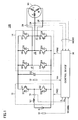
- Fig. 1 is a schematic block diagram of a motor drive apparatus according to a first embodiment of the present invention.
- motor drive apparatus 100 includes a DC power supply B, voltage sensors 10, 13, electric-current sensors 18, 24, a capacitor C2, a voltage step-up converter 12, an inverter 14, and a control device 30.
- An AC motor M1 is a drive motor that generates torque for driving drive wheels of a hybrid vehicle or electric vehicle.
- AC motor M1 also serves as an electric generator driven by an engine and as an electric motor for the engine to start the engine for example.
- Voltage step-up converter 12 includes a reactor L1, NPN transistors Q1, Q2 and diodes D1, D2.
- reactor L1 One end of reactor L1 is connected to a power supply line of DC power supply B and the other end thereof is connected to an intermediate point between NPN transistor Q1 and NPN transistor Q2, namely between the emitter of NPN transistor Q1 and the collector of NPN transistor Q2.
- NPN transistors Q1, Q2 are connected in series between the power supply line and a ground line.
- the collector ofNPN transistor Q1 is connected to the power supply line while the emitter ofNPN transistor Q2 is connected to the ground line.
- diodes D1, D2 are respectively provided for allowing electric current to flow from the emitter to the collector.
- Inverter 14 includes a U phase arm 15, a V phase arm 16 and a W phase arm 17.
- U phase arm 15, V phase arm 16 and W phase arm 17 are provided in parallel between the power supply line and the ground line.
- U phase arm 15 is comprised ofNPN transistors Q3, Q4 connected in series
- V phase arm 16 is comprised ofNPN transistors Q5, Q6 connected in series
- W phase arm 17 is comprised ofNPN transistors Q7, Q8 connected in series.
- diodes D3 to D8 for allowing current to flow from the emitter to the collector are connected respectively.
- each phase arm is connected to one end of a corresponding one of phase coils of AC motor M1.
- AC motor M1 is a three-phase permanent-magnet motor and, one end of a U phase coil, one end of a V phase coil and one end of a W phase coil are connected at the common central junction, while the other end of the U phase coil is connected to an intermediate point between NPN transistors Q3, Q4, the other end of the V phase coil is connected to an intermediate point between NPN transistors Q5, Q6, and the other end of the W phase coil is connected to an intermediate point between NPN transistors Q7, Q8.
- DC power supply B is comprised of secondary or rechargeable cell(s), for example, of nickel hydride or lithium ion.
- Voltage sensor 10 detects a voltage Vb that is output from DC power supply B to output the detected voltage Vb to control device 30.
- Voltage step-up converter 12 boosts the DC voltage supplied from DC power supply B to provide the boosted voltage to capacitor C2. More specifically, receiving a signal PWC from control device 30, voltage step-up converter 12 boosts the DC voltage according to a period of time during which NPN transistor Q2 is turned on in response to signal PWC, and supplies the increased voltage to capacitor C2.
- voltage step-up converter 12 decreases a DC voltage supplied via capacitor C2 from inverter 14 to provide the resultant voltage to DC power supply B.
- Capacitor C2 smoothes the DC voltage from voltage step-up converter 12 to supply the smoothed DC voltage to inverter 14.
- Capacitor C2 includes for example a capacitor having a large capacitance (electric double layer capacitor).
- Voltage sensor 13 detects a terminal-to-terminal voltage Vm of capacitor C2 and outputs the detected voltage Vm to control device 30.
- inverter 14 receives the DC voltage supplied from capacitor C2, inverter 14 converts the DC voltage into an AC voltage based on a signal PWM from control device 30 to drive AC motor M1. Accordingly, AC motor M1 is driven to generate torque specified by a torque command value TR.
- inverter 14 converts an AC voltage generated by AC motor M1 into a DC voltage based on signal PWM from control device 30 to supply the resultant DC voltage to voltage step-up converter 12 via capacitor C2.
- the regenerative braking here includes braking accompanied by regenerative power generation that is effected when a driver of the hybrid vehicle or electric vehicle steps on the foot brake as well as deceleration (or stop of acceleration) accompanied by regenerative power generation that is effected when the driver releases the accelerator pedal without operating the foot brake.
- Electric-current sensor 18 detects reactor current IL flowing through reactor L1 to output the detected reactor current IL to control device 30.
- Electric-current sensor 24 detects motor current MCRT flowing through AC motor M1 to output the detected motor current MCRT to control device 30.
- Control device 30 receives, from an external ECU (Electrical Control Unit), torque command value TR and motor revolution number (number of revolutions of the motor) MRN, receives voltage Vm from voltage sensor 13, receives reactor current IL from electric-current sensor 18, and receives motor current MCRT from electric-current sensor 24. Further, control device 30 generates, based on voltage Vm, torque command value TR and motor current MCRT, signal PWM for controlling switching of NPN transistors Q3 to Q8 of inverter 14 when inverter 14 drives AC motor M1, according to a method hereinlater described, and outputs the generated signal PWM to inverter 14.
- ECU Electronic Control Unit
- control device 30 when inverter 14 drives AC motor M1, control device 30 generates, based on voltages Vb, Vm, torque command value TR and motor revolution number MRN, signal PWC for controlling switching of NPN transistors Q1, Q2 of voltage step-up converter 12, according to a method hereinlater described, and outputs the generated signal PWC to voltage step-up converter 12.
- control device 30 In the regenerative braking mode of the hybrid vehicle or electric vehicle having motor drive apparatus 100 mounted thereon, control device 30 generates, based on voltage Vm, torque command value TR and motor current MCRT, signal PWM for converting an AC voltage generated by AC motor M1 into a DC voltage, and outputs the generated signal PWM to inverter 14.
- switching of NPN transistors Q3 to Q8 of inverter 14 is controlled by signal PWM. Accordingly, inverter 14 converts the AC voltage generated by AC motor M1 into the DC voltage and supplies the DC voltage to voltage step-up converter 12.
- control device 30 in the regenerative braking mode, control device 30 generates, based on voltages Vb, Vm, torque command value TR and motor revolution number MRN, signal PWC for decreasing the DC voltage supplied from inverter 14, and outputs the generated signal PWC to voltage step-up converter 12.
- the AC voltage generated by AC motor M1 is converted into the DC voltage and decreased to be supplied to DC power supply B.
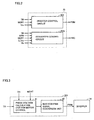
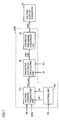
- Fig. 2 is a block diagram of control device 30 in Fig. 1 .
- control device 30 includes an inverter control circuit 301 and a converter control circuit 302a.
- Inverter control circuit 301 generates, based on torque command value TR, motor current MCRT and voltage Vm, signal PWM for turning on/off NPN transistors Q3 to Q8 of inverter 14 when AC motor M1 is driven, and outputs the generated signal PWM to inverter 14.
- inverter control circuit 301 generates, based on torque command value TR, motor current MCRT and voltage Vm, signal PWM for converting the AC voltage generated by AC motor M1 into the DC voltage, and outputs the generated signal PWM to inverter 14.
- Converter control circuit 302a generates, based on torque command value TR, voltages Vb, Vm and motor revolution number MRN, signal PWC for turning on/off NPN transistors Q1, Q2 of voltage step-up converter 12 when AC motor M1 is driven, and outputs the generated signal PWC to voltage step-up converter 12.
- converter control circuit 302a generates, in the regenerative braking mode of the hybrid vehicle or electric vehicle having motor drive apparatus 100 mounted thereon, based on torque command value TR, voltages Vb, Vm and motor revolution number MRN, signal PWC for decreasing the DC voltage from inverter 14, and outputs the generated signal PWC to voltage step-up converter 12.
- Voltage step-up converter 12 can also use signal PWC for decreasing the DC voltage so as to decrease the voltage and thus has the function of a bidirectional converter.
- Fig. 3 is a block diagram of inverter control circuit 301 in Fig. 2 .
- inverter control circuit 301 includes a phase voltage calculation unit for motor control (hereinafter phase voltage calculation unit) 41 and an inverter PWM signal conversion unit 42.
- Phase voltage calculation unit 41 receives from voltage sensor 13 an output voltage Vm of voltage step-up converter 12, namely receives an input voltage to be input to inverter 14, receives from electric-current sensor 24 motor current MCRT flowing through each phase of AC motor M1, and receives from the external ECU torque command value TR. Based on torque command value TR, motor current MCRT and voltage Vm, phase voltage calculation unit 41 calculates a voltage to be applied to the coil of each phase of AC motor M1 to output the resultant voltage to inverter PWM signal conversion unit 42.
- inverter PWM signal conversion unit 42 Based on the result of the calculation provided from phase voltage calculation unit 41, inverter PWM signal conversion unit 42 generates signal PWM for actually turning on/off each ofNPN transistors Q3 to Q8 of inverter 14 to output the generated signal PWM to each ofNPN transistors Q3 to Q8.
- switching ofNPN transistors Q3 to Q8 of inverter 14 is controlled to control the current to be flown through each phase of AC motor M1 so that AC motor M1 outputs a specified torque.
- motor current MCRT is controlled and the motor torque is output according to torque command value TR.
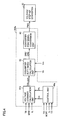
- Fig. 4 is a block diagram of converter control circuit 302a in Fig. 2 .
- converter control circuit 302a includes a voltage command calculation unit 61a, a converter duty-ratio calculation unit 62, a converter PWM signal conversion unit 63, and a control unit 64a.
- Control unit 64a receives from voltage sensor 13 output voltage Vm of voltage step-up converter 12, namely receives an input voltage to be input to inverter 14, receives from electric-current sensor 24 motor current MCRT flowing through each phase of AC motor M1, receives from electric-current sensor 18 reactor current IL flowing through reactor L1, and receives torque command value TR from the external ECU.
- control unit 64a receives torque command value TR, control unit 64a generates one of two different signals Uc, Pb according to the magnitude of the required torque, and outputs the generated signal to voltage command calculation unit 61 a.
- control unit 64a has a predetermined variation width regarding torque command value TR, and determines whether or not torque command value TR from the external ECU is within a range of the variation width.
- the predetermined variation width is defined to cover variations of the required torque that is required of motor drive apparatus 100 in a normal operation mode. Therefore, in the normal operation mode, control unit 64a determines that torque command value TR is within this range of the variation width.
- torque command value TR is at least a threshold value representing the upper limit of the variation width or at most a threshold value representing the lower limit of the variation width. In this case, control unit 64a determines that torque command value TR is out of the range of the variation width.
- control unit 64a determines electrostatic energy Uc that is electric power accumulated in capacitor C2.
- Control unit 64a also has a predetermined threshold value Pcstd regarding electrostatic energy Uc of capacitor C2, and controls voltage step-up converter 12 so that the determined electrostatic energy Uc is kept at a value that is at least threshold value Pcstd.
- Predetermined threshold value Pcstd corresponds to an amount of accumulated electric power with which capacitor C2 can supply electric power to inverter 14 even when a sudden change occur in load, as discussed below.
- electrostatic energy Uc is uniquely determined by terminal-to-terminal voltage Vm of capacitor C2.
- terminal-to-terminal voltage Vm of capacitor C2 is controlled so that electrostatic energy Uc has a value that is at least threshold value Pcstd.
- electrostatic energy Uc of capacitor C2 has predetermined threshold value Pcstd for the following reason.
- voltage step-up converter 12 boosts a DC voltage supplied from DC power supply B and provides the boosted voltage to capacitor C2.
- Capacitor C2 smoothes the DC voltage that is output from voltage step-up converter 12 and provides the smoothed DC voltage to inverter 14.
- voltage step-up converter 12 boosts the DC voltage according to a period of time during which NPN transistor Q2 is turned on in response to signal PWC from control device 30.
- capacitor C2 has to store desired electric power in advance for addressing the sudden change in load.
- threshold value Pcstd is defined as the level of electric power that allows capacitor C2 to supply electric power even when the load suddenly changes. Then, in order for electrostatic energy Uc of capacitor C2 to be at least threshold value Pcstd all the time, target voltage Vdc_com of voltage step-up converter 12 is determined.
- control unit 64a compares whether electrostatic energy Uc of capacitor C2 determined by expression (1) is larger or smaller than threshold value Pcstd. When electrostatic energy Uc is at least threshold value Pcstd, the determined value of electrostatic energy Uc is used as signal Uc to be output to voltage command calculation unit 61a. Receiving signal Uc, voltage command calculation unit 61a calculates target voltage Vdc_com based on torque command value TR and motor revolution number MRN.
- electrostatic energy Uc of capacitor C2 is smaller than threshold value Pcstd
- electrostatic energy Uc is set at threshold value Pcstd and the set value is used as signal Uc to be output to voltage command calculation unit 61a.
- signal Uc is generated as detailed above
- signal Pb is generated by control unit 64a in the following manner.
- control unit 64a determines that torque command value TR is out of the predetermined variation width, namely when any torque exceeding the variation width is required, control unit 64a determines target voltage Vdc_com of voltage step-up converter 12 so that electric power is predominantly supplied from capacitor C2 rather than DC power supply B to inverter 14.
- Supplied electric power Pc which is supplied from capacitor C2 to inverter 14 that is determined by expression (4) is applied to the relation Pc > Pb.
- supplied electric power Pb which is supplied from DC power supply B to inverter 14 is represented by the following relation: Pb ⁇ Vm ⁇ MCRT - ib and thus Pb is determined.
- the determined Pb is provided as signal Pb to voltage command calculation unit 61a.
- voltage command calculation unit 61a calculates target voltage Vdc_com of voltage step-up converter 12 for supplying the determined electric power Pb.
- control unit 64a According to the magnitude of torque command value TR, control unit 64a generates signals Uc, Pb of multiple patterns. Then, according to signals Uc, Pb, voltage command calculation unit 61a calculates target voltage Vdc_com of voltage step-up converter 12 of multiple patterns.
- capacitor C2 when torque command value TR is within the predetermined variation width, capacitor C2 stores electrostatic energy Uc of at least threshold value Pcstd. Further, when torque command value TR varies to be out of the predetermined variation width, capacitor C2, rather than of DC power supply B, predominantly supplies electric power to inverter 14. Thus, for voltage step-up converter 12, no highly accurate switching control is required even when the load suddenly changes. Therefore, electric power can simply and stably be supplied with good response to inverter 14.
- target voltage Vdc_com calculated by voltage command calculation unit 61a is output to converter duty-ratio calculation unit 62.
- converter duty-ratio calculation unit 62 calculates duty ratio DRU for flowing DC current from DC power supply B to inverter 14 so that inverter input voltage Vm is equal to target voltage Vdc_com, and outputs the calculated duty ratio to converter PWM signal conversion unit 63.
- converter duty-ratio calculation unit 62 calculates duty ratio DRD for flowing DC current from inverter 14 to DC power supply B so that inverter input voltage Vm is equal to target voltage Vdc_com, and outputs the calculated duty ratio to converter PWM signal conversion unit 63.
- converter control circuit 302a performs feedback control to allow inverter input voltage Vm to be equal to target voltage Vdc_com.
- converter PWM signal conversion unit 63 Based on duty ratio DRU or DRD from converter duty-ratio calculation unit 62, converter PWM signal conversion unit 63 generates signal PWC for turning on/offNPN transistors Q1, Q2 of voltage step-up converter 12 and outputs the generated signal PWC to voltage step-up converter 12.
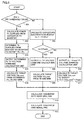
- Fig. 5 is a flowchart illustrating an operation of converter control circuit 302a in the first embodiment.
- ) is within a variation width of torque command value TR (
- control unit 64a determines supplied electric power Pb to be supplied from DC power supply B to inverter 14 (step S03). At this time, supplied electric power Pb to be supplied from DC power supply B to inverter 14 is determined so that electric power Pb is smaller than electric power Pc to be supplied from capacitor C2 to inverter 14. The determined electric power Pb to be supplied from DC power supply B to inverter 14 is output as signal Pb to voltage command calculation unit 61a (step S04).
- control unit 64a calculates electrostatic energy Uc stored in capacitor C2 (step S06). Electrostatic energy Uc of capacitor C2 is determined by substituting capacitance C and terminal-to-terminal voltage Vm of capacitor C2 into expression (1).
- control unit 64a compares the determined electrostatic energy Uc of capacitor C2 with predetermined threshold value Pcstd to determine which is larger (step S07).
- step S07 when electrostatic energy Uc of capacitor C2 is at least threshold value Pcstd, the determined electrostatic energy Uc is output as signal Uc to voltage command calculation unit 61a (step S08).
- voltage command calculation unit 61 a calculates target voltage Vdc_com based on torque command value TR and motor revolution number MRN from the external ECU (step S09).
- step S07 when electrostatic energy Uc of capacitor C2 is smaller than threshold value Pcstd, threshold value Pcstd is output as signal Uc to voltage command calculation unit 6 1 a (step S 10).
- step S12 when target voltage Vdc_com calculated in steps S05, S09, S11 each according to the magnitude of torque command value TR is output to converter duty-ratio calculation unit 62, duty ratio DRU or DRD is calculated so that inverter input voltage Vm is equal to target voltage Vdc_com (step S12).
- step S01 of Fig. 5 when it is confirmed that torque command value TR, which showed a sudden change, now changes within the predetermined variation width, electrostatic energy Uc of at least threshold value Pcstd is again stored in capacitor C2 according to the operation through steps S06 to S 11. In this way, any sudden change of torque command value TR that could occur in a subsequent stage can promptly be addressed.
- the means for supplying electric power may be controlled according to a required output (electric power).
- a target voltage for the switching operation of the voltage converter is determined. Accordingly, electric power can surely be supplied from the capacitor element in response to any required torque that suddenly changes.
- the above-proposed structure of the motor drive apparatus in the first embodiment is used to control target voltage Vdc_com of voltage step-up converter 12 according to the magnitude of torque command value TR and supply electric power predominantly from capacitor C2 in response to any sudden change in load, thereby simply and stably supplying electric power.
- target voltage Vdc_com of voltage step-up converter 12 is controlled in variable manner under the condition that a predetermined relation is satisfied.
- a manner of control of target voltage Vdc_com of voltage step-up converter 12 is further described. It is noted that a motor drive apparatus of the present embodiment is basically identical in structure to the motor drive apparatus shown in Fig. 1 and the detailed description of the structure of the whole apparatus is not repeated here.
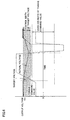
- Fig. 6 illustrates the principle of a control operation of voltage step-up converter 12 mounted on the motor drive apparatus in the second embodiment of the present invention.
- Fig. 6 shows a relation between output voltage Vm of voltage step-up converter 12 and torque command value TR.
- torque command value TR is represented by a waveform that varies according to the state of a vehicle.
- a predetermined variation width of this torque command value TR is set. The predetermined variation width is set, as done in the first embodiment, so that a sudden change in load can be identified.
- Voltage step-up converter 12 boosts a DC voltage from DC power supply B and outputs the boosted voltage to capacitor C2.
- target voltage Vdc_com specifying the level which should be attained by the boosted voltage is set by a converter control circuit 302b within control device 30 that is described hereinlater.
- target voltage Vdc_com has a predetermined control width as shown in Fig. 6 and the target voltage Vdc_com is a variable value within this range.
- the upper limit of the control width of target voltage Vdc_com is set higher than the upper limit of the threshold value of torque command value TR. This is for the following reason.
- the target voltage Vdc_com is set relatively high for allowing electrostatic energy Uc to be stored in capacitor C2 for addressing any sudden change in load.
- target voltage Vdc_com is set to have some allowance with respect to the breakdown voltage of capacitor C2 in consideration of electric charging through a regenerative braking operation.
- target voltage Vdc_com is set as done in the first embodiment so that electrostatic energy Uc of capacitor C2 is kept at a value which is at least predetermined threshold value Pcstd. Specifically, in order to allow the electrostatic energy of capacitor C2 to be kept at predetermined threshold Pcstd or higher, terminal-to-terminal voltage Vm of capacitor C2 is determined at which target voltage Vdc_com of voltage step-up converter 12 is set.
- target voltage Vdc_com may be set at a voltage level equal to the upper limit of the control width for example.
- Target voltage Vdc_com is thus set higher than the variation width of torque command value TR to allow the DC voltage output from voltage step-up converter 12 to be supplied to inverter 14 and to be used for charging capacitor C2.
- target voltage Vdc_com is set at a lower voltage level within the range of the control width. In Fig. 6 , target voltage Vdc_com is lowered to the level of the lower limit of the control width.
- voltage step-up converter 12 When target voltage Vdc_com is lowered, voltage step-up converter 12 has its voltage step-up operation suppressed or stopped. On the other hand, electrostatic energy Uc stored in capacitor C2 is supplied to inverter 14 so that the required torque is generated. As target voltage Vdc_com is lowered, the switching operation of voltage step-up converter 12 is suppressed or stopped. Then, the output voltage (actual voltage) of voltage step-up converter 12 that is indicated by the solid line in Fig. 6 decreases.
- target voltage Vdc_com is increased from the lower-limit level to the upper-limit level as shown in Fig. 6 .
- target voltage Vdc_com becomes higher than the actual voltage, the switching control of voltage step-up converter 12 is started to resume the voltage step-up operation.
- Fig. 7 is a block diagram showing a configuration of a converter control circuit for controlling target voltage Vdc_com of voltage step-up converter 12 shown in Fig. 6 .
- converter control circuit 302b includes a voltage command calculation unit 61b, a converter duty-ratio calculation unit 62, a converter PWM signal conversion unit 63, and a control unit 64b.
- Control unit 64b receives torque command value TR from an external ECU (not shown). Receiving torque command value TR, control unit 64b generates one of two different signals OP, Uc according to the magnitude of the torque command value. The generated one of OP, Uc is output to voltage command calculation unit 61b.
- control unit 64b has a predetermined variation width regarding torque command value TR, and determines whether or not torque command value TR from the external ECU is within this range of the variation width.
- the predetermined variation width is defined to cover variations of required torque that is required of motor drive apparatus 100 in a normal operation. Therefore, in the normal operation, control unit 64b determines that torque command value TR is within this range of the variation width.
- torque command value TR should be a value that is at least a threshold value representing the upper limit of the variation width or at most a threshold value representing the lower limit of the variation width. In this case, control unit 64b determines that torque command value TR is out of the range of the variation width.
- control unit 64b determines that torque command value TR is within the predetermined variation width, control unit 64b determines electrostatic energy Uc that is electric power accumulated in capacitor C2, according to the above-described expression (1).
- control unit 64b has predetermined threshold value Pcstd regarding electrostatic energy Uc of capacitor C2 and controls the electrostatic energy so that electrostatic energy Uc is kept at a value that is at least threshold value Pcstd.
- terminal-to-terminal voltage Vm of capacitor C2 is controlled so that electrostatic energy Uc is equal to or higher than threshold value Pcstd.
- target voltage Vdc_com of voltage step-up converter 12 is determined so that the relation Uc ⁇ Pcstd is satisfied.
- control unit 64b outputs the determined electrostatic energy Uc as signal Uc to voltage command calculation unit 61b.
- threshold value Pcstd is output as signal Uc to voltage command calculation unit 61b.
- control unit 64b determines that torque command value TR is out of the predetermined variation width
- signal OP indicating the result of the determination is output to voltage command calculation unit 61b.
- voltage command calculation unit 61b calculates target voltage Vdc_com appropriate for the signal. More specifically, receiving signal Uc indicating that electrostatic energy Uc of capacitor C2 is larger than threshold value Pcstd, voltage command calculation unit 61b calculates target voltage Vdc_com based on torque command value TR and motor revolution number MRN.
- voltage command calculation unit 61b calculates target voltage Vdc_com that satisfies expression (3).
- voltage command calculation unit 61b sets target voltage Vdc_com of voltage step-up converter 12 at the lower-limit level of the control width so that electric power is predominantly supplied from capacitor C2 rather than DC power supply B to inverter 14.
- control unit 64b generates signals Uc, OP of multiple patterns.
- voltage command calculation unit 61b calculates target voltage Vdc_com of voltage step-up converter 12 of multiple patterns.
- electrostatic energy Uc of at least threshold value Pcstd is stored in capacitor C2.
- electric power is predominantly supplied from capacitor C2 to inverter 14.
- Target voltage Vdc_com calculated by voltage command calculation unit 61b is output to converter duty-ratio calculation unit 62.
- Voltage Vb is to be boosted to allow inverter input voltage Vm to be at target voltage Vdc_com.
- converter duty-ratio calculation unit 62 calculates duty ratio DRU for flowing DC current from DC power supply B to inverter 14 so that inverter input voltage Vm is equal to target voltage Vdc_com, and outputs the calculated duty ratio to converter PWM signal conversion unit 63.
- converter duty-ratio calculation unit 62 calculates duty ratio DRD for flowing the DC current from inverter 14 to DC power supply B so that inverter input voltage Vm is equal to target voltage Vdc_com, and outputs the calculated duty ratio to converter PWM signal conversion unit 63.
- converter control circuit 302b performs feedback control to allow inverter input voltage Vm to be equal to target voltage Vdc_com.
- converter PWM signal conversion unit 63 Based on duty ratio DRU or DRD from converter duty-ratio calculation unit 62, converter PWM signal conversion unit 63 generates signal PWC for turning on/off NPN transistors Q1, Q2 of voltage step-up converter 12 and outputs the generated signal PWC to voltage step-up converter 12.
- Fig. 8 is a flowchart for illustrating an operation of converter control circuit 302b in the second embodiment.
- ) is within a variation width of torque command value TR (
- step S20 when it is determined that torque command value TR is out of the predetermined variation width, signal OP indicating the result of the determination is output to voltage command calculation unit 61b. According to signal OP, voltage command calculation unit 61b sets target voltage Vdc_com at the lower-limit level of the control width of target voltage Vdc_com (step S21).
- control unit 64b calculates electrostatic energy Uc of capacitor C2 (step S22). Electrostatic energy Uc of capacitor C2 is determined using expression (1) from capacitance C and terminal-to-terminal voltage Vm of capacitor C2.
- control unit 64b compares the determined electrostatic energy Uc of capacitor C2 with predetermined threshold value Pcstd to determine which is larger (step S23).
- step S07 when electrostatic energy Uc of capacitor C2 is at least threshold value Pcstd, the determined electrostatic energy Uc is output as signal Uc to voltage command calculation unit 61b (step S24).
- voltage command calculation unit 61b calculates target voltage Vdc_com based on torque command value TR and motor revolution number MRN from the external ECU (step S25).
- step S23 when electrostatic energy Uc of capacitor C2 is smaller than threshold value Pcstd, threshold value Pcstd is output as signal Uc to voltage command calculation unit 61b (step S26).
- step S28 when target voltage Vdc_com that is calculated in steps S21, S25, S27 each according to the magnitude of torque command value TR is output to converter duty ratio calculation unit 62, duty ratio DRU or DRD is calculated for allowing inverter input voltage Vm to be equal to target voltage Vdc_com (step S28).
- step S29 When the calculated duty ratio DRU or DRD is output to converter PWM signal conversion unit 63, signal PWC is generated based on the duty ratio (step S29). The generated signal PWC is output to NPN transistors Q 1, Q2 of voltage step-up converter 12.
- a motor drive apparatus can be implemented that is capable of supplying electric power in simple and stable manner without a complicated circuit configuration even when a sudden load change occurs.
- the present invention is applicable to a motor drive apparatus mounted on a motor vehicle.
Landscapes
- Engineering & Computer Science (AREA)
- Power Engineering (AREA)
- Transportation (AREA)
- Mechanical Engineering (AREA)
- Sustainable Energy (AREA)
- Sustainable Development (AREA)
- Life Sciences & Earth Sciences (AREA)
- Electric Propulsion And Braking For Vehicles (AREA)
- Dc-Dc Converters (AREA)
- Inverter Devices (AREA)
- Control Of Ac Motors In General (AREA)
- Charge And Discharge Circuits For Batteries Or The Like (AREA)
- Combined Controls Of Internal Combustion Engines (AREA)
Abstract
Claims (9)
- Appareil d'entraînement de moteur comprenant:un circuit d'entraînement (14) entraînant un moteur (M1);un convertisseur (12) de tension comportant un élément de commutation et utilisant une opération de commutation dudit élément de commutation pour convertir une tension continue entre une alimentation électrique (B) et ledit circuit d'entraînement (14);un élément (C2) de condensateur pourvu entre ledit convertisseur (12) de tension et ledit circuit d'entraînement (14) pour lisser la tension continue convertie afin d'introduire la tension continue lissée audit circuit d'entraînement (14); etun circuit de commande (30) commandant ladite opération de commutation sur la base d'une grandeur d'une sortie demandée dudit moteur (M1) en particulier la grandeur d'une valeur (TR) de commande de couple ou la puissance électrique, oùledit circuit de commande (14) est alimenté en puissance électrique, selon la sortie demandée dudit moteur (M1), de ladite alimentation électrique (B) et dudit élément (C2) de condensateur, etledit circuit de commande (30) commande ladite opération de commutation de sorte que la puissance électrique alimentée dudit élément (C2) de condensateur audit circuit d'entraînement (14) soit supérieure à la puissance électrique alimentée de ladite alimentation électrique (B) audit circuit d'entraînement (14) lorsque la grandeur de ladite sortie demandée se trouve en dehors d'une largeur de variation prédéterminée.
- Appareil d'entraînement de moteur selon la revendication 1, dans lequel
ledit circuit de commande (30) détermine si la grandeur de ladite sortie demandée se trouve dans une plage de ladite largeur de variation prédéterminée et détermine une tension cible de ladite opération de commutation selon le résultat de la détermination. - Appareil d'entraînement de moteur selon la revendication 2, dans lequel
ledit circuit de commande (30) a une largeur de commande prédéterminée de la tension cible de ladite opération de commutation et règle la tension cible de ladite opération de commutation à un niveau de tension plus faible dans une plage de ladite largeur de commande prédéterminée, lorsque la grandeur de ladite sortie demandée se trouve en dehors de la plage de ladite largeur de variation prédéterminée. - Appareil d'entraînement de moteur selon la revendication 3, dans lequel
ladite largeur de commande prédéterminée de la tension cible de ladite opération de commutation a sa limite supérieure et un niveau de tension correspondant à la limite supérieure est supérieur à un niveau de tension correspondant à une limite supérieure de ladite largeur de variation prédéterminée de la grandeur de ladite sortie demandée. - Appareil d'entraînement de moteur selon la revendication 4, comprenant en outre un capteur (13) de tension qui détecte une tension de borne à borne dudit élément (C2) de condensateur, où
lorsque la tension de borne à borne dudit élément (C2) de condensateur détectée par ledit capteur (13) de tension est inférieure à la tension cible de ladite opération de commutation, ledit circuit de commande (30) commande ladite opération de commutation de sorte que la tension de borne à borne dudit élément (C2) de condensateur soit égale à la tension cible de ladite opération de commutation. - Appareil d'entraînement de moteur selon la revendication 2 ou 3, comprenant en outre:un premier capteur (18) de courant électrique qui détecte un courant d'alimentation électrique introduit/délivré en sortie à/de ladite alimentation électrique (B);un deuxième capteur (24) de courant électrique qui détecte un courant d'attaque du moteur pour entraîner ledit moteur (M1); etun capteur (13) de tension qui détecte une tension de borne à borne dudit élément (C2) de condensateur, oùlorsque la grandeur de ladite sortie demandée se trouve en dehors de la plage de ladite largeur de variation prédéterminée, ledit circuit de commande (30) calcule la puissance électrique alimentée dudit élément (C2) de condensateur sur la base dudit courant d'alimentation électrique et dudit courant d'attaque du moteur détectés respectivement par ledit premier capteur (18) de courant électrique et ledit deuxième capteur (24) de courant électrique ainsi que la tension de borne à borne dudit élément (C2) de condensateur détectée par ledit capteur (13) de tension, détermine la puissance électrique alimentée de ladite alimentation électrique (B) de sorte que la puissance électrique alimentée de ladite alimentation électrique (B) soit inférieure à ladite puissance électrique calculée alimentée dudit élément (C2) de condensateur, et détermine la tension cible de ladite opération de commutation à mesure que la tension de borne à borne dudit élément (C2) de condensateur, lorsque la puissance électrique déterminée est alimentée depuis ladite alimentation électrique.
- Appareil d'entraînement de moteur selon la revendication 6, dans lequel
lorsque la grandeur de ladite sortie demandée se trouve dans la plage de ladite largeur de variation prédéterminée, ledit circuit de commande (30) calcule la puissance électrique stockée qui est stockée dans ledit élément (C2) de condensateur sur la base de la tension de borne à borne dudit élément (C2) de condensateur qui est détectée par ledit capteur (13) de tension et détermine la tension cible de ladite opération de commutation de sorte que ladite puissance électrique stockée calculée soit au moins une valeur seuil prédéterminée. - Appareil d'entraînement de moteur selon la revendication 7, dans lequel
ledit circuit de commande (30) détermine la tension cible de ladite opération de commutation à mesure que la tension de borne à borne dudit élément (C2) de condensateur lorsque ladite puissance électrique stockée est égale à ladite valeur seuil prédéterminée, lorsque ladite puissance électrique stockée est inférieure à ladite valeur seuil prédéterminée. - Appareil d'entraînement de moteur selon la revendication 8, dans lequel
lorsque la grandeur de ladite sortie demandée se trouve en dehors de ladite largeur de variation prédéterminée, ladite valeur seuil prédéterminée a un niveau de la puissance électrique stockée qui permet à la puissance électrique d'être alimentée dudit élément (C2) de condensateur audit circuit d'entraînement (14).
Applications Claiming Priority (2)
| Application Number | Priority Date | Filing Date | Title |
|---|---|---|---|
| JP2004156401A JP4593973B2 (ja) | 2004-05-26 | 2004-05-26 | モータ駆動装置 |
| PCT/JP2005/008848 WO2005115788A1 (fr) | 2004-05-26 | 2005-05-10 | Appareil de pilotage de moteur |
Publications (2)
| Publication Number | Publication Date |
|---|---|
| EP1753634A1 EP1753634A1 (fr) | 2007-02-21 |
| EP1753634B1 true EP1753634B1 (fr) | 2010-05-19 |
Family
ID=34966898
Family Applications (1)
| Application Number | Title | Priority Date | Filing Date |
|---|---|---|---|
| EP05738754A Expired - Lifetime EP1753634B1 (fr) | 2004-05-26 | 2005-05-10 | Appareil de pilotage de moteur |
Country Status (9)
| Country | Link |
|---|---|
| US (1) | US7511447B2 (fr) |
| EP (1) | EP1753634B1 (fr) |
| JP (1) | JP4593973B2 (fr) |
| KR (1) | KR100801611B1 (fr) |
| CN (1) | CN101027203B (fr) |
| BR (1) | BRPI0511557A (fr) |
| DE (1) | DE602005021348D1 (fr) |
| RU (1) | RU2354563C2 (fr) |
| WO (1) | WO2005115788A1 (fr) |
Cited By (5)
| Publication number | Priority date | Publication date | Assignee | Title |
|---|---|---|---|---|
| DE102010040163A1 (de) | 2010-09-02 | 2011-12-15 | Siemens Aktiengesellschaft | Energiespeicheranordnung |
| US9627995B2 (en) | 2013-06-11 | 2017-04-18 | Sumitomo Electric Industries, Ltd. | Inverter device with a control unit |
| US9882508B2 (en) | 2014-01-10 | 2018-01-30 | Sumitomo Electric Industries, Ltd. | High-frequency switching type conversion device |
| US10277036B2 (en) | 2013-06-11 | 2019-04-30 | Sumitomo Electric Industries, Ltd. | Inverter device |
| US10355620B2 (en) | 2014-10-17 | 2019-07-16 | Sumitomo Electric Industries, Ltd. | Conversion device |
Families Citing this family (20)
| Publication number | Priority date | Publication date | Assignee | Title |
|---|---|---|---|---|
| JP4835171B2 (ja) * | 2006-01-27 | 2011-12-14 | トヨタ自動車株式会社 | モータ駆動装置 |
| JP4127314B1 (ja) * | 2007-02-13 | 2008-07-30 | トヨタ自動車株式会社 | 電動車両制御装置 |
| JP4841636B2 (ja) | 2007-02-16 | 2011-12-21 | 株式会社小松製作所 | 電圧制御装置および電圧制御方法 |
| JP4301341B2 (ja) * | 2007-11-16 | 2009-07-22 | ダイキン工業株式会社 | モータ電流算出装置ならびに空気調和装置 |
| JP4479782B2 (ja) | 2007-11-26 | 2010-06-09 | トヨタ自動車株式会社 | 車両用制御装置 |
| DE102008033639A1 (de) * | 2008-07-17 | 2010-01-21 | Siemens Aktiengesellschaft | Schienenfahrzeug, das als Antriebsmotor einen permanenterregten Synchronmotor aufweist |
| US8575875B2 (en) * | 2009-05-27 | 2013-11-05 | Toyota Jidosha Kabushiki Kaisha | Control device for voltage converter, vehicle equipped with the same, and control method for voltage converter |
| CN102510815A (zh) * | 2009-07-03 | 2012-06-20 | Inkar-M科研生产企业股份有限公司 | 电动车辆 |
| JPWO2011090210A1 (ja) * | 2010-01-25 | 2013-05-23 | 三洋電機株式会社 | 電力変換装置、系統連系装置及び系統連系システム |
| WO2012039258A1 (fr) * | 2010-09-24 | 2012-03-29 | 日産自動車株式会社 | Dispositif et procédé de commande d'inverseur |
| EP2632038B1 (fr) | 2010-10-20 | 2018-02-21 | Toyota Jidosha Kabushiki Kaisha | Dispositif de commande de véhicule et procédé de commande |
| JP5578046B2 (ja) * | 2010-11-22 | 2014-08-27 | トヨタ自動車株式会社 | モータ用電圧変換制御装置 |
| JP5522269B2 (ja) | 2010-12-08 | 2014-06-18 | トヨタ自動車株式会社 | モータ用電圧変換制御装置 |
| EP2660965A1 (fr) * | 2010-12-27 | 2013-11-06 | Hitachi, Ltd. | Convertisseur d'énergie électrique |
| WO2012144002A1 (fr) | 2011-04-18 | 2012-10-26 | トヨタ自動車株式会社 | Appareil de commande de la conversion de tension pour un moteur |
| US10498151B2 (en) * | 2013-05-03 | 2019-12-03 | Atlas Copco Industrial Technique Ab | Power tool with step-up converter |
| GB2545023B (en) * | 2015-12-04 | 2018-06-06 | General Electric Technology Gmbh | Improvements in or relating to converters |
| JP6456448B1 (ja) * | 2017-09-13 | 2019-01-23 | 三菱電機株式会社 | Dc/dcコンバータ装置 |
| EP3703248A4 (fr) * | 2017-10-18 | 2021-07-21 | Hitachi-Johnson Controls Air Conditioning, Inc. | Dispositif de conversion de courant et climatiseur de réfrigération |
| US11811344B2 (en) * | 2020-12-23 | 2023-11-07 | Caterpillar Inc. | System and method of overcoming a dead-band in a switched reluctance motor |
Family Cites Families (35)
| Publication number | Priority date | Publication date | Assignee | Title |
|---|---|---|---|---|
| SU1684106A1 (ru) * | 1989-03-29 | 1991-10-15 | Московский автомеханический институт | Комбинированна приводна установка |
| JP2752539B2 (ja) * | 1991-09-21 | 1998-05-18 | 株式会社日立製作所 | 車両用電動機の制御装置 |
| JP2879486B2 (ja) | 1992-03-06 | 1999-04-05 | 日野自動車工業株式会社 | 内燃機関の制動および補助動力装置 |
| JP3226599B2 (ja) * | 1992-05-19 | 2001-11-05 | 東芝アイティー・コントロールシステム株式会社 | バッテリーカーの制御方法及び装置 |
| JPH0795786A (ja) * | 1993-09-22 | 1995-04-07 | Canon Inc | 蓄電池を電源としたモータの制御装置 |
| JPH08223948A (ja) * | 1995-02-07 | 1996-08-30 | Namiki Precision Jewel Co Ltd | 低電圧モータ |
| JPH08240171A (ja) | 1995-02-28 | 1996-09-17 | Sawafuji Electric Co Ltd | 車両エンジン始動用電源装置 |
| JP3487952B2 (ja) | 1995-04-14 | 2004-01-19 | 株式会社日立製作所 | 電気自動車の駆動装置及び駆動制御方法 |
| JPH09240560A (ja) | 1996-03-06 | 1997-09-16 | Yamaha Motor Co Ltd | 電動力補助車両の給電装置 |
| RU2142887C1 (ru) * | 1998-02-09 | 1999-12-20 | Яковлев Вадим Аврамович | Электромобиль |
| JP2000050401A (ja) | 1998-07-30 | 2000-02-18 | Denso Corp | ハイブリッド電気自動車用電源装置 |
| JP2001211511A (ja) * | 2000-01-25 | 2001-08-03 | Toshiaki Jofu | 電動式走行車輌 |
| JP4460708B2 (ja) * | 2000-03-29 | 2010-05-12 | 株式会社東芝 | エンジンのスタータと発電機とを兼用した永久磁石モータの制御装置 |
| US6917179B2 (en) * | 2001-10-25 | 2005-07-12 | Toyota Jidosha Kabushiki Kaisha | Load driver and control method for safely driving DC load and computer-readable recording medium with program recorded thereon for allowing computer to execute the control |
| JP3879528B2 (ja) * | 2002-02-14 | 2007-02-14 | トヨタ自動車株式会社 | 電圧変換装置 |
| JP3719229B2 (ja) * | 2001-12-19 | 2005-11-24 | トヨタ自動車株式会社 | 電源装置 |
| JP3632657B2 (ja) * | 2001-12-20 | 2005-03-23 | トヨタ自動車株式会社 | 電圧変換装置 |
| DE60239764D1 (de) * | 2001-12-26 | 2011-05-26 | Toyota Motor Co Ltd | Elektrische lastvorrichtung, steuerverfahren für eine elektrische last und computerlesbares aufzeichnungsmedium mit einem aufgezeichneten programm, durch das ein computer eine elektrische last steuern kann |
| JP2003209999A (ja) * | 2002-01-10 | 2003-07-25 | Nissan Motor Co Ltd | モータ制御装置 |
| JP3882703B2 (ja) | 2002-07-22 | 2007-02-21 | 日産自動車株式会社 | 蓄電システム |
| JP3582523B2 (ja) * | 2002-09-17 | 2004-10-27 | トヨタ自動車株式会社 | 電気負荷装置、異常処理方法、および電気負荷の異常処理をコンピュータに実行させるためのプログラムを記録したコンピュータ読取り可能な記録媒体 |
| JP3928559B2 (ja) * | 2003-01-10 | 2007-06-13 | トヨタ自動車株式会社 | 電圧変換装置、故障処理をコンピュータに実行させるプログラムを記録したコンピュータ読取り可能な記録媒体および故障処理方法 |
| JP2004236424A (ja) * | 2003-01-30 | 2004-08-19 | Toyota Motor Corp | 動力出力装置、モータ駆動方法およびモータの駆動制御をコンピュータに実行させるためのプログラムを記録したコンピュータ読取り可能な記録媒体 |
| JP3661689B2 (ja) * | 2003-03-11 | 2005-06-15 | トヨタ自動車株式会社 | モータ駆動装置、それを備えるハイブリッド車駆動装置、モータ駆動装置の制御をコンピュータに実行させるプログラムを記録したコンピュータ読取り可能な記録媒体 |
| JP2004336885A (ja) * | 2003-05-07 | 2004-11-25 | Toyota Motor Corp | 動力出力装置、モータ駆動方法およびモータの駆動制御をコンピュータに実行させるためのプログラムを記録したコンピュータ読取り可能な記録媒体 |
| CN100446408C (zh) * | 2003-06-05 | 2008-12-24 | 丰田自动车株式会社 | 电机驱动设备及安装有该设备的车辆 |
| JP3943056B2 (ja) * | 2003-07-18 | 2007-07-11 | 本田技研工業株式会社 | ハイブリット車両の制御装置 |
| JP4220851B2 (ja) * | 2003-07-31 | 2009-02-04 | トヨタ自動車株式会社 | 電圧変換装置および電圧変換装置における電圧変換の制御をコンピュータに実行させるためのプログラムを記録したコンピュータ読取り可能な記録媒体 |
| JP4223880B2 (ja) * | 2003-07-31 | 2009-02-12 | トヨタ自動車株式会社 | モータ駆動装置 |
| JP2005124336A (ja) * | 2003-10-17 | 2005-05-12 | Yaskawa Electric Corp | 交流電動機の制御方法及び制御装置 |
| WO2005081395A1 (fr) * | 2004-02-19 | 2005-09-01 | Toyota Jidosha Kabushiki Kaisha | Appareil d'entraineement de moteur |
| US7086767B2 (en) * | 2004-05-12 | 2006-08-08 | Osram Sylvania Inc. | Thermally efficient LED bulb |
| JP2006101675A (ja) * | 2004-09-30 | 2006-04-13 | Mitsubishi Electric Corp | モータ駆動装置 |
| JP4245546B2 (ja) * | 2004-11-04 | 2009-03-25 | トヨタ自動車株式会社 | 動力出力装置およびそれを備えた車両 |
| JP4665569B2 (ja) * | 2004-11-30 | 2011-04-06 | トヨタ自動車株式会社 | 電圧変換装置および電圧変換装置における電圧変換の制御をコンピュータに実行させるためのプログラムを記録したコンピュータ読取り可能な記録媒体 |
-
2004
- 2004-05-26 JP JP2004156401A patent/JP4593973B2/ja not_active Expired - Lifetime
-
2005
- 2005-05-10 RU RU2006146049/11A patent/RU2354563C2/ru not_active IP Right Cessation
- 2005-05-10 US US11/578,241 patent/US7511447B2/en not_active Expired - Lifetime
- 2005-05-10 DE DE602005021348T patent/DE602005021348D1/de not_active Expired - Lifetime
- 2005-05-10 WO PCT/JP2005/008848 patent/WO2005115788A1/fr not_active Ceased
- 2005-05-10 KR KR1020067027034A patent/KR100801611B1/ko not_active Expired - Fee Related
- 2005-05-10 CN CN2005800169818A patent/CN101027203B/zh not_active Expired - Lifetime
- 2005-05-10 BR BRPI0511557-4A patent/BRPI0511557A/pt not_active IP Right Cessation
- 2005-05-10 EP EP05738754A patent/EP1753634B1/fr not_active Expired - Lifetime
Cited By (6)
| Publication number | Priority date | Publication date | Assignee | Title |
|---|---|---|---|---|
| DE102010040163A1 (de) | 2010-09-02 | 2011-12-15 | Siemens Aktiengesellschaft | Energiespeicheranordnung |
| WO2012028344A1 (fr) | 2010-09-02 | 2012-03-08 | Siemens Aktiengesellschaft | Agencement d'accumulation d'énergie |
| US9627995B2 (en) | 2013-06-11 | 2017-04-18 | Sumitomo Electric Industries, Ltd. | Inverter device with a control unit |
| US10277036B2 (en) | 2013-06-11 | 2019-04-30 | Sumitomo Electric Industries, Ltd. | Inverter device |
| US9882508B2 (en) | 2014-01-10 | 2018-01-30 | Sumitomo Electric Industries, Ltd. | High-frequency switching type conversion device |
| US10355620B2 (en) | 2014-10-17 | 2019-07-16 | Sumitomo Electric Industries, Ltd. | Conversion device |
Also Published As
| Publication number | Publication date |
|---|---|
| CN101027203B (zh) | 2011-11-16 |
| CN101027203A (zh) | 2007-08-29 |
| US7511447B2 (en) | 2009-03-31 |
| KR20070027608A (ko) | 2007-03-09 |
| RU2006146049A (ru) | 2008-07-10 |
| US20070216323A1 (en) | 2007-09-20 |
| EP1753634A1 (fr) | 2007-02-21 |
| JP2005341698A (ja) | 2005-12-08 |
| RU2354563C2 (ru) | 2009-05-10 |
| WO2005115788A1 (fr) | 2005-12-08 |
| BRPI0511557A (pt) | 2008-01-02 |
| JP4593973B2 (ja) | 2010-12-08 |
| DE602005021348D1 (de) | 2010-07-01 |
| KR100801611B1 (ko) | 2008-02-05 |
Similar Documents
| Publication | Publication Date | Title |
|---|---|---|
| US7511447B2 (en) | Motor drive apparatus | |
| US7400104B2 (en) | Voltage converting device, computer readable recording medium with program recorded thereon for causing computer to execute failure processing, and failure processing method | |
| JP5915675B2 (ja) | 電動車両 | |
| US8558492B2 (en) | Apparatus for driving motor of electric vehicle | |
| JP4462243B2 (ja) | 負荷駆動装置およびそれを備える車両 | |
| EP1649589B1 (fr) | Dispositif de conversion de tension et support d'enregistrement lisible sur ordinateur sur lequel est enregistre un programme permettant a un ordinateur de commander la conversion de tension | |
| US6917179B2 (en) | Load driver and control method for safely driving DC load and computer-readable recording medium with program recorded thereon for allowing computer to execute the control | |
| JP5050324B2 (ja) | 二次電池の制御装置 | |
| US7598689B2 (en) | Motor drive apparatus | |
| US20100001692A1 (en) | Charge/discharge control device for secondary battery and vehicle equipped with the same | |
| US20060165393A1 (en) | Power supply apparatus, motor drive control method using the same and motor vehicle having the same mounted thereon | |
| US20040145338A1 (en) | Electric load apparatus electric load controlling method and computer readable recording medium recording program for causing computer to execute control of electric load | |
| US9744876B2 (en) | Electric vehicle | |
| CN101199107B (zh) | 电压变换装置 | |
| JP4640200B2 (ja) | 電圧変換装置および電圧変換器の制御方法 | |
| JP5062245B2 (ja) | 負荷駆動装置およびそれを備える車両 | |
| JP4609153B2 (ja) | 電源制御装置および電源制御装置の制御方法 | |
| KR20110053083A (ko) | 전기 자동차의 모터 구동장치 |
Legal Events
| Date | Code | Title | Description |
|---|---|---|---|
| PUAI | Public reference made under article 153(3) epc to a published international application that has entered the european phase |
Free format text: ORIGINAL CODE: 0009012 |
|
| 17P | Request for examination filed |
Effective date: 20061024 |
|
| AK | Designated contracting states |
Kind code of ref document: A1 Designated state(s): DE FR GB |
|
| DAX | Request for extension of the european patent (deleted) | ||
| RBV | Designated contracting states (corrected) |
Designated state(s): DE FR GB |
|
| GRAP | Despatch of communication of intention to grant a patent |
Free format text: ORIGINAL CODE: EPIDOSNIGR1 |
|
| RIC1 | Information provided on ipc code assigned before grant |
Ipc: H02M 1/00 20070101AFI20091104BHEP |
|
| GRAS | Grant fee paid |
Free format text: ORIGINAL CODE: EPIDOSNIGR3 |
|
| GRAA | (expected) grant |
Free format text: ORIGINAL CODE: 0009210 |
|
| AK | Designated contracting states |
Kind code of ref document: B1 Designated state(s): DE FR GB |
|
| REG | Reference to a national code |
Ref country code: GB Ref legal event code: FG4D |
|
| REF | Corresponds to: |
Ref document number: 602005021348 Country of ref document: DE Date of ref document: 20100701 Kind code of ref document: P |
|
| PLBE | No opposition filed within time limit |
Free format text: ORIGINAL CODE: 0009261 |
|
| STAA | Information on the status of an ep patent application or granted ep patent |
Free format text: STATUS: NO OPPOSITION FILED WITHIN TIME LIMIT |
|
| 26N | No opposition filed |
Effective date: 20110222 |
|
| REG | Reference to a national code |
Ref country code: DE Ref legal event code: R097 Ref document number: 602005021348 Country of ref document: DE Effective date: 20110221 |
|
| REG | Reference to a national code |
Ref country code: FR Ref legal event code: PLFP Year of fee payment: 12 |
|
| REG | Reference to a national code |
Ref country code: FR Ref legal event code: PLFP Year of fee payment: 13 |
|
| REG | Reference to a national code |
Ref country code: FR Ref legal event code: PLFP Year of fee payment: 14 |
|
| PGFP | Annual fee paid to national office [announced via postgrant information from national office to epo] |
Ref country code: FR Payment date: 20190410 Year of fee payment: 15 |
|
| PGFP | Annual fee paid to national office [announced via postgrant information from national office to epo] |
Ref country code: GB Payment date: 20190508 Year of fee payment: 15 |
|
| REG | Reference to a national code |
Ref country code: DE Ref legal event code: R082 Ref document number: 602005021348 Country of ref document: DE Representative=s name: TBK, DE Ref country code: DE Ref legal event code: R081 Ref document number: 602005021348 Country of ref document: DE Owner name: AISIN AW CO., LTD., ANJO-SHI, JP Free format text: FORMER OWNERS: AISIN AW CO., LTD., ANJO-SHI, AICHI-KEN, JP; TOYOTA JIDOSHA KABUSHIKI KAISHA, TOYOTA-SHI, AICHI-KEN, JP Ref country code: DE Ref legal event code: R081 Ref document number: 602005021348 Country of ref document: DE Owner name: DENSO CORPORATION, KARIYA-CITY, JP Free format text: FORMER OWNERS: AISIN AW CO., LTD., ANJO-SHI, AICHI-KEN, JP; TOYOTA JIDOSHA KABUSHIKI KAISHA, TOYOTA-SHI, AICHI-KEN, JP |
|
| GBPC | Gb: european patent ceased through non-payment of renewal fee |
Effective date: 20200510 |
|
| PG25 | Lapsed in a contracting state [announced via postgrant information from national office to epo] |
Ref country code: FR Free format text: LAPSE BECAUSE OF NON-PAYMENT OF DUE FEES Effective date: 20200531 Ref country code: GB Free format text: LAPSE BECAUSE OF NON-PAYMENT OF DUE FEES Effective date: 20200510 |
|
| PGFP | Annual fee paid to national office [announced via postgrant information from national office to epo] |
Ref country code: DE Payment date: 20240521 Year of fee payment: 20 |
|
| REG | Reference to a national code |
Ref country code: DE Ref legal event code: R071 Ref document number: 602005021348 Country of ref document: DE |