EP1715385A2 - Messvorrichtung und Belichtungsvorrichtung mit einer solchen Messvorrichtung - Google Patents
Messvorrichtung und Belichtungsvorrichtung mit einer solchen Messvorrichtung Download PDFInfo
- Publication number
- EP1715385A2 EP1715385A2 EP06112610A EP06112610A EP1715385A2 EP 1715385 A2 EP1715385 A2 EP 1715385A2 EP 06112610 A EP06112610 A EP 06112610A EP 06112610 A EP06112610 A EP 06112610A EP 1715385 A2 EP1715385 A2 EP 1715385A2
- Authority
- EP
- European Patent Office
- Prior art keywords
- optical system
- reticle
- measuring apparatus
- light
- light source
- Prior art date
- Legal status (The legal status is an assumption and is not a legal conclusion. Google has not performed a legal analysis and makes no representation as to the accuracy of the status listed.)
- Withdrawn
Links
- 230000003287 optical effect Effects 0.000 claims abstract description 97
- 238000009826 distribution Methods 0.000 claims abstract description 96
- 238000005286 illumination Methods 0.000 claims abstract description 70
- 238000005259 measurement Methods 0.000 claims description 22
- 210000001747 pupil Anatomy 0.000 claims description 18
- 238000003384 imaging method Methods 0.000 claims description 16
- 238000000034 method Methods 0.000 claims description 15
- 238000004519 manufacturing process Methods 0.000 claims description 10
- 230000001131 transforming effect Effects 0.000 claims description 7
- 238000002834 transmittance Methods 0.000 claims description 7
- 230000032258 transport Effects 0.000 claims description 3
- 230000004075 alteration Effects 0.000 description 10
- 239000004065 semiconductor Substances 0.000 description 8
- 238000007654 immersion Methods 0.000 description 6
- 230000000873 masking effect Effects 0.000 description 5
- 230000004304 visual acuity Effects 0.000 description 5
- 238000005530 etching Methods 0.000 description 4
- 230000008569 process Effects 0.000 description 4
- 238000004891 communication Methods 0.000 description 3
- 239000000463 material Substances 0.000 description 3
- 238000012360 testing method Methods 0.000 description 3
- 238000009825 accumulation Methods 0.000 description 2
- 238000004364 calculation method Methods 0.000 description 2
- 238000001444 catalytic combustion detection Methods 0.000 description 2
- 238000013461 design Methods 0.000 description 2
- 238000000691 measurement method Methods 0.000 description 2
- 230000007246 mechanism Effects 0.000 description 2
- 238000005457 optimization Methods 0.000 description 2
- 230000035945 sensitivity Effects 0.000 description 2
- 230000004308 accommodation Effects 0.000 description 1
- 230000005540 biological transmission Effects 0.000 description 1
- 230000015572 biosynthetic process Effects 0.000 description 1
- 238000006243 chemical reaction Methods 0.000 description 1
- 238000007796 conventional method Methods 0.000 description 1
- 238000012937 correction Methods 0.000 description 1
- 238000011161 development Methods 0.000 description 1
- 238000010586 diagram Methods 0.000 description 1
- 239000012467 final product Substances 0.000 description 1
- 239000011521 glass Substances 0.000 description 1
- 230000005484 gravity Effects 0.000 description 1
- 239000007943 implant Substances 0.000 description 1
- 238000007689 inspection Methods 0.000 description 1
- 238000005468 ion implantation Methods 0.000 description 1
- 239000007788 liquid Substances 0.000 description 1
- 238000001459 lithography Methods 0.000 description 1
- 239000002184 metal Substances 0.000 description 1
- 238000012986 modification Methods 0.000 description 1
- 230000004048 modification Effects 0.000 description 1
- 230000003647 oxidation Effects 0.000 description 1
- 238000007254 oxidation reaction Methods 0.000 description 1
- 238000004806 packaging method and process Methods 0.000 description 1
- 239000002245 particle Substances 0.000 description 1
- 238000000206 photolithography Methods 0.000 description 1
- 230000010287 polarization Effects 0.000 description 1
- 238000002360 preparation method Methods 0.000 description 1
- 238000012545 processing Methods 0.000 description 1
- 230000009467 reduction Effects 0.000 description 1
- 238000007789 sealing Methods 0.000 description 1
- 229910052710 silicon Inorganic materials 0.000 description 1
- 239000010703 silicon Substances 0.000 description 1
- 238000004088 simulation Methods 0.000 description 1
Images



Classifications
-
- G—PHYSICS
- G03—PHOTOGRAPHY; CINEMATOGRAPHY; ANALOGOUS TECHNIQUES USING WAVES OTHER THAN OPTICAL WAVES; ELECTROGRAPHY; HOLOGRAPHY
- G03F—PHOTOMECHANICAL PRODUCTION OF TEXTURED OR PATTERNED SURFACES, e.g. FOR PRINTING, FOR PROCESSING OF SEMICONDUCTOR DEVICES; MATERIALS THEREFOR; ORIGINALS THEREFOR; APPARATUS SPECIALLY ADAPTED THEREFOR
- G03F7/00—Photomechanical, e.g. photolithographic, production of textured or patterned surfaces, e.g. printing surfaces; Materials therefor, e.g. comprising photoresists; Apparatus specially adapted therefor
- G03F7/70—Microphotolithographic exposure; Apparatus therefor
- G03F7/70058—Mask illumination systems
- G03F7/70133—Measurement of illumination distribution, in pupil plane or field plane
-
- G—PHYSICS
- G01—MEASURING; TESTING
- G01J—MEASUREMENT OF INTENSITY, VELOCITY, SPECTRAL CONTENT, POLARISATION, PHASE OR PULSE CHARACTERISTICS OF INFRARED, VISIBLE OR ULTRAVIOLET LIGHT; COLORIMETRY; RADIATION PYROMETRY
- G01J3/00—Spectrometry; Spectrophotometry; Monochromators; Measuring colours
- G01J3/02—Details
-
- G—PHYSICS
- G03—PHOTOGRAPHY; CINEMATOGRAPHY; ANALOGOUS TECHNIQUES USING WAVES OTHER THAN OPTICAL WAVES; ELECTROGRAPHY; HOLOGRAPHY
- G03F—PHOTOMECHANICAL PRODUCTION OF TEXTURED OR PATTERNED SURFACES, e.g. FOR PRINTING, FOR PROCESSING OF SEMICONDUCTOR DEVICES; MATERIALS THEREFOR; ORIGINALS THEREFOR; APPARATUS SPECIALLY ADAPTED THEREFOR
- G03F7/00—Photomechanical, e.g. photolithographic, production of textured or patterned surfaces, e.g. printing surfaces; Materials therefor, e.g. comprising photoresists; Apparatus specially adapted therefor
- G03F7/70—Microphotolithographic exposure; Apparatus therefor
- G03F7/70483—Information management; Active and passive control; Testing; Wafer monitoring, e.g. pattern monitoring
- G03F7/70591—Testing optical components
- G03F7/706—Aberration measurement
Definitions
- the present invention relates generally to a measuring apparatus, and more particularly to a measuring apparatus of an incident angular distribution or a light distribution characteristic (also called “an effective light source” and "a ⁇ distribution”) on an illuminated plane.
- a measurement of an effective light source distribution of an illumination optical system intends to cover not only a measurement of the ⁇ distribution but also a measurement of the centroid (or center of gravity) of illumination light.
- a projection exposure apparatus which is conventionally used for the photolithography technique to manufacture fine semiconductor devices, projects a circuit pattern of a reticle (mask) onto a wafer and the like via a projection optical system, thus transferring the circuit pattern.
- a higher quality exposure requires an effective light source optimal to a reticle pattern.
- An effective light source distribution depends upon an adjustment of a light intensity distribution near an exit plane of, e.g., a fly-eye lens to a desired shape such as a normal illumination shape, an annular illumination shape, and a quadrupole illumination shape.
- a projection exposure apparatus is demanded to control its numerical aperture ("NA"), coherence factor ⁇ (which is an illumination optical system's NA / a projection optical system's NA), and an effective light source, thus setting up a condition optimal to each of various characteristics.
- Control over the coherence factor ⁇ needs a more accurate measurement of an effective light source distribution.
- a measurement of a light intensity distribution on a lens' incident pupil plane will provides the effective light source distribution.
- the measurement of the effective light source distribution also provides a measurement of the centroid of illumination light on the incident pupil plane, which causes an asymmetry of the imaging performance, i.e., the so-called telecentricity.
- the conventional method of measuring the light intensity distribution on the pupil plane is seen, for example, in Japanese Patent No. 2,928,277 , Japanese Patent Applications, Publication Nos. 2000-19012 , 5-74687 , and 2002-110540 .
- the present invention is directed to a measuring apparatus, as well as an exposure apparatus having the same, that can measure a light source distribution without an additional space.
- a measuring apparatus used for an exposure apparatus that includes an illumination optical system that illuminates a reticle using light from a light source, a reticle stage that supports and drives the reticle, and a projection optical system that projects a pattern of the reticle onto a plate measures an effective light source distribution as an incident angular distribution of the light on a reticle plane of the reticle includes a relaying optical system configured to guide the light that has passed the illumination optical system, and a housing that contains the relaying optical system and is mounted on the reticle stage in place of the reticle.
- a measuring apparatus in an exposure apparatus that includes an illumination optical system that illuminates a reticle by using a light from a light source, and a projection optical system that projects a pattern of the reticle onto a plate measures an effective light source distribution as an incident angular distribution on a reticle plane of the light, and includes a pinhole member configured to transmit the light that has passed the illumination optical system into a pinhole with a diameter determined by a blur of a geometrical optics and wave optics, and a deflector configured to deflect the light that has passed through the pinhole.
- An exposure apparatus having the above measuring apparatus constitutes still another aspect of the present invention.
- An exposure method includes the steps of calculating a pupil transmittance distribution in a projection optical system based on a first effective light source distribution of the projection optical system acquired by the above measuring apparatus, and a second effective light source distribution derived from a pupil plane light intensity distribution measured on a plate plane using a light that has passed the projection optical system without a reticle, calculating an imaging performance by using a result of the calculating step and the first or second effective light source distributions, adjusting the effective light source distribution and/or the projection optical system by using the imaging performance, and exposing the plate based on the effective light source distribution and/or the projection optical system that have been adjusted.
- a device manufacturing method including the steps of exposing a plate using the above exposure apparatus, and developing the plate exposed constitutes another aspect of the present invention.
- exposure apparatuses are step-and-scan projection exposure apparatuses, but they are also applicable to a step-and-repeat type and other types.
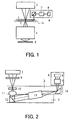
- FIG. 1 is a schematic sectional diagram of an exposure apparatus according to a first embodiment.
- 1 denotes an illumination optical system.
- a light from a laser is relayed by the illumination optical system 1, entering the reticle plane with a desirable light intensity distribution.
- a pellicle 3 is provided under a reticle 2 and prevents particles from adhering to a reticle plane.
- the reticle 2 is mounted on and driven by a reticle stage 2a.
- a light that has passed the reticle goes through a reduction projection optical system 4, and is imaged onto a wafer 5.
- a device (alignment scope) 6 observes a mark formed on the reticle plane.
- the reticle plane observing device 6 includes an optical system 7 and an image sensor 8.
- the optical system 7 has an objective lens, a relay lens, and a magnification-variable erector lens, and the image sensor 8 uses a two-dimensional charge-coupled device (CCD).
- the first embodiment measures an effective light source distribution using this configuration.
- a tool conjugate with the size of the reticle 2 and pellicle 3 is transported.
- the tool is located in a space from where the reticle 2 and the pellicle 3 are removed, thus needing no additional spaces.
- FIG. 2 is a partially enlarged transverse sectional view of the tool, and it can be understood that the optical system is stored in a housing conjugate with the reticle 2 and the pellicle 3 in size.
- the housing is mounted on and driven by the reticle stage.
- This embodiment includes a collimator lens 11 explained later configured to collimate the light and a deflector 12 configured to bent the light, and reduces a thickness of the housing within the size of the reticle 2 and the pellicle 3.
- the tool uses a driving mechanism for the reticle stage 2a and the alignment scope 6, and requires no dedicated driving mechanism.
- the light relayed from the light source by the illumination optical system 1 narrows down to a necessary area through a masking blade 9 that restricts the illumination area on the reticle plane, and enters a pinhole 10.
- the pinhole 10 may be slightly defocused from a plane conjugate with the reticle plane for spatial convenience.
- the collimator lens 11 substantially collimates the light that has passed through the pinhole 10.
- the deflector 12 such as a mirror or prism, the illumination light having been turned into collimated light enters a Fourier transforming optical system 13.
- An aerial pupil image is formed by the Fourier transforming optical system 13 at a position conjugate with the observation plane of the reticle plane observing element 6, and it is imaged at an approximately conjugate image sensor 8, thus measuring a light amount distribution through image processing. Based on this light amount and an observation diameter in the image sensor 8, a coordinate is calculated for a conversion into an effective light source distribution of an illumination optical system.
- the first embodiment observes an image using the image sensor 8, and the position of the pinhole 10 and the observation position of the image sensor 8 may be in an imaging relationship.
- Stopping down the illumination light by the masking blade 9 reduces the influence by the stray light (unnecessary light).
- An aperture of the masking blade 9 should not be so small as to shut out the light incident upon the pinhole 10, and it should be, desirably, set as small as possible.
- the pinhole 10 is formed on a Cr surface through etching. Desirably, the size and density of the Cr surface should be so large that stray light does not leak from illumination light stopped down by the masking blade 9.
- a mechanical light shield is provided with a sheet metal tiger-den material with holes around the pinhole 10.
- FIG. 3 briefly shows an optical system for the illumination light that is condensed by a condenser lens 16 from a fly-eye lens 15 to a pinhole 17 in a plane conjugate with the reticle plane in the illumination optical system.
- FIG. 3 shows a light that exits from the fly-eye lens 15 with a certain angle.
- the illumination light that passes the fly-eye lens 15 has a discrete angular distribution characteristic at one point on the reticle plane. This angular distribution characteristic depends upon the configuration of the fly-eye 15.
- L is an external diameter 18 of the fly-eye lens
- S is an outer diameter 20 of each fine lens comprising the fly-eye lens
- IllNA is an illumination system's NA conjugate with half of the outer diameter L
- the illumination light that has passed the pinhole 17 with a discrete angular distribution characteristic has a divergent angle due to diffraction, i.e., an airy disk 22.
- D can geometrically-optically separate each light when satisfying the following formula: D ⁇ 2 ⁇ H ⁇ S / L
- a pinhole diameter with a desired resolving power.
- An objective of setting a pinhole diameter is to separate light from a fly-eye lens for measurement, or to specify an amount of blurring at the beginning so as to set a pinhole diameter. In view of a dynamic range of the image sensor 8, light from the fly-eye lens may not be separated.
- the first embodiment sets the diameter of the pinhole 10 to ⁇ 50 ⁇ m. In order to control blurring caused by an aberration of a lens system, a tolerance for a lens system's distortion is relaxed, and the distortion is corrected by using image processing software.
- the above pinhole diameter determination method can be applied across all the pupil plane light intensity distribution measurements for an exposure apparatus using a pinhole.
- the illumination light on a reticle plane contemplates a maximum NA of 0.25 to 0.35 for an immersion exposure apparatus, although depending on an illumination condition.
- the first embodiment has prepared a collimator lens 11 that collimates the illumination light that has passed through the pinhole 10. Besides using a collimator lens, it is possible to use a deflector having a curvature.
- FIG. 4 is a plan view when the tool for measuring the effective light source distribution is viewed from the laser incident side.
- An area 24 is a size of a plane conjugate with the reticle plane.
- An optical system 25b shows a profile of the tool shown in FIG. 2, which measures the illumination system's on-axis effective light source distribution.
- Optical systems 25a and 25c measure the illumination system's off-axis effective light source distribution.
- the optical system 25 includes a pinhole 26 for the illumination light and a light exit position 27 that introduces the illumination light into the reticle plane observing device 6.
- the reticle stage supports the reticle and moves in a y direction or a scanning direction in FIG. 4:
- the reticle plane observing device 6 moves in an x direction. Since the pinhole 10 and the optical system 25 are housed within the tool, the two-dimensional movements guide the tool to a measuring position.
- a method of moving the tool to a measuring position may be a scanning search for a light source, or may use an alignment mark.
- the scanning search for the light source takes time before measuring.
- the alignment mark has a high reproducibility, and enables a light intensity distribution to be measured by a designated coordinate.
- the optical system 25 can move in the X direction, and provides an measurement of an illuminating system's effective light source distribution with a required image height. If each optical system 25 uses the same optical system, they are viable even if rotated by 180°. This configuration calibrates the optical system 7 of the reticle plane observing device 6 and the optical system 25 of the tool.
- the first embodiment almost maintains telecentric an aerial pupil image of the Fourier transforming optical system 13.
- the collimated light at the observation position of the reticle plane observing device 6 controls a size measurement error caused by a defocus.
- a known aperture stop and the like calculate an absolute value of a ⁇ distribution observable by the image sensor 8 and the central position of the image sensor 8, and correct an optical system's aberration such as a distortion.
- the reticle plane observing device 6 can defocus the observation position. Defocusing the observation position, measuring two or more pupil plane illumination distributions, and finding its centroid shift can measure the inclination of illumination light. This result represents an inclination of the illumination light on the reticle plane, and the so-called telecentricity is obtained by subtracting telecentricity of the projection optical system from it.
- a reference position of the image sensor is previously measured for each image height, an measurement at only the best focus position provides the inclination of the illumination light.
- the tool or reticle plane observing device 6 houses a beam splitter and analyzer, and they are switched, an effective light source distribution can be measured for each polarized light at the time of polarization illumination.
- the configuration of the present embodiment can provide a measurement of an illumination system's effective light source distribution corresponding to a scan o.
- the light intensity distribution at each position imaged on a wafer will become a scanning accumulation with the entire illumination slit.
- a scanning effective light source distribution is different from a stationary effective light source distribution. It is important to measure an actual effective light source distribution corresponding to the scan ⁇ .
- a scanning effective light source distribution can be measured with a slit that elongates in the scanning direction instead of a pinhole. An accumulation of obtained light intensity distributions in the scanning direction provides an actual scanning effective light source distribution. Use of a slit that is longer in the scanning direction than the illuminated area may provide a scanning effective light source distribution through only one measurement.
- the effective light source distribution of an illumination optical system measured in this embodiment can be utilized to adjust and correct the illumination optical system. Since measurement results are outputted from the reticle plane observing device 6, its calibration with the exposure apparatus body is easy.
- the projection optical system's transmittance can be obtained when an effective light source distribution on a wafer plane is compared with an effective light source distribution on a reticle plane of this embodiment.
- an effective light source distribution measuring tool which also includes an image sensor according to the present invention, to measure an effective light source distribution of an illumination system.
- the second embodiment is different from the first embodiment in that the tool also includes the image sensor, and measures an effective light source distribution without using the reticle plane observing device 6.
- This embodiment transports a tool that is as large as the reticle 2 and pellicle 3 in place of the ordinary reticle, and has a pinhole, an optical system, and an image sensor.
- FIG. 5 shows a transverse sectional view of the tool.
- a light relayed from a light source by an illumination optical system 1 narrows down to a necessary area through the masking blade 9 that limits the illumination area on a reticle plane, and enters the pinhole 10.
- the light that has passed through the pinhole 10 becomes almost collimated light via the collimator lens 11.
- the collimated illumination light is incident on the Fourier transforming optical system 13 through the deflector 12 such as a mirror and prism.
- a light source image is formed by the Fourier transforming optical system that is equivalent with a light intensity distribution on an exit pupil plane of the optical system, and an effective light source distribution is measured by the image sensor 28.
- This embodiment uses a wireless communication as a data communication means. Data acquired by the image sensor 28 is sent directly to the apparatus body using a wireless communication unit 29.
- a third embodiment of the present invention uses the effective light source distribution obtained in the first and second embodiments to adjust an illumination system and evaluate the imaging performance.
- step 1010 provides two wafer stages - one for exposure and one for measurement.
- the stage for measurement can be driven for measurements during exposure, and the throughput improves.
- the wafer stage for exposure is for immersion in this embodiment, but the stage for measurement is not provided for immersion. Therefore, even if a pinhole that is formed by etching glass with Cr is used, no problems occur about the concentration and durability of Cr against the immersion liquid.
- the transmittance distribution of the pupil in the projection optical system 4 is calculated from the results of steps 1006 and 1010 (Step 1012).
- an aberration of the projection optical system is measured in the exposure apparatus simultaneously (Step 1014).
- the imaging performance is calculated based on the effective light source distribution is calculated on the reticle plane or the wafer plane, the transmittance distribution of the projection optical system's pupil, the projection optical system's aberration, the projection optical system's NA, the reticle pattern to be used, and the wavelength to be used (Step 1016).
- This imaging performance is compared with a target imaging performance (Step 1018), and if out of the permissible range, at least one of the effective light source distribution, the projection optical system's aberration, and its NA are adjusted (Step 1020).
- the comparing items with the target imaging performance include the critical dimension ("CD") uniformity and the HV difference, OPE calculation, etc.
- the second and subsequent adjustments direct to the target values by calculating sensitivity.
- the adjustment ends (Step 1022).
- An automatic series of adjustments are preferable.
- the pupil's transmittance and aberration of the projection optical system need not be measured in the exposure apparatus body. However, they may be measured when the exposure apparatus is assembled, and the data may be used for calculation.
- This embodiment can quickly adjust the effective light source distribution of an illumination system and aberration of a projection optical system.
- This optimization which is not for each unit such as an illumination system or projection system, but for a whole exposure apparatus that is installed with an illumination system and projection system, is suitable for actual exposure of a wafer.
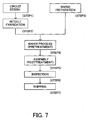
- FIG. 7 is a flowchart for explaining a fabrication of devices (semiconductor chips such as IC and LSI, LCDs, CCDs, etc.).
- a description will be given of a fabrication of a semiconductor chip as an example.
- Step 1 circuit design
- Step 2 reticle fabrication
- Step 3 wafer preparation
- Step 4 wafer process
- Step 5 assembly
- Step 6 inspection
- FIG. 8 is a detailed flowchart of the wafer process in Step 4.
- Step 11 oxidation
- Step 12 CVD
- Step 13 electrode formation
- Step 14 ion implantation
- Step 15 resist process
- Step 16 exposure
- Step 17 development
- Step 18 etching
- Step 19 resist stripping
- the above embodiments can measure an effective light source distribution without an additional space. These embodiments can be applied to existing exposure apparatuses having no means for accurately measuring effective light distributions. These embodiments calculate a blur of a light that passes a pinhole, and correct it in accordance with the geometrical optics and wave optics, thus providing a measurement of the original light source distribution. Since the illumination light is maintained almost telecentric at the observation position of the image sensor, the incidence sensitivity characteristic on the image sensor is small, and the measurement can be more accurate than ever.
- the illumination system's effective light source distribution acquired from these embodiments can be utilized as an index in adjusting a coherence factor ⁇ and telecentricity obtained from the effective light source distribution.
- Use of an acquired light intensity distribution for an imaging simulation enables the imaging performance to be evaluated.
- Actually measured data can be directly used as an illumination system's light intensity distribution in designing a diffraction optical element.
- a measuring apparatus used for an exposure apparatus that includes an illumination optical system that illuminates a reticle using light from a light source, a reticle stage that supports and drives the reticle, and a projection optical system that projects a pattern of the reticle onto a plate measures an effective light source distribution as an incident angular distribution of the light on a reticle plane of the reticle includes a relaying optical system configured to guide the light that has passed the illumination optical system, and a housing that contains the relaying optical system and is mounted on the reticle stage in place of the reticle.
Landscapes
- Physics & Mathematics (AREA)
- General Physics & Mathematics (AREA)
- Spectroscopy & Molecular Physics (AREA)
- Exposure Of Semiconductors, Excluding Electron Or Ion Beam Exposure (AREA)
- Exposure And Positioning Against Photoresist Photosensitive Materials (AREA)
Applications Claiming Priority (1)
| Application Number | Priority Date | Filing Date | Title |
|---|---|---|---|
| JP2005123006A JP2006303196A (ja) | 2005-04-20 | 2005-04-20 | 測定装置及びそれを有する露光装置 |
Publications (2)
| Publication Number | Publication Date |
|---|---|
| EP1715385A2 true EP1715385A2 (de) | 2006-10-25 |
| EP1715385A3 EP1715385A3 (de) | 2008-04-09 |
Family
ID=36754275
Family Applications (1)
| Application Number | Title | Priority Date | Filing Date |
|---|---|---|---|
| EP06112610A Withdrawn EP1715385A3 (de) | 2005-04-20 | 2006-04-13 | Messvorrichtung und Belichtungsvorrichtung mit einer solchen Messvorrichtung |
Country Status (5)
| Country | Link |
|---|---|
| US (1) | US7671967B2 (de) |
| EP (1) | EP1715385A3 (de) |
| JP (1) | JP2006303196A (de) |
| KR (1) | KR100819240B1 (de) |
| TW (1) | TWI301635B (de) |
Cited By (1)
| Publication number | Priority date | Publication date | Assignee | Title |
|---|---|---|---|---|
| TWI594085B (zh) * | 2014-11-21 | 2017-08-01 | 佳能股份有限公司 | 照明光學設備和裝置製造方法 |
Families Citing this family (7)
| Publication number | Priority date | Publication date | Assignee | Title |
|---|---|---|---|---|
| JP2006303196A (ja) | 2005-04-20 | 2006-11-02 | Canon Inc | 測定装置及びそれを有する露光装置 |
| JP2006332363A (ja) * | 2005-05-26 | 2006-12-07 | Nikon Corp | 露光装置の照明光強度分布測定装置、及び露光装置 |
| JP2008108851A (ja) * | 2006-10-24 | 2008-05-08 | Canon Inc | 照明装置及び当該照明装置を有する露光装置、並びに、デバイス製造方法 |
| US20090002656A1 (en) | 2007-06-29 | 2009-01-01 | Asml Netherlands B.V. | Device and method for transmission image detection, lithographic apparatus and mask for use in a lithographic apparatus |
| JP5063229B2 (ja) * | 2007-07-12 | 2012-10-31 | キヤノン株式会社 | 露光装置及びデバイス製造方法 |
| JP2009025553A (ja) | 2007-07-19 | 2009-02-05 | Canon Inc | 位相シフトマスク |
| WO2019166183A1 (en) * | 2018-02-28 | 2019-09-06 | Asml Netherlands B.V. | Apodization measurement for lithographic apparatus |
Citations (2)
| Publication number | Priority date | Publication date | Assignee | Title |
|---|---|---|---|---|
| US20020085190A1 (en) * | 2000-12-28 | 2002-07-04 | Nikon Corporation | Manufacturing method in manufacturing line, manufacturing method for exposure apparatus, and exposure apparatus |
| US20040119973A1 (en) | 2002-08-30 | 2004-06-24 | Kazuya Fukuhara | Exposure apparatus inspection method and exposure apparatus |
Family Cites Families (24)
| Publication number | Priority date | Publication date | Assignee | Title |
|---|---|---|---|---|
| US5140366A (en) | 1987-05-29 | 1992-08-18 | Canon Kabushiki Kaisha | Exposure apparatus with a function for controlling alignment by use of latent images |
| US5475491A (en) | 1989-02-10 | 1995-12-12 | Canon Kabushiki Kaisha | Exposure apparatus |
| US5121160A (en) | 1989-03-09 | 1992-06-09 | Canon Kabushiki Kaisha | Exposure method and apparatus |
| JP2928277B2 (ja) | 1989-08-03 | 1999-08-03 | 株式会社日立製作所 | 投影露光方法及びその装置 |
| JPH0574687A (ja) | 1991-09-18 | 1993-03-26 | Hitachi Ltd | 投影露光装置 |
| JP3278896B2 (ja) | 1992-03-31 | 2002-04-30 | キヤノン株式会社 | 照明装置及びそれを用いた投影露光装置 |
| JP2946950B2 (ja) | 1992-06-25 | 1999-09-13 | キヤノン株式会社 | 照明装置及びそれを用いた露光装置 |
| JP2698521B2 (ja) * | 1992-12-14 | 1998-01-19 | キヤノン株式会社 | 反射屈折型光学系及び該光学系を備える投影露光装置 |
| US6757050B1 (en) | 1992-12-28 | 2004-06-29 | Canon Kabushiki Kaisha | Exposure method and apparatus for detecting an exposure amount and for calculating a correction value based on the detected exposure amount |
| JP2862477B2 (ja) | 1993-06-29 | 1999-03-03 | キヤノン株式会社 | 露光装置及び該露光装置を用いてデバイスを製造する方法 |
| JP3057998B2 (ja) | 1994-02-16 | 2000-07-04 | キヤノン株式会社 | 照明装置及びそれを用いた投影露光装置 |
| JP3060357B2 (ja) | 1994-06-22 | 2000-07-10 | キヤノン株式会社 | 走査型露光装置及び該走査型露光装置を用いてデバイスを製造する方法 |
| JP3412981B2 (ja) * | 1995-08-29 | 2003-06-03 | キヤノン株式会社 | 投影露光装置および投影露光方法 |
| KR100210569B1 (ko) | 1995-09-29 | 1999-07-15 | 미따라이 하지메 | 노광방법 및 노광장치, 그리고 이를 이용한 디바이스제조방법 |
| KR970028865A (ko) * | 1995-11-16 | 1997-06-24 | 오노 시게오 | 노광장치 및 노광방법 |
| JPH09180989A (ja) * | 1995-12-26 | 1997-07-11 | Toshiba Corp | 露光装置および露光方法 |
| JP2691341B2 (ja) * | 1996-05-27 | 1997-12-17 | 株式会社ニコン | 投影露光装置 |
| KR100525067B1 (ko) * | 1997-01-20 | 2005-12-21 | 가부시키가이샤 니콘 | 노광 장치의 광학 특성 측정 방법, 노광 장치의 동작 방법 및 투영 노광 장치 |
| JP2000019012A (ja) | 1998-07-03 | 2000-01-21 | Nikon Corp | 照明系輝度分布計測装置 |
| JP3927753B2 (ja) | 2000-03-31 | 2007-06-13 | キヤノン株式会社 | 露光装置及びデバイス製造方法 |
| US6710856B2 (en) * | 2000-09-01 | 2004-03-23 | Asml Netherlands B.V. | Method of operating a lithographic apparatus, lithographic apparatus, method of manufacturing a device, and device manufactured thereby |
| JP4343685B2 (ja) * | 2001-08-31 | 2009-10-14 | キヤノン株式会社 | レチクル及び光学特性計測方法 |
| JP5143331B2 (ja) | 2003-05-28 | 2013-02-13 | 株式会社ニコン | 露光方法及び露光装置、並びにデバイス製造方法 |
| JP2006303196A (ja) | 2005-04-20 | 2006-11-02 | Canon Inc | 測定装置及びそれを有する露光装置 |
-
2005
- 2005-04-20 JP JP2005123006A patent/JP2006303196A/ja not_active Abandoned
-
2006
- 2006-04-13 EP EP06112610A patent/EP1715385A3/de not_active Withdrawn
- 2006-04-14 TW TW095113447A patent/TWI301635B/zh not_active IP Right Cessation
- 2006-04-18 US US11/405,472 patent/US7671967B2/en not_active Expired - Fee Related
- 2006-04-20 KR KR1020060035535A patent/KR100819240B1/ko not_active Expired - Fee Related
Patent Citations (2)
| Publication number | Priority date | Publication date | Assignee | Title |
|---|---|---|---|---|
| US20020085190A1 (en) * | 2000-12-28 | 2002-07-04 | Nikon Corporation | Manufacturing method in manufacturing line, manufacturing method for exposure apparatus, and exposure apparatus |
| US20040119973A1 (en) | 2002-08-30 | 2004-06-24 | Kazuya Fukuhara | Exposure apparatus inspection method and exposure apparatus |
Cited By (2)
| Publication number | Priority date | Publication date | Assignee | Title |
|---|---|---|---|---|
| TWI594085B (zh) * | 2014-11-21 | 2017-08-01 | 佳能股份有限公司 | 照明光學設備和裝置製造方法 |
| US10133185B2 (en) | 2014-11-21 | 2018-11-20 | Canon Kabushiki Kaisha | Illumination optical apparatus and device manufacturing method |
Also Published As
| Publication number | Publication date |
|---|---|
| EP1715385A3 (de) | 2008-04-09 |
| KR20060110809A (ko) | 2006-10-25 |
| KR100819240B1 (ko) | 2008-04-02 |
| TWI301635B (en) | 2008-10-01 |
| US7671967B2 (en) | 2010-03-02 |
| JP2006303196A (ja) | 2006-11-02 |
| US20060238736A1 (en) | 2006-10-26 |
| TW200705547A (en) | 2007-02-01 |
Similar Documents
| Publication | Publication Date | Title |
|---|---|---|
| US7423740B2 (en) | Reticle and optical characteristic measuring method | |
| US7088426B2 (en) | Projection optical system adjustment method, prediction method, evaluation method, adjustment method, exposure method and exposure apparatus, program, and device manufacturing method | |
| JP4343706B2 (ja) | レチクル及び光学特性計測方法 | |
| US6960415B2 (en) | Aberration measuring method and projection exposure apparatus | |
| JP2002289494A (ja) | 計測方法及びそれを用いた投影露光装置 | |
| US7619748B2 (en) | Exposure apparatus mounted with measuring apparatus | |
| JP2002198303A (ja) | 露光装置、光学特性計測方法、及びデバイス製造方法 | |
| JP2000195782A (ja) | 投影装置および露光装置 | |
| JP3994209B2 (ja) | 光学系の検査装置および検査方法並びに該検査装置を備えた位置合わせ装置および投影露光装置 | |
| US7671967B2 (en) | Exposure apparatus and exposure method | |
| US12105427B2 (en) | Method and device for correcting a telecentricity error of an imaging device | |
| KR100756139B1 (ko) | 노광장치 및 그것을 이용한 디바이스의 제조방법 | |
| JP5503193B2 (ja) | 波面収差の測定装置、露光装置及びデバイス製造方法 | |
| JP2008186912A (ja) | 収差評価方法、調整方法、露光装置、露光方法、およびデバイス製造方法 | |
| US7295326B2 (en) | Apparatus and method for measuring the optical performance of an optical element | |
| US7826044B2 (en) | Measurement method and apparatus, and exposure apparatus | |
| KR20080088480A (ko) | 수차측정방법, 노광장치 및 디바이스의 제조방법 | |
| JP2002195913A (ja) | 収差測定装置及び方法、露光装置、並びにマイクロデバイスの製造方法 | |
| JPH0949781A (ja) | 光学系の検査装置および該検査装置を備えた投影露光装置 | |
| JP3673783B2 (ja) | 収差計測方法及び投影露光装置 | |
| JP4143614B2 (ja) | 計測方法 | |
| JP2008172004A (ja) | 収差評価方法、調整方法、露光装置、露光方法、およびデバイス製造方法 | |
| JP2006053056A (ja) | 位置計測方法、位置計測装置、露光装置、及びデバイス製造方法 | |
| JPH10284414A (ja) | 結像位置検出装置及び半導体デバイスの製造方法 | |
| JP2000214047A (ja) | 光学系の検査装置および該検査装置を備えた位置合わせ装置並びに投影露光装置 |
Legal Events
| Date | Code | Title | Description |
|---|---|---|---|
| PUAI | Public reference made under article 153(3) epc to a published international application that has entered the european phase |
Free format text: ORIGINAL CODE: 0009012 |
|
| AK | Designated contracting states |
Kind code of ref document: A2 Designated state(s): AT BE BG CH CY CZ DE DK EE ES FI FR GB GR HU IE IS IT LI LT LU LV MC NL PL PT RO SE SI SK TR |
|
| AX | Request for extension of the european patent |
Extension state: AL BA HR MK YU |
|
| PUAL | Search report despatched |
Free format text: ORIGINAL CODE: 0009013 |
|
| AK | Designated contracting states |
Kind code of ref document: A3 Designated state(s): AT BE BG CH CY CZ DE DK EE ES FI FR GB GR HU IE IS IT LI LT LU LV MC NL PL PT RO SE SI SK TR |
|
| AX | Request for extension of the european patent |
Extension state: AL BA HR MK YU |
|
| 17P | Request for examination filed |
Effective date: 20081009 |
|
| AKX | Designation fees paid |
Designated state(s): DE IT NL |
|
| 17Q | First examination report despatched |
Effective date: 20100917 |
|
| STAA | Information on the status of an ep patent application or granted ep patent |
Free format text: STATUS: THE APPLICATION HAS BEEN WITHDRAWN |
|
| 18W | Application withdrawn |
Effective date: 20101025 |