EP1688453A1 - UV-Licht absorbierende quaternäre Polysiloxane - Google Patents
UV-Licht absorbierende quaternäre Polysiloxane Download PDFInfo
- Publication number
- EP1688453A1 EP1688453A1 EP06001168A EP06001168A EP1688453A1 EP 1688453 A1 EP1688453 A1 EP 1688453A1 EP 06001168 A EP06001168 A EP 06001168A EP 06001168 A EP06001168 A EP 06001168A EP 1688453 A1 EP1688453 A1 EP 1688453A1
- Authority
- EP
- European Patent Office
- Prior art keywords
- radicals
- acid
- absorbing
- formula
- radical
- Prior art date
- Legal status (The legal status is an assumption and is not a legal conclusion. Google has not performed a legal analysis and makes no representation as to the accuracy of the status listed.)
- Granted
Links
- -1 polysiloxanes Polymers 0.000 title claims abstract description 34
- 229920001296 polysiloxane Polymers 0.000 title claims abstract description 16
- 150000001875 compounds Chemical class 0.000 claims abstract description 41
- 238000010521 absorption reaction Methods 0.000 claims abstract description 14
- 239000000203 mixture Substances 0.000 claims abstract description 14
- 239000000835 fiber Substances 0.000 claims abstract description 11
- 238000009472 formulation Methods 0.000 claims abstract description 9
- 125000002887 hydroxy group Chemical group [H]O* 0.000 claims abstract description 9
- 239000004215 Carbon black (E152) Substances 0.000 claims abstract description 8
- 125000000217 alkyl group Chemical group 0.000 claims abstract description 8
- 229930195733 hydrocarbon Natural products 0.000 claims abstract description 8
- 239000004753 textile Substances 0.000 claims abstract description 8
- 150000001449 anionic compounds Chemical class 0.000 claims abstract description 4
- 150000002891 organic anions Chemical class 0.000 claims abstract description 4
- 230000004224 protection Effects 0.000 claims abstract description 4
- 125000004430 oxygen atom Chemical group O* 0.000 claims abstract description 3
- 125000001997 phenyl group Chemical group [H]C1=C([H])C([H])=C(*)C([H])=C1[H] 0.000 claims abstract description 3
- 125000004432 carbon atom Chemical group C* 0.000 claims description 16
- 238000002360 preparation method Methods 0.000 claims description 11
- WBYWAXJHAXSJNI-UHFFFAOYSA-N methyl p-hydroxycinnamate Natural products OC(=O)C=CC1=CC=CC=C1 WBYWAXJHAXSJNI-UHFFFAOYSA-N 0.000 claims description 8
- WBYWAXJHAXSJNI-VOTSOKGWSA-M .beta-Phenylacrylic acid Natural products [O-]C(=O)\C=C\C1=CC=CC=C1 WBYWAXJHAXSJNI-VOTSOKGWSA-M 0.000 claims description 6
- WBYWAXJHAXSJNI-SREVYHEPSA-N Cinnamic acid Chemical compound OC(=O)\C=C/C1=CC=CC=C1 WBYWAXJHAXSJNI-SREVYHEPSA-N 0.000 claims description 6
- 229930016911 cinnamic acid Natural products 0.000 claims description 6
- 235000013985 cinnamic acid Nutrition 0.000 claims description 6
- 150000001450 anions Chemical class 0.000 claims description 5
- 125000003545 alkoxy group Chemical group 0.000 claims description 4
- WPYMKLBDIGXBTP-UHFFFAOYSA-N benzoic acid Chemical compound OC(=O)C1=CC=CC=C1 WPYMKLBDIGXBTP-UHFFFAOYSA-N 0.000 claims description 4
- 125000002924 primary amino group Chemical group [H]N([H])* 0.000 claims description 4
- YGSDEFSMJLZEOE-UHFFFAOYSA-N salicylic acid Chemical compound OC(=O)C1=CC=CC=C1O YGSDEFSMJLZEOE-UHFFFAOYSA-N 0.000 claims description 4
- JOXIMZWYDAKGHI-UHFFFAOYSA-N toluene-4-sulfonic acid Chemical compound CC1=CC=C(S(O)(=O)=O)C=C1 JOXIMZWYDAKGHI-UHFFFAOYSA-N 0.000 claims description 4
- AFDXODALSZRGIH-QPJJXVBHSA-N (E)-3-(4-methoxyphenyl)prop-2-enoic acid Chemical compound COC1=CC=C(\C=C\C(O)=O)C=C1 AFDXODALSZRGIH-QPJJXVBHSA-N 0.000 claims description 3
- 239000002253 acid Substances 0.000 claims description 3
- 125000003282 alkyl amino group Chemical group 0.000 claims description 3
- 125000004663 dialkyl amino group Chemical group 0.000 claims description 3
- 125000001188 haloalkyl group Chemical group 0.000 claims description 3
- 125000002768 hydroxyalkyl group Chemical group 0.000 claims description 3
- AFDXODALSZRGIH-UHFFFAOYSA-N p-coumaric acid methyl ether Natural products COC1=CC=C(C=CC(O)=O)C=C1 AFDXODALSZRGIH-UHFFFAOYSA-N 0.000 claims description 3
- DCNHQNGFLVPROM-QXMHVHEDSA-N (z)-n,n-dimethyloctadec-9-en-1-amine Chemical compound CCCCCCCC\C=C/CCCCCCCCN(C)C DCNHQNGFLVPROM-QXMHVHEDSA-N 0.000 claims description 2
- UCWYGNTYSWIDSW-QXMHVHEDSA-N (z)-n-[3-(dimethylamino)propyl]octadec-9-enamide Chemical compound CCCCCCCC\C=C/CCCCCCCC(=O)NCCCN(C)C UCWYGNTYSWIDSW-QXMHVHEDSA-N 0.000 claims description 2
- QLAJNZSPVITUCQ-UHFFFAOYSA-N 1,3,2-dioxathietane 2,2-dioxide Chemical compound O=S1(=O)OCO1 QLAJNZSPVITUCQ-UHFFFAOYSA-N 0.000 claims description 2
- ZPFAVCIQZKRBGF-UHFFFAOYSA-N 1,3,2-dioxathiolane 2,2-dioxide Chemical compound O=S1(=O)OCCO1 ZPFAVCIQZKRBGF-UHFFFAOYSA-N 0.000 claims description 2
- VFQMKTXMRNNRPP-UHFFFAOYSA-N 2-amino-3-(3-hydroxypropyl)benzoic acid Chemical compound OCCCC=1C(=C(C(=O)O)C=CC1)N VFQMKTXMRNNRPP-UHFFFAOYSA-N 0.000 claims description 2
- YDIYEOMDOWUDTJ-UHFFFAOYSA-N 4-(dimethylamino)benzoic acid Chemical compound CN(C)C1=CC=C(C(O)=O)C=C1 YDIYEOMDOWUDTJ-UHFFFAOYSA-N 0.000 claims description 2
- ALYNCZNDIQEVRV-PZFLKRBQSA-N 4-amino-3,5-ditritiobenzoic acid Chemical compound [3H]c1cc(cc([3H])c1N)C(O)=O ALYNCZNDIQEVRV-PZFLKRBQSA-N 0.000 claims description 2
- ALYNCZNDIQEVRV-UHFFFAOYSA-N 4-aminobenzoic acid Chemical compound NC1=CC=C(C(O)=O)C=C1 ALYNCZNDIQEVRV-UHFFFAOYSA-N 0.000 claims description 2
- QTBSBXVTEAMEQO-UHFFFAOYSA-M Acetate Chemical compound CC([O-])=O QTBSBXVTEAMEQO-UHFFFAOYSA-M 0.000 claims description 2
- 239000005711 Benzoic acid Substances 0.000 claims description 2
- CPELXLSAUQHCOX-UHFFFAOYSA-M Bromide Chemical compound [Br-] CPELXLSAUQHCOX-UHFFFAOYSA-M 0.000 claims description 2
- VEXZGXHMUGYJMC-UHFFFAOYSA-M Chloride anion Chemical compound [Cl-] VEXZGXHMUGYJMC-UHFFFAOYSA-M 0.000 claims description 2
- KRKNYBCHXYNGOX-UHFFFAOYSA-K Citrate Chemical compound [O-]C(=O)CC(O)(CC([O-])=O)C([O-])=O KRKNYBCHXYNGOX-UHFFFAOYSA-K 0.000 claims description 2
- FEWJPZIEWOKRBE-JCYAYHJZSA-L L-tartrate(2-) Chemical compound [O-]C(=O)[C@H](O)[C@@H](O)C([O-])=O FEWJPZIEWOKRBE-JCYAYHJZSA-L 0.000 claims description 2
- QAOWNCQODCNURD-UHFFFAOYSA-L Sulfate Chemical compound [O-]S([O-])(=O)=O QAOWNCQODCNURD-UHFFFAOYSA-L 0.000 claims description 2
- CIUQDSCDWFSTQR-UHFFFAOYSA-N [C]1=CC=CC=C1 Chemical compound [C]1=CC=CC=C1 CIUQDSCDWFSTQR-UHFFFAOYSA-N 0.000 claims description 2
- 229960004050 aminobenzoic acid Drugs 0.000 claims description 2
- 159000000032 aromatic acids Chemical class 0.000 claims description 2
- 235000010233 benzoic acid Nutrition 0.000 claims description 2
- NAPSCFZYZVSQHF-UHFFFAOYSA-N dimantine Chemical compound CCCCCCCCCCCCCCCCCCN(C)C NAPSCFZYZVSQHF-UHFFFAOYSA-N 0.000 claims description 2
- 229950010007 dimantine Drugs 0.000 claims description 2
- UVCJGUGAGLDPAA-UHFFFAOYSA-N ensulizole Chemical compound N1C2=CC(S(=O)(=O)O)=CC=C2N=C1C1=CC=CC=C1 UVCJGUGAGLDPAA-UHFFFAOYSA-N 0.000 claims description 2
- 125000001495 ethyl group Chemical group [H]C([H])([H])C([H])([H])* 0.000 claims description 2
- 229910052736 halogen Inorganic materials 0.000 claims description 2
- 150000002367 halogens Chemical class 0.000 claims description 2
- 229910052739 hydrogen Inorganic materials 0.000 claims description 2
- 239000001257 hydrogen Substances 0.000 claims description 2
- QAOWNCQODCNURD-UHFFFAOYSA-M hydrogensulfate Chemical compound OS([O-])(=O)=O QAOWNCQODCNURD-UHFFFAOYSA-M 0.000 claims description 2
- 125000001449 isopropyl group Chemical group [H]C([H])([H])C([H])(*)C([H])([H])[H] 0.000 claims description 2
- 125000002496 methyl group Chemical group [H]C([H])([H])* 0.000 claims description 2
- ICZKASVWFUJTEI-UHFFFAOYSA-N n,n-dimethyldocosan-1-amine Chemical compound CCCCCCCCCCCCCCCCCCCCCCN(C)C ICZKASVWFUJTEI-UHFFFAOYSA-N 0.000 claims description 2
- YWFWDNVOPHGWMX-UHFFFAOYSA-N n,n-dimethyldodecan-1-amine Chemical compound CCCCCCCCCCCCN(C)C YWFWDNVOPHGWMX-UHFFFAOYSA-N 0.000 claims description 2
- NHLUVTZJQOJKCC-UHFFFAOYSA-N n,n-dimethylhexadecan-1-amine Chemical compound CCCCCCCCCCCCCCCCN(C)C NHLUVTZJQOJKCC-UHFFFAOYSA-N 0.000 claims description 2
- SFBHPFQSSDCYSL-UHFFFAOYSA-N n,n-dimethyltetradecan-1-amine Chemical compound CCCCCCCCCCCCCCN(C)C SFBHPFQSSDCYSL-UHFFFAOYSA-N 0.000 claims description 2
- 229940049292 n-(3-(dimethylamino)propyl)octadecanamide Drugs 0.000 claims description 2
- MNAZHGAWPCLLGX-UHFFFAOYSA-N n-[3-(dimethylamino)propyl]docosanamide Chemical compound CCCCCCCCCCCCCCCCCCCCCC(=O)NCCCN(C)C MNAZHGAWPCLLGX-UHFFFAOYSA-N 0.000 claims description 2
- TWMFGCHRALXDAR-UHFFFAOYSA-N n-[3-(dimethylamino)propyl]dodecanamide Chemical compound CCCCCCCCCCCC(=O)NCCCN(C)C TWMFGCHRALXDAR-UHFFFAOYSA-N 0.000 claims description 2
- BDHJUCZXTYXGCZ-UHFFFAOYSA-N n-[3-(dimethylamino)propyl]hexadecanamide Chemical compound CCCCCCCCCCCCCCCC(=O)NCCCN(C)C BDHJUCZXTYXGCZ-UHFFFAOYSA-N 0.000 claims description 2
- WWVIUVHFPSALDO-UHFFFAOYSA-N n-[3-(dimethylamino)propyl]octadecanamide Chemical compound CCCCCCCCCCCCCCCCCC(=O)NCCCN(C)C WWVIUVHFPSALDO-UHFFFAOYSA-N 0.000 claims description 2
- IFYDWYVPVAMGRO-UHFFFAOYSA-N n-[3-(dimethylamino)propyl]tetradecanamide Chemical compound CCCCCCCCCCCCCC(=O)NCCCN(C)C IFYDWYVPVAMGRO-UHFFFAOYSA-N 0.000 claims description 2
- AYGYDSKVANLUER-UHFFFAOYSA-N n-[3-(dimethylamino)propyl]undec-10-enamide Chemical compound CN(C)CCCNC(=O)CCCCCCCCC=C AYGYDSKVANLUER-UHFFFAOYSA-N 0.000 claims description 2
- 125000004108 n-butyl group Chemical group [H]C([H])([H])C([H])([H])C([H])([H])C([H])([H])* 0.000 claims description 2
- 125000004123 n-propyl group Chemical group [H]C([H])([H])C([H])([H])C([H])([H])* 0.000 claims description 2
- FJKROLUGYXJWQN-UHFFFAOYSA-N papa-hydroxy-benzoic acid Natural products OC(=O)C1=CC=C(O)C=C1 FJKROLUGYXJWQN-UHFFFAOYSA-N 0.000 claims description 2
- 229960004889 salicylic acid Drugs 0.000 claims description 2
- CXVGEDCSTKKODG-UHFFFAOYSA-N sulisobenzone Chemical compound C1=C(S(O)(=O)=O)C(OC)=CC(O)=C1C(=O)C1=CC=CC=C1 CXVGEDCSTKKODG-UHFFFAOYSA-N 0.000 claims description 2
- 229940095064 tartrate Drugs 0.000 claims description 2
- RJSZFSOFYVMDIC-UHFFFAOYSA-N tert-butyl n,n-dimethylcarbamate Chemical compound CN(C)C(=O)OC(C)(C)C RJSZFSOFYVMDIC-UHFFFAOYSA-N 0.000 claims description 2
- LOIYMIARKYCTBW-UHFFFAOYSA-N urocanic acid Chemical compound OC(=O)C=CC1=CNC=N1 LOIYMIARKYCTBW-UHFFFAOYSA-N 0.000 claims description 2
- OIQXFRANQVWXJF-UHFFFAOYSA-N 2-benzylidene-4,7,7-trimethylbicyclo[2.2.1]heptan-3-one Chemical compound CC1(C)C2CCC1(C)C(=O)C2=CC1=CC=CC=C1 OIQXFRANQVWXJF-UHFFFAOYSA-N 0.000 claims 1
- MIOPJNTWMNEORI-UHFFFAOYSA-N camphorsulfonic acid Chemical compound C1CC2(CS(O)(=O)=O)C(=O)CC1C2(C)C MIOPJNTWMNEORI-UHFFFAOYSA-N 0.000 claims 1
- 239000003599 detergent Substances 0.000 claims 1
- 125000004435 hydrogen atom Chemical class [H]* 0.000 claims 1
- 125000000959 isobutyl group Chemical group [H]C([H])([H])C([H])(C([H])([H])[H])C([H])([H])* 0.000 claims 1
- 239000000047 product Substances 0.000 abstract description 8
- 238000004519 manufacturing process Methods 0.000 abstract description 3
- 229910052757 nitrogen Inorganic materials 0.000 abstract description 3
- IJGRMHOSHXDMSA-UHFFFAOYSA-N nitrogen Substances N#N IJGRMHOSHXDMSA-UHFFFAOYSA-N 0.000 abstract description 2
- 150000002430 hydrocarbons Chemical class 0.000 abstract 3
- VEXZGXHMUGYJMC-UHFFFAOYSA-N Hydrochloric acid Chemical compound Cl VEXZGXHMUGYJMC-UHFFFAOYSA-N 0.000 abstract 2
- 229910003849 O-Si Inorganic materials 0.000 abstract 2
- 229910003872 O—Si Inorganic materials 0.000 abstract 2
- 230000002745 absorbent Effects 0.000 abstract 2
- 239000002250 absorbent Substances 0.000 abstract 2
- 102000011782 Keratins Human genes 0.000 abstract 1
- 108010076876 Keratins Proteins 0.000 abstract 1
- 125000003342 alkenyl group Chemical group 0.000 abstract 1
- 229910021417 amorphous silicon Inorganic materials 0.000 abstract 1
- 230000001747 exhibiting effect Effects 0.000 abstract 1
- 239000013589 supplement Substances 0.000 abstract 1
- 210000004209 hair Anatomy 0.000 description 37
- 150000003254 radicals Chemical class 0.000 description 20
- KFZMGEQAYNKOFK-UHFFFAOYSA-N Isopropanol Chemical compound CC(C)O KFZMGEQAYNKOFK-UHFFFAOYSA-N 0.000 description 12
- QTBSBXVTEAMEQO-UHFFFAOYSA-N Acetic acid Chemical compound CC(O)=O QTBSBXVTEAMEQO-UHFFFAOYSA-N 0.000 description 9
- 230000003750 conditioning effect Effects 0.000 description 9
- XLYOFNOQVPJJNP-UHFFFAOYSA-N water Chemical compound O XLYOFNOQVPJJNP-UHFFFAOYSA-N 0.000 description 7
- 238000010992 reflux Methods 0.000 description 6
- 230000001953 sensory effect Effects 0.000 description 6
- 238000012360 testing method Methods 0.000 description 6
- 239000012209 synthetic fiber Substances 0.000 description 5
- 229920002994 synthetic fiber Polymers 0.000 description 5
- 150000003512 tertiary amines Chemical class 0.000 description 5
- 238000011156 evaluation Methods 0.000 description 4
- 239000007788 liquid Substances 0.000 description 4
- 238000000034 method Methods 0.000 description 4
- XOFYZVNMUHMLCC-ZPOLXVRWSA-N prednisone Chemical compound O=C1C=C[C@]2(C)[C@H]3C(=O)C[C@](C)([C@@](CC4)(O)C(=O)CO)[C@@H]4[C@@H]3CCC2=C1 XOFYZVNMUHMLCC-ZPOLXVRWSA-N 0.000 description 4
- 239000002453 shampoo Substances 0.000 description 4
- 238000001228 spectrum Methods 0.000 description 4
- 239000004593 Epoxy Substances 0.000 description 3
- 230000006750 UV protection Effects 0.000 description 3
- 238000004061 bleaching Methods 0.000 description 3
- 239000003795 chemical substances by application Substances 0.000 description 3
- KRKNYBCHXYNGOX-UHFFFAOYSA-N citric acid Chemical compound OC(=O)CC(O)(C(O)=O)CC(O)=O KRKNYBCHXYNGOX-UHFFFAOYSA-N 0.000 description 3
- 230000000052 comparative effect Effects 0.000 description 3
- KPUWHANPEXNPJT-UHFFFAOYSA-N disiloxane Chemical class [SiH3]O[SiH3] KPUWHANPEXNPJT-UHFFFAOYSA-N 0.000 description 3
- 230000000694 effects Effects 0.000 description 3
- 230000037308 hair color Effects 0.000 description 3
- 230000005855 radiation Effects 0.000 description 3
- 238000002371 ultraviolet--visible spectrum Methods 0.000 description 3
- CNXZMGRWEYQCOQ-UHFFFAOYSA-N 2-methoxy-3-phenylprop-2-enoic acid Chemical group COC(C(O)=O)=CC1=CC=CC=C1 CNXZMGRWEYQCOQ-UHFFFAOYSA-N 0.000 description 2
- 0 C*C(C=Cc1ccccc1)=O Chemical compound C*C(C=Cc1ccccc1)=O 0.000 description 2
- ZKQDCIXGCQPQNV-UHFFFAOYSA-N Calcium hypochlorite Chemical compound [Ca+2].Cl[O-].Cl[O-] ZKQDCIXGCQPQNV-UHFFFAOYSA-N 0.000 description 2
- 229920000742 Cotton Polymers 0.000 description 2
- FAPWRFPIFSIZLT-UHFFFAOYSA-M Sodium chloride Chemical compound [Na+].[Cl-] FAPWRFPIFSIZLT-UHFFFAOYSA-M 0.000 description 2
- 239000007844 bleaching agent Substances 0.000 description 2
- 238000006243 chemical reaction Methods 0.000 description 2
- 229940125904 compound 1 Drugs 0.000 description 2
- 229940126214 compound 3 Drugs 0.000 description 2
- 239000002537 cosmetic Substances 0.000 description 2
- BXWNKGSJHAJOGX-UHFFFAOYSA-N hexadecan-1-ol Chemical compound CCCCCCCCCCCCCCCCO BXWNKGSJHAJOGX-UHFFFAOYSA-N 0.000 description 2
- 238000005259 measurement Methods 0.000 description 2
- 230000003287 optical effect Effects 0.000 description 2
- 210000002268 wool Anatomy 0.000 description 2
- MIOPJNTWMNEORI-GMSGAONNSA-N (S)-camphorsulfonic acid Chemical compound C1C[C@@]2(CS(O)(=O)=O)C(=O)C[C@@H]1C2(C)C MIOPJNTWMNEORI-GMSGAONNSA-N 0.000 description 1
- CPVHXMXPICPCIC-UHFFFAOYSA-N 2-[3-(dimethylamino)propyl]guanidine Chemical compound CN(C)CCCN=C(N)N CPVHXMXPICPCIC-UHFFFAOYSA-N 0.000 description 1
- KTOQRRDVVIDEAA-UHFFFAOYSA-N 2-methylpropane Chemical compound [CH2]C(C)C KTOQRRDVVIDEAA-UHFFFAOYSA-N 0.000 description 1
- OCNYGKNIVPVPPX-HYXAFXHYSA-N COC(/C=C\c(cc1)cc(O)c1O)=O Chemical compound COC(/C=C\c(cc1)cc(O)c1O)=O OCNYGKNIVPVPPX-HYXAFXHYSA-N 0.000 description 1
- VEZIKIAGFYZTCI-YVMONPNESA-N COC(/C=C\c(cc1)ccc1OC)=O Chemical compound COC(/C=C\c(cc1)ccc1OC)=O VEZIKIAGFYZTCI-YVMONPNESA-N 0.000 description 1
- UFHFLCQGNIYNRP-UHFFFAOYSA-N Hydrogen Chemical compound [H][H] UFHFLCQGNIYNRP-UHFFFAOYSA-N 0.000 description 1
- 235000011266 Passiflora quadrangularis Nutrition 0.000 description 1
- 244000179684 Passiflora quadrangularis Species 0.000 description 1
- 125000002091 cationic group Chemical group 0.000 description 1
- 229960002788 cetrimonium chloride Drugs 0.000 description 1
- 229960000541 cetyl alcohol Drugs 0.000 description 1
- WOWHHFRSBJGXCM-UHFFFAOYSA-M cetyltrimethylammonium chloride Chemical compound [Cl-].CCCCCCCCCCCCCCCC[N+](C)(C)C WOWHHFRSBJGXCM-UHFFFAOYSA-M 0.000 description 1
- 239000013065 commercial product Substances 0.000 description 1
- 229940125782 compound 2 Drugs 0.000 description 1
- SMVRDGHCVNAOIN-UHFFFAOYSA-L disodium;1-dodecoxydodecane;sulfate Chemical compound [Na+].[Na+].[O-]S([O-])(=O)=O.CCCCCCCCCCCCOCCCCCCCCCCCC SMVRDGHCVNAOIN-UHFFFAOYSA-L 0.000 description 1
- 238000009826 distribution Methods 0.000 description 1
- 239000000975 dye Substances 0.000 description 1
- 239000004744 fabric Substances 0.000 description 1
- 239000002979 fabric softener Substances 0.000 description 1
- 238000005562 fading Methods 0.000 description 1
- 238000009499 grossing Methods 0.000 description 1
- 239000003676 hair preparation Substances 0.000 description 1
- 125000005843 halogen group Chemical group 0.000 description 1
- 150000002431 hydrogen Chemical class 0.000 description 1
- 238000010409 ironing Methods 0.000 description 1
- 239000000463 material Substances 0.000 description 1
- 150000007522 mineralic acids Chemical class 0.000 description 1
- 125000004433 nitrogen atom Chemical group N* 0.000 description 1
- QJGQUHMNIGDVPM-UHFFFAOYSA-N nitrogen group Chemical group [N] QJGQUHMNIGDVPM-UHFFFAOYSA-N 0.000 description 1
- 150000007524 organic acids Chemical class 0.000 description 1
- 239000000049 pigment Substances 0.000 description 1
- 229940068196 placebo Drugs 0.000 description 1
- 239000000902 placebo Substances 0.000 description 1
- 239000000843 powder Substances 0.000 description 1
- 239000000376 reactant Substances 0.000 description 1
- 230000035484 reaction time Effects 0.000 description 1
- 239000011780 sodium chloride Substances 0.000 description 1
- 239000000126 substance Substances 0.000 description 1
- 238000005406 washing Methods 0.000 description 1
Classifications
-
- D—TEXTILES; PAPER
- D06—TREATMENT OF TEXTILES OR THE LIKE; LAUNDERING; FLEXIBLE MATERIALS NOT OTHERWISE PROVIDED FOR
- D06M—TREATMENT, NOT PROVIDED FOR ELSEWHERE IN CLASS D06, OF FIBRES, THREADS, YARNS, FABRICS, FEATHERS OR FIBROUS GOODS MADE FROM SUCH MATERIALS
- D06M15/00—Treating fibres, threads, yarns, fabrics, or fibrous goods made from such materials, with macromolecular compounds; Such treatment combined with mechanical treatment
- D06M15/19—Treating fibres, threads, yarns, fabrics, or fibrous goods made from such materials, with macromolecular compounds; Such treatment combined with mechanical treatment with synthetic macromolecular compounds
- D06M15/37—Macromolecular compounds obtained otherwise than by reactions only involving carbon-to-carbon unsaturated bonds
- D06M15/643—Macromolecular compounds obtained otherwise than by reactions only involving carbon-to-carbon unsaturated bonds containing silicon in the main chain
-
- A—HUMAN NECESSITIES
- A61—MEDICAL OR VETERINARY SCIENCE; HYGIENE
- A61K—PREPARATIONS FOR MEDICAL, DENTAL OR TOILETRY PURPOSES
- A61K8/00—Cosmetics or similar toiletry preparations
- A61K8/18—Cosmetics or similar toiletry preparations characterised by the composition
- A61K8/72—Cosmetics or similar toiletry preparations characterised by the composition containing organic macromolecular compounds
- A61K8/84—Cosmetics or similar toiletry preparations characterised by the composition containing organic macromolecular compounds obtained by reactions otherwise than those involving only carbon-carbon unsaturated bonds
- A61K8/89—Polysiloxanes
- A61K8/896—Polysiloxanes containing atoms other than silicon, carbon, oxygen and hydrogen, e.g. dimethicone copolyol phosphate
- A61K8/898—Polysiloxanes containing atoms other than silicon, carbon, oxygen and hydrogen, e.g. dimethicone copolyol phosphate containing nitrogen, e.g. amodimethicone, trimethyl silyl amodimethicone or dimethicone propyl PG-betaine
-
- A—HUMAN NECESSITIES
- A61—MEDICAL OR VETERINARY SCIENCE; HYGIENE
- A61Q—SPECIFIC USE OF COSMETICS OR SIMILAR TOILETRY PREPARATIONS
- A61Q17/00—Barrier preparations; Preparations brought into direct contact with the skin for affording protection against external influences, e.g. sunlight, X-rays or other harmful rays, corrosive materials, bacteria or insect stings
- A61Q17/04—Topical preparations for affording protection against sunlight or other radiation; Topical sun tanning preparations
-
- A—HUMAN NECESSITIES
- A61—MEDICAL OR VETERINARY SCIENCE; HYGIENE
- A61Q—SPECIFIC USE OF COSMETICS OR SIMILAR TOILETRY PREPARATIONS
- A61Q5/00—Preparations for care of the hair
- A61Q5/02—Preparations for cleaning the hair
-
- A—HUMAN NECESSITIES
- A61—MEDICAL OR VETERINARY SCIENCE; HYGIENE
- A61Q—SPECIFIC USE OF COSMETICS OR SIMILAR TOILETRY PREPARATIONS
- A61Q5/00—Preparations for care of the hair
- A61Q5/04—Preparations for permanent waving or straightening the hair
-
- A—HUMAN NECESSITIES
- A61—MEDICAL OR VETERINARY SCIENCE; HYGIENE
- A61Q—SPECIFIC USE OF COSMETICS OR SIMILAR TOILETRY PREPARATIONS
- A61Q5/00—Preparations for care of the hair
- A61Q5/06—Preparations for styling the hair, e.g. by temporary shaping or colouring
-
- A—HUMAN NECESSITIES
- A61—MEDICAL OR VETERINARY SCIENCE; HYGIENE
- A61Q—SPECIFIC USE OF COSMETICS OR SIMILAR TOILETRY PREPARATIONS
- A61Q5/00—Preparations for care of the hair
- A61Q5/08—Preparations for bleaching the hair
-
- A—HUMAN NECESSITIES
- A61—MEDICAL OR VETERINARY SCIENCE; HYGIENE
- A61Q—SPECIFIC USE OF COSMETICS OR SIMILAR TOILETRY PREPARATIONS
- A61Q5/00—Preparations for care of the hair
- A61Q5/10—Preparations for permanently dyeing the hair
-
- A—HUMAN NECESSITIES
- A61—MEDICAL OR VETERINARY SCIENCE; HYGIENE
- A61Q—SPECIFIC USE OF COSMETICS OR SIMILAR TOILETRY PREPARATIONS
- A61Q5/00—Preparations for care of the hair
- A61Q5/12—Preparations containing hair conditioners
-
- C—CHEMISTRY; METALLURGY
- C08—ORGANIC MACROMOLECULAR COMPOUNDS; THEIR PREPARATION OR CHEMICAL WORKING-UP; COMPOSITIONS BASED THEREON
- C08G—MACROMOLECULAR COMPOUNDS OBTAINED OTHERWISE THAN BY REACTIONS ONLY INVOLVING UNSATURATED CARBON-TO-CARBON BONDS
- C08G77/00—Macromolecular compounds obtained by reactions forming a linkage containing silicon with or without sulfur, nitrogen, oxygen or carbon in the main chain of the macromolecule
- C08G77/04—Polysiloxanes
- C08G77/38—Polysiloxanes modified by chemical after-treatment
- C08G77/382—Polysiloxanes modified by chemical after-treatment containing atoms other than carbon, hydrogen, oxygen or silicon
- C08G77/388—Polysiloxanes modified by chemical after-treatment containing atoms other than carbon, hydrogen, oxygen or silicon containing nitrogen
-
- C—CHEMISTRY; METALLURGY
- C08—ORGANIC MACROMOLECULAR COMPOUNDS; THEIR PREPARATION OR CHEMICAL WORKING-UP; COMPOSITIONS BASED THEREON
- C08G—MACROMOLECULAR COMPOUNDS OBTAINED OTHERWISE THAN BY REACTIONS ONLY INVOLVING UNSATURATED CARBON-TO-CARBON BONDS
- C08G77/00—Macromolecular compounds obtained by reactions forming a linkage containing silicon with or without sulfur, nitrogen, oxygen or carbon in the main chain of the macromolecule
- C08G77/42—Block-or graft-polymers containing polysiloxane sequences
- C08G77/452—Block-or graft-polymers containing polysiloxane sequences containing nitrogen-containing sequences
-
- C—CHEMISTRY; METALLURGY
- C08—ORGANIC MACROMOLECULAR COMPOUNDS; THEIR PREPARATION OR CHEMICAL WORKING-UP; COMPOSITIONS BASED THEREON
- C08L—COMPOSITIONS OF MACROMOLECULAR COMPOUNDS
- C08L83/00—Compositions of macromolecular compounds obtained by reactions forming in the main chain of the macromolecule a linkage containing silicon with or without sulfur, nitrogen, oxygen or carbon only; Compositions of derivatives of such polymers
- C08L83/04—Polysiloxanes
- C08L83/08—Polysiloxanes containing silicon bound to organic groups containing atoms other than carbon, hydrogen and oxygen
-
- C—CHEMISTRY; METALLURGY
- C11—ANIMAL OR VEGETABLE OILS, FATS, FATTY SUBSTANCES OR WAXES; FATTY ACIDS THEREFROM; DETERGENTS; CANDLES
- C11D—DETERGENT COMPOSITIONS; USE OF SINGLE SUBSTANCES AS DETERGENTS; SOAP OR SOAP-MAKING; RESIN SOAPS; RECOVERY OF GLYCEROL
- C11D1/00—Detergent compositions based essentially on surface-active compounds; Use of these compounds as a detergent
- C11D1/008—Polymeric surface-active agents
-
- C—CHEMISTRY; METALLURGY
- C11—ANIMAL OR VEGETABLE OILS, FATS, FATTY SUBSTANCES OR WAXES; FATTY ACIDS THEREFROM; DETERGENTS; CANDLES
- C11D—DETERGENT COMPOSITIONS; USE OF SINGLE SUBSTANCES AS DETERGENTS; SOAP OR SOAP-MAKING; RESIN SOAPS; RECOVERY OF GLYCEROL
- C11D3/00—Other compounding ingredients of detergent compositions covered in group C11D1/00
- C11D3/16—Organic compounds
- C11D3/37—Polymers
- C11D3/3703—Macromolecular compounds obtained otherwise than by reactions only involving carbon-to-carbon unsaturated bonds
- C11D3/373—Macromolecular compounds obtained otherwise than by reactions only involving carbon-to-carbon unsaturated bonds containing silicones
- C11D3/3742—Nitrogen containing silicones
-
- D—TEXTILES; PAPER
- D06—TREATMENT OF TEXTILES OR THE LIKE; LAUNDERING; FLEXIBLE MATERIALS NOT OTHERWISE PROVIDED FOR
- D06M—TREATMENT, NOT PROVIDED FOR ELSEWHERE IN CLASS D06, OF FIBRES, THREADS, YARNS, FABRICS, FEATHERS OR FIBROUS GOODS MADE FROM SUCH MATERIALS
- D06M15/00—Treating fibres, threads, yarns, fabrics, or fibrous goods made from such materials, with macromolecular compounds; Such treatment combined with mechanical treatment
- D06M15/19—Treating fibres, threads, yarns, fabrics, or fibrous goods made from such materials, with macromolecular compounds; Such treatment combined with mechanical treatment with synthetic macromolecular compounds
- D06M15/37—Macromolecular compounds obtained otherwise than by reactions only involving carbon-to-carbon unsaturated bonds
- D06M15/643—Macromolecular compounds obtained otherwise than by reactions only involving carbon-to-carbon unsaturated bonds containing silicon in the main chain
- D06M15/6436—Macromolecular compounds obtained otherwise than by reactions only involving carbon-to-carbon unsaturated bonds containing silicon in the main chain containing amino groups
-
- D—TEXTILES; PAPER
- D06—TREATMENT OF TEXTILES OR THE LIKE; LAUNDERING; FLEXIBLE MATERIALS NOT OTHERWISE PROVIDED FOR
- D06M—TREATMENT, NOT PROVIDED FOR ELSEWHERE IN CLASS D06, OF FIBRES, THREADS, YARNS, FABRICS, FEATHERS OR FIBROUS GOODS MADE FROM SUCH MATERIALS
- D06M2200/00—Functionality of the treatment composition and/or properties imparted to the textile material
- D06M2200/25—Resistance to light or sun, i.e. protection of the textile itself as well as UV shielding materials or treatment compositions therefor; Anti-yellowing treatments
-
- D—TEXTILES; PAPER
- D06—TREATMENT OF TEXTILES OR THE LIKE; LAUNDERING; FLEXIBLE MATERIALS NOT OTHERWISE PROVIDED FOR
- D06M—TREATMENT, NOT PROVIDED FOR ELSEWHERE IN CLASS D06, OF FIBRES, THREADS, YARNS, FABRICS, FEATHERS OR FIBROUS GOODS MADE FROM SUCH MATERIALS
- D06M2200/00—Functionality of the treatment composition and/or properties imparted to the textile material
- D06M2200/50—Modified hand or grip properties; Softening compositions
Definitions
- the invention relates to UV-absorbing quaternary polysiloxanes, processes for their preparation and their use in formulations for textile care and cosmetic preparations.
- UV light of the wavelengths of 200 to 400 nm is responsible for fading and damage to textiles, synthetic fibers and natural fibers (e.g., wool, cotton and hair).
- the compounds should also be incorporated into fabric softener formulations and applied to the fiber during the fabric softening process.
- Quaternary polysiloxanes are also known from the literature and are described, for example, in patents EP-A-0 282 720 and DE-A-37 19 086. Such compounds are particularly known for their conditioning properties in hair cosmetics and for their softening and conditioning effects in textile treatment. Compounds of this type are furthermore used in order to increase the elasticity or tear resistance of textiles and to reduce their wrinkling or creasing and / or to facilitate subsequent ironing (WO-A-01/25385). WO-A-01/25382, WO-A-01/25381, WO-A-01/25380, WO-A-99/55953). However, compounds such as described in patents EP-B-0 282 720 and DE-C-37 19 086 show no protection against the harmful influence of UV radiation.
- the complex object of the present invention was to provide silicone-based compounds in which the content of quaternary and UV-absorbing groups can be varied independently as desired.
- the substantivity of these compounds for natural or synthetic fibers (eg wool, cotton or hair) or other surfaces (eg the skin) should be able to be adjusted as desired, by the silicone chain is a smoothing, nourishing and softening effect on natural or synthetic fibers to be achieved and in addition damages due to mechanical and / or optical influences (eg UV light) are to be reduced.
- reaction of the siloxane (II) with the reactants of the formulas (IIa) and (IIb) can also be carried out successively in two independent, separate reaction steps.
- the proportions of the compounds (IIa) and (IIb) are independently variable from 0.001: 1 to 1: 0.001, in particular from 0.1: 1 to 1: 0.1.
- radical R 1 are alkyl radicals having 1 to 22, in particular 1 to 4, carbon atoms or the phenyl radical, such as the methyl, ethyl, n-propyl, iso-propyl, n-butyl or isobutyl radical.
- radical M are:
- radicals S and Z + may have the same or different meaning.
- radical S are:
- Preferred examples of the radical Z are capryldimethylamine, lauryldimethylamine, cocodimethylamine, myristyldimethylamine, cetyldimethylamine, stearyldimethylamine, behenyldimethylamine, Oleyldimethylamine, capryloylamidopropyldimethylamine, lauramidopropyldimethylamine, cocamidopropyldimethylamine, myristamidopropyldimethylamine, palmitamidopropyldimethylamine, stearamidopropyldimethylamine, behenamidopropyldimethylamine, oleamidopropyldimethylamine, undecylenamidopropyldimethylamine, ricinolamidopropyldimethylamine and guanidinopropyldimethylamine.
- an inorganic or organic anion derived from a conventional physiologically acceptable acid HA are acetate, chloride, bromide, hydrogen sulfate, sulfate, methosulfate, ethosulfate, citrate, tartrate and Lactate ions and anions of aromatic acids, such as the anions of p-toluenesulfonic acid, benzoic acid, salicylic acid, cinnamic acid, 4-methoxycinnamic acid, 4-aminobenzoic acid, 4-bis (hydroxypropyl) aminobenzoic acid, 4-bis (polyethoxy) aminobenzoic acid, 4-dimethylaminobenzoic acid, 3-Imidazol-4-yl-acrylic acid, 2-phenylbenzimidazole-5-sulfonic acid, 3,3 '- (1,4-phenylenedimethine) -bis (7,7-dimethyl-2-oxo-bicyclo- [2.2.1
- UV absorbing quaternary polysiloxanes are compounds of the formulas
- the spectrum shows the broad characteristic absorption band of the cinnamic acid units at 275 nm.
- the intensity correlates with the amount of cinnamic acid used.
- the spectrum shows the broad characteristic absorption band of the cinnamic acid units at 275 nm.
- the intensity correlates with the amount of cinnamic acid used.
- the spectrum shows the characteristic absorption band of the methoxycinnamic acid units with a broad maximum between 280 and 320 nm.
- the intensity correlates with the amount of methoxycinnamic acid used.
- the conditioning products are in a simple hair conditioner with the following structure product weight TEGINACID® C Ceteareth-25 0.5% TEGO® Alkanol 16 Cetyl Alcohol 2.0% "Conditioning" 2.0% water ad. 100% citric acid ad. pH 4.0 ⁇ 0.3 tested.
- condition agent the compound examples according to the invention or comparative products are designated.
- the hair is dried in air at 50% humidity and 25 ° C for at least 12 hours.
- Sensory scores are scored on grades ranging from 1 to 5, with 1 being the worst and 5 the best scoring.
- wet combing rating Toothing of the comb Result 5 rough no knots, the hair is easily untangeable fine Very easy combing, no resistance felt 4 rough single knots, the hair is easily untangeable fine easy combing, low resistance noticeable 3 rough few nodes, low resistance fine some resistance noticeable, which subsides after repeated combing 2 rough some knots, noticeable resistance fine noticeable resistance, which does not diminish after repeated combing.
- Table 1 compares the results of the sensory evaluation of the treatment of hair strands with substances according to the invention or placebo as described above.
- Colored hair strands are used to determine the light resistance of the hair color.
- a commercial product of the brand Viva shade Grenadine Level 2 (Wella AG, Darmstadt) was used.
- the color of the respective strand of hair is determined first before treatment with the hair conditioner.
- the respective hair tresses are irradiated with a lamp whose spectrum (D65) corresponds to that of natural sunlight as far as possible.
- the dose corresponded with twice the natural daily dose at 50 ° north latitude.
- a color measurement is made again.
- the evaluation of the color measurement was carried out according to the CIE-L'a'b 'system, which gives a difference value Delta-E.
- the value Delta-E takes into account changes in brightness as well as on the red-green scale and the blue-yellow scale. A smaller Delta-E value stands for a smaller change in color.
Landscapes
- Health & Medical Sciences (AREA)
- Chemical & Material Sciences (AREA)
- Life Sciences & Earth Sciences (AREA)
- Animal Behavior & Ethology (AREA)
- General Health & Medical Sciences (AREA)
- Public Health (AREA)
- Veterinary Medicine (AREA)
- Chemical Kinetics & Catalysis (AREA)
- Organic Chemistry (AREA)
- Engineering & Computer Science (AREA)
- Polymers & Plastics (AREA)
- Medicinal Chemistry (AREA)
- Oil, Petroleum & Natural Gas (AREA)
- Wood Science & Technology (AREA)
- Dermatology (AREA)
- Textile Engineering (AREA)
- General Chemical & Material Sciences (AREA)
- Birds (AREA)
- Epidemiology (AREA)
- Cosmetics (AREA)
- Silicon Polymers (AREA)
- Treatments For Attaching Organic Compounds To Fibrous Goods (AREA)
Abstract
Description
- Die Erfindung betrifft UV-Licht absorbierende quaternäre Polysiloxane, Verfahren zu deren Herstellung und deren Verwendung in Formulierungen zur Textilpflege und Kosmetikzubereitungen.
- Es ist bekannt, dass UV-Licht der Wellenlängen von 200 bis 400 nm für das Ausbleichen und die Schädigung von Textilien, synthetischen Fasern und natürlichen Fasern (z.B. Wolle, Baumwolle und Haare) verantwortlich ist.
- Aus diesem Grund besteht ein wachsender Bedarf an Verbindungen, die die Textilien, synthetischen Fasern und natürlichen Fasern vor der UV-Strahlung abschirmen oder eine Kontrolle über den Grad der Schädigung erlauben.
- Es ist daher wünschenswert, Verbindungen bereitzustellen, die eine Kontrolle über die UV-Strahlung ausüben können, der die Textilien bzw. die synthetischen oder natürlichen Fasern ausgesetzt werden.
- Aus der Literatur ist eine große Anzahl von Verbindungen bekannt, die für den UV-Lichtschutz von Fasern, Farbstoffen und Pigmenten eingesetzt werden. Solche Verbindungen werden typischerweise direkt bei der Herstellung der Faser eingesetzt.
- Diese Verbindungen zeigen aber keinen pflegenden bzw. weichmachenden Effekt. Zusätzlich fehlt ihnen oft die Haftung auf der Faseroberfläche, so dass schon nach wenigen Waschvorgängen der UV-Schutz auf der Faser verlorengeht.
- Es ist daher wünschenswert, Verbindungen bereitzustellen, die einen pflegenden Effekt auf natürliche oder synthetische Fasern ausüben, eine hohe Substantivität auf der Faser zeigen und zusätzlich einen Schutz vor Schädigungen durch mechanische und/oder optische (z.B. UV-Licht) Einflüsse bieten.
- Um auch nach mehrmaliger Wäsche einen hinreichenden UV-Schutz bereitstellen zu können, sollten die Verbindungen auch in Weichspülformulierungen einarbeitbar sein und während des Weichspülvorgangs auf die Faser aufziehen.
- Quaternäre Polysiloxane sind ebenfalls aus der Literatur bekannt und zum Beispiel in den Patenten EP-A-0 282 720 und DE-A-37 19 086 beschrieben. Solche Verbindungen sind besonders für ihre konditionierenden Eigenschaften in der Haarkosmetik und für ihre weichmachenden und pflegenden Effekte in der Textilbehandlung bekannt. Verbindungen dieser Art werden weiterhin eingesetzt, um die Elastizität bzw. die Reißfestigkeit von Textilien zu erhöhen und deren Falten- bzw. Knitterbildung zu verringern und/oder das spätere Bügeln zu erleichtern ("easy ironing") (WO-A-01/25385, WO-A-01/25382, WO-A-01/25381, WO-A-01/25380, WO-A-99/55953). Verbindungen, wie sie in den Patenten EP-B-0 282 720 und DE-C-37 19 086 beschrieben sind, zeigen jedoch keinen Schutz vor dem schädlichen Einfluss der UV-Strahlung.
- In DE-A-101 41 356 bzw. US-B-6 630 132 ist bereits die Kombination von quaternären mit UV-absorbierenden Gruppen, gebunden an ein Silicon Backbone, beschrieben. Nachteilig gemäß diesem Stand der Technik ist es, dass diese Verbindungen pro UV-absorbierender Gruppe ein quaternäres Stickstoff-Atom enthalten. Somit ergibt sich bei hoher UV-Absorption eine hohe kationische Ladungsdichte. Das Verhältnis von Ladungsdichte zu UV-Absorption kann also nicht beliebig variiert werden.
- Die komplexe Aufgabe der vorliegenden Erfindung bestand nun darin, Silicon-basierende Verbindungen bereitzustellen, in denen der Gehalt an quaternären und UV-absorbierenden Gruppen unabhängig voneinander beliebig variiert werden kann. Die Substantivität dieser Verbindungen für natürliche oder synthetische Fasern (z.B. Wolle, Baumwolle oder Haare) oder andere Oberflächen (z.B. der Haut) soll nach Wunsch eingestellt werden können, durch die Siliconkette soll ein glättender, pflegender und weichmachender Effekt auf natürliche oder synthetische Fasern erzielt werden und zusätzlich sollen Schädigungen durch mechanische und/oder optische Einflüsse (z.B. UV-Licht) vermindert werden.
- Überraschenderweise wurde nun gefunden, dass die vorgenannte Aufgabe gelöst wird durch die unabhängige Kombination quaternärer und UV-absorbierender Gruppen an einem Silicone Backbone.
- Ein Gegenstand der Erfindung sind daher UV-Licht absorbierende quaternäre Polysiloxane der allgemeinen Formel (I)

- R1
- gleich oder verschieden sind und jeweils Alkylreste mit 1 bis 22, vorzugsweise 1 bis 4 Kohlenstoffatomen oder Phenylreste bedeuten,
- R2
- zu einem Teil die Bedeutung der Reste R1 haben können und die übrigen Reste R2 unabhängig voneinander Reste der Formeln (Ia oder Ib)

oder
worin
S ein einwertiger, für die UV-Absorption verantwortlicher Chromophorrest ist, insbesondere ein Rest der Formel (Ic)
R3

R4 -CH=CH- ist,
R5 gleich oder verschieden sind und jeweils Wasserstoff, Alkyl-, Haloalkyl-, Halogen-, Phenyl-, Hydroxyl-, Alkoxy-, Amino-, Alkylamino-, Dialkylamino-, Di (hydroxyalkyl) amino- oder Di (poly-alkoxy)aminoreste bedeuten,
m = 0 oder 1,
n = 0 oder 1,
o = 0 bis 5
und
Z+ ein Rest der Formel (Id)
R6, R7 Alkylreste mit 1 bis 22 Kohlenstoffatomen oder Alkenylreste mit 2 bis 22 Kohlenstoffatomen, worin die Alkyl- oder Alkenylreste Hydroxylgruppen aufweisen können,
R8

R9 ein einwertiger Kohlenwasserstoffrest mit 1 bis 22 Kohlenstoffatomen sein kann,
oder
ein Rest nach Formel (Ic) ist,
x = 0 bis 6,
y = 0 oder 1 ist
und
M ein zweiwertiger Kohlenwasserstoffrest mit mindestens 4 Kohlenstoffatomen ist, der eine Hydroxylgruppe aufweist und der durch ein oder mehrere Sauerstoffatome unterbrochen sein kann,
A- ein anorganisches oder organisches Anion, das von einer üblichen physiologisch verträglichen Säure HA herrührt, ist, - a
- unabhängig voneinander einen Wert von 1 bis 200 und
- b
- einen Wert von 0 bis 10 hat.
- Ein weiterer Gegenstand der vorliegenden Erfindung ist ein Verfahren zur Herstellung der erfindungsgemäßen Verbindungen, das dadurch gekennzeichnet ist, dass man Verbindungen der allgemeinen Formel (II)

- R1
- gleich oder verschieden sind und jeweils Alkylreste mit 1 bis 22, insbesondere 1 bis 4 Kohlenstoffatomen oder Phenylreste bedeuten,
- E
- zu einem Teil die Bedeutung der Reste R1 haben können und die übrigen Reste E einwertige Reste sind, mit der allgemeinen Formel

c, e unabhängig voneinander 0 bis 10, insbesondere 1 bis 3, in der Summe ≥ 4,
d 0 oder 1 und
R11 H oder ein einwertiger Kohlenwasserstoffrest mit 1 bis 10 Kohlenstoffatomen sein kann,
mit der Maßgabe, dass im durchschnittlichen Molekül mindestens zwei Reste E vorhanden sind, - a
- unabhängig voneinander einen Wert von 1 bis 200 und
- b
- einen Wert von 0 bis 10 hat,
mit mindestens einer Verbindung der allgemeinen Formel (IIa)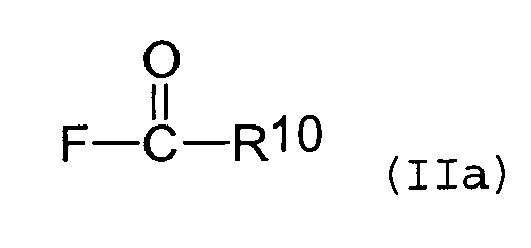
- F
- OH oder NH2 sind,
- R10
- ein einwertiger, für die UV-Absorption verantwortlicher Chromophorrest, der Formel (Ic mit m = 0)
und zusätzlich
mit mindestens einem tertiären Amin der allgemeinen Formel (IIb)
- R6, R7
- Alkylreste mit 1 bis 22 Kohlenstoffatomen oder Alkenylreste mit 2 bis 22 Kohlenstoffatomen, worin die Alkyl- oder Alkenylreste Hydroxylgruppen aufweisen können,
- R8
-
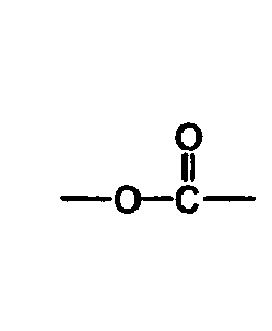
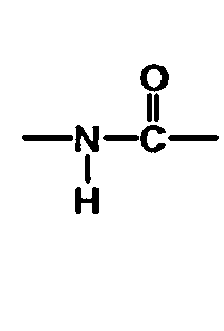
- R9
- ein einwertiger Kohlenwasserstoffrest mit 1 bis 22 Kohlenstoffatomen sein kann,
- Die Umsetzung des Siloxanes (II) mit den Reaktanden der Formeln (IIa) und (IIb) kann dabei auch in zwei unabhängigen, getrennten Reaktionsschritten nacheinander erfolgen.
- Die Mengenverhältnisse der Verbindungen (IIa) und (IIb) sind unabhängig voneinander variierbar von 0,001 : 1 bis 1 : 0,001, insbesondere von 0,1 : 1 bis 1 : 0,1.
- Bevorzugte Beispiele für den Rest R1 sind Alkylreste mit 1 bis 22, insbesondere 1 bis 4 Kohlenstoffatomen oder der Phenylrest, wie der Methyl-, Ethyl-, n-Propyl-, iso-Propyl- n-Butyl oder iso-Butylrest.
- Bevorzugte Beispiele für den Rest M sind:


- Innerhalb der erfindungsgemäßen Verbindungen können die Reste S und Z+ gleiche oder unterschiedliche Bedeutung haben.
- Bevorzugte Beispiele für den Rest S sind:


- Bevorzugte Beispiele für den Rest Z sind Capryldimethylamin, Lauryldimethylamin, Cocodimethylamin, Myristyldimethylamin, Cetyldimethylamin, Stearyldimethylamin, Behenyldimethylamin, Oleyldimethylamin, Capryloylamidopropyldimethylamin, Lauramidopropyldimethylamin, Cocamidopropyldimethylamim, Myristamidopropyldimethylamin, Palmitamidopropyldimethylamin, Stearamidopropyldimethylamin, Behenamidopropyldimethylamin, Oleamidopropyldimethylamin, Undecylenamidopropyldimethylamin, Ricinolamidopropyldimethylamin sowie Guanidinopropyldimethylamin.
- Bevorzugte Beispiele für A-, ein anorganisches oder organisches Anion, das von einer üblichen physiologisch verträglichen Säure HA herrührt, sind Acetat-, Chlorid-, Bromid-, Hydrogensulfat-, Sulfat-, Methosulfat-, Ethosulfat-, Citrat-, Tartrat- und Lactationen, sowie Anionen aromatischer Säuren, wie die Anionen der p-Toluolsulfonsäure, Benzoesäure, Salicylsäure, Zimtsäure, 4-Methoxyzimtsäure, 4-Aminobenzoesäure, 4-Bis(hydroxypropyl)-aminobenzoesäure, 4-Bis(polyethoxy)aminobenzoesäure, 4-Dimethylaminobenzoesäure, 3-Imidazol-4-yl-acrylsäure, 2-Phenylbenzimidazol-5-sulfonsäure, 3,3'-(1,4-Phenylendimethin)-bis-(7,7-dimethyl-2-oxo-bicyclo-[2.2.1]heptan-1-methansulfonsäure), 2-Hydroxy-4-methoxybenzophenon-5-sulfonsäure und 3-(4'-Sulfo)-benzyliden-bornan-2-on.
- Es ist dem Fachmann geläufig, dass die Verbindungen in Form eines Gemisches mit einer im Wesentlichen durch statistische Gesetze geregelten Verteilung vorliegen. Die Werte für die Indices a und b stellen deshalb Mittelwerte dar.
- Bevorzugte Beispiele für UV-Licht absorbierende quaternäre Polysiloxane, sind Verbindungen der Formeln


- Verfahren zur Herstellung der erfindungsgemäßen Verbindungen und die Eigenschaften dieser Verbindungen sind in den folgenden Beispielen näher beschrieben:
- Herstellung eines erfindungsgemäßen UV-Licht absorbierenden quaternären Polysiloxans der allgemeinen Formel:

- In einem 250 ml-Vierhalskolben, versehen mit Rührer, Tropftrichter, Thermometer und Rückflusskühler, werden 5,5 g (0,0176 Mol) eines tertiären Amins der allgemeinen Formel:


- UV-vis Spektrum Beispiel 1 (0,005 % in Isopropanol):

- Das Spektrum zeigt die breite charakteristische Absorptionsbande der Zimtsäureeinheiten bei 275 nm. Die Intensität korreliert mit der verwendeten Menge an Zimtsäure.
- Herstellung eines erfindungsgemäßen UV-Licht absorbierenden quaternären Polysiloxans der allgemeinen Formel:

- In einem 250 ml-Vierhalskolben, versehen mit Rührer, Tropftrichter, Thermometer und Rückflusskühler, werden 6,3 g (0,02 Mol) eines tertiären Amins der allgemeinen Formel:


- UV-vis Spektrum Beispiel 2 (0,005 % in Isopropanol):

- Das Spektrum zeigt die breite charakteristische Absorptionsbande der Zimtsäureeinheiten bei 275 nm. Die Intensität korreliert mit der verwendeten Menge an Zimtsäure.
- Herstellung eines erfindungsgemäßen UV-Licht absorbierenden quaternären Polysiloxans der allgemeinen Formel:

- In einem 250 ml-Vierhalskolben, versehen mit Rührer, Tropftrichter, Thermometer und Rückflusskühler, werden 15,8 g (0,05 Mol) eines tertiären Amins der allgemeinen Formel:


- UV-vis Spektrum Beispiel 3 (0,0075 % in Isopropanol):

- Das Spektrum zeigt die charakteristische Absorptionsbande der Methoxyzimtsäureeinheiten mit einem breiten Maximum zwischen 280 und 320 nm. Die Intensität korreliert mit der verwendeten Menge an Methoxyzimtsäure.
- Für den anwendungstechnischen Vergleich wurden folgende erfindungsgemäße UV-Licht absorbierende quaternäre Polysiloxane eingesetzt:
- Verbindung 1:

- Verbindung 2:

- Verbindung 3:

- Herstellung und Überprüfung von Haarbehandlungsmitteln unter Verwendung der erfindungsgemäßen Verbindungen 1, 2 und 3:
- Für die anwendungstechnische Beurteilung werden Haartressen, die für sensorische Tests verwendet werden, durch eine Dauerwellbehandlung und eine Bleichbehandlung standardisiert vorgeschädigt. Dazu werden friseurübliche Produkte verwendet.
-
- Dauerwell-Flüssigkeit (z.B. "ondi", Wella)
- Fixierung (z.B. "neutrafix", Wella)
- Blondierpulver (z.B. "blondor special", Wella)
- H2O2 (e.g. "Welloxyd 9 %", Wella)
- Shampoo ohne Pflegeanteil (z.B. Natriumlaurylethersulfat (12 % WAS), NaCl verdickt)
- Bechergläser
- Haar-Färbe-Pinsel
- Die Behandlung wird in der folgenden Reihenfolge durchgeführt:
- 1. Dauerwell-Behandlung:
- Die Haartressen werden mit der Dauerwellflüssigkeit angefeuchtet (Gewichtsverhältnis Haar : Flüssigkeit = 1 : 2).
- Nach einer Einwirkzeit von 15 min bei Raumtemperatur in einem abgedeckten Becherglas wird die Dauerwellflüssigkeit 2 min sorgfältig ausgespült. Anschließend werden die Haarsträhnchen mit einem Handtuch sanft ausgedrückt.
- Die Fixierung (Verhältnis Haar : Flüssigkeit = 1 : 2) hat eine Einwirkzeit von 10 min bei Raumtemperatur. Anschließend wird die Fixierung sorgfältig 2 min ausgespült.
- Die Haare werden anschließend über Nacht bei Raumtemperatur getrocknet.
- 2. Bleich-Behandlung:
- Das Blondierpulver und das H2O2 werden zu einer Paste (Gewichtsverhältnis Pulver: H2O2 = 2 : 3) verarbeitet. Dann wird die Paste sofort auf die dauergewellten Haare mit einem Pinsel aufgetragen. Die Einwirkzeit beträgt 30 min bei Zimmertemperatur. Anschließend wird die Blondierpaste unter fließendem Wasser 2 min ausgespült.
- Dann wird das Haar mit einem Shampoo ohne Conditioner 1 min gewaschen (Shampoomenge: 0,5 ml/Hairtress) und dann für 1 min ausgespült.
- Bevor die vorgeschädigten Haarsträhnchen für Sensorik-Tests verwendet werden, werden sie über Nacht bei Raumtemperatur getrocknet.
- Die konditionierenden Produkte werden in einer einfachen Haarspülung mit folgendem Aufbau
Produkt Gewichtsanteile TEGINACID® C Ceteareth-25 0,5 % TEGO® Alkanol 16 Cetyl Alcohol 2,0 % "Konditioniermittel" 2,0 % Wasser ad. 100 % Zitronensäure ad. pH 4,0 ± 0,3 - Als "Konditioniermittel" sind die erfindungsgemäßen Verbindungsbeispiele oder Vergleichsprodukte bezeichnet.
- Standardisierte Behandlung von vorgeschädigten Haarsträhnen mit konditionierenden Proben:
- Die, wie oben beschrieben, vorgeschädigten Haarsträhnchen werden wie folgt mit der oben beschriebenen konditionierenden Spülung behandelt:
- Die Haarsträhnen werden unter fließendem, warmem Wasser benetzt. Das überschüssige Wasser wird leicht von Hand ausgedrückt, dann wird die Spülung aufgebracht und sanft im Haar eingearbeitet (1 ml/Haarsträhne (2 g)). Nach einer Verweilzeit von 1 min wird das Haar für 1 min gespült.
- Vor der sensorischen Beurteilung wird das Haar an der Luft bei 50 % Luftfeuchtigkeit und 25 °C für mindestens 12 h getrocknet.
- Die sensorischen Bewertungen erfolgen nach Noten, die auf einer Skala von 1 bis 5 vergeben werden, wobei 1 die schlechteste und 5 die beste Bewertung ist.
Nasskämmbarkeit: Bewertung Zahnung des Kamms Ergebnis 5 grob keine Knoten, das Haar ist leicht entwirrbar fein sehr leichtes Durchkämmen, kein Widerstand spürbar 4 grob einzelne Knoten, das Haar ist leicht entwirrbar fein leichtes Durchkämmen, geringer Widerstand spürbar 3 grob wenige Knoten, geringer Widerstand fein etwas Widerstand spürbar, der nach mehrmaligem Kämmen nachlässt 2 grob einige Knoten, merklicher Widerstand fein merklicher Widerstand, der nach mehrmaligem Kämmen nicht nachlässt. 1 grob viele Knoten, starker Widerstand fein sehr starker Widerstand, manchmal ist das Haar nicht durchkämmbar Nassgriff: Bewertung Ergebnis 5 sehr glatt, weich aber trotzdem schön fest, griffig, nicht schmierig/klebrig (keine Rückstände fühlbar) 4 glatt und weich und/oder nur geringe Rückstände spürbar 3 glatt, etwas hart und/oder etwas Rückstände spürbar 2 hart und/oder merkliche schmierige, wachsige Rückstände 1 sehr hart, rauh, stumpf und/oder extrem schmierig, klebrig (deutlich spürbare schmierige, wachsige Rückstände spürbar) Trockenkämmbarkeit: Bewertung Zahnung des Kamms Ergebnis 5 grob keine Knoten, das Haar ist leicht entwirrbar fein sehr leichtes Durchkämmen, kein Widerstand spürbar, das Haar lädt sich nicht auf 4 grob einzelne Knoten, das Haar ist leicht entwirrbar fein leichtes Durchkämmen, geringer Widerstand spürbar, Haar lädt sich minimal auf 3 grob wenige Knoten, geringer Widerstand fein etwas Widerstand spürbar, der nach mehrmaligem Kämmen nachlässt, Haar lädt sich wenig auf 2 grob einige Knoten, merklicher Widerstand fein merklicher Widerstand, der nach mehrmaligem Kämmen nicht nachlässt, Haar lädt sich auf 1 grob viele Knoten, starker Widerstand fein sehr starker Widerstand, manchmal ist das Haar nicht durchkämmbar, Haar lädt sich deutlich auf Trockengriff: Bewertung Ergebnis 5 sehr glatt, weich aber trotzdem fest, voll, griffig 4 glatt und weich 3 glatt, leicht hart und/oder leicht stumpf (Rückstände) 2 hart, etwas stumpf 1 rauh, hart, trocken, stumpf (Rückstände) Trocken-Aussehen: Bewertung Ergebnis 5 extrem glänzend 4 glänzend 3 etwas glänzend 2 wenig glänzend, leicht stumpf 1 stumpf, kein Glanz - In der folgenden Tabelle 1 werden die Ergebnisse der sensorischen Beurteilung der wie oben beschrieben durchgeführten Behandlung der Haarstränchen mit erfindungsgemäßen Substanzen bzw. Placebo verglichen.
- Zur Bestimmung der Lichtbeständigkeit der Haarfarbe werden gefärbte Haarsträhnen eingesetzt. Zur Färbung wurde ein handelsübliches Produkt der Marke Viva Farbton Grenadine Level 2 (Wella AG, Darmstadt) eingesetzt. Die Farbe der jeweiligen Haarsträhne wird zuerst vor der Behandlung mit der Haarspülung bestimmt. Nach der Behandlung wird die jeweilige Haarstähne mit einer Lampe bestrahlt deren Spektrum (D65) dem des natürlichen Sonnenlichtes weitestgehend entspricht. Die Dosis entsprach dabei der zweifachen natürlichen Tagesdosis bei 50 ° nördlicher Breite. Nach der Behandlung wird erneut eine Farbmessung vorgenommen. Die Auswertung der Farbmessung erfolgte nach dem CIE-L'a'b'-System, welches einen Differenzwert Delta-E ergibt. In dem Wert Delta-E werden Veränderungen der Helligkeit sowie auf der Rot-Grün-Skala und der Blau-Gelb-Skala berücksichtigt. Ein kleinerer Delta-E Wert steht für eine geringere Veränderung der Farbe.
Tabelle 1: Formulierung "einfache Haarspülung" mit Nasskämmbarkeit Nassgriff Trockenkämmbarkeit Trockengriff Glanz Farbveränderung Delta-E Erfindungsgemäßer Verbindung 1 4,5 4,0 3,5 4,0 3,75 2,3 Erfindungsgemäßer Verbindung 2 4,5 3,75 3,25 4,25 3,75 1,9 Erfindungsgemäßer Verbindung 3 4,5 4,25 3,5 4,25 4,0 1,1 Vergleichsverbindung Cetrimonium Chloride 5,0 4,25 4,0 3,75 3,0 5,9 Kontrolle ohne Konditioniermittel 1,25 1,75 2,25 2,75 3,25 n.b. n.b. = nicht bestimmt - Es zeigt sich, dass die erfindungsgemäßen Verbindungsbeispiele in der sensorischen Beurteilung sehr gute kosmetische Bewertungen erhalten.
- Bei der Farbveränderung werden durch die erfindungsgemäßen Verbindungen signifikant niedrigere Werte als bei der Vergleichsverbindung beobachtet.
ein Rest nach Formel (Ic) ist,
mit
x = 0 bis 6,
y = 0 oder 1
in an sich bekannter Weise in Gegenwart eines üblichen physiologisch verträglichen organischen oder anorganischen Säureequivalentes HA, bezogen auf tertiäres Amin und bei Temperaturen von 40 bis 120 °C umsetzt.
Claims (10)
- UV-Licht absorbierende quaternäre Polysiloxane der allgemeinen Formel (I)
 R1 gleich oder verschieden sind und jeweils Alkylreste mit 1 bis 22, vorzugsweise 1 bis 4 Kohlenstoffatomen oder Phenylreste bedeuten,R2 zu einem Teil die Bedeutung der Reste R1 haben können und die übrigen Reste R2 unabhängig voneinander Reste der Formeln (Ia oder Ib)
oder
worinS ein einwertiger, für die UV-Absorption verantwortlicher Chromophorrest ist
undZ+ ein Rest der Formel (Id) R6, R7 Alkylreste mit 1 bis 22 Kohlenstoffatomen oder Alkenylreste mit 2 bis 22 Kohlenstoffatomen, worin die Alkyl- oder Alkenylreste Hydroxylgruppen aufweisen können,R8
 R9 ein einwertiger Kohlenwasserstoffrest mit 1 bis 22 Kohlenstoffatomen sein kann,
oder
ein einwertiger für die UV-Absorption verantwortlicher Chromophorrest ist,
x = 0 bis 6,
y = 0 oder 1 ist
undM ein zweiwertiger Kohlenwasserstoffrest mit mindestens 4 Kohlenstoffatomen ist, der eine Hydroxylgruppe aufweist und der durch ein oder mehrere Sauerstoff-atome unterbrochen sein kann,A- ein anorganisches oder organisches Anion, das von einer üblichen physiologisch verträglichen Säure HA herrührt, ist,a unabhängig voneinander einen Wert von 1 bis 200 undb einen Wert von 0 bis 10 hat. - UV-Licht absorbierende Verbindungen gemäß Anspruch 1, dadurch gekennzeichnet, dass R1 ein Methyl-, Ethyl-, n-Propyl-, iso-Propyl-, n-Butyl-, iso-Butyl- oder Phenylrest sein kann.
- UV-Licht absorbierende Verbindungen gemäß den Ansprüchen 1 und 2, dadurch gekennzeichnet, dass M gleich oder verschieden einer der Reste ist, ausgesucht aus der Gruppe




- UV-Licht absorbierende Verbindungen gemäß den Ansprüchen 1 bis 3, dadurch gekennzeichnet, dass S ein einwertiger, für die UV-Absorption verantwortlicher Chromophorrest der Formel (Ic) ist,
 R3
R3
 R4 -CH=CH- ist,R5 gleich oder verschieden sind und jeweils Wasserstoff, Alkyl-, Haloalkyl-, Halogen-, Phenyl-, Hydroxyl-, Alkoxy-, Amino-, Alkylamino-, Dialkylamino-, Di (hydroxyalkyl) amino- oder Di (polyalkoxy) aminoreste bedeuten,m = 0 oder 1,n = 0 oder 1,o = 0 bis 5ist.
 - UV-Licht absorbierende Verbindungen gemäß den Ansprüchen 1 bis 4, dadurch gekennzeichnet, dass S gleich oder verschieden eine UV-absorbierende Verbindung ist, insbesondere eine Verbindung ausgesucht aus der Gruppe




- UV-Licht absorbierende Verbindungen gemäß den Ansprüchen 1 bis 5, dadurch gekennzeichnet, dass Z gleich oder verschieden einem kationischen Rest ist, ausgewählt aus der Gruppe Capryldimethylamin, Lauryldimethylamin, Cocodimethylamin, Myristyldimethylamin, Cetyldimethylamin, Stearyldimethylamin, Behenyldimethylamin, Oleyldimethylamin, Capryloylamidopropyldimethylamin, Lauramidopropyldimethylamin, Cocamidopropyldimethylamim, Myristamidopropyldimethylamin, Palmitamidopropyldimethylamin, Stearamidopropyldimethylamin, Behenamidopropyldimethylamin, Oleamidopropyldimethylamin, Undecylenamidopropyldimethylamin, Ricinolamidopropyldimethylamin sowie Gunidinopropyldimethylamin.
- UV-Licht absorbierende Verbindungen gemäß den Ansprüchen 1 bis 6, dadurch gekennzeichnet, dass A- gleich oder verschieden einer der Reste ist, ausgesucht aus der Gruppe Acetat-, Chlorid-, Bromid-, Hydrogensulfat-, Sulfat-, Methosulfat-, Ethosulfat-, Citrat-, Tartrat- und Lactationen, sowie Anionen aromatischer Säuren, wie die Anionen der p-Toluolsulfonsäure, Benzoesäure, Salicylsäure, Zimtsäure, 4-Methoxyzimtsäure, 4-Aminobenzoesäure, 4-Bis-(hydroxypropyl)aminobenzoesäure, 4-Bis(polyethoxy)aminobenzoesäure, 4-Dimethylaminobenzoesäure, 3-Imidazol-4-yl-acrylsäure, 2-Phenylbenzimidazol-5-sulfonsäure, 3,3'-(1,4-Phenylendimethin)-bis(7,7-dimethyl-2-oxo-bicyclo[2.2.1]heptan-1-methansulfonsäure), 2-Hydroxy-4-methoxybenzophenon-5-sulfonsäure und 3-(4'-Sulfo)benzyliden-bornan-2-on.
- Verwendung der Verbindungen der allgemeinen Formel (I) zur Herstellung von UV-Licht absorbierenden Formulierungen.
- Verwendung der Verbindungen der allgemeinen Formel (I) zur Herstellung von UV-Licht absorbierenden Formulierungen zur Behandlung, Nachbehandlung und Schutz von keratinischen Fasern sowie Haut und Hautanhangsgebilden.
- Verwendung der Verbindungen der allgemeinen Formel (I) zur Herstellung von UV-Licht absorbierenden Waschmittel- und Weichspülerformulierungen zur Behandlung und Nachbehandlung von Textilien.
Priority Applications (1)
| Application Number | Priority Date | Filing Date | Title |
|---|---|---|---|
| PL06001168T PL1688453T3 (pl) | 2005-02-02 | 2006-01-20 | Czwartorzędowe siloksany absorbujące promieniowanie nadfioletowe |
Applications Claiming Priority (1)
| Application Number | Priority Date | Filing Date | Title |
|---|---|---|---|
| DE102005004706A DE102005004706A1 (de) | 2005-02-02 | 2005-02-02 | UV-Licht absorbierende quaternäre Polysiloxane |
Publications (2)
| Publication Number | Publication Date |
|---|---|
| EP1688453A1 true EP1688453A1 (de) | 2006-08-09 |
| EP1688453B1 EP1688453B1 (de) | 2008-07-23 |
Family
ID=36101125
Family Applications (1)
| Application Number | Title | Priority Date | Filing Date |
|---|---|---|---|
| EP06001168A Expired - Lifetime EP1688453B1 (de) | 2005-02-02 | 2006-01-20 | UV-Licht absorbierende quaternäre Polysiloxane |
Country Status (9)
| Country | Link |
|---|---|
| US (1) | US7776989B2 (de) |
| EP (1) | EP1688453B1 (de) |
| JP (1) | JP2006213920A (de) |
| CN (1) | CN1814655B (de) |
| AU (1) | AU2006200209B2 (de) |
| CA (1) | CA2530243C (de) |
| DE (2) | DE102005004706A1 (de) |
| ES (1) | ES2310863T3 (de) |
| PL (1) | PL1688453T3 (de) |
Cited By (2)
| Publication number | Priority date | Publication date | Assignee | Title |
|---|---|---|---|---|
| EP2821430A1 (de) * | 2013-07-01 | 2015-01-07 | Evonik Industries AG | Siloxan-Polymere mit zentralem Polysiloxan-Polymerblock mit organofunktionellen Resten mit jeweils mindestens zwei bivalenten Gruppen ausgewählt aus Harnstoff- und/oder Carbamat-Gruppen und mindestens einem UV/Vis-Chromophor als Rest |
| US10299471B2 (en) | 2015-06-16 | 2019-05-28 | Evonik Degussa Gmbh | Biodegradable super-spreading, organomodified trisiloxane |
Families Citing this family (49)
| Publication number | Priority date | Publication date | Assignee | Title |
|---|---|---|---|---|
| US7759408B2 (en) * | 2005-12-21 | 2010-07-20 | Bausch & Lomb Incorporated | Silicon-containing monomers end-capped with polymerizable cationic hydrophilic groups |
| US8828420B2 (en) * | 2006-01-06 | 2014-09-09 | Bausch & Lomb Incorporated | Siloxane prepolymer containing pendant cationic and polymerizable groups |
| US7528208B2 (en) * | 2006-01-06 | 2009-05-05 | Bausch & Lomb Incorporated | Siloxane prepolymer containing pendant and end-capping cationic and polymerizable groups |
| US7960447B2 (en) * | 2006-04-13 | 2011-06-14 | Bausch & Lomb Incorporated | Cationic end-capped siloxane prepolymer for reduced cross-link density |
| DE102006035512A1 (de) * | 2006-07-31 | 2008-02-07 | Evonik Goldschmidt Gmbh | Neuartige Polysiloxane mit quaternären Ammoniumgruppen, Verfahren zu deren Herstellung und deren Verwendung in reinigenden und pflegenden Formulierungen |
| KR100964434B1 (ko) | 2007-08-21 | 2010-06-16 | 제이에스알 가부시끼가이샤 | 액정 배향제, 액정 배향막의 형성 방법 및 액정 표시 소자 |
| DE102007040000A1 (de) * | 2007-08-23 | 2009-02-26 | Evonik Goldschmidt Gmbh | Zwitterionische Verbindungen und deren Verwendung |
| DE102007041028A1 (de) * | 2007-08-29 | 2009-03-05 | Evonik Goldschmidt Gmbh | Verwendung estermodifizierter Organopolysiloxane zur Herstellung kosmetischer oder pharmazeutischer Kompositionen |
| JP4507024B2 (ja) | 2007-10-24 | 2010-07-21 | Jsr株式会社 | 液晶配向剤、液晶配向膜の形成方法および液晶表示素子 |
| DE102007054885A1 (de) * | 2007-11-15 | 2009-05-20 | Evonik Degussa Gmbh | Verfahren zur Fraktionierung oxidischer Nanopartikel durch Querstrom-Membranfiltration |
| JP4544438B2 (ja) | 2007-11-27 | 2010-09-15 | Jsr株式会社 | 液晶配向剤、液晶配向膜の形成方法および液晶表示素子 |
| DE102008001786A1 (de) * | 2008-05-15 | 2009-11-26 | Evonik Goldschmidt Gmbh | Verwendung organomodifizierter Siloxanblockcopolymere als Pflegewirkstoff zur Pflege von menschlichen oder tierischen Körperteilen |
| DE102008001788A1 (de) * | 2008-05-15 | 2009-11-26 | Evonik Goldschmidt Gmbh | Verwendung organomodifizierter Siloxanblockcopolymere zur Herstellung kosmetischer oder pharmazeutischer Zusammensetzungen |
| DE102008041020A1 (de) * | 2008-08-06 | 2010-02-11 | Evonik Goldschmidt Gmbh | Verwendung von Polysiloxanen mit quaternären Ammoniumgruppen zum Schutz von tierischen oder menschlichen Haaren vor Hitzeschädigung |
| DE102008041601A1 (de) * | 2008-08-27 | 2010-03-04 | Evonik Goldschmidt Gmbh | Verfahren zur Herstellung verzweigter SiH-funtioneller Polysiloxane und deren Verwendung zur Herstellung flüssiger, SiC- oder SiOC-verknüpfter, verzweigter organomodifizierter Polysiloxane |
| DE102008041754A1 (de) * | 2008-09-02 | 2010-03-04 | Evonik Goldschmidt Gmbh | Enzympräparate |
| DE102008042381A1 (de) * | 2008-09-26 | 2010-04-01 | Evonik Goldschmidt Gmbh | Emulgator-Systeme für kosmetische und pharmazeutische Öl-in-Wasser-Emulsionen |
| DE102008043422B3 (de) | 2008-11-03 | 2010-01-07 | Evonik Degussa Gmbh | Verfahren zur Aufreinigung niedermolekularer Hydridosilane |
| JP5454772B2 (ja) * | 2008-11-17 | 2014-03-26 | Jsr株式会社 | 液晶配向剤、液晶配向膜およびその形成方法ならびに液晶表示素子 |
| JP5668906B2 (ja) * | 2009-02-19 | 2015-02-12 | Jsr株式会社 | 液晶配向剤、液晶配向膜および液晶表示素子 |
| DE102009001230A1 (de) | 2009-02-27 | 2010-09-02 | Evonik Oxeno Gmbh | Verfahren zur Abtrennung und teilweiser Rückführung von Übergangsmetallen bzw. deren katalytisch wirksamen Komplexverbindungen aus Prozessströmen |
| DE102009001225A1 (de) | 2009-02-27 | 2010-09-02 | Evonik Oxeno Gmbh | Verfahren zur Anreicherung eines Homogenkatalysators aus einem Prozessstrom |
| DE102009002415A1 (de) * | 2009-04-16 | 2010-10-21 | Evonik Goldschmidt Gmbh | Emulgator enthaltend glycerinmodifizierte Organopolysiloxane |
| DE102009028636A1 (de) * | 2009-08-19 | 2011-02-24 | Evonik Goldschmidt Gmbh | Neuartige Urethangruppen enthaltende silylierte Präpolymere und Verfahren zu deren Herstellung |
| DE102009029450A1 (de) | 2009-09-15 | 2011-03-24 | Evonik Goldschmidt Gmbh | Neuartige Polysiloxane mit quaternären Ammoniumgruppen und deren Verwendung |
| MX2012005952A (es) * | 2009-11-24 | 2012-10-01 | Momentive Performance Mat Inc | Polisiloxanos modificados hidrofilicos/lipofilicos como emulsificantes. |
| DE102009047351A1 (de) | 2009-12-01 | 2011-06-09 | Evonik Goldschmidt Gmbh | Komposit-Siliconmembranen mit hoher Trennwirkung |
| DE102010000993A1 (de) | 2010-01-19 | 2011-07-21 | Evonik Goldschmidt GmbH, 45127 | Neuartige Polysiloxane mit quatären Ammoniumgruppen, Verfahren zu deren Herstellung und deren Verwendung in reinigenden und pflegenden Formulierungen |
| DE102010001350A1 (de) | 2010-01-29 | 2011-08-04 | Evonik Goldschmidt GmbH, 45127 | Neuartige lineare Polydimethylsiloxan-Polyether-Copolymere mit Amino- und/oder quaternären Ammoniumgruppen und deren Verwendung |
| DE102010002180A1 (de) * | 2010-02-22 | 2011-08-25 | Evonik Goldschmidt GmbH, 45127 | Stickstoffhaltige silizium-organische Pfropfmischpolymere |
| KR101206939B1 (ko) * | 2010-07-15 | 2012-11-30 | 김영백 | 개선된 자외선 안정성을 가지는 자외선 흡수 폴리유기산화실리콘 입자 및 그의 제조방법 |
| DE102010062156A1 (de) | 2010-10-25 | 2012-04-26 | Evonik Goldschmidt Gmbh | Polysiloxane mit stickstoffhaltigen Gruppen |
| DE102011109540A1 (de) | 2011-08-03 | 2013-02-07 | Evonik Goldschmidt Gmbh | Alkylcarbonat endverschlossene Polyethersilioxane und Verfahren zu deren Herstellung |
| DE102012202521A1 (de) | 2012-02-20 | 2013-08-22 | Evonik Goldschmidt Gmbh | Verzweigte Polysiloxane und deren Verwendung |
| DE102012203737A1 (de) | 2012-03-09 | 2013-09-12 | Evonik Goldschmidt Gmbh | Modifizierte Alkoxylierungsprodukte, die zumindest eine nicht-terminale Alkoxysilylgruppe aufweisen und mehrere Urethangruppen enthalten und deren Verwendung |
| JP6250028B2 (ja) * | 2012-03-29 | 2017-12-20 | モメンティブ パフォーマンス マテリアルズ ゲーエムベーハー | 第四級アンモニウム基を含む低粘度であるポリオルガノシロキサン、その製造方法ならびにそれらの使用 |
| DE102013216777A1 (de) | 2013-08-23 | 2015-02-26 | Evonik Industries Ag | Bei Raumtemperatur härtbare Silikonharz-Zusammensetzungen |
| DE102013216781A1 (de) | 2013-08-23 | 2015-02-26 | Evonik Industries Ag | Beschichtungsmassen |
| DE102014217790A1 (de) | 2014-09-05 | 2016-03-10 | Evonik Degussa Gmbh | Verfahren zur Herstellung von hydrosilylierbaren Eugenol-Polyethern und Eugenol-Polyethersiloxanen sowie deren Verwendung |
| EP3061442A1 (de) | 2015-02-27 | 2016-08-31 | Evonik Degussa GmbH | Zusammensetzung enthaltend Rhamnolipid und Siloxan |
| WO2016177483A1 (en) * | 2015-05-07 | 2016-11-10 | Henkel Ag & Co. Kgaa | Method to prevent discoloration of colored textiles |
| US10835481B2 (en) | 2017-03-16 | 2020-11-17 | Coast Southwest, Inc. | Use of UV resistant active materials on hair |
| US10982051B2 (en) | 2017-06-05 | 2021-04-20 | Momentive Performance Materials Inc. | Aqueous compositions for hair treatment comprising polyorganosiloxanes with polyhydroxyaromatic moieties |
| US11179312B2 (en) | 2017-06-05 | 2021-11-23 | Momentive Performance Materials Inc. | Aqueous compositions for the treatment of hair |
| US20200163850A1 (en) | 2018-11-24 | 2020-05-28 | Momentive Performance Materials Gmbh | Use of polyhydroxyaromatic compounds for the treatment of fibrous amino acid based substrates |
| US10617617B1 (en) | 2018-12-04 | 2020-04-14 | Momentive Performance Materials Inc. | Polycarboxylic acid compounds for the treatment of fibrious amino acid based substrates, especially hair |
| US11090255B2 (en) | 2018-12-04 | 2021-08-17 | Momentive Performance Materials Inc. | Use of polycarboxylic acid compounds for the treatment of fibrious amino acid based substrates, especially hair |
| JP2021025879A (ja) * | 2019-08-05 | 2021-02-22 | 株式会社Aoki | 光変色検査方法 |
| EP3954740A1 (de) | 2020-08-14 | 2022-02-16 | Evonik Operations GmbH | Entschäumerzusammensetzung auf basis von organofunktionell modifizierten polysiloxanen |
Citations (5)
| Publication number | Priority date | Publication date | Assignee | Title |
|---|---|---|---|---|
| EP0606634A1 (de) * | 1993-01-08 | 1994-07-20 | Th. Goldschmidt AG | Mit Estern olefinisch ungesättigter Säuren sowie quaternären Ammoniumgruppen modifizierte Organopolysiloxane, deren Herstellung und Verwendung |
| US5610257A (en) * | 1994-11-08 | 1997-03-11 | L'oreal | Photoprotective/cosmetic compositions comprising benzotriazole-substituted polyorganosiloxanes/polyorganosilanes |
| US5837792A (en) * | 1995-06-23 | 1998-11-17 | Ciba Specialty Chemicals Corporation | Polysiloxane light stabilizers |
| EP1285943A2 (de) * | 2001-08-23 | 2003-02-26 | Goldschmidt AG | UV-Licht absorbierende quartäre Polysiloxane |
| US20030133886A1 (en) * | 2001-11-15 | 2003-07-17 | Xerox Corporation | Photoprotective and lightfastness-enhancing siloxanes |
Family Cites Families (10)
| Publication number | Priority date | Publication date | Assignee | Title |
|---|---|---|---|---|
| US4185087A (en) * | 1977-12-28 | 1980-01-22 | Union Carbide Corporation | Hair conditioning compositions containing dialkylamino hydroxy organosilicon compounds and their derivatives |
| DE3705121A1 (de) | 1987-02-18 | 1988-09-01 | Goldschmidt Ag Th | Polyquaternaere polysiloxan-polymere, deren herstellung und verwendung in kosmetischen zubereitungen |
| DE3719086C1 (de) | 1987-06-06 | 1988-10-27 | Goldschmidt Ag Th | Diquartaere Polysiloxane,deren Herstellung und Verwendung in kosmetischen Zubereitungen |
| WO1999055953A1 (en) | 1998-04-27 | 1999-11-04 | The Procter & Gamble Company | Fabric wrinkle control composition and method |
| WO2001025382A1 (en) | 1999-10-05 | 2001-04-12 | Ciba Speciality Chemicals Holding Inc. | Fabric softener compositions |
| MXPA02003207A (es) | 1999-10-05 | 2002-09-30 | Ciba Sc Holding Ag | Composiciones mejoradas de suavizantes de telas. |
| ES2250202T3 (es) | 1999-10-05 | 2006-04-16 | Ciba Specialty Chemicals Holding Inc. | Uso de composiciones suavizantes de tejidos. |
| PT1218478E (pt) | 1999-10-05 | 2005-11-30 | Ciba Sc Holding Ag | Composicoes de amaciador de tecido |
| KR20050025608A (ko) * | 2002-07-16 | 2005-03-14 | 디에스엠 아이피 어셋츠 비.브이. | 일광차단제 |
| DE102005004704A1 (de) * | 2005-02-02 | 2006-08-10 | Goldschmidt Gmbh | Guanidinogruppen-haltige Siloxane und deren Verwendung für kosmetische Formulierungen |
-
2005
- 2005-02-02 DE DE102005004706A patent/DE102005004706A1/de not_active Withdrawn
- 2005-12-15 CA CA2530243A patent/CA2530243C/en not_active Expired - Fee Related
-
2006
- 2006-01-18 AU AU2006200209A patent/AU2006200209B2/en not_active Ceased
- 2006-01-20 EP EP06001168A patent/EP1688453B1/de not_active Expired - Lifetime
- 2006-01-20 ES ES06001168T patent/ES2310863T3/es not_active Expired - Lifetime
- 2006-01-20 PL PL06001168T patent/PL1688453T3/pl unknown
- 2006-01-20 DE DE502006001152T patent/DE502006001152D1/de not_active Expired - Lifetime
- 2006-01-25 CN CN2006100062982A patent/CN1814655B/zh not_active Expired - Fee Related
- 2006-01-31 JP JP2006022018A patent/JP2006213920A/ja active Pending
- 2006-02-01 US US11/344,872 patent/US7776989B2/en not_active Expired - Fee Related
Patent Citations (5)
| Publication number | Priority date | Publication date | Assignee | Title |
|---|---|---|---|---|
| EP0606634A1 (de) * | 1993-01-08 | 1994-07-20 | Th. Goldschmidt AG | Mit Estern olefinisch ungesättigter Säuren sowie quaternären Ammoniumgruppen modifizierte Organopolysiloxane, deren Herstellung und Verwendung |
| US5610257A (en) * | 1994-11-08 | 1997-03-11 | L'oreal | Photoprotective/cosmetic compositions comprising benzotriazole-substituted polyorganosiloxanes/polyorganosilanes |
| US5837792A (en) * | 1995-06-23 | 1998-11-17 | Ciba Specialty Chemicals Corporation | Polysiloxane light stabilizers |
| EP1285943A2 (de) * | 2001-08-23 | 2003-02-26 | Goldschmidt AG | UV-Licht absorbierende quartäre Polysiloxane |
| US20030133886A1 (en) * | 2001-11-15 | 2003-07-17 | Xerox Corporation | Photoprotective and lightfastness-enhancing siloxanes |
Cited By (2)
| Publication number | Priority date | Publication date | Assignee | Title |
|---|---|---|---|---|
| EP2821430A1 (de) * | 2013-07-01 | 2015-01-07 | Evonik Industries AG | Siloxan-Polymere mit zentralem Polysiloxan-Polymerblock mit organofunktionellen Resten mit jeweils mindestens zwei bivalenten Gruppen ausgewählt aus Harnstoff- und/oder Carbamat-Gruppen und mindestens einem UV/Vis-Chromophor als Rest |
| US10299471B2 (en) | 2015-06-16 | 2019-05-28 | Evonik Degussa Gmbh | Biodegradable super-spreading, organomodified trisiloxane |
Also Published As
| Publication number | Publication date |
|---|---|
| DE102005004706A1 (de) | 2006-08-10 |
| CA2530243A1 (en) | 2006-08-02 |
| CN1814655B (zh) | 2010-09-01 |
| CA2530243C (en) | 2012-11-06 |
| AU2006200209A1 (en) | 2006-08-17 |
| DE502006001152D1 (de) | 2008-09-04 |
| PL1688453T3 (pl) | 2009-01-30 |
| EP1688453B1 (de) | 2008-07-23 |
| US20060188456A1 (en) | 2006-08-24 |
| CN1814655A (zh) | 2006-08-09 |
| ES2310863T3 (es) | 2009-01-16 |
| US7776989B2 (en) | 2010-08-17 |
| JP2006213920A (ja) | 2006-08-17 |
| AU2006200209B2 (en) | 2010-09-02 |
Similar Documents
| Publication | Publication Date | Title |
|---|---|---|
| EP1688453B1 (de) | UV-Licht absorbierende quaternäre Polysiloxane | |
| EP1844106B1 (de) | Guanidinogruppen- haltige siloxane und deren verwendung für kosmetische formulierungen | |
| DE3417912C1 (de) | Betaingruppen enthaltende Siloxane,deren Herstellung und Verwendung in kosmetischen Zubereitungen | |
| EP1887024B1 (de) | Neuartige Polysiloxane mit quaternären Ammoniumgruppen, Verfahren zu deren Herstellung und deren Verwendung in reinigenden und pflegenden Formulierungen | |
| DE3340708C2 (de) | Polyquaternäre Polysiloxan-Polymere, ein Verfahren zu deren Herstellung und diese Verbindungen enthaltende, kosmetische Mittel | |
| DE3422268C1 (de) | Betaingruppen enthaltende Siloxane,deren Herstellung und Verwendung in Haarpflegemitteln | |
| EP0282720B1 (de) | Polyquaternäre Polysiloxan-Polymere, deren Herstellung und Verwendung in kosmetischen Zubereitungen | |
| DE68904539T2 (de) | Zahnreinigungsmittel, die aminoalkylsilikone enthalten. | |
| EP2525771B1 (de) | Neuartige polysiloxane mit quatären ammoniumgruppen, verfahren zu deren herstellung und deren verwendung in reinigenden und pflegenden formulierungen | |
| DE60016708T2 (de) | Kosmetische Zusammensetzungen, die eine amphotere Stärke und ein kationisches Konditionierungsmittel enthalten, und deren Verwendungen | |
| EP1285943B1 (de) | UV-Licht absorbierende quartäre Polysiloxane | |
| EP1917290B1 (de) | Polyammonium-polysiloxancopolymere | |
| EP2576497B1 (de) | Quartäre dialkanolaminester | |
| CH673581A5 (de) | ||
| DE102010029610B4 (de) | Quartäre Dialkanolaminester | |
| EP2138156B1 (de) | Haarkonditionierende Zubereitung mit einer besonderen Mischung kationischer Konditioniermittel | |
| DE60215769T2 (de) | Haarschutzmittel | |
| EP1174469B1 (de) | Lineare Polydialkylorganosiloxane mit Polyoxyalkylen- und aminofunktionellen Gruppen, die zusätzlich endständige Alkoxygruppen aufweisen | |
| EP0914080B1 (de) | Mittel und verfahren zum färben und tönen keratinischer fasern | |
| EP2319485B1 (de) | Gilbfreie Haarbehandlungsmittel mit Aminosilikonen | |
| EP2349194A2 (de) | Synergistische mischungen von kationischem aminosilikon terpolymer mit einem weiteren silikon | |
| DE102010013763A1 (de) | Ausspülhaarbehandlungsmittel mit niedrig- bis mittelviskosen Polydimethylsiloxanen |
Legal Events
| Date | Code | Title | Description |
|---|---|---|---|
| PUAI | Public reference made under article 153(3) epc to a published international application that has entered the european phase |
Free format text: ORIGINAL CODE: 0009012 |
|
| 17P | Request for examination filed |
Effective date: 20060127 |
|
| AK | Designated contracting states |
Kind code of ref document: A1 Designated state(s): AT BE BG CH CY CZ DE DK EE ES FI FR GB GR HU IE IS IT LI LT LU LV MC NL PL PT RO SE SI SK TR |
|
| AX | Request for extension of the european patent |
Extension state: AL BA HR MK YU |
|
| 17Q | First examination report despatched |
Effective date: 20060927 |
|
| 17Q | First examination report despatched |
Effective date: 20060927 |
|
| AKX | Designation fees paid |
Designated state(s): DE ES FR GB IT PL |
|
| RAP1 | Party data changed (applicant data changed or rights of an application transferred) |
Owner name: EVONIK GOLDSCHMIDT GMBH |
|
| GRAP | Despatch of communication of intention to grant a patent |
Free format text: ORIGINAL CODE: EPIDOSNIGR1 |
|
| GRAS | Grant fee paid |
Free format text: ORIGINAL CODE: EPIDOSNIGR3 |
|
| GRAA | (expected) grant |
Free format text: ORIGINAL CODE: 0009210 |
|
| AK | Designated contracting states |
Kind code of ref document: B1 Designated state(s): DE ES FR GB IT PL |
|
| REG | Reference to a national code |
Ref country code: GB Ref legal event code: FG4D Free format text: NOT ENGLISH |
|
| REF | Corresponds to: |
Ref document number: 502006001152 Country of ref document: DE Date of ref document: 20080904 Kind code of ref document: P |
|
| REG | Reference to a national code |
Ref country code: ES Ref legal event code: FG2A Ref document number: 2310863 Country of ref document: ES Kind code of ref document: T3 |
|
| REG | Reference to a national code |
Ref country code: PL Ref legal event code: T3 |
|
| PLBE | No opposition filed within time limit |
Free format text: ORIGINAL CODE: 0009261 |
|
| STAA | Information on the status of an ep patent application or granted ep patent |
Free format text: STATUS: NO OPPOSITION FILED WITHIN TIME LIMIT |
|
| 26N | No opposition filed |
Effective date: 20090424 |
|
| REG | Reference to a national code |
Ref country code: DE Ref legal event code: R081 Ref document number: 502006001152 Country of ref document: DE Owner name: EVONIK DEGUSSA GMBH, DE Free format text: FORMER OWNER: EVONIK GOLDSCHMIDT GMBH, 45127 ESSEN, DE Effective date: 20131024 |
|
| PGFP | Annual fee paid to national office [announced via postgrant information from national office to epo] |
Ref country code: PL Payment date: 20131220 Year of fee payment: 9 |
|
| REG | Reference to a national code |
Ref country code: GB Ref legal event code: 732E Free format text: REGISTERED BETWEEN 20140320 AND 20140326 |
|
| REG | Reference to a national code |
Ref country code: ES Ref legal event code: PC2A Owner name: EVONIK DEGUSSA GMBH Effective date: 20140424 |
|
| REG | Reference to a national code |
Ref country code: FR Ref legal event code: TP Owner name: EVONIK DEGUSSA GMBH, DE Effective date: 20140411 |
|
| PGFP | Annual fee paid to national office [announced via postgrant information from national office to epo] |
Ref country code: ES Payment date: 20140129 Year of fee payment: 9 Ref country code: IT Payment date: 20140124 Year of fee payment: 9 |
|
| REG | Reference to a national code |
Ref country code: FR Ref legal event code: PLFP Year of fee payment: 10 |
|
| PGFP | Annual fee paid to national office [announced via postgrant information from national office to epo] |
Ref country code: DE Payment date: 20150121 Year of fee payment: 10 |
|
| PGFP | Annual fee paid to national office [announced via postgrant information from national office to epo] |
Ref country code: FR Payment date: 20150122 Year of fee payment: 10 Ref country code: GB Payment date: 20150121 Year of fee payment: 10 |
|
| PG25 | Lapsed in a contracting state [announced via postgrant information from national office to epo] |
Ref country code: IT Free format text: LAPSE BECAUSE OF NON-PAYMENT OF DUE FEES Effective date: 20150120 |
|
| REG | Reference to a national code |
Ref country code: ES Ref legal event code: FD2A Effective date: 20160527 |
|
| PG25 | Lapsed in a contracting state [announced via postgrant information from national office to epo] |
Ref country code: PL Free format text: LAPSE BECAUSE OF NON-PAYMENT OF DUE FEES Effective date: 20150120 |
|
| PG25 | Lapsed in a contracting state [announced via postgrant information from national office to epo] |
Ref country code: ES Free format text: LAPSE BECAUSE OF NON-PAYMENT OF DUE FEES Effective date: 20150121 |
|
| REG | Reference to a national code |
Ref country code: DE Ref legal event code: R119 Ref document number: 502006001152 Country of ref document: DE |
|
| GBPC | Gb: european patent ceased through non-payment of renewal fee |
Effective date: 20160120 |
|
| REG | Reference to a national code |
Ref country code: FR Ref legal event code: ST Effective date: 20160930 |
|
| PG25 | Lapsed in a contracting state [announced via postgrant information from national office to epo] |
Ref country code: GB Free format text: LAPSE BECAUSE OF NON-PAYMENT OF DUE FEES Effective date: 20160120 Ref country code: DE Free format text: LAPSE BECAUSE OF NON-PAYMENT OF DUE FEES Effective date: 20160802 |
|
| PG25 | Lapsed in a contracting state [announced via postgrant information from national office to epo] |
Ref country code: FR Free format text: LAPSE BECAUSE OF NON-PAYMENT OF DUE FEES Effective date: 20160201 |