EP1648481B1 - Viral vectors - Google Patents
Viral vectors Download PDFInfo
- Publication number
- EP1648481B1 EP1648481B1 EP04743547A EP04743547A EP1648481B1 EP 1648481 B1 EP1648481 B1 EP 1648481B1 EP 04743547 A EP04743547 A EP 04743547A EP 04743547 A EP04743547 A EP 04743547A EP 1648481 B1 EP1648481 B1 EP 1648481B1
- Authority
- EP
- European Patent Office
- Prior art keywords
- virus
- gene
- virus according
- cell
- gene encoding
- Prior art date
- Legal status (The legal status is an assumption and is not a legal conclusion. Google has not performed a legal analysis and makes no representation as to the accuracy of the status listed.)
- Expired - Lifetime
Links
Images




Classifications
-
- A—HUMAN NECESSITIES
- A61—MEDICAL OR VETERINARY SCIENCE; HYGIENE
- A61K—PREPARATIONS FOR MEDICAL, DENTAL OR TOILETRY PURPOSES
- A61K38/00—Medicinal preparations containing peptides
- A61K38/16—Peptides having more than 20 amino acids; Gastrins; Somatostatins; Melanotropins; Derivatives thereof
- A61K38/17—Peptides having more than 20 amino acids; Gastrins; Somatostatins; Melanotropins; Derivatives thereof from animals; from humans
- A61K38/19—Cytokines; Lymphokines; Interferons
-
- C—CHEMISTRY; METALLURGY
- C12—BIOCHEMISTRY; BEER; SPIRITS; WINE; VINEGAR; MICROBIOLOGY; ENZYMOLOGY; MUTATION OR GENETIC ENGINEERING
- C12N—MICROORGANISMS OR ENZYMES; COMPOSITIONS THEREOF; PROPAGATING, PRESERVING, OR MAINTAINING MICROORGANISMS; MUTATION OR GENETIC ENGINEERING; CULTURE MEDIA
- C12N15/00—Mutation or genetic engineering; DNA or RNA concerning genetic engineering, vectors, e.g. plasmids, or their isolation, preparation or purification; Use of hosts therefor
- C12N15/09—Recombinant DNA-technology
- C12N15/63—Introduction of foreign genetic material using vectors; Vectors; Use of hosts therefor; Regulation of expression
- C12N15/79—Vectors or expression systems specially adapted for eukaryotic hosts
- C12N15/85—Vectors or expression systems specially adapted for eukaryotic hosts for animal cells
- C12N15/86—Viral vectors
-
- A—HUMAN NECESSITIES
- A61—MEDICAL OR VETERINARY SCIENCE; HYGIENE
- A61K—PREPARATIONS FOR MEDICAL, DENTAL OR TOILETRY PURPOSES
- A61K35/00—Medicinal preparations containing materials or reaction products thereof with undetermined constitution
- A61K35/66—Microorganisms or materials therefrom
- A61K35/76—Viruses; Subviral particles; Bacteriophages
-
- A—HUMAN NECESSITIES
- A61—MEDICAL OR VETERINARY SCIENCE; HYGIENE
- A61K—PREPARATIONS FOR MEDICAL, DENTAL OR TOILETRY PURPOSES
- A61K35/00—Medicinal preparations containing materials or reaction products thereof with undetermined constitution
- A61K35/66—Microorganisms or materials therefrom
- A61K35/76—Viruses; Subviral particles; Bacteriophages
- A61K35/763—Herpes virus
-
- A—HUMAN NECESSITIES
- A61—MEDICAL OR VETERINARY SCIENCE; HYGIENE
- A61K—PREPARATIONS FOR MEDICAL, DENTAL OR TOILETRY PURPOSES
- A61K38/00—Medicinal preparations containing peptides
- A61K38/16—Peptides having more than 20 amino acids; Gastrins; Somatostatins; Melanotropins; Derivatives thereof
- A61K38/17—Peptides having more than 20 amino acids; Gastrins; Somatostatins; Melanotropins; Derivatives thereof from animals; from humans
- A61K38/1703—Peptides having more than 20 amino acids; Gastrins; Somatostatins; Melanotropins; Derivatives thereof from animals; from humans from vertebrates
- A61K38/1709—Peptides having more than 20 amino acids; Gastrins; Somatostatins; Melanotropins; Derivatives thereof from animals; from humans from vertebrates from mammals
-
- A—HUMAN NECESSITIES
- A61—MEDICAL OR VETERINARY SCIENCE; HYGIENE
- A61K—PREPARATIONS FOR MEDICAL, DENTAL OR TOILETRY PURPOSES
- A61K38/00—Medicinal preparations containing peptides
- A61K38/16—Peptides having more than 20 amino acids; Gastrins; Somatostatins; Melanotropins; Derivatives thereof
- A61K38/17—Peptides having more than 20 amino acids; Gastrins; Somatostatins; Melanotropins; Derivatives thereof from animals; from humans
- A61K38/177—Receptors; Cell surface antigens; Cell surface determinants
-
- A—HUMAN NECESSITIES
- A61—MEDICAL OR VETERINARY SCIENCE; HYGIENE
- A61K—PREPARATIONS FOR MEDICAL, DENTAL OR TOILETRY PURPOSES
- A61K38/00—Medicinal preparations containing peptides
- A61K38/16—Peptides having more than 20 amino acids; Gastrins; Somatostatins; Melanotropins; Derivatives thereof
- A61K38/17—Peptides having more than 20 amino acids; Gastrins; Somatostatins; Melanotropins; Derivatives thereof from animals; from humans
- A61K38/19—Cytokines; Lymphokines; Interferons
- A61K38/191—Tumor necrosis factors [TNF], e.g. lymphotoxin [LT], i.e. TNF-beta
-
- A—HUMAN NECESSITIES
- A61—MEDICAL OR VETERINARY SCIENCE; HYGIENE
- A61K—PREPARATIONS FOR MEDICAL, DENTAL OR TOILETRY PURPOSES
- A61K38/00—Medicinal preparations containing peptides
- A61K38/16—Peptides having more than 20 amino acids; Gastrins; Somatostatins; Melanotropins; Derivatives thereof
- A61K38/17—Peptides having more than 20 amino acids; Gastrins; Somatostatins; Melanotropins; Derivatives thereof from animals; from humans
- A61K38/19—Cytokines; Lymphokines; Interferons
- A61K38/193—Colony stimulating factors [CSF]
-
- A—HUMAN NECESSITIES
- A61—MEDICAL OR VETERINARY SCIENCE; HYGIENE
- A61K—PREPARATIONS FOR MEDICAL, DENTAL OR TOILETRY PURPOSES
- A61K38/00—Medicinal preparations containing peptides
- A61K38/16—Peptides having more than 20 amino acids; Gastrins; Somatostatins; Melanotropins; Derivatives thereof
- A61K38/43—Enzymes; Proenzymes; Derivatives thereof
- A61K38/45—Transferases (2)
-
- A—HUMAN NECESSITIES
- A61—MEDICAL OR VETERINARY SCIENCE; HYGIENE
- A61K—PREPARATIONS FOR MEDICAL, DENTAL OR TOILETRY PURPOSES
- A61K38/00—Medicinal preparations containing peptides
- A61K38/16—Peptides having more than 20 amino acids; Gastrins; Somatostatins; Melanotropins; Derivatives thereof
- A61K38/43—Enzymes; Proenzymes; Derivatives thereof
- A61K38/46—Hydrolases (3)
- A61K38/50—Hydrolases (3) acting on carbon-nitrogen bonds, other than peptide bonds (3.5), e.g. asparaginase
-
- A—HUMAN NECESSITIES
- A61—MEDICAL OR VETERINARY SCIENCE; HYGIENE
- A61P—SPECIFIC THERAPEUTIC ACTIVITY OF CHEMICAL COMPOUNDS OR MEDICINAL PREPARATIONS
- A61P35/00—Antineoplastic agents
-
- A—HUMAN NECESSITIES
- A61—MEDICAL OR VETERINARY SCIENCE; HYGIENE
- A61P—SPECIFIC THERAPEUTIC ACTIVITY OF CHEMICAL COMPOUNDS OR MEDICINAL PREPARATIONS
- A61P35/00—Antineoplastic agents
- A61P35/02—Antineoplastic agents specific for leukemia
-
- C—CHEMISTRY; METALLURGY
- C12—BIOCHEMISTRY; BEER; SPIRITS; WINE; VINEGAR; MICROBIOLOGY; ENZYMOLOGY; MUTATION OR GENETIC ENGINEERING
- C12N—MICROORGANISMS OR ENZYMES; COMPOSITIONS THEREOF; PROPAGATING, PRESERVING, OR MAINTAINING MICROORGANISMS; MUTATION OR GENETIC ENGINEERING; CULTURE MEDIA
- C12N15/00—Mutation or genetic engineering; DNA or RNA concerning genetic engineering, vectors, e.g. plasmids, or their isolation, preparation or purification; Use of hosts therefor
- C12N15/09—Recombinant DNA-technology
- C12N15/63—Introduction of foreign genetic material using vectors; Vectors; Use of hosts therefor; Regulation of expression
- C12N15/79—Vectors or expression systems specially adapted for eukaryotic hosts
- C12N15/85—Vectors or expression systems specially adapted for eukaryotic hosts for animal cells
- C12N15/86—Viral vectors
- C12N15/869—Herpesviral vectors
-
- C—CHEMISTRY; METALLURGY
- C12—BIOCHEMISTRY; BEER; SPIRITS; WINE; VINEGAR; MICROBIOLOGY; ENZYMOLOGY; MUTATION OR GENETIC ENGINEERING
- C12N—MICROORGANISMS OR ENZYMES; COMPOSITIONS THEREOF; PROPAGATING, PRESERVING, OR MAINTAINING MICROORGANISMS; MUTATION OR GENETIC ENGINEERING; CULTURE MEDIA
- C12N15/00—Mutation or genetic engineering; DNA or RNA concerning genetic engineering, vectors, e.g. plasmids, or their isolation, preparation or purification; Use of hosts therefor
- C12N15/09—Recombinant DNA-technology
- C12N15/63—Introduction of foreign genetic material using vectors; Vectors; Use of hosts therefor; Regulation of expression
- C12N15/79—Vectors or expression systems specially adapted for eukaryotic hosts
- C12N15/85—Vectors or expression systems specially adapted for eukaryotic hosts for animal cells
- C12N15/86—Viral vectors
- C12N15/869—Herpesviral vectors
- C12N15/8695—Herpes simplex virus-based vectors
-
- A—HUMAN NECESSITIES
- A61—MEDICAL OR VETERINARY SCIENCE; HYGIENE
- A61K—PREPARATIONS FOR MEDICAL, DENTAL OR TOILETRY PURPOSES
- A61K48/00—Medicinal preparations containing genetic material which is inserted into cells of the living body to treat genetic diseases; Gene therapy
-
- C—CHEMISTRY; METALLURGY
- C12—BIOCHEMISTRY; BEER; SPIRITS; WINE; VINEGAR; MICROBIOLOGY; ENZYMOLOGY; MUTATION OR GENETIC ENGINEERING
- C12N—MICROORGANISMS OR ENZYMES; COMPOSITIONS THEREOF; PROPAGATING, PRESERVING, OR MAINTAINING MICROORGANISMS; MUTATION OR GENETIC ENGINEERING; CULTURE MEDIA
- C12N2710/00—MICROORGANISMS OR ENZYMES; COMPOSITIONS THEREOF; PROPAGATING, PRESERVING, OR MAINTAINING MICROORGANISMS; MUTATION OR GENETIC ENGINEERING; CULTURE MEDIA dsDNA viruses
- C12N2710/00011—Details
- C12N2710/16011—Herpesviridae
- C12N2710/16611—Simplexvirus, e.g. human herpesvirus 1, 2
- C12N2710/16641—Use of virus, viral particle or viral elements as a vector
- C12N2710/16643—Use of virus, viral particle or viral elements as a vector viral genome or elements thereof as genetic vector
-
- C—CHEMISTRY; METALLURGY
- C12—BIOCHEMISTRY; BEER; SPIRITS; WINE; VINEGAR; MICROBIOLOGY; ENZYMOLOGY; MUTATION OR GENETIC ENGINEERING
- C12N—MICROORGANISMS OR ENZYMES; COMPOSITIONS THEREOF; PROPAGATING, PRESERVING, OR MAINTAINING MICROORGANISMS; MUTATION OR GENETIC ENGINEERING; CULTURE MEDIA
- C12N2800/00—Nucleic acids vectors
- C12N2800/10—Plasmid DNA
- C12N2800/108—Plasmid DNA episomal vectors
-
- C—CHEMISTRY; METALLURGY
- C12—BIOCHEMISTRY; BEER; SPIRITS; WINE; VINEGAR; MICROBIOLOGY; ENZYMOLOGY; MUTATION OR GENETIC ENGINEERING
- C12N—MICROORGANISMS OR ENZYMES; COMPOSITIONS THEREOF; PROPAGATING, PRESERVING, OR MAINTAINING MICROORGANISMS; MUTATION OR GENETIC ENGINEERING; CULTURE MEDIA
- C12N2840/00—Vectors comprising a special translation-regulating system
- C12N2840/20—Vectors comprising a special translation-regulating system translation of more than one cistron
Definitions
- the present invention relates to herpes virus strains with improved anti-tumour activity as compared to previously known strains.
- viruses have been shown to have utility in a variety of applications in biotechnology and medicine on many occasions. Each is due to the unique ability of viruses to enter cells at high efficiency. This is followed in such applications by either virus gene expression and replication and/or expression of an inserted heterologous gene.
- viruses can either deliver and express viral or other genes in cells which may be useful in for example gene therapy or the development of vaccines, or they may be useful in selectively killing cells by lytic replication or the action of a delivered gene in for example cancer.
- Herpes simplex virus has been suggested to be of use for the oncolytic treatment of cancer.
- a virus for use in treating cancer must however be disabled such that it is no longer pathogenic, i.e. does not replicate in and kill non-tumor cells, but such that it can still enter and kill tumor cells.
- a number of mutations to HSV have been identified which still allow the virus to replicate in culture or in actively dividing cells in vivo (e.g. in tumors), but which prevent significant replication in normal tissue.
- Such mutations include disruption of the genes encoding ICP34.5, ICP6 and thymidine kinase.
- viruses with mutations to ICP34.5, or ICP34.5 together with mutation of, for example, ICP6 have so far shown the most favourable safety profile.
- Viruses deleted only for the neurovirulence factor ICP34.5 have been shown to replicate in many tumor cell types in vitro and to selectively replicate in artificially induced brain tumors in mice while sparing surrounding tissue. Early stage clinical trials have also shown their safety in man.
- the present invention provides viruses with improved capabilities for the destruction of tumor cells in vivo .
- Viruses provided by the present invention comprise an inactivating mutation in the gene encoding ICP34.5 and are capable of delivering two genes which, in combination, enhance the therapeutic effect.
- the virus comprises the two following types of gene:
- the virus may additionally comprise a heterologous gene which encodes an immunomodulatory protein.
- the immunomodulatory protein promotes an anti-tumour immune response.
- Such gene(s) include immune modulators such as GM-CSF, TNF ⁇ , CD40L or other cytokines or co-stimulatory molecules.
- the immunomodulatory protein enhances the effects of the prodrug activating gene and/or the protein capable of causing cell to cell fusion alone.
- the present invention thus provides viruses capable of the oncolytic destruction of tumour cells in which, when administered to a patient, optionally in combination with a prodrug, the anti-tumor properties of the virus are enhanced by the combined actions of the activated prodrug and the fusogenic protein and optionally the immunomodulatory protein expressed from the viral genome.
- the invention provides:
- the invention also provides:
- a herpes virus of the invention is capable of efficiently infecting target tumor cells.
- the genes encoding ICP34.5 are inactivated in the virus. Mutation of ICP34.5 allows selective oncolytic activity. Suitable mutations in the ICP34.5 genes are described in Chou et al 1990 and Maclean et al 1991, although any mutation which renders ICP34.5 is non-functional may be used.
- the genes encoding ICP47, ICP6 and/or thymidine kinase may additionally be inactivated, as may other genes if such inactivation does significantly reduce the oncolytic effect, or if such deletion enhances oncolytic or other desirable properties of the virus.
- Viruses of the invention additionally encode two or more of a prodrug activating enzyme, a protein capable of causing cell to cell fusion and an immunomodulatory protein.
- herpes virus genes are that commonly used for genes of HSV. Where the herpes virus of the invention is from a non-HSV herpes virus the functional equivalent of each of the mentioned HSV genes is inactivated.
- a non-HSVgene which is a functional equivalent of an HSV gene perfoms the same function as the HSV gene and shares a degree of sequence homology with the HSV gene.
- the functional equivalent may be at least 30%, for example at least 40% or at least 50%, homologous to the HSV gene. Homology may be determined as described below.
- Viral regions altered for the purposes described above may be either eliminated (completely or partly), or made non-functional, or substituted by other sequences, in particular by a gene encoding a prodrug converting enzyme, a gene encoding a protein capable of causing cell to cell fusion or a gene encoding an immunomodulatory protein
- the virus of the invention may be derived from a herpes simplex virus HSV strain.
- the HSV strain may be an HSV1 or HSV2 strain, or a derivative thereof, and is preferably HSV1.
- Derivatives include inter-type recombinants containing DNA from HSV1 and HSV2 strains. Such inter-type recombinants are described in the art, for example in Thompson et al 1998 and Meignier et al 1988.
- Derivatives preferably have at least 70% sequence homology to either the HSV1 or HSV2 genome, more preferably at least 80%, even more preferably at least 90 or 95%. More preferably, a derivative has at least 70% sequence identity to either the HSV1 or HSV2 genome, more preferably at least 80% identity, even more preferably at least 90%, 95% or 98% identity.
- the UWGCG Package provides the BESTFIT program which can be used to calculate homology (for example used on its default settings) ( Devereux et al. (1984) Nucleic Acids Research 12, p387-395 ).
- the PILEUP and BLAST algorithms can be used to calculate homology or line up sequences (typically on their default settings), for example as described in Altschul (1993) J. Mol. Evol. 36:290-300 ; Altschul et al. (1990) J. Mol. Biol. 215:403-10 .
- HSPs high scoring sequence pair
- Extensions for the word hits in each direction are halted when: the cumulative alignment score falls off by the quantity X from its maximum achieved value; the cumulative score goes to zero or below, due to the accumulation of one or more negative-scoring residue alignments; or the end of either sequence is reached.
- the BLAST algorithm parameters W, T and X determine the sensitivity and speed of the alignment.
- the BLAST algorithm performs a statistical analysis of the similarity between two sequences; see e.g., Karlin and Altschul (1993) Proc. Natl. Acad. Sci. USA 90: 5873-5787 .
- One measure of similarity provided by the BLAST algorithm is the smallest sum probability (P(N)), which provides an indication of the probability by which a match between two nucleotide or amino acid sequences would occur by chance.
- P(N) the smallest sum probability
- a sequence is considered similar to another sequence if the smallest sum probability in comparison of the first sequence to the second sequence is less than about 1, preferably less than about 0.1, more preferably less than about 0.01, and most preferably less than about 0.001.
- a derivative may have the sequence of a HSV 1 or HSV2 genome modified by nucleotide substitutions, for example from 1, 2 or 3 to 10, 25, 50 or 100 substitutions.
- the HSV1 or HSV2 genome may alternatively or additionally be modified by one or more insertions and/or deletions and/or by an extension at either or both ends.
- Virus strains of the invention may be "non-laboratory” strains. These can also be referred to as “clinical” strains. A person of skill in the art will readily be able to distinguish between a laboratory strain and a non-laboratory, or clinical, strain. Further guidance on the properties likely to be exhibited by virus strains is given below.
- HSV-1 strain F HSV-1 strain 17+ and HSV-1 strain KOS.
- Non-laboratory strains useful in the invention typically have improved oncolytic activity compared to HSV-1 strains F, 17+ and KOS strains with equivalent modifications.
- a non-laboratory strain is one that has been recently isolated from an infected individual.
- a non-laboratory strain of the present invention is a recently isolated strain that has been modified so that the gene encoding ICP34.5 is inactivated such that a functional ICP34.5 protein cannot be expressed and to include a gene encoding a pro-drug activating protein, a gene encoding a protein capable of causing cell fusion and/or an immunomodulatory protein.
- a virus of the invention will have spent some time in culture in order to allow the necessary modifications to be made, but any time spent in culture will be comparatively short.
- a virus strain of the invention is derived from a parental virus strain if the parental virus strain is mutated to produce the virus.
- a virus of the invention may be derived from the clinical isolate JS 1.
- the parental strain of such a JS1-derived virus may be JS 1 or another HSV 1 strain derived from JS 1.
- a virus of the invention may be a JS 1 virus which lacks a functional ICP34.5 encoding gene and which comprises two or more of a gene encoding a prodrug converting enzyme, a gene encoding a protein capable of causing cell to cell fusion and a gene encoding an immunomodulatory protein.
- such a virus may contain any other mutation, for example, as mentioned herein.
- a virus of the invention is capable of efficiently infecting target human cancer cells.
- a virus is a non-laboratory or clinical strain it will have been recently isolated from an HSV infected individual and then screened for the desired ability of enhanced replication, infection or killing of tumour and/or other cells in vitro and/or in vivo in comparison to standard laboratory strains such as HSV-1 strains F, KOS and 17+.
- viruses of the invention with improved properties as compared to laboratory virus strains are then engineered such that they lack functional a ICP34.5 gene and encode two or more of the following genes: a gene for a prodrug activating enzyme, a gene for a protein capable of causing cell to cell fusion and a gene encoding an immunomodulatory protein wherein said genes are under the control of a suitable promoter(s).
- a virus strain has been recently isolated if it has undergone three years or less in culture since isolation of the unmodified clinical parent strain from its host. More preferably, the strain has undergone one year or less in culture, for example nine months or less, six months or less, three months or less, two months or less, one month or less, two weeks or less, or one week or less.
- time in culture By these definitions of time in culture, is meant time actually spent in culture. Thus, for example, it is a common practice to freeze virus strains in order to preserve them. Evidently, preserving by freezing or in an equivalent manner does not qualify as maintaining the strain in culture. Thus, time spent frozen or otherwise preserved is not included in the above definitions of time spent in culture. Time spent in culture is typically time actually spent undergoing serial passage, i.e. time during which selection for undesirable characteristics can occur.
- a non-laboratory virus strain has undergone 1,000 or less cycles or serial passage since isolation of its unmodified clinical precursor strain from its host. More preferably, it has undergone 500 or less, 100 or less, 90 or less, 80 or less, 70 or less, 60 or less, 50 or less, 40 or less, 30 or less, 20 or less, 10 or less, 5 or less, 4 or less, 3 or less, 2 or 1 such cycles.
- a non-laboratory virus has a greater ability, as measured by standard statistical tests, than a reference laboratory strain with the equivalent modifications to perform certain functions useful in the application at hand.
- a non-laboratory virus strain of the invention will preferably have a greater ability than a reference laboratory strain with equivalent modifications to infect or replicate in tumour cells, to kill tumour cells or to spread between cells in tissue. More preferably, such greater ability is a statistically significantly greater ability.
- a non-laboratory strain of the invention may have up to 1.1 fold, 1.2 fold, 1.5 fold, 2 fold, 5 fold, 10 fold, 20 fold, 50 fold, or 100 fold the capacity of the reference strain in respect of the property being tested.
- the reference strain is selected from HSV-1 strain 17+, HSV-1(F) and HSV-1 KOS.
- viruses of the invention infect and replicate in tumour cells, subsequently killing the tumour cells.
- viruses are replication competent.
- they are selectively replication competent in tumour cells. This means that either they replicate in tumour cells and not in non-tumour cells, or that they replicate more effectively in tumour cells than in non-tumour cells.
- the virus is capable of replicating in the tumor cells but not in the surrounding neuronal cells.
- Cells in which the virus is able to replicate are permissive cells.
- Measurement of selective replication competence can be carried out by the tests described herein for measurement of replication and tumour cell-killing capacity, and also analysed by the statistical techniques mentioned herein if desired.
- the properties of the virus strain in respect of tumour cells can be measured in any manner known in the art.
- the capacity of a virus to infect a tumour cell can be quantified by measuring the dose of virus required to measure a given percentage of cells, for example 50% or 80% of cells.
- the capacity to replicate in a tumour cell can be measured by growth measurements such as those carried out in the Examples, e.g. by measuring virus growth in cells over a period of 6, 12, 24, 36, 48 or 72 hours or longer.
- tumour cells The ability of a virus to kill tumour cells can be roughly quantitated by eye or more exactly quantitated by counting the number of live cells that remain over time for a given time point and MOI for given cell type. For example, comparisons may be made over 24, 48 or 72 hours and using any known tumour cell type.
- HT29 colorectal adenocarcinoma, LNCaP.FGC prostate adenocarcinoma, MDA-MB-231 breast adenocarcinoma, SK-MEL-28 malignant melanoma or U-87 MG glioblastoma astrocytoma cells can be used. Any one of these cell types or any combination of these cell types can be used, as may other tumour cell types.
- tumour cell types it may be desirable to construct a standard panel of tumour cell types for this purpose.
- the number of trypan blue-excluding cells i.e. live cells
- Quantitation may also be carried out by fluorescence activated cell sorting (FACS) or MTT assay.
- FACS fluorescence activated cell sorting
- MTT assay MTT assay.
- Tumour cell-killing ability may also be measured in vivo, e.g. by measuring the reduction in tumour volume engendered by a particular virus.
- a standard laboratory reference strain for comparison. Any suitable standard laboratory reference strain may be used.
- HSV it is preferred to use one or more of HSV1 strain 17+, HSV1 strain F or HSV1 strain KOS.
- the reference strain will typically have equivalent modifications to the strain of the invention being tested.
- the reference strain will typically have equivalent modifications, such as gene deletions and heterologous gene insertions.
- the ICP34.5 encoding genes have been rendered non-functional
- the ICP34.5 encoding genes will also have been rendered non-functional in the reference strain.
- the modifications made to the reference strain may be identical to those made to the strain of the invention.
- the gene disruptions in the reference strain will be in exactly equivalent positions to those in the strain of the invention, e.g. deletions will be of the same size and in the same place.
- heterologous genes will be inserted in the same place, driven by the same promoter, etc.
- the various genes referred to may be rendered functionally inactive by several techniques well known in the art. For example, they may be rendered functionally inactive by deletion(s), substitution(s) or insertion(s), preferably by deletion. Deletions may remove one or more portions of the gene or the entire gene. For example, deletion of only one nucleotide may be made, resulting in a frame shift. However, preferably a larger deletion(s) is made, for example at least 25%, more preferably at least 50% of the total coding and non-coding sequence (or alternatively, in absolute terms, at least 10 nucleotides, more preferably at least 100 nucleotides, most preferably, at least 1000 nucleotides). It is particularly preferred to remove the entire gene and some of the flanking sequences. Where two or more copies of the gene are present in the viral genome it is preferred that both copies of the gene are rendered functionally inactive.
- HSV genomic DNA is transfected together with a vector, preferably a plasmid vector, comprising the mutated sequence flanked by homologous HSV sequences.
- the mutated sequence may comprise a deletion(s), insertion(s) or substitution(s), all of which may be constructed by routine techniques.
- Insertions may include selectable marker genes, for example lacZ or green fluorescent protein (GFP), which may be used for screening recombinant viruses, for example, ⁇ -galactosidase activity or fluorescence.
- GFP green fluorescent protein
- the viruses of the invention carry a heterologous gene encoding a prodrug activating enzyme and a heterologous gene encoding a protein capable of causing cell to cell fusion and optionally a heterologous gene encoding an immunomodulatory protein.
- the fusogenic protein may also function as an immunomodulatory protein.
- the prodrug activating protein is a cytosine deaminase enzyme.
- Cytosine deaminase genes are capable of converting the inactive prodrug 5-fluorocytosine to the active drug 5-flurouracil.
- Various cytosine deaminase genes are available including those of bacterial origin and of yeast origin.
- a second gene typically a gene encoding a second enzyme, may be used to enhance the prodrug conversion activity of the cytosine deaminase gene.
- the second gene may encode a uracil phosphoribosyltransferase like the viruses described in Figure 2 .
- any suitable fusogenic gene encoding a protein capable of causing cell cell fusion may be used.
- the protein capable of causing cell to cell fusion is selected from a modified retroviral envelope glycoprotein, such as an envelope glycoprotein derived from gibbon ape leukaemia virus (GALV) or human endogenous retrovirus W, a fusogenic F or H protein from measles virus and the vesicular stomatitis virus G protein. More preferably, the protein capable of causing cell to cell fusion is a GALV fusogenic glycoprotein.
- the immunomodulatory gene may be any gene encoding a protein that is capable of modulating an immune response.
- the protein capable of modulating an immune response may be a cytokine, such as GM-CSF, TNF- ⁇ , an interleukin (for example IL12), a chemokine such as RANTES or a macrophage inflammatory protein (for example MIP-3) or another immunomodulatory molecule such as B7.1, B7.2 or CD40L
- the protein capable of causing cell to cell fusion may also be capable of modulating an immune response.
- GALV is capable of modulating an immune response.
- Viruses of the invention may thus be used to deliver the genes to a cell in vivo where they will be expressed.
- the prodrug activating gene, the gene encoding a protein capable of causing cell to cell fusion and/or the gene encoding an immunomodulatory protein may be inserted into the viral genome by any suitable technique such as homologous recombination of HSV strains with, for example, plasmid vectors carrying the gene flanked by HSV sequences.
- the genes may be inserted at the same site in the HSV genome, for example so as to replace the ICP34.5 encoding gene, or at different sites.
- the genes may be expressed from separate promoters, for example a CMV promoter and an RSV promoter or from a single promoter. Where the genes are expressed from a single promoter, the genes may be separated by an internal ribosome entry site (IRES).
- the genes may also be expressed as a translational fusion such that the fused protein retains both activities of the separate genes (ie prodrug activation and cell to cell fusion, prodrug activation and immunomodulatory activity or cell to cell fusion and immunomodulatory activity) such that the fused proteins are cleaved following expression by a protease either in cis or in trans to the fused protein.
- the two proteins, or two of the three proteins are expressed from an RSV and a CMV promoter respectively placed in a back-to-back orientation with respect to each other and inserted into the HSV genome so as to replace the genes encoding ICP34.5.
- a virus is described in Figure 2 .
- the gene may be inserted into the viral genome at any location(s) provided that oncolytic properties are retained.
- the transcribed sequences of the inserted genes are preferably operably linked to control sequences permitting expression of the genes in a tumour cell.
- control sequences permitting expression of the genes in a tumour cell.
- operably linked refers to a juxtaposition wherein the components described are in a relationship permitting them to function in their intended manner.
- a control sequence "operably linked" to a coding sequence is ligated in such a way that expression of the coding sequence is achieved under conditions compatible with the control sequence.
- a control sequence typically comprises a promoter allowing expression of the gene operably linked thereto and signal for termination of transcription.
- the promoter is selected from promoters which are functional in mammalian, preferably human tumour cells.
- the promoter may be derived from promoter sequences of a eukaryotic gene.
- the promoter may be derived from the genome of a cell in which expression of the heterologous gene is to occur, preferably a mammalian tumour cell, more preferably a human tumour cell.
- eukaryotic promoters they may be promoters that function in a ubiquitous manner (such as promoters of ⁇ -action, tubulin) or, alternatively, in a tumour-specific manner.
- Viral promoters may also be used, for example the Moloney murine leukaemia virus long terminal repeat (MMLV LTR) promoter or other retroviral promoters such as that derived from Rous sarcoma virus (RSV), the human or mouse cytomegalovirus (CMV) IE promoter or promoters of herpes virus genes including those driving expression of the latency associated transcripts.
- MMLV LTR Moloney murine leukaemia virus long terminal repeat
- RSV Rous sarcoma virus
- CMV human or mouse cytomegalovirus
- Expression cassettes and other suitable constructs comprising the prodrug converting enzyme encoding gene, gene encoding a protein capable of promoting cell to cell fusion and/or immunomodulatory gene and control sequences can be made using routine cloning techniques known to persons skilled in the art (see, for example, Sambrook et al., 1989, Molecular Cloning - A laboratory manual; Cold Spring Harbor Press ).
- a virus of the invention may further comprise a heterologous gene encoding the tet repressor/VP16 transcriptional activator fusion protein under the control of a strong promoter (e.g.
- the CMV IE promoter and the prodrug converting, cell to cell fusion or immunomodulatory or other gene may be under the control of a promoter responsive to the tet repressor VP16 transcriptional activator fusion protein previously reported (Gossen and Bujard, 1992, Gossen et al, 1995).
- expression of the gene(s) would depend on the presence or absence of tetracycline.
- Viruses of the invention encode multiple heterologous genes.
- Viruses of the invention may comprise one or more additional genes, for example from 1, 2 to 3, 4 or 5 additional genes.
- the additional gene(s) may be further copies of the prodrug converting gene, the fusiogenic gene and/or the immunomodulatory gene.
- the additional gene(s) may encodes one or more different prodrug converting gene, one or more different fusiogenic gene and/or one or more different immunomodulatory gene.
- the additional gene(s) may encodes other gene(s) intended to enhance the therapeutic effect.
- More than one gene and associated control sequences could be introduced into a particular HSV strain either at a single site or at multiple sites in the virus genome.
- pairs of promoters facing in opposite orientations away from each other, each driving the expression of a gene may be used.
- viruses of the invention may be used in a method of treating the human or animal body.
- viruses of the invention may be used in methods of cancer therapy.
- viruses of the invention are used in the oncolytic treatment of cancer.
- Viruses of the invention may be used in the therapeutic treatment of any solid tumour in a mammal, preferably a human.
- viruses of the invention may be administered to a subject with prostate, breast, lung, liver, renal cell, endometrial, bladder, colon or cervical carcinoma; adenocarcinoma; melanoma; lymphoma; glioma; sarcomas such as soft tissue and bone sarcomas; or cancer of the head and neck.
- the viruses of the invention may be used in a patient, preferably a human patient, in need of treatment.
- a patient in need of treatment is an individual suffering from cancer, preferably an individual with a solid tumour.
- the aim of therapeutic treatment is to improve the condition of a patient.
- therapeutic treatment using a virus of the invention allieviates the symptoms of the cancer.
- a method of treatment of cancer according to the invention comprises administering a therapeutically effective amount of a virus of the invention to a patient suffering from cancer.
- Administration of an oncolytic virus of the invention to an individual suffering from a tumour will typically kill the cells of the tumour thus decreasing the size of the tumour and/or preventing spread of malignant cells from the tumour.
- One method of administering therapy involves combining the virus with a pharmaceutically acceptable carrier or diluent to produce a pharmaceutical composition.
- Suitable carriers and diluents include isotonic saline solutions, for example phosphate-buffered saline.
- Therapeutic treatment may be carried out following direct injection of the virus composition into target tissue.
- the target tissue may be the tumour or a blood vessel supplying the tumour.
- the amount of virus administered is in the case of HSV in the range of from 10 4 to 10 10 pfu, preferably from 10 5 to 10 8 pfu, more preferably about 10 6 to 10 9 pfu.
- 1-4ml such as 2 to 3 ml of a pharmaceutical composition consisting essentially of the virus and a pharmaceutically acceptable suitable carrier or diluent would be used for direct injection into an individual tumour.
- larger volumes up to 10ml may also be used, depending on the tumour type, tumour size and the inoculation site.
- smaller volumes of less than 1ml may also be used.
- the routes of administration and dosages described are intended only as a guide since a skilled practitioner will be able to determine readily the optimum route of administration and dosage.
- the dosage may be determined according to various parameters, especially according to the location of the tumour, the size of the tumour, the age, weight and condition of the patient to be treated and the route of administration.
- the virus is administered by direct injection into the tumour.
- the virus may also be administered systemically or by injection into a blood vessel supplying the tumour.
- the optimum route of administration will depend on the location and size of the tumour.
- Example 1 Virus Construction (see Fig 1 & 2)
- the viruses used were based on the clinical, or "non-laboratory", HSV1 strain, JS1. ICP34.5 and ICP47 were completely deleted from strain JS1. This virus is described in Lui et al 2003.
- the GALV env R- (Bateman et al 2000, Galanis et al 2001) and/or the cytosine deaminase/uracil phosphoribosyltransferase fusion gene (Fcy:Fur; Invitrogen) were then inserted in place of the ICP34.5 encoding gene under CMV and RSV promoter control respectively.
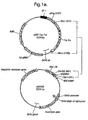
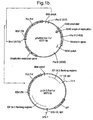
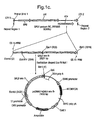
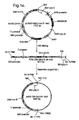
- Figures 1a-1h demonstrate the stepwise construction of the plasmids used to construct the viruses:
- Plasmids p-34.5 Fcy::Fur, p-34.5 CMV GALV env R- and p-34.5 GALV FCY were inserted into virus strain JS1/34.5-/47- CMV GFP (Lui et al 2003) by homologous recombination so as to replace the GFP sequence replacing ICP34.5.
- Recombinant, non-GFP expressing plaques were selected generating three viruses (JS1/34.5-/47-/Fcy::Fur, JSI/34.5-/47-/GALV and JSI/34.5-/47-/Fcy::Fur). These are shown in Figure 2 .
- Example 2 The GALV env R- expressing viruses mediate cell to cell fusion
- the GALV alone expressing virus (i) causes cell to cell fusion of a number of human tumour cell lines in vitro, including HT1080, Fadu and U87MG, mediated by the expression of the GALV protein, and (ii) provides increased anti-tumour activity in vivo in mouse models (Fadu and HT1080) as compared to the equivalent virus not expressing the GALV protein.
- Rat RG2 glioma cells were infected either with JS 1/34.5-/47- or JS 1/34.5-/47-/GALV and effects on plaque morphology observed. It can be seen that the GALV expressing virus produces greatly enlarged plaques with signs of a syncitial (cell to cell fusion) effect easily being observed.
- Example 3 The Fcy::Fur expressing viruses demonstrate cytosine deaminase activity
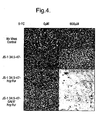
- the cytosine deaminase/uracil phosphoribosyltransferase fusion gene containing virus has demonstrated that it directs the conversion of 5-fluorocytosine to 5-fluorouracil in vitro such that 5-fluoruracil mediated cell killing occurs.
- This is shown in Figure 4 where HT1080 cells were infected with the three viruses in the presence or absence of 5-fluorocytosine. Supernatants from these cells were then heat treated to inactivate the virus present in the supernatants. These supernatants were then used to overlay new cells. If 5-fluorocytosine had been converted to the toxic 5-fluorouracil these new cells would then be killed.
- Example 4 The combination of GALV env R- and Fcy::Fur expression combined with 5-fluorocytosine expression provides enhanced anti-tumour activity in vivo as compared to the use of either gene alone.
- Figure 5 shows the effects of three viruses (JS1/34.5-/47-/GALV, JS1/34.5/47-/Fcy::Fur and JS1/34.5-/47-/GALV/Fcy::Fur) and an empty vector' control (JS 1/34.5-/47-) on shrinking tumours implanted in the flanks of rats.
- the viruses were administered in combination with 5-fluorocytosine. It can be seen from Figure 5 that each of the viruses causes shrinkage of the injected tumours.
- HSV1 strain JS1 has been deposited at the European Collection of Cell Cultures (ECACC), CAMR, Sailsbury, Wiltshire SP4 0JG, United Kingdom, on 2 January 2001 under accession number 01010209.
Landscapes
- Health & Medical Sciences (AREA)
- Life Sciences & Earth Sciences (AREA)
- Chemical & Material Sciences (AREA)
- Engineering & Computer Science (AREA)
- General Health & Medical Sciences (AREA)
- Bioinformatics & Cheminformatics (AREA)
- Medicinal Chemistry (AREA)
- Veterinary Medicine (AREA)
- Pharmacology & Pharmacy (AREA)
- Animal Behavior & Ethology (AREA)
- Public Health (AREA)
- Zoology (AREA)
- Epidemiology (AREA)
- Genetics & Genomics (AREA)
- Proteomics, Peptides & Aminoacids (AREA)
- Gastroenterology & Hepatology (AREA)
- Immunology (AREA)
- Organic Chemistry (AREA)
- Biotechnology (AREA)
- Virology (AREA)
- Biomedical Technology (AREA)
- Wood Science & Technology (AREA)
- General Engineering & Computer Science (AREA)
- Microbiology (AREA)
- Molecular Biology (AREA)
- Plant Pathology (AREA)
- Biochemistry (AREA)
- Physics & Mathematics (AREA)
- Biophysics (AREA)
- Mycology (AREA)
- Cell Biology (AREA)
- Chemical Kinetics & Catalysis (AREA)
- General Chemical & Material Sciences (AREA)
- Nuclear Medicine, Radiotherapy & Molecular Imaging (AREA)
- Marine Sciences & Fisheries (AREA)
- Oncology (AREA)
- Hematology (AREA)
- Medicines Containing Material From Animals Or Micro-Organisms (AREA)
- Micro-Organisms Or Cultivation Processes Thereof (AREA)
- Medicines That Contain Protein Lipid Enzymes And Other Medicines (AREA)
Priority Applications (1)
| Application Number | Priority Date | Filing Date | Title |
|---|---|---|---|
| PL04743547T PL1648481T3 (pl) | 2003-07-25 | 2004-07-26 | Wektory wirusowe |
Applications Claiming Priority (2)
| Application Number | Priority Date | Filing Date | Title |
|---|---|---|---|
| GBGB0317511.4A GB0317511D0 (en) | 2003-07-25 | 2003-07-25 | Viral vectors |
| PCT/GB2004/003217 WO2005011715A1 (en) | 2003-07-25 | 2004-07-26 | Viral vectors |
Publications (2)
| Publication Number | Publication Date |
|---|---|
| EP1648481A1 EP1648481A1 (en) | 2006-04-26 |
| EP1648481B1 true EP1648481B1 (en) | 2009-08-26 |
Family
ID=27772737
Family Applications (1)
| Application Number | Title | Priority Date | Filing Date |
|---|---|---|---|
| EP04743547A Expired - Lifetime EP1648481B1 (en) | 2003-07-25 | 2004-07-26 | Viral vectors |
Country Status (17)
| Country | Link |
|---|---|
| US (2) | US7981669B2 (enExample) |
| EP (1) | EP1648481B1 (enExample) |
| JP (1) | JP4767168B2 (enExample) |
| KR (2) | KR20120006582A (enExample) |
| CN (1) | CN1829523B (enExample) |
| AT (1) | ATE440611T1 (enExample) |
| AU (1) | AU2004261037B2 (enExample) |
| BR (1) | BRPI0412845A (enExample) |
| CA (1) | CA2533338C (enExample) |
| DE (1) | DE602004022823D1 (enExample) |
| ES (1) | ES2331075T3 (enExample) |
| GB (2) | GB0317511D0 (enExample) |
| IL (1) | IL173295A0 (enExample) |
| MX (1) | MXPA06000876A (enExample) |
| PL (1) | PL1648481T3 (enExample) |
| WO (1) | WO2005011715A1 (enExample) |
| ZA (1) | ZA200600806B (enExample) |
Families Citing this family (85)
| Publication number | Priority date | Publication date | Assignee | Title |
|---|---|---|---|---|
| US7223593B2 (en) | 2000-01-21 | 2007-05-29 | Biovex Limited | Herpes virus strains for gene therapy |
| GB0317511D0 (en) | 2003-07-25 | 2003-08-27 | Biovex Ltd | Viral vectors |
| JP4838722B2 (ja) | 2003-10-24 | 2011-12-14 | ゲンシア コーポレーション | ポリヌクレオチドを送達する方法、及び送達用組成物 |
| US20090123468A1 (en) | 2003-10-24 | 2009-05-14 | Gencia Corporation | Transducible polypeptides for modifying metabolism |
| US8507277B2 (en) | 2003-10-24 | 2013-08-13 | Gencia Corporation | Nonviral vectors for delivering polynucleotides |
| US8062891B2 (en) | 2003-10-24 | 2011-11-22 | Gencia Corporation | Nonviral vectors for delivering polynucleotides to plants |
| US8133733B2 (en) | 2003-10-24 | 2012-03-13 | Gencia Corporation | Nonviral vectors for delivering polynucleotides to target tissues |
| JP5442452B2 (ja) * | 2007-02-16 | 2014-03-12 | ウイルツ・バイオロジクス・リミテッド | 単純ヘルペスウイルスおよびウイルス複製法 |
| US8586028B2 (en) * | 2007-05-09 | 2013-11-19 | Board Of Supervisors Of Lousiana State University And Agricultural And Mechanical College | Synthetic herpes simplex viruses type-1 for treatment of cancers |
| US20130202639A1 (en) * | 2010-03-25 | 2013-08-08 | Konstantin G. Kousoulas | Synthetic Herpes Simplex Viruses for Treatment of Cancers |
| DK2753355T3 (en) * | 2011-09-08 | 2019-01-28 | Univ New York | ONCOLYTIC HERP SIMPLEX VIRUSES AND THERAPEUTIC APPLICATIONS THEREOF |
| US20150250837A1 (en) * | 2012-09-20 | 2015-09-10 | Morningside Technology Ventures Ltd. | Oncolytic virus encoding pd-1 binding agents and uses of the same |
| CA3168888A1 (en) | 2013-10-24 | 2015-04-30 | Amgen Inc. | Drug delivery system with temperature-sensitive control |
| BR112016008946B1 (pt) | 2013-10-24 | 2022-12-27 | Amgen Inc | Injetores e método para montar os injetor |
| WO2015119906A1 (en) | 2014-02-05 | 2015-08-13 | Amgen Inc. | Drug delivery system with electromagnetic field generator |
| BR112016025852B1 (pt) | 2014-05-07 | 2022-11-01 | Amgen Inc | Dispositivo de injeção para aplicação de fármaco |
| SG11201609966SA (en) | 2014-06-03 | 2016-12-29 | Amgen Inc | Drug delivery system and method of use |
| US10695506B2 (en) | 2014-10-14 | 2020-06-30 | Amgen Inc. | Drug injection device with visual and audio indicators |
| EP3233159B1 (en) | 2014-12-19 | 2020-03-04 | Amgen Inc. | Drug delivery device with live button or user interface field |
| EP3848072A1 (en) | 2014-12-19 | 2021-07-14 | Amgen Inc. | Drug delivery device with proximity sensor |
| ES2748750T3 (es) | 2015-02-17 | 2020-03-17 | Amgen Inc | Dispositivo de administración de fármacos con sujeción asistida por vacío y/o realimentación |
| EP3261690B1 (en) | 2015-02-27 | 2021-12-15 | Amgen Inc. | Drug delivery device having a needle guard mechanism with a tunable threshold of resistance to needle guard movement |
| EP3307330B1 (en) | 2015-06-15 | 2021-03-10 | New York University | Method of treatment using oncolytic viruses |
| WO2017039786A1 (en) | 2015-09-02 | 2017-03-09 | Amgen Inc. | Syringe assembly adapter for a syringe |
| EP3386573B1 (en) | 2015-12-09 | 2019-10-02 | Amgen Inc. | Auto-injector with signaling cap |
| WO2017120178A1 (en) | 2016-01-06 | 2017-07-13 | Amgen Inc. | Auto-injector with signaling electronics |
| CN109312309B (zh) | 2016-01-08 | 2024-04-02 | 雷普利穆内有限公司 | 工程化的病毒 |
| EP4035711B1 (en) | 2016-03-15 | 2025-06-04 | Amgen Inc. | Reducing probability of glass breakage in drug delivery devices |
| WO2017189089A1 (en) | 2016-04-29 | 2017-11-02 | Amgen Inc. | Drug delivery device with messaging label |
| WO2017192287A1 (en) | 2016-05-02 | 2017-11-09 | Amgen Inc. | Syringe adapter and guide for filling an on-body injector |
| ES2959783T3 (es) | 2016-05-13 | 2024-02-28 | Amgen Inc | Conjunto de cubierta protectora de vial |
| US11238150B2 (en) | 2016-05-16 | 2022-02-01 | Amgen Inc. | Data encryption in medical devices with limited computational capability |
| WO2017209899A1 (en) | 2016-06-03 | 2017-12-07 | Amgen Inc. | Impact testing apparatuses and methods for drug delivery devices |
| EP3478342B1 (en) | 2016-07-01 | 2025-03-12 | Amgen Inc. | Drug delivery device having minimized risk of component fracture upon impact events |
| WO2018034784A1 (en) | 2016-08-17 | 2018-02-22 | Amgen Inc. | Drug delivery device with placement detection |
| EP3532127A1 (en) | 2016-10-25 | 2019-09-04 | Amgen Inc. | On-body injector |
| GB201700350D0 (en) * | 2017-01-09 | 2017-02-22 | Replimune Ltd | Altered virus |
| MX2019008432A (es) | 2017-01-17 | 2019-11-18 | Amgen Inc | Dispositivos de inyeccion y metodos relacionados de uso y ensamblaje. |
| MX2019009625A (es) | 2017-02-17 | 2019-10-09 | Amgen Inc | Dispositivo de administracion de farmacos con trayectoria de flujo de fluido esteril y metodo relacionado de ensamblaje. |
| MX2019009755A (es) | 2017-02-17 | 2019-10-07 | Amgen Inc | Mecanismo de insercion para dispositivo de suministro de farmacos. |
| JP2020508803A (ja) | 2017-03-06 | 2020-03-26 | アムジエン・インコーポレーテツド | 作動防止特徴部を備える薬物送達デバイス |
| CA3052482A1 (en) | 2017-03-07 | 2018-09-13 | Amgen Inc. | Needle insertion by overpressure |
| EP3592404A1 (en) | 2017-03-09 | 2020-01-15 | Amgen Inc. | Insertion mechanism for drug delivery device |
| PL3600491T3 (pl) | 2017-03-28 | 2024-03-04 | Amgen Inc. | Układ i sposób montażu trzonu tłoka i strzykawki |
| EP3634539A1 (en) | 2017-06-08 | 2020-04-15 | Amgen Inc. | Syringe assembly for a drug delivery device and method of assembly |
| AU2018282077B2 (en) | 2017-06-08 | 2023-11-23 | Amgen Inc. | Torque driven drug delivery device |
| CN107354136A (zh) * | 2017-06-15 | 2017-11-17 | 杭州睿可特生物科技有限公司 | 重组单纯疱疹病毒及其制备方法和应用 |
| WO2018236619A1 (en) | 2017-06-22 | 2018-12-27 | Amgen Inc. | Device activation impact/shock reduction |
| MX2019015479A (es) | 2017-06-23 | 2020-02-20 | Amgen Inc | Dispositivo electronico de administracion de farmacos con tapa accionada por un conjunto de conmutador. |
| IL270784B2 (en) | 2017-07-14 | 2023-11-01 | Amgen Inc | Needle insertion-extraction system with a double torsion spring system |
| EP3655063A1 (en) | 2017-07-21 | 2020-05-27 | Amgen Inc. | Gas permeable sealing member for drug container and methods of assembly |
| EP4085942A1 (en) | 2017-07-25 | 2022-11-09 | Amgen Inc. | Drug delivery device with gear module and related method of assembly |
| JP7242562B2 (ja) | 2017-07-25 | 2023-03-20 | アムジエン・インコーポレーテツド | 容器アクセスシステムを有する薬物送達デバイス及び関連する組立方法 |
| EP3664863A2 (en) | 2017-08-09 | 2020-06-17 | Amgen Inc. | Hydraulic-pneumatic pressurized chamber drug delivery system |
| WO2019036181A1 (en) | 2017-08-18 | 2019-02-21 | Amgen Inc. | BODY INJECTOR WITH STERILE ADHESIVE PATCH |
| US11103636B2 (en) | 2017-08-22 | 2021-08-31 | Amgen Inc. | Needle insertion mechanism for drug delivery device |
| US11759565B2 (en) | 2017-10-04 | 2023-09-19 | Amgen Inc. | Flow adapter for drug delivery device |
| IL272636B2 (en) | 2017-10-06 | 2024-10-01 | Amgen Inc | Drug delivery device with interlock assembly and related method of assembly |
| IL273323B2 (en) | 2017-10-09 | 2024-10-01 | Amgen Inc | Drug delivery device with drive assembly and related assembly method |
| IL273582B2 (en) | 2017-11-03 | 2024-12-01 | Amgen Inc | Systems and approaches for sterilizing a drug delivery device |
| WO2019090303A1 (en) | 2017-11-06 | 2019-05-09 | Amgen Inc. | Fill-finish assemblies and related methods |
| MA50553A (fr) | 2017-11-06 | 2020-09-16 | Amgen Inc | Dispositif d'administration de médicament avec détection de positionnement et de débit |
| SG11202002966QA (en) | 2017-11-10 | 2020-05-28 | Amgen Inc | Plungers for drug delivery devices |
| MX2020004996A (es) | 2017-11-16 | 2020-08-27 | Amgen Inc | Un mecanismo de pestillo de puerta para un dispositivo de administracion de farmacos. |
| US10835685B2 (en) | 2018-05-30 | 2020-11-17 | Amgen Inc. | Thermal spring release mechanism for a drug delivery device |
| US11083840B2 (en) | 2018-06-01 | 2021-08-10 | Amgen Inc. | Modular fluid path assemblies for drug delivery devices |
| US12115360B2 (en) | 2018-07-24 | 2024-10-15 | Amgen Inc. | Hybrid drug delivery devices with grip portion |
| US12303677B2 (en) | 2018-07-24 | 2025-05-20 | Amgen Inc. | Hybrid drug delivery devices with optional grip portion and related method of preparation |
| CN112351804A (zh) | 2018-07-24 | 2021-02-09 | 安进公司 | 用于施用药物的输送装置 |
| MX2021000748A (es) | 2018-07-24 | 2021-03-26 | Amgen Inc | Dispositivos de suministro para administrar farmacos. |
| US12109389B2 (en) | 2018-07-31 | 2024-10-08 | Amgen Inc. | Fluid path assembly for a drug delivery device |
| CA3106452A1 (en) | 2018-09-24 | 2020-04-02 | Amgen Inc. | Interventional dosing systems and methods |
| US12042642B2 (en) | 2018-09-28 | 2024-07-23 | Amgen Inc. | Muscle wire escapement activation assembly for a drug delivery device |
| CA3110529A1 (en) | 2018-10-02 | 2020-04-09 | Amgen Inc. | Injection systems for drug delivery with internal force transmission |
| TWI824026B (zh) | 2018-10-05 | 2023-12-01 | 美商安進公司 | 具有劑量指示器之藥物遞送裝置 |
| EA202191038A1 (ru) | 2018-10-15 | 2021-07-06 | Эмджен Инк. | Способ платформенной сборки для устройства доставки лекарственного средства |
| IL313960B2 (en) | 2018-10-15 | 2025-10-01 | Amgen Inc | Drug delivery device with a suppression mechanism |
| EP3873563A1 (en) | 2018-11-01 | 2021-09-08 | Amgen Inc. | Drug delivery devices with partial drug delivery member retraction |
| TWI831847B (zh) | 2018-11-01 | 2024-02-11 | 美商安進公司 | 部分針頭縮回之藥物遞送裝置及其操作方法 |
| ES3010833T3 (en) | 2018-11-01 | 2025-04-04 | Amgen Inc | Drug delivery devices with partial drug delivery member retraction |
| CA3137360A1 (en) | 2019-04-24 | 2020-10-29 | Amgen Inc. | Syringe sterilization verification assemblies and methods |
| JP7608439B2 (ja) | 2019-08-23 | 2025-01-06 | アムジエン・インコーポレーテツド | 構成可能な針シールド係合構成要素を備えた薬物送達デバイス及び関連方法 |
| EP4288140A1 (en) | 2021-02-05 | 2023-12-13 | Iovance Biotherapeutics, Inc. | Adjuvant therapy for cancer |
| BR112023024278A2 (pt) | 2021-05-21 | 2024-01-30 | Amgen Inc | Método de otimizar uma receita de enchimento para um recipiente de fármacos |
| WO2024071397A1 (ja) | 2022-09-30 | 2024-04-04 | 国立大学法人 東京大学 | Il13ra2に標的化した単純ヘルペスウイルス及び抗il13ra2抗体またはその抗原結合断片 |
Family Cites Families (37)
| Publication number | Priority date | Publication date | Assignee | Title |
|---|---|---|---|---|
| US5328688A (en) | 1990-09-10 | 1994-07-12 | Arch Development Corporation | Recombinant herpes simplex viruses vaccines and methods |
| GB9102126D0 (en) | 1991-01-31 | 1991-03-13 | Smithkline Beecham Biolog | Novel vaccine |
| US5585096A (en) | 1994-06-23 | 1996-12-17 | Georgetown University | Replication-competent herpes simplex virus mediates destruction of neoplastic cells |
| GB9423663D0 (en) | 1994-11-23 | 1995-01-11 | Cantab Pharma Res | Viral preparations, immunogens, and vaccines |
| NL9500216A (nl) | 1995-02-06 | 1996-09-02 | Bio Pharma Sciences Bv | Farmaceutische samenstelling voor de behandeling van herpes. |
| IL118942A (en) | 1995-07-27 | 2002-09-12 | American Cyanamid Co | Avirulent herpetic viruses useful as tumoricidal agents and vaccines |
| GB9524973D0 (en) | 1995-12-06 | 1996-02-07 | Lynxvale Ltd | Viral vectors |
| WO1997026904A1 (en) | 1996-01-25 | 1997-07-31 | Medical Research Council | Treatment of non-neuronal cancer using hsv mutant |
| US5824318A (en) | 1996-07-24 | 1998-10-20 | American Cyanamid Company | Avirulent herpetic viruses useful as tumoricidal agents and vaccines |
| GB9615794D0 (en) | 1996-07-26 | 1996-09-04 | Medical Res Council | Mutant herpes simplex virus strains and uses thereof |
| US5876923A (en) | 1996-07-26 | 1999-03-02 | Arch Development Corporation | Herpes simplex virus ICP4 as an inhibitor of apoptosis |
| JPH1087503A (ja) * | 1996-09-06 | 1998-04-07 | Nippon Chem Res Kk | 神経系腫瘍細胞のアポトーシス剤 |
| GB9700411D0 (en) | 1997-01-10 | 1997-02-26 | Univ London | Eukaryotic gene expression cassette and uses thereof |
| US20030219409A1 (en) | 1997-01-10 | 2003-11-27 | Biovex Limited | Eukaryotic gene expression cassette and uses thereof |
| GB9704046D0 (en) | 1997-02-27 | 1997-04-16 | Univ Leeds | Arrestable therapeutic |
| EP0966534B1 (en) * | 1997-03-11 | 2005-02-02 | Mayo Foundation for Medical Education and Research | Compositions and methods for elimination of unwanted cells |
| US6051428A (en) | 1997-03-21 | 2000-04-18 | Sloan-Kettering Institute For Cancer Research | Rapid production of autologous tumor vaccines |
| US5998174A (en) | 1997-05-12 | 1999-12-07 | University Of Pittsburgh Of The Commonwealth System Of Higher Education | Multigene vectors |
| AU8605598A (en) * | 1997-07-31 | 1999-02-22 | University Of Pittsburgh | Targeted hsv vectors |
| US20030044384A1 (en) | 1997-10-09 | 2003-03-06 | Pro-Virus, Inc. | Treatment of neoplasms with viruses |
| GB9801930D0 (en) | 1998-01-29 | 1998-03-25 | Univ London | Mutant herpes simplex viruses and uses thereof |
| US20040063094A1 (en) | 1998-05-20 | 2004-04-01 | Biovex Limited | Mutant herpes simplex viruses and uses thereof |
| GB9810904D0 (en) | 1998-05-20 | 1998-07-22 | Univ London | Mutant herpes simplex viruses and uses thereof |
| GB0009079D0 (en) | 2000-04-12 | 2000-05-31 | Neurovex Ltd | Herpes viruses for immune modulation |
| GB9816781D0 (en) | 1998-07-31 | 1998-09-30 | Univ London | Herpes virus vectors for dendritic cells |
| US6713067B2 (en) | 1998-07-31 | 2004-03-30 | Biovex Limited | Herpes viruses for immune modulation |
| GB9816856D0 (en) | 1998-08-03 | 1998-09-30 | Univ London | Cell lines for virus growth |
| EP1141338A4 (en) | 1998-12-31 | 2002-09-25 | Arch Dev Corp | RECOMBINANT HERPES SIMPLEX VIRUS FOR TREATING NEOPLASTIC DISEASES |
| US6428968B1 (en) | 1999-03-15 | 2002-08-06 | The Trustees Of The University Of Pennsylvania | Combined therapy with a chemotherapeutic agent and an oncolytic virus for killing tumor cells in a subject |
| AU6120600A (en) * | 1999-06-08 | 2000-12-28 | Uab Research Foundation | Herpes simplex virus expressing foreign genes and method for treating cancers therewith |
| GB9930419D0 (en) | 1999-12-22 | 2000-02-16 | Neurovex Ltd | Replication incompetent herpes virus vectors |
| GB9930418D0 (en) | 1999-12-22 | 2000-02-16 | Neurovex Ltd | Replication incompetent herpes virus vectors |
| US7223593B2 (en) | 2000-01-21 | 2007-05-29 | Biovex Limited | Herpes virus strains for gene therapy |
| GB0001476D0 (en) | 2000-01-21 | 2000-03-15 | Neurovex Ltd | Herpes virus strains |
| US7063851B2 (en) | 2000-04-12 | 2006-06-20 | Biovex Limited | Herpes viruses for immune modulation |
| FI113931B (fi) * | 2002-05-23 | 2004-06-30 | Oplayo Oy | Menetelmä ja järjestelmä HCVQ-vektorikirjaston muodostamiseksi |
| GB0317511D0 (en) | 2003-07-25 | 2003-08-27 | Biovex Ltd | Viral vectors |
-
2003
- 2003-07-25 GB GBGB0317511.4A patent/GB0317511D0/en not_active Ceased
-
2004
- 2004-07-26 EP EP04743547A patent/EP1648481B1/en not_active Expired - Lifetime
- 2004-07-26 KR KR1020127000220A patent/KR20120006582A/ko not_active Ceased
- 2004-07-26 WO PCT/GB2004/003217 patent/WO2005011715A1/en not_active Ceased
- 2004-07-26 JP JP2006520905A patent/JP4767168B2/ja not_active Expired - Lifetime
- 2004-07-26 DE DE602004022823T patent/DE602004022823D1/de not_active Expired - Lifetime
- 2004-07-26 GB GB0416628A patent/GB2405406B/en not_active Expired - Lifetime
- 2004-07-26 ES ES04743547T patent/ES2331075T3/es not_active Expired - Lifetime
- 2004-07-26 CA CA2533338A patent/CA2533338C/en not_active Expired - Lifetime
- 2004-07-26 ZA ZA200600806A patent/ZA200600806B/xx unknown
- 2004-07-26 PL PL04743547T patent/PL1648481T3/pl unknown
- 2004-07-26 AU AU2004261037A patent/AU2004261037B2/en not_active Expired
- 2004-07-26 CN CN2004800215652A patent/CN1829523B/zh not_active Expired - Lifetime
- 2004-07-26 KR KR1020067001697A patent/KR101177659B1/ko not_active Expired - Lifetime
- 2004-07-26 AT AT04743547T patent/ATE440611T1/de not_active IP Right Cessation
- 2004-07-26 MX MXPA06000876A patent/MXPA06000876A/es active IP Right Grant
- 2004-07-26 BR BRPI0412845-1A patent/BRPI0412845A/pt not_active Application Discontinuation
-
2006
- 2006-01-23 IL IL173295A patent/IL173295A0/en active IP Right Grant
- 2006-01-25 US US11/339,804 patent/US7981669B2/en not_active Expired - Lifetime
-
2010
- 2010-02-19 US US12/708,692 patent/US8679830B2/en active Active
Also Published As
| Publication number | Publication date |
|---|---|
| ATE440611T1 (de) | 2009-09-15 |
| JP2006528484A (ja) | 2006-12-21 |
| US20060188480A1 (en) | 2006-08-24 |
| AU2004261037A1 (en) | 2005-02-10 |
| IL173295A0 (en) | 2006-06-11 |
| PL1648481T3 (pl) | 2010-01-29 |
| JP4767168B2 (ja) | 2011-09-07 |
| AU2004261037B2 (en) | 2009-09-24 |
| CA2533338A1 (en) | 2005-02-10 |
| GB2405406A (en) | 2005-03-02 |
| GB0317511D0 (en) | 2003-08-27 |
| EP1648481A1 (en) | 2006-04-26 |
| WO2005011715A1 (en) | 2005-02-10 |
| CA2533338C (en) | 2012-05-08 |
| GB0416628D0 (en) | 2004-08-25 |
| BRPI0412845A (pt) | 2006-09-26 |
| US8679830B2 (en) | 2014-03-25 |
| ES2331075T3 (es) | 2009-12-21 |
| CN1829523B (zh) | 2010-05-12 |
| US20100143309A1 (en) | 2010-06-10 |
| HK1083595A1 (en) | 2006-07-07 |
| US7981669B2 (en) | 2011-07-19 |
| KR20060039013A (ko) | 2006-05-04 |
| KR20120006582A (ko) | 2012-01-18 |
| CN1829523A (zh) | 2006-09-06 |
| KR101177659B1 (ko) | 2012-08-27 |
| MXPA06000876A (es) | 2006-08-23 |
| DE602004022823D1 (de) | 2009-10-08 |
| ZA200600806B (en) | 2007-05-30 |
| GB2405406B (en) | 2008-01-02 |
Similar Documents
| Publication | Publication Date | Title |
|---|---|---|
| EP1648481B1 (en) | Viral vectors | |
| JP6644378B2 (ja) | ウイルス株 | |
| AU2001226951A1 (en) | Virus strains for the oncolytic treatment of cancer | |
| HK1083595B (en) | Viral vectors |
Legal Events
| Date | Code | Title | Description |
|---|---|---|---|
| PUAI | Public reference made under article 153(3) epc to a published international application that has entered the european phase |
Free format text: ORIGINAL CODE: 0009012 |
|
| 17P | Request for examination filed |
Effective date: 20060202 |
|
| AK | Designated contracting states |
Kind code of ref document: A1 Designated state(s): AT BE BG CH CY CZ DE DK EE ES FI FR GB GR HU IE IT LI LU MC NL PL PT RO SE SI SK TR |
|
| REG | Reference to a national code |
Ref country code: HK Ref legal event code: DE Ref document number: 1083595 Country of ref document: HK |
|
| DAX | Request for extension of the european patent (deleted) | ||
| 17Q | First examination report despatched |
Effective date: 20080910 |
|
| GRAP | Despatch of communication of intention to grant a patent |
Free format text: ORIGINAL CODE: EPIDOSNIGR1 |
|
| GRAS | Grant fee paid |
Free format text: ORIGINAL CODE: EPIDOSNIGR3 |
|
| GRAA | (expected) grant |
Free format text: ORIGINAL CODE: 0009210 |
|
| AK | Designated contracting states |
Kind code of ref document: B1 Designated state(s): AT BE BG CH CY CZ DE DK EE ES FI FR GB GR HU IE IT LI LU MC NL PL PT RO SE SI SK TR |
|
| REG | Reference to a national code |
Ref country code: GB Ref legal event code: FG4D |
|
| REG | Reference to a national code |
Ref country code: CH Ref legal event code: EP |
|
| 111Z | Information provided on other rights and legal means of execution |
Free format text: AT BE BG CH CY CZ DE DK EE ES FI FR GB GR HU IE IT LU MC NL PL PT RO SE SI SK TR Effective date: 20090415 |
|
| REG | Reference to a national code |
Ref country code: IE Ref legal event code: FG4D |
|
| REF | Corresponds to: |
Ref document number: 602004022823 Country of ref document: DE Date of ref document: 20091008 Kind code of ref document: P |
|
| REG | Reference to a national code |
Ref country code: CH Ref legal event code: NV Representative=s name: PATENTANWAELTE SCHAAD, BALASS, MENZL & PARTNER AG |
|
| REG | Reference to a national code |
Ref country code: SE Ref legal event code: TRGR |
|
| REG | Reference to a national code |
Ref country code: ES Ref legal event code: FG2A Ref document number: 2331075 Country of ref document: ES Kind code of ref document: T3 |
|
| PG25 | Lapsed in a contracting state [announced via postgrant information from national office to epo] |
Ref country code: FI Free format text: LAPSE BECAUSE OF FAILURE TO SUBMIT A TRANSLATION OF THE DESCRIPTION OR TO PAY THE FEE WITHIN THE PRESCRIBED TIME-LIMIT Effective date: 20090826 Ref country code: AT Free format text: LAPSE BECAUSE OF FAILURE TO SUBMIT A TRANSLATION OF THE DESCRIPTION OR TO PAY THE FEE WITHIN THE PRESCRIBED TIME-LIMIT Effective date: 20090826 |
|
| REG | Reference to a national code |
Ref country code: PL Ref legal event code: T3 |
|
| REG | Reference to a national code |
Ref country code: HK Ref legal event code: GR Ref document number: 1083595 Country of ref document: HK |
|
| PG25 | Lapsed in a contracting state [announced via postgrant information from national office to epo] |
Ref country code: SI Free format text: LAPSE BECAUSE OF FAILURE TO SUBMIT A TRANSLATION OF THE DESCRIPTION OR TO PAY THE FEE WITHIN THE PRESCRIBED TIME-LIMIT Effective date: 20090826 |
|
| PG25 | Lapsed in a contracting state [announced via postgrant information from national office to epo] |
Ref country code: PT Free format text: LAPSE BECAUSE OF FAILURE TO SUBMIT A TRANSLATION OF THE DESCRIPTION OR TO PAY THE FEE WITHIN THE PRESCRIBED TIME-LIMIT Effective date: 20091228 Ref country code: CY Free format text: LAPSE BECAUSE OF FAILURE TO SUBMIT A TRANSLATION OF THE DESCRIPTION OR TO PAY THE FEE WITHIN THE PRESCRIBED TIME-LIMIT Effective date: 20090826 Ref country code: BG Free format text: LAPSE BECAUSE OF FAILURE TO SUBMIT A TRANSLATION OF THE DESCRIPTION OR TO PAY THE FEE WITHIN THE PRESCRIBED TIME-LIMIT Effective date: 20091126 |
|
| PG25 | Lapsed in a contracting state [announced via postgrant information from national office to epo] |
Ref country code: CZ Free format text: LAPSE BECAUSE OF FAILURE TO SUBMIT A TRANSLATION OF THE DESCRIPTION OR TO PAY THE FEE WITHIN THE PRESCRIBED TIME-LIMIT Effective date: 20090826 Ref country code: DK Free format text: LAPSE BECAUSE OF FAILURE TO SUBMIT A TRANSLATION OF THE DESCRIPTION OR TO PAY THE FEE WITHIN THE PRESCRIBED TIME-LIMIT Effective date: 20090826 Ref country code: EE Free format text: LAPSE BECAUSE OF FAILURE TO SUBMIT A TRANSLATION OF THE DESCRIPTION OR TO PAY THE FEE WITHIN THE PRESCRIBED TIME-LIMIT Effective date: 20090826 Ref country code: RO Free format text: LAPSE BECAUSE OF FAILURE TO SUBMIT A TRANSLATION OF THE DESCRIPTION OR TO PAY THE FEE WITHIN THE PRESCRIBED TIME-LIMIT Effective date: 20090826 |
|
| PG25 | Lapsed in a contracting state [announced via postgrant information from national office to epo] |
Ref country code: SK Free format text: LAPSE BECAUSE OF FAILURE TO SUBMIT A TRANSLATION OF THE DESCRIPTION OR TO PAY THE FEE WITHIN THE PRESCRIBED TIME-LIMIT Effective date: 20090826 |
|
| PLBE | No opposition filed within time limit |
Free format text: ORIGINAL CODE: 0009261 |
|
| STAA | Information on the status of an ep patent application or granted ep patent |
Free format text: STATUS: NO OPPOSITION FILED WITHIN TIME LIMIT |
|
| 26N | No opposition filed |
Effective date: 20100527 |
|
| PG25 | Lapsed in a contracting state [announced via postgrant information from national office to epo] |
Ref country code: GR Free format text: LAPSE BECAUSE OF FAILURE TO SUBMIT A TRANSLATION OF THE DESCRIPTION OR TO PAY THE FEE WITHIN THE PRESCRIBED TIME-LIMIT Effective date: 20091127 |
|
| PG25 | Lapsed in a contracting state [announced via postgrant information from national office to epo] |
Ref country code: MC Free format text: LAPSE BECAUSE OF NON-PAYMENT OF DUE FEES Effective date: 20100731 |
|
| PG25 | Lapsed in a contracting state [announced via postgrant information from national office to epo] |
Ref country code: IE Free format text: LAPSE BECAUSE OF NON-PAYMENT OF DUE FEES Effective date: 20100726 |
|
| PG25 | Lapsed in a contracting state [announced via postgrant information from national office to epo] |
Ref country code: LU Free format text: LAPSE BECAUSE OF NON-PAYMENT OF DUE FEES Effective date: 20100726 Ref country code: HU Free format text: LAPSE BECAUSE OF FAILURE TO SUBMIT A TRANSLATION OF THE DESCRIPTION OR TO PAY THE FEE WITHIN THE PRESCRIBED TIME-LIMIT Effective date: 20100227 |
|
| PG25 | Lapsed in a contracting state [announced via postgrant information from national office to epo] |
Ref country code: TR Free format text: LAPSE BECAUSE OF FAILURE TO SUBMIT A TRANSLATION OF THE DESCRIPTION OR TO PAY THE FEE WITHIN THE PRESCRIBED TIME-LIMIT Effective date: 20090826 |
|
| REG | Reference to a national code |
Ref country code: FR Ref legal event code: PLFP Year of fee payment: 13 |
|
| REG | Reference to a national code |
Ref country code: FR Ref legal event code: PLFP Year of fee payment: 14 |
|
| REG | Reference to a national code |
Ref country code: FR Ref legal event code: PLFP Year of fee payment: 15 |
|
| P01 | Opt-out of the competence of the unified patent court (upc) registered |
Effective date: 20230330 |
|
| PGFP | Annual fee paid to national office [announced via postgrant information from national office to epo] |
Ref country code: NL Payment date: 20230622 Year of fee payment: 20 Ref country code: IT Payment date: 20230620 Year of fee payment: 20 Ref country code: FR Payment date: 20230621 Year of fee payment: 20 |
|
| PGFP | Annual fee paid to national office [announced via postgrant information from national office to epo] |
Ref country code: SE Payment date: 20230622 Year of fee payment: 20 Ref country code: PL Payment date: 20230621 Year of fee payment: 20 |
|
| PGFP | Annual fee paid to national office [announced via postgrant information from national office to epo] |
Ref country code: BE Payment date: 20230622 Year of fee payment: 20 |
|
| PGFP | Annual fee paid to national office [announced via postgrant information from national office to epo] |
Ref country code: GB Payment date: 20230620 Year of fee payment: 20 Ref country code: ES Payment date: 20230801 Year of fee payment: 20 Ref country code: CH Payment date: 20230801 Year of fee payment: 20 |
|
| PGFP | Annual fee paid to national office [announced via postgrant information from national office to epo] |
Ref country code: DE Payment date: 20230620 Year of fee payment: 20 |
|
| REG | Reference to a national code |
Ref country code: NL Ref legal event code: PD Owner name: BIOVEX, INC.; US Free format text: DETAILS ASSIGNMENT: CHANGE OF OWNER(S), ASSIGNMENT; FORMER OWNER NAME: BIOVEX LIMITED Effective date: 20240619 |
|
| REG | Reference to a national code |
Ref country code: DE Ref legal event code: R081 Ref document number: 602004022823 Country of ref document: DE Owner name: BIOVEX INC., WOBURN, US Free format text: FORMER OWNER: BIOVEX LTD., CAMBRIDGE, CAMBRIDGESHIRE, GB Ref country code: DE Ref legal event code: R081 Ref document number: 602004022823 Country of ref document: DE Owner name: BIOVEX INC., WOBURN, US Free format text: FORMER OWNER: BIOVEX LTD., ABINGDON, OXFORD, GB |
|
| REG | Reference to a national code |
Ref country code: DE Ref legal event code: R081 Ref document number: 602004022823 Country of ref document: DE Owner name: BIOVEX INC., WOBURN, US Free format text: FORMER OWNER: BIOVEX GROUP, INC., WOBURN, MA, US |
|
| REG | Reference to a national code |
Ref country code: DE Ref legal event code: R071 Ref document number: 602004022823 Country of ref document: DE |
|
| REG | Reference to a national code |
Ref country code: CH Ref legal event code: PL Ref country code: NL Ref legal event code: MK Effective date: 20240725 |
|
| REG | Reference to a national code |
Ref country code: BE Ref legal event code: PD Owner name: BIOVEX, INC.; US Free format text: DETAILS ASSIGNMENT: CHANGE OF OWNER(S), ASSIGNMENT; FORMER OWNER NAME: BIOVEX GROUP, INC. Effective date: 20240523 Ref country code: BE Ref legal event code: MK Effective date: 20240726 |
|
| REG | Reference to a national code |
Ref country code: ES Ref legal event code: FD2A Effective date: 20240802 |
|
| REG | Reference to a national code |
Ref country code: GB Ref legal event code: PE20 Expiry date: 20240725 |
|
| REG | Reference to a national code |
Ref country code: GB Ref legal event code: 732E Free format text: REGISTERED BETWEEN 20240725 AND 20240731 |
|
| REG | Reference to a national code |
Ref country code: SE Ref legal event code: EUG |
|
| PG25 | Lapsed in a contracting state [announced via postgrant information from national office to epo] |
Ref country code: GB Free format text: LAPSE BECAUSE OF EXPIRATION OF PROTECTION Effective date: 20240725 |
|
| PG25 | Lapsed in a contracting state [announced via postgrant information from national office to epo] |
Ref country code: ES Free format text: LAPSE BECAUSE OF EXPIRATION OF PROTECTION Effective date: 20240727 |
|
| PG25 | Lapsed in a contracting state [announced via postgrant information from national office to epo] |
Ref country code: GB Free format text: LAPSE BECAUSE OF EXPIRATION OF PROTECTION Effective date: 20240725 Ref country code: ES Free format text: LAPSE BECAUSE OF EXPIRATION OF PROTECTION Effective date: 20240727 |