EP1638919B1 - Sphingolipids polyalkylamines conjugates - Google Patents
Sphingolipids polyalkylamines conjugates Download PDFInfo
- Publication number
- EP1638919B1 EP1638919B1 EP04744876A EP04744876A EP1638919B1 EP 1638919 B1 EP1638919 B1 EP 1638919B1 EP 04744876 A EP04744876 A EP 04744876A EP 04744876 A EP04744876 A EP 04744876A EP 1638919 B1 EP1638919 B1 EP 1638919B1
- Authority
- EP
- European Patent Office
- Prior art keywords
- polyalkylamine
- conjugate
- sphingoid
- represent
- compound
- Prior art date
- Legal status (The legal status is an assumption and is not a legal conclusion. Google has not performed a legal analysis and makes no representation as to the accuracy of the status listed.)
- Expired - Lifetime
Links
- 150000003408 sphingolipids Chemical class 0.000 title description 2
- 150000001875 compounds Chemical class 0.000 claims description 54
- PFNFFQXMRSDOHW-UHFFFAOYSA-N Spermine Natural products NCCCNCCCCNCCCN PFNFFQXMRSDOHW-UHFFFAOYSA-N 0.000 claims description 46
- 238000000034 method Methods 0.000 claims description 35
- 229940063675 spermine Drugs 0.000 claims description 32
- -1 sphingoid compound Chemical class 0.000 claims description 26
- 230000008569 process Effects 0.000 claims description 25
- VHYFNPMBLIVWCW-UHFFFAOYSA-N 4-Dimethylaminopyridine Chemical compound CN(C)C1=CC=NC=C1 VHYFNPMBLIVWCW-UHFFFAOYSA-N 0.000 claims description 24
- 239000003795 chemical substances by application Substances 0.000 claims description 24
- 150000003141 primary amines Chemical group 0.000 claims description 19
- 239000000203 mixture Substances 0.000 claims description 18
- 125000006239 protecting group Chemical group 0.000 claims description 14
- 229910052739 hydrogen Inorganic materials 0.000 claims description 12
- 239000001257 hydrogen Substances 0.000 claims description 12
- 125000004435 hydrogen atom Chemical group [H]* 0.000 claims description 12
- 150000003410 sphingosines Chemical class 0.000 claims description 11
- 230000003213 activating effect Effects 0.000 claims description 10
- 125000000217 alkyl group Chemical group 0.000 claims description 10
- 125000003342 alkenyl group Chemical group 0.000 claims description 9
- 125000000623 heterocyclic group Chemical group 0.000 claims description 9
- 150000003973 alkyl amines Chemical class 0.000 claims description 8
- 125000004043 oxo group Chemical group O=* 0.000 claims description 8
- 239000003054 catalyst Substances 0.000 claims description 7
- 150000002431 hydrogen Chemical class 0.000 claims description 6
- 238000002360 preparation method Methods 0.000 claims description 6
- 125000004178 (C1-C4) alkyl group Chemical group 0.000 claims description 5
- UFHFLCQGNIYNRP-UHFFFAOYSA-N Hydrogen Chemical compound [H][H] UFHFLCQGNIYNRP-UHFFFAOYSA-N 0.000 claims description 5
- 150000001412 amines Chemical group 0.000 claims description 5
- PFYXSUNOLOJMDX-UHFFFAOYSA-N bis(2,5-dioxopyrrolidin-1-yl) carbonate Chemical group O=C1CCC(=O)N1OC(=O)ON1C(=O)CCC1=O PFYXSUNOLOJMDX-UHFFFAOYSA-N 0.000 claims description 5
- JGFZNNIVVJXRND-UHFFFAOYSA-N N,N-Diisopropylethylamine (DIPEA) Chemical compound CCN(C(C)C)C(C)C JGFZNNIVVJXRND-UHFFFAOYSA-N 0.000 claims description 4
- 230000004913 activation Effects 0.000 claims description 4
- 125000001584 benzyloxycarbonyl group Chemical group C(=O)(OCC1=CC=CC=C1)* 0.000 claims description 4
- 229920006395 saturated elastomer Polymers 0.000 claims description 4
- 125000001424 substituent group Chemical group 0.000 claims description 4
- HCUYBXPSSCRKRF-UHFFFAOYSA-N diphosgene Chemical compound ClC(=O)OC(Cl)(Cl)Cl HCUYBXPSSCRKRF-UHFFFAOYSA-N 0.000 claims description 3
- 230000009881 electrostatic interaction Effects 0.000 claims description 3
- 150000002460 imidazoles Chemical class 0.000 claims description 3
- 125000004430 oxygen atom Chemical group O* 0.000 claims description 3
- 125000001453 quaternary ammonium group Chemical group 0.000 claims description 3
- UCPYLLCMEDAXFR-UHFFFAOYSA-N triphosgene Chemical compound ClC(Cl)(Cl)OC(=O)OC(Cl)(Cl)Cl UCPYLLCMEDAXFR-UHFFFAOYSA-N 0.000 claims description 3
- 125000003088 (fluoren-9-ylmethoxy)carbonyl group Chemical group 0.000 claims description 2
- XGDRLCRGKUCBQL-UHFFFAOYSA-N 1h-imidazole-4,5-dicarbonitrile Chemical compound N#CC=1N=CNC=1C#N XGDRLCRGKUCBQL-UHFFFAOYSA-N 0.000 claims description 2
- NRKYWOKHZRQRJR-UHFFFAOYSA-N 2,2,2-trifluoroacetamide Chemical group NC(=O)C(F)(F)F NRKYWOKHZRQRJR-UHFFFAOYSA-N 0.000 claims description 2
- 125000003118 aryl group Chemical group 0.000 claims description 2
- 150000008298 phosphoramidates Chemical class 0.000 claims description 2
- 150000003536 tetrazoles Chemical class 0.000 claims description 2
- 239000003937 drug carrier Substances 0.000 claims 1
- 150000002632 lipids Chemical class 0.000 description 51
- 239000002502 liposome Substances 0.000 description 50
- 239000000693 micelle Substances 0.000 description 27
- 230000000712 assembly Effects 0.000 description 24
- 238000000429 assembly Methods 0.000 description 24
- NHJVRSWLHSJWIN-UHFFFAOYSA-N 2,4,6-trinitrobenzenesulfonic acid Chemical compound OS(=O)(=O)C1=C([N+]([O-])=O)C=C([N+]([O-])=O)C=C1[N+]([O-])=O NHJVRSWLHSJWIN-UHFFFAOYSA-N 0.000 description 22
- 210000004027 cell Anatomy 0.000 description 20
- 229940106189 ceramide Drugs 0.000 description 17
- 230000005284 excitation Effects 0.000 description 16
- JKMHFZQWWAIEOD-UHFFFAOYSA-N 2-[4-(2-hydroxyethyl)piperazin-1-yl]ethanesulfonic acid Chemical compound OCC[NH+]1CCN(CCS([O-])(=O)=O)CC1 JKMHFZQWWAIEOD-UHFFFAOYSA-N 0.000 description 14
- VEXZGXHMUGYJMC-UHFFFAOYSA-M Chloride anion Chemical compound [Cl-] VEXZGXHMUGYJMC-UHFFFAOYSA-M 0.000 description 14
- JHDGGIDITFLRJY-UHFFFAOYSA-N laurdan Chemical compound C1=C(N(C)C)C=CC2=CC(C(=O)CCCCCCCCCCC)=CC=C21 JHDGGIDITFLRJY-UHFFFAOYSA-N 0.000 description 14
- 239000000126 substance Substances 0.000 description 14
- YDNKGFDKKRUKPY-JHOUSYSJSA-N C16 ceramide Natural products CCCCCCCCCCCCCCCC(=O)N[C@@H](CO)[C@H](O)C=CCCCCCCCCCCCCC YDNKGFDKKRUKPY-JHOUSYSJSA-N 0.000 description 13
- CRJGESKKUOMBCT-VQTJNVASSA-N N-acetylsphinganine Chemical compound CCCCCCCCCCCCCCC[C@@H](O)[C@H](CO)NC(C)=O CRJGESKKUOMBCT-VQTJNVASSA-N 0.000 description 13
- 125000002091 cationic group Chemical group 0.000 description 13
- ZVEQCJWYRWKARO-UHFFFAOYSA-N ceramide Natural products CCCCCCCCCCCCCCC(O)C(=O)NC(CO)C(O)C=CCCC=C(C)CCCCCCCCC ZVEQCJWYRWKARO-UHFFFAOYSA-N 0.000 description 13
- 230000008859 change Effects 0.000 description 13
- 150000003841 chloride salts Chemical class 0.000 description 13
- VVGIYYKRAMHVLU-UHFFFAOYSA-N newbouldiamide Natural products CCCCCCCCCCCCCCCCCCCC(O)C(O)C(O)C(CO)NC(=O)CCCCCCCCCCCCCCCCC VVGIYYKRAMHVLU-UHFFFAOYSA-N 0.000 description 13
- 238000003860 storage Methods 0.000 description 13
- 238000001890 transfection Methods 0.000 description 13
- CJIJXIFQYOPWTF-UHFFFAOYSA-N 7-hydroxycoumarin Natural products O1C(=O)C=CC2=CC(O)=CC=C21 CJIJXIFQYOPWTF-UHFFFAOYSA-N 0.000 description 12
- 230000000694 effects Effects 0.000 description 12
- ORHBXUUXSCNDEV-UHFFFAOYSA-N umbelliferone Chemical compound C1=CC(=O)OC2=CC(O)=CC=C21 ORHBXUUXSCNDEV-UHFFFAOYSA-N 0.000 description 12
- 230000036571 hydration Effects 0.000 description 11
- 238000006703 hydration reaction Methods 0.000 description 11
- 239000013612 plasmid Substances 0.000 description 11
- 230000015572 biosynthetic process Effects 0.000 description 10
- HVYWMOMLDIMFJA-DPAQBDIFSA-N cholesterol Chemical compound C1C=C2C[C@@H](O)CC[C@]2(C)[C@@H]2[C@@H]1[C@@H]1CC[C@H]([C@H](C)CCCC(C)C)[C@@]1(C)CC2 HVYWMOMLDIMFJA-DPAQBDIFSA-N 0.000 description 10
- QTBSBXVTEAMEQO-UHFFFAOYSA-M Acetate Chemical compound CC([O-])=O QTBSBXVTEAMEQO-UHFFFAOYSA-M 0.000 description 9
- 159000000021 acetate salts Chemical class 0.000 description 9
- 238000003556 assay Methods 0.000 description 9
- 239000006185 dispersion Substances 0.000 description 9
- 239000000523 sample Substances 0.000 description 9
- QTBSBXVTEAMEQO-UHFFFAOYSA-N Acetic acid Chemical compound CC(O)=O QTBSBXVTEAMEQO-UHFFFAOYSA-N 0.000 description 8
- 238000009472 formulation Methods 0.000 description 8
- 239000003981 vehicle Substances 0.000 description 8
- BOBLSBAZCVBABY-WPWUJOAOSA-N 1,6-diphenylhexatriene Chemical compound C=1C=CC=CC=1\C=C\C=C\C=C\C1=CC=CC=C1 BOBLSBAZCVBABY-WPWUJOAOSA-N 0.000 description 7
- LFQSCWFLJHTTHZ-UHFFFAOYSA-N Ethanol Chemical compound CCO LFQSCWFLJHTTHZ-UHFFFAOYSA-N 0.000 description 7
- 239000007995 HEPES buffer Substances 0.000 description 7
- 210000000170 cell membrane Anatomy 0.000 description 7
- 238000001819 mass spectrum Methods 0.000 description 7
- 108091033319 polynucleotide Proteins 0.000 description 7
- 108090000623 proteins and genes Proteins 0.000 description 7
- 238000003786 synthesis reaction Methods 0.000 description 7
- LDGWQMRUWMSZIU-LQDDAWAPSA-M 2,3-bis[(z)-octadec-9-enoxy]propyl-trimethylazanium;chloride Chemical compound [Cl-].CCCCCCCC\C=C/CCCCCCCCOCC(C[N+](C)(C)C)OCCCCCCCC\C=C/CCCCCCCC LDGWQMRUWMSZIU-LQDDAWAPSA-M 0.000 description 6
- 230000002776 aggregation Effects 0.000 description 6
- 238000004220 aggregation Methods 0.000 description 6
- 238000006243 chemical reaction Methods 0.000 description 6
- 238000000604 cryogenic transmission electron microscopy Methods 0.000 description 6
- 125000002887 hydroxy group Chemical group [H]O* 0.000 description 6
- 230000003993 interaction Effects 0.000 description 6
- 239000012071 phase Substances 0.000 description 6
- 102000040430 polynucleotide Human genes 0.000 description 6
- 239000002157 polynucleotide Substances 0.000 description 6
- 238000001644 13C nuclear magnetic resonance spectroscopy Methods 0.000 description 5
- 108091034117 Oligonucleotide Proteins 0.000 description 5
- FAPWRFPIFSIZLT-UHFFFAOYSA-M Sodium chloride Chemical compound [Na+].[Cl-] FAPWRFPIFSIZLT-UHFFFAOYSA-M 0.000 description 5
- 125000003277 amino group Chemical group 0.000 description 5
- 239000000427 antigen Substances 0.000 description 5
- 230000003197 catalytic effect Effects 0.000 description 5
- 235000012000 cholesterol Nutrition 0.000 description 5
- 238000010668 complexation reaction Methods 0.000 description 5
- 125000004122 cyclic group Chemical group 0.000 description 5
- 238000002474 experimental method Methods 0.000 description 5
- 102000004169 proteins and genes Human genes 0.000 description 5
- 150000003839 salts Chemical class 0.000 description 5
- 239000002904 solvent Substances 0.000 description 5
- OKKJLVBELUTLKV-MZCSYVLQSA-N Deuterated methanol Chemical compound [2H]OC([2H])([2H])[2H] OKKJLVBELUTLKV-MZCSYVLQSA-N 0.000 description 4
- 238000005481 NMR spectroscopy Methods 0.000 description 4
- 102000036639 antigens Human genes 0.000 description 4
- 108091007433 antigens Proteins 0.000 description 4
- 239000003153 chemical reaction reagent Substances 0.000 description 4
- 229940079593 drug Drugs 0.000 description 4
- 239000003814 drug Substances 0.000 description 4
- 230000003834 intracellular effect Effects 0.000 description 4
- 229920002521 macromolecule Polymers 0.000 description 4
- 239000003068 molecular probe Substances 0.000 description 4
- 230000007935 neutral effect Effects 0.000 description 4
- 108020004707 nucleic acids Proteins 0.000 description 4
- 102000039446 nucleic acids Human genes 0.000 description 4
- 150000007523 nucleic acids Chemical class 0.000 description 4
- 238000000879 optical micrograph Methods 0.000 description 4
- 150000003904 phospholipids Chemical class 0.000 description 4
- 229920000447 polyanionic polymer Polymers 0.000 description 4
- 239000000243 solution Substances 0.000 description 4
- 238000004448 titration Methods 0.000 description 4
- 238000012546 transfer Methods 0.000 description 4
- 229960005486 vaccine Drugs 0.000 description 4
- 238000005160 1H NMR spectroscopy Methods 0.000 description 3
- MJKVTPMWOKAVMS-UHFFFAOYSA-N 3-hydroxy-1-benzopyran-2-one Chemical compound C1=CC=C2OC(=O)C(O)=CC2=C1 MJKVTPMWOKAVMS-UHFFFAOYSA-N 0.000 description 3
- WYDKAGRKLLDCSY-UHFFFAOYSA-N 4-heptadecyl-7-hydroxychromen-2-one Chemical compound C1=C(O)C=CC2=C1OC(=O)C=C2CCCCCCCCCCCCCCCCC WYDKAGRKLLDCSY-UHFFFAOYSA-N 0.000 description 3
- WEVYAHXRMPXWCK-UHFFFAOYSA-N Acetonitrile Chemical compound CC#N WEVYAHXRMPXWCK-UHFFFAOYSA-N 0.000 description 3
- YMWUJEATGCHHMB-UHFFFAOYSA-N Dichloromethane Chemical compound ClCCl YMWUJEATGCHHMB-UHFFFAOYSA-N 0.000 description 3
- OKKJLVBELUTLKV-UHFFFAOYSA-N Methanol Chemical compound OC OKKJLVBELUTLKV-UHFFFAOYSA-N 0.000 description 3
- IMNFDUFMRHMDMM-UHFFFAOYSA-N N-Heptane Chemical compound CCCCCCC IMNFDUFMRHMDMM-UHFFFAOYSA-N 0.000 description 3
- ATHGHQPFGPMSJY-UHFFFAOYSA-N Spermidine Natural products NCCCCNCCCN ATHGHQPFGPMSJY-UHFFFAOYSA-N 0.000 description 3
- JLCPHMBAVCMARE-UHFFFAOYSA-N [3-[[3-[[3-[[3-[[3-[[3-[[3-[[3-[[3-[[3-[[3-[[5-(2-amino-6-oxo-1H-purin-9-yl)-3-[[3-[[3-[[3-[[3-[[3-[[5-(2-amino-6-oxo-1H-purin-9-yl)-3-[[5-(2-amino-6-oxo-1H-purin-9-yl)-3-hydroxyoxolan-2-yl]methoxy-hydroxyphosphoryl]oxyoxolan-2-yl]methoxy-hydroxyphosphoryl]oxy-5-(5-methyl-2,4-dioxopyrimidin-1-yl)oxolan-2-yl]methoxy-hydroxyphosphoryl]oxy-5-(6-aminopurin-9-yl)oxolan-2-yl]methoxy-hydroxyphosphoryl]oxy-5-(6-aminopurin-9-yl)oxolan-2-yl]methoxy-hydroxyphosphoryl]oxy-5-(6-aminopurin-9-yl)oxolan-2-yl]methoxy-hydroxyphosphoryl]oxy-5-(6-aminopurin-9-yl)oxolan-2-yl]methoxy-hydroxyphosphoryl]oxyoxolan-2-yl]methoxy-hydroxyphosphoryl]oxy-5-(5-methyl-2,4-dioxopyrimidin-1-yl)oxolan-2-yl]methoxy-hydroxyphosphoryl]oxy-5-(4-amino-2-oxopyrimidin-1-yl)oxolan-2-yl]methoxy-hydroxyphosphoryl]oxy-5-(5-methyl-2,4-dioxopyrimidin-1-yl)oxolan-2-yl]methoxy-hydroxyphosphoryl]oxy-5-(5-methyl-2,4-dioxopyrimidin-1-yl)oxolan-2-yl]methoxy-hydroxyphosphoryl]oxy-5-(6-aminopurin-9-yl)oxolan-2-yl]methoxy-hydroxyphosphoryl]oxy-5-(6-aminopurin-9-yl)oxolan-2-yl]methoxy-hydroxyphosphoryl]oxy-5-(4-amino-2-oxopyrimidin-1-yl)oxolan-2-yl]methoxy-hydroxyphosphoryl]oxy-5-(4-amino-2-oxopyrimidin-1-yl)oxolan-2-yl]methoxy-hydroxyphosphoryl]oxy-5-(4-amino-2-oxopyrimidin-1-yl)oxolan-2-yl]methoxy-hydroxyphosphoryl]oxy-5-(6-aminopurin-9-yl)oxolan-2-yl]methoxy-hydroxyphosphoryl]oxy-5-(4-amino-2-oxopyrimidin-1-yl)oxolan-2-yl]methyl [5-(6-aminopurin-9-yl)-2-(hydroxymethyl)oxolan-3-yl] hydrogen phosphate Polymers Cc1cn(C2CC(OP(O)(=O)OCC3OC(CC3OP(O)(=O)OCC3OC(CC3O)n3cnc4c3nc(N)[nH]c4=O)n3cnc4c3nc(N)[nH]c4=O)C(COP(O)(=O)OC3CC(OC3COP(O)(=O)OC3CC(OC3COP(O)(=O)OC3CC(OC3COP(O)(=O)OC3CC(OC3COP(O)(=O)OC3CC(OC3COP(O)(=O)OC3CC(OC3COP(O)(=O)OC3CC(OC3COP(O)(=O)OC3CC(OC3COP(O)(=O)OC3CC(OC3COP(O)(=O)OC3CC(OC3COP(O)(=O)OC3CC(OC3COP(O)(=O)OC3CC(OC3COP(O)(=O)OC3CC(OC3COP(O)(=O)OC3CC(OC3COP(O)(=O)OC3CC(OC3COP(O)(=O)OC3CC(OC3COP(O)(=O)OC3CC(OC3CO)n3cnc4c(N)ncnc34)n3ccc(N)nc3=O)n3cnc4c(N)ncnc34)n3ccc(N)nc3=O)n3ccc(N)nc3=O)n3ccc(N)nc3=O)n3cnc4c(N)ncnc34)n3cnc4c(N)ncnc34)n3cc(C)c(=O)[nH]c3=O)n3cc(C)c(=O)[nH]c3=O)n3ccc(N)nc3=O)n3cc(C)c(=O)[nH]c3=O)n3cnc4c3nc(N)[nH]c4=O)n3cnc4c(N)ncnc34)n3cnc4c(N)ncnc34)n3cnc4c(N)ncnc34)n3cnc4c(N)ncnc34)O2)c(=O)[nH]c1=O JLCPHMBAVCMARE-UHFFFAOYSA-N 0.000 description 3
- 238000004458 analytical method Methods 0.000 description 3
- 125000000129 anionic group Chemical group 0.000 description 3
- 238000012512 characterization method Methods 0.000 description 3
- 230000021615 conjugation Effects 0.000 description 3
- 238000010494 dissociation reaction Methods 0.000 description 3
- 230000005593 dissociations Effects 0.000 description 3
- 238000009826 distribution Methods 0.000 description 3
- 230000012202 endocytosis Effects 0.000 description 3
- 239000003623 enhancer Substances 0.000 description 3
- 238000005259 measurement Methods 0.000 description 3
- 230000010287 polarization Effects 0.000 description 3
- 229920000768 polyamine Chemical group 0.000 description 3
- 239000000047 product Substances 0.000 description 3
- 239000011780 sodium chloride Substances 0.000 description 3
- 238000000527 sonication Methods 0.000 description 3
- 125000002657 sphingoid group Chemical group 0.000 description 3
- XLYOFNOQVPJJNP-UHFFFAOYSA-N water Substances O XLYOFNOQVPJJNP-UHFFFAOYSA-N 0.000 description 3
- 238000005084 2D-nuclear magnetic resonance Methods 0.000 description 2
- IJGRMHOSHXDMSA-UHFFFAOYSA-N Atomic nitrogen Chemical compound N#N IJGRMHOSHXDMSA-UHFFFAOYSA-N 0.000 description 2
- BVKZGUZCCUSVTD-UHFFFAOYSA-L Carbonate Chemical compound [O-]C([O-])=O BVKZGUZCCUSVTD-UHFFFAOYSA-L 0.000 description 2
- HEDRZPFGACZZDS-UHFFFAOYSA-N Chloroform Chemical compound ClC(Cl)Cl HEDRZPFGACZZDS-UHFFFAOYSA-N 0.000 description 2
- WQZGKKKJIJFFOK-GASJEMHNSA-N Glucose Natural products OC[C@H]1OC(O)[C@H](O)[C@@H](O)[C@@H]1O WQZGKKKJIJFFOK-GASJEMHNSA-N 0.000 description 2
- JZNWSCPGTDBMEW-UHFFFAOYSA-N Glycerophosphorylethanolamin Natural products NCCOP(O)(=O)OCC(O)CO JZNWSCPGTDBMEW-UHFFFAOYSA-N 0.000 description 2
- 108010043121 Green Fluorescent Proteins Proteins 0.000 description 2
- 102000004144 Green Fluorescent Proteins Human genes 0.000 description 2
- ZRALSGWEFCBTJO-UHFFFAOYSA-N Guanidine Chemical compound NC(N)=N ZRALSGWEFCBTJO-UHFFFAOYSA-N 0.000 description 2
- 108060001084 Luciferase Proteins 0.000 description 2
- LRHPLDYGYMQRHN-UHFFFAOYSA-N N-Butanol Chemical compound CCCCO LRHPLDYGYMQRHN-UHFFFAOYSA-N 0.000 description 2
- YDNKGFDKKRUKPY-TURZORIXSA-N N-hexadecanoylsphingosine Chemical compound CCCCCCCCCCCCCCCC(=O)N[C@@H](CO)[C@H](O)\C=C\CCCCCCCCCCCCC YDNKGFDKKRUKPY-TURZORIXSA-N 0.000 description 2
- UFWIBTONFRDIAS-UHFFFAOYSA-N Naphthalene Chemical compound C1=CC=CC2=CC=CC=C21 UFWIBTONFRDIAS-UHFFFAOYSA-N 0.000 description 2
- 206010028980 Neoplasm Diseases 0.000 description 2
- VYPSYNLAJGMNEJ-UHFFFAOYSA-N Silicium dioxide Chemical compound O=[Si]=O VYPSYNLAJGMNEJ-UHFFFAOYSA-N 0.000 description 2
- HEDRZPFGACZZDS-MICDWDOJSA-N Trichloro(2H)methane Chemical compound [2H]C(Cl)(Cl)Cl HEDRZPFGACZZDS-MICDWDOJSA-N 0.000 description 2
- 230000000274 adsorptive effect Effects 0.000 description 2
- 150000001413 amino acids Chemical class 0.000 description 2
- 150000001450 anions Chemical class 0.000 description 2
- 239000002585 base Substances 0.000 description 2
- 201000011510 cancer Diseases 0.000 description 2
- 150000001768 cations Chemical class 0.000 description 2
- 230000003915 cell function Effects 0.000 description 2
- 230000001086 cytosolic effect Effects 0.000 description 2
- 238000002296 dynamic light scattering Methods 0.000 description 2
- 230000006870 function Effects 0.000 description 2
- 239000005090 green fluorescent protein Substances 0.000 description 2
- 238000003929 heteronuclear multiple quantum coherence Methods 0.000 description 2
- 238000010348 incorporation Methods 0.000 description 2
- 238000003780 insertion Methods 0.000 description 2
- 230000037431 insertion Effects 0.000 description 2
- 238000002372 labelling Methods 0.000 description 2
- 239000012528 membrane Substances 0.000 description 2
- 238000000386 microscopy Methods 0.000 description 2
- 230000004048 modification Effects 0.000 description 2
- 238000012986 modification Methods 0.000 description 2
- 238000012544 monitoring process Methods 0.000 description 2
- 239000002245 particle Substances 0.000 description 2
- 239000008194 pharmaceutical composition Substances 0.000 description 2
- 102000004196 processed proteins & peptides Human genes 0.000 description 2
- 108090000765 processed proteins & peptides Proteins 0.000 description 2
- 238000012545 processing Methods 0.000 description 2
- 238000011160 research Methods 0.000 description 2
- 230000003595 spectral effect Effects 0.000 description 2
- 238000001228 spectrum Methods 0.000 description 2
- 229940063673 spermidine Drugs 0.000 description 2
- WWUZIQQURGPMPG-KRWOKUGFSA-N sphingosine Chemical compound CCCCCCCCCCCCC\C=C\[C@@H](O)[C@@H](N)CO WWUZIQQURGPMPG-KRWOKUGFSA-N 0.000 description 2
- 238000003756 stirring Methods 0.000 description 2
- 210000001519 tissue Anatomy 0.000 description 2
- 238000000954 titration curve Methods 0.000 description 2
- ILJSQTXMGCGYMG-UHFFFAOYSA-N triacetic acid Chemical class CC(=O)CC(=O)CC(O)=O ILJSQTXMGCGYMG-UHFFFAOYSA-N 0.000 description 2
- 238000002255 vaccination Methods 0.000 description 2
- WWUZIQQURGPMPG-UHFFFAOYSA-N (-)-D-erythro-Sphingosine Natural products CCCCCCCCCCCCCC=CC(O)C(N)CO WWUZIQQURGPMPG-UHFFFAOYSA-N 0.000 description 1
- 0 *SC(C(**=C)N[N+]([O-])=C)*=C Chemical compound *SC(C(**=C)N[N+]([O-])=C)*=C 0.000 description 1
- SNKAWJBJQDLSFF-NVKMUCNASA-N 1,2-dioleoyl-sn-glycero-3-phosphocholine Chemical compound CCCCCCCC\C=C/CCCCCCCC(=O)OC[C@H](COP([O-])(=O)OCC[N+](C)(C)C)OC(=O)CCCCCCC\C=C/CCCCCCCC SNKAWJBJQDLSFF-NVKMUCNASA-N 0.000 description 1
- 238000001026 1H--1H correlation spectroscopy Methods 0.000 description 1
- KWVJHCQQUFDPLU-YEUCEMRASA-N 2,3-bis[[(z)-octadec-9-enoyl]oxy]propyl-trimethylazanium Chemical compound CCCCCCCC\C=C/CCCCCCCC(=O)OCC(C[N+](C)(C)C)OC(=O)CCCCCCC\C=C/CCCCCCCC KWVJHCQQUFDPLU-YEUCEMRASA-N 0.000 description 1
- ZKHQWZAMYRWXGA-KQYNXXCUSA-N Adenosine triphosphate Chemical compound C1=NC=2C(N)=NC=NC=2N1[C@@H]1O[C@H](COP(O)(=O)OP(O)(=O)OP(O)(O)=O)[C@@H](O)[C@H]1O ZKHQWZAMYRWXGA-KQYNXXCUSA-N 0.000 description 1
- QGZKDVFQNNGYKY-UHFFFAOYSA-O Ammonium Chemical compound [NH4+] QGZKDVFQNNGYKY-UHFFFAOYSA-O 0.000 description 1
- BVKZGUZCCUSVTD-UHFFFAOYSA-M Bicarbonate Chemical compound OC([O-])=O BVKZGUZCCUSVTD-UHFFFAOYSA-M 0.000 description 1
- 101150013553 CD40 gene Proteins 0.000 description 1
- 102000014914 Carrier Proteins Human genes 0.000 description 1
- AERBNCYCJBRYDG-UHFFFAOYSA-N D-ribo-phytosphingosine Natural products CCCCCCCCCCCCCCC(O)C(O)C(N)CO AERBNCYCJBRYDG-UHFFFAOYSA-N 0.000 description 1
- YZCKVEUIGOORGS-OUBTZVSYSA-N Deuterium Chemical compound [2H] YZCKVEUIGOORGS-OUBTZVSYSA-N 0.000 description 1
- 108090000790 Enzymes Proteins 0.000 description 1
- 102000004190 Enzymes Human genes 0.000 description 1
- 241000588724 Escherichia coli Species 0.000 description 1
- 229920002306 Glycocalyx Polymers 0.000 description 1
- 229930186217 Glycolipid Natural products 0.000 description 1
- 102000003886 Glycoproteins Human genes 0.000 description 1
- 108090000288 Glycoproteins Proteins 0.000 description 1
- 239000005089 Luciferase Substances 0.000 description 1
- 108091022875 Microtubule Proteins 0.000 description 1
- 102000029749 Microtubule Human genes 0.000 description 1
- 241000699670 Mus sp. Species 0.000 description 1
- CHJJGSNFBQVOTG-UHFFFAOYSA-N N-methyl-guanidine Natural products CNC(N)=N CHJJGSNFBQVOTG-UHFFFAOYSA-N 0.000 description 1
- 238000012565 NMR experiment Methods 0.000 description 1
- 101100297828 Neurospora crassa (strain ATCC 24698 / 74-OR23-1A / CBS 708.71 / DSM 1257 / FGSC 987) chol-2 gene Proteins 0.000 description 1
- 108091005461 Nucleic proteins Proteins 0.000 description 1
- 206010057249 Phagocytosis Diseases 0.000 description 1
- 102000016611 Proteoglycans Human genes 0.000 description 1
- 108010067787 Proteoglycans Proteins 0.000 description 1
- 229930006000 Sucrose Natural products 0.000 description 1
- CZMRCDWAGMRECN-UGDNZRGBSA-N Sucrose Chemical compound O[C@H]1[C@H](O)[C@@H](CO)O[C@@]1(CO)O[C@@H]1[C@H](O)[C@@H](O)[C@H](O)[C@@H](CO)O1 CZMRCDWAGMRECN-UGDNZRGBSA-N 0.000 description 1
- 108700019146 Transgenes Proteins 0.000 description 1
- 102100040245 Tumor necrosis factor receptor superfamily member 5 Human genes 0.000 description 1
- 241000700605 Viruses Species 0.000 description 1
- 125000002252 acyl group Chemical group 0.000 description 1
- 230000029936 alkylation Effects 0.000 description 1
- 238000005804 alkylation reaction Methods 0.000 description 1
- 150000001408 amides Chemical class 0.000 description 1
- 125000000909 amidinium group Chemical group 0.000 description 1
- 150000003863 ammonium salts Chemical class 0.000 description 1
- 230000000692 anti-sense effect Effects 0.000 description 1
- 230000030741 antigen processing and presentation Effects 0.000 description 1
- 230000000890 antigenic effect Effects 0.000 description 1
- 238000013459 approach Methods 0.000 description 1
- 239000008346 aqueous phase Substances 0.000 description 1
- VUEDNLCYHKSELL-UHFFFAOYSA-N arsonium Chemical compound [AsH4+] VUEDNLCYHKSELL-UHFFFAOYSA-N 0.000 description 1
- 230000004888 barrier function Effects 0.000 description 1
- 239000011324 bead Substances 0.000 description 1
- 108091008324 binding proteins Proteins 0.000 description 1
- 230000004071 biological effect Effects 0.000 description 1
- 239000012472 biological sample Substances 0.000 description 1
- 229940088623 biologically active substance Drugs 0.000 description 1
- KDJVUTSOHYQCDQ-UHFFFAOYSA-N carbamic acid;1h-imidazole Chemical compound NC([O-])=O.[NH2+]1C=CN=C1 KDJVUTSOHYQCDQ-UHFFFAOYSA-N 0.000 description 1
- 125000003917 carbamoyl group Chemical group [H]N([H])C(*)=O 0.000 description 1
- 239000000969 carrier Substances 0.000 description 1
- 230000015556 catabolic process Effects 0.000 description 1
- 150000001767 cationic compounds Chemical class 0.000 description 1
- 229920006317 cationic polymer Polymers 0.000 description 1
- 238000004113 cell culture Methods 0.000 description 1
- 210000003850 cellular structure Anatomy 0.000 description 1
- 125000001549 ceramide group Chemical group 0.000 description 1
- 150000001783 ceramides Chemical class 0.000 description 1
- 239000007795 chemical reaction product Substances 0.000 description 1
- FZFAMSAMCHXGEF-UHFFFAOYSA-N chloro formate Chemical compound ClOC=O FZFAMSAMCHXGEF-UHFFFAOYSA-N 0.000 description 1
- 238000004440 column chromatography Methods 0.000 description 1
- 239000000039 congener Substances 0.000 description 1
- 238000001816 cooling Methods 0.000 description 1
- 238000005100 correlation spectroscopy Methods 0.000 description 1
- 230000008878 coupling Effects 0.000 description 1
- 238000010168 coupling process Methods 0.000 description 1
- 238000005859 coupling reaction Methods 0.000 description 1
- 239000006059 cover glass Substances 0.000 description 1
- 239000013058 crude material Substances 0.000 description 1
- QWJNFFYFEKXZBF-UHFFFAOYSA-N cyanocyanamide Chemical compound N#CNC#N QWJNFFYFEKXZBF-UHFFFAOYSA-N 0.000 description 1
- 238000006731 degradation reaction Methods 0.000 description 1
- 230000001419 dependent effect Effects 0.000 description 1
- 229910052805 deuterium Inorganic materials 0.000 description 1
- 239000008121 dextrose Substances 0.000 description 1
- QGBSISYHAICWAH-UHFFFAOYSA-N dicyandiamide Chemical compound NC(N)=NC#N QGBSISYHAICWAH-UHFFFAOYSA-N 0.000 description 1
- 150000002001 dihydroceramides Chemical class 0.000 description 1
- OTKJDMGTUTTYMP-UHFFFAOYSA-N dihydrosphingosine Natural products CCCCCCCCCCCCCCCC(O)C(N)CO OTKJDMGTUTTYMP-UHFFFAOYSA-N 0.000 description 1
- 238000007865 diluting Methods 0.000 description 1
- SWSQBOPZIKWTGO-UHFFFAOYSA-N dimethylaminoamidine Natural products CN(C)C(N)=N SWSQBOPZIKWTGO-UHFFFAOYSA-N 0.000 description 1
- MWRBNPKJOOWZPW-CLFAGFIQSA-N dioleoyl phosphatidylethanolamine Chemical compound CCCCCCCC\C=C/CCCCCCCC(=O)OCC(COP(O)(=O)OCCN)OC(=O)CCCCCCC\C=C/CCCCCCCC MWRBNPKJOOWZPW-CLFAGFIQSA-N 0.000 description 1
- 230000005684 electric field Effects 0.000 description 1
- 238000010894 electron beam technology Methods 0.000 description 1
- 239000003480 eluent Substances 0.000 description 1
- 238000000295 emission spectrum Methods 0.000 description 1
- 238000005538 encapsulation Methods 0.000 description 1
- 238000000695 excitation spectrum Methods 0.000 description 1
- 238000002875 fluorescence polarization Methods 0.000 description 1
- 238000002189 fluorescence spectrum Methods 0.000 description 1
- 239000007850 fluorescent dye Substances 0.000 description 1
- 239000012634 fragment Substances 0.000 description 1
- 239000012458 free base Substances 0.000 description 1
- 230000004927 fusion Effects 0.000 description 1
- 239000008103 glucose Substances 0.000 description 1
- 210000004517 glycocalyx Anatomy 0.000 description 1
- ZRALSGWEFCBTJO-UHFFFAOYSA-O guanidinium Chemical compound NC(N)=[NH2+] ZRALSGWEFCBTJO-UHFFFAOYSA-O 0.000 description 1
- 238000010438 heat treatment Methods 0.000 description 1
- 230000002209 hydrophobic effect Effects 0.000 description 1
- 238000003384 imaging method Methods 0.000 description 1
- 230000028993 immune response Effects 0.000 description 1
- 229960001438 immunostimulant agent Drugs 0.000 description 1
- 239000003022 immunostimulating agent Substances 0.000 description 1
- 230000003308 immunostimulating effect Effects 0.000 description 1
- 238000000338 in vitro Methods 0.000 description 1
- 238000001727 in vivo Methods 0.000 description 1
- 238000011534 incubation Methods 0.000 description 1
- 229940030980 inova Drugs 0.000 description 1
- 229940079865 intestinal antiinfectives imidazole derivative Drugs 0.000 description 1
- 238000007918 intramuscular administration Methods 0.000 description 1
- 238000001990 intravenous administration Methods 0.000 description 1
- INQOMBQAUSQDDS-UHFFFAOYSA-N iodomethane Chemical compound IC INQOMBQAUSQDDS-UHFFFAOYSA-N 0.000 description 1
- 238000002955 isolation Methods 0.000 description 1
- 239000004816 latex Substances 0.000 description 1
- 229920000126 latex Polymers 0.000 description 1
- 125000005647 linker group Chemical group 0.000 description 1
- 230000029226 lipidation Effects 0.000 description 1
- 239000002479 lipoplex Substances 0.000 description 1
- 239000007788 liquid Substances 0.000 description 1
- 238000004020 luminiscence type Methods 0.000 description 1
- 210000001165 lymph node Anatomy 0.000 description 1
- 239000000463 material Substances 0.000 description 1
- 230000008384 membrane barrier Effects 0.000 description 1
- 229910021645 metal ion Inorganic materials 0.000 description 1
- 230000011987 methylation Effects 0.000 description 1
- 238000007069 methylation reaction Methods 0.000 description 1
- 210000003632 microfilament Anatomy 0.000 description 1
- 238000001000 micrograph Methods 0.000 description 1
- 210000004688 microtubule Anatomy 0.000 description 1
- 230000025608 mitochondrion localization Effects 0.000 description 1
- 229910052757 nitrogen Inorganic materials 0.000 description 1
- 231100000252 nontoxic Toxicity 0.000 description 1
- 230000003000 nontoxic effect Effects 0.000 description 1
- 230000003287 optical effect Effects 0.000 description 1
- 238000004806 packaging method and process Methods 0.000 description 1
- 210000003024 peritoneal macrophage Anatomy 0.000 description 1
- 230000008782 phagocytosis Effects 0.000 description 1
- 239000000546 pharmaceutical excipient Substances 0.000 description 1
- 150000008104 phosphatidylethanolamines Chemical class 0.000 description 1
- XYFCBTPGUUZFHI-UHFFFAOYSA-O phosphonium Chemical compound [PH4+] XYFCBTPGUUZFHI-UHFFFAOYSA-O 0.000 description 1
- 229930000756 phytoceramide Natural products 0.000 description 1
- AERBNCYCJBRYDG-KSZLIROESA-N phytosphingosine Chemical compound CCCCCCCCCCCCCC[C@@H](O)[C@@H](O)[C@@H](N)CO AERBNCYCJBRYDG-KSZLIROESA-N 0.000 description 1
- 229940033329 phytosphingosine Drugs 0.000 description 1
- 229920000642 polymer Polymers 0.000 description 1
- 239000000843 powder Substances 0.000 description 1
- 125000002924 primary amino group Chemical group [H]N([H])* 0.000 description 1
- 230000000644 propagated effect Effects 0.000 description 1
- 125000001436 propyl group Chemical group [H]C([*])([H])C([H])([H])C([H])([H])[H] 0.000 description 1
- 230000005588 protonation Effects 0.000 description 1
- 238000012207 quantitative assay Methods 0.000 description 1
- 239000010453 quartz Substances 0.000 description 1
- 230000005855 radiation Effects 0.000 description 1
- 238000011084 recovery Methods 0.000 description 1
- 230000009467 reduction Effects 0.000 description 1
- 230000004044 response Effects 0.000 description 1
- 230000002441 reversible effect Effects 0.000 description 1
- 150000003335 secondary amines Chemical class 0.000 description 1
- 239000013049 sediment Substances 0.000 description 1
- 239000000741 silica gel Substances 0.000 description 1
- 229910002027 silica gel Inorganic materials 0.000 description 1
- 239000007787 solid Substances 0.000 description 1
- 238000001179 sorption measurement Methods 0.000 description 1
- OTKJDMGTUTTYMP-ZWKOTPCHSA-N sphinganine Chemical compound CCCCCCCCCCCCCCC[C@@H](O)[C@@H](N)CO OTKJDMGTUTTYMP-ZWKOTPCHSA-N 0.000 description 1
- 230000002269 spontaneous effect Effects 0.000 description 1
- 239000007858 starting material Substances 0.000 description 1
- 230000000638 stimulation Effects 0.000 description 1
- 238000012916 structural analysis Methods 0.000 description 1
- 238000007920 subcutaneous administration Methods 0.000 description 1
- 239000005720 sucrose Substances 0.000 description 1
- RWSOTUBLDIXVET-UHFFFAOYSA-O sulfonium Chemical compound [SH3+] RWSOTUBLDIXVET-UHFFFAOYSA-O 0.000 description 1
- 239000000725 suspension Substances 0.000 description 1
- 230000008685 targeting Effects 0.000 description 1
- 238000012360 testing method Methods 0.000 description 1
- 230000001225 therapeutic effect Effects 0.000 description 1
- 238000002560 therapeutic procedure Methods 0.000 description 1
- 230000000699 topical effect Effects 0.000 description 1
- 230000032258 transport Effects 0.000 description 1
- SZYJELPVAFJOGJ-UHFFFAOYSA-N trimethylamine hydrochloride Chemical compound Cl.CN(C)C SZYJELPVAFJOGJ-UHFFFAOYSA-N 0.000 description 1
- 239000002691 unilamellar liposome Substances 0.000 description 1
- JOYRKODLDBILNP-UHFFFAOYSA-N urethane group Chemical group NC(=O)OCC JOYRKODLDBILNP-UHFFFAOYSA-N 0.000 description 1
- 239000013598 vector Substances 0.000 description 1
- 238000004017 vitrification Methods 0.000 description 1
- 108091005957 yellow fluorescent proteins Proteins 0.000 description 1
Images







Classifications
-
- A—HUMAN NECESSITIES
- A61—MEDICAL OR VETERINARY SCIENCE; HYGIENE
- A61K—PREPARATIONS FOR MEDICAL, DENTAL OR TOILETRY PURPOSES
- A61K31/00—Medicinal preparations containing organic active ingredients
- A61K31/13—Amines
- A61K31/132—Amines having two or more amino groups, e.g. spermidine, putrescine
-
- A—HUMAN NECESSITIES
- A61—MEDICAL OR VETERINARY SCIENCE; HYGIENE
- A61K—PREPARATIONS FOR MEDICAL, DENTAL OR TOILETRY PURPOSES
- A61K38/00—Medicinal preparations containing peptides
- A61K38/16—Peptides having more than 20 amino acids; Gastrins; Somatostatins; Melanotropins; Derivatives thereof
- A61K38/43—Enzymes; Proenzymes; Derivatives thereof
- A61K38/46—Hydrolases (3)
- A61K38/47—Hydrolases (3) acting on glycosyl compounds (3.2), e.g. cellulases, lactases
-
- A—HUMAN NECESSITIES
- A61—MEDICAL OR VETERINARY SCIENCE; HYGIENE
- A61K—PREPARATIONS FOR MEDICAL, DENTAL OR TOILETRY PURPOSES
- A61K39/00—Medicinal preparations containing antigens or antibodies
- A61K39/39—Medicinal preparations containing antigens or antibodies characterised by the immunostimulating additives, e.g. chemical adjuvants
-
- A—HUMAN NECESSITIES
- A61—MEDICAL OR VETERINARY SCIENCE; HYGIENE
- A61K—PREPARATIONS FOR MEDICAL, DENTAL OR TOILETRY PURPOSES
- A61K48/00—Medicinal preparations containing genetic material which is inserted into cells of the living body to treat genetic diseases; Gene therapy
- A61K48/0008—Medicinal preparations containing genetic material which is inserted into cells of the living body to treat genetic diseases; Gene therapy characterised by an aspect of the 'non-active' part of the composition delivered, e.g. wherein such 'non-active' part is not delivered simultaneously with the 'active' part of the composition
- A61K48/0025—Medicinal preparations containing genetic material which is inserted into cells of the living body to treat genetic diseases; Gene therapy characterised by an aspect of the 'non-active' part of the composition delivered, e.g. wherein such 'non-active' part is not delivered simultaneously with the 'active' part of the composition wherein the non-active part clearly interacts with the delivered nucleic acid
- A61K48/0041—Medicinal preparations containing genetic material which is inserted into cells of the living body to treat genetic diseases; Gene therapy characterised by an aspect of the 'non-active' part of the composition delivered, e.g. wherein such 'non-active' part is not delivered simultaneously with the 'active' part of the composition wherein the non-active part clearly interacts with the delivered nucleic acid the non-active part being polymeric
-
- A—HUMAN NECESSITIES
- A61—MEDICAL OR VETERINARY SCIENCE; HYGIENE
- A61K—PREPARATIONS FOR MEDICAL, DENTAL OR TOILETRY PURPOSES
- A61K9/00—Medicinal preparations characterised by special physical form
- A61K9/10—Dispersions; Emulsions
- A61K9/127—Synthetic bilayered vehicles, e.g. liposomes or liposomes with cholesterol as the only non-phosphatidyl surfactant
- A61K9/1271—Non-conventional liposomes, e.g. PEGylated liposomes or liposomes coated or grafted with polymers
- A61K9/1272—Non-conventional liposomes, e.g. PEGylated liposomes or liposomes coated or grafted with polymers comprising non-phosphatidyl surfactants as bilayer-forming substances, e.g. cationic lipids or non-phosphatidyl liposomes coated or grafted with polymers
-
- A—HUMAN NECESSITIES
- A61—MEDICAL OR VETERINARY SCIENCE; HYGIENE
- A61P—SPECIFIC THERAPEUTIC ACTIVITY OF CHEMICAL COMPOUNDS OR MEDICINAL PREPARATIONS
- A61P37/00—Drugs for immunological or allergic disorders
- A61P37/02—Immunomodulators
-
- A—HUMAN NECESSITIES
- A61—MEDICAL OR VETERINARY SCIENCE; HYGIENE
- A61P—SPECIFIC THERAPEUTIC ACTIVITY OF CHEMICAL COMPOUNDS OR MEDICINAL PREPARATIONS
- A61P43/00—Drugs for specific purposes, not provided for in groups A61P1/00-A61P41/00
-
- C—CHEMISTRY; METALLURGY
- C07—ORGANIC CHEMISTRY
- C07C—ACYCLIC OR CARBOCYCLIC COMPOUNDS
- C07C271/00—Derivatives of carbamic acids, i.e. compounds containing any of the groups, the nitrogen atom not being part of nitro or nitroso groups
- C07C271/06—Esters of carbamic acids
- C07C271/08—Esters of carbamic acids having oxygen atoms of carbamate groups bound to acyclic carbon atoms
- C07C271/10—Esters of carbamic acids having oxygen atoms of carbamate groups bound to acyclic carbon atoms with the nitrogen atoms of the carbamate groups bound to hydrogen atoms or to acyclic carbon atoms
- C07C271/20—Esters of carbamic acids having oxygen atoms of carbamate groups bound to acyclic carbon atoms with the nitrogen atoms of the carbamate groups bound to hydrogen atoms or to acyclic carbon atoms to carbon atoms of hydrocarbon radicals substituted by nitrogen atoms not being part of nitro or nitroso groups
-
- C—CHEMISTRY; METALLURGY
- C12—BIOCHEMISTRY; BEER; SPIRITS; WINE; VINEGAR; MICROBIOLOGY; ENZYMOLOGY; MUTATION OR GENETIC ENGINEERING
- C12N—MICROORGANISMS OR ENZYMES; COMPOSITIONS THEREOF; PROPAGATING, PRESERVING, OR MAINTAINING MICROORGANISMS; MUTATION OR GENETIC ENGINEERING; CULTURE MEDIA
- C12N15/00—Mutation or genetic engineering; DNA or RNA concerning genetic engineering, vectors, e.g. plasmids, or their isolation, preparation or purification; Use of hosts therefor
- C12N15/09—Recombinant DNA-technology
- C12N15/87—Introduction of foreign genetic material using processes not otherwise provided for, e.g. co-transformation
- C12N15/88—Introduction of foreign genetic material using processes not otherwise provided for, e.g. co-transformation using microencapsulation, e.g. using amphiphile liposome vesicle
-
- A—HUMAN NECESSITIES
- A61—MEDICAL OR VETERINARY SCIENCE; HYGIENE
- A61K—PREPARATIONS FOR MEDICAL, DENTAL OR TOILETRY PURPOSES
- A61K39/00—Medicinal preparations containing antigens or antibodies
- A61K2039/54—Medicinal preparations containing antigens or antibodies characterised by the route of administration
- A61K2039/541—Mucosal route
- A61K2039/543—Mucosal route intranasal
-
- A—HUMAN NECESSITIES
- A61—MEDICAL OR VETERINARY SCIENCE; HYGIENE
- A61K—PREPARATIONS FOR MEDICAL, DENTAL OR TOILETRY PURPOSES
- A61K39/00—Medicinal preparations containing antigens or antibodies
- A61K2039/555—Medicinal preparations containing antigens or antibodies characterised by a specific combination antigen/adjuvant
- A61K2039/55511—Organic adjuvants
- A61K2039/55555—Liposomes; Vesicles, e.g. nanoparticles; Spheres, e.g. nanospheres; Polymers
-
- A—HUMAN NECESSITIES
- A61—MEDICAL OR VETERINARY SCIENCE; HYGIENE
- A61K—PREPARATIONS FOR MEDICAL, DENTAL OR TOILETRY PURPOSES
- A61K39/00—Medicinal preparations containing antigens or antibodies
- A61K2039/555—Medicinal preparations containing antigens or antibodies characterised by a specific combination antigen/adjuvant
- A61K2039/55511—Organic adjuvants
- A61K2039/55561—CpG containing adjuvants; Oligonucleotide containing adjuvants
Definitions
- the present disclosure concerns novel sphingolipids' polyalkylamines conjugates and their use, inter alia, for transfection.
- the complex composition of the cell membrane comprises phospholipids, glycolipids, and cholesterol, as well as intrinsic and extrinsic proteins, and its functions are influenced by cytoplasmic components which include Ca ++ and other metal ions, anions, ATP, microfilaments, microtubules, enzymes, and Ca ++ -binding proteins, also by the extracellular glycocalyx (proteoglycans, glycose aminoglycans and glycoproteins). Interactions among structural and cytoplasmic cell components and their response to external signals make up transport processes responsible for the membrane selectivity exhibited within and among cell types.
- the membrane barrier can be overcome by associating agents in complexes with lipid formulations closely resembling the lipid composition of natural cell membranes. These formulations may fuse with the cell membranes on contact, or what is more common, taken up by pynocytosis, endocytosis and/or phagocytosis. In all these processes, the associated substances are delivered in to the cells.
- Lipid complexes can facilitate intracellular transfers also by overcoming charge repulsions between the cell surface, which in most cases is negatively charged.
- the lipids of the formulations comprise an amphipathic lipid, such as the phospholipids of cell membranes, and form various layers or aggregates such as micelles or hollow lipid vesicles (liposomes), in aqueous systems.
- the liposomes can be used to entrap the substance to be delivered within the liposomes; in other applications, the drug molecule of interest can be incorporated into the lipid vesicle as an intrinsic membrane component, rather than entrapped into the hollow aqueous interior, or electrostatically attached to aggregate surface.
- most phospholipids used are either zwiterionic (neutral) or negatively charged.
- DOTMA DOTMA
- lipid-DNA complexes which are capable of adsorbing to cell membranes and being taken up by the cells either by fusion or more probably by adsorptive endocytosis, resulting in expression of the transgene [ Felgner, P. L. et al. Proc. Natl. Acad. Sci., USA 84:7413-7417 (1987 ) and U.S. Pat. No.
- DOTMA 1,2-bis(oleoyloxy)-3-(trimethylammonio)propane
- DOTAP 1,2-bis(oleoyloxy)-3-(trimethylammonio)propane
- the Lipofectin TM reagent (Bethesda Research Laboratories, Gaithersburg, MD.), an effective agent for the delivery of highly anionic polynucleotides into living tissue culture cells, comprises positively charged liposomes composed of positively charged lipid DOTMA and a neutral lipid dioleyl phosphatidyl ethanol amine (DOPE) referred to as helper lipids.
- DOPE neutral lipid dioleyl phosphatidyl ethanol amine
- liposomes interact spontaneously with negatively charged nucleic acids to form complexes, referred to as lipoplexes.
- lipoplexes When excess of positively charged liposomes over DNA negative charges are used, the net charge on the resulting complexes is also positive.
- Positively charged complexes prepared in this way spontaneously attach to negatively charged cell surfaces or introduced into the cells either by adsorptive endocytosis or fuse with the plasma membrane, both processes deliver functional polynucleotide into, for example, tissue culture cells.
- DOTMA and DOTAP are good examples for monocationic lipids. [Illis et al. 2001, ibid.]
- Multivalent cations by themselves (including polyalkylamines, inorganic salts and complexes and dehydrating solvents) have also been shown to facilitate delivery of macromolecules into cells.
- multivalent cations provoke the collapse of oligo and polyanions (nucleic acids molecules, amino acid molecules and the like) to compact structural forms, and facilitate the packaging of these polyanions into viruses, their incorporation into liposomes, transfer into cells etc. [ Thomas T.J. et al. Biochemistry 38:3821-3830 (1999 )].
- the smallest natural polycations able to compact DNA are the polyalkylamines spermidine and spermine. By attaching a hydrophobic anchor to these molecules via a linker, a new class of transfection vectors, the polycationic lipopolymers, has been developed.
- Cationic lipids and cationic polymers interact electrostatically with the anionic groups of DNA (or of any other polyanionic macromolecule) forming DNA-lipid complexes (lipoplexes) or DNA-polycation complexes (polyplexes).
- the formation of the complex is associated with the release of counterions of the lipids or polymer, which is the thermodynamic driving force for lipoplex and polyplex spontaneous formation.
- the cationic lipids can be divided into four classes: (i) quaternary ammonium salt lipids (e.g.
- DOTMA Lipofectin TM and DOTAP
- phosphonium/arsonium congeners phosphonium/arsonium congeners
- lipopolyamines iii
- cationic lipids bearing both quaternary ammonium and polyamine moieties iv) amidinium, guanidinium and heterocyclic salt lipids.
- the present invention provides a sphingoid-polyalkylamine conjugate of the following formula (I): wherein R 1 represents a hydrogen, a branched or linear alkyl, aryl, alkylamine, or a group -C(O)R 5 ; R 2 and R 5 represent, independently, a branched or linear C 10 -C 24 alkyl, alkenyl or polyenyl groups; R 3 and R 4 are independently a group -C(O)-NR 6 R 7 , R 6 and R 7 being the same or different for R 3 and R 4 and represent, independently, a saturated or unsaturated branched or linear polyalkylamine, wherein one or more amine units in said polyalkylamine may be a quaternary ammonium; or R 6 and R 7 being the same or different for R 3 and R 4 and represent, independently, a hydrogen, provided that at least one of R 6 and R 7 in R 3 or R 4 is a polyalky
- a specific and preferred sphingoid-polyalkylamine conjugate according to the invention is N-palmitoyl D-erythro sphingosyl-1-carbamoyl spermine.
- the invention further provides a process for the preparation of a sphingoid-polyalkylamine conjugate of formula (I) as defined herein, the process comprises:
- the invention provides a composition comprising a sphingoid-polyalkylamine conjugate of the formula (I) as defined herein, optionally in combination with a physiologically acceptable carrier.
- the invention provides the use of a sphingoid-polyalkylamine conjugate of formula (I) as defined as a physiologically acceptable delivery vehicle.
- the invention provides the use of a sphingoid-polyalkylamine conjugate of formula (I) as defined, as a capturing agent.
- LLC novel lipid-like cationic
- the lipid-like cationic compounds have the following general formula (I), as defined above.
- the LLC compound also encompasses salts and stereoisomers of said compound as defined.
- the LLC compound of the invention is obtainable, for example, by coupling N-substituted long-chain bases, in particular, N-substituted sphingoids or sphingoid bases together with different polyalkylamines or their derivatives, to form a polyalkylamine-sphingoid entity.
- the resulting conjugates may be used as is, or further alkylated to obtain one or more quaternary amines within the compound.
- Protonation at a suitable pH or alkylation of the formed polyalkylamine-sphingoid entity attributed to the LLC compounds the desired positive charge for interaction with molecules of opposite charge, e.g. biologically active molecules, e.g. for delivery into target cells.
- the formed LLC compounds after their synthesis may be directly and efficiently complexed with biologically active molecules in the form of anions, oligoanions or polyanions or macromolecules containing negative charges, to form complexes (lipoplexes).
- biologically active molecule used herein interchangeably with the term biologically active entity as used herein refers to any biologically active substance having a net negative charge or containing one or more regions or moieties carrying a (local) negative charge, such that under suitable condition it interacts with the net positive charge of the LLC compound of the invention.
- biological entities which may be delivered by the LLC compounds of the invention include: polynucleotides, oligonucleotides, proteins, peptides and drugs.
- Interaction or complexation denotes any type of association known in the art, including electrostatic interaction, or when the LLC compound form micelles and/or vesiculate (e.g. to form liposomes), said association encompass encapsulation of the biological entity within the vesicle, entrapment of the biological entity (in whole or in part) within the lipid-like layer of the vesicle (insertion), electrostatic adsorption to the surface of the micelles or the vesicles or any combination of the above.
- complex all possible interactions between the LLC compound and the biologically active entity are referred to by the term "complex".
- the possible interactions between the LLC compound and the biologically active entity may be referred to by the general term "complexation".
- the complexes formed between the LLC compound and the biological entity may be suitable as a delivery system, e.g. for targeting such biological entities into cells.
- the term capturing agent as used herein refers to the characteristics of the conjugate of the invention to interact with molecules having a negative charge, a negative dipole or a local negative dipole.
- the conjugate of the invention may be applicable in research which involves, e.g. the identification and isolation, by capturing, of, e.g. biologically active molecules, for example, from an unknown biological sample.
- the capturing involves electrostatic interaction between the molecule to be captured, carrying a negative charge, a negative dipole or a local negative charge and the positively charged conjugate of the invention.
- the conjugate of the invention may also be used in kits, the kits comprising said conjugate of the invention along with instructions how to use the compound as a capturing agent.
- the conjugate of the invention may also be used as a delivery vehicle, carrying, by capturing, biologically active molecules as defined above to a target site/into a target cell.
- Non-limiting examples of the sphingoids or sphingoid bases which may be used in the contents of the present invention include sphingosine, dihydrosphingosine, phytosphingosine, dehydrophytosphinosine and derivatives thereof.
- Non-limiting examples of such derivatives include acyl derivatives, such as ceramide (N-acylsphingosine), dihydroceramides, phytoceramides and dihydrophytoceramides as well as ceramines (N-alkylsphinogsines) and the corresponding derivatives (e.g. dihydroceramine, phytoceramine, dihydrophytoceramines etc.).
- the suitably N-substituted sphingoids or sphingoid bases posses free hydroxyl groups which may be activated and subsequently reacted with polyalkylamines to form a polyalkylamine-sphingoid entity.
- activation agents are N,N'-disuccinimidylcarbonate, di- or tri-phosgene or imidazole derivatives.
- the reaction of these activation agents with the sphingoids or the sphingoid bases yields a succinimidyloxycarbonyl, chloroformate or imidazole carbamate, respectively, at one or both hydroxyls (depending on the reaction conditions).
- the reaction of the activated sphingoids with polyalkylamines may yield branched, linear (unbranched) or cyclic polyalkylamine-containing LLC compounds.
- Fig. 1 displays chemical structures of several possible compounds according to the invention.
- Compound ( Fig. 1A ) is an example of a LLC compound comprising a single linear polyalkylamine chain; compound ( Fig. 1B ) consists of two linear polyalkylamine chains; compound ( Fig. 1C ) consists of two branched polyalkylamine; and compound ( Fig. 1D ) consists of a cyclic polyalkylamine moiety attached to the sphingoid base via the two oxo groups.
- Formation of branched, linear or cyclic polyalkylamine sphingoid conjugates may be directed by monitoring the excess of polyalkylamine used in the reaction and suitable protection of polyalkylamine prior to use.
- the sphingoid-polyalkylamine conjugate of formula (I) as defined herein may be prepared according to the following procedure:
- Protecting groups and their use for protecting active entities within a compound are well known in the art. Specific, non-limiting examples of such groups include trifluoroacetamide, fmoc, carbobenzoxy (CBZ), dialkyl Phosphoramidates.
- Other protecting groups may be found in the literature [e.g. in Theodora W. Greene and Peter G.M. Wuts, Protective Groups in Organic Synthesis, 2nd Edition, 1980 John Wiley & Sons, Inc. pp 309 ]
- Activating groups are also known to those versed in the art, and non-limiting examples thereof include N,N'-disuccinimidylcarbonate, di- or tri-phosgene or an imidazole derivative.
- Other activating agents may be found in the literature [e.g. in Greg T. Hermanson Bioconjugate Techniques, Academic Press 1996 pp 142, 183 ]
- Activation of the sphingoid compound may be achieved in the presence of a catalyst.
- catalysts include 4-dimethylamino pyridine (DMAP), tetrazole, dicyanoimidazole or diisopropylethylamine.
- the process of the invention requires that in step (a) both R 3 and R 4 are hydrogen atoms, and said process comprises reacting the compound of formula (I) with at least two equivalents of polyalkylamine to obtain a disubstituted sphingoid-polyalkylamine conjugate, with identical polyalkylamine substituents.
- the process required that in step (a) at least one of R 3 or R 4 is protected with a protecting group comprises reacting in step (c) the activated sphingoid compound with a first polyalkylamine; removing the protecting group of R 3 or R 4 to obtain an unprotected oxo group; reacting the unprotected compound with an activating agent to obtain an activated mono-substituted sphingoid-polyalkylamine conjugate; and reacting said activated mono-substituted sphingoid-polyalkylamine conjugate with a second polyalkylamine, thereby obtaining a di-substituted sphingoid-polyalkylamine conjugate, said first and second polyalkylamine may be the same or different
- step (a) both R 3 and R 4 are hydrogen atoms, said sphingoid compound is reacted with at least two equivalents of an activating agent to obtain an activated sphingoid compound wherein both R 3 and R 4 activated and reacting said activated sphingoid compound with less than an equivalent of polyalkylamine, thereby obtaining a heterocyclic sphingoid-polyalkylamine conjugate.
- Figs. 1A-1D the mono-, di- or heterocyclic sphingoid-polyalkylamine conjugates of the invention are shown in Figs. 1A-1D .
- the formed conjugates of the sphingoids with the polyalkylamines could be further reacted with methylation agents in order to form quaternary amines.
- the resulting compounds are positively charged to a different degree depending on the ratio between the quaternary, primary and/or secondary amines within the formed conjugates.
- a preferred LLC compound according to the invention is a ceramide coupled with spermine, namely, N-palmitoyl D-erythro sphingosyl-1-carbamoyl spermine, which is herein referred to by the abbreviation CCS.
- CCS N-palmitoyl D-erythro sphingosyl-1-carbamoyl spermine
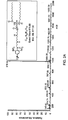
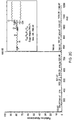
- Figs. 2A-2B present Mass Spectra and deduced chemical structure of products of reacting TNBS with the acetate salt of CCS ( Fig. 2A ).
- TNBS derivatized CCS to form TNP-CCS
- only one primary amine in CCS peak 978.9 reacted with TNBS.
- the second amino group of spermine is involved in the carbamoyl linker between spermine and the ceramide primary hydroxyl group at C1 as proved by NMR, i.e. if there were two primary amine groups in the cationic lipid of the invention, they would have both reacted with TNBS.
- Fig. 2B presents the Mass Spectra of Spermine-(TNP) 2 , which shows that spermine reacted with TNBS at both free primary amines.
- the binding of one TNBS per molecule confirmed that CCS contains a single TNBS-reactive primary amine.
- TLC system Chloroform:Methanol:Acetic acid 1:25:1.5 showed the presence of a single species as a reaction product, i.e. a substantially pure product.
- Methylated or non-methylated LLC compounds according to the invention may be processed by any known method to form lipid assemblies including micelles and liposomes. Such processing may include (non-limiting examples) incorporation of different non-cationic lipids like DOPE, Cholesterol or others at different mole ratios to the lipid-like compound.
- the formed liposomes may be shaped as unsized heterogeneous and heterolamellar vesicles (UHV) having a diameter of about 50 - 5000 nm.
- UHV heterogeneous and heterolamellar vesicles
- the formed UHV may be downsized and converted to large (more homoegenous) unilamellar vesicles (LUV) having a diameter of about 50-100 nm by further processing.
- LUV large unilamellar vesicles
- the structure and dimensions of the vesicles may have important implications on their efficiency as vehicles for delivery of the active biological entities to the target, i.e. these determine their transfection properties.
- UHV unsized heterogeneous
- LUV large unilamellar
- OLV oligolamellar
- MLV large multilamellar
- Another important factor for efficient delivery is the ratio between the amount of the amine positive charge of the LLC compound (L + ) and the negatively charged oligo or polyanion complexed therewith (A - ).
- the ratio determines the overall charge of the charged complex, where for effective delivery the ratio may be 1000 ⁇ (L + /A - ) ⁇ 0.1, preferably 20 ⁇ (L + /A - ) ⁇ 1 and more preferably 8 ⁇ (L + /A - ) ⁇ 1.5 depending on the entrapped/associated moiety.
- the following data presents physical characterization of one preferred LLC compound according to the invention, the CCS compound, as an acetate (Acetate/) or chloride salt (Chloride/); in combination with DOPE (ratio of CCS/DOPE 2:1); or in combination with cholesterol (ratio CCS/Chol 2:1).
- CMC of CCS salts (Acetate and chloride) was measured by changes (increase) in diphenylhexatriene (DPH) fluorescence upon aggregation.
- the CMC of the acetate salt was equal to that of the chloride salt, both being 5x10 -6 M.
- the pKa of CCS micelles or CCS/DOPE liposomes was determined from the dissociation curve of the pH-sensitive, bilayer-incorporated fluorophore 4-heptadecyl 7-hydroxycoumarin (C17HC) or 1,2-dioleoyl- sn -glycero-3-phosphoethanolamine-N-(7-hydroxycoumarin) (HCPE) ⁇ 0 HC ) [Zuidam & Barenholz (1997) ibid.].
- the fluorescence excitation of the fluorophore 7-hydroxycoumarin (HC) moieties at 405 nm for HCPE and 380 nm for C17HC reflects the amount of the ionized species, while the excitation at 370 nm for HCPE and 330 nm for C17HC is the pH-independent isosbestic point, reflects the total amount of probe in the liposomes and micelles. Fluorescence emission was determined at 450nm for all the above excitations. These two ratios (405/370 for HCPE, and 380/330 for C17HC) give the degree of ionization of HC fluoropore.
- the titration curve of HC which is generated by plotting fluorescence excitation intensity ratio I 405 /I 370 for HCPE and I 380 /I 330 for C17HC at broad range of bulk pH, enables to calculate the apparent pKa of HC in HCPE and C17HC, respectively.
- the pKa of HC in the liposomal bilayer and/or in the micelles is calculated by fitting the above titration curve to the modified Henderson-Hasselbach equation, as described before [Zuidam & Barenholz (1997) ibid.].
- Liposomes' and micelles' ⁇ -potential was measured at 25°C by the mobility of the particles in the applied electrical field using a Zetasizer 3000 HAS, Malvern Instruments, Malvern, UK, by diluting an aliquot of 40 ⁇ L in 20 mL of 10 mM NaCl (pH 6.7) and passing the solutions before measurement through a 0.2- ⁇ m syringe filter (Minisart, Sartorius, Germany).
- ⁇ -potential reflects the electrical potential at the plane of sheer (further away from the actual surface), which is sensed by the HCPE and C17HC.
- the parameters, which describe lipid assemblies' electrostatics, include surface electrical potential ( ⁇ 0 HC ); surface pH; and ⁇ -potential, all of which are presented in the following Table 1: Table 1: Characterization of CCs electrostatics Lipid assembles pKa Surface potential, mV Surface pH ⁇ -potential HCPE C17HC HCPE C17HC HCPE C17HC DOPE/DOPC 1:1 (liposomes) 10.7 8.95 0 ND 7.4 ND 0 CCS Acetate (micelles) ND 4.75 ND 245.8 ND 11.5 40 CCS Acetate/DOPE 2:1 (liposomes) 7.54 4.93 184.9 235.2 10.56 11.32 43.4 CCS Chloride (micelles) 6.56 5.61 242.3 195.4 11.54 10.64 46.5 CCS Chloride/DOPE 2:1 (liposomes) 7.41 5.94 192.5 176.15 10.69 10.31 86.8 CCS non-protonated 7.23 ND 203.06 ND 10.87 ND 34 C
- Figs. 3A-3D show the results of the different follow up assays (follow up for 23 days).
- the follow up assay were based on TNBS test, which is a quantitative assay based on color reaction of TNBS reagent with primary amines.
- Fig. 3A shows the results of follow up of level of primary amine followed by TNBS binding method (to form TNP derivative) upon storage of CCS-based liposomes, with or without DOPE. It may be concluded from this Figure that both in the presence or absence of DOPE the lipid assemblies formed from LLC compounds, e.g. CCS and a mixture of CCS and DOPE are stable (i.e. there is no substantial change in level of primary amines with time).
- LLC compounds e.g. CCS and a mixture of CCS and DOPE are stable (i.e. there is no substantial change in level of primary amines with time).
- Fig. 3B shows results of the follow up of Zeta potential during storage in HEPES buffer pH 7.4. Also in this case, no substantial change in time was exhibited with respect to the zeta potential. These results are in agreement with the above described integrity of CCS primary amino group ( Fig. 3A ). Therefore, the minimal changes exhibited in Figs. 3A and 3B reflect the chemical stability of CCS dispersions in aqueous phase for a period of at least 23 days.
- Fig. 3C presents the follow up results of HCPE 405/370 fluorescence excitation intensity ratio which showed that surface pH of cationic liposomes and cationic micelles, and their electrical surface potential ⁇ 0 (reflected by 405/370 ratio of lipid assembly-incorporated probe HCPE) was unchanged over the entire period of storage, indicating the stability of the surface of CCS.
- Fig. 3D presents the follow up results of the change in time in the diameter of lipid assemblies.
- DOPE the particles remained relatively small, i.e. in the form of micelles.
- CCS-DOPE-based assemblies which are UHV are relatively much larger than micelles and they tend to aggregate during storage, leading to size increase.
- the aggregations to their original size distribution occurred upon short (10sec) ultrasonic irradiation as described below.
- Fig. 3E presents results of follow up of the transfection activity. Generally, the transfection activity was assessed by luciferase expression (see methods of transfection). In view of aggregation upon storage ( FIG. 3D ), the lipid dispersions before preparation of lipoplexes were sonicated on Elma TRANSONIC 460/H bath sonicator for 10 s. Only 2- and 23-day points are shown. The conclusions which may be drawn from the results of the follow-up assays are as follows:
- Fig. 4 The results of titration of the different CCS-based liposomes with plasmid DNA is presented in Fig. 4 . Titration was monitored by changes in bilayer-incorporated C17 HC 380/330 fluorescence excitation ratio (emission read at 450 nm) upon addition of DNA.
- the acetate salt of CCS is termed "Acetate”
- the CCS acetate salt/DOPE (mole ratio 2:1) formulation is termed "Acetate/DOPE”
- the CCS chloride salt is termed “Chloride”
- the combined chloride salt and DOPE ratio 2:1
- Hydration level of the different CCS-based lipid assemblies before and after the addition of plasmid DNA was determined by monitoring changes of "Laurdan excitation general polarization" according to which the higher the value obtained, the lower is the level of hydration.
- Laurdan 6-Dodecanoyl-2-dimethylaminonaphthalene (Laurdan), purchased from Lambda (Graz, Austria), was used to follow changes in hydration level of the liposome bilayer.
- the naphthalene fluorophore of this probe is located at the hydrophilichydrophobic interface of the bilayer, and its 12-carbon chain is aligned parallel to the bilayer lipid acyl chains.
- Laurdan excitation and emission spectra depend strongly on the phase of the lipid. The differences in spectra at different phases are due to the SO phase being less hydrated than the LD phase in the lipid headgroup region.
- Laurdan steady-state fluorescence parameter referred to as generalized polarization (GP) [ Hirsch-Lerner D, Barenholz Y. Biochim Biophys Acta. 1461(1):47-57 (1999 )].
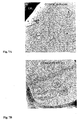
- Fig. 6A presents a light microscope image of liposomes comprised of CCS chloride salt:Chol (at a ratio of 2:1);
- Fig. 6B presents a light microscope image of liposomes comprised of CCS chloride salt:DOPE (at a ratio of 2:1),
- Fig. 6C presents a light microscope image of liposomes comprised of CCS acetate salt:DOPE (at a ratio 2:1),
- Fig. 7A presents a Cryo-TEM image of CCS chloride salt based micelles in Hepes, Fig.
- FIG. 7B presents a Cryo-TEM image of liposomes in Hepes comprised of CCS chloride:DOPE (at a ratio 2:1)
- Fig. 7C presents a Cryo-TEM image of micelles in Hepes comprised of CCS chloride:Chol (at a ratio 2: 1).
- Transfection with the LLC compound of the invention may facilitate, for example, vaccination, introduction of genes into cells for their expression, gene and oligo- and poly - nucleotide therapy.
- liposomes and micelles formed by the LLC compound of the invention were found to efficiently induce on mice peritoneal macrophage surface the expression of high levels of MHC II and co-stimulatory molecules such as B7 and CD40 (data not shown). These are essential for productive antigen presentation. Neutral and anionic liposomes seem not to possess such abilities.
- the formed complexes according to the invention may be part of a pharmaceutical composition
- a pharmaceutical composition comprising the complex carrying an active biological entity to be delivered together with suitable excipients, preferably, physiologically acceptable carriers.
- suitable excipients preferably, physiologically acceptable carriers.
- Such pharmaceutical compositions may be prepared for, e.g. intravenous, subcutaneous, topical, intranasal, oral, ocular or intramuscular in vivo administration as well as ex vivo and in vitro (cell culture) applications.
- the physiologically acceptable carrier according to the invention generally refers to inert, non-toxic solid or liquid substances preferably not reacting with the biologically active molecule or with the conjugate and which is required for the effective delivery of the conjugate with the biologically active molecule.
- the assemblies forming part of the composition of the invention are typically in the form of suspensions or dispersions.
- physiologically acceptable carrier examples include water, saline, 5% dextrose (glucose), 10% sucrose etc., either alone or with minor amounts (up to 10%) of an alcohol, such as ethanol.
- One more specific example of efficient use of the LLC compounds vehicles is in oligonucleotide transfer into cells, and in particular into cancerous cells.
- One approach in cancer treatment is to target specified poly- or oligo- nucleotides in the form of antisense in order to interfere with cancer cell function.
- antigens may be complexed (either encapsulated within the vehicle, entrapped in the lipid-like layer, associated at the surface of the vehicle etc. or mere complexation) with the LLC compound to form an antigenic entity (a vaccine).
- the complex may further include immunostimulants or any other biologically active compounds facilitating the desired modulation (stimulation, enhancement etc.) of the immune response.
- CCS-Antigen biologically active molecules formulations were found to have superior pharmacokinetics over antigens alone; antigens associated with negatively charges liposomes or even than DOTAP (monocationic lipid) based vaccines.
- CCS based vaccine was the only vaccine that was capable of delivering the antigen to the nasal lymph nodes (data not shown).
- the disuccinimidyl derivative though obtained is reacted with an equivalent of spermine at room temperature using catalytic amount of DMAP to obtain the 3- monosubstituted ceramide-spermine conjugate of Fig. 1B .
- TNBS assay was used to determine primary amines per CCS molecule in the exemplified cationic lipid of the invention. Accordingly, the tested compound, CCS, (100 ml) was added to bicarbonate solution (500 ⁇ l, pH 8.4) followed by the addition of TNBS (1200nmol, 20 ⁇ l). The mixture was incubated for 30 min. After incubation, acetic acid was added (20 ⁇ l). Red sediments were spun down and dissolved in acetonitrile. Mass spectra of the specific compound TNP-CCS were obtained. For structure analysis TNBS assay was also performed on spermine.
- the corresponding lipid assemblies (CCS or CCS/DOPE 2:1) were prepared as described above, by reconstitution in Hepes buffer, stored from 0 to 21 days at 4C. At 21 day, there were 6 time points of storage, which were assayed simultaneously for the following parameters:
- Monocationic lipid DOTAP N -(1-(2,3-dioleoyloxy)propyl), N,N,N -trimethylammonium chloride); neutral lipid DOPE (1,2-dioleoyl- sn -glycero-3-phosphatidyl ethanolamine) were all from Avanti Polar Lipids (Alabaster, AL).
- Cholesterol was from Sigma.
- the pH-sensitive probe 7-hydroxycoumarin-phosphatidylethanolamine was prepared by labeling of DOPE primary amine with 7-HC succinimidyl ester (Molecular Probes), according to the amine labeling procedure of Molecular Probes (Eugene, OR).
- TNBS Trinitro benzene sulfonic acid
- Hepes were from Sigma.
- All plasmids were propagated in E.coli and purified in sterile endotoxin-free form using the QIAGEN EndoFree Plasmid Mega kit (QIAGEN, Hilden, Germany) according to the manufacturer's protocol, and were analyzed for purity and topology as described (Even-Chen and Barenholz, 2000).
- lipid dispersion For study of liposome size distribution, a drop of the lipid dispersion was placed on a slide, covered with a cover glass, and viewed in transmitted mode using Nomarsky contrast. The slides were viewed on an Olympus FV300 laser scanning microscope (Olympus Optical, Japan). For estimating size of aggregates, 3- ⁇ m latex beads (Sigma) were added to the formulations.
- lipid dispersions at concentrations of 10 mM cationic lipid were prepared in 20 mM HEPES buffer, pH 7.4.
- the vitrified specimens were prepared in a controlled environment vitrification system (CEVS) at 25°C and 100% relative humidity. Samples were examined in a Philips CM120 microscope operated at 120 kV Specimens were equilibrated in the microscope below -178°C, then examined in the low-dose imaging mode to minimize electron beam radiation damage, and recorded at a nominal underfocus of 4-7 nm to enhance phase contrast. An Oxford CT-3500 cooling holder was used. Images were recorded digitally by a Gatan MultiScan 791 CCD camera using the Digital Micrograph 3.1 software package.
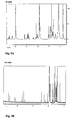
- Table 3 Spectral assignment of 1H NMR resonances for central region of spermine-ceramide conjugate in CD4O at 25°C (see Fig. 8). Assignment Chemical shift (ppm) H1a 1.17 Hlb 3.9 H2 3.9 H3 4.8 H4 6.32 H5 5.6 2H2' 2.88 H-N 6.474 H-O(1) Disappeared H-O(3) Broad signal
- Table 4 Spectral assignment of 13 C NMR resonances for central region of spermine-ceramide conjugate in CD4O at 25°C (see Fig. 8) Assignment Chemical shift (ppm) C1 64.2 C2 63 C3 72.1 C4 133.9 C5 136.3 C1' 174.87, 175.07 C* 178.07
- Figs. 9A-9B present the 1H-NMR and 13C-NMR, respectively, of the CCS compound according to the invention, which correspond to the above results.
Landscapes
- Health & Medical Sciences (AREA)
- Chemical & Material Sciences (AREA)
- Life Sciences & Earth Sciences (AREA)
- General Health & Medical Sciences (AREA)
- Pharmacology & Pharmacy (AREA)
- Engineering & Computer Science (AREA)
- Medicinal Chemistry (AREA)
- Organic Chemistry (AREA)
- Animal Behavior & Ethology (AREA)
- Public Health (AREA)
- Veterinary Medicine (AREA)
- Genetics & Genomics (AREA)
- Epidemiology (AREA)
- Bioinformatics & Cheminformatics (AREA)
- Biotechnology (AREA)
- Immunology (AREA)
- Molecular Biology (AREA)
- Microbiology (AREA)
- General Engineering & Computer Science (AREA)
- Biophysics (AREA)
- Biochemistry (AREA)
- Zoology (AREA)
- General Chemical & Material Sciences (AREA)
- Wood Science & Technology (AREA)
- Biomedical Technology (AREA)
- Chemical Kinetics & Catalysis (AREA)
- Physics & Mathematics (AREA)
- Plant Pathology (AREA)
- Dispersion Chemistry (AREA)
- Mycology (AREA)
- Nuclear Medicine, Radiotherapy & Molecular Imaging (AREA)
- Gastroenterology & Hepatology (AREA)
- Proteomics, Peptides & Aminoacids (AREA)
- Medicinal Preparation (AREA)
- Pharmaceuticals Containing Other Organic And Inorganic Compounds (AREA)
- Medicines Containing Antibodies Or Antigens For Use As Internal Diagnostic Agents (AREA)
- Medicines That Contain Protein Lipid Enzymes And Other Medicines (AREA)
- Organic Low-Molecular-Weight Compounds And Preparation Thereof (AREA)
- Low-Molecular Organic Synthesis Reactions Using Catalysts (AREA)
- Heterocyclic Carbon Compounds Containing A Hetero Ring Having Nitrogen And Oxygen As The Only Ring Hetero Atoms (AREA)
Applications Claiming Priority (5)
| Application Number | Priority Date | Filing Date | Title |
|---|---|---|---|
| US47918503P | 2003-06-18 | 2003-06-18 | |
| US50563803P | 2003-09-25 | 2003-09-25 | |
| US53755304P | 2004-01-21 | 2004-01-21 | |
| US54550504P | 2004-02-19 | 2004-02-19 | |
| PCT/IL2004/000536 WO2004110980A1 (en) | 2003-06-18 | 2004-06-17 | Sphingolipids' polyalkylamines conjugates |
Publications (2)
| Publication Number | Publication Date |
|---|---|
| EP1638919A1 EP1638919A1 (en) | 2006-03-29 |
| EP1638919B1 true EP1638919B1 (en) | 2012-09-26 |
Family
ID=33556649
Family Applications (3)
| Application Number | Title | Priority Date | Filing Date |
|---|---|---|---|
| EP04744876A Expired - Lifetime EP1638919B1 (en) | 2003-06-18 | 2004-06-17 | Sphingolipids polyalkylamines conjugates |
| EP04744875.8A Expired - Lifetime EP1638610B1 (en) | 2003-06-18 | 2004-06-17 | Sphingoid polyalkylamine conjugates for vaccination |
| EP04744874A Expired - Lifetime EP1638611B1 (en) | 2003-06-18 | 2004-06-17 | Sphingolipids polyalkylamine conjugates for use in transfection |
Family Applications After (2)
| Application Number | Title | Priority Date | Filing Date |
|---|---|---|---|
| EP04744875.8A Expired - Lifetime EP1638610B1 (en) | 2003-06-18 | 2004-06-17 | Sphingoid polyalkylamine conjugates for vaccination |
| EP04744874A Expired - Lifetime EP1638611B1 (en) | 2003-06-18 | 2004-06-17 | Sphingolipids polyalkylamine conjugates for use in transfection |
Country Status (8)
| Country | Link |
|---|---|
| US (4) | US8242089B2 (https=) |
| EP (3) | EP1638919B1 (https=) |
| JP (3) | JP4782675B2 (https=) |
| AU (3) | AU2004246904B2 (https=) |
| BR (1) | BRPI0411505A (https=) |
| CA (1) | CA2528402A1 (https=) |
| MX (1) | MXPA05013746A (https=) |
| WO (3) | WO2004110980A1 (https=) |
Families Citing this family (51)
| Publication number | Priority date | Publication date | Assignee | Title |
|---|---|---|---|---|
| ITRM20010688A1 (it) | 2001-11-21 | 2003-05-21 | Univ Roma | Composti immunoregolatori. |
| EP1519714B1 (en) | 2002-06-28 | 2010-10-20 | Protiva Biotherapeutics Inc. | Method and apparatus for producing liposomes |
| AU2004233873B2 (en) | 2003-04-25 | 2010-11-18 | The Penn State Research Foundation | Method and system for systemic delivery of growth arresting, lipid-derived bioactive compounds |
| EP1638919B1 (en) * | 2003-06-18 | 2012-09-26 | Biolab Ltd. | Sphingolipids polyalkylamines conjugates |
| US7906122B2 (en) | 2003-06-18 | 2011-03-15 | Yissum Research Development Company Of The Hebrew University Of Jersusalem | Sphingoid polyalkylamine conjugates for Hepatitis B virus vaccination |
| CA2532228C (en) | 2003-07-16 | 2017-02-14 | Protiva Biotherapeutics, Inc. | Lipid encapsulated interfering rna |
| JP4764426B2 (ja) | 2004-06-07 | 2011-09-07 | プロチバ バイオセラピューティクス インコーポレイティッド | カチオン性脂質および使用方法 |
| CA2569664C (en) | 2004-06-07 | 2013-07-16 | Protiva Biotherapeutics, Inc. | Lipid encapsulated interfering rna |
| EP1773857A4 (en) | 2004-07-02 | 2009-05-13 | Protiva Biotherapeutics Inc | THE IMMUNE SYSTEM STIMULATING SIRNA MOLECULES AND APPLICATIONS THEREOF |
| WO2006074546A1 (en) * | 2005-01-13 | 2006-07-20 | Protiva Biotherapeutics, Inc. | Lipid encapsulated interfering rna |
| GB0513431D0 (en) * | 2005-06-30 | 2005-08-10 | Kherion Technology Ltd | Prophylactic compositions and uses |
| WO2007048046A2 (en) | 2005-10-20 | 2007-04-26 | Protiva Biotherapeutics, Inc. | Sirna silencing of filovirus gene expression |
| CN101346393B (zh) | 2005-11-02 | 2015-07-22 | 普洛体维生物治疗公司 | 修饰的siRNA分子及其应用 |
| NZ569138A (en) | 2005-12-15 | 2012-06-29 | Centre Nat Rech Scient | Cationic oligonucleotides automated methods for preparing same and their uses |
| WO2007127272A2 (en) * | 2006-04-24 | 2007-11-08 | The Cbr Institute For Biomedical Research | Method of producing immunoliposomes and compositions thereof |
| US7915399B2 (en) | 2006-06-09 | 2011-03-29 | Protiva Biotherapeutics, Inc. | Modified siRNA molecules and uses thereof |
| WO2008115198A2 (en) | 2006-06-30 | 2008-09-25 | University Of Georgia Research Foundation, Inc. | Anthrax carbohydrates,synthesis and uses thereof |
| US8420607B2 (en) * | 2006-06-30 | 2013-04-16 | University Of Georgia Research Foundation, Inc. | Anthrax carbohydrates, synthesis and uses thereof |
| US8877206B2 (en) | 2007-03-22 | 2014-11-04 | Pds Biotechnology Corporation | Stimulation of an immune response by cationic lipids |
| WO2008139467A2 (en) | 2007-05-09 | 2008-11-20 | Biolab Ltd. | Lipid conjugated cyclic carbonate derivatives, their synthesis, and uses |
| FR2926818B1 (fr) * | 2008-01-30 | 2012-04-06 | Centre Nat Rech Scient | siRNA CATIONIQUES, SYNTHESE ET UTILISATION POUR L'ARN INTERFERENCE |
| CA2721333C (en) | 2008-04-15 | 2020-12-01 | Protiva Biotherapeutics, Inc. | Novel lipid formulations for nucleic acid delivery |
| EP2276495B1 (en) | 2008-04-17 | 2018-11-21 | PDS Biotechnology Corporation | Stimulation of an immune response by enantiomers of cationic lipids |
| CA2740000C (en) | 2008-10-09 | 2017-12-12 | Tekmira Pharmaceuticals Corporation | Improved amino lipids and methods for the delivery of nucleic acids |
| GB0910723D0 (en) | 2009-06-22 | 2009-08-05 | Sylentis Sau | Novel drugs for inhibition of gene expression |
| WO2011000107A1 (en) | 2009-07-01 | 2011-01-06 | Protiva Biotherapeutics, Inc. | Novel lipid formulations for delivery of therapeutic agents to solid tumors |
| US9018187B2 (en) | 2009-07-01 | 2015-04-28 | Protiva Biotherapeutics, Inc. | Cationic lipids and methods for the delivery of therapeutic agents |
| US8569256B2 (en) | 2009-07-01 | 2013-10-29 | Protiva Biotherapeutics, Inc. | Cationic lipids and methods for the delivery of therapeutic agents |
| CA2803282C (en) | 2009-07-06 | 2018-05-01 | David E. Anderson | Methods for preparing vesicles and formulations produced therefrom |
| JP5854559B2 (ja) | 2009-07-06 | 2016-02-09 | ヴァリエーション バイオテクノロジーズ インコーポレイテッド | 小胞を調製する方法及びこれから製造される製剤 |
| US8716464B2 (en) | 2009-07-20 | 2014-05-06 | Thomas W. Geisbert | Compositions and methods for silencing Ebola virus gene expression |
| WO2011105520A1 (ja) * | 2010-02-26 | 2011-09-01 | 国立大学法人 長崎大学 | 抗原または薬物送達複合体 |
| US9006417B2 (en) | 2010-06-30 | 2015-04-14 | Protiva Biotherapeutics, Inc. | Non-liposomal systems for nucleic acid delivery |
| WO2012006368A2 (en) * | 2010-07-06 | 2012-01-12 | Variation Biotechnologies, Inc. | Compositions and methods for treating influenza |
| WO2012006367A2 (en) | 2010-07-06 | 2012-01-12 | Variation Biotechnologies, Inc. | Compositions and methods for treating influenza |
| US10736844B2 (en) | 2011-01-13 | 2020-08-11 | Variation Biotechnologies Inc. | Compositions and methods for treating viral infections |
| AU2013208693B2 (en) | 2012-01-12 | 2017-12-07 | Variation Biotechnologies Inc. | Compositions and methods for treating viral infections |
| EP2806894A4 (en) | 2012-01-27 | 2015-11-04 | Variation Biotechnologies Inc | METHODS AND COMPOSITIONS FOR THERAPEUTIC AGENTS |
| CA2876656C (en) | 2012-06-15 | 2023-09-26 | Pds Biotechnology Corporation | Cationic lipid vaccine compositions and methods of use |
| CN113144188A (zh) * | 2012-09-21 | 2021-07-23 | Pds生物科技公司 | 改进的疫苗组合物和使用方法 |
| CN105452465B (zh) * | 2013-07-31 | 2019-06-21 | 奇比艾企业有限公司 | 鞘脂-聚烷基胺-寡核苷酸化合物 |
| EP3027223A1 (en) * | 2013-07-31 | 2016-06-08 | QBI Enterprises Ltd. | Methods of use of sphingolipid polyalkylamine oligonucleotide compounds |
| US10426737B2 (en) * | 2013-12-19 | 2019-10-01 | Novartis Ag | Lipids and lipid compositions for the delivery of active agents |
| JP6339884B2 (ja) | 2014-07-17 | 2018-06-06 | 富士フイルム株式会社 | イミダゾール化合物およびそれを含有するリポソーム |
| BR112017014090A2 (pt) * | 2014-12-29 | 2018-03-06 | Bonac Corporation | composição, e, métodos para produção de uma composição e estabilização de uma molécula de ácido nucleico. |
| WO2016125163A1 (en) | 2015-02-04 | 2016-08-11 | Yissum Research Development Company Of The Hebrew University Of Jerusalem Ltd. | LIPID ASSEMBLIES AND USES THEREOF AND SOME pH AND ELECTROSTATIC MODULATING LIPIDS TO BE USED IN SAID ASSEMBLIES |
| CA3005251A1 (en) | 2015-11-13 | 2017-05-18 | Pds Biotechnology Corporation | Lipids as synthetic vectors to enhance antigen processing and presentation ex-vivo in dendritic cell therapy |
| WO2019113200A1 (en) | 2017-12-05 | 2019-06-13 | Pds Biotechnology Corporation | Methods and compositions comprising cationic lipids for stimulating type 1 interferon genes |
| WO2022115645A1 (en) | 2020-11-25 | 2022-06-02 | Akagera Medicines, Inc. | Lipid nanoparticles for delivery of nucleic acids, and related methods of use |
| CA3256897A1 (en) | 2022-05-25 | 2023-11-30 | Akagera Medicines, Inc. | Lipid nanoparticles for the administration of nucleic acids and their methods of use |
| EP4683906A1 (en) * | 2023-03-22 | 2026-01-28 | Shanghai Circode Biomed Co., Ltd | Lipid compounds, lipid nanoparticles, and pharmaceutical compositions |
Family Cites Families (29)
| Publication number | Priority date | Publication date | Assignee | Title |
|---|---|---|---|---|
| US4897355A (en) | 1985-01-07 | 1990-01-30 | Syntex (U.S.A.) Inc. | N[ω,(ω-1)-dialkyloxy]- and N-[ω,(ω-1)-dialkenyloxy]-alk-1-yl-N,N,N-tetrasubstituted ammonium lipids and uses therefor |
| EP0300213A1 (en) | 1987-06-22 | 1989-01-25 | Hexal-Pharma Gentechnik GmbH & Co. KG | Hepatitis a viral peptide particle immunogens |
| JPH01213858A (ja) | 1988-02-23 | 1989-08-28 | Akai Electric Co Ltd | ディスク・プレーヤ |
| FR2645866B1 (fr) | 1989-04-17 | 1991-07-05 | Centre Nat Rech Scient | Nouvelles lipopolyamines, leur preparation et leur emploi |
| KR910008396Y1 (ko) * | 1989-12-09 | 1991-10-18 | 삼성전자 주식회사 | 공기 조화기의 환기, 배수 장치 |
| US5334761A (en) | 1992-08-28 | 1994-08-02 | Life Technologies, Inc. | Cationic lipids |
| US5674908A (en) | 1993-12-20 | 1997-10-07 | Life Technologies, Inc. | Highly packed polycationic ammonium, sulfonium and phosphonium lipids |
| JPH09508900A (ja) * | 1994-02-02 | 1997-09-09 | ザ リポソーム カンパニー、インコーポレーテッド | 薬理学的に活性な化合物及びリポソーム並びにそれらの使用方法 |
| US6075012A (en) | 1994-02-11 | 2000-06-13 | Life Technologies, Inc. | Reagents for intracellular delivery of macromolecules |
| US5659011A (en) | 1994-09-23 | 1997-08-19 | Waldmann; John J. | Agents having high nitrogen content and high cationic charge based on dicyanimide dicyandiamide or guanidine and inorganic ammonium salts |
| US5840710A (en) | 1994-12-09 | 1998-11-24 | Genzyme Corporation | Cationic amphiphiles containing ester or ether-linked lipophilic groups for intracellular delivery of therapeutic molecules |
| US6071890A (en) * | 1994-12-09 | 2000-06-06 | Genzyme Corporation | Organ-specific targeting of cationic amphiphile/DNA complexes for gene therapy |
| US5976567A (en) * | 1995-06-07 | 1999-11-02 | Inex Pharmaceuticals Corp. | Lipid-nucleic acid particles prepared via a hydrophobic lipid-nucleic acid complex intermediate and use for gene transfer |
| DE19521412A1 (de) * | 1995-06-14 | 1996-12-19 | Boehringer Mannheim Gmbh | Neue kationische und polykationische Amphiphile, diese enthaltende Reagenzien und deren Verwendung |
| DE69727384T2 (de) | 1996-05-24 | 2004-11-04 | IC-VEC Ltd. | Polykatonische sterin-derivate zur transfektion |
| DE19631189A1 (de) | 1996-08-02 | 1998-02-05 | Max Delbrueck Centrum | Neuartige kationische Amphiphile für den liposomalen Gentransfer |
| DE69735382T2 (de) | 1996-11-04 | 2006-11-30 | Qiagen Gmbh | Kationische reagenzien zür transfektion |
| US6180114B1 (en) * | 1996-11-21 | 2001-01-30 | University Of Washington | Therapeutic delivery using compounds self-assembled into high axial ratio microstructures |
| FR2763943B1 (fr) * | 1997-05-28 | 1999-07-09 | Rhone Poulenc Rorer Sa | Composes, leur preparation et leur utilisation pour le transfert d'acides nucleiques dans les cellules |
| WO1999002190A1 (en) | 1997-07-11 | 1999-01-21 | Genzyme Corporation | Organ-specific targeting of cationic amphiphile/retinoblastoma encoding dna complexes for gene therapy |
| CA2299429C (en) * | 1997-08-13 | 2010-04-20 | Biontex Laboratories Gmbh | New lipopolyamines,their preparation and the use thereof |
| AU747597B2 (en) * | 1998-07-20 | 2002-05-16 | Inex Pharmaceuticals Corporation | Liposomal encapsulated nucleic acid-complexes |
| AU1548101A (en) * | 1999-11-24 | 2001-06-04 | Sagami Chemical Research Center | Sphingosine derivatives |
| JP2001213858A (ja) * | 1999-11-24 | 2001-08-07 | Sagami Chem Res Center | スフィンゴシン誘導体 |
| GB9930533D0 (en) | 1999-12-23 | 2000-02-16 | Mitsubishi Tokyo Pharm Inc | Nucleic acid delivery |
| US20020012998A1 (en) * | 2000-03-29 | 2002-01-31 | Igor Gonda | Cationic liposomes |
| US20020188023A1 (en) * | 2000-12-12 | 2002-12-12 | Michael Jorgensen | Compound |
| US20060014695A1 (en) * | 2002-02-01 | 2006-01-19 | Hamidreza Ghandehari | Hpma-polyamine conjugates and uses therefore |
| EP1638919B1 (en) * | 2003-06-18 | 2012-09-26 | Biolab Ltd. | Sphingolipids polyalkylamines conjugates |
-
2004
- 2004-06-17 EP EP04744876A patent/EP1638919B1/en not_active Expired - Lifetime
- 2004-06-17 WO PCT/IL2004/000536 patent/WO2004110980A1/en not_active Ceased
- 2004-06-17 CA CA002528402A patent/CA2528402A1/en not_active Abandoned
- 2004-06-17 WO PCT/IL2004/000534 patent/WO2004110496A1/en not_active Ceased
- 2004-06-17 EP EP04744875.8A patent/EP1638610B1/en not_active Expired - Lifetime
- 2004-06-17 AU AU2004246904A patent/AU2004246904B2/en not_active Ceased
- 2004-06-17 JP JP2006516807A patent/JP4782675B2/ja not_active Expired - Fee Related
- 2004-06-17 US US10/560,932 patent/US8242089B2/en not_active Expired - Fee Related
- 2004-06-17 WO PCT/IL2004/000533 patent/WO2004110499A1/en not_active Ceased
- 2004-06-17 JP JP2006516806A patent/JP4695075B2/ja not_active Expired - Fee Related
- 2004-06-17 AU AU2004247505A patent/AU2004247505B2/en not_active Ceased
- 2004-06-17 EP EP04744874A patent/EP1638611B1/en not_active Expired - Lifetime
- 2004-06-17 BR BRPI0411505-8A patent/BRPI0411505A/pt not_active IP Right Cessation
- 2004-06-17 US US10/561,394 patent/US7771711B2/en not_active Expired - Fee Related
- 2004-06-17 JP JP2006516809A patent/JP2006527763A/ja active Pending
- 2004-06-17 US US10/560,928 patent/US8673285B2/en active Active
- 2004-06-17 MX MXPA05013746A patent/MXPA05013746A/es active IP Right Grant
- 2004-06-17 AU AU2004246905A patent/AU2004246905B2/en not_active Ceased
-
2007
- 2007-05-09 US US11/746,415 patent/US20070264273A1/en not_active Abandoned
Also Published As
| Publication number | Publication date |
|---|---|
| JP2006527762A (ja) | 2006-12-07 |
| US20080112917A1 (en) | 2008-05-15 |
| JP2006527761A (ja) | 2006-12-07 |
| EP1638919A1 (en) | 2006-03-29 |
| EP1638611A1 (en) | 2006-03-29 |
| WO2004110980A1 (en) | 2004-12-23 |
| AU2004247505A1 (en) | 2004-12-23 |
| EP1638610A1 (en) | 2006-03-29 |
| JP2006527763A (ja) | 2006-12-07 |
| CA2528402A1 (en) | 2004-12-23 |
| EP1638611B1 (en) | 2012-10-03 |
| US20070264273A1 (en) | 2007-11-15 |
| JP4782675B2 (ja) | 2011-09-28 |
| US8673285B2 (en) | 2014-03-18 |
| WO2004110499A1 (en) | 2004-12-23 |
| MXPA05013746A (es) | 2006-06-27 |
| BRPI0411505A (pt) | 2006-07-25 |
| EP1638610B1 (en) | 2015-03-18 |
| AU2004246904A1 (en) | 2004-12-23 |
| JP4695075B2 (ja) | 2011-06-08 |
| US20060252718A1 (en) | 2006-11-09 |
| WO2004110496A1 (en) | 2004-12-23 |
| AU2004246904B2 (en) | 2010-02-04 |
| AU2004247505B2 (en) | 2010-01-21 |
| US8242089B2 (en) | 2012-08-14 |
| US7771711B2 (en) | 2010-08-10 |
| US20060252717A1 (en) | 2006-11-09 |
| AU2004246905A1 (en) | 2004-12-23 |
| AU2004246905B2 (en) | 2010-01-21 |
Similar Documents
| Publication | Publication Date | Title |
|---|---|---|
| EP1638919B1 (en) | Sphingolipids polyalkylamines conjugates | |
| US8956646B2 (en) | Zwitterionic lipids | |
| EP3695850B1 (en) | Pharmaceutical compositions comprising a negatively charged drug and a cationic lipid | |
| US6734171B1 (en) | Methods for encapsulating nucleic acids in lipid bilayers | |
| CA2792406A1 (en) | Methods for encapsulating nucleic acids in lipid bilayers | |
| JP2004000245A (ja) | 自己構築ポリヌクレオチド送達システム | |
| CA3194951A1 (en) | Lipid nanoparticles encapsulation of large rna | |
| CA2426244A1 (en) | Lipid formulations for target delivery | |
| US7906122B2 (en) | Sphingoid polyalkylamine conjugates for Hepatitis B virus vaccination | |
| CN115190876B (zh) | 胺基脂质化合物、其制备方法和应用 | |
| US6316260B1 (en) | Tetraether lipid derivatives and liposomes and lipid agglomerates containing tetraether lipid derivatives, and use thereof | |
| Chen et al. | Alkylated derivatives of poly (ethylacrylic acid) can be inserted into preformed liposomes and trigger pH-dependent intracellular delivery of liposomal contents | |
| CA2269502C (en) | Tetraether lipid derivatives and liposomes and lipid agglomerates containing tetraetherlipid derivatives, and use thereof | |
| Verma | Liposomes: a targeted drug delivery system-a review | |
| CN100469393C (zh) | 用于接种的sphingoid聚烷基胺缀合物 | |
| KR100373844B1 (ko) | 유전자 및 생물학적 활성 약물 전달용 양이온성 지질과이의 제조방법 | |
| KR100373845B1 (ko) | 유전자 및 생물학적 활성 약물 전달용 양이온성 지질과이의 제조방법 | |
| WO2002024627A1 (en) | Cationic lipids and use thereof |
Legal Events
| Date | Code | Title | Description |
|---|---|---|---|
| PUAI | Public reference made under article 153(3) epc to a published international application that has entered the european phase |
Free format text: ORIGINAL CODE: 0009012 |
|
| 17P | Request for examination filed |
Effective date: 20060118 |
|
| AK | Designated contracting states |
Kind code of ref document: A1 Designated state(s): AT BE BG CH CY CZ DE DK EE ES FI FR GB GR HU IE IT LI LU MC NL PL PT RO SE SI SK TR |
|
| DAX | Request for extension of the european patent (deleted) | ||
| RIN1 | Information on inventor provided before grant (corrected) |
Inventor name: BARENHOLZ, YECHEZKEL Inventor name: SIMBERG, DMITRI Inventor name: ROCHLIN, ELIMELECH |
|
| 17Q | First examination report despatched |
Effective date: 20090317 |
|
| GRAP | Despatch of communication of intention to grant a patent |
Free format text: ORIGINAL CODE: EPIDOSNIGR1 |
|
| GRAS | Grant fee paid |
Free format text: ORIGINAL CODE: EPIDOSNIGR3 |
|
| GRAA | (expected) grant |
Free format text: ORIGINAL CODE: 0009210 |
|
| AK | Designated contracting states |
Kind code of ref document: B1 Designated state(s): AT BE BG CH CY CZ DE DK EE ES FI FR GB GR HU IE IT LI LU MC NL PL PT RO SE SI SK TR |
|
| REG | Reference to a national code |
Ref country code: GB Ref legal event code: FG4D |
|
| REG | Reference to a national code |
Ref country code: CH Ref legal event code: EP |
|
| REG | Reference to a national code |
Ref country code: AT Ref legal event code: REF Ref document number: 576975 Country of ref document: AT Kind code of ref document: T Effective date: 20121015 |
|
| REG | Reference to a national code |
Ref country code: IE Ref legal event code: FG4D |
|
| REG | Reference to a national code |
Ref country code: DE Ref legal event code: R096 Ref document number: 602004039469 Country of ref document: DE Effective date: 20121122 |
|
| PG25 | Lapsed in a contracting state [announced via postgrant information from national office to epo] |
Ref country code: FI Free format text: LAPSE BECAUSE OF FAILURE TO SUBMIT A TRANSLATION OF THE DESCRIPTION OR TO PAY THE FEE WITHIN THE PRESCRIBED TIME-LIMIT Effective date: 20120926 |
|
| REG | Reference to a national code |
Ref country code: AT Ref legal event code: MK05 Ref document number: 576975 Country of ref document: AT Kind code of ref document: T Effective date: 20120926 |
|
| REG | Reference to a national code |
Ref country code: NL Ref legal event code: VDEP Effective date: 20120926 |
|
| PG25 | Lapsed in a contracting state [announced via postgrant information from national office to epo] |
Ref country code: SI Free format text: LAPSE BECAUSE OF FAILURE TO SUBMIT A TRANSLATION OF THE DESCRIPTION OR TO PAY THE FEE WITHIN THE PRESCRIBED TIME-LIMIT Effective date: 20120926 Ref country code: SE Free format text: LAPSE BECAUSE OF FAILURE TO SUBMIT A TRANSLATION OF THE DESCRIPTION OR TO PAY THE FEE WITHIN THE PRESCRIBED TIME-LIMIT Effective date: 20120926 Ref country code: GR Free format text: LAPSE BECAUSE OF FAILURE TO SUBMIT A TRANSLATION OF THE DESCRIPTION OR TO PAY THE FEE WITHIN THE PRESCRIBED TIME-LIMIT Effective date: 20121227 |
|
| PG25 | Lapsed in a contracting state [announced via postgrant information from national office to epo] |
Ref country code: BE Free format text: LAPSE BECAUSE OF FAILURE TO SUBMIT A TRANSLATION OF THE DESCRIPTION OR TO PAY THE FEE WITHIN THE PRESCRIBED TIME-LIMIT Effective date: 20120926 Ref country code: ES Free format text: LAPSE BECAUSE OF FAILURE TO SUBMIT A TRANSLATION OF THE DESCRIPTION OR TO PAY THE FEE WITHIN THE PRESCRIBED TIME-LIMIT Effective date: 20130106 Ref country code: EE Free format text: LAPSE BECAUSE OF FAILURE TO SUBMIT A TRANSLATION OF THE DESCRIPTION OR TO PAY THE FEE WITHIN THE PRESCRIBED TIME-LIMIT Effective date: 20120926 Ref country code: NL Free format text: LAPSE BECAUSE OF FAILURE TO SUBMIT A TRANSLATION OF THE DESCRIPTION OR TO PAY THE FEE WITHIN THE PRESCRIBED TIME-LIMIT Effective date: 20120926 Ref country code: CZ Free format text: LAPSE BECAUSE OF FAILURE TO SUBMIT A TRANSLATION OF THE DESCRIPTION OR TO PAY THE FEE WITHIN THE PRESCRIBED TIME-LIMIT Effective date: 20120926 Ref country code: RO Free format text: LAPSE BECAUSE OF FAILURE TO SUBMIT A TRANSLATION OF THE DESCRIPTION OR TO PAY THE FEE WITHIN THE PRESCRIBED TIME-LIMIT Effective date: 20120926 |
|
| PG25 | Lapsed in a contracting state [announced via postgrant information from national office to epo] |
Ref country code: PL Free format text: LAPSE BECAUSE OF FAILURE TO SUBMIT A TRANSLATION OF THE DESCRIPTION OR TO PAY THE FEE WITHIN THE PRESCRIBED TIME-LIMIT Effective date: 20120926 Ref country code: CY Free format text: LAPSE BECAUSE OF FAILURE TO SUBMIT A TRANSLATION OF THE DESCRIPTION OR TO PAY THE FEE WITHIN THE PRESCRIBED TIME-LIMIT Effective date: 20120926 Ref country code: SK Free format text: LAPSE BECAUSE OF FAILURE TO SUBMIT A TRANSLATION OF THE DESCRIPTION OR TO PAY THE FEE WITHIN THE PRESCRIBED TIME-LIMIT Effective date: 20120926 Ref country code: PT Free format text: LAPSE BECAUSE OF FAILURE TO SUBMIT A TRANSLATION OF THE DESCRIPTION OR TO PAY THE FEE WITHIN THE PRESCRIBED TIME-LIMIT Effective date: 20130128 |
|
| PG25 | Lapsed in a contracting state [announced via postgrant information from national office to epo] |
Ref country code: AT Free format text: LAPSE BECAUSE OF FAILURE TO SUBMIT A TRANSLATION OF THE DESCRIPTION OR TO PAY THE FEE WITHIN THE PRESCRIBED TIME-LIMIT Effective date: 20120926 |
|
| PG25 | Lapsed in a contracting state [announced via postgrant information from national office to epo] |
Ref country code: DK Free format text: LAPSE BECAUSE OF FAILURE TO SUBMIT A TRANSLATION OF THE DESCRIPTION OR TO PAY THE FEE WITHIN THE PRESCRIBED TIME-LIMIT Effective date: 20120926 Ref country code: BG Free format text: LAPSE BECAUSE OF FAILURE TO SUBMIT A TRANSLATION OF THE DESCRIPTION OR TO PAY THE FEE WITHIN THE PRESCRIBED TIME-LIMIT Effective date: 20121226 |
|
| PLBE | No opposition filed within time limit |
Free format text: ORIGINAL CODE: 0009261 |
|
| STAA | Information on the status of an ep patent application or granted ep patent |
Free format text: STATUS: NO OPPOSITION FILED WITHIN TIME LIMIT |
|
| PG25 | Lapsed in a contracting state [announced via postgrant information from national office to epo] |
Ref country code: IT Free format text: LAPSE BECAUSE OF FAILURE TO SUBMIT A TRANSLATION OF THE DESCRIPTION OR TO PAY THE FEE WITHIN THE PRESCRIBED TIME-LIMIT Effective date: 20120926 |
|
| 26N | No opposition filed |
Effective date: 20130627 |
|
| REG | Reference to a national code |
Ref country code: DE Ref legal event code: R097 Ref document number: 602004039469 Country of ref document: DE Effective date: 20130627 |
|
| PG25 | Lapsed in a contracting state [announced via postgrant information from national office to epo] |
Ref country code: MC Free format text: LAPSE BECAUSE OF FAILURE TO SUBMIT A TRANSLATION OF THE DESCRIPTION OR TO PAY THE FEE WITHIN THE PRESCRIBED TIME-LIMIT Effective date: 20120926 |
|
| REG | Reference to a national code |
Ref country code: CH Ref legal event code: PL |
|
| REG | Reference to a national code |
Ref country code: IE Ref legal event code: MM4A |
|
| PG25 | Lapsed in a contracting state [announced via postgrant information from national office to epo] |
Ref country code: CH Free format text: LAPSE BECAUSE OF NON-PAYMENT OF DUE FEES Effective date: 20130630 Ref country code: IE Free format text: LAPSE BECAUSE OF NON-PAYMENT OF DUE FEES Effective date: 20130617 Ref country code: LI Free format text: LAPSE BECAUSE OF NON-PAYMENT OF DUE FEES Effective date: 20130630 |
|
| PG25 | Lapsed in a contracting state [announced via postgrant information from national office to epo] |
Ref country code: TR Free format text: LAPSE BECAUSE OF FAILURE TO SUBMIT A TRANSLATION OF THE DESCRIPTION OR TO PAY THE FEE WITHIN THE PRESCRIBED TIME-LIMIT Effective date: 20120926 |
|
| PG25 | Lapsed in a contracting state [announced via postgrant information from national office to epo] |
Ref country code: LU Free format text: LAPSE BECAUSE OF NON-PAYMENT OF DUE FEES Effective date: 20130617 Ref country code: HU Free format text: LAPSE BECAUSE OF FAILURE TO SUBMIT A TRANSLATION OF THE DESCRIPTION OR TO PAY THE FEE WITHIN THE PRESCRIBED TIME-LIMIT; INVALID AB INITIO Effective date: 20040617 |
|
| REG | Reference to a national code |
Ref country code: FR Ref legal event code: PLFP Year of fee payment: 12 |
|
| REG | Reference to a national code |
Ref country code: FR Ref legal event code: PLFP Year of fee payment: 13 |
|
| REG | Reference to a national code |
Ref country code: FR Ref legal event code: PLFP Year of fee payment: 14 |
|
| PGFP | Annual fee paid to national office [announced via postgrant information from national office to epo] |
Ref country code: GB Payment date: 20170614 Year of fee payment: 14 Ref country code: FR Payment date: 20170628 Year of fee payment: 14 Ref country code: DE Payment date: 20170613 Year of fee payment: 14 |
|
| REG | Reference to a national code |
Ref country code: DE Ref legal event code: R119 Ref document number: 602004039469 Country of ref document: DE |
|
| GBPC | Gb: european patent ceased through non-payment of renewal fee |
Effective date: 20180617 |
|
| PG25 | Lapsed in a contracting state [announced via postgrant information from national office to epo] |
Ref country code: GB Free format text: LAPSE BECAUSE OF NON-PAYMENT OF DUE FEES Effective date: 20180617 Ref country code: DE Free format text: LAPSE BECAUSE OF NON-PAYMENT OF DUE FEES Effective date: 20190101 Ref country code: FR Free format text: LAPSE BECAUSE OF NON-PAYMENT OF DUE FEES Effective date: 20180630 |