EP1594352B1 - Verfahren zur Herstellung einer doppelseitigen Leiterplatte - Google Patents
Verfahren zur Herstellung einer doppelseitigen Leiterplatte Download PDFInfo
- Publication number
- EP1594352B1 EP1594352B1 EP05252805A EP05252805A EP1594352B1 EP 1594352 B1 EP1594352 B1 EP 1594352B1 EP 05252805 A EP05252805 A EP 05252805A EP 05252805 A EP05252805 A EP 05252805A EP 1594352 B1 EP1594352 B1 EP 1594352B1
- Authority
- EP
- European Patent Office
- Prior art keywords
- insulating substrate
- layer
- printed circuit
- double
- plating layer
- Prior art date
- Legal status (The legal status is an assumption and is not a legal conclusion. Google has not performed a legal analysis and makes no representation as to the accuracy of the status listed.)
- Expired - Lifetime
Links
- 238000000034 method Methods 0.000 title claims description 38
- 238000004519 manufacturing process Methods 0.000 title claims description 30
- 229910052751 metal Inorganic materials 0.000 claims abstract description 114
- 239000002184 metal Substances 0.000 claims abstract description 114
- 238000007747 plating Methods 0.000 claims abstract description 110
- 239000000758 substrate Substances 0.000 claims abstract description 66
- 239000004020 conductor Substances 0.000 claims abstract description 60
- 230000002093 peripheral effect Effects 0.000 claims abstract description 51
- 239000011347 resin Substances 0.000 claims description 29
- 229920005989 resin Polymers 0.000 claims description 29
- 238000005530 etching Methods 0.000 claims description 15
- 238000003825 pressing Methods 0.000 claims description 3
- OKTJSMMVPCPJKN-UHFFFAOYSA-N Carbon Chemical compound [C] OKTJSMMVPCPJKN-UHFFFAOYSA-N 0.000 claims description 2
- 229910052799 carbon Inorganic materials 0.000 claims description 2
- RYGMFSIKBFXOCR-UHFFFAOYSA-N Copper Chemical compound [Cu] RYGMFSIKBFXOCR-UHFFFAOYSA-N 0.000 abstract description 85
- 229910052802 copper Inorganic materials 0.000 abstract description 85
- 239000010949 copper Substances 0.000 abstract description 85
- 239000011888 foil Substances 0.000 abstract description 78
- 230000015572 biosynthetic process Effects 0.000 abstract description 15
- 230000000052 comparative effect Effects 0.000 description 26
- 239000009719 polyimide resin Substances 0.000 description 15
- 229920001721 polyimide Polymers 0.000 description 14
- PXHVJJICTQNCMI-UHFFFAOYSA-N Nickel Chemical compound [Ni] PXHVJJICTQNCMI-UHFFFAOYSA-N 0.000 description 12
- 239000000853 adhesive Substances 0.000 description 11
- 230000001070 adhesive effect Effects 0.000 description 11
- PCHJSUWPFVWCPO-UHFFFAOYSA-N gold Chemical compound [Au] PCHJSUWPFVWCPO-UHFFFAOYSA-N 0.000 description 11
- 229910052737 gold Inorganic materials 0.000 description 11
- 239000010931 gold Substances 0.000 description 11
- 238000012360 testing method Methods 0.000 description 9
- 229920002120 photoresistant polymer Polymers 0.000 description 8
- 238000003754 machining Methods 0.000 description 6
- 229910052759 nickel Inorganic materials 0.000 description 6
- 239000002253 acid Substances 0.000 description 4
- 239000006229 carbon black Substances 0.000 description 4
- 238000011161 development Methods 0.000 description 3
- 229920006259 thermoplastic polyimide Polymers 0.000 description 3
- LCPVQAHEFVXVKT-UHFFFAOYSA-N 2-(2,4-difluorophenoxy)pyridin-3-amine Chemical compound NC1=CC=CN=C1OC1=CC=C(F)C=C1F LCPVQAHEFVXVKT-UHFFFAOYSA-N 0.000 description 2
- KDLHZDBZIXYQEI-UHFFFAOYSA-N Palladium Chemical compound [Pd] KDLHZDBZIXYQEI-UHFFFAOYSA-N 0.000 description 2
- 229910052782 aluminium Inorganic materials 0.000 description 2
- XAGFODPZIPBFFR-UHFFFAOYSA-N aluminium Chemical compound [Al] XAGFODPZIPBFFR-UHFFFAOYSA-N 0.000 description 2
- 238000004140 cleaning Methods 0.000 description 2
- 239000011248 coating agent Substances 0.000 description 2
- 238000000576 coating method Methods 0.000 description 2
- 238000005553 drilling Methods 0.000 description 2
- 238000011156 evaluation Methods 0.000 description 2
- 239000000463 material Substances 0.000 description 2
- 238000005259 measurement Methods 0.000 description 2
- 239000004033 plastic Substances 0.000 description 2
- 229920003023 plastic Polymers 0.000 description 2
- 229920006290 polyethylene naphthalate film Polymers 0.000 description 2
- -1 polyethylene terephthalate Polymers 0.000 description 2
- 229920000139 polyethylene terephthalate Polymers 0.000 description 2
- 239000005020 polyethylene terephthalate Substances 0.000 description 2
- 238000004080 punching Methods 0.000 description 2
- 239000004065 semiconductor Substances 0.000 description 2
- CHQMHPLRPQMAMX-UHFFFAOYSA-L sodium persulfate Substances [Na+].[Na+].[O-]S(=O)(=O)OOS([O-])(=O)=O CHQMHPLRPQMAMX-UHFFFAOYSA-L 0.000 description 2
- 229920006345 thermoplastic polyamide Polymers 0.000 description 2
- 229910000881 Cu alloy Inorganic materials 0.000 description 1
- 239000004695 Polyether sulfone Substances 0.000 description 1
- 239000004721 Polyphenylene oxide Substances 0.000 description 1
- 239000004411 aluminium Substances 0.000 description 1
- 239000003054 catalyst Substances 0.000 description 1
- 238000003486 chemical etching Methods 0.000 description 1
- 239000003795 chemical substances by application Substances 0.000 description 1
- 230000006866 deterioration Effects 0.000 description 1
- 238000001035 drying Methods 0.000 description 1
- 238000007772 electroless plating Methods 0.000 description 1
- 238000002474 experimental method Methods 0.000 description 1
- 238000010438 heat treatment Methods 0.000 description 1
- 229910052763 palladium Inorganic materials 0.000 description 1
- 229920005575 poly(amic acid) Polymers 0.000 description 1
- 229920006122 polyamide resin Polymers 0.000 description 1
- 229920000570 polyether Polymers 0.000 description 1
- 229920006393 polyether sulfone Polymers 0.000 description 1
- 239000004800 polyvinyl chloride Substances 0.000 description 1
- 229920000915 polyvinyl chloride Polymers 0.000 description 1
- 239000000126 substance Substances 0.000 description 1
- 238000005382 thermal cycling Methods 0.000 description 1
- 229920001169 thermoplastic Polymers 0.000 description 1
- 229920001187 thermosetting polymer Polymers 0.000 description 1
- 239000004416 thermosoftening plastic Substances 0.000 description 1
Images
Classifications
-
- H—ELECTRICITY
- H05—ELECTRIC TECHNIQUES NOT OTHERWISE PROVIDED FOR
- H05K—PRINTED CIRCUITS; CASINGS OR CONSTRUCTIONAL DETAILS OF ELECTRIC APPARATUS; MANUFACTURE OF ASSEMBLAGES OF ELECTRICAL COMPONENTS
- H05K3/00—Apparatus or processes for manufacturing printed circuits
- H05K3/40—Forming printed elements for providing electric connections to or between printed circuits
- H05K3/42—Plated through-holes or plated via connections
- H05K3/425—Plated through-holes or plated via connections characterised by the sequence of steps for plating the through-holes or via connections in relation to the conductive pattern
- H05K3/427—Plated through-holes or plated via connections characterised by the sequence of steps for plating the through-holes or via connections in relation to the conductive pattern initial plating of through-holes in metal-clad substrates
-
- H—ELECTRICITY
- H05—ELECTRIC TECHNIQUES NOT OTHERWISE PROVIDED FOR
- H05K—PRINTED CIRCUITS; CASINGS OR CONSTRUCTIONAL DETAILS OF ELECTRIC APPARATUS; MANUFACTURE OF ASSEMBLAGES OF ELECTRICAL COMPONENTS
- H05K1/00—Printed circuits
- H05K1/02—Details
- H05K1/11—Printed elements for providing electric connections to or between printed circuits
- H05K1/115—Via connections; Lands around holes or via connections
- H05K1/116—Lands, clearance holes or other lay-out details concerning the surrounding of a via
-
- H—ELECTRICITY
- H05—ELECTRIC TECHNIQUES NOT OTHERWISE PROVIDED FOR
- H05K—PRINTED CIRCUITS; CASINGS OR CONSTRUCTIONAL DETAILS OF ELECTRIC APPARATUS; MANUFACTURE OF ASSEMBLAGES OF ELECTRICAL COMPONENTS
- H05K3/00—Apparatus or processes for manufacturing printed circuits
- H05K3/40—Forming printed elements for providing electric connections to or between printed circuits
- H05K3/42—Plated through-holes or plated via connections
- H05K3/421—Blind plated via connections
-
- H—ELECTRICITY
- H05—ELECTRIC TECHNIQUES NOT OTHERWISE PROVIDED FOR
- H05K—PRINTED CIRCUITS; CASINGS OR CONSTRUCTIONAL DETAILS OF ELECTRIC APPARATUS; MANUFACTURE OF ASSEMBLAGES OF ELECTRICAL COMPONENTS
- H05K2201/00—Indexing scheme relating to printed circuits covered by H05K1/00
- H05K2201/09—Shape and layout
- H05K2201/09209—Shape and layout details of conductors
- H05K2201/09654—Shape and layout details of conductors covering at least two types of conductors provided for in H05K2201/09218 - H05K2201/095
- H05K2201/09736—Varying thickness of a single conductor; Conductors in the same plane having different thicknesses
-
- H—ELECTRICITY
- H05—ELECTRIC TECHNIQUES NOT OTHERWISE PROVIDED FOR
- H05K—PRINTED CIRCUITS; CASINGS OR CONSTRUCTIONAL DETAILS OF ELECTRIC APPARATUS; MANUFACTURE OF ASSEMBLAGES OF ELECTRICAL COMPONENTS
- H05K2203/00—Indexing scheme relating to apparatus or processes for manufacturing printed circuits covered by H05K3/00
- H05K2203/03—Metal processing
- H05K2203/0353—Making conductive layer thin, e.g. by etching
-
- Y—GENERAL TAGGING OF NEW TECHNOLOGICAL DEVELOPMENTS; GENERAL TAGGING OF CROSS-SECTIONAL TECHNOLOGIES SPANNING OVER SEVERAL SECTIONS OF THE IPC; TECHNICAL SUBJECTS COVERED BY FORMER USPC CROSS-REFERENCE ART COLLECTIONS [XRACs] AND DIGESTS
- Y10—TECHNICAL SUBJECTS COVERED BY FORMER USPC
- Y10T—TECHNICAL SUBJECTS COVERED BY FORMER US CLASSIFICATION
- Y10T29/00—Metal working
- Y10T29/49—Method of mechanical manufacture
- Y10T29/49002—Electrical device making
- Y10T29/49117—Conductor or circuit manufacturing
- Y10T29/49124—On flat or curved insulated base, e.g., printed circuit, etc.
- Y10T29/49126—Assembling bases
-
- Y—GENERAL TAGGING OF NEW TECHNOLOGICAL DEVELOPMENTS; GENERAL TAGGING OF CROSS-SECTIONAL TECHNOLOGIES SPANNING OVER SEVERAL SECTIONS OF THE IPC; TECHNICAL SUBJECTS COVERED BY FORMER USPC CROSS-REFERENCE ART COLLECTIONS [XRACs] AND DIGESTS
- Y10—TECHNICAL SUBJECTS COVERED BY FORMER USPC
- Y10T—TECHNICAL SUBJECTS COVERED BY FORMER US CLASSIFICATION
- Y10T29/00—Metal working
- Y10T29/49—Method of mechanical manufacture
- Y10T29/49002—Electrical device making
- Y10T29/49117—Conductor or circuit manufacturing
- Y10T29/49124—On flat or curved insulated base, e.g., printed circuit, etc.
- Y10T29/49155—Manufacturing circuit on or in base
-
- Y—GENERAL TAGGING OF NEW TECHNOLOGICAL DEVELOPMENTS; GENERAL TAGGING OF CROSS-SECTIONAL TECHNOLOGIES SPANNING OVER SEVERAL SECTIONS OF THE IPC; TECHNICAL SUBJECTS COVERED BY FORMER USPC CROSS-REFERENCE ART COLLECTIONS [XRACs] AND DIGESTS
- Y10—TECHNICAL SUBJECTS COVERED BY FORMER USPC
- Y10T—TECHNICAL SUBJECTS COVERED BY FORMER US CLASSIFICATION
- Y10T29/00—Metal working
- Y10T29/49—Method of mechanical manufacture
- Y10T29/49002—Electrical device making
- Y10T29/49117—Conductor or circuit manufacturing
- Y10T29/49124—On flat or curved insulated base, e.g., printed circuit, etc.
- Y10T29/49155—Manufacturing circuit on or in base
- Y10T29/49165—Manufacturing circuit on or in base by forming conductive walled aperture in base
Definitions
- the present invention relates to a method for manufacturing double-sided printed circuit boards including an insulating substrate having conductor patterns formed on both sides thereof.
- Printed circuit boards are used in a variety of electrical or electronic devices.
- the printed circuit boards are single-sided printed circuit boards including an insulating substrate of e.g. an insulating plastic having a conductor pattern made of a metal foil such as copper on one side thereof and double-sided printed boards including an insulating substrate having conductor patterns on both sides thereof.
- a via hole that is metal plated or the like is used to establish an electrical connection between the conductor patterns on the sides of an insulating substrate.
- via holes are through holes that are formed to pass through the conductor patterns on both sides and an insulating substrate, and blind via holes that are formed to pass through the conductor pattern on one side only and an insulating substrate.
- JP 2003-8204 A discloses a method for manufacturing printed circuit boards that provide formation of fine patterns as well as improved flexural properties and dimensional accuracy, while preventing electrical connection between terminals. The method as disclosed in JP 2003-8204 is now described.
- An insulating substrate with metal foils on both sides thereof is first prepared. Next, a through hole is formed so that it passes through the insulating substrate and metal foils on both sides, followed by the formation of an electroless copper plating layer on the surfaces of the metal foils.
- the metal foils are patterned by etching to form conductor patterns that include a peripheral region of the through hole.
- a plating resist is subsequently formed over the electroless copper plating layer except the portions on the inner surface and the peripheral region of the through hole, and then with the plating resist as a mask, an electrolytic copper plating layer is formed on the electroless copper plating layer on the inner surface and peripheral region of the through hole. After this, the electroless copper plating layer is removed except the portions under the electrolytic copper plating layer. Finally, the above is coated with a cover layer.
- the double-sided printed circuit board thus formed according to the method described in JP 2003-8204 A exhibits high flexural properties, since the electrolytic copper plating layer is formed only on the inner surface and peripheral region of the through hole and not on the other regions.
- the double-sided printed circuit board according to JP 2003-8204 A shows a tendency for uneven thickness of the electrolytic metal plating layer on the peripheral region of the through hole.
- JP 11 08 7886 discloses a method of forming a printed wiring board in which an aluminium layer is removed to expose a copper layer, and an electroless plating layer is subsequently formed thereon.
- An object of the present invention is to provide a method for manufacturing double-printed circuit boards with improved flexural properties and electrical connection reliability.
- the present inventors have carried out various experiments and considerations to find out that the above-mentioned problematic tendency of the thickness of the electrolytic metal plating layer on the peripheral region of the via hole to become uneven is due to increases in the current density in the peripheral region of the via hole during the formation of the electrolytic metal plating layer.
- the inventors have devised the invention as shown below.
- a method for manufacturing a double-sided printed circuit board according to claim 1 provided.
- the insulating substrate having the conductor layers on its both sides is prepared, and the via hole that passes through at least one of the conductor layers and the insulating substrate is formed.
- the conductive layer is then formed on the inner surface of the via hole and the surfaces of the conductor layers, followed by the formation of the electrolytic metal plating layer on the overall surface of the conductive layer. Then, the electrolytic metal plating layer is removed except the portions on the inner surface and peripheral region of the via hole, after which the conductor layers are processed to form the conductor patterns.
- the electrolytic metal plating layer is formed on the overall surface of the conductive layer, which makes the current density including that of the peripheral region of the via hole uniform. This allows for a uniform thickness of the electrolytic metal plating layer on the peripheral region of the via hole. Further, the electrolytic metal plating layer is removed, after its formation, except the portions on the inner surface and peripheral region of the via hole, thus leading to improved flexural properties. Thisresultsinadouble-sided printed circuit board with improved flexural properties and electrical connection reliability.
- the method of manufacture further comprises the step of, after removing the electrolytic metal plating layer, reducing the thickness of each of the conductor layers except that of the peripheral region of the via hole.
- the step of forming the via hole may include the step of forming a through hole that passes through both of the conductor layers and the insulating substrate as the via hole.
- the step of forming the via hole may include the step of forming a hole that passes through one of the conductor layers and the insulating substrate.
- the step of preparing the insulating substrate may include the step of preparing a flexible substrate having conductor layers on both sides thereof as the insulating substrate.
- the flexural properties of the flexible substrate allow for even further improved flexural properties of the double-sided printed circuit board.
- the step of preparing the insulating substrate may include the step of preparing an insulating substrate having metal films as the conductor layers on both sides thereof.
- the step of forming the conductive layer may include the step of forming an electroless metal plating layer as the conductive layer.
- the step of forming the conductive layer may include the step of forming a carbon layer as the conductive layer.
- the step of preparing the insulating substrate having the conductor layers on the both sides thereof may include the steps of forming a first resin layer on a first metal layer, forming a second resin layer on a second metal layer, superimposing the second resin layer on the first resin layer to form a laminate including the first metal layer, the first resin layer, the second resin layer, and the second metal layer, and applying pressure and heat to the laminate.
- the method of manufacture may further comprise the step of forming a resin layer on the insulating substrate so as to cover the conductor patterns. The conductor patterns are thus protected with the resin layer.
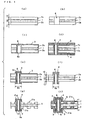
- Figs. 1 (a), 1 (b), 1 (c), 1 (d), 1 (e), 1 (f), 1 (g), and 1 (h) are cross-sectional views showing the manufacturing steps of a double-sided printed circuit board according to the first embodiment.
- the double-sided printed circuit board in the first embodiment is a flexible circuit board.
- an insulating substrate 1 having a metal foil 2a and a metal foil 2b, respectively, on its both sides is prepared first.
- the metal foils 2a and 2b are made of copper, and the insulating substrate 1 is made of a layer of polyimide resin.
- the insulating substrate 1 preferably has a thickness t0 of not smaller than 12.5 ⁇ m and not greater than 125 ⁇ m.
- Each of the metal foils 2a, 2b preferably has a thickness t1 of not smaller than 5 ⁇ m and not greater than 35 ⁇ m.
- a through hole 6 is formed in a prescribed position such that it passes through the metal foils 2a, 2b and the insulating substrate 1.
- the through hole 6 is formed by drilling, punching, laser machining or other processes.
- the inside diameter of the through hole 6 is preferably not smaller than 25 ⁇ m and not greater than 500 ⁇ m.
- a conductive layer is subsequently formed over the insulating substrate 1 and metal foils 2a, 2b.
- an electroless copper plating layer 3 is used as the conductive layer. More specifically, the surfaces of the insulating substrate 1 and metal foils 2a, 2b are coated with a palladium catalyst, and then immersed in a copper plating solution. The electroless copper plating layer 3 is thus formed on an inner surface 6a of the through hole 6 and the surfaces of the metal foils 2a, 2b, as shown in Fig. 1 (c) . The metal foil 2a and metal foil 2b are electrically connected through the electroless copper plating layer 3.
- the electroless copper plating layer 3 has a thickness of 0.3 ⁇ m, for example.
- electrolytic copper plating is applied to the overall surface of the electroless copper plating layer 3 to form an electrolytic copper plating layer 4, as shown in Fig. 1 (d) .
- the electrolytic copper plating layer 4 preferably has a thickness of not smaller than 5 ⁇ m and not greater than 20 ⁇ m, for example.
- Etching is then performed with an etch resist (not shown) formed on the portions of the through hole 6 and a peripheral region 6b of the through hole to remove the electrolytic copper plating layer 4 except the portions of the through hole 6 and the peripheral region 6b, as shown in Fig. 1 (e) .
- an etch resist (not shown) formed on the portions of the through hole 6 and a peripheral region 6b of the through hole to remove the electrolytic copper plating layer 4 except the portions of the through hole 6 and the peripheral region 6b, as shown in Fig. 1 (e) .
- peripheral region 6b is defined within the range of a radius of not smaller than 100 ⁇ m and not greater than 500 ⁇ m, for example, of the center of the through hole 6.
- the electroless copper plating layer 3 and metal foils 2a, 2b are etched except the portion on the peripheral region 6b of the through hole 6 to reduce the thickness of each of the metal foils 2a, 2b.
- the above-described etching process is soft etching using sodium persulfate, for example.
- the thickness removed by the etching process may be controlled by the temperature and duration of etching or the concentration of an etching solution (sodium persulfate).
- the thickness removed by etching is preferably not smaller than 1 ⁇ m and not greater than 10 ⁇ m.
- a thickness t2 of smaller than 5 ⁇ m of each of the etched metal foils 2a, 2b may result in increased possibility of disconnections in conductor patterns, whereas a thickness t2 of greater than 20 ⁇ m of each of the etched metal foils 2a, 2b may result in deteriorated flexural properties. For this reason, it is preferred that each of the metal foils 2a, 2b has a uniform thickness t2 of not smaller than 5 ⁇ m and not greater than 20 ⁇ m.
- each of the metal foils 2a, 2b having its thickness reduced by etching is cleaned with an acid, and subsequently, a photoresist (not shown) is formed on the surface of each of the metal foils 2a, 2b.
- the resulting metal foils 2a, 2b are patterned into a desired shape by exposure and development processes.
- conductor patterns 21a, 21b are formed, as shown in Fig. 1 (g) .
- Each of the conductor patterns 21a, 21b has a width of 75 ⁇ m, for example, and a pitch of 75 ⁇ m, for example.
- the conductor patterns 21a, 21b, electroless copper plating layer 3, and electrolytic copper plating layer 4 are coated with a cover lay 5 that is made of a polyimide resin with an adhesive.
- the cover lay 5 has a thickness of 20 ⁇ m, for example. In this case, a terminal (contact) 11 of the conductor pattern 21a is left exposed.
- an electroless gold plating layer 7 is formed on the terminal 11 of the exposed conductor pattern 21a.
- the thickness of the electroless nickel/gold plating is preferably such that the nickel is not smaller than 1 ⁇ m and not greater than 5 ⁇ m, and the gold is not smaller than 0.05 ⁇ m and not greater than 0.2 ⁇ m.
- the electrolytic copper plating layer 4 is formed on the overall surface of the electroless copper plating layer 3 during the formation of the electrolytic copper plating layer 4 shown in Fig. 1 (d) , which makes the current density including that of the peripheral region of the through hole 6 uniform. This allows for a uniform thickness of the electrolytic copper plating layer 4 on the peripheral region 6b of the through hole 6 ( Fig. 1 (e) ). Moreover, during the step of Fig. 1 (e) that follows the formation of the electrolytic copper plating layer 4, the electrolytic copper plating layer 4 is removed except the portions on the inner surface 6a and the peripheral region 6b of the through hole 6, and then the thickness of each of the metal foils 2a, 2b is reduced during the step of Fig.
- the metal foils 2a, 2b are formed on both sides of the insulating substrate 1 without using an adhesive.
- the solution of a polyamic acid resin is applied on the surface of the metal foil 2a, and then cured by drying and heating to form a polyimide resin layer on the surface of the metal foil 2a.
- the solution of a thermoplastic polyimide resin is applied on the surface of the metal foil 2b and then dried to form a thermoplastic polyimide resin layer on the surface of the metal foil 2b.
- the polyimide resin layer is superimposed on the thermoplastic polyimide resin, and the two layers are bonded by applying pressure and heat using a heat press. In this manner, the metal foils 2a, 2b are formed on both sides of the insulating substrate 1 without using an adhesive.
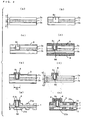
- Figs. 2 (a), 2 (b), 2 (c), 2 (d), 2 (e), 2 (f), 2 (g), 2 (h) are cross sectional views showing the steps of manufacturing a double-sided printed circuit board according to the second embodiment.
- the manufacturing steps of the double-sided printed circuit board in the second embodiment differ from the manufacturing steps of the double-sided printed circuit board in the first embodiment as follows.
- an insulating substrate 1 having a metal foil 2a and a metal foil 2b on its both sides is prepared.
- Each of the metal foils 2a, 2b is made of copper, and the insulating substrate 1 is made of a layer of polyimide resin.
- the insulating substrate 1 preferably has a thickness t0 of not smaller than 12.5 ⁇ m and not greater than 125 ⁇ m, and each of the metal foils 2a, 2b preferably has a thickness t1 of not smaller than 5 ⁇ m and not greater than 35 ⁇ m.
- a blind via hole 6c is formed in a prescribed position such that it passes through the metal foil 2a and insulating substrate 1.
- the blind via hole 6c is formed by drilling, punching, laser machining or other processes.
- the inside diameter of the blind via hole 6c is preferably not smaller than 25 ⁇ m and not greater than 500 ⁇ m.
- a conductive layer is formed on the insulating substrate 1, metal foil 2a, and metal foil 2b.
- an electroless copper plating layer is used as the conductive layer as in the first embodiment. That is, as shown in Fig. 2 (c) , the electroless copper plating layer 3 is formed on an inner surface 6d of the blind via hole 6c and the surfaces of the metal foils 2a, 2b. The metal foil 2a and metal foil 2b are electrically connected through the electroless copper plating layer 3.
- the electroless copper plating layer 3 has a thickness of 0.3 ⁇ m, for example.
- electrolytic copper plating is applied to the overall surface of the electroless copper plating layer 3 to form an electrolytic copper plating layer 4, as shown in Fig. 2 (d) .
- the electrolytic copper plating layer 4 preferably has a thickness of not smaller than 5 ⁇ m and not greater than 20 ⁇ m, for example.
- Etching is then performed with an etch resist (not shown) formed on the portions of the blind via hole 6c and a peripheral region 6e of the blind via hole to remove the electrolytic copper plating layer 4 except the portions of the blind via hole 6c and the peripheral region 6e, as shown in Fig. 2 (e) .
- an etch resist (not shown) formed on the portions of the blind via hole 6c and a peripheral region 6e of the blind via hole to remove the electrolytic copper plating layer 4 except the portions of the blind via hole 6c and the peripheral region 6e, as shown in Fig. 2 (e) .
- peripheral region 6e is defined within the range of a radius of not smaller than 100 ⁇ m and not greater than 500 ⁇ m, for example, of the center of the blind via hole 6c.
- the electroless copper plating layer 3 and the metal foils 2a, 2b are etched except the portion on the peripheral region 6e of the blind via hole 6c to reduce the thickness of each of the metal foils 2a, 2b, as shown in Fig. 2 (f) .
- the thickness removed by the above-described etching process is preferably not smaller than 1 ⁇ m and not greater than 10 ⁇ m.
- Each of the etched metal foils 2a, 2b preferably has a uniform thickness t2 of not smaller than 5 ⁇ m and not greater than 20 ⁇ m.
- each of the metal foils 2a, 2b having its thickness reduced by etching is cleaned with an acid, and subsequently a photoresist (not shown) is formed on the surface of each of the metal foils 2a, 2b.
- the resulting metal foils 2a, 2b are patterned into a desired shape by exposure and development processes.
- conductor patterns 21a, 21b are formed as shown in Fig. 2 (g) .
- Each of the conductor patterns 21a, 21b has a width of 50 ⁇ m, for example, and a pitch of 50 ⁇ m, for example.
- the conductor patterns 21a, 21b, electroless copper plating layer 3, and electrolytic copper plating layer 4 are coated with a cover lay that is made of a polyimide resin with an adhesive, as shown in Fig. 2 (h) .
- the cover lay 5 has a thickness of 20 ⁇ m, for example. In this case, a terminal 11 of the conductor pattern 21a is left exposed.
- an electroless gold plating layer 7 is formed on the exposed terminal 11 of the conductor pattern 21a.
- the thickness of the electroless nickel/gold plating is preferably such that the nickel is not smaller than 1 ⁇ m and not greater than 5 ⁇ m, and the gold is not smaller than 0.05 ⁇ m and not greater than 0.2 ⁇ m.
- the electrolytic copper plating layer 4 is formed on the overall surface of the electroless copper plating layer 3 during the formation of the electrolytic copper plating layer 4 shown in Fig. 2 (d) , which makes the current density including that of the peripheral region of the through hole 6 uniform. This allows for a uniform thickness of the electrolytic copper plating layer 4 on the peripheral region 6e of the through hole 6 ( Fig. 2 (e) ). Moreover, during the step of Fig.
- the electrolytic copper plating layer 4 is removed except the portions on the inner surface 6d and the peripheral region 6e of the blind via hole 6c, and then the thickness of each of the metal foils 2a, 2b is reduced except the portion on the peripheral region 6e of the blind via hole 6c during the step of Fig. 2 (f) .
- This allows for further improved flexural properties of the double-sided printed circuit board.
- the flexibility of the insulating substrate 1 even further improves the flexural properties of the double-sided printed circuit board. This results in a double-sided printed circuit board with improved flexural properties and electrical connection reliability.
- each of the metal foils 2a, 2b are examples of a conductor layer or a metal film;
- the electroless copper plating layer 3 is an example of a conductive layer or an electroless metal plating layer;
- the electrolytic copper plating layer 4 is an example of an electrolytic metal plating layer;
- the metal foils 2a, 2b are examples of first and second metal layers, respectively;
- the polyamide resin layer is an example of a first resin layer;
- the thermoplastic polyamide resin layer is an example of a second resin layer;
- the cover layer 5 is an example of a resin layer.
- the metalfoil2a, polyamideresinlayer, thermoplastic polyamide resin layer, and metal foil 2b are an example of a laminate.
- the through hole 6 is an example of a via hole or a through hole.
- the blind via hole 6 is an example of a via hole or a hole.
- any other insulating films of plastics with high flexibility may also be used as the insulating substrate.
- a polyimide film, a polyethylene terephthalate film, a polyethylene naphthalate film, a polyether nitril film, a polyethersulfone film, a polyvinyl chloride film or the like may also be used.
- a polyimide film, a polyethylene terephthalate film or a polyethylene naphthalate film is preferable to use, in particular, a polyimide film, a polyethylene terephthalate film or a polyethylene naphthalate film as the material of the insulating substrate 1, since they are superior in such properties as thermal resistance, dimensional stability, electrical properties, mechanical properties, and chemical resistant properties.
- metal foils 2a, 2b as conductor layers are made of copper in each of the above-described first embodiment and second embodiment, other films of a metal including a copper alloy, gold, or aluminum may also be used as conductor layers.
- electrolytic copper plating layer 4 is used as an electrolytic metal plating layer in each of the above-described first embodiment and second embodiment, other electrolytic metal plating layers such as an electrolytic gold plating layer may also be used.
- step of forming the metal foils 2a, 2b on both sides of the insulating substrate 1 without using an adhesive is discussed above, other steps may also be used, for example, a step of forming the metal foils 2a, 2b on both sides of the insulating substrate 1 using an adhesive.
- examples of the adhesive include thermosetting adhesives, thermoplastic adhesives, and sticky agents. A combination of the above may also be used.
- electroless copper plating layer 3 is formed over the metal foils 2a, 2b in each of the above-described first embodiment and second embodiment
- other electroless metal plating layers which are not of copper plating such as an electroless gold plating layer
- a carbon black layer may be applied.
- An electrolytic metal plating with a thickness of not greater than 5 ⁇ m may also be formed, if necessary, as a pretreatment for the electroless metal plating layer.
- a resin film may alternatively be laminated on the conductor pattern 21a as a resin layer.
- a resin film may be made of a photosensitive resin or non-photosensitive resin.
- an aperture may be formed by exposure and development.
- an aperture may be formed by chemical etching.
- a resin film having an aperture formed therein may be laminated.
- double-sided printed circuit boards were manufactured according to the above-described first embodiment and second embodiment for evaluation.
- Example 1 an insulating substrate 1 made of a 25- ⁇ m polyimide resin layer and having 18- ⁇ m metal foils 2a, 2b made of copper on its both sides was prepared.
- a through hole 6 with a diameter of 100 ⁇ m was formed by laser machining.
- an electroless copper plating layer 3 with a thickness of 0.3 ⁇ m was formed on the insulating substrate 1 and metal foils 2a, 2b as a conductive layer.
- An electrolytic copper plating layer 4 with a thickness of 15 ⁇ m was subsequently formed on the overall surface of the electroless copper plating layer 3.
- the electrolytic copper plating layer 4 After the formation of the electrolytic copper plating layer 4, with an etch resist formed on a peripheral region 6b of the through hole 6, the electrolytic copper plating layer 4 was etched away except the portions on an inner surface 6a and the peripheral region 6b of the through hole 6.
- the peripheral region 6b was defined in the range of a 250- ⁇ m diameter of the center of the through hole 6.
- each of the metal foils 2a, 2b except the portion of peripheral region 6b of the through hole 6 was reduced by 6 ⁇ m by etching, so that each of the metal foils 2a, 2b had a thickness of 12 ⁇ m.
- the metal foils 2a, 2b were etched using a photoresist to form conductor patterns 21a, 21b, each having a width of 75 ⁇ m and a pitch of 75 ⁇ m.
- Example 2 an insulating substrate 1 made of a 25- ⁇ m polyimide resin layer and having 18- ⁇ m metal foils 2a, 2b made of copper on its both sides was prepared.
- a blind via hole 6c with a diameter of 75 ⁇ m was formed by laser machining.
- an electroless copper plating layer 3 with a thickness of 0.3 ⁇ m was formed over the insulating substrate 1 and metal foils 2a, 2b as a conductive layer.
- An electrolytic copper plating layer 4 with a thickness of 15 ⁇ m was subsequently formed on the overall surface of the electroless copper plating layer 4.
- the electrolytic copper plating layer 4 After the formation of the electrolytic copper plating layer 4, with an etch resist formed on a peripheral region 6e of the blind via hole 6c, the electrolytic copper plating layer 4 was etched away except the portions on an inner surface and the peripheral region 6e of the blind via hole 6c.
- the peripheral region 6e was defined in the range of a 175- ⁇ m diameter of the center of the blind via hole 6c.
- each of the metal foils 2a, 2b except the portion on peripheral region 6e of the blind via hole 6c was reduced by 6 ⁇ m by etching, so that each of the metal foils 2a, 2b had a thickness of 12 ⁇ m.
- metal foils 2a, 2b were etched using a photoresist to form conductor patterns 21a, 21b, each having a width of 50 ⁇ m and a pitch of 50 ⁇ m.
- Comparative Example 1 As in Example 1, an insulating substrate 1 made of a 25- ⁇ m polyimide resin layer and having 18- ⁇ m metal foils 2a, 2b of copper on its both sides was prepared.
- a through hole with a diameter of 100 ⁇ m was formed by laser machining.
- an electroless copper plating layer 3 with a thickness of 0.3 ⁇ m was formed on the insulating substrate 1 and metal foils 2a, 2b as a conductive layer.
- An etch resist was subsequently formed with an inner surface 6a and peripheral region 6b of the through hole 6 being exposed, followed by the formation of an electrolytic copper plating layer 4 with a thickness of 15 ⁇ m on the electroless copper plating layer 3 on the inner surface 6a and peripheral region 6b of the through hole 6.
- the peripheral region was defined in the range of a 250- ⁇ m diameter of the center of the through hole 6, as in Example 1.
- the metal foils 2a, 2b were cleaned with an acid as a pretreatment for photoresist coating. The cleaning process removes the electroless copper plating layer 3.
- the metal foils 2a, 2b were etched using a photoresist to form conductor patterns 21a, 21b, each having a width of 75 ⁇ m and a pitch of 75 ⁇ m.
- Comparative Example 2 As in Example 2, an insulating substrate 1 made of a 25- ⁇ m polyimide resin layer and having 18- ⁇ m metal foils 2a, 2b made of copper on its both sides was prepared.
- a blind via hole 6c with a diameter of 75 ⁇ m was formed by laser machining.
- an electroless copper plating layer 3 with a thickness of 0.3 ⁇ m was formed on the insulating substrate 1 and metal foils 2a, 2b as a conductive layer.
- An etch resist was subsequently formed with an inner surface 6d and peripheral region 6e of the blind via hole 6c being exposed, followed by the formation of an electrolytic copper plating layer 4 with a thickness of 15 ⁇ m on the electroless copper plating layer 3 on the inner surface 6d and peripheral region 6e of the blind via hole 6c.
- the peripheral region 6e was defined in the range of a 175- ⁇ m diameter of the center of the blind via hole 6c, as in Example 2.
- the metal foils 2a, 2b were cleaned with an acid as a pretreatment for photoresist coating. The cleaning process removes the electroless copper plating layer 3.
- the metal foils 2a, 2b were etched using a photoresist to form conductor patterns, each having a width of 50 ⁇ m and a pitch of 50 ⁇ m.
- the mean value and standard deviation was determined by thirty-two point measurements of the thickness of the peripheral region 6b or 6e of the through hole or the blind via hole.
- thermal cycle tests were conducted on the double-sided printed circuit boards in Example 1, Example 2, Comparative Example 1, and Comparative Example 2 onto which semiconductor devices were soldered.
- Each of these double-sided printed circuit boards underwent 1000 cycles of thermal cycling from -40°C to 125°C, followed by continuity tests.
- Example 1 mean thickness value ( ⁇ m) thickness standard deviation ( ⁇ m) difference between maximum thickness value and minimum thickness value ( ⁇ m) connection reliability flexural properties (cycles)
- Example 1 29.6 0.5 2.0 without failure 4000
- Example 2 29.8 0.5 1.9 without failure 3900 Comparative example 1 30.9 1.9 7.5 disconnection 1200 Comparative example 2 30.8 1.8 8.0 disconnection 1000
- the mean thickness value of the peripheral region was 29.6 ⁇ m for Example 1; 30.9 ⁇ m for Comparative Example 1; 29.8 ⁇ m for Example 2; and 30.8 ⁇ m for Comparative Example 2.
- the thickness standard deviation of the peripheral region was 0.5 ⁇ m for Example 1; 1.9 ⁇ m for Comparative Example 1; 0.5 ⁇ m for Example 2; and 1.8 ⁇ m for Comparative Example 2. Further, the difference between the maximum thickness value and the minimum thickness value was 2. 0 ⁇ m for Example 1; 1. 9 ⁇ m for Example 2; 7.5 ⁇ m for Comparative Example 1; and 8.5 ⁇ m for Comparative Example 2.
- Example 1 Moreover, the result of flexural test for Example 1 was 4000 cycles; 3900 cycles for Example 2; 1200 cycles for Comparative Example 1; and 1000 cycles for Comparative Example 2.
- the double-sided printed circuit board manufactured according to the method in Example 1 exhibits less uneven thickness of the electrolytic copper plating layer 4 and improved electrical connection reliability and flexural properties, as compared to the double-sided printed circuit board manufactured according to the method in Comparative Example 1.
- the double-sided printed circuit board manufactured according to the method in Example 2 exhibits less uneven thickness of the electrolytic copper plating layer 4 and improved electrical connection reliability and flexural properties, as compared to the double-sided printed circuit board manufactured according to the method in Comparative Example 2.
Landscapes
- Engineering & Computer Science (AREA)
- Microelectronics & Electronic Packaging (AREA)
- Manufacturing & Machinery (AREA)
- Printing Elements For Providing Electric Connections Between Printed Circuits (AREA)
- Laminated Bodies (AREA)
Claims (9)
- Verfahren zur Herstellung einer doppelseitigen Leiterplatte, umfassend die folgenden Schritte:Vorbereiten eines Isoliersubstrats (1) mit Leiterschichten (2a, 2b) auf beiden Seiten desselben,Ausbilden eines Durchkontaktierungslochs (6), welches durch zumindest eine der Leiterschichten und das lsoliersubstrat hindurchgeht,Ausbilden einer leitenden Schicht (3) auf einer Innenoberfläche des Durchkontaktierungslochs und Oberflächen der Leiterschichten (2a, 2b),Ausbilden einer Elektrolytmetall-Plattierungsschicht (4) auf der gesamten Oberfläche der leitenden Schicht (3),Entfernen der Elektrolytmetall-Plattierungsschicht (4) mit Ausnahme von Abschnitten auf der Innenoberfläche des Durchkontaktierungslochs und eines peripheren Bereichs des Durchkontaktierungslochs und gekennzeichnet durch die Schritte:Ätzen der leitenden Schicht (3) und der Leiterschichten (2a, 2b) nach dem Entfernen der Elektrolytmetall-Plattierungsschicht, um die Dicke jeder der Leiterschichten (2a, 2b) zu verringern, mit Ausnahme von Abschnitten auf der Innenoberfläche des Durchkontaktierungslochs und eines peripheren Bereichs des Durchkontaktierungslochs undVerarbeitung der Leiterschichten nach dem Verringern der Dicke der Leiterschichten, um Leiterstrukturen (21a, 21 b) in den Abschnitten mit verringerter Dicke derselben auszubilden.
- Verfahren zur Herstellung einer doppelseitigen Leiterplatte nach Anspruch 1, worin
der Schritt des Ausbildens des Durchkontaktierungslochs den Schritt des Ausbildens eines Durchgangslochs umfasst, welches sowohl durch die Leiterschichten als auch durch das Isoliersubstrat als das Durchkontaktierungslochs hindurch verläuft. - Verfahren zur Herstellung einer doppelseitigen Leiterplatte nach Anspruch 1, worin
der Schritt des Ausbildens des Durchkontaktierungslochs den Schritt des Ausbildens eines Lochs umfasst, welches durch eine der Leiterschichten und das Isoliersubstrat verläuft. - Verfahren zur Herstellung einer doppelseitigen Leiterplatte nach einem der vorangegangenen Ansprüche, worin
der Schritt des Vorbereitens des Isoliersubstrats den Schritt des Vorbereitens eines flexiblen Substrats mit Leiterschichten auf beiden Seiten desselben als das lsoliersubstrat umfasst. - Verfahren zur Herstellung einer doppelseitigen Leiterplatte nach einem der vorangegangenen Ansprüche, worin
der Schritt des Vorbereitens des Isoliersubstrats den Schritt des Vorbereitens eines Isoliersubstrats mit Metallfilmen als Leiterschichten auf beiden Seiten desselben umfasst. - Verfahren zur Herstellung einer doppelseitigen Leiterplatte nach einem der vorangegangenen Ansprüche, worin
der Schritt des Ausbildens der leitenden Schicht den Schritt des Ausbildens einer stromlosen Metallplattierungsschicht als die leitende Schicht umfasst. - Verfahren zur Herstellung einer doppelseitigen Leiterplatte nach einem der Ansprüche 1 bis 6, worin
der Schritt des Ausbildens der leitenden Schicht den Schritt des Ausbildens einer Kohlenstoffschicht als die leitende Schicht umfasst. - Verfahren zur Herstellung einer doppelseitigen Leiterplatte nach einem der vorangegangenen Ansprüche, worin
der Schritt des Vorbereitens des Isoliersubstrats mit den Leiterschichten auf beiden Seiten desselben die folgenden Schritte umfasst:Ausbilden einer ersten Harzschicht auf einer ersten Metallschicht,Ausbilden einer zweiten Harzschicht auf einer zweiten Metallschicht,Überlagern der zweiten Harzschicht auf der ersten Harzschicht, um ein die erste Metallschicht, die erste Harzschicht, die zweite Harzschicht und die zweite Metallschicht umfassendes Laminat auszubilden undAnlegen von Druck und Wärme an das Laminat. - Verfahren zur Herstellung einer doppelseitigen Leiterplatte nach einem der vorangegangenen Ansprüche, ferner umfassend den Schritt des Ausbildens einer Harzschicht (5) auf dem Isoliersubstrat, um die Leiterstrukturen abzudecken.
Applications Claiming Priority (2)
| Application Number | Priority Date | Filing Date | Title |
|---|---|---|---|
| JP2004138098A JP4330486B2 (ja) | 2004-05-07 | 2004-05-07 | 両面プリント配線板の製造方法 |
| JP2004138098 | 2004-05-07 |
Publications (2)
| Publication Number | Publication Date |
|---|---|
| EP1594352A1 EP1594352A1 (de) | 2005-11-09 |
| EP1594352B1 true EP1594352B1 (de) | 2008-03-05 |
Family
ID=34941182
Family Applications (1)
| Application Number | Title | Priority Date | Filing Date |
|---|---|---|---|
| EP05252805A Expired - Lifetime EP1594352B1 (de) | 2004-05-07 | 2005-05-06 | Verfahren zur Herstellung einer doppelseitigen Leiterplatte |
Country Status (6)
| Country | Link |
|---|---|
| US (1) | US7281327B2 (de) |
| EP (1) | EP1594352B1 (de) |
| JP (1) | JP4330486B2 (de) |
| CN (1) | CN100505990C (de) |
| AT (1) | ATE388614T1 (de) |
| DE (1) | DE602005005105T2 (de) |
Families Citing this family (12)
| Publication number | Priority date | Publication date | Assignee | Title |
|---|---|---|---|---|
| JP4330486B2 (ja) * | 2004-05-07 | 2009-09-16 | 日東電工株式会社 | 両面プリント配線板の製造方法 |
| CN101466207B (zh) * | 2007-12-19 | 2011-11-16 | 富葵精密组件(深圳)有限公司 | 电路板及其制作方法 |
| KR101102337B1 (ko) * | 2008-05-28 | 2012-01-03 | 엘지전자 주식회사 | 연성필름 |
| CN101600307B (zh) * | 2008-06-05 | 2012-05-23 | 欣兴电子股份有限公司 | 线路板 |
| US20100047535A1 (en) * | 2008-08-22 | 2010-02-25 | Lex Kosowsky | Core layer structure having voltage switchable dielectric material |
| CN101677493B (zh) * | 2008-09-19 | 2011-12-28 | 欣兴电子股份有限公司 | 线路板与线路结构的制作方法 |
| US9930789B2 (en) | 2010-04-12 | 2018-03-27 | Seagate Technology Llc | Flexible printed circuit cable with multi-layer interconnection and method of forming the same |
| WO2014033859A1 (ja) * | 2012-08-29 | 2014-03-06 | 日立化成株式会社 | コネクタ及びフレキシブル配線板 |
| KR102119581B1 (ko) * | 2013-07-15 | 2020-06-08 | 엘지이노텍 주식회사 | 기판 제조 방법 및 그 기판 |
| US20170013715A1 (en) * | 2015-07-10 | 2017-01-12 | Rohde & Schwarz Gmbh & Co. Kg | Printed circuit board and corresponding method for producing a printed circuit board |
| WO2019039237A1 (ja) * | 2017-08-21 | 2019-02-28 | 住友電工プリントサーキット株式会社 | プリント配線板 |
| CN120314663A (zh) * | 2025-04-17 | 2025-07-15 | 北京中科飞龙传感技术有限责任公司 | 空中电场测量装置、空中电场测量方法及探空设备 |
Family Cites Families (12)
| Publication number | Priority date | Publication date | Assignee | Title |
|---|---|---|---|---|
| JPS5819154B2 (ja) | 1978-03-10 | 1983-04-16 | 安立電気株式会社 | スル−ホ−ルプリント板の製造方法 |
| US4211603A (en) * | 1978-05-01 | 1980-07-08 | Tektronix, Inc. | Multilayer circuit board construction and method |
| US4720324A (en) * | 1985-10-03 | 1988-01-19 | Hayward John S | Process for manufacturing printed circuit boards |
| JPH07120852B2 (ja) | 1987-06-24 | 1995-12-20 | 株式会社フジクラ | フレキシブル回路基板の製造方法 |
| US5231751A (en) * | 1991-10-29 | 1993-08-03 | International Business Machines Corporation | Process for thin film interconnect |
| US5421083A (en) * | 1994-04-01 | 1995-06-06 | Motorola, Inc. | Method of manufacturing a circuit carrying substrate having coaxial via holes |
| JPH1187886A (ja) | 1997-09-11 | 1999-03-30 | Ngk Spark Plug Co Ltd | プリント配線板の製造方法 |
| JP2000151068A (ja) | 1998-11-06 | 2000-05-30 | Mitsui Mining & Smelting Co Ltd | 新規なプリント配線板および多層プリント配線板の製造方法 |
| JP3048360B1 (ja) | 1999-04-06 | 2000-06-05 | 日東電工株式会社 | 両面プリント配線板およびその製造方法 |
| JP2003008204A (ja) | 2001-06-21 | 2003-01-10 | Nitto Denko Corp | 両面プリント配線板の製造方法 |
| JP2003234572A (ja) * | 2002-02-06 | 2003-08-22 | Nitto Denko Corp | 両面配線基板の製造方法 |
| JP4330486B2 (ja) * | 2004-05-07 | 2009-09-16 | 日東電工株式会社 | 両面プリント配線板の製造方法 |
-
2004
- 2004-05-07 JP JP2004138098A patent/JP4330486B2/ja not_active Expired - Fee Related
-
2005
- 2005-04-29 CN CNB2005100783110A patent/CN100505990C/zh not_active Expired - Fee Related
- 2005-05-05 US US11/122,369 patent/US7281327B2/en not_active Expired - Fee Related
- 2005-05-06 DE DE602005005105T patent/DE602005005105T2/de not_active Expired - Lifetime
- 2005-05-06 AT AT05252805T patent/ATE388614T1/de not_active IP Right Cessation
- 2005-05-06 EP EP05252805A patent/EP1594352B1/de not_active Expired - Lifetime
Also Published As
| Publication number | Publication date |
|---|---|
| JP4330486B2 (ja) | 2009-09-16 |
| DE602005005105T2 (de) | 2009-03-12 |
| EP1594352A1 (de) | 2005-11-09 |
| DE602005005105D1 (de) | 2008-04-17 |
| CN1694605A (zh) | 2005-11-09 |
| ATE388614T1 (de) | 2008-03-15 |
| CN100505990C (zh) | 2009-06-24 |
| JP2005322706A (ja) | 2005-11-17 |
| US20060016072A1 (en) | 2006-01-26 |
| US7281327B2 (en) | 2007-10-16 |
Similar Documents
| Publication | Publication Date | Title |
|---|---|---|
| US7773386B2 (en) | Flexible substrate, multilayer flexible substrate | |
| US8522427B2 (en) | Method of manufacturing a printed circuit board | |
| EP1594352B1 (de) | Verfahren zur Herstellung einer doppelseitigen Leiterplatte | |
| US8262917B2 (en) | Fabricating method for multilayer printed circuit board | |
| CN110402020B (zh) | 一种柔性印刷线路板及其制造方法 | |
| EP1592290A1 (de) | Leiterplatte und Verfahren zu deren Herstellung | |
| US7665208B2 (en) | Through hole forming method | |
| US20060000637A1 (en) | Printed circuit board and method for manufacturing printed circuit board | |
| US7278205B2 (en) | Multilayer printed wiring board and production method therefor | |
| US20230199954A1 (en) | Circuit board | |
| US20200288570A1 (en) | Circuit Board with Improved Thermal, Moisture Resistance, and Electrical Properties | |
| JPH07221422A (ja) | プリント配線基板およびその製造方法 | |
| EP2113038B1 (de) | Mehrschichtige bestückte leiterplatten mit kupfergefüllten durchgangslöchern | |
| JP2003008204A (ja) | 両面プリント配線板の製造方法 | |
| JP3048360B1 (ja) | 両面プリント配線板およびその製造方法 | |
| US20200288569A1 (en) | Circuit Board with Improved Thermal, Moisture Resistance, and Electrical Properties | |
| KR20170071205A (ko) | 연성동박적층판 및 이의 제조 방법 | |
| JP2000133943A (ja) | 多層基板の製造方法 | |
| US20070029109A1 (en) | Multilayer printed wiring board and production method therefor | |
| KR101020848B1 (ko) | 연성인쇄회로기판 제조방법 | |
| JPH11191482A (ja) | プリント配線板の製造方法 | |
| JP3202836B2 (ja) | 多層プリント配線板の製造方法 | |
| JP2004179485A (ja) | プリント配線板の製造方法及びプリント配線板 | |
| CN120018397A (zh) | 印制电路板的内层的制作方法和印制电路板 | |
| JP2000183528A (ja) | 多層プリント配線板の製造方法 |
Legal Events
| Date | Code | Title | Description |
|---|---|---|---|
| PUAI | Public reference made under article 153(3) epc to a published international application that has entered the european phase |
Free format text: ORIGINAL CODE: 0009012 |
|
| AK | Designated contracting states |
Kind code of ref document: A1 Designated state(s): AT BE BG CH CY CZ DE DK EE ES FI FR GB GR HU IE IS IT LI LT LU MC NL PL PT RO SE SI SK TR |
|
| AX | Request for extension of the european patent |
Extension state: AL BA HR LV MK YU |
|
| 17P | Request for examination filed |
Effective date: 20051219 |
|
| AKX | Designation fees paid |
Designated state(s): AT BE BG CH CY CZ DE DK EE ES FI FR GB GR HU IE IS IT LI LT LU MC NL PL PT RO SE SI SK TR |
|
| RTI1 | Title (correction) |
Free format text: METHOD FOR MANUFACTURING A DOUBLE-SIDED PRINTED CIRCUIT BOARD |
|
| GRAP | Despatch of communication of intention to grant a patent |
Free format text: ORIGINAL CODE: EPIDOSNIGR1 |
|
| GRAS | Grant fee paid |
Free format text: ORIGINAL CODE: EPIDOSNIGR3 |
|
| GRAA | (expected) grant |
Free format text: ORIGINAL CODE: 0009210 |
|
| AK | Designated contracting states |
Kind code of ref document: B1 Designated state(s): AT BE BG CH CY CZ DE DK EE ES FI FR GB GR HU IE IS IT LI LT LU MC NL PL PT RO SE SI SK TR |
|
| REG | Reference to a national code |
Ref country code: GB Ref legal event code: FG4D |
|
| REG | Reference to a national code |
Ref country code: CH Ref legal event code: EP |
|
| REG | Reference to a national code |
Ref country code: IE Ref legal event code: FG4D |
|
| REF | Corresponds to: |
Ref document number: 602005005105 Country of ref document: DE Date of ref document: 20080417 Kind code of ref document: P |
|
| PG25 | Lapsed in a contracting state [announced via postgrant information from national office to epo] |
Ref country code: ES Free format text: LAPSE BECAUSE OF FAILURE TO SUBMIT A TRANSLATION OF THE DESCRIPTION OR TO PAY THE FEE WITHIN THE PRESCRIBED TIME-LIMIT Effective date: 20080616 Ref country code: FI Free format text: LAPSE BECAUSE OF FAILURE TO SUBMIT A TRANSLATION OF THE DESCRIPTION OR TO PAY THE FEE WITHIN THE PRESCRIBED TIME-LIMIT Effective date: 20080305 |
|
| PG25 | Lapsed in a contracting state [announced via postgrant information from national office to epo] |
Ref country code: AT Free format text: LAPSE BECAUSE OF FAILURE TO SUBMIT A TRANSLATION OF THE DESCRIPTION OR TO PAY THE FEE WITHIN THE PRESCRIBED TIME-LIMIT Effective date: 20080305 |
|
| NLV1 | Nl: lapsed or annulled due to failure to fulfill the requirements of art. 29p and 29m of the patents act | ||
| PG25 | Lapsed in a contracting state [announced via postgrant information from national office to epo] |
Ref country code: BE Free format text: LAPSE BECAUSE OF FAILURE TO SUBMIT A TRANSLATION OF THE DESCRIPTION OR TO PAY THE FEE WITHIN THE PRESCRIBED TIME-LIMIT Effective date: 20080305 Ref country code: SI Free format text: LAPSE BECAUSE OF FAILURE TO SUBMIT A TRANSLATION OF THE DESCRIPTION OR TO PAY THE FEE WITHIN THE PRESCRIBED TIME-LIMIT Effective date: 20080305 Ref country code: PL Free format text: LAPSE BECAUSE OF FAILURE TO SUBMIT A TRANSLATION OF THE DESCRIPTION OR TO PAY THE FEE WITHIN THE PRESCRIBED TIME-LIMIT Effective date: 20080305 |
|
| PG25 | Lapsed in a contracting state [announced via postgrant information from national office to epo] |
Ref country code: SK Free format text: LAPSE BECAUSE OF FAILURE TO SUBMIT A TRANSLATION OF THE DESCRIPTION OR TO PAY THE FEE WITHIN THE PRESCRIBED TIME-LIMIT Effective date: 20080305 Ref country code: CZ Free format text: LAPSE BECAUSE OF FAILURE TO SUBMIT A TRANSLATION OF THE DESCRIPTION OR TO PAY THE FEE WITHIN THE PRESCRIBED TIME-LIMIT Effective date: 20080305 Ref country code: PT Free format text: LAPSE BECAUSE OF FAILURE TO SUBMIT A TRANSLATION OF THE DESCRIPTION OR TO PAY THE FEE WITHIN THE PRESCRIBED TIME-LIMIT Effective date: 20080805 Ref country code: SE Free format text: LAPSE BECAUSE OF FAILURE TO SUBMIT A TRANSLATION OF THE DESCRIPTION OR TO PAY THE FEE WITHIN THE PRESCRIBED TIME-LIMIT Effective date: 20080605 Ref country code: NL Free format text: LAPSE BECAUSE OF FAILURE TO SUBMIT A TRANSLATION OF THE DESCRIPTION OR TO PAY THE FEE WITHIN THE PRESCRIBED TIME-LIMIT Effective date: 20080305 |
|
| PG25 | Lapsed in a contracting state [announced via postgrant information from national office to epo] |
Ref country code: RO Free format text: LAPSE BECAUSE OF FAILURE TO SUBMIT A TRANSLATION OF THE DESCRIPTION OR TO PAY THE FEE WITHIN THE PRESCRIBED TIME-LIMIT Effective date: 20080305 |
|
| ET | Fr: translation filed | ||
| PG25 | Lapsed in a contracting state [announced via postgrant information from national office to epo] |
Ref country code: MC Free format text: LAPSE BECAUSE OF NON-PAYMENT OF DUE FEES Effective date: 20080531 Ref country code: IS Free format text: LAPSE BECAUSE OF FAILURE TO SUBMIT A TRANSLATION OF THE DESCRIPTION OR TO PAY THE FEE WITHIN THE PRESCRIBED TIME-LIMIT Effective date: 20080705 |
|
| PLBE | No opposition filed within time limit |
Free format text: ORIGINAL CODE: 0009261 |
|
| STAA | Information on the status of an ep patent application or granted ep patent |
Free format text: STATUS: NO OPPOSITION FILED WITHIN TIME LIMIT |
|
| PG25 | Lapsed in a contracting state [announced via postgrant information from national office to epo] |
Ref country code: EE Free format text: LAPSE BECAUSE OF FAILURE TO SUBMIT A TRANSLATION OF THE DESCRIPTION OR TO PAY THE FEE WITHIN THE PRESCRIBED TIME-LIMIT Effective date: 20080305 Ref country code: DK Free format text: LAPSE BECAUSE OF FAILURE TO SUBMIT A TRANSLATION OF THE DESCRIPTION OR TO PAY THE FEE WITHIN THE PRESCRIBED TIME-LIMIT Effective date: 20080305 Ref country code: LT Free format text: LAPSE BECAUSE OF FAILURE TO SUBMIT A TRANSLATION OF THE DESCRIPTION OR TO PAY THE FEE WITHIN THE PRESCRIBED TIME-LIMIT Effective date: 20080305 |
|
| 26N | No opposition filed |
Effective date: 20081208 |
|
| PG25 | Lapsed in a contracting state [announced via postgrant information from national office to epo] |
Ref country code: BG Free format text: LAPSE BECAUSE OF FAILURE TO SUBMIT A TRANSLATION OF THE DESCRIPTION OR TO PAY THE FEE WITHIN THE PRESCRIBED TIME-LIMIT Effective date: 20080605 Ref country code: IE Free format text: LAPSE BECAUSE OF NON-PAYMENT OF DUE FEES Effective date: 20080506 |
|
| PG25 | Lapsed in a contracting state [announced via postgrant information from national office to epo] |
Ref country code: IT Free format text: LAPSE BECAUSE OF FAILURE TO SUBMIT A TRANSLATION OF THE DESCRIPTION OR TO PAY THE FEE WITHIN THE PRESCRIBED TIME-LIMIT Effective date: 20080305 |
|
| PG25 | Lapsed in a contracting state [announced via postgrant information from national office to epo] |
Ref country code: CY Free format text: LAPSE BECAUSE OF FAILURE TO SUBMIT A TRANSLATION OF THE DESCRIPTION OR TO PAY THE FEE WITHIN THE PRESCRIBED TIME-LIMIT Effective date: 20080305 |
|
| REG | Reference to a national code |
Ref country code: CH Ref legal event code: PL |
|
| PG25 | Lapsed in a contracting state [announced via postgrant information from national office to epo] |
Ref country code: LI Free format text: LAPSE BECAUSE OF NON-PAYMENT OF DUE FEES Effective date: 20090531 Ref country code: CH Free format text: LAPSE BECAUSE OF NON-PAYMENT OF DUE FEES Effective date: 20090531 |
|
| PGFP | Annual fee paid to national office [announced via postgrant information from national office to epo] |
Ref country code: GB Payment date: 20100329 Year of fee payment: 6 |
|
| PG25 | Lapsed in a contracting state [announced via postgrant information from national office to epo] |
Ref country code: LU Free format text: LAPSE BECAUSE OF NON-PAYMENT OF DUE FEES Effective date: 20080506 Ref country code: HU Free format text: LAPSE BECAUSE OF FAILURE TO SUBMIT A TRANSLATION OF THE DESCRIPTION OR TO PAY THE FEE WITHIN THE PRESCRIBED TIME-LIMIT Effective date: 20080906 |
|
| PGFP | Annual fee paid to national office [announced via postgrant information from national office to epo] |
Ref country code: FR Payment date: 20100525 Year of fee payment: 6 |
|
| PG25 | Lapsed in a contracting state [announced via postgrant information from national office to epo] |
Ref country code: TR Free format text: LAPSE BECAUSE OF FAILURE TO SUBMIT A TRANSLATION OF THE DESCRIPTION OR TO PAY THE FEE WITHIN THE PRESCRIBED TIME-LIMIT Effective date: 20080305 |
|
| PGFP | Annual fee paid to national office [announced via postgrant information from national office to epo] |
Ref country code: DE Payment date: 20100430 Year of fee payment: 6 |
|
| PG25 | Lapsed in a contracting state [announced via postgrant information from national office to epo] |
Ref country code: GR Free format text: LAPSE BECAUSE OF FAILURE TO SUBMIT A TRANSLATION OF THE DESCRIPTION OR TO PAY THE FEE WITHIN THE PRESCRIBED TIME-LIMIT Effective date: 20080606 |
|
| GBPC | Gb: european patent ceased through non-payment of renewal fee |
Effective date: 20110506 |
|
| REG | Reference to a national code |
Ref country code: FR Ref legal event code: ST Effective date: 20120131 |
|
| REG | Reference to a national code |
Ref country code: DE Ref legal event code: R119 Ref document number: 602005005105 Country of ref document: DE Effective date: 20111201 |
|
| PG25 | Lapsed in a contracting state [announced via postgrant information from national office to epo] |
Ref country code: FR Free format text: LAPSE BECAUSE OF NON-PAYMENT OF DUE FEES Effective date: 20110531 |
|
| PG25 | Lapsed in a contracting state [announced via postgrant information from national office to epo] |
Ref country code: GB Free format text: LAPSE BECAUSE OF NON-PAYMENT OF DUE FEES Effective date: 20110506 |
|
| PG25 | Lapsed in a contracting state [announced via postgrant information from national office to epo] |
Ref country code: DE Free format text: LAPSE BECAUSE OF NON-PAYMENT OF DUE FEES Effective date: 20111201 |