EP1570747A1 - Verfahren zur Aufreinigung von an Omega-3-Fettsäuren angereichertem Meeressäugetieröl und dessen Zusammensetzungen - Google Patents
Verfahren zur Aufreinigung von an Omega-3-Fettsäuren angereichertem Meeressäugetieröl und dessen Zusammensetzungen Download PDFInfo
- Publication number
- EP1570747A1 EP1570747A1 EP20050012626 EP05012626A EP1570747A1 EP 1570747 A1 EP1570747 A1 EP 1570747A1 EP 20050012626 EP20050012626 EP 20050012626 EP 05012626 A EP05012626 A EP 05012626A EP 1570747 A1 EP1570747 A1 EP 1570747A1
- Authority
- EP
- European Patent Office
- Prior art keywords
- seal
- omega
- oil
- fatty acids
- protein
- Prior art date
- Legal status (The legal status is an assumption and is not a legal conclusion. Google has not performed a legal analysis and makes no representation as to the accuracy of the status listed.)
- Withdrawn
Links
Images

Classifications
-
- A—HUMAN NECESSITIES
- A23—FOODS OR FOODSTUFFS; TREATMENT THEREOF, NOT COVERED BY OTHER CLASSES
- A23D—EDIBLE OILS OR FATS, e.g. MARGARINES, SHORTENINGS OR COOKING OILS
- A23D9/00—Other edible oils or fats, e.g. shortenings or cooking oils
-
- A—HUMAN NECESSITIES
- A23—FOODS OR FOODSTUFFS; TREATMENT THEREOF, NOT COVERED BY OTHER CLASSES
- A23J—PROTEIN COMPOSITIONS FOR FOODSTUFFS; WORKING-UP PROTEINS FOR FOODSTUFFS; PHOSPHATIDE COMPOSITIONS FOR FOODSTUFFS
- A23J1/00—Obtaining protein compositions for foodstuffs; Bulk opening of eggs and separation of yolks from whites
- A23J1/04—Obtaining protein compositions for foodstuffs; Bulk opening of eggs and separation of yolks from whites from fish or other sea animals
-
- A—HUMAN NECESSITIES
- A23—FOODS OR FOODSTUFFS; TREATMENT THEREOF, NOT COVERED BY OTHER CLASSES
- A23K—FODDER
- A23K20/00—Accessory food factors for animal feeding-stuffs
- A23K20/10—Organic substances
- A23K20/142—Amino acids; Derivatives thereof
- A23K20/147—Polymeric derivatives, e.g. peptides or proteins
-
- A—HUMAN NECESSITIES
- A23—FOODS OR FOODSTUFFS; TREATMENT THEREOF, NOT COVERED BY OTHER CLASSES
- A23L—FOODS, FOODSTUFFS OR NON-ALCOHOLIC BEVERAGES, NOT OTHERWISE PROVIDED FOR; PREPARATION OR TREATMENT THEREOF
- A23L33/00—Modifying nutritive qualities of foods; Dietetic products; Preparation or treatment thereof
- A23L33/10—Modifying nutritive qualities of foods; Dietetic products; Preparation or treatment thereof using additives
- A23L33/115—Fatty acids or derivatives thereof; Fats or oils
-
- C—CHEMISTRY; METALLURGY
- C11—ANIMAL OR VEGETABLE OILS, FATS, FATTY SUBSTANCES OR WAXES; FATTY ACIDS THEREFROM; DETERGENTS; CANDLES
- C11B—PRODUCING, e.g. BY PRESSING RAW MATERIALS OR BY EXTRACTION FROM WASTE MATERIALS, REFINING OR PRESERVING FATS, FATTY SUBSTANCES, e.g. LANOLIN, FATTY OILS OR WAXES; ESSENTIAL OILS; PERFUMES
- C11B1/00—Production of fats or fatty oils from raw materials
- C11B1/06—Production of fats or fatty oils from raw materials by pressing
-
- C—CHEMISTRY; METALLURGY
- C11—ANIMAL OR VEGETABLE OILS, FATS, FATTY SUBSTANCES OR WAXES; FATTY ACIDS THEREFROM; DETERGENTS; CANDLES
- C11B—PRODUCING, e.g. BY PRESSING RAW MATERIALS OR BY EXTRACTION FROM WASTE MATERIALS, REFINING OR PRESERVING FATS, FATTY SUBSTANCES, e.g. LANOLIN, FATTY OILS OR WAXES; ESSENTIAL OILS; PERFUMES
- C11B1/00—Production of fats or fatty oils from raw materials
- C11B1/10—Production of fats or fatty oils from raw materials by extracting
-
- C—CHEMISTRY; METALLURGY
- C11—ANIMAL OR VEGETABLE OILS, FATS, FATTY SUBSTANCES OR WAXES; FATTY ACIDS THEREFROM; DETERGENTS; CANDLES
- C11B—PRODUCING, e.g. BY PRESSING RAW MATERIALS OR BY EXTRACTION FROM WASTE MATERIALS, REFINING OR PRESERVING FATS, FATTY SUBSTANCES, e.g. LANOLIN, FATTY OILS OR WAXES; ESSENTIAL OILS; PERFUMES
- C11B13/00—Recovery of fats, fatty oils or fatty acids from waste materials
-
- Y—GENERAL TAGGING OF NEW TECHNOLOGICAL DEVELOPMENTS; GENERAL TAGGING OF CROSS-SECTIONAL TECHNOLOGIES SPANNING OVER SEVERAL SECTIONS OF THE IPC; TECHNICAL SUBJECTS COVERED BY FORMER USPC CROSS-REFERENCE ART COLLECTIONS [XRACs] AND DIGESTS
- Y02—TECHNOLOGIES OR APPLICATIONS FOR MITIGATION OR ADAPTATION AGAINST CLIMATE CHANGE
- Y02W—CLIMATE CHANGE MITIGATION TECHNOLOGIES RELATED TO WASTEWATER TREATMENT OR WASTE MANAGEMENT
- Y02W30/00—Technologies for solid waste management
- Y02W30/50—Reuse, recycling or recovery technologies
- Y02W30/74—Recovery of fats, fatty oils, fatty acids or other fatty substances, e.g. lanolin or waxes
Definitions
- the present invention relates to a method for purifying marine mammal oil enriched in omega 3 fatty acids and to compositions comprising such oils.
- the invention also relates to a method of preparing such oils from the seal and other marine mammals. More particularly, the present invention relates to a process for the transformation of subcutaneous and muscular tissues from the seal and other marine mammals. Even more particularly, the present invention relates to a process for obtaining lipid and protein extracts from the carcasses of seal and other marine mammals and to these extracts. In addition, the invention relates to fractions obtained by the methods of the present invention and to food supplements comprising same.
- Seals have been hunted for their fur and their meat for hundreds of years. Recently, these animals have been hunted mainly for their fur and blubber oil, the residual carcass often being thrown back to the sea. There is thus a often, a very significant waste of seal tissue.
- seal oil is a typical marine, because it is enriched in omega-3 fatty acids. More specifically it contains docosahexaenoic acid (DHA) and eicosapentaenoic acid (EPA) the beneficial properties of which are well known to those in the art. In addition, these oils contain considerable levels of squalene and Vitamin E. These compounds are essential to the development and the maintenance of good health.
- the conventionally used polyunsaturates are those derived from vegetable oils, which contain significant amounts of omega 6 but little or no omega 3. While omega 6 and omega 3 fatty acids are both necessary for good health, they must be consumed in a balance of about 4:1.
- Today's Western diet has created a serious imbalance with current consumption on average of 20 times more omega 6 than omega 3.
- Concemed consumers have begun to look for health food supplements to restore the equilibrium.
- the three principal sources of omega 3 are flaxseed oil, fish oils, and seal oil. The past decade has seen rapid growth in the production of flaxseed and fish oils. Both types of oil are considered good dietary sources of polyunsaturated fats but are less effective than seal oil in supplying omega 3 fatty acids.
- Flaxseed oil contains no EPA, DHA, or DPA but rather contains linolenic acid - a building block enabling the body to manufacture EPA. There is evidence however that the rate of metabolic conversion can be slow and unsteady, particularly among those with impaired health.
- Fish oils vary considerably in the type and level of fatty acid composition depending on the particular species and their diets. For example, fish raised by aquaculture tend to have a lower level of omega 3 fatty acids than that in the wild. Research has shown that seal oil is more beneficial to those at risk of heart disease and diabetes than is fish oil. Scientists postulate that this stems from the relative absence of DPA in fish oil and the slower rate at which the body is able to extract and utilize the EPA and DHA content of fish oil.
- Omega 3 oils The richest, most direct and complete source of Omega 3 oils is found in the blubber of certain marine mammals and especially in the Harp Seal.
- the body's absorption of omega 3 from seal blubber is faster and more efficient than from flaxseed and fish oils. This is due, in part, to the molecular configurations of the EPA and DHA in seal oil, which varies slightly from those found in fish oils.
- seal oil has been extracted by processes requiring high temperatures which favor oxidation of polyunsaturated fats.
- the oil of marine mammals such as seal thus provides significant advantages.
- simple and cost-effective processes for the purification of oil from such marine mammals have not been provided.
- processes enabling a purification of oil containing a significant amount of Omega 3 fatty acids, from fat tissues, active protein fractions, and lipids from muscle and visceral tissues have yet to be provided.
- seal pelt about 50% in the last year
- the very low price of marine mammal carcasses from the 1997 Newfoundland and Labrador Seafood Industry, Newfoundland Department of Fisheries and Aquaculture
- the present invention seeks to meet these and other needs.
- the invention concerns a method for obtaining and purifying a marine mammal oil enriched in omega 3 fatty acids, which overcomes the drawbacks of the prior art. More particularly, the invention concerns a process for the purification of oil enriched in omega 3 fatty acids from seal tissue, fractions comprising such oil, and food supplements comprising same.
- the seal tissue is the blubber, which yields a significant quantity of oil.
- the present invention further relates to a process of extracting omega 3-containing fatty acids from a marine mammal, which allows the recovery of blubber oil under conditions that preserve its quality. More particularly the method of extraction of omega 3 fatty acids reduces the oxidation of polyunsaturated fats. The process further allows the recovery of lipids from other tissues as well as a protein isolate from the carcass. By using the carcass as substrate for the extraction and purification, the instant process provides a significant value addition in addition to enabling a more environment friendly disposal of carcasses and undesired tissues form marine mammals. Indeed, the present invention enables a recycling of marine mammal tissues which are often discarded.
- the invention relates to a process for the transformation of the seal and related species according to which the subcutaneous fat tissues thereof are extracted by "cold pressure" in the absence of solvent.
- the process further comprises a second step which allows the recovery of proteins from muscles and other tissues of the seal by a solvent extraction.
- the solvent is chosen from acetone, alcohol, ethanol, ethyl acetate or a combination of at least two such organic solvents.
- the lipids extracted by the solvent or solvents extraction in this second step are recovered by evaporation of the solvent or solvents.
- the process comprising the second step allows the recovery of a significantly pure protein fraction, devoid of significant levels of heavy metals or pesticides (which are not precipitated along with the proteins).
- Non-limiting examples of organic solvents which can be used in accordance with the present invention are well-known in the art and include alcohol (e.g. isopropanol, propanol and the like). Of course, it is preferred to use solvents which are non-toxic to animals (such as, for example, methanol).
- animal refers broadly to the animal kingdom and thus to mammals, fish, birds and the like.
- the methods of the present invention enable the production of omega 3 enriched oil from fat tissue, the obtention of substantially pure protein fractions which have retained enzymatic activity, and lipids from muscles and visceral tissues (tissues which are traditionally thrown away).
- the present invention relates to seal as the marine mammal from which the extracts or fractions are prepared.
- the mammal upon killing of the marine mammal having fatty acids enriched in omega 3, the mammal is immediately bled and its skin removed.
- Subcutaneous fat and other fat tissues are excised and kept at very low temperatures.
- the temperature is between about 0°C and about 10°C and more preferably between about 0°C and about 4°C.
- Oil is extracted by exerting a physical pressure on the fat.
- the oil is extracted by grinding and by applying high pressure on the tissues (cold extraction). In such a process, the fat melts into the oil, which is then recovered by filtration or centrifugation.
- the oil is purified by conventional means such as, for example, filtration and/or centrifugation.
- the water in the oil can be collected along with any volatile compound therein by heating as conventionally known.
- the other tissues from the carcass including viscera
- the solvent is removed from the extracts under low pressure leaving a protein concentrate retaining some active enzymatic activities and no significant level of bacterial contamination.
- the solvent soluble material (lipid phase) is recovered following evaporation and separation from tissue water.
- a method of extracting oil enriched in omega 3 fatty acids from a marine mammal comprising a lipid extraction step which comprises a submitting of a tissue from the marine mammal to a cold pressure treatment of the tissue, whereby the cold pressure treatment enables the obtention of an oil enriched in omega 3 fatty acids and which minimizes the oxidation of polyunsaturated fats, and wherein the lipid extraction step is carried-out in the absence of an organic solvent.
- a marine mammal oil enriched in omega 3 fatty acids obtained according to the method of the present invention.
- a food supplement composition comprising the marine mammal oil of the present invention, together with a suitable carrier.
- suitable carriers are well-known in the art.
- a marine mammal oil enriched in omega 3 fatty acids which is devoid of traces of organic solvent.
- blue oil As used herein, the designation "blubber oil”, or “blubber” as known to the person of ordinary skill denotes the subcutaneous adipose tissue.
- cold pressure is a well-known terminology in the art which refers to exerting a physical pressure on the fat at low temperature (see above).
- the terminology “significantly pure protein fraction” or the like is meant to refer to a protein fraction or protein preparation which contains at least about 90% protein, preferably at least about 95% of protein.
- the terminology “substantially pure protein fraction” or the like refers to a protein fraction being at least 90% pure, preferentially at least 95% pure and particularly preferably at least 99% pure.
- the marine mammal having fatty acids enriched in Omega 3 is the seal.
- the term "seal” is used herein broadly to refer to a number of species. Non-limiting examples of species present in the Atlantic ocean include, the Harp Seal, the Hooded Seal ( Cystophora cristata ), the Ringed Seal (Pusa hispida ), the Harbor Seal (Phoca vitulina, also found in the Pacific Ocean), the Grey Seal ( Halichoerus grypus ), and the Bearded Seal ( Erignathus barbatus ).
- Seal oil is proven to lower serum cholesterol without the side effects associated with prescription drugs and its ability to reduce platelets in the blood can serve as an alternative to aspirin in the prevention of stroke.
- the methods of the present invention and the fractions obtained thereby therefore find utility in a large number of deficiencies or disorders.
- the three most important of the long chain fatty acids are EPA, DHA, and DPA. These fatty acids have emerged from relative obscurity in the medical world to become one of the most important and fastest growing health supplements on the market today.
- the present invention therefore also relates to compositions comprising one or more fraction in accordance with the present invention, to treat and/or protect against one or more of the deficiencies or conditions for which an omega 3 supplement is indicated and more particularly the deficiencies or conditions described above.
- the professional will ultimately determine the appropriate form and dosage for a given subject, and this can be expected to vary according to the chosen therapeutic or preventive, the response and condition of the subject, as well as the severity of the disease or conditions.
- Composition within the scope of the present invention should contain the active agent (e.g. the oil enriched in omega 3 fatty acids) in an amount effective to achieve the desired therapeutic and/or preventive effect while avoiding adverse side effects.
- the oil of the present invention has a moderate to low level of vitamin A, high doses thereof can be administered (more than 100 ml).
- Eskimos are known to eat huge amounts of blubber, the equivalent of 250-500 ml of the oil in accordance with the present invention.
- the oil in accordance with the present invention can thus be administered to mammals (e.g. humans) in doses ranging from 2-10 ml daily of the oil in accordance with the present invention (based on an average person of 150 lbs.).
- compositions are within the scope of the present invention and are well known in the art (Remington's Pharmaceutical Science, 16th Ed., Mack Ed.).
- the protein fraction in accordance with the present invention can be used as a source of protein for fish, birds or mammals for example.
- Seal tissues were obtained and selected tissues were kept frozen separated at -20°C. All tissue sample preparations and lipid extractions were carried out at 4°C. Appropriate tissue samples were cut in pieces and forced through a meat grinder. Lipids were extracted from weighed grinded samples either by mechanical pressure or by dissolution in acetone for different periods of time, according to each tissue. Extracted lipids were separated from the non-lipid materials by centrifugation or by filtration depending on the tissue. The solvent-extracted lipids were recovered by evaporating the solvent in a RotavaporTM apparatus.
- Table 1 shows the yield of lipids extracted from muscle, pancreas and liver tissues. Yields of lipids of 2.6-3.0% were obtained after extracting overnight and a washing time of 30 minutes from pancreas and liver. In contrast, the extraction procedure from the blubber yielded at least 70% of translucent oil. The fact that the oil is translucent is another advantage of the process of the present invention. In addition, the oil from the blubber is not colored.
- Table 2 shows the general composition of muscle tissue extracted according to one embodiment of the present invention.
- the procedure produces two successive lipid fractions and a dry residue enriched in proteins.
- Results summarised in Tables 1 and 2 show that the lipid recovery lies between 2.6-3.0 %.
- the muscle residue was washed with 100 ml of pure ethyl acetate. An additional 1.6-2.4 % could be recovered.
- General Composition of Muscle Tissues #1 #2 Moisture % 70.8 70.5 Dry matter % 29.2 29.5 Total Lipids % 4.7 2.5 Lipid fraction 1 % 4.6 2.3 Lipid fraction 2 % 0.1 0.2 Residue % 24.5 27.0 Residual lipids % 2.4 1.6
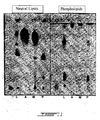
- Figure 1 and Table 3 show that the blubber lipids are 98% triglycerides. About half of the liver lipids are neutral with the free fatty acids (32%) as the main species and the other half being mainly composed of phosphatidyl choline (23%) and phosphatidyl ethanolamine (17%). About three quarters of the muscle lipids are neutral with the triglycerides (67%) comprising the majority of them, whereas the other quarter comprises sphingolipids/lysophosphatidyl choline (13%) and phosphatidyl choline (10%).
- pancreas lipids are free fatty acids and the major phospholipids are phosphatidyl choline (21%) and phosphatidyl ethanolamine (15%). No triglyceride were detected in the pancreas extract.
- Table 4 shows selected physical and chemical characteristics of blubber and muscle oils.
- the saponification and iodine values suggest that the lipids of both tissues contain short chain fatty acids and high levels of polyunsaturated fatty acids. Unsaturated fatty acids from the blubber are less peroxidized than the ones extracted from the muscles. Muscle oil contain 0.84% volatile matter and humidity. In contrast, no moisture and volatile matter could be detected in blubber oil. In fact, exposition to 125°C oxidised the blubber oil readily.
- the fatty acid composition of both tissues are shown in Table 5. Both types of oil contain high proportions of 20:5 and 22:6 fatty acids (a characteristic of marine oils).
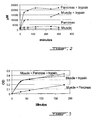
- Protein residues obtained after lipid extraction may be useful as protein and enzyme sources. To verify this, amino acid composition of muscle proteins and the proteolytic and amylolytic activities of the protein residues were determined. Table 6 shows that all essential amino acids are present in the muscle proteins. However, only 10% of the muscle proteins are hydrosoluble. Figures 1 to 4 illustrate that the pancreas protein extracts contain some proteolytic activities, but that none of the liver and muscle protein extracts demonstrated significant activity.
- pancreas contains only weak amylolytic activities and is thus not a tissue of choice for purifying amylase. Nevertheless, it shows that marine mammal tissue can be used as a source of protein (in addition to oil enriched in omega 3) which retains enzymatic activity.
- pancreas of seal or another organ as a source of a protein known to be expressed therein.
- the subcutaneous adipose tissue (blubber) was trimmed from contaminating dissected tissues. Blubber samples frozen at -20°C were immediately grinded in a meat grinder at 4°C and the oil extruded from the fat tissues using mechanical pressure. The "blubber oil” was recovered after centrifuging at 4000 rpm for 15 minutes and weighed together with the residue to estimate the relative percentage recovery of each fraction.
- Muscle tissues were trimmed from apparent non-muscle tissues. Muscle tissue samples were grinded in a meat grinder and mixed in a blender for two minutes at high speed with cold (-20°C) acetone, in the ratio of 5 volumes of acetone per g of tissue. After thorough mixing, the lipids were extracted in acetone under agitation for different periods of time at 4°C. At indicated times, the solvent was separated from the mixture by filtration. The filtered solvent was recovered and the solid phase was washed again in cold (-20°C) acetone as described above. The two solvent fractions were pooled and the extracted lipids recovered by evaporation in a RotavaporTM apparatus.
- lipid fractions were solubilized in 100 ml of ethyl acetate and recovered ("tissue lipids") after decanting overnight. Residual material was air-dried overnight at room temperature, weighed, pulverised ("protein isolate”) and kept frozen at -20°C for future enzyme analysis.
- Tissue samples were grinded and extracted as described for muscle tissues except that the lipid fraction obtained was not solubilized in ethyl acetate.
- the residual extract was air-dried overnight, then pulverised and kept frozen at -20°C for future enzyme analysis.
- lipid fractions were heated to 125°C for about 15 minutes under inert atmosphere.
- Blubber and muscle lipid extracts were characterised for: (1) iodine value according to Nagendrappa et al. (1998); (2) peroxide and saponification values, fatty acid composition, moisture and volatile material, and refractive index according to the American Oil Chemist's Society (AOCS); (3) free fatty acids according to He et al. (1999) after separation of the fatty acids by TLC.
- AOCS American Oil Chemist's Society
- the amount of protein in the muscle tissues was estimated by the classical method of Kjeldahl.
- the mineral content was estimated by atomic spectrophotometry according to known methods.
- Proteolytic activities were measured by the liberation of amino groups by a spectrophotometric assay using o-pthaldialdehyde as reagent.
- a spectrophotometric assay using o-pthaldialdehyde as reagent.
- One percent homogenates of tissue extracts in 50 mM potassium phosphate buffer, pH 7.0 were incubated at 37°C in the presence and absence of trypsin. At indicated times, trichloroacetic acid was added and the amount of amino groups was measured in the supernatant according to the method of Church et al., (1983, J Dairy Sci 66 :1219-1227) except that the test was carried in microplates.
- Amylolytic activities were determined according to the method of Bernfeld (1951).
- the present invention therefore provides a simple and cost-effective method to obtain a marine mammal oil, rich in omega 3 fatty acids, which can then be used in numerous types of compositions, such as food supplements, to prevent or treat numerous types of conditions or disorders.
- Different marine mammals can be used as starting material for the purification of the oil.
- the marine mammal is a seal.
- seal In addition to having a high concentration of omega 3 fatty acids, seal also provides the advantage of being an animal which is currently hunted almost exclusively for its fur. Consequently, a lot of the seals' tissues are wasted.
- the present invention therefore provides a means of recycling these tissues which are often thrown away into value added products which can be beneficial, in particular to humans.
- the preferred tissues in accordance with the present invention comprise the blubber, the muscles and any desired organ displaying proteins and more particularly of proteins which contain a desired enzymatic activity.
- organs include, without being limited to, liver and pancreas.
- the present invention provides a second step which enables the purification of a proteinaceous fraction which is substantially pure, and which can serve as animal feed for fish, birds, mammals and the like.
Landscapes
- Chemical & Material Sciences (AREA)
- Life Sciences & Earth Sciences (AREA)
- Engineering & Computer Science (AREA)
- Polymers & Plastics (AREA)
- Oil, Petroleum & Natural Gas (AREA)
- Food Science & Technology (AREA)
- Wood Science & Technology (AREA)
- Organic Chemistry (AREA)
- Chemical Kinetics & Catalysis (AREA)
- Zoology (AREA)
- Proteomics, Peptides & Aminoacids (AREA)
- Marine Sciences & Fisheries (AREA)
- Biochemistry (AREA)
- Animal Husbandry (AREA)
- Mycology (AREA)
- Health & Medical Sciences (AREA)
- Nutrition Science (AREA)
- Fats And Perfumes (AREA)
- Medicines Containing Material From Animals Or Micro-Organisms (AREA)
- Coloring Foods And Improving Nutritive Qualities (AREA)
- Acyclic And Carbocyclic Compounds In Medicinal Compositions (AREA)
- Meat, Egg Or Seafood Products (AREA)
- Edible Oils And Fats (AREA)
- Medicines That Contain Protein Lipid Enzymes And Other Medicines (AREA)
- Enzymes And Modification Thereof (AREA)
- Detergent Compositions (AREA)
Applications Claiming Priority (3)
| Application Number | Priority Date | Filing Date | Title |
|---|---|---|---|
| CA002290885A CA2290885A1 (fr) | 1999-12-02 | 1999-12-02 | Methode pour la transformation des tissus du loup marin |
| CA2290885 | 1999-12-02 | ||
| EP00984709A EP1238048B1 (de) | 1999-12-02 | 2000-12-04 | Verfahren zur reinigung von an omega-3-fettsäuren angereichertem meeressäugetieröl und dessen zusammensetzungen |
Related Parent Applications (1)
| Application Number | Title | Priority Date | Filing Date |
|---|---|---|---|
| EP00984709A Division EP1238048B1 (de) | 1999-12-02 | 2000-12-04 | Verfahren zur reinigung von an omega-3-fettsäuren angereichertem meeressäugetieröl und dessen zusammensetzungen |
Publications (1)
| Publication Number | Publication Date |
|---|---|
| EP1570747A1 true EP1570747A1 (de) | 2005-09-07 |
Family
ID=4164724
Family Applications (2)
| Application Number | Title | Priority Date | Filing Date |
|---|---|---|---|
| EP00984709A Expired - Lifetime EP1238048B1 (de) | 1999-12-02 | 2000-12-04 | Verfahren zur reinigung von an omega-3-fettsäuren angereichertem meeressäugetieröl und dessen zusammensetzungen |
| EP20050012626 Withdrawn EP1570747A1 (de) | 1999-12-02 | 2000-12-04 | Verfahren zur Aufreinigung von an Omega-3-Fettsäuren angereichertem Meeressäugetieröl und dessen Zusammensetzungen |
Family Applications Before (1)
| Application Number | Title | Priority Date | Filing Date |
|---|---|---|---|
| EP00984709A Expired - Lifetime EP1238048B1 (de) | 1999-12-02 | 2000-12-04 | Verfahren zur reinigung von an omega-3-fettsäuren angereichertem meeressäugetieröl und dessen zusammensetzungen |
Country Status (13)
| Country | Link |
|---|---|
| US (1) | US6713447B2 (de) |
| EP (2) | EP1238048B1 (de) |
| JP (1) | JP2003515662A (de) |
| KR (2) | KR100788010B1 (de) |
| CN (2) | CN100365109C (de) |
| AT (1) | ATE297974T1 (de) |
| AU (1) | AU780819B2 (de) |
| CA (3) | CA2290885A1 (de) |
| DE (1) | DE60020875D1 (de) |
| NO (1) | NO20022581L (de) |
| PL (2) | PL198401B1 (de) |
| RU (1) | RU2264441C2 (de) |
| WO (1) | WO2001040418A1 (de) |
Families Citing this family (29)
| Publication number | Priority date | Publication date | Assignee | Title |
|---|---|---|---|---|
| DK1417211T3 (da) | 2001-07-27 | 2007-10-08 | Neptune Technologies & Bioress | Naturlige phospholipider af marin oprindelse, der indeholder flavonoider og polyumættede phospholipider, og deres anvendelse |
| AU2003240187A1 (en) * | 2002-06-17 | 2003-12-31 | Medestea Research And Production S.R.L. | A process for preparing long chain saturated or unsaturated oxygenated compounds |
| RU2253328C2 (ru) * | 2002-06-24 | 2005-06-10 | Китлицкий Василий Станиславович | Биологически активная добавка к пище "маривит" и способ ее производства |
| ES2209658B1 (es) * | 2002-12-05 | 2005-10-01 | Proyecto Empresarial Brudy, S.L. | Utilizacion del acido docosahexaenoico como principio activo para el tratamiento de la lipodistrofia. |
| CN1166368C (zh) * | 2003-02-26 | 2004-09-15 | 刘威 | 海狗油脂肪乳注射液、其制备方法及其在制备静脉注射剂中的应用 |
| WO2005058069A1 (fr) * | 2003-12-18 | 2005-06-30 | Kitlitski Vasily Stanislavovic | Additif alimentaire et procede de fabrication correspondant |
| US20070243304A1 (en) * | 2004-05-24 | 2007-10-18 | Mahabaleshwar Hedge | Omega-3 Fatty Acid Compositions With Honey |
| JP2012529503A (ja) | 2009-06-12 | 2012-11-22 | カラナス エーエス | オイル組成物、オイル組成物を含む製剤、及び内蔵脂肪の蓄積を減らし、ブドウ糖耐性を向上させて肥満関連疾患及び障害を予防又は治療するためのその使用 |
| EP3335713B1 (de) * | 2009-10-29 | 2022-08-31 | Acasti Pharma, Inc. | Konzentrierte therapeutische phospholipid-zusammensetzungen |
| US9321715B2 (en) | 2009-12-30 | 2016-04-26 | Basf Pharma (Callanish) Limited | Simulated moving bed chromatographic separation process |
| GB201111601D0 (en) | 2011-07-06 | 2011-08-24 | Equateq Ltd | New process |
| GB201111595D0 (en) | 2011-07-06 | 2011-08-24 | Equateq Ltd | Improved process |
| GB201111589D0 (en) | 2011-07-06 | 2011-08-24 | Equateq Ltd | New modified process |
| GB201111591D0 (en) | 2011-07-06 | 2011-08-24 | Equateq Ltd | Further new process |
| GB201111594D0 (en) | 2011-07-06 | 2011-08-24 | Equateq Ltd | New improved process |
| RU2471360C1 (ru) * | 2011-08-01 | 2013-01-10 | Государственное научное учреждение Научно-исследовательский институт сельского хозяйства Крайнего Севера Российской академии сельскохозяйственных наук (ГНУ НИИСХ Крайнего Севера Россельхозакадемии) | Способ приготовления корма для домашних животных и птицы |
| GB201300354D0 (en) | 2013-01-09 | 2013-02-20 | Basf Pharma Callanish Ltd | Multi-step separation process |
| US8802880B1 (en) | 2013-05-07 | 2014-08-12 | Group Novasep | Chromatographic process for the production of highly purified polyunsaturated fatty acids |
| US9428711B2 (en) | 2013-05-07 | 2016-08-30 | Groupe Novasep | Chromatographic process for the production of highly purified polyunsaturated fatty acids |
| EP2883860B1 (de) | 2013-12-11 | 2016-08-24 | Novasep Process | Chromatografisches Verfahren zur Herstellung von mehrfach ungesättigten Fettsäuren |
| JP6303017B2 (ja) | 2014-01-07 | 2018-03-28 | ノヴァセプ プロセスNovasep Process | 芳香族アミノ酸を精製する方法 |
| WO2016209104A1 (en) * | 2015-06-25 | 2016-12-29 | Kotelkin Igor Mikhaylovich | Method and production line for the production of protein product from protein raw material |
| CN110139567A (zh) * | 2017-01-19 | 2019-08-16 | Cs健康解决方案有限责任公司 | 用于胃肠炎症的膳食补充剂及其制备方法 |
| RU2662316C1 (ru) * | 2017-08-31 | 2018-07-25 | Сергей Владимирович Кунгурцев | Жидкофазная композиция с повышенным содержанием природных устойчивых к окислению омега-3 полинепредельных жирных кислот |
| JP7454595B2 (ja) * | 2019-05-30 | 2024-03-22 | バクサ テクノロジーズ リミテッド | 藻類からの非毒性のタンパク質及びオメガ3、並びにそれらの製造方法 |
| CN110592150A (zh) * | 2019-10-14 | 2019-12-20 | 江南大学 | 一种富集油脂中n-3多不饱和脂肪酸甘油酯的方法 |
| KR102333548B1 (ko) * | 2019-12-02 | 2021-12-01 | 주식회사 밸리스 | 배스 추출물을 포함하는 동물용 사료 조성물 및 이의 제조방법 |
| KR102605643B1 (ko) * | 2023-02-28 | 2023-11-24 | (주)자연과사람 | 어류의 조직 및 부산물로부터 오일의 친환경 추출 방법 |
| CN118834723B (zh) * | 2024-08-19 | 2025-05-13 | 深圳大学 | 一种低温分离鲑鱼副产物鱼油与蛋白的方法 |
Citations (6)
| Publication number | Priority date | Publication date | Assignee | Title |
|---|---|---|---|---|
| GB784905A (en) * | 1954-08-26 | 1957-10-16 | Unilever Ltd | Treatment of proteinaceous materials |
| AT203348B (de) * | 1958-01-29 | 1959-05-11 | Walther Dr Techn Siegmund | Verfahren zur Entfettung, Desodorierung, Entwässerung und Konservierung von Eiweißstoffen |
| GB835813A (en) * | 1956-09-04 | 1960-05-25 | Wasagchemie Ag | A method of producing protein of low fat content from marine sources |
| GB905607A (en) * | 1958-11-10 | 1962-09-12 | John Charles Cavanagh | Process for the production of protein enriched material from protein-containing materials having a relatively high water content |
| US3525623A (en) * | 1965-07-05 | 1970-08-25 | Astra Nutrition Ab | Method for processing a fat containing organic material |
| GB1489268A (en) * | 1974-12-16 | 1977-10-19 | Takai Regional Fisheries Res L | Concentrated proteinaceous food material from marine animal meat |
Family Cites Families (11)
| Publication number | Priority date | Publication date | Assignee | Title |
|---|---|---|---|---|
| GB446997A (en) | 1934-04-10 | 1936-05-11 | Verwertung Fauth Scher Patente | A process for the manufacture of edible oils and edible fats |
| GB470223A (en) | 1936-11-12 | 1937-08-11 | Dortheus Andreas Hansen | A process of producing oil from the fatty parts of whales |
| GB711352A (en) * | 1950-05-30 | 1954-06-30 | Separator Ab | A method of producing oil from vegetable or animal material |
| SU464611A1 (ru) | 1972-05-04 | 1975-03-25 | Всесоюзный научно-исследовательский институт морского рыбного хозяйства и океанографии | Способ получени спермацетового жира |
| JPS59135291A (ja) * | 1983-01-21 | 1984-08-03 | 麦島 与 | 海産動物油の採油法 |
| JPS6271501A (ja) * | 1985-09-26 | 1987-04-02 | Nitto Electric Ind Co Ltd | 有機溶剤に溶解する物質の抽出方法 |
| JPH0829202B2 (ja) * | 1985-12-02 | 1996-03-27 | 金印わさび株式会社 | 天然原料から有用物質の分離方法 |
| RU2036649C1 (ru) * | 1991-12-24 | 1995-06-09 | Леонид Мендельевич Эпштейн | Способ получения лидазы |
| JPH097500A (ja) | 1995-06-22 | 1997-01-10 | Ise Electronics Corp | 電界放出素子およびその製造方法 |
| JPH0975000A (ja) * | 1995-07-07 | 1997-03-25 | Nisshin Oil Mills Ltd:The | 母子栄養用油脂含有飲食物 |
| NO984896D0 (no) * | 1998-10-21 | 1998-10-21 | Marine Lipids As | FremgangsmÕte ved separering av lipider og proteiner fra biologisk materiale |
-
1999
- 1999-12-02 CA CA002290885A patent/CA2290885A1/fr not_active Abandoned
-
2000
- 2000-12-04 CA CA002682110A patent/CA2682110A1/en not_active Abandoned
- 2000-12-04 CN CNB008172986A patent/CN100365109C/zh not_active Expired - Fee Related
- 2000-12-04 EP EP00984709A patent/EP1238048B1/de not_active Expired - Lifetime
- 2000-12-04 WO PCT/CA2000/001466 patent/WO2001040418A1/en not_active Ceased
- 2000-12-04 CA CA002392956A patent/CA2392956C/en not_active Expired - Fee Related
- 2000-12-04 DE DE60020875T patent/DE60020875D1/de not_active Expired - Lifetime
- 2000-12-04 AU AU21355/01A patent/AU780819B2/en not_active Ceased
- 2000-12-04 AT AT00984709T patent/ATE297974T1/de not_active IP Right Cessation
- 2000-12-04 PL PL355489A patent/PL198401B1/pl not_active IP Right Cessation
- 2000-12-04 RU RU2002117436A patent/RU2264441C2/ru not_active IP Right Cessation
- 2000-12-04 KR KR1020027007132A patent/KR100788010B1/ko not_active Expired - Fee Related
- 2000-12-04 JP JP2001541158A patent/JP2003515662A/ja active Pending
- 2000-12-04 US US10/148,039 patent/US6713447B2/en not_active Expired - Fee Related
- 2000-12-04 EP EP20050012626 patent/EP1570747A1/de not_active Withdrawn
- 2000-12-04 PL PL383569A patent/PL199081B1/pl not_active IP Right Cessation
- 2000-12-04 KR KR1020077016358A patent/KR100816896B1/ko not_active Expired - Fee Related
- 2000-12-04 CN CNA2005100810870A patent/CN1720808A/zh active Pending
-
2002
- 2002-05-30 NO NO20022581A patent/NO20022581L/no not_active Application Discontinuation
Patent Citations (6)
| Publication number | Priority date | Publication date | Assignee | Title |
|---|---|---|---|---|
| GB784905A (en) * | 1954-08-26 | 1957-10-16 | Unilever Ltd | Treatment of proteinaceous materials |
| GB835813A (en) * | 1956-09-04 | 1960-05-25 | Wasagchemie Ag | A method of producing protein of low fat content from marine sources |
| AT203348B (de) * | 1958-01-29 | 1959-05-11 | Walther Dr Techn Siegmund | Verfahren zur Entfettung, Desodorierung, Entwässerung und Konservierung von Eiweißstoffen |
| GB905607A (en) * | 1958-11-10 | 1962-09-12 | John Charles Cavanagh | Process for the production of protein enriched material from protein-containing materials having a relatively high water content |
| US3525623A (en) * | 1965-07-05 | 1970-08-25 | Astra Nutrition Ab | Method for processing a fat containing organic material |
| GB1489268A (en) * | 1974-12-16 | 1977-10-19 | Takai Regional Fisheries Res L | Concentrated proteinaceous food material from marine animal meat |
Also Published As
| Publication number | Publication date |
|---|---|
| CA2392956C (en) | 2010-01-05 |
| KR20070087134A (ko) | 2007-08-27 |
| CN1720808A (zh) | 2006-01-18 |
| PL199081B1 (pl) | 2008-08-29 |
| KR100816896B1 (ko) | 2008-03-26 |
| CN100365109C (zh) | 2008-01-30 |
| EP1238048B1 (de) | 2005-06-15 |
| US6713447B2 (en) | 2004-03-30 |
| ATE297974T1 (de) | 2005-07-15 |
| RU2002117436A (ru) | 2004-02-10 |
| US20030120097A1 (en) | 2003-06-26 |
| DE60020875D1 (de) | 2005-07-21 |
| NO20022581D0 (no) | 2002-05-30 |
| JP2003515662A (ja) | 2003-05-07 |
| CA2682110A1 (en) | 2001-06-07 |
| KR100788010B1 (ko) | 2007-12-21 |
| EP1238048A1 (de) | 2002-09-11 |
| PL355489A1 (en) | 2004-05-04 |
| AU2135501A (en) | 2001-06-12 |
| KR20020068366A (ko) | 2002-08-27 |
| WO2001040418A1 (en) | 2001-06-07 |
| CA2392956A1 (en) | 2001-06-07 |
| NO20022581L (no) | 2002-07-12 |
| CN1411500A (zh) | 2003-04-16 |
| AU780819B2 (en) | 2005-04-21 |
| CA2290885A1 (fr) | 2001-06-02 |
| PL198401B1 (pl) | 2008-06-30 |
| RU2264441C2 (ru) | 2005-11-20 |
Similar Documents
| Publication | Publication Date | Title |
|---|---|---|
| US6713447B2 (en) | Method for purifying marine mammal oil enriched in omega 3 fatty acids and compositions comprising same | |
| RU2236441C2 (ru) | Способ экстракции липидов (варианты), экстракт липидов криля и полная липидная фракция (варианты) | |
| Gbogouri et al. | Analysis of lipids extracted from salmon (Salmo salar) heads by commercial proteolytic enzymes | |
| EP3516966B1 (de) | Ein konzentriertes krillproteinhydrolysat | |
| JP5579333B2 (ja) | 性機能改善剤 | |
| WO2010010364A2 (en) | Process for the purification of oils | |
| HK1079963A (en) | Method for purifying marine mammal oil enriched in omega 3 fatty acids and compositions comprising same | |
| JPH01502345A (ja) | オイル組成物の調製方法 | |
| Blandine et al. | Compositional and Nutritional Studies of Two Defatted Flours Obtained from Ricinodendron heudelotii (Bail.) and Tetracarpidium conophorum (Müll. Arg.) | |
| JP2004269426A (ja) | カテコールアミン誘発剤 | |
| MXPA01003955A (en) | Method of extracting lipids from marine and aquatic animal tissues | |
| HK1038765B (en) | Method of extracting lipids from marine and aquatic animal tissues | |
| HK1185559A (en) | Sexual function improving agent |
Legal Events
| Date | Code | Title | Description |
|---|---|---|---|
| PUAI | Public reference made under article 153(3) epc to a published international application that has entered the european phase |
Free format text: ORIGINAL CODE: 0009012 |
|
| 17P | Request for examination filed |
Effective date: 20050613 |
|
| AC | Divisional application: reference to earlier application |
Ref document number: 1238048 Country of ref document: EP Kind code of ref document: P |
|
| AK | Designated contracting states |
Kind code of ref document: A1 Designated state(s): AT BE CH CY DE DK ES FI FR GB GR IE IT LI LU MC NL PT SE TR |
|
| REG | Reference to a national code |
Ref country code: HK Ref legal event code: DE Ref document number: 1079963 Country of ref document: HK |
|
| AKX | Designation fees paid |
Designated state(s): AT BE CH CY DE DK ES FI FR GB GR IE IT LI LU MC NL PT SE TR |
|
| 17Q | First examination report despatched |
Effective date: 20100818 |
|
| STAA | Information on the status of an ep patent application or granted ep patent |
Free format text: STATUS: THE APPLICATION IS DEEMED TO BE WITHDRAWN |
|
| 18D | Application deemed to be withdrawn |
Effective date: 20110301 |
|
| REG | Reference to a national code |
Ref country code: HK Ref legal event code: WD Ref document number: 1079963 Country of ref document: HK |