EP1558557B1 - Verfahren zur katalytischen oxidation von methan zu methanol über methanolester - Google Patents
Verfahren zur katalytischen oxidation von methan zu methanol über methanolester Download PDFInfo
- Publication number
- EP1558557B1 EP1558557B1 EP04709624A EP04709624A EP1558557B1 EP 1558557 B1 EP1558557 B1 EP 1558557B1 EP 04709624 A EP04709624 A EP 04709624A EP 04709624 A EP04709624 A EP 04709624A EP 1558557 B1 EP1558557 B1 EP 1558557B1
- Authority
- EP
- European Patent Office
- Prior art keywords
- methane
- acetic acid
- trifluoro acetic
- oxidation
- mixture
- Prior art date
- Legal status (The legal status is an assumption and is not a legal conclusion. Google has not performed a legal analysis and makes no representation as to the accuracy of the status listed.)
- Expired - Lifetime
Links
- VNWKTOKETHGBQD-UHFFFAOYSA-N methane Chemical compound C VNWKTOKETHGBQD-UHFFFAOYSA-N 0.000 title claims abstract description 60
- OKKJLVBELUTLKV-UHFFFAOYSA-N Methanol Chemical class OC OKKJLVBELUTLKV-UHFFFAOYSA-N 0.000 title claims abstract description 41
- 238000000034 method Methods 0.000 title claims abstract description 22
- 230000003647 oxidation Effects 0.000 title claims abstract description 16
- 238000007254 oxidation reaction Methods 0.000 title claims abstract description 16
- 230000003197 catalytic effect Effects 0.000 title description 6
- DTQVDTLACAAQTR-UHFFFAOYSA-N Trifluoroacetic acid Chemical compound OC(=O)C(F)(F)F DTQVDTLACAAQTR-UHFFFAOYSA-N 0.000 claims abstract description 68
- 239000000203 mixture Substances 0.000 claims abstract description 20
- 150000002148 esters Chemical class 0.000 claims abstract description 17
- QVGXLLKOCUKJST-UHFFFAOYSA-N atomic oxygen Chemical compound [O] QVGXLLKOCUKJST-UHFFFAOYSA-N 0.000 claims abstract description 14
- 239000001301 oxygen Substances 0.000 claims abstract description 14
- 229910052760 oxygen Inorganic materials 0.000 claims abstract description 14
- 239000003054 catalyst Substances 0.000 claims abstract description 11
- 150000003839 salts Chemical class 0.000 claims abstract description 11
- 229910052723 transition metal Inorganic materials 0.000 claims abstract description 10
- 150000001244 carboxylic acid anhydrides Chemical class 0.000 claims abstract description 7
- 239000007789 gas Substances 0.000 claims abstract description 6
- 150000003624 transition metals Chemical class 0.000 claims abstract description 5
- QTBSBXVTEAMEQO-UHFFFAOYSA-N Acetic acid Chemical compound CC(O)=O QTBSBXVTEAMEQO-UHFFFAOYSA-N 0.000 claims description 21
- QAEDZJGFFMLHHQ-UHFFFAOYSA-N trifluoroacetic anhydride Chemical compound FC(F)(F)C(=O)OC(=O)C(F)(F)F QAEDZJGFFMLHHQ-UHFFFAOYSA-N 0.000 claims description 11
- 150000001732 carboxylic acid derivatives Chemical class 0.000 claims description 7
- -1 transition metal salt Chemical class 0.000 claims description 7
- 239000011572 manganese Substances 0.000 claims description 5
- AHSBSUVHXDIAEY-UHFFFAOYSA-K manganese(iii) acetate Chemical compound [Mn+3].CC([O-])=O.CC([O-])=O.CC([O-])=O AHSBSUVHXDIAEY-UHFFFAOYSA-K 0.000 claims description 5
- 229910017052 cobalt Inorganic materials 0.000 claims description 4
- 239000010941 cobalt Substances 0.000 claims description 4
- 229940011182 cobalt acetate Drugs 0.000 claims description 4
- GUTLYIVDDKVIGB-UHFFFAOYSA-N cobalt atom Chemical compound [Co] GUTLYIVDDKVIGB-UHFFFAOYSA-N 0.000 claims description 4
- QAHREYKOYSIQPH-UHFFFAOYSA-L cobalt(II) acetate Chemical compound [Co+2].CC([O-])=O.CC([O-])=O QAHREYKOYSIQPH-UHFFFAOYSA-L 0.000 claims description 4
- UFMZWBIQTDUYBN-UHFFFAOYSA-N cobalt dinitrate Chemical compound [Co+2].[O-][N+]([O-])=O.[O-][N+]([O-])=O UFMZWBIQTDUYBN-UHFFFAOYSA-N 0.000 claims description 3
- 229910001981 cobalt nitrate Inorganic materials 0.000 claims description 3
- PWHULOQIROXLJO-UHFFFAOYSA-N Manganese Chemical compound [Mn] PWHULOQIROXLJO-UHFFFAOYSA-N 0.000 claims description 2
- 229910052748 manganese Inorganic materials 0.000 claims description 2
- MIVBAHRSNUNMPP-UHFFFAOYSA-N manganese(2+);dinitrate Chemical compound [Mn+2].[O-][N+]([O-])=O.[O-][N+]([O-])=O MIVBAHRSNUNMPP-UHFFFAOYSA-N 0.000 claims description 2
- 150000001735 carboxylic acids Chemical class 0.000 abstract description 2
- 238000006243 chemical reaction Methods 0.000 description 18
- VMVNZNXAVJHNDJ-UHFFFAOYSA-N methyl 2,2,2-trifluoroacetate Chemical compound COC(=O)C(F)(F)F VMVNZNXAVJHNDJ-UHFFFAOYSA-N 0.000 description 9
- KDLHZDBZIXYQEI-UHFFFAOYSA-N Palladium Chemical compound [Pd] KDLHZDBZIXYQEI-UHFFFAOYSA-N 0.000 description 8
- QAOWNCQODCNURD-UHFFFAOYSA-N Sulfuric acid Chemical compound OS(O)(=O)=O QAOWNCQODCNURD-UHFFFAOYSA-N 0.000 description 8
- YCYBZKSMUPTWEE-UHFFFAOYSA-L cobalt(ii) fluoride Chemical compound F[Co]F YCYBZKSMUPTWEE-UHFFFAOYSA-L 0.000 description 8
- 230000008569 process Effects 0.000 description 8
- 230000035484 reaction time Effects 0.000 description 8
- 229910021583 Cobalt(III) fluoride Inorganic materials 0.000 description 7
- 238000006555 catalytic reaction Methods 0.000 description 7
- 239000010949 copper Substances 0.000 description 6
- 238000002474 experimental method Methods 0.000 description 6
- 229910052751 metal Inorganic materials 0.000 description 5
- 239000002184 metal Substances 0.000 description 5
- 238000001556 precipitation Methods 0.000 description 5
- 239000002253 acid Substances 0.000 description 4
- 238000004817 gas chromatography Methods 0.000 description 4
- 239000007800 oxidant agent Substances 0.000 description 4
- XLYOFNOQVPJJNP-UHFFFAOYSA-N water Substances O XLYOFNOQVPJJNP-UHFFFAOYSA-N 0.000 description 4
- XBDQKXXYIPTUBI-UHFFFAOYSA-M Propionate Chemical compound CCC([O-])=O XBDQKXXYIPTUBI-UHFFFAOYSA-M 0.000 description 3
- KXKVLQRXCPHEJC-UHFFFAOYSA-N acetic acid trimethyl ester Natural products COC(C)=O KXKVLQRXCPHEJC-UHFFFAOYSA-N 0.000 description 3
- 230000000052 comparative effect Effects 0.000 description 3
- 150000001875 compounds Chemical class 0.000 description 3
- 230000007062 hydrolysis Effects 0.000 description 3
- 238000006460 hydrolysis reaction Methods 0.000 description 3
- 239000007791 liquid phase Substances 0.000 description 3
- 239000002244 precipitate Substances 0.000 description 3
- 239000000047 product Substances 0.000 description 3
- 150000007513 acids Chemical class 0.000 description 2
- 150000008064 anhydrides Chemical class 0.000 description 2
- 239000012018 catalyst precursor Substances 0.000 description 2
- ZBYYWKJVSFHYJL-UHFFFAOYSA-L cobalt(2+);diacetate;tetrahydrate Chemical compound O.O.O.O.[Co+2].CC([O-])=O.CC([O-])=O ZBYYWKJVSFHYJL-UHFFFAOYSA-L 0.000 description 2
- 238000001816 cooling Methods 0.000 description 2
- 230000009849 deactivation Effects 0.000 description 2
- 238000004821 distillation Methods 0.000 description 2
- 238000005259 measurement Methods 0.000 description 2
- 150000004702 methyl esters Chemical class 0.000 description 2
- JZMJDSHXVKJFKW-UHFFFAOYSA-M methyl sulfate(1-) Chemical compound COS([O-])(=O)=O JZMJDSHXVKJFKW-UHFFFAOYSA-M 0.000 description 2
- 229910052763 palladium Inorganic materials 0.000 description 2
- 125000005385 peroxodisulfate group Chemical group 0.000 description 2
- 238000007348 radical reaction Methods 0.000 description 2
- 239000012429 reaction media Substances 0.000 description 2
- 238000001228 spectrum Methods 0.000 description 2
- 238000013022 venting Methods 0.000 description 2
- 239000005749 Copper compound Substances 0.000 description 1
- DTQVDTLACAAQTR-UHFFFAOYSA-M Trifluoroacetate Chemical compound [O-]C(=O)C(F)(F)F DTQVDTLACAAQTR-UHFFFAOYSA-M 0.000 description 1
- 230000004913 activation Effects 0.000 description 1
- 230000015572 biosynthetic process Effects 0.000 description 1
- 150000001868 cobalt Chemical class 0.000 description 1
- IULUMZYSEUDHPH-UHFFFAOYSA-L cobalt(2+);2,2,2-trifluoroacetate Chemical compound [Co+2].[O-]C(=O)C(F)(F)F.[O-]C(=O)C(F)(F)F IULUMZYSEUDHPH-UHFFFAOYSA-L 0.000 description 1
- ZNZBNNSAYYRTPF-UHFFFAOYSA-K cobalt(3+) triacetate tetrahydrate Chemical compound O.O.O.O.C(C)(=O)[O-].[Co+3].C(C)(=O)[O-].C(C)(=O)[O-] ZNZBNNSAYYRTPF-UHFFFAOYSA-K 0.000 description 1
- SPBNESDHQFJNNO-UHFFFAOYSA-K cobalt(3+);2,2,2-trifluoroacetate Chemical compound [Co+3].[O-]C(=O)C(F)(F)F.[O-]C(=O)C(F)(F)F.[O-]C(=O)C(F)(F)F SPBNESDHQFJNNO-UHFFFAOYSA-K 0.000 description 1
- 150000001880 copper compounds Chemical class 0.000 description 1
- 238000007700 distillative separation Methods 0.000 description 1
- 238000000921 elemental analysis Methods 0.000 description 1
- 238000010438 heat treatment Methods 0.000 description 1
- 230000002209 hydrophobic effect Effects 0.000 description 1
- 230000006698 induction Effects 0.000 description 1
- 230000007246 mechanism Effects 0.000 description 1
- 150000002730 mercury Chemical class 0.000 description 1
- 150000005451 methyl sulfates Chemical class 0.000 description 1
- 150000002894 organic compounds Chemical class 0.000 description 1
- 150000002940 palladium Chemical class 0.000 description 1
- 239000012071 phase Substances 0.000 description 1
- 150000003057 platinum Chemical class 0.000 description 1
- 239000013074 reference sample Substances 0.000 description 1
- 238000000926 separation method Methods 0.000 description 1
- 239000002904 solvent Substances 0.000 description 1
- 230000006641 stabilisation Effects 0.000 description 1
- 238000011105 stabilization Methods 0.000 description 1
- 238000012360 testing method Methods 0.000 description 1
- 238000012546 transfer Methods 0.000 description 1
Images
Classifications
-
- C—CHEMISTRY; METALLURGY
- C07—ORGANIC CHEMISTRY
- C07C—ACYCLIC OR CARBOCYCLIC COMPOUNDS
- C07C67/00—Preparation of carboxylic acid esters
- C07C67/035—Preparation of carboxylic acid esters by reacting carboxylic acids or symmetrical anhydrides with saturated hydrocarbons
-
- C—CHEMISTRY; METALLURGY
- C07—ORGANIC CHEMISTRY
- C07C—ACYCLIC OR CARBOCYCLIC COMPOUNDS
- C07C29/00—Preparation of compounds having hydroxy or O-metal groups bound to a carbon atom not belonging to a six-membered aromatic ring
- C07C29/09—Preparation of compounds having hydroxy or O-metal groups bound to a carbon atom not belonging to a six-membered aromatic ring by hydrolysis
- C07C29/095—Preparation of compounds having hydroxy or O-metal groups bound to a carbon atom not belonging to a six-membered aromatic ring by hydrolysis of esters of organic acids
-
- Y—GENERAL TAGGING OF NEW TECHNOLOGICAL DEVELOPMENTS; GENERAL TAGGING OF CROSS-SECTIONAL TECHNOLOGIES SPANNING OVER SEVERAL SECTIONS OF THE IPC; TECHNICAL SUBJECTS COVERED BY FORMER USPC CROSS-REFERENCE ART COLLECTIONS [XRACs] AND DIGESTS
- Y02—TECHNOLOGIES OR APPLICATIONS FOR MITIGATION OR ADAPTATION AGAINST CLIMATE CHANGE
- Y02P—CLIMATE CHANGE MITIGATION TECHNOLOGIES IN THE PRODUCTION OR PROCESSING OF GOODS
- Y02P20/00—Technologies relating to chemical industry
- Y02P20/50—Improvements relating to the production of bulk chemicals
- Y02P20/52—Improvements relating to the production of bulk chemicals using catalysts, e.g. selective catalysts
Definitions
- the invention relates to a process for the catalytic oxidation of methane to methanol over methanol esters.
- WO 92/17425 a process for the selective oxidation of organic compounds is known, with which, for example, methanol can be prepared from methane.
- oxygen is used in conjunction with Cu (I) compounds.
- a CH 3 radical is first formed, which is reacted with Cu (II) and trifluoroacetic acid to trifluoroacetic acid methyl ester and a Cu (I) compound.
- it is proposed to reduce the Cu (II) obtained in the reaction, for example electrochemically, back to Cu (I).
- the copper compounds used in this process therefore do not act catalytically.
- the object of the invention was to increase the yield of methyltrifluoroacetate by using the cheapest oxidizing agent.
- the invention thus provides a process for the oxidation of methane to methanol via methanol esters, wherein the oxidation of the methane with oxygen or an oxygen-containing gas in the presence of one or more salts from the group of transition metals, a redox couple with a normal potential> 0.6 volts , preferably> 0.7 volts, are carried out as a catalyst in trifluoroacetic acid and the esters are hydrolysed, preferably after distillative separation, subsequently to methanol.
- the process is characterized in that the oxidation is carried out in a mixture of trifluoroacetic acid and a carboxylic acid anhydride and / or in a mixture of trifluoroacetic acid and another, non-fluorinated carboxylic acid at temperatures of more than 80 ° C.
- trifluoroacetic anhydride is used as the carboxylic acid anhydride.
- the other non-fluorinated carboxylic acid e.g. Be called acetic acid.
- the hydrolysis of the ester can be carried out in a conventional manner. Due to its hydrophobic properties, trifluoroacetic acid does not form an azeotrope with water and can be recovered by distillation after hydrolysis of methyl trifluoroacetate.
- the yield of methyl ester under otherwise identical conditions could be significantly increased compared to the reaction in pure trifluoroacetic acid.
- Various possible causes come into consideration.
- the reaction is carried out per se under anhydrous conditions. However, it may be that traces of water are still present in the solvent trifluoroacetic acid or, for example, are introduced by the metal salts used.
- trifluoroacetic could remove those traces of water that interfere with the likely radical reaction. It could also be that from oxygen and the protic acid in these radical reactions, water is by-produced, which is removed from the anhydride. None can be said about the mechanism underlying this increase in yield.
- the measurements of the conversion after different times suggest that this measure stabilizes the catalytic system so that more reactions take place on an active metal atom.
- trifluoroacetic anhydride also allows the use of cheaper hydrous metal salts as catalysts.
- any cobalt salts e.g.
- the cheaper hydrous cobalt acetate can be used as a catalyst precursor compared to the much more expensive cobalt trifluoroacetate, the Vargaftik et al. in their publication.
- the weight ratio between trifluoroacetic acid and carboxylic anhydride is preferably 99: 1 to 1:99, in particular 99: 1 to 20:80 or 70:30 to 30:70.
- the reaction is carried out in a mixture of trifluoroacetic acid and a non-fluorinated carboxylic acid.
- a mixture of trifluoroacetic acid and acetic acid also higher yields of the two possible esters of the two acids could be found.
- cobalt fluoride precipitate was no longer found.
- the weight ratio between trifluoroacetic acid and non-fluorinated carboxylic acid is preferably 99: 1 to 1:99, particularly preferably 99: 1 to 5:95 or 99: 1 to 10:90, in particular 30:70 to 70:30.
- Suitable catalyst precursors are metal salts of the transition metals and mixtures of such metal salts. Since it is known that palladium with a redox potential of 0.6 V (Pd (0) / Pd (II)) is already able to activate methane, at least one transition metal having a redox couple with a redox potential greater than 0.6 V, preferably greater than 0.7 volts are used. The best results were achieved with cobalt acetate and cobalt nitrate. The normal potential for the redox couple Co (II) / (III) is 0.92 volts. When manganese (III) acetate was used, a lower yield but still a clearly catalytic reaction could be achieved under identical conditions.
- salts of palladium, cobalt and manganese are preferred.
- the salts of cobalt are particularly suitable.
- the transition metal salt used is manganese (III) acetate and / or manganese nitrate.
- the invention is illustrated by the following examples in a non-limiting manner.
- the reaction medium used was 70 ml of pure trifluoroacetic acid in which 1000 mg (about 3.8 mol% with respect to methane) of cobalt (II) acetate tetrahydrate were dissolved.
- a 2: 1 gas mixture of methane to oxygen (Vol.) An initial pressure of 30 bar was prepared; the mixture was heated to 180 ° C in an autoclave. After cooling and venting the autoclave, a gas chromatography (GC) spectrum was taken from the liquid phase. In it, the ester could be clearly identified and the ester yield to about 17%, based on methane, can be determined. Equal values were achieved when using cobalt nitrate.
- the reaction medium used was a mixture of 60 ml of pure trifluoroacetic acid and 10 ml of trifluoroacetic anhydride in which 1000 mg (about 3.8 mol% with respect to methane) cobalt (II) acetate tetrahydrate were dissolved.
- a 2: 1 gas mixture of methane to oxygen (vol.) An initial pressure of 30 bar was prepared, and the mixture was heated to 180 ° C in an autoclave. After 24 hours, a pressure drop of 67 bar to 47 bar was registered at 180 ° C, which corresponds to a methane conversion of almost 30%. After cooling and venting the autoclave, a GC spectrum was taken from the liquid phase. Therein could the ester is clearly identified and the ester yield to about 26%, based on methane, are determined.
- Example 1 The procedure of Example 1 was repeated except that 3.8 mol% of manganese (III) acetate was used instead of cobalt (III) acetate tetrahydrate.
- manganese (III) acetate at least an ester yield of about 15%, based on methane, could be determined under the identical conditions listed in Comparative Example 1.
Landscapes
- Chemical & Material Sciences (AREA)
- Organic Chemistry (AREA)
- Organic Low-Molecular-Weight Compounds And Preparation Thereof (AREA)
- Low-Molecular Organic Synthesis Reactions Using Catalysts (AREA)
Description
- Die Erfindung betrifft ein Verfahren zur katalytischen Oxidation von Methan zu Methanol über Methanolester.
- Die direkte Oxidation von Methan zu Methanol ist extrem schwierig, weil die Bindungsstärke der CH-Bindung der CH3-Gruppe im Produkt Methanol geringer ist als im Methan, weshalb diese Bindung leichter angegriffen wird als in Methan. Eine hohe Selektivität ist also nahezu unmöglich. Es gibt daher einige Versuche, in Gegenwart starker Säuren die Ester des Methanols herzustellen. Diese sind dann stabiler gegen die Weiteroxidation.
- Ein solches System ist mit Quecksilbersalzen (US-A-5,306,855) oder mit Platin-Komplexen (US-A5,233,113) als Katalysatoren in Schwefelsäure zum Methylsulfat gelungen. Nachteil dieser Systeme ist, dass nach erfolgter Hydrolyse der Methylsulfate zu Methanol und Schwefelsäure die Schwefelsäure nicht wieder einfach destillativ zur reinen Schwefelsäure aufkonzentriert werden kann und nur eine zu geringe Konzentration an Methylsulfat im Oleum erreicht wird. Eine einfache Abtrennung ist deshalb nicht möglich.
- Andere Versuche erfolgten in Trifluoressigsäure, wobei deren Methylester erhalten wurden. Ein Katalysatorsystem dazu sind Palladium-Carbenkomplexe mit Peroxodisulfat als Oxidationsmittel (Deutsche Patentanmeldung 101 51 660.6). Nachteile dieses Systems sind die teuren Palladiumkomplexe und das teure Oxidationsmittel Peroxodisulfat.
- Aus der Literaturstelle J. Chem. Soc. Chem. Commun. 1990 (1049 - 1050) (Verf. M.N. Vargaftik, I.P. Stolarov, und I.I. Moiseev) ist ein Verfahren zur hochselektiven partiellen Oxidation von Methan zu Methyltrifluoracetat bekannt. Nach diesem Verfahren wird Methan stöchiometrisch in Gegenwart von Kobalt(III)-trifluoracetat in CF3CO2H-Lösung bei 150 bis 180°C und 10 bis 40 bar Methandruck ohne Sauerstoff oxidiert, wobei Methyltrifluoracetat in einer Ausbeute von 90%, bezogen auf Co(III), erhalten wird, das hierbei zu Co(II) reduziert wird. In Gegenwart von Sauerstoff (1 bis 5 bar) wird die Reaktion katalytisch, wobei Methyltrifluoracetat erhalten wird. Laut Aussage des Artikels werden 400% Ausbeute erhalten, bezogen auf Co(III). Es wird erwähnt, dass die stöchiometrische Reaktion auch mit Mn(III)-trifluoracetat möglich ist, aber nur mit 30% Ausbeute.
- Es geht aus dieser Literaturstelle nicht hervor, unter welchen Bedingungen die Versuche durchgeführt wurden, welche wirklichen Ausbeuten, bezogen auf Methan, erzielt wurden und wie die Umsätze berechnet wurden. Da keine Katalysatormengen angegeben sind, war eine Reproduktion nicht möglich. Außerdem wurde festgestellt, dass bei dieser Reaktion Kobaltfluorid ausfällt. Dies zeigt, dass Trifluoressigsäure zersetzt wird.
- In der WO 92/17425 ist ein Verfahren zur selektiven Oxidation organischer Verbindungen bekannt, mit welchem beispielsweise Methanol aus Methan hergestellt werden kann. Als Oxidationsmittel wird Sauerstoff in Verbindung mit Cu(I)-Verbindungen verwendet. Aus der Cu(I)-Verbindung und Sauerstoff wird zunächst ein CH3-Radikal gebildet, das mit Cu(II) und Trifluoressigsäure zum Trifluoressigsäuremethylester und einer Cu(I)-Verbindung umgesetzt wird. Für eine Anwendung des Verfahrens im industriellen Maßstab wird vorgeschlagen, das bei der Reaktion anfallende Cu(II) beispielsweise elektrochemisch wieder zu Cu(I) zu reduzieren. Die bei diesem Verfahren eingesetzten Kupferverbindungen wirken also nicht katalytisch.
- Der Erfindung lag die Aufgabe zugrunde, unter Verwendung preisgünstigster Oxidationsmittel die Ausbeute an Methyltrifluoracetat zu erhöhen.
- Es wurde überraschenderweise gefunden, dass die Zugabe von Anhydriden, wie z.B. Trifluoressigsäure, die Ausbeute erhöht. Außerdem wurde überraschenderweise gefunden, das der Zusatz nicht fluorierter Carbonsäuren die Ausfällung von Kobaltfluorid verhindert.
- Gegenstand der Erfindung ist somit ein Verfahren zur Oxidation von Methan zu Methanol über Methanolester, wobei die Oxidation des Methans mit Sauerstoff oder einem sauerstoffhaltigen Gas in Gegenwart eines oder mehrerer Salze aus der Gruppe der Übergangsmetalle, die ein Redoxpaar mit einem Normalpotential > 0,6 Volt, vorzugsweise > 0,7 Volt, bilden, als Katalysator in Trifluoressigsäure durchgeführt und die Ester, vorzugsweise nach destillativer Abtrennung, anschließend zu Methanol hydrolysiert werden. Das Verfahren ist dadurch gekennzeichnet, dass man die Oxidation in einer Mischung aus Trifluoressigsäure und einem Carbonsäureanhydrid und/oder in einer Mischung aus Trifluoressigsäure und einer anderen, nicht-fluorierten Carbonsäure bei Temperaturen von mehr als 80°C durchführt. Vorzugsweise wird als Carbonsäureanhydrid Trifluoressigsäureanhydrid verwendet. Als Beispiel für die andere, nicht-fluorierte Carbonsäure kann z.B. Essigsäure genannt werden.
- Die Hydrolyse des Esters kann in an sich bekannter Weise erfolgen. Aufgrund ihrer hydrophoben Eigenschaften bildet dabei Trifluoressigsäure kein Azeotrop mit Wasser und lässt sich nach der Hydrolyse des Trifluoressigsäuremethylesters destillativ zurückgewinnen.
- Durch die Verwendung einer Mischung aus Trifluoressigsäure und Trifluoressigsäureanhydrid konnte die Ausbeute an Methylester unter sonst identischen Bedingungen deutlich gesteigert werden im Vergleich zur Reaktion in reiner Trifluoressigsäure. Verschiedene mögliche Ursachen kommen dafür in Betracht. Die Reaktion wird an sich unter wasserfreien Bedingungen durchgeführt. Es kann jedoch sein, dass Spuren von Wasser noch im Lösungsmittel Trifluoressigsäure enthalten sind bzw. beispielsweise durch die verwendeten Metallsalze eingeschleppt werden. Trifluoressigsäureanhydrid könnte diese Spuren von Wasser entfernen, welche die wahrscheinlich radikalische Reaktion stören. Es könnte auch sein, dass aus Sauerstoff und der protischen Säure in diesen Radikalreaktionen Wasser als Nebenprodukt gebildet wird, welches von dem Anhydrid entfernt wird. Über den Mechanismus, der dieser Ausbeutesteigerung zugrunde liegt, kann also nichts gesagt werden. Die Messungen des Umsatzes nach unterschiedlichen Zeitpunkten legen allerdings nahe, dass durch diese Maßnahme eine Stabilisierung des katalytischen Systems erfolgt, so dass mehr Reaktionen an einem aktiven Metallatom ablaufen.
- In jedem Fall erlaubt die Verwendung von Trifluoressigsäureanhydrid auch die Verwendung von billigeren wasserhaltigen Metallsalzen als Katalysatoren. So konnten beliebige Kobaltsalze, z.B. auch das billigere wasserhaltige Kobaltacetat, als Katalysatorvorstufe eingesetzt werden im Vergleich zu dem sehr viel teureren Kobalttrifluoracetat, das Vargaftik et al. in ihrer Publikation verwenden.
- Wie im Vergleichsbeispiel wird auch in dieser Reaktion mit der höheren Ausbeute ein Niederschlag von Kobaltfluorid beobachtet.
- Das Gewichtsverhältnis zwischen Trifluoressigsäure und Carbonsäureanhydrid beträgt vorzugsweise 99:1 bis 1:99, insbesondere 99:1 bis 20:80 bzw. 70:30 bis 30:70.
- Nach einer weiteren Ausgestaltung der Erfindung wird die Reaktion in einer Mischung aus Trifluoressigsäure und einer nicht fluorierten Carbonsäure durchgeführt. So konnten in einer Mischung aus Trifluoressigsäure und Essigsäure ebenfalls höhere Ausbeuten der beiden möglichen Ester der beiden Säuren gefunden werden. Außerdem wurde kein Kobaltfluoridniederschlag mehr gefunden.
- Die Ursache für die bessere Stabilisierung des katalytischen Systems ist noch unklar.
- Das Gewichtsverhältnis zwischen Trifluoressigsäure und nicht fluorierter Carbonsäure beträgt vorzugsweise 99:1 bis 1:99, besonders bevorzugt 99:1 bis 5:95 bzw. 99:1 bis 10:90, insbesondere 30:70 bis 70:30.
- Als Katalysatorvorstufen kommen Metallsalze der Übergangsmetalle und Mischungen solcher Metallsalze in Frage. Da bekannt ist, dass Palladium mit einem Redoxpotential von 0,6 V (Pd(0)/Pd(II)) bereits in der Lage ist, Methan zu aktivieren, muss mindestens ein Übergangsmetall mit einem Redoxpaar mit einem Redoxpotential von größer 0,6 V, vorzugsweise größer 0,7 Volt, eingesetzt werden. Die besten Ergebnisse wurden mit Kobaltacetat und Kobaltnitrat erzielt. Das Normalpotential für das Redoxpaar Co (II) / (III) beträgt 0,92 Volt. Beim Einsatz von Mangan (III) - acetat konnte unter identischen Bedingungen eine geringere Ausbeute, aber noch immer eine deutlich katalytische Reaktion erreicht werden.
- Nach Hollemann Wiberg, 81.-90. Auflage, 1976, S. 202 ff., beträgt das Normalpotential von Mn2+ nach Mn3+ in saurer Lösung +1,51 V. Das Normalpotential von Pd nach Pd2+ beträgt 0,987, und von CO2+ nach CO3+ 1,808.
- Für die katalytische Oxidation von Methan sind insbesondere Salze von Palladium, Kobalt und Mangan bevorzugt. Unter diesen sind die Salze des Kobalts besonders geeignet.
- Nach einer erfindungsgemäßen Ausführungsform wird als Übergangsmetallsalz Mangan(III)-acetat und/oder Mangannitrat verwendet.
- Die Erfindung ist durch die nachstehenden Beispiele in nicht einschränkender Weise erläutert.
- Als Reaktionsmedium dienten 70 ml reiner Trifluoressigsäure, in welcher 1000 mg (etwa 3,8 Mol-% bezüglich Methan) Kobalt(II)acetat-Tetrahydrat gelöst wurden. Mit einem 2 : 1 Gasgemisch von Methan zu Sauerstoff (Vol.) wurde ein Anfangsdruck von 30 bar hergestellt; die Mischung wurde im Autoklaven auf 180°C erhitzt. Nach dem Abkühlen und Entspannen des Autoklaven wurde von der flüssigen Phase ein Gaschromatographie (GC) Spektrum aufgenommen. Darin konnte der Ester eindeutig identifiziert und die Esterausbeute zu etwa 17%, bezogen auf Methan, ermittelt werden. Gleiche Werte wurden beim Einsatz von Kobaltnitrat erzielt.
- Als Reaktionsmedium diente ein Gemisch aus 60 ml reiner Trifluoressigsäure und 10 ml Trifluoressigsäureanhydrid, in welchem 1000 mg (etwa 3,8 Mol-% bezüglich Methan) Kobalt(II)acetat-Tetrahydrat gelöst wurden. Mit einem 2 : 1-Gasgemisch von Methan zu Sauerstoff (Vol.) wurde ein Anfangsdruck von 30 bar hergestellt, und das Gemisch wurde im Autoklaven auf 180°C erhitzt. Nach 24 Stunden wurde bei 180°C ein Druckabfall von 67 bar auf 47 bar registriert, was einem Methanumsatz von fast 30% entspricht. Nach dem Abkühlen und Entspannen des Autoklaven wurde von der flüssigen Phase ein GC-Spektrum aufgenommen. Darin konnte der Ester eindeutig identifiziert und die Esterausbeute zu etwa 26%, bezogen auf Methan, ermittelt werden.
- Dass die Vorgänge bei der vorgestellten Katalyse nicht so einfach liegen, unterstreicht die Beobachtung, dass nach den Reaktionen Niederschläge in den Produktlösungen auftreten. Eine Elementaranalyse hat ergeben, dass die ungefähre Zusammensetzung der von CoF2 entspricht. Die Unlöslichkeit des gebildeten Kobaltfluorids in Trifluoressigsäure hat zur Folge, dass der Katalysator deaktiviert wird.
- Bei deutlich verkürzten Reaktionszeiten von 14 bzw. 11 Stunden konnten die bisher erhaltenen Esterausbeuten im Bereich von 21 bis 26% ebenfalls erhalten werden. Wie bereits zuvor vermutet wurde, hat eine längere Reaktionszeit keinen weiteren Einfluss mehr auf die Esterausbeute. Die Ursachen sind auch hier die aufgetretenen Niederschläge von katalytisch inaktivem CoF2.
- Durch eine weitere Reduktion der Reaktionszeiten sollte geklärt werden, zu welchem Zeitpunkt die Methan-Aktivierung einsetzt und wann es zur Deaktivierung des Katalysators durch Bildung von unlöslichem Kobaltfluorid kommt.
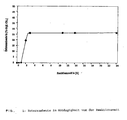
- Unter den zuvor angewendeten Bedingungen wurden eine Reihe von Katalysereaktionen durchgeführt, bei denen die Reaktionszeit sukzessive herabgesetzt wurde. Es sollte festgestellt werden, nach welcher Zeit die Maximalausbeute an Ester erreicht bzw. der Katalysator deaktiviert wird. Um eine Reaktion schon während der Aufheizphase des Autoklaven zu verhindern, wurde zunächst nur mit sehr kleinen Umdrehungszahlen gerührt, um einerseits den Wärmetransport zu gewährleisten und andererseits den Gaseintrag in die Lösung minimal zu halten. Nach dem Erreichen der Zieltemperatur wurde die Umdrehungszahl von etwa 400 min-1 auf 1.500 min-1 erhöht und ab diesem Zeitpunkt die Reaktionszeit gemessen. In der Versuchsreihe kamen jeweils 5 Mol-% Kobaltacetat zum Einsatz.
- Nach einer Reaktionszeit von drei Stunden wurde bereits eine Esterausbeute von mehr als 26% bezogen auf Methan registriert. Nach zwei Stunden betrug der Umsatz fast 20%, während nach einer Stunde lediglich Spuren des Esters und nach nur 30 min. kein Ester nachzuweisen war.
- Während der ersten Stunde der Reaktionszeit bei 280°C wird das gewünschte Produkt demnach noch nicht gebildet, allerdings wird nach dieser Zeit auch kein Niederschlag von Kobaltfluorid und damit eine Deaktivierung des Katalysators beobachtet.
- Die Ursache für diese Induktionsperiode ist noch nicht bekannt.
- Die Verhältnisse sind in Abbildung 1 angegeben.
- Die Arbeitsweise von Beispiel 1 wurde mit der Abweichung wiederholt, dass statt Kobalt (III)-acetat-Tetrahydrat 3,8 Mol-% Mangan(III)-acetat verwendet wurden. Beim Einsatz von Mangan(III)-acetat konnte unter den im Vergleichsbeispiel 1 aufgeführten, identischen Bedingungen immerhin eine Esterausbeute von etwa 15%, bezogen auf Methan, ermittelt werden.
- Mit einem Gemisch aus 40 ml Trifluoressigsäure und 30 ml Essigsäure (Stoffmengenverhältnis 1 : 1) wurden Katalyseversuche wie bisher bei 180°C und einem Anfangsdruck von etwa 30 bar (Methan/Sauerstoff 2 : 1) durchgeführt. Die Reaktionszeiten lagen jeweils bei 20 Stunden, in deren Verlauf jeweils ein deutlicher Druckverlust beobachtet wurde. Nach dem Aufarbeiten der Ansätze konnten keine Niederschläge von Kobaltfluoriden beobachtet werden.
- Die GC-Analysen der flüssigen Phasen ergaben, dass sich im Verlauf der Reaktion nicht wie erhofft nur der Trifluoressigsäuremethylester, sondern auch der Essigsäuremethylester gebildet hatte. Durch den Vergleich mit einer Referenzprobe konnten die Peaks eindeutig identifiziert werden. Die Ausbeuten bezüglich Methan lagen für den Trifluoressigsäuremethylester im Bereich von 6,5 bis 12,5% und für den Essigsäuremethylester bei 11,3 bis 15,5%.
- Ein Vergleich der Peakflächen-Verhältnisse zwischen Trifluoressigsäure und Essigsäure vor und nach der Reaktion wurde angestellt. Vor der Reaktion betrug dass Verhältnis Trifluoressigsäure/Essigsäure 0,2312 und nach der Reaktion 0,2777. Ein Grund für die beobachtete Zunahme des Verhältnisses ist darin zu sehen, dass mehr Essigsäuremethylester als Trifluoressigsäuremethylester gebildet wird.
Claims (9)
- Verfahren zur Oxidation von Methan zu Methanol über Methanolester, wobei die Oxidation des Methans mit Sauerstoff oder einem sauerstoffhaltigen Gas in Gegenwart eines oder mehrerer Salze aus der Gruppe der Übergangsmetalle, die ein Redoxpaar mit einem Normalpotential > 0,6 Volt bilden, als Katalysator in Trifluoressigsäure durchgeführt und die Ester zu Methanol hydrolysiert werden, dadurch gekennzeichnet, dass man die Oxidation in einer Mischung aus Trifluoressigsäure und einem Carbonsäureanhydrid und/oder in einer Mischung aus Trifluoressigsäure und einer anderen, nicht fluorierten Carbonsäure bei Temperaturen von mehr als 80°C durchführt.
- Verfahren nach Anspruch 1, dadurch gekennzeichnet, dass man als Carbonsäureanhydrid, das im Gemisch mit Trifluoressigsäure eingesetzt wird, Trifluoressigsäureanhydrid verwendet.
- Verfahren nach Anspruch 1 oder 2, dadurch gekennzeichnet, dass man das Gewichtsverhältnis zwischen Trifluoressigsäure und Carbonsäureanhydrid auf 99:1 bis 1:99, vorzugsweise auf 99:1 bis 20:80, insbesondere auf 70:30 bis 30:70 einstellt.
- Verfahren nach Anspruch 1, dadurch gekennzeichnet, dass man als nicht fluorierte Carbonsäure, die im Gemisch mit Trifluoressigsäure eingesetzt wird, Essigsäure verwendet.
- Verfahren nach Anspruch 4, dadurch gekennzeichnet, dass man das Gewichtsverhältnis zwischen Trifluoressigsäure und nicht fluorierter Carbonsäure auf 99:1 bis 1:99, vorzugsweise auf 99:1 bis 5:95, besonders bevorzugt auf 99:1 bis 10:90, insbesondere auf 30:70 bis 70:30, einstellt.
- Verfahren nach einem der Ansprüche 1 bis 5, dadurch gekennzeichnet, dass man als Übergangsmetallsalz ein Salz des Kobalts verwendet.
- Verfahren nach einem der Anspruch 6, dadurch gekennzeichnet, dass man als Übergangsmetallsalz Kobaltacetat und/oder Kobaltnitrat verwendet.
- Verfahren nach einem der Ansprüche 1 bis 5, dadurch gekennzeichnet, dass man als Übergangsmetallsalz ein Salz des Mangans verwendet.
- Verfahren nach Anspruch 8, dadurch gekennzeichnet, dass man als Übergangsmetallsalz Mangan(III)-acetat und/oder Mangannitrat verwendet.
Applications Claiming Priority (3)
| Application Number | Priority Date | Filing Date | Title |
|---|---|---|---|
| DE10305377A DE10305377A1 (de) | 2003-02-10 | 2003-02-10 | Verfahren zur Oxidation von Methan zu Methanol über Methanolester |
| DE10305377 | 2003-02-10 | ||
| PCT/EP2004/001215 WO2004069784A1 (de) | 2003-02-10 | 2004-02-10 | Verfahren zur katalytischen oxidation von methan zu methanol über methanolester |
Publications (2)
| Publication Number | Publication Date |
|---|---|
| EP1558557A1 EP1558557A1 (de) | 2005-08-03 |
| EP1558557B1 true EP1558557B1 (de) | 2007-03-14 |
Family
ID=32730942
Family Applications (1)
| Application Number | Title | Priority Date | Filing Date |
|---|---|---|---|
| EP04709624A Expired - Lifetime EP1558557B1 (de) | 2003-02-10 | 2004-02-10 | Verfahren zur katalytischen oxidation von methan zu methanol über methanolester |
Country Status (5)
| Country | Link |
|---|---|
| EP (1) | EP1558557B1 (de) |
| AT (1) | ATE356792T1 (de) |
| DE (2) | DE10305377A1 (de) |
| DK (1) | DK1558557T3 (de) |
| WO (1) | WO2004069784A1 (de) |
Families Citing this family (4)
| Publication number | Priority date | Publication date | Assignee | Title |
|---|---|---|---|---|
| US7161048B2 (en) | 2005-05-20 | 2007-01-09 | Rinnovi, L.L.C. | Method for deriving methanol from waste generated methane and structured product formulated therefrom |
| WO2008006244A1 (en) * | 2006-07-04 | 2008-01-17 | Dalian Institute Of Chemical Physics Chinese Academy Of Sciences | Oxidation catalyst |
| CN111747847B (zh) * | 2020-06-29 | 2021-07-16 | 中山大学 | 一种烷烃选择性催化氧化反应的方法 |
| CN115093324B (zh) * | 2022-02-22 | 2023-12-26 | 上海交通大学 | 一种酯化烷烃的制备方法 |
Family Cites Families (2)
| Publication number | Priority date | Publication date | Assignee | Title |
|---|---|---|---|---|
| CA2107109A1 (en) * | 1991-04-03 | 1992-10-04 | Donald M. Camaioni | Method and reaction pathway for selectively oxidizing organic compounds |
| DE10151660B4 (de) * | 2001-10-19 | 2006-02-09 | Süd-Chemie AG | Katalysator und Verfahren zur partiellen Oxidation von Alkanen |
-
2003
- 2003-02-10 DE DE10305377A patent/DE10305377A1/de not_active Withdrawn
-
2004
- 2004-02-10 AT AT04709624T patent/ATE356792T1/de not_active IP Right Cessation
- 2004-02-10 DE DE502004003208T patent/DE502004003208D1/de not_active Expired - Lifetime
- 2004-02-10 DK DK04709624T patent/DK1558557T3/da active
- 2004-02-10 WO PCT/EP2004/001215 patent/WO2004069784A1/de not_active Ceased
- 2004-02-10 EP EP04709624A patent/EP1558557B1/de not_active Expired - Lifetime
Also Published As
| Publication number | Publication date |
|---|---|
| DE502004003208D1 (de) | 2007-04-26 |
| WO2004069784A1 (de) | 2004-08-19 |
| DE10305377A1 (de) | 2004-08-19 |
| DK1558557T3 (da) | 2007-05-29 |
| ATE356792T1 (de) | 2007-04-15 |
| EP1558557A1 (de) | 2005-08-03 |
Similar Documents
| Publication | Publication Date | Title |
|---|---|---|
| DE2424539C2 (de) | Verfahren zur Herstellung von Diacetoxybutenen | |
| DE2217452B2 (de) | Verfahren zur herstellung von 1,4- diacyloxybuten-(2) | |
| DE2413206C3 (de) | Katalysator auf der Basis Mo-V-Cu-W zur Herstellung von Acrylsäure aus Acrolein | |
| DE2600541C3 (de) | Verfahren zur Herstellung von Phenylbrenztraubensäure oder Arylbrenztraubensäuren | |
| EP0088328A2 (de) | Oxidationskatalysator, inbesondere für die Herstellung von Methacrylsäure durch Gasphasenoxidation von Methacrolein | |
| DE69504162T2 (de) | Verfahren zur Herstellung von 2-Methyl-1,4-naphthochinon | |
| DE2526381B2 (de) | Verfahren zur Herstellung von Glykolsäure oder deren Gemische mit Diglykolsäure | |
| DE69407720T2 (de) | Verfahren zur Hydroxycarbonylierung von Butadien | |
| DE2418569C3 (de) | Verfahren zur Herstellung von dl-Weinsäure | |
| DE2341743B2 (de) | Verfahren zur Herstellung einer Mischung aus Brenzkatechin und Hydrochinon | |
| DE2630981C2 (de) | 4-β,β-Dichlor- und 4-β,β-Dibromvinyl-3,3-dimethylbutyrolactone, Verfahren zu ihrer Herstellung und deren Verwendung zur Herstellung von Estern der 3-β,β-Dichlor- oder 3-β,β-Dibrom-vinyl-2,2-dimethylcyclopropancarbonsäure | |
| EP1558557A1 (de) | Verfahren zur katalytischen oxidation von methan zu methanol über methanolester | |
| DE2657386C2 (de) | ||
| DE3719936A1 (de) | Verfahren zur herstellung von adipinsaeure | |
| DE69400716T2 (de) | Verfahren zur Hydroxykarbonylierung von laktonen | |
| DE3246978A1 (de) | Verfahren zur herstellung von aminen | |
| DE3876267T2 (de) | Verfahren zur herstellung von aldehyden. | |
| DE1256210B (de) | Verfahren zur Reinigung von Terephthalsaeure | |
| EP0647614B1 (de) | Verfahren zur Herstellung von 5-Fluoranthranilsäure | |
| DE2542377A1 (de) | 1,1,1-trihalogen-4-methyl-3-penten- 2-ole sowie verfahren zu ihrer herstellung | |
| DE3785032T3 (de) | Carbonsäuregemisch und Verfahren zu seiner Herstellung. | |
| DE69709081T2 (de) | Verfahren zur herstellung der essigsäure und/oder methylacetat durch isomerisierung des methylformiats | |
| DE2836309A1 (de) | Verfahren zur umwandlung gesaettigter aliphatischer saeuren und deren derivate mit mindestens 4 c-atomen in die entsprechenden ungesaettigten verbindungen | |
| DE2939510C2 (de) | Verfahren zur Herstellung von Terephthalsäure | |
| DE1015444B (de) | Verfahren zur Herstellung von Phenolen |
Legal Events
| Date | Code | Title | Description |
|---|---|---|---|
| PUAI | Public reference made under article 153(3) epc to a published international application that has entered the european phase |
Free format text: ORIGINAL CODE: 0009012 |
|
| 17P | Request for examination filed |
Effective date: 20050418 |
|
| AK | Designated contracting states |
Kind code of ref document: A1 Designated state(s): AT BE BG CH CY CZ DE DK EE ES FI FR GB GR HU IE IT LI LU MC NL PT RO SE SI SK TR |
|
| AX | Request for extension of the european patent |
Extension state: AL LT LV MK |
|
| DAX | Request for extension of the european patent (deleted) | ||
| GRAP | Despatch of communication of intention to grant a patent |
Free format text: ORIGINAL CODE: EPIDOSNIGR1 |
|
| GRAS | Grant fee paid |
Free format text: ORIGINAL CODE: EPIDOSNIGR3 |
|
| GRAA | (expected) grant |
Free format text: ORIGINAL CODE: 0009210 |
|
| AK | Designated contracting states |
Kind code of ref document: B1 Designated state(s): AT BE BG CH CY CZ DE DK EE ES FI FR GB GR HU IE IT LI LU MC NL PT RO SE SI SK TR |
|
| PG25 | Lapsed in a contracting state [announced via postgrant information from national office to epo] |
Ref country code: NL Free format text: LAPSE BECAUSE OF FAILURE TO SUBMIT A TRANSLATION OF THE DESCRIPTION OR TO PAY THE FEE WITHIN THE PRESCRIBED TIME-LIMIT Effective date: 20070314 Ref country code: SI Free format text: LAPSE BECAUSE OF FAILURE TO SUBMIT A TRANSLATION OF THE DESCRIPTION OR TO PAY THE FEE WITHIN THE PRESCRIBED TIME-LIMIT Effective date: 20070314 Ref country code: FI Free format text: LAPSE BECAUSE OF FAILURE TO SUBMIT A TRANSLATION OF THE DESCRIPTION OR TO PAY THE FEE WITHIN THE PRESCRIBED TIME-LIMIT Effective date: 20070314 Ref country code: IE Free format text: LAPSE BECAUSE OF FAILURE TO SUBMIT A TRANSLATION OF THE DESCRIPTION OR TO PAY THE FEE WITHIN THE PRESCRIBED TIME-LIMIT Effective date: 20070314 |
|
| REG | Reference to a national code |
Ref country code: GB Ref legal event code: FG4D Free format text: NOT ENGLISH |
|
| REG | Reference to a national code |
Ref country code: CH Ref legal event code: EP |
|
| REF | Corresponds to: |
Ref document number: 502004003208 Country of ref document: DE Date of ref document: 20070426 Kind code of ref document: P |
|
| REG | Reference to a national code |
Ref country code: IE Ref legal event code: FG4D Free format text: LANGUAGE OF EP DOCUMENT: GERMAN |
|
| REG | Reference to a national code |
Ref country code: DK Ref legal event code: T3 |
|
| PG25 | Lapsed in a contracting state [announced via postgrant information from national office to epo] |
Ref country code: SE Free format text: LAPSE BECAUSE OF FAILURE TO SUBMIT A TRANSLATION OF THE DESCRIPTION OR TO PAY THE FEE WITHIN THE PRESCRIBED TIME-LIMIT Effective date: 20070614 |
|
| PG25 | Lapsed in a contracting state [announced via postgrant information from national office to epo] |
Ref country code: ES Free format text: LAPSE BECAUSE OF FAILURE TO SUBMIT A TRANSLATION OF THE DESCRIPTION OR TO PAY THE FEE WITHIN THE PRESCRIBED TIME-LIMIT Effective date: 20070625 |
|
| GBT | Gb: translation of ep patent filed (gb section 77(6)(a)/1977) |
Effective date: 20070608 |
|
| PG25 | Lapsed in a contracting state [announced via postgrant information from national office to epo] |
Ref country code: PT Free format text: LAPSE BECAUSE OF FAILURE TO SUBMIT A TRANSLATION OF THE DESCRIPTION OR TO PAY THE FEE WITHIN THE PRESCRIBED TIME-LIMIT Effective date: 20070814 |
|
| NLV1 | Nl: lapsed or annulled due to failure to fulfill the requirements of art. 29p and 29m of the patents act | ||
| REG | Reference to a national code |
Ref country code: IE Ref legal event code: FD4D |
|
| EN | Fr: translation not filed | ||
| EN | Fr: translation not filed | ||
| PG25 | Lapsed in a contracting state [announced via postgrant information from national office to epo] |
Ref country code: SK Free format text: LAPSE BECAUSE OF FAILURE TO SUBMIT A TRANSLATION OF THE DESCRIPTION OR TO PAY THE FEE WITHIN THE PRESCRIBED TIME-LIMIT Effective date: 20070314 |
|
| PG25 | Lapsed in a contracting state [announced via postgrant information from national office to epo] |
Ref country code: CZ Free format text: LAPSE BECAUSE OF FAILURE TO SUBMIT A TRANSLATION OF THE DESCRIPTION OR TO PAY THE FEE WITHIN THE PRESCRIBED TIME-LIMIT Effective date: 20070314 Ref country code: RO Free format text: LAPSE BECAUSE OF FAILURE TO SUBMIT A TRANSLATION OF THE DESCRIPTION OR TO PAY THE FEE WITHIN THE PRESCRIBED TIME-LIMIT Effective date: 20070314 |
|
| PLBE | No opposition filed within time limit |
Free format text: ORIGINAL CODE: 0009261 |
|
| STAA | Information on the status of an ep patent application or granted ep patent |
Free format text: STATUS: NO OPPOSITION FILED WITHIN TIME LIMIT |
|
| 26N | No opposition filed |
Effective date: 20071217 |
|
| PG25 | Lapsed in a contracting state [announced via postgrant information from national office to epo] |
Ref country code: GR Free format text: LAPSE BECAUSE OF FAILURE TO SUBMIT A TRANSLATION OF THE DESCRIPTION OR TO PAY THE FEE WITHIN THE PRESCRIBED TIME-LIMIT Effective date: 20070615 Ref country code: FR Free format text: LAPSE BECAUSE OF FAILURE TO SUBMIT A TRANSLATION OF THE DESCRIPTION OR TO PAY THE FEE WITHIN THE PRESCRIBED TIME-LIMIT Effective date: 20071102 |
|
| BERE | Be: lapsed |
Owner name: SUD-CHEMIE A.G. Effective date: 20080228 |
|
| REG | Reference to a national code |
Ref country code: CH Ref legal event code: PL |
|
| PG25 | Lapsed in a contracting state [announced via postgrant information from national office to epo] |
Ref country code: MC Free format text: LAPSE BECAUSE OF NON-PAYMENT OF DUE FEES Effective date: 20080228 Ref country code: CH Free format text: LAPSE BECAUSE OF NON-PAYMENT OF DUE FEES Effective date: 20080229 Ref country code: LI Free format text: LAPSE BECAUSE OF NON-PAYMENT OF DUE FEES Effective date: 20080229 |
|
| PG25 | Lapsed in a contracting state [announced via postgrant information from national office to epo] |
Ref country code: FR Free format text: LAPSE BECAUSE OF FAILURE TO SUBMIT A TRANSLATION OF THE DESCRIPTION OR TO PAY THE FEE WITHIN THE PRESCRIBED TIME-LIMIT Effective date: 20070314 |
|
| PG25 | Lapsed in a contracting state [announced via postgrant information from national office to epo] |
Ref country code: EE Free format text: LAPSE BECAUSE OF FAILURE TO SUBMIT A TRANSLATION OF THE DESCRIPTION OR TO PAY THE FEE WITHIN THE PRESCRIBED TIME-LIMIT Effective date: 20070314 |
|
| PG25 | Lapsed in a contracting state [announced via postgrant information from national office to epo] |
Ref country code: BE Free format text: LAPSE BECAUSE OF NON-PAYMENT OF DUE FEES Effective date: 20080228 |
|
| PG25 | Lapsed in a contracting state [announced via postgrant information from national office to epo] |
Ref country code: AT Free format text: LAPSE BECAUSE OF NON-PAYMENT OF DUE FEES Effective date: 20080210 |
|
| PG25 | Lapsed in a contracting state [announced via postgrant information from national office to epo] |
Ref country code: CY Free format text: LAPSE BECAUSE OF FAILURE TO SUBMIT A TRANSLATION OF THE DESCRIPTION OR TO PAY THE FEE WITHIN THE PRESCRIBED TIME-LIMIT Effective date: 20070314 |
|
| PG25 | Lapsed in a contracting state [announced via postgrant information from national office to epo] |
Ref country code: BG Free format text: LAPSE BECAUSE OF FAILURE TO SUBMIT A TRANSLATION OF THE DESCRIPTION OR TO PAY THE FEE WITHIN THE PRESCRIBED TIME-LIMIT Effective date: 20070614 |
|
| PGFP | Annual fee paid to national office [announced via postgrant information from national office to epo] |
Ref country code: DK Payment date: 20100223 Year of fee payment: 7 |
|
| PGFP | Annual fee paid to national office [announced via postgrant information from national office to epo] |
Ref country code: IT Payment date: 20100226 Year of fee payment: 7 |
|
| PGFP | Annual fee paid to national office [announced via postgrant information from national office to epo] |
Ref country code: DE Payment date: 20100225 Year of fee payment: 7 Ref country code: GB Payment date: 20100226 Year of fee payment: 7 |
|
| PG25 | Lapsed in a contracting state [announced via postgrant information from national office to epo] |
Ref country code: LU Free format text: LAPSE BECAUSE OF NON-PAYMENT OF DUE FEES Effective date: 20080210 Ref country code: HU Free format text: LAPSE BECAUSE OF FAILURE TO SUBMIT A TRANSLATION OF THE DESCRIPTION OR TO PAY THE FEE WITHIN THE PRESCRIBED TIME-LIMIT Effective date: 20070915 |
|
| PG25 | Lapsed in a contracting state [announced via postgrant information from national office to epo] |
Ref country code: TR Free format text: LAPSE BECAUSE OF FAILURE TO SUBMIT A TRANSLATION OF THE DESCRIPTION OR TO PAY THE FEE WITHIN THE PRESCRIBED TIME-LIMIT Effective date: 20070314 |
|
| REG | Reference to a national code |
Ref country code: DK Ref legal event code: EBP |
|
| GBPC | Gb: european patent ceased through non-payment of renewal fee |
Effective date: 20110210 |
|
| PG25 | Lapsed in a contracting state [announced via postgrant information from national office to epo] |
Ref country code: IT Free format text: LAPSE BECAUSE OF NON-PAYMENT OF DUE FEES Effective date: 20110210 |
|
| REG | Reference to a national code |
Ref country code: DE Ref legal event code: R119 Ref document number: 502004003208 Country of ref document: DE Effective date: 20110901 |
|
| PG25 | Lapsed in a contracting state [announced via postgrant information from national office to epo] |
Ref country code: GB Free format text: LAPSE BECAUSE OF NON-PAYMENT OF DUE FEES Effective date: 20110210 |
|
| PG25 | Lapsed in a contracting state [announced via postgrant information from national office to epo] |
Ref country code: DE Free format text: LAPSE BECAUSE OF NON-PAYMENT OF DUE FEES Effective date: 20110901 |