EP1533781A2 - Verfahren und Gerät zur Ansteuerung einer Plamaanzeigetafel - Google Patents
Verfahren und Gerät zur Ansteuerung einer Plamaanzeigetafel Download PDFInfo
- Publication number
- EP1533781A2 EP1533781A2 EP04257241A EP04257241A EP1533781A2 EP 1533781 A2 EP1533781 A2 EP 1533781A2 EP 04257241 A EP04257241 A EP 04257241A EP 04257241 A EP04257241 A EP 04257241A EP 1533781 A2 EP1533781 A2 EP 1533781A2
- Authority
- EP
- European Patent Office
- Prior art keywords
- period
- tilt
- ramp
- sustain
- voltage
- Prior art date
- Legal status (The legal status is an assumption and is not a legal conclusion. Google has not performed a legal analysis and makes no representation as to the accuracy of the status listed.)
- Withdrawn
Links
- 238000000034 method Methods 0.000 title claims abstract description 45
- 230000000007 visual effect Effects 0.000 claims 1
- 230000004888 barrier function Effects 0.000 description 13
- 238000011084 recovery Methods 0.000 description 11
- 239000010410 layer Substances 0.000 description 7
- 239000000758 substrate Substances 0.000 description 7
- 238000010276 construction Methods 0.000 description 5
- 238000010586 diagram Methods 0.000 description 4
- 238000010304 firing Methods 0.000 description 4
- KTAVBOYXMBQFGR-MAODNAKNSA-J tetrasodium;(6r,7r)-7-[[(2z)-2-(2-amino-1,3-thiazol-4-yl)-2-methoxyimino-1-oxidoethylidene]amino]-3-[(2-methyl-5,6-dioxo-1h-1,2,4-triazin-3-yl)sulfanylmethyl]-8-oxo-5-thia-1-azabicyclo[4.2.0]oct-2-ene-2-carboxylate;heptahydrate Chemical compound O.O.O.O.O.O.O.[Na+].[Na+].[Na+].[Na+].S([C@@H]1[C@@H](C(N1C=1C([O-])=O)=O)NC(=O)\C(=N/OC)C=2N=C(N)SC=2)CC=1CSC1=NC(=O)C([O-])=NN1C.S([C@@H]1[C@@H](C(N1C=1C([O-])=O)=O)NC(=O)\C(=N/OC)C=2N=C(N)SC=2)CC=1CSC1=NC(=O)C([O-])=NN1C KTAVBOYXMBQFGR-MAODNAKNSA-J 0.000 description 4
- 239000003990 capacitor Substances 0.000 description 3
- 229910052751 metal Inorganic materials 0.000 description 3
- 239000002184 metal Substances 0.000 description 3
- 239000011241 protective layer Substances 0.000 description 3
- OAICVXFJPJFONN-UHFFFAOYSA-N Phosphorus Chemical compound [P] OAICVXFJPJFONN-UHFFFAOYSA-N 0.000 description 2
- 238000012937 correction Methods 0.000 description 2
- 238000009792 diffusion process Methods 0.000 description 2
- 230000000694 effects Effects 0.000 description 2
- CPLXHLVBOLITMK-UHFFFAOYSA-N magnesium oxide Inorganic materials [Mg]=O CPLXHLVBOLITMK-UHFFFAOYSA-N 0.000 description 2
- 239000000395 magnesium oxide Substances 0.000 description 2
- AXZKOIWUVFPNLO-UHFFFAOYSA-N magnesium;oxygen(2-) Chemical compound [O-2].[Mg+2] AXZKOIWUVFPNLO-UHFFFAOYSA-N 0.000 description 2
- 238000005070 sampling Methods 0.000 description 2
- VYZAMTAEIAYCRO-UHFFFAOYSA-N Chromium Chemical compound [Cr] VYZAMTAEIAYCRO-UHFFFAOYSA-N 0.000 description 1
- 238000011161 development Methods 0.000 description 1
- 230000018109 developmental process Effects 0.000 description 1
- 238000007599 discharging Methods 0.000 description 1
- 238000005516 engineering process Methods 0.000 description 1
- AMGQUBHHOARCQH-UHFFFAOYSA-N indium;oxotin Chemical compound [In].[Sn]=O AMGQUBHHOARCQH-UHFFFAOYSA-N 0.000 description 1
- 238000013507 mapping Methods 0.000 description 1
- 238000012986 modification Methods 0.000 description 1
- 230000004048 modification Effects 0.000 description 1
- 238000004544 sputter deposition Methods 0.000 description 1
Images



Classifications
-
- G—PHYSICS
- G09—EDUCATION; CRYPTOGRAPHY; DISPLAY; ADVERTISING; SEALS
- G09G—ARRANGEMENTS OR CIRCUITS FOR CONTROL OF INDICATING DEVICES USING STATIC MEANS TO PRESENT VARIABLE INFORMATION
- G09G3/00—Control arrangements or circuits, of interest only in connection with visual indicators other than cathode-ray tubes
- G09G3/20—Control arrangements or circuits, of interest only in connection with visual indicators other than cathode-ray tubes for presentation of an assembly of a number of characters, e.g. a page, by composing the assembly by combination of individual elements arranged in a matrix no fixed position being assigned to or needed to be assigned to the individual characters or partial characters
- G09G3/22—Control arrangements or circuits, of interest only in connection with visual indicators other than cathode-ray tubes for presentation of an assembly of a number of characters, e.g. a page, by composing the assembly by combination of individual elements arranged in a matrix no fixed position being assigned to or needed to be assigned to the individual characters or partial characters using controlled light sources
- G09G3/28—Control arrangements or circuits, of interest only in connection with visual indicators other than cathode-ray tubes for presentation of an assembly of a number of characters, e.g. a page, by composing the assembly by combination of individual elements arranged in a matrix no fixed position being assigned to or needed to be assigned to the individual characters or partial characters using controlled light sources using luminous gas-discharge panels, e.g. plasma panels
- G09G3/288—Control arrangements or circuits, of interest only in connection with visual indicators other than cathode-ray tubes for presentation of an assembly of a number of characters, e.g. a page, by composing the assembly by combination of individual elements arranged in a matrix no fixed position being assigned to or needed to be assigned to the individual characters or partial characters using controlled light sources using luminous gas-discharge panels, e.g. plasma panels using AC panels
- G09G3/291—Control arrangements or circuits, of interest only in connection with visual indicators other than cathode-ray tubes for presentation of an assembly of a number of characters, e.g. a page, by composing the assembly by combination of individual elements arranged in a matrix no fixed position being assigned to or needed to be assigned to the individual characters or partial characters using controlled light sources using luminous gas-discharge panels, e.g. plasma panels using AC panels controlling the gas discharge to control a cell condition, e.g. by means of specific pulse shapes
- G09G3/292—Control arrangements or circuits, of interest only in connection with visual indicators other than cathode-ray tubes for presentation of an assembly of a number of characters, e.g. a page, by composing the assembly by combination of individual elements arranged in a matrix no fixed position being assigned to or needed to be assigned to the individual characters or partial characters using controlled light sources using luminous gas-discharge panels, e.g. plasma panels using AC panels controlling the gas discharge to control a cell condition, e.g. by means of specific pulse shapes for reset discharge, priming discharge or erase discharge occurring in a phase other than addressing
- G09G3/2927—Details of initialising
-
- G—PHYSICS
- G09—EDUCATION; CRYPTOGRAPHY; DISPLAY; ADVERTISING; SEALS
- G09G—ARRANGEMENTS OR CIRCUITS FOR CONTROL OF INDICATING DEVICES USING STATIC MEANS TO PRESENT VARIABLE INFORMATION
- G09G3/00—Control arrangements or circuits, of interest only in connection with visual indicators other than cathode-ray tubes
- G09G3/20—Control arrangements or circuits, of interest only in connection with visual indicators other than cathode-ray tubes for presentation of an assembly of a number of characters, e.g. a page, by composing the assembly by combination of individual elements arranged in a matrix no fixed position being assigned to or needed to be assigned to the individual characters or partial characters
- G09G3/22—Control arrangements or circuits, of interest only in connection with visual indicators other than cathode-ray tubes for presentation of an assembly of a number of characters, e.g. a page, by composing the assembly by combination of individual elements arranged in a matrix no fixed position being assigned to or needed to be assigned to the individual characters or partial characters using controlled light sources
- G09G3/28—Control arrangements or circuits, of interest only in connection with visual indicators other than cathode-ray tubes for presentation of an assembly of a number of characters, e.g. a page, by composing the assembly by combination of individual elements arranged in a matrix no fixed position being assigned to or needed to be assigned to the individual characters or partial characters using controlled light sources using luminous gas-discharge panels, e.g. plasma panels
- G09G3/288—Control arrangements or circuits, of interest only in connection with visual indicators other than cathode-ray tubes for presentation of an assembly of a number of characters, e.g. a page, by composing the assembly by combination of individual elements arranged in a matrix no fixed position being assigned to or needed to be assigned to the individual characters or partial characters using controlled light sources using luminous gas-discharge panels, e.g. plasma panels using AC panels
- G09G3/291—Control arrangements or circuits, of interest only in connection with visual indicators other than cathode-ray tubes for presentation of an assembly of a number of characters, e.g. a page, by composing the assembly by combination of individual elements arranged in a matrix no fixed position being assigned to or needed to be assigned to the individual characters or partial characters using controlled light sources using luminous gas-discharge panels, e.g. plasma panels using AC panels controlling the gas discharge to control a cell condition, e.g. by means of specific pulse shapes
-
- G—PHYSICS
- G09—EDUCATION; CRYPTOGRAPHY; DISPLAY; ADVERTISING; SEALS
- G09G—ARRANGEMENTS OR CIRCUITS FOR CONTROL OF INDICATING DEVICES USING STATIC MEANS TO PRESENT VARIABLE INFORMATION
- G09G2310/00—Command of the display device
- G09G2310/06—Details of flat display driving waveforms
- G09G2310/066—Waveforms comprising a gently increasing or decreasing portion, e.g. ramp
-
- G—PHYSICS
- G09—EDUCATION; CRYPTOGRAPHY; DISPLAY; ADVERTISING; SEALS
- G09G—ARRANGEMENTS OR CIRCUITS FOR CONTROL OF INDICATING DEVICES USING STATIC MEANS TO PRESENT VARIABLE INFORMATION
- G09G2320/00—Control of display operating conditions
- G09G2320/02—Improving the quality of display appearance
- G09G2320/0228—Increasing the driving margin in plasma displays
-
- G—PHYSICS
- G09—EDUCATION; CRYPTOGRAPHY; DISPLAY; ADVERTISING; SEALS
- G09G—ARRANGEMENTS OR CIRCUITS FOR CONTROL OF INDICATING DEVICES USING STATIC MEANS TO PRESENT VARIABLE INFORMATION
- G09G3/00—Control arrangements or circuits, of interest only in connection with visual indicators other than cathode-ray tubes
- G09G3/20—Control arrangements or circuits, of interest only in connection with visual indicators other than cathode-ray tubes for presentation of an assembly of a number of characters, e.g. a page, by composing the assembly by combination of individual elements arranged in a matrix no fixed position being assigned to or needed to be assigned to the individual characters or partial characters
- G09G3/2007—Display of intermediate tones
- G09G3/2018—Display of intermediate tones by time modulation using two or more time intervals
- G09G3/2022—Display of intermediate tones by time modulation using two or more time intervals using sub-frames
-
- G—PHYSICS
- G09—EDUCATION; CRYPTOGRAPHY; DISPLAY; ADVERTISING; SEALS
- G09G—ARRANGEMENTS OR CIRCUITS FOR CONTROL OF INDICATING DEVICES USING STATIC MEANS TO PRESENT VARIABLE INFORMATION
- G09G3/00—Control arrangements or circuits, of interest only in connection with visual indicators other than cathode-ray tubes
- G09G3/20—Control arrangements or circuits, of interest only in connection with visual indicators other than cathode-ray tubes for presentation of an assembly of a number of characters, e.g. a page, by composing the assembly by combination of individual elements arranged in a matrix no fixed position being assigned to or needed to be assigned to the individual characters or partial characters
- G09G3/22—Control arrangements or circuits, of interest only in connection with visual indicators other than cathode-ray tubes for presentation of an assembly of a number of characters, e.g. a page, by composing the assembly by combination of individual elements arranged in a matrix no fixed position being assigned to or needed to be assigned to the individual characters or partial characters using controlled light sources
- G09G3/28—Control arrangements or circuits, of interest only in connection with visual indicators other than cathode-ray tubes for presentation of an assembly of a number of characters, e.g. a page, by composing the assembly by combination of individual elements arranged in a matrix no fixed position being assigned to or needed to be assigned to the individual characters or partial characters using controlled light sources using luminous gas-discharge panels, e.g. plasma panels
- G09G3/288—Control arrangements or circuits, of interest only in connection with visual indicators other than cathode-ray tubes for presentation of an assembly of a number of characters, e.g. a page, by composing the assembly by combination of individual elements arranged in a matrix no fixed position being assigned to or needed to be assigned to the individual characters or partial characters using controlled light sources using luminous gas-discharge panels, e.g. plasma panels using AC panels
- G09G3/296—Driving circuits for producing the waveforms applied to the driving electrodes
-
- G—PHYSICS
- G09—EDUCATION; CRYPTOGRAPHY; DISPLAY; ADVERTISING; SEALS
- G09G—ARRANGEMENTS OR CIRCUITS FOR CONTROL OF INDICATING DEVICES USING STATIC MEANS TO PRESENT VARIABLE INFORMATION
- G09G3/00—Control arrangements or circuits, of interest only in connection with visual indicators other than cathode-ray tubes
- G09G3/20—Control arrangements or circuits, of interest only in connection with visual indicators other than cathode-ray tubes for presentation of an assembly of a number of characters, e.g. a page, by composing the assembly by combination of individual elements arranged in a matrix no fixed position being assigned to or needed to be assigned to the individual characters or partial characters
- G09G3/22—Control arrangements or circuits, of interest only in connection with visual indicators other than cathode-ray tubes for presentation of an assembly of a number of characters, e.g. a page, by composing the assembly by combination of individual elements arranged in a matrix no fixed position being assigned to or needed to be assigned to the individual characters or partial characters using controlled light sources
- G09G3/28—Control arrangements or circuits, of interest only in connection with visual indicators other than cathode-ray tubes for presentation of an assembly of a number of characters, e.g. a page, by composing the assembly by combination of individual elements arranged in a matrix no fixed position being assigned to or needed to be assigned to the individual characters or partial characters using controlled light sources using luminous gas-discharge panels, e.g. plasma panels
- G09G3/288—Control arrangements or circuits, of interest only in connection with visual indicators other than cathode-ray tubes for presentation of an assembly of a number of characters, e.g. a page, by composing the assembly by combination of individual elements arranged in a matrix no fixed position being assigned to or needed to be assigned to the individual characters or partial characters using controlled light sources using luminous gas-discharge panels, e.g. plasma panels using AC panels
- G09G3/298—Control arrangements or circuits, of interest only in connection with visual indicators other than cathode-ray tubes for presentation of an assembly of a number of characters, e.g. a page, by composing the assembly by combination of individual elements arranged in a matrix no fixed position being assigned to or needed to be assigned to the individual characters or partial characters using controlled light sources using luminous gas-discharge panels, e.g. plasma panels using AC panels using surface discharge panels
Definitions
- the present invention relates to a method of driving a plasma display panel and apparatus thereof, and more particularly, to a method of driving a plasma display panel in which the margin of an address discharge and a sustain discharge are increased through a stabilized reset operation, and apparatus thereof.
- Plasma display panels are adapted to display images by light-emitting phosphors stimulated with ultraviolet light generated during the discharge of an inert mixed gas such as He+Xe, Ne+Xe or He+Ne+Xe.
- an inert mixed gas such as He+Xe, Ne+Xe or He+Ne+Xe.
- PDPs can be easily made both thin and large, and can provide greatly increased image quality with recent developments of the relevant technology.
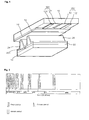
- FIG. 1 is a perspective view illustrating the construction of a discharge cell of a three-electrode AC surface discharge type PDP in a prior art.
- the discharge cell of the three-electrode AC surface discharge type PDP includes a scan electrode 30Y and a sustain electrode 30Z which are formed on the bottom surface of an upper substrate 10, and an address electrode 20X formed on a lower substrate 18.
- the scan electrode 30Y includes a transparent electrode 12Y, and a metal bus electrode 13Y which has a line width smaller than that of the transparent electrode 12Y and is disposed at one edge side of the transparent electrode.
- the sustain electrode 30Z includes a transparent electrode 12Z, and a metal bus electrode 13Z which has a line width smaller than that of the transparent electrode 12Z and is disposed at one side edge of the transparent electrode.
- the transparent electrodes 12Y, 12Z which are typically made of ITO (indium tin oxide), are formed on the bottom surface of the upper substrate 10.
- the metal bus electrodes 13Y, 13Z which are typically made of chrome (Cr), are formed on the transparent electrodes 12Y, 12Z, and serve to reduce a voltage drop caused by the transparent electrodes 12Y, 12Z having high resistance.
- On the bottom surface of the upper substrate 10 in which the scan electrodes 30Y and the sustain electrodes 30Z are placed in parallel with each other are laminated an upper dielectric layer 14 and a protective layer 16.
- the protective layer 16 serves to prevent the upper dielectric layer 14 from being damaged due to sputtering generated during the plasma discharge, and improve efficiency of secondary electron emission.
- Magnesium oxide (MgO) is typically used as the protective layer 16.
- a lower dielectric layer 22 and barrier ribs 24 are formed on the lower substrate 18 in which the address electrode 20X is formed.
- a phosphor layer 26 is coated on the surface of the lower dielectric layer 22 and barrier ribs 24.
- the address electrodes 20X are formed in the direction in which they intersect the scan electrodes 30Y and the sustain electrodes 30Z.
- the barrier ribs 24 are formed in parallel with the address electrodes 20X to prevent ultraviolet and a visible ray generated by the discharge from leaking toward neighboring discharge cells.
- the phosphor layer 26 is excited with an ultraviolet generated during the plasma discharging to generate a visible light of any one of red, green and blue lights.
- An inert mixed gas is injected into the discharge spaces defined between the upper substrate 10 and the barrier ribs 24 and between the lower substrate 18 and the barrier ribs 24.
- the PDP is time-driven with one frame being divided into several sub-fields having a different number of emission in order to implement the gray scale of an image.
- Each of the sub-fields is divided into a reset period for initializing the entire screen, an address period for selecting a scan line and selecting a cell from the selected scan line, and a sustain period for implementing the gray scale depending on the number of a discharge.
- the reset period is divided into a set-up period where a ramp-up pulse is supplied and a set-down period were a ramp-down pulse is supplied, in plural.
- a frame period (16.67ms) corresponding to 1/60 seconds is divided into eight sub-fields SF1 to SF8, as shown in FIG. 2.
- each of the eight sub-fields SF1 to SF8 is subdivided into a reset period, an address period and a sustain period.
- FIG. 3 shows a driving waveform of a PDP, which is supplied two sub-fields.
- Y indicates scan electrodes
- Z indicates sustain electrodes
- X indicates address electrodes
- the PDP is driven with it being divided into a reset period for initializing the entire screen, an address period for selecting a cell, and a sustain period for maintaining a discharge of the selected cell.
- a ramp-up pulse Ramp-up is applied to all scan electrodes Y at the same time.
- a weak discharge is generated within cells of the entire screen by means of the ramp-up pulse Ramp-up and wall charges are thus created within the cells.
- a ramp-down pulse Ramp-down which drops from a voltage of the positive polarity lower than the peak voltage of the ramp-up pulse Ramp-up, is applied to the scan electrodes Y at the same time.
- the ramp-down pulse Ramp-down generates a weak erase discharge within the cells, so that the wall charges generated by the set-up discharge and unnecessary charges among space charges are erased and wall charges necessary for an address discharge uniformly remain within the cells of the entire screen.
- a data pulse data of the positive polarity is applied to the address electrodes X.
- the address discharge is generated within cells to which the data pulse data is applied. Also, wall charges are generated within cells selected by the address discharge.
- a positive-polarity DC voltage of a sustain voltage level (Vs) is applied to the sustain electrodes Z.
- a sustain pulse sus is alternately applied to the scan electrodes Y and the sustain electrodes Z. Then, in cells selected by the address discharge, a sustain discharge is generated between the scan electrodes Y and the sustain electrodes Z in the surface discharge shape whenever the sustain pulse sus is applied as the wall voltage within the cells and the sustain pulse sus are added. Lastly, after the sustain discharge is completed, an erase ramp pulse erase having a narrow pulse width is applied to the sustain electrodes Z, thus erasing the wall charges within the cells.
- a discharge space is widened by increasing the height h of a barrier rib 24 so as to improve the emission efficiency of the PDP, as shown in FIG. 4. If the height of the barrier rib 24 is increased, however, a discharge firing voltage of an opposite discharge is increased. It is thus necessary to further lower the voltage of the ramp-down pulse Ramp-down. In this case, an excessive discharge is generated between the scan electrodes Y and the sustain electrodes Z. An erroneous discharge is thus generated in the address period or the sustain period.
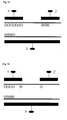
- the ramp-up pulse Ramp-up is applied to the scan electrodes Y in the set-up period, a discharge is generated between the scan electrodes Y and the sustain electrodes Z. Wall charges of the negative polarity are thus formed in the scan electrodes Y, as shown in FIG. 5a. It in turn means that a voltage of the negative polarity is applied to the sustain electrodes Z and the address electrodes X compared with the scan electrodes Y. Wall charges of the positive polarity are thus formed in the sustain electrodes Z and the address electrodes X.
- the ramp-down pulse Ramp-down be lower than the discharge firing voltage for generating the discharge between the scan electrodes Y and the address electrodes X. Accordingly, an excessive discharge is generated between the scan electrodes Y and the sustain electrodes Z, the wall charges in the scan electrodes Y and the sustain electrodes Z are excessively erased, as shown in FIG. 5c. Therefore, there is a problem in that the margin of the address discharge and the sustain discharge is lowered since the wall charges are severely inversed.
- the present invention has been made in view of the above problems, and it is an object of the present invention to provide a method of driving a plasma display panel in which a discharge can be generated stably.
- a method of driving a plasma display panel includes the step of alternately applying a first sustain pulse to scan electrode lines and sustain electrode lines during a sustain period with a first period intervened between the sustain periods. In this time, a last sustain pulse applied to the scan electrode lines during the sustain period is applied after a second period that is longer than the first period.
- a method of driving a plasma display panel in which one frame includes a plurality of selective write sub-fields and selective erase sub-fields includes the steps of alternately applying a first sustain pulse to scan electrode lines and sustain electrode lines during a sustain period of at least one of the plurality of the selective write sub-fields with a first period intervened between the sustain periods, and applying a last sustain pulse applied to the scan electrode lines after a second period that is longer than the first period.
- a method of driving a plasma display panel includes applying a last sustain pulse having a long pulse width, which is supplied to scan electrode lines in a last selective write sub-field, after sustain pulses that are provided previously. Accordingly, more particularly, in a low temperature environment, a stabilized sustain discharge can be generated by the last sustain pulse having the long pulse width. Thus, a stabilized address discharge can be generated in the address period of the selective erase sub-field.
- a method of driving a plasma display panel including the steps of applying a first ramp-down pulse having a first tilt to scan electrodes in the first half of a set-down period included in a reset period, applying a ground voltage to the scan electrodes in the meddle phase of the set-down period, and applying a second ramp-down pulse having a second tilt to the scan electrodes in the second half of the set-down period.
- a method of driving a plasma display panel in which a reset period is divided into a set-up period and a set-down period and is then driven, including a first step in which wall charges are formed in a discharge cell during the set-up period, a second step in which some of the wall charges is erased by a discharge between scan electrodes and sustain electrodes during the first half of the set-down period, and a third step in which some of the wall charges is erased by a discharge between the scan electrodes and address electrodes in the second half of the set-down period.
- an apparatus for driving a plasma display panel including a scan driving unit that supplies a first ramp-down pulse which drops from a sustain voltage to a ground voltage at a first tilt in the first half of a set-down period included in the reset period, supplies the ground voltage in the meddle phase of the set-down period, and supplies a second ramp-down pulse which drops from the ground voltage to a voltage of the negative polarity at a second tilt in the second half of the set-down period; and a sustain driving unit that supplies the sustain voltage in the first half of the set-down period and the ground voltage in the second half of the set-down period.
- the present invention has an effect in that it can generate a reset discharge and an address discharge stably.
- the present invention has been made in view of the above problems, and it is an object of the present invention to provide a method of driving a plasma display panel in which a discharge can be generated stably.
- a method of driving a plasma display panel includes the step of alternately applying a first sustain pulse to scan electrode lines and sustain electrode lines during a sustain period with a first period intervened between the sustain periods. In this time, a last sustain pulse applied to the scan electrode lines during the sustain period is applied after a second period that is longer than the first period.
- a method of driving a plasma display panel in which one frame includes a plurality of selective write sub-fields and selective erase sub-fields includes the steps of alternately applying a first sustain pulse to scan electrode lines and sustain electrode lines during a sustain period of at least one of the plurality of the selective write sub-fields with a first period intervened between the sustain periods, and applying a last sustain pulse applied to the scan electrode lines after a second period that is longer than the first period.
- a method of driving a plasma display panel includes applying a last sustain pulse having a long pulse width, which is supplied to scan electrode lines in a last selective write sub-field, after sustain pulses that are provided previously. Accordingly, more particularly, in a low temperature environment, a stabilized sustain discharge can be generated by the last sustain pulse having the long pulse width. Thus, a stabilized address discharge can be generated in the address period of the selective erase sub-field.
- a method of driving a plasma display panel including the steps of applying a first ramp-down pulse having a first tilt to scan electrodes in the first half of a set-down period included in a reset period, applying a ground voltage to the scan electrodes in the meddle phase of the set-down period, and applying a second ramp-down pulse having a second tilt to the scan electrodes in the second half of the set-down period.
- the first ramp-down pulse preferably drops from a sustain voltage level to the ground voltage.
- the second ramp-down pulse preferably drops from the ground voltage to a voltage level of the negative polarity.
- the voltage level of the negative polarity is preferably a voltage of -100V or less.
- the first tilt and the second tilt may be set to be the same.
- the first tilt and the second tilt may be set to be different.
- the first tilt may be set to be higher than the second tilt.
- the first tilt may be set to be lower than the second tilt.
- a first voltage of the positive polarity may be supplied to the sustain electrodes.
- the ground voltage may be supplied to the sustain electrodes.
- a second voltage of the positive polarity which is lower than the first voltage of the positive polarity, may be supplied to the sustain electrodes during an address period.
- a method of driving a plasma display panel in which a reset period is divided into a set-up period and a set-down period and is then driven, including a first step in which wall charges are formed in a discharge cell during the set-up period, a second step in which some of the wall charges is erased by a discharge between scan electrodes and sustain electrodes during the first half of the set-down period, and a third step in which some of the wall charges is erased by a discharge between the scan electrodes and address electrodes in the second half of the set-down period.
- the method of driving the plasma display panel according to an embodiment of the present invention preferably further includes the step of supplying a ground voltage to the scan electrodes between the second and third steps.
- an apparatus for driving a plasma display panel including a scan driving unit that supplies a first ramp-down pulse which drops from a sustain voltage to a ground voltage at a first tilt in the first half of a set-down period included in the reset period, supplies the ground voltage in the meddle phase of the set-down period, and supplies a second ramp-down pulse which drops from the ground voltage to a voltage of the negative polarity at a second tilt in the second half of the set-down period; and a sustain driving unit that supplies the sustain voltage in the first half of the set-down period and the ground voltage in the second half of the set-down period.
- the sustain driving unit preferably supplies a voltage of the positive polarity that is lower than the sustain voltage to sustain electrodes during the address period.
- the first tilt and the second tilt may be set to be the same.
- the first tilt and the second tilt may be set to be different.
- the first tilt may be set to be higher than the second tilt.
- the first tilt may be set to be lower than the second tilt.
- the scan driving unit may include a first ramp supply unit for supplying the first ramp-down pulse having the first tilt, and a second ramp supply unit for supplying the second ramp-down pulse having the second tilt.
- the first ramp supply unit may include a first switch connected between a sustain voltage source and a ground voltage source, and a first variable resistor connected to the gate terminal of the first switch, for controlling the first tilt of the first ramp-down pulse.
- the second ramp supply unit may include a second switch connected between a sustain voltage source and a negative-polarity voltage source, and a second variable resistor connected to the gate terminal of the second switch, for controlling the second tilt of the second ramp-down pulse.
- the negative-polarity voltage source preferably supplies a voltage of -100V or less.
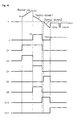
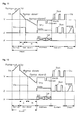
- FIG. 6 is a waveform for explaining a method of driving a PDP according to an embodiment of the present invention the plasma display panel.
- the PDP has a barrier rib the height of which is increased so as to improve the discharge efficiency.
- Y indicates scan electrodes
- Z indicates sustain electrodes
- X indicates address electrodes
- the PDP includes a reset period for initializing the entire screen, an address period for selecting a given cell, and a sustain period for maintaining a discharge of the selected cell.
- a ramp-up pulse Ramp-up is applied to all the scan electrodes Y at the same time.
- a weak discharge is generated in cells of the entire screen by the ramp-up pulse Ramp-up, so that wall charges are formed in the cells as shown in FIG. 7a.
- the ramp-up pulse Ramp-up is raised up to a peak voltage (Vy), and the peak voltage (Vy) is then applied to the scan electrodes Y for a predetermined time. If the peak voltage (Vy) of the ramp-up pulse Ramp-up is maintained for a predetermined time, the wall charges formed in the discharge cell are enhanced.
- a first ramp-down pulse Ramp-down1 having a first tilt is applied to the scan electrodes Y.
- a second ramp-down pulse Ramp-down2 having a second tilt is applied to the scan electrodes Y.
- the first tilt is set to be lower than the second tilt.
- the first ramp-down pulse Ramp-down1 which is applied during the "a" period, drops to a ground voltage at a time point where the voltage drops from the peak voltage (Vy) to a sustain voltage (Vs).
- the sustain voltage (Vs) of a positive-polarity DC voltage is applied to the sustain electrodes Z. Accordingly, an erase discharge, i.e., a dark discharge is generated within the cells between the scan electrodes Y and the sustain electrodes Z, so the wall charges generated by the set-up discharge and unnecessary charges among space charges are erased. Therefore, the wall charges are formed, as shown in FIG. 7b. Meanwhile, if the second ramp-down pulse Ramp-donw2 is applied immediately after the first ramp-down pulse Ramp-donw1 is applied, an erroneous discharge can occur between the scan electrodes Y and the sustain electrodes Z. In order to prevent this erroneous discharge, the ground voltage is applied to the scan electrodes Y for a given time.
- the second ramp-down pulse Ramp-down2 having the second tilt which drops to a predetermined voltage of the negative polarity (e.g., -100V or less), is applied to the scan electrodes Y. That is, if the height of the barrier rib is increased so as to improve the discharge efficiency, a distance between the scan electrodes Y and the address electrodes X becomes far and the discharge firing voltage is thus increased. Accordingly, a dark discharge is generated between the scan electrodes Y and the address electrodes Z by dropping the second ramp-down pulse Ramp-down2 having the second tilt below the discharge firing voltage.
- a predetermined voltage of the negative polarity e.g., -100V or less
- the ground voltage is applied to the sustain electrodes Z. Accordingly, since a discharge is not generated between the scan electrodes Y and the sustain electrodes Z, the wall charges formed in the sustain electrodes Z are not affected.
- the first and second ramp-down pulses Ramp-down1, Ramp-down2, which have a different tilt, are applied to the scan electrodes Y.
- the dark discharge is generated between the scan electrodes Y and the sustain electrodes Z by the first ramp-down pulse Ramp-down1
- the dark discharge is generated between the scan electrodes Y and the address electrodes X by the second ramp-down pulse Ramp-donw2, so that wall charges are formed as shown in FIG. 7c.
- Distribution of the wall charges between the scan electrodes Y and the sustain electrodes Z and between the scan electrodes Y and the address electrodes X can be controlled individually by applying the first and second ramp-down pulses Ramp-down1, Ramp-down2 having a different tilt to the scan electrodes Y.
- the height of the barrier rib is increased so as to improve the discharge efficiency, it is prevented lots of wall charges of the positive polarity from being formed in the scan electrodes Y and lots wall charges of the negative polarity from being form in the sustain electrodes Z. Resultantly, an excessive erase is not generated between the scan electrode Y and the sustain electrodes Z, and a stabilized address discharge can be generated in the address period accordingly.
- a data pulse data of the positive polarity which has a data voltage (Vd) is applied to the address electrodes X.
- Vd data voltage
- an address discharge is generated within cells to which the data pulse data is applied. Wall charges are thus formed in cells selected by the address discharge.
- a DC voltage of the positive polarity which is lower than the sustain voltage level (Vs) is applied to the sustain electrodes Z so that the address discharge is generated between the scan electrode Y and the address electrodes X.
- a sustain pulse Sus is alternately applied to the scan electrodes Y and the sustain electrodes Z. Then, in cells selected by the address discharge, a sustain discharge is generated in a surface discharge shape between the scan electrode Y and the sustain electrodes Z whenever the sustain pulse Sus is applied as the wall voltage and the sustain pulse Sus within the cells are added. Finally, after the sustain discharge is completed, an erase ramp pulse erase having a small pulse width is applied to the sustain electrodes Z, thus erasing the wall charges within the cells.
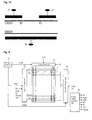
- FIG. 8 is a block diagram illustrating the construction of an apparatus for driving the PDP for generating the waveform shown in FIG. 6.
- the apparatus includes a data driving unit 72 for supplying data to address electrodes X1 to Xm, a scan driving unit 73 for driving scan electrodes Y1 to Yn, a sustain driving unit 74 for driving a sustain electrode Z being a common electrode, a timing controller 71 for controlling the respective driving units 72, 73 and 74, and a driving voltage generator 75 for supplying driving voltages which are necessary for the respective driving units 72, 73 and 74 thereto.
- a data driving unit 72 for supplying data to address electrodes X1 to Xm
- a scan driving unit 73 for driving scan electrodes Y1 to Yn
- a sustain driving unit 74 for driving a sustain electrode Z being a common electrode
- a timing controller 71 for controlling the respective driving units 72, 73 and 74
- a driving voltage generator 75 for supplying driving voltages which are necessary for the respective driving units 72, 73 and 74 thereto.
- the data driving unit 72 is supplied with data which undergo inverse-gamma correction and error diffusion operations by an inverse-gamma correction circuit and an error diffusion circuit (not shown and are then mapped to respective sub-fields by a sub-field mapping circuit.
- the data driving unit 72 serves to sample and latch the data in response to a timing control signal CTRX from the timing controller 71 and to supply the data to the address electrodes X1 to Xm.
- the scan driving unit 73 supplies the ramp-up pulse Ramp-up to the scan electrodes Y1 to Yn during the set-up period of the reset period, the first ramp-down pulse Ramp-down1 having the first tilt to the scan electrodes Y1 to Yn during the "a" period of the set-down period, and the second ramp-down pulse Ramp-down2 having the second tilt to the scan electrodes Y1 to Yn during the "b" period, under the control of the timing controller 71.
- the first tilt is set to be lower than the second tilt.
- the scan driving unit 73 sequentially applies the scan pulse to the scan electrodes Y1 to Yn during the address period, and then applies the sustain pulse Sus to the scan electrodes Y1 to Yn during the sustain period, under the control of the timing controller 71.
- the sustain driving unit 74 provides the ground voltage or 0V to the sustain electrodes Z during the set-up period of the reset period, the positive-polarity DC voltage of the sustain voltage level (Vs) to the sustain electrodes Z during the "a" period of the set-down period, and then the ground voltage or 0V to the sustain electrodes Z during the "b" period of the set-down period, under the control of the timing controller 71. Furthermore, the sustain driving unit 74 constantly supplies a DC voltage (Vzdc), which is lower than the sustain voltage (Vs), to the sustain electrodes Z1 to Zn during the address period under the control the timing controller 71, and then supplies the sustain pulse Sus to the sustain electrodes Z during the sustain period, while operating alternately with the scan driving unit 73.
- Vzdc DC voltage
- the timing controller 71 receives vertical/horizontal synchronization signals, generates timing control signals CTRX, CTRY and CTRZ which are necessary for the driving units, respectively, and supplies the timing control signals CTRX, CTRY and CTRZ to corresponding driving units 72, 73 and 74, thereby controlling the driving units 72, 73 and 74.
- the data control signal CTRX includes a sampling clock for sampling a data, a latch control signal, and a switch control signal for controlling an on/off time of an energy recovery circuit and a driving switch element.
- the scan control signal CTRY includes a switch control signal for controlling an on/off time of an energy recovery circuit and a driving switch element within the scan driving unit 73.
- the sustain control signal CTRZ includes a switch control signal for controlling an on/off time of an energy recovery circuit and a driving switch element within the sustain driving unit 74.
- the driving voltage generator 75 serves to generate the voltage (Vry) of the ramp-up pulse Ramp-up, the voltage (-Vny) of the second ramp-down pulse Ramp-down2, the DC voltage (Vzdc) supplied to the sustain electrodes Z during the address period, a scan bias voltage (Vscb), a scan voltage (-Vscan), the sustain voltage (Vs), the data voltage (Vd) and the like. It is to be noted that these driving voltages may vary depending on the composition of a discharge gas or the construction of a discharge cell.
- FIG. 9 is a detailed circuit diagram showing some of the scan driving unit 73 and the sustain driving unit 74 for driving the pair of the scan electrodes Y and the sustain electrodes Z.
- FIG. 10 is a waveform showing the operational timing of switch elements included in the scan driving unit 73 and the sustain driving unit 74.
- the scan driving unit 73 includes an energy recovery circuit 81, a driving switch circuit 82, and first to sixth switch elements Q1 to Q6.
- the energy recovery circuit 81 recovers energy of invalid power, which does not contribute to a discharge in a PDP, from the scan electrodes Y, and charges the scan electrodes Y with the recovered energy.
- the energy recovery circuit 81 can be implemented using any known energy recovery circuit.
- the driving switch circuit 82 includes a scan bias voltage source (Vscb), and seventh and eighth switch elements Q7, Q8 which are connected between first nodes n1 in a push-pull shape.
- the output terminal between the seventh and eighth switch elements Q7, Q8 is connected to the scan electrodes Y.
- Each of the seventh and eighth switch elements Q7, Q8 supplies the scan bias voltage (Vscb) or the voltage on the first node n1 to the scan electrodes, Y under the control of the timing controller 71.
- the first switch element Q1 is connected between a sustain voltage source (Vs) and the first node n1, and provides the sustain voltage (Vs) to the first node n1 under the control of the timing controller 71.
- the second switch element Q2 is connected between a ground voltage source (GND) and the first node n1, and supplies the ground voltage (GND) to the first node n1 under the control of the timing controller 71.
- GND ground voltage source
- the third switch element Q3 is connected between a ramp-up voltage source (Vry) and the first node n1.
- the third switch element Q3 applies a ramp-up pulse Ramp-up to the first node n1 at a tilt, which is determined according to a preset RC time constant, under the control of the timing controller 71.
- To the control terminal of the third switch element Q3 is connected a variable resistor VR1 and a capacitor (not shown), for controlling the tilt of the ramp-up pulse Ramp-up.
- the fourth switch element Q4 is connected between the ground voltage source (GND) and the first node n1.
- the fourth switch element Q4 applies a first ramp-down pulse Ramp-down1 to the first node n1 at a tilt, which is determined according to a preset RC time constant, under the control of the timing controller 71.
- To the control terminal of the fourth switch element Q4 is connected a variable resistor VR2 and a capacitor (not shown), for controlling the tilt of the first ramp-down pulse Ramp-down1.
- the fifth switch element Q5 is connected between a ramp-down voltage source (-Vy) and the first node n1.
- the fifth switch element Q5 supplies a second ramp-down pulse Ramp-down2 to the first node n1 at a tilt, which is determined according to a preset RC time constant, under the control of the timing controller 71.
- To the control terminal of the fifth switch element Q5 is connected a variable resistor VR3 and a capacitor (not shown), for controlling the tilt of the second ramp-down pulse Ramp-down2.
- the sixth switch element Q6 is connected between the scan voltage source and the first node n1, and supplies the scan voltage (-Vscan) to the first node n1 under the control of the timing controller 71.
- the sustain driving unit 74 includes an energy recovery circuit 83, and ninth to eleventh switch elements Q9 to Q11.
- the energy recovery circuit 83 recovers energy of invalid power which does not contribute to a discharge in the PDP from the sustain electrodes Z, and charges the sustain electrodes Z with the recovered energy.
- the energy recovery circuit 83 can be implemented using any known energy recovery circuit.
- the ninth switch element Q9 is connected between the sustain voltage source (Vs) and the second node n2, and supplies a sustain voltage (Vs) to the second node n2, i.e., the sustain electrodes Z, under the control of the timing controller 71.
- the tenth switch element Q10 is connected between the ground voltage source (GND) and the second node n2, and supplies the ground voltage (GND) to the second node n2 under the control of the timing controller 71.
- the eleventh switch element Q11 is connected between a DC voltage source (Vzdc) the voltage of which is lower than the sustain voltage (Vs) and the second node n2, and supplies the DC voltage (Vzdc) to the second node n2 during the address period under the control of the timing controller 71.
- Vzdc DC voltage source
- the tilt of the first ramp-down pulse Ramp-down1 which is supplied during the "a" period of the set-down period of the reset period can be set to be higher than that of the second ramp-down pulse Ramp-down2 which is supplied in the "b" period.
- the tilt of the first ramp-down pulse Ramp-down1 that is supplied in the "a" period of the set-down period of the reset period can be set to be the same as that of the second ramp-down pulse Ramp-down2 that is supplied in the "b" period.
- the tilts of the first and second ramp-down pulses Ramp-down1, Ramp-down2 that are supplied in the set-down period is set to be the same or different, it is possible to effectively cope with conditions of various panels. That is, during the "a" period of the set-down period, the first ramp-down pulse Ramp-down1 is supplied to control wall charges between the scan electrodes Y and the sustain electrodes Z. During the "b" period of the set-down period, the second ramp-down pulse Ramp-down2 a tilt of which is the same as or different from that of the first ramp-down pulse Ramp-down1 is supplied to control wall charges between the scan electrodes Y and the address electrodes X. It is thus possible to effectively meet conditions of various panels.
- first and second ramp-down pulses having the same tilt or a different tilt are applied during a set-down period of a reset period.
- distribution of wall charges between scan electrodes and sustain electrodes and between the scan electrodes and address electrodes is individually controlled. This has an effect in that it can generate a reset discharge and an address discharge stably.
Landscapes
- Engineering & Computer Science (AREA)
- Physics & Mathematics (AREA)
- Power Engineering (AREA)
- Plasma & Fusion (AREA)
- Computer Hardware Design (AREA)
- General Physics & Mathematics (AREA)
- Theoretical Computer Science (AREA)
- Control Of Indicators Other Than Cathode Ray Tubes (AREA)
- Control Of Gas Discharge Display Tubes (AREA)
- Transforming Electric Information Into Light Information (AREA)
Applications Claiming Priority (2)
| Application Number | Priority Date | Filing Date | Title |
|---|---|---|---|
| KR1020030082947A KR100570967B1 (ko) | 2003-11-21 | 2003-11-21 | 플라즈마 디스플레이 패널의 구동방법 및 구동장치 |
| KR2003082947 | 2003-11-21 |
Publications (2)
| Publication Number | Publication Date |
|---|---|
| EP1533781A2 true EP1533781A2 (de) | 2005-05-25 |
| EP1533781A3 EP1533781A3 (de) | 2007-12-05 |
Family
ID=34431805
Family Applications (1)
| Application Number | Title | Priority Date | Filing Date |
|---|---|---|---|
| EP04257241A Withdrawn EP1533781A3 (de) | 2003-11-21 | 2004-11-22 | Verfahren und Gerät zur Ansteuerung einer Plamaanzeigetafel |
Country Status (6)
| Country | Link |
|---|---|
| US (1) | US7561120B2 (de) |
| EP (1) | EP1533781A3 (de) |
| JP (1) | JP2005157372A (de) |
| KR (1) | KR100570967B1 (de) |
| CN (1) | CN100483493C (de) |
| TW (1) | TWI291680B (de) |
Cited By (3)
| Publication number | Priority date | Publication date | Assignee | Title |
|---|---|---|---|---|
| EP1760682A3 (de) * | 2005-08-30 | 2007-05-09 | LG Electronics Inc. | Plasmaanzeigevorrichtung |
| EP2073189A1 (de) * | 2007-12-14 | 2009-06-24 | Samsung SDI Co., Ltd. | Plasmavorrichtung und Ansteuerungsverfahren dafür |
| EP1966785A4 (de) * | 2006-11-29 | 2009-11-18 | Lg Electronics Inc | Plasmaanzeigevorrichtung und verfahren zu ihrer ansteuerung |
Families Citing this family (25)
| Publication number | Priority date | Publication date | Assignee | Title |
|---|---|---|---|---|
| US7365710B2 (en) * | 2003-09-09 | 2008-04-29 | Samsung Sdi Co. Ltd. | Plasma display panel driving method and plasma display device |
| KR100625539B1 (ko) * | 2004-09-07 | 2006-09-20 | 엘지전자 주식회사 | 플라즈마 디스플레이 패널의 구동방법 |
| KR100646184B1 (ko) * | 2004-09-07 | 2006-11-15 | 엘지전자 주식회사 | 플라즈마 디스플레이 패널의 구동방법 |
| KR100625537B1 (ko) * | 2004-09-07 | 2006-09-20 | 엘지전자 주식회사 | 플라즈마 디스플레이 패널의 구동방법 |
| KR100644833B1 (ko) * | 2004-12-31 | 2006-11-14 | 엘지전자 주식회사 | 플라즈마 표시장치와 그 구동방법 |
| KR100627118B1 (ko) * | 2005-03-22 | 2006-09-25 | 엘지전자 주식회사 | 플라즈마 디스플레이 패널의 구동방법 및 장치 |
| KR100692041B1 (ko) * | 2005-07-15 | 2007-03-09 | 엘지전자 주식회사 | 플라즈마 디스플레이 장치 및 그 구동 방법 |
| US20070008248A1 (en) * | 2005-07-05 | 2007-01-11 | Lg Electronics Inc. | Plasma display apparatus and driving method thereof |
| US7642992B2 (en) | 2005-07-05 | 2010-01-05 | Lg Electronics Inc. | Plasma display apparatus and driving method thereof |
| KR100774874B1 (ko) * | 2005-07-30 | 2007-11-08 | 엘지전자 주식회사 | 플라즈마 표시장치와 그 구동방법 |
| KR100724367B1 (ko) * | 2005-09-08 | 2007-06-04 | 엘지전자 주식회사 | 플라즈마 디스플레이 패널 구동 방법 |
| JP4652936B2 (ja) * | 2005-09-09 | 2011-03-16 | 日立プラズマディスプレイ株式会社 | プラズマディスプレイ装置及びその駆動方法 |
| KR100667360B1 (ko) * | 2005-09-20 | 2007-01-12 | 엘지전자 주식회사 | 플라즈마 디스플레이 장치 및 그의 구동 방법 |
| KR100747206B1 (ko) * | 2005-09-30 | 2007-08-07 | 엘지전자 주식회사 | 플라즈마 표시장치 및 그 구동방법 |
| KR100738586B1 (ko) * | 2005-10-28 | 2007-07-11 | 엘지전자 주식회사 | 플라즈마 디스플레이 장치 및 그의 구동방법 |
| KR100793087B1 (ko) * | 2006-01-04 | 2008-01-10 | 엘지전자 주식회사 | 플라즈마 디스플레이 장치 |
| KR100787446B1 (ko) * | 2006-03-14 | 2007-12-26 | 삼성에스디아이 주식회사 | 디스플레이 패널의 구동장치 및 그 구동방법 |
| JP4874001B2 (ja) * | 2006-06-05 | 2012-02-08 | パナソニック株式会社 | プラズマディスプレイパネルの駆動方法 |
| KR100755327B1 (ko) * | 2006-06-13 | 2007-09-05 | 엘지전자 주식회사 | 플라즈마 디스플레이 장치 |
| KR100811482B1 (ko) * | 2006-07-20 | 2008-03-07 | 엘지전자 주식회사 | 플라즈마 디스플레이 장치 및 그의 구동방법 |
| KR100844819B1 (ko) * | 2006-08-16 | 2008-07-09 | 엘지전자 주식회사 | 플라즈마 디스플레이 장치 |
| KR20090045632A (ko) * | 2007-11-02 | 2009-05-08 | 삼성에스디아이 주식회사 | 플라즈마 표시 장치 및 그 구동 방법 |
| CN101971238B (zh) * | 2008-04-01 | 2013-05-08 | 松下电器产业株式会社 | 等离子显示装置和等离子显示面板的驱动方法 |
| KR100943958B1 (ko) * | 2008-08-21 | 2010-02-26 | 삼성에스디아이 주식회사 | 플라즈마 표시 장치 및 그 구동 방법 |
| US20100277464A1 (en) * | 2009-04-30 | 2010-11-04 | Sang-Gu Lee | Plasma display device and driving method thereof |
Citations (2)
| Publication number | Priority date | Publication date | Assignee | Title |
|---|---|---|---|---|
| US20020080097A1 (en) | 2000-12-06 | 2002-06-27 | Pioneer Corporation | Method for driving a plasma display panel and a plasma display apparatus therefor |
| US6483250B1 (en) | 2000-02-28 | 2002-11-19 | Mitsubishi Denki Kabushiki Kaisha | Method of driving plasma display panel, plasma display device and driving device for plasma display panel |
Family Cites Families (13)
| Publication number | Priority date | Publication date | Assignee | Title |
|---|---|---|---|---|
| JP3455141B2 (ja) * | 1999-06-29 | 2003-10-14 | 富士通株式会社 | プラズマディスプレイパネルの駆動方法 |
| JP2001184023A (ja) * | 1999-10-13 | 2001-07-06 | Matsushita Electric Ind Co Ltd | 表示装置およびその駆動方法 |
| US6653795B2 (en) * | 2000-03-14 | 2003-11-25 | Lg Electronics Inc. | Method and apparatus for driving plasma display panel using selective writing and selective erasure |
| JP2001265281A (ja) * | 2000-03-17 | 2001-09-28 | Matsushita Electric Ind Co Ltd | 表示装置およびその駆動方法 |
| JP2001272946A (ja) * | 2000-03-23 | 2001-10-05 | Nec Corp | Ac型プラズマディスプレイパネルとその駆動方法 |
| JP4576028B2 (ja) * | 2000-06-30 | 2010-11-04 | パナソニック株式会社 | 表示パネルの駆動方法 |
| JP2002072957A (ja) | 2000-08-24 | 2002-03-12 | Matsushita Electric Ind Co Ltd | プラズマディスプレイパネルの駆動方法 |
| JP2002196720A (ja) * | 2000-12-27 | 2002-07-12 | Mitsubishi Electric Corp | プラズマディスプレイ装置 |
| JP4754079B2 (ja) * | 2001-02-28 | 2011-08-24 | パナソニック株式会社 | プラズマディスプレイパネルの駆動方法、駆動回路及びプラズマ表示装置 |
| JP2002328648A (ja) * | 2001-04-26 | 2002-11-15 | Nec Corp | Ac型プラズマディスプレイパネルの駆動方法および駆動装置 |
| KR100493615B1 (ko) * | 2002-04-04 | 2005-06-10 | 엘지전자 주식회사 | 플라즈마 디스플레이 패널의 구동방법 |
| JP2003330411A (ja) * | 2002-05-03 | 2003-11-19 | Lg Electronics Inc | プラズマディスプレイパネルの駆動方法及び装置 |
| JP2004110693A (ja) | 2002-09-20 | 2004-04-08 | Toshiba Solutions Corp | 電子文書管理システム、電子文書管理方法およびプログラム |
-
2003
- 2003-11-21 KR KR1020030082947A patent/KR100570967B1/ko not_active Expired - Fee Related
-
2004
- 2004-11-19 TW TW093135624A patent/TWI291680B/zh not_active IP Right Cessation
- 2004-11-22 CN CNB2004100952612A patent/CN100483493C/zh not_active Expired - Fee Related
- 2004-11-22 JP JP2004337970A patent/JP2005157372A/ja active Pending
- 2004-11-22 US US10/993,145 patent/US7561120B2/en not_active Expired - Fee Related
- 2004-11-22 EP EP04257241A patent/EP1533781A3/de not_active Withdrawn
Patent Citations (2)
| Publication number | Priority date | Publication date | Assignee | Title |
|---|---|---|---|---|
| US6483250B1 (en) | 2000-02-28 | 2002-11-19 | Mitsubishi Denki Kabushiki Kaisha | Method of driving plasma display panel, plasma display device and driving device for plasma display panel |
| US20020080097A1 (en) | 2000-12-06 | 2002-06-27 | Pioneer Corporation | Method for driving a plasma display panel and a plasma display apparatus therefor |
Cited By (5)
| Publication number | Priority date | Publication date | Assignee | Title |
|---|---|---|---|---|
| EP1760682A3 (de) * | 2005-08-30 | 2007-05-09 | LG Electronics Inc. | Plasmaanzeigevorrichtung |
| US7737916B2 (en) | 2005-08-30 | 2010-06-15 | Lg Electronics Inc. | Plasma display apparatus and driving method thereof to yield a stable address discharge |
| EP1966785A4 (de) * | 2006-11-29 | 2009-11-18 | Lg Electronics Inc | Plasmaanzeigevorrichtung und verfahren zu ihrer ansteuerung |
| US8125412B2 (en) | 2006-11-29 | 2012-02-28 | Lg Electronics Inc. | Plasma display apparatus and method of driving the same |
| EP2073189A1 (de) * | 2007-12-14 | 2009-06-24 | Samsung SDI Co., Ltd. | Plasmavorrichtung und Ansteuerungsverfahren dafür |
Also Published As
| Publication number | Publication date |
|---|---|
| TW200521925A (en) | 2005-07-01 |
| TWI291680B (en) | 2007-12-21 |
| JP2005157372A (ja) | 2005-06-16 |
| US20050116895A1 (en) | 2005-06-02 |
| CN1619622A (zh) | 2005-05-25 |
| CN100483493C (zh) | 2009-04-29 |
| KR20050049076A (ko) | 2005-05-25 |
| US7561120B2 (en) | 2009-07-14 |
| KR100570967B1 (ko) | 2006-04-14 |
| EP1533781A3 (de) | 2007-12-05 |
Similar Documents
| Publication | Publication Date | Title |
|---|---|---|
| US7561120B2 (en) | Method and apparatus of driving plasma display panel | |
| KR100556735B1 (ko) | 플라즈마 디스플레이 패널의 구동방법 및 장치 | |
| EP1553550B1 (de) | Verfahren und Vorrichtung zur Ansteuerung einer Plasmaanzeige | |
| EP1388841A2 (de) | Verfahren und Einrichtung zum Steuern einer Plasmaanzeigetafel bei niedriger Temperatur | |
| KR100525732B1 (ko) | 플라즈마 디스플레이 패널의 구동방법 및 장치 | |
| US20060145955A1 (en) | Plasma display apparatus and driving method thereof | |
| KR100499099B1 (ko) | 플라즈마 디스플레이 패널의 구동 방법 및 장치 | |
| KR100508251B1 (ko) | 플라즈마 디스플레이 패널의 구동방법 및 장치 | |
| US7479935B2 (en) | Plasma display apparatus and method of driving the same | |
| KR100645783B1 (ko) | 플라즈마 표시장치 및 그 구동방법 | |
| KR100508252B1 (ko) | 선택적 소거를 이용한 플라즈마 디스플레이 패널의구동방법 및 장치 | |
| KR100508256B1 (ko) | 플라즈마 디스플레이 패널의 구동방법 및 장치 | |
| US20060001609A1 (en) | Plasma display apparatus and driving method thereof | |
| KR100525734B1 (ko) | 플라즈마 디스플레이 패널의 구동방법 | |
| US7619586B2 (en) | Plasma display apparatus and method for driving the same | |
| KR100489283B1 (ko) | 플라즈마 디스플레이 패널의 구동방법 및 장치 | |
| KR100705821B1 (ko) | 플라즈마 디스플레이 패널의 구동장치 및 구동방법 | |
| KR100667361B1 (ko) | 플라즈마 표시장치 | |
| KR20070008076A (ko) | 플라즈마 디스플레이 패널의 구동 방법 및 장치 | |
| KR20090061233A (ko) | 플라즈마 디스플레이 패널의 구동 장치 및 그 구동 방법 |
Legal Events
| Date | Code | Title | Description |
|---|---|---|---|
| PUAI | Public reference made under article 153(3) epc to a published international application that has entered the european phase |
Free format text: ORIGINAL CODE: 0009012 |
|
| AK | Designated contracting states |
Kind code of ref document: A2 Designated state(s): AT BE BG CH CY CZ DE DK EE ES FI FR GB GR HU IE IS IT LI LU MC NL PL PT RO SE SI SK TR |
|
| AX | Request for extension of the european patent |
Extension state: AL HR LT LV MK YU |
|
| PUAL | Search report despatched |
Free format text: ORIGINAL CODE: 0009013 |
|
| AK | Designated contracting states |
Kind code of ref document: A3 Designated state(s): AT BE BG CH CY CZ DE DK EE ES FI FR GB GR HU IE IS IT LI LU MC NL PL PT RO SE SI SK TR |
|
| AX | Request for extension of the european patent |
Extension state: AL HR LT LV MK YU |
|
| 17P | Request for examination filed |
Effective date: 20080519 |
|
| AKX | Designation fees paid |
Designated state(s): DE FR GB NL |
|
| 17Q | First examination report despatched |
Effective date: 20090320 |
|
| STAA | Information on the status of an ep patent application or granted ep patent |
Free format text: STATUS: THE APPLICATION IS DEEMED TO BE WITHDRAWN |
|
| 18D | Application deemed to be withdrawn |
Effective date: 20140603 |