EP1533011A2 - Spieldatenkontrollprogramm, Spieldatenüberspielungsprogramm und Spieldatenüberspielungsvorrichtung - Google Patents
Spieldatenkontrollprogramm, Spieldatenüberspielungsprogramm und Spieldatenüberspielungsvorrichtung Download PDFInfo
- Publication number
- EP1533011A2 EP1533011A2 EP04025769A EP04025769A EP1533011A2 EP 1533011 A2 EP1533011 A2 EP 1533011A2 EP 04025769 A EP04025769 A EP 04025769A EP 04025769 A EP04025769 A EP 04025769A EP 1533011 A2 EP1533011 A2 EP 1533011A2
- Authority
- EP
- European Patent Office
- Prior art keywords
- game
- game data
- storage area
- internal memory
- address
- Prior art date
- Legal status (The legal status is an assumption and is not a legal conclusion. Google has not performed a legal analysis and makes no representation as to the accuracy of the status listed.)
- Granted
Links
Images




Classifications
-
- A—HUMAN NECESSITIES
- A63—SPORTS; GAMES; AMUSEMENTS
- A63F—CARD, BOARD, OR ROULETTE GAMES; INDOOR GAMES USING SMALL MOVING PLAYING BODIES; VIDEO GAMES; GAMES NOT OTHERWISE PROVIDED FOR
- A63F13/00—Video games, i.e. games using an electronically generated display having two or more dimensions
- A63F13/45—Controlling the progress of the video game
- A63F13/49—Saving the game status; Pausing or ending the game
-
- A—HUMAN NECESSITIES
- A63—SPORTS; GAMES; AMUSEMENTS
- A63F—CARD, BOARD, OR ROULETTE GAMES; INDOOR GAMES USING SMALL MOVING PLAYING BODIES; VIDEO GAMES; GAMES NOT OTHERWISE PROVIDED FOR
- A63F13/00—Video games, i.e. games using an electronically generated display having two or more dimensions
- A63F13/50—Controlling the output signals based on the game progress
- A63F13/53—Controlling the output signals based on the game progress involving additional visual information provided to the game scene, e.g. by overlay to simulate a head-up display [HUD] or displaying a laser sight in a shooting game
- A63F13/533—Controlling the output signals based on the game progress involving additional visual information provided to the game scene, e.g. by overlay to simulate a head-up display [HUD] or displaying a laser sight in a shooting game for prompting the player, e.g. by displaying a game menu
-
- A—HUMAN NECESSITIES
- A63—SPORTS; GAMES; AMUSEMENTS
- A63F—CARD, BOARD, OR ROULETTE GAMES; INDOOR GAMES USING SMALL MOVING PLAYING BODIES; VIDEO GAMES; GAMES NOT OTHERWISE PROVIDED FOR
- A63F13/00—Video games, i.e. games using an electronically generated display having two or more dimensions
- A63F13/70—Game security or game management aspects
- A63F13/73—Authorising game programs or game devices, e.g. checking authenticity
-
- A—HUMAN NECESSITIES
- A63—SPORTS; GAMES; AMUSEMENTS
- A63F—CARD, BOARD, OR ROULETTE GAMES; INDOOR GAMES USING SMALL MOVING PLAYING BODIES; VIDEO GAMES; GAMES NOT OTHERWISE PROVIDED FOR
- A63F13/00—Video games, i.e. games using an electronically generated display having two or more dimensions
- A63F13/70—Game security or game management aspects
- A63F13/79—Game security or game management aspects involving player-related data, e.g. identities, accounts, preferences or play histories
-
- A—HUMAN NECESSITIES
- A63—SPORTS; GAMES; AMUSEMENTS
- A63F—CARD, BOARD, OR ROULETTE GAMES; INDOOR GAMES USING SMALL MOVING PLAYING BODIES; VIDEO GAMES; GAMES NOT OTHERWISE PROVIDED FOR
- A63F13/00—Video games, i.e. games using an electronically generated display having two or more dimensions
- A63F13/90—Constructional details or arrangements of video game devices not provided for in groups A63F13/20 or A63F13/25, e.g. housing, wiring, connections or cabinets
- A63F13/92—Video game devices specially adapted to be hand-held while playing
-
- G—PHYSICS
- G06—COMPUTING OR CALCULATING; COUNTING
- G06F—ELECTRIC DIGITAL DATA PROCESSING
- G06F12/00—Accessing, addressing or allocating within memory systems or architectures
- G06F12/14—Protection against unauthorised use of memory or access to memory
- G06F12/1416—Protection against unauthorised use of memory or access to memory by checking the object accessibility, e.g. type of access defined by the memory independently of subject rights
-
- A—HUMAN NECESSITIES
- A63—SPORTS; GAMES; AMUSEMENTS
- A63F—CARD, BOARD, OR ROULETTE GAMES; INDOOR GAMES USING SMALL MOVING PLAYING BODIES; VIDEO GAMES; GAMES NOT OTHERWISE PROVIDED FOR
- A63F13/00—Video games, i.e. games using an electronically generated display having two or more dimensions
- A63F13/90—Constructional details or arrangements of video game devices not provided for in groups A63F13/20 or A63F13/25, e.g. housing, wiring, connections or cabinets
- A63F13/95—Storage media specially adapted for storing game information, e.g. video game cartridges
-
- A—HUMAN NECESSITIES
- A63—SPORTS; GAMES; AMUSEMENTS
- A63F—CARD, BOARD, OR ROULETTE GAMES; INDOOR GAMES USING SMALL MOVING PLAYING BODIES; VIDEO GAMES; GAMES NOT OTHERWISE PROVIDED FOR
- A63F2300/00—Features of games using an electronically generated display having two or more dimensions, e.g. on a television screen, showing representations related to the game
- A63F2300/20—Features of games using an electronically generated display having two or more dimensions, e.g. on a television screen, showing representations related to the game characterised by details of the game platform
- A63F2300/201—Playing authorisation given at platform level
-
- A—HUMAN NECESSITIES
- A63—SPORTS; GAMES; AMUSEMENTS
- A63F—CARD, BOARD, OR ROULETTE GAMES; INDOOR GAMES USING SMALL MOVING PLAYING BODIES; VIDEO GAMES; GAMES NOT OTHERWISE PROVIDED FOR
- A63F2300/00—Features of games using an electronically generated display having two or more dimensions, e.g. on a television screen, showing representations related to the game
- A63F2300/20—Features of games using an electronically generated display having two or more dimensions, e.g. on a television screen, showing representations related to the game characterised by details of the game platform
- A63F2300/204—Features of games using an electronically generated display having two or more dimensions, e.g. on a television screen, showing representations related to the game characterised by details of the game platform the platform being a handheld device
-
- A—HUMAN NECESSITIES
- A63—SPORTS; GAMES; AMUSEMENTS
- A63F—CARD, BOARD, OR ROULETTE GAMES; INDOOR GAMES USING SMALL MOVING PLAYING BODIES; VIDEO GAMES; GAMES NOT OTHERWISE PROVIDED FOR
- A63F2300/00—Features of games using an electronically generated display having two or more dimensions, e.g. on a television screen, showing representations related to the game
- A63F2300/20—Features of games using an electronically generated display having two or more dimensions, e.g. on a television screen, showing representations related to the game characterised by details of the game platform
- A63F2300/206—Game information storage, e.g. cartridges, CD ROM's, DVD's, smart cards
-
- A—HUMAN NECESSITIES
- A63—SPORTS; GAMES; AMUSEMENTS
- A63F—CARD, BOARD, OR ROULETTE GAMES; INDOOR GAMES USING SMALL MOVING PLAYING BODIES; VIDEO GAMES; GAMES NOT OTHERWISE PROVIDED FOR
- A63F2300/00—Features of games using an electronically generated display having two or more dimensions, e.g. on a television screen, showing representations related to the game
- A63F2300/30—Features of games using an electronically generated display having two or more dimensions, e.g. on a television screen, showing representations related to the game characterized by output arrangements for receiving control signals generated by the game device
- A63F2300/308—Details of the user interface
-
- A—HUMAN NECESSITIES
- A63—SPORTS; GAMES; AMUSEMENTS
- A63F—CARD, BOARD, OR ROULETTE GAMES; INDOOR GAMES USING SMALL MOVING PLAYING BODIES; VIDEO GAMES; GAMES NOT OTHERWISE PROVIDED FOR
- A63F2300/00—Features of games using an electronically generated display having two or more dimensions, e.g. on a television screen, showing representations related to the game
- A63F2300/50—Features of games using an electronically generated display having two or more dimensions, e.g. on a television screen, showing representations related to the game characterized by details of game servers
- A63F2300/55—Details of game data or player data management
- A63F2300/5526—Game data structure
- A63F2300/554—Game data structure by saving game or status data
-
- A—HUMAN NECESSITIES
- A63—SPORTS; GAMES; AMUSEMENTS
- A63F—CARD, BOARD, OR ROULETTE GAMES; INDOOR GAMES USING SMALL MOVING PLAYING BODIES; VIDEO GAMES; GAMES NOT OTHERWISE PROVIDED FOR
- A63F2300/00—Features of games using an electronically generated display having two or more dimensions, e.g. on a television screen, showing representations related to the game
- A63F2300/50—Features of games using an electronically generated display having two or more dimensions, e.g. on a television screen, showing representations related to the game characterized by details of game servers
- A63F2300/55—Details of game data or player data management
- A63F2300/5546—Details of game data or player data management using player registration data, e.g. identification, account, preferences, game history
-
- A—HUMAN NECESSITIES
- A63—SPORTS; GAMES; AMUSEMENTS
- A63F—CARD, BOARD, OR ROULETTE GAMES; INDOOR GAMES USING SMALL MOVING PLAYING BODIES; VIDEO GAMES; GAMES NOT OTHERWISE PROVIDED FOR
- A63F2300/00—Features of games using an electronically generated display having two or more dimensions, e.g. on a television screen, showing representations related to the game
- A63F2300/60—Methods for processing data by generating or executing the game program
- A63F2300/63—Methods for processing data by generating or executing the game program for controlling the execution of the game in time
- A63F2300/636—Methods for processing data by generating or executing the game program for controlling the execution of the game in time involving process of starting or resuming a game
Definitions
- the present invention relates to a game data control program, a game data overwriting program and a game data overwriting device, and more particularly to a technique for arranging game data in an internal memory of a video game device for use in a game process, the game data including a plurality of game parameters indicating the status of a game and stored in an external storage medium.
- the game data stored in the memory card is always loaded to a particular storage address of the internal memory.
- the value of a particular game parameter included in the game data e.g., the value representing the life points of the player character
- the value of a game parameter included in the game data is always loaded to a particular area of the internal memory. Therefore, in the game process, it is possible to immediately obtain the value of a game parameter by referring to the particular address corresponding to the game parameter to be obtained.
- a value representing the life points of the player character is stored in a first storage address of the internal memory
- a value representing the coordinates of the position of the player character in the game space is stored in a second storage address
- a value representing the amount of money in the game space is stored in a third storage address
- other values representing the kinds of monsters that the player character has captured, etc. are stored in fourth to tenth storage addresses.
- Game data overwriting devices are sold for overwriting and modifying the game data by, for example, increasing the amount of money in the game world or maximizing other parameters of the game character.
- game data stored in a backup memory such as a memory card is encrypted in some cases (see, for example, Japanese Laid-Open Patent Publication No. 2001-265658). In such cases, it is necessary to decrypt the game data stored in the backup memory in order to modify the game data. Then, it is quite difficult to overwrite the game data.
- the user of such a game data overwriting device uses values being displayed on the game screen to identify storage addresses of the internal memory at which these values are stored. For example, where the amount of money is being displayed on the game screen, a value equal to the amount of money is searched for in the game data stored in the internal memory to identify the storage address of the internal memory at which the value is stored. Thus, the player can identify storage addresses for particular game parameters. Then, the player can overwrite the value stored in an identified storage address to manipulate a particular game parameter as desired.
- Japanese Laid-Open Patent Publication No. 7-44378 discloses a method for starting a program with which alterations totheprogramcanbedetected. However, the disclosure is directed to detecting alterations to a program by using checksums when starting the program, but not to preventing overwriting of data stored in an internal memory.
- a computer-readable recording medium of the present invention is a computer-readable recording medium (11), storing a first game data control program for arranging game data in an internal memory (35) of a video game device (13) for use in a game process, the game data including a plurality of game parameters representing a status of a game stored in an external storage medium (23) connected to the video game device, wherein the game data control program instructs a computer to function as storage area setting means (31, S203), game data loading means (31, S107), arrangement information storing means (31, S205) and storage area determination means (31, S503).
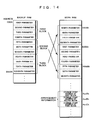
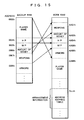
- the storage area setting means is means for, before the game data is arranged, setting a storage area for the game data in the internal memory so that each game parameter is arranged in a different storage area each time the game data is arranged (FIG. 5, FIG. 14, FIG. 15).
- the game data loading means is means for loading the game data from the external storage medium to the storage area set by the storage area setting means.
- the arrangement information storing means is means for, when the storage area setting means sets the storage area for the game data, storing arrangement information (FIG. 5, FIG. 14, FIG. 15) in a specified area of the internal memory, the arrangement information being information which directly or indirectly indicates the storage area for each game parameter.
- the storage area determination is means for, when a game parameter in the internal memory needs to be referred to or overwritten during the game process, determining the storage area for the game parameter by referring to the arrangement information.
- the storage area setting means directly or indirectly sets the storage area for the game data by specifying at least one address of the internal memory (e.g., the storage start address).
- the game data control program instructs the computer to function further as game data saving means (31, S603) for, when the game data in the internal memory needs to be saved in the external storage medium during the game process, saving the game data in a predetermined original format in the external storage medium by referring to the arrangement information.
- the storage area setting means sets the storage area for the game data in the internal memory based on a random number (S201).
- the storage area setting means specifies an offset value for shifting the storage area for the game data as a whole in the internal memory so that the storage area for the game data is changed each time the game data is arranged; and the game data loading means loads the game data as a whole to the internal memory so that a storage position relationship between the game parameters is maintained, by using, as a base address, an address obtained by adding the offset value to a specified address of the internal memory (FIG. 5).
- the game data is divided into a plurality of blocks, and the storage area setting means sets a storage area for each block of game data in the internal memory so that a storage position relationship between the blocks is changed each time the game data is arranged (FIG. 14).
- each block corresponds in size to one address of the internal memory.
- the game data control program instructs the computer to function further as: storage area changing means (31, S405) for changing the storage area for each game parameter which has been loaded to the internal memory, at a predetermined time during the game process; and data rearrangement means (31, S409) for rearranging the game parameters based on results of the storage area changing process by the storage area changing means, wherein the arrangement information storing means updates the arrangement information when the data rearrangement means rearranges the game parameters (S407).
- storage area changing means 31, S405
- data rearrangement means 31, S409
- Another computer-readable recording medium of the present invention is a computer-readable recording medium (11), storing a second game data control program for arranging game data in an internal memory (35) of a video game device (13) for use in a game process, the game data including a plurality of game parameters representing a status of a game stored in an external storage medium (23) connected to the video game device, wherein the game data control program instructs a computer to function as game data loading means (31, S107), storage area changing means (31, S405), data rearrangement means (31, S409), arrangement information storing means (31, S407) and storage area determination means (31, S503).
- the game data loading means is means for loading the game data from the external storage medium to the internal memory.
- the storage area changing means is means for changing a storage area for each game parameter which has been loaded to the internal memory, at a predetermined time during the game process (FIG. 7, FIG. 14, FIG. 15).
- the data rearrangement means is means for rearranging the game parameters based on results of the storage area changing process by the storage area changing means.
- the arrangement information storing means is means for, when the game parameters are rearranged by the data rearrangement means, storing arrangement information (FIG. 5, FIG. 14, FIG. 15) in a specified area of the internal memory, the arrangement information being information which directly or indirectly indicates the storage area for each game parameter.
- the storage area determination means is means for, when a game parameter in the internal memory needs to be referred to or overwritten during the game process, determining the storage area for the game parameter by referring to the arrangement information.
- the storage area changing means directly or indirectly sets the storage area for the game data after the storage area changing process by specifying at least one address of the internal memory (e.g., the storage start address).
- the game data control program instructs the computer to function further as game data saving means (31, S603) for, when the game data in the internal memory needs to be saved in the external storage medium during the game process, saving the game data in a predetermined original format in the external storage medium by referring to the arrangement information.
- the storage area changing means changes the storage area for the game data in the internal memory based on a random number (S201).
- the storage area changing means changes the storage area for the game data in the internal memory by specifying an offset value for shifting the storage area for the game data as a whole in the internal memory; and the data rearrangement means rearranges the game data as a whole in the internal memory so that a storage position relationship between the game parameters is maintained, by using, as a base address, an address obtained by adding the offset value to a specified address of the internal memory (FIG. 7).
- the game data is divided into a plurality of blocks, and the storage area changing means changes a storage area for each block of game data in the internal memory so that a storage position relationship between the blocks is changed each time the game data is rearranged (FIG. 14).
- each block corresponds in size to one address of the internal memory.
- Still another computer-readable recording medium of the present invention is a computer-readable recording medium, storing a first game data overwriting program for overwriting data of a predetermined parameter included in the game data, which is stored in the internal memory (35) by the first or second game data control program set forth above, wherein the game data overwriting program instructs a computer (79) to perform: a step of prompting a player to input a first search value (S703); a step of searching for a value corresponding to the first search value through the game data stored in the internal memory (S707) and detecting at least one first storage address at which the value is stored (S709); a step of following the first storage address, which dynamically changes, by using, as indices, values at a plurality of storage addresses which are each in a fixed positional relationship (e.
- Still another computer-readable recording medium of the present invention is a computer-readable recording medium, storing a second game data overwriting program for overwriting the game data, which is arranged in the internal memory (35) by the first or second game data control program set forth above, wherein the game data overwriting program instructs a computer (79) to perform: a step of receiving an input of a code for overwriting a predetermined item of the game data with a predetermined value (S803) ; a step of identifying a target storage address at which the predetermined game data item to be overwritten is stored, based on the inputted code and the arrangement information stored in the internal memory by the arrangement information storing means (S809); and a step of overwriting a value of a game data item stored at the identified target storage address with the predetermined value indicated by the code (S811).
- a game data overwriting device of the present invention is a game data overwriting device, including therein the first or second game data overwriting program set forth above, and a control section (79) for overwriting a game data item according to the game data overwriting program.
- the game data is stored at a different storage address of the internal memory. Therefore, even if someone identifies the storage address of the internal memory at which a particular parameter is stored, the data will be stored at a different storage address next time the game data is loaded from the backup memory. Thus, if someone overwrites data at a storage address publicly disclosed in a magazine or on the Internet, it will only destroy the game data. Therefore, it is possible to prevent general users from easily modifying the game data.
- the game data in the internal memory is arranged back in a predetermined original format when it is saved back in the external storage medium, the game data will be stored in the external storage medium always in a uniform format.
- the start address of the storage area for the game data is stored as the arrangement information, whereby it is possible to save space in the internal memory.
- the game data is divided into a plurality of blocks, and the blocks are loaded into different areas each time the game data is loaded, it is more difficult to identify the area in the internal memory where a particular game data item is loaded, as compared with a case where the game data as a whole is shifted each time the game data is loaded.
- the storage address at which the game data is stored is changed dynamically. Therefore, even when the game is being played, the storage address for the game data changes dynamically, whereby it is possible to more effectivelyprevent general users fromeasily modifying the game data.
- the storage address for the game parameter to be overwritten is identified taking into consideration not only the detected candidate storage address for the game parameter to be overwritten but also values stored at other addresses each having a fixed positionalrelationship with the detected candidate storage address. Therefore, it is possible to detect the storage address for the game parameter to be overwritten even if the storage address for the game data periodically shifts in the internal memory.
- the game data is overwritten while referring to the arrangement information stored in a specified area of the internal memory. Therefore, it is possible to easily overwrite the game data in the internal memory simply by inputting a code even if the storage address for the game data periodically changes in the internal memory.
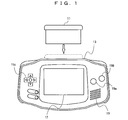
- FIG. 1 generally illustrates the video game system.
- the video game system includes a portable video game machine 13 and a cartridge 11.
- the portable video game machine 13 includes an LCD 17, a speaker 19 and a plurality of control keys 15 (e.g., an A button 15a, a B button 15b, a cross-shaped control pad 15c, etc.).
- the cartridge 11 includes a program ROM 21 storing a video game program, and a backup RAM 23 for storing game data produced at a certain point in the game process as necessary.
- the game data stored in the backup RAM 23 includes a plurality of game parameters indicating the status of a game.
- the memory map of the program ROM 21 and that of the backup RAM 23 will be described later.
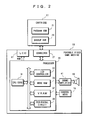
- the portable video game machine 13 includes the LCD 17 for displaying a game image, a connector 27 via which the cartridge 11 is connected to the portable video game machine 13, a processor 29 for performing the game process based on a video game program supplied from the cartridge 11, the speaker 19, a sound amplifier 41 and the control keys 15.
- the processor 29 includes a CPU core 31 for executing various operations based on the video game program, an LCD controller 33 for driving the LCD 17, a work RAM 35 as a work memory for the CPU core 31, a VRAM 37 for image processing, and a peripheral circuit 39 being a sound circuit, a DMA circuit, or the like.
- a video game program is supplied to the processor 29 of the portable video game machine 13 from the cartridge 11.
- a video game program may be supplied from any other computer-readable recording medium such as a CD-ROM or a DVD.
- a video game program may be supplied via a wired or wireless communications line.
- a video game program may be pre-stored in any storage device provided inside the portable video game machine 13.
- the present invention is not limited to portable video game machines, but may be any other suitable video game machine such as home-console video game machines. In such a case, game data may be backed up in an external storage medium such as a memory card or an HDD.
- the program ROM 21 stores, in addition to a video game program 43 for performing the game process, various other programs for arranging game data in the work RAM 35 of the portable video game machine 13 so that the game data can be used in the game process, including a data reading program 45, a storage address determining program 47, a work RAM writing program 49, a data rearrangement program 51, a data updating program 53 and a data writing program 55.
- each function to be performed by the computer is separately designated as a program for the sake of simplicity.
- all of the program functions may be present as a single module, or a single program function may be split and present in a plurality of modules.
- the backup RAM 23 stores game data for at least one game title (the video game program stored in the program ROM 21).
- game data for at least one game title (the video game program stored in the program ROM 21).
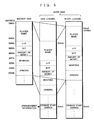
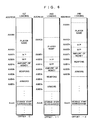
- three different sets of game data are stored. These sets of game data may be data for different game titles, ormaybe data for the same game title saved at different times in the progress of the game. While each game title uses different game parameters and different values therefor, an exemplary structure of a set of game data is shown in FIG. 5.
- the game data includes a plurality of game parameters representing the status of a game.
- the game parameters include the player name, the hit points ("HP") representing the physical strength remaining in the character, the magic points ("MP") representing the magical power remaining in the character, the amount of money, a collection of weapons the character has, a collection of armors the character has, the position of the character on the map when the game was suspended (not shown) , the time at which the game was suspended (not shown) , etc.
- the values of the game parameters are temporarily stored in the work RAM 35 of the portable video game machine 13, and are updated as the game progresses.
- the values of the game parameters currently stored in the work RAM 35 are saved in the backup RAM 23 of the cartridge 11 as a set of game data as shown in FIG. 4.
- the game data is loaded back to the work RAM 35 of the portable video game machine 13.
- the player can resume the game from the point where the game was suspended.
- a storage area of the work RAM 35 to which the game data is to be loaded is set so that the storage area is changed for each data loading operation. More specifically, the storage area in the work RAM 35 for storing game data is set so that the start address of the storage area (hereinafter referred to as the "storage start address") changes for each data loading operation, as illustrated in FIG. 5. As a result, the storage area for each game parameter (e.g., "the amount of money”) changes for each data loading operation.
- the storage start address for the game data is stored, as arrangement information, at a particular address (Axxxh in the illustrated example) of the work RAM 35, as illustrated in FIG. 5. This particular address is not often changed as is the storage area of game data.
- the arrangement information is information that directly or indirectly indicates the storage area for each game parameter.
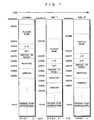
- FIG. 6 shows a specific example of how the storage area for each game parameter in the work RAM 35 changes for each data loading operation.
- an offset is determined randomly for each data loading operation, and an address obtained by adding the offset to a particular address in the work RAM 35 (AAABh in the illustrated example) is set as the storage start address.
- the offset is determined to be "0"
- the storage start address for the game data is calculated to be AAABh
- the obtained value AAABh is stored in a particular area (at the address Axxxh) for storing the storage start address.
- the offset is determined to be "+1", based on which the storage start address for the game data is calculated to be AAACh, and the obtained value AAACh is stored in the particular area (at the address Axxxh) for storing the storage start address.
- the offset is determined to be "-2”, based on which the storage start address for the game data is calculated to be AAA9h, and the obtained value AAA9h is stored in the particular area (at the address Axxxh) for storing the storage start address.
- the storage area for each game parameter is changed for each data loading operation. Therefore, even if a player identifies the storage address for a particular game parameter by monitoring data in the work RAM 35, the storage address for that game parameter will be changed to another when game data is loaded next time after saving the game data on the backup RAM 23. Thus, the game parameter cannot be modified unless the storage address for that game parameter is identified again. Moreover, even if a player identifies the storage address for a particular game parameter by monitoring data in the work RAM 35 and publicly discloses the storage address information, that information will be meaningless for other people. Therefore, general users may be discouraged from modifying game data.
- the storage area for game data is changed for each data loading operation.
- the storage area for game data may be changed while rearranging the game data at a predetermined time after the game data is loaded to the work RAM 35.
- a sufficient effect can be obtained by employing a technique as described below in a product.
- a better effect can be expected if the technique below is used in combination with the technique described above, as will now be described below. Referring to FIG. 7, the game data rearrangement process will be described.
- FIG. 7 is a specific example of how the storage area for each game parameter in the work RAM 35 changes for every passage of a predetermined time T (e. g. , 1 second) after game data is loaded.
- T e. g. 1 second
- the offset is determined to be "-2" when the game data is loaded, based on which the storage start address for the game data is calculated to be AAA9h, and the obtained value AAA9h is stored in a particular area (at the address Axxxh) for storing the storage start address. Then, after the passage of time T, a new offset is determined randomly.
- the new offset is determined to be "+1", based on which the storage start address for the game data is calculated to be AAACh, and the obtained value AAACh is stored in the particular area (at the address Axxxh) for storing the storage start address. Then, the game data is rearranged according to the calculated storage start address. Then, after the passage of time T (i.e., after the passage of 2T from the data loading operation) , another new offset is determined randomly. In the illustrated example, the new offset is determined to be "0", based on which the storage start address for the game data is calculated to be AAABh, and the obtained value AAABh is stored in the particular area (at the address Axxxh) for storing the storage start address. Then, the game data is rearranged according to the calculated storage start address.
- the storage area for each game parameter is changed at predetermined intervals during the game process, whereby it is more difficult to identify the storage address for a particular game parameter.
- the storage area for a particular game parameter is identified as follows.
- a particular game parameter e.g., "the level of the player character”
- the storage area for a particular game parameter is identified as follows.
- a particular game parameter e.g., "the level of the player character”
- an area in the work RAM 35 where the value undergoes the same transitions i.e., from 19h to 1Ah to 1Bh
- this method is useless where the storage area for each game parameter changes at intervals.
- time T is shorter, it is more difficult to identify the storage address for a particular game parameter. Therefore, it is preferred that time T is as short as possible to such an extent that the game data rearrangement process will not impose an excessive computational load.
- the CPU core 31 displays a list of game data sets stored in the backup RAM 23 on the LCD 17 (S101). Then, it is determined whether or not the user has selected any game data set (S103). When a game data set is selected, the process proceeds to the storage address determining process in step 105.
- the CPU core 31 generates a random number (S201).
- the method for generating a random number in this step is not limited to any particular method as long as an irregular sequence of values can be generated or produced.
- a random number may be generated by using software or hardware, by using a predetermined table of random numbers, by using the count value of a real-time clock, by using the amount of time from when a list of game data sets is displayed in step 101 until the user selects a game data set in step 103, or by using a count value at the time when a control switch is pressed.
- the CPU core 31 determines the offset value based on the random number generated in step 201 (S203).
- the program has an address of the work RAM 35 to be the base address for storing game data, and the offset value is a value to be added to the base address.
- the calculated offset value is added to the base address, whereby the storage start address is calculated with some randomness, and is stored at a fixed address of the work RAM 35 (S205).
- the base address is an absolute address for saving game data in the work RAM 35. Since the offset value has randomness, the storage start address also has randomness, whereby the storage area in the work RAM 35 for game data shifts with randomness, as illustrated in FIG. 6 and FIG. 7. The wider the range of offset values is, the more difficult it is to identify the storage area for game data and to modify the game data.
- the range of offset values is preferably limited to an appropriate range in view of the limited capacity of the work RAM 35.
- the CPU core 31 stores the storage start address, as arrangement information, at a fixed address (Axxxh in the example illustrated in FIG. 5) of the work RAM 35.
- the fixed address as used herein is an absolute address as seen by the program, and the storage address at which game data is stored is a relative address with some randomness.
- the storage address determining process a different storage start address is determined each time game data is loaded from the cartridge, whereby the game data can be stored in the storage area with some randomness.
- the CPU core 31 refers to the fixed address (Axxxh) of the work RAM 35 (S301). At this fixed address, the storage start address is stored. Then, a game data set that the user has selected from the list is loaded by the CPU core 31 from the backup RAM 23 of the cartridge 11, and the loaded data values are stored successively starting from the storage start address of the work RAM 35.
- the CPU core 31 reproduces the status of a game based on the game data loaded to the work RAM 35 (S109).
- the CPU core 31 performs the game process (S111), and the performs the game data rearrangement process (S113).
- step 113 game data is rearranged in the work RAM 35 at predetermined intervals by using substantially the same method as that in step 105.
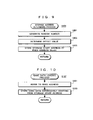
- the CPU core 31 performs the time-keeping process (S401). Specifically, a time count is kept based on the clock, etc., of the portable video game machine 13. Then, it is determined whether or not a predetermined amount of time (time T) has elapsed from the start of the time count (S403). If the predetermined amount of time has not elapsed yet, the process is terminated without performing the game data rearrangement process.
- time T a predetermined amount of time
- a new offset value is determined by using a random number as in step 201 (S405). Then, as in steps 203 and 205, the storage start address is calculated based on the new offset value, and the storage start address stored at the fixed address (Axxxh) is updated based on the calculation result (S407) . Then, the CPU core 31 rearranges the game data in the work RAM 35 using the updated storage start address as a base address (S409).
- the CPU core 31 determines whether or not it is necessary to update the game data in the work RAM 35 (S115). If it is not necessary to update the game data, the process returns to step 111. If it is necessary to update the game data, the CPU core 31 performs the game data updating process (S117).
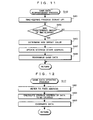
- the CPU core 31 refers to the fixed address (Axxxh) of the work RAM 35 (S501). At this fixed address, the storage start address is stored. The storage address of the data to be updated is calculated based on the storage start address (S503). Referring to FIG. 5, the amount of money, for example, is updated as follows. The amount of money is stored at the seventh address from the beginning of the game data. Thus, the storage address for the amount of money can easily be calculated from the storage start address. Then, the CPU core 31 overwrites the data at the storage address calculated in step 503 (S505). Thus, the game data is updated.
- the CPU core 31 determines whether or not the game has been finished (S119). If the game is still in progress, the process returns to step 111. If the game has been finished, the game data saving process is performed (S121).
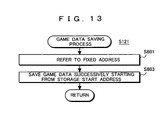
- the CPU core 31 refers to the fixed address (Axxxh) of the work RAM 35 (S601). At this fixed address, the storage start address is stored. The data values in the work RAM 35 are read out successively starting from the storage start address and are stored in the backup RAM 23 in the cartridge 11 (S603). As a result, the game data is stored in the backup RAM 23 in its original format as illustrated in FIG. 5.
- the storage area in the work RAM 35 for the game data is determined randomly. Moreover, the storage area is changed randomly at regular intervals during the game process. Therefore, it is difficult to identify storage addresses of the work RAM 35 where particular game parameters are stored. Even if someone identifies the storage address at which a particular game parameter is stored at a certain point in time, the information is meaningful only at that point in time. Thus, it is not possible to easily modify the game data.
- the present embodiment is directed to a case where when the game data is loaded from the backup RAM 23 of the cartridge 11 to the work RAM 35 of the portable video game machine 13, the storage area in the work RAM 35 for the game data is determined randomly, and the storage area is changed randomly at regular intervals during the game process.
- the present invention is not limited to this.
- the storage area in the work RAM 35 for game data may be determined randomly when the game data is loaded, while the storage area is not changed during the game process.
- the game data may be loaded to a fixed storage area in the work RAM 35, while the storage area is changed randomly at regular intervals during the game process.
- the present embodiment is directed to a case where the storage start address is stored, as arrangement information, at a fixed address
- the present invention is not limited to this.
- any other suitable information that directly or indirectly indicates the storage area for each game parameter may be stored, as arrangement information, at a fixed address.
- the end address of the storage area for the game data in the work RAM 35 may be stored, as arrangement information, instead of the storage start address.
- an offset value may be stored, instead of the storage start address.
- the present embodiment is directed to a case where the storage area for game data is changed randomly at regular intervals during the game process
- the present invention is not limited to this.
- the storage area may be changed each time a particular event occurs in the game process.
- the storage area for the game data may be successively shifted by one address each time the game data is rearranged.
- the arrangement information may be encrypted and stored at the fixed address. It is understood that in such a case, a decryption process is needed when referring to the arrangement information stored at the fixed address.
- the storage area for the game data as a whole is shifted based on the offset value so that the storage area for the game parameters will not always be the same. Therefore, the positional relationship between different game parameters in the game data is always the same. For example, in the example illustrated in FIG. 5, the address for "MP" is always followed by the address for "the amount of money", which is always followed by the address for "weapons". Therefore, even though the storage area for each game parameter changes, it may be easy to predict how the storage area for the game data shifts. Referring to FIG. 14 to FIG. 16, a variation that makes such prediction more difficult will now be described.
- the game data is divided into a plurality of blocks (the first block to the third block in the illustrated example), and the storage area for each block of game data is determined and changed randomly.
- the order of the blocks may be determined and changed randomly.
- the positional relationship between different parameters is fixed within each block. Therefore, as long as the storage start address for each block is stored as arrangement information, the storage address for any parameter can be calculated based on the arrangement information and the positional relationship between different parameters in each block.
- the storage start address for each block is stored as arrangement information
- the storage address for any parameter can be calculated based on the arrangement information and the positional relationship between different parameters in each block.
- the storage start address of the first block (AAB0h) is stored at a fixed address (AxxAh), the storage start address of the secondblock (AABBh) at a fixed address (AxxBh) , and the storage start address of the third block (AAA9h) at a fixed address (AxxCh).
- AxxAh the storage start address of the first block
- AABBh the storage start address of the secondblock
- Axx9h the storage start address of the third block
- each game parameter may be regarded as one block, in which case the storage area for each game parameter is determined and changed randomly. Thus, the positional relationship between different game parameters becomes irregular, whereby even if someone successfully identifies the storage address for a particular game parameter, it is not possible to predict the storage address for another game parameter.
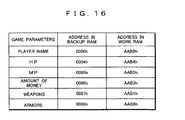
- an address mapping table is stored as an example of arrangement information. Referring to FIG. 16, the address mapping table contains the correspondence between the address in the backup RAM 23 and the address in the work RAM 35 for each game parameter. The storage address for each game parameter in the backup RAM 23 is fixed.
- a particular game parameter can be updated by specifying the storage address for the game parameter in the backup RAM 23, which can be converted to the storage address for the game parameter in the work RAM 35 based on the address mapping table.
- the address mapping table may be dynamically produced when the game data is loaded to the work RAM 35 or when the game data in the work RAM 35 is rearranged.
- a plurality of address mapping tables may be produced in advance, one of which is randomly selected when the game data is loaded to the work RAM 35 or when the game data in the work RAM 35 is rearranged so that the game data can be loaded or rearranged based on the selected address mapping table.
- Another approach is to reduce the data size of one block to the size of one address in the work RAM 35.
- the storage area (storage address) for each one-address block of game data can be determined and changed randomly.
- a game parameter that spans a plurality of addresses such as "player name" shown in FIG. 5, for example, is divided into portions, which are arranged in discrete addresses, whereby it is very difficult to overwrite the game parameter.
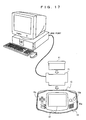
- FIG. 17 generally illustrates the video game system.
- the portable video game machine 13 and the cartridge 11 are the same as those shown in FIG. 1, and thus will be given the same reference numerals and will not be further described below.
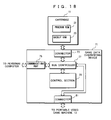
- the portable video game machine 13 and the cartridge 11 are connected to each other via a game data overwriting device 71 therebetween.
- the control keys 15 of the portable video game machine 13 may be used as input means for operating the game data overwriting device 71
- the game data overwriting device 71 is operated via a personal computer in the present embodiment.
- the game data overwriting device 71 and the personal computer are connected to each other via a communications cable, and a keyboard and a mouse connected to the personal computer are used as input means for operating the game data overwriting device 71.
- the computer can be used in place of the control section 79.
- the LCD 17 of the portable video game machine 13 can be used as display means of the game data overwriting device 71
- a monitor connected to the personal computer can be used as input means for operating the game data overwriting device 71.
- the game data overwriting device 71 includes a connector 73 via which the cartridge 11 is connected to the game data overwriting device 71, a communications port 75 for communicating with the personal computer, the control section 79 for performing a data overwriting process to be described later, a connector 81 via which the portable video game machine 13 is connected to the game data overwriting device 71, and a bus controller 77 for controlling data exchanges between the connectors 73 and 81, the communications port 75 and the control section 79.
- the control section 79 includes a game data overwriting program therein, and the control section 79 performs the data overwriting process according to the game data overwriting program.
- the control section 79 pauses the video game program running on the portable video game machine 13 (S701) .
- the control section 79 displays an input prompt screen on the LCD 17 of the portable video game machine 13 to prompt the user to input a first search value (S703).
- the user inputs the current value of the game parameter to be overwritten (e. g. , the amount of money: 9Ah) as the first search value.
- the control section 79 determines whether or not the first search value has been input (S705). If it is determined that the first search value has been input, the control section 79 searches for the same value (9Ah) as the first search value through the data stored in the work RAM 35 of the portable video game machine 13 (S707). As a result of the search, normally, a plurality of occurrences of the same value as the first search value are detected.
- the control section 79 detects a storage address at which the same value as the first search value is stored (S709). Then, the value stored at the detected storage address (e.g., AAAFh) and other values stored at nearby addresses (e. g., values stored at two addresses adjacent to the detected storage address) are registered as watch data (S711). For example, referring to FIG. 7, the amount of money (9Ah) and the adjacent values, i.e., the MP (15h) and the weapons (35h), are registered as watch data. Then, the video game program is resumed (S713).
- the value stored at the detected storage address e.g., AAAFh
- other values stored at nearby addresses e. g., values stored at two addresses adjacent to the detected storage address
- the control section 79 monitors the values of the watch data registered in step 711 and the storage address (S715). When the storage address is changed, the control section 79 detects and monitors the new storage address. In the present embodiment, not only the value stored at the storage address detected in step 709 but also other values stored at nearby addresses are registered as watch data. By taking into consideration values at adjacent addresses, it is possible to more reliably detect a change in the storage address. For example, it can be determined that the storage address is changed when the values of the amount of money (9Ah), the MP (15h) and the weapons (35h) all change at the same time. Then, the control section 79 determines whether or not the user has given an instruction to pause the video game program (S717).
- the control section 79 continues monitoring until the user gives a pause instruction.
- the user may pause the video game program when, for example, the value of the amount of money changes from 9Ah to 9Fh.
- the control section 79 pauses the video game program (S719).
- the control section 79 displays an input prompt screen on the LCD 17 of the portable video game machine 13 to prompt the user to input a second search value (S721).
- the user inputs the current value of the game parameter to be overwritten (e.g., the amount of money: 9Fh) as the second search value.
- the control section 79 determines whether or not the second search value has been input (S723). If it is determined that the second search value has been input, the control section 79 searches for the same value (9Fh) as the second search value through the data stored in the work RAM 35 of the portable video game machine 13 (S725).
- the control section 79 detects a storage address at which the same value as the second search value is stored (S727). Then, the control section 79 determines whether or not the detected storage address matches the storage address of the value registered as watch data (S729) . If they do not match, the control section 79 displays an error report on the LCD 17 of the portable video game machine 13 stating that the data overwriting process has failed (S739), and the process proceeds to step 741. If the storage address detected in step 727 matches the storage address of the value registered as watch data, the control section 79 displays the storage address and the value (9Fh) on the LCD 17 (S731).
- the control section 79 waits for the user to input a desired value (S733). If the user inputs a desired value (e.g., EEh), the value (9Fh) currently stored at the storage address is overwritten to the inputted desired value (EEh) (S735). Then, the control section 79 resumes the video game program (S737). Where the value of the game parameter (the amount of money) that the user has overwritten needs to be maintained at the value (EEh) inputted by the user in step 733, the control section 79 monitors the storage address for the game parameter and periodically overwrites the value at the storage address to the value (EEh) inputted by the user in step 733 (S741).
- a desired value e.g., EEh
- the present embodiment is directed to a case where the video game program is paused and resumed, the present invention is not limited to this.
- the value searching process, etc. may be performed while capturing the memory image in a real-time manner, without pausing the video game program.
- the storage address for any particular game parameter can be detected efficiently.
- FIG. 17 and FIG. 18 will be relied upon in the following description.
- the control section 79 includes a game data overwriting program therein, and the control section 79 performs the data overwriting process according to the game data overwriting program.
- the control section 79 pauses the video game program running on the portable video game machine 13 (S801). Then, the control section 79 displays a code input prompt screen on the LCD 17 of the portable video game machine 13 to prompt the user to input a code for the data overwriting process (S803).
- the code used herein includes a value for identifying the storage address for the game parameter to be overwritten and another value for identifying the new value with which the current game parameter value is to be overwritten.
- the value for identifying the storage address for the game parameter to be overwritten maybe, for example, a value indicating the relative address of the storage address for the game parameter with respect to the start address of the game data.
- the code for overwriting the value of the amount of money to EEh includes a value (07h) and a value (EEh).
- the control section 79 determines whether or not a code has been input (S805). If a code has been input, the control section 79 obtains the storage start address by referring to a fixed address (AAABh in the example illustrated in FIG. 6) of the work RAM 35 of the portable video game machine 13 (S807). Then, based on the obtained storage start address and the value (07h), included in the code, for identifying the storage address for the game parameter to be overwritten, the control section 79 identifies the target storage address at which the game parameter to be overwritten is stored (S809).
- control section 79 overwrites the value stored at the storage address (AAB1h) identified in step 809 with the value (EEh) , included in the code, for identifying the new value (S811). Then, the control section 79 resumes the video game program (S813).
- the storage address when the offset value is "0" can be used as "the value for identifying the storage address for the game parameter to be overwritten" included in the code.
- the value for identifying the storage address for the amount of money is AAB1h.
- the current storage address for'the amount of money can be calculated by adding the current offset value to AAB1h.
- the value of any particular game parameter can be overwritten by using the arrangement information stored at a fixed address of the work RAM 35.
Landscapes
- Engineering & Computer Science (AREA)
- Multimedia (AREA)
- Computer Security & Cryptography (AREA)
- Theoretical Computer Science (AREA)
- General Business, Economics & Management (AREA)
- Physics & Mathematics (AREA)
- Business, Economics & Management (AREA)
- General Engineering & Computer Science (AREA)
- General Physics & Mathematics (AREA)
- Software Systems (AREA)
- Optics & Photonics (AREA)
- Storage Device Security (AREA)
- Slot Machines And Peripheral Devices (AREA)
Applications Claiming Priority (2)
| Application Number | Priority Date | Filing Date | Title |
|---|---|---|---|
| JP2003389769 | 2003-11-19 | ||
| JP2003389769A JP4159973B2 (ja) | 2003-11-19 | 2003-11-19 | ゲームデータ制御プログラム、ゲームデータ書換プログラムおよびゲームデータ書換装置 |
Publications (3)
| Publication Number | Publication Date |
|---|---|
| EP1533011A2 true EP1533011A2 (de) | 2005-05-25 |
| EP1533011A3 EP1533011A3 (de) | 2010-08-11 |
| EP1533011B1 EP1533011B1 (de) | 2014-03-05 |
Family
ID=34431584
Family Applications (1)
| Application Number | Title | Priority Date | Filing Date |
|---|---|---|---|
| EP04025769.3A Expired - Lifetime EP1533011B1 (de) | 2003-11-19 | 2004-10-29 | Spieldatenmanipulationsprogramm und Spieldatenmanpulationsvorrichtung |
Country Status (3)
| Country | Link |
|---|---|
| US (1) | US7682252B2 (de) |
| EP (1) | EP1533011B1 (de) |
| JP (1) | JP4159973B2 (de) |
Cited By (1)
| Publication number | Priority date | Publication date | Assignee | Title |
|---|---|---|---|---|
| TWI459236B (zh) * | 2011-12-05 | 2014-11-01 | Giga Byte Tech Co Ltd | 無線輸入裝置 |
Families Citing this family (10)
| Publication number | Priority date | Publication date | Assignee | Title |
|---|---|---|---|---|
| JP4554660B2 (ja) * | 2007-11-01 | 2010-09-29 | 株式会社コナミデジタルエンタテインメント | 記憶処理装置、情報提供サーバ、動作方法、ならびに、プログラム |
| US20100205448A1 (en) * | 2009-02-11 | 2010-08-12 | Tolga Tarhan | Devices, systems and methods for secure verification of user identity |
| CN102479238A (zh) * | 2010-11-24 | 2012-05-30 | 深圳市快播科技有限公司 | 单机存档游戏系统及其存档方法 |
| JP5753457B2 (ja) * | 2011-07-25 | 2015-07-22 | 株式会社メガチップス | メモリシステム、セキュリティメモリおよび情報保護方法 |
| JP2013123537A (ja) * | 2011-12-14 | 2013-06-24 | Sony Computer Entertainment Inc | 電子機器およびセーブデータ記録方法 |
| JP6595758B2 (ja) * | 2014-12-16 | 2019-10-23 | 任天堂株式会社 | 情報処理装置、情報処理システム、情報処理プログラム、および情報処理方法 |
| US10649656B2 (en) * | 2017-12-28 | 2020-05-12 | Micron Technology, Inc. | Techniques to update a trim parameter in non-volatile memory |
| JP7014613B2 (ja) * | 2018-01-11 | 2022-02-01 | 株式会社バンダイナムコエンターテインメント | プログラム及びゲーム装置 |
| CN109908588A (zh) * | 2019-03-12 | 2019-06-21 | 深圳市腾讯信息技术有限公司 | 一种变速器检测方法、装置、终端及存储介质 |
| JP7328122B2 (ja) * | 2019-11-14 | 2023-08-16 | フォルシアクラリオン・エレクトロニクス株式会社 | 鍵管理装置および鍵管理方法 |
Family Cites Families (11)
| Publication number | Priority date | Publication date | Assignee | Title |
|---|---|---|---|---|
| JPH0744378A (ja) | 1993-07-29 | 1995-02-14 | Casio Comput Co Ltd | プログラムの起動方法 |
| JPH08147220A (ja) | 1994-11-18 | 1996-06-07 | Hitachi Ltd | 情報記録媒体利用システム |
| JPH1139448A (ja) * | 1997-07-18 | 1999-02-12 | Sony Computer Entertainment:Kk | 補助記憶装置、電子機器の時刻設定方法及び情報処理装置 |
| JP3566889B2 (ja) * | 1998-10-08 | 2004-09-15 | 株式会社ソニー・コンピュータエンタテインメント | 情報追加方法、ビデオゲーム機及び記録媒体 |
| US6508711B1 (en) * | 1999-01-29 | 2003-01-21 | Namco Ltd. | Game machine having a main unit exchanging data with a portable slave machine |
| JP3345384B2 (ja) * | 2000-01-12 | 2002-11-18 | コナミ株式会社 | ゲームシステム及びその周辺装置、ゲームシステムの制御方法 |
| JP2001251288A (ja) | 2000-03-03 | 2001-09-14 | Matsushita Electric Ind Co Ltd | データ暗号化送信システム及び領域重複判定方法 |
| JP2001265658A (ja) | 2000-03-06 | 2001-09-28 | Kenji Ko | 非揮発性保存装置内容秘密保持方法と非揮発性保存装置内容秘密保持構造 |
| JP2002268948A (ja) | 2001-03-08 | 2002-09-20 | Toshiba Corp | ディジタル情報システム及びコンテンツ情報の検証方法 |
| JP2003288129A (ja) | 2002-03-28 | 2003-10-10 | Sun Atmark:Kk | メモリ管理方法、メモリ装置、コンピュータシステム、コンパイラ及びプログラム |
| JP3998565B2 (ja) * | 2002-11-15 | 2007-10-31 | 任天堂株式会社 | ゲーム機、ゲームデータのバックアップ制御プログラムおよびバックアップ制御方法 |
-
2003
- 2003-11-19 JP JP2003389769A patent/JP4159973B2/ja not_active Expired - Lifetime
-
2004
- 2004-10-28 US US10/974,756 patent/US7682252B2/en active Active
- 2004-10-29 EP EP04025769.3A patent/EP1533011B1/de not_active Expired - Lifetime
Non-Patent Citations (4)
| Title |
|---|
| "Software Protection and Simulation on Oblivious RAMs", MIT PH.D. THESIS, 17 May 1992 (1992-05-17), pages 1 - 51, Retrieved from the Internet <URL:URL:http://www.cs.ucla.edu/~rafail/PUBLIC/09.pdf> |
| "winback: Covert operations, NINTENDO 64 GAME SHARK CODES", INTERNET CITATION, 8 February 2001 (2001-02-08) |
| JUN XU ET AL.: "Transparent runtime randomization of security", RELIABLE DISTRIBUTED SYSTEMS, 2003. PROCEEDINGS. 22ND INTERNATIONAL SYMPOSIUM ON 6-8 OCT. 2003, 6 October 2003 (2003-10-06), pages 260 - 269 |
| OLAF BOEHM; JOERG ZAUNER: "Amiga Action reply III", 1991, DATEL ELECTRONICS LTD., pages: 30 - 42 |
Cited By (1)
| Publication number | Priority date | Publication date | Assignee | Title |
|---|---|---|---|---|
| TWI459236B (zh) * | 2011-12-05 | 2014-11-01 | Giga Byte Tech Co Ltd | 無線輸入裝置 |
Also Published As
| Publication number | Publication date |
|---|---|
| US20050148394A1 (en) | 2005-07-07 |
| JP4159973B2 (ja) | 2008-10-01 |
| US7682252B2 (en) | 2010-03-23 |
| EP1533011B1 (de) | 2014-03-05 |
| EP1533011A3 (de) | 2010-08-11 |
| JP2005144055A (ja) | 2005-06-09 |
Similar Documents
| Publication | Publication Date | Title |
|---|---|---|
| EP2888651B1 (de) | Verfahren zur erzeugung eines mini-games | |
| EP3608001B1 (de) | Erzeugung und verteilung benutzerbasierter minispiele | |
| EP1533011B1 (de) | Spieldatenmanipulationsprogramm und Spieldatenmanpulationsvorrichtung | |
| US9623327B2 (en) | Determining triggers for cloud-based emulated games | |
| JP3281332B2 (ja) | コンピュータ読み取り可能な記録媒体、ゲーム制御方法およびゲーム装置 | |
| US9658776B2 (en) | Compression of state information for data transfer over cloud-based networks | |
| JP5503587B2 (ja) | ランキングを作成するためのゲームスコアの計算方法を実行するコンピュータ及びゲームシステム | |
| US20020098885A1 (en) | Video game system and control method thereof and program of video game and computer readable record medium recorded with the program | |
| US20240399253A1 (en) | Game trainer using mobile device | |
| EP2187314B1 (de) | Herunterlade-sicherheitssystem | |
| JP3619220B2 (ja) | ゲームプログラム、及び装置 | |
| US7878904B2 (en) | Object selecting method | |
| JP4033427B2 (ja) | ゲーム装置及び情報記憶媒体 | |
| JP2001137545A (ja) | 記録媒体、データアクセス方法、ゲーム進行制御方法およびゲーム装置 | |
| JP2000308764A (ja) | 処理制御装置及び方法 | |
| JP7295444B2 (ja) | 情報処理システム及びプログラム | |
| JP2002292117A (ja) | ゲーム装置、ゲーム制御方法およびその記録媒体ならびにコンピュータプログラム | |
| JP6784815B1 (ja) | 情報処理装置、及び情報処理プログラム | |
| JP3120620B2 (ja) | 家庭用ゲーム機を用いた自動デモシステム | |
| JP2020175224A (ja) | ゲームプログラムならびにコンピュータ | |
| JP2009301504A (ja) | コンピュータ、記録媒体および情報処理方法 | |
| JPH10211357A (ja) | ビデオゲーム装置およびゲームシステム | |
| US20150100710A1 (en) | Information processing system, information processing apparatus, storage medium having stored therein information processing program, and method of storing saved data | |
| JP7171186B2 (ja) | ゲームプログラム、情報処理方法、及び情報処理装置 | |
| JP2000300840A (ja) | 予測時間表示方法および装置 |
Legal Events
| Date | Code | Title | Description |
|---|---|---|---|
| PUAI | Public reference made under article 153(3) epc to a published international application that has entered the european phase |
Free format text: ORIGINAL CODE: 0009012 |
|
| AK | Designated contracting states |
Kind code of ref document: A2 Designated state(s): AT BE BG CH CY CZ DE DK EE ES FI FR GB GR HU IE IT LI LU MC NL PL PT RO SE SI SK TR |
|
| AX | Request for extension of the european patent |
Extension state: AL HR LT LV MK |
|
| RAP1 | Party data changed (applicant data changed or rights of an application transferred) |
Owner name: NINTENDO CO., LTD. Owner name: CREATURES INC. |
|
| PUAL | Search report despatched |
Free format text: ORIGINAL CODE: 0009013 |
|
| AK | Designated contracting states |
Kind code of ref document: A3 Designated state(s): AT BE BG CH CY CZ DE DK EE ES FI FR GB GR HU IE IT LI LU MC NL PL PT RO SE SI SK TR |
|
| AX | Request for extension of the european patent |
Extension state: AL HR LT LV MK |
|
| 17P | Request for examination filed |
Effective date: 20101130 |
|
| AKX | Designation fees paid |
Designated state(s): DE FR GB |
|
| 17Q | First examination report despatched |
Effective date: 20110817 |
|
| RAP1 | Party data changed (applicant data changed or rights of an application transferred) |
Owner name: NINTENDO CO., LTD. Owner name: CREATURES INC. |
|
| GRAP | Despatch of communication of intention to grant a patent |
Free format text: ORIGINAL CODE: EPIDOSNIGR1 |
|
| RIC1 | Information provided on ipc code assigned before grant |
Ipc: A63F 13/10 20060101ALI20130304BHEP Ipc: A63F 13/02 20060101AFI20130304BHEP |
|
| INTG | Intention to grant announced |
Effective date: 20130402 |
|
| GRAS | Grant fee paid |
Free format text: ORIGINAL CODE: EPIDOSNIGR3 |
|
| RAP1 | Party data changed (applicant data changed or rights of an application transferred) |
Owner name: CREATURES INC. Owner name: NINTENDO CO., LTD. |
|
| GRAP | Despatch of communication of intention to grant a patent |
Free format text: ORIGINAL CODE: EPIDOSNIGR1 |
|
| INTG | Intention to grant announced |
Effective date: 20130809 |
|
| REG | Reference to a national code |
Ref country code: DE Ref legal event code: R079 Ref document number: 602004044500 Country of ref document: DE Free format text: PREVIOUS MAIN CLASS: A63F0013100000 Ipc: A63F0013750000 |
|
| GRAA | (expected) grant |
Free format text: ORIGINAL CODE: 0009210 |
|
| AK | Designated contracting states |
Kind code of ref document: B1 Designated state(s): DE FR GB |
|
| REG | Reference to a national code |
Ref country code: GB Ref legal event code: FG4D |
|
| RIC1 | Information provided on ipc code assigned before grant |
Ipc: A63F 13/95 20140101ALI20140128BHEP Ipc: A63F 13/75 20140101AFI20140128BHEP Ipc: A63F 13/63 20140101ALI20140128BHEP |
|
| REG | Reference to a national code |
Ref country code: DE Ref legal event code: R096 Ref document number: 602004044500 Country of ref document: DE Effective date: 20140417 |
|
| REG | Reference to a national code |
Ref country code: DE Ref legal event code: R026 Ref document number: 602004044500 Country of ref document: DE |
|
| PLBI | Opposition filed |
Free format text: ORIGINAL CODE: 0009260 |
|
| 26 | Opposition filed |
Opponent name: BIGBEN INTERACTIVE SA Effective date: 20141205 |
|
| PLAX | Notice of opposition and request to file observation + time limit sent |
Free format text: ORIGINAL CODE: EPIDOSNOBS2 |
|
| REG | Reference to a national code |
Ref country code: DE Ref legal event code: R026 Ref document number: 602004044500 Country of ref document: DE Effective date: 20141205 |
|
| PLAF | Information modified related to communication of a notice of opposition and request to file observations + time limit |
Free format text: ORIGINAL CODE: EPIDOSCOBS2 |
|
| PLBB | Reply of patent proprietor to notice(s) of opposition received |
Free format text: ORIGINAL CODE: EPIDOSNOBS3 |
|
| REG | Reference to a national code |
Ref country code: FR Ref legal event code: PLFP Year of fee payment: 13 |
|
| PLCK | Communication despatched that opposition was rejected |
Free format text: ORIGINAL CODE: EPIDOSNREJ1 |
|
| REG | Reference to a national code |
Ref country code: DE Ref legal event code: R100 Ref document number: 602004044500 Country of ref document: DE |
|
| PLBN | Opposition rejected |
Free format text: ORIGINAL CODE: 0009273 |
|
| STAA | Information on the status of an ep patent application or granted ep patent |
Free format text: STATUS: OPPOSITION REJECTED |
|
| 27O | Opposition rejected |
Effective date: 20161218 |
|
| REG | Reference to a national code |
Ref country code: FR Ref legal event code: PLFP Year of fee payment: 14 |
|
| REG | Reference to a national code |
Ref country code: FR Ref legal event code: PLFP Year of fee payment: 15 |
|
| PGFP | Annual fee paid to national office [announced via postgrant information from national office to epo] |
Ref country code: GB Payment date: 20230907 Year of fee payment: 20 |
|
| PGFP | Annual fee paid to national office [announced via postgrant information from national office to epo] |
Ref country code: FR Payment date: 20230911 Year of fee payment: 20 |
|
| PGFP | Annual fee paid to national office [announced via postgrant information from national office to epo] |
Ref country code: DE Payment date: 20230906 Year of fee payment: 20 |
|
| REG | Reference to a national code |
Ref country code: DE Ref legal event code: R071 Ref document number: 602004044500 Country of ref document: DE |
|
| REG | Reference to a national code |
Ref country code: GB Ref legal event code: PE20 Expiry date: 20241028 |
|
| PG25 | Lapsed in a contracting state [announced via postgrant information from national office to epo] |
Ref country code: GB Free format text: LAPSE BECAUSE OF EXPIRATION OF PROTECTION Effective date: 20241028 |
|
| PG25 | Lapsed in a contracting state [announced via postgrant information from national office to epo] |
Ref country code: GB Free format text: LAPSE BECAUSE OF EXPIRATION OF PROTECTION Effective date: 20241028 |