EP1519928B1 - Verfahren zum herstellen von heterocyclischen fluoralkenylsulfonen - Google Patents
Verfahren zum herstellen von heterocyclischen fluoralkenylsulfonen Download PDFInfo
- Publication number
- EP1519928B1 EP1519928B1 EP03738072.2A EP03738072A EP1519928B1 EP 1519928 B1 EP1519928 B1 EP 1519928B1 EP 03738072 A EP03738072 A EP 03738072A EP 1519928 B1 EP1519928 B1 EP 1519928B1
- Authority
- EP
- European Patent Office
- Prior art keywords
- formula
- optionally
- alkyl
- methyl
- fluorine
- Prior art date
- Legal status (The legal status is an assumption and is not a legal conclusion. Google has not performed a legal analysis and makes no representation as to the accuracy of the status listed.)
- Expired - Lifetime
Links
- 0 Cc1nc(*)c(*)[s]1 Chemical compound Cc1nc(*)c(*)[s]1 0.000 description 9
- DQSHFKPKFISSNM-UHFFFAOYSA-N Cc1nc(cccc2)c2[o]1 Chemical compound Cc1nc(cccc2)c2[o]1 DQSHFKPKFISSNM-UHFFFAOYSA-N 0.000 description 1
- DXYYSGDWQCSKKO-UHFFFAOYSA-N Cc1nc2ccccc2[s]1 Chemical compound Cc1nc2ccccc2[s]1 DXYYSGDWQCSKKO-UHFFFAOYSA-N 0.000 description 1
Classifications
-
- C—CHEMISTRY; METALLURGY
- C07—ORGANIC CHEMISTRY
- C07D—HETEROCYCLIC COMPOUNDS
- C07D277/00—Heterocyclic compounds containing 1,3-thiazole or hydrogenated 1,3-thiazole rings
- C07D277/02—Heterocyclic compounds containing 1,3-thiazole or hydrogenated 1,3-thiazole rings not condensed with other rings
- C07D277/20—Heterocyclic compounds containing 1,3-thiazole or hydrogenated 1,3-thiazole rings not condensed with other rings having two or three double bonds between ring members or between ring members and non-ring members
- C07D277/32—Heterocyclic compounds containing 1,3-thiazole or hydrogenated 1,3-thiazole rings not condensed with other rings having two or three double bonds between ring members or between ring members and non-ring members with hetero atoms or with carbon atoms having three bonds to hetero atoms with at the most one bond to halogen, e.g. ester or nitrile radicals, directly attached to ring carbon atoms
- C07D277/36—Sulfur atoms
-
- C—CHEMISTRY; METALLURGY
- C07—ORGANIC CHEMISTRY
- C07D—HETEROCYCLIC COMPOUNDS
- C07D277/00—Heterocyclic compounds containing 1,3-thiazole or hydrogenated 1,3-thiazole rings
- C07D277/02—Heterocyclic compounds containing 1,3-thiazole or hydrogenated 1,3-thiazole rings not condensed with other rings
- C07D277/20—Heterocyclic compounds containing 1,3-thiazole or hydrogenated 1,3-thiazole rings not condensed with other rings having two or three double bonds between ring members or between ring members and non-ring members
- C07D277/32—Heterocyclic compounds containing 1,3-thiazole or hydrogenated 1,3-thiazole rings not condensed with other rings having two or three double bonds between ring members or between ring members and non-ring members with hetero atoms or with carbon atoms having three bonds to hetero atoms with at the most one bond to halogen, e.g. ester or nitrile radicals, directly attached to ring carbon atoms
- C07D277/56—Carbon atoms having three bonds to hetero atoms with at the most one bond to halogen
Definitions
- the present invention relates to a process for the preparation of heterocyclic fluoroalkenyl sulfones from fluoroalkenyl sulfoxides and from the corresponding fluoroalkenyl thioethers.
- Heterocyclic fluoroalkenyl sulfones such as, for example, 5-chloro-2 - [(3,4,4-trifluoro-3-butenyl) sulfonyl] -1,3-thiazole, which are used as pest control agents, for example in US Pat WO 01/02378 . US 3,513,172 . US 3,697,538 or WO 95/24403 have been described so far usually by the oxidation of the thioether with hydrogen peroxide / glacial acetic acid at 55-60 ° C / 6h in 75% yield prepared (see, eg WO 01/02378 ). The oxidation of the sulfide to the sulfone proceeds in two steps. In a first step, the sulfide (the thioether) is oxidized to the sulfoxide. In the second step, in turn, the sulfoxide is oxidized to the sulfone.
- a first step
- salts of peroxomonosulfuric acid of the formula H 2 SO 5 such as, for example, potassium hydrogen peroxomonosulfate, KHSO 5 as oxidizing agent, allows the use of particularly mild conditions.
- Oxone® and Caroat® have proven to be particularly suitable.
- the second step of the oxidation of the sulfoxide to the sulfone after neutralization of the mixture proceeds just as easily as the first.
- no appreciable oxidation of the double bond of the trifluorobutenyl radical could be observed, which is particularly problematical in the known processes.
- the method according to the invention can be represented schematically as follows, for example:
- the inventive method leads to higher yields, wherein crystallized out of the reaction mixture after workup, the desired product without further purification. A distillation or chromatography is no longer necessary, which also has an advantageous effect on the yield.
- the method steps according to the invention can each be carried out directly following one another or also individually in each case, wherein the respective product can also be cleaned.
- the process according to the invention is preferably used to prepare the sulfones of the formula (I) starting from sulfides of the formula (III).
- the process of the invention requires for the preparation of the sulfone from the sulfide after the oxidation to the sulfoxide in a first step, an increase in the pH, which during the reaction should be 6 to 10, preferably 8 to 9 (pH control).
- the pH can be increased either after the first step (preparation of the sulfoxide) or even during the addition of the first portion of the potassium salt or Oxone® to the sulfide by the addition of base (see also Preparation Example ).
- bases it is possible to use all customary alkali metal and alkaline earth metal hydroxides or alkali metal and alkaline earth metal carbonates, amines, etc. Preference is given to using NaOH, KOH, K 2 CO 3 or Na 2 CO 3 . Particular preference is given to using NaOH.
- the compounds used in the process according to the invention for the preparation of the compounds of the formula (I) and of the formula (II) are generally characterized by the formulas (II) and (III).
- the compounds of the formula (II) and (III) in which R 1 is fluorine are known compounds and are described, for example, in US Pat WO 95/24403 . WO 01/02378 . WO 01/66529 . WO 02/06259 . WO 02/06257 . WO 02/06256 and WO 02/06260 described and can be prepared for example according to the methods specified therein.
- Compounds of the formula (II) and (IH) in which R 1 is H are described, for example, in WO 95/24403 and can be prepared by the process specified therein.
- the preferred salt of peroxomonosulfuric acid is potassium hydrogen peroxomonosulfate, KHSO 5 (CAS-RN 10058-23-8).
- KHSO 5 is used in its stable form as a triple salt of formula 2 KHSO 5 .KHSO 4 .K 2 SO 4 (5: 3: 2: 2) (CAS-RN 70693-62-8).
- Oxone.RTM. Or Caroat.RTM., With Oxone.RTM. Being particularly emphasized, are particularly preferably used as the oxidizing agent.
- Oxone® is known as an oxidizer for sulfides (eg RJ Kennedy, AM Stock, J. Org. Chem. (1960), 25, 1901 ; J. Leonard et al., Synthesis (1999), 507 ; KS Webb, Tetrahedron Lett. (1994), 35, 3457 ).
- episulfides could be oxidized to episulfones with Oxone® (" The First Preparation of Episulfones from Episulfides: Oxidation Using Oxone® / Tetrafluoroacetone ", P. Johnson and JK Tailor, Tetrahedron Lett. (1997) 38, 5873 ).
- the monopotassium salt is used, for example, as a bleaching and oxidizing agent in cleaning agents.
- Suitable diluents for carrying out the process according to the invention are, in addition to water, especially water-miscible solvents, e.g.
- Ketones such as acetone; Nitriles, such as acetonitrile, propionitrile or butyronitrile; Alcohols such as methanol, ethanol, n- or i-propanol, ethylene glycol monomethyl ether, ethylene glycol monoethyl ether, diethylene glycol monomethyl ether, diethylene glycol monoethyl ether, carboxylic acids such as formic acid, glacial acetic acid or mixtures thereof, ethers such as tetrahydrofuran or dioxane, but also not water-miscible, inert organic solvents, with phase transfer catalysts present have to.
- Alcohols such as methanol, ethanol, n- or i-propanol, ethylene glycol monomethyl ether, ethylene glycol monoethyl ether, diethylene glycol monomethyl ether, diethylene glycol monoethyl ether, carboxylic acids such as formic acid, glacial acetic acid or mixtures thereof,
- aliphatic, alicyclic or aromatic, optionally halogenated hydrocarbons such as, for example, benzene, benzene, toluene, xylene, chlorobenzene, dichlorobenzene, butanone or methyl isobutyl ketone; Petroleum ether, hexane, cyclohexane, dichloromethane, chloroform, carbon tetrachloride; Ethers, such as diethyl ether, diisopropyl ether, 2-methyltetrahydrofuran, methyl t-butyl ether or ethylene glycol dimethyl or diethyl ether; Esters such as ethyl acetate or isopropyl acetate.
- hydrocarbons such as, for example, benzene, benzene, toluene, xylene, chlorobenzene, dichlorobenzene, butanone or methyl isobutyl ketone
- Preferred water-miscible solvents are acetonitrile, acetone, alcohols, in particular methanol, ethanol, n- or i-propanol, dioxane, tetrahydrofuran or the abovementioned carboxylic acids.
- a preferred water-immiscible solvent is e.g. Toluene in the presence of a phase transfer catalyst.
- the alcohols mentioned are particularly preferably used as the solvent.
- Suitable phase transfer catalysts are, for example, tetrabutylammonium bromide, tetrabutylammonium chloride, tetraoctylammonium chloride, tetrabutylammonium hydrogensulfate, methyltrioctylammonium chloride, hexadecyltrimethylammonium chloride, Hexadecyltrimethylammonium bromide, benzyltrimethylammonium chloride, benzyltriethylammonium chloride, benzyltrimethylammonium hydroxide, benzyltriethylammonium hydroxide, benzyltributylammonium chloride, benzyltributylammonium bromide, tetrabutylphosphonium bromide, tetrabutylphosphonium chloride, tributylhexadecylphosphonium bromide, butyl-triphenyl
- the reaction can be carried out within a relatively wide temperature range, preferably at temperatures between -20 ° and 150 ° C. Preferably, temperatures between 0 ° C and 40 ° C are used. Preferred temperature ranges can also be taken from the production example.
- the pH value must be selected with regard to the desired final product (sulfoxide or sulfone).
- the pH should be between 1 and 3.
- the pH must be increased to 6 to 10. It is preferably 8 to 9.
- the pH can also be increased during the addition of the first portion of the Oxone® solution by the addition of base, if the sulfide is to be converted into the sulfone.
- the processes according to the invention are generally carried out under normal pressure. However, it is also possible to carry out the processes according to the invention under elevated or reduced pressure-generally between 0.1 bar and 50 bar, preferably between 1 and 10 bar.
- a compound of formula (I) at least one mole of a compound of formula (III) and at least 2 moles of a salt of Peroxomonosulfuric acid used.
- the Oxone® can be used, for example, depending on the temperature as an up to 25-35% aqueous solution.
- the workup is carried out by customary methods (see the preparation examples).
- a compound of the formula (III) is dissolved in solvent, preferably in one of the abovementioned solvents, more preferably an alcohol, after slow addition of an aqueous solution of potassium hydrogen peroxomonosulfate, preferably Oxone®.
- solvent preferably in one of the abovementioned solvents, more preferably an alcohol
- an aqueous solution of potassium hydrogen peroxomonosulfate preferably Oxone®.
- the pH is adjusted preferably with NaOH to preferably 8 to 9 and again an aqueous solution of potassium hydrogen peroxomonosulfate, preferably Oxone®, is added and stirring is continued for a considerable time, the pH value being kept at 8 to 9.
- it is filtered off from the salts and the desired product is purified by customary methods.
Landscapes
- Chemical & Material Sciences (AREA)
- Organic Chemistry (AREA)
- Pharmaceuticals Containing Other Organic And Inorganic Compounds (AREA)
- Organic Low-Molecular-Weight Compounds And Preparation Thereof (AREA)
- Plural Heterocyclic Compounds (AREA)
- Thiazole And Isothizaole Compounds (AREA)
- Nitrogen- Or Sulfur-Containing Heterocyclic Ring Compounds With Rings Of Six Or More Members (AREA)
- Pyridine Compounds (AREA)
- Heterocyclic Carbon Compounds Containing A Hetero Ring Having Nitrogen And Oxygen As The Only Ring Hetero Atoms (AREA)
Description
- Die vorliegende Erfindung betrifft ein Verfahren zur Herstellung von heterocyclischen Fluoralkenylsulfonen aus Fluoralkenylsulfoxiden und aus den entsprechenden Fluoralkenylthioethern.
- Heterocyclische Fluoralkenylsulfone wie z.B. 5-Chlor-2-[(3,4,4-trifluor-3-butenyl)-sulfonyl]-1,3-thiazol, die als Schädlingbekämpfungsmittel z.B. in
WO 01/02378 US 3,513,172 ,US 3,697,538 oderWO 95/24403 WO 01/02378 
- Die Oxidation des Sulfids zum Sulfoxid mit den bekannten Verfahren erfolgt dabei relativ leicht. Die weitere Oxidation des Sulfoxids zum Sulfon geht dagegen nur langsam und schleppend vonstatten und benötigt energischere Bedingungen wie z.B. erhöhte Temperatur und verlängerte Reaktionszeiten, wobei es infolge von Zersetzungs- und Nebenreaktionen zu deutlichen und unerwünschten Ausbeuteeinbußen kommen kann.
- Die Verwendung der bisher bekannten, üblichen Oxidationsverfahren mit Wasserstoffperoxid sowie gegebenenfalls Ameisen- oder Essigsäure gegebenenfalls bei Anwesenheit von Molybdat- oder Wolframatkatalysatoren (
EP-A1-0 926 143 ;US 5,965,737 ;US 6,031,108 ; Tetrahedron (2001), 57, 2469; Spec. Publ. - R. Soc. Chem. (2001), 260, 47) führte in der Regel insbesondere zur unerwünschten Oxidation der Doppelbindung des halogenierten Butenylrestes und zu dessen oxidativem Abbau. Darüberhinaus bergen sie erhebliche Explosionsrisiken. - Aufgabe der vorliegenden Erfindung war es deshalb, ein Verfahren zur oxidativen Darstellung von halogenierten 2-(3-butenylsulfonyl)-1,3-thiazolen aus ihren Sulfiden zur Verfügung zu stellen, welches die Ausbeuteeinbußen durch Zersetzungs- und Nebenreaktionen wie z.B. der Oxidation der Doppelbindung des Butenylrestes vermeidet und des Weiteren ein Verfahren zur Herstellung der erwünschten Verbindungen zu entwickeln, das nicht mit Sicherheitsrisiken verbunden ist.
- Überraschenderweise wurde nun gefunden, dass die Verwendung von Salzen der Peroxomonoschwefelsäure der Formel H2SO5, wie z.B. Kaliumhydrogenperoxomonosulfat, KHSO5 als Oxidationsmittel die Verwendung besonders milder Bedingungen erlaubt. Als besonders geeignet haben sich z.B. Oxone® und Caroat® erwiesen. Weiterhin ist als überraschend anzusehen, dass der zweite Schritt der Oxidation des Sulfoxids zum Sulfon nach Neutralisation der Mischung genauso problemlos abläuft wie der erste. Als unerwartet ist insbesondere zu bezeichnen, dass keine nennenswerte Oxidation der Doppelbindung des Trifluorbutenylrestes beobachtet werden konnte, was bei den bekannten Verfahren besonders problematisch ist.
- Gegenstand der vorliegenden Erfindung ist deshalb ein Verfahren zur Herstellung von Verbindungen der der Formel (I),

- R1
- für Wasserstoff oder Fluor steht, und
- Het
- für einen Heterocyclus aus der nachfolgenden Gruppe von Heterocyclen steht:


- R2
- für Wasserstoff, Halogen, C1-C4-Alkyl oder C1-C4-Halogenalkyl steht,
- R3
- für Wasserstoff, Halogen, sowie jeweils gegebenenfalls durch Halogen, Methyl, Ethyl, n- oder i-Propyl oder n-, i-, s- oder t-Butyl, Methoxy, Ethoxy, n- oder i-Propoxy oder n-, i-, s- oder t-Butoxy substituiertes C1-C4-Alkyl, C1-C4-Alkoxy, C1-C4-Alkylthio, C1-C4-Alkylsulfinyl, C1-C4-Alkylsulfonyl, C1-C4-Alkoxy-carbonyl, C1-C4-Alkoxy-C1-C4-alkyl, C1-C4-Alkylthio-C1-C4-alkyl, Carboxy, C1-C4-Alkylamino-carbonyl, C3-C6-Cycloalkyl-aminocarbonyl, C1-C4-Dialkyl-aminocarbonyl, C2-C4-Alkenyl, C2-C4-Alkenylthio, C2-C4-Alkenylsulfinyl oder C2-C4-Akenylsulfonyl steht,
- R4
- für C1-C8-Alkyl C2-C6-Alkenyl, C1-C4-Haloalkyl, C1-C4-Alkoxy-C1-C4-alkyl, C1-C4-Alkylthio-C1-C4-alkyl, C3-C8-Cycloalkyl oder für jeweils gegebenenfalls durch Halogen, C1-C4-Alkyl, C1-C4-Alkoxy, C1-C4-Alkylthio oder C1-C4-Haloalkyl substituiertes Phenyl oder Benzyl steht,
- p
- für 1, 2 oder 3 steht,
- X
- für Sauerstoff oder Schwefel steht, und
- Y
- für gegebenenfalls einfach oder zweifach, gleich oder verschieden substituiertes Methylen steht, wobei als Substituenten beispielhaft genannt seien: jeweils gegebenenfalls durch Halogen, C1-C4-Alkoxy, C1-C4-Alkylthio, C1-C4- Halogenalkoxy oder C1-C4-Halogenalkylthio substituiertes C1-C4-Alkyl, C2-C4-Alkenyl oder C2-C4-Alkinyl, sowie für gegebenenfalls einfach bis dreifach, gleich oder verschieden substituiertes Phenyl, wobei als Substituenten beispielhaft genannt seien: Halogen, Cyano, Nitro, C1-C4-Alkyl, C1-C4-Alkoxy, C1-C4-Alkylthio, C1-C4-Halogenalkyl, C1-C4-Halogenalkoxy oder C1-C4-Halogenalkylthio,
- Bevorzugte Definitionen der Verbindungen der Formel (I), die mit dem erfindungsgemäßen Verfahren hergestellt werden, werden nachfolgend genannt:
- R1
- steht bevorzugt für Fluor.
- Het
- steht bevorzugt für einen Heterocyclus aus der nachfolgenden Gruppe von Heterocyclen:



- R2
- steht bevorzugt für Wasserstoff, Fluor oder Chlor.
- R3
- steht bevorzugt für Wasserstoff, Fluor, Chlor, sowie jeweils gegebenenfalls durch Fluor, Chlor, Methyl, Ethyl, n- oder i-Propyl oder n-, i-, s- oder t-Butyl, Methoxy, Ethoxy, n- oder i-Propoxy öder n-, i-, s- oder t-Butoxy substituiertes Methyl, Ethyl, n- oder i-Propyl, n-, i-, s- oder t-Butyl, Methoxy, Ethoxy, n- oder i-Propoxy, n-, i-, s- oder t-Butoxy, Methylthio, Ethylthio, n-, oder i-Propylthio, n-, i-, s- oder t-Butylthio, Methylsulfinyl, Ethylsulfinyl, Methylsulfonyl, Ethylsulfonyl, Methoxycarbonyl, Ethoxycarbonyl, n- oder i-Propoxycarbonyl, n-, i-, s- oder t-Butoxycarbonyl, Methoxymethyl, Methoxyethyl, Ethoxymethyl, Ethoxyethyl, Methylthiomethyl, Methylthioethyl, Ethylthiomethyl, Ethylthioethyl, Carboxy, Methylaminocarbonyl, Ethylaminocarbonyl, n- oder i-Propylaminocarbonyl, Cycloproylaminocarbonyl, Cyclobutylaminocarbonyl, Cyclopentylaminocarbonyl, Cyclohexylaminocarbonyl, Dimethylaminocarbonyl, Diethylaminocarbonyl, Ethenyl, Propenyl oder Butenyl.
- R4
- steht bevorzugt für Methyl, Ethyl, n-Propyl, iso-Propyl, n-Butyl, iso-Butyl, tert-Butyl, n-Pentyl, Cyclopropyl, Cyclopentyl, Cyclohexyl, 2-Chlorethyl, 2,2,3,3,3-Pentafluorpropyl, 2,2,2-Trifluorethyl, 3-Bromopropyl, 2-Methoxyethyl, 2-Ethoxyethyl, 2-Methylthioethyl, Allyl, 2-Butenyl oder für jeweils gegebenenfalls einfach oder zweifach, gleich oder verschieden durch Fluor, Chlor, Brom, Methyl, Ethyl, iso-Propyl, Trifluormethyl, Methoxy oder Methylthio substituiertes Phenyl oder Benzyl.
- p
- steht bevorzugt für 1 oder 2.
- X
- steht bevorzugt für Sauerstoff.
- Y
- steht bevorzugt für gegebenenfalls einfach oder zweifach, gleich oder verschieden substituiertes Methylen, wobei als Substituenten beispielhaft genannt seien: Methyl, Ethyl oder für gegebenenfalls einfach oder zweifach, gleich oder verschieden substituiertes Phenyl, wobei als Substituenten beispielhaft genannt seien: Fluor, Chlor, Methyl, Methoxy, Trifluormethyl, Cyano oder Nitro.
- Het
- steht besonders bevorzugt für einen Heterocyclus aus der folgenden Gruppe von Heterocyclen:

- R2
- steht besonders bevorzugt für Wasserstoff.
- R3
- steht bevorzugt für Wasserstoff, Fluor oder Chlor.
- p
- steht besonders bevorzugt für 1.
- Y
- steht besonders bevorzugt für gegebenenfalls einfach oder zweifach, gleich oder verschieden durch Methyl oder Ethyl substituiertes Methylen, oder für gegebenenfalls einfach oder zweifach, gleich oder verschieden durch Fluor, Chlor, Methyl, Methoxy, Trifluormethyl, Cyano oder Nitro substituiertes Phenyl.
- Het
- steht am meisten bevorzugt den folgenden Heterocyclus:

- R3
- steht am meisten bevorzugt für Chlor.
- Das erfindungsgemäße Verfahren lässt sich schematisch z.B. wie folgt darstellen:

- Das erfindungsgemäße Verfahren führt zu höheren Ausbeuten, wobei aus dem Reaktionsgemisch nach der Aufarbeitung das gewünschte Produkt ohne weitere Aufreinigung auskristallisiert. Eine Destillation oder Chromatographie ist nicht mehr notwendig, was sich ebenfalls vorteilhaft auf die Ausbeute auswirkt.
- Die erfindungsgemäßen Verfahrensschritte können jeweils direkt aufeinander folgend oder auch jeweils einzeln durchgeführt werden, wobei das jeweilige Produkt auch gereinigt werden kann. Bevorzugt wird das erfindungsgemäße Verfahren verwendet, um ausgehend von Sulfiden der Formel (III) die Sulfone der Formel (I) herzustellen.
- Das erfindungsgemäße Verfahren kann ebenso zur Herstellung von Sulfoxiden der Formel (II),

- worin R1 und Het die vorstehend angegebene Bedeutung haben,
- aus Verbindungen der Formel (III) verwendet werden. Dabei muss beachtet werden, dass der pH-Wert während der Oxidation des Sulfids zum Sulfoxid bei 1 bis 3 gehalten wird.
- Ebenso kann das erfindungsgemäße Verfahren zur Herstellung von Verbindungen der Formel (I) aus Verbindungen der Formel (II) verwendet werden. Hier ist ein pH-Wert von 6 bis 10, vorzugsweise von 8 bis 9 erforderlich (vgl. Herstellungsbeispiel).
- Das erfindungsgemäße Verfahren erfordert für die Herstellung des Sulfons aus dem Sulfid nach der Oxidation zum Sulfoxid in einem ersten Schritt eine Erhöhung des pH-Werts, der während der Reaktion bei 6 bis 10, vorzugsweise bei 8 bis 9 liegen sollte (pH-Kontrolle). Dabei kann der pH-Wert entweder im Anschluss an die Durchführung des ersten Schrittes (Herstellung des Sulfoxids) oder auch schon während der Zugabe der ersten Portion des Kaliumsalzes bzw. des Oxone® zum Sulfid durch die Zugabe von Base erhöht werden (vgl. auch Herstellungsbeispiel).
- Als Basen können alle gängigen Alkali- und Erdalkalihydroxide oder Alkali- und Erdalkalicarbonate, Amine etc. verwendet werden. Bevorzugt werden NaOH, KOH, K2CO3 oder Na2CO3 verwendet. Besonders bevorzugt wird NaOH verwendet.
- Im Reaktionsansatz eventuell vorhandene Peroxide sollten aus Sicherheitsgründen während der Aufarbeitung zerstört werden. Es ist deshalb wichtig, bei der Aufarbeitung die Anwesenheit von Peroxiden zu überprüfen, z.B. mit einem Perex-Test®.
- Die beim erfindungsgemäßen Verfahren verwendeten Verbindungen zur Herstellung der Verbindungen der Formel (I) und der Formel (II) sind durch die Formeln (II) und (III) allgemein charakterisiert. Die Verbindungen der Formel (II) und (III), in welchen R1 für Fluor steht, sind bekannte Verbindungen und werden z.B. in
WO 95/24403 WO 01/02378 WO 01/66529 WO 02/06259 WO 02/06257 WO 02/06256 WO 02/06260 WO 95/24403 - Als bevorzugtes Salz der Peroxomonoschwefelsäure wird das Kaliumhydrogenperoxomonosulfat, KHSO5 (CAS-RN 10058-23-8) verwendet. Das KHSO5 wird in seiner stabilen Form als Tripelsalz der Formel 2 KHSO5 · KHSO4 · K2SO4 (5:3:2:2) (CAS-RN 70693-62-8) eingesetzt. Insbesondere bevorzugt werden im erfindungsgemäßen Verfahren Oxone® oder Caroat®, wobei Oxone® besonders hervorgehoben wird, als Oxidationsmittel verwendet.
- Oxone® ist als Oxidationsmittel für Sulfide bekannt (z.B. R. J. Kennedy, A.M. Stock, J. Org. Chem. (1960), 25, 1901; J. Leonard et al., Synthesis (1999), 507; K.S. Webb, Tetrahedron Lett. (1994), 35, 3457). So konnten z.B. Episulfide mit Oxone® zu Episulfonen oxidiert werden ("The First Preparation of Episulfones from Episulfides: Oxidation Using Oxone®/ Tetrafluoroacetone", P. Johnson and J.K. Tailor, Tetrahedron Lett. (1997) 38, 5873).
- Die aktive Komponente von Oxone® ist das vorstehend genannte Kaliumhydrogenperoxomonosulfat, KHSO5, [K+ -O-S(=O)2(-OOH)], auch bekannt als Kaliummonopersulfat, welches als Tripelsalz der Formel 2 KHSO5 · KHSO4 · K2SO4 (5:3:2:2) z.B. unter den genannten Markennamen Caroat® oder Oxone® erhältlich ist. Das Monokaliumsalz wird z.B. als Bleich- und Oxidationsmittel in Reinigungsmitteln verwendet.
- Das erfindungsgemäße Verfahren zur Herstellung der Verbindungen der allgemeinen Formel (I) bzw. der allgemeinen Formel (II) werden vorzugsweise unter Verwendung von Verdünnungsmitteln durchgeführt. Als Verdünnungsmittel zur Durchführung des erfindungsgemäßen Verfahrens kommen neben Wasser vor allem wassermischbare Lösungsmittel in Betracht, z.B. Ketone, wie Aceton; Nitrile, wie Acetonitril, Propionitril oder Butyronitril; Alkohole, wie Methanol, Ethanol, n- oder i-Propanol, Ethylenglykolmonomethylether, Ethylenglykolmonoethylether, Diethylenglykolmonomethylether, Diethylenglykolmonoethylether, Carbonsäuren wie Ameisensäure, Eisessig oder deren Gemische, Ether wie Tetrahydrofuran oder Dioxan, jedoch ebenso nicht wassermischbare, inerte organische Lösungsmittel, wobei Phasentransferkatalysatoren anwesend sein müssen. Hierzu gehören aliphatische, alicyclische oder aromatische, gegebenenfalls halogenierte Kohlenwasserstoffe, wie beispielsweise Benzin, Benzol, Toluol, Xylol, Chlorbenzol, Dichlorbenzol, Butanon oder Methyl-isobutyl-keton; Petrolether, Hexan, Cyclohexan, Dichlormethan, Chloroform, Tetrachlorkohlenstoff; Ether, wie Diethylether, Diisopropylether, 2-Methyltetrahydrofuran, Methyl-t-butylether oder Ethylenglykoldimethyl- oder -diethylether; Ester wie Essigsäureethylester oder Essigsäureisopropylester. Bevorzugte wassermischbare Lösungsmittel sind Acetonitril, Aceton, Alkohole, insbesondere Methanol, Ethanol, n- oder i-Propanol, Dioxan, Tetrahydrofuran oder die oben genannten Carbonsäuren. Ein bevorzugtes nicht wassermischbares Lösungsmittel ist z.B. Toluol in Anwesenheit eines Phasentransferkatalysators. Besonders bevorzugt werden als Lösungsmittel die genannten Alkohole verwendet.
- Als Phasentransferkatalysatoren kommen z.B. Tetrabutylammonium-bromid, Tetrabutylammonium-chlorid, Tetraoctylammonium-chlorid, Tetrabutylammoniumhydrogensulfat, Methyl-trioctylammonium-chlorid, Hexadecyl-trimethylammoniumchlorid, Hexadecyl-trimethylammonium-bromid, Benzyl-trimethylammoniumchlorid, Benzyl-triethylammonium-chlorid, Benzyl-trimethylammonium-hydroxid, Benzyl-triethylammonium-hydroxid, Benzyl-tributylammonium-chlorid, Benzyl-tributylammonium-bromid, Tetrabutylphosphonium-bromid, Tetrabutylphosphoniumchlorid, Tributyl-hexadecylphosphonium-bromid, Butyl-triphenylphosphoniumchlorid, Ethyl-trioctylphosphonium-bromid, oder Tetraphenylphosphonium-bromid in Betracht. Insbesondere kommen die jeweiligen Hydrogensulfate der Phasentransferkatalysatoren in Betracht.
- Die Reaktion kann innerhalb eines relativen großen Temperaturbereichs durchgeführt werden, bevorzugt bei Temperaturen zwischen -20° und 150°C. Bevorzugt werden Temperaturen zwischen 0°C und 40°C verwendet. Bevorzugte Temperaturbereiche können auch dem Herstellungsbeispiel entnommen werden.
- Der pH-Wert muss mit Blick auf das jeweils erwünschte Endprodukt (Sulfoxid oder Sulfon) ausgewählt werden. Für die Herstellung des Sulfoxids aus dem Sulfid sollte der pH-Wert zwischen 1 und 3 liegen. Für die Herstellung des Sulfons aus dem Sulfoxid muss der pH-Wert auf 6 bis 10 erhöht werden. Vorzugsweise liegt er bei 8 bis 9. Der pH-Wert kann auch schon während der Zugabe der ersten Portion der Oxone®-Lösung durch Zugabe von Base erhöht werden, wenn das Sulfid in das Sulfon umgesetzt werden soll.
- Die erfindungsgemäßen Verfahren werden im Allgemeinen unter Normaldruck durchgeführt. Es ist jedoch auch möglich, die erfindungsgemäßen Verfahren unter erhöhtem oder vermindertem Druck - im allgemeinen zwischen 0,1 bar und 50 bar, bevorzugt zwischen 1 und 10 bar - durchzuführen.
- Bei der Durchführung des erfindungsgemäßen Verfahrens werden vorzugsweise zur Darstellung von einem Mol einer Verbindung der Formel (I) mindestens ein Mol einer Verbindung der Formel (III) und mindestens 2 Mol eines Salzes der Peroxomonoschwefelsäure verwendet. Das Oxone® kann z.B. -je nach Temperaturals eine bis zu 25-35%ige wässrige Lösung eingesetzt werden.
- Die Aufarbeitung wird nach üblichen Methoden durchgeführt (vgl. die Herstellungsbeispiele).
- In einer bevorzugten Ausführungsform des erfindungsgemäßen Verfahrens zur Herstellung der Verbindungen der Formel (I) und (II) wird eine Verbindung der Formel (III) in Lösungsmittel, bevorzugt in einem der vorstehend genannten Lösungsmittel, insbesondere bevorzugt einem Alkohol, nach langsamer Zugabe einer wässrigen Lösung von Kaliumhydrogenperoxomonosulfat, bevorzugt Oxone®, gerührt. Anschließend stellt man den pH-Wert vorzugsweise mit NaOH auf bevorzugt 8 bis 9 ein und gibt erneut eine wässrige Lösung von Kaliumhydrogenperoxomonosulfat, bevorzugt Oxone®, zu und rührt für geraume Zeit weiter, wobei der pH Wert weiter auf 8 bis 9 gehalten wird. Man saugt schließlich von den Salzen ab und reinigt das gewünschte Produkt nach üblichen Methoden auf.
- Die Herstellung von Verbindungen der Formel (I) bzw. von Verbindungen der Formel (II) geht auch aus dem nachfolgenden Beispiel hervor, das die vorstehend beschriebenen Verfahrensschritte weiter illustriert. Das Beispiel ist jedoch nicht in einschränkender Weise zu interpretieren.
- Man legt 26 g (0,1 mol) 5-Chlor-2-[(3,4,4-trifluor-3-butenyl)sulfanyl]-1,3-thiazol in 250 ml Methanol vor und tropft unter Rühren bei 5°C eine Lösung von 33,9 g Oxone® in 125 ml Wasser innerhalb von 30 Minuten hinzu. Anschließend wird die weiße Suspension bei 20°C 1,5 Stunden lang gerührt. Zur Vervollständigung der ersten Reaktionsstufe (Herstellung des Sulfoxids) gibt man nochmals 1,7 g Oxone® hinzu und rührt weitere 30 Minuten.
- Anschließend kühlt man wieder auf 5°C ab, stellt mit 4 N NaOH einen pH von 8-9 ein und tropft innerhalb von 30 Minuten eine Lösung von 33,9 g Oxone in 125 ml Wasser hinzu, wobei der pH weiterhin bei 8-9 gehalten wird. Der gesamte Verbrauch an 4 N NaOH beträgt ca. 70 ml (2,54 Aquivalente bezogen auf Oxone®). Anschließend rührt man unter pH-Kontrolle 60 Minuten bei 20°C, gibt nochmals 1 g Oxone® hinzu und rührt weitere 20 Minuten.
- Man saugt von den Salzen ab, wäscht den weißen Rückstand zweimal mit je 30 ml Methanol, rührt das Filtrat mit 25 ml Natriumbisulfitlösung und prüft auf Peroxide. Dann wird vom Filtrat der Methanolanteil im Vakuum abdestilliert. Vom wasserhaltigen, zweiphasigen Rückstand wird die organische Phase abgetrennt und die wässrige Phase nochmals dreimal mit Essigester extrahiert. Die vereinigten organischen Phasen werden auf Peroxid getestet, mit Natriumsulfat getrocknet und eingedampft. Man erhält 27,6 g (92,2 % der Theorie) eines gelblichen Öls, das nach Anreiben und Abkühlen kristallisiert und einen Schmelzpunkt von 34 °C besitzt. Der Gehalt (HPLC gegen Standard) beträgt 97,6 %.
eine Verbindung der Formel (III),

R1 und Het die vorstehend genannte Bedeutung haben,
mit einem Salz der Peroxomonoschwefelsäure, H2SO5,
gegebenenfalls in Gegenwart eines Reaktionshilfsmittels und gegebenenfalls in Gegenwart eines Verdünnungsmittels reagieren lässt.
Claims (8)
- Verfahren zur Herstellung von Verbindungen der Formel (I)
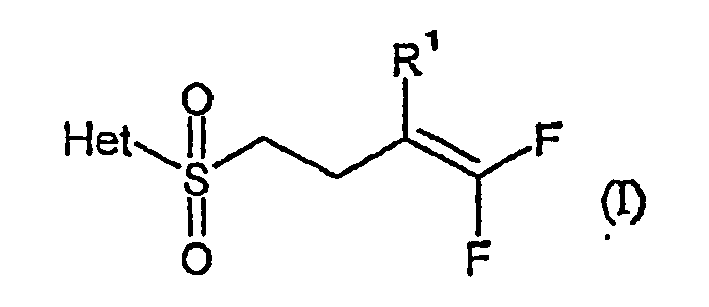 R1 für Wasserstoff oder Fluor steht undHet für einen Heterocyclus aus der nachfolgenden Gruppe von Heterocyclen steht,worin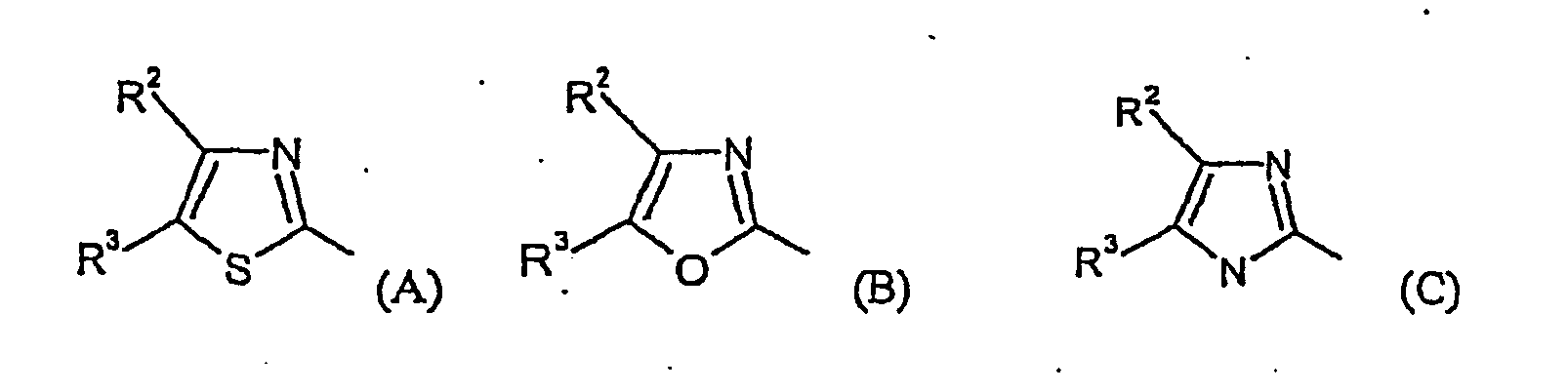


 R2 für Wasserstoff, Halogen, C1-C4-Alkyl oder C1-C4-Halogenalkyl steht,R3 für Wasserstoff, Halogen, sowie jeweils gegebenenfalls durch Halogen, Methyl, Ethyl, n- oder i-Propyl oder n-, i-, s- oder t-Butyl, Methoxy, Ethoxy, n- oder i-Propoxy oder n-, i-, s- oder t-Butoxy substituiertes C1-C4-Alkyl, C1-C4-Alkoxy, C1-C4-Alkylthio, C1-C4-Alkylsulfinyl, C1-C4-Alkylsulfonyl, C1-C4-Alkoxy-carbonyl, C1-C4-Alkoxy-C1-C4-alkyl, C1-C4-Alkylthio-C1-C4-Alkyl, Carboxy, C1-C4-Alkylamino-carbonyl, C3-C6-Cycloalkyl-aminocarbonyl, C1-C4-Dialkyl-aminocarbonyl, C1-C4-Alkenyl, C2-C4-Alkenylthio, C2-C4-Alkenylsulfinyl oder C2-C4-Alkenylsulfonyl steht,R4 für C1-C8-Alkyl, C2-C6-Alkenyl, C1-C4-Haloalkyl, C1-C4-Alkoxy-C1-C4-alkyl, C1-C4-Alkylthio-C1-C4-alkyl, C3-C8-Cycloalkyl oder für jeweils gegebenenfalls durch Halogen, C1-C4-Alkyl, C1-C4-Alkoxy, C1-C4-Alkylthio oder C1-C4-Haloalkyl substituiertes Phenyl oder Benzyl steht,p für 1, 2 oder 3 steht,X für Sauerstoff oder Schwefel steht, undY für gegebenenfalls einfach oder zweifach, gleich oder verschieden substituiertes Methylen steht, wobei als Substituenten beispielhaft genannt seien: jeweils gegebenenfalls durch Halogen, C1-C4-Alkoxy, C1-C4-Alkylthio, C1-C4- Halogenalkoxy oder C1-C4-Halogenalkylthio substituiertes C1-C4-Alkyl, C2-C4-Alkenyl öder C2-C4-Alkinyl, sowie für gegebenenfalls einfach bis dreifach, gleich oder verschieden substituiertes Phenyl, wobei als Substituenten beispielhaft genannt seien: Halogen, Cyano, Nitro, C1-C4-Alkyl, C1-C4-Alkoxy, C1-C4-Alkyllthio, C1-C4-Halogenalkyl, C1-C4-Halogenalkoxy oder C1-C4-Halogenalkylthio,indem man eine Verbindung der Formel (III),
R1 und Het die vorstehend im Bezug auf Formel (I) genannte Bedeutung haben,
mit einem Salz der Peroxomohoschweielsäure, H2SO5, gegebenenfalls in Gegenwart eines Reaktionshilfsmittels und gegebenenfalls in Gegenwart eines Verdünnungsmittels reagieren lässt, wobei das Sulfid der Formel (III) zu einem Sulfoxid der Formel (II)
- Verfahren zum Herstellen von Verbindungen der Formel (I) gemäß Anspruch 1, dadurch gekennzeichnet, dass man Verbindungen der Formel (II) gemäß Anspruch 1 mit einem Salz der Peroxomonoschwefelsäure, H2 SO5, bei einem pH-Wert von 6-10, gegebenenfalls in Gegenwart eines Reaktionshilfsmittels und gegebenenfalls in Gegenwart eines Verdünnungsmittels reagieren lässt.
- Verfahren zum Herstellen von Verbindungen der Formel (II) gemäß Anspruch 1, dadurch gekennzeichnet, dass man Verbindungen der Formel (III) gemäß Anspruch 1 mit einem Salz der Peroxomonoschwefelsäure, H2SO5, bei einem pH-Wert von 1-3, gegebenenfalls in Gegenwart eines Reaktionshilfsmittels und gegebenenfalls in Gegenwart eines Verdünnungsmittels reagieren lässt.
- Verfahren gemäß einem der Ansprüche 1 bis 3, dadurch gekennzeichnet, dass es sich bei dem Salz der Peroxomonoschwefelsäure um Kaliumhydrogenperoxomonosulfat (2 KHSO5 · KHSO4 · K2SO4 (5:3:2:2)), bevorzugt um Oxone® oder Caroat® handelt
- Verfahren gemäß einem der Ansprüche 1 bis 4, dadurch gekennzeichnet, dass die Reaktion bei einer Temperatur von -20°C bis 150°C durchgeführt wird.
- Verfahren gemäß einem der Anspräche 1 bis 5, dadurch gekennzeichnet, dassR1 für Fluor steht,Het für einen Heterocyclus aus der nachfolgenden Gruppe von Heterocyclen steht,


 R2 für Wasserstoff, Fluor oder Chlor steht,R3 für Wasserstoff Fluor, Chlor, sowie jeweils gegebenenfalls durch Fluor, Chlor, Methyl, Ethyl, n- oder i-Propyl oder n-, i-, s- oder t-Butyl, Methoxy, Ethoxy, n- oder i-Propoxy oder n-, i-, s- oder t-Butoxy substituiertes Methyl, Ethylen- oder i-Propyl, n-, i-, s- oder t-Butyl, Metboxy, Ethoxy, n- oder i-Propoxy, n-, i-, s- oder t-Butoxy, Methylthio, Ethylthio, n-, oder i-Propylthio, n-, i-, s- oder t-Butylthio, Methylsulfinyl, Ethylsulfinyl, Methylsulfonyl, Ethylsulfonyl, Methoxycarbonyl, Ethoxycarbonyl, n- oder i-Propoxycarbonyl, n-, i-, s- oder t-Butoxycarbonyl, Methoxymethyl, Methoxyethyl, Ethoxymethyl, Ethoxyethyl; Methylthiomethyl, Methylthioethyl, Ethylthiomethyl, Ethylthioethyl, Carboxy, Methylaminocarbonyl, Ethylaminocarbonyl, n- oder i-Propylaminocarbonyl, Cycloproylaminocarbonyl, Cyclobutylaminocarbonyl, Cyclopentylaminocarbonyl, Cyclohexylaminocarbonyl, Dimethylaminocarbonyl, Diethylaminocarbonyl, Ethenyl, Propenyl oder Butenyl steht,R4 steht bevorzugt für Methyl, Ethyl, n-Propyl, iso-Propyl, n-Butyl, iso-Butyl, tert-Butyl, n-Pentyl, Cyclopropyl Cyclopentyl, Cyclohexyl, 2-Chlorethyl, 2,2,3,3,3-Pentafluorpropyl, 2,2,2-Trifluorethyl, 3-Bromopropyl 2-Methoxyethyl, 2-Ethoxyethyl, 2-Methylthioethyl, Allyl, 2-Butenyl oder für jeweils gegebenenfalls einfach oder zweifach, gleich oder verschieden durch Fluor, Chlor, Brom, Methyl, Ethyl, iso-Propyl, Trifluormethyl, Methoxy oder Methylthio substituiertes Phenyl oder Benzyl steht,p für 1 oder 2 steht,X für Sauerstoff steht, undY für gegebenenfalls einfach oder zweifach, gleich oder verschieden substituiertes Methylen steht, wobei als Substituenten beispielhaft genannt seien: Methyl, Ethyl oder für gegebenenfalls einfach oder zweifach, gleich oder verschieden substituiertes Phenyl, wobei als Substituenten beispielhaft genannt seien: Fluor, Chlor, Methyl, Methoxy, Trifluormethyl, Cyano oder Nitro.
 - Verfahren gemäß einem der Ansprüche 1 bis 6, dadurch gekennzeichnet, das sHet für einen Heterocyclus aus der folgenden Gruppe von Heterocyclen steht,
 R2 für Wasserstoff steht, undR3 für Wasserstoff, Fluor oder Chlor steht.
 - Verfahren gemäß einem der Ansprüche 1 bis 7, dadurch gekennzeichnet, dassHet für den folgenden Heterocyclus steht,
 R2 für Wasserstoff steht, undR3 für Chlor steht.
Priority Applications (3)
| Application Number | Priority Date | Filing Date | Title |
|---|---|---|---|
| EP10178611A EP2258693A1 (de) | 2002-07-03 | 2003-06-20 | Verfahren zum herstellen von Heterocyclischen Fluoralkenylsulfonen |
| SI200332366T SI1519928T1 (sl) | 2002-07-03 | 2003-06-20 | Postopek izdelave heterocikličnih fluoroalkenilsulfonov |
| CY20141100567T CY1115410T1 (el) | 2002-07-03 | 2014-07-28 | Μεθοδος για την παραγωγη ετεροκυκλικων φθορο-αλκενυλο-σουλφονων |
Applications Claiming Priority (3)
| Application Number | Priority Date | Filing Date | Title |
|---|---|---|---|
| DE10229776A DE10229776A1 (de) | 2002-07-03 | 2002-07-03 | Verfahren zum Herstellen von heterocyclischen Fluoralkenylsulfonen |
| DE10229776 | 2002-07-03 | ||
| PCT/EP2003/006511 WO2004005268A1 (de) | 2002-07-03 | 2003-06-20 | Verfahren zum herstellen von heterocyclischen fluoralkenylsulfonen |
Related Child Applications (1)
| Application Number | Title | Priority Date | Filing Date |
|---|---|---|---|
| EP10178611A Division-Into EP2258693A1 (de) | 2002-07-03 | 2003-06-20 | Verfahren zum herstellen von Heterocyclischen Fluoralkenylsulfonen |
Publications (2)
| Publication Number | Publication Date |
|---|---|
| EP1519928A1 EP1519928A1 (de) | 2005-04-06 |
| EP1519928B1 true EP1519928B1 (de) | 2014-04-30 |
Family
ID=29761584
Family Applications (2)
| Application Number | Title | Priority Date | Filing Date |
|---|---|---|---|
| EP03738072.2A Expired - Lifetime EP1519928B1 (de) | 2002-07-03 | 2003-06-20 | Verfahren zum herstellen von heterocyclischen fluoralkenylsulfonen |
| EP10178611A Withdrawn EP2258693A1 (de) | 2002-07-03 | 2003-06-20 | Verfahren zum herstellen von Heterocyclischen Fluoralkenylsulfonen |
Family Applications After (1)
| Application Number | Title | Priority Date | Filing Date |
|---|---|---|---|
| EP10178611A Withdrawn EP2258693A1 (de) | 2002-07-03 | 2003-06-20 | Verfahren zum herstellen von Heterocyclischen Fluoralkenylsulfonen |
Country Status (14)
| Country | Link |
|---|---|
| US (1) | US8901311B2 (de) |
| EP (2) | EP1519928B1 (de) |
| JP (2) | JP4753579B2 (de) |
| KR (1) | KR100874238B1 (de) |
| CN (2) | CN1665795A (de) |
| AU (1) | AU2003245974A1 (de) |
| CY (1) | CY1115410T1 (de) |
| DE (1) | DE10229776A1 (de) |
| DK (1) | DK1519928T3 (de) |
| ES (1) | ES2485842T3 (de) |
| MX (1) | MXPA05000121A (de) |
| PT (1) | PT1519928E (de) |
| SI (1) | SI1519928T1 (de) |
| WO (1) | WO2004005268A1 (de) |
Families Citing this family (14)
| Publication number | Priority date | Publication date | Assignee | Title |
|---|---|---|---|---|
| DE10319590A1 (de) | 2003-05-02 | 2004-11-18 | Bayer Cropscience Ag | Wirkstoffkombinationen mit nematiziden und insektiziden Eigenschaften basierend auf Trifluorbutenyl-Verbindungen |
| DE10319591A1 (de) | 2003-05-02 | 2004-11-18 | Bayer Cropscience Ag | Wirkstoffkombinationen mit nematiziden, insektiziden und fungiziden Eigenschaften basierend auf Trifluorbutenyl-Verbindungen |
| CN102702133A (zh) * | 2012-01-10 | 2012-10-03 | 山东省联合农药工业有限公司 | 一种含噻唑的三氟丁烯类杀虫剂 |
| CN103012386B (zh) * | 2012-12-26 | 2015-04-01 | 浙江普洛得邦制药有限公司 | 一种五元环状硫酸酯的制备方法 |
| RU2769260C2 (ru) | 2015-12-10 | 2022-03-29 | Адама Махтешим Лтд. | Блок-сополимеры, формирующие полиэлектролитный слой, композиции с ними и их применение |
| WO2017144181A1 (de) | 2016-02-25 | 2017-08-31 | Universität Innsbruck | Zusammensetzung umfassend ein fluorhaltiges tensid |
| IL267063A (en) * | 2016-12-09 | 2019-07-30 | Adama Makhteshim Ltd | Fluensulfone formulations in high concentration, their uses and processes for their preparation |
| WO2018229542A1 (en) | 2017-06-09 | 2018-12-20 | Adama Makhteshim Ltd. | Formulation for seed treatment comprising fluensulfone |
| EP3728204A1 (de) * | 2017-12-20 | 2020-10-28 | PI Industries Ltd. | Fluoralkenylverbindungen, verfahren zu ihrer herstellung und ihre verwendung |
| AR114185A1 (es) * | 2018-01-23 | 2020-07-29 | Adama Makhteshim Ltd | Síntesis de 5-cloro-2-[(3,4,4-trifluoro-3-buten-1-il)tio]-tiazol |
| AR116506A1 (es) * | 2018-09-26 | 2021-05-12 | Adama Makhteshim Ltd | Proceso e intermediarios para la preparación de fluensulfona |
| WO2020095161A1 (en) | 2018-11-05 | 2020-05-14 | Pi Industries Ltd. | Nitrone compounds and use thereof |
| KR102906464B1 (ko) * | 2018-12-31 | 2025-12-30 | 아다마 마켓심 리미티드 | 1,1,2-트리플루오로-4-(치환 설포닐)-부트-1-엔의 합성 |
| WO2021024253A1 (en) | 2019-08-04 | 2021-02-11 | Yeda Research And Development Co. Ltd. | Process for the preparation of fluensulfone |
Family Cites Families (20)
| Publication number | Priority date | Publication date | Assignee | Title |
|---|---|---|---|---|
| US3513172A (en) | 1965-09-27 | 1970-05-19 | Stauffer Chemical Co | 3-phenyl-5-(3,4,4-trifluoro-3-butenylthio)1,2,4-thiadiazole |
| US3697538A (en) | 1968-06-03 | 1972-10-10 | Synvar Ass | 2,4,5-substituted n-oxy and hydroxyimidazoles |
| EP0228447A4 (en) | 1985-06-20 | 1990-12-27 | Fmc Corporation | Pesticidal polyhaloalkene derivatives |
| ZA939517B (en) | 1992-12-23 | 1995-01-31 | Smithkline Beecham Corp | Process |
| US5274139A (en) | 1993-02-26 | 1993-12-28 | University Of Florida | Method for effective reaction between oxygen and organic substance utilizing regenerable hydroperioxide oxidant |
| IL112721A0 (en) | 1994-03-10 | 1995-05-26 | Zeneca Ltd | Azole derivatives |
| GB2293380A (en) | 1994-09-22 | 1996-03-27 | Zeneca Ltd | Pesticidal heterocyclic and phenyl compounds |
| GB9708280D0 (en) | 1997-04-24 | 1997-06-18 | Zeneca Ltd | Novel process |
| CA2254579C (en) | 1997-12-12 | 2007-10-30 | Bayer Corporation | Synthesis of 2-(methylsulfonyl)-5-(trifluoromethyl)-1,3,4-thiadiazole via oxidation of 2-(methylthio)-5-(trifluoromethyl)-1,3,4-thiadiazole with a molybdenum or tungsten catalyst |
| US6031108A (en) | 1998-09-16 | 2000-02-29 | Bayer Corporation | Process for the preparation of 2-(methylsulfonyl)-5-(trifluoromethyl)-1,3,4-thiadiazole (TDA sulfone) |
| US5965737A (en) | 1999-02-17 | 1999-10-12 | Bayer Corporation | Approach to the conversion of 2-(methylthio)-5-(trifluoromethyl)-1,3,4-thiadiazole (TDA) to 2-(methylsulfonyl)-5-(trifluoromethyl)-1,3,4-thiadiazole (TDA sulfone) |
| JP2001019685A (ja) * | 1999-07-06 | 2001-01-23 | Nippon Bayer Agrochem Co Ltd | 殺センチュウ性トリフルオロブテン類 |
| JP2001322988A (ja) | 2000-03-09 | 2001-11-20 | Nippon Bayer Agrochem Co Ltd | 殺センチュウ性トリフルオロブテン類 |
| DE10031088C2 (de) | 2000-06-30 | 2002-12-19 | Raymond A & Cie | Beheizbare Scheibenwaschdüse |
| DE10034130A1 (de) | 2000-07-13 | 2002-01-24 | Bayer Ag | Heterocyclische Fluoralkenylthioether (lV) |
| DE10034133A1 (de) | 2000-07-13 | 2002-01-24 | Bayer Ag | Heterocyclische Fluoralkenylthioether (l) |
| DE10034131A1 (de) | 2000-07-13 | 2002-01-24 | Bayer Ag | Heterocyclische Fluoralkenylthioether (II) |
| DE10034132A1 (de) | 2000-07-13 | 2002-01-24 | Bayer Ag | Heterocyclische Fluoralkenylthioether (lll) |
| DE10201238A1 (de) | 2002-01-15 | 2003-07-24 | Bayer Cropscience Ag | Verfahren zur Herstellung von halogenierten 2-(3-Butenylsulfanyl)-1,3-thiazolen |
| TWI270542B (en) | 2002-02-07 | 2007-01-11 | Sumitomo Chemical Co | Method for preparing sulfone or sulfoxide compound |
-
2002
- 2002-07-03 DE DE10229776A patent/DE10229776A1/de not_active Withdrawn
-
2003
- 2003-06-20 PT PT37380722T patent/PT1519928E/pt unknown
- 2003-06-20 EP EP03738072.2A patent/EP1519928B1/de not_active Expired - Lifetime
- 2003-06-20 CN CN038157225A patent/CN1665795A/zh active Pending
- 2003-06-20 DK DK03738072.2T patent/DK1519928T3/da active
- 2003-06-20 CN CN201510100450.2A patent/CN104761512A/zh active Pending
- 2003-06-20 ES ES03738072.2T patent/ES2485842T3/es not_active Expired - Lifetime
- 2003-06-20 JP JP2004518547A patent/JP4753579B2/ja not_active Expired - Fee Related
- 2003-06-20 WO PCT/EP2003/006511 patent/WO2004005268A1/de not_active Ceased
- 2003-06-20 EP EP10178611A patent/EP2258693A1/de not_active Withdrawn
- 2003-06-20 KR KR1020047020932A patent/KR100874238B1/ko not_active Expired - Fee Related
- 2003-06-20 SI SI200332366T patent/SI1519928T1/sl unknown
- 2003-06-20 MX MXPA05000121A patent/MXPA05000121A/es unknown
- 2003-06-20 AU AU2003245974A patent/AU2003245974A1/en not_active Abandoned
- 2003-06-20 US US10/518,454 patent/US8901311B2/en not_active Expired - Lifetime
-
2010
- 2010-10-29 JP JP2010243111A patent/JP2011063599A/ja not_active Withdrawn
-
2014
- 2014-07-28 CY CY20141100567T patent/CY1115410T1/el unknown
Also Published As
| Publication number | Publication date |
|---|---|
| US20060004196A1 (en) | 2006-01-05 |
| DE10229776A1 (de) | 2004-01-22 |
| WO2004005268A1 (de) | 2004-01-15 |
| SI1519928T1 (sl) | 2014-10-30 |
| JP2005537249A (ja) | 2005-12-08 |
| KR20050019777A (ko) | 2005-03-03 |
| JP4753579B2 (ja) | 2011-08-24 |
| AU2003245974A1 (en) | 2004-01-23 |
| EP2258693A1 (de) | 2010-12-08 |
| EP1519928A1 (de) | 2005-04-06 |
| JP2011063599A (ja) | 2011-03-31 |
| DK1519928T3 (da) | 2014-08-04 |
| CY1115410T1 (el) | 2017-01-04 |
| US8901311B2 (en) | 2014-12-02 |
| PT1519928E (pt) | 2014-08-01 |
| ES2485842T3 (es) | 2014-08-14 |
| CN104761512A (zh) | 2015-07-08 |
| KR100874238B1 (ko) | 2008-12-16 |
| MXPA05000121A (es) | 2005-04-08 |
| CN1665795A (zh) | 2005-09-07 |
Similar Documents
| Publication | Publication Date | Title |
|---|---|---|
| DE69230278T2 (de) | Verfahren zur Herstellung von Omeprazol | |
| EP1242388B1 (de) | Verfahren zur herstellung eines triazolinthion-derivates | |
| EP1519928A1 (de) | Verfahren zum herstellen von heterocyclischen fluoralkenylsulfonen | |
| DE69616956T2 (de) | 3-Amino-2-mercaptobenzoesäure-Derivate und Verfahren zu ihrer Herstellung | |
| WO2021028518A1 (de) | Verfahren zur herstellung von 2-(phenylimino)-3-alkyl-1,3-thiazolidin-4-onen | |
| CH631965A5 (en) | 2-Trifluoromethylalkanesulphonanilides substituted in the p position, and agents and methods for modifying plant growth | |
| EP1467980B1 (de) | Verfahren zur herstellung von halogenierten 2-(3-butenylsulfanyl)-1, 3- thiazolen | |
| EP0074121A1 (de) | 2,3,4,5-Tetrahydro-1-benzoxepin-3,5-dion-Derivate und Verfahren zu deren Herstellung | |
| DE69733716T2 (de) | Verfahren zur herstellung von imidazolderivaten | |
| EP0150026A2 (de) | Chemisches Verfahren | |
| EP0077961A2 (de) | Substituierte 2-Nitro-5-(4-trifluormethyl-phenoxy)-toluole, Verfahren zu ihrer Herstellung sowie ihre Verwendung als Herbizide und Pflanzenwuchsregulatoren | |
| EP0420815B1 (de) | Verfahren zur Herstellung von 2-(2-Halogenethylthio)-phenylsulfonamiden | |
| DE102004063191A1 (de) | Verfahren zur Herstellung von substituierten 2-Alkoxycarbonyl-3-aminothiophenen | |
| DE69909460T2 (de) | Verfahren zur herstellung von arylsulfenylhalogeniden | |
| CH639963A5 (en) | Process for the preparation of thiazole derivatives | |
| DE3725640A1 (de) | Verfahren zur herstellung von thiophenolen und neue thiophenole | |
| DE1593754C (de) | Verfahren zur Herstellung von 1,2 Dithia tief Delta 4 cyclopenten 3 onen | |
| CH616920A5 (de) | ||
| WO2015055293A1 (de) | Verfahren zur herstellung von 1,2-benzisothiazolin-3-onen | |
| DD295364A5 (de) | Verfahren zur herstellung von heterocyclischen thioethern | |
| DE2408219A1 (de) | Bis-(1-alkyl-5-nitro-imidazolyl-2- alkyl)-verbindungen und verfahren zu ihrer herstellung | |
| EP0036841A1 (de) | Verfahren zur Herstellung von 1,3-Benzodithiolderivaten | |
| EP0062834A1 (de) | Thiocarbaminsäureester, Verfahren zu ihrer Herstellung, sie enthaltende Arzneimittel und ihre Verwendung | |
| DE3400170A1 (de) | Hydrazin-thiocarbonsaeure-0-carbamoylmethylester | |
| DE2814445A1 (de) | Verfahren zur herstellung von organischen sulfonverbindungen |
Legal Events
| Date | Code | Title | Description |
|---|---|---|---|
| PUAI | Public reference made under article 153(3) epc to a published international application that has entered the european phase |
Free format text: ORIGINAL CODE: 0009012 |
|
| 17P | Request for examination filed |
Effective date: 20050203 |
|
| AK | Designated contracting states |
Kind code of ref document: A1 Designated state(s): AT BE BG CH CY CZ DE DK EE ES FI FR GB GR HU IE IT LI LU MC NL PT RO SE SI SK TR |
|
| AX | Request for extension of the european patent |
Extension state: AL LT LV MK |
|
| DAX | Request for extension of the european patent (deleted) | ||
| 17Q | First examination report despatched |
Effective date: 20070131 |
|
| RAP1 | Party data changed (applicant data changed or rights of an application transferred) |
Owner name: MAKHTESHIM CHEMICAL WORKS LIMITED |
|
| GRAP | Despatch of communication of intention to grant a patent |
Free format text: ORIGINAL CODE: EPIDOSNIGR1 |
|
| INTG | Intention to grant announced |
Effective date: 20131111 |
|
| GRAS | Grant fee paid |
Free format text: ORIGINAL CODE: EPIDOSNIGR3 |
|
| GRAA | (expected) grant |
Free format text: ORIGINAL CODE: 0009210 |
|
| AK | Designated contracting states |
Kind code of ref document: B1 Designated state(s): AT BE BG CH CY CZ DE DK EE ES FI FR GB GR HU IE IT LI LU MC NL PT RO SE SI SK TR |
|
| REG | Reference to a national code |
Ref country code: GB Ref legal event code: FG4D Free format text: NOT ENGLISH Ref country code: CH Ref legal event code: EP |
|
| REG | Reference to a national code |
Ref country code: AT Ref legal event code: REF Ref document number: 665035 Country of ref document: AT Kind code of ref document: T Effective date: 20140515 |
|
| REG | Reference to a national code |
Ref country code: IE Ref legal event code: FG4D Free format text: LANGUAGE OF EP DOCUMENT: GERMAN |
|
| REG | Reference to a national code |
Ref country code: DE Ref legal event code: R096 Ref document number: 50315036 Country of ref document: DE Effective date: 20140612 |
|
| REG | Reference to a national code |
Ref country code: RO Ref legal event code: EPE |
|
| REG | Reference to a national code |
Ref country code: PT Ref legal event code: SC4A Free format text: AVAILABILITY OF NATIONAL TRANSLATION Effective date: 20140728 |
|
| REG | Reference to a national code |
Ref country code: DK Ref legal event code: T3 Effective date: 20140728 |
|
| REG | Reference to a national code |
Ref country code: SE Ref legal event code: TRGR |
|
| REG | Reference to a national code |
Ref country code: ES Ref legal event code: FG2A Ref document number: 2485842 Country of ref document: ES Kind code of ref document: T3 Effective date: 20140814 |
|
| RAP2 | Party data changed (patent owner data changed or rights of a patent transferred) |
Owner name: ADAMA MAKHTESHIM LTD. |
|
| REG | Reference to a national code |
Ref country code: NL Ref legal event code: T3 |
|
| REG | Reference to a national code |
Ref country code: EE Ref legal event code: FG4A Ref document number: E009505 Country of ref document: EE Effective date: 20140729 |
|
| REG | Reference to a national code |
Ref country code: GR Ref legal event code: EP Ref document number: 20140401498 Country of ref document: GR Effective date: 20140901 |
|
| REG | Reference to a national code |
Ref country code: SK Ref legal event code: T3 Ref document number: E 17241 Country of ref document: SK |
|
| REG | Reference to a national code |
Ref country code: DE Ref legal event code: R097 Ref document number: 50315036 Country of ref document: DE |
|
| PLBE | No opposition filed within time limit |
Free format text: ORIGINAL CODE: 0009261 |
|
| STAA | Information on the status of an ep patent application or granted ep patent |
Free format text: STATUS: NO OPPOSITION FILED WITHIN TIME LIMIT |
|
| REG | Reference to a national code |
Ref country code: CH Ref legal event code: NV Representative=s name: MODIANO AND PARTNERS SA, CH Ref country code: CH Ref legal event code: PFA Owner name: ADAMA MAKHTESHIM LTD., IL Free format text: FORMER OWNER: MAKHTESHIM CHEMICAL WORKS LIMITED, IL |
|
| 26N | No opposition filed |
Effective date: 20150202 |
|
| REG | Reference to a national code |
Ref country code: DE Ref legal event code: R082 Ref document number: 50315036 Country of ref document: DE Representative=s name: SCHIEBER - FARAGO, DE |
|
| REG | Reference to a national code |
Ref country code: SI Ref legal event code: SP73 Owner name: ADAMA MAKHTESHIM LTD.; IL Effective date: 20150313 |
|
| REG | Reference to a national code |
Ref country code: DE Ref legal event code: R097 Ref document number: 50315036 Country of ref document: DE Effective date: 20150202 |
|
| REG | Reference to a national code |
Ref country code: NL Ref legal event code: TD Effective date: 20150512 |
|
| REG | Reference to a national code |
Ref country code: DE Ref legal event code: R082 Ref document number: 50315036 Country of ref document: DE Representative=s name: FARAGO PATENTANWAELTE, DE Effective date: 20150416 Ref country code: DE Ref legal event code: R082 Ref document number: 50315036 Country of ref document: DE Representative=s name: SCHIEBER - FARAGO, DE Effective date: 20150416 Ref country code: DE Ref legal event code: R081 Ref document number: 50315036 Country of ref document: DE Owner name: ADAMA MAKHTESHIM LTD., IL Free format text: FORMER OWNER: BAYER CROPSCIENCE AG, 40789 MONHEIM, DE Effective date: 20140430 Ref country code: DE Ref legal event code: R081 Ref document number: 50315036 Country of ref document: DE Owner name: ADAMA MAKHTESHIM LTD., IL Free format text: FORMER OWNER: MAKHTESHIM CHEMICAL WORKS LTD., BEER SHEVA, IL Effective date: 20150416 Ref country code: DE Ref legal event code: R082 Ref document number: 50315036 Country of ref document: DE Representative=s name: FARAGO PATENTANWALTS- UND RECHTSANWALTSGESELLS, DE Effective date: 20150416 |
|
| REG | Reference to a national code |
Ref country code: HU Ref legal event code: AG4A Ref document number: E023147 Country of ref document: HU |
|
| REG | Reference to a national code |
Ref country code: AT Ref legal event code: HC Ref document number: 665035 Country of ref document: AT Kind code of ref document: T Owner name: ADAMA MAKHTESHIM LTD., IL Effective date: 20150716 |
|
| REG | Reference to a national code |
Ref country code: FR Ref legal event code: PLFP Year of fee payment: 14 |
|
| REG | Reference to a national code |
Ref country code: FR Ref legal event code: PLFP Year of fee payment: 15 |
|
| REG | Reference to a national code |
Ref country code: FR Ref legal event code: PLFP Year of fee payment: 16 |
|
| REG | Reference to a national code |
Ref country code: CH Ref legal event code: PCAR Free format text: NEW ADDRESS: VIA E. BOSSI 1, 6900 LUGANO (CH) |
|
| PGFP | Annual fee paid to national office [announced via postgrant information from national office to epo] |
Ref country code: FI Payment date: 20180625 Year of fee payment: 16 Ref country code: MC Payment date: 20180628 Year of fee payment: 16 Ref country code: LU Payment date: 20180622 Year of fee payment: 16 Ref country code: PT Payment date: 20180612 Year of fee payment: 16 Ref country code: SK Payment date: 20180618 Year of fee payment: 16 Ref country code: NL Payment date: 20180625 Year of fee payment: 16 Ref country code: IE Payment date: 20180622 Year of fee payment: 16 Ref country code: EE Payment date: 20180601 Year of fee payment: 16 Ref country code: DE Payment date: 20180625 Year of fee payment: 16 Ref country code: CZ Payment date: 20180619 Year of fee payment: 16 |
|
| PGFP | Annual fee paid to national office [announced via postgrant information from national office to epo] |
Ref country code: BG Payment date: 20180601 Year of fee payment: 16 Ref country code: SI Payment date: 20180605 Year of fee payment: 16 Ref country code: IT Payment date: 20180618 Year of fee payment: 16 Ref country code: BE Payment date: 20180625 Year of fee payment: 16 Ref country code: GR Payment date: 20180625 Year of fee payment: 16 Ref country code: AT Payment date: 20180625 Year of fee payment: 16 Ref country code: RO Payment date: 20180611 Year of fee payment: 16 |
|
| PGFP | Annual fee paid to national office [announced via postgrant information from national office to epo] |
Ref country code: HU Payment date: 20180605 Year of fee payment: 16 Ref country code: SE Payment date: 20180625 Year of fee payment: 16 |
|
| PGFP | Annual fee paid to national office [announced via postgrant information from national office to epo] |
Ref country code: GB Payment date: 20180622 Year of fee payment: 16 Ref country code: ES Payment date: 20180703 Year of fee payment: 16 |
|
| PGFP | Annual fee paid to national office [announced via postgrant information from national office to epo] |
Ref country code: DK Payment date: 20180625 Year of fee payment: 16 Ref country code: CH Payment date: 20180914 Year of fee payment: 16 |
|
| PGFP | Annual fee paid to national office [announced via postgrant information from national office to epo] |
Ref country code: CY Payment date: 20180606 Year of fee payment: 16 |
|
| PGFP | Annual fee paid to national office [announced via postgrant information from national office to epo] |
Ref country code: TR Payment date: 20190612 Year of fee payment: 17 |
|
| REG | Reference to a national code |
Ref country code: DE Ref legal event code: R119 Ref document number: 50315036 Country of ref document: DE |
|
| REG | Reference to a national code |
Ref country code: FI Ref legal event code: MAE |
|
| REG | Reference to a national code |
Ref country code: DK Ref legal event code: EBP Effective date: 20190630 |
|
| REG | Reference to a national code |
Ref country code: SE Ref legal event code: EUG |
|
| PG25 | Lapsed in a contracting state [announced via postgrant information from national office to epo] |
Ref country code: MC Free format text: LAPSE BECAUSE OF NON-PAYMENT OF DUE FEES Effective date: 20190701 Ref country code: SE Free format text: LAPSE BECAUSE OF NON-PAYMENT OF DUE FEES Effective date: 20190621 Ref country code: CZ Free format text: LAPSE BECAUSE OF NON-PAYMENT OF DUE FEES Effective date: 20190620 Ref country code: RO Free format text: LAPSE BECAUSE OF NON-PAYMENT OF DUE FEES Effective date: 20190620 Ref country code: FI Free format text: LAPSE BECAUSE OF NON-PAYMENT OF DUE FEES Effective date: 20190620 Ref country code: PT Free format text: LAPSE BECAUSE OF NON-PAYMENT OF DUE FEES Effective date: 20191220 Ref country code: CY Free format text: LAPSE BECAUSE OF NON-PAYMENT OF DUE FEES Effective date: 20190620 |
|
| REG | Reference to a national code |
Ref country code: CH Ref legal event code: PL |
|
| REG | Reference to a national code |
Ref country code: NL Ref legal event code: MM Effective date: 20190701 |
|
| REG | Reference to a national code |
Ref country code: AT Ref legal event code: MM01 Ref document number: 665035 Country of ref document: AT Kind code of ref document: T Effective date: 20190620 |
|
| REG | Reference to a national code |
Ref country code: EE Ref legal event code: MM4A Ref document number: E009505 Country of ref document: EE Effective date: 20190630 |
|
| GBPC | Gb: european patent ceased through non-payment of renewal fee |
Effective date: 20190620 |
|
| REG | Reference to a national code |
Ref country code: SK Ref legal event code: MM4A Ref document number: E 17241 Country of ref document: SK Effective date: 20190620 |
|
| REG | Reference to a national code |
Ref country code: BE Ref legal event code: MM Effective date: 20190630 |
|
| REG | Reference to a national code |
Ref country code: SI Ref legal event code: KO00 Effective date: 20200206 |
|
| PG25 | Lapsed in a contracting state [announced via postgrant information from national office to epo] |
Ref country code: IE Free format text: LAPSE BECAUSE OF NON-PAYMENT OF DUE FEES Effective date: 20190620 Ref country code: EE Free format text: LAPSE BECAUSE OF NON-PAYMENT OF DUE FEES Effective date: 20190630 Ref country code: GR Free format text: LAPSE BECAUSE OF NON-PAYMENT OF DUE FEES Effective date: 20200107 Ref country code: GB Free format text: LAPSE BECAUSE OF NON-PAYMENT OF DUE FEES Effective date: 20190620 Ref country code: BG Free format text: LAPSE BECAUSE OF NON-PAYMENT OF DUE FEES Effective date: 20191231 Ref country code: AT Free format text: LAPSE BECAUSE OF NON-PAYMENT OF DUE FEES Effective date: 20190620 Ref country code: HU Free format text: LAPSE BECAUSE OF NON-PAYMENT OF DUE FEES Effective date: 20190621 Ref country code: DE Free format text: LAPSE BECAUSE OF NON-PAYMENT OF DUE FEES Effective date: 20200101 Ref country code: NL Free format text: LAPSE BECAUSE OF NON-PAYMENT OF DUE FEES Effective date: 20190701 Ref country code: IT Free format text: LAPSE BECAUSE OF NON-PAYMENT OF DUE FEES Effective date: 20190620 |
|
| PG25 | Lapsed in a contracting state [announced via postgrant information from national office to epo] |
Ref country code: LI Free format text: LAPSE BECAUSE OF NON-PAYMENT OF DUE FEES Effective date: 20190630 Ref country code: SI Free format text: LAPSE BECAUSE OF NON-PAYMENT OF DUE FEES Effective date: 20190621 Ref country code: BE Free format text: LAPSE BECAUSE OF NON-PAYMENT OF DUE FEES Effective date: 20190630 Ref country code: LU Free format text: LAPSE BECAUSE OF NON-PAYMENT OF DUE FEES Effective date: 20190620 Ref country code: CH Free format text: LAPSE BECAUSE OF NON-PAYMENT OF DUE FEES Effective date: 20190630 Ref country code: SK Free format text: LAPSE BECAUSE OF NON-PAYMENT OF DUE FEES Effective date: 20190620 |
|
| PG25 | Lapsed in a contracting state [announced via postgrant information from national office to epo] |
Ref country code: FR Free format text: LAPSE BECAUSE OF NON-PAYMENT OF DUE FEES Effective date: 20190630 |
|
| PG25 | Lapsed in a contracting state [announced via postgrant information from national office to epo] |
Ref country code: DK Free format text: LAPSE BECAUSE OF NON-PAYMENT OF DUE FEES Effective date: 20190630 |
|
| REG | Reference to a national code |
Ref country code: ES Ref legal event code: FD2A Effective date: 20201028 |
|
| PG25 | Lapsed in a contracting state [announced via postgrant information from national office to epo] |
Ref country code: ES Free format text: LAPSE BECAUSE OF NON-PAYMENT OF DUE FEES Effective date: 20190621 |
|
| PG25 | Lapsed in a contracting state [announced via postgrant information from national office to epo] |
Ref country code: TR Free format text: LAPSE BECAUSE OF NON-PAYMENT OF DUE FEES Effective date: 20200620 |