EP1513532B1 - Entsorgungssysteme für transdermale abgabevorrichtungen zur verhinderung des missbrauchs von darin enthaltenen wirkstoffen - Google Patents
Entsorgungssysteme für transdermale abgabevorrichtungen zur verhinderung des missbrauchs von darin enthaltenen wirkstoffen Download PDFInfo
- Publication number
- EP1513532B1 EP1513532B1 EP03757468A EP03757468A EP1513532B1 EP 1513532 B1 EP1513532 B1 EP 1513532B1 EP 03757468 A EP03757468 A EP 03757468A EP 03757468 A EP03757468 A EP 03757468A EP 1513532 B1 EP1513532 B1 EP 1513532B1
- Authority
- EP
- European Patent Office
- Prior art keywords
- substrate
- delivery device
- transdermal delivery
- disposal system
- adhesive coating
- Prior art date
- Legal status (The legal status is an assumption and is not a legal conclusion. Google has not performed a legal analysis and makes no representation as to the accuracy of the status listed.)
- Expired - Lifetime
Links
Images





Classifications
-
- A—HUMAN NECESSITIES
- A61—MEDICAL OR VETERINARY SCIENCE; HYGIENE
- A61K—PREPARATIONS FOR MEDICAL, DENTAL OR TOILETRY PURPOSES
- A61K9/00—Medicinal preparations characterised by special physical form
-
- A—HUMAN NECESSITIES
- A61—MEDICAL OR VETERINARY SCIENCE; HYGIENE
- A61K—PREPARATIONS FOR MEDICAL, DENTAL OR TOILETRY PURPOSES
- A61K9/00—Medicinal preparations characterised by special physical form
- A61K9/70—Web, sheet or filament bases ; Films; Fibres of the matrix type containing drug
- A61K9/7023—Transdermal patches and similar drug-containing composite devices, e.g. cataplasms
-
- A—HUMAN NECESSITIES
- A61—MEDICAL OR VETERINARY SCIENCE; HYGIENE
- A61K—PREPARATIONS FOR MEDICAL, DENTAL OR TOILETRY PURPOSES
- A61K31/00—Medicinal preparations containing organic active ingredients
- A61K31/33—Heterocyclic compounds
- A61K31/395—Heterocyclic compounds having nitrogen as a ring hetero atom, e.g. guanethidine or rifamycins
- A61K31/435—Heterocyclic compounds having nitrogen as a ring hetero atom, e.g. guanethidine or rifamycins having six-membered rings with one nitrogen as the only ring hetero atom
- A61K31/44—Non condensed pyridines; Hydrogenated derivatives thereof
- A61K31/445—Non condensed piperidines, e.g. piperocaine
-
- A—HUMAN NECESSITIES
- A61—MEDICAL OR VETERINARY SCIENCE; HYGIENE
- A61K—PREPARATIONS FOR MEDICAL, DENTAL OR TOILETRY PURPOSES
- A61K31/00—Medicinal preparations containing organic active ingredients
- A61K31/33—Heterocyclic compounds
- A61K31/395—Heterocyclic compounds having nitrogen as a ring hetero atom, e.g. guanethidine or rifamycins
- A61K31/435—Heterocyclic compounds having nitrogen as a ring hetero atom, e.g. guanethidine or rifamycins having six-membered rings with one nitrogen as the only ring hetero atom
- A61K31/47—Quinolines; Isoquinolines
- A61K31/485—Morphinan derivatives, e.g. morphine, codeine
-
- A—HUMAN NECESSITIES
- A61—MEDICAL OR VETERINARY SCIENCE; HYGIENE
- A61K—PREPARATIONS FOR MEDICAL, DENTAL OR TOILETRY PURPOSES
- A61K9/00—Medicinal preparations characterised by special physical form
- A61K9/70—Web, sheet or filament bases ; Films; Fibres of the matrix type containing drug
-
- A—HUMAN NECESSITIES
- A61—MEDICAL OR VETERINARY SCIENCE; HYGIENE
- A61P—SPECIFIC THERAPEUTIC ACTIVITY OF CHEMICAL COMPOUNDS OR MEDICINAL PREPARATIONS
- A61P25/00—Drugs for disorders of the nervous system
- A61P25/04—Centrally acting analgesics, e.g. opioids
-
- A—HUMAN NECESSITIES
- A61—MEDICAL OR VETERINARY SCIENCE; HYGIENE
- A61P—SPECIFIC THERAPEUTIC ACTIVITY OF CHEMICAL COMPOUNDS OR MEDICINAL PREPARATIONS
- A61P25/00—Drugs for disorders of the nervous system
- A61P25/30—Drugs for disorders of the nervous system for treating abuse or dependence
- A61P25/36—Opioid-abuse
-
- B—PERFORMING OPERATIONS; TRANSPORTING
- B09—DISPOSAL OF SOLID WASTE; RECLAMATION OF CONTAMINATED SOIL
- B09B—DISPOSAL OF SOLID WASTE NOT OTHERWISE PROVIDED FOR
- B09B3/00—Destroying solid waste or transforming solid waste into something useful or harmless
- B09B3/70—Chemical treatment, e.g. pH adjustment or oxidation
-
- B—PERFORMING OPERATIONS; TRANSPORTING
- B09—DISPOSAL OF SOLID WASTE; RECLAMATION OF CONTAMINATED SOIL
- B09B—DISPOSAL OF SOLID WASTE NOT OTHERWISE PROVIDED FOR
- B09B2101/00—Type of solid waste
- B09B2101/65—Medical waste
- B09B2101/68—Transdermal patches
Definitions
- the present invention relates to a disposal system for preventing, inhibiting, and/or diminishing the intentional and/or inadvertent misuse or abuse of a transdermal delivery device ("TDD") containing an active pharmaceutical agent, such as an opioid.
- TDD transdermal delivery device
- the present invention also relates to a method for disposing of a TDD and/or for preventing the misuse or abuse of a TDD or any ingredient of a TDD.
- Transdermal dosage forms are convenient dosage forms for delivering many different active therapeutically effective agents, including but not limited to analgesics, such as opioid analgesics.
- opioid analgesics include, but are not limited to, fentanyl, buprenorphine, etorphines, and other high potency narcotics.
- Other therapeutically effective agents which may be delivered by a transdermal delivery system include, but are not limited to, anti-emetics (scopolamine), cardiovascular agents (nitrates and clonidine), hormones (estrogen and testosterone), nicotine, vitamins, dietary supplements, etc.
- transdermal dosage form is a diffusion-driven transdermal system (transdermal patch) using either a fluid reservoir or a drug-in-adhesive matrix system.
- Other transdermal dosage forms include, but are not limited to, topical gels, lotions, ointments, transmucosal systems and devices, and iontophoretic (electrical diffusion) delivery systems.
- Transdermal dosage forms are particularly useful for timed-release and sustained-release of active agents.
- many dosage forms, and particularly those for timed and sustained release of active agent(s) contain large amounts of active agent(s), often many times the actual absorbed dose.
- the dosage form contains an excess of active agent or delivers less than the entire amount of its active agent to the subject being treated. This results in most of the active agent remaining in the dosage form after use.
- Both the unused dosage form and the portion of active agent that remains in the dosage form after use are subject to potential illicit abuse, particularly if the active agent is a narcotic or a controlled substance.
- used dosage forms containing excess or unused opioids may be tampered with by chewing or extraction by a drug abuser. Even careful disposal of used dosage forms may not be completely effective in preventing abuse, particularly in cases of incomplete or partial compliance.
- U.S. Patent No. 5,804,215 to Cubbage et al. relates to a disposal system for a transdermal patch containing a medicament, such as nicotine, comprising an adhesive coated flexible tear-resistant substrate.
- the used transdermal patch is adhered to the substrate in order to encapsulate and prevent access to the transdermal patch. Rubber based adhesives are preferred by Cubbage
- U.S. Patents No. 5,149,538 to Granger et al. and 5,236,714 to Lee et al. each relate to misuse-resistive dosage forms for the transdermal delivery of opioids.
- the respective transdermal patches are provided with an opioid antagonist which is intended to be extracted from the patch if the patch is chewed or subjected to an extraction process.
- the opioid antagonist is intended to block any euphoric effects sought through abuse of the dosage form.
- transdermal delivery disposal system that is less susceptible to abuse than is presently known in the art.
- One embodiment of the invention relates to a TDD disposal system comprising at least a first substrate having an adhesive coating on one face thereof; and one or more of the following components present at least in or on the adhesive coating or in or on the first substrate, or any combination thereof:
- TDD disposal system further comprising one or more of the following components present at least in or on the adhesive coating or in or on a second substrate, or any combination thereof:
- An additional embodiment of the invention relates to a kit comprising a transdermal delivery device comprising at least one active agent; and a TDD disposal system; where the TDD disposal system comprises:
- the TDD disposal system comprises at least one non- ⁇ -opioid deactivating agent included at least in or on the adhesive coating or in or on the first and/or second substrate, or any combination thereof.
- kits comprising a transdermal delivery device containing at least one active agent; and a TDD disposal system comprising at least a first rigid, non-planar substrate having an adhesive coating on at least one face.
- a further embodiment of the invention relates to a kit comprising a transdermal delivery device comprising buprenorphine or any pharmaceutically acceptable form or derivative of buprenorphine; and a TDD disposal system comprising at least a first substrate having an adhesive coating on one face thereof.
- An additional embodiment of the invention relates to a kit comprising a transdermal delivery device comprising fentanyl or any pharmaceutically acceptable form or derivative of fentanyl; and a TDD disposal system comprising at least a first substrate having an adhesive coating on one face thereof.
- An additional embodiment of the invention relates to a kit comprising a transdermal delivery device comprising oxycodone or any pharmaceutically acceptable form or derivative of oxycodone; and a TDD disposal system comprising at least a first substrate having an adhesive coating on one face thereof.
- Another embodiment of the invention relates to a TDD disposal system comprising at least a first substrate having an adhesive coating on one face thereof, where the adhesive is a silicone-based adhesive.
- Another embodiment of the invention relates to a TDD disposal system comprising at least a first substrate having an adhesive coating on one face thereof, where the adhesive is an acrylate-based adhesive.
- a further embodiment of the invention relates to a TDD disposal system and/or a kit comprising the same where the first substrate of the TDD disposal system exhibits one or more of the following properties:
- FIGS 1A-1D each show a TDD disposal system in accordance with the present invention, having an area for immobilizing and isolating a single TDD, such as a patch, or multiple TDDs.
- FIGS 2A-2C show TDDs of the reservoir type, polymer matrix type, and drug-in-adhesive type, respectively.
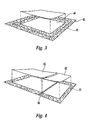
- FIG. 3 shows a TDD disposal system containing a mixture of monomers, an initiator, and optionally a crosslinking agent and also a deactivating agent, optionally in a mixture with a degradation agent, within the same region.
- FIG. 4 shows a TDD disposal system having a deactivating agent, optionally in a mixture with a degradation agent, in a first region and a mixture of monomers, an initiator, and optionally a crosslinking agent in a second region.
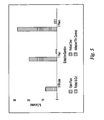
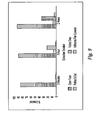
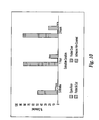
- Figures 5-10 each show the amount ofbuprenorphine (BUP) extractable from a TDD of Figure 2B and, thus, available for abuse, through extraction by distilled water, ethyl acetate, ethanol, ethyl ether, acetone, and methanol, respectively, and as the TDD was immobilized and isolated in a buprenorphine TDD disposal system of Figure 1B.
- BUP buprenorphine
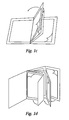
- Figure 11 shows an occlusive TDD disposal system in accordance with the present invention bound in a book in the form of a leaf or multiple leaves, each with an area for immobilizing and isolating a single TDD, such as a patch, or multiple TDDs.
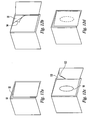
- Figures 12A-D show an occlusive TDD disposal system in accordance with the present invention bound in a book in the form of multiple bi-fold leaves, each with an area for immobilizing and isolating a single TDD, such as a patch, or multiple TDDs.
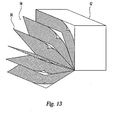
- Figure 13 shows a kit in accordance with the present invention including a box containing one or more transdermal delivery devices and a TDD disposal system in the form of a booklet attached to an outside face of the box.
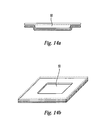
- FIG 14 shows a TDD disposal system in accordance with the present invention comprising two rigid non-planar substrates.
- transdermal delivery device refers to any device that, when contacted with a patient's skin, can transdermally deliver a therapeutically effective amount of any biologically active agent, such as a pharmaceutical compound, e.g. , an opioid, through the skin to the systemic circulation.
- a pharmaceutical compound e.g. , an opioid
- opioid when used in isolation herein, refers to a compound with ⁇ -opioid receptor agonist activity.
- non- ⁇ opioid and “non- ⁇ opioid agonist” refer to an active agent which binds, optionally stereospecifically, to any ⁇ -opioid receptor, ⁇ -opioid receptor, and/or ORL-1 opioid receptor, but significantly not to any ⁇ -opioid receptor, and produces agonist activity.
- deactivating agent is synonymous with the term “degradation agent” and includes “inactivating agent”.
- non- ⁇ opioid deactivating agent refers to an agent which deactivates or degrades a non- ⁇ opioid agonist but which does not deactivate or degrade an opioid agonist as defined herein.
- any reference to any pharmaceutical compound throughout this disclosure includes not only that pharmaceutical compound, i.e., the so-called free form of that compound, but also pharmaceutically acceptable derivatives of that compound, e.g., pharmaceutically acceptable salts of that compound, base forms of that compound and their mixtures, and also mixtures of the free form and any or all derivative(s) and stereoisomers thereof.
- salts include, but are not limited, to sulfate, citrate, acetate, oxalate, chloride, bromide, iodide, nitrate, bisulfate, phosphate, acid phosphate, isonicotinate, lactate, salicylate, acid citrate, tartrate, oleate, tannate, pantothenate, bitartrate, ascorbate, succinate, maleate, gentisinate, fumarate, gluconate, glucaronate, saccharate, formate, benzoate, glutamate, methanesulfonate, ethanesulfonate, benzenesulfonate, p-toluenesulfonate, and pamoate ( i.e ., 1,1'-m
- base form refers to a salt prepared from an opioid having an acidic functional group, such as a carboxylic acid or sulfonic acid functional group, and a pharmaceutically acceptable inorganic or organic base.
- Suitable bases include, but are not limited to, hydroxides of alkali metals such as sodium, potassium, and lithium; hydroxides of alkaline earth metal such as calcium and magnesium; hydroxides of other metals, such as aluminum and zinc; ammonia, and organic amines, such as unsubstituted or hydroxy-substituted mono-, di-, or trialkylamines; dicyclohexylamine; tributyl amine; pyridine; N-methyl, N-ethylamine; diethylamine; triethylamine; mono-, bis-, or tris-(2-hydroxy-lower alkyl amines), such as mono-, bis-, or tris-(2-hydroxyethyl)amine, 2-hydroxy-tert-butylamine, or tris-(hydroxymethyl)methylamine, N, N,-di-lower alkyl-N-(hydroxy lower alkyl)-amines, such as N, N,-dimethyl-N-(2-hydroxy
- phrases "substantially not” or “substantially no,” as used herein, when modifying an adjective or adjective phrase immediately succeeding it, should be understood to mean that adjective or adjective phrase applies to not more than about a 5% level, preferably to not more than about a 2% level, more preferably to not more than about a 1% level, for example to not more than about a 0.1% level, with respect to the noun or pronoun that the adjective or adjective phrase modifies.
- the phrases “substantially not” and “substantially no” may be used interchangeably with the phrases “completely not” and "completely no,” respectively.
- a "copolymer” includes a polymer comprising at least two different monomeric subunits.
- a polymeric chain made up of three different monomers also known as a terpolymer is included within the term "copolymer,” as are polymer chains containing more than three different monomeric units.
- oligomer includes compounds comprising repeating monomeric units, like a polymer or copolymer, but with a low molecular weight such that the compound would not be considered to be polymeric.
- the disposal system of the invention may be used to dispose of any type of TDD, regardless of the construction or form of that device and regardless of the active agent or agents contained within the device.
- Active agents which may typically be administered by a TDD include, but are not limited to, opioids, non- ⁇ -opioids, anti-emetics (scopolamine), cardiovascular agents (nitrates and clonidine), hormones (estrogen and testosterone), nicotine, vitamins, dietary supplements.
- opioids include, but are not limited to, opioids, non- ⁇ -opioids, anti-emetics (scopolamine), cardiovascular agents (nitrates and clonidine), hormones (estrogen and testosterone), nicotine, vitamins, dietary supplements.
- non- ⁇ -opioids include, but are not limited to, opioids, non- ⁇ -opioids, anti-emetics (scopolamine), cardiovascular agents (nitrates and clonidine), hormones (estrogen and testosterone), nicotine, vitamins, dietary supplements.
- scopolamine scopolamine
- cardiovascular agents
- Typical TDDs include a pharmaceutical compound, such as at least one opioid, and, optionally, at least one opioid antagonist in an amount sufficient to inhibit the euphoric effect of the opioid in the event that the opioid and the opioid antagonist are administered, e.g., orally, intravenously, buccally, nasally, parenterally, rectally, and/or vaginally, to a mammal, usually to a human.
- a pharmaceutical compound such as at least one opioid
- opioid antagonists in an amount sufficient to inhibit the euphoric effect of the opioid in the event that the opioid and the opioid antagonist are administered, e.g., orally, intravenously, buccally, nasally, parenterally, rectally, and/or vaginally, to a mammal, usually to a human.
- typical TDDs allow for the transdermal administration of the opioid but either (a) permit the transdermal administration of only a small amount of the opioid antagonist that is ineffective for inhibiting the analgesic effect of the opioid or (
- TDDs are used to deliver the opioid via a route other than transdermal, e.g., such as intravenous, buccal, nasal, oral, parenteral, rectal, and/or vaginal
- the opioid antagonist blunts or inhibits the euphoric effect of the opioid.
- TDDs inhibit the euphoric effect of the opioid if used other than transdermally regardless of whether the device has previously been used appropriately for treating or preventing pain.
- a TDD may be constructed so as to deter an abuser from either (a) separating the opioid antagonist from the opioid or (b) isolating the opioid from the TDD, and then self administering the opioid via another route, such as, but not limited to, orally, parenterally, nasally, intravenously, buccally, or by inhalation of vapors, i.e., a route of administration that can result in a quick euphoric rush, also known as the "burst," that abusers prefer.
- a route of administration that can result in a quick euphoric rush, also known as the "burst," that abusers prefer.
- the opioid antagonist would also be extracted, providing a mixture of the opioid and the opioid antagonist. If a mixture of the opioid and opioid antagonist is administered via a route other than the intended transdermal route, then the opioid antagonist would exert its antagonistic effect to inhibit the euphoric effect of the opioid.
- the TDD can be a reservoir-type TDD, a polymer-matrix type TDD, or a drug-in-adhesive type TDD ( See, e.g., H.S. Tan and W R. Pfister, Pressure Sensitive Adhesives for Transdermal Drug Delivery Systems, PSTT, vol. 2, no. 2, Feb. 1999, pp. 60-69, the disclosure of which is incorporated herein by reference).
- the TDD is designed so that when contacted with the patient's skin, an analgesically effective amount of the opioid is transdermally administered to the patient. But the opioid antagonist either remains in the TDD and is not administered to the patient or is administered to the patient in an amount insufficient to inhibit the analgesic effect of the opioid.
- a reservoir-type TDD typically comprises a reservoir, usually a liquid, located between an impermeable backing film and a rate-controlling membrane that is covered with a pressure-sensitive adhesive skin-contacting layer.
- the reservoir which can be a solution or a dispersion, contains the opioid and the opioid antagonist.
- the TDD is supported by the impermeable backing film and the adhesive surface is protected by a release liner. To administer the opioid, the release liner is removed to expose the pressure-sensitive adhesive and the pressure-sensitive adhesive is contacted with the skin.
- the opioid is permeable through the rate-controlling membrane, and penetrates through it and the adhesive, contacts the skin, and then penetrates the skin.
- the delivery rate of the opioid is usually determined by the rate that the opioid penetrates the rate-controlling membrane.
- the pressure-sensitive adhesive does not adversely affect the delivery rate of and does not chemically react with the opioid.
- the delivery rate is such that an analgesically effective amount of the opioid is delivered to the patient.
- the opioid antagonist which may be present anywhere in the reservoir, preferably does not penetrate the rate-controlling membrane or, if it does, does so in an amount insufficient to inhibit the analgesic effect of the opioid.
- FIG. 2A depicts one embodiment of a reservoir-type TDD.
- the TDD 10 comprises a reservoir 11, typically in the form of a solution or a dispersion 12, having dispersed therein an opioid 13 and an opioid antagonist 14.
- the reservoir 11 is disposed between an impermeable backing film 15, a rate-controlling membrane 16, and a pressure-sensitive adhesive 17.
- a release liner 18 is applied to the pressure-sensitive adhesive layer 17, and is removed prior to use.
- the opioid and the opioid antagonist are dispersed throughout the reservoir, although uniform dispersion is not necessary.
- a variation of the reservoir-type TDD is the polymer-matrix design.
- the opioid and the opioid antagonist are dispersed in a polymer matrix that controls the delivery rate of the opioid.
- the polymer-matrix reservoir is supported on a impermeable backing layer.
- the polymer-matrix design usually includes a peripheral ring of adhesive located around the edge of the patch.
- a release liner protects the adhesive surface and the surface of the polymer matrix. To administer the opioid, the release liner is removed to expose the polymer matrix and the ring of pressure-sensitive adhesive, and the device is contacted with the skin.
- the ring of adhesive holds the device against the skin so that the polymer matrix directly contacts the skin.
- the opioid diffuses out of the polymer matrix, contacts the patient's skin, and penetrates the skin.
- the delivery rate of the opioid agonist is usually determined by the rate of diffusion of the opioid out of the polymer matrix. The delivery rate is such that an analgesically effective amount of the opioid is delivered to the patient.
- the opioid antagonist which may be present anywhere in the polymer matrix, on the other hand, either does not diffuse out of the polymer matrix or, if it does, does so in an amount insufficient to inhibit the analgesic effect of the opioid.
- FIG. 2B depicts a typical polymer-matrix TDD embodiment of the invention.
- the TDD 20 comprises a reservoir 21 in the form of a polymer matrix 22, having dispersed therein an opioid 23 and an opioid antagonist 24.
- the opioid and the opioid antagonist are dispersed throughout the polymer matrix, although uniform dispersion is not necessary.
- the polymer matrix 21 is supported on an impermeable backing layer 25 and has a peripheral ring of adhesive 26 located around the edge of the patch.
- a release liner 28 is applied to the peripheral ring of adhesive 26 and polymer matrix 22 and is removed prior to use.
- the drug-in-adhesive type TDD comprises the opioid agonist and the opioid antagonist dispersed directly in a pressure-sensitive adhesive matrix.
- the adhesive matrix is typically supported on the topside with an impermeable backing film and on the side that faces the skin with an impermeable release liner.
- the release liner is removed to expose the adhesive matrix, and the device is contacted with the skin.
- the adhesive matrix functions to adhere the device to the skin and, typically, to control the delivery rate of the opioid.
- the drug-in-adhesive design allows the opioid to diffuse out of the adhesive matrix, contact the patient's skin, and penetrate the skin.
- the delivery rate of the opioid is usually determined by the rate of diffusion of the opioid out of the adhesive matrix.
- the delivery rate is such that an analgesically effective amount of the opioid is delivered to the patient.
- the opioid antagonist on the other hand, which may be present anywhere in the adhesive matrix, does not diffuse out of the adhesive matrix or does so in an amount insufficient to inhibit the analgesic effect of the opioid.
- FIG. 2C depicts a typical drug-in-adhesive TDD embodiment of the invention.
- the TDD 30 comprises an adhesive matrix 31 having dispersed there through an opioid 32 and an opioid antagonist 33.
- the opioid and the opioid antagonist are dispersed throughout the adhesive matrix, although uniform dispersion is not necessary.
- the adhesive matrix 31 is supported on an impermeable backing layer 34 and has an impermeable release liner 35 on the side that faces the skin which is removed prior to use.
- the reservoir type, polymer matrix type, and the drug-in-adhesive type TDDs are well-known to those skilled in the art ( See, e.g., H. Tan and W. Pfister, "Pressure Sensitive Adhesives for Transdermal Drug Delivery Systems," PSTT, vol. 2, February 1999, the disclosure of which is incorporated herein by reference).
- the TDD disposal system according to the invention advantageously immobilizes and isolates a polymer matrix type TDD and/or a drug-in-adhesive type TDD to prevent, control, or inhibit misuse and/or abuse of the active agent contained in the TDD.
- Any rate-controlling membrane known to those skilled in the art can be used in the TDD of the invention. It is preferable to select a membrane which does not allow any, or any detectable amount, of the opioid antagonist to penetrate therethrough, particularly in those instances in which the opioid antagonist can penetrate a patient's skin.
- Suitable materials for the rate-controlling membranes include, but are not limited to, polyethylene; polypropylene; ethylene/propylene copolymers; ethylene/ethylacrylate copolymers; ethylene/vinyl acetate copolymers; polyacrylates; polymethacrylates; silicone elastomers; medical-grade polydimethylsiloxanes; neoprene rubber; polyisobutylene; chlorinated polyethylene; polyvinyl chloride; vinyl chloride-vinyl acetate copolymer; polymethacrylate polymer (hydrogel); polyvinylidene chloride; poly(ethylene terephthalate); butyl rubber; epichlorohydrin rubbers; ethylene-vinyl alcohol copolymer; ethylene-vinyloxyethanol copolymer; silicone copolymers, for example polysiloxane-polycarbonate copolymers, polysiloxane-polyethyleneoxidecopolymers, polysilox
- the backing layer can be any suitable material that is impermeable to the contents of the reservoir compartment, the polymer matrix, or the adhesive matrix.
- Suitable materials for backing films are well known to those skilled in the art and include, but are not limited to, occlusive polymers such as polyurethane, polyesters such as poly(ethylene phthalate), polyether amide, copolyester, polyisobutylene, polyesters, high and low density polyethylene, polypropylene, polyvinylchloride, metal foils, and metal foil laminates of suitable polymer films.
- Suitable materials for the polymer matrix are well known to those skilled in the art and include, but are not limited to, polyethylene; polypropylene; ethylene/propylene copolymers; ethylene/ethylacrylate copolymers; ethylene/vinyl acetate copolymers; silicone elastomers, especially the medical-grade polydimethylsiloxanes; neoprene rubber; polyisobutylene; chlorinated polyethylene; polyvinyl chloride; vinyl chloride-vinyl acetate copolymer; polymethacrylate polymer (hydrogel); polyvinylidene chloride; poly(ethylene terephthalate); butyl rubber; epichlorohydrin rubbers; ethylene-vinyl alcohol copolymer; ethylene-vinyloxyethanol copolymer; silicone copolymers, for example, polysiloxane-polycarbonate copolymers, polysiloxane-polyethyleneoxide copolymers, polysilox
- polysiloxane-ethylene copolymers polysiloxane-ethylene copolymers
- polysiloxane-alkylenesilane copolymers e.g. , poly(siloxane-co-ethylenesilane), and the like
- cellulose polymers for example methyl or ethyl cellulose, hydroxypropyl methyl cellulose, and cellulose esters
- polycarbonates polytetrafluoroethylene; and combinations thereof.
- the polymer matrix has a glass transition temperature below room temperature.
- the polymer can, but need not necessarily, have a non-zero degree of crystallinity at room temperature.
- Cross-linking monomeric units or sites can be incorporated into the polymers.
- cross-linking monomers can be incorporated into polyacrylate polymers.
- the cross-linking monomers provide sites for cross-linking the polymer matrix after microdispersing the opioid and opioid antagonist into the polymer.
- Known cross-linking monomers for polyacrylate polymers include, but are not limited to, polymethacrylic esters of polyols such as butylene diacrylate and dimethacrylate, trimethylol propane trimethacrylate, and the like.
- Other monomers that provide cross-linking sites include allyl acrylate, allyl methacrylate, diallyl maleate, and the like. It is preferable to select a polymer matrix which does not allow any, or any detectable amount, of the opioid antagonist to diffuse out of it, particularly in those instances in which the opioid antagonist can penetrate a patient's skin.
- Suitable materials for the pressure-sensitive adhesive matrix are well known to those skilled in the art and include, but are not limited to, polyisobutylenes, polysiloxanes, and polyacrylate copolymers (polyacrylic esters), natural rubber/karaya gum-based adhesives, hydrogels, hydrophilic polymers, and polyurethanes such as those described in H. Tan and W. Pfister, "Pressure Sensitive Adhesives for Transdermal Drug Delivery Systems," PSTT, vol. 2, February 1999, the disclosure of which is incorporated herein by reference.
- the adhesive may further include modifying monomers, tackifiers, plasticizers, fillers, waxes, oils, and other additives to impart the desired adhesive properties. Id. It is preferable to select a pressure-sensitive adhesive matrix that does not allow any, or any detectable amount, of the opioid antagonist to diffuse out it, particularly in those instances in which the opioid antagonist can penetrate a patient's skin.
- the size of the device can vary from about 1 cm 2 to greater than 200 cm 2 and typically is between about 5-50 cm 2 .
- Methods for manufacturing TDDs are well known to those skilled in the art.
- Examples of devices useful in transdermal delivery devices include, but are not limited to, those described in U.S. Patent Nos. 4,806,341; 5,069,909; 5,236,714; 5,240,711 ; 5,718,914; 5,902,603; 5,968,547; 6,162,456; and 6,344,212.
- the TDD can optionally include one or more penetration enhancers, which increase the rate at which the opioid penetrates through the patient's skin.
- the penetration enhancer does not enhance the penetration of the opioid antagonist through the skin.
- the penetration enhancer should penetrate the rate-controlling membrane or diffuse out of the polymer matrix or adhesive matrix so that it can contact the patient's skin and improve penetration of the opioid through the patient's skin.
- Suitable penetration enhancers for use in the TDDs and methods of the invention include, but are not limited to, C 2 -C 4 alcohols such as ethanol and isopropanol, polyethylene glycol monolaurate, polyethylene glycol-3-lauramide, dimethyl lauramide, sorbitan trioleate, fatty acids, esters of fatty acids having from about 10 to about 20 carbon atoms, monoglycerides or mixtures of monoglycerides of fatty acids having a total monoesters content of at least 51 % where the monoesters are those with from 10 to 20 carbon atoms, and mixtures of mono-, di- and tri-glycerides of fatty acids.
- Suitable fatty acids include, but are not limited to lauric acid, myristic acid, stearic acid, oleic acid, linoleic acid and palmitic acid.
- Monoglyceride permeation enhancers include glycerol monooleate, glycerol monolaurate, and glycerol monolinoleate, for example. Examples of penetration enhancers useful in the methods of the invention include, but are not limited to those described in U.S. Patent Nos.
- the TDD can further comprise other additives conventionally used in therapeutic products.
- the TDD can also include one or more preservatives or bacteriostatic agents, e.g., methyl hydroxybenzoate, propyl hydroxybenzoate, chlorocresol, benzalkonium chlorides, and the like; or other active ingredients such as antimicrobial agents, particularly antibiotics; anesthetics; other analgesics; and antipruritic agents.
- Opioids believed to have at least some ⁇ -opioid receptor agonist activity include, but are not limited to, alfentanil, allylprodine, alphaprodine, anileridine, benzylmorphine, bezitramide, buprenorphine, butorphanol, clonitazene, codeine, desomorphine, dextromoramide, dezocine, diampromide, diamorphone, dihydrocodeine, dihydromorphine, dihydromorphone, dihydroisomorphine, dimenoxadol, dimepheptano
- Non- ⁇ -opioids include, but are not limited to, ORL-1-specific opioid agonists, such as nociceptin, deltorphin, and the like, and mixtures thereof.
- the opioid includes buprenorphine, pharmaceutically acceptable salts thereof, base forms thereof, fentanyl, pharmaceutically acceptable salts thereof, base forms thereof, oxycodone, pharmaceutically acceptable salts thereof, base forms thereof, and any combination of such opioids and/or their derivatives.
- the opioid agonist includes hydrocodone, morphine, hydromorphone, oxycodone, codeine, levorphanol, meperidine, methadone, oxymorphone, buprenorphine, fentanyl, dipipanone, heroin, tramadol, etorphine, dihydroetorphine, butorphanol, levorphanol, pharmaceutically acceptable salts thereof, base forms thereof, and any and all mixtures thereof. More preferably the opioid agonist includes oxycodone, hydrocodone, fentanyl, buprenorphine, pharmaceutically acceptable salts thereof, base forms thereof, and any and all mixtures thereof. Most preferably, the opioid agonist includes buprenorphine, pharmaceutically acceptable salts thereof, base forms thereof, fentanyl, pharmaceutically acceptable salts thereof, base forms thereof, and any combination of such opioids and/or their derivatives.
- the opioid is a free opioid, i.e., not a pharmaceutically acceptable salt form of the opioid.
- a pharmaceutically acceptable salt form of the opioid is preferred.
- the TDD may contain a pharmacologically active agent that is capable of inducing a desired biological or pharmacological effect, which may include, but is not limited to, (1) affecting living processes; (2) having a prophylactic effect on the patient and preventing an undesired effect, such as preventing an infection; (3) alleviating a condition caused by, or being a symptom of, a disease, e.g., alleviating pain or inflammation; and/or (4) either alleviating, reducing, or completely eliminating the disease, condition, or symptom from the patient.
- the effect of the active agent may be local, such as for providing an anaesthetic effect, or it may be systemic or a combination thereof.
- active agents can, in one embodiment, include, but are not limited to: ACE inhibitors; adenohypophyseal hormones; adrenergic neuron blocking agents; adrenocortical steroids; inhibitors of the biosynthesis of adrenocortical steroids; alpha-adrenergic agonists; alpha-adrenergic antagonists; selective alpha-two-adrenergic agonists; androgens; anti-addictive agents; antiandrogens; antiinfectives, such as antibiotics, antimicrobials, and antiviral agents; analgesics and analgesic combinations; anorexics; antihelmintics; antiarthritics; antiasthmatic agents; anticonvulsants; antidepressants; antidiabetic agents; antidiarrheals; antiemetic and prokinetic agents; antiepileptic agents; antiestrogens; antifungal agents; antihistamines; antiinflammatory agents; antimigrain
- the TDD can contain an active component that may include, but is not limited to, flurogestone acetate, hydroxyprogesterone, hydroxyprogesterone acetate, hydroxyprogesterone caproate, medroxy-progesterone acetate, norethindrone, norethindrone acetate, norethisterone, norethynodrel, desogestrel, 3-keto desogestrel, gestadene, levonorgestrel, estradiol, estradiol benzoate, estradiol valerate, estradiol cyprionate, estradiol decanoate, estradiol acetate, ethynyl estradiol, estriol, estrone, mestranol, betamethasone, betamethasone acetate, cortisone, hydrocortisone, hydrocortisone acetate, corticoster
- the TDD can contain an active component that may include, but is not limited to: a) corticosteroids, e.g., cortisone, hydrocortisone, prednisolone, beclomethasone propionate, dexamethasone, betamethasone, flumethasone, triamcinolone, triamcinolone acetonide, fluocinolone, fluocinolone acetonide, fluocinolone acetate, clobetasol propionate, or the like, or a combination thereof; b) analgesic anti-inflammatory agents, e.g., acetaminophen, mefenamic acid, flufenamic acid, indomethacin, diclofenac, diclofenac sodium, alclofenac, ibufenac, oxyphenbutazone, phenylbutazone, ibuprofen, flur
- antiepileptics e.g. , nitrazepam, meprobamate, clonazepam, or the like, or a combination thereof
- antihistamines e.g ., diphenhydramine hydrochloride, chlorpheniramine, diphenylimidazole, or the like, or a combination thereof
- antitussives e.g., dextromethorphan, terbutaline, ephedrine, ephedrine hydrochloride, or the like, or a combination thereof
- sex hormones e.g.
- antidepressants e.g., doxepin
- vasodilators e.g., nitroglycerin, isosorbide nitrate, nitroglycol, pentaery
- the effective amount of active agent present in the TDD will depend on the specific active agent, the type of device, the materials used to manufacture the device, and the duration for which the active agent will be delivered to the patient.
- the active agent is an opioid
- the analgesically effective amount of opioid present in the TDD is typically from about 0.1 to about 500 mg, preferably from about 1 to about 100 mg, and more preferably from about 1 to about 50 mg. It is well within the purview of one skilled in the art to readily determine the analgesically effective amount of opioid or non- ⁇ -opioid needed for a particular indication.
- TDD disposal systems preferably contain at least one substrate on which an adhesive is coated.
- Flexible substrates can be represented, e.g., as shown in Figure 1B (for single TDD disposal systems) and 1D (for multiple TDD disposal systems).
- Rigid substrates can be represented, e.g., as shown in Figure 1A (for single TDD disposal systems) and 1C (for multiple TDD disposal systems).
- the flexibility or rigidity of at least one substrate according to the invention can be influenced not only by the chemical nature of the substrate material, but also, inter alia, by the dimensions (thickness, length, and/or width) of the substrate material.
- the TDD disposal system includes an outer layer (1) and an inner layer (4), which are joined by an adhesive (3) covering a first portion of the inner layer.
- the combination of the inner and outer layers forms a closed immobilization and/or sealing region (2) between the outer layer facing-side of the inner layer and the inner layer-facing side of the outer layer.
- the inner and outer layers are preferably joined in such a way as to form a sealable opening between the two layers.
- the opening is preferably sealed by a flap (6) containing the adhesive (3) covering at least a portion of the flap that is used to seal the opening.
- Figures 1C and 1D show multi-substrate booklet analogs of the single-substrate TDD disposal systems shown in Figures 1A and 1B, respectively.
- the adhesive-coated substrate and the second complementary substrate may be flexible or rigid, as desired.
- the substrate or substrates may be sufficiently rigid to render the substrate incapable of being folded upon itself without damaging or cracking the substrate.
- the disposal system may comprise one or more rigid substrates which may be either planar or non-planar.
- the non-planar substrates may preferably be configured and dimensioned to provide a recess 50 in one face for accepting the TDD.
- the face of the substrate which is opposite to the recess may be either planar or non-planar.
- the substrate may have a recess on one face and a corresponding raised surface on the opposite face.
- adhesive coating and any optional components present are disposed at least in or on the substrate inside the recess as well as over another portion of the face of the substrate.
- two substrates each having a recess may be provided.
- the TDD may be placed substantially within the recess of a first substrate and a second substrate may be aligned and placed in contact with the first substrate such that the recess of the second substrate is substantially aligned over the TDD and the TDD, the first substrate and the second substrate are irreversibly adhered together.
- the recess 50 may have a depth which is less than, equal to or more than the thickness of the TDD.
- the thickness of the recess is about equal to or greater than the thickness of the TDD.
- the total depth of the recess or recesses may be less than, equal to or more than the thickness of the TDD, preferably about equal to the thickness of the TDD.
- the substrates may additionally comprise one or more protruding members which are sufficiently rigid and/or sharp so as to penetrate into a TDD which is placed therein.
- protruding members which are sufficiently rigid and/or sharp so as to penetrate into a TDD which is placed therein.
- Such embodiments are particularly advantageous for piercing the reservoir of reservoir type TDD's in order to allow the active agent to escape the reservoir more readily and interact with the substrate, the adhesives and any other optional components which are present.
- FIG. 3 illustrates an alternate embodiment of the present invention.
- the article is a TDD disposal system having one or more of initiators (and optionally coinitiators), monomers (and optionally comonomers), crosslinking agents, and deactivating agents (for the TDD active component(s)) disposed within the immobilization and/or sealing region of the TDD disposal system.
- the TDD disposal system according to the invention includes an adhesive layer (optionally containing one or more of the additional components) (41) having a transfer side and an opposite side.
- the article further includes an outer layer (43) having an adhesive layer-facing side and an opposite side, wherein the adhesive layer is joined to the outer layer to form an immobilization and/or sealing region (44) between the opposite side of the adhesive layer and the adhesive layer-facing side of the outer layer.
- each of the layers of the TDD disposal system of the invention are tear-resistant.
- FIG 4 illustrates an additional embodiment of the TDD disposal system of the invention, having a transfer side and an opposite side, and optionally an adhesive (61) disposed on the perimeter of the transfer side.
- the transfer side comprises a first (62) and second (63) region, which can optionally be separated from one another by a membrane or impermeable barrier (64).
- a membrane or impermeable barrier 64
- the component(s) present is(are) not exactly the same in each region.
- the TDD disposal system optionally also includes a release layer covering the adhesive, and the release layer is optionally peelable.
- the substrate(s) that is(are) included in the TDD disposal system according to the invention may preferably include, but is(are) not limited to, tough, tear-resistant (co)polymers and/or (co)polymer composites.
- the substrate (co)polymers can be amorphous or may advantageously be oriented in a manner including, but not limited to, uniaxially, biaxially, multiaxially, planar-wise, chain-folded crystalline, chain-extended crystalline, chain-extended non-crystalline, liquid crystalline, fibrillar, lamellar, spherulitic, or the like, or any combination thereof.
- substrates for use in the TDD disposal system may include, but are not limited to: polyesters, e.g., poly(ethylene terephthalate), poly(butylene terephthalate), poly(ester-ether) copolymers, poly(ester-amide) copolymers, or the like; polycarbonates; polyurethanes, e.g., poly(ester-urethane)s, poly(ether-urethane)s, poly(ether-urethane-urea)s, poly(ester-urethane-urea)s, poly(ether-urea)s, poly(ester-urea)s, poly(siloxane-urethane)s, poly(carbonate-urethane)s, or the like; poly(meth)acrylates, e.g., poly(methyl methacrylate), ethylene-(meth)acrylate copolymers, partially metal-salt-neutralized poly(meth)acrylic acids, partially aliphatic-hydr
- the substrate may include any polymer or polymer composite having sufficient thickness and rigidity to prevent the substrate from being folded without damaging or cracking the substrate.
- such rigid substrates may include any fiberglass, metals and/or ceramics and/or composites comprising one or more of such components with any polymer.
- such rigid substrates may include metals such as aluminum, titanium, steel, stainless steel, as well as metallic/ceramic composites comprising such metals.
- the thickness of the substrate(s) is not particularly constrained, flexible substrates are preferably thinner than rigid substrates.
- the desired thickness of the substrate(s) depend on, inter alia, its(their) relative barrier properties for preventing, inhibiting, or diminishing misuse or abuse of, e.g., the opioid agonist (i.e., the better barrier the substrate material presents, e.g., to potential extraction solvents, the less thick it is required to be).
- flexible substrates can advantageously have a thickness from about 0.0005 inches (13 ⁇ m) to about 0.01 inches (250 ⁇ m), preferably from about 0.001 inches (25 ⁇ m) to about 0.005 inches (130 ⁇ m), whereas rigid substrates are preferably thicker than about 0.005 inches (130 ⁇ m), preferably having a thickness from about 0.01 inches (250 ⁇ m) to about 1 inch (25 mm).
- substrates (and particularly the portion of the substrates coated with an adhesive, if less than the entire substrate is coated) having a face with an area which approximates that of the TDD to be disposed of are preferred for booklet-type, multiple-substrate TDD disposal systems according to the invention, while it is generally only necessary that the substrates (and particularly the portion of the substrate(s) coated with an adhesive, if less than the entire substrate is coated) have a cross-sectional area sufficient to cover or contain the TDD or the active component(s) therein from misuse or abuse.
- the desired length and width of the substrate(s) may depend on, inter alia, the relative irreversibility of the adhesion to the TDD and/or the ability to isolate or seal the TDD, or the active component(s) therein, for preventing, inhibiting, or diminishing misuse or abuse of, e.g., the opioid agonist (i.e.
- the better adherent the adhesive-coated substrate is to the TDD and/or the better barrier the adhered substrate-TDD combination offers against, e.g., extraction by solvents, the less long and/or wide the substrate(s), or particularly the portion of the substrate(s) coated with an adhesive, if less than the entire substrate is coated, need be).
- the cross-sectional area of the face of the substrate is not more than 10% larger than the TDD to which it is to adhere, alternately not more than about 5% larger than the TDD, for example approximately the same as the TDD.
- the substrate may be provided with appropriate labeling instructing the user regarding proper usage. Also, the substrate may be of a color, such as red, which contrasts with the color of a typical TDD.
- the adhesive coating on the substrate(s) in the TDD disposal system according to the invention may advantageously be similar or identical to those enumerated for use in TDDs, as described previously. Additionally or alternately, the adhesive coating on the substrate(s) may include, but is(are) not limited to, epoxies, polyimides, polyamides, silicones, acrylics, polymers including repeat units having substituted or unsubstituted phenolic moieties, or the like, or a copolymer or combination thereof.
- Particularly preferred adhesives that may be used for coating on the substrate(s) include, but are not limited to, epoxy-based adhesives, such as those available from Durapower, and pressure sensitive adhesives, such as the acrylic-based adhesives 387-2051 and 387-3054 available from National Starch and the silicone-based adhesives 7-4102, 7-4202, 7-4302, 7-4402, 7-4502 and 7-4602 available from Dow Silicones.
- the silicone-based adhesives have advantages, in terms of isolating the active component(s) of the TDD adhered thereto and thereby preventing, inhibiting, or diminishing its(their) misuse or abuse, at least as compared to other rubber-based adhesives, e.g ., such as those enumerated in U.S. Patent No. 5,804,215. Additionally, it is believed that acrylic-based adhesives may also be advantageous.
- the thickness of the adhesive coating(s) is(are) not particularly constrained, preferably the thickness is sufficient to substantially adhere the substrate on which the adhesive coating is disposed to the TDD and either to itself, to the non-adhesive-coated portion of at least one substrate, or to the second substrate, when present.
- the adhesive coating can advantageously have a thickness from about 0.0005 inches (13 ⁇ m) to about 0.1 inches (2.5 mm), preferably from about 0.001 inches (25 ⁇ m) to about 0.01 inches (250 ⁇ m), more preferably from about 0.002 inches (50 ⁇ m) to about 0.004 inch (100 ⁇ m).
- the thickness of the adhesive coating is sufficient to substantially seal the TDD(s) within its area(s) of immobilization and isolation and to substantially irreversibly adhere the adhesive-coated substrate to itself, to the non-adhesive-coated portion of at least one substrate, or to the second substrate, when present.
- the TDD disposal system may advantageously contain an adhesive backing material, such as a release backing layer or a layer which has been made into a release backing layer by bearing a release coating releasably disposed on the adhesive coating on the substrate, such that the backing can easily be removed from the adhesive coating, e.g., peeled off, when it is desired that the adhesive layer substantially adhere to the TDD, to itself, to a non-adhesive-coated portion of at least one substrate, and/or to a second substrate, when present.
- an adhesive backing material such as a release backing layer or a layer which has been made into a release backing layer by bearing a release coating releasably disposed on the adhesive coating on the substrate, such that the backing can easily be removed from the adhesive coating, e.g., peeled off, when it is desired that the adhesive layer substantially adhere to the TDD, to itself, to a non-adhesive-coated portion of at least one substrate, and/or to a second substrate, when present.
- the TDD disposal system may advantageously contain multiple substrates, each having an adhesive coating layer, upon which is preferably releasably disposed an adhesive backing material, or a release coating, such that it can easily be removed from the adhesive coating, e.g., peeled off, when it is desired that the adhesive layer substantially adhere to the TDD, to itself, to a non-adhesive-coated portion of at least one substrate, and/or to a second substrate, when present.
- These multiple substrates can advantageously each adhere to, immobilize, isolate, and/or prevent, inhibit, or diminish the misuse or abuse of one or more TDDs.
- the TDD disposal system comprises multiple substrates on each of which an adhesive is coated, and which optionally also comprises multiple adhesive backing materials each releasably disposed on one of the adhesive coatings on the multiple substrates, and wherein the multiple substrates are bound together in a booklet-type form.
- This embodiment is illustrated in Figure 11. Individual leaves, e.g., (72) and (74), each comprising a TDD disposal system, are bound into the form of a booklet (70).
- each individual leaf is made of at least one substrate coated with adhesive, e.g., (76), the leaf optionally comprising the following component(s): a monomer, and optionally at least one comonomer; an initiator, and optionally at least one co-initiator; at least one crosslinking agent; at least one opioid agonist deactivating agent, e.g., an opioid antagonist; and mixtures thereof.
- adhesive e.g., (76)
- the leaf optionally comprising the following component(s): a monomer, and optionally at least one comonomer; an initiator, and optionally at least one co-initiator; at least one crosslinking agent; at least one opioid agonist deactivating agent, e.g., an opioid antagonist; and mixtures thereof.
- a protective adhesive backing material such as the release backing layer (78) illustrated in the figure, is removed from each leaf and disposed of prior to using that leaf to dispose of at least one TDD.
- the booklet here having covers (80) and (82), is disposed of in an appropriate manner when spent, e.g., each leaf has been utilized for the disposal of TDDs.
- appropriate text providing TDD disposal instructions may be provided on the disposal system, such as a substrate release layer.
- the TDD disposal system comprises multiple bi-folded substrates on each of which an adhesive is coated, and which optionally also comprises multiple adhesive backing materials each releasably disposed on one of the adhesive coatings on the multiple substrates, and wherein the multiple substrates are bound together in a booklet-type form.
- This embodiment is illustrated in Figure 12A. Individual bi-folded leaves, only one of which (92) is shown for simplicity, each comprising a TDD disposal system, are bound into the form of a booklet (90).
- each individual bi-folded leaf is made of at least one substrate coated with adhesive, the leaf optionally comprising the following component(s): a monomer, and optionally at least one comonomer; an initiator, and optionally at least one co-initiator; at least one crosslinking agent; at least one opioid agonist deactivating agent; and mixtures thereof.
- FIG. 12B illustrates the removal of a portion of a protective adhesive backing material, such as the release backing layer (94) illustrated in the figure, from a leaf so that at least one TDD, e.g., a spent TDD removed from a patient, can be adhered to the exposed adhesive coating (96) of the leaf.
- the adhesive coated surface of the TDD is contacted with the adhesive coating of the leaf.
- the removed release backing layer is appropriately disposed of after it is removed.
- Figure 12C illustrates the TDD (98) in place on the adhesive of the leaf and the removal of another portion of the protective adhesive backing material, such as the release backing layer (100) illustrated in the figure, from the leaf.
- FIG. 12D illustrates the portion of the bi-folded leaf with exposed adhesive (102) being folded over the TDD so as to substantially isolate the TDD.
- the booklet is disposed of in an appropriate manner when spent, e.g., each leaf has been utilized for the disposal of TDDs.
- This style of disposal system is easily adapted to integrate into a preferred packaging presentation while at the same time satisfying the need to reduce abuse potential.
- appropriate text providing TDD disposal instructions may be provided on the disposal system, such as on a substrate or a release layer.
- the present invention comprises a kit including a box 52 for enclosing one or more patches and a TDD disposal system in the form of a booklet 54 comprising multiple substrates 56.
- the TDD disposal system is one or more of the following: substantially solvent impermeable; substantially not solvent swellable; substantially tear-resistant; substantially cut-resistant; substantially sealed, with respect to the area(s) of immobilization and isolation of the TDD(s) contained therein, once the TDD(s) is(are) contained therein; substantially irreversibly adhered, once the adhesive-coated substrate is substantially adhered to itself, to a non-adhesive-coated portion of at least one substrate, e.g., by folding, or to the second substrate, when present; substantially a barrier to extraction of an active agent, e.g., the opioid agonist, contained in the TDD; or the like; or any combination thereof.
- an active agent e.g., the opioid agonist
- the TDD disposal system includes one or more (alternately, two or more) of the following components: monomer (and optionally comonomers) to be polymerized; an initiator (and optionally co-initiators) to initiate the polymerization, preferably through activation by energy, e.g., such as ultraviolet, UV-VIS, or visible light and/or thermal energy (or infrared radiation); at least one crosslinking agent to crosslink the (co)polymer; at least one opioid agonist deactivating agent, such as an opioid antagonist, to counteract, inhibit, diminish, or halt the euphoric effects of the opioid agonist(s) contained in the TDD, in case an attempt is made to misuse or abuse the opioid agonist(s) contained in the TDD or to render the opioid agonist unavailable through deactivation, biounavailability, physical unavailability, loss of appeal of the active agent to the abuser, or the like, or a combination thereof; at least one opioid agonist deactivating agent, such as an opioid antagonist,
- these optional components may advantageously be included in and/or on any portion of the TDD disposal system according to the invention, so that these optional components may come into contact with the TDD, once the TDD is contained within the TDD disposal system according to the invention.
- these optional components are dissolved or dispersed within the adhesive coating on at least one substrate. Additionally or alternately, these optional components may be present in and/or on the second substrate, when present.
- At least one of the optional components is present in a first region of the adhesive coating, on at least one substrate and/or on the second substrate, when present, while at least one other of the optional components is present in a second region of the adhesive coating, on at least one substrate and/or on the second substrate, when present.
- all of the optional components that are present are located in the same region of the adhesive coating, on at least one substrate and/or on the second substrate, when present.
- the monomer and/or comonomer(s), if present, that may be included in the TDD disposal system according to the invention can advantageously include any monomer and/or comonomer(s) that can be used to make, e.g., the adhesive (coating) layer of the TDD disposal system and/or of the TDD, the rate-controlling membrane material of the TDD, the material of at least one of the substrates, or the like, or a blend or copolymer thereof.
- Exemplary monomers/comonomers include, but are not limited to, diisocyanates, diols, diacids (preferably carboxylic), diesters, diamines, epoxides, diepoxides, cyanoacrylates, (meth)acrylic acid, monovalent (meth)acrylate metal salts, organic (meth)acrylates, vinyl acetate, poly(vinyl alcohol) precursors, cellulosic monomers/oligomers ( e.g., cellulose acetate, cellulose propionate, cellulose butyrate, cellulose acetate-propionate, cellulose acetate-butyrate, cellulose propionate-butyrate, cellulose nitrate, methyl cellulose, ethyl cellulose, carboxymethyl cellulose, carboxyethyl cellulose, cellulose salts, and combinations or copolymers thereof, which may optionally be modified in some way, such as partially or fully esterified, partially or fully nitrated, partially or fully
- the initiator and/or co-initiator(s), if present, that may be included in the TDD disposal system according to the invention can advantageously include any initiators/co-initiators known in the art to initiate the (co)polymerization of the monomer (and/or comonomer(s)) present in the TDD disposal system according to the invention and preferably specifically selected for use with the particular monomer/comonomer(s).
- any initiators/co-initiators known in the art to initiate the (co)polymerization of the monomer (and/or comonomer(s)) present in the TDD disposal system according to the invention and preferably specifically selected for use with the particular monomer/comonomer(s).
- One of ordinary skill in the art would be able to make such specific selection through limited routine experimentation, if required.
- initiators/co-initiators include, but are not limited to, monoamines (e.g., for initiating epoxides), free-radical-forming compounds (e.g., peroxides, bis-azo compounds, or the like, such as for initiating ⁇ -olefins; (meth)acrylic acids, or metal salts thereof; organic (meth)acrylates; or the like), particularly those compounds that are UV-, photo-, or thermally-activated, or the like, or any combination thereof.
- monoamines e.g., for initiating epoxides
- free-radical-forming compounds e.g., peroxides, bis-azo compounds, or the like, such as for initiating ⁇ -olefins
- (meth)acrylic acids, or metal salts thereof organic (meth)acrylates; or the like
- organic (meth)acrylates or the like
- free-radical initiators are suitable for initiating crosslinking, e.g., azo and diazo compounds, such as azo- bis -isobutyronitrile (“AIBN”), organic peroxides, hydroperoxides, persulfates and hydropersulfates, such as benzoyl peroxide, inorganic peroxides and persulfates, such as the peroxide-redox systems, carbon-carbon initiators, such as hexasubstituted ethanes, and photoinitiators; numerous examples are known in the art. ( See Sanchez et al., "Initiators (Free-Radical)" in Kirk-Othmer Encyc. of Chem.
- Suitable anionic initiators for initiating crosslinking include aromatic radical anions, such as sodium naphthalene; alkyl lithium compounds, such as t-butyl lithium; fluorenyl carbanions; 1,1-diphenylmethylcarbanions; cumyl potassium; and those described by Quirk et al., "Initiators (Anionic)" in Kirk-Othmer Encyc. of Chem. Technol., 4th Ed., John Wiley & Sons, New York, 1995, Vol. 14, pp.
- Suitable cationic initiators for initiating crosslinking are also known in the art and include protic acids, cation donor (initiator)/Friedel-Crafts acid (co-initiator) systems, stable cation salts, and those described by Faust, "Initiators (Cationic)" in Kirk-Othmer Encyc. of Chem. Technol., 4th Ed., John Wiley & Sons, New York, 1995, Vol. 14, pp. 476-482, the disclosure of which is incorporated herein by reference.
- the free-radical, anionic, or cationic initiator may undergo decomposition by any known means, e.g., thermally or photolytically, when this is required to initiate polymerization and/or crosslinking.
- photoinitiators such as those described in McGinniss, "Radiation Curing” in Kirk-Othmer Encyc. of Chem. Technol., 4th Ed., John Wiley & Sons, New York, 1996, Vol. 20, pp. 848-850, the disclosure of which is incorporated herein by reference, are well-known in the art for initiating crosslinking.
- free-radical-forming compounds can include, but are in no way limited to, dicumyl peroxide (e.g., commercially available as PEROXIMON DC 400KEP® from Elf Atochem N.A., and as ESPERAL 115RG® from Witco); 1,1-di(t-butylperoxy)-3,3,5-trimethylcyclohexane (e.g., commercially available as VAROX 231XL® from R.T.
- dicumyl peroxide e.g., commercially available as PEROXIMON DC 400KEP® from Elf Atochem N.A., and as ESPERAL 115RG® from Witco
- 1,1-di(t-butylperoxy)-3,3,5-trimethylcyclohexane e.g., commercially available as VAROX 231XL® from R.T.
- Polymerization and/or crosslinking may, of course, also be effected by high energy ionizing radiation sources.
- crosslinking can be brought about by exposing a combination of a polymer(s) and monomer(s), especially monomer(s) with an average functionality of greater than 2, to electron beams, ultraviolet radiation, usually in the presence of a photoinitiator, and high energy ionizing radiation sources, such as ⁇ -radiation from a 60 Co or 137 Cs source, ⁇ -particles, ⁇ -particles, fast neutrons and x-rays.
- high energy ionizing radiation sources such as ⁇ -radiation from a 60 Co or 137 Cs source, ⁇ -particles, ⁇ -particles, fast neutrons and x-rays.
- At least the three following radiation crosslinking or grafting methods are well-known in the art: (1) the "pre-irradiation” method, in which the polymer is irradiated before interacting with the monomer(s), (2) the “mutual radiation” method, in which the polymer and the monomer(s) are in contact while irradiation occurs, and (3) the “peroxide” method, in which the polymer is irradiated in the presence of air or oxygen before interacting with the monomer(s).
- the free-radical initiating means for crosslinking, and/or polymerization which can function by a thermal and/or photolytic dissociation, can be an initiator selected from the group consisting of azo compounds, diazo compounds, organic peroxides, organic hydroperoxides, organic persulfates, organic hydropersulfates, inorganic peroxides, inorganic persulfates, peroxide-redox systems, carbon-carbon initiators, photoinitiators, and mixtures thereof.
- the crosslinking agent(s), if present, that may be included in the TDD disposal system according to the invention can advantageously include any crosslinking agent known in the art to chemically or physically crosslink the monomer (and/or comonomer(s)) present, or the oligomers and/or (co)polymers subsequently formed therefrom, in the TDD disposal system according to the invention and are preferably selected for the particular (co)monomers/oligomers/(co)polymers used.
- any crosslinking agent known in the art to chemically or physically crosslink the monomer (and/or comonomer(s)) present, or the oligomers and/or (co)polymers subsequently formed therefrom, in the TDD disposal system according to the invention and are preferably selected for the particular (co)monomers/oligomers/(co)polymers used.
- One of ordinary skill in the art would be able to make such selection through limited routine experimentation, if required.
- Crosslinking agents preferably have either (a) functional group(s) capable of reacting with multiple functional groups on or pendent to an already-formed oligomer or (co)polymer or (b) polymerizable group(s) capable of reacting with multiple propagating oligomer or (co)polymer chain ends, thus forming interchain crosslinks within an oligomer or (co)polymer.
- crosslinking agents include, but are not limited to, compounds having, on average, one or more of the following: more than two isocyanate functional groups, more than two hydroxyl functional groups, more than two ester functional groups (e.g., for trans- or inter- esterification reactions), more than two (preferably carboxylic) acid functional groups, more than two amine functional groups (i.e., each having at least one reactive site), one or more epoxide functional groups, more than one polymerizable unsaturated group, more than two monovalent carboxylate metal salt groups, or the like, or more than two of a combination of the functional groups listed above.
- Crosslinking agents may also react with a previously unreactive site on an already-formed oligomer or (co)polymer to activate it. Then, that active site can itself react with a reactive or previously unreactive site on another already-formed oligomer or (co)polymer chain. Alternatively, that reactive site can react with other compounds present in the TDD disposal system according to the invention, e.g., such as monomers/comonomers mentioned above, that eventually react with a reactive or previously unreactive site on another already-formed oligomer or (co)polymer chain.
- any opioid agonist deactivating agent known in the art to chemically alter, degrade, and/or deactivate the opioid agonist(s) contained in the TDD, so that, in case of misuse or abuse, the euphoric effects of the opioid agonist(s) contained in the TDD are at least temporarily (and preferably permanently, in their altered, degraded, and/or deactivated form) inhibited, diminished, or halted in vivo, may be included.
- the opioid agonist deactivating agent if present, is preferably specifically selected for use with the particular opioid agonist(s) contained in the TDD, although certain opioid agonist deactivating agents cause the chemical alteration, degradation and/or deactivation of many common opioid agonists.
- opioid agonist deactivating agents cause the chemical alteration, degradation and/or deactivation of many common opioid agonists.
- One of ordinary skill in the art would be able to make such specific selection through limited routine experimentation, if required.
- active agent deactivating agents include, but are in no way limited to, strongly oxidizing compounds and strongly reactive free-radical-forming compounds, e.g., such as those peroxide, peracid, per(metal oxide), per(non-metal oxide), and azo compounds listed as initiators (and/or co-initiators) above, or a combination thereof. Additionally or alternately, the deactivating agents may include, but are not limited to, hydrogen peroxide; per(non-metal oxide) acids, such as periodic acid; or the like; or a combination thereof.
- an active agent deactivating agent which may be included is an active agent deactivating agent, such as an opioid antagonist.
- an opioid agonist deactivating agent which may be included in the TDD disposal system according to the invention can advantageously include any opioid agonist deactivating agent known in the art, such as any opioid antagonist, to counteract, inhibit, diminish, or halt the euphoric effects in vivo of the opioid agonist(s) contained in the TDD, in case an attempt is made to misuse or abuse the opioid agonist(s) contained in the TDD.
- the opioid agonist deactivating agent if present, is preferably specifically selected for use with the particular opioid agonist(s) contained in the TDD, although certain opioid antagonists antagonize the euphoric effects of many common opioid agonists.
- opioid antagonists antagonize the euphoric effects of many common opioid agonists.
- One of ordinary skill in the art would be able to make such specific selection through limited routine experimentation, if required.
- Opioid agonist deactivating agents can advantageously render the active agent unavailable through inactivating, such as for example chemical inactivation or alteration of the receptor binding site of the opioid agonist; mechanical inactivation or alteration of the receptor binding site of the opioid agonist; biounavailability; physical unavailability; loss of appeal of the opioid agonist to the abuser, e.g., a deactivating agent which creates an intolerably bad taste or an intolerable reaction, such as extreme nausea or the like; or something similar thereto; or any combination thereof.
- inactivating such as for example chemical inactivation or alteration of the receptor binding site of the opioid agonist; mechanical inactivation or alteration of the receptor binding site of the opioid agonist; biounavailability; physical unavailability; loss of appeal of the opioid agonist to the abuser, e.g., a deactivating agent which creates an intolerably bad taste or an intolerable reaction, such as extreme nausea or the like; or something similar thereto; or any combination thereof.
- the deactivating agent could be a chemical or denaturing agent that would alter residual opioid molecules in the dosage form and make them inactive.
- the deactivating agent could alternately or additionally be an opioid receptor that would bind the residual opioid into an insoluble ligand-receptor complex.
- the deactivating agent could alternately or additionally be an opioid receptor antagonist, preferably with greater specificity and/or affinity for the receptor than the opioid, which would be isolated or delivered with the residual opioid upon misuse/abuse to compete with the residual opioid for the opioid receptor, thereby defeating the purpose of misusing/abusing the opioid. This would render the residual opioid useless in vivo.
- the deactivating agent could alternately or additionally physically sequester the residual opioid agonist, e.g., in an impermeable microsphere or in a permanently bound matrix. Similarly, the deactivating agent could alternately or additionally be a non-opioid with distressing or dysphoric properties if absorbed that made misuse/abuse unappealing.
- deactivating agents include, but are in no way limited to, the rat or human ⁇ -opioid receptor; opioid-neutralizing antibodies; opioid/narcotic antagonists such as naloxone, naltrexone, nalmefene, cyclazacine, cyclazocine, nalorphine, nalbuphine, levallorphan, butorphanol, pentazocine, or the like, or a combination thereof; dysphoric or irritating agents such as scopolamine, ketamine, atropine, mustard oils, or the like, or a combination thereof; or the like; or any combinations thereof.
- opioid/narcotic antagonists such as naloxone, naltrexone, nalmefene, cyclazacine, cyclazocine, nalorphine, nalbuphine, levallorphan, butorphanol, pentazocine, or the like, or a combination thereof
- dysphoric or irritating agents such as scopolamine,
- the TDD disposal system can include a non- ⁇ -opioid deactivating agent, which can include, but are in no way limited to, the rat or human ⁇ -opioid receptor; the rat or human ⁇ -opioid receptor; naltrindole; norbinaltorphimine; J-113397 ( i.e., as disclosed in Ozaki et al. (2000) Eur. J. Pharmacol., 402:45); JTC-801 ( i.e., as disclosed in Yamada et al. (2002) Br. J. Pharmacol., 135:323); [Nphel,Arg14,Lys15]nociceptin-NH 2 (as disclosed in Calo et al. (2002) Br. J. Pharmacol., 136:303); and combinations thereof.
- Other suitable non- ⁇ -opioid deactivating agents should be known to those skilled in the art.
- certain components may be advantageously selected to perform multiple roles in the transdermal delivery disposal systems of the present invention.
- that peroxide may act as a deactivating agent for the pharmaceutical compound(s) in the TDD, such as an opioid agonist, and also act as the initiator and/or co-initiator(s), if present, to initiate the (co)polymerization of the monomer (and/or comonomer(s)) present in the TDD disposal system.
- the total amount of monomer (including any comonomers) present can be from about 0.01 % to about 15%, preferably from about 0.1 % to about 10%, alternately from about 0.1 % to about 5%, each by weight based on the total weight of the layer in and/or on which the monomer is present.
- the total amount of initiator (including any co-initiators) present can be from about 0.001% to about 5%, preferably from about 0.01% to about 3%, alternately from about 0.1% to about 2%, each by weight based on the total weight of the layer in and/or on which the initiator is present.
- the total amount of crosslinking agent present can be from about 0.1% to about 20%, preferably from about 0.5% to about 10%, alternately from about 1% to about 5%, each by weight based on the total weight of the layer in and/or on which the crosslinking agent is present.
- the total amount of deactivating agent present can be from about 0.001% to about 25%, preferably from about 0.01% to about 15%, alternately from about 0.1% to about 5%, each by weight based on the total weight of the layer in and/or on which the deactivating agent is present.
- the total amount of deactivating agent present can be from about 0.001% to about 15%, preferably from about 0.01% to about 10%, alternately from about 0.1% to about 5%, each by weight based on the total weight of the layer in and/or on which the deactivating agent is present.
- the method includes providing a TDD disposal system according to the invention, containing at least one substrate on which an adhesive layer is coated. If there is only one substrate on which the adhesive is coated, it can preferably be flexible, so as to be capable of folding over onto itself in order to immobilize and isolate a TDD placed thereon. Alternately, if there is only one substrate on which an adhesive is coated, a second complementary substrate may be present, which second substrate is, preferably, capable of being irreversibly adhered to at least one adhesive-coated substrate. In this alternate embodiment, the adhesive-coated substrate and the second complementary substrate may be flexible or rigid, as desired.
- the substrates and adhesives can include those described previously.
- an adhesive backing material, or a release coating releasably disposed on the adhesive coating on the substrate is also provided, such that it can easily be removed from the adhesive coating, e.g., peeled off, when it is desired that the adhesive layer substantially adhere to itself, to a non-adhesive-coated portion of at least one substrate, or to a second substrate, when present.
- the method further includes placing a TDD on a region of the adhesive coating and substantially covering or containing the TDD within at least that region to immobilize and isolate the TDD therein, either by folding the substrate, such that the adhesive coating substantially adheres to itself or to a non-adhesive-coated portion of at least one substrate, or by contacting the adhesive coating on the substrate with a second substrate, such that the adhesive coating substantially adheres to the second substrate.
- the method may further include substantially irreversibly adhering the TDD to at least one region of the adhesive coating or of at least one substrate, in order to immobilize and isolate the TDD thereon, and then forming an immobilization and isolation region within which the TDD can be contained.
- the method can also include providing one or more of the following components within the TDD disposal system according to the invention: monomer (and optionally comonomers) to be polymerized into a (co)polymer; an initiator (and optionally co-initiators) to initiate the polymerization of the (co)monomers, preferably through activation by energy, e.g., such as ultraviolet, UV-VIS, or visible light and/or thermal energy (or infrared radiation); at least one crosslinking agent to crosslink the (co)polymer; at least one opioid agonist deactivating agent to counteract, inhibit, diminish, or halt the euphoric effects of the opioid agonist(s) contained in the TDD, in case an attempt is made to misuse or abuse the opioid agonist(s) contained in the TDD or to render the opioid agonist unavailable through inactivation, biounavailability, physical unavailability, loss of appeal of the active agent to the abuser, or the like, or a combination thereof; at least
- these optional components may advantageously be provided in and/or on any portion of the TDD disposal system according to the invention, so that these optional components may come into contact with the TDD, once the TDD is contained within the TDD disposal system according to the invention.
- these optional components are dissolved or dispersed within the adhesive coating on at least one substrate.
- these optional components are dissolved or dispersed within at least one substrate. Additionally or alternately, these optional components may be provided in and/or on the second substrate, when present.
- the method includes providing multiple substrates, each having an adhesive coating layer, upon which is preferably releasably disposed an adhesive backing material, or a release coating, such that it can easily be removed from the adhesive coating, e.g., peeled off, when it is desired that the adhesive layer substantially adhere to the TDD, to itself, to a non-adhesive-coated portion of at least one substrate, and/or to a second substrate, when present.
- These multiple substrates can advantageously each adhere to, immobilize, isolate, and/or prevent, inhibit, or diminish the misuse or abuse of one or more TDDs.
- the method includes providing a TDD disposal system comprising multiple substrates on each of which an adhesive is coated, and which optionally also comprises multiple adhesive backing materials each releasably disposed on one of the adhesive coatings on the multiple substrates, and wherein the multiple substrates are bound together in a booklet-type form.
- the multiple substrates of this booklet can each conveniently and advantageously each adhere to, immobilize, isolate, and/or prevent, inhibit, or diminish the misuse or abuse of one or more TDDs.
- Example 1 a transdermal delivery device according to Figure 2B was loaded with buprenorphine (BUP).
- BUP buprenorphine
- the specific BUP TDD used for Example 1 was similar in composition to those sold in Europe by Gruenenthal of Switzerland under the tradename TRANSTEC, but it contained only a 20 mg total BUP dosage (and therefore had a different surface area than the commercially available TDDs).
- the BUP TDD was then immobilized and isolated with a TDD disposal system according to Figure 1B.
- the amount of BUP extractable from the TDD was determined through extraction using the following solvents: distilled water, tap water, an 0.026M aqueous baking soda solution, 5% vinegar, acetone, methanol, ethanol, ethyl acetate, or ethyl ether.
- the extractions were conducted under the following extraction conditions: after 5 minutes, 60 minutes, and 120 minutes in the extraction solvent at room temperature, about 25°C.
- the TDD was present in the following states of isolation: (1) without folding the TDD substrate ("open face"), (2) with the substrate folded upon and adhered to itself ("folded over"), (3) with the substrate folded upon and adhered to itself and then cut into between about 10 and about 50 pieces ("folded and cut''), and, (4) without folding, while adhering the TDD substrate to the adhesive of a TDD disposal system (device adhered adhesive side down) ("adhesive film covered").
- the TDD disposal system used throughout consisted of a film of poly(ethylene terephthalate)/poly(ethylene-co-vinyl acetate) about 46 ⁇ m thick obtained from the 3M Company (#9733) coated with a silicone pressure sensitive adhesive obtained from Dow Silicones (#7-4302) about 220 ⁇ m thick. To protect the adhesive, a release coated poly(ethylene terephthalate) film about 74 ⁇ m thick obtained from the 3M Company (#1022) was applied thereto. The release coated film was removed shortly before the TDD disposal system was adhered to the BUP TDD.
- FIG. 5-10 shows the percentage of BUP extractable by distilled water, ethyl acetate, ethanol, ethyl ether, acetone, and methanol, respectively, from the TDD present in each of the above states of isolation.
- a transdermal delivery device is loaded with BUP, as in Exmaple 1.
- the BUP TDD is then immobilized and isolated with a TDD disposal system according to Figure 1C.
- the amount of BUP extractable from the TDD is determined through extraction by the following solvents: distilled water, tap water, an 0.026M aqueous baking soda solution, 5% vinegar, acetone, methanol, ethanol, ethyl acetate, and/or ethyl ether.
- the extractions are conducted under the following extraction conditions: after 5 minutes, 60 minutes, and 120 minutes in the extraction solvent at room temperature, about 25°C, and at reflux (i.e., at approximately the boiling temperature of the extraction solvent).
- the TDD is present in the following states of isolation: (1) without adhering the first substrate ( i.e., that is already adhered to the TDD) to a second substrate (device adhered adhesive side up) ("open face"), (2) with the TDD adhered between the first and second substrates ("sandwiched"), (3) with the TDD adhered between the first and second substrates and then cut or broken into between about 10 and about 50 pieces (“folded and cut”), and (4) without adhering the first substrate ( i.e., that is already adhered to the TDD) to a second substrate (device adhered adhesive side down) ("adhesive film covered'').
- the TDD disposal system for use in this example consists of a substrate film of poly(ethylene terephthalate)/poly(ethylene-co-vinyl acetate) about 46 ⁇ m thick obtained from the 3M Company (#9733) coated with an adhesive mixture.
- the adhesive mixture includes about 95% by weight of an acrylic-based adhesive that is obtained from Solutia (#2464), in combination with about 5% benzoyl peroxide (based on the solids content of the adhesive mixture).
- the adhesive mixture coating is between about 150-350 ⁇ m thick.
- a release coated poly(ethylene terephthalate) film about 50-100 ⁇ m thick from the 3M Company (#1022) is applied thereto. The release coated film is removed before the TDD disposal system is adhered to the active agent-containing TDD.
Landscapes
- Health & Medical Sciences (AREA)
- General Health & Medical Sciences (AREA)
- Chemical & Material Sciences (AREA)
- Pharmacology & Pharmacy (AREA)
- Engineering & Computer Science (AREA)
- Veterinary Medicine (AREA)
- Public Health (AREA)
- Animal Behavior & Ethology (AREA)
- Medicinal Chemistry (AREA)
- Life Sciences & Earth Sciences (AREA)
- Epidemiology (AREA)
- Bioinformatics & Cheminformatics (AREA)
- Chemical Kinetics & Catalysis (AREA)
- General Chemical & Material Sciences (AREA)
- Toxicology (AREA)
- Environmental & Geological Engineering (AREA)
- Neurology (AREA)
- Neurosurgery (AREA)
- Biomedical Technology (AREA)
- Dermatology (AREA)
- Nuclear Medicine, Radiotherapy & Molecular Imaging (AREA)
- Emergency Medicine (AREA)
- Addiction (AREA)
- Organic Chemistry (AREA)
- Psychiatry (AREA)
- Pain & Pain Management (AREA)
- Medicinal Preparation (AREA)
- Pharmaceuticals Containing Other Organic And Inorganic Compounds (AREA)
- Medicines That Contain Protein Lipid Enzymes And Other Medicines (AREA)
- Media Introduction/Drainage Providing Device (AREA)
- Processing Of Solid Wastes (AREA)
- Adhesives Or Adhesive Processes (AREA)
Claims (50)
- Entsorgungssystem für transdermale Abgabevorrichtungen, umfassend:mindestens ein erstes Substrat, das eine Klebstoffbeschichtung auf einer der Flächen aufweist, undein oder mehrere der folgenden Komponenten, die mindestens in einer oder auf einer der Klebstoffbeschichtungen oder in oder auf dem ersten Substrat zugegen sind oder jegliche Kombinationen davon:(a) ein Monomer und mindestens ein Co-Monomer;(b) einen Initiator und gegebenenfalls mindestens einen Co-Initiator;(c) mindestens ein Quervernetzungsmittel; und(d) mindestens ein Wirkstoffdeaktivierungsmittel.
- Entsorgungssystem für transdermale Abgabevorrichtungen gemäß Anspruch 1, ferner umfassend ein zweites Substrat, welches in der Lage ist, im Wesentlichen an der Klebstoffbeschichtung des ersten Substrats zu haften.
- Entsorgungssystem für transdermale Abgabevorrichtungen gemäß Anspruch 2, wobei eine Klebstoffbeschichtung auf der einen Fläche des zweiten Substrates angewendet wird.
- Entsorgungssystem für transdermale Abgabevorrichtungen gemäß Anspruch 3, ferner umfassend eine oder mehrere der vorgenannten Komponenten, die mindestens in oder auf der Klebstoffbeschichtung auf dem zweiten Substrat oder in oder auf dem zweiten Substrat zugegen sind oder jegliche Kombination davon:(a) ein Monomer und gegebenenfalls mindestens ein Co-Monomer;(b) einen Initiator und gegebenenfalls mindestens einen Co-Initiator;(c) mindestens ein Quervernetzungsmittel; und(d) mindestens ein Wirkstoffdeaktivierungsmittel.
- Entsorgungssystem für transdermale Abgabevorrichtungen gemäß Anspruch 3, wobei mindestens eines von dem ersten Substrat oder dem zweiten Substrat starr ist.
- Entsorgungssystem für transdermale Abgabevorrichtungen gemäß Anspruch 3, wobei beide, das erste Substrat und das zweite Substrat, starr sind.
- Entsorgungssystem für transdermale Abgabevorrichtungen gemäß Anspruch 5, wobei mindestens eines von dem ersten Substrat oder dem zweiten Substrat nicht planar ist.
- Entsorgungssystem für transdermale Abgabevorrichtungen gemäß Anspruch 6, wobei beide, das erste Substrat und das zweite Substrat, nicht planar sind.
- Entsorgungssystem für transdermale Abgabevorrichtungen gemäß Anspruch 7, wobei mindestens eines von dem ersten Substrat und dem zweiten Substrat eine Aussparung definiert, die konfiguriert und dimensioniert ist, um die transdermale Abgabevorrichtung darin aufzunehmen.
- Entsorgungssystem für transdermale Abgabevorrichtungen gemäß Anspruch 1, wobei das erste Substrat eine oder mehrere der folgenden Eigenschaften aufweist:(a) im Wesentlichen lösungsmittelundurchlässig;(b) im Wesentlichen nicht lösungsmittelquellbar;(c) reißfest; und(d) schnittresistent.
- Entsorgungssystem für transdermale Abgabevorrichtungen gemäß Anspruch 1, wobei die Komponente(n), die zugegen sind, ein Monomer einschließen.
- Entsorgungssystem für transdermale Abgabevorrichtungen gemäß Anspruch 11, wobei die Komponente(n), die zugegen sind, mindestens ein Co-Monomer einschließen.
- Entsorgungssystem für transdermale Abgabevorrichtungen gemäß Anspruch 11, wobei die Komponenten, die zugegen sind, ferner einen Initiator einschließen.
- Entsorgungssystem für transdermale Abgabevorrichtungen gemäß Anspruch 11, wobei die Komponenten, die zugegen sind, ferner mindestens ein Quervernetzungsmittel einschließen.
- Entsorgungssystem für transdermale Abgabevorrichtungen gemäß Anspruch 14, wobei die Komponenten, die zugegeben sind, ferner mindestens ein Wirkstoffdeaktivierungsmittel einschließen.
- Entsorgungssystem für transdermale Abgabevorrichtungen gemäß Anspruch 15, wobei das Wirkstoffdeaktivierungsmittel einen µ-Opioidantagonisten umfasst.
- Entsorgungssystem für transdermale Abgabevorrichtungen gemäß Anspruch 1, ferner umfassend mindestens ein Klebstoffrückseitenmaterial, welches wieder ablösbar auf der Klebstoffbeschichtung des ersten Substrates angebracht ist, so dass das Klebstoffrückseitenmaterial leicht von der Klebstoffbeschichtung entfernt werden kann.
- Kit umfassend:eine transdermale Abgabevorrichtung, umfassend mindestens einen Wirkstoff; undein Entsorgungssystem für transdermale Abgabevorrichtungen, welches umfasst,(i) mindestens ein erstes Substrat, das eine Klebstoffbeschichtung auf einer Fläche davon aufweist; und(ii) ein oder mehr der folgenden Komponenten, die in oder auf der Klebstoffbeschichtung der in oder auf dem ersten Substrat zugegen sind oder jegliche Kombination davon:(a) ein Monomer und gegebenenfalls mindestens ein Co-Monomer;(b) einen Initiator und gegebenenfalls mindestens einen Co-Initiator;(c) mindestens ein Quervernetzungsmittel; und(d) mindestens ein Wirkstoffdeaktivierungsmittel.
- Kit gemäß Anspruch 18, ferner umfassend einen Behälter, wobei die transdermale Abgabevorrichtung im Inneren des Behälters angeordnet ist und das Entsorgungssystem für die transdermale Abgabevorrichtung ablösbar an einer Außenseite des Behälters haftet.
- Kit gemäß Anspruch 19, wobei ein Rand des ersten Substrates und ein Rand des zweiten Substrates miteinander verbunden sind, um ein Heft zu bilden.
- Kit gemäß Anspruch 20, wobei sowohl das erste Substrat als auch das zweite Substrat starr und nicht planar sind.
- Kit gemäß Anspruch 21, wobei mindestens eines von dem ersten Substrat und dem zweiten Substrat eine Aussparung definiert zur Aufnahme einer transdermalen Abgabevorrichtung darin.
- Kit gemäß Anspruch 20, wobei die transdermale Abgabevorrichtung, das erste Substrat und das zweite Substrat jeweils eine Fläche aufweisen, welche ungefähr die gleiche Größe wie eine Fläche der anderen aufweist.
- Kit umfassend:eine transdermale Abgabevorrichtung, enthaltend mindestens einen Wirkstoff; undein Entsorgungssystem für transdermale Abgabevorrichtungen, umfassend mindestens ein erstes starres, nicht planares Substrat, das eine Klebstoffbeschichtung auf mindestens einer Fläche aufweist.
- Kit gemäß Anspruch 24, ferner umfassend ein zweites starres, nicht planares Substrat, das eine Klebstoffbeschichtung auf mindestens einer Fläche davon aufweist.
- Kit gemäß Anspruch 24, wobei das erste Substrat und das zweite Substrat jeweils eine Aussparung definieren, die konfiguriert und dimensioniert ist, um eine transdermale Abgabevorrichtung darin aufzunehmen; und
wobei die Klebstoffbeschichtungen auf dem ersten und zweiten Substrat mindestens an den Teilen des ersten und zweiten Substrates angebracht sind, welche die Aussparungen definieren. - Kit gemäß Anspruch 24, ferner umfassend ein oder mehrere der folgenden Komponenten, die mindestens in oder auf dem ersten Substrat, einem zweiten Substrat, einer Klebstoffbeschichtung auf mindestens einer Fläche des ersten Substrates, einer Klebstoffbeschichtung auf mindestens einer Fläche des zweiten Substrates oder jeglicher Kombination davon zugegen sind:(a) ein Monomer und gegebenenfalls mindestens ein Co-Monomer;(b) einen Initiator und gegebenenfalls mindestens einen Co-Initiator;(c) mindestens ein Quervernetzungsmittel; und(d) mindestens ein Wirkstoffdeaktivierungsmittel.
- Kit umfassend:eine transdermale Abgabevorrichtung, umfassend Buprenorphine oder jede pharmazeutisch akzeptable Form oder Derivate von Buprenorphine; undmindestens ein erstes starres Substrat des Entsorgungssystems, das eine Klebstoffbeschichtung auf einer Fläche davon aufweist.
- Kit umfassend:eine transdermale Abgabevorrichtung umfassend Fentanyl oder jegliche pharmazeutische akzeptable Form oder Derivate von Fentanyl; undmindestens ein erstes starres, nicht planares Substrat des Entsorgungssystems, das eine Klebstoffbeschichtung auf einer Fläche davon aufweist.
- Kit umfassend:eine transdermale Abgabevorrichtung umfassend Oxycodone oder jegliche pharmazeutisch akzeptable Form oder Derivate von Oxycodone; undmindestens ein erstes Substrat des Entsorgungssystems, das eine Klebstoffbeschichtung auf einer Seite davon aufweist.
- Entsorgungssystem für transdermale Abgabevorrichtungen, umfassend mindestens ein erstes Substrat, das eine Klebstoffbeschichtung auf einer Fläche davon aufweist, wobei der Klebstoff ein silikonbasierter Klebstoff ist.
- Entsorgungssystem für transdermale Abgabevorrichtungen, umfassend mindestens ein erstes Substrat, das eine Klebstoffbeschichtung auf einer Fläche davon aufweist, wobei der Klebstoff ein acrylatbasierter Klebstoff ist.
- Verfahren zum Entsorgen einer transdermalen Abgabevorrichtung, umfassend:Kleben einer transdermalen Abgabevorrichtung auf die Klebstoffbeschichtung auf dem ersten Substrat des Entsorgungssystems für transdermale Abgabevorrichtungen gemäß Anspruch 1.
- Verfahren zum Entsorgen einer transdermalen Abgabevorrichtung unter Verwendung eines Entsorgungssystems für transdermale Abgabevorrichtungen, wobei das Verfahren umfasst:Kleben einer transdermalen Abgabevorrichtung auf eine Klebstoffbeschichtung auf einer Fläche eines ersten Substrates und Vorhandensein eines oder mehrerer der folgenden Komponenten mindestens in oder auf der Klebstoffbeschichtung des ersten Substrates oder in oder auf dem ersten Substrat oder jegliche Kombinationen davon:(a) ein Monomer und gegebenenfalls mindestens ein Co-Monomer;(b) ein Initiator und gegebenenfalls mindestens ein Co-Initiator;(c) mindestens ein Quervernetzungsmittel; und(d) mindestens ein Wirkstoffdeaktivierungsmittel;Kleben der transdermalen Abgabevorrichtung auf die Klebstoffbeschichtung, die auf einer Fläche des zweiten Substrates aufgebracht ist, wobei das zweite Substrat in der Lage ist, im Wesentlichen an der Klebstoffbeschichtung des ersten Substrates zu haften,wobei das Entsorgungssystem für transdermale Abgabevorrichtungen ein oder mehrere der folgenden Komponenten umfasst, die mindestens in oder auf der Klebstoffbeschichtung des zweiten Substrates oder in oder auf dem zweiten Substrat oder jeglicher Kombination davon zugegen sind:(a) ein Monomer und gegebenenfalls mindestens ein Co-Monomer;(b) einen Initiator und gegebenenfalls mindestens einen Co-Initiator;(c) mindestens ein Quervernetzungsmittel; und(d) mindestens ein Wirkstoffdeaktivierungsmittel.
- Verfahren zum Entsorgen einer transdermalen Abgabevorrichtung, umfassend:Bereitstellen eines ersten starren, nicht planaren Substrates, das eine Klebstoffbeschichtung auf mindestens einer Fläche davon aufweist;Bereitstellen eines zweiten starren, nicht planaren Substrates, das eine Klebstoffbeschichtung auf mindestens einer Fläche davon aufweist;wobei das erste Substrat und das zweite Substrat jeweils eine Aussparung definieren, die konfiguriert und dimensioniert ist, um eine transdermale Abgabevorrichtung darin aufzunehmen, wobei die Klebstoffbeschichtung auf dem ersten und zweiten Substrat zumindest auf Teilen des ersten und des zweiten Substrates aufgebracht ist, welche die Aussparung definieren;Platzieren einer transdermalen Abgabevorrichtung im Wesentlichen in die Aussparung des ersten Substrates; undPlatzieren des zweiten Substrates über das erste Substrat und im Wesentlichen Anordnen der Aussparung des zweiten Substrates über die transdermale Abgabevorrichtung; und Haften des ersten Substrates auf dem zweiten Substrat, um die transdermale Abgabevorrichtung zu verkapseln, immobilisieren und/oder isolieren.
- Entsorgungssystem für transdermale Abgabevorrichtung umfassend:mindestens ein erstes Substrat, das eine Klebstoffbeschichtung auf einer Fläche davon aufweist; undein oder mehr der folgenden Komponenten, die mindestens in oder auf der Klebstoffbeschichtung oder in oder auf dem ersten Substrat oder jeglicher Kombination davon zugegen sind:(a) ein Monomer und gegebenenfalls mindestens ein Co-Monomer;(b) ein Initiator und gegebenenfalls mindestens ein Co-Initiator;(c) mindestens ein Quervernetzungsmittel; und(d) mindestens ein nicht µ-Opioiddeaktivierungsmittel.
- Entsorgungssystem für transdermale Abgabevorrichtungen gemäß Anspruch 36, ferner umfassend ein zweites Substrat, welches in der Lage ist, im Wesentlichen an der Klebstoffbeschichtung des ersten Substrates zu haften.
- Entsorgungssystem für transdermale Abgabevorrichtungen gemäß Anspruch 37, wobei eine Klebstoffbeschichtung auf einer Fläche des zweiten Substrates angebracht ist.
- Entsorgungssystem für transdermale Abgabevorrichtung gemäß Anspruch 38, ferner umfassend eine oder mehrere der folgenden Komponenten, die mindestens in oder auf der Klebstoffbeschichtung des zweiten Substrates oder in oder auf dem zweiten Substrat oder jeglicher Kombination davon zugegen sind:(a) ein Monomer und gegebenenfalls mindestens ein Co-Monomer;(b) ein Initiator und gegebenenfalls mindestens ein Co-Initiator;(c) mindestens ein Quervernetzungsmittel; und(d) mindestens ein nicht µ-Opioiddeaktivierungsmittel.
- Entsorgungssystem für transdermale Abgabevorrichtungen gemäß Anspruch 38, wobei mindestens eines von dem ersten Substrat oder dem zweiten Substrat starr ist.
- Entsorgungssystem für transdermale Abgabevorrichtungen gemäß Anspruch 14, wobei beide, das erste Substrat und das zweite Substrat, starr sind.
- Entsorgungssystem für transdermale Abgabevorrichtungen gemäß Anspruch 40, wobei mindestens eines von dem ersten Substrat und dem zweiten Substrat nicht planar ist.
- Entsorgungssystem für transdermale Abgabevorrichtungen gemäß Anspruch 41, wobei beide, das erste Substrat und das zweite Substrat nicht planar sind.
- Entsorgungssystem für transdermale Abgabevorrichtungen gemäß Anspruch 42, wobei mindestens eines von dem ersten Substrat oder dem zweiten Substrat eine Aussparung definiert, die kontrolliert und dimensioniert ist, um eine transdermale Abgabevorrichtung darin aufzunehmen.
- Entsorgungssystem für transdermale Abgabevorrichtungen gemäß Anspruch 36, wobei das erste Substrat eine oder mehrere der folgenden Eigenschaften aufweist:(a) im Wesentlichen lösungsmittelundurchlässig;(b) im Wesentlichen nicht lösungsmittelquellbar;(c) reißfest; und(d) schnittesistent.
- Entsorgungssystem für transdermale Abgabevorrichtungen gemäß Anspruch 36, wobei die Komponente(n), die zugegegen sind, mindestens ein Monomer einschließen.
- Entsorgungssystem für transdermale Abgabevorrichtungen gemäß Anspruch 46, wobei die Komponente(n), die zugegen sind, mindestens ein Co-Monomer einschließen.
- Entsorgungssystem für transdermale Abgabevorrichtungen gemäß Anspruch 46, wobei die Komponenten, die zugegen sind, ferner einen Initiator einschließen.
- Entsorgungssystem für transdermale Abgabevorrichtungen gemäß Anspruch 46, wobei die Komponenten, die zugegen sind, ferner mindestens ein Quervernetzungsmittel einschließen.
- Entsorgungssystem für transdermale Abgabevorrichtungen gemäß Anspruch 49, wobei die Komponenten, die zugegen sind, ferner mindestens ein µ-Opioiddeaktivierungsmittel einschließen.
Priority Applications (5)
| Application Number | Priority Date | Filing Date | Title |
|---|---|---|---|
| EP10010605A EP2298302A1 (de) | 2002-06-10 | 2003-06-10 | Entsorgungssysteme transdermaler Freisetzungsvorrichtungen zum Schutz vor Missbrauch der darin enthaltenen Wirkstoffe |
| EP10179056A EP2266565A1 (de) | 2002-06-10 | 2003-06-10 | Entsorgungssysteme transdermaler Freisetzungsvorrichtungen zum Schutz vor Missbrauch der darin enthaltenen Wirkstoffe |
| SI200330785T SI1513532T1 (sl) | 2002-06-10 | 2003-06-10 | Sistemi za odstranjevanje priprav za transdermalno oddajanje za preprečevanje zlorabe učinkovin, ki jih vsebujejo |
| EP07003694A EP1837023A1 (de) | 2002-06-10 | 2003-06-10 | Entsorgungssysteme transdermaler Freisetzungsvorrichtungen zum Schutz vor Missbrauch der darin enthaltenen Wirkstoffe |
| CY20071100668T CY1107630T1 (el) | 2002-06-10 | 2007-05-17 | Συστηματα απορριψης των διαδερμatικων συσκευων αποθεσης ωστε να αποτραπει η καταχρηση των δραστικων ουσιων που περιεχονται σε αυτες |
Applications Claiming Priority (3)
| Application Number | Priority Date | Filing Date | Title |
|---|---|---|---|
| US38780002P | 2002-06-10 | 2002-06-10 | |
| US387800P | 2002-06-10 | ||
| PCT/US2003/018256 WO2003103673A1 (en) | 2002-06-10 | 2003-06-10 | Disposal systems of transdermal delivery devices to prevent misuse of the active agents contained therein |
Related Child Applications (1)
| Application Number | Title | Priority Date | Filing Date |
|---|---|---|---|
| EP07003694A Division EP1837023A1 (de) | 2002-06-10 | 2003-06-10 | Entsorgungssysteme transdermaler Freisetzungsvorrichtungen zum Schutz vor Missbrauch der darin enthaltenen Wirkstoffe |
Publications (2)
| Publication Number | Publication Date |
|---|---|
| EP1513532A1 EP1513532A1 (de) | 2005-03-16 |
| EP1513532B1 true EP1513532B1 (de) | 2007-02-28 |
Family
ID=29736367
Family Applications (4)
| Application Number | Title | Priority Date | Filing Date |
|---|---|---|---|
| EP10010605A Ceased EP2298302A1 (de) | 2002-06-10 | 2003-06-10 | Entsorgungssysteme transdermaler Freisetzungsvorrichtungen zum Schutz vor Missbrauch der darin enthaltenen Wirkstoffe |
| EP07003694A Ceased EP1837023A1 (de) | 2002-06-10 | 2003-06-10 | Entsorgungssysteme transdermaler Freisetzungsvorrichtungen zum Schutz vor Missbrauch der darin enthaltenen Wirkstoffe |
| EP10179056A Ceased EP2266565A1 (de) | 2002-06-10 | 2003-06-10 | Entsorgungssysteme transdermaler Freisetzungsvorrichtungen zum Schutz vor Missbrauch der darin enthaltenen Wirkstoffe |
| EP03757468A Expired - Lifetime EP1513532B1 (de) | 2002-06-10 | 2003-06-10 | Entsorgungssysteme für transdermale abgabevorrichtungen zur verhinderung des missbrauchs von darin enthaltenen wirkstoffen |
Family Applications Before (3)
| Application Number | Title | Priority Date | Filing Date |
|---|---|---|---|
| EP10010605A Ceased EP2298302A1 (de) | 2002-06-10 | 2003-06-10 | Entsorgungssysteme transdermaler Freisetzungsvorrichtungen zum Schutz vor Missbrauch der darin enthaltenen Wirkstoffe |
| EP07003694A Ceased EP1837023A1 (de) | 2002-06-10 | 2003-06-10 | Entsorgungssysteme transdermaler Freisetzungsvorrichtungen zum Schutz vor Missbrauch der darin enthaltenen Wirkstoffe |
| EP10179056A Ceased EP2266565A1 (de) | 2002-06-10 | 2003-06-10 | Entsorgungssysteme transdermaler Freisetzungsvorrichtungen zum Schutz vor Missbrauch der darin enthaltenen Wirkstoffe |
Country Status (22)
| Country | Link |
|---|---|
| US (2) | US20040033255A1 (de) |
| EP (4) | EP2298302A1 (de) |
| JP (3) | JP4949625B2 (de) |
| KR (2) | KR101407131B1 (de) |
| CN (2) | CN100525767C (de) |
| AT (1) | ATE355061T1 (de) |
| AU (2) | AU2003251482A1 (de) |
| CA (1) | CA2488915C (de) |
| CY (1) | CY1107630T1 (de) |
| DE (1) | DE60312160T2 (de) |
| DK (1) | DK1513532T3 (de) |
| EA (1) | EA007240B1 (de) |
| ES (1) | ES2283812T3 (de) |
| IL (1) | IL165517A0 (de) |
| MX (1) | MXPA04012333A (de) |
| NO (1) | NO334455B1 (de) |
| NZ (1) | NZ537180A (de) |
| PT (1) | PT1513532E (de) |
| SI (1) | SI1513532T1 (de) |
| UA (1) | UA82194C2 (de) |
| WO (1) | WO2003103673A1 (de) |
| ZA (1) | ZA200409495B (de) |
Cited By (1)
| Publication number | Priority date | Publication date | Assignee | Title |
|---|---|---|---|---|
| DE202008004785U1 (de) * | 2008-04-04 | 2009-08-13 | Grünenthal GmbH | Entsorgungsvorrichtung |
Families Citing this family (42)
| Publication number | Priority date | Publication date | Assignee | Title |
|---|---|---|---|---|
| US20040202717A1 (en) * | 2003-04-08 | 2004-10-14 | Mehta Atul M. | Abuse-resistant oral dosage forms and method of use thereof |
| AR047936A1 (es) * | 2003-04-30 | 2006-03-15 | Purdue Pharma Ltd | Forma de dosificacion transdermica resistente a la manipulacion |
| US8790689B2 (en) * | 2003-04-30 | 2014-07-29 | Purdue Pharma L.P. | Tamper resistant transdermal dosage form |
| US20070191815A1 (en) | 2004-09-13 | 2007-08-16 | Chrono Therapeutics, Inc. | Biosynchronous transdermal drug delivery |
| US7867511B2 (en) | 2004-01-23 | 2011-01-11 | Travanti Pharma Inc. | Abuse potential reduction in abusable substance dosage form |
| US8535711B2 (en) | 2004-01-23 | 2013-09-17 | Teikoku Pharma Usa, Inc. | Medication disposal system |
| LT2351555T (lt) * | 2004-02-23 | 2016-12-27 | Euro-Celtique S.A. | Piktnaudžiavimui atspari priemonė, skirta transderminiam opoido įvedimui |
| US20060045897A1 (en) * | 2004-08-27 | 2006-03-02 | Aso Corporation | Occlusive articles for wart treatment |
| US8252321B2 (en) | 2004-09-13 | 2012-08-28 | Chrono Therapeutics, Inc. | Biosynchronous transdermal drug delivery for longevity, anti-aging, fatigue management, obesity, weight loss, weight management, delivery of nutraceuticals, and the treatment of hyperglycemia, alzheimer's disease, sleep disorders, parkinson's disease, aids, epilepsy, attention deficit disorder, nicotine addiction, cancer, headache and pain control, asthma, angina, hypertension, depression, cold, flu and the like |
| WO2006069008A1 (en) * | 2004-12-22 | 2006-06-29 | Vesta Medical, Llc | Compositions and devices for inactivation of pharmaceuticals to facilitate waste disposal, and methods thereof |
| US20070014839A1 (en) * | 2005-07-18 | 2007-01-18 | Stefan Bracht | Decomposer film for transdermal patches |
| WO2007070632A2 (en) * | 2005-12-13 | 2007-06-21 | Biodelivery Sciences International, Inc. | Abuse resistant transmucosal drug delivery device |
| AU2007275581B2 (en) | 2006-07-21 | 2011-09-08 | Biodelivery Sciences International, Inc. | Transmucosal delivery devices with enhanced uptake |
| WO2008115811A2 (en) * | 2007-03-16 | 2008-09-25 | Endo Pharmaceuticals, Inc. | Transdermal delivery form disposal systems and methods |
| WO2009106831A2 (en) | 2008-02-28 | 2009-09-03 | Syntropharma Limited | Pharmaceutical composition |
| EP2254561A2 (de) * | 2008-03-26 | 2010-12-01 | AllTranz Inc. | Missbrauchssichere transdermale formulierungen von opiat-agonisten und -agonist-antagonisten |
| US8329210B2 (en) * | 2008-09-23 | 2012-12-11 | Pharmapatch, Llc | Twin transdermal drug delivery patch |
| TWI541246B (zh) | 2008-12-08 | 2016-07-11 | 歐陸斯迪公司 | 二氫羥戊甲嗎啡 |
| US8507182B2 (en) * | 2009-06-09 | 2013-08-13 | Eastman Kodak Company | Method of providing lithographic printing plates |
| DE102009036485B4 (de) * | 2009-08-07 | 2012-10-04 | Lts Lohmann Therapie-Systeme Ag | Mittel zur zerstörenden Entsorgung von medizinischen Wirkstoffen in transdermalen therapeutischen Systemen |
| US8952038B2 (en) | 2010-03-26 | 2015-02-10 | Philip Morris Usa Inc. | Inhibition of undesired sensory effects by the compound camphor |
| DK2552245T3 (en) | 2010-03-26 | 2019-01-07 | Philip Morris Products Sa | INHIBITION OF SENSORY IRRITATION UNDER CONSUMPTION OF NON-SMOKABLE TOBACCO PRODUCTS |
| US20130017259A1 (en) | 2011-07-06 | 2013-01-17 | The Parkinson's Institute | Compositions and Methods for Treatment of Symptoms in Parkinson's Disease Patients |
| WO2013026064A1 (en) | 2011-08-18 | 2013-02-21 | Biodelivery Sciences International, Inc. | Abuse-resistant mucoadhesive devices for delivery of buprenorphine |
| KR20140068058A (ko) | 2011-09-30 | 2014-06-05 | 테이코쿠 팔마 유에스에이, 인코포레이티드 | 경피 패치 처리 시스템 |
| MX357423B (es) | 2011-09-30 | 2018-07-09 | Verde Environmental Tech Inc | Sistema de desecho de medicamento general. |
| US9901539B2 (en) | 2011-12-21 | 2018-02-27 | Biodelivery Sciences International, Inc. | Transmucosal drug delivery devices for use in chronic pain relief |
| GB201309654D0 (en) | 2013-05-30 | 2013-07-17 | Euro Celtique Sa | Method |
| WO2016123406A1 (en) | 2015-01-28 | 2016-08-04 | Chrono Therapeutics Inc. | Drug delivery methods and systems |
| WO2016134245A1 (en) | 2015-02-19 | 2016-08-25 | Candesant Biomedical | Medical devices for generating heat and methods of treatment using same |
| EP3267875A4 (de) | 2015-03-12 | 2018-12-05 | Chrono Therapeutics Inc. | Eingabe- und unterstützungssystem für heftiges verlangen |
| GB201520390D0 (en) * | 2015-11-19 | 2016-01-06 | Euro Celtique Sa | Composition |
| WO2017164084A1 (ja) | 2016-03-24 | 2017-09-28 | 株式会社メドレックス | 誤用防止特性を有する貼付製剤 |
| CA2972220C (en) * | 2016-06-29 | 2023-01-24 | Disposerx, Inc. | Disposal of medicaments |
| WO2018129304A1 (en) | 2017-01-06 | 2018-07-12 | Chrono Therapeutics Inc. | Transdermal drug delivery devices and methods |
| JPWO2019059377A1 (ja) | 2017-09-22 | 2020-11-12 | 株式会社 メドレックス | 再貼付不可能な貼付剤 |
| US11389844B2 (en) | 2018-03-20 | 2022-07-19 | Verde Environmental Technologies, Inc. | Blister pack disposal system |
| CA3101966A1 (en) | 2018-05-29 | 2019-12-05 | Morningside Venture Investments Limited | Drug delivery methods and systems |
| US12397141B2 (en) | 2018-11-16 | 2025-08-26 | Morningside Venture Investments Limited | Thermally regulated transdermal drug delivery system |
| WO2021119151A1 (en) * | 2019-12-10 | 2021-06-17 | Candesant Biomedical, Inc. | Methods and systems for disposing alkali metal patches |
| KR20220114014A (ko) | 2019-12-10 | 2022-08-17 | 캔디샌트 바이오메디컬 인코포레이티드 | 열 생성을 위한 의료 장치 및 이를 이용한 치료 방법 |
| CN119588727B (zh) * | 2024-12-06 | 2025-09-26 | 奕瑞新材料科技(太仓)有限公司 | 一种碘化铯闪烁屏用激活剂提纯系统、提纯方法及应用 |
Family Cites Families (81)
| Publication number | Priority date | Publication date | Assignee | Title |
|---|---|---|---|---|
| US3527864A (en) | 1966-11-18 | 1970-09-08 | Procter & Gamble | Compositions for topical application to animal tissue and method of enhancing penetration thereof |
| US3540580A (en) * | 1967-07-03 | 1970-11-17 | Borden Inc | Heat-seal adhesive and package |
| US3472931A (en) | 1969-01-17 | 1969-10-14 | Foster Milburn Co | Percutaneous absorption with lower alkyl amides |
| US3903256A (en) | 1972-02-07 | 1975-09-02 | Procter & Gamble | Compositions for topical application of animal tissue and method of enhancing penetration thereof |
| US3896238A (en) | 1972-04-05 | 1975-07-22 | Procter & Gamble | Dermatological compositions |
| US3952099A (en) | 1973-03-13 | 1976-04-20 | The Procter & Gamble Company | Dermatological compositions |
| US4046886A (en) | 1975-01-17 | 1977-09-06 | The Procter & Gamble Company | Dermatological compositions |
| US3989816A (en) | 1975-06-19 | 1976-11-02 | Nelson Research & Development Company | Vehicle composition containing 1-substituted azacycloheptan-2-ones |
| US4405616A (en) | 1975-06-19 | 1983-09-20 | Nelson Research & Development Company | Penetration enhancers for transdermal drug delivery of systemic agents |
| US4316893A (en) | 1975-06-19 | 1982-02-23 | Nelson Research & Development Co. | Vehicle composition containing 1-substituted azacycloalkan-2-ones |
| US4130667A (en) | 1976-01-12 | 1978-12-19 | The Procter & Gamble Company | Dermatological compositions |
| US4060084A (en) | 1976-09-07 | 1977-11-29 | Alza Corporation | Method and therapeutic system for providing chemotherapy transdermally |
| US4335115A (en) | 1976-11-01 | 1982-06-15 | The Procter & Gamble Company | Anti-acne composition |
| US4166058A (en) * | 1978-08-11 | 1979-08-28 | The Goodyear Tire & Rubber Company | Heat sensitive primer exhibiting color change and containing a resin blend, elemental sulfur, and a dye |
| US4326566A (en) | 1979-09-11 | 1982-04-27 | N. V. Weefautomaten Picanol | Color selector |
| US4299826A (en) | 1979-10-12 | 1981-11-10 | The Procter & Gamble Company | Anti-acne composition |
| US4248748A (en) * | 1980-02-04 | 1981-02-03 | Minnesota Mining And Manufacturing Company | Heat-activated adhesive |
| DE3047635A1 (de) * | 1980-12-17 | 1982-07-22 | Hilti AG, 9494 Schaan | Klebeverfahren mittels schmelzklebstoff sowie mittel zur durchfuehrung des verfahrens |
| US4379454A (en) | 1981-02-17 | 1983-04-12 | Alza Corporation | Dosage for coadministering drug and percutaneous absorption enhancer |
| US4343798A (en) | 1981-06-23 | 1982-08-10 | The Procter & Gamble Company | Topical antimicrobial anti-inflammatory compositions |
| US4560553A (en) | 1981-07-07 | 1985-12-24 | Merck & Co., Inc. | Use of eucalyptol for enhancing skin permeation of bio-affecting agents |
| US4510621A (en) * | 1983-06-30 | 1985-04-09 | Arvey Corporation | Self-sealing pouch for forming adhesive-to-adhesive seal |
| US4588580B2 (en) * | 1984-07-23 | 1999-02-16 | Alaz Corp | Transdermal administration of fentanyl and device therefor |
| JPS61103840A (ja) | 1984-10-26 | 1986-05-22 | Nitto Electric Ind Co Ltd | 外皮投与用組成物 |
| US4806341A (en) | 1985-02-25 | 1989-02-21 | Rutgers, The State University Of New Jersey | Transdermal absorption dosage unit for narcotic analgesics and antagonists and process for administration |
| US5066648A (en) | 1985-11-29 | 1991-11-19 | Merck & Co., Inc. | Pyroglutamic acid esters used as dermal penetration enhancers for drugs |
| US4973968A (en) | 1986-03-07 | 1990-11-27 | Plessey Overseas Limited | Radar system for determining first time around targets from multiple time around targets |
| US4863970A (en) | 1986-11-14 | 1989-09-05 | Theratech, Inc. | Penetration enhancement with binary system of oleic acid, oleins, and oleyl alcohol with lower alcohols |
| US4746515A (en) | 1987-02-26 | 1988-05-24 | Alza Corporation | Skin permeation enhancer compositions using glycerol monolaurate |
| US4940586A (en) | 1987-02-26 | 1990-07-10 | Alza Corporation | Skin permeation enhancer compositions using sucrose esters |
| US4879275A (en) | 1987-09-30 | 1989-11-07 | Nelson Research & Development Co. | Penetration enhancers for transdermal delivery of systemic agent |
| US5225473A (en) * | 1987-11-25 | 1993-07-06 | Minnesota Mining And Manufacturing Company | Pressure-sensitive adhesives |
| GB8811669D0 (en) * | 1988-05-17 | 1988-06-22 | Alcan Int Ltd | Colour-changeable adhesive |
| US5164406A (en) | 1988-06-02 | 1992-11-17 | Bristol-Myers Squibb Co. | Method for enhancing transdermal penetration and compositions useful therein |
| US5378730A (en) | 1988-06-09 | 1995-01-03 | Alza Corporation | Permeation enhancer comprising ethanol and monoglycerides |
| US5641504A (en) | 1988-06-09 | 1997-06-24 | Alza Corporation | Skin permeation enhancer compositions using glycerol monolinoleate |
| US4960771A (en) | 1988-07-12 | 1990-10-02 | Rajadhyaksha Vithal J | Oxazolidinone penetration enhancing compounds |
| US5236714A (en) | 1988-11-01 | 1993-08-17 | Alza Corporation | Abusable substance dosage form having reduced abuse potential |
| US4956171A (en) * | 1989-07-21 | 1990-09-11 | Paco Pharmaceutical Services, Inc. | Transdermal drug delivery using a dual permeation enhancer and method of performing the same |
| US5750134A (en) * | 1989-11-03 | 1998-05-12 | Riker Laboratories, Inc. | Bioadhesive composition and patch |
| US5240711A (en) | 1989-11-29 | 1993-08-31 | Lts Lohmann Therapie-Systeme Gmbh & Co. Kg | Transdermal therapeutic system comprising as active component buprenorphine |
| US5069909A (en) | 1990-06-20 | 1991-12-03 | Cygnus Therapeutic Systems | Transdermal administration of buprenorphine |
| JP3196851B2 (ja) * | 1991-04-01 | 2001-08-06 | 積水化学工業株式会社 | 医療用貼付剤 |
| US5227169A (en) | 1991-05-17 | 1993-07-13 | Theratech, Inc. | Sorbitan esters as skin permeation enhancers |
| US5308887A (en) * | 1991-05-23 | 1994-05-03 | Minnesota Mining & Manufacturing Company | Pressure-sensitive adhesives |
| US5149538A (en) * | 1991-06-14 | 1992-09-22 | Warner-Lambert Company | Misuse-resistive transdermal opioid dosage form |
| US5981666A (en) * | 1991-07-12 | 1999-11-09 | Adhesives Research, Inc. | Method for the production of a high performance pressure sensitive adhesive |
| US5232702A (en) * | 1991-07-22 | 1993-08-03 | Dow Corning Corporation | Silicone pressure sensitive adhesive compositons for transdermal drug delivery devices and related medical devices |
| US5238933A (en) | 1991-10-28 | 1993-08-24 | Sri International | Skin permeation enhancer compositions |
| US5229130A (en) | 1991-12-20 | 1993-07-20 | Cygnus Therapeutics Systems | Vegetable oil-based skin permeation enhancer compositions, and associated methods and systems |
| CA2097163C (en) | 1992-06-01 | 2002-07-30 | Marianna Foldvari | Topical patch for liposomal drug delivery system |
| US5308625A (en) | 1992-09-02 | 1994-05-03 | Cygnus Therapeutic Systems | Enhancement of transdermal drug delivery using monoalkyl phosphates and other absorption promoters |
| US6162456A (en) | 1992-09-24 | 2000-12-19 | Ortho-Mcneil Pharmaceutical, Inc. | Adhesive transdermal drug delivery matrix of a physical blend of hydrophilic and hydrophobic polymers |
| JPH0710742Y2 (ja) * | 1993-02-05 | 1995-03-15 | 日本臓器製薬株式会社 | 救急絆創膏 |
| DE59409873D1 (de) * | 1993-04-20 | 2001-10-25 | Hexal Ag | Wirkstoffpflaster |
| US5520385A (en) * | 1993-07-30 | 1996-05-28 | Composite Development Corporation | Article assembled with thermoreponsive material and method |
| EP0721349A1 (de) | 1993-09-29 | 1996-07-17 | Alza Corporation | Hautpermeabilitäterhöher für oxybutynin bestehend aus monoglycerid/laktat estern |
| US5470529A (en) * | 1994-03-08 | 1995-11-28 | Sumitomo Metal Industries, Ltd. | High tensile strength steel sheet having improved formability |
| US5420106A (en) | 1994-03-22 | 1995-05-30 | Bristol-Myers Squibb Company | Method and composition having enhanced alpha-hydroxy acid skin permeation and retention |
| JP2819236B2 (ja) * | 1994-05-06 | 1998-10-30 | 日東電工株式会社 | 経皮吸収製剤 |
| US5540934A (en) | 1994-06-22 | 1996-07-30 | Touitou; Elka | Compositions for applying active substances to or through the skin |
| GB9425783D0 (en) * | 1994-12-21 | 1995-02-22 | Ethical Pharma Ltd | Packaging of patches |
| US5573778A (en) | 1995-03-17 | 1996-11-12 | Adhesives Research, Inc. | Drug flux enhancer-tolerant pressure sensitive adhesive composition |
| US5882676A (en) | 1995-05-26 | 1999-03-16 | Alza Corporation | Skin permeation enhancer compositions using acyl lactylates |
| US5785991A (en) | 1995-06-07 | 1998-07-28 | Alza Corporation | Skin permeation enhancer compositions comprising glycerol monolaurate and lauryl acetate |
| US5834468A (en) | 1995-07-07 | 1998-11-10 | Zeneca Limited | Substituted aryl and heteroaryl compounds as E-type prostaglandin antagonists |
| WO1997004835A1 (de) * | 1995-07-28 | 1997-02-13 | Novartis Ag | Transdermales system |
| US5902603A (en) | 1995-09-14 | 1999-05-11 | Cygnus, Inc. | Polyurethane hydrogel drug reservoirs for use in transdermal drug delivery systems, and associated methods of manufacture and use |
| US5837289A (en) | 1996-07-23 | 1998-11-17 | Grasela; John C. | Transdermal delivery of medications using a combination of penetration enhancers |
| AU4990797A (en) | 1996-10-24 | 1998-05-15 | Alza Corporation | Permeation enhancers for transdermal drug delivery compositions, devices, and methods |
| JP2001503749A (ja) | 1996-10-30 | 2001-03-21 | セラテック・インコーポレーテッド | 透過促進剤としてのグリコール酸の脂肪酸エステル及びその塩 |
| DE19649534B4 (de) * | 1996-11-29 | 2004-05-06 | Lts Lohmann Therapie-Systeme Ag | Verpackung aus Verbundpackstoff zum Verpacken von wirkstoffhaltigen Pflastern |
| US5968547A (en) | 1997-02-24 | 1999-10-19 | Euro-Celtique, S.A. | Method of providing sustained analgesia with buprenorphine |
| US5804215A (en) * | 1997-03-21 | 1998-09-08 | L. Perrigo Company | Transdermal patch disposal system and method |
| US6017983A (en) * | 1998-01-29 | 2000-01-25 | Alpha Metals, Inc. | Color indicator for completion of polymerization for thermosets |
| DE19901085C2 (de) * | 1999-01-14 | 2003-12-18 | Lohmann Therapie Syst Lts | Transdermales therapeutisches System mit einer selbstklebenden Matrix, enthaltend organische Säure-Additionssalze von Alkaloiden des Morphin- bzw. Morphinantyps |
| US7018649B2 (en) * | 2000-10-23 | 2006-03-28 | Euro-Celtique, S.A. | Felodipine transdermal device and methods |
| US6682757B1 (en) * | 2000-11-16 | 2004-01-27 | Euro-Celtique, S.A. | Titratable dosage transdermal delivery system |
| ATE459317T1 (de) * | 2001-04-23 | 2010-03-15 | Euro Celtique Sa | Entsorgungssystem für transdermale dosierformen |
| EP2062573B1 (de) * | 2001-05-01 | 2011-11-16 | Euro-Celtique S.A. | Missbrauchssichere Opioide mit transdermalen Systemen |
| US6638981B2 (en) * | 2001-08-17 | 2003-10-28 | Epicept Corporation | Topical compositions and methods for treating pain |
-
2003
- 2003-06-10 DE DE60312160T patent/DE60312160T2/de not_active Expired - Lifetime
- 2003-06-10 MX MXPA04012333A patent/MXPA04012333A/es active IP Right Grant
- 2003-06-10 SI SI200330785T patent/SI1513532T1/sl unknown
- 2003-06-10 EP EP10010605A patent/EP2298302A1/de not_active Ceased
- 2003-06-10 PT PT03757468T patent/PT1513532E/pt unknown
- 2003-06-10 AU AU2003251482A patent/AU2003251482A1/en not_active Abandoned
- 2003-06-10 EP EP07003694A patent/EP1837023A1/de not_active Ceased
- 2003-06-10 NZ NZ537180A patent/NZ537180A/en not_active IP Right Cessation
- 2003-06-10 JP JP2004510792A patent/JP4949625B2/ja not_active Expired - Fee Related
- 2003-06-10 DK DK03757468T patent/DK1513532T3/da active
- 2003-06-10 EP EP10179056A patent/EP2266565A1/de not_active Ceased
- 2003-06-10 KR KR1020047020117A patent/KR101407131B1/ko not_active Expired - Fee Related
- 2003-06-10 WO PCT/US2003/018256 patent/WO2003103673A1/en not_active Ceased
- 2003-06-10 EP EP03757468A patent/EP1513532B1/de not_active Expired - Lifetime
- 2003-06-10 ES ES03757468T patent/ES2283812T3/es not_active Expired - Lifetime
- 2003-06-10 CA CA2488915A patent/CA2488915C/en not_active Expired - Fee Related
- 2003-06-10 CN CNB038135558A patent/CN100525767C/zh not_active Expired - Fee Related
- 2003-06-10 US US10/457,562 patent/US20040033255A1/en not_active Abandoned
- 2003-06-10 CN CN200810170710.3A patent/CN101455649B/zh not_active Expired - Fee Related
- 2003-06-10 KR KR1020117022754A patent/KR20110120358A/ko not_active Ceased
- 2003-06-10 EA EA200401564A patent/EA007240B1/ru not_active IP Right Cessation
- 2003-06-10 AT AT03757468T patent/ATE355061T1/de active
- 2003-10-06 UA UAA200500155A patent/UA82194C2/uk unknown
-
2004
- 2004-11-24 ZA ZA200409495A patent/ZA200409495B/xx unknown
- 2004-12-02 IL IL16551704A patent/IL165517A0/xx unknown
-
2005
- 2005-01-10 NO NO20050126A patent/NO334455B1/no not_active IP Right Cessation
-
2007
- 2007-05-17 CY CY20071100668T patent/CY1107630T1/el unknown
-
2008
- 2008-07-15 US US12/173,451 patent/US20080274168A1/en not_active Abandoned
-
2009
- 2009-09-18 AU AU2009217420A patent/AU2009217420B2/en not_active Ceased
-
2010
- 2010-07-12 JP JP2010158074A patent/JP5507367B2/ja not_active Expired - Lifetime
-
2014
- 2014-01-08 JP JP2014001693A patent/JP5898242B2/ja not_active Expired - Fee Related
Cited By (1)
| Publication number | Priority date | Publication date | Assignee | Title |
|---|---|---|---|---|
| DE202008004785U1 (de) * | 2008-04-04 | 2009-08-13 | Grünenthal GmbH | Entsorgungsvorrichtung |
Also Published As
Similar Documents
| Publication | Publication Date | Title |
|---|---|---|
| CA2488915C (en) | Disposal systems of transdermal delivery devices to prevent misuse of the active agents contained therein | |
| EP1530469B1 (de) | Transdermale dosierungsform enthaltend einen wirkstoff und einen antagonisten in freier base und in salz form | |
| US20080020028A1 (en) | Transdermal dosage form comprising an active agent and a salt and a free-base form of an adverse agent | |
| EP1641441B1 (de) | Manipulationssichere transdermale dosierform enthaltend eine wirkstoffkomponente und eine gegenkomponente an der distalen stelle der wirkstoffschicht | |
| WO2017125455A1 (en) | Transdermal patch | |
| US20080226702A1 (en) | Transdermal Delivery Form Disposal Systems and Methods | |
| AU2013204813B2 (en) | Disposal systems of transdermal delivery devices to prevent misuse of the active agents contained therein |
Legal Events
| Date | Code | Title | Description |
|---|---|---|---|
| PUAI | Public reference made under article 153(3) epc to a published international application that has entered the european phase |
Free format text: ORIGINAL CODE: 0009012 |
|
| 17P | Request for examination filed |
Effective date: 20041129 |
|
| AK | Designated contracting states |
Kind code of ref document: A1 Designated state(s): AT BE BG CH CY CZ DE DK EE ES FI FR GB GR HU IE IT LI LU MC NL PT RO SE SI SK TR |
|
| AX | Request for extension of the european patent |
Extension state: AL LT LV MK |
|
| RAP1 | Party data changed (applicant data changed or rights of an application transferred) |
Owner name: EURO-CELTIQUE S.A. |
|
| GRAP | Despatch of communication of intention to grant a patent |
Free format text: ORIGINAL CODE: EPIDOSNIGR1 |
|
| GRAS | Grant fee paid |
Free format text: ORIGINAL CODE: EPIDOSNIGR3 |
|
| GRAA | (expected) grant |
Free format text: ORIGINAL CODE: 0009210 |
|
| AK | Designated contracting states |
Kind code of ref document: B1 Designated state(s): AT BE BG CH CY CZ DE DK EE ES FI FR GB GR HU IE IT LI LU MC NL PT RO SE SI SK TR |
|
| AX | Request for extension of the european patent |
Extension state: AL LT LV MK |
|
| REG | Reference to a national code |
Ref country code: GB Ref legal event code: FG4D |
|
| REG | Reference to a national code |
Ref country code: CH Ref legal event code: EP |
|
| REF | Corresponds to: |
Ref document number: 60312160 Country of ref document: DE Date of ref document: 20070412 Kind code of ref document: P |
|
| REG | Reference to a national code |
Ref country code: IE Ref legal event code: FG4D |
|
| REG | Reference to a national code |
Ref country code: CH Ref legal event code: NV Representative=s name: MAIWALD PATENTANWALTSGESELLSCHAFT (SCHWEIZ) MBH |
|
| REG | Reference to a national code |
Ref country code: RO Ref legal event code: EPE |
|
| REG | Reference to a national code |
Ref country code: PT Ref legal event code: SC4A Free format text: AVAILABILITY OF NATIONAL TRANSLATION Effective date: 20070507 |
|
| REG | Reference to a national code |
Ref country code: SE Ref legal event code: TRGR |
|
| REG | Reference to a national code |
Ref country code: GR Ref legal event code: EP Ref document number: 20070401511 Country of ref document: GR |
|
| REG | Reference to a national code |
Ref country code: DK Ref legal event code: T3 |
|
| REG | Reference to a national code |
Ref country code: HU Ref legal event code: AG4A Ref document number: E001767 Country of ref document: HU |
|
| REG | Reference to a national code |
Ref country code: ES Ref legal event code: FG2A Ref document number: 2283812 Country of ref document: ES Kind code of ref document: T3 |
|
| PLBE | No opposition filed within time limit |
Free format text: ORIGINAL CODE: 0009261 |
|
| STAA | Information on the status of an ep patent application or granted ep patent |
Free format text: STATUS: NO OPPOSITION FILED WITHIN TIME LIMIT |
|
| 26N | No opposition filed |
Effective date: 20071129 |
|
| REG | Reference to a national code |
Ref country code: CH Ref legal event code: PCAR Free format text: MAIWALD PATENTANWALTSGESELLSCHAFT (SCHWEIZ) MBH;SEEFELDSTRASSE 45;8008 ZUERICH (CH) |
|
| REG | Reference to a national code |
Ref country code: CH Ref legal event code: PCOW Free format text: EURO-CELTIQUE S.A.;2, AVENUE CHARLES DE GAULLE;1653 LUXEMBOURG (LU) |
|
| REG | Reference to a national code |
Ref country code: EE Ref legal event code: HC1A Ref document number: E001168 Country of ref document: EE Ref country code: EE Ref legal event code: HE1A Ref document number: E001168 Country of ref document: EE |
|
| REG | Reference to a national code |
Ref country code: CH Ref legal event code: PFA Owner name: EURO-CELTIQUE S.A. Free format text: EURO-CELTIQUE S.A.#2, AVENUE CHARLES DE GAULLE#1653 LUXEMBOURG (LU) -TRANSFER TO- EURO-CELTIQUE S.A.#2, AVENUE CHARLES DE GAULLE#1653 LUXEMBOURG (LU) |
|
| REG | Reference to a national code |
Ref country code: HU Ref legal event code: HC9C Owner name: EURO-CELTIQUE S.A., LU Free format text: FORMER OWNER(S): EURO-CELTIQUE S.A., LU |
|
| PGFP | Annual fee paid to national office [announced via postgrant information from national office to epo] |
Ref country code: EE Payment date: 20140602 Year of fee payment: 12 Ref country code: MC Payment date: 20140530 Year of fee payment: 12 |
|
| PG25 | Lapsed in a contracting state [announced via postgrant information from national office to epo] |
Ref country code: MC Free format text: LAPSE BECAUSE OF NON-PAYMENT OF DUE FEES Effective date: 20150630 |
|
| REG | Reference to a national code |
Ref country code: EE Ref legal event code: MM4A Ref document number: E001168 Country of ref document: EE Effective date: 20150630 |
|
| PG25 | Lapsed in a contracting state [announced via postgrant information from national office to epo] |
Ref country code: EE Free format text: LAPSE BECAUSE OF NON-PAYMENT OF DUE FEES Effective date: 20150630 |
|
| REG | Reference to a national code |
Ref country code: DE Ref legal event code: R082 Ref document number: 60312160 Country of ref document: DE Representative=s name: MAIWALD PATENTANWALTSGESELLSCHAFT MBH, DE Ref country code: DE Ref legal event code: R081 Ref document number: 60312160 Country of ref document: DE Owner name: EURO-CELTIQUE S.A., LU Free format text: FORMER OWNER: EURO-CELTIQUE S.A., LUXEMBURG, LU Ref country code: DE Ref legal event code: R082 Ref document number: 60312160 Country of ref document: DE Representative=s name: MAIWALD PATENTANWALTS- UND RECHTSANWALTSGESELL, DE |
|
| REG | Reference to a national code |
Ref country code: FR Ref legal event code: PLFP Year of fee payment: 14 |
|
| REG | Reference to a national code |
Ref country code: DE Ref legal event code: R081 Ref document number: 60312160 Country of ref document: DE Owner name: EURO-CELTIQUE S.A., LU Free format text: FORMER OWNER: EURO-CELTIQUE S.A., LUXEMBURG, LU Ref country code: DE Ref legal event code: R082 Ref document number: 60312160 Country of ref document: DE Representative=s name: MAIWALD PATENTANWALTSGESELLSCHAFT MBH, DE Ref country code: DE Ref legal event code: R082 Ref document number: 60312160 Country of ref document: DE Representative=s name: MAIWALD PATENTANWALTS- UND RECHTSANWALTSGESELL, DE |
|
| REG | Reference to a national code |
Ref country code: CH Ref legal event code: PFA Owner name: EURO-CELTIQUE S.A., LU Free format text: FORMER OWNER: EURO-CELTIQUE S.A., LU |
|
| REG | Reference to a national code |
Ref country code: FR Ref legal event code: PLFP Year of fee payment: 15 |
|
| PGFP | Annual fee paid to national office [announced via postgrant information from national office to epo] |
Ref country code: GR Payment date: 20170523 Year of fee payment: 15 Ref country code: RO Payment date: 20170608 Year of fee payment: 15 Ref country code: FR Payment date: 20170523 Year of fee payment: 15 Ref country code: IE Payment date: 20170523 Year of fee payment: 15 Ref country code: CH Payment date: 20170526 Year of fee payment: 15 Ref country code: DK Payment date: 20170522 Year of fee payment: 15 Ref country code: CZ Payment date: 20170524 Year of fee payment: 15 |
|
| PGFP | Annual fee paid to national office [announced via postgrant information from national office to epo] |
Ref country code: BE Payment date: 20170524 Year of fee payment: 15 Ref country code: AT Payment date: 20170523 Year of fee payment: 15 Ref country code: BG Payment date: 20170523 Year of fee payment: 15 Ref country code: SE Payment date: 20170526 Year of fee payment: 15 Ref country code: PT Payment date: 20170601 Year of fee payment: 15 Ref country code: FI Payment date: 20170523 Year of fee payment: 15 Ref country code: SI Payment date: 20170524 Year of fee payment: 15 Ref country code: LU Payment date: 20170524 Year of fee payment: 15 |
|
| PGFP | Annual fee paid to national office [announced via postgrant information from national office to epo] |
Ref country code: HU Payment date: 20170615 Year of fee payment: 15 Ref country code: TR Payment date: 20170602 Year of fee payment: 15 |
|
| PGFP | Annual fee paid to national office [announced via postgrant information from national office to epo] |
Ref country code: CY Payment date: 20170522 Year of fee payment: 15 |
|
| PGFP | Annual fee paid to national office [announced via postgrant information from national office to epo] |
Ref country code: DE Payment date: 20180522 Year of fee payment: 16 |
|
| PGFP | Annual fee paid to national office [announced via postgrant information from national office to epo] |
Ref country code: NL Payment date: 20180528 Year of fee payment: 16 Ref country code: IT Payment date: 20180523 Year of fee payment: 16 |
|
| PGFP | Annual fee paid to national office [announced via postgrant information from national office to epo] |
Ref country code: GB Payment date: 20180522 Year of fee payment: 16 Ref country code: ES Payment date: 20180702 Year of fee payment: 16 |
|
| REG | Reference to a national code |
Ref country code: LT Ref legal event code: MM9D Effective date: 20180610 |
|
| REG | Reference to a national code |
Ref country code: DK Ref legal event code: EBP Effective date: 20180630 |
|
| REG | Reference to a national code |
Ref country code: SE Ref legal event code: EUG |
|
| PG25 | Lapsed in a contracting state [announced via postgrant information from national office to epo] |
Ref country code: CY Free format text: LAPSE BECAUSE OF NON-PAYMENT OF DUE FEES Effective date: 20180610 Ref country code: RO Free format text: LAPSE BECAUSE OF NON-PAYMENT OF DUE FEES Effective date: 20180610 Ref country code: FI Free format text: LAPSE BECAUSE OF NON-PAYMENT OF DUE FEES Effective date: 20180610 Ref country code: PT Free format text: LAPSE BECAUSE OF NON-PAYMENT OF DUE FEES Effective date: 20181210 Ref country code: SE Free format text: LAPSE BECAUSE OF NON-PAYMENT OF DUE FEES Effective date: 20180611 Ref country code: CZ Free format text: LAPSE BECAUSE OF NON-PAYMENT OF DUE FEES Effective date: 20180610 |
|
| REG | Reference to a national code |
Ref country code: CH Ref legal event code: PL |
|
| REG | Reference to a national code |
Ref country code: AT Ref legal event code: MM01 Ref document number: 355061 Country of ref document: AT Kind code of ref document: T Effective date: 20180610 |
|
| REG | Reference to a national code |
Ref country code: SK Ref legal event code: MM4A Ref document number: E 1938 Country of ref document: SK Effective date: 20180610 |
|
| REG | Reference to a national code |
Ref country code: BE Ref legal event code: MM Effective date: 20180630 |
|
| REG | Reference to a national code |
Ref country code: IE Ref legal event code: MM4A |
|
| PG25 | Lapsed in a contracting state [announced via postgrant information from national office to epo] |
Ref country code: LU Free format text: LAPSE BECAUSE OF NON-PAYMENT OF DUE FEES Effective date: 20180610 |
|
| REG | Reference to a national code |
Ref country code: SI Ref legal event code: KO00 Effective date: 20190215 |
|
| PG25 | Lapsed in a contracting state [announced via postgrant information from national office to epo] |
Ref country code: CH Free format text: LAPSE BECAUSE OF NON-PAYMENT OF DUE FEES Effective date: 20180630 Ref country code: IE Free format text: LAPSE BECAUSE OF NON-PAYMENT OF DUE FEES Effective date: 20180610 Ref country code: AT Free format text: LAPSE BECAUSE OF NON-PAYMENT OF DUE FEES Effective date: 20180610 Ref country code: HU Free format text: LAPSE BECAUSE OF NON-PAYMENT OF DUE FEES Effective date: 20180611 Ref country code: FR Free format text: LAPSE BECAUSE OF NON-PAYMENT OF DUE FEES Effective date: 20180630 Ref country code: LI Free format text: LAPSE BECAUSE OF NON-PAYMENT OF DUE FEES Effective date: 20180630 |
|
| PG25 | Lapsed in a contracting state [announced via postgrant information from national office to epo] |
Ref country code: SK Free format text: LAPSE BECAUSE OF NON-PAYMENT OF DUE FEES Effective date: 20180610 Ref country code: GR Free format text: LAPSE BECAUSE OF NON-PAYMENT OF DUE FEES Effective date: 20190107 Ref country code: BE Free format text: LAPSE BECAUSE OF NON-PAYMENT OF DUE FEES Effective date: 20180630 Ref country code: SI Free format text: LAPSE BECAUSE OF NON-PAYMENT OF DUE FEES Effective date: 20180611 |
|
| PG25 | Lapsed in a contracting state [announced via postgrant information from national office to epo] |
Ref country code: DK Free format text: LAPSE BECAUSE OF NON-PAYMENT OF DUE FEES Effective date: 20180630 |
|
| PG25 | Lapsed in a contracting state [announced via postgrant information from national office to epo] |
Ref country code: BG Free format text: LAPSE BECAUSE OF NON-PAYMENT OF DUE FEES Effective date: 20190430 |
|
| REG | Reference to a national code |
Ref country code: DE Ref legal event code: R119 Ref document number: 60312160 Country of ref document: DE |
|
| REG | Reference to a national code |
Ref country code: NL Ref legal event code: MM Effective date: 20190701 |
|
| GBPC | Gb: european patent ceased through non-payment of renewal fee |
Effective date: 20190610 |
|
| PG25 | Lapsed in a contracting state [announced via postgrant information from national office to epo] |
Ref country code: IT Free format text: LAPSE BECAUSE OF NON-PAYMENT OF DUE FEES Effective date: 20190610 Ref country code: GB Free format text: LAPSE BECAUSE OF NON-PAYMENT OF DUE FEES Effective date: 20190610 Ref country code: NL Free format text: LAPSE BECAUSE OF NON-PAYMENT OF DUE FEES Effective date: 20190701 Ref country code: DE Free format text: LAPSE BECAUSE OF NON-PAYMENT OF DUE FEES Effective date: 20200101 |
|
| REG | Reference to a national code |
Ref country code: ES Ref legal event code: FD2A Effective date: 20201027 |
|
| PG25 | Lapsed in a contracting state [announced via postgrant information from national office to epo] |
Ref country code: ES Free format text: LAPSE BECAUSE OF NON-PAYMENT OF DUE FEES Effective date: 20190611 |
|
| PG25 | Lapsed in a contracting state [announced via postgrant information from national office to epo] |
Ref country code: TR Free format text: LAPSE BECAUSE OF NON-PAYMENT OF DUE FEES Effective date: 20180610 |