EP1507009B1 - Gen-silencing-vektor und diesen verwendendes gen-silencing-verfahren - Google Patents
Gen-silencing-vektor und diesen verwendendes gen-silencing-verfahren Download PDFInfo
- Publication number
- EP1507009B1 EP1507009B1 EP03752935A EP03752935A EP1507009B1 EP 1507009 B1 EP1507009 B1 EP 1507009B1 EP 03752935 A EP03752935 A EP 03752935A EP 03752935 A EP03752935 A EP 03752935A EP 1507009 B1 EP1507009 B1 EP 1507009B1
- Authority
- EP
- European Patent Office
- Prior art keywords
- gene
- vector
- promoter
- pvy
- gene silencing
- Prior art date
- Legal status (The legal status is an assumption and is not a legal conclusion. Google has not performed a legal analysis and makes no representation as to the accuracy of the status listed.)
- Expired - Lifetime
Links
- 239000013598 vector Substances 0.000 title claims abstract description 86
- 238000012226 gene silencing method Methods 0.000 title claims abstract description 53
- 230000030279 gene silencing Effects 0.000 title claims abstract description 48
- 108090000623 proteins and genes Proteins 0.000 claims abstract description 86
- 101710132601 Capsid protein Proteins 0.000 claims abstract description 15
- 101710094648 Coat protein Proteins 0.000 claims abstract description 15
- 101710125418 Major capsid protein Proteins 0.000 claims abstract description 15
- 101710141454 Nucleoprotein Proteins 0.000 claims abstract description 15
- 101710083689 Probable capsid protein Proteins 0.000 claims abstract description 15
- 102100021181 Golgi phosphoprotein 3 Human genes 0.000 claims abstract description 13
- 235000002637 Nicotiana tabacum Nutrition 0.000 claims description 35
- 230000014509 gene expression Effects 0.000 claims description 34
- 241000196324 Embryophyta Species 0.000 claims description 28
- 230000001629 suppression Effects 0.000 claims description 8
- 244000061176 Nicotiana tabacum Species 0.000 claims description 7
- 241000724252 Cucumber mosaic virus Species 0.000 claims description 6
- 230000017074 necrotic cell death Effects 0.000 claims description 6
- 241000723762 Potato virus Y Species 0.000 claims description 4
- 101100084449 Saccharomyces cerevisiae (strain ATCC 204508 / S288c) PRP4 gene Proteins 0.000 claims description 4
- 108700028146 Genetic Enhancer Elements Proteins 0.000 abstract description 5
- 239000012634 fragment Substances 0.000 description 36
- 241000208125 Nicotiana Species 0.000 description 28
- 108020004414 DNA Proteins 0.000 description 21
- 238000000034 method Methods 0.000 description 21
- 101150066002 GFP gene Proteins 0.000 description 17
- 241000589155 Agrobacterium tumefaciens Species 0.000 description 16
- 102000016928 DNA-directed DNA polymerase Human genes 0.000 description 16
- 108010014303 DNA-directed DNA polymerase Proteins 0.000 description 16
- 108091008146 restriction endonucleases Proteins 0.000 description 15
- 241000700605 Viruses Species 0.000 description 14
- 239000013256 coordination polymer Substances 0.000 description 14
- 101150054900 gus gene Proteins 0.000 description 14
- 230000009466 transformation Effects 0.000 description 11
- 102000003960 Ligases Human genes 0.000 description 10
- 108090000364 Ligases Proteins 0.000 description 10
- 238000010276 construction Methods 0.000 description 9
- 230000032361 posttranscriptional gene silencing Effects 0.000 description 8
- 238000010586 diagram Methods 0.000 description 7
- 230000000694 effects Effects 0.000 description 7
- 229930027917 kanamycin Natural products 0.000 description 6
- 229960000318 kanamycin Drugs 0.000 description 6
- SBUJHOSQTJFQJX-NOAMYHISSA-N kanamycin Chemical compound O[C@@H]1[C@@H](O)[C@H](O)[C@@H](CN)O[C@@H]1O[C@H]1[C@H](O)[C@@H](O[C@@H]2[C@@H]([C@@H](N)[C@H](O)[C@@H](CO)O2)O)[C@H](N)C[C@@H]1N SBUJHOSQTJFQJX-NOAMYHISSA-N 0.000 description 6
- 229930182823 kanamycin A Natural products 0.000 description 6
- 239000003550 marker Substances 0.000 description 6
- 230000001131 transforming effect Effects 0.000 description 6
- 108010060309 Glucuronidase Proteins 0.000 description 5
- 206010028851 Necrosis Diseases 0.000 description 5
- 108091023040 Transcription factor Proteins 0.000 description 5
- 238000004458 analytical method Methods 0.000 description 5
- 238000011144 upstream manufacturing Methods 0.000 description 5
- LFQSCWFLJHTTHZ-UHFFFAOYSA-N Ethanol Chemical compound CCO LFQSCWFLJHTTHZ-UHFFFAOYSA-N 0.000 description 4
- 102000053187 Glucuronidase Human genes 0.000 description 4
- 102000040945 Transcription factor Human genes 0.000 description 4
- 230000000692 anti-sense effect Effects 0.000 description 4
- 238000002474 experimental method Methods 0.000 description 4
- 238000011081 inoculation Methods 0.000 description 4
- 238000002360 preparation method Methods 0.000 description 4
- 238000012360 testing method Methods 0.000 description 4
- 238000013518 transcription Methods 0.000 description 4
- 230000035897 transcription Effects 0.000 description 4
- 244000061456 Solanum tuberosum Species 0.000 description 3
- 235000002595 Solanum tuberosum Nutrition 0.000 description 3
- 108091007916 Zinc finger transcription factors Proteins 0.000 description 3
- 102000038627 Zinc finger transcription factors Human genes 0.000 description 3
- 229960004261 cefotaxime Drugs 0.000 description 3
- AZZMGZXNTDTSME-JUZDKLSSSA-M cefotaxime sodium Chemical compound [Na+].N([C@@H]1C(N2C(=C(COC(C)=O)CS[C@@H]21)C([O-])=O)=O)C(=O)\C(=N/OC)C1=CSC(N)=N1 AZZMGZXNTDTSME-JUZDKLSSSA-M 0.000 description 3
- 239000000463 material Substances 0.000 description 3
- 239000000203 mixture Substances 0.000 description 3
- 102000004169 proteins and genes Human genes 0.000 description 3
- 150000003839 salts Chemical class 0.000 description 3
- 208000024891 symptom Diseases 0.000 description 3
- 230000028604 virus induced gene silencing Effects 0.000 description 3
- XLYOFNOQVPJJNP-UHFFFAOYSA-N water Substances O XLYOFNOQVPJJNP-UHFFFAOYSA-N 0.000 description 3
- KDCGOANMDULRCW-UHFFFAOYSA-N 7H-purine Chemical compound N1=CNC2=NC=NC2=C1 KDCGOANMDULRCW-UHFFFAOYSA-N 0.000 description 2
- 229920001817 Agar Polymers 0.000 description 2
- 241000589158 Agrobacterium Species 0.000 description 2
- 241000710078 Potyvirus Species 0.000 description 2
- 239000005708 Sodium hypochlorite Substances 0.000 description 2
- 229930006000 Sucrose Natural products 0.000 description 2
- CZMRCDWAGMRECN-UGDNZRGBSA-N Sucrose Chemical compound O[C@H]1[C@H](O)[C@@H](CO)O[C@@]1(CO)O[C@@H]1[C@H](O)[C@@H](O)[C@H](O)[C@@H](CO)O1 CZMRCDWAGMRECN-UGDNZRGBSA-N 0.000 description 2
- 239000008272 agar Substances 0.000 description 2
- 230000032683 aging Effects 0.000 description 2
- 238000003556 assay Methods 0.000 description 2
- 101150055766 cat gene Proteins 0.000 description 2
- 238000007796 conventional method Methods 0.000 description 2
- 239000003623 enhancer Substances 0.000 description 2
- 235000019441 ethanol Nutrition 0.000 description 2
- 238000010353 genetic engineering Methods 0.000 description 2
- SEOVTRFCIGRIMH-UHFFFAOYSA-N indole-3-acetic acid Chemical compound C1=CC=C2C(CC(=O)O)=CNC2=C1 SEOVTRFCIGRIMH-UHFFFAOYSA-N 0.000 description 2
- 239000002245 particle Substances 0.000 description 2
- SUKJFIGYRHOWBL-UHFFFAOYSA-N sodium hypochlorite Chemical compound [Na+].Cl[O-] SUKJFIGYRHOWBL-UHFFFAOYSA-N 0.000 description 2
- 239000005720 sucrose Substances 0.000 description 2
- 238000012033 transcriptional gene silencing Methods 0.000 description 2
- 108091032973 (ribonucleotides)n+m Proteins 0.000 description 1
- 108020004491 Antisense DNA Proteins 0.000 description 1
- 241000894006 Bacteria Species 0.000 description 1
- 241000701489 Cauliflower mosaic virus Species 0.000 description 1
- 206010059866 Drug resistance Diseases 0.000 description 1
- 238000002965 ELISA Methods 0.000 description 1
- 241000124008 Mammalia Species 0.000 description 1
- 108091000080 Phosphotransferase Proteins 0.000 description 1
- 108020005091 Replication Origin Proteins 0.000 description 1
- 241000356642 Sole virus Species 0.000 description 1
- 101710172711 Structural protein Proteins 0.000 description 1
- 241000723792 Tobacco etch virus Species 0.000 description 1
- 241001467038 Tobacco vein banding mosaic virus Species 0.000 description 1
- 241000723790 Tobacco vein mottling virus Species 0.000 description 1
- HCHKCACWOHOZIP-UHFFFAOYSA-N Zinc Chemical compound [Zn] HCHKCACWOHOZIP-UHFFFAOYSA-N 0.000 description 1
- 150000001413 amino acids Chemical class 0.000 description 1
- 229960000723 ampicillin Drugs 0.000 description 1
- AVKUERGKIZMTKX-NJBDSQKTSA-N ampicillin Chemical compound C1([C@@H](N)C(=O)N[C@H]2[C@H]3SC([C@@H](N3C2=O)C(O)=O)(C)C)=CC=CC=C1 AVKUERGKIZMTKX-NJBDSQKTSA-N 0.000 description 1
- 239000003816 antisense DNA Substances 0.000 description 1
- 230000015572 biosynthetic process Effects 0.000 description 1
- 239000000872 buffer Substances 0.000 description 1
- 239000002775 capsule Substances 0.000 description 1
- 238000006243 chemical reaction Methods 0.000 description 1
- 230000019113 chromatin silencing Effects 0.000 description 1
- 238000010367 cloning Methods 0.000 description 1
- 239000011248 coating agent Substances 0.000 description 1
- 238000000576 coating method Methods 0.000 description 1
- 238000000354 decomposition reaction Methods 0.000 description 1
- 230000003111 delayed effect Effects 0.000 description 1
- 201000010099 disease Diseases 0.000 description 1
- 208000037265 diseases, disorders, signs and symptoms Diseases 0.000 description 1
- 230000002708 enhancing effect Effects 0.000 description 1
- 230000001747 exhibiting effect Effects 0.000 description 1
- 239000013604 expression vector Substances 0.000 description 1
- 230000037440 gene silencing effect Effects 0.000 description 1
- 238000010348 incorporation Methods 0.000 description 1
- 230000006698 induction Effects 0.000 description 1
- 208000015181 infectious disease Diseases 0.000 description 1
- 230000005764 inhibitory process Effects 0.000 description 1
- 238000011835 investigation Methods 0.000 description 1
- 239000007788 liquid Substances 0.000 description 1
- 238000004519 manufacturing process Methods 0.000 description 1
- 108020004999 messenger RNA Proteins 0.000 description 1
- 244000005700 microbiome Species 0.000 description 1
- 238000002156 mixing Methods 0.000 description 1
- 230000008722 morphological abnormality Effects 0.000 description 1
- 230000004660 morphological change Effects 0.000 description 1
- 238000010899 nucleation Methods 0.000 description 1
- 239000008363 phosphate buffer Substances 0.000 description 1
- 102000020233 phosphotransferase Human genes 0.000 description 1
- 230000008659 phytopathology Effects 0.000 description 1
- 238000003976 plant breeding Methods 0.000 description 1
- 230000001681 protective effect Effects 0.000 description 1
- 238000011160 research Methods 0.000 description 1
- 229910010271 silicon carbide Inorganic materials 0.000 description 1
- 241000894007 species Species 0.000 description 1
- 238000013519 translation Methods 0.000 description 1
- 230000037303 wrinkles Effects 0.000 description 1
- 239000011701 zinc Substances 0.000 description 1
- 229910052725 zinc Inorganic materials 0.000 description 1
Images



Classifications
-
- C—CHEMISTRY; METALLURGY
- C12—BIOCHEMISTRY; BEER; SPIRITS; WINE; VINEGAR; MICROBIOLOGY; ENZYMOLOGY; MUTATION OR GENETIC ENGINEERING
- C12N—MICROORGANISMS OR ENZYMES; COMPOSITIONS THEREOF; PROPAGATING, PRESERVING, OR MAINTAINING MICROORGANISMS; MUTATION OR GENETIC ENGINEERING; CULTURE MEDIA
- C12N15/00—Mutation or genetic engineering; DNA or RNA concerning genetic engineering, vectors, e.g. plasmids, or their isolation, preparation or purification; Use of hosts therefor
- C12N15/09—Recombinant DNA-technology
- C12N15/63—Introduction of foreign genetic material using vectors; Vectors; Use of hosts therefor; Regulation of expression
- C12N15/79—Vectors or expression systems specially adapted for eukaryotic hosts
- C12N15/82—Vectors or expression systems specially adapted for eukaryotic hosts for plant cells, e.g. plant artificial chromosomes (PACs)
- C12N15/8216—Methods for controlling, regulating or enhancing expression of transgenes in plant cells
-
- C—CHEMISTRY; METALLURGY
- C12—BIOCHEMISTRY; BEER; SPIRITS; WINE; VINEGAR; MICROBIOLOGY; ENZYMOLOGY; MUTATION OR GENETIC ENGINEERING
- C12N—MICROORGANISMS OR ENZYMES; COMPOSITIONS THEREOF; PROPAGATING, PRESERVING, OR MAINTAINING MICROORGANISMS; MUTATION OR GENETIC ENGINEERING; CULTURE MEDIA
- C12N15/00—Mutation or genetic engineering; DNA or RNA concerning genetic engineering, vectors, e.g. plasmids, or their isolation, preparation or purification; Use of hosts therefor
- C12N15/09—Recombinant DNA-technology
- C12N15/63—Introduction of foreign genetic material using vectors; Vectors; Use of hosts therefor; Regulation of expression
- C12N15/79—Vectors or expression systems specially adapted for eukaryotic hosts
- C12N15/82—Vectors or expression systems specially adapted for eukaryotic hosts for plant cells, e.g. plant artificial chromosomes (PACs)
- C12N15/8216—Methods for controlling, regulating or enhancing expression of transgenes in plant cells
- C12N15/8218—Antisense, co-suppression, viral induced gene silencing [VIGS], post-transcriptional induced gene silencing [PTGS]
Definitions
- the present invention relates to the use of a virus vector for causing gene silencing (referred to as a gene silencing vector hereinafter) and to a gene silencing method using the vector. More particularly, the present invention relates to a gene silencing method of virus-induced type that exhibits a high occurrence probability of gene silencing and that is inherited according to the Mendel's laws.
- VIGS virus-induced gene silencing
- JP 6-133783 A a vector for providing potato cells with resistance to potato virus Y necrosis strain (PVY-N). Subsequent studies have led to the finding that the vector can be used for gene silencing and completion of the present invention. That is, the present invention is providing the use of a gene silencing vector that suppresses the expression of specific target gene in a host .
- a gene silencing vector used according to the present invention is a recombinant vector that comprises an enhancer sequence downstream of a promoter and a gene encoding a coat protein of potyvirus-origin (hereinafter, occasionally referred to as "CP-encoding gene") downstream of the CP-coding gene, wherein a specific target gene construct which comprises a promoter, a sequence of the target gene and a terminator is inserted downstream of the terminator of the vector.
- CP-encoding gene a specific target gene construct which comprises a promoter, a sequence of the target gene and a terminator is inserted downstream of the terminator of the vector.
- the gene silencing method according to the present invention comprises transforming a host plant with a gene construct obtained by inserting the target gene into the vector, thereby suppressing expression of the target gene in the host plant.
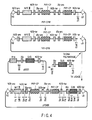
- NPT neimycin phosphotransferase
- BR right border
- BL left border
- 35s-pro cauliflower mosaic virus 35s promoter
- NOS-ter terminator of nopaline synthetase
- Amp ampicillin resistant gene
- PVY-CP coat protein gene of PVY-T
- GFP GFP gene
- GUS ⁇ -glucuronidase gene
- PsDof1 pea zinc flinger transcription factors.
- GS-PVY vector JP 6-133783 A
- JP 6-133783 A a gene incorporated around a PVY-T coat protein in a sense direction is induced to cause gene silencing in a host, and found that an enhancer-encoding gene and a coat protein-encoding gene of virus-origin both of which exist in the downstream of a promoter relate to PTGS deeply.
- the GS-PVY vector is a recombinant vector that has a leader sequence of cucumber mosaic virus (CMV) RNA4 in the downstream of a promoter and a gene encoding a coat protein of potato virus Y necrosis strain (PVY-N) in the downstream of the leader sequence.
- CMV cucumber mosaic virus
- PVY-N coat protein of potato virus Y necrosis strain
- the promoter used in the gene silencing vector is not particularly limited but may be any one so far as it can initiate transcription of the virus-origin coat protein.
- 35S promoter, PAL promoter, and PAL BOX promoter may be utilized.
- RNA 4 in CMV The leader sequence of RNA 4 in CMV is shown in Nitta et al., Japanese Journal of Phytopathology 54 : 516-522 (1988 ). Further, it is well known that the leader sequence of a structural protein of a plant virus generally has an effect of enhancing the expression of proteins ( D.E. Sleat and T.M.A. Wilson, 1992, Plant Virus Genomes as Source of Novel functions for Genetic Engineering, In Genetic Engineering with Plant Viruses, T.M.A. Wilson and J.W. Davies ed., CRC Press, pp. 55-113 ).
- the leader sequence of the RNA4 of CMV located downstream of the promoter of GS-PVY vector is not limited, but may be any enhancer sequence so far as it can activate transcription of the expression of protein; for example, an enhancer in the 35S promoter (a region of -90 to -440) or an enhancer sequence such as TMV- ⁇ -sequence may be used.
- the virus coat protein has a group-specific amino acid composition and is the sole virus product that has a low homology with other virus groups.
- PVY-T is a plant virus that belongs to Potyvirus.
- the gene silencing of the present invention is considered to be ascribable to protective reaction by the plant against the coat protein in the gene silencing vector of the present invention and enhancer thereof. Therefore, other gene sequences can also be used if they encode coat proteins derived from potyvirus that belongs to the same group as PVY-T and has high homologies.
- the gene sequence encoding the coat protein is not employed singly, but a plurality of same or different sequences may be arranged in tandem.
- the gene silencing vector according to the present invention can be constructed based on appropriate available base vectors. It is preferable that the base vector has a replication origin that functions in the host cell in addition to the above-mentioned promoter. Furthermore, it is preferable that the base vector has a terminator and an appropriate selection marker such as drug resistance.
- the base vector can be readily prepared by inserting the above-mentioned leader sequence of RNA4 of CMV and the sequence encoding CP of PVY-T into an appropriate available vector, by utilizing restriction enzymes according to a conventional method.
- the gene silencing method is characterized in that a host plant is transformed with said gene silencing vector, wherein the vector has an additional gene that is a target of gene silencing (hereinafter, referred to as "target gene”) or a gene homologous to target gene in a sense direction upstream or downstream of the above-mentioned coat protein gene of Potyvirus-origin.
- target gene a target of gene silencing
- the host plant in which gene silencing is to be caused by the application of the present invention is not particularly limited.
- Appropriate hosts include, for example, potato and tobacco.
- the target gene construct which comprises a promoter, a sequence of the target gene and a terminator is inserted downstream of the terminator of the vector.
- the target gene is not particularly limited and may be any gene that exists in the host (endogenous gene) or exogenous gene or fixed one.
- the genes encoding the full-length thereof are desirable, homologous genes (for example, those encoding a part of full-length) may also be used.
- the gene having a homology is used, the gene having a higher homology is more desirable; the homology is preferably 70% or more, more preferably 80% or more.
- one copy of the gene may provide the effect of the present invention sufficiently.
- a plurality of genes may be used, for example, in tandem. In this manner, incorporation of the target gene into the gene silencing vector and transformation of the host plant therewith can induce suppression of the target gene in the host.
- the method of transforming a host plant is not particularly limited and an appropriate method may be selected depending on the kind of the host plant.
- the host is a cell of a plant
- Agrobacterium tumefaciens which has high infectivity to plants, is first transformed with the gene construct obtained by incorporating a target gene into the above-mentioned gene silencing vector, and then, the transformant is inoculated to the host plant to effect infection.
- the method of transforming Agrobacterium tumefaciens per se is known and can be performed by, for example, a freeze-thaw method (Cited Document: G. An et al., (1988) Binary Vectors, In Plant Molecular Biology Manual A3, Kluwer Academic, Dordrecht pp. 1-19 ).
- the gene silencing of a target gene induced by the gene silencing vector is not only effective in the present generation in which transformation is performed, but also be inherited in self fertilized progeny so that the expression of target gene can be suppressed stably and consecutively.
- the expression of the target gene can be suppressed at various levels not only in self fertilized progeny but also in progeny crossed with other strains and can be suppressed completely (100%). For example, as described in examples hereinbelow, about 30 individuals (about 50%) out of 60 individuals of F1 completely suppressed the expression of GFP used as a marker gene, and the remaining 30 individuals (about 50%) showed from low to medium level of suppression of GFP expression, thus showing the effect of gene silencing.
- Example 1 Experiments using GFP gene as a marker (Suppression of exogenous gene in the present generation)
- a vector pBI121PVY-T/CP obtained by incorporating PVY-T/CP into a plant expression vector pBI121 (manufactured by Clontech Corporation, U.S.A.) was cleaved with restriction enzymes HindIII and EcoRI to afford a DNA fragment containing a 35S promoter, PVY-T/CP, and Nos terminator. The fragment was then introduced into the restriction enzyme sites HindIII and EcoRI of pUC19 (manufactured by Takara Shuzo Co., Ltd.) to give pUC19-PVY-T/CP.
- the vector was cleaved with restriction enzymes HindIII and EcoRI to recover the DNA fragment containing a 35S promoter, PVY-T/CP, and Nos terminator. Then, the fragment was blunt-ended with T4 DNA polymerase to afford a first blunt ended DNA fragment.
- pYS415 vector which corresponded to pBI121 PVY-T/CP vector of JP 6-133783A with a GFP gene incorporated therein.
- pYS409 that was obtained by cloning into pUC19 (manufactured by Takara Shuzo Co., Ltd.) a 35S promoter, GFP gene, and Nos terminator was cleaved with restriction enzymes HindIII and EcoRI. DNA fragments containing the 35S promoter, GFP gene, and Nos terminator were recovered and blunt ended with T4 DNA polymerase to give blunt-ended DNA fragments. Then, pBI121PVY-T/CP was cleaved with restriction enzyme EcoRI to make them linear and then blunt-ended with T4 DNA polymerase.
- the previously obtained blunt-ended DNA fragment was ligated to the linearized blunt-ended pBI121 PVY-T/CP by using T4 ligase to result in vector pYS415 in which the 35S promoter, GFP gene, and Nos terminator were inserted downstream of the Nos terminator in pBI121 PVY-T/CP.
- a pYS412 vector which corresponded to the PVY-T/CPW vector constructed in (1) above into which a GFP gene was incorporated was constructed as follows.
- pY409 that correspond pUC19 manufactured by Takara Shuzo Co., Ltd. having a 35S promoter, GFP gene, and Nos terminator cloned therein was cleaved with restriction enzymes HindIII and EcoRI. DNA fragments containing the 35S promoter, GFP gene, and Nos terminator were recovered and blunt ended with T4 DNA polymerase to afford blunt-ended DNA fragments.
- the PVY-T/CPW obtained in (1) above was cleaved with restriction enzyme EcoRI to make them linear and then blunt-ended with T4 DNA polymerase the previously obtained blunt-ended DNA fragment was ligated to the linearized blunt-ended PVY-T/CPW by using T4 ligase to result in vector pYS412 in which the 35S promoter, GFP gene and Nos terminator were inserted downstream of the 3' Nos terminator in PVY-T/CPW.
- the above-constructed plant transforming vectors pYS415 and pYS412 were separately introduced into the strain LBA4404 ( Hoekema et al., Nature 303; 179-180, 1983 ) of Agrobacterium tumefaciens by a freeze-thaw method to perform transformation. Subsequently, selection by kanamycin resistance gave rise to target colonies in which either pYS415 or pYS412 was introduced into the strain LBA4404 of Agrobacterium tumefaciens .
- Tobacco leaves collected from upper leaves of tobacco plant (Petit Havana SR1) cultivated for 1.5 months in a greenhouse were surface sterilized with 70% ethyl alcohol and 1% sodium hypochlorite, and washed with sterilized water, followed by preparation of leaf discs having a diameter of about 6 mm.
- the leaf discs together with about 10 8 cells of Agrobacterium tumefaciens transformed with the vector of the present invention as described above were co-cultivated for 48 hours in a Linsmaier and Skoog's liquid medium consisting of inorganic salts and 30g/L sucrose.
- leaf discs were washed with sterilized water containing 250 mg/L cefotaxime to wash bacteria out, and then placed on a Linsmaier and Skoog's shoot induced medium containing inorganic salts, 0.3 mg/L 3-indoleacetic acid, 10 mg/L 2ip (6-r,r-dimethylallyl-amino) Purine, 100 mg/L kanamycin, 250 mg/L cefotaxime, and 0.9% agar.
- GFP gene was analyzed by detecting fluorescence emitted by the transformant.
- Molecular Imager FX manufactured by BIO-RAD Laboratories, Inc. was used and analysis was performed by using an image analyzing system AQUACOSMOS manufactured by Hamamatsu Photonics Co., Ltd.
- the fluorescence of GFP from the transformed tobacco transfected with the above-mentioned vector construct pYS415 was measured by the above-mentioned method.
- variety of transformed tobaccos was selected, the tobaccos varying from the individuals emitting no green fluorescence at all to individuals intensely emitting green fluorescence.
- inoculation of PVY-T virus enabled selection of individuals that showed no disease symptom of PVY-T, i.e., immunized individuals from only those individuals which emitted no green fluorescence.
- the relationship between GFP expression and PVY-T resistance is shown in Table 1 below. The results indicate that in the transformed tobacco that exhibits resistance to PVY-T, the expression of GFP is suppressed by gene silencing.
- Table 1 Relationship between GFP expression and PVY-T resistance in transformed tobacco in which GS-PVY vector + GFP gene was introduced Intensity of green fluorescence Number of individuals of transformed tobacco Number of PVY-T resistant individuals Strong 2 0(0%) Weak 6 0(0%) None 8 4 (50%) Test tobacco plant: Petit Havana SR1 Test construct: pYS415
- PVY-T resistance of the transformed tobacco was examined according to the assay described in the paragraph [0027] of JP 6-133783 A . That is, purified virus particles of PVY-T were inoculated to tobacco Bright Yellow No. 4 or Burley 21. After confirming the symptom of necrosis after 2 weeks, the infected leaves were sampled, diluted with PBS-T buffer (0.02M phosphate buffer) 2 to 10 times the fresh weight of the leaves, and then homogenized. The homogenate was inoculated to each transformant. The transformant subjected to the test was acclimatized with 12-cm nail and cultivated in a greenhouse of closed system controlled at about 21°C.
- artificial inoculation was performed.
- the artificial inoculation was performed by coating 5 leaves of from upper to middle leaves of the test plant with a mixture of 600-mesh carborundum and a predetermined concentration of virus homogenate.
- presence or absence of necrosis symptom was examined with time over 1 week to 2 months.
- presence or absence of virus particles was examined by using ELISA to assay degree of the resistance.
- Example 2 Experiments using GFP gene as a marker (Suppression of endogenous gene by crossing with other species)
- GBS18-13 and GBS19-7 selected as described above were crossed with transformed tobacco (GFP-7-11) obtained by introducing and fixing GFP gene into tobacco (Petit Havana SR1) so that GFP could be expressed in a high rate.
- F1 seeds selected were surface sterilized with 70% ethyl alcohol (for several seconds) and 1% sodium hypochlorite (5 minutes), washed with sterilized water by a conventional method, and disseminated on a Linsmaier and Skoog's medium, followed by measuring green fluorescence of GFP with time using Molecular Imager Fx manufactured by BIO-RAD Laboratories, Inc.
- the cultivation conditions were as follows.
- Light condition Irradiated under a white fluorescent lamp of 3,000 to 5,000 Lux for 24 hours.
- the self fertilizing seed and F1 hybrid seed of tobacco were harvested as follows.
- the self fertilizing seeds can be readily obtained by covering the tobacco inflorescence by a paper bag in order to prevent mixing of pollens.
- F1 hybrid seeds can be obtained by emasculating individuals to be hybridized with objective individuals before crossing while taking care so that pollens from other individuals should not mix in, attaching pollens of anther that has just been cleaved to stigma of a pistil and then covering the inflorescence by an over bag.
- capsules turn brown and seeds ripe.
- Recombinant tobaccos are cultivated in a completely closed greenhouse system controlled to 20°C to 25°C, and then, self fertilized seeds and F1 hybrid seeds of tobacco were harvested.
- Example 3 Experiments using GUS gene as a marker
- a pYS436 vector which corresponds to the PVY-T/CPW vector constructed in (1) above of Example 1 and has a ⁇ -glucuronidase (GUS) gene incorporated therein, was constructed as follows.
- pBI221 which corresponds to pUC19 (manufactured by Takara Shuzo Co., Ltd.) having 35S promoter, GUS gene, and Nos terminator cloned therein was cleaved with restriction enzymes HindIII and EcoRI. DNA fragments containing the 35S promoter, GUS gene, and Nos terminator were recovered and blunt-ended with T4 DNA polymerase to obtain blunt-ended DNA fragments. Then, PVY-T/CPW was cleaved with restriction enzyme EcoRI to make them linear and then blunt-ended with T4 DNA polymerase.
- the above-constructed plant transforming vector pYS436 was introduced into the strain LBA4404 ( Hoekema et al., Nature 303; 179-180, 1983 ) of Agrobacterium tumefaciens to perform transformation in the same method as in Example 1. Subsequently, selection by kanamycin resistance gave rise to objective colonies in which pYS436 was introduced into the strain LBA4404 of Agrobacterium tumefaciens .
- the obtained vector pYS436 was transformed into leaf discs of tobacco plant (Petit Havana SR1) cultivated in a greenhouse for 1.5 months, in the same method as in Example 1.
- Example 4 Experiments using a pea zinc finger transcription factor PsDof1 as a marker (suppression of endogenous transcription factor)
- a pYS465 vector which corresponds to the PVY-T/CPW vector constructed in (1) above of Example 1 and has a 35S promoter, pea zinc finger transcription factor PsDof1, and Nos terminator incorporated therein, was constructed as follows.
- pGEX-5X-1 having PsDof1 incorporated therein (Cited Document: Plant Biotechnology, 19(4), 251-260 (2002 )) was cleaved with restriction enzymes SalI and XhoI, and a fragment containing PsDof1 gene was recovered. This was blunt-ended with T4 DNA polymerase to obtain blunt-ended DNA fragment.
- pCaMCN manufactured by Pharmacia AB
- pCaMCN-PsDof1 was connected to the previously obtained PsDof1 gene fragment using T4 ligase to obtain a vector pCaMCN-PsDof1 in which 35S promoter was connected upstream of the PsDof1 gene fragment and Nos terminator was connected downstream thereof.
- pCaMCN-PsDof1 was cleaved with XbaI and EcoRI, and then, recovered was a gene fragment in which a 35S promoter was connected upstream of the PsDof1 gene fragment and a Nos terminator was connected downstream thereof. This was blunt-ended with T4 DNA polymerase to obtain a blunt-ended DNA fragment.
- the pBI101.2 (Toyobo) to which GUS gene was connected was cleaved with XbaI and EcoRI to remove the GUS gene and blunt-ended with the T4 DNA polymerase.
- the resultant blunt-ended DNA fragment was connected to the previously obtained gene fragment in which the 35S promoter was connected upstream of the PsDof1 gene fragment and Nos terminator was connected downstream thereof by using T4 ligase, thereby obtaining a vector pBI101.2-PsDof1.
- pBI101.2-PsDof1 was cleaved with HindIII and EcoRI to recover the gene fragment in which the 35S promoter was connected upstream of the PsDof1 gene fragment and Nos terminator was connected downstream thereof, and this fragment was blunt-ended with T4 DNA polymerase to obtain a blunt-ended DNA fragment.
- the PVY-T/CPW obtained in (1) of Example 1 was cleaved with restriction enzyme EcoRI and blunt-ended with T4 DNA polymerase.
- the previously obtained blunt-ended DNA fragment was connected to the linearized blunt-ended PVY-T/CPW with T4 ligase, thereby resulting in vector pYS465 in which the 35S promoter, PsDof1 gene, and Nos terminator were inserted downstream of the 3' Nos terminator in PVY-T/CPW.
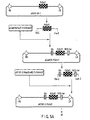
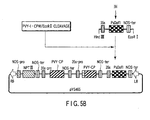
- constructed was a pYS466 vector in which PAL promoter, pea zinc finger transcription factor PsDof1, and Nos terminator were incorporated into PVY-T/CPW vector (see FIGS. 5A and 5B ).
- pBI101.2-PsDofl was cleaved with HindIII and BamH1 to remove the 35S promoter, and the resultant fragment was connected to the previously obtained PAL promoter with T4 ligase, thereby obtaining a pBI101.2-PAL-PsDof1 vector. Furthermore, the pBI101.2-PAL-PsDof1 was cleaved with HindIII and EcoRI to recover a fragment that contained the PAL promoter, PsDof1 gene, and Nos terminator, and the resultant fragment was blunt-ended with T4 DNA polymerase.
- PVY-T/CPW was cleaved with restriction enzyme EcoRI and blunt-ended with T4 DNA polymerase.
- the linearized blunt-ended PVY-T/CPW was connected to the previously obtained blunt-ended DNA fragment with T4 ligase, thereby giving rise to a vector pYS466 in which the PAL promoter, PsDof1 gene, and Nos terminator were inserted downstream of 3' Nos terminator in PVY-T/CPW (see FIG. 6 ).
- the above-constructed plant transforming vectors pYS465 and pYS466 were introduced into the strain LBA4404 ( Hoekema et al., Nature 303; 179-180, 1983 ) of Agrobacterium tumefaciens to perform transformation in the same method as Example 1. Subsequently, selection by kanamycin resistance was performed, thereby obtaining target colonies in which either pYS465 or pYS466 was introduced into the strain LBA4404 of Agrobacterium tumefaciens .
- the obtained vectors pYS465 and pYS466 were transformed into leaf discs of tobacco plant (Petit Havana SR1) cultivated in a greenhouse for 1.5 months, in the same method as in Example 1.
Landscapes
- Health & Medical Sciences (AREA)
- Genetics & Genomics (AREA)
- Life Sciences & Earth Sciences (AREA)
- Engineering & Computer Science (AREA)
- Bioinformatics & Cheminformatics (AREA)
- Wood Science & Technology (AREA)
- Biomedical Technology (AREA)
- Organic Chemistry (AREA)
- Biotechnology (AREA)
- General Engineering & Computer Science (AREA)
- Chemical & Material Sciences (AREA)
- Zoology (AREA)
- Molecular Biology (AREA)
- Biophysics (AREA)
- Microbiology (AREA)
- Plant Pathology (AREA)
- Physics & Mathematics (AREA)
- Biochemistry (AREA)
- General Health & Medical Sciences (AREA)
- Cell Biology (AREA)
- Virology (AREA)
- Breeding Of Plants And Reproduction By Means Of Culturing (AREA)
- Measuring Or Testing Involving Enzymes Or Micro-Organisms (AREA)
- Micro-Organisms Or Cultivation Processes Thereof (AREA)
- Saccharide Compounds (AREA)
- Compositions Of Oxide Ceramics (AREA)
- Inorganic Insulating Materials (AREA)
Claims (6)
- Verwendung eines Gen-Silencing-Vektors zum Stilllegen (Silencing) eines Zielgens in einer Wirtspflanze, wobei der Gen-Silencing-Vektor umfasst:einen rekombinanten Vektor, dereinen Promotor,eine Leader-Sequenz der RNA4 des Gurkenmosaikvirus stromabwärts des Promotors, ein Gen, das fiir ein Hüllprotein eines Nekrosestamms des Kartoffelvirus Y (PVY-N) codiert und sich stromabwärts der Leader-Sequenz befindet, undeinen Terminator, der sich stromabwärts des Gens befindet,einschließt,wobei zum Erreichen des Stilllegens des spezifischen Zielgens in einer Wirtspflanze ein Genkonstrukt, das einen Promotor, eine Sequenz des Zielgens und einen Terminator umfasst, stromabwärts des Terminators des Vektors insertiert wird.
- Verwendung nach Anspruch 1, wobei der Promotor ausgewählt ist aus der Gruppe, bestehend aus 35S-Promotor, PAL-Promotor und PAL-BOX-Promotor.
- Verwendung nach Anspruch 1, wobei eine Vielzahl von Hüllproteinen eingebaut wird, um die Expression des Zielgens noch stärker zu unterdrücken.
- Verwendung nach Anspruch 1, wobei die Expression des Zielgens unterdrückt wird und die Unterdrückung nicht nur in der aktuellen Generation der Transformanten, sondern auch in der sich selbstbefruchtenden Nachkommenschaft stabil aufrechterhalten wird.
- Verwendung nach Anspruch 4, wobei die Transformante weiter mit einer anderen Pflanze gekreuzt wird, um eine Hybrid-Generation zu erzeugen und wobei die Gen-Stilllegung des Zielgens in der Hybrid-Generation beibehalten wird.
- Verwendung nach Anspruch 1, wobei die Wirtspflanze Tabak ist.
Applications Claiming Priority (3)
| Application Number | Priority Date | Filing Date | Title |
|---|---|---|---|
| JP2002147888 | 2002-05-22 | ||
| JP2002147888 | 2002-05-22 | ||
| PCT/JP2003/006328 WO2003097841A1 (fr) | 2002-05-22 | 2003-05-21 | Vecteur de silençage genique et procede de silençage genique utilisant ce vecteur |
Publications (3)
| Publication Number | Publication Date |
|---|---|
| EP1507009A1 EP1507009A1 (de) | 2005-02-16 |
| EP1507009A4 EP1507009A4 (de) | 2006-03-22 |
| EP1507009B1 true EP1507009B1 (de) | 2009-11-18 |
Family
ID=29545204
Family Applications (1)
| Application Number | Title | Priority Date | Filing Date |
|---|---|---|---|
| EP03752935A Expired - Lifetime EP1507009B1 (de) | 2002-05-22 | 2003-05-21 | Gen-silencing-vektor und diesen verwendendes gen-silencing-verfahren |
Country Status (9)
| Country | Link |
|---|---|
| EP (1) | EP1507009B1 (de) |
| JP (1) | JP4361858B2 (de) |
| AT (1) | ATE449182T1 (de) |
| AU (1) | AU2003235377A1 (de) |
| DE (1) | DE60330140D1 (de) |
| DK (1) | DK1507009T3 (de) |
| ES (1) | ES2335756T3 (de) |
| PT (1) | PT1507009E (de) |
| WO (1) | WO2003097841A1 (de) |
Families Citing this family (3)
| Publication number | Priority date | Publication date | Assignee | Title |
|---|---|---|---|---|
| CN110885797B (zh) * | 2018-08-20 | 2022-04-12 | 山东农业大学 | 一种抗黄瓜花叶病毒的弱毒疫苗、制备方法及其应用 |
| CN110857439B (zh) * | 2018-08-20 | 2022-05-17 | 中国烟草总公司黑龙江省公司牡丹江烟草科学研究所 | 一种高效产生siRNA的马铃薯Y病毒基因片段、弱毒疫苗、制备方法及其应用 |
| CN110857438B (zh) * | 2018-08-20 | 2022-05-17 | 中国烟草总公司黑龙江省公司牡丹江烟草科学研究所 | 一种高效产生siRNA的烟草花叶病毒基因片段、弱毒疫苗、制备方法及其应用 |
Family Cites Families (3)
| Publication number | Priority date | Publication date | Assignee | Title |
|---|---|---|---|---|
| JP3452372B2 (ja) * | 1992-10-21 | 2003-09-29 | 日本たばこ産業株式会社 | 組換えベクター及びそれを用いてジャガイモにpvy−tに対する免疫性を付与する方法並びにpvy−t免疫性ジャガイモ |
| GB9703146D0 (en) * | 1997-02-14 | 1997-04-02 | Innes John Centre Innov Ltd | Methods and means for gene silencing in transgenic plants |
| AU2002347343A1 (en) * | 2001-12-12 | 2003-06-23 | Plant Bioscience Limited | Methods and means for gene silencing in plants |
-
2003
- 2003-05-21 DE DE60330140T patent/DE60330140D1/de not_active Expired - Lifetime
- 2003-05-21 AT AT03752935T patent/ATE449182T1/de not_active IP Right Cessation
- 2003-05-21 PT PT03752935T patent/PT1507009E/pt unknown
- 2003-05-21 DK DK03752935.1T patent/DK1507009T3/da active
- 2003-05-21 AU AU2003235377A patent/AU2003235377A1/en not_active Abandoned
- 2003-05-21 ES ES03752935T patent/ES2335756T3/es not_active Expired - Lifetime
- 2003-05-21 JP JP2004506496A patent/JP4361858B2/ja not_active Expired - Fee Related
- 2003-05-21 EP EP03752935A patent/EP1507009B1/de not_active Expired - Lifetime
- 2003-05-21 WO PCT/JP2003/006328 patent/WO2003097841A1/ja not_active Ceased
Also Published As
| Publication number | Publication date |
|---|---|
| EP1507009A1 (de) | 2005-02-16 |
| DK1507009T3 (da) | 2010-04-06 |
| AU2003235377A1 (en) | 2003-12-02 |
| ES2335756T3 (es) | 2010-04-05 |
| PT1507009E (pt) | 2010-01-25 |
| JPWO2003097841A1 (ja) | 2005-09-15 |
| EP1507009A4 (de) | 2006-03-22 |
| JP4361858B2 (ja) | 2009-11-11 |
| ATE449182T1 (de) | 2009-12-15 |
| DE60330140D1 (de) | 2009-12-31 |
| WO2003097841A1 (fr) | 2003-11-27 |
Similar Documents
| Publication | Publication Date | Title |
|---|---|---|
| JP4739634B2 (ja) | ケストルムイエローリーフカーリングウイルスプロモーター | |
| US10774335B2 (en) | Method for transforming a plant cell or plant tissue using agrobacterium, transgenic plant, transgenic cell or transgenic tissue, culture medium and use of a method for transforming a plant cell or tissue | |
| CN103290027A (zh) | 一种调控叶绿体发育蛋白质及其基因和应用 | |
| CN101668858A (zh) | 病毒耐受性植物和其生产方法 | |
| CN111218470B (zh) | 一种调控植物抗逆性的方法 | |
| US20080044897A1 (en) | Gene silencing vector and gene silencing method using the same | |
| WO2017128039A1 (zh) | 基因组合及其用途 | |
| CN107868773A (zh) | 与水稻抗性淀粉相关的蛋白SSIIIa及其编码基因与应用 | |
| EP1507009B1 (de) | Gen-silencing-vektor und diesen verwendendes gen-silencing-verfahren | |
| Ito et al. | Rose phytoene desaturase gene silencing by apple latent spherical virus vectors | |
| CN102191253B (zh) | 一种植物抗病调控基因uep及用途 | |
| CN101914571A (zh) | 一种不需选择标记基因的洁净dna转化植物的方法 | |
| KR102805494B1 (ko) | 콩 모자이크 바이러스에 대한 병 저항성을 조절하는 콩 유래의 ATPsyn-α 유전자 및 이의 용도 | |
| US20210261975A1 (en) | Dna construct to be used in genome editing of plant | |
| JP4228072B2 (ja) | アビジンをコードする人工合成遺伝子 | |
| Dabauza et al. | Response of sweet pepper (Capsicum annuum L.) genotypes to Agrobacterium tumefaciens as a means of selecting proper vectors for genetic transformation | |
| US6956149B1 (en) | Method of conveying BNYVV resistance to sugar beet plants | |
| JP3964701B2 (ja) | 病害抵抗性イネ科植物 | |
| US11319548B2 (en) | Cold- and water-inducible promoter from rice | |
| KR101874192B1 (ko) | 식물병 저항성을 증가시키는 OsTat1 유전자 및 이의 용도 | |
| CN119351416B (zh) | 人源st基因在植物免疫抗病中的应用 | |
| KR101360542B1 (ko) | 벼 유래의 OsSERK1 유전자 및 그에 의해서 형질전환된 벼 | |
| CN104946652B (zh) | 植物雌蕊特异表达启动子OsPis1及其衍生物 | |
| CN114606260B (zh) | 一种提高番茄根结线虫温敏抗性的方法 | |
| CN100424177C (zh) | 融合杀虫基因cryci及其应用 |
Legal Events
| Date | Code | Title | Description |
|---|---|---|---|
| PUAI | Public reference made under article 153(3) epc to a published international application that has entered the european phase |
Free format text: ORIGINAL CODE: 0009012 |
|
| 17P | Request for examination filed |
Effective date: 20041130 |
|
| AK | Designated contracting states |
Kind code of ref document: A1 Designated state(s): AT BE BG CH CY CZ DE DK EE ES FI FR GB GR HU IE IT LI LU MC NL PT RO SE SI SK TR |
|
| AX | Request for extension of the european patent |
Extension state: AL LT LV MK |
|
| A4 | Supplementary search report drawn up and despatched |
Effective date: 20060206 |
|
| 17Q | First examination report despatched |
Effective date: 20080609 |
|
| GRAP | Despatch of communication of intention to grant a patent |
Free format text: ORIGINAL CODE: EPIDOSNIGR1 |
|
| GRAS | Grant fee paid |
Free format text: ORIGINAL CODE: EPIDOSNIGR3 |
|
| GRAA | (expected) grant |
Free format text: ORIGINAL CODE: 0009210 |
|
| AK | Designated contracting states |
Kind code of ref document: B1 Designated state(s): AT BE BG CH CY CZ DE DK EE ES FI FR GB GR HU IE IT LI LU MC NL PT RO SE SI SK TR |
|
| AX | Request for extension of the european patent |
Extension state: AL LT LV MK |
|
| REG | Reference to a national code |
Ref country code: GB Ref legal event code: FG4D |
|
| REG | Reference to a national code |
Ref country code: CH Ref legal event code: EP |
|
| REG | Reference to a national code |
Ref country code: IE Ref legal event code: FG4D |
|
| REG | Reference to a national code |
Ref country code: CH Ref legal event code: NV Representative=s name: NOVAGRAAF INTERNATIONAL SA |
|
| REF | Corresponds to: |
Ref document number: 60330140 Country of ref document: DE Date of ref document: 20091231 Kind code of ref document: P |
|
| REG | Reference to a national code |
Ref country code: GR Ref legal event code: EP Ref document number: 20090402906 Country of ref document: GR |
|
| REG | Reference to a national code |
Ref country code: PT Ref legal event code: SC4A Free format text: AVAILABILITY OF NATIONAL TRANSLATION Effective date: 20100118 |
|
| REG | Reference to a national code |
Ref country code: SE Ref legal event code: TRGR |
|
| REG | Reference to a national code |
Ref country code: ES Ref legal event code: FG2A Ref document number: 2335756 Country of ref document: ES Kind code of ref document: T3 |
|
| REG | Reference to a national code |
Ref country code: DK Ref legal event code: T3 |
|
| LTIE | Lt: invalidation of european patent or patent extension |
Effective date: 20091118 |
|
| PG25 | Lapsed in a contracting state [announced via postgrant information from national office to epo] |
Ref country code: FI Free format text: LAPSE BECAUSE OF FAILURE TO SUBMIT A TRANSLATION OF THE DESCRIPTION OR TO PAY THE FEE WITHIN THE PRESCRIBED TIME-LIMIT Effective date: 20091118 |
|
| PG25 | Lapsed in a contracting state [announced via postgrant information from national office to epo] |
Ref country code: SI Free format text: LAPSE BECAUSE OF FAILURE TO SUBMIT A TRANSLATION OF THE DESCRIPTION OR TO PAY THE FEE WITHIN THE PRESCRIBED TIME-LIMIT Effective date: 20091118 Ref country code: CY Free format text: LAPSE BECAUSE OF FAILURE TO SUBMIT A TRANSLATION OF THE DESCRIPTION OR TO PAY THE FEE WITHIN THE PRESCRIBED TIME-LIMIT Effective date: 20091118 |
|
| PGFP | Annual fee paid to national office [announced via postgrant information from national office to epo] |
Ref country code: GB Payment date: 20100329 Year of fee payment: 8 |
|
| PG25 | Lapsed in a contracting state [announced via postgrant information from national office to epo] |
Ref country code: EE Free format text: LAPSE BECAUSE OF FAILURE TO SUBMIT A TRANSLATION OF THE DESCRIPTION OR TO PAY THE FEE WITHIN THE PRESCRIBED TIME-LIMIT Effective date: 20091118 Ref country code: BG Free format text: LAPSE BECAUSE OF FAILURE TO SUBMIT A TRANSLATION OF THE DESCRIPTION OR TO PAY THE FEE WITHIN THE PRESCRIBED TIME-LIMIT Effective date: 20100218 Ref country code: RO Free format text: LAPSE BECAUSE OF FAILURE TO SUBMIT A TRANSLATION OF THE DESCRIPTION OR TO PAY THE FEE WITHIN THE PRESCRIBED TIME-LIMIT Effective date: 20091118 |
|
| PGFP | Annual fee paid to national office [announced via postgrant information from national office to epo] |
Ref country code: DK Payment date: 20100507 Year of fee payment: 8 Ref country code: ES Payment date: 20100507 Year of fee payment: 8 Ref country code: FR Payment date: 20100423 Year of fee payment: 8 Ref country code: LU Payment date: 20100611 Year of fee payment: 8 Ref country code: PT Payment date: 20100407 Year of fee payment: 8 |
|
| PG25 | Lapsed in a contracting state [announced via postgrant information from national office to epo] |
Ref country code: CZ Free format text: LAPSE BECAUSE OF FAILURE TO SUBMIT A TRANSLATION OF THE DESCRIPTION OR TO PAY THE FEE WITHIN THE PRESCRIBED TIME-LIMIT Effective date: 20091118 Ref country code: SK Free format text: LAPSE BECAUSE OF FAILURE TO SUBMIT A TRANSLATION OF THE DESCRIPTION OR TO PAY THE FEE WITHIN THE PRESCRIBED TIME-LIMIT Effective date: 20091118 |
|
| PGFP | Annual fee paid to national office [announced via postgrant information from national office to epo] |
Ref country code: AT Payment date: 20100414 Year of fee payment: 8 Ref country code: DE Payment date: 20100430 Year of fee payment: 8 Ref country code: IT Payment date: 20100529 Year of fee payment: 8 Ref country code: NL Payment date: 20100421 Year of fee payment: 8 |
|
| PLBE | No opposition filed within time limit |
Free format text: ORIGINAL CODE: 0009261 |
|
| STAA | Information on the status of an ep patent application or granted ep patent |
Free format text: STATUS: NO OPPOSITION FILED WITHIN TIME LIMIT |
|
| 26N | No opposition filed |
Effective date: 20100819 |
|
| PGFP | Annual fee paid to national office [announced via postgrant information from national office to epo] |
Ref country code: BE Payment date: 20100519 Year of fee payment: 8 Ref country code: CH Payment date: 20100408 Year of fee payment: 8 |
|
| PGFP | Annual fee paid to national office [announced via postgrant information from national office to epo] |
Ref country code: SE Payment date: 20100520 Year of fee payment: 8 Ref country code: TR Payment date: 20100510 Year of fee payment: 8 |
|
| PG25 | Lapsed in a contracting state [announced via postgrant information from national office to epo] |
Ref country code: MC Free format text: LAPSE BECAUSE OF NON-PAYMENT OF DUE FEES Effective date: 20100531 |
|
| PGFP | Annual fee paid to national office [announced via postgrant information from national office to epo] |
Ref country code: GR Payment date: 20100416 Year of fee payment: 8 |
|
| PG25 | Lapsed in a contracting state [announced via postgrant information from national office to epo] |
Ref country code: IE Free format text: LAPSE BECAUSE OF NON-PAYMENT OF DUE FEES Effective date: 20100521 |
|
| REG | Reference to a national code |
Ref country code: CH Ref legal event code: PFA Owner name: JAPAN TOBACCO INC. Free format text: JAPAN TOBACCO INC.#2-1, TORANOMON 2-CHOME, MINATO-KU#TOKYO 105-8422 (JP) -TRANSFER TO- JAPAN TOBACCO INC.#2-1, TORANOMON 2-CHOME, MINATO-KU#TOKYO 105-8422 (JP) |
|
| REG | Reference to a national code |
Ref country code: PT Ref legal event code: MM4A Free format text: LAPSE DUE TO NON-PAYMENT OF FEES Effective date: 20111121 |
|
| BERE | Be: lapsed |
Owner name: JAPAN TOBACCO INC. Effective date: 20110531 |
|
| REG | Reference to a national code |
Ref country code: NL Ref legal event code: V1 Effective date: 20111201 |
|
| REG | Reference to a national code |
Ref country code: CH Ref legal event code: PL |
|
| REG | Reference to a national code |
Ref country code: DK Ref legal event code: EBP |
|
| REG | Reference to a national code |
Ref country code: SE Ref legal event code: EUG |
|
| GBPC | Gb: european patent ceased through non-payment of renewal fee |
Effective date: 20110521 |
|
| PG25 | Lapsed in a contracting state [announced via postgrant information from national office to epo] |
Ref country code: NL Free format text: LAPSE BECAUSE OF NON-PAYMENT OF DUE FEES Effective date: 20111201 Ref country code: PT Free format text: LAPSE BECAUSE OF NON-PAYMENT OF DUE FEES Effective date: 20111121 Ref country code: CH Free format text: LAPSE BECAUSE OF NON-PAYMENT OF DUE FEES Effective date: 20110531 Ref country code: LI Free format text: LAPSE BECAUSE OF NON-PAYMENT OF DUE FEES Effective date: 20110531 |
|
| REG | Reference to a national code |
Ref country code: GR Ref legal event code: ML Ref document number: 20090402906 Country of ref document: GR Effective date: 20111202 |
|
| REG | Reference to a national code |
Ref country code: AT Ref legal event code: MM01 Ref document number: 449182 Country of ref document: AT Kind code of ref document: T Effective date: 20110521 |
|
| REG | Reference to a national code |
Ref country code: FR Ref legal event code: ST Effective date: 20120131 |
|
| PG25 | Lapsed in a contracting state [announced via postgrant information from national office to epo] |
Ref country code: AT Free format text: LAPSE BECAUSE OF NON-PAYMENT OF DUE FEES Effective date: 20110521 Ref country code: IT Free format text: LAPSE BECAUSE OF NON-PAYMENT OF DUE FEES Effective date: 20110521 Ref country code: GR Free format text: LAPSE BECAUSE OF NON-PAYMENT OF DUE FEES Effective date: 20111202 |
|
| REG | Reference to a national code |
Ref country code: DE Ref legal event code: R119 Ref document number: 60330140 Country of ref document: DE Effective date: 20111201 |
|
| PG25 | Lapsed in a contracting state [announced via postgrant information from national office to epo] |
Ref country code: BE Free format text: LAPSE BECAUSE OF NON-PAYMENT OF DUE FEES Effective date: 20110531 |
|
| PG25 | Lapsed in a contracting state [announced via postgrant information from national office to epo] |
Ref country code: FR Free format text: LAPSE BECAUSE OF NON-PAYMENT OF DUE FEES Effective date: 20110531 |
|
| PG25 | Lapsed in a contracting state [announced via postgrant information from national office to epo] |
Ref country code: GB Free format text: LAPSE BECAUSE OF NON-PAYMENT OF DUE FEES Effective date: 20110521 Ref country code: DK Free format text: LAPSE BECAUSE OF NON-PAYMENT OF DUE FEES Effective date: 20110531 |
|
| PG25 | Lapsed in a contracting state [announced via postgrant information from national office to epo] |
Ref country code: HU Free format text: LAPSE BECAUSE OF FAILURE TO SUBMIT A TRANSLATION OF THE DESCRIPTION OR TO PAY THE FEE WITHIN THE PRESCRIBED TIME-LIMIT Effective date: 20100519 |
|
| PG25 | Lapsed in a contracting state [announced via postgrant information from national office to epo] |
Ref country code: SE Free format text: LAPSE BECAUSE OF NON-PAYMENT OF DUE FEES Effective date: 20110522 |
|
| PG25 | Lapsed in a contracting state [announced via postgrant information from national office to epo] |
Ref country code: LU Free format text: LAPSE BECAUSE OF NON-PAYMENT OF DUE FEES Effective date: 20110521 |
|
| REG | Reference to a national code |
Ref country code: ES Ref legal event code: FD2A Effective date: 20130531 |
|
| PG25 | Lapsed in a contracting state [announced via postgrant information from national office to epo] |
Ref country code: DE Free format text: LAPSE BECAUSE OF NON-PAYMENT OF DUE FEES Effective date: 20111201 |
|
| PG25 | Lapsed in a contracting state [announced via postgrant information from national office to epo] |
Ref country code: ES Free format text: LAPSE BECAUSE OF NON-PAYMENT OF DUE FEES Effective date: 20110522 |
|
| PG25 | Lapsed in a contracting state [announced via postgrant information from national office to epo] |
Ref country code: TR Free format text: LAPSE BECAUSE OF NON-PAYMENT OF DUE FEES Effective date: 20110521 |