EP1500649A1 - Verfahren zur Durchführung einer In-Situ-Quench Reaktion - Google Patents
Verfahren zur Durchführung einer In-Situ-Quench Reaktion Download PDFInfo
- Publication number
- EP1500649A1 EP1500649A1 EP04016925A EP04016925A EP1500649A1 EP 1500649 A1 EP1500649 A1 EP 1500649A1 EP 04016925 A EP04016925 A EP 04016925A EP 04016925 A EP04016925 A EP 04016925A EP 1500649 A1 EP1500649 A1 EP 1500649A1
- Authority
- EP
- European Patent Office
- Prior art keywords
- aryl
- reaction
- alkyl
- microreactor
- compound
- Prior art date
- Legal status (The legal status is an assumption and is not a legal conclusion. Google has not performed a legal analysis and makes no representation as to the accuracy of the status listed.)
- Granted
Links
- 238000006243 chemical reaction Methods 0.000 title claims abstract description 56
- 238000000034 method Methods 0.000 title claims abstract description 34
- 238000010791 quenching Methods 0.000 title claims abstract description 11
- 239000000203 mixture Substances 0.000 claims abstract description 17
- 238000011065 in-situ storage Methods 0.000 claims abstract description 14
- 239000012048 reactive intermediate Substances 0.000 claims abstract description 13
- 239000012070 reactive reagent Substances 0.000 claims abstract description 8
- 239000003701 inert diluent Substances 0.000 claims abstract description 7
- 238000002156 mixing Methods 0.000 claims abstract description 6
- 239000002243 precursor Substances 0.000 claims abstract description 6
- 239000012467 final product Substances 0.000 claims abstract 3
- MZRVEZGGRBJDDB-UHFFFAOYSA-N N-Butyllithium Chemical compound [Li]CCCC MZRVEZGGRBJDDB-UHFFFAOYSA-N 0.000 claims description 16
- 239000003153 chemical reaction reagent Substances 0.000 claims description 14
- 125000003545 alkoxy group Chemical group 0.000 claims description 12
- 125000000217 alkyl group Chemical group 0.000 claims description 12
- 125000003118 aryl group Chemical group 0.000 claims description 12
- 125000004104 aryloxy group Chemical group 0.000 claims description 12
- 125000004356 hydroxy functional group Chemical group O* 0.000 claims description 10
- UFHFLCQGNIYNRP-UHFFFAOYSA-N Hydrogen Chemical compound [H][H] UFHFLCQGNIYNRP-UHFFFAOYSA-N 0.000 claims description 9
- 150000001875 compounds Chemical class 0.000 claims description 9
- -1 halogenoalkenes Chemical class 0.000 claims description 9
- 229910052739 hydrogen Inorganic materials 0.000 claims description 9
- 239000001257 hydrogen Substances 0.000 claims description 9
- 239000000376 reactant Substances 0.000 claims description 9
- 125000006552 (C3-C8) cycloalkyl group Chemical group 0.000 claims description 8
- 150000002900 organolithium compounds Chemical class 0.000 claims description 8
- 238000002360 preparation method Methods 0.000 claims description 7
- 150000001728 carbonyl compounds Chemical class 0.000 claims description 6
- 239000012039 electrophile Substances 0.000 claims description 6
- 150000002431 hydrogen Chemical class 0.000 claims description 6
- ZCSHNCUQKCANBX-UHFFFAOYSA-N lithium diisopropylamide Chemical compound [Li+].CC(C)[N-]C(C)C ZCSHNCUQKCANBX-UHFFFAOYSA-N 0.000 claims description 6
- PXGOKWXKJXAPGV-UHFFFAOYSA-N Fluorine Chemical compound FF PXGOKWXKJXAPGV-UHFFFAOYSA-N 0.000 claims description 5
- 229910052744 lithium Inorganic materials 0.000 claims description 5
- 150000002576 ketones Chemical class 0.000 claims description 4
- ANYSGBYRTLOUPO-UHFFFAOYSA-N lithium tetramethylpiperidide Chemical compound [Li]N1C(C)(C)CCCC1(C)C ANYSGBYRTLOUPO-UHFFFAOYSA-N 0.000 claims description 4
- 239000011541 reaction mixture Substances 0.000 claims description 4
- 229910008326 Si-Y Inorganic materials 0.000 claims description 3
- 229910006773 Si—Y Inorganic materials 0.000 claims description 3
- 125000002619 bicyclic group Chemical group 0.000 claims description 3
- 125000004432 carbon atom Chemical group C* 0.000 claims description 3
- 229910052731 fluorine Inorganic materials 0.000 claims description 3
- 239000011737 fluorine Substances 0.000 claims description 3
- 229910052736 halogen Inorganic materials 0.000 claims description 3
- 229910052740 iodine Inorganic materials 0.000 claims description 3
- 125000002950 monocyclic group Chemical group 0.000 claims description 3
- 150000002902 organometallic compounds Chemical class 0.000 claims description 3
- 150000002924 oxiranes Chemical class 0.000 claims description 3
- ZCYVEMRRCGMTRW-UHFFFAOYSA-N 7553-56-2 Chemical compound [I] ZCYVEMRRCGMTRW-UHFFFAOYSA-N 0.000 claims description 2
- WKBOTKDWSSQWDR-UHFFFAOYSA-N Bromine atom Chemical compound [Br] WKBOTKDWSSQWDR-UHFFFAOYSA-N 0.000 claims description 2
- ZAMOUSCENKQFHK-UHFFFAOYSA-N Chlorine atom Chemical compound [Cl] ZAMOUSCENKQFHK-UHFFFAOYSA-N 0.000 claims description 2
- WHXSMMKQMYFTQS-UHFFFAOYSA-N Lithium Chemical compound [Li] WHXSMMKQMYFTQS-UHFFFAOYSA-N 0.000 claims description 2
- 125000005396 acrylic acid ester group Chemical group 0.000 claims description 2
- 150000001299 aldehydes Chemical class 0.000 claims description 2
- 150000001350 alkyl halides Chemical class 0.000 claims description 2
- 150000001642 boronic acid derivatives Chemical class 0.000 claims description 2
- GDTBXPJZTBHREO-UHFFFAOYSA-N bromine Substances BrBr GDTBXPJZTBHREO-UHFFFAOYSA-N 0.000 claims description 2
- 229910052794 bromium Inorganic materials 0.000 claims description 2
- 229910052799 carbon Inorganic materials 0.000 claims description 2
- 125000002915 carbonyl group Chemical group [*:2]C([*:1])=O 0.000 claims description 2
- 150000001732 carboxylic acid derivatives Chemical class 0.000 claims description 2
- 229910052801 chlorine Inorganic materials 0.000 claims description 2
- 239000000460 chlorine Substances 0.000 claims description 2
- 150000008050 dialkyl sulfates Chemical class 0.000 claims description 2
- 239000011630 iodine Substances 0.000 claims description 2
- UBJFKNSINUCEAL-UHFFFAOYSA-N lithium;2-methylpropane Chemical compound [Li+].C[C-](C)C UBJFKNSINUCEAL-UHFFFAOYSA-N 0.000 claims description 2
- WGOPGODQLGJZGL-UHFFFAOYSA-N lithium;butane Chemical compound [Li+].CC[CH-]C WGOPGODQLGJZGL-UHFFFAOYSA-N 0.000 claims description 2
- CETVQRFGPOGIQJ-UHFFFAOYSA-N lithium;hexane Chemical compound [Li+].CCCCC[CH2-] CETVQRFGPOGIQJ-UHFFFAOYSA-N 0.000 claims description 2
- DVSDBMFJEQPWNO-UHFFFAOYSA-N methyllithium Chemical compound C[Li] DVSDBMFJEQPWNO-UHFFFAOYSA-N 0.000 claims description 2
- 150000002894 organic compounds Chemical class 0.000 claims description 2
- 150000002896 organic halogen compounds Chemical class 0.000 claims description 2
- NHKJPPKXDNZFBJ-UHFFFAOYSA-N phenyllithium Chemical compound [Li]C1=CC=CC=C1 NHKJPPKXDNZFBJ-UHFFFAOYSA-N 0.000 claims description 2
- 150000003008 phosphonic acid esters Chemical class 0.000 claims description 2
- 125000004169 (C1-C6) alkyl group Chemical group 0.000 description 8
- LHXDLQBQYFFVNW-UHFFFAOYSA-N Fenchone Chemical compound C1CC2(C)C(=O)C(C)(C)C1C2 LHXDLQBQYFFVNW-UHFFFAOYSA-N 0.000 description 8
- 125000001997 phenyl group Chemical group [H]C1=C([H])C([H])=C(*)C([H])=C1[H] 0.000 description 8
- 238000003786 synthesis reaction Methods 0.000 description 7
- 125000001797 benzyl group Chemical group [H]C1=C([H])C([H])=C(C([H])=C1[H])C([H])([H])* 0.000 description 6
- 230000015572 biosynthetic process Effects 0.000 description 5
- 230000005595 deprotonation Effects 0.000 description 5
- 238000010537 deprotonation reaction Methods 0.000 description 5
- LHXDLQBQYFFVNW-XCBNKYQSSA-N (+)-Fenchone Natural products C1C[C@]2(C)C(=O)C(C)(C)[C@H]1C2 LHXDLQBQYFFVNW-XCBNKYQSSA-N 0.000 description 4
- 125000004191 (C1-C6) alkoxy group Chemical group 0.000 description 4
- 125000000051 benzyloxy group Chemical group [H]C1=C([H])C([H])=C(C([H])=C1[H])C([H])([H])O* 0.000 description 4
- IJOOHPMOJXWVHK-UHFFFAOYSA-N chlorotrimethylsilane Chemical compound C[Si](C)(C)Cl IJOOHPMOJXWVHK-UHFFFAOYSA-N 0.000 description 4
- 229930006735 fenchone Natural products 0.000 description 4
- 230000006870 function Effects 0.000 description 4
- 239000000543 intermediate Substances 0.000 description 4
- 125000006273 (C1-C3) alkyl group Chemical group 0.000 description 3
- CSCPPACGZOOCGX-UHFFFAOYSA-N Acetone Chemical compound CC(C)=O CSCPPACGZOOCGX-UHFFFAOYSA-N 0.000 description 3
- ZTQSAGDEMFDKMZ-UHFFFAOYSA-N butyric aldehyde Natural products CCCC=O ZTQSAGDEMFDKMZ-UHFFFAOYSA-N 0.000 description 3
- 239000007795 chemical reaction product Substances 0.000 description 3
- 238000001816 cooling Methods 0.000 description 3
- 238000004519 manufacturing process Methods 0.000 description 3
- 239000000047 product Substances 0.000 description 3
- 238000013341 scale-up Methods 0.000 description 3
- 238000007789 sealing Methods 0.000 description 3
- 125000006274 (C1-C3)alkoxy group Chemical group 0.000 description 2
- 125000005913 (C3-C6) cycloalkyl group Chemical group 0.000 description 2
- ZWEHNKRNPOVVGH-UHFFFAOYSA-N 2-Butanone Chemical compound CCC(C)=O ZWEHNKRNPOVVGH-UHFFFAOYSA-N 0.000 description 2
- IMRWILPUOVGIMU-UHFFFAOYSA-N 2-bromopyridine Chemical compound BrC1=CC=CC=N1 IMRWILPUOVGIMU-UHFFFAOYSA-N 0.000 description 2
- KWOLFJPFCHCOCG-UHFFFAOYSA-N Acetophenone Chemical compound CC(=O)C1=CC=CC=C1 KWOLFJPFCHCOCG-UHFFFAOYSA-N 0.000 description 2
- NBBJYMSMWIIQGU-UHFFFAOYSA-N Propionic aldehyde Chemical compound CCC=O NBBJYMSMWIIQGU-UHFFFAOYSA-N 0.000 description 2
- JUJWROOIHBZHMG-UHFFFAOYSA-N Pyridine Chemical compound C1=CC=NC=C1 JUJWROOIHBZHMG-UHFFFAOYSA-N 0.000 description 2
- WYURNTSHIVDZCO-UHFFFAOYSA-N Tetrahydrofuran Chemical compound C1CCOC1 WYURNTSHIVDZCO-UHFFFAOYSA-N 0.000 description 2
- 150000001450 anions Chemical class 0.000 description 2
- 150000001543 aryl boronic acids Chemical class 0.000 description 2
- 150000001499 aryl bromides Chemical class 0.000 description 2
- HUMNYLRZRPPJDN-UHFFFAOYSA-N benzaldehyde Chemical compound O=CC1=CC=CC=C1 HUMNYLRZRPPJDN-UHFFFAOYSA-N 0.000 description 2
- 238000010924 continuous production Methods 0.000 description 2
- JHIVVAPYMSGYDF-UHFFFAOYSA-N cyclohexanone Chemical compound O=C1CCCCC1 JHIVVAPYMSGYDF-UHFFFAOYSA-N 0.000 description 2
- 150000002148 esters Chemical class 0.000 description 2
- 239000012530 fluid Substances 0.000 description 2
- 238000010438 heat treatment Methods 0.000 description 2
- 238000006138 lithiation reaction Methods 0.000 description 2
- YNESATAKKCNGOF-UHFFFAOYSA-N lithium bis(trimethylsilyl)amide Chemical compound [Li+].C[Si](C)(C)[N-][Si](C)(C)C YNESATAKKCNGOF-UHFFFAOYSA-N 0.000 description 2
- 229910052751 metal Inorganic materials 0.000 description 2
- 239000002184 metal Substances 0.000 description 2
- HNQIVZYLYMDVSB-UHFFFAOYSA-N methanesulfonimidic acid Chemical class CS(N)(=O)=O HNQIVZYLYMDVSB-UHFFFAOYSA-N 0.000 description 2
- 238000003541 multi-stage reaction Methods 0.000 description 2
- 125000000951 phenoxy group Chemical group [H]C1=C([H])C([H])=C(O*)C([H])=C1[H] 0.000 description 2
- 230000000171 quenching effect Effects 0.000 description 2
- 239000012429 reaction media Substances 0.000 description 2
- 239000005051 trimethylchlorosilane Substances 0.000 description 2
- 125000004178 (C1-C4) alkyl group Chemical group 0.000 description 1
- YZWKKMVJZFACSU-UHFFFAOYSA-N 1-bromopentane Chemical compound CCCCCBr YZWKKMVJZFACSU-UHFFFAOYSA-N 0.000 description 1
- CYNYIHKIEHGYOZ-UHFFFAOYSA-N 1-bromopropane Chemical compound CCCBr CYNYIHKIEHGYOZ-UHFFFAOYSA-N 0.000 description 1
- 150000005762 2-bromopyridine Chemical class 0.000 description 1
- NYPYPOZNGOXYSU-UHFFFAOYSA-N 3-bromopyridine Chemical compound BrC1=CC=CN=C1 NYPYPOZNGOXYSU-UHFFFAOYSA-N 0.000 description 1
- RWHRFHQRVDUPIK-UHFFFAOYSA-N 50867-57-7 Chemical compound CC(=C)C(O)=O.CC(=C)C(O)=O RWHRFHQRVDUPIK-UHFFFAOYSA-N 0.000 description 1
- 238000006290 Diels-Alder intramolecular cycloaddition reaction Methods 0.000 description 1
- 238000005698 Diels-Alder reaction Methods 0.000 description 1
- JIGUQPWFLRLWPJ-UHFFFAOYSA-N Ethyl acrylate Chemical compound CCOC(=O)C=C JIGUQPWFLRLWPJ-UHFFFAOYSA-N 0.000 description 1
- 238000006546 Horner-Wadsworth-Emmons reaction Methods 0.000 description 1
- 229910000831 Steel Inorganic materials 0.000 description 1
- 238000007239 Wittig reaction Methods 0.000 description 1
- IKHGUXGNUITLKF-XPULMUKRSA-N acetaldehyde Chemical compound [14CH]([14CH3])=O IKHGUXGNUITLKF-XPULMUKRSA-N 0.000 description 1
- 239000012042 active reagent Substances 0.000 description 1
- BHELZAPQIKSEDF-UHFFFAOYSA-N allyl bromide Chemical compound BrCC=C BHELZAPQIKSEDF-UHFFFAOYSA-N 0.000 description 1
- PCTYDEAPIWWHMV-UHFFFAOYSA-N aloperine Natural products C1CCN2CC3CC(CC4CCCNC34)C2C1 PCTYDEAPIWWHMV-UHFFFAOYSA-N 0.000 description 1
- 150000001408 amides Chemical class 0.000 description 1
- 150000008064 anhydrides Chemical class 0.000 description 1
- 238000010923 batch production Methods 0.000 description 1
- RWCCWEUUXYIKHB-UHFFFAOYSA-N benzophenone Chemical compound C=1C=CC=CC=1C(=O)C1=CC=CC=C1 RWCCWEUUXYIKHB-UHFFFAOYSA-N 0.000 description 1
- 239000012965 benzophenone Substances 0.000 description 1
- AGEZXYOZHKGVCM-UHFFFAOYSA-N benzyl bromide Chemical compound BrCC1=CC=CC=C1 AGEZXYOZHKGVCM-UHFFFAOYSA-N 0.000 description 1
- ZADPBFCGQRWHPN-UHFFFAOYSA-N boronic acid Chemical compound OBO ZADPBFCGQRWHPN-UHFFFAOYSA-N 0.000 description 1
- CODNYICXDISAEA-UHFFFAOYSA-N bromine monochloride Chemical compound BrCl CODNYICXDISAEA-UHFFFAOYSA-N 0.000 description 1
- 150000001733 carboxylic acid esters Chemical class 0.000 description 1
- 230000033077 cellular process Effects 0.000 description 1
- 238000006352 cycloaddition reaction Methods 0.000 description 1
- FWFSEYBSWVRWGL-UHFFFAOYSA-N cyclohex-2-enone Chemical compound O=C1CCCC=C1 FWFSEYBSWVRWGL-UHFFFAOYSA-N 0.000 description 1
- LGTLXDJOAJDFLR-UHFFFAOYSA-N diethyl chlorophosphate Chemical compound CCOP(Cl)(=O)OCC LGTLXDJOAJDFLR-UHFFFAOYSA-N 0.000 description 1
- DENRZWYUOJLTMF-UHFFFAOYSA-N diethyl sulfate Chemical compound CCOS(=O)(=O)OCC DENRZWYUOJLTMF-UHFFFAOYSA-N 0.000 description 1
- 229940008406 diethyl sulfate Drugs 0.000 description 1
- VAYGXNSJCAHWJZ-UHFFFAOYSA-N dimethyl sulfate Chemical compound COS(=O)(=O)OC VAYGXNSJCAHWJZ-UHFFFAOYSA-N 0.000 description 1
- 239000012834 electrophilic reactant Substances 0.000 description 1
- 150000004820 halides Chemical class 0.000 description 1
- GNOIPBMMFNIUFM-UHFFFAOYSA-N hexamethylphosphoric triamide Chemical compound CN(C)P(=O)(N(C)C)N(C)C GNOIPBMMFNIUFM-UHFFFAOYSA-N 0.000 description 1
- 230000000977 initiatory effect Effects 0.000 description 1
- PNDPGZBMCMUPRI-UHFFFAOYSA-N iodine Chemical compound II PNDPGZBMCMUPRI-UHFFFAOYSA-N 0.000 description 1
- HVTICUPFWKNHNG-UHFFFAOYSA-N iodoethane Chemical compound CCI HVTICUPFWKNHNG-UHFFFAOYSA-N 0.000 description 1
- INQOMBQAUSQDDS-UHFFFAOYSA-N iodomethane Chemical compound IC INQOMBQAUSQDDS-UHFFFAOYSA-N 0.000 description 1
- UIDWHMKSOZZDAV-UHFFFAOYSA-N lithium tin Chemical group [Li].[Sn] UIDWHMKSOZZDAV-UHFFFAOYSA-N 0.000 description 1
- JDOZOOBCADNBIJ-UHFFFAOYSA-N lithium;2h-pyridin-2-ide Chemical compound [Li+].C1=CC=N[C-]=C1 JDOZOOBCADNBIJ-UHFFFAOYSA-N 0.000 description 1
- WSFSSNUMVMOOMR-NJFSPNSNSA-N methanone Chemical compound O=[14CH2] WSFSSNUMVMOOMR-NJFSPNSNSA-N 0.000 description 1
- 238000012544 monitoring process Methods 0.000 description 1
- 238000000465 moulding Methods 0.000 description 1
- 229930014626 natural product Natural products 0.000 description 1
- 150000002825 nitriles Chemical class 0.000 description 1
- 125000002524 organometallic group Chemical group 0.000 description 1
- QNGNSVIICDLXHT-UHFFFAOYSA-N para-ethylbenzaldehyde Natural products CCC1=CC=C(C=O)C=C1 QNGNSVIICDLXHT-UHFFFAOYSA-N 0.000 description 1
- PNJWIWWMYCMZRO-UHFFFAOYSA-N pent‐4‐en‐2‐one Natural products CC(=O)CC=C PNJWIWWMYCMZRO-UHFFFAOYSA-N 0.000 description 1
- 238000003825 pressing Methods 0.000 description 1
- 238000012545 processing Methods 0.000 description 1
- UMJSCPRVCHMLSP-UHFFFAOYSA-N pyridine Natural products COC1=CC=CN=C1 UMJSCPRVCHMLSP-UHFFFAOYSA-N 0.000 description 1
- 150000003254 radicals Chemical class 0.000 description 1
- 238000007363 ring formation reaction Methods 0.000 description 1
- 238000006884 silylation reaction Methods 0.000 description 1
- 241000894007 species Species 0.000 description 1
- 239000007858 starting material Substances 0.000 description 1
- 239000010959 steel Substances 0.000 description 1
- 239000000758 substrate Substances 0.000 description 1
- MHYGQXWCZAYSLJ-UHFFFAOYSA-N tert-butyl-chloro-diphenylsilane Chemical compound C=1C=CC=CC=1[Si](Cl)(C(C)(C)C)C1=CC=CC=C1 MHYGQXWCZAYSLJ-UHFFFAOYSA-N 0.000 description 1
- BCNZYOJHNLTNEZ-UHFFFAOYSA-N tert-butyldimethylsilyl chloride Chemical compound CC(C)(C)[Si](C)(C)Cl BCNZYOJHNLTNEZ-UHFFFAOYSA-N 0.000 description 1
- YLQBMQCUIZJEEH-UHFFFAOYSA-N tetrahydrofuran Natural products C=1C=COC=1 YLQBMQCUIZJEEH-UHFFFAOYSA-N 0.000 description 1
- 238000006257 total synthesis reaction Methods 0.000 description 1
- 230000009466 transformation Effects 0.000 description 1
- 238000000844 transformation Methods 0.000 description 1
- WRECIMRULFAWHA-UHFFFAOYSA-N trimethyl borate Chemical compound COB(OC)OC WRECIMRULFAWHA-UHFFFAOYSA-N 0.000 description 1
- HGBOYTHUEUWSSQ-UHFFFAOYSA-N valeric aldehyde Natural products CCCCC=O HGBOYTHUEUWSSQ-UHFFFAOYSA-N 0.000 description 1
- XLYOFNOQVPJJNP-UHFFFAOYSA-N water Substances O XLYOFNOQVPJJNP-UHFFFAOYSA-N 0.000 description 1
- 238000004804 winding Methods 0.000 description 1
Images

Classifications
-
- C—CHEMISTRY; METALLURGY
- C07—ORGANIC CHEMISTRY
- C07D—HETEROCYCLIC COMPOUNDS
- C07D213/00—Heterocyclic compounds containing six-membered rings, not condensed with other rings, with one nitrogen atom as the only ring hetero atom and three or more double bonds between ring members or between ring members and non-ring members
- C07D213/02—Heterocyclic compounds containing six-membered rings, not condensed with other rings, with one nitrogen atom as the only ring hetero atom and three or more double bonds between ring members or between ring members and non-ring members having three double bonds between ring members or between ring members and non-ring members
- C07D213/04—Heterocyclic compounds containing six-membered rings, not condensed with other rings, with one nitrogen atom as the only ring hetero atom and three or more double bonds between ring members or between ring members and non-ring members having three double bonds between ring members or between ring members and non-ring members having no bond between the ring nitrogen atom and a non-ring member or having only hydrogen or carbon atoms directly attached to the ring nitrogen atom
- C07D213/24—Heterocyclic compounds containing six-membered rings, not condensed with other rings, with one nitrogen atom as the only ring hetero atom and three or more double bonds between ring members or between ring members and non-ring members having three double bonds between ring members or between ring members and non-ring members having no bond between the ring nitrogen atom and a non-ring member or having only hydrogen or carbon atoms directly attached to the ring nitrogen atom with substituted hydrocarbon radicals attached to ring carbon atoms
- C07D213/28—Radicals substituted by singly-bound oxygen or sulphur atoms
- C07D213/30—Oxygen atoms
-
- C—CHEMISTRY; METALLURGY
- C07—ORGANIC CHEMISTRY
- C07F—ACYCLIC, CARBOCYCLIC OR HETEROCYCLIC COMPOUNDS CONTAINING ELEMENTS OTHER THAN CARBON, HYDROGEN, HALOGEN, OXYGEN, NITROGEN, SULFUR, SELENIUM OR TELLURIUM
- C07F7/00—Compounds containing elements of Groups 4 or 14 of the Periodic Table
- C07F7/02—Silicon compounds
- C07F7/08—Compounds having one or more C—Si linkages
- C07F7/0803—Compounds with Si-C or Si-Si linkages
- C07F7/0825—Preparations of compounds not comprising Si-Si or Si-cyano linkages
- C07F7/0827—Syntheses with formation of a Si-C bond
Definitions
- the invention relates to a method for performing an in-situ quench (ISQ) Reaction by production of a reactive intermediate (ZP) in the presence of a suitable reaction partner using a microreactor.
- ISQ in-situ quench
- ZP reactive intermediate
- the ISQ concept opens up many new opportunities for organic synthesis, especially in the context of reactions involving an organo-lithium compound by (fast) halogen-lithium exchange in the presence of a Electrophils generated and immediately (in situ or in the emergence) is intercepted. Examples of this have so far only been found in some intramolecular reactions and (recently) in the preparation of arylboronic acids or their esters.
- ISQ in situ quenching
- the ISQ technique stands in contrast to the stepwise reaction, in which first generates an active reagent separately and then only in a second synthesis operation is reacted with a reactant.
- a reactant usually an organic compound, organic compound, organic compound, or organic compound.
- enolate anions, Grignard compounds, organolithium compounds it is customary to first generate the reactive intermediates (usually by deprotonation or metal-halogen exchange) then subsequently targeted (and often at low Temperatures) with electrophiles implement.
- carbanion chemistry are such Two-step procedure "normal", while the ISQ methodology is the rare exception.
- organocuprates to ( ⁇ , ⁇ -unsaturated) carbonyl compounds in Presence of trimethylchlorosilane (TMSC1) and optionally HMPA may also be present as an ISQ process, but the nature of the intercepted Intermediate stage does not seem completely clear (Modern Organocopper Chemistry, Ed. N. Krause, Wiley-VCH, 2002, p. 333ff).
- the synthesis of arylboronic acids from the lithiated haloaromatics was also successful under ISQ conditions (Li, W .; Nelson, D.P., Jensen, M.S., Hoerrner, R.S., Cai, D .; Larsen, R. D .; Reider, P.J .; J. Org. Chem. 2002; 67, 5394).
- the first step is 3-bromopyridine subjected to a halogen-metal exchange reaction, which also remains in the reaction solution Triisopropylboronester remains untouched.
- the 3-lithium pyridine then reacts to Arylboronester, which with HCl to boronic acid is hydrolyzed.
- the present invention has the task Reason to use the ISQ methodology in these reactions. It became now surprisingly found that the ISQ methodology can be used to advantage, when performing such reactions in a microreactor.
- the invention thus relates to a method for carrying out an in-situ quench (ISQ) Reaction by generation of a reactive intermediate (ZP) in the presence a suitable reactant, characterized in that a mixture consisting of a precursor (VP), the reaction partner (RP) and optionally an inert diluent in a microreactor and there with a highly reactive reagent (RG) mixes which is suitable the VP in the reactive ZP to convert, and from the resulting reaction mixture, optionally after Run through a residence time unit obtained by reaction of the ZP with the RP Isolated end product.
- ISQ in-situ quench
- Figure 1 describes the schematic structure of a microreactor system for Conducting an ISQ reaction.
- RP electrophilic reactant
- RG organometallic compound
- the RG is preferably an organolithium compound, in particular selected from the group consisting of n- butyllithium, sec- butyllithium, tert- butyllithium, n- hexyllithium, methyllithium, phenyllithium, lithium diisopropylamide, lithium tetramethylpiperidide and lithium hexamethylsilazide.
- the RP is an achiral, prochirous or chiral electrophile selected from the group of optionally substituted haloalkanes, such as Methyl iodide, ethyl iodide, n-propyl bromide, pentyl bromide or benzyl bromide, Halogenoalkenes such as allyl bromide, oxiranes, aldehydes such as Formaldehyde, acetaldehyde, propionaldehyde, butyraldehyde or benzaldehyde, ketones, such as for example acetone, butanone, cyclohexanone, acetophenone or benzophenone, Carboxylic acid derivatives, such as carboxylic esters, nitriles or anhydrides, Trihydrocarbylsilyl halide such as trimethylchlorosilane, tert-butyldimethylchlorosilane
- the RP is an optionally substituted, non-enolisable Ketone with a pro-chiral carbonyl group, in particular fenchone.
- the mixture of VP and RP is in a microreactor mixed with the RG, wherein the mixing zone by a or several heat elements at a constant temperature of -40 ° to + 50 ° C, especially from -20 ° to + 30 ° C.
- microreactors come, for example, those in the European Patent Applications EP 0 688 242, EP 1 031 375, EP 1 123 734, EP 1 123 735, EP 1 125 630 or US Pat. No. 5,811,062.
- Each functional module contains a module half, which are each designed like a frame to sealing surfaces darzubieten that seal when pressing the halves together.
- Fluid connections mounted in the fluid channels through the edge regions of the Continue function modules. From there, there are horizontal channels to functional spaces, the usually include a channel system or labyrinth system.
- the channels of Functional spaces generally open obliquely or transversely to one another.
- the functional modules assembled from two halves show on their surfaces each openings of the channels, which are arranged at standardized intervals to the Stack structure of function modules to align exactly. These openings are provided with sealing structures to sealingly couple continuous channels.
- a functional module a Heat exchanger, which consists of a first heat exchanger half for cooling and / or Heating medium and a second heat exchanger half for reactant guide consists.
- the following functional module is a mixer for two reaction partners.
- the following Function module represents a dwell, which consists of a half-dwell for Reaction product and a dwell half for cooling and / or heating medium consists.
- microreactors are usually operated continuously, it is not recommended, the coming of the microreactor reaction mixture in a conventional reactor to fill and linger there.
- Optimal residence time modules are, for example, in the European patent applications EP 1 157 738 and EP 1 188 476.
- Such residence time modules are used for the thermal aftertreatment of chemical Reaction media from microreactors.
- residence time means above and below the time that the Reaction medium for post-reaction after mixing in the inventive Module is provided. As a rule, it depends on the Flow rate and the volume of two- or three-dimensional convoluted, preferably spiral or helical depression on at least one Side of the molding.
- the volume of the depression can be determined by the length and the Diameter of the module, the pitch of the helical winding and the predetermine geometric position of the product removal opening.
- the inventive method allows ISQ reactions in good yield and Purity, especially with a high enantiomeric or diastereomeric excess when using chiral starting materials.
- the process works largely automate and is continuously feasible. Therefore, the inventive process much more economical to perform than the labor-intensive conventional batch process.
- the reaction was carried out in a microreactor system according to FIG. 1, the Unit (1) exemplifies the feed of the mixture of 2-bromopyridines and fenchone and unit (2) represents the feed of n-butyllithium.
- the microreactor unit (3) has for example, a volume of 2 ml and the residence time unit (4) a volume of 30 ml.
- the unit (5) the manufactured product is collected.
Landscapes
- Chemical & Material Sciences (AREA)
- Organic Chemistry (AREA)
- Organic Low-Molecular-Weight Compounds And Preparation Thereof (AREA)
Abstract
Description
- einstufiges Verfahren (Zeitersparnis bei der Vorbereitung, Überwachung und Aufarbeitung)
- perfekte Temperaturkontrolle im Mikroreaktor (höhere Reaktionstemperaturen erlauben geringere Kosten für Kühlung der Anlagen)
- Erhöhte Betriebssicherheit durch kleine Reaktionsvolumina und Stahlreaktoren
- Kontinuierliche Prozessführung mit der Möglichkeit der Produktion an 24 h / Tag.
- Einfache Maßstabsvergrößerung durch Parallelisierung mehrer Reaktoren (numbering-up). Da die Bedingungen in jeder einzelnen Zelle gleich sind, ist kein Einfluss auf die Reaktionsparameter zu erwarten, wie beim klassischen scale-up Verfahren.
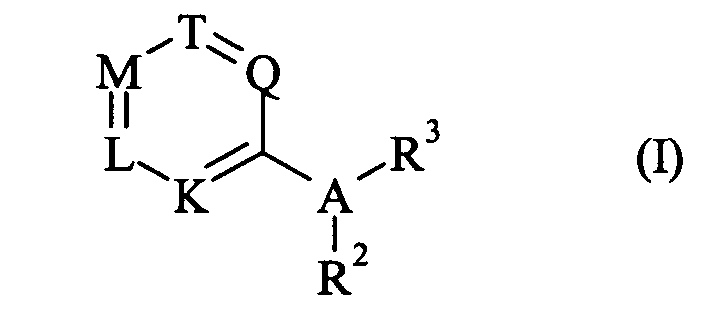
K, L, N, T und Q, jeweils unabhängig voneinander für CR1 oder N stehen;
A für B, CR4 oder SiR5 steht
- R1
- jeweils unabhängig voneinander Wasserstoff, C1-6 Alkyl, C1-6 Alkoxy, C3-8 Cycloalkyl, Aryl, Aryloxy, Aryl-C1-6-alkyl, Aryl-C1-6-alkoxy oder Fluor bedeuten;
- R2 und R3
- im Falle A = CR4, jeweils unabhängig voneinander Wasserstoff, C1-6 Alkyl, C1-6 Alkoxy, C3-8 Cycloalkyl, Aryl, Aryloxy, Aryl-C1-6-alkyl oder Aryl-C1-6-alkoxy bedeuten;
- R2 und R3
- im Falle A = CR4, zusammengenommen mit dem eingeschlossenen CR4 einen mono- oder bicyclischen Ring mit 4 bis 8 Kohlenstoffatomen bilden;
- R2 und R3
- im Falle A = SiR5, jeweils unabhängig voneinander C1-6 Alkyl, Aryl oder Aryl-C1-6-alkyl bedeuten;
- R2 und R3
- im Falle A = B, jeweils unabhängig voneinander Hydroxy, C1-6 Alkoxy, Aryloxy oder Aryl-C1-6-alkyloxy bedeuten;
- R2 und R3
- im Falle A = B, zusammengenommen eine Gruppe der Formel -O-(CH2)m-O- bilden;
- R4
- Wasserstoff oder Hydroxy bedeutet;
- R5
- C1-6 Alkyl, Aryl oder Aryl-C1-6-alkyl bedeutet;
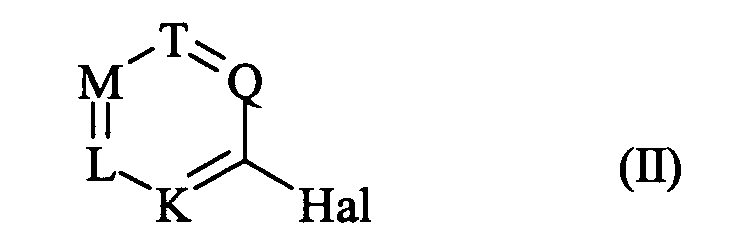
K, L, M, T und Q die für Formel (I) angegebene Bedeutung aufweisen; und
Hal für Chlor, Brom oder Jod steht;
und einer Verbindung der Formel (III),

R2 und R3 jeweils die für Formel (I) angegebene Bedeutung aufweisen, und
A-X für B-OR6, Si-Y, CH-Y oder C=O steht,
worin
- R6
- C1-6 Alkoxy, Aryloxy oder Aryl-C1-6-alkyloxy bedeutet; und
- Y
- für eine geeignete Abgangsgruppe steht,
worin
einer der Gruppen K, L, N, T und Q, jeweils unabhängig voneinander für CR1 oder N steht und die anderen CR1 bedeuten;
A für B, CR4 oder SiR5 steht
- R1
- jeweils unabhängig voneinander Wasserstoff, C1-3 Alkyl, C1-3 Alkoxy, C3-6 Cycloalkyl, Phenyl, Phenoxy, Benzyl, Benzyloxy oder Fluor bedeuten;
- R2 und R3
- im Falle A = CR4, jeweils unabhängig voneinander Wasserstoff, C1-3 Alkyl, C3-8 Cycloalkyl, Phenyl oder Benzyl bedeuten;
- R2 und R3
- im Falle A = CR4, zusammengenommen mit dem eingeschlossenen CR4 einen mono- oder bicyclischen Ring mit 5 bis 8 Kohlenstoffatomen bilden;
- R2 und R3
- im Falle A = SiR5, jeweils unabhängig voneinander C1-4 Alkyl, Phenyl oder Benzyl bedeuten;
- R2 und R3
- im Falle A = B, jeweils unabhängig voneinander Hydroxy, C1-3 Alkoxy, Phenoxy oder Benzyloxy bedeuten;
- R2 und R3
- im Falle A = B, zusammengenommen eine Gruppe der Formel-O-(CH2)2-O- bilden;
- R4
- Wasserstoff oder Hydroxy bedeutet;
- R5
- C1-3 Alkyl, Phenyl oder Benzyl bedeutet.
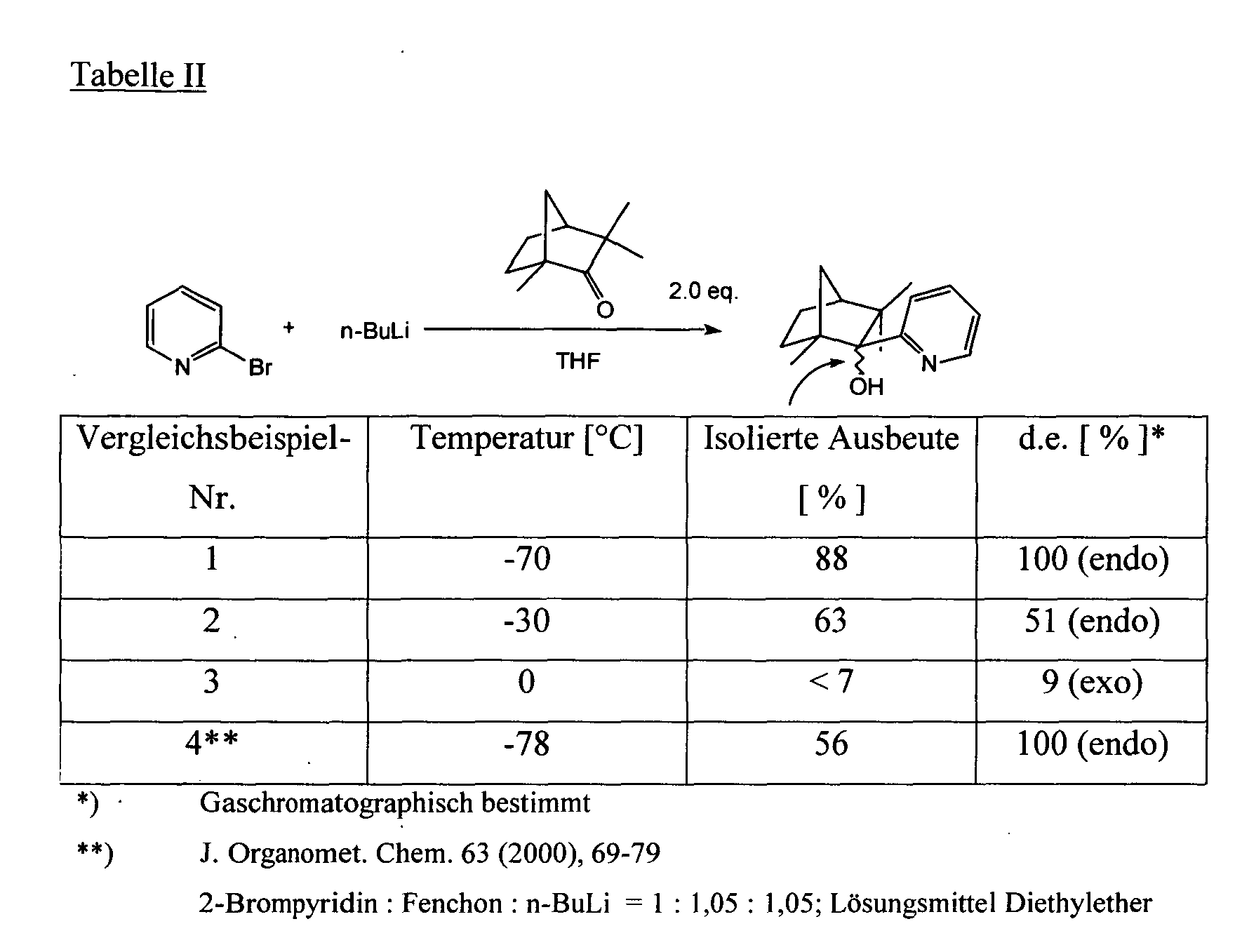
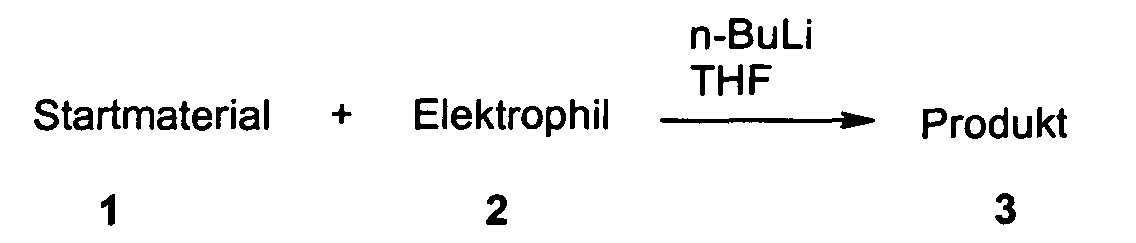
Ein Gemisch aus 10 mmol 2-Brompyridin und 20 mmol Fenchon wird in Mikroreaktor mit 15 mmol n-Butyllithium in Tetrahydrofuran gemischt. Die jeweiligen Reaktionsbedingungen können der nachfolgenden Tabelle I entnommen werden. Dabei erzielt man die in der Tabelle I aufgeführten Ergebnisse:

Die Ergebnisse der schrittweisen Durchführung derselben Reaktion in einem Reaktionskolben werden in Tabelle II gezeigt:
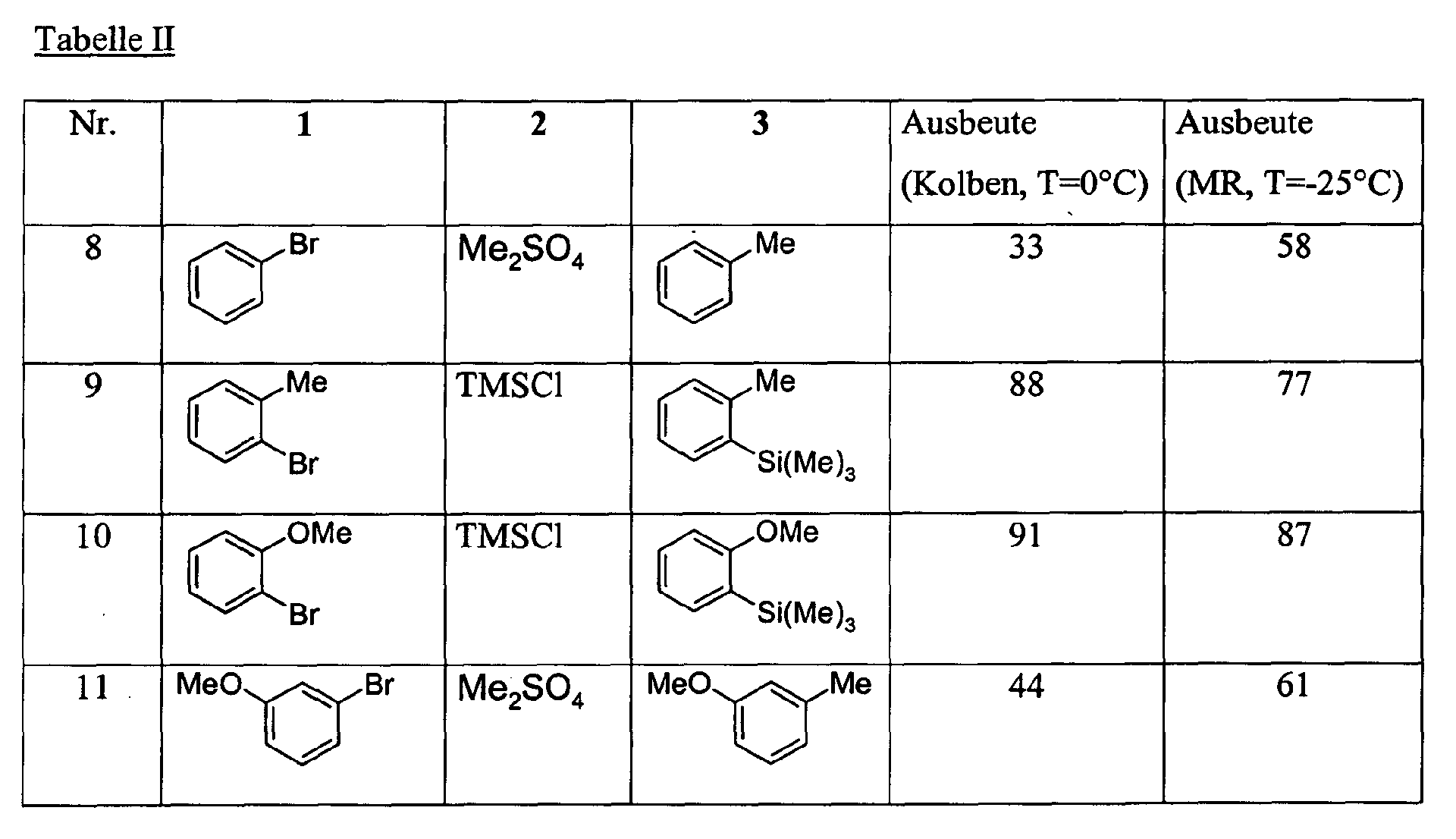

| ISQ-Reaktion konventionell (Kolben) | |||
| Temp. | % 4 | % 5 | % 6 |
| - 35 °C | 40 | 9 | 2,5 |
| ISQ-Reaktion im Mikroreaktor | |||
| Temp. | % 4 | % 5 | % 6 |
| 0 °C | 39 | 8 | 2 |
Claims (11)
- Verfahren zur Durchführung einer In-Situ-Quench (ISQ) Reaktion durch Erzeugung eines reaktiven Zwischenproduktes (ZP) in Gegenwart eines geeigneten Reaktionspartners, dadurch gekennzeichnet, dass man ein Gemisch bestehend aus einem Vorprodukt (VP), dem Reaktionspartner (RP) und gegebenenfalls einem inerten Verdünnungsmittel in einen Mikroreaktor einleitet und dort mit einem hochreaktiven Reagenz (RG) mischt, welches geeignet ist das VP in das reaktive ZP überzuführen, und man aus dem erhaltenen Reaktionsgemisch, gegebenenfalls nach Durchlaufen einer Verweilzeit-Einheit, das durch Reaktion des ZP mit dem RP erhaltene Endprodukt isoliert.
- Verfahren nach Anspruch 1, dadurch gekennzeichnet, dass das VP eine durch eine starke Base deprotonierbare organische Verbindung oder eine organische Halogenverbindung, die durch Metall-Halogen Austausch in eine metallorganische Verbindung überführt werden kann, ist.
- Verfahren nach Anspruch 1 oder 2, dadurch gekennzeichnet, dass das RG eine lithiumorganische Verbindung ist.
- Verfahren nach einem der Ansprüche 1 bis 3, dadurch gekennzeichnet, dass das RG eine lithiumorganische Verbindung vorzugsweise ausgewählt aus der Gruppe bestehend aus n-Butyllithium, sec-Butyllithium, tert- Butyllithium, n-Hexyllithium, Methyllithium, Phenyllithium, Lithiumdiisopropylamid, Lithiumtetramethylpiperidid und Lithiumhexamethylsilazid ist.
- Verfahren nach einem der Ansprüche 1 bis 4, dadurch gekennzeichnet, dass der RP im weitesten Sinne ein Elektrophil ist.
- Verfahren nach einem der Ansprüche 1 bis 5, dadurch gekennzeichnet, dass das RP ein achirales, prochires oder chirales Elektrophil ausgewählt aus der Gruppe der gegebenenfalls substituierten Halogenalkane, Halogenalkene, Oxirane, Aldehyde, Ketone, Carbonsäurederivate, Trihydrocarbylsilylhalogenid, Acrylsäureester, α,β-ungesättigten Carbonylverbindungen, Boronsäureester, Phosphonsäureester, Alkylsulfonsäureester und Dialkylsulfate ist.
- Verfahren nach einem der Ansprüche 1 bis 6, dadurch gekennzeichnet, dass das RP ein gegebenenfalls substituertes, nicht-enolisierbares Keton mit einer pro-chiralen Carbonylgruppe ist.
- Verfahren nach einem der Ansprüche 1 bis 7, dadurch gekennzeichnet, dass das Gemisch aus dem VP und dem RP in einem Mikroreaktor mit dem RG gemischt wird, wobei die Mischungszone durch ein oder mehrere Wärmeelemente auf einer konstanten Temperatur von -40 ° bis + 50 °C gehalten wird.
- Verfahren nach einem der Ansprüche 1 bis 8, dadurch gekennzeichnet, dass das Gemisch aus dem VP und dem RP in einem Mikroreaktor mit dem RG bei einer Flussrate von 0,5 bis 20 ml/min gemischt wird.
- Verfahren nach einem der Ansprüche 1 bis 9 zur Herstellung einer Verbindung der Formel (I),worin
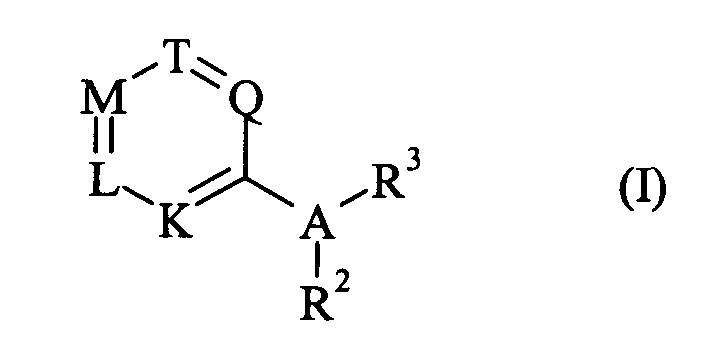
K, L, N, T und Q, jeweils unabhängig voneinander für CR1 oder N stehen;
A für B, CR4 oder SiR5 steht- R1
- jeweils unabhängig voneinander Wasserstoff, C1-6 Alkyl, C1-6 Alkoxy, C3-8 Cycloalkyl, Aryl, Aryloxy, Aryl-C1-6-alkyl, Aryl-C1-6-alkoxy oder Fluor bedeuten;
- R2 und R3
- im Falle A = CR4, jeweils unabhängig voneinander Wasserstoff, C1-6 Alkyl, C1-6 Alkoxy, C3-8 Cycloalkyl, Aryl, Aryloxy, Aryl-C1-6-alkyl oder Aryl-C1-6-alkoxy bedeuten;
- R2 und R3
- im Falle A = CR4, zusammengenommen mit dem eingeschlossenen CR4 einen mono- oder bicyclischen Ring mit 4 bis 8 Kohlenstoffatomen bilden;
- R2 und R3
- im Falle A = SiR5, jeweils unabhängig voneinander C1-6 Alkyl, Aryl oder Aryl-C1-6-alkyl bedeuten;
- R2 und R3
- im Falle A = B, jeweils unabhängig voneinander Hydroxy, C1-6 Alkoxy, Aryloxy oder Aryl-C1-6-alkyloxy bedeuten;
- R2 und R3
- im Falle A = B, zusammengenommen eine Gruppe der Formel -O-(CH2)m-O- bilden;
- R4
- Wasserstoff oder Hydroxy bedeutet;
- R5
- C1-6 Alkyl, Aryl oder Aryl-C1-6-alkyl bedeutet;
worin
K, L, M, T und Q die für Formel (I) angegebene Bedeutung aufweisen; und
Hal für Chlor, Brom oder Jod steht;
und einer Verbindung der Formel (III),worin
R2 und R3 jeweils die für Formel (I) angegebene Bedeutung aufweisen, und
A-X für B-OR6, Si-Y, CH-Y oder C=O steht,
worin- R6
- C1-6 Alkoxy, Aryloxy oder Aryl-C1-6-alkyloxy bedeutet; und
- Y
- für eine geeignete Abgangsgruppe steht,
- Verwendung eines Mikroreaktors zur Durchführung einer In-Situ-Quench (ISQ) Reaktion, wobei ein Gemisch bestehend aus einem Vorprodukt (VP), einem Reaktionspartner (RP) und gegebenenfalls einem inerten Verdünnungsmittel in den Mikroreaktor eingeleitet wird und dort mit einem hochreaktiven Reagenz (RG), welches geeignet ist das VP in ein reaktives ZP überzuführen, gemischt wird.
Applications Claiming Priority (2)
| Application Number | Priority Date | Filing Date | Title |
|---|---|---|---|
| DE2003133174 DE10333174A1 (de) | 2003-07-22 | 2003-07-22 | Verfahren zur Durchführung einer In-Situ-Quench Reaktion |
| DE10333174 | 2003-07-22 |
Publications (2)
| Publication Number | Publication Date |
|---|---|
| EP1500649A1 true EP1500649A1 (de) | 2005-01-26 |
| EP1500649B1 EP1500649B1 (de) | 2013-06-19 |
Family
ID=33482999
Family Applications (1)
| Application Number | Title | Priority Date | Filing Date |
|---|---|---|---|
| EP04016925.2A Expired - Lifetime EP1500649B1 (de) | 2003-07-22 | 2004-07-18 | Verfahren zur Durchführung einer In-Situ-Quench Reaktion |
Country Status (3)
| Country | Link |
|---|---|
| EP (1) | EP1500649B1 (de) |
| DE (1) | DE10333174A1 (de) |
| ES (1) | ES2427348T3 (de) |
Cited By (11)
| Publication number | Priority date | Publication date | Assignee | Title |
|---|---|---|---|---|
| JP2006241065A (ja) * | 2005-03-03 | 2006-09-14 | Fujifilm Finechemicals Co Ltd | ハロゲン−リチウム交換反応を用いる有機化合物の製造法 |
| AT501927A1 (de) * | 2005-05-23 | 2006-12-15 | Dsm Fine Chem Austria Gmbh | Verfahren zur durchführung von reaktionen unter beteiligung von carbokationen |
| WO2008017562A1 (de) * | 2006-08-10 | 2008-02-14 | Evonik Degussa Gmbh | Anlage und verfahren zur kontinuierlichen industriellen herstellung von alkylalkoxysilanen |
| WO2008017553A1 (de) * | 2006-08-10 | 2008-02-14 | Evonik Degussa Gmbh | Anlage und verfahren zur kontinuierlichen industriellen herstellung von fluoralkylchlorsilanen |
| WO2008017554A1 (de) * | 2006-08-10 | 2008-02-14 | Evonik Degussa Gmbh | Anlage, reaktor und verfahren zur kontinuierlichen industriellen herstellung von 3-methacryloxypropylalkoxysilanen |
| WO2008017561A1 (de) * | 2006-08-10 | 2008-02-14 | Evonik Degussa Gmbh | Anlage und verfahren zur kontinuierlichen industriellen herstellung von 3-glycidyloxypropylalkoxysilanen |
| WO2008017552A1 (de) * | 2006-08-10 | 2008-02-14 | Evonik Degussa Gmbh | Anlage, reaktor und verfahren zur kontinuierlichen industriellen herstellung von polyetheralkylalkoxysilanen |
| WO2008017558A1 (de) * | 2006-08-10 | 2008-02-14 | Evonik Degussa Gmbh | Anlage und verfahren zur kontinuierlichen industriellen herstellung von 3-chlorpropylchlorsilanen |
| WO2008017555A1 (de) * | 2006-08-10 | 2008-02-14 | Evonik Degussa Gmbh | Anlage und verfahren zur kontinuierlichen industriellen herstellung von organosilanen |
| EP1956023A1 (de) * | 2007-02-06 | 2008-08-13 | Lonza Ag | Methode für Lithiumaustausch-Reaktionen |
| US8106242B2 (en) | 2006-05-23 | 2012-01-31 | Dsm Ip Assets B.V. | Process for the production of compounds via hazardous intermediates in a series of microreactors |
Citations (2)
| Publication number | Priority date | Publication date | Assignee | Title |
|---|---|---|---|---|
| EP1160241A2 (de) * | 2000-06-03 | 2001-12-05 | CPC Cellular Process Chemistry Systems GmbH | Verfahren zur Herstellung von Chinolon-3-carbonsäuren |
| WO2002068403A1 (de) * | 2001-02-22 | 2002-09-06 | Boehringer Ingelheim Pharma Gmbh & Co. Kg | Kontinuierliches verfahren zur herstellung von dihydropyronen |
-
2003
- 2003-07-22 DE DE2003133174 patent/DE10333174A1/de not_active Withdrawn
-
2004
- 2004-07-18 ES ES04016925T patent/ES2427348T3/es not_active Expired - Lifetime
- 2004-07-18 EP EP04016925.2A patent/EP1500649B1/de not_active Expired - Lifetime
Patent Citations (2)
| Publication number | Priority date | Publication date | Assignee | Title |
|---|---|---|---|---|
| EP1160241A2 (de) * | 2000-06-03 | 2001-12-05 | CPC Cellular Process Chemistry Systems GmbH | Verfahren zur Herstellung von Chinolon-3-carbonsäuren |
| WO2002068403A1 (de) * | 2001-02-22 | 2002-09-06 | Boehringer Ingelheim Pharma Gmbh & Co. Kg | Kontinuierliches verfahren zur herstellung von dihydropyronen |
Non-Patent Citations (15)
| Title |
|---|
| "Modern Organocopper Chemistry", 2002, WILEY-VCH, pages: 333FF |
| A. D. BROSIUS; L. E. OVERMAN; L. SCHWINK, J. AM. CHEM. SOC., vol. 121, 1999, pages 700 - 709 |
| C. D. GRAF ET AL., J. ORG. CHEM., vol. 64, 1999, pages 5581 - 5588 |
| E. J. COREY; A. W. GROSS: "in situ quench protocol", TETRAHEDRON LETT., vol. 25, 1984, pages 495 - 498 |
| E. PIERS ET AL., ORG. LETT., vol. 3, no. 21, 2001, pages 3245 - 3247 |
| E.J. COREY ET AL.: "Highly selective, kinetically controlled enolate formation using lithium dialkylamides in the presence of trimethylchlorosilane.", TETRAHEDRON LETTERS, ELSEVIER SCIENCE PUBLISHERS, AMSTERDAM, NL, vol. 25, no. 5, 1984, pages 495 - 498, XP002300452, ISSN: 0040-4039 * |
| H. SUZUKI; N. YAMAZAKI; C. KIBAYASHI, J. ORG. CHEM., vol. 66, 2001, pages 1494 - 1496 |
| J. KRISTENSEN ET AL., ORG. LETT., vol. 3, 2001, pages 1435 |
| LI, W. ET AL., J. ORG. CHEM., vol. 67, 2002, pages 5394 |
| S. CARON; J. M. HAWKINS, J. ORG. CHEM., vol. 63, 1998, pages 2054 |
| S. FLORIO; L. TROISI, TETRAHEDRON LETT., vol. 37, 1996, pages 4777 - 4780 |
| SUZUKI H ET AL: "ENANTIOSELECTIVE SYNTHESIS OF (R)- AND (S)-4-BENZYLOXY-2-CYCLOHEXEN-1-ON", JOURNAL OF ORGANIC CHEMISTRY, AMERICAN CHEMICAL SOCIETY. EASTON, US, vol. 66, no. 4, 23 February 2001 (2001-02-23), pages 1494 - 1496, XP001001780, ISSN: 0022-3263 * |
| T. D.KRIZAN; J. C. MARTIN, J. AM. CHEM. SOC., vol. 105, 1983, pages 6155 - 6157 |
| W. LI ET AL.: "An improved protocol for the preparation of 3-pyridyl- and some arylboronic acids.", JOURNAL OF ORGANIC CHEMISTRY., vol. 67, 2002, AMERICAN CHEMICAL SOCIETY. EASTON., pages 5394 - 5397, XP002300451 * |
| W.A. HERRMANN ET AL.: "Chiral molybdenum(VI) and tungsten(VI) 2'-pyridinyl alcoholate complexes. Synthesis, structure and catalytic properties in asymmetric olefin epoxidation.", JOURNAL OF ORGANOMETALLIC CHEMISTRY., vol. 603, no. 1, 2000, CHELSEVIER-SEQUOIA S.A. LAUSANNE., pages 69 - 79, XP002300453 * |
Cited By (16)
| Publication number | Priority date | Publication date | Assignee | Title |
|---|---|---|---|---|
| JP2006241065A (ja) * | 2005-03-03 | 2006-09-14 | Fujifilm Finechemicals Co Ltd | ハロゲン−リチウム交換反応を用いる有機化合物の製造法 |
| AT501927A1 (de) * | 2005-05-23 | 2006-12-15 | Dsm Fine Chem Austria Gmbh | Verfahren zur durchführung von reaktionen unter beteiligung von carbokationen |
| AT501927B1 (de) * | 2005-05-23 | 2007-06-15 | Dsm Fine Chem Austria Gmbh | Verbessertes verfahren zur durchführung von ritterreaktionen, elektrophilen additionen an alkenen oder friedel-crafts-alkylierungen |
| US8106242B2 (en) | 2006-05-23 | 2012-01-31 | Dsm Ip Assets B.V. | Process for the production of compounds via hazardous intermediates in a series of microreactors |
| WO2008017558A1 (de) * | 2006-08-10 | 2008-02-14 | Evonik Degussa Gmbh | Anlage und verfahren zur kontinuierlichen industriellen herstellung von 3-chlorpropylchlorsilanen |
| WO2008017554A1 (de) * | 2006-08-10 | 2008-02-14 | Evonik Degussa Gmbh | Anlage, reaktor und verfahren zur kontinuierlichen industriellen herstellung von 3-methacryloxypropylalkoxysilanen |
| WO2008017561A1 (de) * | 2006-08-10 | 2008-02-14 | Evonik Degussa Gmbh | Anlage und verfahren zur kontinuierlichen industriellen herstellung von 3-glycidyloxypropylalkoxysilanen |
| WO2008017552A1 (de) * | 2006-08-10 | 2008-02-14 | Evonik Degussa Gmbh | Anlage, reaktor und verfahren zur kontinuierlichen industriellen herstellung von polyetheralkylalkoxysilanen |
| WO2008017553A1 (de) * | 2006-08-10 | 2008-02-14 | Evonik Degussa Gmbh | Anlage und verfahren zur kontinuierlichen industriellen herstellung von fluoralkylchlorsilanen |
| WO2008017555A1 (de) * | 2006-08-10 | 2008-02-14 | Evonik Degussa Gmbh | Anlage und verfahren zur kontinuierlichen industriellen herstellung von organosilanen |
| WO2008017562A1 (de) * | 2006-08-10 | 2008-02-14 | Evonik Degussa Gmbh | Anlage und verfahren zur kontinuierlichen industriellen herstellung von alkylalkoxysilanen |
| CN101121785B (zh) * | 2006-08-10 | 2012-03-14 | 赢创德固赛有限责任公司 | 用于连续工业生产聚醚烷基烷氧基硅烷的装置、反应器和方法 |
| EP1956023A1 (de) * | 2007-02-06 | 2008-08-13 | Lonza Ag | Methode für Lithiumaustausch-Reaktionen |
| WO2008095646A1 (en) * | 2007-02-06 | 2008-08-14 | Lonza Ag | Method for lithium exchange reactions |
| EA015237B1 (ru) * | 2007-02-06 | 2011-06-30 | Лонца Аг | Способ осуществления реакций обмена лития |
| CN101605800B (zh) * | 2007-02-06 | 2013-01-09 | 隆萨股份公司 | 锂交换反应方法 |
Also Published As
| Publication number | Publication date |
|---|---|
| ES2427348T3 (es) | 2013-10-30 |
| EP1500649B1 (de) | 2013-06-19 |
| DE10333174A1 (de) | 2005-02-17 |
Similar Documents
| Publication | Publication Date | Title |
|---|---|---|
| EP1500649B1 (de) | Verfahren zur Durchführung einer In-Situ-Quench Reaktion | |
| DE60015090T2 (de) | Alpha-olefin enthaltendes polymerisationskatalysatorsystem, das ein aromatisches silan enthält | |
| EP0398132B1 (de) | Phosphorverbindungen | |
| DE60123093T2 (de) | Katalysator für asymmetrische hydrogenierung | |
| DE69919845T2 (de) | Asymmetrische ringschluss-metathese reaktionen | |
| Marino et al. | New strategies for annulations: a highly convergent and stereoselective synthesis of an octahydronaphthalene synthon for dihydrocompactin | |
| DE4220267A1 (de) | 3,4-Dimethyl-2,5,6-tris(p-sulfonatophenyl)-1-phosphanor-bornadien, Verfahren zu seiner Herstellung und Verfahren zur Hydroformylierung von olefinisch ungesättigten Verbindungen | |
| EP0530336B1 (de) | Chirale phosphine | |
| DE4400837A1 (de) | Verfahren zur Herstellung von n-Butyraldehyd und/oder n-Butanol | |
| DE3725870C2 (de) | Verfahren zur Herstellung von Lactonen | |
| DE2848335C2 (de) | Zweiatomiger Rhodiumkomplex und dessen Verwendung als Katalysator zur Hydroformylierung und Hydrierung | |
| EP4059939B1 (de) | Bisphosphitliganden auf basis von benzpinakol | |
| EP0491239B1 (de) | Verfahren zur Herstellung von Aldehyden | |
| EP1394168B1 (de) | Verfahren zur Herstellung von Phosphiten und Übergangsmetallkomplexen | |
| WO1998005632A1 (de) | Verfahren zur herstellung von 6-aminocapronitril | |
| EP1270535A2 (de) | Verfahren zur Herstellung von substituierten aromatischen Verbindungen | |
| DE60218722T2 (de) | Verfahren zur Durchführung einer enantioselektiven katalytischen Hetero-Diels-Alder Reaktion | |
| DE4424625A1 (de) | Mikroporöse Heteropolyoxometallate und Verfahren zu ihrer Herstellung | |
| DE19926621A1 (de) | Verfahren zur Herstellung von Benzylalkoholen und deren Verwendung | |
| DE69914361T2 (de) | Verfahren zur herstellung von tris(äther-aminen) | |
| EP1409493B1 (de) | Verfahren zur herstellung von nicht-chiralen und optisch aktiven hydroxygruppen enthaltenden organischen verbindungen | |
| DE60003790T2 (de) | Chirale diazaphospholidinliganden | |
| DE10304006B3 (de) | Verfahren zur Herstellung von Grignard-Addukten | |
| EP1595885A2 (de) | Chirale Diphosphorverbindungen und deren Übergangsmetallkomplexe | |
| DE10220549A1 (de) | Verfahren zur Herstellung von ringverknüpften Verbindungen |
Legal Events
| Date | Code | Title | Description |
|---|---|---|---|
| PUAI | Public reference made under article 153(3) epc to a published international application that has entered the european phase |
Free format text: ORIGINAL CODE: 0009012 |
|
| AK | Designated contracting states |
Kind code of ref document: A1 Designated state(s): AT BE BG CH CY CZ DE DK EE ES FI FR GB GR HU IE IT LI LU MC NL PL PT RO SE SI SK TR |
|
| AX | Request for extension of the european patent |
Extension state: AL HR LT LV MK |
|
| 17P | Request for examination filed |
Effective date: 20050712 |
|
| AKX | Designation fees paid |
Designated state(s): AT BE BG CH CY CZ DE DK EE ES FI FR GB GR HU IE IT LI LU MC NL PL PT RO SE SI SK TR |
|
| 19U | Interruption of proceedings before grant |
Effective date: 20070501 |
|
| 19W | Proceedings resumed before grant after interruption of proceedings |
Effective date: 20071130 |
|
| 17Q | First examination report despatched |
Effective date: 20080226 |
|
| RAP1 | Party data changed (applicant data changed or rights of an application transferred) |
Owner name: ACCLAVIS LLC |
|
| RAP1 | Party data changed (applicant data changed or rights of an application transferred) |
Owner name: LONZA AG |
|
| GRAP | Despatch of communication of intention to grant a patent |
Free format text: ORIGINAL CODE: EPIDOSNIGR1 |
|
| GRAS | Grant fee paid |
Free format text: ORIGINAL CODE: EPIDOSNIGR3 |
|
| GRAA | (expected) grant |
Free format text: ORIGINAL CODE: 0009210 |
|
| AK | Designated contracting states |
Kind code of ref document: B1 Designated state(s): AT BE BG CH CY CZ DE DK EE ES FI FR GB GR HU IE IT LI LU MC NL PL PT RO SE SI SK TR |
|
| REG | Reference to a national code |
Ref country code: GB Ref legal event code: FG4D Free format text: NOT ENGLISH |
|
| REG | Reference to a national code |
Ref country code: CH Ref legal event code: EP |
|
| REG | Reference to a national code |
Ref country code: AT Ref legal event code: REF Ref document number: 617582 Country of ref document: AT Kind code of ref document: T Effective date: 20130715 |
|
| REG | Reference to a national code |
Ref country code: IE Ref legal event code: FG4D Free format text: LANGUAGE OF EP DOCUMENT: GERMAN |
|
| REG | Reference to a national code |
Ref country code: DE Ref legal event code: R096 Ref document number: 502004014223 Country of ref document: DE Effective date: 20130814 |
|
| REG | Reference to a national code |
Ref country code: SE Ref legal event code: TRGR |
|
| REG | Reference to a national code |
Ref country code: NL Ref legal event code: T3 |
|
| REG | Reference to a national code |
Ref country code: ES Ref legal event code: FG2A Ref document number: 2427348 Country of ref document: ES Kind code of ref document: T3 Effective date: 20131030 |
|
| PG25 | Lapsed in a contracting state [announced via postgrant information from national office to epo] |
Ref country code: SI Free format text: LAPSE BECAUSE OF FAILURE TO SUBMIT A TRANSLATION OF THE DESCRIPTION OR TO PAY THE FEE WITHIN THE PRESCRIBED TIME-LIMIT Effective date: 20130619 Ref country code: FI Free format text: LAPSE BECAUSE OF FAILURE TO SUBMIT A TRANSLATION OF THE DESCRIPTION OR TO PAY THE FEE WITHIN THE PRESCRIBED TIME-LIMIT Effective date: 20130619 Ref country code: GR Free format text: LAPSE BECAUSE OF FAILURE TO SUBMIT A TRANSLATION OF THE DESCRIPTION OR TO PAY THE FEE WITHIN THE PRESCRIBED TIME-LIMIT Effective date: 20130920 |
|
| PG25 | Lapsed in a contracting state [announced via postgrant information from national office to epo] |
Ref country code: BG Free format text: LAPSE BECAUSE OF FAILURE TO SUBMIT A TRANSLATION OF THE DESCRIPTION OR TO PAY THE FEE WITHIN THE PRESCRIBED TIME-LIMIT Effective date: 20130919 |
|
| BERE | Be: lapsed |
Owner name: LONZA A.G. Effective date: 20130731 |
|
| PG25 | Lapsed in a contracting state [announced via postgrant information from national office to epo] |
Ref country code: EE Free format text: LAPSE BECAUSE OF FAILURE TO SUBMIT A TRANSLATION OF THE DESCRIPTION OR TO PAY THE FEE WITHIN THE PRESCRIBED TIME-LIMIT Effective date: 20130619 Ref country code: PT Free format text: LAPSE BECAUSE OF FAILURE TO SUBMIT A TRANSLATION OF THE DESCRIPTION OR TO PAY THE FEE WITHIN THE PRESCRIBED TIME-LIMIT Effective date: 20131021 Ref country code: SK Free format text: LAPSE BECAUSE OF FAILURE TO SUBMIT A TRANSLATION OF THE DESCRIPTION OR TO PAY THE FEE WITHIN THE PRESCRIBED TIME-LIMIT Effective date: 20130619 Ref country code: CZ Free format text: LAPSE BECAUSE OF FAILURE TO SUBMIT A TRANSLATION OF THE DESCRIPTION OR TO PAY THE FEE WITHIN THE PRESCRIBED TIME-LIMIT Effective date: 20130619 Ref country code: CY Free format text: LAPSE BECAUSE OF FAILURE TO SUBMIT A TRANSLATION OF THE DESCRIPTION OR TO PAY THE FEE WITHIN THE PRESCRIBED TIME-LIMIT Effective date: 20130703 |
|
| PG25 | Lapsed in a contracting state [announced via postgrant information from national office to epo] |
Ref country code: RO Free format text: LAPSE BECAUSE OF FAILURE TO SUBMIT A TRANSLATION OF THE DESCRIPTION OR TO PAY THE FEE WITHIN THE PRESCRIBED TIME-LIMIT Effective date: 20130619 Ref country code: PL Free format text: LAPSE BECAUSE OF FAILURE TO SUBMIT A TRANSLATION OF THE DESCRIPTION OR TO PAY THE FEE WITHIN THE PRESCRIBED TIME-LIMIT Effective date: 20130619 |
|
| PLBI | Opposition filed |
Free format text: ORIGINAL CODE: 0009260 |
|
| PG25 | Lapsed in a contracting state [announced via postgrant information from national office to epo] |
Ref country code: MC Free format text: LAPSE BECAUSE OF FAILURE TO SUBMIT A TRANSLATION OF THE DESCRIPTION OR TO PAY THE FEE WITHIN THE PRESCRIBED TIME-LIMIT Effective date: 20130619 Ref country code: CY Free format text: LAPSE BECAUSE OF FAILURE TO SUBMIT A TRANSLATION OF THE DESCRIPTION OR TO PAY THE FEE WITHIN THE PRESCRIBED TIME-LIMIT Effective date: 20130619 |
|
| REG | Reference to a national code |
Ref country code: IE Ref legal event code: MM4A |
|
| PLAX | Notice of opposition and request to file observation + time limit sent |
Free format text: ORIGINAL CODE: EPIDOSNOBS2 |
|
| 26 | Opposition filed |
Opponent name: MERCK PATENT GMBH Effective date: 20140318 |
|
| PG25 | Lapsed in a contracting state [announced via postgrant information from national office to epo] |
Ref country code: DK Free format text: LAPSE BECAUSE OF FAILURE TO SUBMIT A TRANSLATION OF THE DESCRIPTION OR TO PAY THE FEE WITHIN THE PRESCRIBED TIME-LIMIT Effective date: 20130619 Ref country code: BE Free format text: LAPSE BECAUSE OF NON-PAYMENT OF DUE FEES Effective date: 20130731 |
|
| REG | Reference to a national code |
Ref country code: DE Ref legal event code: R026 Ref document number: 502004014223 Country of ref document: DE Effective date: 20140318 |
|
| PLAF | Information modified related to communication of a notice of opposition and request to file observations + time limit |
Free format text: ORIGINAL CODE: EPIDOSCOBS2 |
|
| PG25 | Lapsed in a contracting state [announced via postgrant information from national office to epo] |
Ref country code: IE Free format text: LAPSE BECAUSE OF NON-PAYMENT OF DUE FEES Effective date: 20130718 |
|
| REG | Reference to a national code |
Ref country code: AT Ref legal event code: MM01 Ref document number: 617582 Country of ref document: AT Kind code of ref document: T Effective date: 20130718 |
|
| PLBB | Reply of patent proprietor to notice(s) of opposition received |
Free format text: ORIGINAL CODE: EPIDOSNOBS3 |
|
| PG25 | Lapsed in a contracting state [announced via postgrant information from national office to epo] |
Ref country code: AT Free format text: LAPSE BECAUSE OF NON-PAYMENT OF DUE FEES Effective date: 20130718 |
|
| PG25 | Lapsed in a contracting state [announced via postgrant information from national office to epo] |
Ref country code: TR Free format text: LAPSE BECAUSE OF FAILURE TO SUBMIT A TRANSLATION OF THE DESCRIPTION OR TO PAY THE FEE WITHIN THE PRESCRIBED TIME-LIMIT Effective date: 20130619 |
|
| REG | Reference to a national code |
Ref country code: FR Ref legal event code: PLFP Year of fee payment: 12 |
|
| PG25 | Lapsed in a contracting state [announced via postgrant information from national office to epo] |
Ref country code: HU Free format text: LAPSE BECAUSE OF FAILURE TO SUBMIT A TRANSLATION OF THE DESCRIPTION OR TO PAY THE FEE WITHIN THE PRESCRIBED TIME-LIMIT; INVALID AB INITIO Effective date: 20040718 Ref country code: LU Free format text: LAPSE BECAUSE OF NON-PAYMENT OF DUE FEES Effective date: 20130718 |
|
| REG | Reference to a national code |
Ref country code: DE Ref legal event code: R100 Ref document number: 502004014223 Country of ref document: DE |
|
| PLCK | Communication despatched that opposition was rejected |
Free format text: ORIGINAL CODE: EPIDOSNREJ1 |
|
| PLBN | Opposition rejected |
Free format text: ORIGINAL CODE: 0009273 |
|
| STAA | Information on the status of an ep patent application or granted ep patent |
Free format text: STATUS: OPPOSITION REJECTED |
|
| 27O | Opposition rejected |
Effective date: 20150917 |
|
| REG | Reference to a national code |
Ref country code: FR Ref legal event code: PLFP Year of fee payment: 13 |
|
| REG | Reference to a national code |
Ref country code: FR Ref legal event code: PLFP Year of fee payment: 14 |
|
| REG | Reference to a national code |
Ref country code: FR Ref legal event code: PLFP Year of fee payment: 15 |
|
| PGFP | Annual fee paid to national office [announced via postgrant information from national office to epo] |
Ref country code: NL Payment date: 20180618 Year of fee payment: 15 Ref country code: CH Payment date: 20180627 Year of fee payment: 15 |
|
| PGFP | Annual fee paid to national office [announced via postgrant information from national office to epo] |
Ref country code: TR Payment date: 20180601 Year of fee payment: 15 |
|
| PGFP | Annual fee paid to national office [announced via postgrant information from national office to epo] |
Ref country code: SE Payment date: 20180716 Year of fee payment: 15 |
|
| REG | Reference to a national code |
Ref country code: CH Ref legal event code: PL |
|
| REG | Reference to a national code |
Ref country code: SE Ref legal event code: EUG |
|
| PG25 | Lapsed in a contracting state [announced via postgrant information from national office to epo] |
Ref country code: SE Free format text: LAPSE BECAUSE OF NON-PAYMENT OF DUE FEES Effective date: 20190719 Ref country code: NL Free format text: LAPSE BECAUSE OF NON-PAYMENT OF DUE FEES Effective date: 20190801 |
|
| REG | Reference to a national code |
Ref country code: NL Ref legal event code: MM Effective date: 20190801 |
|
| PG25 | Lapsed in a contracting state [announced via postgrant information from national office to epo] |
Ref country code: CH Free format text: LAPSE BECAUSE OF NON-PAYMENT OF DUE FEES Effective date: 20190731 Ref country code: LI Free format text: LAPSE BECAUSE OF NON-PAYMENT OF DUE FEES Effective date: 20190731 |
|
| PG25 | Lapsed in a contracting state [announced via postgrant information from national office to epo] |
Ref country code: IT Free format text: LAPSE BECAUSE OF NON-PAYMENT OF DUE FEES Effective date: 20190718 |
|
| REG | Reference to a national code |
Ref country code: ES Ref legal event code: FD2A Effective date: 20201130 |
|
| PG25 | Lapsed in a contracting state [announced via postgrant information from national office to epo] |
Ref country code: ES Free format text: LAPSE BECAUSE OF NON-PAYMENT OF DUE FEES Effective date: 20190719 |
|
| PGFP | Annual fee paid to national office [announced via postgrant information from national office to epo] |
Ref country code: GB Payment date: 20220719 Year of fee payment: 19 Ref country code: DE Payment date: 20220727 Year of fee payment: 19 |
|
| PGFP | Annual fee paid to national office [announced via postgrant information from national office to epo] |
Ref country code: FR Payment date: 20220725 Year of fee payment: 19 |
|
| REG | Reference to a national code |
Ref country code: DE Ref legal event code: R119 Ref document number: 502004014223 Country of ref document: DE |
|
| GBPC | Gb: european patent ceased through non-payment of renewal fee |
Effective date: 20230718 |
|
| PG25 | Lapsed in a contracting state [announced via postgrant information from national office to epo] |
Ref country code: DE Free format text: LAPSE BECAUSE OF NON-PAYMENT OF DUE FEES Effective date: 20240201 Ref country code: GB Free format text: LAPSE BECAUSE OF NON-PAYMENT OF DUE FEES Effective date: 20230718 |
|
| PG25 | Lapsed in a contracting state [announced via postgrant information from national office to epo] |
Ref country code: FR Free format text: LAPSE BECAUSE OF NON-PAYMENT OF DUE FEES Effective date: 20230731 |