EP1490423B1 - Protein-silan/siloxan-copolymere, herstellung davon und verwendung davon - Google Patents
Protein-silan/siloxan-copolymere, herstellung davon und verwendung davon Download PDFInfo
- Publication number
- EP1490423B1 EP1490423B1 EP03712350.2A EP03712350A EP1490423B1 EP 1490423 B1 EP1490423 B1 EP 1490423B1 EP 03712350 A EP03712350 A EP 03712350A EP 1490423 B1 EP1490423 B1 EP 1490423B1
- Authority
- EP
- European Patent Office
- Prior art keywords
- composition
- copolymer
- protein
- hair
- silane
- Prior art date
- Legal status (The legal status is an assumption and is not a legal conclusion. Google has not performed a legal analysis and makes no representation as to the accuracy of the status listed.)
- Expired - Lifetime
Links
Images


Classifications
-
- A—HUMAN NECESSITIES
- A61—MEDICAL OR VETERINARY SCIENCE; HYGIENE
- A61K—PREPARATIONS FOR MEDICAL, DENTAL OR TOILETRY PURPOSES
- A61K8/00—Cosmetics or similar toiletry preparations
- A61K8/18—Cosmetics or similar toiletry preparations characterised by the composition
- A61K8/72—Cosmetics or similar toiletry preparations characterised by the composition containing organic macromolecular compounds
- A61K8/84—Cosmetics or similar toiletry preparations characterised by the composition containing organic macromolecular compounds obtained by reactions otherwise than those involving only carbon-carbon unsaturated bonds
- A61K8/89—Polysiloxanes
- A61K8/895—Polysiloxanes containing silicon bound to unsaturated aliphatic groups, e.g. vinyl dimethicone
-
- A—HUMAN NECESSITIES
- A61—MEDICAL OR VETERINARY SCIENCE; HYGIENE
- A61K—PREPARATIONS FOR MEDICAL, DENTAL OR TOILETRY PURPOSES
- A61K8/00—Cosmetics or similar toiletry preparations
- A61K8/18—Cosmetics or similar toiletry preparations characterised by the composition
- A61K8/72—Cosmetics or similar toiletry preparations characterised by the composition containing organic macromolecular compounds
- A61K8/84—Cosmetics or similar toiletry preparations characterised by the composition containing organic macromolecular compounds obtained by reactions otherwise than those involving only carbon-carbon unsaturated bonds
- A61K8/89—Polysiloxanes
- A61K8/896—Polysiloxanes containing atoms other than silicon, carbon, oxygen and hydrogen, e.g. dimethicone copolyol phosphate
- A61K8/898—Polysiloxanes containing atoms other than silicon, carbon, oxygen and hydrogen, e.g. dimethicone copolyol phosphate containing nitrogen, e.g. amodimethicone, trimethyl silyl amodimethicone or dimethicone propyl PG-betaine
-
- A—HUMAN NECESSITIES
- A61—MEDICAL OR VETERINARY SCIENCE; HYGIENE
- A61Q—SPECIFIC USE OF COSMETICS OR SIMILAR TOILETRY PREPARATIONS
- A61Q5/00—Preparations for care of the hair
-
- A—HUMAN NECESSITIES
- A61—MEDICAL OR VETERINARY SCIENCE; HYGIENE
- A61Q—SPECIFIC USE OF COSMETICS OR SIMILAR TOILETRY PREPARATIONS
- A61Q5/00—Preparations for care of the hair
- A61Q5/12—Preparations containing hair conditioners
-
- C—CHEMISTRY; METALLURGY
- C08—ORGANIC MACROMOLECULAR COMPOUNDS; THEIR PREPARATION OR CHEMICAL WORKING-UP; COMPOSITIONS BASED THEREON
- C08G—MACROMOLECULAR COMPOUNDS OBTAINED OTHERWISE THAN BY REACTIONS ONLY INVOLVING UNSATURATED CARBON-TO-CARBON BONDS
- C08G77/00—Macromolecular compounds obtained by reactions forming a linkage containing silicon with or without sulfur, nitrogen, oxygen or carbon in the main chain of the macromolecule
- C08G77/42—Block-or graft-polymers containing polysiloxane sequences
- C08G77/452—Block-or graft-polymers containing polysiloxane sequences containing nitrogen-containing sequences
-
- C—CHEMISTRY; METALLURGY
- C08—ORGANIC MACROMOLECULAR COMPOUNDS; THEIR PREPARATION OR CHEMICAL WORKING-UP; COMPOSITIONS BASED THEREON
- C08G—MACROMOLECULAR COMPOUNDS OBTAINED OTHERWISE THAN BY REACTIONS ONLY INVOLVING UNSATURATED CARBON-TO-CARBON BONDS
- C08G77/00—Macromolecular compounds obtained by reactions forming a linkage containing silicon with or without sulfur, nitrogen, oxygen or carbon in the main chain of the macromolecule
- C08G77/48—Macromolecular compounds obtained by reactions forming a linkage containing silicon with or without sulfur, nitrogen, oxygen or carbon in the main chain of the macromolecule in which at least two but not all the silicon atoms are connected by linkages other than oxygen atoms
- C08G77/50—Macromolecular compounds obtained by reactions forming a linkage containing silicon with or without sulfur, nitrogen, oxygen or carbon in the main chain of the macromolecule in which at least two but not all the silicon atoms are connected by linkages other than oxygen atoms by carbon linkages
-
- C—CHEMISTRY; METALLURGY
- C08—ORGANIC MACROMOLECULAR COMPOUNDS; THEIR PREPARATION OR CHEMICAL WORKING-UP; COMPOSITIONS BASED THEREON
- C08G—MACROMOLECULAR COMPOUNDS OBTAINED OTHERWISE THAN BY REACTIONS ONLY INVOLVING UNSATURATED CARBON-TO-CARBON BONDS
- C08G77/00—Macromolecular compounds obtained by reactions forming a linkage containing silicon with or without sulfur, nitrogen, oxygen or carbon in the main chain of the macromolecule
- C08G77/48—Macromolecular compounds obtained by reactions forming a linkage containing silicon with or without sulfur, nitrogen, oxygen or carbon in the main chain of the macromolecule in which at least two but not all the silicon atoms are connected by linkages other than oxygen atoms
- C08G77/54—Nitrogen-containing linkages
-
- C—CHEMISTRY; METALLURGY
- C08—ORGANIC MACROMOLECULAR COMPOUNDS; THEIR PREPARATION OR CHEMICAL WORKING-UP; COMPOSITIONS BASED THEREON
- C08H—DERIVATIVES OF NATURAL MACROMOLECULAR COMPOUNDS
- C08H1/00—Macromolecular products derived from proteins
Definitions
- the present invention relates to novel protein-silane and/or -siloxane copolymers, useful in the preparation of hair care compositions and, in particular, their use in shampoos, conditioners and other hair treatments for extending flex-abrasion lifetimes of hair fibres.
- hair conditioning products may address various problems encountered with hair, for example, by treatments such as bleaching or colouring or by environmental factors, such as sun, heat and pollution. Some conditioning products are also directed at improving qualities of the hair such as shine or combability. Various combinations of these advantages attributed to conditioning products may also be claimed for shampoos and styling agents, which may contain conditioning agents as well as the usual cleansing or styling agents.
- US patent specification no. 5 993 792 relates to customised multi-component hair composition in which compositions such as shine enhancers, moisturisers, herbal additives, hair strengtheners, vitamin additives, colourants, hair thickening agents and the like can be included.
- the strengthening compositions can contain a strengthening agent to penetrate the hair to help condition, strengthen and retain moisture in fine, limp hair and protein-deficient hair or to provide deep conditioning for dry or chemically processed hair.
- Such strengthening compositions typically include one or more plant or animal-derived proteins or amino acids or a combination thereof; exemplified is an aqueous mixture of plant-derived proteins comprising Vegequat W; Crodasone W; and Cropeptide W. However, no information is given about the specific effect of such proteins or mixtures thereof on hair.
- European patent specification no EP 681 826 describes a water-based hair treatment preparation consisting essentially of hydrolysed wheat protein and wheat oligosaccharides, wheat amino acids and panthenol. Exemplified are tests on hair of the effect of the composition on tensile strength (stress-strain behaviour) and moisture content. Tensile test methods make use of an apparatus in which a segment of the fibre, fixed at either end, is subjected to increases in extension during which the load is continuously monitored.
- a test referred to hereinafter as the 'flexabrasion test', which measures an amalgamation of all three elements outlined above, has been developed in the prior art.
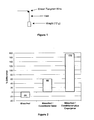
- the test is carried out using equipment specifically designed to assess the fatigue lifetime of a strand of hair through bending and straightening. This equipment has been built to mimic the interaction of hair against hair on the human head when it is being brushed. When a brush is pulled through the hair, the hair strands are entwined and move against one another, causing longitudinal shear within the fibre shaft, which will eventually cause longitudinal splitting and premature fracture. As illustrated in Fig. 1 of the present specification, damage to the hair shaft is mimicked with this equipment as each strand of hair is being moved backwards and forwards over a piece of drawn rough tungsten wire.
- the applicant's European patent specification no EP 540 357 describes the preparation of a protein- silane and/or -siloxane copolymer wherein the silane and/or -siloxane component is covalently bonded to amino groups of the protein and at least some of the silane and/or -siloxane component forms cross-links between different protein chains, the protein component forming from 5% to 98% by weight of the polymer.
- the whole content of this specification is incorporated herein by reference.
- the copolymers disclosed in EP 540 357 exhibit excellent conditioning properties, such as enhanced substantivity to skin and hair, and excellent wet and dry combing behaviour.
- copolymers exemplified in EP 540 357 are formed from proteins having weight average molecular weights ranging from 3500 Daltons (D) to 10000 D and are reacted with a stoichiometric amount of silane such that the degree of modification of the protein amino groups is between 48% and 82%.
- the reaction and the subsequent cross-linking of the protein-silane copolymer produces a copolymer of large weight average molecular weight (generally in the range of 100-150kD).
- the copolymer of Example 2 of EP 540 357 which is commercially available under the trade mark Crodasone W, is formed by reacting a hydrolysed wheat protein having a weight average molecular weight of approximately 10000 D with a stoichiometric amount of silane such that the degree of modification of the protein amino groups is 60%. Quaternisation of the remaining amino groups by the attachment of lauryl dimethyl quat groups to the copolymer resulted in a copolymer having a degree of modification of 85%.
- Such products form a film on the surface of human hair, thereby imparting excellent surface properties such as wet and dry combability to hair treated with shampoo systems incorporating the product.
- Such compounds have no effect on the flexabrasion properties of hair.
- compositions that can effect an improvement of the fatigue lifetime of hair, especially hair that has been subjected to adverse conditions or treatments, particularly bleaching, colouring and/or perming.
- a composition that will address the particular requirements of bending and straightening of the hair, and also hair-hair interactions, especially friction or abrasion, during dressing, such as brushing, of the hair.
- JP 2002 080320 (Tsuruike Toshitazu) describes a range of silylated peptides for use in hair cosmetic formulations.
- US4,645,811 (Oculus Contact Lens Co.)
- JP 60 241448 (Kanegafuchi Chemical Ind) describe a range of polysiloxanes which find application in contact lens to inhibit the binding of proteinaceous matter. They are, however, silent on the use of such proteins in improving flexabrasion in hair, and on the particular copolymers described below.
- the present invention provides a protein-silane and/or protein-siloxane copolymer obtainable by reacting a protein and a silane compound, the relative amounts of the protein and the silane compound being such that in the range of from 0.1 to 0.4 silane molecule is present for each reactive amino group of the protein, wherein the weight average molecular weight of said copolymer is in the range 1.5 to 3kD, and the copolymer having the general formula (I): wherein
- the present invention provides the use of a protein-silane and/or protein-siloxane copolymer composition in the preparation of a composition for reducing damage to hair caused by flexure and/or abrasion thereof.
- the invention also provides the use of a protein-silane and/or protein-siloxane copolymer in the preparation of a composition for increasing the mean flexabrasion lifetime, as defined herein, of hair fibres.
- the present invention provides the use of a protein-silane and/or protein-siloxane copolymer composition, as defined above, in the preparation of a composition for reducing damage to hair caused by flexure and/or abrasion thereof.
- the invention also provides the use of a protein-silane and/or protein-siloxane copolymer, as defined above, in the preparation of a composition for increasing the mean flexabrasion lifetime, as defined herein, of hair fibres.
- copolymer compositions according to the present invention not only improves tensile strength of the hair treated therewith, but also improves bending modulus and inter-fibre friction, thereby significantly reducing the damaging effects of chemical and environmental stress on the hair.
- the protein and the silane compound are reacted such that in the range of from 0.1 to 0.4, especially about 0.2, silane molecule is present for each reactive amino group of the protein.
- the resulting copolymer comprises in the range of from 10 to 15% silylated amino groups and in the range of from 85 to 90% unreacted amino groups.
- treatment of hair with the copolymer compositions according to the present invention confers a significant reduction in damage to hair caused by flexure and/or abrasion thereof when compared with hair treated with compositions described in the prior art. This is particularly the case for hair that has undergone adverse treatment such as bleaching, colouring and/or perming (especially bleaching).
- Preferred copolymers for use according to the invention are those wherein the copolymer is the reaction product of a protein hydrolysate and an organofunctional silane. More preferably, the organofunctional silane comprises an epoxysilane capable of reacting with one or more amino groups of the protein, such as glycidoxypropyltrimethoxysilane.
- the protein may be derived from either animal or vegetable sources or by fermentation. It may be in the form of a chemically modified protein (for example, quaternised) provided that some free amino groups are still present in the protein molecules.
- proteins which are currently used in cosmetic formulations and which can be used as the protein component of the copolymer, include collagen, elastin, keratin, casein, wheat protein, soya protein and silk.
- the term "protein” is used to include both native and hydrolysed proteins and it thus comprises both proteins properly so-called and polypeptides, peptides and peptones, since the latter can all be categorised as hydrolysed proteins.
- the average molecular weight of the protein component may be from 200 Daltons (D) to 500kD, is preferably within the range of from 295D to 50kD and is more preferably within the range of from 295D-25.5kD, even more preferably 350-1000D, expressed as weight average molecular weight (M w ) derived from size exclusion chromatography.
- M w weight average molecular weight
- the copolymer suitably has a weight average molecular weight (M w ) in the range of from 1.5 to 3kD. In one particular example, the copolymer has a weight average molecular weight of 2611 D.
- the protein hydrolysate is a vegetable protein hydrolysate, particularly wherein the vegetable protein hydrolysate is of potato or wheat origin.
- the protein component prefferably be capable of solution in water or other suitable solvent or co-solvent (such as alcohol, eg propylene glycol or polyethylene glycol) to enable reaction to occur.
- suitable solvent or co-solvent such as alcohol, eg propylene glycol or polyethylene glycol
- the organofunctional silane reactant is preferably soluble in a solvent common to the protein for efficient reaction.
- the conditions for reaction of the organofunctional silanes with the protein to achieve the desired degree of reaction and cross-linking must be carefully controlled, but will be apparent to or readily determinable by those skilled in the art of protein modification.
- the organofunctional silane used for reaction with the protein component to form the copolymer of formula (I) must contain a functional group capable of reacting with the chain terminal and/or side chain amino groups of the protein.
- Suitable reactive groups include, for example, acyl halide, sulphonyl halide, anhydride, aldehyde and epoxide groups.
- the silicon component of the copolymer may be any compound which contains a siloxane group (Si-O-Si) or any silane capable of forming a siloxane in situ by condensation of silanol (Si-OH) groups (see Reaction 1 below) or any alkoxysilane or halosilane which hydrolyses to form a corresponding silanol (see Reaction 2 below) and then condenses to form a siloxane group (Reaction 1).
- the silicone reactant is preferably capable of forming cross-links with the protein component.
- Cross-linking may be effected either through the use of polyfunctional silicone reactants or of monofunctional silicone reactants containing silanol groups (or alkoxysilane or halosilane groups convertible to silanol groups by hydrolysis) capable of forming siloxane cross-links by condensation between different chains.
- monofunctional silicone reactants should therefore have at least one and up to three hydroxy groups attached to at least one silicon atom in their structure.
- the silanol group(s) will be in part of the reactant molecule remote from the amino-reactive organofunctional group.
- the pH of the system For reaction of the protein amino groups to occur, it is usually necessary for the pH of the system to be above pH 7 and preferably within the pH range of 8 to 11.5.
- the reaction may be carried out at room temperature, but an elevated temperature and more preferably a temperature of from 30-80°C is preferably used.
- a suitable method for the manufacture of copolymer compositions for use according to the invention is represented by the following steps:
- the protein component is heated and the pH adjusted to alkaline to deprotonate the amino groups.
- a calculated quantity of silane (this is based on the Formol titre, a technique described by Cobbett, W. G., Gibbs, J. A. and Leach, A. A. (1964). J. Appl. Chem. (London), 14, 296-302 .) to estimate the degree of modification of amino groups in proteins) is then added - the amount of silane is calculated to modify 5-40%, preferably 10-40% of the available amino groups.
- the pH is adjusted to acidic, and worked up in a conventional manner. Conventional additives, such as preservatives, may then be added.
- a preferred method for the manufacture of copolymer compositions for use according to the invention is represented by the following steps:
- the copolymer composition produced also comprises (unreacted) protein hydrolysate.
- the copolymer composition may comprise silanol-terminated copolymer and/or siloxane cross-linked copolymer.
- the amount of silanol-terminated copolymer and/or siloxane cross-linked copolymer in the copolymer composition varies according to the relative amounts of silane and protein/amino groups reacted together, as indicated above.
- the present invention comprises the copolymer of general formula (I): wherein
- the nature of the group R 1 which is the residue of the organofunctional silane used for reaction with the protein component to form the copolymer, depends on the nature of the functional group originally present in the organofunctional silane. For example, when the functional group originally present in the organofunctional silane was an acyl halide, the group R 1 will typically contain a carbonyl group bonded directly to the nitrogen atom of the protein residue. Similarly, when the functional group originally present in the organofunctional silane was a sulphonyl halide, the group R 1 will typically contain a sulfonyl group bonded directly to the nitrogen atom of the protein residue.
- the group R 1 is derived from reaction of an organofunctional silane containing an epoxide groups as the functional group.
- the group R 1 in the final copolymer compound of formula (I), the group R 1 will contain a moiety of formula -CH 2 -CH(OH)-, the methylene part of which is bonded directly to the nitrogen atom of the protein residue.
- the group R 1 is an alkylene group having from 1 to 10 carbon atoms which may be interrupted by one or more oxygen atoms and may be substituted by one or more groups selected from hydroxy groups, halogen atoms, alkyl groups having from 1 to 6 carbon atoms and alkoxy groups having 1 to 6 carbon atoms.
- the group R 1 is a group of formula
- the groups R 2 and R 3 are each independently methyl, hydroxy, alkoxy having 1 to 6 carbon atoms.
- the polymer is cross-linked to a similar chain of formula (I) by condensation of two silanol groups to form a siloxane as in Reaction 1 above.
- the compound of formula (IA) may comprise:
- the copolymer preferably comprises a compound of formula (III) wherein R is a residue of hydrolysed wheat or potato protein; R 2 and R 3 are each other than methyl; and n is 1 to 4, preferably about 2.
- the copolymer is hydrolysed vegetable protein 2-hydroxypropyl silanol.
- carboxyl groups of the protein component and/or amino groups of the protein component which are not bonded to the silicone component can be chemically modified by reaction with a non-silicone, eg by esterification, acylation or quaternisation.
- copolymers described above particularly preferred for use in accordance with the present invention are copolymers formed by reacting a hydrolysed vegetable protein with a silane compound of formula (II): wherein each group R' is independently a hydroxy group or a group capable of hydrolysis to form a hydroxy group, the relative amounts of the hydrolysed protein and the silane being such that in the range of from 0.1 to 0.4 silane molecule is present for each reactive amino group of the protein, and, if necessary, one or both of the following steps (i) or (ii):
- the present invention comprises the copolymer of general formula (IV): wherein
- copolymers described above fall within the general disclosure of the applicant's European patent specification no EP 540 357 . However, such copolymers are not specifically disclosed either in this document or any other prior art document. These copolymers are therefore new and form part of the present invention.
- the present invention therefore provides in a further aspect a copolymer composition obtainable by reacting a hydrolysed vegetable protein with a silane compound of formula (II): wherein each group R' is independently a methyl group, a hydroxy group or a group capable of hydrolysis to form a hydroxy group, provided that at least one of the R' groups represents a hydroxyl group or a group capable of hydrolysis to form a hydroxyl group, the relative amounts of the hydrolysed protein and the silane being such that in the range of from 0.1 to 0.4 silane molecule is present for each reactive amino group of the protein, and, if necessary, one or both of the following steps (i) or (ii):
- each of the groups R' may independently be a hydroxy group (so that the compounds of formula (II) include a silanol group) or a group capable of hydrolysis to form a hydroxy group.
- suitable groups capable of hydrolysis to form a hydroxy group include halogen atoms and alkoxy groups having from 1 to 6 carbon atoms, preferably methoxy and ethoxy groups, and particularly preferably methoxy groups.
- copolymers of the present invention may be used to prepare simple aqueous compositions for application to the hair, such as an aqueous "leave on” composition or an aqueous “rinse off” composition.
- a dilute solution of the copolymer in water may be used.
- concentration of active ingredient in such a solution may range from 0.01 % w/w to 10% w/w, and is preferably 0.05% w/w to 5% w/w, more preferably 0.5% w/w to 2% w/w, and most preferably about 1 % w/w.
- a buffered solution is used, in which the pH of the solution is adjusted to mildly acidic, with a pH in the range of from 5-6, using a base such as an alkali metal hydroxide, eg sodium hydroxide.
- instructions are provided to wash off the copolymer solution after application; depending on the level of treatment required, such instructions may also require the solution to remain on the hair for some minutes, such as from 1 to 30 minutes.
- the washing off step is omitted.
- compositions are in the form of a shampoo, styling or conditioning composition, such as one for application to bleached, coloured or normal (virgin, untreated) hair.
- a shampoo, styling or conditioning composition such as one for application to bleached, coloured or normal (virgin, untreated) hair.
- such compositions comprise from 0.05 to 20% w/w, preferably about 0.25 to 1% of the copolymer, based on the total weight of the composition.
- the present invention further provides a composition, such as a shampoo, conditioner, styling composition or simple aqueous solution, comprising a protein-silane or -siloxane copolymer, as described above, in association with instructions for its use in preventing, treating or reducing damage to hair caused by flexure and/or abrasion thereof.
- a composition such as a shampoo, conditioner, styling composition or simple aqueous solution, comprising a protein-silane or -siloxane copolymer, as described above, in association with instructions for its use in preventing, treating or reducing damage to hair caused by flexure and/or abrasion thereof.
- the shampoo, styling or conditioner composition may comprise one or more of the standard ingredients thereof or carriers therefor, including but not limited to: include shine enhancers, moisturisers, herbal additives, hair strengtheners, vitamin additives, colorants, hair thickening agents; setting and styling agents; dandruff control agents; ultraviolet absorbers; essential oils and fragrances; anionic, non-ionic or cationic surfactants; thickening or viscosity-enhancing agents; detergents; stabilising agents; emollients; chelating agents; sequestering agents; preservatives; disinfectants; anti-oxidants; antistatic agents; conditioning agents; detangling ingredients; emulsifying or dispersing agents; stimulants; soothers; solvents; carriers and the like.
- the resulting copolymer had a weight average molecular weight (M w ) of 2611, as measured using by gel permeation chromatography [solvent: MeCN/K 3 PO 4 /NaCl (2:8); detector: UV at 220nm; temperature: 40°C; flow rate 0.600; standard: sodium polystyrene sulphonate; column TSK-GMPW].
- the Flexabrasion test is carried out using equipment specifically designed to assess the fatigue lifetime of a strand of hair through bending, straightening and abrasion. This piece of equipment has been built to mimic the interaction of hair against hair on the human head when it is being brushed. When a brush is pulled through the hair, the hair strands are entwined and move against one another, causing longitudinal shear within the fibre shaft, which will eventually cause longitudinal splitting and premature fracture.
- the flexabrasion equipment allows the testing of 20 hair segments at once. It is positioned in a humidity-controlled cabinet that allows the control of the relative humidity under which the hair is being tested.
- conditioner base was used in all of the studies: Basic Hair Conditioner: - % by Wt Conditioner Base 4 Light Mineral Oil 0.5 Lactic Acid to pH 4-4.5 Water to 100 Perfume, Preservative, Colour
- Segments B and C were bleached using the protocol detailed in Experiment I and then dried overnight at ambient temperature and relative humidity.
- the A segments were soaked in water at pH 5.5 for 30 minutes and then dried overnight at ambient temperature and relative humidity. These segments were then glued onto the flattened crimps and mounted as described in Experiment IV above.
- the A segments were then soaked in water (pH 5.5) at 35°C for 6 minutes and again dried overnight at ambient temperature and humidity.
- the B segments were soaked in the conditioner base at 35°C for 2 minutes, then rinsed in water at 35°C. This was repeated twice further.
- the C segments were soaked in the test conditioner (conditioner plus copolymer, 1% w/w as supplied) at 35°C for 2 minutes, then rinsed in water at 35°C. This was repeated twice further.
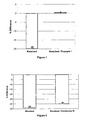
- Table 1 Segments % Difference Hair A B C B to A C to A C to B Population 32 32 32 32 32 32 32 32 32 32 32 32 32 32 32 32 32 32 32 32 32 32 32 32 32 32 32 32 32 32 32 32 32 32 32 32 32 32 32 32 32 32 32 32 32 32 32 32 32 32 32 32 32 32 32 32 32 32 32 32 32 32 32 32 32 32 32 32 32 32 32 32 32 32 32 32 32 32 32 32 32 32 32 32 32 32 32 32 32 32 32 32 32 32 32 32 32 32 32 32 32 32 32 32 32 32 32 32 32 32 32 32 32 32 32 32 32 32 32 32 32 32 32 32 32 32 32 32 32 32 32 32 32 32 32 32 32 32 32 32 32 32 32 32 32 32 32 32 32 32 32 32 32 32 32 32 32 32 32 32 32 32 32 32 32 32 32 32 32 32 32 32 32 32 32 32 32 32 32 32 32 32 32 32 32 32 32 32 32 32 32 32 32 32 32 32 32 32 32 32 32 32 32 32 32 32 32 32 32 32 32 32 32 32 32 32 32 32 32 32 32 32 32 32 32 32 32 32 32 32 32 32 32
- the A segments were soaked in water at pH 5.5 for 17 minutes.
- the A segments were soaked in water for 2 minutes and then dried overnight at ambient temperature and humidity.
- the B segments were soaked in the conditioner base and water (1:5 ratio) at 40°C for 2 minutes, then rinsed in water a 40°C.
- the C segments were soaked in the test conditioner (conditioner plus copolymer, 0.25% w/w active) and water (1:5 ratio) at 40°C for 2 minutes, then rinsed in water at 40°C.
- the A segments were soaked in water at pH 5.5 for 17 minutes.
- the A segments were soaked in water for 6 minutes and then dried overnight at ambient temperature and humidity.
- the B segments were soaked in the conditioner base and water (1:2 ratio) at 40°C for 6 minutes, then rinsed in water at 40°C.
- the C segments were soaked in the test conditioner (conditioner plus copolymer, 0.25% w/w active) and water (1:2 ratio) at 40°C for 6 minutes, then rinsed in water at 40°C.
- the A segments were soaked in water at pH 5.5 for 35 minutes.
- the A segments were soaked in water for 6 minutes and then dried overnight at ambient temperature and humidity.
- the B segments were soaked in the conditioner base and water (1:2 ratio) at 40°C for 2 minutes. This was then repeated a further 2 times and then the segments were rinsed in water at 40°C.
- the C segments were soaked in the test conditioner (conditioner plus copolymer, 0.25% w/w active) and water (1:2 ratio) at 40°C for 2 minutes. This was then repeated a further 2 times. The segments were then rinsed in water at 40°C.
- the A segments were soaked in water at pH 5.5 for 35 minutes.
- the A segments were soaked in water for 6 minutes and then dried overnight at ambient temperature and humidity.
- the B segments were soaked in the conditioner base and water (1:2 ratio) at 40°C for 6 minutes, then the segments were rinsed in water at 40°C.
- the C segments were soaked in the test conditioner (conditioner plus copolymer, 0.25% w/w active) and water (1:2 ratio) at 40°C for 6 minutes, the segments were then rinsed in water at 40°C.
- Segments B and C were bleached using the protocol detailed in Experiment I and then dried overnight at ambient temperature and relative humidity.
- the A segments were soaked in water at pH 5.5 for 30 minutes and then dried overnight at ambient temperature and relative humidity. These segments were then glued onto the flattened crimps and mounted as described in Experiment IV above.
- the A and B segments were then soaked in water (pH 5.5) for 10 minutes and again dried overnight at ambient temperature and humidity.
- the C segments were soaked in the aqueous solution of copolymer of description 1 (1% w/w actives) for 10 minutes.
- Crodasone W the product of Example 2 of EP 540357
- aqueous solution 1% w/w active
- Segments B and C were bleached using the protocol detailed in Experiment I above and then dried overnight at ambient temperature and relative humidity. The A segments were soaked in water at pH 5.5 for 30 minutes and then dried overnight at ambient temperature and relative humidity. These segments were then glued onto the flattened crimps and mounted as described in Experiment IV above.
- the A and B segments were then soaked in water (pH 5.5) for 10 minutes and again dried overnight at ambient temperature and humidity.
- the C segments were soaked in a 1% w/w actives aqueous solution of Crodasone W (the copolymer of Example 2 of EP 540357 ) for 10 minutes.
Landscapes
- Health & Medical Sciences (AREA)
- Chemical & Material Sciences (AREA)
- Life Sciences & Earth Sciences (AREA)
- Animal Behavior & Ethology (AREA)
- Veterinary Medicine (AREA)
- Public Health (AREA)
- General Health & Medical Sciences (AREA)
- Chemical Kinetics & Catalysis (AREA)
- Medicinal Chemistry (AREA)
- Polymers & Plastics (AREA)
- Organic Chemistry (AREA)
- Dermatology (AREA)
- Materials Engineering (AREA)
- Biochemistry (AREA)
- Engineering & Computer Science (AREA)
- Birds (AREA)
- Epidemiology (AREA)
- Cosmetics (AREA)
- Silicon Polymers (AREA)
- Compositions Of Macromolecular Compounds (AREA)
Claims (34)
- Protein-Silan- und/oder Protein-Siloxan-Copolymer, das durch Umsetzung eines Proteins und einer Silanverbindung erhältlich ist, wobei die relativen Mengen des Proteins und der Silanverbindung so beschaffen sind, dass für jede reaktive Aminogruppe des Proteins 0,1 bis 0,4 Silanmoleküle vorliegen, wobei das gewichtsmittlere Molekulargewicht des Copolymers im Bereich von 1500 bis 3000 Dalton liegt und das Copolymer die allgemeine Formel (I) aufweist:
 R für den Rest eines hydrolysierten Proteins R-NH2 steht;R1 jeweils unabhängig voneinander für den Rest eines organofunktionellen Silans HR1-Si(R2')(R3')-OH steht, wobei R2' und R3' jeweils unabhängig voneinander für Methyl, Hydroxy oder Alkoxy mit 1 bis 6 Kohlenstoffatomen stehen;R2 und R3 jeweils unabhängig voneinander für Methyl, Hydroxy, Alkoxy mit 1 bis 6 Kohlenstoffatomen oder einen Rest einer Verbindung der Formel (Ia) :
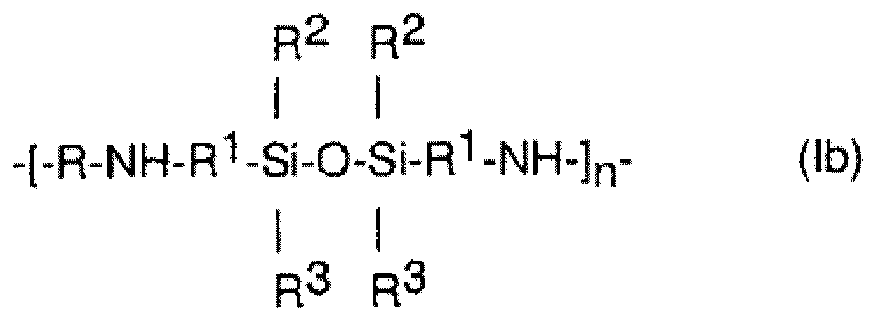 n der Zahl umgesetzter Aminogruppen, vorzugsweise im Bereich von 1 bis 101, entspricht.
 - Copolymer nach Anspruch 1, wobei R für den Rest von hydrolysiertem pflanzlichem Protein steht.
- Copolymer nach Anspruch 2, wobei R für den Rest von hydrolysiertem Kartoffelprotein steht.
- Copolymer nach einem der Ansprüche 1 bis 3, wobei R1 für eine Gruppe der Formel -CH2-CH(OH)CH2-O-(CH2)3- steht.
- Copolymer nach einem der Ansprüche 1 bis 4, wobei das gewichtsmittlere Molekulargewicht der Proteinkomponente 350 bis 1000 Dalton beträgt.
- Copolymer nach einem der Ansprüche 1 bis 5, wobei das gewichtsmittlere Molekulargewicht der Proteinkomponente 600 bis 800 Dalton beträgt.
- Protein-Silan- und/oder Protein-Siloxan-Copolymer nach einem der Ansprüche 1 bis 6 bei Verwendung in einer Zusammensetzung zur Verringerung der durch Biegen und/oder Abrieb verursachten Haarschäden.
- Copolymer nach Anspruch 7, wobei die Verringerung der Biege- und/oder Abriebschäden einer Erhöhung der mittleren Biegeabrieb-Lebensdauer (Zyklen) gemäß der hierin angegebenen Definition von mehr als 5% und vorzugsweise mehr als 30% entspricht.
- Copolymer nach Anspruch 7 oder Anspruch 8, wobei die Zusammensetzung in Form eines Shampoos, eines Conditioners oder einer anderen Haarbehandlungs-zusammensetzung vorliegt.
- Copolymer nach Anspruch 9, wobei die Zusammensetzung in Form einer wässrigen "Leave-on"-Zusammensetzung oder einer wässrigen "Rinse-off"-Zusammensetzung vorliegt.
- Copolymer nach einem der Ansprüche 7 bis 10, wobei die Zusammensetzung zum Aufbringen auf gebleichtes Haar vorgesehen ist.
- Copolymer nach einem der Ansprüche 7 bis 11, wobei die Zusammensetzung 0,05 bis 20 Gew.-% des Copolymers, bezogen auf das Gesamtgewicht der Zusammensetzung, umfasst.
- Copolymer nach Anspruch 12, wobei die Zusammensetzung 0,25 bis 1 Gew.-% des Copolymers, bezogen auf das Gesamtgewicht der Zusammensetzung, umfasst.
- Zusammensetzung zur Verringerung der durch Biegen und/oder Abrieb verursachten Haarschäden, umfassend ein Protein-Silan- und/oder Protein-Siloxan-Copolymer nach einem der Ansprüche 1 bis 6.
- Zusammensetzung nach Anspruch 14, wobei die Zusammensetzung in Form eines Shampoos, eines Conditioners oder einer anderen Haarbehandlungszusammensetzung vorliegt.
- Zusammensetzung nach Anspruch 14 oder Anspruch 15, wobei die Zusammensetzung in Form einer wässrigen "Leave-on"-Zusammensetzung oder einer wässrigen "Rinse-off"-Zusammensetzung vorliegt.
- Zusammensetzung nach einem der Ansprüche 14 bis 16, wobei die Zusammensetzung zum Aufbringen auf gebleichtes Haar vorgesehen ist.
- Zusammensetzung nach einem der Ansprüche 14 bis 17, umfassend 0,05 bis 20%, bezogen auf das Gesamtgewicht der Zusammensetzung.
- Zusammensetzung nach einem der Ansprüche 14 bis 18, umfassend 0,25 bis 1%, bezogen auf das Gesamtgewicht der Zusammensetzung.
- Verfahren zur Verringerung der durch Biegen und/oder Abrieb verursachten Haarschäden, bei dem man auf das Haar eine Zusammensetzung, umfassend ein Protein-Silan- und/oder Protein-Siloxan-Copolymer nach einem der Ansprüche 1 bis 6, aufbringt.
- Verfahren nach Anspruch 20, bei dem die Verringerung der Biege- und/oder Abriebschäden einer Erhöhung der mittleren Biegeabrieb-Lebensdauer (Zyklen) gemäß der hierin angegebenen Definition von mehr als 5% und vorzugsweise mehr als 30% entspricht.
- Verfahren nach Anspruch 20 oder 21, bei dem die Zusammensetzung in Form eines Shampoos, eines Conditioners oder einer anderen Haarbehandlungszusammensetzung vorliegt.
- Verfahren nach Anspruch 22, bei dem die Zusammensetzung in Form einer wässrigen "Leave-on"-Zusammensetzung oder einer wässrigen "Rinse-off"-Zusammensetzung vorliegt.
- Verfahren nach einem der Ansprüche 20 bis 23, bei dem die Zusammensetzung zum Aufbringen auf gebleichtes Haar vorgesehen ist.
- Verfahren nach einem der Ansprüche 20 bis 24, bei dem die Zusammensetzung 0,05 bis 20 Gew.-% des Copolymers, bezogen auf das Gesamtgewicht der Zusammensetzung, umfasst.
- Verfahren nach Anspruch 25, bei dem die Zusammensetzung etwa 0,25 bis 1 Gew.-% des Copolymers, bezogen auf das Gesamtgewicht der Zusammensetzung, umfasst.
- Verfahren nach einem der Ansprüche 20 bis 26, bei dem es sich bei dem Copolymer um das Reaktionsprodukt eines hydrolysierten Proteins und eines organofunktionellen Silans handelt.
- Verfahren nach Anspruch 27, bei dem das organofunktionelle Silan ein Epoxysilan, das zur Reaktion mit einer oder mehreren Aminogruppen des Proteins befähigt ist, umfasst.
- Verfahren nach Anspruch 28, bei dem es sich bei dem Epoxysilan um Glycidoxypropyltrimethoxysilan handelt.
- Verfahren nach einem der Ansprüche 20 bis 29, bei dem das Copolymer für jede reaktive Aminogruppe des Proteins etwa 0,2 Silanmoleküle umfasst.
- Verfahren nach einem der Ansprüche 20 bis 30, bei dem das Copolymer 10 bis 15% silylierte Aminogruppen umfasst.
- Verfahren nach einem der Ansprüche 20 bis 31, bei dem die Copolymerzusammensetzung (nicht umgesetztes) Proteinhydrolysat umfasst.
- Verfahren nach einem der Ansprüche 20 bis 32, bei dem die Copolymerzusammensetzung ein silanolterminiertes Copolymer umfasst.
- Verfahren nach einem der Ansprüche 20 bis 33, bei dem die Copolymerzusammensetzung ein siloxanvernetztes Copolymer umfasst.
Applications Claiming Priority (3)
| Application Number | Priority Date | Filing Date | Title |
|---|---|---|---|
| GB0206048 | 2002-03-14 | ||
| GBGB0206048.1A GB0206048D0 (en) | 2002-03-14 | 2002-03-14 | Use |
| PCT/GB2003/001088 WO2003078503A1 (en) | 2002-03-14 | 2003-03-14 | Protein-silane / siloxane copolymers, their preparation and their use |
Publications (2)
| Publication Number | Publication Date |
|---|---|
| EP1490423A1 EP1490423A1 (de) | 2004-12-29 |
| EP1490423B1 true EP1490423B1 (de) | 2014-05-14 |
Family
ID=9932980
Family Applications (1)
| Application Number | Title | Priority Date | Filing Date |
|---|---|---|---|
| EP03712350.2A Expired - Lifetime EP1490423B1 (de) | 2002-03-14 | 2003-03-14 | Protein-silan/siloxan-copolymere, herstellung davon und verwendung davon |
Country Status (11)
| Country | Link |
|---|---|
| US (1) | US8048846B2 (de) |
| EP (1) | EP1490423B1 (de) |
| JP (1) | JP4763239B2 (de) |
| CN (1) | CN100523053C (de) |
| AU (1) | AU2003216815B2 (de) |
| BR (2) | BRPI0308411B1 (de) |
| CA (1) | CA2478767C (de) |
| ES (1) | ES2490716T3 (de) |
| GB (3) | GB0206048D0 (de) |
| NZ (1) | NZ535265A (de) |
| WO (1) | WO2003078503A1 (de) |
Families Citing this family (41)
| Publication number | Priority date | Publication date | Assignee | Title |
|---|---|---|---|---|
| US20070055013A1 (en) * | 2005-02-21 | 2007-03-08 | Noriho Kamiya | Substrate and method of immobilizing protein |
| US20150038413A1 (en) | 2006-02-03 | 2015-02-05 | Opko Biologics Ltd. | Long-acting polypeptides and methods of producing and administering same |
| US9458444B2 (en) | 2006-02-03 | 2016-10-04 | Opko Biologics Ltd. | Long-acting coagulation factors and methods of producing same |
| US8476234B2 (en) | 2006-02-03 | 2013-07-02 | Prolor Biotech Inc. | Long-acting coagulation factors and methods of producing same |
| US10351615B2 (en) | 2006-02-03 | 2019-07-16 | Opko Biologics Ltd. | Methods of treatment with long-acting growth hormone |
| US20140113860A1 (en) | 2006-02-03 | 2014-04-24 | Prolor Biotech Ltd. | Long-acting polypeptides and methods of producing and administering same |
| US10221228B2 (en) | 2006-02-03 | 2019-03-05 | Opko Biologics Ltd. | Long-acting polypeptides and methods of producing and administering same |
| US8304386B2 (en) * | 2006-02-03 | 2012-11-06 | Prolor Biotech, Inc. | Long-acting growth hormone and methods of producing same |
| US8048849B2 (en) | 2006-02-03 | 2011-11-01 | Modigene, Inc. | Long-acting polypeptides and methods of producing same |
| US9249407B2 (en) | 2006-02-03 | 2016-02-02 | Opko Biologics Ltd. | Long-acting coagulation factors and methods of producing same |
| US8946155B2 (en) | 2006-02-03 | 2015-02-03 | Opko Biologics Ltd. | Long-acting polypeptides and methods of producing and administering same |
| US8414872B2 (en) | 2007-09-10 | 2013-04-09 | Liquid Keratin, Inc. | Hair straightening formulations, methods and systems |
| US20100028286A1 (en) * | 2008-07-31 | 2010-02-04 | Jose Antonio Carballada | Method and Composition for Stabilizing Hair Moisture Levels |
| US7981167B2 (en) * | 2008-07-31 | 2011-07-19 | The Procter & Gamble Company | Method and composition for maintaining hair dye color |
| US20100120871A1 (en) * | 2008-11-10 | 2010-05-13 | Dawson Jr Thomas Larry | Hair care compositions, methods, and articles of commerce that can increase the appearance of thicker and fuller hair |
| US9663778B2 (en) | 2009-07-09 | 2017-05-30 | OPKO Biologies Ltd. | Long-acting coagulation factors and methods of producing same |
| CN102471735A (zh) | 2009-07-09 | 2012-05-23 | 高露洁-棕榄公司 | 应用织物护理组合物减少皱褶的方法 |
| US12203113B2 (en) | 2009-07-09 | 2025-01-21 | Opko Biologics Ltd. | Long-acting coagulation factors and methods of producing same |
| WO2012059440A2 (en) | 2010-11-05 | 2012-05-10 | Unilever Plc | Treatment composition |
| EP2570190A1 (de) | 2011-09-15 | 2013-03-20 | Braun GmbH | Sprühdüse zum Abgeben einer Flüssigkeit und Sprüheinrichtung, die eine solche Sprühdüse umfasst |
| DE102011088558A1 (de) * | 2011-12-14 | 2013-06-20 | Henkel Ag & Co. Kgaa | Haarbehandlungsmittel mit speziellen Polymeren |
| JP2015520128A (ja) | 2012-04-19 | 2015-07-16 | オプコ バイオロジクス リミテッド | 長時間作用性オキシントモジュリン変異体とその作製方法 |
| US9358197B2 (en) | 2012-06-15 | 2016-06-07 | The Procter & Gamble Company | Method employing polyols when chemically modifying the internal region of a hair shaft |
| FR2992318B1 (fr) * | 2012-06-22 | 2018-11-16 | Centre Nat Rech Scient | Materiaux hybrides peptide-silice |
| ES2882890T3 (es) | 2012-11-20 | 2021-12-03 | Opko Biologics Ltd | Método para aumentar el volumen hidrodinámico de polipéptidos mediante la unión a péptidos carboxi terminales de la gonadotrofina |
| JP6158940B2 (ja) | 2013-06-28 | 2017-07-05 | ザ プロクター アンド ギャンブル カンパニー | スプレー装置を備えるエアロゾルヘアスプレー製品 |
| US20150158926A1 (en) | 2013-10-21 | 2015-06-11 | Opko Biologics, Ltd. | Long-acting polypeptides and methods of producing and administering same |
| EP2990796A1 (de) | 2014-08-29 | 2016-03-02 | The Procter and Gamble Company | Vorrichtung zur Prüfung der Eigenschaften von Haarfasern |
| DE102014218005A1 (de) * | 2014-09-09 | 2016-03-10 | Henkel Ag & Co. Kgaa | Oxidationsfärbemittel mit Protein-Siloxan-Polymeren |
| WO2016092550A2 (en) | 2014-12-10 | 2016-06-16 | Opko Biologics Ltd. | Methods of producing long acting ctp-modified polypeptides |
| CN107405280B (zh) * | 2015-04-03 | 2022-02-18 | Elc 管理有限责任公司 | 毛发处理组合物 |
| MX368467B (es) | 2015-06-01 | 2019-10-03 | Procter & Gamble | Producto de laca en aerosol para el cabello que comprende un dispositivo de rociado. |
| EP3988113A1 (de) | 2015-06-19 | 2022-04-27 | OPKO Biologics Ltd. | Gerinnungsfaktoren mit langzeitwirkung und verfahren zur herstellung davon |
| WO2017057878A2 (ko) | 2015-09-30 | 2017-04-06 | (주)아모레퍼시픽 | 알콕시실란 화합물 또는 그의 염, 이의 제조방법 및 이를 포함하는 모발용 조성물 |
| JP6023947B1 (ja) * | 2016-01-27 | 2016-11-09 | 株式会社成和化成 | 化粧品基材および該化粧品基材を含有する化粧料 |
| BR112019000610A2 (pt) | 2016-07-11 | 2019-07-02 | Opko Biologics Ltd | fator vii de coagulação de longa ação e métodos de produção do mesmo |
| US20230094014A1 (en) * | 2020-02-28 | 2023-03-30 | Croda International Plc | Compositions comprising hydrolysed proteins |
| WO2022169633A1 (en) | 2021-02-02 | 2022-08-11 | Federici Brands, Llc | Composition comprising a hydrolyzed keratin and a silane crosslinking agent and process for hair protection during bleaching |
| US12128118B2 (en) | 2021-07-29 | 2024-10-29 | The Procter & Gamble Company | Aerosol dispenser containing a hairspray composition and a nitrogen propellant |
| CN119425165B (zh) * | 2025-01-08 | 2025-04-11 | 淄博凯美可工贸有限公司 | 一种高效复合型消泡剂的制备方法 |
| CN120815012B (zh) * | 2025-09-16 | 2025-12-26 | 杭州赛肯新材料技术有限公司 | 一种有机硅乳液、制备方法及应用 |
Family Cites Families (21)
| Publication number | Priority date | Publication date | Assignee | Title |
|---|---|---|---|---|
| GB1286467A (en) * | 1968-11-18 | 1972-08-23 | Agfa Gevaert | Proteinaceous colloid compositions and their adherence to glass supports |
| US4645811A (en) * | 1984-04-02 | 1987-02-24 | Oculus Contact Lens Company | Material used for optical devices |
| JPS60241448A (ja) * | 1984-05-15 | 1985-11-30 | 鐘淵化学工業株式会社 | 医療用具の製法 |
| US4713116A (en) * | 1987-01-02 | 1987-12-15 | Ralston Purina Company | Protein modified with a silanation reagent as an adhesive binder and process of producing |
| JPH01172313A (ja) * | 1987-12-25 | 1989-07-07 | Lion Corp | 毛髪保護組成物 |
| JP2554520B2 (ja) * | 1988-02-19 | 1996-11-13 | 株式会社資生堂 | 毛髪化粧料 |
| JPH02212410A (ja) * | 1989-02-14 | 1990-08-23 | Mandamu:Kk | アルカリ処理毛髪のコンディショニング組成剤 |
| JP2748174B2 (ja) * | 1990-01-29 | 1998-05-06 | 株式会社成和化成 | 化粧品基剤 |
| GB9123251D0 (en) * | 1991-11-01 | 1991-12-18 | Croda Int Plc | Protein-silicone copolymers |
| US5753214A (en) | 1994-08-24 | 1998-05-19 | Seiwa Kasei Co., Ltd. | Base material for cosmetics and uses of the same |
| GB9506926D0 (en) * | 1995-04-04 | 1995-05-24 | Croda Int Plc | Cystine-siicone copolymers and their use for treating keratin substrates |
| CN1189777A (zh) * | 1995-05-05 | 1998-08-05 | 蛋白质聚合物技术有限公司 | 利用合成交联剂的组织粘合剂 |
| DE19545257A1 (de) * | 1995-11-24 | 1997-06-19 | Schering Ag | Verfahren zur Herstellung von morphologisch einheitlichen Mikrokapseln sowie nach diesem Verfahren hergestellte Mikrokapseln |
| JPH10158125A (ja) * | 1996-11-25 | 1998-06-16 | Lion Corp | 毛髪の損傷防止剤及び損傷モデル毛髪の作製法 |
| US5841840A (en) * | 1996-12-23 | 1998-11-24 | Paradyne Corporation | Multiple line modem and method for providing voice on demand |
| CN1259045A (zh) * | 1997-04-02 | 2000-07-05 | 普渡研究基金会 | 蛋白质的口服释放方法 |
| US6228968B1 (en) | 1998-02-06 | 2001-05-08 | Seiwa Kasei Company, Ltd. | Silane copolymer and a method for producing the same |
| JP3726939B2 (ja) * | 1998-02-06 | 2005-12-14 | 株式会社成和化成 | シラン化合物共重合組成物の製造方法 |
| DE19848002A1 (de) * | 1998-10-17 | 2000-04-20 | Goldschmidt Ag Th | Polypeptid-Polysiloxan-Copolymere |
| AU1938700A (en) * | 1999-01-29 | 2000-08-18 | Avon Products Inc. | Heat safe hair care composition and method of protecting hair from heat treatment |
| JP2002080320A (ja) * | 2000-09-01 | 2002-03-19 | 寿和 ▲鶴▼池 | 化粧料 |
-
2002
- 2002-03-14 GB GBGB0206048.1A patent/GB0206048D0/en not_active Ceased
-
2003
- 2003-03-14 WO PCT/GB2003/001088 patent/WO2003078503A1/en not_active Ceased
- 2003-03-14 GB GB0507735A patent/GB2410896B/en not_active Expired - Fee Related
- 2003-03-14 BR BRPI0308411-6A patent/BRPI0308411B1/pt unknown
- 2003-03-14 ES ES03712350.2T patent/ES2490716T3/es not_active Expired - Lifetime
- 2003-03-14 NZ NZ535265A patent/NZ535265A/en not_active IP Right Cessation
- 2003-03-14 CN CNB038105098A patent/CN100523053C/zh not_active Expired - Lifetime
- 2003-03-14 AU AU2003216815A patent/AU2003216815B2/en not_active Expired
- 2003-03-14 US US10/388,180 patent/US8048846B2/en active Active
- 2003-03-14 JP JP2003576500A patent/JP4763239B2/ja not_active Expired - Lifetime
- 2003-03-14 CA CA2478767A patent/CA2478767C/en not_active Expired - Lifetime
- 2003-03-14 EP EP03712350.2A patent/EP1490423B1/de not_active Expired - Lifetime
- 2003-03-14 GB GB0305922A patent/GB2386376B/en not_active Expired - Fee Related
- 2003-03-14 BR BR0308411-6A patent/BR0308411A/pt active IP Right Grant
Also Published As
| Publication number | Publication date |
|---|---|
| GB2386376A (en) | 2003-09-17 |
| EP1490423A1 (de) | 2004-12-29 |
| GB2410896B (en) | 2006-06-07 |
| CA2478767A1 (en) | 2003-09-25 |
| BRPI0308411B1 (pt) | 2019-01-22 |
| JP2005520024A (ja) | 2005-07-07 |
| BR0308411A (pt) | 2005-01-18 |
| GB2386376B (en) | 2006-03-08 |
| JP4763239B2 (ja) | 2011-08-31 |
| GB0507735D0 (en) | 2005-05-25 |
| GB2410896A (en) | 2005-08-17 |
| AU2003216815A1 (en) | 2003-09-29 |
| US8048846B2 (en) | 2011-11-01 |
| GB0206048D0 (en) | 2002-04-24 |
| NZ535265A (en) | 2005-02-25 |
| GB0305922D0 (en) | 2003-04-23 |
| WO2003078503A1 (en) | 2003-09-25 |
| ES2490716T3 (es) | 2014-09-04 |
| US20030235554A1 (en) | 2003-12-25 |
| CN1653110A (zh) | 2005-08-10 |
| CA2478767C (en) | 2011-07-05 |
| AU2003216815B2 (en) | 2007-05-24 |
| CN100523053C (zh) | 2009-08-05 |
Similar Documents
| Publication | Publication Date | Title |
|---|---|---|
| EP1490423B1 (de) | Protein-silan/siloxan-copolymere, herstellung davon und verwendung davon | |
| AU2017266787B2 (en) | Hair strengthening ingredient and method for strengthening hair | |
| AU2022228183A1 (en) | Hair strengthening composition and method for strengthening hair | |
| EP0640643B1 (de) | Organopolysiloxane und ein Verfahren zum Haarfestigen unter Verwendung derselben | |
| CN102712699B (zh) | 决明衍生物 | |
| KR101322387B1 (ko) | 헤어 케어 제제에서 고분자량의 교차결합된 수용성양이온성 중합체의 용도 | |
| CN103747777A (zh) | 决明衍生物 | |
| KR20110055742A (ko) | 양이온성 폴리머 및 이에 대한 고정제 적용 | |
| EP3501489A1 (de) | Verfahren zur stärkung und reparatur von haaren und kit dafür | |
| CN103237539B (zh) | 毛发化妆品 | |
| US6953484B2 (en) | Use of particular aminosilicones as a pre- or post-treatment of processes for bleaching keratin fibers | |
| CN115175661A (zh) | 包含水解蛋白质的组合物 | |
| AU2007211894B2 (en) | Protein-Silane/Siloxane Copolymers, their Preparation and their Use | |
| JP2009161519A (ja) | 化粧品基材および毛髪化粧料 | |
| JP2005247692A (ja) | 毛髪化粧料 | |
| JP2011046632A (ja) | 毛髪用熱保護剤 | |
| JP2020515568A (ja) | 毛髪成形材料 | |
| CN119403536A (zh) | 组合物、个人护理制剂、用于处理或防止毛发损伤的方法和用途 | |
| CN121752245A (zh) | 包含有机硅烷、氨基酸和羟基化多元羧酸的组合物,以及美容处理方法 | |
| JP2005089426A (ja) | パーマネントウェーブ用中間処理剤およびパーマネントウェーブ処理方法 | |
| JPH0160005B2 (de) |
Legal Events
| Date | Code | Title | Description |
|---|---|---|---|
| PUAI | Public reference made under article 153(3) epc to a published international application that has entered the european phase |
Free format text: ORIGINAL CODE: 0009012 |
|
| 17P | Request for examination filed |
Effective date: 20040922 |
|
| AK | Designated contracting states |
Kind code of ref document: A1 Designated state(s): AT BE BG CH CY CZ DE DK EE ES FI FR GB GR HU IE IT LI LU MC NL PT RO SE SI SK TR |
|
| AX | Request for extension of the european patent |
Extension state: AL LT LV MK |
|
| 17Q | First examination report despatched |
Effective date: 20050825 |
|
| 17Q | First examination report despatched |
Effective date: 20050825 |
|
| RIN1 | Information on inventor provided before grant (corrected) |
Inventor name: CHALLNER,NICHOLAS IAN Inventor name: CHAHAL, SURINDER PALL Inventor name: BARNES ALUN |
|
| RIN1 | Information on inventor provided before grant (corrected) |
Inventor name: CHAHAL, SURINDER PALL Inventor name: CHALLONER,NICHOLAS IAN Inventor name: BARNES ALUN |
|
| GRAP | Despatch of communication of intention to grant a patent |
Free format text: ORIGINAL CODE: EPIDOSNIGR1 |
|
| INTG | Intention to grant announced |
Effective date: 20140204 |
|
| GRAS | Grant fee paid |
Free format text: ORIGINAL CODE: EPIDOSNIGR3 |
|
| GRAA | (expected) grant |
Free format text: ORIGINAL CODE: 0009210 |
|
| AK | Designated contracting states |
Kind code of ref document: B1 Designated state(s): AT BE BG CH CY CZ DE DK EE ES FI FR GB GR HU IE IT LI LU MC NL PT RO SE SI SK TR |
|
| REG | Reference to a national code |
Ref country code: GB Ref legal event code: FG4D |
|
| REG | Reference to a national code |
Ref country code: AT Ref legal event code: REF Ref document number: 668280 Country of ref document: AT Kind code of ref document: T Effective date: 20140615 |
|
| REG | Reference to a national code |
Ref country code: IE Ref legal event code: FG4D |
|
| REG | Reference to a national code |
Ref country code: DE Ref legal event code: R096 Ref document number: 60346187 Country of ref document: DE Effective date: 20140703 |
|
| REG | Reference to a national code |
Ref country code: NL Ref legal event code: T3 |
|
| REG | Reference to a national code |
Ref country code: ES Ref legal event code: FG2A Ref document number: 2490716 Country of ref document: ES Kind code of ref document: T3 Effective date: 20140904 |
|
| REG | Reference to a national code |
Ref country code: AT Ref legal event code: MK05 Ref document number: 668280 Country of ref document: AT Kind code of ref document: T Effective date: 20140514 |
|
| PG25 | Lapsed in a contracting state [announced via postgrant information from national office to epo] |
Ref country code: FI Free format text: LAPSE BECAUSE OF FAILURE TO SUBMIT A TRANSLATION OF THE DESCRIPTION OR TO PAY THE FEE WITHIN THE PRESCRIBED TIME-LIMIT Effective date: 20140514 Ref country code: GR Free format text: LAPSE BECAUSE OF FAILURE TO SUBMIT A TRANSLATION OF THE DESCRIPTION OR TO PAY THE FEE WITHIN THE PRESCRIBED TIME-LIMIT Effective date: 20140815 Ref country code: CY Free format text: LAPSE BECAUSE OF FAILURE TO SUBMIT A TRANSLATION OF THE DESCRIPTION OR TO PAY THE FEE WITHIN THE PRESCRIBED TIME-LIMIT Effective date: 20140514 |
|
| PG25 | Lapsed in a contracting state [announced via postgrant information from national office to epo] |
Ref country code: SE Free format text: LAPSE BECAUSE OF FAILURE TO SUBMIT A TRANSLATION OF THE DESCRIPTION OR TO PAY THE FEE WITHIN THE PRESCRIBED TIME-LIMIT Effective date: 20140514 Ref country code: AT Free format text: LAPSE BECAUSE OF FAILURE TO SUBMIT A TRANSLATION OF THE DESCRIPTION OR TO PAY THE FEE WITHIN THE PRESCRIBED TIME-LIMIT Effective date: 20140514 |
|
| PG25 | Lapsed in a contracting state [announced via postgrant information from national office to epo] |
Ref country code: PT Free format text: LAPSE BECAUSE OF FAILURE TO SUBMIT A TRANSLATION OF THE DESCRIPTION OR TO PAY THE FEE WITHIN THE PRESCRIBED TIME-LIMIT Effective date: 20140915 |
|
| PG25 | Lapsed in a contracting state [announced via postgrant information from national office to epo] |
Ref country code: SK Free format text: LAPSE BECAUSE OF FAILURE TO SUBMIT A TRANSLATION OF THE DESCRIPTION OR TO PAY THE FEE WITHIN THE PRESCRIBED TIME-LIMIT Effective date: 20140514 Ref country code: CZ Free format text: LAPSE BECAUSE OF FAILURE TO SUBMIT A TRANSLATION OF THE DESCRIPTION OR TO PAY THE FEE WITHIN THE PRESCRIBED TIME-LIMIT Effective date: 20140514 Ref country code: RO Free format text: LAPSE BECAUSE OF FAILURE TO SUBMIT A TRANSLATION OF THE DESCRIPTION OR TO PAY THE FEE WITHIN THE PRESCRIBED TIME-LIMIT Effective date: 20140514 Ref country code: EE Free format text: LAPSE BECAUSE OF FAILURE TO SUBMIT A TRANSLATION OF THE DESCRIPTION OR TO PAY THE FEE WITHIN THE PRESCRIBED TIME-LIMIT Effective date: 20140514 Ref country code: DK Free format text: LAPSE BECAUSE OF FAILURE TO SUBMIT A TRANSLATION OF THE DESCRIPTION OR TO PAY THE FEE WITHIN THE PRESCRIBED TIME-LIMIT Effective date: 20140514 Ref country code: BE Free format text: LAPSE BECAUSE OF FAILURE TO SUBMIT A TRANSLATION OF THE DESCRIPTION OR TO PAY THE FEE WITHIN THE PRESCRIBED TIME-LIMIT Effective date: 20140514 |
|
| REG | Reference to a national code |
Ref country code: DE Ref legal event code: R097 Ref document number: 60346187 Country of ref document: DE |
|
| PLBE | No opposition filed within time limit |
Free format text: ORIGINAL CODE: 0009261 |
|
| STAA | Information on the status of an ep patent application or granted ep patent |
Free format text: STATUS: NO OPPOSITION FILED WITHIN TIME LIMIT |
|
| 26N | No opposition filed |
Effective date: 20150217 |
|
| REG | Reference to a national code |
Ref country code: DE Ref legal event code: R097 Ref document number: 60346187 Country of ref document: DE Effective date: 20150217 |
|
| PG25 | Lapsed in a contracting state [announced via postgrant information from national office to epo] |
Ref country code: SI Free format text: LAPSE BECAUSE OF FAILURE TO SUBMIT A TRANSLATION OF THE DESCRIPTION OR TO PAY THE FEE WITHIN THE PRESCRIBED TIME-LIMIT Effective date: 20140514 |
|
| PG25 | Lapsed in a contracting state [announced via postgrant information from national office to epo] |
Ref country code: LU Free format text: LAPSE BECAUSE OF FAILURE TO SUBMIT A TRANSLATION OF THE DESCRIPTION OR TO PAY THE FEE WITHIN THE PRESCRIBED TIME-LIMIT Effective date: 20150314 Ref country code: MC Free format text: LAPSE BECAUSE OF FAILURE TO SUBMIT A TRANSLATION OF THE DESCRIPTION OR TO PAY THE FEE WITHIN THE PRESCRIBED TIME-LIMIT Effective date: 20140514 |
|
| REG | Reference to a national code |
Ref country code: CH Ref legal event code: PL |
|
| REG | Reference to a national code |
Ref country code: IE Ref legal event code: MM4A |
|
| PG25 | Lapsed in a contracting state [announced via postgrant information from national office to epo] |
Ref country code: CH Free format text: LAPSE BECAUSE OF NON-PAYMENT OF DUE FEES Effective date: 20150331 Ref country code: LI Free format text: LAPSE BECAUSE OF NON-PAYMENT OF DUE FEES Effective date: 20150331 Ref country code: IE Free format text: LAPSE BECAUSE OF NON-PAYMENT OF DUE FEES Effective date: 20150314 |
|
| REG | Reference to a national code |
Ref country code: FR Ref legal event code: PLFP Year of fee payment: 14 |
|
| REG | Reference to a national code |
Ref country code: FR Ref legal event code: PLFP Year of fee payment: 15 |
|
| PG25 | Lapsed in a contracting state [announced via postgrant information from national office to epo] |
Ref country code: BG Free format text: LAPSE BECAUSE OF FAILURE TO SUBMIT A TRANSLATION OF THE DESCRIPTION OR TO PAY THE FEE WITHIN THE PRESCRIBED TIME-LIMIT Effective date: 20140514 Ref country code: HU Free format text: LAPSE BECAUSE OF FAILURE TO SUBMIT A TRANSLATION OF THE DESCRIPTION OR TO PAY THE FEE WITHIN THE PRESCRIBED TIME-LIMIT; INVALID AB INITIO Effective date: 20030314 |
|
| PG25 | Lapsed in a contracting state [announced via postgrant information from national office to epo] |
Ref country code: TR Free format text: LAPSE BECAUSE OF FAILURE TO SUBMIT A TRANSLATION OF THE DESCRIPTION OR TO PAY THE FEE WITHIN THE PRESCRIBED TIME-LIMIT Effective date: 20140514 |
|
| REG | Reference to a national code |
Ref country code: FR Ref legal event code: PLFP Year of fee payment: 16 |
|
| PGFP | Annual fee paid to national office [announced via postgrant information from national office to epo] |
Ref country code: GB Payment date: 20220321 Year of fee payment: 20 Ref country code: DE Payment date: 20220322 Year of fee payment: 20 |
|
| PGFP | Annual fee paid to national office [announced via postgrant information from national office to epo] |
Ref country code: NL Payment date: 20220321 Year of fee payment: 20 Ref country code: IT Payment date: 20220323 Year of fee payment: 20 Ref country code: FR Payment date: 20220322 Year of fee payment: 20 |
|
| PGFP | Annual fee paid to national office [announced via postgrant information from national office to epo] |
Ref country code: ES Payment date: 20220525 Year of fee payment: 20 |
|
| REG | Reference to a national code |
Ref country code: DE Ref legal event code: R071 Ref document number: 60346187 Country of ref document: DE |
|
| REG | Reference to a national code |
Ref country code: NL Ref legal event code: MK Effective date: 20230313 |
|
| REG | Reference to a national code |
Ref country code: GB Ref legal event code: PE20 Expiry date: 20230313 |
|
| REG | Reference to a national code |
Ref country code: ES Ref legal event code: FD2A Effective date: 20230428 |
|
| PG25 | Lapsed in a contracting state [announced via postgrant information from national office to epo] |
Ref country code: GB Free format text: LAPSE BECAUSE OF EXPIRATION OF PROTECTION Effective date: 20230313 |
|
| PG25 | Lapsed in a contracting state [announced via postgrant information from national office to epo] |
Ref country code: ES Free format text: LAPSE BECAUSE OF EXPIRATION OF PROTECTION Effective date: 20230315 |